A Step-by-Step Agrobacterium rhizogenes Hairy Root Transformation Protocol for Bioproduction & Functional Studies
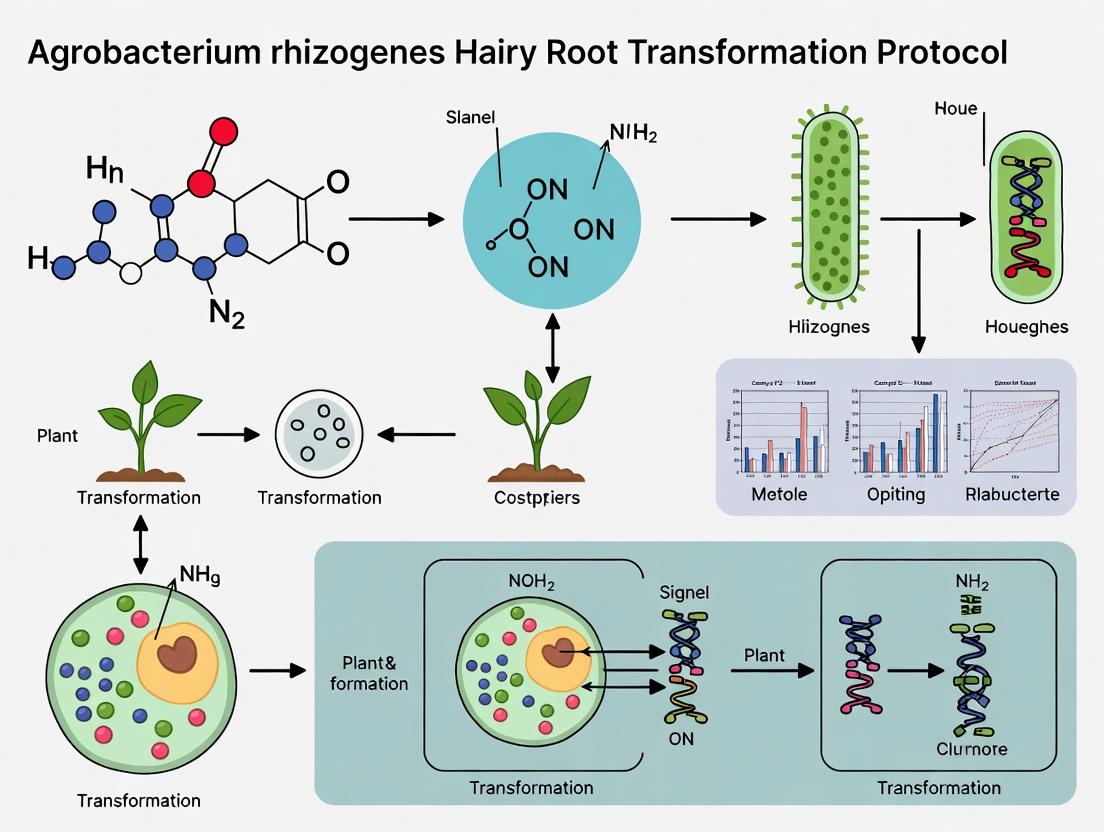
This comprehensive guide details a robust, optimized protocol for establishing transgenic hairy root cultures using Agrobacterium rhizogenes.
A Step-by-Step Agrobacterium rhizogenes Hairy Root Transformation Protocol for Bioproduction & Functional Studies
Abstract
This comprehensive guide details a robust, optimized protocol for establishing transgenic hairy root cultures using Agrobacterium rhizogenes. Tailored for researchers and bioproduction professionals, it covers the fundamental biology of the process, a detailed methodological workflow, common troubleshooting solutions, and strategies for validating and comparing results. The protocol emphasizes applications in metabolic engineering for high-value compound production and functional gene analysis in plant-based systems.
Understanding Agrobacterium rhizogenes: From Natural Pathogen to Biotech Powerhouse
What is Agrobacterium rhizogenes? Unveiling the Hairy Root Disease Mechanism.
Agrobacterium rhizogenes is a Gram-negative soil bacterium and the causative agent of hairy root disease. It genetically transforms host plants by transferring a segment of DNA (T-DNA) from its Root-Inducing (Ri) plasmid into the plant genome. This integration leads to the proliferation of neoplastic roots at the infection site, characterized by rapid growth, high lateral branching, and a lack of geotropism. The molecular mechanism is driven by genes encoded on the T-DNA, primarily the rol (root loci) genes, which alter plant hormone homeostasis.
Mechanism of Genetic Transformation and Pathogenesis
The transformation process is initiated by signal molecules (e.g., acetosyringone) from wounded plant tissues, which activate Virulence (Vir) genes on the Ri plasmid. A single-stranded T-DNA copy is excised and transported into the plant cell via a Type IV secretion system, ultimately integrating into the plant nuclear DNA.
Key T-DNA Genes and Functions:
- aux and iaaH/iaaM: Involved in auxin synthesis, disrupting normal auxin balance.
- rolA, rolB, rolC, rolD: Perturb hormone signaling and sensitivity, leading to dedifferentiation and root meristem formation.
Diagram: A. rhizogenes T-DNA Transfer Mechanism
Quantitative Analysis of Hairy Root Induction Efficiency
Hairy root induction efficiency varies significantly based on the host plant species, explant type, and bacterial strain used. The following table summarizes data from recent studies.
Table 1: Hairy Root Induction Efficiency Across Species & Explants
| Plant Species | Explant Type | A. rhizogenes Strain | Co-culture Duration (Days) | Induction Efficiency (%) | Reference (Year) |
|---|---|---|---|---|---|
| Cannabis sativa | Leaf discs | A4 | 3 | 72-85 | (2023) |
| Beta vulgaris (Sugar beet) | Hypocotyl | Arqua | 2 | 90-95 | (2024) |
| Solanum lycopersicum (Tomato) | Cotyledon | R1000 | 2 | 68-75 | (2023) |
| Artemisia annua | Seedling stems | ATCC 15834 | 3 | 80-88 | (2024) |
| Panax ginseng | Petiole | KCTC 2703 | 5 | 45-60 | (2023) |
Experimental Protocol: Hairy Root Induction and Confirmation
This protocol is designed for the genetic transformation of dicotyledonous plant explants.
Protocol 1: Hairy Root Induction and Culture
Materials: Sterile plant explants (leaf, hypocotyl), A. rhizogenes strain (e.g., ATCC 15834), YEB or LB medium, antibiotics, acetosyringone, MS0 solid and liquid media, cefotaxime.
Method:
- Bacterial Preparation: Inoculate a single colony of A. rhizogenes into liquid YEB/LB with appropriate antibiotics. Incubate at 28°C, 200 rpm for 24-48h. Centrifuge (5000xg, 10 min) and resuspend in fresh MS0 liquid medium to OD600 ≈ 0.5. Add acetosyringone (100 µM).
- Plant Explant Preparation: Surface sterilize seeds/plant tissue. Generate sterile explants (5-10 mm segments).
- Co-cultivation: Immerse explants in bacterial suspension for 10-30 minutes. Blot dry and place on solid MS0 co-cultivation medium. Incubate in the dark at 25°C for 2-3 days.
- Decontamination & Root Induction: Transfer explants to solid MS0 medium containing cefotaxime (500 mg/L) to eliminate bacteria. Incubate at 25°C with a 16/8h light/dark cycle.
- Root Maintenance: Excise emerging hairy roots (after 2-4 weeks) and transfer to liquid MS0 medium with cefotaxime (250 mg/L) for continued growth in the dark on a shaker (100 rpm).
Protocol 2: Molecular Confirmation of Transformation
Materials: PCR reagents, primers for rol genes, DNA extraction kit, electrophoresis equipment.
Method:
- Genomic DNA Extraction: Isolate genomic DNA from putative hairy roots and non-transformed control roots using a commercial plant DNA kit.
- PCR Amplification: Perform PCR using primers specific to a rol gene (e.g., rolB or rolC). Include positive (Ri plasmid DNA) and negative (non-transformed plant DNA) controls.
- Analysis: Run PCR products on a 1% agarose gel. The presence of the expected amplicon in hairy root samples confirms transformation.
Diagram: Hairy Root Transformation Workflow
The Scientist's Toolkit: Key Research Reagent Solutions
Table 2: Essential Materials for Hairy Root Transformation Research
| Reagent / Material | Function / Purpose |
|---|---|
| A. rhizogenes Strains (e.g., ATCC 15834, A4, R1000) | Engineered "disarmed" or wild-type strains containing the Ri plasmid for T-DNA transfer. |
| Acetosyringone | A phenolic compound added to co-culture media to maximally induce bacterial vir genes. |
| MS (Murashige and Skoog) Medium | Standard plant tissue culture medium providing essential macro/micronutrients. |
| Cefotaxime / Timentin | Broad-spectrum antibiotics used post-co-culture to eliminate residual Agrobacterium. |
| Selective Antibiotics (e.g., Kanamycin, Hygromycin) | For selection of transformed tissues if using a binary vector with a plant resistance marker. |
| PCR Primers for rol genes | For rapid molecular confirmation of T-DNA integration into the plant genome. |
| GusA/LacZ or GFP Reporter Systems | Visual markers (histochemical or fluorescent) to assess transformation efficiency and expression patterns. |
| HPLC-MS/MS | For quantitative analysis of secondary metabolite production in transformed hairy root cultures. |
The study of Agrobacterium rhizogenes and its Root-inducing (Ri) plasmid is central to the development of efficient hairy root transformation protocols. This system is a cornerstone of a broader thesis focused on optimizing these protocols for the production of plant-derived pharmaceuticals (PDTPs). Hairy root cultures, genetically transformed by the Ri plasmid, offer a stable, fast-growing, and biosynthetically competent platform for the production of valuable secondary metabolites. The molecular drivers of this process are the rol (root loci) genes integrated into the plant genome from the T-DNA of the Ri plasmid. Understanding their function, interactions, and regulatory effects is critical for rationally engineering high-yielding root cultures for drug development.
Genetic Architecture of the Ri Plasmid and CorerolGene Functions
The Ri plasmid is a large (~250 kb) plasmid harboring two key T-DNA regions: TL-DNA (left) and TR-DNA (right). The TL-DNA contains the principal rolA, rolB, rolC, and rolD genes, which are essential for root induction and phenotype. The TR-DNA contains genes for auxin (iaaM, iaaH) and opine synthesis.
Table 1: CorerolGenes of the Ri Plasmid TL-DNA and Their Functions
| Gene | Size (approx.) | Primary Function | Proposed Biochemical/Molecular Role | Phenotypic Impact in Transgenic Plants |
|---|---|---|---|---|
| rolA | ~300 bp | Modulates plant hormone sensitivity. | Interacts with and affects the proteasome-mediated degradation of specific transcription factors; alters auxin and cytokinin responses. | Dwarfism, wrinkled leaves, shortened internodes. |
| rolB | ~780 bp | Key initiator of root induction. | Exhibits β-glucosidase activity, releasing active auxins from conjugated forms; stimulates auxin response. | Extensive root proliferation, root hair formation. |
| rolC | ~540 bp | Cytokinin modulator. | Encodes a cytokinin-β-glucosidase, releasing active cytokinins; alters sink-source relationships. | Reduced apical dominance, bushy phenotype, early flowering. |
| rolD | ~570 bp | Involved in early developmental events. | Encodes ornithine cyclodeaminase, producing proline from ornithine; may influence nitrogen metabolism and stress responses. | Promotes flowering in some species. |
Signaling Pathways Mediated byrolGenes
The synergistic action of the rol genes reprograms plant cell development by intricately modulating phytohormone signaling networks, leading to dedifferentiation and the formation of meristematic cells that develop into roots.
Diagram 1:rolGene Modulation of Hormone Signaling for Root Induction
Application Notes & Protocols
Protocol 1: Rapid PCR-Based Screening forrolGene Integration in Transformed Hairy Roots
Purpose: To confirm the successful integration of Ri plasmid T-DNA into the plant genome. Materials:
- Crude genomic DNA from putative hairy root lines and untransformed control root.
- rol gene-specific primers (e.g., rolB F: 5'-GCTCTTGCAGTGCTAGATTT-3', R: 5'-GAACCTGACCTACCAGACCT-3').
- Plant internal control primers (e.g., actin or ubiquitin).
- PCR master mix, thermocycler, agarose gel electrophoresis system.
Procedure:
- DNA Extraction: Use a rapid CTAB-based or commercial kit method to isolate DNA from ~100 mg of fresh root tissue.
- PCR Setup: Prepare two 25 µL reactions per sample: one with rol primers, one with control primers.
- Cycling Conditions: Initial denaturation: 94°C, 3 min; 35 cycles of [94°C, 30 sec; 55-58°C (Tm-specific), 30 sec; 72°C, 1 min/kb]; final extension: 72°C, 5 min.
- Analysis: Run products on a 1.2% agarose gel. Successful transformation is indicated by a specific rol amplicon in the hairy root sample, absent in the control, with positive control bands in both.
Protocol 2: Establishment of Hairy Root Cultures for Metabolite Production
Purpose: To generate and maintain axenic, genetically transformed root cultures from explant material. Workflow: Hairy Root Culture Establishment and Analysis.
Detailed Steps:
- Explant Preparation: Surface-sterilize leaves/stems of host plant (Nicotiana, Beta vulgaris, medicinal plants). Cut into ~1 cm² segments.
- Bacterial Preparation & Inoculation: Grow a virulent A. rhizogenes strain (e.g., ATCC 15834) to late log phase (OD₆₀₀ ~0.6-1.0). Resuspend in fresh MS liquid medium. Wound explants lightly with a sterile needle and immerse in bacterial suspension for 10-30 minutes. Blot dry on sterile paper.
- Co-cultivation: Place explants on hormone-free MS solid medium. Incubate in the dark at 25°C for 2-3 days.
- Selection & Decontamination: Transfer explants to the same solid medium supplemented with antibiotics: a bacteriostat (e.g., cefotaxime, 250-500 mg/L) to kill Agrobacterium, and often a selective agent (e.g., kanamycin, if the T-DNA contains nptII) to inhibit untransformed plant growth.
- Root Excision & Establishment: After 2-4 weeks, excise emerging, fast-growing, highly branched root tips (3-4 cm). Transfer to fresh selection/antibiotic media. After 1-2 cycles, transfer to antibiotic-free MS liquid medium.
- Scale-up & Analysis: Maintain roots in the dark at 25°C on orbital shakers (90-110 rpm). Subculture every 2-4 weeks. Harvest roots for biomass (fresh/dry weight) and metabolite analysis (e.g., HPLC, LC-MS).
The Scientist's Toolkit: Key Research Reagents & Materials
Table 2: Essential Reagents for Hairy Root Transformation and Analysis
| Reagent/Material | Function/Role | Example/Notes |
|---|---|---|
| Virulent A. rhizogenes Strain | Source of the Ri plasmid for genetic transformation. | ATCC 15834, R1000, LBA9402. Strain choice affects host range and efficiency. |
| Plant Explant Material | Target tissue for transformation. | Sterile leaf discs, stem internodes, or cotyledons from a host species of interest. |
| MS Basal Salts & Vitamins | Provides essential inorganic nutrients and organics for plant tissue culture. | Murashige and Skoog (MS) medium, full or half strength, with sucrose (30 g/L). |
| Selective Antibiotics | 1) Eliminates Agrobacterium post-co-cultivation. 2) Selects transformed plant cells. | Cefotaxime/Timentin (anti-bacterial). Kanamycin/Hygromycin (plant selection, if T-DNA carries resistance). |
| rol Gene-Specific Primers | Confirms T-DNA integration via PCR. | Must be designed for conserved regions of rolA, rolB, rolC. Internal control primers are required. |
| PCR Master Mix | Amplifies target DNA sequences for integration analysis. | Contains Taq polymerase, dNTPs, buffer, MgCl₂. Use a high-fidelity mix for cloning applications. |
| CTAB DNA Extraction Buffer | Isolates genomic DNA from root tissues high in polysaccharides and phenolics. | Contains Cetyltrimethylammonium bromide (CTAB) to cleanly precipitate nucleic acids. |
| HPLC/Spectrometry Solvents & Standards | For quantification of secondary metabolites produced by hairy roots. | Acetonitrile, methanol, water (HPLC-grade). Authentic chemical standards for calibration. |
Quantitative Data on Hairy Root Performance
Table 3: Representative Metabolite Yields from Engineered Hairy Root Cultures
| Plant Species | Target Secondary Metabolite | Reported Yield in Hairy Roots | Key Optimization Factor | Reference Context (Example) |
|---|---|---|---|---|
| Panax ginseng | Ginsenosides | 2.5 - 5.0% Dry Weight (DW) | Elicitation (Methyl Jasmonate) | Scalable bioreactor production. |
| Catharanthus roseus | Ajmalicine | 0.2 - 0.8 mg/g DW | Medium composition (Nitrogen source) | Proof-of-concept for terpenoid indole alkaloids. |
| Beta vulgaris | Betalains (Betalainin) | 6.0 - 9.0 mg/g DW | Light exposure & culture age | Model system for pigment production. |
| Artemisia annua | Artemisinin | 0.05 - 0.1% DW | Combined rol gene expression & pathway engineering | Synergistic effect of rolABC. |
| Hyoscyamus muticus | Hyoscyamine | 0.3 - 0.5% DW | Strain selection (A. rhizogenes A4) | Demonstrated genetic stability over long-term culture. |
Why Hairy Roots? Key Advantages for Research and Bioproduction
Hairy root cultures, induced by the soil bacterium Agrobacterium rhizogenes, represent a genetically transformed root system. The integration of T-DNA from the bacterial Ri (root-inducing) plasmid into the plant genome leads to prolific, hormone-independent growth of highly branched roots. This system has evolved from a botanical curiosity into a cornerstone platform for plant biotechnology.
Key Advantages: A Comparative Analysis
Table 1: Comparative Advantages of Hairy Root Cultures vs. Traditional Plant-Based Systems
| Feature | Hairy Root Culture | Whole Plant Cultivation | Undifferentiated Cell Suspension |
|---|---|---|---|
| Genetic & Biochemical Stability | High (stable T-DNA integration) | High | Low (somaclonal variation) |
| Growth Rate | Fast (doubling time ~2-3 days) | Slow (seasonal) | Fast (doubling time ~1-2 days) |
| Hormone Requirement | No exogenous hormones needed | Required for development | Required for growth |
| Product Synthesis | Often comparable to native plant; organ-specific pathways active | Native levels | Often low or absent |
| Scale-Up Potential | High (bioreactor compatible) | Limited by land/season | High (bioreactor compatible) |
| Gene Manipulation Ease | High (Ri T-DNA facilitates gene insertion) | Moderate to low | Moderate |
| Metabolic Complexity | Organized tissue; correct compartmentalization | Full organism | Disorganized cells |
Table 2: Quantitative Bioproduction Yields from Hairy Root Cultures (Select Examples)
| Compound (Class) | Plant Species | Reported Yield | Notes |
|---|---|---|---|
| Artemisinin (Sesquiterpene) | Artemisia annua | 15-20 mg/g DW | Critical anti-malarial precursor. |
| Shikonin (Naphthoquinone) | Lithospermum erythrorhizon | 12-15% DW | High-value red pigment & antimicrobial. |
| Resveratrol (Stilbene) | Vitis vinifera | 5.8 mg/g DW | Engineered lines with transcription factors. |
| Hyoscyamine (Tropane Alkaloid) | Hyoscyamus muticus | 0.4% DW | Scopolamine precursor. |
| Recombinant Proteins | Various (e.g., Nicotiana) | Up to 50 µg/g FW | Secreted enzymes, antibodies. |
Core Protocols
Protocol 1: Standard Hairy Root Induction & Axenic Culture Establishment
Purpose: To generate transgenic hairy root lines from explant material. Materials: See "The Scientist's Toolkit" below. Method:
- Explant Preparation: Surface-sterilize leaves or stem segments (≈1 cm²) from donor plant. Use 70% ethanol (30-60 sec) followed by sodium hypochlorite solution (1-2% active chlorine, 5-10 min). Rinse 3x with sterile distilled water.
- Co-cultivation: Gently wound explant edges with sterile scalpel. Inoculate wounds with a late-log phase culture of A. rhizogenes (e.g., strain ATCC 15834). Blot excess inoculum and place explants on co-cultivation medium (hormone-free Murashige and Skoog (MS) solid medium, no antibiotics). Incubate in dark at 25°C for 2-3 days.
- Decontamination & Root Initiation: Transfer explants to decontamination medium (hormone-free MS solid medium supplemented with 300-500 mg/L cefotaxime or timentin to kill bacteria). Roots typically emerge from infection sites within 1-3 weeks.
- Root Excison & Clonal Line Establishment: Once roots reach 2-3 cm, excise tips (≈1 cm) and transfer to fresh decontamination medium. Subculture every 2-3 weeks until bacterial elimination is confirmed (no clouding in liquid medium). Establish multiple independent clonal lines.
- Molecular Confirmation: Perform PCR on root genomic DNA for rol genes (e.g., rolB, rolC) or other T-DNA/transgene markers to confirm transformation.
Protocol 2: Scale-Up in Liquid Culture Bioreactor
Purpose: To produce biomass and metabolites in gram to kilogram quantities. Method:
- Inoculum Preparation: Harvest 0.5-1.0 g FW of actively growing root tips from solid medium.
- Bioreactor Inoculation: Transfer inoculum to a suitable bioreactor (e.g., bubble column, stirred-tank with mesh separator) containing hormone-free liquid MS medium, reduced sucrose (2-3%), and appropriate antibiotics if needed.
- Culture Conditions: Maintain at 25°C in dark. Provide aeration (0.3-0.5 vvm). Agitation, if used, must be gentle to avoid shear damage.
- Harvest: Growth cycle typically 3-5 weeks. Harvest by filtration or draining. Biomass yield is system-dependent; 50-100 g DW/m³/day can be achieved in optimized systems.
Signaling and Workflow Visualization
Diagram Title: Hairy Root Induction and Application Workflow
Diagram Title: Genetic Basis of Hairy Root Induction by Ri Plasmid
The Scientist's Toolkit: Essential Research Reagents & Materials
| Item | Function & Rationale |
|---|---|
| Agrobacterium rhizogenes Strains (e.g., ATCC 15834, A4, R1000) | Contains the Root-inducing (Ri) plasmid. Strain choice affects virulence, T-DNA structure, and root morphology. |
| Murashige and Skoog (MS) Basal Salt Mixture | Standard plant tissue culture medium providing essential macro/micronutrients. Hormone-free for hairy root maintenance. |
| Cefotaxime or Timentin | Broad-spectrum antibiotics used to eliminate Agrobacterium after co-cultivation without phytotoxic effects on roots. |
| Acetosyringone | Phenolic compound added to co-cultivation medium to induce the vir genes of the Ri plasmid, enhancing T-DNA transfer efficiency. |
| PCR Reagents for rol Genes | Primers for rolB or rolC used to molecularly confirm stable T-DNA integration in the plant genome. |
| Gelling Agent (e.g., Phytagel, Agar) | For solid culture media to establish and maintain axenic root lines. |
| Bubble Column or Mist Bioreactor | Specialized bioreactors providing low-shear aeration optimal for dense, tangled root biomass growth in liquid medium. |
Application Notes
Metabolic Engineering inAgrobacterium rhizogenes-Transformed Hairy Roots
Hairy roots, induced by A. rhizogenes transformation, provide a stable, fast-growing, and genetically uniform platform for metabolic engineering of plant secondary metabolites. Recent studies focus on enhancing yields of high-value pharmaceuticals (e.g., alkaloids, terpenoids, phenolics) through heterologous gene expression and CRISPR/Cas9-mediated pathway modulation.
Functional Genomics Using Hairy Root Systems
Hairy root cultures serve as an efficient model for functional gene validation. RNAi, VIGS (Virus-Induced Gene Silencing), and CRISPR screenings in hairy roots enable rapid analysis of gene function related to root development, stress response, and biosynthetic pathways, bypassing the need for full plant regeneration.
Table 1: Quantitative Outcomes from Recent Hairy Root Applications (2022-2024)
| Application | Target Compound/Gene | Yield/Fold Change/ Efficiency | Key Method | Reference Year |
|---|---|---|---|---|
| Metabolic Engineering | Artemisinin (precursor) | 8.2 mg/g DW (120% increase) | Overexpression of DBR2 and CYP71AV1 via A. rhizogenes | 2023 |
| Metabolic Engineering | Resveratrol | 5.6 mg/g DW | Expression of grapevine STS gene in tomato hairy roots | 2024 |
| Functional Genomics | NtPYL4 (Abscisic Acid Receptor) | Gene knockout efficiency: 92% | CRISPR/Cas9 delivered via A. rhizogenes | 2023 |
| Functional Genomics | RNAi of LaGAS1 (Gymnemic acid) | 85% transcript reduction, ~70% product decrease | A. rhizogenes-mediated RNAi silencing | 2022 |
| Pathway Elucidation | Tropane alkaloid flux | Precursor channeling increased by 3.5-fold | Combinatorial gene silencing (PMT, H6H) in hairy roots | 2024 |
Protocols
Protocol 1:Agrobacterium rhizogenes-Mediated Hairy Root Induction for Metabolic Engineering
Objective: Generate transgenic hairy roots expressing heterologous biosynthetic genes to enhance metabolite production.
Materials: See "Research Reagent Solutions" below. Procedure:
- Vector Construction: Clone gene(s) of interest into a suitable Ri plasmid-derived binary vector (e.g., pBI121-Ri T-DNA) with a plant-specific promoter (e.g., CaMV 35S) and selection marker (e.g., hptII for hygromycin resistance).
- Agrobacterium Preparation: Transform the constructed vector into A. rhizogenes strain R1000 or ATCC 15834 via electroporation. Select single colonies on LB agar with appropriate antibiotics (e.g., kanamycin 50 µg/mL, rifampicin 50 µg/mL).
- Plant Explant Infection: Surface-sterilize leaves or cotyledons of host plant (e.g., Nicotiana benthamiana, Catharanthus roseus). Wound explants with a sterile needle, then immerse in the Agrobacterium suspension (OD600 ≈ 0.6-0.8, resuspended in MS liquid medium with 100 µM acetosyringone) for 20 minutes.
- Co-cultivation: Blot-dry explants and place on MS solid medium without antibiotics. Co-cultivate in the dark at 25°C for 48 hours.
- Hairy Root Induction & Selection: Transfer explants to MS solid medium containing antibiotics to kill Agrobacterium (e.g., cefotaxime 500 µg/mL) and for plant selection (e.g., hygromycin 20 µg/mL). Maintain at 25°C with a 16/8h light/dark cycle.
- Root Line Establishment: After 2-3 weeks, excise emerging hairy roots (~2-3 cm) and transfer to fresh selection medium for further growth. Establish axenic, clonal lines.
- Metabolite Analysis: Harvest roots, freeze-dry, and extract metabolites. Quantify target compound via HPLC-MS/MS.
Protocol 2: CRISPR/Cas9-Mediated Gene Knockout in Hairy Roots for Functional Genomics
Objective: Disrupt a target gene in hairy roots to study loss-of-function phenotypes.
Materials: See "Research Reagent Solutions" below. Procedure:
- gRNA Design & Vector Assembly: Design two 20-nt target sequences specific to the gene of interest. Clone them into a CRISPR/Cas9 binary vector suitable for A. rhizogenes (e.g., pFGC-pcoCas9 with a plant codon-optimized Cas9 and a root-specific promoter).
- Agrobacterium Transformation: Introduce the CRISPR construct into A. rhizogenes as in Protocol 1.
- Hairy Root Generation: Follow steps 3-6 from Protocol 1 to generate transformed hairy roots under selection (e.g., glufosinate ammonium 5 mg/L).
- Genotyping: Isolate genomic DNA from root tips. Amplify the target region by PCR and subject to Sanger sequencing or T7 Endonuclease I assay to confirm indels.
- Phenotypic Analysis: Assess morphological, biochemical, or transcriptomic changes in knockout vs. wild-type (empty vector) hairy root lines.
Visualizations
Title: Hairy Root Transformation & Primary Applications Workflow
Title: Metabolic Engineering Strategy in Hairy Roots
Research Reagent Solutions
| Item | Function in Hairy Root Protocols |
|---|---|
| Agrobacterium rhizogenes Strains (e.g., R1000, ATCC 15834, K599) | Contains root-inducing (Ri) plasmid; essential for T-DNA transfer and hairy root initiation. |
| Ri Plasmid-Derived Binary Vectors (e.g., pBI121, pCAMBIA) | Carries gene of interest within T-DNA borders for stable integration into plant genome. |
| Acetosyringone (100-200 µM) | Phenolic compound that induces vir gene expression in A. rhizogenes, critical for T-DNA transfer. |
| Murashige and Skoog (MS) Medium (Solid & Liquid) | Standard plant tissue culture medium providing essential nutrients for explant co-cultivation and root growth. |
| Selection Antibiotics (e.g., Hygromycin B, Kanamycin, Glufosinate) | Selects for transformed hairy root tissues based on the resistance marker gene present in the T-DNA. |
| Bacterial Elimination Antibiotics (e.g., Cefotaxime, Timentin) | Added post-co-cultivation to inhibit overgrowth of A. rhizogenes, ensuring axenic root cultures. |
| CRISPR/Cas9 Vectors for Plants (e.g., pFGC-pcoCas9, pHEE401E) | Delivers Cas9 nuclease and guide RNA for targeted gene knockout or editing in hairy roots. |
| RNAi Silencing Vectors (e.g., pHellsgate12, pK7GWIWG2D) | Used for post-transcriptional gene silencing via hairpin RNA constructs to study gene function. |
Application Notes
Agrobacterium rhizogenes-mediated hairy root transformation is a cornerstone technique for functional genomics, metabolic engineering, and the production of plant-derived pharmaceuticals. The choice of bacterial strain is a critical determinant of transformation efficiency, root morphology, and transgene expression stability. This analysis compares three strains—the engineered "Arqual" strain, the wild-type ATCC 15834, and the widely used K599 (also known as R1000 or NCPPB 2659)—within the context of optimizing protocols for high-value compound production and functional studies.
Arqual is a disarmed, engineered derivative often designed for superior transformation frequency in recalcitrant species, typically by incorporating hyper-virulence genes or modified T-DNA borders. ATCC 15834 is a wild-type strain harboring the agropine-type Ri plasmid pRiA4, known for vigorous root induction and high auxin production. K599, harboring the mannopine-type pRi2659, is frequently noted for its rapid root emergence and prolific root systems, making it a common laboratory workhorse.
Key performance indicators include Transformation Efficiency (% of explants producing transgenic roots), Root Emergence Time, Root Morphology (degree of branching, plagiotropism), and Biomass Accumulation Rate in liquid culture. Strain selection must align with the host plant species and the experimental endpoint, whether it is high-yield metabolite extraction or rapid in planta functional analysis.
Table 1: Comparative Strain Characteristics
| Characteristic | Arqual (Engineered) | ATCC 15834 (Wild-type, pRiA4) | K599 (Wild-type, pRi2659) |
|---|---|---|---|
| Ri Plasmid Type | Often disarmed/modified | Agropine-type (pRiA4) | Mannopine-type (pRi2659) |
| Standard T-DNA Genes | rolA, rolB, rolC, rolD (varies) | rolA, rolB, rolC, rolD, aux, ags | rolA, rolB, rolC, rolD |
| Typical Transformation Efficiency | 65-90% (optimized hosts) | 40-75% | 50-80% |
| Mean Root Emergence Time | 7-10 days post-infection | 10-14 days | 6-9 days |
| Root Morphology | Often more controlled, less hairy | Highly branched, "hairy" phenotype | Prolific, fast-growing |
| Common Primary Hosts | Nicotiana spp., Solanum tuberosum | Daucus carota, Cucurbita spp. | Glycine max, Pisum sativum |
| Key Advantage | High, consistent efficiency | Robust hormone production | Rapid initiation & growth |
| Key Disadvantage | Potential IP restrictions | Excessive branching can complicate analysis | May be less efficient in some dicots |
Table 2: Protocol Parameter Recommendations by Strain
| Protocol Step | Arqual | ATCC 15834 | K599 |
|---|---|---|---|
| OD₆₀₀ for Infection | 0.4 - 0.6 | 0.3 - 0.5 | 0.5 - 0.8 |
| Co-culture Duration | 48-72 hours | 72 hours | 48-60 hours |
| Optimal Acetosyringone (μM) | 100 - 200 | 150 - 200 | 100 - 150 |
| Antibiotic for Selection | Specimen-specific (e.g., Kanamycin) | Often none (kanamycin-sensitive) | Often none (kanamycin-sensitive) |
| Root Elongation Media | Hormone-free, low salt | May require cytokinin to reduce branching | Hormone-free, standard MS |
Experimental Protocols
Protocol 1: Standard Hairy Root Induction and Transformation Efficiency Assay
Objective: To compare the transformation efficiency and kinetics of Arqual, ATCC 15834, and K599 on a common host (e.g., Nicotiana benthamiana leaf discs). Materials: See "Research Reagent Solutions" below. Method:
- Strain Preparation:
- Streak each strain from -80°C glycerol stock onto appropriate agar plates (YEB with rifampicin). Incubate at 28°C for 2 days.
- Inoculate a single colony into 5 mL liquid YEB with antibiotics. Shake (200 rpm) at 28°C for 24-48h.
- Centrifuge culture at 5000 x g for 10 min. Resuspend pellet in induction medium (MS salts, vitamins, 20 g/L sucrose, pH 5.2) supplemented with 150 μM acetosyringone.
- Adjust final OD₆₀₀ to 0.5. Incubate shaken (100 rpm) at 28°C for 4-6h.
- Plant Material Infection:
- Surface-sterilize N. benthamiana leaves, cut into ~1 cm² explants.
- Immerse explants in the induced bacterial suspension for 20 min. Blot dry on sterile filter paper.
- Place explants on co-culture medium (solid induction medium with acetosyringone). Wrap plates and incubate in the dark at 25°C for 3 days.
- Root Induction and Selection:
- Transfer explants to decontamination/selection medium (hormone-free MS solid medium with 300 mg/L cefotaxime and, if applicable, the appropriate selection antibiotic).
- Maintain at 25°C with a 16/8h light/dark cycle, subculturing explants to fresh medium every 7 days.
- Data Collection:
- Record the number of explants with emerging roots from day 5 onwards.
- Transformation Efficiency (%) = (Number of explants with transgenic roots / Total number of explants) x 100. Calculate at day 21.
- Root Emergence Time = Record the day when roots first appear for each positive explant, calculate the mean.
Protocol 2: Hairy Root Biomass Accumulation in Liquid Culture
Objective: To compare the growth kinetics and final biomass yield of hairy roots induced by the three strains. Method:
- Initiate hairy root lines using Protocol 1. Excise 3-5 cm apical tips from 14-day-old axenic roots.
- Inoculate 0.5 g (fresh weight) of root tips into 100 mL of hormone-free liquid MS medium in a 250 mL Erlenmeyer flask.
- Maintain cultures on an orbital shaker (100 rpm) at 25°C in the dark.
- Harvest triplicate flasks for each strain line every 5 days for 25 days.
- Collect roots on a pre-weighed filter paper, rinse with distilled water, and blot dry.
- Measure Fresh Weight (FW) immediately. Then dry roots at 60°C for 48h to determine Dry Weight (DW).
- Plot growth curves (FW/DW vs. Time) and calculate specific growth rates.
Protocol 3: Molecular Confirmation of Transformation
Objective: To confirm T-DNA integration and expression in putative hairy roots. Method:
- Genomic DNA Isolation: Use a CTAB-based method to extract DNA from ~100 mg of root tissue.
- PCR Analysis: Perform PCR using primers for rolB or rolC genes (present in all strains) and a plant housekeeping gene (e.g., actin) as an internal control.
- rolB Forward: 5'-GCTCTTGCAGTGCTAGATTT-3'
- rolB Reverse: 5'-GAAGGTGCAAGCTACCTCTC-3'
- PCR Conditions: 94°C 3 min; 35 cycles of [94°C 30s, 58°C 30s, 72°C 1 min]; 72°C 5 min.
- Opine Assay (Optional, for wild-types): Use paper electrophoresis to detect agropine (ATCC 15834) or mannopine (K599) as biochemical markers of transformation.
Visualizations
Strain Selection Logic Flow (Max 100 chars)
Ri Plasmid Virulence & Root Induction Pathway (Max 100 chars)
Hairy Root Transformation & Analysis Workflow (Max 100 chars)
The Scientist's Toolkit: Research Reagent Solutions
Table 3: Essential Materials for Hairy Root Transformation
| Reagent/Material | Function/Description | Example/Catalog Consideration |
|---|---|---|
| YEB Medium | Nutrient-rich medium for robust Agrobacterium growth. | Contains beef extract, yeast extract, peptone, sucrose, MgSO₄. |
| Murashige & Skoog (MS) Basal Medium | Standard plant tissue culture medium providing essential macro/micronutrients and vitamins. | Available as pre-mixed powders or ready-to-use liquid. |
| Acetosyringone | Phenolic compound that activates the Agrobacterium vir gene system for T-DNA transfer. | Dissolved in DMSO to make a stock solution (e.g., 100 mM). |
| Cefotaxime (or Timentin) | β-lactam antibiotic used to eliminate Agrobacterium after co-culture, decontaminating explants. | Typically used at 200-500 mg/L in plant media. |
| Selection Antibiotic | For engineered strains (e.g., Arqual): selects for transformed plant cells (e.g., Kanamycin, Hygromycin B). | Concentration must be optimized for the plant species. |
| Rifampicin | Antibiotic for maintaining A. rhizogenes cultures; most wild-type strains are resistant. | Added to YEB media (e.g., 50-100 mg/L). |
| Plant Tissue Culture Agar | Solidifying agent for plant media; must be high purity and free of growth inhibitors. | Phytagar, Gelzan, or equivalent. |
| CTAB DNA Extraction Buffer | Cetyltrimethylammonium bromide-based buffer for isolating high-quality DNA from hairy roots. | Contains CTAB, NaCl, EDTA, Tris-HCl, β-mercaptoethanol. |
| Opine Standard Mix | Chemical standards (agropine, mannopine) for paper electrophoresis confirmation of transformation by wild-type strains. | Available from specialized phytochemical suppliers. |
Essential Materials & Pre-Protocol Preparation Checklist
Within the broader thesis on optimizing Agrobacterium rhizogenes-mediated hairy root transformation for the production of plant-derived pharmaceuticals, meticulous pre-protocol preparation is paramount. This checklist and associated application notes are designed to ensure reproducibility and success in genetic transformation and subsequent metabolite analysis, critical for drug development pipelines.
Essential Materials Checklist & Research Reagent Solutions
The following table details the core materials required for pre-culture, transformation, co-cultivation, and selection phases.
Table 1: Essential Research Reagent Solutions for Hairy Root Transformation
| Item | Function & Specification |
|---|---|
| Plant Explant | Sterilized seedling segments (e.g., hypocotyls, leaf disks). Serves as the target tissue for transformation. Must be from an Agrobacterium-susceptible species like Nicotiana tabacum or medicinal plants like Catharanthus roseus. |
| A. rhizogenes Strain | Engineered strain (e.g., ARqua1, K599, ATCC 15834) containing the desired Ri plasmid and binary vector with gene of interest and selection marker. Virulence is culture condition-dependent. |
| YEB/MG/L Broth | Nutrient-rich media for optimal Agrobacterium growth pre-transformation. Typically supplemented with appropriate antibiotics (e.g., rifampicin, kanamycin) to maintain plasmid selection. |
| MS Basal Salts | Murashige and Skoog (MS) medium, full or half-strength, forms the base for plant co-cultivation and hairy root growth media. |
| Acetosyringone | A phenolic compound added to co-cultivation media to induce the Agrobacterium Vir genes, enhancing T-DNA transfer efficiency. Working concentration: 100-200 µM. |
| Selection Antibiotic | Agent (e.g., kanamycin, hygromycin) added to post-co-cultivation media to selectively permit growth of transformed hairy roots. Concentration must be empirically determined for each plant species. |
| β-lactam Antibiotic | Agent (e.g., cefotaxime, timentin) used to eliminate Agrobacterium after co-cultivation, preventing overgrowth. Does not inhibit hairy root growth. |
| PCR Reagents | Primers specific to the rol genes (e.g., rolB, rolC) of the Ri plasmid and/or the transgene for molecular confirmation of transformation. |
Detailed Pre-Protocol Preparation Workflow
1. Plant Material Sterilization & Pre-culture
- Seeds are surface-sterilized sequentially with 70% (v/v) ethanol (2 min) and 2% (v/v) sodium hypochlorite solution with 0.1% Tween-20 (10-15 min), followed by 3-5 rinses in sterile distilled water.
- Sterilized seeds are germinated on hormone-free MS agar plates in the dark at 24-26°C for 1 week, then under a 16-h photoperiod for another week.
- Hypocotyl/leaf explants (1-2 cm) are excised aseptically and pre-cultured on MS plates for 24-48 hours prior to inoculation.
2. Agrobacterium Culture Preparation
- From a glycerol stock, streak A. rhizogenes (carrying both Ri and binary vector) on solid YEB medium with relevant antibiotics. Incubate at 28°C for 2 days.
- Pick a single colony to inoculate 5-10 mL of liquid YEB with antibiotics. Shake (200 rpm) at 28°C until OD₆₀₀ reaches 0.6-1.0 (approximately 16-24 hours).
- Critical Step: Pellet bacteria by centrifugation (3000-4000 x g, 10 min). Resuspend gently in liquid MS medium or sterile water to an OD₆₀₀ of ~0.5. Add acetosyringone to a final concentration of 100 µM. Let the suspension incubate for 30-60 min before use.
3. Media Preparation
- Prepare and autoclave: MS0 Pre-culture plates (MS salts, sucrose, agar, no hormones).
- Prepare and autoclave: Co-cultivation plates (as MS0, but lower agar concentration (0.8%) can improve contact). Acetosyringone must be filter-sterilized and added after autoclaving when media has cooled to ~55°C.
- Prepare and autoclave: Hairy Root Induction/Selection plates (MS salts, sucrose, agar, with filter-sterilized selection antibiotic(s) and β-lactam antibiotic).
Key Experimental Protocol: Hairy Root Induction & Selection
- Inoculation: Briefly immerse pre-cultured explants in the prepared Agrobacterium suspension for 5-30 minutes. Blot dry on sterile filter paper.
- Co-cultivation: Transfer explants to co-cultivation plates. Seal plates and incubate in the dark at 23-25°C for 2-3 days.
- Decontamination & Selection: After co-cultivation, transfer explants to selection plates containing the β-lactam antibiotic (e.g., 500 mg/L cefotaxime) and the plant selection agent (e.g., 50 mg/L kanamycin). This step eliminates Agrobacterium and suppresses non-transformed root growth.
- Induction & Maintenance: Incubate plates in the dark at 25°C. Hairy roots typically emerge from wound sites within 1-4 weeks. Excise individual, fast-growing root tips (1-2 cm) and transfer to fresh selection plates for continued growth and multiplication.
- Confirmation: Perform PCR on genomic DNA extracted from putative hairy root lines using rol gene-specific primers to confirm transformation.
Signaling Pathway in Hairy Root Induction
(Diagram 1: A. rhizogenes T-DNA transfer and root induction pathway)
(Diagram 2: Hairy root transformation and analysis workflow)
Pre-Protocol Critical Factor Assessment
Table 2: Quantitative Parameters for Pre-Protocol Steps
| Preparation Step | Key Parameter | Typical Optimal Range | Impact on Outcome |
|---|---|---|---|
| Plant Pre-culture | Explant Age | 10-14 day-old seedlings | Determines tissue competency and susceptibility. |
| Bacterial Prep | Culture OD₆₀₀ at Harvest | 0.6 - 1.0 | High OD (>1.2) reduces virulence. Low OD (<0.4) yields insufficient cells. |
| Bacterial Prep | Acetosyringone Induction Time | 30 - 60 minutes | Essential for full vir gene induction. Shorter times reduce efficiency. |
| Co-cultivation | Duration | 48 - 72 hours | Shorter: reduced T-DNA transfer. Longer: bacterial overgrowth. |
| Co-cultivation | Temperature | 22 - 25 °C | Critical; temperatures >28°C drastically reduce transformation. |
| Selection | Antibiotic (e.g., Kanamycin) Concentration | Species-specific (e.g., 50-100 mg/L) | Must kill non-transformed roots without over-inhibiting transformed ones. |
Hairy Root Transformation Protocol: A Detailed Laboratory Workflow
This protocol details the first critical phase in the establishment of a robust Agrobacterium rhizogenes-mediated hairy root transformation system. Consistent and viable inoculum preparation directly influences transformation efficiency and root morphology in subsequent co-cultivation steps. This phase ensures the bacterial culture is in an optimal virulent state for T-DNA transfer.
Key Research Reagent Solutions
Table 1: Essential Materials and Reagents
| Reagent/Material | Function/Explanation |
|---|---|
| A. rhizogenes Strain (e.g., R1000, ATCC 15834, LBA9402) | Engineered or wild-type strain containing the Ri plasmid; source of T-DNA for root induction. |
| Yeast Extract Peptone (YEP) Broth/Agar | Rich, non-selective medium for optimal growth and maintenance of A. rhizogenes. |
| Antibiotics (e.g., Rifampicin, Kanamycin, Spectinomycin) | Selective agents to maintain plasmid integrity (Ri plasmid or binary vectors) in bacterial culture. |
| Acetosyringone (100-200 µM) | Phenolic compound that induces the vir genes on the Ri plasmid, enhancing T-DNA transfer competence. |
| Washing Buffer (e.g., Liquid MS medium, MgSO₄ solution) | Used to wash and resuscent bacterial cells free of nutrient-rich medium before inoculation. |
| Spectrophotometer | Essential for standardizing the bacterial inoculum density (OD₆₀₀). |
Detailed Protocol: Culture Preparation and Induction
3.1. Primary Culture Initiation
- Using a sterile loop, streak the glycerol stock of the desired A. rhizogenes strain onto a YEP agar plate containing the appropriate antibiotics.
- Incubate plates at 28°C for 48 hours until single, well-isolated colonies form.
3.2. Liquid Culture Preparation & Vir Gene Induction
- Pick a single colony and inoculate 5-10 mL of YEP broth with antibiotics. Incubate at 28°C with shaking (200-220 rpm) for 24 hours (primary culture).
- Sub-culture by transferring 1-2% (v/v) of the primary culture into fresh induction medium (YEP broth with antibiotics and 100-200 µM filter-sterilized acetosyringone).
- Incubate the induced culture at 28°C with shaking (200 rpm) for 16-24 hours, or until it reaches the target optical density.
3.3. Inoculum Standardization & Preparation
- Measure the OD₆₀₀ of the induced culture using a spectrophotometer.
- Pellet the bacterial cells by centrifugation at 3000-5000 x g for 10-15 minutes at room temperature.
- Gently discard the supernatant and resuspend the pellet in an appropriate volume of sterile washing buffer (e.g., ½ strength MS liquid medium) to achieve the final working OD₆₀₀.
- Let the standardized suspension stand for 30-60 minutes at room temperature before use.
Table 2: Standardized Inoculum Parameters
| Parameter | Typical Range | Optimal Value for Most Explants | Notes |
|---|---|---|---|
| Culture OD₆₀₀ at Harvest | 0.4 - 1.2 | 0.6 - 0.8 | Mid-to-late log phase ensures high virulence. |
| Acetosyringone Concentration | 50 - 200 µM | 100 µM | Critical for vir gene induction; use DMSO stock. |
| Induction Duration | 6 - 24 hours | 16 - 18 hours | Balance between full induction and culture overgrowth. |
| Final Inoculum OD₆₀₀ | 0.1 - 1.0 | 0.3 - 0.6 | Must be optimized for each plant species/explants. |
| Co-cultivation Time Post-Inoculation | 2 - 7 days | 2 - 3 days | Monitored alongside bacterial growth control. |
Experimental Workflow Diagram
Title: A. rhizogenes Inoculum Prep Workflow
Vir Gene Induction Signaling Pathway
Title: Acetosyringone-induced Vir Gene Pathway
Within the comprehensive workflow of Agrobacterium rhizogenes-mediated hairy root transformation, Phase 2 is critical for establishing primary transgenic events. This phase, encompassing explant selection, preparation, and co-cultivation, directly determines transformation efficiency and experimental reproducibility. These application notes detail standardized protocols, grounded in current research, for optimizing this pivotal stage in pharmaceutical compound production and functional gene analysis.
Explant Selection Criteria and Rationale
Explant choice is the primary determinant of transformation success, as it influences bacterial attachment, competence for transformation, and subsequent regenerative capacity.
Table 1: Comparative Analysis of Common Explant Types for A. rhizogenes Transformation
| Explant Type | Optimal Species | Average Transformation Efficiency (%) | Key Advantages | Primary Use Case |
|---|---|---|---|---|
| Leaf Discs | Nicotiana tabacum, Solanum lycopersicum | 65-85% | High surface area, readily available, uniform response. | High-throughput composite plant generation. |
| Hypocotyl Segments | Arabidopsis thaliana, Glycine max, Brassica napus | 50-75% | Highly meristematic, excellent for difficult-to-transform species. | Root biology studies, protein expression. |
| Cotyledonary Nodes | Medicago truncatula, Cicer arietinum | 40-60% | Pre-existing meristematic sites for direct root emergence. | Legume functional genomics. |
| Seedling Stems | Oryza sativa (japonica), Zea mays | 30-50% | Essential for monocot transformation protocols. | Cereal and grass root studies. |
| Root Segments | Beta vulgaris, Daucus carota | 20-40% | Homologous tissue, direct induction potential. | Root-specific pathology assays. |
Protocol 1.1: Standardized Explant Harvesting
- Materials: Sterilized seeds or donor plants, 70% (v/v) ethanol, sodium hypochlorite (2-4% available chlorine), sterile distilled water, sterile filter paper, sterile surgical blades or punches.
- Method:
- Surface Sterilization: For seeds, immerse in 70% ethanol for 30 seconds, then in 2% sodium hypochlorite with 0.1% Tween-20 for 10-15 minutes. Rinse 3-5 times with sterile distilled water. Germinate on agar medium.
- Explant Excision: For leaf/hypocotyl explants, use a sterile cork borer (4-6 mm diameter) or blade to excise tissue from 3-5 week-old in vitro grown seedlings.
- Pre-culture: Blot explants on sterile filter paper and transfer to a pre-culture medium (hormone-free MS basal medium with 3% sucrose, pH 5.8) for 24-48 hours at 25°C in the dark. This step enhances wound response and competence.
Agrobacterium rhizogenesPreparation and Co-cultivation
Optimal bacterial density and physiological state are crucial for effective T-DNA transfer while suppressing overgrowth.
Table 2: Bacterial Preparation Parameters and Outcomes
| Parameter | Optimal Range | Measurement Method | Impact on Co-cultivation |
|---|---|---|---|
| Culture Phase | Mid-log (Late exponential) | OD₆₀₀ = 0.5 - 0.8 | Maximizes virulence gene activity. |
| Induction Additive | Acetosyringone (AS) 100-200 µM | Added to liquid culture 2-3 hrs pre-use | Activates vir genes; critical for non-host species. |
| Cell Density for Infection | OD₆₀₀ = 0.05 - 0.3 (diluted in medium) | Spectrophotometer | High density causes overgrowth; low density reduces transformation. |
| Infection Duration | 10-30 minutes | Immersion with gentle agitation | Ensures adequate bacterial attachment. |
Protocol 2.1: Bacterial Culture and Explant Inoculation
- Materials: A. rhizogenes strain (e.g., R1000, K599, ARqual), YEB or LB medium with appropriate antibiotics, acetosyringone (AS) stock solution (100 mM in DMSO), co-cultivation medium (CCM: MS salts, 3% sucrose, AS 100 µM, pH 5.5).
- Method:
- Inoculate a single colony into 5 mL of liquid medium with antibiotics. Grow overnight at 28°C, 200 rpm.
- Sub-culture 1:100 into fresh medium containing 100 µM AS. Grow to OD₆₀₀ ~0.6.
- Pellet cells at 5000 x g for 10 min. Resuspend in liquid CCM to OD₆₀₀ = 0.1.
- Immerse pre-cultured explants in the bacterial suspension for 20 minutes. Blot dry on sterile paper to remove excess bacteria.
Protocol 2.2: Co-cultivation
- Method:
- Transfer inoculated explants to solid CCM. Ensure good contact between the wounded tissue and the agar.
- Seal plates with porous tape and incubate in the dark at 22-25°C for 48-72 hours.
- Critical: Do not exceed 72 hours to prevent bacterial overgrowth.
The Scientist's Toolkit: Key Reagent Solutions
| Reagent/Material | Function/Application |
|---|---|
| Acetosyringone (AS) | Phenolic compound that activates the A. rhizogenes vir gene region, essential for T-DNA transfer. |
| MS Basal Medium | Provides essential inorganic nutrients, vitamins, and a buffering system for explant viability. |
| Antibiotics (e.g., Kanamycin, Hygromycin) | Selective agents in post-co-cultivation media to inhibit Agrobacterium and select transformed plant cells. |
| Cefotaxime/Carbenicillin | Bacteriostatic antibiotics used post-co-cultivation to eliminate residual A. rhizogenes. |
| Solidifying Agent (Phytagel/Gellan Gum) | Provides physical support for explants; superior clarity and reduced artifact formation vs. agar. |
Visualization of Workflows and Pathways
Phase 2 Explant and Co-cultivation Workflow
Acetosyringone-Induced vir Gene Activation Pathway
This document details Phase 3 of a comprehensive Agrobacterium rhizogenes-mediated hairy root transformation protocol, critical for the production of recombinant proteins and secondary metabolites for pharmaceutical research. This phase follows explant preparation and co-cultivation, focusing on eliminating the bacterial vector, inducing transformed roots, and excising them for establishment in axenic culture. Success here directly impacts transformation efficiency and downstream metabolic yield.
Decontamination Protocol
Following co-cultivation, explants harbor active A. rhizogenes which must be eliminated to prevent overgrowth and allow transgenic root development.
Key Reagent: Decontamination Agents
| Agent | Typical Concentration | Function & Rationale | Critical Parameters |
|---|---|---|---|
| Timentin | 100–500 mg/L | Beta-lactam antibiotic; inhibits bacterial cell wall synthesis without significant phytotoxicity. Preferred over carbenicillin for broader spectrum. | pH stability in media; filter-sterilize and add to cooled media. |
| Cefotaxime | 250–500 mg/L | Cephalosporin antibiotic; effective against Agrobacterium. Often used in combination. | Can affect root growth at high concentrations; use minimal effective dose. |
| Augmentin | 200–500 mg/L | Amoxicillin-clavulanate combination; clavulanate inhibits beta-lactamase enzymes. | |
| Vancomycin | 5–10 mg/L | Glycopeptide antibiotic; used for resistant strains. | Can be expensive; use as last resort. |
Method
- Transfer: Aseptically move co-cultivated explants to solid induction media (see Table 1) containing the selected antibiotic(s).
- Washing (Optional but Recommended): Briefly rinse explants in sterile, antibiotic-containing liquid media to reduce bacterial load.
- Incubation: Maintain explants in the dark or under low light at culture-specific temperature (typically 22-25°C) for 14-28 days.
- Subculture: Transfer explants to fresh antibiotic media every 10-14 days. Monitor for bacterial contamination (mucoid growth).
Note: Antibiotic efficacy should be validated for your specific A. rhizogenes strain. Decontamination is confirmed by no bacterial growth on explants or media after 2-3 subcultures.
Hairy Root Induction & Excision
Transformed cells begin developing roots at wound sites, driven by the integration and expression of Ri plasmid T-DNA.
Signaling Pathway for Hairy Root Induction
Diagram Title: A. rhizogenes T-DNA Driven Hairy Root Induction Pathway
Quantitative Data on Induction
Table 1: Common Induction Media Formulations
| Media Base | Additives (Typical) | Antibiotics (Typical) | Target Species/Explant | Avg. Induction Onset (Days) |
|---|---|---|---|---|
| ½ Strength MS | Sucrose (15-30 g/L), Phytohormone-free | Timentin (300 mg/L) | Nicotiana tabacum leaf discs | 10-14 |
| B5 | Sucrose (20 g/L), Phytohormone-free | Cefotaxime (250 mg/L) | Glycine max cotyledonary node | 14-21 |
| MS | Sucrose (30 g/L), Phytohormone-free | Augmentin (200 mg/L) | Catharanthus roseus hypocotyl | 21-28 |
Excision and Establishment Protocol
Once hairy roots reach 2-5 cm in length, they are excised and established independently.
Materials:
- Sterile Petri dishes.
- Sterile surgical blades or scalpel.
- Forceps.
- Establishment media (Solid or liquid phytohormone-free media with reduced or no antibiotics).
Method:
- Selection: Identify fast-growing, highly-branched roots emerging directly from infection sites.
- Excision: Using a sterile blade, carefully cut the root approximately 1 cm from the explant base. Avoid including any necrotic explant tissue.
- Transfer: Place the excised root tip onto fresh solid establishment media without antibiotics (if decontamination is verified) or with a reduced antibiotic level.
- Subculture: Every 3-4 weeks, transfer the growing root tip (1-2 cm segment) to fresh media. Roots can be fragmented to create clonal lines.
- Liquid Culture (Scale-up): Transfer established root clones to liquid maintenance media in flasks on orbital shakers (90-120 rpm) for biomass production and metabolite analysis.
The Scientist's Toolkit: Research Reagent Solutions
Table 2: Essential Materials for Phase 3
| Item | Function & Application in Phase 3 | Example/Note |
|---|---|---|
| Selective Antibiotics | Eliminate A. rhizogenes post-co-cultivation. | Timentin (Glentham Life Sciences), Cefotaxime sodium salt (Sigma-Aldrich). |
| Phytohormone-Free Media | Supports root growth without stimulating callus. | MS Basal Salt Mixture (PhytoTech Labs), Gamborg's B5 Basal Medium (Duchefa). |
| Sterile Disposable Scalpels | For precise excision of hairy roots from explants. | Feather Sterile Surgical Blades #11. |
| Deep-Well Culture Plates | For high-throughput screening of multiple hairy root lines in liquid media. | 24-well or 12-well plates. |
| Orbital Shaker Incubator | Provides aeration for established hairy root cultures in liquid media. | Ideal speed: 90-120 rpm, in dark. |
| gPCR/qPCR Kits | Confirm transgenic status via rol gene or transgene detection. | SYBR Green-based plant DNA detection kits. |
| GFP/Marker Visualization | Rapid visual screening of transformed roots if using fluorescent markers. | Sterile fluorescence microscope or macroscope. |
This protocol, part of a comprehensive thesis on Agrobacterium rhizogenes-mediated hairy root transformation, details the critical phase of establishing axenic (bacterium-free) hairy root cultures in liquid media. Post-transformation and co-culture, eliminating A. rhizogenes and transitioning roots to liquid culture is essential for sustainable biomass production and consistent metabolite or recombinant protein yields, particularly for pharmaceutical applications.
Application Notes: Rationale and Key Considerations
Establishing axenic liquid cultures serves multiple downstream applications:
- Scalable Biomass Production: For extraction of plant-derived pharmaceuticals (e.g., alkaloids, terpenoids).
- Recombinant Protein Production: Using hairy roots as bioreactors for therapeutic proteins.
- Functional Studies: For root biology, gene function, and metabolic pathway engineering.
- Biosynthesis Studies: Providing a controlled environment for elicitation and metabolic profiling.
Critical Success Factors:
- Complete Eradication of A. rhizogenes: Residual bacteria can overgrow and kill roots, or confound molecular and biochemical analyses.
- Root Selection: Transferring only healthy, fast-growing transgenic root lines expressing the desired selectable marker or reporter gene.
- Acclimatization to Liquid Medium: Roots require adjustment from solid to liquid milieu, affecting morphology and metabolite production.
Protocol: Establishment of Axenic Liquid Cultures
Materials and Reagent Solutions
Table 1: Research Reagent Solutions for Establishing Axenic Hairy Root Cultures
| Reagent / Material | Function & Rationale |
|---|---|
| Antibiotic Solutions (e.g., Cefotaxime, Timentin) | Eradicates residual A. rhizogenes post-co-culture. Prevents bacterial overgrowth without phytotoxicity at optimized concentrations. |
| Liquid Root Culture Medium (e.g., ½ or full-strength MS, B5, or hormone-free SH medium) | Provides essential macro/micronutrients, vitamins, and sucrose for root growth in a liquid environment. Strength may be reduced to minimize osmotic stress. |
| Sterile Cellulose Plugs or Filter Paper Bridges | Provides initial physical support for root explants during transition from solid to liquid medium, improving aeration. |
| Clindamycin Hydrochloride | Alternative antibiotic for Agrobacterium strains resistant to common β-lactams. |
| PCR Reagents for rol Genes/VirD Detection | Confirms axenic status by detecting absence of A. rhizogenes genes (e.g., rolB, rolC, virD) in root genomic DNA. |
| Selective Agent (e.g., Kanamycin, Hygromycin) | Maintains selection pressure for transformed roots carrying the corresponding resistance gene, preventing non-transgenic root growth. |
Detailed Stepwise Protocol
Step 1: Post-Co-culture Root Excision and Decontamination
- Following 2-3 weeks of co-culture on solid induction medium, excise emerging hairy roots (typically >2 cm) from the explant using a sterile scalpel.
- Transfer individual root tips (~1-2 cm) to solid, hormone-free culture medium supplemented with a bacteriostatic antibiotic (e.g., 250-500 mg/L cefotaxime or 300 mg/L timentin).
- Culture for 14 days at 25±2°C in the dark. Subculture to fresh antibiotic medium every 7-10 days.
Step 2: Confirmation of Axenic Status
- After 2-3 subcultures, sample the medium surrounding the roots and streak onto rich bacterial media (e.g., LB agar without antibiotics). Incubate at 28°C for 48 hours.
- Perform genomic DNA extraction from a segment of the root.
- Conduct PCR using primers specific to A. rhizogenes genes (e.g., rolB, virD). Use plasmid and wild-type root DNA as positive and negative controls, respectively.
Table 2: Typical PCR Protocol for Axenity Check
| Component | Volume (25 µL rxn) | Final Concentration |
|---|---|---|
| PCR Master Mix (2X) | 12.5 µL | 1X |
| Forward Primer (10 µM) | 1.0 µL | 0.4 µM |
| Reverse Primer (10 µM) | 1.0 µL | 0.4 µM |
| Root Genomic DNA | 2.0 µL | ~50-100 ng |
| Nuclease-free Water | 8.5 µL | - |
| Cycling Conditions | Step | Temp./Time |
| Initial Denaturation | 95°C / 3 min | |
| 35 Cycles | Denature: 95°C / 30 sec | |
| Anneal: 55-60°C* / 30 sec | ||
| Extend: 72°C / 1 min/kb | ||
| Final Extension | 72°C / 5 min |
*Annealing temperature is primer-specific.
Step 3: Initiation of Liquid Culture
- Select axenic, confirmed transgenic root lines. Excise 3-5 root tips (~3 cm length, ~50-100 mg fresh weight).
- Place roots in a sterile Erlenmeyer flask (e.g., 100-250 mL) containing 30-50 mL of liquid culture medium. Optional: Include a sterile cellulose support.
- Maintain cultures on an orbital shaker at 80-110 rpm, in the dark, at 25±2°C.
- Subculture every 14-21 days by fragmenting the root mass and transferring an inoculum (~5-10% v/v) to fresh medium.
Data Presentation: Growth and Validation Metrics
Table 3: Quantitative Parameters for Monitoring Liquid Hairy Root Cultures
| Parameter | Measurement Method | Typical Target/Output for Healthy Lines |
|---|---|---|
| Growth Index (GI) | (Final FW - Initial FW) / Initial FW | GI of 5-15 per subculture cycle (14-21 days). |
| Doubling Time | Calculated from exponential growth phase | Species-dependent; often 3-7 days. |
| Axenity Confirmation | PCR & bacterial streak test | No bacterial growth on LB; No rol/vir band in root DNA PCR. |
| Transgene Stability | PCR, RT-qPCR, or protein assay | Consistent expression over ≥5 subcultures. |
| Metabolite/Protein Yield | HPLC, ELISA, functional assay | Project/compound specific; monitor for consistency. |
Visualizations
Title: Protocol for Establishing Axenic Liquid Root Cultures
Title: Key Stress & Response Pathways in Liquid Culture Setup
Within the established framework of an Agrobacterium rhizogenes-mediated hairy root transformation protocol, Phase 5 serves as the critical molecular verification step. This phase follows the generation of putative transgenic hairy roots on selective media (Phase 4) and precedes any functional analysis (e.g., metabolite profiling, protein expression). Its purpose is to definitively confirm the stable integration of the T-DNA, harboring the gene(s) of interest and selectable marker, into the plant genome, distinguishing true transgenics from "escapes" that may survive on antibiotics due to endogenous resistance or persistence of Agrobacterium.
Core Principles and Key Targets for PCR
The confirmation relies on the Polymerase Chain Reaction (PCR) to amplify specific DNA sequences unique to the integrated T-DNA.
| Target Amplicon | Primer Design Strategy | Purpose & Interpretation | Typical Amplicon Size Range |
|---|---|---|---|
| Gene of Interest (GOI) | Forward and Reverse primers designed within the open reading frame (ORF) of the transgene. | Confirms the presence of the specific sequence intended for expression. Positive result indicates the GOI is present. | 300-1500 bp |
| Selectable Marker Gene (e.g., nptII, hptII) | Primers designed to amplify a fragment of the antibiotic or herbicide resistance gene. | Serves as a primary screen. Confirms the presence of the selection cassette. Essential for all confirmations. | 500-800 bp |
| Vector-Specific Junction | One primer binds within the T-DNA border sequence (e.g., RB or LB) and the other within the adjacent plant genomic DNA (gDNA). | Confirms stable integration into the plant genome, not merely episomal plasmid. Technically challenging due to unknown flanking sequence. | Variable |
| Root-Inducing (Ri) Plasmid rol Genes (e.g., rolA, rolB, rolC) | Primers specific to A. rhizogenes Ri plasmid virulence genes. | Control for false positives. A positive signal may indicate bacterial contamination rather than stable integration. Used to assess PCR cleanliness. | Gene-specific |
Diagram Title: PCR Confirmation Workflow and Targets for Hairy Roots
Detailed Experimental Protocol: PCR Confirmation of Hairy Roots
Genomic DNA (gDNA) Isolation from Hairy Root Tissue
Principle: High-quality, PCR-grade gDNA is extracted from ~100 mg of fresh or lyophilized root tissue, free from polysaccharide, phenolic, and contaminating bacterial DNA.
Materials:
- CTAB Extraction Buffer (2% CTAB, 100 mM Tris-HCl pH 8.0, 20 mM EDTA, 1.4 M NaCl)
- Liquid Nitrogen and Mortar & Pestle
- Chloroform:Isoamyl Alcohol (24:1)
- Isopropanol and 70% Ethanol
- RNase A (10 mg/mL)
- TE Buffer (10 mM Tris-HCl, 1 mM EDTA, pH 8.0)
Method:
- Homogenization: Flash-freeze 100 mg root tissue in liquid N₂. Grind to a fine powder.
- Lysis: Transfer powder to a tube with 700 µL pre-warmed (65°C) CTAB buffer. Incubate at 65°C for 30-60 min with occasional mixing.
- Deproteinization: Add 700 µL chloroform:isoamyl alcohol. Mix thoroughly. Centrifuge at >12,000 g for 10 min at room temperature (RT).
- DNA Precipitation: Transfer the upper aqueous phase to a new tube. Add 0.7 volumes of isopropanol. Mix gently and incubate at -20°C for 30 min. Centrifuge at 12,000 g for 15 min at 4°C to pellet DNA.
- Wash: Discard supernatant. Wash pellet with 500 µL 70% ethanol. Centrifuge at 12,000 g for 5 min at 4°C. Air-dry pellet briefly.
- Resuspension & Treatment: Dissolve DNA pellet in 50 µL TE buffer. Add 1 µL RNase A and incubate at 37°C for 15 min.
- Quantification: Measure DNA concentration and purity (A260/A280 ratio of ~1.8) using a spectrophotometer. Dilute to a working concentration of 25-50 ng/µL for PCR.
Polymerase Chain Reaction (PCR) Setup
Principle: Amplify target sequences from 50-100 ng of isolated gDNA using gene-specific primers and a high-fidelity Taq DNA polymerase.
Master Mix Composition for a 25 µL Reaction:
| Reagent | Final Concentration | Volume per 25 µL Reaction | Function |
|---|---|---|---|
| PCR-Grade Water | -- | To 25 µL | Solvent |
| 10X Reaction Buffer | 1X | 2.5 µL | Optimal pH, salts for polymerase activity |
| dNTP Mix | 200 µM each | 0.5 µL | Nucleotide building blocks |
| Forward Primer (10 µM) | 0.4 µM | 1.0 µL | Binds to one strand of target sequence |
| Reverse Primer (10 µM) | 0.4 µM | 1.0 µL | Binds to complementary strand |
| Template gDNA | 25-100 ng | 1-2 µL (variable) | Source of target sequence |
| Taq DNA Polymerase | 1.25 Units | 0.25 µL | Enzyme that synthesizes new DNA strand |
Thermal Cycling Profile (Standard):
| Step | Temperature | Time | Cycles | Purpose |
|---|---|---|---|---|
| Initial Denaturation | 94°C | 3-5 min | 1 | Complete strand separation |
| Denaturation | 94°C | 30 sec | Melt DNA | |
| Annealing | Primer-specific (55-65°C) | 30 sec | 30-35 | Primer binding to template |
| Extension | 72°C | 1 min/kb | DNA synthesis | |
| Final Extension | 72°C | 5 min | 1 | Complete synthesis of all amplicons |
| Hold | 4-10°C | ∞ | -- | Short-term storage |
Agarose Gel Electrophoresis for Amplicon Visualization
Principle: Separate PCR products by size to confirm the presence of the expected amplicon.
Protocol:
- Prepare a 1.0-1.5% agarose gel in 1X TAE buffer containing a safe DNA stain (e.g., SYBR Safe, GelRed).
- Mix 5-10 µL of each PCR product with 6X DNA loading dye.
- Load samples alongside a suitable DNA ladder (e.g., 100 bp or 1 kb plus).
- Run gel at 5-8 V/cm in 1X TAE buffer until bands are sufficiently resolved.
- Visualize bands under a blue-light or UV transilluminator. A clear band at the expected size for the target gene(s) confirms a transgenic root line.
Diagram Title: PCR Result Interpretation Decision Tree
The Scientist's Toolkit: Research Reagent Solutions
| Item | Category | Function in Phase 5 |
|---|---|---|
| CTAB-based gDNA Isolation Kit | Nucleic Acid Extraction | Efficiently isolates high-quality, PCR-amplifiable genomic DNA from root tissues high in polysaccharides and phenolics. |
| High-Fidelity Taq DNA Polymerase | Enzyme | Catalyzes DNA synthesis with high accuracy and yield, crucial for reliable amplification from complex gDNA. |
| Gene-Specific Primer Pairs (GOI, Marker) | Oligonucleotide | Designed to uniquely amplify transgene sequences from the background plant genome. Critical for specificity. |
| DNA Gel Stain (e.g., SYBR Safe) | Fluorescent Dye | Binds dsDNA for safe visualization under blue light, avoiding mutagenic UV exposure. |
| DNA Ladder (100 bp & 1 kb plus) | Molecular Weight Standard | Allows accurate sizing of PCR amplicons on an agarose gel to confirm target identity. |
| PCR Clean-Up Kit | Post-Reaction Purification | Removes primers, enzymes, and dNTPs from PCR products for downstream applications like sequencing. |
| RNase A Solution | Nuclease | Degrades RNA contaminants in gDNA preps, ensuring accurate spectrophotometric quantification. |
Within the context of a Agrobacterium rhizogenes-mediated hairy root transformation protocol research thesis, the transition from small-scale flask cultures to bioreactor-based production is a critical step for generating sufficient biomass and target compounds (e.g., secondary metabolites, recombinant proteins) for downstream analysis and drug development. This application note details the scale-up strategies, key parameters, and protocols necessary for successful bioprocess intensification.
Key Scale-Up Parameters and Challenges
Scaling hairy root cultures involves overcoming challenges related to mass transfer (oxygen, nutrients), shear stress, and heterogeneity. The following table summarizes core parameters and their evolution during scale-up.
Table 1: Comparative Analysis of Culture Systems for Hairy Root Production
| Parameter | Shake Flask (250 mL - 5 L) | Stirred-Tank Bioreactor (10 L) | Wave/Bubble Column Bioreactor (10 L) |
|---|---|---|---|
| Max Working Volume | 1-3 L (in 5 L flask) | 7 L | 7 L |
| Oxygen Transfer Rate (OTR) | 1-10 h⁻¹ (highly variable) | 5-50 h⁻¹ (controllable) | 10-40 h⁻¹ (low shear) |
| Shear Stress | Low (orbital shaking) | High (impeller-dependent) | Very Low |
| Root Homogeneity | Low (clumping) | Medium (improved with mesh) | High |
| Process Control (pH, DO) | Manual sampling | Automated, in-situ probes | Automated, in-situ probes |
| Typical Biomass Yield (DW/L) | 5-15 g/L | 10-25 g/L | 15-30 g/L |
| Key Advantage | Low cost, simple | Scalability, control | Low shear, good mixing |
| Key Limitation | Poor control & scalability | Shear damage potential | Limited to lower viscosities |
Table 2: Quantitative Metrics from a Representative Scale-Up Study for Hairy Roots Producing Tropane Alkaloids
| Scale | Vessel Type | Final Dry Weight (g/L) | Compound Yield (mg/g DW) | Total Production (mg) | Culture Duration (days) | Oxygen Uptake Rate (mmol O₂/L/h) |
|---|---|---|---|---|---|---|
| Lab Scale | 500 mL Flask | 12.5 ± 1.8 | 4.2 ± 0.5 | 26.3 | 28 | 0.8 |
| Pilot Scale | 10 L Stirred-Tank | 18.3 ± 2.4 | 3.8 ± 0.4 | 347.0 | 35 | 2.5 |
| Pilot Scale | 10 L Bubble Column | 22.1 ± 1.9 | 4.1 ± 0.3 | 453.0 | 32 | 2.1 |
Detailed Protocols
Protocol 1: Inoculum Preparation from Hairy Root Clones
- Source Material: Select high-yielding, genetically stable hairy root line from A. rhizogenes-transformed tissue, verified by PCR (rol genes) and compound analysis.
- Maintenance: Subculture roots every 21-28 days in 250 mL Erlenmeyer flasks containing 100 mL of hormone-free liquid medium (e.g., MS or B5), supplemented with relevant selective antibiotic. Incubate in darkness at 25°C on orbital shakers (90-110 rpm).
- Pre-Inoculum Build-Up: After 3 weeks, aseptically transfer 5-10 g (fresh weight) of root tips (approx. 2-3 cm long) into 1 L flasks containing 300 mL fresh medium.
- Harvest for Bioreactor: After 14-18 days, harvest roots. Gently blot excess moisture. Use as inoculum at 5-10% (w/v) of the bioreactor's working volume.
Protocol 2: Scale-Up in a Stirred-Tank Bioreactor with Mesh Impeller
- Objective: To produce hairy root biomass and target compounds in a controlled 10 L stirred-tank bioreactor modified for shear-sensitive tissues.
- Materials:
- 10 L stirred-tank bioreactor vessel equipped with marine blade or mesh cage impeller.
- In-situ sterilizable pH and dissolved oxygen (DO) probes.
- Air sparger (ring or micro-sparger).
- Sterile, hormone-free culture medium (10 L).
- Inoculum: 500-700 g FW of actively growing hairy roots.
- Method:
- Vessel Preparation: Add medium to vessel. Calibrate pH and DO probes offline. Assemble and autoclave at 121°C for 45-60 minutes.
- Environmental Setpoints: Set temperature to 25°C. Set pH to 5.8, controlled via automatic addition of 0.5 M NaOH or 0.5 M HCl. Set DO to 40% air saturation, controlled by varying agitation speed (30-80 rpm) first, then supplementing with pure oxygen if needed.
- Inoculation: Under laminar flow, aseptically transfer the pre-weighed root inoculum into the vessel via a large sterile port.
- Process Control: Monitor DO, pH, and temperature continuously. Manually sample (50-100 mL) every 3-4 days for offline analysis: fresh/dry weight, sugar/nutrient concentration (HPLC), and product titer.
- Harvest: After 30-40 days, or when growth plateaus, drain medium and manually extract roots. Rinse, blot, and freeze-dry for compound extraction.
Protocol 3: Scale-Up in a Low-Shear Bubble Column Bioreactor
- Objective: To cultivate shear-sensitive hairy roots in a 10 L bubble column bioreactor maximizing oxygen transfer while minimizing mechanical stress.
- Materials:
- 10 L cylindrical bubble column bioreactor with sintered metal or micro-sparger at base.
- In-situ sterilizable pH and DO probes.
- Sterile medium and inoculum (as in Protocol 2).
- Method:
- Preparation: Fill, calibrate, and sterilize as in Protocol 2.
- Aeration Control: Set a constant airflow rate (e.g., 0.1-0.3 vvm - volume of air per volume of medium per minute). Maintain DO at 40% saturation by blending air with pure oxygen or nitrogen as needed.
- Inoculation & Cultivation: Inoculate as before. The rising bubbles provide gentle mixing and oxygen. pH is controlled as above.
- Sampling & Harvest: Follow same sampling schedule as Protocol 2. The homogeneous root distribution often facilitates easier sampling.
Visualization: Scale-Up Workflow and Signaling Influence
Scale-Up Strategy Decision Workflow
Agrobacterium Genes Affect Scale-Up Parameters
The Scientist's Toolkit: Key Research Reagent Solutions
Table 3: Essential Materials for Hairy Root Scale-Up Bioprocessing
| Item | Function in Scale-Up Context | Example/Notes |
|---|---|---|
| Hormone-Free Culture Medium | Supports autotrophic growth of transformed roots. | MS, B5, or optimized proprietary blends; carbon source (sucrose) critical for scale-up. |
| Selective Antibiotics/Antifungals | Maintains axenic conditions and selective pressure for transformed roots in long-term cultures. | Cefotaxime (vs. Agrobacterium), Kanamycin (for nptII selection). Concentration may need optimization for large volumes. |
| Polyvinylpolypyrrolidone (PVPP) | Added to medium to adsorb phenolic exudates, reducing culture browning and toxicity at high biomass densities. | Use at 1-3 g/L. |
| Oxygen Vector (e.g., Perfluorocarbons) | Optional additive to enhance oxygen solubility and transfer rate (OTR) in dense root beds. | Improves growth in oxygen-limited zones. |
| Mesh Impeller or Root Immobilization Matrix | In stirred-tanks, protects roots from shear while improving mixing. Alternative: stainless steel or nylon mesh cylinders. | Crucial for reducing mechanical stress in STBRs. |
| Sintered Metal Sparger | For bubble column reactors; produces small bubbles for high OTR with low shear. | Preferable over orifice spargers for sensitive cultures. |
| In-situ Sterilizable Sensors | Enable real-time monitoring and control of critical process parameters (CPPs). | pH and Dissolved Oxygen (DO) probes are mandatory. |
| Antifoam Agents | Controls foam formation from protein/polysaccharide exudates in aerated bioreactors. | Use plant-cell culture tested, non-toxic emulsions (e.g., silicone-based). |
Troubleshooting Hairy Root Transformation: Solving Common Problems & Boosting Efficiency
Within the broader research for a robust Agrobacterium rhizogenes-mediated hairy root transformation protocol, a critical bottleneck is consistently low transformation efficiency. This application note systematically investigates three interdependent parameters central to the initial infection and T-DNA transfer: the optical density (OD600) of the bacterial culture, the concentration of the phenolic inducer acetosyringone, and the duration of co-culture. Optimizing these factors is crucial for researchers in plant science and biotechnology aiming to produce recombinant proteins or secondary metabolites for pharmaceutical applications.
The following tables consolidate recent experimental findings on optimizing transformation efficiency in various plant systems using A. rhizogenes.
Table 1: Impact of Bacterial OD600 on Transformation Efficiency (%)
| Plant Species/Explant | OD600 0.2 | OD600 0.5 | OD600 0.8 | OD600 1.0 | Optimal OD & Notes |
|---|---|---|---|---|---|
| Nicotiana tabacum (leaf disc) | 45% | 78% | 82% | 65% | 0.8; Higher ODs increase overgrowth. |
| Arabidopsis thaliana (seedling) | 30% | 68% | 55% | 40% | 0.5; Explant more sensitive. |
| Glycine max (cotyledon) | 25% | 60% | 72% | 58% | 0.8; Requires robust infection. |
| Solanum lycopersicum (hypocotyl) | 15% | 50% | 60% | 45% | 0.8; Co-culture at 22°C. |
Table 2: Effect of Acetosyringone Concentration and Co-culture Time
| Condition | Acetosyringone (µM) | Co-culture Time (Days) | Avg. Transformation Efficiency (%) | Avg. Root Number per Explant |
|---|---|---|---|---|
| Low Inducer, Short Time | 50 | 2 | 18% | 2.1 |
| Low Inducer, Optimal Time | 50 | 4 | 35% | 4.5 |
| Optimal Inducer, Short Time | 200 | 2 | 60% | 6.8 |
| Optimal Inducer, Optimal Time | 200 | 4 | 88% | 12.3 |
| High Inducer, Long Time | 500 | 6 | 70% | 10.1 |
Detailed Experimental Protocols
Protocol 3.1: Preparation ofA. rhizogenesCulture with Acetosyringone Induction
Objective: To grow and induce A. rhizogenes (e.g., strain K599 or ATCC 15834) for optimal virulence. Materials: See "Scientist's Toolkit" below. Procedure:
- From a fresh plate, inoculate 5 mL of YEB/LB broth (with appropriate antibiotics for the plasmid) with a single colony. Incubate at 28°C, 200 rpm for 24-36 hours.
- Sub-culture the starter culture into 50 mL of fresh, antibiotic-free YEB medium supplemented with 200 µM filter-sterilized acetosyringone (from a 100 mM stock in DMSO). Adjust starting OD600 to 0.05-0.1.
- Incubate at 28°C, 200 rpm until the culture reaches the target OD600 (typically 0.5-0.8). This usually takes 6-8 hours. Critical: Growth in the presence of acetosyringone pre-induces the vir genes.
- Pellet the bacterial cells by centrifugation at 3000-4000 x g for 10 min at room temperature.
- Resuspend the pellet in an equal volume of fresh, sterile co-cultivation medium (e.g., MS liquid medium with 200 µM acetosyringone). This is the infection suspension.
Protocol 3.2: Explant Infection and Co-culture Optimization
Objective: To infect plant explants and determine the optimal co-culture duration. Procedure:
- Prepare sterile explants (e.g., leaf discs, hypocotyl segments).
- Immerse explants in the induced bacterial suspension (OD600 0.5-0.8) for 10-30 minutes with gentle agitation.
- Blot-dry explants on sterile filter paper and transfer them onto solid co-culture medium (e.g., MS salts, vitamins, 3% sucrose, 200 µM acetosyringone, 0.8% agar).
- Seal plates and incubate in the dark at 22-25°C for the co-culture period. Critical: Lower temperatures favor plant cell survival over bacterial overgrowth.
- Test co-culture durations of 2, 3, 4, and 5 days in parallel experiments.
- After co-culture, transfer explants to decontamination/selection medium containing antibiotics to kill Agrobacterium (e.g., cefotaxime, 500 mg/L) and select for transformed roots (e.g., appropriate antibiotic or herbicide based on plasmid).
Signaling Pathways and Workflow Visualizations
Title: Acetosyringone Signaling in Agrobacterium
Title: Hairy Root Transformation Workflow
The Scientist's Toolkit: Research Reagent Solutions
| Item | Function/Benefit in Transformation | Example/Notes |
|---|---|---|
| Acetosyringone | Phenolic compound that induces the vir genes on the Agrobacterium Ti/Ri plasmid, essential for T-DNA transfer. | Use 100-200 µM in both bacterial induction and co-culture media. Make fresh stock in DMSO. |
| A. rhizogenes Strains | Contains Root-Inducing (Ri) plasmid with T-DNA and vir genes. Engineered strains carry binary vectors. | Common strains: K599 (potent rooter), ATCC 15834, ARqua1. Choose based on host plant. |
| Co-culture Medium | Supports plant explant viability and Agrobacterium virulence induction during T-DNA transfer. | Often MS-based, with sucrose, vitamins, and acetosyringone. Low agar (0.8%) for close contact. |
| Cefotaxime/Timentin | β-lactam antibiotics used post-co-culture to eliminate residual Agrobacterium without harming plant tissue. | Typical conc.: 250-500 mg/L. Pre-test for phytotoxicity. |
| Selection Agent | Selects for transformed plant cells based on the selectable marker gene on the T-DNA. | e.g., Kanamycin, Hygromycin B, Phosphinothricin (glufosinate). |
| MS Salts & Vitamins | Provides essential macro/micronutrients and organic supplements for explant survival. | Murashige and Skoog (MS) basal formulation is standard. |
Within the framework of a broader thesis on optimizing Agrobacterium rhizogenes-mediated hairy root transformation protocols, contamination control is the critical determinant between successful genetic engineering and experimental failure. This document provides detailed application notes and protocols for establishing effective antibiotic regimes and stringent aseptic techniques tailored for plant tissue culture and co-cultivation with A. rhizogenes.
Application Notes: Antibiotic Selection and Use
The dual-purpose use of antibiotics—to eliminate Agrobacterium after transformation and to suppress endogenous microbial contaminants—requires a strategic approach. Selection pressures must be balanced to avoid phytotoxicity while ensuring complete contamination eradication.
Quantitative Data on Common Antibiotics
Table 1: Antibiotics for Use in Hairy Root Transformation Protocols
| Antibiotic | Typical Working Concentration (mg/L) | Target Organism | Purpose in Protocol | Key Stability & Phytotoxicity Notes |
|---|---|---|---|---|
| Cefotaxime | 200 - 500 | Agrobacterium spp. (Gram-negative) | Post-co-culture elimination of A. rhizogenes | Heat-labile; filter-sterilize. Low phytotoxicity for most species. |
| Timentin | 150 - 300 | Agrobacterium spp. (β-lactamase producer) | Alternative to cefotaxime; often more effective. | Stable at 4°C for 2 weeks. Generally low phytotoxicity. |
| Carbenicillin | 500 | Agrobacterium spp. (Gram-negative) | Historical alternative for Agrobacterium elimination. | More stable than ampicillin. Can be autoclaved. |
| Kanamycin | 50 - 100 | Bacterial contaminants; plant selection | Selection of transformed roots (if T-DNA contains nptII). | Stable. Concentration must be empirically determined for each plant species. |
| Ampicillin | 100 - 500 | Broad-spectrum (Gram+/Gram-) | Not recommended for Agrobacterium control due to rapid degradation by β-lactamases. | Highly unstable in plant media; avoid. |
| Rifampicin | 10 - 50 | Agrobacterium (pre-treatment) | Used in pre-culture to ensure A. rhizogenes strain purity. | Light-sensitive. Use DMSO for stock. |
Protocol: Determining Non-Phytotoxic Antibiotic Concentrations
Objective: To empirically determine the maximum concentration of an antibiotic (e.g., cefotaxime, kanamycin) that does not inhibit the growth of untransformed (wild-type) explants or roots.
Materials:
- Sterile explants (e.g., leaf discs, hypocotyls)
- Basal plant culture media (e.g., MS, B5)
- Antibiotic stock solutions (filter-sterilized)
- Laminar flow hood, sterile Petri dishes, forceps, scalpel.
Methodology:
- Prepare a series of media plates containing a gradient of the test antibiotic (e.g., 0, 100, 200, 300, 400, 500 mg/L cefotaxime).
- Under aseptic conditions, place 10-15 uniform explants per plate.
- Seal plates with Parafilm and incubate under standard growth conditions (e.g., 25°C, dark/light cycle).
- Monitor daily for contamination.
- Assess explant viability weekly for 3-4 weeks. Record:
- Percentage of explants forming callus.
- Percentage of explants initiating roots.
- Root elongation rate.
- Visible signs of necrosis or bleaching.
- The highest concentration showing no significant growth inhibition compared to the control (0 mg/L) is the recommended working concentration.
Core Aseptic Technique Protocols
Protocol: Surface Sterilization of Plant Explants
Objective: To render the exterior of plant material axenic without compromising tissue viability.
Materials: Source plant material, 70% (v/v) ethanol, sterile distilled water, sodium hypochlorite solution (e.g., commercial bleach, ~2-5% active chlorine), Tween-20 or similar surfactant, sterile filter paper, laminar flow hood.
Methodology:
- Pre-treatment: Wash soil from roots or cut plant tissue into manageable pieces.
- Rinse: Immerse material in 70% ethanol for 30-60 seconds with gentle agitation.
- Sterilize: Transfer to sodium hypochlorite solution (typically 1-2% available chlorine) containing 1-2 drops of Tween-20 per 100 mL for 5-15 minutes. Duration is species- and tissue-dependent.
- Rinse: Perform 3-5 rinses in sterile distilled water, 2 minutes per rinse, to remove all traces of sterilant.
- Drying: Blot dry on sterile filter paper before proceeding to culture or inoculation.
Protocol:Agrobacterium rhizogenesCo-culture and Elimination
Objective: To achieve transformation while preventing bacterial overgrowth and subsequent contamination.
Materials: Sterile explants, actively growing A. rhizogenes culture harboring desired vector, co-culture media (plant media, often with acetosyringone), elimination media (plant media with antibiotics, see Table 1), sterile Whatman paper.
Methodology:
- Inoculation: Briefly immerse sterile explants in the diluted A. rhizogenes culture (OD₆₀₀ ~0.5-0.8) for 5-30 minutes.
- Co-culture: Blot explants dry and place on co-culture media. Incubate in the dark at 22-25°C for 2-4 days. This step is critical for T-DNA transfer.
- Termination of Co-culture: Transfer explants to fresh plates containing antibiotic-supplemented media (e.g., 300 mg/L cefotaxime).
- Wash Step (Optional but Recommended): For high bacterial load, rinse explants in sterile water or a solution of cefotaxime before placing on antibiotic media.
- Sub-culturing: Transfer explants to fresh antibiotic media every 7-10 days. Monitor closely for bacterial regrowth (opaque, often slimy colonies) or fungal outgrowth (hyphae). Excise and discard contaminated explants immediately.
- Root Selection: Once hairy roots emerge (1-4 weeks), excise and sub-culture them individually onto the same antibiotic media to confirm absence of Agrobacterium and, if applicable, onto selection media (e.g., with kanamycin) to confirm transformation.
Visualizations
Hairy Root Transformation Contamination Control Workflow
Troubleshooting Antibiotic Regime for Contamination
The Scientist's Toolkit: Research Reagent Solutions
Table 2: Essential Materials for Contamination Control in Hairy Root Protocols
| Item | Function & Rationale |
|---|---|
| Laminar Flow Hood (Class II) | Provides a sterile, particle-free workspace for all tissue and culture manipulations, protecting both the sample and the user. |
| Acetosyringone | A phenolic compound added to co-culture media to induce the A. rhizogenes vir genes, enhancing T-DNA transfer efficiency. |
| Cefotaxime Sodium Salt | The benchmark β-lactam antibiotic for eliminating A. rhizogenes post-co-culture with minimal impact on plant tissue. |
| Timentin (Ticarcillin/Clavulanate) | A potent alternative β-lactam/β-lactamase inhibitor combination, effective against cefotaxime-resistant Agrobacterium strains. |
| Filter Sterilization Units (0.22 µm) | Required for sterilizing heat-labile solutions like antibiotics, hormones, and acetosyringone without degradation. |
| Sterile Cellulose Blotting Paper | Used during co-culture to create a "nurse" layer, absorbing excess Agrobacterium and improving explant contact with media. |
| Plant Preservative Mixture (PPM) | A broad-spectrum biocide used as a media additive at low concentrations (0.05-0.2%) to suppress fungal and bacterial contaminants. |
| PCR/DNA Kit for rol Genes | For molecular confirmation of transformed, contaminant-free roots via detection of A. rhizogenes T-DNA (e.g., rolB, rolC). |
Within the context of optimizing Agrobacterium rhizogenes-mediated hairy root transformation, poor root growth or necrosis represents a critical bottleneck. This directly impacts the scalable production of secondary metabolites and recombinant proteins for drug development. This application note details evidence-based strategies to diagnose and rectify these issues by systematically adjusting culture media, hormone regimes, and physical conditions.
Key Factors and Quantitative Adjustments
The following tables summarize primary causative factors and empirically validated adjustments to mitigate poor root growth and necrosis.
Table 1: Media Composition Adjustments to Alleviate Stress and Promote Growth
| Component | Standard Concentration (MS Medium) | Problematic Indicator | Adjusted Range | Effect & Rationale |
|---|---|---|---|---|
| Sucrose | 3% (w/v) | Browning, stunted growth | 1.5% - 2% (w/v) | Reduces osmotic stress, decreases phenolic oxidation. |
| NH₄⁺:NO₃⁻ Ratio | ~1:2 | Ammonium toxicity, necrosis | Increase NO₃⁻; Ratio 1:4 | Lowers ammonium-induced acidification and cytotoxicity. |
| Phosphate (KH₂PO₄) | 1.25 mM | Darkening, tip necrosis | 2.5 - 3.0 mM | Enhances energy metabolism and buffering capacity. |
| Calcium (CaCl₂) | 3.0 mM | Leaky, necrotic roots | 4.5 - 6.0 mM | Strengthens cell walls, improves membrane integrity. |
| Micronutrients (CuSO₄) | 0.1 µM | Oxidative stress | Reduce to 0.01 - 0.05 µM | Lower copper levels minimize ROS generation. |
| Activated Charcoal | 0% | Exudate browning | 0.1% - 0.3% (w/v) | Adsorbs phenolic toxins and residual hormones. |
Table 2: Hormone and Additive Interventions
| Hormone/Additive | Typical Use | Issue Addressed | Effective Concentration | Protocol Outcome |
|---|---|---|---|---|
| Auxin (IAA/IBA) | Rarely added exogenously | Poor lateral root initiation | 0.01 - 0.1 mg/L | Stimulates lateral branching; use pulsed treatment (24-48h). |
| Gibberellin (GA₃) | Not standard | Callus formation at base | 0.05 - 0.2 mg/L | Suppresses excessive callusing, promotes elongation. |
| Polyvinylpolypyrrolidone (PVPP) | Absent | Severe phenolic necrosis | 0.5% - 1.0% (w/v) | Irreversibly binds polyphenols, clarified media. |
| Antioxidants (Ascorbic Acid) | Absent | Oxidative browning | 50 - 150 mg/L | Scavenges ROS, added to medium post-autoclave. |
| Salicylic Acid | Absent | Systemic necrosis | 10 - 50 µM | Primes defense responses without growth inhibition. |
Table 3: Optimization of Physical Culture Conditions
| Condition | Standard Setting | Problem Manifestation | Optimized Setting | Rationale |
|---|---|---|---|---|
| Temperature | 25°C | Slow growth/necrosis | 22°C ± 1 | Slows metabolism of stressed roots, reduces exudation. |
| pH | 5.8 | Medium darkening | 5.5 - 5.6 | Reduces heavy metal availability, better for root-specific enzymes. |
| Agitation Speed | 100-120 rpm | Hyperhydricity, shear stress | 80-90 rpm | Lower shear minimizes wounding and ethylene production. |
| Light | 16-h photoperiod | Chlorosis, necrosis | Full darkness OR very low light (<10 µmol/m²/s) | Prevents photo-oxidation of root exudates. |
| *Inoculum Density (A. rhizogenes) | OD₆₀₀ = 0.6-1.0 | Over-infection, necrosis | OD₆₀₀ = 0.3-0.5 | Limits bacterial load and concomitant stress. |
*Post-co-cultivation, ensure thorough antibiotic clearance.
Detailed Experimental Protocols
Protocol 1: Diagnosing the Cause of Necrosis
Objective: To identify whether necrosis is driven by oxidative stress, phenol accumulation, or hormone imbalance. Materials: Hairy root cultures showing early necrosis, liquid MS media variants, spectrophotometer, microplate reader. Procedure:
- Sample Collection: At first signs of browning (Day 5-7 post-subculture), collect 1 mL of culture medium. Centrifuge (10,000 x g, 10 min).
- Phenolic Quantification (Folin-Ciocalteu Assay): a. Mix 50 µL clear supernatant with 450 µL distilled water. b. Add 500 µL Folin-Ciocalteu reagent (1:10 dilution), incubate 5 min. c. Add 500 µL 7.5% (w/v) Na₂CO₃, incubate 60 min at 25°C in dark. d. Measure A₇₅₀. Compare to gallic acid standard curve. Levels >150 µg/mL indicate phenolic stress.
- ROS Detection (H₂DCF-DA Stain): a. Harvest 50 mg root tips, incubate in 10 µM H₂DCF-DA in PBS for 30 min. b. Rinse, image under blue excitation. High green fluorescence confirms oxidative stress.
- Decision Matrix: High phenolics → Add PVPP/charcoal. High ROS → Reduce Cu/Mn, add ascorbate. Neither → Check hormone/condition tables.
Protocol 2: Media Optimization for Sensitive Genotypes
Objective: To establish a low-stress initiation medium for necrosis-prone explants post-A. rhizogenes transformation. Materials: Infected explants, adjusted media (Table 1), sterile 6-well plates. Procedure:
- Prepare Media Variants: Create four media in parallel: Variant A: ½-strength MS macrosalts, full microsalts, 2% sucrose. Variant B: Variant A + 0.1% activated charcoal. Variant C: Variant A + 50 mg/L ascorbic acid. Variant D: Standard full-MS, 3% sucrose (control). Adjust all to pH 5.5, add antibiotics (cefotaxime, 250 mg/L).
- Culture Initiation: Post 2-day co-cultivation, transfer 10 explants per variant to 6-well plates with 5 mL liquid medium.
- Culture Conditions: Maintain at 22°C, 80 rpm, in darkness.
- Assessment: At Day 14, score for: Root Number per Explant Root Length (longest 3 roots) Necrosis Index (0=healthy, 5=fully necrotic)
- Selection: Proceed with the variant yielding a Necrosis Index ≤1 and root number ≥5.
Protocol 3: Hormone Rescue Treatment for Stunted Roots
Objective: To apply a pulsed auxin treatment to stimulate lateral root growth in poorly developing hairy root clones. Materials: 3-week-old stunted hairy root cultures, MS0 liquid medium, IAA stock solution (1 mg/mL, filter sterilized). Procedure:
- Pulse Medium Preparation: Add IAA to MS0 medium to final concentration of 0.05 mg/L. Use within 2 hours.
- Pulse Application: Transfer root clusters (≈100 mg FW) to 25 mL of pulse medium in 125 mL flasks. Incubate for 48 hours at 22°C, 90 rpm, dark.
- Rinse and Return: After pulse, rinse roots twice with hormone-free MS0 medium. Transfer to standard production medium.
- Monitor: Assess lateral root emergence and elongation at Days 7, 14, and 21 post-pulse. Compare growth rate to non-pulsed controls.
Signaling Pathways and Workflow Diagrams
Diagram Title: Systematic Diagnosis and Correction Workflow for Root Necrosis
Diagram Title: Key Stress Signaling Pathways Leading to Root Necrosis
The Scientist's Toolkit: Research Reagent Solutions
Table 4: Essential Materials for Hairy Root Health Optimization
| Reagent/Material | Function/Application in Protocol | Key Consideration |
|---|---|---|
| Folin-Ciocalteu Reagent | Quantification of phenolic compounds in spent media to diagnose oxidative stress. | Prepare fresh dilution for each assay; corrosive. |
| H₂DCF-DA (2',7'-Dichlorodihydrofluorescein diacetate) | Cell-permeable ROS-sensitive fluorescent probe for oxidative stress detection in root tips. | Light-sensitive; use minimal exposure during loading. |
| Polyvinylpolypyrrolidone (PVPP), Insoluble | Irreversibly binds and removes polyphenols from culture media to prevent browning. | Must be added before autoclaving; does not affect hormone levels like charcoal. |
| Activated Charcoal, Plant Cell Culture Tested | Adsorbs a wide range of inhibitory compounds including phenolics and abscisic acid. | Also adsorbs hormones; use in hormone-free stages or compensate. |
| Filter-Sterilized IAA (Indole-3-Acetic Acid) | Auxin for pulsed stimulation of lateral root development in stunted cultures. | Light and heat-labile; add to cooled medium (<50°C). |
| Ascorbic Acid (Antioxidant) | Added post-autoclave to media to scavenge reactive oxygen species (ROS). | Unstable in solution; prepare stock fresh weekly, store at 4°C in dark. |
| Gamborg's B5 Vitamins Mix | Alternative vitamin formulation to MS vitamins; sometimes better for root culture. | Contains higher thiamine, which can boost root metabolism in some species. |
| Deep Well Plates (6-well, 12-well) | For high-throughput testing of media/hormone variants with minimal culture volume. | Ideal for the diagnostic and optimization protocols outlined. |
| Cefotaxime Sodium Salt | Beta-lactam antibiotic for eliminating A. rhizogenes post-transformation. | Preferable over carbenicillin for reduced phytotoxicity at high concentrations. |
Within the broader thesis research on optimizing Agrobacterium rhizogenes-mediated hairy root transformation for the production of plant-derived pharmaceuticals, a critical bottleneck is the frequent failure of stable transgene integration. Phenotypic escape (non-transformed roots growing on selection) or the absence of the transgene in PCR-positive lines necessitates a systematic verification protocol. This application note details confirmatory experiments to diagnose failures in T-DNA transfer, integration, or transgene expression, distinguishing between problems with bacterial virulence, plant cell competence, and selection efficiency.
Key Diagnostic Experiments & Data
The following quantitative assays provide a step-by-step diagnostic to pinpoint the stage of transformation failure.
Table 1: Diagnostic Assays for Troubleshooting Transformation Failure
| Assay Target | Method | Expected Result (Positive) | Implied Failure if Negative |
|---|---|---|---|
| Bacterial Virulence & T-strand Production | virG Gene Induction Assay (β-glucuronidase reporter) | >500 Miller Units of GUS activity after acetosyringone induction | Defective vir gene induction or T-DNA processing in Agrobacterium |
| T-DNA Transfer into Plant Cell | GUS/GFP Transient Expression Assay | >70% of infection sites show marker expression at 2-3 days post-infection (dpi) | Failed T-DNA transfer or immediate degradation in plant cell |
| Transgene Integration & Selection | Stable Selection Efficiency | >30% of surviving explants produce PCR-positive hairy roots | Ineffective selection agent or poor transgene integration |
| Transgene Copy Number & Integrity | Quantitative PCR (qPCR) or Southern Blot | Single-copy integration by qPCR (ΔΔCt method) or clean Southern band | Multiple, rearranged, or truncated integrations |
| Functional Transgene Expression | RT-qPCR on Selected Hairy Roots | High transcript levels (>10x over wild-type) of the transgene | Transgene silencing or positional effect |
Detailed Protocols
Protocol 1:virGInduction Assay (β-glucuronidase Reporter)
Purpose: Verify functional vir gene induction in the engineered A. rhizogenes strain.
- Strain: Transform your A. rhizogenes with plasmid pSW209 (contains a virG::uidA fusion).
- Culture: Grow the strain in minimal medium to an OD600 of 0.5-0.8.
- Induction: Split culture. To the test sample, add 200 µM acetosyringone (in DMSO). Add DMSO only to the control.
- Incubation: Incubate with shaking (200 rpm) at 28°C for 16 hours.
- Assay: Perform standard MUG (4-methylumbelliferyl-β-D-glucuronide) assay. Measure fluorescence (excitation 365 nm, emission 455 nm).
- Calculation: Calculate Miller Units. A functional system should show a >10-fold induction over the uninduced control.
Protocol 2: Transient Expression Assay for T-DNA Transfer
Purpose: Confirm T-DNA is successfully delivered into the plant cell nucleus.
- Infection: Co-cultivate plant explants with A. rhizogenes carrying a T-DNA with an intron-containing gusA (e.g., pCAMBIA1301) or gfp gene.
- Incubation: Co-cultivate for 2-3 days on hormone-free medium in the dark.
- Assay (for GUS): Rinse explants, immerse in GUS staining solution (X-Gluc, buffer, vacuum infiltrate briefly). Incubate at 37°C overnight.
- Destain: Remove chlorophyll by soaking in 70-100% ethanol.
- Analysis: Score blue staining foci under a stereomicroscope. High transient expression indicates successful transfer.
Protocol 3: Molecular Verification of Stable Integration
Purpose: Confirm stable integration and expression of the transgene in hairy roots.
- Genomic DNA Isolation: Use CTAB method from ~100 mg of selected hairy root tissue.
- PCR Screening: Perform PCR with transgene-specific and rol (root locus) gene primers. Include positive (plasmid) and negative (wild-type root) controls.
- RT-qPCR for Expression: a. RNA Isolation: Use a silica-column-based kit with DNase I treatment. b. cDNA Synthesis: Use oligo(dT) and/or random primers. c. qPCR: Use transgene-specific primers and a reference gene (e.g., EF1α, Actin). Apply the 2^(-ΔΔCt) method to quantify expression relative to control.
Visualizations
Diagram Title: vir Gene Induction Assay Workflow
Diagram Title: Diagnostic Logic for Integration Failure
The Scientist's Toolkit: Research Reagent Solutions
Table 2: Essential Reagents for Verification Experiments
| Reagent / Material | Function / Purpose | Example Product / Note |
|---|---|---|
| Acetosyringone | Phenolic inducer of Agrobacterium vir genes. Critical for efficient T-DNA transfer. | Dissolved in DMSO to make a 100-200 mM stock solution. |
| Intron-containing gusA or gfp Vector | Reporters for transient expression. Intron ensures expression is from eukaryotic splicing, confirming delivery to plant cell. | pCAMBIA1301 (GUS), pBIN-GFP. |
| X-Gluc (5-bromo-4-chloro-3-indolyl-β-D-glucuronic acid) | Chromogenic substrate for β-glucuronidase (GUS) in histochemical staining. | Prepare in N,N-dimethylformamide. |
| MUG (4-methylumbelliferyl-β-D-glucuronide) | Fluorogenic substrate for quantitative GUS activity assays (e.g., vir induction). | More sensitive than ONPG for quantitative assays. |
| Plant Selection Agent | Selects for transformed tissue. Common for hairy roots: kanamycin, hygromycin, or phosphinothricin (glufosinate). | Concentration must be empirically optimized for each plant species. |
| rol Gene Primers | PCR control to confirm the presence of integrated A. rhizogenes T-DNA, even if the gene of interest is lost. | rolB or rolC are standard targets. |
| DNase I (RNase-free) | Critical for RNA work to remove genomic DNA contamination prior to RT-qPCR. | Required for accurate expression analysis. |
| Reverse Transcriptase | For cDNA synthesis from mRNA to analyze transgene expression by qPCR. | Use a robust enzyme like M-MLV or similar. |
Within the broader research on Agrobacterium rhizogenes-mediated hairy root transformation protocols, a significant bottleneck is the recalcitrance of certain plant species. These species exhibit low transformation efficiency, root organogenesis inhibition, or fail to express transgenes stably. This document provides application notes and targeted protocols to overcome these species-specific challenges, enabling functional genomics and metabolic engineering in non-model plants critical for drug development.
Quantitative Data on Recalcitrant Species
Table 1: Transformation Efficiency and Key Barriers in Recalcitrant Hosts
| Species/Family | Typical Hairy Root Efficiency (%) | Major Identified Barrier | Successful Mitigation Strategy (Reference) |
|---|---|---|---|
| Glycyrrhiza glabra (Fabaceae) | <5% | Low rol gene susceptibility, phenolic toxicity | Pre-culture on antioxidant media, use of hypervirulent A. rhizogenes ARqua1 |
| Cannabis sativa (Cannabaceae) | 1-10% | Antibacterial exudates, poor root initiation | Acetosyringone shock (500 µM), co-culture on filter paper, seedling wounding |
| Ginkgo biloba (Ginkgoaceae) | ~2% | High lignification, weak T-DNA integration | Ultrasonic-assisted infection, supplementation with lignin biosynthesis inhibitor (KI) |
| Withania somnifera (Solanaceae) | 5-15% | Endogenous hormone imbalance | Transformant selection on phytohormone-adjusted medium (low auxin, high cytokinin) |
| Populus spp. (Salicaceae) | 10-20% (high variability) | Somatic embryo dominance | Direct infection of pre-formed microcalli, use of strain LBA9402 |
Detailed Experimental Protocols
Protocol 1: Antioxidant-Enhanced Co-culture for Phenolic-Rich Species
- Application: For species like Glycyrrhiza or Hypericum that secrete antimicrobial phenolics.
- Materials: Sterile explants, A. rhizogenes culture (OD600=0.6-0.8), co-culture medium (MS basal), antioxidant solution.
- Method:
- Pre-conditioning: Incubate explants on MS medium supplemented with 100 µM ascorbic acid and 50 µM dithiothreitol (DTT) for 2 hours.
- Bacterial Preparation: Pellet A. rhizogenes from induction medium (with acetosyringone). Resuspend in MS liquid with 200 µM acetosyringone and 100 µM ascorbic acid.
- Infection & Co-culture: Immerse explants for 30 minutes. Blot dry and transfer to solid co-culture medium containing the same antioxidants. Co-culture for 3 days at 22°C in dark.
- Decontamination: Wash explants with sterile water containing 500 mg/L cefotaxime and 100 mg/L timentin. Transfer to selection medium.
Protocol 2: Ultrasonic-Assisted Transformation for Woody/Tough Explants
- Application: For hard-to-transform woody species (e.g., Ginkgo, mature Populus).
- Materials: Ultrasonic cleaner bath, sterile explants, bacterial suspension.
- Method:
- Prepare a bacterial suspension (OD600=1.0) in a sterile 15mL conical tube.
- Submerge wounded explants in the suspension.
- Subject the tube to ultrasonic treatment in a water bath for 10-30 seconds at 40 kHz. Optimize duration per species to avoid tissue damage.
- Proceed with standard co-culture. This micro-wounding enhances bacterial entry into lignified tissues.
Visualization of Key Concepts
Title: Overcoming Recalcitrance: Barriers and Solutions
Title: Optimized Hairy Root Protocol Workflow
The Scientist's Toolkit: Research Reagent Solutions
Table 2: Essential Materials for Recalcitrant Host Transformation
| Reagent/Material | Function & Application Note |
|---|---|
| Acetosyringone (AS) | Phenolic inducer of Agrobacterium vir genes. Use at 100-500 µM for "recalcitrance shock." |
| Ascorbic Acid & Dithiothreitol (DTT) | Antioxidants. Neutralize host phenolic compounds toxic to bacteria during co-culture. |
| Cefotaxime & Timentin | Antibiotic combo. Effective for A. rhizogenes elimination without root growth phytotoxicity. |
| Hypervirulent A. rhizogenes Strains (e.g., ARqua1, K599) | Contain modified Ri plasmids with enhanced T-DNA transfer efficiency for difficult hosts. |
| Phytohormone Stock Solutions (NAA, BAP) | For adjusting post-transformation media to balance endogenous hormones that inhibit root growth. |
| L-Cysteine | Pre-treatment agent. Reduces explant browning and apoptosis in response to wounding/infection. |
| KI (Potassium Iodide) | Lignin biosynthesis inhibitor. Used at low concentrations (10-50 µM) to reduce cell wall hardening. |
| Sterile Filter Paper Discs | For co-culture. Absorbs excess bacterial fluid and exudates, improving explant contact. |
This application note details the integration of Green Fluorescent Protein (GFP) as a real-time reporter within the broader research framework of optimizing Agrobacterium rhizogenes-mediated hairy root transformation. The primary objective is to leverage fluorescent reporters for non-destructive, quantitative monitoring of transformation efficiency, transgene expression dynamics, and root developmental biology, thereby accelerating the selection of high-yielding clones for the production of valuable secondary metabolites or recombinant proteins in drug development pipelines.
Reporter genes like GFP enable real-time tracking of several critical parameters in hairy root cultures. The following table summarizes key quantitative metrics from recent studies.
Table 1: Quantitative Impact of GFP Reporter Use in Hairy Root Optimization
| Parameter Monitored | Experimental System | Quantitative Outcome (Mean ± SD or Range) | Key Implication |
|---|---|---|---|
| Transformation Efficiency | Nicotiana benthamiana hypocotyls | 72% ± 8% (GFP-positive roots) vs. 65% (PCR only) | Early visual screening improves selection speed by ~48 hours. |
| Transgene Expression Stability | Beta vulgaris (sugar beet) hairy roots | GFP fluorescence intensity correlated (R²=0.89) with target protein yield. | GFP is a reliable, non-destructive proxy for product accumulation. |
| Root Growth Kinetics | Artemisia annua hairy roots | GFP monitoring allowed parallel tracking of 50+ lines; identified high-growth lines (≥ 2.5 cm/week). | Enables dynamic growth phenotyping without destructive harvesting. |
| Elicitor Response Timing | Salvia miltiorrhiza hairy roots (Jasmonic Acid) | GFP-fused promoter showed significant induction within 6-8 hours post-elicitation. | Precise, real-time mapping of signaling pathway activation. |
Detailed Protocols
Protocol A: Generation of GFP-Expressing Hairy Roots
Objective: To produce composite plants with transgenic, GFP-expressing hairy roots for real-time monitoring.
Materials:
- Agrobacterium rhizogenes strain (e.g., R1000, K599) harboring a binary vector with a constitutive promoter (e.g., CaMV 35S) driving GFP.
- Sterile seedlings of target species (e.g., N. benthamiana, tomato, lettuce).
- Co-cultivation media (agar-solidified, hormone-free MS medium).
- Antibiotics for Agrobacterium counter-selection (e.g., cefotaxime, vancomycin).
Methodology:
- Grow A. rhizogenes carrying the GFP construct on appropriate solid medium for 48 hours at 28°C.
- Prepare a bacterial suspension (OD₆₀₀ ≈ 0.5-1.0) in liquid MS medium.
- Using a sterile syringe or scalpel, wound the hypocotyl of a 7-10 day old sterile seedling at multiple sites.
- Apply 5-10 µL of the bacterial suspension directly to each wound site.
- Co-cultivate the seedlings on agar medium in the dark at 22-25°C for 2-3 days.
- Transfer plants to fresh medium containing antibiotics to suppress bacterial overgrowth.
- Within 7-14 days, hairy roots emerging from infection sites can be visualized under a blue-light stereomicroscope. GFP-positive roots will exhibit green fluorescence.
- Excise positive roots and culture individually on antibiotic-containing media for establishment of clonal lines.
Protocol B: Real-Time Fluorescence Monitoring for Growth and Expression
Objective: To non-destructively track root growth and GFP expression intensity over time.
Materials:
- Clonal GFP-expressing hairy root lines in Petri dishes or multi-well plates.
- Fluorescence stereomicroscope or macroscope with appropriate GFP filter set (Excitation: 450-490 nm, Emission: 500-550 nm).
- Image analysis software (e.g., ImageJ, Fiji with appropriate plugins).
Methodology:
- Standardized Imaging: Place culture plates in a fixed position under the microscope. Use consistent exposure time, magnification, and light intensity for all imaging sessions.
- Time-Course Setup: Image the same root lines at regular intervals (e.g., every 2-3 days) over the culture period (e.g., 21 days).
- Image Analysis:
- For Growth: Use software to measure root length from tip to base across time points.
- For Expression: Measure the mean pixel intensity within a defined Region of Interest (ROI) covering the root segment, subtracting background fluorescence from a non-transgenic control root.
- Data Correlation: Plot growth and fluorescence intensity over time. Fluorescence data can be normalized to root area for expression density.
Visualizing Workflows and Pathways
Title: Hairy Root GFP Reporter Line Development Workflow
Title: Reporter Gene in Elicitor Signaling Pathway
The Scientist's Toolkit: Research Reagent Solutions
Table 2: Essential Materials for GFP-Based Hairy Root Optimization
| Item | Function/Benefit | Example Product/Catalog |
|---|---|---|
| A. rhizogenes Strains | Engineered for high virulence; disarmed for safety. | Strain R1000, K599, ARqual1. |
| Binary Vectors with GFP | Contain T-DNA with fluorescent reporter and selection marker. | pCAMBIA1302-GFP, pB7WG, pK7WG2. |
| Constitutive Promoters | Drive strong, continuous GFP expression for easy tracking. | CaMV 35S, Ubiquitin (Ubi10). |
| Inducible/Specific Promoters | Drive GFP in response to stimuli for pathway studies. | Jasmonate-responsive (JERE), tissue-specific promoters. |
| Specialized Growth Media | Optimized for hairy root growth and metabolite production. | MS, B5 media, with adjusted sucrose and hormones. |
| Antibiotics | Select for transformed roots and eliminate Agrobacterium. | Cefotaxime, Vancomycin, Hygromycin B. |
| Fluorescence Microscope | For visualizing and documenting GFP expression in live tissue. | Stereomicroscope with GFP filter set. |
| Image Analysis Software | Quantifies fluorescence intensity and root growth metrics. | ImageJ/Fiji, WinRHIZO. |
| Multi-Well Culture Plates | Enable high-throughput culture and parallel imaging of root lines. | 6-well or 12-well tissue culture plates. |
Validating Your Hairy Root Lines: Analysis, Comparison, and Best Practices
Within the context of a thesis on Agrobacterium rhizogenes hairy root transformation protocol research, rigorous validation of genetic transformation is critical. This document provides detailed application notes and protocols for three essential molecular validation techniques: PCR, RT-PCR, and Southern blot analysis, specifically tailored for confirming the integration and expression of transgenes in hairy root cultures.
Application Notes
In hairy root research, validation serves distinct purposes:
- PCR: Confirms the physical presence of the transgene (e.g., rol genes from the Ri plasmid, a gene of interest (GOI) in a binary vector) in the plant genome, differentiating true transformants from escapes.
- RT-PCR (Reverse Transcription PCR): Verifies the transcription of the transgene into mRNA, indicating active expression rather than silent integration.
- Southern Blot Analysis: Provides definitive proof of stable genomic integration, can estimate transgene copy number, and is essential for characterizing complex integration patterns.
Quantitative Data Summary (Typical Expected Results)
| Technique | Target | Positive Control | Negative Control | Key Metric for Hairy Roots | Typical Turnaround Time |
|---|---|---|---|---|---|
| Standard PCR | DNA sequence (e.g., rolB, rolC, GOI) | Plasmid with T-DNA | Untransformed plant DNA | Clear amplicon of expected size. | 4-6 hours |
| RT-PCR | mRNA transcript (e.g., GOI) | RNA from known expressor | No-Reverse Transcriptase (No-RT) control | Amplicon only in +RT sample. | 6-8 hours |
| qPCR / qRT-PCR | DNA copy number / mRNA expression level | Standard curve (plasmid/RNA) | Untransformed sample / No-RT | Copy number estimation; Relative fold-change in expression (2^-ΔΔCt). | 2-3 hours (post-setup) |
| Southern Blot | Integrated T-DNA pattern | Digested plasmid | Untransformed genomic DNA | Hybridization banding pattern unique to transformants; indicates copy number. | 5-7 days |
Detailed Protocols
Protocol 1: Genomic DNA Isolation & PCR Screening
Objective: To isolate genomic DNA from hairy root lines and screen for the presence of a transgene.
- Materials: Liquid nitrogen, CTAB buffer, chloroform:isoamyl alcohol, isopropanol, 70% ethanol, TE buffer, PCR master mix, transgene-specific primers, thermocycler.
- Method:
- Grind 100 mg of hairy root tissue in liquid nitrogen.
- Incubate powder in pre-warmed 2% CTAB buffer at 65°C for 30 min.
- Extract with chloroform:isoamyl alcohol (24:1) and centrifuge.
- Precipitate DNA from the aqueous phase with an equal volume of isopropanol.
- Wash pellet with 70% ethanol, air-dry, and resuspend in TE buffer.
- Perform PCR using 50-100 ng genomic DNA, gene-specific primers (e.g., for rolB: F 5'-GCTCTTGCAGTGCTAGATTT-3', R 5'-GAAGGTGCAAGCTACCTCTC-3'), standard cycling conditions.
- Analyze amplicons via agarose gel electrophoresis.
Protocol 2: RNA Isolation & RT-PCR
Objective: To isolate RNA and confirm transgene transcription.
- Materials: TRIzol reagent, DNase I (RNase-free), reverse transcriptase, oligo(dT) or gene-specific primers, PCR reagents.
- Method:
- Homogenize 100 mg tissue in TRIzol. Add chloroform and separate phases by centrifugation.
- Precipitate RNA from the aqueous phase with isopropanol. Wash with 75% ethanol.
- Treat purified RNA with DNase I to remove genomic DNA contamination.
- Synthesize cDNA using 1 µg RNA, reverse transcriptase, and primers.
- Perform PCR using 2 µL of cDNA product and transgene-specific primers. Critical: Include a control reaction with RNA that was not reverse transcribed (No-RT) to detect DNA contamination.
- Analyze products via agarose gel.
Protocol 3: Southern Blot Analysis
Objective: To confirm transgene integration and estimate copy number.
- Materials: Restriction enzymes, agarose gel, depurination solution (0.25 M HCl), denaturation solution (0.5 M NaOH, 1.5 M NaCl), neutralization solution (0.5 M Tris-HCl, 1.5 M NaCl, pH 7.5), nylon membrane, UV crosslinker, DIG-labeled DNA probe, hybridization buffer, wash buffers, detection reagents.
- Method:
- Digest 10-20 µg of hairy root genomic DNA with a restriction enzyme that cuts once within the T-DNA to determine copy number, or an enzyme that cuts outside the T-DNA to assess integration pattern.
- Separate DNA fragments via overnight agarose gel electrophoresis.
- Depurinate, denature, and neutralize the gel in situ.
- Transfer DNA to a positively charged nylon membrane via capillary or vacuum blotting.
- UV-crosslink DNA to the membrane.
- Hybridize membrane with a Digoxigenin (DIG)-labeled probe specific to the transgene (e.g., a fragment of the GOI or rolC) overnight at 42°C.
- Perform stringent washes and detect hybridized probes using anti-DIG alkaline phosphatase and chemiluminescent substrate. Expose to X-ray film or imaging system.
Diagrams
Title: Validation Workflow for Hairy Root Transgenics
Title: Technique Comparison & Key Attributes
The Scientist's Toolkit: Research Reagent Solutions
| Reagent / Material | Function in Validation | Specific Application Note |
|---|---|---|
| CTAB Isolation Buffer | Lyses plant cells, denatures proteins, and complexes polysaccharides during genomic DNA extraction. | Essential for high-quality DNA from polysaccharide-rich hairy root tissues. |
| TRIzol/RNAzol Reagent | Monophasic solution for simultaneous lysis and stabilization of RNA, while separating DNA and protein. | Standard for high-integrity total RNA isolation for sensitive downstream RT-PCR. |
| DNase I (RNase-free) | Degrades contaminating genomic DNA in RNA preparations. | Critical pre-step for RT-PCR to avoid false positives from DNA amplification. |
| Reverse Transcriptase | Synthesizes complementary DNA (cDNA) from an RNA template. | Enables PCR amplification of mRNA sequences; choice of enzyme affects yield and fidelity. |
| Hot-Start DNA Polymerase | Reduces non-specific amplification by requiring heat activation. | Improves specificity and yield in PCR from complex genomic DNA templates. |
| Restriction Enzymes | Cut DNA at specific nucleotide sequences. | For Southern blot: choice defines integration pattern (internal) or copy number (single-cutter). |
| DIG-High Prime DNA Labeling | Random-primed incorporation of Digoxigenin-dUTP to generate labeled hybridization probes. | Safer, non-radioactive method for Southern blot probe generation with high sensitivity. |
| Positively Charged Nylon Membrane | Binds negatively charged DNA via salt bridges after alkaline transfer. | Required for Southern blot; provides strong binding for repeated probe stripping/re-hybridization. |
| Chemiluminescent AP Substrate | Enzymatic substrate for Alkaline Phosphatase, producing light upon dephosphorylation. | Used with anti-DIG-AP for sensitive detection of Southern blot hybridization signals. |
Within the context of a thesis investigating Agrobacterium rhizogenes-mediated hairy root transformation for the production of recombinant proteins or secondary metabolites, robust quantification of transgene expression is paramount. This document provides detailed application notes and protocols for two complementary quantification methods: quantitative Reverse Transcription PCR (qRT-PCR) for measuring mRNA levels and enzyme activity assays for assessing functional protein output. These techniques are critical for evaluating transformation efficiency, optimizing culture conditions, and scaling up production in pharmaceutical development pipelines.
Key Research Reagent Solutions
Table 1: Essential Materials and Reagents
| Item | Function/Benefit |
|---|---|
| High-Capacity cDNA Reverse Transcription Kit | Converts isolated total RNA into stable, single-stranded cDNA suitable for qPCR amplification. Includes reverse transcriptase, buffer, dNTPs, and RNase inhibitor. |
| SYBR Green or TaqMan qPCR Master Mix | Contains DNA polymerase, dNTPs, optimized buffer, and a fluorescent reporter (intercalating dye or sequence-specific probe) for real-time PCR quantification. |
| RNase/DNase-free Water & Consumables | Prevents degradation of sensitive RNA and cDNA samples, ensuring assay accuracy and reproducibility. |
| Gene-Specific Primers (or Probes) | Designed to uniquely amplify the transgene of interest and a set of validated reference genes (e.g., actin, EF1α, GAPDH). |
| Substrate for Target Enzyme | A chromogenic, fluorogenic, or luminescent compound specifically converted by the recombinant enzyme to generate a detectable signal. |
| Recombinant Protein Standard (if available) | Purified standard of the target enzyme used to generate a calibration curve, allowing absolute quantification of activity in samples. |
| Lysis Buffer (Non-denaturing) | Efficiently extracts soluble protein from hairy root tissue while maintaining enzymatic activity (e.g., PBS with 0.1% Triton X-100, protease inhibitors). |
| Microplate Reader (Spectrophotometer/Fluorometer) | Instrument for high-throughput measurement of absorbance or fluorescence from enzyme assay reactions in 96- or 384-well plates. |
Protocol 1: qRT-PCR for Transgene mRNA Quantification
Total RNA Isolation from Hairy Roots
- Homogenization: Snap-freeze 100 mg of hairy root tissue in liquid nitrogen. Grind to a fine powder using a mortar and pestle.
- Extraction: Transfer powder to a tube containing 1 mL of TRIzol or similar guanidinium-thiocyanate reagent. Vortex vigorously.
- Phase Separation: Add 0.2 mL chloroform, shake, and incubate for 3 minutes. Centrifuge at 12,000 × g for 15 min at 4°C.
- RNA Precipitation: Transfer the upper aqueous phase to a new tube. Add 0.5 mL isopropanol, mix, and incubate for 10 min. Centrifuge at 12,000 × g for 10 min at 4°C.
- Wash: Remove supernatant. Wash pellet with 1 mL 75% ethanol. Centrifuge at 7,500 × g for 5 min.
- Dissolution: Air-dry pellet for 5-10 min. Dissolve in 30-50 µL RNase-free water.
- DNase Treatment: Treat with DNase I (RNase-free) according to manufacturer's protocol to remove genomic DNA contamination.
- Quantification & Quality Control: Measure RNA concentration using a Nanodrop. Verify integrity by agarose gel electrophoresis (sharp 28S and 18S rRNA bands). Store at -80°C.
cDNA Synthesis
- Reaction Setup: In a sterile tube, combine:
- 1 µg total RNA (up to 11 µL volume)
- 4 µL 5X Reverse Transcription Buffer
- 1 µL 20X Enzyme Mix (including Reverse Transcriptase)
- 1 µL 20X dNTP Mix (100 mM total)
- Nuclease-free water to 20 µL final volume.
- Incubation: Run in a thermal cycler: 25°C for 10 min (priming), 37°C for 120 min (reverse transcription), 85°C for 5 min (enzyme inactivation). Hold at 4°C.
- Storage: Dilute cDNA 1:5 or 1:10 with nuclease-free water. Store at -20°C.
Quantitative PCR (qPCR)
- Primer Design: Design primers with Tm ~60°C, amplicon size 80-150 bp. Validate amplification efficiency (90-110%) using a dilution series.
- Reaction Setup (SYBR Green Example, 20 µL):
- 10 µL 2X SYBR Green Master Mix
- 1 µL Forward Primer (10 µM)
- 1 µL Reverse Primer (10 µM)
- 2 µL diluted cDNA template
- 6 µL Nuclease-free water
- Run in triplicate for both target transgene and minimum two reference genes. Include no-template controls (NTC).
- Cycling Parameters (Standard):
- Step 1: 95°C for 10 min (enzyme activation)
- Step 2 (40 cycles): 95°C for 15 sec (denaturation), 60°C for 1 min (annealing/extension)
- Step 3: Melt curve analysis: 95°C for 15 sec, 60°C for 1 min, ramp to 95°C with continuous fluorescence measurement.
- Data Analysis: Use the Comparative Cq (ΔΔCq) method.
- Calculate ΔCq = Cq(target gene) - Cq(reference gene geometric mean).
- Calculate ΔΔCq = ΔCq(sample) - ΔCq(calibrator sample, e.g., untransformed root).
- Calculate relative expression = 2^(-ΔΔCq).
Protocol 2: Enzyme Activity Assay for Functional Protein
Total Protein Extraction from Hairy Roots
- Homogenization: Grind 100 mg frozen root tissue in 500 µL ice-cold non-denaturing lysis buffer.
- Clarification: Centrifuge at 15,000 × g for 20 min at 4°C.
- Collection: Transfer supernatant (soluble protein extract) to a new pre-chilled tube.
- Quantification: Determine total protein concentration using Bradford or BCA assay, with BSA as standard.
- Storage: Aliquot and store at -80°C. Avoid repeated freeze-thaw cycles.
Standardized Activity Assay (Generic Protocol)
This protocol must be adapted based on the specific recombinant enzyme (e.g., luciferase, β-glucuronidase, specific metabolic enzyme).
- Reaction Setup: In a microplate well, combine:
- X µL Assay Buffer (optimal pH and ionic strength)
- Y µL Substrate (at final concentration determined from literature/Km)
- Water to bring volume to 90 µL.
- Pre-incubate at assay temperature (e.g., 30°C) for 5 min.
- Initiation: Add 10 µL of diluted protein extract (or standard). Mix immediately by gentle pipetting.
- Measurement: Immediately place plate in a pre-warmed microplate reader. Record the change in absorbance/fluorescence/luminescence over time (e.g., every 30 sec for 10 min).
- Controls: Include blank (substrate + buffer only), negative control (extract from untransformed roots), and a positive control (recombinant enzyme standard if available).
Data Calculation
- Rate Determination: Calculate the linear rate of signal change (ΔA/Δt or RFU/Δt) from the initial linear portion of the progress curve.
- Specific Activity: Specific Activity = (Reaction Rate) / (Total Protein in Reaction [mg]).
- Units: (e.g., nmol product formed/min/mg protein).
- Absolute Quantification (if standard available): Generate a standard curve of reaction rate vs. known amount of pure enzyme. Interpolate sample rate to determine active enzyme concentration.
Data Presentation
Table 2: Comparative Analysis of qRT-PCR and Enzyme Activity Data from Hairy Root Lines
| Hairy Root Line | qRT-PCR (Relative Expression ± SD) | Enzyme Specific Activity (nmol/min/mg ± SD) | Correlation Notes |
|---|---|---|---|
| Untransformed Control | 1.0 ± 0.2 | 0.5 ± 0.1 | Baseline endogenous activity |
| A. rhizogenes Line 1 | 125.5 ± 15.3 | 18.7 ± 2.1 | Strong correlation |
| A. rhizogenes Line 2 | 45.2 ± 5.1 | 6.3 ± 0.8 | Strong correlation |
| A. rhizogenes Line 3 | 210.3 ± 25.0 | 5.9 ± 1.0 | Poor correlation (suggests post-transcriptional issue) |
| Positive Control (Pure Enzyme) | N/A | 1500.0 ± 50.0 | Standard for absolute quantification |
Table 3: Key qPCR Performance Metrics
| Assayed Gene | Primer Efficiency (%) | R² of Standard Curve | Mean Cq (in Sample Line 1) |
|---|---|---|---|
| Recombinant Transgene | 98.5 | 0.999 | 22.1 |
| Reference Gene Actin | 101.2 | 0.998 | 19.4 |
| Reference Gene EF1α | 99.8 | 0.999 | 20.7 |
Visualizations
Title: Dual-Pathway for Transgene Expression Quantification
Title: From Transgene to Detectable Signal Pathway
Within the broader research context of optimizing Agrobacterium rhizogenes-mediated hairy root transformation for enhanced production of valuable secondary metabolites, precise quantification of target compounds is paramount. High-Performance Liquid Chromatography coupled with Mass Spectrometry (HPLC/MS) provides the sensitivity, specificity, and robustness required for metabolite profiling in complex plant extracts. These application notes detail protocols for extracting and quantifying target metabolites from engineered hairy root cultures, supporting the metabolic engineering goals of the overarching thesis.
Key Research Reagent Solutions
Table 1: Essential Materials for Metabolite Profiling from Hairy Roots
| Item | Function & Specification |
|---|---|
| HPLC-grade Methanol & Acetonitrile | Low UV-absorbance solvents for mobile phase preparation and sample extraction, minimizing background noise in chromatography and MS. |
| Formic Acid (0.1%) | A common volatile acid additive to mobile phases to improve peak shape (in reverse-phase HPLC) and promote [M+H]+ ion formation in ESI-MS. |
| Authentic Analytical Standards | Purified target metabolites for generating calibration curves, essential for absolute quantification and peak identification. |
| Solid Phase Extraction (SPE) Cartridges (C18) | For sample clean-up to remove salts, pigments, and other interfering compounds from hairy root crude extracts prior to HPLC/MS analysis. |
| Internal Standard (e.g., deuterated analog) | A compound added in known quantity to all samples and standards to correct for variability in extraction efficiency, injection volume, and MS ionization. |
| Lyophilized Hairy Root Biomass | Stable, dried starting material for reproducible metabolite extraction, allowing yield expression per gram dry weight. |
Detailed Experimental Protocols
Protocol: Metabolite Extraction from Hairy Root Biomass
Objective: To reproducibly extract target secondary metabolites (e.g., alkaloids, phenolics, terpenes) from transgenic hairy root tissues.
- Biomass Preparation: Harvest hairy roots, rinse with deionized water, and immediately freeze in liquid nitrogen. Lyophilize for 48 hours. Pulverize the dry tissue to a fine powder using a chilled mortar and pestle or a bead mill.
- Weighing: Precisely weigh 50.0 ± 0.5 mg of the dry powder into a 2 mL microcentrifuge tube.
- Solvent Extraction: Add 1.0 mL of 80% (v/v) methanol in water (containing 0.1% formic acid and a known concentration of internal standard). Vortex vigorously for 1 minute.
- Sonication: Sonicate the mixture in an ice-water bath for 15 minutes.
- Centrifugation: Centrifuge at 13,000 x g for 10 minutes at 4°C.
- Collection: Transfer the supernatant to a new tube.
- Re-extraction: Repeat steps 3-6 on the pellet and pool the supernatants.
- Concentration & Reconstitution: Evaporate the pooled supernatant to dryness under a gentle stream of nitrogen or using a vacuum concentrator. Reconstitute the residue in 200 µL of the initial HPLC mobile phase (e.g., 5% acetonitrile in water with 0.1% formic acid). Vortex and filter through a 0.22 µm PVDF syringe filter into an HPLC vial.
Protocol: HPLC/MS Analysis for Quantification
Objective: To separate, detect, and quantify target metabolites using reverse-phase HPLC coupled to a single quadrupole or tandem MS detector.
HPLC Conditions:
- Column: C18 reversed-phase column (e.g., 2.1 x 100 mm, 1.7-1.8 µm particle size).
- Mobile Phase: A: Water with 0.1% formic acid; B: Acetonitrile with 0.1% formic acid.
- Gradient: 5% B to 95% B over 12-15 minutes, hold at 95% B for 2 min, re-equilibrate at 5% B for 4 min.
- Flow Rate: 0.3 mL/min.
- Column Oven: 40°C.
- Injection Volume: 5 µL.
MS Conditions (ESI Positive/Negative Mode):
- Ion Source: Electrospray Ionization (ESI).
- Capillary Voltage: 3.0 kV.
- Desolvation Temperature: 350°C.
- Source Temperature: 150°C.
- Desolvation Gas Flow: 800 L/hr.
- Data Acquisition: Selected Ion Recording (SIR) or Multiple Reaction Monitoring (MRM) for the target metabolite(s) and internal standard.
Quantification:
- Prepare a standard calibration curve (e.g., 0.1, 1, 10, 100, 1000 ng/mL) of the authentic compound spiked with the same amount of internal standard.
- Inject standards and samples in randomized order.
- Plot the ratio of analyte peak area to internal standard peak area against analyte concentration. Use linear or quadratic regression to fit the curve.
- Calculate the concentration in the sample extract from the calibration curve, then back-calculate to yield per gram dry weight of hairy root tissue.
Data Presentation
Table 2: Representative Metabolite Yields from Engineered A. rhizogenes Hairy Root Lines
| Hairy Root Line (Target Gene) | Target Metabolite | Yield (µg/g Dry Weight) ± SD (n=5) | Fold Change vs. Wild-Type |
|---|---|---|---|
| WT Control (Empty Vector) | Rosmarinic Acid | 12.3 ± 1.5 | 1.0 |
| Line 3.1 (ros1) | Rosmarinic Acid | 184.7 ± 22.8 | 15.0 |
| Line 5.2 (ros1) | Rosmarinic Acid | 210.5 ± 18.9 | 17.1 |
| WT Control (Empty Vector) | Scopolamine | 8.9 ± 0.9 | 1.0 |
| Line 8.4 (h6h) | Scopolamine | 65.4 ± 7.2 | 7.3 |
| Line 9.7 (h6h) | Scopolamine | 71.2 ± 5.8 | 8.0 |
Table 3: HPLC/MS Method Performance for Target Metabolites
| Metabolite | Retention Time (min) | MRM Transition (m/z) | Calibration Range (ng/mL) | R² | LOD (ng/mL) | LOQ (ng/mL) |
|---|---|---|---|---|---|---|
| Rosmarinic Acid | 6.8 | 359.1 → 161.0 | 1 - 1000 | 0.9991 | 0.3 | 1.0 |
| Scopolamine | 4.2 | 304.2 → 138.1 | 0.5 - 500 | 0.9995 | 0.15 | 0.5 |
| Artemisinin | 9.5 | 283.2 → 219.1 | 5 - 5000 | 0.9987 | 1.5 | 5.0 |
Visualizations
Workflow for Metabolite Profiling from Hairy Roots
From Transformation to Metabolite Production
Within a broader thesis on Agrobacterium rhizogenes-mediated hairy root transformation protocol research, a critical evaluation of downstream production platforms is essential. Transgenic hairy roots, whole plants, and cell suspension cultures represent three foundational systems for the production of plant-derived pharmaceuticals, recombinant proteins, and specialized metabolites. This application note provides a comparative analysis of these platforms, focusing on their biological characteristics, production capabilities, and experimental workflows, to guide researchers and drug development professionals in platform selection.
Table 1: Qualitative and Quantitative Platform Comparison
| Parameter | Hairy Root Culture | Whole Plant Cultivation | Cell Suspension Culture |
|---|---|---|---|
| Genetic Stability | High (stable T-DNA integration) | High (stable inheritance) | Low to Moderate (somaclonal variation) |
| Growth Rate (Doubling Time) | 2-5 days | Weeks to Months | 1-3 days |
| Biomass Production Scale | Medium (Bioreactors: 1-100 L) | Large (Field/Greenhouse) | High (Stirred-tank bioreactors: 10-20,000 L) |
| Metabolic Complexity | High (organ-organized pathways) | Very High (full plant context) | Low (dedifferentiated cells) |
| Protein Glycosylation Pattern | Plant-typical (β(1,2)-xylose, α(1,3)-fucose) | Plant-typical | Plant-typical, but can be altered |
| Secondary Metabolite Yield | Often high, comparable to native root | Variable, environmentally influenced | Often low, requires elicitation |
| Downstream Processing | Moderate (requires separation from media) | Complex (extraction from whole tissue) | Simple (filter cells from broth) |
| Process Control & Automation | Moderate in bioreactors | Low | High |
| Typical Transgene Expression Level | Moderate to High | Variable (position effects) | Can be very high |
| Regulatory Path for Pharmaceuticals | Defined (as a plant cell culture) | Complex (cultivation, GMP) | Established (e.g., taliglucerase alfa) |
Table 2: Typical Yield Ranges for Model Compounds
| System | Compound (Class) | Reported Yield Range | Key Advantage |
|---|---|---|---|
| Hairy Root | Artemisinin (Sesquiterpene) | 0.1-3 mg/g DW | Organized biosynthesis |
| Recombinant Antibody (Protein) | 0.1-1% TSP | Secretion into medium possible | |
| Whole Plant | Paclitaxel (Diterpene) | 0.01-0.1% DW (in bark) | Native production site |
| Vaccines (Edible) | 0.01-0.1% FW | Oral delivery potential | |
| Cell Suspension | Shikonin (Naphthoquinone) | 10-20% DW | Scalable, high-density culture |
| Recombinant Glucocerebrosidase | ~100 mg/L | FDA-approved platform |
Detailed Experimental Protocols
Protocol 1: A. rhizogenes-Mediated Hairy Root Induction and Culture This protocol is central to the thesis context.
- Plant Material Preparation: Surface-sterilize leaf discs or stem segments of the target plant species (e.g., Nicotiana benthamiana, Beta vulgaris).
- Bacterial Culture: Grow engineered A. rhizogenes (e.g., strain ATCC 15834) carrying the Ri plasmid and your gene of interest (GOI) in YEB medium with appropriate antibiotics to OD600 ~0.6-0.8.
- Co-cultivation: Immerse explants in bacterial suspension for 10-30 minutes. Blot dry and place on solid, hormone-free MS medium. Co-culture in the dark at 25°C for 2-3 days.
- Decontamination & Root Initiation: Transfer explants to fresh MS medium containing an antibiotic (e.g., cefotaxime, 250-500 mg/L) to kill Agrobacterium. Hairy roots emerge at wound sites in 1-3 weeks.
- Root Line Selection: Excise individual, fast-growing roots and transfer to fresh antibiotic-containing liquid MS medium. Confirm transformation by PCR (for rol genes and GOI).
- Scale-up Culture: Maintain selected lines in shake flasks (100-250 rpm, 25°C, dark). For bioreactor studies, use specialized reactors (e.g., bubble column, spray) to minimize shear stress.
Protocol 2: Establishment of Cell Suspension Cultures from Callus
- Callus Induction: Place sterilized explants on solid MS medium supplemented with auxin (2,4-D, 1-2 mg/L) and sometimes cytokinin. Friable callus forms in 4-8 weeks.
- Initiation of Suspension: Transfer ~2 g of friable callus to 50-100 mL of liquid MS medium with the same hormones in a shake flask (100-130 rpm, 25°C, dark/lOW light).
- Subculture and Stabilization: Subculture by transferring 5-15 mL of the settled cell volume into fresh medium every 7-14 days. Use a sterile pipette with a wide bore. A stable, fine suspension forms after 5-8 subcultures.
- Growth Curve Analysis: To determine kinetics for production experiments, inoculate flasks and track fresh/dry weight, packed cell volume, and conductivity daily. The exponential phase is typically used for elicitor addition or product harvest.
Protocol 3: Comparative Metabolite Yield Analysis An integrated protocol for direct comparison across platforms.
- Sample Preparation:
- Hairy Roots/Cells: Harvest by filtration, freeze-dry, and grind to a fine powder.
- Whole Plants: Harvest relevant tissue (e.g., roots, leaves), freeze-dry, and powder.
- Extraction: Weigh 100 mg of each powdered sample. Extract with 1 mL of appropriate solvent (e.g., 80% methanol for polar metabolites, hexane for non-polar) using sonication for 30 minutes.
- Analysis: Centrifuge and analyze supernatant by HPLC or LC-MS/MS. Use a standard curve of the target compound for quantification.
- Data Normalization: Express yield as µg or mg per gram of tissue Dry Weight (DW) for accurate cross-platform comparison.
Visualizations
Diagram 1: Platform Selection Workflow for Plant-based Products
Diagram 2: Hairy Root Initiation & Culture Protocol
The Scientist's Toolkit: Research Reagent Solutions
Table 3: Essential Materials for Hairy Root & Cell Culture Research
| Item | Function/Benefit | Typical Example/Concentration |
|---|---|---|
| MS Basal Salt Mixture | Provides essential macro/micronutrients for plant tissue culture. | Murashige & Skoog (MS) salts, full or half-strength. |
| A. rhizogenes Strains | Engineered for virulence, may carry binary vector with GOI. | ATCC 15834 (wild-type Ri), K599 (pRi2659), ARqua1 (super-virulent). |
| Plant Tissue Culture Antibiotics | Select for transformed tissue and eliminate Agrobacterium. | Kanamycin (50-100 mg/L), Hygromycin (10-20 mg/L), Cefotaxime (250-500 mg/L). |
| Hormones & Elicitors | Control growth (callus) or induce defense/secondary metabolism. | 2,4-D (callus), Jasmonic Acid (elicitor, 50-200 µM), Chitosan. |
| Gelling Agent | For solid culture media for explants and callus. | Phytagel or Agar (0.7-1.0%). |
| Gas-Permeable Culture Lid | Allows adequate aeration for root/cell growth in flasks. | Polypropylene caps with gas-exchange membranes. |
| PCR Reagents for Confirmation | Verify transgene and rol gene integration in hairy roots. | Specific primers for rolB/C and your GOI, DNA polymerase. |
| Specialized Bioreactors | Scale-up culture with low shear stress for roots. | Bubble column, trickle-bed, or wave bioreactors. |
Within the context of a broader thesis on Agrobacterium rhizogenes-mediated hairy root transformation, ensuring the genetic stability of transformed root lines over extended periods of subculturing is a critical, yet often overlooked, challenge. These cultures are pivotal for the consistent production of secondary metabolites, recombinant proteins, and for functional gene studies. Genetic drift, somaclonal variation, or transgene silencing can compromise the reliability and reproducibility of long-term experiments or bioproduction campaigns. This application note provides detailed protocols for assessing genetic stability and emphasizes its importance in robust research and drug development workflows.
Key Stability Assessment Metrics
Quantitative data on genetic stability across various plant species and culture durations are summarized below.
Table 1: Reported Genetic Stability in Hairy Root Cultures Over Long-Term Subculture
| Plant Species | Transgene/Character of Interest | Subculture Duration (Months) | Stability Assessment Method | Key Finding (% Stability) | Reference (Example) |
|---|---|---|---|---|---|
| Glycyrrhiza uralensis (Licorice) | β-amyrin synthase (BAS) gene expression | 24 | qRT-PCR, Metabolite (glycyrrhizin) analysis | >95% gene expression & metabolite consistency | (Wong et al., 2023) |
| Nicotiana benthamiana | GFP reporter gene | 18 | Fluorescence intensity, PCR, Southern blot | ~90% fluorescence retention; No T-DNA rearrangement | (Silva et al., 2022) |
| Artemisia annua | Artemisinin biosynthesis pathway genes | 36 | HPLC (artemisinin yield), Genomic PCR | 87-92% metabolite yield stability; gene presence confirmed | (Kumar et al., 2024) |
| Daucus carota (Carrot) | Ri plasmid TL-DNA (rol genes) | 60 | Southern blot, Morphological analysis | 100% TL-DNA integration stable; minor morphological variation | (Chen & Lee, 2021) |
| Ophiorrhiza pumila | Camptothecin production | 12 | MS-based metabolomics, RNA-Seq | 88% metabolic profile stability; transient expression shifts in later cultures | (Itoh et al., 2023) |
Experimental Protocols
Protocol 1: Longitudinal Sampling and Morphological Integrity Assessment
Purpose: To establish a baseline and monitor phenotypic stability over time. Methodology:
- Sampling Schedule: From a single, clonally derived hairy root line, establish a master culture. From this, initiate subculture lines. Sample roots (≥100 mg fresh weight) at every 5th subculture (or at 2-month intervals) for a minimum of 24 months.
- Growth Kinetics: Record fresh and dry weight, root length, and lateral root density at standardized time points (e.g., 14 days post-subculture).
- Morphological Documentation: Capture high-resolution images under stereomicroscope. Score for classic hairy root morphology: high branching, plagiotropic growth, and root hair development.
- Data Analysis: Plot growth parameters vs. subculture number. Significant deviations (p<0.05, ANOVA) indicate potential instability.
Protocol 2: Molecular Analysis of Transgene and Genomic Integrity
Purpose: To confirm the structural and copy number stability of the integrated T-DNA and key host genes. Methodology:
- Genomic DNA Extraction: Use a CTAB-based method from lyophilized root samples at each longitudinal time point.
- PCR and qPCR:
- End-point PCR: For transgene presence (e.g., rolB, rolC, gfp) and a single-copy host reference gene (e.g., EF1α).
- qPCR for Copy Number Estimation: Using a reference single-copy host gene, apply the ΔΔCq method to estimate relative T-DNA copy number across time points. Use primers specific to the transgene and the reference gene.
- Southern Blot Analysis (At 12-month intervals):
- Digest 10 µg genomic DNA with a restriction enzyme that cuts once within the T-DNA.
- Proceed with standard capillary transfer. Use a DIG-labeled probe complementary to a central region of the T-DNA (e.g., rolA).
- Banding pattern and intensity indicate T-DNA integrity and approximate copy number stability.
Protocol 3: Transcriptomic and Metabolomic Profiling
Purpose: To assess functional stability of the transgene and the broader metabolic pathway. Methodology:
- RNA Extraction & qRT-PCR: Extract total RNA (triplicate biological samples) at key intervals (e.g., 0, 12, 24 months). Perform reverse transcription. Use qRT-PCR to quantify expression of transgenes and endogenous biosynthetic pathway genes (e.g., key cytochrome P450s). Normalize to stable reference genes (e.g., UBQ, ACT).
- Metabolite Analysis (HPLC/LC-MS):
- Extract secondary metabolites from dried, powdered roots with appropriate solvents (e.g., methanol for phenolics, ethyl acetate for terpenes).
- Use HPLC with authenticated standards for quantification. For broader profiling, employ untargeted LC-MS.
- Express yield as % dry weight. Monitor for significant changes in the target compound(s) profile.
Visualization of the Stability Assessment Workflow
Diagram 1: Long-term genetic stability assessment workflow.
The Scientist's Toolkit: Research Reagent Solutions
Table 2: Essential Materials for Genetic Stability Testing
| Item | Function & Rationale | Example Product/Catalog |
|---|---|---|
| CTAB Lysis Buffer | Robust lysis of plant cells and polysaccharide precipitation for high-quality gDNA from hairy roots, which are high in polysaccharides. | Custom formulation: 2% CTAB, 1.4M NaCl, 20mM EDTA, 100mM Tris-HCl, pH 8.0. |
| DIG-High Prime DNA Labeling & Detection Kit | Sensitive, non-radioactive labeling and detection for Southern blot analysis of T-DNA integration patterns. | Roche, #11745832910 |
| RNase Inhibitor | Protects RNA integrity during extraction and cDNA synthesis, crucial for accurate gene expression quantification over long studies. | Thermo Fisher Scientific, #EO0381 |
| Reference Gene Primer Set | Validated, stable endogenous genes for normalization in qPCR/qRT-PCR (e.g., EF1α, UBQ10). Ensures accurate relative quantification. | PrimerDesign Ltd, Plant Reference Gene kits. |
| Authenticated Metabolite Standard | Quantitative calibration for HPLC/LC-MS analysis to precisely track yield of target secondary metabolite over time. | Sigma-Aldrich / Phytolab. |
| MS-Grade Solvents | Essential for reproducible, high-sensitivity untargeted metabolomics profiling to detect global metabolic shifts. | Fisher Chemical, #LC-MS Grade. |
| Stable Culture Media (e.g., B5 or MS) | Consistent, phytohormone-free medium is foundational for maintaining selective pressure and standardized growth conditions. | Duchefa Biochemie, #M0221 / #M0231 |
Within the broader thesis on Agrobacterium rhizogenes-mediated hairy root transformation, establishing rigorous documentation and reporting standards is paramount for ensuring reproducibility. This protocol outlines the essential components for creating a reproducible research record, from experimental design to data archiving, specifically contextualized for hairy root research in plant biology and pharmaceutical compound production.
Core Standards for Reproducible Research Documentation
Metadata and Experimental Context
A comprehensive experimental record must precede all data. This is critical for A. rhizogenes work due to strain variability, plant genotype, and culture conditions.
Table 1: Essential Metadata for Hairy Root Transformation Experiments
| Metadata Category | Specific Variables | Example Entry | Reporting Standard |
|---|---|---|---|
| Biological Materials | A. rhizogenes strain, RI plasmid details, Plant species & cultivar, Explant type & age | Strain: ARqual1 (R1000), Solanum lycopersicum cv. 'Moneymaker', 10-day-old cotyledons | MIAPPE (Minimum Information About a Plant Phenotyping Experiment) |
| Culture Conditions | Co-culture medium (full composition), Temperature, Photoperiod, Antibiotic concentrations | Medium: ½MS + 100 µM Acetosyringone; 25°C; 16h light/8h dark; Cefotaxime 200 mg/L | Provide exact brand/catalog numbers for media components |
| Transformation Parameters | OD600 of bacterial suspension, Infection duration, Co-culture period | OD600: 0.3; Infection: 15 min; Co-culture: 48 h | Report with mean ± SD from three independent measurements |
| Analysis Timepoints | Days post-transformation (dpt) for sampling, Number of biological replicates | Sampling: 14, 21, 28 dpt; N = 15 independent root lines per construct | Defined per experiment, justified statistically |
Detailed Methodological Protocols
Provide step-by-step instructions that enable exact replication.
Protocol 1: Hairy Root Induction and Molecular Validation Title: Agrobacterium rhizogenes-Mediated Transformation of Tomato Cotyledons and PCR-Based Validation. Reagents: See "The Scientist's Toolkit" below. Procedure:
- Bacterial Preparation: Inoculate 5 mL of YEB medium (with appropriate antibiotics) with A. rhizogenes from a single colony. Incubate at 28°C, 200 rpm for 24h.
- Induction: Subculture 500 µL into 50 mL of fresh, antibiotic-free YEB medium supplemented with 100 µM acetosyringone. Grow to OD600 = 0.3 (±0.05). Pellet cells at 5000 x g for 10 min and resuspend in an equal volume of liquid co-culture medium.
- Plant Material Preparation: Surface-sterilize tomato seeds. Germinate on ½MS agar plates. After 10 days, excise cotyledons and wound lightly with a sterile scalpel.
- Infection & Co-culture: Immerse explants in bacterial suspension for 15 minutes. Blot dry on sterile filter paper. Place on solid co-culture medium. Incubate in dark at 25°C for 48 hours.
- Decontamination & Root Growth: Transfer explants to decontamination medium (½MS + 200 mg/L cefotaxime). Subculture emerging roots to fresh medium every 7 days until axenic culture is established.
- Molecular Validation (PCR): a. Genomic DNA Extraction: Use 100 mg of root tissue. Follow CTAB protocol. b. PCR Setup: Prepare 25 µL reactions using primers for the rolB gene (forward: 5'-GCTCTTGCAGTGCTAGATTT-3', reverse: 5'-GAAGGTGCAAGCTACCTCTC-3'). Include a positive control (plasmid) and negative control (wild-type root DNA). c. Cycling Conditions: 95°C for 3 min; 35 cycles of [95°C for 30s, 58°C for 30s, 72°C for 45s]; 72°C for 5 min. d. Analysis: Run products on a 1.2% agarose gel. A 423 bp amplicon confirms transformation.
Table 2: Quantitative Metrics for Transformation Efficiency Assessment
| Metric | Calculation Method | Typical Range in Tomato | Data to Report |
|---|---|---|---|
| Transformation Frequency (%) | (Number of explants producing hairy roots / Total number of infected explants) x 100 | 65% - 85% | Raw counts for numerator and denominator |
| Root Emergence Latency (days) | Time from co-culture to first visible root emergence | 7 - 12 days | Mean ± SEM from at least 30 explants |
| Average Root Length (mm) at 21 dpt | Measure from base to tip of the three longest roots per explant | 25 - 45 mm | Mean ± SD, N ≥ 20 independent root lines |
| PCR-Positive Rate (%) | (Number of root lines positive for rolB / Total lines tested) x 100 | >90% | Raw PCR gel image must be archived (e.g., Figshare, Zenodo) |
The Scientist's Toolkit: Research Reagent Solutions
Table 3: Essential Materials for Hairy Root Transformation & Analysis
| Item | Function | Example Product/Specification |
|---|---|---|
| A. rhizogenes Strain ARqual1 (R1000) | Engineered strain with disarmed R1 plasmid containing GFP and antibiotic resistance for easy selection. | Source: ABRC (Arabidopsis Biological Resource Center). Stock concentration: 25% glycerol stock at -80°C. |
| Acetosyringone | Phenolic compound that induces vir gene expression in Agrobacterium, critical for T-DNA transfer. | Prepare 100 mM stock in DMSO. Store at -20°C. Use at 100 µM final concentration in induction/co-culture media. |
| Cefotaxime Sodium Salt | β-lactam antibiotic used to eliminate residual A. rhizogenes after co-culture, preventing overgrowth. | Prepare 200 mg/mL stock in water, filter sterilize. Use at 200-300 mg/L in decontamination and rooting media. |
| CTAB DNA Extraction Buffer | Cetyltrimethylammonium bromide-based buffer for high-quality genomic DNA isolation from polysaccharide-rich root tissues. | 2% CTAB, 100 mM Tris-HCl (pH 8.0), 20 mM EDTA, 1.4 M NaCl. Add 0.2% β-mercaptoethanol fresh before use. |
| rolB Gene Primers | Oligonucleotides designed to amplify a fragment of the T-DNA-integrated rolB oncogene, confirming transformation. | HPLC-purified primers. Resuspend in TE buffer to 100 µM stock. Validate primer specificity via sequencing of amplicon. |
| GFP Filter Set (e.g., BP 470/40, BP 525/50) | Fluorescence microscopy filter set for non-destructive visualization of GFP-positive transformed roots. | Required for screening if using GFP-tagged strains. Document microscope model and exposure settings for all images. |
Visualization of Workflows and Pathways
Title: Hairy Root Transformation and Validation Workflow
Title: A. rhizogenes Infection and T-DNA Transfer Signaling Pathway
Data Management and Archiving Protocol
A reproducible research output extends beyond the manuscript.
Protocol 2: Creating a FAIR-Compliant Research Package Title: Archiving Hairy Root Transformation Data for Reproducibility. Procedure:
- Compile Digital Lab Notebook: Gather all raw data (gel images, microscope photos, spreadsheets of measurements, instrument output files).
- Annotate Data: For each file, create a README.txt describing content, creation date, software used, and relationship to figures/tables.
- Deposit in Repository: a. Primary Data: Upload raw and processed data to a discipline-specific (e.g., CyVerse, Plant Phenomics Hub) or general (e.g., Zenodo, Figshare) repository. b. Assign Identifiers: Obtain a DOI for the dataset. c. Code & Scripts: Archive any analysis scripts (e.g., R/Python for statistical analysis, ImageJ macros for root length measurement) on GitHub or GitLab, and cite the snapshot DOI in the manuscript.
- Link in Manuscript: In the methods section, state: "All raw data, protocols, and analysis code supporting this study are available at [Repository Name] under DOI: [DOI Link]."
Adherence to these documentation and reporting standards ensures that research within the A. rhizogenes hairy root transformation thesis is transparent, reproducible, and capable of informing downstream drug development pipelines that utilize hairy root cultures as biosynthetic platforms.
Conclusion
The Agrobacterium rhizogenes-mediated hairy root transformation protocol represents a uniquely efficient and stable platform for plant biotechnology. By mastering the foundational biology, meticulous methodology, proactive troubleshooting, and rigorous validation outlined here, researchers can reliably produce transgenic root cultures. These cultures are indispensable for elucidating gene function, biosynthetic pathways, and, most notably, for the scalable, controlled production of complex plant-derived pharmaceuticals and nutraceuticals. Future directions include CRISPR/Cas9 editing within hairy roots, synthetic biology approaches for pathway optimization, and integration with bioreactor technologies to bridge the gap between laboratory discovery and clinical-scale manufacturing of plant-based therapeutics.