ABE in Plants: A Comprehensive Protocol Guide for Precision Base Editing in Plant Genomics Research
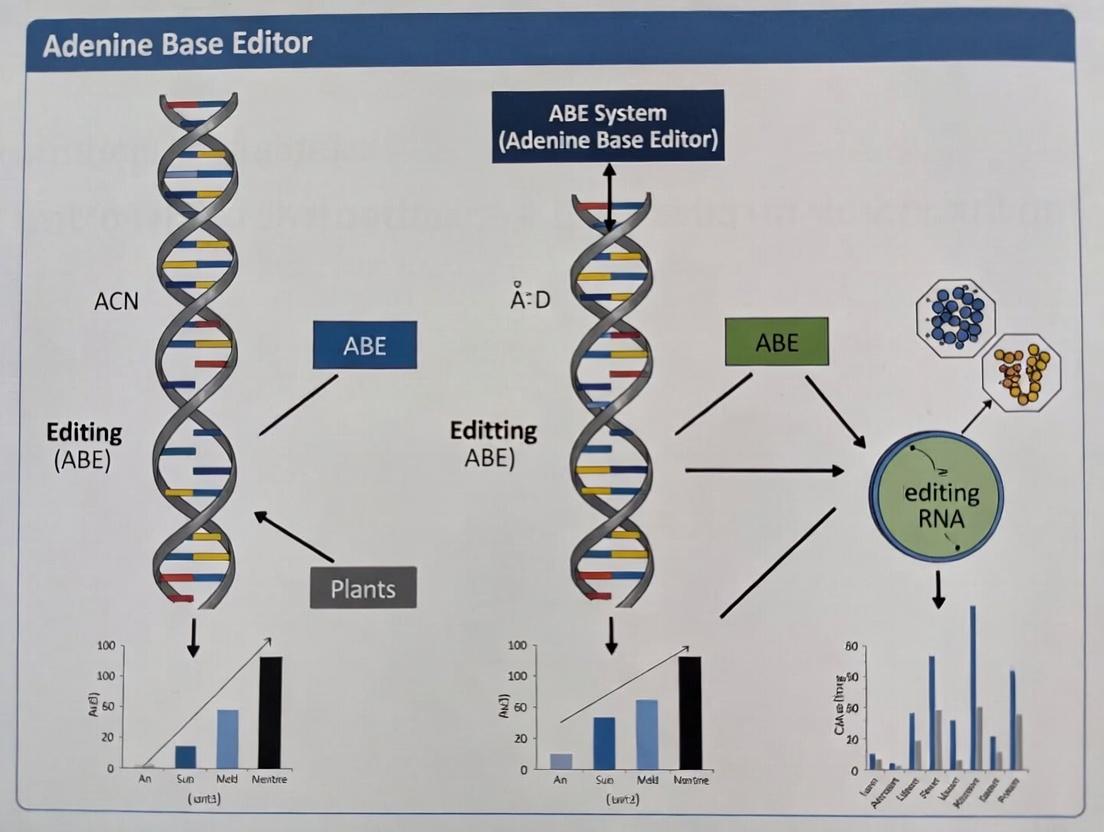
This article provides a detailed, step-by-step protocol for implementing Adenine Base Editors (ABE) in plant systems, tailored for researchers and scientists in plant genomics and biotechnology.
ABE in Plants: A Comprehensive Protocol Guide for Precision Base Editing in Plant Genomics Research
Abstract
This article provides a detailed, step-by-step protocol for implementing Adenine Base Editors (ABE) in plant systems, tailored for researchers and scientists in plant genomics and biotechnology. Covering foundational principles, practical methodological workflows, critical troubleshooting steps, and validation strategies, it serves as a complete guide for achieving efficient A•T to G•C conversions to create targeted point mutations for gene function analysis, trait improvement, and synthetic biology applications in plants.
Understanding ABE Technology: Principles and Evolution for Plant Genome Engineering
Within the context of a broader thesis on Adenine Base Editor (ABE) protocols for plant research, understanding the precise molecular mechanism is fundamental. ABEs enable the direct, programmable conversion of adenine (A) to guanine (G), resulting in an A•T to G•C base pair change without inducing double-strand breaks (DSBs). This is critical for plant research and therapy development, as DSBs can lead to unintended indels and complex chromosomal rearrangements.
Core Mechanism: A Three-Component System
ABE is a fusion protein consisting of three core elements:
- Catalytically impaired CRISPR-Cas9 nickase (nCas9): Guides the complex to the target DNA sequence via a programmed sgRNA and introduces a single-strand nick in the non-edited strand.
- Adenine Deaminase: Catalyzes the hydrolytic deamination of adenine (A) to inosine (I) within a specific window of the single-stranded DNA bubble created by nCas9 binding.
- sgRNA: Provides target specificity through complementary base pairing.
The conversion process avoids DSBs through a coordinated, multi-step mechanism summarized in the protocol below and visualized in Figure 1.
Protocol 2.1: In vitro Reconstitution of ABE Activity
- Objective: To demonstrate the minimal components required for A•T to G•C conversion.
- Materials:
- Purified ABE protein (e.g., ABE7.10, ABE8e).
- Target DNA plasmid (containing the protospacer adjacent motif (PAM) and target adenine).
- In vitro transcribed sgRNA.
- Reaction buffer: 20 mM HEPES pH 7.5, 150 mM KCl, 1 mM DTT, 1 mM MgCl₂.
- Stop buffer: 50 mM EDTA, 1% SDS.
- Method:
- Assemble a 50 µL reaction containing 200 ng plasmid DNA, 100 nM ABE protein, and 120 nM sgRNA in reaction buffer.
- Incubate at 37°C for 60 minutes.
- Terminate the reaction by adding 5 µL of stop buffer.
- Purify DNA and perform PCR amplification of the target region.
- Analyze the product by Sanger sequencing or high-throughput sequencing to quantify conversion efficiency.
Step-by-Step Molecular Protocol
The cellular editing workflow is detailed below.
Protocol 3.1: Cellular ABE Delivery and Editing in Plant Protoplasts
- Objective: To achieve A•T to G•C conversion in plant cells.
- Materials: See The Scientist's Toolkit.
- Method:
- Design & Cloning: Design sgRNA targeting the genomic locus of interest. Clone the sgRNA expression cassette into an ABE expression vector (containing nCas9-adenine deaminase fusion) suitable for your plant system.
- Delivery: For protoplasts, use polyethylene glycol (PEG)-mediated transfection with 20 µg of the ABE plasmid DNA per 10^6 protoplasts. For whole plants, consider Agrobacterium-mediated transformation or particle bombardment.
- Incubation: Incubate transfected protoplasts in the dark at 25°C for 48-72 hours to allow for gene expression and editing.
- Genomic DNA Extraction: Harvest cells and extract genomic DNA using a CTAB-based method.
- Analysis: Amplify the target locus by PCR (35 cycles). Submit the PCR product for next-generation amplicon sequencing to precisely quantify editing efficiency and purity.
Table 1: Quantitative Performance of Common ABE Variants in Plant Systems
| ABE Variant | Deaminase Origin | Typical Editing Window | Reported Efficiency in Plants (Range) | Key Feature |
|---|---|---|---|---|
| ABE7.10 | E. coli TadA*7.10 | Positions 4-8 (≈Protospacer) | 10% - 50% | First high-efficiency ABE |
| ABE8e | E. coli TadA*8e | Positions 4-8 | 30% - 80% | Enhanced activity & broader sequence compatibility |
| ABE8s | E. coli TadA*8s | Positions 4-8 | 20% - 60% | Improved specificity (reduced off-target RNA editing) |
The Scientist's Toolkit
Table 2: Essential Research Reagent Solutions for ABE Plant Research
| Item | Function | Example/Notes |
|---|---|---|
| ABE Expression Vector | Delivers the nCas9-deaminase fusion gene. | pRPS5a-ABE8e-AtU6-sgRNA for Arabidopsis. |
| sgRNA Cloning Kit | For efficient sgRNA sequence insertion. | Golden Gate or BsaI-based assembly kits. |
| Plant Delivery Reagent | Facilitates DNA uptake into plant cells. | PEG4000 for protoplasts; Agrobacterium strain GV3101 for stable transformation. |
| High-Fidelity PCR Mix | Amplifies target genomic locus without errors. | Essential for preparing sequencing amplicons. |
| Next-Gen Sequencing Kit | Quantifies editing efficiency and outcomes. | Illumina MiSeq platform with 300bp paired-end kits. |
| Cellulase & Macerozyme | Digest plant cell walls to generate protoplasts. | Critical for protoplast-based transient assays. |
| CTAB DNA Extraction Buffer | Isolates high-quality genomic DNA from plant tissue. | Contains CTAB, NaCl, EDTA, Tris-HCl, β-mercaptoethanol. |
Mechanism Visualization
Title: ABE Mechanism: A to G Conversion Without DSBs
Title: ABE Plant Research Experimental Workflow
Adenine Base Editors (ABEs) are precision genome engineering tools that enable the direct, irreversible conversion of A•T to G•C base pairs without inducing double-stranded DNA breaks or requiring donor DNA templates. Within plant research, ABEs offer a transformative approach for introducing gain-of-function mutations, correcting deleterious SNPs, and performing functional genomics in a wide range of crops, many of which are polyploid and recalcitrant to traditional breeding. This application note details the architecture, evolution, and specificities of key ABE variants (ABE7.10, ABE8e, etc.) and provides protocols for their application in plant systems, contributing to a broader thesis aimed at optimizing base editing for crop improvement and trait discovery.
Architecture and Evolution of ABE Variants
ABEs are fusion proteins consisting of a catalytically impaired Cas9 nuclease (nickase or dead) and an engineered adenine deaminase enzyme. The deaminase operates on single-stranded DNA exposed by the Cas9-sgRNA complex within the R-loop. Evolution from ABE7.10 to ABE8 series represents a significant leap in efficiency and activity window.
Table 1: Comparison of Key ABE Variants
| Feature | ABE7.10 | ABE8e | ABE8s | ABE8.17-m |
|---|---|---|---|---|
| Deaminase Origin | E. coli TadA (TadA7.10) | E. coli TadA (TadA8e) | E. coli TadA (TadA8s) | E. coli TadA (TadA8.17-m) |
| Primary Cas9 Fusion | SpCas9n(D10A) | SpCas9n(D10A) | SaCas9n(D10A) | SpCas9n(D10A) |
| Typical Activity Window | Positions 4-8 (protospacer) | Positions 4-8 (protospacer) | Positions 4-8 (protospacer) | Positions 4-8 (protospacer) |
| Relative Efficiency in Plants | Low-Moderate (5-25%) | Very High (up to 80% in some systems) | High (in SaCas9 context) | High with altered specificity |
| Key Characteristic | First highly efficient ABE | Enhanced activity via directed evolution; higher on-target | Smaller size for AAV delivery | Reduced off-target RNA editing |
| Common Plant Delivery | Agrobacterium, PEG-transfection | Agrobacterium, RNP, PEG-transfection | Agrobacterium | Agrobacterium |
Data compiled from recent literature (Gaudelli et al., Nature 2017; Richter et al., Nature Biotech 2020; Lapinaite et al., Nature 2020; et al.).
Key Reagent Solutions for Plant ABE Experiments
Table 2: The Scientist's Toolkit for Plant ABE Research
| Reagent/Material | Function & Critical Notes |
|---|---|
| ABE Expression Construct | Binary vector for Agrobacterium or expression cassette for direct delivery. Contains plant codon-optimized ABE (e.g., ABE8e) under a constitutive (e.g., CaMV 35S) or tissue-specific promoter. |
| sgRNA Expression Construct | Typically expressed from a Pol III promoter (e.g., AtU6). Multiple sgRNAs can be arrayed for multiplex editing. Must be designed for the intended ABE-Cas9 variant. |
| Agrobacterium tumefaciens Strain | GV3101 or EHA105 for dicot transformation; AGL1 for some monocots. Used for stable or transient (e.g., leaf infiltration) delivery. |
| Plant Tissue Culture Media | Callus induction, regeneration, and selection media appropriate for the plant species. Includes antibiotics for vector selection and phytohormones. |
| PEG Solution (for Protoplasts) | Polyethylene glycol mediates DNA/RNP delivery into protoplasts for rapid, transient assay of editing efficiency. |
| Editing Efficiency Quantification Kit | Next-generation sequencing (NGS) library prep kit or targeted PCR amplicon sequencing service. Restriction enzyme-based assays often fail due to lack of cleavage sites. |
| Off-Target Prediction Software | Cas-OFFinder, CRISPOR, or plant-specific tools to predict potential off-target sites for sgRNA design and subsequent analysis. |
Experimental Protocol: ABE8e-Mediated Base Editing inNicotiana benthamianavia Agrobacterium Transient Assay
This protocol provides a rapid (one-week) qualitative and quantitative assessment of ABE activity and optimal sgRNA design in planta.
Materials:
- Agrobacterium strains harboring: 1) pABE8e binary vector, 2) psgRNA binary vector.
- N. benthamiana plants (4-5 weeks old).
- Infiltration buffer (10 mM MES, 10 mM MgCl₂, 150 µM Acetosyringone, pH 5.6).
- Liquid LB media with appropriate antibiotics.
- NGS library preparation reagents.
Method:
- Culture Agrobacterium: Inoculate single colonies of each construct into 5 mL LB with antibiotics. Grow overnight at 28°C, shaking.
- Induce Cultures: Dilute overnight cultures 1:50 in fresh LB with antibiotics and 20 µM Acetosyringone. Grow to OD₆₀₀ ~0.6-0.8.
- Prepare Infiltration Mix: Pellet cells, resuspend in infiltration buffer to final OD₆₀₀ = 0.5 for each strain. Mix the ABE8e and sgRNA strains in a 1:1 ratio. Let sit at room temp for 1-3 hours.
- Infiltrate Plants: Using a needleless syringe, infiltrate the bacterial mix into the abaxial side of 2-3 leaves per plant. Mark the infiltration zone.
- Incubate Plants: Grow plants under normal conditions for 5-7 days.
- Sample Harvest: Harvest infiltrated leaf tissue, avoiding major veins. Flash-freeze in liquid N₂.
- Genomic DNA Extraction: Use a CTAB-based or commercial kit to extract high-quality gDNA.
- Efficiency Analysis: Amplify the target region by PCR. Clone amplicons for Sanger sequencing or prepare amplicons for NGS. Quantify base conversion efficiency and purity (e.g., % A•T to G•C, % indels).
Experimental Protocol: Stable Transformation of Rice Callus with ABE7.10
This protocol outlines a stable transformation approach for generating edited rice plants.
Materials:
- Rice calli (indica or japonica) derived from mature seeds.
- Agrobacterium strain EHA105 harboring a single binary vector expressing both ABE7.10 and sgRNA.
- Co-cultivation, resting, selection, and regeneration media (N6-based).
- Hygromycin or appropriate selection agent.
Method:
- Callus Preparation: Sub-culture fresh, embryogenic calli on fresh callus induction media 4-7 days before transformation.
- Agrobacterium Preparation: Grow Agrobacterium to late-log phase in LB with antibiotics. Pellet and resuspend in liquid co-cultivation medium to OD₆₀₀ ~0.8-1.0.
- Infection & Co-culture: Immerse calli in the Agrobacterium suspension for 15-30 min. Blot dry on sterile paper and transfer to solid co-cultivation media. Incubate in the dark at 22-25°C for 2-3 days.
- Resting & Selection: Transfer calli to resting media with antibiotics to suppress Agrobacterium (no plant selection) for 5-7 days. Then, transfer to selection media containing both antibiotics (e.g., Hygromycin) and a bactericide.
- Regeneration: After 3-4 weeks, transfer proliferating, resistant calli to pre-regeneration and then regeneration media to induce shoot formation.
- Rooting & Acclimatization: Transfer developed shoots to rooting media. Once rooted, transfer plantlets to soil.
- Genotyping: Extract DNA from leaf tissue. Sequence the target locus to identify and characterize edits. Screen for transgene-free edited plants in the T1 or T2 generation.
Visualizing ABE Workflow and Specificity
Title: ABE Experiment Workflow for Plants
Title: ABE DNA Targeting and Deamination Window
Application Notes: ABE Delivery and Editing in Plants
Base editing in plants, particularly using Adenine Base Editors (ABEs), presents unique challenges distinct from animal systems. The plant cell wall is a formidable physical barrier to biomolecule delivery. Furthermore, successful gene editing requires efficient delivery into regenerable cells and subsequent whole-plant regeneration, which is species- and genotype-dependent. This protocol details methods to overcome these hurdles, framed within a thesis on establishing robust ABE protocols for plant research and trait development.
Key Quantitative Data on Delivery Efficiency
The following table summarizes the efficiency ranges of various delivery methods for ABE ribonucleoprotein (RNP) complexes or plasmids into plant cells, based on current literature.
| Delivery Method | Target Tissue | Typical Editing Efficiency Range (in regenerated plants) | Key Advantages | Major Limitations |
|---|---|---|---|---|
| PEG-Mediated Transfection | Protoplasts | 0.1% - 10% | High-throughput, genotype-independent, no DNA integration. | Low regeneration capacity, protoplast isolation tedious. |
| Agrobacterium tumefaciens | Explants (leaf, cotyledon) | 1% - 60% (stable) | Broad host range, efficient DNA delivery, low copy number. | Random DNA integration (T-DNA), species-dependent efficiency. |
| Biolistics (Gene Gun) | Embryogenic callus, meristems | 0.01% - 5% | DNA- and RNA-free RNP delivery possible, bypasses wall in situ. | High cell damage, complex equipment, low throughput. |
| Nanoparticle-Mediated | Protoplasts, tissues | 0.5% - 15% (protoplasts) | Tunable, can deliver RNPs, emerging potential for foliar spray. | Optimization required per species/cell type, variable stability. |
| Virus-Induced Genome Editing (VIGE) | Systemic infection | Up to 90% (somatic) | Very high somatic editing, rapid systemic spread. | Currently limited to RNA viruses, editing not heritable in most cases. |
Experimental Protocols
Protocol 1: ABE8e RNP Delivery into Arabidopsis Protoplasts via PEG Transfection
This protocol enables DNA-free base editing for rapid testing of guide RNA efficacy.
Materials:
- Arabidopsis mesophyll protoplasts (isolated from 3-4 week old leaves)
- Purified ABE8e-nSpCas9 nickase protein
- In vitro transcribed or synthetic sgRNA (targeting adenine in NGG PAM context)
- PEG solution (40% PEG 4000, 0.2 M mannitol, 0.1 M CaCl₂)
- W5 solution (154 mM NaCl, 125 mM CaCl₂, 5 mM KCl, 2 mM MES, pH 5.7)
- MMg solution (0.4 M mannitol, 15 mM MgCl₂, 4 mM MES, pH 5.7)
Method:
- RNP Complex Formation: Mix 20 µg of purified ABE8e protein with 10 µg of sgRNA in a 1.5 mL tube. Incubate at 25°C for 15 minutes.
- Protoplast Preparation: Isprotoplasts yield (~10⁵ cells) in 1 mL of MMg solution.
- Transfection: Add the RNP complex to the protoplast suspension. Gently mix.
- Add 1.1 mL of 40% PEG solution dropwise while gently swirling. Incubate at room temperature for 15 minutes.
- Wash & Culture: Dilute the mixture with 10 volumes of W5 solution. Pellet protoplasts at 100 x g for 5 minutes. Gently resuspend in 2 mL of appropriate culture medium.
- Analysis: Incubate in dark for 48-72 hours. Harvest cells for genomic DNA extraction. Assess editing efficiency by targeted next-generation sequencing (NGS) or RFLP analysis of PCR amplicons.
Protocol 2:Agrobacterium-Mediated ABE Delivery into Tomato Cotyledon Explants for Regeneration
This protocol is for generating stable, heritable edits in a crop species.
Materials:
- Tomato (Solanum lycopersicum) cultivar M82 seeds
- Agrobacterium tumefaciens strain GV3101 harboring binary vector with ABE8e and sgRNA expression cassettes
- Co-cultivation medium (MS salts, 2% sucrose, 1 mg/L BAP, 0.1 mg/L IAA, pH 5.8)
- Selection/Regeneration medium (Co-cultivation medium + 500 mg/L carbenicillin, 100 mg/L kanamycin)
- Rooting medium (½ MS salts, 1% sucrose, 250 mg/L carbenicillin, pH 5.8)
Method:
- Explants: Surface-sterilize seeds and germinate in vitro. Excise 5-7 mm cotyledon segments from 7-day-old seedlings.
- Agrobacterium Preparation: Grow Agrobacterium overnight, pellet, and resuspend in co-cultivation medium to OD₆₀₀ = 0.5.
- Infection & Co-culture: Immerse explants in bacterial suspension for 20 minutes. Blot dry and place on co-cultivation plates. Incubate at 25°C in dark for 2 days.
- Selection & Regeneration: Transfer explants to Selection/Regeneration medium. Subculture every 2 weeks. Shoots should emerge in 4-6 weeks.
- Rooting & Acclimation: Excise shoots and transfer to rooting medium. Once roots develop, transplant plantlets to soil.
- Genotyping: Extract genomic DNA from regenerated plant leaves. Use PCR and sequencing to identify and characterize A•T to G•C edits at the target locus.
Visualizations
Plant ABE Workflow & Key Challenges
ABE Mechanism Leading to Gene Edit
The Scientist's Toolkit: Key Reagent Solutions
| Item | Function in Plant ABE Experiments |
|---|---|
| Plant Cell Wall-Degrading Enzymes (Cellulase, Macerozyme, Pectolyase) | Enzymatic digestion of cell walls to generate protoplasts for PEG-mediated RNP delivery. |
| Polyethylene Glycol (PEG) 4000 | Induces membrane fusion and pore formation, facilitating direct uptake of RNP complexes into protoplasts. |
| Agrobacterium tumefaciens Strain (e.g., GV3101, EHA105) | Engineered bacterial vector for T-DNA transfer of ABE expression constructs into plant genomes. |
| Gold or Tungsten Microparticles | Coated with DNA or RNPs for biolistic delivery, physically bombarding them through the cell wall. |
| Plant Tissue Culture Media (MS, B5 basal salts) | Formulated for specific species to support the regeneration of whole plants from edited single cells or explants. |
| Selective Agents (Antibiotics, Herbicides) | Select for transformed tissues containing the ABE vector (e.g., kanamycin) or against Agrobacterium (e.g., carbenicillin). |
| Cytokinin/Auxin Hormones (e.g., BAP, 2,4-D, IAA) | Precisely regulate callus induction, shoot organogenesis, and root development during regeneration. |
| Guide RNA Cloning Vector (e.g., pAtU6-sgRNA, pOsU3-sgRNA) | Plant-specific Pol III promoters for high-level, constitutive sgRNA expression in the nucleus. |
Within the broader thesis on Adenine Base Editor (ABE) protocols in plants, this article details the application of base editing technologies to achieve three foundational genetic modifications: gene knockouts, gain-of-function mutations, and precise single nucleotide polymorphism (SNP) introduction. ABEs, fusing a catalytically impaired Cas9 nickase with an engineered adenine deaminase, directly convert A•T to G•C base pairs without requiring double-strand breaks or donor DNA templates. This enables efficient and precise editing, critical for functional genomics and crop improvement.
Application Notes
Application: ABEs can generate targeted knockouts by introducing premature stop codons (e.g., TAG, TAA, TGA) within the early exons of a gene. Mechanism: The editor is directed to a specific adenine within the coding sequence. Conversion of a codon like CAA (Gln) to CAG (still Gln) is silent, but conversion of CAA to the stop codon TAG (via CAG->TAG on the opposite strand) disrupts translation. Considerations: Requires careful sgRNA design to target an 'A' within a suitable editing window (typically positions 4-8, counting the PAM as 21-23) that can create a stop codon upon A-to-G conversion.
Gain-of-Function Mutations via Targeted Amino Acid Substitution
Application: ABEs can install specific missense mutations known to confer enhanced function (e.g., in substrate binding domains, enzyme active sites, or regulatory regions). Mechanism: Directs A-to-G conversion to change a single amino acid. For example, converting an AAA (Lys) codon to AGA (Arg) can alter protein charge and function. Advantage: Enables the study of protein function domains and the creation of novel alleles for crop traits (e.g., herbicide tolerance, altered metabolism).
Application: ABEs can replicate naturally occurring, beneficial SNPs found in crop wild relatives or elite varieties into a recipient genotype. Mechanism: The target SNP (an A/T base pair) is precisely changed to a G/C base pair. This is ideal for validating quantitative trait loci (QTL) and for de novo creation of allelic series. Significance: Accelerates breeding by introducing precise, known beneficial variants without linkage drag.
Table 1: Performance Metrics of ABE in Model and Crop Plants (Recent Data)
| Plant Species | Delivery Method | Average Editing Efficiency (%)* | Range of Efficiencies Reported | Primary Application Demonstrated | Key Reference (Year) |
|---|---|---|---|---|---|
| Arabidopsis thaliana | Agrobacterium (Floral Dip) | 35.2 | 10.1 - 59.8 | Knockout, SNP Introduction | (Molla et al., 2023) |
| Nicotiana benthamiana | Agrobacterium (Leaf Infiltration) | 42.7 | 22.5 - 65.3 | Gain-of-Function, Prototype Testing | (Li et al., 2024) |
| Oryza sativa (Rice) | Protoplast / PEG | 28.5 | 15.0 - 45.0 | High-Throughput Screening | (Wang et al., 2023) |
| Oryza sativa (Rice) | Agrobacterium (Callus) | 18.9 | 5.5 - 38.2 | Stable Line Generation | (Hua et al., 2023) |
| Zea mays (Maize) | Particle Bombardment | 12.4 | 3.0 - 25.1 | Trait Development | (Veillet et al., 2023) |
| Solanum lycopersicum (Tomato) | Agrobacterium (Cotyledon) | 23.1 | 8.7 - 41.6 | Fruit Quality SNP Introduction | (Kim et al., 2024) |
*Average editing efficiency is calculated as the percentage of sequenced reads with the desired A-to-G conversion at the target site in T0 or transfected cells.
Table 2: Comparison of Genetic Outcomes from ABE Applications
| Application | Desired Base Change | Typical sgRNA Design Target | Expected Outcome | Validation Method |
|---|---|---|---|---|
| Gene Knockout | A•T -> G•C to create STOP | 'A' in codon for Trp, Gln, Arg, Glu, Lys | Premature translation termination | Sanger sequencing, Western Blot |
| Gain-of-Function | Specific A•T -> G•C | 'A' causing specific amino acid change | Altered protein activity/function | Phenotypic assay, Enzyme kinetics |
| SNP Introduction | Specific A•T -> G•C matching known SNP | Exact 'A' position of the SNP | Novel allele matching natural variant | PCR-RFLP, Targeted amplicon sequencing |
Experimental Protocols
Protocol 4.1: Design and Cloning of ABE Constructs for Plant Transformation
Objective: To assemble a plant-expression vector harboring the ABE components (nCas9-adenine deaminase and target-specific sgRNA). Materials: pRGEB32-ABE7.10 backbone (or similar), BsaI-HF restriction enzyme, T4 DNA Ligase, oligonucleotides for sgRNA, competent E. coli. Steps:
- sgRNA Design: Identify the 20-nt spacer sequence 5' of an NGG PAM on the genomic sense strand. Ensure the target 'A' is within positions 4-8 (protospacer position 1 is the first base 5' of the PAM).
- Oligo Annealing: Synthesize oligos: Top 5'-GATTT-[20-nt spacer]-3', Bottom 5'-AAAC-[reverse complement of spacer]-3'. Anneal by heating to 95°C for 5 min, then ramp down to 25°C.
- Golden Gate Cloning: Digest the ABE vector (e.g., pRGEB32) and annealed oligos with BsaI in a thermocycler (37°C for 1 hr, then 20 cycles of 37°C for 5 min / 16°C for 10 min). Add T4 Ligase and ATP.
- Transformation: Transform the reaction into DH5α competent cells, plate on spectinomycin plates.
- Validation: Isolate plasmid and verify insert by Sanger sequencing using a U6 promoter primer.
Protocol 4.2:Agrobacterium-Mediated Stable Transformation in Rice (Callus)
Objective: Generate stably edited rice plants. Materials: Rice calli (variety Nipponbare), Agrobacterium tumefaciens strain EHA105 harboring ABE vector, co-cultivation media, selection media (hygromycin), 2N6-AS induction media. Steps:
- Agrobacterium Preparation: Inoculate a single colony of EHA105/ABE in YEP + antibiotics. Grow to OD600 ~1.0. Pellet and resuspend in 2N6-AS liquid medium (+ 100 µM acetosyringone).
- Callus Infection: Submerge healthy, embryogenic calli in the Agrobacterium suspension for 20 min. Blot dry on sterile paper.
- Co-cultivation: Place calli on 2N6-AS solid medium. Incubate in dark at 22-24°C for 3 days.
- Resting & Selection: Transfer calli to resting media (no antibiotics) for 5 days. Then transfer to selection media containing hygromycin (50 mg/L) and cefotaxime (250 mg/L) for 3-4 weeks, sub-culturing every 2 weeks.
- Regeneration: Transfer proliferating, resistant calli to regeneration media. Transfer developed plantlets to rooting media.
- Genotyping: Extract genomic DNA from leaf tissue. PCR amplify the target region and analyze by Sanger sequencing or next-generation amplicon sequencing to quantify editing.
Protocol 4.3: Rapid Prototyping inNicotiana benthamianavia Leaf Infiltration
Objective: Quickly test ABE efficiency and specificity in planta. Materials: 4-week-old N. benthamiana plants, syringe, Agrobacterium strain GV3101 harboring ABE vector and optional reporter plasmid. Steps:
- Prepare Agrobacterium cultures as in 4.2, resuspend in infiltration buffer (10 mM MES, 10 mM MgCl2, 150 µM acetosyringone, pH 5.6) to OD600 = 0.5-1.0.
- Using a 1-mL needleless syringe, press the tip against the abaxial side of a leaf and infiltrate the bacterial suspension.
- Mark the infiltration zone. Incubate plants under normal growth conditions for 3-5 days.
- Harvest infiltrated leaf disc. Isolate genomic DNA or total protein.
- For efficiency analysis, use PCR/amplicon-seq on the genomic DNA. For knockout validation, perform Western blot if an antibody is available.
Protocol 4.4: Molecular Validation by Amplicon Sequencing
Objective: Quantify base editing efficiency and identify potential off-target events. Materials: High-fidelity PCR master mix, primers with Illumina adapters, SPRIselect beads, Illumina sequencing platform. Steps:
- PCR Amplification: Amplify the target region (and known off-target sites) from genomic DNA using high-fidelity polymerase. Use primers with overhangs for dual-index barcoding.
- Indexing PCR: Perform a second, limited-cycle PCR to add unique sample indices and full Illumina sequencing adapters.
- Library Purification: Pool PCR products and purify using SPRIselect beads (0.8x ratio).
- Sequencing: Quantify library, dilute, and sequence on a MiSeq (2x250 bp) or similar.
- Data Analysis: Use CRISPResso2 or similar tool. Align reads to the reference, quantify the percentage of reads with A-to-G conversions at the target site, and assess indel frequency.
Diagrams
Diagram 1: ABE Workflow in Plants
Diagram 2: ABE Molecular Mechanism
The Scientist's Toolkit: Research Reagent Solutions
Table 3: Essential Materials for ABE-based Plant Research
| Item | Function & Application | Example/Supplier Notes |
|---|---|---|
| ABE Plasmid Backbone | Expresses nCas9-adenine deaminase fusion and sgRNA scaffold in plants. | pRGEB32-ABE7.10, pJBEZ series. Contains plant promoters (e.g., ZmUbi, AtU6) and selectable marker (e.g., hptII). |
| High-Fidelity Polymerase | For error-free amplification of target loci for cloning and genotyping. | Q5 (NEB), Phusion (Thermo). Critical for preparing sequencing amplicons. |
| BsaI-HF Restriction Enzyme | For Golden Gate assembly of sgRNA oligos into the ABE vector. | NEB BsaI-HFv2. Allows efficient, directional cloning. |
| Agrobacterium Strain | For stable or transient plant transformation. | EHA105 (rice, monocots), GV3101 (N. benthamiana, dicots). Disarmed Ti-plasmid, suitable for binary vectors. |
| Plant Tissue Culture Media | For callus induction, co-cultivation, selection, and regeneration of transformants. | N6 media (rice), MS media (tomato, tobacco). Must be supplemented with appropriate hormones and antibiotics. |
| Selection Antibiotics | For selecting transformed plant tissues and maintaining plasmid in bacteria. | Hygromycin (plant selection), Spectinomycin (bacterial selection for plasmid), Cefotaxime (to kill Agrobacterium). |
| Acetosyringone | Phenolic compound that induces Agrobacterium vir genes, enhancing T-DNA transfer. | Used in co-cultivation and infiltration media. Typical working concentration: 100-200 µM. |
| SPRIselect Beads | For size selection and purification of PCR amplicons for next-generation sequencing libraries. | Beckman Coulter. Enables clean-up and normalization of amplicon pools. |
| CRISPResso2 Software | Bioinformatics tool for quantifying base editing efficiency from sequencing data. | Open-source. Calculates % editing, identifies indels, and visualizes allele distributions. |
| sgRNA Design Tool | In silico design of target-specific spacers and prediction of potential off-targets. | CHOPCHOP, CRISPR-P 2.0, Cas-Designer. Essential for identifying optimal target "A" within window. |
This application note, framed within a broader thesis on Adenine Base Editor (ABE) protocol development for plants, provides a comparative analysis of three core genome editing technologies: CRISPR-Cas9 Knockout, Cytosine Base Editors (CBE), and Adenine Base Editors (ABE). It details their mechanisms, applications, and quantitative performance in plant systems, followed by standardized protocols to facilitate robust experimental design.
Mechanism and Editing Outcomes
CRISPR-Cas9 Knockout: Utilizes Cas9 nuclease to create a DNA double-strand break (DSB), repaired by error-prone Non-Homologous End Joining (NHEJ), resulting in small insertions or deletions (indels) that disrupt gene function. Cytosine Base Editor (CBE): Fuses a catalytically impaired Cas9 (dCas9 or nCas9) to a cytidine deaminase enzyme. Converts C•G to T•A base pairs within a defined editing window without requiring DSBs. Adenine Base Editor (ABE): Fuses nCas9 to an engineered adenosine deaminase enzyme. Converts A•T to G•C base pairs within a defined editing window without DSBs.
Performance Metrics in Model Plants
Data compiled from recent literature (2023-2024).
Table 1: Efficiency and Product Profiles in Arabidopsis thaliana and Nicotiana benthamiana
| Metric | CRISPR-Cas9 Knockout | CBE (e.g., A3A-PBE) | ABE (e.g., ABE8e) |
|---|---|---|---|
| Typical Editing Efficiency | 10-60% (biallelic) | 10-50% (homozygous) | 5-40% (homozygous) |
| Primary Product | Indels (frameshift) | C•G to T•A | A•T to G•C |
| Precision | Low (random indels) | High (targeted point mutation) | High (targeted point mutation) |
| Bystander Edits | N/A | Common within window (multi-C sites) | Less common, but possible |
| Transgene-Free Inheritance | Yes (segregation) | Yes (segregation) | Yes (segregation) |
| Multiplexing Potential | High (tRNA/gRNA arrays) | Moderate | Moderate |
Table 2: Key Characteristics and Applications
| Characteristic | CRISPR-Cas9 Knockout | CBE | ABE |
|---|---|---|---|
| DSB Required | Yes | No | No |
| Primary Use Case | Gene knockouts, functional genomics | Create STOP codons, missense mutations | Correct or install G•C base pairs, missense mutations |
| Common Target | Exonic regions | Codons CAA/CAG/CGA/TGG | Codons AAG/AGA/AGT/ATC |
| Off-target Risk | DSB-dependent & independent | Mostly sgRNA-dependent sequence off-targets | Mostly sgRNA-dependent sequence off-targets |
| Major Limitation | NHEJ unpredictability, large deletions | Restricted to C•G targets, bystander edits | Restricted to A•T targets, lower efficiency in plants |
Detailed Experimental Protocols
General Workflow for Plant Genome Editing
A universal initial workflow applies to all three technologies prior to the specific editing step.
Plant Genome Editing General Workflow
Protocol A: ABE-Mediated A•T to G•C Editing in Arabidopsis
Objective: Install a specific A•T to G•C point mutation to create a herbicide-resistance allele. Reagents: See "The Scientist's Toolkit" (Section 5).
Steps:
- Design: Identify target adenine (A) within protospacer (positions 4-8 optimal). Design sgRNA with NGG PAM. Use tools like BE-Hive for prediction.
- Cloning: Clone the sgRNA expression cassette into the plant binary vector pABE8e-P2A-EGFP (or similar) using Golden Gate assembly.
- Transformation: Transform the vector into Agrobacterium tumefaciens strain GV3101. Perform floral dip transformation of Arabidopsis.
- Selection: Harvest T1 seeds. Select on media containing appropriate antibiotic (e.g., Basta for the vector marker) and screen for GFP fluorescence.
- Genotyping: a. Isolate genomic DNA from T1 seedling leaf tissue. b. Perform PCR amplification of the target region (Phusion High-Fidelity DNA Polymerase). c. Purify PCR product and submit for Sanger sequencing. d. Analyze chromatograms using decomposition tools (TIDE, BE-Analyzer, EditR) to quantify base editing efficiency.
- Segregation: Grow edited T1 plants to harvest T2 seeds. Screen T2 population to identify transgene-free, homozygous edited lines by genotyping and segregation of the selectable marker.
Protocol B: CBE-Mediated C•G to T•A Editing in Nicotiana benthamiana
Objective: Create a premature STOP codon via C•G to T•A editing. Reagents: See "The Scientist's Toolkit" (Section 5).
Steps:
- Design: Identify target cytosine (C) within protospacer. Design sgRNA. Consider potential bystander Cs.
- Cloning: Assemble sgRNA into a CBE binary vector (e.g., pTX081: A3A-PBE-NG) via Golden Gate.
- Transient Expression: Transform vector into Agrobacterium (strain LBA4404). Grow culture, resuspend in infiltration buffer (10 mM MES, 10 mM MgCl2, 150 µM Acetosyringone). Pressure-infiltrate into leaves of 4-week-old N. benthamiana plants.
- Sampling: Harvest infiltrated leaf discs at 3-5 days post-infiltration (dpi).
- Analysis: Extract genomic DNA. Perform PCR and deep sequencing (Illumina MiSeq) of the target amplicon. Analyze using CRISPResso2 to determine precise base conversion frequencies and indel percentages.
Protocol C: CRISPR-Cas9 Knockout in Rice Protoplasts
Objective: Rapid validation of sgRNA activity for gene knockout. Reagents: See "The Scientist's Toolkit" (Section 5).
Steps:
- Design: Design sgRNA targeting early exon of the rice gene.
- Vector Preparation: Use a Ubi:SpCas9:sgRNA expression vector.
- Protoplast Isolation & Transfection: a. Isolate protoplasts from rice etiolated seedlings using enzyme solution (1.5% Cellulase R10, 0.75% Macerozyme R10 in 0.4M Mannitol). b. Purify protoplasts via floatation in W5 solution (154 mM NaCl, 125 mM CaCl2, 5 mM KCl, 2 mM MES). c. Transfect 10 µg of plasmid DNA into 2x10⁵ protoplasts using PEG-mediated transformation (40% PEG4000). d. Incubate in the dark for 48 hours.
- DNA Extraction & Assay: Harvest protoplasts, extract genomic DNA. Perform PCR flanking the target site. Analyze editing efficiency via T7 Endonuclease I (T7EI) assay or by sequencing.
Decision Pathway for Technology Selection
Decision Tree for Editing Tool Selection
The Scientist's Toolkit: Key Reagent Solutions
Table 3: Essential Reagents for Plant Base Editing and Knockout Experiments
| Reagent Category | Specific Example(s) | Function in Protocol |
|---|---|---|
| Editor Expression Vectors | pABE8e-P2A-EGFP (for ABE), pTX081/A3A-PBE (for CBE), pRGEB32-Ubi-Cas9 (for KO) | Plasmid backbone containing the editor fusion protein, sgRNA scaffold, and plant regulatory elements. |
| sgRNA Cloning Kit | Golden Gate Assembly Kit (BsaI-HFv2), T4 DNA Ligase | Modular assembly of specific sgRNA sequences into the expression vector. |
| Transformation-Competent Agrobacterium | GV3101 (pSoup), LBA4404, EHA105 | Delivery of T-DNA containing the editing system into plant cells. |
| Plant Tissue Culture Media | MS Basal Salts, Phytagel, appropriate antibiotics (e.g., Kanamycin, Hygromycin B), hormones (e.g., 2,4-D for callus) | Selection of transformed tissues and regeneration of whole plants. |
| Genotyping Enzymes | Phusion High-Fidelity DNA Polymerase, T7 Endonuclease I (T7EI), DpnI | Amplification and mutation detection at the target genomic locus. |
| Infiltration Buffer (Transient) | 10 mM MES pH 5.6, 10 mM MgCl₂, 150 µM Acetosyringone | Preparation of Agrobacterium for leaf infiltration in transient assays. |
| Protoplast Isolation Enzymes | Cellulase R10, Macerozyme R10 | Digestion of plant cell walls to release protoplasts for transfection. |
| PEG Transfection Solution | 40% PEG4000, 0.2M Mannitol, 0.1M CaCl₂ | Facilitates plasmid DNA uptake into protoplasts. |
Step-by-Step ABE Protocol for Plants: From Construct Design to Regeneration
Within the broader thesis on developing robust Adenine Base Editor (ABE) protocols for plant research, this application note details the critical first stage: computational and empirical strategies for selecting genomic targets and designing single guide RNAs (sgRNAs) to maximize base editing efficiency. Precise A•T to G•C conversion in plants enables the study of gene function and the development of improved crop traits without introducing double-strand DNA breaks.
Key Parameters for Target Selection
Optimal target selection requires evaluating multiple sequence and genomic context factors. The following table summarizes the primary quantitative criteria based on current literature and plant-specific studies.
Table 1: Key Quantitative Parameters for Target and gRNA Evaluation
| Parameter | Optimal Range / Characteristic | Rationale & Impact on ABE Efficiency |
|---|---|---|
| Editing Window Position | Adenines at positions 4-8 (Protospacer positions 5-9)* within the sgRNA spacer. | The deaminase domain of ABE (e.g., TadA-8e) has maximal activity on adenines within this window. Positioning the target A within this window is paramount. |
| sgRNA Spacer Length | 20-nt (standard) or truncated 17-19-nt "enhancer" versions. | Truncated sgRNAs can reduce off-target effects and may improve efficiency for some ABE variants in plants. |
| PAM Sequence (for nSpCas9) | 5'-NGG-3' (immediately 3' of target sequence). | Essential for Cas9 binding. The "GG" dinucleotide must be present; the preceding base (N) influences efficiency. |
| Target Sequence GC Content | 40%-60% | Moderate GC content promotes stable sgRNA-DNA heteroduplex formation. Very high or low GC can reduce efficiency. |
| Presence of Poly-A Tracts | Avoid sequences with 3+ consecutive adenines. | Can lead to simultaneous editing of multiple bases, potentially causing unwanted amino acid changes. |
| Genomic Context | Accessible chromatin regions (e.g., DNase I hypersensitive sites). | Open chromatin facilitates sgRNA and ABE complex binding. Epigenetic marks like high H3K27ac can indicate accessibility. |
| Off-Target Potential | Minimize sequence similarity (<3 mismatches) to other genomic loci. | Reduces unintended edits. Requires genome-wide specificity checks using tools like Cas-OFFinder. |
| Proximity to Exon-Intron Boundary | >10 bp from splice sites. | Prevents disruption of RNA splicing machinery. |
Note: Position numbering varies. 'A' within the optimal window is often referred to as the "target adenine."
Experimental Protocol: In Silico Target Identification and gRNA Design
This protocol provides a step-by-step workflow for designing high-potential sgRNAs for ABE experiments in a plant species with a sequenced genome.
Materials & Software:
- Reference genome sequence (FASTA format) and annotation file (GTF/GFF format).
- List of target genes or genomic regions.
- Command-line terminal access (Linux/Mac) or compatible environment.
- Installed software:
CRISPRseek,Bowtie2,Cas-OFFinder, or web-based platforms like Benchling or CRISPOR.
Procedure:
Part A: Defining the Target Region
- Identify the precise genomic coordinate of the codon or regulatory element you wish to modify.
- Extract a 150-200 bp sequence flanking the site of interest from the reference genome using a tool like
samtools faidx. - For coding sequences, ensure the edit will create the desired amino acid change (e.g., a CAG (Q) to CGG (R) conversion via A•T to G•C on the non-template strand). Use the reverse complement for design.
Part B: Designing Candidate sgRNAs
- Input the target sequence into a gRNA design tool (e.g., CRISPOR:
http://crispor.tefor.net). - Set parameters: Specify the Cas9 variant (e.g., S. pyogenes Cas9), PAM as
NGG, and protospacer length as 20. - Generate all possible sgRNAs targeting both DNA strands within your input sequence.
- Filter 1: Retain only sgRNAs where the target adenine (A) to be edited is located at positions 4-8 (protospacer coordinates 5-9) relative to the PAM.
- Filter 2: Score and rank remaining sgRNAs by predicted on-target efficiency scores (e.g., Doench '16 score, Moreno-Mateos score adapted for plants). Select the top 3-5 candidates.
- Filter 3: Perform an off-target search for each candidate. Use the tool's genome-wide search function, allowing up to 3 mismatches. Discard any sgRNA with a perfect or near-perfect match (0-1 mismatches) at another genomic locus, especially within coding regions.
Part C: Specificity Validation and Final Selection
- For the final candidate sgRNAs, manually inspect the potential off-target loci. Are they in intergenic or repetitive regions? If in genes, consider the potential functional consequences.
- Check for sequence polymorphisms (SNPs) in the target site between the reference genome and your specific plant line by aligning sequencing data.
- Select 2-3 final sgRNAs with the highest on-target scores, optimal editing window positioning, and minimal off-target risks for empirical testing.
Research Reagent Solutions Toolkit
Table 2: Essential Reagents and Materials for Target Validation
| Item | Function/Application | Example/Notes |
|---|---|---|
| ABE Expression Vector (Plant) | Delivers the TadA-Cas9 fusion protein and sgRNA into plant cells. | pRPS5a::ABE8e-nSpCas9 (NLS)-tNOS for Arabidopsis; pZmUbi::ABE7.10-nSpCas9 for maize. |
| sgRNA Cloning Backbone | Vector for expressing the designed sgRNA under a Pol III promoter. | pAtU6::sgRNA scaffold or pOsU3::sgRNA scaffold. Uses Golden Gate or BsaI-based assembly. |
| High-Fidelity DNA Polymerase | Amplifies target genomic loci for validation and cloning. | Q5 High-Fidelity DNA Polymerase (NEB) for error-free PCR of gRNA blocks. |
| T7 Endonuclease I or Surveyor Nuclease | Detects indels from potential Cas9 nuclease activity (control for editing purity). | Used in preliminary transfection/transformation to confirm sgRNA activity, though ABE aims to minimize indels. |
| Sanger Sequencing Primers | Amplifies the target locus for downstream sequence analysis to assess editing efficiency. | Design primers ~150-300 bp flanking the target site. |
| Next-Generation Sequencing (NGS) Library Prep Kit | For deep sequencing of target loci to quantify editing efficiency and byproducts. | KAPA HyperPlus Kit; requires custom amplicon primers with overhangs. |
| Agrobacterium Strain | For stable plant transformation (dicots and some monocots). | Agrobacterium tumefaciens GV3101 or EHA105 with appropriate Ti plasmid. |
| Plant Tissue Culture Media | For regenerating transformed plant cells. | MS (Murashige and Skoog) basal medium with plant growth regulators (auxins, cytokinins). |
Visualized Workflows
Title: Computational gRNA Design and Selection Workflow
Title: ABE Mechanism: A•T to G•C Conversion at Target
Application Notes
Vector construction is a pivotal stage in implementing adenine base editing (ABE) in plants, determining editing efficiency, specificity, and tissue applicability. The choice hinges on the balance between stable expression and transient delivery, alongside considerations of plant species, target tissue, and desired outcome (heritable vs. somatic editing). Current research emphasizes optimizing promoter strength and inducibility to minimize off-target effects while maximizing on-target editing in meristematic or regenerable cells. Delivery system selection is equally critical, with each method presenting distinct trade-offs between efficiency, cargo capacity, regulatory status, and labor intensity.
Promoter Selection for Plant ABE Expression
Promoters drive the expression of the ABE components: the adenine deaminase enzyme (TadA variant) and the Cas9 nickase (nCas9) or dead Cas9 (dCas9). The choice impacts spatial and temporal expression patterns.
RNA Polymerase II (Pol II) Promoters
These are used for expressing protein-coding sequences. They drive high, constitutive, or tissue-specific expression of the nCas9-TadA fusion protein.
- Common Examples: CaMV 35S, ZmUbi, OsActin.
- Advantages: High, sustained expression; wide range of well-characterized variants.
- Disadvantages: Prolonged expression may increase off-target editing potential.
RNA Polymerase III (Pol III) Promoters
These promoters, like U6 and 7SL, drive the expression of guide RNAs (gRNAs).
- Common Examples: AtU6, OsU6.
- Consideration: Must be matched to the plant species (e.g., AtU6 for Arabidopsis, OsU6 for rice).
Table 1: Quantitative Comparison of Common Promoters for ABE in Plants
| Promoter | Type | Typical Plant Host | Relative Expression Strength* | Primary Use in ABE |
|---|---|---|---|---|
| CaMV 35S | Pol II, Constitutive | Broad (Dicots) | High (100%) | nCas9-TadA fusion |
| ZmUbi | Pol II, Constitutive | Monocots, some Dicots | Very High (~120-150%) | nCas9-TadA fusion |
| OsActin | Pol II, Constitutive | Rice, Monocots | High (~90%) | nCas9-TadA fusion |
| AtU6 | Pol III | Arabidopsis, Dicots | N/A (gRNA) | Single gRNA transcript |
| OsU6 | Pol III | Rice, Monocots | N/A (gRNA) | Single gRNA transcript |
| PTRC | Pol II, Constitutive | Marchantia | Moderate | nCas9-TadA fusion |
*Normalized relative expression data from transient assays in respective model systems.
Delivery System Selection
The method of introducing ABE components into plant cells is crucial for successful editing.
1Agrobacterium-Mediated Transformation (T-DNA)
The most common method for stable transformation in many dicots and monocots.
- Protocol: Agrobacterium tumefaciens Transformation of Arabidopsis via Floral Dip
- Vector Construction: Clone the ABE expression cassette (e.g., 35S::nCas9-TadA) and gRNA expression cassette (AtU6::sgRNA) into a T-DNA binary vector.
- Agrobacterium Preparation: Transform the binary vector into A. tumefaciens strain GV3101. Grow a 50 mL culture in YEP with antibiotics to an OD₆₀₀ of ~0.8.
- Induction: Pellet cells and resuspend in 5% sucrose + 0.05% Silwet L-77 solution to a final OD₆₀₀ of ~0.8.
- Plant Dip: Submerge inflorescences of soil-grown Arabidopsis (Bol-0) into the Agrobacterium suspension for 30 seconds with gentle agitation.
- Recovery: Cover plants for 24h in high humidity, then return to normal growth conditions.
- Seed Selection: Harvest seeds (T1). Surface sterilize and plate on MS media containing appropriate antibiotic (e.g., hygromycin) to select for transformants. Screen T1 plants for edits.
Ribonucleoprotein (RNP) Delivery
Direct delivery of pre-assembled Cas9 protein-gRNA complexes, often via particle bombardment or protoplast transfection.
- Protocol: RNP Delivery via PEG-Mediated Protoplast Transfection
- RNP Complex Assembly: Mix 10 µg of purified nCas9-TadA protein with 5 µg of in vitro transcribed sgRNA in a 1:3 molar ratio. Incubate at 25°C for 15 minutes.
- Protoplast Isolation: Digest leaf mesophyll tissue from 3-week-old Nicotiana benthamiana in an enzyme solution (1.5% Cellulase R10, 0.4% Macerozyme R10, 0.4M mannitol, 20mM KCl, 20mM MES pH 5.7, 10mM CaCl₂) for 4-6h.
- PEG Transfection: Purify protoplasts via filtration and centrifugation. Resuspend at 2x10⁵ cells/mL. Combine 100 µL protoplasts with 20 µL RNP complex. Add 120 µL 40% PEG-4000 solution, mix gently, and incubate for 15 min.
- Wash & Culture: Dilute with W5 solution, pellet protoplasts, resuspend in culture medium, and incubate in the dark for 48-72h.
- Analysis: Extract genomic DNA from protoplasts and perform targeted deep sequencing to assess editing efficiency.
Viral Delivery
Using engineered viruses (e.g., Bean Yellow Dwarf Virus, Tobacco Rattle Virus) for systemic, transient delivery of editing components.
- Advantages: High efficiency, no integration, systemic spread.
- Disadvantages: Limited cargo capacity, potential for viral genome integration, host range restrictions.
Table 2: Comparison of ABE Delivery Systems in Plants
| Delivery System | Cargo Form | Typical Editing Efficiency* | Stable Integration? | Key Advantage | Primary Limitation |
|---|---|---|---|---|---|
| Agrobacterium | DNA (T-DNA) | 1-10% (T1) | Yes | Stable, heritable edits; well-established | Species-dependent; somaclonal variation |
| RNP (Protoplast) | Protein/RNA | 0.1-5% | No | Rapid, no foreign DNA; minimal off-target | Regeneration challenging in many species |
| Viral (e.g., BYDV) | Replicating DNA/RNA | 5-40% (somatic) | Rare | Very high somatic editing; systemic | Cargo size limit; biocontainment needed |
*Efficiency varies widely by species, target locus, and construct design.
Visualizations
Diagram Title: Decision Flow for ABE Promoter Selection
Diagram Title: Agrobacterium ABE Delivery Workflow
Diagram Title: RNP Delivery Protocol Steps
The Scientist's Toolkit: Key Research Reagent Solutions
Table 3: Essential Materials for Plant ABE Vector Construction and Delivery
| Reagent/Material | Function in ABE Workflow | Example Product/Source |
|---|---|---|
| Binary Vector System | Backbone for T-DNA construction and Agrobacterium delivery. | pCAMBIA1300, pGreenII, pYLCRISPR/Cas9 systems. |
| High-Fidelity DNA Polymerase | Error-free amplification of ABE components for cloning. | Q5 High-Fidelity (NEB), KAPA HiFi. |
| Golden Gate Assembly Mix | Modular, seamless assembly of multiple DNA fragments (promoter, nCas9-TadA, gRNA, terminator). | BsaI-HF v2 (NEB), T4 DNA Ligase. |
| nCas9-TadA Plant Codon Optimized Gene | Source template for the adenine base editor fusion protein. | Addgene (e.g., pABE8e, #138495). |
| Agrobacterium Strain | Engineered for plant transformation, often disarmed. | GV3101 (pMP90), EHA105, LBA4404. |
| Silwet L-77 | Surfactant critical for floral dip transformation, promotes infiltration. | Lehle Seeds, Fisher Scientific. |
| Protoplast Isolation Enzymes | Digest cell wall to release intact plant protoplasts for RNP delivery. | Cellulase R10, Macerozyme R10 (Yakult). |
| PEG-4000 (40% w/v) | Induces membrane fusion and uptake of RNP complexes during protoplast transfection. | Sigma-Aldrich. |
| Plant Tissue Culture Media | Supports growth and selection of transformed tissue or protoplasts. | Murashige and Skoog (MS) Basal Salt Mixture. |
| Targeted Amplicon Sequencing Kit | For high-throughput quantification of base editing efficiency and precision. | Illumina TruSeq, Paragon Genomics CleanPlex. |
The delivery of adenine base editor (ABE) machinery into plant cells is a critical step for precise A•T to G•C conversion. This Application Note details three core transformation techniques—protoplast transfection, Agrobacterium-mediated transformation, and particle bombardment—within the context of a thesis focused on developing and optimizing ABE protocols for plants. Each method offers distinct advantages in terms of efficiency, throughput, tissue specificity, and integration pattern, which are crucial for both transient expression assays and the generation of stable, edited plant lines.
Comparative Analysis of Transformation Methods for ABE Delivery
The selection of a transformation method depends on the experimental goals, plant species, and desired outcome (transient vs. stable editing). The following table summarizes key quantitative and qualitative parameters.
Table 1: Comparison of Plant Transformation Methods for ABE Delivery
| Parameter | Protoplast Transfection | Agrobacterium-Mediated Transformation | Particle Bombardment (Biolistics) |
|---|---|---|---|
| Primary Use in ABE Research | Rapid, high-throughput transient assays; optimization of editor efficiency. | Stable transformation; generation of edited whole plants. | Stable transformation in species recalcitrant to Agrobacterium; organelle transformation. |
| Typical Editing Efficiency (Range) | 20-60% (transient, can be higher in optimized systems) | 1-10% (stable, T1 generation) | 0.1-5% (stable, T1 generation) |
| Throughput | Very High (millions of cells per assay) | Medium | Low to Medium |
| Integration Pattern | Typically no genomic integration (transient). | Low-copy, defined T-DNA integration. | Complex, multi-copy, random integration. |
| Key Advantage for ABE | Quantitative analysis of base editing kinetics and specificity without genomic integration. | Clean integration of single editor cassettes; Mendelian inheritance. | Species/genotype independence; delivers to organelles. |
| Major Limitation | Regeneration to whole plants is difficult/limited for many species. | Host-range limitations; longer timeline to regenerated plants. | High frequency of complex, rearranged integrations; requires specialized equipment. |
| Time to Transient Assay | 24-72 hours post-transfection | 2-4 days post-infiltration | 24-48 hours post-bombardment |
| Time to Stable Lines | Often not applicable | 3-9 months (species-dependent) | 3-9 months (species-dependent) |
Detailed Experimental Protocols
Protocol: ABE Delivery via Protoplast Transfection for Transient Assay
Objective: To transiently express ABE components in isolated plant protoplasts for rapid quantification of base editing efficiency and specificity.
Research Reagent Solutions & Materials:
- Enzyme Solution: Cellulase and macerozyme in osmoticum (e.g., Mannitol) for cell wall digestion.
- MMg Solution: 0.4 M Mannitol, 15 mM MgCl₂, 4 mM MES (pH 5.7). Used for PEG transformation.
- PEG Solution: 40% Polyethylene Glycol (PEG) 4000, 0.2 M Mannitol, 0.1 M CaCl₂. Mediates DNA uptake.
- WI Solution: 0.5 M Mannitol, 20 mM KCl, 4 mM MES (pH 5.7). For washing and incubating protoplasts.
- Plasmid DNA: Purified, high-quality plasmids encoding ABE (nABE or cpABE), and a fluorescent reporter (e.g., GFP) for efficiency normalization.
- Plant Material: Leaves from sterile in vitro plants (e.g., Arabidopsis, tobacco, rice).
Methodology:
- Protoplast Isolation: Slice young leaves into thin strips. Digest in enzyme solution for 3-6 hours in the dark with gentle shaking.
- Purification: Filter the digest through a 40-70 µm nylon mesh. Pellet protoplasts by centrifugation at 100 x g for 3 min. Wash pellet gently with W5 solution (154 mM NaCl, 125 mM CaCl₂, 5 mM KCl, 2 mM MES, pH 5.7).
- Transfection: Resuspend ~2x10⁵ protoplasts in 200 µL MMg solution. Add 10-20 µg of total plasmid DNA. Mix gently. Add an equal volume (200 µL) of PEG solution, mix by gentle inversion, and incubate for 15-20 min at room temperature.
- Dilution & Culture: Slowly dilute the transformation mixture with 4-5 volumes of WI solution. Pellet protoplasts (100 x g, 3 min), resuspend in 1-2 mL of appropriate culture medium, and transfer to a multi-well plate.
- Incubation & Analysis: Incubate in the dark at 22-25°C for 24-72 hours. Harvest protoplasts by centrifugation. Isolate genomic DNA for PCR-amplification of target sites, followed by next-generation sequencing (NGS) or Sanger sequencing with decomposition tools to quantify editing efficiency.
Title: Workflow for ABE Transient Assay in Plant Protoplasts
Protocol: Stable Plant Transformation viaAgrobacterium tumefaciens
Objective: To generate stably transformed plants harboring the ABE construct integrated into the nuclear genome.
Research Reagent Solutions & Materials:
- Agrobacterium Strain: LBA4404, GV3101, or EHA105 harboring a binary vector with ABE expression cassette (driven by Pol II or Pol III promoters) within T-DNA borders.
- Binary Vector: Contains ABE (nCas9-DdCBE or similar), gRNA, and plant selection marker (e.g., hptII for hygromycin).
- Plant Explant: Species-specific (e.g., tobacco leaf discs, Arabidopsis floral dip, rice callus).
- Co-cultivation Media: Solid plant culture media with acetosyringone (200 µM) to induce Agrobacterium virulence genes.
- Selection Media: Co-cultivation media supplemented with appropriate antibiotics for plant selection (e.g., Hygromycin) and to eliminate Agrobacterium (e.g., Timentin/Carbenicillin).
Methodology:
- Vector Construction & Agrobacterium Preparation: Clone ABE and gRNA expression cassettes into binary vector. Transform into Agrobacterium via electroporation or freeze-thaw. Select positive colonies on plates with appropriate antibiotics.
- Explant Preparation & Infection: Pre-culture Agrobacterium overnight in liquid medium with antibiotics. Resuspend in infection medium (liquid co-cultivation media with acetosyringone). Immerse explants (e.g., leaf discs) in bacterial suspension for 10-30 minutes, then blot dry on sterile paper.
- Co-cultivation: Place explants on solid co-cultivation media. Incubate in the dark at 22-25°C for 2-3 days.
- Selection & Regeneration: Transfer explants to selection/regeneration media. Subculture every 2 weeks to fresh media to promote shoot formation and suppress Agrobacterium overgrowth.
- Rooting & Molecular Confirmation: Excise developing shoots and transfer to rooting media with selection. Once rooted, transfer plants to soil. Confirm ABE integration by PCR and editing in target genomic loci by sequencing of T1 plant DNA.
Title: Workflow for Agrobacterium ABE Plant Transformation
Protocol: ABE Delivery via Particle Bombardment (Biolistics)
Objective: To deliver ABE constructs into plant cells or callus for stable transformation, especially in Agrobacterium-recalcitrant species or for organelle editing.
Research Reagent Solutions & Materials:
- Microcarriers: 0.6-1.0 µm gold or tungsten particles.
- DNA Coating Solutions: 2.5 M CaCl₂, 0.1 M Spermidine (free base).
- Rupture Discs & Stopping Screens: Specific to bombardment device (e.g., PDS-1000/He).
- Target Tissue: Embryogenic callus or compact cell clusters arranged on osmoticum treatment media.
- Bombardment Device: Gene gun system.
Methodology:
- Microcarrier Preparation: Weigh 60 mg of gold particles. Sterilize in ethanol, wash repeatedly with sterile water. Resuspend in 50% glycerol.
- DNA Precipitation: For each bombardment, aliquot 50 µL of particle suspension. Sequentially add 5-10 µg of plasmid DNA (purified, no endotoxins), 50 µL of 2.5 M CaCl₂, and 20 µL of 0.1 M spermidine while vortexing. Continue vortexing for 3-5 min.
- Washing & Coating: Pellet particles, discard supernatant. Wash with 140 µL 70% ethanol, then with 140 µL 100% ethanol. Resuspend in 48 µL 100% ethanol.
- Bombardment: Load 6-8 µL of coated particle suspension onto a macrocarrier. Place rupture disc, macrocarrier, stopping screen, and target tissue plate at correct distances in the gene gun chamber according to manufacturer's instructions. Perform bombardment under partial vacuum (~28 inHg).
- Post-Bombardment Culture & Selection: Transfer bombarded tissue to standard culture media (no osmoticum) for 24-48 hours of recovery. Then, transfer to selection media. Proceed with regeneration of putative transgenic plants as for the Agrobacterium protocol. Analyze edited lines by sequencing.
The Scientist's Toolkit: Key Reagents for ABE Plant Transformation
Table 2: Essential Research Reagent Solutions for ABE Delivery Experiments
| Reagent/Material | Function in ABE Transformation | Key Consideration for Protocol Success |
|---|---|---|
| Polyethylene Glycol (PEG) 4000 | Induces membrane fusion and DNA uptake during protoplast transfection. | Concentration and incubation time are critical; high toxicity requires precise timing. |
| Acetosyringone | Phenolic compound that induces the Agrobacterium vir gene system, enhancing T-DNA transfer. | Must be added fresh to co-cultivation media; light-sensitive. |
| Gold Microcarriers (0.6 µm) | Inert particles coated with ABE plasmid DNA for ballistic delivery into cells via biolistics. | Size affects penetration and damage; uniform coating is essential for reproducibility. |
| Binary Vector System (e.g., pCAMBIA) | Agrobacterium Ti-plasmid based vector carrying ABE expression cassettes between T-DNA borders for stable integration. | Choice of plant promoter (e.g., Ubiquitin, 35S) and terminator affects editor expression levels. |
| Hygromycin B | Aminoglycoside antibiotic used as a selective agent in plant tissue culture for transformants carrying the hptII gene. | Must determine optimal kill curve concentration for each plant species/explants type. |
| Cellulase R-10 / Macerozyme R-10 | Enzyme cocktail for digesting plant cell walls to produce protoplasts. | Purity and activity vary by batch; osmoticum concentration is vital for protoplast health. |
| Spermidine (0.1 M) | Polyamine used in biolistics to facilitate binding of negatively charged DNA to positively charged microcarriers in the presence of CaCl₂. | Must be kept at -20°C, aliquoted to avoid oxidation; free base form is required. |
Application Notes
This stage is critical for isolating and propagating plant lines with precise adenine-to-guanine (A-to-G) base edits generated using the Adenine Base Editor (ABE). Success depends on efficient selection of edited cells and robust regeneration of non-chimeric, genetically stable plants. The following notes synthesize current best practices.
- Selection Strategies: The choice between phenotypic, antibiotic, or fluorescent marker selection hinges on the transformation system and desired outcome of omitting the selectable marker. Herbicide resistance (e.g., to Bialaphos or Chlorsulfuron) via an edited endogenous gene is an emerging, marker-free strategy.
- Regeneration Efficiency: A strong correlation exists between the delivery method (e.g., Agrobacterium vs. RNP-mediated protoplast transformation) and the regeneration capacity of edited tissues. Optimization of plant growth regulator ratios in media is non-negotiable.
- Chimerism & Biallelic Editing: Early-stage tissue can be chimeric. Sequential subculture and stringent selection pressure, followed by single-cell-derived callus regeneration, are essential to obtain uniformly edited, biallelic, or homozygous lines.
- Genotyping Workflow: PCR amplification of the target site from regenerated plantlets, followed by Sanger sequencing and decomposition tracking (e.g., using BEAT, CRISPResso2, or Synthego ICE analysis), is the standard for identifying and quantifying editing efficiency. Next-generation sequencing (NGS) of amplicons provides a higher-resolution view of editing outcomes and potential off-target effects.
Quantitative Data Summary
Table 1: Comparison of Selection Methods for ABE-Edited Plant Lines
| Selection Method | Typical Agent/Genotype | Advantages | Limitations | Reported Success Rate Range |
|---|---|---|---|---|
| Antibiotic | Hygromycin, Kanamycin | Stringent, well-established for many species. | Requires T-DNA integration; marker removal needed for some applications. | 60-85% of regenerants are transgenic. |
| Herbicide (Phenotypic) | Bialaphos (bar gene), Chlorsulfuron (als gene) | Can leverage endogenous gene editing for selection; enables marker-free plants. | Dependent on highly efficient editing at the selectable locus. | 30-70% of regenerants show heritable edits (species-dependent). |
| Fluorescent | GFP, YFP | Visual, non-destructive; allows tracking of edited cell clusters. | Requires specialized equipment; may not be sufficiently stringent alone. | N/A (used as enrichment tool). |
| PCR-Based (No selection) | N/A | No selective pressure; applicable to all delivery methods. | Labor-intensive; requires high initial editing frequency to find events. | 5-25% of regenerated lines contain edits (e.g., protoplast systems). |
Table 2: Key Metrics for Regeneration of Base-Edited Plants from Callus
| Plant Species | Explant Type | Optimal Callus Induction Media | Optimal Regeneration Media | Average Time to Plantlet (weeks) | Editing Confirmation Method |
|---|---|---|---|---|---|
| Arabidopsis thaliana | Floral dip seedlings | MS + 1 mg/L 2,4-D | MS + 0.1 mg/L NAA + 1 mg/L BAP | 10-12 | Sanger, NGS (T1 progeny) |
| Rice (O. sativa) | Immature embryos | N6 + 2 mg/L 2,4-D | MS + 1 mg/L NAA + 2 mg/L Kinetin | 12-16 | Sanger/ICE, NGS (T0 plant) |
| Tomato (S. lycopersicum) | Cotyledon | MS + 1 mg/L Zeatin + 0.1 mg/L IAA | MS + 2 mg/L Zeatin | 14-18 | Sanger, NGS (T0 plant) |
| Wheat (T. aestivum) | Immature embryos | MS + 2 mg/L 2,4-D | MS + 2 mg/L Kinetin + 0.5 mg/L NAA | 16-20 | Sanger/ICE, NGS (T0 plant) |
Experimental Protocols
Protocol 1: Selection and Regeneration of Herbicide-Resistant, ABE-Edited Rice Lines (als Gene Targeting)
Materials: Agrobacterium strain carrying ABE and sgRNA targeting the endogenous acetolactate synthase (als) gene, immature rice embryos, callus induction media (N6 + 2 mg/L 2,4-D + 100 µM Acetosyringone), wash media (N6 + 250 mg/L Cefotaxime), selection media (N6 + 2 mg/L 2,4-D + 250 mg/L Cefotaxime + 1-2 µM Chlorsulfuron), regeneration media (MS + 1 mg/L NAA + 2 mg/L Kinetin + 1 µM Chlorsulfuron).
Method:
- Co-cultivation: Infect immature embryos with Agrobacterium for 15 min, blot dry, and co-cultivate on callus induction media in dark at 25°C for 3 days.
- Rest & Selection: Transfer embryos to wash media for 7 days in dark. Subsequently, transfer to selection media. Subculture surviving calli to fresh selection media every 2 weeks for 2-3 cycles.
- Regeneration: Transfer proliferating, resistant calli to regeneration media and incubate under 16-hr light/8-hr dark at 28°C. Allow shoot development (2-3 weeks).
- Rooting: Transfer developed shoots to half-strength MS media without hormones for root induction (1-2 weeks).
- Acclimatization: Transfer plantlets to soil in a controlled environment with high humidity.
Protocol 2: Genotyping of Regenerated Plantlets via Sanger Sequencing and ICE Analysis
Materials: Plant leaf tissue, DNA extraction kit, PCR reagents, primers flanking the target site (~300-500 bp product), Sanger sequencing service, Synthego ICE tool (ice.synthego.com).
Method:
- DNA Extraction: Isolate genomic DNA from a small leaf segment of the regenerated plantlet (T0) using a standard kit.
- PCR Amplification: Amplify the target region using high-fidelity polymerase. Verify amplicon size via gel electrophoresis.
- Sanger Sequencing: Purify PCR product and submit for Sanger sequencing with the forward or reverse primer.
- Editing Analysis: Upload the Sanger sequencing chromatogram (.ab1 file) and the reference (unedited) DNA sequence to the ICE tool. The decomposition algorithm will quantify the percentage of A-to-G editing and infer the proportion of edited alleles (e.g., heterozygous, biallelic, homozygous).
Visualizations
Title: Workflow for Selection & Genotyping of Base-Edited Plants
Title: ABE Mechanism Leading to Stable Base Edit
The Scientist's Toolkit: Research Reagent Solutions
Table 3: Essential Materials for Selection and Regeneration
| Item | Function | Example/Catalog Consideration |
|---|---|---|
| Plant Growth Regulators | Direct callus formation and organogenesis. | 2,4-Dichlorophenoxyacetic acid (2,4-D) for callus; Zeatin or Benzylaminopurine (BAP) for shoot induction. |
| Selective Agents | Eliminates non-transformed/non-edited tissue. | Chlorsulfuron (for edited als); Hygromycin B (for hptII); Bialaphos (for bar). |
| Agrobacterium Strain | Vector delivery for stable transformation. | EHA105, LBA4404, or AGL1 for monocots/dicots. |
| Cefotaxime/Timentin | Eliminates Agrobacterium after co-cultivation. | Essential for preventing bacterial overgrowth on plant tissue. |
| Gelling Agent | Solidifies culture media. | Phytagel or Agar, purified for plant tissue culture. |
| High-Fidelity Polymerase | Accurate PCR amplification for sequencing. | Reduces errors during target locus amplification for genotyping. |
| NGS Amplicon-Seq Kit | Deep sequencing of target sites. | For comprehensive analysis of editing efficiency and purity. |
| ICE Analysis Tool | Deconvolutes Sanger traces. | Publicly available web tool for quantifying editing percentages. |
In the broader thesis exploring Adenine Base Editor (ABE) applications in plant research, Stage 5 constitutes the critical transition from transformation to identification of successfully edited events. This phase employs Polymerase Chain Reaction (PCR)-based screening as a rapid, high-throughput method to detect potential A•T to G•C conversions at target genomic loci in primary transformants. It is a prerequisite for downstream, more precise analyses like Sanger or Next-Generation Sequencing.
Application Notes: Principles and Considerations
Initial genotyping for ABE edits in plants presents unique challenges distinct from CRISPR-Cas9 knockout screening. The primary goal is not simply to detect indels via fragment size shift, but to identify subtle single-nucleotide polymorphisms (SNPs). This necessitates assays sensitive enough to discriminate the base edit from the wild-type allele.
Key Assay Types:
- PCR-RFLP (Restriction Fragment Length Polymorphism): The most common initial screen. Successful editing can create or abolish a restriction enzyme recognition site, allowing differentiation by gel electrophoresis post-digestion.
- Allele-Specific PCR: Primers are designed with the edited base at the 3’ end, preferentially amplifying the edited allele under stringent conditions.
- High-Resolution Melting (HRM) Analysis: Detects sequence variants by differences in PCR product melt curve profiles; useful when no RFLP site is created.
Quantitative Data Summary: Typical Experimental Outcomes The following table summarizes expected data from a standard PCR-RFLP screening workflow for an ABE8e construct in Arabidopsis thaliana T1 plants.
Table 1: Expected Outcomes from ABE Initial Genotyping by PCR-RFLP
| Parameter | Wild-Type (No Edit) | Heterozygous Edit (Biallelic/Hemi.) | Homozygous Edit | Chimeric Edit |
|---|---|---|---|---|
| PCR Product Size | Target-specific (e.g., 500 bp) | Target-specific (e.g., 500 bp) | Target-specific (e.g., 500 bp) | Target-specific (e.g., 500 bp) |
| Post-Restriction Digest Banding Pattern | 2 fragments (e.g., 300+200 bp) | Three bands: Undigested (500 bp) + digested fragments (300+200 bp) | 1-2 novel fragments (e.g., 350+150 bp)* | Complex mix of all patterns |
| Approx. Frequency in T1 Population | 60-80% (Transgene+, Edit-) | 15-30% | 1-5% | 5-15% |
| Next Step | Discard or archive | Proceed to Sequencing (Stage 6) | Proceed to Sequencing (Stage 6) | Proceed to Sequencing; may segregate in T2 |
*Pattern depends on whether edit creates or destroys a site.
Detailed Protocol: PCR-RFLP Screening for ABE-Induced Edits
A. Genomic DNA (gDNA) Isolation from Leaf Tissue
- Method: Use a rapid CTAB-based or commercial spin-column kit.
- Procedure:
- Harvest ~50-100 mg leaf tissue from primary transformant (T0/T1) into a 2.0 ml tube with a metal bead. Flash-freeze in LN₂.
- Grind tissue using a bead mill (30 Hz, 1 min).
- Add 500 µl pre-heated (65°C) 2x CTAB buffer (2% CTAB, 100 mM Tris-HCl pH 8.0, 20 mM EDTA, 1.4 M NaCl). Vortex.
- Incubate at 65°C for 30 min, inverting gently every 10 min.
- Add 500 µl Chloroform:Isoamyl alcohol (24:1). Mix thoroughly by inversion for 10 min.
- Centrifuge at 13,000 x g, 15 min, 4°C.
- Transfer ~400 µl aqueous top layer to a new tube. Add 1 µl RNase A (10 mg/ml). Incubate at 37°C for 15 min.
- Add 400 µl Isopropanol. Mix by inversion. Precipitate at -20°C for 30 min.
- Centrifuge at 13,000 x g, 15 min, 4°C. Pellet DNA.
- Wash pellet with 500 µl 70% ethanol. Centrifuge 5 min.
- Air-dry pellet (5-10 min). Resuspend in 50 µl TE buffer or nuclease-free water.
- Quantify DNA by Nanodrop; dilute to 20 ng/µl for PCR.
B. Target-Site Amplification
- Primer Design: Design primers ~150-300 bp flanking the target adenine(s). Ensure amplicon size is 300-700 bp. Verify specificity using Primer-BLAST.
- PCR Reaction Mix (25 µl):
- 2.5 µl 10x High-Fidelity PCR Buffer
- 0.5 µl dNTPs (10 mM each)
- 0.5 µl Forward Primer (10 µM)
- 0.5 µl Reverse Primer (10 µM)
- 1.0 µl gDNA (~20 ng)
- 0.25 µl High-Fidelity DNA Polymerase (e.g., Q5, Phusion)
- Nuclease-free water to 25 µl
- Thermocycling Conditions:
- 98°C for 30 sec (initial denaturation)
- 35 cycles of: [98°C for 10 sec, 60-65°C (Tm-based) for 20 sec, 72°C for 20-30 sec/kb]
- 72°C for 2 min (final extension)
- Hold at 4°C.
- Verification: Run 5 µl PCR product on a 1.5% agarose gel. Confirm single, correct-size band.
C. Restriction Digest & Analysis
- In-Silico Analysis: Use NEBcutter or similar to identify if the expected A-to-G edit creates or destroys a restriction site.
- Digest Reaction (20 µl):
- 8.0 µl PCR product
- 2.0 µl 10x rCutSmart Buffer
- 0.5 µl (5-10 units) appropriate Restriction Enzyme
- 9.5 µl Nuclease-free water
- Incubation: 37°C for 1 hour (or per enzyme specification).
- Electrophoresis: Run entire digest + undigested PCR control on a 2.5-3.0% agarose gel at 120V for 45-60 min.
- Interpretation: Compare digest patterns to predictions (See Table 1). Select samples showing altered digestion profiles for sequence confirmation.
Visualization of Workflows
Title: PCR-RFLP Screening Workflow for ABE Plant Genotyping
Title: RFLP Detection Principle: Edit Abolishing a Restriction Site
The Scientist's Toolkit: Essential Reagents & Materials
Table 2: Key Research Reagent Solutions for ABE PCR Screening
| Item | Function & Specification | Example Product/Catalog |
|---|---|---|
| High-Fidelity DNA Polymerase | Ensures accurate amplification of target locus for downstream digestion/sequencing. Low error rate is critical. | NEB Q5, Thermo Fisher Phusion, Takara PrimeSTAR GXL. |
| Restriction Endonuclease | Enzyme specific to the site altered by the A-to-G edit. Used in RFLP analysis. | NEB EcoRI-HF, BamHI-HF, etc. (High-Fidelity versions preferred). |
| gDNA Isolation Kit | For rapid, reproducible purification of PCR-quality genomic DNA from plant tissue. | Qiagen DNeasy Plant, Macherey-Nagel NucleoSpin, or CTAB reagent mix. |
| Agarose | For gel electrophoresis. High-grade agarose required for clean resolution of small digest fragments. | Lonza SeaKem LE Agarose (for 2-3% gels). |
| DNA Gel Stain | Safe, sensitive nucleic acid gel stain for visualization. | SYBR Safe, GelRed, or Ethidium Bromide (with caution). |
| DNA Ladder (Low Range) | Essential for sizing PCR products and digest fragments in the 50-1000 bp range. | NEB 100 bp Ladder, Thermo Fisher GeneRuler Low Range. |
| PCR Purification Kit | For cleaning PCR products prior to sequencing (Stage 6). Removes primers, dNTPs, enzyme. | Qiagen QIAquick PCR Purification Kit. |
| Allele-Specific Primer | If using AS-PCR, primer with 3' terminal base matching the edited nucleotide. Requires careful optimization. | Custom-ordered, HPLC-purified primers. |
Troubleshooting ABE in Plants: Solving Low Efficiency, Off-Targets, and Byproducts
Within the broader thesis on developing robust Adenine Base Editor (ABE) protocols for plant research, a central bottleneck is often low editing efficiency. This Application Note addresses two critical, tunable factors: guide RNA (gRNA) design and promoter selection for gRNA expression. Optimizing these elements is paramount for achieving high-precision A•T to G•C conversion in plant genomes, enabling functional genomics and trait development.
Table 1: Impact of gRNA Design Parameters on ABE Efficiency in Plants
| Parameter | High-Efficiency Design | Low-Efficiency Design | Typical Efficiency Range (%) | Key Reference |
|---|---|---|---|---|
| Target Base Position (within Protospacer) | Positions 4-8 (Editing Window) | Positions >10 or <4 | 5-50 (varies by position) | Li et al., 2022 |
| gRNA Length (nt) | 20 | 17 or >23 | 20-nt: 15-40; 17-nt: <10 | Wang et al., 2023 |
| GC Content (%) | 40-60% | <30% or >70% | Optimal GC: 25-40% higher | Yan et al., 2023 |
| Presence of Poly(T) Tract | Absent | Present (≥4 T's) | Can reduce efficiency by up to 90% | Standard Design Rule |
| Secondary Structure (ΔG, kcal/mol) | > -5 (low stability) | < -10 (high stability) | Favorable ΔG improves by 2-5x | Computational prediction |
Table 2: Promoter Performance for gRNA Expression in Common Plant Systems
| Promoter | Plant Species | Delivery System | Relative ABE Efficiency (%)* | Key Attributes |
|---|---|---|---|---|
| AtU6-26 | Arabidopsis, Nicotiana | Stable, Agrobacterium | 100 (Reference) | Strong, Pol III, constitutive |
| OsU6 | Rice, Monocots | Stable, Protoplast | 95-110 | Species-optimized Pol III |
| TaU6 | Wheat | Biolistic, Agrobacterium | 80-95 | Broad monocot activity |
| Pol II Promoters (e.g., CaMV 35S) | Most Dicots | Stable | 10-30 | Permits tissue-specificity but requires precise processing |
| Rice tRNA-processed | Multiple | Transient | 60-80 | Enables multiplexing via endogenous processing |
Efficiency normalized to a standard AtU6-26 promoter assay in *Arabidopsis.
Experimental Protocols
Protocol 3.1: High-Throughput gRNA Design &In SilicoScreening
Objective: To computationally select high-probability efficiency gRNAs for ABE.
- Define Target Region: Identify the specific adenine (A) within the genomic locus requiring conversion.
- Generate Protospacer Candidates: Extract 20-nt sequences directly 5' to an NGG (or NG) PAM sequence, with the target A placed within positions 4-8 of the protospacer.
- Filter Candidates:
- Eliminate sequences with ≥4 consecutive T's (PolyT termination signal for Pol III promoters).
- Discard sequences with off-target matches (allow ≤3 mismatches) using genome alignment tools (e.g., BLAST, CRISPR-P 2.0).
- Score Remaining gRNAs: Use predictive algorithms (e.g., DeepSpCas9, BE-Hive) trained on plant ABE data to score and rank candidates based on predicted efficiency. Select the top 3-5 for empirical testing.
- Secondary Structure Check: Use RNA folding software (e.g, RNAfold) to predict the ΔG of the gRNA scaffold alone and with the spacer. Avoid spacers that promote stable secondary structures (ΔG < -10 kcal/mol) at the 5' end.
Protocol 3.2: Empirical Testing of gRNA & Promoter Combinations
Objective: To compare editing efficiency of selected gRNAs driven by different promoters in a plant system. Materials: See The Scientist's Toolkit below. Workflow:
- Construct Assembly: Clone each candidate gRNA sequence into a plant expression vector downstream of distinct promoters (e.g., AtU6-26, OsU6, CaMV 35S with ribozyme flanking). Assemble each construct to express the same ABE protein (e.g., ABE8e) under a constitutive promoter.
- Plant Transformation/Delivery: For the target plant species (e.g., Nicotiana benthamiana), perform:
- Agrobacterium-mediated transient transformation (for rapid testing).
- Protoplast transfection (for monocots like rice).
- Harvest & Genomic DNA Extraction: Collect leaf tissue 3-5 days post-transfection (transient) or from stable calli. Use a CTAB-based or commercial kit method for high-quality gDNA.
- Amplicon Sequencing & Analysis:
- PCR-amplify the target locus from each sample.
- Prepare sequencing libraries (Illumina MiSeq platform recommended).
- Analyze sequencing data using pipelines like CRISPResso2 or BE-Analyzer to calculate the precise percentage of A-to-G conversion at the target site and assess insertion/deletion (indel) rates.
- Data Interpretation: Compare editing efficiencies across gRNA/promoter pairs. The optimal combination yields the highest on-target conversion with minimal indels.
Mandatory Visualizations
Diagram Title: gRNA Design & Testing Workflow for Plant ABE Optimization
Diagram Title: Key Factors Affecting ABE Efficiency in Plants
The Scientist's Toolkit: Research Reagent Solutions
Table 3: Essential Materials for ABE Optimization Experiments in Plants
| Item | Function | Example/Supplier |
|---|---|---|
| Plant Codon-Optimized ABE Expression Vector | Expresses the adenine deaminase-nCas9 fusion protein under a strong, constitutive promoter (e.g., CaMV 35S, Ubiquitin). | pABE8e-35S (Addgene #138495) |
| Modular gRNA Cloning Vector(s) | Allows easy swapping of gRNA sequences under different Pol III promoters (AtU6, OsU6). | pRGEB32 (AtU6) (Addgene #63142) |
| Pol II gRNA Expression Vector | For testing tissue-specific or developmentally regulated editing; requires ribozyme or tRNA flanking sequences. | pCo-tRNA-gRNA (with tRNA processing system) |
| Agrobacterium tumefaciens Strain | For stable or transient transformation of dicot plants. | GV3101, LBA4404 |
| Protoplast Isolation & Transfection Kit | For rapid testing in monocot protoplasts (e.g., rice, wheat). | PEG-mediated Transfection Kit |
| High-Fidelity DNA Polymerase | For error-free amplification of target loci for sequencing and vector construction. | Q5 (NEB), Phusion (Thermo) |
| Amplicon Sequencing Library Prep Kit | Prepares PCR amplicons for next-generation sequencing to quantify editing. | Illumina DNA Prep |
| CRISPR Analysis Software | Precisely quantifies base editing percentages from sequencing data. | CRISPResso2, BE-Analyzer |
| gRNA Design Prediction Tool | In silico scoring of gRNA efficiency and specificity. | CRISPR-P 2.0, DeepSpCas9 |
Within the broader thesis on establishing robust Adenine Base Editor (ABE) protocols in plants, minimizing off-target deamination is paramount for ensuring high-fidelity editing. Off-target effects, where deamination occurs at non-intended genomic loci, can confound phenotypic analysis and pose risks for therapeutic and crop development. This document outlines experimental strategies and computational tools for predicting and mitigating these effects, providing essential application notes for researchers.
Core Strategies to Minimize Off-Target Deamination
2.1 Protein Engineering for Enhanced Specificity
- Rational Design: Modifying the TadA domain to reduce its non-specific DNA affinity. Key mutations (e.g., TadA-8e variant) have evolved to increase on-target efficiency while maintaining low off-target profiles.
- Fused Inhibitory Domains: Transiently fusing ABE with chromatin-modifying or DNA-repair inhibitory domains that are active only at the target site.
2.2 Delivery and Expression Optimization
- Transient Expression: Using ribonucleoprotein (RNP) complexes or transient transcriptional systems to limit the window of ABE exposure to the genome, drastically reducing cumulative off-target editing.
- Promoter Selection: Employing cell-type-specific or inducible promoters to restrict ABE expression spatially and temporally.
- Dosage Titration: Finding the minimal effective amount of ABE mRNA or protein that achieves the desired on-target edit.
2.3 Guide RNA (gRNA) Design Considerations
- Specificity-First Design: Prioritizing gRNAs with minimal predicted off-target sites using computational tools (see Section 3).
- Truncated gRNAs (tru-gRNAs): Using gRNAs shortened at the 5' end (14-15 nt instead of 20 nt) can increase specificity by tolerating fewer mismatches at off-target sites.
- Chemical Modifications: Incorporating 2'-O-methyl-3'-phosphonoacetate (MP) modifications at gRNA termini to enhance stability and potentially influence specificity.
2.4 In Planta Experimental Validation Workflow A critical phase involves empirically measuring off-target effects after implementing the above strategies.
Diagram 1: Experimental validation workflow for off-target analysis.
Computational Prediction Tools: Comparison and Protocol
Computational tools are essential for in silico prediction of potential off-target sites prior to experiments.
Table 1: Comparison of Key Off-Target Prediction Tools
| Tool Name | Primary Method | Input Required | Key Output | Best For |
|---|---|---|---|---|
| Cas-OFFinder | Genome-wide search for mismatches/ bulges | Reference genome, PAM sequence, gRNA sequence, mismatch tolerance. | List of potential off-target sites with locations and mismatch patterns. | Comprehensive, unbiased initial screening. |
| CCTop | Guide RNA mismatch and scoring model | gRNA sequence, selected genome, PAM. | Ranked list of off-targets with a specificity score. | User-friendly interface with integrated scoring. |
| BE-Hive | Machine learning model trained on BE sequencing data | gRNA sequence, target nucleotide context, ABE variant. | Predicts both efficiency and off-target propensity with a quantitative score. | ABE-specific prediction integrating sequence context. |
| CFD Score | Cutting Frequency Determination scoring matrix | gRNA sequence and off-target sequence with mismatches. | A score (0-1) predicting the likelihood of cleavage/deamination at the off-target site. | Post-hoc ranking of identified potential off-target sites. |
Protocol 3.1: Using BE-Hive for ABE-Specific Off-Target Prediction
- Objective: Identify and rank potential ABE off-target sites with integrated efficiency prediction.
- Materials: Workstation with internet access, gRNA spacer sequence (20 nt), target genome assembly name (e.g., TAIR10 for Arabidopsis), ABE variant name (e.g., ABE8e).
- Procedure:
- Access the BE-Hive web server (e.g., benchling.com/be-hive or dedicated academic portal).
- Select "Adenine Base Editor (ABE)" as the editor type.
- Input your 20-nucleotide gRNA spacer sequence (excluding the PAM).
- Specify the exact ABE variant used (e.g., ABE7.10, ABE8e).
- Select the appropriate reference genome for your plant species.
- Set the off-target search parameters: maximum mismatches (typically 4-5), and include/ exclude DNA/RNA bulge options.
- Initiate the search. Processing may take several minutes.
- Interpretation: Analyze the output table. It provides predicted on-target efficiency scores and a list of off-target sites with:
- Genomic coordinates.
- Sequence alignment.
- Number of mismatches.
- Predicted off-target editing efficiency score.
- Prioritize off-target sites with high predicted editing scores (>0.1) for empirical validation.
The Scientist's Toolkit: Essential Research Reagents & Materials
Table 2: Key Reagent Solutions for Off-Target Assessment Experiments
| Item | Function & Application | Example Product/Type |
|---|---|---|
| High-Fidelity DNA Polymerase | Amplifies genomic regions surrounding predicted on- and off-target sites for sequencing with minimal error. | Q5 High-Fidelity, Phusion Green. |
| PCR Purification Kit | Purifies amplicons post-PCR to remove primers and dNTPs before sequencing library preparation. | SPRIselect bead-based kits, column-based kits. |
| HTS Library Prep Kit | Prepares barcoded, sequencing-ready libraries from purified amplicons. | Illumina DNA Prep, NEBNext Ultra II FS. |
| gRNA Synthesis Kit | For generating high-quality, specific gRNAs for RNP assembly or in vitro validation. | In vitro transcription kits (e.g., HiScribe T7) or synthetic chemically-modified gRNAs. |
| Positive Control Plasmid | Plasmid containing a known, well-characterized off-target site for the gRNA used; serves as a sequencing control. | Custom synthesized gBlock cloned into a standard vector. |
| Cell/Tissue Lysis Buffer | For high-quality genomic DNA extraction from edited plant tissue, essential for unbiased amplification. | CTAB-based buffers for plants, commercial gDNA extraction kits. |
| Bioinformatics Pipeline | Software suite for analyzing HTS data to quantify editing frequencies at all target sites. | CRISPResso2, BE-Analyzer, custom Python/R scripts. |
Integrated Mitigation Protocol
Protocol 5.1: A Combined Strategy for Plant Protoplast Editing This protocol integrates prediction, delivery optimization, and validation.
- Step 1 – In Silico Design: Design 3 candidate gRNAs for your target gene. Run each through BE-Hive and Cas-OFFinder. Select the gRNA with the highest predicted on-target score and lowest number/score of predicted off-targets.
- Step 2 – Delivery Optimization: Use RNP delivery into plant protoplasts.
- Complex Assembly: Assemble ABE protein (e.g., ABE8e) with the selected, chemically synthesized gRNA at a 1:5 molar ratio. Incubate 15 min at 25°C.
- Transfection: Transfect protoplasts (e.g., Arabidopsis or rice) with the RNP complex using PEG-mediated transformation. Include a negative control (no RNP).
- Step 3 – Sample Harvest: Harvest protoplast genomic DNA 48-72 hours post-transfection using a dedicated plant gDNA kit.
- Step 4 – Off-Target Validation:
- Design PCR primers to amplify the top 5-10 predicted off-target sites from Table 1, plus the on-target site.
- Perform high-fidelity PCR for each locus.
- Purify amplicons, prepare an HTS library, and sequence on a MiSeq or similar platform (aim for >10,000x depth per amplicon).
- Analyze data with CRISPResso2 (set to base editor mode, specify ABE) to calculate the percentage of A-to-G editing at each site.
- Step 5 – Analysis & Decision: Compare the editing frequency at the on-target site versus off-target sites. Successful minimization is indicated by high on-target editing (>30%) with negligible off-target editing (<0.1% above background).
Diagram 2: Integration of strategies and tools for minimizing off-target effects.
Application Notes
In plant ABE research, primary off-target outcomes include indels from Cas9 nickase activity and A-to-I conversions due to deoxyinosine (dI) intermediate processing. These byproducts can confound phenotypic analysis and reduce editing efficiency. Recent studies quantify these events and propose mitigation strategies.
Table 1: Quantification of Undesired Byproducts in Plant ABE Systems
| ABE System (Plant) | Target Locus | Avg. A-to-G Efficiency (%) | Avg. Indel Frequency (%) | Avg. A-to-I (Inosine) Detection* | Primary Mitigation Strategy Tested |
|---|---|---|---|---|---|
| ABE8e (Rice) | OsALS | 45.2 | 8.7 | 4.3% (HPLC-MS) | tRNA adenosine deaminase (TadA) variant engineering |
| ABE7.10 (Arabidopsis) | AtPDS | 31.5 | 12.1 | 6.8% (ICE Analysis) | UGI fusion & expression tuning |
| SpRY-ABE8s (Tomato) | SPSPS | 58.9 | 5.5 | 2.1% (NGS) | High-fidelity Cas9 nickase variant (SpRY) |
| ABE8.17-m (Wheat) | TaLOX2 | 22.8 | 15.3 | 9.5% (EndoV assay) | Temporal (heat shock) promoter control |
*Measured as % of total sequencing reads or relative chromatogram peak area.
Table 2: Efficacy of Mitigation Strategies on Byproduct Reduction
| Strategy | Experimental Model | Reduction in Indels (%) | Reduction in A-to-I Outcomes (%) | Impact on On-Target A-to-G Efficiency |
|---|---|---|---|---|
| Fused Uracil DNA Glycosylase Inhibitor (UGI) | Rice Callus | 67 | 41 | -12% |
| TadA8e V106W mutant | Arabidopsis Protoplasts | 53 | 60 | +5% |
| Reduced ABE Expression (Weak Promoter) | Wheat Embryos | 72 | 38 | -48% |
| EndoV-Mut Cas9 Nickase (D10A) Fusion | Tobacco Leaves | 31 | 55 | -8% |
Experimental Protocols
Protocol 1: Quantifying Indels and A-to-I Outcomes via NGS in Regenerated Plantlets
- Design & Amplification: Design primers flanking the target site (amplicon size 250-400 bp). Perform PCR on genomic DNA from pooled T0 or T1 plant tissue using high-fidelity polymerase.
- Library Prep & Sequencing: Purify amplicons, tag with sample-specific dual indices via a limited-cycle PCR, and pool equimolarly. Sequence on an Illumina MiSeq (2x300 bp) to achieve >50,000x depth per sample.
- Data Analysis:
- Indel Calling: Use
CRISPResso2with parameters-q 30 --min_frequency_alleles_around_cut_to_include 0.1to quantify insertions/deletions. - A-to-I (Inosine) Inference: Use
BE-Analyzer(PMID: 34562079) to quantify non-A-to-G substitutions (A-to-C, A-to-T) from the edited sample relative to the wild-type control. These are diagnostic of dI processing. - Statistical Reporting: Calculate frequencies as (event reads / total aligned reads) * 100. Report mean ± SD from at least three biological replicates.
- Indel Calling: Use
Protocol 2: Reducing Byproducts via Transient Expression with Tuned ABE Component Ratios
- Vector Assembly: Clone your target gRNA into a plant expression vector. Use a weak Pol II promoter (e.g., AtUBQ10promoter) for the TadA-Cas9n fusion and a strong Pol III promoter (e.g., AtU6) for the gRNA.
- Agrobacterium Preparation: Transform the ABE vector into Agrobacterium tumefaciens strain GV3101. Grow a 50 mL culture to OD600=1.5 in YEP with antibiotics.
- Infiltration & Harvest: Pellet bacteria and resuspend in MMAi buffer (10 mM MES, 10 mM MgCl2, 100 µM acetosyringone) to OD600=0.5. Syringe-infiltrate into the abaxial side of Nicotiana benthamiana leaves. Harvest leaf discs at 48- and 72-hours post-infiltration for genomic DNA extraction.
- Analysis: Perform targeted NGS (as in Protocol 1). Compare byproduct levels between timepoints; shorter expression windows typically reduce indels and A-to-I conversions.
Mandatory Visualizations
The Scientist's Toolkit: Research Reagent Solutions
| Item | Function in Byproduct Mitigation |
|---|---|
| High-Fidelity DNA Polymerase (e.g., Q5, KAPA HiFi) | Ensures error-free amplification of target loci for accurate NGS quantification of low-frequency indels and substitutions. |
| Uracil DNA Glycosylase Inhibitor (UGI) Expression Cassette | When fused to ABE, inhibits uracil excision by host UDGs, reducing processing of dI to error-prone abasic sites, thereby lowering A-to-I outcomes. |
| Endonuclease V (EndoV) Mutant (D43A) Expression Vector | Catalytically dead EndoV acts as a competitive binder to dI in DNA, shielding it from excision by endogenous EndoV, reducing A-to-C/T conversions. |
| Weak Constitutive Promoters (e.g., AtUBQ10, nos) | Limits expression level and duration of ABE components, reducing off-target activity and overall indel formation while maintaining editing. |
| Inducible/Heat-Shock Promoters (e.g., HSP18.2) | Allows precise temporal control of ABE expression, enabling short, potent editing pulses that minimize persistence of nicks and dI intermediates. |
| BE-Analyzer Software Tool | Specifically quantifies base editing outcomes from NGS data, distinguishing A-to-G edits from A-to-I-derived A-to-C/T noise. |
| HPLC-Mass Spectrometry (HPLC-MS) | Directly detects and quantifies the presence of inosine (dI) in enzymatically digested genomic DNA, providing gold-standard validation. |
This application note is framed within a broader thesis on Adenine Base Editor (ABE) protocols for plant research. Efficient delivery of editing components and subsequent regeneration of edited cells into whole plants are the primary bottlenecks. Optimizing these steps is critical for generating non-transgenic, precision-edited crops. Recent advances focus on enhancing transformation efficiency and improving the regeneration competency of edited plant cells, particularly in recalcitrant species.
Table 1: Comparison of Delivery Methods for ABE in Plant Cells
| Delivery Method | Typical Efficiency Range (%) | Key Advantages | Major Limitations | Best Suited For |
|---|---|---|---|---|
| Agrobacterium-mediated (Stable) | 0.1 - 80 (species-dependent) | Stable integration, low copy number, applicable to many dicots. | Host range limitation, tissue culture lengthy. | Dicots (e.g., tomato, potato, tobacco). |
| PEG-mediated Protoplast Transfection | 10 - 80 (transient) | High efficiency, no species bias, no DNA integration needed. | Regeneration from protoplasts difficult, genotype-dependent. | Leafy crops, rapid screening in Arabidopsis. |
| Biolistics (Gene Gun) | 0.01 - 5 | No vector constraints, applicable to organelles. | High cell damage, complex integration patterns. | Cereals, monocots, chloroplast transformation. |
| Viral Vector Delivery (e.g., VIGE) | 10 - 95 (transient) | Extremely high efficiency, systemic spread. | Limited cargo size, potential for viral spread. | Nicotiana benthamiana, functional screening. |
| Nanoparticle-mediated | 1 - 30 (emerging) | Minimizes tissue damage, customizable. | Protocol optimization needed, variable results. | Recalcitrant species, in planta delivery. |
Table 2: Factors Influencing Regeneration of ABE-edited Plant Cells
| Factor | Optimal Conditions/Agent | Impact on Regeneration Efficiency (Quantitative Effect) |
|---|---|---|
| Plant Growth Regulators | Ratio of Auxin (2,4-D) to Cytokinin (BAP) | A 10:1 ratio induces callus; 1:10 ratio promotes shooting. Critical for <5% to >60% shoot formation. |
| WUSCHEL (WUS) & BBM Expression | Transient overexpression of WUS and BBM | Can increase regeneration efficiency by 3- to 10-fold in recalcitrant genotypes (e.g., maize, soybean). |
| Antioxidants (e.g., Ascorbic Acid) | 50-100 mg/L in culture media | Reduces browning/necrosis, can improve callus health and regeneration rates by 15-30%. |
| Tissue Culture Stress "Recovery" Phase | 2-7 day delay post-transformation before selection | Allows cell recovery and expression of editor, can increase viable colonies by 2-5x. |
| Genotype Selection | Use of high-regenerability model lines (e.g., rice Kitaake) | Baseline regeneration can vary from <1% to >90% between cultivars of the same species. |
Experimental Protocols
Protocol 3.1:Agrobacterium-mediated ABE Delivery and Regeneration inNicotiana tabacum
Objective: To stably deliver ABE components into tobacco leaf explants and regenerate base-edited plants. Materials: See "Scientist's Toolkit" (Section 5). Procedure:
- Vector Construction: Clone ABE8e (nSpCas9 nickase-ABE8e) and sgRNA expression cassettes into a T-DNA binary vector with a plant selection marker (e.g., hptII for hygromycin).
- Agrobacterium Preparation: Transform the vector into Agrobacterium tumefaciens strain LBA4404. Grow a single colony in 5 mL YEP with appropriate antibiotics (rifampicin, kanamycin) at 28°C, 220 rpm for 24h.
- Culture Dilution: Dilute the overnight culture 1:50 in fresh YEP (+ antibiotics) and grow to an OD₆₀₀ of 0.6-0.8. Pellet cells at 3000 x g for 10 min. Resuspend in an equal volume of liquid MS₀ medium (MS salts + 3% sucrose, pH 5.7).
- Plant Explant Preparation: Surface-sterilize tobacco leaves, cut into 1 cm² discs.
- Infection & Co-cultivation: Immerse leaf discs in the Agrobacterium suspension for 10 min. Blot dry and place on MS₀ solid co-cultivation medium. Incubate in the dark at 22°C for 48-72h.
- Selection & Callus Induction: Transfer explants to callus induction medium (MS + 1 mg/L BAP + 0.1 mg/L NAA + hygromycin 25 mg/L + timentin 200 mg/L). Subculture every 2 weeks.
- Shoot Regeneration: Transfer developed callus to shoot regeneration medium (MS + 2 mg/L BAP + 0.1 mg/L NAA + hygromycin + timentin). Maintain under 16h light/8h dark.
- Rooting & Genotyping: Excise shoots and transfer to rooting medium (½ MS + 0.1 mg/L IBA). Perform PCR on regenerated plantlets and sequence the target locus to identify A•T to G•C edits.
Protocol 3.2: PEG-mediated ABE Delivery into Arabidopsis Protoplasts for Rapid Screening
Objective: To transiently express ABE in protoplasts for high-efficiency editing analysis prior to stable transformation. Procedure:
- Protoplast Isolation: Grow Arabidopsis Col-0 plants for 4 weeks. Harvest 5-10 fully expanded leaves. Slice leaves thinly in 10 mL of enzyme solution (1.5% cellulase R10, 0.4% macerozyme R10 in 0.4 M mannitol, 20 mM KCl, 20 mM MES pH 5.7, 10 mM CaCl₂, 0.1% BSA). Incubate in the dark, 40 rpm, for 3-4h.
- Purification: Filter the digest through a 70 μm nylon mesh. Wash filtrate with an equal volume of W5 solution (154 mM NaCl, 125 mM CaCl₂, 5 mM KCl, 2 mM MES pH 5.7). Centrifuge at 100 x g for 5 min. Gently resuspend pellet in 1 mL W5. Count protoplast density (aim for 2x10⁵/mL).
- PEG Transfection: For each sample, aliquot 100 μL protoplasts (~20,000 cells) into a round-bottom tube. Add 10-20 μg of ABE plasmid DNA (or ribonucleoprotein complexes if using purified protein). Add an equal volume (110 μL) of PEG solution (40% PEG4000, 0.2 M mannitol, 0.1 M CaCl₂). Mix gently by inversion.
- Incubation & Dilution: Incubate at room temperature for 15 min. Gradually dilute (over 10 min) with 1 mL of W5 solution. Centrifuge at 100 x g for 5 min.
- Culture & Harvest: Resuspend protoplasts in 1 mL of culture medium (0.4 M mannitol, 4 mM MES pH 5.7, KCl 5 mM). Incubate in the dark at 22°C for 48-72h to allow editing.
- DNA Extraction & Analysis: Harvest protoplasts by centrifugation. Extract genomic DNA. Amplify the target locus by PCR and sequence via next-generation sequencing (NGS) or Sanger sequencing with decomposition tools to quantify editing efficiency.
Mandatory Visualizations
Diagram 1: Stable Plant Transformation and Regeneration Workflow
Diagram 2: ABE DNA Recognition and Editing Mechanism
The Scientist's Toolkit: Key Research Reagent Solutions
Table 3: Essential Materials for ABE Delivery & Regeneration in Plants
| Item | Function & Rationale | Example Product/Catalog |
|---|---|---|
| A. tumefaciens Strain LBA4404 | Disarmed virulent strain; efficient T-DNA transfer to a wide range of dicots and some monocots. | Common lab strain. |
| Binary Vector pCAMBIA1300 | T-DNA vector with versatile MCS, plant hygromycin (hptII) and bacterial selection. | pCAMBIA series. |
| Cellulase R10 & Macerozyme R10 | Enzyme mix for digesting plant cell walls to generate protoplasts for PEG transfection. | Yakult Pharmaceutical. |
| PEG 4000 (Polyethylene Glycol) | Induces membrane fusion and pore formation, enabling DNA/RNP uptake into protoplasts. | Sigma-Aldrich 81240. |
| Hygromycin B | Antibiotic for selection of plant cells expressing the hptII resistance gene post-transformation. | Thermo Fisher 10687010. |
| Murashige & Skoog (MS) Basal Salt Mixture | The foundational nutrient medium for most plant tissue culture and regeneration protocols. | PhytoTech Labs M524. |
| Plant Growth Regulators (BAP, NAA, 2,4-D) | Synthetic cytokinins and auxins to precisely control cell division, callusing, and organogenesis. | Sigma-Aldrich various. |
| Timentin (Ticarcillin/Clavulanate) | Antibiotic used to eliminate residual Agrobacterium after co-cultivation without harming plant tissue. | GoldBio T-890. |
| Wizard Genomic DNA Purification Kit | For rapid, high-quality genomic DNA extraction from plant tissues or protoplasts for genotyping. | Promega A1120. |
| Sanger Sequencing or NGS Kit | To confirm and quantify the A•T to G•C editing efficiency at the target genomic locus. | Illumina, Thermo Fisher. |
Application Notes
Adenine Base Editors (ABEs) enable precise A•T to G•C conversion in plant genomes, offering a critical tool for functional genomics and trait development. Scaling this technology for high-throughput pipelines necessitates optimization across delivery, efficiency quantification, and screening to meet the demands of modern plant research and biotech applications.
Protocols
Protocol 1: High-Throughput ABE Ribonucleoprotein (RNP) Delivery via Transient Agroinfiltration inNicotiana benthamiana
This protocol is optimized for parallel testing of multiple sgRNAs or ABE variants.
Materials:
- Agrobacterium tumefaciens strain GV3101.
- Binary vectors for expression of nCas9-ABE (e.g., pABE8e) and sgRNA.
- Nicotiana benthamiana plants, 3-4 weeks old.
- Induction medium: 10 mM MES, 10 mM MgCl₂, 150 µM Acetosyringone, pH 5.6.
- Deep-well 96-well plates and multichannel pipettes.
Method:
- Culture Agrobacteria: Inoculate separate cultures of A. tumefaciens harboring ABE and sgRNA plasmids in selective media. Grow overnight at 28°C.
- Induction: Pellet cultures by centrifugation. Resuspend pellets in induction medium to a final OD₆₀₀ of 0.5 for each construct. Mix equal volumes of ABE and sgRNA bacterial suspensions. Incubate at room temperature for 2-3 hours.
- Infiltration: Using a multichannel pipette, pressure-infiltrate the mixed bacterial suspension into the abaxial side of N. benthamiana leaves. Mark infiltration zones. A single 96-well block can be used to prepare 48 unique sgRNA/ABE combinations in duplicate.
- Incubation: Maintain plants for 5-7 days before harvesting leaf discs from infiltration zones for genomic DNA extraction and analysis.
Protocol 2: DNA Extraction and High-Throughput Sequencing Library Preparation from Pooled Plant Samples
This protocol enables efficient processing of hundreds of samples for next-generation sequencing (NGS)-based editing efficiency quantification.
Materials:
- Tissue homogenizer (e.g., Geno/Grinder 2000).
- Commercial 96-well plate genomic DNA extraction kit.
- Two-step PCR amplification primers with overhangs for NGS indexing.
- High-fidelity PCR mix.
- Solid-phase reversible immobilization (SPRI) beads for PCR cleanup.
Method:
- Tissue Disruption: Place one 4-mm leaf disc per sample in a 96-well deep-well plate. Add a stainless-steel bead and 400 µL of extraction buffer to each well. Seal plates and homogenize at 1,500 rpm for 2 minutes.
- DNA Extraction: Follow the manufacturer's protocol for the 96-well DNA extraction kit. Elute DNA in 50-100 µL of elution buffer.
- Primary PCR (Target Amplification): Perform the first PCR to amplify the target locus from genomic DNA using locus-specific primers containing partial Illumina adapter overhangs. Use a limited cycle number (e.g., 18-22 cycles).
- Secondary PCR (Indexing): Use 2 µL of purified primary PCR product as template for a second, limited-cycle PCR (8-10 cycles) to add full Illumina adapters and unique dual indices (UDIs) for sample multiplexing.
- Pooling and Cleanup: Quantify PCR products, pool equimolar amounts, and perform a final cleanup with SPRI beads. Quantify the final library for sequencing on an Illumina MiSeq or NextSeq platform.
Protocol 3: NGS Data Analysis for Base Editing Efficiency
Analysis Pipeline:
- Demultiplexing: Assign reads to samples using the UDIs.
- Alignment: Trim adapter sequences and align reads to the reference amplicon sequence using a short-read aligner (e.g., BWA).
- Variant Calling: Use a pileup tool (e.g.,
mpileupin SAMtools) to count base frequencies at each position within the target window (typically Protospacer ± 20 bp). - Efficiency Calculation: Calculate base conversion efficiency as:
(Number of G reads / (Number of G reads + Number of A reads)) * 100%for each target adenine.
Data Presentation
Table 1: Comparison of ABE Delivery Methods for High-Throughput Applications in Plants
| Method | Throughput Potential | Typical Editing Efficiency (%) | Time to Result (Days) | Key Advantage for Scaling |
|---|---|---|---|---|
| Agrobacterium Transient (Leaf) | High (96/384-well format) | 0.1 - 10 | 7-10 | Rapid, parallelizable, no stable transformation |
| Protoplast Transfection | Very High (Multi-well plates) | 1 - 30 | 3-5 | Uniform delivery, suitable for large sgRNA screens |
| de novo Meristem Transformation | Low | 0.5 - 50 | 60-90 | Direct recovery of edited plants, bypasses tissue culture |
Table 2: Key Reagent Solutions for High-Throughput ABE Workflows
| Research Reagent Solution | Function in Pipeline |
|---|---|
| nCas9-ABE Expression Vectors (e.g., pABE8e) | Plasmid backbone for high-activity ABE expression in plant cells. |
| sgRNA Cloning Kit (Golden Gate/BsaI) | Enables rapid, modular assembly of dozens of sgRNA expression cassettes. |
| 96-Well Plate GDNA Kit | Allows simultaneous purification of genomic DNA from 96 tissue samples. |
| UDI Primer Sets for NGS | Enables massive multiplexing of amplicon sequences from pooled samples. |
| SPRI Bead Cleanup Reagents | Enables efficient PCR product purification and size selection in plate format. |
| Automated Liquid Handler | Robots for precise, high-volume pipetting of cultures, induction mixes, and PCR reagents. |
Visualization
High-Throughput ABE Screening Workflow
ABE Molecular Mechanism: A to G Conversion
Validating ABE Edits: Analysis, Characterization, and Benchmarking in Plants
Within the context of developing and applying Adenine Base Editors (ABEs) in plants, precise genotyping is critical for validating on-target editing efficiency and screening for off-target mutations. Definitive genotyping moves beyond initial screening methods like PCR/restriction enzyme (PCR/RE) or T7E1 assays to provide nucleotide-resolution sequence data. This application note details the integrated use of Sanger sequencing, Next-Generation Sequencing (NGS) amplicon sequencing, and subsequent bioinformatics analysis to deliver comprehensive genetic characterization in plant ABE research.
Genotyping Methodologies: Comparison and Application
Table 1: Comparison of Definitive Genotyping Methods for Plant ABE Research
| Feature | Sanger Sequencing | NGS Amplicon Sequencing |
|---|---|---|
| Primary Application | Validation of editing at a single, specific target locus; confirmation of homozygous/heterozygous edits in primary transformants. | Deep profiling of editing efficiency, detection of low-frequency edits (<1%), and comprehensive analysis of potential off-target sites. |
| Throughput | Low; samples processed individually or in small batches. | High; multiplexing of hundreds to thousands of amplicons across many samples. |
| Quantitative Data | Limited; can estimate allele ratios from chromatogram deconvolution software. | Highly quantitative; provides precise allele frequency for each variant. |
| Key Output | Chromatogram. | List of aligned reads and variant calls with frequencies. |
| Typical Read Depth | N/A (Consensus sequence). | 1,000x to 10,000x per amplicon. |
| Cost per Sample (Relative) | Low. | Moderate to High. |
| Optimal Use Case | Initial confirmation of editing in a small number of T0/T1 plants. | Population-level analysis in T1/T2 generations, off-target assessment, and detecting rare editing outcomes. |
Detailed Experimental Protocols
Protocol 1: Sanger Sequencing for ABE Edit Confirmation
Objective: To obtain sequence confirmation of adenine base editing at a specific genomic target in PCR-amplified plant DNA. Materials: Plant genomic DNA, target-specific primers (designed 150-300bp from edit site), PCR reagents, gel extraction kit, sequencing facility access. Procedure:
- PCR Amplification: Design primers flanking the ABE target site. Perform standard PCR using 20-50ng of plant genomic DNA.
- Amplicon Purification: Resolve PCR product on an agarose gel. Excise the correct band and purify using a gel extraction kit. Elute in nuclease-free water or TE buffer.
- Sequencing Reaction Setup: Prepare a sequencing reaction using 5-20ng of purified PCR product, 3.2pmol of a single primer (forward or reverse), and standard Sanger sequencing mix (BigDye Terminator v3.1).
- Cycle Sequencing: Run in a thermal cycler: 96°C for 1 min, then 25 cycles of [96°C for 10s, 50°C for 5s, 60°C for 4 min].
- Purification & Analysis: Purify sequencing reactions to remove unincorporated terminators. Submit samples to a capillary sequencer. Analyze chromatograms using software like SnapGene or CRISPResso2 to identify A•T to G•C conversions.
Protocol 2: NGS Amplicon Sequencing for Deep Genotyping
Objective: To quantitatively assess editing efficiency and detect low-frequency variants across multiple target sites in a population of edited plants. Materials: Purified genomic DNA, fusion primers with Illumina adapters and sample barcodes, high-fidelity PCR polymerase, magnetic bead-based cleanup system, NGS platform (e.g., MiSeq). Procedure:
- Multiplex Primer Design: Design primers for all target loci (on- and predicted off-target sites) with overhangs containing full Illumina adapter sequences. Use tools like Primer3.
- Primary PCR (Locus Amplification): Perform the first PCR for each sample-locus combination using genomic DNA and locus-specific primers with overhangs.
- Amplicon Purification: Clean up PCR products using magnetic beads to remove primers and dNTPs.
- Secondary PCR (Indexing): Add unique dual indices (i5 and i7) and full sequencing adapters to each amplicon via a limited-cycle PCR using the purified primary PCR product as template.
- Library Pooling & Quantification: Quantify each indexed library by fluorometry (Qubit). Pool libraries equimolarly.
- Sequencing: Denature and dilute the pooled library according to platform-specific guidelines (e.g., Illumina MiSeq 2x300bp v3 kit). Load and sequence to achieve >2000x depth per amplicon.
Protocol 3: Bioinformatics Analysis Pipeline for NGS Data
Objective: To process raw NGS reads, align to a reference, and call variants to quantify ABE editing. Materials: Raw FASTQ files, reference genome sequence, amplicon target BED file, computing cluster or high-performance workstation. Procedure:
- Demultiplexing: Use
bcl2fastqorguppy_basecaller(for Nanopore) to generate FASTQ files per sample based on barcode sequences. - Read Trimming & Filtering: Use
TrimmomaticorCutadaptto remove adapter sequences and low-quality bases (Phred score <20). - Alignment: Align reads to the reference genome (or amplicon reference) using
BWA-MEMorBowtie2. For plant genomes with high homology, ensure the reference is specific to the transformed line if available. - Variant Calling: For precise base editing analysis, use specialized tools:
- CRISPResso2: The preferred tool. It quantifies base conversions (A-to-G) within a specified window around the target site, providing efficiency and allele frequency.
- GATK HaplotypeCaller: A more general variant caller; requires careful filtering to distinguish true edits from sequencing errors.
- Visualization & Reporting: Use CRISPResso2's output plots (alignment summaries, allele frequency plots) and variant tables for final reporting.
Visualization of Workflows
Title: Definitive Genotyping Workflow for Plant ABE Research
Title: NGS Amplicon Bioinformatics Pipeline
The Scientist's Toolkit: Research Reagent Solutions
Table 2: Essential Materials for Definitive Genotyping in Plant ABE Studies
| Item | Function | Example/Notes |
|---|---|---|
| High-Fidelity DNA Polymerase | Amplifies target loci with minimal error for accurate sequence representation. | KAPA HiFi, Q5 Hot Start. Critical for NGS library prep. |
| Magnetic Bead Cleanup Kits | For efficient PCR purification and size selection during library preparation. | AMPure XP beads. Enables rapid buffer exchange and concentration. |
| Illumina-Compatible Adapter & Index Kit | Provides the oligonucleotides necessary to prepare NGS libraries compatible with Illumina sequencers. | Nextera XT, IDT for Illumina UD Indexes. |
| Sanger Sequencing Kit | Provides reagents for cycle sequencing with fluorescent dye-terminators. | BigDye Terminator v3.1 Cycle Sequencing Kit. |
| NGS Sequencing Kit | Platform-specific cartridge/reagents required to run the sequencer. | MiSeq Reagent Kit v3 (600-cycle). |
| Bioinformatics Software | Tools for processing, aligning, and analyzing sequence data. | CRISPResso2 (specialized), BWA-MEM, GATK, Cutadapt. |
| Reference Genome Sequence | High-quality genome assembly of the plant species (and specific cultivar if possible) for accurate alignment. | Ensembl Plants, Phytozome. Use the same version across analyses. |
Application Notes
In the context of a broader thesis on Adenine Base Editor (ABE) protocols in plants, phenotypic validation is the critical step that establishes a causal link between engineered genomic A-to-G (adenine to guanine) conversions and observable trait modifications. This moves research beyond mere sequence verification into functional genomics and applied crop improvement. The following notes outline the core principles and current data for this validation phase.
Key Quantitative Outcomes from Recent Plant ABE Studies (2023-2024):
Table 1: Summary of Recent Plant ABE Studies and Phenotypic Outcomes
| Target Gene / Trait | Plant Species | ABE System Used | Editing Efficiency Range (A-to-G) | Validated Phenotypic Alteration |
|---|---|---|---|---|
| ALS (Herbicide Resistance) | Rice (Oryza sativa) | ABE8e | 44% - 89% (in T0 plants) | Robust resistance to Imazethapyr herbicide. |
| ALS | Wheat (Triticum aestivum) | ABE7.10 | Up to 4.3% (in protoplasts) | Calli showed chlorsulfuron resistance. |
| SPL14 (Grain Yield) | Rice | ABE8e | Up to 59.1% (in T0) | Increased tiller number and grain yield. |
| RHT1 (Dwarfing) | Wheat | ABE8e | 1.3% - 11.1% (stable lines) | Reduced plant height, semi-dwarf phenotype. |
| DEP1 (Panicle Architecture) | Rice | ABE8e | Up to 46.6% (in T0) | Dense and erect panicles. |
| PPO1 (Herbicide Resistance) | Rice | ABE7.10 | Up to 63.2% (in T0) | Resistance to Butafenacil herbicide. |
| ACC1 (Oil Composition)* | Canola (Brassica napus) | ABE8e | N/A (Theoretical) | Target identified for reducing saturated fat (validation pending). |
*Example of a proposed target for future validation.
Core Validation Workflow: The standard pipeline progresses from (1) ABE delivery and plant regeneration, to (2) molecular genotyping (Sanger sequencing, NGS) to identify A-to-G edits, to (3) segregation to obtain transgene-free, homozygous edited lines, and finally to (4) multi-generational phenotypic assessment under controlled and field conditions.
Protocols for Phenotypic Validation
Protocol 1: Molecular Genotyping and Edit Quantification for ABE-Modified Plants
Objective: To confirm A-to-G substitutions at the target locus and quantify editing efficiency.
Materials:
- Leaf tissue from T0 and subsequent generation plants.
- DNA extraction kit (e.g., CTAB method reagents).
- PCR primers flanking the target site.
- High-fidelity PCR mix.
- Sanger sequencing reagents or NGS library prep kit (e.g., for amplicon-seq).
- Sequence analysis software (e.g., BE-Analyzer, CRISPResso2, Sanger trace deconvolution tools like TIDE or EditR).
Methodology:
- Extract Genomic DNA from ~100 mg leaf tissue.
- Amplify Target Locus via PCR (optimized for ~300-500 bp amplicon).
- Initial Screening: Submit PCR products for Sanger sequencing.
- Analyze Chromatograms: Use deconvolution software (TIDE/EditR) to estimate editing efficiency from trace data. This provides a quantitative percentage of A-to-G conversion.
- Deep Sequencing Validation (for key lines): For a subset of plants, prepare amplicon libraries from purified PCR products and sequence on an Illumina MiSeq platform (aim for >10,000x coverage per amplicon). Analyze with BE-Analyzer to precisely determine the spectrum of edits (on-target efficiency, indel byproducts, predicted amino acid changes).
- Select Plants with the desired homozygous or biallelic edits and no Cas9/ABE transgene (confirmed by Cas-specific PCR) for phenotypic trials.
Protocol 2: Controlled Environment Phenotypic Assay for Herbicide Resistance (e.g., ALS targets)
Objective: To validate the functional consequence of an A-to-G mutation conferring herbicide resistance.
Materials:
- Homozygous edited seeds (T2/T3 generation), wild-type (WT), and positive control seeds.
- Plant growth chambers with controlled light/temperature.
- Pots, soil, and fertilizer.
- Target herbicide (e.g., Imazethapyr for ALS).
- Imaging system for plant health assessment.
Methodology:
- Germination & Growth: Sow edited and WT seeds. Grow seedlings for 10-14 days under standard conditions.
- Herbicide Application: At the 2-3 leaf stage, apply the target herbicide at a concentration lethal to WT plants (e.g., 100 μM Imazethapyr). Include a mock-treated control group (water only).
- Phenotypic Scoring: Monitor plants daily for 14-21 days post-treatment.
- Quantitative Metrics:
- Survival rate (%) at 21 days.
- Visual symptom scoring (0=healthy, 5=dead).
- Measurement of shoot fresh weight and height reduction relative to mock-treated controls.
- Chlorophyll content analysis (SPAD meter) as a health indicator.
- Statistical Analysis: Perform ANOVA or t-tests to confirm significant differences between edited and WT lines under herbicide stress.
Diagrams
Title: ABE Phenotypic Validation Workflow in Plants
Title: Linking ABE ALS Edit to Herbicide Resistance
The Scientist's Toolkit
Table 2: Key Research Reagent Solutions for ABE Phenotypic Validation
| Item | Function/Description in Phenotypic Validation |
|---|---|
| High-Fidelity DNA Polymerase (e.g., Q5, KAPA HiFi) | Critical for error-free amplification of the target locus from plant genomic DNA for sequencing analysis. |
| Sanger Sequencing & Deconvolution Tool (TIDE/EditR) | Provides a rapid, cost-effective first-pass quantification of editing efficiency from sequencing chromatograms. |
| NGS Amplicon-Seq Kit (e.g., Illumina) | Enables deep, quantitative analysis of editing precision, off-target effects, and editing heterogeneity in a population of cells. |
| CTAB DNA Extraction Buffer | Robust, reliable method for extracting high-quality genomic DNA from a variety of plant tissues, including polysaccharide-rich species. |
| Cas9/Transgene Specific PCR Primers | Essential for identifying and selecting plants that have segregated away from the ABE transgene cassette, ensuring stable, plasmid-free edits. |
| Plant Growth Chambers with Precise Environmental Control | Allows for standardized, reproducible phenotypic screening of abiotic stress responses (e.g., herbicide) independent of field variability. |
| SPAD Chlorophyll Meter | A non-destructive tool to quantitatively assess plant health and photosynthetic capacity, a sensitive metric for herbicide or stress tolerance. |
| Field Trial Management Software | For designing, randomizing, and recording agronomic trait data (yield, height, etc.) in multi-location, multi-season field trials. |
Within the broader thesis on developing and optimizing Adenine Base Editor (ABE) protocols for plant genome engineering, a critical component is the rigorous assessment of off-target editing. Unintended modifications pose risks to genomic integrity and must be characterized to advance therapeutic and agricultural applications. This document provides application notes and detailed protocols for two primary sequencing-based approaches to off-target analysis: Whole-Genome Sequencing (WGS) and Targeted Deep Sequencing (TDS).
Comparative Analysis: WGS vs. TDS
Table 1: Quantitative and Qualitative Comparison of Sequencing Approaches
| Parameter | Whole-Genome Sequencing (WGS) | Targeted Deep Sequencing (TDS) |
|---|---|---|
| Genomic Coverage | Entire genome (e.g., ~2.7 Gb for maize, ~135 Mb for Arabidopsis). | Defined loci (typically < 100 kb total). |
| Primary Detection Method | Computational variant calling against an unedited reference genome. | Amplification and ultra-deep sequencing of pre-defined potential off-target sites. |
| Typical Sequencing Depth | 30x - 50x for variant discovery. | >10,000x per target site for rare variant detection. |
| Key Advantage | Hypothesis-free, genome-wide interrogation. | Extremely high sensitivity for detecting low-frequency edits (<0.1%). |
| Key Limitation | Costly; lower sensitivity for rare variants; complex data analysis. | Requires prior knowledge of potential off-target sites; can miss novel sites. |
| Best Suited For | Unbiased discovery in early-stage tool characterization. | Routine, high-sensitivity validation in defined genetic backgrounds. |
| Approximate Cost per Sample (Plant) | $1,000 - $3,000 (varies by genome size & depth). | $100 - $500 (varies by number of targets). |
Experimental Protocols
Protocol 1: Off-Target Discovery via Whole-Genome Sequencing
Objective: To identify all potential ABE-induced single-nucleotide variants (SNVs) and small indels across the plant genome.
Materials:
- Genomic DNA (gDNA) from ABE-edited and wild-type control plants (minimum 1 µg, 260/280 ~1.8).
- High-quality DNA extraction kit (e.g., Qiagen DNeasy Plant Pro).
- Library preparation kit for Illumina short-read sequencing (e.g., Illumina DNA Prep).
- Illumina-compatible sequencing platform (e.g., NovaSeq).
Methodology:
- gDNA Isolation & QC: Isolate high-molecular-weight gDNA from pooled or individual edited and control plant tissue. Verify integrity via gel electrophoresis and quantify using a fluorometric method (e.g., Qubit).
- Library Preparation: Fragment gDNA to ~350 bp using acoustic shearing. Perform end-repair, A-tailing, and adapter ligation per kit instructions. Include dual-index barcodes for sample multiplexing.
- Sequencing: Pool libraries and sequence on an Illumina platform to achieve a minimum of 30x average coverage across the genome. Use 2x150 bp paired-end reads.
- Bioinformatic Analysis:
- Alignment: Trim adapters (Trimmomatic) and align reads to the appropriate reference genome (e.g., TAIR10 for Arabidopsis) using BWA-MEM or HiSAT2.
- Variant Calling: Call SNVs and indels using GATK HaplotypeCaller in "joint-calling" mode across all samples (edited and control).
- Filtering: Filter variants using hard filters (QD < 2.0, FS > 60.0, MQ < 40.0) or VQSR. Retain variants present in edited samples but completely absent in the wild-type control.
- Annotation & Prioritization: Annotate variants with SnpEff. Prioritize off-target candidates located in coding sequences, especially those with an "NGG" or "NGAN" PAM (for SpCas9-derived ABE) or matches to the guide RNA seed sequence.
Protocol 2: Off-Target Validation via Targeted Deep Sequencing
Objective: To quantify the frequency of ABE editing at known or predicted potential off-target sites with high sensitivity.
Materials:
- gDNA from ABE-edited plants.
- Predicted off-target site list (from tools like Cas-OFFinder).
- High-fidelity PCR polymerase (e.g., KAPA HiFi).
- Two-step PCR primers: locus-specific (outer) and Illumina adapter-containing (inner).
- Gel purification kit and bead-based size selector (e.g., SPRIselect beads).
Methodology:
- Off-Target Site Selection: Compile a list of candidate off-target loci from in silico prediction tools and/or from sites identified in Protocol 1 (WGS).
- Primary PCR Amplification: Design primer pairs to amplify ~250-300 bp regions encompassing each potential off-target site. Perform multiplexed primary PCR in a first-round reaction.
- Secondary Indexing PCR: Use a second PCR to add full Illumina adapter sequences and unique dual indices (i7/i5) to the amplicons from step 2.
- Library Pooling & Sequencing: Quantify libraries, pool equimolar amounts, and sequence on an Illumina MiSeq or iSeq platform using a 2x250 bp or 2x300 bp kit to achieve >10,000x coverage per amplicon.
- Data Analysis:
- Demultiplex & Trim: Separate reads by sample and trim primers.
- Alignment & Variant Calling: Align reads to amplicon reference sequences. Use a specialized tool (e.g., CRISPResso2, ampliconDIVider) to quantify the percentage of reads containing A•T to G•C conversions within the target window, correcting for sequencing errors and amplification artifacts.
Visualizations
Diagram 1: Decision Workflow for Off-Target Analysis Strategy
Diagram 2: Targeted Deep Sequencing Wet-Lab Workflow
The Scientist's Toolkit: Research Reagent Solutions
Table 2: Essential Materials for Off-Target Analysis Experiments
| Item | Function | Example Product(s) |
|---|---|---|
| High-Integrity gDNA Kit | Extracts pure, high-molecular-weight DNA suitable for WGS and sensitive PCR. | Qiagen DNeasy Plant Pro, NucleoSpin Plant II |
| Illumina DNA Library Prep Kit | Fragments DNA and attaches sequencing adapters for WGS library construction. | Illumina DNA Prep, NEB Next Ultra II FS |
| High-Fidelity PCR Polymerase | Amplifies target loci with minimal error for accurate deep sequencing. | KAPA HiFi HotStart, Q5 High-Fidelity |
| Dual-Indexed PCR Primers | Adds unique sample barcodes (indices) during library prep for multiplexing. | Illumina Nextera XT Index Kit, IDT for Illumina UD Indexes |
| Bead-Based Size Selector | Purifies and size-selects DNA fragments (e.g., post-PCR, post-ligation). | Beckman Coulter SPRIselect, KAPA Pure Beads |
| Cas9 Off-Target Predictor | Identifies potential off-target sites in a reference genome for TDS design. | Cas-OFFinder, CRISPR-P 2.0 (for plants) |
| Amplicon Analysis Software | Quantifies base editing efficiency from deep sequencing data. | CRISPResso2, ampliconDIVider |
| Variant Calling Pipeline | Suite of tools for aligning WGS data and calling genomic variants. | BWA-GATK-SnpEff suite, Galaxy Project platform |
Adenine Base Editors (ABEs) represent a cornerstone technology in plant genome engineering, enabling precise A•T to G•C conversions without inducing double-strand DNA breaks. This is crucial for developing crops with enhanced agronomic traits, such as herbicide resistance, improved nutritional content, and resilience to biotic/abiotic stresses. A central thesis in the field posits that editing efficiency is not uniform across plant species due to inherent differences in cellular machinery (e.g., DNA repair pathways), transformation protocols, and protoplast or tissue culture regeneration systems. This application note provides a comparative analysis of ABE performance in four key model and crop species—Arabidopsis thaliana, Oryza sativa (Rice), Solanum lycopersicum (Tomato), and Triticum aestivum (Wheat)—alongside detailed, actionable protocols for researchers.
Quantitative data on editing efficiency, transformation method, and optimal developmental stage for editing across the four species are consolidated below.
Table 1: Comparative ABE7.10 and ABE8e Efficiency Across Plant Species
| Plant Species | Common Transformation Method | Target Tissue/Cell Type | Typical ABE7.10 Efficiency Range* | Typical ABE8e Efficiency Range* | Key Factor Influencing Efficiency | Optimal Stage for Delivery |
|---|---|---|---|---|---|---|
| Arabidopsis | Floral Dip (in planta) | Female gametophyte | 0.5% - 5.0% | 10% - 25% | Low efficiency in germline; requires screening in T1. | Bolting stage (early flowers). |
| Rice | Agrobacterium-mediated callus transformation | Embryogenic callus | 10% - 40% | 45% - 80% | High regeneration capacity; strong promoters (e.g., ZmUbi). | Immature embryos or proliferating callus. |
| Tomato | Agrobacterium-mediated cotyledon/hypocotyl transformation | Cotyledon explants | 5% - 20% | 30% - 60% | Cultivar-dependent regeneration; genotype-specific protocols. | 5-7 day old seedling explants. |
| Wheat | Biolistics (gene gun) or Agrobacterium | Immature embryos | 1% - 15% (Biolistics) 5% - 25% (Agro) | 15% - 50% (Agro) | High ploidy/hexaploid genome; requires editing multiple alleles. | 12-14 days post-anthesis embryos. |
*Efficiency defined as percentage of sequenced reads or transgenic events with desired A-to-G conversion at target site.
Table 2: Recommended ABE Construct Components by Species
| Species | Preferred Promoter (Editor) | Preferred Promoter (gRNA) | Common Delivery Vector | Key Selection Marker |
|---|---|---|---|---|
| Arabidopsis | AtUBQ10, 35S | AtU6-26 | pCAMBIA-based | Basta (bar), Hygromycin |
| Rice | ZmUbi, OsActin | OsU3, OsU6a | pYLCRISPR-ABE | Hygromycin, G418 |
| Tomato | 35S, SlEF1α | SlU6 | pORE-Based vectors | Kanamycin, Spectinomycin |
| Wheat | TaU6, ZmUbi | TaU6 | pBUN411-ABE | Hygromycin, Phosphinothricin |
Detailed Experimental Protocols
Protocol 1: Agrobacterium-mediated Rice Callus Transformation & ABE Editing
Adapted from latest high-efficiency plant ABE protocols.
I. Materials (The Scientist's Toolkit) Table 3: Key Research Reagent Solutions for Rice ABE Editing
| Item | Function/Description |
|---|---|
| ABE8e Expression Vector (e.g., pYLCRISPR-ABE8e) | Binary vector carrying ABE8e (nSpCas9-nickase-TadA-8e) and gRNA scaffold under OsU3 promoter. |
| N6 Medium | For induction and maintenance of embryogenic rice callus. |
| A. tumefaciens Strain EHA105 | Hypervirulent strain preferred for monocot transformation. |
| Acetosyringone (100 mM) | Phenolic compound inducing vir gene expression in Agrobacterium. |
| Hygromycin B (50 mg/mL stock) | Selective agent for transgenic calli. |
| DNA Extraction Kit (CTAB-based) | For high-yield genomic DNA from callus/plant tissue. |
| High-Fidelity PCR Mix | For amplifying target genomic regions for sequencing analysis. |
| Sanger Sequencing & Next-Generation Sequencing (NGS) | For quantifying editing efficiency and identifying edits. |
II. Step-by-Step Procedure
- Vector Construction: Clone a 20-nt target spacer sequence (5' adjacent to NGG PAM) into the gRNA expression module of the ABE8e binary vector.
- Agrobacterium Preparation: Transform the assembled vector into A. tumefaciens EHA105. Select single colonies on YEP plates with appropriate antibiotics.
- Callus Induction & Selection: Dehusk mature rice seeds, sterilize, and culture on N6 medium for ~4 weeks to induce embryogenic callus.
- Co-cultivation: Resuspend log-phase Agrobacterium in AAM liquid medium (OD~0.8-1.0) with 100 µM acetosyringone. Immerse calli for 15-20 min, blot dry, and co-cultivate on N6 + acetosyringone medium for 3 days at 25°C in dark.
- Resting & Selection: Transfer calli to resting N6 medium with Timentin (to kill Agrobacterium) for 5-7 days, then to selection N6 medium with Hygromycin and Timentin for 3-4 weeks. Subculture every 2 weeks.
- Regeneration: Transfer resistant calli to regeneration medium (MS + hormones) to induce shoots, then to rooting medium.
- Molecular Analysis:
- Extract genomic DNA from putative transgenic calli or plantlets.
- PCR amplify the target region (~250-300 bp).
- Submit amplicons for Sanger sequencing (initial screening) and NGS (for precise efficiency quantification).
- Analyze chromatograms (Sanger) or NGS data using tools like BEAT or CRISPResso2 to calculate A-to-G conversion percentages.
Protocol 2: Protoplast Transfection for Rapid ABE Efficiency Testing (Tomato)
This rapid assay allows efficiency comparison across multiple gRNAs in 1-2 weeks.
I. Materials
- Tomato ABE8e Plasmid DNA: Purified, high-quality plasmid expressing ABE and gRNA (e.g., under 35S and SlU6 promoters).
- Tomato Cultivar (e.g., M82) Seeds: For consistent protoplast isolation.
- Enzyme Solution: 1.5% Cellulase R10, 0.4% Macerozyme R10, 0.4 M Mannitol, 20 mM KCl, 20 mM MES pH 5.7, 10 mM CaCl₂, 0.1% BSA.
- PEG-Calcium Solution: 40% PEG 4000, 0.2 M Mannitol, 100 mM CaCl₂.
- WI Solution: 0.5 M Mannitol, 20 mM KCl, 4 mM MES pH 5.7.
II. Step-by-Step Procedure
- Protoplast Isolation: Surface-sterilize and germinate tomato seeds on ½ MS medium. Harvest 10-14 day old etiolated hypocotyls. Slice tissues finely and incubate in enzyme solution for 12-16 hours in dark with gentle shaking.
- Purification: Filter digest through 75 µm nylon mesh. Wash protoplasts with W5 solution by centrifugation (100 x g, 3 min). Resuspend in WI solution, count, and adjust density to 2 x 10⁵ cells/mL.
- Transfection: Aliquot 100 µL protoplasts into round-bottom tubes. Add 10 µg ABE plasmid DNA and 110 µL PEG-Calcium solution. Mix gently and incubate at 23°C for 15 min.
- Washing & Culture: Dilute with 1 mL W5 solution, centrifuge, and resuspend in 1 mL WI culture medium. Incubate in dark at 25°C for 48-72 hours.
- Efficiency Analysis: Harvest protoplasts, extract gDNA. Amplify target via PCR and analyze by NGS (preferred) or RFLP if edit creates/cuts a restriction site. Efficiency = (Edited reads / Total reads) x 100%.
Visualization of Key Concepts & Workflows
Title: ABE Editing Workflow in Model vs Crop Plants
Title: ABE8e DNA Recognition and Editing Mechanism
This Application Note details protocols for analyzing the inheritance patterns and stability of adenine base edits (ABEs) in the T1 (first transgenic) and T2 (second progeny) generations of plants. Framed within a broader thesis on ABE protocol optimization in plants, this guide provides researchers and drug development professionals with standardized methods to assess the long-term fidelity and segregation of edits, crucial for advancing therapeutic and agricultural applications.
Table 1: Typical Inheritance Patterns of ABE-Induced Edits in Arabidopsis T1 and T2 Generations
| Plant Line (T0) | Target Gene | Edit Efficiency at T0 (%) | T1 Germination Rate (%) | T1 Plants Homozygous for Edit (%) | T1 Plants Biallelic for Edit (%) | T1 Plants Heterozygous for Edit (%) | T2 Mendelian Segregation Observed (Yes/No) | T2 Off-Target Rate (%) |
|---|---|---|---|---|---|---|---|---|
| ABE-At01 | PDS3 | 45.2 | 92.5 | 15.8 | 22.4 | 61.8 | Yes | 0.05 |
| ABE-At02 | RPP7 | 31.7 | 88.3 | 8.9 | 15.1 | 76.0 | Yes | 0.12 |
| ABE-At03 | ALS | 62.1 | 85.7 | 28.3 | 35.6 | 36.1 | Yes | 0.08 |
Table 2: Stability Metrics of Base Edits Across Generations
| Metric | T1 Generation (Mean ± SD) | T2 Generation (Mean ± SD) | Analysis Method |
|---|---|---|---|
| Edit Retention Rate | 98.7% ± 1.2 | 99.1% ± 0.8 | PCR-RFLP / Sanger Sequencing |
| Seed Viability | 94.2% ± 3.5 | 93.8% ± 4.1 | Germination Assay |
| Phenotype Concordance with Genotype | 96.5% ± 2.1 | 97.3% ± 1.7 | Phenotypic Scoring |
| Transgene (Cas9/gRNA) Segregation | N/A | ~25% (Transgene-Free) | PCR for Vector Elements |
Detailed Experimental Protocols
Protocol 3.1: T1 Plant Generation and Screening
Objective: To generate T1 plants from edited T0 plants and initially genotype for base edits.
Materials:
- Seeds from self-pollinated T0 plants.
- Selective growth media (if applicable).
- DNA extraction kit (e.g., CTAB method reagents).
- PCR primers flanking the target site.
- Restriction enzymes for RFLP analysis (if edit creates/disrupts a site) or Sanger sequencing reagents.
Procedure:
- Germination: Surface-sterilize T1 seeds and sow on appropriate growth medium. Stratify at 4°C for 2-3 days. Transfer to growth chambers.
- DNA Extraction: Harvest leaf tissue from 3-4 week old T1 seedlings. Use a standard CTAB or commercial kit protocol.
- Primary Genotyping:
- Perform PCR amplification of the target locus.
- Option A (RFLP): Digest PCR product with a restriction enzyme whose site is altered by the A•T to G•C edit. Analyze fragments via gel electrophoresis.
- Option B (Sanger Sequencing): Purify PCR product and sequence. Use chromatogram deconvolution software (e.g., DECODR, EditR) to assess heterozygosity/homozygosity.
- Classification: Classify plants as: (a) Homozygous (100% G•C chromatogram), (b) Biallelic/Heterozygous (~50% A•T, ~50% G•C), or (c) Wild-type (100% A•T).
- Data Recording: Track germination rates and genotype frequencies.
Protocol 3.2: T2 Population Analysis for Segregation and Stability
Objective: To assess Mendelian inheritance of the base edit and select transgene-free, stably edited lines.
Materials:
- Seeds from a genotyped, self-pollinated T1 plant (ideally heterozygous).
- Reagents from Protocol 3.1.
- Additional primers for detecting Cas9 and guide RNA transgenes.
Procedure:
- Population Growth: Sow seeds from the selected T1 plant to generate a T2 population (≥ 20 plants recommended).
- Genotyping: Extract DNA and genotype each T2 plant for the base edit as in Protocol 3.1, Step 3.
- Segregation Analysis:
- Calculate the ratio of homozygous edited : heterozygous : wild-type plants.
- Perform a Chi-square (χ²) test against the expected Mendelian ratio (e.g., 1:2:1 for a heterozygous T1 parent).
- A p-value > 0.05 suggests stable, Mendelian inheritance.
- Transgene Detection:
- Perform PCR on all T2 plants using primers specific to the Cas9 and guide RNA sequences from the original transformation vector.
- The goal is to identify plants that carry the desired base edit but lack the transgene.
- Off-Target Analysis (Optional but Recommended):
- For transgene-free, homozygous T2 plants, perform targeted sequencing of the top 3-5 predicted off-target sites (in silico predicted) to confirm edit specificity stability.
Protocol 3.3: Phenotypic Stability Assessment
Objective: To correlate genotype with phenotype across generations.
Materials: Phenotyping equipment (cameras, spectrophotometers, etc.), depending on the trait.
Procedure:
- For a visible or selectable phenotype (e.g., herbicide resistance, altered morphology), score T1 and T2 plants alongside wild-type controls.
- Ensure phenotyping is done blind to the genotype.
- Document thoroughly. Calculate the percentage of plants where the genotype (homozygous edit) perfectly correlates with the expected phenotype.
Visualizations
Diagram 1: Workflow for Inheritance Analysis
Diagram 2: ABE Pathway & Generational Segregation Logic
The Scientist's Toolkit: Key Research Reagent Solutions
| Reagent/Material | Function in Inheritance Studies | Key Considerations |
|---|---|---|
| High-Fidelity PCR Mix | Amplifies target genomic region for sequencing/RFLP without introducing errors. | Essential for accurate genotyping; reduces false positives. |
| Sanger Sequencing Reagents & Deconvolution Software (e.g., EditR, TIDE) | Confirms the base edit and quantifies allele frequency in heterozygous plants. | Critical for distinguishing homozygous from biallelic/heterozygous edits. |
| CTAB DNA Extraction Buffer | Robust DNA isolation from plant tissues, including silica-rich species. | Provides high-quality, PCR-ready genomic DNA. |
| Transgene-Specific PCR Primers | Detects the presence of Cas9 and gRNA sequences to identify transgene-free progeny. | Crucial for selecting lines free of foreign DNA for regulatory approval. |
| Restriction Enzymes for RFLP | Rapid, cost-effective screening if the edit creates or abolishes a restriction site. | Useful for high-throughput initial screening of T1 populations. |
| Selective Media (e.g., with Herbicide) | If the edit confers a selectable phenotype, it enriches for edited plants in T1/T2. | Accelerates the screening process but must be followed by genotyping. |
| Predicted Off-Target Site PCR Primers | Amplifies potential off-target loci for sequencing to assess specificity stability. | Important for comprehensive safety profiling across generations. |
Conclusion
The ABE protocol represents a transformative, precise tool for plant genome engineering, enabling single-base resolution edits without relying on error-prone DNA repair pathways. Successful implementation requires a deep understanding of its foundational mechanism, a robust and optimized methodological pipeline, proactive troubleshooting to mitigate common pitfalls, and rigorous multi-layered validation. As ABE systems continue to evolve with improved efficiency and fidelity, their integration into plant research will accelerate functional genomics, crop improvement through precise trait development, and the creation of novel genetic diversity. Future directions include the development of tissue-specific editors, expanded PAM compatibility for genome-wide coverage, and combining ABE with other editing modalities for multiplexed genome rewriting, solidifying its role in the next generation of plant biotechnology and synthetic biology.