Agrobacterium vs. Biolistic Gene Delivery: Choosing the Right Transformation Method for Modern Research
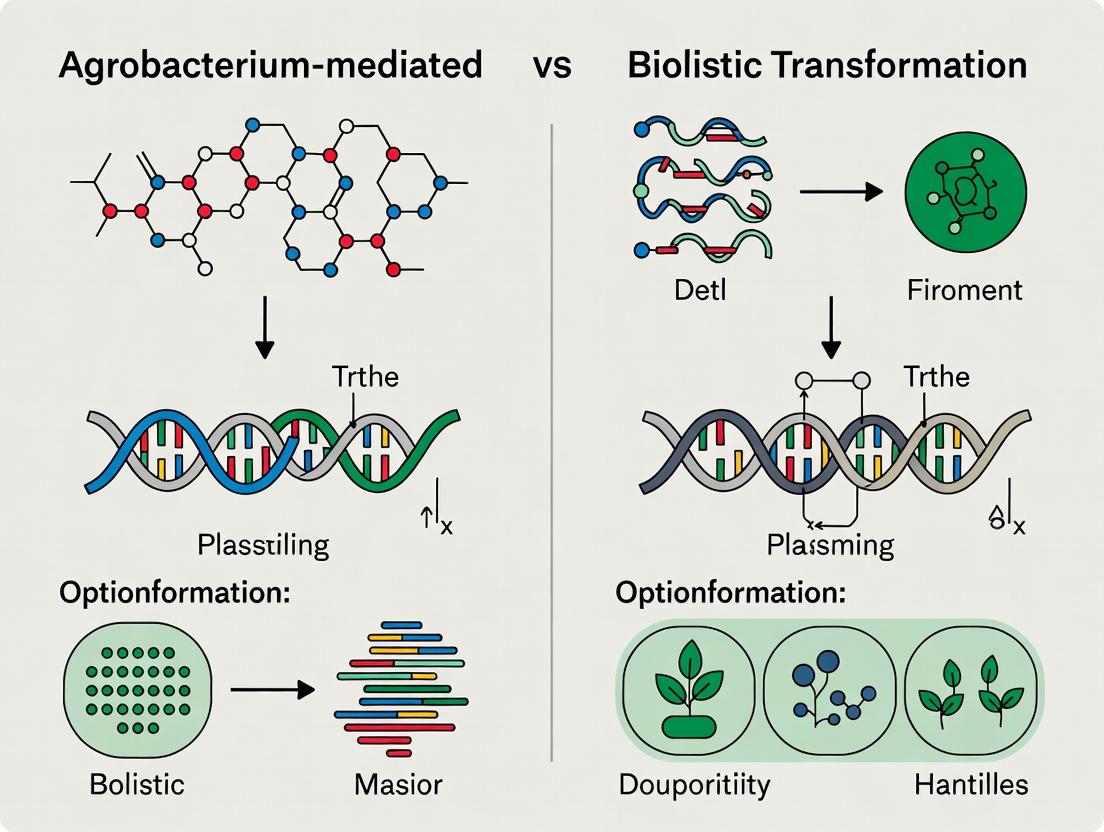
For researchers and scientists in plant biology, biotechnology, and drug development, selecting the optimal gene delivery system is critical.
Agrobacterium vs. Biolistic Gene Delivery: Choosing the Right Transformation Method for Modern Research
Abstract
For researchers and scientists in plant biology, biotechnology, and drug development, selecting the optimal gene delivery system is critical. This comprehensive guide compares the two leading plant transformation technologies: Agrobacterium-mediated transformation and biolistic (particle bombardment) methods. We delve into the foundational biology of each technique, detail step-by-step protocols and their applications in producing transgenic plants and plant-made pharmaceuticals, address common troubleshooting and optimization challenges, and provide a direct, data-driven comparison of efficiency, transgene integration, and regulatory implications. The analysis empowers professionals to make informed methodological choices to advance their research and development goals.
Understanding the Core Biology: How Agrobacterium and Biolistic Systems Work
This whitepaper provides an in-depth technical guide to Agrobacterium tumefaciens-mediated plant transformation, a cornerstone of modern plant biotechnology. Within the broader research context comparing Agrobacterium (biological) and biolistic (physical) transformation methods, understanding the molecular machinery of the Ti plasmid is paramount for researchers optimizing gene delivery for crop engineering and molecular pharming.
Molecular Mechanism of T-DNA Transfer
The pathogenic Agrobacterium tumefaciens transfers a segment of DNA (T-DNA) from its Tumor-inducing (Ti) plasmid into the plant genome, causing crown gall disease. In biotechnology, the oncogenes are disarmed, and the system is repurposed to deliver genes of interest.
Key Virulence (vir) Genes and their Functions
| Vir Gene | Protein Function | Quantitative Note |
|---|---|---|
| virA | Membrane-bound sensor kinase; detects plant phenolics (e.g., acetosyringone). | Activated by ~10-100 µM acetosyringone. |
| virG | Transcriptional regulator; activates other vir gene promoters. | Phosphorylated by VirA; induces expression up to 1000-fold. |
| virD1/D2 | Endonuclease; nicks T-DNA borders and covalently attaches VirD2 to the 5' end. | Recognizes 25-bp border repeats (LB, RB). Nicking efficiency is >90% in vitro. |
| virE2 | Single-stranded DNA-binding protein; coats T-strand for nuclear import and protection. | Binds cooperatively; ~1 molecule per 30 nucleotides of ssDNA. |
| virB1-B11 | Encodes Type IV Secretion System (T4SS); forms pilus for T-DNA/protein transfer. | 11 proteins form a transmembrane channel. ATP-dependent (VirB4, VirB11, VirD4). |
| virD4 | Coupling protein; links T-DNA complex to the T4SS. | Binds VirD2 and VirE2. |
Plant Factors in Transformation
| Plant Factor | Role in T-DNA Integration |
|---|---|
| VIP1 | Arabidopsis bZIP protein; escorts VirE2-coated T-strand into the nucleus. |
| KU80 | Part of the non-homologous end joining (NHEJ) pathway; facilitates integration. |
| DNA Polymerase θ | Key enzyme in theta-mediated end joining (TMEJ); major pathway for T-DNA integration. |
| Histones H2A, H3.3 | Involved in chromatin assembly at integration sites. |
Core Experimental Protocol:Agrobacterium-Mediated Stable Plant Transformation (Leaf Disk Method forNicotiana tabacum)
Materials and Reagent Preparation
- Plant Material: Sterile, young leaves from in vitro grown tobacco plants.
- Agrobacterium Strain: Disarmed strain (e.g., LBA4404, GV3101) carrying a binary vector with T-DNA containing selectable marker (e.g., nptII for kanamycin resistance) and gene of interest.
- Media:
- YEP (Bacterial Culture): 10 g/L peptone, 10 g/L yeast extract, 5 g/L NaCl, pH 7.0. Add appropriate antibiotics (e.g., kanamycin, rifampicin).
- MS Co-cultivation Medium: Murashige and Skoog (MS) salts, 3% sucrose, 1 mg/L 6-benzylaminopurine (BAP), 0.1 mg/L α-naphthaleneacetic acid (NAA), pH 5.7, solidified with 0.8% agar.
- MS Selection/Regeneration Medium: As above, but add 500 mg/L cefotaxime (to kill Agrobacterium) and 100 mg/L kanamycin (to select transformed plant cells).
- Acetosyringone Stock: 100 mM in DMSO. Filter sterilize.
- Solution:
- Infection Solution: Liquid MS medium with 100 µM acetosyringone.
Step-by-Step Procedure
- Bacterial Preparation: Inoculate Agrobacterium from a single colony into 5 mL YEP + antibiotics. Grow overnight at 28°C, 200 rpm. Dilute 1:50 in fresh YEP (+ antibiotics, + 100 µM acetosyringone) and grow to OD600 = 0.5-0.8. Pellet cells at 5000 x g for 10 min. Resuspend in Infection Solution to OD600 = 0.5.
- Plant Material Preparation: Under sterile conditions, cut tobacco leaves into 1 cm² explants (leaf disks). Avoid major veins.
- Infection and Co-cultivation: Immerse leaf disks in the Agrobacterium suspension for 10-15 minutes. Blot dry on sterile filter paper and place on solidified MS Co-cultivation Medium. Incubate in the dark at 22-25°C for 2-3 days.
- Selection and Regeneration: Transfer explants to MS Selection/Regeneration Medium. Subculture to fresh medium every 2 weeks. Developing shoots resistant to kanamycin should appear in 3-8 weeks.
- Rooting and Acclimatization: Excise shoots and transfer to rooting medium (½ MS salts, no hormones, + antibiotics). Once roots are established, transfer plantlets to soil in a high-humidity environment for acclimatization.
- Molecular Confirmation: Perform PCR, Southern blot, and/or GUS/GFP reporter assays on regenerated plants to confirm transgene integration and expression.
Visualizing the T-DNA Transfer Pathway
Diagram 1: T-DNA Transfer Signaling and Execution
The Scientist's Toolkit: Key Research Reagent Solutions
| Reagent/Material | Function/Application | Example/Notes |
|---|---|---|
| Binary Vector System | Two-plasmid disarmed system; small vector with GOI and marker between T-DNA borders is mobilized into Agrobacterium. | pGreen, pCAMBIA series. Requires helper plasmid (e.g., pSoup) for replication. |
| Supervirulent virG | Mutant virG gene (e.g., virGN54D) enhances vir gene expression, boosting transformation efficiency in recalcitrant species. | Incorporated into helper Ti plasmids (e.g., pTiBo542). |
| Acetosyringone | Phenolic compound that induces the Agrobacterium vir gene region. Critical for co-cultivation. | Use at 100-200 µM in infection and co-cultivation media. |
| Silwet L-77 | Surfactant that reduces surface tension, improving Agrobacterium contact with plant tissues in vacuum infiltration. | Typical concentration: 0.005-0.05%. |
| Cefotaxime/Timentin | Antibiotics used to eliminate Agrobacterium after co-cultivation without harming plant tissue. | Cefotaxime at 250-500 mg/L; Timentin (ticarcillin/clavulanate) at 150-500 mg/L. |
| Selection Agents | Antibiotics/herbicides corresponding to the selectable marker gene in the T-DNA to kill non-transformed tissue. | Kanamycin (nptII), Hygromycin B (hpt), Glufosinate (bar or pat). |
| vir Gene Inducer Assay | Reporter system (e.g., virE2::GUS fusion) to quantify vir gene activation under different conditions. | Used to optimize induction protocols. |
Diagram 2: Agrobacterium vs. Biolistic Method Selection Workflow
Critical Comparison: Agrobacterium vs. Biolistic Transformation
| Parameter | Agrobacterium-Mediated Transformation | Biolistic Transformation |
|---|---|---|
| Mechanism | Biological; mimics natural DNA transfer. | Physical; uses high-velocity microprojectiles (gold/tungsten) to deliver DNA. |
| Typical Transgene Copy Number | Usually low (1-3 copies); preferentially integrates as a single copy. | Often high and complex (multiple copies); can lead to concatemers. |
| Integration Pattern | More precise; T-DNA borders define integration ends. Lower incidence of vector backbone integration. | Less precise; DNA fragments integrate randomly with possible rearrangements. High frequency of non-T-DNA (backbone) integration. |
| Host Range Limitation | Can be limited by plant species/genotype compatibility, vir gene induction, and tissue culture response. | Essentially universal; applicable to any cell type with a physical barrier that can be penetrated (plants, organelles, fungi, mammalian cells). |
| Transformation Efficiency | High for model systems (tobacco, Arabidopsis); variable for monocots and recalcitrant species. Can be improved with supervirulent strains and optimized vir induction. | Can achieve high transient expression. Stable transformation efficiency is often lower than Agrobacterium for amenable species but is a crucial alternative. |
| Cost & Technical Complexity | Relatively low cost; requires standard microbiology and tissue culture lab setup. | Higher initial cost (particle gun/device); optimization of physical parameters is critical. |
| Primary Applications | Preferred for generating events for commercial product development due to lower copy number and cleaner integration. | Critical for transforming organelles (chloroplasts) and species/cell types recalcitrant to Agrobacterium. Essential for CRISPR ribonucleoprotein delivery. |
Advanced Protocol:AgrobacteriumMediated Transformation of Recalcitrant Monocots using Embryogenic Callus
This protocol is essential in the comparative research context, as monocots (e.g., rice, maize) were historically transformed via biolistics before Agrobacterium methods were optimized.
- Induction of Embryogenic Callus: Culture mature seeds or immature embryos on callus induction medium (e.g., N6 medium with 2,4-D) for 3-4 weeks. Select Type II friable, embryogenic callus.
- Agrobacterium Preparation: Use a supervirulent strain (e.g., EHA105 with pTiBo542). Prepare as in Section 2.2, but resuspend in AAM medium with 100 µM acetosyringone and 0.01% Silwet L-77.
- Infection and Co-cultivation: Submerge 2-3g of callus in bacterial suspension for 15-30 min. Blot dry and co-cultivate on filter paper overlaid on high-osmoticum co-cultivation medium (with acetosyringone) at 22°C in the dark for 3 days.
- Resting Phase: Transfer callus to resting medium (with cefotaxime, no selection) for 5-7 days to reduce bacterial overgrowth and allow recovery.
- Selection and Regeneration: Transfer to selection medium with appropriate antibiotic/herbicide and cefotaxime. Subculture every 2 weeks. After 6-10 weeks, transfer developing resistant calli to regeneration medium to induce shoots, then to rooting medium.
- Analysis: Molecular analysis is crucial to identify high-quality, low-copy-number events suitable for comparative studies against biolistic events.
Within the comparative research framework of Agrobacterium-mediated transformation versus biolistic transformation, the gene gun represents a direct physical delivery system. This technique, formally known as particle bombardment or biolistics, is indispensable for transforming cells resistant to Agrobacterium, such as many monocotyledonous plants, certain organelles (chloroplasts, mitochondria), and some animal and microbial systems. It operates on the principle of accelerating DNA-coated microparticles to sufficient velocities to penetrate the target cell wall and membrane, enabling intracellular DNA delivery. This whitepaper provides an in-depth technical guide to its core mechanics, protocols, and applications.
Core Principles and Mechanics
The fundamental principle involves the use of a high-energy force to propel microscopic, DNA-coated particles (typically gold or tungsten) into living target cells. The kinetic energy of the particle carries it through the cell wall and membrane, depositing the DNA inside the cell where it can migrate to the nucleus and potentially integrate into the host genome or be expressed transiently.
Key physical parameters include:
- Particle Momentum: Must be sufficient for penetration but not excessive to cause excessive cell damage.
- Particle Size: A critical determinant of penetration depth and cellular damage. Smaller particles penetrate deeper but carry less DNA.
- Helium Pressure: The driving force in common acceleration systems.
- Target Distance: Affects particle spread and velocity upon impact.
Quantitative Parameters for Optimization
Table 1: Key Optimization Parameters for Biolistic Transformation
| Parameter | Typical Range | Impact on Transformation |
|---|---|---|
| Microcarrier Material | Gold (0.6-1.0 µm), Tungsten (0.7-1.2 µm) | Gold is chemically inert, more uniform; tungsten can be toxic. |
| Microcarrier Diameter | 0.4 - 1.2 micrometers | Smaller: deeper penetration, less DNA load. Larger: more DNA, more damage. |
| DNA Concentration | 0.5 - 2.0 µg per mg of particles | Too high causes aggregation; too low reduces transformation frequency. |
| Helium Pressure | 450 - 2,200 psi (varies by device/target) | Higher pressure increases velocity/penetration but also cell damage. |
| Target Distance | 3 - 12 cm from stopping screen | Shorter distance increases particle density & force; longer improves spread. |
| Vacuum Level | 25 - 29 in Hg | Reduces air resistance, increases particle velocity & consistency. |
| Number of Shots | 1 - 2 per target | Multiple shots can increase yield but dramatically increase cell damage. |
Detailed Experimental Protocol
Protocol: Biolistic Transformation of Plant Embryogenic Callus
I. Preparation of DNA-Coated Microcarriers (Gold Particles)
- Weigh: Suspend 60 mg of 1.0 µm gold particles in 1 mL of 100% ethanol in a 1.5 mL microcentrifuge tube. Vortex thoroughly.
- Pellet: Centrifuge at 10,000 rpm for 5 seconds. Discard the supernatant.
- Wash: Wash particles three times with 1 mL of sterile, nuclease-free water. Resuspend by vortexing after each addition and pellet briefly.
- Resuspend: After the final wash, resuspend the particles in 1 mL of 50% glycerol. Final concentration is 60 mg/mL. Store at -20°C if not using immediately.
- Coating: For a single shot, aliquot 50 µL of gold suspension (3 mg) into a new tube. While vortexing vigorously on a platform vortexer, add in order:
- 5 µL (1 µg/µL) of plasmid DNA (supercoiled).
- 50 µL of 2.5 M CaCl₂.
- 20 µL of 0.1 M spermidine (free base).
- Precipitate: Continue vortexing for 2-3 minutes. Allow DNA to precipitate onto particles for 10 minutes at room temperature.
- Pellet & Wash: Centrifuge briefly (5 sec at 10,000 rpm). Remove supernatant. Wash pellet with 140 µL of 100% ethanol without resuspending. Remove supernatant.
- Final Resuspension: Add 48 µL of 100% ethanol. Resuspend gently by tapping and brief, low-power sonication in a water bath sonicator for 1-2 seconds. Use immediately.
II. Target Preparation and Bombardment
- Target Tissue: Place embryogenic callus or target cells in the center of a Petri dish containing solid osmoticum medium (e.g., medium with 0.2-0.4 M sorbitol/mannitol) at least 4 hours prior to bombardment. The osmotic treatment reduces cell turgor and plasmolysis, enhancing survival.
- Gene Gun Setup: Sterilize all gene gun components (macrocarriers, stopping screens, rupture disks) with 70% ethanol or autoclaving. Assemble according to manufacturer instructions (e.g., Bio-Rad PDS-1000/He).
- Loading: Pipette 10 µL of the coated gold suspension onto the center of a macrocarrier. Allow to air dry briefly in a laminar flow hood.
- Bombardment: Place the loaded macrocarrier in the gun assembly. Position the target Petri dish at the designated distance (e.g., 9 cm). Create a vacuum of 28 in Hg. Fire using the appropriate helium pressure rupture disk (e.g., 1,100 psi).
- Post-Bombardment: Release vacuum quickly. Remove target plates. Seal and incubate in the dark at appropriate growth conditions.
III. Selection and Regeneration
- After 24-48 hours of recovery on osmoticum medium, transfer tissue to standard regeneration medium.
- After 7 days, transfer to selection medium containing the appropriate antibiotic (e.g., hygromycin, kanamycin) or herbicide.
- Subculture surviving tissue every 2-3 weeks onto fresh selection medium.
- Regenerate putative transgenic plants from resistant callus lines and confirm via molecular analyses (PCR, Southern blot).
Visualizing the Biolistic Transformation Workflow
Biolistic Transformation Protocol Workflow
The Scientist's Toolkit: Essential Research Reagent Solutions
Table 2: Key Reagents and Materials for Biolistic Transformation
| Item | Function & Rationale |
|---|---|
| Gold Microcarriers (0.6-1.0 µm) | Inert, dense, spherical particles serving as the DNA vector. Size is critical for cellular penetration and survival. |
| Plasmid DNA (Supercoiled, high-purity) | The genetic cargo. Must be clean (A260/A280 ~1.8) to prevent aggregation and ensure efficient coating. |
| Calcium Chloride (2.5 M) | Acts as a cationic bridge, neutralizing the negative charges on both DNA and microcarriers to facilitate co-precipitation. |
| Spermidine (0.1 M, free base) | A polycation that further stabilizes the DNA-precipitate, prevents particle clumping, and protects DNA from shear forces. |
| Absolute Ethanol | Used for initial particle sterilization/washing and final suspension; ensures sterile, rapid drying on the macrocarrier. |
| Osmoticum Agents (Sorbitol/Mannitol) | Added to target tissue medium pre/post-bombardment. Induces plasmolysis, reducing cell turgor to mitigate cytoplasmic leakage. |
| Rupture Disks (e.g., 450-1550 psi) | Calibrated disks that burst at specific helium pressures, providing a reproducible and controllable acceleration force. |
| Stopping Screens | Metal meshes that halt the macrocarrier while allowing the microcarriers to continue their trajectory toward the target. |
| Selective Agent (e.g., Antibiotic) | Incorporated into post-recovery media to selectively inhibit the growth of non-transformed tissues, identifying transformants. |
Key Historical Milestones in the Development of Both Technologies
This whitepaper details the key historical milestones in the development of Agrobacterium-mediated transformation (AMT) and biolistic transformation, framed within a comparative thesis evaluating their efficacy, mechanisms, and applications in plant biotechnology and molecular pharming for drug development.
1. Historical Milestones and Quantitative Data
Table 1: Key Historical Milestones in Agrobacterium-mediated Transformation
| Year | Milestone | Key Researchers/Team | Significance |
|---|---|---|---|
| 1907 | Discovery of crown gall disease | Smith & Townsend | Established Agrobacterium tumefaciens as the causal agent. |
| 1974 | Tumor-inducing principle identified as DNA (Ti-plasmid) | Zaenen et al. | Foundation for understanding gene transfer from bacterium to plant. |
| 1983 | First report of engineered plant via Agrobacterium | Monsell, Schell, et al. | Proof-of-concept for AMT as a genetic engineering tool. |
| 1985 | Development of binary vector systems | Hoekema et al. | Simplified vector design, improving efficiency and flexibility. |
| 1987 | Arabidopsis thaliana transformation via floral dip | Bechtold et al. (later refined by Clough & Bent, 1998) | Enabled high-throughput, non-tissue culture transformation of a model plant. |
| 2006 | Establishment of efficient monocot transformation | Hiei et al. (rice, 1994) further optimized | Broke host-range limitations, critical for cereal crop engineering. |
Table 2: Key Historical Milestones in Biolistic Transformation
| Year | Milestone | Key Researchers/Team | Significance |
|---|---|---|---|
| 1987 | Invention of the biolistic process ("gene gun") | Sanford, Klein, Wolf, Allen (Cornell) | First physical method for direct intracellular DNA delivery. |
| 1988 | First stable transformation of plants (onion, soybean) | Christou, McCabe, Swain | Demonstrated biolistics could generate transgenic plants. |
| 1990 | Transformation of maize | Fromm, Gordon-Kamm, et al. | Enabled genetic engineering of a major, recalcitrant monocot crop. |
| 1992 | Chloroplast transformation via biolistics | Svab, Maliga | Achieved high-level transgene expression and maternal inheritance. |
| 1993 | First human clinical trial of a biolistic-generated vaccine (DNA vaccine) | Tang, Johnston, et al. | Pioneered use in genetic immunization, expanding beyond plants. |
| 2000s | Advancements in particle preparation & device automation | Various (e.g., Bio-Rad, PDS-1000/He system) | Improved reproducibility, viability, and throughput. |
Table 3: Comparative Quantitative Data (Typical Ranges for Model Plants)
| Parameter | Agrobacterium-mediated Transformation | Biolistic Transformation |
|---|---|---|
| Transformation Efficiency | 0.1 - 90% (depends on species/cultivar) | 0.01 - 5% (per bombarded explant) |
| Copy Number Integration | Typically 1-3, often simple inserts | Often 1-10+, complex, rearranged inserts |
| Transgene Size Capacity | High (>150 kb with Binary/BAC vectors) | Moderate (~40 kb practical limit) |
| Chloroplast Transformation | Not applicable | Possible, high copy number |
| Cost per Experiment | Low to Moderate | High (capital equipment, consumables) |
| Throughput Potential | Very High (floral dip, liquid co-culture) | Moderate |
2. Experimental Protocols for Core Methodologies
Protocol 1: Standard *Agrobacterium-mediated Transformation of Leaf Disks (e.g., Tobacco)*
- Vector Preparation: Transform a disarmed Ti-binary vector (e.g., pBIN19) carrying selectable marker (e.g., nptII) and gene of interest into a virulent A. tumefaciens strain (e.g., LBA4404, GV3101).
- Bacterial Culture: Grow Agrobacterium overnight in LB with appropriate antibiotics to late-log phase (OD600 ~0.5-1.0). Pellet and resuspend in liquid co-cultivation medium (MS salts, sucrose, acetosyringone 100-200 µM).
- Explant Preparation: Surface-sterilize leaves, cut into 5-10 mm disks.
- Inoculation & Co-cultivation: Immerse disks in bacterial suspension for 5-30 minutes. Blot dry and place on solid co-cultivation medium for 2-3 days in the dark at 22-25°C.
- Selection & Regeneration: Transfer disks to selection/regeneration medium (MS-based, with cytokinin/auxin, antibiotic for bacterial kill (e.g., cefotaxime), and plant selection agent (e.g., kanamycin)).
- Shoot Development & Rooting: Excise developing shoots after 2-4 weeks, transfer to rooting medium with selection agent.
- Molecular Analysis: Confirm transformation via PCR, Southern blot, and phenotypic assays.
Protocol 2: Standard Biolistic Transformation of Embryogenic Callus (e.g., Rice)
- DNA Preparation: Purify plasmid DNA (e.g., containing hptII and gene of interest) via CsCl gradient or kit. Precipitate onto microcarriers.
- Microcarrier Preparation: Suspend 0.6 µm gold or tungsten particles in 50 µL sterile water. Sequentially add 5 µL DNA (1 µg/µL), 50 µL 2.5 M CaCl2, and 20 µL 0.1 M spermidine (free base). Vortex, incubate, pellet, wash with ethanol, and resuspend in 100% ethanol.
- Target Tissue Preparation: Arrange embryogenic calli on osmoticum medium (e.g., MS with 0.2-0.4 M mannitol/sorbitol) 4-6 hours pre-bombardment.
- Bombardment Parameters: Use a PDS-1000/He system. Standard conditions: 1100 psi rupture disc, 6 cm target distance, 27-28 in Hg vacuum. Fire macrocarrier with coated microcarriers at the target.
- Osmotic Recovery & Selection: Post-bombardment, keep tissue on osmoticum for 16-24 hours. Transfer to standard callus growth medium for 1 week, then to selection medium (e.g., hygromycin).
- Regeneration & Analysis: Transfer resistant calli to regeneration medium, then to rooting medium. Perform molecular confirmation (PCR, Southern) on putative transgenic plants.
3. Diagrams
Title: Agrobacterium T-DNA Transfer and Integration Pathway
Title: Biolistic Transformation Delivery Process
Title: Technology Selection Decision Tree
4. The Scientist's Toolkit: Key Research Reagent Solutions
Table 4: Essential Reagents and Materials for Transformation Technologies
| Item | Function | Example(s) |
|---|---|---|
| Binary Vector System | AMT: Separates T-DNA (with transgene) from Vir genes on helper plasmid for safe, flexible engineering. | pBIN19, pGreen, pCAMBIA vectors; A. tumefaciens strains LBA4404, EHA105, GV3101. |
| Vir Gene Inducer | AMT: Phenolic compound that activates Agrobacterium Virulence genes, critical for T-DNA transfer. | Acetosyringone (AS), used in co-cultivation medium. |
| Microcarriers | Biolistics: Inert particles serving as DNA carriers for penetration into target cells. | Gold microparticles (0.6-1.0 µm), Tungsten microparticles (M10, M17). |
| Osmoticum Agents | Biolistics: Protoplasts target cells from damage by inducing plasmolysis pre-/post-bombardment. | Mannitol, Sorbitol (0.2-0.4 M) in treatment medium. |
| Selective Agents | Both: Eliminates non-transformed tissue, allowing only transgenic cells to proliferate. | Antibiotics: Kanamycin, Hygromycin B. Herbicides: Phosphinothricin (BASTA, glufosinate). |
| Plant Growth Regulators | Both: Directs cell fate (callus, shoot, root) during regeneration from transformed explants. | Auxins (2,4-D, NAA), Cytokinins (BAP, Zeatin). |
Within the comprehensive analysis of Agrobacterium-mediated versus biolistic gene delivery methods, the fundamental choice between stable and transient transformation dictates experimental design, outcomes, and applications. This guide provides a technical framework for selecting and implementing these two distinct transformation paradigms.
Conceptual and Mechanistic Foundations
Stable Transformation results in the integration of the transgene into the plant nuclear or plastid genome. This heritable modification requires selection and regeneration of whole plants from transformed cells. Transient Transformation involves the temporary expression of introduced genes without genomic integration, typically yielding analyzable results within hours to days.
The core mechanistic divergence lies in the fate of the delivered DNA. For stable transformation, the DNA must traffic to the nucleus, escape degradation, and integrate via non-homologous end joining (NHEJ) or, rarely, homologous recombination. In transient expression, the DNA remains episomal, is transcribed, but is eventually silenced and degraded.
Quantitative Comparison of Key Parameters
The following table summarizes the critical quantitative and qualitative distinctions between stable and transient transformation, relevant to both Agrobacterium and biolistic methods.
Table 1: Comparative Analysis of Stable vs. Transient Transformation
| Parameter | Stable Transformation | Transient Transformation |
|---|---|---|
| Genomic Integration | Required, heritable | Not required, non-heritable |
| Typical Onset of Expression | Days to weeks | 12 - 96 hours |
| Expression Duration | Lifelong, through generations | Finite (2-10 days) |
| Copy Number Variation | Often low-copy (Agro) to multi-copy (Biolistic) | Can be very high (hundreds of copies) |
| Gene Silencing Risk | Higher (esp. for multi-copy) | Lower, but occurs over time |
| Primary Applications | Transgenic line generation, trait stacking, functional genomics over development | Rapid gene function analysis, protein production (e.g., biopharming), promoter studies, CRISPR-Cas9 editing (delivery) |
| Throughput Potential | Low to moderate (regeneration bottleneck) | Very high (no regeneration needed) |
| Experimental Timeline | Months to over a year | Days to weeks |
Detailed Methodological Protocols
Protocol for Generating Stable Transgenic Lines (Leaf Disk Method -Agrobacterium)
- Plant Material: Surface-sterilized leaf explants from in vitro grown Nicotiana tabacum or Arabidopsis.
- Vector/Bacterial Prep: Transform Agrobacterium tumefaciens strain GV3101 (pMP90) with a binary vector containing gene of interest (GOI), plant selectable marker (e.g., nptII), and T-DNA borders. Grow overnight in LB with appropriate antibiotics, pellet, and resuspend in liquid co-cultivation medium (MS salts, sucrose, 200µM acetosyringone) to OD₆₀₀ ~0.5.
- Infection & Co-cultivation: Immerse explants in bacterial suspension for 10-30 minutes. Blot dry and place on solid co-cultivation medium. Incubate in dark at 22-25°C for 2-3 days.
- Selection & Regeneration: Transfer explants to selection/regeneration medium (MS salts, cytokinin/auxin balance, 500mg/L carbenicillin to kill Agrobacterium, 100mg/L kanamycin for nptII selection). Subculture every 2 weeks to fresh medium. Shoots emerging after 4-8 weeks are transferred to rooting medium with selection.
- Molecular Confirmation: Perform PCR on genomic DNA from rooted plantlets for GOI and selectable marker. Southern blot analysis to confirm integration pattern and copy number.
Protocol for High-Efficiency Transient Transformation (Biolistics - GFP Assay)
- Plant Material: Young, fully expanded leaves of N. benthamiana or onion epidermal peels.
- Microcarrier Prep: Weigh 60mg of 1.0µm gold particles. Add 1ml 100% ethanol, vortex, incubate 15 min, pellet. Wash twice with sterile water. Resuspend in 1ml 50% glycerol. Aliquot 50µl, add 5µl plasmid DNA (1µg/µl), 50µl 2.5M CaCl₂, and 20µl 0.1M spermidine (free base). Vortex 10 min, pellet, remove supernatant, wash with 70% then 100% ethanol. Resuspend in 60µl 100% ethanol.
- Bombardment: Place target tissue on osmoticum medium (MS + 0.2M mannitol/sorbitol) 1-4 hours pre-shot. Load microcarrier suspension onto macrocarrier. Perform bombardment using a PDS-1000/He system with 1100 psi rupture discs, 6cm target distance, and 27-28 in Hg chamber vacuum.
- Incubation & Analysis: Post-bombardment, incubate tissues on osmoticum medium for 16-24 hours in dark. Analyze GFP expression using epifluorescence or confocal microscopy. Quantitative data can be gathered via fluorometry or Western blot.
Signaling and Workflow Visualizations
The Scientist's Toolkit: Essential Reagent Solutions
Table 2: Key Research Reagents for Plant Transformation Studies
| Reagent / Material | Primary Function & Application | Key Considerations |
|---|---|---|
| Binary Vector System (e.g., pGreen, pCAMBIA) | Agrobacterium-specific. Contains T-DNA borders for transfer and bacterial backbone. Essential for stable/transient via Agro. | Choose based on copy number in E. coli/Agro, selection markers, and MCS. Gateway-compatible vectors enable high-throughput cloning. |
| Gold or Tungsten Microcarriers | Biolistics. DNA-coated particles physically propelled into cells. Carrier for DNA in biolistic transformation. | Gold is inert, more uniform, but costly. Tungsten is cheaper but can be cytotoxic. Size (0.6-1.6µm) affects penetration and damage. |
| Acetosyringone | Phenolic compound inducing Agrobacterium vir gene expression. Critical for enhancing T-DNA transfer efficiency, especially in non-model species. | Typically used at 100-200µM in co-cultivation medium. Light-sensitive; prepare fresh stock in DMSO. |
| Selective Agents (e.g., Kanamycin, Hygromycin B) | Kill non-transformed tissue. Allow growth of stably transformed cells expressing resistance genes (nptII, hptII). | Concentration must be empirically determined for each species/tissue. Hygromycin B is often more effective but slower acting. |
| Silwet L-77 or Tween-20 | Surfactants reducing surface tension. Used in Agrobacterium vacuum-infiltration or spray methods for high-throughput transient transformation in planta. | Concentration is critical (e.g., 0.02-0.05% Silwet L-77); higher levels cause phytotoxicity. |
| Luciferin | Substrate for firefly luciferase (LUC) reporter enzyme. Enables real-time, non-destructive quantification of transient gene expression in vivo via bioluminescence imaging. | Applied as spray or infiltration. Signal intensity correlates with promoter activity/expression level. |
| CRISPR-Cas9 Ribonucleoproteins (RNPs) | Pre-assembled Cas9 protein + guide RNA complexes. For transient delivery of editing machinery, eliminating DNA integration and reducing off-target effects. | Purified RNPs can be delivered via biolistics or Agrobacterium (using T-DNA for transient expression of components). |
Step-by-Step Protocols and Research Applications in Biomedicine
This technical guide details a standard Agrobacterium-mediated transformation (AMT) workflow, framed within a broader research thesis comparing AMT with biolistic (particle bombardment) methods. For plant biotechnology and pharmaceutical development (e.g., plant-made pharmaceuticals), the choice of transformation method is critical. AMT offers advantages like lower copy number and more stable integration of transgenes, but its efficiency is highly species- and genotype-dependent. This whitepaper provides an in-depth, current protocol for researchers and drug development professionals.
Core Principles and Comparative Context
Agrobacterium tumefaciens is a natural genetic engineer that transfers a segment of its Tumor-inducing (Ti) plasmid DNA (T-DNA) into the plant genome. In AMT, the native T-DNA is disarmed, and the gene of interest is inserted between the T-DNA borders. In contrast, biolistics physically propels DNA-coated microparticles into cells, often resulting in complex, multi-copy integrations. The choice hinges on the target species, desired transgene structure, and regulatory considerations for consistent therapeutic protein production.
The standard workflow comprises five key stages: 1) Vector Construction, 2) Agrobacterium Preparation, 3) Plant Material Co-cultivation, 4) Selection & Regeneration, and 5) Molecular Analysis.
Vector Construction andAgrobacteriumTransformation
The gene of interest (GOI) is cloned into a binary vector between the left and right T-DNA borders. This vector is introduced into a disarmed A. tumefaciens strain (e.g., EHA105, GV3101) via freeze-thaw or electroporation.
Detailed Protocol: Freeze-Thaw Transformation of Agrobacterium
- Grow the disarmed A. tumefaciens strain overnight in 5 mL of YEP medium at 28°C with shaking.
- Pellet 1 mL of culture at 4000 × g for 5 min at 4°C. Resuspend the pellet in 1 mL of ice-cold 20 mM CaCl₂.
- Add 1 µg of plasmid DNA (binary vector) to 100 µL of competent cells in a sterile tube. Mix gently.
- Freeze in liquid nitrogen for 5 minutes, then thaw at 37°C for 5 minutes.
- Add 1 mL of YEP broth and incubate at 28°C with shaking for 2-4 hours.
- Plate 100-200 µL onto YEP agar plates with appropriate antibiotics for the binary vector and Agrobacterium strain. Incubate at 28°C for 2-3 days.
Preparation ofAgrobacteriumfor Infection
A single colony is used to start a culture in induction medium (often containing acetosyringone, a phenolic compound that activates Vir genes).
Co-cultivation with Explant Material
Target plant tissue (explants like leaf discs, cotyledons, or embryogenic callus) is immersed in the Agrobacterium suspension, then co-cultivated on solid medium for 2-3 days to allow T-DNA transfer.
Selection and Regeneration of Transformants
Post co-cultivation, explants are transferred to selection medium containing antibiotics to suppress Agrobacterium (e.g., cefotaxime) and select for transformed plant cells (e.g., kanamycin for nptII). Developing shoots are transferred to rooting medium.
Molecular Confirmation of Transformants
Regenerated plants (T0) are analyzed using techniques like PCR, Southern blot, and RT-qPCR to confirm transgene integration, copy number, and expression.
Table 1: Typical Efficiency Metrics for Agrobacterium-Mediated Transformation in Model Species
| Plant Species | Explant Type | Typical Transformation Frequency* | Average T-DNA Copy Number | Key Factors Influencing Efficiency |
|---|---|---|---|---|
| Nicotiana tabacum | Leaf Disc | 80-95% | 1-3 | Explant age, bacterial OD₆₀₀ |
| Arabidopsis thaliana | Floral Dip | 1-3% (of seeds) | 1-2 | Plant growth stage, surfactant |
| Oryza sativa (Indica) | Immature Embryo | 15-30% | 1-5 | Embryo scutellum orientation |
| Solanum lycopersicum | Cotyledon | 60-85% | 1-3 | Genotype, co-culture duration |
| Medicago truncatula | Leaf Petiole | 20-50% | 1-2 | Agrobacterium strain |
*Frequency defined as % of explants producing at least one transgenic plant.
Table 2: Key Comparison Points: Agrobacterium vs. Biolistic Methods
| Parameter | Agrobacterium-Mediated Transformation | Biolistic Transformation |
|---|---|---|
| Typical Copy Number | Low (1-3 copies) | High (often >5, complex arrays) |
| Integration Pattern | More precise, fewer rearrangements | Often complex, can be rearranged |
| Species Range | Effective mainly in dicots; some monocots | Broad, including recalcitrant cereals |
| Cost per experiment | Lower | Higher (equipment, gold particles) |
| Transgene Silencing | Less frequent due to simple integration | More frequent due to repeats |
| Vector Requirement | Requires T-DNA borders | Any plasmid DNA |
| Throughput Potential | High for amenable species | High, but more variable |
The Scientist's Toolkit: Key Research Reagent Solutions
Table 3: Essential Materials for Agrobacterium-Mediated Transformation
| Reagent / Material | Function / Purpose |
|---|---|
| Binary Vector System (e.g., pCAMBIA, pGreen) | Carries gene of interest between T-DNA borders and selectable marker for plants; contains bacterial origin. |
| Disarmed A. tumefaciens Strain (e.g., EHA105) | Engineered to lack phytohormone genes; contains helper Vir plasmid to mobilize T-DNA. |
| Acetosyringone | Phenolic compound that induces the Agrobacterium Vir gene region, enhancing T-DNA transfer efficiency. |
| Selective Antibiotics (Plant) | e.g., Kanamycin, Hygromycin B. Eliminates non-transformed tissues; choice depends on plant selectable marker gene. |
| Agrobacterium Suppressants (e.g., Cefotaxime) | β-lactam antibiotic added post-co-culture to kill residual Agrobacterium without harming plant tissue. |
| Plant Growth Regulators (e.g., 2,4-D, BAP) | Phytohormones in culture media to induce cell division (callus) and organogenesis (shoots/roots). |
| MS (Murashige and Skoog) Basal Medium | Standard salt and vitamin mixture providing essential nutrients for in vitro plant growth and development. |
Diagrams of Core Processes
T-DNA Transfer Mechanism
AMT Experimental Workflow
Transformation Method Selection
This guide serves as a technical component of a broader thesis comparing Agrobacterium-mediated and biolistic transformation methods. While Agrobacterium excels in precise T-DNA integration, biolistic transformation (particle bombardment) remains indispensable for transforming organelles, non-plant species like fungi, and plant genotypes recalcitrant to Agrobacterium. This document provides an in-depth analysis of critical optimization parameters for maximizing transformation efficiency in biolistic systems.
Core Physics & Biology of Biolistics
The process involves accelerating microprojectiles (gold or tungsten) coated with nucleic acids toward target cells. The key optimization challenge lies in balancing sufficient momentum for cell wall/membrane penetration with minimizing cellular trauma that leads to cell death. The major parameters fall into two categories: Physical Delivery Parameters and Biological Target Parameters.
Optimization Parameters: Quantitative Analysis
Table 1: Physical/Hardware Parameters & Optimal Ranges
| Parameter | Typical Range | Optimal Target (for plant callus) | Effect on Efficiency |
|---|---|---|---|
| Helium Pressure | 450-2200 psi | 900-1100 psi | Higher pressure increases penetration but raises cell mortality. |
| Particle Size (Gold) | 0.6 μm, 1.0 μm, 1.6 μm | 0.6 μm (for densely cultured cells) | Smaller particles yield higher numbers but less penetration. |
| Microcarrier Loading (μg/shot) | 0.5 - 2.0 μg DNA | 1.0 - 1.5 μg DNA | Overloading causes particle aggregation and uneven delivery. |
| Target Distance | 3 - 12 cm from stopping plate | 6 - 9 cm | Shorter distance increases force but spreads bombardment footprint. |
| Vacuum Level | 15 - 28 in Hg | 25 - 28 in Hg | Higher vacuum reduces drag, increasing particle velocity. |
| Rupture Disk Rating | 450, 650, 900, 1100, 1350, 1550, 1800, 2000, 2200 psi | 650 - 1100 psi | Determines gas pressure buildup before rupture. |
Table 2: Biological/Target Preparation Parameters
| Parameter | Optimization Strategy | Rationale |
|---|---|---|
| Target Tissue | Embryogenic callus, meristems, pollen, immature embryos. | High rates of cell division and regeneration capacity are critical. |
| Osmotic Pre-treatment | 0.2-0.4 M sorbitol/mannitol for 2-4 hrs pre- & post-bombardment. | Plasmolyzes cells, reducing turgor pressure and preventing cytoplasmic leakage. |
| Target Cell Density | High-density, thin layer (single cell layer ideal). | Increases probability of particle hitting competent cells; prevents shielding. |
| DNA Purity & Form | Supercoiled plasmid, highly purified (e.g., CsCl gradient). | Reduces clogging; supercoiled DNA adheres more efficiently to particles. |
| Pre-culture Duration | Tissue-specific; often 1-7 days on fresh media pre-bombardment. | Ensures cells are in active growth phase at time of bombardment. |
Detailed Experimental Protocol: Optimization of Helium Pressure & Particle Size
Objective: To determine the optimal combination of helium pressure and gold particle size for transforming embryogenic rice callus with a gusA reporter gene.
Materials:
- PDS-1000/He biolistic particle delivery system.
- Rupture disks: 650, 900, 1100 psi.
- Gold microparticles: 0.6 μm, 1.0 μm.
- Tungsten macrocarriers, stopping screens.
- Embryogenic rice callus (variety Nipponbare), subcultured weekly.
- Plasmid pBI221 (CaMV 35S::gusA).
- Osmoticum media: Standard callus media + 0.3 M sorbitol and 0.3 M mannitol.
Method:
- DNA Coating (CaCl₂/Spermidine method): a. Weigh 30 mg of gold particles (0.6 μm or 1.0 μm) into a 1.5 mL microcentrifuge tube. b. Add 1 mL 70% ethanol, vortex 3-5 min, incubate 15 min. Centrifuge briefly, discard supernatant. c. Wash three times with 1 mL sterile deionized water. d. Resuspend particles in 500 μL sterile 50% glycerol. Final concentration: 60 mg/mL. e. For 10 bombardments, prepare coating mix in order while vortexing continuously: - 50 μL gold suspension (3 mg). - 5 μL plasmid DNA (1 μg/μL). - 50 μL 2.5 M CaCl₂. - 20 μL 0.1 M spermidine (free base). f. Vortex 2-3 min, incubate 10 min at room temperature. g. Centrifuge briefly, remove supernatant. h. Wash with 140 μL 70% ethanol, then 140 μL 100% ethanol. i. Resuspend final pellet in 48 μL 100% ethanol. Pipette 6 μL onto center of each macrocarrier, let dry.
Target Preparation: a. Place embryogenic calli (approx. 20 mg each) in a circular pattern (2 cm diameter) in the center of osmoticum media plates. b. Pre-culture plates for 4 hours prior to bombardment.
Bombardment: a. Sterilize bombardment chamber and components with 70% ethanol. b. Assemble the system: rupture disk → macrocarrier holder with coated macrocarrier → stopping screen → target tray with sample plate at 6 cm distance. c. Draw vacuum to 27 in Hg. Fire. d. Repeat for each pressure/particle size combination (6 total treatments). Include control bombardment with uncoated particles.
Post-bombardment: a. Leave plates sealed for 16-24 hours in the dark at 25°C. b. Transfer calli to standard regeneration media without selection for 1 week. c. Transfer to selection media containing appropriate antibiotic. d. After 4 weeks, perform histochemical GUS assay (X-Gluc staining) to calculate transient expression efficiency (blue foci/shot). e. Monitor stable transformation by counting resistant calli after 8 weeks.
Data Analysis: Use a factorial ANOVA to analyze the effects of pressure, particle size, and their interaction on transient GUS expression and stable transformation frequency.
The Scientist's Toolkit: Key Research Reagent Solutions
| Item | Function | Key Consideration |
|---|---|---|
| Gold Microparticles (0.6-1.6 μm) | Inert, dense carrier for DNA. Superior biocompatibility vs. tungsten. | Size dictates penetration depth and cellular damage. |
| Spermidine (Free Base) | Polycation that neutralizes DNA & particle charges, aiding co-precipitation with CaCl₂. | Fresh aliquots required; oxidizes. Critical for uniform coating. |
| CaCl₂ (2.5 M) | Facilitates precipitation of DNA onto particles via cation bridging. | Must be sterile filtered and prepared in high-quality water. |
| Osmotic Agents (Sorbitol/Mannitol) | Temporarily plasmolyze target cells to reduce turgor pressure and damage. | Concentration and timing (pre- and post-bombardment) are species-specific. |
| Rupture Disks (Rated psi) | Contain helium pressure until precise burst point, ensuring reproducible force. | Must match desired pressure range; integrity degrades with humidity. |
| Embryogenic Callus Lines | Target tissue with high regenerative competence. | The single most important biological factor for stable transformation. |
| Supercoiled Plasmid DNA | Genetic cargo. Supercoiled form binds more efficiently to particles. | CsCl-gradient or equivalent purity is essential to prevent clogging. |
Biolistic Transformation Optimization Workflow
Pressure & Particle Size Effect on Outcomes
Optimal biolistic transformation requires a systems-based approach, meticulously balancing physical force with biological preparedness. The parameters detailed herein—most critically, helium pressure, particle size, and osmotic conditioning—interact in complex ways to determine success. Within the broader Agrobacterium vs. biolistic debate, this optimization is essential to make biolistics a competitive, high-efficiency method for stable transformation, particularly in recalcitrant species and for organellar genome engineering where Agrobacterium is not applicable. The iterative, empirical optimization guided by the structured parameters above remains the cornerstone of proficient biolistic protocol development.
Within the comparative research of Agrobacterium-mediated transformation (AMT) and biolistic transformation, a critical strategic element is the selection of appropriate plant species. This guide details the prime model systems that exemplify the strengths of each method and the recalcitrant species that pose significant challenges, providing a technical framework for researchers and development professionals.
Model Systems forAgrobacterium-Mediated Transformation
Agrobacterium tumefaciens is a natural genetic engineer, transferring T-DNA from its Ti plasmid into the plant genome. Its efficiency is highest in dicotyledonous plants, which are natural hosts.
Prime Model: Nicotiana tabacum (Tobacco) Tobacco remains the preeminent model for AMT due to its high susceptibility to Agrobacterium, robust regeneration capacity, and large leaf surface for co-cultivation.
Detailed Protocol: Leaf Disk Co-cultivation for Tobacco
- Explants: Sterilize leaves from 4-6 week-old plants, punch 1 cm diameter disks.
- Agrobacterium Strain & Vector: LBA4404 (disarmed Ti plasmid) or GV3101 harboring a binary vector (e.g., pBIN19) with gene of interest and selectable marker (e.g., nptII for kanamycin resistance).
- Bacterial Preparation: Grow to mid-log phase (OD600 ~0.5-0.8) in LB with appropriate antibiotics. Pellet and resuspend in liquid MS co-cultivation medium.
- Infection & Co-cultivation: Immerse leaf disks in bacterial suspension for 5-10 minutes. Blot dry and place on solid MS co-cultivation medium (with 200 µM acetosyringone) for 2-3 days in the dark.
- Selection & Regeneration: Transfer disks to MS regeneration medium containing kanamycin (100 mg/L) and carbenicillin/timentin (500 mg/L) to kill Agrobacterium. Subculture every 2 weeks.
- Rooting & Acclimatization: Excise shoots and transfer to rooting medium. Transplant plantlets to soil.
Other Key AMT Models: Arabidopsis thaliana (floral dip), Solanum lycopersicum (tomato), Medicago truncatula.
Model Systems for Biolistic Transformation
The biolistic (particle bombardment) method physically delivers DNA-coated microprojectiles into cells, bypassing host-range limitations. It is the gold standard for monocots and species resistant to Agrobacterium.
Prime Model: Zea mays (Maize) Maize transformation is predominantly achieved via biolistics using immature embryos, a protocol critical for transgenic crop development.
Detailed Protocol: Biolistic Transformation of Maize Immature Embryos
- Explants: Harvest immature embryos (1.0-1.5 mm) from ears 10-12 days after pollination. Place scutellum-side up on osmotic pretreatment medium (N6 medium with high sucrose/mannitol).
- DNA Preparation & Coating: Precipitate plasmid DNA (containing gene of interest and bar or pat for Bialaphos selection) onto 0.6 µm gold or tungsten particles using CaCl₂ and spermidine. Vortex and wash.
- Bombardment Parameters: Use a PDS-1000/He system. Rupture disk pressure: 1100 psi. Target distance: 9 cm. Vacuum: 28 in Hg. Fire microcarriers into the embryo plate.
- Post-Bombardment & Selection: Keep embryos on osmotic medium for 16-24 hours. Transfer to N6 resting medium, then to selection medium containing Bialaphos (3-5 mg/L). Subculture every 2 weeks.
- Regeneration: Transfer proliferating, resistant calli to regeneration medium to induce shoots, then to rooting medium.
Other Key Biolistic Models: Oryza sativa (rice), Triticum aestivum (wheat), Glycine max (soybean).
Quantitative Comparison of Efficiency Across Models
Table 1: Transformation Efficiency and Key Parameters for Model Species
| Species | Preferred Method | Standard Explant | Typical Efficiency Range | Selection Agent | Key Advantage |
|---|---|---|---|---|---|
| Nicotiana tabacum | Agrobacterium | Leaf Disk | 80-95% transient; 30-60% stable | Kanamycin | High susceptibility, rapid cycling |
| Arabidopsis thaliana | Agrobacterium (Floral Dip) | Flower Buds | 1-3% (of T1 seeds) | Glufosinate/Basta | No tissue culture, high-throughput |
| Zea mays (Hi-II) | Biolistics | Immature Embryo | 5-20% (stable) | Bialaphos | Genotype-independent, proven for monocots |
| Oryza sativa (Indica) | Biolistics / AMT | Mature Seed Scutellum | 10-30% (biolistic); 5-15% (AMT) | Hygromycin | Versatile, major food crop model |
Table 2: Characteristics of Stubborn/Recalcitrant Species
| Species | Category | Major Bottleneck | Most Promising Approach | Recent Advancement (Key) |
|---|---|---|---|---|
| Picea abies (Norway Spruce) | Conifer | Poor regeneration, somaclonal variation | Biolistics on somatic embryos | Use of GFP as a visual marker and nptII selection |
| Vitis vinifera (Grape) | Woody Dicot | Low infection, phenolic exudates | Agrobacterium co-cultivation with antioxidants | Enhanced by VvWUS gene overexpression |
| Coffea arabica (Coffee) | Tree Crop | Slow growth, low cell competence | Agrobacterium with embryonic callus | Sonication-assisted transformation (SAAT) |
| Gossypium hirsutum (Cotton) | Fiber Crop | Genotype dependence, low efficiency | Shoot apex Agrobacterium treatment | CRISPR ribonucleoprotein delivery via biolistics |
The Scientist's Toolkit: Research Reagent Solutions
Table 3: Essential Reagents for Plant Transformation Studies
| Reagent/Material | Function | Example Product/Catalog # |
|---|---|---|
| Acetosyringone | Phenolic compound that induces Agrobacterium vir gene expression. Critical for transforming non-model species. | Sigma-Aldrich, D134406 |
| Gold Microcarriers (0.6 µm) | Inert particles for coating DNA in biolistic transformation. Optimal size for plant cell penetration. | Bio-Rad, 1652262 |
| Binary Vector System (e.g., pCAMBIA) | Agrobacterium vector containing T-DNA borders, plant selection marker, and MCS for gene of interest. | Cambia, pCAMBIA1301 |
| Bialaphos (Herbicide) | Selection agent for the bar or pat resistance gene. Used for monocot and dicot selection. | GoldBio, B-140 |
| Plant Preservative Mixture (PPM) | Broad-spectrum biocide to combat microbial contamination in plant tissue culture. | Plant Cell Technology |
| Silwet L-77 | Surfactant used in floral dip and vacuum infiltration Agrobacterium protocols to improve tissue wetting. | Lehle Seeds, VIS-02 |
Visualizing Transformation Workflows and Signaling
Molecular pharming—the use of genetically modified plants to produce pharmaceuticals—represents a paradigm shift in biomanufacturing. The efficacy of this platform hinges on the efficient and stable integration of transgenes into the plant nuclear or plastid genome. This technical guide is framed within a critical comparative analysis of the two predominant transformation methods: Agrobacterium tumefaciens-mediated transformation (biological vector) and biolistic (particle bombardment) transformation (physical vector). The choice of method directly impacts transgene copy number, integration pattern, silencing rates, and ultimately, the yield and quality of the recombinant vaccine antigen or therapeutic protein. This whitepaper provides an in-depth technical comparison of these methods in the context of current Good Manufacturing Practice (cGMP)-compliant production.
Core Transformation Methodologies: Protocol & Comparison
Detailed Experimental Protocol:Agrobacterium-Mediated Transformation (Leaf Disk Method forNicotiana benthamiana)
Principle: Utilizes the natural DNA transfer machinery of A. tumefaciens to integrate T-DNA from its tumor-inducing (Ti) plasmid into the plant genome.
Key Reagents & Materials:
- Nicotiana benthamiana sterile seedlings (4-5 weeks old).
- Agrobacterium tumefaciens strain (e.g., LBA4404, GV3101) harboring a disarmed Ti plasmid and a binary vector with gene of interest (GOI), plant selection marker (e.g., nptII), and optimized regulatory elements (e.g., CaMV 35S promoter, ER-retention signal KDEL).
- YEP broth medium with appropriate antibiotics (rifampicin, kanamycin).
- Co-cultivation medium: MS basal salts, sucrose (30 g/L), cytokinin (e.g., BAP, 1 mg/L), acetosyringone (100-200 µM, critical for vir gene induction), pH 5.6.
- Selection/Regeneration medium: Co-cultivation medium + antibiotics for plant selection (e.g., kanamycin 100 mg/L) and bactericide (e.g., cefotaxime 250 mg/L).
- Sterile petri dishes, surgical blades, and forceps.
Procedure:
- Bacterium Preparation: Inoculate a single colony of engineered Agrobacterium in YEP broth + antibiotics. Grow at 28°C, 200 rpm, to OD600 ~0.6-0.8. Pellet cells and resuspend in co-cultivation medium to OD600 ~0.5.
- Explant Preparation: Aseptically cut young leaves into 5x5 mm disks.
- Co-cultivation: Immerse leaf disks in the Agrobacterium suspension for 10-30 minutes. Blot dry on sterile paper and place abaxial side down on co-cultivation medium. Incubate in dark at 22-25°C for 2-3 days.
- Selection & Regeneration: Transfer disks to selection/regeneration medium. Subculture every 2 weeks to fresh medium. Shoots emerging after 3-8 weeks are excised and transferred to rooting medium.
- Molecular Confirmation: Confirm transgenic status of rooted plantlets via PCR, Southern blot, and later, protein expression analysis (e.g., ELISA, Western blot).
Detailed Experimental Protocol: Biolistic Transformation (Chloroplast Transformation ofNicotiana tabacum)
Principle: High-velocity microprojectiles (gold/tungsten) coated with plasmid DNA are bombarded into plant cells, enabling transformation of nuclear and organellar genomes.
Key Reagents & Materials:
- Sterile leaves or embryogenic calli of target plant (e.g., N. tabacum).
- Plasmid DNA (1 µg/µL) containing GOI flanked by chloroplast homology regions and a plastid selection marker (e.g., aadA conferring spectinomycin resistance).
- Microcarriers: 0.6 µm gold particles.
- Spermidine (0.1 M), CaCl₂ (2.5 M), absolute ethanol.
- Rupture disks (e.g., 1100 psi), stopping screens, macrocarriers.
- PDS-1000/He Biolistic Particle Delivery System or equivalent.
- RMOP medium for tobacco shoot regeneration with spectinomycin (500 mg/L) for selection.
Procedure:
- Microcarrier Preparation: Coat 60 mg of 0.6 µm gold particles with 10 µg of plasmid DNA using CaCl₂ and spermidine precipitation. Wash with ethanol and resuspend in 100% ethanol.
- Target Tissue Preparation: Arrange fresh, young tobacco leaves or embryogenic calli on RMOP medium in the center of a petri dish.
- Bombardment: Sterilize all components. Load rupture disk, macrocarrier coated with DNA-gold, stopping screen, and target dish into the chamber. Perform bombardment under vacuum (27-28 in Hg) at the recommended distance (e.g., 6 cm).
- Post-Bombardment & Selection: Incubate tissues in dark for 48h. Transfer to selection medium (RMOP + spectinomycin). Subculture resistant green microcalli/shoots every 2 weeks. Homoplasmy (complete replacement of wild-type plastid genomes) is achieved through 2-3 additional rounds of regeneration on selective media.
- Confirmation: Analyze via PCR, Southern blot to confirm homoplasmy, and immunoblotting for protein expression.
Quantitative Comparison Table:Agrobacteriumvs. Biolistic Transformation
Table 1: Comparative Analysis of Key Transformation Parameters for Molecular Pharming
| Parameter | Agrobacterium-Mediated (Nuclear) | Biolistic (Chloroplast) |
|---|---|---|
| Typical Transgene Copy Number | Low (1-3 copies) | Very High (1000s of copies per cell, homoplasmy) |
| Integration Pattern | Preferentially into gene-rich, transcriptionally active regions; relatively precise T-DNA borders. | Random integration (nuclear); site-specific via homology regions (plastid). |
| Risk of Transgene Silencing | Moderate (increases with copy number & complex loci). | Very Low in plastids (no epigenetic silencing machinery). |
| Protein Yield Potential | ~1-5% TSP (Nuclear). Up to ~25% TSP with optimized vectors/transient expression. | Extremely High: 10-70% TSP (plastid expression). |
| Glycosylation Capacity | Yes (plant-type complex N-glycans). Can be humanized by knockout of plant-specific enzymes. | No (prokaryotic system). Suitable for non-glycosylated antigens/therapeutics. |
| Time to Stable Line | 3-6 months (seed to seed). | 6-12 months (to achieve homoplasmy). |
| Biosafety/Regulatory Concern | Lower (no antibiotic resistance marker in final product is preferable). | Higher potential for allergenicity due to very high protein levels; environmental containment of plastid traits. |
| Ideal Application | Glycosylated monoclonal antibodies, complex multisubunit proteins. | High-volume vaccine antigens (e.g., SARS-CoV-2 spike protein), insulin, growth factors. |
Production Workflow & Regulatory Pathway
The journey from gene to cGMP product involves standardized upstream and downstream processes.
Molecular Pharming R&D to Commercialization Workflow (89 chars)
Case Studies & Current Pipeline
Recent successes underscore the platform's viability. Medicago's (now Mitsubishi Chemical Group) plant-based virus-like particle (VLP) influenza vaccine, produced via Agrobacterium-mediated transient expression in N. benthamiana, received regulatory approval in Canada (2022). For plastid transformation, companies like Plastomics are advancing high-yield traits. The table below summarizes notable candidates.
Table 2: Pipeline of Plant-Made Pharmaceuticals (Representative Examples)
| Product / Candidate | Indication / Use | Expression Host & Method | Development Stage (as of 2024) |
|---|---|---|---|
| Covifenz | Influenza Vaccine | N. benthamiana (Transient, Agrobacterium) | Approved (Canada) |
| VLP-based SARS-CoV-2 vaccine | COVID-19 | N. benthamiana (Transient, Agrobacterium) | Phase 3 completed |
| Elelyso (taliglucerase alfa) | Gaucher's Disease | Carrot Cell Suspension (Bioreactor) | Approved (FDA, 2012) |
| ZMapp | Ebola Virus | N. benthamiana (Transient) | Approved for Emergency Use |
| Insulin (Chloroplast-derived) | Diabetes | Tobacco Chloroplast (Biolistic) | Pre-clinical / R&D |
| Planticin (Lactoferrin) | Anti-infective | Rice (Agrobacterium) | Advanced R&D |
The Scientist's Toolkit: Key Research Reagent Solutions
Table 3: Essential Reagents for Molecular Pharming Research
| Reagent / Material | Supplier Examples | Critical Function in Research |
|---|---|---|
| Binary Vector Systems (e.g., pEAQ, pTRA) | Addgene, NEB, custom synthesis | High-level transient or stable expression in plants; contains T-DNA borders, plant promoters, terminators. |
| Disarmed A. tumefaciens Strains (GV3101, LBA4404) | Microbial culture collections | Engineered for plant transformation; lacks oncogenes but retains vir genes for T-DNA transfer. |
| Gold Microcarriers (0.6-1.0 µm) | Bio-Rad, Cytodiagnostics | Inert particles for coating DNA in biolistic transformation; size critical for penetration and cell viability. |
| Acetosyringone | Sigma-Aldrich | A phenolic compound that induces the vir genes of the Agrobacterium Ti plasmid, dramatically enhancing transformation efficiency. |
| Plant-Specific Glycan Analysis Kits | ProZyme, Agrisera | Detect and characterize plant N-glycans (e.g., β(1,2)-xylose, α(1,3)-fucose) on recombinant proteins for humanization strategies. |
| cGMP-grade N. benthamiana Seeds | NIB (National Institute for the Biological Standards and Control) | Standardized, pathogen-free plant material essential for reproducible, regulatory-compliant manufacturing. |
| RuBisCO Depletion Kits | Agrisera, Thermo Fisher | Remove abundant host plant protein (RuBisCO) during extraction to enrich and simplify purification of the target recombinant protein. |
Signaling Pathways in Plant Transformation and Defense
Understanding plant cellular responses is key to optimizing transformation.
Plant Defense vs. Agrobacterium Transformation Pathways (100 chars)
Solving Common Problems and Enhancing Transformation Efficiency
Within the broader research comparing Agrobacterium tumefaciens-mediated transformation (ATMT) to biolistic methods, a key advantage of ATMT is the potential for precise, low-copy, and relatively clean integration of T-DNA. However, its utility in functional genomics and crop engineering is often hampered by two persistent technical challenges: limited host range beyond model dicots and inefficient T-DNA transfer in recalcitrant species. This guide provides an in-depth technical analysis of these limitations and presents current, advanced strategies to overcome them, positioning ATMT as a more robust and universally applicable tool.
Decoding Host Specificity and Virulence Induction
Host range is primarily governed by the initial recognition and signaling events that activate the bacterial Virulence (Vir) region. Incompatible hosts often fail to produce the requisite phenolic signals or lack appropriate downstream recognition factors.
Key Phenolic Signals and Their Recognition
The VirA/VirG two-component system is activated by specific phenolic compounds (e.g., acetosyringone) from wounded plants. Monocots and some dicots produce different phenolic profiles.
Table 1: Phenolic Inducers and Their Efficacy Across Plant Types
| Phenolic Compound | Typical Source | Efficacy in Dicots | Efficacy in Monocots | Optimal Concentration (µM) |
|---|---|---|---|---|
| Acetosyringone (AS) | Wounded dicots | High | Low-Moderate | 100-200 |
| Syringaldehyde | Wounded dicots | High | Low | 50-150 |
| Acetovanillone | Wounded monocots/dicots | Moderate | Moderate-High | 150-300 |
| Ferulic acid | Monocot cell walls | Low | High | 200-400 |
| Hydroxyacetosyringone (OH-AS) | Synthetic | Very High | Moderate | 50-100 |
Protocol: Enhanced Virulence Induction Pre-induction
Objective: To pre-induce the Agrobacterium virulence system prior to co-cultivation with a recalcitrant host.
- Culture Agrobacterium: Grow a suitable strain (e.g., EHA105, LBA4404) carrying your binary vector in appropriate antibiotics to late-log phase (OD₆₀₀ ~0.8-1.0).
- Induction Medium Preparation: Prepare co-cultivation medium (e.g., MS, IM) supplemented with:
- 100-200 µM Acetosyringone (from a 100 mM stock in DMSO).
- Adjust pH to 5.2-5.5 (critical for VirA activation).
- Add any specific reducing agents (e.g., 100-400 µM Dithiothreitol - DTT) to quench host-derived reactive oxygen species.
- Pre-induction: Harvest bacterial cells by centrifugation (5000 x g, 10 min). Resuspend to OD₆₀₀ ~0.5 in the pre-warmed induction medium. Incubate with gentle shaking (100 rpm) at 20-22°C for 4-16 hours. Lower temperature stabilizes the Vir protein complex.
- Co-cultivation: Use the pre-induced suspension directly for explant inoculation.
Diagram: Signaling Pathways in Virulence Induction
Diagram 1: Core Virulence Induction Pathway
Engineering Enhanced T-DNA Transfer and Integration
Low transfer efficiency stems from bottlenecks in bacterial attachment, T-complex formation, nuclear targeting, and integration.
Bacterial Strain and Vector Engineering
Table 2: Engineered Strains & Vectors for Broader Host Range
| Component | Example | Key Feature/Modification | Primary Application |
|---|---|---|---|
| Super-virulent Strains | AGL1, EHA105 | Carry a pTiBo542 (super-virulent) background with enhanced vir gene activity. | Recalcitrant dicots, some monocots. |
| Accessory Strain | LBA4404.pBBR1MACS-5.virGN54D | Constitutive, phosphomimetic VirG mutant (VirGN54D) driving vir gene expression. | Hosts with weak phenolic signals. |
| Vector Systems | pCAMBIA series | High-copy pVS1 replicon for high T-DNA copy, strong virG enhancer. | Cereals, woody plants. |
| Dual T-DNA Vectors | pGreen/pSoup | Two independent T-DNAs on separate plasmids for marker-free selection. | All hosts, for clean DNA integration. |
Protocol:AgrobacteriumStrain Boosting with Constitutive VirG
Objective: To transform Agrobacterium with a constitutively active virG allele to bypass phenolic signaling requirements.
- Prepare Competent Cells: Use a standard Agrobacterium strain (e.g., LBA4404). Grow to OD₆₀₀ ~0.5, chill on ice, pellet, wash with 10% glycerol, and concentrate 100x.
- Electroporation: Mix 50 µl cells with 10-100 ng of plasmid pBBR1MACS-5.virGN54D (or similar). Electroporate (e.g., 1.8 kV, 5 ms). Immediately add 1 mL SOC/LB.
- Recovery & Selection: Recover at 28°C for 3 hours, then plate on medium with appropriate antibiotics (e.g., Spectinomycin). Incubate at 28°C for 2-3 days.
- Validation: Screen colonies by PCR for virGN54D. Use validated strain for transformation experiments alongside the wild-type control.
Diagram: T-DNA Transfer and Cellular Hurdles
Diagram 2: T-DNA Transfer Hurdles & Solutions
The Scientist's Toolkit: Key Research Reagent Solutions
Table 3: Essential Reagents for Optimizing Agrobacterium Transformation
| Reagent/Material | Function/Description | Example Brand/Type |
|---|---|---|
| Acetosyringone | Phenolic signal molecule; induces vir gene expression. Must be prepared fresh in DMSO. | Sigma-Aldrich, D134406 |
| Silwet L-77 | Surfactant; reduces surface tension, improves bacterial adhesion to explant surfaces. | Lehle Seeds, VIS-01 |
| Dithiothreitol (DTT) | Reducing agent; added to co-cultivation medium to suppress plant defense responses. | Thermo Scientific, 20291 |
| L-Cysteine | Antioxidant; improves transformation frequency in monocots by mitigating oxidative stress. | Sigma-Aldrich, C7352 |
| Plant Preservative Mixture (PPM) | Broad-spectrum biocide; used in washes and medium to control Agrobacterium overgrowth post-co-culture. | Plant Cell Technology |
| Nuclear Localization Signal (NLS) Peptides | Synthetic peptides fused to VirD2 or used in medium to potentially enhance nuclear import. | Custom synthesis (e.g., GenScript) |
| pBBR1MACS-5.virGN54D Plasmid | Constitutive activator of vir genes; used to transform Agrobacterium strains. | Addgene, Plasmid # 17665 |
| HyperTRIBE / VIP Fusions | Vectors encoding VirE2/VirF fusions to host factors (e.g., chromatin readers) for targeted integration. | Custom-built or from specialized labs. |
Strategic Comparison: ATMT vs. Biolistics in Context
Table 4: Quantitative Comparison of Transformation Methods for Challenging Hosts
| Parameter | Agrobacterium-mediated (Optimized) | Biolistic Delivery | Notes |
|---|---|---|---|
| Typical Copy Number | 1-3 (can be controlled) | 5-50+ (often complex) | Low-copy ATMT events simplify regulatory approval. |
| Intact Transgene Frequency | High (>70%) | Low-Moderate (frequent truncation) | ATMT favors precise ends. |
| Transgene Silencing Rate | Lower (10-30%) | Higher (30-60%) | Correlates with copy number and integration pattern. |
| Throughput (Explant level) | High (batch co-cultivation) | Moderate (plate-by-plate) | ATMT is more scalable for large-scale experiments. |
| Specialized Equipment Cost | Low (incubators, shakers) | High (gene gun, helium) | Biolistics require significant capital investment. |
| Best for | Large DNA inserts, precise integration, functional genomics. | Organelles (chloroplasts), recalcitrant monocots (prior to ATMT optimization). | The choice is increasingly host-specific, not generic. |
Overcoming the host range and transfer efficiency limitations of Agrobacterium requires a multi-pronged strategy targeting the molecular dialogue between bacterium and plant. By employing optimized pre-induction protocols, engineered bacterial strains, and an understanding of cellular bottlenecks, researchers can significantly expand the utility of ATMT. In the context of comparative transformation research, a successfully optimized ATMT protocol offers superior outcomes in terms of integration quality and lower silencing rates compared to biolistics, justifying the initial investment in protocol development for recalcitrant species. The future lies in further refining protein-based strategies (VIPs) to guide T-DNA to genomic safe harbors, blurring the line between the natural machinery of Agrobacterium and the precision goals of modern genetic engineering.
Within the broader thesis comparing Agrobacterium tumefaciens-mediated transformation (AMT) and biolistic particle delivery, optimizing the physical parameters of the gene gun is paramount for establishing its competitive utility. While AMT offers advantages in precise T-DNA integration and lower transgene copy numbers, it is constrained by host range limitations. Biolistics (particle bombardment) provides a universal, vector-independent method for delivering genetic material into virtually any cell type. The efficacy of this physical method hinges on the precise calibration of three interdependent parameters: helium pressure (propulsive force), particle size (carrier diameter), and target distance (acceleration path length). This guide provides an in-depth technical framework for their systematic optimization to maximize transformation efficiency and cell viability.
Core Parameter Interdependence and Theoretical Framework
The kinetic energy (KE) of a microparticle is derived from the helium gas expansion and is dissipated upon impact with target tissue. The relationship can be simplified as: KE ∝ (Pressure, Particle Mass) / (Target Distance, Drag). An optimal window exists where KE is sufficient to penetrate cell walls and membranes but not so high as to cause excessive cellular trauma. Particle size mediates this energy transfer; larger particles carry more momentum but cause more damage. Target distance allows for proper particle acceleration and dispersion.
Quantitative Optimization Data
Table 1: Optimization Matrix for Biolistic Parameters in Plant Embryonic Calli
| Helium Pressure (psi) | Particle Size (µm Gold) | Target Distance (cm) | Relative Penetration Depth | Estimated Transformation Efficiency (%) | Relative Cell Survival (%) | Recommended Use Case |
|---|---|---|---|---|---|---|
| 450 - 650 | 0.6 - 0.8 | 6 - 9 | Shallow (Epidermal) | 0.1 - 0.5 | 85 - 95 | Fragile tissues, meristems |
| 650 - 900 | 0.8 - 1.0 | 9 - 12 | Moderate | 0.5 - 2.0 | 70 - 85 | Standard embryonic calli |
| 900 - 1100 | 1.0 - 1.2 | 12 - 15 | Deep | 1.0 - 3.0* | 50 - 70 | Hardened tissues, seeds |
| 1100 - 1350 | 1.2 - 1.5 | 10 - 12 | Very Deep | May increase | < 50 | Specialized deep target |
*Peak efficiency occurs in a narrow "golden window" before survival drops precipitously.
Table 2: Parameter Effects on Deliverable Payload (DNA Coating)
| Particle Size (µm) | Surface Area (relative units) | Typical DNA Load (µg per mg gold) | Payload per Particle (relative) | Risk of Aggregation |
|---|---|---|---|---|
| 0.6 | 1.0 (Baseline) | 2 - 5 | Low | High |
| 1.0 | 2.8 | 5 - 10 | Moderate | Moderate |
| 1.5 | 6.3 | 10 - 20 | High | Low |
Detailed Experimental Protocols
Protocol 4.1: Systematic Optimization Using a GFP Reporter
Objective: Determine the optimal pressure/distance combination for a specific cell type. Materials: Biolistic PDS-1000/He system, rupture disks (450-1350 psi), 1.0 µm gold microcarriers, stopping screens, target tissues, pGFP plasmid. Method:
- Microcarrier Preparation: Coat 10 mg of 1.0 µm gold particles with 5 µg of supercoiled pGFP plasmid using CaCl₂ and spermidine precipitation.
- Experimental Matrix Setup: Set up a 3x3 grid: three pressure levels (650, 900, 1100 psi) and three target distances (6, 9, 12 cm).
- Bombardment: Load macrocarriers with 2.5 µL of coated particles. Assemble the gun with respective rupture disks and stopping screens. Position target plates at specified distances. Perform bombardment under 27-28 in Hg vacuum.
- Analysis: Incubate tissues for 48 hours. Count transient GFP foci under a fluorescence microscope. Assess viability by FDA staining 24 hours post-bombardment.
- Calculation: Compute a Figure of Merit (FOM) = ln(Number of GFP foci * % Viability). The highest FOM indicates the optimal condition.
Protocol 4.2: Particle Size Titration for DNA Delivery Efficiency
Objective: Evaluate the effect of microcarrier diameter on stable transformation frequency. Materials: Gold microcarriers (0.6, 1.0, 1.5 µm), selectable marker plasmid (e.g., hptII for hygromycin resistance), plant callus. Method:
- Standardized Coating: Coat separate aliquots of each particle size with identical amounts of DNA per unit surface area (e.g., 0.5 µg DNA/µg gold).
- Constant Bombardment: Use a single, intermediate pressure and distance condition (e.g., 900 psi, 9 cm) for all particle sizes.
- Selection & Scoring: Transfer bombarded tissues to selection media 3-5 days post-bombardment. Count the number of resistant calli after 4-6 weeks. Perform PCR on resistant lines to confirm transgene integration.
- Normalize Data: Express results as "stable transformation events per bombarded sample" to compare efficiency across sizes.
Essential Visualizations
The Scientist's Toolkit: Research Reagent Solutions
Table 3: Essential Materials for Biolistic Optimization
| Item | Function in Experiment | Key Considerations |
|---|---|---|
| Gold Microcarriers (0.6 - 1.5 µm) | Inert, dense particles to carry DNA into cells. | Size dictates DNA load and tissue damage. Spherical, uniform particles are critical for reproducibility. |
| Helium Gas (High Purity) | Propellant for particle acceleration. | Consistent, moisture-free gas pressure is required for reproducible disk rupture kinetics. |
| Rupture Disks | Pressure-rated membranes that burst at precise thresholds. | Disks must match desired pressure range (e.g., 650, 900, 1100 psi). |
| Spermidine (Free Base) | A polycation that neutralizes DNA & gold charges, promoting co-precipitation. | Use fresh, high-purity aliquots to prevent oxidation and degradation. |
| Calcium Chloride (CaCl₂) | Co-precipitating agent for DNA onto gold particles. | Concentration affects precipitation efficiency and particle agglomeration. |
| Stopping Screens / Mesh | Halts the macrocarrier, allowing microcarriers to continue toward target. | Ensures only microcarriers, not debris, hit the sample. |
| Osmoticum (e.g., Mannitol/Sorbitol) | Added to target tissue pre- & post-bombardment medium. | Plasmolyzes cells, reducing turgor pressure and mitigating cell damage from impact. |
| β-Glucuronidase (GUS) or GFP Reporter Plasmids | Visual markers for rapid, quantitative assessment of transient transformation efficiency. | Allows optimization without waiting for stable selection. |
Within a comprehensive research thesis comparing Agrobacterium-mediated and biolistic plant transformation, a critical, often rate-limiting phase is the establishment and maintenance of sterile in vitro cultures and the subsequent induction of regenerative tissues. Both transformation techniques inflict significant wounding and stress, exacerbating contamination risks and complicating regeneration. This technical guide details current methodologies to mitigate these interconnected challenges, directly impacting the efficiency and reproducibility of stable transformation protocols.
Controlling Contamination in Transformant Recovery
Contamination, primarily bacterial and fungal, is the most frequent cause of transformation experiment failure. The source can be endogenous (from the explant) or exogenous (from the environment or vector system).
Pre-Transformation Explant Decontamination
Detailed Protocol: Surface Sterilization of Leaf Explants (e.g., Nicotiana tabacum)
- Harvest young, fully expanded leaves from greenhouse-grown plants.
- Immerse leaves in 70% (v/v) ethanol for 30 seconds with gentle agitation.
- Transfer to a sterile solution of 1.0-2.0% (v/v) sodium hypochlorite (NaOCl) with 1-2 drops of Tween-20 per 100 mL for 10-15 minutes.
- Rinse explants three times with sterile, distilled water in a laminar flow hood.
- Using sterile forceps and scalpel, cut leaf disks (e.g., 1 cm diameter) or segments, avoiding major veins.
Post-Transformation Contamination Control
For Agrobacterium-mediated transformation, residual bacterial overgrowth is a major concern. The choice of bactericide is critical, as some can impair plant regeneration.
Table 1: Efficacy and Phytotoxicity of Common Anti-Agrobacterium Agents
| Agent | Typical Concentration in Media | Mode of Action | Efficacy vs. Agrobacterium | Potential Phytotoxic Impact |
|---|---|---|---|---|
| Carbenicillin | 200 - 500 mg/L | Inhibits cell wall synthesis (β-lactam) | High | Low; commonly preferred for sensitive species. |
| Cefotaxime | 100 - 300 mg/L | Inhibits cell wall synthesis (β-lactam) | High | Moderate; may slightly delay shoot regeneration in some monocots. |
| Timentin | 100 - 300 mg/L | β-lactamase inhibitor + β-lactam | Very High | Very Low; often the most effective with minimal toxicity. |
| Augmentin | 100 - 250 mg/L | β-lactamase inhibitor + β-lactam | High | Low to Moderate. |
Experimental Protocol: Agrobacterium Co-cultivation and Elimination
- After inoculation with Agrobacterium strain (e.g., LBA4404, EHA105), co-cultivate explants on solid non-selective medium for 2-3 days in the dark at 23-25°C.
- Transfer explants to resting medium containing the chosen bactericide(s) from Table 1 and a sub-lethal dose of the plant selection agent (e.g., kanamycin).
- Subculture explants to fresh bactericide/selection media every 10-14 days. Monitor closely for bacterial regrowth or explant necrosis.
Improving Regeneration Efficiency
Regeneration competence is species- and genotype-dependent. The goal is to manipulate hormonal signaling to induce callus formation (dedifferentiation) and subsequent organogenesis or somatic embryogenesis (redifferentiation).
Hormonal Pathways and Key Regulators
The balance of auxin and cytokinin is paramount. A high auxin-to-cytokinin ratio typically promotes root formation, while a low ratio promotes shoot formation. Recent research highlights the role of stress-induced ethylene and jasmonic acid in modulating these pathways post-wounding (from biolistics or Agrobacterium infection).
Hormonal Regulation of Plant Regeneration Pathways
Optimized Media Formulations for Post-Transformation Recovery
Media must be tailored to the transformation method. Biolistically transformed tissues often require a more prolonged callus phase due to physical damage.
Table 2: Comparative Media Strategies for Transformation Methods
| Stage | Agrobacterium-Mediated Transformation | Biolistic Transformation |
|---|---|---|
| Co-cultivation / Recovery | Basic medium + acetosyringone (for vir induction). | High osmoticum (e.g., 0.2-0.4M mannitol/sorbitol) pre- & post-bombardment to reduce cell lysis. |
| Callus Induction | Medium with auxin (2,4-D 1-2 mg/L) + bactericide + selection agent. | Medium with higher auxin (2,4-D 2-3 mg/L) + antioxidants (e.g., ascorbic acid 50-100 mg/L) + selection agent. |
| Shoot Regeneration | Transfer to medium with cytokinin (BAP 1-3 mg/L), low/no auxin, bactericide, selection agent. | Prolonged callus phase (2-4 weeks) before transfer to cytokinin-dominant (BAP 2-5 mg/L) medium with selection agent. |
| Rooting | Low salt medium (½ MS) with low auxin (IBA 0.1-0.5 mg/L), no antibiotics. | As per Agrobacterium protocol; often less efficient. |
Experimental Protocol: Somatic Embryogenesis Induction in Soybean Post-Biolistics
- Post-bombardment, place immature cotyledons on Finer-Nagasawa (FN) medium supplemented with 40 mg/L 2,4-D, 250 mg/L carbenicillin, and appropriate selection (e.g., glufosinate 3 mg/L).
- Culture in dark at 25°C for 6-8 weeks, subculturing every 2 weeks to fresh medium. Embryogenic, proliferative clusters will appear.
- Transfer embryogenic clusters to FN medium with 10 mg/L 2,4-D (no selection) for 2 weeks to proliferate.
- For embryo maturation, transfer to FN medium with 5 mg/L ABA and 6% maltose. Culture in light for 4 weeks.
- Desiccate mature embryos in empty, sealed Petri dishes for 3-7 days, then transfer to germination medium (½ MS salts, no hormones).
The Scientist's Toolkit: Research Reagent Solutions
Table 3: Essential Materials for Tissue Culture in Transformation Research
| Reagent / Material | Function / Application in Transformation Context |
|---|---|
| MS (Murashige & Skoog) Basal Salt Mixture | Provides essential macro and micronutrients for plant tissue growth; the base for most media. |
| Plant Preservative Mixture (PPM) | Broad-spectrum biocide used as a media additive to suppress endogenous and airborne contaminants. |
| Acetosyringone | Phenolic compound added to Agrobacterium co-cultivation media to induce virulence (vir) genes. |
| Gelrite (Gellan Gum) | Solidifying agent; preferred over agar for its clarity and reduced risk of harboring impurities. |
| Gold Microcarriers (0.6 µm) | Inert particles coated with DNA for biolistic transformation (gene gun) delivery. |
| Silwet L-77 | Surfactant used in Agrobacterium vacuum-infiltration protocols (e.g., for Arabidopsis) to increase tissue wetting and bacterial entry. |
| Thidiazuron (TDZ) | Potent synthetic cytokinin-like regulator used to induce shoot regeneration in recalcitrant species. |
Workflow for Contamination Control and Regeneration
The following diagram synthesizes the decision points and critical steps for handling explants post-transformation.
Post-Transformation Tissue Culture Workflow
Strategies to Minimize Silencing and Maximize Transgene Expression
Within the comparative study of Agrobacterium-mediated transformation (AMT) and biolistic methods, a central challenge is the frequent silencing of integrated transgenes and variable expression levels. This guide details mechanistic strategies to overcome these barriers, emphasizing differences rooted in each transformation method's DNA integration patterns.
Mechanisms of Transgene Silencing
Silencing occurs primarily via transcriptional (TGS) and post-transcriptional (PTGS) gene silencing. TGS involves DNA methylation and histone modifications leading to heterochromatin formation, often triggered by repetitive DNA sequences or specific integration loci. PTGS involves mRNA degradation and is frequently activated by aberrant or double-stranded RNAs.
Table 1: Silencing Triggers in AMT vs. Biolistics
| Feature | Agrobacterium-Mediated Transformation | Biolistic Transformation | Silencing Risk |
|---|---|---|---|
| T-DNA/Locus Structure | Defined, often single-copy, right-border precise. | Random, often multi-copy, complex loci. | High for biolistics (direct repeat). |
| Integration Site | Preferentially into gene-rich, transcriptionally active regions. | Truly random; can land in heterochromatin. | High for biolistics. |
| Vector Backbone | Can be integrated if "backbone transfer" occurs. | Entire plasmid is frequently integrated. | High (bacterial sequences trigger silencing). |
| Epigenetic Footprint | May carry minimal Agrobacterium-specific methylation. | Often associated with heavy de novo methylation. | High for biolistics. |
Strategic Approaches to Minimize Silencing
Vector Design and Sequence Optimization
- Matrix Attachment Regions (MARs): Flanking transgenes with MARs (e.g., from chicken lysozyme gene) insulates them from positional effects, reducing variability. Studies show MARs can increase expression 2- to 10-fold in stably transformed plants.
- Introns and Potent Promoters: Including introns within genes (e.g., maize Adh1 intron 1) and using strong, constitutive promoters (e.g., ZmUbi1, CaMV 35S) enhances transcript levels, outcompeting PTGS.
- Avoidance of Repeat Structures: Designing vectors with unique sequences at 5' and 3' ends prevents homologous recombination into repeats post-biolistics.
- CRISPR-Mediated Targeted Integration: Using site-specific nucleases to place transgenes into known "safe harbors" (e.g., ROS1 intergenic region in Nicotiana) ensures consistent, high expression.
Selection of Genomic Integration Locus
The random nature of biolistics is a major disadvantage. Strategies include:
- Use of Site-Specific Recombinase Systems (Cre/lox, FLP/FRT): To resolve complex multi-copy integrations into single-copy loci.
- Employment of Agrobacterium: AMT naturally favors integration into transcriptionally competent regions, a key advantage in reducing silencing.
Epigenetic Modulation
- Inclusion of Silencer Elements: Co-expressing viral suppressors of RNA silencing (VSRs) like p19 or HC-Pro during transformation can temporarily inhibit PTGS establishment.
- Treatment with Demethylating Agents: Growing transgenic calli on media containing 5-azacytidine (a DNA demethylating agent) can reverse TGS, identifying silenced lines capable of reactivation.
Detailed Experimental Protocols
Protocol: Assessing Transgene Locus Complexity by Southern Blot
Objective: Determine transgene copy number and integration pattern. Reagents: Genomic DNA, restriction enzymes (e.g., HindIII, EcoRI), DIG-labeled probe, nylon membrane, anti-DIG-AP antibody, CDP-Star detection reagent. Procedure:
- Extract high-molecular-weight genomic DNA from putative transgenic lines.
- Digest 10µg DNA overnight with an enzyme that cuts once within the T-DNA/expression cassette.
- Run digested DNA on a 0.8% agarose gel, depurinate, denature, and neutralize.
- Capillary transfer DNA to a positively charged nylon membrane.
- Crosslink DNA to membrane (UV 120 mJ/cm²).
- Hybridize membrane at 42°C overnight with a DIG-labeled probe specific to the transgene coding sequence.
- Perform stringency washes: 2x SSC/0.1% SDS at room temp, then 0.5x SSC/0.1% SDS at 68°C.
- Detect bound probe using anti-DIG-AP and chemiluminescent substrate. Image. Each distinct band represents a unique integration locus; band intensity suggests copy number.
Protocol: DNA Methylation Analysis by Bisulfite Sequencing
Objective: Map cytosine methylation at CpG, CHG, CHH contexts in transgene promoter. Reagents: Bisulfite conversion kit (e.g., EZ DNA Methylation-Lightning Kit), PCR purification kit, primers designed for converted DNA, TA-cloning vector, E. coli competent cells. Procedure:
- Treat 500ng of genomic DNA with sodium bisulfite, converting unmethylated cytosines to uracil (read as thymine in PCR).
- Purify converted DNA.
- Amplify the target promoter region (~200-300bp) using bisulfite-specific primers.
- Clone PCR products into a TA vector. Pick 10-15 individual E. coli colonies for sequencing.
- Align sequences to the unconverted reference. Calculate methylation percentage at each cytosine position. Dense methylation in the promoter correlates with TGS.
Visualization
Title: Pathways Leading to Transgene Silencing
Title: Strategic Workflow for Maximizing Expression
The Scientist's Toolkit
Table 2: Essential Research Reagent Solutions
| Reagent / Material | Function / Purpose |
|---|---|
| Matrix Attachment Region (MAR) Sequences | Insulate transgene from chromatin position effects; reduce expression variability. |
| p19 or HC-Pro Viral Suppressor Vectors | Co-transformed to temporarily inhibit RNA silencing during callus/plant regeneration. |
| 5-Azacytidine | DNA methyltransferase inhibitor; used in tissue culture to demethylate and reactivate silenced loci. |
| DIG-High Prime DNA Labeling Kit | For generating non-radioactive, sensitive probes for Southern blot copy number analysis. |
| EZ DNA Methylation-Lightning Kit | Rapid, efficient bisulfite conversion of DNA for methylation analysis. |
| CRISPR-Cas9 & Safe Harbor gRNA Constructs | For precise, targeted integration of transgenes into characterized genomic safe harbors. |
| Site-Specific Recombinases (Cre, FLP) | To resolve complex multi-copy loci into single-copy insertions post-biolistics. |
Head-to-Head Comparison: Efficiency, Integration, and Regulatory Impact
Within the rigorous framework of comparative research between Agrobacterium-mediated transformation (AMT) and biolistic transformation (particle bombardment), the evaluation of direct efficiency metrics is paramount. This technical guide dissects the core metrics of Transformation Frequency, Throughput, and Cost Analysis, providing a standardized methodology for researchers to quantitatively assess and compare these foundational plant and microbial transformation systems. The choice between AMT (a biological vector) and biolistic (a physical method) fundamentally impacts project scalability, experimental timelines, and resource allocation in plant science, synthetic biology, and pharmaceutical development.
Core Efficiency Metrics: Definitions and Measurement Protocols
Transformation Frequency (TF): The primary measure of technical success, calculated as the number of stable, transgenic events (e.g., confirmed PCR-positive calli or regenerated plants) divided by the total number of treated units (explants or bombarded samples), often expressed as a percentage.
Throughput: A measure of scalable output, defined as the total number of confirmed transgenic lines produced per unit of time (e.g., lines per person-month). It incorporates labor, facility capacity, and process efficiency.
Cost Analysis: The comprehensive accounting of all direct and indirect expenses required to produce a single verified transgenic line, including reagents, labor, specialized equipment, and facility overhead.
Comparative Data Synthesis
Data sourced from recent literature (2022-2024) on model systems like *Nicotiana tabacum and Oryza sativa.*
Table 1: Comparative Efficiency Metrics for Common Plant Systems
| Metric | Agrobacterium-Mediated Transformation (AMT) | Biolistic Transformation |
|---|---|---|
| Typical TF Range | 5% - 30% (highly genotype-dependent) | 0.1% - 3% (often lower for monocots) |
| Vector/System | Binary Ti plasmid (pBIN19, pCAMBIA) | pUC-based plasmids with strong promoters (e.g., Ubi, 35S) |
| Avg. Hands-on Time (per 100 explants) | 8-12 hours (co-cultivation, washing) | 3-5 hours (target prep, bombardment) |
| Time to Regenerated T0 Plant | 12-16 weeks | 14-20 weeks |
| Equipment Capital Cost | Low (standard incubators) | Very High (gene gun, helium) |
| Per-Sample Reagent Cost | Low | High (gold/carrier particles, rupture discs) |
| Key Advantage | Higher TF, lower copy number, defined integration | Host-independent, no vector constraints |
| Key Limitation | Host range limitations, biocontainment | High equipment cost, complex integration patterns |
Table 2: Hypothetical Cost Breakdown per 1000 Explants (Research Scale)
| Cost Category | AMT Estimated Cost | Biolistic Estimated Cost |
|---|---|---|
| Consumables/Reagents | $200 - $500 | $1,200 - $2,500 (particles, discs) |
| Labor (Technical Hours) | $1,500 - $2,000 | $800 - $1,200 |
| Equipment Depreciation/Use | $100 | $800 - $1,000 |
| Selection & Screening | $400 - $600 | $400 - $600 |
| Total Estimated Cost | $2,200 - $3,200 | $3,200 - $5,300 |
| Cost per Verified Line (at avg. TF) | $150 - $300 | $500 - $2,000+ |
Detailed Experimental Protocols for Metric Determination
Protocol A: Determining TF for Agrobacterium-Mediated Transformation of Tobacco Leaf Discs
- Vector Preparation: Transform the T-DNA binary vector (e.g., pCAMBIA1301 with hptII and gusA) into disarmed A. tumefaciens strain LBA4404 via freeze-thaw. Select on appropriate antibiotics.
- Explant Preparation: Surface-sterilize N. tabacum leaves, punch 8mm discs.
- Bacterial Co-cultivation: Resuspend a log-phase Agrobacterium culture (OD600=0.5) in MS liquid medium with 100 µM acetosyringone. Immerse explants for 20 minutes.
- Co-culture & Wash: Blot explants, co-culture on filter paper over MS solid medium with acetosyringone for 48h in dark at 25°C. Wash thoroughly with sterile water + cefotaxime (500 mg/L).
- Selection & Regeneration: Transfer explants to regeneration medium (MS + BAP, NAA) with hygromycin (20 mg/L) and cefotaxime. Subculture every 2 weeks.
- TF Calculation: After 6-8 weeks, count shoots developing from selection. TF = (No. of PCR-positive shoots / Total no. of initial explants) x 100.
Protocol B: Determining TF for Biolistic Transformation of Rice Callus
- Target Preparation: Induce embryogenic callus from mature rice seeds on N6 medium. Select fragile, embryogenic calli (2-3mm) for bombardment.
- DNA Precipitation on Microcarriers: Mix 50 µL of 1.0 µm gold particle suspension with 5 µL plasmid DNA (1 µg/µL), 50 µL 2.5M CaCl2, and 20 µL 0.1M spermidine. Vortex, incubate, wash with ethanol, resuspend in 50 µL 100% ethanol.
- Bombardment: Using a PDS-1000/He system, place target calli (dry on filter paper) in the chamber. Use 1100 psi rupture discs, 6 cm target distance, and 27 inHg vacuum. Fire the helium pulse.
- Post-Bombardment Culture: Transfer calli to recovery medium (osmoticum-free) for 1 week in dark at 27°C.
- Selection & Regeneration: Transfer to selection medium (N6 + hygromycin 50 mg/L). Subculture every 2 weeks. Transfer resistant calli to regeneration medium.
- TF Calculation: TF = (No. of PCR-positive plantlets regenerated / Total no. of bombarded calli clusters) x 100.
Key Signaling and Workflow Visualizations
The Scientist's Toolkit: Key Research Reagent Solutions
Table 3: Essential Materials for Transformation Studies
| Item | Function in AMT | Function in Biolistic | Example Product/Strain |
|---|---|---|---|
| Disarmed A. tumefaciens | T-DNA delivery vector. | N/A | Strain LBA4404, EHA105, GV3101 |
| Binary Vector System | Carries gene of interest and selection marker between T-DNA borders. | Can be used, but not required. | pBIN19, pCAMBIA series, pGreen |
| Microcarrier Particles | N/A | Physical carriers for DNA into cells. | 0.6-1.0 µm gold microparticles (e.g., Bio-Rad) |
| Rupture Discs / Macrocarriers | N/A | Creates helium shock wave for particle acceleration. | 1100 psi discs (Bio-Rad) |
| Acetosyringone | Phenolic compound inducing vir gene expression for T-DNA transfer. | N/A | Sigma-Aldrich D134406 |
| Osmoticum Agents | Occasionally used in pre-culture. | Critical for plasmolysis to reduce cell damage. | Mannitol, Sorbitol |
| Selection Antibiotic | Selects for transformed plant tissue (integrated T-DNA). | Selects for transformed tissue (integrated DNA). | Hygromycin B, Kanamycin |
| Beta-Glucuronidase (GUS) | Common reporter for transient/stable expression assay. | Common reporter for optimization (hit counting). | X-Gluc substrate (GoldBio) |
| Plant-Specific Antibiotics | Eliminates Agrobacterium post-co-culture. | Used to prevent contamination. | Carbenicillin, Cefotaxime, Timentin |
This whitepaper, framed within a broader thesis comparing Agrobacterium-mediated transformation (AMT) and biolistic (particle bombardment) methods, provides an in-depth technical guide to analyzing transgene integration loci. The fundamental difference in the DNA delivery mechanism between these two techniques—a biologically driven, relatively precise T-DNA transfer versus a physical, random bombardment of DNA-coated microparticles—profoundly influences the architecture of the resulting integration loci. This analysis is critical for researchers, scientists, and drug development professionals in plant biotechnology and molecular pharming, where integration pattern dictates transgene stability, expression level, and regulatory compliance.
Mechanisms Defining Locus Architecture
Agrobacterium-mediated Transformation (AMT)
AMT typically results in relatively simple integration patterns. The process is mediated by bacterial virulence (Vir) proteins which guide the single-stranded T-DNA (transferred DNA) from the Ti plasmid into the plant nucleus. The T-DNA is often integrated as a single or low-copy number insert, preferentially into transcriptionally active regions of the genome. The borders of the T-DNA (left and right borders) are respected in most cases, leading to precise integrations with minimal vector backbone sequence. However, complex loci can arise from concatenation of multiple T-DNA copies or integration at double-strand breaks.
Biolistic Transformation
Biolistics often leads to complex integration loci. The bombardment of gold or tungsten particles coated with multiple linear or circular DNA molecules causes random integration events. This frequently results in:
- High copy number integrations.
- Fragmented and rearranged transgene sequences.
- Large concatemers of the transgene, often interspersed with genomic DNA.
- Integration of vector backbone sequences.
- Insertions into repetitive or heterochromatic regions, potentially leading to silencing.
Quantitative Comparison of Integration Loci
Table 1: Comparative Analysis of Transgene Integration Loci from AMT vs. Biolistics
| Parameter | Agrobacterium-mediated Transformation | Biolistic Transformation |
|---|---|---|
| Copy Number (Typical Range) | 1-3 copies | 1-50+ copies (often >5) |
| Locus Complexity | Simple, often single insert; low rearrangement | High, complex concatemers; frequent rearrangements & fragmentation |
| Integration Site Preference | Preferentially into genic, transcriptionally active regions | Random, with bias towards double-strand breaks; often intergenic |
| Vector Backbone Integration | Rare (if using superbinary vectors) | Very Common |
| Genetic Stability | High (Mendelian inheritance common) | Variable (can be unstable due to repeats & silencing) |
| Primary Cause of Complexity Vir protein-guided single-strand integration | Physical damage & NHEJ/MMEJ repair of multiple DNA fragments |
Core Methodologies for Molecular Analysis
Experimental Protocols
Protocol 1: Junction Fragment Analysis by Southern Blotting
- Purpose: To determine transgene copy number and assess simple vs. complex integration patterns.
- Steps:
- Extract high-molecular-weight genomic DNA from transgenic and wild-type tissue.
- Digest DNA (overnight, 37°C) with two different restriction enzymes: one that cuts once within the T-DNA/transgene (to reveal "copy number" bands) and one with no sites within it (to reveal "junction" fragments indicating independent integration loci).
- Separate fragments by gel electrophoresis (0.8% agarose, long run).
- Denature and blot DNA onto a nylon membrane.
- Hybridize membrane with a digoxigenin (DIG)-labeled probe specific to the transgene (or a border-specific probe).
- Detect bound probe via chemiluminescence and image.
- Interpretation: Simple loci show one or a few junction fragments. Complex loci show a smear or numerous bands.
Protocol 2: Thermal Asymmetric Interlaced (TAIL)-PCR for Flanking Sequence Isolation
- Purpose: To isolate genomic DNA sequences flanking the T-DNA/transgene insertion site.
- Steps:
- Primary TAIL-PCR: Use a high annealing temperature for the specific, nested T-DNA border primer (e.g., LB1, RB1) and a low annealing temperature for a degenerate arbitrary primer (AD1).
- Secondary TAIL-PCR: Use a nested T-DNA primer (LB2, RB2) and the same AD primer. Dilute primary PCR product 50x as template.
- Tertiary TAIL-PCR: Use a further nested T-DNA primer (LB3, RB3) and the same AD primer. Dilute secondary product 50x as template.
- Analyze tertiary product on agarose gel. Specific, single bands are purified and sequenced using the tertiary specific primer.
- Interpretation: The obtained sequence is used in BLAST searches against the host genome to identify the precise insertion site.
Protocol 3: Whole Genome Sequencing (WGS) for Comprehensive Analysis
- Purpose: To fully characterize complex integration loci, including rearrangements, fragment order, and host genome modifications.
- Steps:
- Perform paired-end WGS (Illumina platform, 150bp PE, ~30x coverage) on transgenic and isogenic wild-type control.
- Trim adapters and quality filter reads.
- Align reads to a reference genome and to the transformation vector sequence simultaneously using tools like
BWA-MEMorminimap2. - Identify chimeric reads that span vector-genome junctions.
- Perform de novo assembly of unmapped or poorly mapped reads to reconstruct complex concatemers not represented in the reference.
- Validate junctions via PCR and Sanger sequencing.
- Interpretation: Provides a nucleotide-level map of the entire locus, revealing inversions, deletions, and interspersing host DNA.
Visualizing Analysis Workflows and Outcomes
Title: Molecular Analysis Decision Workflow
Title: Simple vs. Complex Locus Architecture
The Scientist's Toolkit: Research Reagent Solutions
Table 2: Essential Reagents for Molecular Analysis of Integration Loci
| Reagent / Material | Function / Purpose | Example Vendor(s) |
|---|---|---|
| DIG-High Prime DNA Labeling Kit | For non-radioactive labeling of Southern blot probes. Provides high sensitivity and stability. | Roche/Sigma |
| Nylon Membrane (Positively Charged) | For Southern blotting. Binds denatured DNA efficiently for subsequent hybridization. | Roche, Cytiva |
| Taq DNA Polymerase (Standard & High-Fidelity) | For PCR-based analyses (TAIL-PCR, validation). High-fidelity versions are critical for WGS library prep. | Thermo Fisher, NEB |
| Nested T-DNA Border Primers (LB/RB) | Specific primers for amplifying T-DNA-genome junctions in TAIL-PCR and junction validation. | Custom Synthesis (IDT) |
| Degenerate Arbitrary Primers (AD primers) | Short, degenerate primers for TAIL-PCR that anneal to flanking genomic DNA. | Custom Synthesis (IDT) |
| Illumina DNA Prep Kit | For preparation of sequencing libraries from genomic DNA for Whole Genome Sequencing. | Illumina |
| Plant Genomic DNA Extraction Kit | For obtaining high-purity, high-molecular-weight DNA suitable for Southern blotting and WGS. | Qiagen, Macherey-Nagel |
| Sanger Sequencing Reagents | For sequencing TAIL-PCR products and validating WGS-predicted junctions. | Thermo Fisher |
Assessing Genetic Stability and Inheritance Patterns in Progeny
This whitepaper provides a technical guide for assessing genetic stability and inheritance patterns in transgenic progeny, a critical phase in the evaluation of plant transformation technologies. The methodologies and analyses described herein are framed within a broader thesis research comparing Agrobacterium-mediated transformation and Biolistic transformation. The core objective is to equip researchers with standardized protocols for determining which transformation method yields progeny with superior transgene stability, predictable Mendelian segregation, and minimal somaclonal variation—key factors for regulatory approval and commercial deployment in both agricultural and pharmaceutical (molecular farming) applications.
Foundational Concepts: Stability and Inheritance
Genetic Stability refers to the faithful conservation of the inserted transgene's structure, copy number, and integration site across plant generations (T1, T2, etc.), without rearrangements or silencing. Inheritance Patterns describe the segregation behavior of the transgene in sexual progeny, analyzed to determine if it follows Mendelian ratios for a single dominant gene (e.g., 3:1 in T1), indicating integration at a single locus.
Transformation method profoundly influences these outcomes:
- Agrobacterium typically produces simpler integration patterns (lower copy number, fewer rearrangements), often leading to more stable expression and predictable inheritance.
- Biolistics often results in complex integration (multiple copies, rearrangements, possible transgene fragmentation), which can trigger silencing and lead to non-Mendelian segregation.
Core Experimental Protocols for Assessment
Experimental Workflow for Progeny Analysis
The following diagram outlines the sequential stages for comprehensive progeny evaluation.
Diagram Title: Progeny Analysis Workflow from T0 to T3.
Protocol 1: Determination of Transgene Copy Number (qPCR)
Objective: Quantify transgene copy number relative to the plant's endogenous reference gene in T0 and progeny plants.
Materials:
- Genomic DNA (gDNA) from leaf tissue.
- TaqMan or SYBR Green qPCR master mix.
- Validated primer/probe sets for transgene and a single-copy endogenous reference gene (e.g., Sucrose Phosphate Synthase, Alcohol Dehydrogenase).
Method:
- DNA Extraction: Use a CTAB-based method to obtain high-purity gDNA. Normalize all samples to a uniform concentration (e.g., 20 ng/µL).
- Assay Design: Design transgene-specific primers targeting a constitutive element (e.g., CaMV 35S promoter or the gene of interest). The reference gene assay must be validated for single-copy detection in the host genome.
- qPCR Run: Perform reactions in triplicate on a calibrated real-time PCR system. Use a standard curve from a known copy number control (serial dilution of a plasmid containing both targets) for absolute quantification, or use the ΔΔCq method for relative estimation.
- Calculation: For the ΔΔCq method, calculate copy number as: Copy Number = 2^(-ΔΔCq), where ΔΔCq = (CqTransgene - CqReference)Sample - (CqTransgene - CqReference)Calibrator (single-copy control).
Protocol 2: Segregation Ratio Analysis
Objective: Determine if transgene inheritance follows Mendelian expectations.
Method:
- Generate T1 Population: Self-pollinate a primary (T0) transformant. Harvest seeds individually.
- Screen T1 Seedlings: Germinate a statistically significant population (n ≥ 30-50). Screen via a robust phenotypic assay (e.g., herbicide spraying, fluorescence) or a simple PCR genotyping assay.
- Categorize: Record the number of positive (transgene present) and negative (transgene absent) plants.
- Statistical Test: Apply the Chi-square (χ²) goodness-of-fit test against the expected ratio for a single dominant locus in a diploid plant (3:1 for selfed heterozygous T0).
- Formula: χ² = Σ[(Observed - Expected)² / Expected]
- Compare calculated χ² value to the critical value (e.g., 3.84 for df=1, p=0.05). A p-value > 0.05 indicates no significant deviation from Mendelian expectation.
Quantitative Data Presentation
Table 1: Comparative Genetic Stability of Agrobacterium vs. Biolistic Progeny (Hypothetical Data Summary)
| Assessment Parameter | Agrobacterium-derived Line A | Biolistic-derived Line B | Measurement Technique | Implication |
|---|---|---|---|---|
| Average Copy Number (T0) | 1.2 ± 0.3 | 5.8 ± 2.1 | ddPCR / qPCR | Low, simple copy number favors stability. |
| % Simple Integration (T0) | 85% | 35% | Southern Blot Analysis | High frequency of clean, single-locus integration. |
| T1 Segregation Ratio (Pos:Neg) | 72:21 (3.4:1) | 45:30 (1.5:1) | Phenotypic/PCR Screening | Agrobacterium line fits expected 3:1 (p=0.22); Biolistic line deviates (p<0.01). |
| χ² p-value (vs. 3:1) | 0.22 | 0.002 | Chi-square test | Non-significant deviation vs. significant non-Mendelian inheritance. |
| Transgene mRNA Level (T1, RQ) | 1.0 ± 0.2 | 0.3 ± 0.4 | RT-qPCR | Consistent expression vs. potential silencing in multicopy lines. |
| % Silencing in T2 Generation | <5% | ~40% | Assay of expression loss | High meiotic stability vs. instability due to complex loci. |
Table 2: Essential Research Reagent Solutions Toolkit
| Reagent/Material | Function in Progeny Assessment | Example/Catalog Consideration |
|---|---|---|
| High-Fidelity DNA Polymerase | Accurate amplification of transgene sequences from complex genomic DNA for PCR genotyping and sequencing. | Platinum SuperFi II, Q5 |
| ddPCR Master Mix | Absolute quantification of transgene copy number without a standard curve, offering high precision for low-copy detection. | Bio-Rad ddPCR Supermix for Probes |
| Southern Blotting Kit | Gold-standard for determining transgene copy number, integration complexity, and presence of rearrangements. | DIG-High Prime DNA Labeling & Detection Starter Kit |
| CTAB DNA Extraction Buffer | Robust isolation of high-molecular-weight, PCR-grade genomic DNA from a variety of plant tissues, including seeds. | Traditional lab-prepared formulation |
| TaqMan SNP Genotyping Assay | Enables precise genotyping of progeny for specific integration loci or to distinguish heterozygous/homozygous individuals. | Thermo Fisher Scientific Custom TaqMan Assays |
| Selectable Herbicide | For phenotypic screening of progeny populations; visual selection pressure confirms transgene presence/function. | Glufosinate (for bar), Hygromycin B |
Advanced Analysis: Transgene Locus Characterization
Complex loci from biolistic transformation can lead to unstable inheritance. The following diagram conceptualizes the structural differences leading to divergent stability outcomes.
Diagram Title: Locus Structure Influences Inheritance and Stability.
A rigorous, multi-generational assessment of genetic stability and inheritance is non-negotiable for evaluating transformation technologies. Within the context of comparing Agrobacterium and biolistic methods, the protocols for copy number analysis, Southern blotting, and segregation ratio testing provide definitive, quantitative metrics. Data consistently indicates that Agrobacterium-mediated transformation, by virtue of its biological mechanism, tends to produce simpler integration loci that yield more genetically stable progeny with predictable, Mendelian inheritance—a significant advantage for the development of consistent and regulatable transgenic lines for crop improvement and plant-made pharmaceutical production.
The approval of genetically modified (GM) crops and biopharmaceuticals is governed by complex regulatory frameworks and significantly influenced by public perception. This guide examines these factors within the context of modern transformation methodologies, specifically comparing Agrobacterium-mediated and biolistic (gene gun) techniques. The choice of transformation method can have downstream implications for regulatory scrutiny due to differences in genetic construct complexity, insertion site fidelity, and the presence of vector backbone sequences, all of which feed into safety assessments.
Regulatory agencies evaluate products based on the introduced trait and final product safety, not solely the process used. However, the transformation method can impact the data required for approval.
Table 1: Key Regulatory Considerations by Transformation Method
| Consideration | Agrobacterium-Mediated Transformation | Biolistic Transformation | Regulatory Implication |
|---|---|---|---|
| Insertion Complexity | Tends toward lower copy number, simpler insertions. | Often results in complex, multi-copy insertions and fragmentation. | Biolistic events may require more extensive molecular characterization (e.g., Southern blot) to demonstrate stability and absence of unwanted sequences. |
| Vector Backbone Sequence | Vector backbone sequences are frequently integrated alongside the T-DNA. | Plasmid backbone sequences are almost always co-integrated. | Requires screening for and risk assessment of antibiotic resistance markers or other non-target genes. This is a major focus for EFSA and USDA. |
| Insertion Site Fidelity | T-DNA integration can be more predictable, often near transcriptional start sites. | Integration is random, with potential for insertional mutagenesis. | Random insertion may necessitate evaluation of potential disruption of endogenous genes or metabolic pathways. |
| Epigenetic Effects | Generally lower incidence of gene silencing due to simpler loci. | Higher copy numbers can trigger transgene silencing via RNAi pathways. | Regulators may require expression stability data over multiple generations. |
Table 2: Major Regulatory Agencies and Their Frameworks (2024-2025)
| Agency | Region | Core Principle | Typical Approval Timeline (Years) | Key Public Perception Driver |
|---|---|---|---|---|
| FDA (CBER) | USA | Product-based, "substantial equivalence" for crops; rigorous CMC & clinical trials for biologics. | Biopharma: 10-15; GM Crop: 2-5 | Transparency in safety testing & labeling debates. |
| EFSA GMO Panel | EU | Process-based, precautionary principle. Requires exhaustive environmental risk assessment (ERA). | GM Crop: >5 (highly variable) | Strong NGO influence, "Frankenfood" narrative, member state opt-outs. |
| USDA APHIS | USA | Focus on plant pest risk (many vectors derived from pathogens). SECURE rule updated in 2020 to tiered risk approach. | ~2-3 (under new rules) | Farmer adoption rates vs. activist campaigns. |
| PMDA | Japan | Case-by-case, similar to FDA but with stricter environmental considerations for crops. | Biopharma: ~12; GM Crop: ~4 | High consumer scrutiny of food safety. |
Public Perception: The Critical Variable
Public acceptance directly influences political will, funding, and market success. Perceptions differ markedly between medical and agricultural applications.
- Biopharmaceuticals ("Red Biotech"): Generally high acceptance due to clear medical benefits (e.g., insulin, monoclonal antibodies). Concerns focus on affordability and long-term side effects, not the production method.
- GM Crops ("Green Biotech"): Mixed to negative perception in many regions. Key concerns include:
- "Unnatural" Process: Opposition to trans-species gene movement.
- Corporate Control: Seed patenting and farmer dependence.
- Environmental Impact: Gene flow, biodiversity loss, and herbicide resistance.
- Safety: Unfounded fears regarding allergenicity and long-term health.
Communication of transformation method (Agrobacterium as "natural genetic engineer" vs. biolistic as "high-tech bombardment") can be leveraged in science communication but rarely sways entrenched views.
Experimental Protocols for Regulatory Data Generation
The following protocols are essential for generating the comparative data required by regulators when assessing products from different transformation methods.
Protocol: Molecular Characterization of Transgenic Locus
Objective: Determine copy number, integrity, and presence of vector backbone sequences. Materials: CTAB buffer, RNase A, restriction enzymes (e.g., HindIII, EcoRI), DIG-labeled probe kit, nylon membrane, chemiluminescent substrate. Steps:
- Genomic DNA Isolation: Use CTAB method from leaf tissue (100mg). Resuspend in TE buffer.
- Restriction Digest: Digest 10µg gDNA with an enzyme that cuts once outside the expression cassette. Include a non-cutting control.
- Southern Blot:
- Run digest on 0.8% agarose gel, depurinate, denature, and neutralize.
- Capillary transfer to positively charged nylon membrane overnight.
- UV-crosslink DNA to membrane.
- Prepare digoxigenin (DIG)-labeled probe specific to the gene of interest and a probe for the vector backbone (e.g., aadA gene).
- Hybridize at 42°C overnight in high-SDS buffer.
- Wash stringently (2x SSC/0.1% SDS to 0.1x SSC/0.1% SDS at 65°C).
- Detect with anti-DIG-AP antibody and chemiluminescent substrate. Image.
Protocol: Expression Stability Analysis (qRT-PCR over Generations)
Objective: Assess transgene expression consistency across generations (T1, T2, T3), critical for biolistic events prone to silencing. Materials: RNA extraction kit (e.g., RNeasy Plant Mini Kit), DNase I, reverse transcriptase, SYBR Green qPCR master mix, primers for transgene and endogenous reference genes (UBQ, EF1α). Steps:
- RNA Extraction: Extract total RNA from pooled leaf samples (5 plants per line, per generation). Treat with DNase I.
- cDNA Synthesis: Use 1µg RNA with oligo(dT) or random hexamers.
- qPCR: Perform in triplicate. Use a standard two-step cycling protocol (95°C denaturation, 60°C annealing/extension). Include no-template controls.
- Analysis: Calculate ∆Ct vs. reference genes, then ∆∆Ct versus a calibrator sample (e.g., T1 generation). Express as fold-change. Statistically compare across generations (ANOVA).
Visualization: Pathways and Workflows
Diagram Title: Regulatory and Public Perception Pathway for GMO Approval
Diagram Title: Agrobacterium vs. Biolistic Experimental Workflow
The Scientist's Toolkit: Research Reagent Solutions
Table 3: Essential Reagents for Transformation & Characterization
| Item | Function | Example/Supplier (2024) |
|---|---|---|
| Superbinary Vector System | High-efficiency Agrobacterium vector for monocots/dicots. Contains virG/virB genes for enhanced T-DNA transfer. | pSB1 series (Japan Tobacco); available from Addgene. |
| Gold or Tungsten Microparticles | Microprojectiles for biolistic transformation. Size (0.6-1.0 µm) is critical for penetration and cell viability. | Bio-Rad #1652263 (Gold), #1652266 (Tungsten). |
| Hygromycin B Phosphotransferase (hptII) Gene | Selective marker for plant transformation. Effective against both Agrobacterium and plant cells. | Common in pCAMBIA vectors (Cambia). |
| DIG-High Prime DNA Labeling & Detection Kit | For non-radioactive Southern/Northern blotting, required for regulatory submissions. | Sigma-Aldrich / Roche, 11745832910. |
| Plant DNAzol Reagent | Ready-to-use reagent for rapid genomic DNA isolation for PCR and Southern blotting. | Thermo Fisher Scientific, 10986021. |
| SsoAdvanced Universal SYBR Green Supermix | Robust, inhibitor-tolerant qPCR master mix for transgene expression analysis from plant samples. | Bio-Rad, 1725271. |
| CRISPR-Cas9 Editing Construct | For precise genome editing, potentially leading to products with simpler regulatory paths (SDN-1). | Custom designs from companies like Benchling or Synthego. |
The interplay between regulatory science and public perception defines the commercialization pathway for GM products. While Agrobacterium-mediated transformation often yields simpler molecular patterns favored in regulatory dossiers, biolistics remains indispensable for recalcitrant species. The emerging regulatory shift towards product-based assessment and the potential for precision editing (e.g., CRISPR) may reduce the historical impact of transformation method choice. However, scientists must continue to design transformation strategies with the end goal of generating clear, defensible data for regulators while engaging in transparent communication to address public concerns.
Conclusion
The choice between Agrobacterium-mediated and biolistic transformation is not a matter of declaring a universal winner, but of strategically matching the method's inherent strengths to the project's specific goals. Agrobacterium excels in producing low-copy, clean integration events, which are often preferred for regulatory approval and predictable inheritance, making it ideal for crop improvement and high-value pharmaceutical production. Biolistics, as a physical delivery method, offers unparalleled versatility for transforming recalcitrant species, organelles, and for rapid transient expression studies. Future directions point toward the integration of both techniques, such as using biolistics to deliver genome editing components into difficult-to-transform plants, and the continued refinement of Agrobacterium to broaden its host range. For biomedical and clinical research, particularly in molecular pharming, understanding these trade-offs is essential for developing robust, scalable, and compliant production platforms for next-generation plant-made vaccines and therapeutics.