Base Editing in Agriculture: Precision Gene Tools for Sustainable Crop Development
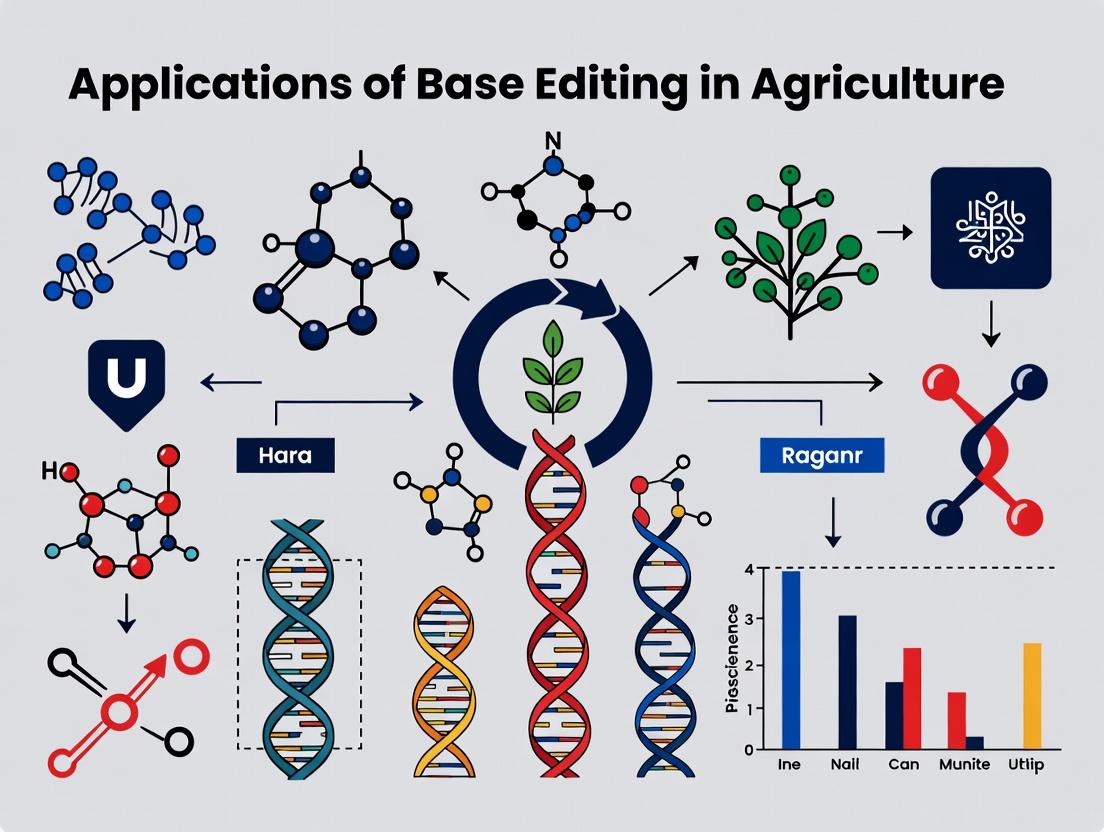
This article explores the transformative applications of base editing in agricultural biotechnology.
Base Editing in Agriculture: Precision Gene Tools for Sustainable Crop Development
Abstract
This article explores the transformative applications of base editing in agricultural biotechnology. We provide a foundational understanding of base editors (BEs) and their molecular mechanisms, detailing their unique advantages over conventional CRISPR-Cas9 for precise nucleotide conversion. The core focuses on methodological pipelines for designing and delivering base editing systems in key crops, alongside concrete applications in developing resilient, high-yield varieties. We address critical troubleshooting strategies for optimizing editing efficiency and specificity, and validate these approaches through comparative analysis with other genome editing tools. Tailored for researchers and development professionals, this review synthesizes current advancements, practical challenges, and the future trajectory of base editing for sustainable agriculture.
What is Base Editing? Core Principles and Agricultural Potential
Base editors represent a revolutionary class of genome editing tools that enable direct, irreversible conversion of one target DNA base pair to another without requiring double-stranded DNA breaks (DSBs) or donor DNA templates. Derived from CRISPR-Cas9 systems, these programmable deaminases have profound implications for agricultural research, enabling precise single-nucleotide modifications for crop improvement, trait development, and functional genomics.
Traditional CRISPR-Cas9 editing induces DSBs, relying on error-prone non-homologous end joining (NHEJ) or homology-directed repair (HDR). In contrast, base editing facilitates precise chemical conversion—C•G to T•A or A•T to G•C—offering higher efficiency and fewer byproducts. For agriculture, this enables the creation of beneficial alleles for yield, stress resilience, and nutritional quality without introducing foreign DNA, potentially streamlining regulatory pathways.
Core Architecture & Mechanism
Base editors (BEs) are fusion proteins comprising three core components:
- A Catalytically Impaired Cas9 (Cas9n or dCas9): Provides programmable DNA targeting.
- A Deaminase Enzyme: Catalyzes the direct conversion of a target base (e.g., cytidine or adenosine).
- An Inhibitor of Base Excision Repair (BER): Such as a uracil glycosylase inhibitor (UGI), to improve editing outcomes.
Cytosine Base Editors (CBEs)
CBEs use a cytidine deaminase (e.g., rAPOBEC1) to convert cytidine (C) to uridine (U) within a defined editing window (typically positions 4-8 within the protospacer). The cellular machinery then reads U as T, resulting in a C•G to T•A transition.
Adenine Base Editors (ABEs)
ABEs use an evolved tRNA adenosine deaminase (TadA*) to convert adenosine (A) to inosine (I), which is read as guanosine (G) by polymerases, resulting in an A•T to G•C transition.
Diagram 1: Base Editor Core Architecture & Editing Outcome
Quantitative Landscape of Base Editing Systems
The field has rapidly evolved, with multiple generations of editors offering varying efficiencies, editing windows, and product purities.
Table 1: Comparison of Prominent Base Editor Systems
| Editor Name | Type | Deaminase Origin | Cas Variant | Primary Editing Window (PAM) | Typical Efficiency Range* | Key Agricultural Application Demonstrated |
|---|---|---|---|---|---|---|
| BE3 | CBE | rAPOBEC1 | SpCas9n (D10A) | ~4-8 (NGG) | 10-50% | Herbicide resistance in rice, wheat |
| BE4max | CBE | rAPOBEC1 | SpCas9n (D10A) | ~4-8 (NGG) | 20-60% | Reduced lignin in poplar, enhanced shelf-life tomato |
| A3A-BE3 | CBE | A3A | SpCas9n (D10A) | ~1-5 (NGG) | 15-40% | Fine-tuning gene expression in maize |
| ABE7.10 | ABE | TadA*7.10 | SpCas9n (D10A) | ~4-7 (NGG) | 10-50% | Creating semi-dwarf alleles in rice, wheat |
| ABE8e | ABE | TadA*8e | SpCas9n (D10A) | ~4-8 (NGG) | 30-80% | High-efficiency yield trait introduction |
| Target-AID | CBE | PmCDA1 | SpCas9n (D10A) | ~1-7 (NGG) | 5-30% | Disease susceptibility gene knockout |
| YE1-BE3-FNLS | CBE | rAPOBEC1 (YE1 variant) | SpCas9n (D10A) | ~3-7 (NGG) | 20-60% | Ultra-high purity (>99.9% C•G to T•A) edits for regulatory approval studies |
| eSpCas9(1.1)-BE4 | CBE | rAPOBEC1 | eSpCas9(1.1)n | ~4-8 (NGG) | 15-55% | Reduced off-target editing in perennial crops |
*Efficiency varies widely by target locus, delivery method, and organism. Data compiled from recent literature (2023-2024).
Detailed Experimental Protocol: Agrobacterium-Mediated Base Editing in Dicot Plants (e.g., Tomato, Potato)
This protocol outlines the delivery of a base editor construct via Agrobacterium tumefaciens for stable transformation.
Materials & Reagent Preparation
The Scientist's Toolkit: Key Reagents for Plant Base Editing
| Item | Function & Specification | Example Product/Source |
|---|---|---|
| Base Editor Plasmid | Contains BE expression cassette (dCas9-deaminase-UGI for CBE) under a plant promoter (e.g., pUBQ10, p35S) and sgRNA under a U6/U3 promoter. | e.g., pYPQ210-BE4max (Addgene #130815) |
| Agrobacterium Strain | Disarmed strain for plant transformation. | A. tumefaciens EHA105 or GV3101 |
| Plant Explant Material | Target tissue for transformation. | Sterile tomato cotyledons or leaf discs. |
| Selection Antibiotics | For bacterial and plant selection based on plasmid markers. | Kanamycin, Spectinomycin, Hygromycin B |
| Plant Growth Regulators | Induce callus and shoot regeneration. | 6-Benzylaminopurine (BAP), Indole-3-acetic acid (IAA) |
| DNA Extraction Kit | High-quality genomic DNA for genotyping. | CTAB method or commercial kit (e.g., DNeasy Plant) |
| PCR & Sanger Sequencing Primers | Amplify and sequence the target locus to assess editing. | Designed to flank the predicted editing window. |
| High-Fidelity DNA Polymerase | For accurate amplification of target for sequencing. | Q5 High-Fidelity (NEB) |
| T7 Endonuclease I or ICE Analysis | Initial screening for editing efficiency (indels or base changes). | Surveyor Mutation Detection Kit |
Stepwise Methodology
- Construct Assembly: Clone a target-specific sgRNA (20-nt spacer matching the target within the BE's editing window and adjacent to a compatible PAM) into the BE plasmid using Golden Gate or BsaI digestion/ligation.
- Agrobacterium Transformation: Introduce the assembled plasmid into Agrobacterium via electroporation or freeze-thaw method. Select on plates with appropriate antibiotics.
- Plant Transformation: a. Grow Agrobacterium culture to OD600 ~0.6-0.8. b. Immerse sterilized explants in the bacterial suspension for 10-30 minutes. c. Co-cultivate explants on solid medium for 2-3 days. d. Transfer to selection/regeneration medium containing antibiotics to kill Agrobacterium and select for transformed plant cells. e. Regenerate shoots over 4-8 weeks, then root on selective medium.
- Genotyping and Analysis: a. Extract genomic DNA from regenerated plantlets (T0). b. PCR amplify the target region. c. Primary Screening: Use Sanger sequencing of PCR amplicons. Analyze chromatograms for overlapping peaks at the target site. d. Deep Characterization: Clone PCR products and sequence multiple colonies OR use Next-Generation Sequencing (NGS) of the amplicon to quantify editing efficiency and profile byproducts (e.g., indels, unintended base changes).
Diagram 2: Plant Base Editing & Screening Workflow
Advanced Applications & Emerging Trends in Agriculture
- Dual Base Editing: Simultaneous C-to-T and A-to-G editing for multiplexed trait stacking.
- Cas Variant Expansion: Using Cas9-NG, SpRY, or Cas12a-derived BEs to expand targeting range beyond canonical NGG PAM.
- Organelle Editing: Developing editors for chloroplast and mitochondrial genomes.
- Prime Editing Integration: As a complementary tool for all possible base transitions and transversions.
- Editing Outcome Prediction: Machine learning models (e.g., DeepBE) to predict efficiency and products.
Base editors have matured from CRISPR-Cas9 derivatives into indispensable, programmable deaminases. Their ability to make precise, predictable point mutations with minimal byproducts positions them as a cornerstone technology for the next generation of crop improvement strategies, aligning with the thesis that such precision tools are critical for developing sustainable, high-performance agricultural systems.
Within the burgeoning field of agricultural biotechnology, the ability to create precise, predictable point mutations in plant genomes represents a transformative capability. Cytosine Base Editors (CBEs) and Adenine Base Editors (ABEs) are engineered molecular machines that enable the direct, irreversible conversion of one target DNA base pair to another without introducing double-strand DNA breaks (DSBs) and without requiring donor DNA templates. This technical guide elucidates the core molecular mechanisms of these editors, providing a framework for their application in developing crops with enhanced yield, nutrition, and resilience.
Architectural Foundations of Base Editors
All base editors are fusion proteins constructed from three essential components:
- A Catalytically Impaired Cas9 Nickase (nCas9) or Dead Cas9 (dCas9): This protein domain is programmed by a single-guide RNA (sgRNA) to bind a specific DNA sequence. The nCas9 (D10A variant in SpCas9) retains the ability to nick the non-edited DNA strand, while dCas9 is completely catalytically dead and only binds DNA.
- A Deaminase Enzyme: This is the core catalytic engine responsible for the chemical conversion of the target nucleobase.
- A DNA Repair Inhibition or Modification Domain: Often a uracil DNA glycosylase inhibitor (UGI) for CBEs, this component biases cellular repair pathways to favor the desired edit outcome.
Mechanism of Cytosine Base Editors (CBEs)
CBEs facilitate the conversion of a C•G base pair to a T•A. The prototypical CBE architecture fuses nCas9 (D10A) to a cytidine deaminase enzyme (e.g., rAPOBEC1) and one or more copies of UGI.
Stepwise Molecular Mechanism:
- Target Binding & R-loop Formation: The sgRNA directs the CBE to the target genomic locus. nCas9 binds, unwinding the DNA and forming an R-loop, exposing a ~5-nucleotide window of single-stranded DNA (ssDNA) within the non-target strand (protospacer).
- Cytidine Deamination: The tethered cytidine deaminase acts on the exposed ssDNA, converting a cytidine (C) within the activity window (typically positions 4-8, counting the PAM as 21-23) into uridine (U). This creates a U•G mispair.
- DNA Nicking & Repair Bias: The nCas9 domain nicks the non-edited (G-containing) DNA strand. Cellular repair machinery attempts to resolve the mismatch. The presence of UGI blocks base excision repair (BER) pathways that would remove the U, interpreting it as a lesion.
- Replication-Dependent Fixation: During DNA replication or repair synthesis, the U is read as a thymine (T). The nick in the opposite strand prompts repair using the edited (U-containing) strand as a template, resulting in the replacement of the G with an A. After a second round of replication, the original C•G pair is permanently converted to a T•A pair.
Quantitative Profile of First-Generation BE4 CBE:
Table 1: Performance Metrics of BE4 CBE in Mammalian Cells (Representative Data)
| Parameter | Typical Range/Value | Notes |
|---|---|---|
| Editing Window | Positions 4-8 (C4-C8) | Relative to protospacer (1-based, PAM as 21-23). |
| Product Purity | Often >50%, can reach >90% | Percentage of total sequenced alleles that are the desired T•A product. |
| Indel Frequency | Typically <1% | Significantly lower than Cas9 nuclease. |
| Base Substitution Types | C→T, G→A | Depends on which strand is deaminated. |
| On-target Efficiency | 10-50% (highly context-dependent) | Varies by cell type, delivery, and sequence context. |
Protocol: In Vitro Assessment of CBE Activity (HEK293T Cell Assay)
A. Materials:
- BE4max plasmid (Addgene #112093).
- sgRNA expression plasmid or synthetic sgRNA.
- HEK293T cells.
- Transfection reagent (e.g., Lipofectamine 3000).
- Lysis buffer and PCR reagents.
- Next-Generation Sequencing (NGS) library prep kit.
B. Procedure:
- Design & Cloning: Design sgRNA targeting desired locus with an NG PAM (for SpCas9-derived BE4). Clone into expression vector.
- Cell Transfection: Seed HEK293T cells in 24-well plate. Co-transfect 500 ng BE4max plasmid and 250 ng sgRNA plasmid per well using Lipofectamine 3000 per manufacturer's protocol.
- Harvest Genomic DNA: 72 hours post-transfection, harvest cells and extract genomic DNA.
- PCR Amplification: Amplify target region (~300-500 bp) using high-fidelity polymerase. Include Illumina adapter sequences in primers.
- NGS Library Preparation & Sequencing: Purify PCR product, prepare NGS libraries, and sequence on an Illumina MiSeq or equivalent platform.
- Data Analysis: Use computational tools like CRISPResso2 to quantify the percentage of C→T conversions at each position within the editing window and to assess indel rates.
Mechanism of Adenine Base Editors (ABEs)
ABEs facilitate the conversion of an A•T base pair to a G•C. ABEs are created by fusing nCas9 (D10A) to an engineered adenine deaminase, such as TadA* (evolved from E. coli TadA), which acts on DNA.
Stepwise Molecular Mechanism:
- Target Binding & R-loop Formation: Similar to CBEs, the ABE-sgRNA complex binds and exposes a window of ssDNA on the non-target strand.
- Adenine Deamination: The engineered TadA* deaminase converts an adenine (A) within the activity window (typically positions 4-8) to inosine (I). Inosine is biologically read as guanine (G), creating an I•T mismatch.
- DNA Nicking & Repair: The nCas9 nicks the non-edited (T-containing) strand. The cell's mismatch repair (MMR) machinery or replication machinery resolves the I•T mismatch. Inosine is preferentially interpreted as G, leading to the replacement of T with C on the nicked strand.
- Fixation: After DNA replication, the original A•T base pair is permanently replaced by a G•C pair.
Quantitative Profile of ABE8e:
Table 2: Performance Metrics of ABE8e in Mammalian Cells (Representative Data)
| Parameter | Typical Range/Value | Notes |
|---|---|---|
| Editing Window | Positions 4-8 (A4-A8) | Can be broader/higher efficiency than early ABEs. |
| Product Purity | Very high, often >90% | Lower rates of byproduct formation compared to CBEs. |
| Indel Frequency | Typically <0.1% | Extremely low due to lack of uracil intermediates. |
| Base Substitution Types | A→G, T→C | |
| On-target Efficiency | 20-60% (can be very high) | ABE8e shows improved kinetics and efficiency. |
| Sequence Context Bias | Minor, but prefers A in certain motifs (e.g., TAC) |
Protocol: Deep Sequencing Analysis of ABE Editing in Plant Protoplasts
A. Materials:
- ABE8e expression plasmid.
- Arabidopsis thaliana or rice mesophyll protoplasts.
- PEG transfection solution.
- DNA extraction kit for plants.
- High-fidelity PCR mix and NGS library prep kit.
B. Procedure:
- Protoplast Isolation & Transfection: Isolate protoplasts from leaf tissue using cellulase/macerozyme digestion. Transfect 2x10^5 protoplasts with 20 µg ABE8e plasmid and 10 µg sgRNA expression plasmid using PEG-mediated transformation.
- Incubation & DNA Extraction: Incubate transfected protoplasts in culture medium for 48-72 hours. Pellet cells and extract high-molecular-weight genomic DNA.
- Targeted Amplification: Perform two-step PCR to amplify the target locus and attach dual-indexed Illumina sequencing adapters.
- Sequencing & Analysis: Pool and purify libraries, sequence on a MiSeq (2x250 bp). Analyze with CRISPResso2 or analogous software, setting the "Expected Nucleotide" to 'G' for A→G conversions.
Visualizing the Core Mechanisms
Diagram 1: CBE and ABE Core Editing Pathways (Max 760px)
The Scientist's Toolkit: Essential Reagents for Base Editing Research
Table 3: Key Research Reagent Solutions for Base Editing Experiments
| Reagent/Material | Supplier Examples | Primary Function in Base Editing Research |
|---|---|---|
| Base Editor Plasmids | Addgene (BE4max, ABE8e), in-house vectors | Source of the editor protein. Codon-optimized versions exist for plants, animals, etc. |
| sgRNA Cloning Kit | ToolGen, Synthego, IDT | For efficient assembly of expression constructs for single or multiplexed guides. |
| High-Efficiency Transfection Reagent | Lipofectamine 3000 (cells), PEG (protoplasts), RNP electroporation | Delivery of editor components (DNA, RNA, or protein) into target cells. |
| Next-Generation Sequencing Kit | Illumina (MiSeq), PacBio | For deep sequencing of target loci to quantify editing efficiency, purity, and byproducts. |
| CRISPR Analysis Software | CRISPResso2, BE-Analyzer, Geneious | Bioinformatics tools to process NGS data and calculate precise editing outcomes. |
| Cell Line/Plant Cultivar | ATCC, ABRC, NRCPB | Genetically stable and tractable model systems for initial editor validation. |
| Antibodies for Deaminases/Cas9 | Abcam, Cell Signaling, Diagenode | Used in Western blot or ChIP to verify editor expression and binding. |
| UGI Protein (for CBE optimization) | NEB, recombinant expression | Can be co-delivered to enhance inhibition of base excision repair. |
| Synthetic sgRNA (chemically modified) | Dharmacon, IDT, Synthego | For RNP delivery; chemical modifications enhance stability and reduce immunogenicity. |
Base editing is a precision genome editing technology that enables the direct, irreversible conversion of one target DNA base pair to another without requiring double-stranded DNA breaks (DSBs) or donor DNA templates. Within the thesis context of "Applications of base editing in agriculture research," this technology offers transformative potential. This whitepaper details its core advantages over traditional breeding and Non-Homologous End Joining (NHEJ)-dependent editing, supported by current data, experimental protocols, and research tools.
Core Technical Advantages and Comparative Data
Precision and Efficiency
Base editors (BEs) fuse a catalytically impaired CRISPR-Cas nickase to a nucleobase deaminase enzyme. Cytosine base editors (CBEs) mediate C•G to T•A conversions, while Adenine base editors (ABEs) mediate A•T to G•C. This allows for single-nucleotide resolution, dramatically reducing the unpredictable indels (insertions/deletions) characteristic of NHEJ repair after DSBs.
Table 1: Comparison of Editing Outcomes in Plants
| Parameter | Traditional Breeding | NHEJ-Dependent CRISPR/Cas9 | Base Editing |
|---|---|---|---|
| Primary Outcome | Polygene shuffling, introgression | DSB, random indels, potential small deletions | Precise point mutation (C>T or A>G) |
| Typical Efficiency | Very low (reliant on recombination) | Variable (1-60% mutagenesis) | High (often 10-50% base conversion in plants) |
| Off-target Effects (DNA) | Genome-wide, uncontrolled | DSB-dependent off-target sites possible | Primarily sgRNA-dependent; rare deaminase-independent off-targets |
| Product Purity | Low (linkage drag) | Low (mixed indels/mutations) | High (predominantly desired point mutation) |
| Time to Generate Stable Line | Years to decades | Months to years | Months (can bypass tissue culture in some systems) |
Recent studies (2023-2024) in rice and wheat report base editing efficiencies up to 70% in protoplasts and 30-50% in regenerated plants for specific targets, with product purity (percentage of edited alleles containing only the desired point mutation) exceeding 90% in optimized systems.
Bypassing the Limitations of NHEJ and HDR
NHEJ is error-prone and unsuitable for precise nucleotide changes. Homology-Directed Repair (HDR), while precise, is inefficient in plants, especially in non-dividing cells, and requires co-delivery of a donor template. Base editing operates in a replication-independent manner, making it effective in both dividing and non-dividing cells. It efficiently installs gain-of-function or loss-of-function mutations (e.g., creating stop codons or altering protein active sites) that are difficult or impossible to achieve via NHEJ.
Table 2: Successful Agri-Trait Applications (2022-2024)
| Crop | Target Gene | Base Edit | Achieved Trait | Reference Key Finding |
|---|---|---|---|---|
| Rice | ALS (Acetolactate synthase) | C>T (P171S) | Herbicide resistance | 43% edited T0 plants with no indels; trait inherited. |
| Tomato | SP5G | C>T (Premature stop) | Early flowering & compact growth | Accelerated domestication, 52% editing efficiency. |
| Wheat | LOX2 (Lipoxygenase) | A>G | Reduced rancidity, improved flour shelf life | Multiplex editing of three homoeologs achieved. |
| Potato | ALS1 | A>G (W574L) | Herbicide resistance | ABE editing demonstrated in tetraploid potato. |
| Canola | EPSPS | C>T | Glyphosate tolerance | Demonstrated in protoplasts with >60% efficiency. |
Detailed Experimental Protocol: Base Editing in Rice Protoplasts
The following protocol is adapted from recent high-efficiency plant base editing studies.
Objective: To evaluate the efficiency and purity of a Cytosine Base Editor (CBE) at a target locus in rice protoplasts.
Materials: See "The Scientist's Toolkit" below.
Procedure:
- sgRNA Design and Cloning: Design a 20-nt spacer sequence specific to the target genomic locus, immediately 5' of an NG PAM for SpCas9-nickase-derived BEs. Clone the oligonucleotide duplex into the sgRNA expression vector (e.g., pRGEB32 derivative) via BsaI Golden Gate assembly.
- Base Editor Plasmid Preparation: Use a plant-optimized CBE (e.g., rAPOBEC1-nCas9-UGI driven by a ZmUbi promoter). The sgRNA vector and BE vector can be assembled or co-delivered.
- Rice Protoplast Isolation:
- Grow rice seedlings (Nipponbare) in dark for 10-14 days.
- Harvest 1-2g of etiolated stem and leaf tissue, slice into 0.5mm strips.
- Digest tissue in 20ml enzyme solution (1.5% Cellulase R10, 0.75% Macerozyme R10, 0.6M mannitol, 10mM MES pH 5.7, 10mM CaCl₂, 5mM β-mercaptoethanol, 0.1% BSA) for 6 hours in the dark with gentle shaking.
- Filter through 40μm nylon mesh, wash with W5 solution (154mM NaCl, 125mM CaCl₂, 5mM KCl, 2mM MES pH 5.7) and pellet at 100g for 5 minutes.
- PEG-Mediated Transfection:
- Resuspend protoplast pellet in MMg solution (0.6M mannitol, 15mM MgCl₂, 4mM MES pH 5.7) at 2x10⁶ cells/ml.
- Aliquot 10μg total plasmid DNA (1:1 molar ratio of BE:sgRNA vectors) to 100μl protoplasts.
- Add 110μl of fresh 40% PEG4000 (in 0.6M mannitol, 0.1M CaCl₂), mix gently, incubate 15-20 minutes at room temperature.
- Dilute with 0.9ml W5 solution, pellet cells, resuspend in 1ml WI solution (0.6M mannitol, 4mM KCl, 4mM MES pH 5.7).
- Incubate in dark at 28°C for 48-72 hours.
- Genomic DNA Extraction & Analysis:
- Harvest protoplasts, extract gDNA using a CTAB-based method.
- PCR-amplify the target region (~300-500bp flanking the edit window).
- Sanger Sequencing & Deconvolution: Subject PCR products to Sanger sequencing. Analyze traces using online decomposition tools (e.g., BEAT, EditR) or TIDE to calculate base conversion efficiency and indel frequency.
- High-Throughput Sequencing (Recommended): Amplicons should be barcoded and sequenced on an Illumina MiSeq platform. Analyze reads for precise C-to-T changes within the editing window (typically positions 3-10, protospacer counting from PAM-distal end) and collateral indel rates.
Visualizing Base Editing Mechanism and Workflow
Diagram Title: Base Editing Mechanism and Plant Workflow
The Scientist's Toolkit: Key Research Reagents & Materials
Table 3: Essential Reagents for Plant Base Editing Research
| Item | Function/Description | Example Product/Catalog |
|---|---|---|
| Base Editor Plasmids | Mammalian- or plant-codon optimized CBEs/ABEs (e.g., BE3, BE4, ABE7.10, evoCDA1). | Addgene #73019 (BE3), #100814 (ABE7.10). |
| Plant sgRNA Expression Vector | Vector with Pol III promoter (U3, U6) for sgRNA transcription and BsaI cloning sites. | pRGEB32, pYPQ141. |
| Restriction Enzymes | For Golden Gate assembly (BsaI-HFv2) or traditional cloning. | NEB BsaI-HF v2 (R3733). |
| Cellulase/Macerozyme | Enzymes for plant cell wall digestion to isolate protoplasts. | Yakult Cellulase R10, Macerozyme R10. |
| PEG4000 Solution | Promotes DNA uptake during protoplast transfection. | 40% PEG4000 in mannitol/CaCl₂. |
| Plant Culture Media | For protoplast culture and subsequent callus regeneration (e.g., N6, MS media). | N6 Medium, Murashige & Skoog Basal Salt Mixture. |
| High-Fidelity DNA Polymerase | For error-free amplification of target loci for sequencing analysis. | KAPA HiFi HotStart ReadyMix (KK2602). |
| Next-Gen Sequencing Kit | For preparing amplicon libraries to quantify editing efficiency and purity. | Illumina MiSeq Reagent Kit v3. |
| Decomposition Software | Analyzes Sanger sequencing traces to quantify base editing. | BEAT (https://github.com/), EditR (https://github.com/). |
Base editing represents a paradigm shift in crop improvement, offering a level of precision, efficiency, and product purity unattainable by traditional breeding or first-generation CRISPR-NHEJ methods. Its ability to directly install beneficial single-nucleotide polymorphisms (SNPs) without DSBs or donor templates accelerates functional genomics and the development of improved crop varieties, solidifying its central role in the future of agricultural biotechnology research.
Base editing represents a precise and efficient form of genome engineering that enables the direct, irreversible conversion of one target DNA base pair to another without requiring double-stranded DNA breaks (DSBs) or donor DNA templates. Its integration into plant systems marks a pivotal evolution in agricultural biotechnology, offering unprecedented opportunities for crop improvement, functional genomics, and the development of novel agricultural traits.
Historical Context and Platform Evolution
The development of plant base editing platforms followed the groundbreaking work in mammalian cells. The first-generation base editors, Cytidine Base Editors (CBEs), were developed from 2016 onwards, enabling C•G to T•A conversions. Shortly after, Adenine Base Editors (ABEs) were engineered for A•T to G•C conversions. The adaptation for plants required overcoming unique challenges such as cell wall barriers, diverse delivery methods (e.g., Agrobacterium-mediated transformation, particle bombardment, ribonucleoprotein (RNP) complexes), and varying genomic contexts.
Key evolutionary milestones include:
- Initial Adaptation (2017-2018): Proof-of-concept studies in rice, wheat, and Arabidopsis demonstrated that CBEs and ABEs could function in plants, albeit with variable efficiency and off-target effects.
- Optimization Phase (2019-2021): Refinement of editor components—including codon optimization for plants, use of plant-specific nuclear localization signals (NLS), and fusion with different Cas9 variants (e.g., nCas9-dCas9)—significantly improved editing efficiency and expanded the targeting scope.
- Precision and Scope Expansion (2022-Present): Development of dual-base editors, glycosylase base editors (GBEs) for C-to-G transversions, and mitochondrial/chloroplast base editors. A major focus has been on enhancing specificity (high-fidelity variants) and developing editors with expanded PAM compatibility (e.g., using Cas9-NG, SpCas9 variant, or nCas12a).
Table 1: Evolution of Key Base Editor Systems in Plants
| Editor Generation | Core Components (Example) | Key Base Change | First Plant Demonstrations (Year) | Primary Improvements Over Previous |
|---|---|---|---|---|
| 1st Gen (CBE) | nCas9 (D10A)-rAPOBEC1-UGI | C•G → T•A | Rice, Wheat (2017) | First proof-of-concept; no DSBs required. |
| 1st Gen (ABE) | nCas9 (D10A)-TadA-TadA | A•T → G•C | Rice, Arabidopsis (2018) | Enabled A-to-G editing in plants. |
| 2nd Gen (Optimized) | nCas9-PmCDA1-UGI, nCas9-eTadA-7.10 | C•G → T•A; A•T → G•C | Multiple crops (2019-2020) | Codon optimization, NLS tuning, increased efficiency & product purity. |
| 3rd Gen (Advanced) | nCas9-APOBEC3A-Y130F-UGI, nCas12a-ABE | C•G → T•A; A•T → G•C | Tomato, Maize (2021-2022) | Broader editing window, reduced off-targets (RNA/DNA), expanded PAM. |
| 4th Gen (Novel) | nCas9-CDA1-UNG (GBE), DddA-derived editors | C•G → G•C; A•T → G•C in organelles | Rice, Arabidopsis (2022-2023) | Transversion editing, organelle genome editing. |
Detailed Experimental Protocol:Agrobacterium-Mediated Delivery of Base Editors for Rice Protoplasts & Calli
This protocol outlines a standard method for assessing base editor functionality in monocot plants.
A. Vector Construction:
- Assembly: Clone the optimized base editor expression cassette (e.g., pUBI promoter::nCas9 (D10A)-TadA-TadA::NOS terminator) and the sgRNA expression cassette (pU3 or pU6 promoter) into a single T-DNA binary vector. Include a plant selection marker (e.g., Hygromycin phosphotransferase II, HPTII).
- sgRNA Design: Design a 20-nt spacer sequence targeting the genomic locus of interest, ensuring it is within the base editor's activity window (typically positions 4-8 for ABE, 3-10 for CBE, relative to the PAM).
B. Agrobacterium Transformation & Plant Material Preparation:
- Transform the assembled binary vector into Agrobacterium tumefaciens strain EHA105 via electroporation.
- Culture embryogenic calli derived from mature rice seeds (e.g., Oryza sativa ssp. japonica cv. Nipponbare) on N6D solid medium for 2-4 weeks.
C. Co-cultivation & Selection:
- Incubate rice calli with the transformed Agrobacterium suspension (OD~600~=0.6-0.8) for 15-20 minutes.
- Blot dry and co-cultivate on filter paper overlaid on N6D co-cultivation medium at 23°C in the dark for 3 days.
- Transfer calli to N6D selection medium containing Hygromycin (50 mg/L) and Cefotaxime (250 mg/L) to inhibit Agrobacterium growth. Subculture every 2 weeks.
D. Molecular Analysis:
- Genomic DNA Extraction: Harvest resistant calli after 4-6 weeks. Extract genomic DNA using a CTAB-based method.
- PCR Amplification: Amplify the target region using high-fidelity PCR.
- Editing Assessment: Sanger sequence the PCR products. Analyze chromatograms for base conversion peaks using tools like BEAT or EditR. For high-precision quantification, perform high-throughput sequencing (amplicon-seq).
Visualization: Base Editor System Architecture & Workflow
Base Editor Architecture and Plant Workflow
The Scientist's Toolkit: Key Research Reagent Solutions
Table 2: Essential Reagents for Plant Base Editing Research
| Reagent / Material | Function & Role in Experiment | Example/Supplier Considerations |
|---|---|---|
| Binary Vector System | Carries T-DNA with BE and sgRNA expression cassettes for Agrobacterium delivery. | pCAMBIA, pGreen backbones; optimized for monocot/dicot expression. |
| Base Editor Plasmid Kit | Pre-assembled plasmids encoding optimized CBEs/ABEs (e.g., pnCas9-PBE, pABE8e). | Available from Addgene (e.g., #157893, #165583) for academic research. |
| Agrobacterium Strain | Mediates T-DNA transfer into plant cells. | EHA105, LBA4404, GV3101; strain choice depends on plant species. |
| Plant Tissue Culture Media | Supports callus induction, co-cultivation, and regeneration of transformed plants. | N6D for rice, MS for Arabidopsis; must include appropriate hormones. |
| Selection Antibiotics | Selects for transformed tissue (plant) and eliminates Agrobacterium post-co-cultivation. | Hygromycin, Kanamycin (plant); Cefotaxime, Timentin (bacteria). |
| High-Fidelity PCR Mix | Accurately amplifies target genomic loci from edited tissue for sequencing analysis. | Q5 Hot-Start (NEB), KAPA HiFi (Roche) to avoid polymerase errors. |
| Sanger Sequencing Service | Initial validation of editing efficiency at target site via chromatogram decomposition. | In-house capillary sequencer or commercial service (Eurofins, Genewiz). |
| Amplicon-Seq Library Prep Kit | Prepares PCR amplicons for high-throughput sequencing to quantify editing precisely. | Illumina TruSeq, NEBNext Ultra II; allows deep sequencing of target. |
| Genomic DNA Extraction Kit | Isolates high-quality, PCR-ready DNA from plant calli or tough leaf tissue. | CTAB method or commercial kits (DNeasy Plant, Qiagen). |
| sgRNA in vitro Transcription Kit | For RNP complex delivery; produces sgRNA for complexing with purified BE protein. | HiScribe T7 ARCA (NEB); allows delivery via particle bombardment or PEG. |
Designing and Deploying Base Editors in Crops: From Lab to Field
This technical guide details the design principles for constructing plant base editing systems, a cornerstone technology for precision crop improvement. Framed within the broader thesis on Applications of base editing in agriculture research, this document provides a roadmap for creating efficient, specific, and heritable genetic modifications without introducing double-strand DNA breaks.
Core Components: Selection & Engineering
Editor Proteins
Base editors are fusion proteins that combine a catalytically impaired CRISPR-Cas nuclease (or nickase) with a nucleobase deaminase enzyme. Selection depends on the desired conversion and target context.
Table 1: Major Base Editor Systems for Plants
| Editor Type | Core Components | Conversion | Target Window (PAM) | Key Applications in Plants |
|---|---|---|---|---|
| Cytosine Base Editor (CBE) | Cas9n-APOBEC1-UGI | C•G to T•A | ~protospacer positions 4-8 (NGG) | Knock-out via premature stop codons, trait enhancement. |
| Adenine Base Editor (ABE) | Cas9n-TadA*-TadA | A•T to G•C | ~protospacer positions 4-8 (NGG) | Correction of G•C to A•T mutations, precise SNP introduction. |
| C-to-G Base Editor (CGBE) | Cas9n-APOBEC1-UNG | C•G to G•C, A•T | Varies | Transversion mutations, expanded allele diversity. |
| Cas12a-based Editors | FnCas12a (RR)-Deaminase | Depends on deaminase | TTTV PAM | Accessing AT-rich genomic regions. |
Engineering Considerations: Plant codon optimization is essential for robust expression. Nuclear localization signals (NLSs), often dual NLSs, must be appended. Engineering deaminase activity windows and reducing off-target activity through high-fidelity Cas9 variants (e.g., SpCas9-HF1) are critical advancements.
Guide RNAs (gRNAs)
The single guide RNA (sgRNA) directs the editor protein to the target DNA sequence.
Design Rules:
- Target Site Selection: The target base must lie within the deaminase activity window (typically positions 4-8 for SpCas9-based editors, counting the PAM as 21-23).
- Specificity: Avoid sequences with high homology elsewhere in the genome to minimize off-target editing. Use tools like CRISPR-P 2.0 or CCTop for plant-specific design.
- Efficiency: gRNA secondary structure and sequence composition (e.g., avoiding poly-T tracts) affect expression and stability.
- Delivery: For multiplexing, tRNA or Csy4 processing systems can be used to express multiple gRNAs from a single Pol II or Pol III promoter.
Promoters for Plant Expression
Promoter choice governs the timing, tissue specificity, and level of editor and gRNA expression, directly impacting editing efficiency and plant viability.
Table 2: Promoter Selection for Plant Base Editing Constructs
| Component | Promoter Type | Examples | Function & Rationale |
|---|---|---|---|
| Editor Protein | Constitutive | CaMV 35S, ZmUbi, OsActin | Drives high, continuous expression for high editing efficiency in somatic cells. |
| Germline-Specific | DD45/EC1.2 (egg cell), LAT52 (sperm cell) | Limits editor expression to reproductive cells, reducing somatic mosaicism and producing non-chimeric edited progeny. | |
| gRNA | RNA Pol III | AtU6, OsU3, TaU3 | High, ubiquitous expression of small RNAs; requires a precise +1G start nucleotide. |
| RNA Pol II (with ribozyme) | Csy4, tRNA, ribozyme-flanked under 35S | Enables multiplexed gRNA expression from a single transcript and tissue-specific gRNA regulation. |
Experimental Protocols
Protocol: In Planta Assessment of Base Editing Efficiency
Objective: To quantify base editing efficiency at a target locus in T0 or T1 generation plants. Materials: Designed construct, plant transformation system (Agrobacterium for stable transformation or RNP for protoplasts), target plant tissue, PCR reagents, Sanger sequencing platform. Procedure:
- Construct Delivery: Introduce the base editing construct into plant cells via Agrobacterium-mediated stable transformation or PEG-mediated protoplast transfection.
- Sample Collection: Harvest leaf tissue from regenerated plants (T0) or their progeny (T1).
- Genomic DNA Extraction: Use a CTAB-based or commercial kit method to extract high-quality gDNA.
- PCR Amplification: Design primers flanking the target site (amplicon size ~300-500 bp). Perform PCR with high-fidelity polymerase.
- Sequencing & Analysis: Sanger sequence the PCR product. Use decomposition software (e.g., BEAT, EditR, or TIDE) to quantify the proportion of sequencing traces showing C-to-T or A-to-G conversion at the target base(s). Alternatively, clone PCR products and sequence multiple colonies for a precise frequency calculation.
- Calculation: Editing efficiency (%) = (Number of sequenced reads/colonies with edit / Total reads/colonies sequenced) * 100.
Protocol: Detection of Off-Target Editing
Objective: To identify unintended edits at genomic sites with high sequence similarity to the on-target gRNA. Materials: List of predicted off-target sites (from in silico tools), primers for off-target loci, high-fidelity PCR mix, next-generation sequencing (NGS) platform. Procedure:
- In Silico Prediction: Use Cas-OFFinder or plant-specific genome databases to identify potential off-target sites (allowing up to 3-5 mismatches and indels).
- Amplicon Sequencing Library Prep: For each top predicted off-target site and the on-target site, perform PCR with primers containing Illumina adapter overhangs.
- NGS & Analysis: Pool amplicons and perform paired-end sequencing (150 bp or 250 bp). Align reads to the reference genome and use a variant-calling pipeline (e.g, GATK) with stringent filters to detect low-frequency substitutions. Compare variant profiles in edited vs. wild-type control plants.
- Reporting: Report all detected off-target mutations with their frequency and genomic context.
Visual Diagrams
Plant Base Editor Construct Design Workflow
Typical T-DNA Vector Structure for Plant Base Editing
The Scientist's Toolkit
Table 3: Essential Research Reagent Solutions
| Item | Function in Construct Design/Validation | Example Product/Resource |
|---|---|---|
| Modular Cloning Kit (MoClo/Golden Gate) | Enables rapid, standardized assembly of multiple genetic parts (promoters, editors, gRNAs). | Plant MoClo Toolkit, GoldenBraid. |
| Codon-Optimized Base Editor Genes | Pre-optimized sequences for high expression in plants (monocots/dicots). | Addgene plasmids (e.g., pZmABE, pOsCBE). |
| gRNA Cloning Vector | Backbone for easy insertion of target-specific 20nt spacer sequences. | pYPQ131 (AtU6), pRGEB32 (OsU3). |
| Agrobacterium Strain | For stable plant transformation; high T-DNA transfer efficiency. | EHA105, GV3101, LBA4404. |
| NGS-Based Editing Analysis Service | Comprehensive, quantitative analysis of on-target efficiency and genome-wide off-targets. | Amplicon-seq services (GENEWIZ, Novogene). |
| Plant Tissue Culture Media | For regeneration of transformed cells into whole plants. | Murashige and Skoog (MS) media, various hormone supplements. |
| Decomposition Software | Quantifies base editing efficiency from Sanger sequencing traces. | BEAT, EditR, TIDE web tools. |
| Plant Genome Database | For gRNA design, specificity checks, and off-target prediction. | Phytozome, EnsemblPlants, CRISPR-P 2.0. |
Within the broader thesis on Applications of Base Editing in Agriculture Research, the choice of delivery method is a critical determinant of experimental success and translational potential. Efficient and precise delivery of base editing machinery into plant cells is paramount. This guide provides a technical comparison of three predominant delivery strategies: Agrobacterium-mediated transformation, Particle Bombardment (biolistics), and direct delivery of pre-assembled Ribonucleoprotein (RNP) complexes.
Core Mechanisms and Technical Specifications
Agrobacterium tumefaciens-Mediated Transformation
This biological method leverages the natural DNA transfer capability of the soil bacterium Agrobacterium tumefaciens. The genes encoding the base editor (typically adenine base editor, ABE, or cytosine base editor, CBE) and guide RNA (gRNA) are cloned into Transfer DNA (T-DNA) regions of a disarmed Ti plasmid. Upon co-cultivation with plant explants, the T-DNA is transferred and integrated into the plant genome, leading to stable expression of the editing machinery.
Particle Bombardment (Biolistics)
A physical method where gold or tungsten microparticles (0.5-1.0 µm) are coated with DNA plasmids encoding the base editor and gRNA. These particles are accelerated by pressurized helium or an electrical discharge into target cells or tissues. The DNA can transiently express the editor or integrate into the genome, enabling transformation in species recalcitrant to Agrobacterium.
Ribonucleoprotein (RNP) Delivery
A non-transgenic, DNA-free approach where purified Cas9 nickase (for base editors) protein is pre-complexed with a synthetic gRNA in vitro to form an RNP complex. This complex is delivered directly into plant cells or protoplasts via physical methods like bombardment or polyethylene glycol (PEG)-mediated transfection. The RNP functions immediately upon entry and is rapidly degraded, minimizing off-target effects and avoiding genomic integration of foreign DNA.
Comparative Analysis of Key Parameters
Table 1: Quantitative Comparison of Delivery Methods for Base Editing
| Parameter | Agrobacterium | Particle Bombardment | Ribonucleoprotein (RNP) |
|---|---|---|---|
| Typical Editing Efficiency | Variable; 0.1% - 50% in stable lines | Low to moderate; 0.01% - 10% (transient) | High in protoplasts; up to 50%+ (transient) |
| Transgenic Integration Risk | High (T-DNA integration) | Moderate to High (random integration) | None (DNA-free) |
| Typical Throughput | High (batch culture) | Moderate (per bombardment) | Low to Moderate (protoplast handling) |
| Species Range | Broad, but limited by host specificity | Very broad, including monocots | Broad, but requires protoplast/ tissue culture |
| Time to Edited Plant | Long (months; requires regeneration) | Long (months; requires regeneration) | Medium (weeks; requires regeneration from edited cells) |
| Cost | Low | High (equipment, consumables) | Moderate (protein/gRNA synthesis) |
| Multiplexing Capacity | High (multiple gRNA cassettes) | High (co-bombardment) | High (multiple RNP co-delivery) |
| Key Advantage | Stable inheritance, well-optimized | Genotype-independent, organelle transformation | No foreign DNA, rapid editing, clean regulatory profile |
Detailed Experimental Protocols
Protocol A: Agrobacterium-Mediated Base Editing inNicotiana benthamianaLeaves (Transient Assay)
- Vector Construction: Clone the base editor (e.g., pCMV-ABE7.10) and gRNA expression cassette into the T-DNA region of a binary vector (e.g., pCambia).
- Agrobacterium Transformation: Electroporate the construct into Agrobacterium tumefaciens strain GV3101.
- Culture Preparation: Grow a single colony in LB with appropriate antibiotics to OD600 ~1.0. Pellet cells and resuspend in infiltration buffer (10 mM MES, 10 mM MgCl2, 150 µM acetosyringone, pH 5.6) to OD600 0.5.
- Infiltration: Using a needleless syringe, infiltrate the bacterial suspension into the abaxial side of young, healthy N. benthamiana leaves.
- Harvest & Analysis: Harvest leaf tissue 3-5 days post-infiltration. Extract genomic DNA and assess editing efficiency via targeted deep sequencing (e.g., Illumina MiSeq).
Protocol B: DNA Coated Particle Bombardment for Embryogenic Callus
- DNA Precipitation on Microcarriers:
- Suspend 60 mg of 0.6 µm gold particles in 1 mL 100% ethanol, vortex, pellet, and wash twice with sterile water.
- Resuspend particles in 1 mL sterile 50% glycerol.
- For 10 bombardments, aliquot 100 µL of beads. Sequentially add (with constant vortexing): 10 µL DNA (1 µg/µL total plasmid), 100 µL 2.5M CaCl2, 40 µL 0.1M spermidine.
- Incubate 10 minutes, pellet, wash with 70% then 100% ethanol, and resuspend in 48 µL 100% ethanol.
- Target Preparation: Arrange embryogenic calli (e.g., rice, wheat) in the center of a Petri dish containing osmoticum medium (e.g., with mannitol/sorbitol) 4 hours pre-bombardment.
- Bombardment: Load 6 µL of coated particle suspension onto a macrocarrier. Perform bombardment using a PDS-1000/He system with 1100 psi rupture discs, target distance 6 cm, and 27 inHg chamber vacuum.
- Recovery & Regeneration: Post-bombardment, incubate calli in the dark for 16-48 hours, then transfer to selection/regeneration media.
Protocol C: RNP Delivery via PEG-Mediated Protoplast Transfection
- Protoplast Isolation: Digest leaf mesophyll tissue (e.g., Arabidopsis, lettuce) in enzyme solution (1.5% cellulase, 0.4% macerozyme, 0.4M mannitol, 20 mM KCl, 20 mM MES, pH 5.7) for 3-16 hours. Filter, wash, and purify protoplasts via sucrose floatation.
- RNP Complex Formation: Incubate purified Cas9 nickase protein (e.g., 20 pmol) with chemically synthesized gRNA (e.g., 40 pmol) in nuclease-free buffer at room temperature for 10 minutes.
- PEG Transfection: Mix up to 2x10^5 protoplasts in 200 µL MMg solution (0.4M mannitol, 15 mM MgCl2) with the RNP complex. Add an equal volume of 40% PEG-4000 solution (in 0.2M mannitol, 0.1M CaCl2), mix gently, and incubate for 15-30 minutes.
- Wash & Culture: Dilute progressively with W5 solution, pellet gently, and resuspend in culture medium. Culture in the dark for 48-72 hours.
- Analysis: Harvest protoplasts, extract genomic DNA, and analyze editing by High-Resolution Melting (HRM) analysis or sequencing.
Visualizing Workflows and Mechanisms
Agrobacterium-mediated base editing workflow
Particle bombardment vs. RNP delivery pathway
The Scientist's Toolkit: Essential Research Reagents
Table 2: Key Reagent Solutions for Base Editing Delivery Experiments
| Reagent / Material | Function | Example Product / Note |
|---|---|---|
| Binary Vector System | T-DNA-based plasmid for Agrobacterium delivery; carries base editor and gRNA expression cassettes. | pCambia, pGreen, pCAMBIA-UBQ::ABE |
| Cas9 Nickase Protein | Catalytically impaired "dead" Cas9 fused to deaminase (for RNP). Essential for DNA-free editing. | Recombinant S. pyogenes nCas9 (D10A)-APOBEC1 (CBE) protein. |
| Chemically Modified gRNA | Synthetic guide RNA with enhanced stability for RNP assembly or direct delivery. | 2'-O-methyl 3' phosphorothioate modifications at terminal nucleotides. |
| Gold Microcarriers | Inert particles for coating and delivering DNA or RNPs via bombardment. | 0.6 µm or 1.0 µm diameter, spherical. |
| Acetosyringone | Phenolic compound that induces Agrobacterium vir gene expression, critical for T-DNA transfer. | Prepared fresh in DMSO or ethanol for infiltration buffer. |
| PEG-4000 Solution | Induces membrane fusion and pore formation for direct delivery of RNPs into protoplasts. | High-purity, prepared with mannitol and calcium. |
| Cellulase & Macerozyme | Enzyme mixture for digesting plant cell walls to generate protoplasts for RNP delivery. | Concentrations optimized per species and tissue. |
| Osmoticum Media | High osmotic pressure medium (mannitol/sorbitol) used pre-/post-bombardment to protect cells and enhance DNA uptake. | Essential for maintaining callus/ tissue viability during biolistics. |
This whitepaper details three paramount applications of prime editing in crop improvement, situating the technology within the broader thesis that base editing represents a foundational advancement, while prime editing offers a more versatile and precise "search-and-replace" capability for agricultural research. Prime editing, utilizing a catalytically impaired Cas9 nickase fused to a reverse transcriptase (PE2 system) and guided by a prime editing guide RNA (pegRNA), enables targeted insertions, deletions, and all 12 possible base-to-base conversions without requiring double-stranded DNA breaks (DSBs) or donor DNA templates. This technical guide elaborates on its deployment for complex trait engineering.
Technical Guide to Prime Editing Applications
Creating Herbicide Resistance
Herbicide resistance is engineered by introducing specific point mutations into the gene encoding the herbicide's target protein, enabling crop survival while weeds are controlled.
Target Genes & Edit Specifications:
- ALS (Acetolactate Synthase) Inhibitors (e.g., Imidazolinones): Key mutations include Ala122Thr, Pro197Ser, Trp574Leu, and Ser653Ile/Thr. A single nucleotide change (e.g., CCA → TCA) confers resistance.
- EPSPS (5-enolpyruvylshikimate-3-phosphate synthase) Inhibitors (e.g., Glyphosate): Target mutations like T102I and P106S (TIPS mutation) require two sequential nucleotide changes (e.g., ACC → ATC, CCC → TCC).
Experimental Protocol for Plant Protoplasts (Initial Validation):
- pegRNA Design: Design pegRNA with a 10-12bp 3' extension (PBS) and an RTT (reverse transcriptase template) containing the desired edit and appropriate primer binding site (PBS). Use a nicking sgRNA (ngRNA) for the non-edited strand to increase efficiency (PE3/PE3b system).
- Vector Construction: Clone the prime editor (e.g., SpCas9(H840A)-M-MLV RT) fusion, pegRNA, and optional ngRNA into a plant expression vector with appropriate promoters (e.g., Ubi for monocots, 35S for dicots).
- Delivery: Transform the construct into plant protoplasts via PEG-mediated transfection.
- Screening: Extract genomic DNA 48-72h post-transfection. Amplify the target region via PCR and perform next-generation sequencing (NGS) to quantify editing efficiency and purity.
Engineering Disease Resistance
Prime editing can introduce loss-of-function mutations in susceptibility (S) genes or gain-of-function alleles from wild relatives into elite cultivars.
Target Strategies:
- Knockout of S-genes: Introduce premature stop codons via small insertions or base substitutions (e.g., CAA → TAA, Gln → Stop) in genes like MLO (powdery mildew) or OsSWEET14 (bacterial blight).
- Editing of Promoter Elements: Modify effector binding elements (EBEs) in promoter regions of S-genes to disrupt pathogen virulence targets without altering gene function (e.g., editing the OsSWEET14 promoter to block transcription activator-like effector (TALE) binding).
Experimental Protocol for Agrobacterium-mediated Transformation:
- Prime Editor Construct Assembly: Assemble the PE2 expression cassette, pegRNA, and ngRNA in a binary vector suitable for Agrobacterium (e.g., pCambia backbone).
- Strain Preparation: Transform the binary vector into Agrobacterium tumefaciens strain EHA105 or LBA4404.
- Plant Transformation: Inoculate explants (e.g., rice callus, tomato cotyledons) with the Agrobacterium suspension. Co-culture for 2-3 days, then transfer to selection media containing appropriate antibiotics and hormones.
- Regeneration and Genotyping: Regenerate plantlets from resistant calli. Perform PCR and Sanger sequencing on T0 plants to identify precise edits. Propagate edited lines for phenotypic screening against the pathogen.
Improving Nutritional Content
This involves upregulating biosynthetic pathways or altering storage protein composition.
Key Targets:
- Provitamin A (β-carotene): Edit the Or gene's promoter to increase expression, enhancing β-carotene accumulation in potato tubers.
- Amino Acid Balance: Introduce mutations in the OsAAP6 gene to reduce lysine degradation or edit storage protein genes like gliadin in wheat to reduce immunogenicity.
- Oil Profile: Edit FAD2 and FATB genes in oilseed crops to increase oleic acid and reduce saturated fatty acid content.
Experimental Protocol for CRISPR-Cas9 RNP/Prime Editor Delivery via Particle Bombardment:
- In vitro Complex Formation: For rapid screening, in vitro transcribe pegRNA and assemble with purified Prime Editor protein to form ribonucleoprotein (RNP) complexes.
- Bombardment Preparation: Coat gold or tungsten microparticles (0.6 μm) with the RNP complexes (or plasmid DNA).
- Delivery: Bombard the particles into embryonic calli or meristematic tissues using a gene gun (e.g., Bio-Rad PDS-1000/He) at appropriate pressure (650-1100 psi).
- Analysis: Allow tissue recovery for 48h. Extract DNA for NGS to assess edit efficiency in pooled tissue before proceeding to regeneration.
Data Presentation
Table 1: Summary of Prime Editing Applications in Key Crops (2023-2024 Data)
| Application | Target Crop | Target Gene | Desired Edit | Max. Reported Efficiency (PE3/PE3b System) | Primary Delivery Method |
|---|---|---|---|---|---|
| Herbicide Resistance | Rice (O. sativa) | ALS | Pro197Ser | 25.8% (in protoplasts) | PEG-mediated (Protoplast) |
| Herbicide Resistance | Maize (Z. mays) | ALS | Trp574Leu | 6.1% (in regenerated plants) | Agrobacterium-mediated |
| Disease Resistance | Wheat (T. aestivum) | MLO | Premature Stop Codon | 2.7% (in T0 plants) | Particle Bombardment (RNP) |
| Disease Resistance | Rice (O. sativa) | OsSWEET14 Promoter | EBE Disruption | 47.8% (in protoplasts) | PEG-mediated (Protoplast) |
| Improved Nutrition | Potato (S. tuberosum) | Or Promoter | Transcriptional Upregulation | 15.9% (in regenerated plants) | Agrobacterium-mediated |
| Improved Nutrition | Soybean (G. max) | FAD2-1A/B | C→T (Phe→Leu) | 17.5% (in hairy roots) | Agrobacterium rhizogenes |
Visualizations
Prime Editing Molecular Mechanism
Prime Editing Workflow for Crop Improvement
The Scientist's Toolkit: Research Reagent Solutions
| Reagent / Material | Supplier Examples | Function in Prime Editing Experiments |
|---|---|---|
| PE2/PE3 Plasmid Kits | Addgene (pPE2, pPE3), ToolGen | Source of validated, ready-to-use prime editor backbone vectors for cloning. |
| pegRNA Cloning Kit | Benchling (in silico), NEB Golden Gate Assembly kits | Streamlines the insertion of spacer, PBS, and RTT sequences into expression vectors. |
| High-Fidelity DNA Polymerase | Q5 (NEB), Phusion (Thermo) | Ensures error-free amplification of target loci for genotyping and vector construction. |
| Next-Generation Sequencing Kit | Illumina (MiSeq), IGI CRISPResso2 Library Prep kits | Enables deep sequencing for accurate quantification of editing efficiency and byproduct analysis. |
| Plant Tissue Culture Media | Murashige and Skoog (MS) Basal Salt Mixture (PhytoTech) | Essential for regeneration of transformed plant tissues under selective pressure. |
| Agrobacterium Strains | EHA105, LBA4404 (Civic Bioscience) | Standard strains for stable DNA delivery into a wide range of dicot and monocot species. |
| PEG Transfection Reagent | PEG 4000 (Sigma-Aldrich) | Facilitates plasmid or RNP delivery into plant protoplasts for rapid transient assays. |
| Gene Gun & Microparticles | Bio-Rad (PDS-1000/He), 0.6μm Gold Microcarriers | Enables direct physical delivery of prime editor RNPs or DNA into plant cells and tissues. |
Base editing, a precision genome editing technology derived from CRISPR-Cas systems, enables the direct, irreversible conversion of one target DNA base pair to another without requiring double-stranded DNA breaks or donor templates. This technical whitepaper, framed within the broader thesis on the applications of base editing in agricultural research, details four case studies of successful trait improvement in major crops. The ability to install precise point mutations makes base editing ideal for correcting deleterious SNPs, creating herbicide resistance, and fine-tuning gene function to enhance yield, quality, and stress resilience. This guide provides an in-depth analysis for researchers, scientists, and biotechnology professionals.
Technical Foundations of Base Editing
Base editors are fusion proteins consisting of a catalytically impaired Cas nuclease (e.g., Cas9 nickase) linked to a nucleobase deaminase enzyme. Cytosine Base Editors (CBEs) convert C•G to T•A, while Adenine Base Editors (ABEs) convert A•T to G•C. Targeting is achieved via a programmable single-guide RNA (sgRNA). The deaminase operates on a single-stranded DNA bubble created by the Cas protein-RNA complex, with the editing window typically spanning positions 4-8 within the protospacer. Key considerations for agricultural application include editing efficiency, specificity (minimizing off-target edits), and the ability to achieve homozygous edits in regenerated plants without transgene integration.
Case Study 1: Rice – Herbicide Resistance and Grain Quality
Objective: Introduce target-site mutations conferring resistance to acetolactate synthase (ALS)-inhibiting herbicides and reduce amylose content for improved eating quality.
Experimental Protocol:
- Vector Construction: A CBE (rAPOBEC1-nCas9-UGI) expression vector was assembled under a maize Ubiqutin promoter. Two sgRNAs were designed: one targeting the ALS gene (P171 locus) and another targeting the Waxy (Wx) gene (splicing donor site of intron 1).
- Plant Transformation: The plasmid was introduced into rice (Oryza sativa L. ssp. japonica) calli via Agrobacterium-mediated transformation.
- Selection and Regeneration: Calli were selected on hygromycin-containing media and regenerated into plantlets.
- Genotyping: Edited T0 plants were screened via PCR/restriction enzyme digest (for the ALS C-to-T mutation creating an MseI site) and Sanger sequencing. Transgene-free plants were identified by PCR for the Cas9/deaminase cassette.
- Phenotyping: T1 progeny were sprayed with commercial sulfonylurea herbicide. Grain amylose content was measured using a standard iodine colorimetric method.
Results Summary:
| Crop | Target Gene | Edit (Base Change) | Trait | Efficiency (T0) | Key Quantitative Result |
|---|---|---|---|---|---|
| Rice | ALS | C→T (Pro-171-Ser) | Herbicide Resistance | 23.8% | 100% survival of edited T1 plants at 2x field herbicide dose. |
| Rice | Waxy (Wx) | G→A (Intron1 splice donor) | Reduced Amylose | 12.5% | Amylose content reduced from ~17% (WT) to 8-10% in homozygous edits. |
Key Reagent Solutions:
- rAPOBEC1-nCas9-UGI CBE System: The core editing machinery. nCas9 (D10A) creates a single-strand nick, rAPOBEC1 performs C-to-U deamination, and UGI inhibits uracil excision to favor the desired edit.
- Agrobacterium Strain EHA105: Used for efficient DNA delivery into rice embryogenic callus.
- Hygromycin B Selection: Plant selection antibiotic corresponding to the vector's resistance marker.
- ALS Herbicide (Bensulfuron-methyl): Used for phenotypic validation of resistant plants.
Case Study 2: Wheat – Powdery Mildew Resistance
Objective: Knock out the Mildew Resistance Locus O (TaMLO) genes to confer broad-spectrum resistance to powdery mildew.
Experimental Protocol:
- sgRNA Design: A single sgRNA was designed to target a conserved sequence in the TaMLO-B1 exon, with high homology to the TaMLO-A1 and TaMLO-D1 homeologs in hexaploid wheat.
- RNP Delivery: A CBE (BE3) protein was pre-complexed with the sgRNA in vitro to form a Ribonucleoprotein (RNP). This RNP was delivered into wheat embryo scutellum cells via biolistics (particle bombardment).
- Plant Recovery: Bombarded embryos were regenerated without antibiotic selection.
- Analysis: T0 plants were screened by deep amplicon sequencing to quantify editing efficiency across all three homeologs. Transgene-free T1 plants were challenged with Blumeria graminis f. sp. tritici spores.
Results Summary:
| Crop | Target Gene | Edit (Base Change) | Trait | Efficiency (T0) | Key Quantitative Result |
|---|---|---|---|---|---|
| Wheat | TaMLO-A1/B1/D1 | C→T (Introduces premature stop codons) | Disease Resistance | Up to 14% (per allele) | Edited T1 lines showed >90% reduction in fungal sporulation compared to WT. |
Key Reagent Solutions:
- BE3 RNP Complex: Enables transient editing activity, eliminating DNA integration and simplifying regulatory approval.
- Gold Microparticles (1µm): The carrier for ballistic DNA/RNP delivery into plant tissue.
- PDS-1000/He Biolistic Particle Delivery System: The instrument used for RNP bombardment.
- Deep Sequencing Primers: For high-throughput amplicon sequencing to assess multi-allelic edits in polyploid genomes.
Case Study 3: Tomato – Fruit Ripening and Shelf-Life
Objective: Fine-tune fruit ripening by disrupting the Non-ripening (NOR) transcription factor binding site in the promoter of a ripening inhibitor gene (RIN).
Experimental Protocol:
- Target Selection: An ABE (ABE7.10) was chosen to create an A•T to G•C mutation within the NOR-binding CArG box in the RIN promoter.
- Transformation: The ABE expression construct and sgRNA were transformed into tomato (Solanum lycopersicum) cv. Micro-Tom via Agrobacterium.
- Screening: T0 plants were screened by CAPS assay. Homozygous, transgene-free T2 lines were selected for phenotyping.
- Phenotyping: Fruit were monitored for color change (using a colorimeter), firmness (penetrometer), ethylene production (GC-MS), and shelf-life (days to softening).
Results Summary:
| Crop | Target Gene | Edit (Base Change) | Trait | Efficiency (T0) | Key Quantitative Result |
|---|---|---|---|---|---|
| Tomato | RIN Promoter | A→G (in CArG box) | Delayed/Slowed Ripening | 9.3% | Shelf-life increased by 15 days; ethylene peak reduced by ~70%. |
Key Reagent Solutions:
- ABE7.10 System: Adenine deaminase TadA7.10 fused to nCas9 for precise A-to-I (read as G) editing.
- Micro-Tom Tomato Cultivar: A model variety with small size and short life cycle, ideal for genetic studies.
- Ethylene Gas Chromatograph (GC-MS): Essential for quantifying the key ripening hormone.
- Fruit Firmness Penetrometer: Provides objective measurement of texture changes during ripening.
Case Study 4: Soybean – Oil Profile Improvement
Objective: Increase the oleic acid and decrease the linolenic acid content in seed oil for improved oxidative stability and nutritional value.
Experimental Protocol:
- Dual-gRNA Strategy: Two sgRNAs were cloned into a single vector alongside a CBE (evoFERNY-CBE): one targeting the FAD2-1A gene (converts oleic to linoleic acid) and another targeting the FAD3A gene (converts linoleic to linolenic acid).
- Transformation: The construct was introduced into soybean (Glycine max) embryos via Agrobacterium.
- Seed Analysis: T1 seeds from T0 plants were sampled non-destructively for fatty acid analysis via Gas Chromatography (GC). Seeds with desirable profiles were grown.
- Line Selection: Transgene-free, homozygous T3 lines with stable oil profiles were advanced for field trials.
Results Summary:
| Crop | Target Gene | Edit (Base Change) | Trait | Efficiency (T0) | Key Quantitative Result |
|---|---|---|---|---|---|
| Soybean | FAD2-1A | C→T (Introduces stop codon) | High-Oleic Oil | 18.5% (biallelic) | Oleic acid increased from 20% (WT) to >80%. |
| Soybean | FAD3A | C→T (Introduces missense mutation) | Low-Linolenic Oil | 11.2% (biallelic) | Linolenic acid reduced from 9% (WT) to <3%. |
Key Reagent Solutions:
- evoFERNY-CBE: An evolved CBE with high on-target efficiency and reduced off-target RNA editing in plants.
- Dual-sgRNA Expression Vector: Allows simultaneous editing of two agronomic trait genes in a single transformation event.
- Gas Chromatography-FID System: The standard method for precise quantification of fatty acid methyl esters (FAMEs).
- Soybean Embryo Agrobacterium Co-culture Media: Optimized for transformation efficiency in this recalcitrant crop.
Signaling and Workflow Visualizations
Base Editing Workflow for Rice Improvement (Max 760px)
Soybean Oil Biosynthesis Pathway Modification (Max 760px)
The Scientist's Toolkit: Research Reagent Solutions
| Item | Function in Base Editing Experiments |
|---|---|
| Cytosine Base Editor (CBE) Plasmid (e.g., pnCBEs-Hyg) | Expresses the fusion protein (deaminase-nCas9-UGI) and sgRNA in plant cells for C-to-T editing. |
| Adenine Base Editor (ABE) Plasmid (e.g., pABEs-Kan) | Expresses the fusion protein (TadA-nCas9) and sgRNA for A-to-G editing. |
| RNP Complex (BE3 + sgRNA) | Pre-assembled, transgene-free editing machinery for transient delivery, reducing off-target integration. |
| Agrobacterium tumefaciens Strain (EHA105, GV3101) | Standard vector for stable DNA delivery into plant genomes for many crops. |
| Biolistic Particle Delivery System | Essential for RNP or DNA delivery into transformation-recalcitrant tissues or species. |
| Deep Sequencing Primers & Kits | For high-fidelity amplicon sequencing to quantify base edit efficiency and specificity. |
| Transgene-Clean Assay Primers | Specific primers to amplify and detect residual Cas9/deaminase cassette in edited plants. |
| HPLC/GC Systems | For precise quantification of edited phenotypic outputs (e.g., fatty acids, metabolites). |
These case studies demonstrate that base editing is a transformative technology for agricultural research, enabling precise, predictable, and transgene-free improvement of complex traits in major crops. From herbicide management and disease resistance to nutritional quality and post-harvest characteristics, base editing offers a powerful toolkit for addressing global food security challenges. The continued optimization of editor efficiency, specificity, and delivery methods will further accelerate the development and deployment of next-generation edited crops.
Within the broader thesis on the applications of base editing in agricultural research, this whitepaper provides a technical guide for targeting key agronomic traits. Base editors, which enable precise nucleotide conversion without inducing double-strand DNA breaks, offer a transformative approach for crop improvement. This document details the genes and pathways underlying yield, drought tolerance, and shelf-life, presents quantitative data from recent studies, outlines experimental protocols, and visualizes core concepts for researcher implementation.
Base editors (BEs) are CRISPR-derived tools that combine a catalytically impaired Cas nuclease with a deaminase enzyme to directly convert one base pair into another (e.g., C•G to T•A or A•T to G•C) without requiring donor DNA templates. This precision is paramount for editing quantitative trait loci (QTLs) and fine-tuning gene expression or protein function to enhance complex agronomic traits, minimizing unintended genomic alterations common in conventional breeding.
Target Genes and Pathways
Yield Enhancement
Yield is a polygenic trait influenced by plant architecture, grain number, and size.
- IPA1 (Ideal Plant Architecture 1)/OsSPL14: A key transcription factor; a point mutation (A to G) in its OsSPL14
WFPallele disrupts microRNA binding, increasing tiller number and grain yield. - GS3 (Grain Size 3): A negative regulator of grain size. Premature stop codon introduction via C-to-T editing can lead to longer, heavier grains.
- GW2 (Grain Width 2): An E3 ubiquitin ligase; loss-of-function mutations (via early stop codons) increase grain width and weight.
Drought Tolerance
Drought tolerance involves stomatal regulation, osmotic adjustment, and root architecture.
- OsNAC14: A transcription factor; A-to-G base editing to create a superior allele enhances drought resistance without yield penalty.
- SLAC1 (Slow Anion Channel-Associated 1): Critical for stomatal closure. Specific edits can modulate stomatal kinetics for improved water-use efficiency.
- AREB/ABF (ABRE-Binding Factors): Key components in the abscisic acid (ABA) signaling pathway; editing their promoter regions can enhance stress-responsive gene expression.
Shelf-Life Extension
Shelf-life, particularly in fruits, is governed by ripening and senescence.
- ACS (Aminocyclopropane-1-Carboxylic Acid Synthase) & ACO (ACC Oxidase): Core enzymes in ethylene biosynthesis. C-to-T editing to introduce premature stop codons can drastically delay fruit softening.
- PG (Polygalacturonase) & PL (Pectate Lyase): Cell wall-degrading enzymes; knocking them out maintains fruit firmness.
- RIN (Ripening-Inhibitor): A master regulator of ripening; precise promoter or coding sequence edits can delay the entire ripening cascade.
Table 1: Summary of Base Editing Outcomes for Agronomic Traits in Model Crops (2019-2024)
| Trait | Target Gene | Crop | Base Editor Used | Edit Type | Key Phenotypic Outcome | Reference |
|---|---|---|---|---|---|---|
| Yield | OsSPL14 (IPA1) | Rice | A3A-PBE | A•T to G•C | 15-25% increase in grain yield per plant | (Li et al., 2022) |
| Yield | GS3 | Rice | rAPOBEC1-nCas9 | C•G to T•A | 18.2% increase in grain length; 11.3% increase in 1000-grain weight | (Zeng et al., 2020) |
| Drought | OsNAC14 | Rice | Target-AID | C•G to T•A | 30% higher survival rate under severe drought stress | (Shim et al., 2023) |
| Drought | SlAREB1 | Tomato | ABE7.10 | A•T to G•C | Stomatal conductance reduced by ~40%; improved water retention | (Wang et al., 2024) |
| Shelf-Life | SlACS2 | Tomato | Target-AID | C•G to T•A | Ethylene production reduced by 97%; shelf-life extended >45 days | (Lee et al., 2021) |
| Shelf-Life | MaPL | Banana | CRISPR-SKIP | Adenine base edit | 50% reduction in softening rate during storage | (Hu et al., 2023) |
Experimental Protocols
Protocol: Base Editing for Yield GeneGS3in Rice
Objective: Introduce a premature stop codon in the GS3 gene via C-to-T editing. Materials: Japonica rice calli, pBEE vector (containing rAPOBEC1-nCas9-UGI and GS3-specific gRNA), Agrobacterium strain EHA105, N6 media. Method:
- gRNA Design: Design a 20-nt spacer targeting a CAA (Gln) codon in exon 2 of GS3 within the 5th-10th nucleotide position of the protospacer (preferred editing window).
- Vector Construction: Clone the synthesized gRNA scaffold and spacer into the pBEE vector via BsaI Golden Gate assembly.
- Transformation: Transform the construct into Agrobacterium. Infect rice calli via standard Agrobacterium-mediated co-cultivation (28°C, 3 days).
- Selection & Regeneration: Transfer calli to selection media containing hygromycin. Regenerate shoots and roots on appropriate hormone media over 8-10 weeks.
- Genotyping: Extract genomic DNA from T0 plant leaves. PCR-amplify the GS3 target region. Perform Sanger sequencing and analyze chromatograms with BE-Analyzer or EditR software to calculate C-to-T editing efficiency.
- Phenotyping: Measure grain length and weight of T1 homozygous edited lines versus wild-type under controlled field conditions.
Protocol: Drought Tolerance Screening forOsNAC14Edits
Objective: Evaluate drought tolerance of OsNAC14 base-edited rice lines. Materials: T2 homozygous edited lines, soil pots, polyethylene glycol (PEG-6000), photosynthesis system. Method:
- Controlled Drought Stress: Grow wild-type and edited plants to the 4-leaf stage. Withhold water completely for 10-14 days until severe wilting is observed in wild-type.
- Re-watering & Survival Rate: Re-water plants and calculate survival rate after 7 days (Table 1).
- Physiological Metrics: Pre-stress, measure stomatal conductance and relative water content (RWC) weekly. Use PEG-infused hydroponics to impose osmotic stress and measure root length and biomass.
- Molecular Validation: Perform RT-qPCR on stressed leaf tissue to quantify expression of OsNAC14 and downstream drought-responsive genes (e.g., Rab16A, LEA3).
Visualization of Pathways and Workflows
Base Editing Targets in Yield Regulatory Network (81 chars)
Core ABA-Mediated Drought Response Pathway (64 chars)
Base Editing Pipeline for Crop Improvement (56 chars)
The Scientist's Toolkit: Research Reagent Solutions
Table 2: Essential Reagents for Base Editing Experiments in Plants
| Reagent/Material | Supplier Examples | Function in Experiment |
|---|---|---|
| Base Editor Plasmids | Addgene (pBEE, pABE), in-house vectors | Provides the genetic construct expressing nCas9-deaminase fusion and gRNA. |
| High-Fidelity DNA Polymerase | Q5 (NEB), Phusion (Thermo) | Error-free amplification of gRNA inserts and genotyping PCR products. |
| Golden Gate Assembly Kit | BsaI-HF v2 (NEB) | Modular, one-pot assembly of multiple gRNA sequences into the BE vector. |
| Agrobacterium Strain | EHA105, LBA4404, GV3101 | Mediates DNA transfer into plant cells for stable transformation. |
| Plant Tissue Culture Media | Murashige & Skoog (MS), N6 basal salts | Supports growth and regeneration of plant calli and shoots. |
| Selection Antibiotics | Hygromycin, Kanamycin | Selects for plant cells that have successfully integrated the T-DNA. |
| Sanger Sequencing Service | Eurofins, Genewiz | Confirms genotype and identifies precise base edits. |
| Edit Analysis Software | BE-Analyzer, EditR, CRISPResso2 | Quantifies base editing efficiency from sequencing chromatograms. |
| Phenotyping Equipment | Licor Photosynthesis System, Soil Moisture Probes | Measures physiological responses (e.g., stomatal conductance, water content). |
Overcoming Challenges: Maximizing Efficiency and Specificity in Plant Base Editing
Within the broader thesis on the applications of base editing in agriculture research, the precision of genome editing is paramount. While base editors (BEs)—such as cytosine base editors (CBEs) and adenine base editors (ABEs)—enable precise nucleotide conversions without double-strand breaks, their potential for off-target edits remains a significant concern for crop improvement. Unintended edits can lead to unintended phenotypic consequences, complicating regulatory approval and food safety assessment. This guide details contemporary strategies for predicting and minimizing these off-target effects in complex plant genomes.
Off-target effects in base editing primarily stem from two sources: 1) guide RNA (gRNA)-dependent off-targets, where the gRNA hybridizes to genomic loci with sequence complementarity, and 2) gRNA-independent off-targets, often caused by the transient binding of the editor protein to DNA or RNA, leading to promiscuous deaminase activity.
Strategies for Prediction and Minimization
Computational Prediction and gRNA Design
Rationale: In silico prediction of potential off-target sites is the first critical step. Methodology:
- Sequence Alignment: Use algorithms like Bowtie2 or BWA to align the gRNA spacer sequence (typically 20-nt) against the reference genome, allowing for up to 3-5 mismatches and bulges.
- Scoring & Ranking: Employ scoring models (e.g., CFD score, MIT specificity score) to rank putative off-target sites based on their likelihood of being cleaved or bound.
- Genomic Context Analysis: Filter sites located within functional genomic elements (exons, promoters) using annotation files (GTF/GFF). Key Tools: CRISPOR, CHOPCHOP, Cas-OFFinder.
Experimental Detection of Off-Target Edits
Rationale: Computational predictions require empirical validation. The following table summarizes key quantitative detection methods.
Table 1: Quantitative Methods for Off-Target Detection
| Method | Principle | Detection Limit | Throughput | Key Advantage |
|---|---|---|---|---|
| Whole-Genome Sequencing (WGS) | Sequencing of entire genome | ~0.5-1% VAF* | Low | Unbiased, genome-wide discovery |
| CIRCLE-seq | In vitro circularization & sequencing of Cas9-digested genomic DNA | ~0.0001% | High | Highly sensitive, in vitro profile |
| GUIDE-seq | Integration of double-stranded oligodeoxynucleotides at DSB sites | ~0.01% | Medium | Captures in vivo DSBs in cells |
| Digenome-seq | In vitro digestion of genomic DNA & whole-genome sequencing | ~0.1% | Medium | Uses native chromatin-free DNA |
| SITE-seq | Capture & sequencing of Cas9-cleaved ends | ~0.01% | Medium | Sensitive, uses ligation-based capture |
*Variant Allele Frequency (VAF)
Detailed Protocol: Digenome-seq for Plant Nuclei
Objective: Identify gRNA-dependent, genome-wide off-target sites in vitro. Materials: Isolated plant nuclei, purified BE or Cas9 protein, synthetic gRNA, DNA extraction kits, WGS service/platform. Procedure:
- Nuclei Isolation: Homogenize frozen plant tissue in nuclei isolation buffer (e.g., containing Triton X-100, sucrose, MgCl₂, Tris-HCl). Filter and pellet nuclei.
- Genomic DNA Extraction: Purify high-molecular-weight gDNA from nuclei using a gentle lysis method (e.g., CTAB).
- In vitro Digestion: Incubate 1-5 µg of gDNA with purified BE or Cas9-gRNA RNP complex at 37°C for 12-16 hours.
- DNA Fragmentation & Sequencing: Shear digested DNA, prepare sequencing libraries, and perform paired-end WGS (≥30x coverage).
- Bioinformatic Analysis: Map reads to reference genome. Identify sites with significant clusters of read ends (cleavage sites) using tools like Digenome-seq 2.0.
Protein Engineering to Enhance Specificity
Rationale: Modifying the BE protein can reduce non-specific DNA/RNA binding. Strategies:
- Deaminase Domain Engineering: Use high-fidelity deaminase variants (e.g., SECURE-CBE variants) with mutations that reduce RNA off-targeting.
- Cas Protein Engineering: Utilize high-fidelity Cas9 variants (e.g., SpCas9-HF1, eSpCas9) as the backbone for BE fusions.
- Reduced Activity Windows: Develop BEs with narrower editing windows (e.g., 5-nt instead of 4-10-nt) to limit the number of editable bases within a protospacer.
Delivery and Expression Optimization
Rationale: Transient, low-level expression reduces off-target editing. Strategies:
- Use of Ribonucleoprotein (RNP) Complexes: Direct delivery of pre-assembled BE protein + gRNA eliminates persistent expression from plasmid DNA.
- Tissue-Specific or Inducible Promoters: In stable transformation, drive BE expression with developmentally regulated promoters to limit exposure.
- Degron Tags: Fuse destabilizing domains to the BE to shorten its cellular half-life.
Signaling Pathway of DNA Damage Response to Off-Target Edits
Diagram 1: DNA Damage Response to Off-Target Edits
Experimental Workflow for Off-Target Assessment
Diagram 2: Off-Target Assessment Workflow
The Scientist's Toolkit: Research Reagent Solutions
Table 2: Essential Reagents for Off-Target Analysis in Plant Base Editing
| Item | Function & Rationale | Example/Supplier |
|---|---|---|
| High-Fidelity Base Editor Plasmids | Provide the editing machinery with reduced off-target propensity. Essential for initial construct design. | pnBE, ABE8e, SECURE-BE vectors (Addgene). |
| Chemically Synthetic gRNA | For RNP assembly or direct delivery. Ensures consistent quality and avoids vector-based transcription. | Synthesized crRNA & tracrRNA (IDT, Sigma). |
| Plant Protoplast Isolation Kit | Enables rapid, transient BE delivery via PEG-transfection for preliminary on/off-target efficiency testing. | Protoplast Isolation Kits (e.g., from Takara, Cellenix). |
| CIRCLE-seq Kit | All-in-one solution for highly sensitive, in vitro off-target site identification. | CIRCLE-seq Kit (ToolGen) or published protocols. |
| High-Sensitivity DNA Kit | For library preparation from low-input plant DNA for next-generation sequencing (NGS). | NEBNext Ultra II FS DNA Library Prep (NEB). |
| Off-Target Amplicon-Seq Panel | Custom or predesigned panels for deep sequencing of predicted off-target loci and on-target site. | xGen Custom Amplicon Panels (IDT). |
| Whole-Genome Sequencing Service | For unbiased, genome-wide confirmation of edit specificity in final regenerated lines. | Services from Novogene, GENEWIZ, or in-house platforms. |
A multi-layered strategy combining in silico prediction, sensitive in vitro screening, and validation in planta with specificity-enhanced base editors is critical for advancing safe and precise genome editing in agriculture. As base editing technologies evolve towards higher fidelity, their application in developing improved crops with minimal unintended genetic alterations will become more robust and widely adopted.
Base editing technologies represent a transformative advancement in genetic engineering, enabling precise, programmable nucleotide conversion without generating double-strand breaks (DSBs) or requiring donor DNA templates. Within the broader thesis on Applications of Base Editing in Agriculture Research, the development of high-efficiency, predictable editing systems is paramount. This guide focuses on the critical, often rate-limiting step of guide RNA (gRNA) design, which dictates the positioning of the base editor's catalytic domain relative to the target base. Optimal design is essential for achieving high on-target editing efficiency while minimizing off-target effects and undesirable byproducts, thereby accelerating the development of crops with improved yield, resilience, and nutritional quality.
Core Principles of Base Editor Architecture and Editing Windows
Plant-compatible base editors are typically fusions of a catalytically impaired CRISPR-Cas nuclease (e.g., nickase Cas9, nCas9, or dead Cas9, dCas9) and a nucleobase deaminase enzyme. The deaminase operates within a constrained "activity window" defined by its spatial distance from the Cas protein's Protospacer Adjacent Motif (PAM).
- Cytosine Base Editors (CBEs): Fuse dCas9/nCas9 to cytidine deaminase (e.g., APOBEC1, AID). Convert C•G to T•A within a window typically 5-9 nucleotides upstream of the PAM.
- Adenine Base Editors (ABEs): Fuse dCas9/nCas9 to an engineered adenosine deaminase (e.g., TadA). Convert A•T to G•C within a similar window.
The precise location of the target base within this window, the sequence context, and the gRNA structure itself are critical determinants of success.
Quantitative Guide RNA Design Rules and Parameters
The following table synthesizes current data on key gRNA design parameters that influence editing outcomes in plants (e.g., Arabidopsis, rice, wheat, tomato). Data is compiled from recent literature (2022-2024).
Table 1: Quantitative gRNA Design Parameters for Plant Base Editing
| Parameter | Optimal Value / Characteristic | Impact on Efficiency/Outcome | Key References (Examples) |
|---|---|---|---|
| Target Base Position | Positions 4-8 (CBE) or 5-7 (ABE) within the protospacer, counting from the PAM-distal end (Position 1). | Efficiency drops sharply outside this window. Position 6 often shows peak efficiency. | Huang et al., 2023; Li et al., 2022 |
| gRNA Length | 20-nt spacer standard. Truncated (17-18 nt) "saturated targeted endogenous mutagenesis editors" (STEMEs) can narrow window. | Standard length offers broad activity. Truncated gRNAs can reduce off-target editing and sharpen the activity window. | Zong et al., 2022 |
| GC Content | 40-60% across the spacer sequence. | Very low (<30%) or very high (>70%) GC can impair RNP stability and binding. Moderate GC ensures stable DNA-RNA hybridization. | Wang et al., 2023 |
| Sequence Motifs to Avoid | Poly-T tracts (transcription terminator for Pol III U6 promoter). | Premature gRNA transcription termination. | Standard design rule |
| Secondary Structure | Minimal internal hairpins or self-complementarity within the spacer. | Impairs Cas9 binding and RNP complex formation. | Kim et al., 2022 (in silico analyses) |
| PAM Specificity | NGG for SpCas9 derivatives. NG, NNG, or NNN for PAM-relaxed variants (e.g., SpG, SpRY). | Defines targetable genomic space. Relaxed PAMs increase scope but may require more stringent off-target screening. | Ren et al., 2021 (plant applications) |
| Off-Target Prediction Score | High specificity score (e.g., CFD score > 0.8, using tools like Cas-OFFinder). | Minimizes unintended edits at homologous genomic loci. | Essential for all designs |
Detailed Experimental Protocol: Validating gRNA Design In Planta
This protocol outlines a standard workflow for testing and validating gRNA designs for CBE/ABE in a model plant system (e.g., Arabidopsis thaliana or rice protoplasts).
A. In Silico Design and Selection
- Identify the target genomic locus and desired nucleotide conversion.
- Scan the +/- 30bp region for available PAM sequences (e.g., NGG).
- For each candidate gRNA spacer (20-nt preceding PAM):
- Plot the target base(s) relative to the activity window (pos. 4-10).
- Calculate GC content and screen for poly-T.
- Predict potential off-target sites using Cas-OFFinder with a permissible number of mismatches (≤4).
- Rank gRNAs based on target position, specificity scores, and absence of detrimental motifs.
- Clone top 3-4 gRNA sequences into a plant-appropriate expression vector (e.g., using a U6 or U3 promoter for gRNA and a 35S or ubiquitin promoter for the base editor).
B. Plant Transformation and Analysis
- Delivery: Use Agrobacterium-mediated transformation (stable) or PEG-mediated transfection of protoplasts (transient).
- Plant Material: Harvest tissue (leaf for protoplasts; T1 seedlings for stable lines) 3-7 days (transient) or 3-4 weeks (stable) post-introduction.
- Genomic DNA Extraction: Use a CTAB-based or commercial kit method.
- PCR Amplification: Amplify the target locus from pooled or individual plant DNA.
- Editing Efficiency Quantification:
- Sanger Sequencing & Decomposition: Sequence PCR products. Analyze traces using tools like BE-Analyzer or EditR to calculate base conversion frequency.
- High-Throughput Sequencing: Perform amplicon deep sequencing (Illumina MiSeq). Process data with pipelines like CRISPResso2 or BE-Toolkit to quantify precise editing percentages and indel byproducts.
- Off-Target Assessment: Perform amplicon sequencing on the top 3-5 predicted off-target loci from the in silico analysis.
Diagram Title: Plant gRNA Validation Workflow
The Scientist's Toolkit: Research Reagent Solutions
Table 2: Essential Reagents for Plant Base Editing gRNA Validation
| Item | Function & Description | Example Product/Provider |
|---|---|---|
| Plant-Optimized Base Editor Vectors | All-in-one or modular plasmids for expressing nCas9/dCas9-deaminase fusions and gRNA in plants. | pGTR-BE (CBE/ABE series) from Addgene; pYLCRISPR-BE systems. |
| gRNA Cloning Kit | Modular system for efficiently inserting annealed oligos encoding the 20-nt spacer into the expression vector backbone. | Golden Gate or BsaI-based toolkits (e.g., MoClo Plant Parts). |
| Agrobacterium tumefaciens Strain | For stable plant transformation. Strain GV3101 (for Arabidopsis) or EHA105 (for monocots) are common. | Commercial lab repositories. |
| PEG Transfection Reagent | For high-efficiency transient delivery of plasmids or RNPs into plant protoplasts. | PEG4000 solution (Sigma). |
| Plant DNA Isolation Kit | For reliable, high-quality gDNA from tough plant tissues. | DNeasy Plant Pro Kit (Qiagen) or CTAB manual protocol reagents. |
| High-Fidelity PCR Mix | For error-free amplification of the target locus for sequencing analysis. | KAPA HiFi HotStart ReadyMix (Roche) or Q5 (NEB). |
| BE-Specific Analysis Software | Computational tools to quantify base editing efficiency from sequencing data. | BE-Analyzer (web tool), CRISPResso2, BE-Toolkit (command line). |
| Amplicon-Seq Library Prep Kit | For preparing PCR amplicons for high-throughput sequencing to quantify editing and byproducts. | Illumina DNA Prep Kit. |
Advanced Considerations and Future Directions
Future optimization in gRNA design will integrate predictive machine learning models trained on large-scale plant editing datasets to forecast efficiency and purity. Furthermore, the deployment of prime editing guides (pegRNAs) for plant prime editing introduces additional design complexities, including primer binding site (PBS) length and secondary structure of the pegRNA extension. As the scope of base editing in agriculture expands from single base changes to multiplexed trait stacking, the principles outlined here for robust, predictable gRNA design will remain foundational to successful research and development.
Diagram Title: Key Factors in gRNA Design
This whitepaper addresses a critical bottleneck within the broader thesis on the Applications of Base Editing in Agriculture Research: the dependence on in vitro tissue culture for plant regeneration. While base editing offers precise, predictable single-nucleotide changes ideal for crop improvement, its deployment has been constrained by the lengthy, genotype-dependent, and often mutagenic tissue culture process. This guide details technical advances that deliver editing reagents directly to plant germlines or meristems, thereby bypassing tissue culture to generate non-chimeric, heritable edits in a single generation. This paradigm shift accelerates the translation of base editing research into developed traits.
Core Technical Strategies
The primary objective is to introduce editing machinery (e.g., Cas9-base editor fusion proteins and sgRNA) into cells that give rise to gametes or entire new shoots. Current strategies focus on three delivery pathways:
- Meristem Infiltration: Targeting the shoot apical meristem (SAM) and axillary meristems, whose cells are progenitors for all aerial plant tissues, including reproductive organs.
- Germline Precursor Transformation: Directly targeting floral tissues, such as young inflorescences or egg cells, to edit the genome before fertilization.
- In Planta Viral Delivery: Using engineered viruses to systemically spread editing reagents through the plant, reaching meristematic cells.
Table 1: Comparison of Key Tissue Culture-Free Editing Systems
| Plant Species | Editing System | Delivery Method | Target Tissue | Editing Efficiency (Germline) | Heritability Rate | Key Advantage | Reference (Example) |
|---|---|---|---|---|---|---|---|
| Tomato | CRISPR-Cas9 (BE) | Agrobacterium floral dip | Young inflorescence | ~2.5% | ~90% of T1 plants | Simple, no complex equipment | Ma et al., 2023 |
| Wheat | CRISPR-Cas9 (BE) | Particle bombardment (biolistics) | Immature embryos (meristem) | Up to 9.3% | 100% (in edited lines) | Genotype-independent, works in cereals | Liu et al., 2022 |
| Rice | CRISPR-Cas12a (BE) | Agrobacterium infection | Shoot apical meristem (seedlings) | ~5-20% (plant level) | 10-50% (T1 progeny) | High efficiency in monocots, simpler PAM | Wang et al., 2024 |
| Nicotiana | Cytosine Base Editor | TRV & ALSV viral vectors | Systemic infection (meristem) | ~38% (leaf) / ~4% (seed) | Confirmed in T1 | Systemic delivery, no infiltration needed | Li et al., 2023 |
| Arabidopsis | Adenine Base Editor | Agrobacterium floral dip | Floral buds | ~1.8% | ~60% of T1 plants | Model for rapid A•T to G•C trait testing | Kang et al., 2022 |
Experimental Protocols
Protocol 1: Agrobacterium-Mediated Floral Dip for Base Editing in Solanaceous Crops (e.g., Tomato) Adapted from Ma et al., 2023.
A. Reagent Preparation:
- Vector: Clone your sgRNA (targeting a site within the BE window) into a plant binary vector expressing a cytosine base editor (e.g., nCas9-PmCDA1-UGI) or adenine base editor under a meristem-preferred promoter (e.g., RPS5a, EF1α).
- Agrobacterium Strain: Transform the vector into Agrobacterium tumefaciens strain GV3101.
- Infiltration Medium: Prepare 5% sucrose solution with 0.02-0.05% Silwet L-77. Resuspend the Agrobacterium pellet (OD600 ~1.0) in this medium.
B. Plant Material & Infiltration:
- Grow plants until primary inflorescences have 3-5 open flowers and numerous developing buds.
- Invert the potted plant and submerge the entire inflorescence into the Agrobacterium suspension for 5-10 seconds with gentle agitation.
- Place dipped plants horizontally in a dark, humid chamber for 24h, then return to normal growth conditions.
C. Seed Harvest & Screening:
- Harvest seeds (T1) from dipped flowers approximately 6-8 weeks post-infiltration.
- Surface sterilize and sow T1 seeds on selective media (e.g., containing kanamycin) if a selection marker is present.
- Genotype surviving seedlings via targeted PCR amplification of the edited locus followed by Sanger sequencing (or next-generation sequencing for efficiency quantification). Positive T1 plants are typically heterozygous for the edit.
Protocol 2: Biolistic Delivery to Immature Embryo Meristems in Cereals Adapted from Liu et al., 2022.
A. Reagent Preparation:
- DNA Coating: Precipitate 10 µg of plasmid DNA (expressing BE and sgRNA) onto 1.0 µm gold or tungsten microparticles using CaCl₂ and spermidine. Resuspend in 100% ethanol.
- Plant Material: Surface sterilize immature seeds 10-14 days post-pollination. Aseptically excise immature embryos (1-2 mm).
B. Particle Bombardment:
- Place embryos, scutellum-side down, in the center of a petri dish with osmoticum medium (e.g., high sucrose or mannitol) 4h pre- and post-bombardment.
- Load the DNA-coated particles onto macrocarriers. Use a helium-driven gene gun (e.g., Bio-Rad PDS-1000) with a rupture pressure of 650-900 psi and a target distance of 6-9 cm.
- Bombard the embryos.
C. Recovery & Screening:
- Post-bombardment, incubate embryos in the dark on osmoticum medium for 16-24h.
- Transfer embryos to standard regeneration medium without selection to allow direct shoot development from the meristem.
- Grow shoots to maturity (T0 plants) in the greenhouse. Screen leaf tissue for edits. Heritable edits are identified by genotyping the T1 progeny of the T0 plant.
Visualizations of Workflows and Pathways
Diagram 1: Floral Dip Base Editing Workflow
Diagram 2: Viral Delivery for Systemic Base Editing
The Scientist's Toolkit: Essential Research Reagents & Materials
Table 2: Key Reagent Solutions for Tissue Culture-Free Base Editing
| Reagent/Material | Function & Rationale | Example/Notes |
|---|---|---|
| Tunable Base Editor Vectors | Expresses the base editor (BE) protein and sgRNA. Must use promoters active in meristems/germlines (e.g., RPS5a, DD45, EF1α). | pRPS5a-A3A-PBE, pDD45-nCas9-PmCDA1. |
| Agrobacterium Strain GV3101 | Disarmed strain for floral dip; high transformation efficiency for many dicots. | Often used with pSoup helper plasmid. |
| Silwet L-77 | Organosilicone surfactant that dramatically lowers surface tension, enabling Agrobacterium to infiltrate floral tissues. | Critical for floral dip efficiency. Concentration is species-sensitive. |
| Gold Microcarriers (0.6-1.0 µm) | Inert particles for biolistic delivery. Superior to tungsten for consistency and reduced toxicity. | Bio-Rad catalog #1652263. |
| Hepatoblasting Gene Gun | Device for accelerated particle delivery. Essential for monocot meristem transformation. | Bio-Rad PDS-1000/He or newer handheld systems. |
| Viral Vector Systems | For systemic, DNA-free delivery. Engineered to carry sgRNA and/or BE coding sequences. | Tobacco Rattle Virus (TRV), Apple Latent Spherical Virus (ALSV). |
| High-Specificity sgRNA | Designed with high on-target activity and minimal predicted off-targets in the host genome. Critical for clean edits in planta. | Design using tools like CRISPR-P 2.0 or CHOPCHOP. |
| Herbicide/Biotic Selection Agents | For in planta selection of edited germlines (e.g., Basta/glufosinate). Use must be timed correctly to avoid plant death. | Can be applied as spray to T1 seedlings. |
Within the thesis on Applications of Base Editing in Agricultural Research, a critical translational bottleneck lies in the efficient delivery of editing machinery into plant cells and the subsequent recovery of viable, edited organisms. Base editors (BEs), while offering precise, template-free nucleotide changes, present significant challenges: the cytotoxicity of editing components and the intrinsic inefficiency of plant transformation and regeneration. This whitepaper provides an in-depth technical guide to strategies for managing cytotoxicity and overcoming delivery bottlenecks to improve transformation and regeneration rates, thereby enabling the practical application of base editing in crop improvement.
Core Challenges: Cytotoxicity and Delivery
The expression of bacterial-derived nucleases (like Cas9 nickase in base editors) and the process of Agrobacterium-mediated delivery or physical delivery methods can trigger cellular stress, DNA damage responses, and apoptosis. Furthermore, many elite crop cultivars are recalcitrant to in vitro regeneration. These combined factors drastically reduce the number of successfully edited, fertile plants.
Table 1: Common Sources of Cytotoxicity in Plant Base Editing
| Source | Primary Effect | Consequence on Regeneration |
|---|---|---|
| Prolonged nCas9/dCas9 Expression | Sustained DNA binding/nicks, cellular resource drain | Cell death, somatic variation, reduced shoot formation |
| High Agrobacterium Virulence | Hypersensitive response, oxidative burst | Necrosis of explant tissue |
| Editor Expression Level (Promoter Strength) | Overwhelming repair machinery, off-target activity | Stunted growth, albinism, regeneration arrest |
| Delivery Physical Damage (PEG, Electroporation) | Membrane integrity loss, osmotic stress | Low protoplast viability, failed cell division |
Strategic Approaches and Detailed Protocols
Vector Engineering for Reduced Cytotoxicity
Protocol: Designing a Heat-Shock Inducible Base Editor System for Arabidopsis
- Objective: To temporally control BE expression, minimizing prolonged exposure.
- Materials: pHEE401E backbone (or similar), HSP18.2 promoter, BE coding sequence (e.g., A3A-PBE), terminator, Gateway cloning reagents.
- Method:
- Clone the BE cassette (PromoterHSP-BE-Terminator) into a binary vector.
- Transform Agrobacterium tumefaciens strain GV3101.
- Transform Arabidopsis via floral dip. Harvest T1 seeds.
- Germinate T1 seeds on selective plates. Apply heat shock (37°C for 1-2 hours) to 7-day-old seedlings to induce BE expression.
- Return plants to 22°C and allow recovery and seed set.
- Screen T2 progeny for edits. This short, pulsed expression reduces somatic mosaicism and improves plant viability.
Advanced Delivery Methods to Bypass Regeneration
Protocol: RNP Delivery into Protoplasts for Regeneration-Reciprocal Species
- Objective: Use pre-assembled Ribonucleoprotein (RNP) complexes for transient, rapid editing without foreign DNA integration.
- Materials: Plant tissue, cell wall digesting enzymes (Cellulase R10, Macerozyme R10), W5 and MMg solutions, purified nCas9-APOBEC1 fusion protein, synthetic sgRNA, PEG4000.
- Method:
- Isolate protoplasts from leaf mesophyll using enzymatic digestion (4-6 hours, dark).
- Purify protoplasts by filtering and centrifugation in W5 solution. Count and adjust density to 2x10^5/mL in MMg.
- Pre-complex 10 µg nCas9-BE protein with 5 µg sgRNA to form RNP (10 min, RT).
- Mix 100 µL protoplasts with RNP, add 110 µL 40% PEG4000, and incubate for 15 min.
- Dilute slowly with W5, wash, and culture in dark.
- Extract DNA from cultured protoplasts (24-72h post-transfection) for PCR and sequencing to assess editing efficiency. For regeneration, plate protoplasts in agarose-solidified culture media to induce callus and shoots.
Optimizing Regeneration via Developmental Regulator Co-expression
Protocol: Baby Boom (BBM) and Wuschel2 (WUS2) Mediated Transformation
- Objective: Enhance regeneration competence in recalcitrant monocots like maize.
- Materials: Immature maize embryos, Agrobacterium strain carrying BE construct + BBM and WUS2 (driven by egg cell-specific promoters), co-cultivation media.
- Method:
- Isolate immature embryos (1.2-1.5mm) from maize ears.
- Infect with Agrobacterium suspension containing the BE and morphogenic regulator vectors.
- Co-cultivate for 3 days in dark.
- Transfer to resting media with antibiotic to kill Agrobacterium and auxin to initiate callus, but without selection.
- After 7-10 days, transfer to regeneration media containing cytokinin. The transient expression of BBM/WUS2 dramatically increases the formation of transgenic shoots from edited cells without stable integration of the regulator genes.
- Root shoots and genotype for base edits.
Visualizing Key Workflows and Pathways
Diagram 1: Core Bottlenecks and Strategic Bypass Pathways
Diagram 2: Cytotoxicity Pathway and Mitigation Strategy
The Scientist's Toolkit: Key Research Reagent Solutions
Table 2: Essential Reagents for Managing Delivery and Regeneration
| Reagent / Solution | Function / Purpose | Key Consideration |
|---|---|---|
| HSP18.2 or GRM-G4 Inducible Promoter | Provides tight, temporal control over BE expression to limit cytotoxicity. | Heat-shock regime must be optimized per species/tissue. |
| Purified nCas9-BE Fusion Protein | Enables DNA-free RNP delivery for transient editing, reducing off-target integration. | Commercial plant-optimized proteins (e.g., Alt-R S.p. HiFi) increase efficiency. |
| Cellulase R10 & Macerozyme R10 | High-purity enzyme mix for efficient protoplast isolation from various plant tissues. | Concentration and time must be titrated to prevent viability loss. |
| PEG 4000 (40% w/v) | Induces membrane fusion for efficient delivery of RNPs or DNA into protoplasts. | Batch-to-batch variability can affect toxicity; use high-grade. |
| Agrobacterium Strain LBA4404 Thy- | A disarmed Ti plasmid strain often used for monocot transformation; lower virulence may reduce hypersensitivity. | Alternative to hyper-virulent strains like AGL1. |
| pClean Dual Binary Vector System | Allows co-delivery of BE and morphogenic genes (BBM/WUS) while limiting their integration. | Facilitates selectable marker-free, regulator-free edited plants. |
| Plant Preservative Mixture (PPM) | Broad-spectrum biocide/ fungicide used in tissue culture to suppress Agrobacterium overgrowth. | Reduces explant necrosis, improving regeneration rates post-co-cultivation. |
Within the thesis context of Applications of base editing in agriculture research, the ability to precisely identify and isolate plants harboring the intended genetic modifications is paramount. Base editing technologies, which enable direct, irreversible conversion of one base pair to another without requiring double-stranded DNA breaks or donor templates, have revolutionized functional genomics and trait development in crops. However, the efficiency of editing is rarely 100%, necessitating robust, high-throughput, and accurate genotyping methods to screen edited populations. This guide details contemporary, efficient genotyping methodologies critical for advancing base-edited agricultural products from lab to field.
Quantitative Comparison of Genotyping Methods
The following table summarizes the key quantitative attributes of prevalent genotyping methods used in agricultural base editing research.
Table 1: Comparison of Genotyping Methods for Base Editing Validation
| Method | Throughput | Sensitivity (Variant Detection Limit) | Multiplexing Capability | Cost per Sample | Time to Result | Primary Application in Pipeline |
|---|---|---|---|---|---|---|
| Sanger Sequencing + Deconvolution Software | Low-Medium | ~15-20% | Low | $$ | 1-2 days | Initial screening, low-plex edits |
| Next-Generation Sequencing (Amplicon-Seq) | Very High | ~0.1-1% | High (数十到数百个位点) | $$-$$$ | 2-5 days | Deep characterization, off-target analysis |
| High-Resolution Melting (HRM) Analysis | High | ~5-10% (homozygous) | Low-Medium | $ | Hours | Primary screening, pre-sequencing triage |
| Kompetitive Allele-Specific PCR (KASP) | High | N/A (allele-specific) | Medium (可多至数十重) | $ | Hours | High-throughput screening of known SNVs |
| Droplet Digital PCR (ddPCR) | Medium | ~0.01-0.1% | Low (1-2 plex) | $$ | Hours | Absolute quantification of rare edits |
| T7 Endonuclease I / CAPS Assay | Medium | ~5% | Low | $ | 1 day | Detection of indels (less suited for pure SNVs) |
Detailed Experimental Protocols
Protocol 1: High-Throughput Pre-Screening via High-Resolution Melting (HRM) Analysis
This protocol is ideal for rapidly identifying putative edited individuals in a large T0 or T1 population before sequencing confirmation.
- DNA Extraction: Isolate genomic DNA from leaf punches (e.g., using a 96-well plate format kit) from base-edited and control plants. Normalize DNA to 10-20 ng/µL.
- PCR Amplification: Design primers (amplicon size 80-200 bp) flanking the target base edit site.
- Reaction Mix (10 µL): 1X HRM-compatible master mix (e.g., containing EvaGreen dye), 200 nM each primer, 10-20 ng template DNA.
- Cycling Conditions: 95°C for 10 min; 40 cycles of 95°C for 15 sec, 60°C for 30 sec, 72°C for 20 sec; followed by HRM step: 95°C for 1 min, 40°C for 1 min, then continuous acquisition from 65°C to 95°C, rising by 0.2°C/sec.
- HRM Data Analysis: Run samples on a real-time PCR system with HRM capability (e.g., LightCycler 480, QuantStudio 5). Software will cluster melt curve profiles. Samples with altered sequences (due to successful base editing) will display distinct melt curve shapes compared to wild-type controls.
- Selection: Select samples from clusters divergent from wild-type for downstream sequence validation.
Protocol 2: Precise Genotype Characterization by Amplicon Sequencing (Amp-Seq)
This NGS-based protocol provides definitive sequence-level information on editing efficiency and accuracy.
- Amplicon Library Preparation: Perform primary PCR from genomic DNA using target-specific primers with overhangs compatible with NGS index primers.
- Reaction: Use a high-fidelity polymerase. Cycle number should be minimized (e.g., 20-25 cycles) to reduce PCR artifacts.
- Indexing PCR: Use a second, limited-cycle PCR to attach dual indices and full sequencing adapters (e.g., Illumina Nextera XT indices or IDT for Illumina UD indexes).
- Library Purification & Pooling: Clean up PCR products using SPRI beads. Quantify libraries by fluorometry (Qubit), normalize, and pool equimolarly.
- Sequencing: Run on a sequencing platform (e.g., Illumina MiSeq, MiniSeq) with paired-end reads (2x150 bp or 2x250 bp) to ensure coverage across the target site. Target >10,000x read depth per amplicon for sensitive detection of low-frequency edits.
- Bioinformatic Analysis:
- Demultiplex & Trim: Assign reads to samples based on indices and trim adapter sequences.
- Alignment: Map reads to the reference genome sequence using tools like BWA-MEM or Bowtie2.
- Variant Calling: Use specialized base editing analysis pipelines (e.g., CRISPResso2, BE-Analyzer) to quantify the percentage of reads containing C-to-T or A-to-G conversions at the target base(s), and to assess bystander edits and indels.
Visualizing the Genotyping Workflow
Title: Base-Edited Plant Genotyping and Selection Workflow
The Scientist's Toolkit: Key Research Reagent Solutions
Table 2: Essential Reagents and Kits for Genotyping Base-Edited Plants
| Item | Function & Application | Example Vendor/Product |
|---|---|---|
| Rapid GDNA Extraction Kit (96-well) | High-throughput isolation of PCR-ready genomic DNA from leaf tissue. Essential for screening hundreds of samples. | Thermo Fisher: MagMAX Plant DNA Isolation Kit |
| HRM-Compatible PCR Master Mix | Contains saturating DNA-binding dye (e.g., EvaGreen) for precise melt curve analysis without inhibiting PCR. | Bio-Rad: SsoAdvanced Universal SYBR Green Supermix |
| KASP Assay Mix (Custom) | Genotyping assay for known SNP/point mutations. Uses competitive allele-specific primers with FRET detection for high-throughput, sequence-specific screening. | LGC Biosearch Technologies: KASP Genotyping Assays |
| High-Fidelity PCR Master Mix | Critical for error-free amplification prior to Sanger or NGS sequencing to avoid mischaracterization of edits. | NEB: Q5 High-Fidelity DNA Polymerase |
| Amplicon-Seq Library Prep Kit | Streamlined kit for adding NGS adapters and indices to target amplicons in a 96-well format. | Illumina: DNA Prep with Enrichment (Tagmentation) |
| Base Editing Analysis Software | Open-source tools specifically designed to quantify base editing efficiency, bystander edits, and indels from NGS data. | CRISPResso2, BE-Analyzer (Galaxy/CLI) |
| Droplet Digital PCR Supermix | Enables absolute quantification of edit allele frequency without standard curves, ideal for rare edit detection in complex tissues. | Bio-Rad: ddPCR Supermix for Probes (no dUTP) |
Benchmarking Base Editing: Efficacy, Safety, and Regulatory Standing
This whitepaper provides a technical comparison of three precision genome editing technologies—CRISPR-Cas9 Homology-Directed Repair (HDR), Base Editing (BE), and Prime Editing (PE)—within the context of advancing agricultural research. The development of efficient, precise, and off-target-minimized editing tools is critical for creating improved crop traits such as disease resistance, abiotic stress tolerance, and nutritional enhancement. This guide details the mechanisms, efficiencies, applications, and protocols for each platform, summarizing quantitative data for direct comparison.
Technology Mechanisms and Components
CRISPR-Cas9 HDR
The canonical CRISPR-Cas9 system creates a double-strand break (DSB) at a target locus guided by a single guide RNA (sgRNA). In plants, the repair of this DSB primarily occurs via error-prone non-homologous end joining (NHEJ), leading to indels. To achieve precise edits (e.g., point mutations, insertions), an exogenous DNA donor template with homology arms must be present to guide repair via the HDR pathway, which is inherently inefficient and often competes with NGEJ in plant cells.
Base Editing
Base editors are fusion proteins comprising a catalytically impaired Cas9 nickase (nCas9) or dead Cas9 (dCas9) tethered to a nucleobase deaminase enzyme. They enable direct, irreversible chemical conversion of one base pair to another without requiring a DSB or donor DNA. Cytosine Base Editors (CBEs) convert C•G to T•A, while Adenine Base Editors (ABEs) convert A•T to G•C, typically within a narrow editing window (~4-5 nucleotides) within the protospacer.
Prime Editing
Prime editors are fusion proteins of a Cas9 nickase (H840A in SpCas9) reverse transcriptase (RT) enzyme. A specialized prime editing guide RNA (pegRNA) both specifies the target site and encodes the desired edit within an extended RT template sequence. The system nicks the target strand, and the pegRNA's 3' extension primes reverse transcription of the edit directly into the genome. A subsequent nick on the unedited strand encourages repair to incorporate the edit. PE can mediate all 12 possible base-to-base conversions, as well as small insertions and deletions, without DSBs or double-stranded donor templates.
Quantitative Performance Comparison Table
Table 1: Key Performance Metrics in Plant Systems (Representative Data)
| Metric | CRISPR-Cas9 HDR | Base Editing | Prime Editing |
|---|---|---|---|
| Typical Editing Efficiency | Very Low (0.1%-5%) | High (10%-50% in protoplasts; often lower in regenerated plants) | Low to Moderate (1%-10% in initial plants, improvements reported) |
| Precision | High (if HDR occurs) | High within activity window | Very High (broadest range of precise edits) |
| Primary Product | Indels (NHEJ) or precise edits (HDR) | Point mutations (C>T, A>G) | Point mutations, insertions, deletions |
| Requires DSB? | Yes | No | No |
| Donor Template Required? | Yes (dsDNA or ssODN) | No | No (pegRNA acts as template) |
| Multiplexing Potential | Moderate (multiple gRNAs + donors) | High (multiple BE constructs) | Moderate (multiple pegRNAs) |
| Common Off-Target Effects | DSB-dependent off-target indels | Cas9-independent, sgRNA-dependent DNA/RNA off-target edits (varies by editor) | Generally lower; RT-dependent off-target potential possible |
| Max Edit Size | Limited primarily by donor design & delivery | Single base changes (theoretical multi-base within window) | Up to ~40 bp insertions, ~80 bp deletions |
| Delivery Complexity | High (Cas9, sgRNA, donor) | Moderate (BE protein + sgRNA) | High (PE protein + complex pegRNA) |
Table 2: Preferred Use Cases in Agricultural Research
| Application | Recommended Tool | Rationale |
|---|---|---|
| Gene Knockout | CRISPR-Cas9 (NHEJ) | High efficiency for disrupting gene function. |
| Precise Point Mutation (e.g., herbicide resistance) | Base Editing | High efficiency for targeted single-base changes; core application in agricultural thesis. |
| Multiplexed Point Mutations | Base Editing | Simultaneous conversion at multiple loci using arrays of sgRNAs. |
| Small Amino Acid Codon Changes | Prime Editing | Can install specific codons without bystander edits. |
| Insertion of Short Tags/Sequences | Prime Editing or HDR | PE for smaller inserts, HDR if efficiency can be improved. |
| Large Gene Insertions/Replacements | CRISPR-Cas9 HDR (or other nucleases) | Still the primary method for large, donor-template-driven insertions. |
Experimental Protocols
Protocol 1: Base Editing in Rice Protoplasts (Example for C-to-T conversion)
Objective: To evaluate the efficiency of a cytosine base editor (e.g., rBE9) at a target locus.
- Vector Construction: Clone the target 20-nt spacer sequence into a plant-optimized base editor expression vector (containing nCas9-cytidine deaminase-UGI) using BsaI Golden Gate assembly.
- Plant Material: Isolate protoplasts from etiolated rice seedling stems using enzymatic digestion (Cellulase R10, Macerozyme R10).
- Delivery: Transfect 10-20 µg of purified plasmid DNA into 200,000 protoplasts using PEG-mediated transformation.
- Incubation: Incubate protoplasts in the dark at 28°C for 48-72 hours.
- DNA Extraction & Analysis: Harvest cells, extract genomic DNA. Amplify the target region by PCR and subject to Sanger sequencing. Analyze editing efficiency via chromatogram decomposition tools (e.g., BE-Analyzer) or Next-Generation Sequencing (NGS).
Protocol 2: Prime Editing in Wheat Callus (Example for a 3-bp deletion)
Objective: To generate a precise in-frame deletion in wheat callus cells.
- pegRNA Design: Design a pegRNA with a 13-nt primer binding site (PBS) and an RT template containing the desired 3-bp deletion. Clone into a prime editor expression vector (e.g., PE2 or plant-optimized PPE).
- Plant Material: Use immature wheat embryos or embryogenic callus.
- Delivery: Co-bombard the prime editor plasmid and a selection marker plasmid into callus using a biolistic particle delivery system (gold microcarriers).
- Selection & Regeneration: Transfer bombarded callus to selective media. After 4-6 weeks, transfer resistant calli to regeneration media.
- Genotyping: Extract DNA from regenerated shoots, perform PCR on the target locus, and screen edits by Sanger sequencing or NGS.
Visualization Diagrams
Title: Core Mechanisms of Three Genome Editing Tools
Title: Generic Plant Genome Editing Experimental Pipeline
The Scientist's Toolkit: Research Reagent Solutions
Table 3: Essential Reagents for Plant Genome Editing Experiments
| Reagent / Material | Function / Description | Example (Vendor/Type) |
|---|---|---|
| Base Editor Expression Plasmid | Plant-codon-optimized vector expressing nCas9-deaminase fusion (e.g., A3A-PBE, ABE8e). | pnY series (Addgene), pRGEB series. |
| Prime Editor Expression Plasmid | Vector expressing the nCas9-reverse transcriptase fusion protein. | pPE2 (Addgene), plant-optimized pPPE. |
| pegRNA Cloning Backbone | Vector for efficient synthesis and cloning of pegRNA components (scaffold, spacer, PBS, RTT). | pYPQ series (Addgene), pU6-pegRNA-GG. |
| Golden Gate Assembly Kit | Modular cloning system for assembling multiple sgRNA/pegRNA spacers or editor components. | BsaI-HF v2 / Esp3I (NEB), MoClo toolkits. |
| Protoplast Isolation Enzymes | Enzyme mix for digesting plant cell walls to release protoplasts for transfection. | Cellulase R10, Macerozyme R10. |
| PEG Transformation Solution | Polyethylene glycol solution to facilitate plasmid DNA uptake into protoplasts. | PEG 4000 or PEG 6000 solution (40% w/v). |
| Biolistic Gun & Microcarriers | Device and gold/carrier particles for ballistic DNA delivery into plant tissues. | PDS-1000/He System (Bio-Rad), 0.6µm gold microparticles. |
| High-Fidelity Polymerase | PCR enzyme for accurate amplification of target loci from edited plant genomes. | Q5 High-Fidelity DNA Polymerase (NEB). |
| NGS Library Prep Kit | Kit for preparing amplicon libraries for deep sequencing to quantify editing and off-targets. | Illumina DNA Prep Kit. |
| Edit Analysis Software | Computational tools for quantifying base edits or prime edits from sequencing data. | BE-Analyzer, CRISPResso2, PE-Analyzer. |
The application of base editing in agriculture research promises precise genetic improvement of crops and livestock without introducing double-strand DNA breaks (DSBs) or foreign DNA. This positions base editors (BEs) as crucial tools for developing non-genetically modified (non-GMO) edited products. However, the translational success of this technology from bench to field hinges on achieving high edit purity—the proportion of desired base conversions among all DNA sequence outcomes at the target site. Undesired products, including non-C-to-T or non-A-to-G conversions, bystander edits, and crucially, DSB-induced insertions/deletions (indels), can confound phenotypic analysis and raise regulatory concerns. This guide details analytical and experimental strategies to characterize and optimize the product profile of base editing interventions in agricultural systems.
Quantitative Landscape of Edit Purity and Byproducts
Current literature (2023-2024) reveals that edit purity and byproduct rates are highly variable, dependent on editor architecture, delivery method, target sequence context, and cell type. The following tables summarize key quantitative findings from recent studies in plant and animal systems.
Table 1: Typical Edit Purity and Byproduct Ranges by Base Editor Type
| Base Editor Type | Target Change | Typical Edit Purity Range | Common Undesired Byproducts | Typical Indel Rate* |
|---|---|---|---|---|
| Cytosine Base Editor (CBE)(e.g., BE4max, evoFERNY) | C•G to T•A | 20-70% | C•G to G•C, C•G to A•T; Bystander C edits | 0.5 - 5% |
| Adenine Base Editor (ABE)(e.g., ABE8e, ABE9) | A•T to G•C | 30-80% | A•T to C•G, A•T to T•A; Bystander A edits | < 1.0% |
| Dual Base Editor(e.g., A&C-BEmax) | C•G to T•A & A•T to G•C | 10-50% per base | All C and A conversion errors; Complex haplotype mixtures | 1 - 10% |
| Glycosylase Inhibitor-Fused CBE (CBE-GI)(e.g., BE4-Gam) | C•G to T•A | 30-75% | Reduced C•G to G•C transversions | < 0.5% |
*Indel rates are highly dependent on nicking sgRNA design and cellular DSB repair pathways.
Table 2: Factors Influencing Product Profiles in Agricultural Systems
| Factor | Impact on Edit Purity | Impact on Indels/Byproducts |
|---|---|---|
| sgRNA Design(Editing Window position) | High: Central positioning maximizes desired edit. | High: Overlapping nicking sgRNAs dramatically increase DSBs. |
| Sequence Context(GC content, local secondary structure) | Medium-High: Stalled RNAP or R-loops can reduce efficiency. | Medium: Can affect editor processivity and increase stalling. |
| Delivery Method(RNP vs. DNA vs. mRNA) | Medium: RNP delivery often shows faster clearance, reducing bystanders. | High: DNA delivery leads to prolonged expression, increasing indel risk. |
| Cell/Tissue Type(Plant protoplasts vs. callus vs. animal zygotes) | High: Chromatin accessibility, repair pathway dominance vary. | High: NHEJ proficiency in tissue critically affects indel outcomes. |
| Editor Version(Deaminase, linker, UGI variants) | Critical: New variants (e.g., evoCBEs) show significantly improved purity. | Critical: GI fusion is the most effective strategy for indel suppression. |
Experimental Protocols for Product Profile Analysis
Protocol 1: High-Throughput Sequencing for Edit Characterization
- Objective: Quantify the precise spectrum of all editing outcomes at the target locus.
- Materials: Genomic DNA extraction kit, PCR primers flanking target site, high-fidelity PCR master mix, NGS library prep kit, sequencer.
- Method:
- Extract gDNA from edited tissue (e.g., plant leaf, animal cells) 7-14 days post-editing.
- Amplify Target Locus using barcoded primers in a two-step PCR protocol to attach Illumina sequencing adapters. Use ≥15 cycles in the first PCR.
- Purify amplicons via size-selection beads.
- Sequence on a MiSeq or equivalent platform to achieve >10,000x coverage per sample.
- Bioinformatic Analysis: Use pipelines like CRISPResso2 or BE-Analyzer. Key parameters: align reads to reference, quantify frequencies of (i) intended base conversions, (ii) other base substitutions (byproducts), and (iii) insertions/deletions.
Protocol 2: T7 Endonuclease I (T7E1) / SURVEYOR Assay Caveat
- Warning: These mismatch cleavage assays are not suitable for base editing analysis. They detect heteroduplexes formed from any sequence variation (including desired base edits) and cannot distinguish beneficial base changes from deleterious indels, leading to false-positive indel detection. Use only sequencing-based methods.
Protocol 3: Assessing Translational Impact in Plants
- Objective: Link DNA edit profile to phenotypic outcome in regenerated plants.
- Method:
- Regenerate whole plants from edited callus or tissue.
- Perform Sanger Sequencing of the target region in T0 plants. Use decomposition tools (e.g., EditR, DECODR) to estimate editing efficiency from chromatogram trace data.
- Select plants with desired edits for clonal amplification (e.g., vegetative propagation, seed advancement to T1).
- In the T1 generation, perform amplicon sequencing (as in Protocol 1) on a population to identify homozygous, biallelic edit lines and confirm the absence of persistent indels or byproducts.
- Correlate clean homozygous genotypes with stable, expected phenotypes.
Diagrams: Workflows and Pathway Logic
The Scientist's Toolkit: Research Reagent Solutions
| Item | Function & Relevance to Edit Purity |
|---|---|
| evoFERNY-CBE & ABE9 | Latest generation deaminase-engineered BEs with dramatically narrowed editing windows (typically 2-3 nucleotides), reducing bystander edits and improving purity. |
| BE4-Gam / BE4max-Gam | Cytosine base editors fused to the Gam protein from bacteriophage Mu. Gam binds and protects DNA ends, effectively suppressing NHEJ-mediated indel formation by >90%. Critical for high-purity applications. |
| UGI Variants (e.g., eUGI) | Engineered Uracil Glycosylase Inhibitor variants with improved stability and inhibition potency, reducing C•G to G•C transversion byproducts. |
| AsCas12f Ultra | A miniature, high-fidelity CRISPR-Cas system. Its small size aids delivery but requires validation for base editing fusion performance and purity. |
| High-Fidelity PCR Master Mix (e.g., Q5, KAPA HiFi) | Essential for error-free amplification of target loci prior to sequencing, preventing polymerase-introduced errors from being misattributed as editing byproducts. |
| CRISPResso2 Software | The gold-standard, open-source computational tool for quantifying genome editing outcomes from NGS data. Specifically models and reports base editing outcomes, bystander edits, and indels separately. |
| Gibson Assembly HiFi Master Mix | Enables rapid and reliable cloning of novel base editor variants, sgRNA expression constructs, and repair templates for iterative editor engineering. |
| PureYield Plasmid Miniprep System | For obtaining high-quality, endotoxin-free plasmid DNA crucial for sensitive delivery methods like plant protoplast or animal zygote transfection, reducing cellular stress that may affect editing outcomes. |
Within the broader thesis on the Applications of Base Editing in Agriculture Research, a critical translational step is ensuring that engineered traits are stably and predictably inherited. The promise of developing crops with enhanced yield, nutritional quality, and climate resilience via precise base editing (e.g., C•G to T•A or A•T to G•C transitions) hinges on the genetic stability of the edits and their faithful transmission to subsequent generations according to Mendelian principles. This guide details the experimental framework for validating the heritability of base edits, a non-negotiable prerequisite for regulatory approval and commercial deployment.
Core Principles of Inheritance Validation
Validating Mendelian inheritance requires demonstrating that a base edit behaves as a discrete, stable allele. Key objectives include:
- Confirming Homozygosity: Identifying T1 plants homozygous for the edit, which are essential for creating stable breeding lines.
- Tracking Segregation: In progeny (T2, T3+) from heterozygous parents, edited alleles should segregate at expected ratios (e.g., 1:2:1 for genotype or 3:1 for phenotype if dominant).
- Assessing Off-Target Stability: Ensuring the intended edit is not reversed or altered over generations and that no unintended, heritable off-target edits exist.
Experimental Protocols for Multi-Generational Tracking
Protocol 3.1: Generational Advancement and Sampling
- T0 Generation: Regenerate plants from tissue transfected with base editor reagents (e.g., CRISPR-Cas9-cytidine deaminase ribonucleoprotein).
- Seed Harvest: Self-pollinate T0 plants. Harvest seeds individually per plant.
- T1 Generation: Grow ~20-30 plants per T0 line. Perform genotyping (Protocol 3.2) on leaf tissue from each plant. Identify homozygous (Hom), heterozygous (Het), and wild-type (WT) plants.
- Seed Bulk & Advance: Self-pollinate several confirmed Hom T1 plants. Harvest seeds in bulk per plant line.
- T2 and T3 Generations: Grow populations (n≥30 per line) from T1 Hom seeds. Genotype to confirm 100% homozygosity and absence of segregation.
Protocol 3.2: PCR-Amplicon Sequencing for Genotype Determination
- Objective: Precisely quantify allele frequency at the target locus.
- Steps:
- DNA Extraction: Use a standardized kit (e.g., CTAB method) for high-quality gDNA from leaf punches.
- PCR Amplification: Design primers ~150-250bp flanking the edit site. Use high-fidelity polymerase.
- Purification: Clean PCR amplicons with magnetic beads.
- Next-Generation Sequencing (NGS): Prepare barcoded libraries from amplicons. Sequence on an Illumina MiSeq (2x250bp) to achieve high-depth (>5000x coverage).
- Analysis: Use tools like CRISPResso2 to quantify the percentage of reads containing the exact base edit, indels, or WT sequence. A homozygous edit shows >95% variant frequency.
Protocol 3.3: Phenotypic Concordance Assay
- Objective: Link genotype to expected phenotype across generations.
- Steps: For an edit conferring a scorable trait (e.g., herbicide resistance, altered seed composition):
- Apply the selective agent (e.g., herbicide) to T2 populations segregating for the edit.
- Score survival/phenotype after 7-14 days.
- Correlate phenotype with genotype data from parallel leaf samples. Expect 100% concordance in homozygous lines.
Data Presentation: Heritability Analysis Tables
Table 1: Segregation Analysis of Base Edits in T2 Progeny from a Heterozygous T1 Plant
| T1 Parent Genotype | Total T2 Plants Screened (n) | Homozygous Edit (n) | Heterozygous Edit (n) | Wild-Type (n) | Observed Ratio | Expected Mendelian Ratio | χ² Test p-value |
|---|---|---|---|---|---|---|---|
| Heterozygous | 96 | 21 | 53 | 22 | 1.0 : 2.5 : 1.0 | 1 : 2 : 1 | 0.65 |
Interpretation: A p-value >0.05 indicates no significant deviation from Mendelian expectation.
Table 2: Stability of Homozygous Base Edits Across Advanced Generations
| Plant Line ID | Target Gene | Edit Type (C>T) | T1 Genotype (% Edit Reads) | T2 Homozygosity Rate (n=30) | T3 Homozygosity Rate (n=30) | Phenotypic Penetrance (T3) |
|---|---|---|---|---|---|---|
| BE-AGO1-12 | AGO1 | C•G to T•A | Hom (99.8%) | 100% | 100% | 100% (Dwarf) |
| BE-PDS-05 | PDS | C•G to T•A | Hom (98.5%) | 100% | 100% | 100% (Albino) |
Visualizing the Workflow and Genetic Outcomes
Title: Multi-Generational Validation Workflow
Title: Mendelian Segregation from Heterozygous Parent
The Scientist's Toolkit: Key Research Reagent Solutions
| Item/Category | Example Product/Technique | Function in Heritability Validation |
|---|---|---|
| High-Fidelity PCR Mix | Q5 High-Fidelity DNA Polymerase (NEB) | Accurate amplification of target locus for sequencing, minimizing polymerase errors. |
| NGS Amplicon Library Prep Kit | Illumina DNA Prep Tagmentation Kit | Efficient, barcoded library preparation for multiplexed sequencing of target amplicons. |
| Genotype Analysis Software | CRISPResso2, Geneious Prime | Quantifies base edit efficiency and detects indels from NGS data; calculates segregation ratios. |
| Plant DNA Isolation Kit | DNeasy Plant Pro Kit (Qiagen) | Reliable, high-yield gDNA extraction suitable for PCR and NGS from small leaf samples. |
| Sanger Sequencing Service | Eurofins Genomics Mix2Seq | Quick validation of homozygous/heterozygous states in small sample sets. |
| Phenotyping Assay Reagent | Glufosinate-ammonium herbicide | Selective agent to test phenotypic expression of an edited trait (e.g., herbicide resistance). |
| Digital PCR System | QIAcuity Digital PCR (Qiagen) | Absolute quantification of allele frequency without NGS, useful for specific edit detection. |
Within the broader thesis on Applications of Base Editing in Agriculture Research, a critical analysis of the regulatory and safety frameworks governing base-edited crops reveals a significant divergence from the paradigms established for transgenic GMOs. This whitepaper provides an in-depth technical comparison, utilizing current data and experimental protocols, to elucidate the distinct scientific and regulatory considerations for these two classes of genetically altered plants.
Technical Distinctions: Mechanisms of Genetic Alteration
Transgenic GMOs
Transgenic organisms are created by inserting foreign DNA (transgenes) from a non-sexually compatible species into the host genome using Agrobacterium-mediated transformation or biolistics. The insertion site is random, and the process typically leaves behind selectable marker genes (e.g., antibiotic resistance).
Protocol 1.1:Agrobacterium-Mediated Transformation ofArabidopsis thaliana(Floral Dip)
- Vector Preparation: Clone the gene of interest and a selectable marker (e.g., KanR) into a binary T-DNA vector (e.g., pBIN19). Transform the vector into Agrobacterium tumefaciens strain GV3101.
- Plant Preparation: Grow A. thaliana plants until the first siliques appear; remove any fully developed siliques.
- Inoculum Preparation: Grow Agrobacterium overnight in LB with appropriate antibiotics. Pellet and resuspend to an OD~600~ of ~0.8 in transformation medium (5% sucrose, 0.05% Silwet L-77).
- Floral Dip: Submerge the aerial parts of the plant in the inoculum for 30 seconds. Lay plants on their side, cover with transparent film for 24h, then return to normal growth conditions.
- Selection: Harvest T1 seeds. Surface sterilize and plate on MS medium containing kanamycin (50 µg/mL). Resistant seedlings (transformants) are transferred to soil.
Base-Edited Crops
Base editing uses a catalytically impaired Cas protein (dCas9 or nCas9) fused to a nucleotide deaminase enzyme (e.g., APOBEC1 for C•G to T•A edits). The complex is directed to a specific genomic locus by a guide RNA (gRNA), where it chemically converts one base pair to another without making a double-strand break (DSB) and without integrating foreign DNA.
Protocol 1.2: Protoplast-Based Validation of Base Editor Efficacy in Plants
- Construct Design: Clone a plant-codon optimized adenine base editor (ABE, e.g., ABE7.10) or cytosine base editor (CBE) and target-specific gRNA into a plant expression vector (e.g., driven by a Ubi or 35S promoter).
- Protoplast Isolation: Slice leaf tissue from a 3-4 week old plant (e.g., Nicotiana benthamiana) into thin strips. Digest in enzyme solution (1.5% cellulase R10, 0.4% macerozyme R10 in 0.4 M mannitol, 20 mM KCl, 20 mM MES pH 5.7, 10 mM CaCl~2~, 0.1% BSA) for 4-6 hours in the dark.
- PEG-Mediated Transfection: Purify protoplasts by filtering and washing. Mix ~2x10^5^ protoplasts with 20 µg of plasmid DNA, then add 40% PEG-4000 solution. Incubate for 15 minutes, then dilute and wash.
- Incubation & Harvest: Culture transfected protoplasts in the dark for 48-72 hours.
- Analysis: Harvest protoplasts, extract genomic DNA. Amplify the target region by PCR and perform Sanger sequencing. Use decomposition software (e.g., BE-Analyzer) to calculate base editing efficiency.
Table 1: Regulatory Triggers and Safety Assessments for Transgenic GMOs vs. Base-Edited Crops
| Feature | Transgenic GMOs (e.g., Bt Corn) | Base-Edited Crops (e.g., High-Yield Tomato) | Regulatory Implication |
|---|---|---|---|
| Presence of Foreign DNA | Yes, recombinant DNA from a different species. | Typically no; only edits to native DNA. Potential trigger for GMO regulation. | |
| Introduction of Novel Proteins | Yes, e.g., Cry proteins from B. thuringiensis. | No, unless edit alters an endogenous protein's sequence. Reduced allergenicity/toxicology concern. | |
| Genomic Changes | Random insertion, potential for disruption, positional effects. | Precise, single-nucleotide change at a predetermined locus. More predictable, off-target analysis required. | |
| Selectable Markers | Usually present (antibiotic/herbicide resistance). | Can be removed via crossing or transient delivery. Removes a key public and environmental concern. | |
| Product-Based vs. Process-Based Regulation | Process-triggered in EU, Argentina, others. | Product-oriented in US, Canada, Japan, Argentina*. Trend toward trait-based evaluation. | |
| Typical Approval Timeline | 5-10 years, cost > $100M. | Potentially 1-5 years, significantly lower cost. Accelerates crop development. |
Note: Argentina's 2020 resolution establishes a case-by-case, product-based evaluation for SDN-1 and SDN-2 genome edits, including base editing.
Table 2: Molecular Characterization Data Requirements
| Analysis Type | Transgenic GMO Requirement | Base-Edited Crop Requirement |
|---|---|---|
| Insertion Site Analysis | Mandatory (Southern blot, NGS). | Not applicable if no insertion. Locus sequencing required. |
| Off-Target Analysis | Generally not required (random insertion). | Critical. Requires whole-genome sequencing (WGS) or CIRCLE-seq/GUIDE-seq in plants. |
| Genetic Stability | Required over multiple generations. | Required over multiple generations to ensure edit heritability. |
| Protein Expression | Quantification of novel protein (ELISA). | Only if amino acid sequence of endogenous protein is altered. |
Key Signaling and Workflow Visualizations
Diagram Title: Regulatory Pathways for GMOs vs Base-Edited Crops
Diagram Title: Base-Edited Crop Safety Assessment Workflow
The Scientist's Toolkit: Research Reagent Solutions
Table 3: Essential Reagents and Materials for Base Editing Research & Safety Analysis
| Item | Function & Description | Example Product/Catalog |
|---|---|---|
| Base Editor Plasmids | Plant-expressible vectors for CBE (AID, APOBEC) or ABE (TadA) fused to nCas9. Essential for initial editing. | pBEE series (Addgene #146968-70), pRPsBE (Addgene #167959). |
| sgRNA Cloning Kit | For efficient insertion of target-specific guide RNA sequences into base editor vectors. | Golden Gate MoClo Toolkit for Plants, BsaI-based assembly kits. |
| Protoplast Isolation Kit | Enzymes and solutions for reproducible plant protoplast isolation for rapid editor testing. | Cellulase R10 & Macerozyme R10 (Yakult), Protoplast Isolation Kit (Sigma). |
| High-Fidelity Polymerase | For accurate amplification of genomic target loci for Sanger sequencing and NGS library prep. | Q5 High-Fidelity DNA Polymerase (NEB), KAPA HiFi HotStart. |
| Whole Genome Sequencing Service | For comprehensive off-target analysis. Requires high coverage (>50x) of edited and control lines. | Illumina NovaSeq, PacBio HiFi services (Novogene, GENEWIZ). |
| CIRCLE-seq Kit | In vitro method to identify potential off-target sites of nucleases/base editors genome-wide. | CIRCLE-seq Kit (Integrated DNA Technologies). |
| PCR Genotyping Primers | Custom primers flanking the target site to amplify and sequence the edited locus. | Designed with Primer3, synthesized by IDT or Sigma. |
| Reference Control Genomic DNA | High-quality, high molecular weight DNA from the parental plant line (isogenic control). | DNeasy Plant Pro Kit (Qiagen). |
| HPLC/MS Equipment | For compositional analysis of key nutrients, anti-nutrients, and metabolites (OECD key compounds). | Agilent 1290 Infinity II LC/6545 Q-TOF MS. |
The regulatory and safety perspectives for base-edited crops are evolving toward a product-centric model, distinct from the process-triggered framework for transgenic GMOs. This shift is predicated on the technical precision of base editing, which typically results in products indistinguishable from those of conventional breeding or natural mutation. However, rigorous molecular characterization, particularly off-target analysis, remains a critical and non-negotiable component of the safety assessment. As global regulatory policies converge on this science-based, tiered approach, base editing is poised to significantly accelerate the development of improved crop varieties within the agricultural research landscape.
Within the broader thesis on the applications of base editing in agricultural research, this assessment provides a critical evaluation of the economic viability and scalability constraints for implementing base-editing crop development pipelines. Base editing, a precise genome-editing technology that enables direct, irreversible conversion of one target DNA base pair to another without double-stranded DNA breaks, offers transformative potential for crop improvement. This technical guide examines the practical factors—cost structures, throughput capabilities, and infrastructural demands—that determine the transition from research proof-of-concept to commercially viable, scaled product development.
Current Cost Structures for Base Editing Pipelines
The economic model for a crop development pipeline using base editing comprises distinct cost centers. The following table summarizes key quantitative data from recent analyses (2023-2024) on cost drivers.
Table 1: Comparative Cost Analysis per Trait Development Project (from Gene Discovery to Advanced Field Trial)
| Cost Component | CRISPR-Cas9 (Range, USD) | Base Editing (Range, USD) | Notes & Key Drivers |
|---|---|---|---|
| Target Identification & Guide RNA Design | 5,000 - 15,000 | 5,000 - 20,000 | Similar bioinformatics; BE may require more specific off-target prediction. |
| Vector Construction & Reagent Synthesis | 10,000 - 25,000 | 15,000 - 35,000 | BE requires bespoke base editor plasmids; cost varies by editor type (CBE, ABE). |
| Plant Transformation (Initial Events) | 20,000 - 50,000 | 20,000 - 50,000 | Dominated by species-specific protocol costs; no significant difference. |
| Molecular Screening & Sequencing | 15,000 - 40,000 | 10,000 - 30,000 | BE can reduce screening burden due to higher precision and fewer indels. |
| Regulatory Data Generation | 200,000 - 500,000+ | 200,000 - 500,000+ | Largest variable; depends on jurisdiction and trait. BE may simplify data needs. |
| Total (Pre-Commercial) | 250,000 - 630,000+ | 250,000 - 635,000+ | BE shows potential for long-term cost savings via reduced R&D timelines. |
Source: Compiled from recent industry reports, AgFunder (2023), and ISAAA briefs (2024).
Table 2: Scalability and Throughput Metrics for Key Pipeline Stages
| Pipeline Stage | Typical Timeline (Months) | Scalability Bottleneck | Current Max Throughput (Targets/Year, Model System) |
|---|---|---|---|
| Design & Cloning | 1-3 | Manual steps in vector assembly; licensure. | ~500 (automated platform) |
| Delivery & Transformation | 3-12 | Genotype dependence; low efficiency in many crops. | ~50-100 (for a single crop species) |
| Plant Regeneration & T0 Analysis | 6-15 | Labor-intensive tissue culture; phenotyping lag. | Varies widely by species. |
| Molecular Characterization | 1-3 | Cost of deep sequencing for multiple lines. | >1000 (with multiplexed sequencing) |
| Field Evaluation (T1-T3) | 24-36 | Land, labor, and seasonal constraints. | Governed by regulatory plot numbers. |
Source: Data derived from recent publications in *Nature Plants and Plant Biotechnology Journal (2024).*
Experimental Protocols for Key Assessments
Protocol: High-Throughput Assessment of Base Editing Efficiency in Plant Protoplasts
Purpose: To rapidly quantify editing efficiency and profile byproducts (indels, off-target edits) for multiple guide RNAs prior to stable transformation.
Materials: Isolated plant protoplasts, PEG transformation solution, plasmid DNA encoding base editor and gRNA, DNA extraction kit, PCR reagents, NGS library prep kit.
Methodology:
- Protoplast Transformation: Transfect 2x10⁵ protoplasts with 10 µg of base editor plasmid using PEG-mediated delivery. Incubate in the dark for 48 hours.
- Genomic DNA Extraction: Use a silica-membrane-based kit to extract total gDNA. Elute in 50 µL.
- Targeted Amplification: Design primers flanking the target site (~250-300 bp amplicon). Perform PCR using high-fidelity polymerase.
- Next-Generation Sequencing (NGS) Library Prep: Barcode amplicons from different gRNA conditions. Pool and purify for Illumina sequencing.
- Data Analysis: Use pipelines like CRISPResso2 or BE-Analyzer to calculate percentage of C•G to T•A (for CBEs) or A•T to G•C (for ABEs) conversions, indel frequencies, and potential bystander edits.
Protocol: Economic Evaluation of Pipeline Efficiency Using Multiplexed Editing
Purpose: To assess the cost-per-successful-event when introducing multiple edits (e.g., for polygenic traits) in a single transformation cycle.
Materials: A multiplexed gRNA construct (tRNA or Csy4 system), plant explants, selective agents, sequencing resources.
Methodology:
- Multiplex Vector Assembly: Clone 4-8 gRNA expression cassettes into a single T-DNA vector harboring the base editor.
- Stable Transformation: Transform 200-500 explants of the target crop species via Agrobacterium.
- Primary (T0) Screening: Genotype ~50 randomly selected regenerants via amplicon sequencing of all target loci.
- Cost Attribution: Record all direct costs (reagents, labor, sequencing). Calculate cost per plant with all desired edits, cost per plant with at least one edit, and compare to a serial editing approach.
- Inheritance Analysis (T1 Generation): Grow progeny from selected multiplex-edited T0 plants. Assess segregation and stability of edits to inform breeding strategy costs.
Visualization of Key Concepts
Diagram 1: Base Editing Crop Development Pipeline Workflow
Diagram 2: Financial Cost Drivers vs. Technical Scalability
The Scientist's Toolkit: Key Research Reagent Solutions
Table 3: Essential Reagents and Materials for Base Editing Crop Pipelines
| Item | Function | Example/Supplier (2024) |
|---|---|---|
| Modular Base Editor Plasmids | Provides the gene-editing machinery (e.g., nCas9 fused to deaminase). Essential for vector construction. | Addgene Kit #1000000078 (BE4max, ABE8e); ToolGen custom builders. |
| High-Efficiency Plant Transformation Vectors | Binary vectors optimized for Agrobacterium-mediated delivery into plant cells. | pRGEB vectors (Zhang lab), pCambia series. |
| gRNA Cloning Kit | Streamlines the insertion of target-specific guide RNA sequences into expression cassettes. | Thermo Fisher GeneArt Precision gRNA Synthesis Kit; commercial Golden Gate assembly kits. |
| Plant Tissue Culture Media | Formulated media for callus induction, regeneration, and selection of transformed events. | Murashige and Skoog (MS) basal media, phytagel, specific hormone mixes (e.g., 2,4-D, BAP). |
| NGS-Based Editing Analysis Service/Kit | Validates on-target efficiency and detects off-target effects via deep sequencing. | Illumina CRISPResso2 Pipeline; IDT amplicon-EZ service; Paragon Genomics CleanPlex. |
| Protoplast Isolation & Transfection Kit | Enables rapid transient efficiency testing in plant cells, bypassing tissue culture. | Protoplast isolation kits for Arabidopsis, rice, tomato (e.g., from Celltex or lab-specific protocols). |
| Selective Agents (Antibiotics/Herbicides) | For selecting transformed plant tissues during regeneration (e.g., hygromycin, glufosinate). | Standard laboratory suppliers (Sigma, GoldBio). |
| Digital PCR Reagents | For absolute quantification of edit abundance and detecting low-frequency edits without NGS. | Bio-Rad QX200 ddPCR system with target-specific probe assays. |
Conclusion
Base editing represents a paradigm shift in precision plant breeding, offering an unprecedented ability to make single-nucleotide changes without double-strand breaks or donor templates. As outlined, its foundational principles enable precise trait development, while robust methodological pipelines are being established for diverse crops. Although challenges in efficiency, specificity, and delivery require ongoing optimization, comparative analyses confirm its superior precision for many applications compared to earlier tools. For biomedical and clinical research professionals, the rapid evolution of plant base editing provides valuable parallel insights into delivery optimization and off-target profiling. The future trajectory points toward multiplexed editing, expanded PAM compatibility, and the integration of AI for gRNA design, ultimately accelerating the development of climate-resilient, nutritious crops to meet global food security challenges within evolving regulatory frameworks.