Breaking the Barrier: Advanced Solutions for Transforming Recalcitrant Plant Species
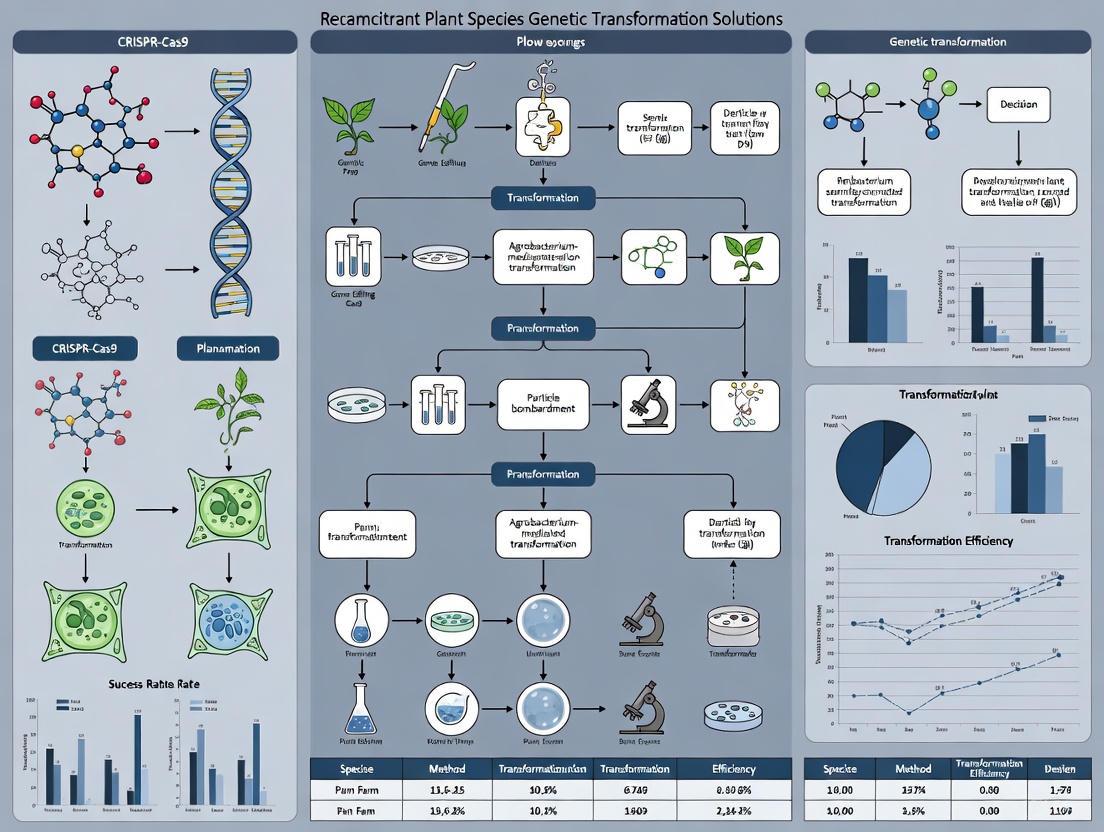
Genetic transformation is a cornerstone of modern plant research and crop improvement, yet many plant species remain notoriously recalcitrant to established protocols.
Breaking the Barrier: Advanced Solutions for Transforming Recalcitrant Plant Species
Abstract
Genetic transformation is a cornerstone of modern plant research and crop improvement, yet many plant species remain notoriously recalcitrant to established protocols. This article provides a comprehensive analysis of the latest scientific breakthroughs designed to overcome this bottleneck. We explore the foundational biological causes of recalcitrance, from potent immune responses to limited regenerative capacity. The review delves into cutting-edge methodological solutions, including morphogenic gene overexpression and novel in planta delivery systems, which bypass traditional tissue culture. Furthermore, we offer a practical guide for troubleshooting and optimizing transformation protocols, and conclude with a comparative evaluation of these emerging strategies. This resource is tailored for researchers, scientists, and biotechnology professionals seeking to apply genetic engineering and genome editing to a wider array of plant species for both agricultural and biomedical advancements.
Understanding Recalcitrance: The Biological Barriers to Plant Transformation
Plant recalcitrance refers to the inherent resistance of many plant species and genotypes to genetic transformation and in vitro regeneration. This resistance presents a major bottleneck for crop improvement, functional genomics, and the development of new plant varieties, affecting a wide range of species from legumes and forest trees to medicinal plants [1] [2] [3].
The challenges are not merely technical; they are rooted in the plant's fundamental biology. Key factors contributing to recalcitrance include:
- Plant Immune Response: Agrobacterium tumefaciens, a common vector for plant transformation, is recognized by the plant as a pathogen. This triggers a strong immune response, involving the expression of defense-related genes and pathogen-induced programmed cell death, which can eliminate transformed cells before they can regenerate [4].
- Transcriptional and Regenerative Rigidity: Some plant cells, particularly in certain genotypes, exhibit a strong resistance to the cellular reprogramming required for dedifferentiation (callus formation) and subsequent redifferentiation (organogenesis). This rigidity is governed by complex gene regulatory networks [4] [3].
- Genotype Dependence: Even within a readily transformable species, elite commercial varieties are often notoriously recalcitrant. In wheat, for example, the model genotype Fielder can achieve over 45% transformation efficiency, while commercial varieties like Jimai22 achieve only 2.7-5.8%, and others like Aikang58 fail entirely [5]. Similar disparities exist in soybean and other crops [5].
Table 1: Transformation Efficiencies Across Selected Plant Species
| Plant Name | Transformation Efficiency (%) | Classification | Key Explant(s) |
|---|---|---|---|
| Lotus japonicus | 94 [1] | Susceptible | Seeds |
| Alfalfa | 90 [1] | Susceptible | Leaflets |
| Nicotiana tabacum | 100 [1] | Susceptible | Leaf |
| Soybean (certain models) | 34.6 [1] | Susceptible | Seeds |
| Vigna radiata (Mung Bean) | 1.49 - 4.2 [1] | Recalcitrant | Shoot tip, Cotyledonary node |
| Vigna unguiculata (Cowpea) | 3.09 [1] | Recalcitrant | Cotyledonary node |
| Wheat (Recalcitrant variety) | 2.7 - 5.8 [5] | Recalcitrant | Immature embryo |
Troubleshooting Guide & FAQs for Researchers
This section addresses common experimental problems and provides evidence-based solutions.
FAQ: What are the primary biological barriers causing low transformation efficiency?
The main barriers are multi-layered. First, the plant immune system perceives the transformation process (e.g., Agrobacterium infection, tissue wounding) as an attack, launching a defense response that kills transformed cells [4]. Second, many cells, especially in elite cultivars, lack the cellular plasticity to be reprogrammed. Their transcriptional networks are "locked," preventing the dedifferentiation and regeneration necessary to produce a whole plant from a single transformed cell [4] [3]. Finally, the toxic stress of selection agents, such as antibiotics, adds another layer of pressure that recalcitrant cells cannot survive [4].
FAQ: Our team works with a recalcitrant legume. Are there alternatives to standard tissue culture?
Yes, in planta transformation strategies are gaining traction as they bypass or minimize tissue culture. These methods transform intact plants or tissues without relying on callus culture and regeneration [6]. They are often considered more genotype-independent. Common techniques include the floral dip method (used famously for Arabidopsis), pollen-tube pathway-mediated transformation, and shoot apical meristem (SAM) injury methods where Agrobacterium is applied to wounded meristems [6]. These approaches are technically simpler, more affordable, and can be easier to implement in labs focused on minor crops.
FAQ: We achieve good callus formation, but regeneration fails. What could be the cause?
This is a classic symptom of recalcitrance, often linked to an inability to transition from the dedifferentiation phase to the organogenic phase. The problem frequently lies in the balance and sensitivity of plant growth regulators [4] [2]. Suboptimal concentrations of auxins and cytokinins, or the plant's inability to respond to them, can block shoot initiation. Furthermore, the accumulation of toxic compounds like reactive oxygen species (ROS) or phenolic compounds in the culture medium from wounded tissues can inhibit regeneration [3]. Finally, the transformation and selection stress itself can weaken cells, causing them to lose their regenerative potential, meaning only non-transformed cells regenerate [4].
Experimental Protocols & Workflows
Protocol 1: Leveraging Developmental Regulator Genes to Enhance Transformation
Principle: Ectopic expression of key developmental regulatory (DEV) genes can reprogram somatic cells, enhance pluripotency, and boost regeneration capacity, thereby overcoming genotype-dependent recalcitrance [3] [5].
Methodology:
Gene Selection: Choose one or more morphogenic genes. Highly effective candidates include:
- TaWOX5: A WUSCHEL-related homeobox transcription factor shown to dramatically improve transformation in recalcitrant wheat, from 5.8% to 55.4% in Jimai22 [5].
- BBM/WUS2 Combination: The genes ZmBBM (Baby Boom) and ZmWUS2 (Wuschel2) from maize, when co-expressed, strongly promote somatic embryogenesis. This system has been adapted for use in monocots like rice, sorghum, and wheat [5].
- GRF-GIF Chimeras: Fusion proteins of Growth-Regulating Factors (GRFs) and their co-activators GIFs can significantly accelerate shoot regeneration in recalcitrant species like cassava, soybean, and sunflower [2] [5].
Vector Construction: Clone the selected DEV gene(s) under a constitutive or tissue-specific promoter into your transformation vector.
Transformation & Excision:
- Co-transformation: Co-deliver the DEV gene vector alongside your gene-of-interest vector into plant explants using Agrobacterium or biolistics.
- "Altruistic" Transformation: Use a mixed Agrobacterium culture (e.g., 9:1 ratio of gene-of-interest strain to DEV gene strain). The DEV gene is transiently expressed in neighboring cells, stimulating embryogenesis that non-autonomously aids the regeneration of cells transformed with your gene of interest [5].
- Marker Excision: To avoid pleiotropic effects in mature plants, design the system to allow for the excision of the morphogenic genes after regeneration using site-specific recombinase systems (e.g., Cre-lox) [5].
Protocol 2: Implementing an In Planta Transformation Strategy
Principle: To bypass tissue culture recalcitrance by transforming cells within the intact plant that are naturally destined to become the next generation (e.g., gametes, zygotes, or meristems) [6].
Methodology (Floral Dip/Drench Example):
- Plant Growth: Grow healthy plants until the stage of early bolting and flower bud development.
- Agrobacterium Preparation:
- Inoculate a single colony of Agrobacterium tumefaciens harboring your binary vector into liquid medium with appropriate antibiotics.
- Grow the culture overnight at 28°C until it reaches an OD₆₀₀ of ~0.8.
- Centrifuge and resuspend the bacterial pellet in a transformation medium (e.g., 5% sucrose solution, often supplemented with a surfactant like Silwet L-77 at 0.01-0.05%).
- Plant Transformation:
- For Floral Dip, carefully invert the above-ground parts of the plant (with developing inflorescences) into the Agrobacterium suspension for 5-15 seconds with gentle agitation.
- For Floral Drench, apply the bacterial suspension directly to the shoot apical meristem and flower buds using a pipette or spray bottle.
- Post-Transformation Care:
- Lay the treated plants on their sides and cover with transparent plastic wrap or a dome to maintain high humidity for 16-24 hours.
- Return plants to normal growth conditions and allow seeds to develop.
- Selection: Harvest seeds (T1 generation) and sow them on soil or selective media to identify positive transformants.
Key Signaling Pathways & Molecular Mechanisms
The following diagram summarizes the core regulatory pathways that influence plant cell recalcitrance and the points of intervention using developmental factors.
The Scientist's Toolkit: Key Research Reagent Solutions
Table 2: Essential Reagents for Overcoming Recalcitrance
| Reagent / Tool | Function / Mechanism | Example Applications |
|---|---|---|
| Morphogenic Genes (BBM, WUS/WOX) | Master regulators that induce somatic embryogenesis and stem cell proliferation, forcing regeneration in recalcitrant tissues. | Maize, Sorghum, Wheat transformation [5]. |
| GRF-GIF Chimeric Proteins | Transcription factor complexes that dramatically enhance shoot regeneration efficiency without developmental abnormalities. | Cassava, Soybean, Brassica napus [2] [5]. |
| Novel Agrobacterium Strains | Engineered strains (e.g., with Type III Secretion Systems) that better suppress plant immune responses during infection. | Enhanced delivery of T-DNA into plant cells [7]. |
| Plant Growth Regulators (Meta-topolin) | Synthetic cytokinins that can be more effective than traditional ones like BAP in inducing shoot formation in recalcitrant species. | Improved morphogenesis in medicinal plants like Pterocarpus marsupium [2]. |
| Nanoparticles | Used as carriers for delivering genetic material (DNA, CRISPR/Cas9 RNP) or hormones, bypassing pathogen-triggered responses. | Shoot regeneration in water hyssop; potential for universal delivery [2]. |
| Trichostatin A | A histone deacetylase inhibitor that alters the epigenetic state of cells, potentially unlocking regenerative potential. | Shown to increase regeneration in Arabidopsis and other species [4]. |
| In Planta Vectors | Binary vectors optimized for methods like floral dip, often containing specific selectable markers and T-DNA architectures. | Transformation of Arabidopsis, rice, and chickpea without tissue culture [6]. |
Frequently Asked Questions (FAQs)
FAQ 1: Why do some plant species or varieties resist genetic transformation more than others? Recalcitrance to Agrobacterium-mediated transformation is often linked to the intensity and timing of the plant's innate immune response. Species that readily accept foreign DNA typically mount a weaker or more suppressed defense, while recalcitrant plants activate a strong defense repertoire involving Mitogen-Activated Protein Kinases (MAPKs), defense gene expression, production of Reactive Oxygen Species (ROS), and hormonal adjustments. The plant's immune system recognizes Agrobacterium as a pathogen, creating a barrier to transformation [8] [4].
FAQ 2: What specific plant immune responses are triggered by Agrobacterium infection? The plant immune system responds to Agrobacterium on multiple fronts:
- PAMP-Triggered Immunity (PTI): The plant recognizes conserved microbial molecules from Agrobacterium, such as Elongation Factor Thermo Unstable (EF-Tu), through cell-surface Pattern Recognition Receptors (PRRs) like EFR. This recognition triggers a broad defense response [8] [9].
- Effector-Triggered Immunity (ETI): If the bacterium succeeds in suppressing PTI, intracellular NLR immune receptors can recognize specific bacterial effectors, leading to a stronger, often localized Hypersensitive Response (HR) involving programmed cell death [9].
- Transcriptional Reprogramming: Infection leads to large-scale changes in the expression of host genes, particularly those related to defense. Successful transformation is often associated with the suppression of these defense-related genes at later stages of infection [8].
FAQ 3: Are there documented trade-offs between transformability and disease resistance in plants? Yes. Evidence shows that plant cultivars known for high transformability often exhibit reduced resistance to pathogens. For example, the highly transformable wheat cultivar 'Fielder' is particularly susceptible to diseases like Fusarium head blight, stripe rust, and powdery mildew. Similarly, the 'Bobwhite' wheat cultivar is vulnerable to Fusarium graminearum and Hessian fly. This suggests that the genetic traits which make a plant amenable to transformation might concurrently weaken its general immune defenses [4].
FAQ 4: What are some experimental strategies to suppress plant immunity and improve transformation? Researchers have developed several innovative strategies to overcome the plant immune barrier:
- Engineering Agrobacterium with a Type III Secretion System (T3SS): This involves modifying Agrobacterium to deliver bacterial effectors from Pseudomonas syringae (e.g., AvrPto, AvrPtoB, HopAO1) that naturally suppress host defenses. This method has been shown to increase transformation efficiency in wheat, alfalfa, and switchgrass by 250% to 400% [10].
- Virus-Mediated Silencing of Immunity Genes: Transient silencing of key defense genes, such as those involved in salicylic acid biosynthesis or ethylene signaling, in host plants like Nicotiana benthamiana has been shown to increase subsequent transgene expression [4].
- Using Plant Hormones and Supplements: The addition of compounds like melatonin to nitrogen-depleted culture media has been shown to strongly enhance Agrobacterium-mediated transformation in carnation [4].
FAQ 5: How can I choose a better plant genotype or cultivar for transformation? Selection of the right plant material is critical. If available, opt for cultivars or accessions with known higher transformation efficiency. As a general rule, many of these transformable genotypes show reduced resistance to common pathogens, which can be a useful initial screening indicator [4]. The table below compares the transformation efficiency and disease susceptibility of different wheat cultivars.
| Plant/Cultivar | Transformation Efficiency | Disease Susceptibility | Key Context |
|---|---|---|---|
| Wheat 'Fielder' | High | Susceptible to Fusarium head blight, stripe rust, powdery mildew [4] | A model transformable genotype [4]. |
| Wheat 'Bobwhite' | High | Vulnerable to F. graminearum, Hessian fly [4] | Another transformable wheat cultivar [4]. |
| Legumes (e.g., peanut, chickpea) | Generally Low (Recalcitrant) | Not specified in context | Recalcitrance is a major hindrance to genome editing [11]. |
Troubleshooting Guides
Problem: Low Transient Transformation Efficiency
Potential Cause: A strong, early PAMP-Triggered Immunity (PTI) response is preventing T-DNA transfer or early expression.
Solutions:
- Use engineered Agrobacterium: Employ Agrobacterium strains engineered with a T3SS to deliver defense-suppressing effectors like AvrPto during co-cultivation [10].
- Optimize the co-cultivation environment: Maintain a stable, non-alkaline pH in the culture medium, as a stable pH has been shown to suppress defense signaling and enhance transient expression in Arabidopsis seedlings [4].
- Select susceptible genotypes: Utilize plant varieties known for their high transformability, such as the Ageratum conyzoides cell culture, which demonstrates higher competence compared to standard tobacco BY-2 cells or Arabidopsis tissues [12].
Problem: Failure to Generate Stable Transgenic or Genome-Edited Plants
Potential Cause: Plant defense responses are causing cell death or inhibiting the regeneration of transformed cells. The selection process may also be adding excessive stress.
Solutions:
- Weaken the immune system transiently: Implement virus-induced gene silencing (VIGS) to temporarily knock down key immunity regulators like NPR1 or EIN2 in the explants before transformation [4].
- Improve regeneration protocols: Optimize the balance of auxins and cytokinins in the culture media. Consider using morphogenic genes like GRF-GIF chimeras to boost regeneration capacity, a method that has shown success in recalcitrant species [4] [2].
- Modulate selection pressure: Carefully titrate the concentration of antibiotics used for selection. High concentrations can add excessive stress, causing the loss of regenerative potential in transformed cells. Using alternative selection markers can also help [4].
Problem: Low Transformation Efficiency in Legume Crops
Potential Cause: Legumes are notoriously recalcitrant to transformation, which directly hampers genome editing efforts, as transformation is a prerequisite for delivering editing reagents [11].
Solutions:
- Exploit genotype-dependent efficiency: Be aware that transformation efficiency varies dramatically between legume species and even cultivars. For example, efficiency in soybean can be over 16%, while in pigeon pea it can be as low as 0.2% [11].
- Use alternative explants: Research and identify the most responsive explants for your specific legume species. Embryonic or meristematic tissues often have higher regenerative potential [2] [11].
- Apply novel regeneration-enabling methods: Deliver morphogenic genes like GRF/GIF chimeras via nanoparticles or Agrobacterium to kickstart the regeneration process in recalcitrant species [2].
Experimental Protocols
Protocol 1: Enhancing Transformation using T3SS-EngineeredAgrobacterium
This protocol details the use of Agrobacterium engineered with a Pseudomonas syringae Type III Secretion System (T3SS) to deliver defense-suppressing effector proteins, thereby increasing transformation efficiency [10].
Key Reagents:
- pLN18 plasmid (contains the Pss61 T3SS gene cluster) [10].
- Plasmid for expressing a T3 effector (e.g., AvrPto, AvrPtoB, HopAO1) under its native promoter.
- Disarmed Agrobacterium tumefaciens strain (e.g., EHA105).
- Appropriate binary vector with a reporter gene (e.g., GUS-intron).
Methodology:
- Strain Engineering: Introduce the pLN18 plasmid and the effector-expressing plasmid into the disarmed Agrobacterium strain containing your binary vector of interest. Use standard molecular biology techniques like conjugation or electroporation.
- Plant Inoculation: Inoculate your plant material (e.g., leaf discs, cell cultures) with the engineered Agrobacterium strain. For stable transformation, use a tumorigenic strain like A208 in a root transformation assay.
- Co-cultivation: Co-cultivate the bacteria and plant material for 2-3 days.
- Analysis: Assess transformation efficiency by counting tumors, measuring reporter gene activity (e.g., GUS staining), or using a split-GFP system to confirm protein delivery into plant cells [10].
The following workflow visualizes the key steps in this experimental approach:
Protocol 2: Assessing Defense Gene Expression During Infection
This method uses quantitative PCR (qPCR) to monitor the expression of defense-related genes, helping to diagnose the strength of the plant immune response during transformation experiments [8] [12].
Key Reagents:
- Plant material inoculated with Agrobacterium and mock-inoculated controls.
- RNA extraction kit.
- cDNA synthesis kit.
- qPCR reagents and primers for defense genes (e.g., PR1, PAL).
Methodology:
- Sample Collection: Collect plant tissue at multiple time points post-inoculation (e.g., 0, 6, 12, 24, 48 hours).
- RNA Extraction & cDNA Synthesis: Extract total RNA from all samples and synthesize cDNA.
- qPCR Analysis: Perform qPCR using primers for your target defense genes and housekeeping genes for normalization.
- Data Interpretation: Compare the gene expression profiles between Agrobacterium-inoculated and mock-inoculated samples. A successful transformation is often associated with an initial peak of defense gene expression followed by suppression at later time points [8].
The Scientist's Toolkit: Key Research Reagent Solutions
The following table details essential reagents and materials used in modern plant transformation research to overcome immune-related recalcitrance.
| Reagent/Material | Function/Description | Example Use Case |
|---|---|---|
| T3SS-Engineered Agrobacterium | Agrobacterium strain modified with a Type III Secretion System from P. syringae to deliver protein effectors that suppress plant immunity [10]. | Increasing stable transformation in recalcitrant crops like wheat and switchgrass by co-delivering effectors like AvrPto [10]. |
| Defense-Suppressing Effectors (AvrPto, AvrPtoB) | Bacterial proteins injected into plant cells to inhibit PRR signaling complexes, thereby suppressing PTI [9] [10]. | Delivered via engineered T3SS to enhance transient and stable transformation efficiency in multiple plant species [10]. |
| Morphogenic Regulators (GRF-GIF Chimeras) | Fusions of GROWTH-REGULATING FACTOR (GRF) and GRF-INTERACTING FACTOR (GIF) proteins that boost plant regeneration capacity [4] [2]. | Overcoming regeneration recalcitrance in medicinal plants and crops, improving the recovery of transformed shoots [2]. |
| Pattern Recognition Receptors (PRRs) | Plant cell-surface receptors (e.g., EFR, FLS2) that recognize PAMPs to initiate PTI. Can be transferred across species to confer new resistance [9]. | Engineering broad-spectrum disease resistance by transferring Arabidopsis EFR into tomato, potato, and citrus [9]. |
| CRISPR/Cas9 System | A genome editing tool that allows for precise knockout of host susceptibility (S) genes or negative regulators of immunity [9] [11]. | Creating knock-out mutants of S genes to enhance innate disease resistance without compromising other traits [9]. |
Signaling Pathways in Agrobacterium-Plant Interaction
The diagram below illustrates the core components of the plant immune system that are activated in response to Agrobacterium infection and the bacterial counter-strategies used to enable transformation.
Technical Support Center: Troubleshooting Guides and FAQs
This technical support center is designed for researchers facing the regeneration bottleneck—the critical failure point where genetically transformed cells or tissues fail to develop into complete plants. Within the broader context of solving genetic transformation in recalcitrant species, this resource provides targeted, practical solutions to specific experimental hurdles in somatic embryogenesis and organogenesis. The protocols and insights herein are particularly vital for genome editing applications in legumes, medicinal plants, and other recalcitrant species where transformation success is a major limiting factor [4] [2] [11].
Troubleshooting Common Regeneration Problems
FAQ 1: My explants are turning brown and dying soon after culture initiation. What can I do to prevent this?
Answer: Browning or tissue necrosis is a common stress response, often due to the production and oxidation of phenolic compounds [13].
- Solution 1: Incorporate Antioxidants. Add antioxidants such as ascorbic acid or citric acid to the culture media. These compounds reduce phenolic oxidation, preventing the accumulation of toxic compounds [13].
- Solution 2: Adjust Culture Conditions. Keep the initial cultures in low-light or dark conditions to reduce oxidative stress. Additionally, perform frequent subculturing (transfer to fresh media) to remove the phenolic compounds that have leached into the medium [13].
- Solution 3: Use Adsorbents. Supplement the medium with activated charcoal (0.1-0.3%). It acts as an adsorbent, binding to phenolic compounds and other inhibitors, thus reducing tissue browning [14].
FAQ 2: My cultures are not forming embryos or shoots, or the response is very low. How can I improve regeneration efficiency?
Answer: A poor explant response can stem from several factors, including the explant source, growth regulators, and genotype.
- Solution 1: Optimize Explant Selection. The type and physiological age of the explant are critical. Young, juvenile explants (e.g., embryonic, meristematic, or seedling tissues) generally have a much higher regenerative capacity than older, differentiated tissues from mature plants [14] [2].
- Solution 2: Re-balance Plant Growth Regulators (PGRs). The balance between auxins and cytokinins is paramount [14].
- For shoot organogenesis, a medium with a higher ratio of cytokinins to auxins is typically required.
- For somatic embryogenesis, a common strategy is to initiate callus on a high-auxin medium (e.g., 2,4-D), then transfer to a low-auxin or auxin-free medium to stimulate embryo development [14].
- Consider using potent cytokinins like Thidiazuron (TDZ), which has been shown to be highly effective for shoot regeneration in many recalcitrant species [14].
- Solution 3: Address Genotypic Recalcitrance. Some species and genotypes are inherently more difficult to regenerate. Strategies include [2]:
- Screening multiple cultivars to identify one with higher regeneration potential.
- Using morphogenic genes such as GRF-GIF chimeras or other regeneration-transcription factors to boost regenerative capacity.
- Modulating the immune response, as transformation recalcitrance is often linked to a strong defense response to wounding and Agrobacterium infection [4].
FAQ 3: My regenerated shoots are vitrified (water-soaked, translucent, and brittle). How can I restore normal growth?
Answer: This physiological disorder, known as hyperhydricity (or vitrification), is often caused by poor culture conditions.
- Solution 1: Modify the Physical Medium. Increase the concentration of the gelling agent (e.g., agar) to provide a firmer support structure and reduce water availability to the tissues [13].
- Solution 2: Control the Gaseous Environment. Improve ventilation of the culture vessels to lower humidity and allow for gas exchange. This can be achieved by using vented lids or gas-permeable sealing tapes [15]. This also helps dissipate ethylene, which can accumulate in closed vessels and inhibit normal morphogenesis [15].
- Solution 3: Adjust Medium Osmolarity. Add non-toxic osmotic agents like mannitol or sorbitol to the media. This reduces water uptake by the plant tissues, alleviating the water-soaked appearance [13].
FAQ 4: I have successfully obtained transgenic callus, but it fails to regenerate into plants. What could be the issue?
Answer: This is a classic manifestation of the regeneration bottleneck, often linked to the stress of the transformation process itself.
- Solution 1: Mitigate Transformation Stress. The processes of Agrobacterium infection and antibiotic selection impose significant stress, which can suppress the regenerative potential of cells. Using weakly virulent Agrobacterium strains or adding melatonin to the co-cultivation media have been shown to improve transformation and regeneration efficiency in some species by reducing the immune response [4].
- Solution 2: Optimize the Selection and Regeneration Protocol. Ensure that the selection agent (e.g., antibiotic) concentration is not too high, as it can be overly stressful. A "honeycomb" model of regeneration suggests that only the most robust, non-transformed cells on the periphery of a callus may regenerate under strong selection pressure, while the stressed, transformed cells in the center fail to do so [4].
- Solution 3: Exploit Hormonal Crosstalk. Recent research highlights the role of ethylene in modulating regeneration. Ethylene production is a known stress response and can either promote or inhibit regeneration depending on the species. Using ethylene inhibitors (e.g., silver nitrate, AVG) or precursors (e.g., ACC) can be tested to see if it reverts recalcitrance in your specific system [15].
Quantitative Data for Experimental Design
Table 1: Key Characteristics of Plant Regeneration Pathways
| Characteristic | Organogenesis | Somatic Embryogenesis |
|---|---|---|
| Process | Formation of individual organs (shoots or roots) from explants [14] | Formation of bipolar embryo structures (with root and shoot axes) from somatic cells [14] |
| Advantages | - Lower chance of mutation in direct organogenesis [14]- Ideal for clonal propagation with high genetic fidelity [14] | - Large-scale production via embryogenic cell lines [14]- Single-cell origin reduces chimerism [14]- Enables long-term storage via synthetic seeds [14] |
| Disadvantages | - High somaclonal variation in indirect organogenesis [14]- Not standardized for many recalcitrant species [14] | - Often asynchronous development [14]- Regeneration potential can decrease over time [14] |
| Typical PGRs | Balanced ratio of Cytokinins (e.g., TDZ, BAP) and Auxins (e.g., NAA, IAA) [14] | High Auxin (e.g., 2,4-D) for induction, followed by reduced auxin for embryo development [14] |
Table 2: Critical Factors Influencing Regeneration Success
| Factor | Impact on Regeneration | Experimental Recommendations |
|---|---|---|
| Explant Type | Determines regenerative competence [14] | Use young, meristematic tissues (e.g., embryonic axes, shoot tips, leaf basal meristems). Test different explants from the same mother plant [14] [2]. |
| Plant Growth Regulators | Directs cell fate (callus, shoot, root, embryo) [14] | Systematically test auxin:cytokinin ratios. Use potent compounds like TDZ. Evaluate synthetic cytokinins like meta-Topolin [14] [2]. |
| Genotype | Some species/cultivars are highly recalcitrant [11] | Screen multiple genotypes. Use GRF-GIF chimera genes to boost regeneration [2]. |
| Culture Environment | Light, temperature, and vessel atmosphere affect morphogenesis [14] [15] | Test light vs. dark conditions for specific stages. Use vented lids to manage ethylene accumulation [14] [15]. |
Visualizing the Regeneration Bottleneck in Recalcitrant Species
The following diagram illustrates the key failure points in the transformation and regeneration pipeline for recalcitrant plants and identifies potential intervention strategies.
Research Reagent Solutions
Table 3: Essential Reagents for Overcoming Regeneration Recalcitrance
| Reagent / Tool | Function / Purpose | Application Notes |
|---|---|---|
| Thidiazuron (TDZ) | A potent synthetic cytokinin that promotes shoot organogenesis [14] | Particularly effective in recalcitrant species. Can be used alone or in combination with auxins [14] [2]. |
| GRF-GIF Chimera Genes | Fusion proteins that act as potent master regulators of plant regeneration [2] | Transient expression of these genes can dramatically boost the regenerative capacity of transformed cells, overcoming genotypic limitations [2]. |
| Silver Nitrate (AgNO₃) | An ethylene action inhibitor [15] | Adding to culture media can counteract the inhibitory effects of ethylene accumulation in sealed vessels, potentially improving shoot regeneration [15]. |
| Activated Charcoal | Adsorbent for phenolic compounds and toxins [14] | Used to reduce tissue browning and remove inhibitory substances from the medium. Also mitigates light-induced oxidative reactions [14]. |
| Morphogenic Regulators | Compounds that enhance embryogenic competence [14] | Amino acids (e.g., glutamine, proline) and brassinosteroids (e.g., 24-epibrassinolid) have been reported to enhance somatic embryogenesis in some species [14]. |
Troubleshooting Guide: FAQs for Plant Genetic Transformation
FAQ 1: Why is my transformation efficiency so low, and how can I improve it?
Low transformation efficiency is often due to genotype recalcitrance, suboptimal culture medium, or inappropriate explant selection [16] [17].
- Solution for Genotype Recalcitrance: Consider using developmental regulator genes (DEV genes) to enhance cellular reprogramming and regeneration. Key candidates include:
- BBM/WUS2: Co-expression promotes somatic embryogenesis and has been successfully used to transform recalcitrant maize, sorghum, and wheat genotypes [16].
- GRF-GIF: A chimeric transcription factor complex that promotes shoot regeneration. It has improved transformation in tomato, wheat, rice, and lettuce [16] [18].
- WOX Genes: Such as TaWOX5 in wheat, which dramatically improved transformation efficiency and reduced genotype dependency [16].
- Solution for Medium Optimization: Ensure your culture medium supports all regeneration stages. The table below summarizes critical components [19] [20].
Table 1: Key Components for Plant Regeneration Media
| Component Type | Commonly Used Options | Function & Optimization Notes |
|---|---|---|
| Basal Medium | Murashige and Skoog (MS) salts [19] [21] | Provides essential macro and micronutrients. May require additives like proline or extra copper for some species [19]. |
| Carbon Source | Sucrose (2-3%) or Maltose (3%) [19] | Supplies energy. Maltose can be superior for some cereals like oats and lilies [19]. |
| Auxins (Callus Induction) | 2,4-D, Picloram, NAA [19] | Promotes dedifferentiation and callus formation. Concentration is critical; e.g., 2.5 mg/L 2,4-D was optimal for broomcorn millet [20]. |
| Cytokinins (Shoot Regeneration) | BAP, TDZ, Zeatin [19] | Stimulates shoot organogenesis. For example, 2 mg/L BAP was effective for broomcorn millet shoot regeneration [20]. |
| Other Additives | Silver nitrate, Glutamine, Activated Charcoal [19] | Can improve regeneration in recalcitrant species by reducing oxidative browning or adsorbing inhibitory compounds [19]. |
FAQ 2: My explants produce callus but fail to regenerate shoots. What should I do?
This indicates a blockage in the redifferentiation process, often linked to an imbalance in plant growth regulators (PGRs) [19].
- Solution: Transfer callus to a shoot regeneration medium (SRM) with a lower auxin-to-cytokinin ratio [19]. The hormone shift is critical for triggering shoot formation. Also, ensure that antibiotics used to suppress Agrobacterium are not inhibiting plant cell growth, as they can delay or prevent regeneration [19].
FAQ 3: How can I overcome the challenge of genotype dependence in transformation?
Genotype dependence is a major bottleneck, especially in crops and woody trees [16] [3].
- Solution 1: Exploit Natural Regeneration Capacity: Systematically test different explant sources. Research in poplar showed that roots, in addition to leaves and stems, can be highly efficient explants for transformation [21].
- Solution 2: Adopt In Planta Transformation: Methods like the "pollen-tube pathway" or "leaf-cutting transformation (LCT)" can bypass complex tissue culture and are often less genotype-dependent [17] [22] [23]. These techniques are simpler and do not always require sterile tissue culture.
Detailed Experimental Protocols
Protocol: Agrobacterium-mediated Transformation of Broomcorn Millet
This protocol, adapted from [20], provides a step-by-step guide for transforming a recalcitrant crop.
1. Explant Preparation and Callus Induction
- Material: Dehusked mature seeds of broomcorn millet 'Longmi 4'.
- Sterilization: Treat seeds with 75% ethanol (1 min) followed by 20% sodium hypochlorite (5 min), then rinse thoroughly with sterile water [20].
- Callus Induction Medium (CIM): MS salts, vitamins, 300 mg/L casein enzymatic hydrolysate, 600 mg/L L-proline, 30 g/L maltose, 3 g/L Phytagel, 2.5 mg/L 2,4-D, and 0.5 mg/L BAP [20].
- Culture: Incubate seeds on CIM in the dark at 26 ± 2°C for 2-4 weeks to generate embryogenic callus [20].
2. Agrobacterium Infection and Co-cultivation
- Vector: A binary vector (e.g., pRHVcGFP) with a GFP reporter and hpt (hygromycin resistance) selectable marker [20].
- Agrobacterium Strain: EHA105.
- Preparation: Grow Agrobacterium in LB with antibiotics to OD₆₀₀ = 1.0. Pellet and resuspend in inflation medium (MS salts, 30 g/L maltose, 2.5 mg/L 2,4-D, 0.5 mg/L BAP, 0.3 g/L casein hydrolysate, pH 5.2) supplemented with 200 µM acetosyringone. Adjust final OD₆₀₀ to 0.5 [20].
- Infection and Co-culture: Immerse embryogenic calli in the Agrobacterium suspension for 30 minutes. Blot dry and co-cultivate on solid CCM (similar to CIM with 200 µM acetosyringone) in the dark at 22°C for 3 days [20].
3. Selection and Regeneration
- Selection: After co-culture, wash calli and transfer to selection medium (CIM supplemented with 20 mg/L hygromycin and 300 mg/L Timentin). Culture in the dark for 3-4 weeks [20].
- Shoot Regeneration: Transfer resistant calli to Shoot Regeneration Medium (SRM): MS salts with vitamins, 2 mg/L BAP, 0.5 mg/L NAA, 15 g/L maltose, 300 mg/L casein hydrolysate, 3 g/L Phytagel, with hygromycin and Timentin. Culture under a 16/8 h light/dark cycle at 26°C [20].
- Rooting: Regenerated shoots (~1-2 cm) are transferred to half-strength MS medium with 30 g/L sucrose for root development [20].
Broomcorn Millet Transformation Workflow
Protocol: Testing Explant Efficiency in Woody Species
This protocol is based on a study in Poplar, which systematically compared explants [21].
1. Plant Material and Explant Collection
- Source: Collect leaf, stem (internode), petiole, and root explants from 6-8 week-old in vitro Populus plants (e.g., clone 717-1B4) [21].
2. Transformation and Regeneration
- Transformation: Follow established Agrobacterium tumefaciens (e.g., strain GV3101)-mediated transformation protocols for your species.
- Regeneration Media Sequence:
- Callus Induction Medium: MS-based, supplemented with 10 µM NAA (auxin) and 5 µM 2ip (cytokinin). Culture in dark for 3 weeks [21].
- Shoot Induction Medium: MS-based, supplemented with 0.2 µM TDZ (cytokinin). Culture for 8 weeks [21].
- Shoot Elongation Medium: MS-based, supplemented with 0.1 µM BAP (cytokinin). Culture for 4 weeks [21].
- Rooting Medium: MS-based, supplemented with 0.5 µM IBA (auxin) [21].
- Include appropriate selection agents (e.g., kanamycin) and antibiotics to eliminate Agrobacterium (e.g., timentin) throughout the process.
3. Data Collection and Analysis
- Track Efficiency: For each explant type, calculate:
- Regeneration Efficiency (%) = (Number of explants producing shoots / Total number of explants) × 100.
- Transformation Efficiency (%) = (Number of independent transgenic events / Total number of explants inoculated) × 100 [21].
Table 2: Example of Explant Performance in Poplar Transformation
| Explant Source | Key Findings from Poplar Study |
|---|---|
| Root | Demonstrated considerable regeneration capacity and transformation amenability. Resulting transformants had comparable morphology and gene expression to those from aerial explants [21]. |
| Leaf | Commonly used in aspens with high success rates. Serves as a standard for comparison [21]. |
| Stem & Petiole | Performance varies by species. In cottonwoods, these explants often perform better than leaves [21]. |
Signaling Pathways in Plant Regeneration
The process of regeneration during transformation is governed by complex signaling pathways. Key regulators and their interactions are outlined below.
Key Regulatory Pathways in Plant Regeneration
The Scientist's Toolkit: Research Reagent Solutions
Table 3: Essential Reagents for Enhancing Genetic Transformation
| Reagent / Tool | Function / Application | Specific Examples |
|---|---|---|
| Developmental Regulators (DEV Genes) | Overcome genotype recalcitrance by enhancing cell proliferation and shoot regeneration. | BBM/WUS2: Induces somatic embryogenesis in maize and sorghum [16].GRF4-GIF1 Chimera: Boosts regeneration in dicots (tomato, lettuce) and monocots (wheat, rice) [16] [18].WOX5: Improves transformation in recalcitrant wheat genotypes [16]. |
| Visual Reporter Genes | Enable rapid, non-destructive screening of transgenic events without specialized equipment. | RUBY: A triple-gene system producing red betalain pigments, effective in tomato and other species [18] [23].Green Fluorescent Protein (GFP): Requires UV light for detection [18] [20]. |
| Agrobacterium Strains | Vehicle for DNA delivery. Strain choice can impact transformation efficiency and plant health. | EHA105: Used for stable transformation in Jonquil and broomcorn millet, resulting in normal plant growth [20] [23].K599 (A. rhizogenes): Can induce abnormal growth (dwarfing, wrinkled leaves) in stable transformants [23]. |
| Culture Medium Additives | Improve the efficiency of callus growth and regeneration. | Acetosyringone: A phenolic compound that induces Agrobacterium's virulence genes during co-cultivation [20].Antioxidants (e.g., Activated Charcoal): Reduce tissue browning by adsorbing phenolic compounds [19]. |
Beyond Tissue Culture: Next-Generation Transformation Methodologies
This technical support center provides targeted troubleshooting and methodological guidance for researchers using key morphogenic regulators—BABY BOOM (BBM), WUSCHEL (WUS2), and GRF-GIF chimeric proteins—to enhance genetic transformation in recalcitrant plant species. Overcoming regeneration recalcitrance is a major bottleneck in applying transgenic breeding and gene editing to many crops essential for global food security. These development regulators offer promising solutions by boosting plant regeneration efficiency, extending the range of transformable genotypes, and facilitating the application of new breeding technologies in ornamental, minor, and recalcitrant crops [24].
FAQs: Core Concepts and Applications
1. What are morphogenic regulators, and why are they important for transforming recalcitrant plants? Morphogenic regulators are plant transcription factors that control key developmental processes, such as embryogenesis and meristem formation. When expressed in tissue culture, they can dramatically enhance a plant's innate capacity to regenerate shoots or somatic embryos from transformed cells. This is crucial for recalcitrant species, where traditional hormone-based regeneration systems often fail or are extremely inefficient [24] [1].
2. How does the GRF-GIF chimeric protein differ from and improve upon individual GRF or GIF genes? The GRF-GIF chimera is a single gene encoding a fusion protein that combines a Growth-Regulating Factor (GRF) transcription factor with its GRF-INTERACTING FACTOR (GIF) cofactor. Research shows that the forced proximity of these two proteins in the chimera is significantly more effective at promoting regeneration than expressing the two genes separately on the same construct. In wheat, the chimera provided a 7.8-fold increase in regeneration efficiency over the control, vastly outperforming the individual genes [25].
3. Can these morphogenic regulators be used in dicot species, or are they limited to monocots? Yes, evidence shows these strategies can be successfully applied across species boundaries. The wheat GRF4-GIF1 chimera improved regeneration not only in monocots like wheat and rice but also in the dicot citrus. Furthermore, research specifically highlights the potential of using dicot-derived GRF-GIF chimeras to improve regeneration in dicot crops [25] [24].
4. What is a key advantage of using GRF-GIF for regeneration over traditional cytokinin-based methods? A significant advantage is that GRF-GIF can induce efficient wheat regeneration without the need for exogenous cytokinins in the culture medium. This not only simplifies the protocol but also facilitates the selection of transgenic plants without selectable markers, streamlining the production of edited plants [25].
5. How do BBM and WUS2 function together in transformation systems? BBM and WUS2 are often used in combination to induce direct somatic embryogenesis. BBM promotes a conversion from vegetative to embryonic growth, while WUS2 is critical for maintaining stem cell identity in the shoot meristem. Their combined and refined expression has been shown to alleviate pleiotropic effects and enable transformation in previously recalcitrant monocot genotypes [24].
Troubleshooting Guides
Table 1: Troubleshooting Low Regeneration Efficiency
| Symptom | Possible Cause | Recommended Solution |
|---|---|---|
| Few or no regenerated shoots | Suboptimal expression of morphogenic regulator | Optimize promoter choice (e.g., maize UBIQUITIN promoter); verify gene integration and expression levels [25]. |
| Repression of morphogenic regulator by native miRNA | Use miRNA-resistant versions of the genes (e.g., modify the GRF sequence to avoid silencing by miR396) [25]. | |
| Incorrect hormone balance in culture media | For non-GRF-GIF methods, titrate auxin-to-cytokinin ratio. Test different auxins (2,4-D, NAA) and cytokinins [4]. | |
| Slow or stunted regeneration | Plant defense response to Agrobacterium infection | Use antioxidant washes for explants; consider adding silver nitrate (ethylene inhibitor) or other pathogen response suppressors to the medium [4]. |
| Regeneration only in non-transformed cells | Severe stress from transformation and selection | Weaken the plant's immune system during co-cultivation (e.g., through virus-mediated silencing of defense genes); ensure selection pressure is not overly toxic [4]. |
Table 2: Performance Comparison of Morphogenic Regulators
| Regulator | Typical Fold-Increase in Regeneration | Key Advantages | Reported Species |
|---|---|---|---|
| GRF4-GIF1 Chimera | 7.8x in wheat vs. control [25] | Fertile transgenic plants without defects; enables cytokinin-free regeneration; genotype-flexible [25] [26] | Wheat, rice, triticale, citrus [25] |
| BBM/WUS2 | High transformation in recalcitrant maize [24] | Induces direct somatic embryogenesis; effective in recalcitrant monocots [24] [1] | Maize, sorghum, other monocots [24] |
| GRF4 alone | ~3x in wheat vs. control (not significant) [25] | - | Wheat [25] |
| GIF1 alone | ~3x in wheat vs. control (not significant) [25] | - | Wheat [25] |
Experimental Protocols
Protocol 1: Constructing a GRF-GIF Chimeric Expression Vector
This protocol outlines the creation of a GRF-GIF chimera for plant transformation, based on the work of Debernardi et al. [25].
Key Reagents:
- Source Genes: GRF (e.g., wheat GRF4) and GIF (e.g., wheat GIF1) coding sequences.
- Expression Vector: A binary vector containing a strong constitutive promoter (e.g., Maize Ubiquitin promoter).
- Enzymes: Restriction enzymes or reagents for seamless cloning (e.g., In-Fusion Snap Assembly Master Mix).
Methodology:
- Gene Fusion: Fuse the selected GRF and GIF coding sequences in-frame, linked by a short, flexible peptide spacer. The original study designed a construct where GIF1 was fused directly to GRF4 [25].
- Vector Assembly: Clone the resulting GRF-GIF chimeric sequence downstream of the chosen promoter in the binary vector.
- Transformation: Introduce the final vector into Agrobacterium tumefaciens for plant transformation.
Protocol 2: Agrobacterium-mediated Transformation of Wheat with GRF-GIF
This is a generalized workflow derived from the optimized protocol in the primary literature [25].
Workflow Diagram:
Key Steps and Technical Nuances:
- Explant Preparation: Isolate immature embryos (1.5-3.0 mm) from the plant. The GRF-GIF system is robust across a wider embryo size range and environmental conditions [25].
- Inoculation & Co-cultivation: Inoculate embryos with Agrobacterium strain carrying the GRF-GIF construct and co-cultivate for a standard duration.
- Callus Induction & Selection: Transfer embryos to callus-induction media containing appropriate antibiotics (e.g., to suppress Agrobacterium and select for transformed plant cells).
- Regeneration: A key advantage of GRF-GIF is the high-efficiency regeneration on media that may not require exogenous cytokinin hormones. This step is also accelerated compared to standard protocols [25] [26].
- Rooting and Acclimatization: Transfer regenerated shoots to rooting media, then gradually acclimate plantlets to greenhouse conditions.
The Scientist's Toolkit: Research Reagent Solutions
Table 3: Essential Reagents for Transformation with Morphogenic Regulators
| Reagent | Function | Example & Notes |
|---|---|---|
| GRF-GIF Chimera Plasmid | Key construct to enhance regeneration efficiency. | Plasmid with maize Ubi promoter driving wheat GRF4-GIF1; use miRNA-resistant GRF sequence to prevent silencing [25]. |
| BBM/WUS2 Expression Vectors | Induces direct somatic embryogenesis in recalcitrant species. | Often used as separate vectors or on a single construct with refined expression to minimize pleiotropy [24]. |
| In-Fusion Snap Assembly Master Mix | For seamless, ligation-independent cloning of constructs. | Preferred for high efficiency (>95% accuracy) and 15-minute reaction time; ideal for building chimeric genes [27]. |
| Competent E. coli Cells | For plasmid propagation and cloning. | Use strains like Stbl2 or Stbl4 for cloning unstable DNA (e.g., repeats); ensure high transformation efficiency (>108 cfu/µg) [28] [27]. |
| Agrobacterium tumefaciens Strain | Vehicle for plant transformation. | Standard strains like EHA105 or GV3101; the GRF-GIF system has shown success with different protocols and genotypes [25] [1]. |
| Selection Agents | To identify successfully transformed plant cells. | Antibiotics (e.g., hygromycin) or herbicides; GRF-GIF can help reduce dependency on selectable markers [25] [1]. |
Pathway and Workflow Visualizations
Morphogenic Regulator Signaling and Function
This diagram illustrates the functional roles and interactions of BBM, WUS2, and GRF-GIF in the plant regeneration process.
This technical support center provides troubleshooting guides and FAQs for researchers conducting in planta transformation, a set of techniques that bypass traditional tissue culture to enable more efficient genetic transformation and gene editing in recalcitrant plant species.
Core Concepts and FAQs
What is in planta transformation and how does it differ from conventional methods?
In planta transformation refers to a heterogeneous group of techniques for achieving stable genetic transformation by directly introducing foreign DNA into intact plants or plant tissues with no or minimal tissue culture steps [6]. Unlike conventional methods that require generating and regenerating callus tissue under sterile conditions, in planta approaches target specific tissues like meristems, germline cells, or embryos, allowing transformed cells to develop directly into whole plants [6].
The conceptual framework defines in planta techniques by their avoidance of extensive tissue culture, characterized by short duration with limited medium transfers, technical simplicity with simple hormone compositions, and regeneration that occurs directly from a differentiated explant without a callus development stage [6].
Why is in planta transformation particularly valuable for recalcitrant species?
In planta transformation addresses a major bottleneck in plant biotechnology—transformation recalcitrance. Many commercially important and underutilized crops, especially perennial species and most legumes (excluding soybean, alfalfa, and Lotus japonicus), prove difficult or impossible to transform using established in vitro methods [1] [22] [29].
These techniques are often considered genotype-independent as they do not rely heavily on hormone supplementation and typically omit the callus regeneration step, making them less prone to somaclonal variations and more applicable to a wider range of genotypes within a species [6]. Their simple and affordable nature makes them particularly suited for minor crops and labs with limited resources [6].
Troubleshooting Common Experimental Issues
Problem: Low or No Transformation Efficiency
Q: After conducting an in planta transformation experiment, I observe very few or no transformed plants. What could be causing this?
| Possible Cause | Recommendations for Optimization |
|---|---|
| Suboptimal delivery efficiency | - For Agrobacterium-mediated methods, ensure bacterial health and activate virulence machinery with acetosyringone [30].- Optimize the optical density (OD) of the Agrobacterium culture used for inoculation, as this can be system-specific [30].- For pollen transformation, consider efficiency of delivery methods (e.g., electroporation, particle bombardment) [22] [29]. |
| Poor regeneration of transformed cells | - For meristem transformation, ensure proper wounding to allow Agrobacterium access while preserving regenerative capacity [4].- Consider incorporating genes like WIND1 (wound-induced dedifferentiation) and IPT (cytokinin biosynthesis) to enhance shoot regeneration from wounded sites [31]. |
| Plant immune response | - Agrobacterium infection can trigger a strong immune response. Using antioxidants in co-culture media or selecting plant genotypes with reduced defense responses may improve efficiency [4]. |
| Incorrect developmental stage | - For floral dip, use young flowers at the correct developmental stage. For meristem targeting, use actively dividing tissues [6]. |
Problem: High Background or Non-Transformed "Escaper" Plants
Q: I get many plants that survive selection but are not transformed. How can I reduce these false positives?
| Possible Cause | Recommendations for Optimization |
|---|---|
| Ineffective selection pressure | - Optimize antibiotic or herbicide concentration for your specific plant species and method. Test selection agents on untransformed controls first.- Ensure selective agents are fresh and properly stored, as degradation (e.g., of ampicillin) can lead to satellite colony growth [28] [32]. |
| Insufficient T-DNA integration | - Ensure the Agrobacterium strain, binary vector, and plant genotype are compatible [30].- For large constructs (e.g., CRISPR/Cas9 cassettes), verify plasmid stability in Agrobacterium and use strains designed for large plasmids [30]. |
| Chimeric plants | - In planta methods can produce chimeras. Advance to the next generation (T1) and screen multiple progeny to identify stable, non-chimeric lines [1] [6]. |
Problem: Unstable DNA Integration or Unintended Mutations
Q: My transformed plants show unstable inheritance of the transgene or unexpected mutations. How can I address this?
| Possible Cause | Recommendations for Optimization |
|---|---|
| Complex T-DNA integration | - Agrobacterium-mediated transfer can sometimes create complex insertion loci. Use Southern blotting or long-read sequencing to characterize insertion sites in primary transformants.- Consider using transformation methods that typically yield lower-copy-number integrations, such as Agrobacterium-mediated vs. biolistics. |
| Unstable repetitive sequences | - CRISPR/Cas9 constructs with direct repeats may undergo recombination. Use Agrobacterium strains like Stbl2 or Stbl4 designed to stabilize such sequences [28]. |
| Somaclonal variation | - While in planta methods minimize this risk, some variation can still occur. Always compare multiple independent transformed lines to distinguish true transgenic phenotypes from random variations [6]. |
Detailed Experimental Protocols
Floral Dip Method with Vacuum Infiltration
This protocol is adapted for species beyond Arabidopsis, such as some legumes and cereals [6].
Materials:
- Agrobacterium tumefaciens strain GV3101 or similar, carrying the binary vector of interest.
- Plants with abundant young flowers and healthy buds.
- Infiltration medium: 5% sucrose, 0.05% Silwet L-77, half-strength Murashige and Skoog (MS) salts.
- Vacuum chamber and pump.
Procedure:
- Grow Agrobacterium in liquid YEP medium with appropriate antibiotics to an OD600 of 0.6-0.8.
- Pellet bacteria by centrifugation (5,000 × g for 10 min) and resuspend in infiltration medium to a final OD600 of 0.8-1.0.
- Place above-ground parts of potted plants with numerous young inflorescences into the bacterial suspension.
- Apply vacuum (250-500 mmHg) for 5-10 minutes, then slowly release. Ensure all tissues are submerged and infiltrated.
- Repeat infiltration after 5-7 days to increase transformation efficiency.
- After infiltration, lay plants on their sides, cover with transparent plastic or dome to maintain humidity, and keep in low light for 24 hours.
- Return plants to normal growth conditions. Grow until seeds mature, then harvest and dry.
- Surface-sterilize T1 seeds and plate on selective medium containing the appropriate antibiotic or herbicide.
Direct Meristem Transformation for Monocots
This method targets the shoot apical meristem (SAM) in mature embryos or seedlings and is applicable to perennial grasses and recalcitrant cereals [22] [29].
Materials:
- Mature seeds of the target species.
- Agrobacterium strain EHA105 or LBA4404 for monocots.
- Co-culture medium: MS salts, 2.0 mg/L 2,4-D, 100 µM acetosyringone, 0.8% agar.
- Selection medium: MS salts with appropriate selection agent.
Procedure:
- Sterilize mature seeds and germinate on moist filter paper for 24-48 hours.
- Excise the shoot apical meristem from germinated seedlings by making a longitudinal slice to expose the meristematic dome.
- Inoculate the wounded meristem with an Agrobacterium suspension (OD600 0.4-0.6) in liquid infection medium containing acetosyringone for 15-30 minutes.
- Blot dry and co-culture on solid co-culture medium for 2-3 days in the dark at 25°C.
- Transfer explants to selection medium containing antibiotics to suppress Agrobacterium and the appropriate selective agent for plant transformation.
- Allow shoots to develop directly from the meristem without an intervening callus phase. Subculture every 2 weeks.
- Elongate and root regenerated shoots on hormone-free medium containing the selection agent.
- Acclimate plantlets to greenhouse conditions and screen for transformation.
The following diagram illustrates the key workflow and biological pathways involved in this meristem transformation protocol:
Tissue Culture-Free Transformation Using Developmental Regulators
This novel system combines developmental regulator genes with CRISPR/Cas9 for direct gene editing without tissue culture [31].
Materials:
- Plant expression vectors containing WIND1 and IPT genes.
- CRISPR/Cas9 construct targeting gene of interest.
- Agrobacterium strain for plant transformation.
- Sterile seedlings or in vitro plantlets of target species.
Procedure:
- Clone the WIND1 (wound-induced dedifferentiation) and IPT (isopentenyl transferase) genes into appropriate expression vectors, preferably with inducible promoters.
- Combine with CRISPR/Cas9 construct in the same Agrobacterium strain or use co-transformation approaches.
- Wound the stem or leaf tissues of intact plants or seedlings using a sterile needle or blade.
- Immediately apply the Agrobacterium suspension directly to wounded sites.
- Induce gene expression if using inducible promoters (e.g., with β-estradiol or dexamethasone).
- Enclose treated plants to maintain high humidity around transformation sites.
- Within 2-4 weeks, observe shoot formation directly from wounded sites.
- Excise emerging shoots and root them on appropriate medium.
- Molecularly screen regenerated shoots for the presence of the gene edit and the absence of the transformation vector.
Quantitative Data and Efficiency Comparisons
Transformation Efficiency Across Methods and Species
The table below summarizes reported transformation efficiencies for various in planta methods across different plant species, demonstrating the variability and potential of these techniques.
| Species | Delivery Method | Plant Tissue | Efficiency (%) | Reference |
|---|---|---|---|---|
| Arabidopsis thaliana | Floral dip | Young flowers | 0.5 - 3.0% (T1 seeds) | [6] |
| Barley (Hordeum vulgare) | VIGE | Leaf tissues (Cas9-expressing) | 17% - 35% (T0) | [22] [29] |
| Barley (Hordeum vulgare) | Biolistics (iPB-RNP) | Mature embryos | 1% - 4.2% (T0) | [22] [29] |
| Maize, Wheat | Haploid induction (HI-Edit) | Pollen/Egg | 0% - 8.8% (T0) | [22] [29] |
| Perennial ryegrass | SAAT | Seed, meristem tip | 14.2% - 46.65% (T0) | [22] [29] |
| Rice (Oryza sativa) | Agrobacterium-mediated | Coleoptile | 8.4% (T0) | [22] [29] |
| Rice (Oryza sativa) | Agrobacterium-mediated | Mature embryos | 40% - 43% (T0) | [22] [29] |
| Rice (Oryza sativa) | Agrobacterium-mediated | Seedlings | 9% (T0) | [22] [29] |
| Sorghum (Sorghum bicolor) | Agrobacterium-mediated | Seedlings | 26% - 38% (T0) | [22] [29] |
Comparison of Transformation Recalcitrance in Legumes
The table below highlights the challenge of transformation recalcitrance in legumes, which motivates the development of in planta approaches.
| Plant Name | Type | Transformation Efficiency (%) | Reference |
|---|---|---|---|
| Nicotiana tabacum (Tobacco) | Susceptible (>15%) | 100 | [1] |
| Lotus japonicus | Susceptible (>15%) | 94 | [1] |
| Alfalfa | Susceptible (>15%) | 90 | [1] |
| Soybean | Susceptible (>15%) | 34.6 | [1] |
| Vigna mungo (Black gram) | Recalcitrant (<15%) | 3.8 - 7.6 | [1] |
| Vigna radiata (Mung bean) | Recalcitrant (<15%) | 1.49 - 4.2 | [1] |
| Vigna unguiculata (Cowpea) | Recalcitrant (<15%) | 3.09 | [1] |
Research Reagent Solutions
The table below details essential materials and their functions for establishing in planta transformation protocols.
| Reagent/Category | Specific Examples | Function/Application |
|---|---|---|
| Agrobacterium Strains | GV3101, EHA105, LBA4404, AGL1 | Delivery of T-DNA; strain choice affects host range and efficiency [30]. |
| Developmental Regulators | WIND1, IPT, Bbm, Wus2 | Enhance regeneration potential; promote shoot formation from somatic cells [31]. |
| Virulence Inducers | Acetosyringone | Phenolic compound that activates Agrobacterium virulence genes during co-culture [30]. |
| Surfactants | Silwet L-77, Pluronic F-68 | Reduce surface tension of infiltration media, improving tissue penetration [6]. |
| Antibiotics (Bacterial) | Rifampicin, Gentamicin, Spectinomycin | Select for Agrobacterium strain and maintain binary/Ti plasmids [30]. |
| Selection Agents (Plant) | Kanamycin, Hygromycin, Phosphinothricin (Basta) | Select for transformed plant cells; choice depends on vector selectable marker [28] [32]. |
| Growth Media | YEP, LB, SOC Medium, MS Medium | Support Agrobacterium growth (YEP, LB, SOC) and plant development (MS) [32] [30]. |
Advanced Technical Considerations
Understanding and Mitigating Plant Immune Responses
Successful in planta transformation requires navigating the plant's innate immune system. Agrobacterium infection triggers pathogen-associated molecular pattern (PAMP)-triggered immunity, which can be a significant barrier to transformation [4]. Research indicates that silencing key immunity-related genes such as Isochorismate Synthase (involved in salicylic acid biosynthesis) or Nonexpresser of Pathogenesis-Related Genes 1 can increase transgene expression following Agrobacterium infiltration [4]. Additionally, maintaining stable pH during co-culture has been shown to suppress defense signaling and enhance transient expression [4].
Optimizing DNA Delivery and Integration
For CRISPR/Cas9 applications, delivery of large constructs (>10 kb) can be challenging. While chemical transformation methods have been successfully used for plasmids up to 24 kb in Agrobacterium, ensuring plasmid stability is crucial [30]. Unwanted plasmid homologous recombination in Agrobacterium occurs frequently, especially with constructs containing repeated elements or recombinases [30]. Using specialized strains and minimizing repeated sequences in constructs can help maintain plasmid integrity.
The following diagram illustrates the molecular interplay between the plant immune system and Agrobacterium during transformation, highlighting key targets for optimization:
Frequently Asked Questions (FAQs)
What are the main advantages of using auxotrophicAgrobacteriumstrains for plant transformation?
Auxotrophic strains offer two primary advantages that address key challenges in plant transformation:
- Control of Bacterial Overgrowth: After co-cultivation with plant explants, these strains cannot proliferate on standard plant culture media unless supplemented with specific metabolites they cannot synthesize. This drastically reduces Agrobacterium overgrowth, which can otherwise kill regenerating plant tissues [33]. This reduces or eliminates the need for high doses of antibiotics, which are costly and can be phytotoxic [34] [33].
- Enhanced Biosafety: Auxotrophic strains are "biocontained." They require laboratory-supplied metabolites to survive and are less likely to persist in natural environments like soil or on plants, mitigating the environmental risk of accidental release of genetically modified bacteria [35] [33].
How do ternary vector systems improve transformation efficiency in recalcitrant plants?
Ternary vector systems enhance transformation by providing extra copies of key virulence (vir) genes. Unlike standard binary vectors, this system uses a T-DNA binary vector alongside a separate, compatible "helper" plasmid carrying additional vir genes [34] [36]. This boosts the activity of the Agrobacterium's Type IV Secretion System, leading to more efficient T-DNA transfer into plant cells. This has resulted in 1.5- to 21.5-fold increases in stable transformation efficiency in previously difficult-to-transform species like maize, sorghum, and soybean [36].
My transgenic plants show abnormal growth phenotypes after usingA. rhizogenesstrain K599. What is the cause and how can I avoid this?
Abnormal growth such as dwarfism, wrinkled leaves, or tentacle-like protrusions is a known issue when using wild-type or poorly disarmed A. rhizogenes strains for stable transformation. These phenotypes are caused by the integration and expression of root-inducing (rol) genes from the Ri plasmid's T-DNA, which disrupt normal plant hormone signaling [23]. To avoid this:
- For stable transformation of whole plants, use fully disarmed strains of A. tumefaciens (e.g., EHA105, LBA4404) instead of A. rhizogenes [23].
- Reserve A. rhizogenes K599 for applications where hairy root generation is the desired outcome, such as the study of root biology or the creation of composite plants [23].
What are the latest methods for engineering newAgrobacteriumstrains?
Traditional methods like homologous recombination and transposon mutagenesis are being supplemented by more precise modern techniques:
- CRISPR-Based Editing: CRISPR-Cas systems can introduce targeted double-strand breaks for gene knockouts, such as creating auxotrophic mutants by disrupting the
thyAgene [35] [34]. - INTEGRATE System: This CRISPR RNA-guided transposase system allows for precise, marker-free insertion of DNA fragments without creating double-strand breaks, enabling tasks like targeted gene knockouts and large-fragment deletions to "disarm" wild strains [35].
- Base Editing: This technique allows for direct, single-nucleotide conversion (e.g., C to T) to create loss-of-function mutations without cleaving the DNA backbone, though off-target effects remain a concern [35].
Troubleshooting Guides
Problem: PersistentAgrobacteriumOvergrowth After Co-cultivation
Potential Causes and Solutions:
| Cause | Diagnostic Check | Solution |
|---|---|---|
| Ineffective antibiotics | Check if the antibiotic is correct for your Agrobacterium strain and if the stock solution is active. | - Use a combination of antibiotics (e.g., timentin or augmentin).- Switch to an auxotrophic strain (e.g., EHA105Thy-). Omit thymidine from the regeneration media to prevent bacterial growth [34] [33]. |
| Insufficient antibiotic concentration or exposure time | Observe if overgrowth is uniform or localized. | - Increase antibiotic concentration in wash and media steps.- Ensure explants are thoroughly washed after co-cultivation. |
| Strain is not properly disarmed | Test the strain's ability to form galls on a susceptible host plant. | Use a verified disarmed strain from a reputable repository. |
Problem: Low Transformation Efficiency in a Recalcitrant Monocot Species
Potential Causes and Solutions:
| Cause | Diagnostic Check | Solution |
|---|---|---|
| Inefficient T-DNA delivery | Perform a transient GUS or GFP assay. Low signal indicates delivery issues. | - Adopt a ternary vector system. Introduce a helper plasmid like pKL2299A, which carries extra virG, virB, virC, virD, virE, virJ, and virA genes from hypervirulent plasmid pTiBo542 [34] [36]. |
| Poor Agrobacterium virulence induction | Check that acetosyringone is added to the co-cultivation medium. | - Optimize the concentration and timing of acetosyringone application.- Ensure the co-cultivation medium is at an acidic pH (~5.2) to induce the vir genes [4]. |
| Suboptimal explant tissue or genotype | Review literature for transformable genotypes of your species. | - If possible, switch to a more transformable cultivar (e.g., wheat cv. 'Fielder' or 'Bobwhite') [4].- Test different explant types (e.g., immature embryos vs. callus). |
Problem: Low Transient Transformation Efficiency in a Novel Dicot Species
Potential Causes and Solutions:
| Cause | Diagnostic Check | Solution |
|---|---|---|
| Strong plant immune response | Look for tissue necrosis or browning within 1-2 days of infiltration. | - Add a surfactant like Silwet L-77 to the infiltration buffer [37].- Consider using plant defense suppressor genes (e.g., silencing Nonexpressor of Pathogenesis-Related Genes 1), though this is more advanced [4]. |
| Suboptimal infiltration technique | Observe if the infiltrated area becomes water-soaked. | - For seedlings, use vacuum infiltration (e.g., 0.05 kPa for 5-10 min) or a simple immersion method [37].- For leaves, use a needleless syringe. Ensure the OD~600~ of the Agrobacterium culture is optimized (often ~0.8) [37]. |
| Poor T-DNA transfer | Test the same Agrobacterium strain on a susceptible plant like Nicotiana benthamiana. | - Screen different Agrobacterium strains (e.g., GV3101, EHA105) to find the most effective one for your plant species [38] [37]. |
Experimental Protocols
Protocol: Generating a Thymidine Auxotrophic Strain Using INTEGRATE
This protocol uses the CRISPR-guided transposase system INTEGRATE for precise gene insertion to disrupt the thyA gene [35] [34].
Key Reagents:
- INTEGRATE Plasmid: Contains the Cas-transposition operon, crRNA targeting the
thyAlocus, and a donor mini-Tn with a selectable marker. - Agrobacterium Strain: The strain to be engineered (e.g., LBA4404).
- Media: LB with appropriate antibiotics, AB minimal medium, MS medium with and without thymidine.
Methodology:
- Target Site Selection: Design a crRNA spacer that targets a site within the
thyA(thymidylate synthase) gene on the Agrobacterium chromosome. - Cloning and Transformation: Clone the spacer into the INTEGRATE plasmid and introduce the final plasmid into the target Agrobacterium strain via electroporation.
- Screening for Targeted Insertion: Culture transformed bacteria on selective media. Screen colonies by PCR using primers flanking the
thyAtarget site and internal to the inserted cargo to confirm precise integration. - Verification of Auxotrophy:
- Inoculate the candidate mutant in liquid AB minimal medium without thymidine. No growth should be observed.
- As a control, inoculate the same strain in AB minimal medium supplemented with thymidine (e.g., 100 mg/L). Growth should be restored.
- Plate the strain on MS medium with and without thymidine. Growth should only occur on supplemented plates [33].
- Vector Eviction: Use the
sacBcounterselection marker on the INTEGRATE plasmid to cure the plasmid from the confirmed auxotrophic strain, resulting in a marker-free mutant [35].
The following diagram illustrates the key steps and verification process for creating an auxotrophic Agrobacterium strain using the INTEGRATE system.
Protocol: Optimizing a Ternary Vector System for Maize Transformation
This protocol describes how to employ a ternary vector system to improve stable transformation efficiency in maize [34].
Key Reagents:
- T-DNA Binary Vector: Contains your gene of interest and plant selection marker.
- Ternary Helper Plasmid: A compatible plasmid carrying additional vir genes (e.g., pKL2299A, which includes
virAfrom pTiBo542) [34]. - Agrobacterium Strain: A disarmed, auxotrophic strain like EHA105Thy-.
- Plant Material: Immature embryos of a transformable genotype (e.g., B104).
Methodology:
- Strain Preparation: Co-transform the T-DNA binary vector and the ternary helper plasmid into the auxotrophic Agrobacterium strain. Select for both plasmids on media supplemented with thymidine and the appropriate antibiotics.
- Culture and Induction: Grow the transformed Agrobacterium to mid-log phase in induction medium containing acetosyringone to activate the vir genes.
- Co-cultivation: Infect immature maize embryos with the Agrobacterium culture and co-cultivate on solid medium for several days.
- Selection and Regeneration: Transfer co-cultivated embryos to regeneration media containing thymidine (to support auxotrophic Agrobacterium during initial recovery) and a plant selection agent (e.g., hygromycin). After the first transfer, omit thymidine to suppress bacterial growth in subsequent steps.
- Efficiency Calculation: Calculate transformation frequency as the percentage of co-cultivated embryos that produce transgenic events.
The Scientist's Toolkit: Research Reagent Solutions
| Reagent / Tool | Function / Application | Key Examples |
|---|---|---|
| Auxotrophic Strains | Reduces overgrowth and improves biosafety by requiring metabolite supplementation. | - EHA105Thy‑: Thymidine auxotroph for monocot transformation [34].- EHA105hisD−/leuA−: Histidine/leucine auxotrophs for dicot transformation [33]. |
| Ternary Helper Plasmids | Boosts T-DNA delivery by providing extra copies of virulence (vir) genes. | - pKL2299A: Contains virA from pTiBo542; improves maize transformation [34].- General ternary helpers with virG, virB, virC, virD, virE, virJ operons [36]. |
| Novel Engineering Tools | Enables precise genomic modification of Agrobacterium itself. | - INTEGRATE System: For precise, marker-free DNA insertion [35].- CRISPR Base Editors: For targeted single-nucleotide changes [38] [35]. |
| Virulence Inducers | Activates the Agrobacterium T-DNA transfer machinery. | - Acetosyringone: A phenolic compound added to co-cultivation media [35].- Acidic pH (∼5.2): Essential for optimal vir gene induction [4]. |
| Surfactants | Enhances contact and infiltration of Agrobacterium into plant tissues. | - Silwet L-77: Critical for high-efficiency transient transformation in sunflower and other species [37]. |
The following diagram illustrates how these key reagents work together in an optimized Agrobacterium-mediated transformation system, highlighting the roles of auxotrophic strains and ternary vectors.
FAQs and Troubleshooting Guides
Q1: What are the main advantages of using in planta transformation methods over traditional tissue culture-based approaches for recalcitrant species?
A1: In planta transformation methods offer several key advantages for transforming recalcitrant plant species, as outlined in the table below.
Table 1: Advantages of In Planta Transformation Methods
| Feature | Traditional Tissue Culture | In Planta Transformation |
|---|---|---|
| Genotype Dependence | Often high; limited to specific, transformable genotypes [22] [39] | Significantly reduced; more genotype-independent [22] [39] |
| Process Duration | Long (3-4 months); requires callus induction and regeneration [40] [41] | Shorter (5-7 weeks); can bypass the callus stage [40] [39] |
| Technical Complexity | High; requires optimized media and sterile culture [41] | Simplified; can bypass tissue culture, reducing labor and infrastructure needs [22] [42] |
| Somaclonal Variation | Possible due to extended culture period [41] | Less likely as it minimizes or avoids a dedifferentiated callus phase [42] |
Q2: Our lab is working with a perennial grass that is recalcitrant to transformation. We have difficulty accessing immature embryos for explants. What alternative methods and explants can we use?
A2: This is a common challenge with perennial species. The following troubleshooting guide summarizes alternative strategies and their applications.
Table 2: Troubleshooting Guide for Recalcitrant Perennial Grasses
| Challenge | Recommended Solution | Example Application & Efficiency |
|---|---|---|
| Limited immature embryo availability | Use mature embryos or seedlings as explants [22]. | Rice: Transformation of mature embryos achieved 3.5%-6.5% efficiency [22]. |
| Low regeneration potential | Employ meristematic tissues (e.g., shoot apical meristem, floral buds) [42] [39]. | Arabidopsis: Transformation of floral and apical meristems achieved ~12-15% efficiency [42]. |
| Strong genotype dependence | Apply morphogenic genes (e.g., BBM, WUS2) to induce regenerative capacity [3] [40] [39]. | Maize (B73 inbred): BBM/WUS2 boosted transformation frequency to 4% from near 0% [40]. |
| Inefficient DNA delivery | Utilize viral vectors to deliver genome editing reagents directly to meristem cells [43] [44]. | Arabidopsis & Pennycress: TRV vectors enabled heritable, transgene-free edits [43] [44]. |
Q3: We used a viral vector to deliver gRNAs, but we are not observing heritable edits in the next generation. What could be the issue?
A3: A key challenge is achieving meristem infiltration to generate edits in the germline. Consider these points:
- Virus Mobility: Ensure the viral vector is engineered for enhanced mobility. Incorporating specific RNA mobility elements (e.g., tRNA sequences) into the viral genome can significantly improve delivery to the meristem, increasing the chance of heritable edits [43] [44].
- Cargo Capacity and Nuclease Choice: Many viruses have limited cargo space. For delivering a full editing system (nuclease + gRNA) without creating transgenics, use compact nucleases like the TnpB system (~400 amino acids), which can be packaged into viruses like Tobacco Rattle Virus (TRV) for efficient editing [44].
- Overcoming Silencing: Plant RNA silencing mechanisms can degrade viral RNA. Using plant mutants defective in RNA silencing (e.g., rdr6) can increase viral persistence and editing efficiency, as demonstrated in Arabidopsis [44].
Key Experimental Protocols
This protocol leverages the synergistic effect of the morphogenic genes Baby boom (Bbm) and Wuschel2 (Wus2) to induce direct somatic embryogenesis, bypassing the traditional callus phase.
Key Research Reagent Solutions:
- Agrobacterium Strain: LBA4404(Thy-)
- Binary Vector: Contains expression cassettes for Bbm (driven by Pltp promoter) and Wus2 (driven by Axig1 promoter), a selectable marker (e.g., Hra), and a Cre-loxP recombination system for removing morphogenic genes in mature plants [40].
- Accessory Plasmid: PHP71539, which carries extra copies of Agrobacterium vir genes to enhance transformation efficiency [40].
Workflow:
- Donor Plant Growth: Grow maize plants (e.g., inbred lines B73, Mo17, W22) in controlled greenhouse conditions.
- Explant Preparation: Harvest immature embryos (1.0-1.5 mm in size) from developing ears.
- Agrobacterium Inoculation:
- Prepare an Agrobacterium suspension in inoculation medium to an OD₆₆₀ of ~0.8-1.0.
- Infect the immature embryo explants with the Agrobacterium suspension.
- Co-cultivation: Co-culture the infected explants on solid medium for a few days to allow T-DNA transfer.
- Somatic Embryo Induction & Selection: Transfer explants to a hormone-free medium containing a selective agent (e.g., herbicide). Somatic embryos will form directly on the scutellum of the immature embryos within 1-2 weeks.
- Regeneration: Transfer developing somatic embryos to a maturation and shoot elongation medium. Rooted plants can be transferred to soil in 5-7 weeks.
- Excision of Morphogenic Genes: Apply a heat shock to activate the Cre-loxP system, which excises the Bbm, Wus2, and other marker genes, leaving behind the trait gene and selectable marker.
This protocol uses engineered Tobacco Rattle Virus (TRV) to deliver compact RNA-guided genome editors like TnpB directly to meristem cells for heritable editing.
Workflow Diagram: Viral Delivery for Meristem Genome Editing
Key Research Reagent Solutions:
- Viral Vector: Engineered Tobacco Rattle Virus (TRV), a bipartite RNA virus.
- Editing System: A single transcript expressing a compact TnpB nuclease (e.g., ISYmu1) and its omega RNA (ωRNA) guide, separated by a hepatitis delta virus (HDV) ribozyme sequence for precise processing [44].
- Mobility Elements: Incorporation of tRNA sequences (e.g., tRNAIleu) within the viral RNA to enhance systemic movement and meristem infiltration [43] [44].
Workflow:
- Vector Engineering: Engineer the TRV2 RNA genome to include an expression cassette for the TnpB-ωRNA single transcript. Include an HDV ribozyme and tRNA mobility elements in the architecture.
- Plant Inoculation: Deliver the engineered TRV1 and TRV2 vectors to young plants using the Agroflood method (agroinfiltration of lower leaf surfaces) or other mechanical inoculation methods [44].
- Viral Spread and Editing: The virus systemically spreads through the plant. The mobility elements facilitate the invasion of shoot apical meristem cells. Inside the meristem cells, the TnpB system is expressed and creates edits in the genome.
- Seed Harvest and Screening: Allow the plant to grow and set seeds (T1 generation). Screen the T1 progeny for the presence of the desired heritable edits using PCR-based assays and sequencing. The original plant (T0) is not transgenic, as the virus is not integrated.
Research Reagent Solutions
The following table details key reagents that are essential for implementing the novel delivery methods discussed.
Table 3: Key Research Reagents for Novel Plant Transformation Methods
| Reagent Category | Specific Examples | Function & Application |
|---|---|---|
| Morphogenic Regulators | BBM (BABY BOOM), WUS2 (WUSCHEL2), GRF-GIF chimeras [3] [40] [39] | Transcription factors that stimulate somatic embryogenesis and shoot regeneration; used to overcome regeneration recalcitrance across diverse genotypes. |
| Viral Vectors & Components | Tobacco Rattle Virus (TRV) with mobility elements (tRNA), HDV ribozyme [43] [44] | Engineered for systemic delivery of gRNAs or compact nucleases (TnpB) to meristem cells; HDV ribozyme ensures precise processing of the RNA guide. |
| Compact Genome Editors | TnpB nucleases (ISYmu1, ISDra2) [44] | Ultracompact RNA-guided endonucleases that fit into viral vectors, enabling delivery of a full editing system without transgenics. |
| Transformation Boosters | Extra virulence (vir) genes on accessory plasmids [40] | Enhances the efficiency of T-DNA transfer in Agrobacterium-mediated transformation. |
| Excision Systems | Heat-shock inducible Cre-loxP [40] | Removes selectable marker and morphogenic genes after transformation, producing "clean" edited plants. |
Performance Data Visualization
The quantitative data from the search results is synthesized in the table and diagram below to facilitate comparison of the performance of different novel delivery methods.
Table 4: Efficiency of Novel Transformation and Editing Methods Across Species
| Species | Method | Key Delivered Component | Reported Efficiency | Source/Context |
|---|---|---|---|---|
| Maize (W22 inbred) | BBM/WUS2 + Agrobacterium | Transgenes with morphogenic genes | ~14% (T0 events/100 embryos) | [40] |
| Arabidopsis | TRV-mediated delivery | TnpB (ISYmu1) + ωRNA | Heritable edits in next generation | [44] |
| Arabidopsis | Floral/Apical Meristem Transformation | Reporter genes (RUBY, GUS) | ~12-15% (transgenic plants/explant) | [42] |
| Pennycress | TRV with mobility factors | Genome editing reagents | Successful meristem editing demonstrated | [43] |
| Rice | In Planta (Mature Embryos) | Reporter gene (GUS) | 3.5% - 6.5% (T0) | [22] |
Diagram: Comparative Efficiency of Methods Across Species
Optimizing Success: A Practical Guide to Protocol Refinement
For researchers working on the genetic transformation of recalcitrant plant species, achieving successful regeneration is a significant bottleneck. A core principle underpinning this process is the precise balance between two critical plant growth regulators (PGRs): auxin and cytokinin. Their antagonistic relationship controls fundamental developmental pathways, including cell division, elongation, and organogenesis. Within the context of recalcitrant species, mastering this balance is not merely beneficial but essential for overcoming transformation and regeneration recalcitrance. This guide provides targeted troubleshooting and protocols to help scientists systematically optimize these critical PGR ratios in their experiments.
FAQs: Troubleshooting Auxin and Cytokinin Ratios
1. My explants form excessive callus but fail to regenerate shoots. What is the likely issue and how can I fix it?
This is a classic sign of a high auxin-to-cytokinin ratio, which promotes undifferentiated callus growth over organogenesis [45].
- Solution: Transition your explants to a regeneration medium with a lower auxin-to-cytokinin ratio. Increase the concentration of cytokinins (e.g., KIN or BAP) relative to auxins (e.g., 2,4-D). A study on the peach rootstock 'Guardian' demonstrated that optimal somatic embryogenesis productivity was achieved with a specific balance—higher KIN (3.2 µM) and reduced 2,4-D (2.6 µM)—whereas different ratios favored callus formation [46].
2. I am getting stunted shoots with poor subsequent growth after regeneration. What could be wrong?
This often results from prolonged exposure to high cytokinin levels or an imbalance during the shooting phase. High cytokinin concentrations can promote shoot initiation but inhibit subsequent elongation [47] [45].
- Solution:
- Shorten exposure time: Reduce the duration that explants are on the shooting medium.
- Lower cytokinin concentration: Decrease the cytokinin level in subsequent subcultures.
- Optimize the sequence: Ensure a complete removal of auxins like 2,4-D for the rooting phase, as its persistence can inhibit root development on regenerated shoots.
3. How does the choice of explant influence the required auxin-cytokinin ratio?
The innate cellular totipotency and developmental stage of your explant are critical. Juvenile or meristematic tissues often have a higher regenerative capacity [41].
- Solution: Prioritize explants with high innate regenerative potential. Immature tissues, such as cotyledons or embryonic tissues, are often less recalcitrant. For instance, in Guardian peach, successful direct somatic embryogenesis was achieved using immature cotyledons, while mature tissue attempts failed [46]. The optimal PGR ratio must be empirically determined for your specific explant type and genotype.
4. Why is my transformation efficiency low even with an optimized regeneration protocol?
Recalcitrance can be linked to the plant's immune response. Agrobacterium-mediated transformation can trigger a defense response that actively suppresses regeneration and transformation efficiency [4].
- Solution: Consider strategies to temporarily dampen the plant's immune response during transformation. Recent research explores the silencing of immunity-related genes or the use of compounds that suppress defense signaling to improve transformation success in recalcitrant genotypes [4].
Experimental Protocols & Data
Protocol 1: Inducing Direct Somatic Embryogenesis in Recalcitrant Woody Rootstock
This protocol, adapted from a 2025 study on 'Guardian' peach, demonstrates how optimized auxin-cytokinin interactions can overcome recalcitrance [46].
1. Explant Selection and Preparation:
- Material: Collect immature fruits from the donor plant.
- Explant: Aseptically isolate immature cotyledons from the seeds. Classify them based on their position (upper or lower) on the preculture medium, as this can affect the response.
- Sterilization: Surface sterilize fruits and seeds using standard sterile techniques.
2. Culture Medium and Conditions:
- Basal Medium: Use a standard somatic embryogenesis induction medium (e.g., MS salts).
- PGR Supplementation: Supplement the medium with a combination of the auxin 2,4-Dichlorophenoxyacetic acid (2,4-D) and the cytokinin Kinetin (KIN).
- Culture: Maintain cultures under a 16/8 hour light/dark photoperiod at 25°C.
3. Optimized PGR Ratios and Outcomes: The study used a factorial design to test 15 combinations. Key outcomes are summarized below.
Table 1: Effect of 2,4-D and KIN on Somatic Embryogenesis in Guardian Peach Immature Cotyledons [46]
| 2,4-D Concentration (µM) | KIN Concentration (µM) | Key Experimental Outcome |
|---|---|---|
| 3.2 | 3.2 | Induced somatic embryogenesis in ~50% of lower and ~85% of upper cotyledons. |
| 2.6 | 3.2 | Optimal SE productivity (number of embryos per responding explant). |
| 1.8 | 3.2 | Promoted peak callus formation rate. |
4. Plant Regeneration:
- Transfer developed somatic embryos to a maturation and germination medium, typically with reduced or no PGRs, to obtain whole plants.
Protocol 2: Leveraging Morphogenic Genes to Bypass Recalcitrance
For genotypes that remain recalcitrant to traditional PGR manipulation, the expression of developmental regulators provides a powerful alternative [41] [48].
1. Principle: Transiently or stably introduce genes such as BABY BOOM (BBM) or WUSCHEL (WUS) into explant cells. These genes promote a transition to an embryonic state, enhancing the competence of cells to regenerate.
2. Transformation: Use Agrobacterium-mediated transformation or particle bombardment to deliver constructs containing these morphogenic genes alongside your gene of interest.
3. Culture and Regeneration: Culture transformed tissues on a medium containing auxin and cytokinin. The expression of morphogenic genes can significantly broaden the window of effective PGR ratios, enabling regeneration in previously unresponsive material [41]. This approach was crucial for achieving transformation in one recalcitrant cannabis cultivar out of 100 tested [41].
Signaling Pathways and Experimental Workflow
Auxin and Cytokinin Signaling Crosstalk
The diagram below illustrates the core antagonistic signaling pathways of auxin and cytokinin, which underpin their use in regeneration protocols. Auxin signaling primarily acts through a degradation-release mechanism, while cytokinin signaling operates via a phosphorylay system.
Experimental Workflow for Optimizing PGR Ratios
This workflow outlines a systematic approach to developing a regeneration protocol for a recalcitrant species.
The Scientist's Toolkit: Key Research Reagent Solutions
Table 2: Essential Reagents for Manipulating Auxin and Cytokinin in Plant Tissue Culture
| Reagent / Tool | Type | Primary Function in Experimentation |
|---|---|---|
| 2,4-D (2,4-Dichlorophenoxyacetic acid) | Synthetic Auxin | Induces callus formation and somatic embryogenesis; a cornerstone for initiation phases [46]. |
| Kinetin (KIN) | Cytokinin | Promotes cell division; used in combination with auxins to induce somatic embryogenesis and shoot formation [46]. |
| 6-BAP (6-BenzylAminopurine) | Synthetic Cytokinin | Stimulates shoot proliferation; commonly used in organogenesis protocols [41] [45]. |
| IBA (Indole-3-butyric acid) | Synthetic Auxin | Promotes root initiation; critical for the rooting phase of regenerated shoots [45]. |
| Morphogenic Genes (BBM, WUS, GRF-GIF) | Molecular Tool | Overcome regeneration recalcitrance by enhancing cellular totipotency and morphogenic competence [41] [48]. |
| Trichostatin A | Histone Deacetylase Inhibitor | Alters epigenetic state; can enhance regeneration efficiency by modifying gene expression patterns [4]. |
| Agrobacterium tumefaciens | Biological Vector | Primary method for delivering transgenes, including morphogenic genes, into plant cells [41] [4]. |
Troubleshooting Guides
Acetosyringone
Problem: Low Transformation Efficiency in Recalcitrant Plants Transformation efficiency is low despite using acetosyringone.
Potential Cause 1: Incorrect Acetosyringone Concentration or Solubility
- Explanation: Acetosyringone does not dissolve well in water. Improper preparation can lead to suboptimal concentration, failing to fully induce the Agrobacterium vir genes [49].
- Solution: Prepare a concentrated stock solution (e.g., 100 mM) in a suitable solvent like ethanol or DMSO. Filter-sterilize and add to the co-cultivation medium to a final concentration of 50-200 µM [50] [49]. Ensure it is added to media after autoclaving, as it is heat-sensitive [49].
Potential Cause 2: Suboptimal Co-cultivation Conditions
- Explanation: The efficacy of acetosyringone is dependent on being present during the co-cultivation phase, the period when Agrobacterium and plant explants are in intimate contact.
- Solution: Incorporate acetosyringone into both the Agrobacterium induction medium and the plant co-cultivation medium. For rose nodal segments, adding 50 µM acetosyringone to the co-cultivation medium significantly increased transient GUS expression [50].
Problem: Plant Tissue Browning/Necrosis during Co-cultivation Explants turn brown or die during or after co-cultivation with Agrobacterium.
- Potential Cause: Oxidative Burst and Defense Responses
- Explanation: Wounding from explant preparation and Agrobacterium infection triggers an oxidative burst in plant tissues. This leads to the production of reactive oxygen species, the oxidation of phenolics, and enzymatic browning, which can kill transformed cells [50].
- Solution: Add anti-browning agents like cysteine to the co-cultivation medium. Cysteine, a thiol-containing compound, inhibits polyphenol oxidases (PPOs) and peroxidases (PODs). Using 100 mg/L cysteine in co-cultivation medium was shown to reduce browning and increase transformation efficiency in rose [50].
Antioxidants
Problem: Inconsistent Results in Antioxidant Activity Assays Measurements of antioxidant capacity, such as IC50 values, vary significantly between experiments.
Potential Cause 1: Uncontrolled Reaction Temperature
- Explanation: The reaction temperature of chemical antioxidant assays can dramatically impact the results. For instance, the antioxidant capacity of Manuka honey measured by the DPPH assay was enhanced when the reaction temperature was set at 37°C compared to 25°C [51].
- Solution: Strictly control and report the temperature during assays. For chemical methods, 37°C may better reflect physiological conditions and improve reliability [51].
Potential Cause 2: Using a Single, Chemically-Based Assay
- Explanation: Chemical assays like DPPH and ABTS measure antioxidant potential in a cell-free system and do not account for bioavailability, cellular uptake, or metabolism, which are critical for in vivo efficacy [51] [52].
- Solution: Employ a combination of chemical and cellular assays. The Cellular Antioxidant Activity (CAA) assay, which uses a cell line like HepG2, provides a more physiologically relevant assessment. An optimized CAA assay demonstrated superior reproducibility with an intra-assay RSD of 4.83% and an inter-assay RSD of 7.51% [51].
Osmotic Agents
Problem: Poor Regeneration of Transformed Cells Transformed cells or calli fail to regenerate into whole plants, a common issue in recalcitrant species.
Potential Cause 1: Osmotic Stress from Selection Agents
- Explanation: The antibiotics used to select transformed tissues can impose additional osmotic and metabolic stress on plant cells, already weakened by the transformation procedure. This can preferentially inhibit the regeneration of the very cells intended for recovery [4].
- Solution: Optimize the type and concentration of osmotic compounds in the regeneration medium. The balance between auxins (e.g., 2,4-D) and cytokinins is crucial for promoting regeneration from transformed callus [4].
Potential Cause 2: Inefficient Antibiotic Delivery in Biofilm-like Communities
- Explanation: While derived from a bacterial study, the principle is informative: a hydrated matrix can protect cells from antibiotics. High viscosity of the medium can impede the diffusion of antibiotics to the target cells [53].
- Solution: Consider using lower molecular mass osmotic agents (e.g., 400-Da PEG) to reduce medium viscosity, thereby improving antibiotic efficacy without compromising osmotic pressure [53].
Frequently Asked Questions (FAQs)
Q1: What is the primary function of acetosyringone in Agrobacterium-mediated transformation? Acetosyringone is a phenolic compound that acts as a potent signal molecule. It is perceived by the Agrobacterium tumefaciens VirA protein, which triggers the expression of other vir genes on the Ti plasmid. This activation is essential for the processing and transfer of T-DNA from the bacterium into the plant cell genome [49].
Q2: Why are cellular antioxidant assays (CAA) considered superior to chemical assays for some applications? Chemical assays (DPPH, ABTS, FRAP) measure the sheer capacity to quench free radicals in a test tube. In contrast, cellular antioxidant assays (CAA) measure a compound's ability to mitigate oxidative stress within a living cell, which incorporates critical factors like cellular uptake, metabolism, and bioavailability. This makes CAA data more biologically relevant for predicting efficacy in functional foods or therapeutic contexts [51] [52].
Q3: How can osmotic agents be used to improve genetic transformation protocols? Osmotic agents serve multiple purposes. Transient hyposmotic stress can promote chromatin decondensation, making the DNA more accessible for integration, thereby improving the kinetics and efficiency of cell fate modulation, a key aspect of regeneration [54]. Furthermore, specific osmotic compounds can enhance the efficacy of antibiotics against dense cell clusters by improving diffusion and uptake, which is crucial for effective selection of transformed tissues [53].
Q4: What is the link between plant defense responses and transformation efficiency? The Agrobacterium infection process is recognized by the plant as a pathogen attack, triggering a robust immune response. This includes an oxidative burst, programmed cell death at the infection site, and the production of antimicrobial compounds. This defense response is a major barrier to stable transformation, as it can kill the Agrobacterium and the wounded plant cells targeted for transformation [4] [50].
Table 1: Optimized Concentrations of Key Additives for Plant Transformation
| Additive | Optimal Concentration Range | Experimental Context | Key Effect |
|---|---|---|---|
| Acetosyringone | 50 - 200 µM | Co-cultivation medium for rose nodal segments [50]. | Induces Agrobacterium vir genes; increased transient GUS expression. |
| Cysteine | 100 - 200 mg/L | Co-cultivation medium to inhibit tissue browning [50]. | Reduces oxidative browning and necrosis, improving cell viability. |
| Osmotic Agent (PEG) | Varies by type (e.g., 400 Da PEG) | Used with antibiotics against bacterial biofilms [53]. | Enhances antibiotic efficacy; lower molecular weight reduces viscosity. |
Table 2: Comparison of Antioxidant Activity Assessment Methods
| Assay Method | Mechanism | Advantages | Disadvantages | Reproducibility (RSD) |
|---|---|---|---|---|
| DPPH/ABTS | Electron/Hydrogen transfer to neutralize free radicals in solution [52]. | Simple, rapid, high-throughput [51]. | Does not reflect cellular uptake or bioavailability [51]. | Not specified in results. |
| Cellular (CAA) | Measures reduction of ROS inside living cells (e.g., HepG2) [51]. | Biologically relevant, accounts for uptake and metabolism [51]. | More complex, requires cell culture facilities [51]. | Intra-assay: 4.83%; Inter-assay: 7.51% [51]. |
Experimental Protocols
Optimized Agrobacterium Co-cultivation Protocol for Rose Nodal Segments
This protocol is adapted from a study on Rosa hybrida L. cv. Nikita [50].
- Explant Preparation: Surface-sterilize rose stems and cut into single-node segments (~2.0 cm in length). Pre-culture segments for two days on MS medium supplemented with 2 mg/L BAP.
- Agrobacterium Preparation: Grow an overnight culture of Agrobacterium tumefaciens (e.g., strain EHA 101) in LB medium with appropriate antibiotics (e.g., 50 mg/L kanamycin) at 28°C and 120 rpm until OD600 reaches ~0.7.
- Inoculation: Immerse the pre-cultured nodal segments in the Agrobacterium suspension for 30 minutes with gentle shaking.
- Co-cultivation: Blot the segments dry and transfer them to solid co-cultivation medium (MS salts, 2 mg/L BAP, supplemented with 50 µM acetosyringone and 100 mg/L cysteine). Co-cultivate in the dark at 25°C for 3 days.
- Post Co-cultivation: After co-cultivation, transfer explants to a recovery and selection medium containing antibiotics to eliminate Agrobacterium and select for transformed plant cells.
Cellular Antioxidant Activity (CAA) Assay Protocol
This protocol summarizes the optimized method for evaluating antioxidant activity in HepG2 cells as described for Manuka honey [51].
- Cell Culture: Maintain HepG2 cells in DMEM supplemented with fetal bovine serum (FBS) and penicillin-streptomycin.
- Treatment: Seed cells in a 96-well plate. The next day, replace the medium with treatment medium containing the test antioxidant (e.g., sugar-reduced honey sample or pure compound like methyl syringate) and the oxidative probe DCFH-DA.
- Oxidative Stress Induction: After a suitable incubation period, induce oxidative stress by adding ABAP (a peroxyl radical generator) to the wells.
- Fluorescence Measurement: Immediately measure fluorescence (excitation ~485 nm, emission ~538 nm) in a microplate reader over time (e.g., every 5 minutes for 1 hour).
- Data Analysis: Calculate the area under the curve (AUC) for fluorescence versus time. The CAA value can be quantified as: ( CAA\ unit = 100 - \left( \frac{SA}{CA} \times 100 \right) ), where SA is the integrated AUC for the sample and CA is the integrated AUC for the control.
Signaling Pathways and Experimental Workflows
The Scientist's Toolkit: Research Reagent Solutions
Table 3: Essential Reagents for Media and Additive Optimization
| Reagent | Function/Mechanism | Key Application Note |
|---|---|---|
| Acetosyringone | Phenolic inducer of Agrobacterium vir genes; facilitates T-DNA transfer [50] [49]. | Use at 50-200 µM in co-cultivation medium; prepare in ethanol/DMSO and filter-sterilize [50] [49]. |
| Cysteine | Thiol-based anti-browning agent; inhibits polyphenol oxidases (PPOs) and peroxidases (PODs) [50]. | Use at 100-200 mg/L in co-cultivation medium to reduce tissue necrosis and improve transformation viability [50]. |
| Polyethylene Glycol (PEG) | Osmotic agent; can alter cell membrane permeability and chromatin structure, enhancing transformation and antibiotic efficacy [54] [53]. | Lower molecular mass (e.g., 400 Da) is preferred to avoid high viscosity, which impedes diffusion [53]. |
| Methyl Syringate | A key polyphenolic antioxidant compound found in Manuka honey; contributes to radical scavenging activity [51]. | A model compound for studying antioxidant mechanisms, though its low concentration may limit overall contribution in complex mixtures [51]. |
| 2,4-Dichlorophenoxyacetic Acid (2,4-D) | Synthetic auxin; promotes dedifferentiation and callus formation, a critical first step in in vitro regeneration [4]. | Crucial for initiating embryogenic callus in many recalcitrant species; often used in combination with cytokinins [4]. |
FAQs: Understanding and Managing Oxidative Stress
What is the primary cause of oxidative stress during the genetic transformation of recalcitrant plant species? Oxidative stress occurs due to an imbalance between the production of reactive oxygen species (ROS) and the plant's ability to detoxify these reactive molecules. During genetic transformation, wounding from explant preparation and in vitro culture conditions act as abiotic stresses. These stresses can drastically increase ROS production (e.g., superoxide anions O₂•⁻, hydrogen peroxide H₂O₂), overwhelming the plant's antioxidant defense system and leading to cellular damage, inhibited growth, and cell death [55] [56].
How can oxidative stress lead to antibiotic toxicity in plant tissue culture? While antibiotics are used to select transformed tissues and prevent bacterial contamination, they can themselves induce oxidative stress. Some antibiotics, such as those in the aminoglycoside and β-lactam families, have been shown to trigger a secondary oxidative burst in bacterial and mammalian cells, a phenomenon that may also occur in plant cells [57] [58]. This ROS accumulation can compound the stress already imposed by the culture environment, leading to increased phytotoxicity, reduced regeneration efficiency, and ultimately, the failure of transformation experiments.
What are the key enzymatic components of a plant's antioxidant defense system I should target? The major enzymatic antioxidants you should monitor or reinforce include:
- Superoxide Dismutase (SOD): Catalyzes the dismutation of superoxide (O₂•⁻) into hydrogen peroxide (H₂O₂) and oxygen [55] [56].
- Catalase (CAT): Converts hydrogen peroxide (H₂O₂) into water and oxygen [55] [56].
- Ascorbate Peroxidase (APX) and Glutathione Peroxidase (GPX): These enzymes utilize ascorbate and glutathione, respectively, to reduce H₂O₂ to water, playing a crucial role in cellular ROS scavenging [55] [56].
Why is my transformation efficiency low despite using potent antibiotics in the selection medium? High concentrations of antibiotics can induce severe oxidative stress, causing necrosis in both transformed and non-transformed plant cells. This "bystander effect" can kill the very cells you are trying to select. Furthermore, recalcitrant species often have inherently sensitive metabolisms where the combined burden of transformation, in vitro stress, and antibiotic exposure collapses the cellular redox balance. Mitigating this requires strategies to bolster the plant's antioxidant capacity during the critical selection phase [58].
Troubleshooting Guides
Problem: High Necrosis Rate in Explants During Selection
Potential Cause: Severe oxidative damage induced by the combined stress of tissue wounding and antibiotic application.
Solutions:
- Antioxidant Media Supplementation: Supplement your culture media with antioxidant compounds. The table below summarizes effective options.
| Reagent | Recommended Concentration | Function & Consideration |
|---|---|---|
| Ascorbic Acid (Vitamin C) | 50 - 200 µM | A key non-enzymatic antioxidant that directly scavenges ROS. It is unstable in solution and may require fresh addition or more stable derivatives [56]. |
| Glutathione (Reduced, GSH) | 50 - 150 µM | A major cellular thiol antioxidant that maintains the redox buffer of the cell. It is a cofactor for GPX and other enzymes [55]. |
| Cysteine | 25 - 100 µM | A precursor to glutathione and a reducing agent that can help maintain a reduced cellular environment [59]. |
- Optimize Antibiotic Delivery: Instead of continuous high-dose exposure, consider a pulsed or step-down antibiotic selection strategy. This allows transformed cells to recover from the initial oxidative insult, giving them a competitive advantage over non-transformed ones [58].
Problem: Failed Transformation Despite Confirmed Gene Delivery
Potential Cause: Oxidative stress-triggered programmed cell death (PCD) in transformed cells, eliminating them before they can proliferate.
Solutions:
- Co-culture with Antioxidants: During the initial co-culture period after Agrobacterium infection, include a combination of antioxidants like Ascorbic Acid (100 µM) and Lipoic Acid (5-10 µM) in the medium. This can quench the ROS burst associated with pathogen recognition, improving survival of transformed cells [56].
- Pre-conditioning of Explant Donor Plants: Grow donor plants under conditions that enhance their innate antioxidant capacity. This can be achieved by moderate light stress or application of elicitors like salicylic acid, which "primes" the plant's defense and antioxidant systems [55].
Problem: Stunted Growth and Vitrification of Regenerated Shoots
Potential Cause: Chronic, low-level oxidative stress altering normal development and metabolism, often exacerbated by suboptimal culture conditions.
Solutions:
- Modify Physical Culture Conditions:
- Reduce Light Intensity: High light is a major source of photo-oxidative stress. Reduce the light intensity during the regeneration and elongation stages to 30-50 µmol m⁻² s⁻¹.
- Optimize Oxygen Levels: Ensure proper aeration in your culture vessels. Hypoxic (low oxygen) pockets can develop in dense cultures, leading to a shift to anaerobic metabolism and subsequent oxidative stress upon re-aeration [59].
- Use Alternative Selection Agents: If available, consider using non-antibiotic selectable markers (e.g., herbicide resistance genes, phosphomannose isomerase system) to completely bypass antibiotic-induced oxidative stress [58].
Experimental Protocols for Validating Oxidative Stress Status
Protocol 1: Histochemical Detection of ROS in Plant Tissues
Purpose: To visually localize the accumulation of superoxide and hydrogen peroxide in explants during the transformation process.
Materials:
- Nitroblue Tetrazolium (NBT) for O₂•⁻ detection
- 3,3'-Diaminobenzidine (DAB) for H₂O₂ detection
- Sodium phosphate buffer (0.1 M, pH 7.5)
- Vacuum pump and desiccator
- Tissue clearing solution (lactic acid:glycerol:water, 1:1:1 v/v)
Method:
- Staining Solution Preparation: Prepare NBT (0.5 mg/mL in 0.1 M phosphate buffer) or DAB (1 mg/mL in dH₂O, pH adjusted to 3.0 with HCl) solutions.
- Infiltration: Submerge your explants (e.g., leaf discs, callus) in the staining solution in a small vial. Place the open vial in a desiccator and apply a gentle vacuum for 5-10 minutes until the tissues sink. Release the vacuum slowly to allow the solution to infiltrate the intercellular spaces.
- Incubation: Keep the samples in the staining solution in the dark at room temperature for 4-8 hours (NBT) or 2-4 hours (DAB) with gentle shaking.
- Destaining: Remove the staining solution and add clearing solution. Heat the samples at 95°C for 10-15 minutes to decolorize the chlorophyll. Replace with fresh clearing solution.
- Observation: Observe under a stereomicroscope or compound microscope. Superoxide production is indicated by a dark blue formazan precipitate (NBT stain), while H₂O₂ is visualized as a reddish-brown polymerization product (DAB stain) [55].
Protocol 2: Quantifying Key Antioxidant Enzyme Activities
Purpose: To biochemically assess the performance of your plant's antioxidant system under different mitigation strategies.
General Workflow:
- Protein Extraction: Grind 100-200 mg of frozen plant tissue in 1 mL of ice-cold extraction buffer (50 mM phosphate buffer, pH 7.0, containing 1 mM EDTA and 1% PVP). Centrifuge at 12,000 x g for 15 minutes at 4°C. Collect the supernatant as the crude enzyme extract.
- Protein Assay: Determine the protein concentration of the extract using a standard Bradford or BCA assay.
- Enzyme Activity Assays:
- Superoxide Dismutase (SOD): Measure its ability to inhibit the photochemical reduction of NBT. One unit of SOD is defined as the amount of enzyme that causes 50% inhibition of NBT reduction under specified conditions [55].
- Catalase (CAT): Directly monitor the decomposition of H₂O₂ at 240 nm for 1-2 minutes. Activity is calculated using the extinction coefficient of H₂O₂ [55].
- Ascorbate Peroxidase (APX): Measure the oxidation of ascorbate at 290 nm in the presence of H₂O₂. The reaction mixture includes sodium phosphate buffer, ascorbate, H₂O₂, and enzyme extract [55].
Signaling Pathways and Experimental Workflows
The following diagram illustrates the core pathway of oxidative stress generation and the plant's mitigation mechanisms, which is central to the troubleshooting strategies discussed.
Oxidative Stress Pathway & Mitigation in Plant Transformation
This workflow outlines the key steps for diagnosing and addressing oxidative stress during a transformation experiment.
Oxidative Stress Troubleshooting Workflow
The Scientist's Toolkit: Research Reagent Solutions
The following table lists key reagents used to study and mitigate oxidative stress in plant tissue culture and transformation experiments.
| Reagent Category | Specific Examples | Function & Application |
|---|---|---|
| Histochemical Dyes | Nitroblue Tetrazolium (NBT), 3,3'-Diaminobenzidine (DAB) | Visualize in situ accumulation of superoxide (NBT) and hydrogen peroxide (DAB) in plant tissues. Essential for diagnosing spatial patterns of oxidative stress [55]. |
| Antioxidant Enzymes | Superoxide Dismutase (SOD), Catalase (CAT), Ascorbate Peroxidase (APX) | Sold as standards for assay calibration. Can be used externally in protoplast or cell suspension cultures to test their protective effects against ROS. |
| Non-Enzymatic Antioxidants | Ascorbic Acid, Glutathione (reduced), Lipoic Acid, Cysteine | Added directly to culture media to scavenge ROS and reinforce the plant's endogenous defense system. They are the first line of experimental mitigation [56] [59]. |
| Inhibitors / Scavengers | Diphenyleneiodonium (DPI), Tiron, Sodium Benzoate | Used as experimental tools to probe ROS sources and effects. DPI inhibits NADPH oxidases, while Tiron and Sodium Benzoate are chemical scavengers for superoxide and hydroxyl radicals, respectively. |
| Assay Kits | Commercial kits for MDA (for lipid peroxidation), H₂O₂ content, Antioxidant Capacity (e.g., FRAP, ORAC) | Provide standardized, reliable methods for quantifying oxidative damage and overall antioxidant status in plant tissue extracts. |
The Cre-lox system is a powerful site-specific recombination technology derived from the P1 bacteriophage. It consists of two key components: the Cre recombinase enzyme and loxP recognition sites [60]. Cre recognizes 34-base-pair loxP sequences and catalyzes recombination between them, leading to precise genetic excision, inversion, or translocation depending on the orientation and location of the loxP sites [61] [62].
This system provides researchers with exquisite control over genetic modifications, making it particularly valuable for removing morphogenic genes after they have fulfilled their function in transformation. In recalcitrant plant species, where transformation efficiency is inherently low, the ability to excise selectable markers or morphogenic genes after transformation is crucial for developing clean, market-ready transgenic plants without unnecessary genetic baggage [2].
Key Reagent Solutions for Cre-lox Experiments
Table 1: Essential research reagents for Cre-lox mediated morphogenic gene excision
| Reagent Type | Specific Examples | Function in Experiment |
|---|---|---|
| Cre Recombinase Sources | AAV-Cre, Ad-Cre, Agrobacterium-delivered Cre, Transgenic Cre lines | Delivers Cre recombinase to target cells to catalyze recombination at loxP sites [61] [60] |
| loxP Variants | loxP, lox2272, lox511, loxN | Engineered recognition sequences that recombine only with identical variants, enabling multiple independent recombination events [60] |
| Morphogenic Genes | GRF-GIF chimeras, Babyboom, Wuschel | Enhances regeneration capacity in recalcitrant species; targeted for excision after transformation [2] |
| Selection Agents | Kanamycin, Hygromycin, Glufosinate | Selects for successfully transformed plant tissues during initial stages [63] |
| Induction Systems | CreERT2, Tet-On, Tet-Off | Provides temporal control over Cre recombinase activity through inducers like tamoxifen or doxycycline [62] |
Quantitative Data on Transformation Efficiency
Table 2: Impact of morphogenic gene excision on plant transformation outcomes
| Parameter | Before Excision | After Excision | Experimental Basis |
|---|---|---|---|
| Regeneration Efficiency | 15-30% improvement in recalcitrant species [2] | Returns to wild-type level without affecting established plants | Studies in medicinal plants using morphogenic regulators |
| Selection Marker Retention | 100% in primary transformants | 0% after successful excision | Standard outcome of Cre-lox recombination |
| Transformation Time | 3-6 months for recalcitrant species [2] | Additional 4-8 weeks for excision | Timeline from explant to final plant without foreign genes |
| Chimerism Rate | 15-40% in primary transformants [2] | Reduced to <5% after excision and regeneration | Observations across multiple plant systems |
| Somaclonal Variation | Higher due to extended culture | Reduced by shortening in vitro phase | Comparative studies of standard vs. excision approaches |
Detailed Experimental Protocol
Phase 1: Vector Design and Construction
Step 1: Clone morphogenic genes between loxP sites
- Select appropriate loxP variant (typically wild-type loxP for basic excision)
- Flank the morphogenic gene (e.g., GRF-GIF chimera) with loxP sites in same orientation
- Include tissue-specific or inducible promoter driving morphogenic gene
- Verify orientation by restriction digest and sequencing
Step 2: Incorporate Cre recombinase system
- For inducible excision: Use CreERT2 under constitutive promoter
- For automatic excision: Use developmentally-regulated promoter
- For cross-based excision: Place Cre in separate transgenic line
Step 3: Assemble final transformation vector
- Include plant selection marker outside loxP-flanked region
- Include T-DNA borders for Agrobacterium-mediated transformation
- Verify final construct by extensive restriction mapping
Phase 2: Plant Transformation and Regeneration
Step 4: Transform recalcitrant plant species
- Use embryonic or meristematic tissues as explants [2]
- Apply Agrobacterium strain optimized for your plant species [63]
- Co-cultivate for 2-3 days at 22-25°C [63]
- Transfer to selection medium with appropriate antibiotics
Step 5: Regenerate transformed plants
- Use cytokinin-rich medium for shoot induction
- Employ temporary immersion systems for better regeneration
- Monitor morphogenic gene efficacy through improved regeneration
- Subculture every 4 weeks until shoots develop
Phase 3: Gene Excision and Verification
Step 6: Activate Cre recombinase
- For chemical induction: Apply tamoxifen (1-5 µM) for CreERT2
- For heat induction: Heat shock at 37-42°C for heat-promoter driven Cre
- For developmental induction: Allow plants to reach appropriate stage
Step 7: Confirm excision events
- Perform PCR with primer sets spanning loxP sites
- Use junction primers to detect excision-specific bands
- Include controls for non-excised and wild-type plants
- Calculate excision efficiency based on band patterns
Step 8: Analyze excision outcomes
- Verify removal of morphogenic gene by Southern blot
- Confirm restoration of normal growth patterns
- Assess genomic stability of edited loci
- Evaluate plant fertility and morphological normalcy
Cre-lox Mediated Gene Excision Workflow
Troubleshooting Guides
Common Experimental Problems and Solutions
Table 3: Troubleshooting Cre-lox excision in recalcitrant plants
| Problem | Potential Causes | Solutions | Prevention Tips |
|---|---|---|---|
| Incomplete Excision | Insufficient Cre activity, Incorrect loxP orientation, Chromatin accessibility | Increase inducer concentration, Verify loxP orientation, Use chromatin modifiers | Test Cre efficiency with reporter lines, Sequence verify constructs |
| Somatic Excision | Early excision before regeneration, Leaky Cre expression | Use later induction timing, Switch to tighter inducible system | Characterize promoter leakiness, Optimize induction timing |
| Off-target Effects | Pseudo-loxP sites, Non-specific Cre activity | Use variant loxP sites, Reduce Cre expression level | Bioinformatics screen for pseudo-sites, Titrate Cre expression |
| Poor Regeneration | Excision before function complete, Culture stress | Delay excision until after regeneration, Optimize culture conditions | Establish minimum regeneration time, Pre-test culture conditions |
| Chimerism | Partial transformation, Incomplete excision | Multiple regeneration cycles, Stronger selection pressure | Use meristematic explants, Extended selection period |
Optimization Strategies for Recalcitrant Species
Strategy 1: Explant Optimization
- Use embryonic tissues (immature embryos, embryonic axes)
- Pre-treatment with thidiazuron or other cytokinins [2]
- Optimize preconditioning in liquid media [2]
Strategy 2: Delivery Enhancement
- Consider nanoparticle-mediated delivery for difficult species [2]
- Optimize Agrobacterium strains (LBA4404, EHA105, GV3101) [63]
- Test different co-cultivation media and durations [63]
Strategy 3: Expression Modulation
- Use weaker promoters to reduce Cre toxicity
- Implement CreERT2 for better temporal control [62]
- Consider split-Cre systems for larger species
Frequently Asked Questions (FAQs)
Q1: What is the typical efficiency of Cre-mediated excision in plants? Excision efficiency varies by species and method, but generally ranges from 70-95% in model species and 30-70% in recalcitrant species. Efficiency can be improved by using strong, inducible promoters for Cre expression and optimizing induction conditions [2].
Q2: How can I confirm complete excision of the morphogenic gene? Use a multi-tier verification approach: (1) PCR with primers spanning the loxP sites to detect size changes, (2) Southern blot analysis to confirm complete excision and copy number, (3) functional tests to ensure normal regeneration capacity has been restored, and (4) sequencing of excision junctions [60].
Q3: Can I use multiple lox variants for excising different genes? Yes, orthogonal lox variants (loxP, lox2272, lox511) can be used simultaneously as they only recombine with identical sites. This allows for sequential excision of multiple genes, such as removing a morphogenic gene first and a selection marker second [60].
Q4: What are the best induction systems for temporal control in plants? The estrogen receptor-based CreERT2 system activated by tamoxifen provides excellent temporal control with minimal background activity. For non-chemical control, heat-shock inducible promoters or developmentally-regulated promoters can be effective alternatives [62].
Q5: How does this system address regulatory concerns about transgenic plants? Cre-lox excision enables the development of transgenic plants without permanent integration of morphogenic genes and selection markers. This creates "clean" GM plants with only the desired traits, addressing significant regulatory concerns and potentially increasing public acceptance [2].
Q6: What are common pitfalls when applying this to recalcitrant species? The main challenges include: (1) insufficient transformation efficiency to recover excision events, (2) somatic excision occurring before regeneration is complete, (3) culture-induced mutations during extended regeneration periods, and (4) poor Cre expression or activity in certain species [2].
Troubleshooting Failed Gene Excision
Strategy in Action: Validating and Comparing Transformation Solutions
Technical Support Center: FAQs & Troubleshooting Guides
This technical support resource addresses common challenges in the genetic transformation of recalcitrant plant species, focusing on the co-transformation strategy with morphogenic regulators. The guidance is framed within broader research on solutions for transforming hard-to-modify plants.
Frequently Asked Questions (FAQs)
Q1: What does "recalcitrant" mean in the context of plant transformation, and why are species like wheat and switchgrass challenging?
A: Recalcitrance refers to the inability of certain plant species or genotypes to efficiently regenerate whole plants from individual cells in tissue culture or to undergo genetic transformation. This is the most significant limitation for genome editing in agricultural crops [64]. For cereals like wheat and many perennial grasses, major constraints include:
- Low somatic regeneration capacity: Many elite cultivars have a poor innate ability to form embryogenic callus and regenerate shoots or somatic embryos in vitro [3] [64].
- Strong genotype dependence: Transformation success can vary dramatically between different varieties of the same species. A protocol that works for one model genotype often fails for elite, commercially important cultivars [65] [66].
- Biological complexity: Perennial species often have long life cycles, high heterozygosity, and complex genomes, which complicate access to explants and standardize protocols [3] [29].
Q2: What is the core principle behind the co-transformation strategy using morphogenic regulators?
A: The strategy involves simultaneously delivering two separate genetic constructs into a plant cell:
- A Gene-of-Interest (GOI) vector containing your desired trait, CRISPR-Cas9 machinery for gene editing, or a reporter gene, along with a selectable marker (e.g., for antibiotic or herbicide resistance).
- A Gene-of-Co-transformation (GOC) vector that expresses morphogenic regulators (e.g.,
mTaGRF4-TaGIF1orWus2/Bbm). These regulators are transcription factors that reprogram plant cell fate, enhancing their capacity to form embryos and regenerate [65] [66].
The key is that the GOC vector typically lacks a selectable marker. Transformed plants are initially selected based on the marker from the GOI vector. The morphogenic genes from the GOC vector boost regeneration, and later, plants that contain only the GOI (and not the GOC) can be identified and selected through segregation in the next generation [65].
Q3: My transformation efficiency is low. What are the first parameters I should optimize?
A: Low efficiency can stem from multiple factors. A systematic approach to optimization is crucial [67]. Start by checking these key areas:
- Explant quality and genotype: Ensure you are using healthy, physiologically young explants. If possible, test a different, more transformable genotype to isolate the problem. For leaf-based transformation, the lower portion of seedlings is often most responsive [66].
- Agrobacterium strain and density: Use a virulent strain (e.g., LBA4404 TD THY- with a helper plasmid like pVIR9) [66] [67]. Optimize the optical density (OD) of the Agrobacterium culture used for inoculation, as too high or too low can reduce efficiency.
- Morphogenic regulator expression: The choice of promoters driving the morphogenic genes is critical. Strong, constitutive or tissue-specific promoters (e.g.,
3xEnh-UbiforBbm) often yield a much stronger embryogenic response than weaker ones [66]. - Selection regime: Optimize the concentration of the selective agent (e.g., kanamycin) and the timing of its application post-transformation. A period of "delayed selection" can improve recovery of transformants [67].
Q4: I obtain transgenic callus, but it fails to regenerate, or the regenerated plants are abnormal. How can I troubleshoot this?
A: This is a common bottleneck. The issue often lies in the expression level and duration of the morphogenic genes.
- Prolonged expression: Overexpression of genes like
WUSandBBMcan inhibit normal shoot development and lead to phenotypic abnormalities if not properly controlled [3] [66]. - Solution: Use a "morphogenic pulse" strategy. Employ promoters that provide strong but transient expression of
Wus2andBbm(e.g.,Axig1andPltp) to initiate embryogenesis, after which their expression should decline to allow normal regeneration [66]. - Culture conditions: Review your media composition, particularly the balance of auxins and cytokinins. Sub-optimal levels or incorrect types of plant growth regulators can halt the regeneration process [3] [67].
Troubleshooting Common Experimental Issues
Problem: No embryogenic callus formation after co-transformation.
| Potential Cause | Solution |
|---|---|
| Weak expression of morphogenic regulators. | Use stronger or optimized promoter combinations (e.g., Ubi::Wus2 with 3xEnh-Ubi::Bbm) to enhance transcript levels [66]. |
| Poor T-DNA delivery. | Confirm the functionality of your Agrobacterium helper plasmids (e.g., ternary vectors with virulence genes). Use chemical attractants like acetosyringone in the co-culture medium to enhance Agrobacterium virulence [68] [67]. |
| The plant genotype is highly recalcitrant. | Include a positive control with a known transformable genotype. Consider using a different explant type (e.g., immature embryos if you were using leaves) [66] [67]. |
Problem: High rates of somaclonal variation or aberrant plant morphology.
| Potential Cause | Solution |
|---|---|
| Continuous, high-level expression of morphogenic genes. | Switch to inducible or tissue-specific promoters (e.g., Axig1, Pltp) that provide a transient "pulse" of gene expression to initiate embryogenesis without interfering with subsequent organ development [66]. |
| Prolonged time in culture. | Optimize the protocol to shorten the duration from transformation to regeneration. Sub-culture callus frequently to avoid overgrowth of non-embryogenic tissues [67]. |
| Excessive concentration of selective agent. | Titrate the selective agent to the minimum effective concentration that suppresses non-transformed tissue growth without stressing the transgenic cells [67]. |
Problem: Low co-transformation frequency (GOC vector not integrated with GOI).
| Potential Cause | Solution |
|---|---|
| Inefficient mixing of Agrobacterium strains. | When using two separate Agrobacterium strains, mix them thoroughly and in a 1:1 ratio prior to inoculation. Using a single strain carrying both vectors on a superbinary or ternary system can improve co-delivery [65] [68]. |
| Inefficient selection. | The selection pressure must be sufficient to identify cells that have taken up the GOI vector. Verify the activity of your selectable marker and the appropriate dosage [65]. |
| Statistical probability. | Co-transformation frequency is never 100%. Screen a larger number of regenerated plants. Remember that the GOC vector can be segregated out in the T1 generation, so you can obtain GOI-only plants from a GOI&GOC parent [65]. |
The following table summarizes key quantitative results from the featured wheat co-transformation study, providing benchmarks for expected outcomes [65].
Table 1: Key Efficiency Metrics from Wheat Co-transformation using mTaGRF4-TaGIF1
| Performance Metric | Result | Experimental Detail |
|---|---|---|
| Regeneration Efficiency | ~37.38% | Achieved in the recalcitrant wheat variety Aikang58 (AK58), a marked improvement over conventional methods [65]. |
| Co-transformation Frequency | ~63.25% | Percentage of regenerated plants containing both the Gene-of-Interest (GOI) and the Gene-of-Co-transformation (GOC, morphogenic regulators) [65]. |
| GOI-only Plants (Primary) | ~11.92% | Percentage of regenerated plants containing only the GOI vector, directly from the T0 generation [65]. |
| Successful Genome Editing | Confirmed | CRISPR-Cas9-edited mutants were successfully generated for target genes Q and Ph1, validating the method for genome editing applications [65]. |
The Scientist's Toolkit: Key Research Reagents
Table 2: Essential Materials and Reagents for Morphogenic Regulator-Mediated Transformation
| Reagent / Material | Function in the Experiment |
|---|---|
Morphogenic Regulator Genes (e.g., mTaGRF4-TaGIF1, Wuschel2 (Wus2), Babyboom (Bbm)) |
Master regulators that reprogram somatic cells, induce embryogenic competence, and dramatically enhance regeneration capacity in recalcitrant tissues [65] [3] [66]. |
Optimized Promoters (e.g., 3xEnh-Ubi, Actin, Ubiquitin, Axig1, Pltp) |
Drive the expression of morphogenic genes. Strong constitutive promoters or developmentally regulated promoters are crucial for achieving a sufficient "morphogenic pulse" [66]. |
| Agrobacterium tumefaciens Strains (e.g., LBA4404 TD THY-) | The vector for delivering T-DNA into plant cells. Engineered hyper-virulent strains with ternary or superbinary vectors containing extra virulence (vir) genes improve delivery efficiency [68] [66] [67]. |
| Acetosyringone | A phenolic compound secreted by wounded plants. Added to the co-culture medium to activate the Agrobacterium vir genes, enhancing T-DNA transfer efficiency [68] [67]. |
Selectable Marker Genes (e.g., hpt (hygromycin), nptII (kanamycin)) |
Allow for the selection and growth of successfully transformed plant cells while suppressing the growth of non-transformed ones, linked to the GOI vector [65] [66]. |
Reporter Genes (e.g., GUS, GFP, RUBY) |
Enable visual screening and confirmation of transformation events. RUBY is particularly useful as it produces a visible, betalain-based red pigment without requiring substrates [65] [69]. |
Experimental Protocol: Co-transformation of Recalcitrant Wheat
This detailed protocol is adapted from the successful study on wheat varieties Aikang58 and Xinong979 [65].
Key Materials:
- Vectors: Standard GOI binary vector (with selectable marker); GOC binary vector expressing
mTaGRF4-TaGIF1chimeric protein (no selectable marker). - Agrobacterium strain: e.g., LBA4404.
- Explants: Immature embryos (or alternative explants like leaf base segments).
- Culture Media: Callus induction medium, co-culture medium, resting medium, selection medium, regeneration medium.
Methodology:
- Vector Preparation: Transform the GOI and GOC vectors into separate Agrobacterium cultures.
- Culture Mixing: On the day of transformation, mix the two Agrobacterium cultures in a 1:1 ratio to create the final co-transformation mix.
- Explant Preparation: Isolate immature embryos (0.8-1.2 mm) from surface-sterilized wheat seeds.
- Agrobacterium Inoculation: Immerse explants in the mixed Agrobacterium culture for 15-30 minutes. Blot dry on sterile filter paper.
- Co-culture: Transfer explants to co-culture medium supplemented with acetosyringone. Incubate in the dark at 22-24°C for 2-3 days.
- Resting Phase: Move explants to a resting medium with antibiotics (e.g., Timentin) to suppress Agrobacterium growth, but without the selective agent. Incubate for 5-7 days.
- Selection: Transfer explants to selection medium containing the appropriate antibiotic/herbicide and continued bacteriostat. Sub-culture every two weeks.
- Regeneration: Once embryogenic callus forms, transfer to regeneration medium to induce shoot and root development.
- Molecular Analysis: Screen regenerated (T0) plants via PCR to identify those with GOI only, GOC only, or both.
- Progeny Segregation: Grow T1 seeds from GOI&GOC lines and screen to identify plants that have segregated away from the GOC vector, resulting in GOI-only lines.
Experimental Workflow and Mechanism of Action
The following diagrams illustrate the core experimental workflow and the functional mechanism of morphogenic regulators.
Diagram Title: Co-transformation Experimental Workflow
Diagram Title: Mechanism of Morphogenic Regulators
Genetic transformation is a pivotal technique for plant functional genomics and molecular breeding. However, many economically important plant species, particularly perennial trees and grasses, remain recalcitrant to traditional in vitro transformation methods. These methods often rely on tissue culture, which is time-consuming, labor-intensive, and prone to inducing somaclonal variation [70] [4]. For perennial species, which have long life cycles and complex genetics, these challenges are magnified, severely slowing crop improvement efforts [29] [22].
This case study explores innovative in planta genome editing strategies that bypass tissue culture. We focus on two key areas: the development of the IPGEC system for citrus and the application of various in planta methods for perennial grasses. These approaches offer faster, more genotype-flexible solutions for genetically transforming recalcitrant species, accelerating the development of traits like disease resistance and environmental resilience [70] [29].
Technical Breakdown of In Planta Systems
The IPGEC System for Citrus
The In Planta Genome Editing in Citrus (IPGEC) system represents a significant technical advance. It transforms young, soil-grown citrus seedlings by co-expressing three key functional groups of genes via Agrobacterium tumefaciens [70] [71].
- Genome-Editing Catalytic Group: This component includes the CRISPR/Cas9 machinery for making precise DNA cuts. The system uses a Cas9 gene under a constitutive promoter and a sophisticated sgRNA expression system that can target multiple genes simultaneously [70] [72].
- Shoot Induction and Regeneration Group: This group expresses Developmental Regulators (DRs) like
WUSCHEL (WUS)andSHOOT MERISTEMLESS (STM). These genes promote the formation of new meristems and shoots directly from the edited tissue, eliminating the need for callus formation in tissue culture [70]. - T-DNA Enhanced Delivery Group: This includes factors such as
VirE2andVIP1, which improve the efficiency of transferring T-DNA from Agrobacterium into the plant cell nucleus, ensuring a higher rate of editing [70].
The workflow, from seedling preparation to the emergence of edited shoots, is illustrated below.
Advancements in Transgene-Free Editing
A major regulatory hurdle for genome-edited plants is their classification as GMOs if they contain foreign transgenes. Transgene-free editing is therefore a critical goal. Researchers have refined methods to achieve this using Agrobacterium-mediated transient expression [73] [74].
A key innovation uses a short kanamycin treatment for 3-4 days during the editing process. Because kanamycin resistance is linked to the transient expression of the CRISPR genes, this treatment selectively inhibits the growth of non-transformed cells. This allows the successfully edited cells to prosper, increasing the efficiency of recovering transgene-free, edited plants by 17 times compared to earlier methods [73] [74].
In Planta Methods for Perennial Grasses
Perennial grasses present unique challenges, including self-incompatibility, high ploidy, and difficult access to immature embryos for transformation [29] [22]. Several in planta methods are being explored to overcome these barriers, as shown in the table below.
| Method | Description | Potential Application in Perennial Grasses |
|---|---|---|
| Floral Dip [29] [22] | Dipping young flowers into an Agrobacterium suspension to produce transgenic seeds. | Limited by unsynchronized flowering and outcrossing nature of many perennial grasses. |
| Pollen Transformation [29] [22] | Delivering gene-editing tools into pollen grains via electroporation or bombardment before pollination. | Could be combined with haploid induction to rapidly produce homozygous edited lines. |
| Meristem Transformation [29] [22] | Directly transforming shoot apical meristems (SAMs) of embryos, seedlings, or mature plants. | Highly promising; targets embryonic cells that can develop into entire shoots, bypassing tissue culture. |
| Mobile RNA Delivery [29] [22] | Using mobile RNAs to carry genome-editing machinery between tissues. | A novel, less established approach for systemic editing. |
A conceptual workflow for meristem transformation, a leading approach, is detailed below.
Troubleshooting Guide & FAQ
Low Editing Efficiency
Q: The editing efficiency in my citrus experiment is very low. What could be the cause?
- A: Low efficiency can stem from several factors. Consult the following table for diagnosis and solutions.
| Problem | Possible Cause | Solution |
|---|---|---|
| Inefficient delivery | Poor T-DNA transfer from Agrobacterium to plant cells. | Co-express T-DNA enhancing genes like VirE2 and VIP1 [70]. Optimize the Agrobacterium strain and infection conditions (e.g., suspension density, incubation time). |
| Weak expression | Low expression of CRISPR/Cas9 or sgRNAs. | Use strong, constitutive promoters (e.g., 2x35S, UBQ10, RPS5a) to drive Cas9 [72]. For sgRNAs, test different Pol III promoters (e.g., AtU6, CsU6) or the ES8Z Pol II promoter with a tRNA-sgRNA array [72]. |
| Poor regeneration | Inadequate shoot formation from edited cells. | Co-express key developmental regulators (DRs) like WUS and STM to boost de novo meristem formation [70]. Optimize the combination of DRs for your specific cultivar, as efficiency can be genotype-dependent [70]. |
Plant Immune Response
Q: My transformations are consistently failing, and I suspect a strong plant immune response is killing the transformed cells. How can I mitigate this?
- A: The plant immune system can indeed perceive Agrobacterium infection and the transformation process as an attack, triggering programmed cell death [4].
- Weaken the Immune System: Research shows that virus-mediated silencing of immunity-related genes (e.g.,
Isochorismate Synthase,Nonexpresser of Pathogenesis-Related Genes 1) can increase transgene expression post-infiltration [4]. - Chemical Suppression: Adding antioxidants like melatonin to the co-cultivation media can suppress the host defense response and improve transformation efficiency [4].
- Control pH: Maintaining a stable, neutral pH during co-cultivation has been shown to suppress defense signaling in model plants like Arabidopsis [4].
- Weaken the Immune System: Research shows that virus-mediated silencing of immunity-related genes (e.g.,
Chimerism and Transgene Persistence
Q: I've successfully regenerated shoots, but they are chimeric (only some sectors are edited), or they still contain the transgenes. How can I obtain fully edited, transgene-free plants?
- A: Chimerism is a common challenge in in planta editing, as not all cells in the meristem are edited.
- Promote Early Editing: Use a cell division-specific promoter (e.g.,
YAOpromoter) to express Cas9, ensuring editing occurs in actively dividing cells that form the germline [70]. - Selection Strategy: Implement a transient kanamycin selection step to favor the growth of cells that have successfully taken up the editing machinery, thereby reducing chimerism and increasing the chance of recovering fully edited plants [73] [74].
- Generational Advancement: For chimeric plants, advance to the next generation (T1) through seeds. The edits may segregate, allowing you to identify non-chimeric, transgene-free progeny [70].
- Promote Early Editing: Use a cell division-specific promoter (e.g.,
Essential Research Reagent Solutions
The following table catalogs key reagents and their functions crucial for establishing in planta genome editing systems.
| Research Reagent | Function in the Experiment | Key Examples from Literature |
|---|---|---|
| Developmental Regulators (DRs) | Induce de novo meristem formation and shoot regeneration from somatic cells. | WUSCHEL (WUS), SHOOT MERISTEMLESS (STM), PLETHORA (PLT5) [70] [29]. |
| T-DNA Enhancement Factors | Improve the efficiency of T-DNA nuclear import and integration. | VirE2 (bacterial effector), VIP1 (host factor) [70]. |
| Optimized Promoters | Drive high-level, cell-specific expression of Cas9 and sgRNAs. | Cas9 Promoters: 2x35S, UBQ10, RPS5a, YAO [70] [72]. sgRNA Promoters: AtU6-26, CsU6; Pol II promoter ES8Z for tRNA-sgRNA arrays [72]. |
| Selection Agents | Select for cells that have successfully received the editing constructs. | Kanamycin: Used in transient selection to enrich for edited cells [73] [74]. |
| Agrobacterium Strains | Vehicle for delivering T-DNA containing genome editing components. | EHA105 (used in Citrus [72]), K599 (effective for hairy root transformation in woody species [75]). |
The advent of in planta genome editing systems like IPGEC for citrus and the exploration of various delivery methods for perennial grasses mark a transformative shift in the genetic engineering of recalcitrant plant species. By circumventing the bottlenecks of tissue culture, these methods offer a faster, more efficient, and less genotype-dependent pathway to trait improvement. The continued optimization of delivery efficiency, regeneration protocols, and transgene elimination strategies will be crucial for unlocking the full potential of these technologies. As regulatory landscapes evolve to distinguish transgene-free edited plants from traditional GMOs, these in planta techniques are poised to play a central role in accelerating the development of resilient, high-yielding perennial crops for a sustainable agricultural future.
This technical support center provides troubleshooting guides and frequently asked questions (FAQs) for researchers working on the genetic transformation of recalcitrant plant species. Selecting the appropriate gene delivery method is a critical first step in any transformation pipeline. The following sections offer a detailed comparative analysis of the three primary techniques—Agrobacterium-mediated, biolistic, and in planta delivery—to help you identify the optimal strategy and troubleshoot common experimental challenges.
The table below summarizes the core characteristics of the three primary transformation methods to guide your initial selection.
Table 1: Comparative Overview of Plant Genetic Transformation Methods
| Feature | Agrobacterium-mediated Transformation | Biolistic Transformation | In Planta Transformation |
|---|---|---|---|
| Core Principle | Uses disarmed Agrobacterium tumefaciens to transfer T-DNA into plant genome [38] [76]. | Physical delivery of DNA-coated metal particles into cells using high pressure (gene gun) [77] [76]. | Direct transformation of intact or minimally treated plants, often via meristems or floral structures [6] [78]. |
| Typical Integration | Low-copy number, precise integration with defined ends [76]. | Often complex, multi-copy insertions, potential for fragmentation and rearrangements [77] [79]. | Varies by technique; can be simple or complex. |
| Host Range / Genotype Dependence | Broad among dicots; many monocots remain recalcitrant. Often genotype-dependent [38]. | Universally applicable; independent of tissue type, genotype, or species [77]. | Often considered genotype-independent; relies on regenerative capacity of host [6]. |
| Tissue Culture Requirement | Typically requires extensive and efficient tissue culture protocols [38] [80]. | Requires regenerable tissues (e.g., callus, immature embryos) [79]. | No or minimal tissue culture steps [6] [78]. |
| Key Advantage | Low cost; clean integration pattern; suitable for large DNA fragments [76]. | No biological constraints; enables delivery of various cargo (DNA, RNA, RNP) [77]. | Technically simple, fast, avoids somaclonal variation, highly affordable [6]. |
| Primary Limitation | Limited efficiency in recalcitrant species; can induce host defense responses [38]. | High equipment cost; frequent transgene rearrangement; can cause tissue damage [77] [79]. | Low efficiency in some protocols; can produce chimeric plants; not universally established [6]. |
The following workflow diagram outlines the key decision points for selecting a transformation method.
Troubleshooting Guides & FAQs
Agrobacterium-mediated Transformation
FAQ: How can I improve transformation efficiency in a recalcitrant species?
- A: Efficiency is limited by T-DNA delivery and host defenses [38].
- Strain Selection: Screen diverse wild Agrobacterium strains beyond common lab strains (e.g., EHA105, LBA4404). Novel strains may have superior virulence for your specific plant [38].
- Vector Engineering: Use a ternary vector system. This system includes a helper plasmid with additional virulence (vir) genes (e.g., virG, virB, virC), which can significantly boost T-DNA delivery [34].
- Chemical Enhancement: Optimize the concentration of acetosyringone, a potent inducer of the vir genes, and include surfactants like Silwet-L77 in the co-cultivation medium to enhance bacterial attachment and infection [80].
FAQ: How can I control Agrobacterium overgrowth after co-cultivation?
- A: Overgrowth suppresses plant regeneration.
- Auxotrophic Strains: Use thymidine auxotrophic strains (e.g., EHA105Thy-). These engineered bacteria cannot survive without thymidine supplementation, allowing for easy removal after co-cultivation without heavy antibiotics, which can harm plant tissues [34].
Biolistic Transformation (Gene Gun)
FAQ: My transformation efficiency is low and inconsistent. What is the root cause?
A: Traditional gene guns have fundamental design flaws. Computational models reveal that the internal barrel causes disrupted helium flow, leading to particle loss, decreased velocity, and uneven distribution on target tissue [77] [81].
Solution: Implement a Flow Guiding Barrel (FGB), a 3D-printed device that replaces internal spacer rings. The FGB creates a uniform laminar flow, directing nearly 100% of particles to the target with higher velocity and over a 4-fold larger area. This can lead to a 22-fold increase in transient expression and over a 10-fold improvement in stable transformation frequency in maize [77].
FAQ: How can I achieve DNA-free genome editing?
- A: Biolistics is the most effective method for delivering pre-assembled CRISPR-Cas9 Ribonucleoproteins (RNPs). This directly introduces the editing machinery into the cell without foreign DNA integration, producing transgene-free edited plants. Using an FGB can increase RNP editing efficiency by 4.5-fold [77].
In Planta Transformation
FAQ: What does 'in planta' mean, and how can I implement it without complex tissue culture?
A: In planta transformation involves directly transforming intact plants with no or minimal tissue culture steps [6]. A prominent example is the RAPID (Regenerative Activity–dependent in Planta Injection Delivery) method.
Protocol Overview:
- Inject Agrobacterium suspension (optimally at OD₆₀₀ ~0.5) directly into the stems of plants with strong regenerative capacity (e.g., sweet potato, potato).
- Culture the injected stem segments in soil substrate.
- Screen the adventitious roots and lateral shoots that sprout within weeks for positive transformation events.
- Vegetatively propagate positive nascent tissues to obtain stable, non-chimeric transgenic plants [78] [80].
Key Advantage: This method bypasses tissue culture entirely, leading to a much higher transformation efficiency and shorter process duration for suitable species [78].
FAQ: The floral dip method works for Arabidopsis. Can it be applied to other species?
- A: While the floral dip is highly specific to Arabidopsis, the principle of targeting the germline is universal. Many similar "pollen-tube pathway" and floral dip methods have been successfully adapted for over 139 species across 105 genera, including major crops like wheat and soybean [6]. Success depends on optimizing the application method, vacuum infiltration, and developmental stage of the flowers for your specific plant.
Essential Research Reagent Solutions
Table 2: Key Reagents and Materials for Transformation Experiments
| Reagent / Material | Function | Example Use-Cases |
|---|---|---|
| Ternary Vector System | Helper plasmid with extra vir genes to boost T-DNA transfer efficiency. | Enhancing transformation in recalcitrant genotypes with standard Agrobacterium strains [34]. |
| Auxotrophic Agrobacterium Strains | Engineered strains (e.g., thymidine auxotrophs) that cannot grow without specific nutrients. | Eliminating bacterial overgrowth post co-cultivation without using phytotoxic antibiotics [34]. |
| Flow Guiding Barrel (FGB) | A 3D-printed device that optimizes gas and particle flow in a gene gun. | Dramatically improving the efficiency and consistency of biolistic transformation in all applications [77] [81]. |
| Acetosyringone | A phenolic compound that induces the Agrobacterium vir genes. | Added to the transformation medium to maximize T-DNA transfer efficiency [80] [76]. |
| Silwet-L77 | A surfactant that reduces surface tension. | Improving the wettability and penetration of Agrobacterium suspension into plant tissues during inoculation [80]. |
| Gold Microcarriers | Tiny, inert metal particles used to coat genetic material. | The projectile for delivering DNA, RNA, or proteins into cells during biolistic bombardment [77] [76]. |
The landscape of plant genetic transformation is rapidly advancing. For recalcitrant species, a combination of methods may be the most effective strategy. Leveraging novel tools like the Flow Guiding Barrel for biolistics and employing advanced Agrobacterium strains with ternary vectors can overcome the historical bottlenecks of low efficiency and genotype dependence, paving the way for successful genetic engineering and functional genomics studies in a wider range of plant species.
Frequently Asked Questions (FAQs)
Q1: What are the key efficiency metrics used to evaluate a plant genetic transformation system? The three core metrics for evaluating a transformation system are:
- Transformation Rate: The percentage of explants that produce transgenic plants or events. This is often calculated as (Number of transgenic events confirmed by PCR or other molecular analysis / Total number of explants inoculated) × 100 [48] [82].
- Regeneration Speed: The time required from explant inoculation to the recovery of a whole, transgenic plant. Efficient systems can reduce this from several months to a few weeks [83] [29].
- Genotype Independence: The ability of a transformation protocol to work effectively across a wide range of cultivars or genotypes within a species, not being limited to one or a few model genotypes [48] [82].
Q2: Why is genotype independence a major challenge in plant transformation, especially for recalcitrant species? Many traditional transformation methods are genotype-dependent because they rely on specific, model genotypes that respond well to tissue culture and regeneration. The regenerative capacity—governed by the plant's internal hormonal networks and genetic makeup—varies greatly between different species and even among different varieties within a species [48] [17] [84]. This has been a significant bottleneck for applying biotechnology to many agronomically important crops and their wild relatives [85].
Q3: What strategies can improve transformation efficiency and reduce regeneration time?
- Using Developmental Regulators: The expression of key morphogenic genes such as BABY BOOM (BBM), WUSCHEL (WUS), and GROWTH-REGULATING FACTORs (GRFs) can enhance the induction of somatic embryos and shoot meristems, significantly boosting regeneration and transformation efficiency in recalcitrant genotypes [48] [84] [85].
- Optimizing Physical Conditions: Fine-tuning co-cultivation conditions, such as temperature and duration with Agrobacterium, can dramatically impact success. For example, in chickpea root transformation, an efficiency of 74% was achieved with co-cultivation at 22°C for 4 days [82].
- Adopting In Planta Methods: Protocols that bypass tissue culture, such as infecting germinating seeds or using the pollen-tube pathway, offer faster, genotype-independent alternatives by directly targeting cells in the intact plant [83] [17] [29].
Q4: How can I confirm that my transformed plants are truly transgenic and not "escapes"? A multi-tiered verification approach is essential [86] [83]:
- Initial Screening: Use a selectable marker (e.g., antibiotic or herbicide resistance) during regeneration to eliminate non-transformed tissue.
- Molecular Confirmation:
- PCR (Polymerase Chain Reaction) to detect the presence of the transgene.
- Histochemical Assays (e.g., GUS staining) to visualize reporter gene expression.
- Southern Blot to confirm stable integration of the transgene into the plant genome and determine copy number.
- RT-PCR (Reverse Transcription PCR) to confirm the transgene is being expressed.
Troubleshooting Guides
Low Transformation Efficiency
| Symptom | Possible Cause | Solution |
|---|---|---|
| Few to no transgenic events recovered. | Suboptimal explant health or type. | Ensure explants are sterile, vigorous, and at the optimal developmental stage [86]. |
| Inefficient T-DNA transfer from Agrobacterium. | Optimize the Agrobacterium strain and culture density (OD600). Use virulence inducers like acetosyringone in the inoculation medium [86] [82]. | |
| Poor regeneration capacity of the explant. | Incorporate developmental regulators like BBM or WUS into your transformation vector to drive meristem formation [48] [84] [85]. |
Slow Regeneration Speed
| Symptom | Possible Cause | Solution |
|---|---|---|
| Extended time from explant to plantlet. | Suboptimal hormone concentrations in culture media. | Systematically optimize the ratio of auxin and cytokinin in callus induction and shoot regeneration media [17] [84]. |
| Genotype-dependent recalcitrance. | Shift to genotype-independent methods, such as in planta transformation, which avoids tissue culture altogether and can generate transgenic seedlings in weeks [83] [29]. |
High Genotype Dependency
| Symptom | Possible Cause | Solution |
|---|---|---|
| Protocol works for one cultivar but fails in others. | Underlying genetic differences in regeneration pathways. | Employ developmental regulators to bypass natural genetic limitations and force regeneration across diverse genotypes [84] [85]. |
| Reliance on tissue culture-sensitive pathways. | Adopt in planta techniques (e.g., floral dip, meristem transformation) that do not rely on in vitro regeneration [83] [17] [29]. |
Quantitative Data on Transformation Methods
The following table summarizes efficiency metrics for different transformation approaches, highlighting the trade-offs between speed, efficiency, and genotype independence.
Table 1: Comparative Efficiency Metrics of Plant Transformation Methods
| Transformation Method | Target Species | Transformation Rate | Regeneration Speed / Workflow | Genotype Independence | Key References |
|---|---|---|---|---|---|
| In Planta (Seed Incubation) | Chickpea, Pigeon Pea, Wheat | Reported as successful line development | ~3 days for inoculation; direct growth to T0 plant | Designed to be genotype-independent [83] | [83] |
| Hairy Root (A. rhizogenes) | Chickpea | Up to 74% | Roots emerge in 5-6 days; composite plants in ~2 weeks | Effective across 7 tested genotypes [82] | [82] |
| Meristem Transformation with DRs | Maize, other monocots | Significantly enhanced over base protocol | Accelerated regeneration via somatic embryogenesis | Improved for recalcitrant inbred lines [48] [85] | [48] [85] |
Key Experimental Protocols
AnIn PlantaTransformation Protocol for Recalcitrant Crops
This genotype-independent protocol bypasses tissue culture to directly generate T0 plants [83].
Key Reagents: Dry mature seeds, Agrobacterium tumefaciens (e.g., LBA4404, EHA105) with binary vector, LB broth, appropriate antibiotics. Workflow:
Hormonal and Genetic Regulation of Plant Regeneration
Understanding the molecular pathways is key to troubleshooting regeneration issues. The diagram below summarizes the core pathways involved in de novo organogenesis and somatic embryogenesis [17] [84].
Research Reagent Solutions
Table 2: Essential Reagents for Enhancing Transformation and Regeneration
| Reagent / Tool | Function / Application | Example Use Cases |
|---|---|---|
| Morphogenic Genes (DRs) | Transcription factors that promote somatic embryogenesis and shoot organogenesis, overcoming regenerative barriers. | BBM, WUS, GRF-GIF chimeras used to improve transformation in maize, rice, and other cereals [48] [84] [85]. |
| Agrobacterium Strains | Biological vector for T-DNA delivery. Different strains have varying virulence and host ranges. | LBA4404, EHA105 (for monocots and dicots); K599 (for root transformation) [83] [82]. |
| Acetosyringone | A phenolic compound that induces the vir genes of Agrobacterium, enhancing T-DNA transfer efficiency. | Added to inoculation and co-cultivation media in both Agrobacterium tumefaciens and rhizogenes protocols [86] [82]. |
| Selectable Markers | Allows selection of transformed cells by conferring resistance to a selective agent (antibiotic/herbicide). | nptII (kanamycin resistance), bar or pat (phosphinothricin/glufosinate resistance) [86] [83]. |
| Reporter Genes | Visual markers for rapid, initial screening of transformation events. | β-glucuronidase (GUS) for histochemical staining, Green Fluorescent Protein (GFP) for fluorescence visualization [83] [82]. |
Conclusion
The transformation of recalcitrant plant species is no longer an insurmountable challenge. The integration of morphogenic genes like BBM and WUS2, alongside the development of sophisticated in planta and co-transformation strategies, has created a powerful new toolkit for researchers. These approaches directly address the core biological limitations of immune response and regenerative capacity. While the path forward requires continued optimization and species-specific tailoring, these advances are dramatically expanding the range of plants accessible to functional genomics and precision breeding. For the biomedical and clinical research community, this progress is particularly significant. It opens the door to engineering a broader spectrum of plants for the production of pharmaceuticals, therapeutic proteins, and nutraceuticals, thereby enhancing drug development pipelines and contributing to global health security. Future efforts will focus on further simplifying these protocols, enhancing their genotype-independence, and integrating AI-assisted automation to fully unlock the potential of plant biotechnology.
References
- 1. Recalcitrance to transformation, a hindrance for genome ... [https://pmc.ncbi.nlm.nih.gov/articles/PMC10551638/]
- 2. insights from other recalcitrant species [https://pubmed.ncbi.nlm.nih.gov/38652155/]
- 3. Developmental regulatory genes in recalcitrant forest trees [https://www.frontiersin.org/journals/plant-science/articles/10.3389/fpls.2025.1689705/full]
- 4. Opinion Unlocking in vitro transformation of recalcitrant plants [https://www.sciencedirect.com/science/article/abs/pii/S1360138525001943]
- 5. Mechanism and Application of Developmental Factors in ... [https://www.mdpi.com/1422-0067/26/20/10135]
- 6. A comprehensive review of in planta stable transformation ... [https://plantmethods.biomedcentral.com/articles/10.1186/s13007-024-01200-8]
- 7. Boost transformation | Nature Plants [https://www.nature.com/articles/s41477-022-01185-z]
- 8. Agrobacterium infection and plant defense—transformation ... [https://pmc.ncbi.nlm.nih.gov/articles/PMC3866890/]
- 9. Engineering plant immune circuit: walking to the bright ... [https://pmc.ncbi.nlm.nih.gov/articles/PMC9829404/]
- 10. Agrobacterium expressing a type III secretion system ... [https://www.nature.com/articles/s41467-022-30180-3]
- 11. Recalcitrance to transformation, a hindrance for genome ... [https://www.frontiersin.org/journals/genome-editing/articles/10.3389/fgeed.2023.1247815/full]
- 12. The plant cell defense and Agrobacterium tumefaciens [https://www.sciencedirect.com/science/article/abs/pii/S0378109705002922]
- 13. Solving Common Issues in Plant Tissue Culture [https://www.greenwaylab.co/blog/solving-common-issues-in-plant-tissue-culture]
- 14. In Vitro Plant Regeneration Overview: Understanding ... [https://www.goldbio.com/blogs/articles/plant-regeneration-overview-organogenesis-vs-somatic-embryogenesis?srsltid=AfmBOoqNcSzISzlr43mUwZy7WUvCnu2DIFW2_FbeYHjRn4VOu6Z7DQPs]
- 15. Modulation of Organogenesis and Somatic Embryogenesis by ... [https://pmc.ncbi.nlm.nih.gov/articles/PMC8232195/]
- 16. Mechanism and Application of Developmental Factors in Plant ... [https://pmc.ncbi.nlm.nih.gov/articles/PMC12564847/]
- 17. Plant genetic transformation: achievements, current status ... [https://pmc.ncbi.nlm.nih.gov/articles/PMC12120897/]
- 18. Genotype-dependent enhancement of tomato ... [https://link.springer.com/article/10.1007/s10725-025-01381-9]
- 19. Four Steps to Design an Effective Medium for Plant ... [https://www.goldbio.com/blogs/articles/four-steps-to-design-effective-media-for-plant-regeneration?srsltid=AfmBOoq1wf_j9KkeC_7Ha2m9Yg3-jD6QVRM6L-OvyTTEoSUJO__-_56f]
- 20. An optimized protocol for in vitro regeneration and genetic ... [https://bmcgenomics.biomedcentral.com/articles/10.1186/s12864-025-11899-x]
- 21. Poplar transformation with variable explant sources to ... [https://www.nature.com/articles/s41598-024-81235-y]
- 22. In planta transformation methods to accelerate the ... [https://pmc.ncbi.nlm.nih.gov/articles/PMC12310747/]
- 23. Stable transformation mediated by Agrobacterium ... [https://www.frontiersin.org/journals/plant-science/articles/10.3389/fpls.2025.1594197/full]
- 24. New opportunities for using WUS/BBM and GRF-GIF genes ... [https://www.maxapress.com/article/doi/10.48130/OPR-2022-0004?viewType=HTML]
- 25. A GRF-GIF chimeric protein improves the regeneration ... [https://pmc.ncbi.nlm.nih.gov/articles/PMC7642171/]
- 26. A GRF–GIF chimeric protein improves the regeneration ... [https://plantae.org/a-grf-gif-chimeric-protein-improves-the-regeneration-efficiency-of-transgenic-plants-nature-biotechnol/]
- 27. In‑Fusion Cloning tips and FAQs [https://www.takarabio.com/learning-centers/cloning/in-fusion-cloning-faqs?srsltid=AfmBOoqR_q_lckZhN2WW5iHkBAOI6QU-War_ui90byhh5azW2N_Mtrz6]
- 28. Bacterial Transformation Troubleshooting Guide [https://www.thermofisher.com/us/en/home/life-science/cloning/cloning-learning-center/invitrogen-school-of-molecular-biology/molecular-cloning/transformation/bacterial-transformation-troubleshooting-guide.html]
- 29. In planta transformation methods to accelerate the ... [https://www.frontiersin.org/journals/plant-science/articles/10.3389/fpls.2025.1638144/full]
- 30. Interactive Series for Plant Transformation Protocols_Agro [https://plantgene.sivb.org/plantgene-events/interactive-series-for-plant-transformation-protocols_agro/]
- 31. Texas Tech Scientists Develop Novel Acceleration ... [https://www.ttu.edu/now/posts/2025/11/texas-tech-scientists-develop-novel-acceleration-technique-for-crop-creation.php]
- 32. Troubleshooting: Bacterial Transformation [https://www.goldbio.com/blogs/articles/troubleshooting-bacterial-transformation?srsltid=AfmBOoqBaCDd3HMHi-z5pl80JqZiyXIV_PGLkyoDRuDWA_s92P0KYNiV]
- 33. Effective Use of Novel Auxotrophic Agrobacterium ... [https://www.mdpi.com/2223-7747/14/6/925]
- 34. Enhancing Agrobacterium-mediated plant transformation ... [https://www.frontiersin.org/journals/plant-science/articles/10.3389/fpls.2024.1429353/full]
- 35. IMAGE: INTEGRATE-Mediated Agrobacterium Genome ... [https://pmc.ncbi.nlm.nih.gov/articles/PMC12631759/]
- 36. Empowering Agrobacterium: Ternary vector systems as a ... [https://www.sciencedirect.com/science/article/pii/S073497502500117X]
- 37. Establishment of Agrobacterium-Mediated Transient ... [https://www.mdpi.com/2223-7747/14/15/2412]
- 38. Engineering Agrobacterium for improved plant transformation [https://pmc.ncbi.nlm.nih.gov/articles/PMC11885899/]
- 39. Promoting genotype-independent plant by... transformation [https://link.springer.com/article/10.1007/s00299-023-03037-2]
- 40. Agrobacterium-Mediated Immature Embryo Transformation of... [https://www.jove.com/t/60782/agrobacterium-mediated-immature-embryo-transformation-recalcitrant]
- 41. Improving transformation and regeneration efficiency in medicinal... [https://pmc.ncbi.nlm.nih.gov/articles/PMC11659184/]
- 42. Floral and apical meristems as a target for Agrobacterium- ... [https://link.springer.com/article/10.1007/s11627-025-10516-6]
- 43. Mobility-enhanced virus vectors enable meristem genome ... [https://sciety-labs.elifesciences.org/articles/by?article_doi=10.1101/2025.11.19.689159]
- 44. Viral delivery of an RNA-guided genome editor for ... [https://www.nature.com/articles/s41477-025-01989-9]
- 45. Understanding Auxins and Cytokinins [https://southsideplants.com/blogs/plant-care/auxins-and-cytokinins-whats-the-difference?srsltid=AfmBOopV-T7qmmt8BrsTTbcn0HatPtpbzhmRxCKWcM_wcB_pgzv91m2w]
- 46. Optimized Auxin and Cytokinin Interactions Enable Direct ... [https://www.mdpi.com/1422-0067/26/17/8698]
- 47. Auxin/Cytokinin Antagonistic Control of the Shoot/Root Growth ... [https://pmc.ncbi.nlm.nih.gov/articles/PMC8879491/]
- 48. PlantGENE: Advancing plant transformation through ... [https://pmc.ncbi.nlm.nih.gov/articles/PMC11798425/]
- 49. Acetosyringone [https://en.wikipedia.org/wiki/Acetosyringone]
- 50. Cysteine and Acetosyringone are the Two Important Parameters in... [https://scialert.net/fulltext/?doi=jps.2007.387.397]
- 51. Optimizing the Methodology for Antioxidant Activity ... [https://pmc.ncbi.nlm.nih.gov/articles/PMC12027450/]
- 52. Analytical Methods Used in Determining Antioxidant Activity [https://pmc.ncbi.nlm.nih.gov/articles/PMC8037236/]
- 53. Osmotic Compounds Enhance Antibiotic Efficacy against ... [https://pubmed.ncbi.nlm.nih.gov/28733283/]
- 54. Osmotic modulation of chromatin impacts on efficiency and ... [https://www.nature.com/articles/s41598-018-25517-2]
- 55. Antioxidant Agriculture for Stress-Resilient Crop Production [https://pmc.ncbi.nlm.nih.gov/articles/PMC10885882/]
- 56. Mechanisms of ROS Regulation of Plant Development and ... [https://www.frontiersin.org/journals/plant-science/articles/10.3389/fpls.2019.00800/full]
- 57. Antimicrobials Functioning through ROS-Mediated ... [https://pmc.ncbi.nlm.nih.gov/articles/PMC8779550/]
- 58. Mitigating ROS signalling pathway-mediated defence ... [https://link.springer.com/article/10.1007/s11101-025-10179-6]
- 59. Oxidative stress‐alleviating strategies to improve recombinant ... [https://pmc.ncbi.nlm.nih.gov/articles/PMC7078918/]
- 60. Plasmids 101: Cre-lox [https://blog.addgene.org/plasmids-101-cre-lox]
- 61. Precision Genetics: Navigating the Cre-lox Toolbox [https://en.vectorbuilder.com/resources/vector-academy/lessons/cre-lox.html]
- 62. Mouse Cre-LoxP system: general principles to determine ... [https://pmc.ncbi.nlm.nih.gov/articles/PMC6333611/]
- 63. Agrobacterium-Mediated Transformation : A Step-by-Step Guide [https://www.numberanalytics.com/blog/agrobacterium-mediated-transformation-step-by-step]
- 64. mapping of loci affecting embryogenic callus formation and in... Genetic [https://pubmed.ncbi.nlm.nih.gov/40697938/]
- 65. An elegant co-transformation strategy for recalcitrant wheat ... [https://pubmed.ncbi.nlm.nih.gov/41121751/]
- 66. Leaf transformation for efficient random integration and ... [https://www.nature.com/articles/s41477-022-01338-0]
- 67. Conquering Limitations: Exploring the Factors that Drive Successful... [https://link.springer.com/article/10.1007/s12033-024-01247-x]
- 68. Deep Dive Into Plant Transformation: Protoplast-Mediated ... [https://www.goldbio.com/blogs/articles/deep-dive-into-plant-transformation-protocols-protoplast-mediated-biolistic-mediated-agrobacterium-mediated-gene-transfer?srsltid=AfmBOop5r7HkAMdAY6rkia5hLFGk4htvK4qbicv5BOUvD_XJdMD_DnNz]
- 69. Vacuum-Forced Agroinfiltration for In planta Transformation of... [https://www.jove.com/pl/t/66024/vacuum-forced-agroinfiltration-for-planta-transformation-recalcitrant]
- 70. In planta genome editing in citrus facilitated by co‐expression ... [https://pmc.ncbi.nlm.nih.gov/articles/PMC12022391/]
- 71. genome editing in In facilitated by co-expression of... planta citrus [https://pubmed.ncbi.nlm.nih.gov/40275470/]
- 72. An efficient multiplex approach to CRISPR /Cas9 gene editing in citrus [https://plantmethods.biomedcentral.com/articles/10.1186/s13007-024-01274-4]
- 73. New Method Makes Transgene-Free Gene Editing Even More ... [https://today.uconn.edu/2025/11/new-method-makes-transgene-free-gene-editing-even-more-promising/]
- 74. Improved Citrus Gene Editing [https://citrusindustry.net/2025/11/21/improved-citrus-gene-editing/]
- 75. An efficient genetic transformation and gene editing system ... [https://www.sciencedirect.com/science/article/abs/pii/S0176161725002214]
- 76. Deep Dive Into Plant Transformation: Protoplast-Mediated ... [https://www.goldbio.com/blogs/articles/deep-dive-into-plant-transformation-protocols-protoplast-mediated-biolistic-mediated-agrobacterium-mediated-gene-transfer?srsltid=AfmBOorS736vPb-CWkuKcmc6TdCeEwOU2b6FfjeABVIh8dYA5CuRB2jm]
- 77. Enhancing biolistic plant transformation and genome ... [https://www.nature.com/articles/s41467-025-60761-x]
- 78. A simple and efficient in planta transformation method ... [https://www.sciencedirect.com/science/article/pii/S2590346224000427]
- 79. Biolistic Transformation - an overview [https://www.sciencedirect.com/topics/biochemistry-genetics-and-molecular-biology/biolistic-transformation]
- 80. A simple and efficient in planta transformation method ... [https://pmc.ncbi.nlm.nih.gov/articles/PMC11009361/]
- 81. Invention improves 'gene gun,' targets efficiency gains in plant ... [https://www.news.iastate.edu/news/invention-improves-gene-gun-targets-efficiency-gains-plant-research]
- 82. Genotype-independent Agrobacterium rhizogenes-mediated ... [https://plantmethods.biomedcentral.com/articles/10.1186/s13007-018-0315-6]
- 83. A Genotype-Independent, Simple, Effective and Efficient in ... [https://www.mdpi.com/2409-9279/5/5/69]
- 84. Application of Developmental Regulators for Enhancing Plant ... [https://pmc.ncbi.nlm.nih.gov/articles/PMC11085514/]
- 85. Recent advances in crop transformation technologies | Nature Plants [https://www.nature.com/articles/s41477-022-01295-8?error=cookies_not_supported&code=599cff2d-b192-4abe-adad-c4167a04c8b1]
- 86. Mastering Plant Transformation Techniques [https://www.numberanalytics.com/blog/mastering-plant-transformation-techniques]