CRISPR-Cas9 Genome Editing in Monocot Plants: A Comprehensive Protocol and Optimization Guide for Researchers
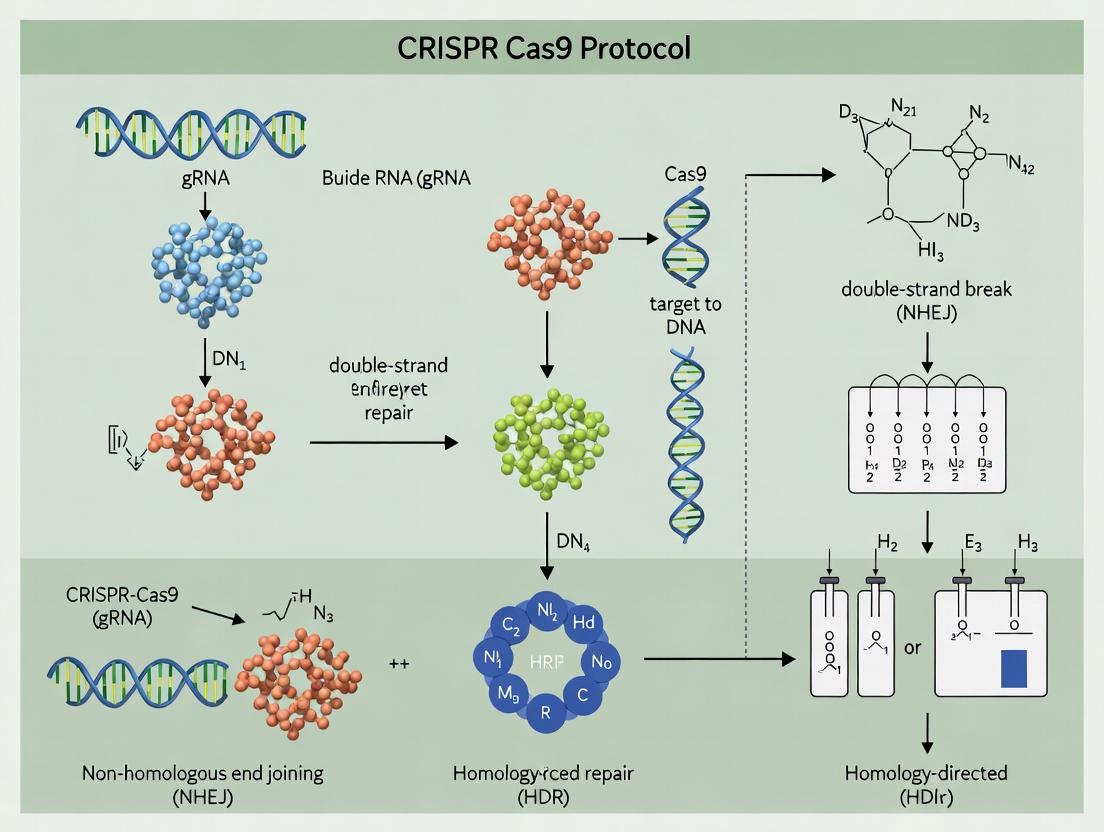
This article provides a detailed, step-by-step protocol for implementing CRISPR-Cas9-mediated genome editing in monocot plants, tailored for researchers, scientists, and biotech professionals.
CRISPR-Cas9 Genome Editing in Monocot Plants: A Comprehensive Protocol and Optimization Guide for Researchers
Abstract
This article provides a detailed, step-by-step protocol for implementing CRISPR-Cas9-mediated genome editing in monocot plants, tailored for researchers, scientists, and biotech professionals. We cover the foundational principles of CRISPR-Cas9 systems suited for monocots like rice, wheat, and maize, followed by a robust methodological workflow from sgRNA design to plant regeneration. The guide includes critical troubleshooting and optimization strategies to overcome common challenges in monocot transformation efficiency and editing specificity. Finally, we present methods for validation, analysis of edits, and a comparative evaluation of delivery techniques (Agrobacterium, biolistics, RNP) to empower successful application in crop improvement and functional genomics.
Understanding CRISPR-Cas9 Systems for Monocots: Key Principles and Pre-Design Considerations
Within the broader thesis on CRISPR-Cas9 protocols for plant transformation research, monocotyledonous plants (monocots) present distinct and significant challenges compared to dicotyledonous plants (dicots). These differences, rooted in fundamental biology, directly impact the efficiency of genetic transformation and the application of genome editing tools like CRISPR-Cas9. This application note details the key challenges, provides comparative data, and outlines refined protocols to overcome these hurdles in major monocot crops.
Key Biological Challenges: Monocots vs. Dicots
The inherent biological differences between monocots and dicots underpin the disparity in transformation success.
Table 1: Fundamental Biological Differences Impacting Transformation
| Feature | Typical Monocots (e.g., Rice, Maize, Wheat) | Typical Dicots (e.g., Tobacco, Arabidopsis, Soybean) |
|---|---|---|
| Embryogenic Response | Limited to specific tissues (scutellum, immature embryos). Highly genotype-dependent. | Broad; often from leaf explants. More genotype-independent. |
| Regeneration Pathway | Primarily through somatic embryogenesis. Complex and slow. | Efficient organogenesis (shoot formation) and somatic embryogenesis. |
| Cell Wall Composition | High in ferulic and p-coumaric acid cross-links, more rigid. | Lower in cross-linking, more easily digested. |
| Susceptibility to Agrobacterium | Natural hosts for few Agrobacterium strains; weak defense induction. | Natural hosts for many strains; strong defense response often inducible. |
| Genome Complexity | Often large, polyploid (e.g., wheat), repetitive. | Generally smaller, less complex (except soybean). |
Table 2: Comparative Transformation Efficiencies (Representative Averages)
| Species | Transformation Method | Typical Efficiency (% of explants producing transgenic events) | Key Dependent Factor |
|---|---|---|---|
| Rice | Agrobacterium | 25-50% | Genotype (japonica > indica) |
| Maize | Agrobacterium (Immature Embryo) | 5-30% | Embryo quality, genotype |
| Wheat | Biolistics | 1-5% | Particle penetration, target tissue |
| Tobacco | Agrobacterium (Leaf disc) | 80-95% | Minimal; highly robust |
| Arabidopsis | Floral Dip | ~1% (but high-throughput) | Plant developmental stage |
Detailed Protocols
Protocol 1:Agrobacterium-Mediated Transformation of Japonica Rice (cv. Nipponbare)
This is a foundational protocol for a model monocot system.
I. Materials: Research Reagent Solutions Toolkit
| Reagent/Solution | Function/Explanation |
|---|---|
| N6 Medium | Salt base for callus induction and regeneration in cereals. |
| 2,4-Dichlorophenoxyacetic acid (2,4-D) | Synthetic auxin essential for inducing embryogenic callus in monocots. |
| Acetosyringone | Phenolic compound that induces Agrobacterium vir gene expression. |
| L-Cysteine | Antioxidant added to co-culture medium to reduce tissue browning/necrosis. |
| Hygromycin B | Selection agent for transformed plant cells; requires empirical determination of optimal concentration. |
| Gelrite | Gelling agent preferred over agar for monocot tissue culture. |
| Osmoticum (e.g., Mannitol/Sorbitol) | Used in pre- and post-transformation treatment to plasmolyze cells, reducing bacterial overgrowth. |
II. Step-by-Step Methodology
Callus Induction:
- Surface sterilize mature rice seeds.
- Place scutellum-side-up on N6D30 medium (N6 salts, 2.5 mg/L 2,4-D, 30 g/L sucrose, 2 g/L Gelrite, pH 5.8).
- Incubate in dark at 28°C for 2-3 weeks. Select creamy, nodular, embryogenic calli.
Agrobacterium Preparation:
- Transform A. tumefaciens strain EHA105 or LBA4404 with desired binary vector (harboring CRISPR-Cas9 and selection marker).
- Grow bacteria in liquid medium with appropriate antibiotics to OD₆₀₀ ~0.8-1.0.
- Centrifuge and resuspend in AAM-AS liquid medium (containing 100 µM acetosyringone) to OD₆₀₀ ~0.1.
Co-cultivation:
- Immerse embryogenic calli in bacterial suspension for 15-30 minutes.
- Blot dry and place on N6D30 co-culture medium (with 100 µM acetosyringone and 400 mg/L L-cysteine).
- Co-cultivate in dark at 22-25°C for 2-3 days.
Resting & Selection:
- Transfer calli to resting N6D30 medium with 250 mg/L cefotaxime (to kill Agrobacterium) but without selection agent. Incubate in dark for 5-7 days.
- Transfer calli to selection N6D30 medium containing both cefotaxime and hygromycin B (e.g., 50 mg/L). Subculture every 2 weeks onto fresh selection medium.
- Surviving, proliferating calli after 4-6 weeks are putative transgenic events.
Regeneration:
- Transfer resistant calli to pre-regeneration N6R medium (N6 salts, 1 mg/L NAA, 0.5 mg/L Kinetin, 30 g/L sucrose, 3 g/L Gelrite, pH 5.8) in dark for 5-7 days.
- Transfer to regeneration N6S medium (N6 salts, 2 mg/L Kinetin, 1 mg/L NAA, 30 g/L sucrose, 3 g/L Gelrite, pH 5.8) under 16-hr photoperiod.
- Developed plantlets are transferred to half-strength MS rooting medium and subsequently to soil.
Protocol 2: CRISPR-Cas9 RNP Delivery via Biolistics in Wheat
For genotypes or species recalcitrant to Agrobacterium, and to avoid DNA integration, Ribonucleoprotein (RNP) delivery via biolistics is effective.
I. Materials: Research Reagent Solutions Toolkit
| Reagent/Solution | Function/Explanation |
|---|---|
| Purified Cas9 Protein | Recombinant, endotoxin-free Cas9 nuclease for RNP complex formation. |
| sgRNA (in vitro transcribed or synthetic) | Target-specific guide RNA, chemically modified for stability if synthetic. |
| Gold Microparticles (0.6-1.0 µm) | Inert carrier particles for RNP/DNA delivery via high-pressure helium. |
| Spermidine (Free Base) | Helps adsorb nucleic acids/proteins onto gold particles. |
| Osmoticum (e.g., Mannitol) | Used to pre-treat target tissues, improving survival post-bombardment. |
II. Step-by-Step Methodology
RNP Complex Preparation:
- For one bombardment, mix 5 µg of purified Cas9 protein with 2 µg of sgRNA(s) in a total volume of 10 µL (using nuclease-free buffer).
- Incubate at 25°C for 10 minutes to form RNP complexes.
Microcarrier Preparation:
- Weigh 3 mg of 0.6 µm gold particles in a microcentrifuge tube.
- While vortexing, sequentially add: 50 µL of sterile 0.05 M spermidine, the 10 µL RNP mix, and 50 µL of 2.5 M CaCl₂.
- Continue vortexing for 2-3 minutes, then let settle for 1 minute. Pellet gold by brief centrifugation.
- Wash with 140 µL 70% ethanol, then 140 µL 100% ethanol. Resuspend in 30 µL 100% ethanol.
Target Tissue Preparation & Bombardment:
- Isolate immature wheat embryos (1.0-1.5 mm) and place scutellum-up on osmotic medium (containing 0.2-0.4 M mannitol/sorbitol) for 4 hours pre-bombardment.
- Pipette 5 µL of gold suspension onto the center of a macrocarrier. Let dry.
- Perform bombardment using a PDS-1000/He system with standard parameters (e.g., 1100 psi rupture disc, 6 cm target distance, 27 in Hg vacuum).
- Post-bombardment, keep embryos on osmotic medium for 16-24 hours.
Regeneration & Screening:
- Transfer embryos to standard regeneration medium without selection.
- Allow plants to develop. Screen regenerated plants (T0) for edits using a mismatch detection assay (e.g., T7E1 or ICE) followed by Sanger sequencing. No antibiotic selection is applied, as no T-DNA is delivered.
Visualization of Key Concepts and Workflows
Monocot Transformation Challenge and Solution Pathways
Agrobacterium-Mediated Rice Transformation Workflow
Wheat Genome Editing via RNP Biolistics
Selecting the appropriate CRISPR-Cas9 system is critical for successful genome editing in monocots (e.g., rice, wheat, maize). The choice depends on the desired edit type, on-target efficiency, off-target minimization, and delivery constraints.
System Comparison and Quantitative Data
Table 1: Comparison of Key CRISPR-Cas Systems for Monocots
| System | PAM Requirement | Primary Edit Type | Avg. Efficiency in Monocots* | Key Advantage | Key Limitation |
|---|---|---|---|---|---|
| Wild-Type SpCas9 | NGG | DSB → NHEJ/HDR | 5-30% NHEJ | Robust, well-validated | Restricted PAM, high off-target risk |
| SpCas9-NG | NG | DSB → NHEJ/HDR | 10-40% NHEJ | Expanded PAM range | Slightly reduced efficiency vs. NGG |
| xCas9 3.7 | NG, GAA, GAT | DSB → NHEJ/HDR | 5-25% NHEJ | Broad PAM, high fidelity | Lower activity in plants |
| Cas9-Nickase (D10A) | NGG | Single-strand break | Low HDR stimulation | Paired nicking reduces off-targets | Requires two guides, complex design |
| Adenine Base Editor (ABE) | NGG (SpCas9) | A•T → G•C | 10-50% (rice protoplasts) | Precise base change, no DSB | Requires specific window within RTT |
| Cytosine Base Editor (CBE) | NGG (SpCas9) | C•G → T•A | 10-70% (rice protoplasts) | Precise base change, no DSB | Undesired C edits outside window |
| Cas12a (Cpfl) | TTTV | DSB → NHEJ/HDR | 5-20% NHEJ | Short crRNA, staggered cut | Lower efficiency in some monocots |
*Efficiency is highly variable and depends on species, target locus, and delivery method. Data compiled from recent literature.
Table 2: Decision Matrix for System Selection
| Goal | Recommended System(s) | Rationale |
|---|---|---|
| Gene Knockout | SpCas9, SpCas9-NG, Cas12a | High NHEJ-mediated indel efficiency. |
| Gene Knock-in (HDR) | SpCas9-Nickase, HDR-enhancing reagents | Paired nicks may improve HDR ratio. |
| Precise Point Mutation | ABE or CBE | Direct, DSB-free base conversion. |
| Editing AT-rich PAMs | SpCas9-NG, xCas9 | Relaxed PAM requirement. |
| Minimizing Off-targets | High-fidelity Cas9 variants (e.g., SpCas9-HF1), Cas9-Nickase | Engineered for reduced non-specific binding. |
Experimental Protocols
Protocol 3.1: Agrobacterium-mediated Transformation of Rice Callus with SpCas9
Materials: Japonica rice seeds, Agrobacterium strain EHA105, pRGEB32 vector (or similar SpCas9 binary vector), N6 and 2N6 media, hygromycin, selection agents.
- Vector Construction: Clone gene-specific gRNA (20-nt target + NGG PAM) into the binary vector's U3/U6 rice promoter-driven expression cassette.
- Agrobacterium Preparation: Transform the assembled vector into EHA105. Grow a single colony in YEP with antibiotics (rifampicin, spectinomycin) to OD₆₀₀ ~1.0.
- Inoculum Preparation: Pellet bacteria and resuspend in AAM liquid medium to OD₆₀₀ 0.8-1.0. Add acetosyringone (100 µM).
- Rice Callus Infection: Immerse embryogenic calli (2-3 weeks old) in the Agrobacterium suspension for 15-30 minutes. Blot dry and co-cultivate on solid N6 + acetosyringone media for 3 days at 25°C in the dark.
- Selection & Regeneration: Transfer calli to N6 selection media containing hygromycin (50 mg/L) and cefotaxime (250 mg/L) to suppress Agrobacterium. Subculture every 2 weeks. Transfer resistant calli to regeneration media (2N6 + hormones), then to rooting media.
- Genotyping: Extract genomic DNA from T0 plantlets. PCR-amplify target region and analyze by Sanger sequencing (trace decomposition) or next-generation sequencing for indel quantification.
Protocol 3.2: Protoplast Transfection for Rapid Testing of Base Editors
Materials: Rice seedling leaves, Enzyme solution (1.5% Cellulase R10, 0.75% Macerozyme R10), PEG-Calcium solution, ABE7.10 or BE3 plasmid DNA.
- Protoplast Isolation: Slice 2-3g of leaf tissue into 0.5-1mm strips. Digest in enzyme solution for 6 hours in the dark with gentle shaking. Filter through 35-75µm mesh, wash with W5 solution, and pellet at 100 x g.
- PEG-Mediated Transfection: Resuspend protoplasts at 2x10⁶/mL in MMg solution. For each transfection, mix 10µg plasmid DNA with 100µL protoplasts. Add 110µL 40% PEG4000 solution, mix gently, and incubate for 15 min at room temperature.
- Post-Transfection: Dilute slowly with W5 solution, pellet, and resuspend in 1mL WI culture medium. Incubate in the dark at 25°C for 48-72 hours.
- DNA Extraction & Analysis: Harvest protoplasts, extract genomic DNA. PCR-amplify the target region and perform Sanger sequencing. Calculate base editing efficiency from sequencing chromatograms using tools like BEAT or EditR.
Diagrams
Title: CRISPR System Selection Workflow for Monocots
Title: Cytosine Base Editor (CBE) Mechanism of Action
The Scientist's Toolkit: Research Reagent Solutions
| Item | Function & Rationale |
|---|---|
| pRGEB32/pBUN421 vectors | Modular binary vectors with rice codon-optimized SpCas9, gRNA scaffold, and plant selection markers (e.g., hygromycin phosphotransferase). |
| U3/U6 Promoter from Rice | Pol III promoters for high, constitutive expression of single-guide RNAs in monocot cells. |
| Agrobacterium strain EHA105 | Super-virulent strain carrying pTiBo542, highly efficient for rice and maize transformation. |
| Acetosyringone | Phenolic compound inducing the Agrobacterium Vir genes essential for T-DNA transfer. |
| Hygromycin B | Aminoglycoside antibiotic used for selecting transformed plant cells expressing the hptII resistance gene. |
| Cellulase R10 / Macerozyme R10 | Enzyme mixture for digesting monocot cell walls to generate protoplasts for rapid transient assays. |
| Polyethylene Glycol (PEG) 4000 | Agent that induces membrane fusion and facilitates DNA uptake into protoplasts. |
| BEAT (Base Editing Analysis Tool) | Bioinformatics software for quantifying base editing efficiency from Sanger sequencing traces. |
| High-fidelity PCR Master Mix | Essential for error-free amplification of target loci from plant genomic DNA for sequencing analysis. |
Within the context of developing a robust CRISPR-Cas9 protocol for monocot plant transformation, a critical pre-design phase is essential. The unique architectural features of monocot genomes—specifically their GC content distribution, chromatin state dynamics, and prevalence of polyploidy—profoundly influence sgRNA design efficiency, on-target editing rates, and off-target potential. This Application Note provides detailed protocols and analyses to characterize these genomic features, ensuring informed experimental design for higher success rates in genome engineering projects.
Table 1: Comparative Genomic Features of Model Monocot Species
| Species | Ploidy Level | Avg. Genome-Wide GC (%) | GC Content in Gene Bodies (%) | Predicted Open Chromatin Frequency (ATAC-seq peaks/Mb) | Common Polyploidy Events |
|---|---|---|---|---|---|
| Oryza sativa (Rice) | Diploid (2n=24) | 43.8% | 52-55% | ~12-15 | Ancestral whole-genome duplication |
| Zea mays (Maize) | Paleotetraploid (2n=20) | 47.2% | ~58% | ~8-11 | Recent segmental duplications |
| Triticum aestivum (Wheat) | Hexaploid (6n=42) | 46.5% | 54-57% | ~5-8 (varies by subgenome) | Allopolyploidy (A, B, D genomes) |
| Hordeum vulgare (Barley) | Diploid (2n=14) | 46.1% | 53-56% | ~10-14 | - |
| Sorghum bicolor | Diploid (2n=20) | 45.6% | 51-54% | ~13-16 | - |
Table 2: Impact of Genomic Features on CRISPR-Cas9 Design Parameters
| Feature | High-Risk Design Signal | Recommended Design Adjustment | Associated Protocol |
|---|---|---|---|
| High GC Region (>65%) | Increased off-target binding | Select sgRNA with 40-60% GC; avoid 3' end high GC. | Protocol 3.1 |
| Low GC Region (<35%) | Reduced Cas9 binding/cleavage efficiency | Extend seed region check; prioritize PAM-proximal stability. | Protocol 3.1 |
| Closed Chromatin (H3K9me2/3 marks) | Severely reduced editing efficiency | Use chromatin accessibility data (ATAC/MNase) to select open regions. | Protocol 3.2 |
| Polyploid/Homeologous Regions | High risk of off-targets across subgenomes | Perform cross-subgenome alignment; design unique sgRNAs for each subgenome. | Protocol 3.3 |
Experimental Protocols
Protocol 3.1: Determination of Local GC Content for sgRNA Target Sites
Purpose: To calculate GC percentage in a 20-23bp window surrounding the NGG PAM site to assess binding stability. Materials: Genomic sequence (FASTA), target coordinates, computational tool (e.g., Biopython, local script). Procedure:
- Extract the 30bp sequence centered on the candidate PAM site (N20-NGG).
- For the 20bp sgRNA binding sequence (5' of the PAM), count the number of Guanine (G) and Cytosine (C) nucleotides.
- Calculate percentage: (Count(G+C) / 20) * 100.
- Design Rule: Flag sequences with GC < 20% or > 80% for avoidance. Ideal range is 40-60%.
- For genome-wide profiling, use sliding window analysis (e.g., 500bp windows, 250bp step) across the chromosome.
Protocol 3.2: Assessment of Chromatin Accessibility via ATAC-seq Data Analysis
Purpose: To identify open chromatin regions conducive to Cas9 ribonucleoprotein (RNP) access. Materials: Public or in-house ATAC-seq datasets (BAM/FASTQ files), peak calling software (e.g., MACS2), genome browser (IGV). Procedure:
- Data Acquisition: Download ATAC-seq data for your monocot species/tissue of interest from repositories like SRA (Sequence Read Archive).
- Peak Calling: Align reads to the reference genome using Bowtie2/BWA. Call peaks of enriched signal (open chromatin) using MACS2 with parameters
-f BAMPE --keep-dup all -g [genome size]. - Target Intersection: Cross-reference your candidate CRISPR target site coordinates with the ATAC-seq peak coordinates using BEDTools
intersect. - Prioritization: Strongly prioritize sgRNAs whose target sites overlap with ATAC-seq peaks (open chromatin). De-prioritize or avoid sites in unpeaked regions (closed chromatin).
Protocol 3.3: Homeolog-Specific sgRNA Design for Polyploid Monocots
Purpose: To design subgenome-specific sgRNAs in allopolyploids (e.g., Wheat, Sugarcane) to avoid unintended editing of homeologous loci. Materials: Reference genomes for each subgenome (e.g., Wheat RefSeq v2.1 for A, B, D genomes), alignment tool (BLAST, Bowtie2). Procedure:
- Multi-Genome Alignment: Extract the candidate 23bp target sequence (N20-NGG) from the primary subgenome.
- Perform a local BLASTN search against the concatenated sequences of all other subgenomes with high-stringency parameters (
-task blastn-short -evalue 0.1). - Analyze alignments for perfect or near-perfect (≤3 mismatches) matches, especially in the PAM-proximal seed region (bases 1-12).
- Selection Criteria: Select sgRNAs that have ≥3 mismatches across all 20 bases, or ≥2 mismatches within the seed region, when aligned to all non-target subgenomes.
Visualization Diagrams
Title: Monocot CRISPR Target Pre-Design Screening Workflow
Title: Genomic Feature Impact on CRISPR & Mitigation Strategy
The Scientist's Toolkit
Table 3: Essential Research Reagent Solutions for Pre-Design Analysis
| Reagent / Tool | Function in Pre-Design | Example Product / Source |
|---|---|---|
| High-Quality Reference Genomes | Essential for accurate sgRNA design, GC calculation, and off-target prediction. Must include all subgenomes for polyploids. | Ensembl Plants, NCBI Genome, species-specific databases (e.g., Rice Genome Annotation Project). |
| Chromatin Accessibility Data (ATAC-seq) | Defines open/closed chromatin regions. Public datasets or kits for in-house generation are required. | Illumina ATAC-seq Kit; Pre-processed data from SRA (e.g., SRP135960 for maize). |
| sgRNA Design & Off-Target Prediction Software | Integrates genomic features into design algorithms to score and rank sgRNAs. | CHOPCHOP, CRISPR-P, or species-specific tools like CRISPR-GE (for plants). |
| Multi-Genome Alignment Tool | Critical for identifying homeologous sequences in polyploid species to ensure specificity. | BLAST+ Suite, Bowtie2, CLC Genomics Workbench. |
| Plasmid or RNP Complex for Validation | For in vitro or protoplast-based validation of sgRNA cleavage efficiency prior to stable transformation. | Alt-R S.p. Cas9 Nuclease V3 (IDT), pBUN411-sgRNA vector. |
| Bisulfite Sequencing Reagents | Optional but recommended if targeting regions potentially affected by DNA methylation (correlated with closed chromatin). | EZ DNA Methylation-Lightning Kit (Zymo Research). |
Within the broader thesis on developing a robust CRISPR-Cas9 protocol for monocot plant transformation, the selection of regulatory elements is a critical determinant of success. Efficient genome editing requires high and consistent expression of the Cas9 nuclease and the single guide RNA (sgRNA). This application note details the rationale, comparative performance data, and experimental protocols for evaluating commonly used promoters in monocots, specifically for driving Cas9 and sgRNA expression.
Promoter Performance Data
The following tables summarize quantitative data from recent studies on promoter efficacy in key monocot models.
Table 1: Constitutive Promoters for Cas9 Expression
| Promoter (Source) | Plant Species | Relative Expression/Activity (vs. Reference) | Transformation Efficiency (% GFP+) | Mutation Frequency Range (%) | Key Reference (Year) |
|---|---|---|---|---|---|
| ZmUbi1 (Maize Ubiquitin) | Rice | 1.0 (Reference) | 85-95 | 70-90 | (Current) |
| ZmUbi1 (Maize Ubiquitin) | Wheat | High | 20-40 | 10-45 | (Current) |
| OsAct1 (Rice Actin) | Rice | 0.8-1.2 | 80-90 | 65-85 | (Current) |
| CaMV 35S (Viral) | Maize | Low/Moderate | 5-15 | <10 | (Current) |
| SbUbi (Sorghum Ubiquitin) | Sorghum | High | 30-50 | 40-70 | (Current) |
Table 2: Promoters for sgRNA Expression
| Promoter Type | Name (Source) | Expression System | Optimal Length (bp) | Mutation Efficiency (vs. Pol III) | Notes |
|---|---|---|---|---|---|
| Pol III | OsU3, OsU6 | Monocot-native | ~250-300 | 1.0 (Reference) | High, precise initiation. Species-specific variants show optimal performance. |
| Pol III | AtU3, AtU6 | Arabidopsis | ~250 | 0.3-0.7 | Often less efficient in monocots. |
| Pol II | OsAct1, ZmUbi1 | With ribozyme/tRNA processing | Full promoter | 0.6-0.9 | Enables tissue-specific sgRNA expression. |
Detailed Experimental Protocols
Protocol 1: Agrobacterium-Mediated Transformation of Rice Callus with Promoter:Cas9/sgRNA Constructs
This protocol is central to the thesis for *in planta evaluation of promoter efficacy.*
Materials:
- Agrobacterium tumefaciens strain EHA105 harboring binary vector.
- Embryogenic calli from rice cultivar (e.g., Nipponbare).
- Co-cultivation media (N6 or LS-based with acetosyringone).
- Selection media with appropriate antibiotics (e.g., Hygromycin).
- Regeneration media.
Procedure:
- Culture Initiation: Subculture embryogenic calli on fresh callus induction medium 4 days before transformation.
- Agrobacterium Preparation: Grow Agrobacterium to OD₆₀₀ ~0.8 in LB with antibiotics. Pellet and resuspend in co-cultivation medium supplemented with 100 µM acetosyringone.
- Infection & Co-cultivation: Immerse calli in bacterial suspension for 15-30 min. Blot dry on sterile paper and transfer to co-cultivation media. Incubate in dark at 22-25°C for 2-3 days.
- Resting & Selection: Transfer calli to resting media without antibiotics for 5-7 days. Subsequently, transfer to selection media containing hygromycin (50 mg/L) and cefotaxime (250 mg/L) to suppress Agrobacterium. Subculture every 2 weeks.
- Regeneration: Transfer proliferating, resistant calli to pre-regeneration and then regeneration media. Transfer developed plantlets to rooting medium.
- Molecular Analysis: Isolate genomic DNA from putative transgenic plants. Assess promoter performance via:
- PCR for transgene integration.
- qRT-PCR for Cas9 transcript levels (for Pol II promoters).
- T7E1 or GUIDE-seq assay on target locus to quantify mutation frequency.
Protocol 2: Protoplast Transient Expression Assay for Rapid Promoter Screening
This protocol provides a rapid, quantitative comparison of promoter activity within days.
Materials:
- Young leaves from 10-14 day old monocot seedlings.
- Enzyme solution: 1.5% Cellulase R10, 0.75% Macerozyme R10, 0.6M mannitol, 10mM MES, pH 5.7.
- MMg solution: 0.6M mannitol, 15mM MgCl₂, 4mM MES, pH 5.7.
- PEG solution: 40% PEG 4000, 0.6M mannitol, 0.1M CaCl₂.
- Plasmid DNA (Promoter:GFP or Promoter:Luciferase reporter constructs).
Procedure:
- Protoplast Isolation: Slice leaves into thin strips. Incubate in enzyme solution for 4-6 hours in the dark with gentle shaking. Filter through a 40µm nylon mesh and wash 3x with W5 solution by centrifugation (100xg, 2 min).
- DNA Transfection: Resuspend protoplasts in MMg solution at 2x10⁵ cells/mL. Aliquot 100µL into tubes. Add 10µg plasmid DNA + 10µL carrier DNA (salmon sperm). Add 110µL of PEG solution, mix gently, and incubate for 15 min.
- Stop & Culture: Dilute with 500µL W5 solution. Centrifuge, resuspend in 1mL culture medium, and incubate in dark for 16-48 hours.
- Analysis: For GFP reporters, quantify fluorescence intensity via flow cytometry or fluorometry. For Luciferase reporters, lyse protoplasts and measure luminescence. Normalize data to a co-transfected internal control (e.g., 35S:REN).
Visualizations
Title: Decision Workflow for Monocot Promoter Selection
Title: Key Steps in Promoter Evaluation Pipeline
The Scientist's Toolkit: Research Reagent Solutions
| Item | Function/Benefit | Example/Note |
|---|---|---|
| pRGEB32-like Vectors | Binary T-DNA vectors with pre-cloned ZmUbi::Cas9 and OsU6 sgRNA scaffold. | Standardized backbone for monocot CRISPR. |
| Goldberg-Hogness (TATA) Box Mutant Promoters | Enhanced constitutive expression in monocots. | Modified ZmUbi1 for higher activity. |
| tRNA-sgRNA Fusion Cloning Kit | Enables use of Pol II promoters for sgRNA expression via endogenous processing. | Allows tissue-specific editing. |
| Gateway-Compatible Promoter Libraries | Enables high-throughput swapping of promoters driving Cas9/sgRNA. | Speeds up combinatorial testing. |
| Hygromycin B (Plant Selection) | Selective agent for transformed plant tissues. | Standard for monocot selection (50-100 mg/L). |
| Acetosyringone | Phenolic compound inducing Agrobacterium vir genes. | Critical for monocot transformation efficiency. |
| Cellulase R10 / Macerozyme R10 | Enzyme mix for high-yield protoplast isolation from monocot leaves. | Essential for transient assays. |
| T7 Endonuclease I (T7E1) | Detects small indels at target site by cleaving mismatched heteroduplexes. | Standard for mutation efficiency quantification. |
| Guide-it Genotype Confirmation Kit | Combines PCR, in vitro transcription, and Cas9 cleavage to detect edits. | Streamlines analysis workflow. |
Within the context of developing a robust CRISPR-Cas9 protocol for monocot plant transformation research, the choice of delivery method is a critical determinant of success. This Application Note provides a detailed comparison of three core delivery strategies—Agrobacterium tumefaciens-mediated transformation, Biolistic particle delivery, and direct delivery of pre-assembled Ribonucleoprotein (RNP) complexes. Each method presents unique advantages and limitations in terms of efficiency, cargo type, integration patterns, and applicability across monocot species. The following sections offer quantitative comparisons, detailed experimental protocols, and essential resource guides to inform method selection for CRISPR-based genome editing in monocots.
Comparative Analysis of Delivery Methods
Table 1: Quantitative Comparison of Key Delivery Methods for CRISPR-Cas9 in Monocots
| Parameter | Agrobacterium tumefaciens | Biolistic Particle Delivery | Ribonucleoprotein (RNP) Complex Delivery |
|---|---|---|---|
| Typical Transformation Efficiency (Calli) | 5-30% (species-dependent) | 1-10% (high variability) | 0.5-5% (for direct editing, no selection) |
| Cargo Type | T-DNA carrying expression cassettes for Cas9 & gRNA(s). | Plasmid DNA, RNA, or pre-assembled RNP coated onto microparticles. | Pre-assembled Cas9 protein + sgRNA complex. |
| Integration of Vector Backbone | Low (precise T-DNA borders). | High (random integration of whole plasmids common). | None (transient activity, no DNA template delivered). |
| Multiplex Editing Capacity | High (multiple gRNAs can be stacked in T-DNA). | High (multiple plasmids or RNPs can be co-bombarded). | High (multiple RNPs can be co-delivered). |
| Regulatory/Trait Status | May be classified as a GMO due to integrated T-DNA. | May be classified as a GMO if DNA integrates. | Often considered non-GMO/transgene-free if no DNA integrates. |
| Primary Monocot Applications | Rice, maize (with specific strains). Widely used. | All cereals, including wheat, barley, maize. Often used for recalcitrant species. | Protoplasts, immature embryos, and calli of wheat, rice, maize. |
| Key Advantage | Low-copy, precise integration; well-established. | Host genotype-independent; delivers diverse cargo. | Rapid action, minimal off-target effects, no foreign DNA integration. |
| Key Limitation | Host range limitation; monocot optimization required. | High cell damage; complex integration patterns. | Low efficiency in whole tissue; requires efficient tissue culture. |
Detailed Experimental Protocols
Protocol:Agrobacterium tumefaciens-Mediated Transformation of Rice Callus
This protocol is optimized for japonica rice using strain EHA105 or LBA4404 carrying a binary vector with Cas9 and sgRNA expression cassettes.
Materials: Sterile immature rice seeds, N6 and 2N6 media, co-cultivation media, selection media (hygromycin or similar), Agrobacterium strain, acetosyringone, surfactants (e.g., Silwet L-77).
Procedure:
- Explant Preparation: Isolate immature embryos or scutellum-derived calli from sterilized seeds. Culture on N6 callus induction media for 2-4 weeks.
- Agrobacterium Preparation: Inoculate a single colony of the recombinant Agrobacterium in LB with appropriate antibiotics. Grow to OD600 ~0.8-1.0. Pellet and resuspend in liquid co-cultivation media supplemented with 100-200 µM acetosyringone.
- Infection & Co-cultivation: Immerse calli in the Agrobacterium suspension for 15-30 minutes. Blot dry and place on solid co-cultivation media. Incubate in the dark at 22-25°C for 2-3 days.
- Resting & Selection: Transfer calli to resting media with a bacteriostatic agent (e.g., cefotaxime) for 5-7 days to suppress bacterial overgrowth. Subsequently, transfer to selection media containing both antibiotic and the plant selection agent.
- Regeneration: After 3-4 weeks, transfer proliferating, resistant calli to regeneration media to induce shoot and root formation.
- Molecular Analysis: Confirm editing events in regenerated plantlets via PCR/RE assay, sequencing, or next-generation sequencing.
Protocol: Biolistic Transformation of Wheat Immature Embryos
This protocol describes DNA delivery for CRISPR plasmids into wheat using the PDS-1000/He system.
Materials: Immature wheat seeds (10-14 days post-anthesis), gold or tungsten microparticles (0.6-1.0 µm), rupture discs (650-1100 psi), stopping screens, osmoticum media (mannitol/sorbitol), plasmid DNA.
Procedure:
- Microcarrier Preparation: Suspend 60 mg of 0.6µm gold particles in 1 mL 100% ethanol. Vortex, pellet, and wash in sterile water. Resuspend in 1 mL sterile 50% glycerol. Aliquot and add 5-10 µg plasmid DNA, 50 µl 2.5M CaCl2, and 20 µl 0.1M spermidine. Vortex, incubate on ice, pellet, wash, and resuspend in 100% ethanol.
- Explants Preparation: Isolate immature embryos (0.5-1.5 mm) and culture scutellum-side up on osmotic pretreatment media for 4-24 hours.
- Bombardment: Sterilize macrocarriers and assemble with microcarrier suspension. Load rupture disc, macrocarrier, stopping screen, and target sample shelf into the chamber. Perform bombardment at target vacuum of 27-28 inHg and specified helium pressure.
- Post-Bombardment Culture: Following bombardment, incubate embryos on osmotic media for 16-24 hours. Transfer to standard callus induction media without selection for 1 week, then to media with selection.
- Regeneration & Screening: Proceed as in Section 3.1, steps 5-6.
Protocol: RNP Delivery into Maize Protoplasts for Transient Editing Assay
This protocol enables rapid testing of sgRNA efficiency prior to stable transformation.
Materials: Maize B73 suspension cells or leaf tissue, Cellulase RS, Macerozyme R-10, Mannitol, MgCl2, PEG 4000, purified Cas9 protein (commercial or recombinant), chemically synthesized sgRNA.
Procedure:
- Protoplast Isolation: Digest 1g of young leaf tissue or suspension cells in enzyme solution (1.5% Cellulase, 0.3% Macerozyme, 0.4M mannitol, pH 5.7) for 6-16 hours with gentle shaking. Filter through a 40µm mesh, wash with W5 solution (154mM NaCl, 125mM CaCl2, 5mM KCl, 5mM glucose, pH 5.7), and pellet at low speed.
- RNP Complex Assembly: Pre-complex 10-50 µg of purified Cas9 protein with a 1.2-1.5x molar ratio of sgRNA in a suitable buffer. Incubate at room temperature for 10-15 minutes.
- Transfection: Resuspend protoplast pellet (2x10^5 cells) in MMg solution (0.4M mannitol, 15mM MgCl2). Add pre-assembled RNP complex. Then, add an equal volume of 40% PEG 4000 solution. Mix gently and incubate for 15-30 minutes.
- Culture & Analysis: Dilute gradually with W5 solution, pellet, and resuspend in culture medium. Incubate in the dark for 48-72 hours. Harvest protoplasts, extract genomic DNA, and assess editing efficiency via T7 Endonuclease I assay or targeted deep sequencing.
Visual Workflows
Diagram Title: Agrobacterium CRISPR Workflow
Diagram Title: Biolistic Delivery Workflow
Diagram Title: RNP Assembly and Delivery
The Scientist's Toolkit: Research Reagent Solutions
Table 2: Essential Materials for CRISPR Delivery in Monocots
| Item | Function & Application | Example/Note |
|---|---|---|
| Binary Vector System (e.g., pCAMBIA, pGreen) | Carries T-DNA with Cas9/sgRNA expression cassettes for Agrobacterium transformation. | Must contain monocot-specific promoters (e.g., ZmUbi for Cas9, OsU3/U6 for sgRNA). |
| Supervirulent Agrobaciaterium Strain | Engineered for enhanced monocot transformation. | Strains EHA105, AGL1, or LBA4404 (with helper plasmid). |
| Acetosyringone | Phenolic compound that induces Agrobacterium vir gene expression during co-cultivation. | Critical for monocot transformation; used at 100-200 µM. |
| Gold Microcarriers (0.6-1.0 µm) | Inert particles used as DNA/RNA/RNP carriers in biolistics. | Preferred over tungsten for consistency and reduced toxicity. |
| PDS-1000/He System | Helium-driven gene gun for biolistic particle delivery. | Enables genotype-independent transformation. |
| Purified Cas9 Nuclease | Recombinant protein for pre-assembly of RNP complexes. | Commercially available from various suppliers (e.g., IDT, Thermo Fisher). |
| Chemically Synthesized sgRNA | High-purity, modified sgRNA for RNP assembly or direct delivery. | Ensures consistent editing and reduces DNA vector use. |
| PEG 4000 | Polymer used to induce membrane fusion and uptake of RNPs/DNA into protoplasts. | Critical component in protoplast transfection protocols. |
| Protoplast Isolation Enzymes | Cellulase and macerozyme mixtures for digesting plant cell walls. | Concentration and time must be optimized per species/tissue. |
| Hybridization-Sensitive Nuclease Assay | For rapid quantification of editing efficiency (e.g., T7EI, Surveyor). | Enables quick screening before deep sequencing. |
Step-by-Step Protocol: From sgRNA Design to Regeneration of Edited Monocot Plants
This protocol constitutes Phase 1 of a comprehensive thesis on CRISPR-Cas9 for monocot plant transformation. It details the critical in silico stage for designing specific single-guide RNAs (sgRNAs) and predicting potential off-target sites. Given the large, complex, and often polyploid genomes of monocots (e.g., rice, maize, wheat), computational design is essential to maximize on-target efficiency and minimize unintended edits before committing resources to laboratory experimentation.
Key Workflow and Decision Pathway
Diagram Title: In Silico sgRNA Design and Selection Workflow
Detailed Protocol
Step 1: Target Identification and Sequence Acquisition
- Input: Identify the target gene(s) using standard nomenclature (e.g., LOC_Os01g01050 for rice, Zm00001d000100 for maize).
- Source: Download the most recent reference genome assembly and corresponding GFF3 annotation file for your monocot species from a trusted database:
- Rice (Oryza sativa): Ensembl Plants or RGAP.
- Maize (Zea mays): MaizeGDB or Ensembl Plants.
- Wheat (Triticum aestivum): Ensembl Plants or IWGSC.
- Sorghum (Sorghum bicolor): Phytozome.
- Extraction: Use command-line tools (e.g.,
samtools faidx) or genome browser interfaces to extract the genomic DNA sequence, including 1-2 kb upstream and downstream of the target exon(s) for potential regulatory region targeting.
Step 2: Protospacer Candidate Identification
- Scan the extracted sequence for the presence of the Cas9 PAM sequence 5'-NGG-3' (for standard Streptococcus pyogenes Cas9).
- Record the 20 nucleotides immediately 5' of each PAM as a candidate protospacer.
- Compile a list of all candidates, noting their genomic coordinates (chromosome, start, end, strand).
Step 3: Primary Filtering and On-Target Scoring
- Position Filter: Prioritize protospacers targeting early exons or critical functional domains to increase the likelihood of generating a knockout allele.
- GC Content Filter: Retain candidates with GC content between 40% and 80%. Optimal range is often cited as 50-70%.
- On-Target Efficiency Prediction: Input the filtered list of candidate sequences into at least two established scoring algorithms. Common tools include:
- CRISPR-RT: (Rice-specific) Integrates multiple features for rice genome predictions.
- DeepSpCas9: A general plant model trained on large-scale datasets.
- CRISPRscan: Applicable across eukaryotes.
- Selection: Retain the top candidates (e.g., top 5-10) based on aggregated scores for off-target analysis.
Step 4: Comprehensive Off-Target Prediction
- Tool Selection: Use a tool capable of whole-genome searching with tolerance for mismatches, bulges, and alternative PAMs.
- Cas-OFFinder: Allows batch searching with user-defined mismatch numbers and PAMs.
- CRISPR-P 2.0/OffTargetPicker: Plant-focused web servers.
- CRISPOR: Integrates multiple off-target databases and scoring.
- Parameters: Search the entire reference genome. Allow up to 3-5 nucleotide mismatches and consider non-canonical PAMs (e.g., NAG, NGA). Pay special attention to off-targets in other homologous genes or subgenomes (in polyploids like wheat).
- Analysis: Manually inspect predicted off-target sites. Prioritize those within coding regions or functional elements of other genes.
Step 5: Final Selection and Oligo Design
- Ranking: Integrate on-target efficiency scores and off-target predictions. The final candidate should have the highest on-target score and no off-target sites with ≤3 mismatches in coding regions.
- Validation: Visually confirm the target site and off-target predictions using a genome browser (e.g., IGV, JBrowse).
- Oligo Design: For the selected sgRNA(s), design oligonucleotides for cloning into your chosen CRISPR vector (e.g., pRGEB31, pBUN411). Add the appropriate 4-5 bp overhangs compatible with your cloning method (e.g., BsaI or Golden Gate assembly).
Data Presentation: Comparative Analysis of sgRNA Design Tools for Monocots
Table 1: Key Features of Popular sgRNA Design and Off-Target Prediction Tools
| Tool Name | Primary Use | Key Strength for Monocots | Input Format | Output Metrics | Accessibility |
|---|---|---|---|---|---|
| CRISPR-P 2.0 | Design & Off-Target | Integrated platform for >10 plants, incl. rice, maize | Gene ID/Genomic Region | Efficiency score, Specificity score, Off-target list | Web Server |
| Cas-OFFinder | Off-Target Search | Genome-wide search with flexible PAM & mismatch rules | sgRNA Sequence | Genomic coordinates of all potential off-targets | Web/Standalone |
| CRISPOR | Design & Off-Target | Integrates multiple scoring methods (Doench '16, Moreno-Mateos) | Gene ID/FASTA | Efficiency scores, Out-of-frame score, Off-target count | Web Server |
| CRISPR-RT | On-Target Scoring | Rice-specific model, high prediction accuracy | 20-nt + PAM sequence | Single normalized efficiency score | Web Server |
| sgRNA Designer (Broad) | On-Target Scoring | Validated algorithm (Azimuth 2.0), easy batch upload | 20-23 nt sequence | On-target score (0-1) | Web Server |
Table 2: Recommended Decision Thresholds for sgRNA Selection in Monocots
| Parameter | Optimal Range | Acceptable Range | Rationale & Notes |
|---|---|---|---|
| GC Content | 50% - 70% | 40% - 80% | Affects stability and RNP formation. Extremes reduce efficiency. |
| On-Target Score (e.g., CRISPR-P) | > 0.6 | > 0.5 | Species/model dependent. Use relative ranking within a set. |
| Allowed Mismatches | 0-2 | ≤3 | For critical applications, require zero off-targets with ≤2 mismatches. |
| Off-Targets in Exons | 0 | ≤1 (with ≥3 mismatches) | Absolute priority to avoid unintended gene knockouts. |
| Position in CDS | Early Exons 1-3 | Any coding exon | Maximizes chance of frameshift and functional knockout. |
Table 3: Key Research Reagent Solutions for In Silico Phase
| Item | Function/Description | Example/Supplier |
|---|---|---|
| High-Quality Reference Genome | FASTA file of chromosomal sequences. Essential for accurate target search and off-target prediction. | IRGSP-1.0 (Rice), B73 RefGen_v4 (Maize), IWGSC RefSeq v2.1 (Wheat) |
| Genome Annotation File (GFF3/GTF) | Provides coordinates of genes, exons, and functional elements. Critical for assessing on/off-target context. | Downloaded from species-specific databases (Ensembl Plants, MaizeGDB). |
| sgRNA Design Software Suite | Integrated or standalone tools for efficiency scoring and off-target finding. | CRISPR-P 2.0, Benchling [Biology Software], CCTop |
| Command-Line Bioinformatics Tools | For advanced users to automate sequence extraction and analysis. | BEDTools, SAMtools, SeqKit |
| Oligonucleotide Design Tool | To convert final sgRNA sequence into cloning primers with correct overhangs. | NEBuilder Assembly Tool, SnapGene, manual design based on vector map. |
| Local Genome Browser | For visual validation of target sites and potential off-target loci. | Integrated Genomics Viewer (IGV), JBrowse desktop. |
Critical Considerations and Troubleshooting
- Genome Version: Always note the exact genome assembly version used for design. Discrepancies between versions can lead to failed targeting.
- Polyploidy: For wheat, sugarcane, or other polyploids, perform off-target searches against all subgenomes (A, B, D) to avoid unintended edits in homeologs.
- Multiple sgRNAs: For gene knockout, design 2-3 independent, high-ranking sgRNAs targeting the same gene to increase mutagenesis efficiency.
- Validation: The in silico phase is predictive. Always plan to validate sgRNA efficacy empirically, for example, using a protoplast transient assay before stable transformation.
Within the broader thesis on establishing a robust CRISPR-Cas9 protocol for monocot plant transformation, this phase details the critical step of assembling functional genetic constructs. The efficiency of genome editing in monocots (e.g., rice, maize, wheat) is highly dependent on the use of expression vectors containing regulatory elements optimized for monocotyledonous cells. This section provides application notes and a detailed protocol for cloning single guide RNAs (sgRNAs) and the Streptococcus pyogenes Cas9 nuclease into such specialized vectors.
Selection of appropriate promoter and terminator sequences is paramount for strong, tissue-specific expression in monocots. The following table summarizes quantitative performance data for common regulatory elements used in monocot CRISPR vectors, as reported in recent literature.
Table 1: Performance Metrics of Common Promoters for CRISPR-Cas9 Expression in Monocots
| Regulatory Element | Type | Targeted Expression | Reported Editing Efficiency Range* | Key Monocot Species Validated | Typical Vector Backbone |
|---|---|---|---|---|---|
| ZmUbi1 (Zea mays Ubiquitin 1) | Promoter | Constitutive | 25% - 85% | Maize, Rice, Wheat, Barley | pUC, pCambia |
| OsAct1 (Oryza sativa Actin 1) | Promoter | Constitutive | 20% - 80% | Rice, Maize | pCAMBIA, pZH |
| TaU6 (Triticum aestivum U6) | snRNA Promoter | Pol III-driven sgRNA | 15% - 70% | Wheat, Barley | pBUN, pBluescript |
| OsU3 (Oryza sativa U3) | snRNA Promoter | Pol III-driven sgRNA | 30% - 90% | Rice, Maize | pRGEB, pCAS9-TPC |
| CaMV 35S | Promoter | Constitutive (Dicot-strong) | 0% - 10% | Low efficiency in most monocots | pCAMBIA |
| Nos (Nopaline synthase) | Terminator | Common terminator | N/A | Widely used | Various |
*Efficiency is highly dependent on target site, species, and delivery method. Data compiled from recent studies (2021-2024).
Detailed Protocol: Golden Gate Assembly for sgRNA and Cas9 Vector Construction
This protocol utilizes a Type IIS restriction enzyme-based Golden Gate assembly, the preferred method for modular, scarless cloning of multiple sgRNA expression cassettes and Cas9.
Materials & Reagent Preparation
The Scientist's Toolkit: Essential Research Reagent Solutions
| Reagent/Material | Function/Description | Example (Supplier) |
|---|---|---|
| Monocot-Specific Destination Vector | Contains monocot promoters (e.g., ZmUbi1 for Cas9, OsU3 for sgRNA), plant selectable marker (e.g., hptII for hygromycin), and bacterial origin. | pBUN411 (Addgene #173218) or pRGEB32 (Addgene #155281) |
| Cas9 Entry Clone | Contains SpCas9 CDS, often codon-optimized for monocots (e.g., maize or rice). | pZmCas9_Entry (Available from major repositories) |
| sgRNA Scaffold Oligonucleotides | Double-stranded DNA fragment containing the invariant sgRNA backbone sequence. | Synthesized, annealed oligos. |
| Target-Specific sgRNA Oligos | Complementary oligonucleotides (20-22 nt target + overhang) defining genomic target. | HPLC-purified, designed with tools like CRISPR-P 3.0. |
| BsaI-HF v2 & T4 DNA Ligase | Type IIS restriction enzyme and ligase for one-pot Golden Gate assembly. | New England Biolabs (NEB) |
| Stbl3 Chemically Competent E. coli | High-efficiency cells for cloning repetitive sgRNA arrays. | Thermo Fisher Scientific |
| Plant Tissue Culture Media | For subsequent transformation (e.g., N6 for rice, MS for wheat). | PhytoTech Labs |
| Spectrophotometer (NanoDrop) | For accurate quantification of DNA and oligonucleotides. | Thermo Fisher Scientific |
Step-by-Step Methodology
Part A: Preparation of sgRNA Modules
- Design sgRNA Oligos: Design forward and reverse oligonucleotides (typically 24-30 nt) for your target sequence. Include 4-bp overhangs (e.g., GGAG for BsaI site) compatible with the chosen Golden Gate vector system.
- Anneal sgRNA Oligos: Mix 1 µL of each 100 µM oligo with 48 µL of nuclease-free water and 5 µL of 10x T4 Ligation Buffer. Heat to 95°C for 5 minutes, then cool slowly to 25°C (~1°C per minute). Dilute 1:200 for use in assembly.
- Prepare sgRNA Scaffold: If not pre-cloned, anneal scaffold oligos similarly to create a double-stranded fragment with compatible overhangs.
Part B: One-Pot Golden Gate Assembly Reaction
- Set up the following reaction on ice:
- 50 ng Linearized Destination Vector
- 20-30 ng Cas9 Entry Fragment
- 1 µL of diluted annealed sgRNA oligo duplex (from step A.2)
- 1 µL of sgRNA scaffold duplex (or 20 ng of plasmid containing it)
- 1 µL BsaI-HF v2 (NEB)
- 1 µL T4 DNA Ligase (400,000 cohesive end units/mL, NEB)
- 2 µL 10x T4 DNA Ligase Buffer
- Nuclease-free water to 20 µL.
- Run the following thermocycler program:
- Cycle (25-30x): 37°C for 2 minutes (digestion), 16°C for 5 minutes (ligation).
- Final: 50°C for 5 minutes (enzyme inactivation), then 80°C for 10 minutes.
- Hold: 4°C.
Part C: Transformation and Validation
- Transform 2-5 µL of the assembly reaction into 50 µL of Stbl3 competent cells via heat shock.
- Plate on LB agar with appropriate antibiotic (e.g., spectinomycin for pRGEB vectors).
- Screen colonies by colony PCR using vector-specific and insert-specific primers.
- Sanger sequence positive clones to confirm integrity of the Cas9 CDS and sgRNA sequence.
- Isolate high-quality plasmid DNA (using a mini-prep kit followed by column-based clean-up) for subsequent plant transformation.
Visualization of Workflows
Golden Gate Cloning Workflow for CRISPR Vector Assembly
Structure of a Final T-DNA Vector for Monocot Editing
Within a CRISPR-Cas9 genome editing pipeline for monocots (e.g., rice, wheat, maize), successful transformation hinges on efficient production of regenerable callus. The explant source—mature or immature seeds—is a critical determinant. This protocol details optimized sterilization, excision, and culture practices to maximize embryogenic callus induction, the target tissue for subsequent Agrobacterium- or biolistics-mediated delivery of CRISPR constructs.
Table 1: Comparative Analysis of Explant Sources for Monocot Callus Induction
| Factor | Mature Seeds (De-embryonated Scutellum) | Immature Seeds (10-15 DAP) |
|---|---|---|
| Seasonal Dependency | Low (stored grains) | High (require controlled pollination) |
| Sterilization Difficulty | High (deep-seated contaminants) | Moderate (protected by glumes) |
| Standard Induction Media | N6 or MS + 2.5 mg/L 2,4-D | N6 or MS + 2.0 mg/L 2,4-D |
| Average Induction Time | 14-21 days | 10-14 days |
| Typical Induction Frequency | 60-85% | 75-95% |
| Callus Quality | Can be more heterogeneous | Often more friable and embryogenic |
| Suitability for CRISPR Workflow | Excellent for routine, high-throughput | Preferred for recalcitrant genotypes |
Table 2: Effect of 2,4-D Concentration on Callus Induction Frequency (%) in Rice
| 2,4-D Concentration (mg/L) | Mature Seed Explant (N6 Medium) | Immature Seed Explant (MS Medium) |
|---|---|---|
| 1.0 | 45 ± 5 | 60 ± 7 |
| 2.0 | 78 ± 4 | 92 ± 3 |
| 3.0 | 70 ± 6 | 85 ± 5 |
| 4.0 | 50 ± 8 (with browning) | 75 ± 6 (with reduced friability) |
Detailed Protocols
Protocol 1: Explant Preparation from Mature Seeds
Objective: To generate sterile, viable scutellar explants from mature monocot seeds.
- Debusking & Selection: Remove hulls manually. Select intact, plump seeds.
- Sterilization:
- Rinse seeds in 70% (v/v) ethanol for 1 min.
- Treat with 40-50% (v/v) commercial bleach (~2.5% sodium hypochlorite) with 2-3 drops of Tween-20 for 20-30 min with agitation.
- Rinse 5 times with sterile distilled water.
- Excision & Inoculation:
- Aseptically decapitate the seed distal to the embryo.
- Gently squeeze out the embryo. Excise the scutellum (the shield-like tissue) using a fine scalpel, minimizing injury.
- Place scutellum explants axis-side down on induction medium.
- Culture Conditions: Incubate in dark at 25 ± 1°C for 14-21 days.
Protocol 2: Explant Preparation from Immature Seeds
Objective: To isolate and culture immature embryos for high-frequency embryogenic callus.
- Harvest: Collect panicles/spikes when seeds are at the soft dough stage (10-15 Days After Pollination).
- Surface Sterilization:
- Wipe outer glumes with 70% ethanol.
- Immerse entire panicle/spike in 30% bleach (+ 0.1% Tween-20) for 15 min.
- Rinse 3x with sterile water.
- Embryo Isolation:
- Under a stereomicroscope, dissect out the caryopsis.
- Gently crush the caryopsis to release the immature embryo.
- Using fine forceps and a scalpel, carefully separate the embryo from the endosperm.
- Inoculation: Place embryo scutellum-side up on induction medium.
- Culture Conditions: Incubate in dark at 25 ± 1°C. Embryogenic callus proliferates from the scutellum in 10-14 days.
Signaling Pathway in Auxin-Induced Callus Formation
Workflow for Explant Preparation in CRISPR Pipeline
The Scientist's Toolkit: Key Research Reagent Solutions
Table 3: Essential Materials for Callus Induction from Seeds
| Reagent/Material | Function & Specification | Example Product/Catalog |
|---|---|---|
| 2,4-Dichlorophenoxyacetic Acid (2,4-D) | Synthetic auxin; primary hormone for inducing somatic embryogenesis in monocots. Prepare as 1 mg/mL stock in DMSO/NaOH. | Sigma-Aldrich, D7299 |
| N6 & MS Basal Salt Mixtures | Formulate induction media. N6 often superior for cereals like rice and maize. | PhytoTech Labs, N610, M524 |
| Plant Agar or Gelrite | Gelling agent. Gelrite often improves callus quality and transformation efficiency. | Gelrite, G1910 |
| L-Proline | Osmoprotectant and stress mitigator; enhances callus frequency and friability (add at 500-1000 mg/L). | Sigma-Aldrich, P0380 |
| Casein Hydrolysate | Source of organic nitrogen and amino acids; promotes cell growth (add at 300-500 mg/L). | Sigma-Aldrich, C7290 |
| Commercial Bleach (NaOCl) | Primary surface sterilant. Use diluted to 20-50% v/v with surfactant. | Generic (5.25% stock) |
| Sterile Filter Paper | For drying explants post-sterilization to prevent fluid carryover. | Whatman, Grade 1 |
| Fine Forceps & Scalpels | For precise excision of scutellum or immature embryo. | Dumont #5 Forceps; Feather Scalpels |
The stable integration of CRISPR-Cas9 constructs into monocot genomes is a critical bottleneck. Phase 4 focuses on the two primary delivery methods—Agrobacterium-mediated transformation (AMT) and biolistics—followed by co-cultivation to initiate T-DNA integration or DNA repair. This phase is decisive for transformation efficiency and the generation of heritable edits.
Table 1: Quantitative Comparison of Agrobacterium vs. Biolistic Delivery for Monocots
| Parameter | Agrobacterium-Mediated Transformation | Biolistic Transformation |
|---|---|---|
| Typical Efficiency (Stable) | 5-30% (highly genotype-dependent) | 1-10% (can be higher for some cereals) |
| Copy Number Integration | Mostly 1-3 copies, lower complexity | Often multiple copies, complex insertions |
| Vector Size Limit | High (~150 kb for BACs) | Practically unlimited |
| Tissue Preference | Embryogenic calli, immature embryos | Embryogenic calli, immature embryos, meristems |
| Cost per Experiment | Low to Moderate | High (gold particles, device) |
| Major Advantage | Cleaner integration, lower copy number | Genotype-independent, no vector constraints |
| Key Challenge | Host susceptibility & defense response | DNA fragmentation, high copy number |
Detailed Protocol:Agrobacterium-Mediated Transformation
Materials & Pre-Transformation Preparation
- Plant Material: 2-3 mm immature embryos or embryogenic callus of target monocot (e.g., rice, wheat).
- Agrobacterium Strain: Disarmed strain EHA105 or LBA4404 harboring binary vector with CRISPR-Cas9 (e.g., pYLCRISPR/Cas9) and selectable marker (e.g., hptII for hygromycin).
- Media:
- Induction Medium (IM): Liquid co-cultivation medium with acetosyringone (100-200 µM), pH 5.2.
- Co-cultivation Medium (CCM): Solid IM with agar.
- Resting & Selection Media: Based on standard N6 or MS salts with appropriate antibiotics.
Stepwise Transformation & Co-cultivation Protocol
- Agrobacterium Preparation: Inoculate a single colony in YEP/LB with appropriate antibiotics. Grow to late-log phase (OD₆₀₀ ≈ 0.6-1.0). Pellet cells and resuspend in IM to OD₆₀₀ 0.3-0.5.
- Infection: Immerse explants in Agrobacterium suspension for 10-30 minutes with gentle agitation.
- Co-cultivation: Blot-dry explants and place on solidified CCM. Incubate in dark at 22-25°C for 2-4 days. This phase allows bacterial attachment, virulence induction, and T-DNA transfer.
- Resting & Selection: Post co-cultivation, transfer explants to resting medium with a bactericide (e.g., cefotaxime, 250-500 mg/L) but without plant selection agent for ~5-7 days. Subsequently, transfer to selection medium containing both bactericide and plant selection agent (e.g., hygromycin, 50 mg/L).
- Regeneration: Transfer developing resistant calli to regeneration medium to induce shoots and roots.
Key Factors for Optimization
- Acetosyringone Concentration: Critical for vir gene induction. Test range 100-400 µM.
- Co-cultivation Duration & Temperature: 25°C for 3 days is often optimal; longer periods increase overgrowth risk.
- Surfactants: Addition of Pluronic F-68 or Silwet L-77 (0.001-0.01%) can improve infection.
Detailed Protocol: Biolistic Transformation
Materials & Microparticle Preparation
- Plant Material: Embryogenic calli or immature embryos arranged centrally on osmoticum medium.
- DNA Construct: Purified CRISPR-Cas9 plasmid DNA (or ribonucleoprotein complexes).
- Microparticles: 0.6-1.0 µm gold particles.
- Device: Particle inflow gun or helium-driven gene gun (e.g., Bio-Rad PDS-1000/He).
Stepwise Biolistic Transformation Protocol
- DNA Precipitation onto Gold:
- Aliquot 50-60 mg of washed gold particles in a 1.5 mL tube.
- Add 5-10 µg of supercoiled plasmid DNA.
- Sequentially add 50 µL 2.5M CaCl₂ and 20 µL 0.1M spermidine (free base) while vortexing.
- Incubate on ice for 10 minutes, pellet, wash with 70% and 100% ethanol.
- Resuspend in 50-100 µL 100% ethanol. Sonicate briefly to disaggregate.
- Target Preparation: Place explants on high-osmoticum medium (e.g., with 0.2-0.4M mannitol/sorbitol) 4-24 hours pre-bombardment to plasmolyze cells and reduce damage.
- Bombardment Parameters:
- Distance: 6-12 cm from stopping plate to target.
- Pressure: 650-1100 psi helium (varies with device and tissue).
- Vacuum: 25-28 in Hg.
- Fire the device.
- Post-Bombardment Recovery & Selection: Leave tissues on osmoticum for 12-24 hours. Then, transfer to standard recovery medium for 1 week before moving to selection medium.
Key Factors for Optimization
- Particle Size & Type: Smaller gold (0.6 µm) for deeper penetration; tungsten is cheaper but more toxic.
- DNA Amount & Purity: 5-10 µg per shot, highly purified.
- Osmotic Treatment: Significantly improves cell survival and stable transformation frequency.
The Scientist's Toolkit: Essential Research Reagent Solutions
Table 2: Key Reagents for Transformation & Co-cultivation
| Reagent | Function & Application | Critical Notes |
|---|---|---|
| Acetosyringone | Phenolic compound that induces the Agrobacterium vir genes. | Must be prepared fresh in DMSO or ethanol; light-sensitive. |
| Pluronic F-68 | Non-ionic surfactant; reduces shear stress, improves Agrobacterium-tissue contact. | Used at 0.001-0.1% (v/v) in infection medium. |
| Gold Microcarriers (0.6 µm) | Inert particles for coating and delivering DNA in biolistics. | Sterilized by ethanol washing; crucial for consistent particle flow. |
| Spermidine (Free Base) | A polycation that promotes DNA binding to gold particles via charge neutralization. | Use ice-cold; can become toxic if oxidized (yellow color). |
| Mannitol/Sorbitol | Osmoticum; used in pre- & post-biolistic treatment to reduce cytoplasmic leakage. | Typical concentration: 0.2-0.4M in treatment media. |
| Cefotaxime/Timentin | Bactericides to suppress Agrobacterium overgrowth after co-cultivation. | Do not use carbenicillin for monocots; may have phytotoxic effects. |
| Silwet L-77 | Organosilicone surfactant that dramatically improves Agrobacterium infiltration. | Very low concentrations (0.005-0.02%) are effective; can be toxic. |
Visualizing Key Workflows and Pathways
Diagram 1: Agrobacterium transformation workflow for monocots.
Diagram 2: Biolistic transformation workflow for monocots.
Diagram 3: Key factors influencing co-cultivation success.
This phase represents the critical downstream step following Agrobacterium-mediated or biolistic delivery of CRISPR-Cas9 constructs into monocot explants (e.g., rice, maize, wheat embryogenic callus). The objective is to selectively regenerate plants that have undergone desired genome editing events, efficiently screen out non-transformed or poorly edited tissue, and establish rooted plantlets for molecular validation and subsequent cultivation. Success hinges on optimizing selective agents, plant growth regulators (PGRs), and culture conditions tailored to recalcitrant monocot species.
Application Notes: Key Parameters and Considerations
Selection Agent Optimization
Effective selection eliminates non-transformed "escape" tissue. The choice and concentration of antibiotic or herbicide are species- and explant-dependent.
Table 1: Common Selective Agents for Monocot CRISPR-Cas9 Selection
| Selective Agent | Typical Concentration Range | Resistance Gene | Key Monocot Applications | Critical Note |
|---|---|---|---|---|
| Hygromycin B | 25-75 mg/L | hptII | Rice, Barley, Wheat | Toxic to callus; requires dose titration. |
| Geneticin (G418) | 25-100 mg/L | nptII | Maize, Sorghum | Less common in monocots; check sensitivity. |
| Glufosinate (Bialaphos) | 2-10 mg/L | bar or pat | Rice, Maize, Switchgrass | Effective for robust selection; can delay regeneration. |
| Chlorsulfuron | 2-10 µg/L | als (mutant) | Wheat, Maize | Very low concentrations required; highly effective. |
Regeneration Media Formulation
Regeneration of monocots from callus relies on a precise sequence and ratio of auxins and cytokinins.
Table 2: Common PGR Regimes for Monocot Regeneration Post-Selection
| Species | Callus Type | Regeneration Media PGR Composition | Typical Duration | Efficiency Range |
|---|---|---|---|---|
| Rice (Oryza sativa) | Embryogenic callus | 2-3 mg/L Kin + 0.5-1 mg/L NAA, then 0.5-1 mg/L BAP | 4-6 weeks | 40-70% |
| Maize (Zea mays) | Type II callus | 1.5 mg/L BAP + 0.25 mg/L 2,4-D, then BAP alone | 6-8 weeks | 20-50% |
| Wheat (Triticum aestivum) | Immature scutellum callus | 2 mg/L Zeatin + 0.5 mg/L IAA | 5-7 weeks | 15-40% |
Rooting and Acclimatization
Root induction is a key indicator of plantlet health and successful transition to autotrophy.
Table 3: Rooting Conditions for Regenerated Monocot Plantlets
| Parameter | Typical Condition | Alternative |
|---|---|---|
| Basal Medium | ½ or ¼ strength MS macrosalts | Rooting-specific media (e.g., N6) |
| Auxin | 0.5-1.5 mg/L NAA or IBA | None (auxin-free for some species) |
| Sucrose | 10-15 g/L | 5 g/L |
| Support | Phytagel (2.5 g/L) or Agar (7 g/L) | Rockwool plugs |
| Acclimatization | High humidity (>80%) gradual reduction over 2 weeks | Commercial potting mix in mist chambers |
Detailed Experimental Protocols
Protocol 3.1: Selection and Regeneration of CRISPR-Edited Rice Callus
Materials: Putative edited embryogenic callus, N6 or MS-based media, selection agent (e.g., Hygromycin B), PGRs, sterile Petri dishes.
- Transfer to Selection Media: 10-14 days post-transformation, transfer calli to N6 Selection Medium (N6 salts, 2 mg/L 2,4-D, 30 g/L sucrose, 50 mg/L Hygromycin B, pH 5.8). Subculture every 14 days for 4-6 weeks.
- Visual Screening: Discard any browning, necrotic, or non-proliferating calli. Actively growing, yellowish, nodular calli are putative transgenic/edited events.
- Regeneration Initiation: Transfer healthy, selected calli (~5 mm pieces) to Regeneration Medium I (MS salts, 30 g/L sucrose, 2 mg/L kinetin, 0.5 mg/L NAA, 2.5 g/L Phytagel, pH 5.8). Culture under 16-hr photoperiod (50-100 µmol m⁻² s⁻¹) at 26°C for 2-3 weeks.
- Shoot Elongation: As green shoot primordia appear, transfer structures to Regeneration Medium II (MS salts, 30 g/L sucrose, 1 mg/L BAP, no auxin, Phytagel) for 2-3 weeks to promote shoot growth to 2-3 cm.
- Separation: Excise individual shoots from callus cluster using a sterile scalpel.
Protocol 3.2: Rooting and Acclimatization of Regenerated Shoots
Materials: Regenerated shoots, rooting media, culture pots, sterile soil mix.
- Root Induction: Place excised shoot (≥2 cm) into Rooting Medium (½ strength MS macrosalts, full microsalts, 10 g/L sucrose, 1 mg/L NAA, 2.5 g/L Phytagel, pH 5.8). Maintain in culture room for 10-14 days.
- Pre-acclimatization: Once roots are 1-2 cm long, loosen lid of culture vessel for 2-3 days to reduce humidity.
- Soil Transfer: Gently wash agar from roots with lukewarm water. Plant plantlet in a sterile, well-draining soil mix in a small pot.
- Acclimatization: Cover pot with a transparent dome or plastic bag to maintain high humidity. Place in growth chamber with mild light. Gradually open vents/remove cover over 7-10 days. Water with dilute nutrient solution.
- Transfer to Greenhouse: After 2-3 weeks, transfer established plant to standard greenhouse conditions.
Visualization: Workflows and Pathways
Diagram 1: Workflow for Selection, Regeneration & Rooting
Diagram 2: Cytokinin Signaling in Shoot Regeneration
The Scientist's Toolkit: Research Reagent Solutions
Table 4: Essential Materials for Phase 5 Protocols
| Reagent/Material | Function/Role | Example Product/Catalog | Critical Consideration |
|---|---|---|---|
| Phytagel (Gellan Gum) | Solidifying agent for regeneration media; provides clear background for observation. | Sigma-Aldrich, P8169 | Concentration varies by brand; autoclave with media. |
| Hygromycin B (sterile solution) | Selective antibiotic for eliminating non-transformed tissue. | Thermo Fisher, 10687010 | Aliquot to avoid freeze-thaw; filter sterilize if in powder form. |
| 6-Benzylaminopurine (BAP) | Synthetic cytokinin promoting shoot initiation and proliferation. | Sigma-Aldrich, B3408 | Prepare stock in dilute NaOH or DMSO; light-sensitive. |
| 1-Naphthaleneacetic acid (NAA) | Synthetic auxin used for root induction and in some regeneration sequences. | Sigma-Aldrich, N0640 | Prepare stock in NaOH; stable. |
| Gamborg's B5 or N6 Basal Salt Mixtures | Low-ammonium media bases for callus maintenance and regeneration in monocots. | PhytoTech Labs, G398 or N676 | Preferred over MS for many cereal callus cultures. |
| Plant Preservative Mixture (PPM) | Broad-spectrum biocide to suppress microbial contamination in culture. | Plant Cell Technology, PPM-100 | Can be used in media as a preventative measure. |
| Magenta GA-7 Vessels | Culture boxes providing ample space for shoot elongation and plantlet growth. | Sigma-Aldrich, V8380 | Superior gas exchange compared to Petri dishes for later stages. |
Solving Common Problems: How to Optimize Editing Efficiency and Specificity in Monocots
1. Introduction Within a CRISPR-Cas9 genome editing workflow for monocots, stable transformation via Agrobacterium tumefaciens remains a critical bottleneck. Low transformation efficiency directly impedes the generation of sufficient edited lines for phenotypic screening. This application note addresses three foundational pillars governing efficiency: the physiological state of the explant, the virulence of the Agrobacterium strain, and the co-cultivation environment. Optimizing these factors is a prerequisite for successful T-DNA delivery and integration, especially in recalcitrant monocot species like maize, rice, and wheat.
2. Quantitative Data Summary
Table 1: Impact of Explant Pretreatment on Transformation Efficiency in Rice (Oryza sativa)
| Explant Type | Pretreatment | Avg. Transformation Efficiency (%) | Key Observation |
|---|---|---|---|
| Mature Seed-derived Callus | 6 hr Osmotic (0.25M Mannitol) | 24.5 ± 3.2 | Enhanced T-DNA uptake, reduced necrosis. |
| Mature Seed-derived Callus | No Osmotic Pretreatment | 15.1 ± 2.8 | Higher bacterial overgrowth. |
| Immature Embryo (12-14 DAP) | 1 hr Antioxidant (Ascorbic Acid/Citric Acid) | 32.7 ± 4.1 | Significant reduction in phenolic browning. |
| Immature Embryo (12-14 DAP) | No Antioxidant Pretreatment | 18.9 ± 3.5 | Severe browning, reduced callus viability. |
Table 2: Comparison of Agrobacterium Strains for Monocot Transformation
| Strain | Virulence (Vir) System | Suitable Monocot Explants | Relative Efficiency (Rice Callus) | Note on CRISPR Delivery |
|---|---|---|---|---|
| EHA105 | Super-virulent (pTiBo542) | Immature embryos, callus | High (Reference = 100%) | Standard for binary vectors; compatible with most Cas9/gRNA constructs. |
| LBA4404 | Standard (pTiAch5) | Mature seed callus | Medium (~60%) | Lower virulence may reduce vector backbone integration. |
| AGL1 | Super-virulent (pTiBo542) | Diverse, including wheat | Very High (~120-140%) | Often provides highest efficiency; monitor for overgrowth. |
| GV3101 | Standard (pTiC58) | Less common for monocots | Low (~30%) | Primarily for Arabidopsis and dicots. |
Table 3: Optimized Co-cultivation Parameters for Rice Immature Embryos
| Parameter | Optimal Condition | Suboptimal Condition | Effect on Efficiency |
|---|---|---|---|
| Duration | 3 days | 2 days | ↑ 40% more resistant calli. |
| Temperature | 22-23°C | 28°C | ↓ Severe bacterial overgrowth. |
| Medium pH | 5.2-5.4 | 5.8-6.0 | ↑ Improved Vir gene induction. |
| Acetosyringone (AS) | 200 µM | 0 µM | ↑ Essential for vir gene activation. |
| Co-cult Medium | Solid, with low agar (0.7%) | Liquid | ↑ Better explant-bacterium contact. |
3. Experimental Protocols
Protocol 3.1: Explant Preparation and Pretreatment for Rice Immature Embryos Objective: To harvest and precondition explants to maximize cell viability and competence for T-DNA uptake.
- Harvesting: Collect panicles from healthy donor plants 12-14 days after pollination (DAP). Surface-sterilize panicles with 70% ethanol (1 min) and 50% commercial bleach with 0.1% Tween-20 (20 min), followed by 3 rinses with sterile distilled water.
- Isolation: Under a sterile microscope, extract immature embryos (1.0-1.5 mm) using forceps and a scalpel, placing them scutellum-side up on callus induction medium (CI).
- Pretreatment: Culture embryos on CI medium supplemented with 0.25 M mannitol for 6 hours in the dark at 25°C.
- Pre-culture: Transfer embryos to fresh CI medium without mannitol and pre-culture for 4 days in the dark at 25°C. Use only embryogenic, creamy-white calli for infection.
Protocol 3.2: Agrobacterium Culture Preparation and Infection Objective: To grow a virulent, log-phase Agrobacterium culture for explant infection.
- Strain & Vector: Use a super-virulent strain (e.g., EHA105 or AGL1) harboring a binary vector with your CRISPR-Cas9 construct and a plant selection marker (e.g., hptII for hygromycin).
- Inoculation: Pick a single colony and inoculate 5 mL of YEP/LB medium with appropriate antibiotics for the vector and strain. Shake (200 rpm) at 28°C for 24-36 hours.
- Induction: Dilute the culture 1:50 in fresh, low-pH (5.2) liquid infection medium (e.g., MS salts, sugars) containing 200 µM acetosyringone (AS). Shake at 200 rpm, 28°C, for 4-6 hours until OD600 reaches 0.6-0.8.
- Infection: Pellet bacteria at 4000 rpm for 10 min. Resuspend in infection medium + 200 µM AS to OD600 0.2-0.3. Immerse pre-cultured explants in this suspension for 20-30 minutes with gentle shaking.
Protocol 3.3: Optimized Co-cultivation and Resting Objective: To facilitate T-DNA transfer and integration while minimizing explant stress and bacterial overgrowth.
- Co-cultivation: Blot the infected explants dry on sterile filter paper and place them scutellum-side up on co-cultivation medium (solid CI medium with 200 µM AS, 0.7% agar). Wrap plates with porous sealing tape.
- Incubation: Incubate in the dark at 22-23°C for 3 days.
- Resting Phase (Critical): Transfer explants to resting medium (CI medium with 500 mg/L cefotaxime or carbenicillin to suppress Agrobacterium, NO selective agent). Culture in the dark at 25°C for 5-7 days. This step allows recovery and expression of the selection marker before selection pressure is applied.
- Selection: Transfer explants to selection medium (CI with antibiotics for bacterial suppression and the appropriate plant selection agent, e.g., 50 mg/L hygromycin). Subculture every 2 weeks until resistant calli proliferate.
4. Visualization: Diagrams and Workflows
Title: Workflow for Optimized Monocot Transformation
Title: Co-cultivation Signals and Outputs
5. The Scientist's Toolkit: Research Reagent Solutions
| Reagent/Material | Function & Role in Optimization |
|---|---|
| Acetosyringone (AS) | Phenolic compound essential for activating the Agrobacterium VirG/VirA system. Must be freshly prepared or stored at -20°C. |
| Mannitol (Osmoticum) | Used in explant pretreatment to plasmolyze cells, potentially improving T-DNA uptake by retracting the plasma membrane from the cell wall. |
| Ascorbic Acid/Citric Acid | Antioxidant pretreatment to scavenge reactive oxygen species (ROS) and prevent explant browning/phenolic oxidation. |
| Cefotaxime/Carbenicillin | β-lactam antibiotics used to eliminate Agrobacterium after co-cultivation without harming plant tissue (resting/selection phases). |
| Hygromycin B/Kanamycin | Plant selection agents. The choice depends on the resistance gene (hptII/nptII) in the T-DNA. Critical for selecting transformed cells. |
| Co-cultivation Medium (Low Agar) | A semi-solid medium (0.6-0.8% agar) that ensures intimate contact between explant and bacterium while allowing gas exchange. |
| Super-virulent Agrobacterium Strain (e.g., AGL1, EHA105) | Contains additional copies of vir genes (on pTiBo542 plasmid), enhancing T-DNA delivery to difficult-to-transform monocots. |
| Binary Vector with CRISPR-Cas9 Cassette | Contains T-DNA with Cas9 gene, gRNA(s), and plant selection marker. Optimized vectors use monocot-preferred promoters (e.g., ZmUbi, OsActin). |
Poor Editing Rates? Strategies to Enhance sgRNA Activity and Cas9 Expression.
Within the broader thesis on optimizing CRISPR-Cas9 protocols for monocot plant transformation, a primary bottleneck is achieving efficient targeted mutagenesis. Poor editing rates often stem from suboptimal sgRNA activity and inadequate Cas9 expression. This application note details current strategies and protocols to overcome these limitations, specifically tailored for monocot systems like rice, wheat, and maize.
Strategies to Enhance sgRNA Activity
sgRNA activity is dictated by its sequence-specific binding and recruitment efficiency. Key quantitative findings from recent literature are summarized below.
Table 1: Key Parameters for Enhancing sgRNA Design in Monocots
| Parameter | Optimal Characteristic | Impact on Editing Efficiency (Range) | Experimental System |
|---|---|---|---|
| GC Content | 40-60% | Increase from <20% to >50% | Rice protoplasts |
| Seed Region (8-12 bp) | No mismatches, high stability | Critical; 1 mismatch can reduce efficiency by >90% | Maize callus |
| PAM-Proximal Bases | Prefer 'G' at +1 or +2 position | Can increase efficiency by 2-5 fold | Wheat embryos |
| Predictive Algorithms | Use multiple tools (CRISPR-RF, DeepSpCas9) | Correlation coefficient (r) up to 0.85 with experimental data | Multiple monocots |
| Chromatin Accessibility | Target open chromatin regions (ATAC-seq peaks) | Editing in open vs. closed chromatin can differ by 10-50x | Rice cell lines |
| sgRNA Expression Promoter | Pol III promoters (e.g., OsU6, TaU3) | Essential for precise initiation; species-specific U6 promoters can boost efficiency 2-3x over heterologous ones | Barley, Sorghum |
Protocol 1: High-Throughput sgRNA Validation in Rice Protoplasts
- Objective: Rapidly test and rank sgRNA activity prior to stable transformation.
- Materials: Rice cultivar Nipponbare seedlings, PEG-Ca²⁺ transformation solution, plasmid vectors expressing Cas9 and candidate sgRNAs under the OsU6 promoter.
- Procedure:
- Isolate protoplasts from 10-14 day old etiolated rice shoots using enzymatic digestion (1.5% Cellulase R10, 0.75% Macerozyme R10) for 6 hours in the dark.
- Purify protoplasts by filtering through a 40 µm mesh and centrifugation at 100 x g for 5 min. Resuspend in MMg solution (0.4 M mannitol, 15 mM MgCl₂, 4 mM MES, pH 5.7) at a density of 1-2 x 10⁶ cells/mL.
- Co-transform 10 µg of each sgRNA plasmid with a constant amount of Cas9 expression plasmid for 30 min using 40% PEG 4000.
- Wash and incubate protoplasts in WI solution (0.5 M mannitol, 20 mM KCl, 4 mM MES) for 48-72 hours in the dark.
- Harvest cells and extract genomic DNA. Assess editing efficiency at the target locus via next-generation sequencing (NGS) or T7 Endonuclease I (T7EI) assay. Calculate indel frequency for each sgRNA.
Strategies to Enhance Cas9 Expression
Robust and timely Cas9 expression is critical for generating edits in plant cells before transgene silencing occurs.
Table 2: Strategies for Optimizing Cas9 Expression in Monocots
| Strategy | Method & Rationale | Typical Efficiency Gain | Notes |
|---|---|---|---|
| Promoter Selection | Use strong, constitutive monocot promoters (e.g., ZmUBI, OsACT1) over CaMV 35S. | 2-8 fold increase in mutation rate | 35S is often silenced in monocots. |
| Codon Optimization | Optimize Cas9 coding sequence for monocot-preferred codons. | Increases editing efficiency by 1.5-3x | Enhances translation efficiency. |
| Intron Addition | Insert monocot introns (e.g., rice Act1 intron) into the Cas9 sequence. | Can double editing rates | May improve mRNA processing and stability. |
| Nuclear Localization Signal (NLS) | Use a dual NLS system (e.g., bipartite NLS at both termini). | Essential for function; improves nuclear import. | Single NLS often insufficient. |
| Vector Backbone | Use "clean" T-DNA vectors with minimal bacterial sequences. | Reduces transgene silencing. | Linked to more stable expression. |
Protocol 2: Agrobacterium-Mediated Transformation of Wheat Callus with Optimized Cas9 Vectors
- Objective: Stably transform wheat with a high-efficiency Cas9/sgRNA construct.
- Materials: Immature wheat embryos, Agrobacterium tumefaciens strain EHA105, binary vector with TaU6::sgRNA and ZmUBI::Cas9 (codon-optimized, intron-containing), acetosyringone, selective antibiotics.
- Procedure:
- Prepare Agrobacterium: Electroporate the binary vector into EHA105. Grow a fresh culture in LB with antibiotics to an OD₆₀₀ of 0.8-1.0. Resuspend in inoculation medium (MS salts, 2% sucrose, 200 µM acetosyringone, pH 5.7).
- Infect Embryos: Isolate immature embryos (1.0-1.5 mm) and immerse in the Agrobacterium suspension for 30 minutes with gentle agitation.
- Co-cultivation: Blot embryos dry and place on co-cultivation medium (solidified with phytagel, 200 µM acetosyringone) for 3 days in the dark at 22°C.
- Rest and Selection: Transfer embryos to resting medium (no antibiotics) for 5 days, then to selection medium containing appropriate antibiotics (e.g., Hygromycin) and cefotaxime to kill Agrobacterium. Subculture every 2 weeks.
- Regeneration and Analysis: Transfer proliferating, transgenic calli to regeneration medium, then to rooting medium. Extract DNA from putative transgenic plantlets and sequence target sites to assess editing efficiency.
Visualizations
Title: Workflow for Designing High-Activity sgRNAs
Title: Multi-Factor Strategy to Boost Cas9 Expression
The Scientist's Toolkit: Key Reagents for Monocot CRISPR Optimization
| Research Reagent Solution | Function & Rationale in Monocot CRISPR |
|---|---|
| Species-specific U6/U3 Pol III Promoter Vectors | Ensures precise initiation of sgRNA transcription, significantly more efficient than heterologous promoters. |
| Monocot-optimized Cas9 expression cassette | A vector containing Cas9 driven by a strong promoter (e.g., ZmUBI), with monocot codons and an intron, for maximal protein expression. |
| Protoplast Isolation Kit (for model monocots) | Allows rapid, transient validation of sgRNA designs without the need for stable transformation, saving months of work. |
| Agrobacterium strain EHA105 or LBA4404 (Thy-) | Preferred strains for monocot transformation due to superior T-DNA delivery in cereals; thy- mutants reduce hormone effects. |
| Acetosyringone | A phenolic compound that induces Agrobacterium vir genes, critical for efficient T-DNA transfer during co-cultivation. |
| High-Fidelity DNA Polymerase for sgRNA cloning | Prevents errors during PCR amplification of sgRNA oligos, which could compromise target specificity. |
| T7 Endonuclease I or NGS-based Editing Assay Kit | For rapid quantification of indel mutation frequencies at the target genomic locus. |
1. Introduction within CRISPR-Cas9 Monocot Transformation Thesis Within the broader thesis on establishing a robust CRISPR-Cas9 protocol for monocot plant transformation, managing off-target effects is paramount. Unintended edits can confound phenotypic analysis and raise regulatory concerns. This document details integrated computational and experimental validation approaches essential for confirming editing specificity in monocot systems like rice, wheat, and maize.
2. Computational Prediction & gRNA Design The first line of defense is in silico gRNA design to minimize off-target potential.
- Protocol 2.1: gRNA Design with Off-Target Scoring
- Input Sequence: Identify the 20-nt spacer sequence adjacent to a 5'-NGG-3' PAM from your target gene.
- Genome Query: Use the latest monocot reference genome (e.g., IRGSP-1.0 for rice, B73 RefGen_v4 for maize).
- Algorithm Selection: Run the spacer sequence through multiple prediction tools. Key tools include:
- Cas-OFFinder: Allows batch searches across multiple genomes with configurable mismatch/ bulge parameters.
- CRISPR-P 2.0/ CCTop: Plant-specific tools incorporating epigenetic data.
- Prioritization: Score and rank gRNAs based on:
- On-target efficiency score (e.g., Doench '16 score).
- Off-target count: Number of genomic sites with ≤4 nucleotide mismatches and canonical PAM.
- Genomic Context: Avoid sites with homology in exons of non-target genes, especially if mismatches are in distal PAM-proximal regions.
- Selection: Choose the 2-3 gRNAs with the highest specificity scores for experimental validation.
Table 1: Comparison of Computational Off-Target Prediction Tools for Plants
| Tool Name | Key Feature | Recommended Use Case | Limitation |
|---|---|---|---|
| Cas-OFFinder | Searches for bulges & mismatches; supports many genomes. | Comprehensive off-target site enumeration. | Does not provide an integrated efficiency score. |
| CRISPR-P 2.0 | Integrates rice, maize, wheat genomes; includes sgRNA efficiency prediction. | Primary design tool for major monocots. | Limited to pre-loaded plant genomes. |
| CCTop | User-friendly; provides mismatch distribution. | Rapid preliminary assessment. | May lack latest plant genome versions. |
3. Experimental Validation of Off-Target Sites Post-transformation, potential off-target sites must be empirically checked.
Protocol 3.1: In vitro Cleavage Assay (Digen-seq)
- Principle: Incubate Cas9-gRNA RNP with genomic DNA in vitro; sequence digested fragments to identify cleavage sites.
- Procedure:
- Extract genomic DNA from wild-type plant tissue.
- Form RNP complex using purified Cas9 protein and in vitro transcribed target gRNA.
- Digest 500 ng gDNA with the RNP complex (37°C, 60 min).
- Purify DNA, repair ends, and ligate to sequencing adaptors.
- Perform high-throughput sequencing (Illumina). Bioinformatically map cleavage-enriched ends to the genome.
- Advantage: Unbiased, genome-wide detection without the need for prior transformation.
Protocol 3.2: Targeted Deep Sequencing of Predicted Sites
- Principle: PCR-amplify and deeply sequence (~10,000X coverage) genomic loci harboring predicted off-target sites from edited plant lines.
- Procedure:
- Locus Amplification: Design specific primers flanking each top predicted off-target site (≤4 mismatches) and the on-target site.
- PCR: Amplify loci from genomic DNA of pooled or individual T0/T1 edited plants and wild-type control.
- Library Prep & Sequencing: Use amplicon-EZ or similar kits to prepare libraries for Illumina MiSeq/NovaSeq. Ensure unique dual indexing.
- Analysis: Use pipelines like CRISPResso2 to align sequences to reference amplicons and quantify insertion/deletion (indel) frequencies.
- Threshold: Sites with indel frequencies significantly above background (e.g., >0.1%) in edited samples but not in wild-type are confirmed off-targets.
Table 2: Summary of Off-Target Detection Methods
| Method | Detection Principle | Throughput | Sensitivity | Key Requirement |
|---|---|---|---|---|
| Digen-seq | In vitro cleavage & sequencing. | Genome-wide, unbiased. | High (detects low-frequency sites). | Purified Cas9 protein, high-seq depth. |
| Targeted Amplicon-Seq | PCR & deep sequencing of specific loci. | Targeted, high for many sites. | Very High (can detect <0.1% indels). | Requires prior site prediction. |
The Scientist's Toolkit: Key Reagents & Materials
| Item | Function/Description | Example Vendor/Catalog |
|---|---|---|
| High-Fidelity DNA Polymerase | Accurate amplification of target/off-target loci for sequencing. | NEB Q5, Thermo Fisher Platinum SuperFi II. |
| Purified Cas9 Nuclease | For in vitro RNP complex formation in Digen-seq assays. | IDT Alt-R S.p. Cas9 Nuclease. |
| Next-Gen Sequencing Kit | Library preparation for amplicon or whole-genome sequencing. | Illumina DNA Prep, Swift Biosciences Accel-NGS 2S. |
| gRNA Synthesis Kit | In vitro transcription of gRNA for RNP formation. | NEB HiScribe T7 Quick High Yield Kit. |
| Genomic DNA Extraction Kit | High-quality, high-molecular-weight DNA from monocot tissue. | Qiagen DNeasy Plant Pro, CTAB method reagents. |
| CRISPResso2 Software | Computational tool for quantifying editing frequencies from sequencing data. | Open-source (GitHub). |
Overcoming Plant Regeneration Difficulties and Chimerism in Edited T0 Plants
Within the broader thesis on optimizing CRISPR-Cas9 protocols for monocot transformation, two major bottlenecks persist: low regeneration efficiency of edited cells into whole plants (T0) and the high incidence of chimerism, where T0 plants consist of both edited and unedited tissues. These issues reduce the throughput of obtaining uniformly edited, non-transgenic plants in the first generation. This application note details targeted strategies to overcome these challenges.
Quantitative Analysis of Key Factors
Table 1: Factors Influencing Regeneration Efficiency and Chimerism in Monocot Transformation
| Factor | Impact on Regeneration | Impact on Chimerism | Typical Optimization Range (Monocots) | Key References |
|---|---|---|---|---|
| Growth Regulator Balance | Critical; Cytokinin/Auxin ratio drives shoot initiation. | High cytokinin can promote proliferation of non-edited cells. | TDZ: 0.5-2.0 mg/L; 2,4-D: 1.0-3.0 mg/L (Callus Induction). | Kausch et al. (2021) |
| Cell/Tissue Type | Embryogenic callus is superior to non-embryogenic. | Smaller, more uniform callus lines reduce chimerism. | Use of immature embryos or embryogenic callus (Type I/II). | Lowe et al. (2016) |
| Selection Agent & Timing | Delayed or reduced selection can improve recovery. | Early, stringent selection eliminates non-transformed cells. | Hygromycin B: 25-100 mg/L; Delayed application by 5-7 days. | Banerjee et al. (2020) |
| Cas9 Delivery Method | Agrobacterium can suppress regeneration; RNP may be less toxic. | RNP editing is transient, reducing sectorial chimerism. | Agrobacterium OD600=0.5-0.8; RNP concentration: 10-40 µM. | Svitashev et al. (2016) |
| Culture Conditions | Subculture frequency affects viability. | Frequent subculturing can exacerbate chimeric mixing. | Subculture embryogenic callus every 14-21 days. | Standard Protocol |
| Chimera Dissection Strategy | N/A | Allows isolation of fully edited sectors. | Molecular screening of tillers/ramets from T0 base. | Zhang et al. (2019) |
Detailed Protocols
Protocol 3.1: Enhanced Regeneration from CRISPR-Edited Embryogenic Callus
Aim: To maximize the recovery of T0 plants from edited monocot callus. Materials: Embryogenic callus lines, CRISPR-Cas9 constructs or RNPs, regeneration media (RM1, RM2). Procedure:
- Callus Induction & Selection: Induce embryogenic callus from immature embryos on medium with 2 mg/L 2,4-D. Transform via Agrobacterium or biolistics with your CRISPR construct.
- Recovery Phase: Post-transformation, culture calli on a recovery medium (no selection, low 2,4-D at 0.5 mg/L) for 7 days.
- Delayed Selection: Transfer calli to selection medium (e.g., 50 mg/L Hygromycin + 2 mg/L 2,4-D) for 14-21 days. Select proliferating, healthy embryogenic sectors.
- Regeneration Initiation: Transfer resistant calli to RM1 (MS salts, 2 mg/L Zeatin, 0.5 mg/L NAA, 3% sucrose, 0.3% phytagel). Culture for 14 days under 16h light.
- Shoot Elongation: Move developing shoot primordia to RM2 (MS salts, 1 mg/L Zeatin riboside, 0.25 mg/L GA3, 2% sucrose). Culture for 21 days.
- Rooting: Excise shoots (>3 cm) and transfer to rooting medium (½ MS, 1 mg/L IBA).
- Acclimatization: Transfer plantlets to soil.
Protocol 3.2: Minimizing and Resolving Chimerism in T0 Plants
Aim: To obtain uniformly edited plants from chimeric T0 events. Materials: Chimeric T0 plant, tissue sampling tools, DNA extraction kits, PCR/sequencing primers. Procedure: Part A: Proactive Minimization during Tissue Culture
- Use high-quality, finely divided embryogenic callus as starting material.
- Implement stringent selection over 2-3 cycles to eliminate non-edited cell lineages.
- Regenerate from single, isolated protoplasts (where applicable) or micro-calli (<2mm).
Part B: Tiller-Based Chimera Resolution
- Grow the chimeric T0 plant to tillering stage.
- Label and separately sample a young leaf from the main shoot (T0-M) and from each independent tiller (T0-T1, T0-T2, etc.).
- Extract genomic DNA from each sample.
- Perform PCR amplification of the target region and sequence (Sanger or NGS) to assess editing efficiency for each sampled shoot.
- Propagate tillers that show uniform, desired edits as independent "ramets."
- Advance uniformly edited ramets to T1 generation for genetic stability analysis.
Visualization of Workflows and Relationships
Diagram 1: Regeneration and Chimera Resolution Workflow
Diagram 2: Tiller Analysis for Chimera Resolution
The Scientist's Toolkit: Research Reagent Solutions
Table 2: Essential Materials for Overcoming Regeneration and Chimerism Challenges
| Reagent/Material | Function | Example Product/Catalog |
|---|---|---|
| TDZ (Thidiazuron) | Potent cytokinin-like regulator; enhances shoot organogenesis in recalcitrant monocots. | Sigma-Aldrich, T8907 |
| Zeatin or Zeatin Riboside | Natural cytokinin for shoot initiation and elongation with lower risk of somaclonal variation. | GoldBio, Z-100 or ZR-100 |
| Hygromycin B | Selective agent for transformed tissues carrying the hptII resistance gene. | Thermo Fisher, 10687010 |
| PureLink Genomic DNA Mini Kit | Reliable DNA extraction from small leaf or callus samples for PCR screening. | Invitrogen, K182001 |
| Alt-R S.p. Cas9 Nuclease V3 | High-activity Cas9 for RNP complex assembly, enabling transient editing. | IDT, 1081058 |
| Phytagel | Gelling agent superior to agar for promoting healthy, structured monocot callus growth. | Sigma-Aldrich, P8169 |
| PCR Barcoding Primers | For multiplexed NGS amplicon sequencing of target sites from multiple T0 tillers. | Integrated DNA Technologies |
| Plant Preservative Mixture (PPM) | Controls microbial contamination in long-term cultures without harming plant tissues. | Plant Cell Technology, PCT-12110 |
Polyploidy, the possession of multiple sets of chromosomes, is a common and evolutionarily significant phenomenon in monocot plants, including major crops like wheat (hexaploid), oat, and sugarcane. This genomic architecture presents a unique challenge for functional genomics and trait engineering using CRISPR-Cas9, as a single gene may exist as multiple copies (homoeologs) across the different subgenomes. Effective functional knockout or modification often requires simultaneous editing of all homoeologs to observe a phenotypic effect. This application note details protocols and strategies for optimizing multiplexed CRISPR-Cas9 approaches to target multiple homoeologs in polyploid monocots, framed within the broader thesis of establishing robust transformation and editing pipelines for these recalcitrant species.
Strategic Approaches for Homoeolog Targeting
Current strategies leverage the design of either single or multiple guide RNAs (gRNAs) to target conserved or specific regions across homoeologs.
- Single gRNA Strategy: A single gRNA is designed to target a perfectly conserved sequence region across all homoeologs. This is the most efficient in terms of construct size and cloning but requires absolute sequence conservation at the protospacer adjacent motif (PAM) site and the seed region.
- Multiplex gRNA Strategy: Multiple gRNAs, each perfectly matched to one or several homoeologs, are expressed from a single construct using arrays of individual RNA Polymerase III promoters (e.g., U3, U6) or as a multiplexed tRNA-gRNA array. This approach accommodates sequence divergence but increases construct complexity.
Recent advancements include the use of polycistronic tRNA-gRNA (PTG) systems and CRISPR-Cas12a systems, which enable processing of multiple gRNAs from a single transcript, simplifying delivery.
Table 1: Comparison of Targeting Strategies in Polyploid Monocots
| Strategy | Target Species (Ploidy) | Avg. Editing Efficiency per Allele* | Simultaneous Mutation Rate (All Homoeologs)* | Key Advantage | Key Limitation | Primary Citation (Example) |
|---|---|---|---|---|---|---|
| Single Conserved gRNA | Wheat (Hexaploid) | 40-75% | 15-30% | Simple construct, lower risk of off-targets | Requires high sequence conservation | Wang et al., 2022 |
| Multiplex Promoter Array | Wheat, Oat | 50-90% (per gRNA) | 25-50% | Accommodates sequence divergence | Large construct size, potential promoter interference | Li et al., 2023 |
| tRNA-gRNA Array (PTG) | Sugarcane (Polyploid) | 60-85% (overall) | 40-70% | Compact, efficient processing in monocots | tRNA processing efficiency can vary | Li et al., 2024 |
| CRISPR-Cas12a Multiplex | Wheat (Hexaploid) | 30-60% | 10-25% | Simpler gRNA design (T-rich PAM), single transcript processing | Lower efficiency in some monocot systems | Begemann et al., 2023 |
| Base Editing (CBE) | Wheat (Hexaploid) | 20-50% | 5-20% | Can create precise, predictable point mutations | Limited by PAM and editing window constraints | Zong et al., 2024 |
Efficiencies are highly variable and depend on species, target locus, and transformation method. Data compiled from recent literature (2022-2024).
Table 2: Essential Reagent Solutions for Polyploid Targeting Experiments
| Research Reagent Solution | Function in Protocol | Critical for Polyploid Targeting? |
|---|---|---|
| Monocot-Optimized Cas9 Vector | Contains a plant codon-optimized Cas9 gene driven by a strong monocot promoter (e.g., ZmUbi). | Yes - Foundation for all editing. |
| Modular gRNA Cloning Kit | Enables rapid assembly of single or multiple gRNA expression cassettes. | Yes - Critical for multiplexing. |
| Polyploid Genomic DNA Database | High-quality reference genomes for all subgenomes (e.g., Wheat IWGSC Refs). | Yes - Essential for homoeolog-specific primer/gRNA design. |
| High-Fidelity Polymerase | For accurate amplification of target loci from complex polyploid genomes. | Yes - Prefers amplification of all homoeologs equally. |
| Homing Guide RNA (hgRNA) | For gene drive systems to bias inheritance of edits (emerging tech). | Emerging - Potential for propagating edits. |
| DDM1 or MSH2 siRNA | Co-delivery to suppress DNA methylation or mismatch repair, potentially increasing HDR efficiency. | Optional - For precision editing applications. |
| Next-Gen Sequencing Kit | For deep amplicon sequencing to quantify editing frequency across all homoeologs. | Yes - Required for comprehensive analysis. |
Detailed Protocols
Protocol 4.1: Design and Cloning of a tRNA-gRNA Array for Homoeolog Targeting
Objective: To assemble a construct expressing 3-4 gRNAs targeting homoeologs of a gene in hexaploid wheat.
Materials:
- Plasmid backbone with monocot-optimized Cas9 (e.g., pBUN411).
- Modular tRNA-gRNA cloning kit (e.g., pHUN411 series).
- Oligonucleotides for gRNA spacers.
- T4 DNA Ligase, BsaI-HFv2 restriction enzyme.
- E. coli DH5α competent cells.
Method:
- Target Analysis: Identify target sequences for homoeologs A, B, and D from the IWGSC database. Select a 20-nt spacer adjacent to a 5'-NGG-3' PAM for each, prioritizing conservation or designing unique spacers.
- Oligo Annealing: For each spacer, order forward and reverse oligonucleotides (5'-CACCG+[20nt spacer]-3' and 5'-AAAC+[reverse complement of 20nt spacer]+C-3'). Anneal to form double-stranded inserts.
- Golden Gate Assembly: Set up a BsaI-mediated Golden Gate reaction:
- 50 ng linearized tRNA-gRNA backbone vector.
- Equimolar amounts of each annealed gRNA insert.
- 1x T4 DNA Ligase Buffer.
- 10 U BsaI-HFv2.
- 400 U T4 DNA Ligase.
- Cycle: 37°C (5 min) → 20°C (5 min), 30 cycles; then 50°C (5 min); 80°C (5 min).
- Transformation: Transform 2 µL of the reaction into DH5α cells, plate on spectinomycin agar, and incubate overnight.
- Validation: Screen colonies by colony PCR and Sanger sequencing using universal array-flanking primers to confirm the presence and order of all gRNA units.
Protocol 4.2: Analysis of Editing Outcomes in Polyploid Transformants
Objective: To quantitatively assess mutation patterns and frequencies across all homoeologs in T0 or T1 plants.
Materials:
- Plant genomic DNA extraction kit.
- High-fidelity PCR master mix.
- Homoeolog-specific or consensus PCR primers.
- NGS library prep kit for amplicons.
Method:
- DNA Extraction: Isolate high-quality gDNA from transformed and wild-type control tissue.
- Amplicon Design: Design PCR primers that either (a) amplify a consensus fragment from all homoeologs, or (b) are homoeolog-specific. The product must span the target sites.
- PCR Amplification: Perform PCRs in triplicate using a high-fidelity polymerase. Pool replicates.
- NGS Library Preparation: Purify amplicons and prepare sequencing libraries using a dual-indexing strategy to multiplex samples.
- Sequencing & Analysis: Sequence on an Illumina MiSeq (2x300 bp). Process reads: demultiplex, merge pairs, align to reference sequences for each homoeolog. Use tools like CRISPResso2 to quantify indel frequencies, types, and biallelic/homozygous editing rates for each homoeolog separately.
Visualizations
Title: Experimental Workflow for Polyploid Homoeolog Targeting
Title: T-DNA Structure for Multiplex gRNA Expression
Title: Logical Model of Multiplex Homoeolog Targeting
Validating Edits and Comparing Techniques: Ensuring Reliable Results for Monocot Research
Application Notes: Within a CRISPR-Cas9 Monocot Transformation Thesis
This protocol details the essential molecular validation pipeline following Agrobacterium-mediated or biolistic CRISPR-Cas9 transformation of monocot plants (e.g., rice, wheat, maize). Successful transformation does not guarantee precise genome editing; therefore, systematic screening from primary transformants (T0) through to homozygous progeny (T2+) is required. This document provides integrated application notes and step-by-step protocols for DNA extraction, PCR-based screening, and Sanger sequencing for edit characterization, critical for validating edits before phenotypic analysis in your broader thesis research.
I. Research Reagent Solutions Toolkit
| Item | Function & Rationale |
|---|---|
| CTAB Extraction Buffer | Contains Cetyltrimethylammonium bromide (CTAB) to lyse plant cell walls and membranes, effectively co-precipitating polysaccharides while keeping nucleic acids in solution. Essential for tough monocot tissues. |
| RNase A | Degrades RNA during DNA extraction to prevent contamination and overestimation of DNA concentration. |
| Proteinase K | A broad-spectrum serine protease that inactivates nucleases and digests proteins, improving DNA purity and yield. |
| High-Fidelity DNA Polymerase | Used for amplification of target loci for sequencing. Its high fidelity minimizes PCR-induced errors that could be mistaken for real mutations. |
| Target-Specific PCR Primers | Designed to flank the CRISPR-Cas9 target site (~300-500 bp amplicon). One primer is used for subsequent Sanger sequencing. |
| Sanger Sequencing Reagents | Includes purified PCR amplicon, sequencing primer (one of the PCR primers), and BigDye Terminator mix. Provides accurate base-by-base sequence data for edit confirmation. |
| Edit Analysis Software (e.g., ICE, TIDE, CRISPResso2) | Computational tools that deconvolute Sanger sequencing chromatograms from heterozygous/biallelic edits to quantify editing efficiency and infer genotypes. |
II. Detailed Experimental Protocols
Protocol 1: High-Quality Genomic DNA Extraction from Monocot Leaf Tissue (Modified CTAB Method)
This method yields high-molecular-weight DNA suitable for PCR and sequencing from silica-rich monocot tissue.
- Tissue Collection: Harvest ~100 mg of young leaf tissue from a putative transgenic or control plant. Flash-freeze in liquid N₂ and grind to a fine powder using a mortar and pestle or bead mill.
- Lysis: Transfer powder to a 1.5 mL microcentrifuge tube containing 700 µL of pre-warmed (65°C) 2X CTAB buffer (2% CTAB, 100 mM Tris-HCl pH 8.0, 20 mM EDTA, 1.4 M NaCl). Mix thoroughly.
- Incubation: Incubate at 65°C for 30-60 minutes, inverting tubes occasionally.
- Purification: Add 700 µL of Chloroform:Isoamyl Alcohol (24:1). Mix by inversion for 10 minutes. Centrifuge at >12,000 × g for 10 minutes at room temperature (RT).
- Precipitation: Transfer the upper aqueous phase to a new tube. Add 0.7 volumes of isopropanol (cold). Mix gently by inversion until DNA precipitates.
- Pellet and Wash: Pellet DNA by centrifugation at 12,000 × g for 10 minutes at 4°C. Discard supernatant. Wash pellet with 500 µL of 70% ethanol (cold). Centrifuge for 5 minutes.
- Resuspension: Air-dry pellet for 10-15 minutes. Resuspend in 50-100 µL of TE buffer or nuclease-free water containing 20 µg/mL RNase A. Incubate at 37°C for 15 minutes.
- Quantification: Measure DNA concentration using a spectrophotometer (e.g., Nanodrop). Adjust to working concentration of 50-100 ng/µL for PCR.
Protocol 2: PCR Amplification of Target Locus for Screening
Amplifies the genomic region surrounding the CRISPR target site.
- Reaction Setup (25 µL total volume):
Component Final Concentration/Amount High-Fidelity PCR Master Mix (2X) 12.5 µL Forward Primer (10 µM) 1.25 µL Reverse Primer (10 µM) 1.25 µL Template Genomic DNA (50-100 ng/µL) 1 µL Nuclease-Free Water to 25 µL - Thermocycling Conditions:
*Optimize based on primer Tm.Step Temperature Time Cycles Initial Denaturation 98°C 2 min 1 Denaturation 98°C 10 sec Annealing 60-65°C* 15 sec 35 Extension 72°C 15-30 sec/kb Final Extension 72°C 5 min 1 - Analysis: Run 5 µL of PCR product on a 1-2% agarose gel to confirm a single amplicon of expected size.
Protocol 3: Sanger Sequencing and Edit Analysis
Determines the exact DNA sequence at the target locus.
- PCR Product Purification: Purify the remaining 20 µL PCR reaction using a commercial PCR purification kit to remove primers and dNTPs. Elute in 20-30 µL elution buffer.
- Sequencing Reaction Setup (10 µL total volume):
Component Amount Purified PCR Amplicon 1-10 ng (as ~100-200 ng total) Sequencing Primer (3.2 µM) 1 µL BigDye Terminator v3.1 Ready Mix 1 µL 5X Sequencing Buffer 1.5 µL Nuclease-Free Water to 10 µL - Thermocycling for Sequencing: 25 cycles of: 96°C for 10 sec, 50°C for 5 sec, 60°C for 4 min.
- Clean-up & Sequencing: Purify sequencing reactions (e.g., using ethanol/EDTA precipitation) and submit to a capillary sequencer.
- Data Analysis: Align sequencing chromatograms to the reference wild-type sequence using tools like SnapGene or Lasergene. For complex, heterozygous edits, use analysis tools (ICE, TIDE) to infer edit types and efficiencies from trace data.
Table 1: Expected PCR & Sequencing Outcomes for Different Genotypes in T0 Plants
| Genotype | PCR Amplicon Size | Sanger Chromatogram Profile | Next Step |
|---|---|---|---|
| Wild-Type (No Edit) | Expected (e.g., 450 bp) | Clean, single peaks matching reference. | Discard. |
| Homozygous Edit | Expected (Indels may not change size) | Clean, single peaks with clear insertions/deletions/substitutions. | Advance to T1. |
| Heterozygous Edit | Expected | Mixed peaks (overlapping) starting at cut site. | Self or cross to segregate edits in T1. |
| Biallelic Edits | Expected | Complex mixed peaks, often with double troughs. | Self to segregate in T1. |
| Chimeric | Expected | Noisy, unreadable trace with severe overlaps. | Screen T1 progeny from this plant. |
Table 2: Comparison of Common Sanger Trace Deconvolution Tools
| Tool (Current Version) | Primary Use | Input Required | Key Output |
|---|---|---|---|
| Inference of CRISPR Edits (ICE) v3 | Quantifies editing efficiency, infers indels. | Sanger .ab1 file + reference sequence. | Editing %, predicted indel mix. |
| Tracking of Indels by Decomposition (TIDE) | Rapid assessment of editing efficiency and major indels. | Sanger trace (.ab1) or sequence text + reference. | Editing %, major indel sizes. |
| CRISPResso2 | Comprehensive analysis of NGS or Sanger data. | Sanger .ab1 or FASTQ + amplicon sequence. | Detailed visualization, allele table. |
IV. Process Visualization
Diagram 1: Molecular validation workflow from tissue to genotype.
Diagram 2: Decision tree for analyzing Sanger sequencing results.
Within the framework of a thesis on CRISPR-Cas9 protocols for monocot plant transformation, robust genotyping is critical for validating targeted genome editing. This Application Note details three complementary genotyping techniques—T7E1/CEL I assay, RFLP, and NGS—for identifying and characterizing insertion/deletion (indel) mutations in transgenic monocots like rice, wheat, and maize. Each method offers a balance of throughput, cost, and sensitivity, suitable for different stages of the research pipeline.
Key Genotyping Methods: Comparison and Applications
Table 1: Comparison of Advanced Genotyping Methods for CRISPR-Cas9 Editing in Monocots
| Method | Principle | Detection Sensitivity | Throughput | Key Advantage | Best For |
|---|---|---|---|---|---|
| T7E1/CEL I Assay | Mismatch-specific endonuclease cleavage of heteroduplex DNA. | ~1-5% indel allele frequency. Low-medium. | Rapid, low-cost screening of heterozygotes/biallelic edits. | Initial, low-cost screening of T0/T1 plant populations. | |
| RFLP Analysis | Loss or gain of a restriction enzyme site due to indels. | ~5-10% allele frequency. Low. | Simple, equipment-friendly; provides indirect size data. | Confirming edits when a known restriction site is affected. | |
| NGS (Amplicon Seq) | Deep sequencing of PCR-amplified target loci. | <0.1% allele frequency. Very High. | Delivers precise sequence-level resolution and quantification. | Comprehensive characterization of editing efficiency, specificity, and complex mutations. |
Detailed Protocols
Protocol 1: T7E1/CEL I Assay for Indel Detection
Application: Primary screening of putative CRISPR-Cas9-edited monocot plants (e.g., rice calli or T0 seedlings).
- Genomic DNA Extraction: Use a CTAB-based method for monocot tissue. Elute DNA in TE buffer or nuclease-free water.
- PCR Amplification: Design primers ~150-300 bp flanking the CRISPR target site.
- Reaction Mix: 50-100 ng gDNA, 1X PCR buffer, 0.2 mM dNTPs, 0.5 µM each primer, 1 U high-fidelity DNA polymerase.
- Cycling: 98°C 30s; 35 cycles of [98°C 10s, 60°C 15s, 72°C 20s]; 72°C 2 min.
- Heteroduplex Formation: Denature and reanneal PCR products.
- Steps: 95°C for 5 min, ramp down to 85°C at -2°C/s, then to 25°C at -0.1°C/s.
- Digestion with T7 Endonuclease I:
- Mix: 8 µL heteroduplex DNA, 1 µL 10X T7E1 buffer, 1 µL T7 Endonuclease I (e.g., 10 U).
- Incubate at 37°C for 30-60 minutes.
- Analysis: Run products on a 2-3% agarose gel. Cleaved bands indicate presence of indels. Calculate indel frequency using band intensity analysis software.
Protocol 2: RFLP Analysis for CRISPR-Induced Site Disruption
Application: Validating edits that disrupt or create a specific restriction enzyme site.
- PCR Amplification: As in Protocol 1, Step 2.
- Restriction Enzyme Digestion:
- Mix: 10 µL purified PCR product, 2 µL 10X reaction buffer, 1 µL (10 U) specific restriction enzyme (e.g., Bsal for site loss), 7 µL nuclease-free water.
- Incubate at enzyme-specific temperature (e.g., 37°C) for 1-2 hours.
- Analysis: Separate digested fragments on a 2.5% agarose gel. Compare fragment sizes to wild-type digest pattern. Loss of a cut site results in a larger, uncut band.
Protocol 3: NGS-Based Amplicon Sequencing for Precise Genotyping
Application: High-depth analysis of editing outcomes in selected lines.
- Library Preparation (Two-Step PCR):
- 1st PCR: Amplify target locus with gene-specific primers containing partial adapter overhangs. Use high-fidelity polymerase. Clean up PCR products.
- 2nd PCR (Indexing): Add full Illumina adapters and dual-index barcodes using a limited-cycle PCR. Clean up final library.
- Quantification & Pooling: Quantify libraries via qPCR or bioanalyzer. Pool equimolar amounts.
- Sequencing: Run on an Illumina MiSeq or HiSeq platform (2x250 bp or 2x300 bp for overlap).
- Bioinformatics Analysis:
- Demultiplex reads.
- Merge paired-end reads.
- Align to reference amplicon sequence.
- Use tools like CRISPResso2, AmpliconDIVider, or Cas-Analyzer to quantify indels and precise sequences.
Visualizing Genotyping Workflows
T7E1 Genotyping Workflow for CRISPR Plants
Choosing a Genotyping Method for CRISPR Plants
The Scientist's Toolkit: Key Research Reagent Solutions
Table 2: Essential Reagents for Advanced Genotyping in Plant CRISPR Research
| Reagent / Solution | Function & Application | Key Consideration for Monocots |
|---|---|---|
| CTAB DNA Extraction Buffer | Efficiently isolates high-quality genomic DNA from polysaccharide-rich plant tissues. | Critical for cereals; removes contaminants inhibiting downstream PCR. |
| High-Fidelity DNA Polymerase | Accurately amplifies target loci from gDNA for all three genotyping methods. | Reduces PCR errors that could be mistaken for true edits. |
| T7 Endonuclease I (T7E1) | Cleaves heteroduplex DNA at mismatch sites in T7E1 assay. | Requires optimized reaction conditions for different PCR product lengths. |
| Surveyor Nuclease (CEL I) | Alternative mismatch-specific endonuclease for heteroduplex analysis. | May have different cleavage efficiency profiles compared to T7E1. |
| FastDigest Restriction Enzymes | For RFLP analysis; rapid digestion in universal buffer. | Enables high-throughput screening if a restriction site is affected. |
| NGS Library Prep Kit | Prepares barcoded amplicon libraries for sequencing on Illumina platforms. | Must be compatible with high-GC regions common in plant genomes. |
| CRISPResso2 Software | Bioinformatics tool for quantifying indels from NGS amplicon data. | Essential for interpreting complex sequencing results from pooled samples. |
Application Notes
In CRISPR-Cas9-mediated monocot plant transformation research, phenotypic validation across the T0 (primary transformant) and T1 (first progeny) generations is critical to confirm stable gene editing, assess heritability, and correlate genotype with observable traits. This process distinguishes true, heritable edits from transient effects or chimerism.
Key Considerations:
- T0 Generation: Plants are typically heterozygous or biallelic/heterogeneous. Phenotypes may be weak or variable due to somatic editing mosaicism and the presence of wild-type cells. Validation requires rigorous genotyping of multiple sampled tissues.
- T1 Generation: Progeny segregate based on Mendelian inheritance. This generation allows for the identification of homozygous null mutants, confirmation of trait heritability, and clearer observation of recessive phenotypes. Analysis of T1 segregation ratios validates the stability of the edit through meiosis.
- Linkage Confirmation: A consistent correlation between the confirmed edited allele and the expected phenotype across both generations provides strong evidence for successful gene knockout/modification.
Protocols
Protocol 1: Genotype Analysis of T0 Monocot Plants
Objective: To identify and characterize CRISPR-Cas9-induced mutations in primary transformants, distinguishing between heterozygous, biallelic, and chimeric edits.
Materials: (See Research Reagent Solutions Table)
- Leaf tissue samples (from multiple sectors of the plant).
- Genomic DNA extraction kit.
- PCR primers flanking the target site.
- High-fidelity PCR mix.
- Agarose gel electrophoresis system.
- PCR purification kit.
- Sanger sequencing reagents or NGS library prep kit for amplicon deep sequencing.
Methodology:
- DNA Extraction: Extract high-quality genomic DNA from ~100 mg of leaf tissue, sampling from multiple young leaves.
- Target Amplification: Perform PCR using gene-specific primers to amplify a 300-500 bp region surrounding the target site.
- Initial Screening: Run PCR products on an agarose gel. A single band indicates a potentially uniform edit or wild-type; multiple bands may suggest large deletions.
- Sequence Characterization:
- For Sanger Sequencing: Purify the PCR product and submit for sequencing. Use trace data decomposition tools (e.g., TIDE, ICE Synthego) to quantify editing efficiency and infer mutation types.
- For Amplicon Deep Sequencing: Barcode purified PCR amplicons from multiple plants, pool, and perform next-generation sequencing (NGS). Analyze results with CRISPR variant callers (e.g., CRISPResso2) to obtain precise frequencies of indels and alleles.
- Interpretation: Classify plants as wild-type, heterozygous, biallelic (two different mutant alleles), or chimeric (multiple alleles at low frequency).
Protocol 2: Phenotypic Assessment and Heritability Analysis in T1 Progeny
Objective: To evaluate the inheritance of mutations and associated traits, and to establish homozygous mutant lines.
Materials:
- Seeds from self-pollinated T0 plants.
- Soil or growth media.
- Controlled environment growth chamber.
- Phenotyping tools (imaging systems, fluorometers, spectrophotometers, etc., as trait-specific).
- Materials for DNA extraction and genotyping (as in Protocol 1).
Methodology:
- Seed Germination: Sow T1 seeds under controlled conditions. Include wild-type controls.
- Early Seedling Genotyping (Optional): For lethal or early-acting traits, non-destructively sample leaf tissue for genotyping to correlate with subsequent phenotype.
- Phenotypic Data Collection: At defined developmental stages, quantitatively measure the target trait(s) (e.g., plant height, lesion size, fluorescence, metabolite levels). Ensure blinded scoring where possible.
- Post-Measurement Genotyping: Harvest tissue from each T1 plant for DNA extraction. Genotype each plant using methods from Protocol 1 to determine if it is wild-type, heterozygous, or homozygous for the edited allele.
- Segregation and Linkage Analysis:
- Tabulate genotype and phenotype data.
- Perform Chi-square (χ²) test to check if segregation deviates from expected Mendelian ratios (e.g., 1:2:1 for a heterozygous T0 parent).
- Statistically test for association between genotype class and phenotypic measurements using ANOVA or t-tests.
Data Presentation
Table 1: Representative Genotype and Phenotype Data from a T0 and T1 Study in Rice
| Plant ID | Generation | Genotype at Target Locus | Phenotype (e.g., Plant Height cm) | Editing Efficiency (% Indel by NGS) | Notes |
|---|---|---|---|---|---|
| WT-1 | Control | Wild-type | 102.3 ± 3.2 | 0% | Wild-type control |
| T0-12 | T0 | Heterozygous (12 bp del / WT) | 98.5 ± 5.1 | 48% (Chimeric) | Mild, variable phenotype |
| T0-17 | T0 | Biallelic (4 bp del / 1 bp ins) | 72.1 ± 2.8 | 92% | Strong, uniform phenotype |
| T1-12.5 | T1 | Homozygous (12 bp del) | 65.4 ± 1.9 | ~100% | Segregant from T0-12 |
| T1-12.8 | T1 | Wild-type | 101.8 ± 2.7 | 0% | Segregant from T0-12 |
| T1-17.3 | T1 | Homozygous (4 bp del) | 70.2 ± 2.1 | ~100% | All progeny show strong phenotype |
Table 2: Segregation Analysis of T1 Population from a Heterozygous T0 Plant
| Genotype Class | Observed Number (n) | Expected Mendelian Ratio (1:2:1) | χ² Contribution | p-value (χ² test) |
|---|---|---|---|---|
| Homozygous Mutant | 22 | 18.75 | 0.56 | > 0.05 (Not Significant) |
| Heterozygous | 41 | 37.5 | 0.33 | |
| Wild-type | 15 | 18.75 | 0.75 | |
| Total | 78 | χ² = 1.64 |
Visualization
Title: Workflow for Phenotypic Validation Across T0 and T1 Generations
Title: Mendelian Segregation of CRISPR Edits from T0 to T1
The Scientist's Toolkit
Table 3: Key Research Reagent Solutions for Phenotypic Validation
| Item | Function/Application in Validation |
|---|---|
| CTAB DNA Extraction Buffer | For high-quality genomic DNA extraction from tough monocot tissues (e.g., mature leaves) containing polysaccharides and polyphenols. |
| High-Fidelity DNA Polymerase | For accurate amplification of the target genomic region prior to sequencing, minimizing PCR errors. |
| TIDE (Tracking of Indels by Decomposition) Software | Analyzes Sanger sequencing trace data from heterozygous or mixed samples to quantify CRISPR editing efficiency and identify major indel types. |
| CRISPResso2 | A standardized software pipeline for deep sequencing analysis. Precisely maps and quantifies insertions, deletions, and homology-directed repair outcomes from NGS amplicon data. |
| Phenol Red Indicator in Media | Visual marker for Agrobacterium overgrowth during transformation and selection; aids in identifying healthy, non-contaminated T0 plantlets. |
| Herbicide (e.g., Basta) or Antibiotic Selection | Selects for stable integration of the Cas9/gRNA T-DNA in T0 plants and confirms inheritance in T1 seedlings on selective media. |
| Trait-Specific Assay Kits | Quantitative measurement of phenotypic outcomes (e.g., ELISA for protein levels, spectrophotometric kits for metabolites, staining kits for cell walls). |
Within the broader thesis on developing optimized CRISPR-Cas9 protocols for monocot plant transformation, selecting the appropriate delivery method is paramount. This analysis compares three primary systems: Agrobacterium-mediated transformation (AMT), biolistics (particle bombardment), and direct delivery of pre-assembled Ribonucleoprotein (RNP) complexes. Each method presents distinct trade-offs in efficiency, technical complexity, and regulatory pathway, directly impacting research outcomes and commercial viability for crop improvement and molecular farming.
Table 1: Key Quantitative Metrics for Monocot Transformation (e.g., Rice, Wheat, Maize)
| Metric | Agrobacterium-Mediated | Biolistics | RNP Delivery |
|---|---|---|---|
| Typical Transformation Efficiency | 5-30% (stable) | 1-5% (stable) | 0.1-10% (transient, editing) |
| Transgene Integration Pattern | Low-copy, precise T-DNA borders | Multi-copy, complex rearrangements | Typically no integration (transient activity) |
| Time to Regenerate Edited Plants | 3-6 months | 3-6 months | 2-4 months (via protoplasts) |
| Cost per Experiment | Low | High (equipment, gold) | Moderate to High (synthesis) |
| Labor & Skill Requirement | High (microbiology, tissue culture) | Moderate (handling bombarder) | Very High (protoplast culture) |
| Regulatory Burden (GMO) | High (foreign DNA present) | High (foreign DNA present) | Potentially Lower (DNA-free) |
Table 2: Qualitative & Application-Specific Considerations
| Consideration | Agrobacterium | Biolistics | RNP |
|---|---|---|---|
| Host Range | Narrow for monocots, genotype-dependent | Universal | Universal (in vitro) |
| Vector Backbone Integration Risk | Yes (binary vector) | Yes (whole plasmid) | None |
| Ease of Multiplexing | High (multiple T-DNAs) | Moderate (co-bombardment) | High (multiple RNPs) |
| Primary Use Case | Stable transgenesis, gene editing w/ DNA | Genotype-independent stable transformation | DNA-free editing, regulatory-simplified products |
Detailed Application Notes & Protocols
Application Note 1: Agrobacterium-Mediated Transformation of Embryogenic Rice Callus
- Principle: Utilize disarmed Agrobacterium tumefaciens to transfer T-DNA containing CRISPR-Cas9 expression cassettes from a binary vector into the plant genome.
- Key Advantage: Generates low-copy, clean integration events favorable for regulatory dossiers.
- Critical Challenge: Monocot-specific virulence induction and host defense suppression.
- Protocol Steps:
- Vector Construction: Clone gRNA sequence(s) into a monocot-optimized binary vector (e.g., pRGEB series) harboring a Cas9 expression cassette.
- Agrobacterium Preparation: Electroporate vector into competent A. tumefaciens strain (e.g., EHA105, LBA4404). Select single colony, grow in liquid culture to OD₆₀₀ ~0.8-1.0.
- Co-cultivation: Centrifuge bacterial culture, resuspend in induction medium (e.g., AAM + 200 µM acetosyringone). Immerse scutellum-derived embryogenic calli for 30 minutes. Blot dry and co-cultivate on solid co-culture medium for 3 days at 22°C.
- Resting & Selection: Transfer calli to resting medium (with bacteriostat, e.g., cefotaxime) for 5-7 days, then to selection medium containing appropriate antibiotic/herbicide.
- Regeneration & Analysis: Transfer proliferating, resistant calli to regeneration medium, then to rooting medium. Genotype regenerated plantlets via PCR and sequencing for editing events.
Application Note 2: Biolistic Transformation of Maize Immature Embryos
- Principle: Use high-velocity microprojectiles (gold/tungsten) coated with plasmid DNA to physically deliver CRISPR-Cas9 constructs into cells.
- Key Advantage: Bypasses host-range limitations; effective for recalcitrant genotypes.
- Critical Challenge: High frequency of complex, multi-locus insertions and tissue damage.
- Protocol Steps:
- DNA Coating: Precipitate 1-10 µg of purified plasmid DNA (Cas9 + gRNA expression cassettes) onto 1.0 µm gold particles using CaCl₂ and spermidine. Resuspend in ethanol.
- Macrocarrier Preparation: Pipette coated particle suspension onto macrocarrier membrane and allow to dry.
- Target Tissue Preparation: Isolate immature embryos (1.0-1.5 mm) from maize ears and place scutellum-side up on osmotic pretreatment medium.
- Bombardment: Perform bombardment using a PDS-1000/He system. Typical parameters: 1100 psi rupture disc, 28 inHg vacuum, 6 cm target distance.
- Recovery & Selection: Post-bombardment, incubate embryos on osmotic medium overnight. Transfer to non-selective culture medium for 1 week, then to selection medium.
- Plant Regeneration: Proceed with standard maize tissue culture regeneration from Type I callus. Screen for edits in regenerated plants.
Application Note 3: RNP Delivery via Protoplast Transfection in Wheat
- Principle: Direct delivery of in vitro-assembled Cas9 protein and synthetic gRNA complexes into plant protoplasts, enabling transient editing without foreign DNA.
- Key Advantage: DNA-free, reduces off-target effects, minimal regulatory footprint.
- Critical Challenge: Low regeneration efficiency from protoplasts in most monocots; transient activity window.
- Protocol Steps:
- RNP Complex Assembly: Incubate purified S. pyogenes Cas9 protein (e.g., 20 pmol) with chemically synthesized or in vitro-transcribed target gRNA (e.g., 24 pmol) at 25°C for 10 minutes to form RNP complexes.
- Protoplast Isolation: Digest leaf tissue or embryogenic callus of wheat in enzyme solution (cellulase + macerozyme) for 6-16 hours. Filter, wash, and purify protoplasts via sucrose cushion centrifugation.
- Transfection (PEG-mediated): Mix ~2x10⁵ protoplasts with RNP complexes in a tube. Add equal volume of 40% PEG4000 solution, mix gently, and incubate for 15-30 minutes.
- Washing & Culture: Dilute gradually with W5 solution, pellet protoplasts, and resuspend in culture medium. Culture in the dark.
- Analysis & Regeneration: Extract genomic DNA from a protoplast aliquot 48-72 hours post-transfection for PCR/RE assay to confirm editing. Attempt to regenerate plants via microcalli formation from edited protoplasts—a major bottleneck.
Visualizations
Title: Decision Flow for Delivery Method Selection
Title: Protocol Steps Linked to Key Output Parameters
The Scientist's Toolkit: Key Reagent Solutions
Table 3: Essential Research Reagents & Materials
| Item | Function & Application | Example/Note |
|---|---|---|
| Monocot-Optimized Binary Vector | Carries T-DNA with CRISPR expression cassettes for Agrobacterium. Requires monocot-specific promoters (e.g., ZmUbi, OsActin). | pRGEB31, pBUN411 |
| Agrobacterium Strain (Supravirulent) | Engineered for enhanced monocot transformation via elevated vir gene expression. | EHA105, AGL1, LBA4404 (with helper plasmid) |
| Acetosyringone | Phenolic compound that induces the Agrobacterium vir gene region, critical for T-DNA transfer. | Used in co-cultivation medium at 100-200 µM. |
| Gold Microcarriers (0.6-1.0 µm) | Inert particles for coating DNA in biolistics. Size determines penetration depth and damage. | Preferred over tungsten for consistency. |
| Rupture Discs (450-2200 psi) | Determines helium gas pressure for particle acceleration in biolistic device. | Higher psi for deeper tissue targets. |
| Purified Cas9 Nuclease | Recombinant protein for in vitro RNP complex assembly. Must be high-purity, nuclease-free. | Commercially available from multiple suppliers. |
| Chemically Synthesized gRNA | High-purity, modifiable (e.g., 2'-O-methyl) gRNA for RNP delivery. Increases stability and reduces immunogenicity. | Preferred over in vitro transcription for consistency. |
| Protoplast Isolation Enzymes | Mixture of cellulases and pectinases for digesting plant cell walls to release protoplasts. | Must be optimized for each monocot species/tissue. |
| Polyethylene Glycol (PEG 4000) | Agent that induces membrane fusion and pore formation for protoplast transfection with RNPs. | Concentration and incubation time are critical. |
Application Notes
The application of CRISPR-Cas9 in monocot cereals has revolutionized functional genomics and crop improvement. This section details three seminal case studies demonstrating successful trait engineering in rice, wheat, and maize, contextualized within a broader research thesis on monocot transformation protocols.
Case Study 1: Rice (Oryza sativa) – Engineering Bacterial Blight Resistance
- Objective: Disrupt the promoter region of the SWEET14 sucrose transporter gene, a susceptibility (S) gene exploited by Xanthomonas oryzae pv. oryzae (Xoo) to cause bacterial blight.
- Key Outcome: Created SWEET14 promoter mutations that abolished pathogen-induced expression, conferring robust, broad-spectrum resistance without yield penalty. This study established a paradigm for S-gene editing in plants.
- Quantitative Data Summary:
| Parameter | Control (Wild-type) | CRISPR-Cas9 Edited Line (T2 generation) |
|---|---|---|
| Lesion Length (cm) after Xoo inoculation | 15.2 ± 2.1 | 2.1 ± 0.8 |
| Disease Resistance Index (%) | 0 | 86.1 |
| Plant Height (cm) | 98.5 ± 3.2 | 97.8 ± 2.9 |
| Grain Yield per Plant (g) | 28.5 ± 1.5 | 28.1 ± 1.7 |
| Editing Efficiency (Targeted T0 lines) | N/A | 88% |
Case Study 2: Wheat (Triticum aestivum) – Reducing Gluten Immunogenicity
- Objective: Target the α-gliadin gene family to reduce the concentration of immunogenic peptides that trigger celiac disease.
- Key Outcome: Achieved multiplexed editing of up to 35 copies of α-gliadin genes in a single transformation event, resulting in a >85% reduction in immunoreactive gliadins. This demonstrated the power of CRISPR for editing complex, polyploid genomes.
- Quantitative Data Summary:
| Parameter | Control (cv. Fielder) | CRISPR-Cas9 Edited Line (T4 generation) |
|---|---|---|
| Total α-gliadin Content (μg/mg flour) | 45.3 ± 4.2 | 6.7 ± 1.1 |
| Reduction in Immunoreactivity (ELISA) | 100% (baseline) | < 15% |
| Total Protein Content (%) | 12.4 ± 0.3 | 12.1 ± 0.4 |
| Kernel Morphology | Normal | Normal |
| Stable Mutations Inherited (%) | N/A | 100% |
Case Study 3: Maize (Zea mays) – Enhancing Herbicide Tolerance
- Objective: Knock out the ZmALS1 and ZmALS2 genes encoding acetolactate synthase (ALS) to confer tolerance to chlorsulfuron herbicide.
- Key Outcome: Generated dual als1/als2 knockouts exhibiting complete tolerance to field-relevant doses of chlorsulfuron, validating a rapid trait stacking approach.
- Quantitative Data Summary:
| Parameter | Control (Inbred Line B104) | CRISPR-Cas9 als1/als2 Double Mutant |
|---|---|---|
| Plant Survival (%) post herbicide | 0 | 100 |
| Plant Height Reduction post herbicide | 85% | 0% |
| Mutation Efficiency (Biallelic in T0) | N/A | 70% |
| Seed Set | Normal | Normal |
| Off-target Events (Predicted sites) | 0 | 0 (detected) |
Experimental Protocols
Protocol 1: Agrobacterium-mediated Transformation of Rice (based on Case Study 1)
A. Vector Construction & Agrobacterium Preparation
- Clone a sgRNA targeting the SWEET14 promoter into a binary vector (e.g., pRGEB32) harboring a rice codon-optimized Cas9 and a plant selection marker (hygromycin phosphotransferase).
- Transform the vector into Agrobacterium tumefaciens strain EHA105 via electroporation.
- Culture a single colony in YEP medium (with appropriate antibiotics) to OD₆₀₀ = 0.8-1.0. Pellet and resuspend in AAM liquid infection medium.
B. Callus Induction & Co-cultivation
- Sterilize mature rice seeds (cv. Kitake) and culture on N6D callus induction medium for ~4 weeks.
- Select embryogenic calli and immerse in the Agrobacterium suspension for 30 minutes.
- Blot-dry calli and co-cultivate on N6D solid medium (with 100 μM acetosyringone) in the dark at 25°C for 3 days.
C. Selection & Regeneration
- Transfer calli to N6D selection medium containing hygromycin (50 mg/L) and cefotaxime (250 mg/L) to inhibit bacterial growth. Subculture every 2 weeks for 2-3 rounds.
- Transfer resistant calli to regeneration medium (MS medium with appropriate hormones). Transfer developing shoots to rooting medium.
- Transplant plantlets to soil in a controlled greenhouse (T0 generation).
D. Genotyping
- Extract genomic DNA from leaf tissue.
- PCR amplify the target region and subject to Sanger sequencing. Use tools like TIDE or ICE analysis to quantify indel frequencies.
Protocol 2: Biolistic Transformation of Wheat (based on Case Study 2)
A. Gold Particle Preparation & Coating
- Suspend 60 mg of 0.6 μm gold particles in 1 mL sterile water.
- Add 10 μg of purified CRISPR-Cas9 plasmid DNA (containing multiplexed sgRNA expression cassettes), 20 μL 1 M CaCl₂, and 8 μL 0.1 M spermidine. Vortex for 10 minutes.
- Pellet, wash with ethanol, and resuspend in 60 μL 100% ethanol.
B. Target Tissue Preparation & Bombardment
- Isolate immature wheat embryos (cv. Fielder) 12-14 days post anthesis.
- Place scutellum-side up on osmoticum medium (MS with 0.25 M sorbitol and mannitol) 4 hours pre-bombardment.
- Use a PDS-1000/He system with 1100 psi rupture discs. Bombard embryos at a vacuum of 28 in Hg.
C. Recovery, Selection, & Regeneration
- Post-bombardment, keep embryos on osmoticum medium in the dark for 16-24 hours.
- Transfer to callus induction medium without selection for 1 week, then to selection medium (with hygromycin).
- Regenerate plantlets on hormone-free medium following established wheat tissue culture pipelines.
Protocol 3: Agrobacterium-mediated Transformation of Maize (based on Case Study 3)
A. Embryo Transformation (using Hi-II or B104 genotype)
- Surface-sterilize immature maize embryos (1.0-1.5 mm).
- Infect with Agrobacterium (strain LBA4404 or EHA101 carrying the ALS-targeting construct) suspended in infection medium.
- Co-cultivate embryos on co-cultivation medium with acetosyringone for 3 days in the dark.
B. Selection & Plant Recovery
- Transfer embryos to resting medium with cefotaxime (no selection) for 7 days.
- Move to selection medium with glyphosate or bialaphos (depending on vector) for 6-8 weeks, with regular subculturing.
- Regenerate shoots and root as per standard maize protocols. Acclimatize T0 plants in greenhouse.
Visualization: Diagrams and Workflows
Diagram 1: CRISPR disrupts pathogen-induced susceptibility in rice.
Diagram 2: Generic CRISPR workflow for monocot cereals.
Diagram 3: Strategy for multiplex gliadin editing in wheat.
The Scientist's Toolkit: Essential Research Reagents & Materials
| Reagent/Material | Function in CRISPR-Cas9 Monocot Research | Example/Note |
|---|---|---|
| Monocot-Optimized CRISPR Vectors | Binary vectors for Agrobacterium transformation containing plant promoters (Ubi, OsU3) driving Cas9 and sgRNAs. | pRGEB32, pBUN411, pYLCRISPR/Cas9Pubi-H. |
| Agrobacterium tumefaciens Strains | Engineered for efficient monocot transformation. | EHA105, LBA4404 (with super-virulent pTi), AGL1. |
| Gold or Tungsten Microcarriers | For biolistic transformation, coated with DNA for delivery into cells. | 0.6 μm or 1.0 μm gold particles. |
| Hygromycin B or Bialaphos | Selective agents for plants transformed with respective resistance genes (hptII, bar). | Critical for isolating transgenic events. |
| Acetosyringone | Phenolic compound that induces Agrobacterium vir genes during co-cultivation. | Essential for efficient T-DNA delivery. |
| Cefotaxime / Timentin | Antibiotics to eliminate Agrobacterium after co-cultivation without harming plant tissue. | Prevents bacterial overgrowth. |
| High-Fidelity Polymerase | For accurate amplification of target loci for sequencing and vector construction. | Q5, KAPA HiFi, Phusion. |
| T7 Endonuclease I or Surveyor Nuclease | Enzymes for detecting CRISPR-induced indels via mismatch cleavage assays. | Used for initial screening before sequencing. |
| Next-Generation Sequencing Kit | For deep amplicon sequencing to quantify editing efficiency and profile mutations. | Illumina MiSeq Reagent Kit v3. |
| Plant Tissue Culture Media | Specific formulations for callus induction, co-cultivation, and regeneration for each species. | N6D for rice, MS for wheat/maize, with precise hormone cocktails. |
Conclusion
This comprehensive guide synthesizes the critical steps from foundational design to final validation for effective CRISPR-Cas9 genome editing in monocot plants. By understanding the unique biological challenges, meticulously following optimized protocols, and applying rigorous troubleshooting and validation, researchers can significantly improve success rates. The comparative insights into delivery methods provide a strategic framework for selecting the most appropriate technique for specific projects and species. These advancements are not only accelerating basic research in plant functional genomics but are also paving the way for the development of next-generation crops with improved yield, nutrition, and resilience. Future directions will focus on enhancing editing precision through novel Cas enzymes, improving regeneration protocols for recalcitrant species, and navigating the evolving regulatory landscape to bring CRISPR-edited monocot varieties from the lab to the field.