De Novo Transcriptome Assembly: A Complete Guide for Non-Model Plant Research in Drug Discovery
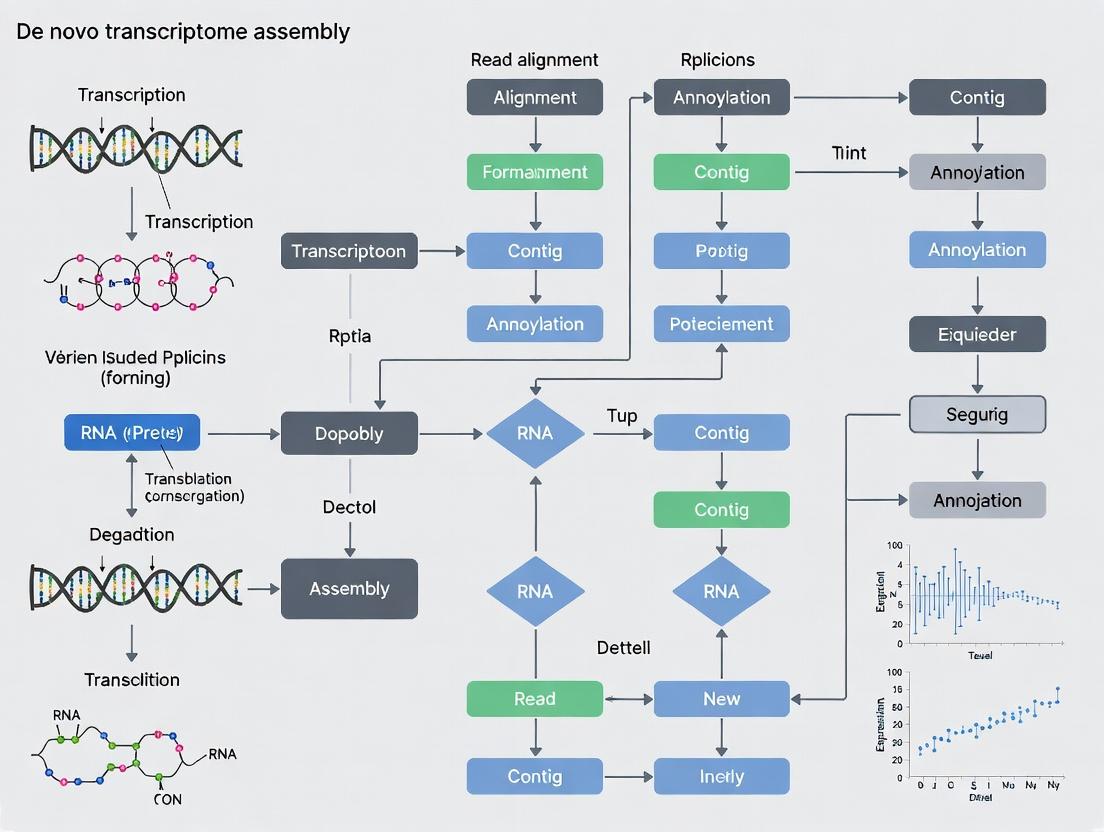
This comprehensive guide details the process of de novo transcriptome assembly for non-model plant species, crucial for researchers and drug development professionals investigating novel bioactive compounds.
De Novo Transcriptome Assembly: A Complete Guide for Non-Model Plant Research in Drug Discovery
Abstract
This comprehensive guide details the process of de novo transcriptome assembly for non-model plant species, crucial for researchers and drug development professionals investigating novel bioactive compounds. It covers foundational concepts, modern methodological workflows using cutting-edge long-read and hybrid sequencing technologies, troubleshooting for common experimental challenges, and robust validation strategies. By providing a complete framework from raw reads to biological insight, this article empowers scientists to unlock the genetic potential of uncharacterized medicinal plants for biomedical and clinical applications.
Why De Novo Assembly? Unlocking the Genetic Secrets of Non-Model Medicinal Plants
The vast majority of the ~390,000 known plant species are non-model organisms lacking a reference genome. This presents a significant bottleneck in modern drug discovery, where genomic data is crucial for identifying biosynthetic pathways for secondary metabolites with therapeutic potential. De novo transcriptome assembly has emerged as a pivotal strategy to bypass this limitation, enabling gene discovery and pathway elucidation without a reference.
Table 1: Status of Genomic Resources for Medicinal Plants
| Plant Category | Approx. Number of Species with Medicinal Use | Species with High-Quality Reference Genome | Species with Public Transcriptome Data (e.g., in SRA) |
|---|---|---|---|
| All Plants | ~390,000 | < 1,000 | ~15,000 |
| Medicinally Relevant Plants | ~50,000 | ~150 | ~5,000 |
| Commonly Studied Non-Model Medicinals (e.g., Ginkgo biloba, Echinacea purpurea) | ~500 | ~30 | ~450 |
| Tropical/Uncategorized Medicinals | ~15,000 | < 10 | ~1,000 |
Data compiled from NCBI, Phytozome, and recent literature surveys (2023-2024).
Application Notes: LeveragingDe NovoTranscriptomics
Target Identification for Natural Product Biosynthesis
De novo assembled transcriptomes allow researchers to reconstruct the putative biosynthetic pathways for compounds of interest (e.g., alkaloids, terpenoids, phenolics) by identifying homologs of known pathway genes. This is foundational for metabolic engineering or elicitation studies to increase compound yield.
Marker-Assisted Authentication
Transcriptome-derived Simple Sequence Repeat (SSR) or Single Nucleotide Polymorphism (SNP) markers are critical for authenticating plant material in the supply chain, ensuring the correct species is used for downstream extraction and bioactivity testing, a common issue in traditional medicine.
Gene Family Expansion Analysis
Transcriptome data can reveal expansions in specific gene families (e.g., Cytochrome P450s, Glycosyltransferases) often associated with specialized metabolism, providing clues about a species' unique chemical repertoire.
Core Protocol:De NovoTranscriptome Assembly & Analysis for Pathway Mining
Protocol Title: RNA-Seq Based Transcriptome Assembly and Biosynthetic Gene Cluster (BGC) Identification in a Non-Model Plant.
Objective: To generate a de novo transcriptome assembly from a non-model medicinal plant tissue and identify transcripts involved in secondary metabolism.
Materials & Reagents: See "The Scientist's Toolkit" below.
Workflow Steps:
- Tissue Harvest & Stabilization: Flash-freeze target plant tissue (e.g., root, leaf, specialized structure) suspected of producing metabolites of interest in liquid nitrogen. Store at -80°C.
- RNA Extraction: Use a polysaccharide/polyphenol-commercial kit. Perform DNase I treatment. Assess RNA integrity (RIN > 7.0) using a bioanalyzer.
- Library Preparation & Sequencing: Prepare stranded mRNA-Seq libraries. Sequence on a platform (e.g., Illumina NovaSeq) to generate ≥ 50 million 150bp paired-end reads. Include replicates.
- Quality Control & Preprocessing: Use FastQC for quality assessment. Trim adapters and low-quality bases using Trimmomatic or Fastp.
- De Novo Assembly: Assemble clean reads using a de novo assembler (e.g., Trinity, rnaSPAdes). Use default parameters initially.
- Assembly Quality Assessment:
- Completeness: Assess using BUSCO with the plantae_odb10 dataset.
- Contiguity: Report N50, total transcripts, and median length.
- Annotation & Analysis:
- Homology-Based: Use DIAMOND BLASTx against UniProt/Swiss-Prot and NR databases.
- Functional: Use InterProScan for domain/Pfam identification.
- Pathway Mapping: Use KEGG GhostKOALA or local KEGG mapper to assign KEGG Orthology (KO) terms and reconstruct pathways.
- Target Gene Identification:
- Extract transcripts annotated with key terms (e.g., "polyketide synthase," "terpene synthase," " cytochrome P450").
- Perform phylogenetic analysis with known genes to infer function.
- Correlate transcript expression (via read counts) with metabolite profiles across tissues if available.
Table 2: Expected Assembly Metrics for a High-Quality Output
| Metric | Target Value | Interpretation |
|---|---|---|
| Total Assembled Transcripts | 100,000 - 300,000 | Species and assembly parameter dependent. |
| Transcript N50 Length | > 1,200 bp | Indicates good contiguity. |
| BUSCO Completeness (Plantae) | > 70% (ideally >85%) | Measures gene space coverage. |
| % Transcripts with BLAST Hit | 50-70% | Typical for non-models; remainder may be non-conserved UTRs or novel genes. |
| Key Biosynthetic Transcripts Identified | Variable | Success is defined by project aims. |
Visualizing the Workflow and Pathways
Transcriptome Assembly & Mining Workflow
Pathway Reconstruction from Transcriptome Data
The Scientist's Toolkit
Table 3: Essential Research Reagents & Solutions for Non-Model Plant Transcriptomics
| Item | Function & Rationale |
|---|---|
| RNAlater Stabilization Solution | Penetrates tissue to stabilize and protect cellular RNA immediately upon harvest, critical for field work. |
| Polysaccharide/Polyphenol-Rich Plant RNA Kit (e.g., from Qiagen, Norgen) | Specialized lysis buffers and purification columns designed to co-precipitate or exclude common plant metabolites that inhibit downstream enzymes. |
| DNase I (RNase-free) | Essential for removing genomic DNA contamination from RNA prep to prevent false positives in assembly. |
| Stranded mRNA-Seq Library Prep Kit (e.g., Illumina TruSeq Stranded mRNA) | Preserves strand orientation of transcripts, vastly improving accuracy for de novo assembly and annotation. |
| BUSCO (Benchmarking Universal Single-Copy Orthologs) Dataset (plantae_odb10) | Software and lineage-specific dataset to assess the completeness of the transcriptome assembly based on conserved single-copy genes. |
| Trinity Software Suite | The most widely used, robust de novo RNA-Seq assembler, specifically designed for fragmented and alternatively spliced transcripts. |
| DIAMOND BLAST Tool | An ultra-fast protein alignment tool for running BLASTx against large databases (e.g., NR) with high sensitivity, reducing computation time from days to hours. |
| Heterologous Expression System (e.g., Nicotiana benthamiana, Yeast) | A critical validation tool. Candidate biosynthetic genes are expressed in a model host to confirm function and produce the target compound. |
Transcriptomics, the comprehensive study of an organism's RNA transcripts, is pivotal for modern genomics, especially for non-model plant species. Within a thesis focused on de novo transcriptome assembly for non-model plants, transcriptomics is the foundational methodology. It enables researchers to bypass the need for a reference genome, characterizing the expressed gene repertoire, identifying key pathways involved in stress response or secondary metabolite biosynthesis, and providing functional annotation. This moves research from raw sequence data to actionable biological insight, crucial for both conservation biology and drug discovery from plant natural products.
Application Notes
Note 1: Application in Non-Model Plant Research
Transcriptomic analysis of non-model plants, such as medicinal herbs endemic to biodiversity hotspots, allows for the discovery of novel genes and pathways involved in the synthesis of pharmacologically active compounds (e.g., alkaloids, terpenoids). De novo assembly constructs a transcript catalog from short RNA-Seq reads, which can then be mined for candidate genes.
Key Quantitative Insights (Recent Data): Recent studies (2023-2024) highlight the efficiency and cost of current platforms. The following table summarizes relevant metrics for common sequencing platforms used in non-model plant transcriptomics.
Table 1: Current High-Throughput Sequencing Platforms for Plant Transcriptomics
| Platform (Company) | Read Type | Avg. Read Length | Output per Run (Gb) | Key Application in Non-Model Plants |
|---|---|---|---|---|
| NovaSeq 6000 (Illumina) | Short-read (PE) | 150 bp | 2,000 - 6,000 | High-depth RNA-Seq for robust de novo assembly |
| PacBio Sequel II/Revio (PacBio) | HiFi long-read | 10-25 kb | 15-130 Gb | Full-length isoform sequencing, eliminates assembly challenges |
| Oxford Nanopore PromethION (ONT) | Long-read | >10 kb (variable) | 50-200+ Gb | Direct RNA sequencing, real-time analysis, detection of modifications |
| DNBSEQ-T20 (MGI) | Short-read (PE) | 150 bp | 6,000-18,000 | Cost-effective high-volume RNA-Seq for population-level studies |
Note 2: From Transcripts to Functional Insight
The primary challenge post-assembly is functional annotation. This involves using homology searches (BLAST) against public databases (Nr, Swiss-Prot, COG, KEGG) and in silico prediction tools. Success rates vary significantly with phylogenetic distance to model species.
Table 2: Typical Functional Annotation Success Rates for Non-Model Plants
| Annotation Database | Avg. Annotation Rate (for a mid-divergent species) | Primary Insight Gained |
|---|---|---|
| NCBI Non-Redundant (Nr) | 50-70% | Putative protein identity & evolutionary relationships |
| Swiss-Prot (Curated) | 30-50% | High-confidence functional protein information |
| KEGG (PATHWAY) | 25-45% | Mapping to metabolic & signaling pathways |
| Gene Ontology (GO) | 40-60% | Categorization of biological processes, molecular functions, cellular components |
| PlantCyc / MetaCyc | 15-30% | Specialized plant metabolic pathways |
Detailed Experimental Protocols
Protocol 1: RNA Extraction and QC for Non-Model Plant Tissues
Goal: Isolate high-quality, intact total RNA from challenging plant tissues (e.g., high polyphenol/polysaccharide content).
Materials (Research Reagent Solutions Toolkit):
- TRIzol Reagent or equivalent (e.g., QIAzol): A monophasic solution of phenol and guanidine isothiocyanate for effective cell lysis and RNase inhibition.
- Plant RNA Isolation Aid (e.g., from Invitrogen): A co-precipitant to improve yield from difficult samples.
- DNase I (RNase-free): For genomic DNA elimination.
- Solid-Phase Reversible Immobilization (SPRI) beads (e.g., AMPure XP): For post-extraction RNA clean-up and size selection.
- RNA Integrity Number (RIN) analysis reagents (e.g., Agilent RNA 6000 Nano Kit): For quantitative QC on a Bioanalyzer.
Procedure:
- Homogenization: Flash-freeze 100 mg of leaf/tissue in liquid N₂. Grind to a fine powder. Immediately add 1 ml of TRIzol.
- Phase Separation: Incubate 5 min at RT. Add 200 µl chloroform, shake vigorously, incubate 2-3 min. Centrifuge at 12,000 x g, 15 min, 4°C.
- RNA Precipitation: Transfer aqueous phase. Add 0.5 ml isopropanol and 1 µl of Plant RNA Isolation Aid. Incubate 10 min at RT. Centrifuge at 12,000 x g, 10 min, 4°C.
- Wash: Remove supernatant. Wash pellet with 1 ml 75% ethanol (in DEPC-treated water). Centrifuge 5 min.
- DNase Treatment: Re-dissolve RNA in 50 µl nuclease-free water. Add 5 µl 10X DNase I buffer and 2 µl DNase I (1 U/µl). Incubate 15 min at 37°C.
- Clean-up: Use SPRI beads at a 1.8X ratio to remove enzymes, salts, and short fragments. Elute in 30 µl nuclease-free water.
- QC: Determine concentration via fluorometry (Qubit). Assess integrity using an Agilent Bioanalyzer (RIN > 7.0 is ideal for library prep).
Protocol 2:De NovoTranscriptome Assembly Workflow (Illumina-based)
Goal: Assemble a high-quality transcript catalog from short-read RNA-Seq data.
Materials:
- Trimmomatic or fastp software: For read trimming and adapter removal.
- Trinity (v2.15.1+) or rnaSPAdes software: For de novo assembly.
- BUSCO (v5.4.7) software with the embryophyta_odb10 dataset: For assembly completeness assessment.
Procedure:
- Quality Control & Trimming:
fastp -i sample_R1.fastq.gz -I sample_R2.fastq.gz -o clean_R1.fq.gz -O clean_R2.fq.gz --detect_adapter_for_pe --correction --thread 8 - De Novo Assembly using Trinity:
Trinity --seqType fq --left clean_R1.fq.gz --right clean_R2.fq.gz --max_memory 200G --CPU 20 --output trinity_out - Assembly Quality Assessment:
busco -i trinity_out.Trinity.fasta -l embryophyta_odb10 -o busco_results -m transcriptome -c 20 - Redundancy Reduction (Optional):
Use
cd-hit-estorEvidentialGeneto cluster highly similar transcripts. - Quantification:
Align reads back to the assembly using
Salmonin quasi-mapping mode to generate transcript abundance estimates (TPM counts).
Diagram 1:De novoTranscriptome Analysis Workflow
Title: Workflow for De Novo Plant Transcriptome Analysis
Protocol 3: Functional Annotation Pipeline
Goal: Annotate assembled transcripts and identify enriched pathways.
Materials:
- DIAMOND or BLAST+ suite: For fast homology searches.
- eggNOG-mapper or Trinotate pipeline: For integrated annotation.
- clusterProfiler R package: For GO and KEGG enrichment analysis.
Procedure:
- Homology Search:
diamond blastx -d nr.dmnd -q Trinity.fasta -o blastx.outfmt6 -f 6 --sensitive --evalue 1e-5 - Transcript Annotation with Trinotate:
Load
blastx.outfmt6results into the Trinotate SQLite database alongside results from HMMER (Pfam), signalP, tmHMM, and RNAMMER. - Extract GO & KEGG Terms: Generate annotation reports from Trinotate.
- Enrichment Analysis (for Differentially Expressed Transcripts):
In R, use
clusterProfiler::enrichGOandenrichKEGGon a list of significantly up-regulated transcript IDs against the background of all assembled transcripts. FDR cutoff: 0.05.
Diagram 2: Key Transcriptomic Analysis Pathways
Title: Pathways from Transcript to Biological Function
Application Notes
The Imperative for Non-Model Plant Research
Non-model plant species represent a vast, untapped reservoir of genetic and biochemical novelty. De novo transcriptome assembly bypasses the need for a reference genome, enabling the exploration of these species for:
- Novel Gene Discovery: Identification of species-specific transcripts and allelic variants.
- Pathway Elucidation: Reconstruction of biosynthetic pathways for secondary metabolites.
- Bioactive Compound Mining: Linking gene expression to the production of therapeutic compounds.
Core Analytical Workflow
The standard pipeline integrates multi-omics and validation approaches, as summarized in the following workflow.
Diagram Title: De Novo Transcriptome Analysis Workflow
Quantitative Benchmarks for Assembly & Analysis
Performance metrics are critical for assessing assembly quality and downstream analysis robustness.
Table 1: Benchmark Metrics for Transcriptome Assembly & Analysis
| Metric | Typical Target Range | Tool/Method | Interpretation | ||
|---|---|---|---|---|---|
| Assembly Completeness | >90% BUSCO score | BUSCO | Percentage of conserved orthologs found. | ||
| Contiguity | N50 > 1500 bp | Trinity stats | Length at which 50% of assembled bases are in contigs of this size or longer. | ||
| Gene Count | Species-dependent | TransDecoder | Number of predicted protein-coding genes. | ||
| Annotation Rate | 50-70% | BLASTx/swissprot | Proportion of transcripts with functional annotation. | ||
| Differentially Expressed Genes (DEGs) | FDR < 0.05, | log2FC | > 2 | DESeq2/edgeR | Statistically significant expression changes. |
Detailed Protocols
Protocol:De NovoTranscriptome Assembly and Annotation
Objective: Generate a high-quality, annotated transcriptome from RNA-Seq data of a non-model plant.
Materials:
- High-quality total RNA (RIN > 8.0).
- Illumina-stranded mRNA-seq library.
- HPC cluster or server with minimum 64GB RAM, 16 cores.
Procedure:
- Data Acquisition & QC:
- Download public SRA data using
fasterq-dumporprefetch. - Assess read quality:
fastqc sample_R*.fastq. - Trim adapters and low-quality bases:
trimmomatic PE -phred33 sample_R1.fastq sample_R2.fastq ... LEADING:3 TRAILING:3 SLIDINGWINDOW:4:15 MINLEN:36.
- Download public SRA data using
Assembly:
- Run Trinity (v2.15.1):
Trinity --seqType fq --left sample_R1_paired.fastq --right sample_R2_paired.fastq --CPU 16 --max_memory 64G --full_cleanup. - Assess assembly:
busco -i trinity_out/Trinity.fasta -l embryophyta_odb10 -o busco_out -m transcriptome.
- Run Trinity (v2.15.1):
Functional Annotation:
- Predict coding regions:
TransDecoder.LongOrfs -t Trinity.fasta. - Run homology searches (BLAST, HMMER) against Swiss-Prot, Pfam.
- Integrate results using Trinotate pipeline.
- Predict coding regions:
Protocol: Identifying Biosynthetic Pathways via Co-expression Analysis
Objective: Reconstruct putative biosynthetic pathways (e.g., for terpenoids, alkaloids) by correlating expression of novel genes with known pathway genes.
Procedure:
- Expression Matrix Generation:
- Quantify transcript abundance:
salmon quant -i transcriptome_index -l A -1 sample_R1.fastq -2 sample_R2.fastq -o salmon_out. - Generate a matrix of counts per transcript using
tximportin R.
- Quantify transcript abundance:
Weighted Gene Co-expression Network Analysis (WGCNA):
- Construct network using the WGCNA R package. Use a soft-thresholding power (β) determined by
pickSoftThreshold. - Identify modules of highly co-expressed genes via hierarchical clustering and dynamic tree cut.
- Correlate module eigengenes with experimental traits (e.g., metabolite abundance from parallel LC-MS).
- Construct network using the WGCNA R package. Use a soft-thresholding power (β) determined by
Pathway Visualization:
- Extract genes from modules correlated with a bioactive compound.
- Map genes to KEGG pathways via annotation or visualize hypothesized interactions.
Diagram Title: Co-Expression to Pathway Hypothesis
Protocol:In SilicoScreening for Bioactive Peptides
Objective: Identify novel bioactive peptides (e.g., antimicrobial peptides - AMPs) from predicted protein sequences.
Procedure:
- Prediction & Feature Extraction:
- Translate all predicted coding sequences (CDS) from TransDecoder.
- Filter peptides (6-100 amino acids).
- Compute physicochemical properties (charge, hydrophobicity, amphipathicity) using
BioPythonorpeptidesR package.
Machine Learning Classification:
- Use pre-trained classifiers (e.g., AMPScanner, dbAMP) or train a model using known AMP features.
- Score and rank candidate peptides.
Structural Prediction:
- Submit top candidates to AlphaFold2 or ColabFold for 3D structure prediction.
- Perform docking studies with predicted target (e.g., microbial membrane) using AutoDock Vina.
The Scientist's Toolkit: Research Reagent Solutions
Table 2: Essential Reagents & Kits for Transcriptome-Driven Discovery
| Item | Supplier Examples | Function in Workflow |
|---|---|---|
| Plant RNA Isolation Kit | Qiagen RNeasy Plant, NZY Total RNA Isolation | High-quality, inhibitor-free total RNA extraction for sequencing. |
| Stranded mRNA-seq Kit | Illumina Stranded mRNA Prep, NEB Next Ultra II | Library preparation capturing strand-specific information. |
| BUSCO Lineage Dataset | BUSCO (embryophyta_odb10) | Benchmarking assembly completeness using conserved plant genes. |
| Trinotate Annotation Resources | Swiss-Prot, Pfam, EggNOG Databases | Functional annotation of novel transcripts via homology. |
| DESeq2 / edgeR R Packages | Bioconductor | Statistical analysis of differential gene expression. |
| WGCNA R Package | CRAN / Peter Langfelder | Construction of co-expression networks to find gene modules. |
| UHPLC-MS System | Waters, Thermo, Agilent | Metabolite profiling to correlate with gene expression data. |
| SYBR Green qPCR Master Mix | Thermo PowerUp, Bio-Rad iTaq | Validation of differential expression for candidate genes. |
| Heterologous Expression System | Nicotiana benthamiana, E. coli, Yeast | Functional characterization of novel genes in vivo. |
Within the framework of a thesis on de novo transcriptome assembly for non-model plant species, the pre-sequencing phase is the most critical determinant of success. Unlike model organisms, non-model plants lack reference genomes, making the initial RNA sample's quality, purity, and biological relevance paramount. Compromised samples lead to fragmented assemblies, erroneous transcript reconstruction, and biologically misleading data, ultimately undermining downstream applications in gene discovery, pathway analysis, and the identification of bioactive compounds for drug development.
Sample Selection: Biological and Experimental Design
Sample selection must be hypothesis-driven and meticulously planned to capture the transcriptome's dynamic nature.
- Biological Replication: A minimum of three (3) independent biological replicates per condition is the absolute standard to account for natural variability and enable statistical robustness in differential expression analysis.
- Tissue Specificity & Integrity: Select homogeneous tissue types (e.g., leaf, root, floral bud). Dissect tissues precisely and rapidly to minimize stress-induced transcriptional changes.
- Developmental Stage & Environmental Control: Precisely document and standardize the developmental stage, diurnal time of collection, and controlled growth conditions (light, temperature, humidity) to reduce non-experimental noise.
- Experimental Treatment: For comparative studies (e.g., stress response, compound treatment), ensure parallel handling of control and treated samples. Use randomized block designs to mitigate confounding factors.
Table 1: Key Sample Selection Criteria for Non-Model Plant Transcriptomics
| Criteria | Optimal Consideration | Rationale for De Novo Assembly |
|---|---|---|
| Replication | N ≥ 3 biological replicates | Ensures assembly captures population-level diversity, not individual artifacts. |
| Tillage Stress | Snap-freeze in <60 seconds post-harvest | Minimizes rapid, stress-induced RNA degradation and transcriptional shifts. |
| Tissue Type | Homogeneous, target organ(s) | Reduces complexity, yielding a more focused and interpretable assembly. |
| Condition Controls | Matched, concurrent controls | Enables accurate identification of condition-specific transcripts. |
| Metadata | Full annotation (GPS, time, phenotype) | Critical for reproducibility and contextualizing novel biological findings. |
Sample Preservation & Stabilization
Immediate stabilization of RNA is non-negotiable. RNases are ubiquitous and active.
Protocol 1: Optimal Field/Lab Preservation for RNA Integrity
- Rapid Harvest: Using RNase-free tools, excise tissue and immediately submerge it in at least 10x volume of commercial RNA stabilization reagent (e.g., RNAlater).
- Infiltration: For dense tissues, slice into sections <0.5 cm thick to allow reagent penetration. Incubate at 4°C overnight.
- Long-term Storage: After infiltration, remove tissue, blot excess reagent, and store at -80°C. Stabilized samples can also be kept at -20°C for several weeks.
- Alternative (Cryogenic): For best practice, flash-freeze tissue directly in liquid nitrogen, then store at -80°C. This is preferred for metabolically sensitive studies.
Comprehensive Quality Control (QC) Workflow
Rigorous QC at both the RNA and library preparation stages is essential.
Protocol 2: Tiered RNA QC Assessment
- Quantification: Use a fluorometric RNA-specific assay (e.g., Qubit RNA HS Assay). Avoid spectrophotometry (A260/A280) alone due to contaminant interference.
- Integrity Assessment:
- Automated Electrophoresis (RIN/RQN): Run 100-500 ng RNA on a Bioanalyzer or TapeStation. For de novo assembly, an RNA Integrity Number (RIN) ≥ 7.0 is required; ≥8.0 is optimal.
- Visual Inspection: Assess electrophoregram for sharp 18S and 28S ribosomal peaks (plant-specific: 25S & 18S) and low baseline noise.
- Purity Check: Assess spectrophotometric ratios (NanoDrop): A260/A280 ~2.0, A260/A230 >2.0. Significant deviations indicate contaminant carryover (e.g., phenol, salts).
Protocol 3: Post-Library Preparation QC
- Library Quantification: Use fluorometric dsDNA assays (e.g., Qubit dsDNA HS).
- Size Distribution: Analyze 1 µL of diluted library on a High Sensitivity D5000/HS NGS fragment analyzer to confirm expected insert size and absence of adapter dimer peaks (<100 bp).
- Final Validation: Employ qPCR with library adaptor-specific primers to accurately quantify amplifiable library concentration for precise sequencing pool normalization.
Table 2: QC Thresholds for De Novo Transcriptome Sequencing
| QC Step | Metric | Minimum Pass Threshold | Optimal Target |
|---|---|---|---|
| RNA Quality | RIN/RQN | 7.0 | ≥ 8.5 |
| RNA Quantity | Total Mass (Poly-A+) | 1 µg | 2-5 µg |
| RNA Purity | A260/A280 | 1.8 - 2.2 | 2.0 |
| Library Size | Fragment Analyzer Peak | Sharp peak at expected size (e.g., 350 bp) | No dimer, low dispersion |
| Final Library | Amplifiable Concentration | >2 nM | 5-20 nM |
The Scientist's Toolkit: Essential Reagent Solutions
Table 3: Key Research Reagents for Pre-Sequencing Workflow
| Reagent/Material | Function & Importance |
|---|---|
| RNAlater / RNAstable | Chemical stabilization of RNA in situ at room temperature; crucial for field work. |
| Liquid Nitrogen | Cryogenic flash-freezing; halts all enzymatic activity instantly for the highest integrity. |
| RNase-free Consumables | (Tubes, tips, blades) Prevents introduction of exogenous RNases. |
| Magnetic Bead-based Purification Kits (e.g., SPRI) | For consistent size selection and clean-up during library prep, reducing bias. |
| Poly(A) Magnetic Beads | Enriches for mRNA from total RNA by selecting polyadenylated tails; reduces ribosomal RNA. |
| Ribo-depletion Kits (Plant-specific) | Removes abundant cytoplasmic and chloroplast rRNA, increasing mRNA sequencing depth. |
| High-Fidelity Reverse Transcriptase | Creates stable, full-length cDNA with low error rates, foundational for accurate assembly. |
| Dual-Index UMI Adapter Kits | Allows multiplexing and unique molecular identification to correct for PCR duplication bias. |
| Fluorometric QC Assays (Qubit) | RNA- and DNA-specific dyes provide accurate quantification vs. spectrophotometry. |
| High Sensitivity DNA Analysis Kits (Bioanalyzer/TapeStation) | Precisely assesses library fragment size distribution and detects contaminants. |
Visual Workflows
Title: Pre-Sequencing Sample Workflow & QC Checkpoints
Title: RNA Integrity Threats & Mitigation Strategy Map
Application Notes
This guide details the application of major sequencing platforms within a thesis focused on de novo transcriptome assembly for non-model plant species. Non-model plants lack reference genomes, making the choice of sequencing technology critical for accurate, contiguous, and full-length reconstruction of expressed genes.
Illumina (Short-Read Sequencing):
- Primary Application: Provides high-accuracy, ultra-deep sequencing for quantifying gene expression levels (RNA-Seq) and capturing a comprehensive catalog of transcripts, including rare isoforms.
- Role in De Novo Assembly: High coverage and accuracy are essential for error correction and validating assemblies from long-read platforms. It is the cornerstone for differential expression analysis post-assembly.
- Key Consideration: Short reads (75-300 bp) struggle to resolve complex splice variants and repetitive regions, leading to fragmented assemblies.
PacBio (HiFi Long-Read Sequencing):
- Primary Application: Generates highly accurate long reads (>10-25 kb) through Circular Consensus Sequencing (CCS). Ideal for sequencing full-length cDNA (Iso-Seq protocol).
- Role in De Novo Assembly: HiFi reads enable the direct generation of complete transcript sequences from the 5' to the 3' end, bypassing the need for complex assembly of short fragments. This is invaluable for defining isoform diversity and untranslated regions (UTRs).
- Key Consideration: Requires significant RNA input and can be lower throughput than Illumina.
Oxford Nanopore (Ultra-Long Read Sequencing):
- Primary Application: Produces the longest reads (can exceed 100 kb), enabling direct RNA sequencing without cDNA conversion.
- Role in De Novo Assembly: Ultra-long reads can span multiple, similar splice variants or gene families, resolving complexities that fragment other technologies. Direct RNA sequencing captures base modifications (epitranscriptomics).
- Key Consideration: Higher raw read error rate necessitates robust computational correction, often using complementary Illumina data.
Hybrid Strategies:
- Primary Application: Combines the strengths of multiple technologies to overcome individual limitations.
- Standard Approach: Use PacBio HiFi or corrected Nanopore reads as the backbone for the assembly. Polish the resulting consensus sequences and quantify expression using high-depth Illumina short reads. This yields a complete, accurate, and quantitatively robust transcriptome.
Comparative Platform Data
Table 1: Quantitative Comparison of Sequencing Platforms for Transcriptomics
| Feature | Illumina NovaSeq X | PacBio Revio | Oxford Nanopore PromethION 2 |
|---|---|---|---|
| Read Type | Short-read | HiFi Long-read | Ultra-long read / Direct RNA |
| Typical Read Length | 50-300 bp | 10-25 kb | 1-100+ kb |
| Throughput per Run | Up to 16 Tb | 120-180 Gb | 100-200 Gb (V14 flow cell) |
| Raw Read Accuracy | >99.9% (Q30) | >99.9% (Q20+) | ~98-99.5% (Q20-30 with duplex) |
| Key Transcriptomic Advantage | Unmatched depth for quantification | Accurate, full-length isoforms | Longest contiguous reads, native RNA |
| Primary Limitation | Assembly fragmentation | Throughput & input requirements | Higher error rate requires correction |
| Optimal Application | Expression profiling, assembly polishing | De novo isoform discovery | Resolving complex loci, epitranscriptomics |
Experimental Protocols
Protocol 1: HybridDe NovoTranscriptome Assembly Workflow
Objective: To generate a high-quality, full-length transcriptome for a non-model plant leaf tissue sample using a hybrid PacBio HiFi & Illumina approach.
Research Reagent Solutions & Essential Materials
Table 2: Key Reagents for Hybrid Transcriptome Assembly
| Item | Function | Example Product (Supplier) |
|---|---|---|
| RNA Isolation Kit | Extracts high-integrity, total RNA with removal of genomic DNA. | RNeasy Plant Mini Kit (Qiagen) |
| Poly(A) mRNA Magnetic Beads | Enriches for polyadenylated mRNA from total RNA. | NEBNext Poly(A) mRNA Magnetic Isolation Module (NEB) |
| cDNA Synthesis Kit | Synthesizes full-length, double-stranded cDNA from mRNA. | SMARTer PCR cDNA Synthesis Kit (Takara Bio) |
| PacBio SMRTbell Prep Kit | Prepares size-selected, hairpin-ligated libraries for HiFi sequencing. | SMRTbell Prep Kit 3.0 (PacBio) |
| Illumina Stranded mRNA Prep | Prepares indexed, strand-specific libraries for short-read sequencing. | Illumina Stranded mRNA Prep, Ligation (Illumina) |
| AMPure/PCRClean-up Beads | Performs size selection and purification of nucleic acids. | AMPure XP Beads (Beckman Coulter) |
| Bioanalyzer/TapeStation Assay | Assesses RNA integrity number (RIN) and library fragment size. | Agilent 2100 Bioanalyzer (Agilent) |
Methodology:
Sample Preparation & QC:
- Flash-freeze plant leaf tissue in liquid N₂. Homogenize and extract total RNA using a plant-optimized kit. Treat with DNase I.
- Assess RNA integrity using a Bioanalyzer (RIN > 8.5 required).
- Enrich poly(A)+ RNA using magnetic oligo-dT beads.
PacBio Iso-Seq Library Preparation:
- Synthesize full-length cDNA using a reverse transcriptase with terminal transferase activity (SMART technology).
- Amplify cDNA by LD-PCR (12-15 cycles).
- Size-select cDNA using bead-based cleanup (>1 kb, >4 kb fractions).
- Construct SMRTbell libraries according to the manufacturer's protocol (end repair, A-tailing, adapter ligation).
- Purify and quantify the library. Perform a binding calculator optimization for sequencing.
Illumina Short-Read Library Preparation:
- Using an aliquot of the same poly(A)+ RNA, fragment RNA to ~300 bp.
- Synthesize cDNA and construct dual-indexed, strand-specific libraries using the Illumina kit.
- Perform bead-based cleanup and size selection (~350 bp insert).
- Quantify via qPCR and validate on a Bioanalyzer.
Sequencing:
- PacBio: Sequence on a Revio system using one 8M SMRT Cell per size fraction with a 30h movie time. Target ~4-6 million HiFi reads.
- Illumina: Sequence on a NovaSeq 6000 using an SP flow cell (2x150 bp). Target 50-100 million read pairs for robust quantification and polishing.
Bioinformatic Analysis:
- PacBio HiFi Processing: Process subreads (
ccs) to generate HiFi reads. Classify reads as full-length/non-full-length (lima,isoseq3 refine). - Isoform Clustering: Cluster full-length reads to generate consensus isoforms (
isoseq3 cluster). - Illumina Data Processing: Trim adapters and low-quality bases (
fastp). Align to the host genome (if available) to remove contamination (HISAT2). - Hybrid Polishing: Use the Illumina reads to polish the PacBio-derived consensus isoforms (
NextPolishorHyPo). - Redundancy Removal & Functional Annotation: Use
CD-HIT-ESTto remove redundant transcripts (95% identity). Annotate usingTransDecoder,eggNOG-mapper, andBlast2GO.
- PacBio HiFi Processing: Process subreads (
Protocol 2: Direct RNA Sequencing with Oxford Nanopore
Objective: To sequence native RNA from a non-model plant to capture full-length transcripts and base modifications.
Methodology:
Poly(A)+ RNA Enrichment:
- Isolate high-integrity total RNA as in Protocol 1.
- Perform two rounds of poly(A)+ selection using magnetic beads to maximize purity.
Direct RNA Library Prep:
- Use the Direct RNA Sequencing Kit (SQK-RNA114.24).
- Bind 500 ng of poly(A)+ RNA directly to the motor protein adapter (RMX).
- Ligate the sequencing adapter (RMX) to the RNA-adapter complex.
- Purify the library using RNAClean XP beads and elute in nuclease-free water.
Sequencing & Basecalling:
- Load the library onto a primed R10.4.1 or R10.4.2 flow cell on a PromethION 2.
- Run for up to 72 hours. Perform real-time basecalling using
doradowith the super-accuracy model (dna_r10.4.1_e8.2_400bps_sup@v4.4.0) and--methylation-aware-modelflag for m⁶A detection.
Analysis Workflow:
- Read Processing: Filter reads for minimum length (e.g., 500 bp) and quality (e.g., Q > 9).
- Error Correction: Align a subset of Illumina reads to the Nanopore reads using
minimap2and correct withTranscriptClean. - Assembly & Analysis: Cluster corrected reads with
isoseq3orstringtie2. For direct analysis, align reads to a preliminary assembly (minimap2) and analyze withFLAIRfor isoform identification.
Diagrams
Diagram 1: Hybrid PacBio-Illumina Transcriptome Workflow
Diagram 2: Oxford Nanopore Direct RNA Sequencing Protocol
Step-by-Step Assembly Pipeline: From Raw Reads to Annotated Transcripts
For non-model plant species research, where a reference genome is unavailable, the quality of initial raw read data is paramount. Suboptimal preprocessing leads to fragmented, erroneous assemblies, complicating downstream analyses like gene family identification, phylogenetic studies, or drug candidate discovery from specialized metabolites. This document outlines established and emerging best practices for raw RNA-Seq read processing, framed explicitly for de novo transcriptome assembly projects.
Core Principles and Quantitative Benchmarks
The primary goals are to remove technical sequences (adapters, primers), low-quality bases, and contaminants, while also correcting sequencing errors to improve assembly continuity and accuracy.
Table 1: Quantitative Metrics and Thresholds for Read Processing
| Processing Step | Key Metric | Typical Target/Threshold | Impact on De Novo Assembly |
|---|---|---|---|
| Adapter Trimming | % Reads with Adapter | < 0.1% remaining | Prevents chimeric assemblies & misincorporation of adapter sequence. |
| Quality Trimming | Per-base Q-score | Q ≥ 20 (Phred scale) | Reduces incorporation of erroneous bases into contigs. |
| Read Filtering | Minimum Read Length | 25-50 bp post-trimming | Very short reads hinder overlap detection for assembly. |
| Read Filtering | % N-content | 0% | Ambiguous bases break assembly algorithms. |
| Error Correction | Corrected Error Rate | Reduction of 40-60% in singleton k-mers | Dramatically reduces branching in the assembly graph, improving contiguity. |
| Overall Yield | % Reads Retained | > 70-80% | Balances data quality with sufficient coverage for assembly. |
Detailed Experimental Protocols
Protocol 3.1: Comprehensive Read Processing with Fastp and Rcorrector
This protocol is optimized for Illumina paired-end RNA-Seq data from non-model plants.
I. Materials & Software
- Raw FASTQ files (R1 and R2).
- High-performance computing (HPC) cluster or server with ≥ 16GB RAM.
- Installed software:
fastp(v0.23.0+),Rcorrector(v1.0.5+),pigz(for parallel compression).
II. Procedure
- Quality Assessment (Pre-processing):
Run
fastp -i sample_R1.fq.gz -I sample_R2.fq.gz --detect_adapter_for_pe --html pre_fastp_report.html --json pre_fastp_report.json. This generates a report and auto-detects adapter sequences.
Adapter & Quality Trimming with Read Filtering: Execute the following command:
Flags:
--trim_poly_gremoves Illumina poly-G tails;--cut_front/--cut_tailperform sliding window trimming;--length_required 50discards reads <50bp;--correctionenables base correction in overlap regions.k-mer Based Error Correction (for de novo assembly): Run Rcorrector, designed for RNA-Seq data which contains polymorphic sites:
This outputs
*cor.fqfiles. Rcorrector identifies and corrects likely sequencing errors via a k-mer spectrum approach.Post-Correction Filtering (Optional but Recommended): Use
FilterUncorrectablePEfastq.py(provided with Rcorrector) to remove read pairs where one read is deemed uncorrectable:The final files are
sample_filtered_1.fqandsample_filtered_2.fq.
III. Validation
- Run
fastqcon the final.fqfiles and compare to pre-processing reports. - Ensure >70% read retention and observe marked improvement in per-base sequence quality scores.
Protocol 3.2: Contaminant Screening for Non-Model Plants
Non-model plant samples often contain microbial or fungal contaminants.
- Download a contaminant database:
ncbi-blast-2.14.0+/bin/makeblastdb -in contaminants.fa -dbtype nucl -out contaminant_db. Include vectors (UniVec), common lab contaminants, and ribosomal sequences from non-plant kingdoms. - Perform a quick screen: Align a subset (e.g., 100,000 reads) using
megablastwith high stringency (-perc_identity 95). - Calculate contamination level: If >5% of screened reads align to non-plant databases, consider rigorous filtering using
BBduk(BBTools suite) before proceeding to Protocol 3.1.
Visualized Workflows
Title: Workflow for Raw RNA-Seq Read Processing
Title: Impact of Preprocessing on Assembly Graph
The Scientist's Toolkit: Research Reagent Solutions
Table 2: Essential Tools for Raw Read Processing in Plant Transcriptomics
| Tool / Reagent | Function / Purpose | Key Consideration for Non-Model Plants |
|---|---|---|
| Fastp | All-in-one preprocessor: adapter trim, quality filter, poly-X trim, correction. | Auto-detection of adapters is critical when adapters are unknown. --trim_poly_g is essential for NovaSeq data. |
| Rcorrector | k-mer spectrum-based error correction for RNA-Seq. | Handles heterozygosity and polymorphisms better than generic correctors, reducing over-correction in diverse plant samples. |
| BBTools (BBduk) | Contaminant filtering and advanced trimming. | Custom database can be built to filter out common plant pathogens or endophytes if needed. |
| FastQC | Initial and final quality control visualization. | Use to identify over-represented sequences that may be species-specific miRNAs or contaminants. |
| Trimmomatic | Alternative flexible trimmer (if Fastp is unavailable). | Requires explicit adapter sequence file. Good for historical data comparisons. |
| SRA Toolkit | Download public datasets from NCBI SRA. | For adding leverage to your assembly, ensure downloaded data undergoes identical processing. |
| MultiQC | Aggregate reports from multiple tools (fastp, FastQC) into a single document. | Crucial for processing multiple tissue or treatment samples consistently. |
In de novo transcriptome assembly for non-model plant species, the absence of a reference genome necessitates robust, accurate assembly algorithms. This research is critical for identifying novel transcripts, understanding stress responses, and discovering bioactive compounds for drug development. Two dominant computational paradigms are De Bruijn Graph (DBG) assembly, optimized for short-read data (e.g., Trinity, rnaSPAdes), and Overlap-Layout-Consensus (OLC) assembly, designed for long-read data (e.g., Flye, Canu). The choice of algorithm directly impacts contiguity, accuracy, and the biological utility of the resulting assembly.
Algorithmic Principles & Quantitative Comparison
Core Algorithm Mechanics
- De Bruijn Graph (DBG): Fragments reads into shorter k-mers (substrings of length k). The algorithm constructs a graph where nodes represent k-mers and edges represent overlaps of length k-1. Contigs are generated by finding paths through this graph. Ideal for high-coverage, short-read Illumina data.
- Overlap-Layout-Consensus (OLC): Computes all-pair overlaps between long reads, filters significant overlaps, and builds an overlap graph where nodes are reads and edges represent overlaps. A layout is generated from this graph, and a consensus sequence is derived. Designed for long, error-prone reads from PacBio or Oxford Nanopore Technologies (ONT).
Table 1: Comparative Performance of DBG vs. OLC Assemblers in Plant Transcriptomics
| Metric | DBG (Trinity/rnaSPAdes) | OLC (Flye/Canu) | Implications for Non-Model Plants |
|---|---|---|---|
| Read Type | Short-read (Illumina, 50-300 bp) | Long-read (PacBio HiFi, ONT, >1 kb) | Long reads span full-length transcripts, resolving isoforms. |
| Optimal N50 | 1 - 3 kb | 5 - 20+ kb | Higher N50 (OLC) improves gene family and isoform separation. |
| Base Accuracy | High (>99.9%) | Variable (Raw: ~85-98%; HiFi: >99.9%) | HiFi reads combine length and accuracy for optimal OLC assembly. |
| Computational Memory | Very High (10s-100s GB) | Moderate-High (10s GB) | DBG memory scales with k-mer complexity, challenging for large genomes. |
| Speed | Moderate | Slow (overlap computation) | OLC is bottlenecked by all-vs-all read alignment. |
| Isoform Detection | Fragmented, requires downstream clustering | Direct, full-length isoform recovery | OLC is superior for alternative splicing analysis in non-models. |
| Error Handling | Relies on k-mer coverage and graph simplification | Handled in consensus step; polishes raw reads | OLC can model sequencing errors directly during overlap. |
Application Notes for Non-Model Plant Research
Choosing an Assembler: A Decision Framework
- Data Type Dictates Choice: Use DBG assemblers (Trinity, rnaSPAdes) for Illumina data. Use OLC assemblers (Canu for self-correction & assembly, Flye for efficient assembly of corrected reads) for PacBio/ONT data.
- Hybrid Approaches: For maximal completeness, use a hybrid strategy. Assemble long reads with Flye, then use the assembly to guide or correct a DBG assembly from short reads (e.g., using PERTRAN or LoRDEC).
- Transcriptome-Specific Considerations: RNA-Seq data has variable coverage and alternative splicing. Trinity is explicitly designed for this. rnaSPAdes extends DBG to handle RNA-Seq complexities. For long-read cDNA (Iso-Seq, ONT Direct RNA), OLC is the de facto standard.
Critical Wet-Lab Precursor
The quality of the input RNA cannot be overstated. For non-model plants, often rich in secondary metabolites and polysaccharides:
- Use trizol/CTAB-based RNA extraction protocols with subsequent column purification.
- Assess RNA Integrity Number (RIN) > 8.0 via Bioanalyzer.
- For long-read sequencing, prioritize poly-A+ RNA selection and size fractionation to enrich for full-length transcripts.
Detailed Experimental Protocols
Protocol A: De Novo Assembly with Trinity (DBG) for Illumina RNA-Seq
Application: Generating a reference transcriptome from short-read data. Input: Paired-end Illumina RNA-Seq reads (FASTQ format). Software: Trinity v2.15.1. Steps:
- Quality Control & Trimming: Use Trimmomatic or fastp.
In Silico Normalization: Reduces memory footprint without data loss.
Assembly:
Output:
trinity_out_dir.Trinity.fasta(assembly contigs).
Protocol B: De Novo Assembly with Flye (OLC) for PacBio HiFi Reads
Application: Generating a full-length transcriptome from long-read cDNA data. Input: PacBio HiFi reads (FASTQ or BAM format). Software: Flye v2.9.3. Steps:
- Read Quality Check: Use
pbindexandbam2fastqif input is BAM. - Assembly: Flye runs overlap, layout, and consensus internally.
- Optional Polishing: While HiFi reads are accurate, short-read polishing can be applied.
- Output:
flye_out/assembly.fasta.
Visualizations
DBG vs. OLC Algorithmic Workflow
Hybrid Assembly Strategy for Non-Model Plants
The Scientist's Toolkit: Research Reagent Solutions
Table 2: Essential Reagents & Kits for Plant Transcriptome Assembly Projects
| Item Name | Supplier Examples | Function in Context |
|---|---|---|
| Plant RNA Stabilization Solution (e.g., RNAlater) | Thermo Fisher, Qiagen | Preserves RNA integrity in field-collected or metabolite-rich plant tissues. |
| Polysaccharide & Polyphenol Removal Kits (e.g., Plant RNA kits with specific buffers) | Zymo Research, Macherey-Nagel | Critical for non-model plants; removes PCR inhibitors and improves library yield. |
| Poly(A) mRNA Magnetic Bead Kit | NEB, Lexogen | Isolates polyadenylated mRNA for cDNA synthesis, essential for transcriptome assembly. |
| Full-Length cDNA Synthesis Kit (e.g., SMARTer) | Takara Bio | Maximizes yield of full-length cDNAs for long-read sequencing platforms. |
| PacBio SMRTbell Prep Kit 3.0 | PacBio | Library preparation for Iso-Seq and HiFi sequencing (OLC assembly input). |
| Oxford Nanopore cDNA-PCR Sequencing Kit | Oxford Nanopore | Library preparation for full-length cDNA sequencing on ONT platforms (OLC assembly input). |
| Illumina Stranded mRNA Prep | Illumina | Standard library prep for short-read, paired-end RNA-Seq (DBG assembly input). |
| High-Fidelity DNA Polymerase (e.g., KAPA HiFi) | Roche | Used in cDNA amplification steps to minimize PCR errors in final sequencing library. |
Application Notes
Within the context of de novo transcriptome assembly for non-model plant species, selecting an appropriate assembler and optimizing its parameters is a critical, multi-faceted challenge. Non-model plants often present complex genomes (polyploidy, high heterozygosity), diverse secondary metabolites affecting RNA quality, and a lack of reference genomes for guidance. The choice between De Bruijn graph-based assemblers (e.g., Trinity, rnaSPAdes) and Overlap-Layout-Consensus (OLC)-based tools, coupled with precise k-mer selection, directly impacts contiguity, completeness, and accuracy of the resulting transcriptome, which is foundational for downstream gene discovery, phylogenetic studies, and drug candidate screening.
Core Quantitative Data & Comparison
Table 1: Prominent Transcriptome Assemblers for Non-Model Plant Research
| Assembler | Core Algorithm | Recommended Use Case | Key Strength | Default/Common k-mer(s) | Ploidy Awareness |
|---|---|---|---|---|---|
| Trinity (v2.15.1) | De Bruijn Graph | Standard Illumina RNA-Seq, expressed transcriptome. | Robust, comprehensive suite; handles alternative splicing well. | k=25 (internal), k=32 (Butterfly) | No (haploid assembly) |
| rnaSPAdes (v3.15.5) | De Bruijn Graph (multi-k-mer) | Isoform discovery, datasets with varying coverage. | Multi-k-mer approach; integrates read pairing info effectively. | Automatic selection from 21, 33, 55. | Yes (via --ss flag) |
| TransABySS (v2.0.1) | De Bruijn Graph (multi-k-mer) | Large genomes, high-coverage data, computing clusters. | Scalable; merges assemblies across a k-mer range. | User-defined range (e.g., 20-40 in steps of 2). | No |
| MEGAHIT (v1.2.9) | Succinct De Bruijn Graph | Memory-efficient assembly of large datasets. | Extremely low memory footprint; fast. | Default k-mer list: 21,29,39,59,79,99,119. | No |
| Canu (v3.0) | Overlap-Layout-Consensus (OLC) | Long-read data (PacBio, Nanopore). | Specialized for noisy long reads; effective for full-length isoforms. | Not applicable (uses sequence overlaps). | Implicitly handles heterozygosity. |
Table 2: Impact of K-mer Length on Assembly Metrics (Theoretical Framework)
| K-mer Length | Sensitivity to Errors/SNPs | Graph Complexity | Resultant Contig Length | Computational Memory Use |
|---|---|---|---|---|
| Short (e.g., k=21) | High (more spurious edges) | High (more branching) | Shorter, more fragmented | Lower |
| Intermediate (e.g., k=31) | Moderate | Moderate | Balanced length & accuracy | Moderate |
| Long (e.g., k=51+) | Low (misses low-coverage regions) | Low (more linear) | Longer, but potential for gaps | Higher |
Experimental Protocols
Protocol 1: Systematic K-mer Optimization for De Bruijn Graph Assemblers
Objective: To empirically determine the optimal k-mer length or range for a given non-model plant RNA-Seq dataset.
Materials:
- High-quality, adapter-trimmed paired-end RNA-Seq reads (FASTQ format).
- High-performance computing (HPC) cluster or server with >= 64GB RAM.
- Assembler software (e.g., rnaSPAdes, TransABySS, MEGAHIT).
- Assessment tools: BUSCO (v5.4.7), TransRate (v1.0.3), QUAST (v5.2.0).
Procedure:
- Subsampling: Subsample reads to 20-30 million pairs using
seqtkto reduce computational time during optimization. - Assembly Series: Execute the chosen assembler across a defined k-mer spectrum (e.g., k=21, 25, 31, 41, 51). For rnaSPAdes, use default multi-k-mer. For TransABySS, run assemblies individually or use its merge function.
Example command for single-k-mer Trinity:
- Assembly Evaluation: Assess each output using:
- BUSCO:
busco -i transcripts.fa -l viridiplantae_odb10 -o busco_k31 -m transcriptome - TransRate:
transrate --assembly transcripts.fa --left subsampled_R1.fq --right subsampled_R2.fq - Contiguity Stats:
quast.py transcripts.fa -o quast_k31
- BUSCO:
- Decision Matrix: Tabulate key metrics: BUSCO completeness (% single-copy, duplicated, fragmented), TransRate score, N50, total contigs. The optimal k-mer maximizes BUSCO completeness and TransRate score while balancing N50 and contig count.
Protocol 2: Multi-Assembler Integration and Redundancy Reduction
Objective: To generate a consolidated, non-redundant reference transcriptome by leveraging strengths of multiple assemblers.
Materials:
- At least two high-quality assemblies from different algorithms/k-mer settings (e.g., Trinity default, rnaSPAdes).
- Software: CD-HIT-EST (v4.8.1), EvidentialGene
tr2aacds.plpipeline.
Procedure:
- Concatenation: Combine all assembly FASTA files into a single pool.
Redundancy Reduction using CD-HIT-EST: Cluster highly similar transcripts (e.g., >95% identity).
Alternative: EvidentialGene Pipeline: A more sophisticated method that classifies transcripts into primary (best) and alternative assemblies.
Validation: The final "unigene" set should be evaluated with BUSCO against the original assemblies to ensure no loss of essential gene content.
Visualizations
K-mer Selection & Evaluation Workflow
Assembler Selection Logic for Non-Model Plants
The Scientist's Toolkit: Research Reagent Solutions
Table 3: Essential Materials for Transcriptome Assembly Optimization
| Item | Function & Relevance in Non-Model Plant Research |
|---|---|
| RNeasy Plant Mini Kit (Qiagen) | High-quality total RNA isolation, critical for reducing contaminants that interfere with library prep. |
| SMARTer PCR cDNA Synthesis Kit (Takara Bio) | For generating full-length, amplified cDNA, especially useful when input RNA is limited or degraded. |
| Illumina Stranded mRNA Prep | Standardized library preparation ensuring strand-specificity, improving transcript orientation accuracy. |
| Dynabeads mRNA DIRECT Purification Kit | Efficient poly-A mRNA enrichment from total RNA, focusing sequencing on protein-coding transcripts. |
BUSCO (Benchmarking Universal Single-Copy Orthologs) Lineage viridiplantae_odb10 |
Software & dataset for assessing assembly completeness based on evolutionarily conserved genes. |
| CD-HIT-EST Software | Tool for clustering and reducing sequence redundancy in final transcriptome sets. |
| EvidentialGene (tr2aacds) Pipeline | Advanced script suite for producing a consensus, non-redundant "best" transcript set from multiple assemblies. |
| High-Memory Compute Node (≥ 512GB RAM) | Essential for assembling large, complex plant transcriptomes without size or k-mer constraints. |
Within the framework of a broader thesis on de novo transcriptome assembly for non-model plant species, post-assembly processing is a critical phase to transform raw assembly output into a biologically meaningful and computationally efficient gene catalog. For non-model plants, the absence of a reference genome exacerbates challenges like haplotype variation, allelic divergence, and alternative splicing, leading to fragmented and redundant contigs. This application note details protocols for redundancy removal using CD-HIT and Corset, followed by contig extension strategies, to produce a non-redundant, high-confidence set of transcripts for downstream differential expression, functional annotation, and comparative genomics—key steps in identifying bioactive compounds for drug development.
Redundancy Removal: Principles and Tools
Redundancy in a de novo assembly arises from sequencing errors, duplicated genes, alleles, and alternative transcripts. Removal is essential to reduce false positives in expression quantification and to streamline annotation efforts.
CD-HIT: Sequence Identity-Based Clustering
CD-HIT clusters sequences based on user-defined identity and coverage thresholds, selecting the longest sequence as the cluster representative. It is fast and effective for initial redundancy reduction.
Key Parameters for Transcriptomes:
- -c: Sequence identity threshold (e.g., 0.95 for 95%).
- -aL: Alignment coverage for the longer sequence.
- -aS: Alignment coverage for the shorter sequence.
- -G: Use global sequence identity (1) or local (0).
- -M: Memory limit.
- -T: Number of threads.
Corset: Expression-Guided Clustering
Corset utilizes aligned RNA-seq reads (BAM files) to cluster contigs based on shared read evidence and expression patterns across samples. It discriminates between isoforms (which remain separate) and redundant sequences or alleles (which are clustered), making it ideal for differential expression studies.
Core Logic: Contigs are clustered if they share reads and demonstrate correlated expression profiles across the experimental conditions. This method preserves biologically relevant transcript diversity while removing technical duplicates.
Table 1: Comparative Overview of Redundancy Removal Tools
| Feature | CD-HIT | Corset |
|---|---|---|
| Primary Input | FASTA file of nucleotide/protein sequences | FASTA file + BAM alignment files per sample |
| Clustering Basis | Pairwise sequence identity & coverage | Shared reads & expression correlation |
| Key Advantage | Speed; no alignment needed | Biological relevance; distinguishes isoforms |
| Key Limitation | May over-cluster isoforms/paralogs | Requires alignments and multiple samples |
| Typical Identity Threshold | 0.90 - 0.98 for transcripts | Not applicable (sequence identity not used) |
| Output | Non-redundant FASTA, cluster file | Clustered FASTA, count matrix for clusters |
| Best Suited For | Initial bulk redundancy reduction | Final, biologically-informed clustering for DE analysis |
Table 2: Hypothetical Impact on a Non-Model Plant Transcriptome Assembly
| Metric | Raw Assembly | After CD-HIT (95% id) | After Corset |
|---|---|---|---|
| Number of Contigs | 250,000 | 180,000 | 120,000 |
| N50 (bp) | 1,450 | 1,480 | 1,600 |
| Busco Completeness (%) | 85% (Fragmented: 10%) | 85% (Fragmented: 9%) | 86% (Fragmented: 8%) |
| Estimated Redundancy Removal | Baseline | ~28% reduction | ~52% reduction from baseline |
Detailed Experimental Protocols
Protocol 4.1: Redundancy Removal with CD-HIT-EST
Objective: To rapidly reduce sequence redundancy in a nucleotide transcriptome assembly.
Research Reagent Solutions & Input:
- Input Data:
transcriptome_raw.fasta(assembled contigs). - Software: CD-HIT suite (v4.8.1 or later).
- Computing Environment: Linux server with multi-core CPU and sufficient RAM (≥16GB recommended).
Methodology:
- Installation:
Execution Command: The following command clusters sequences at 95% identity and 90% coverage of the shorter sequence.
-i: Input FASTA file.-o: Output FASTA file of representatives.-c 0.95: 95% identity threshold.-aS 0.9: Short sequence must cover 90% of its length.-G 0: Use local sequence identity (preferred for transcripts).-M 2000: Use 2000MB (2GB) of RAM.-T 8: Use 8 CPU threads.
Output Files:
transcriptome_cdhit95.fasta: Non-redundant transcript set.transcriptome_cdhit95.fasta.clstr: Cluster membership information.
Protocol 4.2: Expression-Based Clustering with Corset
Objective: To cluster contigs into gene loci based on shared read evidence, generating a count matrix for differential expression.
Research Reagent Solutions & Input:
- Input Data:
transcriptome.fasta(can be CD-HIT output),sample1.bam,sample2.bam, ... (reads aligned to the transcriptome). - Software: Corset (v1.09 or later), samtools.
- Alignment Requirement: Use a splice-aware aligner (e.g., STAR, HISAT2) aligned to the transcriptome (pseudo-alignment with Salmon is also supported).
Methodology:
- Installation:
Prepare BAM files: Ensure BAM files are sorted and indexed.
Execution Command:
-i bam: Input format is BAM.-p SampleA,SampleB,SampleC: Sample names prefixing count matrix columns.-g Gene,Locus,Cluster: Hierarchy for cluster IDs in output.- Final arguments are the sorted BAM files.
Output Files:
corset-clusters.txt: Mapping of contigs to cluster IDs.corset-counts.txt: Count matrix per cluster for DE analysis.corset-report.txt: Summary statistics.
Protocol 4.3: Contig Extension using SSPACE-LongRead
Objective: To scaffold and extend existing contigs using long-read sequencing data (Oxford Nanopore, PacBio).
Research Reagent Solutions & Input:
- Input Data:
transcriptome_clustered.fasta(Corset output),long_reads.fastq. - Software: SSPACE-LongRead (v1.1 or similar), Perl.
Methodology:
- Prepare Files: Place contigs and long reads in a working directory.
- Create a library file (
library.txt): - Execution Command:
- Output:
output_extension.final.scaffolds.fastacontains extended and scaffolded transcripts.
Visualization of Workflows
Title: Redundancy removal workflow for de novo transcriptome.
Title: Contig extension workflow with long reads.
The Scientist's Toolkit
Table 3: Essential Research Reagent Solutions & Materials
| Item | Function/Description | Example Vendor/Software |
|---|---|---|
| High-Quality RNA Kit | Isolate intact, degradation-free total RNA from plant tissue (often polysaccharide-rich). | Qiagen RNeasy Plant Mini Kit, Norgen Plant RNA Kit |
| Stranded mRNA-Seq Kit | Prepare Illumina libraries preserving strand information for accurate transcript reconstruction. | Illumina Stranded mRNA Prep, NEBnext Ultra II |
| Long-Read Sequencing Kit | Generate reads for contig extension (e.g., Nanopore cDNA sequencing). | Oxford Nanopore cDNA-PCR Sequencing Kit |
| Splice-Aware Aligner | Map short reads to transcriptome for Corset input. | HISAT2, STAR, Salmon (pseudo-aligner) |
| Cluster Representative FASTA | The output of CD-HIT; the primary input for downstream Corset analysis. | Generated in silico by Protocol 4.1 |
| Cluster Count Matrix | The primary output of Corset; used directly for differential expression analysis (e.g., in DESeq2/edgeR). | Generated in silico by Protocol 4.2 |
Within a thesis on de novo transcriptome assembly for non-model plant species, the assembly itself yields a catalogue of uncharacterized transcript sequences. The subsequent critical phase is functional annotation, which assigns biological meaning (e.g., gene identity, protein domains, metabolic pathways) to these sequences. This article details the integrated application of BLAST, InterProScan, and GO/KEGG enrichment analysis, forming a comprehensive strategy to bridge raw sequence data to biological insight, enabling hypotheses on plant secondary metabolism, stress adaptation, or novel gene discovery relevant to drug development.
Application Notes & Protocols
BLAST-Based Homology Annotation
Purpose: To assign putative identities to assembled transcripts by finding significant sequence similarities to annotated proteins in public databases. Key Database: NCBI Non-Redundant (nr) protein database, UniProtKB/Swiss-Prot. Protocol:
- Format Database: Download the latest
nroruniprot_sprotdatabase. Format it usingmakeblastdb(for BLAST+) or equivalent.
- Translate Transcripts (Optional): Use
TransDecoderor similar to predict coding regions (CDS) within transcripts. Execute BLASTx: Search the nucleotide transcriptome against the protein database. This is preferred for uncharacterized transcripts as it performs translational search.
Parse Results: Extract top hits based on E-value, bit-score, and percent identity. Use tools like
Blast2GOor custom Python/R scripts.
Table 1: Example BLASTx Results Summary (Hypothetical Data)
| Transcript ID | Top Hit Accession | Description (Swiss-Prot) | E-value | Percent Identity | Query Coverage |
|---|---|---|---|---|---|
| TRINITY_DN100 | P93734.1 | Chalcone synthase [Medicago truncatula] | 2.1e-150 | 85.7% | 98% |
| TRINITY_DN202 | Q9M5S5.1 | Probable disease resistance protein [Arabidopsis thaliana] | 5.4e-67 | 72.1% | 85% |
| TRINITY_DN350 | No significant hit found | - | - | - | - |
InterProScan for Domain and Family Annotation
Purpose: To provide complementary, homology-independent annotation by identifying protein domains, families, and functional sites using signatures from multiple member databases (e.g., Pfam, PROSITE, PANTHER). Protocol:
- Input Preparation: Use the predicted protein sequences from TransDecoder or the six-frame translation of transcripts.
- Run InterProScan: Execute with multiple analyses enabled. The
-applflag specifies signature databases.
- Integrate with BLAST Results: Combine BLAST-derived annotations with InterProScan results for a more robust annotation. Prioritize InterProScan for domain-based function when BLAST hits are weak (e.g., low identity).
Table 2: Key InterProScan Member Databases and Their Focus
| Database | Type of Signature | Primary Functional Insight |
|---|---|---|
| Pfam | Protein families and domains | Structural/functional domain architecture |
| PANTHER | Protein families, subfamilies, HMMs | Evolutionary classification & functional inference |
| PROSITE | Patterns, profiles, HMMs | Functional sites, enzyme catalytic domains |
| SMART | Domain architectures | Signaling, extracellular, chromatin-associated domains |
GO and KEGG Pathway Enrichment Analysis
Purpose: To identify over-represented biological themes (GO terms) or metabolic pathways (KEGG) in a set of transcripts of interest (e.g., differentially expressed transcripts) compared to a background set (usually the whole transcriptome). Protocol:
- Annotation Aggregation: Create a master annotation file by merging GO terms from both BLAST (via Blast2GO) and InterProScan outputs.
- Define Gene Sets: Generate a list of "query" transcript IDs (e.g., up-regulated under drought stress) and the background list (all annotated transcripts).
- Perform Enrichment Analysis: Use tools like
clusterProfiler(R) org:Profiler. R code snippet using clusterProfiler:
- KEGG Pathway Analysis: Map transcripts to KEGG Orthology (KO) identifiers via BLAST against the KEGG GENES database or using KEGG's API, then perform pathway enrichment similarly.
- Visualization: Generate dotplots, barplots, and pathway maps.
Table 3: Example GO Enrichment Results (Biological Process)
GO Term ID
Description
Gene Count
Background Ratio
p.adjust (BH)
GO:0009698
phenylpropanoid metabolic process
45
45/10500
3.2e-08
GO:0009620
response to fungus
38
38/10500
7.1e-05
GO:0006979
response to oxidative stress
52
52/10500
0.0023
Visualizations
Title: Functional annotation and enrichment analysis workflow
Title: Simplified phenylpropanoid/flavonoid biosynthetic pathway
The Scientist's Toolkit: Research Reagent Solutions
Table 4: Essential Materials for Functional Annotation Pipeline
Item/Category
Function & Application Notes
High-Performance Computing (HPC) Cluster or Cloud Instance
Essential for running BLAST and InterProScan on large transcriptomes (>100k transcripts). AWS, GCP, or local clusters.
BLAST+ Executables (v2.13.0+)
Command-line toolkit for running BLAST searches. Must be installed and configured with formatted databases.
InterProScan Standalone (v5.63-95.0+)
Integrated protein domain classifier. Requires local installation and Java. Database updates are critical.
R Statistical Environment with clusterProfiler, DOSE, ggplot2 packages
The core platform for statistical enrichment analysis and visualization of GO/KEGG results.
Custom Python/R Scripts for Parsing
For merging results from BLAST, InterProScan, and expression data into a unified annotation table.
Reference Databases:• NCBI nr• UniProtKB/Swiss-Prot• Pfam• KEGG (KO)
Regularly updated sequence and annotation databases. Subscription/license may be required for KEGG. Use plant-focused subsets if available.
Proxy Organism Annotation Package (e.g., org.At.tair.db for Arabidopsis)
Used for GO enrichment when a specific package for the non-model plant is unavailable. Provides gene ID to GO term mappings.
Within a thesis on de novo transcriptome assembly for non-model plant species, the generation of a high-quality assembly is a foundational step. The core biological insight, however, is derived from downstream analyses. Differential expression (DE) analysis identifies transcripts that are significantly upregulated or downregulated in response to experimental conditions (e.g., drought, pathogen infection, drug treatment). Concurrently, variant calling, particularly Single Nucleotide Polymorphism (SNP) discovery, within the transcriptome data (often called SNP calling from RNA-seq) can reveal genetic markers associated with observable traits (phenotypes). The integration of DE and SNP data provides a powerful framework for linking gene function, genetic variation, and phenotypic outcomes, enabling trait discovery in non-model species where genomic resources are limited.
Application Notes: Integrating DE and SNP Analysis
Objective: To identify candidate genes underlying key agronomic, medicinal, or adaptive traits by combining expression dynamics with genetic variation across samples.
Key Considerations:
- Non-Model Organisms: The lack of a reference genome necessitates the use of the de novo assembled transcriptome as the reference for both alignment and variant calling.
- Sample Strategy: Effective design requires biological replicates for robust DE analysis and phenotypically distinct sample groups (e.g., resistant vs. susceptible, high-yield vs. low-yield) for SNP-trait association.
- Data Integration: SNPs located within or near differentially expressed genes (DEGs) that are also correlated with a trait of interest represent high-priority candidates for functional validation.
Table 1: Core Downstream Analyses and Their Outputs for Trait Discovery
| Analysis Type | Primary Input | Key Software/Tools | Primary Output | Role in Trait Discovery |
|---|---|---|---|---|
| Differential Expression | Aligned read counts per transcript/isoform | DESeq2, edgeR, limma-voom | List of DEGs with log2FoldChange & adjusted p-value | Identifies genes responsive to treatment/stress, suggesting functional role. |
| SNP Calling (from RNA-seq) | Aligned reads (BAM files) vs. transcriptome | GATK (HaplotypeCaller), bcftools, SAMtools | VCF file with SNP/indel positions, genotypes, quality scores | Reveals genetic variation; can be filtered for effects (missense, nonsense). |
| Variant Effect Prediction | SNP positions & transcriptome annotations | SnpEff, bcftools csq | Annotated VCF with impact (HIGH, MODERATE, LOW) | Prioritizes SNPs that alter protein sequence or splicing. |
| Expression-SNP Integration | DEG list & annotated SNP list | Custom R/Python scripts, bedtools | Genes that are both differentially expressed and contain high-impact SNPs. | Highlights putative causal genes where variation affects expression/function linked to trait. |
Detailed Experimental Protocols
Protocol 3.1: Differential Expression Analysis Using aDe NovoTranscriptome Reference
A. Prerequisites:
- De novo transcriptome assembly (FASTA).
- Quality-controlled RNA-seq reads (FASTQ) for all samples, with at least three biological replicates per condition.
- Sample metadata file defining experimental groups.
B. Step-by-Step Methodology:
Pseudo-alignment & Quantification:
- Tool: Kallisto or Salmon.
Command (Example - Kallisto):
Output: Abundance estimates (
.tsvfiles) for each transcript in each sample.
Import Data and Run DESeq2 (R Environment):
- Tool: DESeq2 (v1.40+).
R Script Core:
Output: A table of DEGs sorted by adjusted p-value (padj).
Protocol 3.2: SNP Calling from RNA-seq Alignments to a Transcriptome
A. Prerequisites:
- The same de novo transcriptome assembly (FASTA).
- Aligned RNA-seq reads in BAM format (aligned using HISAT2 or STAR with
--alignEndsType Localto the transcriptome).
B. Step-by-Step Methodology:
Alignment Preparation (Add Read Groups & Sort):
- Tool: Picard or GATK.
- Command (GATK):
Variant Calling and Filtering:
- Tool: GATK HaplotypeCaller in "RNA mode".
Command:
Joint Genotyping & Hard Filtering (across all samples):
Visualization of Workflows and Pathways
Diagram Title: Integrated workflow for DE analysis and SNP calling from RNA-seq.
The Scientist's Toolkit: Essential Research Reagents & Materials
Table 2: Key Reagent Solutions and Computational Tools for Downstream Analysis
| Item / Solution | Supplier / Source | Function in Analysis |
|---|---|---|
| RNA-seq Library Prep Kits (e.g., Illumina Stranded mRNA Prep) | Illumina, Thermo Fisher, NuGEN | Converts purified total RNA into sequencing-ready libraries with appropriate strand specificity. |
| High-Fidelity DNA Polymerase (e.g., Q5, KAPA HiFi) | NEB, Roche | Used in optional amplicon validation of candidate SNPs via PCR. |
| DESeq2 R Package | Bioconductor | Statistical software for determining differential expression from count data, modeling biological variance. |
| GATK (Genome Analysis Toolkit) | Broad Institute | Industry-standard suite for variant discovery from high-throughput sequencing data, includes RNA-seq-specific settings. |
| SnpEff Variant Effect Predictor | SnpEff Project | Annotates and predicts the functional impact (e.g., missense, synonymous) of genetic variants identified in VCF files. |
| RStudio / Jupyter Notebook Environment | Posit / Project Jupyter | Integrated development environments for executing, documenting, and visualizing analysis code in R or Python. |
| High-Performance Computing (HPC) Cluster or Cloud Credits (AWS, GCP, Azure) | Institutional IT / Cloud Providers | Essential computational resources for processing large RNA-seq datasets and running intensive alignment/variant calling jobs. |
| SRA Toolkit | NCBI | Used to download publicly available RNA-seq datasets (SRA files) for comparative analysis or expanding sample size. |
Solving Common Pitfalls: Ensuring High-Quality Assemblies for Reliable Research
Application Notes
Transcriptome assembly quality directly impacts downstream analyses in non-model plant research. Key metrics—fragmentation, chimera rate, and completeness—serve as primary diagnostic tools. The table below summarizes target benchmarks and typical problem indicators based on current best practices.
Table 1: Assembly Metric Benchmarks and Problem Indicators for Non-Model Plant Transcriptomes
| Metric | Optimal Range / Target | Suboptimal Range (Caution) | Problem Range (Action Required) | Primary Diagnostic Tool |
|---|---|---|---|---|
| Completeness (BUSCO) | >90% (Complete) | 80-90% | <80% | BUSCO (Benchmarking Universal Single-Copy Orthologs) |
| Fragmentation (Nx, Lx) | N50 > 1000 bp; L50 low | N50 500-1000 bp | N50 < 500 bp | TransRate, RNAQuast, assembly statistics |
| Chimera Rate | < 1% of contigs | 1-5% of contigs | > 5% of contigs | BLAST against reference proteomes, specialized chimera detection (e.g., ChimeraChecker) |
| Base Error Rate | < 0.1% | 0.1-0.5% | > 0.5% | REAPR, FRCbam |
| Transcript Count vs. Expected Genes | ~1.2-1.5x gene number | 1.5-3x gene number | > 3x gene number | Alignment to closely related genome, ortholog clustering |
Interpretation for Non-Model Plants: BUSCO scores below 80% often indicate poor RNA extraction, insufficient sequencing depth, or overly aggressive trimming. Fragmentation (low N50) is frequently caused by low read quality, high sequencing error, or inappropriate k-mer choices. Chimeras arise from algorithmic errors in assembly, especially with high heterozygosity or paralog confusion common in plants.
Detailed Experimental Protocols
Protocol 2.1: Comprehensive Assembly QC and Metric Calculation
Objective: To generate and evaluate key assembly metrics (BUSCO, N50, chimera rate) from raw reads to final assembly.
Materials:
- Cleaned paired-end RNA-Seq reads (FASTQ format).
- High-performance computing cluster (recommended).
- Transcriptome assembly (e.g., from Trinity, rnaSPAdes).
- Closely related species proteome (for chimera check).
Procedure:
Assembly Completeness with BUSCO:
- Download the appropriate BUSCO lineage dataset (e.g.,
viridiplantae_odb10) from https://busco.ezlab.org/. Run BUSCO in transcriptome mode:
Interpret
short_summary.[OUTPUT_NAME].txt. Focus on the percentage of "Complete" and "Fragmented" BUSCOs.
- Download the appropriate BUSCO lineage dataset (e.g.,
Fragmentation Analysis (N50, L50, etc.):
Use
TrinityStats.plfor Trinity assemblies or general FASTA tools:For more detailed length distribution, use
RNAQuast:
Chimera Detection:
- Translate assembly to protein sequences using
TransDecoder.LongOrfs. - Perform BLASTP against a high-quality reference proteome from a related model plant (e.g., Arabidopsis, Oryza).
- Use a custom script or
ChimeraCheckerto identify contigs where non-adjacent segments align to different genes or genomic locations. - Calculate chimera rate as: (Number of chimeric contigs / Total contigs assessed) * 100%.
- Translate assembly to protein sequences using
Protocol 2.2: Targeted Wet-Lab Validation of Suspected Chimeras
Objective: To experimentally validate computationally predicted chimeric transcripts via PCR and Sanger sequencing.
Materials:
- Same plant tissue and RNA used for sequencing.
- cDNA synthesis kit.
- PCR reagents, specific primers designed to span the suspected chimeric junction.
- Sanger sequencing services.
Procedure:
- Primer Design: Design forward primer in upstream "gene A" region and reverse primer in downstream "gene B" region of the suspected chimera.
- cDNA Synthesis: Synthesize first-strand cDNA from the original RNA sample.
- PCR Amplification: Perform PCR using chimeric junction primers and control gene-specific primers.
- Gel Electrophoresis: Analyze PCR products. A single band of expected size supports chimera existence.
- Sequence Verification: Purify the PCR product and perform Sanger sequencing across the junction to confirm the fusion.
Visualizations
Diagram 1: Decision Tree for Diagnosing Low BUSCO Scores
Diagram 2: Transcriptome Assembly and Diagnostic Workflow
The Scientist's Toolkit: Research Reagent Solutions
Table 2: Essential Reagents and Tools for Assembly Quality Diagnosis
| Item | Supplier/Software | Primary Function in Diagnosis |
|---|---|---|
| RNeasy Plant Mini Kit | Qiagen | High-quality total RNA isolation, critical for minimizing fragmentation from degradation. |
| SMARTer PCR cDNA Synthesis Kit | Takara Bio | Generates full-length cDNA for validation, helping distinguish true chimeras from assembly artifacts. |
| NEBNext Ultra II RNA Library Prep | NEB | Prepares high-complexity, strand-specific sequencing libraries for optimal coverage. |
| Trimmomatic / Fastp | Open Source | Performs adapter trimming and quality control of raw reads, reducing error-induced fragmentation. |
| Trinity (v2.15.1+) | GitHub | Standard de novo transcriptome assembler; parameter choice (k-mer, min length) directly affects metrics. |
| BUSCO (v5.4.7+) | EZLab | Assesses assembly completeness against evolutionarily informed single-copy ortholog benchmarks. |
| RNAQuast | GitHub | Computes comprehensive assembly statistics including N50, misassembly rates, and alignment metrics. |
| ChimeraChecker / BLAST+ | In-house / NCBI | Identifies false fusion transcripts (chimeras) by aligning contigs to reference proteomes. |
| Phusion High-Fidelity DNA Polymerase | Thermo Fisher | High-fidelity PCR amplification of suspected chimeric junctions for experimental validation. |
Addressing High Heterozygosity and Allelic Diversity in Wild Species
Within the broader thesis on De novo transcriptome assembly for non-model plant species research, addressing high heterozygosity and allelic diversity is a critical computational and biological challenge. Wild species often possess significantly higher heterozygosity than domesticated crops or model organisms, leading to fragmented or duplicated contigs during assembly. This document provides application notes and detailed protocols for researchers and drug development professionals to effectively manage this complexity, enabling accurate downstream analysis for gene discovery and metabolic pathway characterization.
Application Notes: Challenges and Strategic Approaches
High heterozygosity results from the presence of multiple alleles at a locus, which assembly algorithms may interpret as separate, highly similar loci rather than allelic variants of the same gene. This inflates gene number estimates and obscures true biological diversity.
Key Quantitative Considerations:
| Metric | Typical Range in Domesticated Models | Typical Range in Wild Species | Impact on Assembly |
|---|---|---|---|
| Heterozygosity (π) | 0.0001 - 0.001 | 0.01 - 0.05 | Increases fragmentation, bushy assembly graphs |
| Allelic Diversity (SNPs/kb) | 0.1 - 1 | 5 - 20 | Challenges read mapping and variant calling |
| Assembly Contig N50 | 2 - 10 kb | 0.5 - 3 kb (without specialized tools) | Reduces utility for full-length gene recovery |
| Duplication Rate (BUSCO) | 5-10% | Often >20-40% in standard assemblies | Indicates allelic duplication |
Strategic Approach: A multi-kmer, multi-assembler strategy followed by careful redundancy reduction is recommended. The use of haplotype-aware assemblers and post-assembly clustering is essential.
Protocols
Protocol 1: RNA-Seq Library Preparation for Heterozygous Tissues
Objective: Generate stranded, paired-end RNA-seq libraries from wild plant tissue to capture comprehensive allelic expression. Materials: Fresh tissue (leaf/flower), RNase-free reagents, poly(A) selection beads, fragmentation buffer, reverse transcriptase, strand-specific library prep kit (e.g., Illumina TruSeq Stranded mRNA). Steps:
- Tissue Collection & Stabilization: Flash-freeze tissue in liquid N₂. Store at -80°C.
- Total RNA Extraction: Use a CTAB-LiCl-based method optimized for polyphenol-rich plants. Treat with DNase I.
- RNA QC: Assess integrity (RIN > 7.0 via Bioanalyzer) and purity (A260/A280 ~2.0).
- Poly(A) Selection: Use oligo-dT magnetic beads to enrich for mRNA.
- cDNA Synthesis & Library Construction: Follow stranded kit protocol. Optimal insert size: 300-500 bp.
- Sequencing: Target 30-50 million paired-end 150bp reads per sample on Illumina platform.
Protocol 2: De Novo Transcriptome Assembly Using a Heterozygosity-Aware Pipeline
Objective: Assemble a non-redundant transcript set that minimizes allelic duplication. Software: Trimmomatic, Trinity, rnaSPAdes, CD-HIT-EST, Corset. Steps:
- Preprocessing: Trim adapters and low-quality bases using Trimmomatic.
Multi-Kmer, Multi-Assembler Assembly: Run Trinity (default kmer=25):
Run rnaSPAdes with multiple k-mers (21,33,55):
Redundancy Reduction & Clustering: Pool assemblies. Use CD-HIT-EST at 98% identity to collapse allelic variants.
Transcript Clustering for Isoform Resolution: Use Corset to hierarchically cluster transcripts based on read sharing and expression patterns.
Protocol 3: Computational Filtration of Allelic Duplicates
Objective: Identify and filter remaining allelic duplicates post-clustering. Software: BLAST+, custom Python scripts. Steps:
- Perform an all-vs-all BLASTn of the clustered transcriptome.
- Parse results to identify pairs with >98% identity over >80% length.
- For each pair, retain the longer transcript, or the one with higher mean read coverage.
- Generate a final "deduplicated" transcriptome file for annotation.
Visualizations
Title: Transcriptome Assembly Pipeline for High Heterozygosity
Title: Problem of Allele Duplication and Solution
The Scientist's Toolkit: Research Reagent Solutions
| Item | Function & Application Note |
|---|---|
| CTAB-LiCl RNA Extraction Buffers | Removes polysaccharides/polyphenols common in wild plants; crucial for high-quality RNA. |
| Magnetic Oligo-dT Beads | For poly(A)+ mRNA selection; reduces ribosomal RNA contamination, improving assembly efficiency. |
| Strand-Specific Library Prep Kit | Preserves strand information, essential for accurate annotation of overlapping genes. |
| RNase Inhibitor | Protects RNA during processing; especially critical for long transcripts. |
| High-Fidelity Reverse Transcriptase | Generates full-length cDNA with low error rate, reducing artifactual diversity. |
| Size Selection SPRI Beads | Enables precise cDNA fragment selection (e.g., 300-500bp) for optimal paired-end sequencing. |
| External RNA Controls Consortium (ERCC) Spike-Ins | Added pre-library prep to monitor technical variability and quantify absolute expression. |
| Bioanalyzer RNA Nano Kit | Assesses RNA Integrity Number (RIN) pre-library construction; RIN >7 is recommended. |
Managing Transcript Isoform Complexity and Alternative Splicing
Application Notes
Alternative splicing (AS) is a pivotal regulatory mechanism in eukaryotic genomes, dramatically increasing proteomic diversity from a limited set of genes. In non-model plant species, where a reference genome is unavailable, de novo transcriptome assembly presents the primary route to cataloging this complexity. Accurately identifying and quantifying transcript isoforms is critical for understanding plant development, stress responses, and the biosynthesis of specialized metabolites relevant to drug discovery. Recent advances in long-read sequencing (e.g., PacBio HiFi, Oxford Nanopore) have significantly improved the reconstruction of full-length isoforms, moving beyond the limitations of short-read assemblies which often collapse splice variants.
Key challenges include distinguishing genuine isoforms from assembly artifacts, accurately quantifying their expression levels, and functionally annotating their potential protein products. Integrating data from multiple tissues, conditions, or developmental stages is essential for comprehensive isoform discovery. For researchers in plant natural product biosynthesis, correctly assembling the suite of isoforms for enzyme families like cytochrome P450s or glycosyltransferases can directly impact the success of metabolic engineering efforts.
Protocols
Protocol 1: Full-Length Isoform Sequencing and Primary Assembly
Objective: To generate a high-confidence set of full-length transcript isoforms from a non-model plant using Pacific Biosciences (PacBio) HiFi sequencing.
Materials:
- Plant tissue (multiple organs/stress conditions recommended)
- PacBio Sequel IIe system, SMRTbell prep kit 3.0
- TRIzol reagent or a plant-specific total RNA isolation kit
- Oligo(dT) magnetic beads for mRNA enrichment
- cDNA synthesis kit with template switching (e.g., CLONTECH SMARTer)
- Size selection system (e.g., BluePippin or SageELF)
- High-performance computing cluster
Method:
- RNA Preparation: Isolve total RNA from pooled tissues using TRIzol, with DNase I treatment. Assess integrity (RIN > 8.5) via Bioanalyzer.
- cDNA Synthesis: Enrich poly-A mRNA using oligo(dT) beads. Synthesize full-length cDNA using a template-switching oligo (TSO) to incorporate universal primer sequences at both ends of first-strand cDNA.
- SMRTbell Library Construction: Amplify cDNA by PCR (12-15 cycles). Size-select libraries into 1-2 kb, 2-3 kb, and 3-6 kb fractions. Construct SMRTbell libraries according to the manufacturer's protocol.
- Sequencing: Sequence each size-fractionated library on a PacBio Sequel IIe system using the Circular Consensus Sequencing (CCS) mode to generate HiFi reads.
- Primary Assembly: Process CCS reads (
ccs). Cluster reads by identity (isoseq3 cluster). Polish clusters to generate high-consensus isoforms (isoseq3 polish). This yields a set of unique, full-length, non-chimeric transcript sequences (unpolished consensus isoforms).
Protocol 2: Integration with Short-Read RNA-seq for Quantification and Validation
Objective: To quantify expression of discovered isoforms across samples and refine the assembly using Illumina RNA-seq data.
Materials:
- Same RNA samples as Protocol 1
- Illumina NovaSeq 6000 platform
- Standard Illumina stranded mRNA library prep kit
- Software: Salmon, Trinity, TACO, SQANTI3
Method:
- Illumina Library Prep & Sequencing: Prepare strand-specific RNA-seq libraries (150 bp paired-end) from each individual tissue/condition sample. Sequence to a depth of ~30-50 million read pairs per sample.
- Isoform Quantification: Build a transcriptome index from the PacBio-derived isoforms. Quantify isoform abundance in each RNA-seq sample using a lightweight aligner (
salmon quantin mapping-based mode). - Assembly Reconciliation & Filtering: Perform a de novo assembly of all Illumina reads using Trinity to create an independent set of contigs. Use a tool like TACO to merge the PacBio isoforms and Trinity contigs, resolving conflicts. Finally, filter the merged assembly using SQANTI3 to categorize isoforms (full-splice match, incomplete-splice match, etc.) and remove artifacts (e.g., intra-priming, RT-switching).
Protocol 3: Functional Annotation and Alternative Splicing Analysis
Objective: To annotate isoforms and identify differentially regulated alternative splicing events.
Materials:
- High-confidence merged transcriptome
- Software: DIAMOND, Pfam database, SUPPA2, rMATS
- Public databases: UniProt (plant subset), Pfam, GO
Method:
- Annotation: Predict open reading frames (
TransDecoder). Run homology searches against Swiss-Prot plant proteins using DIAMOND blastp. Identify protein domains via HMMER scan against Pfam. - Alternative Splicing Event Identification: Generate an annotation file in GTF format from the final transcriptome. Use SUPPA2 to generate events (skipped exon, alternative 5'/3' splice site, retained intron) and calculate Percent Spliced In (PSI) values for each event in every sample.
- Differential Splicing Analysis: Using PSI values from SUPPA2, identify events with significant differential splicing (|ΔPSI| > 0.1, p-value < 0.05) between conditions (e.g., control vs. stress) using the built-in statistical test.
Table 1: Comparison of Sequencing Platforms for Isoform Discovery
| Feature | PacBio HiFi Reads | Oxford Nanopore (ULTRA-LONG) | Illumina Short-Read |
|---|---|---|---|
| Read Length | 10-25 kb (high consensus) | >100 kb possible | 150-300 bp |
| Accuracy | >99.9% (Q30+) | ~97-99% (raw), improved with basecalling | >99.9% (Q30+) |
| Primary Use in Pipeline | Full-length isoform discovery | Full-length isoform discovery, direct RNA mods | Expression quantification, assembly validation |
| Key Advantage | High accuracy at length | Extreme length, direct RNA sequencing | Low cost, high throughput for quantification |
| Cost per Gb | High | Moderate | Low |
Table 2: Key Software Tools for De Novo Isoform Analysis
| Tool | Purpose | Key Input | Key Output |
|---|---|---|---|
| Iso-Seq3 | PacBio CCS processing & clustering | Raw subreads or CCS reads | High-consensus isoforms |
| Trinity | De novo assembly from short reads | Illumina RNA-seq reads | Contig graph & transcript sequences |
| SQANTI3 | Isoform classification & QC | Isoforms, reference genome (optional) | Quality categories, structural classification |
| SUPPA2 | AS event generation & PSI calculation | Transcriptome GTF, RNA-seq quant files | Event definition, PSI matrix |
| Salmon | Transcript-level quantification | Transcriptome fasta, RNA-seq reads | Transcript counts & TPM |
The Scientist's Toolkit: Research Reagent Solutions
| Item | Function in Protocol |
|---|---|
| Poly-A Magnetic Beads | Enriches for mature, polyadenylated mRNA from total RNA, crucial for capturing coding transcripts. |
| Template Switching Oligo (TSO) | Enables cap-dependent cDNA synthesis, ensuring only full-length, 5'-complete cDNAs are amplified for long-read sequencing. |
| Size Selection System (BluePippin) | Fractions cDNA by size pre-sequencing, ensuring balanced representation of both short and long isoforms in the final library. |
| Strand-Specific RNA-seq Kit | Preserves the directionality of transcription during Illumina library prep, essential for accurate annotation and AS analysis. |
| DNase I (RNase-free) | Removes genomic DNA contamination during RNA isolation, preventing false-positive assembly from unprocessed pseudogenes. |
Visualizations
Title: Workflow for De Novo Isoform Discovery & Analysis
Title: Common Alternative Splicing Events in Plants
This document provides application notes and protocols for optimizing computational resources within the research framework of a thesis on De novo transcriptome assembly for non-model plant species. Such assemblies are computationally intensive, requiring strategic decisions regarding memory allocation, runtime optimization, and the choice between Cloud and High-Performance Computing (HPC) infrastructures to manage costs and accelerate discovery for researchers and drug development professionals.
Quantitative Comparison of Cloud vs. HPC Platforms
Table 1: Comparison of Representative Cloud and HPC Configurations for Transcriptome Assembly
| Platform/Service | Instance/Node Type | vCPUs | Memory (GB) | Approx. Cost (USD/hr) | Ideal Use Case in Assembly |
|---|---|---|---|---|---|
| AWS EC2 (Cloud) | r6i.32xlarge | 128 | 1024 | ~8.064 | Memory-intensive Trinity assembly of large, complex genomes. |
| Google Cloud (Cloud) | c2d-standard-112 | 112 | 896 | ~6.303 | High-performance compute-optimized tasks like genome indexing. |
| Azure (Cloud) | HBv3-series | 120 | 448 | ~3.696 | MPI-parallelized preprocessing and alignment steps. |
| Typical University HPC | Standard Compute Node | 40-64 | 192-512 | $0 (Allocated) | Batch processing of multiple samples with Slurm job arrays. |
| Typical University HPC | Large Memory Node | 48-80 | 1024-2048 | $0 (Allocated) | De novo assembly with Trinity or SOAPdenovo-Trans. |
Cost data sourced from major cloud provider pricing pages (as of April 2024). HPC costs are typically absorbed by institutional grants, not per-hour user fees.
Experimental Protocols
Protocol 3.1: Benchmarking Assembly Tools for Resource Usage
Objective: To empirically determine the memory and runtime requirements of common de novo assemblers on a non-model plant dataset. Materials: High-quality RNA-Seq reads (paired-end), institutional HPC or cloud access.
- Data Preparation: Subsample reads to create standardized datasets (e.g., 10M, 30M, 60M read pairs) using
seqtk sample. - Tool Selection: Install/load Triniti`y (v2.15.1), rnaSPAdes (v3.15.5), and SOAPdenovo-Trans (v1.0.5).
- HPC Job Submission: For each tool and dataset size, submit a Slurm job (or equivalent) with incremental resource requests.
- Example Slurm header for a medium-sized run:
- Example Slurm header for a medium-sized run:
- Runtime Profiling: Use
/usr/bin/time -vto record peak memory usage, CPU time, and wall-clock time. - Cloud Parallelization: On a cloud platform, launch identical instances (e.g., AWS r6i.8xlarge) and run the same assembly pipeline, using the instance's metadata for timing. Terminate instances post-completion.
- Data Collection: Record results in a table (see Table 2).
Table 2: Example Benchmark Results (Hypothetical Data)
| Assembler | Read Pairs | CPU Cores | Peak Memory (GB) | Wall-clock Time (hrs) | Key Resource Bottleneck |
|---|---|---|---|---|---|
| Trinity | 30 Million | 32 | 220 | 48.5 | Memory (Inchworm stage) |
| rnaSPAdes | 30 Million | 32 | 185 | 29.2 | Memory & CPU |
| SOAPdenovo-Trans | 30 Million | 32 | 85 | 18.7 | CPU (graph traversal) |
Protocol 3.2: Implementing a Hybrid Cloud-HPC Workflow
Objective: To design a cost-effective workflow that uses the cloud for scalable, parallel preprocessing and HPC for stable, long-running assembly.
- Cloud Phase (Elastic Preprocessing):
- Launch a scalable object storage container (AWS S3, GCP Cloud Storage).
- Upload raw sequencing data (
FASTQ). - Use a managed Kubernetes service (GKE, EKS) or batch service (AWS Batch) to run parallel jobs for:
- Quality control (
FastQC). - Adapter/quality trimming (
Trimmomatic,fastp).
- Quality control (
- Store processed reads back in object storage.
- Data Transfer: Use high-speed tools (
rclone,globus) to transfer processed data to the HPC cluster's parallel filesystem. - HPC Phase (Assembly & Analysis):
- Submit a long-running Slurm job for the de novo assembly using the optimal tool from Protocol 3.1.
- Perform downstream analyses (alignment, quantification, differential expression) on the HPC using standard bioinformatics modules.
Visualization: Decision Workflow & System Architecture
Title: Decision Workflow for Resource Strategy in Transcriptomics
The Scientist's Toolkit: Research Reagent Solutions
Table 3: Essential Computational Tools & Resources
| Item | Function in De novo Transcriptomics |
|---|---|
| Trinity | Primary software suite for de novo RNA-Seq assembly. Generates contigs from RNA-Seq data without a reference genome. |
| rnaSPAdes | Alternative assembler, often faster and less memory-intensive than Trinity for certain datasets, based on the SPAdes genome assembler. |
| Slurm Workload Manager | Open-source job scheduler used by most HPC clusters to manage resources and queue computational jobs. |
| Docker/Singularity | Containerization platforms to ensure software and dependency consistency across Cloud and HPC environments. |
| AWS Batch / Google Cloud Life Sciences | Managed batch computing services to run hundreds of preprocessing jobs in parallel on cloud infrastructure without managing servers. |
| Seqtk | Lightweight tool for processing sequence files in FASTA/Q format, essential for subsampling datasets for benchmarking. |
| /usr/bin/time -v | Linux command for detailed profiling of a process's memory and CPU usage, critical for benchmarking. |
| Rclone | Command-line program to sync files and directories between local storage, HPC, and cloud object storage (S3, Google Storage). |
Strategies for Low-Expression and Tissue-Specific Transcript Recovery
1. Introduction This Application Note provides detailed protocols within the context of de novo transcriptome assembly for non-model plant species. Accurate assembly is critically dependent on capturing the full complement of transcripts, including those with low expression or restricted to specific cell types. Failure to recover these transcripts compromises downstream analyses in functional genomics, comparative biology, and drug discovery from plant metabolites.
2. Core Strategies & Quantitative Comparison The following table summarizes primary strategies, their mechanisms, and key quantitative performance metrics.
Table 1: Comparative Overview of Transcript Recovery Strategies
| Strategy | Primary Mechanism | Key Advantage | Typical Yield Increase (vs. Standard Poly-A) | Major Consideration |
|---|---|---|---|---|
| rRNA & Globin RNA Depletion | Removes abundant structural RNAs | Preserves non-polyadenylated transcripts | 10-30% more unique transcripts | Can deplete some target mRNAs. |
| SMARTer Ultra-Low Input & Switching Mechanism | Template-switching for full-length cDNA | Excellent for <10 cells; captures degraded RNA | Enables work from 1-1000 cells | Higher duplicate rate; requires precise normalization. |
| Triple-RNA Seq | Simultaneously profiles mRNA, sRNA, rRNA | Captures all RNA types in one assay | Reveals ~15% more non-coding loci | Complex bioinformatics for separation. |
| CAGE (Cap Analysis of Gene Expression) | Captures 5' capped transcripts | Identifies transcription start sites (TSS) | High precision for TSS mapping | Specialized protocol; lower throughput. |
| PAT-Seq (PolyA-Tag Sequencing) | Concatenates polyA tails for amplification | Reduces bias in low-input samples | Improves detection of low-abundance isoforms | Protocol complexity. |
| Tissue-Specific LCM/LMD | Laser Capture/Laser Microdissection | Spatial resolution to specific cell layers | Cell-type-specific analysis; reduces contaminating signal | Very low RNA yield; requires amplification. |
3. Detailed Experimental Protocols
Protocol 3.1: Integrated Workflow for Tissue-Specific, Low-Abundance Transcript Recovery via LCM and SMART-Seq Objective: To isolate RNA from specific tissue regions (e.g., glandular trichomes, root pericycle) and amplify cDNA for sequencing library construction. Materials: Fresh-frozen tissue section, membrane slides, LCM system (e.g., ArcturusXT), PicoPure RNA Isolation Kit, SMART-Seq v4 Ultra Low Input RNA Kit, RNase inhibitors. Procedure:
- Tissue Preparation: Snap-freeze plant tissue in optimal cutting temperature (OCT) compound. Section at 10-20 µm thickness onto membrane slides. Stain briefly with RNase-free stains (e.g., cresyl violet).
- Laser Capture Microdissection: Use LCM system to excise cells of interest. Cap approximately 200-500 cells into a microcentrifuge tube cap containing extraction buffer.
- RNA Isolation: Process captured cells using the PicoPure kit, including an on-column DNase I digest. Elute in 11 µL. Assess RNA integrity (RIN) on a Bioanalyzer Pico Chip (expected DV200 >70%).
- cDNA Synthesis & Amplification: Use 10 µL of eluted RNA in the SMART-Seq v4 reaction.
- Primer Annealing: Add 1µL SMART-Seq CDS Primer II A.
- First-Strand Synthesis: Add 1µL SMART-Seq v4 Oligonucleotide. Incubate at 72°C for 3 min, 42°C for 90 min (template-switching occurs).
- PCR Amplification: Perform LD PCR with SeqAmp DNA Polymerase for 12-15 cycles.
- Library Construction: Fragment 1 ng of amplified cDNA (e.g., via tagmentation with Nextera XT). Perform indexing PCR. Clean up libraries and validate on a Bioanalyzer High Sensitivity DNA chip.
- Sequencing: Pool libraries and sequence on an Illumina platform (2x150 bp), targeting 40-50 million read pairs per library.
Protocol 3.2: Pre-sequencing Enrichment via Ribo-depletion for Total RNA Recovery Objective: To remove abundant ribosomal RNA (rRNA) and enrich for both poly-A+ and poly-A- transcripts. Materials: High-quality total RNA (100 ng - 1 µg), RiboCop rRNA Depletion Kit (Plant), RNase H, magnetic stand. Procedure:
- Hybridization: Combine total RNA with sequence-specific rRNA DNA probes. Incubate at 70°C for 5 min, then 45°C for 10 min to allow probe hybridization to rRNA.
- RNase H Digestion: Add RNase H enzyme mix and incubate at 45°C for 30 min to degrade rRNA-DNA hybrids.
- Probe Removal & Clean-up: Add DNase I to digest the DNA probes. Purify the remaining RNA using magnetic beads.
- Library Construction: Proceed with standard stranded RNA-seq library prep (fragmentation, reverse transcription, adapter ligation, PCR) using the ribo-depleted RNA.
- QC: Assess library size distribution (peak ~280 bp) and quantify via qPCR.
4. Visualization of Workflows
Diagram 1: LCM-SMARTseq Workflow for Tissue-Specific Transcripts
Diagram 2: Ribo-Depletion vs Poly-A Selection Strategy
5. The Scientist's Toolkit: Research Reagent Solutions Table 2: Essential Reagents for Advanced Transcript Recovery
| Reagent/Kit | Primary Function | Key Consideration for Non-Model Plants |
|---|---|---|
| SMART-Seq v4 Ultra Low Input Kit | Amplifies full-length cDNA from single cells or ultra-low RNA inputs. | Template-switching is sequence-agnostic, ideal for species without reference genomes. |
| RiboCop rRNA Depletion Kit (Plant) | Depletes cytoplasmic and chloroplast rRNA via probes and RNase H. | Verify probe complementarity to your species' rRNA consensus sequences. |
| PicoPure RNA Isolation Kit | Iserts RNA from LCM-captured or fixed cells. | Includes a proteinase K step to digest tissue debris, crucial for clean RNA. |
| Nextera XT DNA Library Prep Kit | Rapid, tagmentation-based library construction from low DNA inputs. | Works on amplified cDNA; optimizes tagmentation time for best size distribution. |
| RNASelect Beads | Size-selective magnetic beads for cDNA/RNA clean-up and size selection. | More reproducible than traditional column-based methods for fragmented RNA/cDNA. |
| Plant RNA Isolation Aid | A co-precipitant that improves yield from polysaccharide/polyphenol-rich tissues. | Essential for recalcitrant tissues like bark, mature leaves, or tubers. |
Benchmarking and Validating Your Assembly: Metrics, Tools, and Comparative Genomics
Application Notes
In de novo transcriptome assembly for non-model plant species, evaluating assembly quality is paramount due to the absence of a reference genome. Metrics like N50, L50, completeness, and contiguity are critical for selecting the optimal assembly from multiple algorithmic outputs, guiding iterative refinement, and ensuring downstream analyses (e.g., differential expression, SNP calling) are biologically meaningful.
N50 and L50 are contiguity metrics. N50 is the contig length at which 50% of the total assembled transcriptome is contained in contigs of that size or longer. A higher N50 suggests a more contiguous assembly. L50 is the smallest number of contigs whose total length equals 50% of the assembly size; a lower L50 indicates higher contiguity.
Completeness assesses the proportion of a conserved, near-universal set of single-copy orthologs present in the assembly (e.g., using BUSCO for eukaryotes or CEGMA). For non-model plants, high completeness suggests the assembly captures a broad representation of the transcriptome.
Contiguity is a broader concept encompassing N50/L50 and the overall connectivity of sequences, minimizing fragmentation. High contiguity reduces complications in isoform detection and gene family analysis.
Table 1: Comparative Summary of Key Assembly Metrics
| Metric | Definition | Ideal Value | Tool Example | Relevance to Non-Model Plant Transcriptomics |
|---|---|---|---|---|
| N50 | Length of the shortest contig at 50% of total assembly length. | Higher is better (context-dependent). | QUAST, Trinity stats | Indicates transcript fragment length; crucial for full-length ORF recovery. |
| L50 | Fewest contigs whose length sum makes up 50% of assembly size. | Lower is better. | QUAST, Trinity stats | Complementary to N50; indicates consolidation of sequence. |
| Completeness | % of conserved orthologs from a core set found in assembly. | >80-90% (BUSCO). | BUSCO, CEGMA | Ensures broad gene space coverage despite unknown genome. |
| # of Contigs | Total number of assembled sequences. | Lower (if completeness is high). | All assemblers | High counts may indicate fragmentation or high isoform diversity. |
| Total Assembly Length | Sum of all contig lengths. | Species-specific; aligns with expectation. | All assemblers | Guards against over- or under-assembly. |
Table 2: Example Metrics from a Hypothetical De Novo Assembly of a Non-Model Plant
| Assembly Strategy | Total Length (bp) | # Contigs | N50 (bp) | L50 | BUSCO Completeness (% of Plantae) |
|---|---|---|---|---|---|
| Trinity (default) | 98.5 M | 142,811 | 1,845 | 12,550 | C:92.3% [S:45.1%, D:47.2%], F:4.1%, M:3.6% |
| rnaSPAdes | 85.2 M | 105,442 | 2,210 | 8,921 | C:90.7% [S:48.9%, D:41.8%], F:5.5%, M:3.8% |
| Combined & Filtered | 95.1 M | 119,005 | 2,050 | 10,112 | C:94.5% [S:50.2%, D:44.3%], F:3.0%, M:2.5% |
C=Complete [S=Single, D=Duplicated], F=Fragmented, M=Missing. Data is illustrative.
Experimental Protocols
Protocol 1: Generating and Calculating N50/L50 for an Assembly
Objective: To generate a de novo transcriptome assembly and calculate basic contiguity metrics.
- Quality Control: Trim raw RNA-Seq reads using Trimmomatic or fastp.
De Novo Assembly: Assemble using an algorithm like Trinity.
Calculate Metrics: Use the Trinity-provided script or QUAST.
Interpretation: Extract N50 and L50 from the output report. Compare across runs with different parameters or algorithms.
Protocol 2: Assessing Completeness with BUSCO
Objective: To evaluate the completeness of the assembled transcriptome using a near-universal single-copy ortholog set.
- Prepare Assembly and Lineage Dataset: Download the appropriate BUSCO lineage dataset (e.g.,
viridiplantae_odb10for plants). - Run BUSCO in Transcriptome Mode:
- Analyze Results: The key output is in
short_summary.txt. Focus on the percentage of "Complete" and "Single-copy" vs. "Duplicated" BUSCOs. High duplication may indicate transcript fragmentation or real gene family expansion in polyploids.
Protocol 3: Integrating Metrics for Assembly Selection & Refinement
Objective: To use a multi-metric framework to select and refine the best assembly.
- Generate Multiple Assemblies: Assemble the same cleaned data with 2-3 different tools (e.g., Trinity, rnaSPAdes, SOAPdenovo-Trans) and parameter sets (e.g., varying k-mer sizes).
- Metric Computation Pipeline: For each assembly, run the workflows from Protocol 1 and 2 to generate N50, L50, total contigs, and BUSCO scores.
- Comparative Analysis: Populate a table like Table 2. Prioritize assemblies with the highest BUSCO completeness and acceptable N50. High N50 with low completeness may indicate over-assembly.
- Refinement: Use tools like CD-HIT-EST or EvidentialGene to reduce redundancy in assemblies with high duplication scores. Re-calculate metrics post-refinement.
Visualizations
Title: Transcriptome Assembly Evaluation Workflow
Title: N50 and L50 Calculation Visualized
The Scientist's Toolkit: Research Reagent Solutions
Table 3: Essential Tools & Resources for Transcriptome Assembly Metric Evaluation
| Item | Function & Relevance | Example/Note |
|---|---|---|
| High-Quality RNA-Seq Library Prep Kit | Ensures strand-specific, adapter-ligated cDNA libraries with minimal bias. Critical for accurate transcript representation. | Illumina TruSeq Stranded mRNA, SMARTer Stranded Total RNA-Seq. |
| Trimming/QC Software | Removes adapters, low-quality bases, and artifacts to prevent assembly errors and fragmentation. | Trimmomatic, fastp, Cutadapt. |
| De Novo Assembler Software | Core algorithm to reconstruct transcripts without a reference genome. | Trinity, rnaSPAdes, SOAPdenovo-Trans. |
| BUSCO Database & Software | Provides lineage-specific sets of conserved genes to quantitatively assess assembly completeness. | Lineage sets (e.g., viridiplantae_odb10); BUSCO software. |
| Assembly Metric Calculator | Computes N50, L50, total length, and other basic statistics from FASTA files. | QUAST, TrinityStats.pl, BBMap's stats.sh. |
| Redundancy Reducer | Clusters highly similar sequences to address inflated duplication metrics and fragmentation. | CD-HIT-EST, EvidentialGene tr2aacds.pl. |
| Visualization & Plotting Suite | Creates publication-quality graphs of metrics and assembly characteristics. | R with ggplot2, Python with Matplotlib/Seaborn. |
| High-Performance Computing (HPC) Environment | Necessary for memory- and CPU-intensive assembly and evaluation steps. | Linux cluster with >100 GB RAM and multi-core processors. |
Using BUSCO, TransRate, and DETONATE for Quantitative Assessment
Application Notes
Within the context of a thesis on de novo transcriptome assembly for non-model plant species research, rigorous quantitative assessment is essential to determine assembly quality before downstream functional analysis. Relying on a single metric is insufficient; a multi-tool approach provides a holistic view of completeness, accuracy, and biological relevance. This protocol details the integrated use of BUSCO (Benchmarking Universal Single-Copy Orthologs), TransRate, and DETONATE.
- BUSCO assesses the completeness of a transcriptome by searching for evolutionarily informed, near-universal single-copy orthologs. A high percentage of "Complete" BUSCOs indicates the assembly has successfully captured a broad representation of conserved, expected transcripts.
- TransRate evaluates assembly quality based on the original RNA-Seq reads. It provides scores for assembly correctness and contig integrity, highlighting potentially misassembled or fragmented sequences.
- DETONATE (DE novo TranscriptOme rNa-seq Assembly with and without the Truth Evaluation) consists of two packages: RSEM-eval (for reference-free evaluation) and REF-eval (for reference-based). For non-model species, RSEM-eval is crucial as it computes a likelihood-based score to estimate assembly accuracy without a reference genome.
Used together, these tools allow researchers to compare multiple assemblies (e.g., from different assemblers or parameters) and select the most complete, accurate, and biologically faithful transcriptome for their non-model plant.
Table 1: Comparative Output Metrics from Assessment Tools
| Tool | Primary Metric | Optimal Value/Interpretation | Typical Range (Good Assembly) | Data Input Required |
|---|---|---|---|---|
| BUSCO v5 | % Complete BUSCOs (Single + Duplicated) | Higher % is better. >80% is excellent for plants. | 70-90% | Transcriptome (FASTA), lineage dataset (e.g., viridiplantae_odb10) |
| % Fragmented BUSCOs | Lower % is better. | <10% | ||
| % Missing BUSCOs | Lower % is better. | <20% | ||
| TransRate v1.0.3 | Optimal Score (weighted) | > 0.5 suggests a usable assembly; > 0.7 is good. | 0.3 - 0.9 | Transcriptome (FASTA) + Raw RNA-Seq reads (paired/single) |
| % Bases in Good Contigs | Higher % is better. | >50% | ||
| % Contigs with read mapping (p_bases) | ~100% indicates broad read support. | >95% | ||
| DETONATE (RSEM-eval v1.0) | Overall Score | A higher (less negative) score indicates a more likely, better assembly. | e.g., -2e8 vs -5e8 | Transcriptome (FASTA) + Raw RNA-Seq reads (BAM format required) |
Experimental Protocols
Protocol 1: BUSCO Assessment for Completeness
Objective: To evaluate the completeness of a de novo assembled transcriptome using a lineage-specific set of conserved orthologs.
Prerequisites:
- Assembled transcriptome in FASTA format (
transcriptome.fasta). - BUSCO software (v5+) installed (via Conda:
conda install -c bioconda busco). - Appropriate lineage dataset downloaded (e.g.,
viridiplantae_odb10from https://busco-data.ezlab.org/v5/data/).
- Assembled transcriptome in FASTA format (
Command Line Execution:
-i: Input transcriptome file.-l: Path to lineage dataset.-o: Output directory name.-m: Mode (transcriptome).-c: Number of CPU threads.--offline: Use pre-downloaded lineage data.
Output Analysis:
- The key results are in
short_summary.{txt|json}. - Interpret the percentages of Complete (C), Fragmented (F), and Missing (M) BUSCOs. Prioritize assemblies with high C and low F/M.
- The key results are in
Protocol 2: TransRate Assessment for Accuracy and Read Support
Objective: To score the assembly based on the mapping of original sequencing reads, identifying well-supported and potentially erroneous contigs.
Prerequisites:
- Assembled transcriptome in FASTA format.
- Raw RNA-Seq reads (e.g.,
read_1.fq.gz,read_2.fq.gz). - TransRate installed (via Conda:
conda install -c bioconda transrate).
Command Line Execution:
Output Analysis:
- Examine
transrate_results/assemblies.csvfor the overall assembly score. - Use
transrate_contigs/contigs.csvto filter out low-scoring (score < 0.1) or unsupported contigs for a refined assembly.
- Examine
Protocol 3: DETONATE (RSEM-eval) for Likelihood-Based Evaluation
Objective: To compute a reference-free likelihood score to compare the plausibility of different assemblies.
Prerequisites:
- Assembled transcriptome in FASTA format.
- Raw RNA-Seq reads aligned to the same assembly in BAM format. Note: This requires a separate alignment step (e.g., using Bowtie2).
- RSEM-eval (part of DETONATE) installed.
Workflow Execution:
- Fragment length mean and SD can be obtained from the TransRate output or RNA-Seq QC tools.
Output Analysis:
- The
rsem_eval.scorefile contains a single numerical score. Compare scores across different assemblies; the less negative score represents the more likely (better) assembly.
- The
Visualizations
De novo Assembly Assessment Workflow
Decision Logic for Assembly Selection
The Scientist's Toolkit: Research Reagent Solutions
Table 2: Essential Materials and Tools for Transcriptome Assessment
| Item | Function in Protocol | Notes for Non-Model Plant Research |
|---|---|---|
| High-Quality RNA-Seq Reads (Paired-end, >50M reads) | Raw data for assembly and subsequent evaluation by TransRate/DETONATE. | For non-model species, greater sequencing depth is recommended to capture rare transcripts. |
| Computational Cluster/HPC Access | Running resource-intensive assembly and assessment tools. | Cloud computing (AWS, GCP) is a viable alternative. |
BUSCO Lineage Dataset (e.g., viridiplantae_odb10) |
Provides the set of conserved genes for completeness benchmarking. | Must match the broad taxonomic group. Embryophyta may be used for land plants. |
| Sequence Alignment Tool (Bowtie2, BWA) | Required to prepare BAM input for DETONATE's RSEM-eval. | Bowtie2 is commonly used for transcriptome alignment. |
| Conda/Bioconda Channel | Facilitates reproducible installation of all bioinformatics tools (BUSCO, TransRate, samtools, bowtie2). | Ensures version compatibility and simplifies environment management. |
| Scripting Language (Python, R, Bash) | To automate multi-step protocols and parse/compare results from the three tools. | Critical for batch processing when comparing many assemblies. |
Within the context of de novo transcriptome assembly for non-model plant species, computational prediction of transcripts requires rigorous experimental validation. This ensures the biological relevance and accuracy of the assembled sequences for downstream applications, such as identifying biosynthetic pathways for novel drug candidates. This application note details standardized protocols for validating key transcripts using quantitative reverse-transcription PCR (qRT-PCR) and Sanger sequencing, confirming their expression and sequence fidelity.
Key Research Reagent Solutions
The following table lists essential reagents and materials for the validation workflow.
| Item | Function/Description |
|---|---|
| High-Capacity cDNA Reverse Transcription Kit | Converts high-quality RNA into stable, single-stranded cDNA for qPCR amplification. |
| SYBR Green qPCR Master Mix | Contains optimized buffer, polymerase, dNTPs, and SYBR Green dye for real-time, quantitative detection of amplified cDNA. |
| Gene-Specific Primers (GSPs) | Oligonucleotides (18-22 bp) designed from de novo assembled transcripts for targeted amplification. |
| RNase Inhibitor | Protects RNA samples from degradation during cDNA synthesis. |
| Agarose Gel (1-2%) | For size verification of PCR amplicons prior to Sanger sequencing. |
| PCR Purification Kit | Removes primers, nucleotides, and enzymes to purify amplicons for clean sequencing results. |
| BigDye Terminator v3.1 Cycle Sequencing Kit | Provides reagents for Sanger sequencing chain-termination reactions. |
| Capillary Electrophoresis System (e.g., ABI 3730xl) | High-resolution system for separating and detecting fluorescently labeled sequencing fragments. |
Quantitative Reverse-Transcription PCR (qRT-PCR) Protocol
Objective
To quantify the expression levels of transcripts of interest (TOIs) identified from the de novo assembly, relative to stable reference genes.
Detailed Methodology
- RNA Integrity Verification: Assess total RNA quality using an Agilent Bioanalyzer. Required RNA Integrity Number (RIN) > 8.0.
- cDNA Synthesis:
- Use 1 µg of total RNA in a 20 µL reaction with a High-Capacity cDNA Reverse Transcription Kit.
- Incubate: 25°C for 10 min (primer annealing), 37°C for 120 min (reverse transcription), 85°C for 5 min (enzyme inactivation).
- Dilute cDNA 1:5 with nuclease-free water.
- qPCR Reaction Setup:
- Perform reactions in triplicate in a 96-well plate.
- Master Mix per reaction: 10 µL SYBR Green Master Mix, 1 µL forward primer (10 µM), 1 µL reverse primer (10 µM), 3 µL nuclease-free water, 5 µL diluted cDNA template.
- No-template control (NTC): Replace cDNA with water.
- Thermal Cycling:
- Stage 1: 95°C for 10 min (polymerase activation).
- Stage 2 (40 cycles): 95°C for 15 sec (denaturation), 60°C for 1 min (annealing/extension).
- Stage 3 (Melt Curve): 95°C for 15 sec, 60°C for 1 min, then gradual increase to 95°C.
- Data Analysis:
- Determine cycle threshold (Cq) values.
- Calculate relative expression using the 2^(-ΔΔCq) method, normalizing TOI Cq values to the geometric mean of two validated reference genes (e.g., EF1α and UBQ).
Representative qRT-PCR Data
The following table summarizes expression validation for three putative biosynthetic pathway transcripts in leaf vs. root tissue.
Table 1: Relative Expression of Key Transcripts in Plantae non-modela
| Transcript ID (Contig) | Putative Function | Relative Expression (Leaf) | Relative Expression (Root) | Fold Change (Root/Leaf) |
|---|---|---|---|---|
| Contig_7842 | Cytochrome P450 | 1.00 ± 0.15 | 8.73 ± 0.92 | 8.7 |
| Contig_4501 | Glycosyltransferase | 1.00 ± 0.18 | 0.32 ± 0.05 | 0.3 |
| Contig_9915 | Terpene Synthase | 1.00 ± 0.22 | 15.41 ± 1.87 | 15.4 |
Expression normalized to leaf tissue levels (set to 1.0). Data presented as mean ± SD (n=3 biological replicates).
Sanger Sequencing Validation Protocol
Objective
To confirm the nucleotide sequence of amplicons generated from assembled transcripts, verifying the absence of assembly errors (e.g., mis-incorporated indels or SNPs).
Detailed Methodology
- PCR Amplification for Sequencing:
- Use the same GSPs as for qRT-PCR in a standard PCR with a high-fidelity DNA polymerase.
- Run product on a 1.5% agarose gel to confirm a single amplicon of the expected size.
- Amplicon Purification: Use a PCR purification kit following manufacturer's instructions. Elute in 30 µL of elution buffer.
- Sequencing Reaction Setup (BigDye Terminator v3.1):
- Reaction Mix: 1-3 µL purified PCR product (10-30 ng), 1 µL primer (3.2 pmol/µL), 2 µL 5X Sequencing Buffer, 0.5 µL BigDye Terminator, nuclease-free water to 10 µL.
- Thermal Cycling: 96°C for 1 min, then 25 cycles of: 96°C for 10 sec, 50°C for 5 sec, 60°C for 4 min.
- Sequence Purification & Analysis:
- Purify reactions using a column-based or ethanol/EDTA precipitation method.
- Run on a capillary electrophoresis sequencer.
- Analyze chromatograms and align sequences to the original de novo contig using software like Geneious or BioEdit.
Sequencing Validation Results
Table 2: Sanger Sequencing Confirmation of Assembled Contigs
| Transcript ID | Amplicon Length (bp) | Sequence Identity to Contig | Notes / Corrections |
|---|---|---|---|
| Contig_7842 | 312 | 100% | Perfect match. |
| Contig_4501 | 255 | 99.6% | Single SNP corrected (T→C at pos 187). |
| Contig_9915 | 498 | 100% | Perfect match. |
Visualized Workflows and Pathways
Title: Transcript Validation Workflow
Title: qRT-PCR Data Analysis Pipeline
Comparative Analysis with Related Species for Evolutionary Context
Within the thesis De novo transcriptome assembly for non-model plant species research, comparative analysis with related species provides the critical evolutionary context necessary to interpret genomic and transcriptomic data. This approach allows researchers to distinguish species-specific innovations from conserved ancestral traits, identify signatures of selection, and infer gene function through phylogenetic conservation.
Key Applications:
- Ortholog Identification: Differentiating true orthologs from paralogs to enable functional inference.
- Selection Pressure Analysis: Calculating dN/dS ratios to identify genes under positive or purifying selection.
- Evolutionary Rate Dating: Estimating divergence times and evolutionary rates of gene families.
- Conserved Non-Coding Element Discovery: Identifying putative regulatory regions.
- Pathway Evolution: Tracing the gain, loss, or modification of biosynthetic pathways (e.g., for secondary metabolite production in drug discovery).
Key Quantitative Data & Comparative Metrics
Table 1: Core Metrics for Comparative Transcriptomic Analysis
| Metric | Formula/Purpose | Interpretation in Evolutionary Context | Typical Value Range (Plant Transcriptomes) |
|---|---|---|---|
| dN/dS (ω) | Nonsynonymous subst. rate / Synonymous subst. rate | ω < 1: Purifying selection. ω = 1: Neutral evolution. ω > 1: Positive selection. | 0.1 - 0.5 (most genes) |
| Ka/Ks | Analogous to dN/dS for pairwise comparisons. | Same as above. Used for pairwise species analysis. | 0.2 - 0.8 |
| Orthology Percentage | (# Orthologous genes / Total annotated genes) * 100 | Measures genomic conservation. Higher % suggests closer functional similarity. | 40% - 80% (depends on divergence) |
| Paralogy Count | Number of within-species gene duplicates. | Indicates recent gene family expansion, relevant for specialized metabolism. | Varies widely |
| Divergence Time | Estimated via molecular clock (e.g., MCMCTree). | Provides temporal framework for evolutionary events. | Millions of years (Myr) |
| Branch-Specific ω | dN/dS calculated for a specific phylogenetic branch. | Identifies lineage-specific selection (e.g., adaptation to unique environment). | Can be >>1 in adaptive lineages |
Table 2: Recommended Tools for Evolutionary Comparative Analysis
| Tool Name | Primary Function | Input | Output |
|---|---|---|---|
| OrthoFinder | Orthogroup inference & gene family analysis | Protein sequences from ≥2 species | Orthogroups, species tree, gene duplication events |
| BUSCO | Assessment of transcriptome completeness via evolutionarily informed benchmarking | Transcriptome nucleotide/protein sequences | % Complete, fragmented, missing conserved genes |
| PAML (codeml) | Phylogenetic analysis by maximum likelihood (dN/dS) | Codon-aligned sequences, species tree | Site/branch models, ω values, likelihood scores |
| IQ-TREE | Fast and accurate phylogenetic inference | Sequence alignment (AA or NT) | Maximum-likelihood tree with branch supports |
| McScanX | Detection of synteny and collinearity | Genome/transcriptome coordinates, BLAST results | Syntenic blocks, homologous gene pairs |
Detailed Experimental Protocols
Protocol 3.1: Ortholog Identification and Phylogenetic Gene Family Analysis
Objective: To identify orthologous gene groups among a non-model species and related taxa for functional inference and selection analysis.
Materials: Assembled and annotated transcriptomes (protein sequences) for the target non-model species and at least 3-5 related species with sequenced genomes/transcriptomes.
Procedure:
- Data Preparation: Compile protein FASTA files for all species. Rename headers to consistent format (e.g.,
SpeciesID_GeneID). - Orthogroup Inference: Run OrthoFinder.
- Extract Gene Families: From OrthoFinder results (
Orthogroups.csv), select orthogroups of interest (e.g., containing genes from a pathway relevant to drug development). - Sequence Alignment: For each orthogroup, perform multiple sequence alignment using MAFFT or MUSCLE.
Phylogenetic Tree Construction: Build a gene tree using IQ-TREE.
-m MFP: ModelFinder Plus;-bb: ultrafast bootstrap.- Visualize & Interpret: Use FigTree or iTOL to visualize gene trees, reconciling with the known species tree to identify duplication/speciation events.
Protocol 3.2: Calculation of Selection Pressures (dN/dS) Using Branch Models
Objective: To test if a particular lineage (e.g., the non-model species) has experienced differential selection on a gene of interest.
Materials: Codon-aligned nucleotide sequences for an orthogroup, a rooted species tree in Newick format.
Procedure:
- Codon Alignment: Use PAL2NAL or the
seqinrR package to create a codon alignment from protein alignment and corresponding CDS sequences. - Prepare Control File: Create a
codeml.ctlfile for PAML. Critical parameters: - Label Phylogenetic Tree: In the tree file (
species_tree.nhx), label the foreground branch (e.g., the non-model species lineage) with#1. All other branches are background. - Run codeml:
- Likelihood Ratio Test (LRT): Run a second analysis with
model = 0(one ω for all branches). Compare the two models using the LRT statistic:2*(lnL_model1 - lnL_model0). Compare to χ² distribution (df=1). A significant p-value (<0.05) indicates differential selection on the foreground branch.
Diagrams & Visualizations
Title: Workflow for Evolutionary Comparative Transcriptomics
Title: Evolutionary Divergence of a Metabolic Pathway
The Scientist's Toolkit: Research Reagent Solutions
Table 3: Essential Reagents & Materials for Comparative Evolutionary Analysis
| Item/Category | Specific Example/Type | Function & Rationale |
|---|---|---|
| RNA Isolation Kit | Polysaccharide & Polyphenol-rich plant RNA kits (e.g., Norgen, Qiagen RNeasy Plant). | High-quality, intact RNA is the foundational input for de novo assembly. Plant secondary metabolites require specialized lysis buffers. |
| NGS Library Prep Kit | Strand-specific RNA-Seq kits (e.g., Illumina TruSeq Stranded mRNA). | Generates directionally informed sequencing libraries, crucial for accurate transcript assembly and strand-specific expression analysis. |
| Homology Search Database | Custom local BLAST databases of UniProt/Swiss-Prot, Phytozome, OneKP. | Enables functional annotation of the non-model transcriptome by homology to proteins from related model species. |
| Conserved Gene Set | BUSCO plant lineage datasets (e.g., embryophyta_odb10). | Provides a quantitative, evolutionarily informed benchmark for assessing the completeness of transcriptome assemblies. |
| Multiple Alignment Software | MAFFT, MUSCLE, PRANK. | Produces accurate nucleotide or protein alignments, which are the essential substrate for phylogenetic and selection analyses. |
| Positive Control Sequences | Curated ortholog sets from public databases (e.g., Benchmarking Universal Single-Copy Orthologs). | Serve as known test cases for validating the performance of orthology inference and selection analysis pipelines. |
| High-Performance Computing (HPC) Resources | Access to Linux cluster with ≥64GB RAM and multi-core processors. | Computationally intensive steps (assembly, OrthoFinder, PAML) require significant memory and parallel processing capabilities. |
Integrating Assemblies with Proteomics and Metabolomics Data
Application Notes
De novo transcriptome assembly for non-model plants provides a foundational genomic resource. Integration with proteomics and metabolomics data is critical for functional validation and systems biology, linking genetic potential to expressed proteins and metabolic phenotypes. This multi-omics approach is indispensable for identifying biosynthetic pathways of pharmacologically active compounds in drug discovery pipelines.
Table 1: Quantitative Outcomes of Multi-Omics Integration in Selected Non-Model Plant Studies
| Plant Species (Study) | Assembled Transcripts | Proteins Identified (MS/MS) | Metabolites Annotated (LC-MS/GC-MS) | Key Pathway Elucidated |
|---|---|---|---|---|
| Echinacea purpurea (Zhang et al., 2023) | 125,447 | 2,845 | 112 (Phenylpropanoids) | Chicoric acid biosynthesis |
| Ginkgo biloba (leaf) (Chen & Liu, 2024) | 98,332 | 3,112 | 89 (Terpenes & Flavonoids) | Ginkgolide precursor pathway |
| Artemisia annua (high-yield strain) (Sarma et al., 2024) | 87,651 | 2,567 | 76 (Sesquiterpenes) | Artemisinin biosynthesis |
Experimental Protocols
Protocol 1: Integrated Workflow for Pathway Discovery
1. Sample Preparation & Sequencing
- Tissue Harvesting: Flash-freeze leaf/root tissue from the same biological replicate in liquid N₂. Pulverize under cryogenic conditions.
- Fractionation:
- RNA-Seq: Extract total RNA using a silica-membrane kit with on-column DNase digest. Assess integrity (RIN > 8.0). Prepare Illumina paired-end (2x150 bp) libraries.
- Proteomics: Homogenize tissue in urea/thiourea buffer. Reduce, alkylate, and digest lysate with trypsin. Desalt peptides using C₁₈ stage tips.
- Metabolomics: Extract metabolites from powdered tissue with 80% methanol/H₂O. Centrifuge, collect supernatant, and dry under vacuum. Reconstitute in injection solvent.
2. De novo Transcriptome Assembly & Annotation
- Assembly: Process raw RNA-Seq reads with Trimmomatic for QC. Perform de novo assembly using Trinity (v2.15.1) with default parameters.
- Clustering: Reduce redundancy using CD-HIT-EST (95% identity).
- Annotation: Predict open reading frames (ORFs) with TransDecoder. Search ORFs against Swiss-Prot/UniRef90 using DIAMOND BLASTp. Assign Gene Ontology (GO) and KEGG pathway terms.
3. Proteomics Data Acquisition & Analysis
- LC-MS/MS: Analyze peptides on a Q-Exactive HF mass spectrometer coupled to a nano-UPLC. Use a 120-min gradient.
- Database Search: Search MS/MS spectra against the de novo translated transcriptome database (from Step 2) using MaxQuant or Proteome Discoverer with a 1% FDR threshold. Include a decoy database for false discovery rate estimation.
4. Metabolomics Profiling & Integration
- LC-MS/GC-MS Analysis: Run samples on high-resolution mass spectrometers (e.g., Q-TOF). Use reverse-phase LC for semi-polar metabolites and GC-MS for volatiles/primary metabolites.
- Compound Annotation: Align features with public libraries (e.g., GNPS, METLIN). Perform MS/MS spectral matching where possible.
- Integration: Map annotated metabolites to KEGG pathways. Correlate metabolite abundance with transcript and protein levels of pathway enzymes using Spearman rank correlation in a tool like mixOmics.
Protocol 2: Targeted Proteogenomic Validation of Assembled Pathways
1. Custom Database Creation
- Extract nucleotide sequences of all transcripts annotated to the target pathway (e.g., Terpenoid Backbone Biosynthesis, map00900).
- Translate in all six frames. Filter for ORFs > 50 amino acids.
- Combine with a standard plant proteome database (e.g., from Arabidopsis) to create a comprehensive search database.
2. Parallel Reaction Monitoring (PRM) Assay Development
- From discovery proteomics data, select 2-3 unique proteotypic peptides per key enzyme (e.g., DXS, DXR, HDR in the MEP pathway).
- Synthesize heavy isotope-labeled versions of each peptide as internal standards.
- Optimize LC-MS/MS parameters for each target transition on a triple quadrupole or high-resolution Q-Exactive instrument.
3. Quantitative Integration
- Quantify peptide peaks in PRM runs using Skyline software.
- Normalize protein levels using the heavy standards.
- Plot expression levels of key pathway enzymes (transcript per million (TPM) from RNA-Seq, normalized protein abundance from PRM) against the accumulation of downstream metabolites (peak area from targeted metabolomics) across different tissue samples or treatments.
Visualizations
Title: Multi-Omics Integration Workflow for Non-Model Plants
Title: Integrative Analysis of a Terpenoid Biosynthesis Pathway
The Scientist's Toolkit: Research Reagent Solutions
Table 2: Essential Materials for Integrated Omics Studies
| Item | Function & Rationale |
|---|---|
| TRIzol Reagent | Simultaneous extraction of RNA, DNA, and protein from a single sample, preserving the biomolecular state of a single biological replicate for multi-omics. |
| Magnetic Bead-based RNA Cleanup Kits | Provide high-integrity RNA (RIN > 8) essential for long-read sequencing (PacBio/Nanopore) to improve assembly continuity. |
| Trypsin/Lys-C, Mass Spec Grade | High-purity proteolytic enzyme for reproducible and complete protein digestion, maximizing peptide yield for LC-MS/MS. |
| C₁₈ & SCX StageTips | Micro-scale desalting and fractionation of complex peptide mixtures, improving proteome depth prior to LC-MS/MS. |
| Deuterated/SILIS Internal Standards | Chemically identical, heavy-isotope-labeled metabolites or peptides for absolute quantification in targeted metabolomics and proteomics (PRM). |
| All-in-One Metabolite Standard Library | A curated mix of authenticated standard compounds for calibrating retention time and MS/MS spectra in LC-MS-based metabolomics. |
| KAPA Stranded mRNA-Seq Kit | Efficient library preparation from plant RNA, even with moderate degradation, ensuring high-complexity transcriptome data. |
| Bioinformatics Pipeline Containers (Docker/Singularity) | Pre-configured software environments (e.g., with Trinity, MaxQuant, XCMS) ensuring reproducible analysis across research teams. |
Conclusion
De novo transcriptome assembly has transformed non-model plant species from genetic black boxes into rich sources of discovery for biomedical research. By mastering the foundational principles, adopting robust and modern methodological pipelines, proactively troubleshooting experimental challenges, and rigorously validating outputs, researchers can reliably generate high-quality genomic resources. These assemblies are the critical first step in identifying novel biosynthetic pathways, understanding plant-based drug mechanisms, and discovering next-generation therapeutic compounds. Future directions point towards the integration of multi-omics data, single-cell transcriptomics of specialized tissues, and the application of machine learning for predictive pathway mining, ultimately accelerating the translation of plant genetic diversity into clinical applications.