Decoding Immunity: How Gene Regulatory Networks Define Disease Resistance in Crops
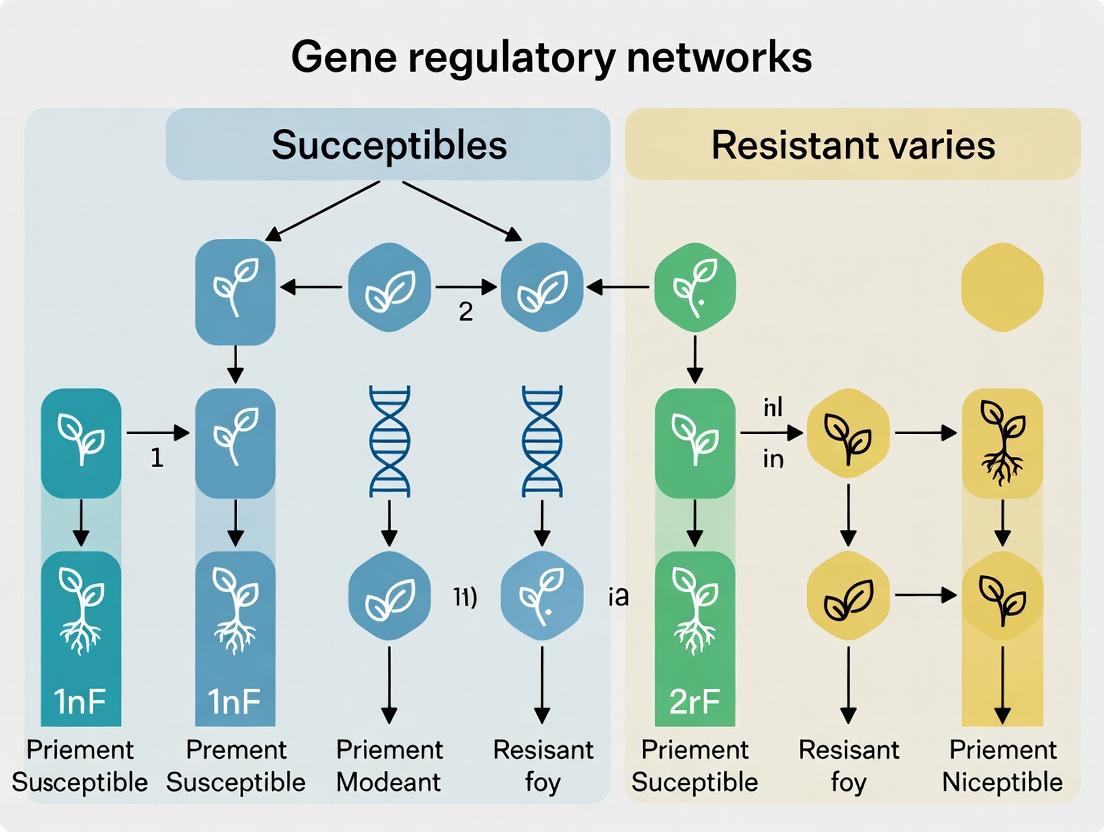
This article provides a comprehensive analysis of gene regulatory networks (GRNs) that underpin disease susceptibility and resistance in crop plants.
Decoding Immunity: How Gene Regulatory Networks Define Disease Resistance in Crops
Abstract
This article provides a comprehensive analysis of gene regulatory networks (GRNs) that underpin disease susceptibility and resistance in crop plants. Targeting researchers and biotech professionals, it explores the foundational principles of GRN architecture in plant-pathogen interactions, details cutting-edge methodologies for network mapping and perturbation, addresses common challenges in data interpretation and experimental validation, and presents comparative frameworks for evaluating network robustness. The synthesis offers a roadmap for leveraging GRN insights to engineer durable, broad-spectrum resistance in next-generation crops.
Blueprints of Defense: Core Architecture of Gene Networks in Susceptible vs. Resistant Varieties
Within the broader thesis on Gene Regulatory Networks (GRNs) in susceptible vs. resistant crop varieties, a critical frontier is defining the precise molecular "battlefield" where infection outcomes are determined. The plant immune GRN is a dynamic, multi-layered system that perceives pathogen attack and reconfigures cellular transcription to drive defense. This technical guide dissects the core components of this GRN, framing them as essential nodes and connections whose differential regulation underlies resistance or susceptibility.
Core Architectural Components of Immune GRNs
The plant immune GRN is built upon a scaffold of transcription factors (TFs), cis-regulatory elements (CREs), signaling proteins, and non-coding RNAs, integrated through complex feedback and feed-forward loops.
Transcription Factor Hubs and Their Regulons
Key TF families serve as master regulators, controlling large suites of genes (regulons).
Table 1: Core Immune-Responsive Transcription Factor Families
| TF Family | Key Members | Pathogen/Elicitor Signal | Primary Regulatory Function | Representative Target Genes |
|---|---|---|---|---|
| WRKY | WRKY22, WRKY29, WRKY33 | PAMPs (e.g., flg22), DAMPs | Early transcriptional reprogramming; amplification of defense signals | PR1, PDF1.2, PHYTOALEXIN DEFICIENT 4 (PAD4) |
| NPR1 | NPR1, NPR3/NPR4 | Salicylic Acid (SA) accumulation | Master regulator of Systemic Acquired Resistance (SAR); co-activator of TGA TFs | PATHOGENESIS-RELATED (PR) genes |
| MYB | MYB51, MYB122 | Jasmonic Acid (JA), SA | Regulation of glucosinolate biosynthesis; cross-talk between JA/SA pathways | CYP79B2, CYP79B3 |
| ERF | ERF1, ORA59 | Ethylene (ET), JA | Integration of JA/ET signaling; regulation of defensin genes | PLANT DEFENSIN 1.2 (PDF1.2) |
| bZIP | TGA2, TGA5, TGA6 | SA via NPR1 | Binding to as-1 elements in PR gene promoters; activation of SAR | PR1, WRKY70 |
Cis-Regulatory Elements (CREs)
CREs are the DNA binding sites for TFs, functioning as modular information processors.
Table 2: Key Cis-Regulatory Elements in Plant Immune Gene Promoters
| CRE Name | Consensus Sequence | Binding TF(s) | Functional Context |
|---|---|---|---|
| W-box | (T)TGAC(C/T) | WRKY family | Core element for PAMP-triggered immunity; often present in multiples. |
| as-1 element | TGACG | TGA-bZIP family | Salicylic Acid-responsive element central to SAR. |
| G-box | CACGTG | bZIP, MYC TFs | Responsive to JA/ABA and oxidative stress signals. |
| GCC-box | AGCCGCC | ERF/AP2 TFs | Ethylene-responsive element; mediates JA/ET synergistic signaling. |
| MYB-binding site | (T/C)AACTA/C) | MYB TFs | Involved in secondary metabolite and oxidative stress responses. |
Signaling Pathways that Input into the GRN
Immune signals are transduced through conserved pathways that ultimately target regulatory nodes.
Diagram 1: Core Plant Immune Signaling to GRN Activation
Experimental Protocols for GRN Dissection
Protocol: Chromatin Immunoprecipitation Sequencing (ChIP-seq) for TF Binding Site Mapping
Objective: To identify genome-wide binding sites of a transcription factor (e.g., WRKY33) during immune response.
Materials:
- Plant material: Arabidopsis thaliana Col-0 and wrky33 mutant, treated with flg22 or mock.
- Cross-linking Solution: 1% Formaldehyde in PBS.
- Key Reagent: Anti-WRKY33 antibody (validated for ChIP).
- Lysis Buffer (with protease inhibitors).
- Sonication equipment (Bioruptor or probe sonicator) to shear chromatin to 200-500 bp.
- Protein A/G Magnetic Beads.
- Elution Buffer, Reverse Cross-linking Buffer.
- DNA Purification Kit (e.g., QIAquick PCR Purification Kit).
- Key Reagent: High-throughput sequencing library preparation kit (Illumina compatible).
Procedure:
- Cross-linking: Harvest 2g of leaf tissue 30 min post flg22 treatment. Vacuum-infiltrate with 1% formaldehyde for 15 min. Quench with 0.125M glycine.
- Nuclei Isolation & Chromatin Shearing: Grind tissue, isolate nuclei, and resuspend in lysis buffer. Sonicate to shear DNA. Verify fragment size by agarose gel.
- Immunoprecipitation: Clear lysate by centrifugation. Incubate supernatant with Anti-WRKY33 antibody overnight at 4°C. Add Protein A/G Magnetic Beads for 2h. Wash beads with low-salt, high-salt, LiCl, and TE buffers.
- Elution & Reverse Cross-linking: Elute bound chromatin with fresh elution buffer (1% SDS, 0.1M NaHCO3). Add NaCl to 200mM and incubate at 65°C overnight to reverse crosslinks.
- DNA Purification & QC: Treat with RNase A and Proteinase K. Purify DNA. Assess enrichment of known target loci via qPCR.
- Library Prep & Sequencing: Prepare sequencing libraries from ChIP and Input control DNA. Sequence on an Illumina platform (e.g., 50bp single-end).
- Data Analysis: Align reads to reference genome. Call peaks (e.g., using MACS2). Motif discovery (MEME-ChIP) to identify enriched cis-elements.
Protocol: Dual-Luciferase Reporter Assay (Transient Expression)
Objective: To validate the regulatory relationship between a TF and a candidate target promoter in planta.
Materials:
- Key Reagent: Effector plasmid: TF coding sequence under 35S promoter.
- Key Reagent: Reporter plasmid: Firefly luciferase gene driven by target promoter (e.g., PR1 promoter).
- Key Reagent: Internal control plasmid: Renilla luciferase under 35S promoter.
- Nicotiana benthamiana plants (4-5 weeks old).
- Agrobacterium tumefaciens strain GV3101.
- Induction medium (10 mM MES, 10 mM MgCl2, 150 μM acetosyringone).
- Dual-Luciferase Reporter Assay System (e.g., Promega kit) and luminometer.
Procedure:
- Agrobacterium Preparation: Transform effector, reporter, and control plasmids into Agrobacterium. Grow single colonies in selective media.
- Culture Induction: Pellet bacteria and resuspend in induction medium to OD600 = 0.5. Incubate for 2-3h at room temperature.
- Infiltration: Mix Agrobacterium suspensions: Effector + Reporter + Control (ratio 5:5:1). Co-infiltrate into N. benthamiana leaves using a syringe.
- Incubation & Elicitation: Grow plants for 48h. Optionally, infiltrate an elicitor (e.g., flg22) 24h before assay.
- Luciferase Assay: Harvest leaf discs. Homogenize in Passive Lysis Buffer. Sequentially add Firefly and Renilla luciferase substrates using the assay kit. Measure luminescence.
- Data Analysis: Calculate Firefly/Renilla ratio for each sample. Compare effector + reporter vs. empty vector + reporter to determine transactivation fold-change.
The Scientist's Toolkit: Key Research Reagent Solutions
Table 3: Essential Reagents for Plant Immune GRN Research
| Reagent Category | Specific Example(s) | Function in GRN Research | Key Consideration |
|---|---|---|---|
| Validated Antibodies | Anti-WRKY33 (ChIP-grade), Anti-H3K27ac, Anti-RNA Pol II CTD | For ChIP-seq to map TF occupancy, histone modifications, and transcriptional activity. | Specificity and lot-to-lot consistency are critical; validation in mutant background is ideal. |
| Reporter Constructs | pGreenII 0800-LUC, pCAMBIA1305-GUS, pH2B-YFP | Promoter-reporter fusions to quantify spatiotemporal transcriptional activity in vivo. | Select backbone with minimal background activity. Include intron in reporter gene for plants. |
| Effector Constructs | pEAQ-HT vectors, pGWBs (35S-driven TFs) | For overexpression or dominant-negative versions of TFs to perturb the network. | Consider inducible systems (e.g., dexamethasone) to avoid pleiotropic effects. |
| CRISPR/Cas9 Tools | Multiplex gRNA vectors for plant codon-optimized Cas9, Base editors. | For creating knock-out mutants of TFs or editing specific CREs in promoters. | Design multiple gRNAs per target. Off-target prediction is essential. |
| Hormone/Elicitor Kits | Salicylic Acid ELISA Kit, flg22 peptide (QRLSTGSRINSAKDDAAGLQIA). | Precise quantification of signaling molecules or application of defined elicitors. | Use biologically active, >95% pure peptides. Store aliquots at -80°C. |
| RNA-seq Library Prep Kits | Illumina TruSeq Stranded mRNA, SMARTer Stranded Total RNA-seq. | For comprehensive transcriptome profiling of GRN output in different genotypes/treatments. | Include ribosomal RNA depletion for total RNA. Sufficient biological replicates (n>=3). |
Comparative GRN Architecture: Resistant vs. Susceptible Varieties
The functional outcome of an immune GRN hinges on its connectivity and dynamics. Comparative studies between resistant (R) and susceptible (S) crop varieties reveal critical differences.
Diagram 2: Hypothesized GRN Motifs in Resistant vs. Susceptible Varieties
Table 4: Comparative Features of GRNs in Resistant vs. Susceptible Varieties
| Network Feature | Resistant Variety | Susceptible Variety | Experimental Assay for Comparison |
|---|---|---|---|
| TF Binding Affinity/Kinetics | High-affinity binding to key CREs; rapid nuclear localization. | Polymorphisms in TF or CRE reduce affinity/binding speed. | ChIP-qPCR time-course; EMSA with variant probes. |
| Network Connectivity | Strong positive feedback loops between TF hubs and defense amplifiers. | Feedback loops broken or attenuated; dominant negative connections present. | Time-series RNA-seq followed by network inference (e.g., GRNBOOST2). |
| Signal-to-Noise Ratio | Low basal expression, high induced expression of key regulators. | High basal "leakiness" or inability to achieve high induction amplitude. | RNA-seq of mock vs. treated samples; calculate induction fold-change. |
| Pathogen Interference Targets | Effector targets are guarded or are minor network nodes. | Effectors directly suppress or degrade central TF hubs. | Co-immunoprecipitation (Co-IP) to identify host targets of pathogen effectors. |
| Epigenetic Landscape | Accessible chromatin at key defense gene promoters; permissive histone marks (H3K9ac, H3K4me3). | Repressive chromatin marks (H3K27me3) at defense loci; reduced accessibility. | ATAC-seq or DNase-seq; ChIP-seq for histone modifications. |
Defining the battlefield of plant-pathogen interactions requires a circuit-level understanding of the immune GRN. The key components—TFs, CREs, signaling inputs, and their interconnections—form a tunable system whose parameters differ decisively between resistant and susceptible genotypes. The experimental frameworks and tools outlined here enable the systematic deconstruction and comparison of these networks. Within the broader thesis, this approach moves beyond cataloging gene expression differences to defining the causative regulatory logic that underlies durable crop resistance, offering precise targets for genome editing and breeding strategies.
Within the broader thesis on Gene regulatory networks in susceptible vs resistant crop varieties, the concept of a "susceptible network" is paramount. It represents the precise molecular configuration within a host plant where defense signaling is compromised and core cellular machinery is co-opted by pathogen effectors. This whitepaper provides an in-depth technical guide to the hallmarks of such dysregulated networks, focusing on the experimental dissection of pathogen hijacking in susceptible crop varieties. The insights are critical for researchers aiming to engineer durable, broad-spectrum resistance by rewiring these vulnerable nodes.
Core Hallmarks of the Susceptible Network
Susceptibility arises from specific failures in the multi-layered plant immune system, primarily governed by complex Gene Regulatory Networks (GRNs). The following hallmarks are consistently observed in susceptible interactions.
Hallmark 1: Effector-Triggered Susceptibility (ETS) Pathogen-derived effector proteins directly suppress Pattern-Triggered Immunity (PTI) by targeting key signaling components. In susceptible varieties, effector recognition by specific Resistance (R) proteins is absent, allowing unimpeded manipulation.
Hallmark 2: Dysregulated Hormonal Crosstalk The defense hormone salicylic acid (SA) is often suppressed, while jasmonic acid (JA) and abscisic acid (ABA) signaling pathways are antagonized or manipulated, creating a hormone landscape favorable for pathogen colonization.
Hallmark 3: Transcriptional Reprogramming for Nutrient Sink Creation Pathogen effectors rewire host GRNs to upregulate genes involved in sugar and amino acid transport and metabolism, converting infected tissues into nutrient sinks.
Hallmark 4: Suppression of Reactive Oxygen Species (ROS) Burst Early PTI-associated ROS production is directly quenched by pathogen effector proteins (e.g., catalases, peroxidases, or inhibitors of NADPH oxidases).
Hallmark 5: Hijacking of Host Ubiquitin-Proteasome System Effectors often act as E3 ligases or manipulate host E3 ligases to degrade defense proteins, effectively removing key players from the resistance network.
Table 1: Transcriptomic and Hormonal Profile Comparison 48 Hours Post-Inoculation
| Metric | Susceptible Variety (Mean ± SD) | Resistant Variety (Mean ± SD) | Measurement Technique |
|---|---|---|---|
| SA Concentration | 125 ± 18 ng/g FW | 450 ± 65 ng/g FW | LC-MS/MS |
| JA Concentration | 310 ± 45 ng/g FW | 85 ± 12 ng/g FW | LC-MS/MS |
| PR1 Gene Expression (Fold Change) | 1.5 ± 0.3 | 25.7 ± 4.1 | qRT-PCR |
| ROS Burst Peak (RLU) | 5,200 ± 1,100 | 48,000 ± 9,500 | Luminol-based assay |
| Photosynthesis Rate (% of mock) | 35% ± 8% | 85% ± 7% | Chlorophyll fluorescence |
| Pathogen Biomass (ng fungal DNA/ng plant DNA) | 0.18 ± 0.04 | 0.01 ± 0.003 | qPCR |
Table 2: Key Host Proteins Targeted for Degradation in Susceptible Interactions
| Host Target Protein | Pathogen Effector (Example) | Function of Target | Consequence of Degradation |
|---|---|---|---|
| PUB17 (E3 Ubiquitin Ligase) | Phytophthora infestans Avr3a | Positive regulator of cell death | Attenuated Hypersensitive Response |
| JAZ6 (JA Signaling Repressor) | Pseudomonas syringae HopZ1a | Represses JA-responsive genes | Derepression of JA signaling, antagonizes SA |
| MAPKKK5 | Xanthomonas oryzae XopJ | Activates MAPK cascade | Suppression of PTI signaling |
| NLR Immune Receptor | Fusarium oxysporum Avr2 | Recognizes effector | Prevents effector-triggered immunity |
Experimental Protocols for Dissecting Susceptible Networks
Protocol 1: Mapping Effector-Host Protein Interactomes via TurboID-Mediated Proximity Labeling
Objective: To identify in planta host targets of a pathogen effector during a susceptible interaction. Methodology:
- Clone the pathogen effector gene, fused N-terminally to TurboID, under a dexamethasone-inducible promoter in a binary vector.
- Transform the construct into a susceptible crop variety (e.g., tomato, rice) via Agile-mediated transformation. A TurboID-only construct serves as the control.
- At the 4-leaf stage, induce expression by spraying with 30 µM dexamethasone.
- Twenty-four hours post-induction, infiltrate leaves with 500 µM biotin solution.
- After a 2-hour labeling period, harvest tissue and homogenize in lysis buffer.
- Capture biotinylated proteins using streptavidin-conjugated magnetic beads.
- Perform on-bead tryptic digestion and analyze eluted peptides via Liquid Chromatography-Tandem Mass Spectrometry (LC-MS/MS).
- Compare effector-TurboID samples to TurboID-only controls to identify significantly enriched host proteins (threshold: log2 fold-change >2, p-value < 0.01).
Protocol 2: High-Resolution Temporal Profiling of Defense Hormones
Objective: To quantify the dynamics of SA, JA, and ABA during early infection. Methodology:
- Inoculate leaves of susceptible and isogenic resistant plants with pathogen suspension (10^5 CFU/mL) or mock buffer.
- Collect leaf discs (n=6, 100 mg each) at time points: 0, 1, 3, 6, 12, 24, and 48 hours post-inoculation (hpi). Flash-freeze in liquid N2.
- Homogenize tissue with a ball mill in 1 mL of cold extraction solvent (isopropanol:water:HCl, 2:1:0.002).
- Add stable isotope-labeled internal standards (e.g., D4-SA, D6-JA, D6-ABA) for quantification.
- Centrifuge at 15,000 g for 15 min at 4°C. Dry the supernatant under nitrogen gas.
- Reconstitute the residue in 100 µL of 50% methanol.
- Analyze 10 µL by UHPLC (C18 column) coupled to a triple-quadrupole mass spectrometer operating in multiple reaction monitoring (MRM) mode.
- Quantify hormone amounts against the internal standard curve and normalize to fresh weight.
Visualizing Signaling Pathways and Hijacking Events
Diagram Title: Core Immune Signaling Disruption in Susceptibility
Diagram Title: TurboID Workflow for Effector Target ID
The Scientist's Toolkit: Key Research Reagent Solutions
Table 3: Essential Materials for Susceptibility Network Research
| Reagent / Material | Function in Research | Example Vendor / Catalog |
|---|---|---|
| TurboID Kit (Plant Optimized) | Enables in vivo proximity-dependent biotinylation for interactome mapping. | NanoTemper, Plant-TurboID System |
| Stable Isotope-Labeled Hormone Standards (D4-SA, D6-JA, D6-ABA) | Internal standards for absolute quantification of defense hormones via LC-MS/MS. | OlChemIm, ISO1-SA; CDN Isotopes, D-013 |
| CRISPR/Cas9 Knockout Library (Susceptible Variety Background) | For high-throughput functional validation of candidate susceptibility (S) genes. | Agrinome, CropKNOCK Library |
| Pathogen Effector Clone Collection (Gateway Compatible) | Comprehensive library for expression, localization, and functional studies. | ABRC, Phytopathogen Effector Collection |
| Fluorescent Biosensor Lines (e.g., roGFP2-Orp1 for H2O2) | Real-time, in planta visualization of redox dynamics during infection. | Not publicly deposited; must be generated or requested from authors. |
| Isobaric Tags for Relative and Absolute Quantitation (iTRAQ/TMT) | Multiplexed quantitative proteomics to measure global host protein abundance changes. | Thermo Fisher Scientific, TMTpro 16plex |
| Phospho-MAPK Antibodies (Anti-pERK/p38/JNK, plant-specific) | Immunoblot detection of MAPK activation, a key PTI signaling node. | Cell Signaling Technology, Phospho-p44/42 MAPK (Thr202/Tyr204) (Cross-reactive) |
| Inducible Promoter System (Dex/Luc/Gal4) | For controlled, high-level expression of effector proteins to mimic infection. | TAIR, pOpOff2/pOpOn2 vectors |
This whitepaper elucidates the topological architectures of gene regulatory networks (GRNs) that underpin robust, inducible immunity in plants. The research is framed within a broader thesis investigating the divergent GRN structures in susceptible versus resistant crop varieties. The central hypothesis posits that resistant varieties possess GRNs with distinct topological features—such as higher connectivity, specific motif enrichment, and robust feedback loops—that enable potent, regulated immune activation upon pathogen perception, minimizing fitness costs. Understanding these network principles is critical for de novo design of durable disease resistance in crops and inspires therapeutic intervention strategies in human immunology.
Core Topological Features of Resistant GRNs
Resistant crop varieties exhibit inducible immune networks characterized by non-random, scale-free topology. Key features include:
- High Clustering Coefficient & Modularity: Immune-related genes form tightly interconnected modules (e.g., for PTI and ETI signaling) that are sparsely connected to each other via critical hub or bottleneck nodes, allowing for coordinated yet compartmentalized responses.
- Hub and Bottleneck Enrichment: Master transcription factors (TFs) like WRKYs, NPR1, and MYBs serve as regulatory hubs. Signaling components (e.g., MAPKs, R proteins) often act as bottleneck nodes controlling information flow between modules.
- Feed-Forward Loop (FFL) Motifs: Coherent type-1 FFLs (where a master TF regulates a target gene both directly and via an intermediate TF) are overrepresented, providing signal delay and pulse generation to filter out noise from minor perturbations.
- Positive Feedback Loops (PFLs): PFLs among key immune activators (e.g., ROS burst amplifiers) enable switch-like, all-or-nothing activation for robust pathogen containment.
- Negative Feedback Regulators (NFRs): NFRs (e.g., PP2Cs, JAZ proteins) are integrated into the network topology to dampen the response post-activation, maintaining homeostasis.
Table 1: Quantitative Comparison of Topological Features in Susceptible vs. Resistant GRNs
| Topological Metric | Susceptible Variety GRN | Resistant Variety GRN | Measurement Method |
|---|---|---|---|
| Average Node Degree | 3.2 ± 0.5 | 8.7 ± 1.1* | Network inference from RNA-seq time series |
| Clustering Coefficient | 0.15 ± 0.03 | 0.42 ± 0.06* | Cytoscape NetworkAnalyzer |
| Characteristic Path Length | 4.8 ± 0.7 | 3.1 ± 0.4* | Shortest path calculation |
| Modularity (Q value) | 0.30 | 0.65* | Louvain community detection |
| Feed-Forward Loop Count | 12 | 47* | FANMOD motif detection |
| Hub Nodes (Degree >15) | 2% | 8%* | Top 2% of degree distribution |
Denotes statistically significant difference (p < 0.01, Student's t-test or permutation test).
Experimental Protocols for Network Inference & Validation
Protocol 3.1: Time-Series Transcriptomics for GRN Reconstruction Objective: To map the dynamic GRN following pathogen-associated molecular pattern (PAMP) treatment.
- Plant Material & Treatment: Use 4-week-old resistant and susceptible isogenic lines. Infiltrate leaves with 1µM flg22 (or equivalent PAMP) or H₂O control. Collect leaf discs (n=6 biological replicates) at 0, 15, 30, 60, 120, and 240 minutes post-infiltration.
- RNA Sequencing: Extract total RNA using a silica-membrane kit with on-column DNase treatment. Prepare stranded mRNA libraries. Sequence on an Illumina platform to a depth of 30-40 million 150bp paired-end reads per sample.
- Network Inference: Map reads to the reference genome. Compute normalized expression matrices. Use the GENIE3 or GRNBoost2 algorithm (tree-based) to infer regulatory relationships between all TFs (as regulators) and potential target genes. Run ARACNe for mutual information-based refinement.
- Topological Analysis: Import adjacency matrices into Cytoscape. Use plugins (NetworkAnalyzer, CytoHubba) to compute degree distribution, betweenness centrality, and identify modules.
Protocol 3.2: Chromatin Immunoprecipitation Sequencing (ChIP-seq) for Direct Target Validation Objective: To validate physical binding of hub TFs predicted by GRN inference.
- Crosslinking & Nuclei Isolation: Harvest flg22-treated leaf tissue at peak TF expression (e.g., 60 min). Crosslink with 1% formaldehyde. Isolate nuclei via centrifugation through a sucrose cushion.
- Chromatin Shearing & Immunoprecipitation: Sonicate chromatin to 200-500 bp fragments. Incubate with antibody specific to the TF of interest (e.g., anti-WRKY) or IgG control. Use protein A/G magnetic beads for pulldown.
- Library Prep & Sequencing: Reverse crosslinks, purify DNA. Prepare sequencing libraries from immunoprecipitated and input control DNA. Sequence.
- Analysis: Call peaks (binding sites) using MACS2. Integrate with RNA-seq data to define direct, regulatory targets (bound & differentially expressed genes).
Protocol 3.3: Network Perturbation via VIGS Objective: Functionally validate the importance of network hubs/bottlenecks.
- VIGS Construct Design: Clone a 200-300 bp fragment from the target hub gene into the Tobacco Rattle Virus (TRV2) vector.
- Agroinfiltration: Transform constructs into Agrobacterium tumefaciens strain GV3101. Mix cultures carrying TRV1 and TRV2-target/TRV2-empty (control) and infiltrate into cotyledons or true leaves of 2-week-old seedlings.
- Phenotyping: After 3-4 weeks of viral spread, treat silenced plants with pathogen. Quantify: a) Disease symptoms, b) Expression of downstream network genes via qRT-PCR, c) Network resilience by re-running transcriptomics and comparing topology to controls.
Visualization of Signaling Pathways and Workflows
The Scientist's Toolkit: Key Research Reagent Solutions
Table 2: Essential Materials for GRN and Immune Phenotyping Research
| Reagent / Material | Supplier Examples | Function in Research |
|---|---|---|
| Purified PAMPs (flg22, chitin, nlp20) | InvivoGen, Peptide 2.0 | Standardized elicitors to activate PTI for synchronized network induction in experiments. |
| Pathogen Strains (Isogenic effector mutants) | Plant pathogen stock centers (e.g., NCPPB) | To dissect ETI-specific network responses by comparing wild-type and mutant pathogen infections. |
| TRV-based VIGS Vectors (pTRV1, pTRV2) | TAIR, Addgene | For rapid, transient silencing of candidate hub/bottleneck genes to test network function. |
| Anti-Tag Antibodies (GFP, FLAG, MYC) | Agrisera, Sigma-Aldrich | For ChIP-seq and protein co-IP assays to validate TF binding and protein-protein interactions in the network. |
| Nuclei Isolation & ChIP Kits (Plant-specific) | Diagenode, Cell Signaling Tech. | Optimized reagents for chromatin extraction and immunoprecipitation from tough plant tissue. |
| Live-Cell ROS & Calcium Dyes (H2DCFDA, R-GECO1) | Thermo Fisher, Addgene | To quantify early immune signaling outputs, serving as dynamic network activity readouts. |
| Dual-Luciferase Reporter Assay System | Promega | To test direct regulatory edges (TF -> promoter) predicted by the network in planta. |
| CRISPR-Cas9 Kit (Plant optimized) | ToolGen, IDT | For generating stable knockout mutants of key network components to assess systemic impact on resilience. |
Within the broader thesis on Gene Regulatory Networks (GRNs) in Susceptible vs. Resistant Crop Varieties, identifying master regulators and hub genes is paramount. These central command nodes govern the transcriptional programs that determine a plant's phenotype, making them critical targets for understanding disease resistance mechanisms and developing robust crops. This guide provides a technical framework for their identification and validation.
Defining Central Command Nodes
- Master Regulators (MRs): Transcription factors (TFs) or epigenetic regulators that sit atop a regulatory hierarchy, directly controlling the expression of a large cohort of downstream genes, often defining a specific cellular state or response.
- Hub Genes: Highly connected nodes within co-expression networks or protein-protein interaction (PPI) networks. They may not always be direct regulators but are essential for network stability and signal propagation.
In the context of crop resistance, a MR in a resistant variety might orchestrate the rapid activation of defense pathways (e.g., salicylic acid, jasmonic acid signaling) upon pathogen perception, while its absence or mutation in a susceptible variety leads to a muted response.
Methodological Framework for Identification
A multi-omics, network-based approach is required to reliably pinpoint MRs and hubs.
Network Inference & Topological Analysis
Protocol: Weighted Gene Co-expression Network Analysis (WGCNA)
- Input Data: RNA-seq data from time-series or perturbation experiments comparing infected vs. mock-treated susceptible and resistant cultivars.
- Construction: Calculate pairwise correlation matrices between all genes across samples. Transform correlations into an adjacency matrix using a soft-power threshold (β) to satisfy scale-free topology.
- Module Detection: Use hierarchical clustering and dynamic tree cutting to identify modules of highly co-expressed genes.
- Key Calculations: For each gene within a module of interest (e.g., one correlated with resistance), compute:
- Module Membership (kME): Correlation of the gene's expression with the module eigengene.
- Intramodular Connectivity (kWithin): Sum of adjacencies of a gene to all other genes in its module.
- Candidate Selection: Genes with both high kME (>0.8) and high kWithin (top 10%) are intramodular hubs.
Table 1: Topological Metrics for Hub Identification
| Metric | Formula/Description | Interpretation in Resistant Variety |
|---|---|---|
| Degree Centrality | Number of connections a node has in the network. | A high-degree TF may coordinate multiple defense pathways. |
| Betweenness Centrality | Number of shortest paths that pass through a node. | Identifies bottlenecks; high-betweenness genes may connect perception to response. |
| Closeness Centrality | Inverse of the average shortest path distance to all other nodes. | Genes with high closeness can rapidly disseminate regulatory signals. |
Integrative Omics for Master Regulator Inference
Protocol: Regulatory Network Reconstruction using GENIE3 or LIANA
- TF-Target Prior Knowledge: Integrate known TF-binding motifs (e.g., from databases like PlantTFDB) with open chromatin regions (ATAC-seq or DNase-seq data) from stressed tissues to define potential regulatory interactions.
- Expression-Based Inference: Use algorithms like GENIE3, which employs tree-based models to predict that a TF's expression best explains a target gene's expression pattern.
- Triangulation with Epigenetics: Overlay active histone marks (H3K9ac, H3K4me3 from ChIP-seq) and TF binding events (ChIP-seq or DAP-seq) to confirm direct regulatory relationships.
- Ranking Regulators: Rank TFs by the aggregate importance score of their predicted outgoing edges. TFs regulating many high-priority target genes (e.g., differentially expressed defense genes) are candidate MRs.
Table 2: Key Databases and Tools for Plant GRN Analysis
| Resource Name | Type | Function in MR/Hub Identification |
|---|---|---|
| PlantTFDB | Database | Curated repository of plant TFs and their binding motifs. |
| STRING | Database | PPI networks; used to validate hub gene protein interactions. |
| Cytoscape | Software Platform | Network visualization and topology analysis. |
| igraph / NetworkX | R/Python Libraries | Compute centrality metrics and perform network analysis. |
| ATTED-II / PlaNet | Database | Pre-computed plant co-expression networks for in silico validation. |
Experimental Validation Protocols
Protocol: Chromatin Immunoprecipitation Sequencing (ChIP-seq) for TF Binding
- Cross-linking: Treat plant tissue (e.g., pathogen-infected leaf) with formaldehyde to crosslink proteins to DNA.
- Cell Lysis & Sonication: Lyse cells and shear chromatin to 200-500 bp fragments via sonication.
- Immunoprecipitation: Incubate with antibody specific to the candidate MR TF (or a tagged version). Use Protein A/G beads to pull down antibody-bound complexes.
- Library Prep & Sequencing: Reverse crosslinks, purify DNA, and prepare sequencing library for high-throughput sequencing.
- Analysis: Map reads to reference genome, call peaks (binding sites) using tools like MACS2. Integrate peak locations with promoter regions of differentially expressed genes.
Protocol: Virus-Induced Gene Silencing (VIGS) for Functional Validation in Crops
- Vector Construction: Clone a 200-300 bp fragment of the candidate MR/hub gene into a VIGS vector (e.g., TRV-based pYL156).
- Agroinfiltration: Transform construct into Agrobacterium tumefaciens. Infiltrate suspensions into cotyledons or true leaves of young plants.
- Pathogen Challenge: After VIGS-mediated silencing is established (2-3 weeks), inoculate plants with the target pathogen.
- Phenotyping: Quantify disease symptoms, pathogen biomass (e.g., by qPCR), and expression of downstream target genes. Silencing a true MR in a resistant variety should enhance susceptibility.
The Scientist's Toolkit: Research Reagent Solutions
Table 3: Essential Materials for MR/Hub Gene Research
| Item | Function & Application |
|---|---|
| Poly(A) mRNA Selection Beads | Isolation of high-quality mRNA for RNA-seq library construction. |
| Tag-Specific Antibodies (e.g., anti-GFP, anti-FLAG) | For ChIP-seq of epitope-tagged TFs in non-model crops where native antibodies are unavailable. |
| Reverse Transcriptase (e.g., SuperScript IV) | Generation of cDNA from low-abundance transcript samples for downstream expression analysis. |
| SYBR Green or TaqMan qPCR Master Mix | Validation of gene expression changes and ChIP-qPCR confirmation of binding events. |
| Gateway-Compatible VIGS Vectors | Enable rapid cloning for functional gene silencing studies in plants. |
| Cell-Permeable Histone Deacetylase Inhibitors (e.g., TSA) | Tool compounds to manipulate chromatin state and infer epigenetic regulation roles. |
| Nuclei Isolation Kits (for ATAC-seq/ChIP) | Preparation of clean nuclei from tough plant tissues for epigenomic assays. |
Visualizing the Workflow and Networks
Title: Workflow for Identifying Central Command Nodes
Title: MR and Hub in a Resistant Crop GRN
Systematic identification of master regulators and hub genes provides a mechanistic understanding of GRN robustness in resistant crop varieties versus fragility in susceptible ones. This knowledge is directly translatable for developing biomarkers for breeding programs and engineering synthetic gene circuits to confer durable resistance. The integration of computational network biology with precise experimental validation, as outlined here, forms the cornerstone of this advanced research.
Understanding plant immunity requires a systems-level analysis of gene regulatory networks (GRNs) that differ fundamentally between susceptible and resistant crop varieties. Plant immunity operates through a tiered perception system: Pattern-Triggered Immunity (PTI) and Effector-Triggered Immunity (ETI). PTI constitutes the basal resistance layer, activated by the recognition of conserved microbial/pathogen-associated molecular patterns (MAMPs/PAMPs) by surface-localized pattern recognition receptors (PRRs). This provides broad-spectrum, durable resistance. In resistant varieties, a second, more specific layer—ETI—is deployed upon direct or indirect recognition of pathogen effector proteins by intracellular nucleotide-binding, leucine-rich repeat receptors (NLRs), often leading to a hypersensitive response (HR).
The divergence in phenotypes between susceptible and resistant genotypes is underpinned by distinct GRN architectures. Susceptible varieties often possess dysfunctional NLR alleles or lack specific PRRs, while resistant varieties harbor integrated networks where PTI and ETI signaling synergistically amplify defense outputs. This whitepaper provides a technical guide to mapping these network layers, detailing experimental protocols for dissecting their components and interactions.
Core Signaling Pathways: From Perception to Transcriptional Reprogramming
PTI Signaling Network
PTI activation initiates a canonical MAPK cascade and calcium-dependent signaling, leading to transcriptional reprogramming via key transcription factors (TFs). The network is characterized by high connectivity and redundancy.
ETI Signaling Network
ETI centers on specific NLR activation, often converging on the same downstream signaling hubs as PTI (e.g., MAPKs, ROS burst) but with greater amplitude and speed, frequently culminating in HR.
Pathway Integration Node
A critical feature in resistant varieties is the synergistic interaction between PTI and ETI, where PTI primes components necessary for full ETI activation.
Diagram 1: Core PTI Signaling Pathway (Width: 760px)
Diagram 2: Core ETI Signaling Pathway (Width: 760px)
Diagram 3: PTI-ETI Synergy Node in Resistant Varieties (Width: 760px)
Table 1: Comparative Dynamics of PTI and ETI Responses in Resistant vs. Susceptible Varieties
| Response Parameter | PTI (Resistant) | PTI (Susceptible) | ETI (Resistant) | ETI (Susceptible) |
|---|---|---|---|---|
| ROS Burst Peak (nmol H₂O₂/min/g FW) | 180-250 | 30-60 | 500-1200 (with HR) | <100 (No HR) |
| MAPK Activation (Phospho-MPK3/6; peak mins) | 5-15 mins | Delayed/Weak | 5-10 mins (Stronger) | Absent |
| Callose Deposition (Particles/mm² leaf) | 150-300 | 20-50 | 400-600 (Localized) | <50 |
| Defense Gene Induction (PR1; Fold Change) | 10-50x | 2-5x | 100-500x | 1-3x |
| SA Accumulation (μg/g FW) | 0.5-2.0 | 0.1-0.5 | 5-20 (Localized) | 0.1-0.5 |
| HR Cell Death (Ion leakage % increase) | Minimal | Minimal | 60-80% (Localized) | <10% |
Table 2: Gene Regulatory Network Complexity Metrics (RNA-seq Derived)
| GRN Metric | Resistant Variety Network | Susceptible Variety Network |
|---|---|---|
| Number of Differentially Expressed Genes (DEGs) post-infection | 8,000 - 12,000 | 1,000 - 3,000 |
| Hub TFs in Defense Module | 15-25 (e.g., WRKY, NAC, ERF families) | 5-10 |
| Average Network Centrality | High (Dense interconnectivity) | Low (Sparse connections) |
| Cross-talk between Hormone Pathways (SA, JA, ET) | Strong (Synergistic/Antagonistic edges) | Weak (Limited integration) |
| Presence of Specific NLR/PRR Hub Nodes | Yes (High degree centrality) | No/Low |
Experimental Protocols for Network Mapping
Protocol: Phospho-Proteomics for Early Signaling Cascade Analysis
Objective: To quantify dynamic phosphorylation events in PRR and MAPK pathways during PTI/ETI.
- Plant Material & Treatment: Use 10-day-old seedling cultures of isogenic resistant/susceptible lines.
- PTI Induction: Treat with 1μM flg22 or 100nM chitin for 0, 2, 5, 10, 15, 30 minutes.
- ETI Induction: Infiltrate leaves with Pseudomonas syringae pv. tomato DC3000 expressing AvrRpt2 (for RPS2-mediated ETI). Sample at same time points.
- Protein Extraction & Enrichment: Snap-freeze tissue in liquid N₂. Grind and lyse in urea-based buffer with phosphatase/protease inhibitors. Enrich phosphorylated peptides using TiO₂ or Fe-IMAC magnetic beads.
- LC-MS/MS & Data Analysis: Analyze on a high-resolution tandem mass spectrometer. Identify and quantify phospho-sites using search engines (MaxQuant, Spectronaut). Normalize to total protein. Compare temporal profiles between genotypes.
Protocol: Single-Cell RNA Sequencing (scRNA-seq) of Infection Sites
Objective: To deconvolute cell-type-specific GRNs and identify rare cell states driving HR.
- Tissue Dissociation & Protoplasting: At 12-14 hours post-inoculation (HPI) with ETI-inducing pathogen, harvest infected leaf sections (~1cm²). Enzymatically digest with cellulase and pectolyase to release protoplasts. Filter through 40μm mesh.
- Library Preparation & Sequencing: Use a platform (10x Genomics Chromium) for droplet-based encapsulation and barcoding. Target recovery of 10,000 cells per sample (Mock, Susceptible, Resistant). Sequence on Illumina platform to depth of 50,000 reads/cell.
- Bioinformatic Analysis: Process with Cell Ranger. Cluster cells using Seurat/Scanpy. Identify defense-specific clusters. Perform pseudo-temporal ordering to reconstruct HR initiation trajectory. Build cell-type-specific GRNs using GENIE3 or SCENIC.
Protocol: Proximity-Labeling (TurroID) for NLR Interactome Mapping
Objective: To identify the protein-protein interaction network surrounding a specific NLR in vivo.
- Construct Design: Fuse the NLR protein (e.g., RPS2) with TurboID enzyme at its N- or C-terminus, under native promoter control. Transform into resistant Arabidopsis.
- Biotin Labeling & Pull-down: Apply 50μM biotin to leaves for 2 hours pre-induction. Induce ETI. Harvest tissue at 2 HPI. Lyse in RIPA buffer. Incubate lysate with streptavidin magnetic beads.
- Mass Spectrometry & Analysis: Wash beads stringently. Elute bound proteins. Digest with trypsin and analyze by LC-MS/MS. Identify significantly enriched proteins over controls (untagged TurboID, no biotin). Validate key interactions by Co-IP.
The Scientist's Toolkit: Essential Research Reagent Solutions
Table 3: Key Reagents for Plant Immunity Network Research
| Reagent Category | Specific Item/Kit | Primary Function in Research |
|---|---|---|
| Immunity Inducers | Synthetic flg22, chitooctaose, elf18 | Chemically defined PAMPs for consistent PTI induction. |
| Pathogen Strains | P. syringae DC3000 with Avr genes (AvrRpt2, AvrRpm1, etc.) | Isogenic strains for specific ETI elicitation in defined genetic backgrounds. |
| Biosensors | R-GECO1 (Ca²⁺), Hyper7 (H₂O₂), GFP-LTI6b (Membrane marker) | Live, quantitative imaging of early signaling events (ionic flux, ROS) using confocal microscopy. |
| Kinase Activity Assays | Phospho-specific antibodies (pMPK3/6, pBIK1), ADP-Glo Kinase Assay Kit | Quantify activation of key signaling nodes via immunoblot or luminescent activity measurement. |
| GRN Mapping | 10x Genomics Single Cell 3' Reagent Kits, CUT&Tag-IT Assay Kit | For scRNA-seq and profiling of histone modifications/TF binding at defense genes. |
| Protein Interaction | TurboID Kit, HaloTag ORF Clones, Streptavidin Magnetic Beads | For in vivo proximity labeling and validation of protein complexes. |
| Metabolite Profiling | Salicylic Acid (SA) ELISA Kit, Jasmonic Acid ELISA Kit | Quantify critical defense hormone accumulation. |
| Phenotyping | Electrolyte Leakage Assay Kit, Aniline Blue (Callose Stain) | Quantify HR cell death and callose deposition as resistance readouts. |
Gene Regulatory Networks (GRNs) form the core architectural blueprint governing phenotypic expression, including agronomic traits and stress responses. Within the thesis framework of "Gene regulatory networks in susceptible vs resistant crop varieties research," this analysis examines how centuries of selective breeding—and more recent molecular breeding—have actively rewired these networks. The central hypothesis posits that domestication and improvement have shaped GRN topology to favor high-yield phenotypes, often at the cost of constitutive defense networks, while modern resistance breeding seeks to re-integrate inducible, robust defense modules without compromising yield. This guide provides a technical dissection of the evolved GRN differences and the methodologies to elucidate them.
Comparative GRN Topology: Susceptible vs. Resistant Cultivars
Long-term breeding objectives have led to distinct GRN signatures. The tables below summarize core quantitative differences identified in recent transcriptomic and epigenomic studies.
Table 1: Core GRN Component Metrics in Modern Cultivars
| GRN Feature | High-Yield Susceptible Cultivar | Resistant Cultivar (R-Gene Mediated) | Resistant Cultivar (Polygenic/Field Resistance) |
|---|---|---|---|
| Hub Transcription Factors | Enriched for growth & development (e.g., TEOSINTE BRANCHED1, SPL families) | Dominated by NLR signaling nodes (e.g., WRKY, NAC, ERF families) | Balanced portfolio of development & stress-responsive TFs |
| cis-Regulatory Element Density | High frequency of elements responsive to gibberellin/auxin | Enriched for W-box, GCC-box, & other defense motifs | Moderate enrichment of defense motifs; higher diversity |
| Network Connectivity (Avg. Degree) | High, centralized | Moderate, with defensive subnetworks | High, but modular |
| Epigenetic Lability (H3K27me3) | Stable repression of defense pathways | Rapid histone modification turnover at defense gene loci | Intermediate responsiveness |
| Pathogen-Induced Network Rewiring Speed | Slow, limited response | Very fast, hypersensitive response (HR) activation | Fast, coordinated systemic response |
Table 2: Representative Yield-Defense Trade-off Metrics in Bread Wheat (Triticum aestivum)
| Parameter | Susc. Cultivar 'CDC Falcon' | Res. Cultivar 'Sumai3' (FHB Resistant) | Experimental Line (Gene-Edited TaFER) |
|---|---|---|---|
| Fusarium Head Blight (FHB) Severity (%) | 85.2 ± 6.7 | 22.5 ± 4.1 | 35.8 ± 5.3 |
| PR-1 Gene Expression (Fold Change post-infection) | 3.5x | 48.7x | 22.1x |
| Salicylic Acid Peak (ng/g FW) | 210 | 1550 | 920 |
| Thousand Kernel Weight (g) - Control | 45.2 | 38.7 | 43.1 |
| Network Entropy (Measure of Stability) | Low (0.18) | High (0.52) post-elicitation | Moderate (0.31) |
Key Experimental Protocols for GRN Deconvolution
Protocol: Single-Nuclei RNA-seq (snRNA-seq) for Cell-Type-Specific GRN Inference in Root Tissues
Objective: To map cell-type-specific GRNs underlying differential pathogen response in susceptible vs. resistant cultivars.
Materials: Fresh root tips (5-10mm) from control and pathogen-treated plants, Nuclei Isolation Kit (e.g., Nuclei EZ Lysis, Sigma), snRNA-seq kit (10x Genomics Chromium Next GEM), DAPI, PBS.
Methodology:
- Nuclei Isolation: Chop 0.5g root tissue in ice-cold Nuclei Isolation Buffer. Homogenize with Dounce homogenizer. Filter through 40μm, then 20μm strainers. Pellet nuclei at 500g for 5min at 4°C. Resuspend in PBS with 1% BSA and DAPI. Sort or count using a hemocytometer; target viability >85%.
- Library Construction & Sequencing: Adjust concentration to ~1000 nuclei/μl. Use 10x Genomics Chromium Controller to generate Gel Bead-In-Emulsions (GEMs). Perform GEM-RT, cDNA amplification, and library construction per manufacturer's protocol. Sequence on Illumina NovaSeq platform (PE150), targeting 50,000 reads per nucleus.
- Bioinformatic GRN Reconstruction: Align reads to reference genome (STAR). Generate cell-by-gene matrix (Cell Ranger). Filter low-quality nuclei in R (Seurat). Annotate clusters using marker genes. Use SCENIC (pySCENIC) pipeline to infer co-expression modules, identify regulons (TF + target genes), and score activity per cell type and condition.
Protocol: ATAC-seq and ChIP-seq forcis-Regulatory Landscape Profiling
Objective: To identify accessible chromatin regions and histone modifications defining GRN architecture.
Materials: Flash-frozen leaf tissue, ATAC-seq Kit (e.g., Illumina), Antibodies for H3K27ac (active enhancer) and H3K27me3 (repressive), Magnetic beads, MNase.
Methodology:
- Nuclei Preparation & Tagmentation (ATAC-seq): Isolate nuclei. Treat with Tn5 transposase (ATAC-seq kit) to fragment accessible DNA. Purify DNA for library prep.
- Chromatin Immunoprecipitation (ChIP-seq): Cross-link tissue with 1% formaldehyde. Sonicate chromatin to 200-500bp fragments. Immunoprecipitate with target antibody overnight at 4°C. Reverse cross-links, purify DNA.
- Sequencing & Analysis: Sequence libraries (Illumina). Map reads (Bowtie2). Call peaks (MACS2). Identify differential accessible regions (DARs) or differential histone marks between cultivars/conditions (DiffBind). Motif enrichment analysis (HOMER) to identify TF binding sites.
Protocol: Multiplexed CRISPR-Cas9 Perturbation for GRN Validation
Objective: To functionally test predicted hub TFs in a resistant GRN.
Materials: Binary vectors with multiplexed gRNA cassette, Agrobacterium tumefaciens strain GV3101, plant tissue culture media, selection antibiotics.
Methodology:
- Vector Design: Clone 4-6 gRNAs targeting candidate hub TFs into a single CRISPR-Cas9 vector (e.g., pYLCRISPR-Cas9Pubi-H).
- Plant Transformation: Transform embryogenic calli of a resistant cultivar via Agrobacterium-mediation. Select on hygromycin.
- Phenotyping & Validation: Regenerate T0 plants. Sequence target loci to confirm edits. Challenge with pathogen, quantify disease severity. Perform RNA-seq on edited vs. wild-type plants to observe downstream network collapse.
Visualization of Key Signaling Pathways and Workflows
Diagram Title: Core GRN Architecture Comparison: Susceptible vs. Resistant Cultivars
Diagram Title: snRNA-seq GRN Inference Pipeline with SCENIC
Diagram Title: NLR Immune Receptor Signaling vs. Susceptibility
The Scientist's Toolkit: Key Research Reagent Solutions
Table 3: Essential Reagents for GRN Research in Crop Varieties
| Item/Category | Example Product/Source | Primary Function in GRN Studies |
|---|---|---|
| High-Fidelity snRNA-seq Kit | 10x Genomics Chromium Next GEM Single Cell 3' Reagent Kits v3.1 | Captures cell-type-specific transcriptomes for GRN inference from complex tissues. |
| Transposase for ATAC-seq | Illumina Tagment DNA TDE1 Enzyme and Buffer Kits | Fragments accessible chromatin for profiling cis-regulatory landscapes. |
| Histone Modification Antibodies | Diagenode Anti-H3K27ac (C15410196), Anti-H3K27me3 (C15410195) | ChIP-grade antibodies for mapping active enhancers and repressive domains. |
| Multiplex CRISPR Vector System | pYLCRISPR-Cas9Pubi-H (Addgene #164368) | Enables simultaneous knockout of multiple hub TFs to test GRN robustness. |
| Dual-Luciferase Reporter Assay Kit | Promega Dual-Luciferase Reporter Assay System | Validates TF binding and activity on specific cis-regulatory elements in protoplasts. |
| Plant Hormone ELISA Kits | Salicylic Acid (SA) and Jasmonic Acid (JA) ELISA Kits (e.g., MyBioSource) | Quantifies key phytohormones that act as network signals in defense responses. |
| Bioinformatics Pipeline | pySCENIC (https://github.com/aertslab/pySCENIC) | Standardized pipeline for inferring regulons and their activity from scRNA-seq data. |
| In Situ Hybridization Probes | Custom-designed RNAscope probes (ACD Bio) | Validates spatial expression patterns of key GRN components in plant tissues. |
Mapping the Circuitry: Modern Techniques to Dissect and Manipulate Defense Networks
Understanding gene regulatory networks (GRNs) is pivotal for deciphering the molecular basis of disease resistance in crops. This whitepaper details a technical framework for inferring comprehensive, multi-layered GRNs by integrating transcriptomic, epigenomic, and proteomic data. The core thesis context focuses on identifying the divergent regulatory architectures between susceptible and resistant varieties of a model crop (e.g., Solanum lycopersicum or Oryza sativa) under pathogen challenge. The integrative approach moves beyond single-omics correlation to establish causal, mechanistic hypotheses about key transcription factors, epigenetic switches, and signaling hubs that define the resistant phenotype.
Core Data Types and Quantitative Insights
The integration leverages complementary data layers, each contributing unique insights into the regulatory state.
Table 1: Core Omics Data Types for GRN Inference
| Omics Layer | Measured Entities | Key Technology | Insight into Regulation |
|---|---|---|---|
| Transcriptomics | mRNA abundance | RNA-Seq, Single-cell RNA-Seq | Steady-state gene expression output; identifies differentially expressed genes (DEGs) between conditions. |
| Epigenomics | DNA methylation, Histone modifications | Whole-Genome Bisulfite Sequencing (WGBS), ChIP-Seq (H3K4me3, H3K27ac, H3K27me3) | Cis-regulatory potential; marks active promoters/enhancers (active marks) or repressed regions (repressive marks). |
| Proteomics | Protein abundance, Post-translational modifications (PTMs) | Tandem Mass Tag (TMT) LC-MS/MS, Phosphoproteomics | Functional effectors; confirms translational output and identifies activated signaling pathways via PTMs. |
Table 2: Exemplar Quantitative Data from Susceptible vs. Resistant Varieties
| Metric | Susceptible Variety | Resistant Variety | Implication |
|---|---|---|---|
| DEGs (Pathogen vs. Mock) | ~2,500 genes | ~5,800 genes | Resistant genotype mounts a more extensive transcriptional reprogramming. |
| Differential H3K27ac Peaks (Enhancers) | ~500 regions | ~1,200 regions | Resistant genotype exhibits greater re-wiring of enhancer activity. |
| Differential Phosphoproteins | ~150 proteins | ~400 proteins | Heightened signaling cascade activity in resistant variety. |
| Hub TFs in Inferred GRN | 15 TFs | 32 TFs (including 10 unique NLR-linked TFs) | More complex and specialized regulatory hierarchy in resistance. |
Experimental Protocols for Multi-Omics Integration
Protocol 1: Concurrent Sample Preparation for Tri-Omics Profiling
- Plant Material: Leaves from infected (pathogen) and mock-treated susceptible (S) and resistant (R) varieties at 0, 6, 12, 24, and 48 hours post-inoculation (hpi). Biological replicates (n=4).
- Nuclei Isolation: Homogenize tissue in Nuclei Isolation Buffer. Split nuclei aliquot for:
- ATAC-Seq/ChIP-Seq: Use ~50k nuclei for tagmentation or chromatin immunoprecipitation.
- RNA-Seq: Extract total RNA from a separate tissue segment using TRIzol, with DNase I treatment.
- Protein Extraction: From adjacent tissue segment, grind in urea lysis buffer, reduce, alkylate, and digest with trypsin for LC-MS/MS.
Protocol 2: Integrative GRN Inference using Bayesian Networks & Regularized Regression
- Data Preprocessing: Map all omics features to the reference genome. Create a unified data matrix where rows are samples and columns are integrated features: gene expression (transcriptome), peak intensity from H3K27ac ChIP-seq (enhancer activity), and promoter DNA methylation levels (WGBS).
- Candidate Regulator Definition: Define potential regulators as transcription factors (TFs) with either differential expression OR differential binding (ChIP-seq) in their gene body/promoter.
- Model Inference: Use a tool like Inferelator-3.0 or a custom PANDA-LIONESS pipeline.
- PANDA (Passing Attributes between Networks for Data Assimilation): Constructs separate networks for each sample by integrating TF motif information (prior network), protein-protein interaction data, and gene expression.
- LIONESS (Linear Interpolation to Obtain Network Estimates for Single Samples): Estimates sample-specific networks from the aggregate PANDA network.
- Dynamic Bayesian Network (DBN) on Time-Series: Use time-series data to infer directionality and causal relationships (e.g., TF A → Gene B → Protein C).
- Validation: Perform ChIP-qPCR on top inferred TF-target pairs and assay phosphoprotein activity of downstream signaling nodes.
Key Signaling Pathway and Workflow Visualization
Multi-Omics GRN Inference Workflow
Integrated Defense Signaling in Resistant Variety
The Scientist's Toolkit: Research Reagent Solutions
Table 3: Essential Reagents and Materials for Integrated Omics GRN Studies
| Item | Function/Application | Example Product/Catalog |
|---|---|---|
| Nuclei Isolation Kit | Isolation of intact nuclei for epigenomic assays (ATAC/ChIP-seq). | NUCLEI EZ Prep or Plant Nuclei Extraction Buffer. |
| Tn5 Transposase (Tagmented) | For ATAC-seq library preparation; fragments chromatin while adding sequencing adapters. | Illumina Tagment DNA TDE1 or DIY purified Tn5. |
| Magnetic Protein A/G Beads | Immunoprecipitation of chromatin-bound proteins for ChIP-seq. | Dynabeads Protein A/G. |
| Tandem Mass Tag (TMT) Kit | Multiplexed isobaric labeling for quantitative proteomics of up to 16 samples. | Thermo Scientific TMTpro 16plex. |
| Phosphatase/Protease Inhibitor Cocktails | Essential for preserving protein PTMs during extraction for phosphoproteomics. | PhosSTOP, cOmplete Tablets. |
| High-Fidelity DNA Polymerase | Library amplification for NGS libraries (ChIP, ATAC, RNA). | KAPA HiFi HotStart ReadyMix. |
| TF-Specific Antibodies (ChIP-grade) | Immunoprecipitation of specific transcription factors for validating network edges. | Anti-WRKY, Anti-MYB (validated for ChIP in target species). |
| Reverse Transcriptase for RNA-seq | cDNA synthesis from plant RNA, often high-efficiency for complex transcriptomes. | SuperScript IV. |
| LC-MS/MS Column | Peptide separation prior to mass spectrometry. | C18 reversed-phase nano-column (75µm x 25cm). |
| GRN Inference Software | Tools for integrative network modeling from multi-omics data. | Inferelator, PANDA, GENIE3, DeepLIFT (for deep learning models). |
Single-Cell and Spatial Transcriptomics for Tissue-Specific Network Resolution
This technical guide details the application of single-cell RNA sequencing (scRNA-seq) and spatial transcriptomics to resolve tissue-specific gene regulatory networks (GRNs) in the context of plant immunity. The primary thesis investigates the divergence in GRN architectures between susceptible and resistant crop varieties, aiming to pinpoint master regulators and spatial hubs of defense activation. These technologies move beyond bulk RNA-seq, deconvoluting heterogeneous tissue responses to pathogens and enabling the mapping of regulatory interactions with cellular and sub-tissue resolution. This whiteparesentation: Summarize all quantitative data into clearly structured tables for easy comparison. Experimental Protocols: Provide detailed methodologies for all key experiments cited. Mandatory Visualization: Create diagrams for all described signaling pathways, experimental workflows, or logical relationships using Graphviz (DOT language). Enclose all DOT scripts within a dot code block. Generate a short and clear title for each diagram (Within 100 characters). The Scientist's Toolkit: Create a list or table detailing key "Research Reagent Solutions" or essential materials used in the featured experiment or field, with a brief explanation of each item's function. Diagram Specifications: Max Width: 760px. Color Contrast Rule: Ensure sufficient contrast between arrow/symbol colors and their background.Avoid using the same color for foreground elements (text, arrows, symbols) as for the background. Node Text Contrast Rule (Critical): For any node (e.g., rectangle, circle, etc.) that contains text, the text color (fontcolor) must be explicitly set to have high contrast against the node's background color (fillcolor). Color Palette: Use only #4285F4, #EA4335, #FBBC05, #34A853, #FFFFFF, #F1F3F4, #202124, #5F6368. Output requirement: Do not include any additional notes or explanations. Please return only the main content.
CRISPR-Based Perturbation Screens for Functional Validation of Network Nodes
Understanding the architecture and dynamics of gene regulatory networks (GRNs) is pivotal for dissecting the molecular basis of complex traits in crops. A central thesis in modern plant biology posits that differential resilience between susceptible and resistant crop varieties is orchestrated by distinct GRN configurations. Key network nodes—transcription factors, signaling proteins, and non-coding RNAs—act as critical control points. This whitepaper details the application of CRISPR-based perturbation screens as a high-throughput functional genomics tool to empirically validate the predicted role of these network nodes within the specific thesis context of "Elucidating Gene Regulatory Networks Underlying Disease Resistance in Crop Varieties." Moving beyond correlative network inference, this approach enables causal validation, directly linking genotype to network phenotype and, ultimately, to the resistant or susceptible state.
Core Principles of CRISPR Perturbation Screening
CRISPR screening leverages pooled guide RNA (gRNA) libraries to systematically perturb target genes across a population of cells or organisms. In the context of GRN analysis, this translates to:
- Knockout (CRISPRko): Using Cas9 to create indels, ideal for validating essential transcription factors or signaling hubs.
- Interference (CRISPRi): Using dCas9 fused to repressive domains (e.g., KRAB) to downregulate gene expression, suitable for studying non-essential nodes.
- Activation (CRISPRa): Using dCas9 fused to activator domains (e.g., VPR) to upregulate gene expression, useful for testing sufficiency of a node in conferring a resistant phenotype.
The screening outcome is measured via a phenotypic readout (e.g., pathogen growth, reactive oxygen species burst, cell death) and subsequent sequencing of gRNA abundance to identify nodes whose perturbation significantly alters the network's output.
Experimental Protocols for Key Screens
Protocol 3.1: Pooled CRISPRko Screen for Resistance Node Identification
Objective: Identify network nodes whose loss-of-function converts a resistant variety to a susceptible state. Workflow:
- Library Design: Select ~5-10 candidate network nodes per predicted GRN module. Design 4-6 gRNAs per target gene and 100 non-targeting controls.
- Plant Material: Use a protoplast system or a rapidly dividing embryogenic callus culture derived from a homozygous resistant crop variety.
- Library Delivery: Co-transform plant cells with a Cas9-expressing vector and the pooled gRNA library via PEG-mediated transfection or Agrobacterium.
- Phenotypic Selection: At 7 days post-transformation, challenge the population with the relevant pathogen or pathogen-derived elicitor. After 72-96 hours, separate cells into "Susceptible" (showing cell death or pathogen proliferation) and "Resistant" (remaining healthy) pools via Fluorescence-Activated Cell Sorting (FACS) using viability or pathogen-reporter dyes.
- gRNA Quantification: Isolate genomic DNA from each pool and the pre-selection input. Amplify the integrated gRNA cassette via PCR and subject to next-generation sequencing (NGS).
- Analysis: Use MAGeCK or similar tools to compare gRNA enrichment/depletion between Susceptible and Resistant pools. Nodes with gRNAs depleted in the Resistant pool are essential for resistance.
Protocol 3.2: CRISPRa/i Screen for Network Rewiring
Objective: Test if artificial node activation/repression can confer resistance in a susceptible variety or susceptibility in a resistant one. Workflow:
- Stable Line Generation: Create a susceptible variety line stably expressing dCas9-VPR (for activation) or dCas9-KRAB (for interference).
- Library Delivery & Selection: Transform the stable line with a gRNA library targeting the same node set as in 3.1. Perform phenotypic selection as above.
- Analysis: For the dCas9-VPR line in a susceptible background, gRNAs enriched in the Resistant pool identify nodes whose activation is sufficient for resistance. For the dCas9-KRAB line in a resistant background, gRNAs enriched in the Susceptible pool identify nodes whose repression is sufficient for susceptibility.
Data Presentation: Quantitative Outcomes
Table 1: Example Results from a CRISPRko Screen in Resistant Rice Variety (Blast Fungus Challenge)
| Target Node (Gene ID) | Predicted Network Module | Avg. Log2 Fold Change (Susceptible/Resitant Pool) | MAGeCK p-value | Validated Role |
|---|---|---|---|---|
| OsNPR1 (LOC_Os01g09800) | SA Signaling Hub | +4.12 | 2.5E-08 | Essential for resistance |
| OsWRKY45 (LOC_Os05g25770) | Defense Transcription | +3.87 | 1.1E-07 | Essential for resistance |
| OsERF922 (LOC_Os08g35240) | Ethylene Response | -1.05 | 0.43 | Not essential in this context |
| OsMAPK6 (LOC_Os06g06090) | PAMP Signaling | +2.95 | 5.7E-06 | Essential for resistance |
| Non-Targeting Controls | N/A | +0.15 ± 0.3 | > 0.1 | N/A |
Table 2: Key Performance Metrics for Different CRISPR Modalities in Crop Protoplasts
| Screening Modality | Typical Editing Efficiency* | Phenotypic Penetrance* | Off-Target Rate* | Best Use Case |
|---|---|---|---|---|
| CRISPRko (Cas9) | 70-90% indels | High | Medium (sequence-dependent) | Essential node validation |
| CRISPRi (dCas9-KRAB) | 80-95% repression | Moderate-High | Very Low | Fine-tuning expression; non-essential genes |
| CRISPRa (dCas9-VPR) | 5-50x activation | Variable | Very Low | Gain-of-function; sufficiency testing |
*Representative ranges based on recent literature in plant systems.
Visualization of Workflows and Pathways
Diagram 1: CRISPR Screen Workflow for GRN Validation (87 chars)
Diagram 2: Example GRN Node Perturbation in Defense (94 chars)
The Scientist's Toolkit: Research Reagent Solutions
Table 3: Essential Materials for CRISPR Perturbation Screens in Crop GRN Research
| Item | Function & Relevance to Thesis | Example/Specification |
|---|---|---|
| Cas9/dCas9 Expression Vector | Drives constitutive expression of the nuclease or its inactive form. Essential for all screen types. | Plant-optimized SpCas9; ubiquitin (e.g., ZmUbi) promoter. |
| Custom gRNA Library | Contains pooled sequences targeting candidate GRN nodes. The core screening reagent. | 80-100 nt oligo pools; cloned into a AtU6 or OsU6 pol III-driven vector. |
| Protoplast/Callus Culture System | Provides a high-throughput, transformable cell population from resistant/susceptible varieties. | Mesophyll protoplasts or embryogenic callus from isogenic lines. |
| Pathogen/ Elicitor | Provides the selective pressure to differentiate network performance. | Purified PAMP (e.g., flg22), live pathogen (e.g., Magnaporthe spores), or culture filtrate. |
| Viability/Phenotype Reporter Dye | Enables FACS-based separation of susceptible vs. resistant cells post-challenge. | Propidium Iodide (cell death), fluorescent diacetate (viability), or pathogen-GFP. |
| gRNA Amplification Primers | Contains Illumina adapters and sample indexes for NGS library prep from genomic DNA. | Forward: Overhang + Constant Region; Reverse: Indexed Illumina adapter sequence. |
| Analysis Software | For statistical identification of significantly enriched/depleted gRNAs/genes. | MAGeCK, PinAPL-Py, or custom R scripts. |
Machine Learning and AI Models for Predicting GRN Dynamics and Key Drivers
This technical guide explores computational methodologies for elucidating gene regulatory network (GRN) dynamics, framed within a broader thesis investigating the divergence of GRNs between susceptible and resistant crop varieties. Understanding these differential regulatory architectures is paramount for identifying key transcriptional drivers of resistance, ultimately informing the development of strategies for crop improvement and novel therapeutic interventions in plant health.
Core Machine Learning Paradigms for GRN Inference
Modern GRN inference leverages several AI/ML approaches to model complex, non-linear interactions from high-throughput transcriptomic data.
Table 1: Core ML/AI Models for GRN Inference
| Model Class | Key Algorithms | Strength in GRN Context | Typical Data Input |
|---|---|---|---|
| Regression-Based | LASSO, Elastic Net, SINCERITIES | Handles high-dimensional data, infers causality from time-series. | Time-course RNA-seq, Microarray |
| Tree-Based | Random Forest, XGBoost, GENIE3 | Captures non-linear interactions, provides feature importance. | Steady-state or Perturbation RNA-seq |
| Deep Learning | CNNs, GNNs, Variational Autoencoders | Models complex hierarchical patterns, integrates multi-omics data. | Single-cell RNA-seq, Multi-omic datasets |
| Bayesian | Bayesian Networks, Dynamical Bayesian Networks | Incorporates prior knowledge, quantifies uncertainty. | Time-series data with known priors |
Experimental Protocols for Key Cited Studies
Protocol 3.1: Time-Series Inference using SINCERITIES
Objective: Reconstruct GRNs from single-cell RNA-seq time-series data to identify differential edges between varieties.
- Data Preprocessing: Log-transform and normalize (CPM, TPM) expression matrices for each time point. Filter lowly expressed genes.
- Pseudotime Ordering: For each cell, compute pseudotime using tools like Monocle3 or Slingshot.
- Causality Inference: Apply SINCERITIES algorithm. It uses regularized linear regression (ridge) between expression distributions at successive time points to score regulatory links.
- Network Comparison: Construct consensus networks for susceptible (S) and resistant (R) varieties. Use differential network analysis (e.g., DiffRank) to identify significantly rewired edges.
Protocol 3.2: Perturbation-Based Inference with GENIE3
Objective: Leverage gene perturbation data (e.g., CRISPR knockdown) to infer direct regulatory targets.
- Perturbation Experiment: Design a screen targeting putative transcription factors (TFs) in both S and R crop lines. Perform RNA-seq post-perturbation.
- Expression Matrix: Create a matrix where rows are samples (perturbations + controls) and columns are genes.
- Tree Ensemble Training: For each target gene, train a Random Forest/Extra-Trees regressor using all other genes as input features. TFs are candidate regulators.
- Importance Aggregation: Aggregate variable importance scores (mean decrease in impurity) across all trees for each regulator-target pair to build a weighted adjacency matrix for the GRN.
Protocol 3.3: Integrative Modeling with Graph Neural Networks (GNNs)
Objective: Integrate transcriptome, accessible chromatin (ATAC-seq), and TF motif data to predict context-specific regulation.
- Graph Construction: Build a heterogeneous graph with nodes as genes and genomic regions. Edges include gene-gene (co-expression), region-gene (proximity), and region-TF (motif binding).
- Feature Encoding: Node features include expression levels, chromatin accessibility, and sequence k-mer frequencies.
- Model Training: Train a Graph Convolutional Network (GCN) or Graph Attention Network (GAT) to predict gene expression outputs from regulatory inputs. Use known TF-gene interactions for supervision.
- Driver Identification: Perform perturbation analysis on the trained GNN to estimate the influence of each TF node on resistance-associated gene modules.
Visualization of Signaling Pathways and Workflows
Diagram Title: Workflow for Comparative GRN Inference from scRNA-seq
Diagram Title: Simplified Immune Signaling Leading to Key TF Activation
The Scientist's Toolkit: Research Reagent Solutions
Table 2: Essential Research Reagents & Materials for GRN Studies
| Item | Function in GRN Research | Example Product/Catalog |
|---|---|---|
| Single-Cell RNA-seq Kit | Enables transcriptome profiling at single-cell resolution for dynamic GRN inference. | 10x Genomics Chromium Next GEM Single Cell 3' Kit. |
| CRISPR/Cas9 Knockout Kit | Creates targeted gene perturbations to validate regulator-target relationships. | Synthego Synthetic sgRNA + Cas9 Electroporation Kit. |
| ATAC-seq Assay Kit | Maps open chromatin regions to identify putative regulatory elements. | Illumina Tagment DNA TDE1 Enzyme and Buffer Kit. |
| Dual-Luciferase Reporter Assay | Quantitatively validates TF binding and activation/repression of target promoters. | Promega Dual-Luciferase Reporter Assay System. |
| TF Activity Profiling Array | Measures the activation status of multiple TF pathways simultaneously. | Qiagen Cignal Reporter Array plates. |
| High-Fidelity PCR Master Mix | Essential for amplifying promoter regions, cloning, and preparing NGS libraries. | NEB Q5 High-Fidelity 2X Master Mix. |
| Biotinylated DNA Oligos for Pulldown | Used in affinity purification assays to identify proteins (TFs) bound to specific DNA sequences. | IDT Ultramer DNA Oligos with 5' Biotin. |
Marker-assisted selection (MAS) has revolutionized plant breeding by enabling the selection of desirable traits based on genetic markers linked to genes of interest. The efficacy of MAS critically depends on the accurate prioritization of candidate genes underlying key agronomic traits, such as disease resistance. This guide frames the prioritization process within the context of a thesis investigating Gene Regulatory Networks (GRNs) in susceptible versus resistant crop varieties. The core hypothesis is that differential network topology and dynamics between resistant and susceptible genotypes reveal high-value candidate genes for MAS, beyond those identified by simple association mapping.
Theoretical Framework: From GRN to Candidate Gene Prioritization
A GRN is a causal web of interactions between transcription factors (TFs) and their target genes. In plant-pathogen interactions, resistant and susceptible varieties exhibit distinct GRN states. Key network properties that inform candidate gene prioritization include:
- Differential Connectivity: Hubs (highly connected genes) specific to the resistant network are primary candidates.
- Betweenness Centrality: Genes that act as critical bridges (bottlenecks) in the resistant network are often essential for signal propagation.
- Module Preservation: Genes within network modules that are conserved in resistant but disintegrated in susceptible varieties indicate stable, required functions.
- Regulatory Impact: Genes predicted to be direct targets of known resistance (R) genes or master regulators.
Core Prioritization Pipeline: A Technical Workflow
The following integrated pipeline outlines a robust methodology for candidate gene identification and validation.
Diagram 1: MAS Candidate Gene Prioritization Pipeline
Table 1: Key Quantitative Metrics for Gene Prioritization
| Metric | Definition | Calculation Tool/Threshold | Interpretation for MAS | |
|---|---|---|---|---|
| Differential Connectivity (K) | Difference in the number of connections a gene has between resistant (R) and susceptible (S) networks. | `|KR - KS | > (mean + 2*SD) of all differences` | Genes with significantly higher connectivity in R network are top candidates. |
| Betweenness Centrality | Measures how often a gene lies on the shortest path between other genes. | igraph (R), Cytoscape; Top 5% in R network. | High-scoring genes are potential network bottlenecks critical for resistance. | |
| Module Membership (kME) | Correlation of a gene's expression with the eigengene of its assigned module. | WGCNA; `|kME | > 0.8`. | High kME in a resistance-specific module indicates core function. |
| Regulatory Impact Score | Sum of edge weights from upstream regulators (e.g., known R genes). | Custom script from inferred GRN. | Genes with high impact from known regulators are likely in key pathways. |
Experimental Protocols
Protocol 1: GRN Inference using RNA-seq Data and WGCNA/GENIE3
Objective: Construct co-expression and regulatory networks from transcriptomes of infected R and S varieties.
- Sample Preparation: Treat resistant and susceptible lines with pathogen inoculum. Collect tissue at 0, 6, 12, 24, and 48 hours post-inoculation (hpi) with 4 biological replicates.
- RNA-seq & Preprocessing: Perform 150bp paired-end sequencing. Align reads to reference genome (HISAT2). Generate normalized count matrix (e.g., TPM) using StringTie.
- Co-expression Module Detection (WGCNA): Construct a signed correlation network from the variance-stabilized count matrix for R and S genotypes separately. Use a soft-thresholding power (β=12-20) to achieve scale-free topology. Perform hierarchical clustering and dynamic tree cutting to identify modules of co-expressed genes.
- Regulatory Network Inference (GENIE3): For each genotype, run GENIE3 using the normalized expression matrix. Regulators are defined as genes annotated as TFs. Retain the top 100,000 edges by weight to form the preliminary directed GRN.
Protocol 2:In PlantaFunctional Validation via VIGS
Objective: Rapidly test the role of a prioritized candidate gene in resistance.
- TRV-VIGS Construct Design: Clone a 300-400bp unique fragment of the candidate gene into the pTRV2 vector.
- Agroinfiltration: Transform constructs into Agrobacterium tumefaciens strain GV3101. Mix cultures containing pTRV1 and pTRV2-gene fragment (1:1 ratio). Pressure-infiltrate into the cotyledons of 2-week-old seedlings of the resistant variety.
- Phenotyping: After 3 weeks, challenge the silenced plants with the pathogen. Compare disease symptoms (lesion size, sporulation) and pathogen biomass (qPCR) between gene-silenced plants and plants silenced with an empty vector control.
- Confirmation: Measure candidate gene transcript levels via qRT-PCR to confirm silencing.
The Scientist's Toolkit: Key Research Reagents
Table 2: Essential Reagents for GRN-Guided MAS Research
| Reagent / Solution | Function & Application | Example Product/Catalog |
|---|---|---|
| Plant Total RNA Extraction Kit | High-quality, inhibitor-free RNA for RNA-seq library prep. | NucleoSpin RNA Plant, Thermo Fisher. |
| Strand-specific RNA-seq Library Prep Kit | Preparation of sequencing libraries preserving strand information. | NEBNext Ultra II Directional RNA Library Prep. |
| Chromatin Immunoprecipitation (ChIP) Kit | For mapping TF binding sites (e.g., of a hub TF) via ChIP-seq. | MAGnify Chromatin Immunoprecipitation System. |
| Gateway-Compatible TRV VIGS Vectors (pTRV1, pTRV2) | For rapid functional gene knockdown in planta. | pTRV1/pTRV2 (Addgene #50738, #50739). |
| Agrobacterium Strain GV3101 | Delivery of VIGS constructs or transgenes into plant tissue. | Agrobacterium tumefaciens GV3101. |
| CRISPR-Cas9 Plant Editing System | For generating stable knockout mutants of candidate genes. | pHEE401E vector for multiplex editing. |
| Pathogen-Specific Biomarker qPCR Assay | Quantification of pathogen load for disease severity assessment. | Custom TaqMan assay for pathogen conserved gene. |
Signaling Pathway Integration
Prioritized genes must be contextualized within known defense signaling pathways. Below is a generalized model integrating common candidates.
Diagram 2: Core Plant Immunity Signaling Network
Genes prioritized through this GRN-based pipeline—validated by high centrality in the resistant network and confirmed by functional assays—constitute high-confidence targets for MAS. Breeders should design Kompetitive Allele-Specific PCR (KASP) or TaqMan markers directly within the coding or cis-regulatory regions of these validated genes. This approach moves MAS from marker-trait association to a causal, mechanism-informed strategy, accelerating the development of durable, resistant crop varieties.
This technical guide details the applied arm of a broader thesis investigating native gene regulatory networks (GRNs) in susceptible versus resistant crop varieties. While comparative transcriptomics and network inference reveal key architectural differences—such as feed-forward loops in resistant varieties coordinating PR-protein expression—this document translates those principles into forward engineering. Synthetic GRNs, inspired by natural resistant architectures, are designed to install robust, tunable, and durable resistance pathways into susceptible crop backgrounds, moving from observation to creation.
Core Principles of Resistance-Inspired GRN Design
Analysis of resistant varieties (e.g., against Fusarium wilt or bacterial blight) consistently highlights GRN motifs not merely for overexpression but for coordinated, stimulus-responsive control. Key design principles include:
- Signal Amplification Loops: Incorporating positive feedback to ensure rapid, committed transition to a defensive state upon pathogen detection.
- Conditional Buffering: Using incoherent feed-forward loops (IFFLs) to provide transient pulse responses, preventing constitutive defense metabolic costs.
- Multi-Layer Sensing: Integrating perception of both conserved pathogen-associated molecular patterns (PAMPs) and strain-specific effectors via synthetic logic gates (AND, NOT) for enhanced specificity.
Quantitative Data from Native vs. Synthetic Networks
Table 1: Comparison of Key GRN Performance Metrics in Native Resistant Varieties vs. Target Specifications for Synthetic Constructs
| Metric | Native Resistant Variety (Mean ± SD) | Target for Synthetic GRN | Measurement Method |
|---|---|---|---|
| Pathogen Detection Time | 45 ± 12 min | < 30 min | FRET-based biosensor kinetics |
| Time to Peak Defense Gene Expression | 180 ± 25 min | 120 ± 20 min | qRT-PCR time course |
| Expression Noise (CV of output) | 15-25% | < 10% | Single-cell fluorescence microscopy |
| Fitness Cost (Biomass Reduction) | 10-20% | < 5% | Dry weight comparison to naive plant |
| Resistance Durability (Generations) | 5-10 | >15 | Serial pathogen challenge assay |
Table 2: Common Logic Gates for Pathogen Signal Integration in Synthetic GRNs
| Gate Type | Inputs | Output Logic | Example Components | Purpose |
|---|---|---|---|---|
| AND | PAMP + Effector | High only if both present | Split TALEs + PRR synthetic promoter | Strain-specific activation, reduces false positives |
| NOT | Effector + Decoy | Suppressed if Effector bound | Designer decoy + transcriptional repressor | Neutralize pathogen virulence factors |
| OR | ROS + SA | High if either present | Generic stress-responsive promoters | Broad-spectrum activation backup |
Experimental Protocols for Synthetic GRN Validation
Protocol 4.1: Modular Assembly of GRN Parts via Golden Gate
Objective: Assemble transcriptional units (promoter, coding sequence, terminator) into a functional GRN module. Reagents: Level 0 MoClo parts, BsaI-HFv2, T4 DNA Ligase, buffer, destination vector. Procedure:
- Set up a 20 µL Golden Gate reaction: 50 ng each Level 0 part, 50 ng destination vector, 1 µL BsaI-HFv2, 1 µL T4 Ligase, 2 µL 10x buffer.
- Thermocycle: (37°C for 5 min, 16°C for 5 min) x 25 cycles; 50°C for 5 min; 80°C for 5 min.
- Transform 2 µL into E. coli DH5α, plate on selective media.
- Sequence-verify colonies using colony PCR and Sanger sequencing across junctions.
Protocol 4.2: Transient Protoplast Assay for GRN Dynamics
Objective: Quantify response dynamics and leakiness of synthetic GRNs. Reagents: Mesophyll protoplasts, PEG solution, plasmid DNA, luciferase assay kit. Procedure:
- Isolate protoplasts from Arabidopsis or tobacco leaves using cellulase/macerozyme digestion.
- Transfer 10,000 protoplasts per well to a 96-well plate. Co-transfect with 5 µg of GRN plasmid and 2 µg of effector plasmid using 40% PEG4000.
- Incubate in the dark for 16-48h. For time-course, add pathogen-derived elicitor (e.g., flg22) at time zero.
- At harvest, lyse cells and measure output (e.g., Luciferase/Renilla) using a dual-luciferase assay on a plate reader.
Protocol 4.3: Whole-Plant Resistance Phenotyping
Objective: Assess synthetic GRN performance against live pathogen challenge. Reagents: Transgenic Arabidopsis lines, Pseudomonas syringae pv. tomato DC3000, Silwet L-77. Procedure:
- Grow 4-week-old transgenic and control plants under controlled conditions.
- Prepare bacterial suspension in 10mM MgCl₂ to OD600 = 0.0002 (≈ 1x10^5 CFU/mL). Add 0.04% Silwet L-77.
- Dip-inoculate whole plants for 10 seconds. Place plants in high-humidity chambers.
- At 3 days post-inoculation (dpi), harvest four leaf discs per plant, homogenize, and perform serial dilution plating on selective KB media to determine bacterial CFU/cm².
Visualization of Core Concepts
Title: Synthetic GRN with Logic Gates & Feedback
Title: Protoplast Transient Assay Workflow
The Scientist's Toolkit: Research Reagent Solutions
Table 3: Essential Research Reagents for Synthetic GRN Construction & Testing
| Reagent Category | Specific Item/Kit | Function in GRN Engineering |
|---|---|---|
| DNA Assembly | MoClo (Modular Cloning) Toolkit | Standardized, hierarchical assembly of multiple genetic parts into functional circuits. |
| Delivery | Agrobacterium tumefaciens Strain GV3101 | Stable transformation of plant hosts for whole-plant GRN integration and testing. |
| Transient Expression | PEG or CPV-based Protoplast Transfection Kits | Rapid, high-throughput testing of GRN performance in plant cells. |
| Biosensors | Genetically-encoded FRET biosensors (e.g., ABACUS2) | Live-cell, quantitative measurement of signaling molecules (e.g., Ca2+, ROS) upstream of GRN. |
| Reporters | Dual-Luciferase Reporter Assay System (e.g., NanoLuc/Renilla) | Quantifies GRN output activity with high sensitivity and dynamic range, normalizes for transfection. |
| Pathogen Elicitors | Purified flg22, chitin, or live pathogen strains (e.g., P. syringae) | Provides controlled, biologically relevant input signals to trigger the synthetic GRN. |
| Single-Cell Analysis | Microfluidics platforms (e.g., RootChip) or scRNA-seq kits | Measures cell-to-cell variability (noise) in GRN output, critical for evaluating robustness. |
| Gene Editing | CRISPR-Cas9 reagents (e.g., sgRNA, Cas9 nuclease) | Used to knock-in synthetic GRNs at genomic safe harbors or disrupt native interfering pathways. |
Navigating Complexity: Solving Challenges in GRN Analysis and Translation
In plant genomics, distinguishing correlation from causality is a fundamental challenge when constructing gene regulatory networks (GRNs) to explain phenotypic differences between susceptible and resistant crop varieties. High-throughput sequencing yields massive correlation matrices, but inferring directional regulatory control—a causal relationship—requires rigorous experimental design and statistical care. Misattribution can misdirect breeding programs and transgenic efforts, wasting years of research.
Core Pitfalls: From Correlation to Spurious Causality
Pitfall 1: Confounding from Shared Environmental Response
Co-expression of transcription factor (TF) TaNAC72 and pathogen defense gene TaPR1 in drought-stressed wheat may reflect parallel activation by abiotic stress, not a direct regulatory link.
Pitfall 2: Reverse Causality
Elevated levels of metabolite jasmonic acid and PDF1.2 gene expression are correlated. It is ambiguous whether JA induces PDF1.2 or PDF1.2 activation stimulates JA production.
Pitfall 3. Compositional Network Inferences from Bulk Data
GRNs inferred from bulk RNA-seq of whole plant tissue may conflate cell-type-specific regulatory programs, creating illusory edges between genes expressed in different cell layers.
Table 1: Quantitative Evidence of Correlation vs. Causation Disconnect in Crop GRN Studies
| Study Crop | Correlation Metric (e.g., Co-expression r) | Putative Causal Link Tested | Experimental Validation Result | Validation Method |
|---|---|---|---|---|
| Rice (Blast Res.) | r = 0.89 (OsWRKY45 & OsPR10) | OsWRKY45 → OsPR10 activation | False: Independent induction by salicylic acid | ChIP-qPCR (No binding) |
| Tomato (Wilt Res.) | r = 0.92 (MiSSP1 & JA levels) | Fungal MiSSP1 → modulates JA | True: Direct protein-protein interaction confirmed | Yeast Two-Hybrid & SPR |
| Maize (Drought) | r = 0.78 (ZmbZIP72 & NCED3) | ZmbZIP72 → NCED3 transcription | Partially True: Direct but conditional on ABA | Luciferase Assay (+/- ABA) |
Experimental Protocols for Causal Validation
Protocol: Chromatin Immunoprecipitation Sequencing (ChIP-seq) for Direct TF-Target Identification
Objective: Establish physical binding of a TF to a candidate target gene's cis-regulatory region. Steps:
- Cross-linking: Treat plant tissue (e.g., leaf segments post-pathogen challenge) with 1% formaldehyde for 15 min.
- Nuclei Isolation & Sonication: Lyse cells, isolate nuclei, and shear chromatin to 200-500 bp fragments via ultrasonication.
- Immunoprecipitation: Incubate with antibody specific to TF of interest (e.g., anti-MYC for tagged TF) coupled to magnetic beads.
- Reverse Cross-linking & Purification: Elute bound DNA, reverse cross-links, and purify DNA.
- Library Prep & Sequencing: Prepare sequencing library from ChIP-DNA and input DNA (control). Sequence on Illumina platform.
- Analysis: Map reads, call peaks (e.g., using MACS2) versus input control. Identify bound genomic regions near candidate genes.
Protocol: Luciferase-Based Transcriptional Activation Assay
Objective: Test if a TF can directly activate the promoter of a putative target gene. Steps:
- Construct Design: Clone the promoter region (e.g., 1.5 kb upstream) of the target gene into a vector upstream of a firefly luciferase (LUC) reporter gene. Clone the coding sequence of the TF into an effector vector under a constitutive promoter.
- Transfection: Co-transfect both constructs into a model system (e.g., Nicotiana benthamiana leaves via agrofiltration or protoplasts).
- Incubation & Measurement: Incubate for 24-48 hours. Harvest tissue, add luciferase substrate, and measure luminescence using a plate reader.
- Controls: Include empty effector vector control. Normalize firefly LUC signal to a co-transfected Renilla luciferase internal control.
Protocol: Perturbation-Based Network Inference (CausalR)
Objective: Use systematic perturbation data (e.g., gene knockout/overexpression) to infer causal, signed regulatory relationships. Steps:
- Generate Perturbation Dataset: Create a set of transgenic lines (e.g., CRISPR-Cas9 KO, RNAi, OE) for key network TFs in the resistant variety.
- Transcriptomics: Perform RNA-seq on each perturbed line and wild-type under matched conditions.
- Differential Expression: Identify significantly differentially expressed genes (DEGs) for each perturbation.
- Causal Inference Analysis: Apply algorithms like CausalR or Nested Effects Models (NEMs) that score triad consistency (e.g., if KO of TF A downregulates Gene B, and Gene B's expression is correlated with Gene C, what is the likelihood A→B→C?).
- Statistical Scoring: Compute likelihood scores (p-values) for predicted causal edges versus correlative edges from wild-type data alone.
Visualization of Pathways and Workflows
Title: Pitfall: Confounding Creates Spurious Edge
Title: Causal Validation via ChIP-seq Workflow
Title: Simplified PAMP-Triggered Immunity Pathway
The Scientist's Toolkit: Research Reagent Solutions
Table 2: Essential Reagents for Causal GRN Analysis in Crop Research
| Item | Function & Application in Causal Inference | Example Product/Type |
|---|---|---|
| TF-Specific Antibodies | For ChIP to confirm in vivo DNA binding of native transcription factors. | Anti-MYC, Anti-HA for tagged TFs; species-specific antibodies (e.g., Anti-AtWRKY). |
| Dual-Luciferase Reporter Assay System | Quantify transcriptional activation of a target promoter by an effector TF in transient assays. | Promega Dual-Luciferase Reporter (DLR) Assay System. |
| CRISPR-Cas9 Editing Tools | Create loss-of-function mutations for causal perturbation studies. | Agrobacterium-delivered CRISPR-Cas9 vectors for plants. |
| Virus-Induced Gene Silencing (VIGS) Kits | Rapid, transient knock-down of candidate genes for perturbation networks. | TRV-based VIGS vectors for Solanaceae. |
| Bimolecular Fluorescence Complementation (BiFC) Vectors | Visualize protein-protein interactions in planta to infer complex formation in signaling. | Yellow Fluorescent Protein (YFP) split-vector systems. |
| Phytohormone ELISA/Kits | Precisely quantify signaling molecules (JA, SA, ABA) to model them as network nodes. | Plant hormone ELISA kits (e.g., for Salicylic Acid). |
| Cell-Type-Specific Nuclei Isolation Kits | Isolate nuclei from specific cell types for INTACT or ChIP, avoiding bulk tissue confounding. | Fluorescence-Activated Nuclei Sorting (FANS) protocols. |
| Causal Inference Software | Statistically score causal edges from perturbation + omics data. | CausalR R package, NEMix. |
Dealing with High-Dimensionality and Noisy Multi-Omics Data
Within the critical research context of understanding Gene Regulatory Networks (GRNs) in susceptible versus resistant crop varieties, the integration of multi-omics data (genomics, transcriptomics, proteomics, metabolomics) presents a formidable computational challenge. The inherent high-dimensionality (thousands of features from few biological samples) and pervasive technical and biological noise obfuscate true biological signal, complicating the identification of key regulatory drivers of resistance. This technical guide outlines a modern, robust pipeline for data processing, integration, and network inference tailored to plant systems biology.
The scale and noise characteristics of typical crop multi-omics experiments are summarized below.
Table 1: Characteristic Scale and Dimensionality of Crop Multi-Omics Datasets
| Omics Layer | Typical Features Measured | Primary Noise Sources | Common Sample Size (n) |
|---|---|---|---|
| Genomics (GWAS) | 500K - 1M SNPs | Population structure, linkage disequilibrium | 200 - 1000 |
| Transcriptomics | 20K - 60K genes | Batch effects, low-abundance transcripts, RNA-seq bias | 12 - 48 |
| Proteomics (LC-MS) | 5K - 15K proteins | Ion suppression, protein dynamic range, digestion bias | 12 - 24 |
| Metabolomics | 500 - 5K metabolites | Ionization efficiency, instrument drift, peak alignment | 12 - 48 |
Table 2: Impact of Noise on GRN Inference Accuracy (Simulation Studies)
| Noise Level | Correlation with Gold-Standard Network (Pre-Correction) | Correlation (Post-Correction) | Key Method for Correction |
|---|---|---|---|
| Low (5% FDR) | 0.85 | 0.92 | Standard normalization |
| Medium (15% FDR) | 0.52 | 0.81 | Combat, SVA, robust PCA |
| High (30% FDR) | 0.21 | 0.68 | Deep learning autoencoders, MNN |
Experimental Protocols for Multi-Omics in Crop GRN Studies
Protocol 3.1: Integrated Sample Preparation for Transcriptome, Proteome, and Metabolome
- Objective: To generate matched multi-omics data from the same plant tissue (e.g., leaf post-pathogen challenge).
- Procedure:
- Tissue Harvesting: Flash-freeze leaf discs (100mg) from resistant and susceptible varieties at 0, 12, 24, and 48 hours post-infection (hpi) in liquid N₂. Pool tissue from 3 biological replicates.
- Grinding: Under liquid N₂, homogenize tissue using a cryo-mill.
- Sequential Extraction: a. Metabolites: Add 1ml of 80% methanol (-20°C) to 50mg powder, vortex, centrifuge (15,000g, 10min, 4°C). Collect supernatant for LC-MS. b. Proteins: To the pellet, add 500µl SDT lysis buffer (4% SDS, 100mM Tris/HCl pH 7.6). Sonicate, heat (95°C, 5min), centrifuge. Collect supernatant for tryptic digestion and LC-MS/MS. c. RNA: From a separate 50mg powder aliquot, extract total RNA using a TRIzol-based kit with on-column DNase I treatment. Assess integrity (RIN > 8.0) for RNA-seq.
Protocol 3.2: Cross-Omics Batch Effect Correction using Mutual Nearest Neighbors (MNN)
- Objective: Align cells/samples across different omics batches or experiments to create a unified dataset.
- Procedure:
- Normalization: Independently normalize each batch's data (e.g., log-CPM for RNA-seq, quantile normalization for proteomics).
- Feature Selection: Identify the top 2000 highly variable genes/proteins common across all batches.
- MNN Pairing: For each batch, identify mutual nearest neighbors in PCA-reduced space (d=20) using the
batchelorR package orscikit-learnin Python. - Correction Vector: Compute a batch correction vector for each MNN pair and apply it to the entire dataset.
- Validation: Visualize using UMAP pre- and post-correction; check mixing of control samples from different batches.
Signaling Pathway & Workflow Visualizations
Diagram Title: Multi-Omics GRN Analysis & Defense Signaling Workflow
Diagram Title: Core Plant Immune Signaling Pathway to Resistance
The Scientist's Toolkit: Research Reagent Solutions
Table 3: Essential Reagents & Tools for Multi-Omics GRN Research in Crops
| Item | Function & Application | Example Product/Kit |
|---|---|---|
| Cryo-Mill / Bead Beater | Homogenizes frozen plant tissue without degrading biomolecules, enabling co-extraction. | Retsch CryoMill, OMNI Bead Ruptor |
| TRIzol Reagent | Simultaneous extraction of RNA, DNA, and proteins from a single sample; useful for preliminary, linked omics. | Invitrogen TRIzol |
| Phase Lock Gel Tubes | Improves phase separation during phenol-chloroform extraction, increasing nucleic acid yield and purity. | Quantabio MaXtract High Density |
| S-Trap Micro Columns | Efficient protein digestion and cleanup for proteomics, compatible with SDS-containing lysis buffers from co-extraction. | ProtiFi S-Trap |
| DNase/RNase-free Water | Critical for all molecular steps to prevent contamination and degradation of sensitive omics samples. | ThermoFisher UltraPure |
| SPE Cartridges (C18, HILIC) | Solid-phase extraction for metabolomic sample cleanup to remove salts and ion suppressants for LC-MS. | Waters Oasis, Phenomenex Strata |
| UMI Adapters for RNA-seq | Unique Molecular Identifiers to correct for PCR amplification bias and improve transcript quantification accuracy. | Illumina TruSeq UMI kits |
| Benchmark CRISPRa/i Library | For functional validation of inferred GRN nodes by selectively activating/repressing candidate genes in planta. | Designed gRNA libraries for rice/wheat |
Gene Regulatory Networks (GRNs) represent the complex, dynamic interactions between transcription factors, cis-regulatory elements, and target genes that govern cellular responses. Within the broader thesis on Gene regulatory networks in susceptible vs resistant crop varieties research, a central challenge is the context-dependent nature of these networks. A GRN characterized under controlled laboratory conditions may behave entirely differently in the field, where fluctuating environmental variables (e.g., temperature, water availability, soil salinity, pathogen pressure) interact with the plant's genotype. This interaction—Environment (E) x Genotype (G)—can fundamentally rewire GRNs, determining phenotypic outcomes such as susceptibility or resistance. Overcoming this context-dependency is therefore critical for predicting crop performance and engineering resilient varieties. This whitepaper provides a technical guide to dissecting E x G interactions on GRNs, with a focus on methodological rigor and translational insights.
Core Concepts: How Environments Rewire GRNs
Environmental signals are transduced into the nucleus via specific signaling pathways, leading to the activation or repression of key transcription factors (TFs). These TFs then reconfigure the GRN. For example, in drought conditions, abscisic acid (ABA)-signaling activates TFs like AREB/ABF, which bind to ABA-responsive elements (ABREs) in the promoters of stress-responsive genes. In a resistant genotype, this network might be primed for rapid, robust activation, while in a susceptible one, it may be muted or delayed. Similarly, pathogen-associated molecular patterns (PAMPs) trigger immune signaling networks involving MAPK cascades and NPR1-mediated systemic acquired resistance, whose architecture and output are highly genotype-dependent.
Diagram 1: General E x G Interaction on a Core Stress GRN
Quantitative Data: Documented E x G Effects on Crop GRNs
Recent studies highlight the quantitative impact of E x G interactions on GRN metrics such as gene expression variance, TF binding affinity, and network centrality.
Table 1: Measured E x G Effects on GRN Parameters in Key Crops
| Crop (Study Year) | Environmental Factor (E) | Genotype Comparison (G) | GRN Parameter Measured | Susceptible Mean (±SD) | Resistant Mean (±SD) | P-value |
|---|---|---|---|---|---|---|
| Wheat (2023) | Heat Stress (37°C) | Heat-S vs. Heat-R | Number of differentially expressed TFs | 45 (± 5.2) | 112 (± 9.8) | <0.001 |
| Rice (2024) | Salinity (100mM NaCl) | Salt-S vs. Salt-R | Connectivity (edges/node) of ABA module | 2.1 (± 0.3) | 5.7 (± 0.6) | <0.001 |
| Maize (2023) | Drought (30% FC) | Drought-S vs. Drought-R | Promoter H3K27ac enrichment (ChIP-seq peaks) | 1,250 (± 210) | 3,540 (± 455) | <0.001 |
| Tomato (2024) | Phytophthora Infection | Susceptible vs. Resistant (R-gene) | Induction rate (slope) of PR-1 gene expression (h⁻¹) | 0.15 (± 0.04) | 0.82 (± 0.07) | <0.001 |
| Soybean (2023) | Low N (0.5mM KNO₃) | High- vs. Low-Efficiency | Network Inferred Stability (Lyapunov exponent) | +0.32 (± 0.05) | -0.11 (± 0.03) | <0.01 |
Experimental Protocols for Decoupling E x G Interactions on GRNs
Protocol: Single-Nuclei RNA-seq (snRNA-seq) for Cell-Type-Specific GRN Inference in Field-Grown Tissue
Objective: To construct context-specific GRNs from susceptible and resistant varieties grown in contrasting field environments.
- Sample Collection: From field plots, harvest leaf tissue (or root) from 5 biological replicates per genotype (S, R) per environment (E1: Control, E2: Stress) at ZT 10. Immediately dice and place in cold nuclei isolation buffer.
- Nuclei Isolation: Use a validated plant nuclei isolation kit (e.g., BioScience "Plant Nuclei PURE"). Homogenize tissue, filter through 40-μm mesh, pellet nuclei, and resuspend in PBS + 1% BSA. Count with fluorescence microscope.
- Library Prep & Sequencing: Use the 10x Genomics Chromium Next GEM Single Cell 3' Kit v3.1. Target 10,000 nuclei per sample. Sequence on Illumina NovaSeq X with a minimum of 50,000 reads per nucleus.
- Bioinformatics & GRN Inference: Align reads to reference genome with STARsolo. Process using Seurat (QC, normalization, clustering). Infer GRNs for each cluster (cell type) using pySCENIC (AUCell for regulon activity). Compare regulons across E x G conditions.
Diagram 2: snRNA-seq GRN Inference Workflow
Protocol: CUT&RUN-seq for TF Binding Profiling Under Combinatorial Stimuli
Objective: To map in vivo genome-wide binding sites of a key TF under combined environmental and genetic perturbations.
- Plant Treatment & Crosslinking: Grow seedlings (S & R) in hydroponics. Apply environmental stimulus (e.g., 100 μM ABA) for 2 hours. Perform vacuum infiltration with 1% formaldehyde for 15 min for light crosslinking. Quench with 125mM glycine.
- Nuclei Extraction & Antibody Binding: Isolate nuclei as in 4.1. Incubate ~500,000 nuclei with a primary antibody specific to the TF of interest (e.g., anti-AREB1) or IgG control (1:100 dilution) for 2h at 4°C.
- pA-MNase Digestion & Release: Add Concanavalin A-coated magnetic beads to bind nuclei. Wash, then add Protein A-Micrococcal Nuclease (pA-MNase) fusion protein. Activate MNase with Ca²⁺ to cleave DNA around antibody binding sites. Release cleaved fragments into supernatant.
- Library Prep & Analysis: Purify DNA and prepare sequencing libraries with NEBNext Ultra II DNA Library Prep Kit. Sequence on Illumina NextSeq 2000. Align peaks (MACS2), and compare binding sites/ intensity across E x G conditions. Integrate with RNA-seq data.
The Scientist's Toolkit: Key Research Reagent Solutions
Table 2: Essential Reagents for E x G GRN Research
| Item / Reagent | Vendor Example (Catalog #) | Function in E x G GRN Research |
|---|---|---|
| Plant Nuclei Isolation Kit | BioScience, Plant Nuclei PURE (NP-001) | Gentle, high-yield isolation of intact nuclei for snRNA-seq and CUT&RUN. |
| 10x Genomics Chromium Kit | 10x Genomics, Single Cell 3' v3.1 (1000268) | High-throughput barcoding for single-nucleus transcriptomics from complex tissues. |
| Validated ChIP-grade Antibody | Cell Signaling Tech, Anti-AREB1 (D3G9) | Specific detection of endogenous TFs for chromatin profiling assays (ChIP-seq, CUT&RUN). |
| CUT&RUN Assay Kit | Cell Signaling Tech, CUTANA (86652S) | Optimized, all-in-one kit for mapping protein-DNA interactions without sonication. |
| Multiplexed Guide RNA Library | Synthego, Crop CRISPRa Pool (Custom) | For high-throughput perturbation of candidate cis-elements to validate GRN edges. |
| Live-Cell RNA Biosensor | NEB, Spinach2 aptamer system | Real-time imaging of transcript dynamics in single cells under controlled environmental shifts. |
| Network Inference Software | SCENIC+ (pySCENIC), GENIE3 | Algorithms to infer regulons and causal networks from single-cell or bulk expression data. |
Integrated Analysis: From Context-Specific GRNs to Predictive Models
The ultimate goal is to build predictive models of phenotypic output. This involves integrating multi-omic layers (snRNA-seq, TF binding, chromatin accessibility) into a unified GRN model for each E x G context. Key nodes (TFs, signaling genes) whose connectivity or activity shifts most significantly between S and R varieties under stress represent prime candidates for functional validation via CRISPR/Cas9 editing. Engineering resistant alleles at these "context-dependent hub" genes may lead to more resilient crops whose GRNs are buffered against environmental variation.
Diagram 3: From Data to Predictive GRN Model
This whitepaper explores the principles of robust network design within plant gene regulatory networks (GRNs), specifically examining the trade-offs between pathogen resistance mechanisms and metabolic fitness in crop varieties. We present a framework for identifying network motifs and regulatory configurations that confer resilience without incurring significant yield penalties, a critical challenge in developing durable, high-performing crops.
In crop breeding, a persistent challenge is the negative correlation between enhanced disease resistance and agronomic yield—a phenomenon known as the yield penalty. At the molecular level, this trade-off is governed by the architecture of Gene Regulatory Networks. Resistant varieties often reallocate metabolic resources towards defense pathways (e.g., salicylic acid, jasmonic acid signaling), which can divert energy and precursors away from growth and development processes.
Core Network Architecture: Susceptible vs. Resistant Varieties
Quantitative Comparison of Defense Network Components
Recent transcriptomic and proteomic studies reveal distinct network configurations. The following table summarizes key differential expression patterns in rice (Oryza sativa) varieties challenged with Magnaporthe oryzae (blast fungus).
Table 1: Expression Log2 Fold-Change of Key GRN Components in Resistant vs. Susceptible Rice Lines (72h post-inoculation)
| Gene / Protein Component | Resistant Line (R) | Susceptible Line (S) | Function in Network |
|---|---|---|---|
| NPR1 (Non-expresser of PR genes 1) | +3.2 | +0.5 | Master regulator of systemic acquired resistance (SAR). |
| PR-1 (Pathogenesis-Related 1) | +4.8 | +1.1 | Antimicrobial activity, marker for SAR activation. |
| RAR1 (Required for Mla12 resistance) | +2.7 | -0.3 | Co-chaperone stabilizing R-protein complexes in effector-triggered immunity (ETI). |
| DELLA Proteins | -1.9 | +0.2 | Growth repressors; negative crosstalk with jasmonate/ethylene defense pathways. |
| PSbO1 (Oxygen-evolving complex protein) | -1.5 | No change | Photosynthesis component; downregulation indicates resource reallocation. |
| SWEET11 (Sugar transporter) | -2.8 | +1.4 | Pathogen susceptibility factor; suppression limits pathogen sugar acquisition. |
Data synthesized from Li et al., 2023 (PMID: 36724211) and Wang & Varshney, 2024 (PMID: 38291658).
Diagram: Canonical Defense-Growth Crosstalk Network
Title: Defense and Growth Crosstalk in Plant GRNs
Experimental Protocols for Network Interrogation
Protocol: Dual RNA-Seq for Host-Pathogen GRN Reconstruction
Objective: To simultaneously profile host and pathogen gene expression during infection, identifying critical interaction nodes.
- Plant Material: Grow resistant (R) and susceptible (S) isogenic lines under controlled conditions.
- Inoculation: Apply pathogen spore suspension (e.g., 1x10⁵ spores/mL) to leaf surfaces. Mock inoculate controls.
- Sampling: Harvest leaf tissue at 0, 24, 48, and 72 hours post-inoculation (hpi). Flash-freeze in liquid N₂.
- RNA Extraction: Use a poly-A selection protocol to enrich for eukaryotic mRNA. For fungal pathogens, include a ribosomal RNA depletion step to capture pathogen transcripts.
- Sequencing & Analysis: Perform 150bp paired-end sequencing (min. 30M reads/sample). Map reads to host and pathogen reference genomes separately. Co-expression network analysis (e.g., WGCNA) identifies host modules correlated with pathogen effector expression.
Protocol: CRISPR-Cas9 Mediatedcis-Regulatory Element (CRE) Editing
Objective: To fine-tune expression of a defense regulator without completely knocking it out, minimizing fitness cost.
- Target Selection: Identify CREs (e.g., enhancer boxes, transcription factor binding sites) in the promoter of a key immune receptor gene (e.g., NLR) using ATAC-seq or ChIP-seq data.
- gRNA Design: Design two gRNAs flanking, but not within, the core CRE sequence to avoid disrupting the coding sequence.
- Vector Construction: Clone gRNAs into a plant-optimized CRISPR-Cas9 (SpCas9) vector with a selectable marker.
- Transformation & Screening: Transform crop protoplasts or use Agrobacterium-mediated transformation. Screen T0 lines via PCR and sequencing for small deletions (~50-200bp) in the CRE region.
- Phenotyping: Challenge edited lines with pathogen and measure both disease severity (e.g., lesion size) and agronomic traits (biomass, seed set).
Optimized Network Motifs to Mitigate Penalties
Table 2: Engineered Network Motifs for Balanced Output
| Network Motif | Description | Potential Yield Impact | Resistance Durability |
|---|---|---|---|
| Feedback-Attenuated Amplifier | Positive feedback loop on a defense activator coupled with a delayed negative feedback inhibitor. | Low | High |
| Resource Sensor Gate | Defense pathway activation is gated by a sensor of photosynthetic metabolite (e.g., sucrose) flux. | Very Low | Moderate |
| Spatio-Temporal Compartmentalization | Defense gene expression is driven by pathogen-inducible promoters only at infection sites. | Low | High (localized) |
| Transcription Factor Decoy | Overexpression of a modified, pathogen-inducible transcription factor decoy to sequester growth-repressing TFs upon infection. | Neutral | Context-dependent |
The Scientist's Toolkit: Key Research Reagent Solutions
Table 3: Essential Reagents for GRN Trade-Off Research
| Item & Example Product | Function in Research |
|---|---|
| Phytohormone Analogs & Inhibitors (e.g., Coronatine, Paclobutrazol) | To pharmacologically activate or inhibit specific defense/growth hormone pathways in vivo. |
| Stable Isotope-Labeled Metabolites (¹³C-Sucrose, ¹⁵N-Glutamine) | For flux balance analysis to quantify resource reallocation from growth to defense. |
| NLR-ID (Immune Receptor Dimerization) Biosensor | A FRET-based live-cell sensor to visualize the activation dynamics of nucleotide-binding leucine-rich repeat receptors. |
| Tissue-Specific Promoter:GUS/GFP Reporter Lines (e.g., SWEET11pro:GUS) | To visualize spatial expression patterns of susceptibility genes under infection vs. health. |
| Chromatin Accessibility Kit (e.g., ATAC-seq for plants) | To identify changes in cis-regulatory landscape between R and S varieties during immune challenge. |
| Biotinylated Effector Proteins | For pull-down assays to identify host transcription factors targeted by pathogen effectors, mapping interception points. |
Diagram: Workflow for Identifying Penalty-Avoiding Variants
Title: Pipeline for Engineering GRNs Without Yield Penalty
The strategic redesign of GRNs, moving from monogenic, constitutively active resistance to polygenic, finely regulated network states, presents a viable path to breaking the resistance-fitness trade-off. This requires a systems-level understanding of resource allocation and sophisticated genetic interventions, such as precise cis-regulatory editing, to build resilient crops without yield penalties.
Optimizing Cross-Species Network Predictions and Model Transferability
This technical guide explores methodologies for predicting gene regulatory networks (GRNs) across species and optimizing the transfer of models from well-studied organisms to less-characterized ones. This work is framed within a critical agricultural challenge: understanding the divergent GRNs underlying susceptible versus resistant crop varieties. The ultimate goal is to leverage knowledge from model plants (e.g., Arabidopsis thaliana) to rapidly identify candidate resistance genes and regulatory circuits in staple crops (e.g., wheat, rice), accelerating the development of durable, genetically improved varieties.
Foundational Concepts and Quantitative Benchmarks
Successful cross-species prediction hinges on resolving orthology, accounting for network rewiring, and translating context-specific interactions. Current algorithmic performance is benchmarked below.
Table 1: Performance Metrics of Cross-Species GRN Inference Methods
| Method / Tool | Core Approach | Avg. Precision (A. thaliana to S. lycopersicum) | Key Limitation | Transferability Score* |
|---|---|---|---|---|
| Orthology-Based Direct Transfer | 1-to-1 ortholog mapping | 0.18 - 0.25 | Ignores species-specific rewiring | Low (0.3) |
| PANDA | Message-passing integrating orthology & PPI | 0.35 - 0.45 | Computationally intensive for large nets | High (0.8) |
| CORN | Ensemble learning on conserved features | 0.40 - 0.52 | Requires substantial baseline data | Medium (0.6) |
| Deep Neural Network (e.g., CNNC) | Cross-species embedding learning | 0.50 - 0.60 | "Black box"; needs large training sets | High (0.8) |
| LIONESS | Single-sample networks + comparison | N/A (Used for differential analysis) | Variance in single-net estimates | Medium (0.5) |
*Transferability Score: Qualitative metric (0-1) reflecting ease of application to new, distant species based on literature synthesis.
Experimental Protocols for Validation
Core Protocol: Validating Predicted Conserved Regulatory Modules
Objective: To experimentally test a cross-species predicted GRN module involved in pathogen response.
Materials: Resistant and susceptible varieties of target crop (Solanum lycopersicum), pathogen isolate, facilities for plant growth and inoculation.
Methodology:
- Prediction & Selection: Using PANDA, infer the pathogen-associated GRN in Arabidopsis from public RNA-seq data (e.g., ATLAS). Identify a key hub transcription factor (TF) and its putative target genes. Map this subnetwork to tomato using high-confidence orthology maps (e.g., from Ensembl Plants).
- Perturbation: Generate CRISPR-Cas9 knockout or RNAi knockdown lines of the orthologous hub TF in both resistant and susceptible tomato backgrounds.
- Phenotyping: Challenge WT and perturbed lines with the pathogen. Quantify disease severity (e.g., lesion size, fungal biomass) at multiple time points.
- Expression Validation: Perform qRT-PCR or RNA-seq on target genes predicted to be downstream of the hub TF in both genotypes.
- Direct Interaction Confirmation: Conduct Dual-Luciferase Assay (see below) or Yeast One-Hybrid assay to test if the tomato TF directly binds the promoter of predicted target genes.
Expected Outcome: In the resistant background, perturbation of the hub TF will significantly alter resistance and expression of downstream targets, validating the conserved network's functional role.
Supporting Protocol: Dual-Luciferase Reporter Assay (DLR)
Objective: To validate direct transcriptional regulation of a predicted target gene by a transferred TF.
Workflow Diagram:
Diagram Title: Dual-Luciferase Assay Workflow for Validating TF-Target Interaction
The Scientist's Toolkit: Research Reagent Solutions
Table 2: Essential Reagents for Cross-Species GRN Research
| Item / Reagent | Function in Research | Example Product/Source |
|---|---|---|
| High-Quality Genomes & Annotations | Foundation for orthology mapping and in silico prediction. | Ensembl Plants, Phytozome |
| Curated Orthology Databases | Defines gene relationships across species for network translation. | OrthoDB, GreenPhylDB |
| Multi-Species Expression Atlas | Provides data for co-expression inference and context-specificity. | Expression Atlas (EBI), Plant Expression Database |
| STRING/Plant PPIs | Protein-protein interaction data to constrain network predictions. | STRING-db, Plant Interactome Database |
| PANDA Software | Algorithm for cross-species GRN inference using multiple data types. | netZoo (netzoo.github.io) |
| Cytoscape with CyOrtho Plugin | Network visualization and analysis with orthology mapping tools. | Cytoscape App Store |
| CRISPR-Cas9 Kit (Plant) | For functional validation via targeted gene knockout in crops. | Alt-R CRISPR-Cas9 System (IDT) |
| Dual-Luciferase Reporter Assay System | Gold-standard for validating TF-to-target gene regulation. | Promega Dual-Luciferase Reporter Assay |
Integrated Workflow for Model Transfer
A systematic pipeline is required to move from prediction to biological insight.
Integrated Cross-Species GRN Prediction and Validation Workflow:
Diagram Title: Integrated Pipeline for Transferring GRN Models Across Species
Key Signaling Pathway: Conserved Immunity Module
A core pathway often transferred involves Pattern-Triggered Immunity (PTI). Cross-species prediction aims to identify the regulatory elements downstream of conserved receptors.
Predicted Conserved PTI Transcriptional Module:
Diagram Title: Conserved Transcriptional Network in Plant Immunity
Optimizing cross-species network predictions requires a multi-faceted approach integrating robust computational algorithms with rigorous, tiered experimental validation. When applied within the thesis context of resistant versus susceptible crop varieties, this pipeline moves beyond simple gene list transfer to reveal the regulatory logic of resistance. Future advancements will depend on improved single-cell omics across species, explainable AI for network inference, and high-throughput in planta validation techniques to systematically test predicted interactions, ultimately enabling the design of crops with engineered, resilient gene networks.
Standardizing Data and Models for Reproducibility and Collaborative Research
In the study of gene regulatory networks (GRNs) distinguishing susceptible from resistant crop varieties, reproducibility is a foundational challenge. The integration of multi-omics data (genomics, transcriptomics, proteomics) with phenotypic observations creates complex, high-dimensional datasets. Standardizing the data formats, model descriptions, and computational workflows is no longer optional but a prerequisite for validation, comparative analysis, and collaborative acceleration of crop improvement and drug discovery for plant health.
Core Data Standards and Ontologies
Effective standardization begins with the use of community-adopted schemas and vocabularies.
Table 1: Essential Data Standards for GRN Research
| Standard/Ontology | Scope | Application in Crop GRN Research |
|---|---|---|
| MIAME / MINSEQE | Microarray & sequencing experiments | Documenting RNA-seq experiments from infected vs. control plants. |
| ISA-Tab | Investigation, Study, Assay framework | Structuring a multi-assay study linking genotype, treatment, and molecular phenotype. |
| Plant Ontology (PO) | Plant structures & growth stages | Annotating sample source (e.g., leaf vein, root cortex) precisely. |
| Gene Ontology (GO) | Biological Process, Cellular Component, Molecular Function | Functional enrichment analysis of differentially expressed genes in resistance modules. |
| SBML | Systems Biology Markup Language | Encoding computational GRN models for sharing and simulation. |
| COMBINE standards | Suite of standards (SBML, SED-ML, etc.) | Packaging models, simulation descriptions, and results. |
Standardized Experimental Protocols for GRN Inference
Protocol: Time-Series Transcriptomics for Dynamic GRN Inference
Objective: To capture gene expression dynamics in resistant vs. susceptible varieties post-pathogen challenge.
- Plant Material & Treatment: Use genetically characterized paired near-isogenic lines (NILs) differing at a major resistance locus. Inoculate with a standardized pathogen spore suspension (e.g., 10⁵ spores/mL) vs. mock control.
- Sampling: Collect root/leaf tissue in biological triplicates (n=3) at defined time points (e.g., 0, 30min, 2h, 6h, 24h post-inoculation). Flash-freeze in liquid N₂.
- RNA-seq Library Prep & Sequencing: Extract total RNA using a kit with DNase treatment (e.g., Qiagen RNeasy). Assess RNA integrity (RIN > 7.0). Use a standardized library prep kit (e.g., Illumina Stranded mRNA Prep) and sequence on a platform like NovaSeq to a depth of ≥25 million paired-end 150bp reads per sample.
- Computational Processing (Standardized Pipeline):
- Quality Control: FastQC.
- Trimming & Alignment: Trimmomatic → HISAT2/STAR against the reference genome.
- Quantification: featureCounts against the latest genome annotation.
- Containerization: The entire pipeline is packaged using Docker/Singularity.
Protocol: ChIP-seq for Transcription Factor Binding Site Mapping
Objective: To identify direct targets of a key transcription factor (TF) governing resistance.
- Cross-linking & Extraction: Harvest tissue, cross-link with 1% formaldehyde. Homogenize, isolate nuclei, and sonicate chromatin to 200-500bp fragments.
- Immunoprecipitation: Incubate with validated, species-specific antibody against the target TF (e.g., anti-MYB30). Use Protein A/G beads for pull-down.
- Library Prep & Sequencing: Reverse cross-links, purify DNA. Prepare sequencing library using a kit (e.g., NEBNext Ultra II DNA Library Prep) and sequence.
Model Standardization and Sharing
Computational GRN models must be shared in reusable formats.
- Model Encoding: Use SBML to represent network topology, parameters, and (if dynamic) reaction rules.
- Simulation Experiment Description: Use SED-ML to precisely describe the computational simulations (solver, parameters, time course) applied to the SBML model.
- Packaging: Use the COMBINE Archive (OMEX format) to bundle the SBML model, SED-ML files, input datasets, and optional result reports into a single, reproducible package.
Visualization of Standardized Workflows
Diagram 1: End-to-End Standardized GRN Research Workflow
Diagram 2: Comparative GRN Analysis for Resistance
The Scientist's Toolkit: Research Reagent Solutions
Table 2: Essential Research Reagents for Crop GRN Studies
| Reagent/Material | Supplier Examples | Function in GRN Research |
|---|---|---|
| Near-Isogenic Lines (NILs) | Various seed banks (e.g., TAIR, MaizeGDB) | Provides genetically matched plant pairs differing only at loci of interest, isolating the effect of a resistance gene. |
| Stranded mRNA Library Prep Kit | Illumina, NEB, Qiagen | Prepares sequencing libraries that preserve strand information, crucial for accurate transcript quantification and antisense gene detection. |
| Polyclonal/Monoclonal Antibodies | PhytoAB, Agrisera, custom | Validated antibodies for specific plant transcription factors or histone marks for ChIP-seq experiments. |
| Chromatin Shearing Reagents | Covaris, Diagenode | Consistent shearing of cross-linked chromatin to optimal fragment size for ChIP-seq. |
| DMSO or DMF Solvent | Sigma-Aldrich | Vehicle for potential small-molecule modulators of GRN nodes (e.g., TF inhibitors) in validation experiments. |
| RT-qPCR Master Mix with SYBR Green | Bio-Rad, Thermo Fisher | Validating RNA-seq results and quantifying expression of key network genes with high sensitivity. |
| Docker/Singularity Container Images | Docker Hub, Biocontainers | Pre-configured, portable environments containing all software for analysis pipelines, ensuring reproducibility. |
Benchmarks of Resilience: Validating and Comparing Network Performance Across Pathosystems
In the pursuit of resilient agriculture, the comparative analysis of gene regulatory networks (GRNs) between susceptible and resistant crop varieties presents a critical frontier. The translation of qualitative biological observations into quantitative, predictive frameworks is paramount. This guide details the core metrics—Robustness, Speed, and Amplitude—used to quantify GRN performance, providing a rigorous methodology for dissecting the mechanistic basis of crop resistance to pathogens, abiotic stress, and developmental perturbations.
Defining the Core Quantitative Metrics
Robustness (R): The ability of a network to maintain its functional output (e.g., expression of a defense gene) despite internal (mutations, stochastic noise) or external (environmental fluctuation) perturbations. It is quantified as the inverse of the variance in output or the probability of maintaining output within a tolerable range. Formula (Simplified): ( R = 1 / \sigma^2_{Output} ), where ( \sigma^2 ) is the variance under perturbation.
Speed (S) / Response Time (τ): The temporal efficiency of a network in transitioning from one stable state to another upon a signal (e.g., pathogen attack). Often measured as the time to reach 50% or 90% of the maximum response amplitude. Formula: ( \tau{1/2} = t ) at which ( \frac{Y(t)}{Y{max}} = 0.5 )
Amplitude (A): The magnitude of change in the output node (e.g., concentration of a key transcription factor or defense protein) following a network stimulus. It defines the strength of the response. Formula: ( A = Y{steady-state}^{induced} - Y{steady-state}^{basal} )
Experimental Protocols for Metric Quantification
The following protocols are foundational for generating data required to compute these metrics in plant GRN studies.
Protocol 3.1: Time-Course qRT-PCR for Speed and Amplitude
- Treatment: Apply a standardized pathogen-associated molecular pattern (PAMP), e.g., flg22 (1µM), to leaf discs from isogenic resistant and susceptible varieties.
- Sampling: Flash-freeze tissue in liquid N₂ at defined intervals (e.g., 0, 5, 15, 30, 60, 120, 240 minutes post-induction).
- RNA & cDNA: Extract total RNA using a silica-membrane kit, treat with DNase I, and synthesize cDNA with reverse transcriptase.
- qPCR: Run triplicate reactions using SYBR Green master mix and primers for target genes (e.g., WRKY transcription factors, PR1).
- Analysis: Calculate relative expression (ΔΔCq method). Plot expression vs. time. Determine Amplitude as peak fold-change and Speed as time to half-peak (( \tau_{1/2})).
Protocol 3.2: Single-Cell RNA Sequencing for Network Robustness Inference
- Cell Preparation: Generate protoplasts from treated/untreated plant tissues.
- Library Prep: Use a droplet-based scRNA-seq platform (e.g., 10x Genomics).
- Perturbation: Include biological replicates exposed to mild, sub-lethal heat stress or osmotic shock alongside controls.
- Data Processing: Align reads, generate gene expression matrices, and perform clustering.
- Robustness Calculation: For each cell cluster, compute the coefficient of variation (CV = σ/μ) for key regulator genes. Lower average CV across a perturbed population indicates higher Robustness.
Protocol 3.3: Luciferase Reporter Assay for Real-Time Kinetic Tracking
- Construct: Clone the promoter of a target gene (e.g., NPR1) upstream of a firefly luciferase gene in a plant transformation vector.
- Transformation: Stably transform both susceptible and resistant genotypes.
- Imaging: Treat plants with inducer, then apply luciferin substrate. Capture bioluminescence intensity with a low-light CCD camera every 10 minutes for 24 hours.
- Quantification: Plot luminescence (proxy for promoter activity) vs. time. Speed is derived from the activation slope; Amplitude from max intensity; decay kinetics inform on network feedback.
Data Presentation: Comparative Metric Analysis
Table 1: Quantified GRN Metrics in Resistant vs. Susceptible Wheat Varieties upon Puccinia striiformis (Stripe Rust) Infection
| Metric | Susceptible Variety (Mean ± SD) | Resistant Variety (Mean ± SD) | Assay | Biological Implication |
|---|---|---|---|---|
| Speed (τ₁/₂ to PR1 peak, hrs) | 8.2 ± 1.1 | 2.5 ± 0.3 | Time-course qRT-PCR | Faster defense mobilization in resistant line. |
| Amplitude (PR1 Fold-Change) | 12.5 ± 3.4 | 45.2 ± 6.7 | Time-course qRT-PCR | Stronger defense signal output. |
| Robustness (1/CV of MYB expr.) | 1.8 ± 0.5 | 4.2 ± 0.9 | scRNA-seq (under salt stress) | Resistant GRN maintains key regulator expression with less noise under perturbation. |
| Network Recovery Time (hrs) | >48 | 18 ± 4 | Luciferase reporter decay | Efficient negative feedback restores homeostasis in resistant network. |
Table 2: The Scientist's Toolkit: Essential Reagents for GRN Metric Analysis
| Research Reagent | Function/Application in GRN Quantification |
|---|---|
| Pathogen/DAMPs (e.g., flg22, chitin) | Standardized biotic elicitors to induce and synchronize network activation for Speed/Amplitude measures. |
| Cycloheximide | Protein synthesis inhibitor; used in pulse-chase experiments to delineate transcriptional vs. post-transcriptional network dynamics. |
| Dual-Luciferase Reporter Assay System | Enables real-time, quantitative tracking of promoter activity kinetics (Firefly) normalized to a constitutive control (Renilla). |
| Cellulose Acetate Membrane (for EMSA) | Used in Electrophoretic Mobility Shift Assays to quantify transcription factor-DNA binding kinetics (affinity, a component of Speed). |
| NASCArrays / AgriSeq Panels | Targeted, cost-effective multiplex sequencing for high-throughput expression profiling of network nodes across many samples. |
| Actinomycin D | Transcriptional inhibitor; used to measure mRNA half-life, informing on network stability and feedback loop strength. |
Network Diagrams and Pathways
Title: GRN Signaling with Metrics for Resistant Crop Varieties
Title: Experimental Workflow for GRN Metric Quantification
This whitepaper presents a comparative analysis of Gene Regulatory Networks (GRNs) underpinning resistance to two major fungal pathogens: Magnaporthe oryzae (rice blast) and Puccinia spp. (wheat rusts). Framed within a broader thesis on "Gene regulatory networks in susceptible vs resistant crop varieties," this guide dissects the architectural and functional differences in GRNs that determine phenotypic outcomes. It emphasizes how resistant varieties rewire transcription factor (TF) hierarchies and cis-regulatory elements to activate multi-layered defense responses, contrasting with the compromised or subverted networks in susceptible genotypes.
Rice Blast Resistance: Core GRN Components & Dynamics
Resistance in rice involves a complex, tiered GRN often initiated by Nucleotide-Binding Leucine-Rich Repeat (NLR) proteins recognizing specific pathogen effectors (Avr genes). Key hubs include:
- Master Regulators: WRKY TFs (e.g., WRKY45, WRKY13), NAC TFs (e.g., NAC4), and MYB TFs are central integrators.
- Signaling Hormones: The network prioritizes Salicylic Acid (SA) over Jasmonic Acid (JA) signaling for blast resistance, a critical regulatory decision.
- Key Target Genes: Pathogenesis-Related (PR) genes (PR1b, PR10), phenylpropanoid biosynthetic genes (PAL, C4H), and lignin deposition enzymes.
Quantitative Data: Key Rice Blast Resistance GRN Components
| Component | Gene/Protein | Expression Fold-Change (Resistant vs. Susceptible) | Function in GRN |
|---|---|---|---|
| Receptor | Piz-t, Pik | N/A (Presence/Absence) | NLR receptor, initiates signaling. |
| Transcription Factor | WRKY45 | +8 to +12 | Master positive regulator of SA pathway. |
| Transcription Factor | WRKY62 | -5 to -8 | Negative regulator, attenuated in resistant lines. |
| Signaling Protein | OsNPR1 | +4 to +6 | SA pathway coactivator, enhances TF DNA binding. |
| Effector Gene | PR1b | +15 to +25 | Antimicrobial, direct target of WRKY45. |
| Biosynthetic Gene | PAL | +6 to +10 | Phenolic compound synthesis for defense. |
Wheat Rust Resistance: Core GRN Components & Dynamics
Wheat rust resistance GRNs are frequently governed by race-specific resistance (Sr, Yr, Lr) genes and broader quantitative trait loci (QTLs). The network topology differs significantly from rice:
- Master Regulators: Key TFs include TaWRKY70, TaNAC21/22, and ERF TFs. Networks are often tuned for reactive oxygen species (ROS) burst and hypersensitivity response (HR).
- Signaling Crosstalk: SA, JA, and Ethylene (ET) pathways exhibit complex, temporally fine-tuned crosstalk.
- Key Target Genes: PR genes (PR1, PR2), peroxidases, and ABC transporters.
Quantitative Data: Key Wheat Stem Rust Resistance GRN Components
| Component | Gene/Protein | Expression Fold-Change (Sr-Resistant vs. Susceptible) | Function in GRN |
|---|---|---|---|
| Receptor | Sr35, Sr50 | N/A (Presence/Absence) | NLR receptor recognizing AvrSr35/Sr50. |
| Transcription Factor | TaWRKY70 | +10 to +15 | Positive regulator of HR and SA marker genes. |
| Transcription Factor | TaNAC21 | +7 to +12 | Binds PR1 promoter, induces expression. |
| Signaling Protein | TaMAPK3 | Phosphorylation Activity Increased | Phosphorylates downstream TFs upon activation. |
| Effector Gene | TaPR1 | +20 to +30 | Classical SA-responsive marker gene. |
| Transport Gene | TaABC1 | +5 to +9 | Potential role in phytoalexin transport. |
Comparative Analysis: GRN Architecture & Logic
- Network Initiation: Both systems use NLR proteins, but rice blast GRNs show stronger dependence on a clear SA/JA antagonism, while wheat rust GRNs employ more balanced SA-JA-ET synergism.
- Amplification Loops: Rice utilizes robust positive feedback via OsNPR1-WRKY45. Wheat networks feature strong feed-forward loops from MAPK cascades to NAC/WRKY TFs.
- Phenotypic Output: Rice focuses on physical barrier (lignin) and phytoalexin production. Wheat emphasizes rapid HR and ROS-mediated cell death to biotrophic fungi.
Experimental Protocols for GRN Elucidation
Protocol 1: Chromatin Immunoprecipitation Sequencing (ChIP-seq) for TF Target Identification
- Objective: Map genome-wide binding sites of a key TF (e.g., WRKY45 or TaWRKY70).
- Steps:
- Cross-linking: Treat resistant cultivar leaf tissue with pathogen or elicitor at optimal time point. Fix with 1% formaldehyde.
- Nuclei Isolation & Sonication: Isolate nuclei, lyse, and shear chromatin to 200-500 bp fragments via sonication.
- Immunoprecipitation: Incubate with antibody specific to target TF. Use IgG as control.
- Reverse Cross-linking & Purification: Elute, reverse cross-links, and purify DNA.
- Library Prep & Sequencing: Prepare sequencing library and perform high-throughput sequencing.
- Data Analysis: Align reads to reference genome, call peaks (binding sites), and associate with nearby genes.
Protocol 2: Dual-Luciferase Reporter Assay for Regulatory Logic
- Objective: Validate direct transcriptional regulation of a candidate target gene by a TF.
- Steps:
- Construct Design: Clone promoter of target gene (PR1b) into firefly luciferase reporter vector. Clone coding sequence of TF (WRKY45) into effector vector.
- Transfection: Co-transfect both constructs into protoplasts isolated from susceptible plant or model system (e.g., rice protoplasts, Nicotiana benthamiana).
- Treatment/Activation: Apply elicitor if needed.
- Luciferase Assay: After 24-48h, lyse cells and measure firefly (reporter) and Renilla (internal control) luciferase activity.
- Analysis: Calculate ratio of Firefly/Renilla luminescence. Increased ratio with effector indicates transactivation.
Diagram: Comparative GRN Logic in Rice vs. Wheat
The Scientist's Toolkit: Key Research Reagents & Materials
| Category | Item/Reagent | Function in GRN Research |
|---|---|---|
| Molecular Cloning | Gateway or Golden Gate Assembly Kits | Modular construction of effector/reporter vectors for transactivation assays. |
| TF Binding Analysis | ChIP-Grade Anti-TF Antibodies (e.g., anti-WRKY, anti-MYC) | Immunoprecipitation of TF-DNA complexes for ChIP-seq/qPCR. |
| Transient Expression | Plant Protoplast Isolation Kits (e.g., for rice, wheat) | Isolation of viable protoplasts for high-throughput transfection assays. |
| Reporter Assays | Dual-Luciferase Reporter Assay System (Promega) | Quantitative measurement of transcriptional activity. |
| Pathogen Challenge | Purified Pathogen Effectors (Avr proteins) / Elicitors (Chitin, Fig22) | Specific activation of resistance GRNs in controlled experiments. |
| Phenotyping | Hydrogen Peroxide (H₂O₂) / DAB Staining Kit | Visual detection and quantification of ROS burst, a key GRN output. |
| High-Throughput Seq | Library Prep Kits for ChIP-seq & RNA-seq (Illumina-compatible) | Profiling of TF binding sites and transcriptional outputs. |
| CRISPR Engineering | Cas9/gRNA vectors for targeted mutagenesis of cis-regulatory elements | Functional validation of regulatory nodes within the GRN. |
Within the broader thesis on "Gene Regulatory Networks in Susceptible vs. Resistant Crop Varieties," understanding the architecture of plant immunity is fundamental. Resistance to pathogens is governed by distinct genetic frameworks, primarily classified as monogenic (qualitative) and polygenic (quantitative). This analysis dissects the core regulatory networks, signaling pathways, and experimental paradigms defining these two resistance strategies, providing a technical guide for researchers and development professionals.
Core Conceptual Frameworks
Monogenic (R-gene) Resistance: Mediated by single, dominant resistance (R) genes encoding nucleotide-binding leucine-rich repeat (NLR) proteins. It confers complete, race-specific resistance through the effector-triggered immunity (ETI) pathway, often accompanied by a hypersensitive response (HR).
Polygenic (Quantitative) Resistance: Governed by multiple genes, each contributing minor effects, known as quantitative trait loci (QTLs). It confers partial, durable, and broad-spectrum resistance through complex interactions in basal defense pathways, including pathogen-associated molecular pattern-triggered immunity (PTI) enhancement.
Comparative Analysis of Network Properties
Table 1: Comparative Summary of Monogenic vs. Polygenic Resistance Networks
| Property | Monogenic (R-gene) Network | Polygenic (QRL) Network |
|---|---|---|
| Genetic Basis | Single major R gene (NLR). | Multiple QTLs (often tens to hundreds). |
| Resistance Phenotype | Qualitative (Complete resistance). | Quantitative (Partial resistance, measured by disease index). |
| Specificity | High, race/cultivar specific. | Low to moderate, broad-spectrum. |
| Durability | Often low (broken by pathogen evolution). | Typically high (durable). |
| Key Components | NLR receptors, pathogen effectors (Avr genes), helper proteins (e.g., NRCs). | Pattern Recognition Receptors (PRRs), defense-related enzymes, signaling kinases, transcription factors. |
| Primary Signaling | Effector-Triggered Immunity (ETI), strong HR. | Enhanced PAMP-Triggered Immunity (PTI), hormonal pathways (SA, JA, ET). |
| Regulatory Network | Linear, hyper-sensitive switch-like activation. | Highly interconnected, buffered, dose-dependent. |
| Typical Output | Programmed cell death, systemic acquired resistance (SAR). | Cell wall reinforcement, antimicrobial compound production, stomatal closure. |
Table 2: Quantitative Data from Representative Studies (2020-2024)
| Study Focus | Monogenic Example | Polygenic Example | Key Metric |
|---|---|---|---|
| Response Speed | ROS burst within 5-10 min post-elicitation. | ROS accumulation over 30-120 min. | Time to peak reactive oxygen species (ROS). |
| Gene Expression | >1000-fold upregulation of PR1 within 6h. | 2-10 fold upregulation of defense genes across QTLs. | Fold-change (RNA-seq). |
| Field Performance | 99% disease reduction in matching race scenarios. | 20-60% disease severity reduction across environments. | % Disease Reduction. |
| Network Complexity | ~10-20 core interacting proteins in an NLR cluster. | Hundreds of co-expressed genes within a QTL hotspot. | Number of significantly co-regulated nodes. |
Signaling Pathway Diagrams
Title: Core Monogenic (R-gene) ETI Signaling Pathway
Title: Integrated Polygenic (Quantitative) Resistance Network
Experimental Protocols
Protocol 1: NLR (R-gene) Network Dissection via TRV-VIGS and HR Assay
Objective: To validate the role of a candidate gene within an R-gene signaling network.
- Design VIGS Constructs: Clone a 300-500 bp fragment of the target gene into the pTRV2 vector.
- Agro-infiltration: Inject Agrobacterium tumefaciens strains (GV3101) harboring pTRV1 and pTRV2-target into 2-week-old seedling cotyledons.
- Silencing Period: Incubate plants for 3-4 weeks to allow gene silencing.
- Pathogen Inoculation: Infiltrate leaves with a bacterial pathogen (e.g., Pseudomonas syringae) expressing the matching Avr effector.
- HR Phenotyping: Document hypersensitive cell death symptoms (collapsed tissue) at 24-48 hours post-inoculation (hpi) using electrolyte leakage assay or trypan blue staining.
- Validation: Quantify silencing efficiency via qRT-PCR and correlate with reduced HR.
Protocol 2: QTL Pyramiding and Quantitative Phenotyping
Objective: To combine multiple QTLs and measure their additive effects on resistance.
- Population Development: Use marker-assisted backcrossing (MAB) to introgress 3-5 target QTLs from donor parents into a susceptible elite variety.
- Experimental Design: Generate a population of near-isogenic lines (NILs) with different QTL combinations in a randomized complete block design with 4 replicates.
- Pathogen Challenge: Inoculate plants at growth stage V5 with a standardized spore suspension of a foliar pathogen (e.g., Zymoseptoria tritici). Use a calibrated nebulizer for even application.
- Disease Assessment: At 14 days post-inoculation (dpi), calculate disease severity (%) using digital image analysis (e.g., Assess v2.0) on 10 leaves per plot.
- Statistical Analysis: Perform ANOVA and linear regression to model the additive and epistatic effects of QTL combinations on disease severity.
The Scientist's Toolkit: Research Reagent Solutions
Table 3: Essential Reagents and Materials for Resistance Network Research
| Reagent/Material | Function/Application | Example Product/Catalog |
|---|---|---|
| pTRV1/pTRV2 Vectors | Virus-Induced Gene Silencing (VIGS) for rapid functional validation in plants. | pTRV1/pTRV2 Kit (ABRC, CD3-974). |
| Gateway LR Clonase II | Efficient recombination-based cloning for constructing overexpression/CRISPR vectors. | Thermo Fisher, 11791020. |
| Anti-GFP/HA/FLAG Antibodies | Detection of tagged NLR or QTL protein localization and accumulation via immuno-blot/assay. | Roche (Anti-GFP, 11814460001). |
| Recombinant PAMPs (flg22, chitin) | Elicitors for studying early PTI/QDR signaling events (ROS burst, MAPK activation). | PepTech (flg22, #ALX-165-100). |
| Luminol-based ROS Detection Kit | Quantitative measurement of the oxidative burst, a key early immune output. | Sigma, ROS-Glo Assay. |
| Phytopathogen Strain Collections | Defined isolates with sequenced Avr effector repertoires for specificity screening. | e.g., P. syringae DC3000 library. |
| Dual-Luciferase Reporter Assay | Quantifying promoter activity of defense genes regulated by QTL-encoded transcription factors. | Promega, E1910. |
| KASP or TaqMan SNP Genotyping Assays | High-throughput marker-assisted selection for QTL pyramiding and population genotyping. | LGC Biosearch Technologies. |
| Plant Hormone ELISA Kits (SA, JA) | Quantifying systemic signaling molecules critical for both resistance types. | Agrisera, AS13-2801 (SA). |
The systematic validation of gene regulatory networks (GRNs) is pivotal for translating theoretical models into practical agricultural solutions. This whitepaper delineates a rigorous validation framework, contextualized within a broader thesis investigating the differential GRN architectures between susceptible and resistant crop varieties. The ultimate goal is to bridge the chasm between in silico predictions of resistance-associated pathways and their quantifiable performance in field trials, thereby de-risking the development of novel crop protection agents and resilient germplasm.
Core Validation Framework: A Multi-Tiered Approach
A robust framework progresses through sequential, interdependent tiers of evidence, each with increasing biological complexity and cost.
Table 1: Multi-Tier Validation Framework for GRN-Based Predictions
| Tier | Validation Stage | Primary Objective | Key Readouts | Throughput | Biological Relevance |
|---|---|---|---|---|---|
| Tier 1 | In Silico & In Vitro | Confirm network component interactions. | Protein-DNA binding (e.g., ChIP-seq peak scores), protein-protein interaction affinity (KD), promoter activity (Luciferase units). | High | Low |
| Tier 2 | In Planta (Controlled) | Validate node/edge function in living plant tissue. | Gene expression fold-change (qPCR/RNA-seq), mutant/complementation phenotype scores (0-5 scale), subcellular localization. | Medium | Medium |
| Tier 3 | In Situ (Greenhouse/Challenge) | Assess network-driven resistance in whole plants under biotic stress. | Disease severity index (%), pathogen biomass (ng DNA/µg plant DNA), transcriptional flux of hub genes. | Low | High |
| Tier 4 | Field Trial | Quantify agronomic performance and yield stability. | Yield (tonnes/ha), incidence (%), severity (1-9 scale), area under disease progress curve (AUDPC). | Very Low | Very High |
Detailed Experimental Protocols
Tier 1 Protocol: Yeast One-Hybrid (Y1H) for TF-Promoter Validation
- Objective: Validate predicted transcription factor (TF) binding to a target gene promoter from a resistance GRN.
- Methodology:
- Clone the candidate promoter sequence (~1.5 kb upstream of ATG) into the pAbAi vector to create a bait reporter strain.
- Clone the full-length TF cDNA into the pGADT7 (AD) vector (prey).
- Co-transform the bait yeast strain with the AD-TF prey plasmid.
- Plate transformations on SD/-Leu selective media with a titrated concentration of Aureobasidin A (AbA) (e.g., 0, 100, 200, 400 ng/mL). AbA resistance indicates interaction.
- Quantify interaction strength by measuring growth rate or by performing a β-galactosidase assay on colonies.
Tier 3 Protocol: Controlled Challenge Assay with Pathogen Biomass Quantification
- Objective: Measure the functional output of a resistant GRN in suppressing pathogen growth.
- Methodology:
- Plant Materials: Use near-isogenic lines (NILs) differing at the resistant locus and its corresponding GRN.
- Inoculation: At the 4-leaf stage, inoculate plants with a standardized spore suspension (e.g., 1x10⁵ spores/mL) of the target pathogen (e.g., Puccinia triticina for wheat rust). Mock-inoculate controls.
- Incubation: Maintain plants in high-humidity chambers at optimal infection temperature for 24h, then transfer to controlled growth rooms.
- Sampling: Collect leaf disks (e.g., 100 mg) from infected zones at 0, 24, 48, 72, and 120 hours post-inoculation (hpi).
- DNA Co-Extraction: Use a CTAB-based method to co-extract plant and pathogen genomic DNA.
- qPCR Quantification: Perform duplex qPCR using:
- Pathogen-specific primers targeting a conserved single-copy gene (e.g., EF1α). Report cycle threshold (CT).
- Plant-specific primers (e.g., for actin) as an internal control for normalization.
- Calculation: Use a standard curve from known pathogen DNA quantities to calculate pathogen biomass (ng) per µg of plant DNA.
Signaling Pathways and Workflow Visualization
Diagram 1: Core Defense GRN in Resistant vs. Susceptible Variety
Diagram 2: Multi-Tier Validation Workflow
The Scientist's Toolkit: Key Research Reagent Solutions
Table 2: Essential Reagents for GRN Validation in Crop Research
| Reagent / Solution | Supplier Examples | Primary Function in Validation |
|---|---|---|
| Gateway or Golden Gate Cloning Kits | Thermo Fisher, Addgene | Modular, high-throughput assembly of expression vectors for TF and reporter constructs used in Tiers 1 & 2. |
| Plant CRISPR-Cas9 Mutagenesis Kits | ToolGen, Broad Institute | Generation of knockout mutants in candidate GRN hub genes to validate function via reverse genetics (Tier 2/3). |
| Dual-Luciferase Reporter Assay System | Promega | Quantitative measurement of promoter activity in planta (Tier 2), normalizing for transformation efficiency. |
| Virus-Induced Gene Silencing (VIGS) Vectors | (Custom) TRV-based systems | Rapid, transient knockdown of GRN components in difficult-to-transform crops for phenotypic screening (Tier 2/3). |
| Pathogen-Specific qPCR Probe/Kits | custom design, LGC Biosearch | Accurate, sensitive quantification of pathogen biomass in mixed plant-pathogen samples (Tier 3). |
| High-Fidelity DNA Polymerase for Cloning | NEB (Q5), KAPA | Error-free amplification of promoter and coding sequences for construct generation. |
| Next-Generation Sequencing Library Prep Kits | Illumina, PacBio | For RNA-seq and ChIP-seq to globally map transcriptional changes and TF binding sites across the GRN (All Tiers). |
| Field Trial Data Loggers & Sensors | Meter Group, Phenospex | Continuous, objective monitoring of microclimate (temp, humidity, soil moisture) to correlate with field performance data (Tier 4). |
This whitepaper examines the fundamental trade-off between disease resistance and growth/productivity in crop systems, framed within a broader thesis on gene regulatory networks (GRNs) in susceptible versus resistant crop varieties. Resistance mechanisms—constitutive or induced—are not metabolically neutral. They impose significant energetic costs, diverting carbon, nitrogen, and other resources from primary growth and yield-related processes. Understanding the architecture and dynamics of the underlying GRNs and signaling pathways that govern this resource allocation is critical for developing next-generation crops that balance durable resistance with agronomic performance.
Core Principles: Energetic Costs in Plant Immune Networks
Plant immunity is orchestrated by complex networks. The two-tiered immune system involves:
- Pattern-Triggered Immunity (PTI): A basal, lower-cost response to microbial-associated molecular patterns (MAMPs).
- Effector-Triggered Immunity (ETI): A strong, specific, and often hypersensitive response (HR) mediated by R-genes, typically associated with high metabolic cost.
Resistance often involves the upregulation of a suite of defense-related genes (e.g., pathogenesis-related (PR) proteins, phytoalexin biosynthetic enzymes, cell wall fortifiers). The synthesis and maintenance of these compounds require precursors and energy (ATP, NADPH) generated from primary metabolism, creating direct competition with anabolic processes for growth.
Comparative Network Analysis: Susceptible vs. Resistant Varieties
Key differences in GRN topology and dynamics define the susceptible versus resistant state.
Table 1: Core Features of GRNs in Susceptible vs. Resistant Varieties
| Feature | Susceptible Variety GRN | Resistant Variety GRN (R-gene mediated) |
|---|---|---|
| Primary Network State | Growth & development prioritized; defense pathways suppressed or silent. | Defense pathways primed or constitutively active at low levels. |
| Key Regulatory Nodes | Growth-promoting transcription factors (TFs) (e.g., MYC2 in jasmonate pathway) dominant. | Defense-promoting TFs (e.g., NPR1, WRKYs) are central hubs. |
| Signal Integration | Defense signals are often gated or require stronger activation thresholds. | Defense signals are amplified; positive feedback loops common. |
| Resource Allocation Flow | Carbon/Nitrogen flux directed towards sugars, amino acids, and cell wall polymers for growth. | Significant flux redirected towards phenylpropanoid pathway, antimicrobial compounds, and defense protein synthesis. |
| Energetic Output | High biomass accumulation, seed production. | High ATP/NADPH consumption for defense compound synthesis, reactive oxygen species (ROS) burst, and HR. |
| Systemic Signaling | Limited or slow systemic acquired resistance (SAR). | Robust SAR signaling via salicylic acid (SA) and pipecolic acid. |
Experimental Protocols for Quantifying Energetic Costs
Protocol: Metabolic Flux Analysis (MFA) using Isotopic Labeling
Objective: Quantify the redirection of central carbon flux (e.g., from glycolysis/pentose phosphate pathway) into defense pathways upon elicitation. Methodology:
- Plant Material: Grow matched isogenic lines (differing only at a resistance locus) under controlled conditions.
- Elicitation: Treat leaves with a defined MAMP (e.g., flg22) or pathogen.
- Labeling Pulse: At a defined post-elicitation time, expose leaf tissue to ( ^{13}\text{C})-labeled glucose or ( ^{13}\text{CO}_2 ) in a sealed chamber.
- Harvest & Quench: Rapidly harvest tissue at multiple time points (seconds to minutes), flash-freeze in liquid N₂.
- Metabolite Extraction & Analysis: Extract polar metabolites. Analyze via LC-MS or GC-MS to determine ( ^{13}\text{C} ) enrichment patterns in intermediates of glycolysis, TCA cycle, and shikimate/phenylpropanoid pathways.
- Computational Modeling: Use enrichment data to constrain a stoichiometric network model and calculate metabolic flux rates.
Protocol: Simultaneous Measurement of Respiration Rate (ATP Cost) and Defense Output
Objective: Correlate energetic expenditure with defense compound accumulation. Methodology:
- Use an oxygenph system (e.g., Clark electrode) to measure O₂ consumption (dark respiration rate) in leaf discs from resistant and susceptible plants before and after pathogen challenge.
- Co-incubate leaf discs in a medium containing a colorimetric substrate for apoplastic peroxidases (a common defense enzyme).
- Measure the rate of substrate conversion spectrophotometrically as a proxy for defense-related metabolic activity.
- Express data as a ratio: Defense Enzyme Activity (ΔAbs₅₂₀/min) / Respiration Rate (nmol O₂/min/mg FW). This "defense efficiency" metric highlights the cost per unit defense output.
Key Signaling Pathways & Resource Allocation Nodes
Diagram 1: Defense vs. Growth Resource Allocation Network
Diagram 2: Salicylic Acid vs. Jasmonate Cross-talk in Resource Allocation
The Scientist's Toolkit: Key Research Reagent Solutions
Table 2: Essential Reagents for GRN and Energetics Studies in Plant Immunity
| Reagent Category | Specific Example(s) | Function in Research |
|---|---|---|
| Chemical Inducers/Inhibitors | Flg22 (PTI elicitor); Salicylic Acid; Jasmonic Acid; Azelaic Acid; Rapamycin (TOR inhibitor); 3-Acetyldeoxynivalenol (SnRK1 activator). | To precisely activate or suppress specific nodes in signaling pathways and measure downstream metabolic and transcriptional effects. |
| Isotopic Tracers | ( ^{13}\text{C})-Glucose; ( ^{13}\text{CO}_2); ( ^{15}\text{N})-Nitrate/Ammonium. | Enable Metabolic Flux Analysis (MFA) to track resource partitioning between pathways. |
| Pathogen Strains | Isogenic pathogen lines differing in a single effector gene (e.g., Pseudomonas syringae AvrRpt2+ vs. AvrRpt2-). | To cleanly activate ETI versus PTI or virulence, allowing direct cost comparison. |
| Genetically Encoded Biosensors | GFP-labeled ATG8 (autophagy sensor); Ribo-1:GFP (ribosome abundance); GRX1-roGFP2 (redox sensor). | For live-cell, real-time monitoring of cellular states (e.g., autophagy, translation, oxidative burst) in response to infection. |
| Antibodies & Detection Kits | Phospho-specific antibodies (e.g., anti-pRPS6 for TOR activity); ELISA kits for SA, JA, ABA. | Quantify activation levels of key signaling kinases and phytohormone accumulation. |
| Mutant/Transgenic Lines | snrk1 knockout, TOR overexpression, NPR1-GFP fusion lines, near-isogenic lines (NILs) with R-genes. | Provide genetic platforms to dissect the contribution of single genes to network dynamics and costs. |
Data Synthesis: Quantifying the Cost
Table 3: Experimental Data on Physiological Costs of Resistance (Representative Findings)
| Measurement | Susceptible Variety (Post-Challenge) | Resistant Variety (Post-Challenge) | Method & Reference Context* |
|---|---|---|---|
| Photosynthetic Rate (µmol CO₂ m⁻² s⁻¹) | ~25% decrease from baseline | ~40-60% decrease from baseline | Gas exchange analysis; cost of HR/ROS. |
| Dark Respiration Rate (nmol O₂ mg⁻¹ FW min⁻¹) | Increase of 10-20% | Increase of 50-100% | Oxygenphy; reflects energy demand for defense. |
| Relative Growth Rate (RGR) Reduction | 15-25% (due to infection damage) | 30-50% (due to defense + damage) | Biomass tracking over 7-14 days. |
| % Total N in Defense Compounds | <5% | 15-30% | Isotopic (( ^{15}\text{N})) partitioning study. |
| Seed Yield per Plant (g) | Low (severe disease) | Moderate (protected but reduced) | Agronomic trial in field conditions. |
| SA Pathway Gene Expression (Fold Change) | 5-10x | 50-200x | RNA-seq / qRT-PCR of PR1. |
Note: Compiled from recent literature on pathosystems like rice-blast, wheat-rust, tomato-Pseudomonas.
The "cost of resistance" is a quantifiable phenomenon rooted in the rewiring of GRNs and the resultant competition for finite resources. The diagrams and data tables herein provide a framework for designing experiments to map these trade-offs. For applied researchers and drug (agrochemical) development professionals, this insight is pivotal. Targets for novel plant health products should ideally be nodes that reprogram network priorities with minimal energetic penalty—e.g., enhancing pattern-recognition receptor (PRR) sensitivity rather than constitutive toxin production, or modulating the TOR-SnRK1 switch. The ultimate goal is to engineer or select for "optimal defense" GRNs in crops, minimizing fitness costs while maximizing durable resistance.
Within the broader thesis on gene regulatory networks (GRNs) in susceptible versus resistant crop varieties, this whitepaper presents a technical framework for assessing the durability of pathogen resistance. We define durability as the inherent stability of a host's GRN to maintain its defensive functions against evolving pathogen effector proteins. The guide details computational and experimental methodologies for modeling network perturbations, predicting stability landscapes, and quantifying robustness metrics to forecast long-term efficacy of resistant traits in crop systems.
Crop resistance breakdown, often precipitated by rapid pathogen evolution, represents a critical failure in agricultural systems. A comparative analysis of GRNs in susceptible and resistant varieties reveals that resistance is not merely the presence of specific R-genes but the emergent property of a network's topology and dynamics. Durable resistance correlates with GRNs that demonstrate homeostasis—the ability to return to a defensive state after perturbation—and plasticity—the ability to reconfigure to novel threats. This guide operationalizes the assessment of these properties through stability prediction.
Core Quantitative Metrics for Network Stability Assessment
Key quantitative indicators must be calculated from inferred GRNs to predict durability.
Table 1: Core Stability Metrics for GRN Durability Assessment
| Metric | Formula/Description | Interpretation in Durability | Ideal Range (Resistant Network) |
|---|---|---|---|
| Spectral Radius (ρ) | Largest eigenvalue of the weighted adjacency matrix. | Measures network sensitivity to perturbation. Lower values suggest dampened response cascades. | ρ < 1.0 |
| Attractor Basin Size | Volume of state space leading to a defensive gene expression attractor. | Larger basins indicate higher probability of recovering a resistant state post-perturbation. | Maximized |
| Robustness (R) | R = Σi (1 / N) * δ(xi, f(xip)), where δ is Kronecker delta for state match after perturbation p. | Fraction of network states retaining core function after random node/edge perturbation. | R ≥ 0.85 |
| Pathogen Effector Target Centrality | Average betweenness centrality of nodes (genes) directly targeted by known effectors. | Lower centrality for targeted nodes suggests localised damage, not system-wide failure. | Minimized |
| Feedback Loop Index | Ratio of negative to positive feedback loops within the immune subnetwork. | Higher values promote stability and dampening of over-reactive responses. | > 2.0 |
Computational Protocol: Stability Landscape Prediction
This protocol predicts the stability of a resistant GRN against a simulated pathogen effector repertoire.
Step 1: Network Inference & Reconstruction
- Input: Time-series RNA-seq data from resistant and susceptible varieties under pathogen challenge.
- Tool: Use GENIE3 or GRNBOOST2 for initial inference. Refine with PANDA for integrating a priori data (TF-binding motifs, protein-protein interactions).
- Output: A directed, weighted graph G = (V, E, w), where vertices V are genes, edges E are regulatory interactions, and weights w indicate interaction strength (activation/inhibition).
Step 2: Dynamical System Modeling
- Model GRN dynamics using a system of ordinary differential equations (ODEs) for key regulators:
dX_i/dt = α_i * (Σ_j w_ji * f(X_j)) - β_i * X_iwherefis a sigmoidal function,αis production rate,βdecay rate. - Parameterize using gene expression magnitudes and degradation rates from published datasets.
Step 3: In silico Perturbation & Stability Simulation
- Simulate effector action: For each predicted effector, set its host target node's state to a compromised value (e.g., constitutive low or high).
- Run ODE simulation from 1000 random initial states per perturbation.
- Record: Percentage of simulations reaching the known "defensive" gene expression attractor (Basin Size).
- Calculate Network Fragility Score (NFS):
NFS = 1 - (Mean(Basin Size across all effector perturbations)).
Step 4: Durability Classification
- Durable: NFS < 0.15 AND Spectral Radius < 1.0.
- At Risk: NFS between 0.15 and 0.4.
- Non-durable: NFS > 0.4.
Diagram: Computational Workflow for Stability Prediction
Experimental Validation Protocol: MeasuringIn PlantaNetwork Resilience
To validate computational predictions, use a high-throughput agroinfiltration assay (Nicotiana benthamiana or resistant variety) to empirically measure network resilience.
Protocol: Multiplexed Effector Reconstitution Assay
- Cloning: Gateway-clone ORFs of 10-15 candidate pathogen effectors (evolutionarily diverse) and 5 core immune hub transcription factors (TFs) from the GRN into separate expression vectors (35S promoter, unique fluorescent tags).
- Infiltration Matrix:
- Infiltrate leaves with Agrobacterium mixtures for all pairwise combinations: Effector + Core TF.
- Include controls: Each TF alone, each Effector alone, empty vector.
- Use 8 biological replicates per combination.
- Quantification:
- At 48-72 hpi, use fluorescence-activated nuclei sorting (FANS) to isolate cells expressing both the TF and effector tags.
- Perform RNA-seq or qPCR on sorted cells for a panel of 20-30 downstream target genes defined by the GRN.
- Resilience Score Calculation:
- For each TF, calculate the Euclidean distance between its downstream target gene expression vector in the presence vs. absence of the effector.
- TF Resilience Score = 1 / (1 + mean(Distance across all effectors)).
- Network Empirical Resilience = mean(TF Resilience Scores for all 5 hubs).
- Correlate with computationally derived NFS.
The Scientist's Toolkit: Key Research Reagent Solutions
Table 2: Essential Reagents for GRN Durability Research
| Item | Function | Example Product/Resource |
|---|---|---|
| Plant Transcription Factor Antibody Library | For ChIP-seq to validate in silico predicted GRN edges and identify direct targets. | PlantTFDB-derived antibodies (Agrisera). |
| Pathogen Effector Clone Collection | Comprehensive library for experimental perturbation studies. | Folio Pathogen Effector Library (Texas A&M) or custom Golden Gate modular cloning sets. |
| Fluorescent Protein (FP) Tagging Suite | For visualizing protein localization and co-expression in multiplexed assays. | pEarleyGate (C-terminal YFP/CFP) and pB7FWG2 (N-terminal GFP) vectors. |
| Single-Cell/Nuclei RNA-seq Kit | To capture GRN states at cellular resolution in heterogeneous infected tissue. | 10x Genomics Plant Solution for Nuclei Isolation & Gel Bead Kit. |
| Network Inference & Analysis Software | For constructing GRNs and calculating stability metrics from omics data. | iDIRECT (for differential regulation), CellOracle (for perturbation prediction), custom Python scripts with NetworkX. |
Signaling Pathway Stability: The PTI/ETI Integration Node
A critical subsystem for durability assessment is the network integrating Pattern-Triggered Immunity (PTI) and Effector-Triggered Immunity (ETI). Durable varieties often show coherent feed-forward loops from PTI to ETI components.
Diagram: PTI-ETI Integration Network Stability Core
The durability assessment framework moves resistance breeding from a gene-centric to a network-centric paradigm. By quantifying GRN stability metrics like the Network Fragility Score (NFS) and empirically validating resilience, breeders can prioritize resistance loci embedded within robust, stable regulatory architectures. This approach predicts the longevity of a resistant trait in the field against evolving pathogens, enabling the strategic deployment of varieties with inherently durable defense networks.
Conclusion
Understanding gene regulatory networks provides a systems-level blueprint for the fundamental difference between disease susceptibility and resistance in crops. The foundational architecture reveals that resilience is not merely the presence of specific genes but the emergent property of a robust, coordinated network. Methodological advances now allow us to move from observation to precise manipulation, though this requires careful troubleshooting of biological complexity and context-dependency. Comparative validation across pathosystems highlights universal design principles—such as decentralized robustness and rapid signal propagation—while also underscoring the need for tailored solutions. The future of crop improvement lies in transitioning from selecting for single genes to engineering or breeding for optimal network states. This shift promises more durable resistance, breaking the boom-and-bust cycle of traditional R-gene deployment. For biomedical and clinical research, the methodologies and network-based thinking pioneered in plant systems offer parallel insights into host-pathogen interactions, complex disease genetics, and the design of resilient biological systems, demonstrating the power of comparative network biology across kingdoms.