Decoding Plant Cellular Diversity: Single-Cell Atlas and Gene Network Insights for Biomedical Research
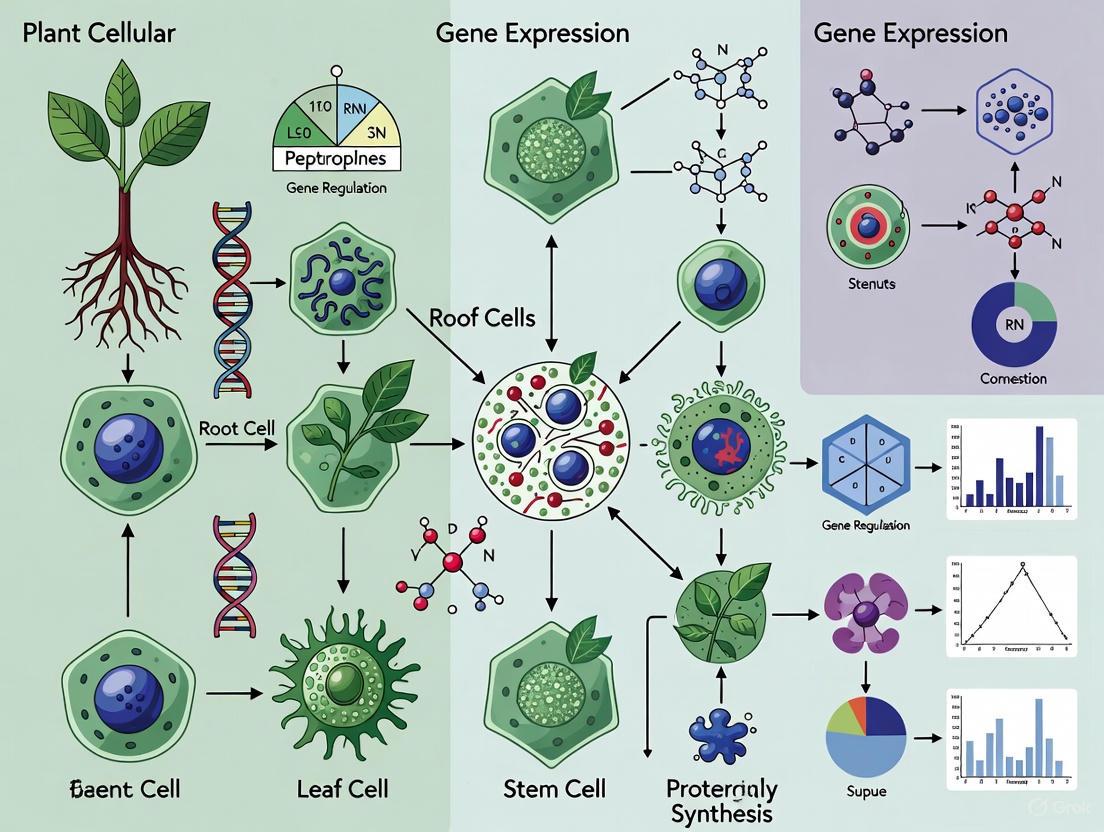
This article explores the transformative impact of single-cell RNA sequencing (scRNA-seq) on understanding plant cellular diversity and gene regulatory networks (GRNs).
Decoding Plant Cellular Diversity: Single-Cell Atlas and Gene Network Insights for Biomedical Research
Abstract
This article explores the transformative impact of single-cell RNA sequencing (scRNA-seq) on understanding plant cellular diversity and gene regulatory networks (GRNs). We examine foundational atlases mapping entire plant life cycles, methodological advances in network analysis, and computational optimization techniques like Bayesian optimization. By highlighting resources like the GreenCells database and comparative studies in maize and wheat, we provide a framework for researchers to leverage plant single-cell biology. The content connects plant-specific findings to broader implications for understanding cellular heterogeneity and gene regulation in biomedical contexts, offering insights for drug development professionals exploring fundamental biological principles.
Mapping the Cellular Landscape: Comprehensive Atlases of Plant Cell Types and Developmental Trajectories
The establishment of a comprehensive, single-cell spatial transcriptomic atlas for Arabidopsis thaliana marks a transformative moment in plant biology. For decades, the small flowering weed Arabidopsis has served as the foundational model organism for plant research, enabling discoveries in light response, hormonal control, and root architecture [1] [2]. However, a technological bottleneck has historically prevented researchers from comprehensively cataloging cell types and their gene expression profiles uniformly across developmental stages [1]. This limitation has now been overcome through the integration of advanced genomic technologies.
The newly published atlas, representing the work of Salk Institute researchers, provides an unprecedented view of plant development from seed to flowering adult [1] [3]. By capturing gene expression patterns of over 400,000 cells across ten developmental stages, this resource offers the scientific community a foundational dataset that reveals the striking molecular diversity of cell types and states throughout the complete plant life cycle [4] [5]. For researchers investigating plant cellular diversity and gene expression networks, this atlas provides an invaluable reference for contextualizing specialized studies within the broader spectrum of plant development.
Technical Approaches and Methodological Innovations
Integrated Omics Technologies
The power of the Arabidopsis Life Cycle Atlas stems from its synergistic application of complementary genomic technologies. Unlike previous studies limited to specific organs or tissues, this resource employed paired single-nucleus RNA sequencing (snRNA-seq) and spatial transcriptomics to achieve both cellular resolution and tissue context across the entire organism [3].
Single-nucleus RNA sequencing enabled the researchers to profile gene expression at the level of individual cells, identifying distinct cellular identities based on transcriptional signatures. This approach revealed 183 distinct clusters across all datasets, with median unique molecular identifiers (UMIs) of 916 per nucleus, indicating robust capture of transcriptomic information [3]. However, snRNA-seq requires tissue dissociation, which sacrifices native spatial context.
Spatial transcriptomics addressed this limitation by mapping gene activity within intact tissue structures, preserving the architectural relationships between cells and their neighbors. This technology allowed the team to validate cluster annotations and identify novel marker genes within their native tissue environments [1] [3]. The combination of these approaches facilitated confident annotation of 75% of the identified cell clusters, providing a validated framework for exploring plant cellular diversity [3] [5].
Experimental Design and Sampling Strategy
To capture the complete developmental trajectory, researchers collected samples at ten strategically chosen developmental stages representing critical transitions in the Arabidopsis life cycle [3]. The sampling framework included:
- Imbibed and germinating seeds
- Three stages of seedling development
- Developing and fully emerged rosettes
- Stem tissue
- Flowers at multiple developmental stages
- Developing siliques (seed pods) [3]
This comprehensive coverage enabled the identification of both universal transcriptional signatures conserved across recurrent cell types and organ-specific heterogeneity in gene expression patterns [3]. For each organ system, paired snRNA-seq and spatial transcriptomic datasets were generated, creating a uniquely powerful resource for hypothesis generation and validation.
Table: Experimental Sampling Strategy Across Arabidopsis Life Cycle
| Developmental Stage | Key Sampled Tissues/Organs | Primary Analysis Methods |
|---|---|---|
| Seed germination | Whole seed | snRNA-seq, Spatial transcriptomics |
| Early seedling | Hypocotyl, cotyledons | snRNA-seq, Spatial transcriptomics |
| Rosette formation | Leaves, shoot apical meristem | snRNA-seq, Spatial transcriptomics |
| Stem elongation | Stem, vascular tissue | snRNA-seq, Spatial transcriptomics |
| Flower development | Floral organs, meristems | snRNA-seq, Spatial transcriptomics |
| Silique development | Seed pods, developing seeds | snRNA-seq, Spatial transcriptomics |
Computational and Analytical Framework
Cluster annotation employed a multi-faceted approach to ensure accurate cell type identification. First, researchers compiled an extensive list of known cell-type and tissue-specific marker genes from previous studies and databases. Second, they calculated cell-type enrichment scores for each cluster based on these known markers. Third, they investigated newly identified cluster markers using previously generated dissection-based and cell-type-specific transcriptomic studies from TAIR and ePlant databases [3]. Finally, spatial validation of selected cluster markers confirmed their localization patterns within native tissue contexts.
This rigorous analytical framework allowed the team to move beyond simple cell type classification to explore cellular states—transient molecular phenotypes that reflect developmental progression, cell cycle status, or environmental responses without altering developmental potential [3]. The identification of these states provides unprecedented insight into the dynamic regulation of plant development.
Key Findings and Biological Insights
Cellular Diversity Across Development
The atlas reveals remarkable complexity in Arabidopsis cellular composition, identifying 183 distinct clusters representing specialized cell types and states [3]. Among these, 75% have been confidently annotated based on known markers and spatial validation, providing a comprehensive catalog of Arabidopsis cell types across development.
Analysis of recurrent cell types—such as epidermal and vascular cells that appear in multiple organs—revealed both conserved transcriptional signatures and organ-specific heterogeneity [3]. For example, the study identified epidermal cell markers with universal expression patterns across organs, while others showed restriction to specific contexts like seedling hypocotyls or cotyledons [3]. This nuanced understanding of cellular identity demonstrates how identical genetic programs can be modified to suit different tissue contexts.
The power of spatial transcriptomics enabled the discovery of previously uncharacterized cell-type-specific markers, including genes involved in seedpod development that had not been previously identified [1] [2]. These findings highlight how this atlas extends beyond mere cataloging to generate novel biological insights with potential applications in crop improvement and biotechnology.
Dynamic Regulatory Programs
By examining the entire life cycle rather than isolated snapshots, the researchers uncovered surprisingly dynamic transcriptional programs governing developmental transitions. The atlas captures gene expression changes associated with critical processes such as root hair development, leaf senescence, and the intricate differential growth patterns observed in structures like the apical hook of etiolated seedlings [3].
The apical hook, a transient structure that protects delicate shoot tissues during soil emergence, exemplifies the hidden complexity underlying plant morphogenesis. Spatial profiling of this structure revealed transient cellular states linked to developmental progression and hormonal regulation, providing a detailed model for understanding how localized growth patterns emerge from coordinated gene expression [3].
Functional validation experiments confirmed that genes identified through their cell-type and developmental stage-specific expression play essential roles in plant development, underscoring the predictive power of the atlas for identifying regulators of plant form and function [3] [5].
Table: Quantitative Overview of Atlas Data Resources
| Parameter | Scale/Number | Biological Significance |
|---|---|---|
| Sampled developmental stages | 10 | Covers complete life cycle from seed to senescence |
| Captured nuclei/cells | >400,000 | Represents comprehensive cellular diversity |
| Identified cell clusters | 183 | Distinct cell types and states |
| Annotated clusters | 75% (138/183) | Majority provided with confident cell type identity |
| New cell-type-specific markers validated | 109 examples | Novel gene-function relationships discovered |
Experimental Reagents and Research Toolkit
The creation of the Arabidopsis Life Cycle Atlas employed cutting-edge molecular and computational tools that can serve as a blueprint for similar efforts in other model organisms. Key reagents and methodologies include:
Genomic Technologies
Droplet-based Single-nucleus RNA Sequencing: This technology enabled high-throughput capture of transcriptomic data from individual nuclei, with median UMI counts of 916 per nucleus, ensuring robust gene expression detection [3]. The approach allowed profiling of tissues that are difficult to dissociate into intact single cells.
Sequencing-based Spatial Transcriptomics: Unlike single-cell methods that require tissue dissociation, this approach preserves the native spatial organization of cells while capturing genome-wide expression data, enabling direct correlation of transcriptional identity with tissue position [3].
Imaging-based Spatial Transcriptomics: Complementary to sequencing-based methods, these technologies provide higher spatial resolution for validating marker gene expression patterns in specific cell types within their architectural context [3].
Analytical Frameworks
Integrative Clustering Algorithms: Computational pipelines that combine data from multiple developmental stages to identify both stable cell types and transient cellular states [3].
Cell-Type Enrichment Scoring: Systematic approaches to assign cell identity based on known markers, facilitating consistent annotation across different organs and developmental stages [3].
Cross-Reference Validation: Integration with existing databases (TAIR, ePlant) and previously published cell-type-specific studies to verify cluster annotations and identify novel markers [3].
Research Applications and Future Directions
Foundational Resource for Hypothesis Generation
The Arabidopsis Life Cycle Atlas serves as a powerful foundation for exploring cellular differentiation, environmental responses, and genetic perturbations at unprecedented resolution [3] [5]. As Senior author Joseph Ecker notes, "Our study changes that. We created a foundational gene expression dataset of most cell types, tissues, and organs, across the spectrum of the Arabidopsis life cycle" [1] [2].
The atlas enables researchers to identify genes with highly specific expression patterns limited to particular cell types, developmental stages, or environmental conditions. These patterns can inform targeted functional studies using reverse genetics approaches, as demonstrated by the functional validation of genes uniquely expressed in specific cellular contexts [3].
Agricultural and Environmental Applications
Understanding the fundamental principles of plant development has direct implications for crop improvement and environmental sustainability. The dynamic transcriptional programs identified in the atlas, particularly those governing growth patterns and secondary metabolite production, provide potential targets for biotechnology approaches aimed at enhancing crop yield, stress resilience, or nutritional content [1] [2].
As co-first author Natanella Illouz-Eliaz stated, "What excites me most about this work is that we can now see things we simply couldn't see before. Imagine being able to watch where up to a thousand genes are active all at once, in the real tissue and cell context of the plant" [1] [4]. This capability opens new avenues for understanding how plants respond to environmental challenges and how these responses might be engineered for improved agricultural performance.
Integration with Complementary Approaches
The atlas is designed for integration with other data types, including genome-wide localization studies of transcription factors, epigenetic markers, and protein-protein interaction networks. Such integrative analyses promise to elucidate the complete regulatory hierarchies controlling plant development [3] [6].
The availability of this resource coincides with growing community efforts such as the Plant Cell Atlas initiative and specialized conferences like the Gordon Research Conference on Single-Cell Approaches in Plant Biology, creating synergistic opportunities for advancing plant biology through shared data and collaborative analysis [7].
Visualizing Experimental and Analytical Workflows
Atlas Construction Workflow
Atlas Data Integration and Applications
The Arabidopsis Thaliana Life Cycle Atlas represents a paradigm shift in plant biology research, providing the scientific community with an unparalleled resource for investigating plant development at cellular resolution. By integrating single-nucleus transcriptomics with spatial validation across the complete developmental continuum, this atlas reveals both the remarkable diversity of plant cell types and the dynamic regulatory programs that orchestrate their formation and function.
As a foundational dataset, it enables researchers to contextualize specialized studies within the broader framework of plant development, identify novel genes with highly specific expression patterns, and generate testable hypotheses about the regulatory networks controlling plant form and function. The publicly available nature of this resource ensures that it will serve as a cornerstone for plant biology research, with potential applications ranging from basic science to agricultural biotechnology and environmental sustainability.
For the research community investigating plant cellular diversity and gene expression networks, the atlas provides both a reference framework and an analytical toolkit for advancing our understanding of how complex multicellular organisms develop from a single fertilized egg to a mature, reproductive adult.
Single-Cell RNA Sequencing Reveals Nine Distinct Cell Types in Maize Root Development
Plant development and adaptation to environmental stresses are governed by complex genetic programs that operate with cellular specificity. Unraveling this complexity requires moving beyond bulk tissue analysis to technologies that can resolve transcriptional activity at the individual cell level. Single-cell RNA sequencing (scRNA-seq) has emerged as a transformative approach for characterizing cellular heterogeneity, identifying novel cell types, and reconstructing developmental trajectories in multicellular organisms [8].
Within plant biology, maize (Zea mays) serves as both a fundamental model for basic research and a critically important crop species. Its root system represents a particularly compelling subject for scRNA-seq investigation, as roots not only provide structural anchorage but also mediate water and nutrient uptake, stress perception, and adaptive responses [9] [10]. Understanding the cellular diversity and gene regulatory networks underlying root development offers potential molecular targets for enhancing crop resilience and productivity [9].
This technical guide synthesizes recent advancements in mapping the maize root transcriptome at single-cell resolution, focusing specifically on studies that have identified nine distinct cell types during root development. We present comprehensive data on cell-type-specific markers, detailed experimental methodologies, and computational approaches for analyzing cellular trajectories and responses to environmental stimuli.
Experimental Design and Workflow
Core Experimental Protocol
The standard workflow for scRNA-seq analysis of maize roots involves several critical stages, each requiring optimization for plant tissues [10] [11]:
Plant Material and Growth Conditions: Maize seeds (typically B73 inbred line) are sterilized and germinated in the dark at a defined temperature (e.g., 28°C) for a specific duration (commonly 4 days) until roots reach approximately 4 cm in length [10]. For stress treatment studies, seedlings may be exposed to specific stressors—such as heat stress (42°C for 2 hours)—before harvesting [10].
Root Tissue Dissection and Protoplast Isolation: The apical 4 mm of root tips, encompassing the meristematic and elongation zones, is excised using a scalpel. Tissue is immediately transferred to an enzyme solution (e.g., containing cellulase, pectinase, and hemicellulase) for protoplasting. Digestion is typically performed in the dark with gentle shaking (40-50 rpm) for 2-4 hours [10] [11]. The protoplasting process is a critical step that requires careful optimization to maintain cell viability while ensuring sufficient yield.
Protoplast Purification and Quality Control: The protoplast suspension is filtered through a mesh (30-40 μm) to remove undigested tissue and debris. Protoplasts are washed and resuspended in an appropriate buffer. Cell viability, which should exceed 80%, is assessed using trypan blue staining, and concentration is adjusted to the target range (e.g., 1,000-1,200 cells/μL) for the specific scRNA-seq platform [10].
Single-Cell Library Preparation and Sequencing: The purified protoplasts are loaded onto a microfluidic device (10x Genomics Chromium Controller) to partition individual cells into droplets with barcoded beads. According to the manufacturer's protocol, single-cell RNA-seq libraries are constructed. Sequencing is performed on an Illumina platform (NovaSeq 6000 or HiSeq 4000) to a depth sufficient to confidently detect genes expressed in individual cells, with studies typically reporting median genes per cell ranging from 2,796 to 3,492 [10].
Experimental Workflow Diagram
The diagram below illustrates the complete experimental workflow for scRNA-seq analysis of maize roots, from seedling preparation to data interpretation.
Comprehensive Cell Type Identification and Characterization
The Maize Root Cell Atlas
scRNA-seq profiling of maize root tips has consistently identified nine major cell types that form the basic organizational structure of the root. These cell types can be visualized and distinguished through dimensionality reduction techniques such as UMAP (Uniform Manifold Approximation and Projection) and t-SNE (t-Distributed Stochastic Neighbor Embedding), which group cells based on transcriptional similarity [10].
Table 1: Nine Major Cell Types Identified in Maize Root Tips via scRNA-seq
| Cell Type | Key Marker Genes | Biological Function | Developmental Zone |
|---|---|---|---|
| Epidermis | Zm00001d032822 [10] | Interface with soil environment, root hair formation | Maturation zone |
| Cortex | Zm00001d017508 [10], Zm00001d012081 (PLT2) [10] | Nutrient storage and transport, stress response | Meristematic to maturation zone |
| Endodermis | Zm00001d050168 [10] | Selective barrier for nutrient transport | Maturation zone |
| Pericycle | Zm00001d005472 [10] | Origin of lateral roots | Meristematic to elongation zone |
| Phloem | Zm00001d037032 [10] | Transport of photosynthetic products | Entire root axis |
| Xylem | Zm00001d032672 [10], Zm00001d035689 [10] | Water and mineral transport | Maturation zone |
| Stele (Vascular) | Zm00001d021192 (umc2686b) [10] | Vascular tissue formation and patterning | Meristematic zone |
| Columella | Zm00001d004089 (PRP18) [10] | Gravity sensing | Root cap |
| Meristematic | High cyclin gene expression [9] | Active cell division | Meristematic zone |
The identification of these cell types relies on the detection of cluster-specific marker genes—transcripts that show significantly higher expression in one cell population compared to all others. These markers are validated through multiple approaches, including comparison to previously established markers from other studies [10] [1], in situ hybridization [10], and spatial transcriptomic technologies that preserve the spatial context of gene expression [11].
Hormonal Regulation and Interspecies Comparisons
Analysis of cell-type-specific transcriptomes has revealed distinct expression patterns of hormone-related genes across different root cell types in maize. These patterns diverge from those observed in the model plants Arabidopsis thaliana and rice, suggesting species-specific adaptations in hormonal regulation [9]. Such comparative analyses highlight both conserved and divergent genetic programs underlying root development in monocots and dicots [12] [13].
For example, a comparative analysis of root cells between maize and rice identified 57, 216, and 80 conserved orthologous genes specifically expressed in root hair, endodermis, and phloem cells, respectively [12]. This conservation suggests fundamental genetic programs required for the formation and function of these cell types across species, while species-specific genes may underlie specialized adaptations.
Analytical Frameworks for Developmental and Stress Biology
Pseudotime Analysis of Developmental Trajectories
A powerful application of scRNA-seq data is the reconstruction of developmental trajectories using computational algorithms such as pseudotime analysis. This approach orders individual cells along a continuous path based on transcriptional similarity, inferring the progression from less differentiated to more differentiated states without requiring time-series sampling [9] [12].
In maize roots, pseudotime analysis has revealed the developmental trajectory from meristematic cortex cells to mature cortex cells, identifying candidate regulators of cell fate determination along this pathway [9]. Similarly, analysis of epidermal cells has shown that root hair cells differentiate from a subset of epidermal cells, following a continuous pseudotime series that begins with meristematic zone cells [12].
Table 2: Key Analytical Methods for scRNA-seq Data in Plant Root Studies
| Analytical Method | Application | Key Insights in Maize Roots |
|---|---|---|
| Pseudotime Analysis | Reconstructs developmental trajectories and temporal ordering of cells | Cortex and epidermis differentiation pathways; transition from meristematic to mature cells [9] [12] |
| Weighted Gene Co-expression Network Analysis (WGCNA) | Identifies modules of co-expressed genes and hub genes | Zm00001d021775 (STP4) identified as hub gene in mature cortex [9] |
| Differential Expression Analysis | Identifies genes with significant expression changes between conditions | Cell-type-specific heat stress responses; cortex identified as most responsive tissue [10] |
| Interspecies Comparison | Reveals conserved and divergent expression patterns | 57, 216, and 80 conserved orthologs in root hair, endodermis, and phloem of maize and rice [12] |
Cell-Type-Specific Responses to Environmental Stresses
scRNA-seq technology has enabled unprecedented resolution in studying how different root cell types respond to environmental challenges. Under heat stress (HS), maize roots show particularly pronounced transcriptional changes in the cortex, which exhibits the highest number of differentially expressed genes among all root cell types [10].
This cell-type-specific response pattern extends to other environmental factors. Research in rice has demonstrated that growth in natural soil versus homogeneous gel conditions triggers major expression changes primarily in outer root cell types (epidermis, exodermis, sclerenchyma, and cortex), with these changes involving genes related to nutrient homeostasis, cell wall integrity, and defence responses [11]. This suggests that outer root tissues serve as the first line of environmental sensing and adaptation.
Gene Co-expression Networks and Hub Gene Identification
Beyond identifying cell types, scRNA-seq data enables the construction of gene co-expression networks that reveal functional relationships between genes. Weighted Gene Co-expression Network Analysis (WGCNA) can identify modules of co-expressed genes that often participate in related biological processes [9] [13].
Application of WGCNA to maize root scRNA-seq data identified Zm00001d021775, which encodes a sugar transport protein (STP4), as a hub gene in the mature cortex [9]. Hub genes typically occupy central positions in co-expression networks and often play critical regulatory roles. Functional inference suggests that STP4 promotes early seedling growth by facilitating glucose transport into glycolysis and the TCA cycle [9], highlighting how network analysis can pinpoint key regulatory genes for functional validation.
The Scientist's Toolkit: Essential Research Reagents and Solutions
Successful scRNA-seq experiments in plant roots require carefully selected reagents and materials optimized for challenging plant tissues. The following table details essential solutions used in the featured studies.
Table 3: Essential Research Reagents for Plant Root scRNA-seq Studies
| Reagent/Category | Specific Examples | Function and Application Notes |
|---|---|---|
| Enzyme Solutions | Cellulase, Pectinase, Hemicellulase [10] [11] | Digest cell wall to release protoplasts; concentration and incubation time require optimization for different root tissues and species. |
| Protoplast Stabilizers | MgCl₂, Sorbitol, Mannitol [10] | Maintain osmotic balance and membrane integrity during and after protoplast isolation. |
| Cell Viability Assays | Trypan Blue Exclusion [10] | Assess protoplast health and integrity prior to sequencing; viability >80% typically required. |
| Single-Cell Platforms | 10x Genomics Chromium [10] | Microfluidic partitioning of individual cells with barcoded beads for library preparation. |
| Spatial Validation Tech | Molecular Cartography, Multiplexed FISH [11] | Validate cell-type markers and visualize spatial expression patterns in intact tissues. |
| Cell-Type Markers | Zm00001d017508 (Cortex) [10], Zm00001d032822 (Epidermis) [10] | Validate cell type identities through in situ hybridization or spatial transcriptomics. |
Signaling Pathways in Root Development and Stress Response
The transcriptional programs identified through scRNA-seq analysis operate within broader signaling networks that coordinate root development and stress adaptation. The diagram below integrates key signaling components and their interactions across different root cell types based on scRNA-seq findings.
This integrated view of root signaling highlights how external stimuli are perceived by specific cell types (particularly outer tissues like epidermis and cortex), leading to transcriptional changes that coordinate developmental adjustments and stress adaptation across the root system.
Single-cell RNA sequencing has fundamentally transformed our ability to dissect the cellular complexity of maize roots, providing unprecedented resolution in identifying distinct cell types, characterizing their transcriptional identities, and unraveling their developmental trajectories. The consistent identification of nine major cell types across studies establishes a foundational atlas for maize root development.
The analytical frameworks and technical protocols detailed in this guide provide researchers with essential methodologies for exploring plant development and stress responses at cellular resolution. As these technologies continue to evolve and integrate with other single-cell modalities, they will undoubtedly yield deeper insights into the genetic programs that govern cellular specialization in plants, ultimately informing strategies for enhancing crop resilience and productivity through targeted manipulation of specific root cell types and pathways.
The fundamental question of how genetically identical cells within a multicellular plant adopt distinct fates and functions lies at the heart of developmental biology. Cellular heterogeneity—the molecular diversity among individual cells—drives the specialization necessary for tissue formation, organogenesis, and environmental adaptation. Until recently, plant biologists relied primarily on bulk transcriptomic analyses that averaged gene expression across thousands to millions of cells, effectively masking the critical nuances of individual cell states. The advent of single-cell RNA sequencing (scRNA-seq) and related spatial transcriptomic technologies has revolutionized our capacity to dissect this complexity at unprecedented resolution, enabling the identification of rare cell populations, transient states, and the precise trajectories through which cells transition during development.
This technical guide examines the integration of single-cell transcriptomics with developmental pseudotime analysis for reconstructing cell fate decisions in plants. By providing a comprehensive framework for experimental design, computational analysis, and biological interpretation, we aim to equip researchers with the methodologies needed to explore the dynamic processes of plant development at cellular resolution. Within the broader context of plant cellular diversity research, these approaches are revealing the fundamental gene regulatory networks that govern how plants build their bodies, respond to environmental challenges, and ultimately achieve their remarkable developmental plasticity.
Quantitative Landscape of Single-Cell Studies in Plants
Recent applications of single-cell technologies in plant systems have generated foundational datasets capturing diverse developmental processes and environmental responses. The following table summarizes key quantitative findings from recent pioneering studies that exemplify the scale and resolution now achievable in plant single-cell research.
Table 1: Key Quantitative Findings from Recent Plant Single-Cell Studies
| Study System | Technology Used | Cell/Nuclei Number | Cell Types/States Identified | Key Biological Insight |
|---|---|---|---|---|
| Arabidopsis thaliana Life Cycle Atlas [1] [14] | Single-nucleus & Spatial Transcriptomics | ~400,000 nuclei | 183 clusters; 75% annotated | Comprehensive molecular map from seed to silique; revealed organ-specific heterogeneity |
| Maize Root Development [9] | scRNA-seq | Not specified | 9 cell types; 10 transcriptionally distinct clusters | Identified Zm00001d021775 (STP4) as hub gene for glucose transport in mature cortex |
| Arabidopsis Callus Regeneration [15] | scRNA-seq + UMAP clustering | Not specified | Multiple callus cell states | Trajectory from initiation to greening; environmental factors (O₂, light) regulate progression |
| Arabidopsis Immune Response [16] | snMultiome (RNA+ATAC) + MERFISH | 65,061 cells | 429 subclusters | Identified rare PRIMER cells and bystander cells coordinating immune responses |
| Moss 2D-to-3D Transition [17] | scRNA-seq | >17,000 cells | Major vegetative tissues | Pseudotime revealed candidate genes determining 2D tip elongation vs. 3D bud differentiation |
These datasets demonstrate how single-cell approaches are being applied across plant species and biological processes, consistently revealing greater cellular complexity than previously recognized and providing quantitative frameworks for investigating developmental trajectories.
Core Methodologies: From Tissue to Trajectory
Experimental Design and Tissue Processing
The foundation of any successful single-cell study lies in robust experimental design and tissue processing. For plant systems, this presents unique challenges due to cell walls, diverse tissue types, and secondary metabolites that can interfere with downstream applications.
Protoplast Isolation and Nuclei Extraction: Two primary approaches exist for single-cell suspension preparation: protoplast isolation and nuclei extraction. Protoplast isolation involves enzymatic digestion of cell walls using combinations of cellulases, pectinases, and hemicellulases, but can induce stress responses that alter transcriptional profiles [18]. The recently developed FX-Cell method improves protoplast preparation for challenging species and tissues [18]. Alternatively, nuclei extraction bypasses wall digestion and is particularly valuable for tissues with complex architecture or high secondary metabolite content [14]. For immune response studies, rapid nuclei isolation protocols have been developed to minimize transcriptional changes during processing [16].
Single-Cell and Single-Nucleus RNA Sequencing: The core sequencing methodologies involve capturing individual cells or nuclei in nanoliter droplets (10x Genomics) or microwells, followed by barcoded reverse transcription, library preparation, and high-throughput sequencing. The choice between scRNA-seq (capturing cytoplasmic mRNA) and snRNA-seq (capturing nuclear transcript) depends on research goals—scRNA-seq provides greater gene detection sensitivity, while snRNA-seq is less biased by transcript size and avoids digestion-induced artifacts [14].
Multiomic Integration: Advanced studies now combine snRNA-seq with additional modalities such as single-nucleus ATAC-seq (snATAC-seq) for chromatin accessibility profiling [16]. This snMultiome approach simultaneously captures both transcriptome and epigenome from the same nuclei, enabling direct correlation of transcriptional changes with regulatory element activity. When combined with spatial transcriptomics techniques like MERFISH [16] or sequencing-based spatial methods [14], this provides multidimensional data on gene expression patterns within their native tissue context.
Computational Analysis of Single-Cell Data
Quality Control and Normalization: Raw sequencing data undergoes quality assessment using tools like FastQC, followed by alignment to reference genomes (TAIR10 for Arabidopsis) [19] and unique molecular identifier (UMI) counting. Quality thresholds typically include minimum genes per cell, maximum mitochondrial transcript percentage, and removal of doublets. Normalization accounts for technical variation in sequencing depth using methods like SCTransform or variance stabilizing transformation.
Dimensionality Reduction and Clustering: Post-normalization, highly variable genes are identified for dimensionality reduction using principal component analysis (PCA). Cells are then clustered in reduced dimension space using graph-based methods (e.g., Louvain algorithm) or k-means clustering. Visualization is achieved through UMAP (Uniform Manifold Approximation and Projection) [15] or t-SNE plots, which project high-dimensional data into two dimensions while preserving neighborhood relationships.
Cell Type Annotation and Marker Identification: Clusters are annotated to known cell types using curated marker gene databases [14]. Differential expression analysis between clusters identifies cluster-specific markers, with statistical significance determined using methods like Wilcoxon rank-sum test or MAST. Cell-type enrichment scores can systematically infer cell identities [14]. Spatial transcriptomics validates cluster annotations by confirming expected tissue localization of marker genes [14].
Pseudotime Analysis and Trajectory Reconstruction
Algorithm Selection: Pseudotime analysis infers developmental trajectories by ordering cells along a continuum based on transcriptional similarity, reconstructing their progression through biological processes without time-series sampling. Popular algorithms include Monocle3, Slingshot, and PAGA, which employ different mathematical approaches—ranging from reversed graph embedding to minimum spanning trees—to model cell-state transitions.
Trajectory Analysis: The pseudotime trajectory is typically visualized as a branched path, with nodes representing cell states and edges indicating possible transitions. Cells are positioned along this path based on their progression through the process, with branch points indicating fate decisions. In maize root development, pseudotime analysis successfully reconstructed the developmental trajectory from early to mature cortex, revealing candidate regulators of cell fate determination [9]. Similarly, in moss, pseudotime analysis revealed larger numbers of candidate genes determining cell fates for 2D tip elongation or 3D bud differentiation [17].
Key Regulatory Network Identification: Along reconstructed trajectories, expression patterns of transcription factors and signaling components are analyzed to identify potential fate regulators. Weighted Gene Co-expression Network Analysis (WGCNA) [9] [19] [17] can complement pseudotime analysis by identifying modules of co-expressed genes that correlate with developmental progression. In maize roots, WGCNA identified Zm00001d021775 (sugar transport protein STP4) as a hub gene in the mature cortex [9], while similar approaches in moss identified a module connecting β-type carbonic anhydrases with auxin during the 2D-to-3D growth transition [17].
Signaling Pathways in Cell Fate Determination
The integration of single-cell transcriptomics with pseudotime analysis has elucidated key signaling pathways and regulatory networks that guide cell fate decisions in various plant developmental contexts. The following diagram illustrates the core regulatory network extracted from multiple studies:
Diagram 1: Regulatory Network Governing Plant Cell Fate Decisions
This integrated network illustrates how external and internal signals converge on transcription factors that define distinct cell states during development, regeneration, and immune responses. The spatial organization of these states, such as the PRIMER-bystander cell communication during immunity [16], emerges as a critical principle in plant tissue function.
Research Reagent Solutions for Single-Cell Plant Studies
The successful implementation of single-cell technologies requires specialized reagents and computational tools. The following table provides essential research solutions for designing and executing single-cell studies in plant systems.
Table 2: Essential Research Reagents and Tools for Plant Single-Cell Studies
| Category | Specific Tool/Reagent | Function/Application | Example Use |
|---|---|---|---|
| Tissue Dissociation | Cellulase/Pectinase Mix | Enzymatic cell wall digestion for protoplast isolation | Root tip protoplasting for scRNA-seq [9] |
| Nuclei Isolation | Sucrose Gradient Medium | Purification of intact nuclei for snRNA-seq | Rapid nuclei isolation for immune studies [16] |
| Single-Cell Platform | 10x Genomics Chromium | Partitioning cells/nuclei into droplets with barcoded beads | Arabidopsis life cycle atlas [14] |
| Spatial Transcriptomics | MERFISH/Sequencing-based | In situ mRNA localization within intact tissue | Immune cell state mapping [16] |
| Multiomic Technology | 10x Multiome (ATAC+RNA) | Simultaneous profiling of chromatin and transcriptome | Immune response regulatory logic [16] |
| Reference Genome | TAIR10/Ensembl Plants | Read alignment and gene expression quantification | Arabidopsis transcriptome analysis [19] |
| Analysis Pipeline | Seurat/Scanpy | scRNA-seq data preprocessing, normalization, and clustering | Cell type identification across development [14] |
| Trajectory Analysis | Monocle3/Slingshot | Pseudotime reconstruction and branch point analysis | Maize root development trajectory [9] |
| Network Analysis | WGCNA R Package | Co-expression network module and hub gene identification | Light signaling networks [19] |
The integration of single-cell technologies with developmental pseudotime analysis represents a paradigm shift in plant biology, transforming our understanding of cellular heterogeneity and fate decisions. These approaches have moved beyond merely cataloging cell types to actively revealing the dynamic trajectories and regulatory logic that underpin plant development, regeneration, and environmental responses. The methodologies outlined in this technical guide provide a framework for researchers to investigate these processes across diverse plant species and biological contexts.
As these technologies continue to evolve, several frontiers are emerging. The integration of single-cell proteomics, metabolomics, and epigenomics will provide multidimensional views of cell states. Spatial technologies will advance to subcellular resolution, revealing how molecular localization influences fate decisions. Computational methods will improve in predicting fate outcomes from early transcriptional states and in integrating single-cell data across species to identify conserved and divergent developmental principles. Finally, the application of these approaches to crops and non-model species will unlock new opportunities for engineering desirable traits through targeted manipulation of cell fate programs. Through continued methodological refinement and biological exploration, the dissection of cellular heterogeneity and developmental trajectories will undoubtedly yield profound insights into the fundamental principles of plant life.
Spatial transcriptomics (ST) represents a revolutionary class of technologies that integrates high-throughput transcriptomics with high-resolution tissue imaging, enabling the precise mapping of gene expression patterns within the native architectural context of tissues [20]. Unlike traditional bulk RNA sequencing, which averages gene expression across entire tissues or organs, and single-cell RNA sequencing (scRNA-seq), which requires tissue dissociation and loses spatial context, ST preserves crucial spatial information while providing transcriptome-wide data [20]. This technological advancement overcomes a fundamental limitation in biological research by allowing researchers to observe where genes are expressed within intact tissue sections, providing unprecedented views of cellular heterogeneity, organization, and communication.
In plant biology, where cellular identity and function are deeply intertwined with positional context, spatial transcriptomics offers particular promise for unraveling the complex regulatory networks that govern development, environmental responses, and specialized metabolism [14] [20]. The application of ST in plant systems has lagged behind mammalian studies due to unique challenges including rigid cell walls, expansive vacuoles that dilute intracellular content, and abundant polyphenols that inhibit enzymatic reactions [20]. However, recent technological innovations are rapidly overcoming these barriers, opening new frontiers for investigating plant cellular diversity and gene expression networks within their authentic architectural contexts.
Fundamental Principles and Technological Evolution
Spatial transcriptomics technologies have evolved through three major methodological paradigms, each with distinct advantages and limitations for plant research applications.
Technology Classifications and Principles
Table: Major Spatial Transcriptomics Technological Approaches
| Technology Type | Core Principle | Resolution | Key Plant-Specific Considerations |
|---|---|---|---|
| Microdissection-Based | Laser or mechanical isolation of cells from defined spatial regions | Regional to single-cell | Compatible with cell walls; allows analysis of specific tissue domains |
| In Situ Hybridization | Hybridization of labeled probes to target transcripts | Single-molecule | Probe penetration through cell walls can be challenging |
| In Situ Capture | Spatially-barcoded oligo arrays capture mRNA from tissue sections | Single-cell to subcellular | Requires optimized tissue sectioning; compatible with various plant tissues |
| In Situ Sequencing | Amplification and sequencing of transcripts directly in tissue | Subcellular | Limited by cellular crowding; works best with thin sections |
Microdissection-Based Technologies
The earliest approaches to spatial transcriptomics relied on physical microdissection of tissue regions. Laser Capture Microdissection (LCM) pioneered this field by enabling direct cutting of target cells under microscopic guidance [20]. Subsequent refinements led to Tomo-seq, which improved quantitative accuracy and spatial resolution through enhanced cDNA library construction processes [20]. For plant applications, methods like Geo-seq combine LCM with single-cell RNA-seq to resolve transcriptomes in specific regions at subcellular-level resolution [20]. These approaches remain valuable for plant studies because they bypass cell wall-related limitations and allow precise analysis of histologically defined tissue domains.
In Situ Hybridization Technologies
In situ hybridization (ISH) technologies have progressed from rudimentary chromogenic assays to highly multiplexed fluorescent platforms that enable precise spatial mapping of nucleic acids within intact tissues [20]. Sequential Fluorescence In Situ Hybridization (seqFISH) uses repeated hybridization-imaging-stripping cycles with binary encoding to dramatically expand the number of detectable transcripts [20]. Multiplexed Error-Robust Fluorescence In Situ Hybridization (MERFISH) further enhanced this approach by incorporating error-robust codes and combinatorial labeling to improve accuracy and speed [20]. These technologies offer single-molecule resolution but face challenges in plant tissues due to limited probe penetration through cell walls.
In Situ Capture Technologies
In situ capture methods represent the most widely adopted ST platforms today. Technologies like 10× Genomics Visium utilize spatially barcoded oligo arrays that capture mRNA from tissue sections mounted on specialized slides [20]. By encoding positional barcodes and unique molecular identifiers, these methods provide absolute transcript counts instead of pseudo-temporal inferences alone [20]. The primary advantage for plant researchers is the ability to work with entire tissue sections without requiring specialized probes for each target, though optimization of plant tissue preparation remains essential for success.
Experimental Workflow for Plant Spatial Transcriptomics
Figure: Complete Spatial Transcriptomics Workflow for Plant Tissues
The experimental pipeline for plant spatial transcriptomics requires careful optimization at each step to address plant-specific challenges. Tissue preparation begins with selection of appropriate plant material at the desired developmental stage, followed by rapid preservation to maintain RNA integrity and spatial context [20]. For most ST platforms, optimal cryosectioning parameters must be established to overcome the challenges posed by rigid plant cell walls and varying tissue densities [20]. The permeabilization step is particularly critical in plant tissues, as cell walls present a formidable barrier to enzyme penetration; optimization requires balancing sufficient permeability for cDNA synthesis with preservation of tissue morphology [20]. Following library preparation and sequencing, the computational pipeline involves spatial alignment of sequencing data with tissue morphology images, followed by specialized analysis tools designed to extract biologically meaningful patterns from the spatial expression data [21].
Application in Plant Biology: The Arabidopsis Life Cycle Atlas
A landmark application of spatial transcriptomics in plant research is the comprehensive atlas of the Arabidopsis thaliana life cycle recently published by Salk Institute researchers [1] [14]. This resource exemplifies how ST technologies can transform our understanding of plant development and cellular differentiation.
Experimental Design and Methodological Approach
The Arabidopsis atlas was constructed using paired single-nucleus and spatial transcriptomic datasets spanning ten developmental stages, from imbibed seeds through developing siliques [14]. The researchers profiled over 400,000 nuclei from all organ systems and tissues, creating a comprehensive view of transcriptional dynamics across the entire plant life cycle [1] [14]. This experimental design enabled not only the characterization of cellular identities but also the investigation of developmental trajectories and transitional states.
The methodology integrated single-nucleus RNA sequencing (snRNA-seq) with sequencing-based spatial transcriptomics to leverage the complementary strengths of both approaches [14]. While snRNA-seq provided high-resolution characterization of individual cellular transcriptomes, spatial transcriptomics anchored these findings within the native tissue architecture, allowing validation of putative marker genes and investigation of spatial relationships between cell types [14]. This integrated approach was essential for confident annotation of 75% of the identified cell clusters and revealed striking molecular diversity in cell types and states across development [14].
Key Findings and Biological Insights
The Arabidopsis life cycle atlas yielded several fundamental insights into plant biology:
Identification of Novel Cell-Type Markers: The study identified and spatially validated 109 new cell-type and tissue-specific marker genes across all organs, greatly expanding the molecular toolkit for studying plant cell identity [14]. These markers included genes with previously unknown functions that exhibited highly specific expression patterns.
Discovery of Context-Dependent Cellular Identities: The research demonstrated that some molecular markers do not universally specify cell types but rather exhibit cell-type-specific expression only within specific organ contexts [14]. This finding challenges simplistic definitions of cell identity and highlights the importance of spatial and developmental context in determining cellular function.
Characterization of Developmental Transitions: By profiling multiple timepoints, the atlas captured dynamic transcriptional programs governing developmental processes such as secondary metabolite production and differential growth patterns [14]. For example, detailed spatial profiling of the apical hook structure revealed transient cellular states linked to developmental progression and hormonal regulation.
Validation of Predictive Power: Functional validation of genes uniquely expressed within specific cellular contexts confirmed essential developmental roles, underscoring how spatial transcriptomics data can generate testable hypotheses about gene function [14].
Table: Key Quantitative Findings from the Arabidopsis Life Cycle Atlas
| Parameter | Value | Biological Significance |
|---|---|---|
| Developmental Stages | 10 | Comprehensive coverage from seed to senescence |
| Nuclei Profiled | 400,000+ | Extensive sampling across all organ systems |
| Cell Clusters Identified | 183 | High-resolution cellular taxonomy |
| Annotated Clusters | 75% (138/183) | Majority assigned to known or novel cell types |
| New Marker Genes | 109 | Expanded molecular toolkit for cell identity |
| Spatial Validation Rate | High confidence | Robust confirmation of computational predictions |
Computational Methods for Spatial Data Analysis
The interpretation of spatial transcriptomics data requires specialized computational approaches that address the unique challenges of spatial data integration, pattern recognition, and biological interpretation.
Data Alignment and Integration Tools
A critical first step in spatial transcriptomics analysis involves aligning and integrating multiple tissue slices to reconstruct three-dimensional tissue architecture from two-dimensional sections [21]. This process is computationally challenging due to tissue heterogeneity, spatial warping, and differences in experimental protocols. Recent reviews have identified at least 24 computational tools specifically designed for ST data alignment and integration, which can be categorized into three methodological frameworks [21]:
Statistical Mapping Approaches (10 tools): These methods, including GPSA, Eggplant, and PRECAST, use statistical models to align spatial coordinates and integrate gene expression patterns across multiple slices [21]. They are particularly effective for handling technical variability and batch effects.
Image Processing & Registration Methods (4 tools): Tools like STIM, STaCker, and STalign apply computer vision techniques to align tissue sections based on morphological features, enabling integration of ST data with histological images [21].
Graph-Based Approaches (10 tools): Methods including SpatiAlign, STAligner, and Graspot represent tissue structure as graphs and use graph-matching algorithms to align spatial datasets [21]. These approaches effectively capture cellular neighborhood relationships.
Specialized Tools for Subcellular Spatial Patterns
For high-resolution spatial transcriptomics data reaching subcellular resolution, specialized computational tools have been developed to identify and interpret functionally relevant spatial patterns of transcript distribution:
CellSP is a recently developed computational framework that enables module discovery and visualization for subcellular spatial transcriptomics data [22]. This tool introduces the concept of "gene-cell modules" - sets of genes with coordinated subcellular transcript distributions across many cells [22]. The CellSP workflow involves three key steps:
Subcellular Pattern Discovery: Using statistical tools (SPRAWL and InSTAnT) to identify four types of subcellular patterns - peripheral, radial, punctate, and central - describing transcript distributions within individual cells [22].
Module Discovery: Applying a biclustering algorithm called LAS (Large Average Submatrices) to identify gene sets that exhibit the same type of subcellular pattern in the same set of cells [22].
Module Characterization: Employing Gene Ontology enrichment tests and machine learning classifiers to biologically interpret the discovered modules and characterize their functional significance [22].
This approach has proven effective for identifying functionally significant modules across diverse tissues, including those related to myelination, axonogenesis, and synapse formation in mouse brain studies [22]. The same principles are readily applicable to plant systems for investigating processes such as cell wall formation, vascular development, and trichome differentiation.
Research Reagent Solutions for Spatial Transcriptomics
Table: Essential Research Reagents and Platforms for Plant Spatial Transcriptomics
| Reagent/Platform | Function | Plant-Specific Considerations |
|---|---|---|
| 10× Genomics Visium | Spatial barcoding and capture | Requires optimization of plant tissue section thickness and permeabilization |
| MERFISH Probes | Multiplexed error-robust fluorescence in situ hybridization | Probe design must account for plant-specific transcripts; cell wall penetration enhancers may be needed |
| Cryopreservation Media | Tissue preservation for cryosectioning | Formulations optimized for plant cells with rigid walls and high water content |
| Cell Wall Digesting Enzymes | Enhanced probe penetration | Controlled partial digestion to preserve morphology while improving accessibility |
| Spatial Barcode Primers | cDNA synthesis with spatial information | Must be compatible with plant mRNA features (e.g., different polyadenylation patterns) |
| Nuclear Isolation Buffers | Single-nucleus RNA sequencing | Effective isolation of intact nuclei from plant tissues with diverse secondary metabolites |
Future Perspectives and Concluding Remarks
Spatial transcriptomics technologies are rapidly evolving toward higher resolution, increased multiplexing capacity, and improved integration with other omics modalities. For plant biology, several exciting directions are emerging:
Integration with Single-Cell Epigenomics: Combining spatial transcriptomics with techniques like spatial ATAC-seq will provide insights into the regulatory landscape that underlies spatial patterns of gene expression in plant tissues.
Dynamic Spatial Mapping: Current approaches provide static snapshots, but future methodological advances may enable monitoring of spatial gene expression dynamics in living plant tissues, revealing how patterns change in response to environmental stimuli.
Multi-Species Comparative Studies: Applying spatial transcriptomics across diverse plant species will uncover conserved and divergent principles of spatial organization in plant development and evolution.
Crop Improvement Applications: Leveraging spatial transcriptomics to understand the cellular basis of agronomic traits offers promising avenues for targeted crop improvement strategies.
The integration of spatial transcriptomics into plant biology represents a paradigm shift in how researchers investigate cellular diversity and gene expression networks. By preserving the architectural context that is fundamental to plant development and function, these technologies provide unprecedented insights into the spatial regulation of biological processes. The ongoing development of both experimental and computational methods will further enhance our ability to decipher the complex spatial organization of plant tissues and its relationship to gene regulatory networks, ultimately advancing both basic plant science and agricultural applications.
Long Non-Coding RNAs (lncRNAs) as Emerging Regulators of Cellular Identity
Long non-coding RNAs (lncRNAs), defined as RNA transcripts exceeding 200 nucleotides that lack protein-coding potential, have emerged as pivotal regulators of gene expression and cellular identity in plants. Once considered genomic "dark matter," lncRNAs are now recognized for their crucial roles in directing developmental programs, enabling environmental adaptation, and defining cell-specific functions through sophisticated molecular mechanisms. These mechanisms include guiding chromatin-modifying complexes, acting as decoys for transcription factors and microRNAs, and scaffolding higher-order nuclear structures. This whitepaper synthesizes current understanding of plant lncRNA biogenesis, classification, and diverse regulatory functions, with a particular emphasis on their integration into networks controlling cellular differentiation and fate. We provide a structured technical guide featuring summarized quantitative data, detailed experimental methodologies, and visualization of core concepts to equip researchers with the tools necessary to investigate these dynamic regulators of cellular identity.
The genomic landscape of complex eukaryotes is pervasively transcribed, yielding a vast repertoire of non-coding RNAs. Long non-coding RNAs (lncRNAs) represent a major class of these transcripts, distinguished by their length (>200 nucleotides) and general lack of open reading frames encoding functional proteins [23]. In plants, lncRNAs are transcribed by multiple RNA polymerases, primarily RNA Polymerase II (Pol II), but also by the plant-specific Pol IV and Pol V, which are specialized for RNA-directed DNA methylation (RdDM) pathways [24] [25]. The initial perception of lncRNAs as transcriptional "noise" has been overturned by functional studies demonstrating their critical involvement in fundamental biological processes, including organ development, environmental stress responses, and epigenetic regulation [26] [27].
The definition of cellular identity—the distinct molecular and functional characteristics of a specific cell type—is orchestrated by complex gene regulatory networks. LncRNAs are increasingly recognized as integral components of these networks, fine-tuning gene expression with the spatial and temporal specificity required for cell fate determination [28]. Their functions are particularly relevant in plants, which as sessile organisms, require remarkable developmental plasticity to adapt to their environment. This whitepaper explores the mechanisms by which lncRNAs govern cellular identity, providing a technical framework for their study and highlighting their potential as targets for crop improvement and biotechnology.
Classification and Genomic Origins of Plant LncRNAs
Plant lncRNAs are categorized based on their genomic context relative to nearby protein-coding genes (Figure 1). This classification provides initial clues about their potential modes of action and target genes.
Figure 1. Classification of plant long non-coding RNAs based on genomic context.
The primary categories include:
- Long Intergenic Non-Coding RNAs (lincRNAs): Transcribed from genomic intervals between protein-coding genes. They often function in trans, regulating genes on different chromosomes [24] [29].
- Natural Antisense Transcripts (NATs): Transcribed from the opposite DNA strand of a protein-coding gene and overlap it either fully or partially. They typically regulate their sense partners in cis [24] [25]. A well-characterized example is COOLAIR in Arabidopsis, which represses the flowering-time regulator FLC [25].
- Intronic lncRNAs: Derived entirely from within the introns of protein-coding genes [24].
- Sense lncRNAs: Overlap with exonic regions of a protein-coding gene on the same strand [25].
- Bidirectional lncRNAs: Transcribed from the promoter region of a protein-coding gene but in the opposite direction, with transcription start sites located less than 1 kb apart [24].
Table 1: Classification and Characteristics of Plant LncRNAs
| Category | Genomic Origin | Potential Regulatory Mode | Example |
|---|---|---|---|
| lincRNA | Intergenic regions | trans regulation; scaffolding | LAIR in rice [26] |
| NAT | Antisense strand to coding gene | cis regulation; transcriptional interference | COOLAIR in Arabidopsis [25] |
| Sense lncRNA | Same strand as coding gene | Overlap with coding gene | — |
| Intronic lncRNA | Within intron of coding gene | Regulation of host gene | — |
| Bidirectional lncRNA | Divergent transcription from promoter | Regulatory crosstalk | — |
A significant portion of plant lncRNAs, particularly lincRNAs, originate from or contain sequences of transposable elements (TEs). This association suggests TEs are a driving force in the evolution of novel lncRNAs, facilitating rapid adaptation to environmental changes [26]. Furthermore, lncRNAs can be classified as polyadenylated [poly(A)+] or non-polyadenylated [poly(A)−], with the latter often having roles in stress responses and being transcribed by Pol IV and Pol V [26] [24].
Molecular Mechanisms of LncRNA Action
LncRNAs govern gene expression through diverse and sophisticated molecular mechanisms, acting as signals, decoys, guides, scaffolds, and precursors (Figure 2). Their function is often dependent on their secondary and tertiary structures, which can be highly conserved even when the primary sequence is not [27] [23].
Figure 2. Diverse molecular mechanisms of lncRNA action in plants.
LncRNAs as Guide Molecules
LncRNAs can recruit chromatin-modifying complexes to specific genomic loci, thereby altering the local chromatin state and influencing transcription. For example, the rice antisense lncRNA LAIR binds histone modification proteins OsMOF and OsWDR5, guiding them to the LRK1 gene promoter to establish active chromatin marks (H3K4me3 and H4K16ac) and upregulate its expression [26].
LncRNAs as Scaffold Molecules
LncRNAs can serve as central platforms to assemble multiple effector molecules. The Arabidopsis lncRNA APOLO functions as a scaffold that facilitates the formation of a chromatin loop at the PID gene locus, which is crucial for the dynamic regulation of lateral root development [26].
LncRNAs as Molecular Decoys
LncRNAs can act as competitive endogenous RNAs (ceRNAs) or "sponges" that sequester other regulators, such as microRNAs (miRNAs). For instance, the rice lncRNA MIKKI contains a sequence that mimics the target of miRNA171, effectively trapping it. This prevents miRNA171 from repressing its target gene SCL, thereby promoting taproot growth [26]. This mechanism is also known as endogenous target mimicry (eTM).
LncRNAs as Signaling Molecules
The expression of many lncRNAs is highly specific to particular cell types, developmental stages, or environmental conditions. This precise expression allows them to serve as molecular signals that integrate information from various signaling pathways. In Arabidopsis, specific lncRNAs are differentially expressed under stress, and their promoters are bound by stress-related transcription factors like PIF4 and PIF5 [26].
LncRNAs as Precursors for Small RNAs
Some lncRNAs are processed to generate small interfering RNAs (siRNAs), microRNAs (miRNAs), or other small RNAs. This is particularly common for lncRNAs transcribed by Pol IV, which are processed by RDR2 and DCL3 into 24-nt siRNAs that guide RNA-directed DNA methylation (RdDM) and transcriptional gene silencing [24] [25].
Table 2: Functional Archetypes of Plant LncRNAs with Molecular Examples
| Functional Archetype | Molecular Mechanism | Example LncRNA | Biological Role |
|---|---|---|---|
| Guide | Recruits chromatin modifiers to specific DNA sequences | LAIR (Rice) [26] | Upregulates LRK1 gene expression |
| Scaffold | Nucleates assembly of multi-protein complexes | APOLO (Arabidopsis) [26] | Regulates chromatin loop dynamics in lateral root development |
| Decoy | Binds and sequesters miRNAs or transcription factors | MIKKI (Rice) [26] | Traps miRNA171 to promote taproot growth |
| Signal | Expression reports cellular state and integrates signals | SVALKA (Arabidopsis) [26] | Fine-tunes cold response gene CBF1 |
| Precursor | Processed into functional small RNAs | Pol IV transcripts [24] | Generates siRNAs for RNA-directed DNA methylation |
LncRNAs in Plant Development and Cellular Differentiation
LncRNAs are integral to the regulation of plant growth and developmental processes, where they help establish and maintain specific cellular identities. Their roles have been characterized in various contexts, from the vegetative-to-reproductive transition to the differentiation of specialized tissues.
Vernalization and Flowering Time
A classic example of lncRNA-mediated epigenetic regulation is the control of flowering time in Arabidopsis through vernalization (prolonged cold exposure). The antisense lncRNA COOLAIR is transcribed from the FLC locus and is induced by cold. COOLAIR facilitates the epigenetic silencing of FLC, a central floral repressor, leading to the acquisition of competence to flower [25]. Another lncRNA, COLDAIR, is also involved in the Polycomb-mediated repression of FLC [24].
Wood Formation and Secondary Growth
In woody perennial plants like poplar, lncRNAs are key regulators of secondary growth and wood formation (xylogenesis). These processes involve the coordinated differentiation of vascular cambium cells into xylem with thick secondary cell walls composed of cellulose, hemicellulose, and lignin.
- A study in Populus tomentosa identified 12 lncRNAs that regulate 16 genes involved in xylogenesis, including those related to cellulose and lignin synthesis and plant hormone control [26].
- The expression of lncRNAs is dynamically regulated during wood formation, with more lncRNAs differentially expressed in mature xylem than in developing xylem, suggesting a role in the later stages of cell wall maturation and programmed cell death [26].
- The lncRNA NERDL shows a high correlation in expression with its potential target gene PtoNERD, and single nucleotide polymorphisms (SNPs) in this locus are significantly associated with wood formation traits [26].
Root Development
Lateral root formation is a key determinant of root system architecture. The Arabidopsis lncRNA APOLO is a key regulator of this process. APOLO functions as a guide and scaffold to directly modulate the 3D conformation of the chromatin at the PID auxin transporter gene. It also coordinates the expression of other auxin-responsive genes involved in lateral root primordium development by forming R-loops and facilitating chromatin loop formation [26].
Seed Development and Germination
Seed development and germination are complex processes tightly controlled by hormonal and epigenetic factors, with lncRNAs playing a significant role.
- LncRNAs are involved in regulating abscisic acid (ABA) and gibberellin (GA) signaling pathways, which are antagonistic regulators of seed dormancy and germination [25].
- They participate in endosperm imprinting, an epigenetic phenomenon where gene expression depends on the parent-of-origin, thereby influencing seed size and nutrient storage [25].
- Antisense lncRNAs of the seed maturation gene DELAY OF GERMINATION 1 (DOG1) have been identified, indicating their involvement in the complex regulation of this master dormancy regulator [26].
Technical Guide: Investigating Plant LncRNAs
The study of lncRNAs presents unique challenges due to their low abundance, poor sequence conservation, and complex structural and functional characteristics. A multi-omics approach is essential for their comprehensive identification and functional characterization.
Genome-Wide Identification and Analysis
The foundational step in lncRNA biology is their systematic identification from high-throughput sequencing data. This requires specialized bioinformatic pipelines that distinguish them from protein-coding RNAs.
Table 3: Key Experimental and Computational Methods for LncRNA Research
| Method Category | Specific Technique | Application in LncRNA Research |
|---|---|---|
| Transcriptome Sequencing | RNA-seq (PolyA+ and total RNA) | Genome-wide discovery of lncRNA transcripts [30] |
| Single-cell RNA-seq (scRNA-seq) | Identifies cell-type-specific lncRNA expression [28] | |
| Direct RNA-seq (Nanopore) | Detects RNA modifications and avoids sequencing bias [25] | |
| Chromatin Interaction | ChIRP-seq, CHART-seq | Maps lncRNA interactions with chromatin [30] |
| Functional Validation | CRISPR-Cas9 (knockout) | Generates loss-of-function mutants [30] |
| RNAi (knockdown) | Reduces lncRNA expression levels [30] | |
| VIGS (Virus-Induced Gene Silencing) | Rapid transient silencing in plants [30] | |
| Computational Tools | CPC2, CPAT, CNCI | Assesses protein-coding potential [30] |
| PLncDB, GREENC, CANTATAdb | Plant-specific lncRNA databases [24] |
Experimental Workflow:
- Library Preparation and Sequencing: Use both polyA-enriched and ribosomal RNA-depleted total RNA libraries to capture the full complement of lncRNAs, including non-polyadenylated isoforms [24].
- De novo Transcriptome Assembly: Assemble transcripts from RNA-seq reads using tools like StringTie or Trinity.
- Coding Potential Assessment: Filter out putative protein-coding transcripts using a combination of tools such as CPC (Coding Potential Calculator), CPAT (Coding Potential Assessment Tool), and CNCI (Coding-Non-Coding Index) [30]. Comparison with known protein domain databases (e.g., Pfam) is also critical.
- Expression and Conservation Analysis: Quantify expression levels and analyze sequence conservation across related species, noting that lncRNA sequences are generally poorly conserved, though their promoter regions and secondary structures may be more constrained [27] [23].
Functional Characterization Protocols
Once identified, lncRNAs require rigorous functional validation. The following protocols outline key approaches.
Protocol 1: Functional Validation using CRISPR-Cas9
- Target Selection: Design sgRNAs targeting the promoter or transcriptional start site of the lncRNA locus to minimize disruption of overlapping or neighboring genes.
- Vector Construction: Clone sgRNAs into a plant-specific CRISPR-Cas9 binary vector.
- Plant Transformation: Transform the construct into the target plant species (e.g., via Agrobacterium-mediated transformation).
- Phenotypic Screening: Screen T0 and subsequent generations for morphological or developmental phenotypes.
- Genotyping and Validation: Confirm edits by sequencing and correlate genotype with phenotype. Analyze changes in the expression of putative target genes via RT-qPCR or RNA-seq [30].
Protocol 2: Molecular Mechanism Analysis via RNA Immunoprecipitation (RIP)
- Crosslinking: Treat plant tissues with formaldehyde to crosslink RNA-protein complexes in vivo.
- Cell Lysis and Immunoprecipitation: Lyse tissues and incubate the extract with an antibody specific to a protein of interest (e.g., a histone methyltransferase or transcription factor).
- RNA Extraction and Purification: Reverse the crosslinks and extract the co-precipitated RNA.
- cDNA Synthesis and qPCR: Convert the RNA to cDNA and perform qPCR with primers specific to the lncRNA to confirm the direct interaction [30].
The Scientist's Toolkit: Key Research Reagent Solutions
Table 4: Essential Reagents and Resources for LncRNA Research
| Reagent/Resource | Function and Application | Key Examples/Specifications |
|---|---|---|
| Specific CRISPR-Cas9 Vectors | For precise knockout of lncRNA genomic loci. | Vectors with plant-specific promoters (e.g., U6, U3) for sgRNA and 35S for Cas9). |
| VIGS Vectors | For rapid, transient knockdown of lncRNA expression. | TRV-based (Tobacco Rattle Virus) vectors for gene silencing. |
| Antibodies for RIP | To immunoprecipitate RNA-protein complexes. | Antibodies against chromatin proteins (e.g., histone modifications, Pol II). |
| Strand-Specific RNA-seq Kits | To accurately map antisense and sense lncRNAs. | Kits that preserve strand orientation during cDNA library prep. |
| Plant LncRNA Databases | For sequence retrieval, annotation, and co-expression analysis. | PLncDB, GREENC, CANTATAdb, GreenCells (for single-cell data) [24] [28]. |
Challenges and Future Directions
Despite significant advances, the field of plant lncRNA biology is still maturing and faces several challenges. A primary issue is the lack of comprehensive functional annotation for the vast number of predicted lncRNAs [31]. This is compounded by the low sequence conservation of lncRNAs, which complicates the transfer of knowledge from model species to crops [23]. Furthermore, plant genomes are often large, complex, and polyploid, making high-quality genome assembly and accurate transcript annotation more difficult than in many animal systems [31].
Future progress will rely on several key developments:
- Single-Cell and Spatial Transcriptomics: These technologies will be indispensable for defining the precise, cell-type-specific expression patterns of lncRNAs and linking them to developmental transitions [25] [28].
- Advanced Interaction Mapping: Techniques to map the interactions of lncRNAs with DNA, RNA, and proteins in vivo will be crucial for elucidating their molecular mechanisms [25].
- Integration with Epigenomics: Combining lncRNA expression data with maps of chromatin modifications and 3D genome architecture will provide a systems-level view of their regulatory networks [30].
Unlocking the functions of plant lncRNAs holds immense potential for fundamental biology and applied agriculture. A deeper understanding of how these molecules control cellular identity will provide new strategies for engineering crops with enhanced resilience to environmental stress and improved yield traits.
Advanced Analytical Frameworks: From scRNA-seq Data to Gene Regulatory Networks
The study of long non-coding RNAs (lncRNAs) in plants has been significantly hampered by their characteristically low expression levels and high cell-type specificity. Traditional bulk RNA sequencing (RNA-seq) techniques average gene expression across thousands of cells, effectively obscuring the expression patterns of lncRNAs that are restricted to specific, rare cell types [32] [33]. The advent of single-cell RNA sequencing (scRNA-seq) has revolutionized transcriptomics by providing the resolution necessary to investigate this previously hidden layer of transcriptional activity, enabling the discovery of lncRNAs with critical regulatory functions [34].
To bridge the gap between the power of scRNA-seq and the specific need to study plant lncRNAs, researchers have developed GreenCells, a comprehensive platform dedicated to the exploration of lncRNAs at single-cell resolution [32] [35]. This database systematically compiles and processes scRNA-seq data from a wide range of plant species and tissues, providing the plant research community with a specialized resource that moves beyond the protein-coding gene-centric focus of existing plant single-cell databases [32]. By integrating the identification of lncRNA marker genes with co-expression network analysis, GreenCells offers unprecedented insights into the potential roles of lncRNAs in establishing and maintaining cellular identity and function, thereby contributing significantly to the broader understanding of plant cellular diversity and gene expression networks [32].
GreenCells Platform: Scope and Data Architecture
GreenCells is an integrative platform whose construction can be divided into four major components: data collection, transcriptome quantification and clustering analysis, advanced functional analyses, and database construction [32]. The foundation of this resource is a comprehensive collection of high-quality plant scRNA-seq data.
Data Collection and Composition
The database integrates data from 39 independent studies encompassing eight plant species, including model organisms and crops such as Arabidopsis thaliana, Oryza sativa (rice), and Zea mays (maize) [32]. This data spans 14 different tissue types, comprising approximately 4690 samples and 900,000 individual cells, with the majority of data generated using the 10x Genomics platform [32].
A key feature of GreenCells is its dedicated curation of lncRNAs. The platform incorporated approximately 125,428 lncRNAs from sources like PLncDB and NCBI. After removing those that overlapped with protein-coding genes to ensure accurate quantification, a final set of about 77,518 lncRNAs was integrated into species-specific reference genomes and annotation files [32]. These lncRNAs were categorized as intergenic (69.88%), antisense (27.24%), or intronic (2.88%) [32].
Table 1: GreenCells Database Scope and Content
| Category | Details | Counts |
|---|---|---|
| Plant Species | Arabidopsis thaliana, Oryza sativa, Zea mays, Solanum lycopersicum, etc. | 8 species [32] |
| Tissues | Root, seed, leaf, cotyledon, etc. | 14 types [32] |
| Samples & Cells | From 39 published studies | ~4,690 samples; ~900,000 cells [32] |
| LncRNA Annotations | Integrated from PLncDB, NCBI, and publications | ~77,518 lncRNAs [32] |
| Identified Marker Genes | From diverse cell types | 2,177 lncRNA markers; 68,869 protein-coding markers [32] |
Key Findings and Quantitative Insights
The analysis of this extensive dataset revealed the widespread yet variable expression of lncRNAs across diverse plant tissues and species [32]. For instance, substantial variation was observed between species, with Gossypium hirsutum (cotton) expressing the highest number of lncRNAs (4,031), while Nicotiana attenuata expressed only 47 [32]. Even within a single species like A. thaliana, distinct tissues exhibited varying levels of lncRNA expression—420 lncRNAs were detected in the cotyledon compared to 2,368 in the seed [32].
A central output of the GreenCells analysis is the identification of marker genes. The platform has identified 2,177 lncRNA marker genes and 68,869 protein-coding marker genes across diverse cell types [32]. G. hirsutum exhibited the highest number of lncRNA markers (599), whereas N. attenuata had the fewest (6) [32]. In A. thaliana, seeds showed the highest number of lncRNA markers (406), followed by roots (274) and leaves (183) [32].
Table 2: GreenCells Analytical Outputs and Tools
| Analytical Feature | Function | Outcome/Example |
|---|---|---|
| Marker Gene Identification | Identifies genes specifically expressed in particular cell types. | 2,177 lncRNA and 68,869 mRNA markers identified [32]. |
| Cell-Type-Specific Co-expression Networks | Constructs networks using hdWGCNA to reveal functional relationships. | 3,817 modules identified; many enriched in lncRNAs, with some acting as hub genes [32]. |
| Functional Enrichment Analysis | Performs Gene Ontology (GO) analysis for each cell cluster. | Provides functional insights into cell clusters and co-expression modules [32]. |
| Online Tools (BLAST, Search, Visualization) | Allows users to query data, align sequences, and visualize results. | Enables personalized mining of the database [32] [35]. |
Analytical Methodologies and Experimental Protocols
The value of GreenCells is underpinned by robust and detailed methodological pipelines for data processing and analysis. Adhering to these protocols is essential for generating comparable and high-quality results.
Core Computational Workflow for scRNA-seq Analysis
The general workflow for analyzing single-cell data, as implemented in GreenCells, involves several critical steps from raw data to biological interpretation [32]. The following diagram visualizes this multi-stage process, highlighting the integration of lncRNA analysis.
Detailed Experimental and Computational Protocols
Protocol 1: LncRNA Integration and Quantification
This protocol details the process of incorporating lncRNAs into the analysis, a critical step for a comprehensive study [32] [33].
- Step 1: Data Collection. Systematically search public repositories (e.g., NCBI) using keywords like "single cell transcriptomics" and "scRNA-seq" to gather relevant datasets. GreenCells was built by curating 39 such studies [32].
- Step 2: LncRNA Curation. Collect lncRNA annotations from specialized plant databases such as PLncDB and other publications. In GreenCells, ~125,428 lncRNAs were initially collected [32].
- Step 3: Filtering. Remove any lncRNAs that overlap with protein-coding genes to prevent misassignment of reads during quantification. This step in GreenCells refined the set to 77,518 lncRNAs [32].
- Step 4: Genome Integration. Integrate the filtered lncRNAs into the respective reference genomes of each species and update the corresponding annotation files (GTF/GFF) [32].
- Step 5: Transcriptome Quantification. Using the custom annotation file, quantify gene expression from the scRNA-seq data. This generates a cell-by-gene count matrix that includes both protein-coding and non-coding genes [32].
Protocol 2: Identification of Cell-Type-Specific LncRNA Markers
This protocol describes the process of identifying lncRNAs that are specifically expressed in certain cell types, which can serve as biomarkers and provide functional clues [32] [33].
- Step 1: Cell Clustering and Annotation. After quality control and normalization, perform dimensionality reduction (e.g., UMAP) and cluster cells based on transcriptional similarity. Annotate cell types using known protein-coding marker genes [32].
- Step 2: Marker Gene Prediction. Perform de novo marker gene prediction for each annotated cell cluster. This can be done using statistical tests (e.g., Wilcoxon rank-sum test) that compare gene expression in one cluster against all others [32].
- Step 3: Specificity Assessment. Identify lncRNA signatures by comparing their expression among different annotated cell types. LncRNAs with statistically significant enriched expression in a specific cell type are considered marker lncRNAs [33]. GreenCells identified 2,177 such lncRNA markers [32].
- Step 4: Downstream Characterization. Assess the cell-type specificity of these marker lncRNAs through further analyses, such as GO enrichment of co-expressed protein-coding genes, to gain functional insights [32].
Protocol 3: Construction of Cell-Type-Specific Co-Expression Networks
This advanced protocol reveals the functional context and potential regulatory impact of lncRNAs by placing them within co-expression networks [32] [33].
- Step 1: Module Detection. Apply the hdWGCNA (high-dimensional weighted gene co-expression network analysis) algorithm to the expression matrix of a specific cell type. This identifies modules of highly co-expressed genes, which often correspond to functional units [32].
- Step 2: Network Integration. Construct networks that include both lncRNAs and protein-coding genes. In GreenCells, this led to the identification of 3,817 co-expression modules, many of which were enriched in lncRNAs [32].
- Step 3: Hub Gene Identification. Calculate connectivity measures (e.g., module membership) within each module to identify hub genes, which are highly connected and often postulated to be of key functional importance. Many lncRNAs were found to function as hub genes [32].
- Step 4: Functional Inference. Infer the potential biological role of a lncRNA by examining the functions of its co-expressed partner genes (e.g., via GO enrichment analysis). For example, the lncRNA
lncCOBRA5was suggested to be involved in transmembrane processes based on its network associations [32].
The Scientist's Toolkit: Research Reagent Solutions
The following table details key bioinformatic reagents and resources essential for conducting plant single-cell lncRNA analysis, as exemplified by the GreenCells platform and related studies.
Table 3: Essential Research Reagents and Resources for Plant sc-lncRNA Analysis
| Reagent/Resource | Type | Function in Research |
|---|---|---|
| 10x Genomics Platform | Laboratory Technology | A high-throughput droplet-based scRNA-seq platform used to generate the majority of data in GreenCells, enabling the profiling of thousands of single cells [32]. |
| Reference Genome | Bioinformatic Resource | The sequenced genome of the target species (e.g., A. thaliana TAIR10). Serves as the reference for aligning sequencing reads and quantifying gene expression [32]. |
| Custom Genome Annotation (GTF/GFF) | Bioinformatic Resource | An annotation file that defines genomic features. GreenCells creates a custom version that includes curated lncRNAs alongside protein-coding genes, which is crucial for their accurate quantification [32]. |
| hdWGCNA R Package | Analytical Tool | An R package used for constructing co-expression networks from high-dimensional data, like scRNA-seq. It was used in GreenCells to identify cell-type-specific modules and hub lncRNAs [32]. |
| ELATUS Computational Framework | Analytical Tool | A specialized computational workflow based on Kallisto, benchmarked to enhance the detection of functional lncRNAs from scRNA-seq data, addressing challenges in lncRNA annotation and low expression [34]. |
| Spatial Transcriptomics | Laboratory Technology | A technology that maps gene expression data directly onto tissue sections, preserving spatial context. Used in foundational atlases (e.g., from the Salk Institute) to validate and complement single-cell findings [1]. |
GreenCells represents a significant leap forward for plant functional genomics, providing a meticulously curated platform that places lncRNAs at the forefront of single-cell transcriptomic analysis. By offering detailed annotations, high-quality visualizations, and practical analytical tools, it empowers researchers to move beyond protein-coding genes and explore the critical, cell-type-specific regulatory roles of lncRNAs. As a unifying resource, GreenCells is poised to dramatically accelerate our understanding of plant cellular diversity, developmental regulation, and the complex gene expression networks that underpin plant life.
Constructing Gene Co-expression Networks from Single-Cell Variability
The study of plant cellular diversity has been revolutionized by single-cell RNA sequencing (scRNA-seq), which enables the resolution of transcriptional heterogeneity at an unprecedented resolution. Recent research has deployed these techniques to create comprehensive atlases, such as one spanning the entire life cycle of Arabidopsis thaliana, capturing over 400,000 cells across ten developmental stages [4]. Similarly, studies focused on maize root tips have identified nine distinct cell types and ten transcriptionally distinct clusters, revealing active cell division patterns through cyclin gene profiling [9]. These advances provide the essential foundation for constructing gene co-expression networks from single-cell variability, allowing researchers to move beyond descriptive cellular taxonomies to predictive models of gene regulatory relationships. Within the context of a broader thesis on plant cellular diversity, these networks serve as computational frameworks for formalizing hypotheses about how coordinated gene expression underpins cell specialization, developmental trajectories, and responses to environmental stimuli.
The core principle of gene co-expression network analysis lies in treating biological systems as complex graphs where molecular components form interconnected networks. As outlined in fundamental reviews on biological network theory, graphs provide the mathematical foundation for representing relationships between entities, where vertices (nodes) represent genes and edges (connections) represent significant co-expression relationships [36]. In single-cell contexts, the "variability" leveraged for network construction encompasses both the natural stochasticity in gene expression within a cell population and the systematic differences that define cell types and states. This approach has already yielded insights, such as the identification of Zm00001d021775 (a sugar transport protein STP4) as a hub gene in the mature cortex of maize roots through Weighted Gene Co-expression Network Analysis (WGCNA), suggesting its role in facilitating glucose transport into energy-producing pathways [9].
Theoretical Foundations: From Expression Matrices to Biological Networks
Graph Theory Principles for Biological Networks
Understanding graph theory is fundamental to constructing and interpreting gene co-expression networks. In mathematical terms, a graph ( G = (V, E) ) consists of a set of vertices ( V ) (genes) and a set of edges ( E ) (co-expression relationships) between them [36]. For gene co-expression networks, several graph types are particularly relevant:
- Undirected Graphs: These graphs represent symmetric relationships where edges simply connect vertices without directionality. Gene co-expression networks are typically undirected, as they capture correlation without implying regulatory direction [36].
- Weighted Graphs: In these graphs, edges carry numerical values (weights) representing the strength of co-expression, such as correlation coefficients or mutual information scores. The weight function ( w:E → R ) assigns a real number to each edge, quantifying the relationship relevance [36].
- Bipartite Graphs: While less common in direct co-expression contexts, these graphs partition vertices into two distinct sets (e.g., genes and conditions) and can be useful for integrating multi-omic data [36].
The conversion of single-cell expression data into these network representations enables the application of sophisticated analytical frameworks from graph theory to biological questions about cellular organization and function.
Single-Cell Variability as a Data Source
In single-cell transcriptomics, variability in gene expression across individual cells arises from multiple sources, including genuine biological differences (e.g., cell cycle stage, metabolic activity, stress response) and technical noise. The analytical challenge lies in distinguishing biologically meaningful variation for network construction. Advanced studies, such as the maize root development research, leverage this variability to identify cell-type specific expression patterns and reconstruct developmental trajectories using pseudotime analysis [9]. The resulting networks therefore capture not just static correlations but dynamic relationships that unfold across cellular differentiation pathways.
Table 1: Key Network Properties and Their Biological Interpretations in Gene Co-expression Networks
| Network Property | Mathematical Definition | Biological Interpretation |
|---|---|---|
| Degree | Number of edges incident to a vertex | Number of genes strongly co-expressed with a given gene; high-degree nodes are potential hubs |
| Clustering Coefficient | Measure of how connected a node's neighbors are to each other | Tendency of genes to form functional modules or complexes |
| Betweenness Centrality | Number of shortest paths that pass through a node | Genes that connect different functional modules; potential regulators |
| Network Diameter | Longest shortest path between any two nodes | Maximum number of steps for information transfer across the network |
| Connected Components | Maximal subgraphs where any two vertices are connected | Functionally independent pathways or processes |
Methodological Framework: From Raw Data to Biological Networks
Experimental Design and Data Generation
Constructing robust co-expression networks begins with rigorous experimental design and data generation. The foundational step involves profiling transcriptomes from individual cells using scRNA-seq protocols. The maize root study exemplifies this approach, where scRNA-seq was performed on root tips to elucidate the molecular basis of development at single-cell resolution [9]. For spatial context, which is particularly crucial in plant studies with fixed cell walls, spatial transcriptomics can be integrated to maintain tissue architecture while capturing gene expression patterns [4]. This combination allows researchers to map gene expression onto physical locations, validating network predictions within morphological contexts.
Critical considerations for experimental design include:
- Cell Type Representation: Ensuring adequate sampling of all cell types within the tissue of interest, potentially requiring cell sorting or enrichment strategies.
- Replication: Incorporating biological replicates to distinguish technical variability from biological heterogeneity.
- Time Series: Capturing multiple developmental time points or response intervals to resolve dynamic network changes, as demonstrated in the Arabidopsis life cycle atlas spanning from seed to flowering adulthood [4].
- Sample Size: Profiling sufficient cells to robustly detect correlations; typically thousands of cells per condition are required for network inference.
The output of this phase is a digital expression matrix ( D ) of dimensions ( m × n ), where ( m ) represents genes and ( n ) represents individual cells, with each entry ( d_{ij} ) representing the expression level of gene ( i ) in cell ( j ).
Data Preprocessing and Quality Control
Raw scRNA-seq data requires extensive preprocessing before network construction. The quality control (QC) and normalization workflow can be visualized as follows:
Diagram 1: scRNA-seq Data Preprocessing Workflow
Key preprocessing steps include:
- Quality Control: Filtering out low-quality cells based on metrics like mitochondrial gene percentage, total UMIs (unique molecular identifiers), and number of genes detected. The Arabidopsis life cycle study processed over 400,000 cells, requiring robust automated QC pipelines [4].
- Normalization: Adjusting for technical variations in sequencing depth between cells using methods like SCTransform or log-normalization.
- Batch Effect Correction: Addressing non-biological technical variations between experimental batches using algorithms like Harmony or BBKNN.
- Imputation: Carefully handling zero values (which may represent technical dropouts or true biological absence) using tools like MAGIC or SAVER, though this step requires caution to avoid introducing false correlations.
The output is a normalized, quality-controlled expression matrix ready for network construction.
Network Construction Algorithms
The core of co-expression network analysis involves inferring associations between genes from the processed expression matrix. Several algorithmic approaches exist, each with distinct strengths:
Table 2: Comparison of Gene Co-expression Network Construction Methods
| Method | Statistical Foundation | Advantages | Limitations | Plant-Specific Applications |
|---|---|---|---|---|
| Pearson Correlation | Linear correlation coefficient | Computationally efficient; intuitive interpretation | Captures only linear relationships; sensitive to outliers | Used in maize root WGCNA identifying STP4 as hub gene [9] |
| Spearman Correlation | Rank-based correlation | Robust to outliers; captures monotonic non-linear relationships | Less powerful for truly linear relationships | Suitable for highly variable developmental genes |
| WGCNA | Weighted correlation network | Identifies modules of co-expressed genes; robust hub detection | Computationally intensive for large datasets | Applied to identify cortex-specific modules in maize [9] |
| GENIE3 | Tree-based ensemble method | Infers directional relationships; excellent performance | Very computationally demanding | Potential for reconstructing regulatory hierarchies |
| PIDC | Mutual information | Captures non-linear dependencies; information-theoretic foundation | Requires substantial data for accurate estimation | Useful for complex metabolic interactions |
The choice of algorithm depends on the biological question, data characteristics, and computational resources. For most plant single-cell applications, WGCNA or correlation-based approaches provide a balance of interpretability and computational feasibility, as demonstrated in the maize root study that successfully identified key transporters and regulatory genes [9].
The mathematical foundation for correlation-based networks involves computing a similarity matrix ( S ) where each entry ( s_{ij} ) represents the co-expression measure between gene ( i ) and gene ( j ). For Pearson correlation:
[ s{ij} = \frac{\sum{k=1}^{n}(x{ik} - \bar{xi})(x{jk} - \bar{xj})}{\sqrt{\sum{k=1}^{n}(x{ik} - \bar{xi})^2\sum{k=1}^{n}(x{jk} - \bar{xj})^2}} ]
where ( x{ik} ) is the expression of gene ( i ) in cell ( k ), and ( \bar{xi} ) is the mean expression of gene ( i ) across all cells.
Network Pruning and Module Detection
Raw co-expression networks are typically dense and noisy, requiring pruning to retain biologically meaningful connections. The WGCNA framework uses a soft-thresholding approach that raises correlation coefficients to a power ( \beta ) to emphasize strong correlations while dampening weak ones:
[ a{ij} = |s{ij}|^\beta ]
where ( a_{ij} ) represents the adjacency between genes ( i ) and ( j ), and ( \beta ) is chosen based on scale-free topology criteria.
After pruning, module detection algorithms identify groups of highly interconnected genes representing functional units. Hierarchical clustering coupled with dynamic tree cutting is commonly employed, as used in the maize study to identify cortex-specific gene modules [9]. These modules can then be related to biological functions through enrichment analysis and compared across cell types or conditions.
The overall network construction and analysis pipeline integrates these steps as follows:
Diagram 2: Network Construction and Module Detection Pipeline
Analytical Techniques for Network Interpretation
Topological Analysis and Hub Gene Identification
Network topology provides crucial insights into biological organization. Key metrics include degree distribution (number of connections per gene), clustering coefficient (tendency to form clusters), and betweenness centrality (influence over information flow) [36]. In the maize root study, topological analysis identified Zm00001d021775 (STP4) as a hub gene in the mature cortex, suggesting its pivotal role in sugar transport and energy metabolism [9].
Hub genes represent highly connected nodes that often occupy critical positions in cellular networks. Their identification typically involves:
- Calculating connectivity measures (e.g., degree, weighted connectivity)
- Identifying genes with significantly higher connectivity than network average
- Validating biological significance through functional annotations and literature
For visualization and interpretation of complex networks, tools like SBGNViz provide specialized functionality for biological networks, offering automated layout algorithms and complexity management techniques that maintain the validity of biological processes during visualization [37].
Integration with Complementary Data Types
Co-expression networks gain power when integrated with complementary data types. The Arabidopsis life cycle atlas demonstrates how single-cell transcriptomics can be combined with spatial transcriptomics to map gene expression patterns within tissue context [4]. Additional integration possibilities include:
- Epigenomic Data: Linking co-expression patterns with chromatin accessibility (scATAC-seq) to identify potential regulatory mechanisms
- Proteomic Data: Connecting mRNA expression with protein abundance where available
- Perturbation Data: Incorporating knockout or knockdown effects to validate predicted relationships
- Evolutionary Data: Comparing networks across species to identify conserved modules
Such integrated analyses can distinguish correlation from causation and place co-expression networks within a broader mechanistic framework.
Trajectory Inference and Dynamic Networks
Single-cell data enables the reconstruction of continuous processes like differentiation through trajectory inference (pseudotime analysis). The maize root study used pseudotime analysis to reconstruct the developmental trajectory from early to mature cortex, revealing candidate regulators of cell fate determination [9]. When combined with co-expression networks, this approach can reveal how gene regulatory relationships change along biological processes.
Dynamic network construction involves:
- Ordering cells along pseudotime trajectories
- Constructing co-expression networks for specific trajectory segments or cell states
- Comparing networks across trajectory stages to identify rewiring events
This dynamic perspective is particularly valuable for understanding developmental processes in plants, where cell fate transitions are often gradual and regulated by complex transcriptional programs.
Experimental Validation and Functional Characterization
Table 3: Research Reagent Solutions for Experimental Validation
| Reagent/Resource | Function/Application | Example Use Case |
|---|---|---|
| 10x Genomics Chromium | Single-cell RNA sequencing platform | Profiling cellular heterogeneity in maize root tips [9] |
| VisiScope VR-S5 Cell Cryotape | Tissue sectioning for spatial transcriptomics | Preserving spatial context in Arabidopsis life cycle atlas [4] |
| Fluorescent In Situ Hybridization (FISH) probes | Spatial validation of gene expression | Confirming cell-type specific expression patterns predicted by networks |
| CRISPR-Cas9 reagents | Gene knockout/knockdown for functional validation | Testing necessity of predicted hub genes like STP4 in maize [9] |
| Promoter-reporter constructs | Visualizing expression patterns in vivo | Validating cell-type specificity of network-predicted genes |
| Yeast one-hybrid systems | Identifying transcription factor-target relationships | Testing regulatory interactions predicted from co-expression |
| Recombinant proteins | In vitro biochemical assays | Characterizing function of identified hub gene products |
Validation Methodologies
Computational predictions from co-expression networks require experimental validation to establish biological relevance. The maize root study functionally inferred that the identified hub gene STP4 promotes early seedling growth by facilitating glucose transport into glycolysis and the TCA cycle [9]. Such hypotheses can be tested through:
- Genetic Perturbations: CRISPR-Cas9 mediated knockout or knockdown of hub genes to assess phenotypic consequences, ideally in cell-type specific manner
- Localization Studies: Using in situ hybridization or promoter-reporter fusions to validate predicted spatial expression patterns
- Biochemical Assays: Characterizing the molecular function of proteins encoded by hub genes, such as transport assays for STP4
- Physiological Measurements: Assessing whole-plant or tissue-level phenotypes under controlled conditions
Validation should ideally test predictions at multiple biological scales, from molecular function to organismal phenotype.
Applications in Plant Biology and Biotechnology
Gene co-expression networks derived from single-cell variability have transformative applications across plant biology. The maize root atlas provides a high-resolution map of transcriptional landscapes, offering insights into cellular heterogeneity, developmental regulation, and potential molecular targets for enhancing root function and crop resilience [9]. Similarly, the Arabidopsis life cycle atlas serves as a foundational resource for hypothesis generation across the plant biology community [4].
Specific applications include:
- Crop Improvement: Identifying key regulators of desirable traits like root architecture, nutrient use efficiency, or stress resilience for targeted breeding or engineering
- Developmental Biology: Uncovering the gene regulatory programs underlying cell differentiation and organ formation
- Evolutionary Studies: Comparing networks across species to understand the evolution of cell types and regulatory programs
- Stress Response Analysis: Mapping how gene regulatory networks reorganize in response to abiotic and biotic stresses
- Synthetic Biology: Providing design principles for engineering novel traits or optimizing metabolic pathways
These applications highlight how single-cell network analysis bridges fundamental plant biology and practical biotechnology applications.
The construction of gene co-expression networks from single-cell variability represents a paradigm shift in plant biology, enabling the transition from descriptive cellular taxonomy to predictive models of gene regulation. As demonstrated in foundational studies of maize roots and the Arabidopsis life cycle, these networks reveal organizational principles of plant development and function, identifying key regulators and functional modules that operate within specific cell types and developmental contexts. The integration of single-cell transcriptomics with spatial information, multimodal data, and computational network analysis provides a powerful framework for advancing our understanding of plant cellular diversity and its regulation. These approaches promise to accelerate both fundamental discoveries and applications in crop improvement and biotechnology.
Weighted Gene Co-expression Network Analysis (WGCNA) for Identifying Hub Genes
Weighted Gene Co-expression Network Analysis (WGCNA) is a powerful systems biology method designed to analyze correlation patterns across large-scale transcriptomic datasets. This approach interprets complex biological systems by constructing weighted correlation networks that identify clusters of highly correlated genes, known as modules, and relates these modules to external sample traits and phenotypic data [38] [39]. In plant research, WGCNA has become an indispensable tool for unraveling the intricate gene regulatory networks that govern cellular diversity, development, and stress responses, providing crucial insights into the molecular machinery underlying plant phenotypes [40] [41].
The fundamental principle of WGCNA operates on a "guilty-by-association" paradigm, where genes with similar expression patterns across multiple samples are grouped together, suggesting potential functional relationships and shared regulatory mechanisms [39]. This methodology is particularly valuable in plant genomics because it can condense information from thousands of differentially expressed genes into a manageable number of functionally coherent modules, thereby revealing the transcriptional architecture that defines specific cell types, developmental stages, and stress responses [38] [42]. By identifying key driver genes within these networks, researchers can prioritize candidates for further functional characterization, accelerating the discovery of genetic regulators essential for understanding plant cellular diversity.
Core Principles and Analytical Framework
Theoretical Foundation of Weighted Correlation Networks
WGCNA employs a systems biology approach that distinguishes it from simple correlation methods through its use of weighted network topology. The analysis begins with the construction of a co-expression similarity matrix calculated from pairwise correlations between all genes across all samples in the dataset [38] [43]. The critical innovation of WGCNA is the application of a soft-thresholding power (β) to the correlation coefficients, which amplifies strong correlations while penalizing weak ones, resulting in a scale-free topology that follows a power-law distribution [44] [39]. This scale-free property is biologically relevant as it reflects the hierarchical organization inherent in biological systems, where few genes serve as highly connected hubs while most genes have limited connections [39].
The weighted network approach offers significant advantages over unweighted networks, which rely on arbitrary correlation cutoffs. By preserving the continuous nature of gene co-expression relationships, WGCNA provides more biologically meaningful information and generates networks that better reflect the underlying biology [40]. The selection of the appropriate soft-thresholding power is crucial for balancing network connectivity with scale-free topology fit, typically choosing the lowest power that achieves a scale-free topology fit index (R²) of ≥ 0.8 [38] [44]. This mathematical framework enables the identification of highly interconnected modules that often correspond to functionally related gene groups, providing insights into coordinated biological processes within plant systems.
Key Analytical Steps in WGCNA Pipeline
The standard WGCNA workflow consists of four sequential analytical components that transform raw expression data into biologically interpretable network models [38] [39]:
Network Construction: An adjacency matrix is built using the powered correlation coefficient (aij = |Sij|β) between all gene pairs, forming the foundation of the weighted network [44].
Module Detection: Hierarchical clustering is performed based on the Topological Overlap Matrix (TOM), which measures network interconnectedness beyond direct correlations. Modules are identified using dynamic tree cutting algorithms, with each module representing a cluster of highly co-expressed genes [38] [39].
Module-Trait Association: Module eigengenes (MEs), defined as the first principal component of each module, are correlated with external sample traits to identify modules significantly associated with specific phenotypes or experimental conditions [40] [41].
Hub Gene Identification: Within significant modules, hub genes are identified based on their high intramodular connectivity (measured by kWithin or kME values), suggesting their potential importance in module regulation and biological function [45] [19].
Table 1: Key Metrics in WGCNA Analysis
| Metric | Calculation | Biological Interpretation |
|---|---|---|
| Module Eigengene (ME) | First principal component of module expression matrix | Represents the predominant expression pattern of the entire module |
| Module Membership (kME) | Correlation between gene expression and module eigengene | Measures how well a gene represents the module's expression profile |
| Gene Significance (GS) | Correlation between gene expression and trait of interest | Quantifies the biological importance of a gene for a specific trait |
| Intramodular Connectivity (kWithin) | Sum of adjacency coefficients between a gene and all other genes in its module | Identifies highly connected genes that may serve as network hubs |
Technical Methodology and Workflow
Data Preparation and Quality Control
The initial phase of WGCNA requires careful data preparation and rigorous quality control to ensure robust network construction. Expression data should be formatted as a matrix with rows representing samples and columns corresponding to genes [43]. For RNA-seq data, count normalization using methods such as DESeq2 or VST (Variance Stabilizing Transformation) is essential to correct for library size differences and variance heterogeneity [19] [43]. Prior to analysis, researchers must filter low-expression genes, typically removing genes with counts below a minimum threshold across multiple samples, as these can introduce noise and destabilize network topology [38].
Critical quality assessment steps include sample clustering to identify outliers and batch effects, which can significantly impact network structure. As demonstrated in soybean salt tolerance studies, hierarchical clustering of samples based on Euclidean distance should reveal clear patterns with no extreme outliers [41]. In sorghum seed coat color research, data preprocessing included careful normalization and filtering, resulting in the identification of 1,422 up-regulated and 1,586 down-regulated differentially expressed genes that formed the basis for network construction [40]. Additionally, verification of scale-free topology fit should be performed after soft-threshold selection to ensure the network exhibits the desired biological properties [44].
Network Construction and Module Detection
The core computational procedure for network construction involves calculating the adjacency matrix through the following process [38] [44]:
Similarity Matrix: Compute pairwise correlations between all genes using Pearson or Spearman correlation: Sij = |cor(xi, xj)|
Soft Thresholding: Transform the similarity matrix into an adjacency matrix using a power function: aij = power(Sij, β) = |Sij|β
Topological Overlap: Calculate the topological overlap matrix (TOM) to measure network connectivity: TOMij = (Σu aiu auj + aij) / (min(ki, kj) + 1 - aij) where ki = Σu aiu
Module Identification: Perform hierarchical clustering using TOM-based dissimilarity (dissTOM = 1 - TOM) and apply dynamic tree cutting with a minimum module size threshold (typically 20-30 genes) [42]
In rice nitrogen use efficiency studies, researchers applied WGCNA to 3,020 nitrogen-responsive genes, identifying 15 co-expression modules with distinct biological functions through this precise methodology [42]. The resulting modules are typically visualized through dendrogram representations with color-coded assignments, enabling researchers to observe the relationships between different gene clusters and their correlation with experimental traits.
Diagram 1: WGCNA analytical workflow showing key computational steps from data input to hub gene identification.
Identification and Validation of Hub Genes
Hub gene identification represents the culmination of the WGCNA pipeline, focusing on genes with high intramodular connectivity that potentially serve as key regulatory elements within their respective modules. Hub genes are typically selected based on two primary criteria: high module membership (MM), measured as the correlation between a gene's expression and the module eigengene (typically MM > 0.8), and high gene significance (GS), representing the correlation between gene expression and the trait of interest (typically GS > 0.3) [19]. In Arabidopsis light signaling research, this approach identified novel regulators of photomorphogenesis that were subsequently validated through functional characterization [19].
Advanced approaches for hub gene prioritization incorporate additional biological context, such as annotation information and regulatory potential. Transcription factors, kinases, and other regulatory proteins with high connectivity are often prioritized as candidate hub genes due to their potential functional importance [38]. In eggplant bacterial wilt resistance studies, researchers combined WGCNA with protein-protein interaction networks to identify 14 resistance-related genes, including the key hub gene EGP00814 (SmRPP13L4), which was functionally validated through virus-induced gene silencing (VIGS) to confirm its role in disease resistance [44].
Table 2: Hub Gene Identification Criteria in Recent Plant Studies
| Plant Species | Research Context | Hub Gene Criteria | Key Hub Genes Identified |
|---|---|---|---|
| Arabidopsis [19] | Light signaling pathways | MM > 0.8, GS > 0.3, p-value < 0.05 | Novel transcription factors regulating photomorphogenesis |
| Sorghum [40] | Seed coat color & phenolic compounds | Intramodular connectivity & trait correlation | ABCB28, PTCD1, ANK |
| Rice [42] | Nitrogen use efficiency | Protein-protein interaction network analysis | Ubiquitin process-related genes |
| Soybean [41] | Salt stress tolerance | KME values & expression profiles | Salt-responsive transcription factors |
| Eggplant [44] | Bacterial wilt resistance | Intramodular connectivity & qPCR validation | SmRPP13L4 (RPP13-like protein) |
Application Case Studies in Plant Research
Uncovering Novel Regulators in Arabidopsis Light Signaling
A sophisticated application of WGCNA in Arabidopsis thaliana demonstrated its power for discovering novel regulatory genes in complex signaling pathways. Researchers analyzed 58 RNA-seq samples from wild-type plants grown under different light treatments, identifying 14 distinct co-expression modules significantly associated with specific light conditions [19]. The honeydew1 and ivory modules showed particularly strong associations with dark-grown seedlings, with functional enrichment analysis revealing significant involvement in light responses, including red, far-red, and blue light perception, auxin responses, and photosynthesis [19].
Hub genes identified from these modules included both known transcription factors and previously uncharacterized genes with high connectivity. Through mutant analysis, four novel hub genes were functionally validated as regulators of hypocotyl elongation under dark, red, and far-red light conditions [19]. This study exemplifies how WGCNA can extract meaningful biological insights from existing transcriptomic data, generating testable hypotheses about gene regulatory networks that control fundamental developmental processes in plants. The integration of network analysis with molecular genetics provides a powerful framework for connecting gene expression patterns to physiological outputs in plant environmental responses.
Linking Metabolic Traits to Seed Coat Color in Sorghum
In sorghum, WGCNA elucidated the molecular relationships between seed coat color, phenolic compounds, and volatile organic compounds (VOCs). Researchers analyzed four sorghum lines with distinct seed coat colors (white, red, brown, and black), finding that black seeds exhibited the highest total tannin content (457.7 mg CE g⁻¹), 4.87-fold higher than white seeds [40]. RNA sequencing identified 1,422 up-regulated and 1,586 down-regulated differentially expressed genes, which were subsequently analyzed through WGCNA to identify color-related gene modules [40].
The analysis revealed two key modules: the magenta2 module correlated with total tannin content, total phenolic content, VOCs, and L* value (lightness), while the blue module associated with total flavonoid content and a* value (red-green component) [40]. Within these modules, researchers identified hub genes including ABCB28 (a transporter gene) in the magenta2 module, and PTCD1 and ANK (an ankyrin repeat protein) in the blue module [40]. This study demonstrated how WGCNA can integrate metabolic profiling with transcriptomic data to uncover regulatory networks underlying economically important traits in crops, providing potential targets for molecular breeding programs aimed at enhancing nutritional quality.
Identifying Salt Stress Responsive Networks in Soybean
Soybean germination under salt stress represents another compelling application of WGCNA for dissecting complex abiotic stress responses. Researchers phenotyped salt-tolerant (R063) and salt-sensitive (W82) varieties under NaCl stress, identifying optimal screening conditions at 150 mM NaCl [41]. Transcriptome analysis of 24 samples from both varieties at 36 and 48 hours under control and salt stress conditions revealed 305 differentially expressed genes common between tolerant and sensitive varieties [41].
WGCNA identified modules strongly correlated with salt tolerance during germination, with gene ontology enrichment showing significant involvement in ADP binding, monooxygenase activity, oxidoreductase activity, defense response, and protein phosphorylation signaling pathways [41]. The study provided a theoretical foundation for understanding molecular mechanisms of salt tolerance during the critical germination stage and identified novel genetic resources for improving soybean resilience to saline soils [41]. This approach highlights the value of WGCNA for mining key regulatory genes from large transcriptomic datasets, particularly for traits with complex genetic architecture like abiotic stress tolerance.
Research Reagent Solutions and Experimental Tools
Table 3: Essential Research Reagents and Tools for WGCNA Experiments
| Reagent/Tool | Specific Function | Application Example |
|---|---|---|
| RNA-seq Library Prep Kits | High-quality cDNA library construction | Transcriptome profiling of sorghum seed coats [40] |
| DESeq2 R Package | Normalization of RNA-seq count data | Data preprocessing for maize ligule development study [43] |
| WGCNA R Package | Network construction & module detection | All cited studies [38] [43] [39] |
| qPCR Reagents | Experimental validation of hub genes | Verification of 14 resistance genes in eggplant [44] |
| VIGS Vectors | Functional characterization of hub genes | Silencing of SmRPP13L4 in eggplant [44] |
| Color Measurement Tools | Quantitative phenotyping of visual traits | Sorghum seed coat color analysis [40] |
| GC-MS Systems | Metabolic profiling of volatile compounds | VOC analysis in sorghum seeds [40] |
Integration with Plant Cellular Diversity Research
WGCNA provides a powerful conceptual framework for investigating plant cellular diversity through its ability to decode the transcriptional programs that define distinct cell types and states. The methodology aligns perfectly with research on gene expression networks by revealing how coordinated gene activity across different cellular contexts gives rise to specialized functions and phenotypes. Recent advances have extended WGCNA to trans-organ analysis, as demonstrated in Arabidopsis studies that identified TGA7 as a shoot-to-root mobile transcription factor coordinating photosynthetic genes in shoots with nitrate-uptake genes in roots [46]. This approach offers systematic methods for identifying key genes involved in long-distance regulation between organs, revealing how plants maintain developmental balance despite varying environmental conditions.
The integration of WGCNA with other omics technologies represents the cutting edge of plant systems biology. In rice nitrogen use efficiency research, researchers combined WGCNA with analysis of G-quadruplex sequences, identifying 389 NUE-related genes containing these potential epigenetic regulatory elements [42]. This multi-layered approach enabled the segregation of genetic and epigenetic gene targets, providing informed guidance for interventions through both genetic and epigenetic means of crop improvement [42]. Similarly, in eggplant bacterial wilt resistance, WGCNA identified key modules enriched in MAPK signaling, plant-pathogen interaction, and glutathione metabolism pathways, with hub genes including numerous receptor kinase genes [44]. These applications demonstrate how WGCNA serves as an integrative platform for connecting diverse molecular datasets into unified models of plant function.
Diagram 2: Integration of WGCNA within plant cellular diversity research, showing the cyclical process from biological question to mechanistic understanding.
Technical Considerations and Limitations
While WGCNA represents a powerful approach for network analysis, researchers must consider several technical limitations and methodological constraints. The selection of analysis parameters significantly impacts results, with choices regarding network type (signed vs. unsigned), correlation method (Pearson vs. Spearman), soft-thresholding power, and module detection criteria all influencing the resulting network topology and biological interpretations [39]. Inappropriate parameter selection can generate networks that lack biological relevance or fail to detect meaningful relationships [39].
Another significant consideration involves sample size requirements, as WGCNA typically requires larger sample sizes (generally n > 15) to generate stable correlation estimates and robust networks [38]. For studies with limited samples, alternative approaches such as consensus WGCNA or integration of multiple published datasets may be necessary [42]. Additionally, while WGCNA effectively identifies correlation structures, it does not establish causal relationships between genes, requiring complementary experimental approaches for functional validation [44]. The computational intensity of WGCNA, particularly for large datasets with thousands of genes, can also present challenges, though online platforms such as Metware Cloud and Omics Playground now offer code-free alternatives to the R package implementation [38] [39].
Despite these limitations, when appropriately applied with careful parameter selection and experimental validation, WGCNA remains an exceptionally valuable tool for extracting biological insights from complex plant transcriptomic data and generating testable hypotheses about gene regulatory networks underlying plant cellular diversity.
Cell-Type-Specific Co-expression Networks and Regulatory Module Detection
In the context of plant biology, understanding cellular diversity and the gene regulatory networks that underpin it is crucial for elucidating how plants develop, adapt to environmental stresses, and can be improved for agricultural and industrial applications. Plant cellular diversity arises from precise spatiotemporal gene expression patterns, which are controlled by complex regulatory networks. The emergence of high-throughput transcriptomic technologies, particularly single-cell RNA-sequencing (scRNA-seq), has revolutionized our ability to dissect this complexity at unprecedented resolution [47] [48].
Cell-type-specific co-expression networks represent a powerful analytical framework for moving beyond mere cell identification to understanding the functional gene modules that define cell identity, state, and function. Unlike bulk tissue analysis, which averages expression across heterogeneous cell populations, single-cell approaches reveal the subtle and dynamic regulatory programs operating within individual cells. This is especially valuable in plants, where cells are immobilized within tissues and their functions are tightly linked to their spatial position and developmental stage [48]. The identification of regulatory modules—groups of co-expressed genes often controlled by common transcriptional regulators—within these networks provides a mechanistic understanding of how cellular diversity is generated and maintained. This technical guide explores the core concepts, methodologies, and tools for constructing and interpreting these networks, providing a resource for researchers aiming to advance plant cellular research within the broader thesis of gene expression networks.
Core Concepts and Computational Methodologies
Defining Co-expression Networks at Single-Cell Resolution
A cell-type-specific co-expression network is a graph where nodes represent genes, and edges represent significant co-expression relationships between genes within a specific cell type or state. In plant single-cell transcriptomics, the fundamental challenge is inferring these networks from data characterized by high dimensionality and technical noise, particularly "dropout" events where transcripts are not detected despite being present [48].
The core computational task is to accurately measure the strength of co-expression between gene pairs. While Pearson correlation is commonly used in bulk analyses, it can capture indirect associations in single-cell data. More advanced metrics are often employed:
- Partial Correlation (PCOR): Measures the correlation between two genes after removing the effect of other genes. This helps distinguish direct from indirect interactions and is used by tools like SingleCellGGM [48].
- Dynamic Attention Mechanisms: Used in deep learning models like GeneLink+, a graph neural network that employs GATv2 layers. This allows the model to dynamically prioritize information from neighboring genes in the network, effectively learning the context-dependent strength of regulatory relationships [49].
From Co-expression to Regulatory Modules
Once a co-expression network is constructed, the next step is to partition it into regulatory modules, also referred to as Gene Expression Programs (GEPs). These modules are clusters of highly interconnected genes that often participate in related biological processes, such as a metabolic pathway or a developmental program driven by a set of transcription factors.
Clustering algorithms are applied to identify these modules:
- Markov Cluster Algorithm (MCL): A fast and efficient method used in network analysis that simulates random walks through the graph to isolate densely connected regions. It was used to identify 149 GEPs from an Arabidopsis root scRNA-seq network [48].
- Weighted Gene Co-expression Network Analysis (WGCNA): A widely used method for bulk transcriptomics that can also be adapted for single-cell data after appropriate preprocessing. It identifies modules of correlated genes and relates them to external traits [19] [50].
Table 1: Key Computational Tools for Network Inference and Module Detection
| Tool Name | Core Methodology | Key Application in Plant Research | Key Feature |
|---|---|---|---|
| SingleCellGGM [48] | Graphical Gaussian Model (Partial Correlation) | Identified 149 Gene Expression Programs (GEPs) in Arabidopsis root cell types. | Robust to scRNA-seq data sparsity (dropouts). |
| GeneLink+ [49] | Graph Neural Network (GATv2) with dynamic attention | Can be applied to scRNA-seq and spatial transcriptomics (SRT) data for ctGRN inference. | Integrates prior knowledge; infers directed regulatory edges. |
| WGCNA [19] [50] | Weighted Correlation Network Analysis | Identified light-signaling modules in Arabidopsis and stage-specific networks in sorghum. | Well-established; relates modules to sample traits. |
The following diagram illustrates the typical computational workflow for building cell-type-specific co-expression networks and detecting regulatory modules from single-cell RNA-seq data.
Experimental Protocols for Network Validation
Computationally predicted co-expression networks and regulatory modules generate hypotheses that require experimental validation. The following protocol outlines a multi-stage approach for validating a novel regulator identified from a co-expression network, as demonstrated in the Arabidopsis root study [48].
Protocol: Functional Validation of a Novel Regulator
Objective: To experimentally confirm the role of a novel gene, NRL27, identified within a columella-specific co-expression module, in the root gravitropism response.
Background: Single-cell network analysis of Arabidopsis roots pinpointed NRL27 as a member of a columella-specific GEP. The columella is a root cap tissue critical for gravity sensing, suggesting NRL27 may function in gravitropism [48].
Materials:
- Arabidopsis thaliana T-DNA insertion mutant line for
NRL27(e.g., from the ABRC). - Wild-type (Col-0) seeds.
- Standard plant growth media (½ MS plates).
- Vertical growth setups.
- Imaging system (e.g., digital camera).
- Software for hypocotyl/root angle measurement (e.g., ImageJ).
Methodology:
- Phenotypic Screening:
- Surface-sterilize
nrl27mutant and wild-type seeds. - Sow seeds on ½ MS plates and stratify in the dark at 4°C for 2-3 days.
- Place plates vertically in a growth chamber under controlled light and temperature.
- After 5 days, image the seedlings and measure the root growth angle. A significant alteration in the gravitropic response (e.g., slower bending, wrong angle) in the mutant compared to the wild-type suggests a functional role for
NRL27.
- Surface-sterilize
Expression Pattern Confirmation:
- To verify the columella-specific expression predicted by the network, a promoter-reporter fusion can be constructed.
- Clone the putative promoter region of
NRL27(~1.5-2 kb upstream of the start codon) and fuse it to a reporter gene likeGUS(β-glucuronidase) orGFP. - Stably transform Arabidopsis with this construct.
- For
GUSstaining, incubate transgenic seedlings in a GUS substrate solution and observe blue precipitate formation, which should be localized specifically to the columella cells.
Molecular Interaction Follow-up:
- The co-expression module may suggest interacting partners. Yeast two-hybrid (Y2H) screening or co-immunoprecipitation (Co-IP) assays can be used to validate physical interactions between NRL27 and other proteins in its module.
- To assess downstream targets, perform RNA-seq on
nrl27mutant versus wild-type roots, focusing on columella cells if possible. This identifies differentially expressed genes that may be part of the same regulatory pathway.
The Scientist's Toolkit: Essential Research Reagents and Materials
Successful execution of single-cell network studies and their validation relies on a suite of specialized reagents and computational resources.
Table 2: Key Research Reagent Solutions for scNetwork Analysis
| Category / Item | Function / Purpose | Example in Plant Research |
|---|---|---|
| scRNA-seq Kit | Generation of single-cell transcriptome libraries for downstream analysis. | 10x Genomics Chromium platform used for profiling Arabidopsis roots [48]. |
| Reference Datasets | Pre-annotated datasets used for automated cell type identification via label transfer. | Integrated root scRNA-seq atlas from Shahan et al. used to annotate new datasets [48]. |
| LRI Databases | Curated lists of known Ligand-Receptor Interactions for inferring cell-cell communication. | Databases like CellPhoneDB and others provide the prior knowledge for CCI tools [47]. |
| Prior Knowledge Networks | Databases of known gene-gene interactions for guiding and validating network inference. | KEGG, STRING, and plant-specific databases used by GeneLink+ and other tools [49]. |
| Mutant Lines | Functional validation of candidate genes identified from network modules. | Arabidopsis T-DNA insertion mutants (e.g., for NRL27) used for phenotypic confirmation [48]. |
| Promoter-Reporter Vectors | Plasmids for constructing transcriptional fusions to validate spatial expression patterns. | Vectors with GUS or GFP reporters used to confirm columella-specific expression of NRL27 [48]. |
Advanced Applications and Future Directions
The application of cell-type-specific co-expression network analysis is driving significant discoveries in plant biology. In sorghum, stage-resolved GRN analysis of stems identified key hub transcription factors, SbTALE03 and SbTALE04, which participate in stage-specific programs governing stem development—a critical trait for bioenergy feedstock [50]. In Arabidopsis, SingleCellGGM analysis revealed not only developmental GEPs but also modules representing cell-type-specific metabolic pathways, suggesting a previously underappreciated level of metabolic specialization across root cell types [48].
Future directions in the field include the deeper integration of spatial transcriptomics data, which provides the geographical context that pure scRNA-seq lacks [47] [49]. Furthermore, next-generation computational tools are evolving to become "finer" by accounting for full single-cell heterogeneity, "deeper" by modeling intracellular signaling events, and "broader" by comparing networks across multiple biological conditions [47]. Finally, machine learning models like GeneLink+ are tackling the challenge of inferring causal, directed regulatory relationships rather than just co-associations, promising a more mechanistic understanding of plant gene regulation [49].
Integrating Multi-omics Data for Enhanced GRN Prediction
Gene Regulatory Networks (GRNs) are graphical or mathematical representations that convey the causal relationships among genes, serving as essential tools for identifying genes with critical biological functions in processes such as plant growth, development, and stress response [51]. Traditionally, GRN inference has relied on single-omic data, most commonly transcriptomics. However, this approach provides an incomplete picture, as it cannot capture the complex, multi-layered regulatory processes that occur at the protein, metabolite, and post-translational levels [52] [53].
The central dogma of biology once suggested a direct correspondence between mRNA transcripts and the proteins they generate. Yet, recent studies have consistently demonstrated that the correlation between mRNA and protein abundance can be surprisingly low due to factors such as differing molecular half-lives, post-transcriptional regulation, translational efficiency, and post-translational modifications [52] [53]. This discrepancy underscores a critical limitation of single-omics approaches and highlights the necessity for integrative methods. Multi-omics data integration addresses this gap by providing a holistic, systems-level perspective, enabling researchers to uncover regulatory mechanisms that remain invisible when examining any single molecular layer in isolation [54] [55]. This technical guide outlines the rationale, methodologies, computational frameworks, and experimental protocols for effectively integrating multi-omics data to achieve more accurate and biologically meaningful GRN predictions.
The Rationale for Multi-omics Integration in GRN Inference
Limitations of Single-Omics Approaches
Single-omics studies, while valuable, offer a fragmented view of cellular regulation. Transcriptomic analyses, such as those from RNA-seq, reveal the abundance of mRNA molecules but provide limited information about the subsequent translational and post-translational events that ultimately determine cellular function [53]. The assumption that mRNA levels directly correlate with protein abundance has been repeatedly challenged. For instance, factors such as the physical structure of mRNA, codon bias, ribosome density, and the variability of mRNA expression during the cell cycle significantly influence translational efficiency and subsequently weaken the mRNA-protein correlation [52].
Proteomic measurements alone also present an incomplete picture, as they cannot elucidate the upstream regulatory mechanisms that control protein synthesis or the metabolic activities they govern [53]. Metabolomics, which captures the end products of cellular processes, is highly dynamic and close to the phenotype but lacks explanatory power about the genetic and protein-level controls that shape the metabolome [53]. This compartmentalized understanding hinders the discovery of complete regulatory pathways. For example, in plant-pathogen interactions, genes highly upregulated at the mRNA level in resistant cultivars have been observed without a corresponding increase in protein levels, highlighting the risk of misinterpretation when relying on a single data type [55].
Theoretical Advantages of Multi-omics Integration
Integrating multiple omics layers creates a synergistic effect that enhances GRN prediction in several key ways:
- Uncovering Cross-Layer Regulatory Mechanisms: Multi-omics integration allows for the identification of causal relationships that span different molecular layers, such as the effect of a transcription factor (TF) on its target genes (transcriptomics) and the subsequent impact on enzyme abundance (proteomics) and metabolic flux (metabolomics) [54].
- Improved Causal Inference: Time-series multi-omics data, when analyzed with appropriate computational models, can help establish the temporal order of regulatory events. For example, a metabolic change that precedes a transcriptional response can suggest a causal, rather than correlative, relationship [54].
- Increased Predictive Accuracy and Network Robustness: Integrative models consistently outperform single-omics methods in benchmarking studies. Algorithms like MINIE, which explicitly model the timescale separation between metabolomic and transcriptomic data, have demonstrated superior performance in recovering known regulatory interactions and predicting novel, biologically plausible links [54].
Computational Methodologies for Data Integration
The integration of heterogeneous omics data requires sophisticated computational approaches that can handle differences in scale, dimensionality, and data modality. The following methods represent the current state-of-the-art in multi-omics GRN inference.
Multi-Omic Network Inference from Time-Series Data
The MINIE framework is a powerful approach designed specifically for time-series multi-omic data. It addresses the critical challenge of timescale separation—where metabolic turnover can occur in minutes, while mRNA half-lives are on the order of hours [54]. MINIE integrates single-cell transcriptomic and bulk metabolomic data using a model of differential-algebraic equations (DAEs). In this model, the slow transcriptomic dynamics are governed by differential equations, while the fast metabolic dynamics are represented as algebraic constraints, assuming instantaneous equilibration of metabolite concentrations [54]. The pipeline involves two main steps:
- Transcriptome–Metabolome Mapping Inference: This step uses sparse regression on time-series measurements of metabolite concentrations and gene expression to infer gene-metabolite and metabolite-metabolite interaction matrices, constrained by prior knowledge of metabolic reactions [54].
- Regulatory Network Inference via Bayesian Regression: A Bayesian regression framework is then used to infer the final network topology, integrating the two data modalities and accounting for stochastic influences like cellular noise [54].
Machine Learning and Deep Learning Approaches
Machine learning (ML) and deep learning (DL) models are highly effective for integrating heterogeneous data types and capturing non-linear, context-dependent regulatory relationships [56].
- Hybrid Models: Combining the feature extraction power of DL with the classification strength of ML has proven particularly successful. For example, hybrid models that integrate Convolutional Neural Networks (CNNs) with traditional ML algorithms have achieved over 95% accuracy in holdout tests, outperforming traditional methods in identifying key master regulators like MYB46 and MYB83 in the lignin biosynthesis pathway [56].
- Transfer Learning: A significant challenge in non-model plant species is the scarcity of large, well-annotated datasets for training. Transfer learning addresses this by leveraging knowledge from a data-rich source species (e.g., Arabidopsis thaliana) to improve GRN prediction in a target species with limited data (e.g., poplar or maize) [56]. This strategy enhances model performance and enables cross-species regulatory inference.
Table 1: Comparison of Computational Methods for Multi-omics GRN Inference
| Method | Core Algorithm | Data Types | Key Features | Best Use Cases |
|---|---|---|---|---|
| MINIE [54] | Bayesian Regression, Differential-Algebraic Equations | Time-series scRNA-seq, Bulk Metabolomics | Models timescale separation; Infers intra- and cross-layer interactions | Dynamic studies of metabolism-transcriptome feedback |
| Hybrid ML/DL [56] | CNN + Machine Learning | Transcriptomics, Prior Knowledge | High accuracy (>95%); Captures non-linear relationships | Genome-wide GRN prediction in data-rich contexts |
| Transfer Learning [56] | Knowledge transfer from source to target model | Transcriptomics (cross-species) | Mitigates data scarcity in non-model species | GRN inference for crops and non-model plants |
| Supervised SVM [57] | Support Vector Machine | Transcriptomics, Known TF-Target Pairs | Context-specific (local) network inference | Predicting GRNs for specific biological processes |
Integrative and Consensus Approaches
Combining multiple inference methods or multiple data types, often referred to as consensus approaches, can produce more comprehensive and accurate GRNs [51]. For instance, methods like JRmGRN can jointly reconstruct multiple GRNs from data across different tissues or conditions, identifying common hub genes and condition-specific regulations [51] [56]. Integration can also include non-transcriptomic data, such as protein-protein interaction networks from affinity purification mass spectrometry (AP-MS) or chromatin accessibility data from ATAC-seq, to constrain and validate transcriptional regulatory relationships [58] [53].
Diagram 1: The MINIE workflow for multi-omic network inference from time-series data.
Experimental Design and Data Generation Protocols
Robust multi-omics integration is contingent upon high-quality, well-designed experimental data. The following protocols outline best practices for generating data suited for integrative GRN analysis.
Transcriptomic Profiling
Recommended Technique: RNA Sequencing (RNA-seq) RNA-seq has become the dominant tool for transcriptomic profiling due to its high sensitivity, broad dynamic range, and ability to reveal novel transcripts [52]. For GRN inference, the experimental design is critical.
- Sample Collection: The biological question dictates the sampling strategy. To capture dynamic processes, collect samples across a time series. To understand spatial organization, use laser capture microdissection (LCM) or emerging spatial transcriptomics technologies [51] [53]. For inferring context-specific networks, include samples from relevant tissues, developmental stages, or stress conditions [51] [57].
- Protocol Details:
- Total RNA Extraction: Isolate total RNA using a kit that effectively removes genomic DNA and preserves RNA integrity (RIN > 8.0).
- Library Preparation: Construct sequencing libraries using a strand-specific protocol to accurately determine the direction of transcription. For single-cell studies, use a platform (e.g., 10x Genomics) that enables the creation of indexed libraries from individual cells [54] [55].
- Sequencing: Sequence on an Illumina platform to a recommended depth of 20-30 million reads per sample for bulk RNA-seq, or as per manufacturer's guidelines for single-cell RNA-seq.
- Data Processing:
- Quality Control: Use FastQC to assess read quality.
- Trimming: Remove adapter sequences and low-quality bases with Trimmomatic [56].
- Alignment: Map reads to the reference genome using a splice-aware aligner like STAR [56].
- Quantification: Generate gene-level raw read counts using featureCounts or a similar tool.
- Normalization: Normalize raw counts using methods like TMM (weighted trimmed mean of M-values) from the edgeR package to account for compositional differences between samples [56].
Proteomic Profiling
Recommended Technique: Liquid Chromatography-Tandem Mass Spectrometry (LC-MS/MS) LC-MS/MS-based proteomics is the preferred method for high-throughput protein identification and quantification [52] [53].
- Sample Preparation: Rigorous experimental design is paramount. To reduce complexity and bias, focus on specific tissues, cell types, or subcellular fractions whenever possible [53].
- Protocol Details:
- Protein Extraction: Homogenize tissue in a denaturing buffer (e.g., containing urea or SDS) to inactivate proteases.
- Digestion: Reduce, alkylate, and digest proteins into peptides using trypsin.
- Peptide Separation: Fractionate the complex peptide mixture using two-dimensional liquid chromatography (2D-LC). The first dimension (e.g., high-pH RPLC or SCX) reduces complexity, and the second dimension (low-pH RPLC) is coupled directly to the mass spectrometer [53].
- Mass Spectrometry Analysis: Analyze peptides using a high-resolution tandem mass spectrometer (e.g., Orbitrap). Use data-dependent acquisition (DDA) for discovery proteomics or data-independent acquisition (DIA/SWATH) for more consistent quantification.
- Data Processing: Identify and quantify proteins by searching MS/MS spectra against a protein sequence database using software like MaxQuant or Spectronaut. Normalize protein abundances across samples.
Metabolomic Profiling
Recommended Technique: Gas/Liquid Chromatography-Mass Spectrometry (GC/LC-MS) Mass spectrometry coupled to chromatographic separation is the cornerstone of untargeted metabolomics [53].
- Sample Collection and Quenching: Rapidly freeze tissue in liquid nitrogen to instantaneously halt metabolic activity, preserving the metabolic state at the time of sampling.
- Protocol Details:
- Metabolite Extraction: Use a cold solvent mixture (e.g., methanol:water:chloroform) to extract a broad range of polar and non-polar metabolites.
- Derivatization (for GC-MS): For GC-MS analysis, derivatize metabolites to increase their volatility and thermal stability (e.g., using MSTFA for trimethylsilylation).
- Chromatography and MS Analysis:
- GC-MS: Provides excellent separation and identification of primary metabolites.
- LC-MS (especially HILIC-MS): Better suited for semi-volatile and non-volatile metabolites, including many secondary metabolites.
- Data Processing: Use software like XCMS or MS-DIAL for peak picking, alignment, and metabolite annotation against public databases (e.g., KEGG, HMDB).
Table 2: Essential Research Reagent Solutions for Multi-omics Studies
| Reagent / Kit | Function | Application in Protocol |
|---|---|---|
| TRIzol Reagent | Simultaneous extraction of RNA, DNA, and protein from a single sample | Nucleic acid and protein isolation for parallel omics analysis |
| RNeasy Kit (Qiagen) | Silica-membrane based purification of high-quality RNA | Transcriptomics: RNA extraction for RNA-seq library prep |
| Streptavidin Beads | Immobilized streptavidin for purifying biotin-tagged complexes | Proteomics: Affinity purification for protein-protein interaction (AP-MS) studies [53] |
| Trypsin, Sequencing Grade | Proteolytic enzyme that cleaves proteins at lysine and arginine | Proteomics: In-solution or in-gel digestion of proteins into peptides for LC-MS/MS |
| MSTFA (N-Methyl-N-(trimethylsilyl)trifluoroacetamide) | Derivatizing agent for metabolomics | Metabolomics: Silylation of metabolites for GC-MS analysis to enhance detection |
| DMTMM (4-(4,6-Dimethoxy-1,3,5-triazin-2-yl)-4-methylmorpholinium chloride) | Coupling reagent for amide bond formation | Metabolomics: Chemical labeling for absolute quantification of metabolites |
A Case Study: Building a Multi-omics GRN for Stress Tolerance
A study on Tamarix hispida (Tamarisk) investigating salt and drought tolerance provides a concrete example of multi-omics GRN construction [59]. The research integrated physiological data with transcriptomics to elucidate the hierarchical regulatory network.
- Experimental Setup: T. hispida plants were subjected to salt (500 mM NaCl) and drought (35% PEG6000) stress over a time course (3, 6, 9, 12, 24 hours). Physiological indicators (electrolyte leakage, MDA, ROS, chlorophyll content) were measured to quantify stress responses [59].
- Multi-omics Data Generation: RNA-seq was performed on stressed and control tissue to identify Differentially Expressed Genes (DEGs).
- Network Inference and Analysis: A hierarchical GRN with three layers was constructed from the DEGs. The network predicted regulatory interactions between transcription factors and structural genes. Bioinformatics analysis revealed that the abscisic acid (ABA) signaling pathway was the most prominent biological process in both stress responses, with approximately 40% of structural genes in the salt GRN involved in this pathway [59].
- Validation: The reliability of the inferred GRN was assessed by examining the regulatory relationships within key biological processes like programmed cell death, chlorophyll degradation, and ROS clearance, confirming that the predictions aligned with known biology [59]. This study demonstrated how an integrated analysis can pinpoint common upstream regulators and crucial pathway genes for complex traits like abiotic stress tolerance.
The Scientist's Toolkit: Key Computational Tools
Table 3: Computational Tools for Multi-omics GRN Inference
| Tool Name | Methodology | Input Data | Key Output |
|---|---|---|---|
| MINIE [54] | Bayesian, Differential-Algebraic Equations | Time-series scRNA-seq, Bulk Metabolomics | Dynamic multi-omic regulatory network |
| TGPred [56] | Machine Learning, Optimization | Static Transcriptomic Data, Prior Knowledge | TF-target gene interactions |
| JRmGRN [56] | Joint Reconstruction | Transcriptomic Data from Multiple Tissues/Conditions | Multiple GRNs with shared hub genes |
| Beacon [57] | Support Vector Machine (SVM) | Context-specific Transcriptomic Data | Biological process-specific GRN |
| GENIE3 [56] | Random Forest | Static Transcriptomic Data | TF-target gene interactions |
| ARACNE [51] [57] | Mutual Information | Static Transcriptomic Data | Co-expression network |
Diagram 2: A conceptual map of the multi-omics GRN inference toolkit, showing how different tools integrate various data types.
The integration of multi-omics data represents a paradigm shift in our ability to infer accurate and comprehensive Gene Regulatory Networks. By moving beyond single-layer analyses, researchers can now construct models that more faithfully represent the complex, interconnected nature of biological regulation. As demonstrated by advanced computational methods like MINIE for dynamic data integration and hybrid ML/DL models for leveraging prior knowledge, this integrative approach provides deeper insights into the mechanistic underpinnings of plant development, stress response, and cellular diversity [56] [54].
The future of multi-omics GRN prediction is bright and will be shaped by several emerging trends. The increasing affordability and application of single-cell multi-omics technologies will allow the inference of GRNs at unprecedented resolution, revealing cell-type-specific regulatory programs within complex tissues [53] [55]. The exploitation of artificial intelligence, particularly deep learning models that can automatically learn features from raw multi-omics data, will further enhance predictive power and discovery [56] [55]. Finally, the development of more sophisticated spatial omics methods will enable the direct incorporation of spatial context into GRN models, crucial for understanding pattern formation, as seen in the Arabidopsis root epidermis [60] [55]. As these tools and technologies mature, they will firmly establish multi-omics integration as the gold standard for unraveling the intricate networks that govern plant life.
Overcoming Technical Challenges and Optimizing Single-Cell Workflows
The plant cell wall presents a fundamental barrier for researchers aiming to study cellular processes or deliver biomolecules for genetic engineering. Protoplasts—plant cells that have had their walls removed—serve as an essential experimental system for overcoming this barrier, providing a unique window into plant cellular diversity and gene expression networks. Within the context of modern plant biology, protoplasts have become indispensable for applications ranging from transient gene expression assays and single-cell transcriptomics to CRISPR genome editing and the production of transgene-free edited plants [61]. The reliability of these applications is entirely contingent on the efficiency of the initial protoplast isolation process. This technical guide details the critical factors and optimized protocols for successful cell wall digestion and protoplast isolation, providing a foundational resource for scientific research and development.
Core Principles and Key Optimization Parameters
The isolation of viable, high-yield protoplasts is a complex process influenced by a multitude of biological and technical factors. The inherent variability across plant species, cultivars, and even tissue types necessitates a systematic approach to protocol optimization. The key parameters, summarized in the table below, must be carefully balanced to achieve successful isolation for downstream applications.
Table 1: Key Parameters for Optimizing Protoplast Isolation
| Parameter | Considerations | Impact on Yield/Viability |
|---|---|---|
| Source Tissue | Species, cultivar, organ (leaf, hypocotyl, callus), leaf age, plant growth conditions [62] [61] [63]. | Younger leaves often yield more viable protoplasts with higher regenerative capacity [61]. Cultivar-specific differences are significant [64] [62]. |
| Pre-treatment | Plasmolysis using osmoticum (e.g., 0.4-0.6 M mannitol) prior to enzymatic digestion [64] [62]. | Protects protoplasts from osmotic shock and can improve subsequent cell wall digestion. |
| Enzyme Composition | Type, concentration, and combination of cell wall-degrading enzymes (e.g., Cellulase, Macerozyme, Hemicellulase, Pectinase) [64] [65] [62]. | Must be tailored to the specific cell wall composition of the source tissue. |
| Digestion Conditions | Duration (4-20 hours), temperature, pH (typically 5.7), gentle agitation [64] [62]. | Insufficient digestion reduces yield; over-digestion compromises viability. |
| Protoplast Purification | Filtration (35-100 µm mesh), centrifugation (e.g., 100 x g, 10 min), and washing in osmoticum-containing solutions (e.g., W5 solution) [64] [66] [62]. | Removes undigested debris and enzymes, yielding a clean protoplast population. |
Detailed Experimental Protocols
Protoplast Isolation from Leaf Mesophyll
This protocol, adapted from studies on Brassica carinata and grapevine, provides a robust starting point for isolating protoplasts from leaf tissue [64] [62].
- Plant Material Preparation: Grow plants under controlled conditions. Use young, fully expanded leaves from 3- to 4-week-old plants. Surface sterilize leaves if working under sterile conditions for regeneration [64] [62].
- Tissue Preparation and Plasmolysis: Slice leaves finely into 0.5–1.0 mm strips using a razor blade. Immerse the tissue in a plasmolyzing solution (e.g., 0.4 M mannitol, pH 5.7) and incubate in the dark at room temperature for 30 minutes [64].
- Enzymatic Digestion: Replace the plasmolyzing solution with an enzyme solution. A typical solution may contain:
- 1.5% (w/v) Cellulase Onozuka R10
- 0.6% (w/v) Macerozyme R10
- 0.4 M mannitol
- 10 mM MES
- 1 mM CaCl₂
- 0.1% (w/v) BSA
- Adjust pH to 5.7 [64]. Incubate in the dark at room temperature for 14–16 hours with gentle shaking.
- Protoplast Release and Purification:
- Gently swirl the digestion mixture and add an equal volume of W5 solution (154 mM NaCl, 125 mM CaCl₂, 5 mM KCl, 2 mM MES, pH 5.7).
- Filter the suspension through a 40 μm nylon mesh to remove undigested tissue.
- Centrifuge the filtrate at 100 x g for 10 minutes to pellet the protoplasts.
- Carefully remove the supernatant and resuspend the pellet in W5 solution or an appropriate washing solution. Repeat the centrifugation step.
- Resuspend the final protoplast pellet in a suitable buffer (e.g., 0.5 M mannitol) and keep on ice [64] [62].
Partial Enzymatic Cell Wall Digestion for Protein Delivery
For applications where transient permeabilization is sufficient, a partial digestion protocol can be used to deliver proteins without full protoplast isolation, as demonstrated in Arabidopsis thaliana [65].
- Seedling Preparation: Grow seedlings in sterile liquid culture for 3 days.
- Enzyme Treatment: Incubate whole seedlings in a solution containing 5-20% (w/v) hemicellulase, 0.2 M mannitol, 20 mM MES (pH 5.7), and 20 mM KCl for 4-12 hours in the dark.
- Protein Delivery: Rinse the seedlings and submerge them in the protein solution (e.g., 1 mg/mL NLS-GFP-NLS in HEPES buffer). Incubate in the dark at 25°C for 4-12 hours [65].
- Analysis: Rinse seedlings and analyze via confocal microscopy to confirm nuclear protein delivery.
The Scientist's Toolkit: Essential Research Reagents
Successful protoplast work relies on a suite of specialized reagents. The following table outlines key components and their functions in the isolation and culture process.
Table 2: Essential Reagents for Protoplast Isolation and Culture
| Reagent Category | Specific Examples | Function |
|---|---|---|
| Cell Wall-Digesting Enzymes | Cellulase Onozuka R10, Macerozyme R10, Hemicellulase, Pectinase [64] [65] | Degrades cellulose, hemicellulose, and pectin components of the plant cell wall. |
| Osmotic Stabilizers | Mannitol (0.4-0.6 M), Sorbitol [64] [65] [62] | Prevents osmotic lysis of the fragile protoplasts by maintaining osmotic balance. |
| Salts & Buffers | MES buffer, CaCl₂, KCl, MgCl₂ [64] [65] [62] | Maintains ionic strength and pH; CaCl₂ helps stabilize the plasma membrane. |
| Plant Growth Regulators (PGRs) | Auxins (NAA, 2,4-D), Cytokinins (BAP, Zeatin), Gibberellic Acid (GA₃) [64] | Added to culture media to induce cell wall regeneration, cell division, and shoot regeneration. |
| Viability Stains | Fluorescein diacetate (FDA), Propidium Iodide (PI) | FDA stains live cells green; PI stains nuclei of dead cells red, allowing viability assessment. |
Workflow Visualization and Data Analysis
The journey from intact plant tissue to regenerated plantlet involves a series of critical steps, each requiring careful optimization. The following diagram illustrates the comprehensive workflow, highlighting key decision points and technical requirements.
Quantitative analysis is crucial for evaluating the success of the isolation process. High-throughput automated microscopy coupled with sophisticated image processing pipelines now allows for the tracking of thousands of individual protoplasts, quantifying parameters such as cell area increase and proliferation rates over time [66]. This single-cell tracking provides deep insights into growth properties and the effects of genetic modifications, moving beyond population-level averages to reveal heterogeneity in cellular responses.
Mastering the techniques of cell wall digestion and protoplast isolation is a critical step toward advancing research in plant cellular diversity and gene expression networks. While the process demands careful attention to detail and often requires protocol customization for specific plant systems, the methodological principles and optimization strategies outlined in this guide provide a solid foundation. As these protocols become more refined and integrated with cutting-edge technologies like CRISPR-Cas9 and single-cell omics, the plant protoplast system will continue to be an indispensable tool for both fundamental research and the development of next-generation biotechnological applications.
Improving Transcript Capture Rates and Cell Type Representation
Understanding plant biology at a cellular level is crucial for unraveling the complexities of development, stress responses, and ultimately for advancing agricultural and biotechnological applications. Multicellular plants consist of diverse, non-uniform cells, each following a distinct developmental programme and responding uniquely to environmental cues [67]. Traditional bulk RNA sequencing approaches average gene expression across thousands of heterogeneous cells, obscuring cell-specific behaviors and rare cell populations that may play critical roles in plant function [67] [68]. The field has therefore increasingly shifted toward high-resolution technologies that can capture transcriptional information at the single-cell level while preserving crucial spatial context.
This technical guide examines current methodologies and experimental protocols for enhancing transcript capture rates and cell type representation in plant research. By providing a comprehensive framework for researchers working within plant cellular diversity and gene expression networks, we aim to facilitate more complete and accurate cellular atlas construction. The subsequent sections detail the technological landscape, experimental considerations, practical protocols, and analytical approaches that together form a pathway to superior transcriptomic characterization in diverse plant species.
Technological Landscape: Single-Cell and Spatial Omics Platforms
The revolution in plant cell biology has been driven by two complementary approaches: single-cell/nucleus RNA sequencing (scRNA-seq/snRNA-seq) and spatial transcriptomics. Each technology offers distinct advantages and faces specific challenges in the context of plant tissues, which are characterized by rigid cell walls, diverse cell sizes, and complex secondary metabolites.
Single-cell and single-nucleus RNA sequencing serve as the primary tools for dissecting cellular heterogeneity. scRNA-seq typically provides a more complete picture of gene expression, including cytoplasmic transcripts, but requires protoplasting—a process that can introduce stress responses and alter native gene expression patterns [68]. snRNA-seq, which sequences RNA from isolated nuclei, eliminates the need for protoplasting and is particularly valuable for tissues difficult to dissociate or for working with preserved specimens [67] [68]. While snRNA-seq captures fewer transcripts and may include more immature RNA, studies confirm it reliably classifies cell types as nuclear gene expression generally correlates with cytoplasmic patterns [68].
Spatial transcriptomics has emerged as a transformative complementary technology that preserves the architectural context of gene expression. This approach allows researchers to map gene expression within intact tissue sections, revealing how cells interact and contribute to tissue-specific functions [1] [68]. Recent adaptations to plant-specific challenges have enabled applications in diverse species including Arabidopsis, poplar, and maize, providing unprecedented insights into spatial organization of cellular function [68].
Table 1: Comparison of Major Transcriptomics Platforms for Plant Research
| Technology Type | Key Examples | Resolution | Key Advantages | Primary Limitations |
|---|---|---|---|---|
| Single-cell RNA-seq | 10× Genomics Chromium, BD Rhapsody, Smart-seq | Single-cell | Full-length transcript capture, detects isoform diversity | Requires protoplasting, cellular stress potential |
| Single-nucleus RNA-seq | snRNA-seq (10×), SPLiT-seq | Single-nucleus | No protoplasting needed, works with frozen tissue | Misses cytoplasmic RNA, lower transcript capture |
| Spatial Transcriptomics | 10× Visium, Slide-seq, Stereo-seq | Near-single-cell (varies) | Preserves spatial context, no tissue dissociation | Lower transcript capture efficiency per cell |
| Gene Co-expression Networks | WGCNA | Bulk tissue or deconvoluted | Identifies regulatory modules, hub genes | Indirect inference of cell-type specificity |
Critical Experimental Considerations for Optimal Transcript Capture
Tissue Preparation and Protoplasting Challenges
The initial steps of tissue preparation profoundly impact transcript capture rates and cell type representation. Protoplast isolation remains a significant bottleneck, as enzymatic cell wall digestion can take hours, potentially inducing stress responses that alter native gene expression profiles [67]. The composition of cell walls varies considerably across plant species and tissue types, necessizing optimized enzyme cocktails and digestion times. For spatial transcriptomics, fresh frozen tissue embedding in optimal cutting temperature (OCT) compound followed by cryosectioning has proven successful for soybean and other species, preserving RNA integrity while maintaining tissue architecture [69].
Platform Selection and Sequencing Depth
Choosing between scRNA-seq and snRNA-seq involves careful consideration of research goals and tissue constraints. scRNA-seq is preferable when studying processes involving cytoplasmic transcripts or when working with easily isolatable cells, while snRNA-seq excels for difficult-to-dissociate tissues, frozen samples, or when minimizing cellular stress is paramount [68]. For 3' mRNA-Seq approaches, which offer cost-effective alternatives to full-length transcriptome sequencing, recent optimization studies suggest that 8-10 million reads per sample effectively captures most between-sample variation in gene expression, with marginal gains beyond this depth [70].
Enhancing Cell Type Representation
Comprehensive cell type representation requires strategies to overcome sampling biases. Rare cell types may be undersampled in standard preparations, potentially requiring fluorescence-activated cell sorting (FACS) with cell-type-specific markers for enrichment [68]. For single-nucleus approaches, nuclear isolation protocols must be optimized for different tissues to ensure all cell types are proportionally represented. Integration approaches that combine snRNA-seq with spatial transcriptomics data are increasingly powerful for validating cell type identities and detecting spatially restricted rare cell populations [67] [71].
Experimental Protocols for Enhanced Transcript Capture
Protocol 1: Single-Nucleus RNA-Seq for Challenging Plant Tissues
This protocol avoids protoplasting-related stresses, making it suitable for tissues with complex cell walls or secondary metabolites.
- Step 1: Nuclei Isolation - Fresh or frozen tissue (100-200 mg) is finely chopped in pre-chilled nuclei isolation buffer. Filter through 30-40 μm cell strainers to remove debris. Centrifuge at 500-1000×g for 5 minutes at 4°C [67] [68].
- Step 2: Purification - Resuspend pellet in sucrose gradient buffer and centrifuge at 2,500×g for 20 minutes. Collect nuclei layer. For frozen tissues, add RNase inhibitors throughout [68].
- Step 3: Quality Control - Count nuclei using hemocytometer and verify integrity with DAPI staining. Target concentration of 1,000-2,000 nuclei/μL [67].
- Step 4: Library Preparation - Use commercial platforms (10× Genomics, BD Rhapsody) following manufacturer's protocols with plant-specific adjustments. Incorporate sample multiplexing to reduce batch effects and costs [68].
- Step 5: Sequencing - Target 50,000-100,000 reads per nucleus for adequate gene detection. Include technical replicates to assess reproducibility [70].
Protocol 2: Spatial Transcriptomics for Plant Tissues
This protocol preserves spatial context while capturing transcriptome-wide information, adapted from soybean spatial transcriptomics studies [69].
- Step 1: Tissue Embedding - Embed fresh tissue samples in Optimal Cutting Temperature (OCT) compound without fixation. Rapidly freeze on dry ice or in liquid nitrogen-cooled isopentane to preserve RNA integrity [69].
- Step 2: Cryosectioning - Section tissue at 10-20 μm thickness using cryostat. Transfer sections to specialized spatial transcriptomics slides (10× Visium, Stereo-seq). Maintain -20°C chamber temperature to prevent RNA degradation [69].
- Step 3: Fixation and Staining - Fix sections in pre-chilled methanol or acetone for 15 minutes at -20°C. Stain with histological dyes (e.g., hematoxylin and eosin) for morphological reference. Perform all steps with RNase-free reagents [69].
- Step 4: Permeabilization Optimization - Critically optimize tissue permeabilization conditions (enzyme concentration, time, temperature) using test slides to maximize RNA release while maintaining tissue morphology. This step significantly impacts transcript capture efficiency [69].
- Step 5: Library Construction and Sequencing - Follow manufacturer protocols for cDNA synthesis, library preparation, and sequencing. Aim for 50,000-100,000 reads per spot to adequately capture spatial gene expression patterns [69].
Protocol 3: Integrated Analysis Pipeline for Cell Atlas Construction
Recent studies have demonstrated successful integration of single-cell and spatial data to create comprehensive plant cell atlases. The Salk Institute's Arabidopsis life cycle atlas, capturing 400,000 cells across 10 developmental stages, exemplifies this approach [1]. Their methodology paired single-cell RNA sequencing with spatial transcriptomics to map gene expression patterns within native tissue context, revealing previously unknown genes involved in developmental processes like seedpod formation [1]. Cross-species integration has also proven powerful, with one research team constructing a unified cell atlas from six vascular plants that identified evolutionarily conserved "foundational genes" defining cell identity [71].
The Scientist's Toolkit: Essential Research Reagents and Solutions
Table 2: Key Research Reagents for Advanced Plant Transcriptomics Studies
| Reagent/Solution | Function | Application Notes |
|---|---|---|
| Cell Wall Digesting Enzymes | Protoplast isolation for scRNA-seq | Optimize cocktail composition (cellulase, macerozyme, pectolyase) for specific species/tissues |
| Nuclei Isolation Buffer | Release nuclei for snRNA-seq | Must include osmotic stabilizers, detergents, and RNase inhibitors |
| Optimal Cutting Temperature (OCT) Compound | Tissue embedding for cryosectioning | Preserves tissue architecture and RNA integrity for spatial transcriptomics |
| RNase Inhibitors | Prevent RNA degradation | Critical throughout all protocols, especially for sensitive spatial transcriptomics |
| Barcoded Beads (10×, BD) | Capture mRNA molecules | Platform-specific beads for single-cell or spatial applications |
| Tissue Permeabilization Enzymes | Release RNA from tissue sections | Protease-based mixtures; concentration and time require optimization |
| Multiplexing Oligos | Sample multiplexing | Allows pooling samples, reducing batch effects and cost (e.g., 10× Feature Barcoding) |
Data Analysis and Integration Strategies
Gene Co-expression Network Analysis
Beyond cellular mapping, Weighted Gene Co-expression Network Analysis (WGCNA) serves as a powerful computational approach for identifying functionally related gene modules and key regulatory hubs from transcriptomic data. Applied to Arabidopsis light signaling studies, WGCNA successfully identified 14 distinct gene modules associated with different light treatments, revealing novel transcription factors experimentally validated to regulate hypocotyl length under various light conditions [19]. Similarly, in sorghum, WGCNA elucidated stage-specific transcriptional programs and identified hub transcription factors (SbTALE03 and SbTALE04) with robust stem-preferred expression patterns [50]. These network-based approaches complement single-cell methods by providing insights into regulatory relationships and functional modules.
Multi-Omics Data Integration
The integration of transcriptomic data with other molecular modalities significantly enhances biological insights. Single-cell ATAC-seq (scATAC-seq) maps accessible chromatin regions, revealing cell-type-specific regulatory elements. Integration with scRNA-seq data has demonstrated that approximately one-third of accessible chromatin regions are cell-type-specific in Arabidopsis and maize, with these regions frequently associated with phenotypic variation [67]. Emerging multi-omics technologies that simultaneously profile multiple molecular layers from the same cells promise even deeper insights into regulatory mechanisms governing cell identity and function, though their application in plants remains limited by technical challenges [67].
Workflow and Pathway Visualizations
Diagram 1: Experimental Workflow for Plant Single-Cell and Spatial Transcriptomics. This workflow outlines key decision points in transcriptomics studies, highlighting parallel paths for different technologies.
Diagram 2: Technology Relationships in Plant Cellular Diversity Research. Complementary approaches for comprehensive understanding of plant cellular diversity, showing how different technologies converge to address key biological questions.
The rapidly evolving landscape of single-cell and spatial technologies is fundamentally transforming our understanding of plant biology. The integration of these approaches has enabled the construction of comprehensive cell atlases across multiple plant species, revealing unprecedented insights into cellular heterogeneity, developmental trajectories, and specialized functions [1] [71]. As these technologies continue to mature, several emerging trends promise to further enhance transcript capture rates and cell type representation.
Future advancements will likely include improved multi-omics approaches that simultaneously profile multiple molecular layers from the same cells, overcoming current technical limitations in plant systems [67]. Computational methods for integrating single-cell and spatial data will become increasingly sophisticated, enabling more accurate cell type identification and spatial mapping. Additionally, the development of plant-specific spatial transcriptomics protocols with true single-cell resolution will address current limitations in capture efficiency [69] [68]. The continued refinement of these technologies, coupled with the development of standardized protocols and computational tools, will accelerate the construction of comprehensive plant cell atlases, ultimately advancing both basic plant biology and applied biotechnology applications.
Bayesian optimization (BO) has emerged as a powerful machine learning (ML) technique for the global optimization of complex, costly, and noisy "black-box" functions, making it particularly valuable for scientific and engineering applications where experimental data is limited and resource-intensive to acquire [72] [73]. By combining a probabilistic surrogate model with an acquisition function that balances exploration and exploitation, BO can efficiently guide experimental campaigns toward optimal conditions with far fewer trials than traditional methods like One-Factor-at-a-Time (OFAT) or full-factorial Design of Experiments (DoE) [74] [73]. Its application is rapidly expanding across diverse fields, including materials science, drug discovery, chemical synthesis, and bioprocess engineering [75] [76] [74].
Within the specific context of plant cellular diversity and gene expression networks research, optimization challenges are abundant. These may include tuning experimental conditions for protoplast isolation, transformation efficiency, or cell culture growth media to maximize viability and yield for single-cell RNA sequencing studies. Furthermore, inferring gene regulatory networks (GRNs) from expression data presents a complex, high-dimensional optimization problem [77]. BO's data-efficient nature is ideally suited to these scenarios, where biological replicates are costly and the parameter space of nutrients, hormones, and environmental conditions is vast. This technical guide explores the core principles of BO and presents detailed case studies demonstrating its successful implementation, providing a toolkit for researchers aiming to accelerate discovery in plant genomics and drug development.
Core Principles of Bayesian Optimization
The Bayesian optimization framework is an iterative, sequential model-based strategy. Its core components work in concert to efficiently navigate a complex parameter space [72] [73].
The Bayesian Optimization Workflow
A typical BO loop consists of four main steps, illustrated in the workflow diagram below.
Figure 1: The iterative workflow of a Bayesian optimization loop, showing the sequential process of modeling, acquisition, and evaluation.
Gaussian Process Surrogate Models
The Gaussian Process (GP) is the most common surrogate model in BO due to its flexibility and native uncertainty quantification [72] [73]. A GP defines a distribution over functions, completely specified by its mean function, (m(\mathbf{x})), and covariance (kernel) function, (k(\mathbf{x}, \mathbf{x}')):
[ f(\mathbf{x}) \sim \mathcal{GP}(m(\mathbf{x}), k(\mathbf{x}, \mathbf{x}')) ]
The kernel function dictates the smoothness and variability of the model. Key kernels include the Radial Basis Function (RBF) for modeling smooth functions and the Matérn kernel for handling more irregular, noisy data [73]. The GP not only provides a prediction (mean) for the objective function at any point but also quantifies the uncertainty (variance) of that prediction, which is crucial for the acquisition function's decision-making.
Acquisition Functions
The acquisition function, (a(\mathbf{x})), is the decision-making engine of BO. It uses the GP's predictions to score the utility of evaluating any candidate point (\mathbf{x}), balancing the trade-off between:
- Exploration: Probing regions of high uncertainty.
- Exploitation: Sampling near the current best-known solution [73].
Table 1: Common Acquisition Functions and Their Use Cases
| Acquisition Function | Mathematical Formulation | Primary Use Case |
|---|---|---|
| Expected Improvement (EI) [72] | (EI(\mathbf{x}) = \mathbb{E}[\max(0, f_{\min} - f(\mathbf{x}))]) | Standard for single-objective maximization/minimization. |
| Upper Confidence Bound (UCB) [74] | (UCB(\mathbf{x}) = \mu(\mathbf{x}) + \kappa \sigma(\mathbf{x})) | Tunable balance via (\kappa) parameter. |
| Expected Hypervolume Improvement (EHVI) [75] | Measures volume improvement in objective space | Gold standard for multi-objective optimization. |
Bayesian Optimization Case Studies
Case Study 1: Multi-objective Optimization in Additive Manufacturing
This study demonstrated the use of Multi-objective Bayesian Optimization (MOBO) to autonomously tune a material extrusion 3D printing process via the Additive Manufacturing Autonomous Research System (AM-ARES) [75].
- Experimental Objectives: Simultaneously optimize two competing print quality objectives, such as geometric accuracy and layer homogeneity.
- Input Parameters: Multiple controlled print parameters (e.g., extrusion rate, nozzle speed, temperature).
- BO Setup: Used the Expected Hypervolume Improvement (EHVI) acquisition function to approximate the Pareto front—the set of optimal trade-off solutions where neither objective can be improved without worsening the other [75].
- Benchmarking: Outperformed benchmark methods like Multi-Objective Simulated Annealing (MOSA) and Multi-Objective Random Search (MORS) in efficiency.
The following diagram illustrates the core concept of a Pareto front in a two-objective maximization problem.
Figure 2: A schematic of a Pareto front in multi-objective optimization. Red points are non-dominated, optimal solutions, while yellow points are sub-optimal, dominated solutions.
Case Study 2: Target-Oriented Materials Discovery
A common goal in materials science and bioprocessing is to find conditions that produce a property at a specific target value, not just a maximum or minimum. A novel target-oriented EGO (t-EGO) method was developed for this purpose [78].
- Challenge: Discovering a shape memory alloy with a specific phase transformation temperature of 440°C for a thermostatic valve application.
- Inadequacy of Standard BO: Traditional EI is designed for minimization/maximization and performs poorly when targeting a specific value.
- t-EGO Solution: The target-specific Expected Improvement (t-EI) acquisition function was designed to sample points that minimize the deviation from the target value (t), incorporating prediction uncertainty [78].
- Result: Identified and synthesized the alloy Ti₀.₂₀Ni₀.₃₆Cu₀.₁₂Hf₀.₂₄Zr₀.₀₈ with a transformation temperature of 437.34°C—a mere 2.66°C deviation from the target—within only 3 experimental iterations [78].
Case Study 3: Self-Optimizing Chemical Reaction Systems
BO has revolutionized reaction engineering by enabling autonomous, closed-loop "self-optimizing" systems [74].
- Experimental System: Optimization of a complex chemical reaction (e.g., lithium-halogen exchange) with objectives such as maximizing yield and minimizing environmental factor (E-factor).
- BO Framework: Used the Thompson Sampling Efficient Multi-Objective (TSEMO) algorithm as the acquisition function.
- Workflow: The BO algorithm proposed new experimental conditions (e.g., residence time, temperature, concentration); an automated flow chemistry system executed the reaction; and online analytics provided feedback to the algorithm [74].
- Outcome: The system efficiently mapped the decision space and constructed the Pareto front for the multi-objective problem within 50-80 experiments, demonstrating precise control over residence time in the sub-second range [74].
Experimental Protocols for Bayesian Optimization
Implementing a successful BO campaign requires careful experimental planning and execution. The following protocol provides a general guideline.
Pre-Experimental Planning
Define the Optimization Problem:
- Inputs/Factors: Identify all continuous (e.g., temperature, concentration) and categorical (e.g., catalyst type, solvent) variables and their feasible ranges.
- Objective(s): Define the primary objective function to be optimized (e.g., yield, growth rate, specific activity). For multiple objectives, decide if a MOBO or a weighted sum approach is suitable.
- Constraints: Identify any process constraints (e.g., pH limits, pressure ceilings) that must be respected.
Select an Initial Experimental Design (Excitation Design):
- Generate an initial dataset to fit the first GP model. Space-filling designs like Latin Hypercube Sampling (LHS) or Sobol sequences are recommended to maximize the information gain from a small number of initial experiments (typically 5-20 points) [72].
BO Loop Execution
- Build the Surrogate Model: Fit a Gaussian Process model to the current dataset (initially the starting design, later updated with new experiments).
- Select the Next Experiment: Optimize the chosen acquisition function (e.g., EI, UCB, EHVI) over the input space to identify the single most promising set of conditions to test next.
- Run the Experiment and Collect Data: Execute the proposed experiment, carefully controlling the specified parameters, and measure the resulting objective function value(s).
- Update the Dataset and Model: Augment the dataset with the new {input, output} pair and refit the GP model.
- Check Termination Criteria: Repeat steps 1-4 until a stopping condition is met. Common criteria include:
- The objective has converged (minimal improvement over several iterations).
- The experimental budget (number of runs, time, resources) is exhausted.
- The prediction uncertainty is sufficiently low.
Critical Considerations for Biological Systems
Experimentation with biological systems introduces specific challenges that must be addressed for reliable BO results [72]:
- Noise and Variance: Biological measurements are inherently noisy. Use replicates at key points to better estimate noise levels for the GP.
- Batch Effects: Account for positional bias (e.g., in microtiter plates) and batch-to-batch variability through randomized run orders and blocking in the experimental design.
- Measurement Calibration: Characterize analytical devices with reference standards to understand and model heteroscedastic (non-constant) noise.
The Scientist's Toolkit
This section details key reagents, software, and hardware essential for implementing Bayesian optimization in experimental science, with a focus on biological and chemical applications.
Table 2: Essential Research Reagent Solutions and Tools for BO-driven Experimentation
| Category | Item | Function in BO Experiments |
|---|---|---|
| Software & Libraries | GPyTorch, Scikit-learn, SUMO | Provides core algorithms for building Gaussian Process models and running BO in Python [76]. |
| JMP | Commercial statistical software with a user-friendly Bayesian Optimization platform, ideal for integration with traditional DoE [79]. | |
| TensorFlow, PyTorch | Deep learning frameworks used for building more complex surrogate models like Bayesian neural networks [76]. | |
| Laboratory Automation | Automated Reactors / Bioreactors | Enables precise control and manipulation of continuous input variables like temperature, pH, and stirring rate [75] [74]. |
| Liquid Handling Robots | Automates the dispensing of reagents for high-throughput screening of categorical variables (e.g., catalyst, solvent) or discrete conditions [75]. | |
| In-line/On-line Analytics (HPLC, Spectrometers) | Provides rapid, automated feedback on objective functions (e.g., yield, concentration) to close the autonomous experimentation loop [74]. | |
| Specialized Reagents | High-Throughput Screening Kits | Allows for parallel testing of a large number of conditions, such as different growth media compositions or enzyme variants, to generate initial datasets [72]. |
| Reference Standards & Calibrants | Critical for characterizing measurement system noise and ensuring data quality for the surrogate model, especially in heteroscedastic systems [72]. |
Bayesian optimization represents a paradigm shift in experimental optimization, moving from static, human-designed campaigns to adaptive, AI-guided discovery. Its ability to efficiently navigate high-dimensional, complex parameter spaces with minimal experimental cost makes it a powerful tool for accelerating research. As demonstrated by the case studies in additive manufacturing, materials discovery, and chemical synthesis, BO is particularly potent for tackling multi-objective problems and for homing in on precise target values.
For the field of plant cellular diversity and gene expression networks, the adoption of BO holds significant promise. It can drastically reduce the time and resources needed to optimize protocols for studying plant cells at single-cell resolution and can aid in unraveling the complex, non-linear relationships within gene regulatory networks. By integrating BO into their experimental workflows, researchers and drug developers can enhance the pace and precision of their discoveries.
Standardization and Best Practices for Single-Cell Experimental Design
Single-cell RNA sequencing (scRNA-seq) has revolutionized biological research by enabling the comprehensive characterization of both common and rare cell types and cell states, uncovering new cell types and revealing how cell types relate to each other spatially and developmentally [80]. In plant research, this technology provides unprecedented insights into cellular heterogeneity, developmental trajectories, and environmental stress adaptation mechanisms that were previously obscured in bulk sequencing approaches [80]. However, the power of scRNA-seq to decode plant cellular diversity and gene expression networks depends critically on rigorous experimental design and standardization across all workflow stages.
The fundamental challenge in single-cell research lies in the inherent technical variability introduced at multiple steps—from sample preparation to data analysis—which can compromise reproducibility and biological interpretation [81]. Without standardized approaches, findings from different laboratories cannot be meaningfully compared or integrated, hindering the construction of comprehensive gene expression networks. This technical guide establishes a framework for standardized scRNA-seq experimental design specifically contextualized for plant research, providing detailed methodologies and best practices to ensure generation of high-quality, reproducible data that will advance our understanding of plant cellular diversity.
Foundational Principles and Prerequisites
Core Considerations for Project Design
Before embarking on a single-cell sequencing project, researchers must address two principal requirements that form the foundation for successful experimental outcomes. First, sequencing data interpretation depends entirely on the ability to assign sequences to gene models with functional annotations and putative orthologies. When available, mapping sequencing reads to a genome with complete gene annotations provides the most flexibility. If such genomic resources are unavailable, investment in generating at least a transcriptome assembly is essential [81]. Second, generating high-quality sequencing data requires an optimized protocol for cell or nuclei suspensions from the plant tissue of interest, which may require extensive experimental trials to develop [81].
The decision to sequence single cells or single nuclei represents a critical design choice with significant implications for data outcomes. For most applications, intact cell capture is ideal as the number of mRNAs within the cytoplasm is greater than that of the nucleus. However, cells that are particularly difficult to isolate (such as those with rigid cell walls) can benefit from nuclear isolation, which discards the cytoplasmic component and restricts expression profiles to genes being actively transcribed. Single nuclei sequencing is also compatible with multiome studies, combining transcriptomes with open chromatin (ATAC-seq) [81]. The choice of starting material should be directly guided by the biological question, with comprehensive cell type inventories requiring dissociation of all tissues, while focused studies may target specific cell populations to reduce complexity [81].
Experimental Design Framework
Table 1: Key Decision Points in Single-Cell Experimental Design
| Design Aspect | Considerations | Options | Recommendations for Plant Research |
|---|---|---|---|
| Starting Material | Cell viability, RNA content, technical feasibility | Single cells, Single nuclei | Nuclei for difficult-to-dissociate tissues; cells when preserving cytoplasmic transcripts is essential |
| Sample Type | Biological question, tissue heterogeneity | Whole organisms, dissected tissues, specific cell populations | Multiple dissections for comprehensive inventories; targeted tissues for specific cell types |
| Cell Capture Method | Throughput, cost, cell size, equipment availability | Droplet-based, microwell, plate-based | Droplet-based for most applications; plate-based for maximum cell numbers |
| Library Protocol | Transcript coverage, bias, cost | 3'/5' end counting, Full-length | 3' for cell typing; full-length for isoform analysis |
| Sequencing Depth | Data quality, cost, cell number | 20,000-100,000 reads/cell | 20,000 reads/cell sufficient for basic classification; higher depth for rare populations |
Standardized Experimental Workflow
Sample Preparation and Cell Isolation
The initial stage of performing scRNA-seq involves extracting viable single cells or nuclei from plant tissue, which presents unique challenges due to structural variations between plant species, including different compositions and thicknesses according to developmental level, specific tissue, and environmental conditions [80]. These structural variations induce plant-specific, cell type-associated, and cell-position-associated challenges that must be addressed through standardized dissociation protocols.
Best practices for plant sample preparation include:
- Optimized Dissociation Protocols: Development of tissue-specific enzymatic cocktails that effectively break down cell walls while maintaining cellular integrity and RNA quality.
- Viability Maintenance: Implementation of cold-active enzymes or performing digestions on ice to mediate transcriptomic stress responses, though this may slow digestion times as most commercially available enzymes are optimized for activity at 37°C [81].
- Fixation Considerations: Application of fixation-based methods such as methanol maceration (ACME) or reversible dithio-bis(succinimidyl propionate) (DSP) fixation immediately following cell dissociation to preserve transcriptional states [81].
- Debris Removal: Utilization of fluorescence-activated cell sorting (FACS) with commercially available live/dead stains to eliminate debris from cell suspensions, though this risks introducing artifacts related to cell stress or losing specific fragile cell types [81].
For plant tissues particularly resistant to dissociation, nuclear isolation provides a valuable alternative. Single nuclei sequencing has been successfully applied in Arabidopsis root tips and other challenging plant tissues, enabling transcriptomic profiling without the need for complete cellular dissociation [80].
Molecular Barcoding and Library Preparation
Following cell or nuclei isolation, the subsequent steps involve cell capture, mRNA reverse transcription, and library preparation. Current protocols primarily differ in their approach to amplification and molecular barcoding strategies, which significantly impact data quality and interpretation.
Two principal amplification methods dominate scRNA-seq workflows:
- PCR Amplification: A non-linear amplification process utilized in methodologies such as Smart-Seq2, Drop-Seq, and 10x Genomics that employs template-switching oligos as adaptors for subsequent PCR amplification [82].
- In Vitro Transcription (IVT): A linear amplification method employed in procedures like CEL-Seq and MARS-Seq that requires a second iteration of reverse transcription of the amplified RNA, potentially introducing 3' coverage biases [82].
A critical innovation for quantitative scRNA-seq is the implementation of Unique Molecular Identifiers (UMIs), which label each individual mRNA molecule within a cell during the reverse transcription process. This approach enhances quantitative accuracy by effectively eliminating biases introduced by PCR amplification and improving data interpretation [82]. Protocols incorporating UMIs include CEL-Seq, MARS-Seq, Drop-Seq, inDrop-Seq, and 10x Genomics, making them preferable for quantitative applications.
Table 2: Comparison of Commercial Single-Cell Platform Features
| Commercial Solution | Capture Platform | Throughput (Cells/Run) | Capture Efficiency | Max Cell Size | Fixed Cell Support | Cost Considerations |
|---|---|---|---|---|---|---|
| 10× Genomics Chromium | Microfluidic oil partitioning | 500–20,000 | 70–95% | 30 µm | Yes | Moderate per cell cost |
| BD Rhapsody | Microwell partitioning | 100–20,000 | 50–80% | 30 µm | Yes | Moderate per cell cost |
| Parse Evercode | Multiwell-plate | 1,000–1M | >90% | Not restricted | Yes | Low cost per cell |
| Fluent/PIPseq (Illumina) | Vortex-based oil partitioning | 1,000–1M | >85% | Not restricted | Yes | Low cost per cell |
| Singleron SCOPE-seq | Microwell partitioning | 500–30,000 | 70–90% | <100 µm | Yes | Moderate per cell cost |
Quality Control and Sequencing
Rigorous quality control is essential throughout the experimental workflow to ensure generation of reliable data. Key quality checkpoints include:
- Cell Viability Assessment: Using trypan blue exclusion or fluorescent viability dyes to ensure >80% viability in cell suspensions.
- RNA Quality Control: Confirming RNA integrity number (RIN) >8 for input samples when possible.
- Library QC: Verifying appropriate fragment size distribution and concentration before sequencing.
Sequencing depth requirements depend on the specific biological application, with generally recommended coverage of approximately 20,000 paired-end reads per cell for basic cell type identification [81]. However, more complex applications such as detection of rare cell populations or subtle transcriptional differences may require increased sequencing depth up to 100,000 reads per cell.
Computational Analysis and Data Integration
Standardized Processing Pipelines
Computational analysis of scRNA-seq data presents unique challenges due to the noisy, high-dimensional, and sparse nature of the data, requiring specialized tools tailored to single-cell datasets [82]. Several standardized pipelines have emerged to address these challenges:
The scAN1.0 pipeline provides a reproducible and standardized approach for processing 10X single-cell RNA sequencing data, built using the Nextflow DSL2 for compatibility across different computational systems. Its modular design enables easy integration and evaluation of different blocks for specific analysis steps, addressing the critical need for reproducibility and interoperability across institutions [83].
The SCP package offers a comprehensive set of tools for single-cell data processing and downstream analysis, including integrated quality control methods, multiple normalization approaches, and diverse integration methods for scRNA-seq data. Developed around the Seurat object structure, it ensures compatibility with other widely-used Seurat functions [84].
For visualization, Deep Visualization (DV) represents an advanced method that preserves the inherent structure of scRNA-seq data while handling batch effects. DV learns a structure graph to describe relationships between cells and transforms data into visualization space while preserving geometric structure and correcting batch effects in an end-to-end manner [85].
Batch Effect Correction and Data Integration
Batch effects represent a significant challenge in scRNA-seq studies, particularly when integrating data across multiple experiments, platforms, or laboratories. Effective batch correction requires accounting for both technical deviations and biological differences, with the goal of preserving biological variation of interest while reducing unwanted variation [82].
Multiple integration methods have been developed and benchmarked, including:
- Seurat Integration: Based on identifying mutual nearest neighbors across datasets.
- Harmony: An algorithm that projects cells into a shared embedding where cell mixing is maximized while preserving cell-type specific signatures.
- scVI: A probabilistic framework that uses deep neural networks for scalable and versatile scRNA-seq data integration.
- FastMNN: A fast implementation of the mutual nearest neighbors approach for batch correction.
The SCP package provides a standardized framework for applying and comparing these integration methods, enabling researchers to select the most appropriate approach for their specific datasets [84].
The Scientist's Toolkit: Essential Research Reagent Solutions
Table 3: Key Research Reagent Solutions for Single-Cell Plant Research
| Reagent Category | Specific Examples | Function | Considerations for Plant Research |
|---|---|---|---|
| Dissociation Enzymes | Cellulase, Pectinase, Macerozyme | Breakdown of cell wall components | Concentration and combination must be optimized for specific tissue types |
| Viability Stains | Trypan blue, Fluorescent viability dyes (FDA, PI) | Assessment of cell integrity and selection of live cells | Plant-specific autofluorescence must be considered in fluorescence-based approaches |
| RNase Inhibitors | Protector RNase Inhibitor, SUPERase-In | Preservation of RNA integrity during processing | Critical for extended dissociation protocols |
| Cell Preservation Media | RNA stabilization reagents, DMSO-containing media | Maintenance of RNA quality during processing | Tissue-specific penetration may vary |
| Barcoding Beads | 10x Barcoded Gel Beads, Parse Barcoded Beads | Cell-specific molecular labeling | Compatibility with chosen platform must be verified |
| Library Preparation Kits | 10x Single Cell Reagent Kits, Parse Biosciences Wells | Conversion of mRNA to sequencing-ready libraries | 3' vs 5' vs full-length determines applications |
Visualization of Single-Cell Experimental Workflow
Diagram 1: Standardized Single-Cell RNA Sequencing Workflow for Plant Research
Advanced Applications in Plant Cellular Diversity Research
Uncovering Cell Subtypes and Developmental Trajectories
Single-cell RNA sequencing has demonstrated remarkable power in redefining cell identities based on molecular analysis and identifying new cell differentiation routes in plants. The most profiled plant tissue by single-cell RNA sequencing is the Arabidopsis primary root tip, where studies have revealed unprecedented cellular heterogeneity even within single cell types [80]. Pseudo-time analysis of single-cell root data has successfully reconstructed continuous trajectories of root cell differentiation, providing insights into developmental cascades that were previously inaccessible [80].
Notable applications in plant research include:
- Cell Type Inventory: Comprehensive characterization of transcriptomic states present in samples, from cataloging cell types for entire organisms to identifying specific cell types like multipotent stem cells.
- Temporal Dynamics Analysis: Investigation of transcriptome alterations that occur in distinct tissues at different times, as demonstrated in studies comparing Arabidopsis root and above-ground tissues at end of day versus end of night periods [80].
- Mutant Phenotyping: Characterization of cell identity phenotypes in epidermal cell mutants such as root hair deficient (rhd6) and glabrous2 (gl2), revealing incomplete cell type transformations [80].
- Signaling Pathway Analysis: Application of scRNA-seq to study the impact of brassinosteroid (BR) signaling in roots, revealing specific effects on cell division plane orientation and cellular anisotropy rather than cell proliferation [80].
Environmental Stress Adaptation Studies
Single-cell technologies have enabled groundbreaking research into plant responses to environmental stimuli at unprecedented resolution. By profiling individual cells under stress conditions, researchers can identify specific cell types that respond to stressors and characterize the molecular mechanisms underlying these responses. The technology has been particularly valuable for understanding how different cell types within the same tissue may exhibit varied susceptibility or resilience to environmental challenges.
The field of single-cell plant transcriptomics is rapidly advancing, with emerging technologies continuously improving throughput, resolution, and accessibility. As these methodologies mature, standardization across experimental design, sample processing, and computational analysis becomes increasingly critical for generating comparable and reproducible data. The establishment of the Plant Cell Atlas represents a significant community effort toward aggregating single-cell data for a broader understanding of plant cellular diversity [80].
Future directions in plant single-cell research will likely include increased integration of multi-omic approaches combining transcriptomics with epigenomics, proteomics, and spatial information. Additionally, method development for challenging plant tissues and single-cell applications in non-model plant species will expand the taxonomic range of accessible research. Through adherence to standardized best practices in experimental design and analysis, plant scientists can leverage the full potential of single-cell technologies to unravel the complexity of plant cellular diversity and gene regulatory networks, ultimately advancing both basic plant biology and applied agricultural research.
Quality Control Metrics for Assessing Single-Cell Data Integrity
In the field of plant biology, single-cell RNA sequencing (scRNA-seq) has emerged as a transformative technology, enabling the dissection of cellular heterogeneity within complex tissues at an unprecedented resolution. However, the journey from raw sequencing data to biologically meaningful insights is fraught with technical challenges. The inherent properties of scRNA-seq data, including its drop-out nature and the potential for technical artifacts to confound biological signals, make rigorous quality control (QC) not merely a preliminary step, but a critical foundation for all subsequent analyses [86]. In the specific context of plant research, where the preparation of intact single-cell protoplast suspensions presents unique obstacles, a robust QC framework is indispensable for accurate interpretation of cellular diversity and gene expression networks [87]. This guide provides an in-depth technical framework for assessing single-cell data integrity, tailored for researchers investigating plant cellular diversity.
Key Quality Control Metrics and Their Biological Interpretation
Quality control in scRNA-seq focuses on identifying and removing low-quality cells to prevent them from distorting downstream analyses like clustering and differential expression. The process primarily relies on three core metrics, each illuminating a different aspect of cellular integrity [88] [86].
Table 1: Core Quality Control Metrics for Single-Cell Data
| Metric | Description | Technical Interpretation | Biological Caveat |
|---|---|---|---|
| Count Depth (nUMI) | Total number of UMIs (transcripts) per cell/barcode. | Low counts may indicate poorly captured cells, broken membranes, or empty droplets. | Viable, small, or quiescent cell types may naturally have lower UMI counts [86]. |
| Genes Detected (nGene) | Number of unique genes detected per cell. | Low numbers suggest poor-quality cells or failed reverse transcription. | Less complex cell types may naturally express fewer genes; cannot be distinguished by this metric alone [88]. |
| Mitochondrial Ratio | Percentage of transcripts mapping to mitochondrial genes. | Elevated levels often indicate cytoplasmic mRNA loss due to cell stress or apoptosis. | Cell types with high metabolic activity (e.g., respiratory cells) may legitimately have high mitochondrial content [88] [86]. |
The interpretation of these metrics must be contextual. As emphasized in single-cell best practices, "It is... crucial to consider the three QC covariates jointly as otherwise it might lead to misinterpretation of cellular signals" [86]. For instance, a cell with a high mitochondrial ratio but also a high count depth and many genes detected could represent a metabolically active, healthy cell rather than a dying one. Therefore, threshold setting requires a balanced approach to avoid removing biologically distinct but viable cell populations.
Computational Workflow for Quality Control
A standardized computational workflow is essential for systematic QC. The process begins with a raw count matrix and proceeds through a series of filtering steps to yield a high-quality cell matrix for downstream analysis.
Figure 1: The sequential QC workflow for scRNA-seq data, from raw data to a filtered matrix ready for analysis.
Empty Droplet and Low-Quality Cell Detection
A critical first step, especially for droplet-based protocols, is distinguishing barcodes associated with true cells from those containing only ambient RNA. Tools like barcodeRanks and EmptyDrops from the dropletUtils package are commonly used for this task [89]. These algorithms analyze the total UMI count per barcode to identify a "knee point" in the log-log plot of rank vs. total counts; barcodes below this point are likely empty droplets [89]. Following this, low-quality cells are identified based on the three core QC metrics. Filtering can be performed manually by inspecting distributions and setting thresholds or automatically using robust statistical methods. The Median Absolute Deviation (MAD) is a preferred method for automatic thresholding, as it is less sensitive to outliers than the mean and standard deviation. A typical approach involves calculating the median and MAD for each key metric (e.g., nGene, nUMI, percent mitochondrial counts) and flagging cells that deviate by more than a specified number of MADs (e.g., 3 or 5) from the median as outliers [86]. This permissive filtering strategy helps retain rare or biologically distinct cell populations.
Addressing the Doublet Challenge
Doublets—droplets containing two or more cells—pose a significant challenge in scRNA-seq as they can create artificial hybrid expression profiles, misleadingly suggesting intermediate cell states or novel populations [88]. While some workflows use extreme thresholds for UMI or gene counts as a proxy for doublets, this is an inaccurate method [88]. Instead, specialized computational tools are recommended. These tools work by simulating doublets in silico (by combining expression profiles of randomly selected cells) and then scoring each real cell based on its similarity to these simulated doublets [89]. Cells with high doublet scores are subsequently removed from the analysis. Integrating doublet detection is a best practice for ensuring clean clustering and accurate biological interpretation.
Experimental and Analytical Considerations for Plant Single-Cell Research
Plant single-cell research introduces specific challenges that must be accounted for during both experimental preparation and computational QC.
The Protoplast Preparation Hurdle
The presence of a rigid cell wall is a major obstacle. The first step of preparing plant single-cell suspension usually starts with digestion of the cell wall via cellulase and hemicellulase [87]. This enzymatic process can induce cellular stress, potentially altering the transcriptome and impacting QC metrics. Consequently, the standard interpretation of metrics like mitochondrial content must be carefully evaluated, as elevated levels might reflect a stress response to protoplasting rather than natural cell states. A feasible and efficient experimental pipeline for plant protoplast preparation includes preparation and isolation of tissue samples, enzyme digestion, purification, and the detection of the integrity of single cells [87].
The Marker Gene Annotation Gap
Another significant challenge in plant scRNA-seq is the relative scarcity of well-annotated, experimentally validated marker genes compared to animal models. This complicates the annotation of cell clusters, a key step following QC and clustering. To address this, resources like the Plant Single Cell Transcriptome Hub (PsctH) have been developed. PsctH provides a comprehensive database of manually curated cell markers from published plant single-cell studies, where "all marker genes included in the PsctH must have been evidenced via RNA in situ hybridization or expression of GFP reporter" [87]. Leveraging such resources is crucial for accurately translating QC-passed cellular clusters into biologically meaningful cell types.
Table 2: Essential Research Reagent Solutions for Plant Single-Cell RNA-seq
| Reagent / Material | Function in Workflow | Technical Notes |
|---|---|---|
| Cellulase & Hemicellulase | Digests plant cell wall to release protoplasts. | Enzyme concentration and incubation time must be optimized for each tissue type to minimize stress [87]. |
| Matrigel | Coats surfaces for culturing and attaching sensitive cells (e.g., stem cells). | Used in protocol for human embryonic stem cells, illustrating cross-species methodological needs [90]. |
| Human Cot-1 DNA | Used in FISH procedures to block repetitive sequences and reduce non-specific hybridization. | Critical for chromosome paint and RNA-FISH protocols [90]. |
| Cy3/FITC-labelled Chromosome Paint | Fluorescently labelled DNA probes for visualizing specific chromosomes via FISH. | Enables assessment of chromosome-wide transcriptional activity [90]. |
| Ribonucleoside Vanadyl Complex | Ribonuclease (RNase) inhibitor. | Preserves RNA integrity during cell permeabilization and fixation steps [90]. |
Visualization and Advanced Quality Control
Effective visualization is a cornerstone of QC, allowing researchers to explore the distributions of metrics and the impact of filtering.
Standard and Accessible Visualization Techniques
Standard plots include histograms or density plots to visualize the distribution of metrics like UMI counts per cell, violin plots to compare distributions across samples, and scatter plots (e.g., nUMI vs. nGene) colored by a third metric like mitochondrial ratio [88] [86]. These plots help identify outliers and correlations between QC metrics. To ensure scientific communication is inclusive, it is imperative to adopt colorblind-friendly visualization practices. Packages like scatterHatch create scatter plots that redundantly code cell groups using both colors and patterns (e.g., horizontal, vertical, or diagonal lines) [91]. This practice ensures that visualizations are interpretable for the approximately 8% of male and 0.5% of female readers with color-vision deficiencies (CVD) and aids interpretation for all readers, especially as the number of cell groups increases [91].
Integrating Biological Networks for Enhanced QC
Emerging methods are moving beyond basic metrics to integrate biological knowledge for a more refined assessment of data quality. The scNET tool exemplifies this trend by integrating scRNA-seq data with protein-protein interaction (PPI) networks using a graph neural network (GNN) architecture [92]. This approach models gene-to-gene relationships under specific biological contexts, which can "simultaneously smooth noise and learn condition-specific gene and cell embeddings" [92]. By capturing functional annotations and pathway characteristics more effectively than methods using gene expression alone, scNET and similar advanced frameworks can improve downstream tasks like cell clustering and help identify biologically coherent cell populations that might be obscured by technical noise [92].
Figure 2: Advanced QC with biological network integration, using PPI data to refine cell and gene representations.
Rigorous quality control is the non-negotiable foundation of any robust single-cell RNA sequencing study, and this is particularly true in the nascent field of plant cellular diversity. A successful QC strategy involves a holistic approach that combines the calculation of standard cell-level metrics with an understanding of their biological context, the use of specialized tools for doublet and ambient RNA detection, and the implementation of careful filtering strategies. For plant researchers, this process is further specialized by accounting for the stresses of protoplast isolation and by leveraging plant-specific genomic resources like PsctH for cell type annotation. As the field advances, the integration of biological networks and the adoption of accessible visualization standards will further enhance our ability to extract truthful biological insights from the complexity of single-cell data, ultimately illuminating the gene expression networks that underpin plant life.
Validating Discoveries and Cross-Species Comparative Genomics
The identification of hub genes within complex biological networks is a critical step in understanding the molecular mechanisms that govern plant development and stress responses. This whitepaper presents a comprehensive technical guide for the functional validation of hub genes, using Zm00001d021775 (STP4), a sugar transport protein in maize, as a case study. Through the application of single-cell RNA sequencing (scRNA-seq) and Weighted Gene Co-expression Network Analysis (WGCNA), STP4 was identified as a critical hub gene in the mature cortex of maize roots, implicated in facilitating glucose transport into glycolysis and the TCA cycle to promote early seedling growth [9]. This article provides detailed experimental protocols for hub gene validation, from initial identification to phenotypic characterization, and situates these methodologies within the broader context of plant cellular diversity and gene expression network research. The systematic approach outlined here serves as a replicable framework for researchers validating key regulatory genes in crop species, with direct implications for enhancing crop resilience and productivity.
The Biological Significance of Hub Genes
In plant systems biology, hub genes represent highly interconnected nodes within gene co-expression networks that often play disproportionately important roles in controlling complex biological processes. The functional characterization of these genes is paramount for elucidating the regulatory architecture underlying agronomic traits. Hub genes typically exhibit high connectivity and are more likely to be essential genes, making them prime targets for genetic engineering and crop improvement strategies [93] [94]. The validation of hub genes requires a multi-faceted approach that integrates advanced genomic technologies, precise molecular biology techniques, and rigorous phenotypic analysis.
Zm00001d021775 (STP4) as a Model Hub Gene
Zm00001d021775 (STP4), a sugar transport protein, was identified as a hub gene through scRNA-seq analysis of maize root tips, which revealed nine distinct cell types and ten transcriptionally distinct clusters [9]. The discovery of STP4 exemplifies how modern genomic technologies can pinpoint key regulators within specific cellular contexts. This gene is postulated to promote early seedling growth by facilitating glucose transport into core energy-producing pathways [9]. This case study provides an exemplary model for hub gene validation, demonstrating a complete workflow from computational identification to functional characterization.
Materials and Methods: A Comprehensive Technical Guide
Initial Identification Through scRNA-seq and WGCNA
The identification of STP4 as a hub gene employed a sophisticated integration of single-cell transcriptomics and network analysis, forming the foundational stage of validation.
Experimental Protocol: scRNA-seq for Cellular Diversity Mapping
- Tissue Preparation: Maize root tips (0.5-1.0 cm) from B73 seedlings grown under controlled conditions should be collected and immediately processed. Protoplasting should be performed using an enzyme solution (1.5% cellulose, 0.75% macerozyme, 0.8 M mannitol, 10 mM MES pH 5.7) with gentle shaking (40 rpm) for 2 hours at 25°C [9] [28].
- Single-Cell Library Preparation: Utilize the 10x Genomics Chromium platform for single-cell partitioning. Subsequently, perform RNA barcoding, cDNA amplification, and library construction according to manufacturer specifications. The final libraries must be sequenced on an Illumina platform to achieve a minimum depth of 50,000 reads per cell [9].
- Bioinformatic Analysis: Process raw sequencing data using Cell Ranger to align reads to the B73 reference genome (e.g., B73v5). Employ Seurat or a similar package for downstream analysis: filter cells (500-2,500 genes/cell, <10% mitochondrial genes), normalize data, identify highly variable genes, perform principal component analysis, and cluster cells using graph-based methods. Cell types must be annotated based on known marker genes [9].
Experimental Protocol: WGCNA for Hub Gene Identification
- Network Construction: Extract expression matrices for specific cell populations (e.g., mature cortex) identified through scRNA-seq. Use the WGCNA R package to construct a co-expression network. Choose an appropriate soft-thresholding power (β) based on scale-free topology criterion to achieve approximate scale-free topology (typically R² > 0.80) [95] [9].
- Module Detection and Hub Gene Selection: Identify modules of co-expressed genes using a topological overlap matrix with dynamic tree cutting. Calculate module eigengenes and correlate them with traits of interest. Within significant modules, identify hub genes as those with the highest intramodular connectivity (kWithin) or module membership (MM) values [95] [94]. STP4 emerged through this process with high connectivity in modules correlated with root development.
Molecular and Functional Validation Techniques
Following computational identification, hub genes require rigorous validation to confirm their molecular functions and biological roles.
Experimental Protocol: Heterologous Expression and Enzyme Assays
- Prokaryotic Expression Vector Construction: Amplify the full-length coding sequence (CDS) of the target gene (e.g., STP4) from maize cDNA using high-fidelity PCR. Clone the product into an expression vector such as pMAL-c2x for protein production [96].
- Recombinant Protein Expression and Purification: Transform the constructed plasmid into E. coli BL21(DE3) expression strains. Grow transformed bacteria in LB medium at 37°C until OD600 reaches 0.6-0.8. Induce protein expression with 0.5 mM Isopropyl β-d-thiogalactoside (IPTG) and incubate overnight at low temperature (e.g., 16°C) [96].
- Enzyme Activity Assay: Purify the recombinant protein using affinity chromatography (e.g., amylose resin for MBP-fusions). Incubate the purified protein with substrates in appropriate reaction buffers. For transporters like STP4, uptake assays using radiolabeled or fluorescent sugars in proteoliposomes can determine transport kinetics (Km, Vmax) [96].
Experimental Protocol: Functional Characterization via Mutant Analysis
- Mutant Identification and Genotyping: Source mutant lines from EMS-mutagenized populations (e.g., Maize EMS-induced Mutant Database, http://www.elabcaas.cn/memd/) or CRISPR-Cas9 generated lines [96]. Confirm the mutation via PCR-based genotyping and Sanger sequencing.
- Phenotypic Screening: Conduct comparative phenotyping of mutant and wild-type plants under controlled environments. For STP4, key phenotypes would include early seedling growth rate, root architecture, and sugar content analyses in different tissues. Measure physiological parameters such as glucose uptake capacity in roots [9].
- Gene Expression Validation: Perform qRT-PCR to analyze expression patterns of the target gene and related pathway genes in mutant backgrounds. For STP4, this could reveal compensatory changes in other sugar transporters or glycolytic genes [96].
Table 1: Key Experimental Assays for Hub Gene Validation
| Validation Stage | Experimental Assay | Key Outcome Measures | Technical Considerations |
|---|---|---|---|
| Spatial Expression | scRNA-seq | Cell-type specific expression patterns | Protoplast viability is critical; aim for >80% |
| Network Position | WGCNA | Intramodular connectivity (kWithin) | Soft-threshold power selection crucial for network topology |
| Molecular Function | Heterologous Expression + Enzyme Assays | Kinetic parameters (Km, Vmax), substrate specificity | Include empty vector controls; optimize purification conditions |
| In Planta Function | Mutant Phenotyping | Growth metrics, metabolic profiles, stress responses | Monitor multiple generations to confirm stable phenotypes |
| Regulatory Mechanism | Yeast One-Hybrid / DAP-seq | Transcription factor binding partners, motif identification | Use full-length promoter sequences (>2 kb upstream) |
Exploring Transcriptional Regulation
Understanding the regulatory context of hub genes provides deeper insights into their control within gene networks.
Experimental Protocol: Identifying Upstream Regulators
- Promoter Analysis: Isolate a 2,000 bp region upstream of the translation start site of the target gene. Use bioinformatic tools such as PlantCARE and New PLACE to identify putative cis-acting regulatory elements [96].
- Transcription Factor Binding Validation: Employ Yeast One-Hybrid (Y1H) assays to confirm physical interactions between candidate transcription factors (TFs) and the promoter. Alternatively, use DNA Affinity Purification sequencing (DAP-seq) for genome-wide TF binding site identification [96] [97].
- Transcriptional Activation Assays: Use dual-luciferase reporter systems in plant protoplasts to quantify TF-mediated transactivation of the target gene promoter [96].
Results and Interpretation: The STP4 Case Study
Cellular Specificity and Network Properties
The application of the above protocols to STP4 revealed its specific expression in the mature cortex cells of maize roots, as identified through scRNA-seq clustering analysis [9]. WGCNA positioned STP4 as a highly connected hub within a module enriched for carbohydrate metabolism and transport functions. The network topology and cellular specificity provided the initial evidence of STP4's importance in root function.
Functional Characterization Insights
Heterologous expression and functional analyses confirmed STP4's role as a sugar transporter with potential specificity for glucose. Mutants lacking functional STP4 exhibited impaired early seedling growth and altered sugar accumulation patterns, supporting the computational prediction that STP4 facilitates glucose import into glycolysis and the TCA cycle to fuel growth [9].
The following diagram illustrates the integrated workflow for hub gene validation, from initial discovery to functional characterization, as applied to STP4:
Integration with Broader Gene Networks
Beyond its immediate function, the validation of STP4 as a hub gene reveals its position within a broader gene regulatory network (GRN). Integrative network analyses, which combine co-expression data with physical interaction data (e.g., from DAP-seq), place STP4 within a functional module dedicated to resource allocation and energy management during early root development [97].
Table 2: Research Reagent Solutions for Hub Gene Validation
| Research Reagent | Specific Example | Function in Validation | Technical Notes |
|---|---|---|---|
| scRNA-seq Platform | 10x Genomics Chromium | Partitioning single cells for barcoding | Enables cellular resolution of gene expression |
| Expression Vector | pMAL-c2x | Prokaryotic expression for protein production | Suitable for maltose-binding protein (MBP) fusions |
| Mutant Population | Maize EMS Mutant Database (MEMD) | Source of loss-of-function alleles | https://www.elabcaas.cn/memd/ |
| Enzyme Assay Substrate | 14C-labeled or fluorescent glucose | Measuring transport kinetics for STP4 | Use appropriate controls for specificity |
| TF Binding Database | PlantTFDB / GrassTFDB | Identifying candidate upstream regulators | Informs Y1H and DAP-seq experiments |
| Network Analysis Tool | WGCNA R package | Constructing co-expression networks from RNA-seq data | Critical for identifying hub genes and modules |
Discussion
Technical Considerations and Best Practices
The functional validation of hub genes presents several technical challenges that require careful consideration. A primary concern is the potential for off-target effects in mutant studies, which necessitates the use of multiple independent mutant alleles or complementary rescue experiments to confirm genotype-phenotype relationships [96]. For biochemical assays, the choice of expression system can significantly impact protein folding and post-translational modifications, potentially affecting activity measurements. The heterologous expression in E. coli used for initial characterization of enzymes like ZmDLS [96] provides a convenient system but may lack plant-specific modifications.
Furthermore, the cellular context is paramount when interpreting hub gene function. A gene identified as a hub in a network derived from bulk tissues might not maintain its hub status in all constituent cell types. The discovery of STP4 specifically within the mature cortex module [9] underscores the power of single-cell approaches in assigning precise biological functions. Researchers should consider both spatial (tissue/cell-type specific) and temporal (developmental stage specific) contexts when designing validation experiments.
Integration with Broader Research Context
The validation of STP4 exemplifies a paradigm shift in plant biology from a gene-centric to a network-centric understanding of biological functions. This approach aligns with the growing emphasis on mapping the entire transcriptional regulatory landscape of crops like maize through large-scale profiling of transcription factor binding sites [97]. Hub genes often reside at the convergence points of multiple regulatory pathways, making them key leverage points for controlling complex traits.
Methodologies like WGCNA and meta-analysis of transcriptomes have proven exceptionally powerful in identifying consensus hub genes across diverse studies and stress conditions [95] [98]. For instance, meta-analyses have revealed common stress-responsive hub genes, such as the NAC domain transcription factor IDP275 (Zm00001eb369060), which responds to both biotic and abiotic stresses [98] [99]. The functional validation of such hubs provides insights into the crosstalk between different stress response pathways and offers potential targets for developing multi-stress resistant crops.
This technical guide has outlined a comprehensive framework for the functional validation of hub genes, using Zm00001d021775 (STP4) as a illustrative case study. The process integrates cutting-edge computational biology—including single-cell transcriptomics and WGCNA—with classical molecular and biochemical techniques to move from correlation to causation. The validated role of STP4 in facilitating glucose transport to support early seedling growth [9] confirms the predictive power of network-based approaches.
The strategies detailed here, from scRNA-seq protocols to mutant phenotyping, provide a replicable roadmap for plant researchers aiming to characterize key regulatory genes. As the field progresses, the integration of these functional validation pipelines with expanding multi-omics resources—such as large-scale TF binding data [97] and protein-protein interaction networks—will further accelerate the discovery and prioritization of hub genes. The systematic functional validation of hub genes is not merely an academic exercise; it is a critical step in bridging the gap between genomic information and practical applications in crop improvement, ultimately contributing to the development of more resilient and productive agricultural systems.
Wheat Pan-Transcriptome Analysis Reveals Hidden Functional Diversity Across Cultivars
The hexaploid wheat (Triticum aestivum L.) genome, with its complex allohexaploid (BBAADD) structure derived from relatively recent hybridization events, represents one of the most challenging genomes in plant genomics [100]. With over 215 million hectares grown annually and production needing to increase by an estimated 60% within the next 40 years to meet global demand, understanding the genetic basis of wheat adaptability is crucial for food security [101] [102]. While recent advances through the International 10+ Wheat Genomes Project have sequenced and assembled multiple wheat cultivars to chromosome-level, the functional genomic landscape has remained largely unexplored until now [100].
The emergence of pan-transcriptomics represents a paradigm shift in wheat functional genomics. Traditional genomics approaches have focused primarily on DNA sequence variation, but this fails to capture the complex regulatory networks and dynamic gene expression patterns that ultimately determine phenotypic traits. The wheat pan-transcriptome provides the first comprehensive map of gene activity across multiple wheat varieties, revealing how different cultivars utilize their genetic repertoire in distinct ways [101]. This resource enables researchers to move beyond static gene catalogs to understand the dynamic regulatory programs that underlie wheat's success across diverse global environments, from water-limited regions to nutrient-poor soils [103].
This technical guide examines the methodological frameworks, computational tools, and experimental designs that have enabled the construction of the wheat pan-transcriptome. By placing these developments within the broader context of plant cellular diversity and gene expression networks, we provide researchers with the foundational knowledge needed to leverage this resource for accelerating wheat improvement strategies in the face of escalating climate challenges.
Methodological Framework: De Novo Annotation and Pan-Transcriptome Construction
Cultivar Selection and Experimental Design
The foundational wheat pan-transcriptome study utilized nine wheat cultivars recently sequenced and assembled to chromosome-level as part of the International 10+ Wheat Genome Project [100]. These cultivars were strategically selected to represent global diversity, including:
- CDC Landmark and CDC Stanley (Canadian cultivars)
- Mace and LongReach Lancer (Australian cultivars)
- ArinaLrFor, SY Mattis, and Julius (European cultivars)
- Norin 61 (Japanese cultivar)
The experimental design incorporated comprehensive transcriptomic profiling across multiple tissue types and developmental stages to capture condition-specific expression patterns. For each cultivar, researchers generated:
- Iso-Seq data from roots and shoots (390,000-700,000 reads per sample)
- RNA-seq data (150 bp paired-end reads, 56-85 million read pairs per sample) from five distinct tissue types
- Whole aerial organs sampled at dawn and dusk to capture diurnal expression patterns [100]
Table 1: Core Datasets for Wheat Pan-Transcriptome Construction
| Data Type | Platform | Coverage per Cultivar | Tissues/Samples | Primary Application |
|---|---|---|---|---|
| Iso-Seq | PacBio Sequel | 390K-700K reads | Roots, shoots | Transcript isoform discovery |
| RNA-seq | Illumina | 56M-85M read pairs | 5 tissue types + diurnal samples | Expression quantification |
| Histone Modifications | ChIP-seq | Variable | Multiple tissues | Epigenomic regulation |
| Chromatin Accessibility | ATAC-seq | Variable | Multiple tissues | Regulatory element mapping |
De Novo Annotation Pipeline and Quality Assessment
A critical innovation in the pan-transcriptome construction was the development of a reference-agnostic de novo annotation pipeline, moving beyond the limitations of previous approaches that projected Chinese Spring gene models across other cultivars [100]. This comprehensive pipeline integrated multiple evidence sources:
- Evidence-based gene model predictions using the full transcriptomic dataset (Iso-Seq and RNA-seq)
- Protein homology evidence from related species
- Ab initio gene prediction algorithms
- Gene consolidation procedures to identify and correct missed gene models in specific cultivars
The pipeline generated high-confidence (HC) gene models ranging from 140,178 for CDC Landmark to 145,065 for Norin 61 across the nine cultivars [100]. Quality assessment using BUSCO v5.1.2 with the poales_odb10 lineage dataset demonstrated exceptional completeness, with >99.8% of BUSCO genes represented as at least one complete copy and 86% by three complete copies - an improvement over previous gene projections from Chinese Spring [100].
Pan-Transcriptome Construction and Orthology Assessment
The construction of a fully reference-agnostic, gene-based pan-genome for bread wheat utilized the GENESPACE tool to derive syntenic relationships between all chromosomes and subgenomes [100]. This approach enabled:
- Identification of orthologous groups across the nine cultivars
- Definition of core, shell, and cloud genomes based on gene presence/absence patterns
- Detection of structural variations and their impact on gene content
- Analysis of subgenome expression bias between cultivars
Orthology assessment identified 55,478 orthogroups containing 99.8% of all high-confidence genes, with 112 orthogroups identified as cultivar-specific and 2,784 genes not clustered in any orthogroup - defining the cloud genome [100]. This systematic classification revealed that approximately 62.52% of genes were classified as core (present in all cultivars), 36.61% as shell (present in 2-8 cultivars), and 0.86% as cloud (cultivar-specific) [100].
Key Findings: Functional Diversity and Regulatory Networks
Core versus Dispensable Transcriptome and Expression Patterns
The pan-transcriptome analysis revealed striking patterns in the functional specialization between core and dispensable transcriptome components. Core genes, present in all cultivars, showed significant enrichment for basic metabolic, catabolic, and DNA repair/replication processes [100]. In contrast, shell genes (present in subsets of cultivars) were enriched for stress response and regulation of gene expression functions, while cloud genes (cultivar-specific) showed enrichment for chromatin organization and reproductive processes [100].
Expression analysis demonstrated that core genes tend to be more highly expressed in all subgenomes and tissues compared to both shell and cloud genes [100]. This pattern held across all subgenomes, indicating conserved regulatory principles despite the complex evolutionary history of hexaploid wheat.
Table 2: Functional Characterization of Pan-Transcriptome Components
| Gene Category | Percentage of Genome | Enriched Biological Functions | Expression Level | Tissue Specificity |
|---|---|---|---|---|
| Core Genes | 62.52% | Basic metabolism, DNA repair/replication, catabolic processes | High | Broad expression across tissues |
| Shell Genes | 36.61% | Stress response, regulation of gene expression, environmental adaptation | Moderate | Moderate tissue specificity |
| Cloud Genes | 0.86% | Chromatin organization, reproductive processes, immune response | Low | High tissue specificity |
Transcriptional Networks and Regulatory Diversity
A pivotal discovery from the pan-transcriptome analysis was the identification of how groups of genes work together as regulatory networks to control gene expression, with pronounced differences in these network connections between wheat varieties [101] [102]. Dr. Rachel Rusholme-Pilcher, senior postdoctoral researcher at the Earlham Institute and co-first author of the study, noted: "We discovered how groups of genes work together as regulatory networks to control gene expression. Our research allowed us to look at how these network connections differ between wheat varieties revealing new sources of genetic diversity that could be critical in boosting the resilience of wheat" [101].
The research identified pronounced variation in key gene families across cultivars, including:
- Prolamin superfamily: Critical for grain quality and human health aspects
- Immune-reactive proteins: Important for disease resistance pathways
- Transcription factor networks: Including MYB, bHLH, and HSF families that regulate stress responses [104]
These regulatory differences likely underpin wheat's success across diverse global environments and represent untapped resources for breeding programs aiming to enhance climate resilience [101].
Subgenome Expression Dynamics and Homeolog Coordination
The pan-transcriptome enabled unprecedented analysis of subgenome expression dynamics in this hexaploid species. Research revealed widespread changes in subgenome homeolog expression bias between cultivars, as well as cultivar-specific expression profiles [100]. Key findings included:
- Conservation in expression between a large core set of homeologous genes
- Extensive variation in subgenome expression bias across cultivars and tissues
- Cultivar-specific coordination of homeolog expression networks
This differential homeolog usage represents a hidden layer of functional diversity that had not been systematically documented before the pan-transcriptome analysis [101]. The complex interplay between the three subgenomes provides wheat with remarkable regulatory plasticity, potentially contributing to its adaptability across diverse growing conditions.
Advanced Computational Tools: Deep Learning Approaches for Expression Prediction
DeepWheat Framework for Tissue-Specific Expression Prediction
The complexity of the wheat transcriptome has prompted the development of specialized computational tools, most notably DeepWheat - a deep learning framework comprising DeepEXP and DeepEPI modules for accurate, tissue-specific gene expression prediction [105]. This framework addresses the significant challenge of predicting spatiotemporal gene expression in wheat's large and complex genome.
DeepEXP integrates genomic sequence and experimental epigenomic data to predict gene expression across wheat tissues and developmental stages. The model architecture incorporates:
- Dual regulatory regions: Sequences and epigenomic maps within 2000 bp upstream to 1500 bp downstream of the transcription start site (TSS) and 500 bp upstream to 200 bp downstream of the transcription termination site (TTS)
- Parallel convolutional neural network (CNN) branches for feature extraction from proximal regulatory regions and partial genebodies
- Channel-wise concatenation and deep residual learning blocks
- Fully connected regression head that outputs non-negative, continuous gene expression values [105]
DeepEXP achieves Pearson correlation coefficients (PCC) of 0.82-0.88 across tissues, significantly outperforming sequence-only models such as Basenji2, Xpresso, and PhytoExpr [105].
DeepEPI addresses the challenge of obtaining expensive experimental epigenomic data by predicting epigenomic features directly from DNA sequence using an optimized Basenji2 architecture. This enables a transfer learning strategy where DeepEPI-predicted regulatory features are combined with sequence and fed into DeepEXP to predict gene expression without requiring experimental epigenomic input [105].
Attribution Analysis for Regulatory Variant Identification
A powerful application of the DeepWheat framework is its integrated attribution analysis pipeline, which identifies genomic variants with strong effects on gene expression and regulatory activities [105]. Key insights from this analysis include:
- Indels have stronger impact on gene expression than SNPs
- Beyond promoters: 5'UTR, 3'UTR, and introns play critical roles in gene regulation
- Tissue-specific effects of regulatory variants can be precisely quantified
This capability provides researchers with a valuable tool for functional interpretation of genetic variants and prioritization of candidates for CRE (cis-regulatory element) editing in wheat breeding programs [105].
Experimental Protocols and Methodologies
Meta-Analysis of Stress Response Transcriptomics
For researchers investigating wheat stress responses, a comprehensive meta-analysis protocol has been established that enables identification of conserved transcriptional networks across multiple abiotic stresses [104]. This approach involves:
RNA-seq Data Acquisition and Processing:
- Systematic retrieval of 100 RNA-seq datasets from NCBI SRA database from 10 independent studies
- Quality control using fastp v0.20.1 with parameters:
--adapter_sequence=auto --qualified_quality_phred 20 --length_required 50 - Alignment to IWGSC RefSeq v2.1 wheat reference genome using HISAT2 v2.2.1 with parameters:
--dta --phred33 --max-intronlen 5000 - Read quantification using featureCounts v2.0.3 with parameters:
-t exon -g gene_id -s 0
Cross-Study Normalization and Differential Expression:
- Implementation of Random Forest-based normalization using randomForest R package (v4.7-1.1)
- Variance-stabilizing transformation of raw count matrices
- Training of Random Forest classifier with 500 trees to predict study origin
- Extraction of out-of-of-bag residuals as batch-corrected expression values
- Differential expression analysis using DESeq2 v1.34.0 with |log2(fold change)| ≥ 1 and Benjamini-Hochberg adjusted p-value < 0.05 [104]
Identification of Shared Stress-Responsive Genes:
- Consolidation of DEG sets for drought, salinity, heat, and cold stresses
- Identification of stress-overlapping genes using Jvenn with stringent intersection criteria (detection in ≥80% of studies per stress category)
- Separate analysis of upregulated and downregulated gene overlaps [104]
This meta-analytical framework identified 3,237 multiple abiotic resistance genes, with eight hub genes recognized as central to wheat's adaptive responses across diverse stress conditions [104].
Temporal Expression Analysis Across Historical Cultivars
Another powerful approach involves RNA-seq analysis of diverse cultivars released during a 110-year period, enabling investigation of breeding-driven transcriptional changes [106]. The protocol includes:
Plant Material and Growth Conditions:
- Selection of 24 historical spring wheat cultivars representing temporal genetic variations
- Surface sterilization using 3% NaOCl and growth in peat moss under controlled conditions
- Tissue collection at Zadoks stage 12 (two weeks after germination) from seedling leaf and root tissues
RNA Extraction and Sequencing:
- Total RNA extraction using EasyPure Plant RNA Kit with quantification via Nanodrop 2000 spectrophotometer
- cDNA synthesis using oligo (dT) method
- Library preparation for 50-bp single-end sequencing on BGISEQ-500 platform
- Quality control and generation of 'clean data' as FastQ files using SOAPnuke version 2.1.6
Differential Expression Analysis:
- Mapping to reference genome of bread wheat using HISAT2 software v2.2.1
- Read alignment using Bowtie software
- Read quantification using featureCounts and DEG identification using DeSEQ2 in R v4.1.1
- Filtering threshold set at 0.1 for differential expression analysis [106]
This temporal transcriptome approach has revealed how modern breeding has shaped expression patterns of genes related to root system architecture and other agronomically important traits [106].
The Scientist's Toolkit: Essential Research Reagent Solutions
Table 3: Core Research Reagents and Computational Tools for Wheat Transcriptomics
| Resource Category | Specific Tools/Reagents | Function/Application | Key Features |
|---|---|---|---|
| Sequencing Technologies | PacBio Iso-Seq | Full-length transcript sequencing | Identifies transcript isoforms and splicing variants |
| Illumina RNA-seq | Expression quantification | High-throughput, cost-effective expression profiling | |
| BGISEQ-500 platform | RNA sequencing | Alternative sequencing technology for transcriptome studies | |
| Bioinformatics Tools | GENESPACE | Synteny analysis | Identifies orthologous relationships across cultivars |
| DeepWheat Framework | Expression prediction | Deep learning approach for tissue-specific expression | |
| BUSCO v5.1.2 | Assembly quality assessment | Measures completeness of gene annotations | |
| OMArk | Gene set consistency | Evaluates evolutionary consistency of gene annotations | |
| Reference Resources | IWGSC RefSeq v2.1 | Reference genome | Standardized genome for read alignment |
| Wheat660K SNP array | Genotyping | High-density SNP data for association studies | |
| Ensembl Plants release 52 | Data repository | Public access to de novo annotations | |
| Experimental Kits | EasyPure Plant RNA Kit | RNA extraction | High-quality RNA from challenging plant tissues |
| Agilent 2100 Bioanalyzer RNA Nano assay | RNA quality control | Determines RNA Integrity Number (RIN) for sample QC |
Applications and Future Directions: From Discovery to Crop Improvement
Breeding Applications and Climate Resilience
The wheat pan-transcriptome provides an unprecedented resource for accelerating breeding programs aimed at developing climate-resilient varieties. Specific applications include:
Precision Marker Development:
- Identification of expression quantitative trait loci (eQTLs) linking genetic variation to transcriptional differences
- Development of functional markers based on regulatory variants rather than mere sequence polymorphisms
- Prioritization of candidate genes underlying important agronomic traits through integration of GWAS and transcriptomic data [107]
Climate Adaptation Traits:
- Identification of transcriptional networks associated with drought resilience through integrated omics approaches
- Characterization of key regulators such as TaMYB7-A1, which enhances photosynthesis, water use efficiency (WUE), root development, and grain yield under drought conditions [107]
- Discovery of hub genes that coordinate responses to multiple abiotic stresses including heat, drought, cold, and salinity [104]
Nutritional Quality Improvement
The pan-transcriptome has revealed extensive variation in the prolamin superfamily across cultivars [100], which includes:
- Gluten proteins that determine baking quality and human health responses
- Immunoreactive proteins that may be targeted for reduced allergenicity
- Storage proteins that influence nutritional profile and end-use characteristics
This variation provides a roadmap for targeted quality improvement through molecular breeding, potentially enabling development of wheat varieties with optimized functional properties for different food applications.
Future Methodological Developments
The field continues to evolve rapidly, with several promising methodological directions:
Single-Cell Transcriptomics:
- Resolution of cellular heterogeneity in complex wheat tissues
- Identification of cell-type-specific regulatory programs
- Characterization of developmental trajectories at cellular resolution
Integration of Multi-Omics Datasets:
- Combination of transcriptomic, epigenomic, proteomic, and metabolomic data
- Development of network models that predict phenotypic outcomes from molecular profiles
- Application of machine learning approaches for trait prediction
Expanded Pan-Transcriptome Resources:
- Inclusion of more diverse wheat cultivars, including wild relatives and landraces
- Temporal resolution across developmental stages and stress responses
- Integration with pangenome graphs for improved variant representation
As Dr. Karim Gharbi, Head of Technical Genomics at the Earlham Institute, noted: "This work demonstrates the power of technology to reveal novel biology, in this case hidden functional diversity which had not been documented before. Wheat pangenomics resources are growing rapidly with more diversity yet to be discovered" [101]. The wheat pan-transcriptome represents not an endpoint, but a foundation for continued discovery and innovation in wheat improvement.
Comparative Analysis of Hormone-Related Gene Expression in Arabidopsis, Rice, and Maize
Plant hormones orchestrate growth, development, and stress responses through complex gene regulatory networks. While Arabidopsis thaliana has served as the primary model for elucidating fundamental hormone signaling pathways, translating this knowledge to cereal crops requires direct comparative analysis of hormone-related gene expression across species. Understanding the functional conservation and divergence of these networks in rice and maize is crucial for advancing crop improvement strategies. This review synthesizes current research on hormone response mechanisms across these model plants, focusing on transcriptional regulation and its implications for plant cellular diversity.
Experimental Approaches for Cross-Species Hormone Analysis
Transient Biosensor Assays
Recent advances in biosensor technology enable direct visualization of hormone dynamics across species. The GIBBERELLIN PERCEPTION SENSOR2 (GPS2), a second-generation FRET-based biosensor, has been validated for gibberellic acid (GA) detection in monocot systems [108]. Experimental implementation involves:
- Biolistic bombardment for transient expression of nuclear-targeted nlsGPS2 constructs under the control of the maize ubiquitin promoter
- Multi-channel fluorescence imaging (CFP, FRET, and YFP) at 16-24 hours post-bombardment to calculate emission ratios (FRET/CFP)
- Dose-response calibration with 0-100 μM GA3 treatments to establish tissue- and genotype-specific response curves
This methodology successfully quantified GA responses in leaf and floral tissues of maize B73, barley Golden Promise, sorghum BTx623, and wheat Kronos, revealing non-linear response patterns that suggest species-specific differences in GA import, export, and catabolism [108].
Transcriptomic Profiling and Cross-Species Alignment
RNA sequencing provides comprehensive insights into hormone-responsive gene networks. Key methodological considerations include:
- Ortholog prediction pipelines to enable cross-species comparisons of hormone-responsive genes
- Gene Ontology-term enrichment analysis to identify conserved biological processes
- Time-series experiments to capture dynamic transcriptional changes following hormone treatments
For example, RNAseq analysis of GA responses in maize wildtype, d1 mutants, and barley Golden Promise identified conserved downstream genes including downregulation of GA-INSENSITIVE DWARF1 and upregulation of α-Expansin1, independent of GA biosynthesis status [108].
Conserved Hormone Response Pathways Across Species
Gibberellin Signaling and Response Networks
The core GA signaling pathway demonstrates remarkable conservation across Arabidopsis, rice, and maize, centered on the GID1-DELLA regulatory module. However, comparative transcriptomics reveals species-specific adaptations:
Table 1: Conserved Gibberellin-Responsive Genes Across Species
| Gene Category | Arabidopsis Ortholog | Rice Ortholog | Maize Ortholog | Expression Response |
|---|---|---|---|---|
| GA receptors | AtGID1a,b,c | OsGID1 | ZmGID1 | Constitutive expression |
| DELLA proteins | RGA, GAI | SLR1 | d8, D9 | GA-induced degradation |
| GA biosynthesis | GA20ox | OsGA20ox | ZmGA20ox | Feedback downregulation |
| GA catabolism | GA2ox | OsGA2ox | ZmGA2ox | Induction by GA |
| Cell wall modification | EXP1/EXPA1 | OsEXPA4 | ZmEXPA1 | Strong upregulation |
Cross-species analysis identified F-Box proteins, hexokinase, and AMPK/SNF1 protein kinase orthologs as unexpected GA-responsive components, suggesting conserved metabolic coordination beyond the canonical signaling pathway [108].
Complex Hormonal Crosstalk in Stress Responses
Comparative transcriptome analysis under stress conditions reveals intricate hormone interactions. In rice salt tolerance:
- Salt-tolerant varieties (e.g., sea rice 86) maintain gibberellin (GA3, GA4) levels under stress while increasing auxin (IAA) and reducing jasmonic acid (JA) [109]
- Salt-sensitive varieties show stable IAA and JA levels with disrupted GA homeostasis
- Ethylene and salicylic acid pathways are generally suppressed under salinity in both tolerant and sensitive genotypes
In maize fertilizer response studies, ethylene, abscisic acid, jasmonic acid, salicylic acid, and brassinosteroid pathways interact to promote leaf senescence, while auxin and gibberellin pathways have minimal impact [110]. Specifically, two ethylene receptor (ETR) genes (Zm00001d013486 and Zm00001d021687) were downregulated, while two ethylene-insensitive protein 3 (EIN2) genes (Zm00001d053594 and Zm00001d033625) showed upregulation in fertilizer-treated plants [110].
Species-Specific Specialization in Hormone Networks
Tissue-Specific Expression Divergence
Single-cell RNA sequencing reveals extensive cellular heterogeneity in hormone response networks. In maize roots:
- Cell-type-specific expression patterns of hormone-related genes diverge from those observed in Arabidopsis and rice [9]
- WALL-associated receptor kinases (WAKs) show tissue-specific expression and respond to multiple hormones and stresses [111]
- Active cell division in most root tissues, indicated by M-phase enrichment of cyclin genes, correlates with unique hormone sensitivity profiles
The maize WAK gene family (56 identified members) contains cis-acting elements associated with hormone responses in their promoter regions, with specific members (ZmWAK9, ZmWAK15, ZmWAK27, ZmWAK41, and ZmWAK49) significantly induced by multiple stress conditions [111].
Hormonal Regulation of Agronomic Traits
Cereal crops have evolved specialized hormone networks regulating domestication-related traits:
- Seed size determination involves conserved hormonal pathways with species-specific regulators [112]
- Green Revolution dwarfing genes in rice and wheat target GA biosynthesis and signaling pathways [108]
- Maize d1 mutant (GA biosynthesis defective) shows anomalous GPS2 response to exogenous GA, suggesting feedback regulation unique to cereals [108]
The Scientist's Toolkit: Essential Research Reagents
Table 2: Key Research Reagents for Comparative Hormone Studies
| Reagent/Resource | Function/Application | Example Use Cases |
|---|---|---|
| GPS2 biosensor | Ratiometric GA detection via FRET | Quantifying GA responses in maize, barley, sorghum, wheat [108] |
| DR5, DR5v2, DII-mDII | Auxin response reporters | Transient expression in barley and maize [108] |
| exvar R package | Gene expression and genetic variation analysis | User-friendly differential expression and variant calling [113] |
| GreenCells database | Single-cell lncRNA resource | Analysis of cellular heterogeneity in plant tissues [28] |
| NCBI RNA-seq count data | Precomputed expression matrices | Cross-study validation of hormone-responsive genes [114] |
Computational Framework for Cross-Species Analysis
The exvar R package provides an integrated workflow for analyzing hormone-responsive gene expression:
- Quality control and preprocessing with
processfastq()function using rfastp package - Differential expression analysis with
expression()function leveraging DESeq2 algorithms - Variant calling for SNP, indel, and CNV detection in hormone pathway genes
- Interactive visualization of expression patterns and variants [113]
Signaling Pathway Architecture
The core gibberellin signaling pathway is conserved yet exhibits species-specific regulatory mechanisms. The following diagram illustrates the central signal transduction mechanism:
GA Signaling Pathway: Simplified representation of the conserved gibberellin signaling mechanism. Bioactive GA binds to the GID1 receptor, triggering complex formation with DELLA proteins. This leads to SCF-mediated ubiquitination and proteasomal degradation of DELLAs, releasing transcription factors like PIF3 to activate growth-responsive genes [108].
Transcriptomic Workflow
Comparative analysis of hormone-responsive gene expression requires standardized processing of transcriptomic data. The following workflow outlines the key analytical stages:
Transcriptomic Analysis Pipeline: Workflow for cross-species comparison of hormone-responsive genes. RNA-seq data undergoes alignment, read counting, and normalization before differential expression analysis. Ortholog mapping enables cross-species comparison and pathway enrichment analysis, revealing conserved and divergent hormone crosstalk mechanisms [108] [114] [113].
Discussion and Future Perspectives
The comparative analysis of hormone-related gene expression in Arabidopsis, rice, and maize reveals a complex landscape of conserved signaling cores with species-specific regulatory adaptations. Future research directions should include:
- Integration of single-cell transcriptomics to resolve hormone responses at cellular resolution across species
- Systematic characterization of hormone crosstalk using multiplexed biosensors
- Exploitation of natural variation in hormone responses for crop improvement
- Development of improved computational methods for cross-species ortholog mapping in hormone pathways
Understanding both conserved and divergent elements of hormone signaling networks will accelerate the design of precision breeding strategies for enhanced crop resilience and productivity.
Identifying Novel Transcriptional Regulators Through Cross-Species Network Conservation
Gene regulatory networks (GRNs) represent the complex circuitry of molecular interactions where transcription factors (TFs) bind to cis-regulatory elements (CREs) to control spatiotemporal gene expression patterns. Understanding these networks is fundamental to deciphering the mechanisms underlying plant cellular diversity, development, and environmental adaptation. While experimental techniques like chromatin immunoprecipitation sequencing (ChIP-seq) and DNA affinity purification sequencing (DAP-seq) can accurately map TF-binding sites, they are labor-intensive and low-throughput, limiting their application to small gene sets [56]. In contrast, computational approaches leveraging cross-species conservation principles offer a powerful, scalable alternative for reconstructing GRNs and identifying novel transcriptional regulators across multiple plant species.
Recent advances have revealed that despite over a billion years of independent evolution, plants and animals exhibit both conserved and divergent features in their transcriptional regulatory architectures [115]. While developmental gene expression patterns are remarkably conserved across species, most CREs lack obvious sequence conservation, especially at larger evolutionary distances [116]. This apparent paradox highlights the need for sophisticated computational approaches that can identify functional conservation beyond simple sequence alignment. The integration of machine learning with evolutionary principles now enables researchers to uncover deeply conserved regulatory relationships and identify novel transcriptional regulators that drive essential biological processes in plants.
Fundamental Principles of Regulatory Conservation
Sequence-Based versus Positional Conservation
Traditional approaches for identifying conserved regulatory elements rely primarily on sequence similarity. However, recent genome-wide studies have demonstrated that this approach misses a substantial fraction of functionally conserved elements. In mouse-chicken comparisons, only ~10% of enhancers and ~22% of promoters show significant sequence conservation, despite much greater functional conservation [116]. This limitation becomes even more pronounced when comparing distantly related plant species.
Position-dependent regulation represents a fundamental difference between plant and animal transcriptional regulation. Unlike animal enhancers that typically function independently of position and orientation, plant regulatory elements often show strong position dependence relative to the transcription start site (TSS) [115]. Massively parallel reporter assays (MPRAs) across four plant species have demonstrated that altering the location of regulatory elements relative to the TSS significantly affects transcriptional activity, revealing that position independence—a hallmark of animal enhancers—does not generally hold for plants [115].
Synteny-Based Conservation Detection
Synteny—the conservation of genomic context and gene order—provides a powerful framework for identifying regulatory conservation beyond sequence similarity. The Interspecies Point Projection (IPP) algorithm leverages synteny with multiple bridging species to identify orthologous CREs independent of sequence divergence [116]. This approach identifies "indirectly conserved" elements that exhibit functional conservation despite sequence divergence, expanding the detectable conserved regulome by three to fivefold compared to alignment-based methods alone [116].
Table 1: Comparison of Conservation Detection Methods
| Method Type | Basis of Detection | Advantages | Limitations |
|---|---|---|---|
| Sequence Alignment | DNA sequence similarity | Simple implementation, well-established | Misses functionally conserved but sequence-diverged elements |
| Transcription Factor Binding Site Conservation | Conservation of specific TF binding motifs | Direct connection to regulatory function | Dependent on accurate motif identification |
| Synteny-Based (IPP) | Conservation of genomic context | Identifies positionally conserved elements | Requires multiple genomes with good annotations |
| Chromatin Signature Conservation | Conservation of epigenetic marks | Functional evidence of regulatory activity | Requires experimental data from multiple species |
Computational Frameworks for Cross-Species Network Inference
Machine Learning and Deep Learning Approaches
Machine learning (ML) and deep learning (DL) approaches have emerged as powerful tools for reconstructing GRNs by leveraging known regulatory interactions to predict novel TF-target relationships at scale [56]. These methods can capture nonlinear, hierarchical, and context-dependent regulatory relationships that are difficult to detect with traditional statistical methods.
Hybrid models that combine convolutional neural networks (CNNs) with traditional machine learning consistently outperform single-method approaches, achieving over 95% accuracy on holdout test datasets in plant systems [56]. These integrated frameworks leverage CNN's ability to learn high-order dependencies from gene expression data while maintaining the interpretability and classification strength of traditional ML methods.
Transfer Learning for Cross-Species Prediction
Transfer learning addresses a key challenge in GRN inference: the limited availability of experimentally validated regulatory pairs, particularly in non-model species. This approach leverages knowledge acquired from data-rich species to improve predictions in less-characterized species [56]. For example, models trained on well-characterized Arabidopsis thaliana datasets can be applied to predict regulatory relationships in poplar and maize, significantly enhancing model performance through knowledge transfer [56].
The effectiveness of transfer learning depends on several factors: (1) selecting appropriate source species with extensive, well-curated datasets; (2) considering evolutionary relationships and conservation of TF families between source and target species; and (3) integrating multiple data types, including metabolic network models, to constrain and guide GRN reconstruction [56].
Table 2: Performance of Machine Learning Approaches for GRN Prediction
| Method Category | Representative Algorithms | Key Features | Reported Accuracy |
|---|---|---|---|
| Traditional Machine Learning | GENIE3, TIGRESS, SVM | Handles high-dimensional data, some interpretability | Variable, typically 70-85% |
| Deep Learning | DeepBind, DeeperBind, DeepSEA | Captures nonlinear and hierarchical relationships | ~90% on specific tasks |
| Hybrid Approaches | CNN + Machine Learning integration | Combines feature learning with classification strength | >95% on plant holdout tests |
| Transfer Learning | Cross-species model adaptation | Addresses data scarcity in non-model species | Significant improvement over species-specific models |
Experimental Methodologies for Validation
Massively Parallel Reporter Assays (MPRAs)
MPRAs enable high-throughput functional characterization of thousands of putative regulatory sequences simultaneously [115]. The standard workflow includes:
- Library Design: Synthesize 160-bp fragments derived from regions upstream or downstream of TSSs of highly expressed genes, excluding the core promoter region (-40 bp to +40 bp relative to TSS).
- Vector Construction: Insert fragments in their original orientation on either side of the TSS of a reporter gene (e.g., GFP). The downstream insertion site should be located in an intron to control for effects on mRNA stability.
- Barcode Integration: Include 15-bp random barcodes within the transcript to enable robust quantification.
- Transformation: Deliver libraries into plant systems via protoplast transfection or Agrobacterium infiltration.
- Expression Quantification: Sequence barcodes from RNA to measure transcriptional activity linked to each regulatory fragment.
This approach has revealed the position-dependent nature of plant enhancers and identified specific motifs like GATC that enhance transcription when located downstream of the TSS [115].
Chromatin Profiling and Multi-Omic Integration
Comprehensive chromatin profiling provides critical data for identifying putative regulatory elements and validating conserved functions:
- ATAC-seq: Identifies accessible chromatin regions genome-wide, performed on target tissues at equivalent developmental stages across species.
- ChIPmentation: Combines chromatin immunoprecipitation with Tn5 transposase sequencing for efficient profiling of histone modifications.
- Hi-C: Maps chromatin interactions and topologically associating domains to understand 3D genome architecture.
- RNA-seq: Measures gene expression patterns to correlate regulatory element activity with transcriptional outputs.
Integration of these datasets using tools like CRUP (cis-Regulatory element Prediction from histone modifications) enables high-confidence prediction of promoters and enhancers [116]. When applied across species, this approach reveals conserved regulatory landscapes despite sequence divergence.
Single-Cell Multi-Omic Approaches
Emerging technologies now enable simultaneous measurement of gene expression and metabolic profiles from the same individual plant cells [117]. This integrated approach involves:
- Single-Cell Isolation: Trap individual plant cells in microwells using protoplasting techniques.
- Robotic Partitioning: Transfer each cell individually into multi-well plates using automated systems.
- Cell Lysis and Division: Divide the lysate into two aliquots for parallel analysis.
- Parallel Processing: Perform scRNA-seq on one aliquot to measure gene expression and single-cell mass spectrometry (scMS) on the other to quantify metabolite abundance.
- Data Integration: Correlate gene expression patterns with metabolic profiles using computational matching based on well positions.
This method has been successfully applied to Catharanthus roseus to elucidate the complex biosynthetic pathways of medicinal compounds like vinblastine, revealing specialized cell types and their roles in distributed metabolic processes [117].
Visualization of Key Workflows and Regulatory Relationships
Diagram 1: Integrated computational and experimental workflow for identifying conserved transcriptional regulators across plant species. The pipeline begins with multi-omic data collection from multiple species, proceeds through computational integration and conservation analysis, and culminates in experimental validation of predicted novel regulators.
Diagram 2: The Interspecies Point Projection (IPP) algorithm identifies orthologous cis-regulatory elements (CREs) between distantly related species using synteny and bridging species, enabling detection of functionally conserved elements that lack sequence conservation.
Table 3: Key Research Reagents and Computational Tools for Cross-Species Regulatory Analysis
| Resource Category | Specific Tools/Reagents | Function/Purpose | Example Applications |
|---|---|---|---|
| Genome Editing | CRISPR-Cas9 systems, T-DNA vectors | Functional validation of regulatory elements | Testing enhancer activity in planta |
| Reporter Systems | GFP/Luciferase constructs, MPRA libraries | High-throughput screening of regulatory elements | Testing thousands of sequences simultaneously [115] |
| Chromatin Profiling | ATAC-seq, ChIPmentation, Hi-C kits | Mapping open chromatin, histone modifications, 3D structure | Identifying putative CREs across species [116] |
| Single-Cell Technologies | scRNA-seq, scMS multiplexing | Cell-type-specific expression and metabolic profiling | Resolving cellular heterogeneity in complex tissues [117] |
| Computational Tools | IPP algorithm, CRUP, LiftOver | Identifying conserved elements beyond sequence similarity | Synteny-based conservation mapping [116] |
| ML/DL Frameworks | CNN architectures, transfer learning models | Predicting GRNs from expression data | Cross-species regulatory inference [56] |
| Multi-Omic Integration | Hybrid CNN-ML models, co-expression networks | Combining diverse data types for improved prediction | Identifying novel regulators in specialized metabolism [56] [117] |
Case Studies and Applications in Plant Systems
Lignin Biosynthesis Regulation in Woody Species
Hybrid machine learning models combining convolutional neural networks with traditional ML have successfully identified known and novel transcription factors regulating lignin biosynthesis in Arabidopsis, poplar, and maize [56]. These models demonstrated higher precision in ranking key master regulators such as MYB46 and MYB83, along with upstream regulators from the VND, NST, and SND families, at the top of candidate lists [56]. The application of transfer learning enabled cross-species inference, significantly enhancing model performance for less-characterized species like poplar by leveraging training data from well-annotated Arabidopsis [56].
Anthocyanin Pigmentation Patterning
The MYB-bHLH-WDR (MBW) transcription factor complex controls anthocyanin biosynthesis and patterning in diverse plant species [118]. This regulatory network involves hierarchy, reinforcement, and feedback mechanisms that allow for stringent and responsive regulation of anthocyanin biosynthesis genes [118]. The conservation of this network within eudicots, combined with the mobile nature of WDR and R3-MYB proteins, provides insights into the evolution of pigmentation patterns and presents opportunities for engineering novel coloration in ornamental species.
Nitrogen Response Regulation in Rice
Integrated analysis of chromatin accessibility and gene expression dynamics in rice roots has revealed a redundant nitrogen-responsive regulatory network [119]. This study identified OsLBD38 and OsLBD39 as early-response regulators that transcriptionally suppress nitrate reductases while enhancing nitrite reductases, potentially functioning as metabolic safeguarders to prevent nitrite accumulation [119]. Cross-species comparisons with Arabidopsis highlighted conserved nitrogen-responsive regulatory roles of these hub regulators and their targets, demonstrating how cross-species approaches can illuminate conserved regulatory modules.
Future Directions and Technical Considerations
The field of cross-species regulatory analysis is rapidly evolving, with several emerging trends likely to shape future research:
Single-Cell Multi-Omics Integration: Combining scRNA-seq with single-cell metabolomics [117] and other single-cell assays will enable unprecedented resolution in mapping regulatory relationships to specific cell types within complex plant tissues.
Advanced Deep Learning Architectures: Hybrid models that integrate CNNs with attention mechanisms and transformer architectures show promise for capturing long-range regulatory dependencies and context-specific interactions.
Pan-Genome Regulatory Mapping: Applying conservation principles across multiple genomes within a species will help distinguish core regulatory circuits from lineage-specific adaptations.
Dynamic Network Modeling: Incorporating temporal information through time-series analyses and pseudotime reconstruction will enable modeling of regulatory network dynamics during development and in response to environmental cues.
Technical challenges remain, including the accurate determination of orthology for non-coding elements, integration of disparate data types, and development of user-friendly tools that make these advanced methods accessible to plant biologists without computational expertise. Nevertheless, the continued refinement of cross-species conservation approaches promises to dramatically accelerate the discovery of novel transcriptional regulators and provide fundamental insights into the evolution of gene regulatory networks in plants.
The intricate landscape of plant cellular diversity and gene expression networks represents a fundamental frontier in modern biology. Unraveling this complexity is crucial for understanding development, environmental adaptation, and engineering resilient crops. Transcriptomics, the study of all RNA molecules within a cell or population, provides a powerful lens for observing these dynamic processes. Two complementary technological approaches—bulk RNA sequencing (bulk RNA-seq) and single-cell RNA sequencing (scRNA-seq)—have emerged as pivotal tools for probing the transcriptome [120]. While bulk RNA-seq offers a population-averaged perspective, single-cell RNA-seq unveils the heterogeneity within tissues by profiling individual cells [121]. This technical guide examines these methodologies within the context of plant biology, highlighting how their application and integration are revolutionizing our understanding of cell-type-specific expression patterns and regulatory networks that govern plant life.
Bulk RNA Sequencing
Bulk RNA-seq is a next-generation sequencing (NGS) method that measures the whole transcriptome from a population of thousands to millions of cells simultaneously [121]. In this approach, a biological sample—whether an entire tissue, organ, or sorted cell population—is processed to extract its total RNA content. This RNA pool is then converted into complementary DNA (cDNA), prepared into a sequencing library, and sequenced, yielding a readout of the average gene expression levels for all genes across the entire cell population [121] [122]. The resulting data provides a holistic, population-level view of gene activity, making it exceptionally powerful for identifying overall expression shifts between conditions but incapable of discerning which specific cells within the mixture express particular genes [120].
Single-Cell RNA Sequencing
Single-cell RNA sequencing (scRNA-seq) represents a paradigm shift, enabling the profiling of gene expression at the resolution of individual cells [121]. The foundational principle involves isolating single cells from a complex sample, capturing their RNA, and preparing sequencing libraries where each transcript is tagged with a unique molecular identifier (UMI) and a cell barcode that allows bioinformatic tracing back to its cell of origin [121]. A critical first step for scRNA-seq is generating a high-quality, viable single-cell suspension, which for plants often requires specialized enzymatic or mechanical digestion protocols to break down cell walls [121] [123]. Following isolation, modern platforms like the 10x Genomics Chromium system use microfluidic chips to partition individual cells into nanoliter-scale reaction vessels (Gel Beads-in-emulsion, or GEMs) where cell lysis, RNA barcoding, and cDNA synthesis occur [121]. This process allows researchers to measure the entire transcriptome of each individual cell, transforming a tissue's gene expression profile from a population-average "forest" view into a detailed census of every "tree" [121].
Table 1: Core Methodological Differences Between Bulk and Single-Cell RNA-seq
| Feature | Bulk RNA-seq | Single-Cell RNA-seq |
|---|---|---|
| Resolution | Population-averaged expression [121] | Individual cell expression [121] |
| Sample Input | Entire tissue or cell population [121] | Dissociated single-cell suspension [121] |
| Key Experimental Step | Total RNA extraction from sample [121] | Cell partitioning and barcoding [121] |
| Data Output | Average expression level per gene per sample [122] | Expression matrix (genes x cells) [121] |
| Cell-Type-Specific Info | Indirect inference (e.g., deconvolution) [121] | Direct identification and characterization [121] |
| Ideal for Heterogeneous Tissues | No, masks cellular diversity [120] | Yes, reveals cellular heterogeneity [120] |
Revealing Cellular Heterogeneity in Plants: Key Applications
Mapping Plant Development and Cell Types
Single-cell RNA-seq is uniquely powerful for cataloging the diverse cell types within complex plant tissues and tracing their lineages throughout development. A landmark 2025 study on Arabidopsis thaliana established the first genetic atlas to span the plant's entire life cycle, from a single seed to a mature plant [4]. By profiling over 400,000 cells across 10 developmental stages using scRNA-seq coupled with spatial transcriptomics, the researchers created a foundational map of cell types, states, and their corresponding gene expression patterns [4]. This atlas allowed them to observe a "surprisingly dynamic and complex cast of characters responsible for regulating plant development," including the discovery of previously unknown genes involved in processes like seedpod development [4]. Such resources provide an unprecedented window into the cellular programming that underlies plant growth.
Dissecting Cell-Type-Specific Responses to the Environment
Plants must recognize and differentially respond to a myriad of soil microbes, both beneficial and pathogenic. Traditional bulk RNA-seq approaches average these responses across all root cells, potentially obscuring critical, localized defense or symbiosis mechanisms. A 2025 study leveraged a protoplasting-free single-nucleus RNA-seq (snRNA-seq) approach to overcome the technical challenge of capturing rapid, real-time transcriptional changes in plant roots [123]. The researchers exposed Arabidopsis roots to beneficial (Pseudomonas simiae WCS417) or pathogenic (Ralstonia solanacearum GMI1000) bacteria for six hours and profiled over 52,000 nuclei [123]. The analysis revealed that different root cell types discern and differentially respond to microbes with different lifestyles during early interaction. For instance, the study found that beneficial microbes specifically induce expression of translation-related genes in the proximal meristem cells, and that the root maturation zone maintains a specialized capacity to mount localized immune responses to pathogens [123]. This level of spatial and functional resolution is simply unattainable with bulk methodologies.
Discovering and Annotating Non-Coding RNAs
The discovery of functional non-coding RNAs, including long non-coding RNAs (lncRNAs), is another area where single-cell technologies are making a significant impact. Many lncRNAs have restricted, cell-type-specific expression patterns, making them invisible in bulk tissue profiles. The GreenCells database, developed in 2025, integrates scRNA-seq data from eight plant species to explore lncRNAs at single-cell resolution [124]. This resource has identified 2,177 lncRNA marker genes across diverse cell types and constructed cell-type-specific co-expression networks that suggest regulatory roles for these molecules [124]. For example, the analysis suggested that a lncRNA dubbed lncCOBRA5 may be involved in transmembrane processes [124]. By comparing bulk and single-cell transcriptomes, the database also pinpointed lncRNAs that are uniquely expressed in specific cell types and undetectable in standard root bulk RNA-seq data, highlighting scRNA-seq's superior sensitivity for discovering spatially restricted regulatory elements [124].
Diagram 1: Single-Cell RNA-seq Core Workflow
Integrated Analysis: A Powerful Synergy
While this guide highlights their differences, bulk and single-cell RNA-seq are not mutually exclusive; they are most powerful when used together [125]. An integrated approach leverages the strengths of each method: bulk RNA-seq provides a cost-effective, high-sensitivity overview for large-scale cohort studies or time-series experiments, while scRNA-seq offers the resolution to deconvolute the cellular sources of observed bulk expression changes [121] [125].
This synergy is exemplified in a 2025 study of rheumatoid arthritis, where researchers combined both datasets to identify a key macrophage subpopulation driving disease progression [125]. In plant research, the foundational Arabidopsis life cycle atlas [4] serves as a reference for interpreting bulk RNA-seq data from mutants or stress conditions. For instance, one can map bulk expression profiles from a stressed plant onto the single-cell atlas to computationally predict which specific cell types are most responsive to the stress, generating targeted hypotheses for further validation.
Table 2: Quantitative Comparison of Technical Capabilities
| Parameter | Bulk RNA-seq | Single-Cell RNA-seq |
|---|---|---|
| Resolution | Population average [121] | Individual cell [121] |
| Cost per Sample | Lower (~1/10th of scRNA-seq) [122] | Higher [121] [122] |
| Gene Detection Sensitivity | Higher (detects more genes per sample) [122] | Lower (transcript drop-out) [122] |
| Rare Cell Type Detection | Limited (masked by dominant populations) [122] | Possible (can identify rare populations) [121] [122] |
| Data Complexity | Lower, simpler analysis [121] [122] | Higher, requires specialized tools [121] [122] |
| Splicing/Isoform Analysis | More comprehensive [122] | Limited [122] |
| Ideal Sample Type | Homogeneous populations or large-scale studies [122] | Heterogeneous tissues [121] [122] |
Experimental Design and Protocol Considerations
Key Experimental Protocols
Bulk RNA-seq Workflow:
- Sample Collection & Homogenization: Flash-freeze the entire plant tissue (e.g., root, leaf) in liquid nitrogen and grind to a fine powder.
- Total RNA Extraction: Use a validated kit (e.g., TRIzol-based) to isolate total RNA, including steps to degrade genomic DNA.
- RNA Quality Control: Assess RNA integrity (RIN > 8.0) using an instrument like a Bioanalyzer.
- Library Preparation: Enrich for polyadenylated mRNA or deplete ribosomal RNA. Convert purified RNA to cDNA and ligate sequencing adapters.
- Sequencing: Pool libraries and sequence on an Illumina platform to a depth of 20-50 million reads per sample.
Single-Cell RNA-seq Workflow (e.g., 10x Genomics):
- Single-Cell/Nucleus Suspension: For plant tissues with cell walls, this is a critical and challenging step.
- Protoplasting: Treat tissue with an enzymatic cocktail (cellulase, pectinase, macerozyme) for a carefully optimized duration to release protoplasts, followed by filtration and purification [123].
- Nuclei Isolation: As an alternative, homogenize frozen tissue in a lysis buffer and filter to isolate nuclei, a method that avoids transcriptional stress from protoplasting and is suitable for frozen or hard-to-dissociate tissues [123].
- Cell Viability & Counting: Use a cell counter (e.g., Countess) to ensure >80% viability and an optimal concentration.
- Partitioning & Barcoding: Load the cell suspension onto a 10x Genomics Chromium chip to generate GEMs. Within each GEM, Gel Beads dissolve, cell membranes are lysed, and released RNA transcripts are barcoded with a unique cell barcode and UMI.
- Library Preparation & Sequencing: Reverse transcribe barcoded RNA, amplify cDNA, and construct sequencing libraries. Sequence typically to a depth of 20,000-50,000 reads per cell.
The Scientist's Toolkit: Essential Reagents and Materials
Table 3: Key Reagents and Solutions for Plant RNA-seq Studies
| Item | Function | Example/Note |
|---|---|---|
| Cell Wall Digesting Enzymes | Breaks down plant cell walls to release protoplasts for scRNA-seq. | Cellulase, Pectinase, Macerozyme; concentration and time must be optimized per tissue type [123]. |
| Nuclei Isolation Buffer | Lyse cells and stabilize released nuclei for snRNA-seq. | Often contains MOPS, MgCl2, NaCl, EDTA, glycerol, DTT, and RNase inhibitors [123]. |
| Viability Stain | Distinguishes live from dead cells for quality control. | Trypan Blue or Fluorescent dyes (e.g., Propidium Iodide, DAPI). |
| 10x Genomics Chip & Reagents | Partitions single cells for barcoding and library prep. | Chromium Single Cell 3' or 5' Gene Expression kits [121]. |
| UMI & Cell Barcode Oligos | Tags each transcript with a cell-of-origin and unique molecule barcode. | Included in commercial kits; enables bioinformatic demultiplexing [121]. |
| RNase Inhibitors | Protects RNA from degradation during sample processing. | Critical for high-quality data, especially for sensitive cell types. |
| mRNA Capture Beads | Enriches for polyadenylated mRNA during library prep. | Oligo(dT) magnetic beads. |
Diagram 2: Synergy of Bulk and Single-Cell Data
The choice between bulk and single-cell RNA-seq is not a matter of which is superior, but which is the most appropriate tool for the specific biological question at hand. For plant scientists investigating cellular diversity and gene expression networks, this guide underscores that bulk RNA-seq remains a robust, cost-effective method for profiling overall transcriptional states in large-scale experiments. In contrast, single-cell RNA-seq is an indispensable technology for directly mapping the cellular heterogeneity of plant tissues, discovering novel cell types and states, and dissecting precise, cell-type-specific responses to developmental cues and environmental stimuli. As the field progresses, the integration of both approaches, along with emerging technologies like spatial transcriptomics, will continue to paint an increasingly detailed and dynamic picture of the molecular conversations that define plant life.
Conclusion
The integration of single-cell transcriptomics with advanced computational methods has revolutionized our understanding of plant cellular diversity and gene regulatory networks. Foundational atlases provide unprecedented resolution of developmental processes, while specialized databases like GreenCells enable exploration of non-coding RNA functions. Methodological advances in network analysis reveal how regulatory relationships operate at cellular resolution, and optimization approaches address technical challenges in data generation. Validation through cross-species comparisons and functional studies confirms the biological relevance of these findings. For biomedical researchers, these plant studies offer valuable models for understanding fundamental principles of cellular heterogeneity, gene regulation, and network biology that can inform similar investigations in human systems. Future directions include integrating single-cell multi-omics data, developing more sophisticated GRN inference algorithms, and applying these insights to enhance stress resilience—a challenge relevant to both agriculture and human health.
References
- 1. Scientists debut a new foundational atlas of the plant life ... [https://www.salk.edu/news-release/scientists-debut-a-new-foundational-atlas-of-the-plant-life-cycle/]
- 2. Scientists Debut a New Foundational Atlas of the Plant Life Cycle [https://www.seedworld.com/europe/2025/08/28/scientists-debut-a-new-foundational-atlas-of-the-plant-life-cycle/]
- 3. A single-cell, spatial transcriptomic atlas of the Arabidopsis life cycle [https://www.nature.com/articles/s41477-025-02072-z?error=cookies_not_supported&code=4c92b272-b9e0-4601-8055-bcb575d31eac]
- 4. Scientists debut a new foundational atlas of the plant life cycle [https://www.rna-seqblog.com/scientists-debut-a-new-foundational-atlas-of-the-plant-life-cycle/]
- 5. A single-cell, spatial transcriptomic atlas of the Arabidopsis life cycle [https://pubmed.ncbi.nlm.nih.gov/40830271/]
- 6. Patterns of gene expression during Arabidopsis flower ... [https://bmcgenomics.biomedcentral.com/articles/10.1186/s12864-015-1699-6]
- 7. GRC 2025 [https://www.plantcellatlas.org/grc-2025.html]
- 8. Understanding cellular diversity in plants [https://www.latrobe.edu.au/news/announcements/2025/understanding-cellular-diversity-in-plants]
- 9. Single-cell RNA sequencing reveals cellular diversity and ... [https://www.frontiersin.org/journals/plant-science/articles/10.3389/fpls.2025.1666531/full]
- 10. Single-cell transcriptomes reveal spatiotemporal heat ... [https://www.nature.com/articles/s41467-024-55485-3]
- 11. Single-cell transcriptomics reveal how root tissues adapt to ... [https://pmc.ncbi.nlm.nih.gov/articles/PMC12176638/]
- 12. Single-cell RNA sequencing reveals the landscape of ... [https://www.sciencedirect.com/science/article/pii/S2214514122000460]
- 13. Maize network analysis revealed gene modules involved in ... [https://bmcplantbiol.biomedcentral.com/articles/10.1186/s12870-017-1077-4]
- 14. A single-cell, spatial transcriptomic atlas of the Arabidopsis ... [https://www.nature.com/articles/s41477-025-02072-z]
- 15. Single-cell RNA sequencing reveals developmental ... [https://pmc.ncbi.nlm.nih.gov/articles/PMC12431987/]
- 16. A rare PRIMER cell state in plant immunity [https://www.nature.com/articles/s41586-024-08383-z]
- 17. Single-cell RNA sequencing reveals dynamics of gene ... [https://www.sciencedirect.com/science/article/pii/S2211124724008532]
- 18. ICAR2025 Workshop - Plantae [https://plantae.org/icar2025-workshop/]
- 19. Gene co-expression regulatory network analysis identifies ... [https://www.frontiersin.org/journals/photobiology/articles/10.3389/fphbi.2025.1597248/full]
- 20. Opportunities and challenges in the application of ... [https://pmc.ncbi.nlm.nih.gov/articles/PMC12568615/]
- 21. A comprehensive review of spatial transcriptomics data ... [https://pmc.ncbi.nlm.nih.gov/articles/PMC12199153/]
- 22. CellSP enables module discovery and visualization for ... [https://www.nature.com/articles/s42003-025-08891-2]
- 23. Long non-coding RNAs: definitions, functions, challenges ... [https://www.nature.com/articles/s41580-022-00566-8]
- 24. Roles of long non-coding RNAs in plant immunity - PMC [https://pmc.ncbi.nlm.nih.gov/articles/PMC10174565/]
- 25. Long Noncoding RNAs as Emerging Regulators of Seed ... [https://pmc.ncbi.nlm.nih.gov/articles/PMC12429851/]
- 26. Advances of Long Non-Coding RNA in Perennial Plants [https://pmc.ncbi.nlm.nih.gov/articles/PMC12610617/]
- 27. Biological Insights and Recent Advances in Plant Long Non ... [https://pmc.ncbi.nlm.nih.gov/articles/PMC11593582/]
- 28. GreenCells: A comprehensive resource for single-cell ... [https://www.sciencedirect.com/science/article/pii/S002192582502530X]
- 29. LncRNAOmics: A Comprehensive Review of Long Non- ... [https://www.preprints.org/manuscript/202505.2285/v1]
- 30. Exploring the emerging role of long non-coding RNAs ... [https://www.sciencedirect.com/science/article/abs/pii/S0981942824004650]
- 31. Plant long noncoding RNAs: why do we not know more? [https://biolres.biomedcentral.com/articles/10.1186/s40659-025-00610-9]
- 32. GreenCells: A comprehensive resource for single-cell analysis ... [https://pmc.ncbi.nlm.nih.gov/articles/PMC12509759/]
- 33. Single-cell transcriptome analysis dissects lncRNA- ... [https://pmc.ncbi.nlm.nih.gov/articles/PMC10873878/]
- 34. Uncovering functional lncRNAs by scRNA-seq with ELATUS [https://www.nature.com/articles/s41467-024-54005-7]
- 35. GreenCells | homepage [http://greencells.liu-lab.com/]
- 36. A Guide to Conquer the Biological Network Era Using ... [https://www.frontiersin.org/journals/bioengineering-and-biotechnology/articles/10.3389/fbioe.2020.00034/full]
- 37. SBGNViz: A Tool for Visualization and Complexity ... [https://pmc.ncbi.nlm.nih.gov/articles/PMC4451519/]
- 38. WGCNA Explained: Analysis, Tutorial & Online Tools for ... [https://www.metwarebio.com/wgcna-explained-everything-you-need-to-know/]
- 39. WGCNA Tutorial: How It Works, Limitations, and Tools [https://bigomics.ch/blog/introduction-to-wgcna-and-its-applications-in-gene-correlation-network-analysis/]
- 40. Weighted gene co-expression network analysis − based ... [https://bmcplantbiol.biomedcentral.com/articles/10.1186/s12870-025-06657-w]
- 41. Using WGCNA and transcriptome profiling to identify hub ... [https://www.frontiersin.org/journals/plant-science/articles/10.3389/fpls.2025.1569565/full]
- 42. Weighted gene co-expression network analysis of nitrogen ... [https://www.frontiersin.org/journals/plant-science/articles/10.3389/fpls.2023.1135675/full]
- 43. WGCNA Gene Correlation Network Analysis [https://bioinformaticsworkbook.org/tutorials/wgcna.html]
- 44. Weighted Gene Co-Expression Analysis Network-Based ... [https://pmc.ncbi.nlm.nih.gov/articles/PMC8706084/]
- 45. WGCNA-Based Identification of Hub Genes and Key ... [https://pubmed.ncbi.nlm.nih.gov/40956396/]
- 46. Trans-organ analysis of gene co-expression networks ... [https://pubmed.ncbi.nlm.nih.gov/40670647/]
- 47. The diversification of methods for studying cell–cell ... [https://pmc.ncbi.nlm.nih.gov/articles/PMC11139546/]
- 48. Single-cell network analysis reveals gene expression ... [https://pmc.ncbi.nlm.nih.gov/articles/PMC11369779/]
- 49. Inferring cell-type-specific gene regulatory network from ... [https://pmc.ncbi.nlm.nih.gov/articles/PMC12286779/]
- 50. Stage-resolved gene regulatory network analysis reveals ... [https://bmcplantbiol.biomedcentral.com/articles/10.1186/s12870-025-07303-1]
- 51. Computational prediction of gene regulatory networks in ... [https://www.sciencedirect.com/science/article/abs/pii/S1369526618300839]
- 52. Integrated Analysis of Transcriptomic and Proteomic Data - PMC [https://pmc.ncbi.nlm.nih.gov/articles/PMC3637682/]
- 53. Recent advances in proteomics and metabolomics in plants [https://molhort.biomedcentral.com/articles/10.1186/s43897-022-00038-9]
- 54. Multi-omic network inference from time-series data [https://www.nature.com/articles/s41540-025-00591-1]
- 55. Plant-pathogen interactions: making the case for multi-omics ... [https://pmc.ncbi.nlm.nih.gov/articles/PMC12569278/]
- 56. Gene regulatory network prediction using machine learning ... [https://pmc.ncbi.nlm.nih.gov/articles/PMC12441907/]
- 57. A Machine Learning Approach to Predict Gene Regulatory ... [https://www.frontiersin.org/journals/plant-science/articles/10.3389/fpls.2016.01936/full]
- 58. The Interactome Era: Integrating RNA-Seq, Proteomics ... [https://www.sciencedirect.com/science/article/pii/S1568163725002624]
- 59. Building gene regulatory networks to uncover tolerance ... [https://www.sciencedirect.com/science/article/abs/pii/S0981942825008356]
- 60. Cellular patterns in Arabidopsis root epidermis emerge ... [https://www.nature.com/articles/s41540-025-00551-9]
- 61. Advancing plant protoplasts: innovative techniques and ... [https://link.springer.com/article/10.1007/s11816-025-00957-1]
- 62. Establishing a reliable protoplast system for grapevine [https://pmc.ncbi.nlm.nih.gov/articles/PMC12535509/]
- 63. Impact of cultivation methods and leaf age on protoplast ... [https://www.sciencedirect.com/science/article/pii/S0304423825004182]
- 64. Development of a highly efficient protoplast regeneration ... [https://www.frontiersin.org/journals/plant-science/articles/10.3389/fpls.2025.1604283/full]
- 65. Direct Nuclear Delivery of Proteins on Living Plant via ... [https://pmc.ncbi.nlm.nih.gov/articles/PMC11674260/]
- 66. Determination of protoplast growth properties using ... [https://plantmethods.biomedcentral.com/articles/10.1186/s13007-022-00895-x]
- 67. Exploring the untapped potential of single‐cell and spatial ... [https://pmc.ncbi.nlm.nih.gov/articles/PMC12222937/]
- 68. Recent progress in single-cell transcriptomic studies in plants [https://link.springer.com/article/10.1007/s11816-025-00967-z]
- 69. Protocol for preparing fresh frozen soybean tissues ... [https://www.sciencedirect.com/science/article/pii/S2666166725001960]
- 70. Optimizing Cost-Effective gene expression phenotyping ... [https://pmc.ncbi.nlm.nih.gov/articles/PMC12001630/]
- 71. A unified cell atlas of vascular plants reveals cell-type ... [https://www.sciencedirect.com/science/article/abs/pii/S009286742500858X]
- 72. A Guide to Bayesian Optimization in Bioprocess Engineering [https://arxiv.org/html/2508.10642v1]
- 73. Bayesian Optimization in Bioprocess Engineering—Where Do ... [https://pmc.ncbi.nlm.nih.gov/articles/PMC12067035/]
- 74. Bayesian Optimization for Chemical Synthesis in the Era of ... [https://www.mdpi.com/2227-9717/13/9/2687]
- 75. Multi-objective Bayesian optimization: a case study in material ... [https://pubs.rsc.org/en/content/articlehtml/2025/dd/d4dd00281d]
- 76. Applications of machine learning in drug discovery and ... [https://pmc.ncbi.nlm.nih.gov/articles/PMC6552674/]
- 77. A Machine Learning Approach to Simulate Gene ... [https://www.mdpi.com/1099-4300/25/8/1214]
- 78. Materials design with target-oriented Bayesian optimization [https://www.nature.com/articles/s41524-025-01704-4]
- 79. Bayesian Optimization: A Goal-Oriented Approach for ... [https://community.jmp.com/t5/Abstracts/Bayesian-Optimization-A-Goal-Oriented-Approach-for-Process/ev-p/884403]
- 80. Single-Cell RNA Sequencing for Plant Research: Insights and ... [https://pmc.ncbi.nlm.nih.gov/articles/PMC9100049/]
- 81. Establishing single cell RNA transcriptomics: a brief guide [https://pmc.ncbi.nlm.nih.gov/articles/PMC12403637/]
- 82. Navigating single-cell RNA-sequencing: protocols, tools ... [https://genomicsinform.biomedcentral.com/articles/10.1186/s44342-025-00044-5]
- 83. scAN1.0: A reproducible and standardized pipeline for ... [https://pubmed.ncbi.nlm.nih.gov/37927254/]
- 84. zhanghao-njmu/SCP: An end-to-end Single-Cell Pipeline ... [https://github.com/zhanghao-njmu/SCP]
- 85. Structure-preserving visualization for single-cell RNA-Seq ... [https://www.nature.com/articles/s42003-023-04662-z]
- 86. 6. Quality Control [https://www.sc-best-practices.org/preprocessing_visualization/quality_control.html]
- 87. Plant Single Cell Transcriptome Hub (PsctH) - PubMed Central [https://pmc.ncbi.nlm.nih.gov/articles/PMC8710823/]
- 88. Single-cell RNA-seq: Quality Control Analysis - GitHub Pages [https://hbctraining.github.io/scRNA-seq/lessons/04_SC_quality_control.html]
- 89. Comprehensive generation, visualization, and reporting of ... [https://www.nature.com/articles/s41467-022-29212-9]
- 90. Single-cell Visualization of Chromosome Transcriptional ... [https://pmc.ncbi.nlm.nih.gov/articles/PMC5659369/]
- 91. Generating colorblind-friendly scatter plots for single-cell data [https://elifesciences.org/articles/82128]
- 92. scNET: learning context-specific gene and cell ... [https://www.nature.com/articles/s41592-025-02627-0]
- 93. Network-Based Analysis to Identify Hub Genes Involved in ... [https://pmc.ncbi.nlm.nih.gov/articles/PMC9564363/]
- 94. Transcriptomic Variations and Network Hubs Controlling ... [https://www.frontiersin.org/journals/plant-science/articles/10.3389/fpls.2022.828923/full]
- 95. Transcriptome Analysis and QTL Mapping Identify ... [https://pmc.ncbi.nlm.nih.gov/articles/PMC10606144/]
- 96. Identification and functional analysis of ZmDLS associated ... [https://www.frontiersin.org/journals/plant-science/articles/10.3389/fpls.2023.1162826/full]
- 97. Exploring the maize transcriptional regulatory landscape ... [https://www.sciencedirect.com/science/article/abs/pii/S1674205225002758]
- 98. Functional annotation and meta-analysis of maize ... [https://bmcgenomics.biomedcentral.com/articles/10.1186/s12864-024-10443-7]
- 99. Functional annotation and meta-analysis of maize ... [https://pubmed.ncbi.nlm.nih.gov/38816789/]
- 100. De novo annotation reveals transcriptomic complexity ... [https://www.nature.com/articles/s41467-025-64046-1]
- 101. New Wheat Diversity Discovery Could Help Secure Global ... [https://www.helmholtz-munich.de/en/ehc/ehc-news/news-detail/new-wheat-diversity-discovery-could-help-secure-global-food-supplies]
- 102. Wheat Pan-Transcriptome Reveals Functional Diversity to ... [https://www.genengnews.com/topics/omics/wheat-pan-transcriptome-reveals-functional-diversity-to-transform-global-breeding-efforts/]
- 103. Discovery of Wheat Pan-Transcriptome to Secure Global ... [https://www.isaaa.org/kc/cropbiotechupdate/article/default.asp?ID=21539]
- 104. Transcriptomic Meta‐Analysis Reveals Hub Genes Integrating ... [https://pmc.ncbi.nlm.nih.gov/articles/PMC12415591/]
- 105. DeepWheat: predicting the effects of genomic variants on ... [https://genomebiology.biomedcentral.com/articles/10.1186/s13059-025-03809-x]
- 106. RNAseq of diverse spring wheat cultivars released during ... [https://www.nature.com/articles/s41597-023-02769-w]
- 107. Integrative omics of the genetic basis for wheat WUE and ... [https://www.nature.com/articles/s41467-025-63642-5]
- 108. Comparing hormone dynamics in cereal crops via transient ... [https://pmc.ncbi.nlm.nih.gov/articles/PMC12461848/]
- 109. Comparative Transcriptome and Hormonal Analysis ... [https://www.mdpi.com/1422-0067/26/14/6660]
- 110. Gene expression through comparative transcriptome analysis ... [https://bmcplantbiol.biomedcentral.com/articles/10.1186/s12870-025-06303-5]
- 111. Roles of maize WAK gene family in responses to abiotic ... [https://www.frontiersin.org/journals/plant-science/articles/10.3389/fpls.2025.1652811/full]
- 112. Genetic and molecular mechanisms of phytohormone ... [https://www.sciencedirect.com/science/article/pii/S167385272500284X]
- 113. Efficient and easy gene expression and genetic variation ... [https://www.nature.com/articles/s41598-025-93067-5]
- 114. NCBI-generated RNA-seq count dataBETA - GEO - NIH [https://www.ncbi.nlm.nih.gov/geo/info/rnaseqcounts.html]
- 115. Widespread position-dependent transcriptional regulatory ... [https://www.nature.com/articles/s41588-024-01907-3]
- 116. Conservation of regulatory elements with highly diverged ... [https://www.nature.com/articles/s41588-025-02202-5]
- 117. Matching gene to metabolite production in single expression plant cells [https://www.rna-seqblog.com/matching-gene-expression-to-metabolite-production-in-single-plant-cells/]
- 118. regulation Gene generate networks pigmentation patterns in... diverse [https://pubmed.ncbi.nlm.nih.gov/25763693/]
- 119. Chromatin accessibility dynamics and transcriptional ... [https://www.sciencedirect.com/science/article/pii/S2590346225001543]
- 120. Bioinformatics perspectives on transcriptomics [https://www.rna-seqblog.com/bioinformatics-perspectives-on-transcriptomics-a-comprehensive-review-of-bulk-and-single-cell-rna-sequencing-analyses/]
- 121. Bulk vs. single cell RNA-seq: Experimental differences and ... [https://www.10xgenomics.com/blog/bulk-vs-single-cell-RNA-seq-experimental-differences-and-advantages-of-single-cell-resolution]
- 122. Understanding Bulk and Single-Cell RNA Sequencing [https://www.cd-genomics.com/resource-bulk-rna-sequencing-vs-single-cell-rna-sequencing.html]
- 123. Comparative single-nucleus RNA-seq analysis revealed ... [https://www.nature.com/articles/s41467-025-58395-0]
- 124. A comprehensive resource for single-cell analysis of plant ... [https://pubmed.ncbi.nlm.nih.gov/40912654/]
- 125. Integrated analysis of single-cell RNA-seq and bulk RNA-seq ... [https://translational-medicine.biomedcentral.com/articles/10.1186/s12967-025-07015-y]