Decoding Plant Defense: A Comprehensive Guide to NBS-LRR Gene Expression Analysis Under Biotic and Abiotic Stress
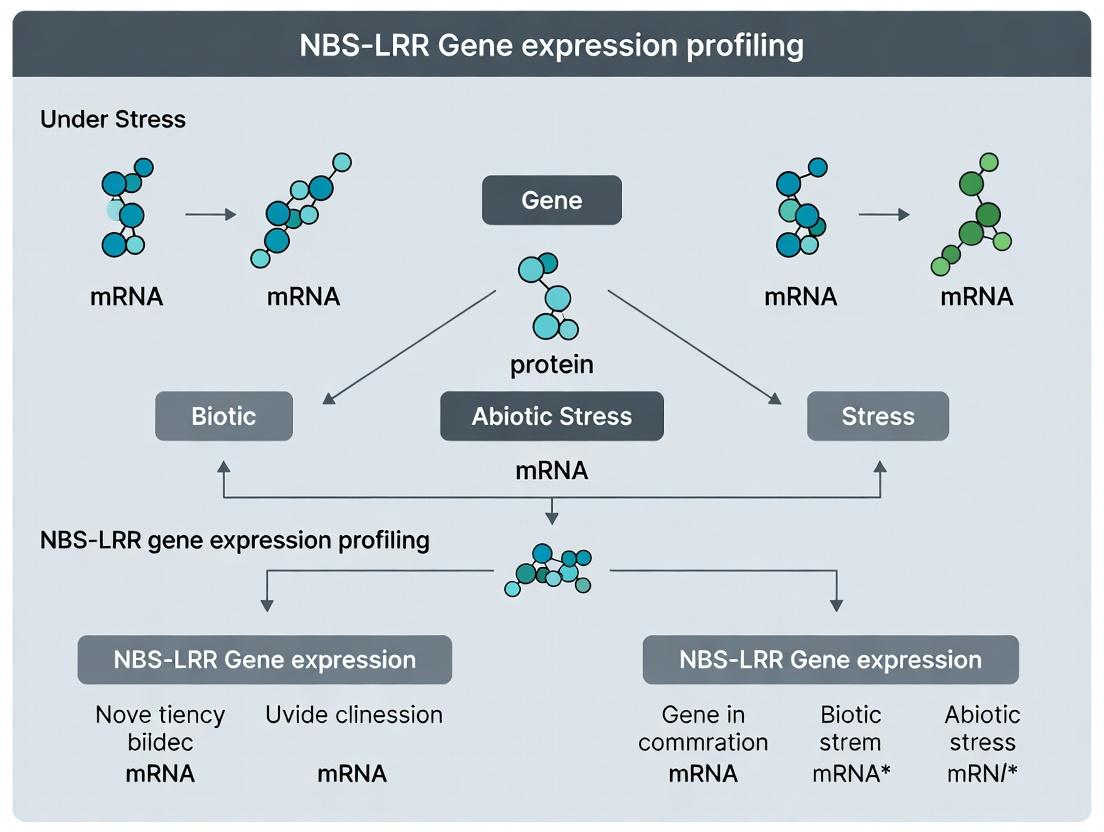
This article provides a detailed methodological and analytical framework for profiling NBS-LRR gene expression in plants under stress conditions.
Decoding Plant Defense: A Comprehensive Guide to NBS-LRR Gene Expression Analysis Under Biotic and Abiotic Stress
Abstract
This article provides a detailed methodological and analytical framework for profiling NBS-LRR gene expression in plants under stress conditions. Targeting researchers and scientists in plant biology and biotechnology, it covers the foundational role of NBS-LRR genes in immunity, best practices for experimental design and profiling techniques (including RNA-Seq and qRT-PCR), common troubleshooting scenarios in data analysis, and strategies for validating and comparing expression patterns across different stressors. The synthesis offers actionable insights for leveraging this knowledge in crop improvement and drug discovery from plant-derived compounds.
The Sentinel Genes: Understanding NBS-LRR Roles in Plant Stress Responses
This technical guide defines the Nucleotide-Binding Site Leucine-Rich Repeat (NBS-LRR) gene family within the context of ongoing research into plant immune responses. A central thesis in contemporary plant biology investigates the expression profiling of these genes under diverse biotic (pathogen) and abiotic (drought, salinity, temperature) stress conditions. Understanding their structure, classification, and evolution is foundational to deciphering their regulatory networks and engineering stress-resilient crops.
Structural Architecture of NBS-LRR Proteins
NBS-LRR proteins, also known as NLRs (NOD-like receptors), are modular intracellular immune receptors. The canonical structure comprises three core domains:
- N-terminal Domain: Typically a Toll/Interleukin-1 Receptor (TIR) domain or a Coiled-Coil (CC) domain. Some possess a Resistance to Pseudomonas syringae pv. maculicola 1 (RPW8)-like domain.
- Central Nucleotide-Binding Site (NBS or NB-ARC) Domain: A conserved ATP/GTP-binding domain crucial for nucleotide-dependent activation and conformational change.
- C-terminal Leucine-Rich Repeat (LRR) Domain: Involved in effector recognition and autoinhibition. The number of LRR repeats is variable.
Diagram 1: Canonical NBS-LRR Protein Structure
Classification and Phylogeny
NBS-LRR genes are primarily classified based on their N-terminal domain and phylogenetic analysis of the NBS domain.
- TNLs (TIR-NBS-LRR): Contain a TIR domain. Predominant in dicots.
- CNLs (CC-NBS-LRR): Contain a Coiled-Coil domain. Found in both monocots and dicots.
- RNLs (RPW8-NBS-LRR): A smaller subfamily with an RPW8-like CC domain, often involved in signaling downstream of other NLRs. Further classification considers integrated domains (IDs), which are non-canonical domains that can directly bind pathogen effectors.
Table 1: Major NBS-LRR Classes and Characteristics
| Class | N-terminal Domain | Key Motifs (NBS) | Predominant Clade | Example Gene |
|---|---|---|---|---|
| TNL | TIR | RNBS-A, Kinase-2, RNBS-D, GLPL, MHD | Dicots (e.g., Arabidopsis, Tobacco) | Arabidopsis RPS4 |
| CNL | Coiled-Coil (CC) | RNBS-A, Kinase-2, RNBS-D, GLPL, MHD | Monocots & Dicots | Rice Pi-ta, Arabidopsis RPS2 |
| RNL | RPW8-like CC | Similar to CNL | Dicots | Arabidopsis ADR1 |
Diagram 2: Simplified Phylogenetic Classification of NBS-LRRs
Evolutionary Dynamics
NBS-LRR genes are among the most rapidly evolving gene families in plants, driven by co-evolution with pathogens.
- Birth-and-Death Evolution: New genes are created via duplication (birth), while others become non-functional or are deleted (death).
- Diversifying Selection: Strong positive selection acts on specific residues in the LRR and NBS domains, particularly those involved in effector recognition.
- Tandem Gene Arrangements: NBS-LRR genes are often found in clusters of tandem repeats in genomes, facilitating unequal crossing-over and gene conversion, leading to novel specificities.
- Lineage-Specific Expansion: Different plant families show expansions of specific subfamilies (e.g., CNLs dominate in cereals, TNLs in many dicots).
Expression Profiling: Key Experimental Protocols
Profiling NBS-LRR expression under stress is critical for the broader thesis. Key methodologies include:
RNA-Seq for Transcriptome-Wide Expression Quantification
Protocol Outline:
- Sample Collection: Harvest plant tissue (e.g., leaves, roots) under control and stress-treated conditions (e.g., pathogen inoculation, drought) at multiple time points. Use biological replicates (n≥3).
- RNA Extraction & QC: Use a kit (e.g., TRIzol) to extract total RNA. Assess purity (A260/A280 ~2.0) and integrity (RIN > 8.0 via Bioanalyzer).
- Library Preparation: Deplete rRNA. Perform poly-A selection for mRNA. Fragment RNA, synthesize cDNA, and ligate with sequencing adapters.
- Sequencing: Use an Illumina platform (e.g., NovaSeq) for 150bp paired-end sequencing, aiming for 20-40 million reads per sample.
- Bioinformatic Analysis:
- Quality Control & Alignment: Trim adapters (Trimmomatic). Map clean reads to the reference genome using HISAT2 or STAR.
- Quantification: Count reads mapping to annotated NBS-LRR genes using featureCounts.
- Differential Expression: Use DESeq2 or edgeR to identify NBS-LRR genes significantly up- or down-regulated (adjusted p-value < 0.05, |log2FoldChange| > 1) under stress.
Diagram 3: RNA-Seq Workflow for NBS-LRR Expression Profiling
Quantitative Reverse Transcription PCR (qRT-PCR) Validation
Protocol Outline:
- cDNA Synthesis: From 1 µg of total RNA (same samples as RNA-Seq), perform reverse transcription using oligo(dT) or random hexamers.
- Primer Design: Design gene-specific primers (amplicon 80-200 bp) for candidate NBS-LRRs and reference housekeeping genes (e.g., ACTIN, EF1α, UBQ).
- qPCR Reaction: Use SYBR Green master mix. Run reactions in triplicate on a real-time PCR system (e.g., Bio-Rad CFX96). Cycling: 95°C (3 min); 40 cycles of 95°C (10 sec), 60°C (30 sec); followed by melt curve analysis.
- Data Analysis: Calculate ΔΔCt values relative to the control sample and reference genes to determine fold-change in expression.
The Scientist's Toolkit: Key Research Reagent Solutions
Table 2: Essential Materials for NBS-LRR Expression and Functional Studies
| Reagent/Material | Function/Application in NBS-LRR Research |
|---|---|
| TRIzol/RNAqueous Kits | High-quality total RNA isolation for downstream transcriptomic analysis. |
| RNase Inhibitors | Protect RNA samples from degradation during extraction and cDNA synthesis. |
| Illumina TruSeq Stranded mRNA Kit | Standardized library preparation for RNA-Seq. |
| SYBR Green qPCR Master Mix | Sensitive detection of NBS-LRR transcript levels in validation experiments. |
| Phusion High-Fidelity DNA Polymerase | Accurate amplification of NBS-LRR genomic sequences or for cloning. |
| Gateway or Golden Gate Cloning Systems | Modular assembly of NBS-LRR constructs for functional assays (e.g., in Nicotiana benthamiana). |
| Anti-GFP/HA/FLAG Antibodies | For detecting tagged NBS-LRR protein expression, localization, or immunoprecipitation. |
| Protease Inhibitor Cocktail (Plant) | Maintains protein integrity during extraction for studying NBS-LRR protein complexes. |
| Pathogen Strains/Effector Proteins | Used as biotic stress agents to challenge plants and study specific NBS-LRR activation. |
| Polyethyleneglycol (PEG) or Abscisic Acid (ABA) | Used to simulate osmotic/abiotic stress treatments. |
Signaling Pathways Involving NBS-LRRs
Upon pathogen recognition, activated NLRs trigger robust defense signaling.
Diagram 4: Core NBS-LRR Immune Signaling Pathways
Within the plant immune system, intracellular Nucleotide-Binding Site Leucine-Rich Repeat (NBS-LRR) proteins, also known as NLRs, serve as primary receptors for pathogen-derived effectors. This mechanism is a cornerstone of Effector-Triggered Immunity (ETI). Understanding their activation and signaling is central to a broader thesis investigating NBS-LRR gene expression reprogramming under combined biotic and abiotic stress, as such stresses can profoundly modulate NLR availability and function.
Structural Architecture and Classification
NBS-LRR proteins are modular, typically comprising:
- N-terminal Domain: Often a Toll/Interleukin-1 Receptor (TIR) or Coiled-Coil (CC) domain involved in downstream signaling.
- Central Nucleotide-Binding (NB-ARC) Domain: A conserved ATPase domain that acts as a molecular switch, cycling between ADP-bound (inactive) and ATP-bound (active) states.
- C-terminal Leucine-Rich Repeat (LRR) Domain: Acts as a sensor for effector recognition, often through direct or indirect binding.
Table 1: Major Classes of Plant NBS-LRR Proteins
| Class | N-terminal Domain | Key Features | Example | Primary Signaling Partner |
|---|---|---|---|---|
| TNL | TIR | Often requires EDS1/PAD4/SAG101 complex; can induce NADase activity. | RPP1 (Arabidopsis) | EDS1 |
| CNL | Coiled-Coil (CC) | Often requires NRC (NLR-Required for Cell death) helper NLRs; some have decoy domains. | RPS5 (Arabidopsis) | NRC2/3/4 |
| RNL | RPW8-like CC | Function primarily as "helper NLRs" that amplify signals from sensor NLRs. | NRG1, ADR1 (Arabidopsis) | N/A |
Core Activation Mechanism: From Restraint to Response
The prevailing model is the "closed/inactive" to "open/active" conformational change.
1. Pre-activation (Surveillance State): The protein is auto-inhibited. The LRR domain folds back onto the NB-ARC domain, stabilizing the ADP-bound state. The N-terminal signaling domain is inaccessible.
2. Effector Recognition:
- Direct Recognition: The effector binds directly to the LRR domain.
- Indirect/Guard/Decoy Recognition: The effector modifies a host "guardee" or "decoy" protein (e.g., RIN4), which is monitored by the NLR. Modification disrupts the NLR-guardee interaction.
3. Conformational Change & Activation: Effector binding or guardee modification relieves autoinhibition. ADP is exchanged for ATP in the NB-ARC domain, causing a large conformational rearrangement. This exposes the N-terminal domain and often promotes NLR oligomerization into a resistosome—a wheel-like signaling complex.
4. Resistosome Formation & Signaling Execution:
- CNL Resistosome: Forms a calcium-permeable cation channel in the plasma membrane, triggering Ca²⁺ influx and subsequent cell death (e.g., ZAR1).
- TNL Resistosome: Acts as an NADase, hydrolyzing NAD⁺ to initiate synthesis of signaling molecules (e.g., v-cADPR, pRib-AMP) that activate helper RNLs, which then form calcium channels.
Title: NLR Activation and Signaling Pathways
Experimental Protocols for Studying NBS-LRR Mechanisms
Protocol 1: Co-Immunoprecipitation (Co-IP) for Protein-Protein Interactions Objective: To validate physical interaction between an NLR and a putative effector or guardee protein.
- Construct Design: Clone genes of interest (NLR, effector) into appropriate expression vectors with tags (e.g., GFP, FLAG, MYC).
- Transient Expression: Co-infiltrate constructs into Nicotiana benthamiana leaves using Agrobacterium tumefaciens (strain GV3101).
- Protein Extraction: At 48-72 hours post-infiltration, grind leaf tissue in liquid N₂. Homogenize in IP buffer (50 mM Tris-HCl pH 7.5, 150 mM NaCl, 10% glycerol, 0.5% NP-40, 1x protease inhibitor cocktail).
- Immunoprecipitation: Incubate clarified lysate with anti-tag antibody-conjugated beads (e.g., anti-GFP nanobodies) for 2-4 hours at 4°C.
- Wash & Elution: Wash beads 3-5 times with IP buffer. Elute proteins with 2X Laemmli buffer by boiling.
- Detection: Analyze by SDS-PAGE and western blot using antibodies against the co-expressed tag.
Protocol 2: Electrophysiological Recording of NLR Channels Objective: To measure ion channel activity of a purified NLR resistosome.
- Protein Purification: Express and purify the recombinant NLR (e.g., ZAR1 resistosome) from insect or mammalian cell systems.
- Planar Lipid Bilayer Formation: Form a lipid bilayer across a small aperture in a partition separating two buffer-filled chambers (e.g., 10 mM HEPES pH 7.5, 100 mM KCl).
- Protein Incorporation: Add purified resistosome to the cis chamber. Incorporate by stirring or directly fusing proteoliposomes.
- Current Recording: Using a patch-clamp amplifier, apply a voltage gradient (-150 to +150 mV) across the bilayer. Record current traces.
- Data Analysis: Analyze single-channel conductance, ion selectivity (by ion substitution), and gating properties.
Protocol 3: Quantitative PCR (qPCR) for NLR Expression Profiling Objective: To measure transcriptional changes of specific NLR genes under stress.
- RNA Extraction: Extract total RNA from treated/control plant tissues using TRIzol reagent. Treat with DNase I.
- cDNA Synthesis: Synthesize first-strand cDNA using 1 µg of RNA, oligo(dT) primers, and reverse transcriptase.
- qPCR Reaction: Prepare reactions with cDNA template, gene-specific primers (validated for efficiency), and SYBR Green master mix.
- Run & Quantify: Perform amplification on a real-time PCR cycler. Use the ΔΔCt method for relative quantification, normalizing to housekeeping genes (e.g., EF1α, UBQ).
Table 2: Quantitative Data on NLR-Mediated Immune Responses
| Parameter | Typical Measurement | Example Value (Model: Arabidopsis RPS2 / AvrRpt2) | Technique |
|---|---|---|---|
| Hypersensitive Response (HR) Onset | Time post-effector recognition | 6-12 hours | Ion leakage assay, trypan blue staining |
| ROS Burst Peak | Luminescence/absorbance units | 10-20x increase over baseline | Luminol-based assay, H₂DCFDA staining |
| Ca²⁺ Influx | Cytosolic [Ca²⁺] change (nM) | ~200-500 nM spike | Aequorin or GCaMP biosensors |
| MAPK Activation | Phosphorylation level | Peak at 15-30 min | Phos-tag gel, anti-pMAPK western blot |
| NLR Transcript Induction | Fold-change (e.g., under PTI priming) | 5-50 fold increase | RNA-Seq, qPCR |
The Scientist's Toolkit: Key Research Reagent Solutions
Table 3: Essential Reagents for NLR Mechanism Research
| Reagent / Material | Function & Application | Example Product / Vendor |
|---|---|---|
| Gateway-Compatible Vectors (e.g., pEarleyGate, pGWB) | Facilitates rapid, standardized cloning of NLR and effector genes for transient/stable expression. | TAIR, Addgene |
| Agrobacterium Strain GV3101 (pMP90) | Standard strain for transient expression in N. benthamiana (agroinfiltration) and plant transformation. | Laboratory stock, CICC |
| Anti-Tag Antibodies (agarose beads) | For immunoprecipitation and detection of tagged proteins (GFP, FLAG, MYC, HA). | ChromoTek GFP-Trap, Sigma Anti-FLAG M2 |
| NAD⁺ / NADP⁺ Assay Kits | Quantify nucleotide levels to assess TNL NADase activity in vitro or in planta. | Promega NAD/NADH-Glo, BioVision |
| Calcium Flux Dyes & Biosensors | Visualize and quantify cytosolic Ca²+ changes during NLR activation (e.g., aequorin, R-GECO1). | Invitrogen Fluo-4 AM, Addgene GCaMP6s |
| Plant Cell Death Stains (Trypan Blue, Evans Blue) | Histochemical staining to visualize and quantify hypersensitive response (HR) cell death. | Sigma-Aldrich |
| NLR Inhibitors (e.g., DPI, LaCl₃) | Pharmacological tools to dissect signaling (DPI inhibits ROS; La³⁺ blocks Ca²⁺ channels). | Abcam, Sigma-Aldrich |
| Recombinant Effector Proteins | Purified pathogen effectors for in vitro biochemical assays (e.g., ATPase, binding studies). | Custom expression (E. coli, insect cells) |
Title: Stress Modulation of NLR Gene Expression
Within the framework of a thesis investigating NBS-LRR gene expression profiling under biotic and abiotic stress, understanding the initial triggers of plant immune responses is paramount. This technical guide provides an in-depth analysis of the two primary biotic stress triggers: the recognition of Pathogen-Associated Molecular Patterns (PAMPs) and pathogen effectors. These recognition events are the foundation for the subsequent complex signaling cascades that ultimately modulate the expression of disease resistance (R) genes, including the NBS-LRR family.
PAMP-Triggered Immunity (PTI)
PAMPs are conserved microbial molecules essential for pathogen viability, such as bacterial flagellin (flg22), lipopolysaccharides (LPS), or fungal chitin. Plant transmembrane Pattern Recognition Receptors (PRRs) perceive these PAMPs, initiating PTI—a broad-spectrum, first layer of defense.
Key Signaling Pathway: PTI involves MAPK cascade activation, calcium influx, reactive oxygen species (ROS) burst, and callose deposition. This cascade influences the transcriptional reprogramming of defense genes, including priming certain NBS-LRR genes for faster response.
Diagram: PTI Signaling Cascade
Effector-Triggered Immunity (ETI)
To suppress PTI, successful pathogens deliver effector proteins into the host cell. Plants have evolved intracellular NLRs (Nucleotide-Binding Site, Leucine-Rich Repeat receptors), often encoded by NBS-LRR genes, to recognize specific effectors directly or indirectly, leading to ETI. ETI is a stronger, faster response frequently associated with the hypersensitive response (HR) and systemic acquired resistance (SAR).
Core Mechanism: Effector recognition by NLRs triggers a robust signaling network involving helper proteins, further amplification of PTI signals, and often programmed cell death at the infection site.
Diagram: ETI Recognition & Signaling
Integrating PTI and ETI in NBS-LRR Research
Current models posit PTI and ETI as a continuum, with ETI amplifying PTI signals. Research profiling NBS-LRR expression must account for both triggers. Quantitative data on expression changes following specific PAMP or effector treatment is critical.
Table 1: Quantitative Expression Changes of Select NBS-LRR Genes Post-Stress Trigger
Data derived from recent Arabidopsis thaliana studies (simplified for illustration).
| Gene Locus | Trigger (PAMP) | Fold Change (PTI, 6hpi) | Trigger (Effector) | Fold Change (ETI, 6hpi) | Key Function |
|---|---|---|---|---|---|
| RPS2 | flg22 | 1.5 ± 0.3 | AvrRpt2 | 12.8 ± 2.1 | Recognizes Pseudomonas AvrRpt2 |
| RPM1 | elf18 | 2.1 ± 0.4 | AvrRpm1 | 15.3 ± 3.4 | Recognizes Pseudomonas AvrRpm1/B |
| RPP13 | chitin | 0.8 ± 0.2 | ATR13Emoy2 | 8.7 ± 1.9 | Recognizes Hyaloperonospora ATR13 |
| NLRX | LPS | 3.5 ± 0.7 | - | - | Modulator of ROS signaling |
Key Experimental Protocols
Protocol 1: Measuring Early Immune Responses (ROS Burst)
Objective: Quantify the oxidative burst, a rapid PTI/ETI output. Method:
- Leaf Disc Assay: Harvest 4mm leaf discs from 4-5 week-old plants.
- Incubation: Place discs in a white 96-well plate with 200 µL of distilled water overnight in the dark.
- Reagent Prep: Replace water with 100 µL of working solution containing 20 µM L-012 (chemiluminescent probe) and 10 µg/mL horseradish peroxidase (HRP).
- Trigger Application: Inject 100 µL of PAMP solution (e.g., 1 µM flg22) or water (control) using a luminometer injector.
- Measurement: Immediately measure chemiluminescence every 2 minutes for 60-90 minutes using a plate reader luminometer.
- Analysis: Subtract background (control) and plot relative light units (RLU) over time. Calculate total integrated ROS.
Protocol 2: qRT-PCR for NBS-LRR Expression Profiling
Objective: Quantify transcriptional changes of NBS-LRR genes post-trigger perception. Method:
- Treatment & Sampling: Infiltrate plant leaves with PAMP (e.g., 100 nM flg22) or effector-expressing bacterial suspension (OD600=0.002). Collect tissue samples at multiple time points (e.g., 0, 2, 6, 24 h post-infiltration/hpi). Flash-freeze in LN2.
- RNA Extraction: Use a commercial kit with DNase I treatment. Assess purity (A260/A280 ~2.0) and integrity (RIN > 8.0).
- cDNA Synthesis: Use 1 µg total RNA with oligo(dT) primers and reverse transcriptase.
- qPCR Setup: Prepare 10 µL reactions with SYBR Green master mix, gene-specific primers (validate efficiency: 90-110%), and cDNA template. Use at least two reference genes (e.g., PP2A, UBC).
- Run & Analyze: Perform on a real-time cycler (40 cycles). Calculate ∆∆Ct values relative to control samples at time zero.
Protocol 3: Transient Agrobacterium-Mediated Assay for ETI (HR)
Objective: Visually score and quantify effector-triggered cell death. Method:
- Constructs: Clone effector gene into a binary vector (e.g., pEDV6) under an inducible promoter. Use empty vector as control.
- Agrobacterium Preparation: Transform GV3101 strain. Grow culture, resuspend to OD600=0.5 in infiltration buffer (10 mM MES, 10 mM MgCl2, 150 µM acetosyringone).
- Infiltration: Pressure-infiltrate the suspension into the abaxial side of Nicotiana benthamiana leaves (4-5 weeks old) using a needleless syringe.
- Induction: If using an inducible system, apply inducer (e.g., estradiol) 24h later.
- Phenotyping: Monitor for HR cell collapse (whitening/necrosis) over 24-72h. Quantify by ion leakage measurement or trypan blue staining for dead cells.
The Scientist's Toolkit: Key Research Reagents & Materials
| Reagent/Material | Function/Application |
|---|---|
| Synthetic PAMPs (flg22, elf18, chitin oligomers) | Defined elicitors to study PTI without live pathogens. |
| Pseudomonas syringae strains (e.g., DC3000 with/without avr genes) | Model bacterial pathogen for delivering defined effectors in planta. |
| Agrobacterium tumefaciens strain GV3101 | For transient expression of effector genes or NLRs in N. benthamiana. |
| L-012 & Luminol | Chemiluminescent probes for sensitive quantification of extracellular ROS burst. |
| Trypan Blue Stain | Histochemical stain to visualize and quantify dead plant cells during HR. |
| SYBR Green qPCR Master Mix | For sensitive, specific detection of NBS-LRR amplicons in expression profiling. |
| RNase Inhibitor & DNase I | Critical for maintaining RNA integrity during extraction for transcriptomics. |
| Gateway-compatible Binary Vectors (e.g., pEDV, pGWB) | Modular system for efficient cloning of effectors/NLRs for plant expression. |
| Anti-GFP/HA/FLAG Tag Antibodies | For detecting tagged effector or NLR protein localization and accumulation. |
| MAPK & CDPK Activity Assay Kits | To measure kinase activation downstream of PRR/NLR signaling. |
1. Introduction
This whitepaper, framed within a broader thesis on NBS-LRR gene expression profiling under combined stresses, provides an in-depth analysis of the convergent and divergent signaling mechanisms triggered by salinity, drought, and temperature extremes. A central focus is placed on how these abiotic pathways interact with, and often antagonize or prime, canonical defense signaling governed by Nucleotide-Binding Site Leucine-Rich Repeat (NBS-LRR) proteins and associated phytohormones. Understanding this cross-talk is critical for developing crops with resilient multi-stress tolerance.
2. Core Signaling Pathways and Their Convergence
Abiotic stresses induce complex signaling networks primarily mediated by reactive oxygen species (ROS), calcium (Ca²⁺) waves, and phytohormones. These pathways show extensive overlap and cross-talk with biotic defense signaling.
2.1. Primary Signal Perception and Transduction
Salt (ionic/osmotic stress), drought (osmotic stress), and temperature (membrane fluidity/protein stability) are perceived by various sensors, including membrane receptors, ion channels, and phospholipids. This leads to the production of secondary messengers.
Table 1: Key Secondary Messengers in Abiotic Stress Signaling
| Secondary Messenger | Primary Inducers | Core Downstream Targets/Effects |
|---|---|---|
| Cytosolic Ca²⁺ Spike | All three stresses | Ca²⁺ sensors (CBLs, CDPKs, CMLs), ROS production |
| ROS (H₂O₂, O₂⁻) | Drought, Salt, Extreme Temp | MAPK cascades, Redox-sensitive TFs (e.g., ZAT12), Hormone signaling |
| Phospholipids (PA, PIP₂) | Drought, Salt | Protein kinases (e.g., SnRK2), Ion channel regulation |
| Phytohormones (ABA, SA, JA) | Drought (ABA), Temp (SA/JA), Salt (ABA/JA) | Transcriptional reprogramming, NBS-LRR modulation |
2.2. Hormonal Cross-Talk at the Nexus of Abiotic and Biotic Signaling
The salicylic acid (SA)-jasmonic acid (JA)-abscisic acid (ABA) triad is a major hub for stress signaling integration.
- ABA: The master regulator of abiotic stress response (especially drought/salinity) often antagonizes SA-mediated biotrophic defense but can synergize with JA/ET signaling against necrotrophs.
- SA: Induced under heat stress and some osmotic conditions, it primes systemic acquired resistance (SAR). High SA can suppress JA signaling.
- JA/ET: Induced by cold, wounding, and osmotic stress, these hormones are central to necrotrophic defense and can be suppressed by dominant SA signaling.
This hormonal interplay directly influences the expression and function of NBS-LRR genes, often leading to their suppression under severe abiotic stress, creating a "defense trade-off."
Diagram 1: Core Stress Signaling Network Integration
3. Impact on NBS-LRR Gene Expression and Defense Priming
Quantitative expression profiling reveals that abiotic stresses significantly modulate NBS-LRR transcriptomes.
Table 2: Exemplary NBS-LRR Expression Changes Under Abiotic Stress (Model Plants)
| NBS-LRR Class/Example | Salinity Stress | Drought Stress | Heat/Cold Stress | Putative Hormonal Mediator |
|---|---|---|---|---|
| TNL-type (e.g., SNC1) | Downregulated | Strongly Downregulated | Variable (Heat Up, Cold Down) | ABA-SA antagonism |
| CNL-type (e.g., RPM1) | Mild Downregulation | Downregulated | Suppressed (Heat) | JA/ET suppression |
| RNL-type (e.g., NRG1) | Sustained/Upregulated | Variable | Upregulated (Heat) | SA-mediated priming |
| Overall Trend | General Suppression | Strong Suppression | Heat: Mixed; Cold: Suppression | ABA dominant |
This suppression is hypothesized to reallocate energy towards stress acclimation. However, a subset of NBS-LRRs is primed or induced, potentially preparing the plant for subsequent biotic attack—a phenomenon known as "cross-tolerance."
4. Key Experimental Protocols for Cross-Talk Analysis
4.1. Protocol: Simultaneous Profiling of NBS-LRR Expression under Combined Stress
- Objective: To quantify transcriptomic changes of NBS-LRR genes under sequential or simultaneous abiotic and biotic stress.
- Plant Material: Arabidopsis mutants in hormone signaling (aba2, npr1, coi1) and NBS-LRR reporters.
- Stress Application:
- Pre-conditioning: Apply mild abiotic stress (e.g., 100mM NaCl for 24h, or mild drought at -0.5 MPa soil water potential).
- Challenge: Inoculate with a bacterial pathogen (Pseudomonas syringae pv. tomato DC3000) at 10⁸ CFU/mL via syringe infiltration.
- Sampling: Collect leaf tissue at 0, 6, 12, 24, and 48 hours post-inoculation (hpi). Flash-freeze in liquid N₂.
- Analysis: RNA extraction, followed by RT-qPCR with primers for specific NBS-LRR clades and RNA-seq for whole transcriptome. Include hormone biosynthetic and marker genes (PR1, PDF1.2, RD29A).
4.2. Protocol: Hormone Flux Measurement using LC-MS/MS
- Objective: To quantify ABA, SA, JA, and JA-Ile levels during stress cross-talk.
- Extraction: Homogenize 100mg tissue in cold extraction solvent (MeOH:H₂O:Acetic Acid, 80:19:1) with deuterated internal standards.
- Clean-up: Pass through a C18 solid-phase extraction column.
- Analysis: Use a UHPLC system coupled to a triple-quadrupole MS/MS. Multiple Reaction Monitoring (MRM) mode for quantification. Compare levels between single abiotic, single biotic, and combined treatments.
5. The Scientist's Toolkit: Key Research Reagents & Solutions
Table 3: Essential Reagents for Stress Cross-Talk Research
| Reagent/Material | Function/Application | Key Consideration |
|---|---|---|
| ABI-TaqMan or SYBR Green RT-qPCR Assays | Quantifying expression of low-abundance NBS-LRR transcripts. | Design primers for conserved NB-ARC and LRR domains; validate specificity. |
| Hormone ELISA or LC-MS/MS Kits (e.g., Phytodetek, Plant Hormone Assay Kits) | Accurate quantification of ABA, SA, JA, JA-Ile, etc. | LC-MS/MS provides higher specificity and multiplexing capability. |
| Genetically Encoded Biosensors (e.g., R-GECO for Ca²⁺, roGFP for ROS) | Live-imaging of secondary messenger fluxes in response to stress combinations. | Requires stable transgenic lines; allows spatial-temporal resolution. |
| Chemical Inhibitors/Agonists (e.g., DPI, LaCl₃, ABA biosynthesis inhibitor Fluridone) | Dissecting the contribution of specific pathways (ROS, Ca²⁺, hormones). | Verify specificity and use non-toxic concentrations in pilot studies. |
| Mutant Seed Collections (e.g., Arabidopsis npr1, abi1, eds1, pad4) | Genetic dissection of hormonal and signaling node contributions. | Essential for establishing causality in cross-talk pathways. |
| Controlled Environment Growth Chambers with Programmable Stressors | Precise application of combined drought (soil moisture sensors), salinity (root drench), and temperature. | Critical for reproducible phenotyping and omics studies. |
Diagram 2: Experimental Workflow for Stress Cross-Talk Analysis
6. Conclusion and Future Perspectives
The cross-talk between salinity, drought, and temperature signaling pathways creates a complex regulatory network that profoundly modulates NBS-LRR-mediated defense. This interaction is largely antagonistic, presenting a fundamental trade-off between abiotic acclimation and biotic resistance. Future research must leverage multi-omics integration and live biosensing in defined genetic backgrounds to decode this network. The ultimate goal is to identify key regulatory nodes that can be engineered to uncouple this trade-off, thereby developing crops with resilient, broad-spectrum stress tolerance without compromising defense—a critical aim for sustainable agriculture and drug development professionals seeking plant-derived therapeutics.
This technical guide examines the temporal dichotomy of gene expression during stress responses, with a specific focus on Nucleotide-Binding Site Leucine-Rich Repeat (NBS-LRR) genes. Framed within a broader thesis on expression profiling under combined biotic and abiotic stress, we delineate the molecular mechanisms, signaling cascades, and functional outcomes distinguishing immediate early-phase transcriptional events from sustained late-phase reprogramming. This analysis is critical for developing targeted strategies in crop resilience and therapeutic intervention.
The cellular response to stress is not monolithic but a choreographed sequence of transcriptional events. Early-phase expression (minutes to a few hours post-stress perception) involves rapid activation of transcription factors (TFs), signaling intermediaries, and direct stress mitigators. Late-phase expression (hours to days) involves the execution of sustained adaptive programs, including systemic acquired resistance (SAR) and physiological remodeling. NBS-LRR genes, encoding intracellular immune receptors, exhibit distinct temporal expression patterns critical for effective defense coordination against pathogens and environmental extremes.
Core Signaling Pathways Governing Temporal Expression
Early-Phase Signaling Cascade
Early responses are driven by rapid post-translational modifications and calcium signaling, leading to MAPK activation and the immediate expression of early transcription factors (e.g., WRKY, ERF, MYB families).
Title: Early-Phase Stress Signaling to Transcriptional Activation
Transition to Late-Phase Programming
The late phase is characterized by hormonal signaling integration (salicylic acid, jasmonic acid, abscisic acid), epigenetic remodeling, and the action of secondary transcription factors that establish a new cellular homeostasis.
Title: Transition from Early to Late-Phase Transcriptional Programming
NBS-LRR Expression Profiling: Quantitative Dynamics
NBS-LRR genes are partitioned into distinct clades with divergent transcriptional timing, reflecting specialized functions in immediate pathogen recognition versus sustained surveillance and signaling.
Table 1: Representative NBS-LRR Gene Expression Kinetics Under Combined Stress
| Gene Clade / Example | Early Phase (1-6 HPI) | Late Phase (24-72 HPI) | Putative Trigger | Assay Method |
|---|---|---|---|---|
| TNL Group (e.g., RPP1) | ++ (Rapid, transient) | + (Low, sustained) | Biotic (Hyaloperonospora) | qRT-PCR, RNA-seq |
| CNL Group (e.g., RPM1) | +++ (Very rapid) | ++ (Moderate) | Biotic (P. syringae) | NanoString, qRT-PCR |
| RNL Group (e.g., NRG1) | + (Delayed onset) | +++ (High) | Systemic Signals (SA) | RNA-seq, Reporter |
| Certain CNLs (e.g., N) | + | +++ (Strong induction) | Temperature shift + Viral | qRT-PCR, Western |
| Abiotic-Induced NLRs | - (No change) | ++ (Induced) | Drought, Salt | RNA-seq |
HPI: Hours Post-Induction; SA: Salicylic Acid; TNL: TIR-NBS-LRR; CNL: CC-NBS-LRR; RNL: RPW8-NBS-LRR. Expression levels: - (none), + (low), ++ (moderate), +++ (high).
Experimental Protocols for Profiling Transcriptional Dynamics
Time-Course RNA-Seq for Phase Analysis
Objective: To capture genome-wide transcriptional changes across early and late time points post-stress application.
- Stress Application: Apply standardized biotic (e.g., pathogen inoculum) and/or abiotic (e.g., 150mM NaCl, drought) stress to experimental cohorts.
- Tissue Harvesting: Collect replicate samples at critical time points (e.g., 0, 30min, 2h, 6h, 24h, 48h, 72h). Flash-freeze in liquid N₂.
- RNA Extraction: Use a modified TRIzol protocol with DNase I treatment. Assess integrity via Bioanalyzer (RIN > 8.0).
- Library Preparation & Sequencing: Construct stranded mRNA-seq libraries (e.g., Illumina TruSeq). Sequence on a platform like NovaSeq 6000 for >30 million 150bp paired-end reads per sample.
- Bioinformatic Analysis: Align reads to reference genome (HISAT2/STAR). Quantify expression (featureCounts). Identify differentially expressed genes (DEGs) between time points (DESeq2 edgeR). Perform clustering (k-means, Mfuzz) to group genes by temporal pattern.
Phased TF Activity Assay (DAP-Seq + Luciferase Reporter)
Objective: To link early and late transcriptional phases to specific TF binding events.
- TF Selection: Select candidate early (e.g., WRKY7) and late (e.g., NAC72) phase TFs.
- DAP-Seq: Express TF fused to a tag (e.g., His-FLAG) in vitro. Incubate with sheared, adapter-ligated genomic DNA. Immunoprecipitate protein-DNA complexes. Sequence bound DNA fragments to identify genome-wide binding sites.
- In vivo Validation: Clone promoters of early and late target NBS-LRR genes (identified from DAP-Seq/RNA-seq) into a luciferase reporter vector (e.g., pGreenII 0800-LUC).
- Transient Assay: Co-infiltrate Nicotiana benthamiana leaves with reporter construct and a TF overexpression vector (35S:TF). Apply stress or mock treatment.
- Imaging: Quantify luciferase activity at early (8h) and late (32h) time points using a CCD camera. Normalize to internal control (e.g., Renilla luciferase).
The Scientist's Toolkit: Key Research Reagent Solutions
Table 2: Essential Reagents for Stress Transcriptional Dynamics Research
| Item / Solution | Function & Application | Example Product / Kit |
|---|---|---|
| Stress Inducers | Standardized application of biotic/abiotic stress. | Pseudomonas syringae pv. tomato DC3000 (Biotic); Mannitol for osmotic stress (Abiotic). |
| RNA Stabilization Reagent | Immediate stabilization of in vivo transcriptional state at harvest. | RNAprotect Tissue Reagent (Qiagen), RNAlater. |
| High-Fidelity Reverse Transcriptase | Critical for accurate cDNA synthesis for qRT-PCR and library prep, especially for low-abundance transcripts. | SuperScript IV Reverse Transcriptase (Thermo Fisher). |
| Dual-Luciferase Reporter Assay System | Quantifying temporal promoter activity of early vs. late phase genes. | Dual-Luciferase Reporter Assay System (Promega). |
| ChIP-Grade Antibodies | Immunoprecipitation of histone modifications or tagged TFs for chromatin analysis. | Anti-H3K4me3, Anti-H3K27ac, Anti-GFP (for GFP-tagged TFs). |
| CRISPR Activation (CRISPRa) Systems | Gain-of-function studies to test sufficiency of TFs in driving phase-specific expression. | dCas9-VPR transcriptional activator systems. |
| Live-Cell RNA Imaging Probes | Visualizing real-time transcription dynamics of single genes in single cells. | MS2/MCP or PP7/PCP stem-loop tagging systems. |
Integrated Workflow for Phase-Specific Analysis
A comprehensive approach to dissect early and late transcriptional phases combines perturbation, observation, and validation.
Title: Integrated Workflow for Analyzing Transcriptional Phases
Decoding the temporal architecture of stress-responsive transcription, particularly of sophisticated gene families like NBS-LRRs, reveals regulatory logic essential for survival. Early phases prioritize alarm and signal amplification, while late phases enforce adaptive restructuring. This knowledge provides a roadmap for precision engineering of stress resilience—by modulating key temporal switches—and identifies potential chronotherapeutic targets in disease contexts where stress responses are maladaptive.
Key Model Plants and Crops for NBS-LRR Expression Studies (e.g., Arabidopsis, Rice, Tomato)
The comprehensive profiling of NBS-LRR (Nucleotide-Binding Site-Leucine-Rich Repeat) gene expression is central to understanding plant immune system dynamics. Within a broader thesis investigating transcriptional reprogramming under combined biotic and abiotic stresses, the selection of appropriate model organisms is critical. This guide details the key model plants and crops that serve as foundational systems for elucidating the expression, regulation, and function of NBS-LRR genes, providing the necessary genetic and genomic frameworks for translational research in crop protection and biotechnology.
Key Model Systems: Characteristics and Advantages
Table 1: Core Model Plants for NBS-LRR Expression Studies
| Plant Species | Genomic Features (NBS-LRR) | Key Advantages for Expression Studies | Primary Stress Research Focus |
|---|---|---|---|
| Arabidopsis thaliana (Thale cress) | ~150 NBS-LRR genes; genome fully annotated. | Extensive mutant libraries (e.g., T-DNA lines), unparalleled genetic tools, rapid life cycle, stable transformation. | Biotic (e.g., Pseudomonas syringae, Hyaloperonospora arabidopsidis); Abiotic (e.g., drought, heat). |
| Oryza sativa (Rice) | ~500 NBS-LRR genes; high number of CC-NBS-LRR types. | Monocot model, reference genome, importance as global food crop, established transformation protocols. | Biotic (e.g., Magnaporthe oryzae, Xanthomonas oryzae); Abiotic (e.g., salinity, submergence). |
| Solanum lycopersicum (Tomato) | ~400 NBS-LRR genes; many clustered in genomes. | Dicot crop model, rich history of R-gene discovery (e.g., Mi-1, Cf, I), fleshy fruit development studies. | Biotic (e.g., Phytophthora infestans, nematodes, viruses); Abiotic (e.g., drought). |
| Nicotiana benthamiana | ~400 NBS-LRR genes; highly amenable to transient assays. | Model for transient expression (agroinfiltration), virus-induced gene silencing (VIGS), protein localization & interaction studies. | Biotic (Pathogen effector screening, HR assays). |
| Zea mays (Maize) | ~150 NBS-LRR genes; numerous pseudogenes. | Complex genome model, genetic diversity resources, economic importance. | Biotic (e.g., Puccinia spp., viruses); Abiotic (e.g., heat, drought). |
Table 2: Quantitative NBS-LRR Expression Data from Recent Studies (Examples)
| Species | Stress Condition | Key NBS-LRR Gene(s) | Expression Change (Fold) | Measurement Technique |
|---|---|---|---|---|
| Arabidopsis | Pseudomonas syringae (AvrRpt2) | RPS2 | Up to 15x induction | RNA-seq / qRT-PCR |
| Rice | Magnaporthe oryzae infection | Pb1, Pish | 5-20x induction (time-dependent) | Microarray / qRT-PCR |
| Tomato | Heat + Tomato yellow leaf curl virus | Mi-1.2 | Significant suppression (~70% reduction) | qRT-PCR |
| Tomato | Phytophthora infestans | Rpi-blb2 | Rapid induction (>10x within 6 hpi) | RNA-seq |
Detailed Experimental Protocols for Expression Profiling
Protocol 1: High-Throughput qRT-PCR for NBS-LRR Expression Time-Course
- Plant Material & Stress Treatment: Grow plants under controlled conditions. Apply biotic stress (e.g., pathogen inoculation) or abiotic stress (e.g., 300 mM NaCl for salinity). Harvest tissue (e.g., leaves) at multiple time points (0, 2, 6, 12, 24, 48 hours post-treatment) with biological replicates.
- RNA Extraction: Use a TRIzol-based or column-based kit (e.g., RNeasy Plant Mini Kit) with on-column DNase I digestion to remove genomic DNA.
- cDNA Synthesis: Use 1 µg of total RNA with oligo(dT) and random hexamer primers and a reverse transcriptase (e.g., SuperScript IV) in a 20 µL reaction.
- qPCR Setup: Design gene-specific primers for target NBS-LRRs and reference genes (e.g., ACTIN, UBIQUITIN). Use a SYBR Green master mix. Run reactions in technical triplicates on a real-time PCR system. Cycling conditions: 95°C for 3 min; 40 cycles of 95°C for 10 sec, 60°C for 30 sec; followed by a melt curve.
- Data Analysis: Calculate ΔΔCt values relative to the control condition and reference genes to determine fold-change expression.
Protocol 2: RNA-seq for Global NBS-LRR Expression Profiling
- Library Preparation: Use poly(A) selection for mRNA enrichment from high-quality total RNA (RIN > 8.0). Prepare libraries using a stranded kit (e.g., Illumina TruSeq Stranded mRNA).
- Sequencing: Pool libraries and sequence on an Illumina platform (e.g., NovaSeq) to generate ≥30 million 150-bp paired-end reads per sample.
- Bioinformatics Analysis: Trim adapters with Trimmomatic. Align reads to the reference genome (e.g., TAIR10 for Arabidopsis) using HISAT2 or STAR. Quantify gene expression with featureCounts. Identify differentially expressed NBS-LRR genes using DESeq2 (threshold: |log2FC| > 1, adjusted p-value < 0.05). Perform functional enrichment analysis.
Signaling Pathway and Workflow Visualizations
Title: NBS-LRR Immune Signaling & Expression Profiling Workflow
The Scientist's Toolkit: Research Reagent Solutions
Table 3: Essential Reagents and Kits for NBS-LRR Expression Studies
| Reagent/Kits | Supplier Examples | Primary Function in NBS-LRR Studies |
|---|---|---|
| RNeasy Plant Mini Kit | Qiagen | High-quality total RNA isolation, essential for downstream transcriptomics and qRT-PCR. |
| DNase I (RNase-free) | Thermo Fisher, NEB | Removal of genomic DNA contamination from RNA preps to prevent false positives in qPCR. |
| SuperScript IV Reverse Transcriptase | Thermo Fisher | High-efficiency cDNA synthesis from often complex plant RNA templates. |
| SYBR Green qPCR Master Mix | Bio-Rad, Thermo Fisher | Sensitive detection of NBS-LRR amplicons in real-time quantitative PCR assays. |
| TruSeq Stranded mRNA Library Prep Kit | Illumina | Preparation of strand-specific RNA-seq libraries for comprehensive expression profiling. |
| Gateway Cloning System | Thermo Fisher | Modular cloning for functional validation of NBS-LRR genes in overexpression or silencing constructs. |
| pTRV1/pTRV2 VIGS Vectors | (Addgene) | For virus-induced gene silencing to knock down NBS-LRR expression in N. benthamiana. |
| Rhizobium radiobacter (Agrobacterium) GV3101 | Laboratory Stocks | Stable and transient plant transformation for functional assays. |
From Sample to Data: Profiling NBS-LRR Expression with RNA-Seq and qPCR
Within the broader thesis on nucleotide-binding site leucine-rich repeat (NBS-LRR) gene expression profiling, the precise experimental design for stress application and sampling is paramount. This guide details contemporary protocols for inducing biotic and abiotic stress and for constructing a time-course sampling strategy that captures the dynamic transcriptional reprogramming of plant defense systems, particularly NBS-LRR genes.
Core Stress Treatment Protocols
Abiotic Stress Treatments
Abiotic stresses trigger complex signaling cascades that can modulate NBS-LRR expression and function, often through cross-talk with abiotic stress pathways.
Drought Stress (Soil Water Withholding)
Detailed Methodology:
- Plant Preparation: Grow uniform plants (e.g., Arabidopsis, tomato, rice) in controlled environment chambers (22°C, 60% RH, 12h light/12h dark) until desired growth stage (e.g., 4-week-old for Arabidopsis).
- Pot Weight Standardization: Saturate all pots with water and allow to drain. Record the fully saturated weight (FSW) of each pot.
- Treatment Initiation: For the treatment group, withhold water completely. Calculate the target weight for each pot corresponding to the desired soil water content (SWC). A common severe drought target is 30% of field capacity (FC).
- Field Capacity Weight (FCW) = FSW - (Pot weight after 48h drainage).
- Target Weight = Dry Pot Weight + (0.30 * (FCW - Dry Pot Weight)).
- Monitoring: Weigh pots daily. Control plants are maintained at 80-100% FC by watering to weight daily.
- Sampling Trigger: Sample leaf/tissue when the treatment group pots reach the target weight, or at predefined visual wilting stages.
Salinity Stress (Root Zone NaCl Application)
Detailed Methodology:
- Solution Preparation: Prepare a concentrated NaCl stock solution (e.g., 1M). Dilute to the final treatment concentration (e.g., 150 mM NaCl) in 1/2x Hoagland's nutrient solution.
- Treatment Application: For hydroponic systems, replace the nutrient solution with the saline solution. For soil-based systems, apply the saline solution as an irrigation event, ensuring sufficient volume to leach through the root zone. Controls receive nutrient solution only.
- Duration: Acute stress may involve sampling at 1, 3, 6, 12, 24, and 48 hours post-treatment (HPT). Chronic stress may involve maintaining plants in saline solution for days to weeks.
Biotic Stress Treatments
Direct activation of NBS-LRR genes is often studied through pathogen-associated molecular pattern (PAMP) or effector recognition.
Bacterial Pathogen Infiltration (Pseudomonas syringae)
Detailed Methodology:
- Bacterial Culture: Grow P. syringae pv. tomato DC3000 in King's B medium with appropriate antibiotics (e.g., rifampicin) overnight at 28°C.
- Preparation: Centrifuge culture, wash pellet, and resuspend in infiltration buffer (10 mM MgCl₂). Adjust optical density at 600 nm (OD₆₀₀) to the desired concentration (e.g., OD₆₀₀ = 0.002 for ~1 x 10⁶ CFU/mL for PAMP-triggered immunity; OD₆₀₀ = 0.2 for effector-triggered immunity).
- Infiltration: Using a needleless syringe, gently pressure-infiltrate the bacterial suspension into the abaxial side of fully expanded leaves. Mark the infiltrated area. Control leaves are infiltrated with 10 mM MgCl₂ buffer only.
- Sampling: Excise the infiltrated leaf tissue at defined time points post-infiltration.
Fungal Elicitor Treatment (Chitin/Oligogalacturonides)
Detailed Methodology:
- Elicitor Preparation: Dissolve chitin oligomers (e.g., CO8) or oligogalacturonides (OGs, degree of polymerization 10-15) in sterile distilled water to a stock concentration of 1 mg/mL.
- Treatment: Dilute stock to final working concentration (e.g., 100 µg/mL) in a solution containing 0.01% Silwet L-77. Spray the solution evenly onto aerial plant tissues until runoff. Control plants are sprayed with 0.01% Silwet L-77 solution.
- Sampling: Collect leaf tissue at intervals post-elicitation.
Table 1: Summary of Key Stress Treatment Parameters
| Stress Type | Specific Treatment | Common Concentrations/Doses | Key Plant Species | Primary Signaling Molecules Induced |
|---|---|---|---|---|
| Abiotic - Drought | Soil water withholding | 30-40% Field Capacity | Arabidopsis, Rice, Maize | ABA, ROS, JA |
| Abiotic - Salinity | Root zone NaCl | 100-200 mM NaCl | Arabidopsis, Rice, Tomato | Ca²⁺, SOS pathway, ROS |
| Biotic - Bacterial | P. syringae infiltration | 10⁵ - 10⁸ CFU/mL | Arabidopsis, Tomato | SA, ROS, NO, Ethylene |
| Biotic - Elicitor | Chitin/OGs spray | 50-200 µg/mL | Arabidopsis, Rice | Ca²⁺, ROS, MAPK, JA/SA |
Time-Course Sampling Strategy
A well-designed time-course is critical to distinguish primary from secondary responses and to correlate NBS-LRR expression with physiological outputs.
Strategic Time Point Selection
- Ultra-Early (0-2 HPT): Capture immediate signaling events (Ca²⁺ flux, MAPK activation).
- Early (3-12 HPT): Capture primary transcriptional responses, including early defense-related TF activation.
- Mid (12-48 HPT): Capture peak expression of many NBS-LRR and pathogenesis-related (PR) genes, hypersensitive response (HR) onset.
- Late (48-168 HPT): Capture systemic acquired resistance (SAR), phenotypic outcomes, and resolution phases.
Replication and Randomization
- Biological Replicates: A minimum of n=4-6 independent plants per time point per treatment.
- Temporal Replicates: The entire experiment should be repeated independently at least twice.
- Randomization: Randomize positions of all pots/trays within growth chambers to avoid positional bias.
Table 2: Exemplary Time-Course for Combined Stress Studies
| Time Point (HPT) | Sample Type | Key Measurements & Analyses |
|---|---|---|
| 0 | Leaf Disc | Baseline RNA (RNA-seq/qPCR), hormone levels |
| 0.5, 1, 3 | Leaf Disc | Rapid signaling assays (ROS, Ca²⁺), early transcriptomics |
| 6, 12, 24 | Leaf Disc, Whole Leaf | NBS-LRR gene expression, SA/JA/ABA quantification, PR protein |
| 48, 72, 120 | Whole Leaf, Whole Plant | Phenotyping (lesion size, biomass), SAR marker genes, full transcriptomics |
The Scientist's Toolkit: Research Reagent Solutions
Table 3: Essential Materials for Stress & Sampling Experiments
| Item | Function & Rationale |
|---|---|
| RNAlater Stabilization Solution | Immediately stabilizes and protects cellular RNA in harvested tissue at non-freezing temperatures, preventing degradation during sample collection. |
| Liquid Nitrogen & Cryogenic Vials | For flash-freezing tissue to instantly halt all biological activity, preserving the in vivo state of RNA, proteins, and metabolites. |
| Silwet L-77 | Non-ionic surfactant used to ensure even penetration and adherence of spray-applied elicitors or chemicals on hydrophobic leaf surfaces. |
| MgCl₂ Infiltration Buffer | Isotonic buffer for resuspending bacterial cultures for leaf infiltration, minimizing plant cell damage during the procedure. |
| Hoagland's Nutrient Solution | Standardized hydroponic medium for maintaining plant health and ensuring uniform nutrient status prior to and during abiotic stress treatments. |
| Phytohormone ELISA/Kits (SA, JA, ABA) | For precise quantification of key signaling molecules that govern defense responses and cross-talk. |
| LUCIFERASE Assay Kits | For real-time, non-invasive monitoring of promoter activity (e.g., of specific NBS-LRR genes) in living plants using reporter constructs. |
| DAB (3,3'-Diaminobenzidine) Stain | Histochemical stain used to visualize hydrogen peroxide (H₂O₂) accumulation, a key ROS, in plant tissues. |
| SYBR Green qPCR Master Mix | For sensitive and specific quantification of transcript levels of target NBS-LRR genes and defense markers. |
Visualized Pathways and Workflows
Stress Signaling to NBS-LRR Expression
Stress Experiment Workflow
The study of NBS-LRR gene expression under biotic and abiotic stress is pivotal for understanding plant defense mechanisms. A critical, preliminary technical hurdle is the isolation of high-integrity RNA from tissues undergoing such stress. Stress responses trigger profound biochemical changes—including increased RNase activity, oxidative compounds, and secondary metabolites like polysaccharides and polyphenols—that rapidly degrade or co-precipitate with RNA. This whitepaper provides an in-depth technical guide to navigating these challenges, ensuring downstream applications like RT-qPCR and RNA-Seq yield reliable expression profiles for NBS-LRR genes.
Key Challenges & Quantitative Impact
The following table summarizes the primary challenges and their quantified effects on RNA yield and integrity.
Table 1: Common Challenges in RNA Extraction from Stress-Affected Plant Tissues
| Challenge | Source (Stress Type) | Primary Interfering Compounds | Typical Impact on RNA Integrity Number (RIN) | Estimated Yield Reduction |
|---|---|---|---|---|
| Polysaccharide Accumulation | Drought, Salt, Cold (Abiotic) | Pectins, Glycogens, Starches | RIN 4.0-6.0 (Gel smear) | 40-70% |
| Polyphenol Oxidation | Wounding, Pathogen, UV (Biotic/Abiotic) | Quinones, Tannins | RIN 3.0-5.0 (Brown discoloration) | 50-80% |
| RNase Proliferation | Pathogen Attack, Senescence (Biotic) | Ribonucleases | RIN < 4.0 (Complete degradation) | 60-90% |
| Secondary Metabolites | General Stress Response | Alkaloids, Terpenes, Flavonoids | RIN 5.0-7.0 (Inhibition of enzymes) | 20-50% |
| Lignin/Cell Wall Rigidity | Mechanical, Pathogen (Biotic/Abiotic) | Lignin | RIN 6.0-7.5 (Low yield) | 50-75% |
Detailed Experimental Protocols
Protocol 1: Pre-Homogenization Stabilization for NBS-LRR Expression Studies
- Objective: Immediately freeze RNase activity and lock in vivo gene expression profiles at the moment of sampling.
- Materials: Liquid N₂, RNAlater or DNA/RNA Shield, sterile mortar and pestle, pre-cooled tubes.
- Procedure:
- Excise tissue (e.g., leaf, root) rapidly using RNase-free tools.
- Submerge tissue immediately in liquid N₂ for flash-freezing OR place directly into 5x volume of commercial stabilization reagent (e.g., DNA/RNA Shield).
- For frozen tissue, grind to a fine powder under liquid N₂ using a pre-cooled mortar and pestle.
- Transfer the powder while still frozen to a tube containing pre-warmed (to aid penetration) lysis/binding buffer from the subsequent extraction kit. Do not allow thawing.
Protocol 2: Modified CTAB-PCI Method for Polysaccharide/Polyphenol-Rich Tissues
- Objective: Extract high-integrity RNA from recalcitrant tissues (e.g., root, bark, senescing leaves) where commercial kits often fail.
- Reagents:
- CTAB Extraction Buffer: 2% CTAB, 2% PVP-40, 100 mM Tris-HCl (pH 8.0), 25 mM EDTA (pH 8.0), 2.0 M NaCl, 2% β-mercaptoethanol (added fresh).
- Chloroform:Isoamyl Alcohol (24:1)
- LiCl Precipitation Solution (8 M)
- Sodium Acetate (3 M, pH 5.2)
- 70% Ethanol (in DEPC-treated water)
- Procedure:
- Add 1 ml pre-heated (65°C) CTAB buffer to 100 mg frozen powder in a 2 ml tube. Vortex vigorously.
- Incubate at 65°C for 10 min with occasional mixing.
- Cool to room temp. Add 1 volume of Chloroform:Isoamyl Alcohol (24:1). Mix thoroughly by inversion for 10 min.
- Centrifuge at 12,000 x g, 15 min, 4°C. Transfer the upper aqueous phase to a new tube.
- Add 1/4 volume of LiCl solution (final conc. ~2 M). Mix and incubate at -20°C for ≥30 min to precipitate RNA (selective over polysaccharides).
- Centrifuge at 12,000 x g, 20 min, 4°C. Discard supernatant.
- Wash pellet with 70% ethanol. Centrifuge 5 min. Air-dry pellet briefly.
- Resuspend RNA pellet in 50 µL DEPC-water. Add 1/10 volume NaOAc and 2.5 volumes 100% ethanol. Re-precipitate at -80°C for 15 min to further remove contaminants.
- Centrifuge, wash with 70% ethanol, air-dry, and resuspend in RNase-free water.
Protocol 3: On-Column DNase Digestion and Cleanup
- Objective: Remove genomic DNA contamination critical for accurate qPCR analysis of NBS-LRR genes, which often have paralogs.
- Procedure (following extraction or kit elution):
- Use a silica-membrane column-based cleanup system.
- Perform on-column DNase I treatment: Apply RNA in binding buffer to column. Add 10 µL of RNase-free DNase I (1 U/µL) in 70 µL of digestion buffer directly onto the membrane.
- Incubate at room temperature for 15 min.
- Proceed with wash steps as per kit instructions. Elute in 30-50 µL RNase-free water.
The Scientist's Toolkit: Research Reagent Solutions
Table 2: Essential Reagents for High-Quality RNA Extraction from Stressed Tissues
| Item | Function/Benefit in Stress-Affected Tissue |
|---|---|
| DNA/RNA Shield (e.g., Zymo Research) | Instant chemical stabilization upon immersion; inactivates RNases and protects RNA from degradation at ambient temp for weeks. |
| Polyvinylpyrrolidone (PVP-40) | Binds and removes polyphenols and quinones during homogenization, preventing oxidation and co-precipitation. |
| Cetyltrimethylammonium Bromide (CTAB) | Ionic detergent effective in disrupting polysaccharide complexes and separating RNA from carbohydrates. |
| β-Mercaptoethanol (or TCEP) | Strong reducing agent added to lysis buffer to inhibit polyphenol oxidases and break disulfide bonds in RNases. |
| LiCl Precipitation Solution | Selectively precipitates RNA while leaving many polysaccharides and some proteins in solution. |
| RNase-Free DNase I (On-Column Grade) | Essential for removing genomic DNA without introducing RNase contamination, crucial for gene expression studies. |
| Silica-Membrane Spin Columns | Provide rapid cleanup of RNA from salts, metabolites, and enzyme inhibitors; compatible with on-column DNase treatment. |
| RNA Integrity Analyzer (e.g., Bioanalyzer) | Gold-standard for objective quantification of RNA quality (RIN) prior to costly downstream applications like RNA-Seq. |
Visualizing Workflows and Pathways
Title: RNA Extraction Workflow from Stressed Plant Tissue
Title: RNA Integrity Challenges & Countermeasures Pathway
Successful NBS-LRR gene expression profiling hinges on the initial quality of extracted RNA. For stress-affected plant tissues, this requires moving beyond standard kit protocols to integrated strategies involving immediate chemical stabilization, tailored lysis buffers with reducing agents and polymers, and selective precipitation or cleanup steps. Rigorous quality control using both spectrophotometric and microfluidics-based analysis is non-negotiable. By adopting these targeted methods, researchers can ensure the RNA integrity necessary to uncover the nuanced regulation of plant defense genes under stress.
Nucleotide-binding site leucine-rich repeat (NBS-LRR) genes constitute the largest class of plant disease resistance (R) genes. Profiling their expression is critical for understanding plant immune responses to biotic (pathogen) and abiotic (drought, salinity) stress. This whitepaper provides a technical comparison of Bulk and Single-Cell/Nuclei RNA-Seq workflows for NBS-LRR profiling, framed within a thesis investigating the dynamics of the R-gene repertoire under combinatorial stress.
Core Technical Comparison
Table 1: High-Level Workflow & Data Characteristic Comparison
| Aspect | Bulk RNA-Seq | Single-Cell/Nuclei RNA-Seq (sc/snRNA-Seq) |
|---|---|---|
| Input Material | Tissue homogenate (10-1000s of cells). | Suspension of individually partitioned single cells or nuclei. |
| Primary Output | Aggregate gene expression profile per sample. | Gene expression matrix (cells/nuclei x genes). |
| Resolution | Population average. Masks cellular heterogeneity. | Single-cell resolution. Reveals rare cell types/states. |
| NBS-LRR Insight | Overall R-gene family expression shifts. | Cell-type-specific R-gene expression; co-expression patterns in individual cells. |
| Key Challenge | Cannot deconvolve which cell types express which NBS-LRRs. | Lower reads/cell, higher technical noise; NBS-LRRs often lowly expressed. |
| Typical Cost per Sample | $500 - $2,000 | $2,000 - $10,000+ |
| Data Analysis Complexity | Moderate (differential expression, pathway analysis). | High (dimensionality reduction, clustering, trajectory inference). |
Table 2: Quantitative Data Yield & Sensitivity
| Metric | Bulk RNA-Seq (per sample) | sc/snRNA-Seq (per cell/nucleus) |
|---|---|---|
| Recommended Sequencing Depth | 20-50 million paired-end reads. | 20,000 - 50,000 reads per cell (for 10,000 cells). |
| Gene Detection Sensitivity | High for medium-high abundance transcripts. | Lower for individual cells; improved by aggregating clusters. |
| Detection of Lowly Expressed NBS-LRRs | Possible if expressed in many cells. | Challenging; requires targeted assays or deep sequencing. |
| Cells Required to Start | Not applicable (mass of tissue). | 5,000 - 20,000 cells/nuclei for robust statistics. |
Detailed Experimental Protocols
Protocol 1: Bulk RNA-Seq for NBS-LRR Profiling from Stressed Plant Tissue
- Sample Preparation: Flash-freeze leaf/root tissue under stress time-course in liquid N₂.
- Total RNA Extraction: Use TRIzol/chloroform or kit-based (e.g., Qiagen RNeasy Plant Mini Kit) with on-column DNase I digestion. Assess integrity (RIN > 7.0, Agilent Bioanalyzer).
- Library Preparation: Employ poly-A enrichment (for mRNA) or rRNA depletion (for total RNA, to capture non-coding regulators). Use stranded library prep kits (e.g., Illumina TruSeq Stranded mRNA).
- Sequencing: Sequence on Illumina NovaSeq X (150bp PE) to depth of 30M reads/sample.
- QC & Analysis: FastQC, Trimmomatic, align to reference genome (e.g., Arabidopsis thaliana TAIR10) with HISAT2/STAR. Quantify reads per gene with featureCounts. NBS-LRR genes are identified via PFAM domain search (NB-ARC, LRR) and extracted from the count matrix for differential expression analysis (DESeq2/edgeR).
Protocol 2: Single-Nuclei RNA-Seq for NBS-LRR Profiling from Complex or Stressed Tissue
- Nuclei Isolation: Grind frozen tissue in lysis buffer (e.g., 10mM Tris-HCl, 10mM NaCl, 3mM MgCl₂, 0.1% IGEPAL, 1U/µl RNase inhibitor). Filter through 40µm strainer and pellet nuclei. Validate integrity with DAPI staining.
- Single-Nuclei Partitioning & Library Prep: Use a droplet-based system (10x Genomics Chromium Next GEM). Nuclei are co-encapsulated with barcoded beads. Libraries are constructed per manufacturer's protocol (Chromium Next GEM Single Cell 3ʹ Kit v3.1).
- Sequencing: Deeper sequencing is often required. Target ~50,000 reads/nucleus on an Illumina NovaSeq.
- QC & Analysis: Cell Ranger (10x) for demultiplexing, alignment, and UMI counting. Downstream analysis in R (Seurat, Scanpy): QC filtering, normalization, PCA, clustering (Leiden/SNN), UMAP/t-SNE visualization. NBS-LRR expression is examined per cluster. Cell-type identity is assigned via marker genes.
Signaling & Workflow Visualization
Diagram 1: Core Workflow Comparison
Diagram 2: NBS-LRR Expression Data Integration for Plant Immunity
The Scientist's Toolkit: Research Reagent Solutions
Table 3: Essential Materials for NBS-LRR Profiling Workflows
| Item | Function in Workflow | Example Product/Brand |
|---|---|---|
| RNase Inhibitor | Critical for preserving RNA integrity during nuclei isolation and library prep. | Protector RNase Inhibitor (Roche), SUPERase-In (Invitrogen). |
| Plant-Specific RNA Isolation Kit | Efficient RNA extraction from fibrous, polysaccharide-rich plant tissue. | RNeasy Plant Mini Kit (Qiagen), Plant Total RNA Purification Kit (Norgen). |
| Polymerase for Full-Length Amplification | For amplifying cDNA from single cells/nuclei, crucial for detecting low-abundance transcripts. | KAPA HiFi HotStart ReadyMix (Roche), SMART-Seq v4 (Takara Bio). |
| NBS-LRR Domain-Specific Antibodies | For validating protein-level expression and cellular localization post-transcriptional profiling. | Custom anti-NB-ARC domain antibodies (e.g., from GenScript). |
| Validated Reference Genes for qPCR | For orthogonal validation of NBS-LRR expression in bulk or sorted cell populations. | EF1α, UBQ10, ACT2 (species-specific validation required). |
| Gel Bead & Partitioning Kit | For single-cell/nuclei barcoding and library construction. | Chromium Next GEM Chip K (10x Genomics). |
| Spike-In RNA | For normalization and quality control in scRNA-seq, assessing technical variation. | ERCC RNA Spike-In Mix (Thermo Fisher). |
| Cell Strainers | For removing debris and cell clumps during single-cell/nuclei suspension preparation. | Falcon 40µm Cell Strainer (Corning). |
Accurate gene expression profiling via quantitative reverse transcription PCR (qRT-PCR) is fundamental to molecular biology research, particularly in studies of complex gene families. Within the context of a thesis on Nucleotide-Binding Site Leucine-Rich Repeat (NBS-LRR) gene expression under biotic and abiotic stress, the challenge is pronounced. NBS-LRR genes, central to plant innate immunity, exist as large, highly homologous multi-gene families with conserved domains (NB-ARC and LRR), making the design of gene-specific primers and probes exceptionally difficult. Non-specific amplification leads to erroneous quantification, compromising downstream analyses of stress-responsive expression patterns. This technical guide provides an in-depth methodology for designing specific qRT-PCR assays in such challenging genomic contexts.
The Challenge of Homology in NBS-LRR Families
NBS-LRR genes are characterized by:
- High Copy Number: Hundreds of members per genome.
- Modular Conservation: High sequence identity in the NB-ARC (nucleotide-binding) domain.
- Variable Regions: Greater divergence typically occurs in the LRR (ligand recognition) domain and non-coding regions (UTRs, introns).
- Presence of Pseudogenes: Which can be co-amplified.
Recent genomic analyses (2023-2024) of model crops like Solanum lycopersicum and Oryza sativa highlight that intra-family homology in the coding sequence can exceed 85%, with some clades showing >95% identity in core motifs.
Table 1: Quantitative Summary of NBS-LRR Family Complexity in Select Species
| Species | Estimated NBS-LRR Count | Avg. Intra-Clade Homology (CDS) | Preferred Region for Specific Design |
|---|---|---|---|
| Arabidopsis thaliana | ~150 | 70-80% | 3' UTR, Variable LRR exon |
| Oryza sativa (Rice) | ~500 | 75-90% | 5' UTR, Intron-spanning |
| Solanum lycopersicum (Tomato) | ~300 | 80-95% | 3' UTR, Gene-specific indel |
| Zea mays (Maize) | ~120 | 70-85% | Non-conserved LRR exon |
Strategic Workflow for Specific Assay Design
Diagram Title: qRT-PCR Assay Design Workflow for Multi-Gene Families
Detailed Experimental Protocols
Protocol 1: Target Sequence Identification and Alignment
- Retrieve Sequences: From databases (NCBI, EnsemblPlants, Phytozome), obtain:
- Full-length genomic DNA (including introns, UTRs) for all NBS-LRR family members.
- Corresponding cDNA/mRNA sequences.
- Whole genome or transcriptome sequence for in silico specificity screening.
- Perform Hierarchical Alignments:
- Use ClustalOmega or MAFFT for multiple sequence alignment (MSA).
- Create two MSAs: one for the conserved NB-ARC domain (to define homology) and one for full-length sequences.
- Visualize divergence with Jalview or Geneious to pinpoint variable blocks.
Protocol 2:In SilicoPrimer/Probe Design & Screening
- Design in Variable Regions:
- Using Primer3 or Primer-BLAST, set constraints: Amplicon size = 60-150 bp, Tm = 58-60°C (±1°C difference between primers), GC% = 40-60%.
- Prioritize: 3' UTR > 5' UTR > intron-spanning (junction exon-exon) > most variable exon (often 3' end of LRR).
- For probe-based assays (TaqMan), design probe with Tm ~10°C higher than primers.
- Rigorous Specificity Check:
- Perform local BLASTN against the entire genome and transcriptome of the organism.
- Critical Criteria: The primer pair must have ≥3 mismatches, preferably at the 3'-end, with all non-target sequences. Verify no stable dimers form with non-targets.
- Use tools like
primerBLASTorGeneious Prime'sin silico PCR.
Protocol 3: Wet-Lab Validation of Specificity and Efficiency
- Test for Genomic DNA Amplification: Run qPCR on genomic DNA template. Intron-spanning primers will yield a larger product or no product, confirming cDNA specificity.
- Analyze Melt Curves (for SYBR Green): Perform qRT-PCR on a pool of cDNA from various stress conditions. A single, sharp peak in the melt curve is mandatory.
- Confirm with Gel Electrophoresis: Run products on a high-resolution agarose gel (e.g., 3-4%). A single band of expected size must be present.
- Determine Amplification Efficiency: Serial dilute cDNA (e.g., 1:5 dilutions). Plot Cq vs. log(dilution). Slope between -3.1 and -3.6 corresponds to 90-110% efficiency. R² > 0.99 is required.
The Scientist's Toolkit: Research Reagent Solutions
Table 2: Essential Reagents for qRT-PCR in Complex Gene Families
| Item | Function & Rationale |
|---|---|
| High-Fidelity Reverse Transcriptase (e.g., SuperScript IV) | Maximizes cDNA yield and fidelity from often GC-rich and structured NBS-LRR transcripts, critical for accurate representation. |
| Sequence-Specific TaqMan Probes (FAM/MGB/NFQ) | Provides superior specificity over SYBR Green. Minor Groove Binder (MGB) probes enhance mismatch discrimination and allow shorter probe design in variable regions. |
| Hot-Start DNA Polymerase (e.g., Taq HS, Platinum Taq) | Reduces non-specific amplification and primer-dimer formation during reaction setup, crucial when primers have residual homology. |
| gDNA Removal Kit (DNase I) | Essential to prevent false positives from genomic DNA contamination, especially when intron-spanning design is not possible. |
| Locked Nucleic Acid (LNA) Bases | Incorporated into primers/probes to increase Tm and binding specificity, improving discrimination of single-nucleotide mismatches. |
| Universal ProbeLibrary (UPL) | A set of 165 short, hydrolytic probes. If a suitable gene-specific variable sequence is identified, a matching pre-validated UPL probe can save time and cost. |
| Digital PCR (dPCR) System | For absolute quantification and detection of rare transcripts within a family, offering high precision and resistance to PCR inhibitors common in plant stress samples. |
Visualization of Validation Pathways
Diagram Title: qRT-PCR Assay Validation Pathway
Designing specific primers and probes for qRT-PCR analysis of multi-gene families like NBS-LRRs is a non-trivial task that requires a meticulous, multi-stage strategy. Success hinges on leveraging non-conserved genomic regions, employing rigorous in silico specificity screening against complete genomic datasets, and mandating comprehensive wet-lab validation. By adhering to the protocols and utilizing the toolkit outlined herein, researchers can generate reliable, reproducible expression data critical for elucidating the complex roles of NBS-LRR genes in plant stress response, thereby forming a solid foundation for advanced agricultural biotechnology and drug discovery pipelines.
This technical guide details a robust bioinformatics pipeline for quantifying Nucleotide-Binding Site Leucine-Rich Repeat (NBS-LRR) gene expression from high-throughput sequencing data. Within the context of a thesis on plant immunity, this workflow is critical for profiling the expression dynamics of these key disease resistance genes under biotic (e.g., pathogen infection) and abiotic (e.g., drought, salinity) stress conditions. Accurate quantification of these multi-gene family members, characterized by high sequence similarity and structural variation, presents unique challenges that this pipeline is designed to address.
The pipeline consists of sequential, modular stages, each with distinct quality control and output objectives. The following diagram illustrates the complete logical workflow.
Detailed Experimental Protocols & Methodologies
Preprocessing: Quality Control and Trimming
Objective: Remove low-quality bases, sequencing adapters, and artifacts to ensure high-fidelity input for alignment.
- Tool: FastP v0.23.4 (Chen et al., 2018).
- Command:
- Key Parameters:
--qualified_quality_phred 20trims bases with Q<20;--length_required 50discards reads shorter than 50bp post-trimming.
Alignment to Reference Genome
Objective: Map trimmed reads to a high-quality reference genome for the species of interest.
- Tool: HISAT2 v2.2.1 (Kim et al., 2019).
- Command:
- Key Parameters:
--dtareports alignments tailored for downstream transcript assemblers (e.g., StringTie), which is beneficial for gene discovery.--phred33specifies the quality score encoding.
Post-Alignment Processing
Objective: Convert, sort, and index alignment files for efficient downstream analysis.
- Tools: SAMtools v1.19.
- Protocol:
- SAM to BAM:
samtools view -@ 8 -bS sample_aligned.sam -o sample_aligned.bam - Sort BAM:
samtools sort -@ 8 sample_aligned.bam -o sample_aligned_sorted.bam - Index BAM:
samtools index sample_aligned_sorted.bam - Flagstat QC:
samtools flagstat sample_aligned_sorted.bam > sample_flagstat.txt
- SAM to BAM:
Generation of a Curated NBS-LRR Annotation File
Objective: Create a high-confidence, non-redundant set of NBS-LRR gene coordinates for precise read counting.
- Methodology:
- Extract all gene models annotated with "NBS-LRR," "TIR-NBS-LRR," or "CC-NBS-LRR" from the primary genome annotation file (GTF/GFF3).
- Validate putative NBS-LRRs by confirming the presence of characteristic Pfam domains (NB-ARC: PF00931, TIR: PF01582, LRR: PF00560, PF07723, PF07725, PF12799, PF13306) via local HMMER search or InterProScan.
- Manually review and curate the list to remove fragmented or dubious annotations, merging overlapping loci where appropriate.
- Generate a final, custom GTF file containing only the validated NBS-LRR loci. This file serves as the target for quantification.
NBS-LRR-Specific Read Counting
Objective: Quantify reads uniquely assigned to curated NBS-LRR genes.
- Tool: featureCounts from Subread package v2.0.6 (Liao et al., 2014).
- Command:
- Key Parameters:
-pindicates paired-end reads;--countReadPairscounts fragments (not reads);-s 2specifies reverse-strandedness (common for Illumina stranded mRNA-seq kits).
Data Presentation: Performance Metrics
The following table summarizes typical quantitative outcomes from each stage of the pipeline when processing a 30M paired-end read library from a Solanum lycopersicum (tomato) stress experiment.
Table 1: Representative Pipeline Metrics per Sample (30M Paired Reads)
| Pipeline Stage | Output Metric | Typical Value | Interpretation |
|---|---|---|---|
| Raw Reads | Total Read Pairs | 30,000,000 | Input data volume. |
| FastP Trimming | Surviving Read Pairs | 29,100,000 (97%) | Data loss <5% indicates good initial quality. |
| Q20 Rate Post-Trim | 98.5% | High base call accuracy. | |
| HISAT2 Alignment | Overall Alignment Rate | 92.5% | Good mapping efficiency to the reference genome. |
| SAMtools Flagstat | Properly Paired & Mapped (%) | 89.1% | High-quality paired-end alignment information. |
| featureCounts (NBS-LRR) | Total Assigned Fragments to NBS-LRR | ~400,000 - 800,000 | Varies significantly with stress treatment; baseline for expression profiling. |
| Fraction of Total Aligned Reads | 1.5% - 3.0% | Reflects the proportion of transcriptome dedicated to NBS-LRR genes. |
The Scientist's Toolkit: Research Reagent Solutions
Table 2: Essential Materials and Tools for the Pipeline
| Item / Solution | Function / Purpose | Example / Specification |
|---|---|---|
| High-Quality RNA Kit | Isolation of intact, non-degraded total RNA from stressed plant tissues. Critical for accurate representation of transcript abundance. | Kit with on-column DNase I treatment (e.g., Qiagen RNeasy Plant Mini Kit). |
| Stranded mRNA-Seq Kit | Library preparation that retains strand-of-origin information, crucial for resolving overlapping transcripts in complex gene families. | Illumina Stranded mRNA Prep, Ligation. |
| Curated NBS-LRR GTF | Custom annotation file defining the coordinates of validated NBS-LRR genes for precise, family-specific quantification. | Self-generated as per Section 3.4. |
| Reference Genome & Index | Species-specific genome sequence (FASTA) and pre-built alignment indices for the chosen aligner (e.g., HISAT2). | Downloaded from Ensembl Plants/Phytozome; built using hisat2-build. |
| Pfam Domain HMMs | Hidden Markov Model profiles for defining NBS-LRR protein domains, used for annotation validation. | PF00931 (NB-ARC), PF01582 (TIR), LRR profiles from Pfam database. |
| High-Performance Computing (HPC) Environment | Provides the computational resources (CPU, RAM, storage) required for memory-intensive alignment and batch processing of multiple samples. | Linux-based cluster with Slurm scheduler and >=32GB RAM/node. |
Downstream Integration in Stress Research
The final read count matrix is the input for differential expression analysis (using tools like DESeq2 or edgeR) to identify NBS-LRR genes responsive to specific stresses. The pathway linking quantification to biological insight is complex and involves integrating expression data with known stress signaling networks.
Within the broader research on plant immune system responses, profiling the expression of Nucleotide-Binding Site-Leucine-Rich Repeat (NBS-LRR) genes under biotic and abiotic stress is pivotal. These genes constitute the largest family of plant disease resistance (R) genes. Public functional genomics repositories, primarily the Gene Expression Omnibus (GEO) and ArrayExpress, are indispensable for accessing high-throughput expression data to advance this field, enabling meta-analyses and hypothesis generation without primary data generation costs.
Navigating GEO and ArrayExpress for NBS-LRR Data
GEO (NCBI) and ArrayExpress (EMBL-EBI) are the two major curated repositories. While they host similar data, their interfaces and search syntax differ.
Key Search Strategies:
- Controlled Vocabulary: Use terms like "NBS-LRR", "NB-ARC", "TIR-NBS-LRR", "CC-NBS-LRR", "disease resistance gene", along with specific stressors (e.g., "Phytophthora infestans", "drought", "salinity").
- Organism Focus: Always combine with taxonomic names (e.g., "Solanum lycopersicum", "Oryza sativa").
- Experiment Type: Filter by "Expression profiling by array" or "Expression profiling by high throughput sequencing".
- Advanced Queries:
- GEO: Use the
[GEOfilter, e.g.,"NBS-LRR"[GEO] AND "Arabidopsis"[GEO]. - ArrayExpress: Use the
taxon:andef:(experimental factor) prefixes, e.g.,taxon:3702 AND ef:"stress".
- GEO: Use the
Typical Search Results Structure:
| Repository | Data Level | Format | Key Content for NBS-LRR Research |
|---|---|---|---|
| GEO | Series (GSE) | SOFT, MINiML, PDF | Overall experiment design, protocols, sample relationships. |
| Samples (GSM) | SOFT, TXT | Expression data for individual biological samples. | |
| Platform (GPL) | SOFT, TXT | Annotation linking probe/sequence to genes (critical for identifying NBS-LRR probes). | |
| Dataset (GDS) | Curated Set | Pre-processed, comparable data across a series. | |
| ArrayExpress | Experiment (E-MTAB-) | IDF, SDRF | Study design, protocols, sample data relationships. |
| Raw/Processed Data | CEL, TXT | Intensity or count matrices for analysis. |
Critical Data Processing and Validation Workflow
Retrieved data requires rigorous processing before biological interpretation.
Experimental Protocol for In Silico NBS-LRR Expression Analysis:
- Data Acquisition: Download raw data (e.g., CEL files for microarrays, FASTQ/SRA for RNA-seq) and corresponding platform annotation files.
- Quality Control: Use tools like
FastQC(RNA-seq) orarrayQualityMetricsin R (microarrays). Assess sample clustering and outliers. - Preprocessing:
- Microarrays: Perform background correction, normalization (e.g., RMA), and summarization using
oligooraffyR/Bioconductor packages. - RNA-seq: Align reads to a reference genome (e.g., using
HISAT2/STAR), then generate gene-level counts (featureCounts).
- Microarrays: Perform background correction, normalization (e.g., RMA), and summarization using
- NBS-LRR Gene Identification: Filter the gene expression matrix using a curated list of NBS-LRR gene identifiers (e.g., from TAIR for Arabidopsis, or custom HMMer searches using PFAM domains NB-ARC (PF00931)).
- Differential Expression Analysis: Use
limma(microarrays) orDESeq2/edgeR(RNA-seq) to identify NBS-LRR genes significantly regulated under stress versus control conditions (e.g., adj. p-value < 0.05, |log2FC| > 1). - Validation: Cross-check expression trends with qRT-PCR data from the original study's supplementary materials, if available.
Visualizing the Signaling Context of NBS-LRR Genes
NBS-LRR proteins are central hubs in plant immune signaling. The following diagram illustrates a generalized signaling pathway triggered by pathogen effector recognition.
Title: NBS-LRR Activation and Downstream Immune Signaling
The Scientist's Toolkit: Research Reagent Solutions
| Item | Function in NBS-LRR Expression Research |
|---|---|
| Tri-Reagent or Qiazol | For simultaneous RNA/DNA/protein extraction from plant tissues under stress. |
| DNase I (RNase-free) | To remove genomic DNA contamination from RNA preps prior to cDNA synthesis. |
| Superscript IV Reverse Transcriptase | High-efficiency synthesis of cDNA from often complex and GC-rich NBS-LRR transcripts. |
| SYBR Green Master Mix | For qRT-PCR validation of differential expression of specific NBS-LRR genes. |
| NBS-LRR Domain-Specific Antibodies | For western blot validation of protein level changes (e.g., anti-NB-ARC). |
| Phusion High-Fidelity DNA Polymerase | For cloning NBS-LRR genes for functional studies via Gateway or Gibson assembly. |
| pHELLSGATE or pEARLEY Gate Vectors | Plant transformation vectors for RNAi silencing or overexpression of NBS-LRR genes. |
| Methyl Jasmonate / Salicylic Acid | Chemical inducers used in experiments to dissect hormone-mediated NBS-LRR expression. |
The complete pipeline for utilizing public data in an NBS-LRR stress research thesis is synthesized below.
Title: NBS-LRR Data Analysis Workflow for Thesis Research
Resolving Noise and Bias: Troubleshooting NBS-LRR Expression Profiling Experiments
The accurate profiling of low-abundance transcripts, such as those from NBS-LRR (Nucleotide-Binding Site-Leucine-Rich Repeat) genes, is a critical challenge in plant stress biology. These genes often exhibit baseline expression that hovers near the detection limits of standard quantification technologies. This technical guide examines the core sensitivity limitations of qRT-PCR and RNA-Seq in the context of biotic and abiotic stress research, focusing on experimental strategies to reliably capture subtle yet biologically significant changes in NBS-LRR expression.
Fundamental Sensitivity Limits: A Quantitative Comparison
The inherent detection limits of qRT-PCR and RNA-Seq dictate their utility for low-expression targets. The table below summarizes key performance metrics relevant to NBS-LRR profiling.
Table 1: Comparative Sensitivity Limits of qRT-PCR and RNA-Seq
| Parameter | Quantitative RT-PCR (Sybr Green) | Quantitative RT-PCR (TaqMan Probe) | Standard Bulk RNA-Seq (Illumina, 30M reads) | Ultra-Low-Input/SC RNA-Seq |
|---|---|---|---|---|
| Absolute Detection Limit | ~1-10 copies per reaction | ~1-5 copies per reaction | ~0.1-1 TPM (Tissue dependent) | Capable of single-cell library prep |
| Dynamic Range | 7-8 log10 | 7-8 log10 | ~5 log10 | ~4 log10 |
| Input RNA Requirement (per sample) | 10 pg - 100 ng | 10 pg - 100 ng | 100 ng - 1 µg | 1 pg - 10 ng |
| Key Limiting Factor | PCR efficiency, inhibitor presence, primer dimer | Probe binding efficiency, non-specific amplification | Sequencing depth, rRNA depletion efficiency | Amplification bias, technical noise |
| Optimal for NBS-LRR | Target-specific optimization possible; best for few candidate genes. | Highest specificity for closely related paralogs; ideal for validation. | Discovery of novel/uncharacterized NBS-LRRs; holistic view. | Profiling rare cell types in heterogeneous stress responses. |
Detailed Experimental Protocols for Enhanced Sensitivity
High-Sensitivity qRT-PCR for NBS-LRR Genes
Objective: To reliably detect and quantify low-copy-number NBS-LRR transcripts from plant tissue under stress.
Materials & Reagents:
- Plant tissue subjected to biotic/abiotic stress and appropriate controls.
- TRIzol Reagent or equivalent for RNA stabilization.
- DNase I, RNase-free.
- Reverse Transcriptase (e.g., SuperScript IV) with random hexamers and oligo(dT) primers.
- PCR Master Mix with high-fidelity polymerase and optimized buffer.
- Validated, isoform-specific primer pairs or TaqMan probes for target NBS-LRRs and reference genes (e.g., EF1α, UBQ).
- RNase-free water and barrier tips.
Protocol:
- RNA Extraction & Qualification: Homogenize tissue in TRIzol. Perform phase separation and RNA precipitation. Treat with DNase I. Assess RNA integrity (RIN > 7.0 on Bioanalyzer) and purity (A260/A280 ~2.0).
- cDNA Synthesis: Use 500 ng - 1 µg total RNA in a 20 µL reaction. Employ a mixture of random hexamers (50 ng/µL final) and oligo(dT)20 (2.5 µM final) to ensure complete representation of transcripts, including those with long UTRs. Use a reverse transcriptase with high thermal stability and processivity. Include a no-reverse-transcriptase (-RT) control for each sample to monitor gDNA contamination.
- qPCR Assay Optimization: Perform serial dilutions of a pooled cDNA sample to generate a standard curve (1:5 to 1:125 dilutions). Optimize annealing temperature (57-62°C range) and primer concentration (50-300 nM) to achieve efficiency (E) between 90-105% (R² > 0.99), with no primer-dimer formation in no-template controls (NTCs).
- Quantitative Run: Run reactions in technical triplicates. Use a cycling protocol with an initial denaturation (95°C, 2 min), followed by 40-45 cycles of 95°C for 15 sec and 60°C for 1 min (acquire fluorescence). The high cycle number is critical for low-abundance targets.
- Data Analysis: Use the comparative Cq (ΔΔCq) method. Normalize target Cq values to the geometric mean of two validated reference genes. Statistical significance of fold-changes is assessed using Student's t-test or ANOVA on ΔCq values.
Low-Biass RNA-Seq Library Prep for Rare Transcripts
Objective: To construct sequencing libraries that maximize capture of lowly expressed NBS-LRR transcripts from limited or standard RNA input.
Materials & Reagents:
- High-quality total RNA (RIN > 8.0).
- Ribosomal RNA depletion kit (e.g., Ribo-Zero Plus for plants) or mRNA enrichment beads (poly-A selection).
- Ultra-low-input RNA library preparation kit (e.g., SMART-Seq v4, NEBNext Single Cell/Low Input Kit).
- Solid Phase Reversible Immobilization (SPRI) beads for size selection and clean-up.
- Dual-indexed adapters for sample multiplexing.
- PCR enzymes with low GC bias.
Protocol:
- RNA Depletion/Enrichment: For plant samples, use ribosomal RNA depletion over poly-A selection, as it retains non-polyadenylated RNAs and generally provides more uniform coverage. Follow manufacturer's protocol precisely.
- Fragmentation and First-Strand Synthesis: Fragment purified RNA chemically or enzymatically. For ultra-low input (< 10 ng), use template-switching technology (SMART technology) during reverse transcription to add universal adapter sequences and preserve full-length transcript information.
- Library Amplification and Indexing: Amplify the cDNA with a limited number of PCR cycles (12-18 cycles) to minimize amplification bias and duplicate reads. Incorporate unique dual indices for each sample.
- Library QC and Sequencing: Quantify library yield by qPCR (e.g., Kapa Library Quantification Kit). Assess size distribution on a Bioanalyzer. Pool libraries at equimolar ratios. Sequence on an Illumina platform to a minimum depth of 40-50 million paired-end reads per sample for robust detection of low-expression genes.
Signaling Pathways and Experimental Workflows
Diagram 1: Dual-Method Workflow for Low-Abundance Transcripts
Diagram 2: NBS-LRR Induction in Plant Immune Signaling
The Scientist's Toolkit: Essential Research Reagents
Table 2: Key Reagent Solutions for Sensitive NBS-LRR Expression Profiling
| Reagent / Kit | Primary Function | Critical for Sensitivity Because... |
|---|---|---|
| Ribo-Zero Plus Plant Kit | Depletes ribosomal RNA from total plant RNA. | Maximizes sequencing reads mapping to mRNA, including low-abundance NBS-LRRs, by removing >99% of abundant rRNA. |
| SuperScript IV Reverse Transcriptase | Synthesizes first-strand cDNA from RNA templates. | High thermostability and processivity allow full-length cDNA synthesis from complex RNA, even with high GC regions common in NBS-LRRs. |
| SMART-Seq v4 Ultra Low Input RNA Kit | Amplifies full-length cDNA from ultra-low RNA inputs. | Uses template-switching to preserve 5' ends and minimize bias, enabling library prep from single cells or rare tissue samples where NBS-LRRs may be active. |
| TaqMan Gene Expression Assays | Sequence-specific probe-based qPCR detection. | Provides superior specificity for discriminating between highly homologous NBS-LRR paralogs, reducing false signals from similar sequences. |
| KAPA SYBR Fast qPCR Master Mix | Optimized chemistry for SYBR Green-based qPCR. | Contains a robust hot-start polymerase and buffer formulated for high efficiency and low background, essential for detecting late Cq values. |
| NEBNext Ultra II DNA Library Prep Kit | Prepares sequencing libraries from double-stranded DNA. | Features a fast, efficient enzyme mix that minimizes bias during adapter ligation and library amplification, preserving relative abundance of rare transcripts. |
| AMPure XP Beads | Solid-phase reversible immobilization (SPRI) bead-based cleanup. | Allows precise size selection to remove primer dimers (qPCR) and optimize library fragment size (RNA-Seq), reducing background noise. |
Accurate quantification of paralogous gene expression is a critical, yet unresolved, challenge in RNA-Seq analysis. This issue is particularly acute in the study of Nucleotide-Binding Site Leucine-Rich Repeat (NBS-LRR) genes, a large and complex plant disease resistance family characterized by high sequence similarity among members. Within the broader thesis on NBS-LRR gene expression profiling under biotic and abiotic stress, differentiating expression among paralogs is essential. Misattribution of reads due to cross-mapping can lead to false conclusions about which specific paralogs are activated or suppressed in response to pathogen attack or environmental stress, fundamentally compromising the interpretation of defense signaling pathways.
The Core Problem: Cross-Mapping in Paralogous NBS-LRR Genes
NBS-LRR genes often exist in tightly clustered tandem arrays. Paralogs within a cluster can share >90% sequence identity in exon regions, leading to significant ambiguous or multi-mapped reads during standard alignment.
Table 1: Quantitative Impact of Cross-Mapping in a Simulated NBS-LRR Dataset
| Parameter | Standard Alignment (e.g., STAR) | Paralog-Aware Pipeline | Impact |
|---|---|---|---|
| % Multi-Mapped Reads | 25-40% | Allocated/Resolved | Major source of quant. error |
| Expression Correlation (True vs Estimated) | r = 0.65 - 0.80 | r = 0.92 - 0.98 | Increased accuracy |
| False Differential Expression Rate | 15-25% | 5-8% | Reduced false discoveries |
| Key Affected Region | Conserved NB-ARC domain | Variable LRR & flanking regions | Drives ambiguity |
Experimental Protocols for Paralog-Resolved Expression
Protocol 3.1: Library Preparation for Allele/Paralog Resolution
- Principle: Incorporate unique molecular identifiers (UMIs) during reverse transcription.
- Steps:
- Isolate total RNA from stressed and control plant tissue (e.g., Arabidopsis or soybean).
- Perform poly-A selection and fragment RNA (200-300 bp).
- Use a UMI-tagged oligo(dT) primer for first-strand cDNA synthesis.
- Proceed with standard second-strand synthesis, adapter ligation, and PCR amplification.
- Sequence on a platform yielding sufficient read length (≥ 150 bp PE) to span variable regions.
Protocol 3.2: Computational Pipeline for Disambiguation
- Principle: A multi-step alignment and quantification strategy.
- Steps:
- Generate a Comprehensive Reference: Include all annotated NBS-LRR paralog sequences from the genome, plus representative splice variants.
- Initial Alignment: Map reads using a splice-aware aligner (e.g., STAR or HISAT2) with standard parameters. Output all alignments (
--outSAMmultNmax -1). - Paralog-Specific Filtering: Use
rsemorSalmonwith an EM algorithm to probabilistically resolve multi-mapped reads, or useWASPto filter allele-specific mapping bias. - UMI Deduplication: If UMIs were used, employ tools like
UMI-toolsto collapse PCR duplicates based on genomic coordinate and UMI sequence. - Quantification: Generate read counts per paralog using tools like
featureCountson the filtered, disambiguated BAM files.
Signaling Pathway Context: NBS-LRR Activation
Title: NBS-LRR Paralog Cooperation in Immune Signaling
Experimental Workflow for Paralog Expression Analysis
Title: RNA-Seq Workflow for Paralog Expression Resolution
The Scientist's Toolkit: Research Reagent Solutions
Table 2: Essential Reagents and Tools for Paralog-Resolved RNA-Seq Studies
| Item | Function/Description | Example Product/Code |
|---|---|---|
| UMI Adapter Kit | Incorporates unique molecular identifiers during cDNA synthesis to tag original molecules, enabling accurate PCR duplicate removal. | NEBNext Single Cell/Low Input Kit, SMARTer smRNA-Seq Kit. |
| High-Fidelity PCR Mix | Amplifies cDNA libraries with minimal error to preserve true sequence variation between paralogs during library prep. | KAPA HiFi HotStart ReadyMix, Q5 High-Fidelity DNA Polymerase. |
| Poly(A) RNA Selection Beads | Isolates messenger RNA from total RNA, crucial for studying protein-coding NBS-LRR genes. | NEBNext Poly(A) mRNA Magnetic Isolation Module, Dynabeads Oligo(dT). |
| Strand-Specific Library Prep Kit | Maintains strand information, helping to resolve overlapping transcripts from closely linked paralog genes. | Illumina Stranded mRNA Prep, TruSeq Stranded mRNA LT. |
| Paralog-Extended Reference Genome | A custom FASTA file including all known NBS-LRR paralog sequences and splice variants, essential for alignment. | Custom annotation from PLAZA, RGAugury, or manual curation. |
| Probabilistic Quantification Software | Algorithmically resolves multi-mapped reads to their most likely transcript of origin. | Salmon, kallisto, RSEM, eXpress. |
| Alignment Filtering Tool | Removes mapping bias caused by genetic variants (e.g., SNPs between paralogs). | WASP (Mapping pipeline). |
| Differential Expression Suite | Statistical analysis of paralog-specific counts to identify stress-responsive genes. | DESeq2, edgeR. |
Within the broader thesis on NBS-LRR gene expression profiling under biotic and abiotic stress, accurate data normalization is the cornerstone of reliable quantification. A fundamental yet frequently underestimated pitfall is the selection of inappropriate reference genes (RGs), or housekeeping genes, whose expression is assumed to be constant. This guide details the critical process of identifying and validating stable RGs under diverse experimental conditions to ensure the fidelity of NBS-LRR expression analysis.
The Criticality of Reference Gene Stability
Reference genes are used to correct for non-biological variations in qRT-PCR data, such as differences in RNA input, cDNA synthesis efficiency, and overall transcriptional activity. The core pitfall is assuming genes like ACTIN, GAPDH, or 18S rRNA are universally stable. However, their expression can fluctuate significantly under stress, leading to normalized data that is misleading or entirely erroneous, thus compromising the thesis findings on pathogen-defense signaling dynamics.
Systematic Approach for Selection & Validation
Step 1: Candidate Gene Selection
Begin with a panel of candidate RGs derived from literature and genomic databases. For plant stress studies, common candidates include:
- Traditional Genes: ACT (Actin), TUB (Tubulin), EF1α (Elongation Factor 1-alpha), GAPDH, UBQ (Ubiquitin), 18S rRNA.
- Novel Stable Genes: Genes identified via RNA-seq stability analysis (e.g., PP2A, SAND, F-box family proteins).
Step 2: Experimental Design for Evaluation
- Conditions: Include all stress conditions relevant to your thesis (e.g., drought, salinity, fungal infection, bacterial challenge) plus controls.
- Replicates: Use biological replicates (n≥3) and technical replicates for robustness.
- Time-Course: Sample at multiple time points post-stress imposition to capture temporal expression variation.
Step 3: qRT-PCR Analysis
Protocol:
- RNA Extraction: Use a kit with DNase I treatment (e.g., TRIzol-based or column-based). Check integrity (RIN > 7.0) and purity (A260/280 ≈ 2.0).
- cDNA Synthesis: Use 1 µg total RNA with a reverse transcription kit using oligo(dT) and/or random primers.
- qPCR Setup: Perform in triplicate 10-20 µL reactions with SYBR Green master mix. Use a standardized amplification program (e.g., 95°C for 10 min, 40 cycles of 95°C for 15 sec, 60°C for 1 min).
- Primer Design: Amplicons 80-150 bp; primer Tm ~60°C; verify specificity with melt curve analysis and gel electrophoresis.
Step 4: Stability Analysis with Algorithms
Utilize specialized software to calculate stability measures from the obtained Cq values.
- geNorm: Determines the pairwise variation (M) between genes. A lower M value indicates higher stability. Also calculates the optimal number of RGs via the Vn/n+1 value (cut-off < 0.15).
- NormFinder: Evaluates intra- and inter-group variation, providing a stability value; optimal for identifying the best single RG.
- BestKeeper: Uses raw Cq values to calculate standard deviation (SD) and coefficient of variance (CV); high SD (>1) indicates instability.
- ΔCt Method: Compares relative expression of pairs of genes within each sample.
- RefFinder: A comprehensive web tool that integrates the above algorithms for a consensus ranking.
Summarized Stability Data from Recent Studies
The following table consolidates findings from recent investigations into RG stability under stress conditions pertinent to NBS-LRR research.
Table 1: Stability Ranking of Common Reference Genes Under Diverse Abiotic and Biotic Stresses in Plants
| Candidate Gene | Drought Rank | Salt Stress Rank | Heat Shock Rank | Fungal Pathogen Rank | Bacterial Pathogen Rank | Consensus Recommendation |
|---|---|---|---|---|---|---|
| EF1α | 2 | 3 | 1 | 4 | 2 | Most Stable |
| UBQ10 | 1 | 2 | 3 | 5 | 3 | Most Stable |
| PP2A | 4 | 1 | 4 | 2 | 1 | Most Stable |
| ACT2 | 5 | 6 | 7 | 6 | 5 | Conditionally Unstable |
| GAPDH | 8 | 7 | 5 | 8 | 7 | Generally Unstable |
| 18S rRNA | 9 | 9 | 9 | 9 | 9 | Highly Unstable |
| TUB4 | 3 | 4 | 2 | 3 | 4 | Stable |
| SAND | 6 | 5 | 6 | 1 | 6 | Conditionally Stable |
Note: Ranks are illustrative syntheses from current literature (1=most stable). Actual rankings are study-specific and must be empirically determined.
Step 5: Final Validation
The final step is to validate the selected RGs by normalizing the expression of a target gene of interest (e.g., an NBS-LRR) with the top-ranked stable RGs versus a known unstable RG. The correct normalization should show biologically plausible expression patterns.
Experimental Workflow for Reference Gene Validation
Title: Workflow for Validating Reference Genes
Key Signaling Pathways Involving NBS-LRR Genes
Understanding the pathways regulated by NBS-LRR genes contextualizes why proper normalization is critical for measuring their often subtle, rapid expression changes.
Title: NBS-LRR Mediated Defense Signaling Pathway
The Scientist's Toolkit: Research Reagent Solutions
Table 2: Essential Materials for Reference Gene Validation Studies
| Item | Function & Importance | Example Product/Tool |
|---|---|---|
| High-Quality RNA Kit | Ensures intact, DNA-free RNA for accurate Cq values. Integrity (RIN) is critical. | TRIzol Reagent; RNeasy Plant Mini Kit (Qiagen); Spectrum Plant Total RNA Kit. |
| Reverse Transcription Kit | Converts RNA to cDNA with high efficiency and uniformity across samples. | High-Capacity cDNA Reverse Transcription Kit (Applied Biosystems); iScript cDNA Synthesis Kit (Bio-Rad). |
| qPCR Master Mix | Provides enzymes, dNTPs, buffer, and fluorescent dye (SYBR Green) for real-time detection. | PowerUp SYBR Green Master Mix (Thermo); SsoAdvanced Universal SYBR Green Supermix (Bio-Rad). |
| Validated Primer Pairs | Gene-specific primers with high amplification efficiency (90-110%) and specificity. | Designed via Primer-BLAST; purchased from IDT or Eurofins Genomics. |
| Stability Analysis Software | Algorithmic tools to objectively rank candidate reference genes based on Cq data. | geNorm (integrated in qbase+); NormFinder; BestKeeper; RefFinder (web tool). |
| Digital PCR System (Optional) | For absolute quantification and rare target detection to confirm qRT-PCR findings. | QuantStudio 3D Digital PCR System; QX200 Droplet Digital PCR (Bio-Rad). |
Selecting stable reference genes is not a preliminary step but a central, condition-specific experiment within the thesis on NBS-LRR profiling. Relying on conventionally used housekeeping genes without rigorous validation is a profound pitfall that can distort the interpretation of defense gene regulation. By adhering to the systematic validation workflow employing multiple algorithmic tools, researchers can establish a robust normalization framework, thereby ensuring that subsequent conclusions regarding NBS-LRR gene expression under stress are accurate and biologically meaningful.
This whitepaper provides an in-depth technical guide for managing host-specific background in dual RNA-Seq experiments, a critical methodological challenge in plant-pathogen interaction studies. This content is framed within the broader thesis research focused on profiling the expression of Nucleotide-Binding Site Leucine-Rich Repeat (NBS-LRR) genes under combined biotic and abiotic stress. Accurate deconvolution of host and pathogen transcriptomes is paramount for identifying stress-responsive NBS-LRR genes and understanding their regulatory networks during concurrent challenges.
The Challenge of Plant-Specific Background
In dual RNA-Seq of infected plant tissue, reads originating from the host (plant) genome vastly outnumber those from the pathogen. This "plant-specific background" can obscure the pathogen transcriptome, leading to false negatives in pathogen gene detection and inaccurate quantification. For NBS-LRR profiling, residual pathogen reads misaligned to the host genome can also create false positives or inflate expression counts of certain host resistance genes, critically skewing downstream analysis.
Quantitative Impact of Background Contamination
Live search data indicates the following typical distributions in moderately infected leaf tissue:
Table 1: Typical Read Distribution in Plant-Pathogen Dual RNA-Seq
| Sample Type | Total Reads (Millions) | % Plant Reads | % Pathogen Reads | % Unmapped/Ambiguous |
|---|---|---|---|---|
| F. graminearum in Wheat | 40.0 | 97.5 - 99.2 | 0.5 - 2.0 | 0.3 - 0.5 |
| P. infestans in Potato | 50.0 | 96.0 - 98.5 | 1.0 - 3.5 | 0.5 - 1.0 |
| X. axonopodis in Citrus | 60.0 | 98.8 - 99.7 | 0.2 - 1.0 | 0.1 - 0.3 |
| H. arabidopsidis in Arabidopsis | 30.0 | 95.0 - 97.0 | 2.5 - 4.5 | 0.5 - 1.5 |
Source: Aggregated from recent studies (2023-2024) on SRA for filamentous and bacterial phytopathogens.
Experimental Protocols for Dual RNA-Seq in Stress Studies
Sample Preparation for Combined Stress
Protocol: Co-stress Inoculation and Sampling for NBS-LRR Profiling.
- Plant Growth: Grow plants (e.g., Arabidopsis, tomato) under controlled abiotic stress (e.g., drought, salinity) or control conditions until desired growth stage.
- Pathogen Inoculation: Inoculate with pathogen (e.g., Pseudomonas syringae, Botrytis cinerea) using standardized methods (e.g., syringe infiltration, spraying).
- Critical Control: Include mock-inoculated plants (abiotic stress only) and pathogen-only infected plants (no abiotic stress).
- Sampling: Harvest tissue at multiple time points post-inoculation (e.g., 0, 6, 24, 48 hpi). Flash-freeze in liquid N₂.
- RNA Extraction: Use a robust, high-yield kit (e.g., Qiagen RNeasy Plant Mini Kit) with on-column DNase I digestion. Include a pathogen lysing step (e.g., bead beating) to ensure efficient pathogen cell wall disruption.
- RNA QC: Assess integrity (RIN > 7.0 for plants, acceptable for pathogen). Quantify via fluorometry (Qubit).
- Library Prep: Use ribosomal RNA depletion (Ribo-Zero Plant) over poly-A selection to capture non-polyadenylated pathogen transcripts. Construct strand-specific libraries (Illumina TruSeq Stranded Total RNA).
Bioinformatic Subtraction of Plant Background
Protocol: Two-Pass Alignment and Subtraction Pipeline.
- Quality Control & Trimming: Use FastQC and Trimmomatic to remove adapters and low-quality bases.
- Primary Alignment to Host Genome: Align all reads to the host reference genome (e.g., TAIR10 for Arabidopsis) using a splice-aware aligner (STAR or HISAT2) with stringent parameters.
- Unmapped Read Extraction: Extract reads that did not align (or aligned poorly) to the host genome using SAMtools (
samtools view -f 4). - Secondary Alignment to Pathogen Genome: Align the extracted unmapped reads to the pathogen reference genome.
- Host Genome Re-alignment with Filtering: Re-align the original full read set to the host genome, but using a database of pathogen sequences as a "contamination" reference (e.g., via
kraken2or by supplying a combined host+pathogen genome to STAR and filtering later). This prevents misalignment of pathogen reads to host NBS-LRR regions with partial homology. - Quantification: Generate counts for host genes (from step 5) and pathogen genes (from step 4) using featureCounts. This yields two separate count matrices.
Diagram Title: Two-Pass Bioinformatics Pipeline for Dual RNA-Seq Deconvolution
Signaling Pathways in NBS-LRR Regulation Under Stress
NBS-LRR gene expression is modulated by complex signaling cascades initiated by both pathogen perception and abiotic stress sensors. This cross-talk is central to the thesis context.
Diagram Title: Signaling Cross-Talk Influencing NBS-LRR Gene Expression
The Scientist's Toolkit: Research Reagent Solutions
Table 2: Essential Materials for Dual RNA-Seq in Plant Stress Studies
| Item (Supplier Example) | Function in Experiment | Key Consideration for Background Management |
|---|---|---|
| RNeasy Plant Mini Kit (Qiagen) | High-quality total RNA extraction from tough plant tissue. | Must be coupled with mechanical lysis (e.g., bead beating) for robust pathogen cell breakage. |
| Ribo-Zero Plant rRNA Removal Kit (Illumina) | Depletes plant cytoplasmic and chloroplast rRNA. | Preferable to poly-A selection; captures bacterial/fungal non-polyA transcripts. |
| TruSeq Stranded Total RNA Library Prep Kit (Illumina) | Construction of strand-specific sequencing libraries. | Maintains strand info, crucial for identifying overlapping antisense transcripts in pathogens. |
| DNase I, RNase-free (Thermo) | Removal of genomic DNA contamination during/after extraction. | Critical to prevent gDNA reads from aligning and increasing host background. |
| Kraken2/Bracken Database | Customizable taxonomic classification for sequence reads. | Create a custom database with host and pathogen genomes to pre-filter reads. |
| STAR Aligner | Spliced alignment of RNA-seq reads to a reference genome. | Allows simultaneous alignment to concatenated host+pathogen genome for cleaner separation. |
| ERCC RNA Spike-In Mix (Thermo) | External RNA controls added before library prep. | Monitors technical variability and can help normalize across samples with vastly different pathogen loads. |
| Pathogen-Genic DNA/RNA Spikes | Synthetic oligonucleotides matching pathogen genes but not host. | Added pre-extraction to monitor and computationally subtract carryover background. |
Nucleotide-binding site leucine-rich repeat (NBS-LRR) genes constitute a primary class of plant disease resistance (R) genes. Their expression is often transient, tissue-specific, and characterized by low, basal transcript levels under non-stress conditions, complicating accurate quantification in RNA-seq experiments. This technical guide examines statistical methodologies tailored for the differential expression (DE) analysis of low-count NBS-LRR genes, a critical component of thesis research aimed at elucidating their complex regulatory networks under biotic and abiotic stress.
Challenges with Low-Count Genes in RNA-seq
Standard DE tools (e.g., edgeR, DESeq2) use count-based distributions (Negative Binomial). For genes with low mean counts (<~10), dispersion estimation becomes unstable, reducing statistical power and increasing false negatives. NBS-LRR genes frequently fall into this category, risking the omission of biologically significant, subtle expression shifts crucial for understanding early defense priming.
Statistical Test Comparison for Low-Count Data
The performance of statistical tests varies significantly with count depth. The table below summarizes key metrics for tests commonly applied or adapted for low-count scenarios.
Table 1: Comparison of Statistical Tests for Low-Count DE Analysis
| Statistical Method / Tool | Underlying Model | Recommended for Low Counts? | Key Advantage for NBS-LRR | Key Limitation |
|---|---|---|---|---|
| DESeq2 (LRT) | Negative Binomial with shrinkage | Moderate | Robust dispersion shrinkage stabilizes estimates. | Power loss at extreme low counts. |
| edgeR (QL F-test) | Quasi-Likelihood NB | Moderate | Handles variability better via QL dispersion. | Requires sufficient biological replicates. |
| NOISeq | Non-parametric | Yes | No distributional assumption; good for low replicates. | Controls false discovery, not probability. |
| SAMseq | Non-parametric | Yes | Resampling-based; good for low counts & non-normality. | Computationally intensive. |
| Limma-voom | Linear model + precision weights | Conditional | voom weights improve low-count handling. |
Performance drops with very low counts (<5). |
| ALDEx2 | Compositional, CLR transform | Yes | Models compositional nature of RNA-seq; robust. | Infers from tech. replicates, different framework. |
| MAST | Hurdle model (scRNA-seq) | Yes (Adaptable) | Explicitly models drop-out rate & expression level. | Designed for single-cell; requires adaptation. |
Recommended Experimental Protocol for Robust NBS-LRR DE Analysis
A specialized workflow is required to maximize detection power for lowly expressed R-genes.
Protocol: Optimized RNA-seq & Bioinformatic Pipeline for NBS-LRR DE
Library Preparation & Sequencing:
- Use rRNA-depletion over poly-A selection to capture non-polyadenylated transcripts.
- Aim for high sequencing depth (>50 million paired-end reads per sample) to increase low-count gene coverage.
- Include at least 5-6 biological replicates per condition to improve variance estimation.
Read Alignment & Quantification:
- Align reads with a splice-aware aligner (e.g., STAR) to the reference genome.
- Generate gene-level counts using
featureCounts(from Subread package), providing a GTF annotation file with all NBS-LRR loci explicitly defined. - Critical Step: Create a merged annotation that includes all putative NBS-LRR domains identified by tools like NLR-annotator or PFAM domain search to ensure comprehensive capture.
Pre-filtering & Analysis:
- Retain genes with Counts Per Million (CPM) > 1 in at least the number of samples equal to the smallest group replicate size. This preserves lowly expressed genes with consistent signal.
- Perform DE analysis using a two-tool approach:
- Primary:
DESeq2with adjusted parameters: increasedbetaPriorshrinkage and using thelocalfit type for dispersion estimation. - Confirmation: Apply a non-parametric tool like
NOISeq(using thenoiseqbiofunction) on the same filtered count matrix.
- Primary:
- Define high-confidence DE NBS-LRR genes as those with FDR/adj. p-value < 0.05 in DESeq2 AND probability > 0.9 in NOISeq. This consensus approach balances sensitivity and specificity.
Visualizing the Analysis Workflow and Pathway Context
Diagram Title: Low-Count NBS-LRR DE Analysis Consensus Workflow
Diagram Title: NBS-LRR Gene Expression in Plant Defense Signaling
The Scientist's Toolkit: Key Research Reagent Solutions
Table 2: Essential Reagents & Materials for NBS-LRR Expression Studies
| Item | Function/Application | Example Product/Kit |
|---|---|---|
| rRNA Depletion Kit | Removes ribosomal RNA to enrich for low-abundance mRNA and non-coding RNA, critical for capturing full NBS-LRR transcriptome. | Illumina Ribo-Zero Plus, NEBNext rRNA Depletion Kit |
| High-Fidelity Reverse Transcriptase | Generates high-quality, full-length cDNA from often complex and structured R-gene transcripts. | SuperScript IV, PrimeScript RT |
| NLR-Domain Specific Antibodies | For western blot validation of NB-LRR protein accumulation post-transcription. | Custom polyclonals against conserved NB or LRR domains. |
| Phusion High-Fidelity DNA Polymerase | Amplification of NBS-LRR genes for cloning, sequencing validation, or generating qPCR standards. | Thermo Scientific Phusion Polymerase |
| SYBR Green qPCR Master Mix | Sensitive, high-throughput validation of low-abundance DE results from RNA-seq. | PowerUp SYBR Green, Luna Universal qPCR Mix |
| Magnetic Bead Clean-up Kits | For consistent purification and size selection of RNA-seq libraries to improve uniformity. | SPRIselect Beads (Beckman Coulter) |
| In Silico NLR Annotator | Bioinformatics tool to identify and annotate NBS-LRR genes in the genome of interest. | NLR-annotator, NLR-Parser |
| Spike-in RNA Controls | External RNA controls added prior to library prep to normalize for technical variation, aiding low-count accuracy. | ERCC RNA Spike-In Mix |
In the context of profiling NBS-LRR (Nucleotide-Binding Site-Leucine-Rich Repeat) gene expression under biotic and abiotic stress, RNA-Seq has become a foundational tool. However, its findings require rigorous validation to confirm differential expression and avoid artifacts from technical noise, bioinformatic biases, or library preparation. This guide details the orthogonal methodologies and replication strategies essential for robust, publication-quality validation in stress-response research.
The Imperative for Validation
RNA-Seq data, while powerful, is susceptible to false positives due to factors like mapping errors, transcriptome assembly inaccuracies, and normalization challenges. In NBS-LRR research, where genes often exist in complex, highly similar paralogous families, these risks are amplified. Validation ensures biological fidelity, bolstering confidence for downstream functional studies or drug discovery targeting stress-response pathways.
Core Orthogonal Methodologies
Orthogonal methods use different biochemical principles to measure gene expression, providing independent confirmation.
Quantitative Reverse Transcription PCR (qRT-PCR)
The gold standard for validating expression levels of a subset of differentially expressed genes (DEGs).
Detailed Protocol:
- RNA Quality Control: Re-use the original RNA or re-isolate using TRIzol. Confirm integrity (RIN > 8.0 via Bioanalyzer).
- DNase Treatment: Treat 1 µg RNA with DNase I to remove genomic DNA contamination.
- Reverse Transcription: Use a high-fidelity reverse transcriptase (e.g., SuperScript IV) with oligo(dT) and/or gene-specific primers. Include a no-reverse transcriptase (-RT) control.
- Primer Design: Design amplicons spanning an exon-exon junction (to preclude genomic DNA amplification) for 3-5 key NBS-LRR DEGs and 2-3 validated reference genes (e.g., EF1α, UBQ, ACTIN in the study system). Amplicon size: 80-150 bp.
- qPCR Reaction: Use a SYBR Green master mix. Run in triplicate 10 µL reactions: 5 µL master mix, 0.5 µL each primer (10 µM), 1 µL cDNA (diluted 1:10), 3 µL nuclease-free water.
- Cycling Conditions: 95°C for 2 min; 40 cycles of 95°C for 5 sec, 60°C for 30 sec; followed by melt curve analysis.
- Data Analysis: Calculate ∆Ct (Ct[target] - Ct[reference]), then ∆∆Ct relative to the control group. Perform statistical analysis (e.g., t-test) on ∆Ct values.
NanoString nCounter Technology
A hybridization-based digital counting method, ideal for validating larger gene sets without amplification bias.
Detailed Protocol:
- Probe Design: Design CodeSet containing reporter and capture probes for ~50-100 target NBS-LLR genes and reference genes.
- Sample Preparation: Use 100-300 ng of total RNA per sample. No reverse transcription or amplification is needed.
- Hybridization: Incubate RNA with CodeSet at 65°C for 16-24 hours.
- Purification & Immobilization: Load reactions into the nCounter cartridge for automated purification and immobilization on a streptavidin-coated surface.
- Data Collection & Analysis: The digital analyzer counts fluorescent barcodes. Normalize data using built-in positive controls and reference genes in nSolver software.
In SituHybridization (ISH) / RNAscope
Provides spatial context, confirming expression in specific cell types (e.g., pathogen infection sites).
Detailed Protocol (RNAscope):
- Tissue Fixation: Fix stressed plant tissue (e.g., leaf sections) in 4% PFA for 24 hours.
- Pretreatment: Paraffin-embed, section, and treat with heat and protease to expose target RNA.
- Hybridization: Apply target-specific ZZ probe pairs (designed against NBS-LRR transcript).
- Signal Amplification: Perform a series of amplifier hybridizations to build a fluorescent or chromogenic signal.
- Imaging & Analysis: Visualize under a microscope. Co-localization with stress markers validates context-specific expression.
Table 1: Comparison of Key Orthogonal Validation Methods
| Method | Principle | Throughput | Sensitivity | Spatial Info | Key Advantage for NBS-LRR Research |
|---|---|---|---|---|---|
| qRT-PCR | Amplification | Low (≤10 genes) | High (Single copy) | No | Cost-effective for key targets; absolute quantification possible. |
| NanoString | Hybridization & Digital Count | Medium (10-800 genes) | High | No | No amplification bias; excellent for paralog discrimination. |
| RNAscope | In situ Hybridization & Amp. | Low (1-4 genes/sample) | Very High | Yes | Confirms cell-type-specific expression in stress responses. |
| Northern Blot | Membrane Hybridization | Very Low | Moderate | No | Confirms transcript size; historical but definitive. |
The Role of Technical and Biological Replicates
Replicates address variability and define statistical confidence.
- Technical Replicates: Multiple measurements of the same biological sample (e.g., splitting one RNA extract into 3 library preps for RNA-Seq). They control for technical noise from library prep and sequencing.
- Biological Replicates: Measurements from independent biological samples (e.g., leaves from 5 different stressed plants). They account for natural biological variation and are non-negotiable for inferring statistical significance.
Best Practice: For NBS-LRR stress studies, a minimum of 3-5 biological replicates per condition is recommended, each potentially having 2-3 technical replicates for critical assay steps (e.g., qRT-PCR).
Table 2: Replication Strategy for a Typical NBS-LRR Stress Experiment
| Stage | Replicate Type | Minimum Recommended N | Purpose |
|---|---|---|---|
| Plant Growth & Treatment | Biological | 5 independent plants per condition | Captures organism-level variability in stress response. |
| RNA Extraction | Technical (if pooling) | Pool RNA from 3 plants per replicate | Redoves individual plant outliers. |
| RNA-Seq Library Prep | Technical (optional) | 2 libraries per biological replicate | Assesses library construction variability. |
| qRT-PCR Validation | Technical (mandatory) | 3 reaction wells per RNA sample | Controls for pipetting and plate variability. |
Integrated Validation Workflow
Title: Integrated Workflow for RNA-Seq Validation
The Scientist's Toolkit: Research Reagent Solutions
Table 3: Essential Reagents for Validation Experiments
| Reagent / Kit | Primary Function | Key Consideration for NBS-LRR Studies |
|---|---|---|
| High-Capacity cDNA Reverse Transcription Kit (Applied Biosystems) | Converts RNA to stable cDNA for qPCR. | Includes RNase inhibitor; essential for long, complex transcripts. |
| SYBR Green Master Mix (e.g., PowerUp, Applied Biosystems) | Fluorescent detection of amplified DNA in qPCR. | Choose mixes with ROX passive reference dye for plate uniformity. |
| NanoString nCounter PlexSet CodeSet | Custom probe set for targeted gene expression. | Design probes in unique, conserved regions to distinguish NBS-LRR paralogs. |
| RNAscope Multiplex Fluorescent Kit (ACD) | For single-cell, spatial RNA visualization. | Probes must be designed against specific splice variants identified by RNA-Seq. |
| RNeasy Plant Mini Kit (Qiagen) | High-yield, high-quality total RNA isolation. | Effectively removes contaminants common in stressed plant tissues (e.g., polyphenols). |
| DNase I, RNase-free | Removal of genomic DNA from RNA preps. | Critical pre-step for both RNA-Seq and qRT-PCR to prevent false positives. |
| Universal Reference RNA | Inter-platform normalization control. | Useful for comparing RNA-Seq data with NanoString or array data. |
Data Integration and Interpretation
Correlate log2 fold changes from RNA-Seq with those from qRT-PCR/NanoString. A strong linear correlation (R² > 0.85) validates the overall experiment. Discrepancies for specific genes warrant investigation of probe/primer specificity or alignment issues in the original NBS-LRR data.
In NBS-LRR stress research, validation is not a mere formality but a cornerstone of reliability. A strategic combination of sufficient biological replication, followed by orthogonal methodologies like qRT-PCR and spatial assays, transforms RNA-Seq data from a list of candidate genes into a validated map of the plant immune transcriptome, providing a solid foundation for mechanistic studies and therapeutic discovery.
Beyond Expression: Validating Function and Comparing Stress Responses
Within the critical research domain of profiling Nucleotide-Binding Site Leucine-Rich Repeat (NBS-LRR) gene expression under biotic and abiotic stress, functional validation is the cornerstone for establishing causal relationships between gene sequence and phenotype. This technical guide details three pivotal techniques—Virus-Induced Gene Silencing (VIGS), CRISPR-Cas9 knockouts, and overexpression assays—providing researchers with a framework for rigorous gene function characterization.
Virus-Induced Gene Silencing (VIGS)
VIGS is a rapid, transient post-transcriptional gene silencing technique used to downregulate target gene expression via a recombinant viral vector. In NBS-LRR research, it is invaluable for preliminary, high-throughput assessment of gene function in plant defense responses.
Core Protocol: TRV-Based VIGS inNicotiana benthamiana
- Target Sequence Selection: Design a 300-500 bp gene-specific fragment from the target NBS-LRR gene, avoiding conserved domains to ensure specificity.
- Vector Construction: Clone the fragment into the pTRV2 RNA2 vector downstream of the coat protein promoter.
- Agroinfiltration:
- Transform recombinant pTRV2 and helper pTRV1 plasmids into Agrobacterium tumefaciens strain GV3101.
- Grow cultures to OD600=1.0, pellet, and resuspend in infiltration buffer (10 mM MES, 10 mM MgCl2, 200 µM acetosyringone, pH 5.6).
- Mix pTRV1 and pTRV2-agro cultures in a 1:1 ratio.
- Pressure-infiltrate the mixture into the abaxial side of 2-3 leaf-stage plant leaves using a needleless syringe.
- Phenotyping: After 2-3 weeks, challenge silenced plants with a pathogen or abiotic stressor and monitor for altered disease symptoms or physiological markers compared to empty vector controls.
Key Quantitative Metrics
Table 1: Typical VIGS Efficiency and Phenotypic Outcomes
| Metric | Measurement Method | Typical Result Range | Significance for NBS-LRR Studies |
|---|---|---|---|
| Silencing Efficiency | qRT-PCR of target transcript | 70-95% reduction | Confirms sufficient knockdown to observe phenotype. |
| Onset of Silencing | First detection of transcript reduction | 7-10 days post-infiltration | Informs experimental timeline. |
| Duration of Silencing | Duration of significant transcript reduction | 3-6 weeks | Limits study to transient effects. |
| Off-target Effects | RNA-Seq on silenced plants | Varies by construct design | Critical for interpreting NBS-LRR network perturbations. |
VIGS Experimental Workflow for Gene Function Analysis
CRISPR-Cas9 Knockouts
CRISPR-Cas9 enables permanent, targeted gene knockout, creating stable mutant lines essential for definitive functional analysis of NBS-LRR genes under sustained stress conditions.
Core Protocol: GeneratingArabidopsis thalianaNBS-LRR Knockouts
- gRNA Design: Design two single-guide RNAs (sgRNAs) flanking a critical exon of the target NBS-LRR gene (e.g., the NB-ARC domain) using tools like CHOPCHOP. Prioritize sequences with high on-target scores and minimal off-target matches.
- Vector Assembly: Clone sgRNA expression cassettes (driven by AtU6 promoters) into a plant CRISPR binary vector (e.g., pHEE401E) containing a Cas9 expression cassette (driven by an egg cell-specific promoter).
- Plant Transformation & Selection:
- Transform the vector into Arabidopsis via floral dip using Agrobacterium strain GV3101.
- Select T1 seeds on antibiotic plates (e.g., hygromycin). Screen resistant seedlings for Cas9/sgRNA presence via PCR.
- Mutant Screening: Amplify the target genomic region from T1 or T2 plants. Analyze amplicons by Sanger sequencing or fragment analysis (e.g., T7E1 assay) to identify insertion/deletion (indel) mutations. Select homozygous knockout lines in the T3 generation.
Key Quantitative Metrics
Table 2: CRISPR-Cas9 Editing Efficiency and Mutant Characterization
| Metric | Measurement Method | Typical Result Range | Significance for NBS-LRR Studies |
|---|---|---|---|
| Somatic Mutation Rate | T7E1 assay on T1 pooled tissue | 50-90% | Predicts likelihood of germline transmission. |
| Germline Transmission Rate | Sequencing of T2 progeny | 10-70% per event | Determines screening workload. |
| Biallelic/Homozygous KO | Sequencing of T2/T3 lines | Varies | Essential for obtaining non-leaky, stable phenotypes. |
| Off-target Mutation Rate | Whole-genome sequencing of KO line | <5 predicted sites | Confirms phenotype specificity to target NBS-LRR. |
CRISPR-Cas9 Gene Knockout Development Pipeline
Overexpression Assays
Overexpression assays test the sufficiency of an NBS-LRR gene to confer a phenotype, often used to identify genes that can enhance stress resistance when constitutively or inducibly expressed.
Core Protocol: Constitutive Overexpression in a Heterologous System
- Gene Cloning: Amplify the full-length coding sequence (CDS) of the target NBS-LRR gene, excluding native regulatory elements. Add appropriate linkers or tags if needed.
- Vector Construction: Clone the CDS into a binary overexpression vector (e.g., pB2GW7) downstream of a strong constitutive promoter (e.g., CaMV 35S).
- Stable Transformation or Transient Expression:
- Stable: Transform into Agrobacterium and generate transgenic lines as per the CRISPR protocol.
- Transient: Infiltrate N. benthamiana leaves as per VIGS protocol, but harvest tissue 48-72 hours post-infiltration for analysis.
- Validation & Phenotyping:
- Confirm overexpression via qRT-PCR and/or Western blot (if tagged).
- Subject transgenic plants or infiltrated leaves to biotic (e.g., pathogen) or abiotic (e.g., drought, salt) stress. Quantify parameters like lesion size, ion leakage, or survival rate.
Key Quantitative Metrics
Table 3: Overexpression Assay Parameters and Outcomes
| Metric | Measurement Method | Typical Result Range | Significance for NBS-LRR Studies |
|---|---|---|---|
| Expression Fold-Change | qRT-PCR (vs. wild-type) | 10-100x increase | Confirms successful transgene expression. |
| Protein Accumulation | Western Blot (if tagged) | Detectable in total protein extract | Verifies transcript translation. |
| Autoimmunity Phenotype | Lesion formation, growth retardation | Present/Absent | Indicates constitutive activation of defense. |
| Enhanced Resistance | Pathogen biomass, ion leakage | 30-70% improvement vs control | Demonstrates gene's potential for engineering resistance. |
Logic Pathway for Sufficiency Testing via Overexpression
The Scientist's Toolkit: Research Reagent Solutions
Table 4: Essential Reagents for Functional Validation of NBS-LRR Genes
| Reagent / Material | Supplier Examples | Key Function in Experiments |
|---|---|---|
| pTRV1 & pTRV2 Vectors | TAIR, Addgene | Backbone vectors for VIGS construct preparation. |
| CRISPR-Cas9 Binary Vector (e.g., pHEE401E) | Addgene | All-in-one plant vector for expressing Cas9 and sgRNAs. |
| Strong Promoter Vector (e.g., pB2GW7, 35S) | ABRC, Addgene | Drives constitutive overexpression of the target gene. |
| Agrobacterium tumefaciens GV3101 | Lab stock, CICC | Standard strain for plant transformation and infiltration. |
| Acetosyringone | Sigma-Aldrich | Phenolic inducer of Agrobacterium virulence genes. |
| High-Fidelity DNA Polymerase (e.g., Q5) | NEB, Thermo Fisher | Accurate amplification of gene fragments for cloning. |
| T7 Endonuclease I | NEB | Detects CRISPR-induced indel mutations via mismatch cleavage. |
| SYBR Green qRT-PCR Master Mix | Thermo Fisher, Bio-Rad | Quantifies gene expression changes in VIGS/OE experiments. |
| Anti-HA/FLAG/GFP Antibodies | Abcam, Sigma | Detects tagged overexpression proteins via Western blot. |
Within the broader thesis on NBS-LRR gene expression profiling under biotic and abiotic stress, this technical guide addresses the critical need to distinguish between conserved regulatory mechanisms and stress-specific responses. Nucleotide-binding site leucine-rich repeat (NBS-LRR) genes constitute the largest family of plant disease resistance (R) genes. Their expression is dynamically regulated under various stresses, but the cis-regulatory elements and trans-acting factors that drive these responses—and whether they are shared across stress types—remain poorly characterized. This whitepaper outlines a framework for identifying and validating such regulators through comparative transcriptomics, epigenomics, and functional genomics.
Core Conceptual Framework
NBS-LRR regulators can be categorized as:
- Conserved Regulators: Transcription factors (TFs), chromatin modifiers, or non-coding RNAs that modulate NBS-LRR expression in response to multiple stress types (e.g., both fungal infection and drought).
- Stress-Specific Regulators: Factors that induce or repress NBS-LRR expression only under a particular biotic (e.g., bacterial, viral) or abiotic (e.g., heat, salinity) stress.
The identification process hinges on integrated multi-omics data analysis followed by targeted experimental validation.
Experimental Protocols for Identification & Validation
Protocol 1: Integrative Omics Analysis for Candidate Discovery
Objective: To identify candidate conserved and stress-specific transcriptional regulators of NBS-LRR genes.
Materials: Plant tissues subjected to well-defined biotic (e.g., Pseudomonas syringae infection) and abiotic (e.g., 250 mM NaCl treatment) stress conditions, with appropriate controls, sampled at multiple time points.
Methods:
- RNA-seq & Co-expression Network Analysis:
- Perform strand-specific mRNA sequencing. Map reads to the reference genome and quantify gene expression (TPM/FPKM).
- Identify differentially expressed (DE) NBS-LRR genes for each stress (e.g., |log2FC| > 1, FDR < 0.05).
- Construct a weighted gene co-expression network (e.g., using WGCNA) using expression data from all stress conditions. Identify modules enriched for DE NBS-LRRs.
- Within these modules, identify hub genes encoding potential regulators (TFs, kinases, etc.).
ATAC-seq or DNase-seq for Accessible Chromatin Profiling:
- Perform Assay for Transposase-Accessible Chromatin using sequencing (ATAC-seq) on the same tissue samples.
- Identify differentially accessible regions (DARs) in promoters of DE NBS-LRR genes.
- Perform de novo motif discovery within DARs to identify overrepresented TF binding motifs. Match motifs to known TF families (e.g., using JASPAR/PlantTFDB).
ChIP-seq (if specific TF antibodies are available):
- Perform chromatin immunoprecipitation for candidate TFs followed by sequencing.
- Confirm direct binding of TFs to the promoters of target NBS-LRR genes.
Data Integration:
- Overlap TF genes that are (a) hub genes in NBS-LRR-enriched co-expression modules, (b) have their binding motifs enriched in stress-induced DARs at NBS-LRR promoters, and (c) are themselves differentially expressed under stress.
- Conserved Candidate: A TF meeting the above criteria under multiple stress types.
- Stress-Specific Candidate: A TF meeting the above criteria under only one stress type.
Protocol 2: Functional Validation Using CRISPR-Cas9/VIGS
Objective: To validate the regulatory role of candidate TFs on NBS-LRR expression and downstream stress phenotypes.
Methods:
- Knockout/Knockdown: Generate mutant plants for the candidate regulator gene using CRISPR-Cas9 (for stable mutants) or Virus-Induced Gene Silencing (VIGS, for rapid screening).
- Expression Analysis in Mutants: Via qRT-PCR, measure expression of putative target NBS-LRR genes in regulator mutant plants under relevant stress conditions. Use primers specific for the NBS-LRR genes identified in Protocol 1.
- Primer Design: Ensure primers span introns, have efficiencies between 90-110%, and are validated with a melt curve.
- Phenotyping: Subject mutant and wild-type plants to the relevant stress(es) and assay for:
- Biotic Stress: Pathogen growth (e.g., colony-forming unit assays), hypersensitive response cell death, ion leakage.
- Abiotic Stress: Physiological parameters (chlorophyll content, electrolyte leakage, root growth), survival rate.
- Dual-Luciferase Reporter Assay (Transient in Nicotiana benthamiana):
- Clone the promoter of a target NBS-LRR gene (∼1.5-2 kb upstream of ATG) into a vector driving the firefly luciferase (LUC) reporter.
- Clone the full-length CDS of the candidate regulator TF into an effector vector under a strong promoter (e.g., 35S).
- Co-infiltrate both constructs into N. benthamiana leaves. Include empty effector as control.
- Measure LUC and reference (e.g., Renilla) luciferase activity 48-72 hours post-infiltration. A significant change in LUC activity indicates transcriptional regulation.
Key Research Reagent Solutions
| Item | Function & Application |
|---|---|
| Plant Material (e.g., Arabidopsis thaliana Col-0, Nicotiana benthamiana) | Model systems for genetic studies and transient assays. |
| Pathogen Strains (e.g., P. syringae pv. tomato DC3000) | Biotic stress agents for consistent infection assays. |
| Abiotic Stress Reagents (NaCl, Mannitol, H2O2) | To induce salt, osmotic, and oxidative stress, respectively. |
| Next-Generation Sequencing Kits (Illumina TruSeq Stranded mRNA, Nextera Tn5 for ATAC-seq) | For high-throughput transcriptomic and epigenomic profiling. |
| Chromatin Immunoprecipitation (ChIP)-Grade Antibodies | For validating direct TF binding to genomic DNA (e.g., anti-MYC, anti-FLAG if tagged). |
| CRISPR-Cas9 Vector System (e.g., pHEE401E for plants) | For generating stable knockout mutant lines of candidate regulator genes. |
| VIGS Vectors (e.g., TRV1/TRV2 for N. benthamiana) | For rapid, transient knockdown of candidate genes in functional screens. |
| Dual-Luciferase Reporter Assay System (e.g., Promega) | For quantitatively testing transcriptional activation/repression in planta. |
| qRT-PCR Master Mix (e.g., SYBR Green) | For sensitive, quantitative measurement of gene expression changes in mutants. |
Table 1: Example Dataset from a Hypothetical Cross-Stress Study in Arabidopsis
| Candidate Regulator (TF) | Expression Log2FC (Stress vs. Control) | Motif Enriched in NBS-LRR Promoters? | Putative Target NBS-LRRs | Classification |
|---|---|---|---|---|
| WRKY18 | Bacterial: +3.2 | Yes (W-box) | RPS4, RRS1 | Conserved |
| Drought: +2.8 | Yes | RPM1, RPS2 | ||
| NAC062 | Heat: +4.1 | Yes (NAC BS) | AT1G15890 (TNL) | Stress-Specific (Abiotic/Heat) |
| Bacterial: NS | No | – | ||
| MYB44 | Salinity: -1.9 | Yes (MYB BS) | AT4G19520 (CNL) | Stress-Specific (Abiotic/Salt) |
| Fungal: NS | No | – |
NS: Not Significant; TNL: TIR-NBS-LRR; CNL: CC-NBS-LRR.
Table 2: Validation Data from Dual-Luciferase Assay
| Effector (TF) | Reporter (NBS-LRR Pro::LUC) | Relative LUC Activity (Mean ± SD) | Interpretation |
|---|---|---|---|
| 35S::WRKY18 | RPS4 promoter | 5.2 ± 0.4 | Strong activation |
| 35S::WRKY18 | RRS1 promoter | 4.1 ± 0.3 | Activation |
| 35S::NAC062 | AT1G15890 promoter | 0.3 ± 0.1 | Strong repression |
| Empty Vector | RPS4 promoter | 1.0 ± 0.1 | Baseline control |
Visualizations
Figure 1: Candidate Discovery Workflow
Figure 2: Conserved vs. Specific Regulation Pathways
This technical guide addresses the critical challenge of integrating multi-omics data to connect genotype to phenotype. Framed within the broader thesis context of NBS-LRR gene expression profiling under biotic and abiotic stress, we explore methodologies to correlate mRNA expression, protein abundance, and phenotypic outcomes. NBS-LRR (Nucleotide-Binding Site Leucine-Rich Repeat) genes encode key plant immune receptors, and their post-transcriptional and post-translational regulation is pivotal for stress response, making them an ideal model for multi-omics integration.
The Multi-Omics Correlation Challenge
A central dogma in molecular biology is the flow from DNA to RNA to protein. However, the relationship between transcript levels and protein abundance is non-linear due to regulatory layers like translational efficiency, protein turnover, and post-translational modifications (PTMs). For stress-responsive genes like NBS-LRRs, this disconnect is pronounced, necessitating integrated analysis.
Table 1: Reported Correlations (Pearson's r) Between mRNA and Protein Abundance Across Species
| Organism | Tissue/Condition | Correlation Range (r) | Key Study |
|---|---|---|---|
| Arabidopsis thaliana | Leaf tissue under pathogen challenge | 0.40 - 0.65 | Walley et al., 2016 |
| Oryza sativa | Seedling, drought stress | 0.35 - 0.60 | Zhang et al., 2020 |
| Zea mays | Root, nematode infection | 0.30 - 0.55 | Marcon et al., 2021 |
| General Eukaryote | Various steady-state | 0.40 - 0.70 | Liu et al., 2016 |
Core Experimental Methodologies
Parallel Transcriptomics and Proteomics Profiling
Protocol: Integrated Sampling for RNA-Seq and LC-MS/MS
- Plant Material & Stress Treatment: Grow Arabidopsis wild-type (Col-0) plants. Apply biotic (e.g., Pseudomonas syringae pv. tomato DC3000) or abiotic (e.g., 150mM NaCl) stress. Include control groups.
- Simultaneous Tissue Harvest: At multiple time points (e.g., 0, 6, 24, 48 hpi), flash-freeze tissue in liquid N₂. Powder frozen tissue under liquid N₂ using a mortar and pestle.
- Split-sample Processing:
- For RNA-Seq: Homogenize 50-100 mg powder in TRIzol. Isolve total RNA. Perform DNase treatment. Assess integrity (RIN > 8). Prepare stranded cDNA libraries (e.g., Illumina TruSeq).
- For Proteomics (LC-MS/MS): Homogenize 100 mg powder in urea lysis buffer (8M Urea, 50mM Tris-HCl pH 8.0, 75mM NaCl, protease inhibitors). Perform protein extraction, reduction, alkylation, and tryptic digestion. Desalt peptides using C18 stage tips.
- Data Acquisition:
- RNA-Seq: Sequence on Illumina platform (≥30M paired-end 150bp reads per sample).
- LC-MS/MS: Analyze peptides on a Q-Exactive HF or TimsTOF Pro mass spectrometer coupled to a nano-UPLC. Use data-dependent acquisition (DDA) or data-independent acquisition (DIA/SWATH) modes.
Targeted Protein Quantification for Validation
Protocol: Parallel Reaction Monitoring (PRM) for NBS-LRR Proteins
- Peptide Selection: From discovery proteomics data or predicted tryptic digests, select 2-3 unique, proteotypic peptides per target NBS-LRR protein (e.g., RPS2, RPM1). Avoid peptides with modification sites or poor fragmentation.
- Synthetic Isotope-Labeled Standards: Order heavy (¹³C/¹⁵N-labeled) versions of each target peptide as internal standards (AQUA peptides).
- Spike-in and Sample Preparation: Spike a known amount (e.g., 25 fmol) of each heavy peptide into the digested plant protein sample prior to LC-MS/MS.
- LC-MS/MS Analysis: Use a targeted method. Isolate the precursor m/z of each light and heavy peptide with a 1-2 m/z window. Fragment and analyze all product ions (PRM). Quantify by integrating the chromatographic peak areas of the light peptide, normalized to its corresponding heavy standard.
Key Signaling Pathways in NBS-LRR Regulation
NBS-LRR Gene Regulation Under Stress
Data Integration and Analysis Workflow
Multi-Omics Data Integration Pipeline
The Scientist's Toolkit: Research Reagent Solutions
Table 2: Essential Reagents and Kits for Integrated Omics Studies
| Item | Function/Application | Example Product/Catalog |
|---|---|---|
| TRIzol Reagent | Simultaneous isolation of high-quality RNA, DNA, and protein from a single sample. | Invitrogen TRIzol |
| RNeasy Plant Mini Kit | Silica-membrane based purification of total RNA from plant tissues, removes inhibitors. | Qiagen RNeasy Plant Mini Kit |
| Protein Lysis Buffer (Urea) | Efficient denaturation and solubilization of plant proteins for downstream digestion. | 8M Urea, 2% CHAPS, compatible with MS. |
| Trypsin, Sequencing Grade | Specific protease for digesting proteins into peptides for LC-MS/MS analysis. | Promega Trypsin, Modified |
| TMTpro 16plex/Isobaric Tags | Multiplexed labeling for relative quantitation of up to 16 samples in one MS run. | Thermo Scientific TMTpro |
| AQUA Heavy Peptides | Synthetic isotope-labeled internal standards for absolute targeted protein quantitation (PRM). | JPT Peptide Technologies, Custom |
| HRP Conjugates for ELISA | Detect specific NBS-LRR proteins via immunoassays when antibodies are available. | Anti-His/FLAG/HA-HRP |
| LUCIFERASE Reporter Kit | Assay transcriptional activity of NBS-LRR promoters under stress. | Promega Dual-Luciferase Reporter |
Advanced Analytical Approaches
Table 3: Statistical & Computational Tools for Correlation Analysis
| Tool/Method | Application | Input Data |
|---|---|---|
| Spearman/Pearson Correlation | Calculate pairwise correlation coefficients between mRNA and protein levels for each gene. | Matrices of expression/abundance. |
| Ordinary Least Squares (OLS) Regression | Model protein abundance as a function of mRNA level, revealing global scaling. | Log-transformed omics data. |
| Multi-Omics Factor Analysis (MOFA) | Uncover latent factors driving variation across transcriptomic and proteomic layers. | Multi-assay data matrices. |
| WGCNA (Weighted Correlation Network Analysis) | Identify co-expression/module networks shared between mRNA and protein data. | Correlation matrices. |
| Pathway Enrichment (GSEA, Perseus) | Determine if discordant mRNA-protein genes are enriched in specific pathways (e.g., ubiquitination). | Gene/Protein lists with metrics. |
This whitepaper, framed within a broader thesis on NBS-LRR gene expression profiling under biotic and abiotic stress, provides an in-depth technical guide to analyzing the divergence of Nucleotide-Binding Site Leucine-Rich Repeat (NBS-LRR) gene expression across different species and genotypes. NBS-LRR genes constitute the largest family of plant disease resistance (R) genes. Their expression is highly dynamic and polymorphic, influenced by evolutionary pressures from pathogens and environmental stressors. Comparative genomics approaches are essential to decipher the patterns of expression divergence, identify conserved regulatory modules, and link genotype to phenotypic resistance.
Core Concepts: NBS-LRR Classification and Expression Dynamics
NBS-LRR proteins are categorized based on N-terminal domains: TIR-NBS-LRR (TNL) and CC-NBS-LRR (CNL). Expression is typically low under normal conditions but is rapidly induced upon pathogen perception or stress. Divergence arises from:
- Cis-regulatory evolution: Changes in promoter sequences.
- Trans-regulatory evolution: Divergence in transcription factors.
- Gene duplication/Neofunctionalization: Creation of new gene copies with altered expression patterns.
- Epigenetic modifications: Species- or genotype-specific methylation or histone marks.
Key Quantitative Data Summaries
Table 1: NBS-LRR Repertoire and Expression Divergence in Model Species
| Species | Approx. NBS-LRR Count | % Diverged in Expression (Ortholog Pairs)* | Key Stressors Tested | Common Expression Fold-Change Range |
|---|---|---|---|---|
| Arabidopsis thaliana | ~150 | Baseline | Pseudomonas syringae, Cold, Drought | 2x - 50x |
| Oryza sativa (Rice) | ~500 | 65-70% | Magnaporthe oryzae, Salinity, Heat | 5x - 200x |
| Solanum lycopersicum (Tomato) | ~300 | 60-75% | Phytophthora infestans, Drought | 3x - 100x |
| Zea mays (Maize) | ~120 | 55-65% | Ustilago maydis, Nitrogen Deficiency | 2x - 80x |
| Glycine max (Soybean) | ~400 | 70-80% | Heterodera glycines, Flooding | 10x - 500x |
*Expression divergence defined as >2-fold difference in log2(FPKM) under matched stress conditions in syntenic orthologs.
Table 2: Key Research Reagent Solutions
| Reagent/Material | Function in NBS-LRR Expression Studies |
|---|---|
| Plant RNA Isolation Kits (e.g., with DNase I) | High-quality RNA extraction from stress-treated tissues, crucial for RT-qPCR and RNA-seq. |
| Illumina TruSeq Stranded mRNA Kit | Library preparation for transcriptome sequencing to profile global NBS-LRR expression. |
| SYBR Green or TaqMan RT-qPCR Master Mix | Quantitative validation of expression for specific NBS-LRR genes across genotypes. |
| Phusion High-Fidelity DNA Polymerase | Amplification of promoter sequences for cloning and cis-element analysis. |
| Dual-Luciferase Reporter Assay System | Testing activity of divergent NBS-LRR promoters in planta or protoplasts. |
| Chromatin Immunoprecipitation (ChIP) Grade Antibodies | Mapping transcription factor binding or histone modification (H3K4me3, H3K27me3) at NBS-LRR loci. |
| CRISPR-Cas9 Knockout/Editing Systems | Functional validation of divergent cis-regulatory elements or coding sequences. |
| Biotic Elicitors (e.g., flg22, chitin) | Standardized pathogen-associated molecular patterns (PAMPs) to induce NBS-LRR expression. |
| Abiotic Stress Reagents (e.g., PEG, NaCl, Mannitol) | Mimic drought, salinity, and osmotic stress for expression profiling. |
Detailed Experimental Protocols
Protocol: Cross-Species Comparative RNA-Seq for NBS-LRR Expression
Objective: To quantify and compare NBS-LRR expression profiles across different species/genotypes under stress.
- Experimental Design: Grow target species/genotypes under controlled conditions. Apply standardized biotic (e.g., pathogen inoculation) or abiotic (e.g., 150mM NaCl) stress. Include biological replicates (n≥3).
- Sample Collection: Harvest tissue (e.g., leaves) at multiple time points (e.g., 0, 6, 24 h post-treatment). Flash-freeze in liquid N₂.
- RNA Extraction & QC: Use a polysaccharide-rich RNA kit. Assess RNA Integrity Number (RIN > 8.0) via Bioanalyzer.
- Library Prep & Sequencing: Prepare stranded mRNA libraries. Sequence on Illumina platform (≥30M paired-end 150bp reads per sample).
- Bioinformatic Analysis:
- Read Alignment & Quantification: Map reads to respective reference genomes using HISAT2/STAR. Count reads per gene feature with featureCounts.
- Orthology Definition: Use OrthoFinder or InParanoid to identify orthologous NBS-LRR gene groups.
- Differential Expression: Use DESeq2 or edgeR within each species to identify stress-responsive NBS-LRRs.
- Divergence Metric: Compare normalized expression (e.g., TPM, FPKM) of orthologs between species using correlation analysis or fold-change difference.
Protocol: Cis-Regulatory Divergence Analysis via Reporter Assay
Objective: To test if promoter sequence divergence drives expression differences.
- Promoter Cloning: Amplify ~2kb genomic region upstream of the NBS-LRR start codon from different genotypes/species.
- Vector Construction: Clone each promoter variant upstream of a luciferase (LUC) or GUS reporter gene in a binary vector.
- Plant Transformation: Transform constructs into a common host (e.g., Nicotiana benthamiana via agroinfiltration or Arabidopsis via floral dip).
- Assay: Treat transgenic lines with relevant stress. Quantify reporter activity (luminescence/GUS staining) relative to a constitutive internal control (e.g., Renilla LUC).
- Analysis: Statistically compare reporter activity between promoter variants to infer functional divergence.
Signaling Pathways and Workflow Visualizations
Diagram 1: NBS-LRR Induction Pathway and Divergence Points
Diagram 2: Core Workflow for Expression Divergence Study
Diagram 3: Sources of NBS-LRR Expression Divergence
This whitepaper details a technical framework for establishing gene expression biomarkers predictive of disease resistance phenotypes. The core thesis situates this work within advanced research on Nucleotide-Binding Site Leucine-Rich Repeat (NBS-LRR) gene expression profiling under combined biotic and abiotic stress. The NBS-LRR family, central to plant innate immunity, exhibits complex transcriptional dynamics that, when quantitatively correlated with robust resistance ratings, can yield high-value biomarkers for breeding programs and therapeutic discovery. This guide provides the methodological foundation for such correlative studies.
Core Experimental Protocol: From Profiling to Correlation
The following integrated workflow is essential for establishing credible expression-resistance correlations.
Phase 1: Controlled Stress Induction & Phenotyping
- Design: A genetically diverse panel of lines is subjected to standardized biotic (e.g., pathogen inoculation) and abiotic (e.g., drought, salinity) stress treatments, including combinatorial challenges.
- Phenotyping: Disease resistance is quantified using a standardized rating scale (e.g., 1-9, where 1=highly resistant, 9=highly susceptible). Metrics include lesion size, pathogen load (via qPCR), and biomass retention.
- Sampling: Tissue is collected at multiple timepoints (e.g., 0, 6, 24, 72 hours post-inoculation/stress) with biological replicates, flash-frozen.
Phase 2: High-Resolution Expression Profiling
- RNA Extraction & QC: Use kits with genomic DNA removal. Assess RNA Integrity Number (RIN > 8.0).
- Library Prep & Sequencing: Strand-specific mRNA-seq libraries are prepared and sequenced on a platform like Illumina NovaSeq to a depth of ≥20 million reads per sample.
- Bioinformatics Pipeline:
- Quality Control: FastQC, Trimmomatic for adapter/quality trimming.
- Alignment: HISAT2 or STAR aligner to a reference genome.
- Quantification: FeatureCounts to generate read counts per gene, focusing on NBS-LRR and other immune-related gene families.
- Normalization: Counts are normalized using TMM (Trimmed Mean of M-values) in edgeR or DESeq2's median of ratios method to generate counts per million (CPM) or normalized counts.
Phase 3: Statistical Correlation & Biomarker Identification
- Data Preparation: Normalized expression values (e.g., log2(CPM+1)) for each candidate gene are compiled alongside the final disease resistance ratings.
- Correlation Analysis:
- Primary Test: Spearman's rank correlation (ρ) is used due to its robustness against non-normality.
- Modeling: Linear or mixed-effect models regress resistance rating on expression levels, controlling for batch effects and genetic background.
- Validation: Candidate biomarkers are validated on an independent cohort of plant lines using RT-qPCR and phenotyping.
Quantitative Data Synthesis
Table 1: Hypothetical Correlation Matrix of NBS-LRR Genes with Resistance Ratings (Spearman's ρ)
| Gene ID (NBS-LRR) | Basal Expression (log2CPM) | Peak Fold-Change | Correlation with Resistance Rating (ρ) | p-value | Potential as Biomarker |
|---|---|---|---|---|---|
| NLR-A1 | 5.2 | 12.5 | -0.89 | 1.2e-07 | High (Negative) |
| NLR-B4 | 3.1 | 8.7 | -0.45 | 0.032 | Moderate |
| NLR-C7 | 1.8 | 25.3 | +0.82 | 5.8e-06 | High (Positive) |
| NLR-D2 | 6.5 | 3.2 | +0.21 | 0.28 | Low |
| NLR-E9 | 2.4 | 15.1 | -0.78 | 3.4e-05 | High |
Note: A strong negative correlation (e.g., NLR-A1, ρ = -0.89) indicates high expression is associated with a low (good) resistance score. A positive correlation may indicate susceptibility genes or negative regulators.
Table 2: Essential Research Reagent Solutions Toolkit
| Reagent / Material | Function & Critical Specification |
|---|---|
| TRIzol Reagent or equivalent | For high-yield, high-integrity total RNA extraction from challenging, stress-affected plant tissues. |
| DNase I (RNase-free) | Mandatory for complete genomic DNA removal prior to RNA-seq library preparation. |
| Strand-specific mRNA-seq Kit | Enables accurate transcriptional directionality, crucial for identifying antisense regulation. |
| Universal SYBR Green qPCR Master Mix | For high-throughput validation of candidate biomarker expression levels. |
| Pathogen-Specific TaqMan Assay | For absolute quantification of in planta pathogen load as a key resistance metric. |
| NucleoSpin Gel & PCR Clean-up Kit | For efficient purification of DNA fragments during NGS library construction. |
| Highly Specific Pathogen Isolate | Standardized, well-characterized inoculum is critical for reproducible phenotyping. |
Signaling Pathway and Workflow Visualizations
Title: NBS-LRR Mediated Stress Response to Biomarker Discovery Pathway
Title: Core Experimental Workflow for Expression-Resistance Correlation
This technical guide addresses the critical translational challenge of applying molecular insights, specifically NBS-LRR gene expression profiles derived from controlled environment studies, to predict and understand plant performance under complex, multifactorial field conditions. The imperative for this translation is central to advancing durable crop protection strategies and informing targeted therapeutic interventions in plant health.
The Translational Gap: Controlled Environment vs. Field
A primary obstacle in stress biology research is the disparity between controlled laboratory/greenhouse data and phenotypic outcomes in the field. This gap is particularly pronounced for NBS-LRR (Nucleotide-Binding Site Leucine-Rich Repeat) genes, which orchestrate plant immune responses but are exquisitely sensitive to environmental modulation.
Table 1: Disparity in Key Variables Between Controlled and Field Environments
| Variable | Controlled Environment | Complex Field Condition |
|---|---|---|
| Temperature | Constant or programmed diurnal shift | Dynamic, unpredictable diurnal/nocturnal fluxes |
| Light Intensity & Quality | Uniform, artificial spectrum | Variable intensity, sun angle, cloud cover, canopy shading |
| Biotic Stress | Single pathogen/isolate, controlled inoculation | Multiple pathogen strains, pests, and beneficial microbes |
| Abiotic Stress | Single, applied stress (e.g., drought, salt) | Concurrent and sequential stresses (e.g., heat + drought) |
| Soil Microbiome | Sterilized or simplified substrate | Complex, diverse, and spatially heterogeneous community |
| Plant Developmental Stage | Synchronized | Naturally variable and asynchronous |
NBS-LRR Expression Profiling: Core Methodologies
Accurate profiling is the foundation for translational work. Key experimental protocols are detailed below.
Protocol 1: qRT-PCR for Targeted NBS-LRR Expression Analysis
- Sample Collection: Flash-freeze leaf/proot tissue in liquid N₂ at precise time points post-stress application. For field trials, use portable liquid N₂ dewars.
- RNA Extraction: Use a modified CTAB-LiCl protocol to handle polyphenol-rich tissue. Include DNase I treatment.
- cDNA Synthesis: Use oligo(dT) and random hexamer primers (1:1 mix) with a reverse transcriptase enzyme robust to potential inhibitors.
- Primer Design: Design primers spanning intron-exon boundaries from cloned genomic sequences. Amplicon size: 80-150 bp. Validate primer efficiency (90-110%).
- qPCR Run: Use a SYBR Green master mix. Cycling: 95°C for 3 min; 40 cycles of 95°C for 15s, 60°C for 30s, 72°C for 30s. Include melt curve analysis.
- Data Analysis: Normalize to two stable reference genes (e.g., EF1α, UBQ). Calculate relative expression via the 2^(-ΔΔCt) method.
Protocol 2: RNA-Seq for Global Profiling of NBS-LRR and Co-Expression Networks
- Library Preparation: Use a stranded mRNA-seq library prep kit. Aim for >30 million 150bp paired-end reads per sample.
- Bioinformatics Pipeline:
- Quality Control: FastQC, trim adapters/poor-quality bases with Trimmomatic.
- Alignment: Map reads to the reference genome using HISAT2 or STAR.
- Quantification: Use featureCounts to assign reads to gene features (including all annotated NBS-LRRs).
- Differential Expression: Analyze using DESeq2 or edgeR (p-adj < 0.05, |log2FC| > 1).
- Co-Expression: Construct networks using WGCNA from normalized count matrices.
Key Experimental Data: From Controlled Stress to Field Validation
The following table summarizes quantitative findings from a model study translating Solanum lycopersicum NBS-LRR data from controlled Pseudomonas syringae infection to a field trial with bacterial spot and wilt complexes.
Table 2: Translational Data for Mi-1.2 and Prf NBS-LRR Gene Homologs
| Gene Homolog | Controlled Env. Log2FC (P. syringae) | Field Log2FC (Disease Complex) | Correlation (r) | Field-Specific Environmental Covariate |
|---|---|---|---|---|
| Mi-1.2 | +5.8 | +3.2 | 0.55 | Expression negatively correlated with mean daily temperature >30°C |
| Prf | +6.5 | +7.1 | 0.92 | Expression potentiated by concurrent moderate water deficit |
| NRC1 | +4.2 | +0.9 (n.s.) | 0.18 | Strong suppression observed under low N conditions |
| Sw5-b | +3.1 (Virus) | +2.8 (Virus+Heat) | 0.78 | Expression stability maintained under combined stress |
Signaling Pathways and Experimental Workflow
Title: Lab to Field NBS-LRR Signaling Translation
Title: Translational Research Workflow
The Scientist's Toolkit: Research Reagent Solutions
Table 3: Essential Reagents & Kits for NBS-LRR Translational Research
| Item | Function in Translational Research | Key Consideration for Field Translation |
|---|---|---|
| RNA Stabilization Solution (e.g., RNAlater) | Preserves RNA integrity in field-collected samples prior to freezing. Critical for remote sampling. | Validate efficacy for target tissue type and expected field temperatures. |
| Plant DNA/RNA Shield | Inactivates nucleases and pathogens upon collection, ensuring sample safety and stability. | Essential for working with quarantine pathogens or in low-resource field settings without immediate freezing. |
| Stranded mRNA-seq Library Prep Kit | Enables comprehensive transcriptome profiling, capturing all NBS-LRR isoforms and directionality. | Choose kits with demonstrated robustness to variable RNA quality from field samples. |
| qPCR Master Mix with Inhibitor Resistance | Reliable quantification of target NBS-LRR genes from field-derived cDNA. | Must perform consistently despite co-extracted contaminants (e.g., humic acids, polyphenols). |
| Pathogen-Specific ELISA or Lateral Flow Kits | Quantifies pathogen load in field tissue, correlating with NBS-LRR expression data. | Provides essential phenotypic validation for disease pressure in complex field infections. |
| Phytohormone Detection Kits (SA, JA, ABA) | Measures hormone levels linked to NBS-LRR signaling cascades under combined stress. | Enables dissection of signaling crosstalk contributing to expression modulation in the field. |
Successful translation from controlled environments to the field requires moving beyond single-gene snapshots to develop integrated models that account for environmental covariance and signaling network plasticity. By employing rigorous, field-adapted protocols and focusing on NBS-LRR genes with stable correlation coefficients across environments, researchers can generate predictive insights with significant value for developing resilient crops and targeted plant health solutions.
Conclusion
Profiling NBS-LRR gene expression under stress is a powerful approach to decipher the molecular underpinnings of plant immunity and resilience. This guide has synthesized a pathway from foundational knowledge through robust methodology, critical troubleshooting, and rigorous validation. The key takeaway is that accurate profiling requires a tailored approach to overcome the technical challenges posed by this complex gene family. Future directions point towards single-cell spatial transcriptomics to resolve expression at cellular resolution, and the integration of expression data with structural genomics to predict novel resistance specificities. For biomedical and clinical research, understanding these plant immune pathways opens avenues for discovering novel antimicrobial compounds and bioengineering platforms for producing high-value therapeutics. Ultimately, mastering NBS-LRR expression analysis is pivotal for developing next-generation crops with enhanced, durable resistance, contributing directly to global food security and sustainable agriculture.