Decoding Plant Immune Dialogues: A Comprehensive Guide to Host-Pathogen Interaction Transcriptomics
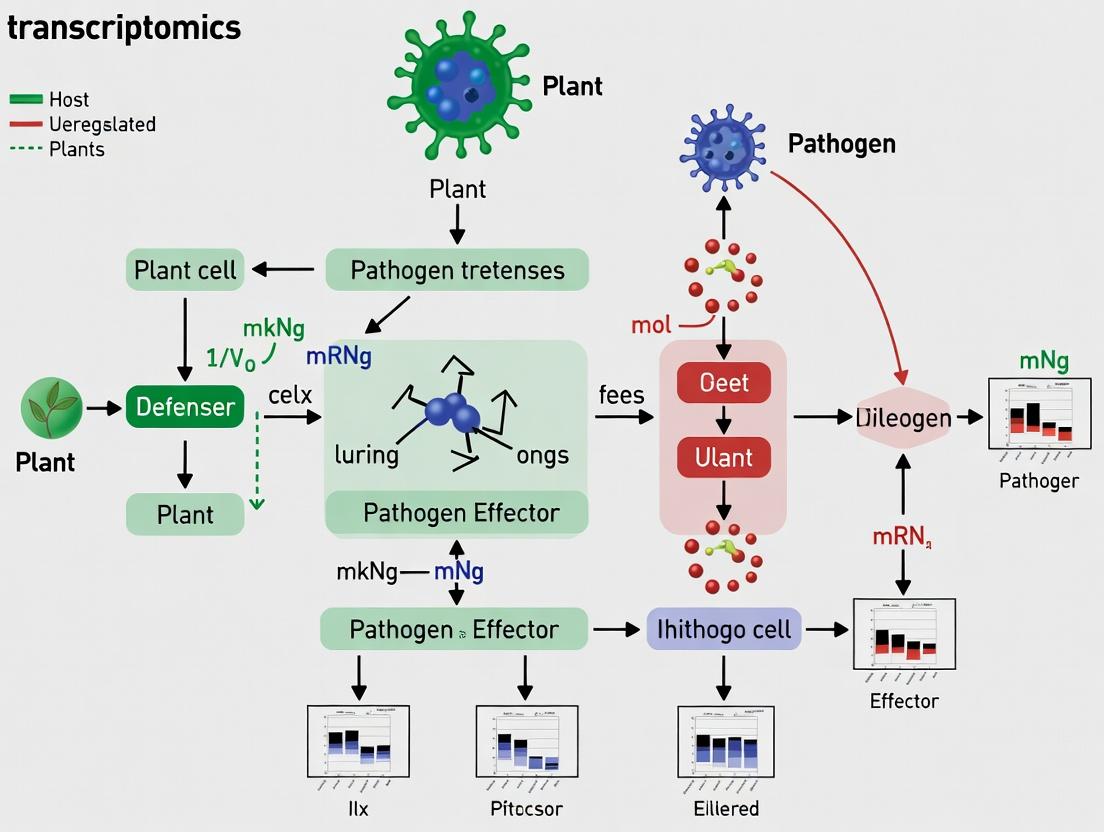
This article provides a detailed exploration of transcriptomic approaches for analyzing plant-pathogen interactions, tailored for researchers and drug development professionals.
Decoding Plant Immune Dialogues: A Comprehensive Guide to Host-Pathogen Interaction Transcriptomics
Abstract
This article provides a detailed exploration of transcriptomic approaches for analyzing plant-pathogen interactions, tailored for researchers and drug development professionals. We cover foundational concepts of plant immune signaling and pathogen effector strategies, then detail cutting-edge methodologies from single-cell RNA-seq to dual RNA-seq. The guide addresses common experimental pitfalls and data analysis challenges, followed by validation techniques and comparative analysis of key plant-pathogen models. The synthesis offers a pathway from gene discovery to applied agricultural and pharmaceutical solutions.
The Molecular Battlefield: Core Principles of Plant-Pathogen Transcriptional Dynamics
Within the framework of host-pathogen interaction transcriptomics, the plant immune system is a dynamic and inducible network. Transcriptomic analyses reveal waves of gene expression reprogramming triggered by pathogen perception. This guide details the core concepts and molecular machinery underlying these transcriptional changes, which are central to dissecting plant immunity from a systems biology perspective.
Layers of Plant Immunity: ETI and PTI
Plants employ a two-tiered innate immune system. Pathogen-Associated Molecular Pattern (PAMP)-Triggered Immunity (PTI) is activated upon recognition of conserved microbial signatures by surface-localized Pattern Recognition Receptors (PRRs). Effector-Triggered Immunity (ETI) is activated upon specific recognition of pathogen effector proteins by intracellular Nucleotide-Binding Leucine-Rich Repeat (NLR) receptors. ETI is generally stronger and often accompanied by a hypersensitive response (HR).
Table 1: Core Characteristics of PTI vs. ETI
| Feature | PTI (Pattern-Triggered Immunity) | ETI (Effector-Triggered Immunity) |
|---|---|---|
| Triggers | PAMPs/MAMPs (e.g., flg22, chitin) | Pathogen Effector Proteins (Avr proteins) |
| Receptors | Pattern Recognition Receptors (PRRs; RLKs/RLPs) | Intracellular NLR Receptors |
| Response Magnitude | Moderate, broad-spectrum | Strong, rapid, often race-specific |
| Common Output | ROS burst, MAPK activation, Callose deposition, PR gene expression | Hypersensitive Response (HR), amplified PTI responses |
| Transcriptomic Signature | Early, transient defense gene induction | Sustained, massive transcriptional reprogramming |
Core Signaling Modules and Quantitative Dynamics
Perception events converge on a set of conserved signaling modules. Key quantitative data from recent studies (e.g., phosphoproteomics, transcriptomics) are summarized below.
Table 2: Key Signaling Events and Their Quantitative Dynamics
| Signaling Event | Measurable Output | Typical Magnitude/Timeframe (Approx.) | Measurement Technique |
|---|---|---|---|
| PRR Activation | Receptor phosphorylation | Phosphorylation peaks within 2-5 min | Phospho-specific antibodies, MS phosphoproteomics |
| Calcium Influx | Cytosolic [Ca²⁺] increase | 2-10 fold increase, spikes within 1-2 min | Ratiometric Ca²⁺ sensors (e.g., aequorin, GCaMP) |
| ROS Burst | Apoplastic H₂O₂ accumulation | Micromolar range, peaks at 15-30 min | Chemiluminescence (L-012, luminol) assay |
| MAPK Cascade | MPK3/6 phosphorylation | >10-fold increase, peaks at 5-15 min | Immunoblot with anti-pMAPK antibodies |
| ETI-Triggered HR | Ion leakage / cell death | Conductivity increase measurable by 6-12 h post-infiltration | Electrolyte leakage assay |
Key Experimental Protocols
Protocol 1: Transcriptomic Profiling of Immune Responses (RNA-seq)
- Plant Material & Treatment: Grow Arabidopsis thaliana (Col-0) under controlled conditions. Treat leaves with 1 µM flg22 (for PTI) or infiltrate with Pseudomonas syringae pv. tomato (Pst) AvrRpt2 (for ETI). Include mock-treated controls.
- Sampling & Replication: Collect leaf tissue at multiple time points (e.g., 0, 30 min, 3 h, 6 h, 24 h). Use at least 4 biological replicates per condition.
- RNA Extraction & QC: Homogenize tissue in liquid N₂. Extract total RNA using a TRIzol-based or column kit. Assess RNA integrity (RIN > 8.0) via Bioanalyzer.
- Library Prep & Sequencing: Deplete rRNA. Prepare stranded cDNA libraries using a kit (e.g., Illumina TruSeq). Sequence on an Illumina platform to a depth of 20-30 million paired-end 150bp reads per sample.
- Bioinformatic Analysis: Align reads to reference genome (TAIR10) using HISAT2/STAR. Quantify gene expression with StringTie or featureCounts. Perform differential expression analysis using DESeq2 or edgeR (FDR < 0.05, |log2FC| > 1).
Protocol 2: Measuring Early Immune Signaling: ROS and MAPK Activation
- A. ROS Burst Assay:
- Prepare leaf discs (e.g., 4mm diameter) from 4-5 week-old plants and incubate overnight in water in a 96-well plate in the dark.
- Replace water with 100 µL of reaction mix: 20 µM luminol, 1 µg/mL horseradish peroxidase, and elicitor (e.g., 100 nM flg22) in water.
- Immediately measure chemiluminescence using a microplate luminometer over a period of 60-90 minutes, reading every 1-2 minutes.
- B. MAPK Activation Assay (Immunoblot):
- Harvest tissue (e.g., 100 mg) at specific times post-elicitation, flash-freeze in N₂.
- Homogenize in 2x Laemmli SDS-PAGE sample buffer.
- Run 10-20 µg total protein on a 10% SDS-PAGE gel, transfer to PVDF membrane.
- Probe with primary antibodies: anti-phospho-p44/42 MAPK (Erk1/2) (Cell Signaling #4370, cross-reactive with plant MPK3/6) at 1:2000 dilution, and anti-actin as loading control.
- Detect using HRP-conjugated secondary antibodies and chemiluminescent substrate.
Visualization of Signaling Pathways
Title: PTI Signaling Core Pathway
Title: ETI and Transcriptomic Feedback Loop
The Scientist's Toolkit: Key Research Reagent Solutions
Table 3: Essential Reagents for Plant Immunity Research
| Reagent/Material | Primary Function | Example/Supplier Notes |
|---|---|---|
| Synthetic PAMPs | Elicit PTI for controlled experiments. | flg22 (GenScript), chitooctaose (Megazyme). |
| Pathogen Strains | Induce natural ETI/PTI responses. | Pseudomonas syringae pv tomato DC3000 with/without effectors (AvrRpt2, AvrRpm1). |
| Phospho-Specific Antibodies | Detect activation of signaling kinases. | Anti-pMAPK (Cell Signaling #4370); anti-pBIK1 (custom). |
| Chemical Inhibitors/Activators | Dissect signaling pathways. | DPI (NADPH oxidase inhibitor), LaCl₃ (calcium channel blocker), Salicylic Acid. |
| Genetically Encoded Sensors | Real-time measurement of signaling ions/molecules in planta. | GCaMP6 (Ca²⁺), roGFP2 (Redox), HyPer (H₂O₂). |
| Mutant Seed Lines | Establish gene function via loss-of-function. | Arabidopsis T-DNA mutants (e.g., fls2, bak1, rbohD, npr1) from ABRC or NASC. |
| RNA-seq Library Prep Kits | Generate sequencing libraries from plant RNA. | Illumina TruSeq Stranded mRNA, NEBnext Poly(A) mRNA Magnetic. |
| Luminogenic ROS Substrates | Quantify apoplastic ROS burst. | L-012 (Wako) for high sensitivity; Luminol (Sigma). |
This whitepaper details the molecular mechanisms by which pathogens invade and manipulate plant hosts, framed within the research paradigm of host-pathogen interaction transcriptomics. Understanding these strategies—from the initial detection of Pathogen-Associated Molecular Patterns (PAMPs) to the effector-mediated hijacking of host transcription—is critical for developing novel disease control strategies in agriculture and informing therapeutic principles in human health.
Core Concepts in Plant-Pathogen Warfare
PAMPs and PRRs: The First Line of Defense
Plant cells detect invading microbes via Pattern Recognition Receptors (PRRs) that bind conserved PAMPs, such as bacterial flagellin (flg22) or fungal chitin. This triggers PAMP-Triggered Immunity (PTI), a robust defense response involving reactive oxygen species (ROS) bursts, MAP kinase cascades, and transcriptional reprogramming.
Effectors: The Pathogen's Counter-Intelligence
To suppress PTI, pathogens secrete effector proteins into the host cell. These effectors disrupt signaling, degrade immune components, or modify host transcription. Successful suppression leads to Effector-Triggered Susceptibility (ETS).
Transcriptional Hijacking: The Ultimate Subversion
A sophisticated strategy involves effectors that directly manipulate the host's transcriptional machinery. They may act as transcription factors, modify chromatin, or alter the activity of key transcriptional regulators, thereby reprogramming the host transcriptome to favor pathogen nutrition and colonization.
Quantitative Data: Key Findings in Transcriptomic Studies
The following tables summarize critical quantitative data from recent studies on transcriptional reprogramming during plant-pathogen interactions.
Table 1: Transcriptomic Changes in Arabidopsis thaliana upon Pseudomonas syringae Infection
| Treatment (Strain) | Differentially Expressed Genes (DEGs) | Upregulated DEGs | Downregulated DEGs | Key Enriched Pathway (p-value <0.01) |
|---|---|---|---|---|
| Mock (Control) | -- | -- | -- | -- |
| AvrRpt2 (Effector-Delivering) | ~3,200 | ~1,850 | ~1,350 | Salicylic Acid Biosynthesis |
| ΔEffector (Mutant) | ~4,500 | ~2,700 | ~1,800 | Jasmonate/Ethylene Signaling |
Table 2: Chromatin Immunoprecipitation Sequencing (ChIP-seq) Data for a Transcriptional Effector
| Effector Protein (Pathogen) | Host Target | Number of Binding Sites Identified | Genes Associated with Binding Sites | Common Motif in Bound Regions |
|---|---|---|---|---|
| PSR1 (Phytophthora sojae) | Soybean Promoters | 1,247 | 987 | GGCCTT repeat |
| TaT1 (Ustilago maydis) | Maize Promoters | 892 | 742 | CT-rich element |
Experimental Protocols
Dual RNA-Seq for Simultaneous Host and Pathogen Transcriptomics
Purpose: To capture concurrent gene expression changes in both the plant host and the infecting pathogen. Detailed Protocol:
- Sample Preparation: Inoculate plant leaves with pathogen (e.g., fungal spore suspension). Collect tissue at multiple time points post-inoculation (e.g., 0, 12, 24, 48 hours). Include mock-inoculated controls.
- Total RNA Extraction: Use a homogenizer (e.g., TissueLyser) with TRIzol reagent. Treat samples with DNase I to remove genomic DNA.
- rRNA Depletion: Use ribodepletion kits specific to both plant and pathogen rRNA to enrich for mRNA.
- Library Preparation & Sequencing: Fragment RNA, synthesize cDNA, and attach Illumina-compatible adapters. Perform paired-end sequencing (2x150 bp) on a platform like NovaSeq 6000 to a minimum depth of 30 million reads per sample.
- Bioinformatic Analysis:
- Quality Control: Use FastQC and Trimmomatic.
- Read Alignment: Map reads to a concatenated reference genome of host and pathogen using HISAT2 or STAR.
- Quantification: Use featureCounts to assign reads to host and pathogen genes.
- Differential Expression: Analyze with DESeq2 in R, using a design formula accounting for time and condition.
Transient Effector Delivery and RNA-seq (Agroinfiltration)
Purpose: To study the specific impact of a single effector on the host transcriptome. Detailed Protocol:
- Cloning: Clone the candidate effector gene, without its signal peptide, into a binary expression vector (e.g., pEAQ-HT) under a strong constitutive promoter (e.g., 35S). Include an empty vector control.
- Agrobacterium Transformation: Transform the vector into Agrobacterium tumefaciens strain GV3101.
- Infiltration: Grow Agrobacterium cultures to OD600=0.5. Resuspend in infiltration buffer (10 mM MES, 10 mM MgCl2, 150 µM acetosyringone). Pressure-infiltrate the suspension into the abaxial side of Nicotiana benthamiana leaves using a needleless syringe.
- Sample Collection & RNA-seq: Harvest leaf discs from the infiltration zone 48-72 hours post-infiltration. Proceed with total RNA extraction, library prep, and sequencing as in Protocol 4.1. Analyze data comparing effector-expressing samples to empty vector controls.
Visualizations
Title: PAMP Recognition Triggers PTI Signaling
Title: Effector Actions Lead to Host Susceptibility
Title: Dual RNA-seq Experimental Workflow
The Scientist's Toolkit: Research Reagent Solutions
Table 3: Essential Reagents for Host-Pathogen Transcriptomics Studies
| Item | Function/Application | Example Product/Catalog |
|---|---|---|
| Plant Growth Chamber | Provides controlled environment (light, humidity, temp) for reproducible plant-pathogen experiments. | Percival Scientific Growth Chamber |
| Pathogen Culture Media | For axenic cultivation of bacterial/fungal/oomycete pathogens prior to inoculation. | Potato Dextrose Agar (Fungal), King's B Medium (Pseudomonas) |
| TRIzol/RNA Extraction Kit | For high-yield, high-integrity total RNA isolation from complex, pathogen-infected plant tissue. | TRIzol Reagent, Qiagen RNeasy Plant Mini Kit |
| Ribo-depletion Kit (duplex) | Selectively removes both plant and pathogen ribosomal RNA to enrich for mRNA prior to sequencing. | Illumina Ribo-Zero Plus rRNA Depletion Kit |
| Stranded mRNA Library Prep Kit | Converts mRNA into sequencing-ready libraries, preserving strand information. | NEBNext Ultra II Directional RNA Library Prep Kit |
| Binary Expression Vector | For cloning effector genes and transiently expressing them in plants via Agrobacterium. | pEAQ-HT, pBIN19 |
| Agrobacterium Strain | Engineered for high-efficiency transformation and delivery of genetic material to plant cells. | A. tumefaciens GV3101 (pMP90) |
| Differential Expression Software | Statistical analysis of RNA-seq count data to identify significant gene expression changes. | DESeq2 R Package |
Within the research framework of host-pathogen interaction transcriptomics in plants, the selection of a model system is a foundational decision that dictates experimental scope, applicability, and translational potential. Arabidopsis thaliana, Oryza sativa (rice), and Solanum lycopersicum (tomato) have emerged as three preeminent platforms, each offering unique advantages. This technical guide provides a comparative analysis of these systems, detailing their genomic and experimental resources, standardized protocols for dual RNA-seq, and visualization of conserved and species-specific defense pathways.
Comparative Genomics and Pathogen Systems
The utility of each model is grounded in its genomic architecture, pathogen susceptibility profiles, and community resource availability. Key quantitative metrics are summarized below.
Table 1: Core Genomic and Experimental Attributes of Model Plant Systems
| Attribute | Arabidopsis thaliana | Oryza sativa (Rice) | Solanum lycopersicum (Tomato) |
|---|---|---|---|
| Genome Size (Mb) | ~135 Mb | ~430 Mb | ~900 Mb |
| Ploidy | Diploid (2n=10) | Diploid (2n=24) | Diploid (2n=24) |
| Key Pathogen Models | Hyaloperonospora arabidopsidis (downy mildew), Pseudomonas syringae (bacterial speck), Botrytis cinerea (gray mold) | Magnaporthe oryzae (blast), Xanthomonas oryzae pv. oryzae (bacterial blight) | Phytophthora infestans (late blight), Pseudomonas syringae pv. tomato, Fusarium oxysporum f. sp. lycopersici (fusarium wilt) |
| Canonical Immune Mutants | eds1, pad4, sid2, npr1 | PBZ1-RNAi, OsCEBiP-KD, OsNPR1-KO | Cf-9/Avr9, Mi-1.2, Ptr1, NRC family mutants |
| Primary Research Focus | Foundational PTI/ETI signaling, hormone crosstalk | Monocot-specific immunity, cereal crop translation | Fruit-plant pathology, NLR network evolution |
| Key Public Database(s) | TAIR, ePlant, Araport | RGAP (Rice Genome Annotation Project), Oryzabase, RAP-DB | Sol Genomics Network (SGN), Tomato Expression Atlas (TEA) |
Core Experimental Protocol: Simultaneous Host and Pathogen Transcriptome Profiling (Dual RNA-seq)
A pivotal technique in interaction transcriptomics is dual RNA-seq, which captures gene expression dynamics from both host and pathogen during infection.
Protocol: Dual RNA-Seq for Time-Course Infection Studies
3.1. Biological Material Preparation
- Plant Growth: Grow plants under controlled conditions (Arabidopsis: 22°C, 10-hr light; Rice: 28°C, 14-hr light; Tomato: 25°C, 12-hr light) to a standardized developmental stage (e.g., Arabidopsis 4-week rosette, rice 4-week seedling, tomato 3-week seedling).
- Pathogen Inoculation:
- For Pseudomonas syringae (Arabidopsis/tomato): Prepare suspension in 10 mM MgCl₂ to OD₆₀₀ = 0.002 (~1 x 10⁵ CFU/mL) for spray or infiltration.
- For Magnaporthe oryzae (rice): Harvest conidia from 7-10 day culture, suspend in 0.25% gelatin to 5 x 10⁴ spores/mL for spray inoculation.
- Mock treatment: Apply equivalent volume of inoculum buffer without pathogen.
- Sampling: Harvest infected tissue (e.g., leaf discs) in biological triplicate at defined time points (e.g., 0, 6, 12, 24, 48 hours post-inoculation). Flash-freeze in liquid N₂.
3.2. RNA Extraction and Enrichment
- Total RNA Isolation: Grind tissue under liquid N₂. Use TRIzol or Qiagen RNeasy kits with on-column DNase I treatment. Assess integrity (RIN > 8.0, Agilent Bioanalyzer).
- rRNA Depletion: Treat 1-2 µg total RNA with plant-specific and pathogen-specific rRNA removal probes (e.g., Ribo-Zero Plant Kit combined with custom probes for oomycete/fungal/bacterial rRNA). Verify depletion via Bioanalyzer trace.
3.3. Library Preparation and Sequencing
- Stranded cDNA Library Construction: Use kits such as NEBNext Ultra II Directional RNA Library Prep. Fragment RNA (~200-300 bp), synthesize cDNA, ligate adaptors, and perform size selection.
- Sequencing: Pool libraries and sequence on an Illumina NovaSeq or HiSeq platform to a minimum depth of 30-40 million 150-bp paired-end reads per sample.
3.4. Bioinformatic Analysis Workflow
- Pre-processing: Trim adapters and low-quality bases with Trimmomatic or Cutadapt.
- Alignment: For Arabidopsis and tomato, align reads to a concatenated reference genome (host + pathogen). For rice with M. oryzae, use a two-step alignment: first to host genome, then unmapped reads to pathogen genome. Tools: HISAT2 or STAR.
- Quantification: Generate read counts per gene feature using featureCounts. Use host and pathogen GTF annotation files separately.
- Differential Expression: Analyze host and pathogen datasets independently using DESeq2 or edgeR in R. Key comparisons: infected vs. mock at each time point.
Workflow Diagram Title: Dual RNA-Seq Analysis Pipeline
Signaling Pathways in Host-Pathogen Interactions
Conserved defense pathways manifest with system-specific modifications. Below are generalized schematics for Pattern-Triggered Immunity (PTI) and Effector-Triggered Immunity (ETI) across models.
Pathway Diagram Title: Core PTI/ETI Signaling Across Models
The Scientist's Toolkit: Key Research Reagent Solutions
Table 2: Essential Research Materials for Host-Pathogen Transcriptomics
| Reagent/Material | Function/Application | Example Product/Catalog Number |
|---|---|---|
| Ribo-Zero Plant Kit | Depletes cytoplasmic and chloroplast rRNA from plant total RNA, enriching for mRNA and non-coding RNA. | Illumina (MRZPL116) / Takara Bio |
| Custom dsDNA Probes for Pathogen rRNA | Enables simultaneous depletion of pathogen (e.g., fungal, oomycete, bacterial) rRNA for dual RNA-seq. | xGen Custom Hyb Probe Pools (IDT) |
| NEBNext Ultra II Directional RNA Library Prep Kit | For construction of strand-specific, high-quality sequencing libraries from rRNA-depleted RNA. | New England Biolabs (E7760S) |
| DESeq2 R Package | Statistical software for differential gene expression analysis based on negative binomial distribution. | Bioconductor Package |
| Phusion High-Fidelity DNA Polymerase | For cloning pathogen effectors or host immune genes for functional validation (e.g., agroinfiltration). | Thermo Scientific (F530S) |
| Gateway-Compatible Binary Vectors (e.g., pGWB series) | For rapid assembly and stable/transient expression of genes in planta via Agrobacterium transformation. | NBRP (Japan) |
| Agrobacterium tumefaciens Strain GV3101 | Standard disarmed strain for transient expression (agroinfiltration) in Arabidopsis and tomato leaves. | CIB (C58C1 derivative) |
| Methyl Jasmonate (MeJA) / Salicylic Acid (SA) | Defense hormone treatments used as positive controls or to dissect signaling pathways in mutant backgrounds. | Sigma-Aldrich (392707 / 247588) |
A. thaliana, O. sativa, and S. lycopersicum form a complementary triad of model systems that collectively enable the dissection of universal principles and clade-specific adaptations in plant immunity. The integration of their rich genetic resources with modern transcriptomic protocols, such as dual RNA-seq, provides a powerful, cross-system framework for elucidating the molecular dialogue of host-pathogen interactions. This knowledge is foundational for the rational design of durable disease resistance in crops.
The molecular dialogue between plants and pathogens orchestrates a complex reprogramming of host gene expression. Research in host-pathogen interaction transcriptomics seeks to decipher this code, identifying core transcriptional networks that determine disease outcomes. Central to this defense are the core transcriptomic responses involving Pathogenesis-Related (PR) genes, the intricate cross-talk of hormonal pathways—primarily salicylic acid (SA), jasmonic acid (JA), and ethylene (ET)—and the establishment of Systemic Acquired Resistance (SAR). This whitepaper details these core components, providing a technical guide for researchers investigating plant immune signaling.
Pathogenesis-Related (PR) Genes: Classification and Expression Dynamics
PR genes are a cornerstone of the plant defense transcriptome, encoding proteins with direct antimicrobial activity or roles in strengthening plant tissues. Their coordinated induction serves as a biomarker for defense activation.
MajorPRGene Families and Functions
Table 1: Major PR Gene Families, Proposed Functions, and Induction Triggers
| PR Family | Type Member/Example | Proposed Biochemical Function | Primary Induction Signal |
|---|---|---|---|
| PR-1 | PR-1a | Antifungal, unknown biochemical function | SA |
| PR-2 | β-1,3-glucanase | Hydrolysis of fungal cell wall glucans | SA |
| PR-3 | Chitinase Class I, II, IV, V, VII | Hydrolysis of fungal cell wall chitin | SA, ET |
| PR-4 | Chitinase Class I (Hevein-like) | Chitin-binding, antifungal | SA, JA/ET |
| PR-5 | Thaumatin-like protein (TLP) | Permeabilization of fungal membranes | SA |
| PR-9 | Peroxidase | Lignification, ROS generation | SA, JA/ET |
| PR-12 | Defensin (PDF1.2) | Membrane permeabilization, ion channel inhibition | JA/ET |
| PR-13 | Thionin (THI2.1) | Membrane disruption | JA/ET |
| PR-14 | Lipid-transfer protein (LTP) | Antimicrobial lipid binding, membrane disruption | SA, JA/ET |
Quantitative Expression Profiles
Transcriptomic studies (e.g., RNA-seq) reveal distinct kinetic and amplitude patterns of PR gene expression.
Table 2: Representative Expression Kinetics of Core PR Genes Post-Inoculation
| Gene Symbol | Fold Change (hrs post-inoculation) | Pathogen System | Reference Technique | ||
|---|---|---|---|---|---|
| 6h | 24h | 48h | |||
| PR-1 | 2.5 | 85.7 | 120.3 | Pseudomonas syringae / Arabidopsis | RNA-seq |
| PR-2 (β-1,3-glucanase) | 1.8 | 45.2 | 60.1 | P. syringae / Arabidopsis | RNA-seq |
| PR-5 (TLP) | 3.1 | 52.8 | 78.5 | P. syringae / Arabidopsis | RNA-seq |
| PDF1.2 (PR-12) | 1.2 | 15.4 | 35.6 | Botrytis cinerea / Arabidopsis | qRT-PCR |
| Chitinase (PR-3) | 4.5 | 60.3 | 72.8 | B. cinerea / Arabidopsis | qRT-PCR |
Hormonal Pathways Governing Defense Transcriptomes
The SA and JA/ET pathways form the backbone of plant defense signaling, often acting antagonistically to tailor responses to biotrophic vs. necrotrophic pathogens.
Salicylic Acid (SA) Pathway
Diagram 1: Salicylic Acid Biosynthesis and Signaling Pathway
Jasmonic Acid/Ethylene (JA/ET) Pathway
Diagram 2: JA/ET Pathway Integration and Signaling
Pathway Antagonism
Table 3: Molecular Mechanisms of SA-JA Pathway Antagonism
| Mechanism | Key Players | Effect |
|---|---|---|
| NPR1-Mediated Suppression | NPR1, TGA factors | SA-induced NPR1 represses JA-responsive genes independently of its coactivator function. |
| Transcription Factor Competition | WRKY TFs (e.g., WRKY70) | SA-induced WRKY70 represses JA signaling; JA signaling can inhibit WRKY70 expression. |
| Hormone Metabolism Interference | SA-mediated downregulation of JA biosynthesis genes (e.g., LOX2). | Reduces JA precursor pool. |
| Proteasomal Degradation | SA promotes degradation of JA signaling components (e.g., ORA59). | Removes key JA/ET-responsive TF. |
Systemic Acquired Resistance (SAR): Transcriptomic Basis
SAR provides long-lasting, broad-spectrum resistance in distal, uninfected tissues. Its establishment is marked by a distinct transcriptomic signature.
SAR Signaling Network
Diagram 3: Key Signals and Transcriptional Regulation in SAR
SAR-Specific Transcriptional Markers
Table 4: Key Transcriptional Markers of SAR Establishment
| Gene Category | Example Genes | Proposed Role in SAR | Induction Fold-Change (Systemic Tissue) |
|---|---|---|---|
| Classic PR Genes | PR-1, PR-2, PR-5 | Direct antimicrobial activity | 50-200x |
| SAR-Regulated* Genes | SAR8.2, SARD1, CBP60g | Regulation of SA biosynthesis, unknown functions | 10-50x |
| Pipecolic Acid (Pip) Pathway | ALD1, SARD4, FMO1 | Synthesis of N-hydroxypipecolic acid (NHP), a potent SAR inducer | 20-100x |
| Lipid Transfer Proteins | DIR1, AZI1 | Involved in generation or transport of mobile signals | 5-15x |
Experimental Protocols for Core Transcriptomic Analysis
Protocol: RNA-seq for Defense Transcriptome Profiling
Objective: To quantify genome-wide changes in gene expression in plant tissues following pathogen challenge or treatment with defense hormones.
Materials:
- Plant tissue (e.g., Arabidopsis leaves, 100mg per replicate)
- Pathogen inoculum or hormone solution (e.g., 1mM SA, 100µM MeJA)
- TRIzol Reagent or equivalent.
- DNase I (RNase-free).
- Magnetic bead-based mRNA isolation kit (e.g., NEBNext Poly(A) mRNA Magnetic Isolation Module).
- cDNA library prep kit (e.g., NEBNext Ultra II Directional RNA Library Prep Kit).
- Sequencing Platform: Illumina NovaSeq 6000 (150bp paired-end recommended).
Procedure:
- Treatment & Sampling: Inoculate plants or treat with hormone/water control. Harvest tissue into liquid N₂ at designated time points (e.g., 0, 6, 24, 48 hpi). Use ≥3 biological replicates.
- Total RNA Extraction: Homogenize tissue in TRIzol. Phase separate with chloroform. Precipitate RNA with isopropanol, wash with 75% ethanol, and resuspend in RNase-free water. Quantify with Qubit RNA HS Assay.
- RNA Quality Control: Assess integrity using Agilent Bioanalyzer (RIN > 8.0 required).
- Library Preparation: Isolate poly(A) mRNA using magnetic oligo(dT) beads. Fragment mRNA (~300 bp). Synthesize first and second-strand cDNA. Perform end repair, A-tailing, and adapter ligation. Amplify library with index primers via PCR (12-15 cycles).
- Library QC & Sequencing: Validate library size distribution (Bioanalyzer) and quantify (qPCR). Pool libraries at equimolar concentration. Sequence to a depth of 20-40 million paired-end reads per sample.
- Bioinformatic Analysis: Align reads to reference genome (e.g., TAIR10 for Arabidopsis) using HISAT2 or STAR. Count reads per gene feature using featureCounts. Perform differential expression analysis with DESeq2 (FDR < 0.05, |log2FC| > 1). Enrichment analysis via GO, KEGG.
Protocol: qRT-PCR Validation of Key Defense Genes
Objective: To validate RNA-seq results and perform high-sensitivity, targeted expression analysis of core genes (e.g., PR-1, PDF1.2).
Materials:
- cDNA synthesized from 1µg total RNA (see 5.1, step 2).
- Gene-specific primers (designed for ~100-200 bp amplicon, Tm ~60°C).
- Reference gene primers (ACT2, UBQ10, PP2A for Arabidopsis).
- SYBR Green qPCR Master Mix (2X).
- 96- or 384-well qPCR plates.
- Real-Time PCR System.
Procedure:
- Primer Design & Validation: Design primers using Primer-BLAST. Test for single amplicon via standard PCR and gel electrophoresis. Confirm primer efficiency (90-110%) with standard curve.
- qPCR Reaction Setup: Prepare 10µL reactions: 5µL SYBR Green Mix, 0.5µL each primer (10µM), 1µL cDNA (diluted 1:10), 3µL nuclease-free water. Include no-template controls.
- Thermocycling Conditions: 95°C for 3 min; 40 cycles of: 95°C for 10s, 60°C for 30s (acquire fluorescence); followed by melt curve analysis (65°C to 95°C, increment 0.5°C).
- Data Analysis: Calculate ΔCq = Cq(target gene) - Cq(reference gene). Calculate ΔΔCq = ΔCq(treated) - ΔCq(control). Fold Change = 2^(-ΔΔCq). Perform statistical analysis (t-test, ANOVA) on ΔCq values from biological replicates.
The Scientist's Toolkit: Research Reagent Solutions
Table 5: Essential Reagents and Tools for Defense Transcriptomics Research
| Reagent/Tool | Supplier Examples | Function in Research |
|---|---|---|
| Pathogen Strains (Model) | Pseudomonas syringae pv. tomato DC3000, Botrytis cinerea B05.10 | Standardized biotic elicitors for consistent defense induction in Arabidopsis, tomato, etc. |
| Hormone Analogs & Inhibitors | Salicylic Acid (SA), Methyl Jasmonate (MeJA), 1-Aminocyclopropane-1-carboxylic acid (ACC, ET precursor), Paclobutrazol (SA inhibitor) | To selectively activate or suppress specific defense pathways for mechanistic studies. |
| Mutant/Transgenic Seeds | npr1-1, sid2-1, coi1-1, ein2-1, NahG overexpressors | Genetic tools to dissect the contribution of specific pathways to the transcriptomic response. |
| RNA Extraction Kits | TRIzol (Thermo Fisher), RNeasy Plant Mini Kit (Qiagen) | High-yield, high-integrity total RNA isolation from plant tissues, which can be polysaccharide-rich. |
| RNA-seq Library Prep Kits | NEBNext Ultra II Directional RNA Library Prep (NEB), TruSeq Stranded mRNA (Illumina) | For converting isolated mRNA into sequencer-compatible, strand-specific cDNA libraries. |
| qPCR Master Mixes | PowerUp SYBR Green (Thermo Fisher), iTaq Universal SYBR Green (Bio-Rad) | Sensitive, reliable detection for quantification of transcript levels of target genes. |
| High-Fidelity DNA Polymerase | Phusion (NEB), Q5 (NEB) | For cloning promoter regions, generating constructs for transgenic complementation or reporter assays. |
| Dual-Luciferase Reporter Assay System | Promega | To study transcriptional regulation of defense gene promoters by specific TFs in planta. |
In host-pathogen interaction transcriptomics in plants, transcriptional reprogramming is the fundamental process by which a host plant reconfigures its gene expression profile to mount an effective defense. This reprogramming is not monolithic but occurs in distinct, temporally regulated phases. Precise temporal resolution—differentiating early, mid, and late-phase events—is critical for deconvoluting the signaling cascades, regulatory networks, and ultimate phenotypic outcomes of plant immunity. This guide delineates the methodological and analytical frameworks for dissecting these dynamic phases.
Phases of Transcriptional Reprogramming in Plant Immunity
The host transcriptomic response to pathogen recognition unfolds in a tightly regulated sequence. Data from recent studies using high-resolution time-series RNA-seq (e.g., on Arabidopsis thaliana inoculated with Pseudomonas syringae) reveal the following conserved phases:
- Early Phase (0 - 4 hours post-inoculation, hpi): Characterized by the rapid upregulation of signaling components, transcription factors (TFs), and a subset of early-responsive genes (ERGs). This phase is primarily driven by pattern-triggered immunity (PTI).
- Mid Phase (4 - 12 hpi): Marks the transition and amplification phase. Effector-triggered immunity (ETI) signatures often become prominent, leading to a massive wave of defense-related gene expression, including pathogenesis-related (PR) genes and biosynthetic enzymes for secondary metabolites.
- Late Phase (12 - 48+ hpi): Involves the stabilization of the defense response, systemic signaling, and the activation of processes related to hypersensitive response (HR) execution, cell wall reinforcement, and recovery or programmed cell death.
Table 1: Quantitative Features of Transcriptional Phases in Arabidopsis-P. syringae Interaction
| Phase | Time Window (hpi) | Typical # of DEGs* | Key Gene Ontology (GO) Terms | Primary Immune Trigger |
|---|---|---|---|---|
| Early | 0 - 4 | 500 - 1,500 | Protein phosphorylation, MAPK cascade, transcription factor activity, hormone biosynthetic process | PTI |
| Mid | 4 - 12 | 2,000 - 6,000 | Defense response, response to salicylic acid, phenylpropanoid biosynthetic process, response to oxidative stress | PTI/ETI Transition |
| Late | 12 - 48 | 1,000 - 4,000 (subset sustained) | Programmed cell death, cell wall modification, systemic acquired resistance, nutrient reservoir activity | ETI & Systemic Signaling |
*DEGs: Differentially Expressed Genes (adjusted p-value < 0.05, |log2FC| > 1). Numbers are approximate and strain-dependent.
Experimental Protocols for Temporal Transcriptomics
Protocol 1: High-Resolution Time-Series RNA-Sequencing
Objective: To capture genome-wide expression dynamics at fine temporal intervals.
- Plant Material & Inoculation: Grow Arabidopsis plants under controlled conditions. Inoculate leaves with a defined dose of pathogen (e.g., P. syringae pv. tomato DC3000 at 10^8 CFU/mL) or appropriate mock control.
- Sampling: Collect leaf tissue from at least 3 biological replicates at predetermined time points (e.g., 0, 1, 2, 4, 6, 8, 12, 18, 24, 48 hpi). Flash-freeze immediately in liquid N₂.
- RNA Extraction & Library Prep: Homogenize tissue. Extract total RNA using a kit (e.g., Qiagen RNeasy Plant Mini Kit) with on-column DNase I treatment. Assess RNA integrity (RIN > 7.0). Prepare stranded mRNA-seq libraries (e.g., Illumina TruSeq Stranded mRNA).
- Sequencing & Analysis: Sequence on an Illumina platform (≥ 30 million paired-end 150bp reads per sample). Process reads: trim adapters (Trimmomatic), align to reference genome (HISAT2/STAR), quantify gene counts (featureCounts), and perform differential expression analysis across time (DESeq2, edgeR). Use clustering (Mfuzz, STEM) to group genes with similar temporal patterns.
Protocol 2: Phaser-Specific TF Activity Profiling (ATAC-Seq/DAP-Seq)
Objective: To identify key transcription factors binding active regulatory regions in each phase.
- Assay for Transposase-Accessible Chromatin (ATAC-Seq): Harvest nuclei from infected tissue at early, mid, and late phases. Perform tagmentation with Tn5 transposase, purify DNA, and sequence. Peaks represent open chromatin regions.
- DNA Affinity Purification Sequencing (DAP-Seq): Express candidate TF proteins (e.g., from early-phase induced TF genes) with an affinity tag in vitro. Incubate with sheared, adapter-ligated genomic DNA. Immunoprecipitate protein-DNA complexes and sequence bound DNA fragments.
- Integration: Overlap phase-specific ATAC-Seq peaks with DAP-Seq peaks for TFs induced in that phase to identify direct target genes and infer regulatory networks.
Visualization of Pathways and Workflows
Title: Temporal Signaling Cascade in Plant Immune Transcriptional Reprogramming
Title: Workflow for Temporal Transcriptomics Data Analysis
The Scientist's Toolkit: Key Research Reagent Solutions
Table 2: Essential Materials for Temporal Transcriptomics in Plant-Pathogen Studies
| Item | Function & Application | Example Product/Kit |
|---|---|---|
| Pathogen Strains | Defined virulence; used for inoculation to trigger specific (PTI/ETI) immune responses. | Pseudomonas syringae pv. tomato DC3000 (wild-type & effector-deficient mutants). |
| RNA Stabilization Solution | Immediately preserves RNA integrity in planta at harvest, critical for capturing true expression states. | RNA Later Solution or RNAlater. |
| Plant RNA Extraction Kit | Purifies high-integrity total RNA from fibrous, polysaccharide-rich plant tissue; includes DNase step. | Qiagen RNeasy Plant Mini Kit, Norgen Plant RNA Purification Kit. |
| mRNA-seq Library Prep Kit | Constructs strand-specific, Illumina-compatible libraries from poly-A selected mRNA. | Illumina TruSeq Stranded mRNA LT, NEBNext Ultra II Directional RNA Library Prep. |
| Reverse Genetics Tools | Validates gene function in specific phases via loss/gain-of-function. | CRISPR-Cas9 knockout vectors, estradiol-inducible overexpression lines. |
| Chromatin Accessibility Kit | Profiles open chromatin regions to identify active regulatory elements in each phase. | Illumina Tagmentase TDE1 (for ATAC-Seq on plant nuclei). |
| Dual-Luciferase Reporter Assay | Quantifies in planta promoter activity of phase-specific gene candidates in real-time. | Promega Dual-Luciferase Reporter Assay System. |
| Phytohormone ELISA/Kits | Quantifies key signaling molecules (SA, JA, ABA) to correlate with transcriptional phases. | Salicylic Acid (SA) ELISA Kit, LC-MS/MS based phytohormone profiling services. |
From RNA Extraction to Insights: Cutting-Edge Transcriptomic Methodologies for Plant Immunity
This technical guide details the experimental design framework for transcriptomic studies of host-pathogen interactions in plants, a critical subfield of plant immunity research. The objective is to enable the generation of high-resolution, statistically robust, and biologically interpretable RNA-seq data. The design pivots on three interdependent pillars: precise inoculation, temporally resolved sampling, and adequate biological replication. This design directly informs downstream analyses, such as differential gene expression, co-expression network construction, and the identification of key regulatory hubs in defense signaling pathways.
Inoculation Strategies
The method of pathogen delivery profoundly influences the nature and reproducibility of the host transcriptional response.
Comparative Table of Inoculation Methods
Table 1: Common plant pathogen inoculation strategies for transcriptomics.
| Method | Pathogen Type | Key Advantage | Primary Limitation | Reproducibility |
|---|---|---|---|---|
| Spray Inoculation | Fungi, Oomycetes, Bacteria (foliar) | Mimics natural spore dispersal; covers large tissue area. | Inoculum density per leaf variable; environmental sensitivity. | Medium (requires controlled humidity) |
| Infiltration (Syringe/Vacuum) | Bacteria, Viral suspensions | Precise, uniform delivery into apoplast; quantifiable dose. | Causes wounding; not natural entry route for many pathogens. | High |
| Root Dip/Soil Drench | Soil-borne Fungi, Oomycetes, Nematodes | Natural infection route for root pathogens. | Difficult to standardize inoculum in soil; root sampling complex. | Low-Medium |
| Agar Plug/Mycelial Contact | Necrotrophic Fungi | Localized, controlled infection site. | Rate of spread can be inconsistent. | Medium |
| Vector-Based Transmission | Viruses, Phytoplasmas | Natural transmission cycle. | Vector competency and feeding behavior add variability. | Low |
Detailed Protocol: Vacuum Infiltration for Bacterial Pathogens (e.g.,Pseudomonas syringae)
This protocol is optimized for consistent apoplastic colonization in Arabidopsis thaliana leaves.
- Culture Preparation: Grow P. syringae in King's B medium with appropriate antibiotics to late-log phase (OD₆₀₀ ≈ 0.8). Centrifuge and resuspend in sterile 10 mM MgCl₂ to a final OD₆₀₀ of 0.002 for early time points or 0.2 for disease symptom studies.
- Plant Preparation: Use 4-5 week-old plants. Gently abrade the leaf surface with fine carborundum powder if using non-wounded infiltration methods.
- Infiltration: Submerge entire rosettes in the bacterial suspension in a beaker. Place beaker in a desiccator attached to a vacuum pump. Apply vacuum (15-25 in Hg) for 1-2 minutes until leaf tissue appears water-soaked. Rapidly release the vacuum. The suspension will be drawn into the apoplast.
- Post-Inoculation: Gently rinse plants with water to remove surface bacteria. Place plants in high-humidity conditions for the first 24 hours, then transfer to standard growth conditions.
- Verification: Confirm bacterial titers by homogenizing leaf discs from control plants at 0 and 3 days post-inoculation (dpi) and plating serial dilutions.
Time-Course Analyses
Temporal resolution is essential to dissect the sequential events of pathogen recognition, signaling cascade activation, and effector-triggered immunity or susceptibility.
Defining Time Points
Table 2: Example time-course design for a hemibiotrophic pathogen interaction.
| Post-Inoculation | Biological Phase | Expected Key Transcriptomic Events | Minimum Recommended Replicates |
|---|---|---|---|
| 0 hour | Pre-inoculation / Mock Control | Baseline transcriptome. | 6 |
| 1-6 hours | PAMP-Triggered Immunity (PTI) | Upregulation of receptor kinases, MAPK cascade components, PR genes, ROS-related genes. | 5 |
| 12-24 hours | Effector Deployment / Biotrophic Phase | Pathogen effector expression; potential suppression of PTI. | 5 |
| 48-72 hours | Transition to Necrotrophy / Hypersensitive Response (HR) | Upregulation of jasmonic acid/ethylene signaling, cell death markers, secondary metabolites. | 5 |
| 96+ hours | Disease Progression / Systemic Signaling | Systemic Acquired Resistance (SAR) markers; senescence-related genes. | 5 |
Protocol: Sequential Harvesting for RNA-seq Time-Course
- Randomization: Label all pots randomly. Assign each plant to a single time point to avoid wounding effects from prior sampling.
- Harvest: At each time point, collect the inoculated tissue (e.g., leaf #4 from each plant). Flash-freeze immediately in liquid nitrogen.
- Mock Controls: For every time point, include tissue from mock-inoculated plants (infiltrated with MgCl₂ only).
- Biological Material Pooling: For homogeneous samples, tissue from multiple plants per biological replicate can be pooled. Define pooling strategy consistently across the experiment.
- RNA Stabilization: If immediate freezing is impossible, use commercial RNA stabilization reagents.
Replicate Planning
Adequate replication is non-negotiable for statistical power. Biological replicates are independent biological samples (different plants), not technical replicates (aliquots from the same RNA extraction).
Power Analysis for Replicate Determination
A priori power analysis is essential. Using pilot data or public datasets:
- Estimate the variance in gene expression for your system.
- Define the minimum fold-change you wish to detect (e.g., 1.5x).
- Set desired statistical power (typically 80-90%) and significance threshold (e.g., FDR-adjusted p < 0.05).
- Use tools like
PROPER(R/Bioconductor) orScottyweb tool to estimate required replicates. For plant transcriptomics with moderate variability, n=5-6 biological replicates per condition is often a practical minimum.
Table 3: Impact of replicate number on differential expression detection.
| Biological Replicates (n) | Statistical Power | Ability to Detect Subtle FC (<2x) | Cost-Benefit |
|---|---|---|---|
| 3 | Low (<70%) | Poor | Low cost, high false negative risk. |
| 5 | Medium-High (~80-85%) | Moderate | Optimal balance for most studies. |
| 8+ | High (>90%) | Good | High cost, robust for network analysis. |
Experimental Blocking Design
To control for environmental gradients (light, temperature, bench position), use a randomized complete block design.
- Blocking: Divide your growth space into smaller, homogeneous blocks (e.g., individual trays or shelf sections).
- Randomization: Within each block, randomly assign one plant from each treatment/time-point combination.
- Replication: Each treatment appears once per block. The number of blocks equals your desired number of biological replicates.
Visualization of Core Concepts
Signaling Pathway Logic in Plant Immunity
Diagram 1: Core plant immune signaling pathway logic.
Experimental Workflow for Transcriptomics
Diagram 2: Plant host-pathogen transcriptomics workflow.
The Scientist's Toolkit: Research Reagent Solutions
Table 4: Essential materials for plant interaction transcriptomics studies.
| Item | Supplier Examples | Function |
|---|---|---|
| RNA Stabilization Solution (e.g., RNAlater) | Thermo Fisher, Qiagen | Preserves RNA integrity in tissues during harvest and storage. |
| High-Capacity RNA Extraction Kit (with DNase I) | Qiagen (RNeasy), Norgen, Macherey-Nagel | Isolates high-purity, genomic DNA-free total RNA from plant tissues (high in polysaccharides/phenols). |
| RNA Integrity Number (RIN) Analysis Reagents (e.g., Bioanalyzer RNA Nano Kit) | Agilent Technologies | Precisely assesses RNA degradation prior to costly library prep. |
| mRNA-Seq Library Prep Kit (Poly-A Selection) | Illumina, NEB, Takara | Prepares strand-specific, sequencing-ready libraries from mRNA. |
| rRNA Depletion Kit for Plants (Ribo-Zero) | Illumina | Alternative to poly-A selection for total RNA, captures non-coding RNAs. |
| UltraPure DEPC-Treated Water | Thermo Fisher | Nuclease-free water for all molecular biology steps to prevent RNA degradation. |
| Synthetic Bacterial Culture Media (e.g., King's B, LB) | MilliporeSigma, BD Difco | For reproducible, high-titer pathogen culture pre-inoculation. |
| Sterile Inoculation Buffers (10mM MgCl₂) | Prepared in-lab or purchased | Vehicle for pathogen resuspension and mock controls. |
| Next-Generation Sequencing Size Selection Beads (SPRI) | Beckman Coulter, Kapa Biosystems | For clean-up and size selection during library preparation. |
Within the field of host-pathogen interaction transcriptomics in plants, obtaining high-quality RNA for sequencing is a major bottleneck when studying tissues rich in interfering compounds. Polysaccharides (e.g., pectins, starch) and secondary metabolites (e.g., polyphenols, alkaloids, terpenoids) co-precipitate with nucleic acids, inhibiting downstream enzymatic reactions and leading to failed library preparations or biased sequencing data. This technical guide details a robust, integrated workflow to overcome these challenges, enabling reliable transcriptomic profiling from even the most recalcitrant plant and pathogen-infected samples.
The Challenge: Quantitative Impact of Interfering Compounds
The table below summarizes the quantifiable effects of common inhibitors on key RNA-Seq workflow steps, as established in recent literature.
Table 1: Impact of Sample Inhibitors on RNA-Seq Metrics
| Inhibitor Class | Effect on RNA Integrity (RIN) | cDNA Synthesis Yield Reduction | Library Prep PCR Inhibition (Ct Increase) | Reported Sequencing Bias |
|---|---|---|---|---|
| Polyphenols/Tannins | Severe (2-4 point decrease) | 60-90% | 3-6 cycles | 3' bias, underrepresentation of GC-rich transcripts |
| Polysaccharides | Moderate (1-3 point decrease) | 40-70% | 2-5 cycles | Insert size variation, coverage dropouts |
| Proteoglycans | Mild to Moderate | 30-60% | 1-4 cycles | Non-uniform coverage |
| Organic Acids | Mild | 20-40% | 1-3 cycles | Minor base-calling errors |
Integrated RNA Extraction & Purification Protocol
This protocol combines mechanical disruption, tailored buffer chemistry, and selective binding.
- Homogenization: Flash-freeze tissue in liquid N₂. Grind to a fine powder using a pre-chilled mortar and pestle or a bead mill with ceramic beads. For fibrous/polysaccharide-rich samples, use a CTAB-based buffer.
- Lysis & Binding:
- For polyphenol-rich samples: Use a lysis buffer containing 2% (w/v) CTAB, 2% (w/v) PVP-40 (polyvinylpyrrolidone), 100 mM Tris-HCl (pH 8.0), 25 mM EDTA, 2.0 M NaCl, and 2% (v/v) β-mercaptoethanol added fresh. Incubate at 65°C for 10 min with vortexing.
- For polysaccharide-rich samples: Use a high-salt (1.5-2.0 M NaCl or KCl) buffer with 1% (w/v) SDS. Perform an initial precipitation of polysaccharides by incubating the lysate on ice for 30 min, followed by centrifugation at 12,000 x g for 15 min at 4°C. Transfer the supernatant.
- Organic Extraction: Perform a single extraction with an equal volume of chloroform:isoamyl alcohol (24:1). Centrifuge and transfer the aqueous phase.
- RNA Binding & Wash: Mix the aqueous phase with 0.7 volumes of isopropanol and load onto a silica-membrane column (specifically rated for plant/polysaccharide-rich samples). Wash with a high-salt (e.g., 1.5 M NaCl) ethanol-based wash buffer followed by a standard ethanol wash.
- DNase Treatment & Final Elution: Perform on-column DNase I digestion (RNase-free) for 15 min. Wash and elute in nuclease-free water. Assess quality via Bioanalyzer (RIN >7.0 target) and quantity via Qubit.
Library Preparation & QC for Inhibitor-Rich RNA
Standard library prep kits often fail. The following adaptations are critical.
- Input RNA QC: Use fluorometry (Qubit) for quantification, not absorbance (A260/A280), as contaminants skew UV ratios.
- rRNA Depletion: Use probe-based kits (e.g., rRNA removal kits for plants) over poly-A selection, as metabolite-bound mRNA often has compromised poly-A tails.
- cDNA Synthesis & Amplification: Use reverse transcriptase and polymerase enzymes known for inhibitor tolerance (e.g., engineered mutants). Include RNA spike-in controls (e.g., External RNA Controls Consortium, ERCC) to detect and computationally correct for persistent inhibition bias. Limit PCR cycles to minimize duplicate reads.
- Post-Library Purification: Perform dual-size selection (e.g., with SPRI beads) to remove adapter dimers and large contaminants. Final library QC must use a sensitive method like Bioanalyzer or Fragment Analyzer.
Key Signaling Pathways in Host-Pathogen Interactions
Transcriptomic studies in this field focus on decoding these interconnected defense pathways.
The Scientist's Toolkit: Essential Research Reagents
Table 2: Key Reagents for RNA-Seq from Challenging Samples
| Reagent/Material | Function & Rationale |
|---|---|
| CTAB (Cetyltrimethylammonium bromide) | Ionic detergent effective in dissociating polysaccharides and polyphenol-protein complexes during lysis. |
| PVP-40 (Polyvinylpyrrolidone) | Binds and precipitates polyphenols, preventing their oxidation and irreversible binding to RNA. |
| β-Mercaptoethanol (or DTT) | Reducing agent that disrupts disulfide bonds in proteins and inhibits RNases and polyphenol oxidases. |
| High-Salt (NaCl/KCl) Binding/Wash Buffers | Promotes selective binding of RNA to silica membranes in the presence of polysaccharides. |
| Inhibitor-Tolerant Enzyme Mixes | Engineered reverse transcriptases and polymerases that maintain activity with common plant inhibitors. |
| ERCC RNA Spike-In Mix | A set of synthetic RNA controls at known concentrations used to diagnose and computationally correct for technical bias. |
| Plant-Specific rRNA Depletion Probes | Oligonucleotides designed against conserved plant rRNA sequences, crucial for metabolite-degraded mRNA samples. |
| Magnetic SPRI Beads | Enable clean size selection and purification of libraries, removing adapter dimers and residual contaminants. |
This whitepaper details the methodology of Dual RNA-Seq, a critical technological advancement for a thesis investigating Host-Pathogen Interaction Transcriptomics in Plants. Traditional single-organism transcriptomics fails to capture the dynamic, reciprocal dialogue between host and invader. Dual RNA-Seq enables the simultaneous, unbiased profiling of both plant and pathogen transcriptomes from a single infected sample. This guide provides the technical framework for employing this approach to dissect the molecular mechanisms of immunity, virulence, and the metabolic interplay that defines plant disease outcomes.
Core Principles & Experimental Workflow
The fundamental challenge of Dual RNA-Seq is the computational and biological separation of mixed transcriptional signals. Success hinges on sample preparation, sequencing depth, and bioinformatic deconvolution.
Key Experimental Protocol: Sample Preparation & Sequencing
- Infection System: Establish a controlled plant-pathogen system (e.g., Arabidopsis thaliana infected with Pseudomonas syringae). Include appropriate mock-inoculated controls.
- Sample Harvesting: Harvest tissue at defined time points post-inoculation, capturing key transition points in the interaction. Flash-freeze in liquid nitrogen.
- Total RNA Extraction: Use a robust kit designed for complex plant tissue (high polysaccharide/phenol content) and capable of capturing pathogen RNA (e.g., Qiagen RNeasy Plant Mini Kit with modifications). DNase treatment is mandatory.
- RNA Quality & Quantity: Assess RNA Integrity Number (RIN > 7) using a Bioanalyzer. Quantify via fluorometry (Qubit).
- rRNA Depletion: Perform ribosomal RNA (rRNA) depletion rather than poly-A enrichment. Poly-A selection would capture only eukaryotic (plant) mRNA, losing most bacterial and fungal transcripts. Use probe sets targeting both host and pathogen rRNA (e.g., Illumina Ribo-Zero Plus).
- Library Construction & Sequencing: Construct stranded cDNA libraries using a standard kit (e.g., Illumina TruSeq Stranded Total RNA). Sequence on an Illumina platform to a sufficient depth. Recommended minimum depth is 30-50 million paired-end reads per sample for complex plant genomes.
Bioinformatic Analysis Pipeline
The computational pipeline is paramount for separating sequencing reads by organism of origin.
Detailed Bioinformatics Protocol:
- Quality Control & Trimming: Use FastQC for quality assessment. Trim adapters and low-quality bases with Trimmomatic or Cutadapt.
- Read Classification & Alignment:
- Method A (Genome-dependent): Align reads simultaneously to a concatenated reference genome of the host and pathogen using a splice-aware aligner (STAR, HISAT2) with parameters suitable for both plants and microbes. Reads aligning uniquely to one genome are assigned.
- Method B (Hybrid): First, subtract reads aligning to the host genome. Remaining unaligned reads are then aligned to the pathogen genome.
- Critical: Use tools like
Kraken2orCentrifugefor taxonomic classification of unmapped reads to detect contamination or unknown pathogens.
- Quantification: Generate read counts per gene feature (GTF file) for each organism using
featureCounts(Subread package) orHTSeq-count. - Differential Expression Analysis: Perform separate analyses for host and pathogen using dedicated tools (
DESeq2,edgeR). Use the experimental design (e.g., infected vs. mock) to identify significantly differentially expressed genes (DEGs).
Data Interpretation & Key Insights
Analysis focuses on correlating transcriptional programs across kingdoms.
Table 1: Summary of Differential Expression Results at 24 hpi
| Organism | Total DEGs (FDR < 0.05) | Upregulated | Downregulated | Key Enriched Pathway (Host) / Virulence Factor (Pathogen) |
|---|---|---|---|---|
| Host (A. thaliana) | 2,150 | 1,240 | 910 | Salicylic Acid Biosynthesis, PR Gene Expression, Cell Wall Reinforcement |
| Pathogen (P. syringae) | 317 | 182 | 135 | Type III Secretion System (T3SS) Effectors, Coronatine Biosynthesis |
Table 2: Correlation of Expression for Selected Gene Pairs
| Host Gene (Function) | Pathogen Gene (Function) | Pearson Correlation (r) | Proposed Interaction |
|---|---|---|---|
| PR1 (Defense Marker) | avrPto (T3SS Effector) | -0.89 | Effector suppression of host immunity |
| JAZ1 (JA Signaling Repressor) | cmaA (Coronatine Synthesis) | +0.94 | Mimicry of JA-Ile, hijacking signaling |
| PRI2 (Redox Metabolism) | katG (Catalase) | -0.76 | Host-derived oxidative stress vs. pathogen detoxification |
The Scientist's Toolkit: Essential Research Reagents & Materials
Table 3: Key Reagent Solutions for Plant Dual RNA-Seq
| Item | Function & Rationale | Example Product/Kit |
|---|---|---|
| Total RNA Extraction Kit | Isolsates high-quality, intact total RNA from complex plant tissues; critical for capturing both plant and microbial RNA. | Qiagen RNeasy Plant Mini Kit, Zymo Quick-RNA Plant Kit |
| rRNA Depletion Kit | Removes cytoplasmic and organellar rRNA from both host and pathogen, enriching for mRNA and non-coding RNA from all organisms. | Illumina Ribo-Zero Plus rRNA Depletion Kit, NEBNext rRNA Depletion Kit |
| Stranded cDNA Library Prep Kit | Preserves strand-of-origin information, crucial for accurate transcript annotation and identifying antisense regulation. | Illumina TruSeq Stranded Total RNA, NEBNext Ultra II Directional RNA Library Prep |
| Dual-Organism Reference | Custom concatenated genome FASTA and annotation (GTF) files for the specific plant cultivar and pathogen strain used. | Ensembl Plants, NCBI GenBank, Phytozome (for host); pathogen-specific databases |
| Bioinformatics Software | For alignment, quantification, and differential expression analysis of mixed reads. | STAR/HISAT2 (alignment), featureCounts (quantification), DESeq2 (DE analysis) |
Understanding the molecular dynamics of host-pathogen interactions is a central challenge in plant biology and disease resistance breeding. While bulk RNA sequencing has provided foundational insights, it averages signals across heterogeneous tissues, masking critical cell-type-specific responses. The integration of single-cell RNA sequencing (scRNA-seq) and spatial transcriptomics (ST) now enables the precise mapping of immune responses within the complex architecture of plant tissues. This guide details the technical application of these technologies to resolve how specific cell types—epidermal guard cells, mesophyll, vascular bundles—orchestrate defense pathways during pathogen challenge, providing a high-resolution view of plant immunity.
Core Technologies and Principles
Single-Cell RNA Sequencing (scRNA-seq)
ScRNA-seq profiles the transcriptome of individual cells, requiring tissue dissociation into a live single-cell suspension. Key steps include protoplasting for plant cells, droplet-based partitioning, reverse transcription, library preparation, and sequencing. Computational analysis involves dimensionality reduction, clustering, and differential expression to define cell states.
Spatial Transcriptomics (ST)
ST technologies retain the spatial coordinates of mRNA molecules within a tissue section. Commercial platforms like 10x Genomics Visium use arrays of barcoded oligonucleotides placed on a slide. When a tissue section is applied, mRNA is captured with positional barcodes, allowing transcriptome-wide mapping back to the original tissue location.
Experimental Protocols for Plant Immune Studies
Protocol 1: scRNA-seq ofArabidopsis thalianaLeaf uponPseudomonas syringaeInfection
Objective: Identify cell-type-specific immune transcriptional signatures.
- Plant Material & Infection: Grow A. thaliana (Col-0) to 4-week rosette stage. Infiltrate leaves with P. syringae pv. tomato DC3000 (OD600=0.002 in 10mM MgCl2) or mock solution (MgCl2).
- Protoplast Isolation (Critical Step):
- Harvest leaves 6 hours post-infection.
- Slice leaves thinly with a razor blade in enzyme solution (1.5% Cellulase R10, 0.4% Macerozyme R10, 0.4M mannitol, 20mM KCl, 20mM MES pH 5.7, 10mM CaCl2, 0.1% BSA, 5mM β-mercaptoethanol).
- Vacuum infiltrate for 10 minutes, then digest in the dark with gentle shaking (40 rpm) for 90 minutes.
- Filter through 40μm nylon mesh. Pellet protoplasts at 100 x g for 5 minutes.
- Wash twice with W5 solution (154mM NaCl, 125mM CaCl2, 5mM KCl, 2mM MES pH 5.7).
- Resuspend in 0.4M mannitol, count, and assess viability (>80% required).
- Single-Cell Library Preparation: Use 10x Genomics Chromium Controller and Next GEM Chip K. Load ~10,000 viable protoplasts targeting recovery of 5,000 cells. Follow manufacturer's protocol for GEM generation, barcoding, and cDNA amplification.
- Sequencing: Sequence libraries on an Illumina NovaSeq 6000 (Paired-end, 28x91 cycles) targeting ~50,000 reads per cell.
- Bioinformatics: Process with Cell Ranger. Use Seurat/R or Scanpy/Python for clustering, UMAP visualization, and marker gene identification. Compare infected vs. mock clusters.
Protocol 2: Visium Spatial Transcriptomics of Infected Plant Tissue
Objective: Map immune gene expression to tissue compartments (e.g., infection site vs. distal).
- Sample Preparation: At desired time point, harvest infected leaf, immediately flash-freeze in liquid N2. Embed in Optimal Cutting Temperature (OCT) compound.
- Cryosectioning: Section at 10μm thickness onto a Visium Spatial Gene Expression slide. Fix sections in pre-chilled methanol at -20°C for 30 minutes. Stain with H&E and image.
- Permeabilization Optimization: Perform a permeabilization test using the Visium test kit to determine optimal enzyme incubation time for plant cell walls (typically longer than animal tissue).
- On-Slide cDNA Synthesis: Permeabilize tissue to release mRNA, which binds to spatially barcoded primers. Perform reverse transcription and second-strand synthesis on slide.
- Library Construction: Denature cDNA, amplify off-slide, and prepare sequencing library with sample indices.
- Sequencing & Analysis: Sequence and process with Space Ranger. Align to plant reference genome. Integrate with histology image for spatial visualization.
Data Presentation: Key Quantitative Findings
Table 1: Representative Quantitative Outputs from a scRNA-seq Study of P. syringae-Infected Arabidopsis Leaf
| Cell Cluster | Key Marker Genes | Avg. Cells per Sample | Differentially Expressed Genes (DEGs) vs. Mock (FDR<0.05) | Notable Upregulated Immune Pathway |
|---|---|---|---|---|
| Guard Cells | MYB60, KAT1 | 450 | 312 | SA-mediated signaling (PR1, ICS1) |
| Mesophyll | CAB2, RBCS | 2,800 | 1,045 | JA/ET response (PDF1.2, VSP2) |
| Vascular (Phloem) | APL, SUC2 | 620 | 187 | Systemic Acquired Resistance (AZI1, DIR1) |
| Epidermal | PDF2, LTP1 | 1,100 | 543 | Pattern-Triggered Immunity (FLS2, WRKY33) |
Table 2: Spatial Transcriptomics Metrics from a Visium Experiment (6h Post-Infection)
| Spatial Region | Spot Diameter | Spots per Region | Unique Genes per Spot (Median) | Key Spatial Immune Marker (Fold Change) |
|---|---|---|---|---|
| Primary Infection Zone | 55 μm | ~150 | 1,850 | FRK1 (22.5x) |
| Adjacent Border Zone | 55 μm | ~300 | 1,920 | PAL1 (8.7x), CYP81F2 (12.1x) |
| Distal Systemic Tissue | 55 μm | ~500 | 1,780 | PR5 (4.2x) |
Visualizing Pathways and Workflows
Title: Core Plant Immune Signaling Pathway
Title: Single-Cell Transcriptomics Experimental Workflow
The Scientist's Toolkit: Essential Research Reagents and Materials
Table 3: Key Research Reagent Solutions for Plant scRNA-seq & Spatial Studies
| Item | Supplier/Example | Critical Function |
|---|---|---|
| Protolyzing Enzymes | Cellulase R10, Macerozyme R10 (Yakult) | Digest plant cell wall to release viable protoplasts for scRNA-seq. |
| 10x Genomics Chromium Kit | 10x Genomics, Chromium Next GEM Single Cell 3' Kit | Partition single cells into Gel Bead-in-Emulsions (GEMs) for barcoding. |
| Visium Spatial Kit | 10x Genomics, Visium Spatial Gene Expression | Capture mRNA from tissue sections with positional barcoding. |
| O.C.T. Compound | Tissue-Tek, Sakura | Optimal Cutting Temperature medium for cryo-embedding tissue. |
| RNase Inhibitors | Protector RNase Inhibitor (Roche) | Prevent RNA degradation during protoplasting and library prep. |
| Live/Dead Cell Stain | Fluorescein diacetate (FDA) / Propidium Iodide (PI) | Assess protoplast viability prior to loading on 10x chip. |
| High-Fidelity Polymerase | KAPA HiFi HotStart ReadyMix (Roche) | Accurate amplification of cDNA libraries for sequencing. |
| Dual Index Kit | 10x Genomics, Dual Index Kit TT Set A | Add unique sample indices during library prep for multiplexing. |
| Bioanalyzer/P2100 Kits | Agilent High Sensitivity DNA Kit | Quality control of final cDNA and sequencing libraries. |
| Reference Genome & Annotation | TAIR (A. thaliana), Ensembl Plants | Essential for alignment and gene quantification (Cell Ranger/Space Ranger). |
This guide details a core bioinformatics workflow within the broader research thesis: "Elucidating Defense and Susceptibility Mechanisms in Arabidopsis thaliana During Pseudomonas syringae Infection." The analysis of host-pathogen interaction transcriptomics in plants aims to identify key differentially expressed genes (DEGs) and enriched biological pathways, distinguishing between resistant and susceptible genotypes. This enables the discovery of potential genetic targets for developing disease-resistant crops or novel plant defense potentiators.
The pipeline begins with raw sequencing reads and proceeds through quality control, alignment, quantification, statistical analysis, and biological interpretation.
Title: Transcriptomics Analysis Pipeline from Raw Data to Discovery
Core Methodologies and Protocols
Differential Expression Analysis with DESeq2
- Input: Raw gene count matrix (rows=genes, columns=samples). Sample metadata table specifying conditions (e.g., Mock, InfectedResistant, InfectedSusceptible).
- Protocol:
- Data Import & Pre-filtering: Load count data into DESeq2
DESeqDataSetobject. Remove genes with fewer than 10 reads total across all samples. - Model Fitting & Normalization: Estimate size factors (library size normalization), estimate gene-wise dispersions, and fit a Negative Binomial Generalized Linear Model (GLM). For a time-series infection study, the design formula would be
~ genotype + time + genotype:time. - Hypothesis Testing: Use the Wald test or Likelihood Ratio Test (LRT) to compute log2 fold changes (log2FC) and their associated p-values. Apply independent filtering to improve power.
- Multiple Testing Correction: Apply the Benjamini-Hochberg (BH) procedure to control the False Discovery Rate (FDR). Define DEGs as
|log2FC| > 1 & padj < 0.05.
- Data Import & Pre-filtering: Load count data into DESeq2
Table 1: Example DEG Output Summary from a Simulated A. thaliana vs. P. syringae Experiment
| Gene ID | Base Mean | log2FC (InfectedvsMock) | p-value | padj (FDR) | Annotation |
|---|---|---|---|---|---|
| AT3G57260 | 1250.4 | 5.82 | 1.2e-22 | 3.1e-20 | PR1 (Pathogenesis-Related 1) |
| AT1G64280 | 890.1 | 3.45 | 4.5e-15 | 6.2e-13 | NPR1 (Regulator of SA signaling) |
| AT5G44420 | 2040.7 | -4.21 | 7.8e-12 | 8.5e-10 | PDF1.2 (Plant Defensin) |
| AT2G14610 | 310.5 | -2.15 | 0.0023 | 0.018 | Pectinase (Cell wall modification) |
Pathway Enrichment Analysis using clusterProfiler
- Input: Background gene list (all genes in the genome) and a query list of significant DEGs (e.g., 500 upregulated genes in a resistant genotype).
- Protocol:
- Gene ID Conversion: Convert plant gene identifiers (e.g., TAIR IDs) to standard Entrez IDs using the
bitrfunction. - Over-Representation Analysis (ORA): For Gene Ontology (GO) Biological Process, use
enrichGO()with parameters:OrgDb = org.At.tair.db,pvalueCutoff = 0.01,qvalueCutoff = 0.05. For KEGG pathways, useenrichKEGG(). - Gene Set Enrichment Analysis (GSEA): Use the entire ranked gene list (ranked by log2FC or -log10(p-value)). Run
gseGO()orgseKEGG()to identify pathways enriched at the top or bottom of the list, which is sensitive to more subtle, coordinated expression changes. - Visualization: Generate dot plots, enrichment maps, and pathway diagrams with
dotplot()andemapplot()functions.
- Gene ID Conversion: Convert plant gene identifiers (e.g., TAIR IDs) to standard Entrez IDs using the
Table 2: Example Enriched KEGG Pathways from Upregulated DEGs in Resistant A. thaliana
| Pathway ID | Pathway Description | Gene Count | p-value | q-value | Key Genes (TAIR) |
|---|---|---|---|---|---|
| ath04626 | Plant-pathogen interaction | 28 | 1.7e-09 | 4.2e-08 | AT3G52430 (RPM1), AT4G19030 (RPS2) |
| ath00940 | Phenylpropanoid biosynthesis | 19 | 3.2e-06 | 2.1e-05 | AT5G13930 (CHS), AT2G37040 (PAL1) |
| ath03040 | Spliceosome | 22 | 0.0041 | 0.017 | AT1G20960, AT1G06160 |
Key Signaling Pathways in Plant Immunity
The analysis frequently implicates specific defense pathways. Below is a simplified view of the Salicylic Acid (SA) and Jasmonic Acid (JA) signaling crosstalk, central to plant immune responses.
Title: SA-JA Signaling Pathway Crosstalk in Plant Defense
The Scientist's Toolkit: Key Research Reagent Solutions
Table 3: Essential Materials for Host-Pathogen Transcriptomics in Plants
| Item / Solution | Function in Research | Example Product/Provider |
|---|---|---|
| Total RNA Isolation Kit | Extracts high-integrity total RNA from plant tissue (often high in polysaccharides/polyphenols) under varying infection conditions. | Spectrum Plant Total RNA Kit (Sigma-Aldrich), RNeasy Plant Mini Kit (Qiagen). |
| mRNA-Seq Library Prep Kit | Prepares stranded, Illumina-compatible cDNA libraries from purified mRNA, crucial for accurate transcript quantification. | NEBNext Ultra II Directional RNA Library Prep Kit (NEB). |
| RNase Inhibitor | Prevents degradation of RNA samples during processing and storage, essential for preserving pathogen-derived transcripts. | Protector RNase Inhibitor (Roche). |
| DESeq2 R/Bioconductor Package | The primary statistical software package for modeling RNA-seq count data and identifying DEGs with FDR control. | Bioconductor (bioconductor.org). |
| clusterProfiler R Package | Performs ORA and GSEA for GO terms and KEGG pathways, integrating with other Bioconductor objects. | Bioconductor (bioconductor.org). |
| Organism Annotation Database | Species-specific database linking gene IDs to functional annotations (GO, KEGG, etc.). Essential for enrichment. | org.At.tair.db for Arabidopsis (Bioconductor). |
| Pathogen Strain & Plant Seeds | Well-characterized biological materials. e.g., Pseudomonas syringae pv. tomato DC3000 and wild-type/mutant A. thaliana (Col-0). | Arabidopsis Biological Resource Center (ABRC). |
Navigating Experimental Pitfalls: Optimization and Problem-Solving in Interaction Transcriptomics
Accurate transcriptomic profiling in host-pathogen interaction studies in plants is fundamentally dependent on the quality of the isolated RNA. Degradation, contamination, and misinterpretation of RNA Integrity Number (RIN) values are pervasive challenges that can confound data, leading to false biological conclusions. This technical guide details these issues within the context of plant immune response research, where the dynamic transcriptional changes of both host and pathogen must be captured with high fidelity.
RNA degradation is the enzymatic cleavage of RNA molecules. In plant-pathogen studies, endogenous plant RNases can be activated upon tissue damage during sampling, while some pathogens secrete RNases as virulence factors. Degraded RNA leads to 3’ bias in sequencing libraries, inaccurate quantification of transcript abundance, and loss of long transcripts, which is particularly detrimental for studying alternative splicing events during immune responses.
- Biotic Stress Sampling: Hypersensitive response (HR) and necrosis sites are rich in RNases.
- Processing Delay: Failure to immediately freeze tissue in liquid N₂.
- Inadequate Storage: Storage at -20°C instead of -80°C, or multiple freeze-thaw cycles.
Table 1: Impact of RNA Degradation on Transcriptomic Data Quality
| Degradation Indicator (Bioanalyzer) | Effect on cDNA Synthesis | Impact on Differential Expression Analysis |
|---|---|---|
| rRNA ratio (18S/28S) < 1.8 | Reduced yield, shorter cDNA fragment length | False negatives for long transcripts; 3' bias |
| Increased baseline fluorescence | High adapter dimer formation in libraries | Loss of library complexity; increased noise |
| RIN value < 7.0 (for most applications) | Increased technical variability | Reduced statistical power; unreliable p-values |
Contamination: Genomic DNA and Polysaccharides/Phenolics
Contamination compromises RNA purity and interferes with downstream enzymatic reactions.
- Genomic DNA (gDNA): Causes overestimation of transcript abundance in qPCR and generates false signals in RNA-seq by mapping to intronic regions. This is critical when studying plant genes induced by pathogen-associated molecular patterns (PAMPs), where rapid induction must be accurately measured.
- Polysaccharide and Polyphenolic Compounds: Abundant in plant tissues (e.g., lignin, pectin, tannins). They co-precipitate with RNA, inhibit reverse transcriptase and PCR polymerases, and lead to inaccurate spectrophotometric readings (A260/A230 ratios).
Protocol: DNase I Treatment and Clean-up
- To 10 µg of RNA in 50 µL nuclease-free water, add 5 µL of 10X DNase I Reaction Buffer and 5 µL of recombinant DNase I (1 U/µL).
- Incubate at 37°C for 30 minutes.
- Add 5 µL of 50 mM EDTA and inactivate at 65°C for 10 minutes.
- Purify the RNA using a silica-membrane column: bind with high-salt buffer, wash twice with ethanol-containing buffer, and elute in 30-50 µL nuclease-free water.
- Verify gDNA removal by performing a PCR assay targeting an intron-spanning region of a housekeeping gene (e.g., EF1α) using 5 µL of the treated RNA as template.
The RIN Challenge: Interpretation in Complex Samples
The RIN algorithm, generated by Agilent's Bioanalyzer or TapeStation, is the industry standard but has limitations in plant-pathogen transcriptomics.
- Host-Pathogen Mixed RNA: The RIN is calculated primarily based on eukaryotic rRNA peaks. A sample containing both plant and bacterial/fungal RNA may show abnormal or bimodal rRNA profiles, leading to an artificially low RIN that does not accurately reflect the integrity of the messenger RNA pool.
- Stress-Induced rRNA Degradation: During intense immune responses, specific rRNA cleavage can occur, altering the electrophoregram profile independently of global mRNA integrity.
Table 2: Interpreting RIN Values in Plant-Pathogen Context
| Sample Type | Typical RIN Expectation | Caveat & Recommended Action |
|---|---|---|
| Healthy Plant Tissue | 8.0 - 10.0 | Baseline standard. |
| Pathogen-Inoculated Tissue | May be 6.0 - 8.0 | Assess mRNA profile via DV200 (\% of fragments >200 nt). Proceed if DV200 > 70\%. |
| Enriched Pathogen Cells | Often < 6.0 | RIN is unreliable. Use fluorescence-based assays (Qubit) for quantification and proceed with poly-A-independent library prep (rRNA depletion). |
| Tissue with HR/Necrosis | Variable, often low | Focus on DV200 and validate RNA quality via a control qPCR assay for long vs. short amplicons from the same gene. |
Protocol: DV200 Calculation and Long/Short Amplicon QC Assay
- DV200: Using the Bioanalyzer trace, calculate the percentage of the area under the curve in the fragment region that is above 200 nucleotides.
- QC PCR Assay:
- Design two primer pairs for a constitutively expressed plant gene (e.g., Ubiquitin): one producing a short amplicon (80-120 bp) and one producing a long amplicon (350-500 bp).
- Convert all RNA samples to cDNA under identical conditions.
- Perform qPCR with both primer sets. Calculate the delta Ct (Ctlong - Ctshort). A delta Ct increase of >2 in a sample compared to a high-quality control indicates significant degradation affecting longer transcripts.
The Scientist's Toolkit: Essential Research Reagent Solutions
Table 3: Key Reagents for RNA Work in Plant-Pathogen Studies
| Reagent/Material | Function & Rationale |
|---|---|
| RNase Inhibitors (e.g., Recombinant RNasin) | Inactivates RNases during extraction and cDNA synthesis, crucial for preserving labile pathogen transcripts. |
| Polysaccharide/Polypectate Removal Buffers (e.g., CTAB-based) | Precipitates and separates carbohydrates from nucleic acids during initial plant tissue homogenization. |
| LiCl Precipitation Solution | Selective precipitation of RNA, leaving small contaminants and some gDNA in solution. Useful for polysaccharide-rich tissues. |
| Magnetic Beads with Size Selection | Enables cleanup and selection of RNA fragments >200 nt to improve library quality from partially degraded samples. |
| rRNA Depletion Kits (Plant/Pathogen-specific) | For dual RNA-seq, kits that remove rRNA from both plant and the specific pathogen (e.g., fungus, bacteria) are essential for cost-effective sequencing of the transcriptome. |
| DNase I, RNase-free | Essential for complete gDNA removal. Must be rigorously inactivated or removed post-treatment. |
| RNA-Stabilizing Reagents (e.g., RNAlater) | Penetrates plant tissue to inactivate RNases immediately upon sampling, vital for field work or time-series experiments. |
Visualizing Workflows and Relationships
Title: RNA Quality Control Workflow for Plant-Pathogen Studies
Title: Decision Path for Interpreting Low RIN in Host-Pathogen Samples
This guide addresses a critical technical challenge in the broader thesis on Host-Pathogen Interaction Transcriptomics in Plants. A comprehensive understanding of these dynamic interactions requires simultaneous, quantitative analysis of transcripts from both organisms. However, the inherent imbalance—where host RNA can constitute >99% of total RNA—often obscures pathogen signals, leading to poor resolution of pathogen gene expression and virulence mechanisms. Achieving a balanced sequencing depth is therefore not merely a technical detail but a fundamental prerequisite for generating biologically meaningful dual-transcriptome data.
Core Strategies for RNA Balancing
The primary approaches can be categorized into Host Depletion and Pathogen Enrichment, each with distinct advantages and limitations. The choice depends on the pathogen type, infection model, and research questions.
Table 1: Comparison of Core RNA Balancing Strategies
| Strategy | Principle | Key Methods | Pros | Cons | Ideal for |
|---|---|---|---|---|---|
| Poly-A Selection | Captures eukaryotic mRNA via poly-A tails. | Oligo(dT) beads | Excellent for host mRNA; standard protocol. | Misses non-polyadenylated pathogen RNA (e.g., bacterial, viral, some fungal). | Fungi/Oomycetes with poly-A tails. |
| Ribosomal RNA (rRNA) Depletion | Removes abundant rRNA from both organisms. | Probe hybridization (RNase H / bead-based). | Organism-agnostic; can retain non-polyA RNA. | May not fully resolve host-pathogen imbalance; requires species-specific probes. | Broad applications, especially for bacteria. |
| Host Nucleic Acid Depletion | Targeted removal of host sequences. | CRISPR-based depletion; Oligo hybridization. | Dramatically increases pathogen sequencing depth. | Complex/expensive; risk of off-target pathogen loss. | Low-biomass intracellular pathogens. |
| Pathogen-Specific Capture | Positive selection of pathogen RNA. | Probe-based hybridization capture (e.g., SureSelect). | Exceptional pathogen enrichment. | Requires prior knowledge of pathogen genome; design constraints. | Known pathogens, strain typing. |
| Physical Separation | Prior to RNA extraction, enrich pathogen cells. | Protoplasting; FACS; HMM. | Reduces host background at source. | Technically challenging; may alter transcriptional state. | Tissue-specific infections. |
Detailed Experimental Protocols
Protocol A: Dual-Species rRNA Depletion for Plant-Bacterial Interactions
- Sample: 1 µg total RNA from infected leaf tissue.
- Reagents: RiboCop rRNA Depletion Kit (with custom probes), RNase inhibitor.
- Steps:
- Probe Hybridization: Combine RNA with custom DNA oligo probes targeting Arabidopsis thaliana and Pseudomonas syringae rRNA sequences. Heat to 95°C for 2 min, then incubate at 45°C for 10 min.
- RNase H Digestion: Add RNase H enzyme mix. Incubate at 45°C for 30 min to cleave rRNA-DNA hybrids.
- Cleanup: Degrade DNA probes with DNase I (15 min, 37°C). Purify enriched RNA using SPRI beads.
- QC: Assess depletion efficiency via Bioanalyzer; expect sharp reduction of 16S/23S (bacterial) and 18S/28S (plant) rRNA peaks.
Protocol B: Probe-Based Host RNA Depletion Using CRISPR-Cas13
- Sample: 500 ng total RNA.
- Reagents: CRISPR-Cas13 enzyme (e.g., Cas13d), custom crRNAs targeting host constitutive genes (e.g., Actin, EF1α, GAPDH), RNase inhibitor.
- Steps:
- Complex Formation: Assemble Cas13d protein with a pool of 5-10 host-targeting crRNAs in NEBuffer r3.0. Incubate 15 min at 37°C.
- Digestion: Add the ribonucleoprotein complex to the RNA sample. Incubate at 37°C for 60 min. Cas13d upon recognition cleaves the target host RNAs.
- Reaction Stop: Add 1 µL of 0.5 M EDTA to chelate Mg²⁺ and halt Cas13 activity.
- Cleanup: Perform two rounds of SPRI bead clean-up to remove Cas13 protein and cleaved RNA fragments.
- QC: Validate host depletion and pathogen retention via qPCR for a host housekeeping gene and a pathogen virulence gene.
Workflow Visualization
Title: Integrated Workflow for Balanced Dual RNA-Seq
Title: Logic of Balancing Strategies
The Scientist's Toolkit: Research Reagent Solutions
Table 2: Essential Reagents for RNA Balancing Experiments
| Item | Function & Rationale |
|---|---|
| Species-Specific rRNA Depletion Probes | Biotinylated DNA oligos complementary to conserved rRNA regions of host and pathogen. Essential for efficient co-depletion. |
| CRISPR-Cas13d/crRNA Complex | Programmable RNA-targeting system for sequence-specific degradation of abundant host transcripts. Enables precise host subtraction. |
| Biotinylated Pathogen Probes (e.g., SureSelect) | Long RNA baits targeting the entire pathogen transcriptome for hybridization capture. Maximizes pathogen read recovery. |
| RNase H Enzyme | Specifically cleaves RNA in DNA:RNA hybrids. Core enzyme in many commercial rRNA depletion kits. |
| Magnetic Streptavidin Beads | Used to immobilize biotinylated probe:target complexes for separation in depletion or capture protocols. |
| RNase Inhibitor (e.g., RNasin, SUPERase•In) | Critical for maintaining RNA integrity during lengthy hybridization and enzymatic steps. |
| Dual-Indexed RNA-Seq Library Prep Kit | Allows multiplexing of samples and unambiguous assignment of reads to host or pathogen genomes post-sequencing. |
| SPRI (Solid Phase Reversible Immobilization) Beads | For efficient cleanup and size selection of RNA and libraries between enzymatic steps. |
In plant host-pathogen interaction transcriptomics, a primary challenge is the extraction of meaningful pathogen and host-specific signals from complex infected tissues, which are often dominated by host-derived RNA and environmental noise. This high background severely compromises the sensitivity and accuracy of differential expression analysis, pathway mapping, and biomarker discovery. This whitepaper provides an in-depth technical guide to experimental and computational strategies for improving the signal-to-noise ratio (SNR) in such studies, framed within the broader thesis of deciphering molecular dialogue in plant immunity.
Transcriptomic noise in infected plant tissues originates from multiple layers:
- Biological Noise: Heterogeneity in infection progression, varying pathogen load across tissue sections, and constitutive host gene expression.
- Technical Noise: Limitations in pathogen RNA enrichment protocols, cross-hybridization in sequencing, and non-specific amplification.
Strategic Approaches for SNR Enhancement
Experimental Wet-Lab Techniques
The first line of defense involves wet-lab techniques to physically enrich for pathogen or host-response transcripts.
A. Pathogen-Specific RNA Enrichment
- Probe-Based Hybridization Capture: Custom biotinylated oligonucleotide probes designed against conserved pathogen genomic regions are used to pull down pathogen RNA prior to library prep.
- rRNA Depletion: Dual rRNA depletion strategies targeting both plant and pathogen ribosomal RNA significantly increase the proportion of informative mRNA reads.
B. Spatial and Single-Cell Transcriptomics Techniques like spatial transcriptomics (e.g., 10x Visium) or plant-adapted single-nuclei RNA-seq allow for the resolution of transcriptomes from infection sites versus adjacent healthy cells, isolating the signal spatially.
C. Optimized Library Preparation Kits Use of kits designed for degraded or low-input RNA (common in necrotic infected tissues) reduces technical bias and improves library complexity.
Computational & Bioinformatic Techniques
Post-sequencing, computational tools are critical for noise filtration.
A. In silico Subtraction Bioinformatic pipelines align reads first to the host genome, and unmapped reads are then aligned to the pathogen genome. This subtractive approach enriches pathogen-derived signals.
B. Disambiguation Algorithms For closely related species or obligate biotrophs with integrated sequences, tools like PathSeq (adapted for plants) or Kraken2 with custom plant-pathogen databases can assign ambiguous reads probabilistically.
C. Differential Expression Analysis with Noise Covariates Incorporating metrics like "host RNA proportion" or "sequencing batch" as covariates in tools like DESeq2 or edgeR models and removes unwanted variance.
Table 1: Comparative Performance of SNR Improvement Techniques in Plant-Pathogen Studies
| Technique | Approx. Pathogen RNA Enrichment Fold-Change | Key Advantage | Major Limitation |
|---|---|---|---|
| rRNA Depletion (Dual) | 2-5x | Preserves native expression ratios; simple workflow. | Does not deplete host mRNA. |
| Probe-Based Capture | 50-1000x | Extremely high specificity for target pathogen. | Probe design bias; high cost per sample. |
| In silico Subtraction | 10-50x | Low cost; uses standard RNA-seq libraries. | Fails on reads with high host-pathogen homology. |
| Single-Cell RNA-seq | N/A (Spatial Resolution) | Resolves cell-type-specific responses. | Technically challenging for plants; high cost. |
| Disambiguation Algorithms | N/A (Read Reassignment) | Recovers ambiguous reads; improves accuracy. | Computationally intensive. |
Detailed Experimental Protocols
Protocol 5.1: Dual rRNA Depletion for Plant-Fungal Co-Transcriptomics
Objective: To simultaneously deplete ribosomal RNA from both plant host and fungal pathogen to enrich mRNA. Reagents: RiboCop rRNA Depletion Kit (with custom plant + fungal probes); RNase Inhibitor. Steps:
- Total RNA Isolation: Extract total RNA from infected tissue (e.g., 100 mg) using a TRIzol-based method with DNase I treatment. Assess integrity (RIN > 7).
- Probe Hybridization: Combine 100-1000 ng total RNA with plant-specific and fungal-specific rRNA depletion probes in hybridization buffer. Incubate at 70°C for 5 min, then 45°C for 15 min.
- rRNA Removal: Add RNase H to digest RNA:DNA hybrids. Follow with cleanup using magnetic beads to remove digested fragments.
- Library Construction: Proceed with strand-specific cDNA synthesis and library preparation using a low-input kit (e.g., SMART-Seq v4).
- QC: Validate depletion efficiency via Bioanalyzer trace showing reduction of dominant rRNA peaks.
Protocol 5.2: Probe-Based Capture for Bacterial Pathogen Transcript Enrichment
Objective: To selectively enrich transcripts from a bacterial pathogen (Pseudomonas syringae) within infected Arabidopsis leaves. Reagents: MyBaits Custom Hyb Kit (Arbor Biosciences); biotinylated 80-mer probes tiled across P. syringae genome; streptavidin magnetic beads. Steps:
- Library Prep (Pre-Capture): Prepare standard Illumina RNA-seq libraries from total infected tissue RNA. Do not perform final amplification.
- Hybridization: Denature libraries (95°C, 5 min) and mix with blocking agents and the custom biotinylated probe pool. Hybridize at 65°C for 16-24 hours.
- Capture & Wash: Bind hybridization mix to streptavidin beads. Wash stringently (2x SSC/0.1% SDS at 65°C, then 0.1x SSC/0.1% SDS at 65°C) to remove non-specifically bound host DNA.
- Amplification: Perform 12-14 cycles of PCR to amplify the captured, target-enriched library.
- Sequencing & Analysis: Sequence and align reads to a combined host-pathogen reference genome to assess enrichment.
The Scientist's Toolkit: Research Reagent Solutions
Table 2: Essential Reagents and Materials for High-SNR Plant-Pathogen Transcriptomics
| Item | Function & Rationale | Example Product |
|---|---|---|
| Dual-Species rRNA Depletion Probes | Removes dominant rRNA from both organisms, dramatically increasing useful sequencing depth. | RiboCop Plant/Fungal Custom Kit. |
| Custom Biotinylated DNA Probes | For targeted enrichment of pathogen sequences; essential for low-biomass infections. | MyBaits Custom Hyb Kit. |
| Low-Input/ Degraded RNA Library Prep Kit | Maximizes library complexity from often compromised infected tissue samples. | SMART-Seq Stranded Kit. |
| RNase Inhibitor (HD Formulation) | Critical for maintaining integrity of rare pathogen transcripts during extraction and prep. | RiboLok RNase Inhibitor. |
| Magnetic Beads for Cleanup | Enable efficient size selection and cleanup with minimal sample loss. | SPRIselect Beads. |
| Disambiguation Software | Bioinformatically resolves ambiguous reads to correct genome of origin. | PathoScope 2.0 or Kraken2+Bracken. |
Visualizations
Title: Integrated SNR Improvement Workflow
Title: Hierarchical Noise Sources Breakdown
Batch Effect Correction and Normalization Strategies for Multi-experiment Studies
In plant host-pathogen interaction studies, researchers increasingly integrate transcriptomic datasets from multiple independent experiments to increase statistical power and discover robust biomarkers. These multi-experiment studies, however, are invariably confounded by batch effects—systematic technical variations introduced by differing experimental conditions, sequencing platforms, laboratory protocols, or plant growth chambers. In the context of a thesis on plant immune responses, failing to correct for these artifacts can lead to false conclusions, masking true biological signals of defense pathways like PTI (PAMP-Triggered Immunity) and ETI (Effector-Triggered Immunity) and obscuring the transcriptional reprogramming driven by signaling molecules such as salicylic acid and jasmonic acid.
This technical guide provides an in-depth analysis of current strategies for normalization and batch effect correction, framed specifically for research in plant-pathogen transcriptomics.
Core Concepts: Normalization vs. Batch Effect Correction
Normalization adjusts for technical differences within a single experiment (e.g., sequencing depth, gene length, GC content). Batch Effect Correction aims to remove systematic technical differences between experiments or batches while preserving the biological variation of interest (e.g., infected vs. mock-treated samples).
Quantitative Comparison of Common Methods
Table 1: Comparison of Batch Effect Correction Methods for RNA-Seq Data in Plant Studies
| Method | Algorithm Type | Key Strength | Key Limitation | Suitability for Host-Pathogen Studies |
|---|---|---|---|---|
| ComBat (sva package) | Empirical Bayes, Linear Model | Effective for known batches; preserves within-batch variance. | Assumes batch effect is additive/multiplicative; may over-correct. | High. Good for integrating data from public repositories (e.g., SRA). |
| ComBat-seq | Empirical Bayes, Negative Binomial Model | Designed for RNA-Seq count data; avoids distortion of counts. | Requires raw count input; computationally intensive for large datasets. | Very High. Preferred for raw count integration from multiple labs. |
| limma (removeBatchEffect) | Linear Model with Gaussian Assumption | Fast, simple for known batch variables. | Best for log-CPM data; can be too aggressive. | Medium. Useful for preliminary exploration of normalized data. |
| Harmony | Iterative PCA & Clustering | Does not require known batch; integrates based on cell (sample) embeddings. | Originally for single-cell; adaptation needed for bulk RNA-Seq. | Emerging. Potential for complex time-series infection data. |
| RUV (Remove Unwanted Variation) | Factor Analysis | Uses control genes/samples to estimate unwanted variation. | Requires negative controls (e.g., spike-ins, housekeepers). | Medium-High if reliable control genes are established. |
| DESeq2 (Internal) | Median-of-Ratios + GLM | Within-package normalization and batch adjustment in statistical model. | Batch variable must be included in design formula. | Very High. Ideal for differential expression analysis post-integration. |
Experimental Protocols for a Multi-Study Integration Workflow
Protocol: Pre-processing and Quality Control for Multi-Experiment RNA-Seq Data
Objective: To generate a unified, quality-filtered count matrix from multiple studies prior to batch correction.
- Data Acquisition: Download raw FASTQ files or count matrices from public databases (e.g., NCBI SRA, ENA) using tools like
fasterq-dumporSRAtoolkit. - Uniform Re-processing: If raw reads are available, process all files through the same alignment and quantification pipeline.
- Alignment: Use
HISAT2orSTARwith a common reference genome (e.g., Arabidopsis thaliana TAIR10). - Quantification: Generate gene-level raw counts using
featureCountsorHTSeq.
- Alignment: Use
- Quality Assessment: Use
MultiQCto aggregate QC reports fromFastQC, alignment, and quantification steps across all batches. Flag samples with low alignment rates (<70%) or outlier library complexities. - Filtering: Filter lowly expressed genes. A common threshold is requiring a count of ≥10 in at least n samples, where n is the size of the smallest experimental group across all batches.
- Initial Normalization: Perform within-experiment normalization (e.g., DESeq2's Median of Ratios or EdgeR's TMM) to create a preliminary log-transformed matrix for visualization.
Diagram Title: Pre-processing Workflow for Multi-Study RNA-Seq Data (76 chars)
Protocol: Batch Effect Correction Using ComBat-seq
Objective: To remove batch effects from raw count data prior to differential expression analysis.
- Input Preparation: Prepare a raw count matrix (genes x samples) and a sample information data frame with columns for
Batch(e.g., StudyID) andCondition(e.g., "Pseudomonasinfected", "Mock"). - Model Specification: Define the model matrix for the biological condition of interest. The batch variable is specified separately.
- Adjustment: Run ComBat-seq, which models the data with a negative binomial distribution and returns batch-adjusted integer counts.
- Validation: Perform PCA on the adjusted counts (after a variance-stabilizing transformation). Visualize PC1 vs. PC2. Samples should cluster primarily by biological condition, not by batch.
Application to Plant Host-Pathogen Interaction Research
In a thesis studying transcriptomic reprogramming during fungal infection, integrating data from experiments using different plant ages or inoculation methods is common. Batch correction must carefully preserve the delicate signatures of pattern recognition receptor (PRR) signaling and hormonal crosstalk.
Pathway-Specific Considerations
Crucial defense pathway genes (e.g., NPR1, PRI, PDF1.2) must be evaluated post-correction to ensure their expression patterns remain biologically plausible. Correction algorithms may inadvertently dampen strong, consistent biological signals if they are confounded with batch.
Diagram Title: Simplified Plant Immune Signaling Pathways Crosstalk (71 chars)
The Scientist's Toolkit: Research Reagent Solutions
Table 2: Essential Reagents & Tools for Multi-Study Transcriptomic Analysis in Plant-Pathogen Systems
| Item | Function & Relevance | Example/Provider |
|---|---|---|
| Plant RNA Stabilization Solution | Preserves transcriptomic profile immediately upon harvesting, critical for standardizing sample collection across labs/batches. | RNAlater (Thermo Fisher), RNAstable (Biomatrica) |
| Cross-Study Compatible RNA-Seq Library Prep Kit | Ensures consistent library construction chemistry when reprocessing samples. Reduces technical batch effects. | TruSeq Stranded mRNA (Illumina), SMARTer (Takara Bio) |
| External RNA Controls Consortium (ERCC) Spike-in Mix | Artificial RNA sequences added to lysates to monitor technical variability and aid in normalization across batches. | ERCC ExFold RNA Spike-in Mixes (Thermo Fisher) |
| Universal Reference RNA | A standardized RNA pool from a model plant (e.g., Arabidopsis Col-0) run as a technical control across experiments. | Often custom-generated by core facilities or consortia. |
| R/Bioconductor Packages | Open-source software suites for statistical analysis, normalization, and batch correction. | sva (ComBat), DESeq2, limma, RUVSeq |
| Integrated Data Repository | Platform to store raw and processed data with detailed experimental metadata, enabling reproducible batch tracking. | Gene Expression Omnibus (GEO), Plant Expression Database (PLEXdb) |
A Recommended Integrated Analysis Pipeline
A robust pipeline for a host-pathogen interaction thesis involves:
- Study Design & Metadata Annotation: Meticulously document all potential batch variables (growth conditions, RNA extraction date, sequencer model).
- Uniform Pre-processing & QC (as per Protocol 3.1).
- Exploratory Data Analysis: Use PCA and hierarchical clustering to visualize batch confounding before correction.
- Strategic Correction Choice:
- For raw count integration: Use ComBat-seq.
- For direct differential analysis: Use DESeq2 with a design formula that includes both
~ batch + condition.
- Post-Correction Validation: Confirm that batch effects are reduced in PCA plots and that positive control genes show expected expression patterns.
- Downstream Analysis: Proceed with differential expression, pathway enrichment (e.g., using PlantGSEA), and network analysis on the corrected data.
Diagram Title: Decision Pipeline for Batch Effect Correction in Multi-Study Analysis (81 chars)
Effective batch effect correction is not merely a computational step but a fundamental component of experimental design in integrative plant transcriptomics. For a thesis focused on host-pathogen interactions, the choice of strategy must balance statistical rigor with biological fidelity, ensuring that the nuanced transcriptional dynamics of plant immune responses are accurately revealed across combined datasets. The continuous development of methods like ComBat-seq and the adoption of robust control reagents are pivotal for advancing reproducible, multi-scale systems biology in plant science.
The advent of Next-Generation Sequencing (NGS) has revolutionized host-pathogen interaction transcriptomics in plants, enabling the identification of thousands of differentially expressed genes (DEGs). However, NGS data is inherently correlative and requires robust orthogonal validation to confirm biological significance. This technical guide outlines best practices for validating transcriptomic findings using qRT-PCR, in situ hybridization, and functional assays, framed within plant immune response research.
I. Quantitative Reverse Transcription PCR (qRT-PCR)
Core Principles and Protocol
qRT-PCR remains the gold standard for quantifying gene expression changes identified via RNA-Seq. Its high sensitivity and dynamic range make it ideal for confirming DEGs.
Detailed Protocol:
- RNA Integrity: Re-extract total RNA from the same biological replicates used for NGS (minimum n=3). Assess integrity (RIN > 8.0) using an Agilent Bioanalyzer.
- DNase Treatment: Treat 1 µg of total RNA with ROI DNase (Promega) to eliminate genomic DNA contamination.
- Reverse Transcription: Use a high-fidelity reverse transcriptase (e.g., SuperScript IV) with oligo(dT) and/or random hexamer primers in a 20 µL reaction.
- Primer Design:
- Design primers spanning an exon-exon junction to prevent genomic DNA amplification.
- Amplicon length: 80-150 bp.
- Primer Tm: 58-60°C (±1°C difference between forward and reverse).
- Validate primer efficiency (90-110%) using a 5-log dilution standard curve.
- qPCR Reaction: Use a SYBR Green master mix on a CFX96 thermocycler (Bio-Rad). Run in technical triplicates.
- Cycling: 95°C for 3 min; 40 cycles of 95°C for 10 s, 60°C for 30 s.
- Include a melt curve analysis (65°C to 95°C, increment 0.5°C) to confirm single-product amplification.
- Data Analysis: Calculate relative expression using the 2^(-ΔΔCt) method. Normalize to at least two validated reference genes (e.g., EF1α, UBQ5 for Arabidopsis).
Data Presentation: qRT-PCR Validation Metrics
Table 1: Example qRT-PCR Validation of RNA-Seq Data from Pseudomonas syringae-Infected Arabidopsis
| Gene ID (Locus) | RNA-Seq Log2FC | qRT-PCR Log2FC (Mean ± SD) | Primer Efficiency (%) | R² of Standard Curve | Validation Outcome |
|---|---|---|---|---|---|
| PR1 (AT2G14610) | +5.8 | +5.4 ± 0.3 | 98.5 | 0.999 | Confirmed |
| WRKY33 (AT2G38470) | +3.2 | +2.9 ± 0.4 | 102.1 | 0.998 | Confirmed |
| MYB44 (AT5G67300) | -2.1 | -1.8 ± 0.2 | 95.7 | 0.997 | Confirmed |
| Candidate X (AT1G...) | +4.5 | +0.9 ± 0.5 | 104.3 | 0.996 | Not Confirmed |
II.In SituHybridization (ISH)
Spatial Validation of Expression
ISH provides crucial spatial context, showing where a transcript is localized within plant tissue (e.g., at infection sites, vascular tissue, guard cells).
Detailed Protocol (Digoxigenin-Labeled RNA Probes):
- Probe Design: Clone a 200-500 bp gene-specific fragment (from a low-conserved region) into a vector with T7/SP6 promoters (e.g., pGEM-T Easy). Verify sequence.
- Probe Synthesis: Linearize plasmid. Synthesize antisense (detection) and sense (negative control) DIG-labeled RNA probes using T7/SP6 RNA polymerase and DIG-UTP mix (Roche).
- Tissue Fixation & Sectioning: Fix infected and mock-treated leaf samples in 4% paraformaldehyde/0.1% Triton X-100 under vacuum. Dehydrate, embed in Paraplast, and section at 8-10 µm thickness.
- Pre-hybridization: Deparaffinize, rehydrate, and treat with proteinase K (1 µg/mL) for 30 min at 37°C. Re-fix, then acetylate to reduce background.
- Hybridization: Apply probe (300 ng/mL) in hybridization buffer (50% formamide, 10% dextran sulfate). Incubate at 55°C for 16 hours in a humid chamber.
- Stringency Washes: Wash with 2X SSC, then 0.2X SSC at high stringency (60°C).
- Immunological Detection: Block, then incubate with anti-DIG-AP Fab fragments (1:2000). Develop color using NBT/BCIP substrate. Monitor development under a microscope.
- Imaging: Mount in aqueous mounting medium and image with a brightfield microscope.
III. Functional Assays
Establishing Causality
Functional assays move beyond correlation to demonstrate the role of a gene in the plant immune response.
Key Assays and Protocols:
- Loss-of-Function Mutant Analysis:
- Protocol: Obtain a T-DNA insertion mutant (e.g., from SALK collection) for the candidate gene. Genotype to confirm homozygosity. Challenge with pathogen (e.g., dip inoculation with P. syringae pv. tomato DC3000 at 10^8 CFU/mL). Quantify bacterial growth (CFU/cm² leaf) at 0 and 3 days post-inoculation (dpi). Compare disease symptoms and pathogen growth to wild-type (Col-0) and complementation lines.
- Heterologous Overexpression:
- Protocol: Clone the full-length coding sequence into a binary overexpression vector (e.g., pB2GW7, 35S promoter). Transform into Agrobacterium tumefaciens GV3101 and infiltrate into Nicotiana benthamiana leaves. Assess for constitutive immune activation (e.g., hypersensitive response-like cell death, autoinduction of PR genes) or altered susceptibility to a compatible pathogen.
- Luciferase-Based Promoter Activity Assay:
- Protocol: Fuse the putative promoter region (1.5 kb upstream of ATG) of your candidate gene to a firefly luciferase (LUC) reporter in a vector. Co-infiltrate N. benthamiana with this construct and a 35S::Renilla luciferase internal control. Treat with pathogen-derived elicitors (e.g., flg22). Measure dual-luciferase activity at defined time points using a luminometer. Activity (Firefly/Renilla ratio) indicates promoter induction.
Data Presentation: Functional Assay Outcomes
Table 2: Example Functional Validation Results for Candidate Immune Regulators
| Gene | Assay Type | Key Readout (Mutant vs. WT) | Outcome (Example) | Implication in Immunity |
|---|---|---|---|---|
| ATXYZ | Loss-of-Function | Bacterial CFU at 3 dpi | 2.5x higher in atxyz mutant | Negative regulator of susceptibility |
| ATABC | Overexpression (35S) | Phenotype | Spontaneous cell death, 10x higher PR1 expression | Positive regulator of immunity |
| Promoter::GUS/LUC | Reporter Assay | Activity after flg22 treatment | 8-fold induction at 6 hpi | Responsive to PAMP perception |
The Scientist's Toolkit: Research Reagent Solutions
Table 3: Essential Reagents for Validating Plant Host-Pathogen Transcriptomics
| Item | Function & Application | Example Product/Brand |
|---|---|---|
| High-Capacity cDNA Reverse Transcription Kit | Converts RNA to cDNA with high efficiency and fidelity for qRT-PCR. | Applied Biosystems High-Capacity cDNA Reverse Transcription Kit |
| SYBR Green PCR Master Mix | Sensitive, intercalating dye for real-time quantification of amplicons. | Bio-Rad iTaq Universal SYBR Green Supermix |
| Digoxigenin (DIG) RNA Labeling Mix | For in vitro transcription to synthesize labeled riboprobes for ISH. | Roche DIG RNA Labeling Mix (SP6/T7) |
| NBT/BCIP Stock Solution | Chromogenic substrate for alkaline phosphatase, used in ISH detection. | Roche NBT/BCIP ready-to-use tablets |
| Gateway Cloning System | Efficient, site-specific recombination system for constructing overexpression or reporter vectors. | Thermo Fisher Gateway LR Clonase II Enzyme mix |
| pEarlyGate or pB2GW7 Vectors | Plant binary vectors with 35S promoter for Gateway-based overexpression. | Addgene (various depositors) |
| Agrobacterium Strain GV3101 | Disarmed helper strain for transient or stable transformation of plant tissues. | C.C.C.C. (C58C1 RifR Ti-plasmid pMP90) |
| Dual-Luciferase Reporter Assay System | Sequential measurement of firefly and Renilla luciferase for promoter studies. | Promega Dual-Luciferase Reporter Assay System |
| Pathogen Strains | Model pathogens for functional phenotyping. | Pseudomonas syringae pv. tomato DC3000, Botrytis cinerea |
Mandatory Visualizations
Orthogonal Validation Workflow for NGS Data
Simplified Plant Immune Signaling Leading to NGS DEGs
A rigorous, multi-tiered validation pipeline integrating qRT-PCR, ISH, and functional assays is non-negotiable for transforming NGS-generated hypotheses in plant host-pathogen transcriptomics into reliable biological knowledge. This approach ensures that expression changes are quantitative, spatially resolved, and functionally consequential, ultimately leading to robust models of plant immune function.
Benchmarking Models and Validating Discoveries: From Lab to Field Applications
This whitepaper serves as a technical guide within a broader thesis on host-pathogen interaction transcriptomics in plants. It dissects the distinct molecular dialogues orchestrated during infection by biotrophic pathogens, which require living host tissue, versus necrotrophic pathogens, which kill host cells to extract nutrients. Comparative transcriptomics reveals fundamental differences in host perception, signaling cascades, and defense outputs, informing strategies for durable crop protection and novel antimicrobial discovery.
Core Transcriptomic Signatures and Data Comparison
Transcriptomic studies consistently highlight inverse defense strategies. Biotrophs trigger Salicylic Acid (SA)-mediated defenses, while necrotrophs often induce Jasmonic Acid (JA)/Ethylene (ET) pathways. Successful pathogens manipulate this antagonism.
Table 1: Summary of Key Transcriptional Responses in Plant-Pathogen Interactions
| Feature | Biotrophic Pathogen Interaction (e.g., Pseudomonas syringae pv. tomato, Hyaloperonospora arabidopsidis) | Necrotrophic Pathogen Interaction (e.g., Botrytis cinerea, Sclerotinia sclerotiorum) |
|---|---|---|
| Primary Hormonal Pathway | Salicylic Acid (SA) pathway dominant. | Jasmonic Acid (JA) & Ethylene (ET) pathways dominant. |
| Key Marker Genes Upregulated | PR1, PR2, PR5, EDS1, PAD4. | PDF1.2, VSP2, HEL, CHI-B, ERF1. |
| ROS Burst Character | Rapid, apoplastic, sustained (often via RBOHD). | Often delayed or manipulated by pathogen effectors. |
| Host Metabolic Shifts | Towards phenylpropanoid pathway (lignin, SA). | Towards tryptophan-derived compounds (camalexin), alkaloids. |
| Pathogen Lifestyle Genes | Effectors for suppressing cell death, nutrient uptake genes. | Necrosis-inducing toxins (e.g., botrydial), cell wall-degrading enzymes (CWDEs). |
| Typical Mutant Susceptibility | sid2, npr1 (SA-deficient/mutant). | coi1, jar1, ein2 (JA/ET-deficient/mutant). |
Table 2: Example Differential Expression Statistics from a Comparative Study (Hypothetical Data Model)
| Gene Class | Biotrophic Infection (Fold Change vs. Mock) | Necrotrophic Infection (Fold Change vs. Mock) | Adjusted p-value (Typical Cutoff) |
|---|---|---|---|
| PR1 (SA marker) | +85.2 | -1.5 / NS | < 0.001 |
| PDF1.2 (JA/ET marker) | -3.0 / NS | +42.7 | < 0.001 |
| RBOHD (ROS burst) | +12.3 | +2.1 | < 0.01 |
| PAL1 (Phenylpropanoid) | +15.6 | +5.8 | < 0.01 |
| ACO (ET biosynthesis) | +2.0 / NS | +22.4 | < 0.001 |
| CYP79B2 (Camalexin) | +3.5 | +18.9 | < 0.001 |
NS: Not Significant
Detailed Experimental Protocols
Protocol: Dual RNA-Seq for Simultaneous Host and Pathogen Profiling
This protocol captures transcriptomes of both interacting organisms.
Materials: Infected plant tissue (e.g., leaf discs), TRIzol Reagent, DNase I (RNase-free), rRNA depletion kits (plant and pathogen-specific), strand-specific cDNA library kit, Illumina-compatible sequencing platform.
Procedure:
- Infection & Sampling: Inoculate plants with pathogen (e.g., spray for necrotroph, syringe infiltration for biotroph). Collect tissue at multiple time points post-inoculation (e.g., 6, 12, 24, 48 hpi) with biological replicates. Flash-freeze in liquid N₂.
- Total RNA Extraction: Homogenize tissue in TRIzol. Phase separate with chloroform. Precipitate RNA with isopropanol. Treat with DNase I. Assess quality (RIN > 7.0 on Bioanalyzer).
- rRNA Depletion: Use a combination of plant-specific (e.g., Ribo-Zero Plant) and bacterial/fungal rRNA removal kits to enrich for mRNA.
- Stranded cDNA Library Prep: Fragment mRNA, synthesize first and second strand cDNA with dUTP incorporation for strand marking. Perform end repair, A-tailing, and adapter ligation. Digest second strand with UDG. Amplify library with index primers (12-15 PCR cycles).
- Sequencing & Bioinformatic Partitioning: Sequence on Illumina NovaSeq (PE 150 bp). Pre-process reads (FastQC, Trimmomatic). Map host reads to its reference genome (e.g., TAIR10 for Arabidopsis) using HISAT2/STAR. Map non-host reads to the pathogen genome using Bowtie2/Kallisto. Perform differential expression analysis separately for host and pathogen using DESeq2 or edgeR.
Protocol: Time-Course Transcriptomics and Co-expression Network Analysis
This protocol reveals dynamic gene regulatory networks.
Procedure:
- Perform RNA-seq as in 3.1 across a dense time series (e.g., 0, 2, 4, 8, 12, 18, 24, 36, 48 hpi).
- For each condition (biotroph/necrotroph), create a gene expression matrix (genes x time points).
- Construct co-expression networks using Weighted Gene Co-expression Network Analysis (WGCNA) in R.
- Identify modules (clusters) of highly co-expressed genes. Correlate module eigengenes to traits (e.g., pathogen biomass, lesion size).
- Perform functional enrichment (GO, KEGG) on key modules to identify biological processes specific to each interaction.
- Identify hub genes within defense-related modules as potential key regulators.
Signaling Pathway Diagrams
The Scientist's Toolkit: Key Research Reagent Solutions
Table 3: Essential Materials for Comparative Transcriptomics Studies
| Item | Function & Rationale | Example Product / Reference |
|---|---|---|
| Plant Growth Chamber | Provides controlled, reproducible environmental conditions (light, temp, humidity) critical for minimizing transcriptional noise. | Percival or Conviron growth chambers. |
| Pathogen Isolates | Well-characterized, genetically stable strains of biotrophic (e.g., Hpa Emoy2) and necrotrophic (e.g., B. cinerea B05.10) pathogens. | ABRC, FGSC, or culture collections. |
| RNA Stabilization Solution | Immediately inhibits RNases during tissue sampling, preserving the in vivo transcriptome snapshot. | RNAlater or similar. |
| Total RNA Extraction Kit | High-yield, high-integrity RNA isolation from complex, often carbohydrate-rich, infected plant tissue. | Spectrum Plant Total RNA Kit, Qiagen RNeasy Plant Mini Kit. |
| Ribosomal RNA Depletion Kit | Critical for dual RNA-seq to remove abundant plant and pathogen rRNA, enriching for informative mRNA. | Illumina Ribo-Zero Plus (Plant) / Yeast/Bacteria kits. |
| Stranded cDNA Library Prep Kit | Maintains strand-of-origin information, crucial for accurate annotation and identifying antisense transcription. | Illumina Stranded mRNA Prep, NEBNext Ultra II. |
| qPCR Master Mix with Reverse Transcription | For validation of RNA-seq results and high-throughput screening of marker genes. | SYBR Green-based kits (e.g., from Bio-Rad, Thermo Fisher). |
| Reference Genomes & Annotations | High-quality, curated genome assemblies and GTF files for both host and pathogen are essential for mapping and interpretation. | Ensembl Plants, Phytozome, NCBI GenBank. |
| Bioinformatics Pipeline Software | For reproducible analysis (QC, alignment, quantification, differential expression). | FastQC, Trimmomatic, HISAT2/STAR, Salmon, DESeq2 (all open-source). |
The study of host-pathogen interactions via transcriptomics in plants has revealed a core evolutionary paradox: deeply conserved immune signaling modules coexist with rapidly evolving, species-specific defense innovations. This whitepaper posits that cross-species validation is not merely a confirmatory step but a critical discovery engine. By systematically comparing transcriptomic responses across phylogenetically diverse plant species, researchers can distill fundamental, conserved immune pathways from lineage-specific adaptations. This approach directly informs the engineering of durable disease resistance and unveils novel targets for antimicrobial strategies with broad applicability.
Core Conserved Immune Pathways: A Transcriptomic Perspective
Transcriptomic profiling across plant taxa (e.g., Arabidopsis, rice, tomato, maize) during bacterial (Pseudomonas syringae), fungal (Magnaporthe oryzae), and oomycete (Hyaloperonospora arabidopsidis) infections consistently highlights conserved gene expression networks.
Table 1: Conserved Transcriptional Signatures in Plant Immunity
| Pathway/Module | Key Marker Genes | Typical Fold-Change (Range) | Proposed Core Function |
|---|---|---|---|
| PTI (PAMP-Triggered Immunity) | FRK1, WRKY29, CYP81F2 | 5x - 50x induction | Early defense gene activation, cell wall reinforcement. |
| ETI (Effector-Triggered Immunity) | PR1, EDS1, PAD4 | 10x - 100x+ induction | Hypersensitive Response (HR), systemic acquired resistance (SAR). |
| Salicylic Acid (SA) Signaling | NPR1, TGA transcription factors, PR genes | 10x - 500x induction | Systemic signaling, biotic stress response coordination. |
| Jasmonic Acid/Ethylene (JA/ET) Signaling | PDF1.2, VSP2, ERF1 | 5x - 100x induction | Defense against necrotrophs and herbivores. |
| Reactive Oxygen Species (ROS) Burst | RBOHD, GSTs, Peroxidases | 3x - 30x induction | Direct antimicrobial activity, signaling amplification. |
Methodologies for Cross-Species Transcriptomic Validation
Protocol 3.1: Comparative Time-Series RNA-Seq Analysis
- Plant Material & Pathogen Inoculation: Grow target species (e.g., Arabidopsis thaliana, Nicotiana benthamiana, Oryza sativa) under controlled conditions. Inoculate leaves with a standardized pathogen suspension (e.g., 1x10^8 CFU/mL for bacteria) or mock control. Harvest tissue in biological triplicates at defined time points (e.g., 0, 2, 6, 12, 24, 48 hours post-inoculation).
- Library Preparation & Sequencing: Extract total RNA using a kit with gDNA removal (e.g., Qiagen RNeasy). Assess RNA integrity (RIN > 8.0). Prepare stranded mRNA-seq libraries (e.g., Illumina TruSeq). Sequence on a platform like NovaSeq to a minimum depth of 20 million paired-end reads per sample.
- Bioinformatic Analysis: Map reads to respective reference genomes using STAR aligner. Quantify gene expression with HTSeq or featureCounts. Perform differential expression analysis using DESeq2 or edgeR. Ortholog mapping across species is achieved using resources like OrthoDB or PLAZA.
- Cross-Species Comparison: Identify orthologous gene clusters. Perform Gene Ontology (GO) and KEGG pathway enrichment analysis on differentially expressed orthologs. Use co-expression network analysis (WGCNA) to identify conserved gene modules.
Protocol 3.2: Functional Validation via Cross-Species Complementation
- Candidate Gene Isolation: Clone the coding sequence of a candidate immune gene from Species A (e.g., a novel NLR from wild tomato).
- Heterologous Expression: Transform the gene under a constitutive promoter (e.g., 35S) into a susceptible mutant of Model Species B (e.g., Arabidopsis npr1-1 mutant).
- Phenotypic Assay: Challenge transgenic lines with a pathogen to which Species A is resistant but Species B is susceptible. Quantify pathogen growth (CFU counting), lesion size, and record HR phenotypes.
- Transcriptomic Confirmation: Conduct RNA-seq on complemented lines to assess restoration of conserved defense gene expression patterns.
Visualizing Conserved and Species-Specific Networks
Diagram 1: Conserved immune pathways & species-specific innovation nodes.
Diagram 2: Workflow for cross-species transcriptomic validation.
The Scientist's Toolkit: Research Reagent Solutions
Table 2: Essential Reagents for Cross-Species Immune Transcriptomics
| Reagent/Material | Supplier Examples | Function in Research |
|---|---|---|
| Plant Growth Media & Sterilants | Murashige & Skoog (MS) Basal Salt Mixture (PhytoTech), Sodium Hypochlorite | Standardized plant growth; surface sterilization of seeds for sterile culture. |
| Pathogen Culturing Media | King's B Agar (for Pseudomonas), V8 Juice Agar (for oomycetes) | Reliable pathogen propagation and preparation of standardized inoculum. |
| High-Fidelity RNA Extraction Kits | Qiagen RNeasy Plant Mini Kit, Norgen Plant/Fungal RNA Kit | Isolation of high-integrity, genomic DNA-free total RNA for sequencing. |
| Stranded mRNA-seq Library Prep Kits | Illumina TruSeq Stranded mRNA, NEB Next Ultra II Directional RNA | Preparation of sequencing libraries that preserve strand information. |
| Reverse Genetics Tools (CRISPR/Cas9) | Alt-R CRISPR-Cas9 System (IDT), vector kits (Addgene) | Knockout of candidate genes in model species for functional validation. |
| Heterologous Expression Vectors | pCambia series (35S promoter), Gateway-compatible pEarlyGate vectors | Stable or transient expression of genes across species for complementation. |
| Phytohormone & Elicitors | Salicylic Acid (Sigma), Fig22 peptide (GenScript), Chitin (Sigma) | Controlled activation of specific immune pathways for comparative studies. |
| Dual-Luciferase Reporter Assay Kits | Promega Dual-Luciferase Reporter Assay System | Quantification of promoter activity and transcriptional regulation across species. |
Within the context of host-pathogen interaction transcriptomics in plants, a single-omics approach provides an incomplete picture. Transcript abundance does not always predict protein levels due to post-transcriptional regulation, nor metabolite flux due to allosteric and translational control. Integrating transcriptomic, proteomic, and metabolomic data is therefore critical for a mechanistic understanding of plant immune responses, such as those triggered by pathogens like Pseudomonas syringae or Fusarium graminearum. This guide details the technical strategies for correlating these layers to uncover regulatory networks and identify robust biomarkers for disease resistance or drug targets.
Core Challenges in Multi-Omics Integration
The integration of omics layers presents specific technical and analytical hurdles.
Table 1: Key Challenges in Multi-Omics Integration
| Challenge | Impact on Transcript-Protein-Metabolite Correlation |
|---|---|
| Temporal Disconnect | mRNA turnover, translation rates, and protein half-lives create lags between transcript and protein abundance. |
| Spatial Compartmentalization | Transcripts, proteins, and metabolites are localized to different cellular compartments (e.g., chloroplast, nucleus, vacuole). |
| Technical Variation | Differences in sample preparation, detection limits (e.g., LC-MS vs RNA-seq), and data normalization obscure biological signals. |
| Data Scale & Dimensionality | The number of features (genes >> proteins >> metabolites) differs vastly, requiring sophisticated statistical matching. |
Experimental Design & Workflow
A robust experimental design is paramount for meaningful integration.
Protocol 1: Coordinated Sample Preparation for Plant-Pathogen Time-Course Studies
- Plant Infection & Sampling: Inoculate Arabidopsis thaliana leaves with a defined titer of a bacterial pathogen (e.g., P. syringae pv. tomato DC3000). Collect leaf discs from the infection zone and mock-treated controls at multiple time points (e.g., 0, 6, 12, 24, 48 hours post-infection). Immediately flash-freeze in liquid N₂.
- Homogenization: Under continuous cooling, homogenize tissue using a bead mill. Split the homogenate into aliquots for each omics platform.
- Parallel Nucleic Acid & Protein/Metabolite Extraction: Use a commercial kit (e.g., Qiagen RNeasy) for high-quality total RNA, including small RNAs. From a separate aliquot, perform a simultaneous protein/metabolite extraction using a methanol/water/chloroform phase separation.
- Organic (lower) phase: Contains lipids (for lipidomics).
- Aqueous (upper) phase: Contains polar metabolites. Dry in a speed vacuum.
- Interphase pellet: Contains proteins. Wash and solubilize for proteomics.
Protocol 2: Multi-Omics Data Acquisition
- Transcriptomics: Construct stranded mRNA-seq libraries. Sequence on an Illumina platform to a depth of ≥30 million paired-end reads per sample. Map reads to a combined host-pathogen reference genome.
- Proteomics: Digest proteins with trypsin. Analyze peptides via data-independent acquisition (DIA) mass spectrometry (e.g., on a timsTOF Pro) for robust quantification across samples. Use a species-specific protein database for identification.
- Metabolomics: Reconstitute dried aqueous extracts. Analyze using reversed-phase liquid chromatography coupled to high-resolution tandem mass spectrometry (LC-HRMS/MS) in both positive and negative ionization modes. Use authentic standards for identification where possible.
Data Integration & Correlation Strategies
Statistical Correlation & Network Analysis
Pairwise correlations (e.g., Spearman's rank) between significantly changing transcripts, proteins, and metabolites are calculated. WGCNA (Weighted Gene Co-expression Network Analysis) can be used to group features into modules that correlate with the phenotypic trait (e.g., disease severity).
Table 2: Example Correlation Matrix from a Hypothetical Fusarium-Barley Interaction Study (24 hpi)
| Feature | Transcript Log₂FC | Protein Log₂FC | Metabolite Log₂FC | Correlation (Transcript-Protein) | Putative Function |
|---|---|---|---|---|---|
| PR1 (Pathogenesis-Related 1) | +6.2 | +5.1 | — | 0.92 | Salicylic acid marker, antifungal |
| PAL (Phenylalanine ammonia-lyase) | +4.8 | +3.5 | Cinnamic Acid: +3.2 | 0.87 | Phytoalexin biosynthesis |
| ACO (ACC Oxidase) | +3.5 | +0.9 | — | 0.35 | Ethylene biosynthesis; strong post-translational regulation |
| — | — | — | Camalexin: +4.5 | — | Antifungal phytoalexin |
Pathway-Centric Integration
Tools like PaintOmics or IMPaLA overlay transcript, protein, and metabolite data onto KEGG or PlantCyc pathways. This identifies which pathway steps are regulated at which layer.
Diagram Title: Pathway-Centric Multi-Omics Integration
Causal Inference & Machine Learning
Tools like CausalR infer upstream regulators from coordinated changes. More advanced methods use Bayesian networks or Random Forest models to predict metabolite levels from transcript and protein data, identifying key predictive nodes.
The Scientist's Toolkit: Research Reagent Solutions
Table 3: Essential Reagents & Kits for Plant Host-Pathogen Multi-Omics
| Item | Function in Multi-Omics Workflow | Example Product/Brand |
|---|---|---|
| Dual-RNA/DNA/Protein Extraction Kit | Allows partitioning of a single sample for genomic, transcriptomic, and proteomic analysis, minimizing biological variation. | Qiagen AllPrep Kit |
| Stable Isotope Labeled Internal Standards (SILIS) | Essential for absolute quantification in proteomics (SIL peptides) and metabolomics (¹³C/¹⁵N-labeled metabolites) to correct for MS ionization bias. | Sigma-Aldrich, Cambridge Isotopes |
| Phosphatase/Protease Inhibitor Cocktails | Crucial for proteomic and phosphoproteomic studies to preserve the in vivo phosphorylation state and prevent degradation during plant tissue lysis. | Roche cOmplete, PhosSTOP |
| Retention Time Alignment Standards | Chemical standards spiked into all metabolomics samples to correct for LC retention time shifts during long MS runs. | Waters ACQUITY UPLC HSS T3 Column |
| Species-Specific Proteomics Database | Custom FASTA file combining host and pathogen protein sequences for accurate peptide identification in infected samples. | UniProtKB-derived, MaxQuant compatible |
| Next-Generation Sequencing Library Prep Kit | For preparing high-complexity, strand-specific RNA-seq libraries from plant total RNA, including degraded samples from infection sites. | Illumina Stranded mRNA Prep |
Advanced Integration Workflow
A comprehensive multi-omics integration follows a logical progression from data generation to biological insight.
Diagram Title: Advanced Multi-Omics Integration Workflow
The integration of transcriptomic, proteomic, and metabolomic data transforms the study of plant host-pathogen interactions from a descriptive catalog of parts into a dynamic, systems-level understanding. By employing coordinated experimental designs, rigorous protocols, and sophisticated integration tools, researchers can pinpoint key regulatory nodes—such as a transcription factor whose mRNA is induced, but whose protein requires a pathogen-derived metabolite for stabilization. These nodes represent high-value targets for genetic engineering of durable resistance or for the development of novel plant health compounds, directly informing drug development pipelines aimed at priming plant immune systems.
Within the framework of host-pathogen interaction transcriptomics in plants, a central challenge is moving from the identification of co-expressed gene modules, or "transcriptional hubs," to definitive causal validation of their role in phenotype. This whitepaper details an integrated technical pipeline combining mutant analysis with CRISPR-Cas-mediated gene editing to rigorously link these regulatory networks to specific disease resistance or susceptibility traits.
Identifying Transcriptional Hubs from Interaction Transcriptomics
Transcriptional hubs are dense regions of co-expression networks derived from RNA-seq data during pathogen challenge. They represent putative functional gene modules coordinating immune responses.
Experimental Protocol: Network Analysis from RNA-seq
- Sample Preparation: Inoculate resistant and susceptible plant genotypes with the pathogen of interest (e.g., Pseudomonas syringae) and collect tissue at multiple time points (e.g., 0, 6, 12, 24, 48 hours post-inoculation). Include mock-inoculated controls.
- RNA Sequencing: Perform total RNA extraction, library preparation (stranded mRNA-seq), and high-throughput sequencing (minimum 30M reads per sample, triplicate biological replicates).
- Differential Expression & Co-expression Analysis: Map reads to the reference genome. Using a tool like Weighted Gene Co-expression Network Analysis (WGCNA), construct correlation networks from variance-stabilized expression data.
- Hub Identification: Identify modules of highly interconnected genes. Calculate module eigengenes and correlate them with traits (e.g., pathogen biomass, lesion size). Select modules with highest significance (
p < 0.01) as "hub" candidates. Extract the top 20 genes with the highest intramodular connectivity (kWithin) as hub genes.
Table 1: Example Co-expression Module Analysis from a Simulated Arabidopsis-P. syringae Dataset
| Module Color | No. of Genes | Correlation to Pathogen Biomass (r) | p-value | Top Hub Gene (Annotation) |
|---|---|---|---|---|
| Turquoise | 1250 | -0.92 | 4.2E-08 | AT3G52430 (NLR immune receptor) |
| Blue | 980 | +0.88 | 2.1E-06 | AT1G64280 (NAC TF) |
| Brown | 750 | -0.45 | 0.03 | AT2G14610 (PR-1 protein) |
| Yellow | 520 | +0.95 | 8.5E-10 | AT4G23550 (SWEET sucrose transporter) |
From Hubs to Candidates: Prioritizing Genes for Validation
Hub genes require prioritization for functional testing.
Table 2: Gene Prioritization Criteria for Experimental Validation
| Criteria | Description | Weight/Threshold |
|---|---|---|
| Intramodular Connectivity | Measure of how connected a gene is within its hub (kWithin). | Top 10% within module |
| Differential Expression | Log2 fold-change (infected vs. mock). | |Log2FC| > 2, FDR < 0.05 |
| Annotation | Known immune function (NLR, kinase, TF, PR protein). | High priority |
| Network Position | Centrality measures (betweenness centrality). | Top 20% |
| Mutant Availability | T-DNA insertion line in public collections (e.g., SAIL, SALK). | Expedites preliminary analysis |
Preliminary Phenotyping of Available Mutants
For prioritized hub genes with existing T-DNA insertion mutants, preliminary phenotyping is performed.
Experimental Protocol: Pathogen Assay in Arabidopsis Mutants
- Plant Growth & Genotyping: Grow homozygous T-DNA mutant and wild-type (Col-0) plants under controlled conditions. Confirm genotype by PCR.
- Pathogen Inoculation: For bacterial pathogens, grow cultures to mid-log phase, resuspend in 10mM MgCl₂. Use a needless syringe to infiltrate leaves at a standardized OD600 (e.g., 0.0002 for P. syringae pv. tomato DC3000).
- Phenotype Quantification:
- In planta Bacterial Growth: Plate leaf disc homogenates on selective media at 0 and 3 days post-inoculation (dpi). Count CFUs.
- Disease Scoring: Record visual symptoms (chlorosis, necrosis) on a scale of 0 (no symptoms) to 5 (complete leaf collapse).
- Ion Leakage Assay: Measure electrolyte leakage from leaf discs as an indicator of cell death at 24 hpi.
Phenotyping Workflow for T-DNA Mutants
Definitive Validation via CRISPR-Cas9 Gene Editing
To establish causality, generate targeted knockouts (or knock-ins) in the wild-type background.
Experimental Protocol: CRISPR-Cas9 Vector Assembly for Plants (Golden Gate)
- sgRNA Design: Select two target sequences (20 bp) adjacent to a 5'-NGG PAM in the first exon of the target hub gene. Check for off-targets using plant-specific tools (e.g., CRISPR-P 2.0).
- Cloning into pHEE401E: Using BsaI-HFv2 Golden Gate assembly, anneal and phosphorylate oligos for each target, then ligate them into the level 1 vector (e.g., pU6-gRNA). Subsequently, assemble the level 2 final vector containing both gRNA expression cassettes and the Cas9 nuclease.
- Plant Transformation: Transform the vector into Agrobacterium tumefaciens strain GV3101. Transform wild-type plants via floral dip. Select T1 seeds on hygromycin plates.
- Genotype Screening: Extract DNA from T1 seedlings. Perform PCR on the target locus and sequence amplicons to identify insertion/deletion (indel) mutations. Identify bi-allelic or homozygous mutant T1 plants.
- Phenotype Validation: Subject T2 generation (stable mutants) to the same rigorous pathogen phenotyping protocol (Section 4). Compare to wild-type and complemented lines.
Table 3: Example Genotyping Results from CRISPR-Cas9 Mutagenesis
| Plant Line | Target Site 1 | Target Site 2 | Allele State | Predicted Protein Effect |
|---|---|---|---|---|
| WT | GGCTAGCTAGCCATCGATGG | GGCTAGCTAGCCATCGATGG | Wild-type | Full-length |
| cr-hub1-1 | GGCTAGCT---CATCGATGG | GGCTAGCT---CATCGATGG | Bi-allelic | 4 bp deletion, frameshift |
| cr-hub1-2 | GGCTAGCTAGCCATCGATGG | GGCTAGCTAGCCATCGA--- | Homozygous | 3 bp deletion, in-frame loss of 1 aa |
| cr-hub1-3 | GGCTAGCTAGCCATCGATGG | Wild-type | Heterozygous | Likely non-functional |
Integrating Data: Linking Hub Disruption to Phenotype
The final step is correlating the genetic perturbation of the hub gene with changes in the broader network and the macroscopic phenotype.
Logic Flow from Transcriptomics to Causal Validation
The Scientist's Toolkit: Research Reagent Solutions
Table 4: Essential Materials for Hub Validation Pipeline
| Reagent / Material | Function in Experiments | Example Product / Vendor |
|---|---|---|
| RNase Inhibitors | Maintains RNA integrity during extraction from pathogen-stressed tissue. | Recombinant RNase Inhibitor (Takara Bio) |
| Stranded mRNA-seq Kit | Prepares high-quality RNA-seq libraries for directional, strand-specific sequencing. | NEBNext Ultra II Directional RNA Library Prep Kit (NEB) |
| WGCNA R Package | Statistical software for constructing co-expression networks and identifying modules/hubs. | CRAN: WGCNA |
| Plant CRISPR Vector | Modular, high-efficiency binary vector for expressing Cas9 and multiple gRNAs in plants. | pHEE401E (Addgene #71287) |
| BsaI-HFv2 Restriction Enzyme | Key enzyme for Golden Gate assembly of gRNA sequences into CRISPR vectors. | BsaI-HFv2 (NEB) |
| A. tumefaciens GV3101 | Standard strain for stable transformation of Arabidopsis via floral dip. | GV3101 (pMP90) (Various) |
| Selection Antibiotic | Selects for transgenic plants carrying the CRISPR vector (e.g., hygromycin resistance). | Hygromycin B (GoldBio) |
| Celery Juice Agar Plates | Culture medium for Pseudomonas syringae; induces virulence genes. | Homemade per published recipes |
| Silwet L-77 Surfactant | Used in floral dip transformation and for spray inoculation of pathogens. | Silwet L-77 (Lehle Seeds) |
This whitepaper is framed within a comprehensive thesis investigating host-pathogen interaction transcriptomics in plants. The primary objective is to decipher the molecular dialogue between a plant host and an invading pathogen through high-throughput RNA sequencing. The translational potential of this research lies in leveraging the identified differentially expressed genes (DEGs) and perturbed networks for two distinct outputs: (1) the discovery of druggable targets for novel agrochemicals (e.g., fungicides, bactericides) that disrupt essential pathogenicity pathways, and (2) the identification of breeding markers (e.g., SNPs, key resistance genes) for the development of durable, resistant crop cultivars via marker-assisted selection (MAS).
Core Conceptual Workflow: From Data to Application
The foundational transcriptomic analysis generates a vast dataset. The subsequent translational pipeline involves systematic filtering and validation to separate targets for chemical intervention from markers for genetic improvement.
Diagram 1: Translational Decision Pipeline from Transcriptomic Data
Identifying and Prioritizing Druggable Targets
Druggable targets are typically pathogen-derived genes essential for infection (virulence factors, effectors) or core housekeeping genes. Plant susceptibility (S) genes, whose disruption confers resistance, are also chemically "druggable" via host-induced gene silencing (HIGS) strategies.
Table 1: Prioritization Criteria for Druggable Targets from Transcriptomics
| Criterion | Description | Experimental Validation Approach |
|---|---|---|
| High & Specific Induction | Gene upregulated specifically during infection, not in saprophytic growth. | qRT-PCR time-course across infection stages. |
| Essentiality | Gene is essential for pathogen survival or fitness in planta. | Gene knockout/RNAi leads to loss of pathogenicity. |
| Absence in Host | No close homology in the plant or beneficial microbiota. | Comparative genomics & BLAST against host genome. |
| Structural Druggability | Encodes protein with defined active/pocket site (e.g., kinase, protease). | In silico modeling (e.g., AlphaFold2, molecular docking). |
| Effector Secretion | For virulence factors, signal peptides for apoplastic/cytoplasmic delivery. | Secretion assays (e.g., yeast secretion system). |
Experimental Protocol: In Planta Pathogen Gene Knockdown via Host-Induced Gene Silencing (HIGS)
- Objective: Validate target gene essentiality for pathogen virulence.
- Step 1: Construct Design. Clone a ~300-400 bp inverted repeat (IR) sequence from the target pathogen gene into a plant binary RNAi vector (e.g., pHELLSGATE) under a constitutive promoter (e.g., CaMV 35S).
- Step 2: Plant Transformation. Transform a susceptible host plant (e.g., Nicotiana benthamiana) via Agrobacterium tumefaciens (strain GV3101) mediated transformation. Generate stable transgenic lines.
- Step 3: Pathogen Challenge. Inoculate T1 or T2 transgenic plants with the wild-type pathogen. Use empty-vector transformants as controls.
- Step 4: Phenotyping & Quantification. Measure disease severity (lesion size, sporulation) over time. Quantify pathogen biomass using species-specific qPCR (e.g., against pathogen actin gene).
- Step 5: Molecular Confirmation. Isplicate RNA from infected tissue. Confirm reduction of target pathogen gene transcript via stem-loop qRT-PCR specific to the pathogen mRNA.
Identifying and Validating Breeding Markers
Breeding markers stem from plant-derived DEGs, particularly those involved in pathogen recognition (NLR genes), defense signaling (kinases, transcription factors), or structural defense.
Diagram 2: Core Defense Pathways Yielding Breeding Markers
Experimental Protocol: Marker Validation via CRISPR-Cas9 Knockout and Allelic Diversity Analysis
- Objective: Confirm gene function in resistance and identify natural allelic variants.
- Step 1: CRISPR Design. Design two single-guide RNAs (sgRNAs) targeting exons of the candidate plant gene using tools like CHOPCHOP. Clone into a plant CRISPR-Cas9 vector.
- Step 2: Plant Transformation & Screening. Transform a susceptible plant cultivar. Sequence the target locus in T0 plants to identify frameshift mutations. Generate transgene-free T1/T2 homozygous mutant lines.
- Step 3: Phenotypic Assay. Challenge mutant and wild-type plants with the pathogen. Quantify resistance (e.g., lesion count, pathogen growth). A gain-of-susceptibility phenotype confirms gene's role in resistance.
- Step 4: Allele Mining. Design primers to amplify the candidate gene from a diverse panel of resistant and susceptible landraces/cultivars. Sequence amplicons and align to identify haplotype blocks and polymorphisms (SNPs, indels) perfectly associated with the resistance phenotype.
- Step 5: Marker Design. Convert the diagnostic SNP into a Kompetitive Allele-Specific PCR (KASP) or CAPS/dCAPS marker for high-throughput screening in breeding programs.
Table 2: Key Molecular Markers for Crop Improvement
| Marker Type | Source (from Transcriptomics) | Breeding Application | Example |
|---|---|---|---|
| Functional Resistance (R) Gene | NLR gene highly induced during ETI. | Direct introduction via transgenic or cisgenic approaches. | Pi-ta gene in rice blast resistance. |
| Promoter Cis-element | Polymorphism in defense gene promoter (e.g., W-box). | Select for enhanced, inducible expression. | PR-1 gene expression level. |
| Susceptibility (S) Gene KO | Plant gene required for pathogen compatibility. | Use gene editing to create recessive, broad-spectrum resistance. | mlo mutants in barley powdery mildew. |
| eQTL (Expression QTL) | Genomic region controlling expression of a defense DEG. | Pyramid multiple eQTLs for durable, quantitative resistance. | Fhb1 locus in wheat Fusarium head blight. |
The Scientist's Toolkit: Key Research Reagent Solutions
Table 3: Essential Reagents and Materials for Translational Research
| Item | Function/Application | Example Product/Resource |
|---|---|---|
| Strand-specific RNA-seq Kit | Captures direction of transcription, crucial for identifying antisense transcripts & overlapping genes. | Illumina Stranded Total RNA Prep with Ribo-Zero Plus. |
| Plant Transformation Vector | For stable integration of CRISPR constructs or HIGS RNAi cassettes. | pYLCRISPR/Cas9Pubi-B or pHELLSGATE12. |
| Agrobacterium Strain | Efficient delivery of T-DNA for plant transformation or transient expression. | GV3101 (pMP90) or AGL1. |
| Pathogen Biomass qPCR Kit | Species-specific quantification of pathogen load in plant tissue for phenotyping. | PathoSEEK or custom TaqMan assays. |
| KASP Genotyping Assay Mix | High-throughput, low-cost SNP genotyping for marker validation and MAS. | LGC Genomics KASP Master Mix. |
| Protein Expression System | For producing recombinant pathogen target proteins for in vitro drug screening. | E. coli BL21(DE3) or wheat germ cell-free. |
| Plant Growth Chamber | Controlled environment for standardized pathogen infection assays. | Percival or Conviron chambers with humidity control. |
| Phytohormone ELISA Kit | Quantify defense signaling molecules (e.g., salicylic acid, jasmonic acid). | Plant SA/JA-ELISA kits (e.g., MyBioSource). |
Conclusion
Host-pathogen interaction transcriptomics in plants has evolved from a descriptive tool to a powerful, predictive discovery engine. By integrating foundational knowledge of immune dialogues with sophisticated methodological pipelines, researchers can now decode complex transcriptional networks with unprecedented resolution. Overcoming technical challenges through optimized protocols and rigorous validation is crucial for generating reliable, actionable data. The comparative analysis of different pathosystems reveals both conserved defense modules and unique adaptive strategies, offering a rich repository of targets for intervention. Future directions point towards the integration of single-cell spatial transcriptomics, machine learning for predictive modeling of infection outcomes, and the direct translation of mechanistic insights into durable resistance through genetic engineering and novel agrochemical design. This field stands at the intersection of basic science and translational application, promising significant contributions to global food security and the discovery of novel immune-modulatory compounds with potential biomedical analogs.