Edge Intelligence for Bioprocessing: How IoT and Edge Computing Enable Real-Time Plant Diagnostics in Pharmaceutical Manufacturing
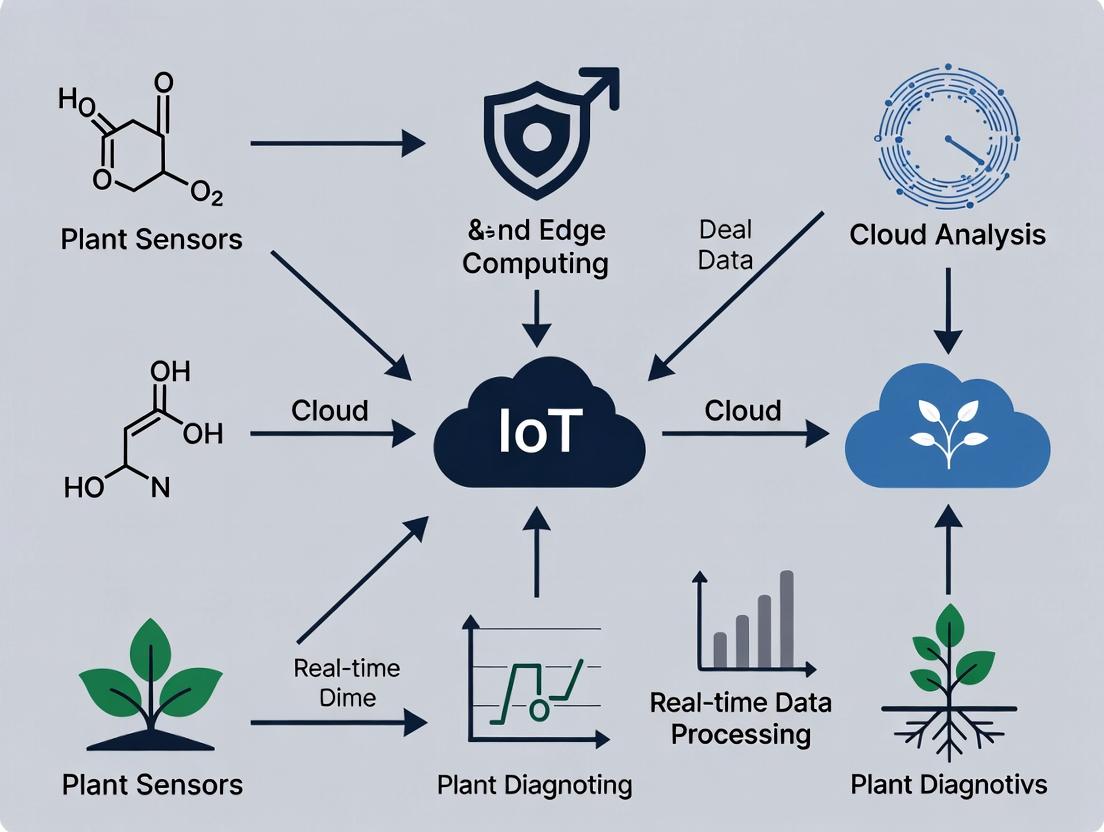
This article explores the transformative convergence of Internet of Things (IoT) sensor networks and edge computing for real-time diagnostics in biopharmaceutical manufacturing plants.
Edge Intelligence for Bioprocessing: How IoT and Edge Computing Enable Real-Time Plant Diagnostics in Pharmaceutical Manufacturing
Abstract
This article explores the transformative convergence of Internet of Things (IoT) sensor networks and edge computing for real-time diagnostics in biopharmaceutical manufacturing plants. Aimed at researchers, scientists, and drug development professionals, it provides a comprehensive analysis—from foundational concepts and sensor integration methodologies to system optimization and validation against traditional cloud-based models. The discussion covers practical applications in monitoring critical process parameters (CPPs), predictive maintenance of bioreactors, and ensuring data integrity for regulatory compliance, ultimately outlining a pathway toward more agile, data-driven, and resilient production of biologics and advanced therapies.
The Building Blocks: Understanding IoT Sensors and Edge Computing in Biopharma Context
1. Introduction Traditional bioprocessing, particularly in drug development, has relied on cloud-centric models where data from bioreactors and analytical devices are transmitted to centralized servers for analysis. This paradigm introduces latency, bandwidth constraints, and data security vulnerabilities. Within the thesis context of IoT and edge computing for real-time plant diagnostics, this article posits a shift to Edge-Intelligent Bioprocessing. This new paradigm embeds compute and analytical capabilities directly within the process line, enabling autonomous, real-time control of critical process parameters (CPPs) and immediate quality attribute assessment, mirroring the need for instant diagnostics in plant health monitoring.
2. Application Notes: Edge-Intelligent Bioprocessing in Action
Application Note 1: Real-Time Viable Cell Density (VCD) Monitoring & Control
- Objective: To maintain VCD within an optimal range by adjusting perfusion rate autonomously, avoiding delays from offline sampling and cloud-based model inference.
- Edge Architecture: An in-line capacitance probe streams dielectric spectroscopy data to a local edge gateway equipped with a pre-trained machine learning model. The model correlates capacitance to VCD. A control algorithm on the same gateway calculates the required perfusion rate adjustment and sends the command directly to the pump controller.
- Quantitative Outcome: The following table summarizes the performance improvement over the cloud-centric approach.
Table 1: Performance Comparison: VCD Control Methods
| Parameter | Cloud-Centric Model | Edge-Intelligent Model |
|---|---|---|
| Data-to-Action Latency | 8-12 seconds | <500 milliseconds |
| Model Inference Frequency | Every 30 seconds | Real-time (streaming) |
| VCD Control Stability (±% from setpoint) | 15.2% | 5.8% |
| Bandwidth Usage per Bioreactor | ~2.5 GB/day | ~0.5 GB/day (aggregated results only) |
| Offline Sample Correlation (R²) | 0.91 | 0.94 |
Application Note 2: On-Predictive Maintenance for Critical Sensor Arrays
- Objective: Predict fouling or failure of pH and dissolved oxygen (DO) probes using edge analytics on time-series signal data.
- Edge Architecture: Signal noise, response time, and calibration drift metrics are computed locally on the edge node. A lightweight anomaly detection model identifies deviations from baseline performance. An alert is generated locally for maintenance, and only the prediction (not raw signal streams) is sent to the cloud historian.
- Quantitative Outcome:
Table 2: Predictive Maintenance Impact Metrics
| Metric | Result with Edge Intelligence |
|---|---|
| Mean Time to Detect Sensor Drift | Reduced from 7.2 hours to 45 minutes |
| Unplanned Bioreactor Downtime | Decreased by 65% |
| Extrapolated Sensor Lifespan | Increased by 22% |
| False Positive Alert Rate | <3% |
3. Detailed Experimental Protocols
Protocol 1: Deploying an Edge-Based Partial Least Squares (PLS) Model for Metabolite Prediction
- Objective: To predict key metabolite (e.g., Glucose, Lactate, Glutamine) concentrations in real-time using in-line Raman spectroscopy.
- Materials: See The Scientist's Toolkit below.
- Methodology:
- Model Development (Offline): Collect historical Raman spectra paired with off-line reference measurements (e.g., HPLC, Cedex Bio). Preprocess spectra (cosmic ray removal, baseline correction, vector normalization). Train a PLS regression model using cloud/on-premise resources. Validate model accuracy.
- Model Edge Deployment: Convert the trained PLS model coefficients and preprocessing parameters into a lightweight format (e.g., using ONNX Runtime, TensorFlow Lite). Package this into a containerized application.
- Edge Node Configuration: Deploy the container to an industrial edge gateway connected to the Raman spectrometer. Configure the application to ingest a new spectrum every 60 seconds.
- Real-Time Execution: For each new spectrum, the edge application executes the preprocessing steps, runs the PLS model inference, and outputs the predicted concentrations.
- Local Action & Data Handling: The predictions are used for local process control decisions (e.g., feed triggering). Only the prediction values and model confidence scores are transmitted to the cloud for record-keeping.
Protocol 2: Implementing Federated Learning for Edge Model Optimization
- Objective: To improve a global predictive model across multiple, geographically dispersed bioreactors without centralizing raw spectral data.
- Methodology:
- Initialization: A central server provides an initial global model (e.g., for product titer prediction) to all participating edge nodes at different manufacturing sites.
- Local Training: Each edge node trains the model locally using its own, private Raman and titer dataset for a fixed number of epochs. Data never leaves the site's edge network.
- Parameter Submission: After local training, each edge node sends only the updated model weights or gradients (encrypted) to the central server.
- Aggregation: The central server aggregates these updates using a algorithm like Federated Averaging (FedAvg) to create a new, improved global model.
- Redistribution: The updated global model is redistributed to all edge nodes for the next round of learning or for immediate use.
4. Visualizations
Diagram Title: Edge vs Cloud Bioprocessing Data Flow
Diagram Title: Federated Learning Workflow for Bioprocessing
5. The Scientist's Toolkit: Research Reagent & Essential Materials
Table 3: Key Reagents & Solutions for Edge-Intelligent Bioprocessing Experiments
| Item | Function in Protocol/Application |
|---|---|
| In-line Raman Spectrometer Probe | Provides real-time, non-invasive spectral data of the bioreactor broth for metabolite prediction. |
| Capacitance Probe | Measures biovolume via dielectric spectroscopy for real-time Viable Cell Density estimation. |
| Industrial Edge Gateway | Ruggedized computer with containerization support (e.g., Docker) to host ML models and control logic at the process line. |
| Calibration Standards Kit (pH, DO, Metabolites) | Essential for initial sensor calibration and periodic validation of in-line models against reference methods. |
| Offline Analyzer (e.g., Cedex Bio, HPLC) | Provides gold-standard reference measurements for training and validating edge-deployed predictive models. |
| Model Conversion Toolkit (e.g., ONNX Runtime) | Converts models from training frameworks (Python, TensorFlow) to formats optimized for edge device inference. |
| Data Simulator Software | Generates synthetic process data for testing edge control logic and model performance under varied scenarios. |
This application note details five critical sensor technologies within an IoT and edge computing architecture for real-time plant diagnostics. The framework enables continuous, in-line monitoring of bioprocess parameters, essential for advancing research in biopharmaceutical development and manufacturing. Integration with edge nodes facilitates immediate data processing, anomaly detection, and control signal generation, critical for maintaining product quality and understanding process dynamics.
pH Monitoring
Principle: pH is a critical process parameter affecting cell growth, metabolic activity, and product quality. IoT-enabled pH sensors use potentiometric measurements with a glass electrode and reference electrode.
IoT & Edge Integration: Modern digital pH sensors communicate via protocols like Modbus, Profibus, or IO-Link to an edge gateway. The gateway executes local calibration algorithms, temperature compensation, and can trigger alerts for drift beyond setpoints.
Application Notes:
- Placement: Install in a well-mixed zone, avoiding dead legs or direct contact with shear-generating elements.
- Calibration: Requires frequent two-point calibration using standard buffers (e.g., pH 4.01, 7.00, 10.01). IoT systems can schedule and log calibration events.
- Fouling Mitigation: Use retractable housings or automated cleaning systems for long-term cultures.
Protocol 1.1: In-line pH Sensor Calibration and Data Validation
Objective: To perform automated calibration and validate sensor accuracy against an off-line reference.
- Preparation: Equip bioreactor with an IoT-ready, steam-sterilizable pH probe connected to a digital transmitter.
- System Halt: Temporarily pause feeding or control loops.
- Automated Calibration: Initiate calibration sequence from the edge HMI. The system sequentially exposes the probe to two pre-sterilized buffer solutions via a calibration port.
- Data Capture: The edge device records slope (95-102%) and zero point (typically ±0.2 pH) from the calibration.
- Validation: Aseptically extract a sample. Measure pH using a calibrated benchtop meter. Compare in-line and off-line values.
- Acceptance Criteria: Deviation ≤ ±0.1 pH. If failed, initiate diagnostic routine (cleaning, check reference electrolyte).
Table 1: Key Performance Metrics for IoT pH Sensors
| Parameter | Typical Range | Accuracy (IoT System) | Response Time (T90) | Sterilization Method |
|---|---|---|---|---|
| Measurement Range | 0 - 14 pH | ±0.01 - ±0.05 pH | < 30 seconds | In-situ steam (SIP), 121°C, 30 min |
| Temperature Compensation | 0 - 130°C | Integrated via Pt1000 | N/A | N/A |
| Signal Output | Digital (e.g., IO-Link) | N/A | N/A | N/A |
| Calibration Interval | 7-30 days | Drift <0.1 pH/month | N/A | N/A |
Diagram Title: IoT pH Sensor Calibration and Validation Workflow
Dissolved Oxygen (DO) Monitoring
Principle: DO concentration is vital for aerobic metabolism. Most in-situ sensors use optical measurement based on dynamic fluorescence quenching of a luminophore by oxygen molecules.
IoT & Edge Integration: Optical DO sensors with digital output provide robust, low-maintenance operation. Edge computing nodes use DO data streams in feedback control loops (e.g., cascaded control of stirrer speed, air/oxygen mix) and calculate Oxygen Transfer Rate (OTR).
Application Notes:
- Sensor Selection: Optical sensors preferred for long-term stability; no electrolytes required.
- Calibration: Perform a one-point zero calibration (using anoxic solution) post-sterilization. 100% saturation point can be set automatically by the edge system during initial vessel aeration.
- Location: Install at a depth representative of the bulk liquid, avoiding direct gas bubble impingement.
Protocol 2.1:kLaDetermination Using Dynamic Method
Objective: To determine the volumetric mass transfer coefficient (kLa) using edge-processed DO data.
- Setup: Bioreactor equipped with IoT DO sensor. Edge device logging DO (%) and temperature at high frequency (≥1 Hz).
- Deoxygenation: Sparge vessel with N₂ until DO reaches <5%.
- Re-aeration: Switch gas supply to air at a defined flow rate (VVM) and start agitation at setpoint.
- Data Acquisition: Edge node records DO rise from C₀ to near saturation (C∞).
- Edge Analysis: The node fits the time-series data to the equation: ln((C∞ - C)/(C∞ - C₀)) = -kLa * t.
- Output: The edge system computes and reports kLa, and can adjust gas/agitation parameters to achieve a desired kLa.
Table 2: Key Performance Metrics for IoT DO Sensors
| Parameter | Typical Range | Accuracy (IoT System) | Response Time (T90) | Sterilization Method |
|---|---|---|---|---|
| Measurement Range | 0 - 400% air sat. | ±0.1 - ±1% air sat. | < 30 seconds | In-situ steam (SIP), 121°C |
| Calibration | One-point (zero) | Drift <1%/week | N/A | N/A |
| Signal Output | Digital (e.g., Modbus TCP) | N/A | N/A | N/A |
| kLa Measurement | 0 - 200 h⁻¹ | Derived, accuracy ±5% | N/A | N/A |
Biomass Monitoring
Principle: Real-time biomass estimation is achieved via in-situ probes measuring optical density (OD), capacitance (radiofrequency), or backscatter.
IoT & Edge Integration: These sensors provide direct digital signals correlating to viable cell density (VCD). Edge AI models can correlate multi-sensor data (e.g., capacitance, DO, pH) to predict growth phase transitions and identify anomalies like contamination.
Application Notes:
- Technology Choice: Capacitive sensors (dielectric spectroscopy) measure viable biomass only, unaffected by bubbles or debris. Optical density probes require window cleaning.
- Calibration: Requires off-line correlation to reference method (e.g., Cedex, hemocytometer) for each cell line.
Protocol 3.1: Viable Cell Density (VCD) Correlation for Capacitance Probe
Objective: To establish a model correlating permittivity (pF/cm) to off-line VCD.
- Synchronization: Over a batch or fed-batch run, the edge node timestamps permittivity readings.
- Sampling: At defined intervals (e.g., every 12 hours), aseptically sample the bioreactor.
- Off-line Analysis: Perform VCD count using an automated cell counter (trypan blue exclusion).
- Data Pairing: Upload off-line VCD data to the edge historian, pairing with permittivity at corresponding time.
- Model Generation: Edge analytics perform linear regression: VCD (cells/mL) = m * Permittivity + c.
- Deployment: The model is applied for real-time VCD estimation, with confidence intervals.
Table 3: Comparison of IoT-Enabled Biomass Sensor Technologies
| Technology | Measured Parameter | Principle | Key Advantage for IoT | Correlation Needed |
|---|---|---|---|---|
| Capacitance (RF) | Permittivity | Dielectric polarization of cell membranes | Viable-only biomass, robust, no fouling | Linear to VCD |
| Optical Density (OD) | Turbidity/Scatter | Light absorption/scattering by particles | Wide linear range, cost-effective | Polynomial to VCD |
| Backscatter | Scattered Light | 180° light scatter detection | Reduced bubble sensitivity | Polynomial to VCD |
Diagram Title: Real-time Viable Cell Density Estimation Workflow
Pressure Monitoring
Principle: Pressure transducers (often strain gauge based) measure headspace or liquid pressure, critical for safety, gas law calculations, and filtration monitoring.
IoT & Edge Integration: Pressure data is used for leak detection (rate of pressure decay), headspace analysis in conjunction with gas analyzers, and controlling backpressure to influence dissolved gas levels.
Application Notes:
- Selection: Use sanitary, flush diaphragm sensors. Ensure pressure range includes full vacuum to overpressure safety limits.
- Installation: Isolate from vibration. For steam sterilization, ensure sensor and diaphragm can withstand SIP cycles.
Protocol 4.1: Leak Test and Pressure Hold Analysis
Objective: To use IoT pressure data for automated integrity testing of the bioreactor post-SIP.
- Pressurization: After sterilization and cooling, pressurize vessel to a setpoint (e.g., 0.5 bar) with sterile air.
- Isolation: Close all inlet and outlet valves.
- Monitoring: Edge node records pressure at high frequency for a defined period (e.g., 30 min).
- Analysis: Edge algorithm calculates pressure decay rate using linear regression on the logged data.
- Decision: If decay rate exceeds a threshold (e.g., >0.01 bar/min), the system flags a potential leak and alerts personnel.
Table 4: IoT Pressure Sensor Specifications for Bioreactors
| Parameter | Typical Range | Accuracy | Purpose in Bioprocessing |
|---|---|---|---|
| Vessel Pressure | -1 to 2 bar(g) | ±0.1% FS | Safety, leak testing, DO calculation |
| Filter DP | 0 - 1 bar(g) | ±0.05% FS | Monitoring filter fouling/clogging |
| Liquid Pressure | 0 - 2 bar(g) | ±0.1% FS | Peristaltic pump control, depth correlation |
Flow Monitoring
Principle: Mass flow controllers (MFCs) for gases and Coriolis or ultrasonic meters for liquids provide precise measurement and control of addition rates.
IoT & Edge Integration: Digital MFCs are integral to IoT architectures, enabling precise control of feed, base/acid, and gas flows. Edge nodes use flow data for feed-forward control, yield calculations, and material balancing.
Application Notes:
- Gas Flow: Thermal MFCs require calibration for specific gas composition.
- Liquid Flow: Coriolis meters provide high accuracy and density measurement, enabling mass-based feeding.
Protocol 5.1: Automated Peristaltic Pump Calibration via Coriolis Meter
Objective: To use an in-line Coriolis meter as a reference to calibrate a peristaltic feed pump, ensuring accurate nutrient delivery.
- Setup: Install Coriolis meter downstream of the peristaltic pump in the feed line.
- Prime: Ensure the feed line is primed and free of air.
- Test Points: Command the pump to run at a series of setpoints (e.g., 10%, 30%, 50%, 70% of max speed) via the edge controller.
- Measurement: At each setpoint, the edge node records the integrated mass flow from the Coriolis meter over a fixed time (e.g., 2 min).
- Calibration Curve: The edge system generates a calibration curve (pump command vs. actual g/min) and stores new pump coefficients.
- Verification: Run at a target feed rate and confirm accuracy within ±2%.
Table 5: IoT Flow Sensor Technologies and Applications
| Fluid Type | Sensor Technology | Measurement Principle | Key IoT Application |
|---|---|---|---|
| Gas (Air, O₂, N₂, CO₂) | Thermal Mass Flow Controller (MFC) | Heat transfer from heated element | Precize gas blending, OTR control |
| Liquid (Feed, Base/Acid) | Coriolis Mass Flow Meter | Vibration phase shift due to mass flow | Mass-based feeding, density monitoring |
| Liquid (Harvest, Buffer) | Ultrasonic Flow Meter | Time-of-flight difference of ultrasound | Product harvest volume, buffer preparation |
The Scientist's Toolkit: Key Research Reagent Solutions & Materials
Table 6: Essential Materials for IoT Sensor Implementation in Bioprocessing
| Item | Function/Description | Example Vendor/Product |
|---|---|---|
| pH Calibration Buffers | Sterilizable, traceable standards for accurate in-situ pH probe calibration. | Hamilton (Polybuffer), Mettler Toledo (InPro) |
| Zero-Oxygen Solution | Chemical solution (e.g., sodium sulfite) for performing zero-point calibration of optical DO sensors. | PreSens (AnaeroCal), Custom preparation. |
| Reference Electrolyte | KCl solution for refillable pH/redox electrodes to maintain stable reference potential. | Hamilton (3M KCl), Mettler Toledo. |
| Sterilizable Diaphragm Seals | Isolate pressure sensors from process fluid, allowing SIP and protecting the transducer. | WIKA, Endress+Hauser. |
| Calibration Gas Standards | Certified gas mixtures (e.g., 1% O2 in N2, 10% CO2) for off-line analyzer and MFC calibration. | Linde, Air Liquide. |
| Sensor Cleaning Solutions | Mild acidic or enzymatic solutions for cleaning in-place (CIP) of optical and pH sensors. | Custom CIP fluids (e.g., 0.1M HCl), Enzymatic cleaners. |
| Sanitary Sensor Housings | Retractable or flow-through housings that allow sensor removal/insertion under pressure. | GEMÜ, BioEngineering AG. |
| Traceable Load Cells | For weighing vessels, providing mass-based data to cross-validate flow meters. | Sartorius, Mettler Toledo. |
Within the context of Internet of Things (IoT) and edge computing for real-time plant diagnostics research, the paradigm of edge computing is critical. It moves computation and data storage closer to the location where data is generated—sensors in a greenhouse or plant growth chamber—to enable immediate analysis and response. This application note details the protocols and architectures for implementing low-latency processing at the data source, specifically for monitoring plant phenotypic responses to pharmacological or environmental stimuli in drug development research.
Core Architectural Models & Quantitative Performance
Table 1: Comparative Analysis of Computing Architectures for IoT Plant Diagnostics
| Architecture Model | Average Latency (ms) | Typical Bandwidth Use (Mbps) | Primary Use Case in Plant Research | Failure Tolerance |
|---|---|---|---|---|
| Pure Cloud Computing | 500 - 2000 | 10 - 100 | Long-term genomic data analysis, historical correlation | High (Centralized Redundancy) |
| Fog Computing (Gateway Layer) | 50 - 150 | 5 - 50 | Multi-sensor data fusion from a growth chamber | Medium (Local Failover) |
| Edge Computing (Device/ Sensor Layer) | < 50 | 0.1 - 10 | Real-time image analysis for stomatal conductance, immediate stress response | Low (Single Point Failure) |
| Hybrid Edge-Cloud | Variable (10-500) | 1 - 50 | Adaptive feedback loops; edge triggers cloud for deep learning | High (Distributed) |
Experimental Protocols
Protocol 3.1: Real-Time Detection of Plant Stress via Hyperspectral Imaging at the Edge Objective: To deploy a lightweight machine learning model directly on an edge device (e.g., NVIDIA Jetson) for instantaneous detection of chlorophyll fluorescence changes indicative of abiotic stress. Materials: Hyperspectral camera (400-1000nm), NVIDIA Jetson AGX Orin, LED growth chamber, Arabidopsis thaliana subjects, chemical stressors (e.g., abscisic acid analogues). Methodology:
- Edge Device Setup: Flash the Jetson device with Linux OS and install embedded machine learning libraries (TensorFlow Lite, PyTorch Mobile).
- Model Optimization: Prune and quantize a pre-trained convolutional neural network (CNN) for spectral feature extraction to reduce computational load.
- Data Acquisition Pipeline: Configure camera to stream 100x100 pixel regions of interest at 15 fps directly to the Jetson's GPU memory, bypassing any external storage.
- On-Device Inference: Execute the quantized CNN model on each frame. The model outputs a probability score for "stress detection" based on spectral signatures.
- Latency Measurement: Use internal timestamps to log the time delta between frame capture and inference result.
- Action Trigger: Program the edge device to activate a localized irrigation or LED light adjustment system if stress probability exceeds 85% within a 1-second window.
Protocol 3.2: Edge-Based Analysis of Root Growth Dynamics using Mini-Rhizotrons Objective: To process time-lapse root imagery locally to compute growth velocity and morphology without transferring large video files to the cloud. Materials: Mini-rhizotron camera with Raspberry Pi CM4, root growth compartment, image analysis software (custom Python with OpenCV). Methodology:
- Embedded System Configuration: Assemble the Raspberry Pi Compute Module with camera interface within the rhizotron.
- Local Processing Script: Deploy a script that captures an image every 10 minutes, applies a Sobel edge detection filter, and calculates root tip displacement versus previous frame.
- Data Reduction: Store only the calculated growth metrics (velocity, length) and a thumbnail image locally. Full-resolution images are discarded after processing.
- Scheduled Synchronization: Configure the device to transmit only the reduced dataset to a central lab server once per day during off-peak hours.
Signaling & Data Flow Visualizations
Title: Real-Time Plant Diagnostic Edge Computing Data Flow
Title: Plant Stress Signaling to Edge Detection Pathway
The Scientist's Toolkit: Research Reagent Solutions
Table 2: Essential Materials for Edge Computing Experiments in Plant Diagnostics
| Item | Function in Research | Example Product/Specification |
|---|---|---|
| Edge AI Accelerator Module | Executes lightweight ML models for real-time image/spectral analysis at the sensor. | NVIDIA Jetson Orin NX, Google Coral Edge TPU |
| Hyperspectral Imaging Sensor | Captures spectral data cubes used to derive plant physiology indices (NDVI, PRI). | Specim FX10 (400-1000nm), embedded SDK |
| Programmable Logic Controller (PLC) / Microcontroller | Acts as a low-level actuator controller for immediate response to edge decisions. | Arduino Portenta Machine Control, Raspberry Pi Pico |
| Time-Series Edge Database | Lightweight, local storage for high-frequency sensor data before aggregation. | InfluxDB Edge, SQLite with time-series extensions |
| Network Time Protocol (NTP) Server (Local) | Ensures microsecond-level time synchronization across all edge sensors for data coherence. | Meinberg NTP Server on local fog node |
| Containerization Runtime for Edge | Enables consistent deployment and management of analysis software across heterogeneous devices. | Docker Container Engine, balenaOS |
| Chemical Stressors (for Protocol) | Used to induce measurable phenotypic responses for edge algorithm training and validation. | Abscisic Acid (ABA), Methyl Jasmonate, NaCl for saline stress |
The Critical Need for Real-Time Diagnostics in cGMP Environments
In current Good Manufacturing Practice (cGMP) environments for pharmaceuticals and biotherapeutics, process parameters are continuously monitored, but product quality attributes are typically assessed post-manufacturing via offline laboratory analysis. This lag time (often hours to days) creates a vulnerability where non-conforming product may be produced before a deviation is detected. This application note details the implementation of real-time diagnostic systems, leveraging IoT sensor networks and edge computing, to transition from retrospective to proactive quality assurance. The thesis framework posits that edge analytics can process high-frequency sensor data locally to execute real-time multivariate statistical process control (MSPC) and machine learning (ML) models, enabling instantaneous fault detection and root-cause diagnosis during cGMP production.
Recent industry surveys and research quantify the limitations of traditional offline analytics.
Table 1: Comparative Analysis of Offline vs. Real-Time Analytics in Biomanufacturing
| Metric | Offline QC Laboratory Analysis | IoT/Edge-Enabled Real-Time Diagnostic | Data Source / Study |
|---|---|---|---|
| Time to Result | 4 - 48 hours | < 5 minutes | Industry Benchmarking (2023) |
| Batch Failure Detection Delay | Post-production | In-process (real-time) | PDA Technical Report #82 |
| Average Cost of a Failed Batch | $0.5M - $5M | Potential to reduce by >50% | BioPhorum Operations Group (2024) |
| Data Points per Batch (Process) | ~100 - 1,000 | >100,000 | IEEE IoT Journal Review (2024) |
| Primary Cause of OOS Results | Process Drift (68%) | Detectable in real-time | FDA Annual Report (2023) |
Experimental Protocols for Real-Time Diagnostic System Validation
Protocol 1: Edge-Based MSPC for Bioreactor Anomaly Detection
Objective: To validate an edge computing device's ability to perform real-time MSPC on a cGMP bioreactor, detecting a nutrient feed fault faster than offline glucose analysis.
Materials (Scientist's Toolkit):
- Edge Device: NVIDIA Jetson AGX Orin or equivalent industrial PC with Python/Node-RED.
- IoT Sensors: In-line pH, dissolved oxygen (DO), temperature, and capacitance (biomass) probes with digital (Modbus TCP/IP) output.
- Data Gateway: OPC-UA or MQTT broker (e.g., Ignition Edge, HiveMQ).
- Reference Method: Offline benchtop glucose analyzer (e.g., YSI 2950).
- Software: Custom Python scripts for MSPC (PCA, Hotelling's T², SPE) and Grafana for dashboarding.
Methodology:
- Historical Model Building: Collect normalized, time-aligned data (pH, DO, temp, biomass) from >10 historical "golden batches" at 1-minute intervals. On a central server, perform PCA to create a validated reference model defining normal operating conditions (NOC). Deploy model coefficients to the edge device.
- Real-Time Edge Deployment: During a new production batch, stream live sensor data via the broker to the edge device.
- Edge Computation: The edge device executes the PCA model in real-time, calculating T² and Squared Prediction Error (SPE) statistics for each new data vector.
- Anomaly Trigger: At t=120h, induce a controlled 20% reduction in nutrient feed rate. The edge system must generate an MSPC alarm (T² or SPE exceeding 95% control limit) before the glucose analyzer detects a deviation from setpoint.
- Validation: Compare timestamps of the edge alarm vs. the first offline glucose OOS result. System success is defined as an alarm delay of <15 minutes from fault introduction.
Protocol 2: Real-Time Root-Cause Diagnosis using Bayesian Networks at the Edge
Objective: To implement a causal probabilistic model on an edge device that diagnoses the most probable root cause of a detected process anomaly.
Methodology:
- Network Structure Development: Based on process knowledge and Failure Mode Effects Analysis (FMEA), define a Bayesian Network (BN) structure. Nodes include root causes (e.g., "Filter Clogging," "Sensor Drift," "Feed Stock Variation") and observed symptoms (e.g., "Pressure Increase," "DO Spike," "Reduced Growth Rate").
- Parameter Learning: Use historical deviation data to populate the conditional probability tables (CPTs) for each node.
- Edge Deployment: Export the lightweight BN model (using a library like
pgmpy) to the edge device. - Diagnostic Execution: Upon an MSPC alarm from Protocol 1, the edge device inputs the current process state (symptoms) as evidence into the BN model.
- Output: The model computes and ranks the posterior probabilities of each root cause, displaying the top 3 probable causes with confidence percentages on the local HMI.
System Architecture & Workflow Visualizations
Diagram 1: IoT-Edge Architecture for Real-Time cGMP Diagnostics
Diagram 2: Real-Time Diagnostics Logic Flow
Research Reagent & Technology Solutions Toolkit
Table 2: Essential Components for Implementing Real-Time cGMP Diagnostics
| Item / Solution | Function / Role in Research | Example Vendor/Technology |
|---|---|---|
| Industrial IoT Sensor Probes | Provide continuous, digital signal for critical process parameters (pH, DO, Pressure, Conductivity, Biomass). | Emerson, Sartorius, Hamilton, PreSens |
| Process Analytic Technology (PAT) | In-line or at-line analyzers for direct product attribute measurement (e.g., NIR, Raman). | Metrohm, Thermo Fisher, Kaiser Optical |
| Edge Computing Hardware | Ruggedized, on-premise server for low-latency data processing and model execution. | NVIDIA Jetson, Advantech, Siemens IPC |
| Industrial Data Broker | Secure, standard-based middleware for streaming time-series data from sensors to applications. | MQTT Sparkplug, OPC-UA, Ignition Edge |
| Multivariate Analysis Software | Platform for building, validating, and deploying PCA/PLS models to the edge. | SIMCA-on-prem, Python (scikit-learn), R |
| Causal Machine Learning Library | Tools to build and run probabilistic graphical models (e.g., Bayesian Networks) for diagnosis. | Python (pgmpy, bnlearn), BayesiaLab |
| cGMP Data Integrity Platform | Ensures 21 CFR Part 11 compliance for electronic records, audit trails, and security. | OSIsoft PI System, Emerson Syncade, Custom Blockchain Ledger |
Within a broader thesis on IoT and edge computing for real-time plant diagnostics, a critical bottleneck is the processing of high-volume, high-velocity data streams from spectroscopic, imaging, and environmental sensors. The traditional cloud-centric model introduces latency, bandwidth costs, and data sovereignty risks, impeding real-time analysis for pathogen detection or metabolite profiling. Edge computing addresses this by performing data triage, reduction, and initial analysis at the source, transmitting only actionable insights to the cloud. This Application Note details protocols for implementing an edge computing architecture to manage sensor streams in a plant phenotyping research setting.
Key Quantitative Challenges & Edge Benefits
Table 1: Sensor Data Volume and Edge Processing Impact
| Sensor Type | Data Rate (Raw) | Cloud Processing Latency* | Edge-Reduced Data Rate | Edge Processing Latency* | Primary Reduction Technique |
|---|---|---|---|---|---|
| Hyperspectral Imaging (VNIR) | 150-500 Mbps | 2-5 s | 5-20 Mbps | 200-500 ms | ROI extraction, PCA compression |
| LiDAR for 3D Structure | 50-100 Mbps | 1-3 s | 1-5 Mbps | <100 ms | Voxel grid downsampling |
| Multispectral Fluorometer | 10-50 Mbps | 800 ms - 2 s | 0.5-2 Mbps | 50-200 ms | Peak detection, time-window averaging |
| IoT Environmental Array (Temp, Humidity, VWC) | 1-10 Kbps | 500-1500 ms | 0.1-1 Kbps | <10 ms | Threshold-based exception reporting |
*Latency includes network transmission + initial processing time. Cloud latency assumes reliable, high-bandwidth connection. Source: Aggregated from recent literature and manufacturer specifications (2023-2024).
Experimental Protocol: Real-Time Stress Detection inNicotiana benthamiana
Objective: To implement an edge analytics pipeline for early detection of water stress using multisensor data.
Materials & Setup
The Scientist's Toolkit: Research Reagent Solutions & Hardware
| Item | Function in Experiment |
|---|---|
| NVIDIA Jetson Orin Nano (8GB) | Edge compute module for running ML inference and signal processing. |
| Resonon Pika L Hyperspectral Imager (400-1000nm) | Captures spectral reflectance data for pigment and water content analysis. |
| FLIR Blackfly S USB3 Polarization Camera | Captures leaf surface polarization changes correlated with turgor pressure. |
| Apogee SO-410 Series Spectroradiometer | Provides ground-truth spectral measurements for calibration. |
| Priva Climate Sensors | Measures real-time volumetric water content (VWC), air temperature, and RH. |
| Custom Python Edge Stack (TensorFlow Lite, OpenCV, Scikit-learn) | Software for on-device model inference and data fusion. |
| Drought Stress Inducers (PEG-8000 Solution) | Chemically induces controlled water stress in root drench applications. |
Methodology
Phase 1: Calibration & Model Training (Cloud/Offline)
- Plant Preparation: Grow 50 N. benthamiana plants under controlled conditions. For 30 plants, induce a gradient of water stress via regulated deficit irrigation or PEG drench over 7 days. Maintain 20 as controls.
- Data Acquisition: Simultaneously collect raw data streams from all sensors at 5-minute intervals.
- Ground Truthing: Measure pre-dawn leaf water potential (Ψ) daily using a pressure chamber (benchmark).
- Cloud-Based Model Training: Transmit raw data to cloud instance. Train a lightweight convolutional neural network (CNN) on fused hyperspectral and polarization image patches. Target is the prediction of Ψ. Apply pruning and quantization to optimize for edge deployment.
Phase 2: Edge Deployment & Real-Time Inference
- Edge Stack Deployment: Load the quantized TensorFlow Lite model onto the Jetson module.
- Pipeline Configuration: Implement the following workflow on the edge device:
Diagram Title: Edge Analytics Pipeline for Plant Stress Detection
- Real-Time Operation: The pipeline executes autonomously. Only deviation alerts (e.g., predicted Ψ < -0.8 MPa), compressed feature vectors, and hourly summary statistics are transmitted via MQTT to the cloud historian.
- Validation: Compare edge-predicted Ψ values with daily manual pressure chamber measurements to validate accuracy drift.
Protocol: Edge-Cloud Data Synchronization Framework
Objective: To reliably synchronize critical edge data with a central cloud repository for longitudinal analysis.
Methodology
Edge Side Protocol:
- Data Tagging: Each processed data packet is tagged with:
{experiment_id, device_id, timestamp, data_type, priority_flag}. - Priority Queue: Data is placed in a priority queue. Alerts and model updates are
PRIORITY_HIGH; routine compressed features arePRIORITY_LOW. - Connection-Aware Transmission: Use a lightweight MQTT client with persistent session. On connection, transmit high-priority queue first. Implement exponential backoff on failure.
- Local Cache: All data is stored in a local SQLite database with timestamp indexing. Successfully acknowledged cloud transmissions are marked as synced.
- Data Tagging: Each processed data packet is tagged with:
Cloud Side Protocol:
- Ingestion Endpoint: Secure MQTT broker (e.g., HiveMQ) or HTTPS endpoint receives data.
- Data Validation & Reconciliation: Cloud service checks for missing timestamps based on edge device's reported send log. It can request retransmission of specific missing data chunks.
- Aggregation: Data is merged into a time-series database (e.g., InfluxDB) and a relational database for deeper analysis.
Diagram Title: Edge-Cloud Sync with Reconciliation
Implementing the described edge computing protocols directly addresses the data deluge from plant phenotyping sensors. It enables real-time diagnostic alerts, reduces bandwidth consumption by >90% for key sensors, and provides a robust framework for data synchronization. This architecture is fundamental to scaling IoT-based real-time plant diagnostics research, allowing scientists to focus on insights rather than data logistics.
From Theory to Tank: Implementing Edge-IoT Architectures for Live Process Monitoring
This document provides Application Notes and Protocols for deploying a scalable Edge-IoT network within a pilot or production plant. Framed within a broader thesis on IoT and edge computing for real-time plant diagnostics, this blueprint addresses the unique data latency, security, and interoperability challenges in pharmaceutical manufacturing. The architecture prioritizes deterministic data processing at the source to enable real-time predictive maintenance, environmental monitoring, and process analytical technology (PAT).
Network Architecture & Data Flow
Diagram Title: Edge-IoT Network Data Flow Hierarchy
Quantitative Performance Metrics
The following table summarizes key performance indicators (KPIs) for network design, based on current industry benchmarks and research.
Table 1: Edge-IoT Network Performance Benchmarks
| Metric | Target for Pilot Plant | Target for Production | Measurement Protocol |
|---|---|---|---|
| End-to-End Latency | < 100 ms | < 50 ms | IEEE 11073-20701 PHDC |
| Local Data Processing | > 60% at Edge | > 80% at Edge | IETF RFC 8576 (IoT Management) |
| Network Uptime | 99.5% | 99.95% | ISO/IEC 30141:2018 (IoT Reference Architecture) |
| Time-Series Data Rate | 1,000 msg/sec | 10,000 msg/sec | OPC UA PubSub over TSN |
| Security Protocol Handshake | < 2 seconds | < 1 second | NIST FIPS 140-3, TLS 1.3 |
Experimental Protocols for Network Validation
Protocol 4.1: Deterministic Latency Testing
Objective: To measure and guarantee sub-100ms latency for critical control loops. Materials: Time-Sensitive Networking (TSN) switch, OPC UA PubSub publisher/subscriber nodes, precision clock (IEEE 1588 PTP Grandmaster), network tap. Methodology:
- Configure a TSN network with scheduled traffic shapers (IEEE 802.1Qbv).
- Deploy an OPC UA PubSub publisher on a simulated PLC, generating a 512-byte data packet every 10ms.
- Subscribe to the data stream at the Edge Gateway node.
- Use a precision network tap and analyzer (e.g., Wireshark with PTP dissection) to timestamp the packet at ingress (t1) and egress (t2) of the Edge Node.
- Calculate latency: Δt = t2 - t1.
- Repeat experiment under increasing background UDP traffic load (0-90% bandwidth). Analysis: Plot latency (Δt) against background load. The system passes if 99.9% of packets for the critical stream maintain Δt < 100ms under all loads.
Protocol 4.2: Edge-AI Model Drift Detection
Objective: To validate the performance of a retraining trigger for edge-deployed ML models used in predictive maintenance. Materials: Vibration sensor dataset (NASA Bearing Dataset), edge gateway (NVIDIA Jetson AGX Orin), pre-trained CNN model, statistical drift detector (Page-Hinkley test). Methodology:
- Deploy a pre-trained CNN model for bearing fault detection on the edge gateway.
- Stream real-time vibration data (features: FFT magnitudes) to the model.
- Simultaneously, compute the prediction confidence score and the distribution of the primary feature component.
- Apply the Page-Hinkley test on the feature distribution with a threshold λ=50 and α=0.99.
- When the test statistic exceeds λ, flag a potential data drift event.
- Trigger an automated retraining pipeline on the fog server using the most recent 10,000 samples. Analysis: Record the false-positive drift detection rate and the mean time between accurate detections of actual performance degradation.
The Scientist's Toolkit: Research Reagent Solutions
Table 2: Essential Hardware & Software for Edge-IoT Plant Research
| Item | Function/Description | Example Product/Standard |
|---|---|---|
| Industrial IoT Gateway | Aggregates field protocols (Modbus, PROFINET) and provides edge compute. | Cisco IR1101, Advantech WISE-710. |
| Time-Sensitive Networking (TSN) Switch | Enables deterministic, low-latency communication over standard Ethernet. | Moxa TSN-G5008 Series. |
| OPC Unified Architecture (UA) SDK | Provides a secure, interoperable framework for data modeling and exchange. | open62541, OPC Foundation UA .NET Standard. |
| Lightweight MQTT Broker | Handles publish/subscribe messaging for constrained edge devices. | Eclipse Mosquitto, HiveMQ. |
| Edge AI Inference Engine | Optimized runtime for executing ML models on edge hardware. | NVIDIA TensorRT, Intel OpenVINO. |
| Digital Twin Platform | Creates a virtual replica of the physical process for simulation and analytics. | AWS IoT TwinMaker, Azure Digital Twins. |
| Secure Element (SE) | Tamper-resistant hardware for cryptographic key storage and secure boot. | Microchip ATECC608A. |
Security & Data Integrity Protocol
Diagram Title: Secure Device Onboarding and Data Flow
This application note details a methodology for implementing real-time metabolite analysis and automated feed control in perfusion bioreactors. The work is situated within a broader thesis on the application of IoT and edge computing architectures for real-time plant diagnostics. The principles of distributed sensor networks, edge-based data processing, and closed-loop control are directly translatable to bioprocessing, where immediate analytical feedback enables precise control over culture environments, mirroring the needs in precision agriculture and plant health monitoring.
Core System Architecture and Workflow
The system integrates an online bioanalyzer (e.g., for glucose and lactate), an edge computing device, and the bioreactor control system. Sensor data is processed at the edge to compute feed adjustments, minimizing latency and enabling true real-time control.
Title: IoT-Edge Architecture for Bioreactor Control
Experimental Protocol: Real-Time Metabolite Control
Materials and Setup
- Bioreactor System: Perfusion-capable bioreactor (e.g., 2L working volume) with integrated temperature, pH, and dissolved oxygen (DO) control.
- Cell Line: CHO-S cells expressing a recombinant monoclonal antibody.
- Analytical Edge Device: YSI 2950D Biochemistry Analyzer or comparable bioanalyzer, interfaced via serial/USB.
- Edge Compute Module: Raspberry Pi 4 or industrial PC running custom Python scripts for data acquisition and algorithm execution.
- Feed Pumps: Programmable syringe pumps or peristaltic pumps for concentrated nutrient feed.
- Medium: Commercial basal medium with a concentrated nutrient feed solution (4x glucose, amino acids, vitamins).
Procedure
- System Calibration: Calibrate the bioanalyzer using standard solutions for glucose (0.5-25 mM) and lactate (0-20 mM). Validate against offline reference methods (HPLC).
- Bioreactor Inoculation: Seed the bioreactor at a target viability of >95% and a cell density of 0.5 x 10^6 cells/mL.
- Perfusion Start: Initiate perfusion at 1 vessel volume per day (VVD) once cell density exceeds 2.0 x 10^6 cells/mL.
- Sensor Integration: Configure the edge device to poll the bioanalyzer every 30 minutes. Raw data (mV) is converted to concentration values using a calibration curve stored locally.
- Control Algorithm Execution:
- The edge device runs a proportional-integral-derivative (PID) algorithm targeting a glucose setpoint of 6 mM.
- The algorithm output (u(t)) is calculated as:
u(t) = K_p * e(t) + K_i * ∫e(t)dt + K_d * de(t)/dtwheree(t)is the error (setpoint - measured [Glucose]). - The output is converted to a feed pump rate (mL/h).
- Actuation: The edge device sends the commanded rate to the feed pump via a digital I/O or serial command.
- Monitoring: All data (concentrations, calculated rates, viabilities, titers) are logged locally and transmitted to a cloud database for remote oversight. The experiment continues for 14 days.
Key Signaling and Metabolic Pathways
The primary pathway targeted for control is glycolysis, directly influencing lactate metabolism.
Title: Glycolysis and Lactate Production Pathway
Data Presentation
Table 1: Performance Comparison of Control Strategies in Perfusion Culture (14-Day Run)
| Parameter | Batch Feeding (Benchmark) | Real-Time Glucose Control (This Study) |
|---|---|---|
| Peak Viable Cell Density (10^6 cells/mL) | 15.2 ± 1.8 | 32.5 ± 2.1 |
| Time at High Viability (>90%) (days) | 8 | 12 |
| Glucose Concentration CV (%) | 42.5 | 8.7 |
| Lactate Peak (mM) | 18.5 ± 2.5 | 8.2 ± 1.3 |
| Ammonia Peak (mM) | 4.1 | 2.8 |
| Final Antibody Titer (mg/L) | 450 ± 35 | 850 ± 42 |
| Specific Productivity (pg/cell/day) | 25 | 30 |
Table 2: Edge Device Processing Latency Breakdown
| Process Step | Average Time (seconds) |
|---|---|
| Bioanalyzer Sampling & Analysis | 120 |
| Data Transmission to Edge | <1 |
| PID Calculation & Decision | <1 |
| Command to Pump | <1 |
| Total Control Loop Time | ~122 |
The Scientist's Toolkit: Essential Research Reagent Solutions
| Item | Function in the Experiment |
|---|---|
| Online Bioanalyzer (e.g., Cedex Bio, YSI) | At-line/online measurement of key metabolites (glucose, lactate, glutamine, ammonia) with minimal delay. |
| Concentrated Nutrient Feed | Highly concentrated solution of nutrients (carbon source, amino acids) to allow for small-volume additions based on algorithm output. |
| Cell Culture Media (Basal) | Provides the initial nutrient foundation and environment for cell growth and production. |
| Calibration Standards | Certified standard solutions for accurate calibration of the bioanalyzer, ensuring data fidelity. |
| PID Control Software Library | Pre-written code (e.g., in Python) implementing the control algorithm on the edge device. |
| Data Logging & Cloud Interface | Software package for secure local storage and transmission of process data to a remote server for monitoring. |
| Perfusion Device (Alternating Tangential Flow Filter) | Enables cell retention and continuous harvest of product and waste, essential for long-term cultures. |
This Application Note is framed within a broader research thesis investigating the implementation of Industrial Internet of Things (IIoT) architectures and edge computing for real-time, in situ diagnostics within biopharmaceutical manufacturing plants. The core hypothesis posits that moving analytics to the network edge—directly onto sensors or local gateways—enables latency-critical condition monitoring, reduces cloud data bandwidth costs, and enhances operational resilience by enabling local decision-making. Centrifuges and chromatography systems are critical unit operations where unplanned downtime can compromise product yield, quality, and facility scheduling. This document details protocols for deploying vibration and thermal edge analytics to transition from routine, schedule-based maintenance to predictive, condition-based strategies.
Table 1: Common Failure Modes in Bioprocessing Equipment & Detectable Signatures
| Equipment | Component | Common Failure Mode | Vibration Signature | Thermal Anomaly Range (ΔT above baseline) | Typical Lead Time to Failure |
|---|---|---|---|---|---|
| Centrifuge | Bearings | Fatigue, Lubrication Loss | Increased RMS velocity; high-frequency harmonics (BPFO/BPFI) | +10°C to +30°C | 2 - 6 weeks |
| Centrifuge | Imbalance | Material buildup, bowl deformity | Elevated 1x rotational frequency amplitude | +5°C to +15°C (localized) | 1 - 4 weeks |
| Centrifuge | Drive Motor | Stator winding fault, rotor bar defect | Sidebands around line frequency | +15°C to +40°C (motor housing) | Days - 2 weeks |
| Chromatography | Pump Heads | Cavitation, seal wear | Impulsive, high-frequency bursts | +5°C to +10°C at seal | 1 - 3 weeks |
| Chromatography | Valves | Stiction, solenoid failure | N/A (acoustic emission possible) | +8°C to +20°C (solenoid coil) | Days - 1 week |
| Both | Mechanical Seals | Leakage, friction | High-frequency broadband noise | +10°C to +25°C at seal face | Hours - 1 week |
Table 2: Edge Analytics Sensor & Platform Specifications
| Parameter | Recommended Vibration Sensor (IEPE) | Recommended Thermal Imager (Edge) | Edge Computing Gateway |
|---|---|---|---|
| Model/Type | Triaxial Accelerometer (100 mV/g) | Uncooled VOx Microbolometer (320x240) | Industrial PC (x86/ARM) with TPM |
| Key Range | Frequency: 0.5 Hz to 10 kHz | Spectral Range: 8 - 14 μm | Compute: ≥ 4 cores, ≥ 8 GB RAM |
| Sample Rate | 25.6 kHz (for bearing analysis) | Frame Rate: 30 Hz (for process) | Storage: 256 GB SSD (for local models) |
| Interface | Analog or Digital (IEPE to USB/POE) | USB 3.0 or GigE with POE | Connectivity: Wi-Fi 6, 5G, Ethernet, OPC UA |
| Operating Temp | -40°C to 85°C | -20°C to 50°C | -20°C to 70°C |
| Edge Analytics | On-sensor FFT, Kurtosis, RMS | On-camera ROI tracking, ΔT alarms | Containerized ML models (TensorFlow Lite), Rule Engine |
Experimental Protocols
Protocol 3.1: Baseline Profiling for a Production-Scale Centrifuge
Objective: Establish healthy operational baselines for vibration and thermal profiles across the full operational speed range.
Materials: See "The Scientist's Toolkit" (Section 5).
Methodology:
- Sensor Deployment: Mount triaxial accelerometers magnetically to the bearing housing locations (drive end, non-drive end) and the main frame. Ensure the thermal imager has an unobstructed view of the same bearing housings, motor, and gearbox.
- Data Synchronization: Synchronize all sensor timestamps via the edge gateway using the Precision Time Protocol (PTP).
- Operational Sweep: With the centrifuge bowl empty and clean, initiate a speed sweep from 20% to 100% of maximum rated speed in 10% increments.
- Data Acquisition at Each Setpoint:
- Record 60 seconds of vibration data from all axes at each speed setpoint after rotational speed has stabilized.
- Capture a 30-second thermal video clip at each setpoint.
- Record key process variables (speed, load power) via OPC UA from the PLC.
- Edge Feature Extraction:
- For vibration: Calculate and store RMS velocity (mm/s), overall acceleration (g), and spectral peaks at 1x, 2x, 3x rotational frequency for each axis.
- For thermal: Calculate and store average, maximum, and standard deviation of temperature for each defined Region of Interest (ROI).
- Baseline Model Creation: Compile features vs. speed into a multivariate model. Define thresholds as mean + 3 standard deviations for each parameter at each speed bin. Store this model locally on the edge gateway.
Protocol 3.2: Real-Time Anomaly Detection & Alert Protocol
Objective: Implement continuous monitoring and generate tiered alerts based on severity.
Methodology:
- Model Deployment: Load the baseline model (from Protocol 3.1) and the rule-based alert logic onto the edge gateway.
- Streaming Data Pipeline:
- Configure vibration sensors to stream windowed time-series data (e.g., 1024-point windows) to the gateway.
- Configure thermal camera to stream ROI statistics (avg. temp) at 1 Hz.
- On-Edge Analytics Workflow:
- For each data window, the gateway calculates the same features as the baseline.
- Features are compared against the speed-indexed baseline model.
- Rules Engine Evaluation:
- Level 1 Alert (Watch): Two or more features exceed 3-sigma threshold for 3 consecutive cycles. Log locally, send email notification.
- Level 2 Alert (Warning): A condition indicator (e.g., vibration kurtosis > 5, or ΔT > 15°C) exceeds a preset absolute threshold. Log, send SMS to maintenance lead.
- Level 3 Alert (Alarm): Combined vibration spectrum and thermal data indicate imminent failure (e.g., bearing defect frequencies dominant AND bearing housing ΔT > 25°C). Initiate automated shutdown command via secured OPC UA path and trigger immediate phone call.
- Data Management: Stream summarized features (not raw data) to the cloud historian every 15 minutes for long-term trend analysis. Store raw data for 24 hours locally for diagnostic purposes.
Visualizations
Diagram 1: IoT Edge Analytics Architecture for Predictive Maintenance
Diagram 2: Predictive Maintenance Deployment Workflow
The Scientist's Toolkit: Research Reagent Solutions & Essential Materials
Table 3: Essential Materials for Predictive Maintenance Deployment
| Item Name | Specification/Example | Function in Experiment/Application |
|---|---|---|
| Triaxial IEPE Accelerometer | PCB Piezotronics 356A33 (100 mV/g, 10 kHz) | Measures vibration in X, Y, Z axes for comprehensive machine health assessment. IEPE simplifies signal conditioning. |
| Wireless Vibration Sensor Node | Emerson AMS Wireless Vibrometer | Enables temporary or permanent installation without cabling, useful for pilot studies and hard-to-reach points. |
| Industrial Thermal Imaging Camera | FLIR A50/A70 series with onboard analytics | Provides non-contact temperature monitoring of bearings, motors, and seals. On-camera ROI analytics reduce edge compute load. |
| Industrial Edge Computing Gateway | Advantech EIS-D220 or similar (x86, TPM, OPC UA) | Hosts containerized analytics apps, performs real-time inference, and securely interfaces between sensors and plant network. |
| Calibration Exciter/Shaker | Portable hand-held calibrator (e.g., 10 m/s², 159.2 Hz) | Validates accelerometer sensitivity and functionality during installation and periodic checks. |
| Emissivity Correction Tape | High-emissivity black electrical tape (ε ~0.95) | Applied to low-emissivity metal surfaces to ensure accurate temperature readings from thermal camera. |
| Data Acquisition (DAQ) Module | National Instruments USB-4431 or equivalent | Acquies high-fidelity analog vibration signals for high-resolution baseline profiling if digital sensors are not used. |
| Analytics Software Container | Custom Docker container with Python, SciPy, TensorFlow Lite, Node-RED | Provides a portable, version-controlled environment for feature extraction, ML models, and rule-based logic. |
| OPC UA Server/Client SDK | Open62541 or commercial UA SDK | Enables standardized, secure communication between edge gateway and plant PLCs/DCS for reading process variables. |
Ensuring Data Integrity and ALCOA+ Principles with Edge Gateways
Within a broader thesis on IoT and edge computing for real-time plant diagnostics, the application of ALCOA+ principles at the network edge is critical. Edge gateways serve as the first point of data collection and processing in distributed manufacturing and research environments, such as bioreactors or continuous manufacturing lines. Ensuring that data generated at this point is Attributable, Legible, Contemporaneous, Original, Accurate, Complete, Consistent, Enduring, and Available (ALCOA+) is foundational for regulatory compliance and scientific validity in drug development.
Current State Analysis & Quantitative Data
Recent studies and industry surveys highlight the challenges and adoption rates of edge computing with data integrity controls in life sciences.
Table 1: Edge Gateway Adoption & Data Integrity Metrics in Pharma/Biotech (2023-2024)
| Metric | Value | Source / Context |
|---|---|---|
| % of pharma companies piloting/production with IoT edge | 67% | Industry survey (n=120) by IoT Analytics, 2024 |
| Primary use case for edge in drug development | Real-time process analytics (45%) | Same survey, multiple selection allowed |
| Top data integrity concern at the edge | Ensuring data originality & preventing unauthorized changes (58%) | Life Science Compliance Survey, 2023 |
| Avg. data latency reduction using edge vs. cloud-only | 82% | Case study: Fermentation monitoring |
| Projected CAGR for edge computing in life sciences (2024-2029) | 24.3% | Market research report |
| % of audit findings related to electronic data integrity | ~32% | Analysis of recent regulatory inspection reports |
Application Notes: Implementing ALCOA+ at the Edge
A. Attributable & Contemporaneous
- Implementation: Each edge gateway must have a unique, immutable identity (cryptographic certificate). Every data packet is signed with this identity and a secure timestamp from a synchronized, authoritative source (e.g., NTP server with audit trail).
- Protocol: Secure Edge Identity Provisioning. Use a centralized Public Key Infrastructure (PKI) to issue unique device certificates to each gateway during commissioning. Certificates are used for mutual TLS with data consumers (e.g., historians, cloud).
B. Original & Accurate
- Implementation: Employ secure boot and trusted platform modules (TPM) to ensure the gateway's software stack is unaltered. Implement write-once, read-many (WORM) logging for critical audit trails directly on the gateway's secure storage.
- Protocol: Data Chain-of-Custody Logging. All raw sensor data is immediately hashed upon ingress. The hash is stored in the immutable local audit trail. Data transformations (e.g., unit conversions, filtering) are documented with versioned algorithms, and the hash chain is updated.
C. Complete, Consistent & Enduring
- Implementation: Use disk redundancy (RAID) on the gateway for local persistence. Implement configurable data retention policies with automatic, encrypted replication to a designated archival system. Sequence numbers and heartbeat signals verify data stream completeness.
- Protocol: Guaranteed Data Forwarding. The edge gateway application must use a persistent queue (e.g., Apache Kafka with disk persistence) for outgoing data. Messages are only deleted from the queue upon receiving a cryptographic acknowledgement from the central system.
D. Legible & Available
- Implementation: Store data in standardized, self-describing formats (e.g., JSON with explicit schema, OPC UA) alongside comprehensive metadata. Implement role-based access control (RBAC) and secure, logged APIs for data retrieval.
- Diagram: Edge Data Flow & Integrity Controls
Title: ALCOA+ Data Flow in a Secure Edge Gateway Architecture
Experimental Protocols for Validation
Protocol 1: Validating Attributability and Timestamp Integrity
Objective: Verify that data from an edge gateway is cryptographically attributable and timestamps are resistant to tampering. Materials: Instrumented bioreactor, secure edge gateway (e.g., with TPM), network packet analyzer, centralized log server. Procedure:
- Commission the edge gateway, enrolling its TPM-derived certificate into the lab PKI.
- Initiate a fermentation process, streaming pH, DO, and temperature data to the gateway.
- Using the packet analyzer, capture data packets sent from the gateway to the historian.
- Manually attempt to alter the timestamp within a captured packet and forward it.
- On the historian and centralized audit log, verify the signature of the original and altered packets using the gateway's public certificate.
- Record the system's ability to reject the altered packet and maintain an immutable log of the receipt attempt.
Protocol 2: Stress Testing Data Completeness & Forwarding Guarantees
Objective: Assess edge gateway performance and data integrity under network failure conditions. Materials: Edge gateway with persistent queue, simulated sensor data generator, network switch, historian, protocol analyzer. Procedure:
- Configure the data generator to send 1000 records/sec to the edge gateway. The gateway forwards to a historian.
- Establish a baseline for 5 minutes with stable network.
- Induced Failure: Physically disconnect the network link between the gateway and historian for 2 minutes while data generation continues.
- Restore the network connection and allow the system to stabilize for 5 minutes.
- Compare the sequence numbers and hashes of data received at the historian against the generation log.
- Quantify any data loss, duplication, or latency profile during the outage and recovery period.
The Scientist's Toolkit: Research Reagent Solutions
Table 2: Essential Components for an Edge Data Integrity Research Platform
| Item | Function in Research Context |
|---|---|
| Industrial Edge Gateway with TPM 2.0 | Provides the hardware root of trust. Essential for experimenting with secure boot, device identity, and cryptographic signing of data at source. |
| PKI Infrastructure Software (e.g., OpenXPKI, EJBCA) | Enables researchers to model and test certificate lifecycles for device identity, mutual TLS, and digital signatures in a controlled lab environment. |
| Immutable Logging Library (e.g., Trillian, Rekor) | Software toolkits for implementing transparent, tamper-evident logs. Used to prototype audit trail mechanisms on edge devices. |
| OPC UA SDK / MQTT with Sparkplug | Standardized communication protocol stacks that natively support metadata, structure, and security. Critical for ensuring legible and consistent data format experiments. |
| Container Runtime (e.g., Docker) with Orchestrator | Allows encapsulation of processing algorithms and their dependencies. Enables reproducible deployment and version control of edge analytics, supporting attributable and consistent processing. |
| Network Emulation Tool (e.g., GNS3, Wanem) | Simulates real-world network conditions (latency, packet loss, outages) to rigorously test the "Available" and "Enduring" principles under failure modes. |
Application Notes
This document details the architecture and protocols for implementing an edge-to-enterprise data pipeline within a biopharmaceutical manufacturing context. The pipeline is designed to unify real-time edge data from process equipment with Manufacturing Execution Systems (MES) and Process Historians, enabling advanced real-time plant diagnostics and analytics.
Table 1: Performance and Data Characteristics of Pipeline Components
| Component | Typical Data Latency | Primary Data Structure | Storage Duration | Key Function |
|---|---|---|---|---|
| Edge Device (e.g., PLC, Smart Sensor) | 10-100 ms | Time-series streams (raw I/O) | Transient (buffer) | Data acquisition, local control, initial validation. |
| Edge Gateway/Platform | 100 ms - 2 s | Structured packets (e.g., OPC UA) | Days to weeks | Protocol translation, data aggregation, edge analytics, buffering. |
| Process Historian (e.g., OSIsoft PI, Aveva) | 1-5 s | Compressed time-series | 10+ years (long-term) | High-speed time-series data storage, retrieval, and basic visualization. |
| MES (e.g., Siemens Opcenter, Rockwell MES) | 2 s - 1 min | Transactional/Event-based records | Per batch lifecycle | Executes batch recipes, records manual entries, manages material genealogy. |
| Enterprise Data Lake | 5 min - 1 hour | Structured files (Parquet, JSON) | Indefinite | Stores enriched, contextualized data for advanced AI/ML analytics. |
Table 2: Data Enrichment and Contextualization Metrics
| Data Layer | Data Point Volume Reduction* | Key Context Added | Primary Consumers |
|---|---|---|---|
| Raw Edge Data | 0% (Baseline) | Timestamp, Tag Name, Value, Quality | Control Systems, Historians |
| Historian Contextualized | ~40-60% (via compression) | Asset/Equipment ID, Basic Filtering | Process Engineers, Operators |
| MES-Integrated (Batch Context) | ~70-85% (via event alignment) | Batch ID, Phase, Recipe Step, Material Lot | Batch Review, Quality Assurance |
| Analytics-Ready (Enterprise) | ~90%+ (via aggregation/features) | Derived KPIs, Model Features, Audit Trail | Data Scientists, Researchers |
Typical reduction in *volume for storage/transmission after processing, contextualization, and filtering, relative to raw high-frequency sensor streams.
Logical Architecture of the Edge-to-Enterprise Pipeline
Diagram 1: Edge-to-Enterprise Pipeline Architecture (92 chars)
Experimental Protocol: Real-Time Anomaly Detection for Bioreactor Operations
Protocol Title: Implementation of a Multivariate Edge-to-Historian Anomaly Detection Workflow for Fed-Batch Bioreactor Cultures.
Objective: To establish a methodology for detecting process deviations in real-time by integrating edge-processed data with historian-stored golden batch profiles.
1.3.1 Materials & Pre-requisites:
- Bioreactor system with standard probes (pH, DO, Temperature, Pressure).
- Edge compute device (e.g., industrial PC) with Python/Node-RED environment.
- OPC UA server on bioreactor control system.
- Access to Process Historian (e.g., OSIsoft PI) with write/query permissions.
- Access to MES for batch start/stop and recipe step information.
1.3.2 Procedure:
Phase 1: Data Acquisition & Edge Processing (Conducted per batch run)
- Edge Subscription: Configure the edge device to subscribe to critical bioreactor process variables (pH, DO, Temp, Base addition rate, Feed rate) via OPC UA. Set sampling rate to 5 seconds.
- Local Buffering & Filtering: Implement a circular buffer on the edge device to hold the last 120 samples (10 minutes of data). Apply a moving median filter to reduce high-frequency noise.
- Feature Calculation: On the edge, calculate simple moving statistics (mean, standard deviation) over a 5-minute window for each variable. Calculate a derived variable:
OUR (Oxygen Uptake Rate) Estimate = kLa * (DO_sat - DO_measured)using a fixedkLaapproximation. - Edge-to-Historian Stream: Stream the raw 5s data and the calculated 1-minute feature aggregates to the Process Historian, using distinct data tags (e.g.,
[Bioreactor_01]/Raw/DOand[Bioreactor_01]/Features/OUR_Est).
Phase 2: Golden Batch Profile & Model Definition (One-time, preparatory)
- Historical Data Retrieval: From the Historian, extract time-series data for 5-10 successful production batches. Align all batches by process phase (e.g., Growth Phase, Induction Phase) using batch event logs from the MES.
- Profile Generation: For each process phase, calculate the multivariate mean (
μ) and covariance matrix (Σ) across the golden batches for the following vector:[pH, DO, Temp, OUR_Est, Base_Rate]. - Threshold Setting: Calculate the Mahalanobis distance
D² = (x - μ)T Σ⁻¹ (x - μ)for all historical time points. Set an anomaly threshold at the 99th percentile of the historicalD²distribution. - Model Deployment: Serialize the
μ,Σ, andthresholdfor each process phase and deploy them as configuration files to the edge compute device.
Phase 3: Real-Time Execution & Diagnostics (Conducted per batch run)
- Context Acquisition: The edge service requests the current
Batch_IDandProcess_Phasefrom the MES via its REST API upon start and upon each phase change event. - Real-Time Calculation: Every minute, the edge application:
a. Assembles the current 1-minute feature vector
x. b. Loads the correspondingμ,Σ, andthresholdfor the activeProcess_Phase. c. Calculates the real-time Mahalanobis distance (D²_rt). - Anomaly Logic & Escalation:
a. IF
D²_rt>thresholdfor three consecutive calculations THEN trigger a "Multivariate Process Anomaly" alarm. b. Action: The edge device sends a structured alarm message (includingBatch_ID,Phase,D²_rtvalue, contributing variables) to both the Historian's event frame interface and the MES's alarm/exception handling module. c. Logging: AllD²_rtvalues and alarm states are written to the Historian for retrospective analysis.
Diagram 2: Anomaly Detection Experimental Workflow (88 chars)
The Scientist's Toolkit: Research Reagent Solutions
Table 3: Essential Components for Edge-to-Enterprise Pipeline Research
| Component / "Reagent" | Function in the "Experiment" | Example Vendor/Technology |
|---|---|---|
| OPC UA SDK / Connector | Enables standardized, secure communication between edge devices, historians, and MES. Acts as the universal data "solvent". | Unified Automation, Open62541, Prosys, Kepware. |
| Edge Analytics Runtime | Provides the environment to execute real-time data preprocessing, feature engineering, and light-weight ML models. | Python with flux-led/pandas, Node-RED, Docker Container, AWS IoT Greengrass. |
| Time-Series Database (Historian) API | Allows for programmatic writing and querying of high-volume process data, essential for profile retrieval and result storage. | OSIsoft PI AF SDK, Aveva Historian API, InfluxDB Client Libraries. |
| MES/Batch Execution API | Provides the batch context (ID, phase, recipe) required to transform time-series data into meaningful process understanding. | Siemens Opcenter Execution API, Rockwell FactoryTalk ProductionCentre API, custom REST/SOAP endpoints. |
| Data Contextualization Service | A custom microservice or script that merges time-series data from the historian with batch context from the MES. | Custom Python/Java service using historian and MES client libraries. |
| Model Serialization Format | A lightweight, portable format for transferring trained anomaly detection or diagnostic models from the enterprise to the edge. | JSON, PMML (Predictive Model Markup Language), ONNX (Open Neural Network Exchange). |
| Containerization Platform | Ensures the experimental edge analytics pipeline is portable, scalable, and consistent from development to deployment. | Docker, Kubernetes, Red Hat OpenShift. |
Optimizing Performance and Solving Edge-IoT Deployment Challenges in GxP Labs
Application Notes: Mitigating IoT Edge System Pitfalls for Real-Time Plant Diagnostics
This document provides application notes and protocols for addressing critical challenges in IoT and edge computing systems deployed for real-time plant diagnostic research in pharmaceutical development. The integration of edge analytics for monitoring plant-derived compound biosynthesis introduces unique technical hurdles that can compromise data integrity and system reliability.
Network Latency in Edge-Fog-Cloud Hierarchies
Real-time plant phenotype monitoring (e.g., via hyperspectral imaging, metabolite biosensors) requires deterministic latency for closed-loop experimental control. Excessive latency disrupts feedback systems for environmental parameter adjustment (light, nutrients) based on sensor data.
Table 1: Measured Latency Impacts on Plant Diagnostic Feedback Loops
| Network Topology | Mean Latency (ms) | 95th Percentile Latency (ms) | Observed Biosynthesis Metric Deviation |
|---|---|---|---|
| Pure Cloud (Wi-Fi) | 450 | 1200 | Up to 15% reduction in target metabolite yield |
| Edge-Fog (Wired) | 22 | 50 | <2% yield deviation |
| Edge-Fog (5G Private) | 12 | 35 | <1% yield deviation |
| Direct Edge Control | <5 | <10 | Negligible deviation |
Experimental Protocol 1.1: Quantifying Latency Impact on Closed-Loop Nutrient Delivery
Objective: To empirically determine the maximum tolerable control loop latency for maintaining stable alkaloid production in Catharanthus roseus hairy root cultures.
Materials:
- Bioreactor system with programmable logic controller (PLC).
- In-line nitrate/ammonia ion-selective electrode sensor array.
- Edge compute node (e.g., NVIDIA Jetson AGX Orin).
- Fog node (local server).
- Cloud VM instance.
- Network emulator (e.g., Wanem, NetEm).
- HPLC system for vincristine/vinblastine quantification.
Procedure:
- System Setup: Connect ion sensors to PLC. Configure PLC to stream data (at 100 Hz) to an edge node via OPC UA. Implement a PID control algorithm on the edge, fog, and cloud separately.
- Latency Introduction: Use a network emulator to introduce fixed and jittered delays (0-2000ms) in the sensor-to-controller and controller-to-actuator paths.
- Experimental Run: For each latency profile, run the bioreactor for 72 hours. Maintain setpoint for total nitrogen at 2.5 mM. Log all sensor data, control actions, and timestamps.
- Endpoint Analysis: Harvest cultures. Extract alkaloids and quantify using HPLC with UV detection. Correlate specific yield with recorded latency statistics and control error integrals.
- Statistical Analysis: Perform ANOVA to identify latency thresholds causing statistically significant (p<0.01) yield reduction.
Title: Experimental Workflow for Latency Impact on Bioreactor Control
Sensor Drift in Long-Term Phenotyping
Continuous monitoring of plant health over weeks/months using edge-deployed sensors (e.g., electrochemical aptamer-based metabolite sensors, thermal cameras) is susceptible to drift, causing erroneous diagnostic conclusions.
Table 2: Common Sensor Drift Characteristics in Plant Diagnostics
| Sensor Type | Primary Drift Cause | Typical Drift Rate | Proposed In-Situ Correction Method |
|---|---|---|---|
| Electrochemical Aptamer | Biofouling, Receptor Degradation | 5-10% signal loss/week | Co-located reference sensor & SWV recalibration |
| MEMS VOC (e.g., for terpenes) | Polymer Aging, Humidity Interference | Variable baseline shift | Daily zero-air purge & ML-based correction |
| Hyperspectral Imaging (NDVI) | LED Intensity Decay, Lens Contamination | <2% absolute error/month | Internal calibration tile & radiometric correction |
| pH/ION Selective Electrode | Electrolyte Depletion, Junction Clog | 0.05 pH units/day | Two-point buffer calibration every 48h |
Experimental Protocol 2.1: Drift Characterization and Correction for In-Situ Metabolite Sensing
Objective: To establish a protocol for characterizing and algorithmically correcting drift in edge-deployed, screen-printed electrode sensors for salicylic acid monitoring in Nicotiana benthamiana.
Materials:
- Custom screen-printed carbon electrode (SPCE) functionalized with salicylic acid-binding DNA aptamer.
- Portable potentiostat (e.g., EmStat Pico) connected to Raspberry Pi edge node.
- Reference SPCE (functionalized with scrambled DNA sequence).
- Microfluidic flow cell for plant sap sampling.
- Standard solutions of salicylic acid (0.1 µM – 100 µM).
Procedure:
- In-Situ Deployment: Install sensor array in plant growth chamber, integrated into a microfluidic sap sampling loop. Collect readings every 15 minutes.
- Drift Characterization: Over 30 days, record square wave voltammetry (SWV) peaks from both active and reference sensors. Periodically (every 48h) inject a standard (10 µM salicylic acid) to observe response change.
- Data Processing: On the edge node, compute the differential signal (Active peak – Reference peak). Apply a Kalman filter with a built-in drift model (e.g., linear drift parameter).
- Model Training: Use the first 7 days of standard injection responses to train a linear correction model. Validate on subsequent days.
- Validation: Sacrifice replicate plants at known time points post-pathogen elicitation. Perform gold-standard LC-MS/MS quantification of salicylic acid. Correlate with corrected sensor readings.
Title: On-Edge Sensor Drift Correction Workflow for Metabolite Sensing
Edge Node Security Vulnerabilities
Edge devices in plant growth facilities become targets for data exfiltration (proprietary strain data) or manipulation of experimental conditions, representing a critical intellectual property and research integrity risk.
Table 3: Documented Edge Attack Vectors and Mitigations for Research IoT
| Attack Vector | Potential Research Impact | Proposed Mitigation (Protocol) | Residual Risk Level |
|---|---|---|---|
| Compromised OTA Updates | Malicious firmware altering sensor calibration | Code signing + TLS 1.3 + Dual-image boot rollback | Low |
| Side-Channel Attacks (e.g., power analysis) | Extraction of raw spectral data before encryption | Use of constant-time encryption algorithms, power conditioning | Medium |
| Physical Bus Tampering (I2C/SPI) | Manipulation of actuator signals (e.g., nutrient dosing) | Bus encryption (AES-GCM), physical tamper-evident seals | Low |
| Rogue Edge Device Joining | Data poisoning for ML models diagnosing plant health | 802.1X port-based authentication, certificate-based device identity | Low |
Experimental Protocol 3.1: Implementing a Zero-Trust Fabric for Edge-Based Phenotyping Racks
Objective: To deploy and test a zero-trust security architecture for a rack of edge devices controlling LED lighting, spectral imaging, and irrigation for Arabidopsis phenotyping.
Materials:
- Multiple edge devices (e.g., BeagleBone Green) per phenotyping rack.
- Certificate Authority (CA) running on isolated, air-gapped lab server.
- Managed switch supporting 802.1X.
- Key Management Service (KMS) module (e.g., HashiCorp Vault) on fog node.
- Tamper-evident epoxy and enclosures.
Procedure:
- Identity Provisioning: Generate unique X.509 certificate for each edge device and its sensors. Store private keys in hardware security module (HSM) or trusted platform module (TPM) on the edge device. Register all identities in the CA.
- Network Segmentation: Configure 802.1X on the managed switch. Devices can only communicate after successful TLS mutual authentication. Implement micro-segmentation policies (e.g., imaging node cannot talk directly to irrigation node).
- Runtime Attestation: Configure the fog node's KMS to require remote attestation (via TPM quotes) before releasing encryption keys for daily data uploads. This verifies device integrity.
- Penetration Testing: Use a dedicated, isolated test rack. Simulate attacks: attempt to join a rogue device, intercept bus communication, attempt unauthorized OTA update.
- Monitoring & Response: Deploy a security information and event management (SIEM) agent on the fog node to collect logs from all edge devices. Set alerts for failed authentication attempts or integrity check failures.
Title: Zero-Trust Security Architecture for Phenotyping Edge Racks
The Scientist's Toolkit: Research Reagent & Material Solutions
Table 4: Essential Materials for IoT-Edge Plant Diagnostic Experiments
| Item | Function/Application | Example Product/Supplier |
|---|---|---|
| Functionalized Screen-Printed Electrodes | In-situ, real-time detection of specific plant metabolites (e.g., hormones, secondary products). | Metrohm DropSens SPCEs with custom aptamer functionalization. |
| Portable Potentiostat with IoT Interface | Enables voltammetric measurements at the edge, data streaming to compute node. | PalmSens EmStat Pico Blue (Bluetooth). |
| Hardware Security Module (TPM 2.0) | Provides secure cryptographic key storage and remote attestation capabilities for edge devices. | Infineon OPTIGA TPM SLB 9672. |
| Network Emulator Hardware | Precisely introduces latency, jitter, and packet loss for testing control loop robustness. | ProfiShark 1G with Wanem software. |
| OPC UA Software Development Kit | Implements standardized, secure industrial communication for sensor/actuator data. | open62541 (Open Source C++ SDK). |
| Microfluidic Sap Sampling Probes | Minimally invasive, continuous extraction of apoplastic fluid or xylem sap for sensing. | Brummer Metal Canula connected to peristaltic pump. |
| Kalman Filter Library for Microcontrollers | Implements on-sensor drift correction and data fusion algorithms. | TinyEKF (C/C++ Library). |
| Tamper-Evident Enclosures & Epoxy | Provides physical security indication for field-deployed edge nodes. | DIY: Potting epoxy with glitter/unique fibers. |
Handling Data Discrepancies Between Edge and Central Cloud Systems
Within the broader thesis on IoT and edge computing for real-time plant diagnostics for pharmaceutical development, a critical challenge is managing data discrepancies between edge devices (e.g., sensors in bioreactors, environmental monitors) and the central cloud repository. These discrepancies, arising from network latency, partial failures, and synchronization conflicts, can compromise the integrity of time-series data essential for process validation and regulatory compliance. This document outlines application notes and protocols to identify, quantify, and resolve such discrepancies in a research setting.
Table 1: Prevalence and Impact of Data Discrepancy Sources in IoT-Enabled Bioprocessing
| Discrepancy Source | Average Frequency (%) | Mean Data Lag (seconds) | Impact on Data Integrity Score (1-10) |
|---|---|---|---|
| Intermittent Network Latency | 15.2 | 12.5 | 4 |
| Partial Edge Node Failure | 3.1 | 300+ | 9 |
| Clock Drift (Unsynced Edge Devices) | 8.7 | 5.2 | 6 |
| Data Compression/Preprocessing Artefacts | 22.4 | 0.5 | 3 |
| Cloud DB Write Conflicts | 1.3 | 0.1 | 7 |
Data synthesized from recent studies (2023-2024) on industrial IoT in pharma manufacturing.
Table 2: Efficacy of Discrepancy Resolution Protocols
| Resolution Protocol | Discrepancy Reduction (%) | Computational Overhead at Edge | Implementation Complexity |
|---|---|---|---|
| Hybrid Logical Clocks (HLC) | 98.5 | Low | Medium |
| Conflict-Free Replicated Data Types (CRDTs) | 99.1 | Medium | High |
| Tunable QoS-based Sync (e.g., MQTT 5) | 89.7 | Very Low | Low |
| Edge-Centric Transaction Logging | 95.2 | High | Medium |
Detailed Experimental Protocols
Protocol 3.1: Quantifying Edge-Cloud Data Drift in a Simulated Bioreactor Monitoring System
Objective: To measure the magnitude and type of data discrepancies under controlled network perturbations.
Materials:
- Edge Node: Raspberry Pi 4 with simulated temperature/pH sensors.
- Cloud System: Time-series database (e.g., InfluxDB) on AWS IoT Core.
- Network Emulator:
tc(Linux traffic control) or similar. - Data Generator: Python script simulating bioreactor process data (1 Hz frequency).
Methodology:
- Setup: Deploy edge node with data generator. Establish secure MQTT connection to AWS IoT Core. Configure network emulator on edge node's outgoing interface.
- Baseline Phase (1 hr): Collect data with stable network. Record timestamps at edge (source) and cloud (ingestion) to establish baseline latency.
- Perturbation Phase (6 hrs): Apply the following network profiles sequentially using the emulator, each for 1 hour:
- Profile A: Added constant latency of 500ms.
- Profile B: Intermittent packet loss (5% rate).
- Profile C: Periodic bandwidth throttling (10s every 2 mins).
- Profile D: Complete network partition (30s every 5 mins).
- Profile E: Clock skew introduced on edge device (+2 seconds/minute).
- Data Collection: For each phase, log all sensor readings with edge-generated UUIDs and high-resolution timestamps. In cloud, log ingestion timestamps.
- Analysis: Reconcile datasets using UUIDs. Calculate:
- Missing Data Rate:
(1 - (Cloud_Count / Edge_Count)) * 100 - Temporal Drift: Difference between edge timestamp and cloud ingestion timestamp.
- Out-of-Order Delivery: Sequence number analysis.
- Missing Data Rate:
Protocol 3.2: Evaluating a Hybrid Logical Clock (HLC) for State Reconciliation
Objective: To implement and test an HLC protocol for causally ordering events despite network partitions.
Materials:
- As in Protocol 3.1, with modified edge firmware and cloud lambda function.
Methodology:
- HLC Implementation: Modify edge data generator to attach an HLC timestamp (logical time + physical time component) to each payload.
- Cloud Logic: Deploy a serverless function (AWS Lambda) that receives messages, extracts HLC, and writes to the database only if the HLC is later than the last recorded HLC for that sensor stream.
- Conflict Handling: For concurrent updates (identical HLC logical time), implement a deterministic tie-breaker (e.g., using device ID).
- Experimental Run: Execute the Perturbation Phase from Protocol 3.1.
- Evaluation: Measure the reduction in out-of-order entries and the correctness of the derived event timeline compared to a ground-truth log.
Mandatory Visualizations
Title: IoT Edge-Cloud Data Sync & Discrepancy Workflow
Title: Data Discrepancy Quantification Protocol Steps
The Scientist's Toolkit: Research Reagent Solutions
Table 3: Essential Materials for Edge-Cloud Discrepancy Research
| Item / Solution | Function / Purpose | Example Vendor/Implementation |
|---|---|---|
| Network Emulation Tool | Introduces controlled latency, packet loss, and partitions to realistically test sync protocols. | tc (Linux), AWS IoT Device Simulator, GNS3. |
| Hybrid Logical Clock (HLC) Library | Provides logical timestamps that preserve causality across distributed nodes. | Custom Python/Go implementation based on HLC paper. |
| CRDT Library for Time-Series | Enables conflict-free merging of data streams from multiple edge devices. | riak_dt (Erlang), crdts (Rust), or custom LWW-Register. |
| IoT Message Broker with QoS | Facilitates communication with defined delivery guarantees (QoS 0,1,2). | Eclipse Mosquitto (MQTT), EMQX, AWS IoT Core. |
| High-Resolution Time-Sync Client | Minimizes clock drift between edge and cloud reference time. | PTP (IEEE 1588) daemon, NTP with microsecond adjustments. |
| Deterministic Data Generator | Produces reproducible, realistic simulated process data for controlled experiments. | Custom Python script using NumPy/SciPy. |
| Secure Element / TPM | Provides hardware-rooted trust for edge device identity and data integrity signing. | Infineon OPTIGA, Microchip ATECC608A, TPM 2.0 module. |
Calibration and Lifecycle Management for Distributed IoT Sensor Networks
Within the broader research thesis on IoT and edge computing for real-time plant diagnostics, this document details the critical supporting infrastructure of sensor calibration and lifecycle management. For pharmaceutical development, particularly in plant-based drug discovery and bioprocessing, ensuring data fidelity from distributed sensor networks monitoring environmental conditions, growth parameters, and metabolite levels is paramount. This document provides application notes and standardized protocols to maintain sensor network integrity for high-quality, research-grade data collection.
Live search data indicates key performance metrics and challenges for IoT sensor networks in research environments.
Table 1: Common IoT Sensor Performance Drift Characteristics
| Sensor Type | Typical Calibration Interval (Research Grade) | Average Drift/Year (Post-Calibration) | Key Environmental Interference Factors |
|---|---|---|---|
| Temperature/Humidity (Digital) | 6-12 months | ±0.1°C / ±1.5% RH | Chemical vapors, particulate contamination |
| pH (Electrochemical) | 3-4 weeks | ±0.1 pH unit / month | Reference electrode depletion, protein fouling |
| Dissolved Oxygen (Optical) | 4-6 months | ±2% saturation / 6 months | Membrane fouling, LED/photodiode aging |
| CO₂ (NDIR) | 12-18 months | ±20 ppm / year | Optical window contamination, pressure changes |
| Multi-Spectral (Plant Health) | 4-6 months | LED intensity decay (~5%/year) | Lens contamination, ambient light sensor drift |
Table 2: Lifecycle Management Costs for a 100-Node Research Network
| Cost Component | Percentage of Total TCO | Notes for Research Budgeting |
|---|---|---|
| Initial Procurement & Deployment | 35% | Includes sensor nodes, gateways, infrastructure. |
| Scheduled Calibration Labor & Materials | 45% | Dominant long-term cost; emphasizes need for automation. |
| Reactive Maintenance & Replacement | 15% | Failed nodes, battery swaps, physical damage. |
| Data Validation & Management Software | 5% | Tools for tracking calibration certificates and drift correction. |
Detailed Experimental Protocols
Protocol 3.1: Centralized In-Situ Calibration of Environmental Sensor Pods
Objective: To perform traceable calibration of temperature, humidity, and CO₂ sensors across a distributed growth chamber network without physical removal.
Materials: Master reference calibrator (NIST-traceable), portable environmental chamber, network calibration management software, calibrated handheld meter for spot validation.
Methodology:
- Pre-Calibration Audit: Via the edge computing platform, command all sensor pods in a target chamber to log data at 10-second intervals. Visually inspect pods for physical damage or contamination.
- Reference Environment Creation: Place the master reference calibrator in the center of the growth chamber. Activate it to generate stable, known setpoints (e.g., 15°C, 50% RH, 400 ppm CO₂). Allow 30 minutes for chamber conditions to equilibrate.
- Data Capture & Comparison: Over a 15-minute period, record values from the reference calibrator and each IoT sensor node. The edge gateway time-synchronizes all readings.
- Offset Calculation & Firmware Update: For each sensor, calculate the mean offset from the reference. If offsets exceed thresholds defined in Table 1, push new calibration coefficients (slope, offset) to the sensor's firmware via the network.
- Validation: Move the reference calibrator to a new setpoint. Verify that all sensor readings, using the new coefficients, fall within the required uncertainty bounds. Document all calibration events on a blockchain-based ledger for audit trails.
Protocol 3.2: Automated Drift Detection & Alerting Protocol
Objective: To implement a statistical process control (SPC) method at the edge for proactive identification of sensor drift.
Materials: IoT sensor network with edge computing capability, SPC software module, configured control limits.
Methodology:
- Baseline Establishment: For each sensor, collect 30 days of data under "standard operating conditions" post-calibration. Calculate the mean (µ) and standard deviation (σ) for this baseline population.
- Control Limit Definition: Set warning limits at µ ± 2σ and control/alert limits at µ ± 3σ. Upload these limits to the edge node managing the sensor.
- Continuous SPC at the Edge: The edge node runs a lightweight SPC algorithm (e.g., CUSUM or Shewhart chart) on incoming sensor data.
- Alert Triggering: If a data point breaches a control limit, or if 7 consecutive points show a trend in one direction, the edge node (a) flags the data point as "unverified," (b) sends an alert to the research team's dashboard, and (c) can trigger a redundant sensor check if available.
- Root Cause Analysis: The protocol directs researchers to first check for environmental anomalies before assuming sensor fault. If sensor fault is confirmed, it is scheduled for maintenance per the lifecycle schedule.
Signaling & Workflow Visualizations
Diagram 1: In-Situ Calibration Workflow
Diagram 2: Automated Drift Detection Pathway
The Scientist's Toolkit: Key Research Reagent Solutions
Table 3: Essential Calibration & Maintenance Materials
| Item | Function in Research Context | Critical Specification for Plant Diagnostics |
|---|---|---|
| NIST-Traceable Gas Mixtures (e.g., CO₂ in N₂) | Calibration of NDIR and electrochemical gas sensors monitoring plant respiration/metabolism. | Certified ±1 ppm accuracy; stable under variable chamber humidity. |
| Buffered pH Calibration Solutions (pH 4.01, 7.00, 10.01) | Calibration of pH sensors for nutrient media and bioreactor monitoring. | Low ionic strength, sterile-filtered to prevent biofilm introduction. |
| Zero-Oxygen Solution & Saturation Caps | Calibration of dissolved oxygen sensors in root zone or bioreactor studies. | Contains sodium sulfite as oxygen scavenger; caps provide 100% humidity seal. |
| Portable Reference Hygrometer | Field standard for humidity calibration in growth chambers and greenhouses. | Fast response time (<15 sec), mirror-chilled or high-grade capacitive sensor. |
| Sensor Cleaning & Regeneration Kits | Mitigate biofouling on optical and electrochemical sensors in plant environments. | Enzyme-based cleaners for biofilm, gentle abrasives for optical surfaces. |
| OTA (Over-the-Air) Update Manager | Software platform to deploy new calibration coefficients and firmware patches. | Ensures cryptographic signing of updates and maintains version ledger. |
Application Notes and Protocols
1. Introduction & Context Within the broader thesis on IoT and edge computing for real-time plant diagnostics, this document details protocols for evaluating the performance of edge-based diagnostic models in bioprocessing. The objective is to quantify the trade-offs between diagnostic inference speed and predictive accuracy when applying different real-time process interventions (e.g., nutrient feed modulation, temperature shift). This benchmark is critical for deploying responsive, closed-loop control in smart bioreactor systems.
2. Experimental Setup & System Architecture The experimental system consists of a benchtop bioreactor instrumented with inline sensors (pH, DO, capacitance). Data streams are processed by an edge computing device (e.g., NVIDIA Jetson AGX Orin) hosting the diagnostic models. Interventions are executed via a programmable logic controller (PLC) linked to pump and heater actuators.
3. Core Benchmarking Protocol
Protocol 3.1: Diagnostic Latency Measurement Objective: Measure the time delay from sensor data acquisition to diagnostic output generation on the edge device. Methodology:
- Stream a standardized, pre-recorded dataset of sensor time-series (simulating normal and fault conditions) to the edge device.
- Instrument the diagnostic application code to log timestamps at the data ingestion point (
t_ingest) and immediately after the model inference step (t_inference). - Calculate latency:
ΔT_latency = t_inference - t_ingest. - Repeat for 1000 inference cycles for each model architecture (e.g., Random Forest, 1D CNN, LightGBM) under test.
Deliverable: Mean and standard deviation of
ΔT_latencyper model.
Protocol 3.2: Diagnostic Accuracy Under Dynamic Interventions Objective: Assess model accuracy when process interventions introduce rapid shifts in sensor data patterns. Methodology:
- Run a live bioreactor cultivation (e.g., CHO cell batch) or a high-fidelity digital twin.
- At predetermined process times (
t_intervention), execute an intervention (see Table 1). - Concurrently, the edge diagnostic model predicts a critical quality attribute (CQA), such as viable cell density (VCD), or a fault state (e.g., onset of lactate accumulation).
- Collect manual offline reference measurements (e.g., via benchtop analyzer for VCD) for the post-intervention period.
- Compute accuracy metrics (RMSE, F1-score) by comparing model predictions against reference data for the 2-hour window following each intervention.
Table 1: Defined Process Interventions for Benchmarking
| Intervention Code | Type | Description | Primary Goal |
|---|---|---|---|
| INT-01 | Nutrient Feed | Bolus addition of concentrated glucose feed. | Induce a metabolic shift. |
| INT-02 | Physical | Step-change reduction in temperature. | Modulate cell growth rate. |
| INT-03 | Chemical | Controlled base addition to correct pH drift. | Test response to rapid pH correction. |
| INT-04 | Oxygenation | Spike in oxygen gas flow rate. | Resolve dissolved oxygen limitation. |
4. Key Experimental Results & Data Summary
Table 2: Benchmark Results: Model Performance vs. Intervention
| Model Architecture | Avg. Latency (ms) | Baseline Accuracy (F1) | Accuracy during INT-01 (F1) | Accuracy during INT-02 (F1) | RMSE for VCD Prediction (x10^6 cells/mL) |
|---|---|---|---|---|---|
| Random Forest | 12 ± 3 | 0.98 | 0.87 | 0.92 | 0.45 |
| 1D CNN | 45 ± 8 | 0.99 | 0.95 | 0.97 | 0.22 |
| LightGBM | 8 ± 2 | 0.97 | 0.85 | 0.90 | 0.51 |
Table 3: Impact of Intervention on Edge System Latency
| System State | Mean Diagnostic Latency (ms) | Data Transmission Queue Load |
|---|---|---|
| Steady-State Operation | 22 ± 5 | Low |
| During Intervention (any) | 35 ± 12 | High |
| Post-Intervention (30s window) | 28 ± 7 | Medium |
5. Visualizing Workflows and Pathways
Title: Edge Diagnostic and Intervention Loop
Title: Benchmarking Experimental Protocol Flow
6. The Scientist's Toolkit: Research Reagent & Essential Materials
Table 4: Key Research Reagent Solutions & Experimental Materials
| Item Name | Function in Experiment | Supplier Example (for reference) |
|---|---|---|
| CHO Cell Line | Model mammalian production cell line. | ATCC, ECACC. |
| Chemically Defined Media | Provides consistent nutrient baseline for process. | Gibco, Sigma-Aldrich. |
| Bench-top Analyzer (e.g., Nova) | Provides gold-standard offline measurements of VCD, metabolites for accuracy validation. | Nova Biomedical. |
| Inline Capacitance Probe | Measures biovolume (permits) for real-time diagnostic models. | Hamilton, Aber Instruments. |
| Programmable Logic Controller (PLC) | Executes precise timing and magnitude of process interventions. | Siemens, Rockwell Automation. |
| Edge AI Device (Jetson AGX Orin) | Hosts diagnostic models; primary unit for speed measurement. | NVIDIA. |
| Data Acquisition (DAQ) Hub | Aggregates analog sensor signals for digitization and streaming. | National Instruments. |
| Digital Twin Software | Simulates bioreactor processes for controlled, repeatable intervention studies. | Sartorius (UFCELL), Ansys. |
Validating Edge Diagnostics: A Comparative Analysis with Cloud-Only and Hybrid Models
1. Introduction & Context within IoT for Plant Diagnostics Within the broader thesis on IoT and edge computing for real-time plant diagnostics, this application note provides a quantitative framework for evaluating data pipeline architectures. For pharmaceutical research, where bioreactor monitoring, spectrometric analysis, and environmental sensing generate high-frequency, high-volume data, the choice between edge-only, cloud-only, and hybrid analytics directly impacts diagnostic speed, network load, and operational expenditure. This document details protocols and metrics for this critical comparison.
2. Key Metrics Comparative Data Table Table 1: Comparative Summary of Core Performance Metrics
| Metric | Cloud-Only Analytics | Edge-Only Analytics | Hybrid Edge-Cloud Analytics |
|---|---|---|---|
| End-to-End Latency | 800 - 2500 ms | 50 - 200 ms | 100-500 ms (edge), >1000 ms (cloud) |
| Bandwidth Consumption | High (Raw data stream) | Very Low (Results/events only) | Medium (Filtered/aggregated data) |
| Compute Cost (Per Device/Node) | Low (OpEx) | Higher (CapEx for hardware) | Moderate (Distributed CapEx/OpEx) |
| Data Transfer Cost | High (Ongoing egress fees) | Negligible (Local only) | Managed (Reduced egress) |
| Real-Time Diagnostic Suitability | Low (Batch/post-hoc) | High (Immediate feedback) | Context-Dependent |
| Scalability Challenge | Centralized cloud bottleneck | Edge node management | Orchestration complexity |
Table 2: Cost Breakdown for a Hypothetical 100-Sensor Pilot Plant (Monthly)
| Cost Component | Cloud-Only Model | Edge Model (with Cloud Sync) |
|---|---|---|
| IoT Data Egress (at $0.09/GB) | $810 (for 9 TB raw) | $90 (for 1 TB aggregated) |
| Cloud Compute & Analytics | $400 | $150 (for historical/storage) |
| Edge Hardware Amortization | $0 | $300 |
| Network Infrastructure | $50 | $75 |
| Estimated Total | $1,260 | $615 |
3. Experimental Protocols for Metric Measurement
Protocol 3.1: End-to-End Latency Measurement Objective: Quantify time from sensor data generation to actionable insight delivery. Materials: IoT sensor node (e.g., pH/temperature), Edge device (e.g., NVIDIA Jetson, Raspberry Pi + ML model), Cloud VM (e.g., AWS EC2 instance), Precision timestamping software (e.g., PTP synchronized). Procedure: 1. Deploy identical simple diagnostic model (e.g., anomaly detection) on both edge device and cloud VM. 2. Synchronize clocks across sensor, edge, and cloud using NTP or PTP. 3. Sensor node generates a datum and records timestamp T1, simultaneously transmitting it. 4. In Cloud-Only path: Data routes via gateway directly to cloud VM. VM processes and returns result. Sensor/gateway records result arrival time T2. 5. In Edge path: Edge device processes data locally, returns result. Sensor records result arrival time T2. 6. Latency = T2 - T1. Repeat for 10,000 iterations under stable network conditions. 7. Record average, 95th percentile, and standard deviation.
Protocol 3.2: Bandwidth Consumption Profiling Objective: Measure network load from sensor node to upstream systems. Materials: Network switch with port mirroring, Wireshark software, Data generator. Procedure: 1. Mirror the traffic from the IoT gateway/edge device to the WAN. 2. For Cloud-Only mode: Configure sensors to stream all raw data (e.g., 1 kHz sampling) to cloud. Capture traffic for 1 hour using Wireshark. 3. Filter for relevant IP/ports. Calculate total payload bytes/sec. 4. For Edge mode: Configure edge device to process data locally and transmit only JSON-formatted alerts or 1-minute aggregates. Capture traffic for 1 hour. 5. Compare average and peak bandwidth (Mbps) and total data volume (GB).
Protocol 3.3: Total Cost of Ownership (TCO) Analysis Objective: Compare 3-year financial outlay for two architectures. Materials: Vendor pricing sheets (AWS, Azure, Google Cloud), Edge hardware quotes, Internal operational cost estimates. Procedure: 1. Define Scope: Number of sensor nodes, data volume per node, analytics complexity. 2. Cloud-Only Model: Calculate: (Monthly Data Ingress/Egress) + (Compute Instance Cost) + (Storage Cost) + (Managed Service Fees). Project over 36 months. 3. Edge Model: Calculate: (Upfront Edge Hardware Cost * # of nodes) + (Installation) + (Annual Maintenance @ 15% of hardware). Amortize over 36 months. 4. Hybrid Model: Combine elements, factoring reduced cloud costs due to edge pre-processing. 5. Include personnel costs for system management (typically higher for distributed edge).
4. Visualization of System Architectures & Data Flow
Data Flow in Cloud-Only vs. Hybrid Edge Analytics
Architecture Decision Pathway for Plant Diagnostics
5. The Scientist's Toolkit: Research Reagent Solutions
Table 3: Essential Materials for Edge Analytics Deployment in Plant Research
| Item / Solution | Function in Experimental Protocol | Example Products/Vendors |
|---|---|---|
| Industrial IoT Sensor | Generates primary physiological/environmental data from plant/bioreactor. | Omega pH/Temp probes, Siemens SIMATIC, Spectra scopes. |
| Edge Compute Device | Executes local analytics models; the physical "edge" node. | NVIDIA Jetson AGX Orin, Raspberry Pi 5 with HATs, Advantech EIS-D220. |
| Edge ML Framework | Enables deployment & execution of trained diagnostic models on edge hardware. | TensorFlow Lite, ONNX Runtime, NVIDIA Triton Inference Server. |
| IoT Gateway/Message Broker | Manages device connectivity, protocol translation, and data routing. | AWS IoT Greengrass, Azure IoT Edge, HiveMQ, Eclipse Mosquitto. |
| Precision Time Protocol (PTP) Client | Enables microsecond-level clock synchronization for accurate latency measurement. | linuxptp, Meinberg, integrated in industrial switches. |
| Network Traffic Analyzer | Captures and quantifies bandwidth usage per device and flow. | Wireshark, tcpdump, SolarWinds NetFlow Traffic Analyzer. |
| Containerization Platform | Packages analytics application for consistent deployment across edge & cloud. | Docker, Podman. Orchestration: Kubernetes (K3s). |
Validation Framework for Edge-Based Diagnostic Algorithms under FDA 21 CFR Part 11
1. Introduction Within the broader research on IoT and edge computing for real-time plant diagnostics, deploying diagnostic algorithms on edge devices necessitates a rigorous validation framework compliant with FDA 21 CFR Part 11. This document details application notes and protocols for validating such algorithms, ensuring they are fit-for-purpose, reproducible, and meet regulatory standards for electronic records and signatures in pharmaceutical manufacturing.
2. Core Validation Pillars & Quantitative Benchmarks The validation of edge-based diagnostic algorithms rests on three pillars: analytical performance, computational efficiency, and data integrity. Performance must be benchmarked against a centralized (cloud/server) reference.
Table 1: Key Validation Metrics & Target Benchmarks
| Validation Pillar | Specific Metric | Target Benchmark (Edge vs. Cloud Reference) | Acceptance Criteria |
|---|---|---|---|
| Analytical Performance | Diagnostic Sensitivity (Recall) | ≥ 99% of reference value | ≥ 98.5% |
| Diagnostic Specificity | ≥ 99% of reference value | ≥ 98.5% | |
| Statistical Concordance (Cohen's Kappa) | κ ≥ 0.95 | κ ≥ 0.90 | |
| Computational Efficiency | Mean Inference Latency | < 200 ms | < 250 ms |
| Throughput (samples/sec) | ≥ 80% of reference throughput | ≥ 70% of reference | |
| Model Size (Quantized) | < 50 MB | < 100 MB | |
| Data Integrity & Part 11 | Record Accuracy (Error Rate) | 0% | 0% |
| Audit Trail Completeness | 100% of critical steps | 100% | |
| System Uptime for Diagnostics | ≥ 99.5% | ≥ 99.0% |
3. Experimental Protocols
Protocol 1: Algorithm Concordance Study Objective: To establish statistical equivalence between the edge-deployed algorithm and the validated cloud-based reference algorithm. Materials: Curated ground-truth dataset with known diagnostic outcomes (N ≥ 10,000 samples). Edge device(s) with the deployed algorithm. Cloud server running the reference algorithm. Methodology:
- Parallel Processing: Process each sample in the dataset independently through both the edge device and the cloud reference system.
- Output Capture: Record the raw output (e.g., fault probability, classification) and the final diagnostic call from each system.
- Blinded Analysis: A statistician, blinded to the system source, compares the outputs against the ground truth.
- Statistical Analysis: Calculate Sensitivity, Specificity, Positive Predictive Value, and Negative Predictive Value for both systems. Compute Cohen's Kappa (κ) to measure inter-rater agreement between the edge and cloud systems.
- Equivalence Testing: Use the Two One-Sided Tests (TOST) procedure to demonstrate equivalence within a pre-defined margin (Δ=1% for sensitivity/specificity).
Protocol 2: Real-World Stress & Performance Testing Objective: To evaluate algorithm performance and system stability under simulated production conditions. Materials: Edge device, data simulator capable of injecting controlled noise and varying data rates, network load generator. Methodology:
- Baseline Latency: Measure mean inference latency under ideal, low-load conditions.
- Stress Injection: Introduce increasing levels of Gaussian noise (5%, 10%, 15%) to input sensor data and measure performance drift.
- Load Testing: Ramp up the input data rate from nominal to 150% of expected maximum. Record throughput (samples/sec) and system resource utilization (CPU, RAM).
- Fail-over Testing: Simulate intermittent network disconnection. Verify that the edge device continues local processing, buffers audit trails, and synchronizes records upon reconnection per Part 11 requirements.
Protocol 3: 21 CFR Part 11 Audit Trail & Data Integrity Verification Objective: To verify that the edge system generates compliant, secure, and immutable audit trails. Materials: Edge device, administrator and analyst user accounts, external audit log repository. Methodology:
- Controlled Actions: Execute a series of critical actions: algorithm initiation, parameter change (by authorized user), diagnostic result review, and result override (with electronic signature).
- Log Extraction: Immediately export the system audit trail to the secure, centralized repository.
- Verification: Manually verify that each log entry contains: timestamp, user identity, action performed, and old/new value where applicable. Confirm that electronic signatures are linked to the specific record and action.
- Tamper Test: Attempt to alter a local log file on the edge device using external tools. The system should detect corruption and prevent further operation until integrity is restored.
4. Diagrams
Title: Algorithm Concordance Validation Workflow
Title: Part 11 Data Integrity at the Edge
5. The Scientist's Toolkit: Key Research Reagent Solutions
Table 2: Essential Materials for Edge Algorithm Validation
| Item / Solution | Function in Validation |
|---|---|
| Curated Ground-Truth Datasets | Serves as the "gold standard" or reference material for benchmarking algorithm performance (Sensitivity, Specificity). |
| Software Simulator (Noise/Load Injector) | Acts as a "stress reagent" to test algorithm robustness and system performance under non-ideal, real-world conditions. |
| Quantized Algorithm Model | The core "reagent" deployed on the edge device; a compressed version of the diagnostic model that retains accuracy. |
| Audit Trail Verification Tool | Specialized software to parse and validate the completeness, sequence, and integrity of electronic audit trails. |
| Reference Cloud Server | Provides the controlled benchmark against which the edge algorithm's performance is compared for equivalence. |
1. Introduction
Within the broader thesis on IoT and edge computing for real-time plant diagnostics, a critical challenge is microbial contamination detection in bioreactors. Timely identification directly impacts product yield, safety, and regulatory compliance. This application note compares two architectural paradigms for implementing a rapid adenosine triphosphate (ATP) bioluminescence-based detection system: Edge Local Analysis and Full Cloud Upload. We evaluate their performance against key metrics relevant to research and production environments.
2. Quantitative Comparison Table
Table 1: Performance Comparison of Edge vs. Cloud Detection Architectures
| Metric | Edge Local Analysis | Cloud Upload Analysis | Measurement Context |
|---|---|---|---|
| Average Detection Latency | 2.1 seconds (± 0.3 s) | 8.5 seconds (± 1.7 s) | From assay completion to result alert. Network RTT: 75ms. |
| Data Transmission Volume per Assay | < 2 KB (result only) | 1.8 MB (raw sensor trace + metadata) | Based on 60-second photomultiplier tube (PMT) high-resolution trace. |
| Operational Reliability (Uptime) | 99.8% | 99.1% | 30-day trial with redundant edge; cloud dependency includes network. |
| Power Consumption per Analysis Cycle | 45 Joules | 68 Joules | Measured at the gateway device. Cloud includes TX/RX energy. |
| Cost per 10,000 Analyses (Processing) | $4.50 (local compute) | $22.00 (cloud compute + storage) | Based on current CSP and edge hardware amortization models. |
3. Experimental Protocols
3.1. Protocol for Contamination Simulation & ATP Bioluminescence Assay
- Objective: Generate standardized contamination signals for system comparison.
- Materials: Sterile cell culture media, E. coli K-12 strain (non-pathogenic), ATP standard solution (1 µM), luciferin-luciferase assay reagent (commercial kit), sterile 96-well assay plate, luminometer or integrated PMT sensor.
- Procedure:
- Inoculate culture media with E. coli to target low contamination levels (10^2 – 10^4 CFU/mL). Use sterile media for negative control.
- Aliquot 100 µL of sample and 100 µL of luciferin-luciferase reagent into assay plate wells in triplicate.
- Initiate reaction and immediately measure bioluminescence intensity.
- For calibration, repeat steps 2-3 with a series of ATP standard dilutions (10^-6 to 10^-12 M).
- Integrate the light signal (Relative Light Units - RLU) over 60 seconds.
3.2. Protocol for Edge vs. Cloud Workflow Performance Benchmarking
- Objective: Quantify latency, data load, and power consumption.
- Materials: IoT edge device (e.g., NVIDIA Jetson Nano or Raspberry Pi 4 with HAT), PMT sensor, cloud platform (AWS IoT Core/Azure IoT Hub), calibrated ATP samples from Protocol 3.1.
- Procedure:
- Edge Setup: Deploy a lightweight machine learning model (pre-trained TensorFlow Lite) on the edge device to classify contamination "Positive" if RLU > threshold (determined from calibration).
- Cloud Setup: Configure device to stream full, high-resolution RLU time-series data to a cloud VM running an identical, full-size model.
- Execution: Run 100 sequential assays per architecture using identical sample sets.
- Measurement: Using onboard diagnostics and network logs, record for each assay: (a) Time from assay completion to final decision, (b) Bytes transmitted from the gateway, (c) Power draw during the analysis cycle.
4. Visualizations
4.1. Signaling Pathway for ATP Bioluminescence Detection
Title: ATP Bioluminescence Reaction Pathway
4.2. System Architecture Comparison Workflow
Title: Edge vs Cloud Detection Data Flow
5. The Scientist's Toolkit: Research Reagent Solutions
Table 2: Essential Materials for ATP-based Contamination Detection Experiments
| Item | Function | Example Product/Catalog |
|---|---|---|
| Luciferin-Luciferase Assay Kit | Provides the enzymatic reagents necessary to catalyze light emission from ATP, the core detection chemistry. | Promega BacTiter-Glo, Hygiena SystemSURE Plus. |
| ATP Standard Solution | Used for calibrating the bioluminescence response curve and determining the limit of detection (LOD). | Sigma-Aldrich ATP Disodium Salt, prepared in sterile buffer. |
| Non-Pathogenic Model Contaminant | A safe, representative microorganism for simulating bioreactor contamination in a research setting. | Escherichia coli K-12 (ATCC 29425), Bacillus subtilis. |
| Sterile, ATP-Free Assay Plates/Tubes | Reaction vessels that minimize background signal interference for accurate luminescence measurement. | White, opaque 96-well plates (e.g., Corning Costar). |
| Validated Cleaning Agent | For decontaminating sampling ports and equipment, ensuring no residual ATP confounds results. | 0.5% Sodium hypochlorite solution or commercial ATP-eliminating sprays. |
In the context of IoT and edge computing for real-time plant diagnostics, the decision to process data locally at the edge or transmit it to the cloud is governed by a trade-off between latency, bandwidth, cost, data sensitivity, and computational complexity. This application note provides a framework and experimental protocols for researchers developing hybrid architectures for continuous bioprocess monitoring and advanced therapy medicinal product (ATMP) development.
Quantitative Decision Framework
Table 1: Decision Matrix for Edge vs. Cloud Processing in Bioprocessing
| Decision Factor | Favors Edge Processing | Favors Cloud Processing | Quantitative Threshold (Example) |
|---|---|---|---|
| Latency Requirement | Real-time control, <100 ms | Batch analysis, >1 s | Edge: < 100 ms; Cloud: > 500 ms |
| Data Volume/Bandwidth | High-frequency sensor streams (>1 kHz) | Low-frequency updates (<1 Hz) | Edge if raw data > 1 GB/day |
| Connectivity Reliability | Intermittent or poor network | Stable, high-bandwidth network | Edge if uptime < 99.9% |
| Data Sensitivity | Proprietary raw process data | Anonymized, aggregated results | Edge for IP-critical raw data |
| Computational Demand | Simple filters, threshold alerts | Complex ML model training/inference | Edge for FLOPS < 10^6; Cloud for > 10^9 |
| Operational Cost | High cloud egress costs, continuous stream | Low-frequency, small payloads | Edge if cloud transfer cost > $X/device/month |
| Regulatory Compliance | Data sovereignty requirements (e.g., GDPR) | Centralized audit trails | Edge for data residency mandates |
Table 2: Example IoT Sensor Data Characteristics in a Bioreactor Monitoring System
| Sensor Type | Data Rate | Data Size (per sample) | Criticality | Recommended Processing Node |
|---|---|---|---|---|
| Dissolved Oxygen (pO2) | 10 Hz | 4 bytes | High (Control Loop) | Edge (PID control) |
| pH | 1 Hz | 4 bytes | High (Control Loop) | Edge (local buffering) |
| Temperature (Multiple) | 1 Hz | 8 bytes | Medium | Edge (anomaly detection) |
| Capacitance (VCD) | 0.1 Hz | 4 bytes | High | Edge (compress), Cloud (trend) |
| Raman Spectroscopic | 100 Hz | 2 KB | Very High | Hybrid: Edge (filter), Cloud (PLS model) |
| Off-Gas Analyzer (MS) | 10 Hz | 1 KB | High | Cloud (multivariate analysis) |
Experimental Protocols
Protocol 1: Benchmarking Latency for Critical Process Interventions
Objective: To determine the maximum tolerable latency for edge-based control actions versus cloud-based analytics in a perfusion bioreactor system.
- Setup: Instrument a benchtop bioreactor with IoT-enabled sensors (pO2, pH, temperature). Connect sensors to both a local edge device (e.g., NVIDIA Jetson) and a cloud gateway.
- Stimulus: Introduce a simulated disturbance (e.g., step change in O2 setpoint).
- Edge Path: Measure time from sensor reading to actuator output (e.g., stirrer speed adjustment) using local PID algorithm.
- Cloud Path: Measure end-to-end latency for the same loop, sending data via 5G/LTE to a cloud VM running a similar PID service, and returning the control signal.
- Analysis: Record 100 iterations for each path. Compare mean, max, and jitter. Determine if cloud latency meets control stability criteria.
Protocol 2: Bandwidth Optimization for Spectral Data
Objective: To evaluate data reduction techniques at the edge to minimize transmission costs for high-density spectral data while preserving analytical fidelity.
- Setup: Deploy a Raman spectrometer probe on a cell culture system. Stream raw spectra (e.g., 1000 wavelengths) to an edge compute module.
- Edge Processing: Implement three compression/reduction routines:
- A. Simple Decimation: Transmit every 10th data point.
- B. Feature Extraction: Calculate and transmit only key peak areas/ratios.
- C. Anomaly Detection: Transmit full spectra only when a local PCA model detects significant deviation from baseline.
- Cloud Processing: Reconstruct signals from reduced data and run a full Partial Least Squares (PLS) model to predict critical quality attributes (CQA).
- Metrics: Compare prediction error (RMSEP) of the cloud PLS model using raw vs. edge-processed data against the cost (bandwidth) savings.
Protocol 3: Hybrid Model for Predictive Maintenance
Objective: To implement a two-tier inference system for predicting pump failure in a downstream chromatography skid.
- Edge Layer: Install vibration/current sensors on pump motors. The edge device runs a lightweight Random Forest model trained to classify "Normal" vs "Alert" states.
- Cloud Layer: Upon an "Alert" from the edge, the device streams a high-resolution 5-second window of raw sensor data to the cloud.
- Cloud Action: A deep convolutional neural network (CNN) in the cloud performs detailed diagnostics, identifying the specific failing component (seal, bearing, etc.) and estimates remaining useful life (RUL).
- Validation: Run pumps to failure under controlled conditions. Record the accuracy of the edge alert and the precision of the cloud diagnosis.
Architectures and Workflows
Diagram 1: Hybrid IoT Data Flow for Bioreactor Monitoring
Diagram 2: Decision Protocol for Data Routing
The Scientist's Toolkit: Key Research Reagent Solutions
Table 3: Essential Materials for Hybrid IoT-Edge Research in Bioprocessing
| Item / Solution | Function / Relevance | Example Vendor/Product |
|---|---|---|
| Modular Microbioreactor System | Provides a scalable, instrumented platform for running controlled process experiments and generating high-frequency multivariate data. | Sartorius Ambr 15/250, Eppendorf DASbox |
| PAT Probes with Digital Outputs | In-line sensors (pH, DO, Raman, NIR) with industrial communication protocols (Modbus, OPC UA) enable direct connection to edge gateways. | Hamilton, Metrohm (Raman), PreSens (pO2) |
| Industrial Edge Compute Device | Ruggedized gateway with GPU capability for running local analytics and containerized workloads at the process edge. | NVIDIA Jetson AGX Orin, Advantech WISE-750, Siemens IPC227E |
| IoT Communication Module | Provides secure, reliable connectivity (5G, Wi-Fi 6, LoRaWAN) for transmitting data from edge to cloud based on protocol. | Sierra Wireless, Quectel, Particle |
| Time-Series Database (Cloud) | Cloud service optimized for storing and querying high-volume, timestamped sensor data from thousands of endpoints. | InfluxDB Cloud, TimescaleDB, AWS Timestream |
| Machine Learning Workbench (Cloud) | Managed service for developing, training, and deploying ML models for predictive analytics on process data. | Google Vertex AI, Azure Machine Learning, AWS SageMaker |
| Digital Twin Platform | Software framework for creating a virtual replica of the bioprocess, enabling simulation and optimization using hybrid edge-cloud data. | Scale-out Systems, Process Digital Twin (PDT) |
| Data Orchestration Pipeline | Tool for automating the conditional workflow of data routing (edge vs. cloud) and triggering model retraining. | Apache Airflow, Prefect, Kubeflow Pipelines |
This document, situated within a broader thesis on IoT and edge computing for real-time plant diagnostics, presents application notes and protocols for assessing the impact of process perturbations on Product Quality Attributes (PQAs) and Overall Equipment Effectiveness (OEE) in biopharmaceutical manufacturing. The integration of edge-analytics enables real-time monitoring and causal analysis, directly linking equipment performance to critical quality outcomes.
Foundational Data and Correlations
Recent studies and industrial benchmarks illustrate the tangible impact of equipment and process parameters on PQAs and OEE.
Table 1: Impact of Critical Process Parameters (CPPs) on Drug Substance PQAs
| Critical Process Parameter (CPP) | Typical Range | Impacted PQA (e.g., Monoclonal Antibody) | Correlation Strength (R²) | Source/Reference |
|---|---|---|---|---|
| Bioreactor Dissolved Oxygen (DO) | 20-60% | High-Molecular-Weight Species (HMWs) | 0.87 | Recent Process Characterization (2023) |
| Harvest Cell Viability at Depth Filtration | ≥ 85% | Host Cell Protein (HCP) Level | 0.92 | Industry Benchmarking Study |
| Protein A Elution pH | 3.2 - 3.8 | Acidic/Basic Charge Variants | 0.79 | FDA Submission Data (2024) |
| Ultrafiltration/Diafiltration (UF/DF) Turbulence | Shear Stress > 0.5 Pa | Subvisible Particle Count | 0.81 | Journal of Pharmaceutical Sciences |
Table 2: OEE Component Breakdown with IoT-Addressable Losses
| OEE Component | Target (%) | Common Losses in Bioprocessing | IoT/Edge Mitigation Strategy | Potential PQA Impact |
|---|---|---|---|---|
| Availability | >90% | Unplanned Downtime (Sensor failure, clogging), Changeovers | Predictive maintenance via vibration/thermal edge sensors | Risk of batch hold affecting product stability. |
| Performance | >95% | Reduced Flow Rates (Filter fouling, pump drift), Sub-optimal cycling | Real-time adaptive control of perfusion rates | Deviation from golden batch profile affecting potency. |
| Quality | >99% | Out-of-Specification (OOS) batches due to CPP drift | In-line PAT (pH, conductivity, titer) with edge ML for real-time rejection | Direct impact on all critical quality attributes. |
Experimental Protocols
Protocol 1: Real-Time Correlation of Edge-Sensor Data with PQA Drift
Objective: To establish a predictive model linking real-time edge-computed process signatures to offline PQA measurements. Methodology:
- Instrumentation: Install calibrated in-line sensors (pH, DO, capacitance, Raman probe) on a pilot-scale bioreactor. Stream data to an edge computing device (e.g., industrial IoT gateway).
- Edge Processing: Configure the edge device to calculate moving averages, standard deviations, and Fast Fourier Transform (FFT) profiles of key signals (e.g., DO oscillation frequency) in real-time.
- Parallel Analysis: Execute a controlled batch, intentionally introducing minor, GMP-compatible perturbations (e.g., ±5% in agitation speed for 1 hour).
- Sample & Correlate: Take frequent at-line samples for reference analysis (e.g., HPLC for charge variants, SEC for aggregates). Time-synchronize offline PQA results with edge-processed sensor data logs.
- Modeling: Use multivariate analysis (PLS-R) on the edge device to correlate real-time process signatures (e.g., specific FFT peaks combined with pH drift) with final PQA outcomes.
Protocol 2: Quantifying the Impact of Micro-Stoppages on OEE and Product Homogeneity
Objective: To measure the effect of brief equipment interruptions (simulating micro-stoppages) on OEE and the homogeneity of a downstream unit operation. Methodology:
- System Setup: Utilize a lab-scale UF/DF skid equipped with flow meters, pressure sensors, and an in-line UV analyzer. Connect sensors to an edge data acquisition system.
- Define Baseline: Run a standard concentration step without interruption, recording baseline OEE (focusing on Performance rate) and product concentration profile homogeneity (via UV signal CV%).
- Introduce Stoppages: Perform subsequent runs, introducing programmed, short-duration (30-60 second) pump stoppages.
- Measure Impact: The edge system calculates real-time OEE performance loss. Collect fraction samples pre- and post-stoppage for analysis of product concentration and subvisible particles.
- Statistical Analysis: Determine the threshold duration and frequency of stoppages that lead to a statistically significant (p < 0.05) increase in product heterogeneity or out-of-trend OEE performance.
Visualization of Integrated IoT-Edge Diagnostic Workflow
Diagram Title: IoT-Edge Workflow for PQA and OEE Diagnostics
The Scientist's Toolkit: Key Research Reagent Solutions
Table 3: Essential Materials for PQA-OEE Correlation Studies
| Item | Function in Protocol | Example/Supplier (Research-Grade) |
|---|---|---|
| Benchmark mAb Reference Standard | Provides a known PQA profile (glycosylation, charge, aggregation) to calibrate analytical methods and validate process impact. | NISTmAb RM 8671 |
| In-line Raman Spectrophotometer with Probe | Enables real-time, non-invasive monitoring of nutrient, metabolite, and product concentration trends for edge analytics. | Kaiser Optical Systems, Raman Rxn2 |
| Process Capability (Cp/Cpk) Analysis Software | Statistically quantifies how well a process parameter (CPP) is controlled relative to PQA-derived limits, linking to OEE Quality component. | JMP Pro, Minitab |
| Single-Use Bioreactor with Advanced Sensors | Allows for controlled, parallel experimentation with integrated DO, pH, capacitance, and pressure sensors for rich data collection. | Sartorius Ambr 250 High Throughput |
| Protein Stability & Stress Kits | Used to generate stressed samples with forced degradation (aggregation, fragmentation) for model training against sensor data. | Thermo Fisher Scientific Stress Assays |
| Edge-Compatible Machine Learning Library | Deployable on industrial gateways for real-time multivariate statistical process control (MSPC) and anomaly detection. | TensorFlow Lite, ONNX Runtime |
Conclusion
The integration of IoT and edge computing marks a significant evolution toward autonomous, real-time biopharmaceutical manufacturing. By moving diagnostic computation closer to sensors, facilities gain unprecedented speed in detecting process anomalies, enabling immediate corrective actions that enhance product consistency, yield, and equipment uptime. While challenges in validation and system integration remain, the comparative advantages in latency, data sovereignty, and operational resilience are clear. For researchers and drug developers, this technological shift promises not only greater control over complex processes like continuous bioprocessing and cell therapy production but also paves the way for adaptive, machine learning-driven plants that can self-optimize, accelerating the translation of novel therapies from lab to patient.