From Code to Crop: Decoding Plant Genotype-to-Phenotype Relationships for Advanced Research and Drug Discovery
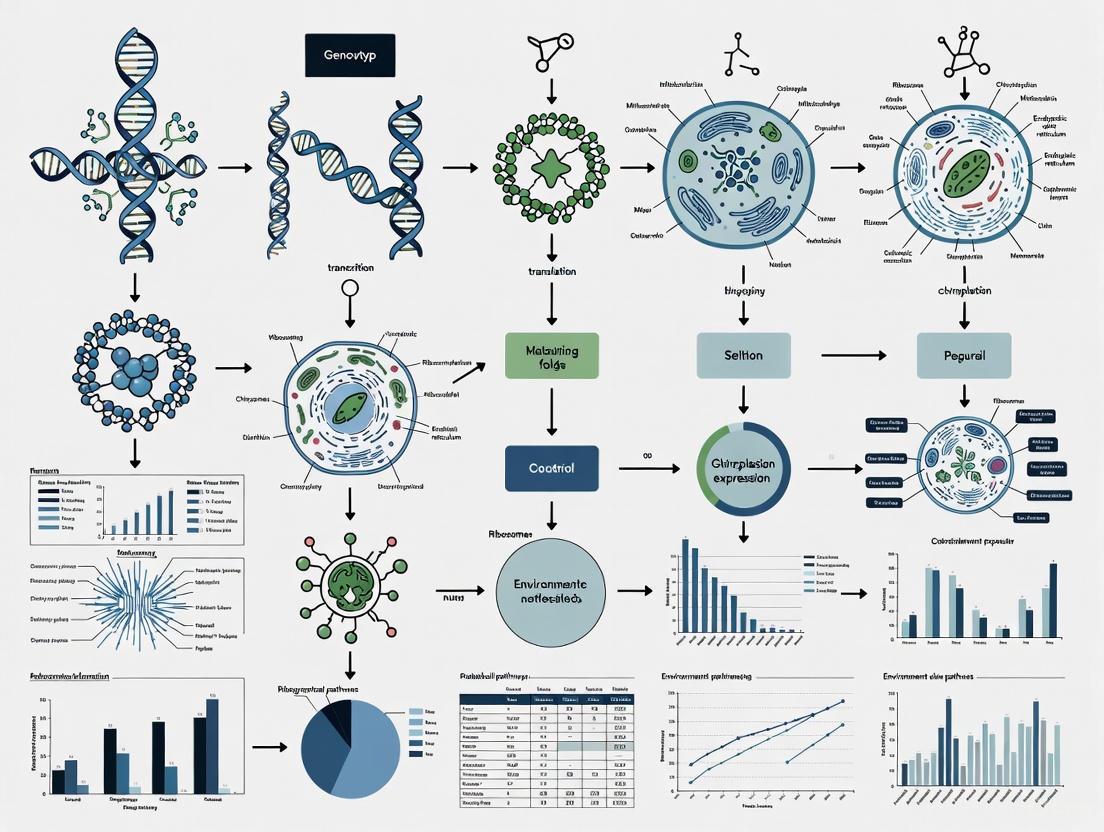
This article provides a comprehensive examination of the methodologies and challenges in linking plant genomic information to observable traits, a field critical for accelerating crop improvement and plant-based drug discovery.
From Code to Crop: Decoding Plant Genotype-to-Phenotype Relationships for Advanced Research and Drug Discovery
Abstract
This article provides a comprehensive examination of the methodologies and challenges in linking plant genomic information to observable traits, a field critical for accelerating crop improvement and plant-based drug discovery. It explores the foundational principles of genetic and environmental interaction, details cutting-edge high-throughput phenotyping and machine learning approaches, and addresses key optimization challenges in data standardization and model interpretation. By comparing traditional and novel prediction models, it offers researchers and drug development professionals a validated framework for leveraging plant genotype-to-phenotype insights to enhance predictive breeding outcomes and identify valuable phytochemical compounds, ultimately bridging the gap between genomic data and tangible agricultural and pharmaceutical applications.
The Genetic Blueprint: Unraveling Core Principles and Complexities in Plant G2P Relationships
Defining the Genotype-to-Phenotype Paradigm in Plant Biology
Connecting genotype to phenotype represents a grand challenge in biology with particular significance for plant sciences [1]. In essence, this paradigm seeks to understand how an organism's genetic makeup (genotype) interacts with environmental factors to produce its observable characteristics (phenotype). For plants, this relationship dictates critical agronomic traits—from drought tolerance to yield potential—making its understanding essential for addressing global food security challenges [1]. The classical view of a linear relationship between single genes and traits has been dramatically reshaped by recent advances, revealing a complex interplay involving whole-genome dynamics, regulatory networks, and environmental interactions [1] [2]. This technical guide examines the current state of genotype-to-phenotype research in plants, focusing on mechanistic insights, experimental approaches, and emerging computational frameworks that are transforming this paradigm.
Fundamental Mechanisms Generating Phenotypic Variation
Genomic Architecture and Dynamics
Plant genomes are remarkably dynamic, with several key mechanisms generating the genetic diversity that fuels phenotypic variation:
Whole Genome Duplication (Polyploidy): Plants frequently undergo cycles of whole-genome duplication, creating multiple copies of their entire genetic material. These events provide raw genetic material for neo-functionalization and can lead to immediate phenotypic novelty. Studies in Tragopogon allotetraploids reveal that after polyploidization, genomes become mosaics through differential gene loss, resulting in populations that are genetically and phenotypically variable [1]. Similarly, polyploidy in Spartina has led to novel ecological functions and heritable biochemical abilities in lineages colonizing low-marsh areas [1].
Transposable Elements (TEs): These mobile genetic elements represent a major driver of plant genome plasticity and size evolution. TEs contribute significantly to the "dispensable genome"—genetic elements not shared by all individuals of a species—which may be key for adaptation [1]. Research shows TE silencing is developmentally regulated, with partial release during the juvenile-to-adult transition in maize leaves, creating another layer of developmental regulation [1].
Structural Variants and Presence-Absence Variation: Beyond single nucleotide polymorphisms, structural variants including major deletions, insertions, and rearrangements contribute substantially to phenotypic variation. These variants are routinely overlooked in conventional genome-wide association studies but can have profound phenotypic effects [3].
Molecular Bridges: From Gene to Function
The molecular pathways connecting genetic information to physiological function involve multiple regulatory layers:
Transcriptional and Post-Transcriptional Regulation: Gene expression regulation in plants relies on numerous mechanisms affecting different steps of mRNA life: transcription, processing, splicing, alternative splicing, transport, translation, storage, and decay [4]. Alternative splicing occurs in approximately 60% of Arabidopsis genes, significantly expanding the transcriptome and proteome diversity, with different splicing patterns in response to environmental stimuli enabling rapid adaptation [4].
Epigenetic Regulation: Plants utilize unique epigenetic mechanisms to control gene expression. Research in Arabidopsis thaliana has revealed that repressive chromatin states incorporating the histone variant H2A.Z along with the repressive mark H3K27me3 create a "lock" that keeps genes turned off, but one that includes a potential self-destruct switch for more dynamic regulation [5]. This combination contributes to developmental flexibility in plants, potentially enabling rapid phenotypic change.
Protein Conformational Ensembles: The traditional view that a gene encodes a single protein shape has been replaced by understanding that genes encode ensembles of conformations [2]. These dynamic structural states link genetic variation to phenotypic traits, with mutations altering the probabilities of different conformations rather than creating entirely new structures [2].
Table 1: Key Mechanisms Generating Genomic Diversity in Plants
| Mechanism | Impact on Genome | Phenotypic Consequences | Example Systems |
|---|---|---|---|
| Whole Genome Duplication (Polyploidy) | Doubles chromosome number; provides genetic redundancy | Novel phenotypes, increased vigor, adaptation to new niches | Tragopogon, Spartina, Arabidopsis arenosa |
| Transposable Element Mobilization | Genome size expansion/contraction; new regulatory sequences | Altered gene expression patterns; developmental variability | Maize, Grapevine, Arabidopsis |
| Structural Variants | Presence-absence variation; gene copy number differences | Adaptive traits; disease resistance; environmental adaptation | Tomato, Maize, Arabidopsis |
| Epigenetic Modifications | Chromatin state changes; DNA methylation | Stable alterations in gene expression; phenotypic plasticity | Arabidopsis |
Experimental Approaches for Mapping Genotype to Phenotype
High-Throughput Phenotyping Technologies
Field-based, high-throughput phenotyping (FB-HTP) has emerged as a critical capability for quantifying phenotypic variation at scales matching genomic data [6]. These approaches use sensor and imaging technologies to enable rapid, low-cost measurement of multiple phenotypes across time and space:
Canopy Reflectance and Spectroscopy: Most FB-HTP applications utilize the interaction between the electromagnetic spectrum (400-2,500 nm) and plant canopies to infer physiological status [6]. Hyperspectral data can nondestructively infer leaf chemical properties, including canopy nitrogen and lignin content, providing insight into community-level phenotypes [6].
Multi-Sensor Fusion Platforms: Advanced platforms combine complementary sensors to provide more information than individual sensors alone. For example, platforms combining light curtains (measuring canopy height) with spectral reflectance sensors can predict aboveground biomass accumulation in maize more accurately than either sensor alone [6]. Advanced systems can capture details of plant physical structure, including canopy leaf angle, and produce 3D surface reconstructions [6].
Temporal Phenotyping: The longitudinal collection of phenotypic data enables detection of quantitative trait loci (QTL) with temporal expression patterns coinciding with specific growth stages. This approach has been used to study physiological processes underlying heat and drought responses in cotton populations under contrasting irrigation regimes [6].
Table 2: Sensor Technologies for Field-Based High-Throughput Phenotyping
| Sensor Type | Measured Parameters | Applications in Plant Research | Technical Considerations |
|---|---|---|---|
| Red-Green-Blue (RGB) Cameras | Canopy coverage, color, texture | Growth monitoring, disease detection, phenological staging | Affected by ambient light conditions |
| Hyperspectral Imaging | Full spectral signature (400-2500 nm) | Leaf chemical composition, stress detection, photosynthetic efficiency | High data volume; complex analysis |
| Thermal Infrared | Canopy temperature | Plant water status, stomatal conductance, drought response | Affected by atmospheric conditions |
| 3D Sensors (LiDAR, Time-of-Flight) | Canopy structure, plant architecture, biomass estimation | Plant growth modeling, lodging assessment, architectural traits | Cost; computational requirements for data processing |
| Fluorescence Sensors | Chlorophyll fluorescence, photosynthetic efficiency | Photosynthetic performance, stress detection | Requires specific lighting conditions |
Genotyping and Association Mapping Approaches
Modern genotyping approaches have expanded beyond single nucleotide polymorphisms (SNPs) to capture a wider range of genetic variation:
K-mer Based Association Mapping: This innovative approach uses raw sequencing data directly to derive short sequences (k-mers) that mark a broad range of polymorphisms independently of a reference genome [3]. Only after identifying k-mers associated with phenotypes are they linked to specific genomic regions. This method recapitulates associations found with SNPs but with stronger statistical support and discovers new associations with structural variants and regions missing from reference genomes [3].
Pangenome References: Rather than relying on a single reference genome, pangenomes capture the genomic diversity within a species, allowing researchers to expand genotyping from SNPs and indels to include gene presence-absence variation, which has been associated with disease resistance and stress tolerance [7].
Controlled Environment and High-Throughput Functional Studies
Deep Mutational Scanning: Advances in DNA synthesis and sequencing have enabled the development of assays capable of scoring comprehensive libraries of genotypes for fitness and various phenotypes in massively parallel fashion [8]. These approaches can measure competitive cellular fitness directly in bulk by tracking genotype frequencies during laboratory propagation of mixed cultures, providing precise quantitative fitness estimates [8].
Massively Parallel Genetics: Creative uses of next-generation sequencing technologies allow measurement of particular phenotypes for each genetic variant in large mixed libraries, enabling direct genotype-phenotype mapping on an unprecedented scale [8].
Computational and Modeling Frameworks
Traditional Statistical Approaches
Genomic Best Linear Unbiased Prediction (GBLUP): This linear modeling approach estimates the contribution of each SNP to phenotypes of interest and has seen significant success in plant breeding [7]. Its simplicity makes it straightforward to implement, and the contribution of each SNP is relatively easy to calculate.
Quantitative Trait Locus (QTL) Mapping: This approach aims to explain the genetic basis of variation in complex traits by linking phenotype data to genotype data [2]. However, quantifying traits remains challenging, with matters of trait definition, interdependence, and selection presenting ongoing difficulties [2].
Machine Learning and Deep Learning Approaches
Machine learning (ML) and deep learning (DL) algorithms can discover non-linear relationships within datasets, potentially capturing the complex relationships between genotype, phenotype, and environment more effectively than linear models [7]:
Random Forests: This ML method can capture patterns in high-dimensional data to deliver accurate predictions and account for non-additive effects. It has demonstrated superior performance compared to linear models like Bayesian LASSO and Ridge Regression BLUP, depending on the genetic architecture of the predicted trait [7].
Deep Neural Networks: Convolutional neural networks and feed-forward deep neural networks can outperform linear methods with correct optimization of hyperparameters [7]. Multi-trait DL models can help understand relationships between related traits for improved prediction [7].
G-P Atlas Framework: This innovative neural network framework uses a two-tiered denoising autoencoder approach that first learns a low-dimensional representation of phenotypes and then maps genetic data to these representations [9]. This data-efficient training process can predict many phenotypes simultaneously from genetic data and identify causal genes, including those acting through non-additive interactions that conventional approaches may miss [9].
Encoding Genetic Variation for Machine Learning
The most common form of encoding whole-genome SNP data for ML and DL is one-hot encoding, where each SNP position is represented by four columns corresponding to the four DNA bases (A, T, C, G), with presence indicated by 1 and absence by 0 [7]. However, strategies to reduce feature dimensionality are often necessary, including:
- Minor allele frequency filtering
- Feature selection based on genome-wide association studies
- Focus on rare variants with potentially large effects
- Integration of transcriptional data [7]
Figure 1: Computational Workflow for Genotype to Phenotype Prediction
Signaling Pathways Integrating Environmental Cues
Light Signaling and Retrograde Communication
Light induces massive reprogramming of gene expression in plants, affecting up to one-third of the transcriptome in Arabidopsis [4]. This regulation operates through multiple interconnected pathways:
Photoreceptor-Mediated Signaling: Plants sense light parameters through multiple photoreceptor families. Red and far-red light are sensed by phytochromes; blue and UV-A wavelengths by cryptochromes, phototropins, and Zeitlupe family members; and UV-B by the UVR8 photoreceptor [4].
Chloroplast Retrograde Signaling: Once green seedlings are established, chloroplasts play a key role in sensing light fluctuations and communicating these changes to the nucleus [4]. Operational retrograde signals dependent on light quantity/quality include:
- Redox signals from photosynthetic electron transport components, particularly the plastoquinone pool
- Reactive oxygen species (ROS) continuously produced during photosynthesis
- Metabolic signals reflecting photosynthetic efficiency [4]
Alternative Splicing Regulation by Light: Light regulates alternative splicing of Arabidopsis genes encoding proteins involved in RNA processing through chloroplast retrograde signals [4]. This effect is observed even in roots when communication with photosynthetic tissues remains intact, suggesting a mobile signaling molecule travels through the plant [4].
Figure 2: Light Signaling Pathway Integrating Environmental Cues
Experimental Protocols for Key Methodologies
K-mer Based Genome-Wide Association Study Protocol
This protocol enables detection of genetic variants underlying phenotypic variation without complete genomes, capturing structural variants and presence-absence polymorphisms often missed in conventional GWAS [3]:
Sequence Data Processing:
- Begin with raw sequencing reads from population samples
- Generate all possible k-mers (short sequences of length k) from the reads
- Count k-mer frequencies across samples
Association Testing:
- Test each k-mer for association with the phenotype of interest
- Use statistical frameworks that account for population structure
- Apply multiple testing corrections to identify significantly associated k-mers
Genomic Localization:
- Map significantly associated k-mers to reference genomes where possible
- For k-mers that cannot be mapped, consider de novo assembly approaches
- Annotate genomic regions linked to associated k-mers
Validation:
- Confirm associations using orthogonal methods
- Validate structural variants through PCR or long-read sequencing
- Perform functional validation through transgenic approaches where feasible
Field-Based High-Throughput Phenotyping Protocol
This protocol enables large-scale, temporal phenotypic data collection under field conditions [6]:
Platform Selection and Sensor Integration:
- Select appropriate vehicle platform (UAS, high-clearance tractor, cable gantry) based on plot size and resolution requirements
- Integrate multiple complementary sensors (RGB, hyperspectral, thermal, 3D)
- Implement precision geopositioning systems for spatial accuracy
Data Collection Schedule:
- Establish regular imaging intervals throughout growing season
- Coordinate data collection with key developmental stages
- Include appropriate environmental monitoring (weather, soil conditions)
Data Processing and Feature Extraction:
- Preprocess raw sensor data (radiometric calibration, geometric correction)
- Extract vegetation indices and structural parameters
- Implement automated feature extraction pipelines
- Generate time-series data for growth trajectory analysis
Data Integration:
- Combine phenotypic data with genomic information
- Implement database solutions for large-scale data management
- Apply statistical models accounting for spatial and temporal correlations
Research Reagent Solutions for Genotype-Phenotype Studies
Table 3: Essential Research Reagents and Resources
| Reagent/Resource | Function/Application | Example Use Cases | Technical Considerations |
|---|---|---|---|
| Arabidopsis T-DNA Insertion Lines | Gene knockout and functional characterization | Reverse genetics, validation of candidate genes | Redundancy may require multiple knockouts |
| SNP Arrays | Genome-wide genotyping | Genomic selection, association studies | Limited to predefined variants; being supplanted by sequencing |
| Phage/Bacterial Display Libraries | High-throughput protein characterization | Protein-protein interactions, antibody generation | Limited to in vitro applications |
| Near-Isogenic Lines (NILs) | Fine-mapping of QTLs | Validation of candidate genes, epistasis studies | Time-consuming to develop |
| CRISPR-Cas9 Systems | Targeted genome editing | Functional validation, trait engineering | Off-target effects must be assessed |
| Reporter Constructs (GUS, GFP) | Spatial and temporal expression analysis | Promoter activity, protein localization | May not capture full regulatory context |
| Massively Parallel Reporter Assays | Functional assessment of regulatory elements | Identification of causal variants, enhancer characterization | Limited to sequences that can be synthesized and cloned |
The genotype-to-phenotype paradigm in plant biology is undergoing rapid transformation, driven by technological advances in both genotyping and phenotyping. The integration of machine learning approaches, particularly deep neural networks capable of capturing non-linear relationships and gene-gene interactions, promises to enhance our predictive capabilities [7] [9]. However, significant challenges remain, including the scarcity of high-quality, multi-dimensional datasets and the need for improved model interpretability.
Future research directions will likely focus on:
Multi-Omics Integration: Combining genomic, transcriptomic, epigenomic, proteomic, and metabolomic data to build more comprehensive models of biological systems.
Dynamic Modeling: Moving from static snapshots to dynamic models that capture phenotypic changes across developmental timescales and in response to environmental fluctuations.
Environment-Aware Models: Developing models that explicitly incorporate environmental variables and genotype-by-environment interactions, which are particularly important for plant adaptation and agricultural applications.
Single-Cell Resolution: Applying single-cell technologies to understand how genotype-phenotype relationships operate at cellular resolution within complex tissues.
The continuing evolution of the genotype-to-phenotype paradigm will require close collaboration between biologists, computer scientists, engineers, and mathematicians. By embracing the complexity of biological systems and developing more sophisticated models to capture this complexity, we move closer to predictive understanding of plant biology that can address fundamental scientific questions and pressing agricultural challenges.
The journey from genotype to phenotype in plants is governed by a complex landscape of genetic variations. These variations, ranging from single nucleotide changes to large structural rearrangements, form the fundamental basis for phenotypic diversity, environmental adaptation, and crop domestication. Understanding these genetic differences is crucial for unraveling the molecular mechanisms controlling traits of agricultural and ecological importance. Plant genomes contain diverse types of polymorphisms that collectively contribute to phenotypic variation, including single nucleotide polymorphisms (SNPs), insertions-deletions (InDels), and presence-absence variations (PAVs), each with distinct characteristics, frequencies, and functional consequences [10] [11] [12]. These genetic variations serve as the raw material for evolutionary processes and provide the toolkit for plant breeders to develop improved varieties with enhanced yield, stress tolerance, and quality traits.
The investigation of genetic variations has transformed dramatically with advances in sequencing technologies and computational biology. Early studies relied on limited molecular markers, but contemporary research now leverages whole-genome sequencing and sophisticated bioinformatics tools to comprehensively characterize genetic diversity at unprecedented resolution [10] [12]. This technical evolution has enabled researchers to move beyond simply documenting genetic differences toward understanding their functional significance in shaping plant phenotypes. This review systematically examines the major types of genetic variations in plants, their detection methods, and their roles in bridging the gap between genetic makeup and observable traits.
Types and Characteristics of Genetic Variations
Single Nucleotide Polymorphisms (SNPs)
SNPs represent the most abundant form of genetic variation in plant genomes, occurring when a single nucleotide (A, T, C, or G) differs between individuals of the same species [10] [12]. These variations are distributed throughout plant genomes, with their density and distribution varying significantly among species. For instance, in tea plants (Camellia sinensis), a comprehensive study identified 7,511,731 SNPs between two varieties, with an average density of 2,341 SNPs per megabase [11]. SNPs are generally classified as transitions (changes between purines or between pyrimidines) or transversions (changes between purines and pyrimidines), with transitions typically occurring more frequently than transversions—in tea plants, transitions accounted for 77.46% of SNPs with a transition/transversion ratio of 3.44 [11].
The functional impact of SNPs depends largely on their genomic location. SNPs within protein-coding regions can be categorized as synonymous (not altering the amino acid sequence) or non-synonymous (changing the amino acid sequence), with the latter having greater potential to affect protein function and consequently phenotypic traits [11]. SNPs in regulatory regions can influence gene expression by modifying transcription factor binding sites or other regulatory elements, while those in intergenic regions typically have no known functional effect [12]. In tea plants, only 6% of SNPs were located in genic regions, with the overwhelming majority (94%) found in intergenic regions [11]. Of the genic SNPs, 38,670 were synonymous and 50,841 were non-synonymous, potentially affecting protein function [11].
Table 1: Distribution and Characteristics of SNPs in Plants
| Category | Subtype | Frequency | Potential Impact | Example |
|---|---|---|---|---|
| By Type | Transitions (G/A, C/T) | ~77% of SNPs [11] | Variable | Tea plant: 2,905,203 A/G and 2,913,570 C/T [11] |
| Transversions (A/C, A/T, C/G, G/T) | ~23% of SNPs [11] | Variable | Tea plant: nearly even distribution among four types [11] | |
| By Location | Intergenic | 94% of SNPs [11] | Often minimal | Tea plant: majority of 7+ million SNPs [11] |
| Genic | 6% of SNPs [11] | Variable | Tea plant: 440,298 SNPs [11] | |
| Coding (Non-synonymous) | 50,841 in tea plant [11] | Alters amino acid sequence | May affect protein function, enzyme activity [10] | |
| Coding (Synonymous) | 38,670 in tea plant [11] | No amino acid change | Generally neutral; may affect mRNA stability/splicing [10] | |
| Regulatory | Varies by genome | Alters gene expression | May affect transcription factor binding [12] |
Insertion-Deletion Polymorphisms (InDels)
InDels represent another major class of genetic variation characterized by the insertion or deletion of DNA segments ranging from a single nucleotide to several hundred base pairs [11]. In tea plants, 255,218 InDels were identified with an average density of 84.5 InDels per megabase [11]. The length distribution of InDels typically shows a strong bias toward shorter variants, with mononucleotide InDels being the most abundant type (44.27% of all InDels in tea plants) [11]. The number of InDels generally decreases as length increases, with variants shorter than 20 bp accounting for over 95.5% of all InDels in tea plants [11].
Like SNPs, the functional consequences of InDels depend on their genomic context. InDels located within coding regions can cause frameshift mutations if their length is not a multiple of three, potentially leading to premature stop codons and truncated proteins. Those in regulatory regions may affect gene expression by altering transcription factor binding sites or other regulatory elements. InDels in non-functional regions typically have minimal phenotypic impact. In tea plants, only 12% (31,130) of InDels were located in genic regions, with the majority residing in intergenic regions [11]. Despite their relatively low frequency in genic regions, InDels have proven to be valuable molecular markers due to their stability, reproducibility, and transferability between populations [11].
Table 2: Characteristics and Distribution of InDels in Plant Genomes
| Characteristic | Pattern/Observation | Example from Tea Plant | Functional Implications |
|---|---|---|---|
| Length Distribution | Decreases with increasing length | 1-20 bp: 95.5% of all InDels [11] | Shorter InDels more common; longer ones rare |
| Most Abundant Type | Mononucleotide InDels | 44.27% (112,976) of total [11] | Simple sequence repeats as mutation hotspots |
| Genomic Location | Predominantly intergenic | 88% in intergenic regions [11] | Majority likely neutral |
| Minority in genic regions | 12% (31,130) in genic regions [11] | Potential impact on gene function | |
| Density | Lower than SNPs | 84.5 InDels/Mb vs. 2341 SNPs/Mb [11] | Less frequent than SNPs but still abundant |
Presence-Absence Variations (PAVs)
PAVs represent an extreme form of structural variation where specific genomic segments containing one or more genes are present in some individuals but entirely absent in others [13]. These variations have gained increasing recognition for their significant role in shaping phenotypic diversity and contributing to reproductive isolation in plants. PAVs are particularly common in genes associated with stress responses and disease resistance, suggesting they may represent an evolutionary adaptation mechanism for rapid environmental adaptation [13].
A compelling example of PAVs with profound phenotypic consequences comes from research on rice subspecies. A PAV at the Se locus functions as a reproductive barrier between indica and japonica rice subspecies by causing hybrid sterility [13]. This locus contains two adjacent genes, ORF3 and ORF4, that exhibit complementary effects. ORF3 encodes a sporophytic pollen killer, while ORF4 protects pollen in a gametophytic manner [13]. In F1 hybrids of indica-japonica crosses, pollen with the japonica haplotype (lacking the protective ORF4 sequence) is aborted due to the pollen-killing effect of ORF3 from indica [13]. This mechanism represents a sophisticated genetic barrier that maintains subspecies identity and demonstrates how PAVs can directly influence reproductive compatibility and evolutionary trajectories.
The functional significance of PAVs extends beyond reproductive barriers. Pangenome analyses across multiple crop species consistently reveal that PAVs are enriched for genes involved in abiotic stress response and disease resistance [13]. This pattern suggests that PAVs contribute to environmental adaptation by creating variation in gene content that can be selectively advantageous under specific conditions. Additionally, fixation of complementary PAVs is believed to contribute to heterosis in hybrid breeding programs, highlighting their practical importance in crop improvement [13].
Methodologies for Genetic Variation Analysis
Detection and Genotyping Techniques
The detection and analysis of genetic variations have evolved substantially with advances in molecular technologies. Early techniques such as restriction fragment length polymorphisms (RFLPs) and PCR-based markers including random amplification of polymorphic DNA (RAPD), amplified fragment length polymorphisms (AFLPs), and simple sequence repeats (SSRs) have been largely supplanted by high-throughput sequencing approaches that enable comprehensive genome-wide variant discovery [12].
Next-generation sequencing (NGS) technologies have revolutionized plant genetic studies by allowing rapid and cost-effective discovery of thousands to millions of genetic variants [10] [12]. These technologies include platforms such as Illumina sequencing, which generates short reads at high coverage, and third-generation sequencing like PacBio SMRT sequencing, which produces longer reads that are particularly valuable for resolving complex genomic regions [11]. For SNP discovery in complex plant genomes, several strategies have been developed:
- Transcriptome sequencing: Focuses on coding regions by sequencing mRNA, effectively avoiding repetitive regions of the genome [12].
- Reduced-representation sequencing: Techniques like restriction site-associated DNA sequencing (RAD-Seq) and genotyping-by-sequencing (GBS) use restriction enzymes to reduce genome complexity, providing a cost-effective approach for genome-wide variant discovery [12].
- Sequence capture methods: Technologies such as NimbleGen sequence capture and Agilent SureSelect use hybridization probes to enrich specific genomic regions before sequencing, enabling targeted resequencing of genes or regulatory elements [12].
Each method has distinct advantages and limitations depending on the research objectives, genome complexity, and available resources. For instance, transcriptome sequencing is efficient for identifying potentially functional variants in coding regions but misses regulatory elements, while whole-genome sequencing provides comprehensive coverage but requires more extensive sequencing and computational resources [12].
Quantitative Trait Loci (QTL) Mapping and Genome-Wide Association Studies (GWAS)
QTL mapping and GWAS are powerful statistical approaches that link genetic variations with phenotypic traits. QTL analysis connects phenotypic data (trait measurements) with genotypic data (molecular markers) to explain the genetic basis of variation in complex traits [14]. This method typically involves crossing strains that differ genetically for the trait of interest, then scoring phenotypes and genotypes in the derived population to identify chromosomal regions where markers segregate with trait values [14]. Recent extensions of QTL mapping include expression QTL (eQTL) analysis, which links genetic variations to differences in gene expression, and protein QTL (pQTL) mapping, which associates genetic variants with variations in protein abundance [14].
GWAS represents a complementary approach that uses samples from natural populations and cultivars to identify associations between genetic variants and traits [15]. Standard GWAS tests associations between individual SNPs and a single phenotype, but this simple model often fails to capture complex genetic architectures. Advanced GWAS models have been developed to address these limitations, including:
- Multiple-trait mixed models (MTMM): These models analyze multiple phenotypes simultaneously, increasing statistical power by directly modeling correlation structures between traits [15].
- Environmental interaction models: These approaches incorporate environmental data to understand genotype-by-environment interactions, which is crucial for predicting adaptive responses [15].
- Multivariate Adaptive Shrinkage (MASH): This method addresses computational challenges in high-dimensional data by breaking analysis into stages, first estimating SNP effects on each trait separately then updating these estimates based on standard errors and correlations between traits [15].
These advanced methods provide more realistic modeling of complex genetic architectures and have demonstrated improved power for identifying genetic determinants of complex traits in plants [15].
Experimental Validation of Causal Relationships
Identifying statistical associations between genetic variants and phenotypes is only the first step; establishing causal relationships requires rigorous experimental validation. Several approaches are commonly employed:
- Functional complementation: Introducing wild-type complementary DNA into a mutant background to rescue a loss-of-function mutation or produce an alternative phenotype [14].
- Targeted gene replacement: Precisely modifying specific genomic regions to confirm their role in trait variation [14].
- Reciprocal transplant experiments: Assessing genotype performance across different environments to validate adaptive significance [16].
- Common garden experiments: Growing different genotypes in a uniform environment to isolate genetic effects from environmental influences [16].
These validation approaches are essential for moving beyond correlation to establish causation in genotype-phenotype relationships. For instance, in the study of jasmonate defense hormones in wild tobacco, experimental manipulation of LOX3 gene expression in mesocosm populations provided direct evidence for its role in structuring herbivore communities and altering plant performance [17].
Functional Impacts and Phenotypic Consequences
Gene Function and Regulation
Genetic variations influence plant phenotypes through diverse molecular mechanisms. SNPs in coding regions can alter protein function by changing amino acid sequences, potentially affecting enzyme activity, protein stability, or interaction partners [10]. For example, non-synonymous SNPs in catechin/caffeine biosynthesis-related genes in tea plants were associated with significant differences in catechin and caffeine content, suggesting a direct functional impact on these economically important compounds [11].
Variations in regulatory regions can influence gene expression by modifying transcription factor binding sites, promoter activity, or enhancer elements [12]. Such regulatory changes can have profound phenotypic effects even when coding sequences remain intact. Additionally, structural variations like PAVs can directly determine whether a gene is present or absent in a particular genotype, creating fundamental differences in genetic potential between individuals [13]. The rice Se locus exemplifies how PAVs can create reproductive barriers through complementary gene action, where the presence of a pollen-killer gene in one subspecies and the absence of a protective gene in another leads to hybrid sterility [13].
Defense Responses and Herbivore Communities
Genetic variations in defense-related genes can significantly influence plant interactions with herbivores and shape broader ecological communities. Research on wild tobacco (Nicotiana attenuata) demonstrated that variation in a single key biosynthetic gene in the jasmonate (JA) defense hormone pathway (lipoxygenase 3, LOX3) structured herbivore communities and altered plant performance [17]. JA-deficient plants (silenced in LOX3 expression) were preferentially attacked by the generalist leafhopper Empoasca sp., while the specialist Tupiocoris notatus mirids avoided Empoasca-damaged plants [17].
In experimental mesocosm populations containing both wild-type and JA-deficient plants, the herbivore damage patterns and resulting plant fitness outcomes differed significantly from monocultures [17]. Seed capsule production remained similar for both genotypes in mixed populations but differed in monocultures, with the specific outcomes depending on caterpillar density [17]. This demonstrates how genetic variation in a single defense gene can create ripple effects through ecological communities and influence plant reproductive success in complex ways dependent on population composition and herbivore density.
Reproductive Isolation and Speciation
Genetic variations play a crucial role in reproductive isolation and speciation processes in plants. The PAV at the rice Se locus contributes to reproductive isolation between indica and japonica subspecies by causing hybrid sterility [13]. This two-gene system operates through a sophisticated mechanism where ORF3 acts as a sporophytic pollen killer and ORF4 provides gametophytic protection [13]. In hybrids, pollen lacking the protective ORF4 (from japonica) is killed by the ORF3 pollen killer (from indica), leading to selective abortion and partial sterility [13].
Evolutionary analysis suggests that this PAV system has contributed significantly to the reproductive isolation between the two rice subspecies and supports the hypothesis of independent domestication of indica and japonica from different O. rufipogon populations [13]. This example illustrates how structural variations can create genetic barriers that maintain species or subspecies identity and influence evolutionary trajectories.
Table 3: Experimental Approaches for Validating Genetic Variants
| Method | Principle | Application Example | Key Outcome Measures |
|---|---|---|---|
| Functional Complementation | Introduce wild-type gene to rescue mutant phenotype | Complementing defense gene mutations in tobacco [17] | Restoration of wild-type phenotype (e.g., herbivore resistance) |
| Reciprocal Transplant | Grow genotypes across multiple environments | Testing local adaptation in natural populations [16] | Fitness measures (survival, reproduction) across environments |
| Common Garden | Grow diverse genotypes in uniform environment | Comparing defensive traits in plant populations [16] | Phenotypic variation under controlled conditions |
| Gene Silencing/Editing | Reduce or eliminate gene function | LOX3 silencing in tobacco [17] | Altered phenotype (e.g., changed herbivore preference) |
| Hybridization Analysis | Cross divergent genotypes | indica × japonica rice crosses [13] | Hybrid fertility/viability, trait segregation |
Research Reagent Solutions and Technical Tools
Modern plant genetics research relies on a diverse toolkit of reagents, platforms, and technical solutions for analyzing genetic variations. The following table summarizes key resources mentioned across the surveyed literature:
Table 4: Essential Research Reagents and Technical Solutions for Genetic Variation Analysis
| Category | Specific Tools/Reagents | Function/Application | Examples from Literature |
|---|---|---|---|
| Sequencing Platforms | Illumina, PacBio, Ion Torrent | High-throughput DNA/RNA sequencing | Tea plant genome sequencing [11] |
| Genotyping Arrays | SNP chips, microarrays | Parallel genotyping of thousands of markers | Human SNP chips adapted for plants [10] |
| Variant Discovery Tools | GATK, SAMtools, HaploSNPer | Bioinformatics pipelines for variant calling | Polyploid SNP validation [12] |
| Complexity Reduction | Restriction enzymes (ApeKI) | Reduce genome complexity for sequencing | Restriction Site Associated DNA (RAD) [12] |
| Target Enrichment | NimbleGen, SureSelect | Capture specific genomic regions | Exome sequencing in plants [12] |
| Genetic Mapping | R/qtl, LIMIX, GEMMA | QTL mapping and association analysis | Multiple-trait GWAS [15] |
| Validation Reagents | PCR primers, sequencing primers | Confirm genetic variants | InDel marker development in tea [11] |
| Functional Validation | RNAi constructs, CRISPR-Cas9 | Gene manipulation for functional tests | LOX3 silencing in tobacco [17] |
The spectrum of genetic variations—from single nucleotide changes to presence-absence polymorphisms—forms the fundamental basis for phenotypic diversity in plants. SNPs provide the highest density of genomic markers and contribute to both coding and regulatory variations, while InDels offer stable, reproducible markers distributed throughout plant genomes. PAVs represent the most dramatic form of genetic variation, with the potential to create fundamental differences in gene content between individuals and drive reproductive isolation.
Advanced genomic technologies have dramatically accelerated our ability to discover and characterize these variations, while sophisticated statistical methods like multi-trait GWAS and QTL mapping enable researchers to connect genetic variants with complex phenotypic traits. However, establishing causal relationships requires rigorous experimental validation through complementary approaches including functional complementation, gene editing, and ecological experiments.
Understanding these genetic variations and their functional consequences has profound implications for both basic plant biology and applied crop improvement. As research continues to unravel the complex relationships between genetic variations and phenotypic outcomes, this knowledge will increasingly empower efforts to develop resilient, productive crop varieties through molecular breeding and genomic selection strategies. The integration of multiple approaches—from high-throughput sequencing to field-based phenotypic assessments—will be essential for fully elucidating the intricate pathways connecting plant genotypes to their phenotypic expressions.
The Critical Role of Environment (GxE Interaction) in Phenotypic Expression
The relationship between genotype and phenotype is a cornerstone of genetics, yet it is not a simple one-to-one correlation. Genotype-by-Environment (GxE) interaction describes the phenomenon wherein the effect of a genotype on the phenotype depends on the specific environmental conditions. In plant research, understanding GxE is crucial for bridging the gap between genetic potential and realized agricultural output, as it significantly influences the selection and recommendation of cultivars [18]. The performance and productivity of crops are determined by a complex interplay of genetic factors (G), environmental conditions (E), and their interaction (GEI), which can complicate breeding efforts aimed at developing stable, high-yielding varieties [18] [19]. When significant GxE exists, a genotype superior in one environment may perform poorly in another, a phenomenon known as crossover interaction [19]. Deciphering the genetic basis of complex traits therefore requires an understanding of GxE to link physiological functions and agronomic traits to genetic markers [20]. This guide provides a technical overview of the concepts, analytical methods, and applications of GxE research in plant sciences.
Fundamental Concepts and Statistical Frameworks
Defining GxE and Mega-Environments
In plant breeding, a "mega-environment" (ME) is defined as a group of locations sharing similar environmental conditions where a specific genotype or set of genotypes consistently demonstrates superior performance [18]. The concept of MEs allows breeders to address repeatable GxE by developing genotypes tailored to specific environmental niches, while non-repeatable GxE can be managed through targeted selection within an ME [18].
Analytical Models for GxE Dissection
Several statistical models are employed to partition phenotypic variance and understand the structure of GxE. Key models include:
- Analysis of Variance (ANOVA): This foundational method decomposes the total phenotypic variance into components attributable to genotype (G), environment (E), and their interaction (GxE). While ANOVA indicates the presence and significance of GxE, it does not elucidate its patterns.
- Additive Main Effects and Multiplicative Interaction (AMMI): The AMMI model combines standard ANOVA for main effects with Principal Component Analysis (PCA) to decompose the GxE interaction into Interaction Principal Component Axes (IPCA) [19]. This hybrid model provides a more nuanced understanding of interaction patterns, helping to identify genotypes with specific adaptation.
- Genotype + Genotype-by-Environment Interaction (GGE) Biplot: The GGE biplot model visualizes the genotype (G) effect and the GxE interaction jointly [21]. It is particularly powerful for identifying mega-environments ("which-won-where" patterns), evaluating test environments for their discriminative power and representativeness, and visually ranking genotypes based on both performance and stability [18] [21].
- Linear Mixed-Effects Models and BLUP: Models utilizing Best Linear Unbiased Prediction (BLUP) and stability metrics like the Weighted Average Absolute Scores of BLUPs (WAASB) improve predictive accuracy by treating genetic and environmental effects as random, offering a robust framework for assessing performance and stability simultaneously [18].
Table 1: Key Statistical Models for GxE Analysis
| Model | Key Function | Primary Outputs | Strengths |
|---|---|---|---|
| ANOVA | Variance partitioning | Significance of G, E, and GxE effects | Simple, foundational test for interaction |
| AMMI | Decompose GxE pattern | Interaction Principal Component Axes (IPCAs) | Combines additive and multiplicative models; detailed interaction insights |
| GGE Biplot | Visualize G + GxE | "Which-won-where" view; mean vs. stability view | Ideal for mega-environment analysis and genotype evaluation [21] |
| Mixed Models (BLUP) | Prediction & Stability | WAASB index; Estimated Breeding Values (EBVs) | Handles complex experimental designs; high predictive accuracy |
Quantitative GxE Analysis in Multi-Environment Trials
Multi-Environment Trials (METs) are the standard approach for evaluating GxE. The following case studies illustrate the quantitative outcomes of such analyses.
Case Study 1: Winter Wheat in North China
A large-scale MET with 71 winter wheat genotypes across 16 locations over five years in the North China Plain revealed highly significant effects of environment (E), genotype (G), and GxE [18]. The analysis of variance demonstrated that the environment was the largest source of variation, with GxE variance exceeding the variance from genotypic effects alone. The AMMI model showed that the first three IPCAs captured over 70% of the GxE variance [18]. Environmental covariates were critical for interpretation; grain yield was positively correlated with vapor pressure deficit and sunshine duration, but negatively correlated with relative humidity and total precipitation [18]. Key environmental drivers of yield variation included minimum temperature and clay content.
Table 2: Superior Winter Wheat Genotypes Identified by GGE Biplot Analysis (North China Plain) [18]
| Year | Superior Genotypes |
|---|---|
| 2014 | JM196, WN4176, HN6119 |
| 2015 | ZX4899, H9966, LM22 |
| 2016 | BM7, KN8162, KM3 |
| 2017 | HH14-4019, HM15-1, HH1603 |
| 2018 | S14-6111, JM5172 |
Case Study 2: Open-Pollinated Tomato in the Kashmir Himalaya
An evaluation of 16 tomato genotypes across six locations showed that environment (E), genotype (G), and GxE were all highly significant (p < 0.001) for yield per hectare [19]. Environment alone contributed 47.5% of the total phenotypic variation, again highlighting its dominant role. Using the AMMI model and stability indices (WAAS and MTSI), researchers identified Arka Meghali as the highest-yielding variety and NDF-9 as a genotype with remarkable adaptability across the diverse test environments of the Kashmir Valley [19].
Case Study 3: Cowpea in Egypt
A study of ten cowpea genotypes across nine environments (three locations over three seasons) also found significant (p < 0.01) effects for G, E, and GxE on fresh yield [21]. The environment was again the most influential factor, accounting for 86.15% of the total sum of squares, with G and GxE contributing 6.54% and 4.54%, respectively [21]. The AMMI analysis revealed that the first five principal components were significant, with PC1 and PC2 explaining 40.02% and 23.61% of the GxE variation, respectively. Genotype G3 had the highest mean yield, while genotype G7 was identified as the most stable across the nine environments [21].
Table 3: Summary of Variance Components from GxE Case Studies
| Crop (Study) | Variance Contribution (E) | Variance Contribution (G) | Variance Contribution (GxE) | Key Stable/High-Yielding Genotypes |
|---|---|---|---|---|
| Winter Wheat [18] | Largest source | Less than GxE | Exceeded G variance | JM196, ZX4899, BM7, HH14-4019, S14-6111 |
| Tomato [19] | 47.5% | Significant (p<0.001) | Significant (p<0.001) | Arka Meghali (yield), NDF-9 (adaptability) |
| Cowpea [21] | 86.15% | 6.54% | 4.54% | G3 (yield), G7 (stability) |
Advanced Methodologies and Experimental Protocols
High-Dimensional Environmental Covariates and Envirotyping
Modern GxE analysis moves beyond labeling environments by location and year. Envirotyping uses high-dimensional environmental data, such as meteorological parameters and soil physicochemical properties, to model crop growth in specific conditions [18] [22]. For example, a study in pigs utilized eight daily environmental covariates (ECs)—including temperature, relative humidity, and wind speed—retrieved from the NASA POWER database for 100 days preceding trait measurement to characterize the environment for each animal [22]. The environmental similarity kernel (K~E~) is computed from an envirotype-covariable matrix (W) using the formula: $$K_E = \frac{WW'}{trace(WW')} nrow(W)$$ This kernel quantifies environmental similarity and can be used in genomic models to correlate environments and model GxE more accurately [18] [22].
Genomic Approaches to GxE
Genomic tools allow researchers to dissect the genetic architecture of GxE.
- Genome-Wide Association Studies (GWAS): These studies can be extended to detect marker-trait associations that are sensitive to environmental changes, known as GxE QTLs. For instance, a potato study identified 77 marker-trait associations for Nitrogen Use Efficiency (NUE) and related traits, with multi-trait genomic regions found on specific chromosomes [20]. Some QTLs are constitutive (stable across environments), while others are adaptive (identified only in specific environments) [20].
- Polygenic Risk Score (PRS) by Environment Interaction (PRSxE): This method aggregates genome-wide effects into a single score in a discovery sample and tests for its interaction with an environmental moderator in a target sample. While powerful for detecting broad genetic effects, its accuracy depends on the statistical power of the discovery GWAS [23].
- Reaction Norm Models: These models describe the phenotypic response of a genotype as a function of an environmental gradient, allowing for the prediction of performance under unobserved environmental conditions.
Diagram 1: GxE Analysis Workflow. This flowchart outlines the key stages of a comprehensive Genotype-by-Environment interaction study, from data collection to final analysis.
The Scientist's Toolkit: Essential Reagents and Materials
Table 4: Essential Research Reagents and Solutions for GxE Experiments
| Item / Reagent | Function / Application | Technical Notes |
|---|---|---|
| Plant Genetic Panel | Core germplasm for evaluating genetic effects. | A diverse panel of genotypes (e.g., 71 wheat [18], 16 tomato [19], 10 cowpea [21]) is essential. |
| Environmental Covariates (ECs) | Quantifying the "E" in GxE. | Includes meteorological (Tmin, Tmax, RH, rainfall) [18] and soil data (clay content, water holding capacity) [18]. Sourced from weather stations or NASA POWER [22]. |
| Genotyping Platform | Genome-wide marker data for genomic analysis. | SNP arrays for constructing genomic relationship matrices [22] or conducting GWASpoly for polyploids [20]. |
| Statistical Software (R/packages) | Data analysis and visualization. | R packages such as {metan} [19], {EnvRtype} [18], GWASpoly [20], and OpenMx [23] are critical. |
| Field Trial Infrastructure | Conducting Multi-Environment Trials (METs). | Requires multiple, geographically dispersed locations [18] [19] following a Randomized Complete Block Design (RCBD) with replications. |
The critical role of GxE in phenotypic expression is undeniable. For plant researchers, successfully navigating the path from genotype to phenotype requires a sophisticated integration of robust METs, advanced statistical models like AMMI and GGE, and modern genomic tools. The emergence of envirotyping—the use of high-dimensional environmental data to characterize growing conditions—represents a significant leap forward, enabling a more precise and predictive understanding of how genotypes respond to environmental cues [18] [22]. By systematically employing these methodologies, breeders can make informed decisions, selecting genotypes that combine high yield with stability, thereby accelerating the development of resilient cultivars suited to specific mega-environments and contributing to global food security in the face of climate variability.
The relationship between an organism's genotype and its observable characteristics, or phenotype, represents one of the most fundamental aspects of genetics. Despite a century of research, predicting trait outcomes from genetic information remains challenging due to two pervasive biological phenomena: epistasis (interactions between genes) and genetic redundancy (functional overlap between genes) [24]. These phenomena create substantial obstacles for plant researchers seeking to understand the genetic architecture of complex traits, from agricultural yield to stress resilience.
Epistasis was first identified by William Bateson over 100 years ago through observations that specific gene combinations could produce unexpected phenotypic outcomes in dihybrid crosses [24]. The concept has since expanded to encompass various forms of gene interactions, all sharing the common feature that the effect of a genetic variant depends on the genetic background in which it occurs [24] [25]. Similarly, genetic redundancy, often arising from gene duplication events, creates buffered systems where the effect of a mutation in one gene may only become apparent when combined with mutations in redundant partners [26].
In plant research, understanding these phenomena is crucial for bridging the gap between genomic information and phenotypic expression. This technical guide examines the current state of knowledge regarding epistasis and genetic redundancy, with particular emphasis on their implications for predicting trait outcomes in plant systems.
Theoretical Framework: Defining Epistasis and Its Biological Significance
Conceptual Models of Gene Interaction
Epistasis manifests in several distinct forms, each with different implications for predicting trait outcomes:
Compositional Epistasis: This traditional form describes scenarios where an allele at one locus masks or suppresses the effect of an allele at another locus. The only way to observe this effect is through combinatorial substitution of alleles against a standard genetic background [24].
Statistical Epistasis: Developed by R.A. Fisher, this population-level concept measures deviations from additivity when alleles at different loci are combined, averaged across all genetic backgrounds present in a population [24].
Functional Epistasis: This refers to the molecular interactions that proteins and other genetic elements have with one another, whether they operate within the same pathway or form physical complexes [24].
Each perspective offers different insights into how genetic interactions shape phenotypic outcomes, with compositional and statistical epistasis being most relevant for quantitative genetic studies in plants.
Genetic Redundancy as a Form of Epistasis
Genetic redundancy represents a special case of epistasis where paralogous genes (arising from gene duplication events) perform overlapping functions, creating buffered systems that canalize developmental processes [26]. In these systems, single mutations may show minimal effects, while combinations reveal strong synergistic interactions. For example, in tomato, the JOINTLESS2 (J2) and ENHANCER OF JOINTLESS2 (EJ2) genes function redundantly to control inflorescence architecture, with single mutants showing cryptic phenotypes while double mutants exhibit dramatic branching increases [26].
Table 1: Types of Epistasis and Their Characteristics in Plant Systems
| Type of Epistasis | Definition | Detection Method | Implication for Trait Prediction |
|---|---|---|---|
| Compositional | One allele masks the effect of another allele | Dihybrid crosses with constructed genotypes | Predictions require specific genetic context |
| Statistical | Deviation from additive combination of alleles | Population-level analysis of variance | Population-specific predictions |
| Functional | Molecular interactions between gene products | Protein-protein interaction studies | Requires understanding of molecular pathways |
| Redundancy | Overlapping function between paralogous genes | Multiple mutant analysis | Single mutants underestimate gene function |
Current Research Paradigms and Key Findings
Hierarchical Epistasis in Plant Development
Recent research in tomato inflorescence development has revealed that epistatic interactions can operate hierarchically, with different layers of interaction either enhancing or diminishing phenotypic effects [26]. In the J2-EJ2 regulatory network, researchers observed:
- A layer of dose-dependent interactions within paralogue pairs that enhanced branching
- A layer of antagonism between paralogue pairs, where accumulating mutations in one pair progressively diminished the effects of mutations in the other
This hierarchical structure demonstrates how regulatory network architecture and complex dosage effects from paralogue diversification converge to shape phenotypic space, producing the potential for both strongly buffered phenotypes and sudden bursts of phenotypic change [26].
Cryptic Genetic Variation as an Evolutionary Reservoir
Cryptic genetic variants exert minimal phenotypic effects alone but form a vast reservoir of genetic diversity that can drive trait evolvability through epistatic interactions [26]. These hidden variants most likely accumulate in buffered molecular contexts, such as redundancy within gene families and gene regulatory networks. Under this hypothesis, epistatic interactions between previously cryptic alleles may result in the sudden appearance of phenotypic variation in previously invariant traits, facilitating both within-species adaptation and macroevolutionary transitions [26].
Table 2: Quantitative Evidence for Epistasis in Plant Systems
| Study System | Genetic Elements | Phenotypic Effect | Statistical Evidence |
|---|---|---|---|
| Tomato Inflorescence [26] | J2, EJ2, PLT3, PLT7 | Inflorescence branching | 216 genotypes, >35,000 inflorescences quantified |
| Maize Root Architecture [27] | DRO1, Rt1, ZmCIPK15 | Root system architecture | >1700 root crowns, multivariate GWAS |
| Arabidopsis Flowering Time [28] | DOG1, VIN3 | Flowering time traits | 1135 accessions, machine learning models |
The Infinitesimal Model in the Presence of Epistasis
Remarkably, despite the prevalence of epistasis, quantitative genetics often operates effectively under the infinitesimal model, which assumes that genetic values remain normally distributed with constant variance components, even under selection [29]. This model can hold even with substantial epistasis because phenotypes occupy a narrow range relative to the range of multilocus genotypes possible given standing variation [29]. The key insight is that knowing the trait value provides little information about individual genotypes when very many loci influence the trait, meaning that selection hardly perturbs the variance components away from their neutral evolution.
Methodological Approaches for Detecting Epistasis
Experimental Designs for Uncovering Genetic Interactions
Systematic Mutant Combination
The most direct approach for detecting epistasis involves creating multiple mutant combinations through crosses or genome editing. In the tomato inflorescence study, researchers generated 216 genotypes combining coding mutations with cis-regulatory alleles across four network genes, enabling quantification of branching in over 35,000 inflorescences to map hierarchical epistasis [26]. This high-resolution genotype-phenotype mapping required:
- Identification of network components through analysis of pan-genome variation
- Engineered promoter alleles using CRISPR/Cas9 to test specific regulatory regions
- Quantification of phenotypic effects across a wide spectrum of genetic combinations
High-Throughput Phenotyping Technologies
Advanced phenotyping platforms are essential for capturing the complex phenotypic outcomes resulting from epistatic interactions:
- 3D root modeling using X-ray computed tomography provides detailed insights into root system architecture [27]
- Multi-view imaging enhances traditional 2D phenotyping by capturing more comprehensive phenotypic information [27]
- Multivariate trait analysis effectively dissects complex phenotypes and identifies pleiotropic quantitative trait loci [27]
Computational and Statistical Methods
Genomic Prediction Models
Traditional genomic selection approaches like Genomic Best Linear Unbiased Prediction (GBLUP) primarily capture additive genetic effects, but extensions can incorporate epistasis:
- EG-BLUP includes all pairwise SNP interactions but may introduce noise from unimportant variables [30]
- sERRBLUP (selective Epistatic Random Regression BLUP) incorporates only a selected subset of pairwise SNP interactions with the highest effect variances, significantly improving predictive ability compared to standard GBLUP [30]
- Bivariate models that simultaneously analyze multiple traits or environments consistently outperform univariate models in predictive ability [30]
Machine Learning and Explainable AI
Machine learning approaches offer promising alternatives for capturing complex genetic interactions:
- Random Forests and Gradient Boosting (XGBoost, CatBoost) can capture non-additive genetic architectures [28]
- Explainable AI (XAI) techniques, particularly SHAP (SHapley Additive exPlanations), provide interpretability by identifying SNPs that contribute most to trait prediction [28]
- Neural network frameworks like G-P Atlas use a two-tiered denoising autoencoder approach to simultaneously model multiple phenotypes and capture nonlinear relationships between genes [9]
Table 3: Computational Methods for Modeling Epistasis
| Method | Approach | Advantages | Limitations |
|---|---|---|---|
| GBLUP/EG-BLUP [30] | Genomic relationship matrices | Robust, widely implemented | Primarily additive effects |
| sERRBLUP [30] | Selected pairwise interactions | Increased predictive accuracy | Computational complexity |
| Machine Learning [28] | Non-linear algorithms | Captures complex interactions | Interpretability challenges |
| G-P Atlas [9] | Neural network autoencoder | Multi-phenotype modeling | Data requirements |
Case Study: Hierarchical Epistasis in Tomato Inflorescence Development
Experimental Workflow and Protocol
A comprehensive study of tomato inflorescence architecture provides a detailed protocol for analyzing epistasis in plant systems [26]:
Key Research Reagents and Solutions
Table 4: Essential Research Reagents for Epistasis Studies in Plants
| Reagent/Resource | Function in Experimental Design | Application in Tomato Study [26] |
|---|---|---|
| CRISPR/Cas9 system | Genome editing for allele generation | Created promoter deletions and SNVs in EJ2 |
| Pan-genome data | Identification of natural variation | Mined for EJ2 promoter variants in wild species |
| Introgression lines | Testing natural alleles in isogenic backgrounds | Evaluated EJ2Sh and EJ2Sp variants |
| Expression atlas | Identify co-expressed regulators | Found PLT3 and PLT7 expression patterns |
| Promoter-reporter constructs | Validate regulatory interactions | Tested PLT binding to EJ2 promoter |
Implications for Plant Breeding and Biotechnology
Challenges in Genomic Selection
The presence of epistasis creates significant challenges for genomic prediction in plant breeding:
- Models accounting for all pairwise SNP interactions (ERRBLUP) do not necessarily outperform additive models (GBLUP) in predictive ability [30]
- However, selecting only the top-ranked pairwise interactions (sERRBLUP) can increase predictive ability by 5.9-112.4% in univariate models and up to 27.9% in bivariate models compared to standard GBLUP [30]
- The benefit of including epistatic effects depends on genetic architecture, with traits influenced by strong interactions showing the greatest improvement [30]
Evolutionary Consequences and Crop Adaptation
Epistasis plays a crucial role in evolutionary processes relevant to crop adaptation:
- Diminishing-returns epistasis, where beneficial mutations have smaller effects in fitter genetic backgrounds, is commonly observed in microbial evolution and may explain declining adaptability in evolving populations [25]
- Increasing-costs epistasis, where deleterious mutations become more harmful in fitter backgrounds, can reduce mutational robustness during adaptation [25]
- Cryptic genetic variation accumulated in redundant gene networks can fuel sudden phenotypic changes when environmental conditions or genetic backgrounds shift [26]
Future Directions and Concluding Perspectives
Despite significant advances, predicting trait outcomes in the face of epistasis and genetic redundancy remains challenging. Future research directions should focus on:
- Developing more sophisticated models that can capture higher-order interactions without being overwhelmed by computational complexity
- Integrating multi-omics data to understand the molecular mechanisms underlying epistatic interactions
- Expanding studies across diverse plant species to determine general principles of gene interaction
- Leveraging machine learning approaches that balance predictive power with biological interpretability
The hierarchical nature of epistasis revealed in recent plant studies suggests that gene interactions follow structured patterns rather than random complexity [26]. This structure provides hope that with appropriate experimental designs and analytical frameworks, researchers can eventually navigate the challenges posed by epistasis and genetic redundancy to accurately predict trait outcomes from genetic information.
As these fields advance, they will undoubtedly transform plant breeding from a largely empirical practice to a predictive science, enabling more rapid development of crop varieties with enhanced yield, resilience, and adaptation to changing environments.
Historical and Conceptual Foundations of Genomic Selection in Plants
Genomic Selection (GS) represents a paradigm shift in plant breeding, transitioning from traditional phenotype-based selection to genotype-led strategies. This approach utilizes genome-wide molecular markers to predict the genetic merit of breeding candidates, thereby accelerating the development of improved crop varieties. GS was conceived to address a critical limitation in plant improvement: the inefficiency of conventional breeding for complex, polygenic traits. Where traditional methods rely on visual selection and Marker-Assisted Selection (MAS) can only handle a limited number of large-effect genes, GS enables breeders to capture the complete genetic architecture of quantitative traits, including contributions from numerous small-effect loci [31] [32]. This technical guide explores the historical context, methodological framework, and practical implementation of GS, positioning it within the broader scientific inquiry into genotype-to-phenotype relationships in plants.
Historical Evolution from Phenotypic to Genomic Selection
Limitations of Conventional Breeding and Marker-Assisted Selection
Traditional plant breeding relies on phenotypic selection (PS), where breeders select individuals based on observable traits. This approach presents significant constraints: it is time-consuming (often requiring 12-15 years to release a new variety), strongly influenced by environmental conditions, and particularly ineffective for complex traits with low heritability [33] [31]. The introduction of molecular markers offered initial promise for improving selection efficiency through Marker-Assisted Selection (MAS). However, MAS proved primarily suitable for traits controlled by one or few major genes, as it relies on identifying significant marker-trait associations prior to selection [32].
For quantitative traits governed by many genes with minor effects (such as yield, abiotic stress tolerance, and quality parameters), MAS demonstrated critical limitations. Conventional QTL mapping and association studies often failed to detect loci with small effects, potentially missing a substantial portion of genetic variation [31]. When numerous loci influence a trait, estimating individual effects becomes statistically challenging, and MAS—which typically incorporates only significant markers—captures only a fraction of the total genetic merit [32].
Table 1: Comparison of Plant Breeding Approaches
| Breeding Method | Genetic Basis | Selection Basis | Timeframe for Variety Release | Key Limitations |
|---|---|---|---|---|
| Conventional Breeding | Phenotypic expression | Visual trait assessment | 12-15 years | Environmental influence, slow progress for complex traits |
| Marker-Assisted Selection (MAS) | Few major-effect genes/QTLs | Significant marker-trait associations | 5-8 years | Ineffective for polygenic traits, misses minor-effect QTLs |
| Genomic Selection | Genome-wide markers (major + minor effects) | Genomic Estimated Breeding Value (GEBV) | 2-5 years | High initial genotyping costs, computational complexity |
The Genomic Selection Paradigm
Genomic Selection emerged as a transformative solution to the challenges of MAS for complex traits. Proposed initially by Meuwissen, Hayes, and Goddard in 2001, GS employs genome-wide marker coverage to capture both major and minor gene effects simultaneously [32] [34]. The foundational principle of GS is that all markers, regardless of statistical significance, contribute to predicting genetic value. This approach avoids the pre-selection of significant markers, thereby minimizing bias in effect estimation and enabling capture of a more complete representation of the genetic architecture [34].
GS fundamentally changes the selection unit in breeding programs. While phenotypic selection evaluates the line (or individual) based on trait performance, and MAS selects for specific marker alleles, GS uses the Genomic Estimated Breeding Value (GEBV)—a genomic prediction of an individual's breeding value derived from all marker effects across the genome [34]. This shift enables selection early in the breeding cycle, even before phenotypic expression, significantly reducing generation intervals and accelerating genetic gain [31].
Core Methodology of Genomic Selection
Theoretical Framework and Key Concepts
The genomic selection framework rests upon a genetic model that partitions phenotypic variation into genetic and environmental components. The basic genetic model is represented as:
P = G + E
Where:
- P = Phenotypic value
- G = Genotypic value (sum of genetic effects)
- E = Environmental effect [34]
In GS, the genotypic value (G) is approximated using genome-wide markers, resulting in the Genomic Estimated Breeding Value (GEBV). The accuracy of this prediction depends heavily on heritability—the proportion of phenotypic variance attributable to genetic factors. Narrow-sense heritability (h²), which represents the proportion of phenotypic variance due to additive genetic effects, is particularly crucial for GS as it determines the upper limit of prediction accuracy [34].
Table 2: Key Factors Influencing Genomic Selection Accuracy
| Factor | Impact on Prediction Accuracy | Practical Considerations |
|---|---|---|
| Training Population Size | Positive correlation, with diminishing returns | Optimal size depends on genetic architecture; typically hundreds to thousands of individuals |
| Marker Density | Increases with density until reaching plateau | Dependent on linkage disequilibrium (LD) decay; higher density needed for crops with rapid LD decay |
| Trait Heritability | Higher heritability yields higher accuracy | Low-heritability traits require larger training populations |
| Genetic Relationship | Higher accuracy when training and breeding populations are closely related | Relationship decay over generations necessitates model updating |
| Statistical Model | Varies by genetic architecture | Parametric models best for additive traits; non-parametric for complex architectures |
The Genomic Selection Workflow
The implementation of genomic selection follows a systematic workflow comprising several critical stages:
Figure 1: Genomic Selection Workflow. The process begins with establishing a training population with both genotypic and phenotypic data, which is used to train a prediction model. This model then calculates Genomic Estimated Breeding Values (GEBVs) for the breeding population, informing selection decisions for the next breeding cycle.
Training Population Establishment
The foundation of GS is a training population (TP) consisting of individuals that have been both genotyped (using genome-wide markers) and phenotyped (evaluated for target traits) [31] [32]. The TP should:
- Be sufficiently large (typically hundreds to thousands of individuals)
- Represent the genetic diversity of the breeding population
- Have accurate phenotypic records, preferably from multiple environments
- Share genetic relationships with the selection candidates [35]
The size and composition of the TP significantly impact prediction accuracy. While larger populations generally improve accuracy, there are diminishing returns beyond an optimal size, necessitating careful resource allocation [35].
Statistical Model Training
The core of GS involves developing a statistical model that establishes the relationship between genotype and phenotype in the TP. The basic linear model for GS can be represented as:
y = 1ₙμ + Xβ + ε
Where:
- y = vector of phenotypic observations
- μ = overall mean
- X = design matrix of marker genotypes
- β = vector of marker effects
- ε = vector of residual effects [32]
This model faces the statistical challenge of "large p, small n"—where the number of markers (p) exceeds the number of observations (n). This necessitates specialized statistical methods to avoid overfitting.
GEBV Calculation and Selection
Once the model is trained, it is applied to the breeding population (BP)—individuals that have been genotyped but not phenotyped. The model uses the genotypic data of BP individuals to calculate their Genomic Estimated Breeding Values (GEBVs) [32] [34]. Selection decisions are then based on these GEBVs, with individuals possessing the highest values advanced in the breeding program. This enables selection without extensive phenotyping, dramatically reducing cycle time [31].
Experimental Protocols and Implementation
Genotyping and Phenotyping Protocols
Genotyping Methods
Next-Generation Sequencing (NGS) technologies have been instrumental in making GS feasible and cost-effective. Key approaches include:
- Genotyping-by-Sequencing (GBS): A reduced-representation sequencing method that provides high-density SNP coverage without requiring a reference genome [31]
- Array-based SNP genotyping: Platform-specific arrays (e.g., Illumina Infinium) offering standardized, high-throughput genotyping [36]
- Whole-Genome Sequencing: Provides complete genomic information but remains cost-prohibitive for large breeding populations [31]
Standard genotyping protocols involve DNA extraction, quality control, library preparation, sequencing or array processing, and SNP calling. For crops with large genomes, complexity reduction methods like GBS are often preferred.
Phenotyping Protocols
Accurate phenotyping is crucial for model training. Protocols must include:
- Multi-environment trials to account for genotype × environment (G×E) interactions
- Replicated designs to estimate experimental error
- Standardized measurement protocols for each trait
- High-throughput phenotyping where possible (e.g., drone-based imaging for plant height) [33]
For complex traits like yield or stress tolerance, phenotyping should occur across multiple locations and seasons to obtain robust data.
Statistical Analysis and Cross-Validation
The implementation of statistical models for GS follows a meticulous workflow to ensure accurate prediction:
Figure 2: Statistical Machine Learning Workflow for Genomic Prediction. The process involves data preparation, cross-validation scheme design, and an inner loop for model training with hyperparameter tuning, culminating in performance evaluation and final model fitting.
Cross-Validation Strategies
Cross-validation is essential for evaluating model performance and avoiding overfitting. Common approaches include:
- k-fold cross-validation: Data is partitioned into k subsets; each subset serves once as validation while the remaining k-1 form the training set [37]
- Leave-one-out cross-validation: Extreme case where k equals the number of individuals
- Stratified cross-validation: Preserves specific population structures in splits
Cross-validation in GS often mimics real breeding scenarios, such as predicting untested lines in tested environments or tested lines in untested environments [37].
Hyperparameter Tuning
Most statistical machine learning methods require optimization of hyperparameters—configuration variables not directly learned from data. This typically involves:
- Defining a search space for each hyperparameter
- Implementing search strategies (grid search, random search, Bayesian optimization)
- Evaluating each combination via internal cross-validation [37]
Statistical Models for Genomic Prediction
Categories of Genomic Prediction Models
Genomic prediction models can be broadly categorized into parametric, semi-parametric, and non-parametric approaches, each with distinct characteristics and applications.
Table 3: Comparison of Genomic Prediction Statistical Models
| Model Category | Examples | Genetic Architecture Assumption | Key Features | Computational Demand |
|---|---|---|---|---|
| Parametric | GBLUP, BayesA, BayesB, BayesC, Bayesian Lasso | Additive genetic effects | Well-established, interpretable | Moderate to High |
| Semi-Parametric | RKHS (Reproducing Kernel Hilbert Spaces) | Complex traits with non-additive effects | Flexible kernel functions | High |
| Non-Parametric | Random Forest, XGBoost, LightGBM, Support Vector Machines | Makes minimal assumptions about genetic architecture | Captures complex interactions, good for non-additive variance | Variable (often lower than Bayesian) |
Implementation of Key Models
Parametric Models
Parametric approaches assume specific distributions for marker effects and include:
GBLUP (Genomic Best Linear Unbiased Prediction)
- Uses a genomic relationship matrix instead of pedigree
- Assumes all markers contribute equally to genetic variance
- Computationally efficient for large datasets [36]
Bayesian Methods (BayesA, BayesB, BayesC)
- Allow different prior distributions for marker effects
- Can model varying genetic architectures (e.g., few large effects vs. many small effects)
- Computationally intensive but flexible [36]
Non-Parametric Machine Learning Models
Machine learning approaches have gained popularity for their ability to capture complex patterns:
Random Forest
- Ensemble method using multiple decision trees
- Robust to outliers and captures non-linear relationships
- Lower computational demand compared to Bayesian methods [36]
Gradient Boosting Machines (XGBoost, LightGBM)
- Sequential building of trees to correct previous errors
- High prediction accuracy for various trait architectures
- Efficient memory usage and fast computation [36]
Recent benchmarking studies indicate that non-parametric methods can provide modest but statistically significant gains in accuracy (+0.014 to +0.025 in correlation coefficients) compared to parametric approaches, along with computational advantages such as faster model fitting and reduced RAM usage [36].
Research Reagent Solutions and Essential Materials
Successful implementation of genomic selection requires specific reagents, platforms, and computational tools. The following table details key resources essential for GS experiments.
Table 4: Essential Research Reagents and Platforms for Genomic Selection
| Category | Specific Tools/Reagents | Function in GS Workflow |
|---|---|---|
| Genotyping Platforms | Illumina Infinium SNP arrays, DArTseq, Genotyping-by-Sequencing (GBS) | Genome-wide marker discovery and genotyping |
| Sequencing Reagents | Illumina sequencing kits, restriction enzymes (for GBS), library preparation kits | DNA library preparation and sequencing |
| DNA Extraction Kits | CTAB method, commercial kits (e.g., Qiagen DNeasy) | High-quality DNA isolation from plant tissues |
| Phenotyping Equipment | High-throughput field scanners, drones with multispectral sensors, automated greenhouses | Precise trait measurement and data collection |
| Statistical Software | R packages (SKM, rrBLUP, BGLR), Python (scikit-learn), specialized GS software | Implementation of prediction models and analysis |
| Benchmarking Resources | EasyGeSe platform, curated datasets from multiple species | Standardized evaluation and comparison of prediction methods |
Genomic Selection has fundamentally transformed plant breeding by enabling rapid genetic improvement of complex traits. By leveraging genome-wide markers and advanced statistical models, GS captures the full genetic architecture of quantitative traits, overcoming limitations of previous selection methods. The continued refinement of GS—through optimized training populations, improved statistical models, and integration of multi-omics data—promises to further enhance prediction accuracy and breeding efficiency. As sequencing costs decline and computational power increases, GS will increasingly become the cornerstone of modern plant breeding programs, significantly contributing to global food security by accelerating the development of improved crop varieties.
Next-Generation Tools: High-Throughput Phenotyping, Multi-Omics Integration, and Machine Learning
The central goal of modern plant science is to decipher the complex relationship between genotype and phenotype—the genotype-to-phenotype (G-to-P) map—to accelerate crop improvement [38]. High-throughput plant phenotyping (HTPP) has emerged as a vital discipline that addresses the critical bottleneck in this endeavor by enabling the non-destructive, automated, and quantitative assessment of plant traits over time [39] [40]. While genomic technologies have advanced rapidly, phenotypic characterization had lagged behind, creating a "phenotyping bottleneck" [41]. Field-based phenotyping platforms integrate advanced sensors, automated transport systems, and sophisticated data analytics to capture the dynamic expression of plant phenotypes in realistic agricultural environments, thereby expanding our understanding of the G-to-P map for complex traits such as yield, stress tolerance, and architecture [39] [42].
The significance of field-based phenotyping lies in its ability to bridge the gap between controlled laboratory conditions and the complex, dynamic environments where crops are ultimately grown. This allows researchers to study gene-environment interactions (G×E) that fundamentally shape the phenotype [41]. By providing high-dimensional phenotypic data that is correlated with genomic information, field-based phenotyping platforms empower scientists to identify genetic markers and candidate genes underlying agriculturally important traits, thereby enabling more predictive breeding and selection [42] [38].
Core Sensor Technologies and Imaging Modalities
Field-based phenotyping platforms employ a suite of imaging sensors, each capturing different aspects of plant physiology and morphology. These modalities can be used in isolation or fused to provide a comprehensive view of plant status.
Table 1: Core Imaging Modalities in Field-Based Phenotyping
| Modality | Primary Applications | Measurable Traits | Key Advantages |
|---|---|---|---|
| Visible Light (RGB) | Growth monitoring, morphology, disease assessment, organ counting [39] [40] | Plant height, leaf area, width, color, disease lesions [43] | Low cost, high resolution, intuitive data interpretation |
| Thermal Imaging | Water stress detection [41] | Canopy temperature, stomatal conductance [41] | Non-contact measure of plant water status |
| Hyperspectral Imaging | Nutrient status, abiotic/biotic stress detection, pigment composition [40] | Chlorophyll, water content, flavonol, anthocyanin indices [40] | Rich spectral data for biochemical characterization |
| Fluorescence Imaging | Photosynthetic performance, stress response [40] [41] | Photosynthetic efficiency, chlorophyll fluorescence parameters (e.g., Fv/Fm) [40] | Direct probe of photosynthetic function |
| 3D Sensors/LiDAR | Plant architecture, biomass estimation [39] [43] | 3D canopy structure, plant volume, root system architecture [39] [42] | Captures spatial complexity and non-destructive volume |
The evolution of sensors has progressed from simple 2D imaging to more complex 2.5D and 3D sensors, which are critical for capturing the spatial arrangement of plant organs, a key aspect of morphology known as plant architecture [39]. For instance, 3D information is indispensable for quantifying root system architecture (RSA), the "hidden half" of the plant, which has been a major challenge in phenotyping [40] [42]. Furthermore, a key trend is multimodal fusion, where data from multiple sensors are integrated to provide a more robust and comprehensive phenotypic assessment than any single modality could achieve alone [39].
Field-Based Phenotyping Platform Architectures
A variety of platform architectures have been developed to deploy sensors in field conditions, each with distinct advantages and limitations. The choice of platform depends on the experimental scale, required spatial resolution, and the specific crop and planting system.
Table 2: Comparison of Field-Based Phenotyping Platforms
| Platform Type | Key Features | Ideal Use Cases | Limitations |
|---|---|---|---|
| Gantry Systems | Fixed infrastructure, high stability, all-weather operation [43] | High-resolution monitoring of small field plots [43] | High cost, limited spatial coverage, fixed perspective [43] |
| Unmanned Aerial Vehicles (UAVs) | Rapid coverage of large areas, flexible deployment [43] | Large-scale phenotyping of canopy-level traits [40] [43] | Limited sensor payload, lower resolution, affected by weather [43] |
| Ground Vehicles (Tractors/Robots) | Flexible, can carry heavier sensors [43] | Phenotyping of row crops, soil sensing | Can cause soil compaction, potential damage to crops, limited to accessible paths [43] |
| Rail-Based Transport Systems | Automated, repeatable measurement of individual plants in the field [43] | Complex planting systems (e.g., intercropping), individual plant phenotyping [43] | Requires fixed rail infrastructure, limited to predefined area [43] |
Specialized System for Complex Environments: A Case Study
Vertical planting systems (e.g., maize-soybean intercropping) present a major challenge for phenotyping, as the lower crop (e.g., soybean) is heavily shaded. A specialized rail-based transport and imaging chamber system was developed to address this [43]. This platform integrates a natural field environment with standardized indoor imaging:
- Transport System: Comprises X and Y dual-directional tracks and programmable rail carts that automatically move potted plants from the field to the imaging chamber [43].
- Imaging Chamber: A fixed structure containing adjustable sensors (e.g., industrial RGB cameras) and an automated rotating stage for multi-angle image capture, ensuring standardized imaging conditions devoid of field variability like wind and fluctuating light [43].
- Performance: The platform demonstrated high agreement with manual measurements (R² = 0.99 for plant height) and strong predictive performance for traits like leaf area (R² = 0.972) [43]. Its open-source architecture supports modular integration of additional sensors (e.g., infrared, LiDAR) [43].
From Data to Insights: Analytical Frameworks for G-to-P Mapping
The raw data collected by phenotyping platforms must be transformed into meaningful biological insights through robust analytical pipelines. This involves image preprocessing, trait extraction, and advanced statistical and machine learning models.
Image Standardization and Preprocessing
Variation in image quality due to changing light conditions is a major source of bias. An automated standardization method using a reference color palette (e.g., a ColorChecker card) within each image corrects for this [44]. The method uses a linear model-based homography to map the color profile of a source image to a target reference, ensuring consistency across the entire dataset and improving the accuracy of downstream segmentation and trait extraction [44].
Advanced Phenotype Extraction with Machine Learning and Topological Data Analysis
- Deep Learning: Convolutional Neural Networks (CNNs) and, more recently, Transformer architectures have become the state-of-the-art for core phenotyping tasks such as stress and disease detection, organ counting, and growth monitoring [39] [40]. These models automatically learn relevant features from image data, bypassing the need for manual feature engineering [40].
- Topological Data Analysis (TDA): Traditional phenotyping relies on pre-defined, univariate traits (e.g., total root length), which may not capture the full complexity of plant morphology. Persistent Homology (PH), a TDA method, provides a data-driven approach to quantify complex shapes and branching structures without pre-supposing the salient features [42]. Applied to 3D root system architecture, PH has been shown to capture unique aspects of phenotypic variation, leading to the identification of unique quantitative trait loci (QTL) that were missed by conventional traits, thereby expanding the G-to-P map [42].
Experimental Protocols for Field Phenotyping
This section outlines a generalized protocol for conducting a field phenotyping experiment, from platform setup to data analysis.
Platform Setup and Calibration
- Infrastructure Installation: For rail-based systems, install the track system and imaging chamber in the field. Ensure the platform is level and stable [43].
- Sensor Integration and Calibration: Mount and calibrate all sensors (e.g., RGB, hyperspectral). For accurate color reproduction, include a reference color palette (e.g., X-Rite ColorChecker) within the field of view for every imaging session [44].
- Software Configuration: Configure the control software for the programmable logic controller (PLC) to automate plant transport and image acquisition sequences. Set camera parameters (e.g., white balance, exposure, focal length) and ensure they are fixed throughout the experiment [43].
Data Acquisition and Processing
- Automated Imaging: Execute the automated workflow where potted plants are transported from the field to the imaging chamber via the rail system. Capture images from multiple angles if required [43].
- Image Standardization: Run the standardization pipeline. Using the reference color palette in each image, compute and apply a homography matrix to correct all images to a standardized color profile, mitigating batch effects from variable lighting [44].
- Trait Extraction: For conventional traits, use software like GiA Roots or PlantCV to segment the plant from the background and extract univariate traits [42]. For advanced morphological analysis, apply TDA methods like Persistent Homology to quantify complex structures [42].
Statistical Analysis and G-to-P Mapping
- Trait Preprocessing: Reduce trait collinearity using methods like the Variance Inflation Factor (VIF) to remove redundant traits [42].
- Multivariate Analysis: Perform Principal Component Analysis (PCA) on the remaining traits to create composite multivariate traits that capture major axes of phenotypic variation [42].
- Genetic Mapping: Use the extracted traits (univariate, multivariate, or TDA-based) in Genome-Wide Association Studies (GWAS) or QTL mapping analyses to identify genomic regions associated with phenotypic variation, thereby constructing a more comprehensive G-to-P map [42] [38].
The Scientist's Toolkit: Essential Research Reagents and Materials
Table 3: Key Research Reagents and Materials for Field Phenotyping
| Item | Function / Purpose | Example / Specification |
|---|---|---|
| Reference Color Palette | Standardizes image color and brightness across different lighting conditions, critical for data consistency [44]. | X-Rite ColorChecker Passport [44] |
| Programmable Rail System | Enables automated, high-throughput transport of plants from the field to a centralized imaging station [43]. | Custom X-Y rail system with programmable carts [43] |
| Industrial RGB Camera | Captures high-resolution 2D images for morphological and color-based analysis. | Hikvision MVL-KF1624M-25MP lens [43] |
| 3D Imaging Sensor (LiDAR) | Captures the three-dimensional structure of plants for volume and architecture analysis. | Not specified in results, but commonly used. |
| Phenotyping Software Suites | Provides tools for image analysis, segmentation, and trait extraction. | PlantCV [44], GiA Roots [42], RSA-GiA3D [42] |
| Controlled Growth Medium | Provides a uniform and reproducible substrate for potted plants in field platforms. | Profile Field & Fairway calcined clay mixture [44] |
| Topological Data Analysis Software | Quantifies complex morphological features not captured by traditional traits. | Custom MATLAB/Python scripts for Persistent Homology [42] |
Field-based sensors and imaging technologies represent a cornerstone of modern plant phenomics, directly addressing the critical challenge of bridging the genotype-phenotype gap. The integration of automated platforms, multi-modal sensing, and advanced computational analytics like deep learning and topological data analysis enables the quantitative dissection of complex traits in agriculturally relevant environments. As these technologies continue to evolve—becoming more scalable, robust, and intelligent—they will dramatically accelerate crop breeding and provide a deeper, more predictive understanding of how genetic potential is expressed in the field to shape plant form and function.
The transition from genotype to phenotype represents one of the most complex challenges in modern plant biology. Multi-omics data integration—the synergistic combination of genomic, transcriptomic, proteomic, and metabolomic datasets—provides a powerful framework for decoding these relationships [45]. This approach moves beyond single-layer analysis to offer a systems-level understanding of how molecular networks orchestrate agronomic traits, ultimately enabling the development of crops with enhanced resilience for sustainable agriculture [45].
Biological systems function through intricate interactions across multiple molecular layers, from genetic blueprint to metabolic activity. While genomic data reveals potential capabilities, transcriptomics shows which genes are actively expressed, and metabolomics provides the furthest downstream functional readout of physiological status [46]. The integration of these layers is particularly valuable for understanding plant stress responses, where complex regulatory mechanisms activate across multiple biological levels to confer adaptation [47]. Recent advances in artificial intelligence and machine learning are further accelerating multi-omics integration, enabling predictive models of plant behavior under stress conditions such as salinity [47].
Methodological Frameworks for Multi-Omics Integration
Experimental Design and Data Generation
Effective multi-omics studies require careful experimental design to ensure biological relevance and technical compatibility across datasets. The foundational step involves coordinated sample collection for all omics layers, minimizing confounding variables through proper replication and randomization. For plant genotype-phenotype studies, this typically involves profiling the same biological specimens across multiple analytical platforms.
Table 1: Core Omics Technologies in Plant Research
| Omics Layer | Key Technologies | Primary Output | Biological Significance |
|---|---|---|---|
| Genomics | Whole-genome sequencing, GBS | DNA sequence variants | Genetic potential, polymorphisms |
| Transcriptomics | RNA-seq, Microarrays | Gene expression levels | Regulatory responses, active pathways |
| Proteomics | LC-MS/MS, 2D-GE | Protein identification & quantification | Functional molecules, enzymatic activity |
| Metabolomics | LC-MS, GC-MS, NMR | Metabolite profiles | Biochemical status, end-products of cellular processes |
Experimental workflows typically begin with sample preparation under controlled conditions. For transcriptomic analysis, RNA sequencing (RNA-seq) provides quantitative data on gene expression levels, with quality control metrics including RNA integrity number (RIN) and mapping statistics [48]. Metabolomic profiling employs liquid or gas chromatography coupled with mass spectrometry (LC-MS or GC-MS) to detect hundreds to thousands of small molecules in tissue extracts [46]. The resulting data undergo preprocessing specific to each platform before integration.
Computational Integration Approaches
Several computational frameworks enable the integration of multi-omics datasets, ranging from statistical correlation to pathway-based integration:
Pathway-Based Integration: This approach maps diverse omics data onto established biological pathways, revealing coordinated changes across molecular layers. The Kyoto Encyclopedia of Genes and Genomes (KEGG) provides a curated knowledge base for pathway mapping, where differentially expressed genes, proteins, and metabolites can be visualized within their biochemical context [49]. Joint-Pathway Analysis simultaneously analyzes multiple data types to identify significantly altered pathways, as demonstrated in radiation studies where it revealed disruptions in amino acid, carbohydrate, lipid, and nucleotide metabolism [48].
Network-Based Integration: Statistical correlation networks connect molecules across omics layers based on their abundance patterns across samples. STITCH interaction networks extend this by incorporating known molecular interactions from published literature, creating comprehensive maps of system-wide perturbations [48].
Cloud-Based Platforms: XCMS Online provides an accessible platform for metabolomics data processing and multi-omics integration [46]. The system enables pathway enrichment analysis directly from raw mass spectrometry data using algorithms like mummichog, which employs Fisher's exact test to identify dysregulated pathways without requiring complete metabolite identification [46]. The platform subsequently allows overlay of transcriptomic and proteomic data onto these pathways for validation and mechanistic insight.
Analytical Workflows and Visualization
The integration of multi-omics data follows a structured workflow from raw data processing to biological interpretation. The following diagram illustrates the core computational pipeline:
Pathway Mapping and Enrichment Analysis
KEGG pathway database serves as the central resource for biological pathway analysis across omics layers [49]. The enrichment analysis employs statistical methods, typically based on the hypergeometric distribution, to identify pathways overrepresented with dysregulated molecules. The formula for this calculation is:
[ P = 1 - \sum_{i=0}^{m-1} \frac{\binom{M}{i} \binom{N-M}{n-i}}{\binom{N}{n}} ]
Where N is the total number of genes in the background, n is the number of differentially expressed genes, M is the number of genes associated with a specific pathway, and m is the number of differentially expressed genes in that pathway [49]. Significance thresholds (typically q-value < 0.05) identify biologically relevant pathways.
Visualization of integrated data on KEGG pathway maps uses color coding to represent regulation direction: red for up-regulated, green for down-regulated, and blue for mixed regulation [49]. This intuitive representation allows researchers to quickly identify coordinated changes across molecular layers within biological pathways.
Advanced Integration Visualization
For more complex datasets, the Pathway Cloud Plot provides a visualization tool that displays multiple enriched pathways simultaneously, showing both statistical significance and the direction of change [46]. This approach effectively communicates system-wide perturbations and highlights the most biologically relevant pathways for further investigation.
Case Study: Multi-Omics in Plant Stress Response
A representative example of multi-omics integration in plant biology involves studying salt stress tolerance mechanisms [47]. The following workflow illustrates the experimental and computational steps in such a study:
In this scenario, transcriptomics reveals differential expression of genes involved in ion transport, osmotic adjustment, and reactive oxygen species scavenging [47]. Metabolomics identifies corresponding changes in compatible solutes (proline, glycine betaine), antioxidant compounds, and organic acids. Integration of these datasets through KEGG pathway analysis might reveal coordinated upregulation of the phenylpropanoid biosynthesis pathway, with both structural genes and end-products showing increased abundance [48].
Artificial intelligence approaches further enhance this analysis by predicting salt stress-related post-translational modifications and identifying complex patterns across omics datasets that might escape conventional statistical methods [47]. The integration of high-throughput phenotyping data (e.g., from hyperspectral imaging) adds another dimension, directly linking molecular profiles to physiological responses.
Table 2: Key Analytical Tools for Multi-Omics Integration
| Tool/Platform | Primary Function | Data Types Supported | Key Features |
|---|---|---|---|
| XCMS Online | Metabolomics data processing & integration | Metabolomics, Transcriptomics, Proteomics | Cloud-based, pathway analysis, multi-omics overlay [46] |
| KEGG Mapper | Pathway visualization & analysis | Genomics, Transcriptomics, Metabolomics | Curated pathway maps, enrichment analysis [49] |
| MetaboAnalyst | Comprehensive metabolomics analysis | Metabolomics, Transcriptomics | Statistical analysis, pathway enrichment, integration modules [46] |
| Galaxy | Workflow management & analysis | All omics data types | Modular pipelines, reproducible analyses [46] |
| IMPaLA | Integrated pathway analysis | Multiple omics types | Simultaneous multi-omics pathway enrichment [46] |
The Scientist's Toolkit: Essential Research Reagents and Materials
Table 3: Essential Research Reagents for Multi-Omics Studies in Plants
| Reagent/Material | Application | Function | Considerations |
|---|---|---|---|
| TRIzol Reagent | Nucleic acid extraction | Simultaneous isolation of RNA, DNA, and proteins | Maintains integrity of labile RNA molecules [48] |
| Polymer-based Sorbents | Metabolite extraction | Comprehensive metabolite profiling from plant tissues | Chemical diversity coverage, reproducibility [46] |
| BioCyc Database | Pathway analysis | Metabolic pathway mapping for >7,600 organisms | Organism-specific pathway information [46] |
| KEGG Orthology (KO) IDs | Functional annotation | Standardized gene function annotation | Enables cross-species comparisons [49] |
| Reference Standards | Mass spectrometry | Retention time alignment & mass accuracy calibration | Quality control across multiple batches [46] |
| Library Preparation Kits | RNA sequencing | cDNA synthesis, adapter ligation | Strand-specificity, compatibility with sequencing platform [48] |
The integration of genomic, transcriptomic, and metabolomic data provides unprecedented insights into the complex relationships between genotype and phenotype in plants. Through coordinated experimental design, robust computational integration, and sophisticated pathway analysis, researchers can now reconstruct the molecular networks underlying agronomically important traits. As these methodologies continue to evolve—enhanced by artificial intelligence and increasingly accessible bioinformatics platforms—multi-omics approaches promise to accelerate the development of climate-resilient crops, moving toward the ultimate goal of predictive biology in plant systems.
Machine Learning and Deep Learning Architectures for Non-Linear G2P Prediction
The core challenge in modern plant research lies in bridging the genotype-to-phenotype (G2P) gap, particularly when dealing with complex traits influenced by non-linear genetic interactions and environmental factors. Traditional statistical models often operate under the infinitesimal model, which connects genes directly to observable traits but struggles to account for the complex interplay of gene-gene (G×G) and gene-environment (G×E) interactions that result in non-stationary allele effects [50]. These non-linear relationships present significant challenges for prediction accuracy in plant breeding programs. Machine learning (ML) and deep learning (DL) architectures have emerged as powerful computational frameworks capable of detecting intricate, nonstructural patterns in high-dimensional genomic data, thereby enabling more accurate prediction of phenotypic outcomes from genotypic information [51]. The application of these advanced computational techniques is revolutionizing precision breeding and accelerating genetic discovery in crops, ultimately contributing to global food security efforts by facilitating the development of cultivars with improved yield, stress resistance, and adaptability [52] [53].
The fundamental obstacle in G2P prediction stems from the biological reality that most agriculturally important traits are polygenic and influenced by complex networks of biological pathways. Current methods often struggle when interactions among genes and between genes and the environment cause changes in the value of genes and their alleles [50]. This non-stationarity creates significant challenges for accurately ranking variety performance for selection decisions. Deep learning approaches offer a paradigm shift by learning feature representations directly from data rather than relying on hand-crafted features, thus potentially capturing the hierarchical nature of biological systems from molecular interactions to whole-plant phenotypes [54]. As the plant phenotyping field generates increasingly large datasets through robotic automation, the need for fully automated analysis pipelines has become paramount, further driving the adoption of ML and DL architectures that can process these complex datasets efficiently [54].
Computational Challenges in Non-Linear G2P Mapping
Key Challenges in Genomic Prediction
High-Dimensionality and Collinearity: Genomic datasets typically contain thousands to millions of genetic markers (single nucleotide polymorphisms or SNPs) across relatively few samples, creating a "p >> n" problem where predictors vastly outnumber observations. This high-dimensional space is further complicated by collinearity between features due to linkage disequilibrium, where certain genetic markers are inherited together non-randomly [51] [55].
Non-Linear Feature Interactions: The relationship between genotype and phenotype rarely follows simple additive patterns. Epistatic interactions (G×G) where the effect of one gene depends on the presence of other genes, and genotype-by-environment interactions (G×E) where genetic effects vary across environmental conditions, create complex non-linear associations that traditional linear models cannot adequately capture [50] [56].
Data Sparsity and Noise: Biological measurements inherently contain observational noise, and genomic datasets often have missing values due to technical limitations in sequencing technologies. Additionally, limited sampling of diverse genetic backgrounds can create sparsity in the feature space, making it difficult to learn robust patterns that generalize across populations and environments [55].
Interpretation and Biological Validation: While ML and DL models often achieve high prediction accuracy, interpreting the biological meaning behind these predictions remains challenging. The "black box" nature of complex models makes it difficult to extract causal mechanisms and distinguish truly functional genetic elements from spurious associations that arise from population structure or other confounders [53] [55].
Comparative Analysis of G2P Prediction Challenges
Table 1: Computational Challenges in Non-Linear G2P Prediction
| Challenge Category | Specific Limitations | Impact on Prediction Accuracy |
|---|---|---|
| Data Dimensionality | High feature-to-sample ratio; Linkage disequilibrium | Increased risk of overfitting; Reduced model generalizability |
| Non-Linear Effects | Epistatic interactions (G×G); Genotype-by-environment interactions (G×E) | Failure of linear models; Inaccurate performance rankings across environments |
| Data Quality Issues | Sequencing errors; Missing values; Phenotypic measurement noise | Introduction of bias; Reduced signal-to-noise ratio |
| Biological Interpretation | Black-box model decisions; Spurious correlations | Difficulty in validating predictions; Limited trust in model outputs for breeding decisions |
| Computational Resources | Memory requirements for large datasets; Training time for complex models | Practical constraints on model complexity and hyperparameter optimization |
Machine Learning Architectures for Non-Linear G2P Prediction
Traditional Machine Learning Approaches
Machine learning offers a diverse toolkit of algorithms for tackling the non-linearities in G2P relationships. The G2P container, developed for the Singularity platform, provides an integrative environment containing 16 state-of-the-art genomic selection models, enabling comprehensive comparative evaluation of different approaches [52]. These models can be broadly categorized into regression-based and classification-based approaches, each with distinct strengths for handling non-linear relationships:
Bayesian Models: Approaches including Bayes A, Bayes B, Bayes C, and Bayesian LASSO incorporate different prior distributions for marker effects, allowing for varying degrees of shrinkage and variable selection. These methods are particularly effective for modeling genetic architecture where most genetic markers have minimal effects with a few having large effects [52].
Kernel Methods: Reproducing Kernel Hilbert Space (RKHS) models use kernel functions to capture complex, non-linear relationships without explicitly transforming the feature space, making them particularly effective for detecting non-additive gene effects and epistatic interactions [52].
Regularization Approaches: Ridge Regression, LASSO, and Elastic Net apply different penalty terms to the model coefficients, performing shrinkage and variable selection to handle multicollinearity in genomic data. These methods provide a balance between model complexity and interpretability [52].
Ensemble Methods: Random Forest Regression (RFR) constructs multiple decision trees through bootstrapping and aggregates their predictions, effectively capturing complex interaction patterns in high-dimensional data while providing native feature importance measures [52].
Advanced Machine Learning Frameworks
The deepBreaks framework represents a specialized ML approach designed specifically for genotype-phenotype association studies [51]. This method employs a comprehensive pipeline that compares multiple machine learning algorithms and prioritizes genomic positions based on the best-fit models. The framework implements a three-phase approach:
Preprocessing Phase: Handles missing values, ambiguous reads, and drops zero-entropy columns. It addresses feature collinearity by clustering correlated positions using density-based spatial clustering (DBSCAN) and selects representative features from each cluster [51].
Modeling Phase: Fits multiple ML algorithms to the preprocessed data and selects the best-performing model based on cross-validation scores. The framework supports both regression (for continuous traits) and classification (for categorical traits) problems [51].
Interpretation Phase: Uses feature importance metrics from the best-performing model to identify and prioritize the most discriminative positions in the sequence associated with the phenotype of interest [51].
Table 2: Machine Learning Models for Non-Linear G2P Prediction
| Model Category | Specific Algorithms | Strengths for Non-Linear G2P |
|---|---|---|
| Bayesian Approaches | Bayes A, Bayes B, Bayes C, Bayesian LASSO, Bayesian Ridge Regression | Flexible priors accommodate various genetic architectures; Natural uncertainty quantification |
| Kernel Methods | Reproducing Kernel Hilbert Space (RKHS) | Captures non-additive effects without explicit feature engineering; Handles complex interaction patterns |
| Regularization Methods | Ridge Regression, LASSO, Elastic Net, Sparse Partial Least Squares | Reduces overfitting in high-dimensional data; Performs variable selection |
| Ensemble Methods | Random Forest, AdaBoost, Decision Trees | Captures complex non-linear relationships; Provides native feature importance measures |
| Neural Networks | Bayesian Regularization Neural Networks (BRNN) | Models complex hierarchical interactions; Flexible function approximation capabilities |
Deep Learning Architectures for Complex G2P Relationships
Convolutional Neural Networks in Plant Phenotyping
Convolutional Neural Networks (CNNs) have demonstrated remarkable success in image-based plant phenotyping, achieving state-of-the-art accuracy exceeding 97% in root and shoot feature identification and localization tasks [54]. CNNs transform feature maps from previous layers, creating a rich hierarchy of features that can be used for classification. While initial layers compute simple primitives such as edges and corners, deeper layers detect increasingly complex arrangements representing biological structures like root tips and leaf organs [54]. This hierarchical feature learning capability makes CNNs particularly well-suited for capturing the multi-level biological organization in G2P relationships.
The application of CNNs in plant phenotyping has enabled completely automated trait identification pipelines that can derive meaningful biological traits from images. These automated traits have been successfully used in quantitative trait loci (QTL) discovery pipelines, with studies showing that the majority (12 out of 14) of manually identified QTL were also discovered using the automated CNN-based approach [54]. This demonstrates that deep learning-derived features can capture biologically meaningful variation and be used to identify underlying genetic architecture, effectively bridging the phenotype-to-genotype gap.
Transformer Architectures for Genomic Sequences
Transformers, originally developed for natural language processing, have recently been adapted for genomic sequence analysis due to their ability to model long-range dependencies through self-attention mechanisms. The MLFformer architecture represents a specialized Transformer framework designed specifically for G2P prediction with high-dimensional nonlinear features [56]. This model addresses key computational challenges through two primary innovations:
Fast Attention Mechanism: Replaces the standard self-attention with a more computationally efficient approximation, reducing the complexity from O(L²) to O(L) for sequence length L, making it feasible to process long genomic sequences [56].
Multilayer Perceptron (MLP) Module: Enhances the model's capacity to capture non-linear relationships through additional feed-forward networks that operate on the feature representations learned by the attention mechanism [56].
In experimental evaluations on rice datasets, MLFformer reduced the mean absolute percentage error (MAPE) by 7.73% compared to the vanilla Transformer architecture and achieved the best predictive performance in both univariate and multivariate prediction scenarios [56]. This demonstrates the potential of specialized deep learning architectures to handle the unique challenges of genomic data.
Experimental Design and Methodological Protocols
Data Preprocessing and Feature Engineering
Robust data preprocessing is essential for effective G2P prediction, particularly when dealing with the high dimensionality and collinearity inherent in genomic data. The following protocol outlines key steps for preparing genomic data for ML/DL analysis:
Sequence Alignment and Variant Calling: Begin with quality-controlled raw sequencing data processed through standardized bioinformatics pipelines. For the deepBreaks framework, input data consists of a Multiple Sequence Alignment (MSA) file containing sequences (Xi = (xi1, xi2, ..., xim)) for i ∈ {1,2,...,n} sequences of length m, with corresponding phenotypic metadata [51].
Handling Missing Data and Ambiguity: Implement appropriate imputation strategies for missing genotypes, using methods such as k-nearest neighbors or population-specific allele frequency estimates. Address ambiguous base calls through quality score thresholding or probabilistic imputation [51].
Feature Selection and Collinearity Reduction: Remove uninformative features (zero-entropy columns) that show no variation across samples. Address feature collinearity through clustering algorithms like DBSCAN, selecting representative features from each cluster to reduce dimensionality while preserving predictive information [51].
Data Normalization and Scaling: Apply appropriate normalization techniques such as min-max scaling to ensure features have consistent ranges across the dataset. For deep learning approaches, consider batch normalization between network layers to stabilize training [51] [56].
Model Training and Evaluation Framework
A rigorous model training and evaluation protocol is critical for developing robust G2P prediction models. The G2P container implementation provides a comprehensive framework for this process [52]:
Data Partitioning: Implement k-fold cross-validation (typically 10-fold) with appropriate stratification to maintain class balance in categorical traits. Alternatively, use train-test splits that account population structure to avoid inflation of prediction accuracy due to familial relatedness.
Multi-Model Comparison: Simultaneously train multiple ML models (e.g., the 16 models in the G2P library) using consistent preprocessing and evaluation metrics to enable fair comparison of different approaches [52].
Performance Metrics: Employ appropriate evaluation metrics for different trait types. For continuous traits, use correlation coefficients (Pearson's r), mean absolute error (MAE), and mean squared error (MSE). For categorical traits, use F-score, accuracy, and area under the ROC curve [52].
Hyperparameter Optimization: Implement systematic hyperparameter tuning using grid search, random search, or Bayesian optimization to maximize model performance while avoiding overfitting.
Ensemble Modeling: Combine predictions from multiple high-performing models to improve accuracy and robustness. The G2P framework includes auto-ensemble algorithms that automatically select and integrate the most precise models [52].
G2P Prediction Workflow: From raw sequencing data to phenotype prediction
Essential Research Reagents and Platforms
Table 3: Essential Research Reagents and Computational Resources for G2P Studies
| Resource Category | Specific Tools/Platforms | Primary Function |
|---|---|---|
| Genotyping Platforms | Whole-genome sequencing; SNP arrays; Genotyping-by-sequencing | Generate molecular marker data for genetic variation assessment |
| Phenotyping Systems | High-throughput imaging; Field-based phenotyping platforms; Environmental sensors | Capture phenotypic trait measurements and environmental variables |
| Data Integration Tools | G2P container [52]; Singularity platform [52] | Provide reproducible environments for multi-model comparison and analysis |
| ML/DL Frameworks | TensorFlow; PyTorch; scikit-learn; deepBreaks [51] | Implement and train machine learning and deep learning models |
| Visualization Tools | t-SNE; PCA plots; Feature importance plots; Attention visualization | Interpret model predictions and identify important genetic regions |
Implementation and Deployment Considerations
Successful implementation of ML/DL architectures for G2P prediction requires careful consideration of several practical aspects:
Computational Infrastructure: Deep learning models, particularly Transformers and CNNs, require significant computational resources for training. Graphics Processing Units (GPUs) with substantial memory are essential for handling large genomic datasets and complex model architectures [56].
Containerized Environments: Tools like the G2P container, developed for the Singularity platform, provide reproducible environments that package software dependencies and analysis pipelines, ensuring consistent results across different computing environments [52].
Data Management Strategies: Genomic datasets can be extremely large, requiring efficient storage and data loading strategies. Consider using specialized data formats like HDF5 for efficient handling of large genomic matrices during model training [52] [51].
Model Interpretability Techniques: As ML/DL models become more complex, implementing explainable AI (XAI) techniques becomes crucial for biological validation. Methods such as SHAP (SHapley Additive exPlanations), attention visualization, and feature importance analysis help researchers understand model decisions and identify biologically plausible mechanisms [53].
Future Directions and Emerging Trends
The field of ML/DL for G2P prediction is rapidly evolving, with several promising research directions emerging. Explainable AI (XAI) approaches are gaining attention as crucial components for building trust and extracting biological insights from complex models [53]. While deep learning models have demonstrated impressive predictive performance, their black-box nature remains a significant limitation for adoption in breeding programs where understanding the biological basis for predictions is essential. XAI techniques can help researchers relate features detected by models to underlying plant physiology, enhancing the trustworthiness of image-based phenotypic information used in food production systems [53].
Hierarchical G2P maps represent another promising framework for addressing non-stationary allele effects across environments and genetic backgrounds [50]. Unlike traditional infinitesimal models that connect genes directly to complex traits, hierarchical maps incorporate information from intermediate biological processes and environmental measures, potentially enabling more accurate prediction adjustments across environments, breeding cycles, and populations [50]. Research is ongoing to determine whether the short-term prediction accuracy benefits of hierarchical G2P maps translate into improved long-term genetic gains in breeding programs.
Future advancements will likely focus on integrating multi-omics data streams (genomics, transcriptomics, proteomics, metabolomics) into unified ML/DL frameworks, enabling more comprehensive models of biological systems. Additionally, transfer learning approaches that leverage knowledge from well-studied species to accelerate research in less-characterized crops have the potential to democratize advanced breeding technologies across a wider range of agricultural species. As these technologies mature, emphasis must remain on developing interpretable, biologically plausible models that not only predict but also illuminate the genetic architecture of complex traits, ultimately accelerating the development of improved crop varieties to address global food security challenges.
Ensemble Modeling Strategies to Capture Complex Trait Architecture
In plant research, accurately predicting phenotypic outcomes from genotypic information remains a central challenge. The relationship between genotype and phenotype is often complex, governed by non-linear interactions, epistasis, and significant environmental influences [57]. Traditional linear models, such as Genomic Best Linear Unbiased Prediction (GBLUP), have seen success in genomic selection but struggle to capture these complex relationships [57]. Ensemble modeling strategies, which combine multiple machine learning algorithms, have emerged as a powerful framework to overcome these limitations, offering enhanced predictive accuracy and robustness for complex trait architecture in plants [58] [59] [60]. This whitepaper provides an in-depth technical guide to implementing these strategies, framed within the broader context of advancing genotype-to-phenotype research.
The Genotype-to-Phenotype Challenge in Plants
Bridging the genotype-phenotype gap requires confronting several biological and computational complexities. Plant phenotypes are the product of dynamic interactions between genetic makeup and environmental conditions [61]. High-throughput phenotyping technologies, including various imaging systems, have generated massive multi-dimensional datasets, but translating this data into actionable biological insight is non-trivial [61]. Furthermore, in genomic prediction, the number of genetic markers (e.g., SNPs) often vastly exceeds the number of plant samples, a scenario known as the "curse of dimensionality" that can lead to model overfitting [62]. Traditional linear models also fail to account for non-additive genetic effects and complex genotype-by-environment (GxE) interactions, limiting their predictive power for traits with complex architecture [57]. Ensemble modeling directly addresses these issues by combining multiple models to improve generalization and stability across diverse populations and environments.
Ensemble Modeling Architectures and Mechanisms
Ensemble learning improves predictive performance by aggregating the outputs of multiple base models, thereby reducing variance and mitigating the risk of poor performance from any single model.
Core Ensemble Architectures
- Averaging Ensemble: This straightforward method fuses the classification scores or regression predictions of multiple deep learning models. For instance, a framework combining architectures like CNN, DenseNet121, EfficientNetB0, and ResNet50 through averaging achieved a remarkable 99% accuracy in diagnosing cucumber leaf diseases, significantly outperforming individual models [58].
- Obscured-Ensemble Models: A specialized architecture for genomic prediction uses an ensemble approach based on similarity to a training set of genotypes. This method demonstrates success even when a limited, random subset of genotypes and only 20% of obscured markers from each reference genotype are used for prediction, enhancing efficiency without compromising accuracy [60].
- Random Forests: As a native ensemble method, Random Forests construct a multitude of decision trees at training time and output the mode of their classes (for classification) or mean prediction (for regression). This method effectively captures non-additive effects and has demonstrated superior performance compared to linear models like RR-BLUP for certain genetic architectures [57]. A case study in almond breeding achieved a correlation of 0.727 for shelling fraction using Random Forest [62].
Logical Workflow of an Ensemble Framework
The diagram below outlines the standard workflow for developing an ensemble model for genotype-to-phenotype prediction.
Implementation Protocols and Experimental Design
Data Preprocessing and Genotypic Encoding
The initial step involves rigorous data preparation to ensure model readiness.
- Genotypic Data Quality Control: For SNP data, standard filtering criteria include a minor allele frequency (MAF) > 0.05 and a call rate > 0.7 to remove low-quality markers [62]. Linkage Disequilibrium (LD) pruning is then performed using algorithms in tools like PLINK, which calculates pairwise R² in sliding windows (e.g., size of 50 markers, increment of 5) and removes one marker from pairs where R² exceeds a threshold (e.g., 0.5) [62].
- Genotype Encoding: The most common form for SNP data is one-hot encoding, where each base (A, T, C, G) is represented by a binary column [57]. For simpler inputs, homozygous reference (0/0), heterozygous (0/1 or 1/0), and homozygous alternative (1/1) genotypes can be encoded as 0, 1, and 2, respectively [62].
- Phenotypic Image Data Preprocessing: For image-based phenotyping, inputs are resized, rescaled, and augmented through random rotations, flips, zooms, and contrast adjustments to enhance model generalization [58]. Advanced feature extraction methods like Continuous Wavelet Transform (CWT) can convert image textures into scalograms, providing a more informative input for deep learning models than raw images or FFT-extracted features [59].
Dimensionality Reduction and Feature Selection
To combat the curse of dimensionality, feature selection is critical and must be nested within the cross-validation workflow to prevent data leakage [62]. Strategies include:
- Statistical Filtering: Using GWAS results or minor allele frequency to strategically reduce SNP numbers [57].
- Variant Prioritization: Focusing on rare variants or loss-of-function mutations with known phenotypic influence [57].
- Algorithmic Selection: Employing feature importance scores from models like Random Forest to identify the most predictive markers.
Model Training and Cross-Validation
A robust experimental protocol is essential for reliable results.
- Nested Cross-Validation: Use a 10-fold cross-validation (CV) scheme. The feature selection process should be performed within each training fold of the CV, not on the entire dataset beforehand, to prevent optimistic bias and data leakage [62].
- Hyperparameter Optimization: For deep learning models, the correct optimization of hyperparameters is crucial for outperforming linear methods [57]. This can include tuning learning rates, network depth, and regularization parameters.
- Performance Metrics: Evaluate models using a suite of metrics, including:
Performance Benchmarking and Analysis
The table below summarizes the quantitative performance of various modeling approaches as reported in recent plant research studies.
Table 1: Performance Comparison of Modeling Approaches in Plant Research
| Model / Framework | Crop / Use Case | Key Performance Metrics | Reference |
|---|---|---|---|
| Averaging Ensemble (CNN, DenseNet121, etc.) | Cucumber Disease Detection | 99% Accuracy, high recall/F1-scores | [58] |
| Random Forest (with SHAP explainability) | Almond Shelling Fraction | Correlation: 0.727, R²: 0.511, RMSE: 7.746 | [62] |
| Obscured-Ensemble Model | Genomic Prediction (Simulated) | Successful with only 20% of obscured markers | [60] |
| CWT + GoogleNet Ensemble | Cotton Plant Health | 98.4% Classification Accuracy | [59] |
| Deep Learning Model (Multi-trait) | Multi-Environment Trials | Outperformed GBLUP in 6/9 datasets (without GxE term) | [57] |
The Scientist's Toolkit: Essential Research Reagents and Materials
Table 2: Key Research Reagents and Computational Tools for Ensemble Modeling
| Item / Tool Name | Function / Application | Specific Use Case | |
|---|---|---|---|
| TASSEL | Genotypic Data Quality Control | Filtering for biallelic SNP loci based on MAF and call rate. | [62] |
| PLINK | Linkage Disequilibrium (LD) Pruning | Reducing marker redundancy for high-dimensional genomic data. | [62] |
| Pre-trained CNNs (e.g., ResNet50, InceptionV3) | Transfer Learning for Image-based Phenotyping | Leveraging pre-trained models for tasks with limited image data. | [58] [59] |
| SHAP (SHapley Additive exPlanations) | Explainable AI (XAI) for Model Interpretation | Identifying and quantifying the contribution of individual SNPs to the predicted phenotype. | [62] |
| Continuous Wavelet Transform (CWT) | Advanced Feature Extraction | Converting image textures into scalograms for improved model input. | [59] |
Advanced Integration: Explainable AI (XAI) and Functional Mapping
As ensemble models grow in complexity, interpreting their predictions becomes critical for gaining biological insights. Explainable AI (XAI) techniques, such as SHAP (SHapley Additive exPlanations), are now being integrated into the ensemble framework [62]. SHAP values quantify the contribution of each input feature (e.g., an SNP) to the final prediction for an individual sample, transforming a "black box" model into an interpretable one. In an almond study, applying SHAP to a Random Forest model highlighted several genomic regions associated with shelling fraction, including one located in a gene potentially involved in seed development [62]. This synergy between powerful ensemble prediction and explainable output is paving the way for a more insightful genotype-to-phenotype mapping, helping researchers not only predict traits but also understand their underlying genetic architecture.
Ensemble modeling represents a paradigm shift in the computational analysis of complex traits in plants. By strategically combining multiple models, this approach delivers superior predictive accuracy and robustness compared to single-model methods, effectively capturing the non-linear and interactive nature of genotype-to-phenotype relationships. The integration of Explainable AI further enhances the value of these models by providing crucial insights into the genetic markers driving predictions. As the volume and complexity of phenotypic and genotypic data continue to grow, ensemble frameworks, supported by robust experimental protocols and advanced visualization tools, will be indispensable for unlocking genetic potential and accelerating the development of improved crop varieties.
The growing demand for novel phytopharmaceuticals, coupled with the challenges of sustainable drug discovery, has positioned Genotype-to-Phenotype (G2P) research at the forefront of agricultural and medical innovation. Understanding G2P relationships is a grand challenge for biology and is key to increasing the genetic improvement of agricultural resources [63]. In the context of drug discovery, this paradigm involves systematically linking genetic variation in medicinal plants to observable phenotypic traits with therapeutic potential. The dramatic improvements in measuring genetic variation across agriculturally relevant populations (genomics) must be matched by improvements in identifying and measuring relevant trait variation in such populations across many environments (phenomics) [63]. This approach is particularly valuable for identifying first-in-class therapeutics with novel mechanisms of action, especially for diseases where molecular underpinnings remain unclear [64] [65].
Phenotypic drug discovery (PDD) has re-emerged as a powerful strategy for identifying bioactive compounds based on their observable effects on normal or disease physiology without requiring prior knowledge of a specific molecular target [64]. Modern PDD combines this original concept with modern tools and strategies to systematically pursue drug discovery based on therapeutic effects in realistic disease models [64]. When applied to medicinal plants, G2P-driven PDD enables researchers to identify phytochemicals with desired bioactivities by observing their effects on disease phenotypes, then tracing these effects back to specific genetic determinants in the plant source. This approach has led to notable successes in pharmaceutical development, including ivacaftor for cystic fibrosis, risdiplam for spinal muscular atrophy, and lenalidomide for multiple myeloma [64].
Foundations of Genotype-to-Phenotype Relationships in Plants
Defining the G2P Framework for Medicinal Plants
In medicinal plants, the G2P relationship encompasses the entire pathway from genetic sequence to therapeutic compound efficacy. This multilayered framework includes: (1) Genomic variations (SNPs, structural variants, ploidy differences) that affect gene function; (2) Molecular network phenotypes (gene expression, protein abundance, metabolic profiles); (3) Plant-level phenotypes (biomass, organ-specific compound accumulation, stress responses); and (4) Therapeutic phenotypes (bioactivity in disease models, target engagement, safety profiles). The core idea of G2P is to predict phenotypes from genotypes of breeding individuals, allowing a breeder to select the best genetic material to produce a desired phenotype [66].
Trait genetic architecture—including polygenic inheritance, epistatic interactions, pleiotropy, and genotype-by-environment (G×E) interactions—creates significant complexity in predicting phytopharmaceutical traits. Due to the continuing expansion of the human population and changing consumer needs, current agricultural annual gains in production will need to be further enhanced to meet the challenges of decreasing land available for agricultural production, an increased need for sustainable production of nutritious food, feed, and fiber [63]. These production challenges can be tackled by an effective program that harnesses technological advances to better understand the genomes of agricultural species with the aim of developing novel management and modeling tools for improved predictions [63].
Technological Drivers for G2P Research in Plants
Recent technological advances have dramatically accelerated G2P research in medicinal plants:
- High-throughput genotyping: Next-generation sequencing enables routine genome sequencing for all major crop and livestock species, making detailed genotypic information collection routine [63].
- Phenomics platforms: Automated, high-resolution phenotyping systems capture morphological, physiological, and chemical traits at multiple scales [63].
- Advanced analytics: Machine learning and AI algorithms integrate multidimensional data to predict complex traits [66] [67].
- Functional genomics: CRISPR-based gene editing, RNAi, and transcriptomics enable causal validation of gene-trait relationships [64].
Against the backdrop of needing to increase production in an efficient and ecologically sound manner, food production will need to adapt to address novel environmental stressors through the production of more resilient crops and livestock [63]. This same approach applies to medicinal plants, where resilience and consistent compound production are essential for reliable phytopharmaceutical sourcing.
Phenotypic Screening: Bridging Plant Compounds to Therapeutic Effects
Principles of Phenotypic Drug Discovery
Phenotypic screening identifies drug candidates based on their ability to modify disease-relevant phenotypes in cellular or organismal models, without presupposing specific molecular targets [65]. This approach has historically contributed to first-in-class medicines and has re-emerged as a powerful discovery strategy [64]. The main driver for PDD stems from the disproportionate number of first-in-class medicines derived from this approach [64]. In contrast to target-based discovery, which focuses on a predefined molecular target, phenotypic screening evaluates how compounds influence biological systems as a whole, enabling discovery of novel mechanisms of action [65].
Phenotypic screening played a crucial role in early drug discovery efforts, where it was used to develop numerous first-in-class therapeutics, including antibiotics, anticancer drugs, and immunosuppressants [65]. Historical accounts state that Alexander Fleming's discovery of penicillin in 1928 involved observing the phenotypic effect of Penicillium rubens on bacterial colonies [65]. The resurgence of phenotypic screening in modern drug discovery is driven by advances in high-content imaging, artificial intelligence (AI)-powered data analysis, and the availability of physiologically relevant models, such as 3D organoids and patient-derived stem cells [65].
Phenotypic Screening Workflow for Phytocompounds
The typical phenotypic screening workflow for plant-derived compounds involves these critical stages:
- Selection of biological model: Choosing disease-relevant cellular or organismal systems
- Library preparation: Creating diverse collections of plant extracts or purified phytochemicals
- Phenotypic profiling: Assessing compound effects using high-content readouts
- Hit identification: Selecting compounds that produce desired phenotypic modifications
- Target deconvolution: Identifying molecular mechanisms underlying phenotypic effects
- Validation: Confirming efficacy and mechanism in secondary models
Table 1: Comparison of Phenotypic vs. Target-Based Screening Approaches
| Parameter | Phenotypic Screening | Target-Based Screening |
|---|---|---|
| Approach | Identifies compounds based on functional biological effects | Screens for compounds that modulate a predefined target |
| Discovery Bias | Unbiased, allows for novel target identification | Hypothesis-driven, limited to known pathways |
| Mechanism of Action | Often unknown at discovery, requiring later deconvolution | Defined from the outset |
| Throughput | Moderate to high | Typically high |
| Target Identification | Required after hit identification | Known before screening |
| Success in First-in-Class Drugs | High | Moderate |
Model Systems for Phenotypic Screening of Phytocompounds
Phenotypic screening can be broadly categorized into in vitro (cell-based assays) and in vivo approaches, each offering unique advantages [65]:
In Vitro Models:
- 2D monolayer cultures: Traditional cell culture models for cytotoxicity screening and basic functional assays
- 3D organoids and spheroids: More physiologically relevant models that better mimic tissue architecture and function
- iPSC-derived models: Induced pluripotent stem cells differentiated into specific cell types for patient-specific drug screening
- Patient-derived primary cells: Cells derived directly from patients offering a less complex approach to disease modeling
In Vivo Models:
- Zebrafish: Small vertebrate model with high genetic similarity to humans, used for neuroactive drug screening and toxicology studies
- Caenorhabditis elegans: Simple, well-characterized organism used in neurodegenerative disease research and longevity studies
- Rodent models: Gold-standard mammalian models in preclinical research providing robust data on pharmacodynamics and pharmacokinetics
Each model system offers distinct advantages and limitations in throughput, physiological relevance, and translational potential for phytocompound screening.
Computational Framework for G2P-Driven Phytopharmaceutical Discovery
Genomic Selection and Prediction Models
Genomic selection (GS) is the process of genomically estimating breeding values based on G2P prediction and was originally utilized in animal breeding for estimating the breeding values of untested individuals by analyzing the genotype of a sample [66]. For medicinal plants, GS enables prediction of phytochemical traits from genetic markers, accelerating the identification of high-yielding varieties. The G2P container, developed for the Singularity platform, contains a library of 16 state-of-the-art GS models and 13 evaluation metrics, providing an integrative environment for comprehensive, unbiased evaluation analyses [66].
Table 2: Genomic Selection Models Integrated in G2P Framework
| Model Category | Specific Methods | Best Suited Trait Architecture |
|---|---|---|
| Regression-Based | RRBLUP, SPLS, LASSO, Elastic Net | Polygenic traits, high heritability |
| Bayesian | Bayes A, Bayes B, Bayes C, Bayesian Lasso | Traits with major and minor genes |
| Machine Learning | Random Forest, Support Vector Machine, XGBoost | Complex, non-additive genetic architecture |
| Dimension Reduction | Principal Component Regression | Population structure-influenced traits |
| Classification-Based | Ordinal Regression, Count Regression | Categorical and count-based traits |
These models enable prediction of phenotype from genotype, allowing breeders to select optimal genetic material for desired phytochemical profiles [66]. The precision of these models varies depending on species and specific traits, making comprehensive evaluation crucial [66].
Ensemble Approaches for Enhanced Prediction
Ensemble methods combine predictions from multiple models to improve accuracy and robustness, addressing the "no-free-lunch" theorem in prediction—where no single model performs best across all scenarios [67]. The Diversity Prediction Theorem provides a mathematical foundation for ensemble approaches, stating that the error of an ensemble is less than the average error of individual models by an amount related to their prediction diversity [67].
G2P offers two strategies for integrating multi-model results: GSMerge and GSEnsemble [66]. These approaches are particularly valuable for complex phytochemical traits influenced by multiple genetic and environmental factors. Crop growth models (CGM) represent an example of a hierarchical framework for studying influences of quantitative trait loci within trait networks and their interactions with different environments [67]. Hybrid CGM-G2P models combine elements of CGMs with trait G2P models to understand how trait networks influence crop performance and selection trajectories [67].
Data Integration and Visualization Platforms
Several computational platforms facilitate G2P data analysis and integration:
- G2P Container: An integrative environment for multi-model genomic selection analysis to improve genotype-to-phenotype prediction [66]. It provides streamlined pipelines for data preprocessing, model construction, and evaluation.
- LabPlot: Free, open-source, cross-platform data visualization and analysis software accessible for everyone [68]. It supports many different data formats and offers comprehensive analysis capabilities.
- BioRender Graph: Enables creation of clear, beautiful visualizations of research data with built-in statistical analyses like regressions, t-tests, and ANOVAs [69].
These tools enable researchers to manage, analyze, and visualize complex G2P data, facilitating insights into relationships between genetic markers and phytochemical traits.
Experimental Protocols for G2P-Driven Phytopharmaceutical Discovery
Integrated Workflow for Compound Discovery
The following experimental workflow outlines a comprehensive approach for linking plant genotypes to therapeutic compounds:
G2P Phytopharmaceutical Discovery Workflow
Genomic Selection and Breeding Protocol
For efficient development of medicinal plants with enhanced phytochemical profiles, the following genomic selection protocol is recommended:
Population Development:
- Establish a breeding population of 200-500 diverse accessions of the target medicinal plant
- Maintain detailed pedigree records and implement controlled crosses if possible
- For perennial species, consider vegetative propagation to maintain genetic identity
Genotyping Protocol:
- Extract high-quality DNA from young leaf tissue using CTAB or commercial kits
- Perform whole-genome sequencing at 10-20x coverage or genotype using SNP arrays
- Call variants using standardized pipelines (GATK for sequencing, custom algorithms for arrays)
- Filter markers: remove those with >20% missing data, <5% minor allele frequency, and significant deviation from Hardy-Weinberg equilibrium (p < 10⁻⁶)
Phenotyping Protocol:
- Harvest plant material at consistent developmental stages and times of day
- Process samples using standardized drying and extraction protocols
- Quantify key phytochemicals using UHPLC-MS/MS with multiple reaction monitoring
- Record agronomic traits (biomass, yield, flowering time) and environmental data
- Replicate measurements across multiple environments and seasons to estimate G×E effects
Model Training and Validation:
- Use the G2P container [66] to implement multiple genomic selection models
- Perform cross-validation with 5-10 folds, repeating 10-50 times for robust accuracy estimates
- Apply ensemble methods (GSMerge or GSEnsemble) to integrate predictions from top-performing models
- Select optimal training population size using the refinement design function in G2P
Phenotypic Screening Protocol for Phytocompounds
For identifying bioactive phytocompounds, implement the following phenotypic screening protocol:
Compound Library Preparation:
- Prepare standardized extracts using consistent solvent systems (e.g., ethanol:water, hexane)
- Fractionate complex extracts using column chromatography (silica, C18)
- Isate pure compounds using preparative HPLC for hit confirmation
- Create a structurally diverse library including various chemical classes
Cell-Based Phenotypic Screening:
- Culture disease-relevant cell lines in optimized media conditions
- Seed cells in 384-well plates at optimized densities (e.g., 2,000-10,000 cells/well)
- Treat with test compounds at multiple concentrations (typically 0.1-100 µM) for 24-72 hours
- Include appropriate controls: vehicle (DMSO <0.1%), positive controls, and reference compounds
- Assess phenotypic endpoints using high-content imaging: cell viability, morphology, proliferation, apoptosis, organelle integrity, and specific pathway reporters
Hit Validation and Counter-Screening:
- Confirm hits in dose-response experiments (8-12 points in triplicate)
- Exclude pan-assay interference compounds (PAINS) and promiscuous inhibitors
- Assess cytotoxicity in relevant normal cell lines
- Evaluate chemical stability in assay conditions
Target Deconvolution:
- Apply chemoproteomic approaches (thermal protein profiling, affinity purification mass spectrometry)
- Use functional genomics tools (CRISPR screens, RNAi) to identify genetic modifiers of compound sensitivity
- Implement structural activity relationship (SAR) studies to optimize compound potency and selectivity
Table 3: Research Reagent Solutions for G2P Phytopharmaceutical Discovery
| Category | Specific Tools/Reagents | Function | Example Applications |
|---|---|---|---|
| Genotyping | Whole-genome sequencing kits, SNP arrays, PCR reagents | Genetic variant identification | Population genetics, marker-trait association |
| Phenotyping | UHPLC-MS systems, NMR spectroscopy, immunoassays | Phytochemical quantification | Metabolite profiling, compound identification |
| Cell-Based Assays | Cell lines, culture media, fluorescent dyes, assay kits | In vitro bioactivity assessment | Cytotoxicity, mechanism of action studies |
| High-Content Screening | Automated imagers, image analysis software, multiwell plates | Multiparametric phenotypic analysis | Subcellular phenotype characterization |
| Target Identification | Affinity matrices, mass spectrometry reagents, CRISPR libraries | Mechanism of action determination | Protein target identification, pathway analysis |
| Data Analysis | G2P container [66], statistical software, visualization tools | G2P data integration and modeling | Genomic prediction, multi-omics integration |
Pathway Diagrams for Key Biological Processes
G2P-Driven Phytopharmaceutical Discovery Pathway
Integrated G2P Phytopharmaceutical Discovery Pathway
Phenotypic Screening Decision Framework
Phenotypic Screening Decision Framework
The integration of G2P research with phenotypic screening represents a powerful paradigm for phytopharmaceutical discovery. This approach leverages natural genetic diversity in medicinal plants to identify novel therapeutic compounds while providing insights into their biosynthesis and regulation. Advances in genomic technologies, phenotyping platforms, and computational methods continue to enhance our ability to link plant genotypes to therapeutic phenotypes.
Future developments in this field will likely include more sophisticated multi-omics integration, improved prediction models for complex traits, and automated high-content screening platforms. Artificial intelligence and machine learning will play increasingly important roles in extracting meaningful patterns from complex G2P data [67]. Additionally, the integration of environmental data (envirotyping) will improve our understanding of G×E interactions on phytochemical production [63] [67].
As these technologies mature, G2P-driven phytopharmaceutical discovery will become more efficient and predictive, accelerating the development of novel plant-derived therapeutics for various human diseases while supporting sustainable cultivation of medicinal plants through targeted breeding efforts.
Navigating the Bottlenecks: Data Standardization, Model Selection, and Biological Interpretation
In plant research, the journey from genotype to phenotype is central to understanding how genetic information manifests as observable traits, such as yield, disease resistance, or stress tolerance. Modern high-throughput technologies generate vast amounts of genomic and phenomic data, creating a high-dimensionality problem where the number of features (e.g., genetic markers) far exceeds the number of samples [7] [70]. This complexity challenges data analysis, as it can lead to model overfitting, increased computational costs, and difficulty in identifying true biological signals [71]. This whitepaper addresses these challenges by exploring computational frameworks that combine feature selection and advanced data encoding techniques. These methods are crucial for building robust, interpretable models that can accurately predict plant phenotypes from genetic data, thereby accelerating crop improvement and breeding programs [7].
The Challenge of High-Dimensional Data in Plant Research
High-dimensional data in plant genomics typically involves datasets where the number of features—such as single nucleotide polymorphisms (SNPs), gene presence-absence variations, and other molecular markers—is significantly larger than the number of plant samples or accessions phenotyped. This p >> n scenario (where p is the number of features and n is the number of samples) is a primary challenge in genotype-to-phenotype prediction [7].
The high-dimensionality problem introduces several critical issues:
- Model Overfitting: Models may learn noise or spurious correlations specific to the training data, failing to generalize to new data.
- The Curse of Dimensionality: As the number of features increases, the data becomes sparse, making it difficult to find meaningful patterns without exponentially more samples [71].
- Increased Computational Complexity: Analyzing datasets with millions of genetic markers requires significant memory and processing power, slowing down research cycles [70].
Feature selection and data encoding are essential to mitigate these problems. Feature selection reduces model complexity by identifying and retaining the most informative genetic markers, thereby improving generalization and decreasing training time [71]. Simultaneously, appropriate data encoding transforms categorical genetic information into meaningful numerical representations, enhancing the predictive power of statistical and machine learning models [72] [7].
Feature Selection Methods for Genotype-Phenotype Data
Feature selection (FS) is critical for datasets with multiple variables, as it helps eliminate irrelevant elements, thereby improving classification accuracy and model interpretability [71]. In plant genotype-phenotype studies, FS is relevant for four key reasons: reducing model complexity by minimizing the number of parameters, decreasing training time, enhancing the generalization capabilities of models by reducing overfitting, and avoiding the curse of dimensionality [71].
Hybrid and Metaheuristic Feature Selection Approaches
Recent research has introduced sophisticated hybrid algorithms for identifying significant features. These are particularly useful for navigating complex genetic architectures, such as those involving epistasis (gene-gene interactions).
- Two-phase Mutation Grey Wolf Optimization (TMGWO): This hybrid approach incorporates a two-phase mutation strategy that enhances the balance between exploration and exploitation in the search for optimal feature subsets. It has been shown to achieve superior results, outperforming other methods in both feature selection and classification accuracy [71].
- Improved Salp Swarm Algorithm (ISSA): ISSA is improved by incorporating adaptive inertia weights, elite salps, and local search techniques that significantly boost convergence accuracy [71].
- Binary Black Particle Swarm Optimization (BBPSO): A variant of PSO, BBPSO streamlines the framework through a velocity-free mechanism while preserving global search efficiency, thereby offering simplicity and improved computational performance [71]. Another variant, BBPSOACJ, uses an adaptive chaotic jump strategy to assist stalled particles in altering their search direction, further improving performance [71].
Performance Comparison of Feature Selection Methods
The performance of several FS methods coupled with various classifiers has been evaluated on biological datasets. The following table summarizes the performance of different classifier and feature selection algorithm combinations on a Breast Cancer dataset, highlighting the gains achieved through feature selection.
Table 1: Performance of classifiers with and without feature selection (FS) on the Breast Cancer dataset (Adapted from [71])
| Classifier | Without FS | With FS (TMGWO) | Features Selected |
|---|---|---|---|
| K-Nearest Neighbors (KNN) | 95.2% | 96.8% | 4 |
| Random Forest (RF) | 94.8% | 96.5% | 4 |
| Support Vector Machine (SVM) | 95.5% | 98.2% | 4 |
| Multi-Layer Perceptron (MLP) | 94.9% | 97.1% | 4 |
| Logistic Regression (LR) | 95.1% | 97.5% | 4 |
A comparative evaluation against modern Transformer-based approaches demonstrates the efficacy of these methods. On the same Breast Cancer dataset, TabNet and FS-BERT achieved 94.7% and 95.3% accuracy, respectively, whereas the TMGWO-SVM configuration attained 98.2% accuracy using only 4 features, demonstrating both improved accuracy and efficiency [71].
Data Encoding Techniques for Genetic Data
Genetic trait prediction is usually represented as a linear regression model, which requires quantitative encodings for the genotypes [72]. Viewing this as a problem of multiple regression on categorical data provides a framework for evaluating different encoding schemes.
Traditional and Novel Encoding Methods
The choice of encoding can significantly impact the ability of a model to capture the relationship between genotype and phenotype.
- Ordinal Encoding: This is the traditional method, encoding the three possible genotypes (e.g., AA, Aa, aa) into numerical values like {0, 1, 2} or {-1, 0, 1}. Its advantage is that it maintains the order of the categories, implicitly assuming a linear relationship between the number of minor alleles and the trait value [72].
- Target-Based Encoding: This method encodes each genotype category for a marker by the average trait value of the samples belonging to that category. While this allows for high predictive power as the encoding is tailored to the specific data, it does not necessarily maintain the biological order of the categories [72].
- Hybrid Encoding Methods: To combine the advantages of both mechanisms, hybrid methods have been developed. These methods conduct target-based encoding for the two homozygous categories first. The heterozygous category is then encoded either as the mean of the trait for all samples or the mean of the two homozygous categories. This ensures the encoded value for the heterozygous category is bounded by the two homozygous values, thus maintaining the biological order while allowing for data-specific flexibility [72].
Encoding for Machine and Deep Learning
In machine and deep learning applications for plant genomics, the most common form of encoding whole-genome SNP data is one-hot encoding. Here, each SNP position is represented by four binary columns, each corresponding to one of the DNA bases (A, T, C, G). The presence of a base is indicated by a 1 and its absence by a 0 [7]. This method creates a high-dimensional, binary representation suitable for non-linear models.
Table 2: Comparison of genotype encoding methods for phenotypic prediction
| Encoding Method | Description | Advantages | Limitations |
|---|---|---|---|
| Ordinal ({0,1,2}) | Encodes genotypes as 0 (homozygous major), 1 (heterozygous), 2 (homozygous minor). | Simple, maintains order, low dimensionality. | Assumes additive genetic effects; may not capture dominance or epistasis. |
| One-Hot | Creates four binary features per SNP for A, T, C, G. | No assumption of order, works well with ML/DL. | Creates extremely high-dimensional data; requires robust FS. |
| Target-Based | Encodes a genotype by the mean trait value of its carriers. | High predictive power, data-adaptive. | Risk of overfitting; does not maintain order of categories. |
| Hybrid | Target-based for homozygotes; mean for heterozygote. | Maintains order and offers data flexibility. | More complex to implement. |
Experimental Protocols for Integrated Workflows
This section provides a detailed methodology for a benchmark experiment that integrates feature selection and data encoding for plant genotype-to-phenotype prediction.
Workflow for Genotype-to-Phenotype Modeling
The following diagram illustrates the key stages of an integrated computational workflow.
Detailed Protocol for a Benchmarking Experiment
Objective: To compare the performance of different feature selection and data encoding combinations for predicting a quantitative plant trait (e.g., grain yield) from SNP genotype data.
Materials and Input Data:
- Plant Genotype Data: A matrix of SNP genotypes for
nplant lines (samples) andmmarkers (features). Genotypes are typically initially encoded as {'AA', 'AT', 'TT'}. - Plant Phenotype Data: A vector of quantitative trait values for the
nplant lines, often collected from multi-environment trials [7].
Procedure:
- Data Partitioning: Randomly split the dataset into a training set (e.g., 70%), a validation set (e.g., 15%), and a hold-out test set (e.g., 15%). The validation set is used for hyperparameter tuning, and the test set is used for the final performance evaluation.
- Data Encoding (Independent Variable): Apply different encoding schemes to the training, validation, and test sets.
- For ordinal encoding, transform genotypes to {0, 1, 2}.
- For one-hot encoding, create four binary columns per SNP.
- For hybrid encoding, calculate the mean trait value of each homozygous genotype in the training set. Encode the heterozygous genotype as the average of these two mean values. Apply these calculated values to encode the validation and test sets to prevent data leakage.
- Feature Selection: Apply feature selection algorithms only on the training set.
- For TMGWO, run the optimization to find a subset of features that maximizes prediction accuracy (e.g., using a KNN classifier as a proxy) via cross-validation.
- For BBPSO, similarly execute the algorithm to select an optimal feature subset.
- The selected features are then used to filter the training, validation, and test sets.
- Model Training and Evaluation:
- Train a predictive model (e.g., Support Vector Machine (SVM), Random Forest, or a simple Ridge Regression model like rrBLUP [72]) on the encoded and feature-selected training set.
- Tune the model's hyperparameters (e.g., regularization strength
Cfor SVM) using the validation set. - Finally, evaluate the best-performing model on the hold-out test set. The primary evaluation metric is the prediction accuracy (or R² for regression tasks) on this unseen test set.
Expected Output: A comparison table showing the test set performance of different FS-encoding-classifier combinations, allowing researchers to identify the most effective pipeline for their specific dataset.
The Scientist's Toolkit: Research Reagent Solutions
Table 3: Essential computational tools and resources for genotype-to-phenotype studies
| Item Name | Function/Brief Explanation | Example Use Case |
|---|---|---|
| SNP Array / Sequencing Data | Raw genetic data providing the genotypes for numerous molecular markers across the genome. | Foundation for all analyses; input for encoding. |
| High-Throughput Phenotyping | Automated technologies (e.g., drones, imaging) to collect large-scale phenotypic data [70]. | Provides the 'Y' variable for predictive modeling. |
| rrBLUP (Ridge Regression BLUP) | A popular linear mixed model for genomic prediction [72] [7]. | Benchmarking the performance of non-linear ML models. |
| TMAP (Tree MAP) | An algorithm for visualizing very large high-dimensional data sets as trees [73]. | Exploring the global and local structure of a population based on genetic similarities. |
| LSH Forest | A data structure for approximate nearest neighbor searches, enabling scalable similarity comparisons [73]. | Efficiently constructing a nearest-neighbor graph as part of the TMAP visualization pipeline. |
| Scikit-learn | A comprehensive Python library for machine learning. | Implementing SVM, Random Forest, and preprocessing (encoding). |
| WEKA / R | Software suites for machine learning and statistical analysis [71]. | Building and evaluating hybrid prediction models. |
The integration of sophisticated feature selection methods like TMGWO and ISSA with biologically informed data encoding techniques such as hybrid encoding provides a powerful framework for addressing the high-dimensionality problem in plant genotype-to-phenotype prediction. As the volume and complexity of genomic and phenomic data continue to grow, these computational approaches will become increasingly indispensable. They enable researchers to distill meaningful biological insights from large, noisy datasets, thereby accelerating the development of improved crop varieties and advancing our fundamental understanding of plant biology. Future work should focus on further refining these methods, particularly for modeling complex epistatic interactions and integrating multi-omics data sources.
In modern plant research, the journey from genotype to phenotype is fueled by high-throughput phenotyping technologies. These platforms, particularly imaging-based systems, generate vast amounts of complex data [74]. The true value of this data is only realized through rigorous standardization processes, specifically image correction and metadata annotation, which enable meaningful biological interpretation and data reuse across studies [74]. This technical guide outlines comprehensive methodologies for standardizing phenotypic data within the context of genotype-to-phenotype relationship studies, providing researchers with structured frameworks for ensuring data quality, interoperability, and reproducibility.
The Critical Role of Standardization in Phenotypic Data
Standardized phenotypic data serves as the essential bridge between genomic information and observable plant characteristics. The complex interaction between genotype (G) and environment (E) produces the final phenotype, making precise measurement and documentation paramount [74]. Without standardization, several critical challenges emerge:
- Data Silos: Inconsistent formats prevent integration across datasets and research groups
- Irreproducibility: Missing or inconsistent metadata hampers experiment replication
- Lost Opportunities: Inability to perform meta-analyses across studies or years
- Reduced FAIRness: Compromised Findability, Accessibility, Interoperability, and Reusability of data
The FAIR data management principles have emerged as a cornerstone for modern phenotyping research, emphasizing the need for rich metadata and standardized annotation practices [75]. Implementation of these principles requires both technical frameworks and community-adopted standards.
Table 1: Core Challenges in Phenotypic Data Standardization
| Challenge Category | Specific Issues | Impact on Research |
|---|---|---|
| Technical Complexity | Multiple imaging modalities (RGB, multispectral, thermal, LiDAR) [39] [74] | Requires specialized correction methods for each sensor type |
| Data Volume | Large datasets from high-throughput platforms [74] | Creates storage, processing, and management difficulties |
| Metadata Diversity | Environmental conditions, experimental design, sensor parameters [74] | Incomplete documentation limits data reuse and interpretation |
| Ontology Integration | Multiple standards (HPO, OMIM, ICD-10) [76] | Hinders semantic similarity analysis and data discovery |
Image Correction: Methodologies and Protocols
Sensor-Specific Calibration Procedures
Image correction begins with sensor calibration, which varies significantly across imaging modalities. Each sensor type captures distinct aspects of plant phenotype and requires specialized correction approaches:
RGB Sensor Calibration:
- Remove infrared cut-off filters for near-IR imaging capability [74]
- Perform geometric distortion correction using chessboard patterns
- Execute white balance calibration under controlled lighting conditions
- Apply flat-field correction to compensate for uneven illumination
Multispectral and Hyperspectral Calibration:
- Use spectralon standards for reflectance calibration
- Perform wavelength alignment across spectral bands
- Correct for sensor crosstalk between adjacent spectral channels
- Implement radiometric calibration for quantitative analysis
Thermal Imaging Calibration:
- Reference blackbody sources for temperature calibration
- Account for atmospheric conditions (humidity, temperature, distance)
- Correct for emissivity variations across plant surfaces
- Compensate for reflected apparent temperature
Quality Control and Validation
Establish rigorous quality metrics to validate correction procedures:
- Signal-to-noise ratio calculations for each imaging modality
- Spatial resolution verification using standardized targets
- Color accuracy validation with colorchecker standards
- Geometric distortion measurements using grid patterns
Table 2: Image Correction Parameters by Sensor Type
| Sensor Type | Spectral Range | Primary Applications | Essential Correction Steps |
|---|---|---|---|
| RGB | 400-700 nm (visible) [74] | Morphological analysis, growth monitoring [39] | Distortion removal, white balance, flat-field correction |
| Multispectral | 400-1000 nm (VNIR) | Vegetation indices, stress detection [77] | Radiometric calibration, spectral alignment |
| Thermal (LWIR) | 3-14 μm [74] | Stomatal conductance, water use [74] | Temperature calibration, emissivity correction |
| SWIR | 900-1700 nm [74] | Water content measurement [74] | Atmospheric correction, reflectance conversion |
Metadata Annotation: Standards and Implementation
Minimal Information Standards
The Minimum Information About a Plant Phenotyping Experiment (MIAPPE) has emerged as the community standard for comprehensive metadata annotation [74]. Implementation requires structured capture of several key elements:
Source Material Documentation:
- Genotype identification and provenance
- Growth history and propagation methods
- Seed batch information and storage conditions
Experimental Design Description:
- Treatment factors and application protocols
- Replication structure and randomization scheme
- Experimental timeline and temporal patterns
Environmental Conditions:
- Continuous monitoring of temperature, humidity, light intensity
- Soil properties and nutrient status for field experiments
- Microclimate variations within growth facilities
Ontological Annotation for Interoperability
Standardized ontologies provide the semantic framework for unambiguous data annotation:
- Human Phenotype Ontology (HPO): For describing phenotypic abnormalities [76]
- Plant Ontology (PO): For plant anatomical structures and growth stages
- Environment Ontology (ENVO): For environmental descriptions
- Chemical Entities of Biological Interest (ChEBI): For treatment compounds
The adoption of these ontologies enables sophisticated tools like Pheno-Ranker, which performs semantic similarity analysis across diverse datasets [76].
Metadata Standardization Pipeline
Experimental Protocols for Data Standardization
Integrated Workflow for Image-Based Phenotyping
The following protocol outlines a comprehensive approach for standardized phenotyping data generation, from image acquisition to annotated dataset:
Phase 1: Pre-Acquisition Setup
- Sensor calibration using manufacturer protocols and standardized targets
- Environmental monitoring system verification and placement
- Experimental design documentation following MIAPPE guidelines
- Reference object placement within imaging scene for quality control
Phase 2: Automated Data Capture
- Scheduled image acquisition with timestamp synchronization
- Concurrent environmental data logging at specified intervals
- Automated file naming convention incorporating experiment ID, plant ID, timestamp
- Real-time quality assessment for focus, exposure, and composition
Phase 3: Post-Processing Pipeline
- Image correction based on sensor-specific parameters
- Metadata extraction from environmental monitoring systems
- Ontological annotation using predefined term lists
- Data export in standardized formats (BFF, PXF) for GA4GH compatibility [76]
Validation and Quality Assessment
Implement rigorous quality control measures throughout the workflow:
- Image Quality Metrics: Focus measures, contrast assessment, noise quantification
- Metadata Completeness: Automated checking against MIAPPE requirements
- Annotation Accuracy: Consistency checks across multiple annotators
- Format Compliance: Validation against Phenopackets v2 or Beacon v2 schemas [76]
The Researcher's Toolkit: Essential Solutions
Table 3: Research Reagent Solutions for Phenotypic Data Standardization
| Tool/Category | Specific Examples | Function and Application |
|---|---|---|
| Data Management Platforms | PHIS (Phenotyping Hybrid Information System) [75], PIPPA, IAP [74] | Manages experimental data, metadata, and analysis workflows |
| Ontology Tools | Human Phenotype Ontology (HPO) [76], Plant Ontology, Environment Ontology | Provides standardized vocabularies for phenotypic annotation |
| Data Comparison Software | Pheno-Ranker [76] | Enables semantic similarity analysis across individuals and cohorts |
| Mobile Data Collection | Phenobook [78] | Facilitates organized field data collection with mobile synchronization |
| Imaging Analysis Platforms | PlantCV [74], OMERO [74] | Offers customizable image analysis pipelines with provenance tracking |
| Standardization Formats | Phenopackets v2 [76], Beacon v2 [76] | GA4GH-approved formats for exchanging phenotypic and genomic data |
Implementation Framework
Technical Architecture for Standardized Phenotyping
Deploying an effective standardization system requires integration of multiple components:
Technical Architecture for Data Standardization
Integration with Genotype-to-Phenotype Analysis
Standardized phenotypic data enables powerful analysis approaches for unraveling genotype-phenotype relationships:
Genomic Prediction Enhancement:
- Incorporation of HTPP images into machine learning models improves genomic prediction accuracy for end-of-season traits [77]
- Multimodal deep learning architectures can simultaneously process phenotypic images and genotype information [77]
Explainable AI (XAI) Applications:
- Model interpretation techniques identify influential features in phenotype prediction [77]
- Visualization of decision processes validates biological relevance of machine learning models [77]
Multi-Scale Data Integration:
- Correlation of cellular-level phenotypes with field-scale observations
- Integration of omics datasets (transcriptomics, metabolomics) with phenotypic measurements [74]
Standardization of phenotypic data through rigorous image correction and comprehensive metadata annotation transforms high-throughput phenotyping from a data generation exercise to a knowledge discovery platform. The frameworks, protocols, and tools outlined in this technical guide provide researchers with a roadmap for implementing these critical practices in their genotype-to-phenotype research. As phenotyping technologies continue to evolve, maintaining emphasis on standardization will ensure that the plant science community can fully leverage these advancements to advance crop improvement and fundamental plant biology.
The pursuit of accurate genotype-to-phenotype models is a central challenge in plant research, with direct implications for accelerating genetic gain and crop improvement. This process is complicated by the complex genetic architectures underlying many agriculturally important traits, which often involve additive effects, epistasis, and pleiotropy. The No Free Lunch Theorem establishes a fundamental principle for this endeavor: no single genomic prediction model is universally superior across all possible genetic architectures and trait scenarios [79]. When averaged across all conceivable problems, the performance of all models is equivalent. This theorem forces a paradigm shift away from the quest for a single best model and toward the strategic selection and combination of models based on their alignment with the specific biological architecture of the target trait.
This technical guide explores the implications of the No Free Lunch Theorem for plant genotype-to-phenotype mapping. It provides a framework for matching analytical approaches to trait architecture, details experimental protocols for evaluating model performance, and highlights advanced computational strategies, such as ensemble modeling and neural networks, that are transforming genomic prediction.
Theoretical Framework: No Free Lunch and the Imperative for Strategic Model Selection
The No Free Lunch Theorem in Quantitative Genetics
In the context of plant genomics, the No Free Lunch Theorem posits that the development of a universally superior genomic prediction model is theoretically impossible [79]. A model that excels at predicting traits governed by additive genetic variance may perform poorly on traits dominated by epistatic interactions, and vice-versa. This is because any optimization or learning algorithm is fundamentally trading off performance on different types of problems.
This theorem provides a formal justification for the observed empirical reality in plant breeding: the performance of a model is highly dependent on the underlying genetic architecture of the trait, which includes the number of loci involved, the distribution of their effect sizes, and the nature of interactions between them and with the environment [79] [9]. Consequently, the choice of a genomic prediction model must be a deliberate decision informed by the biological context.
The Diversity Prediction Theorem as a Solution Pathway
The Diversity Prediction Theorem offers a powerful counter-strategy to the limitations imposed by the No Free Lunch Theorem. It states that the prediction error of an ensemble of models is equal to the average prediction error of the individual models minus the diversity of their predictions [79]. This relationship can be expressed as:
Ensemble Error = Average Individual Model Error - Prediction Diversity
This theorem provides a mathematical basis for ensemble modeling, where combining the predictions from multiple, diverse models can yield more accurate and robust predictions than any single constituent model. The key to success is ensuring that the individual models make different types of errors, allowing them to cancel out each other's weaknesses when combined [79].
Experimental Protocols for Model Evaluation in Plant Genomics
To operationalize the principles of the No Free Lunch Theorem, researchers must implement robust experimental workflows to evaluate model performance against specific plant traits.
Protocol 1: Benchmarking Individual Models Against Target Traits
This protocol outlines a standard procedure for evaluating the performance of different genomic prediction models on a specific dataset and trait.
1. Dataset Preparation: Utilize a well-characterized plant population with high-quality genotype and phenotype data. An example is the Teosinte Nested Association Mapping (TeoNAM) panel, which consists of five recombinant inbred line populations derived from crosses between maize and teosinte [79]. Key traits for benchmarking include days to anthesis (DTA) and tiller number per plant (TILN), which are influenced by complex genetic interactions [79].
- Genotypic Data Processing: Perform quality control on genetic markers (e.g., SNPs), including imputation for missing marker calls using methods like flanking markers or the most frequent allele [79].
- Phenotypic Data Collection: Ensure phenotypes are collected from replicated trials with appropriate experimental designs (e.g., randomized complete block design) across multiple environments to account for genotype-by-environment interactions [79].
2. Model Selection & Training: Select a diverse set of models representing different algorithmic approaches. The set should include:
3. Model Evaluation: Use cross-validation on the training set to tune model hyperparameters. Then, apply the tuned models to the held-out test set. The primary metric for evaluation is prediction accuracy, calculated as the correlation between the observed and predicted phenotypic values [79].
Protocol 2: Constructing and Validating a Naïve Ensemble
This protocol describes the construction of a simple yet powerful ensemble model to leverage the Diversity Prediction Theorem.
- 1. Generate Individual Predictions: Run the trained models from Protocol 1 on the test set to generate predicted phenotypic values for each model.
- 2. Ensemble Construction: Create a naïve ensemble-average model by calculating the equally weighted mean of the predicted phenotypes from all individual models [79].
- 3. Diversity Quantification: Calculate the variance of the predictions across the individual models for each individual in the test set. The average of this variance across all individuals represents the prediction diversity [79].
- 4. Validation: Compare the prediction accuracy of the ensemble model to the accuracies of the individual models. The ensemble is expected to show higher accuracy and lower prediction error, with the improvement directly linked to the level of prediction diversity [79].
Performance of Modeling Approaches Across Trait Architectures
The following table synthesizes findings from genomic prediction studies, illustrating how the performance of different model types varies with trait architecture.
Table 1: Model Performance Across Different Trait Architectures
| Model Class | Example Algorithms | Optimal For Trait Architecture | Reported Performance (Sample Traits) | Key Limitations |
|---|---|---|---|---|
| Linear Additive | GBLUP, RR-BLUP | Highly polygenic, additive | High accuracy for grain yield, days to anthesis [79] | Fails to capture non-additive effects |
| Bayesian | Bayesian LASSO, BayesA/B/C | Mixed effect sizes, some epistasis | Improved accuracy for complex traits [79] | Computationally intensive |
| Machine Learning | Random Forest (RF) | Epistatic, nonlinear interactions | Captures complex interactions in tiller number [79] | Can overfit; requires careful tuning |
| Neural Networks | G-P Atlas (Denoising Autoencoder) | Complex, pleiotropic, high-dimensional | Simultaneously predicts multiple phenotypes; identifies non-additive interactions [9] | High computational cost; risk of overfitting with small data |
| Ensemble Methods | Naïve Ensemble-Average | Diverse architectures, general robustness | Increased accuracy & reduced error for DTA and TILN [79] | Performance depends on constituent model diversity |
The Scientist's Toolkit: Essential Research Reagents and Materials
Successful genotype-to-phenotype mapping relies on a suite of biological and computational resources.
Table 2: Key Research Reagents and Materials for Genotype-to-Phenotype Studies
| Item Name | Function/Application | Specific Example / Note |
|---|---|---|
| TeoNAM Population | A mapping population for dissecting complex traits in a maize-teosinte background [79] | Comprises 5 RIL populations; >200 RILs per population; >10,000 SNPs [79] |
| Aegilops tauschii Diversity Panel | A wild wheat relative population for GWAS of traits like trichome density [80] | 616 accessions; used with k-mer-based GWAS to identify trichome loci [80] |
| Tricocam Imaging Device | A portable, high-throughput device for image-based phenotyping of leaf edge trichomes [80] | 3D-printable design; paired with AI detection models for quantification [80] |
| G-P Atlas Software Framework | A neural network framework for simultaneous multi-phenotype prediction from genotype data [9] | Two-tiered denoising autoencoder; maps genotypes to a phenotypic latent space [9] |
| k-mer-based GWAS Pipeline | An association genetics method that captures structural variations missed by SNP-based GWAS [80] | Identifies genetic elements without dependence on a single reference genome [80] |
Advanced Computational Strategies
Ensemble Modeling to Overcome Model Selection Dilemmas
Faced with the "no free lunch" challenge, ensemble approaches provide a robust solution. As demonstrated in the TeoNAM dataset, a naïve ensemble-average model that simply averaged predictions from six diverse individual models increased prediction accuracies and reduced prediction errors for both days to anthesis and tiller number [79]. The critical factor for this success was the diversity of predictions among the individual models, which, according to the Diversity Prediction Theorem, directly reduces the ensemble's error [79]. This makes ensemble methods a powerful default strategy when the true genetic architecture of a trait is unknown or complex.
Deep Learning for Holistic Genotype-to-Phenotype Mapping
Neural network frameworks like G-P Atlas represent a shift toward modeling organisms holistically. G-P Atlas uses a two-tiered denoising autoencoder to first learn a compressed, information-rich representation of multiple phenotypes, and then maps genetic data into this latent space [9]. This architecture is designed to capture complex, nonlinear relationships among genotypes and between phenotypes, allowing it to model pleiotropy and epistasis effectively. It can predict many phenotypes simultaneously from genetic data and has been shown to identify causal genes, including those acting through non-additive interactions that conventional linear models miss [9].
Workflow and Logical Diagrams
Experimental Workflow for Genomic Prediction
The following diagram outlines the key steps in a robust genomic prediction study, from data preparation to model deployment, incorporating both individual and ensemble modeling strategies.
Conceptual Relationship Between NFL and Ensemble Modeling
This diagram visualizes the core theoretical concepts discussed in this guide and their logical relationships, showing how ensemble modeling provides a path forward despite the constraints of the No Free Lunch Theorem.
The No Free Lunch Theorem presents a fundamental challenge to quantitative geneticists, invalidating the search for a universally superior genomic prediction model. However, it also provides a rigorous theoretical foundation for a more nuanced and effective approach to model selection. By deeply characterizing trait genetic architecture and strategically employing ensemble methods and neural network frameworks designed to capture biological complexity, researchers can develop highly accurate genotype-to-phenotype models. The future of plant genomic prediction lies not in finding a single "best" model, but in building a flexible toolkit of models and combination strategies that can be intelligently matched to the biological problem at hand, thereby maximizing genetic gain in crop breeding programs.
Overcoming Data Scarcity and Environmental Noise in Field Trials
Advancing our understanding of genotype-to-phenotype relationships is fundamental to accelerating plant breeding and crop improvement. However, field-based phenotyping research faces two persistent challenges: data scarcity, which limits the statistical power and robustness of models, and environmental noise, which obscures the true genetic signal of plant traits [81] [82]. Environmental noise encompasses uncontrolled variability in field conditions, such as microclimate heterogeneity, soil composition differences, and fluctuating weather patterns, all of which can significantly impact phenotypic expression [81]. Simultaneously, the high cost and labor intensity of traditional phenotyping methods often result in sparse datasets that are insufficient for building accurate predictive models.
This technical guide provides a comprehensive framework for overcoming these bottlenecks. It integrates advanced sensing technologies, statistical and computational methods, and experimental designs specifically tailored to enhance data quality and quantity in field trials. By implementing these strategies, researchers can more accurately delineate the genetic underpinnings of complex agronomic traits, ultimately supporting the development of climate-resilient and high-yielding crop varieties.
Methodological Framework for Mitigating Data Scarcity
Data scarcity in plant phenotyping manifests as insufficient data volume, poor resolution, or a lack of contextual diversity. The following strategies address these limitations directly.
High-Throughput Phenotyping and Sensing Technologies
Deploying automated, high-throughput phenotyping platforms is a primary method for increasing data volume and resolution. These systems capture large, multi-dimensional datasets non-destructively over time.
- Imaging Technologies: Utilize a suite of imaging sensors to capture diverse plant traits. RGB imaging provides data on plant architecture and disease symptoms. Hyperspectral and multispectral imaging reveal information on plant physiology, water status, and pigment content. Thermal imaging can detect stomatal conductance and water stress responses [81].
- IoT-Based Monitoring: Implement networks of in-field sensors for continuous, real-time monitoring of environmental variables. These sensors measure soil moisture, temperature, light intensity, and humidity, creating a rich contextual dataset that accompanies phenotypic observations [83].
Data Augmentation and Synthetic Data Generation
When physical data collection is constrained, computational techniques can artificially expand training datasets.
- Generative Models: Employ Generative Adversarial Networks (GANs) and other deep learning models to synthesize realistic and biologically plausible phenotypic images or data points. For instance, models can generate images of plants with specific traits under various environmental conditions, thereby increasing the diversity and size of the dataset available for training genotype-phenotype models [81].
- Semi-Supervised Learning: Leverage techniques that can learn from a small amount of labeled data alongside a large corpus of unlabeled data. This approach is particularly valuable in field trials, where obtaining expert-labeled data for every image or sample is often prohibitively expensive [81].
Strategic Experimental Design and Knowledge Transfer
- Transfer Learning: Fine-tune pre-trained deep learning models (e.g., Convolutional Neural Networks initially trained on general image datasets) on specific, smaller plant phenotyping datasets. This transfers learned feature representations and significantly reduces the need for massive, domain-specific labeled datasets [81].
- Functional-Structural Plant Models (FSPMs): Integrate FSPMs with quantitative genetics to create in-silico simulations of plant growth. These genotype-phenotype models (GPMs) simulate the performance of virtual genotypes under a range of environmental conditions, effectively generating data and testing hypotheses before field deployment [82].
Table 1: Strategies to Overcome Data Scarcity in Field Phenotyping
| Strategy | Core Methodology | Key Application in Plant Phenotyping |
|---|---|---|
| Multimodal Sensing | Integration of RGB, hyperspectral, and thermal cameras on automated platforms. | High-frequency, non-destructive measurement of plant growth, structure, and physiological status [81]. |
| IoT & Environmental Monitoring | Dense sensor networks measuring soil and atmospheric variables. | Correlating phenotypic expression with micro-environmental fluctuations to control for noise [83]. |
| Deep Learning-based Data Augmentation | Using Generative Adversarial Networks (GANs) to create synthetic plant images. | Expanding training datasets for machine learning models, especially for rare traits or stress conditions [81]. |
| Transfer Learning | Applying pre-trained neural networks (e.g., CNN, Transformer) to new, smaller phenotyping datasets. | Reducing the required size of labeled datasets for accurate trait identification and classification [81]. |
| Genotype-Phenotype Modeling (GPM) | In-silico simulation of plant growth and development based on genetic information. | Predicting phenotypic outcomes for novel genotypes under different environments, guiding targeted field trials [82]. |
Technical Approaches for Managing Environmental Noise
Environmental noise introduces variability that is not attributable to the genotype, complicating the analysis of genotype-to-phenotype links. The following protocols provide a systematic approach for its quantification and control.
Protocol for Environmental Characterization and Noise Mapping
A critical first step is to quantitatively characterize the spatial and temporal structure of environmental noise within the field trial.
Materials:
- Calibrated Sensors: For continuous monitoring of key variables (e.g., soil moisture probes, air temperature/humidity loggers, pyranometers for light intensity).
- DGPS (Differential Global Positioning System): For geotagging all sensor locations and plant plots with high precision.
- Statistical Software: Capable of geospatial analysis (e.g., R with
gstatorgeoRpackages, Python withscipyorPyKrige).
Procedure:
- Sensor Deployment: Establish a grid of sensors across the experimental field prior to planting. The density should be sufficient to capture expected micro-environmental gradients.
- Data Collection: Log environmental data at regular intervals (e.g., every 15 minutes) throughout the growing season. Synchronize data streams using a common time server.
- Noise Mapping: At key phenological stages, interpolate sensor data to create continuous spatial maps (e.g., using kriging) for each environmental variable. These maps visually represent "noise fields" [84].
- Covariate Extraction: For each plant plot, extract the interpolated environmental values from these maps to be used as covariates in subsequent statistical models.
Advanced Statistical and Computational Control Methods
Once characterized, environmental noise can be accounted for using robust analytical frameworks.
- Mixed-Effects Models: Implement models that include genotype as a fixed effect and spatial coordinates (row, column) along with environmental covariates as random effects. This approach directly partitions phenotypic variance into genetic and environmental components, isolating the genetic signal of interest.
- Environment-Aware Modules in Deep Learning: Incorporate the environmental covariate data directly into deep learning architectures for phenotyping. For example, an environment-aware module can be added to a neural network to dynamically adjust predictions based on the environmental context, improving the model's accuracy and generalizability across different field conditions [81].
- Biologically-Constrained Optimization: Integrate prior biological knowledge (e.g., known physiological relationships between traits) as constraints or priors in computational models. This practice reduces the model's reliance on noisy data alone and ensures that predictions are biologically realistic, thereby enhancing interpretability [81].
Table 2: Analytical Techniques for Managing Environmental Noise
| Technique | Primary Function | Data Input Requirements |
|---|---|---|
| Spatial Noise Mapping | Visualization and quantification of micro-environmental variation (e.g., soil moisture, temperature) across a field trial [84]. | Geotagged sensor data for environmental variables, collected via a dense sensor network. |
| Mixed-Effects Models | Statistically controls for the effect of spatial and environmental covariates, isolating the genetic effect on a trait. | Phenotypic trait data, genotype IDs, and spatial/environmental covariate data for all plots. |
| Environment-Aware Deep Learning | Allows a neural network to adapt its processing based on environmental context, improving trait prediction accuracy. | Large volumes of raw sensor/imaging data (e.g., plant images) paired with concurrent environmental data. |
| Biologically-Constrained Optimization | Improves model interpretability and realism by embedding domain knowledge, making it less sensitive to data noise. | A priori biological knowledge (e.g., trait correlations, physiological rules) and phenotypic datasets. |
The Scientist's Toolkit: Essential Research Reagents and Solutions
Successfully implementing the above framework relies on a suite of key technologies and reagents. The following table details these essential components.
Table 3: Research Reagent Solutions for Advanced Field Phenotyping
| Reagent / Technology | Category | Primary Function |
|---|---|---|
| Hyperspectral Imaging Sensors | Sensing Hardware | Captures spectral data beyond visible light for assessing plant physiology, nutrient, and water status [81]. |
| IoT Sensor Network | Sensing Hardware | Enables real-time, high-resolution monitoring of micro-environmental variables (soil and atmosphere) across the field [83]. |
| Pre-trained Deep Learning Models (e.g., CNN, Transformers) | Computational Tool | Provides a foundational model for transfer learning, reducing data and computational resources needed for new tasks [81]. |
| Generative Adversarial Network (GAN) Framework | Computational Tool | Generates synthetic phenotypic data to augment small datasets and improve machine learning model robustness [81]. |
| Genotype-Phenotype Model (GPM) Platform | Modeling Software | Simulates the growth and development of virtual plants based on genetics, aiding experimental design and hypothesis testing [82]. |
Integrated Experimental Workflow
The following diagram illustrates a cohesive workflow that integrates the strategies and tools outlined in this guide to overcome data scarcity and environmental noise in a single, streamlined pipeline.
Figure 1: An integrated workflow for field trials, combining data collection, noise mitigation, and computational analysis. The process begins with strategic experimental design, followed by concurrent data acquisition through sensor networks and high-throughput phenotyping. Raw data is integrated and then processed along two parallel paths: one dedicated to mapping and analyzing environmental noise, and the other focused on augmenting data and training predictive models. These paths converge in robust statistical modeling that isolates the genetic signal, leading to the identification of reliable genotype-phenotype relationships.
Improving Model Interpretability for Biological Insight and Breeding Decisions
The fundamental challenge in modern plant breeding lies in accurately predicting phenotypic outcomes from complex genomic data and, more importantly, understanding the biological mechanisms behind these predictions. While machine learning (ML) models have dramatically improved predictive accuracy for traits controlled by numerous genes with major and minor effects, these models have often functioned as "black boxes," providing limited biological insight for informed breeding decisions [85]. The emerging discipline of Explainable Artificial Intelligence (XAI) is now bridging this critical gap by making model decisions transparent and interpretable.
This technical gap has significant practical consequences. Traditional observational studies in plant science face limitations such as residual confounding and reverse causation bias, which can lead to erroneous conclusions about causal relationships [86]. Furthermore, as breeders increasingly incorporate multi-omics data, the challenge of identifying meaningful interactions among numerous variables has intensified, with many existing tools relying on comparing P-values from two variables at a time, poorly equipped for high-dimensional data [85]. Model interpretability addresses these challenges by enabling researchers to validate biological plausibility, identify key genetic determinants, and prioritize functional validation experiments, thereby transforming ML from a purely predictive tool into a discovery engine for genotype-to-phenotype relationships.
Key Techniques for Enhancing Model Interpretability
Explainable AI (XAI) and Feature Importance Methods
Explainable AI techniques represent a paradigm shift in biological data analysis, moving beyond prediction to mechanistic understanding. Among these techniques, SHapley Additive exPlanations (SHAP) has demonstrated particular utility in genomic selection studies. SHAP values operate on coalitional game theory to quantify the marginal contribution of each feature (e.g., individual SNPs) to the final prediction, providing both local explanations for individual predictions and global feature importance [62].
The application of XAI in plant breeding was effectively demonstrated in an almond germplasm study that predicted shelling fraction from genomic data. After performing feature selection to address the "small n, large p" problem (98 cultivars with 93,119 SNPs), researchers applied Random Forest regression, which achieved a correlation of 0.727 ± 0.020, R² = 0.511 ± 0.025, and RMSE = 7.746 ± 0.199 [62]. More importantly, applying SHAP analysis identified several genomic regions associated with the trait, including one region with the highest feature importance located in a gene potentially involved in seed development. This approach transformed the ML model from a black-box predictor into a hypothesis-generating tool for identifying candidate genes.
Causal Inference Frameworks
Mendelian Randomization (MR) has emerged as a powerful causal inference framework that strengthens biological insight by addressing confounding and reverse causation. MR exploits the random allocation of genetic variants at conception, which serves as natural experiments that are not generally susceptible to the confounding factors that plague observational epidemiology [86].
Valid MR analysis depends on three core assumptions: (1) the genetic variant must be associated with the exposure of interest; (2) the genetic variant must not be associated with confounders of the exposure-outcome relationship; and (3) the genetic variant must affect the outcome exclusively through the exposure, not through alternative pathways (the exclusion restriction criterion) [86]. Violations of these assumptions, particularly through horizontal pleiotropy where genetic variants influence multiple traits through separate pathways, can lead to erroneous causal inferences. Advanced MR methods including MR-Egger regression, weighted median estimators, and multivariable MR have been developed to detect and adjust for such violations.
Table 1: Comparison of Model Interpretability Techniques in Plant Research
| Technique | Mechanism | Key Applications | Advantages | Limitations |
|---|---|---|---|---|
| SHAP Values | Game theory-based feature attribution | Genomic selection, QTL mapping, gene discovery | Local and global interpretability, model-agnostic | Computationally intensive for high-dimensional data |
| Mendelian Randomization | Instrumental variable analysis using genetic variants | Causal inference, trait validation, pathway analysis | Reduces confounding, establishes causality | Requires large sample sizes, susceptible to pleiotropy |
| Multivariate Analysis | Dimension reduction of correlated traits | Root system architecture, complex trait decomposition | Captures pleiotropic effects, reduces multiple testing | Interpretation complexity of latent variables |
| Feature Selection | Filtering biologically relevant variables | High-dimensional omics data preprocessing | Reduces overfitting, improves model performance | Risk of excluding biologically important weak signals |
Multivariate and Multi-Omics Integration Approaches
Complex phenotypes often manifest through coordinated changes in multiple correlated traits, necessitating multivariate approaches that capture this inherent biological structure. In root system architecture (RSA) studies, multivariate genome-wide association studies (GWAS) have proven effective at dissecting complex phenotypes and identifying pleiotropic quantitative trait loci (QTLs) that control multiple aspects of root development [27]. These approaches increase statistical power to detect loci with pleiotropic effects and provide a more comprehensive view of the genetic architecture underlying complex traits.
The integration of multi-omics data (genomics, transcriptomics, proteomics, metabolomics) presents both challenges and opportunities for model interpretability. While conventional ML and deep learning algorithms can process large datasets and detect patterns, they often struggle with integrating diverse data types simultaneously and may overlook subtle genetic interactions [85]. Emerging approaches using Large Language Models (LLMs) show promise for uncovering intricate patterns across heterogeneous biological data sources by leveraging their ability to process diverse data structures and identify non-linear relationships that might escape traditional methods.
Experimental Protocols for Interpretable Model Development
Genotype-to-Phenotype Prediction with XAI
Objective: To develop an interpretable ML pipeline for predicting phenotypic traits from genomic data while identifying the most influential genetic variants.
Materials and Reagents:
- Plant germplasm with genotypic and phenotypic data
- DNA extraction kits (e.g., CTAB method)
- Genotyping-by-sequencing (GBS) or whole-genome sequencing platforms
- Computational resources with Python/R and ML libraries (scikit-learn, SHAP, PLINK)
Methodology:
- Data Preprocessing: Perform quality control on SNP data, filtering for biallelic loci with minor allele frequency > 0.05 and call rate > 0.7. Encode homozygous reference variants as 0, heterozygous as 1, and homozygous alternative variants as 2 [62].
- Linkage Disequilibrium Pruning: Apply LD pruning using algorithms in PLINK with sliding windows of 50 markers, increment of 5 markers, and R² threshold of 0.5 to reduce multicollinearity [62].
- Feature Selection: Implement nested feature selection within cross-validation to prevent data leakage. Use methods such as recursive feature elimination or stability selection to identify the most predictive SNPs.
- Model Training and Validation: Compare multiple ML models (Random Forest, Gradient Boosting, Elastic Net) using 10-fold cross-validation. Evaluate performance using correlation coefficients, R², and root mean square error (RMSE) [62].
- Model Interpretation: Apply SHAP analysis to quantify the contribution of individual SNPs to predictions. Identify genomic regions with high SHAP values for further biological validation.
Workflow Diagram:
Multidimensional Phenotyping for Enhanced Genomic Prediction
Objective: To capture comprehensive phenotypic data that more fully represents biological complexity for improved genotype-to-phenotype mapping.
Materials and Reagents:
- Field-grown plant materials
- Root washing and imaging equipment
- 2D/3D imaging systems (e.g., X-ray computed tomography)
- Root pulling force measurement device
- Digital imaging software (e.g., DIRT - Digital Imaging of Root Traits)
Methodology:
- Multi-Method Phenotyping: Implement complementary phenotyping approaches including manual measurements (root biomass, root pulling force), 2D multi-view imaging, and 3D root modeling from X-ray computed tomography [27].
- Trait Extraction: Extract quantitative traits from imaging data including root angles, crown root numbers, root thickness, and spatial distribution parameters.
- Data Integration: Combine data from different phenotyping methods to create comprehensive trait profiles. Apply multivariate analysis techniques such as principal component analysis (PCA) to capture major axes of phenotypic variation.
- Genotype-Phenotype Integration: Conduct GWAS using both univariate (single traits) and multivariate (trait combinations) approaches. Compare the effectiveness of different phenotyping methods in explaining genetic variance [27].
Table 2: Research Reagent Solutions for Interpretable Model Development
| Reagent/Resource | Function | Application Context | Key Considerations |
|---|---|---|---|
| GBS/RADseq Platforms | Reduced representation sequencing for SNP discovery | Genotyping diverse germplasm | Cost-effective for large populations; provides high-density markers |
| PLINK Software | Whole-genome association analysis | Quality control, LD pruning, basic GWAS | Handles standard format files; extensive documentation |
| SHAP Python Library | Model interpretation and visualization | Explainable AI for any ML model | Model-agnostic; provides local and global explanations |
| X-Ray Computed Tomography | Non-destructive 3D root imaging | Root system architecture phenotyping | High resolution but lower throughput; specialized equipment needed |
| Root Pulling Force Apparatus | Mechanical measurement of root anchorage | High-throughput field phenotyping | Correlates with root architecture; scalable for large experiments |
Implementation and Workflow Integration
Mendelian Randomization for Causal Inference
Objective: To establish causal relationships between molecular traits (e.g., gene expression, metabolite levels) and complex phenotypes using genetic instruments.
Methodology:
- Instrument Selection: Identify genetic variants (typically SNPs) strongly associated with the exposure variable (P < 5×10⁻⁸) that fulfill MR assumptions [86].
- Data Harmonization: Align effect alleles for exposure and outcome datasets, ensuring consistent effect direction.
- MR Analysis: Apply multiple MR methods including inverse-variance weighted (primary analysis), MR-Egger, weighted median, and MR-PRESSO to test robustness of causal estimates.
- Sensitivity Analyses: Perform tests for horizontal pleiotropy (MR-Egger intercept, MR-PRESSO global test), heterogeneity (Cochran's Q), and leave-one-out analyses.
Causal Inference Diagram:
Visualization Principles for Interpretable Results
Effective data visualization is crucial for communicating complex biological relationships uncovered by interpretable models. Key principles include:
- Maximize Data-Ink Ratio: Remove chartjunk and non-data ink to focus attention on the meaningful information [87] [88]. Eliminate redundant data-ink and unnecessary graphical elements that do not convey information.
- Appropriate Geometry Selection: Match visualization types to data characteristics. Use bar plots for comparisons, scatterplots for relationships, and box plots or violin plots for distributions [88]. Avoid pie charts for complex comparisons.
- Color Optimization: Select color palettes based on data type: qualitative palettes for categorical data, sequential for ordered numeric data, and diverging for data with a critical midpoint [89]. Ensure sufficient color contrast for colorblind users.
- Direct Labeling: Label elements directly instead of using legends to minimize cognitive load and look-up time [87]. This is particularly important for highlighting key SNPs or genes in Manhattan plots or feature importance graphs.
The integration of explainable AI, causal inference methods, and multidimensional phenotyping represents a paradigm shift in plant research, moving from black-box prediction to mechanistic understanding. The techniques outlined in this guide—from SHAP-based interpretation to Mendelian Randomization and multivariate trait analysis—provide researchers with a comprehensive toolkit for extracting biological insight from complex datasets. As these approaches continue to evolve, particularly with emerging technologies like large language models for biological data integration, they promise to further accelerate the development of improved crop varieties through more informed breeding decisions grounded in interpretable biological evidence.
Benchmarking Predictive Power: Performance Evaluation of Traditional vs. AI-Driven G2P Models
The relationship between genotype and phenotype represents one of the most fundamental challenges in contemporary plant biology and breeding. Understanding how genetic information translates into observable traits is crucial for accelerating crop improvement, enhancing food security, and developing resilient agricultural systems. In recent years, genomic prediction has emerged as a transformative tool that leverages genome-wide marker data to predict the genetic potential and performance of individuals, thereby revolutionizing plant breeding methodologies [90] [7].
The genotype-phenotype relationship is best understood through a differential view, focusing on how genetic differences translate into phenotypic variations rather than absolute characteristics. This perspective is particularly relevant in the context of pervasive pleiotropy, epistasis, and environmental effects that characterize complex plant traits [91]. As we seek to unravel these complex relationships, advanced computational methods have become indispensable for extracting meaningful patterns from high-dimensional genomic data.
This technical guide provides a comprehensive comparative analysis of three dominant approaches in genomic prediction: Genomic Best Linear Unbiased Prediction (GBLUP), traditional Machine Learning (ML) algorithms, and Deep Learning (DL) architectures. Framed within the broader context of genotype-to-phenotype relationships in plants, this review synthesizes current research to guide researchers, scientists, and drug development professionals in selecting appropriate methodologies for their specific applications. We examine the theoretical foundations, practical implementations, and relative performance of these methods across diverse plant species and trait architectures, with particular emphasis on empirical findings from recent large-scale benchmarking studies.
Theoretical Foundations and Methodological Approaches
GBLUP: The Traditional Benchmark
GBLUP has established itself as a benchmark method in genomic selection due to its statistical robustness, computational efficiency, and interpretability. The method operates within a mixed model framework that uses a genomic relationship matrix (GRM) constructed from marker data instead of traditional pedigree-based relationships [92] [93]. This matrix captures the genetic similarity between individuals based on their marker profiles, allowing for the prediction of breeding values.
The fundamental GBLUP model can be represented as:
y = Xβ + Zu + ε
Where y is the vector of phenotypic observations, X is the design matrix for fixed effects, β is the vector of fixed effects, Z is the incidence matrix relating observations to random genetic effects, u is the vector of random genetic effects (assumed to follow a normal distribution with mean zero and variance Gσ²ₐ, where G is the genomic relationship matrix), and ε is the vector of residual errors [90] [93].
The primary strength of GBLUP lies in its ability to effectively model additive genetic effects, which form the basis of heritability for many agronomically important traits. However, its linear assumptions limit its capacity to capture non-linear interactions such as epistasis and genotype-by-environment (G×E) effects, which are increasingly recognized as important components of complex trait architecture [94].
Traditional Machine Learning Methods
Traditional machine learning algorithms offer a flexible alternative to linear models by automatically detecting complex patterns in high-dimensional data without requiring pre-specified relationships. Several ML methods have shown promise in genomic prediction:
Random Forests construct multiple decision trees during training and output the mean prediction of individual trees, effectively capturing non-additive effects and interactions [7]. Support Vector Machines (SVM), particularly support vector regression (SVR) variants, map input data into high-dimensional feature spaces using kernel functions to find optimal separations, making them suitable for tasks where the number of features exceeds the number of observations [93]. Kernel Ridge Regression (KRR) combines ridge regression with the kernel trick to model complex, non-linear relationships while controlling overfitting through regularization [93].
These methods excel at capturing non-linear relationships and interaction effects without explicit specification, but they may require careful feature selection and hyperparameter tuning to optimize performance, particularly with limited sample sizes.
Deep Learning Architectures
Deep learning represents a more recent advancement in genomic prediction, characterized by multi-layered neural networks capable of learning hierarchical representations from raw data. The most commonly applied architecture for genomic prediction is the Multilayer Perceptron (MLP), a class of feedforward neural networks [90] [95].
A basic MLP model with L hidden layers can be represented as:
Y = w₀⁰ + W₁⁰xᵢᴸ + εᵢ
Where for each layer l (l=1,...,L), xᵢˡ = gˡ(w₀ˡ + W₁ˡxᵢˡ⁻¹), with xᵢ⁰ = xᵢ being the input vector of markers for individual i [90]. The functions gˡ are activation functions (typically ReLU - Rectified Linear Unit) that introduce non-linearity into the model, enabling the network to learn complex patterns.
More specialized architectures include Convolutional Neural Networks (CNN) that process genomic data using filters that capture local patterns, and hybrid models such as deepGBLUP that integrate deep learning components with traditional GBLUP frameworks to leverage the strengths of both approaches [92] [96].
The key advantage of DL methods is their capacity to automatically learn relevant features and model complex epistatic interactions without prior biological knowledge, though this comes with increased computational demands and data requirements [95].
Performance Comparison Across Plant Species and Traits
Empirical Evidence from Large-Scale Studies
Recent comprehensive studies have provided valuable insights into the relative performance of GBLUP, ML, and DL methods across diverse plant breeding contexts. A 2025 comparative analysis evaluated these methods across 14 real-world datasets from diverse plant breeding programs, encompassing crops including wheat, maize, rice, groundnut, and others, with sample sizes ranging from 318 to 1,403 lines and marker densities from 2,038 to over 78,000 SNPs [90] [95].
Table 1: Performance Comparison Across 14 Plant Datasets [90] [95]
| Method | Best For | Advantages | Limitations | Typical Accuracy Patterns |
|---|---|---|---|---|
| GBLUP | Additive traits, Large populations, High-heritability traits | Computational efficiency, Statistical interpretability, Minimal hyperparameter tuning | Limited capacity for non-linear effects, Assumes linear relationships | Consistent performance across datasets, Superior for simple traits |
| Machine Learning | Non-additive traits, Moderate dataset sizes, Complex architectures | Captures epistasis and interactions, Flexible modeling approaches | Requires feature selection, Sensitive to hyperparameters | Variable performance, Excels in specific non-linear scenarios |
| Deep Learning | Complex traits, Non-linear relationships, Smaller datasets | Automatic feature extraction, Models complex interactions, Handles high dimensionality | Extensive hyperparameter tuning, Computational intensity, Data hunger | Frequently superior in small datasets, Highly variable across traits |
The analysis revealed that no single method consistently outperformed others across all traits, species, and population structures. Instead, the optimal method depended on specific dataset characteristics and genetic architectures. DL models demonstrated particular strength in capturing complex, non-linear genetic patterns, often providing superior predictive performance compared to GBLUP, especially in smaller datasets [90]. However, the success of DL models was critically dependent on careful parameter optimization, underscoring the importance of rigorous model tuning procedures.
Performance Across Different Genetic Architectures
The relative performance of these methods varies significantly depending on the genetic architecture of the target trait. Simulation studies have been instrumental in elucidating these relationships by controlling the contributions of additive, dominance, and epistatic effects.
Table 2: Performance Across Simulated Genetic Architectures [96]
| Genetic Architecture | GBLUP Performance | ML Performance | DL Performance | Recommended Approach |
|---|---|---|---|---|
| Purely Additive | Excellent (Benchmark) | Good to Excellent | Good to Excellent | GBLUP (most efficient) |
| Additive + Dominance | Good (with extensions) | Very Good | Very Good | Extended GBLUP or ML |
| Dominance + Epistasis | Limited | Good | Excellent | DL or specialized ML |
| Complex Epistasis | Poor | Very Good | Excellent (Best) | DL with careful tuning |
| High G×E Interactions | Fair (with modeling) | Good | Excellent | DL or ensemble methods |
A 2022 cattle simulation study that created phenotypes along a complexity gradient found that while GBLUP excelled for purely additive scenarios, DL approaches demonstrated advantages for non-linear architectures including dominance and epistasis [96]. Similarly, in pig breeding applications, ML methods like Stacking, SVR, and KRR-rbf demonstrated competitive performance compared to GBLUP, particularly for reproductive traits [93].
Impact of Dataset Characteristics
Dataset size and structure significantly influence methodological performance. While DL typically requires large sample sizes in most applications, evidence from plant breeding studies surprisingly shows that DL can provide advantages even in smaller datasets (n < 1,000) when traits exhibit strong non-linearity [90]. This counterintuitive finding suggests that in genomic prediction, modeling capacity for genetic complexity may sometimes outweigh the benefits of larger sample sizes.
Marker density also affects performance, with higher-density marker panels generally benefiting DL approaches that can leverage the increased information content, though this relationship is moderated by linkage disequilibrium patterns and trait architecture [92].
Experimental Protocols and Methodologies
Standardized Experimental Workflow
Implementing a robust genomic prediction pipeline requires careful attention to experimental design and methodology. The following workflow outlines key stages in comparative genomic prediction studies:
Detailed Methodological Protocols
Data Preprocessing and Quality Control
High-quality input data is essential for reliable genomic prediction. Standard preprocessing protocols include:
Genotypic Data:
- SNP Filtering: Remove markers with high missing rates (>10%), low minor allele frequency (MAF < 0.01-0.05), and significant deviation from Hardy-Weinberg equilibrium [92].
- Imputation: Use algorithms like Eagle v2.4 for genotype imputation to address missing data [92].
- Encoding: For traditional methods, SNPs are typically encoded as 0, 1, 2 representing allele counts. For DL approaches, one-hot encoding (creating separate columns for each nucleotide) is common [7].
Phenotypic Data:
- Experimental Adjustment: Calculate Best Linear Unbiased Estimates (BLUEs) to remove environmental and design effects using appropriate experimental designs (RCBD, alpha lattice) [90] [95].
- Data Transformation: Apply normalization or standardization when necessary to address heteroscedasticity and scale differences.
GBLUP Implementation
The standard GBLUP protocol involves:
- Construction of Genomic Relationship Matrix: Compute the additive relationship matrix G following VanRaden's method [93].
- Mixed Model Solution: Implement the mixed model equations using restricted maximum likelihood (REML) for variance component estimation.
- Breeding Value Prediction: Solve for genomic estimated breeding values (GEBVs) using the established relationship matrix.
- Extensions: For non-additive effects, extend the model to include dominance and epistasis relationship matrices [92] [96].
Machine Learning Implementation
Standard ML implementation includes:
- Feature Selection: Apply dimensionality reduction techniques (GWAS-based selection, minor allele frequency filtering) to address the "curse of dimensionality" [7].
- Model Training: Implement algorithms with appropriate regularization to prevent overfitting.
- Hyperparameter Tuning: Use cross-validation to optimize key parameters (e.g., regularization strength in SVR, tree depth in Random Forests).
- Ensemble Methods: Combine multiple models through stacking or averaging to improve predictive performance [93].
Deep Learning Implementation
DL implementation for genomic prediction requires:
- Network Architecture Design: For MLP, typically 1-5 hidden layers with 100-1000 neurons per layer, using ReLU activation functions [90].
- Regularization Strategy: Implement dropout, L2 regularization, and early stopping to prevent overfitting.
- Optimization: Use adaptive optimizers (Adam, RMSProp) with appropriate learning rate schedules.
- Validation: Employ k-fold cross-validation with a hold-out test set to evaluate generalization performance.
Validation and Evaluation Metrics
Robust validation is critical for meaningful performance comparison:
- Cross-Validation: Implement stratified k-fold cross-validation (typically 5-10 folds) to ensure representative sampling across the genetic spectrum.
- Evaluation Metrics: Calculate multiple metrics including:
- Prediction Accuracy: Pearson's correlation between predicted and observed values
- Error Metrics: Root Mean Square Error (RMSE), Mean Absolute Error (MAE)
- Bias: Mean difference between predicted and observed values
- Statistical Testing: Use paired statistical tests (e.g., paired t-tests) to assess significance of performance differences between methods.
Hybrid Approaches and Integrated Frameworks
deepGBLUP: Integrating Deep Learning with GBLUP
Recent innovations have focused on hybrid approaches that leverage the strengths of both statistical and deep learning methodologies. The deepGBLUP framework represents one such integration, combining deep learning networks with the established GBLUP methodology [92].
The architecture employs locally-connected layers (LCL) that function similarly to convolutional layers but with unshared weights across different genomic positions, allowing the model to capture position-specific effects while considering local marker relationships. These are then integrated with traditional GBLUP components that estimate additive, dominance, and epistatic genomic values using respective relationship matrices [92].
This hybrid approach has demonstrated state-of-the-art performance across diverse traits in Korean native cattle, outperforming both conventional GBLUP and Bayesian methods, particularly for traits with complex genetic architectures [92].
DL-GBLUP for Modeling Non-linear Trait Relationships
Another innovative hybrid approach, DL-GBLUP, specifically addresses the challenge of non-linear genetic relationships between multiple traits in multivariate prediction scenarios [94]. This method uses the output from traditional GBLUP and enhances the predicted genetic values by accounting for non-linear relationships between traits using deep learning components.
In simulations, this approach consistently provided more accurate predictions for traits with strong non-linear relationships and enabled greater genetic progress over multiple generations of selection compared to standard GBLUP [94]. When applied to real breeding data from French Holstein dairy cattle, the method detected non-linear genetic relationships between trait pairs, confirming the presence and potential importance of such relationships in actual breeding populations.
Successful implementation of genomic prediction methods requires both computational resources and biological materials. The following table outlines key components of the researcher's toolkit for comparative genomic prediction studies:
Table 3: Essential Research Reagents and Computational Tools
| Category | Item | Specification/Function | Example Tools/Protocols |
|---|---|---|---|
| Genotyping Platforms | SNP Arrays | Genome-wide marker identification | Illumina Plant SNP chips, Custom arrays |
| Sequencing Technologies | Whole genome sequencing for variant discovery | Illumina NovaSeq, PacBio, Oxford Nanopore | |
| Phenotyping Resources | Field Trial Management | Environmental standardization and data collection | Alpha lattice designs, RCBD |
| High-Throughput Phenotyping | Automated trait measurement | UAV imagery, Spectral sensors | |
| Data Processing | Quality Control Tools | SNP filtering and dataset refinement | PLINK, TASSEL, R/qvalue |
| Imputation Software | Handling missing genotype data | Eagle, Beagle, IMPUTE2 | |
| Analysis Software | GBLUP Implementation | Linear mixed model analysis | BLUPF90, GCTA, ASReml |
| Machine Learning Libraries | ML algorithm implementation | Scikit-learn, Caret, MLR | |
| Deep Learning Frameworks | Neural network construction | TensorFlow, PyTorch, Keras | |
| Specialized Packages | Genomic Prediction | Domain-specific implementations | deepGBLUP, synbreed, rrBLUP |
The comparative analysis of GBLUP, machine learning, and deep learning methods for genomic prediction reveals a complex landscape where method performance is highly context-dependent. Rather than a clear superiority of any single approach, the evidence supports a complementary relationship between these methodologies, with optimal selection depending on specific breeding objectives, trait architectures, and available resources.
GBLUP remains a robust, efficient choice for traits dominated by additive genetic effects, particularly in resource-limited settings or when interpretability is prioritized. Traditional machine learning methods offer a flexible middle ground, capable of capturing non-linearities while generally requiring less computational infrastructure than deep learning. Deep learning approaches show particular promise for traits with complex genetic architectures involving epistasis and non-additive effects, though their implementation requires substantial computational resources and technical expertise.
Future developments in genomic prediction will likely focus on sophisticated hybrid models that leverage the strengths of multiple approaches, improved biological interpretability of complex models, and integration of multi-omics data to provide a more comprehensive understanding of genotype-to-phenotype relationships. As these methodologies continue to evolve, they will collectively enhance our ability to predict plant phenotypes from genotypic information, ultimately accelerating the development of improved crop varieties to meet global agricultural challenges.
In plant research, accurately decoding the relationship between genetic makeup (genotype) and observable traits (phenotype) is fundamental to advancing fields such as crop improvement, evolutionary biology, and precision agriculture. The sophistication of statistical and machine learning models designed to predict phenotypic outcomes from genotypic data has increased dramatically. However, the predictive performance of these models is highly dependent on the validation strategies employed to test their accuracy and generalizability. Validation frameworks ensure that predictive models are robust, reliable, and capable of performing well not just on the data they were trained on, but also on new, unseen data from diverse environments. This is particularly critical in plant sciences, where environmental factors can significantly influence phenotypic expression.
The transition from traditional single-trait analyses to modern multi-trait, multi-locus genetic analyses necessitates equally advanced validation approaches [97]. Without proper validation, models risk overfitting, where they perform well on training data but fail to generalize, leading to flawed biological interpretations and impractical applications. This technical guide provides an in-depth examination of two cornerstone validation methodologies—cross-validation and independent testing—within the context of plant genotype-phenotype research. It details their theoretical basis, provides actionable experimental protocols, and discusses their application in diverse environments to help researchers build more trustworthy and effective predictive models.
Core Concepts and The Importance of Validation
The Problem of Overfitting and the Need for Robust Validation
In the typical p > n scenario—where the number of candidate variables (p), such as genetic markers, far exceeds the number of observations or samples (n)—the risk of overfitting is exceptionally high. An overfit model captures not only the underlying biological relationship but also the random noise specific to the training dataset. When such a model is applied to a new dataset, its predictive accuracy often drops precipitously. The apparent error or re-substitution error, calculated on the same data used for model training, is a notoriously biased and optimistic estimate of a model's true predictive performance [98].
Validation frameworks address this by providing unbiased estimates of how a model will perform in practice. For plant research, where field trials are costly and time-consuming, and environmental conditions are variable, a model's stability across these conditions is paramount. Proper validation moves the research beyond mere hypothesis generation to the creation of reliable, predictive tools that can be used in real-world breeding and selection programs.
Defining Cross-Validation and Independent Testing
- Cross-Validation (CV): A resampling technique used to evaluate a model when a separate, large test set is not available. The core dataset is repeatedly partitioned into a training set, used to build the model, and a validation (or hold-out) set, used to assess its performance. The most common form is K-fold cross-validation, where the data is split into K roughly equal parts. The model is trained K times, each time using K-1 folds for training and the remaining fold for testing. The results are averaged over the K iterations to produce a final performance estimate [98].
- Independent Testing (or Hold-Out Validation): This approach involves splitting the available data into two distinct sets—a training set and a test set—at the very beginning of the analysis. The model is developed exclusively on the training set, and its performance is evaluated once on the held-out test set. Crucially, the test set must not be used for any aspect of model development, including variable selection or parameter tuning [98].
Table 1: Comparison of Core Validation Strategies
| Validation Type | Key Principle | Ideal Use Case | Key Advantage | Key Limitation |
|---|---|---|---|---|
| Independent Testing | Single split into training and test sets. | Large sample sizes (n). | Simple to implement; mimics real-world application. | Evaluation can be unstable with a single, small test set. |
| K-Fold Cross-Validation | Data divided into K folds; each fold serves as a test set once. | Limited sample sizes. | More reliable and stable performance estimate than a single train-test split. | Computationally more intensive. |
| Leave-One-Field-Out (LOFO) | A specific CV form where each "field" or "environment" is left out in turn. | Experiments conducted across multiple, diverse environments. | Directly tests model transferability and robustness to new environments [99]. | Requires data from multiple environments. |
Cross-Validation: Strategies and Protocols
Standard K-Fold Cross-Validation Protocol
K-fold cross-validation is a versatile method for both model evaluation and hyperparameter tuning. The following protocol outlines its application in a plant genotype-phenotype prediction study, such as forecasting soybean yield from UAV-based remote sensing data [99].
Experimental Protocol:
- Data Preparation: Assemble a dataset of
Nsamples (e.g., individual plants or plots). Each sample has a genotypic profile (e.g., SNP data) and corresponding phenotypic measurements (e.g., yield, plant height). The dataset should be cleaned, and phenotypes should be appropriately normalized if necessary. - Partitioning: Randomly shuffle the dataset and partition it into
Kroughly equal-sized folds (D1, D2, ..., DK). A common choice isK=5orK=10. - Iterative Training and Validation: For each iteration
k(from 1 toK):- Training Set:
T_k = D - D_k(All folds except the k-th). - Test Set:
D_k(The k-th fold). - Model Training: Train the predictive model (e.g., a linear mixed model, random forest, or neural network) from scratch on
T_k. This includes any variable selection, dimension reduction, or hyperparameter optimization steps, which must be performed strictly withinT_kto avoid bias. - Model Prediction: Use the trained model to predict phenotypes for the samples in the test set
D_k. - Performance Calculation: Calculate the chosen performance metric(s) (e.g., Mean Squared Error, correlation coefficient) by comparing the predictions to the true phenotypes in
D_k.
- Training Set:
- Performance Aggregation: After all
Kiterations, aggregate the performance metrics (e.g., by averaging) to produce a final, unbiased estimate of the model's predictive accuracy.
Specialized Cross-Validation for Diverse Environments
In plant sciences, a model's performance in new, unseen environments (e.g., different fields, soil types, or growing seasons) is often more important than its performance in a single, homogeneous dataset. The Leave-One-Field-Out (LOFO) cross-validation strategy is specifically designed to assess this form of generalizability, or extrapolation capability [99].
Experimental Protocol:
- Data Structure: Assemble a dataset where samples are grouped into
Edistinct environments (e.g.,Field_1, Field_2, ..., Field_E). - Iterative Training and Validation: For each environment
e(from 1 toE):- Training Set: All data from all environments except environment
e. - Test Set: All data from environment
e. - Model Training: Train the model on the combined data from the
E-1training environments. - Model Prediction & Evaluation: Apply the model to predict phenotypes for the held-out environment
eand compute performance metrics.
- Training Set: All data from all environments except environment
- Analysis: The resulting
Eperformance estimates provide a direct measure of how well the model transfers to entirely new environments. A significant drop in performance in certain environments can indicate a model's sensitivity to specific environmental covariates.
Leave-One-Field-Out (LOFO) Cross-Validation Workflow
Independent Testing: Strategy and Protocol
Independent testing provides the most straightforward assessment of a model's readiness for deployment. It is the preferred method when the sample size is sufficiently large.
Experimental Protocol:
- Initial Data Splitting: At the very outset of the project, randomly split the full dataset into a training set (typically 70-80% of samples) and a test set (the remaining 20-30%). It is critical that this test set is locked away and not used for any decision-making during the model development phase.
- Model Development: Using only the training set, perform all steps of the analysis:
- Feature selection (e.g., identifying significant SNPs).
- Model training and calibration.
- Hyperparameter tuning (using a method like cross-validation within the training set only).
- Final Evaluation: Once the final model is completely specified, apply it to the independent test set to generate predictions. Calculate the performance metrics by comparing these predictions to the true, held-out phenotypic values. This evaluation provides an unbiased estimate of the model's predictive accuracy on new data.
Table 2: Key Performance Metrics for Genotype-Phenotype Models
| Metric | Formula | Interpretation in Plant Research Context |
|---|---|---|
| Mean Squared Error (MSE) | MSE = (1/n) * Σ(actual - predicted)² |
Measures the average squared difference between observed and predicted phenotypic values (e.g., yield). Lower values indicate better accuracy. |
| Correlation Coefficient (r) | r = cov(actual, predicted) / (σ_actual * σ_predicted) |
Quantifies the strength and direction of the linear relationship between predicted and actual values. An r close to 1 indicates strong predictive ability. |
| Harrell's Concordance Index (C-index) | (Probability that for two random pairs, the model correctly orders their predicted risks) | Used in time-to-event data (e.g., time to flowering). A C-index of 0.5 is no better than random, 1.0 is perfect concordance [98]. |
| Cross-validated Kaplan-Meier Curves | (Visual comparison of survival curves for risk groups) | Used to validate the separation of risk groups (e.g., high/low drought tolerance) without the bias of re-substitution estimates [98]. |
The Scientist's Toolkit: Essential Research Reagents and Materials
The following table details key resources and computational tools used in developing and validating genotype-phenotype models.
Table 3: Research Reagent Solutions for Validation Studies
| Item / Resource | Function / Purpose | Example Use in Validation |
|---|---|---|
| PhenotypeSimulator (R Package) | A comprehensive tool for simulating complex phenotypes with user-specified genetic and noise structures [97]. | Generates synthetic phenotypic data with known ground truth to benchmark and test validation frameworks under controlled conditions. |
| BRB-ArrayTools | Integrated software for the analysis of DNA microarray and other high-dimensional data, including survival risk modeling [98]. | Provides built-in functions for generating cross-validated Kaplan-Meier curves and other resampling-based validation estimates. |
| G-P Atlas | A neural network framework using a two-tiered denoising autoencoder to map genotypes to many phenotypes simultaneously [9]. | Its architecture is inherently robust to noise; its performance in predicting real plant phenotypes must be evaluated using the cross-validation protocols described herein. |
| UAV (Drone) with Multispectral Sensors | Remote sensing platform for high-throughput phenotyping (e.g., capturing vegetation indices) [99]. | Collects the phenotypic data (e.g., soybean yield estimates) used as the response variable in model training and testing. |
| Minimum Information About a Plant Phenotyping Experiment (MIAPPE) | A reporting standard for plant phenotyping experiments [100]. | Ensures reproducibility and meta-analysis of validation studies by standardizing data and metadata reporting. |
Advanced Topics and Future Directions
Combining Cross-Validation and Independent Testing
For a comprehensive validation strategy, especially in studies with moderately large sample sizes, a hybrid approach is often optimal. The independent test set provides the final, unbiased performance assessment. Meanwhile, K-fold cross-validation is used within the training set for the critical task of model selection and hyperparameter tuning. This nested approach ensures that the model is optimized without any information from the final test set leaking into the process, providing a rigorous and defensible evaluation.
Validation in the Era of Machine Learning and Complex Phenotypes
As the field moves towards modeling complex, multi-trait phenotypes using sophisticated machine learning models like neural networks (e.g., G-P Atlas) and random forests, the principles of validation remain paramount [9] [8]. These models can capture non-linear relationships and gene-gene interactions (epistasis), but they also require careful regularization and validation to prevent overfitting. Furthermore, with the rise of deep mutational scanning and other high-throughput functional assays, the ability to empirically score comprehensive genotype-phenotype maps is transforming our understanding of genetic effects and making the development of accurate predictive models increasingly feasible [8]. In all these advanced contexts, cross-validation and independent testing remain the foundational practices for separating true biological signal from statistical noise.
The challenge of accurately predicting complex phenotypic traits from genotypic information represents a central bottleneck in modern plant breeding and agricultural research. Traditional genomic selection models, particularly those based on linear statistical approaches, have demonstrated limited capacity to capture the non-linear relationships and complex genotype-by-environment (G×E) interactions that govern trait expression in plants [7]. In response to these limitations, ensemble machine learning approaches have emerged as a powerful framework that combines multiple algorithms to achieve superior predictive performance compared to any single-model approach [101].
The theoretical foundation for ensemble superiority is formalized in the Diversity Prediction Theorem, which establishes that an ensemble's prediction error equals the average error of individual models minus the diversity of their predictions [101]. This mathematical principle explains why combining multiple models with different inductive biases typically outperforms even the best single model in the ensemble. In the context of plant genomics, where the number of predictors (genomic markers) often vastly exceeds the number of phenotypic observations, ensemble methods effectively address the curse of dimensionality while capturing complex genetic architectures that confound traditional models [101].
This case study examines the transformative potential of ensemble modeling for genotype-to-phenotype prediction through specific implementations in crop breeding programs. We present quantitative evidence of performance gains, detailed experimental protocols for replication, and practical guidance for researchers seeking to implement these approaches in plant genomics and phenomics research.
Experimental Evidence: EXGEP Framework for Grain Yield Prediction
The EXGEP Ensemble Architecture
The Explainable Genotype-by-Environment interactions Prediction (EXGEP) framework represents a state-of-the-art implementation of ensemble learning for crop yield prediction [102]. This approach integrates four decision-tree-based base models: Gradient-Boosted Decision Tree (GBDT), Random Forest (RF), Extreme Gradient Boosting (XGBoost), and Light Gradient-Boosting Machine (LightGBM). These constituent algorithms were selected for their complementary strengths in handling high-dimensional genomic and environmental data [102].
The EXGEP architecture employs a stacking generalization algorithm that combines predictions from all base models to generate a final ensemble output (Figure 1). This meta-learning approach enables the framework to leverage the unique capabilities of each algorithm while mitigating their individual limitations. The model was trained on an extensive dataset comprising 70,693 phenotypic records of grain yield traits for 3,793 unique maize hybrids, incorporating both genotypic and environmental data [102].
Figure 1: EXGEP ensemble framework architecture combining multiple base models with a stacking generalization algorithm for final prediction.
Quantitative Performance Superiority
The EXGEP framework demonstrated substantial improvements in predictive accuracy compared to both its constituent base models and traditional statistical approaches (Table 1). When evaluated using 10-fold cross-validation, the ensemble model achieved an average Pearson correlation coefficient (PCC) of 0.665 and root mean square error (RMSE) of 0.495, outperforming all individual base models [102].
Table 1: Performance comparison of EXGEP ensemble versus base models and traditional approaches for yield prediction
| Model Type | Specific Model | PCC | RMSE | Performance Improvement over BRR |
|---|---|---|---|---|
| Ensemble | EXGEP | 0.665 | 0.495 | 17.37%–42.35% |
| Base Models | LightGBM | 0.660 | 0.498 | - |
| GBDT | 0.643 | 0.509 | - | |
| XGBoost | 0.656 | 0.500 | - | |
| Random Forest | 0.613 | 0.564 | - | |
| Traditional | Bayesian Ridge Regression | 0.570 | 0.531 | Baseline |
Perhaps most notably, the EXGEP ensemble showed particularly strong advantages in cross-environment prediction tasks, where models must generalize to previously unobserved growing conditions. In leave-one-environment-out cross-validation (LOECV) tests, EXGEP achieved 38.14% higher PCC and 6.74% lower RMSE compared to the Bayesian Ridge Regression model, demonstrating exceptional capacity to handle genotype-by-environment interactions [102].
Experimental Protocol: Implementing Ensemble Prediction
Data Acquisition and Preprocessing
The experimental workflow for implementing ensemble prediction models begins with comprehensive data acquisition and preprocessing (Figure 2). For the EXGEP case study, researchers collected genotypic data (genome-wide genetic markers), environmental data (23 soil features and 11 weather parameters), and phenotypic records (grain yield measurements) from the Genomes to Fields (G2F) initiative [102]. This dataset encompassed 109 hybrid experiments distributed across 19 U.S. states between 2015-2021.
Genotypic data processing involved several critical steps. First, principal component analysis (PCA) was applied to genome-wide genetic markers for dimensionality reduction. The top 764 principal components, explaining >95% of the genetic variation, were retained as features for model training [102]. For analyses requiring elimination of environmental effects, Best Linear Unbiased Prediction (BLUP) values were extracted for all genotypes and used as adjusted phenotypes.
Environmental data processing required integration of heterogeneous weather and soil parameters. Missing data records were addressed through imputation techniques, and features were normalized to ensure comparable scales across measurements. The final processed dataset represented one of the most comprehensive resources for studying G×E interactions in maize [102].
Figure 2: Experimental workflow for ensemble model implementation, from data acquisition to model interpretation.
Model Training and Validation Protocol
The model development process followed a structured protocol to ensure robust performance evaluation:
Base Model Training: Each of the four base models (GBDT, RF, XGBoost, LightGBM) was individually trained using 10-fold cross-validation on the training population. Hyperparameters for each algorithm were optimized through grid search techniques [102].
Ensemble Construction: The stacking generalization algorithm integrated predictions from all base models. This meta-learner was trained to optimally combine the base predictions, effectively learning which models performed best for different types of genetic profiles or environmental conditions [102].
Validation Framework: Model performance was evaluated using a rigorous two-tier validation approach. The 10-fold cross-validation assessed overall predictive accuracy, while leave-one-environment-out cross-validation (LOECV) specifically tested generalization capability to novel environments [102].
Explainability Analysis: The TreeExplainer algorithm from the SHapley Additive exPlanations (SHAP) framework was applied to quantify the contribution of each feature to model predictions, enabling both global and individualized explanation of ensemble outputs [102].
This protocol ensured that performance comparisons between ensemble and single-algorithm approaches were conducted under identical training and validation conditions, providing statistically robust evidence of ensemble superiority.
Complementary Case Studies: Ensemble Applications Across Crop Species
Almond Shelling Percentage Prediction
In a separate study focused on almond breeding, researchers compared several machine learning methods for predicting shelling percentage (the ratio of kernel weight to total fruit weight) from genomic data [62]. After preprocessing and feature selection on 93,119 single-nucleotide polymorphisms (SNPs) from 98 almond cultivars, the random forest algorithm emerged as the best-performing individual model with a correlation of 0.727 and R² of 0.511 [62].
When ensemble strategies were applied, predictive performance improved significantly. The integration of multiple tree-based models through ensemble methods enhanced the ability to capture non-linear relationships between genetic markers and the complex shelling trait. Application of SHAP explainability techniques further identified several genomic regions associated with the trait, including one located in a gene potentially involved in seed development [62].
Soybean Yield Prediction from Hyperspectral Data
Research in soybean breeding demonstrated the value of ensemble methods for predicting seed yield from hyperspectral reflectance data [103] [104]. Researchers evaluated three machine learning algorithms—Multilayer Perceptron (MLP), Support Vector Machine (SVM), and Random Forest (RF)—both individually and combined using an ensemble-stacking (E-S) approach [103].
The random forest algorithm achieved the highest performance among individual models with 84% classification accuracy for yield prediction. However, the ensemble-stacking approach, which used random forest as a meta-classifier, further increased prediction accuracy to 0.93 using all spectral variables and 0.87 using selected features [103]. This study highlighted how ensemble methods could effectively integrate heterogeneous data types, including hyperspectral imagery, for improved phenotypic prediction.
Table 2: Performance comparison of individual versus ensemble models across different crop species and traits
| Crop Species | Predicted Trait | Best Individual Model | Ensemble Model | Performance Gain |
|---|---|---|---|---|
| Maize | Grain Yield | LightGBM (PCC=0.660) | EXGEP (PCC=0.665) | +0.7% PCC |
| Almond | Shelling Percentage | Random Forest (R²=0.511) | Ensemble Methods | Significant Improvement Reported |
| Soybean | Seed Yield | Random Forest (Accuracy=84%) | Ensemble-Stacking (Accuracy=93%) | +9% Accuracy |
| Various | Water Quality Parameters | GEP (R²=0.96) | Random Forest (R²=0.98) | +2% R² |
The Scientist's Toolkit: Essential Research Reagents and Platforms
Successful implementation of ensemble approaches for genotype-to-phenotype prediction requires specialized research reagents and platforms. The following tools were essential to the case studies discussed in this review:
Table 3: Essential research reagents and platforms for ensemble genotype-to-phenotype prediction
| Tool Category | Specific Tool/Platform | Function in Research |
|---|---|---|
| Genotyping Platforms | Whole Genome Sequencing, GBS, SNP Arrays | Generate genomic marker data for training models |
| Phenotyping Systems | LeasyScan HTPP, Field Scanalyzer, UAV-based sensors | Collect high-throughput phenotypic measurements |
| Environmental Monitoring | Soil sensors, Weather stations, Spectral imagers | Quantify environmental variables for G×E studies |
| Machine Learning Libraries | Scikit-learn, XGBoost, LightGBM, SHAP | Implement base algorithms and ensemble frameworks |
| Data Integration Platforms | TASSEL, PLINK, Custom Python/R pipelines | Preprocess and integrate multi-modal datasets |
The LeasyScan high-throughput phenotyping platform deserves particular emphasis for its role in generating dynamic trait data. This platform employs Phenospex laser scanning and gravimetric sensor systems to simultaneously monitor both canopy-vigour (morphological) and canopy-conductance (functional) traits [105]. The system phenotypes canopy-conductance traits every 15 minutes, producing high-temporal-resolution data that captures dynamic responses to environmental conditions [105].
For genomic data processing, tools like TASSEL and PLINK provide standardized workflows for quality control, filtration, and linkage disequilibrium pruning of SNP datasets [62]. These preprocessing steps are essential for reducing dimensionality while preserving biologically meaningful genetic signals for model training.
The consistent outperformance of ensemble models across diverse crop species and trait types demonstrates their transformative potential for genotype-to-phenotype prediction. By effectively capturing non-linear relationships and complex interaction effects, these approaches enable more accurate selection of superior genotypes, potentially accelerating breeding cycles and enhancing genetic gain.
The integration of explainable artificial intelligence (XAI) techniques, particularly SHAP analysis, addresses the historical "black box" limitation of complex machine learning models [77]. By quantifying feature importance and identifying key genetic variants associated with trait expression, these explainable ensemble frameworks both predict phenotypic outcomes and provide biological insights into the genetic architecture of complex traits [62].
As plant breeding confronts the dual challenges of climate change and global food security, ensemble modeling approaches offer a powerful strategy for unlocking the full potential of genomic and phenomic data. The continued refinement of these methods, coupled with growing multi-omics datasets, promises to enhance our fundamental understanding of genotype-to-phenotype relationships while delivering practical tools for crop improvement.
Assessing Prediction Accuracy for Complex Agronomic and Quality Traits
In modern plant research and breeding, accurately predicting complex traits from genetic and environmental data is fundamental to understanding genotype-to-phenotype relationships. These relationships form the basis for accelerating genetic gain and developing improved crop varieties. For agronomic and quality traits—which are typically controlled by many genes and strongly influenced by environmental conditions—selecting appropriate models and accuracy metrics is crucial. This guide provides researchers with a technical framework for assessing prediction accuracy, encompassing statistical methodologies, experimental protocols, and practical tools to enhance the reliability of predictive breeding.
Core Accuracy Metrics and Their Interpretation
The choice of accuracy metric depends on the nature of the trait (continuous or categorical) and the specific goals of the prediction task.
Table 1: Key Accuracy Metrics for Different Prediction Tasks
| Task Type | Metric | Formula/Definition | Interpretation and Use Case |
|---|---|---|---|
| Classification | Accuracy | (Correct Predictions) / (All Predictions) [106] | Overall correctness; best for balanced classes. |
| Precision | TP / (TP + FP) [106] | Measures false alarm rate (e.g., purity of a predicted class). | |
| Recall (Sensitivity) | TP / (TP + FN) [106] | Measures missed alarm rate (e.g., ability to find all positive cases). | |
| Regression | Pearson's Correlation (r) | Correlation between GEBVs and observed phenotypes [107] [108] | Standard metric in Genomic Selection; measures linear relationship. |
| R² (Coefficient of Determination) | Proportion of variance explained by the model [109] | Indicates how well the model replicates observed outcomes. | |
| Root Mean Squared Error (RMSE) | √[ Σ(Predicted - Observed)² / N ] [109] | Absolute measure of prediction error in the units of the trait. |
Guidance on Metric Selection and Baselines
Metrics should not be interpreted in isolation. A critical step is comparing model performance against meaningful baselines, such as a naive model that always predicts the mean or the majority class [106]. For example, a 99% accuracy might be excellent for one problem but terrible for another if a simple baseline achieves 99.5% [106].
Furthermore, the choice of metric should be guided by the end goal. In a binary classification task like disease detection, if the cost of missing a true case (false negative) is high, one should prioritize a model with high Recall. Conversely, if the cost of false alarms (false positives) is high, then Precision becomes the more important metric [106]. For regression tasks, Pearson's correlation is widely used in genomic selection to correlate genomic estimated breeding values (GEBVs) with adjusted phenotypes [107] [108], while R² and RMSE provide insights into the variance explained and magnitude of error, respectively [109].
Statistical and Machine Learning Models for Genomic Prediction
A suite of models is available for building prediction models, ranging from traditional linear mixed models to complex machine learning and deep learning algorithms.
Table 2: Overview of Common Models for Genomic Prediction of Complex Traits
| Model Category | Example Models | Key Principle | Advantages and Disadvantages |
|---|---|---|---|
| Linear Mixed Models | GBLUP, RRBLUP [7] [107] | Uses a genomic relationship matrix to model genetic values as random effects. | Advantages: Computationally efficient, interpretable, robust with limited data. Disadvantages: Assumes linear additive effects, may miss complex non-linearities. |
| Bayesian Models | BayesA, BayesB, BayesC, BayesLASSO [107] [110] | Assigns prior distributions to marker effects, allowing for different effect size distributions. | Advantages: Flexible in modeling genetic architecture (e.g., many small vs. few large effects). Disadvantages: Computationally intensive, sensitive to prior choices. |
| Machine Learning | Random Forest, Support Vector Machines [7] [107] | Non-parametric models that can capture complex, non-linear relationships and interactions. | Advantages: Can model complex patterns without pre-specified relationships. Disadvantages: Can be prone to overfitting, less interpretable ("black box"). |
| Deep Learning | Multilayer Perceptrons, Convolutional Neural Networks [7] | Uses multiple layers of neurons to autonomously extract features and represent data at high levels of abstraction. | Advantages: Powerful for high-dimensional data (e.g., imagery, sequences). Disadvantages: Requires very large datasets, computationally intensive, difficult to interpret. |
According to the "no free lunch" theorem, no single algorithm performs best across all problems [7]. The optimal model depends on the genetic architecture of the trait, the dataset size, and the underlying data relationships. While deep learning can capture complex non-linear interactions, conventional methods like GBLUP often remain competitive, especially with limited datasets [7].
Experimental Protocols for Key Applications
Protocol 1: Genomic Selection for Rice Quality Traits
This protocol is adapted from a study on predicting amylose content and gel consistency in rice [110].
- Step 1: Plant Material and Phenotyping: Plant a diverse panel of germplasm resources (e.g., 417 indica rice lines). At maturity, harvest grains and perform trait measurements. For gel consistency, measure the migration length of rice paste after gelatinization and cooling. For amylose content, use a colorimetric method based on iodine binding and measure absorbance at 620 nm. Perform multiple technical replications per line.
- Step 2: Genotyping and Data Processing: Extract high-quality DNA from leaf tissue. Construct sequencing libraries using a cost-effective method like Hyper-seq genotyping. Align sequence reads to a reference genome and call variants (SNPs) using standardized bioinformatics pipelines (e.g., FastQC for quality control, BWA for alignment).
- Step 3: Model Training and Validation: Randomly split the population into training and validation sets (e.g., 80%/20%). Construct multiple genomic selection models, such as GBLUP, RRBLUP, and various Bayesian models (BayesA, BayesB, etc.). Train models on the training set to estimate marker effects.
- Step 4: Accuracy Assessment: Use the trained models to predict the traits in the validation set. Calculate prediction accuracy as the Pearson's correlation coefficient between the genomic estimated breeding values (GEBVs) and the observed phenotypic values in the validation population [110].
Protocol 2: UAV-Based Biomass Prediction in Wheat
This protocol outlines the process for high-throughput phenotyping of biomass in wheat variety trials [111].
- Step 1: Field Trial Establishment: Conduct multi-environment field trials with elite wheat varieties using appropriate experimental designs (e.g., row-column designs) with replication.
- Step 2: Ground-Truth Biomass Sampling: Destructively sample above-ground biomass from a defined area within plots at key growth stages. Fresh weight should be measured in the field, followed by oven-drying to obtain dry weight.
- Step 3: UAV Data Acquisition and Feature Extraction: Capture high-resolution imagery over the trial plots using a UAV equipped with RGB, multispectral, and/or other sensors at regular intervals. Process the imagery to extract a variety of features, including geometric (e.g., plant height, canopy cover) and spectral traits (e.g., NDVI, other vegetation indices).
- Step 4: Model Building and Variable Selection: Use the extracted features to build multivariate prediction models. Apply machine learning algorithms (e.g., Random Forest, Support Vector Regression) and employ recursive feature elimination (RFE) to select the most informative variables and reduce dimensionality.
- Step 5: Model Evaluation: Evaluate model performance by calculating metrics like R² and RMSE between predicted and ground-truth biomass. Assess the robustness of the approach by comparing predictions derived from different regions of interest (ROI) within the plots [111].
Workflow and Decision Pathways
The following diagram illustrates a generalized workflow for assessing prediction accuracy, from experimental design to model deployment.
Figure 1: A generalized workflow for planning and executing a prediction accuracy assessment for complex plant traits, covering data collection, model selection, and evaluation.
Enhancing Prediction Through Data Integration and Optimization
Integrating Physiological and Genomic Data
Several studies demonstrate that prediction accuracy can be significantly improved by integrating genomic data with secondary phenotypic traits. For instance, combining canopy temperature, chlorophyll content, and other physiological data with genomic markers in a multi-kernel model increased prediction accuracy for wheat grain yield by 35% to 169% compared to using genomic data alone [112]. This approach effectively accounts for the interaction between physiology and the environment (P&E), leading to more robust predictions.
Optimizing Marker Density and Population Structure
While whole-genome sequencing data is now accessible, simply using all available markers does not always yield the highest accuracy. Research shows that prediction accuracy for traits like meat quality in pigs or amylose content in rice initially increases with marker density but eventually plateaus [108] [110]. Furthermore, using genome-wide association studies (GWAS) to select a subset of markers significantly associated with the target trait can greatly enhance prediction accuracy compared to using random marker sets [107] [110]. This strategy reduces noise and focuses the model on the most relevant genomic regions.
The Scientist's Toolkit: Key Research Reagents and Materials
Table 3: Essential Reagents and Platforms for Prediction Studies
| Item Category | Specific Examples | Primary Function in Research |
|---|---|---|
| Genotyping Platforms | Hyper-seq, GBS (Genotyping-by-Sequencing), SNP arrays [110] [112] | High-throughput, cost-effective generation of genome-wide molecular marker data (SNPs) for genomic selection. |
| Phenotyping Sensors | UAVs with RGB/Multispectral cameras, Hyperspectral sensors, Chromameters [108] [110] [111] | Non-destructive, high-throughput measurement of morphological (biomass, height) and quality (color) traits in the field or lab. |
| Bioinformatics Tools | BWA (alignment), GATK (variant calling), FastQC (quality control) [108] [110] | Processing and quality control of raw sequencing data to generate reliable genotypic datasets for analysis. |
| Statistical Software | R (packages: RRBLUP, BGLR), Python (scikit-learn), BLUPF90 [107] [110] [109] | Provides the computational environment and specialized algorithms for building and evaluating prediction models. |
| Lab Consumables | Iodine solution, KOH, standardized extraction kits [110] | Essential for precise wet-lab quantification of specific quality traits (e.g., amylose content, gel consistency). |
The translation of predictive breeding gains from theoretical models to tangible economic benefits in operational breeding programs represents a critical juncture in modern agricultural research. This technical guide examines the methodologies for validating and quantifying the economic impact of improved genotype-to-phenotype predictions within plant breeding frameworks. By synthesizing traditional economic assessment frameworks with emerging data-driven approaches, we provide a structured pathway for researchers to demonstrate the practical value of predictive models, thereby justifying continued investment in breeding innovations. The validation of these predictive gains ensures that research outcomes effectively bridge the gap between scientific potential and agricultural application, ultimately enhancing the efficiency of developing superior plant varieties.
Plant breeding research generates benefits when modern varieties (MVs) are adopted by farmers, delivering measurable improvements in yields, quality, production costs, or crop management simplicity [113]. The economic validation of predictive gains is therefore not merely an academic exercise but an essential component of research justification and resource allocation. As demands proliferate for scarce government and private funds, robust evidence is required to demonstrate that agricultural research generates attractive rates of return compared to alternative investment opportunities [113]. Within the broader context of genotype-to-phenotype relationship research, economic validation provides the crucial link between predictive accuracy and practical impact, ensuring that breeding programs prioritize traits and approaches with demonstrable field-level and market-level benefits.
The emergence of sophisticated predictive technologies, including generative AI and advanced simulation platforms, has complicated the validation paradigm [114]. Where traditional breeding outcomes could be assessed through relatively straightforward cost-benefit analysis, modern predictive approaches require more nuanced validation frameworks that account for data generation costs, model accuracy, and the translation of predictive accuracy into genetic gain acceleration. This guide addresses these complexities by providing structured methodologies for economic assessment, practical validation protocols, and implementation frameworks tailored to contemporary plant breeding challenges.
Economic Assessment Frameworks
Foundational Methodologies
The economic evaluation of plant breeding research traditionally relies on three established methodological frameworks, each with distinct applications and limitations:
Production Function Approaches: These methods measure the contribution of research-induced technological change to agricultural productivity growth. By treating research as a shift parameter in agricultural production functions, analysts can estimate the marginal value products of research investments. The approach requires careful specification of the production relationship and appropriate accounting for other inputs affecting productivity.
Economic Surplus Models: This framework evaluates how benefits from cost-reducing innovations (such as improved varieties) are distributed among producers and consumers. The approach calculates changes in producer and consumer surplus resulting from adoption of new varieties, requiring data on adoption rates, supply shifts, and demand elasticities. It is particularly valuable for assessing distributional consequences of breeding programs.
Attribution Analysis: Determining the contribution of specific breeding programs to varietal improvement presents significant methodological challenges [113]. Approaches include analyzing the genetic composition of successful varieties, tracking pedigrees, and using expert elicitation to assign credit among contributing programs. This is particularly challenging for widely adapted breeding lines that contribute to multiple successful varieties.
Quantitative Metrics for Impact Assessment
The table below summarizes key quantitative metrics used in economic validation of breeding programs:
Table 1: Core Economic Metrics for Breeding Program Validation
| Metric Category | Specific Measures | Data Requirements | Interpretation Guidelines |
|---|---|---|---|
| Adoption Indicators | Area planted to MVs (ha), Adoption rate (%) | Farm survey data, Seed sales records | Higher adoption indicates better alignment with farmer needs and production environments |
| Productivity Measures | Yield advantage (t/ha), Yield stability (variance) | Field trial data, On-farm monitoring | Statistical significance of yield differences must be established |
| Economic Returns | Net present value (NPV), Internal rate of return (IRR), Benefit-cost ratio (BCR) | Research costs, Adoption data, Price information | Standard discount rates (typically 5-10%) should be applied for public investments |
| Distributional Effects | Producer surplus vs. consumer surplus shares | Supply and demand elasticities, Market structure data | Varies by commodity market and production system characteristics |
Impact assessment studies consistently show that the economic benefits generated by plant breeding are large, positive, and widely distributed [113]. Case studies across numerous crops and regions have concluded that investment in plant breeding research generates attractive rates of return compared to alternative investment opportunities, with welfare gains reaching both favored and marginal environments.
Challenges in Economic Valuation
Several methodological challenges complicate the economic valuation of predictive gains in breeding programs:
Measurement of Intangible Benefits: Predictive models may generate value through risk reduction, management simplification, or quality improvements that are not fully captured in yield metrics alone. These intangible benefits require specialized valuation approaches, such as contingent valuation or choice experiments.
Attribution in Collaborative Networks: Modern breeding increasingly relies on collaborative networks where multiple programs contribute genetic material and knowledge [113]. Disentangling the specific contribution of predictive tools within these complex networks presents significant attribution challenges.
Time Lag Considerations: The full economic impact of breeding investments may not materialize for many years after the initial research investment. Predictive models may alter these time lags, requiring dynamic assessment frameworks.
Practical Validation Protocols
Experimental Design for Predictive Model Validation
Robust validation of predictive breeding gains requires carefully designed experiments that test model predictions against empirical outcomes across multiple environments:
Multi-Environment Testing Networks: Establish structured testing networks across target production environments, ensuring sufficient replication to quantify genotype × environment (G×E) interactions. Protocols should specify minimum plot sizes, replication numbers, and data collection standards to ensure comparability across sites.
Reference Panels and Checks: Include standard check varieties and reference panels in all validation trials to provide benchmarks for comparing predicted versus actual performance. These references should represent known genetic backgrounds and established performance baselines.
Trait Measurement Protocols: Implement standardized phenotyping protocols for all measured traits, with particular attention to high-throughput phenotyping technologies that can efficiently capture complex traits. Measurement should occur at appropriate developmental stages with calibrated equipment.
The experimental workflow for validating predictive gains follows a systematic process from initial cross selection to economic impact assessment, as illustrated below:
Statistical Methods for Validation
Rigorous statistical analysis forms the core of predictive model validation:
Accuracy Metrics: Calculate prediction accuracy as the correlation between predicted and observed performance values across the validation population. Additional metrics should include mean squared error, bias, and the ratio of predictions to phenotypic variances.
Stability Analysis: Evaluate the environmental stability of predictions using Finlay-Wilkinson regression or additive main effects and multiplicative interaction (AMMI) models to determine whether prediction accuracy is maintained across diverse environments.
Economic Weighting: Incorporate economic weights into validation metrics to ensure that traits with greater economic importance receive appropriate emphasis in model evaluation. These weights should reflect market prices, production costs, and consumer preferences.
Implementation Challenges and Solutions
Several practical challenges emerge when implementing validation protocols for predictive breeding gains:
Data Quality and Standardization: Inconsistent data quality across testing environments can compromise validation results. Implementation of standardized data collection protocols, regular staff training, and automated data capture systems can mitigate these issues.
Scale Considerations: Validation at operationally relevant scales may require different approaches than proof-of-concept studies. Gradual scaling with intermediate validation checkpoints provides a balanced approach to managing scale transitions.
Temporal Dynamics: Predictive models may show different performance across breeding cycles as population structures and selection pressures evolve. Implementing ongoing validation rather than one-time assessment addresses this challenge.
Research Reagent Solutions
The successful implementation of predictive breeding validation requires specific research reagents and computational tools. The table below details essential resources and their applications:
Table 2: Essential Research Reagents and Resources for Predictive Breeding Validation
| Reagent/Tool Category | Specific Examples | Primary Function | Implementation Considerations |
|---|---|---|---|
| Genotyping Platforms | SNP arrays, Sequence capture panels, Whole-genome sequencing | Genotype characterization for prediction models | Density should match population structure and trait genetics |
| Phenotyping Systems | High-throughput field phenotyping, Drone-based imaging, Spectral sensors | Trait measurement for model training and validation | Must balance throughput with measurement accuracy |
| Breeding Simulation Software | AlphaSimR, Breeding Game, XploR | Scenario testing and program optimization | Requires careful parameterization based on actual program data |
| Statistical Analysis Tools | R/Bioconductor, ASReml, TASSEL, GAPIT | Model fitting and prediction accuracy estimation | Should accommodate mixed models and account for population structure |
| Economic Analysis Frameworks | DREAM, IMPACT, Custom economic surplus models | Economic impact assessment and priority setting | Must incorporate appropriate discount rates and adoption curves |
The integration of these reagents into a cohesive workflow enables comprehensive validation of predictive gains. Particular attention should be paid to interoperability between systems, with data standards ensuring smooth transition from genotyping through to economic analysis.
Advanced Methodologies: Integrating Generative AI
Generative AI in Predictive Breeding
Generative artificial intelligence (genAI) has emerged as a transformative technology for predictive breeding, capable of producing highly realistic synthetic data that can augment traditional approaches [114]. Unlike traditional simulations that rely on prescribed rules about biological mechanisms, generative AI uses patterns learned from data to generate new data, potentially overcoming limitations of standard simulations that require strong assumptions about genotype-to-phenotype relationships [114]. This capability is particularly valuable for traits with complex architectures or poorly understood biological bases.
The key modules in a complete breeding simulation platform where generative AI can be applied include [114]:
- G2G (Genotype to Genotype): Simulating progeny genotypes from parental genotypes
- E2E (Environment to Environment): Simulating environmental conditions using autoregressive models
- GE2Y (Genotype × Environment to Yield): Simulating phenotypes from genotypic and environmental information
Validation Framework for Generative AI Approaches
Validating generative AI models requires specialized approaches beyond traditional validation:
Realism Assessment: Generated data should be evaluated for statistical similarity to empirical data using metrics such as maximum mean discrepancy (MMD) or classifier-based validation approaches.
Diversity Metrics: Generated datasets should maintain appropriate genetic diversity and avoid mode collapse, where the generator produces limited varieties of outputs.
Prediction Enhancement: The ultimate validation of generative approaches lies in their ability to improve prediction accuracy when used for data augmentation in genomic prediction models.
The integration of traditional simulation with generative AI creates a powerful hybrid approach for predictive breeding validation, as illustrated in the following workflow:
Implementation Roadmap
Integration into Breeding Programs
Successful implementation of economic validation frameworks requires systematic integration into existing breeding operations:
Phased Implementation: Begin with validation of predictive models for key traits on a limited scale, then gradually expand to more complex traits and broader program integration as experience accumulates.
Stakeholder Engagement: Involve farmers, seed producers, and other value chain actors early in the validation process to ensure that economic assessments reflect real-world priorities and constraints.
Decision Support Integration: Embed validation results into breeding decision support systems, ensuring that economic considerations inform selection criteria and resource allocation.
Monitoring and Continuous Improvement
Economic validation should function as an ongoing process rather than a one-time assessment:
Performance Tracking: Establish key performance indicators (KPIs) to monitor how well predictive gains translate into genetic improvement over multiple breeding cycles.
Model Refinement: Use validation results to refine predictive models, addressing systematic biases or inaccuracies identified through economic assessment.
Cost Efficiency Monitoring: Track the costs associated with predictive technologies against their benefits, ensuring that approaches remain economically viable as technologies and markets evolve.
The economic and practical validation of predictive gains represents an essential capability for modern plant breeding programs. By implementing robust validation frameworks that integrate advanced statistical methods, economic analysis, and emerging generative AI approaches, breeding programs can effectively demonstrate and enhance the value of their predictive technologies. This validation not only justifies continued investment in breeding research but also guides resource allocation toward approaches with the greatest potential for genetic improvement and economic impact. As breeding technologies continue to evolve, the validation frameworks outlined in this guide provide a foundation for ensuring that scientific advances translate into tangible benefits for farmers, consumers, and the agricultural sector as a whole.
Conclusion
The integration of high-throughput phenotyping, multi-omics data, and advanced computational models is fundamentally transforming our ability to decode complex genotype-to-phenotype relationships in plants. While no single algorithm universally outperforms others, ensemble approaches that leverage diverse model types show significant promise in capturing the multi-dimensional nature of trait genetic architecture. Success hinges on overcoming critical challenges in data standardization, environmental characterization, and model interpretability. For biomedical and clinical research, these advances create unprecedented opportunities to systematically identify and optimize plant-derived natural products for drug discovery, enabling more predictive cultivation of medicinal plants with enhanced therapeutic compound profiles. Future progress will depend on developing more sophisticated multi-scale models that bridge genetic variation, physiological processes, and environmental responses to reliably predict phenotypic outcomes for both agricultural and pharmaceutical applications.
References
- 1. Evolution of Plant Phenotypes, from Genomes to Traits - PMC [https://pmc.ncbi.nlm.nih.gov/articles/PMC4825648/]
- 2. Protein ensembles link genotype to phenotype [https://journals.plos.org/ploscompbiol/article?id=10.1371/journal.pcbi.1006648]
- 3. Identifying genetic variants underlying phenotypic variation ... [https://www.nature.com/articles/s41588-020-0612-7]
- 4. Let there be light: Regulation of gene expression in plants [https://pmc.ncbi.nlm.nih.gov/articles/PMC4615654/]
- 5. Plants have unique lock to control expression of genes ... [https://www.purdue.edu/newsroom/archive/releases/2018/Q2/plants-have-unique-lock-to-control-expression-of-genes,-study-finds.html]
- 6. The Quest for Understanding Phenotypic Variation via ... [https://pmc.ncbi.nlm.nih.gov/articles/PMC5047081/]
- 7. Plant Genotype to Phenotype Prediction Using Machine ... [https://www.frontiersin.org/journals/genetics/articles/10.3389/fgene.2022.822173/full]
- 8. Recent insights into the genotype–phenotype relationship ... [https://pmc.ncbi.nlm.nih.gov/articles/PMC6752143/]
- 9. G–P Atlas: A neural network framework for mapping ... [https://research.arcadiascience.com/pub/result-g-p-atlas/release/1/]
- 10. Single Nucleotide Polymorphisms (SNPs) in Plant Genetics ... [https://www.intechopen.com/chapters/71577]
- 11. Characterization of genome-wide genetic between two... variations [https://pmc.ncbi.nlm.nih.gov/articles/PMC6896268/]
- 12. SNP Markers and Their Impact on Plant Breeding - PMC [https://pmc.ncbi.nlm.nih.gov/articles/PMC3536327/]
- 13. Two complementary genes in a presence-absence ... [https://www.nature.com/articles/s41467-023-40189-x]
- 14. Quantitative Trait Locus (QTL) Analysis [http://www.nature.com/scitable/topicpage/quantitative-trait-locus-qtl-analysis-53904]
- 15. Beyond the Standard GWAS—A Guide for Plant Biologists [https://pmc.ncbi.nlm.nih.gov/articles/PMC12085090/]
- 16. Frontiers | Neutral and adaptive genetic diversity in plants : An overview [https://www.frontiersin.org/journals/ecology-and-evolution/articles/10.3389/fevo.2023.1116814/full]
- 17. Functional variation in a key defense gene structures... | PLOS One [https://journals.plos.org/plosone/article?id=10.1371/journal.pone.0197221]
- 18. Assessing the role of genotype by environment interaction ... [https://www.frontiersin.org/journals/plant-science/articles/10.3389/fpls.2025.1538661/full]
- 19. Analysis of yield stability and genotype–environment ... [https://www.nature.com/articles/s41598-025-07621-2]
- 20. Genotype-by-Environment Interaction for Quantitative Trait ... [https://link.springer.com/article/10.1007/s11540-022-09548-x]
- 21. Multivariate stability statistics of genotype by environment ... [https://www.nature.com/articles/s41598-025-18797-y]
- 22. Genotype-by-environment interaction with high-dimensional ... [https://gsejournal.biomedcentral.com/articles/10.1186/s12711-025-00974-2]
- 23. Identifying gene-environment interactions across genome ... [https://www.frontiersin.org/journals/genetics/articles/10.3389/fgene.2025.1698381/full]
- 24. Epistasis—the essential role of gene interactions in the ... [https://pmc.ncbi.nlm.nih.gov/articles/PMC2689140/]
- 25. Epistasis and evolution: recent advances and an outlook for ... [https://bmcbiol.biomedcentral.com/articles/10.1186/s12915-023-01585-3]
- 26. Cryptic variation fuels plant phenotypic change through ... [https://www.nature.com/articles/s41586-025-09243-0]
- 27. Phenome‐to‐genome insights for evaluating root system ... [https://pmc.ncbi.nlm.nih.gov/articles/PMC12375851/]
- 28. Leveraging Explainable Artificial Intelligence for Genotype- ... [https://www.mdpi.com/2571-5577/8/6/164]
- 29. How does epistasis influence the response to selection? [https://www.nature.com/articles/hdy2016109]
- 30. Accounting for epistasis improves genomic prediction of ... [https://pmc.ncbi.nlm.nih.gov/articles/PMC8354961/]
- 31. Frontiers | Genomic in the Era of Next Generation... Selection [https://www.frontiersin.org/journals/genetics/articles/10.3389/fgene.2016.00221/full]
- 32. Genomic Selection: A Tool for Accelerating the Efficiency of ... [https://pmc.ncbi.nlm.nih.gov/articles/PMC8864149/]
- 33. The Era of Plant : Conventional Breeding to... Breeding [https://pmc.ncbi.nlm.nih.gov/articles/PMC10334699/]
- 34. : A Faster Strategy for Genomic | IntechOpen Selection Plant Breeding [https://www.intechopen.com/chapters/82842]
- 35. Genomic selection in plant breeding: Key factors shaping ... [https://www.sciencedirect.com/science/article/pii/S1674205224000807]
- 36. EasyGeSe – a resource for benchmarking genomic prediction ... [https://bmcgenomics.biomedcentral.com/articles/10.1186/s12864-025-12129-0]
- 37. Statistical Machine-Learning Methods for Genomic ... [https://www.mdpi.com/2073-4425/14/5/1003]
- 38. Inference and visualization of complex genotype-phenotype ... [https://pmc.ncbi.nlm.nih.gov/articles/PMC11952336/]
- 39. From sensors to insights: Technological trends in image- ... [https://www.sciencedirect.com/science/article/pii/S2772375525004885]
- 40. A Comprehensive Review of High Throughput ... [https://pmc.ncbi.nlm.nih.gov/articles/PMC9590503/]
- 41. Advanced phenotyping and phenotype data analysis for ... [https://www.frontiersin.org/journals/plant-science/articles/10.3389/fpls.2015.00619/full]
- 42. Topological data analysis expands the genotype to ... [https://www.frontiersin.org/journals/plant-science/articles/10.3389/fpls.2023.1260005/full]
- 43. An automated in-field transport and imaging chamber system ... [https://plantmethods.biomedcentral.com/articles/10.1186/s13007-025-01424-2]
- 44. An automated, high-throughput method for standardizing ... [https://pmc.ncbi.nlm.nih.gov/articles/PMC6174877/]
- 45. Multi-Omics Approaches in Plant Biology [https://www.sciencedirect.com/science/article/pii/S2667064X25003859]
- 46. Data processing, multi-omic pathway mapping, and ... [https://pmc.ncbi.nlm.nih.gov/articles/PMC5937130/]
- 47. Artificial Intelligence in Plant Salt Stress Research [https://pubmed.ncbi.nlm.nih.gov/41234120/]
- 48. Metabolomics and transcriptomics based multi-omics ... [https://www.nature.com/articles/s41540-023-00305-5]
- 49. Beginner for KEGG Pathway Analysis: The Complete Guide [https://www.metwarebio.com/kegg-pathway-analysis-complete-guide/]
- 50. Case Study: Perspectives on Applications of Hierarchical ... [https://www.plantsuccess.org/perspectives-on-applications-of-hierarchical-gene-to-phenotype-g2p-maps-to-capture-non-stationary-effects-of-alleles-in-genomic-prediction-2/]
- 51. deepBreaks identifies and prioritizes genotype–phenotype ... [https://www.nature.com/articles/s41598-025-25580-6]
- 52. G2P Provides an Integrative Environment for Multi-model ... [https://pmc.ncbi.nlm.nih.gov/articles/PMC10437076/]
- 53. Explainable deep learning in plant phenotyping [https://www.frontiersin.org/journals/artificial-intelligence/articles/10.3389/frai.2023.1203546/full]
- 54. Deep machine learning provides state-of-the-art performance ... [https://pmc.ncbi.nlm.nih.gov/articles/PMC5632296/]
- 55. Whole-genome phenotype prediction with machine learning [https://pubmed.ncbi.nlm.nih.gov/40581074/]
- 56. Genotype-to-Phenotype Prediction in Rice with High- ... [https://arxiv.org/html/2502.18758v1]
- 57. Plant Genotype to Phenotype Prediction Using Machine ... [https://pmc.ncbi.nlm.nih.gov/articles/PMC9159391/]
- 58. An Ensemble Learning Framework with Explainable AI for ... [https://www.sciencedirect.com/science/article/pii/S259000562500013X]
- 59. An ensemble deep learning models approach using image ... [https://plantmethods.biomedcentral.com/articles/10.1186/s13007-024-01228-w]
- 60. Obscured-ensemble models for genomic prediction [https://pubmed.ncbi.nlm.nih.gov/41237109/]
- 61. Advanced phenotyping and phenotype data analysis for the ... [https://pmc.ncbi.nlm.nih.gov/articles/PMC4530591/]
- 62. Explainable artificial intelligence for genotype-to- ... [https://www.frontiersin.org/journals/plant-science/articles/10.3389/fpls.2024.1434229/full]
- 63. Current challenges and future of agricultural genomes to ... [https://genomebiology.biomedcentral.com/articles/10.1186/s13059-023-03155-w]
- 64. Phenotypic Drug Discovery: Recent successes, lessons ... [https://pmc.ncbi.nlm.nih.gov/articles/PMC9708951/]
- 65. Phenotypic Screening: A Powerful Tool for Drug Discovery [https://www.technologynetworks.com/drug-discovery/articles/phenotypic-screening-a-powerful-tool-for-drug-discovery-398572]
- 66. G2P Provides an Integrative Environment for Multi-model ... [https://www.frontiersin.org/journals/plant-science/articles/10.3389/fpls.2023.1207139/full]
- 67. Breeding perspectives on tackling trait genome-to-phenome ... [https://pmc.ncbi.nlm.nih.gov/articles/PMC12229274/]
- 68. LabPlot – Scientific plotting and data analysis [https://labplot.org/]
- 69. BioRender Graph | Data Analysis & Visualization [https://www.biorender.com/product/graph]
- 70. Data challenges for future plant gene editing: expert opinion [https://pmc.ncbi.nlm.nih.gov/articles/PMC8580900/]
- 71. Optimizing high dimensional data classification with a ... [https://www.nature.com/articles/s41598-025-08699-4]
- 72. Does encoding matter? A novel view on the quantitative ... [https://pmc.ncbi.nlm.nih.gov/articles/PMC4959353/]
- 73. Visualization of very large high-dimensional data sets as ... [https://jcheminf.biomedcentral.com/articles/10.1186/s13321-020-0416-x]
- 74. Unlocking the potential of plant phenotyping data through ... [https://pmc.ncbi.nlm.nih.gov/articles/PMC7477990/]
- 75. 2025 Hybrid Workshop on data standards in Plant ... [https://www.helsinki.fi/en/infrastructures/national-plant-phenotyping/2025-hybrid-workshop-data-standards-plant-phenotyping]
- 76. Pheno-Ranker: a toolkit for comparison of phenotypic data ... [https://bmcbioinformatics.biomedcentral.com/articles/10.1186/s12859-024-05993-2]
- 77. Understanding plant phenotypes in crop breeding through ... [https://pmc.ncbi.nlm.nih.gov/articles/PMC12483962/]
- 78. Phenobook: an open source software for phenotypic data ... [https://pmc.ncbi.nlm.nih.gov/articles/PMC5530315/]
- 79. Improved genomic prediction performance with ensembles ... [https://pmc.ncbi.nlm.nih.gov/articles/PMC12060242/]
- 80. A high-throughput pipeline for phenotyping, object detection ... [https://pmc.ncbi.nlm.nih.gov/articles/PMC12279567/]
- 81. Deep learning-based text generation for plant phenotyping ... [https://www.frontiersin.org/journals/plant-science/articles/10.3389/fpls.2025.1564394/full]
- 82. Genotype-Phenotype Models of Plant Growth: From Single ... [https://www.frontiersin.org/research-topics/4256/genotype-phenotype-models-of-plant-growth-from-single-genes-to-ideotype-prediction/magazine]
- 83. AI-driven irrigation systems for sustainable water ... [https://www.sciencedirect.com/science/article/pii/S2772375525002151]
- 84. Integrated Noise Management Strategies in Industrial ... [https://www.mdpi.com/2071-1050/17/3/1181]
- 85. From text to traits: exploring the role of large language models ... [https://pmc.ncbi.nlm.nih.gov/articles/PMC12116590/]
- 86. Best (but oft-forgotten) practices: the design, analysis, and ... [https://pmc.ncbi.nlm.nih.gov/articles/PMC4807699/]
- 87. 16 Guidelines for Effective Data Visualizations in ... - Luís Cruz [https://luiscruz.github.io/2021/03/01/effective-visualizations.html]
- 88. Principles of Effective Data Visualization - PMC [https://pmc.ncbi.nlm.nih.gov/articles/PMC7733875/]
- 89. Designing Effective Data Visualizations [https://guides.library.jhu.edu/datavisualization/design]
- 90. comparing deep learning and GBLUP across diverse plant ... [https://www.frontiersin.org/journals/genetics/articles/10.3389/fgene.2025.1568705/full]
- 91. The differential view of genotype–phenotype relationships [https://pmc.ncbi.nlm.nih.gov/articles/PMC4437230/]
- 92. deepGBLUP: joint deep learning networks and GBLUP ... [https://gsejournal.biomedcentral.com/articles/10.1186/s12711-023-00825-y]
- 93. Genomic selection in pig breeding: comparative analysis of ... [https://gsejournal.biomedcentral.com/articles/10.1186/s12711-025-00957-3]
- 94. Deep learning and genomic best linear unbiased ... [https://www.sciencedirect.com/science/article/pii/S0022030225002607]
- 95. comparing deep learning and GBLUP across diverse plant ... [https://pmc.ncbi.nlm.nih.gov/articles/PMC12069277/]
- 96. Stacked kinship CNN vs. GBLUP for genomic predictions of ... [https://www.nature.com/articles/s41598-022-24405-0]
- 97. PhenotypeSimulator [https://pmc.ncbi.nlm.nih.gov/articles/PMC6129313/]
- 98. Using cross-validation to evaluate predictive accuracy of ... [https://pmc.ncbi.nlm.nih.gov/articles/PMC3105299/]
- 99. Critical evaluation of the effects of a cross-validation ... [https://www.sciencedirect.com/science/article/pii/S2666154324001339]
- 100. Qualitative and Quantitative Descriptors for Plant Morphology [https://pmc.ncbi.nlm.nih.gov/articles/PMC5289971/]
- 101. Toward a general framework for AI-enabled prediction in ... [https://link.springer.com/article/10.1007/s00122-025-04928-6]
- 102. EXGEP: a framework for predicting genotype-by- ... [https://pmc.ncbi.nlm.nih.gov/articles/PMC12354955/]
- 103. Predicting Yield From Hyperspectral Reflectance in Soybean [https://www.frontiersin.org/journals/plant-science/articles/10.3389/fpls.2020.624273/full]
- 104. Predicting Yield From Hyperspectral Reflectance in Soybean [https://pmc.ncbi.nlm.nih.gov/articles/PMC7835636/]
- 105. An ensemble machine learning approach for determination ... [https://www.sciencedirect.com/science/article/abs/pii/S0168169921000107]
- 106. Model Quality: Measuring Prediction Accuracy [https://ckaestne.medium.com/model-quality-measuring-prediction-accuracy-38826216ebcb]
- 107. Strategies to Increase Prediction Accuracy in Genomic ... [https://pmc.ncbi.nlm.nih.gov/articles/PMC8699225/]
- 108. Improving the accuracy of genomic prediction for meat ... [https://pmc.ncbi.nlm.nih.gov/articles/PMC10170792/]
- 109. 3.4. Metrics and scoring: quantifying the quality of predictions [https://scikit-learn.org/stable/modules/model_evaluation.html]
- 110. Assessment of the Prediction Accuracy of Genomic ... [https://www.mdpi.com/2073-4395/15/2/336]
- 111. Prediction accuracy and repeatability of UAV based biomass ... [https://plantmethods.biomedcentral.com/articles/10.1186/s13007-024-01236-w]
- 112. Increased Prediction Accuracy Using Combined Genomic ... [https://www.nature.com/articles/s41598-020-63919-3]
- 113. Estimating the benefits of plant breeding research [https://www.sciencedirect.com/science/article/abs/pii/S0169515003000513]
- 114. Generative AI for predictive breeding: hopes and caveats [https://pmc.ncbi.nlm.nih.gov/articles/PMC12159116/]