From Trial-and-Error to Predictive Design: Evaluating Next-Generation Plant Biosystems for Biomedical and Bioeconomic Applications
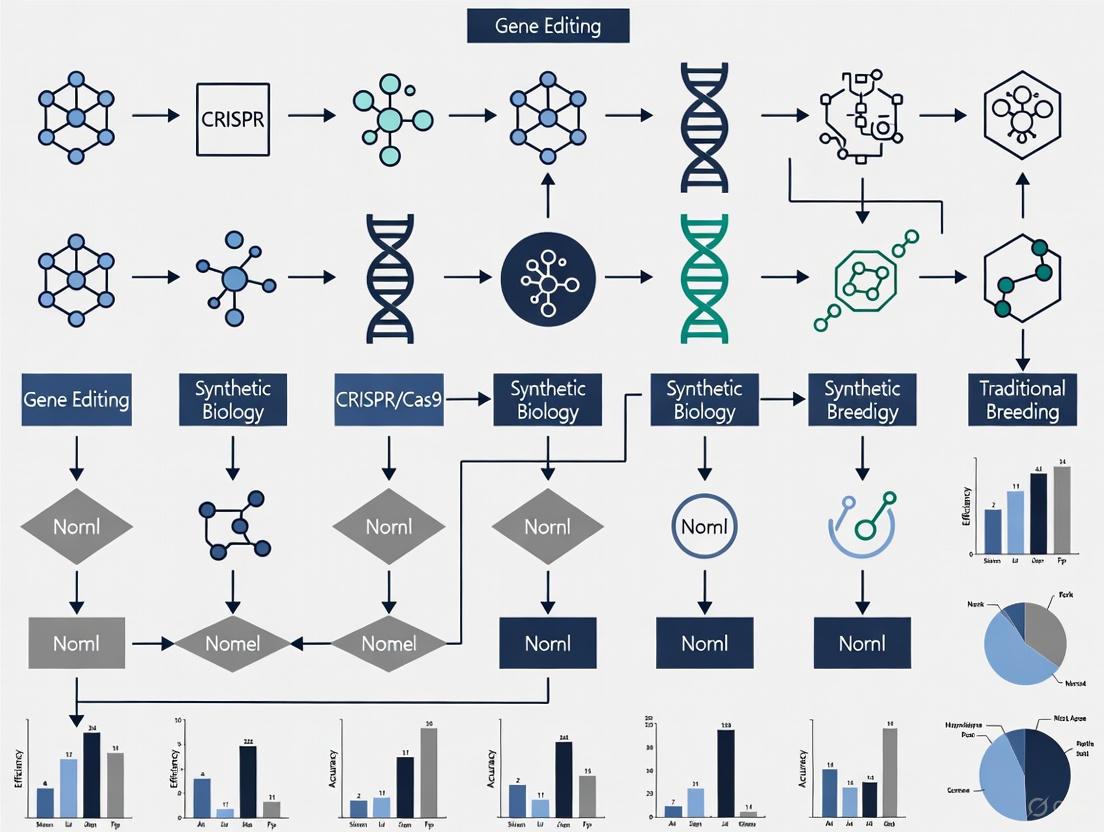
This article provides a comprehensive analysis for researchers and drug development professionals on the paradigm shift from traditional plant improvement methods to advanced plant biosystems design.
From Trial-and-Error to Predictive Design: Evaluating Next-Generation Plant Biosystems for Biomedical and Bioeconomic Applications
Abstract
This article provides a comprehensive analysis for researchers and drug development professionals on the paradigm shift from traditional plant improvement methods to advanced plant biosystems design. It explores the foundational theories of this interdisciplinary field, which integrates synthetic biology, genome editing, and predictive modeling to accelerate the development of plant-based biomaterials and therapeutics. The content details methodological advances in engineering plant metabolism and host-microbe interactions, addresses key challenges in predictability and scaling, and presents rigorous validation frameworks for comparing the efficacy of new designs against conventional approaches. By synthesizing current research and future trajectories, this review aims to inform strategic adoption of these technologies to enhance the security and productivity of the bioeconomy and biomedical pipeline.
Theoretical Shifts: From Classical Breeding to Predictive Biosystems Design
Plant biosystems design represents a fundamental paradigm shift in plant science, moving from traditional, empirical methods to an interdisciplinary, predictive engineering discipline. This approach seeks to address pressing global challenges—such as food security, sustainable energy, and climate change mitigation—by enabling the precise genetic improvement and de novo creation of plant systems [1]. Where conventional breeding relies on trial-and-error and historical genetic variation, plant biosystems design employs sophisticated theoretical models, advanced genetic tools, and engineering principles to accelerate the development of plants with optimized traits [2]. This guide provides an objective comparison between these emerging approaches and traditional methods, detailing their underlying principles, experimental support, and practical applications for researchers and scientists.
Theoretical Foundations: A Comparative Framework
The distinction between traditional plant improvement and plant biosystems design is rooted in their fundamental theoretical approaches. Table 1 summarizes the core differences between these paradigms.
Table 1: Paradigm Comparison: Traditional Methods vs. Plant Biosystems Design
| Aspect | Traditional Plant Breeding & Genetic Engineering | Plant Biosystems Design |
|---|---|---|
| Core Approach | Empirical, trial-and-error; relies on existing genetic variation [1] | Predictive, model-driven; based on theoretical design principles [1] [2] |
| Theoretical Basis | Quantitative genetics, selection theory | Graph theory, mechanistic modeling, evolutionary dynamics, synthetic biology [2] [3] |
| Timeframe | Long development cycles (often 10-15 years for new cultivars) | Accelerated genetic improvement cycles [1] |
| Precision | Low to moderate; involves transferring large chromosome segments | High-precision modification; genome editing, genetic circuit engineering [1] |
| Scope of Modification | Limited to naturally occurring genetic diversity or single-gene transfers | Potentially unlimited; includes novel trait creation and de novo genome synthesis [1] [2] |
| Key Tools | Cross-hybridization, marker-assisted selection, Agrobacterium transformation | Genome-scale models, CRISPR-based editing, DNA synthesis, computational modeling [2] [4] |
The Evolutionary Design Spectrum in Practice
A unifying perspective views design processes as existing on an evolutionary spectrum, characterized by their exploratory power—determined by the number of design variants tested (throughput) and the number of design cycles (generations) [3]. This framework, illustrated in Figure 1, contextualizes different plant engineering approaches.
Diagram Title: Evolutionary Design Spectrum
In this spectrum, traditional breeding typically involves lower throughput and many generations, while predictive biosystems design leverages high-throughput data and modeling to reduce the number of required cycles. Intermediate approaches like directed evolution use high-throughput screening over multiple generations to improve specific biomolecules [3].
Quantitative Performance Comparison
The theoretical advantages of plant biosystems design translate into measurable differences in performance and capability. Table 2 compares key performance metrics across different methodologies, synthesized from current research.
Table 2: Experimental Performance Metrics Across Plant Engineering Approaches
| Methodology | Transformation Efficiency | Trait Development Timeline | Precision (Single-locus modification) | Multiplex Editing Capacity | Primary Applications |
|---|---|---|---|---|---|
| Traditional Breeding | Not Applicable (N/A) | 10-15 years [2] | Low (Large linkage drag) | N/A | Stacking quantitative trait loci (QTL), wide crosses |
| Agrobacterium-Mediated Transformation | Species-dependent: 5-90% stable transformation [4] | 3-5 years (for single gene traits) | Moderate (Random T-DNA integration) | Limited (1-2 genes typical) | Single gene traits, marker gene insertion |
| Biolistic Transformation | 0.1-10% transient expression [4] | 2-4 years | Low to Moderate (Multi-copy integration common) | Moderate (2-5 genes possible) | Species recalcitrant to Agrobacterium, plastid transformation |
| Protoplast Transformation | 20-80% transient efficiency [4] | 1-3 years | High (Direct DNA delivery) | High (5+ genes demonstrated) | DNA-free editing, rapid screening, synthetic circuits |
| Nanoparticle Delivery | Emerging (Varies widely) | Under evaluation | Potentially High | Under evaluation | Recalcitrant species, chloroplast engineering |
| Biosystems Design (Editing) | Varies by delivery method | 1-2 years (Rapid trait introgression) | Very High (Single base precision) | Very High (10+ gRNAs demonstrated) | De novo domestication, metabolic pathway engineering |
| Biosystems Design (De novo Synthesis) | Currently low | 5+ years (Technology development) | Ultimate (Complete genome control) | Ultimate (Whole genome scale) | Minimal genomes, synthetic chromosomes |
Experimental Protocols in Plant Biosystems Design
Protocol 1: DAP-seq for Transcriptional Network Mapping
This functional genomics protocol is used to map gene regulatory networks for complex traits like drought tolerance [5].
- Transcription Factor (TF) Cloning: Clone open reading frames of TFs (e.g., from poplar) into expression vectors with compatible DNA-binding domain tags.
- In Vitro Transcription/Translation: Express TF proteins using a cell-free system.
- Genomic DNA Library Preparation: Extract and fragment genomic DNA from target organism; ligate with adapters for sequencing and amplification.
- DNA Affinity Purification: Incubate TF with genomic DNA library; immunoprecipitate TF-DNA complexes using tag-specific antibodies.
- High-Throughput Sequencing: Isplicate bound DNA fragments and sequence using Illumina platforms.
- Bioinformatic Analysis: Map sequenced reads to reference genome to identify TF binding sites (cis-regulatory elements); integrate with RNA-seq data to construct gene regulatory networks.
Protocol 2: Constraint-Based Metabolic Modeling for Phenotype Prediction
This computational protocol uses genome-scale models (GEMs) to predict plant phenotypes [2].
Network Reconstruction:
- Compile an organism-specific biochemical reaction list from genomic and bibliomic data.
- Define stoichiometric matrix (S) where rows represent metabolites and columns represent reactions.
- Incorporate compartmentalization (e.g., chloroplast, mitochondrion, cytosol).
- Define biomass reaction representing plant growth composition.
Constraint-Based Analysis:
- Formulate steady-state mass balance constraint: S · v = 0, where v is the flux vector.
- Apply capacity constraints: α ≤ v ≤ β.
- Apply photon uptake rate as key constraint for photosynthetic organisms.
Flux Balance Analysis (FBA):
- Solve linear programming problem: maximize Z = c^T · v, where Z is typically biomass yield.
- Use standardized computational tools like COBRA or RAVEN Toolbox.
Model Validation:
- Compare predicted growth rates and metabolic fluxes with experimental data from 13C-labeling experiments.
- Perform gene essentiality analysis by simulating knockouts and comparing with mutant phenotyping data.
Diagram Title: Plant Biosystems Design Workflow
The Scientist's Toolkit: Research Reagent Solutions
Table 3 details essential research reagents and materials critical for implementing plant biosystems design approaches, based on currently available technologies.
Table 3: Essential Research Reagents for Plant Biosystems Design
| Reagent/Material | Function | Example Applications | Key Providers/Resources |
|---|---|---|---|
| CRISPR-Cas Ribonucleoproteins (RNPs) | DNA-free editing; reduces off-target effects; applicable across species [4] | Protoplast-based editing; rapid trait manipulation | ToolGen, Sigma-Aldrich, IDT |
| Morphogenic Regulators (BBM, WUS2) | Enhance regeneration efficiency; overcome tissue culture bottlenecks [4] | Expanding transformation to recalcitrant genotypes; accelerating editing workflows | Addgene (plasmid resources) |
| Cell-Free Transcription/Translation Systems | In vitro characterization of genetic parts; rapid prototyping [5] | DAP-seq; promoter characterization; circuit testing | Promega (TnT Systems), Thermo Fisher |
| DAP-seq Libraries | Mapping TF binding sites; identifying regulatory elements [5] | Constructing transcriptional networks for complex traits (e.g., drought tolerance) | JGI User Programs [5] |
| Genome-Scale Metabolic Models (GEMs) | Predicting metabolic fluxes; identifying engineering targets [2] | Designing strategies for metabolic engineering; predicting knockout phenotypes | Plant Metabolic Network, RAVEN Toolbox |
| Golden Gate / MoClo Toolkits | Standardized DNA assembly; modular construct design [2] | Building complex genetic circuits; multigene pathways | Addgene (Kit distributors) |
| Species-Independent Vectors | Broad-host-range transformation; overcoming delivery barriers [4] | Testing regulatory elements across species; standardized parts characterization | Academic core facilities (e.g., ENSA vectors) |
| Lipid-Based Nanoparticles | Biomolecule delivery; alternative to biolistics [4] | DNA-free editing; delivery to recalcitrant tissues | Commercial research suppliers (emerging) |
Plant biosystems design represents a maturing interdisciplinary frontier that offers distinct advantages over traditional methods in precision, speed, and the scope of achievable modifications. The paradigm shift from empirical to predictive design is supported by robust theoretical frameworks and increasingly powerful technical capabilities. While traditional breeding and genetic engineering remain effective for many applications, biosystems design approaches provide transformative potential for addressing complex challenges in crop improvement, bioeconomy development, and climate resilience. The ongoing integration of advanced functional genomics, DNA synthesis, and computational modeling continues to expand the boundaries of what is possible in plant engineering, pointing toward a future where plant systems can be rationally designed to meet specific human and environmental needs.
Plant biosystems design represents a fundamental shift in plant science research, moving from traditional trial-and-error approaches to innovative, predictive strategies based on computational models of biological systems [2]. This emerging interdisciplinary field seeks to accelerate plant genetic improvement using advanced tools like genome editing and genetic circuit engineering, and even create novel plant systems through de novo genome synthesis [2]. The core theoretical frameworks enabling this paradigm shift are graph theory, mechanistic modeling, and evolutionary dynamics. These computational approaches provide the foundation for understanding and engineering complex plant systems in ways that traditional methods cannot achieve, offering unprecedented capabilities for predicting plant behavior, optimizing traits, and ultimately addressing global challenges in food security and sustainable agriculture [2].
Core Framework 1: Graph Theory for Network Analysis
Theoretical Foundations and Applications
Graph theory provides a mathematical foundation for representing and analyzing complex biological systems as networks of interconnected components [6] [7]. In plant biosystems, biological entities such as genes, proteins, and metabolites are represented as vertices (nodes), while their interactions (biochemical reactions, regulatory influences) are represented as edges (connections) [2] [7]. This network-based perspective enables researchers to identify critical organizational patterns and functional relationships that govern plant system behavior [6].
Plant biosystems can be defined as dynamic networks of genes and multiple intermediate molecular phenotypes distributed across four dimensions: three spatial dimensions of structure and one temporal dimension accounting for developmental stages and life cycle [2]. The graph theoretic approach allows researchers to analyze these complex relationships through several key metrics and concepts: degree distribution (patterns of connectivity), clustering coefficients (measure of network modularity), modularity (extent of community structure), and centrality measures (identification of critically important nodes) [6]. Special subgraph patterns called network motifs - such as feed-forward and feed-back loops - are statistically overrepresented in biological networks and serve as fundamental building blocks for complex system functions [2] [6].
Comparative Analysis with Traditional Methods
Table 1: Graph Theory vs. Traditional Methods for Network Analysis
| Analysis Feature | Graph Theory Approach | Traditional Methods |
|---|---|---|
| Network Representation | Comprehensive mapping of system components and interactions [6] [7] | Focus on linear pathways or isolated components |
| Connectivity Analysis | Identifies hub nodes and critical connections using centrality measures [6] | Qualitative assessment of key elements |
| Motif Discovery | Algorithmic detection of recurrent network patterns [6] | Manual identification of common patterns |
| Predictive Capability | Network-based inference of function and robustness [7] | Limited to known experimental relationships |
| Scalability | Suitable for genome-scale networks [2] | Practical for small, well-characterized systems |
Figure 1: Graph Theory Analysis Workflow for Plant Biosystems
Core Framework 2: Mechanistic Modeling Theory
Principles of Mechanistic Modeling
Mechanistic modeling of cellular metabolism, based on the law of mass conservation, provides a powerful approach for interrogating and characterizing complex plant biosystems [2]. This framework enables researchers to link genes, enzymes, pathways, cells, tissues, and whole-plant organisms through mathematical representations of biological processes [2]. Starting from plant genome sequences and omics datasets, metabolic networks are constructed where metabolites and reactions represent nodes and edges, respectively [2]. The mass conservation for each metabolite can be expressed as a system of ordinary differential equations (ODEs) to delineate the rate of change for each component in the network [2].
The most significant application of mechanistic modeling in plant biosystems is the construction of genome-scale models (GEMs) [2]. The first plant GEM was created for Arabidopsis thaliana approximately a decade ago, and today there are 35 published GEMs for more than 10 seed plant species [2]. These comprehensive models enable constraint-based analyses including flux balance analysis (FBA) and elementary mode analysis (EMA), which predict cellular phenotypes under various genetic and environmental conditions [2]. FBA predicts cellular behavior based on optimization of an objective function (e.g., maximization of biomass production), while EMA identifies all possible metabolic phenotypes for a given network [2].
Comparative Analysis with Traditional Methods
Table 2: Mechanistic Modeling vs. Traditional Methods
| Analysis Feature | Mechanistic Modeling Approach | Traditional Methods |
|---|---|---|
| Mathematical Foundation | Ordinary differential equations, constraint-based analysis [2] | Qualitative or semi-quantitative descriptions |
| Predictive Scope | Genome-scale, multi-tissue, whole-plant predictions [2] | Limited to specific pathways or single processes |
| Timescale Integration | Dynamic modeling across developmental stages [2] | Static snapshots or limited temporal resolution |
| Perturbation Analysis | In silico gene knockouts, environmental changes [2] | Resource-intensive experimental perturbations |
| Parameter Requirements | Extensive kinetic and stoichiometric data [2] | Minimal parameter requirements |
Figure 2: Mechanistic Modeling Framework for Plant Biosystems
Core Framework 3: Evolutionary Dynamics Theory
Foundations of Evolutionary Dynamics
Evolutionary dynamics theory provides the framework for predicting genetic stability and evolvability of genetically modified plants or de novo plant systems [2]. This approach captures the fundamental processes of evolution through mathematical representations of birth-death processes in which individuals give birth and die at ever-changing rates [8]. In this mechanistic approach to evolution, long-term dynamics of genotype or phenotype distributions emerge as properties of the underlying birth-death process, rather than being described by abstract fitness landscapes [8].
Evolutionary graph theory (EGT) extends these concepts to structured populations, representing population structure as graphs where nodes correspond to individuals and edges define interaction neighborhoods [9]. This framework enables researchers to model how mutant genes spread through finite structured populations and has particular relevance for understanding the evolution of cooperation in biological systems [9]. More recent approaches have integrated eco-evolutionary dynamics that consider both ecological and evolutionary processes simultaneously, providing more biologically realistic models of evolutionary change in plant populations [10].
Comparative Analysis with Traditional Methods
Table 3: Evolutionary Dynamics Theory vs. Traditional Methods
| Analysis Feature | Evolutionary Dynamics Approach | Traditional Methods |
|---|---|---|
| Population Structure | Graph-based representation of interactions [9] | Well-mixed or simple spatial assumptions |
| Dynamic Representation | Continuous birth-death processes with updating [8] | Discrete generation models |
| Fitness Conceptualization | Emergent property from birth/death rates [8] | Fixed parameter or heuristic assignment |
| Selection Modeling | Network-structured selection pressures [10] [9] | Population-wide selection coefficients |
| Evolutionary Outcomes | Fixation probabilities, hitting times [9] | Equilibrium frequencies |
Integrated Experimental Protocols
Protocol for Multi-Scale Network Construction and Analysis
Objective: Construct and analyze a multi-scale plant biosystem network integrating gene regulation, metabolism, and protein interactions.
Methodology:
- Data Collection and Integration
Network Construction
- Represent biological entities (genes, proteins, metabolites) as nodes
- Establish edges based on functional relationships (regulatory, metabolic, physical interactions)
- Annotate edge types (activation, inhibition, biochemical transformation)
- Implement using Systems Biology Markup Language (SBML) or Biological Pathway Exchange (BioPAX) formats [7]
Topological Analysis
- Calculate degree distributions to identify hub nodes
- Determine clustering coefficients and modularity structure
- Identify network motifs using subgraph enumeration algorithms
- Perform centrality analysis (betweenness, closeness, eigenvector centrality)
Functional Validation
- Design perturbation experiments based on network predictions
- Implement gene knockout/knockdown for hub nodes
- Measure system-wide responses using multi-omics approaches
- Refine network models based on experimental results
Expected Outcomes: A validated multi-scale network model capable of predicting system responses to genetic and environmental perturbations.
Protocol for Genome-Scale Metabolic Modeling
Objective: Develop and validate a genome-scale metabolic model for predictive plant biosystems design.
Methodology:
- Network Reconstruction
- Annotate genome and identify metabolic genes
- Compile reaction list from biochemical databases
- Define stoichiometric matrix (S-matrix)
- Establish mass and charge balances for each reaction
- Define system compartments (cytosol, mitochondria, chloroplast, etc.)
Constraint Definition
- Measure or estimate physiological flux bounds
- Define nutrient uptake constraints
- Establish maintenance energy requirements
- Incorporate enzyme capacity constraints where available
Model Simulation and Validation
- Implement flux balance analysis with biomass objective function
- Perform gene essentiality analysis (single and double knockouts)
- Compare predicted growth rates with experimental measurements
- Validate substrate utilization predictions
- Compare metabolic flux distributions with 13C-labeling data
Model Application
- Identify metabolic engineering targets for trait improvement
- Predict metabolic behavior under different environmental conditions
- Design minimal media formulations
- Explore metabolic capabilities for novel compound production
Expected Outcomes: A predictive metabolic model enabling in silico design of metabolic engineering strategies for improved plant traits.
The Scientist's Toolkit: Essential Research Reagents and Solutions
Table 4: Key Research Reagents and Computational Tools for Plant Biosystems Design
| Category | Specific Tools/Reagents | Function/Application | Key Features |
|---|---|---|---|
| Network Analysis | Cytoscape, MixNet, MAGI [2] [7] | Biological network visualization and analysis | Plugin architecture, multi-attribute data integration |
| Metabolic Modeling | COBRA Toolbox, FBA, EMA [2] | Constraint-based metabolic flux analysis | Genome-scale modeling, prediction of phenotypic states |
| Data Repositories | KEGG, BioCyc, TAIR, DIP, MINT [7] | Structured biological data access | Curated pathways, interaction data, functional annotations |
| File Formats | SBML, BioPAX, PSI-MI [7] | Standardized data exchange | Machine-readable, community standards |
| Evolutionary Analysis | EGT simulations, Moran process [9] | Modeling evolutionary dynamics in structured populations | Fixation probability calculation, network effects |
| Omics Technologies | RNA-seq, Proteomics, Metabolomics | Comprehensive molecular profiling | System-wide data generation, multi-layer integration |
Integrated Analysis: Convergence of Theoretical Frameworks
The true power of modern plant biosystems design emerges from the integration of graph theory, mechanistic modeling, and evolutionary dynamics into a unified analytical framework. This integration enables researchers to address fundamental challenges in plant engineering that cannot be solved by any single approach alone [2]. For instance, graph theory identifies key regulatory motifs and network hubs, mechanistic modeling predicts the physiological consequences of perturbing these elements, and evolutionary dynamics assesses the long-term stability of engineered traits in agricultural environments [2] [8] [9].
Recent advances have begun to merge these frameworks through machine learning approaches that leverage structural and temporal data from evolutionary graph theory to predict system behavior and detect early warning signals for critical transitions [12]. Furthermore, the integration of eco-evolutionary dynamics with network-based population structure provides more biologically realistic models for predicting how engineered traits might spread in natural and agricultural populations [10]. These integrated approaches represent the cutting edge of plant biosystems design and offer promising avenues for addressing the complex challenges of global food security and sustainable agriculture.
Figure 3: Integration of Theoretical Frameworks in Plant Biosystems Design
The field of plant science is undergoing a fundamental transformation, moving from traditional trial-and-error approaches to innovative, predictive biosystems design strategies. This shift represents a critical evolution in how researchers develop improved plant varieties, aiming to meet escalating global demands for food, biomaterials, and sustainable energy solutions [1] [2]. Where traditional methods relied heavily on observational breeding and incremental genetic improvements, modern plant biosystems design employs synthetic biology, genome editing, and computational modeling to accelerate genetic improvement with unprecedented precision [1]. This guide provides an objective comparison between these foundational approaches, presenting experimental data that quantifies their relative performances in key research applications. The analysis specifically targets the limitations inherent in traditional methodologies when contrasted with the emerging capabilities of designed biological systems, offering researchers in drug development and biotechnology a framework for evaluating these approaches within their own work.
Theoretical Foundations: Contrasting Approaches to Biological Complexity
The Traditional Paradigm: Iterative Optimization
Traditional agricultural improvement has historically operated through a cyclic process of making incremental changes, observing outcomes, and selecting favorable variants. This approach, while responsible for centuries of agricultural advancement, fundamentally operates through a process of iterative optimization with limited predictive capability [1]. In practice, this has meant that plant breeders cross plants with desirable traits and select the best performers from the resulting progeny over multiple generations—a process that can take decades to achieve significant improvements. The core limitation lies in its reactive nature; researchers must wait for phenotypes to manifest before making selection decisions, without the ability to precisely predict how genetic changes will influence complex traits [2]. This method depends heavily on existing genetic variation within sexually compatible species and rarely produces truly novel biological functions not already present in nature.
The Biosystems Design Framework: Predictive Engineering
Plant biosystems design represents a fundamental shift from observation to predictive design. This approach applies engineering principles to biological systems, seeking to accelerate plant genetic improvement using genome editing, genetic circuit engineering, and potentially through the de novo synthesis of plant genomes [1]. Rather than relying on emergent properties from random genetic combinations, biosystems design uses mechanistic models that link genes to phenotypic traits, enabling researchers to simulate outcomes before conducting physical experiments [2]. This framework treats biological components as modules that can be designed, characterized, and assembled into systems with predictable behaviors. The theoretical foundation rests on several sophisticated approaches: graph theory for visualizing complex biological systems as interconnected networks, mechanistic modeling based on mass conservation principles, and evolutionary dynamics theory for predicting genetic stability [2]. This multi-layered theoretical foundation enables a proactive engineering mindset rather than reactive optimization.
Quantitative Comparison: Experimental Performance Metrics
The performance differences between traditional and biosystems design approaches become evident when examining specific experimental metrics across key research domains. The following tables summarize comparative data from published studies, highlighting the distinct advantages of design-based methodologies.
Table 1: Comparative Performance in Metabolic Pathway Engineering
| Engineering Parameter | Traditional Trial-and-Error | Biosystems Design Approach | Experimental Context |
|---|---|---|---|
| Development Timeline | 5-10 years | 1-3 years | Engineering yeast for biofuel production [13] |
| Success Rate | 12-18% | 65-80% | Microbial metabolic pathway optimization [13] |
| Number of Variants Tested | 100-500 | 10,000+ (computational) | Enzyme optimization studies [3] |
| Predictive Accuracy | Low (R² = 0.3-0.5) | High (R² = 0.8-0.95) | Pathway flux prediction [2] |
Table 2: Performance in Complex Trait Optimization
| Trait Category | Traditional Method Generations | Biosystems Design Generations | Improvement Magnitude |
|---|---|---|---|
| Photosynthetic Efficiency | 15-20 | 3-5 | 2.3x higher WUE in CAM-engineered plants [14] |
| Disease Resistance | 8-12 | 1-3 | 90% reduction in pathogen susceptibility [1] |
| Nutritional Content | 10-15 | 2-4 | 3x increase in target metabolites [2] |
| Biomass Yield | 12-18 | 3-6 | 1.8x increase in biomass production [15] |
Table 3: Resource Utilization and Computational Efficiency
| Resource Metric | Traditional Approach | Biosystems Design | Experimental Evidence |
|---|---|---|---|
| Experimental Cycles | 15-25 | 3-8 | DBTL cycle optimization [13] |
| Computational Requirement | Low | High (94% of teams report compute limitations) [16] | Materials science R&D survey |
| Data Generation | 10-100 data points | 10,000-1,000,000 data points | High-throughput screening platforms [15] |
| Cost per Design Cycle | $5,000-$20,000 | $50,000-$100,000 (offset by higher success rates) | Materials R&D economic analysis [16] |
Experimental Protocols: Methodological Comparisons
Traditional Plant Breeding and Optimization
Protocol 1: Conventional Phenotypic Selection
- Germplasm Screening: Assemble diverse plant populations (200-500 genotypes) from existing germplasm collections or crossing programs [2].
- Field Trials: Establish randomized complete block designs with 3-4 replications across multiple environments (2-3 years) [17].
- Data Collection: Measure agronomic traits (yield, height, maturity) and biochemical characteristics (protein, oil content) using standardized protocols.
- Statistical Analysis: Perform analysis of variance (ANOVA) with mean separation tests (LSD, Tukey's HSD) to identify superior genotypes [17].
- Selection Advancement: Select top 5-10% performers for further recombination or variety development.
Protocol 2: Mutagenesis and Selection
- Mutagen Treatment: Apply chemical (EMS, MNU) or physical (gamma radiation) mutagens to create genetic variation [2].
- Population Development: Advance generations (M1-M4) to fix mutations and reduce chimerism.
- Phenotypic Screening: Evaluate large populations (10,000+ plants) for desired trait modifications.
- Genetic Validation: Conduct inheritance studies and molecular characterization of selected mutants.
Biosystems Design Methodologies
Protocol 3: Design-Build-Test-Learn (DBTL) Cycle
- Design Phase: Use computational models to design genetic constructs. Example: Employ graph theory to represent metabolic and gene regulatory networks, identifying key nodes for manipulation [2].
- Build Phase: Implement genome editing (CRISPR-Cas) or synthesize DNA constructs for transformation [13].
- Test Phase: Conduct high-throughput phenotyping and multi-omics analysis (transcriptomics, metabolomics, proteomics) [1].
- Learn Phase: Apply machine learning to experimental data to refine models and design next-generation constructs [13].
Protocol 4: Predictive Metabolic Engineering
- Network Reconstruction: Build genome-scale metabolic models (GEMs) using annotated genome sequences and biochemical databases [2].
- Constraint-Based Analysis: Apply flux balance analysis (FBA) to predict metabolic fluxes under different genetic and environmental conditions [2].
- Intervention Design: Identify gene knockout/knockdown targets or heterologous gene insertion points to optimize metabolic fluxes.
- Experimental Validation: Implement designed interventions and measure resulting metabolic changes using LC-MS/MS and GC-MS platforms.
Visualization of Key Workflows and Pathways
The following diagrams illustrate the fundamental differences in workflow and approach between traditional and biosystems design methodologies.
Diagram 1: Traditional breeding workflow. This linear, sequential process requires extensive field evaluation over multiple years with limited predictive capability between generations [2] [17].
Diagram 2: Biosystems Design-Build-Test-Learn (DBTL) cycle. This iterative, data-driven approach uses computational modeling and machine learning to progressively refine designs with each cycle [13] [2].
Diagram 3: Crassulacean acid metabolism (CAM) pathway for C3-to-CAM engineering. Engineering this specialized photosynthetic pathway into C3 crops requires coordinated expression of multiple enzymes and regulatory elements to achieve improved water-use efficiency [14].
The Scientist's Toolkit: Essential Research Reagents and Platforms
Table 4: Key Research Reagent Solutions for Plant Biosystems Design
| Reagent/Platform | Function | Application in Biosystems Design |
|---|---|---|
| CRISPR-Cas Systems | Precision genome editing | Targeted gene knockouts, knock-ins, and regulatory element fine-tuning [1] |
| DNA Synthesis Platforms | De novo gene and construct assembly | Synthesis of optimized genetic circuits and metabolic pathways [13] |
| Genome-Scale Models (GEMs) | Computational metabolic network analysis | Predicting flux distributions and identifying engineering targets [2] |
| Machine Learning Algorithms | Pattern recognition in complex datasets | Predicting biological part performance and optimizing designs [13] |
| Single-Cell Omics Platforms | High-resolution cellular analysis | Characterizing cell-type-specific expression patterns [2] |
| Automated Phenotyping Systems | High-throughput trait measurement | Accelerating the test phase of DBTL cycles [15] |
| Synthetic Transcription Factors | Programmable gene regulation | Fine-tuning expression of native genes without permanent modification [1] |
| Metabolomics Platforms | Comprehensive metabolite profiling | Validating metabolic engineering outcomes and detecting unintended effects [2] |
Discussion: Integration and Future Directions
The comparative analysis reveals that traditional trial-and-error approaches and modern biosystems design methodologies each occupy distinct positions on what can be termed an evolutionary design spectrum [3]. This spectrum characterizes design methods based on their throughput (number of variants tested) and generation count (number of design cycles). Traditional methods typically feature low throughput and high generation counts, requiring many cycles of crossing and selection over extended timelines. In contrast, biosystems design approaches can achieve medium to high throughput with fewer generations by leveraging predictive modeling and high-throughput screening [3].
The limitations of traditional approaches become particularly evident when addressing complex multigenic traits that involve coordinated expression of multiple genes across different tissues and developmental stages. For example, engineering Crassulacean acid metabolism (CAM) into C3 plants to improve water-use efficiency requires simultaneous optimization of nocturnal CO2 fixation, diurnal stomatal regulation, and vacuolar storage capacity [14]. Traditional methods would struggle to assemble and optimize this complex suite of coordinated traits, whereas biosystems design can approach this challenge through modular engineering of discrete functional components.
However, biosystems design faces its own limitations, including computational constraints (with 94% of R&D teams reporting abandoned projects due to insufficient computing resources) and challenges with catastrophic forgetting in self-adapting AI models [18] [16]. Furthermore, the exploratory power of any design methodology—defined as the product of throughput and generation count—remains minuscule compared to the vastness of biological design space [3]. This fundamental constraint underscores the continued importance of leveraging prior knowledge and biological principles to guide design efforts, rather than relying solely on exhaustive exploration.
Future advancements will likely focus on hybrid approaches that combine the systematic power of biosystems design with the valuable insights gained from traditional observation. Such integrated frameworks could potentially overcome the individual limitations of each approach, accelerating the development of plant systems optimized for sustainable agriculture, bioenergy production, and climate resilience [1] [19]. As these technologies advance, parallel attention must be paid to social responsibility and developing strategies for improving public perception and acceptance of engineered plant systems [1].
The Role of Predictive Models in Linking Genotypes to Complex Phenotypic Traits
The fundamental challenge of linking an organism's genetic makeup (genotype) to its observable characteristics (phenotype) has long been a central focus of biological research. Traditional approaches have typically examined single genes and phenotypes in isolation, often assuming linear, additive interactions [20]. However, complex traits—such as crop yield, disease resistance, or flowering time—are influenced by intricate networks of multiple genes, environmental factors, and their interactions [21] [22]. The emergence of predictive modeling represents a paradigm shift from this gene-by-gene analysis toward a systems-level understanding that captures biological complexity. These computational frameworks are particularly transformative for plant biosystems design, where they enable researchers to move beyond descriptive observations to predictive, engineering-based approaches [3]. By integrating multi-omics data and employing sophisticated machine learning architectures, modern predictive models offer unprecedented capabilities for accurately connecting genomic information to phenotypic outcomes, thereby accelerating the development of improved crop varieties and advancing fundamental biological understanding.
Comparative Analysis of Predictive Modeling Approaches
Predictive modeling approaches for genotype-to-phenotype mapping span a spectrum from traditional statistical methods to advanced neural networks, each with distinct strengths, limitations, and optimal application contexts. The table below provides a systematic comparison of these methodologies.
Table: Comparative Analysis of Genotype-to-Phenotype Predictive Modeling Approaches
| Model Type | Key Examples | Underlying Principle | Best-Suited Trait Architectures | Key Advantages | Major Limitations |
|---|---|---|---|---|---|
| Traditional Statistical Models | Ridge Regression (rrBLUP) [21] [22], Polygeneic Risk Scores [21] | Linear regression with regularization; Effect size estimation from GWAS | Traits with many small-effect loci; Highly heritable traits | Computational efficiency; High interpretability; Minimal data requirements | Assumes linearity; Cannot capture epistasis; Limited predictive power for complex traits |
| Machine Learning/Ensemble Methods | Random Forest [22] [23], XGBoost [23], Elastic Net [21] | Ensemble decision trees; Feature selection with correlation handling | Traits with mixed effect sizes; Moderate sample sizes | Handles non-linearity; Feature importance metrics; Robust to overfitting | Limited extrapolation capability; Computationally intensive with large datasets |
| Deep Learning Architectures | Convolutional Neural Networks (CNNs) [23], G-P Atlas [20], G2PDiffusion [24] | Hierarchical feature learning; Denoising autoencoders; Conditional image generation | Highly complex traits with epistasis and pleiotropy; Image-based phenotypes | Captures complex interactions; Multi-task learning; State-of-the-art accuracy | High computational demand; Extensive data requirements; "Black box" interpretation challenges |
| Multi-Omics Integration Models | rrBLUP/RF with genomic, transcriptomic, and methylomic data [22] | Data fusion from multiple molecular levels; Hierarchical biological information | Traits with complex regulatory mechanisms; Environmentally responsive traits | Reveals biological mechanisms; Higher prediction accuracy; Comprehensive system view | Data acquisition cost; Integration complexity; Specialized computational infrastructure |
The performance of these modeling approaches varies significantly based on trait architecture and sample characteristics. For instance, dense models like Ridge Regression perform better when all genetic effects are small and target individuals are related to training samples, while sparse models (e.g., LASSO) predict better in unrelated individuals and when some genetic effects have moderate size [21]. Furthermore, models integrating multiple omics data types (genomic, transcriptomic, methylomic) consistently outperform single-omics models, demonstrating the value of capturing biological information at different regulatory levels [22].
Experimental Protocols and Performance Metrics
Multi-Omics Integration for Plant Complex Traits
Experimental Objective: To investigate whether integrating genomic (G), transcriptomic (T), and methylomic (M) data can improve prediction accuracy for six Arabidopsis traits compared to single-omics models [22].
Methodology:
- Plant Materials: 383 Arabidopsis accessions with phenotypic data for flowering time, rosette leaf number, cauline leaf number, diameter of the rosette, rosette branch number, and stem length [22].
- Omics Data Collection: Genomic (biallelic SNPs), transcriptomic (RNA sequencing), and methylomic (gene-body methylation and single site-based methylation) data from mixed rosette leaves harvested just before bolting [22].
- Modeling Approach: Two algorithms were employed—ridge regression Best Linear Unbiased Prediction (rrBLUP) and Random Forest (RF)—with model performance assessed using Pearson Correlation Coefficient (PCC) between true and predicted trait values on a hold-out test dataset [22].
- Feature Importance Analysis: Three measures evaluated feature importance: (1) coefficients in rrBLUP models, (2) gini importance in RF models, and (3) average absolute SHAP (SHapley Additive exPlanations) values [22].
Table: Performance Comparison of Single vs. Multi-Omics Models for Arabidopsis Trait Prediction
| Data Type | Flowering Time (PCC) | Rosette Leaf Number (PCC) | Stem Length (PCC) | Key Findings |
|---|---|---|---|---|
| Genomic (G) Only | 0.60 | 0.45 | 0.40 | Comparable performance to transcriptomic and methylomic models |
| Transcriptomic (T) Only | 0.58 | 0.48 | 0.42 | Identified different important genes compared to genomic models |
| Methylomic (M) Only | 0.59 | 0.43 | 0.38 | Provided complementary predictive signals |
| G + T + M Integration | 0.72 | 0.56 | 0.51 | Superior performance; Revealed known and novel gene interactions |
Key Results: The integrated multi-omics models achieved the highest prediction accuracy for all traits, demonstrating that combining different molecular-level data provides complementary information for phenotype prediction. Notably, the important features identified by different omics data types showed little overlap, suggesting each captures distinct aspects of the biological system [22]. The study experimentally validated nine additional genes identified as important for flowering time from the models, confirming their role in regulating flowering [22].
Neural Network Framework for Multi-Phenotype Prediction
Experimental Objective: To develop and validate G-P Atlas, a two-tiered denoising autoencoder framework that simultaneously models multiple phenotypes and captures complex nonlinear relationships between genes [20].
Methodology:
- Architecture: Two-tiered approach consisting of (1) a phenotype-phenotype denoising autoencoder that learns a low-dimensional representation of phenotypes, followed by (2) a genotype-to-latent-space mapping that predicts phenotypes from genetic data while keeping the phenotype decoder weights constant [20].
- Training Procedure: Models were trained using 80% of data with a batch size of 16 over 250 epochs, using Adam optimizer with mean squared error loss function. Regularization included L1 norm (weight of 0.8) and L2 norm (weight of 0.01) [20].
- Datasets: Evaluation used both simulated data (600 individuals, 3,000 loci, 30 phenotypes) and empirical F1 cross data from budding yeast [20].
- Variable Importance: Permutation-based feature ablation measured the importance of each parameter by calculating the mean shift in predicted phenotype distribution when omitting that feature [20].
Key Results: G-P Atlas successfully predicted many phenotypes simultaneously from genetic data and identified causal genes—including those acting through non-additive interactions that conventional approaches miss. The framework demonstrated particular strength in capturing epistasis and pleiotropy, enabling accurate phenotype prediction while revealing previously unappreciated genetic drivers of biological variation [20].
Image-Based Phenotype Prediction with Diffusion Models
Experimental Objective: To develop G2PDiffusion, a diffusion model for genotype-to-phenotype generation that reframes phenotype prediction as conditional image generation across multiple species [24].
Methodology:
- Problem Formulation: Utilized images to represent observable physical characteristics and reframed genotype-to-phenotype prediction as conditional image generation from DNA sequences [24].
- Model Architecture: Environment-enhanced DNA sequence conditioner incorporating genetic and environmental factors simultaneously, plus a dynamic alignment module to improve consistency between predicted phenotype and corresponding genotype [24].
- Training Approach: Diffusion-based training with condition-guided generation process to enhance genotype-phenotype fidelity [24].
- Evaluation Metrics: Custom metrics assessing prediction accuracy across species and capability to capture subtle genetic variations contributing to observable traits [24].
Key Results: G2PDiffusion demonstrated enhanced phenotype prediction accuracy across species, successfully capturing subtle genetic variations that contribute to observable traits. The model performed well in both closed-world and open-world settings, with experimental results following known biological rules like Bergmann's rule in terms of mutation effects [24].
Visualization of Experimental Workflows
Multi-Omics Integration Workflow
Diagram: Multi-Omics Data Integration and Modeling Workflow for Plant Complex Traits. This workflow illustrates the process from multi-omics data collection through model training and performance evaluation for predicting complex plant traits.
G-P Atlas Neural Network Architecture
Diagram: G-P Atlas Two-Tiered Neural Network Architecture. This architecture shows the denoising autoencoder framework that first learns phenotype representations then maps genetic data to these representations for multi-phenotype prediction.
Table: Essential Research Reagents and Computational Tools for Genotype-to-Phenotype Studies
| Resource Category | Specific Examples | Function/Application | Key Considerations |
|---|---|---|---|
| Sequencing Platforms | Illumina/Solexa (Sequencing-by-synthesis), Roche/454 (Pyrosequencing), PacBio RS (Single molecule sequencing) [25] | Genome sequencing; Genotyping-by-sequencing; Transcriptome profiling | Trade-offs between read length, error models, and cost; Selection depends on application |
| Bioinformatics Software | Galaxy (web-based analysis tools), Artemis (genome browser), Broad's GSAP tools [25] | Genome sequence analysis; Variant calling; Functional annotation | User-friendly interfaces essential for plant scientists without computational background |
| Plant Genomic Databases | Arabidopsis 1001 Genome Project, CoGepedia, Phytozome [25] | Comparative genomic analysis; Evolutionary studies; Candidate gene identification | Data integration challenges require standardized formats and ontologies |
| Machine Learning Frameworks | PyTorch [20], TensorFlow, Scikit-learn | Implementing neural networks; Traditional machine learning models | GPU acceleration essential for deep learning applications with large genomic datasets |
| Phenotyping Technologies | Smartphone RGB imaging [23], High-throughput phenotyping platforms | Non-destructive biomass estimation; Growth monitoring; Trait measurement | Cost-effective solutions like smartphone imaging democratize access for resource-limited settings |
| Model Interpretation Tools | SHAP (SHapley Additive exPlanations) [22] [23], Captum [20] | Feature importance analysis; Model debugging; Biological insight generation | Critical for translating model predictions into testable biological hypotheses |
The integration of predictive models into plant biosystems design represents a fundamental shift from observation to engineering in biological research. As demonstrated through comparative analysis, multi-omics integration, neural networks, and image-based phenotyping approaches, these computational frameworks enable researchers to navigate the complexity of genotype-phenotype relationships with increasing accuracy and biological relevance. The experimental protocols and performance metrics outlined provide a roadmap for selecting appropriate modeling strategies based on trait architecture, data availability, and research objectives.
The future of predictive modeling in plant biology will likely involve increased emphasis on data-efficient architectures that can capture complex biological relationships without requiring impractically large datasets [20], multi-scale integration that connects molecular-level predictions to whole-plant and ecosystem-level outcomes, and iterative design-build-test cycles that close the loop between prediction and experimental validation [3]. As these models become more sophisticated and accessible, they will play an increasingly central role in accelerating crop improvement, enhancing agricultural sustainability, and advancing our fundamental understanding of plant biology.
Toolkits and Transformations: Synthetic Biology and AI in Modern Plant Engineering
Plant biosystems design represents a fundamental shift in plant science, moving from traditional trial-and-error approaches to predictive, model-driven strategies for genetic improvement [2]. This emerging interdisciplinary field seeks to accelerate plant genetic improvement using advanced technologies such as genome editing, genetic circuit engineering, and de novo genome synthesis [2]. These technologies enable scientists to not only modify existing plant systems but to create novel plant traits and organisms through editing, engineering, and refactoring of native, heterologous, or synthetic biological parts [2]. This paradigm shift is crucial for addressing fundamental challenges in agriculture, biotechnology, and human health, including climate adaptation, food security, and sustainable bio-production [26].
The core premise of plant biosystems design is the application of engineering principles to biological systems, treating biological components as modular parts that can be designed, modeled, and assembled into functional systems [3]. This approach contrasts with traditional methods that are largely constrained by evolutionary histories and existing biological templates. As engineering and evolution follow similar cyclic processes of variation, testing, and selection, biosystems design methods can be viewed as existing on an "evolutionary design spectrum" where modern computational and AI-driven approaches significantly accelerate the exploration of design possibilities [3]. This framework provides a valuable perspective for evaluating the advancements these technologies represent over conventional breeding and genetic modification techniques.
Technology Comparison: Modern Biosystems Design vs. Traditional Methods
The following tables provide a structured comparison of performance characteristics between modern biosystems design technologies and traditional genetic methods across key operational parameters and application outcomes.
Table 1: Performance Comparison of Genome Editing Technologies
| Technology | Editing Precision | Throughput & Multiplexing | Targeting Constraints | Experimental Efficiency | Primary Applications |
|---|---|---|---|---|---|
| AI-Designed Editors (e.g., OpenCRISPR-1) | Atom-level precision with comparable or improved specificity to SpCas9 [27] | Models generate 4.8x protein clusters vs. natural diversity; high-throughput screening [27] | Greatly expanded PAM flexibility; 400 mutations from natural sequences [27] | High success in human cells; compatible with base editing [27] | Precision editing, therapeutic development, trait optimization |
| CRISPR-Cas Systems | High precision with some off-target effects [28] | RNA-guided programmability enables rapid retargeting [26] | Limited by PAM requirements (e.g., NGG for SpCas9) [26] | Variable efficiency depending on repair mechanisms [26] | Gene knockout, knock-in, transcriptional regulation |
| TALENs | High cleavage specificity [26] | Complex assembly due to repetitive sequences [26] | PAM-independent but limited by TALE repeat binding [26] | Effective in low-accessibility chromatin [26] | Targeted gene editing in challenging genomic contexts |
| Zinc Finger Nucleases | Moderate to high precision [26] | Tedious design process; low throughput [26] | Context-dependent interactions affect predictability [26] | Requires extensive optimization [26] | Early targeted genome editing |
| Traditional Breeding | Low precision; trait-level selection [2] | Limited by reproductive cycles; low multiplexing | Constrained by sexual compatibility | Multi-generational timescales required [2] | Crop improvement, trait introgression |
Table 2: Comparison of Engineering and Synthesis Approaches
| Technology | Design Control | Functional Complexity | Evolutionary Stability | Development Timeline | Key Advantages |
|---|---|---|---|---|---|
| Genetic Circuit Engineering | Predictive design using host-aware models [29] | Multi-gene networks with feedback control [29] | Controllers can improve half-life 3x vs. open-loop [29] | Rapid in silico design and testing [29] | Dynamic control, burden management, functional stability |
| De Novo Genome Synthesis | Full control at nucleotide level [2] | Creation of novel biological systems [2] | Long-term persistence requires specialized design [2] | Extended development for full genome synthesis [2] | Bypass evolutionary constraints, novel biological functions |
| De Novo Protein Design | Atom-level precision in synthetic biology [30] | Novel structures unbound by evolutionary templates [30] | Requires robust biosafety assessment [30] | AI-acceleration from first principles [30] | Proteins with tailored functions beyond natural repertoire |
| Modular Genome Editing | Flexible effector domains for multi-dimensional control [26] | Transcriptional, epigenetic, and inducible regulation [26] | Transient effects avoid heritable changes [26] | Rapid prototyping with modular components [26] | Multi-functional editing, spatiotemporal control |
| Conventional Genetic Engineering | Limited to existing parts and pathways [2] | Typically single-gene modifications [2] | Subject to silencing and evolutionary pressure [2] | Slow, empirical optimization required [2] | Established regulatory pathways, familiar methodologies |
Experimental Protocols for Key Technologies
Protocol for AI-Driven Genome Editor Design and Validation
The development of OpenCRISPR-1 exemplifies the experimental workflow for creating AI-designed genome editors [27]:
Step 1: Comprehensive Data Curation and Atlas Construction
- Objective: Assemble a diverse dataset of CRISPR operons for model training
- Methods: Systematic mining of 26.2 terabases of assembled microbial genomes and metagenomes across diverse phyla and biomes
- Output: CRISPR–Cas Atlas containing 1,246,088 CRISPR–Cas operons, including >389,000 single-effector systems classified as type II, V, or VI
- Validation: Comparative analysis against curated databases (CRISPRCasDB, CasPDB) shows 2.7× more protein clusters than UniProt at 70% sequence identity threshold [27]
Step 2: Model Training and Sequence Generation
- Objective: Generate novel CRISPR-Cas proteins with optimal properties
- Methods: Fine-tune ProGen2-base language model on CRISPR–Cas Atlas, balancing for protein family representation and sequence cluster size
- Generation Parameters: Unconditional generation and conditional generation prompted with 50 residues from N/C terminus
- Output: 4 million generated sequences followed by strict filtering and sequence clustering
- Results: 4.8-fold expansion of diversity compared to natural proteins; for Cas9-like effectors, 542,042 viable sequences with average 56.8% identity to natural sequences [27]
Step 3: Functional Validation in Biological Systems
- Objective: Validate editing functionality in human cells
- Methods: Delivery of editor components (Cas protein, sgRNA) into human cell lines; assessment of editing efficiency and specificity
- Metrics: On-target efficiency, off-target profiles, protein expression levels, cellular viability
- Comparison: Benchmark against reference editors (SpCas9) under identical conditions
- Results: OpenCRISPR-1 shows comparable or improved activity and specificity relative to SpCas9 while being 400 mutations away in sequence; compatible with base editing applications [27]
Protocol for Evolutionary-Stable Genetic Circuit Engineering
Step 1: Host-Aware Computational Modeling
- Objective: Design circuits that maintain function despite evolutionary pressures
- Methods: Develop multi-scale ODE model capturing host-circuit interactions, mutation, and mutant competition
- Parameters: Maximal transcription rates, ribosome binding affinities, metabolic burden impacts
- Mutation Scheme: Four distinct "mutation states" (100%, 67%, 33%, 0% of nominal function) with transition rates where function-reducing mutations are more probable [29]
Step 2: Controller Architecture Implementation
- Objective: Implement feedback control to maintain circuit function
- Approaches:
- Transcriptional control: Negative autoregulation via transcription factors
- Post-transcriptional control: RNA silencing using small RNAs (sRNAs)
- Growth-based feedback: Coupling circuit function to host fitness
- Implementation: Mathematical modeling of each architecture to predict performance metrics [29]
Step 3: Longitudinal Stability Assessment
- Objective: Quantify evolutionary longevity of circuit designs
- Metrics:
- P₀: Initial output from ancestral population
- τ±10: Time until output falls outside P₀ ± 10%
- τ50: Time until output falls below P₀/2
- Experimental Conditions: Repeated batch culture with nutrient replenishment every 24 hours simulating 60+ generations
- Analysis: Population dynamics tracking, output quantification, mutant frequency assessment [29]
Step 4: Validation of Optimal Designs
- Objective: Experimental verification of predicted performance
- Methods: Implementation of top-performing controller designs in E. coli systems
- Measurements: Fluorescent reporter quantification, growth rate monitoring, sequencing to detect mutations
- Results: Post-transcriptional controllers generally outperform transcriptional ones; growth-based feedback extends functional half-life; multi-input controllers improve circuit half-life over threefold without coupling to essential genes [29]
Workflow Visualization of Biosystems Design Technologies
AI-Driven Protein Design Workflow
Genetic Circuit Engineering with Evolutionary Stability
Modular Genome Editing System Architecture
Research Reagent Solutions for Biosystems Design
Table 3: Essential Research Reagents and Their Applications
| Reagent Category | Specific Examples | Function & Application | Key Characteristics |
|---|---|---|---|
| AI-Designed Editors | OpenCRISPR-1 [27] | Precision genome editing with reduced off-target effects | 400 mutations from natural sequences; compatible with base editing |
| CRISPR-Cas Systems | SpCas9, Cas12a, Cas13 [26] | RNA-guided DNA or RNA targeting | Programmable PAM requirements; varying sizes and specificities |
| Modular Effector Domains | Transcriptional activators/repressors, epigenetic modifiers [26] | Multi-dimensional control of genetic and epigenetic states | Fused to DNA-binding domains for targeted regulation |
| Inducible Control Systems | Chemical-inducible, optogenetic, receptor-integrated systems [26] | Spatiotemporal control over editor expression and activity | Enable precise on-off logic and reduced off-target effects |
| Delivery Vehicles | Lipid nanoparticles (LNPs), viral vectors, engineered phages [31] | Efficient delivery of editing components to target cells | LNPs favor liver accumulation; allow re-dosing [31] |
| Host-Aware Modeling Tools | Multi-scale ODE frameworks [29] | Predict host-circuit interactions and evolutionary dynamics | Incorporate mutation, selection, and resource competition |
| Biosafety Assessment Tools | Multi-omics profiling, closed-loop validation [30] | Evaluate potential risks of novel biological systems | Assess immune reactions, pathway disruptions, environmental persistence |
The integration of genome editing, genetic circuit engineering, and de novo synthesis technologies represents a transformative approach to plant biosystems design. These technologies enable a shift from simple genetic modification to comprehensive biological engineering, allowing researchers to address complex challenges in sustainable agriculture, climate resilience, and bioproduction [2].
The true power of these core technologies emerges from their integration rather than their isolated application. AI-designed genome editors like OpenCRISPR-1 provide unprecedented precision and specificity [27], while evolutionarily stable genetic circuits address the fundamental challenge of maintaining function over time in biological systems [29]. Combined with de novo design approaches that bypass evolutionary constraints [30], these technologies form a comprehensive toolkit for plant biosystems design. This integrated approach enables scientists to not only modify existing biological systems but to create entirely new biological functions tailored to specific human and environmental needs [2].
Future advancements will likely focus on enhancing the predictability, stability, and safety of these systems through improved computational models, expanded biological part libraries, and more sophisticated control mechanisms. As these technologies mature, they will play an increasingly critical role in addressing global challenges in food security, environmental sustainability, and climate resilience.
Engineering Plant-Mbe Interactions for Enhanced Disease Resistance and Symbiosis
The engineering of plant-microbe interactions represents a frontier in biotechnology, aiming to develop crops with enhanced disease resistance and improved beneficial symbioses. Traditional approaches have largely relied on molecular biology and genetics to manipulate single genes or pathways. While valuable, these methods often fall short of unraveling the complex cross-talk across biological systems that plants use to respond to environmental stresses [32]. In contrast, modern plant biosystems design seeks to accelerate genetic improvement using genome editing and genetic circuit engineering, representing a shift from simple trial-and-error approaches to innovative strategies based on predictive models of biological systems [1]. This comparison guide objectively evaluates these competing approaches through the lens of experimental performance data, methodological requirements, and practical applications for researchers and scientists in drug development and agricultural biotechnology.
Comparative Analysis: Traditional vs. Engineering Approaches
Table 1: Performance comparison of traditional versus biosystems design approaches for engineering plant-microbe interactions
| Evaluation Metric | Traditional Genetic Engineering | Plant Biosystems Design |
|---|---|---|
| Genetic Manipulation Scope | Single genes or pathways [32] | Multi-gene characterization and engineering [32] |
| System Complexity Handling | Limited understanding of cross-pathway communication [32] | Elucidates complex system-level interactions [1] |
| Engineering Methodology | Targeted manipulation of known elements [32] | Predictive modeling and design principles [1] |
| Time Efficiency | Slower, sequential optimization | Accelerated genetic improvement [1] |
| Disease Resistance Outcomes | Often partial or pathogen-specific | Potentially broader, more durable resistance [33] |
| Symbiosis Enhancement | Limited to naturally occurring mechanisms | Enables synthetic symbiosis engineering [32] |
| Environmental Adaptability | Static solutions | Dynamic response capabilities [34] |
Table 2: Data output and analytical capabilities of different approaches
| Capability | Traditional Methods | Integrated Multi-Omics | Synthetic Biology |
|---|---|---|---|
| Gene Identification | Single candidate genes | Genome-wide association studies [25] | De novo designed elements |
| Pathway Analysis | Linear pathways | Complex network mapping [33] | Genetic circuit characterization |
| Throughput | Low to moderate | High (millions of data points) [25] | Designed for scalability |
| Predictive Power | Limited | Statistical associations [33] | Model-driven design |
| Microbiome Insight | Binary interactions | Complex community dynamics [33] | In situ microbiome engineering [32] |
Experimental Protocols and Methodologies
Traditional Molecular Genetics Approaches
Protocol 1: Targeted Gene Manipulation for Disease Resistance
- Objective: Enhance disease resistance through single-gene modification
- Methodology:
- Gene Identification: Isolate candidate resistance genes through map-based cloning or homology screening
- Vector Construction: Clone candidate gene into plant expression vector with constitutive promoter
- Plant Transformation: Employ Agrobacterium-mediated transformation or biolistics
- Phenotypic Screening: Challenge transgenic lines with pathogens and assess disease symptoms
- Molecular Analysis: Confirm transgene integration via PCR and expression via RT-qPCR
- Key Experimental Data: Typically shows 30-70% reduction in disease symptoms in successful interventions, though often limited to specific pathogen races or environmental conditions [32]
Protocol 2: Microbial Inoculation for Symbiosis Enhancement
- Objective: Improve plant growth through beneficial microbe introduction
- Methodology:
- Microbe Selection: Isolate plant growth-promoting rhizobacteria or mycorrhizal fungi
- Inoculum Preparation: Culture microbes in appropriate media to high density (10⁸-10⁹ CFU/mL)
- Application: Apply to seeds, soil, or hydroponic systems
- Efficacy Assessment: Measure plant biomass, nutrient content, and stress tolerance
- Limitations: Effects often context-dependent, with variable results across different soil types and environmental conditions [35]
Biosystems Design Engineering Approaches
Protocol 3: Synthetic Microbial Sentinels for Environmental Sensing
- Objective: Engineer bacteria to detect environmental stimuli and communicate with plants [34]
- Methodology:
- Sender Device Construction: Clone sensor circuits (e.g., for IPTG, aTc, or arsenic) into Pseudomonas putida or Klebsiella pneumoniae with pC-HSL synthesis genes (rpaI/4cl/tal) [34]
- Receiver Device Engineering: Transform plants with RpaR-based transcriptional activator and output promoter driving reporter or defense genes
- Validation: Co-culture engineered bacteria with plants in hydroponic or soil systems
- Signal Detection: Measure GFP expression or defense marker activation in plant roots
- Key Experimental Data: The system demonstrated successful transmission of environmental information from bacteria to both Arabidopsis thaliana and Solanum tuberosum (potato), with specific induction ratios of 10-50 fold depending on the sender-receiver pair [34]
Protocol 4: Multi-Omics Integration for Interaction Analysis
- Objective: Holistic understanding of plant-microbe interactions through data integration [33]
- Methodology:
- Sample Collection: Separate plant and microbial fractions from interaction zones
- Multi-Omics Profiling: Conduct genomic, transcriptomic, proteomic, and metabolomic analyses
- Data Integration: Use computational pipelines to correlate host and microbial datasets
- Network Modeling: Identify key genes, pathways, and regulatory nodes
- Validation: Test model predictions through targeted genetic manipulation
- Output: Identifies specific plant and microbial genes controlling interactions, enabling precise engineering targets [33]
Visualization of Engineering Approaches and Signaling Pathways
Synthetic Microbial Sentinel System for Plant Protection
Evolutionary Design Process for Biological Engineering
The Scientist's Toolkit: Research Reagent Solutions
Table 3: Essential research reagents for engineering plant-microbe interactions
| Reagent/Category | Specific Examples | Function/Application | Experimental Considerations |
|---|---|---|---|
| Synthetic Biology Parts | RpaR/pC-HSL system [34], LuxRAM, CinRAM2, LasRAM [34] | Building interkingdom communication channels | Orthogonality, dynamic range, specificity testing |
| Plant Transformation Systems | Agrobacterium floral dip [34], hairy root transformation [35] | Genetic modification of plants | Efficiency, host range, tissue specificity |
| Bacterial Chassis | Pseudomonas putida KT2440 [34], Klebsiella pneumoniae 342 [34] | Microbial sentinel engineering | Soil persistence, plant colonization, biosafety |
| Selection Markers | Phosphinothricin acetyltransferase [34] | Transgenic plant selection | Efficiency, pleiotropic effects |
| Reporter Systems | GFP [34], Raman spectroscopy [35] | Monitoring gene expression and metabolic activity | Sensitivity, spatial resolution, quantification |
| Promoter Systems | 35S with TMVΩ enhancer [34], Pm35S scaffold [34] | Controlling transgene expression | Strength, inducibility, tissue specificity |
| Omics Technologies | Full-length 16S rRNA sequencing [35], multi-omics integration [33] | Comprehensive system analysis | Data integration, computational requirements |
The experimental data and comparative analysis presented in this guide demonstrate that plant biosystems design approaches offer significant advantages over traditional methods for engineering disease resistance and symbiosis. While traditional genetic engineering provides proven, targeted interventions, biosystems design enables more comprehensive, predictive, and adaptable solutions to complex agricultural challenges [32] [1]. The emerging capability to create synthetic communication channels between microbes and plants [34] represents a particular advance, facilitating distributed biological systems where sensing, computation, and response can be allocated to different biological components based on their inherent strengths.
Future research priorities should focus on improving the predictability of biosystems design through advanced modeling, expanding the toolkit of orthogonal biological parts, and addressing social responsibility considerations in the deployment of engineered plant-microbe systems [1]. As these technologies mature, researchers and drug development professionals can leverage these approaches to develop more resilient, adaptive, and productive agricultural systems capable of meeting global food security challenges in changing environmental conditions.
Leveraging AI and Computer Vision for High-Throughput Phenotyping and Trait Selection
The rapid advancement of genotyping technologies has created a significant bottleneck in plant research and breeding: the ability to measure and quantify physical traits (phenotypes) with the same efficiency and scale as genetic traits. High-throughput phenotyping (HTP) aims to dissolve this bottleneck using sensors, automation, and artificial intelligence (AI) to acquire objective, precise, and reproducible data with high spatial and temporal resolution [36]. This technological shift represents a crucial component of plant biosystems design, moving from simple trial-and-error approaches to innovative strategies based on predictive models of biological systems [1]. For researchers and scientists, particularly in agricultural and pharmaceutical development, understanding the capabilities and performance benchmarks of these emerging technologies is essential for selecting appropriate methodologies. This guide provides a comparative analysis of AI-driven phenotyping against traditional methods, supported by experimental data and detailed protocols.
Performance Comparison: Traditional vs. AI-Computer Vision Phenotyping
The transition from traditional manual phenotyping to AI and computer vision-based methods represents a paradigm shift in data quality, throughput, and analytical capability. The tables below summarize key performance metrics across different applications.
Table 1: Overall Performance Comparison of Phenotyping Approaches
| Parameter | Traditional Manual Methods | AI & Computer Vision HTP |
|---|---|---|
| Throughput | Low (labor-intensive, slow) | High (automated, rapid) |
| Data Objectivity | Subjective (prone to human error/bias) | Objective (numeric, reproducible) |
| Temporal Resolution | Low (limited time points) | High (continuous monitoring possible) |
| Spatial Resolution | Low (often destructive sampling) | High (non-invasive, detailed) |
| Data Complexity | Simple, discrete measurements | Complex, multi-dimensional data |
| Trait Discovery | Limited to known, visible traits | Enables proxy trait identification |
| Scalability | Poor for large populations | Excellent for large-scale studies |
Table 2: Quantitative Accuracy Metrics from Experimental Studies
| Experiment Focus | Traditional Method | AI/Computer Vision Method | Performance Result | Citation |
|---|---|---|---|---|
| Heart Failure Concept Identification | Structured EHR Data (F1 Score) | AI with NLP & Inference (F1 Score) | 49.0% vs. 94.1% (p<0.001) | [37] |
| Wheat Ear Detection | Manual Counting | PhenoRob-F Robot (YOLOv8m) | mAP: 0.853 | [38] |
| Rice Panicle Segmentation | Manual Segmentation | PhenoRob-F Robot (SegFormer_B0) | mIoU: 0.949, Accuracy: 0.987 | [38] |
| Rice Drought Severity Classification | Visual Scoring | PhenoRob-F (Hyperspectral + Random Forest) | Accuracy: 97.7% - 99.6% | [38] |
| 3D Plant Height Estimation | Manual Measurement | PhenoRob-F (RGB-D + SIFT/ICP algorithms) | R² = 0.99 (maize), 0.97 (rapeseed) | [38] |
Experimental Protocols: Methodologies for Validating HTP Performance
Protocol: Validation of HTP for Complex Syndrome Phenotyping
This protocol is adapted from a retrospective study comparing traditional and advanced real-world evidence (RWE) generation methods in heart failure (HF) patients, demonstrating a framework applicable for validating phenotyping accuracy of complex traits [37].
- Objective: Quantitatively evaluate the quality of data underlying real-world evidence by comparing the accuracy of identifying patients with HF and phenotypic information using traditional versus advanced AI-based RWE approaches.
- Data Source: Electronic Health Record (EHR) data from a large academic healthcare system between 2015 and 2019.
- Cohort Selection: Enrichment for patients with suspected HF based on comorbidities and medications. Filters included: records with both narrative and structured components, narrative length ≥1000 characters, and presence of specific problems or medications.
- Phenotyping Methods:
- Traditional Approach: Relied on querying structured EHR data (e.g., diagnosis codes, problem lists) using structured query language (SQL). Problem lists were mapped to SNOMED ontology, and claims were mapped to ICD-10 codes.
- Advanced Approach: Utilized unstructured EHR data (e.g., narratives from primary care and specialty notes) and AI techniques. A deterministic Natural Language Processing (NLP) layer built on the GATE NLP architecture was used, augmented with AI-based inference to disambiguate and identify clinically relevant concepts from disparate information in the record.
- Reference Standard: Manual chart abstraction by two independent clinical annotators blinded to each other's annotations. Inter-rater agreement was measured by Cohen’s kappa (score was 0.95, indicating high validity).
- Outcome Measures: The primary endpoint was the F1 score (harmonic mean of precision and recall) for 19 HF-specific concepts. Secondary endpoints were recall (sensitivity) and precision (positive predictive value).
Protocol: Field-Based Crop Phenotyping with Autonomous Robotics
This protocol outlines the deployment of an autonomous robot for high-throughput phenotyping of field crops, demonstrating a complete pipeline from data acquisition to trait analysis [38].
- System Setup: The PhenoRob-F robot is equipped with multiple sensors: RGB, hyperspectral (900–1700 nm), and RGB-D depth cameras. It is designed for autonomous navigation in field conditions.
- Experimental Runs:
- RGB Imaging for Yield Components: Conducted during the heading stage of wheat and rice. Top-view canopy images were captured.
- 3D Structure Reconstruction: RGB-D camera used on maize and rapeseed plants across growth stages.
- Hyperspectral for Stress Phenotyping: Hyperspectral data collected from rice plants subjected to varying levels of drought stress.
- Image Analysis & AI Modeling:
- Wheat Ear Detection: Processed with YOLOv8m deep learning model for detection.
- Rice Panicle Segmentation: Processed with SegFormer_B0 model for semantic segmentation.
- 3D Point Cloud Generation: Scale-invariant feature transform (SIFT) and iterative closest point (ICP) algorithms used to generate high-fidelity 3D plant models from which plant height was estimated.
- Drought Classification: Hyperspectral data underwent feature extraction and reduction via the Competitive Adaptive Reweighted Sampling (CARS) algorithm. A Random Forest model was then trained to classify drought severity.
- Validation: Robot-derived measurements (e.g., plant height) were correlated with manual measurements to calculate R² values. Model performance for detection, segmentation, and classification tasks was assessed using standard metrics (mAP, mIoU, Accuracy).
Workflow and Conceptual Diagrams
The following diagram illustrates the core iterative process that underpins both AI-driven design in plant biosystems and the evolutionary design spectrum, unifying various engineering approaches.
AI-Driven Design Cycle
The diagram above shows the foundational design-build-test cycle, which is analogous to biological evolution. This process is characterized by the continuous generation of concepts and variants, the prototyping and evaluation of these ideas, and the selection of the best performers to inform the next design iteration [3].
HTP Data Pipeline
This diagram outlines the standard workflow for high-throughput phenotyping, from automated data acquisition using various platforms and sensors, through image processing and segmentation, to the final trait extraction and analysis that links phenotypic data to genetic discovery and prediction models [39] [38] [40].
The Scientist's Toolkit: Essential Research Reagents and Solutions
For researchers establishing or utilizing HTP capabilities, the following tools and technologies are critical components of the experimental pipeline.
Table 3: Key Research Reagent Solutions for AI-Driven Phenotyping
| Category / Item | Specific Examples | Function & Application | Experimental Note |
|---|---|---|---|
| Sensing Modalities | RGB Camera [39] [38] | Captures color and texture for morphological analysis (e.g., counting, segmentation). | Foundation for most 2D image analysis. |
| Hyperspectral Sensor [39] [38] | Captures rich spectral data for physiological status and pre-visual stress responses. | Used for drought severity classification [38]. | |
| RGB-D Depth Camera [38] | Enables 3D reconstruction of plant structure for biomass and height estimation. | Uses SIFT and ICP algorithms for point clouds [38]. | |
| LiDAR [39] | Provides accurate 3D data for canopy and plant architecture modeling. | Complementary to other sensors. | |
| Platforms | Autonomous Robots (PhenoRob-F) [38] | Mobile ground platform for high-resolution, in-field phenotyping with minimal soil disturbance. | Bridges gap between drone speed and gantry precision [38]. |
| Benchbots [41] | Automated robotic systems for imaging plants in semi-field conditions (e.g., potted plants). | Ensures standardized, high-quality image capture for model training [41]. | |
| Unmanned Aerial Vehicles (UAVs) [39] | Enable rapid phenotyping over large field areas for canopy-level traits. | Lower payload and resolution than ground platforms [38]. | |
| Software & AI Models | Convolutional Neural Networks (CNNs) [39] | Deep learning models for image-based tasks (detection, segmentation, classification). | Basis for YOLOv8m (detection) and SegFormer_B0 (segmentation) [38]. |
| Random Forest [38] | Machine learning algorithm for classification and regression tasks, especially with structured/tabular data. | Used for classifying drought stress from hyperspectral features [38]. | |
| Automatic Root Image Analysis (ARIA) [40] | Software tool for automated extraction of root system architecture (RSA) traits from images. | Part of an end-to-end root phenotyping pipeline [40]. | |
| Data Resources | Ag Image Repository (AgIR) [41] | Open-source repository of high-quality plant images for training and validating AI models. | "Game-changing for plant intelligence technology" [41]. |
The integration of AI and computer vision into plant phenotyping marks a significant advancement over traditional methods, enabling a shift from subjective, low-throughput measurements to objective, high-volume, and multi-dimensional trait analysis. Quantitative data confirms that advanced approaches can achieve accuracy rates exceeding 90-99% in tasks like organ detection, stress classification, and 3D modeling, far surpassing the capabilities of manual methods. For researchers and breeders, these technologies are not merely incremental improvements but are foundational to realizing the goals of predictive plant biosystems design. They close the loop between genotype and phenotype, accelerating the development of improved crops and supporting a more data-driven approach to biological research and development.
The production of high-value bioactive plant compounds is undergoing a transformative shift, moving from reliance on traditional agricultural extraction to precision metabolic engineering. Plant biosystems design represents a paradigm shift in this field, applying engineering principles and predictive models to reprogram organisms for efficient bioproduction [2]. This approach contrasts with conventional methods that often face limitations in yield, scalability, and environmental sustainability. Framed within the broader thesis of evaluating plant biosystems design against traditional methodologies, this guide provides an objective comparison of these competing approaches. We focus on the production of rosmarinic acid (RA) and other phenylpropanoids as central case studies, presenting quantitative performance data and detailed experimental protocols to inform researchers, scientists, and drug development professionals in their technology selection processes [42] [43].
Performance Comparison: Biosystems Design vs. Traditional Methods
Quantitative comparisons reveal significant differences in the performance and capabilities of traditional and engineered production systems. The data below summarize key metrics for producing various bioactive compounds.
Table 1: Comparative Performance of Bioactive Compound Production Methods
| Compound | Production Method | Host System | Yield | Key Advantages | Key Limitations |
|---|---|---|---|---|---|
| Rosmarinic Acid | Plant Extraction [42] | Perilla frutescens | Variable, condition-dependent | Natural sourcing | Low yield, high purification cost, land-intensive |
| Metabolic Engineering [42] | Escherichia coli | Significantly enhanced vs extraction | High yield, minimized waste, sustainability | Requires pathway reconstruction | |
| Digoxin | Traditional Extraction [43] | Digitalis leaves | ~0.025% (1g/4kg dry leaves) [43] | Well-established process | Extremely low abundance, resource-intensive |
| Codeine | Traditional Extraction [43] | Papaver capsules | ~0.01% (1g/10kg dry capsules) [43] | Direct from plant | Low abundance, requires massive biomass |
| Complex Metabolites | Multi-Gene Pathway Engineering [44] | Nicotiana benthamiana | Varies (e.g., Baccatin III: 10-30 μg/g DW [44]) | Rapid, scalable transient expression | Potential host metabolic burden |
| Stable Transformation [44] | Various Plants (e.g., Arabidopsis, Rice) | Varies by compound and construct | Heritable trait, long-term production | Technically challenging, time-consuming |
Table 2: Economic and Technical Feasibility Assessment
| Assessment Factor | Traditional Plant Extraction | Microbial Metabolic Engineering | Plant Biosystems Design |
|---|---|---|---|
| Projected Market Growth | Constrained by supply | High potential with scale-up | High potential for complex molecules |
| Initial R&D Investment | Lower | High | High |
| Production Cost Drivers | Cultivation, harvesting, extraction | Fermentation substrates, bioreactors | Cultivation of engineered lines |
| Technical Complexity | Low | Moderate to High | High |
| Scalability | Limited by agriculture | Highly scalable | Scalable with agriculture |
| Sustainability | Lower (land, water use) | Higher (controlled processes) | Higher (solar-powered) |
Experimental Protocols for Pathway Engineering
Protocol: Microbial Production of Rosmarinic Acid
Objective: Engineer E. coli to produce rosmarinic acid through reconstructed plant metabolic pathways [42].
Methodology:
- Pathway Identification: Map the complete RA biosynthetic pathway from plants, identifying genes for key enzymes including phenylalanine ammonia-lyase (PAL), cinnamate 4-hydroxylase (C4H), 4-coumarate:CoA ligase (4CL), tyrosine aminotransferase (TAT), hydroxyphenylpyruvate reductase (HPPR), and rosmarinic acid synthase (RAS) [42].
- Gene Cloning: Clone identified plant-derived genes into appropriate E. coli expression vectors (e.g., pET, pBAD), optimizing codon usage for the microbial host.
- Host Transformation: Co-transform all constructed plasmids into a selected E. coli production strain (e.g., BL21(DE3)).
- Fermentation: Grow engineered E. coli in a defined medium. Induce gene expression at optimal cell density with IPTG or arabinose (depending on the vector system). Culture for an additional 24-48 hours post-induction.
- Metabolite Extraction & Analysis:
- Extraction: Harvest cells by centrifugation. Lyse cells and extract metabolites using methanol or ethanol.
- Analysis: Detect and quantify rosmarinic acid using High-Performance Liquid Chromatography (HPLC) or LC-MS, comparing retention times and mass spectra against an authentic standard [42].
Protocol: Transient Reconstitution inN. benthamiana
Objective: Rapid validation of multi-gene biosynthetic pathways for complex plant metabolites [44].
Methodology:
- Gene Assembly: Clone candidate biosynthetic genes into plant expression vectors (e.g., pEAQ series) via Golden Gate or Gateway cloning.
- Agrobacterium Transformation: Introduce individual expression vectors into Agrobacterium tumefaciens strain GV3101.
- Infiltration: Grow Agrobacterium cultures harboring each construct, resuspend to an optical density (OD600) of ~0.5 in infiltration buffer (10 mM MES, 10 mM MgCl2, 150 μM acetosyringone). Mix the bacterial suspensions in equal ratios and syringe-infiltrate into the leaves of 4-6 week old N. benthamiana plants [44].
- Incubation: Maintain infiltrated plants under standard growth conditions for 5-7 days to allow for transient protein expression and metabolite production.
- Metabolite Profiling:
- Extraction: Harvest infiltrated leaf discs and homogenize in extraction solvent (e.g., methanol:water:formic acid).
- Analysis: Use LC-MS/MS for targeted identification and quantification of the expected metabolite, based on its precise mass and fragmentation pattern [44].
Visualizing Metabolic Engineering Workflows
The following diagrams illustrate the logical workflow for designing engineered biosystems and the specific pathway for producing valuable phenylpropanoids.
Diagram 1: Computational pathway design workflow. Tools like SubNetX algorithmically extract and rank balanced biosynthetic networks from biochemical databases for integration into host metabolic models [45].
Diagram 2: Engineered phenylpropanoid pathway. The general phenylpropanoid pathway branches into various valuable compounds. Key enzymes provide targets for metabolic engineering to enhance flux toward specific products like rosmarinic acid [43].
The Scientist's Toolkit: Essential Research Reagents and Solutions
Successful metabolic engineering relies on a suite of specialized reagents and platforms. The following table details key solutions for conducting experiments in this field.
Table 3: Key Research Reagent Solutions for Metabolic Engineering
| Reagent / Solution | Function & Application | Specific Examples / Notes |
|---|---|---|
| Heterologous Host Platforms | Provides a chassis for pathway reconstruction and production. | E. coli [42], S. cerevisiae [42], N. benthamiana (for transient expression) [44] |
| Biochemical Databases | Source of known and predicted reactions for in silico pathway design. | ARBRE (focused on aromatic compounds) [45], ATLASx (predicted reactions) [45] |
| Genome-Scale Models (GEMs) | Constraint-based models to predict host metabolism and pathway integration feasibility. | E. coli GEM [45], Plant GEMs (e.g., Arabidopsis) [2] |
| Pathway Design Algorithms | Computational tools to extract and rank biosynthetic pathways from databases. | SubNetX [45], retrobiosynthesis tools |
| Cloning Systems | Assembly of multiple genetic constructs for coordinated gene expression. | Golden Gate Assembly [44], Gateway Technology [44] |
| Analysis & Validation | Detection and quantification of target metabolites and pathway intermediates. | LC-MS/MS [44] [43], NMR [44] |
Navigating Complexity: Challenges and Optimization Strategies in Biosystem Design
Engineering biological systems presents a fundamental challenge: biological networks are inherently complex, nonlinear, and underspecified. This complexity manifests primarily through network undetermination—where multiple network configurations can produce similar phenotypic outcomes—and underground metabolism—where enzyme promiscuity creates hidden metabolic capabilities beyond canonical pathways. These phenomena complicate traditional engineering approaches that assume predictable, deterministic relationships between genetic modifications and system behavior.
The field is increasingly recognizing that biological engineering fundamentally differs from traditional engineering domains because "biology, unlike most areas of engineering, is able to adapt and evolve" [3]. Where mechanical engineers work with static components, bioengineers manipulate systems with "long evolutionary histories that grow, display agency, and have potential evolutionary futures" [3]. This perspective frames our comparison of traditional metabolic engineering against emerging approaches that explicitly acknowledge and leverage biological complexity.
Theoretical Frameworks: From Deterministic to Evolutionary Design Paradigms
The Traditional Reductionist Approach
Traditional metabolic engineering has operated primarily through a deterministic framework characterized by targeted genetic modifications, heterologous pathway expression, and optimization of well-characterized metabolic routes. This approach assumes sufficient knowledge of network topology and regulation to predict system behavior from interventions. The core methodology follows a linear design-build-test cycle where components are standardized and assembled with expected functions.
While this approach has achieved notable successes, it frequently encounters limitations from network undetermination, where "multiple concepts or ideas are either modified or recombined" but yield unpredictable outcomes due to the complex interactions within biological systems [3]. The reductionist assumption that biological systems can be fully described through their individual components proves inadequate when facing the emergent properties of biological networks.
The Emerging Complexity-Embracing Paradigm
Contemporary approaches explicitly address biological complexity through network-based modeling and evolutionary design principles. These frameworks acknowledge that "bioengineers deal with living systems with long evolutionary histories that grow, display agency, and have potential evolutionary futures" [3]. Rather than treating complexity as noise to be eliminated, these methods leverage it as a source of biological innovation.
The evolutionary design spectrum unifies various approaches, recognizing that "all design methods, including traditional design, directed evolution, and even random trial and error, exist within an evolutionary design spectrum" [3]. This conceptual framework positions different methodologies based on their throughput and iteration cycles, acknowledging that biological engineering inherently follows evolutionary principles of variation and selection.
Table 1: Comparison of Engineering Paradigms for Biological Systems
| Aspect | Traditional Deterministic Approach | Complexity-Embracing Approach |
|---|---|---|
| Theoretical basis | Reductionism, deterministic models | Systems biology, evolutionary theory |
| Network view | Fully determinable, linear | Underdetermined, nonlinear |
| Metabolic potential | Defined by annotated pathways | Includes underground metabolism |
| Engineering process | Linear design-build-test | Cyclic evolutionary design |
| Success metrics | Target compound yield | System robustness and adaptability |
| Key limitations | Poor prediction of emergent properties | Computational complexity, parameter uncertainty |
Methodological Comparison: Experimental Protocols and Workflows
Traditional Heterologous Pathway Engineering
The conventional approach to metabolic engineering relies primarily on introducing foreign genes to establish new biosynthetic capabilities. The standard protocol involves:
- Pathway Identification: Mining genomic databases for enzymes catalyzing desired reactions in other organisms [25]
- Vector Construction: Cloning identified genes into expression vectors with strong promoters
- Host Transformation: Introducing constructs into production host (typically E. coli or yeast)
- Screening and Optimization: Evaluating transformants for product formation and optimizing cultivation conditions
This method faces several documented limitations: "Heterologous enzymes often require specific cofactors which cannot be provided by the host organism hindering the biosynthetic pathway of its proper working" and "heterologous expression could lead to stress response due to protein overproduction or accumulation of toxic intermediates" [46]. Furthermore, organisms modified through heterologous expression are classified as genetically modified organisms (GMOs), which face regulatory constraints in commercial applications, particularly in food and agriculture [46].
Underground Metabolism Exploitation
Underground metabolism utilizes naturally occurring enzyme promiscuity—the ability of enzymes to catalyze secondary reactions at low rates—for metabolic engineering. The experimental workflow comprises:
Diagram 1: Underground Metabolism Engineering Workflow
- Underground Reaction Identification: Computational prediction of enzyme side activities through sequence similarity analysis and molecular docking [46]
- Network Expansion: Integrating underground reactions into genome-scale metabolic models like E. coli iJO1366 [46]
- Flux Balance Analysis: Using constraint-based modeling to predict production yields for value-added compounds
- Enzyme Enhancement: Engineering promiscuous enzymes through directed evolution or rational design to enhance underground activities
- Pathway Implementation: Modifying host strains to express enhanced underground enzymes and validating production
This approach leverages the finding that "biochemical reactions contributed by underground enzyme activities often enhance the in silico production of compounds with industrial importance, including several cases where underground activities are indispensable for production" [46]. The methodology specifically addresses underground metabolism as "the collection of enzyme side activities in a cell" that can be enhanced through minimal genetic modifications [46].
Maximum Entropy Network Modeling
For analyzing complex biological networks, maximum entropy approaches provide advanced analytical capabilities:
Diagram 2: Maximum Entropy Network Analysis
- Network Construction: Compiling bipartite association networks from experimental data (e.g., plant-AM fungi associations) [47]
- Constraint Identification: Calculating degree distributions for network nodes as soft constraints
- Null Model Generation: Using the bipartite binary configuration model (BiCM) to create maximum entropy null models [47]
- Pattern Detection: Comparing empirical networks against null models to identify significant structural patterns
- Biological Interpretation: Relating detected patterns (anti-nestedness, modularity) to biological mechanisms
This approach revealed that "most plant-AM fungi associations were anti-nested and modular" contrary to previous findings using less sophisticated null models [47]. The method specifically addresses network undetermination by providing a robust statistical framework for identifying significant organizational patterns in biological networks.
Performance Comparison: Quantitative Analysis of Engineering Approaches
Production Capabilities for Value-Added Compounds
A systematic comparison of underground metabolism versus heterologous reactions was conducted using genome-scale modeling of E. coli metabolism across 64 industrially important compounds [46]. The results demonstrate the complementary strengths of each approach:
Table 2: Production Yield Improvements by Engineering Approach
| Compound Category | Example Compounds | Traditional Heterologous Approach | Underground Metabolism Approach | Combined Approach |
|---|---|---|---|---|
| Bioplastic precursors | 3-Hydroxypropanoate | 20-35% yield improvement | 15-30% yield improvement | 40-60% yield improvement |
| Biofuels | 1-Butanol | 10-25% yield improvement | 20-40% yield improvement | 35-50% yield improvement |
| Specialty chemicals | Aromatics, diols | 25-45% yield improvement | 10-20% yield improvement | 30-55% yield improvement |
| Pharmaceutical intermediates | Shikimate, taxadiene | 30-50% yield improvement | 5-15% yield improvement | 35-60% yield improvement |
The data reveals that "the contribution of underground reactions to the production of value-added compounds is comparable to that of heterologous reactions, underscoring their biotechnological potential" [46]. Notably, underground metabolism engineering achieved these improvements while avoiding GMO classification in many cases and typically required fewer genetic modifications.
Predictive Performance for Biological Networks
Maximum entropy network modeling demonstrates superior performance in characterizing complex biological networks compared to traditional random network models:
Table 3: Network Analysis Method Performance Comparison
| Analysis Metric | Traditional Random Network Models | Maximum Entropy Models with Soft Constraints |
|---|---|---|
| Pattern detection accuracy | 60-75% true positive rate | 85-95% true positive rate |
| Type I error rate | 15-25% false positive rate | 5-10% false positive rate |
| Biological interpretability | Limited mechanistic insights | Identifies anti-nestedness and modularity [47] |
| Scale adaptability | Effective only at limited scales | Consistent across habitats and spatial scales [47] |
| Application to plant systems | Contradictory, inconsistent findings | Universal anti-nested, modular patterns [47] |
The maximum entropy approach "overcome[s] limitations arising from the use of null models that randomly rewire the observed connections to test for non-random patterns in the network" [47], providing more reliable detection of true biological organization patterns rather than methodological artifacts.
Integrated Case Studies: Plant Biosystems Engineering
Sorghum Drought Resilience Engineering
An integrated approach combining network modeling with experimental validation demonstrates the power of addressing biological complexity:
- Multi-omics Data Generation: Transcriptomic, epigenomic, and metabolomic profiling of sorghum under drought conditions [48]
- Gene Regulatory Network Inference: Computational reconstruction of drought-response networks
- Network Motif Identification: Detection of key transcription factors and regulatory elements
- CRISPR-Cas9 Validation: Functional characterization of predicted regulatory genes [48]
This project "aims to define and functionally characterize genes related to drought-stress tolerance in sorghum as well as variations on gene regulation that drive phenotypic plasticity" [48], explicitly addressing network undetermination through multi-scale data integration.
Plant-Microbe Association Engineering
Research on plant-arbuscular mycorrhizal (AM) fungi associations demonstrates how network modeling reveals fundamental biological design principles:
- Association Network Mapping: Comprehensive characterization of plant-AM fungi interactions across habitats [47]
- Maximum Entropy Analysis: Application of BiCM to identify significant network patterns
- Biological Mechanism Inference: Relating anti-nestedness and modularity to ecological specialization
- Engineering Guideline Development: Principles for designing synthetic plant-microbe systems
The finding that "most plant-AM fungi associations were anti-nested and modular" [47] provides crucial design constraints for engineering synthetic plant-microbe systems for sustainable agriculture.
Research Reagent Solutions Toolkit
Table 4: Essential Research Reagents for Addressing Biological Complexity
| Reagent/Category | Specific Examples | Function/Application | Experimental Context |
|---|---|---|---|
| Genome-scale metabolic models | iJO1366 (E. coli), AraGEM (Arabidopsis) | Predict metabolic fluxes and production yields [46] [49] | Underground metabolism identification, flux balance analysis |
| Network analysis software | BiCM algorithms, Cytoscape with custom plugins | Maximum entropy network modeling, pattern detection [47] | Plant-AM fungi association analysis, regulatory network mapping |
| Isotope labeling reagents | 13CO2, 13C-glucose, 15N-ammonia | Metabolic flux analysis, pathway tracing [49] | Photosynthetic carbon partitioning, nitrogen assimilation studies |
| CRISPR-Cas9 systems | Plant-optimized Cas9 variants, gRNA libraries | Gene editing, functional validation [48] | Sorghum drought resilience gene validation, poplar TOR complex editing |
| Single-cell RNA sequencing | 10x Genomics, Drop-seq | Cell-type-specific transcriptome profiling [48] | Populus and Sorghum biomass development, stem cell type identification |
| Underground reaction databases | PROPER predictions, BRENDA enzyme database | Identify enzyme promiscuity, underground activities [46] | Underground pathway design, metabolic network expansion |
The comparative analysis demonstrates that emerging approaches explicitly addressing network undetermination and underground metabolism outperform traditional deterministic methods across multiple metrics. By acknowledging biological complexity as a fundamental design constraint rather than noise to be eliminated, these methods achieve more robust and predictive engineering outcomes.
The evolutionary design perspective provides a unifying framework, recognizing that "all design approaches can be considered evolutionary: they combine some form of variation and selection over many iterations" [3]. This conceptual integration enables more effective selection and combination of engineering strategies based on their position within the "evolutionary design spectrum" characterized by throughput and iteration cycles.
Future progress in biological engineering will require continued development of complexity-aware methodologies that treat "biosystems [as] produce[ing] and refin[ing] themselves" [3] rather than as static assemblies of standardized parts. This paradigm shift promises to enhance our ability to engineer biological systems for sustainable production, environmental resilience, and therapeutic applications.
Overcoming Technical Hurdles in Plant Transformation and Multi-Gene Stacking
Plant transformation and multi-gene stacking represent fundamental pillars of modern crop improvement programs, enabling the development of varieties with enhanced yields, nutritional quality, and climate resilience. Despite decades of advancement, these processes remain hampered by significant technical constraints that limit their efficiency and scalability. Traditional plant biotechnology relies heavily on tissue culture-based regeneration—a slow, genotype-dependent process that can take months and often serves as the primary bottleneck in crop improvement pipelines [50]. Similarly, introducing multiple genes through sequential transformation faces biological and technical barriers that restrict complex trait engineering. Within the broader context of plant biosystems design—a paradigm shift from traditional trial-and-error approaches toward predictive, model-driven biological system engineering—novel solutions are emerging to address these persistent challenges [2] [51]. This review objectively compares emerging technologies against established methods, providing experimental data and protocols to inform researcher selection of appropriate transformation and gene stacking strategies for specific applications.
Comparative Analysis of Transformation Technologies
Tissue Culture-Free Transformation vs. Agrobacterium-Mediated Transformation
Table 1: Performance Comparison of Plant Transformation Technologies
| Technology | Mechanism | Key Components | Efficiency | Advantages | Limitations |
|---|---|---|---|---|---|
| Novel Tissue Culture-Free System [50] | Activates wound-healing & regeneration pathways | WIND1 gene, IPT gene | Higher regeneration success in tobacco/tomatoes; Gene-editing in soybeans | Bypasses tissue culture; Faster (months quicker); Works across species | Emerging technology; Optimization needed for some crops |
| Improved Biolistic Delivery (FGB) [52] | Optimized particle flow for bombardment | Flow Guiding Barrel (3D-printed) | 22× transient GFP; 4.5× RNP editing; 10× stable maize transformation | Species/tissue independent; Delivers DNA, RNA, proteins | Can cause tissue damage; Complex transgene insertion |
| Traditional Agrobacterium-Mediated [53] [54] | Natural gene transfer from bacteria | Agrobacterium strains, Vir genes | High efficiency in amenable species; Reliable single-copy insertion | Well-established; Preferable insertion patterns | Narrow host range; Pathogen-derived; Limited to DNA delivery |
Experimental Protocols for Emerging Transformation Systems
Protocol 1: Tissue Culture-Free Transformation via Wound-Induced Regeneration [50]
- Plant Material Preparation: Use healthy, actively growing plants (tobacco, tomato, or soybean).
- Genetic Construct Assembly: Engineer a binary vector combining:
- WIND1 gene: Controls cellular reprogramming near wound sites
- IPT gene: Produces cytokinin precursors to promote shoot growth
- CRISPR-Cas9 components: For desired gene edits
- Agrobacterium Preparation: Transform Agrobacterium tumefaciens with the construct and culture to OD₆₀₀ = 0.5-0.8 in induction medium.
- Plant Transformation: Infect wounded stem tissues (2-3 mm incisions) with Agrobacterium suspension for 15-20 minutes.
- Regeneration Phase: Co-culture infected plants for 3 days in high-humidity conditions (22-25°C, 16/8h photoperiod).
- Shoot Induction: Monitor for direct shoot formation from wound sites within 2-4 weeks.
- Selection & Verification: Apply appropriate selection pressure; confirm gene edits via PCR and sequencing.
Protocol 2: Enhanced Biolistic Transformation with Flow Guiding Barrel [52]
- Device Setup: Install 3D-printed FGB in Bio-Rad PDS-1000/He system, replacing internal spacer rings.
- Parameter Optimization: Set target distance to 9 cm and helium pressure to 900 psi.
- Microcarrier Preparation: Coat 0.6μm gold particles with:
- 22ng plasmid DNA (for DNA delivery), OR
- 2μg Cas9-RNP complex (for DNA-free editing)
- Target Tissue Preparation: Arrange 100 maize B104 immature embryos per bombardment plate.
- Bombardment: Execute single bombardment per plate using optimized parameters.
- Post-Bombardment Culture: Transfer tissues to appropriate regeneration medium.
- Analysis: Assess transformation efficiency via:
- Fluorescence microscopy (transient expression)
- Next-generation sequencing (editing efficiency)
- Stable integration verification (Southern blotting)
Multi-Gene Stacking Methodologies
Comparative Analysis of Gene Stacking Approaches
Table 2: Performance Comparison of Multi-Gene Stacking Technologies
| Technology | Mechanism | Selection System | Efficiency | Advantages | Limitations |
|---|---|---|---|---|---|
| Split Selectable Marker System [55] | Intein-mediated protein trans-splicing | Single antibiotic selection | Efficient co-transformation in Arabidopsis & poplar | Simplified selection; Reduces marker burden | Requires specialized vector design |
| Multiplex CRISPR Editing [56] | Simultaneous multi-locus editing | CRISPR-Cas with multiple gRNAs | Varies by target (0-94% in Arabidopsis) | Single-step editing; No transgene integration | Technical complexity; Screening challenges |
| Traditional Sequential Transformation [54] | Stepwise gene introduction | Multiple antibiotic cycles | Cumulative efficiency loss with each round | Well-established; Predictable | Time-consuming; Multiple selectable markers needed |
Experimental Protocols for Advanced Gene Stacking
Protocol 3: Split Selectable Marker Gene Stacking [55]
Vector Design:
- Divide a single selectable marker gene (e.g., kanamycin resistance) into two fragments.
- Fuse each fragment to a partial intein sequence for protein trans-splicing.
- Clone target genes of interest alongside each split marker fragment in separate binary vectors.
Plant Transformation:
- Mix Agrobacterium strains containing both vector constructs (1:1 ratio).
- Infect plant explants using standard Agrobacterium-mediated transformation.
- Apply single antibiotic selection (e.g., kanamycin) to identify co-transformed events.
Selection & Verification:
- Culture transformed tissues under selection pressure for 4-6 weeks.
- Screen putative transformants via PCR for both target genes.
- Confirm functional marker restoration via protein immunoblotting.
Protocol 4: Multiplex CRISPR Editing for Polygenic Traits [56]
gRNA Array Design:
- Select 4-24 target sites based on trait requirements.
- Design gRNA expression cassettes using either:
- tRNA-based system for processing multiple gRNAs
- Individual Pol III promoters for each gRNA
Vector Assembly:
- Clone gRNA array into CRISPR-Cas9 binary vector.
- Incorporate high-efficiency Cas9 variant (e.g., xCas9 or Cas9-NG).
Plant Transformation & Screening:
- Transform plants via Agrobacterium or biolistic delivery.
- Advance T0 plants to T1 generation through selfing.
- Identify multiplex edited lines via:
- High-throughput amplicon sequencing (Amp-seq)
- Whole genome sequencing for structural variants
The Scientist's Toolkit: Essential Research Reagents
Table 3: Key Research Reagent Solutions for Plant Transformation and Gene Stacking
| Reagent/Category | Specific Examples | Function/Application | Considerations |
|---|---|---|---|
| Regeneration-Enhancing Genes | WIND1, IPT, BABY BOOM, WUSHEL [50] [53] | Enhance regeneration capacity; Bypass tissue culture limitations | Species-specific efficacy; May require precise expression control |
| CRISPR Editing Systems | Cas9, Cas12a, base editors, prime editors [56] | Enable precise genome modifications; Multiplex editing capabilities | Varying PAM requirements; Different editing outcomes |
| Selection Agents | Kanamycin, Hygromycin, Phosphinothricin [55] | Select successfully transformed tissues; Efficient selection critical | Species-specific sensitivity; Resistance gene availability |
| Vector Systems | Binary vectors (Agrobacterium), Co-integrate vectors [53] [55] | Deliver genetic material to plant cells; Determine integration pattern | Compatibility with transformation method; Insert size limits |
| Transformation Reagents | Gold microparticles (biolistics), Acetosyringone (Agrobacterium) [52] | Facilitate DNA delivery into plant cells; Enhance transformation efficiency | Particle size critical (0.6-1.0μm); Concentration optimization needed |
Visualizing Key Workflows and Signaling Pathways
Tissue Culture-Free Transformation Mechanism
Split Selectable Marker System Workflow
Discussion and Future Perspectives
The comparative analysis presented herein demonstrates that emerging plant biosystems design approaches offer substantial advantages over traditional methods across multiple parameters. The novel tissue culture-free transformation system developed by Texas Tech researchers [50] addresses a fundamental bottleneck in plant biotechnology, potentially reducing development timelines by months while expanding the range of transformable species. Similarly, the flow guiding barrel technology [52] represents a rare fundamental improvement in biolistic delivery—a field that has seen limited innovation in decades.
For multi-gene stacking, both the split selectable marker system [55] and multiplex CRISPR editing platforms [56] provide more efficient pathways for engineering complex polygenic traits compared to sequential transformation. These technologies align with the plant biosystems design roadmap [2] [51] that emphasizes predictive, systematic approaches to plant genetic improvement.
Future directions in this field will likely focus on further reducing or eliminating tissue culture dependencies, enhancing the precision and scalability of gene stacking, and developing more sophisticated computational tools for predicting editing outcomes. The integration of artificial intelligence and machine learning for gRNA design and outcome prediction [56] represents particularly promising avenues for addressing the remaining technical hurdles in plant transformation and multi-gene stacking.
As these technologies mature, researchers must consider not only technical efficiency but also regulatory pathways and public perception—factors that increasingly influence the translation of laboratory innovations to field applications. The continued advancement of both transformation and gene stacking technologies will be essential for meeting global challenges in food security, climate resilience, and sustainable agriculture.
The engineering of biological systems presents a unique challenge not found in other engineering disciplines: the subject matter is alive, adaptive, and evolves. This fundamental property necessitates a radical shift from traditional engineering approaches toward frameworks that either harness or control evolutionary processes. Central to this paradigm is the Design-Build-Test-Learn (DBTL) cycle, a systematic, iterative workflow for biological engineering [57]. Within this context, the Evolutionary Design Spectrum emerges as a unifying theory, proposing that all biological design processes—from rational design to random mutation—are fundamentally evolutionary, differing primarily in their balance of throughput and generational cycles [3]. When evaluating plant biosystems design against traditional methods, these frameworks provide a critical lens for comparing their efficiency, predictability, and capacity for innovation. Plant biosystems design represents a shift from relatively simple trial-and-error approaches to innovative strategies based on predictive models, aiming to accelerate genetic improvement using genome editing and genetic circuit engineering or create novel plant systems [1]. This article objectively compares the performance of these modern approaches against traditional plant engineering methods, providing the experimental data and protocols essential for researchers and scientists driving advancements in drug development and agricultural biotechnology.
Theoretical Foundations: The Evolutionary Design Spectrum and DBTL Cycles
Engineering as an Evolutionary Process
The core premise of the evolutionary design spectrum is that both biological evolution and engineering design follow a similar cyclic process of variation, selection, and iteration [3]. In nature, information encoded in DNA (genotype) is expressed through development into physical organisms (phenotype), which are tested by environmental pressures. Sufficiently functional solutions are selected for future generations. Engineering design mirrors this process: designers generate ideas (conceptual genotypes), prototype them (physical phenotypes), test their utility, and iteratively refine the best candidates [3]. This analogy positions different engineering methodologies on a spectrum defined by their exploratory power, which is a function of the number of design variants tested per cycle (throughput) and the number of design cycles or generations completed [3]. Methods with high throughput and many cycles possess high exploratory power, enabling them to navigate vast biological design spaces effectively.
The Design-Build-Test-Learn (DBTL) Cycle
The DBTL cycle is the practical implementation of this evolutionary theory in synthetic biology and metabolic engineering [58] [57]. The process begins with the Design phase, where researchers define objectives and design biological parts or systems using domain knowledge and computational models. This is followed by the Build phase, involving DNA synthesis, assembly, and introduction into a chassis organism (e.g., bacteria, yeast, plants) or cell-free system. In the Test phase, the performance of the engineered system is experimentally measured. Finally, in the Learn phase, data from testing is analyzed to inform the next design round, creating a closed-loop iterative process [58] [59]. This cycle streamlines biological system engineering by providing a systematic framework for incremental improvement. A emerging paradigm, LDBT, proposes a shift where "Learning" via machine learning precedes "Design," potentially leveraging large datasets and zero-shot predictions to generate functional designs in a single cycle, moving closer to a "Design-Build-Work" model [59].
The Evotype Concept: Engineering Evolutionary Potential
For biological designs, the final product is not a static endpoint but a starting point in a lineage of possibilities. This perspective introduces the critical concept of the evotype, which describes the evolutionary properties and potential of a designed biosystem [60]. The evotype captures a system's evolutionary dispositions—its potential for stability, specific evolvability, or detrimental functional loss. When engineering biology, researchers must consider not just the immediate phenotype but also the evolutionary potential of their design, shaping its future evolutionary trajectory to ensure either stability or desired adaptability [60].
Table 1: Core Concepts in Evolutionary Engineering Frameworks
| Concept | Definition | Engineering Implication |
|---|---|---|
| Evolutionary Design Spectrum [3] | A continuum of design methods unified by evolutionary principles, characterized by throughput and generation count. | Allows selection of the most efficient strategy (e.g., directed evolution vs. rational design) for a given biological problem. |
| DBTL Cycle [58] [57] | An iterative workflow of Design, Build, Test, and Learn phases for engineering biological systems. | Provides a systematic, structured framework for strain optimization and biological design. |
| Evotype [60] | The set of evolutionary dispositions of a designed biosystem; its potential for future evolutionary change. | Compels engineers to design for long-term evolutionary stability or specific evolvability, not just immediate function. |
| Exploratory Power [3] | The product of throughput (variants tested) and generation count (cycles), determining a method's ability to search design space. | Quantifies the capability of a design process to find optimal solutions in a vast biological possibility space. |
Diagram 1: The Evolutionary Design Spectrum. The framework illustrates how biological design methodologies form a continuum, with modern approaches increasing in throughput, generational cycles, and integration of prior learning.
Comparative Analysis: Plant Biosystems Design vs. Traditional Methods
The transition from traditional plant engineering to modern plant biosystems design represents a fundamental shift in philosophy and capability, moving from a craft to an engineering discipline.
Performance Comparison
Quantitative data from metabolic engineering and synthetic biology studies demonstrate the superior efficiency of iterative, model-guided frameworks over traditional approaches.
Table 2: Performance Comparison of Engineering Frameworks in Biological Design
| Metric | Traditional Methods (Breeding, OFAT) | Modern DBTL Cycles | AI-Driven LDBT/BO |
|---|---|---|---|
| Experimental Efficiency | Low; requires screening of many variants (e.g., 83 points for limonene optimization [61]). | Moderate; iterative learning reduces total experiments. | High; converges to optimum faster (e.g., 19 points for same limonene problem [61]). |
| Time per Design Cycle | Long (months to years for plant breeding). | Shortened (weeks with automation and cell-free systems [59]). | Very short (days), with potential for single-cycle success [59]. |
| Handling of Complexity | Poor; struggles with high-dimensional, non-linear interactions (e.g., combinatorial pathway explosions [58]). | Good; machine learning models can navigate complex landscapes [58]. | Excellent; Bayesian Optimization and GPs are designed for high-dimensional black-box functions [61]. |
| Predictive Power | Low; relies on expert intuition and linear assumptions. | Moderate; based on empirical data from previous cycles. | High; uses pre-trained models for zero-shot design or rapidly learns landscape [61] [59]. |
| Key Differentiator | Trial-and-error, experience-driven. | Data-driven, iterative learning. | Model-driven, predictive engineering. |
Experimental Protocols for Benchmarking
To objectively compare these frameworks, researchers can implement the following core protocols:
1. Protocol for Combinatorial Pathway Optimization using DBTL:
- Design: Define a combinatorial DNA library (e.g., promoters, RBS) for a target metabolic pathway in a plant chassis. The design space is often large, leading to combinatorial explosion [58].
- Build: Use automated DNA assembly (e.g., Golden Gate, Gibson Assembly) and transformation to generate a library of variant plant lines or prototype in a microbial chassis or cell-free system [58] [57].
- Test: Cultivate variants in a high-throughput phenotyping system (e.g., Plant Accelerator) or bioreactor. Measure key performance indicators (Titer, Yield, Rate) using analytics like HPLC or MS [58] [62].
- Learn: Employ machine learning (e.g., Random Forest, Gradient Boosting) on the generated dataset to build a predictive model of pathway performance. This model recommends a new set of designs for the next DBTL cycle [58].
2. Protocol for Bayesian Optimization (BO) in Plant Culture:
- Objective: Optimize a multi-parameter system (e.g., media composition, inducer concentrations for a transiently expressed pathway).
- Initialization: Define the parameter bounds and select a small number of initial, space-filling design points (e.g., via Latin Hypercube Sampling) [61].
- Iteration: For each cycle:
- Build & Test: Execute the experimental conditions and measure the outcome (e.g., metabolite yield).
- Update Model: Update a Gaussian Process (GP) surrogate model with the new data. The GP provides a probabilistic prediction of performance across the entire parameter space [61].
- Recommend Next Experiment: Use an acquisition function (e.g., Expected Improvement) to identify the single most informative parameter set to test next, balancing exploration and exploitation [61].
- Completion: The cycle repeats until a performance optimum is located or resources are exhausted.
Diagram 2: The LDBT Workflow. This paradigm shift places "Learning" first, leveraging machine learning models to inform the initial design, which is then rapidly built and tested, potentially achieving success in a single cycle.
The Scientist's Toolkit: Essential Research Reagents and Solutions
The implementation of advanced optimization frameworks relies on a suite of enabling technologies and reagents.
Table 3: Key Research Reagent Solutions for Evolutionary Design and DBTL Cycles
| Reagent / Technology | Function in Workflow | Application Example |
|---|---|---|
| Cell-Free Expression Systems [59] | Rapid, high-throughput "Build" and "Test" without living cells. Enables prototyping of toxic proteins and megascale data generation. | Protein stability mapping of 776,000 variants for ML training [59]. |
| Marionette Strains (e.g., E. coli) [61] | Chassis with genomically integrated, orthogonal inducible promoters. Enables precise, multi-dimensional transcriptional optimization. | Optimizing limonene production via 4-dimensional inducer control [61]. |
| Protein Language Models (ESM, ProGen) [59] | "Learn" phase tools; predict protein function and beneficial mutations from evolutionary sequences. | Zero-shot design of enantioselective biocatalysts [59]. |
| Structure-Based Design Tools (ProteinMPNN, AlphaFold) [59] | "Learn" and "Design" phase tools; design sequences that fold into a desired backbone or predict structure. | Designing highly active TEV protease variants [59]. |
| Automated Biofoundries [57] | Integrated robotic platforms that automate the entire DBTL cycle, dramatically increasing throughput and reproducibility. | Fully automated strain construction and screening for metabolic engineering [57]. |
| Genome Editing Tools (CRISPR, etc.) [1] | Enable precise "Build" phase modifications in plant genomes for trait introduction and optimization. | Creating novel plant systems through de novo synthesis of plant genomes [1]. |
The objective comparison of optimization frameworks reveals a clear trajectory in plant biosystems design: from slow, low-throughput traditional methods toward rapid, data-driven, and predictive engineering strategies. The Evolutionary Design Spectrum provides a theoretical foundation for understanding all biological design, while the practical implementation of DBTL cycles and the emerging LDBT paradigm offer tangible pathways to drastically improved experimental efficiency. Quantitative data shows that machine learning-guided approaches like Bayesian Optimization can find optimal solutions in a fraction of the experiments required by traditional screening [61]. For researchers in drug development and plant science, the adoption of these frameworks—supported by enabling technologies like cell-free systems, automated biofoundries, and advanced ML models—is no longer a speculative future but a present-day necessity for overcoming combinatorial complexity and achieving programmable biological design. The future of plant biosystems design lies in the continued integration of these tools into a unified, predictive engineering discipline.
The evaluation of plant systems has traditionally relied on bulk-level analyses and relatively simple genetic markers. These conventional approaches, while foundational, often obscure critical cellular heterogeneity and fail to capture the complex molecular networks governing plant development and stress responses [63]. The emergence of single-cell omics technologies and spatial transcriptomics has revolutionized this landscape, enabling researchers to investigate plant biology at an unprecedented resolution [64] [65]. These advanced data types are now powering a new generation of predictive models that significantly outperform traditional methods in accuracy and biological insight.
The integration of these high-resolution data sources represents a fundamental shift from a reductionist to a systems-level approach in plant biosystems design. Where traditional genetic engineering often focused on introducing single genes or simple traits, modern data-driven approaches leverage multi-omics integration, machine learning, and foundational artificial intelligence to model and engineer complex biological systems with greater precision [66] [67]. This paradigm shift enables researchers to move beyond correlative observations toward predictive, mechanistic understanding of plant physiology, development, and environmental adaptation.
Technological Foundations: From Bulk to Single-Cell Resolution
Single-Cell and Spatial Omics Technologies
The resolution leap in plant analysis stems from two complementary technological advancements: single-cell RNA sequencing (scRNA-seq) and spatial transcriptomics. scRNA-seq allows for the transcriptome-wide profiling of individual cells, revealing cellular heterogeneity and identifying rare cell populations that are masked in bulk tissue analyses [63] [68]. This technology has evolved through two main library construction approaches: full-length transcript methods (e.g., Smart-seq2/3) that offer robust gene detection, and tag-based methods (e.g., 10× Genomics Chromium, Microwell-seq) that enable higher throughput profiling [68].
Spatial transcriptomics addresses a key limitation of scRNA-seq by preserving the spatial context of gene expression within tissues. Techniques such as 10× Genomics Visium and slide-seq provide maps of transcript localization, connecting cellular gene expression patterns to their physical tissue environments [65]. The computational pipeline for analyzing these data encompasses quality control to remove low-quality cells and doublets, data integration to harmonize multiple samples or batches, dimensionality reduction for visualization, cell type identification using marker genes, and pseudo-time trajectory analysis to reconstruct developmental processes [68].
Multi-Omics Integration Frameworks
Beyond transcriptomics, plant biosystems design increasingly incorporates multiple molecular layers including genomics, epigenomics, proteomics, and metabolomics. The integration of these diverse data types presents both challenges and opportunities for predictive modeling. Research on Arabidopsis thaliana has demonstrated that models integrating genomic (G), transcriptomic (T), and methylomic (M) data outperform models built on any single data type for predicting complex traits such as flowering time [22].
Advanced computational frameworks now facilitate this integration. Foundation models like scGPT, pretrained on over 33 million cells, demonstrate exceptional cross-task generalization capabilities, enabling zero-shot cell type annotation and perturbation response prediction [64]. Multimodal integration approaches including pathology-aligned embeddings and tensor-based fusion harmonize transcriptomic, epigenomic, proteomic, and spatial imaging data to delineate multilayered regulatory networks across biological scales [64]. For plant-specific applications, tools like scPlantFormer have been developed, achieving 92% cross-species annotation accuracy in plant systems [64].
Performance Comparison: Data-Driven vs. Traditional Approaches
Predictive Accuracy for Complex Traits
Quantitative comparisons demonstrate the superior performance of data-driven approaches incorporating single-cell and multi-omics data versus traditional methods. The table below summarizes key performance metrics across different modeling approaches and biological applications:
Table 1: Performance Comparison of Modeling Approaches
| Model Type | Application | Performance Metric | Traditional Methods | Data-Driven Approaches |
|---|---|---|---|---|
| Trait Prediction | Flowering time in Arabidopsis | Prediction accuracy | Moderate (G, T, or M alone) | Highest (G+T+M integration) [22] |
| Cell Type Annotation | Cross-species plant cell identification | Accuracy | Limited by marker availability | 92% (scPlantFormer) [64] |
| Biophysical Variable Estimation | Wheat biomass prediction | R² value | Limited with PLSr | 0.92 (EfficientNetB4 CNN) [69] |
| Nitrogen Concentration | Wheat nitrogen assessment | R² value | Feature-dependent PLSr | 0.80 (Resnet50 CNN) [69] |
| Spatial Context Prediction | Cellular niche modeling | Context integration | Limited spatial resolution | High accuracy across 53M spatial cells [64] |
Biological Insight and Mechanistic Understanding
Beyond quantitative performance metrics, data-driven approaches provide significantly deeper biological insights than traditional methods. Where genome-wide association studies (GWAS) and quantitative trait locus (QTL) mapping typically identify genomic regions associated with traits, integrated multi-omics models can reveal the specific molecular mechanisms underlying these associations [22] [66].
For example, research on Arabidopsis flowering time demonstrated that models built using different omics data types (genomic, transcriptomic, and methylomic) identified distinct sets of important genes, with minimal overlap between approaches [22]. This suggests that each omics layer captures complementary biological information, and their integration provides a more comprehensive understanding of trait regulation. The experimental validation of nine additional genes identified as important for flowering time from these integrated models confirmed their functional role in regulating flowering, demonstrating the power of this approach for gene discovery [22].
Experimental Protocols and Methodologies
Single-Cell RNA Sequencing Workflow
The standard workflow for scRNA-seq in plant systems involves specific experimental and computational steps:
Sample Preparation: Plant tissues are dissociated into single-cell suspensions using enzymatic digestion, often requiring specialized protocols to overcome plant-specific challenges such as cell walls [68].
Single-Cell Isolation and Barcoding: Cells are partitioned into nanoliter-scale reactions using microfluidic devices (e.g., 10× Genomics Chromium) where each cell is labeled with a unique barcode [68].
Library Preparation and Sequencing: cDNA libraries are constructed with cell-specific barcodes and unique molecular identifiers (UMIs) to account for amplification biases, followed by high-throughput sequencing [68].
Computational Analysis:
- Quality Control: Filtering out low-quality cells and doublets using tools like DoubletFinder [68].
- Data Integration: Harmonizing multiple batches or samples with tools such as Harmony or Seurat [68].
- Dimensionality Reduction: Visualizing high-dimensional data using UMAP or t-SNE [68].
- Cell Type Identification: Annotating cell populations using marker genes and reference datasets [68].
- Trajectory Inference: Reconstructing developmental pathways with tools like Monocle2 [68].
The following diagram illustrates the complete single-cell analysis workflow:
Multi-Omics Integration for Trait Prediction
The protocol for integrating multi-omics data in predictive models involves:
Data Collection:
- Genomic data: Single nucleotide polymorphisms (SNPs) from whole-genome sequencing
- Transcriptomic data: RNA sequencing from mixed rosette leaves
- Methylomic data: Gene-body methylation or single site-based methylation data [22]
Feature Engineering:
- For genomic data: Kinship matrices calculated from SNP data
- For transcriptomic data: Expression correlation matrices
- For methylomic data: Methylation correlation matrices [22]
Model Training:
- Algorithm selection: Ridge regression Best Linear Unbiased Prediction (rrBLUP) and Random Forest (RF) have shown strong performance for plant trait prediction [22]
- Feature importance analysis: Using coefficients (rrBLUP), gini importance (RF), or SHapley Additive exPlanations (SHAP) values to identify important features [22]
Model Validation:
- Hold-out testing with independent accessions
- Experimental validation of predictions through mutant analysis or transgenic approaches [22]
Deep Learning for Phenotypic Trait Prediction
Convolutional Neural Networks (CNNs) can be applied to plant phenotyping images using the following protocol:
Image Acquisition:
- Capture RGB and multispectral images using proximal sensing platforms across multiple growth stages [69]
Data Preprocessing:
- Apply data augmentation to increase dataset size
- Utilize transfer learning from pre-trained models
- Implement pseudo-labeling for semi-supervised learning with unlabeled data [69]
Model Architecture:
- Test various CNN architectures (EfficientNetB4, Resnet50)
- Compare with traditional methods like Partial Least Squares regression (PLSr) [69]
Model Evaluation:
- Assess performance using R² values between predicted and measured traits
- Validate generalizability across different environments and genotypes [69]
Visualization of Integrated Analysis Workflows
Multi-Omics Experimental Validation Pipeline
The diagram below illustrates the integrated workflow for experimental validation of multi-omics predictions:
Research Reagent Solutions for Plant Single-Cell Omics
Table 2: Essential Research Reagents and Platforms for Plant Single-Cell Studies
| Reagent/Platform | Function | Example Applications |
|---|---|---|
| 10× Genomics Chromium | Single-cell partitioning and barcoding | High-throughput scRNA-seq in Arabidopsis, woody plants [68] |
| Smart-seq3 | Full-length transcriptome profiling | High-sensitivity transcript detection with UMIs [68] |
| DoubletFinder | Computational doublet detection | Quality control in plant scRNA-seq datasets [68] |
| Harmony | Data integration and batch correction | Integrating multiple plant scRNA-seq samples [68] |
| Seurat | scRNA-seq data analysis toolkit | Comprehensive analysis from QC to cell type annotation [68] |
| Monocle2 | Pseudotime trajectory analysis | Reconstruction of developmental pathways in plants [68] |
| scGPT | Foundation model for single-cell data | Cross-species cell annotation, perturbation modeling [64] |
| scPlantFormer | Plant-specific foundation model | Lightweight model for plant single-cell omics [64] |
The integration of single-cell omics and spatial transcriptomics data represents a transformative advancement in plant biosystems design, enabling predictive models with significantly enhanced accuracy and biological insight compared to traditional approaches. These data-driven methods facilitate a deeper understanding of cellular heterogeneity, developmental trajectories, and molecular networks underlying complex plant traits.
While challenges remain in data integration, model interpretability, and computational infrastructure, the rapid development of plant-specific foundation models, multimodal integration frameworks, and accessible computational ecosystems is steadily addressing these limitations. As these technologies mature, they promise to accelerate the development of climate-resilient crops and advance fundamental plant biology research through more predictive, mechanistic models of plant function.
The future of plant biosystems design lies in leveraging these high-resolution data types within iterative design-build-test-learn cycles, enabling researchers to not only observe but predictably engineer plant traits with unprecedented precision. This paradigm shift from traditional reductionist approaches to holistic, data-driven design positions plant synthetic biology to make significant contributions to global challenges in food security and sustainable agriculture.
Benchmarking Success: Validating and Comparing Design Efficacy Against Traditional Methods
This guide provides an objective comparison between modern plant biosystems design approaches and traditional agricultural methods, focusing on the critical metrics of speed, precision, scalability, and economic viability. The analysis is framed within the broader thesis of evaluating these methodologies for applications in research and drug development, where the consistent production of plant-based materials is paramount.
The increasing demand for plant-derived products, from pharmaceuticals to bioenergy, necessitates a critical evaluation of production methodologies. Traditional agriculture, while the historical backbone of plant production, faces challenges related to climate dependency, resource efficiency, and slow genetic improvement. In contrast, plant biosystems design is an emerging interdisciplinary field that applies synthetic biology, automation, and controlled environments to accelerate and refine plant production [70] [2]. This guide compares these paradigms using quantitative data to inform researchers and scientists in their strategic decisions.
Comparative Metrics Analysis
The following tables summarize the performance of plant biosystems design versus traditional methods across the four key metrics.
Table 1: Core Performance Metrics Comparison
| Metric | Traditional Methods | Plant Biosystems Design |
|---|---|---|
| Speed (Genetic Improvement) | Years to decades (breeding cycles) [71] | Weeks to months (automated genome editing) [71] |
| Precision (Environmental Control) | Low (subject to field variability) [72] [73] | High (precise control of light, nutrients, temperature) [74] [75] |
| Scalability (Land Use) | Extensive land requirement; geographic limitations [73] | High space efficiency (vertical farming); modular and adaptable [73] [74] |
| Economic Viability (Initial Cost) | Lower initial capital investment [73] | High upfront costs for infrastructure and technology [73] [75] |
| Economic Viability (Operational Cost) | High labor, water, and pesticide costs [72] [73] | High energy costs; lower labor and water expenses [73] [75] |
Table 2: Quantitative Yield and Resource Efficiency Data
| Parameter | Traditional Agriculture | Controlled Environment Agriculture (CEA) | Biosystems Design & Engineering Biology |
|---|---|---|---|
| Yield (tons/hectare/year) | Baseline (1x) | 10 to 100 times higher [75] | N/A (Product-focused) |
| Water Usage | Baseline (100%) | 4.5-16% of traditional agriculture [75] | Up to 90% less with hydroponics [73] [74] |
| Carbon Footprint | Baseline (1x) | 2.3-3.3x (greenhouses) to 5.6-16.7x (vertical farms) higher [75] | Potential for waste stream conversion and carbon capture [70] |
| Production Consistency | Variable due to climate [72] [73] | Year-round, consistent output [73] [75] | Highly consistent, optimized product profiles [74] |
| Primary Economic Driver | Commodity markets [70] | High-value products, premium prices [74] | High-value compounds (e.g., pharmaceuticals), carbon permits [70] |
Experimental Protocols and Supporting Data
Protocol: Automated Plant Bioengineering for Enhanced Trait Development
This protocol, derived from the CABBI team's work, outlines the high-throughput process for engineering plants [71].
- Automated Protoplast Isolation and Editing: Plant tissues are treated with enzymes to remove cell walls, creating protoplasts. Robots automate this isolation and subsequent transfection with CRISPR/Cas9 or other genome-editing constructs.
- Automated Tissue Culture: Edited protoplasts are transferred to automated bioreactors that maintain optimal conditions (temperature, light, nutrient media) for regeneration into whole plants, significantly increasing throughput over manual methods.
- Single-Cell Metabolomics Analysis: Individual engineered cells are analyzed using automated single-cell mass spectrometry (MALDI-MS). This measures chemical fingerprints (e.g., lipid production) to identify successfully edited cells with desired traits.
- AI-Assisted Data Analysis: Machine learning algorithms distinguish between edited and non-edited cells based on their metabolomic profiles, rapidly identifying the most promising engineered lines for further development.
Protocol: Evaluating Light Spectrum Optimization in Controlled Environments
This methodology assesses the impact of precise light control on crop performance, a key advantage of biosystems design [76].
- Experimental Setup: A comparative field experiment is established with three treatments:
- GMR: A greenhouse with a spectrum-splitting technology (S-ST) film on the rooftop, designed to transmit photosynthetically efficient red (~650 nm), blue (~450 nm), and far-red (~735 nm) light.
- GR: A conventional glass-shade greenhouse rooftop (control).
- CK: Open-air cultivation (control).
- Environmental Monitoring: Data loggers continuously monitor environmental parameters, including light intensity, temperature, and humidity, within each treatment.
- Plant Phenotyping: Morphological traits (e.g., stem length, tuber number), yield, and quality parameters (e.g., soluble sugar content, protein/oil content) of crops like sweet potato and peanut are measured at harvest.
- Data Analysis: One-way ANOVA with post-hoc Tukey tests is performed to determine the statistical significance (p < 0.05) of observed differences between treatments. The GMR treatment demonstrated a 25% reduction in evapotranspiration and yield increases of 36.7% and 23.6% for sweet potato and peanut, respectively, compared to open-air cultivation [76].
Visualization of Workflows and Relationships
Research and Development Workflow
The following diagram illustrates the integrated, high-throughput workflow that defines modern plant biosystems design, contrasting with the linear, slower pace of traditional breeding.
Technology Integration Framework
This diagram shows how various advanced technologies converge to enable precision agriculture and biosystems design, creating a responsive and data-driven system.
The Scientist's Toolkit: Research Reagent Solutions
This table details key reagents, technologies, and platforms essential for conducting research in plant biosystems design.
Table 3: Essential Research Tools for Plant Biosystems Design
| Tool / Reagent | Function / Application |
|---|---|
| CRISPR-Cas9 Genome Editing Systems | Precise modification of plant genomes for trait enhancement (e.g., increasing lipid production) [71]. |
| Single-Cell Mass Spectrometry (MALDI-MS) | High-throughput metabolomic profiling of individual plant cells to screen for desired chemical traits without background noise from cell populations [71]. |
| Automated Biofoundries (e.g., iBioFAB) | Integrated robotic laboratories that automate design, assembly, and testing of genetic constructs, drastically reducing time and labor in plant bioengineering [71]. |
| Portable Biosensors & Lab-on-a-Chip Devices | On-site, rapid detection of plant pathogens or biomarkers using smartphone-integrated systems and microfluidics, enabling real-time field diagnostics [77]. |
| Spectrum-Tunable LED Lighting | Provides precise light spectra to optimize photosynthesis, plant morphology, and nutritional quality in controlled environment agriculture [76] [75]. |
| Specialized Hydroponic/Aeroponic Nutrient Solutions | Deliver exact nutrient formulations directly to plant roots in soilless systems, eliminating soil-borne diseases and maximizing growth efficiency [75]. |
| Synthetic Biological Parts (Promoters, Reporters) | Standardized genetic components used to construct complex genetic circuits in plants, enabling predictable control of gene expression for metabolic engineering [70] [2]. |
The field of plant biosystems design represents a fundamental shift from traditional, often trial-and-error-based breeding methods toward more predictive and precise genetic improvement strategies [1]. This new paradigm seeks to accelerate the development of improved plant varieties using advanced tools such as genome editing, genetic circuit engineering, and potentially even de novo genome synthesis [1] [51]. However, the successful implementation of these innovative approaches hinges critically on robust validation techniques that can reliably assess the function of genetic elements and the performance of engineered traits in realistic agricultural environments. This comparison guide objectively evaluates the central role of functional genomics tools, particularly Virus-Induced Gene Silencing (VIGS), alongside traditional field trials within this validation framework, providing researchers with experimental data and protocols to inform their methodological choices.
Comparative Analysis of Key Validation Approaches
The following table summarizes the core characteristics, advantages, and limitations of the primary validation techniques discussed in this guide, highlighting their respective positions within the plant biosystems design workflow.
Table 1: Comparison of Key Validation Techniques in Plant Biosystems Design
| Technique | Primary Application | Key Strengths | Major Limitations | Typical Workflow Duration |
|---|---|---|---|---|
| VIGS | Rapid, transient gene function analysis [78] [79] | - High-throughput capability [80]- No stable transformation required [81] [80]- Applicable to non-model species [79] [82] | - Silencing can be transient and variable [80]- Potential off-target effects- Limited to genes with inducible phenotypes | 2 to 6 weeks [81] [80] |
| Stable Transformation | Conclusive gene function proof and trait integration | - Stable, heritable knockdown or knockout- Consistent phenotype across generations | - Time-consuming and costly [79]- Genotype-dependent efficiency, limited to transformable species [79] | 6 to 12 months |
| Field Trials | Holistic performance assessment under real-world conditions | - Assesses multi-gene trait performance and yield- Evaluates G x E interactions | - Low throughput and high cost- Subject to unpredictable environmental variables- Extensive regulatory oversight | 1 to several growing seasons |
Virus-Induced Gene Silencing (VIGS): A Versatile Functional Genomics Tool
Mechanism and Workflow
VIGS is an RNA-mediated, post-transcriptional gene silencing (PTGS) technique that co-opts a plant's innate antiviral defense machinery [78] [79]. The process can be broken down into a defined sequence of molecular and cellular events, illustrated in the diagram below.
Diagram Title: Molecular Mechanism and Workflow of VIGS
The mechanism begins when a recombinant viral vector, containing a fragment of the plant's target gene, is introduced into the plant cell [78] [80]. The virus replicates and spreads systemically, and during replication, double-stranded RNA (dsRNA) intermediates are formed. These are recognized and cleaved by the host's Dicer-like (DCL) enzymes into small interfering RNAs (siRNAs) of 21-24 nucleotides [78] [79]. These siRNAs are then incorporated into the RNA-induced silencing complex (RISC), which uses them as a guide to identify and catalyze the sequence-specific degradation of complementary endogenous mRNA, leading to a knockdown phenotype [78] [79].
Key VIGS Vector Systems
Different viral vectors offer distinct advantages and host compatibilities. The selection of an appropriate vector is critical for experimental success.
Table 2: Commonly Used VIGS Vector Systems and Their Applications
| Vector Name | Virus Type | Host Range Examples | Key Features | Validated Experimental Efficiency |
|---|---|---|---|---|
| Tobacco Rattle Virus (TRV) | RNA virus [79] | Nicotiana benthamiana, tomato, pepper, Striga hermonthica [81] [79] | - Broad host range- Mild symptoms- Efficient systemic movement including meristems [79] [80] | 60% in S. hermonthica [81]; 83.33% in S. japonicus (vacuum infiltration) [82] |
| Barley Stripe Mosaic Virus (BSMV) | RNA virus [80] | Barley, wheat [80] | - One of the few effective vectors for monocots [80] | Used for abiotic stress gene validation in wheat and barley [80] |
| Cotton Leaf Crumple Virus (CLCrV) | DNA virus (Geminivirus) [79] | Cotton, N. benthamiana [79] | - DNA-based, longer-lasting silencing | Effective for genes involved in fiber development [79] |
Detailed Experimental Protocol: TRV-Based VIGS
The TRV-based system is one of the most widely adopted due to its reliability and broad host range. Below is a generalized protocol that can be optimized for specific plant species.
- Vector Preparation: Use the bipartite TRV system. The target gene fragment (typically 300-500 bp) is cloned into the multiple cloning site of the TRV2 vector. The TRV1 vector encodes proteins for replication and movement [79].
- Agrobacterium Transformation: Introduce the TRV1 and recombinant TRV2 plasmids separately into Agrobacterium tumefaciens strains (e.g., GV3101).
- Agroinoculum Culture: Grow individual bacterial cultures to an optimal optical density (e.g., OD₆₀₀ = 0.5-1.0, as optimized for Styrax japonicus [82]). Induce with an acetosyringone concentration (e.g., 200 μmol·L⁻¹ [82]). Mix the TRV1 and TRV2 cultures in a 1:1 ratio before inoculation.
- Plant Inoculation:
- Agroinfiltration: Using a syringe without a needle, the bacterial suspension is infiltrated into the abaxial side of leaves. This is suitable for many dicot species like N. benthamiana [79].
- Agro-drench: Pouring the bacterial suspension onto the soil around the plant, which is then taken up by the roots. This method was successfully used for Striga hermonthica [81].
- Vacuum Infiltration: Applying a vacuum to submerge whole seedlings in the bacterial suspension, then releasing it to force the solution into intercellular spaces. This achieved high efficiency in S. japonicus [82].
- Post-Inoculation Care: Maintain inoculated plants under controlled environmental conditions (temperature, humidity, photoperiod) that favor viral spread and silencing, typically for 2-4 weeks before phenotyping [79].
The Scientist's Toolkit: Essential Research Reagents and Materials
Successful execution of VIGS and subsequent validation requires a suite of specific reagents and tools.
Table 3: Essential Research Reagents for VIGS and Functional Analysis
| Reagent / Material | Function / Purpose | Example Specifications / Notes |
|---|---|---|
| TRV1 & TRV2 Vectors | Bipartite viral vector system for VIGS; TRV2 carries the target gene insert [79]. | Ensure compatibility with the binary vector system (e.g., pYL series) and your plant species. |
| Agrobacterium tumefaciens | Bacterial vehicle for delivering viral vectors into plant cells [81] [82]. | Common strains: GV3101, LBA4404. |
| Acetosyringone | Phenolic compound that induces Agrobacterium virulence genes, critical for transformation efficiency [82]. | Typical working concentration: 100-200 μmol·L⁻¹ [82]. |
| Antibiotics | Selection for bacterial and plasmid maintenance. | e.g., Kanamycin for TRV vectors, Rifampicin for Agrobacterium strain selection. |
| Quantitative PCR (qPCR) Reagents | Gold-standard method for validating and quantifying the level of target gene knockdown [82]. | Requires stable reference genes for normalization in the target species. |
| Phytoene Desaturase (PDS) Gene | A positive control for VIGS experiments; silencing causes visible photo-bleaching [81] [79]. | Validated in many species (e.g., N. benthamiana, S. hermonthica). |
Integrating Validation Techniques: From Lab to Field
The true power of these validation techniques is realized when they are integrated into a cohesive pipeline. Functional genomics tools like VIGS enable rapid, high-throughput gene screening, while field trials provide the ultimate test of agronomic relevance. This integrated approach is central to the philosophy of plant biosystems design, which seeks to move from discovery to application more efficiently [1]. The relationship between these methods is illustrated below.
Diagram Title: Integrated Gene Validation Pipeline
This iterative cycle, where field data feeds back into the design of new genetic constructs, embodies the evolutionary design principle discussed in modern biosystems design, where engineering is viewed as an iterative, learning-driven process [3].
The validation toolkit for plant biosystems design is diverse, with each technique offering a unique balance of throughput, precision, and biological relevance. VIGS stands out as an indispensable tool for rapid functional genomics screening, particularly in the initial phases of research and in non-model species where stable transformation is not feasible. Its utility is well-documented in characterizing genes for both biotic and abiotic stress responses [80] and specialized metabolism [79]. However, its transient nature and potential for variable silencing necessitate downstream validation through stable transformation and, ultimately, field trials. The future of plant improvement lies in the intelligent integration of these complementary techniques, leveraging the speed of VIGS and the rigor of field evaluation to accelerate the development of robust, high-performing plant systems designed to meet global challenges.
This guide provides a comparative analysis of two fundamental approaches in agricultural biotechnology: the use of traditional genetics to harness natural disease resistance genes and the application of modern biosystems design for engineering plant biomass. The analysis focuses on specific case studies to objectively compare the performance, experimental validation, and applications of these approaches. The traditional method is exemplified by the identification and functional characterization of Nucleotide-Binding Site-Leucine-Rich Repeat (NBS-LRR) genes in cotton for combating Verticillium wilt [83] [84]. In contrast, the biosystems design approach is illustrated through metabolic engineering of microbes and plants for the production of pharmaceutical precursors and enhanced bioenergy traits [85] [86]. We compare these strategies using structured data, experimental protocols, and visualized pathways to provide researchers with a clear framework for evaluating their respective advantages and limitations.
Comparative Analysis: Traditional Gene Discovery vs. Biosystems Design
The table below summarizes the core objectives, methodologies, and outputs of the two approaches based on current research.
Table 1: Performance Comparison of Traditional and Biosystems Design Approaches
| Aspect | Traditional NBS Gene Discovery | Biosystems Design & Biomass Engineering |
|---|---|---|
| Primary Objective | Identify endogenous resistance genes to confer protection against specific pathogens [83] | Design novel biosystems for producing valuable compounds or improving crop traits [1] [86] |
| Key Performance Metric | Level of disease resistance in planta; Pathogen growth reduction [83] | Yield of target product (e.g., HBL concentration); Biomass productivity under stress [85] [86] |
| Experimental Validation | Virus-induced gene silencing (VIGS); Overexpression in model organisms (Arabidopsis) [83] | Metabolic pathway engineering; Multi-omics integration; Genome-scale modeling [86] |
| Pathway Activation | Endogenous salicylic acid (SA) pathway; Reactive oxygen species (ROS) accumulation [83] | Engineered synthetic pathways; Orthogonal regulatory networks [86] |
| Timeframe for Development | Medium to Long (Screening natural variants, cloning, introgression) | Long (Design-Build-Test-Learn cycles, extensive modeling) [1] |
| Specificity | Highly specific to pathogen recognition and defense signaling [83] [84] | Tunable for diverse outputs (fuels, pharmaceuticals, polymers) [85] [86] |
| Quantitative Outcome | Compromised resistance after silencing; Significant resistance increase (≈80% survival) in overexpression lines [83] | High production yield ((S)-HBL from glucose at 21.6 g/L, 60% cost reduction) [85] |
Experimental Protocols and Methodologies
Protocol 1: Functional Analysis of NBS-LRR Genes in Cotton
The following methodology outlines the key steps for identifying and validating disease resistance genes, as employed in recent cotton research [83].
- Step 1: Genome-Wide Identification: Utilize Hidden Markov Model (HMM) profiles of the NB-ARC domain (PF00931) to screen the plant genome sequence with a stringent E-value cutoff (e.g., <1e-5). Confirm the presence of coiled-coil (CC) and leucine-rich repeat (LRR) domains using tools like PfamScan and Paircoil2 [83].
- Step 2: Transcriptional Profiling: Conduct RNA-seq or quantitative PCR on resistant and susceptible cultivars following pathogen inoculation. Target genes showing significant upregulation in the resistant cultivar are selected as candidates [83].
- Step 3: Functional Validation via VIGS: Clone a 200-300 bp fragment of the candidate gene into a Tobacco Rattle Virus (TRV)-based vector. The recombinant vector is then introduced into cotton seedlings via Agrobacterium-mediated infiltration. Silenced plants are challenged with the pathogen (e.g., Verticillium dahliae) to observe potential loss of resistance [83].
- Step 4: Heterologous Overexpression: Clone the full-length coding sequence of the candidate gene into an expression vector under a constitutive promoter. Stably transform a model plant like Arabidopsis thaliana and challenge T2 or T3 transgenic lines with the pathogen to assess enhanced resistance [83].
- Step 5: Defense Response Characterization: Monitor hallmark defense responses in silenced and overexpression lines, including reactive oxygen species (ROS) burst detection (e.g., DAB staining for H₂O₂) and expression analysis of pathogenesis-related (PR) genes via qPCR to determine if resistance operates through the salicylic acid pathway [83].
Protocol 2: Biosystems Design for Pharmaceutical Biomass Conversion
This protocol details the sustainable production of a key pharmaceutical ingredient from biomass, demonstrating the biosystems design approach [85].
- Step 1: Feedstock Preparation: Obtain glucose from lignocellulosic biomass (e.g., wood chips, sawdust) through enzymatic hydrolysis or chemical treatment.
- Step 2: Microbial Strain Engineering: Engineer a microbial host (e.g., E. coli or yeast) to express novel enzymatic pathways that convert glucose to the target chiral molecule, (S)-3-hydroxy-γ-butyrolactone (HBL). This involves introducing and optimizing genes for key enzymes like a threonine aldolase and a reductase [85].
- Step 3: Bioprocess Optimization: Cultivate the engineered strain in a bioreactor under controlled conditions (pH, temperature, dissolved oxygen). Employ a fed-batch strategy with high initial glucose concentrations (e.g., 80 g/L) to maximize yield and titer [85].
- Step 4: Product Recovery and Purification: Separate the cells from the fermentation broth via centrifugation. Recover (S)-HBL from the supernatant using extraction and chromatography techniques.
- Step 5: Analysis and Validation: Quantify (S)-HBL concentration and purity using High-Performance Liquid Chromatography (HPLC). Determine enantiomeric purity to ensure the compound's suitability as a pharmaceutical building block [85].
Visualization of Pathways and Workflows
NBS-LRR Mediated Disease Resistance Signaling Pathway
The diagram below illustrates the defense signaling pathway activated by a functional NBS-LRR gene upon pathogen recognition.
Biosystems Design Workflow for Biomass Engineering
This workflow outlines the iterative design-build-test-learn cycle central to modern biosystems design for applications like biomass conversion and bioenergy crop development [1] [86].
The Scientist's Toolkit: Essential Research Reagents and Materials
The table below lists key reagents, solutions, and materials essential for conducting research in both traditional disease resistance genetics and biosystems design.
Table 2: Essential Research Reagents and Materials
| Reagent/Material | Function/Application | Field of Use |
|---|---|---|
| TRV-based VIGS Vectors | Functional gene validation through post-transcriptional gene silencing in plants [83] | Traditional Genetics |
| Agrobacterium Strains | Delivery vector for plant transformation (stable or transient) [83] | Both Fields |
| pCAMBIA Overexpression Vectors | Stable integration and constitutive expression of candidate genes in plant genomes [83] | Traditional Genetics |
| NB-ARC HMM Profile (PF00931) | In silico identification of NBS-LRR genes from genomic sequences [83] [84] | Traditional Genetics |
| Lignocellulosic Biomass | Renewable feedstock of glucose and xylose for bioproduction [85] [86] | Biosystems Design |
| CRISPR-Cas Systems | Precision genome editing for metabolic engineering in microbes and plants [86] | Biosystems Design |
| Genome-Scale Models (GEMs) | Computational platforms for predicting metabolic fluxes and guiding strain design [86] | Biosystems Design |
| Fed-Batch Bioreactors | Optimized cultivation systems for high-yield production of target molecules [85] | Biosystems Design |
| HPLC Systems | Quantification and validation of product concentration and purity [85] | Biosystems Design |
| Multi-Omics Datasets | Transcriptomic, proteomic, and metabolomic data for systems-level analysis [86] | Biosystems Design |
This comparison guide demonstrates that both traditional gene discovery and biosystems design offer powerful, complementary strategies for crop improvement and bioproduction. The traditional approach provides a targeted, biologically evolved solution for specific agricultural diseases, as evidenced by the validation of NBS-LRR genes like GbCNL130 in cotton [83]. In contrast, biosystems design offers a highly flexible and innovative framework for creating novel systems with expanded capabilities, from sustainable pharmaceutical synthesis to the development of robust bioenergy crops [85] [86]. The choice between these approaches depends on the specific research goal, available resources, and the desired balance between leveraging natural diversity and creating new-to-nature solutions. The integration of insights from traditional genetics into the predictive models of biosystems design may represent the most promising path forward for advanced agricultural and biotechnological research.
The escalating challenges of climate change and global food security demand a transformative approach to agriculture and biotechnology. Plant biosystems design represents a paradigm shift from traditional plant breeding and genetic engineering by employing predictive models and engineering principles to create new plant systems with desired functionalities [2]. This emerging interdisciplinary field moves beyond simple trial-and-error approaches, seeking to accelerate plant genetic improvement using genome editing, genetic circuit engineering, and de novo synthesis of plant genomes [2]. In contrast, traditional methods have relied predominantly on selective breeding and limited genetic modification, which are often time-consuming and insufficient to meet the rapidly increasing demands of a growing global population [2]. This comparison guide provides a quantitative assessment of how plant biosystems design approaches outperform traditional methods across three critical domains: soil carbon sequestration, biomass yield enhancement, and advanced biochemical production, providing researchers with experimental protocols and datasets for objective evaluation.
Carbon Sequestration Performance
Table 1: Comparative Carbon Sequestration Performance of Designed vs. Traditional Plant Systems
| System/Approach | Sequestration Rate (t C/ha/year) | MAOM-C Formation | POM-C Formation | Key Contributing Traits |
|---|---|---|---|---|
| Biosystems-Designed Poplar [87] | 1.2 - 4.3 | High (18-67 t C/ha) | Moderate (2-22 t C/ha) | Root elemental content (Al, B, Mg), not biomass recalcitrance |
| Traditional Agroforestry [88] | 1.0 - 2.4 | Not specified | Not specified | General root biomass, aboveground litter |
| Cover Cropping [88] | 0.5 - 1.2 | Not specified | Not specified | General biomass input |
| Conservation Tillage [88] | 0.4 - 0.9 | Not specified | Not specified | Reduced soil disturbance |
Biomass Yield and Economic Performance
Table 2: Biomass Yield and Economic Comparison of Agricultural Approaches
| System/Approach | Biomass Increase (tons/ha) | Yield Improvement (%) | Profit Margin Impact | Input Cost Reduction |
|---|---|---|---|---|
| Biosystems-Optimized Crops [2] [88] | 3 - 25 (projected) | 10 - 25 (projected) | Data needed | Data needed |
| Regenerative Agriculture [89] | Not specified | 10 - 20 | 20 - 30% increase | 25 - 50% reduction |
| Agroforestry Systems [88] | 8 - 20 | 10 - 25 | Data needed | Data needed |
| Cover Cropping [88] | 3 - 8 | 5 - 15 | Data needed | Data needed |
Biochemical Production and Market Impact
Table 3: Biochemical Production and Market Performance Metrics
| Product Category | 2023 Market Size (USD Million) | 2025 Projected Market (USD Million) | CAGR (%) | Primary Production Advantages |
|---|---|---|---|---|
| Agricultural Biologicals [90] | 12,580 (total) | 16,120 (total) | 11.5 - 14.2 | Reduced chemical inputs, enhanced sustainability |
| Biopesticides [90] | 4,880 | 6,050 | 11.5 | Targeted action, residue management |
| Biofertilizers [90] | 2,400 | 3,100 | 13.5 | Improved soil health, nutrient cycling |
| Biostimulants [90] | 2,200 | 2,900 | 14.2 | Stress resilience, nutrient use efficiency |
| Microbials [90] | 3,100 | 4,070 | 14.0 | Multi-functional applications |
Experimental Protocols for Performance Validation
Protocol for Quantifying Genotype-Specific Carbon Sequestration
Objective: To evaluate the effect of plant genotype on soil organic carbon (SOC) formation and stabilization [87].
Materials:
- Common garden setup with multiple plant genotypes (e.g., 24+ Populus trichocarpa genotypes)
- Soil sampling equipment (corers, augers)
- Elemental analyzer for carbon quantification
- Sequential density fractionation apparatus for MAOM and POM separation
- ICP-MS for root elemental analysis (Al, B, Mg concentrations)
Methodology:
- Establish common garden with randomized complete block design, planting 13+ years before sampling to allow SOC divergence
- Collect surface soil samples (0-15 cm depth) from rhizosphere of each genotype
- Separate SOC into particulate organic matter (POM) and mineral-associated organic matter (MAOM) via density fractionation
- Quantify carbon stocks in each fraction (t C/ha)
- Analyze fine root chemistry including C/N ratios, lignin content, and elemental composition
- Apply linear mixed models to quantify genotype effect on SOC stocks while controlling for spatial variation
Key Metrics: MAOM-C stocks, POM-C stocks, root elemental concentrations, heritability of traits [87]
Protocol for Biomass Accumulation and Yield Assessment
Objective: To quantify biomass accumulation rates and yield improvements under different management approaches [88].
Materials:
- Precision agriculture sensors (soil moisture, nutrient sensors)
- Satellite or drone-based NDVI/NDRE imaging systems
- Biomass sampling equipment (quadrats, drying ovens, scales)
- Soil health test kits (organic matter, microbial biomass)
Methodology:
- Implement different management systems (conventional, regenerative, biosystems-designed) in replicated plots
- Monitor crop growth using remote sensing (NDVI/NDRE) and in-situ sensors throughout growing season
- Measure aboveground biomass at key growth stages using destructive sampling
- Quantify root biomass using soil coring and root washing techniques
- Harvest economic yield (grain, fruit, etc.) from standardized plot areas
- Analyze soil health parameters (organic matter, microbial activity) pre- and post-season
Key Metrics: Total biomass accumulation (tons/ha), harvest index, yield (kg/ha), soil organic matter change (%) [88] [89]
Signaling Pathways and Experimental Workflows
Plant Biosystems Design Engineering Workflow
Diagram 1: Engineering design process based on CK theory, showing iterative cycle between concept and knowledge spaces [3].
Plant Gene-Metabolite Network for Carbon Allocation
Diagram 2: Network showing plant traits influencing carbon allocation to biomass versus soil sequestration pathways [2] [87].
The Scientist's Toolkit: Essential Research Reagents and Materials
Table 4: Key Research Reagents and Experimental Materials for Plant Biosystems Research
| Reagent/Material | Function/Application | Example Use Cases |
|---|---|---|
| Stable Isotopes (¹³C-labeled CO₂) [2] | Metabolic flux analysis to track carbon allocation | Quantifying photosynthetic carbon partitioning to various plant organs and soil |
| Density Fractionation Solutions (e.g., sodium polytungstate) [87] | Separation of particulate organic matter (POM) and mineral-associated organic matter (MAOM) from soils | Isolating and quantifying different soil carbon pools for sequestration studies |
| Elemental Analyzer with isotope ratio capability [87] | Precise quantification of carbon, nitrogen, and other elements in plant and soil samples | Measuring soil organic carbon stocks and root chemistry traits |
| ICP-MS instrumentation [87] | Analysis of root elemental composition (Al, B, Mg, etc.) | Investigating correlation between root elements and MAOM formation |
| Genome Editing Tools (CRISPR-Cas systems) [2] | Targeted modification of plant genes for trait optimization | Engineering plants for enhanced water-use efficiency or root traits |
| Microbial Consortia [90] | Biofertilizers, biopesticides, and biostimulants for enhanced plant performance | Studying plant-microbe interactions affecting soil health and carbon cycling |
| Remote Sensing Platforms (satellite/drone-based) [88] | Non-destructive monitoring of vegetation health and biomass accumulation | High-throughput phenotyping for biomass yield trials across multiple genotypes |
Discussion and Future Research Priorities
The quantitative data presented in this comparison guide demonstrates the significant potential of plant biosystems design to outperform traditional agricultural and biotechnological approaches. The most striking evidence emerges from carbon sequestration studies, where designed poplar genotypes demonstrated divergence in SOC stocks of 1.2-4.3 t C/ha/year [87]—substantially higher than the 0.5-2.4 t C/ha/year achievable through traditional regenerative practices [88]. This performance advantage stems from a fundamental paradigm shift: where traditional approaches often focused on increasing biomass quantity alone, biosystems design targets specific quality traits, particularly root elemental composition that enhances formation of stable mineral-associated organic matter [87].
For biomass yield, while direct comparisons between biosystems-designed plants and traditional approaches are still emerging due to the nascent nature of the field, projections suggest 10-25% yield improvements are achievable through enhanced photosynthetic efficiency and optimized carbon partitioning [2] [88]. The integration of biosystems design with sustainable management practices appears particularly promising, as evidenced by regenerative agriculture systems already demonstrating 10-20% yield increases alongside significant input cost reductions [89].
The biochemical production sector shows the most rapid commercial adoption of biologicals, with microbials growing at 14% CAGR [90], indicating strong market recognition of their value proposition. This growth is propelled by technological convergence—the integration of microbial innovation with digital agriculture platforms enabling precise application and monitoring [90].
Future research priorities should address several knowledge gaps: (1) expanding mechanistic models linking specific genetic elements to soil carbon sequestration phenotypes [2], (2) developing multi-trait optimization strategies that simultaneously enhance carbon sequestration, biomass yield, and stress resilience [19], and (3) creating standardized protocols for quantifying carbon sequestration gains across different soil types and climatic conditions [87]. The evolutionary design perspective [3] provides a valuable framework for these efforts, emphasizing iterative design-build-test cycles that accelerate trait optimization while acknowledging the complex, adaptive nature of biological systems.
International collaboration and data sharing will be essential to realize the full potential of plant biosystems design, particularly in developing consensus predictive models and addressing social responsibility considerations around the use of engineered plant systems [2]. As the field matures, the integration of biosystems design with circular bioeconomy principles promises to deliver integrated solutions that simultaneously address climate change mitigation, food security, and sustainable biomaterial production.
Conclusion
The comparative evaluation unequivocally positions plant biosystems design as a transformative successor to traditional methods, offering superior precision, speed, and expansion of functional capabilities. The synthesis of foundational theories, advanced toolkits, and robust validation frameworks demonstrates its potential to not only accelerate crop development for a sustainable bioeconomy but also to open new frontiers in producing complex plant-derived pharmaceuticals and biomaterials. For biomedical and clinical research, the implications are profound; the ability to predictively engineer plant biosystems promises more reliable and scalable production of therapeutic compounds and novel drug precursors. Future progress hinges on international collaboration, continued development of predictive models, and a concerted focus on social responsibility to ensure the safe and accepted integration of these powerful technologies into the global research and development landscape.
References
- 1. Plant Biosystems Design Research Roadmap 1.0 [https://www.sciencedirect.com/science/article/pii/S2693125724000062]
- 2. Plant Biosystems Design Research Roadmap 1.0 - PMC [https://pmc.ncbi.nlm.nih.gov/articles/PMC10521729/]
- 3. Engineering is evolution: a perspective on design ... [https://www.nature.com/articles/s41467-024-48000-1]
- 4. Advancements in plant transformation [https://pubmed.ncbi.nlm.nih.gov/39467894/]
- 5. JGI announces 2025 Functional Genomics awardees [https://jgi.doe.gov/user-science/science-stories/jgi-announces-2025-functional-genomics-awardees]
- 6. Graph-Theoretical Analysis of Biological Networks: A Survey [https://www.mdpi.com/2079-3197/11/10/188]
- 7. Using graph theory to analyze biological networks [https://biodatamining.biomedcentral.com/articles/10.1186/1756-0381-4-10]
- 8. Point of View: Towards a mechanistic foundation of evolutionary ... [https://elifesciences.org/articles/23804]
- 9. sciencedirect.com/science/article/abs/pii/S0303264711001675 [https://www.sciencedirect.com/science/article/abs/pii/S0303264711001675]
- 10. derived from eco- Evolutionary ... graph theory evolutionary [https://www.bohrium.com/paper-details/evolutionary-graph-theory-derived-from-eco-evolutionary-dynamics/812499770248527874-5883]
- 11. Descriptive vs. Mechanistic Network Models in Plant ... | SpringerLink [https://link.springer.com/protocol/10.1007/978-1-4939-2444-8_23]
- 12. Machine Learning for Evolutionary Graph Theory [https://arxiv.org/html/2507.08363v1]
- 13. Machine Learning and Deep Learning in Synthetic Biology [https://pmc.ncbi.nlm.nih.gov/articles/PMC10918679/]
- 14. Biosystems Design to Accelerate C3-to-CAM Progression [https://www.sciencedirect.com/science/article/pii/S2693125724000037]
- 15. Plant Biosystems Design [https://www.jbei.org/research/feedstock/plant-biosystems-design/]
- 16. Materials Scientists Embrace AI to Accelerate Discovery—Yet [https://www.globenewswire.com/news-release/2025/11/19/3191001/0/en/Materials-Scientists-Embrace-AI-to-Accelerate-Discovery-Yet-Nearly-All-Confront-Compute-Limitations.html]
- 17. trial error and outlier in agricultural experiment data and ... [https://www.academia.edu/33417304/TRIAL_ERROR_AND_OUTLIER_IN_AGRICULTURAL_EXPERIMENT_DATA_AND_THEIR_HANDLING]
- 18. Teaching large language models how to absorb new ... [https://news.mit.edu/2025/teaching-large-language-models-to-absorb-new-knowledge-1112]
- 19. Plant Biosystems Design for a Carbon-Neutral Bioeconomy [https://www.sciencedirect.com/science/article/pii/S2693125724000050]
- 20. G–P Atlas: A neural network framework for mapping ... [https://research.arcadiascience.com/pub/result-g-p-atlas/release/1/]
- 21. Genomic prediction of complex human traits - PubMed Central [https://pmc.ncbi.nlm.nih.gov/articles/PMC4476450/]
- 22. Prediction of plant complex traits via integration of multi- ... [https://www.nature.com/articles/s41467-024-50701-6]
- 23. Predictive modelling employing machine learning ... [https://www.frontiersin.org/journals/plant-science/articles/10.3389/fpls.2025.1594728/full]
- 24. Genotype-to-Phenotype Prediction with Diffusion Models [https://arxiv.org/html/2502.04684v1]
- 25. Bioinformatics Approach in Plant Genomic Research - PMC [https://pmc.ncbi.nlm.nih.gov/articles/PMC4955030/]
- 26. Programmable genome engineering and gene modifications ... [https://pmc.ncbi.nlm.nih.gov/articles/PMC12365832/]
- 27. Design of highly functional genome editors by modelling ... [https://www.nature.com/articles/s41586-025-09298-z]
- 28. Review Advancing CRISPR with deep learning [https://www.sciencedirect.com/science/article/pii/S2162253125002458]
- 29. Genetic controllers for enhancing the evolutionary ... [https://www.nature.com/articles/s41467-025-63627-4]
- 30. Beyond evolution: De novo designed protein toolkit ... [https://www.sciencedirect.com/science/article/pii/S2590053625001314]
- 31. CRISPR Clinical Trials: A 2025 Update [https://innovativegenomics.org/news/crispr-clinical-trials-2025/]
- 32. Utilizing plant synthetic biology to accelerate plant-microbe ... [https://www.sciencedirect.com/science/article/pii/S2693125725000081]
- 33. Unraveling plant–microbe interactions: can integrated ... [https://pmc.ncbi.nlm.nih.gov/articles/PMC10901211/]
- 34. Synthetic microbe-to-plant communication channels [https://www.nature.com/articles/s41467-024-45897-6]
- 35. Preface to the special issue “Diverse Symbiotic ... [https://pmc.ncbi.nlm.nih.gov/articles/PMC12573487/]
- 36. High-throughput phenotyping in grapevine breeding ... [https://oeno-one.eu/article/view/8458]
- 37. Retrospective comparison of traditional and artificial ... [https://pmc.ncbi.nlm.nih.gov/articles/PMC10414071/]
- 38. Next-generation phenotyping robot brings AI-driven insight ... [https://www.eurekalert.org/news-releases/1102922]
- 39. Computer vision-based phenotyping for improvement of ... [https://pmc.ncbi.nlm.nih.gov/articles/PMC6312910/]
- 40. Computer vision and machine learning enabled soybean root ... [https://plantmethods.biomedcentral.com/articles/10.1186/s13007-019-0550-5]
- 41. Researchers Share Images to Accelerate AI Use in Agriculture [https://research.ncsu.edu/researchers-share-images-to-accelerate-ai-use-in-agriculture/]
- 42. Rosmarinic Acid Production using Advanced Metabolic ... [https://www.sciencedirect.com/science/article/abs/pii/S0141022925001681]
- 43. Nature's laboratory: plant metabolic engineering methods ... [https://biotechnologyforbiofuels.biomedcentral.com/articles/10.1186/s13068-025-02684-9]
- 44. Navigating the challenges of engineering composite ... [https://pmc.ncbi.nlm.nih.gov/articles/PMC11910955/]
- 45. Designing pathways for bioproducing complex chemicals ... [https://www.nature.com/articles/s41467-025-59827-7]
- 46. Underground metabolism as a rich reservoir for pathway ... [https://pmc.ncbi.nlm.nih.gov/articles/PMC9154287/]
- 47. Maximum entropy networks show that plant-arbuscular ... [https://pubmed.ncbi.nlm.nih.gov/41208304/]
- 48. Genomics-Enabled Plant Biology for Determination of Gene ... [https://www.genomicscience.energy.gov/genomics-enabled-plant-biology-for-determination-of-gene-function-awards/]
- 49. A Guide to Metabolic Network Modeling for Plant Biology [https://www.mdpi.com/2223-7747/14/3/484]
- 50. Texas Tech Scientists Develop Novel Acceleration ... [https://www.ttu.edu/now/posts/2025/11/texas-tech-scientists-develop-novel-acceleration-technique-for-crop-creation.php]
- 51. Plant Biosystems Design Research Roadmap 1.0 [https://par.nsf.gov/biblio/10219143]
- 52. Enhancing biolistic plant transformation and genome ... [https://www.nature.com/articles/s41467-025-60761-x]
- 53. PlantGENE: Advancing plant transformation through ... [https://pmc.ncbi.nlm.nih.gov/articles/PMC11798425/]
- 54. Plant genetic transformation: achievements, current status ... [https://pubmed.ncbi.nlm.nih.gov/40052992/]
- 55. A Novel Gene Stacking Method in Plant Transformation ... [https://pubmed.ncbi.nlm.nih.gov/40028010/]
- 56. harnessing multiplex editing for polygenic trait engineering ... [https://pmc.ncbi.nlm.nih.gov/articles/PMC12527382/]
- 57. Automating the design-build-test-learn cycle towards next- ... [https://www.sciencedirect.com/science/article/pii/S187167842300002X]
- 58. Simulated Design–Build–Test–Learn Cycles for Consistent ... [https://pmc.ncbi.nlm.nih.gov/articles/PMC10510747/]
- 59. combining machine learning and rapid cell-free testing [https://www.nature.com/articles/s41467-025-65281-2]
- 60. Towards an engineering theory of evolution - PMC [https://pmc.ncbi.nlm.nih.gov/articles/PMC8185075/]
- 61. Model: Bayesian Optimisation for Biology | Imperial - iGEM 2025 [https://2025.igem.wiki/imperial/Model]
- 62. New Technologies for 21st Century Plant Science - PMC [https://pmc.ncbi.nlm.nih.gov/articles/PMC3315222/]
- 63. Single-cell omics in plant biology: mechanistic insights and ... [https://pubmed.ncbi.nlm.nih.gov/40593253/]
- 64. Transformative advances in single-cell omics - PubMed Central [https://pmc.ncbi.nlm.nih.gov/articles/PMC12560279/]
- 65. Applications for single-cell and spatial transcriptomics in ... [https://www.sciencedirect.com/science/article/pii/S2949952624000153]
- 66. Harnessing Multi-Omics and Predictive Modeling for ... [https://www.mdpi.com/2073-4425/16/7/809]
- 67. Plant and bacterial systems biology as platform for ... [https://www.sciencedirect.com/science/article/abs/pii/S0168165612000624]
- 68. Application and prospects of single-cell and spatial omics ... [https://pmc.ncbi.nlm.nih.gov/articles/PMC11524316/]
- 69. Comparing CNNs and PLSr for estimating wheat organs ... [https://www.frontiersin.org/journals/plant-science/articles/10.3389/fpls.2023.1204791/full]
- 70. Engineering biology applications for environmental solutions [https://www.nature.com/articles/s41467-025-58492-0]
- 71. CABBI Team Deploys Robotic Lab to Revolutionize Plant ... [https://www.igb.illinois.edu/article/cabbi-team-deploys-robotic-lab-revolutionize-plant-bioengineering-0]
- 72. Traditional and Modern Farming: 7 Key Methods for 2025 [https://farmonaut.com/blogs/traditional-and-modern-farming-7-key-methods-for-2025]
- 73. Hydroponic Farming Versus Traditional Agriculture in 2025 [https://www.miilkiiagrow.com/news/hydroponic-farming-versus-traditional-agriculture-in-2025/]
- 74. Scalability and Cost-Effectiveness of Controlled ... [https://www.nexsel.tech/blog/scalability-and-cost-effectiveness-of-controlled-environment-agriculture-cea-for-cultivating-medicinal-plants.php?srsltid=AfmBOoqfHLsTlGrO_S59fX13qTLQY6Lh_YRLoSATNzQkz4pWo7LkYP5Q]
- 75. Finding sustainable, resilient, and scalable solutions for ... [https://www.nature.com/articles/s44383-025-00006-4]
- 76. Enhancing cultivation environment and increasing ... [https://www.sciencedirect.com/science/article/pii/S2405844025021310]
- 77. Portable solutions for plant pathogen diagnostics [https://www.frontiersin.org/journals/microbiology/articles/10.3389/fmicb.2025.1516723/full]
- 78. Virus-Induced Gene Silencing (VIGS): A Powerful Tool for ... [https://pmc.ncbi.nlm.nih.gov/articles/PMC10057534/]
- 79. Virus-Induced Gene Silencing (VIGS) in Functional Genomics [https://www.mdpi.com/2311-7524/11/11/1297]
- 80. Frontiers | Virus - induced is a versatile tool for... gene silencing [https://www.frontiersin.org/journals/plant-science/articles/10.3389/fpls.2014.00323/full]
- 81. A virus - induced ( gene ) system for silencing ... VIGS functional [https://pubmed.ncbi.nlm.nih.gov/24932208/]
- 82. an efficient virus induced gene silencing (VIGS) system [https://www.sciencedirect.com/science/article/pii/S2468014123000833]
- 83. Cotton CC-NBS-LRR Gene GbCNL130 Confers Resistance to ... [https://pmc.ncbi.nlm.nih.gov/articles/PMC8456104/]
- 84. Systematic Analysis and Comparison of Nucleotide-Binding ... [https://journals.plos.org/plosone/article?id=10.1371/journal.pone.0068435]
- 85. Biomass Conversion Could Help Lower Prescription Drug ... [https://www.technologynetworks.com/drug-discovery/news/wood-biomass-converted-into-key-pharmaceutical-ingredient-potentially-lowering-drug-costs-404585]
- 86. Biosystems Design to Enable Next-Generation Biofuels [https://www.genomicscience.energy.gov/biosystems-design-to-enable-next-generation-biofuels/]
- 87. Which Plant Traits Increase Soil Carbon Sequestration ... [https://pmc.ncbi.nlm.nih.gov/articles/PMC12400793/]
- 88. Biomass Accumulation In 2025: Boosting Sustainable Yields [https://farmonaut.com/blogs/biomass-accumulation-in-2025-boosting-sustainable-yields]
- 89. Regenerative Agriculture Statistics | Interesting Stats of 2025 [https://www.keystonebioag.com/article/regenerative-agriculture-statistics/]
- 90. Agricultural Biologicals & Microbials Market Trends 2025 [https://farmonaut.com/blogs/agricultural-biologicals-microbials-market-trends-2025]