Harnessing Agrobacterium for CRISPR Base Editing: A Delivery System Guide for Biomedical Researchers
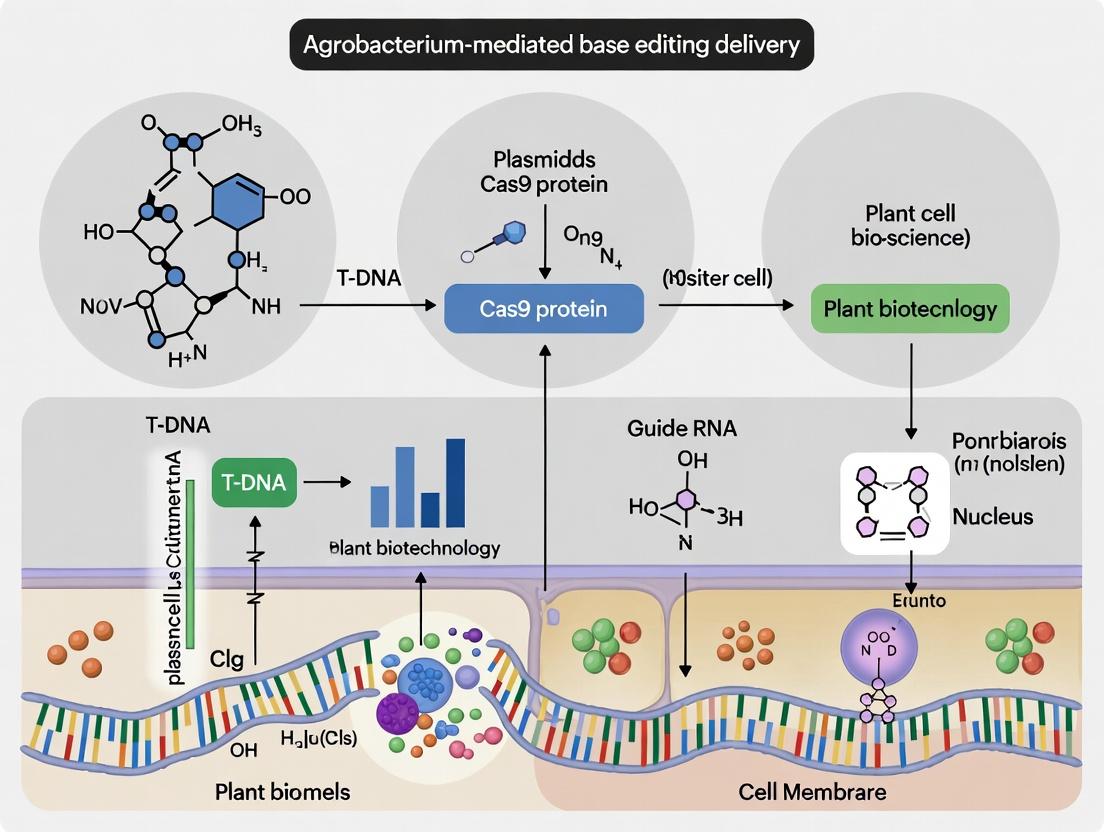
This article provides a comprehensive guide for researchers and drug development professionals on using Agrobacterium tumefaciens as a delivery vehicle for CRISPR base editors.
Harnessing Agrobacterium for CRISPR Base Editing: A Delivery System Guide for Biomedical Researchers
Abstract
This article provides a comprehensive guide for researchers and drug development professionals on using Agrobacterium tumefaciens as a delivery vehicle for CRISPR base editors. We explore the foundational principles of the system, from its natural DNA transfer mechanism (T-DNA) to its adaptation for precise genome editing tools like cytosine and adenine base editors. The article details step-by-step methodological protocols for plant and non-traditional host systems, addresses common troubleshooting and optimization challenges (e.g., efficiency, off-target effects, vector design), and validates the approach through comparative analysis with other delivery methods like viral vectors and biolistics. By synthesizing current research, this guide aims to empower scientists to effectively implement and optimize Agrobacterium-mediated base editing for advanced genetic studies and therapeutic development.
From Crown Gall to CRISPR: The Foundational Biology of Agrobacterium-Mediated Delivery
This document provides detailed application notes and protocols focused on the molecular machinery of Agrobacterium tumefaciens—specifically the Virulence (Vir) gene system and Transfer-DNA (T-DNA). The content is framed within a broader research thesis aimed at repurposing this natural genetic engineering system for the precise delivery of base-editing tools to eukaryotic cells. Understanding the stoichiometry, regulation, and interaction of these components is critical for engineering next-generation delivery vectors for therapeutic genome editing in drug development.
Table 1: Key vir Gene Operons, Functions, and Expression Triggers
| Operon | Number of Major Proteins | Primary Function | Key Inducing Signal (AS) | Approx. Induction Fold-Change |
|---|---|---|---|---|
| virA/virG | 2 (VirA, VirG) | Two-component regulatory system; senses phenolics (e.g., AS) and activates other vir genes. | Acetosyringone (AS) | Constitutive to >50x (VirG) |
| virB | 11 (VirB1-B11) | Forms the Type IV Secretion System (T4SS) pilus for substrate transfer across membranes. | AS via VirG | >100x |
| virC | 2 (VirC1, VirC2) | Binds Overdrive sequences, enhances T-DNA processing. | AS via VirG | ~20-50x |
| virD | 4 (VirD1-D4) | VirD1/D2 nick T-DNA borders; VirD2 pilots T-strand. | AS via VirG | ~50x |
| virE | 2 (VirE1, VirE2) | VirE2 coats T-strand in plant cell; VirE1 is a chaperone. | AS via VirG | ~30-50x |
| virF | 1 | Host-targeted, promotes proteasomal degradation of VIPs. | AS via VirG (strain-dependent) | Variable |
Table 2: T-DNA Border Sequence Characteristics
| Element | Sequence Consensus (Bottom Strand, 5'->3') | Length (bp) | Critical Region | Function |
|---|---|---|---|---|
| Right Border (RB) | 5'-TGGCAGGATATATTGTGGTGTAAAC-3' | ~25 bp | TGTTGT...TGTAAAC | Nick site for VirD2; transfer initiation. |
| Left Border (LB) | 5'-TGGCAGGATATATACCGTGTTGTAAAC-3' | ~25 bp | TGTTGT...TGTAAAC | Nick site for transfer termination. |
| Overdrive | 5'-TGTTTGTTTGAANGNAAATTGCAANNNNAAAWWTB-3' | ~16-24 bp | Adjacent to RB | Enhances T-DNA excision (~30-100x). |
Signaling Pathway and Workflow Diagrams
Diagram 1: AS-Induced Vir Gene Activation Pathway (76 chars)
Diagram 2: Base Editor Delivery via Agrobacterium (62 chars)
Detailed Experimental Protocols
Protocol 1: Induction of vir Genes and T-DNA Processing In Vitro
Objective: To activate the Vir region and generate processed T-strands in a controlled bacterial culture. Materials: See "Scientist's Toolkit" below. Procedure:
- Bacterial Preparation: Inoculate a single colony of A. tumefaciens (harboring your engineered Ti plasmid and Vir helper) into 5 mL of MG/L medium with appropriate antibiotics. Grow overnight at 28°C, 250 rpm.
- Induction Culture Setup: Dilute the overnight culture to an OD600 of 0.5 in 10 mL of Induction Medium (IM, pH 5.5) supplemented with 200 µM acetosyringone (AS). Include a control without AS.
- Induction: Incubate the culture at 20-22°C for 16-24 hours with gentle agitation (150 rpm). The lower temperature stabilizes the T4SS.
- Sample Harvest: Collect 1.5 mL of culture. Pellet cells at 8,000 x g for 5 min.
- For RNA/Protein Analysis: Resuspend pellet in appropriate lysis buffer for qRT-PCR (to measure vir gene induction) or western blot (e.g., for VirD2, VirE2).
- For T-Strand Detection: Perform a modified alkaline lysis on the pellet to isolate single-stranded T-DNA, followed by Southern blot using a probe specific to your T-DNA sequence.
Protocol 2: Assessment of T-DNA Transfer Efficiency via Transient Expression
Objective: To quantitatively measure the functional delivery of T-DNA carrying a reporter gene to plant cells or mammalian cells engineered with plant-like factors. Materials: A. tumefaciens strain, Target cells, AS, Co-cultivation medium, Reporter assay kit (e.g., Luciferase, GFP), Spectrophotometer/Fluorescence microscope. Procedure:
- Agrobacterium Preparation: Induce the bacterial culture as per Protocol 1, Step 2-3. Before co-cultivation, pellet bacteria and gently resuspend in fresh co-cultivation medium (e.g., cell culture medium with AS) to an OD600 of 0.2-1.0.
- Target Cell Preparation: Seed target cells (e.g., Nicotiana benthamiana leaf discs, HEK293T expressing VirE2-interacting proteins) in appropriate multi-well plates 24h prior.
- Co-cultivation: Replace target cell medium with the bacterial suspension. Incubate in the dark at 22-25°C for 48-72 hours. For mammalian cells, optimize duration (e.g., 6-24h) to balance transfer and cytotoxicity.
- Efficiency Quantification: a. Reporter Assay: Wash cells thoroughly to remove bacteria. Lyse cells and perform a luciferase or fluorescence assay according to manufacturer protocols. Normalize values to total protein content. b. Genomic DNA Analysis: Extract genomic DNA from target cells. Perform qPCR using primers specific to the delivered T-DNA versus an endogenous control gene to calculate copy number.
The Scientist's Toolkit
Table 3: Essential Research Reagents and Materials
| Item Name | Category | Function/Application | Example/Notes |
|---|---|---|---|
| Acetosyringone (AS) | Inducing Signal | The key phenolic compound for activating the VirA/VirG two-component system. | Dissolved in DMSO for stock solutions; used at 100-200 µM. |
| Disarmed A. tumefaciens Strains | Bacterial Chassis | Engineered strains lacking oncogenic T-DNA but retaining Vir functions (e.g., LBA4404, GV3101, AGL-1). | Choice depends on host range and transformation efficiency. |
| Binary Vector System | DNA Construct | Plasmid containing RB and LB flanking the gene of interest (e.g., base editor), and a separate Vir helper plasmid. | Standard backbones: pBIN19, pGreen, pCAMBIA. |
| Vir Helper Plasmid | DNA Construct | Provides vir genes in trans for strains where they are not chromosomally integrated (e.g., pSoup in LBA4404). | Essential for binary systems. |
| Induction Medium (IM) | Growth Medium | Low-pH (5.5), minimal medium optimized for vir gene induction. Contains sugars, salts, and AS. | AB minimal medium or MES-buffered media are common. |
| Overdrive Sequence Oligos | Molecular Biology | Synthetic DNA fragments to enhance T-DNA excision when placed adjacent to the Right Border. | Can be cloned to boost transfer efficiency. |
| Anti-VirD2 / Anti-VirE2 Antibodies | Detection Reagent | For monitoring protein expression and T-complex formation via western blot or immunofluorescence. | Commercial or academic sources available. |
| Co-cultivation Medium | Cell Culture | Medium supporting both Agrobacterium and target eukaryotic cells during the transfer process. | Often includes AS and may lack selective antibiotics. |
Application Notes
Within the context of Agrobacterium-mediated base editing delivery research, the evolution of disarmed Agrobacterium tumefaciens strains represents a foundational advancement. These engineered strains are indispensable tools for delivering CRISPR-Cas base editor complexes into plant cells, enabling precise genome modification without introducing double-strand breaks. By removing oncogenic genes from the Tumor-inducing (Ti) plasmid while retaining the DNA transfer machinery (the Virulence or vir system), scientists have transformed a natural pathogen into a safe, programmable delivery vehicle.
The key to their utility in base editing research lies in their ability to stably harbor a "binary vector system." One plasmid carries the T-DNA region containing the gene-editing payload (e.g., a cytosine or adenine base editor fused to a plant codon-optimized Cas9 nickase), while a separate, helper Ti plasmid provides the vir genes in trans to mobilize the T-DNA into the plant nucleus. This disarming is crucial for producing genetically edited but non-tumorous plant tissues. Recent strain optimizations focus on enhancing transformation efficiency in recalcitrant species, improving the fidelity of T-DNA transfer, and incorporating tunable expression systems for the vir genes to minimize cellular stress.
Protocols
Protocol 1: Preparation of a Disarmed Agrobacterium Strain for Plant Transformation
Objective: To prepare a competent disarmed Agrobacterium strain (e.g., LBA4404, GV3101, or AGL1) and transform it with a binary vector containing a base editing cassette.
Materials:
- Disarmed Agrobacterium strain glycerol stock.
- Binary plasmid DNA (e.g., pBUN411-series for base editing).
- YEP solid and liquid media (with appropriate antibiotics for the strain's chromosomal resistance, e.g., rifampicin, gentamicin).
- Antibiotics for plasmid selection (e.g., spectinomycin, kanamycin).
- 1.5 mL microcentrifuge tubes.
- Water bath or electroporator.
- Incubator shaker (28°C).
Method:
- Streak the disarmed Agrobacterium strain from a glycerol stock onto a YEP agar plate containing the appropriate chromosomal antibiotics. Incubate at 28°C for 2 days.
- Pick a single colony and inoculate 5 mL of YEP liquid medium with the same antibiotics. Grow overnight at 28°C with vigorous shaking (220 rpm).
- Sub-culture 1 mL of the overnight culture into 50 mL of fresh YEP (with antibiotics) to an OD600 of ~0.1. Grow to an OD600 of 0.5-0.8.
- Chill the culture on ice for 30 minutes. Pellet cells at 4,000 x g for 10 minutes at 4°C.
- Gently resuspend the pellet in 10 mL of ice-cold 10% glycerol. Repeat centrifugation and resuspension twice, finally resuspending in 200 µL of ice-cold 10% glycerol.
- Aliquot 50 µL of competent cells into pre-chilled tubes. Add 50-100 ng of binary plasmid DNA. Mix gently.
- Perform electroporation (1.8 kV, 2 mm cuvette) or freeze-thaw transformation.
- Immediately add 1 mL of YEP broth, recover at 28°C for 2-4 hours with shaking.
- Plate 100-200 µL onto YEP selection plates containing both chromosomal and binary plasmid antibiotics. Incubate at 28°C for 2-3 days.
- Confirm positive colonies by colony PCR or plasmid isolation.
Protocol 2: Agrobacterium-Mediated Stable Transformation of Arabidopsis thaliana via Floral Dip
Objective: To deliver a T-DNA containing a base editor construct into Arabidopsis plants using a disarmed Agrobacterium culture.
Materials:
- Arabidopsis thaliana plants (e.g., Col-0) at early bolting stage.
- Transformed Agrobacterium culture from Protocol 1.
- Infiltration medium: 5% (w/v) sucrose, 0.05% (v/v) Silwet L-77.
- Centrifuge and bottles.
- Dip container.
Method:
- Inoculate a positive Agrobacterium colony into 10 mL YEP with antibiotics. Grow overnight at 28°C.
- Dilute the overnight culture 1:50 into 500 mL of fresh YEP with antibiotics. Grow to an OD600 of ~1.5.
- Pellet cells at 5,000 x g for 15 minutes at room temperature.
- Gently resuspend the pellet in 500 mL of infiltration medium to a final OD600 of ~0.8.
- Submerge the inflorescences of healthy Arabidopsis plants into the Agrobacterium suspension for 30 seconds, with gentle agitation.
- Lay dipped plants horizontally in a tray, cover with a transparent dome or film to maintain humidity for 24 hours.
- Return plants to normal growth conditions. Allow seeds to mature and dry on the plant.
- Harvest seeds (T1 generation). Surface sterilize and plate on selective media (e.g., containing hygromycin) to identify transgenic plants carrying the T-DNA insert.
Data Presentation
Table 1: Comparison of Common Disarmed Agrobacterium Strains for Plant Transformation
| Strain | Background Ti Plasmid | Chromosomal Markers | Key Features for Base Editing Research | Common Use |
|---|---|---|---|---|
| LBA4404 | pAL4404 (disarmed pTiAch5) | Str^R | Lacks entire T-DNA, "helper-on-a-plate" strain. Lower vir gene induction. | Monocot and dicot transformation; older binary vectors. |
| GV3101 (pMP90) | pMP90 (disarmed pTiC58) | Rif^R, Gen^R | C58 chromosomal background, provides high T-DNA transfer efficiency. | Arabidopsis floral dip, many dicots. |
| AGL1 | pTiBo542DT-DNA (super-virulent) | Rif^R, Carb^R | Contains the virG and virC genes from the "super-virulent" pTiBo542. Enhances transformation of recalcitrant species. | Difficult-to-transform plants, including some monocots. |
| EHA105 | pTiBo542DT-DNA | Str^R | Derivative of A281, carries the same super-virulent pTiBo542 vir region as AGL1. | Recalcitrant dicot species (e.g., soybean, poplar). |
Table 2: Key Components of a Binary Vector System for Agrobacterium-Mediated Base Editing
| Vector Element | Typical Component | Function in Base Editing Delivery |
|---|---|---|
| T-DNA Border | Right Border (RB), Left Border (LB) | Define the DNA segment (T-DNA) excised and transferred into the plant genome. |
| Plant Selection Marker | hpt (hygromycin phosphotransferase), npII (neomycin phosphotransferase II) | Allows selection of plant cells that have integrated the T-DNA. |
| Base Editor Expression Cassette | Plant promoter (e.g., AtU6-26, CaMV 35S) - BE - Plant terminator | Drives expression of the base editor (e.g., APOBEC1-nCas9-UGI for C→T editing). |
| Guide RNA Expression Cassette | U6 or 7SL RNA Pol III promoter - gRNA scaffold | Drives expression of the target-specific sgRNA. |
| Bacterial Selection Marker | aadA (spectinomycin resistance), npII (kanamycin resistance) | Allows maintenance of the binary vector in Agrobacterium. |
| Origin of Replication | pVS1, pBR322 origin | Ensures stable replication in Agrobacterium and E. coli. |
Diagrams
Diagram 1: Key Components of a Disarmed Agrobacterium Strain for Gene Editing
Diagram 2: Workflow for Plant Base Editing via Agrobacterium
The Scientist's Toolkit
Research Reagent Solutions for Agrobacterium-Mediated Base Editing
| Item | Function & Relevance |
|---|---|
| Disarmed Agrobacterium Strain (e.g., GV3101) | Engineered delivery vehicle. Provides Vir proteins in trans to mobilize T-DNA from a binary vector into plant cells without causing disease. |
| Binary Vector System (e.g., pBUN411, pHEE401E) | Modular plasmid carrying the T-DNA with base editor and sgRNA expression cassettes, along with plant and bacterial selection markers. |
| Acetosyringone | A phenolic compound that activates the vir gene system on the Ti plasmid, inducing the bacterial machinery for T-DNA transfer. Critical for efficient transformation. |
| Silwet L-77 | A surfactant that reduces surface tension of the bacterial infiltration medium, allowing it to coat and penetrate plant tissues (e.g., during floral dip). |
| Plant Tissue Culture Media (e.g., MS Media) | Provides essential nutrients and hormones for the selection and regeneration of transformed plant cells after T-DNA integration. |
| Selection Antibiotics (Plant & Bacterial) | Hygromycin, Kanamycin, etc., for plants; Spectinomycin, Rifampicin, etc., for bacteria. Used to selectively grow only cells containing the desired plasmids. |
| DNA Extraction Kits (Plant) | For isolating genomic DNA from putative edited plants to confirm edits via PCR, restriction analysis, or sequencing. |
| Next-Generation Sequencing (NGS) Reagents | For deep sequencing of target loci to accurately quantify base editing efficiency and assess off-target effects. |
CRISPR base editing enables direct, irreversible conversion of one DNA base pair to another without requiring double-stranded DNA breaks (DSBs) or donor templates. Within the context of Agrobacterium-mediated delivery research, these editors offer a powerful tool for precise plant genome engineering, allowing for single-nucleotide polymorphisms (SNPs) correction or introduction with high efficiency and minimal unintended edits. This Application Note details the core systems: Cytidine Base Editors (CBEs) and Adenine Base Editors (ABEs), their molecular architecture, and protocols for their use in plant research via Agrobacterium.
Molecular Components & Mechanisms
Base editors are fusion proteins consisting of three key elements: 1) a catalytically impaired Cas9 (dCas9) or nickase Cas9 (nCas9), 2) a deaminase enzyme, and 3) an inhibitor of base excision repair (BER). The dCas9/nCas9 provides programmable DNA targeting via a guide RNA (gRNA). The deaminase performs the central chemical conversion within a narrow "editing window." The BER inhibitor (e.g., Uracil Glycosylase Inhibitor, UGI) protects the intermediate product to maximize editing efficiency.
Cytidine Base Editors (CBEs) typically fuse nCas9 (D10A) to a cytidine deaminase (e.g., rAPOBEC1, PmCDA1, or AID). The deaminase converts cytidine (C) to uridine (U) within a single-stranded DNA bubble (typically positions 4-8 within the protospacer, counting the PAM as 21-23). The cellular machinery then reads U as thymine (T), resulting in a C•G to T•A conversion. Co-expression of UGI prevents uracil excision, boosting efficiency.
Adenine Base Editors (ABEs) are created by fusing nCas9 (D10A) to an engineered tRNA adenosine deaminase (TadA, derived from *E. coli TadA). TadA* catalyzes the deamination of adenine (A) to inosine (I) in DNA. Inosine is read as guanine (G) by polymerases, leading to an A•T to G•C conversion.
Base Editor Architecture Diagram
Quantitative Comparison of Base Editors
The following table summarizes key characteristics of current, widely used CBEs and ABEs relevant to plant research.
Table 1: Characteristics of Primary Base Editor Systems
| Editor System | Core Components | Base Conversion | Typical Editing Window (Protospacer Positions) | Primary PAM Requirement | Typical Efficiency Range in Plants* | Common Byproducts |
|---|---|---|---|---|---|---|
| BE3 (CBE) | nCas9 (D10A)-rAPOBEC1-UGI | C•G → T•A | 4-8 (≈5-7 most active) | SpCas9: NGG | 5-50% | Indels, C→G, C→A |
| AID-based CBE (e.g., Target-AID) | nCas9 (D10A)-PmCDA1-UGI | C•G → T•A | 1-7 (≈3-6 most active) | SpCas9: NGG | 1-30% | Indels |
| evoCDA1-based CBE | nCas9 (D10A)-evoCDA1-UGI | C•G → T•A | 2-10 | SpCas9: NGG | Up to 60% | Reduced indels |
| ABE7.10 | nCas9 (D10A)-TadA*7.10 | A•T → G•C | 4-7 (≈4-6 most active) | SpCas9: NGG | 5-40% | Very low indels |
| ABE8e | nCas9 (D10A)-TadA*8e | A•T → G•C | 3-10 | SpCas9: NGG | Up to 70% | Moderate indels |
Efficiency is highly dependent on target sequence, delivery method, and species. Ranges are indicative for *Agrobacterium-mediated stable transformation in model plants like Nicotiana benthamiana or Arabidopsis.
The Scientist's Toolkit: Key Reagents forAgrobacterium-Mediated Base Editing
Table 2: Essential Research Reagents & Materials
| Reagent/Material | Function in Experiment |
|---|---|
| Binary Vector (e.g., pCAMBIA, pGreen) | Agrobacterium-compatible T-DNA vector for assembling and expressing base editor components (Cas9-deaminase fusion and gRNA) in plant cells. |
| Plant Codon-Optimized Base Editor Gene | Ensures high expression of the editor protein in the plant nucleus. Often includes a nuclear localization signal (NLS). |
| Pol III Promoter (e.g., AtU6, OsU3) | Drives high-level expression of the single guide RNA (sgRNA) within the plant cell. |
| Selection Marker (e.g., hptII, bar) | Plant-selectable antibiotic or herbicide resistance gene within T-DNA to identify transformed cells/tissues. |
| Agrobacterium tumefaciens Strain (e.g., GV3101, EHA105) | The delivery vehicle. Engineered to contain the binary vector and facilitate T-DNA transfer into the plant genome. |
| Plant Tissue Culture Media | For regenerating whole plants from transformed explants (e.g., callus, leaf discs) under selection pressure. |
| PCR & Sanger Sequencing Primers | For genotyping putative edited plants. Primers flanking the target site are used to amplify the region for sequence analysis. |
| High-Fidelity DNA Polymerase | For accurate amplification of genomic target loci from edited plants for sequencing. |
| Tracking of Indels by Decomposition (TIDE) or BE-Analyzer Software | Bioinformatic tools to quantify base editing efficiency and purity from Sanger sequencing chromatograms. |
Protocols forAgrobacterium-Mediated Base Editing in Plants
Protocol 1: Vector Construction for Plant Base Editing
Objective: Assemble a binary T-DNA vector expressing a base editor and target-specific gRNA.
- Clone gRNA Expression Cassette: Synthesize an oligo duplex encoding your 20-nt spacer sequence. Clone it into a binary vector backbone containing a plant Pol III promoter (e.g., AtU6) and gRNA scaffold using BsaI Golden Gate assembly.
- Assemble Base Editor Expression Cassette: Insert a plant codon-optimized gene for your chosen base editor (e.g., BE3, ABE8e) under a strong plant Pol II promoter (e.g., 35S, AtUBQ10) into the same binary vector. Ensure the vector has a plant selection marker.
- Verify Construct: Confirm the final plasmid sequence by Sanger sequencing, focusing on the gRNA spacer, editor fusion junctions, and promoter regions.
Protocol 2:AgrobacteriumTransformation & Plant Delivery
Objective: Deliver the base editor construct into plant cells via Agrobacterium.
- Transform Agrobacterium: Introduce the verified binary vector into your A. tumefaciens strain (e.g., GV3101) via electroporation or freeze-thaw method. Select on appropriate antibiotics.
- Prepare Agrobacterium Culture: Inoculate a single colony into liquid LB with antibiotics. Grow to OD600 ≈ 1.0-1.5. Pellet cells and resuspend in induction media (e.g., with acetosyringone) to OD600 ≈ 0.5-1.0 for 2-4 hours.
- Inoculate Plant Explants: For Arabidopsis, use floral dip method. For tobacco or tomato, immerse leaf discs in the Agrobacterium suspension for 5-10 minutes, then co-cultivate on non-selective media for 2-3 days.
- Regenerate Plants: Transfer explants to selection media containing antibiotics/herbicide to inhibit Agrobacterium growth and select for transformed plant cells. Regenerate shoots and then roots on appropriate media.
Protocol 3: Genotyping & Analysis of Base-Edited Plants
Objective: Identify plants with the desired nucleotide change and assess editing efficiency and purity.
- Extract Genomic DNA: Harvest leaf tissue from regenerated T0 or T1 plants. Use a CTAB or commercial kit to extract high-quality gDNA.
- PCR Amplification: Design primers ~200-400 bp flanking the target site. Perform PCR using a high-fidelity polymerase.
- Sanger Sequencing: Purify PCR products and submit for Sanger sequencing with one of the PCR primers.
- Sequence Analysis:
- Visually inspect chromatograms for overlapping peaks at the target window indicating editing mosaicism.
- Use computational tools (BE-Analyzer, CRISPResso2) to deconvolute Sanger traces. Input the control (wild-type) sequence and experimental sequence trace files. The software will output the percentage of reads containing each base at each position, quantifying C→T or A→G conversion efficiency and byproduct frequencies.
- Seed Collection & Stability Check: Self-pollinate primary (T0) edited plants. Analyze the inheritance and segregation of the edit in the T1 generation to identify stable, homozygous lines.
Base Editing Workflow Diagram
CRISPR base editors, specifically CBEs and ABEs, provide a precise and efficient method for single-base genome modification. When deployed via Agrobacterium-mediated delivery—the workhorse of plant transformation—they become accessible tools for advanced crop trait development and functional genomics. Successful application requires careful selection of the editor system, thoughtful vector design, robust plant transformation, and meticulous genotyping using specialized analytical tools to quantify outcomes.
Why Agrobacterium? Key Advantages for Delivering Large Base Editor Constructs
This application note, framed within a broader thesis on Agrobacterium-mediated delivery for plant genome engineering, outlines the critical advantages of Agrobacterium tumefaciens for delivering large, complex base editor constructs. Base editors, particularly the newer generation dual- and multi-component systems, often exceed the cargo capacity limits of alternative delivery methods. This document details the molecular rationale, provides comparative data, and offers robust protocols for implementing this delivery strategy.
Agrobacterium-mediated transformation (AMT) offers distinct benefits for large cargo delivery, as summarized below.
Table 1: Comparison of Delivery Methods for Large Base Editor Constructs
| Feature | Agrobacterium-Mediated Transformation | Biolistics (Gene Gun) | Viral Vectors |
|---|---|---|---|
| Max Cargo Size | >50 kbp (T-DNA) | ~20-40 kbp (fragmented) | <10 kbp (severe limitation) |
| Integration Pattern | Typically low-copy, simple | Complex, multi-copy, rearranged | Episomal or low-copy integration |
| Delivery Efficiency* | High (stable, plants/exp.) | Moderate to Low | High (transient) |
| Multiplexing Capacity | High (multiple T-DNAs) | Low | Very Low |
| Cost per Experiment | Low | High (gold particles, equipment) | Moderate to High |
| Primary Use Case | Stable integration of large constructs | Species recalcitrant to AMT | Rapid transient assays |
Efficiency is species- and tissue-dependent. For stable transformation in amenable species (e.g., *Nicotiana tabacum, Oryza sativa), AMT consistently shows higher rates of low-copy, intact integration events.
Detailed Experimental Protocols
Protocol 1:AgrobacteriumStrain Preparation for Large Construct Transformation
Objective: To generate recombinant Agrobacterium harboring large base editor constructs (>15 kbp) in a binary vector.
Materials:
- Binary vector containing the base editor expression cassette (e.g., pCBE-ABE fusion, with gRNA multiplexing).
- Electrocompetent cells of a disarmed Agrobacterium strain (e.g., EHA105, GV3101, LBA4404).
- Electroporator and 1 mm gap cuvettes.
- YEP medium: 10 g/L peptone, 10 g/L yeast extract, 5 g/L NaCl (pH 7.0). Solid medium contains 15 g/L agar.
- Appropriate antibiotics for bacterial selection.
Procedure:
- Electroporation: Thaw electrocompetent Agrobacterium cells on ice. Mix 50-100 ng of purified plasmid DNA with 50 µL of cells in a pre-chilled electroporation cuvette. Apply a pulse (e.g., 1.8 kV, 25 µF, 200 Ω). Immediately add 1 mL of YEP liquid medium and incubate at 28°C for 2-3 hours with shaking.
- Selection and Verification: Plate cells on YEP agar plates containing the relevant antibiotics. Incubate at 28°C for 48-72 hours. Pick colonies and verify the presence and integrity of the large construct by colony PCR using primers spanning key junctions and restriction digestion of isolated plasmid DNA.
- Glycerol Stock Preparation: Inoculate a single positive colony into 5 mL of YEP broth with antibiotics. Grow overnight at 28°C with shaking. Mix 0.85 mL of culture with 0.15 mL of sterile 50% glycerol in a cryovial. Flash-freeze in liquid nitrogen and store at -80°C.
Protocol 2: Floral Dip Transformation ofArabidopsis thalianawith Base Editor Constructs
Objective: To generate stable, base-edited Arabidopsis lines via the simplified in planta floral dip method.
Materials:
- Arabidopsis plants (e.g., Col-0) at early bolting stage.
- Recombinant Agrobacterium from Protocol 1.
- Infiltration Medium: 5% (w/v) sucrose, 0.05% (v/v) Silwet L-77.
- MS Agar plates with appropriate antibiotics for plant selection.
Procedure:
- Agrobacterium Culture: Inoculate a glycerol stock into 10 mL of YEP with antibiotics. Grow overnight at 28°C. Pellet cells and resuspend in infiltration medium to an OD600 of ~0.8.
- Floral Dip: Submerge the aerial parts of flowering Arabidopsis plants into the Agrobacterium suspension for 30 seconds. Gently agitate.
- Post-Transformation Care: Lay plants on their side in a tray, cover with transparent film to maintain humidity for 16-24 hours. Return plants to upright position and grow under standard conditions until seeds mature.
- Selection of Transformants: Harvest seeds (T1). Surface-sterilize and sow on MS plates with the appropriate antibiotic. Resistant green seedlings after 7-14 days are potential transformants.
- Genotyping: Isolate genomic DNA from T1 plant leaf tissue. Perform PCR/restriction analysis and Sanger sequencing of the target locus to identify base edits. Analyze segregation patterns in the T2 generation to identify lines with a single, active T-DNA insertion.
Visualization of Workflow and Mechanisms
Title: Agrobacterium Base Editing Workflow
Title: T-DNA Transfer and Base Editor Delivery Pathway
The Scientist's Toolkit: Research Reagent Solutions
Table 2: Essential Materials for Agrobacterium-Mediated Base Editing
| Item | Function & Rationale |
|---|---|
| Binary Vector (e.g., pCAMBIA, pGreen series) | High-capacity T-DNA vector. Essential for cloning large base editor (BE) cassettes and maintaining stability in both E. coli and Agrobacterium. |
| Supercompetent E. coli (e.g., NEB Stable) | Crucial for initial cloning and propagation of large, repetitive BE plasmids, minimizing rearrangements. |
| Agrobacterium Strain (e.g., EHA105) | Disarmed, super-virulent strain. Contains a modified Ti plasmid (pEHA105) to efficiently transfer large T-DNA cargo. |
| Silwet L-77 | Non-ionic surfactant. Critical for effective floral dip by reducing surface tension, allowing Agrobacterium suspension to infiltrate floral tissues. |
| Acetosyringone | Phenolic compound. Induces the Agrobacterium vir gene machinery, enhancing T-DNA transfer efficiency during co-cultivation. |
| Plant Tissue Culture Media (MS, B5) | Formulated for specific plant species. Supports growth of explants before/after co-cultivation and regeneration of transformed tissues. |
| Selection Antibiotics (Plant-specific) | e.g., Hygromycin, Kanamycin, Glufosinate. Allows selective growth of plant cells that have integrated the T-DNA carrying the BE and resistance marker. |
| PCR Reagents for Junction Analysis | Primers spanning T-DNA/plant genome junctions and high-fidelity polymerase. Required to verify correct integration and copy number of the large BE construct. |
Agrobacterium tumefaciens, a plant pathogen, naturally transfers T-DNA (Transfer DNA) into plant genomes via its Ti (Tumor-inducing) plasmid. Recent research explores repurposing this machinery for gene delivery into human and other non-plant eukaryotic cells, offering a novel avenue for gene therapy and synthetic biology. This Application Note, framed within a thesis on Agrobacterium-mediated base editing delivery, details the foundational protocols and key findings for utilizing this system in mammalian contexts.
Foundational Data & Key Findings
Recent studies demonstrate the functional transfer of T-DNA from Agrobacterium to human cells, albeit with lower efficiency than standard mammalian transfection methods. Key quantitative outcomes are summarized below.
Table 1: Key Quantitative Findings from Agrobacterium-Mediated Transformation of Human Cells
| Cell Type | Efficiency (T-DNA+ Cells) | Delivery Method | Key Outcome | Reference Year |
|---|---|---|---|---|
| HEK293T | ~1-2% | Co-cultivation | Stable GFP expression | 2023 |
| HeLa | ~0.5-0.8% | Acetosyringone induction | CRISPR RNP delivery | 2022 |
| HUVEC | ~0.3% | Centrifugation-assisted | Base editing (C->T) | 2023 |
| iPSCs | <0.1% | Microinjection-assisted | Transgene integration | 2024 |
Table 2: Comparison of Agrobacterium Strain Efficacy in Human HEK293T Cells
| Agrobacterium Strain | Ti Plasmid | Relative Efficiency (%) | Notes |
|---|---|---|---|
| LBA4404 | pAL4404 (disarmed) | 100 (Baseline) | Standard strain |
| GV3101 | pMP90 | 120-130 | Enhanced virulence |
| AGL-1 | pTiBo542 | 80-90 | Robust growth |
Detailed Protocols
Protocol 1: Preparation of Agrobacterium for Human Cell Co-Cultivation
Objective: To induce the Agrobacterium Virulence (Vir) system and prepare bacteria for T-DNA transfer to mammalian cells.
- Inoculum Preparation: Streak Agrobacterium tumefaciens (e.g., LBA4404 harboring your binary vector) on YEP agar plates with appropriate antibiotics (e.g., kanamycin 50 µg/mL, rifampicin 50 µg/mL). Incubate at 28°C for 48 hours.
- Liquid Culture: Pick a single colony and inoculate 5 mL of YEP broth with antibiotics. Shake at 28°C, 200 rpm for 24 hours.
- Induction Culture: Dilute the overnight culture 1:50 into 10 mL of Induction Medium (IM; e.g., MES buffer, pH 5.5, with 20 µM acetosyringone). Add antibiotics. Shake at 28°C, 200 rpm for 16-18 hours until OD600 reaches ~0.6-1.0.
- Bacterial Harvest: Pellet bacteria at 4,000 x g for 10 min at room temperature. Resuspend gently in pre-warmed cell culture medium (e.g., DMEM without antibiotics) to a final OD600 of ~0.5-1.0.
Protocol 2: Co-Cultivation with Adherent Human Cells (e.g., HEK293T)
Objective: To facilitate T-DNA delivery and integration into the target cell genome.
- Cell Preparation: Seed HEK293T cells in a 24-well plate at 70-80% confluence (~1.5 x 10^5 cells/well) 24 hours before co-cultivation.
- Infection: Aspirate medium from cells. Add 0.5 mL of the induced Agrobacterium suspension (from Protocol 1, Step 4) per well.
- Co-cultivation: Incubate plate at 37°C, 5% CO2 for 24-48 hours. For enhanced attachment, centrifuge plate at 500 x g for 5-10 min at room temperature immediately after adding bacteria.
- Removal of Bacteria & Selection: After co-cultivation, carefully aspirate the medium. Wash cells 2-3 times with PBS containing 200 µg/mL cefotaxime or timentin to kill residual bacteria. Add fresh complete medium with antibiotics (cefotaxime and your selection agent, e.g., puromycin). Change medium every 2-3 days.
- Analysis: Assay for transgene expression (e.g., fluorescence microscopy for GFP) after 5-7 days. For stable lines, continue selection for 2-3 weeks.
Visualizing the Process
Title: Agrobacterium T-DNA Transfer to Human Cells
Title: Human Cell Co-cultivation Workflow
The Scientist's Toolkit: Research Reagent Solutions
Table 3: Essential Materials for Agrobacterium-Human Cell Experiments
| Reagent/Material | Supplier Examples | Function & Notes |
|---|---|---|
| Disarmed A. tumefaciens Strain (e.g., LBA4404, GV3101) | CICC, Lab Stock | Engineered host for binary vector, lacks oncogenes in T-DNA. |
| Binary Vector with Mammalian Cassette (e.g., pCAMBIA1300-derivative) | Addgene, Custom Synthesis | Carries gene of interest (e.g., base editor, GFP) between T-DNA borders for transfer. |
| Acetosyringone | Sigma-Aldrich, Thermo Fisher | Phenolic compound that induces the Agrobacterium Vir system; critical for T-DNA processing. |
| Cefotaxime or Timentin | Various | Antibiotics to eliminate Agrobacterium after co-cultivation; non-toxic to mammalian cells. |
| YEP Media (Agar & Broth) | BD Biosciences, Formedium | Rich medium for optimal growth of Agrobacterium. |
| Induction Medium (IM) | Custom formulation (e.g., MES, salts) | Low-pH, specific medium to maximally induce the Vir genes during bacterial preparation. |
| Appropriate Mammalian Cell Culture Media | Gibco, Sigma | For maintaining target human cells (e.g., DMEM for HEK293T). |
| Selection Antibiotics (e.g., Puromycin, G418) | Thermo Fisher, Invivogen | To select for human cells that have stably integrated the T-DNA and express the resistance marker. |
Protocols in Practice: A Step-by-Step Guide to Agrobacterium Base Editing Workflows
Within the broader thesis on optimizing Agrobacterium-mediated delivery for plant base editing, the design of the T-DNA construct is a critical determinant of success. The T-DNA must efficiently transfer and express a complex genetic package—typically a fusion of a deaminase enzyme, a nickase version of Cas9 (dCas9 or nCas9), and often a uracil glycosylase inhibitor (UGI)—into the plant cell nucleus. This article details the essential components, quantitative parameters, and protocols for assembling effective T-DNA vectors to drive high-efficiency base editing in plants via Agrobacterium tumefaciens.
Core Components of a Base Editor T-DNA Construct
A standard T-DNA for plant base editing includes the following mandatory and optional elements positioned between the left border (LB) and right border (RB).
Table 1: Essential Genetic Components of a Plant Base Editor T-DNA Construct
| Component | Optimal Type/Sequence | Function & Rationale | Typical Size (bp) |
|---|---|---|---|
| Left Border (LB) | Octopine or Succinamopine-type | Initiates T-strand transfer into plant cell. | ~25 |
| Promoter (Editor) | Egg cell-specific EC1.2, Ubiquitin (Ubq), CaMV 35S | Drives high, constitutive or cell-specific expression of base editor fusion protein. | 500-2000 |
| Codon Optimization | Plant-optimized (e.g., Monocot/Dicot) | Maximizes translation efficiency of bacterial/archaeal-derived proteins. | N/A |
| Base Editor Fusion | e.g., rAPOBEC1-nCas9-UGI (CBE) or TadA-nCas9 (ABE) | Core enzyme complex for catalyzing C•G to T•A or A•T to G•C conversions. | 3000-4500 |
| Nuclear Localization Signal (NLS) | SV40, Agrobacterium VirD2 | Ensures targeting of the base editor to the nucleus. ≥2 NLSs recommended. | ~60-90 |
| Promoter (sgRNA) | AtU6, OsU6, TaU3 | Drives expression of the sgRNA transcript (Pol III promoter). | 200-350 |
| sgRNA Scaffold | Arabidopsis or crop-optimized | Structural component guiding Cas9 to target DNA sequence. | ~100 |
| Target Sequence | 20-nt protospacer + NGG PAM | Defines genomic locus for base editing. Cloned into sgRNA construct. | ~23 |
| Terminator (Editor) | NOS, 35S polyA | Ensures proper mRNA processing for the editor transcript. | ~250 |
| Terminator (sgRNA) | Pol III terminator (e.g., polyT stretch) | Terminates sgRNA transcription. | ~20-50 |
| Plant Selectable Marker | HPTII (hygromycin), BAR (glufosinate) | Selection of transformed plant tissue on antibiotic/herbicide media. | 500-1000 |
| Promoter (Marker) | CaMV 35S, Ubq | Drives expression of the selectable marker gene. | 500-1000 |
| Right Border (RB) | Octopine or Succinamopine-type | Defines end of T-DNA for transfer. | ~25 |
Table 2: Quantitative Design Parameters for High-Efficiency Constructs
| Parameter | Optimal Value/Range | Impact on Editing Efficiency |
|---|---|---|
| Total T-DNA Size | < 15 kb | Larger sizes reduce Agrobacterium transfer efficiency. |
| Editor Expression Level | High (strong promoter) | Correlates directly with editing efficiency but may increase off-target effects. |
| sgRNA Expression Level | High (strong Pol III promoter) | Essential for sufficient guide RNA abundance. |
| Distance from LB to Editor | Minimized | Proximity to LB may increase expression probability. |
| Number of NLSs | ≥ 2 (N- & C-terminus) | Critical for robust nuclear localization. |
| Linker Length between Fusions | 10-40 aa (flexible, e.g., GGGS repeats) | Maintains independent domain folding and activity. |
Experimental Protocols
Protocol 1: Golden Gate Assembly of a Modular Base Editor T-DNA Vector
This protocol is for assembling a base editor construct using a modular, phytobrick-compatible system (e.g., MoClo Plant Toolkit).
Materials:
- Entry vectors containing individual parts (Promoter, BE fusion, NLS, Terminator, sgRNA scaffold).
- Level 0 destination vector (e.g., pICH41308).
- Type IIS restriction enzymes (e.g., BsaI-HFv2, Esp3I).
- T4 DNA Ligase.
- Thermal cycler.
Method:
- Digestion-Ligation Setup: In a single tube, combine:
- 50 ng of each entry vector.
- 100 ng of destination vector.
- 1.5 µL 10x T4 Ligase Buffer.
- 0.5 µL BsaI-HFv2 (10 U/µL).
- 0.5 µL Esp3I (10 U/µL).
- 1 µL T4 DNA Ligase (400 U/µL).
- Nuclease-free water to 15 µL.
- Run Cycled Reaction: Place tube in thermal cycler: (37°C for 5 min, 16°C for 5 min) x 25 cycles, then 50°C for 5 min, 80°C for 10 min.
- Transformation: Transform 5 µL of reaction into competent E. coli. Screen colonies by colony PCR and verify by sequencing.
Protocol 2:Agrobacterium tumefaciensTransformation (Electroporation)
Materials:
- Electrocompetent A. tumefaciens strain (e.g., EHA105, GV3101).
- Assembled T-DNA plasmid (100-500 ng/µL).
- Pre-chilled electroporation cuvettes (1 mm gap).
- SOC or LB broth.
- Electroporator.
Method:
- Thaw electrocompetent Agrobacterium cells on ice.
- Mix 1 µL of plasmid DNA with 50 µL of cells in a pre-chilled tube. Transfer to a pre-chilled electroporation cuvette.
- Electroporate using appropriate parameters (e.g., 1.8 kV, 200Ω, 25µF).
- Immediately add 950 µL of room-temperature SOC broth to the cuvette. Transfer to a sterile tube.
- Incubate at 28°C with shaking (200 rpm) for 2-3 hours.
- Plate 100-200 µL on selective LB agar plates (with appropriate antibiotics for the Agrobacterium strain and binary vector). Incubate at 28°C for 2 days.
Protocol 3: Verification of T-DNA Integrity inAgrobacterium
Materials:
- Agrobacterium colony.
- PCR reagents.
- Primers spanning key junctions (e.g., LB-Promoter, Editor-Terminator, sgRNA cassette).
- Plasmid isolation kit for Agrobacterium.
Method:
- Pick a single Agrobacterium colony and resuspend in 20 µL sterile water. Use 1 µL as template for colony PCR.
- Perform PCR with primers designed to amplify across assembly junctions.
- Run PCR products on an agarose gel to confirm correct sizes.
- For final confirmation, isolate plasmid from a positive colony using an alkaline lysis miniprep kit followed by an additional ethanol precipitation to purify from polysaccharides. Sequence the T-DNA region using a primer walking strategy.
Visualization
T-DNA Structure & Base Editing Workflow
Agrobacterium T-DNA Delivery Pathway
The Scientist's Toolkit
Table 3: Essential Research Reagent Solutions for T-DNA Construction
| Reagent/Kit/Material | Provider Examples | Function in Construct Building |
|---|---|---|
| MoClo Plant Toolkit | Addgene (Kit #1000000044) | Modular, standardized Golden Gate assembly system for plant parts. |
| Type IIS Restriction Enzymes (BsaI, Esp3I) | NEB, Thermo Fisher | Enable scarless, directional assembly of multiple DNA fragments. |
| Gibson Assembly Master Mix | NEB, Takara | Alternative seamless cloning method for large fragments. |
| Gateway LR Clonase II | Thermo Fisher | Recombinase-based system for transferring expression cassettes. |
| Plant Codon-Optimized Base Editor Genes | VectorBuilder, GenScript | Synthetic genes for optimal expression in monocots/dicots. |
| Electrocompetent A. tumefaciens | Laboratory-prepared, CICC | Essential for transforming the final binary vector. |
| Agrobacterium Triparental Mating Helper Strain | Common lab strains | Facilitates plasmid transfer if electroporation is not feasible. |
| Binary Vector Backbones (pCAMBIA, pGreen) | CAMBIA, Addgene | Small backbone size improves transformation efficiency. |
| Sanger Sequencing Service (Primer Walking) | Eurofins, Genewiz | Critical for verifying sequence integrity of large, repetitive constructs. |
| Plant Tissue Culture Media (Co-cultivation) | PhytoTech Labs, Duchefa | For subsequent Agrobacterium-plant co-culture after vector build. |
1. Introduction Within the framework of a thesis focused on optimizing Agrobacterium-mediated delivery of base editing systems into plant genomes, the selection of the helper strain is a critical determinant of success. The choice influences transformation efficiency, T-DNA integration pattern, and the final edit outcome. This note provides a comparative analysis of common strains and detailed protocols for their use in plant base editing research.
2. Comparative Analysis of Key Agrobacterium Strains The efficacy of a strain is governed by its chromosomal background, Ti-plasmid type, and accessory virulence (vir) genes. Key characteristics are summarized below.
Table 1: Key Characteristics of Common Agrobacterium Helper Strains
| Strain | Ti-Plasmid | Chromosomal Background | Key Feature | Typical Use in Plants | Reported Transformation Efficiency (Range) |
|---|---|---|---|---|---|
| LBA4404 | pAL4404 (disarmed, vir genes in trans) | Ach5 | Octopine-type, "hyper-virulent" virG mutation (N54D) | Monocots (rice), Dicots (tobacco, tomato) | Moderate to High (5-40% in rice callus) |
| GV3101 | pMP90 (disarmed) | C58 | Nopaline-type, Rif⁺, Gent⁺ | Arabidopsis (floral dip), Nicotiana spp. | Very High (2-4% in Arabidopsis seeds) |
| EHA105 | pEHA105 (disarmed pTiBo542) | C58 | Super-virulent, "hyper-virulent" virG mutation (E84K) | Recalcitrant species (soybean, cotton, poplar) | High (often 2-5x higher than LBA4404 in difficult crops) |
| AGL1 | pTiBo542 (disarmed) | C58 | Similar to EHA105, contains additional carbenicillin resistance | Recalcitrant dicots, some monocots | High (comparable to EHA105) |
Table 2: Strain Selection Guide for Base Editing Delivery
| Research Goal | Recommended Strain(s) | Rationale |
|---|---|---|
| High-throughput screening in model plants (e.g., Arabidopsis, N. benthamiana) | GV3101 | Optimized for floral dip and leaf infiltration, high transient expression. |
| Stable transformation of monocots (e.g., rice, wheat) | LBA4404, EHA105 | Proven history in cereal transformation; EHA105 may offer higher efficiency. |
| Transformation of recalcitrant dicot species | EHA105, AGL1 | "Super-virulent" background enhances T-DNA delivery to difficult tissues. |
| Minimizing plasmid vector size (binary vector only) | Any (LBA4404 common) | vir genes are on a separate, complementing plasmid. |
3. Core Experimental Protocol: Agrobacterium Preparation and Plant Inoculation This protocol is generalized for leaf disc or callus transformation, adaptable for base editing constructs.
A. Agrobacterium Culture Preparation for Plant Transformation Materials: YEP/Rif medium, appropriate antibiotics, acetosyringone, induction medium (e.g., MMA). Procedure:
- Transform the base editing binary vector (containing nuclease-deactivated Cas9 and deaminase) into the selected electrocompetent Agrobacterium strain. Select on plates with vector-specific (e.g., Kanamycin) and strain-specific (e.g., Rifampicin for GV3101) antibiotics. Incubate at 28°C for 2 days.
- Pick a single colony and inoculate 5 mL of liquid YEP medium with antibiotics. Shake (200 rpm) at 28°C for 24-48 hours to saturation.
- Centrifuge culture at 3,500 x g for 15 min. Resuspend pellet in induction medium (e.g., MMA: MS salts, 10 mM MES, 20 g/L sucrose, pH 5.6) supplemented with 200 µM acetosyringone. Adjust OD₆₀₀ to 0.5-1.0.
- Induce the culture by incubating at 28°C with gentle shaking (50-100 rpm) for 2-4 hours.
B. Plant Tissue Inoculation and Co-cultivation (Example: Rice Callus) Materials: Sterile rice calli, co-cultivation medium, sterile filter paper. Procedure:
- Submerge sterile, embryogenic calli in the induced Agrobacterium suspension for 20-30 minutes.
- Blot calli dry on sterile filter paper and transfer to solid co-cultivation medium (containing acetosyringone).
- Incubate in the dark at 22-25°C for 2-3 days.
- Transfer calli to resting/selection medium with antibiotics to kill Agrobacterium (e.g., Timentin or Cefotaxime) and select for transformed plant cells (e.g., Hygromycin).
4. The Scientist's Toolkit: Essential Research Reagents
Table 3: Key Reagent Solutions for Agrobacterium-Mediated Base Editing
| Reagent/Material | Function/Explanation |
|---|---|
| Binary Vector System | Contains T-DNA with base editor (dCas9-deaminase) and plant selection marker. Backbone has oriV for Agrobacterium. |
| Acetosyringone | Phenolic compound that induces the vir gene region on the Ti-plasmid, activating T-DNA transfer machinery. |
| Antibiotics (Rif, Gent, Kan, Spec) | Selective agents for maintaining Agrobacterium strain (Rif) and binary vector (e.g., Kan) in culture. |
| Timentin/Cefotaxime | β-lactam antibiotics used in plant media to eliminate Agrobacterium after co-cultivation, preventing overgrowth. |
| Selection Agent (e.g., Hygromycin) | Plant-usable antibiotic or herbicide for selecting cells that have integrated the T-DNA. |
| Induction Medium (e.g., MMA) | A low-pH, sugar-rich medium optimized for vir gene induction during Agrobacterium preparation. |
5. Visualized Workflows and Pathways
Strain Selection Decision Tree for Base Editing
Mechanism of Agrobacterium Virulence Gene Induction
Within the broader thesis on Agrobacterium-mediated delivery of base editing systems, this protocol details the optimization of transformation and co-cultivation conditions for generating and isolating specific target cell types. The efficiency of T-DNA delivery and subsequent editing is highly dependent on the physiological state of the plant cells and the co-cultivation environment. This document provides application notes for enhancing transformation efficiency in recalcitrant cell types, such as stem cells or differentiated somatic tissues, critical for producing non-chimeric, edited plants.
Recent studies (2023-2024) highlight critical variables influencing editing outcomes in Agrobacterium-mediated delivery. The data below summarizes optimal ranges for key parameters to favor target cell types like stem cells or embryogenic calli.
Table 1: Optimized Co-cultivation Parameters for Target Cell Types
| Parameter | Target Cell Type: Embryogenic Callus | Target Cell Type: Shoot Apical Meristem | Recommended Measurement Method |
|---|---|---|---|
| Optical Density (OD600) | 0.4 - 0.6 | 0.2 - 0.4 | Spectrophotometry |
| Acetosyringone (μM) | 100 - 200 | 150 - 200 | HPLC/Standard Solution |
| Co-cultivation Duration | 48 - 72 hours | 36 - 48 hours | Visual Timeline |
| Co-cultivation Temp (°C) | 22 - 23 | 19 - 21 | Incubator Thermometer |
| Medium pH | 5.6 - 5.8 | 5.4 - 5.6 | pH Meter |
| Optimal Wounding | Fine needle punctures | Sonication (5-10 sec) or Abrasion | Protocol-dependent |
Detailed Experimental Protocols
Protocol 3.1: Preparation ofAgrobacteriumfor Co-cultivation
- Inoculation: Pick a single colony of Agrobacterium tumefaciens (e.g., strain EHA105 harboring the base editor plasmid) into 5 mL of YEP medium with appropriate antibiotics. Incubate at 28°C, 200 rpm for ~24 hours.
- Sub-culture: Dilute the primary culture 1:50 into fresh, low-phosphate AB-MES medium (pH 5.4) containing 200 μM acetosyringone. Grow to an OD600 of 0.5-0.8 (approximately 18-24 hours).
- Induction: Add acetosyringone to a final concentration of 200 μM and incubate for an additional 4-6 hours at 28°C, 200 rpm.
- Harvest & Resuspension: Pellet cells at 4000 x g for 10 min at room temperature. Resuspend the pellet in co-cultivation medium (see Table 1 for specifics) supplemented with 200 μM acetosyringone to a final OD600 of 0.4.
- Ready for Use: Allow the suspension to stand at room temperature for 30-60 minutes before explant inoculation.
Protocol 3.2: Co-cultivation for Meristematic Target Cells
- Explant Preparation: Surface sterilize seeds or shoot tips. Isolate apical meristems (~0.5 mm) under a stereomicroscope in a laminar flow hood.
- Wounding: Transfer meristems to a microcentrifuge tube with sterile silica particles. Vortex gently for 5 seconds to create micro-abrasions. Rinse with liquid co-cultivation medium.
- Inoculation: Immerse explants in the prepared Agrobacterium suspension (OD600 0.2) for 15 minutes with gentle agitation.
- Co-cultivation: Blot explants dry on sterile filter paper and place onto solid co-cultivation medium (pH 5.4, 19°C). Co-cultivate in the dark for 36-48 hours.
- Termination: Transfer explants to recovery/selection medium containing 300 mg/L timentin or cefotaxime to eliminate Agrobacterium.
Diagrams
Title: Workflow for Optimized Transformation & Co-cultivation
Title: Acetosyringone-Induced vir Gene Activation Pathway
The Scientist's Toolkit: Research Reagent Solutions
Table 2: Essential Reagents for Transformation & Co-cultivation Optimization
| Item | Function in Protocol | Key Consideration |
|---|---|---|
| Acetosyringone (AS) | Phenolic inducer of Agrobacterium vir genes; critical for T-DNA transfer efficiency. | Prepare fresh stock in DMSO or EtOH; light-sensitive. |
| AB-MES Induction Medium | Low-phosphate medium used to pre-induce Agrobacterium prior to co-cultivation. | Maintains bacterial cells in a Vir-inducible state. |
| Silica Particles / Carborundum | Provides consistent, gentle wounding for explants to facilitate bacterial entry. | Particle size (400-600 μm) critical for cell viability. |
| Timentin (or Cefotaxime) | Beta-lactam antibiotic for eliminating Agrobacterium post co-cultivation; less phytotoxic. | Preferred over carbenicillin for many plant species. |
| MS/B5 Basal Salts with Modifications | Plant tissue culture medium foundation; osmoticum (e.g., sugars) can be adjusted for target cells. | Sucrose (3%) often used for embryogenic callus. |
| Cytokinin/Auxin Phytohormones | Included in recovery/regeneration media to promote division of transformed target cells. | Ratio determines callus vs. direct organogenesis. |
This application note details three pivotal delivery methods for Agrobacterium-mediated genome engineering, specifically within the context of advancing base editing technologies in plants. As the field moves towards precise, CRISPR-Cas-derived base editing, efficient and genotype-flexible delivery remains a critical bottleneck. Floral dip, tissue infiltration, and protoplast co-culture represent complementary strategies, each with distinct advantages in throughput, regenerability, and applicability to diverse plant species. This document provides updated protocols and comparative analysis to guide researchers in selecting and optimizing delivery for their base editing projects.
Table 1: Comparative Analysis of Three Agrobacterium Delivery Methods for Base Editing
| Parameter | Floral Dip | Tissue Infiltration (Leaf Disc/Seedling) | Protoplast Co-culture |
|---|---|---|---|
| Primary Target | Female gametophytes (ovules) | Somatic tissues (e.g., leaf mesophyll) | Isolated plant cells (protoplasts) |
| Typical Plant | Arabidopsis, some Brassicaceae | Tobacco (N. benthamiana), tomato, lettuce | A wide range of dicots and monocots |
| Editing Outcome | Stable, heritable edits in T1 seeds | Transient expression or stable integration via callus regeneration | Transient expression or stable integration via protoplast regeneration |
| Throughput | Very High (1000s of plants) | Moderate (100s of explants) | Low to Moderate (10s-100s of samples) |
| Time to Analysis | Long (~3 months for T1 seeds) | Medium (days for transient, months for stable) | Short (days for transient, months for stable) |
| Regeneration Requirement | No | Yes, for stable lines | Yes, always |
| Typical Efficiency (Range) | 0.5-5% T1 transformation (Arabidopsis) | 1-30% transient edit rate; 1-20% stable transformation | 10-80% transient edit rate; var. stable |
| Key Advantage | Bypasses tissue culture, in planta. | Versatile, good for transient tests. | Genotype-independent, high transient efficiency. |
| Key Limitation | Limited to amenable species. | Regeneration can be genotype-dependent. | Protoplast isolation & regeneration challenging. |
Table 2: Recent Base Editing Efficiencies Reported (2022-2024)
| Delivery Method | Plant Species | Editor System | Reported Efficiency | Citation (Type) |
|---|---|---|---|---|
| Floral Dip | Arabidopsis thaliana | CRISPR-Cas9 cytosine base editor (CBE) | 1.2 - 6.3% in T1 plants | Nature Plants (2023) |
| Tissue Infiltration | Nicotiana benthamiana | CRISPR-Cas9 adenine base editor (ABE) | 15-35% transient editing in leaves | Plant Biotechnology Journal (2024) |
| Protoplast Co-culture | Rice (Proto.) | CRISPR-Cas12a ABE | Up to 47% in protoplast assay | Plant Communications (2023) |
Detailed Protocols
Protocol 3.1: Floral Dip forArabidopsisBase Editing
Objective: Generate stably base-edited T1 plants via in planta transformation of the female gametophyte.
Key Reagent Solutions:
- Agrobacterium Strain: GV3101(pMP90) or AGL1 harboring base editor binary vector (e.g., pCBE or pABE series).
- Induction Medium: 5% (w/v) sucrose, 1x Murashige and Skoog (MS) salts, 0.044 µM benzylaminopurine (BAP), 0.03% Silwet L-77, pH 5.8.
- Plant Material: Healthy Arabidopsis plants with numerous primary bolts and unopened floral buds.
Methodology:
- Culture Agrobacterium: Inoculate from a fresh colony into 5 mL LB with appropriate antibiotics. Grow overnight at 28°C, 220 rpm.
- Induce Culture: Dilute the overnight culture 1:50 into 500 mL of fresh LB (with antibiotics) and grow to OD₆₀₀ ~0.8-1.0. Pellet cells at 4000 g for 10 min.
- Prepare Dip Solution: Resuspend pellet in 500 mL of pre-chilled Induction Medium. Keep solution cool and use within 2 hours.
- Dip Plants: Invert flowering Arabidopsis plants so that all aerial parts are submerged in the dip solution for 30 seconds with gentle agitation.
- Post-Dip Care: Lay plants on their side in a tray, cover with transparent film/dome to maintain humidity for 24h. Return to normal growth conditions.
- Seed Harvest: Allow seeds to mature fully (~4-6 weeks). Harvest dry seeds (T1) from dipped plants.
Protocol 3.2: Tissue Infiltration for Transient Base Editing Assay
Objective: Rapid assessment of base editor functionality and efficiency in leaf mesophyll cells.
Key Reagent Solutions:
- Infiltration Buffer: 10 mM MES, 10 mM MgCl₂, 150 µM Acetosyringone, pH 5.6.
- Agrobacterium Strain: GV3101 harboring base editor and a fluorescent marker (e.g., GFP) plasmid.
- Plant Material: 3-4 week-old N. benthamiana plants.
Methodology:
- Culture & Induce Agrobacterium: Grow as in 3.1. Pellet cells from 50 mL culture at OD₆₀₀ ~1.5. Resuspend in Infiltration Buffer to a final OD₆₀₀ of 0.5-1.0.
- Incubate: Let the suspension sit at room temperature for 1-3 hours.
- Infiltrate: Using a needleless syringe, press the tip against the abaxial side of a leaf and gently infiltrate the bacterial suspension. Mark the infiltration zone.
- Incubate Plants: Grow plants under normal conditions for 48-72 hours.
- Sample & Analyze: Harvest infiltrated leaf discs. Use fluorescence microscopy to confirm transformation, then extract genomic DNA for PCR and sequencing (e.g., Sanger or NGS) to assess base editing.
Protocol 3.3: Protoplast Co-culture for Base Editing
Objective: Achieve high-efficiency base editing delivery in isolated plant cells, suitable for difficult-to-transform species.
Key Reagent Solutions:
- Enzyme Solution: 1.5% Cellulase R10, 0.4% Macerozyme R10, 0.4 M mannitol, 20 mM KCl, 20 mM MES, 10 mM CaCl₂, 0.1% BSA, pH 5.7.
- W5 Solution: 154 mM NaCl, 125 mM CaCl₂, 5 mM KCl, 2 mM MES, pH 5.7.
- MMg Solution: 0.4 M mannitol, 15 mM MgCl₂, 4 mM MES, pH 5.7.
- PEG Solution: 40% PEG4000, 0.2 M mannitol, 0.1 M CaCl₂.
Methodology:
- Protoplast Isolation: Slice 1g of young leaf tissue into thin strips. Digest in 10 mL Enzyme Solution for 4-6h in the dark with gentle shaking.
- Purification: Filter digest through a 75 µm nylon mesh. Rinse with W5. Centrifuge at 100 g for 3 min. Pellet protoplasts and resuspend in W5 on ice for 30 min.
- Agrobacterium Preparation: Grow Agrobacterium (harboring base editor) to OD₆₀₀ ~1.0. Pellet and resuspend in MMg solution to OD₆₀₀ ~1.0.
- Co-culture: Mix 100 µL protoplasts (2x10⁵ cells) with 100 µL Agrobacterium suspension. Add 200 µL PEG Solution, mix gently, and incubate for 15 min at room temperature.
- Dilution & Wash: Slowly add 1 mL W5, then 3 mL more. Centrifuge at 100 g for 3 min. Wash pellet once with W5.
- Culture & Analysis: Resuspend in 1 mL protoplast culture medium. Culture in the dark for 48-72h. Harvest cells for genomic DNA extraction and deep sequencing to quantify editing efficiency.
Visualizations
Diagram 1: Method Selection Workflow for Base Editing Delivery
Diagram 2: Protoplast Co-culture & Editing Workflow
The Scientist's Toolkit: Key Reagent Solutions
Table 3: Essential Reagents for Agrobacterium Delivery Methods
| Reagent | Primary Function | Key Consideration for Base Editing |
|---|---|---|
| Silwet L-77 | Surfactant that lowers surface tension for floral dip. | Critical for consistent penetration of Agrobacterium into floral tissues. Concentration must be optimized. |
| Acetosringone | Phenolic compound that induces Agrobacterium vir genes. | Essential for tissue infiltration and protoplast co-culture to maximize T-DNA transfer. |
| Cellulase/Macerozyme R10 | Enzyme mix for degrading plant cell walls to yield protoplasts. | Activity varies by lot; must be optimized for each plant species and tissue type. |
| PEG 4000 | Induces membrane fusion and facilitates DNA uptake during co-culture. | The PEG:Ca²⁺ ratio is critical for efficient Agrobacterium-protoplast interaction. |
| MES Buffer | Biological buffer maintaining stable pH (~5.6-5.8) for Agrobacterium virulence. | Optimal pH is crucial for the activity of induced Vir proteins. |
| Mannitol | Osmolyte to maintain protoplast and tissue osmotic balance. | Prevents protoplast lysis; concentration varies with plant species. |
Application Notes
This document details specific applications of genome editing technologies, contextualized within ongoing research into Agrobacterium-mediated delivery of base editors. The ability of Agrobacterium to transfer DNA (T-DNA) to plant and, under specific conditions, human cells, provides a versatile vector for precise, multiplexed base editing.
Case Study 1: Crop Improvement – Herbicide Resistance in Rice
Context: Developing non-transgenic, herbicide-tolerant rice varieties through precise C•G to T•A base conversion. Objective: Introduce a targeted single-nucleotide polymorphism (SNP) in the acetolactate synthase (ALS) gene to confer resistance to imidazolinone herbicides. System: Agrobacterium tumefaciens strain EHA105 delivering a T-DNA encoding a cytosine base editor (BE) and single guide RNA (sgRNA). Quantitative Outcomes:
Table 1: Base Editing Efficiency in Rice Calli
| Metric | Value | Notes |
|---|---|---|
| Transformation Frequency | 78% | Regenerated calli / total infected calli |
| Target Base Editing Efficiency | 41% | Edited alleles / total sequenced alleles (N=50) |
| Homozygous Edited Plants | 22% | Percentage of T0 plants |
| Off-target Index (Predicted) | <0.1% | In silico analysis of top 5 potential off-target sites |
Conclusion: Agrobacterium-delivered BE successfully generated herbicide-resistant rice plants without foreign DNA integration of the editor protein, aligning with a non-transgenic regulatory framework.
Case Study 2: Gene Therapy –In VivoCorrection in Mouse Liver
Context: Proof-of-concept for in vivo somatic cell correction using viral and bacterial vector delivery. Objective: Correct a disease-causing G•C to A•T point mutation in the Pah gene in a mouse model of phenylketonuria (PKU). System: Two-pronged delivery: 1) Systemic AAV8 encoding adenine base editor (ABE) and 2) Agrobacterium-derived trans-Kingdon Transfer (Tk-T) system delivering sgRNA. Quantitative Outcomes:
Table 2: In Vivo Correction Efficiency in Murine Hepatocytes
| Metric | AAV8-ABE + Tk-T-sgRNA | AAV8-ABE + AAV8-sgRNA (Control) |
|---|---|---|
| Editing Efficiency at Pah Locus | 18.5% ± 3.2% | 21.1% ± 4.1% |
| Plasma Phenylalanine Reduction | 62% at Week 8 | 68% at Week 8 |
| Vector DNA Integration | Not Detected | Detected in 2/10 mice |
| Immune Response Score (Relative) | Low (1.2x baseline) | Moderate (3.5x baseline) |
Conclusion: The Tk-T system enabled efficient, transient sgRNA delivery with reduced risk of genomic integration and lower immunogenicity compared to dual-AAV strategies, validating a novel Agrobacterium-inspired delivery tool.
Case Study 3: Functional Genomics – Saturated Mutagenesis inArabidopsis
Context: High-throughput functional annotation of gene regulatory regions via multiplexed base editing. Objective: Create a saturation mutagenesis library within a 200bp promoter region of FLOWERING LOCUS T (FT) to map regulatory cis-elements. System: Agrobacterium-mediated transformation of Arabidopsis with a T-DNA harboring a BE and a pool of 250 sgRNAs tiling the target region. Quantitative Outcomes:
Table 3: Saturation Mutagenesis Library Metrics
| Metric | Result |
|---|---|
| sgRNA Library Coverage | 97.6% |
| Average Mutation Density | 1.2 edits / bp |
| Plants with Phenotype (Early Flowering) | 15% |
| Key cis-Element Sites Identified | 3 novel sites |
Conclusion: This approach enabled high-resolution functional mapping of regulatory DNA, demonstrating the power of Agrobacterium for delivering complex editing reagent pools in plants.
Detailed Protocols
Protocol 1:Agrobacterium-Mediated Base Editing in Rice
Key Research Reagent Solutions:
| Item | Function |
|---|---|
| E. coli / A. tumefaciens Strain EHA105 | Disarmed virulent strain for T-DNA delivery. |
| pRGEB32-BE4max Vector | Binary vector with plant codon-optimized BE and sgRNA scaffold. |
| NLS-APOBEC1-nCas9-UGI | The core BE fusion protein (cytidine deaminase + nickase Cas9 + uracil glycosylase inhibitor). |
| ALS-sgRNA Oligonucleotides | Designed to target the ALS gene with a 20-nt spacer. |
| N6-Benzyladenine (6-BA) & 1-Naphthaleneacetic acid (NAA) | Plant hormones for callus induction and regeneration. |
| Imazethapyr Herbicide | Selection agent for edited cells with resistant ALS allele. |
| Hi-TOM Sequencing Platform | For high-throughput sequencing and analysis of editing outcomes. |
Methodology:
- Vector Construction: Clone synthesized ALS-targeting sgRNA into the BsaI site of pRGEB32-BE4max.
- Agrobacterium Transformation: Electroporate the assembled plasmid into competent EHA105 cells.
- Rice Callus Infection: Co-cultivate embryonic calli of rice cultivar Nipponbare with the transformed Agrobacterium for 15 minutes.
- Selection & Regeneration: Culture calli on selection media containing hygromycin (for T-DNA) and imazethapyr (for phenotypic selection) for 4 weeks. Transfer proliferating calli to regeneration media (6-BA + NAA).
- Molecular Analysis: Extract genomic DNA from regenerated plantlets. Amplify the ALS target region via PCR and sequence using Hi-TOM to quantify editing efficiency.
Protocol 2: Tk-T System forIn VivoBase Editing in Mice
Key Research Reagent Solutions:
| Item | Function |
|---|---|
| AAV8-ABE7.10 Vector | Serotype 8 AAV packaging ABE under a liver-specific promoter. |
| Tk-T Nanoparticles (Agrobacterium VirE2 + VirF) | Recombinant proteins forming nucleoprotein complexes with sgRNA for nuclear delivery. |
| Pah-sgRNA | Chemically modified sgRNA for enhanced stability, targeting the murine Pah gene. |
| Hydrodynamic Injection Kit | For rapid tail-vein injection of large volume, delivering Tk-T-sgRNA. |
| Phenylalanine Assay Kit | To quantify plasma phenylalanine levels as a functional correction metric. |
Methodology:
- Reagent Preparation: Produce and titer AAV8-ABE7.10 (>1e13 vg/mL). Complex purified VirE2/VirF proteins with chemically modified Pah-sgRNA at a 10:1 molar ratio.
- Mouse Administration: Inject PKU model mice (Pahenu2) intravenously with 5e11 vg AAV8-ABE. 48 hours later, administer Tk-T-sgRNA complex via hydrodynamic injection (10µg sgRNA in 10% body weight volume).
- Monitoring: Weekly blood collection to track plasma phenylalanine via enzymatic assay.
- Harvest & Analysis: Euthanize mice at 8 weeks. Harvest liver, isolate genomic DNA, and perform targeted deep sequencing (>100,000x coverage) to assess editing efficiency and specificity.
Diagrams
Solving the Puzzle: Troubleshooting Low Efficiency and Optimizing Editing Outcomes
Within the context of Agrobacterium-mediated base editing delivery research, achieving high transformation efficiency is paramount for generating sufficient edited plant material for downstream analysis and drug development screening. Low transformation efficiency remains a critical bottleneck, often resulting from subtle failures in a multi-step process. This document details common pitfalls, diagnostic approaches, and optimized protocols to systematically identify and resolve issues.
Common Pitfalls and Diagnostic Framework
Table 1: Quantitative Indicators of Low Efficiency in Base Editing Experiments
| Metric | Typical Target Range (Model Plants) | Low Efficiency Indicator | Primary Diagnostic Implication |
|---|---|---|---|
| Stable Transformation Frequency | 1-5% of explants | <0.5% | Issue with T-DNA integration/selection |
| Transient Expression Rate (e.g., GFP) | 60-90% of explants | <30% | Issue with early delivery/Agro-infiltration |
| Plant Regeneration Rate (from explants) | 20-50% | <10% | Tissue culture/selection toxicity issue |
| Base Editing Efficiency (from NGS) | 10-50% (depends on target) | <5% | Issue with editor expression/stability |
| Agrobacterium Viability Post-Co-cultivation | >1 x 10^8 CFU/mL | <1 x 10^7 CFU/mL | Antibiotic carryover or host defense response |
| Explant Survival Post-Co-cultivation | >80% | <50% | Agro-strain virulence or infection toxicity |
Key Diagnostic Protocols
Protocol 1: Tiered Diagnostic for Low Transformation Efficiency
Purpose: To isolate the failure point in the Agrobacterium-mediated base editor delivery pipeline.
Materials:
- Explants: Healthy, standardized plant tissue (e.g., leaf discs, seedlings).
- Agrobacterium tumefaciens Strains: Your base editor delivery strain (e.g., LBA4404, GV3101) AND a positive control strain harboring a strong constitutive fluorescent protein (e.g., 35S::GFP).
- Media: YEP, MS-based co-cultivation, selection, and regeneration media.
- Antibiotics: Appropriate for bacterial and plant selection.
- Equipment: Sterile labware, shaking incubator, centrifuge, microscope with fluorescence capability, PCR system.
Procedure:
- Test Agrobacterium Virulence & Delivery (Transient Assay):
- Transform your base editor construct and the positive control GFP construct into identical, virulent Agrobacterium strains.
- Culture both separately to mid-log phase (OD600 = 0.5-0.8). Pellet and resuspend in fresh, antibiotic-free MS liquid medium to OD600 = 0.2.
- Infect separate batches of explants with each Agrobacterium suspension for 20-30 minutes.
- Co-cultivate for 48-72 hours on appropriate medium.
- Image explants under brightfield and fluorescence microscopy. Interpretation: If GFP control shows high transient expression but your base editor strain does not, the issue likely lies in your T-DNA construct (promoter, terminator, vector backbone). If both show low expression, the issue is with the Agrobacterium culture, virulence induction, or infection conditions.
Test T-DNA Integration & Selection (Stable Assay):
- Following standard co-cultivation with your base editor strain, wash explants thoroughly with sterile water containing a β-lactam antibiotic (e.g., carbenicillin, ticarcillin) to kill Agrobacterium.
- Transfer explants to selection media containing both the plant selection agent (e.g., kanamycin) and the Agrobacterium-killing antibiotic.
- Monitor explant death vs. callus formation over 2-4 weeks. Interpretation: Widespread explant death indicates possible selection agent toxicity or excessively high concentration. No death but no callus formation suggests selection is not working (failed T-DNA integration of resistance gene or inactive selection agent).
Test Editor Functionality & Toxicity:
- Harvest a subset of explants 3-5 days post-infection (before selection). Extract genomic DNA.
- Perform PCR to amplify the target site and submit for Sanger or Next-Generation Sequencing (NGS). Interpretation: Detection of base edits at this transient stage confirms editor function. No edits suggest problems with base editor expression, nuclear localization, or sgRNA design. High explant death with detectable edits may indicate off-target activity or editor toxicity.
Protocol 2: OptimizedAgrobacteriumPreparation for Base Editing
Purpose: To ensure high-virulence, competent Agrobacterium cells for infection.
Detailed Method:
- Streak Agrobacterium from -80°C glycerol stock onto YEP agar plates with appropriate antibiotics. Incubate at 28°C for 48 hours.
- Pick a single colony and inoculate 5 mL of YEP liquid medium with antibiotics. Shake at 200 rpm, 28°C for 24 hours.
- Use this starter culture to inoculate 50 mL of fresh YEP (no antibiotics) to an initial OD600 of ~0.1. Grow to OD600 = 0.5-0.8 (mid-late log phase).
- Pellet cells at 4,000 x g for 10 minutes at room temperature.
- Gently resuspend the pellet in an equal volume of pre-warmed (room temperature) Agro-induction medium (e.g., MS salts, 2% sucrose, 200 µM acetosyringone, pH 5.6).
- Shake gently (50-100 rpm) at 28°C for 4-6 hours. Do not exceed OD600 of 1.5.
- Use immediately for explant infection, diluting with induction medium to the final OD600 (typically 0.05-0.2).
Visualizing the Diagnostic Workflow
Diagram Title: Diagnostic Workflow for Low Transformation Efficiency
The Scientist's Toolkit: Research Reagent Solutions
| Reagent / Material | Function in Agrobacterium-Mediated Base Editing | Key Consideration |
|---|---|---|
| Acetosyringone | Phenolic compound that induces Agrobacterium vir gene expression, essential for T-DNA transfer. | Must be fresh, dissolved in DMSO, and used in co-cultivation media (100-200 µM). Light-sensitive. |
| Silwet L-77 | Surfactant that reduces surface tension, improving Agrobacterium attachment and infiltration into plant tissues. | Concentration is critical (0.005-0.05%); too high causes phytotoxicity. |
| Timentin (Ticarcillin/Clavulanate) | β-lactam antibiotic combination used to eliminate Agrobacterium post-co-cultivation without harming plant tissues. | Often preferred over carbenicillin for more effective Agro suppression in recalcitrant species. |
| MS Basal Salts | Provides essential inorganic nutrients for plant tissue survival during co-cultivation and recovery. | pH adjustment to 5.6-5.8 is crucial for optimal Agrobacterium activity during infection. |
| Kinetin / Zeatin / 2,4-D | Plant growth regulators (cytokinins, auxins) in regeneration media to induce callus and shoot formation from transformed cells. | Optimal type and concentration are species and explant-specific; requires empirical optimization. |
| NGS-based Editing Analysis Kit (e.g., Illumina Amplicon) | For precise, quantitative measurement of base editing efficiency and identification of byproducts (indels, bystander edits). | More accurate than T7E1 or Surveyor assays for C->T or A->G base edits. |
| Virulence-Enhanced Agro Strain (e.g., AGL1, EHA105) | Strains with a chromosomal background conferring hyper-virulence, often useful for recalcitrant genotypes. | May require lower OD600 during infection to avoid overgrowth and tissue necrosis. |
Within the framework of a thesis investigating Agrobacterium-mediated delivery of base editing machinery to plant and mammalian cells, the efficient induction of the bacterial Type IV Secretion System (T4SS) is paramount. This process is governed by the vir genes on the Tumor-inducing (Ti) plasmid, whose expression is tightly regulated by plant-derived phenolic compounds, primarily acetosyringone. This application note details the current understanding of these inducers and provides optimized protocols for their use in enhancing T-DNA delivery in modern genome editing research.
Mechanism ofVirGene Induction
Agrobacterium tumefaciens senses specific chemical signals from wounded plants via a two-component system consisting of the transmembrane receptor VirA and the response regulator VirG. Upon activation, VirG~P promotes the expression of the vir operons (virB, virD, virE, etc.), leading to the processing of T-DNA from the Ti plasmid and its translocation into the host cell via the T4SS.
Diagram 1: Vir gene induction pathway by phenolic signals.
Key Inducers: Quantitative Comparison
The efficacy of vir gene induction varies among phenolic compounds and is influenced by pH, temperature, and the presence of monosaccharides.
Table 1: Common Vir Gene Inducers and Their Optimal Conditions
| Inducer Compound | Optimal Concentration (µM) | Effective pH Range | Key Synergistic Factor | Relative Induction Efficiency* (%) |
|---|---|---|---|---|
| Acetosyringone (AS) | 100 - 200 | 5.2 - 5.8 | D-Glucose / D-Xylose | 100 (Reference) |
| Hydroxyacetosyringone | 50 - 100 | 5.2 - 5.6 | D-Glucose | 95-110 |
| Sinapinic Acid | 200 - 500 | 5.4 - 6.0 | Sucrose | 60-75 |
| Syringaldehyde | 100 - 300 | 5.2 - 5.8 | D-Glucose | 80-90 |
| Catechol | 500 - 1000 | 5.0 - 5.5 | None | 40-50 |
Efficiency based on *virE::lacZ reporter activity in common lab strains (e.g., LBA4404, EHA105). Data compiled from recent studies (2021-2023).
Detailed Experimental Protocols
Protocol 4.1: Preparation of Acetosyringone Stock Solution and Induction Medium
Purpose: To create stable stock solutions and a standard induction medium for pre-conditioning Agrobacterium prior to co-cultivation.
Materials:
- Acetosyringone (3',5'-Dimethoxy-4'-hydroxyacetophenone)
- Dimethyl Sulfoxide (DMSO) or Ethanol (absolute)
- Sterile distilled water
- 0.22 µm syringe filters
- Induction Medium Base (IMB): Minimal (e.g., MGL, AB) or rich (e.g., LB, YEB) medium adjusted to pH 5.2-5.6 with MES buffer.
Procedure:
- 100 mM Stock Solution: Weigh 19.6 mg of acetosyringone. Dissolve in 1 mL of DMSO or ethanol. Vortex until fully dissolved.
- Sterilization: Filter sterilize using a 0.22 µm syringe filter. Aliquot and store at -20°C in the dark for up to 6 months.
- Induction Medium Preparation: To prepare 50 mL of induction medium, add 50-100 µL of the 100 mM acetosyringone stock (final concentration 100-200 µM) to 50 mL of sterile IMB. For enhanced induction, add D-glucose to a final concentration of 1-2%.
- Inoculation: Inoculate the medium with a fresh colony or overnight culture of Agrobacterium harboring the desired T-DNA vector. Incubate at 28°C with shaking (200 rpm) for 6-16 hours (optimal density OD₆₀₀ ~0.5-1.0) prior to co-cultivation.
Protocol 4.2:VirGene Induction Assay Using a Reporter System
Purpose: To quantitatively compare the efficacy of different phenolic inducers.
Materials:
- Agrobacterium strain with a vir promoter (e.g., virB or virE)-lacZ or gusA reporter fusion.
- Test phenolic compounds (stock solutions in DMSO).
- Z-buffer (for β-galactosidase assay) or GUS extraction/lassay buffer.
- Spectrophotometer.
Procedure:
- Grow the reporter strain to mid-log phase in non-inducing medium at pH 7.0.
- Sub-culture into separate induction flasks containing media at pH 5.5 supplemented with different inducers from Table 1. Include a no-inducer control.
- Incubate for 12-16 hours at 20-22°C (optimal for vir gene expression).
- Measure reporter activity.
- For lacZ: Perform Miller assay. Measure OD₆₀₀ of culture, then assay β-galactosidase activity using ONPG and measure OD₄₂₀.
- For gusA: Pellet cells, lyse, and assay with MUG substrate, measuring fluorescence.
- Calculate activity units. Normalize to cell density and compare relative induction.
Diagram 2: Workflow for vir gene induction assay.
The Scientist's Toolkit: Essential Research Reagents
Table 2: Key Reagent Solutions for Vir Induction Studies
| Reagent/Material | Function/Application | Key Consideration |
|---|---|---|
| Acetosyringone | The gold-standard phenolic inducer of the vir regulon. | Light-sensitive. Use DMSO for stock; final DMSO concentration <0.1% v/v. |
| MES Buffer (2-(N-Morpholino)ethanesulfonic acid) | Buffers induction medium at optimal acidic pH (5.2-5.8). | More effective than phosphate buffers at this pH range. Use 10-20 mM. |
| D-Glucose | Synergistic enhancer of vir gene induction when combined with phenolics. | Optimal at 1-2% (w/v). Acts via the ChvE/VirA pathway. |
| Dimethyl Sulfoxide (DMSO) | Solvent for preparing high-concentration stocks of hydrophobic phenolics. | Ensure it is sterile and cell-culture grade. |
| AB Salts Minimal Medium | Defined medium for controlled induction studies, minimizing interfering compounds. | Must be supplemented with a carbon source and adjusted to acidic pH. |
| Vir Reporter Strain (e.g., virE::gusA) | Enables quantitative measurement of induction levels under different conditions. | Choose reporter matched to detection equipment (spectrophotometer/fluorometer). |
Application in Base Editing Delivery Workflow
For base editing delivery, pre-induced Agrobacterium carrying a binary vector with the base editor expression cassette is co-cultivated with target cells (plant explants or mammalian cells in adapted systems).
Critical Step: The co-cultivation medium or matrix must contain the phenolic inducer (e.g., 100 µM AS) and be at acidic pH to maintain vir gene activity throughout the T-DNA transfer process, typically for 2-5 days.
Optimizing the use of acetosyringone and related inducers is a critical, low-cost step to maximize T-DNA delivery efficiency in Agrobacterium-mediated genome editing. The protocols and data provided here offer a standardized approach for researchers aiming to enhance the delivery of large and complex base editor machinery into target cells, a cornerstone of effective gene correction strategies.
Application Notes
Optimizing base editor (BE) expression is critical for achieving high editing efficiency while minimizing off-target effects in plant systems. Within the context of Agrobacterium-mediated delivery for plant genome engineering, three primary factors govern effective expression: the choice of promoter driving the BE, the codon optimization of the BE sequence for the host plant, and the strategic subcellular localization of the editor. This protocol focuses on these aspects to enhance base editing outcomes in dicotyledonous plants (e.g., Nicotiana benthamiana, Arabidopsis) using Agrobacterium tumefaciens.
Key Considerations:
- Promoter Choice: Determines the timing, tissue specificity, and abundance of BE expression. Strong constitutive promoters often yield high editing but may increase cellular stress. Tissue-specific or inducible promoters can refine editing windows.
- Codon Optimization: Adjusting the BE's nucleotide sequence to match the codon bias of the host plant significantly improves translation efficiency and protein yield.
- Subcellular Localization: Fusing nuclear localization signals (NLSs) is essential for targeting the BE to the plant nucleus. The number, type, and positioning of NLSs can influence nuclear import efficiency and editing activity.
The following tables summarize quantitative data from recent studies investigating these parameters.
Table 1: Impact of Promoter Choice on Base Editing Efficiency in N. benthamiana Leaves (Transient Assay)
| Promoter | Origin/Type | Avg. C-to-T Editing Efficiency (%)* | Relative mRNA Level (qPCR) | Notes |
|---|---|---|---|---|
| 35S | Cauliflower Mosaic Virus, Constitutive | 45.2 ± 3.1 | 1.00 ± 0.05 | High expression, can cause tissue chlorosis. |
| UBQ10 | Arabidopsis, Constitutive | 38.7 ± 2.8 | 0.85 ± 0.07 | Strong, stable expression across tissues. |
| RPS5a | Arabidopsis, Constitutive | 41.5 ± 2.5 | 0.92 ± 0.06 | Often used for CRISPR-Cas systems. |
| EC1.2 | Egg Cell-Specific | 12.3 ± 1.5 | 0.25 ± 0.03 | Low in leaves; for germline editing. |
| pOp6/LhGR | Dexamethasone-Inducible | 5.1 ± 0.8 (Uninduced) / 39.8 ± 4.1 (Induced) | 0.10 / 0.89 | Tight control, reduces somatic mosaicism. |
Editing efficiency measured at a standardized endogenous locus 3 days post-infiltration. Data are mean ± SD (n=6). *Measured in ovule tissues.
Table 2: Effect of Codon Optimization and NLS Configuration on BE4max Protein Accumulation
| BE Construct Variant | Codon Optimization | NLS Configuration | Relative Nuclear Protein Fluorescence* | Relative Editing Efficiency (%) |
|---|---|---|---|---|
| BE4max-Std | Human | C-terminus (×1 c-Myc NLS) | 1.00 ± 0.12 | 28.5 ± 2.3 |
| BE4max-PlantOpt | Arabidopsis | C-terminus (×1 c-Myc NLS) | 1.85 ± 0.21 | 44.7 ± 3.6 |
| BE4max-PlantOpt-NLS2 | Arabidopsis | N- & C-terminus (×2 SV40 NLS) | 2.50 ± 0.30 | 49.2 ± 3.9 |
| BE4max-PlantOpt-NLS3 | Arabidopsis | N-, linker, C-terminus (×3 SV40 NLS) | 2.61 ± 0.28 | 50.1 ± 4.0 |
Measured via confocal microscopy of GFP-fused constructs in *N. benthamiana epidermal cells 48h post-infiltration. Values normalized to BE4max-Std.
Detailed Protocols
Protocol 1:Agrobacterium-Mediated Transient Expression inNicotiana benthamianafor Rapid BE Optimization
Purpose: To rapidly test and compare the performance of different BE constructs (varying promoter, codon usage, NLS) via leaf infiltration.
I. Materials (Research Reagent Solutions)
- Agrobacterium tumefaciens strain GV3101 (pMP90) – Disarmed strain for plant transformation.
- Binary Vector – Contains BE expression cassette (promoter-BE-NLS-terminator) and plant selection marker.
- LB Media & Agar – For bacterial culture.
- Infiltration Buffer – 10 mM MES pH 5.6, 10 mM MgCl₂, 150 µM Acetosyringone.
- Acetosyringone Stock – 100 mM in DMSO (store at -20°C).
- Sterile Syringe (1 mL without needle).
- 4-6 week-old N. benthamiana plants – Grown under 16h light/8h dark cycle.
II. Methodology
- Construct Transformation: Introduce your binary vector into Agrobacterium GV3101 via electroporation or freeze-thaw method. Select on LB agar plates with appropriate antibiotics (e.g., rifampicin, gentamicin, kanamycin).
- Starter Culture: Inoculate a single colony into 5 mL LB with antibiotics. Incubate at 28°C, 220 rpm for 24-48h.
- Induction Culture: Dilute the starter culture 1:50 into 10 mL fresh LB with antibiotics and 150 µM Acetosyringone. Grow at 28°C, 220 rpm for ~16h until OD₆₀₀ reaches 0.8-1.2.
- Cell Harvest: Pellet bacteria at 3,500 x g for 10 min at room temperature.
- Resuspension: Gently resuspend the pellet in infiltration buffer to a final OD₆₀₀ of 0.5. Allow the suspension to incubate at room temperature for 1-3h.
- Infiltration: Using a syringe, press the nozzle gently against the abaxial side of a young, fully expanded leaf. Infiltrate the bacterial suspension into the leaf mesophyll. Mark the infiltrated area.
- Plant Incubation: Return plants to growth conditions. Tissue can be harvested for analysis 2-5 days post-infiltration.
Protocol 2: Genomic DNA Extraction and Targeted Amplicon Sequencing for Editing Efficiency Quantification
Purpose: To precisely quantify base editing frequencies at target loci from harvested plant tissue.
I. Materials (Research Reagent Solutions)
- CTAB Extraction Buffer – 2% CTAB, 1.4 M NaCl, 20 mM EDTA, 100 mM Tris-HCl pH 8.0, 0.2% β-mercaptoethanol (add fresh).
- Chloroform:Isoamyl Alcohol (24:1) – For DNA purification.
- Isopropanol & 70% Ethanol – For DNA precipitation and washing.
- RNase A – To remove RNA contamination.
- PCR Master Mix – High-fidelity polymerase (e.g., Q5, KAPA HiFi).
- Target-specific Primers – Designed to amplify a ~250-400 bp region flanking the target site.
- Gel Extraction Kit – For purifying PCR amplicons.
- NGS Library Prep Kit & Sequencer – For high-throughput sequencing (e.g., Illumina MiSeq).
II. Methodology
- DNA Extraction:
- Grind ~100 mg infiltrated leaf tissue in liquid nitrogen.
- Add 500 µL pre-warmed (65°C) CTAB buffer, mix thoroughly, incubate at 65°C for 30 min.
- Add 500 µL chloroform:isoamyl alcohol, mix, centrifuge at 12,000 x g for 10 min.
- Transfer aqueous phase, add 0.7 volumes isopropanol, incubate at -20°C for 30 min.
- Pellet DNA, wash with 70% ethanol, air dry, resuspend in TE buffer + RNase A.
- Target Amplification: Perform PCR using high-fidelity polymerase to generate amplicons from the target locus. Pool samples with different barcodes.
- Amplicon Purification: Run PCR products on an agarose gel, excise correct bands, and purify using a gel extraction kit. Quantify DNA.
- Sequencing & Analysis: Prepare NGS libraries and sequence on a MiSeq system (2x250 bp). Use bioinformatics tools (e.g., CRISPResso2, BE-Analyzer) to align reads and calculate the percentage of sequencing reads containing the desired C-to-T (or A-to-G) conversion.
Protocol 3: Confocal Microscopy for Subcellular Localization Assessment
Purpose: To visually confirm and semi-quantify nuclear localization of GFP-fused BE constructs.
I. Materials (Research Reagent Solutions)
- GFP-fused BE Construct – BE tagged with GFP at N- or C-terminus.
- Nuclear Marker – Agrobacterium strain co-expressing a nuclear-localized RFP (e.g., RFP-H2B).
- Confocal Laser Scanning Microscope – With 488 nm (GFP) and 561 nm (RFP) laser lines.
- Glass Slides and Coverslips.
II. Methodology
- Co-infiltration: Co-infiltrate N. benthamiana leaves with two Agrobacterium strains: one harboring the GFP-BE test construct (OD₆₀₀=0.3) and one harboring the Nuclear RFP marker (OD₆₀₀=0.1), resuspended together.
- Sample Preparation: At 48-72 hours post-infiltration, excise a small piece of infiltrated leaf tissue. Place it on a slide with water and a coverslip.
- Image Acquisition: Use a 40x or 63x water immersion objective. Acquire Z-stack images of epidermal cells using sequential scanning for GFP and RFP channels to avoid bleed-through.
- Analysis: Overlay channels. Successful nuclear localization is indicated by precise co-localization (yellow in overlay) of GFP signal with the RFP nuclear marker. Fluorescence intensity can be measured in nuclei versus cytoplasm for quantification.
Visualizations
Title: Base Editor Construct Optimization and Testing Workflow
Title: Nuclear Import of Base Editors via the Importin α/β Pathway
The Scientist's Toolkit: Key Research Reagents
Table 3: Essential Materials for Agrobacterium-Mediated Base Editor Optimization
| Item | Function & Rationale |
|---|---|
| A. tumefaciens GV3101 | A disarmed, widely used strain for plant transformation. Its virulence (vir) genes are induced by acetosyringone to facilitate T-DNA transfer. |
| Binary Vector (e.g., pCAMBIA, pGreen) | Carries the BE expression cassette between T-DNA borders for transfer into the plant genome. Requires separate helper plasmid (pSoup) for some vectors. |
| Acetosyringone | A phenolic compound that activates the Agrobacterium vir gene system, essential for efficient T-DNA transfer during co-cultivation. |
| High-Fidelity DNA Polymerase (Q5, KAPA HiFi) | For error-free amplification of BE components and target genomic loci for sequencing analysis. Critical for generating accurate constructs and amplicons. |
| CTAB DNA Extraction Buffer | Effective for polysaccharide-rich plant tissues. CTAB (cetyltrimethylammonium bromide) binds DNA in high-salt conditions, separating it from contaminants. |
| NGS Amplicon Sequencing Service/Kit | Enables deep, quantitative measurement of base editing frequencies at target loci by sequencing hundreds of thousands of PCR amplicons. |
| Confocal Microscope with Water Lens | Allows optical sectioning and high-resolution imaging of GFP/RFP fluorescence in live plant cells to assess BE subcellular localization. |
| Nuclear Marker Strain (RFP-H2B) | Agrobacterium strain expressing a red fluorescent protein fused to histone H2B. Used as a co-infiltration control to definitively mark plant nuclei. |
Within the broader thesis on developing efficient and precise Agrobacterium-mediated base editing systems for plant genome engineering, a principal challenge is the minimization of off-target edits. These unwanted modifications can confound phenotypic analysis and pose regulatory hurdles. This document details application notes and protocols for two complementary strategies: (1) computational and empirical gRNA design to maximize on-target specificity, and (2) rapid deactivation of the base editor post-delivery to limit the window for off-target activity.
Current Landscape and Quantitative Data
Recent studies (2023-2024) highlight key factors influencing off-target rates in base editing systems, particularly in plant contexts. The following tables summarize critical quantitative findings.
Table 1: Impact of gRNA Parameters on Off-Target Frequency
| Parameter | High Off-Target Risk | Low Off-Target Strategy | Typical Reduction Achieved |
|---|---|---|---|
| GC Content | <40% or >70% | 50-60% | ~65% |
| Seed Region Mismatches | Tolerant of ≥2 mismatches | Design for intolerance to 1 mismatch | ~80% |
| gRNA Length | Standard 20-nt spacer | Truncated 17-18 nt spacer (tru-gRNA) | ~70% |
| Pol III Promoter | U6/U3 (constant high expression) | Inducible/Development-specific promoter | ~90% (temporal) |
| Secondary Structure | Low ΔG (stable hairpins in spacer) | High ΔG (> -5 kcal/mol) in spacer region | ~50% |
Table 2: Editor Deactivation Strategy Efficacy
| Deactivation Method | Mechanism | Time to 50% Activity Loss (Post-Induction) | Off-Target Reduction vs. Constitutive |
|---|---|---|---|
| Doxycycline-Controlled | Removal of Dox from media | 24-48 hours | ~92% |
| Estradiol-Controlled | Wash-out/No booster | 12-24 hours | ~95% |
| Temperature-Sensitive NLS | Shift to restrictive temperature | 4-8 hours | ~88% |
| CRISPR-Cas9 Self-Targeting | gRNA targets editor's own mRNA | ~6 hours | ~99% |
| Auxin-Inducible Degradation (AID) | Addition of auxin | 2-4 hours | ~98% |
Experimental Protocols
Protocol 3.1: In Silico gRNA Design and Specificity Ranking for Plants
This protocol uses current tools to design high-fidelity gRNAs for Agrobacterium-delivered base editors.
- Materials: Target genome sequence (FASTA), CRISPR gRNA design tool (e.g., CRISPOR, Chop-Chop), Off-target prediction software (e.g., Cas-OFFinder), Computer with internet access.
- Procedure:
- Input: Obtain the coding sequence of your target gene from a plant genome database (e.g., Phytozome).
- Design: Use CRISPOR to identify all possible gRNA spacers (20-nt) within the first 2/3 of the coding region, specifying your base editor (e.g., A3A-PBE, rBE).
- Filter 1: Eliminate gRNAs with GC content <40% or >70%.
- Filter 2: Eliminate gRNAs with predicted off-target sites having ≤3 mismatches, especially in the seed region (positions 1-12).
- Filter 3: Score remaining gRNAs for minimal predicted off-targets using the "Doench '16" or "Moreno-Mateos" specificity score. Select top 5.
- Final Check: Use Cas-OFFinder to cross-verify off-target predictions against the latest plant genome assembly. Manually inspect hits with 1-2 mismatches in genic regions.
Protocol 3.2: Rapid Deactivation of Base Editor via Auxin-Inducible Degradation (AID) in Plant Tissue
This protocol details the integration of the AID system for post-translational control of base editor protein levels.
- Materials: Agrobacterium strain (e.g., LBA4404 or GV3101), Plant expression vectors for AID-tagged editor and TIR1, N. benthamiana seeds, MS media, 1-Naphthaleneacetic acid (K-NAA), Sterile liquid culture medium.
- Procedure:
- Vector Construction: Clone your base editor (e.g., nCas9-APOBEC) as a fusion with the AID tag (e.g., mAID) under a strong promoter (e.g., 35S). Clone the plant-optimized F-box protein OsTIR1 under a separate promoter.
- Agrobacterium Transformation: Co-transform both constructs into your Agrobacterium strain.
- Plant Infiltration: Grow 3-week-old N. benthamiana plants. Infiltrate leaves with the Agrobacterium mixture (OD600=0.5 for each construct) using a needleless syringe.
- Editor Expression: Allow the editor to express for 48 hours.
- Deactivation: Prepare a 500 µM K-NAA solution in water. Spray infiltrated leaf areas thoroughly or inject the solution into the infiltration zone. Control plants receive water only.
- Sampling: Harvest leaf discs at 0, 2, 4, 8, 12, and 24 hours post-auxin application. Flash-freeze in LN2.
- Verification: Perform western blot analysis on protein extracts using anti-Cas9 or anti-AID antibodies to monitor editor degradation over time.
Visualizations
Title: gRNA Design and Screening Workflow
Title: Auxin-Induced Editor Degradation Pathway
The Scientist's Toolkit: Research Reagent Solutions
| Item | Function in Off-Target Minimization |
|---|---|
| CRISPOR Web Tool | Integrated tool for gRNA design, efficiency (Doench score), and specificity scoring with plant genome support. |
| Cas-OFFinder Software | Genome-wide search for potential off-target sites with user-defined mismatch/ bulge allowances. Critical for final gRNA selection. |
| NLS-Temperature Sensitive Vectors | Plasmids encoding nuclear localization signals (NLS) that become dysfunctional at elevated temperatures (e.g., 30°C), trapping editor in cytoplasm. |
| OsTIR1 and mAID Tagging System | Plant-optimized degron system. Co-expression of OsTIR1 and an editor-mAID fusion allows rapid auxin-induced degradation. |
| Hygromycin B (Plant Selection) | Selective agent for stable transformation following Agrobacterium co-delivery of editor and gRNA constructs. |
| Next-Generation Sequencing (NGS) Kit (e.g., Illumina) | For whole-genome sequencing (WGS) or targeted deep sequencing to empirically assess off-target edits in control vs. treated samples. |
| Anti-Cas9 Monoclonal Antibody | For western blot verification of base editor protein expression levels pre- and post-deactivation treatments. |
| K-NAA (1-Naphthaleneacetic acid, Potassium Salt) | Water-soluble auxin analog used to trigger the AID degradation system in planta. |
Application Notes
Within the broader thesis on Agrobacterium-mediated delivery for plant base editing, a central challenge is transitioning from high-efficiency editing in isolated cells to achieving robust, heritable edits in whole, fertile plants. This document outlines the comparative data, workflows, and essential tools for this scale-up process.
Table 1: Efficiency Metrics Across Editing Scales
| System | Typical Editing Efficiency (Range) | Key Measurement Method | Primary Advantage | Major Limitation for Scale-Up |
|---|---|---|---|---|
| Leaf Mesophyll Protoplasts | 40-85% | NGS of pooled cells | Rapid, high-throughput screening of editors & gRNAs | No regeneration to whole plant; transient. |
| Agroinfiltrated Leaves | 5-45% (varies by species) | RFLP or T7E1 assay | Tissue-level delivery; avoids plant regeneration | Primarily somatic edits; chimeric outcomes. |
| Stable Transformation | 0.5-20% (T0 generation) | PCR/Seq of callus lines | Potential for germline transmission & heritability | Lengthy process; genotype-dependent regeneration hurdles. |
| De Novo Regeneration | 0.1-10% (biallelic/homozygous) | Sequencing of regenerants | Direct recovery of non-chimeric, whole edited plants. | Extremely species/genotype-specific; can induce somaclonal variation. |
Table 2: Key Factors for Scaling Agrobacterium Delivery
| Factor | Protoplast/Transient Focus | Whole Plant/Heritable Focus |
|---|---|---|
| Agrobacterium Strain | Hyper-virulent (e.g., AGL1, LBA4404 Thy-) for T-DNA transfer boost. | Standard lab strains (e.g., EHA105, GV3101) often suffice; lower virulence may reduce somatic tissue overgrowth. |
| Vector Design | High-copy replicons; strong constitutive promoters (e.g., 35S, Ubi). | Integration-optimized T-DNA; tissue-specific or inducible promoters to limit somatic edits. |
| Selection & Regeneration | Not applicable. | Critical. Requires optimized antibiotics/hormone regimes for edited cell preferential outgrowth. |
| Analysis Priority | Bulk NGS for on-target & off-target profile in cell pool. | Deep sequencing of individual T0 plants & subsequent T1 progeny for heritability. |
Experimental Protocols
Protocol 1: High-Efficiency Protoplast Transfection for Base Editor Validation Objective: Rapid validation of base editor and gRNA performance prior to whole-plant experiments.
- Isolation: Slice young leaves from in vitro plants into thin strips. Digest in enzyme solution (1.5% Cellulase R10, 0.4% Macerozyme R10, 0.4M Mannitol, 20mM KCl, 20mM MES pH 5.7, 10mM CaCl₂, 0.1% BSA) for 4-16h in the dark.
- Purification: Filter through 100μm mesh, wash with W5 solution (154mM NaCl, 125mM CaCl₂, 5mM KCl, 2mM MES pH 5.7) via centrifugation (100xg, 2min).
- Transfection: Resuspend protoplasts at 2x10⁵/mL in MMg solution (0.4M Mannitol, 15mM MgCl₂, 4mM MES pH 5.7). Add 10-20μg plasmid DNA (e.g., Agrobacterium T-DNA vector) per 100μL protoplasts, then add equal volume of PEG solution (40% PEG4000, 0.2M Mannitol, 0.1M CaCl₂). Incubate 15min.
- Culture & Harvest: Dilute with W5, pellet, resuspend in culture medium. Incubate 48-72h for editor expression. Harvest by centrifugation for DNA extraction.
- Analysis: Design PCR amplicons spanning target site. Use next-generation sequencing (NGS) of pooled protoplast DNA to quantify base conversion frequency and byproducts.
Protocol 2: Agrobacterium-Mediated Stable Transformation for Heritable Base Editing (Floral Dip in Arabidopsis) Objective: Generate whole, seed-producing plants with heritable base edits.
- Vector Preparation: Transform base editor construct into Agrobacterium strain GV3101 (pMP90). Select single colony, grow in 50mL LB with antibiotics to late log phase (OD₆₀₀ ~1.5).
- Culture Preparation: Pellet bacteria (5000xg, 10min). Resuspend in infiltration medium (5% sucrose, 0.05% Silwet L-77) to OD₆₀₀ ~0.8.
- Plant Material: Use healthy, primary inflorescences of soil-grown Arabidopsis (ecotype Col-0).
- Floral Dip: Subvert primary inflorescences into bacterial suspension for 30 seconds with gentle agitation. Lay plants on side, cover with film for 24h, then return to upright growth.
- Seed Harvest & Selection: Collect dry T1 seeds. Surface sterilize and plate on agar medium containing appropriate antibiotic (e.g., hygromycin) to select for T-DNA integration. Transfer resistant seedlings to soil.
- Genotyping: Extract leaf DNA from T1 plants. Screen by PCR/restriction digest (if edit disrupts site) or Sanger sequencing. Confirm edits in non-chimeric T2 progeny.
Mandatory Visualizations
Title: Base Editing Scale-Up Workflow
Title: Agrobacterium T-DNA Delivery Pathway
The Scientist's Toolkit: Research Reagent Solutions
| Item/Category | Example Product/Source | Function in Scale-Up Context |
|---|---|---|
| Base Editor Plasmids | pnCas9-PBE, pABE8e | Plant-codon optimized cytosine or adenine base editors for cloning into Agrobacterium T-DNA vectors. |
| Protoplast Isolation Enzymes | Cellulase R10, Macerozyme R10 | High-purity enzyme mixes for efficient cell wall digestion to release viable protoplasts. |
| Agro Infiltration Adjuvant | Silwet L-77 | Non-ionic surfactant that drastically improves Agrobacterium suspension penetration into plant tissues. |
| Plant Regeneration Media | MS Basal Salts with Gamborg's Vitamins | Formulated basal media for callus induction and shoot regeneration from transformed tissues. |
| Selection Agents | Hygromycin B, Kanamycin | Antibiotics for selecting plant cells that have integrated the T-DNA containing the resistance gene. |
| High-Fidelity Polymerase | Phusion, Q5 | For accurate amplification of genomic target loci from low-quantity or complex plant DNA samples. |
| NGS Library Prep Kit | Illumina DNA Prep | For preparing multiplexed amplicon sequencing libraries to quantitatively assess editing efficiency and profiles. |
Benchmarking Success: Validating and Comparing Agrobacterium Delivery to Alternative Methods
Within the broader thesis exploring Agrobacterium-mediated delivery of base editor (BE) constructs into plant cells, establishing a robust, multi-layered validation pipeline is critical. The unique challenges of this delivery method—including potential transgene integration, variable T-DNA copy number, and extended plant regeneration timelines—necessitate comprehensive confirmation of precise editing outcomes. This protocol details three essential, complementary validation tiers: Next-Generation Sequencing (NGS) for deep quantification, Restriction Fragment Length Polymorphism (RFLP) for rapid screening, and Phenotypic Assays for functional validation.
A tiered approach balances throughput, cost, and informational depth. The following table summarizes the core quantitative outputs and applications of each method.
Table 1: Core Validation Methods for Base Editing Outcomes
| Method | Key Measured Output(s) | Typical Sensitivity | Primary Application in Agrobacterium Delivery | Time to Result (Post-Regeneration) |
|---|---|---|---|---|
| NGS (Amplicon) | Editing Efficiency (%), Indel Frequency (%), Base Conversion Distribution, Transgene Analysis | <0.1% | Definitive quantification of on-target editing and precise detection of bystander edits, vector backbone integration, and partial edits. | 1-2 weeks (library prep & sequencing) |
| RFLP / CAPS Assay | Approximate Editing Efficiency (%), Qualitative Positive/Negative | ~5-10% | Rapid, low-cost primary screening of regenerated plantlets to identify edited lines before deeper analysis. | 1-2 days |
| Phenotypic Assay | Functional Complementation, Herbicide Resistance, Morphological Change | Binary (Positive/Negative) | Confirmation of in vivo biological function of the edit, especially for trait development. | Weeks to months (plant growth) |
Table 2: Example NGS Data from an Agrobacterium-Delivered ABE7.10 Experiment in Nicotiana benthamiana
| Sample | Total Reads | A•T to G•C Conversion at Target (%) | Major Byster Edit (%) | Indel Frequency (%) | Transgene-Derived Reads Detected? |
|---|---|---|---|---|---|
| Control (WT) | 125,450 | 0.01 | 0.00 | 0.02 | No |
| Edited Line #1 | 98,677 | 68.5 | 12.3 (A4G) | 1.2 | Yes (0.5% of reads) |
| Edited Line #2 | 105,222 | 32.1 | 0.5 (A4G) | 0.8 | No |
Detailed Experimental Protocols
Protocol 1: Next-Generation Sequencing (Amplicon-Seq) for Comprehensive Analysis
Objective: To precisely quantify base editing efficiency, identify bystander edits, and screen for potential T-DNA/vector backbone integration events.
Research Reagent Solutions & Key Materials:
- High-Fidelity DNA Polymerase (e.g., Q5, KAPA HiFi): For error-free amplification of the target locus.
- BE-Specific Dual-Indexed Primers: Contain full Illumina adapter sequences for direct library construction.
- SPRIselect Beads (e.g., AMPure XP): For PCR product and library clean-up and size selection.
- Qubit dsDNA HS Assay Kit: Accurate quantification of library DNA concentration.
- Bioanalyzer/Tapestation HS DNA Kit: For quality control of final library fragment size.
- Sequencing Platform (e.g., Illumina MiSeq, iSeq 100): For high-coverage paired-end sequencing (2x300 bp recommended).
Methodology:
- Genomic DNA Isolation: Extract high-quality gDNA from ~100 mg of leaf tissue from regenerated T0 plants and wild-type controls using a CTAB or commercial kit method.
- Target Locus Amplification: Design primers ~150-200 bp upstream/downstream of the edit window. Perform PCR in 50 µL reactions with high-fidelity polymerase.
- Cycle Conditions: 98°C 30s; [98°C 10s, 65°C 20s, 72°C 20s] x 35 cycles; 72°C 2 min.
- Amplicon Purification: Clean PCR products with SPRIselect beads (0.8x ratio).
- Indexing PCR (Nextera XT / Tailored Protocol): Amplify purified amplicons with unique dual-indexed primers to add full Illumina flow cell adapters. Use limited cycles (8-12).
- Library Pooling & Clean-Up: Quantify indexed libraries by Qubit, pool equimolarly, and perform a final SPRI bead clean-up (0.9x ratio).
- Quality Control & Sequencing: Assess library fragment size on a Bioanalyzer. Load onto sequencer at 10-12 pM.
- Data Analysis: Use pipelines like CRISPResso2 or BE-Analyzer. Align reads to reference, quantify base substitutions at each position in the editing window, and calculate indel percentages. Manually inspect aligned reads for chimeric sequences indicating transgene integration.
Workflow for NGS-Based Validation of Base Editing
Protocol 2: RFLP / CAPS Assay for Rapid Screening
Objective: To quickly genotype large numbers of regenerated plantlets for the presence of the desired edit, exploiting introduced or abolished restriction enzyme sites.
Research Reagent Solutions & Key Materials:
- Restriction Enzyme: Selected based on the predicted change in the target sequence (gain or loss of site).
- Fast Digest Buffer/Enzyme: For rapid digestion (15-60 minutes).
- Standard PCR Reagents: Taq polymerase, dNTPs, primers flanking edit site.
- DNA Gel Electrophoresis System: Agarose, TAE buffer, DNA stain (e.g., GelRed), ladder.
- Gel Imaging System.
Methodology:
- Primer & Enzyme Design: Use software (e.g., NEBcutter) to identify a restriction site created or destroyed by the intended base edit.
- PCR Amplification: Amplify a 300-800 bp fragment surrounding the edit site from crude leaf extract or purified gDNA.
- Restriction Digest: Directly digest 10-15 µL of the PCR product with 5-10 units of the appropriate enzyme in a 20 µL total volume. Incubate at optimal temperature for 15-60 min.
- Electrophoresis & Analysis: Run digested products on a 2-3% agarose gel. An edited sample will show a different fragment pattern (e.g., two smaller bands for a created site) versus the single band of the wild-type control.
- Quantification (Optional): Use gel analysis software to estimate efficiency by comparing band intensities of cut vs. uncut products.
RFLP Assay Workflow for Base Edit Screening
Protocol 3: Phenotypic Assay for Functional Validation
Objective: To confirm the edit results in the expected biological function, a critical step for applied Agrobacterium-mediated base editing research.
Research Reagent Solutions & Key Materials:
- Selective Agent: Herbicide (e.g., Imazapyr for AHAS edits), Antibiotic, or specific nutrient media for complementation.
- Controlled Growth Chamber: For standardized plant growth conditions.
- Tissue Culture Media: For in vitro selection of edited events, if applicable.
Methodology (Example: Herbicide Resistance via AHAS edit):
- Seed Collection: Harvest seeds from genotyped (by NGS/RFLP) T0 plants and wild-type controls.
- Sowing & Selection: Surface-sterilize seeds and sow on MS media containing a titration of the target herbicide (e.g., 0, 0.1, 1, 10 µM Imazapyr). Alternatively, sow in soil and spray seedlings at the 2-4 leaf stage.
- Phenotypic Scoring: Monitor over 2-4 weeks. Plants with a homozygous functional edit will display robust growth on selective media or no herbicide injury symptoms, while wild-type and poorly edited plants will exhibit chlorosis and growth arrest.
- Correlation with Genotype: Confirm the phenotype is linked to the genotype by sequencing surviving plants.
The Scientist's Toolkit: Research Reagent Solutions
Table 3: Essential Reagents for Base Editing Validation
| Reagent/Material | Function | Example Vendor/Product |
|---|---|---|
| CTAB DNA Extraction Buffer | Robust isolation of high-quality gDNA from polysaccharide-rich plant tissues. | Homemade or Sigma-Aldrich C0934 |
| High-Fidelity PCR Mix | Error-free amplification of target loci for sequencing and cloning. | NEB Q5, Thermo Fisher Phusion |
| SPRI Beads | Size-selective purification and clean-up of PCR products and NGS libraries. | Beckman Coulter AMPure XP |
| Dual-Indexed Oligos | Unique barcoding of samples for multiplexed NGS. | Integrated DNA Tech. (IDT) |
| Fast Restriction Enzymes | Rapid digestion for high-throughput RFLP screening. | Thermo Fisher FastDigest, NEB |
| Gel Stain, Safe & Sensitive | Visualization of DNA fragments post-electrophoresis. | Bioline GelRed, Invitrogen SYBR Safe |
| Next-Gen Sequencer, Benchtop | Accessible, on-demand deep sequencing for amplicon analysis. | Illumina iSeq 100 |
| Analysis Software (CRISPResso2) | Open-source tool for quantifying base editing outcomes from NGS data. | Pinello Lab, Broad Institute |
| Selective Herbicide | Phenotypic validation of edits conferring agronomic traits. | Target-specific (e.g., Sigma-Aldrich Imazapyr) |
Within the broader thesis on Agrobacterium-mediated delivery for plant base editing research, the choice of transformation method is critical. This Application Note provides a head-to-head comparison of two core techniques: stable Agrobacterium tumefaciens-mediated transformation and transient PEG-mediated protoplast transfection. The former is a vector-based, biological delivery system, while the latter is a chemical/physical method for direct DNA delivery into isolated plant cells. The selection impacts editing efficiency, off-target profiles, throughput, and ultimately, the translational path from research to product development.
Table 1: Systematic Comparison of Key Parameters
| Parameter | Agrobacterium-mediated Transformation | PEG-mediated Protoplast Transfection |
|---|---|---|
| Primary Mechanism | Biological; T-DNA transfer via Type IV secretion system. | Chemical/Physical; DNA uptake via membrane destabilization. |
| Typical Delivery Cargo | T-DNA containing expression cassette(s) from binary vector. | Naked plasmid DNA, RNPs, or siRNA. |
| Editing Outcome | Stable genomic integration potential; heritable edits. | Transient expression; no genomic integration of vector DNA. |
| Throughput & Speed | Low to moderate; requires plant regeneration (weeks-months). | Very high; transfection & analysis in days. |
| Technical Complexity | High; sterile tissue culture, regeneration expertise needed. | Moderate; requires consistent protoplast isolation. |
| Species Applicability | Broad, but regeneration bottleneck in many crops. | Limited by efficient protoplast isolation and viability. |
| Multiplexing Capacity | High; multiple expression cassettes on T-DNA. | Very High; co-transfection of many plasmids/RNPs. |
| Typical Base Editing Efficiency (Range)* | 0.5% to 40% (stable lines). | 20% to 80% (transient, cell population). |
| Best For | Generating stable, germline-edited lines; whole plant studies. | Rapid testing of editors, promoters, targets; CRISPR screens. |
*Reported efficiencies vary widely based on species, target, editor construct, and protocol.
Detailed Experimental Protocols
Protocol 3.1:Agrobacterium-mediated Transformation for Base Editing inNicotiana benthamianaLeaves
Application: Stable or transient in planta delivery of base editor constructs.
Key Research Reagent Solutions:
- GV3101(pSoup) A. tumefaciens Strain: Disarmed, virulent, suitable for leaf infiltration.
- Binary Vector: Contains base editor (BE) expression cassette (e.g., nCas9-cytidine deaminase-UGI) within T-DNA borders.
- Induction Medium (IM): LB with appropriate antibiotics (e.g., Rifampicin, Gentamicin, Kanamycin) and 10 mM MES, pH 5.6.
- Acetosyringone Stock: 100 mM in DMSO; induces vir genes.
- Infiltration Medium: IM with 10 mM MgCl₂ and 150 µM acetosyringone.
Methodology:
- Culture & Induction: Transform binary vector into Agrobacterium. Inoculate a single colony in 5 mL IM with antibiotics. Grow overnight at 28°C, 220 rpm. Dilute culture 1:50 in fresh IM (+ antibiotics) and grow to OD₆₀₀ ~0.8-1.0. Pellet cells at 5000 x g for 10 min. Resuspend in infiltration medium to final OD₆₀₀ of 0.5-1.0. Incubate at room temp, dark, for 2-4 hrs.
- Plant Infiltration: Using a needleless syringe, pressure-infiltrate the bacterial suspension into the abaxial side of leaves from 4-5 week-old N. benthamiana plants.
- Analysis: For transient assays, harvest leaf tissue 3-5 days post-infiltration (dpi). For stable transformation, regenerate plants from infiltrated tissue via callus induction on selective media.
Protocol 3.2: PEG-mediated Protoplast Transfection for Base Editing Screening
Application: High-efficiency, transient delivery into plant cells for rapid editor validation.
Key Research Reagent Solutions:
- Enzyme Solution: 1.5% Cellulase R10, 0.4% Macerozyme R10, 0.4 M Mannitol, 20 mM KCl, 20 mM MES pH 5.7, 10 mM CaCl₂, 0.1% BSA. Filter sterilize.
- W5 Solution: 154 mM NaCl, 125 mM CaCl₂, 5 mM KCl, 2 mM MES pH 5.7.
- MMg Solution: 0.4 M Mannitol, 15 mM MgCl₂, 4 mM MES pH 5.7.
- PEG Solution (40%): 40% (w/v) PEG 4000, 0.2 M Mannitol, 0.1 M CaCl₂.
- WI Solution: 0.5 M Mannitol, 20 mM KCl, 4 mM MES pH 5.7.
Methodology:
- Protoplast Isolation: Slice 1-2 g of young leaf tissue into thin strips. Immerse in 20 mL enzyme solution. Vacuum infiltrate for 30 min, then digest in the dark, 50 rpm, for 3-4 hrs.
- Purification: Filter digest through 100 µm nylon mesh. Rinse with W5 solution. Pellet protoplasts at 100 x g for 3 min. Gently resuspend in 10 mL W5. Incubate on ice for 30 min. Pellet again and resuspend in MMg solution. Count and adjust density to 1-2 x 10⁵ protoplasts/mL.
- Transfection: Aliquot 100 µL protoplasts (10⁴-2x10⁴ cells) into a round-bottom tube. Add 10-20 µg plasmid DNA (or 5-10 µg RNP). Mix gently. Add equal volume (110 µL) of 40% PEG solution. Mix gently by inversion. Incubate at room temp for 15-30 min.
- Dilution & Culture: Slowly dilute with 4-5 volumes of W5 solution. Pellet at 100 x g for 3 min. Carefully remove supernatant and resuspend in 1 mL WI solution. Transfer to a multi-well plate. Incubate in the dark at 22-25°C for 48-72 hrs before analysis (DNA extraction, sequencing).
Visualized Workflows & Pathways
Title: Agrobacterium T-DNA Delivery Pathway
Title: PEG Protoplast Transfection Workflow
Title: Method Selection Decision Tree
The Scientist's Toolkit: Essential Research Reagents
Table 2: Key Reagent Solutions for Featured Experiments
| Reagent | Function in Protocol | Key Consideration |
|---|---|---|
| Acetosyringone | Phenolic inducer of Agrobacterium vir genes. | Critical for efficient T-DNA transfer; light-sensitive, prepare fresh. |
| Binary Vector | Holds base editor construct between T-DNA borders. | Ensure correct plant promoter (e.g., 35S, Ubi) and terminator. |
| Cellulase/Macerozyme | Enzyme mix for plant cell wall digestion. | Batch variability is high; test for optimal protoplast yield/viability. |
| Mannitol | Osmoticum in protoplast solutions. | Maintains tonicity to prevent protoplast lysis. |
| PEG 4000 | Polymer inducing membrane fusion & DNA uptake. | Molecular weight and concentration are critical for efficiency/toxicity. |
| sgRNA Expression Plasmid | Drives guide RNA expression for targeted editing. | Use a high-activity plant Pol III promoter (e.g., AtU6). |
| RNP Complex (Cas9-gRNA) | Pre-assembled editor for direct delivery to protoplasts. | Reduces off-targets, enables fast activity, no vector design needed. |
This analysis is framed within a broader thesis investigating Agrobacterium-mediated delivery of base editing machinery for plant genome engineering. The core challenge is selecting an optimal delivery vector that balances editing efficiency, cargo capacity, biosafety, and host specificity. This document provides a trade-off analysis between Agrobacterium and viral vectors (AAV, Lentivirus), detailing application notes and protocols relevant to both plant and mammalian systems, with a focus on gene editing contexts.
Table 1: Core Characteristics and Trade-offs
| Parameter | Agrobacterium tumefaciens | Adeno-Associated Virus (AAV) | Lentivirus (LV) |
|---|---|---|---|
| Primary Host Range | Plants (esp. Dicots), Fungi, Human cells (engineered) | Mammalian cells (broad), incl. post-mitotic | Mammalian cells (broad), incl. dividing & non-dividing |
| Max Cargo Capacity | >50 kbp (T-DNA, whole genes) | ~4.7 kbp (single-stranded) | ~8-10 kbp (pseudotyped) |
| Integration Profile | Random integration (T-DNA); Transient expression possible | Predominantly episomal; rare targeted integration (ITRs) | Stable random integration (provirus) |
| Titer / Efficiency (Typical) | Lower transformation frequency (plant); varies by strain | Very high (1e12-1e14 vg/mL); high transduction efficiency | High (1e8-1e9 TU/mL); high transduction efficiency |
| Immunogenicity / Toxicity | Low in plants; bacterial components can trigger immune response in mammals | Low innate immunogenicity; pre-existing antibodies common | Moderate; potential for insertional mutagenesis concerns |
| Production Timeline & Cost | Low cost, simple bacterial culture; 2-3 days | High cost, complex production (helper virus/transfection); 1-2 weeks | Moderate cost, requires biosafety level 2; 1 week |
| Ideal Application | Plant transgenic & editing; large DNA insertion; plant synthetic biology | In vivo gene therapy; neuroscience; muscle/hepatocyte targeting; transient expression needs | Ex vivo cell engineering (CAR-T, HSPCs); stable genomic integration required; organoids |
Table 2: Suitability for Base Editing Delivery
| Application Need | Recommended Vector | Rationale |
|---|---|---|
| Plant Base Editing (e.g., Rice, Tomato) | Agrobacterium | Native DNA delivery to plants; can deliver large base editor constructs (e.g., BE4max, ~5.2 kbp) via T-DNA. |
| In Vivo Mammalian Therapy (e.g., Liver) | AAV | Superior in vivo tropism (AAV8, AAV9); transient expression reduces off-target risk; clinical track record. |
| Ex Vivo Cell Engineering (e.g., T-cells) | Lentivirus | Efficient, stable integration ensures persistence in dividing cells; well-established for hematopoietic cells. |
| Large Cargo Delivery (>10 kbp) | Agrobacterium | Unmatched cargo capacity for delivering multiple editors or transcriptional units. |
| Transient, High-Efficiency In Vitro Edit | AAV or LV | Both offer near 100% transduction in permissive cells; choice depends on need for integration (LV) vs. episomal (AAV). |
Detailed Application Notes & Protocols
Protocol 1:Agrobacterium-Mediated Base Editor Delivery to Plant Leaf Disks
Application Note: For stable transformation or transient expression in dicotyledonous plants (e.g., Nicotiana benthamiana, Arabidopsis).
Materials:
- Agrobacterium strain (e.g., LBA4404, GV3101) harboring binary vector with base editor (e.g., cytosine base editor, CBE).
- Plant tissue culture media (MS media, acetosyringone, antibiotics).
- Sterile explants (leaf disks).
Procedure:
- Culture Agrobacterium: Inoculate a single colony in LB with appropriate antibiotics. Grow overnight at 28°C, 200 rpm.
- Induction: Pellet bacteria and resuspend in liquid MS medium supplemented with 150-200 µM acetosyringone. Incubate for 1-2 hours at room temperature.
- Inoculation: Immerse sterilized leaf disks in the bacterial suspension for 10-20 minutes. Blot dry on sterile paper.
- Co-cultivation: Place leaf disks on solid co-cultivation MS media with acetosyringone. Incubate in the dark at 22-25°C for 2-3 days.
- Selection & Regeneration: Transfer disks to selection media containing antibiotics (e.g., kanamycin) to inhibit Agrobacterium and select for transformed plant cells. Regenerate shoots and roots.
- Analysis: Isolate genomic DNA from regenerated plantlets and assess editing efficiency via PCR/restriction assay or sequencing.
Agrobacterium-Mediated Plant Transformation Workflow
Protocol 2: AAV Production via PEI Transfection for Base Editor DeliveryIn Vitro
Application Note: For high-titer, serotype-specific AAV production suitable for in vitro or in vivo mammalian cell transduction.
Materials:
- Packaging plasmids (pAAV2/9 Rep-Cap, pAdDeltaF6 helper).
- ITR-flanked transfer plasmid encoding base editor (optimized for <4.7 kbp).
- HEK293T cells, PEI transfection reagent.
- Iodixanol gradient solutions, ultracentrifuge.
Procedure:
- Cell Seeding: Seed HEK293T cells at 70% confluency in cell factories or layered flasks.
- Transfection: For 1 L culture, mix 1 mg transfer plasmid, 1.5 mg Rep-Cap plasmid, and 2 mg helper plasmid in serum-free media. Add 6 mg PEI, vortex, incubate 15 min, add to cells.
- Harvest: 72 hours post-transfection, harvest cells and media. Lyse cells via freeze-thaw and benzonase treatment.
- Purification: Purify virus via iodixanol step gradient ultracentrifugation. Harvest the 40% iodixanol fraction containing AAV.
- Concentration & Buffer Exchange: Concentrate using Amicon centrifugal filters, exchange into PBS + 0.001% Pluronic F-68.
- Titering: Quantify genome titer via qPCR against a standard curve.
- Transduction: Transduce target cells (e.g., HEK293, primary neurons) with an appropriate MOI (e.g., 1e4-1e5 vg/cell). Analyze editing 3-7 days post-transduction.
AAV Production via Transfection & Purification
Protocol 3: Lentiviral Production forEx VivoBase Editing in T-cells
Application Note: For generating high-titer, VSV-G pseudotyped lentivirus to stably integrate base editor into dividing mammalian cells.
Materials:
- 2nd/3rd generation lentiviral packaging plasmids (psPAX2, pMD2.G).
- Transfer plasmid (pLenti-sgRNA-BE3) with WPRE.
- Lenti-X 293T cells, Lipofectamine 3000.
- Lenti-X Concentrator, ultracentrifuge optional.
- Activated human primary T-cells.
Procedure:
- Transfection: Seed Lenti-X 293T cells. Co-transfect with transfer, psPAX2, and pMD2.G plasmids using Lipofectamine 3000 per manufacturer's protocol.
- Collection: Collect virus-containing supernatant at 48 and 72 hours post-transfection. Pool and filter through a 0.45 µm PES filter.
- Concentration: Mix supernatant with 1/3 volume Lenti-X Concentrator. Incubate overnight at 4°C, centrifuge at 1500 x g for 45 min. Resuspend pellet in small volume of PBS.
- Titering: Determine functional titer (TU/mL) via transduction of HEK293T cells with serial dilutions and flow cytometry for a marker (e.g., GFP).
- Ex Vivo Transduction: Activate primary human T-cells with CD3/CD28 beads. 24 hours post-activation, transduce with lentivirus at an MOI of 5-20 in the presence of 8 µg/mL polybrene. Spinoculate at 800 x g for 90 min at 32°C.
- Analysis: After 3-5 days, assess editing efficiency via targeted deep sequencing of genomic DNA.
The Scientist's Toolkit: Key Research Reagent Solutions
Table 3: Essential Materials for Vector-Based Delivery Experiments
| Reagent / Solution | Function & Application Note | Primary Vendor Examples |
|---|---|---|
| Binary Vector System (e.g., pCAMBIA1300) | T-DNA based vector for Agrobacterium; holds base editor expression cassette for plant transformation. | Cambia, Addgene |
| Acetosyringone | Phenolic compound inducing Agrobacterium vir genes; critical for efficient T-DNA transfer. | Sigma-Aldrich, Thermo Fisher |
| AAV Serotype-specific Rep/Cap Plasmid (e.g., pAAV2/9) | Provides replication and capsid proteins determining AAV tropism and production. | Addgene, Vigene Biosciences |
| Polyethylenimine (PEI) MAX | High-efficiency, low-cost cationic polymer for transient transfection of AAV/LV packaging cells. | Polysciences |
| Iodixanol (OptiPrep) | Density gradient medium for high-purity, high-recovery AAV purification via ultracentrifugation. | Sigma-Aldrich |
| Lenti-X Concentrator | Polymer-based solution for rapid, non-ultracentrifuge concentration of lentiviral particles. | Takara Bio |
| Polybrene (Hexadimethrine Bromide) | Cationic polymer that reduces charge repulsion, enhancing viral transduction efficiency in vitro. | Sigma-Aldrich |
| CD3/CD28 Human T-Activator Dynabeads | For robust, consistent activation of primary human T-cells prior to lentiviral transduction. | Thermo Fisher |
| Next-Generation Sequencing Kit (e.g., Illumina) | For comprehensive analysis of base editing outcomes (efficiency, specificity, off-targets). | Illumina, Twist Bioscience |
Application Notes
This document compares Agrobacterium-mediated transformation (AMT) with two prominent physical delivery methods—biolistics and electroporation—for the delivery of base editing machinery in plants. The analysis is framed within a thesis focused on optimizing Agrobacterium for high-efficiency, high-throughput base editing. Key parameters include transformation efficiency, cost, throughput, and applicability across diverse plant genotypes.
Quantitative Comparison of Delivery Methods
Table 1: Comparative Analysis of DNA Delivery Methods for Plant Base Editing
| Parameter | Agrobacterium-mediated Transformation | Biolistics (Gene Gun) | Electroporation (Protoplast) |
|---|---|---|---|
| Typical Efficiency | 1-30% stable transformation (species-dependent) | 0.1-1% stable transformation | 40-80% transient; 1-20% stable (from protoplast) |
| Cost per Experiment | Low to Moderate ($200-$500) | High ($1k-$3k due to gold particles & equipment) | Moderate ($500-$1k for reagents & cuvettes) |
| Equipment Cost | Low (basic lab incubators) | Very High ($50k-$100k) | High ($10k-$25k) |
| Throughput (Samples/Day) | High (100s of explants) | Moderate (10s of plates) | Low (batch process, limited by protoplast isolation) |
| Insert Simplicity | Simple, defined T-DNA borders | Complex, can be multi-copy & fragmented | Simple, but requires pure DNA |
| Tissue Requirement | Explants (leaf discs, embryos) | Intact tissues, callus, embryos | Isolated protoplasts |
| Regeneration Difficulty | Lower, integrated process | High, frequent somaclonal variation | Very High, protoplast-to-plant challenging |
| Ideal Use Case | High-throughput stable transformation, large DNA inserts | Species recalcitrant to AMT, organelle transformation | Rapid transient assays, CRISPR screening in cells |
Thesis Context: Agrobacterium for Base Editing Delivery
The overarching thesis posits that AMT, when enhanced with novel virulence (vir) gene induction strategies and engineered strains, can become the most efficient and cost-effective vehicle for delivering base editor ribonucleoproteins (RNPs) or mRNA/DNA cassettes. The goal is to achieve high editing rates with minimal off-target effects and bypass the regulatory concerns associated with transgenic intermediates. This research directly compares optimized AMT protocols against physical methods to benchmark performance in model and crop species.
Experimental Protocols
Protocol 1: Agrobacterium-mediated Base Editor Delivery to Leaf Discs (e.g., Nicotiana tabacum)
Objective: Stable integration and expression of a cytosine base editor (CBE) cassette for targeted nucleotide conversion.
Materials: See "The Scientist's Toolkit" below.
Procedure:
- Vector Preparation: Clone your base editor (BE) expression cassette (e.g., nCas9-APOBEC1-UGI) and sgRNA into a binary vector (e.g., pCambia). Transform into your Agrobacterium strain (e.g., EHA105, LBA4404, or GV3101).
- Agrobacterium Culture: Inoculate a single colony in 5 mL LB with appropriate antibiotics. Grow overnight at 28°C, 200 rpm. Dilute 1:50 in fresh, induction medium (e.g., AB minimal medium with acetosyringone 200 µM). Grow to an OD600 of 0.6-0.8.
- Plant Material Preparation: Surface-sterilize tobacco leaves. Punch 1 cm discs using a sterile cork borer.
- Co-cultivation: Pellet the induced Agrobacterium culture. Resuspend in inoculation medium (MS salts, sucrose, acetosyringone 200 µM) to OD600 0.05. Immerse leaf discs for 10-20 minutes. Blot dry on sterile paper and place on co-cultivation medium (solidified with agar, plus acetosyringone). Co-cultivate in the dark at 22-25°C for 48-72 hours.
- Washing & Selection: Transfer discs to wash medium (MS + carbenicillin 500 mg/L to kill Agrobacterium). Blot dry. Transfer to selection/regeneration medium (MS, cytokinin/auxin, carbenicillin, appropriate plant selection agent e.g., kanamycin).
- Regeneration & Analysis: Subculture every 2 weeks. Once shoots develop, transfer to rooting medium. Extract genomic DNA from rooted plantlets and perform PCR/sequencing to assess editing efficiency.
Protocol 2: Biolistic Delivery of Base Editor RNPs to Embryogenic Callus (e.g., Rice)
Objective: Transient delivery of pre-assembled BE RNPs to avoid DNA integration.
Materials: Gene gun (e.g., Bio-Rad PDS-1000/He), gold microparticles (0.6 µm), rupture disks, stopping screens, macrocarriers.
Procedure:
- RNP Preparation: Assemble purified nCas9-BE protein with in vitro transcribed sgRNA at a molar ratio of 1:1.2. Incubate 10 min at room temperature to form RNP complexes.
- Microcarrier Preparation: Wash 60 mg of gold particles in 1 mL 100% ethanol, vortex, pellet. Wash three times with sterile water. Resuspend in 1 mL 50% glycerol. Aliquot 50 µL. While vortexing, add 5 µg of RNP complex (in storage buffer), 50 µL of 2.5 M CaCl₂, and 20 µL of 0.1 M spermidine. Vortex 2-3 min. Let settle 1 min, pellet, remove supernatant. Wash with 140 µL 100% ethanol, pellet, resuspend in 48 µL 100% ethanol.
- Target Tissue Preparation: Arrange embryogenic rice callus in the center of a petri dish containing osmoticum pretreatment medium (high sucrose/sorbitol).
- Bombardment: Sterilize gene gun chamber and components. Load a rupture disk (e.g., 1100 psi), macrocarrier, and stopping screen. Pipette 6 µL of gold/RNP suspension onto the center of a macrocarrier. Let dry. Position target plate at the correct distance. Perform vacuum bombardment.
- Post-bombardment: After bombardment, seal plates and incubate in the dark. After 16-48 hours, transfer callus to recovery/regeneration medium. Analyze editing by extracting DNA from a pool of callus cells 3-5 days post-bombardment using T7E1 assay or sequencing.
Protocol 3: Electroporation of Base Editor mRNA into Protoplasts (e.g., Arabidopsis)
Objective: High-efficiency transient expression for rapid editing validation.
Materials: Electroporator (e.g., Bio-Rad Gene Pulser), electroporation cuvettes (4 mm gap), PEG solution.
Procedure:
- Protoplast Isolation: Digest 1 g of young Arabidopsis leaves in enzyme solution (1.5% cellulase, 0.4% macerozyme, 0.4 M mannitol, pH 5.7) for 3-4 hours in the dark with gentle shaking. Filter through a 70 µm nylon mesh. Wash with W5 solution (154 mM NaCl, 125 mM CaCl₂, 5 mM KCl, 2 mM MES, pH 5.7). Pellet protoplasts at 100 x g for 2 min. Resuspend in MMg solution (0.4 M mannitol, 15 mM MgCl₂, 4 mM MES, pH 5.7). Count and adjust density to 2 x 10^6 cells/mL.
- mRNA Preparation: Use in vitro transcribed, capped, and polyadenylated mRNA encoding the base editor and the sgRNA (or a polycistronic transcript).
- Electroporation: Mix 10 µg of BE mRNA and 5 µg of sgRNA mRNA with 200 µL of protoplast suspension in a chilled cuvette. Incubate on ice 5 min. Electroporate (e.g., 300 V, 250 µF, unlimited resistance). Immediately return to ice for 10 min.
- Recovery & Analysis: Gently transfer contents to a tube with 2 mL of WI solution (0.5 M mannitol, 20 mM KCl, 4 mM MES, pH 5.7). Incubate in the dark at 22°C for 48-72 hours. Pellet protoplasts, extract genomic DNA, and analyze editing efficiency by targeted deep sequencing.
Visualizations
Decision Flow for Base Editor Delivery Method
Agrobacterium Base Editing Workflow
Agrobacterium vir Gene Induction & Delivery Pathway
The Scientist's Toolkit
Table 2: Essential Reagents and Materials for Featured Experiments
| Item | Function in Experiment | Example Supplier/Catalog |
|---|---|---|
| Binary Vector (e.g., pCambia) | Carries T-DNA with base editor and sgRNA expression cassettes for Agrobacterium. | Addgene, Cambia |
| Disarmed A. tumefaciens Strain | Engineered for plant transformation; lacks oncogenes but retains vir genes. | GV3101, EHA105, LBA4404 |
| Acetosyringone | Phenolic compound that induces the Agrobacterium vir gene system. | Sigma-Aldrich D134406 |
| Gold Microparticles (0.6 µm) | Microcarriers for coating nucleic acids or proteins in biolistics. | Bio-Rad 1652262 |
| Rupture Disks (1100 psi) | Controls the helium pressure burst in the gene gun. | Bio-Rad 1652329 |
| Electroporation Cuvettes (4mm) | Disposable chambers holding sample during electric pulse. | Bio-Rad 1652088 |
| Protoplast Isolation Enzymes | Cellulase and macerozyme cocktails for digesting plant cell walls. | Yakult Honsha, Serva |
| PEG 4000 | Polyethylene glycol; promotes DNA uptake during protoplast transfection. | Sigma-Aldrich 81240 |
| Plant Tissue Culture Media | MS Basal Salt Mixture, vitamins, and plant growth regulators. | PhytoTech Labs, Duchefa |
| Selection Antibiotics | For plants (kanamycin, hygromycin) and bacteria (rifampicin, gentamicin). | Various |
Application Notes: Current Landscape and Quantitative Benchmarks
The deployment of Agrobacterium tumefaciens for the delivery of Prime Editing (PE) and other advanced genome editing tools into plant cells represents a critical frontier. Its natural DNA transfer capability (T-DNA) is being re-engineered to accommodate more complex editor constructs, which are often larger and more intricate than standard CRISPR-Cas9 systems. Recent research focuses on overcoming size limitations, improving efficiency across diverse plant species, and ensuring stable inheritance of edits.
Table 1: Recent Benchmark Data for Agrobacterium-Delivered Prime Editors in Plants
| Plant Species | Prime Editor Construct (Size approx.) | Delivery Method | Editing Efficiency Range (%) | Key Improvement/Challenge | Citation (Example) |
|---|---|---|---|---|---|
| Rice (Oryza sativa) | PE2 + pegRNA (~9 kb) | Standard Binary Vector | 1.5 - 10.2 | First proof-of-concept in monocots; low efficiency. | Lin et al., 2021 |
| Tomato (Solanum lycopersicum) | Split-PE (separate T-DNAs) | Co-infiltration with Multiple Agrobacteria | 2.1 - 5.7 | Reduced construct size per T-DNA, eased cloning. | Lu et al., 2023 |
| Nicotiana benthamiana | PE3 + ngRNA (~10.5 kb) | Viral Vector in trans | Up to 21.3 | Used virus to express PE, Agrobacterium for delivery; high transient efficiency. | Jiang et al., 2023 |
| Wheat (Triticum aestivum) | Compact PE (PEmax) (~8 kb) | "Double Right Border" Binary Vector | 0.8 - 6.4 | Improved T-DNA copy number/design; still challenging in polyploids. | Wang et al., 2024 |
| Maize (Zea mays) | PE-ABE (Adenine Base Editor) (~8.5 kb) | Ternary Vector System | 3.5 - 9.8 | Simultaneous delivery of editor, repair modulators. | Recent Preprint, 2024 |
Key Trends Identified:
- Construct Simplification: Splitting large PE cassettes across multiple T-DNAs or using intein-based protein splicing.
- Vector Engineering: Development of "twin" or "ternary" vectors that separate Cas9 nickase, reverse transcriptase, and guide RNA components.
- Process Synergy: Combining Agrobacterium T-DNA delivery with viral replicons for amplified transient expression.
- Accessory Factor Co-delivery: Including genes for DNA repair modulation (e.g., dominant-negative MLH1, Rad51) to bias cellular repair pathways toward desired outcomes.
Detailed Experimental Protocols
Protocol 2.1: Co-transformation with Split Prime Editor Constructs
Objective: To deliver a large prime editor system by splitting it into two separate T-DNAs, each within a distinct Agrobacterium strain, for co-infiltration of plant tissue.
Materials:
- Agrobacterium tumefaciens strain(s) (e.g., EHA105, GV3101).
- Binary Vector A: Contains a plant codon-optimized nCas9-RT fusion gene driven by a strong promoter (e.g., 2x35S, Ubiquitin).
- Binary Vector B: Contains the pegRNA and a ngRNA (for PE3) driven by Pol III promoters (e.g., AtU6, OsU6).
- Plant material (e.g., N. benthamiana leaves, rice callus).
- Appropriate culture media (YEP/LB with antibiotics, plant co-cultivation media).
Methodology:
- Strain Preparation: Independently transform the two binary vectors into Agrobacterium. Select single colonies on plates with appropriate antibiotics (e.g., rifampicin, spectinomycin, gentamycin).
- Culture Initiation: Inoculate 5 mL liquid cultures of each strain separately. Grow overnight at 28°C with shaking (220 rpm).
- Induction: Sub-culture each into fresh, induction medium (e.g., with 200 µM acetosyringone). Grow to an OD600 of ~0.5-0.8.
- Co-culture Preparation: Pellet cells from each culture. Resuspend both pellets together in the same volume of fresh induction medium to a final combined OD600 of ~1.0.
- Plant Transformation:
- For leaf discs/tissue: Immerse explants in the mixed bacterial suspension for 10-30 minutes, blot dry, and co-cultivate on solid media for 2-3 days.
- For callus: Mix the bacterial suspension directly with the callus pieces.
- Selection & Regeneration: Transfer explants to selection media containing both antibiotics corresponding to the T-DNA markers and a bactericide (e.g., timentin). Regenerate plants.
- Genotyping: Screen regenerated plants by PCR/sequencing for both T-DNA insertions and the presence of the desired prime edit.
Protocol 2.2: High-Throughput Protoplast Transfection for PE System Validation
Objective: To rapidly test the functionality and efficiency of newly engineered PE constructs delivered via Agrobacterium in a transient plant protoplast system before stable transformation.
Materials:
- Plant tissue for protoplast isolation (e.g., etiolated seedlings, young leaves).
- Enzyme solution (e.g., Cellulase R10, Macerozyme R10, Driselase in mannitol solution).
- W5 and MMg solutions.
- PEG-Ca²⁺ transfection solution (40% PEG4000, 0.2M mannitol, 0.1M CaCl₂).
Methodology:
- Protoplast Isolation: Slice tissue into thin strips. Digest in enzyme solution for 3-16 hours in the dark with gentle shaking. Filter through a nylon mesh (70 µm). Pellet protoplasts by centrifugation (100 x g, 5 min).
- Washing: Wash pellet gently twice with W5 solution. Resuspend protoplasts in MMg solution, count, and adjust density to 1-2 x 10⁵/mL.
- Agrobacterium Preparation: Grow Agrobacterium harboring the PE construct as in steps 1-3 of Protocol 2.1. Resuspend in MMg solution to OD600 ~0.5.
- Co-transfection: Mix 100 µL protoplast suspension with 10-20 µL Agrobacterium suspension. Add an equal volume (120 µL) of PEG-Ca²⁺ solution, mix gently but thoroughly, and incubate for 15-30 minutes.
- Dilution & Culture: Gradually dilute the mixture with 1 mL of W5 solution, then with culture medium. Incubate in the dark for 48-72 hours.
- Efficiency Assessment: Harvest protoplasts, extract genomic DNA, and assess editing efficiency via next-generation sequencing (amplicon-seq) of the target locus.
Signaling Pathway & Workflow Visualizations
Title: Agrobacterium Prime Editing Workflow
Title: DNA Repair Modulation for Prime Editing
The Scientist's Toolkit: Research Reagent Solutions
Table 2: Essential Reagents for Agrobacterium-Mediated Prime Editing Research
| Reagent / Material | Function in the Protocol | Key Consideration / Example |
|---|---|---|
| Strain EHA105 | Agrobacterium strain; hypervirulent, superior for monocot transformation. | Contains pTiBo542, high T-DNA transfer efficiency in recalcitrant species. |
| Ternary Vector System | Set of compatible plasmids to split large PE cargo across multiple T-DNAs. | Reduces individual plasmid size, eases cloning (e.g., pGreen/pSoup system). |
| Acetosyringone | Phenolic compound that induces the Agrobacterium vir gene system. | Critical for efficient T-DNA transfer; typically used at 100-200 µM. |
| Timentin (or Carbenicillin) | Antibiotic for eliminating Agrobacterium after co-cultivation. | Prefers Timentin over carbenicillin for more effective control in plants. |
| Dominant-Negative MLH1 | Mismatch repair (MMR) inhibitor protein expression cassette. | Co-delivery can increase PE efficiency by suppressing correction of edits. |
| PEG-Ca²⁺ Solution | Facilitates direct DNA uptake/transfection in protoplast assays. | Used for rapid validation of PE constructs in protoplasts. |
| High-Fidelity Polymerase (amplicon-seq) | Amplification of target locus for deep sequencing analysis of edits. | Essential for quantifying editing efficiency and byproduct spectrum. |
| Plant-Specific Codon-Optimized nCas9-RT | Gene construct for the prime editor protein. | Optimization (e.g., for rice, maize) drastically improves expression levels. |
Conclusion
Agrobacterium-mediated delivery represents a powerful, versatile, and often underutilized platform for deploying CRISPR base editors in diverse biological systems. From its robust foundational mechanism to its adaptability for complex editing tools, it offers distinct advantages in delivering large genetic payloads with high precision and relatively low cost. Successful implementation requires careful attention to methodological details, systematic troubleshooting to overcome host-specific barriers, and rigorous validation against established benchmarks. As base editing technologies evolve towards greater precision and complexity, the Agrobacterium system is poised to play a critical role, particularly in plant synthetic biology and emerging ex vivo human cell engineering applications. Future research directions should focus on broadening the host range, improving editing efficiency in recalcitrant species, and integrating this delivery method with next-generation editors to unlock its full potential for biomedical innovation and therapeutic development.