Harnessing Agrobacterium rhizogenes Root Transformation: A Comprehensive Guide for Biomedical Research and Drug Discovery
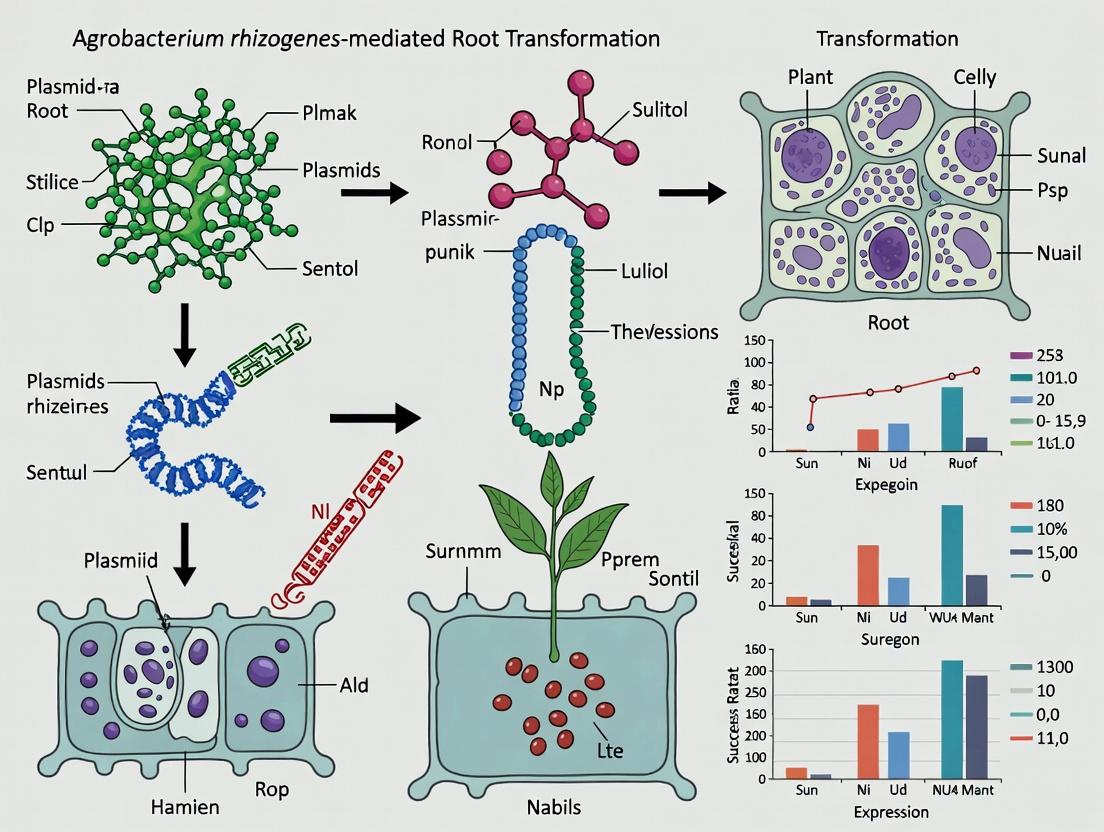
This article provides a detailed overview of Agrobacterium rhizogenes-mediated root transformation (hairy root culture), a pivotal technology for producing plant-derived pharmaceuticals and bioactive compounds.
Harnessing Agrobacterium rhizogenes Root Transformation: A Comprehensive Guide for Biomedical Research and Drug Discovery
Abstract
This article provides a detailed overview of Agrobacterium rhizogenes-mediated root transformation (hairy root culture), a pivotal technology for producing plant-derived pharmaceuticals and bioactive compounds. Aimed at researchers, scientists, and drug development professionals, the article explores the molecular biology of the Ri plasmid and T-DNA integration (Intent 1), outlines step-by-step protocols for generating and maintaining transgenic hairy root cultures in various plant species (Intent 2), addresses common experimental challenges and strategies for yield optimization (Intent 3), and compares this method to alternative expression systems while detailing validation techniques for transgenic roots and metabolite analysis (Intent 4).
Understanding Agrobacterium rhizogenes: From Ri Plasmid Biology to Biotech Potential
What is Agrobacterium rhizogenes? Defining the 'Hairy Root' Phenomenon.
Agrobacterium rhizogenes is a soil-borne, Gram-negative bacterium that causes the "hairy root" disease in dicotyledonous plants. This phenotype results from the transfer, integration, and expression of transfer DNA (T-DNA) from its Root-Inducing (Ri) plasmid into the plant genome. The integrated T-DNA carries genes that disrupt normal plant hormone balance, particularly auxin and cytokinin signaling, leading to the prolific proliferation of neoplastic (highly branched, fast-growing) root cultures at the infection site. These "hairy roots" are genetically transformed and can be excised to establish axenic cultures. This natural genetic engineering mechanism is harnessed as a powerful tool for plant biotechnology, functional genomics, and the production of valuable secondary metabolites and recombinant proteins.
Application Notes
Core Applications in Research and Industry
- Secondary Metabolite Production: Hairy root cultures serve as stable, biosynthetic factories for plant-derived pharmaceuticals (e.g., alkaloids, terpenoids, phenolics). They often show biosynthetic stability and yields comparable to or exceeding the parent plant.
- Functional Gene Analysis: Used for rapid in planta validation of gene function, particularly for root biology, nodulation, and plant-pathogen interactions, bypassing the need for full plant regeneration.
- Phytoremediation Studies: Transgenic hairy roots expressing metal-chelating genes or degradative enzymes are used to study and enhance the uptake/degradation of environmental pollutants.
- Protein Molecular Farming: Engineered to produce recombinant therapeutic proteins and antibodies in a contained, scalable system.
- Study of Plant-Pathogen Interactions: Serve as a model system to investigate infection mechanisms, especially for root-pathogenic fungi and nematodes.
Recent Quantitative Data (2022-2024)
Table 1: Recent (2022-2024) Secondary Metabolite Yields from Hairy Root Cultures
| Plant Species | Target Metabolite | Yield (mg/g Dry Weight) | Elicitor/Strategy Used | Reference (Type) |
|---|---|---|---|---|
| Ophiorrhiza mungos | Camptothecin (anti-cancer) | 4.8 ± 0.3 | Chitosan + Methyl Jasmonate | Research Article |
| Panax ginseng | Ginsenosides (Rg1) | 12.5 ± 1.2 | Precursor Feeding (Squalene) | Research Article |
| Artemisia annua | Artemisinin (anti-malarial) | 3.2 ± 0.4 | Light Stress (UV-B) | Research Article |
| Beta vulgaris | Betalains (pigments) | 45.0 ± 5.1 | Culture in Bubble Column Bioreactor | Research Article |
Table 2: Transformation Efficiency Across Plant Families (Recent Studies)
| Plant Family | Example Species | Avg. Transformation Frequency* | Preferred A. rhizogenes Strain | Key Application Focus |
|---|---|---|---|---|
| Solanaceae | Solanum lycopersicum | 65-85% | ATCC 15834 | Nematode resistance studies |
| Fabaceae | Medicago truncatula | 70-90% | ARqual1 (engineered) | Symbiosis & nodulation |
| Apocynaceae | Catharanthus roseus | 40-60% | R1000 | Terpenoid indole alkaloids |
| Lamiaceae | Salvia miltiorrhiza | 55-75% | C58C1 | Phenolic acid production |
*Frequency = (Number of explants producing hairy roots / Total explants inoculated) x 100.
Signaling Pathway in Hairy Root Induction
Diagram 1: A. rhizogenes Hairy Root Induction Pathway (76 characters)
Experimental Protocols
Protocol: Standard Hairy Root Induction and Culture
Objective: To generate and establish axenic hairy root cultures from leaf explants of a model plant (Nicotiana benthamiana).
Research Reagent Solutions & Essential Materials:
| Item/Reagent | Function/Brief Explanation |
|---|---|
| A. rhizogenes strain ATCC 15834 | Wild-type strain containing the agropine-type Ri plasmid; high virulence. |
| YEB or LB Solid/Liquid Media | For routine growth and maintenance of A. rhizogenes. |
| Acetosyringone (100 mM stock) | Phenolic signal molecule; induces vir gene expression. Pre-heat to 55°C to dissolve. |
| MS (Murashige & Skoog) Medium | Standard plant tissue culture basal salts and vitamins. |
| Co-cultivation Medium | MS solid medium + Acetosyringone (100 µM). |
| Decontamination Medium | MS solid medium + Cefotaxime (250-500 mg/L) or Timentin (300 mg/L). |
| Hormone-Free MS Liquid Medium | For maintenance and sub-culture of established hairy roots. |
| Sterile Petri Dishes & Tools | For explant preparation and bacterial co-culture. |
Methodology:
- Bacterium Preparation:
- Streak A. rhizogenes from glycerol stock onto YEB agar with appropriate antibiotics. Incubate at 28°C for 2 days.
- Pick a single colony and inoculate 5 mL liquid YEB (+ antibiotics). Grow at 28°C, 200 rpm, for 24-36h to late log phase (OD600 ≈ 0.8-1.0).
- Pellet cells (5000 x g, 10 min). Resuspend in liquid MS medium (or ½ MS) supplemented with 100 µM acetosyringone to an OD600 of 0.3-0.5.
Plant Explant Preparation:
- Surface sterilize leaves from 4-5 week old N. benthamiana plants (e.g., 70% ethanol for 30 sec, 2% sodium hypochlorite for 5 min, followed by 3x rinses with sterile water).
- Cut leaves into ~1 cm² segments, avoiding major veins.
Co-cultivation & Induction:
- Immerse leaf explants in the bacterial suspension for 10-20 minutes. Blot dry on sterile filter paper.
- Place explants abaxially on co-cultivation medium (MS + 100 µM acetosyringone, solidified). Seal plates and incubate in the dark at 25°C for 2-3 days.
Decontamination & Root Growth:
- Transfer explants to decontamination medium (MS + antibiotic, e.g., 500 mg/L cefotaxime). Sub-culture to fresh medium every 7-10 days to eliminate bacteria.
- Hairy roots typically emerge from wound sites within 1-3 weeks post-co-cultivation.
Establishing Axenic Cultures:
- Once roots are 2-3 cm long, excise individual root tips (~1-2 cm) and transfer to fresh decontamination medium for further bacterial clearance.
- Confirm axenic status by imprinting roots on YEB agar and incubating.
- Maintain established lines in hormone-free liquid MS medium on orbital shakers (80-100 rpm) in the dark at 25°C, sub-culturing every 2-3 weeks.
Protocol: Rapid PCR-Based Confirmation of Transformation
Objective: To confirm the genomic integration of Ri T-DNA in putative hairy root lines.
Workflow:
Diagram 2: PCR Confirmation of Hairy Roots Workflow (58 characters)
Methodology:
- Extract genomic DNA from 100 mg of fresh hairy root tissue using a standard CTAB protocol.
- Design PCR primers specific to Ri T-DNA genes (e.g., rolB: F 5'-GCTCTTGCAGTGCTAGATTT-3', R 5'-GAAGGTGCAAGCTACCTCTC-3'; expected product ~780 bp).
- Prepare 25 µL PCR reaction: 50 ng gDNA, 1X PCR buffer, 1.5 mM MgCl₂, 0.2 mM dNTPs, 0.2 µM each primer, 1 U Taq polymerase.
- Run PCR: Initial denaturation 94°C/5 min; 35 cycles of 94°C/30s, 58°C/30s, 72°C/1 min; final extension 72°C/5 min.
- Analyze products via 1% agarose gel electrophoresis. Transformed roots show the specific amplicon, while untransformed (control) roots do not.
Application Notes
Agrobacterium rhizogenes-mediated transformation, utilizing the Root-inducing (Ri) plasmid, is a cornerstone technique for generating genetically engineered "hairy root" cultures. These cultures are invaluable for studying root biology, producing plant secondary metabolites, and expressing recombinant proteins. The efficiency of this process hinges on the intricate functions of the Ri plasmid's core components: the T-DNA region, housing the rol (root loci) genes, and the virulence (vir) apparatus.
Core Components & Mechanism: The Ri plasmid's T-DNA is defined by left and right border sequences (TL-DNA and TR-DNA). The TL-DNA carries the pivotal rolA, rolB, rolC, and rolD genes, which are the primary drivers of the hairy root phenotype through their complex interactions with plant hormonal signaling and developmental pathways. The TR-DNA often contains auxin biosynthesis genes (aux1, aux2). Upon induction by plant-derived phenolic compounds (e.g., acetosyringone), the vir genes are activated, leading to the excision, processing, and transfer of the T-DNA into the plant cell. This single-stranded T-DNA complex is integrated into the plant genome, leading to stable transformation and the prolific production of hairy roots.
Current Research & Quantitative Insights: Recent studies continue to refine our understanding of rol gene functions and optimize transformation protocols for recalcitrant species. Key quantitative findings are summarized below.
Table 1: Quantitative Profile of Key rol Gene Functions and Effects
| Gene | Primary Function | Observed Phenotypic Effects | Reported Increase in Secondary Metabolite Yield (Example) |
|---|---|---|---|
| rolA | Interacts with auxin and cytokinin signaling; regulates cell cycle. | Wrinkled leaves, shortened internodes, enhanced root initiation. | Up to 3.5-fold in scopolamine (in Duboisia spp.) |
| rolB | β-glucosidase activity; modulates auxin sensitivity. | Primary driver of hairy root formation; extreme rooting response. | Up to 5-fold in resveratrol (in Vitis spp.) |
| rolC | Cytokinin β-glucosidase activity; alters cytokinin homeostasis. | Dwarfism, increased branching, reduced apical dominance. | Up to 8-fold in tropane alkaloids (in Atropa belladonna) |
| rolD | Ornithine cyclodeaminase; influences polyamine metabolism. | Promotes flowering and root growth in some species. | Variable, often synergistic with other rol genes. |
Table 2: Optimized Parameters for A. rhizogenes-Mediated Transformation
| Parameter | Typical Optimal Range / Value | Impact on Transformation Efficiency |
|---|---|---|
| Bacterial Strain | A4, R1000, LBA9402, ATCC15834 | Strain-dependent vir gene potency and host range. |
| Acetosyringone Concentration | 100-200 µM (in co-cultivation medium) | Critical inducer of vir genes; can increase efficiency 2-10 fold. |
| Co-cultivation Duration | 48-72 hours | Longer periods increase T-DNA transfer risk of bacterial overgrowth. |
| Co-cultivation Temperature | 19-22°C | Lower temps reduce bacterial overgrowth, improve plant cell viability. |
| Plant Explant | Leaf discs, hypocotyls, stem segments, seedlings | Explant choice is highly species-specific. |
| Selection Agent (e.g., Kanamycin) | 50-100 mg/L | Concentration must be empirically determined for each plant species. |
Detailed Protocols
Protocol 1: Hairy Root Induction in Dicotyledonous Plants
Objective: To generate stable, transgenic hairy root cultures from leaf explants using A. rhizogenes strain A4.
Research Reagent Solutions & Materials:
| Item | Function/Description |
|---|---|
| A. rhizogenes strain A4 (Ri plasmid) | Engineered strain containing the wild-type Ri plasmid for T-DNA transfer. |
| YEB Liquid & Solid Media | For cultivation and maintenance of A. rhizogenes. |
| Acetosyringone Stock Solution (100 mM in DMSO) | Phenolic compound that activates the vir gene region of the Ri plasmid. |
| MS0 Solid Medium (Murashige and Skoog salts, no hormones) | Basal medium for plant explant culture and co-cultivation. |
| Cefotaxime (or Timentin) Stock Solution (250 mg/mL in H₂O) | β-lactam antibiotic used to eliminate Agrobacterium after co-cultivation. |
| Selection Antibiotic (e.g., Kanamycin) Stock Solution | Selective agent for transgenic roots, if a selectable marker is present on the T-DNA. |
| Sterile Leaf Explants (e.g., from Nicotiana tabacum) | Target plant tissue for transformation. |
Methodology:
- Bacterial Preparation: Streak A. rhizogenes A4 from glycerol stock onto YEB solid medium with appropriate antibiotics. Incubate at 28°C for 2 days. Inoculate a single colony into 10 mL liquid YEB with antibiotics and grow overnight at 28°C with shaking (200 rpm).
- Induction: Pellet bacteria at 5000 rpm for 10 min. Resuspend in liquid MS0 medium to an OD600 of ~0.5-1.0. Add acetosyringone to a final concentration of 100 µM.
- Inoculation: Submerge sterile leaf explants (1 cm²) in the bacterial suspension for 10-30 minutes. Blot dry on sterile filter paper.
- Co-cultivation: Place explants on solid MS0 plates supplemented with 100 µM acetosyringone. Seal plates and incubate in the dark at 22°C for 48-72 hours.
- Decontamination: Transfer explants to solid MS0 plates containing cefotaxime (250-500 mg/L) to kill residual bacteria. Maintain in low light at 25°C.
- Root Induction & Selection: Hairy roots typically emerge from wound sites within 1-3 weeks. Excise individual root tips (2-3 cm) and transfer to fresh MS0 medium with cefotaxime and selection antibiotic (if applicable) for continued growth and selection of transgenic lines.
- Confirmation: Perform PCR analysis on genomic DNA from putative hairy roots using primers specific to rolB or rolC genes to confirm transformation.
Protocol 2: Molecular Confirmation of T-DNA Integration
Objective: To verify the presence of rol genes in putative hairy root lines via polymerase chain reaction (PCR).
Materials: DNA extraction kit, PCR reagents, primers specific to rolB (F: 5'-GCTCTTGCAGTGCTAGATTT-3', R: 5'-GAAGGTGCAAGCTACCTCTC-3'), thermocycler, gel electrophoresis equipment.
Methodology:
- Genomic DNA Extraction: Isolate total genomic DNA from 100 mg of hairy root tissue and a wild-type (non-transformed) root control using a standard CTAB or commercial kit protocol.
- PCR Setup: Prepare a 25 µL reaction mixture containing: 1X PCR buffer, 1.5 mM MgCl₂, 0.2 mM dNTPs, 0.4 µM each primer, 1 U Taq DNA polymerase, and 50-100 ng template DNA.
- Amplification: Run the thermocycler with the following profile: Initial denaturation at 94°C for 5 min; 35 cycles of 94°C for 30 sec, 58°C for 45 sec, 72°C for 1 min; final extension at 72°C for 7 min.
- Analysis: Separate PCR products on a 1% agarose gel stained with ethidium bromide. A ~780 bp amplicon confirms the presence of the rolB gene in transformed lines, absent in the wild-type control.
Visualizations
Diagram 1: Ri Plasmid T-DNA Transfer and Integration Mechanism
Diagram 2: Workflow for Hairy Root Induction & Culture
Diagram 3:rolGene Actions in Plant Hormone Pathways
The Unique Advantages of Hairy Root Cultures for Secondary Metabolite Production
Application Notes
Hairy root cultures, generated via Agrobacterium rhizogenes-mediated transformation, offer a stable, fast-growing, and genetically defined platform for producing valuable plant secondary metabolites (PSMs). Within the broader thesis on A. rhizogenes research, these cultures address key limitations of whole-plant extraction and undifferentiated cell suspensions, namely low yield, environmental variability, and genetic instability.
Core Advantages:
- Genetic & Biochemical Stability: Transformed roots maintain stable PSM production over many generations due to the integration of T-DNA from the Ri plasmid, unlike cell cultures that often lose biosynthetic capacity.
- High Growth Rates: Autotrophic for phytohormones due to rol gene expression, leading to rapid biomass accumulation without expensive growth regulators.
- Exudation & Recovery: Roots often excrete metabolites into the culture medium, simplifying downstream recovery and reducing feedback inhibition.
- Biosynthetic Capacity: They retain the differentiated organ's biochemical pathways, often producing metabolites at levels comparable to or exceeding the native root.
- Scalability: Amenable to scaled-up production in various bioreactor configurations (e.g., stirred-tank, bubble column, mist).
Quantitative Advantages: Representative Data
The following table summarizes recent comparative studies highlighting the productive potential of hairy root cultures.
Table 1: Representative Secondary Metabolite Yields in Hairy Root Cultures vs. Natural Roots/Plants
| Plant Species | Target Compound (Class) | Hairy Root Yield (Dry Weight %) | Natural Plant/Root Yield (Dry Weight %) | Fold Increase | Key Elicitor/Strategy Used (If Applicable) |
|---|---|---|---|---|---|
| Panax ginseng | Ginsenosides (Saponin) | 2.8% | 1.5% | 1.9 | Methyl jasmonate (100 µM) |
| Artemisia annua | Artemisinin (Sesquiterpene) | 0.45% | 0.22% | 2.0 | Chitosan Oligosaccharide |
| Salvia miltiorrhiza | Tanshinones (Diterpenoid) | 2.1% | 0.8% | 2.6 | Yeast Extract + Ag⁺ |
| Catharanthus roseus | Ajmalicine (Alkaloid) | 0.3% | 0.05% | 6.0 | Fungal homogenate |
| Beta vulgaris | Betalains (Pigment) | 1.15 g/L (in medium) | N/A | N/A | Light exposure (Red/Blue LED) |
Detailed Protocols
Protocol 1: Establishment of Hairy Root Cultures viaA. rhizogenes(Leaf Disc Method)
Research Reagent Solutions & Essential Materials
| Item | Function/Explanation |
|---|---|
| Sterile Explant (e.g., Leaf Disc) | Source of competent plant cells for T-DNA integration. |
| A. rhizogenes Strain (e.g., R1000, ATCC 15834) | Contains Ri plasmid with T-DNA responsible for hairy root induction. |
| Acetosyringone | Phenolic compound that induces vir gene expression in Agrobacterium. |
| MS (Murashige & Skoog) Basal Medium | Standard plant tissue culture nutrient medium. |
| Antibiotics (Cefotaxime, Timentin) | Eliminate Agrobacterium post-co-cultivation without harming plant tissue. |
| Selective Agent (e.g., Kanamycin) | Selects for transformed roots if using a binary vector with a plant resistance gene. |
| PCR Primers for rol Genes | Confirm genetic transformation at the molecular level. |
Methodology:
- Bacterial Preparation: Inoculate A. rhizogenes from a glycerol stock into LB broth with appropriate antibiotics. Grow overnight (28°C, 200 rpm) to mid-log phase.
- Induction: Pellet bacteria and re-suspend in MS liquid medium supplemented with 100-200 µM acetosyringone to an OD₆₀₀ of ~0.5. Induce for 30-60 minutes.
- Explant Preparation: Surface-sterilize leaves, cut into 0.5-1 cm² discs.
- Co-cultivation: Immerse explants in the induced bacterial suspension for 10-30 minutes. Blot dry and place on solid MS medium without antibiotics. Co-cultivate in the dark at 25°C for 2-3 days.
- Decontamination & Selection: Transfer explants to solid MS medium containing antibiotics (e.g., 400 mg/L cefotaxime) to kill Agrobacterium. For binary vector systems, include the appropriate selective agent.
- Root Initiation & Excision: Hairy roots emerge from infection sites in 1-3 weeks. Excise individual root tips (2-3 cm) and transfer to fresh antibiotic-containing medium for further growth.
- Confirmation: Perform PCR on genomic DNA from putative hairy roots using primers for rolB or rolC genes to confirm transformation.
Methodology:
- Culture Preparation: Establish uniformly growing hairy root lines in liquid medium (e.g., in 250 mL flasks). Use roots in their late exponential growth phase.
- Elicitor Preparation: Prepare a stock solution of the chosen elicitor (e.g., 1 mg/mL methyl jasmonate in ethanol, 100 mg/mL chitosan in weak acid). Filter-sterilize (0.22 µm).
- Treatment: Add elicitor directly to the culture medium at the predetermined optimal concentration (e.g., 100 µM MeJA, 50 mg/L chitosan). A control flask receives an equal volume of the solvent alone.
- Incubation: Continue incubation under standard growth conditions. Harvest roots and medium in a time-course manner (e.g., 24, 48, 72, 96 hours post-elicitation).
- Analysis: Separate roots from medium. Dry roots for biomass measurement. Extract metabolites from both roots and medium separately using appropriate solvents (e.g., methanol, ethyl acetate). Quantify target PSM using HPLC or LC-MS.
Diagrams
Title: Hairy Root Formation & Key Advantages
Title: Elicitor-Induced Signaling in Hairy Roots
Historical Milestones and Evolution of Hairy Root Technology in Research
Application Notes
Hairy root technology, mediated by the soil bacterium Agrobacterium rhizogenes, has evolved from a botanical curiosity to a cornerstone tool in plant biotechnology and molecular pharming. Its integration into a broader thesis on A. rhizogenes-mediated transformation underscores its pivotal role in elucidating root biology, metabolic engineering, and the sustainable production of valuable secondary metabolites. The technology leverages the natural gene transfer mechanism of A. rhizogenes, which transfers T-DNA from its Root-Inducing (Ri) plasmid into the plant genome, leading to the prolific growth of genetically transformed "hairy roots." These roots are characterized by rapid growth in hormone-free media, high genetic stability, and biosynthetic capabilities often akin to the parent plant.
1. Foundational Phase (Early 1900s–1970s): The journey began with the observation of "hairy root" disease in orchards. The causal agent, A. rhizogenes, was identified. This period established the pathogenic basis but lacked molecular understanding.
2. Molecular Mechanism & Early Biotech (1980s–1990s): The discovery of the Ri plasmid and the rol (root loci) genes provided the molecular framework. Key milestones included the first successful generation of transgenic hairy roots and their use for studying root-pathogen interactions. The technology's potential for producing plant-derived chemicals was recognized.
3. Expansion & Metabolic Engineering (2000s–2010s): Hairy roots became a mainstream platform for the heterologous expression of recombinant proteins and the metabolic engineering of secondary metabolic pathways. Advances in gene editing (CRISPR/Cas9) were adapted for hairy roots, enabling precise genome modifications.
4. Current Era – Omics & Scale-Up (2020s–Present): Integration with multi-omics (transcriptomics, proteomics, metabolomics) allows for systems-level analysis of hairy root systems. Research focuses on scaling up production in bioreactors for industrial applications, including the synthesis of high-value pharmaceuticals (e.g., antibodies, vaccines, anti-cancer compounds) and nutraceuticals.
Quantitative Data Summary
Table 1: Evolution of Hairy Root Productivity for Selected Compounds
| Compound Class | Example Compound | Early Yield (1980s-90s) | Engineered Yield (2020s) | Fold Increase | Key Engineering Strategy |
|---|---|---|---|---|---|
| Alkaloids | Scopolamine | 0.1–0.5 mg/g DW | 5–10 mg/g DW | 10-100x | Overexpression of rate-limiting enzymes (e.g., H6H) |
| Phenolics | Resveratrol | ~1 mg/g DW | 20–40 mg/g DW | 20-40x | Expression of transcription factors (e.g., VvMYB14) |
| Recombinant Proteins | IgG Antibody | 0.01–0.1% TSP | 1–5% TSP | 10-50x | Codon optimization, secretory signal peptides |
| Terpenoids | Paclitaxel (precursors) | Trace amounts | 0.5–1.5 mg/g DW | N/A | Combinatorial pathway gene overexpression |
Table 2: Comparative Analysis of Hairy Root Induction Efficiency Across Species
| Plant Family | Model Species | Typical Induction Efficiency (%) | Optimal A. rhizogenes Strain (Common) | Notes |
|---|---|---|---|---|
| Solanaceae | Nicotiana benthamiana | 85–100 | ATCC 15834, A4 | High susceptibility, model for transient assays. |
| Fabaceae | Medicago truncatula | 70–90 | ARqual, ATCC 15834 | Excellent for symbiotic studies. |
| Apocynaceae | Catharanthus roseus | 30–60 | A4 | Challenging but critical for terpenoid indole alkaloids. |
| Asteraceae | Artemisia annua | 40–80 | R1000, ATCC 15834 | Key for artemisinin pathway engineering. |
Experimental Protocols
Protocol 1: Standard Hairy Root Induction and Cultivation Objective: To generate transgenic hairy roots from explants of a target plant species.
- Explant Preparation: Surface-sterilize seeds or young leaves. Germinate seeds in vitro or use 1-2 cm leaf discs.
- Bacterial Culture: Grow A. rhizogenes (e.g., strain ATCC 15834) carrying desired binary vector in YEB medium with appropriate antibiotics (e.g., rifampicin, kanamycin) at 28°C to OD600 ~0.6-0.8.
- Infection & Co-cultivation: Wound explants lightly. Immerse in bacterial suspension for 10-20 min. Blot dry and place on co-cultivation medium (MS basal salts, no antibiotics). Incubate in dark at 25°C for 2-3 days.
- Decontamination & Root Induction: Transfer explants to decontamination medium (MS salts + appropriate antibiotic, e.g., cefotaxime 300-500 mg/L, to kill bacteria). Incubate under low light or dark.
- Root Excission & Maintenance: After 2-4 weeks, excise emerging hairy roots (~2-3 cm) and transfer to fresh hormone-free liquid or solid medium with antibiotics for bacterial decontamination. Subculture every 3-4 weeks.
Protocol 2: CRISPR/Cas9 Genome Editing in Hairy Roots Objective: To create targeted gene knockouts in hairy roots using A. rhizogenes-delivered CRISPR/Cas9.
- Vector Design: Clone species-specific sgRNA(s) targeting the gene of interest into a CRISPR/Cas9 binary vector (e.g., pFGC-pcoCas9) harboring a plant selection marker (e.g., DsRed1).
- Transformation: Introduce the binary vector into A. rhizogenes (e.g., ARqual) via electroporation.
- Hairy Root Induction: Follow Protocol 1 using the engineered A. rhizogenes.
- Selection & Screening: Under appropriate selection (e.g., fluorescence for DsRed1), isolate positive root lines. Genotypically confirm edits via PCR/RE assay or sequencing.
- Phenotypic Analysis: Assess the metabolic or developmental phenotype of edited root lines versus wild-type hairy roots.
Diagrams
Title: A. rhizogenes-Mediated Hairy Root Induction Pathway
Title: CRISPR/Cas9 Editing Workflow in Hairy Roots
The Scientist's Toolkit: Research Reagent Solutions
Table 3: Essential Materials for Hairy Root Research
| Item | Function/Benefit | Example/Note |
|---|---|---|
| A. rhizogenes Strains | Differ in host range and virulence. | ATCC 15834 (A4): Broad host range. ARqual: Excellent for legumes; disarmed (no wild-type Ri). R1000: Contains pRiA4b. |
| Binary Vectors | Carry gene of interest for co-transformation with Ri T-DNA. | pBIN19, pCAMBIA series: Standard backbones. pK7WG2D: Gateway-compatible for fast cloning. |
| Selection Antibiotics | For bacterial selection (pre-culture) and plant decontamination. | Bacterial: Rifampicin, Kanamycin. Plant/Decontam.: Cefotaxime, Timentin. |
| Plant Tissue Culture Media | Support explant survival and root growth. | MS (Murashige & Skoog) Basal Salts: Industry standard. B5 (Gamborg's) Medium: Often preferred for root cultures. |
| Visual Selection Markers | Non-destructive screening of transgenic roots. | DsRed1, GFP: Fluorescent proteins. GUS (β-glucuronidase): Histochemical stain. |
| Hormone-Free Media | Essential for maintaining hairy root phenotype. | Confirms transformation; wild-type roots do not proliferate. |
| CRISPR/Cas9 System | For precise genome editing in roots. | pFGC-pcoCas9: A common binary vector for plant CRISPR. |
| Bioreactor Systems | For scaled-up production of metabolites/biomass. | Bubble Column, Trickle Bed: Provide aeration, nutrient mixing. |
Key Plant Species and Model Systems for A. rhizogenes Transformation
Within the broader thesis on Agrobacterium rhizogenes-mediated root transformation, selecting appropriate plant species and model systems is foundational. This application note details key species, quantitative transformation efficiencies, and standardized protocols to establish composite plants (transgenic roots on a wild-type shoot) for functional gene studies, metabolic engineering, and plant-microbe interactions.
Key Plant Species and Model Systems
Agrobacterium rhizogenes transformation is applicable across a wide phylogenetic range, but efficiency varies significantly. The following table categorizes key species by research application and typical transformation efficiency.
Table 1: Key Plant Species for Hairy Root Transformation
| Species | Common Name | Primary Research Application | Typical Strain(s) | Average Transformation Efficiency (%) | Time to Root Emergence (days) |
|---|---|---|---|---|---|
| Medicago truncatula | Barrel Medic | Legume symbiosis, metabolism | Arqual, K599 | 65-85 | 10-14 |
| Glycine max | Soybean | Functional genomics, agriculture | K599, AR1193 | 40-70 | 14-21 |
| Solanum lycopersicum | Tomato | Plant-pathogen interaction | R1000, A4 | 70-90 | 10-18 |
| Nicotiana benthamiana | Tobacco | Transient expression, virology | MSU440 | 85-95 | 7-12 |
| Arabidopsis thaliana | Thalecress | Signaling pathways, mutant analysis | Arqual | 60-80 | 12-16 |
| Catharanthus roseus | Madagascar Periwinkle | Alkaloid production, drug development | LBA9402 | 50-75 | 18-25 |
| Panax ginseng | Ginseng | Triterpene saponin production | R1000 | 30-50 | 30-45 |
| Artemisia annua | Sweet Wormwood | Artemisinin production | ATCC15834 | 45-65 | 20-28 |
Detailed Protocols
Protocol 1: Standard Hairy Root Induction in Dicotyledonous Plants (e.g.,Medicago truncatula,Tomato)
Objective: Generate composite plants with transgenic roots for functional studies.
Materials:
- Plant Material: Surface-sterilized seeds or sterile seedlings.
- A. rhizogenes Strain: e.g., Arqual or R1000 harboring the desired binary vector (e.g., pCAMBIA, pBIN19 with GFP reporter).
- Media: Solid and liquid Yeast Extract Broth (YEB) with appropriate antibiotics, ½ B5 or MS plant media.
Method:
- Bacterial Preparation: Inoculate a single colony of A. rhizogenes into 5 mL of liquid YEB with antibiotics. Grow overnight at 28°C, 200 rpm.
- Plant Preparation: Germinate seeds on agar plates. Use 5-7 day old seedlings.
- Infection: Wound the hypocotyl or stem with a syringe needle dipped in the bacterial culture. Alternatively, cut the seedling at the radicle and dip the cut end into bacterial pellet resuspended in ¼ MS liquid medium.
- Co-cultivation: Place wounded seedlings on hormone-free ½ B5 agar plates. Wrap plates and incubate in the dark at 22-24°C for 48 hours.
- Root Induction & Selection: Transfer seedlings to fresh ½ B5 agar plates containing antibiotics (e.g., cefotaxime) to kill bacteria and selective agents (e.g., kanamycin) to select for transformed roots. Maintain at 24°C with a 16/8h light/dark cycle.
- Root Excission & Subculture: After 2-4 weeks, excise emerging secondary roots and transfer to fresh selective medium to establish clonal hairy root lines. Confirm transformation via reporter gene expression or PCR.
Protocol 2: High-Throughput Root Phenotyping inArabidopsis thaliana
Objective: Rapid generation of hairy roots for quantitative phenotyping assays.
Method:
- Follow Protocol 1, using A. thaliana (Columbia-0) seedlings grown vertically on plates.
- Modified Infection: Directly prick the primary root tip or emerging lateral root primordia of 5-day-old seedlings.
- Vertical Growth: After co-cultivation, transfer seedlings to fresh selective medium plates oriented vertically. This encourages geotropic growth of transformed roots for easy imaging.
- Phenotyping: After 10-14 days, image roots using a stereomicroscope. Quantify parameters like root length, lateral root density, and GFP fluorescence intensity using software (e.g., ImageJ).
Visualization: Experimental Workflow and Signaling
Diagram Title: Workflow for Composite Plant Generation
Diagram Title: Key Signaling in A. rhizogenes Transformation
The Scientist's Toolkit: Research Reagent Solutions
Table 2: Essential Materials for Hairy Root Transformation
| Reagent/Material | Supplier Examples | Function in Protocol |
|---|---|---|
| Arqual, K599, R1000 A. rhizogenes Strains | Lab stocks, CGMCC, ATCC | Engineered 'disarmed' or wild-type strains for optimal root induction in specific species. |
| Binary Vectors (e.g., pCAMBIA1302, pB7WG2) | Addgene, Cambia | Carry gene of interest and plant selection marker between T-DNA borders. |
| Acetosyringone | Sigma-Aldrich, Thermo Fisher | Phenolic compound added to co-cultivation medium to induce bacterial vir genes. |
| Cefotaxime/Timentin | GoldBio, Thermo Fisher | Beta-lactam antibiotics used post-co-cultivation to eliminate residual Agrobacterium. |
| Selective Agents (Kanamycin, Hygromycin B) | BioBasic, Roche | Plant-usable antibiotics/herbicides for selecting transformed tissue based on vector marker. |
| ½ B5 Gamborg / MS Basal Salt Mixtures | PhytoTech Labs, Duchefa | Hormone-free media formulations for hairy root induction and maintenance. |
| Gelling Agent (Phytagel, Agar) | Sigma-Aldrich | Provides solid support for plant growth; Phytagel offers superior clarity for root imaging. |
| GFP/mCherry Reporter Seed Stocks | Arabidopsis Biological Resource Center (ABRC) | Transgenic seeds expressing fluorescent proteins in specific cell types for root tracking. |
Step-by-Step Protocols: Establishing and Applying Hairy Root Cultures
Within a broader thesis on Agrobacterium rhizogenes-mediated root transformation, selecting the appropriate bacterial strain is a foundational decision. This choice directly impacts transformation efficiency, transgene expression stability, the metabolic profile of hairy roots, and the suitability of the platform for downstream applications, such as the production of plant-derived specialized metabolites for drug development. The core distinction lies between wild-type (WT) strains, containing their native root-inducing (Ri) plasmid, and engineered strains, where the Ri plasmid has been modified—often disarmed or tailored—for specific purposes. This Application Note provides a comparative analysis and detailed protocols to guide researchers in making informed strain selections for their experimental goals.
Comparative Analysis: Key Characteristics and Applications
Table 1: Comparative Overview of Wild-type vs. Engineered A. rhizogenes Strains
| Feature | Wild-type (WT) Strains (e.g., A4, ATCC 15834, LBA9402) | Engineered/Disarmed Strains (e.g., R1000, K599, ARqua1) |
|---|---|---|
| Ri Plasmid | Native, intact plasmid containing T-DNA and virulence (vir) genes. | Modified. Often "disarmed" (oncogenes rol and aux genes removed from T-DNA). |
| Primary Result | Hairy root syndrome: prolific, fast-growing, highly branched roots. | "Composite plants": transgenic roots on a non-transgenic shoot (wild-type plant). |
| T-DNA Transfer | Transfers both TL-DNA (containing root oncogenes) and TR-DNA. | Typically transfers only a modified T-DNA containing the gene(s) of interest (GOI). |
| Root Phenotype | Classic, hormone-independent hairy root morphology. Can be excessive. | Roots with more natural morphology, dependent on host plant's hormones. |
| Key Applications | 1. Mass biomass production for metabolite extraction.2. Studies of root biology/pathogenesis.3. Host-pathogen interaction studies. | 1. Functional gene analysis (RNAi, overexpression).2. Protein subcellular localization.3. Gene editing (CRISPR/Cas) in roots.4. Stable, high-precision metabolite engineering. |
| Transgene Expression | Can be variable; influenced by endogenous oncogenes. | Generally more stable and predictable, as root growth is less perturbed. |
| Transformation Efficiency | Very high. Native vir genes efficiently induce root formation. | Can be lower than WT; efficiency depends on engineered plasmid design and helper strain. |
| Experimental Duration | Shorter time to establish hairy root cultures. | May require additional step of plant co-cultivation for composite plant generation. |
Table 2: Quantitative Performance Metrics for Common Strains
| Strain | Type | Typical Transformation Efficiency* (% of explants) | Average Root Initiation Time (days) | Notable Plant Host Range |
|---|---|---|---|---|
| A4 | Wild-type | 70-95% | 10-14 | Broad (dicots, some gymnosperms) |
| ATCC 15834 | Wild-type | 65-90% | 12-16 | Very broad, commonly used for solanaceous plants |
| LBA9402 | Wild-type | 60-85% | 14-18 | Effective in legumes (e.g., Medicago) |
| R1000 | Engineered (disarmed) | 40-75% | 14-21 | Broad, used with binary vectors (e.g., pBIN19-based) |
| K599 | Engineered (pRi2659 T-DNA deleted) | 50-80% | 12-18 | Excellent for soybean, common bean |
| ARqua1 | Engineered (super-virulent, liquid culture optimized) | 75-95% | 10-15 | Optimized for high-throughput in liquid media |
*Efficiency is highly dependent on plant species, explant type, and protocol.
Experimental Protocols
Protocol 1: Hairy Root Induction for Metabolite Production (Using Wild-type A4)
Purpose: To generate high-biomass, transgenic hairy root cultures for the extraction and analysis of specialized metabolites (e.g., alkaloids, terpenes).
Materials:
- A. rhizogenes strain A4 (wild-type).
- Plant material: sterile leaf discs or stem segments from target species (e.g., Nicotiana benthamiana, Artemisia annua).
- YEB Liquid & Solid Media (with appropriate antibiotics if maintaining an engineered binary vector).
- Co-cultivation Media (MS basal salts, no hormones).
- Hairy Root Induction & Maintenance Media (MS or B5 basal salts, no hormones, plus antibiotic to kill bacteria, e.g., cefotaxime 250-500 mg/L).
Procedure:
- Bacterial Preparation: Inoculate a single colony of A. rhizogenes A4 into 5 mL YEB liquid medium (+ antibiotics). Incubate at 28°C, 200 rpm for 24-48h until OD600 ~0.6-1.0.
- Plant Explant Preparation: Surface sterilize plant leaves/stems. Cut into 0.5-1 cm² explants.
- Infection & Co-cultivation: Briefly wound explant edges. Submerge explants in bacterial suspension for 5-10 minutes. Blot dry on sterile paper and place on co-cultivation media. Incubate in the dark at 23-25°C for 2-3 days.
- Decontamination & Root Induction: Transfer explants to hairy root induction media containing cefotaxime. Incubate in low light at 25°C. Roots should emerge from wound sites in 1-3 weeks.
- Excision & Sub-culture: Excise individual root tips (~2 cm) and transfer to fresh maintenance media without cefotaxime (after confirming bacterial elimination). Establish clonal lines.
Protocol 2: Generating Composite Plants for Gene Functional Studies (Using Engineered Strain R1000)
Purpose: To produce transgenic roots harboring a gene of interest (GOI) for functional analysis (e.g., silencing, overexpression) on a non-transgenic shoot.
Materials:
- A. rhizogenes strain R1000 (disarmed, containing a binary vector with GOI).
- Plant seeds (e.g., soybean, tomato, Medicago truncatula).
- Fåhraeus Slide or Magenta box with sterile vermiculite/perlite.
- B&D or Fåhraeus medium for legume seedlings.
Procedure:
- Seed Germination: Surface sterilize seeds and germinate on agar or in rolled paper towels until radicle is 2-4 cm long.
- Bacterial Preparation: Grow R1000 (with binary vector) as in Protocol 1.
- Seedling Infection: Using a sterile syringe needle dipped in bacterial culture, puncture the hypocotyl of the seedling just below the cotyledonary node.
- Plant Growth: Place wounded seedling in a Fåhraeus slide with liquid medium or plant in vermiculite/perlite moistened with medium. Grow under controlled conditions (light, 22-25°C).
- Transgenic Root Selection: Transgenic roots (expressing a visible marker like DsRED) will emerge from the wound site in 2-4 weeks. Non-transgenic roots can be pruned. The resulting plant has a wild-type shoot and transgenic root system.
- Phenotyping: Use the composite plant for assays like nutrient uptake, pathogen challenge, or nodulation (in legumes).
Visualizations
Title: Strain Selection Workflow Based on Research Goal
Title: T-DNA Structure Comparison in Wild-type vs Engineered Strains
The Scientist's Toolkit: Essential Research Reagent Solutions
Table 3: Key Reagents and Materials for A. rhizogenes Transformation
| Item | Function & Specification | Example/Catalog Note |
|---|---|---|
| Wild-type A. rhizogenes Strains | Source of native Ri plasmid for high-efficiency, oncogenic root induction. | A4 (NCPPB 1855), ATCC 15834, LBA9402. Obtain from culture collections. |
| Disarmed/Engineered Strains | Helper strains providing Vir proteins to transfer engineered T-DNA without oncogenes. | R1000 (pRiA4b disarmed), K599 (pRi2659 T-DNA deleted). |
| Binary Vectors | Plasmid containing GOI and selection marker between T-DNA borders. Transfers into plant. | pBIN19-based, pCAMBIA, Gateway-compatible (pK7WG2D), CRISPR vectors (pHEE401E). |
| Plant Tissue Culture Media | Basal salt mixtures for explant co-cultivation and hairy root growth. Hormone-free. | Murashige and Skoog (MS), Gamborg's B5. Use plant-specific formulations. |
| Antibiotics (Bacterial Selection) | Maintain plasmid selectivity in Agrobacterium. | Rifampicin (strain resistance), Spectinomycin, Kanamycin (for binary vector). |
| Antibiotics (Plant Decontamination) | Eliminate Agrobacterium after co-cultivation without harming plant tissue. | Cefotaxime, Timentin (carbenicillin/ticarcillin). Typical concentration: 250-500 mg/L. |
| Selective Agents (Plant) | Select for transformed plant cells/roots based on binary vector marker. | Kanamycin, Hygromycin B, Phosphinothricin (Glufosinate/BASTA). Concentration is species-dependent. |
| Visual Reporter Markers | Enable rapid, non-destructive screening of transgenic roots. | DsRED1, tdTomato (fluorescent), GUS (β-glucuronidase, histochemical). |
| Gelling Agents | Provide solid support for explants and root cultures. | Phytagel (preferred for clarity), Agar (bacteriological grade). |
| Acetosyringone | Phenolic compound that induces the vir gene region of the Ri plasmid, enhancing transformation. | Add to co-cultivation media (100-200 µM). Prepare fresh from stock in DMSO. |
The selection and preparation of optimal explants are foundational to successful Agrobacterium rhizogenes-mediated root transformation ("hairy root" induction). The physiological state, wounding response, and regenerative capacity of the explant tissue directly influence the efficiency of T-DNA transfer, integration, and subsequent transgenic root emergence. This protocol details standardized procedures for preparing three commonly used explant types—leaves, cotyledons, and stem segments—tailored for maximizing transformation frequency in root biology and molecular pharming research.
Comparative Analysis of Explant Types
Table 1: Characteristics and Transformation Suitability of Different Explant Types
| Explant Type | Optimal Developmental Stage | Average Transformation Efficiency Range* | Key Advantages | Primary Considerations |
|---|---|---|---|---|
| Leaf Discs | Young, fully expanded leaves from in vitro plantlets. | 40-70% | High regenerative capacity, abundant material, uniform cell population. | Susceptible to phenolic browning; requires precise wounding. |
| Cotyledons | 5-10 day-old sterile seedlings. | 50-85% (species-dependent) | Highly competent, juvenile cells with high division rates. | Limited temporal window for optimal use. |
| Stem Segments | Internodal sections from in vitro grown shoots. | 30-60% | Provides direct site for root emergence from vascular tissue; robust. | May harbor more endogenous microbes; lower cell competency in some species. |
Efficiency is defined as the percentage of explants producing at least one transgenic, kanamycin-resistant hairy root. Ranges are illustrative and highly species/genotype-dependent.
Detailed Protocols
Protocol 1: Preparation of Leaf Disc Explants
Application: Ideal for species with high leaf regeneration potential (e.g., Nicotiana tabacum, Solanum lycopersicum).
- Source Material: Use 4-6 week-old, sterile, in vitro-grown plantlets.
- Surface Sterilization (if required): Rinse leaf in 70% (v/v) ethanol for 30 sec, then treat with 2% (v/v) sodium hypochlorite solution (+ 1 drop Tween-20) for 10 min. Rinse 3x with sterile distilled water.
- Excision: Place leaf on sterile filter paper. Using a sterile cork borer (4-6 mm diameter), punch discs from the interveinal lamina. Avoid major veins.
- Wounding: Gently puncture each disc 3-4 times with a sterile needle to increase Agrobacterium infection sites.
- Pre-culture: Place discs, abaxial side down, on co-cultivation medium (MS basal salts, 3% sucrose, 0.8% agar, pH 5.8). Incubate in dark for 24 h at 25°C prior to inoculation.
Protocol 2: Preparation of Cotyledon Explants
Application: Highly effective for seedlings of many dicots (e.g., Cucumis sativus, Glycine max).
- Seed Sterilization: Surface-sterilize seeds with 70% ethanol (1 min), then 3% sodium hypochlorite (15 min). Rinse 5x with sterile water.
- Germination: Sow seeds on hormone-free MS agar medium. Grow under 16-h photoperiod (50 µmol m⁻² s⁻¹) at 25°C for 5-10 days.
- Excision: Using sterile forceps and scalpel, excise cotyledons from the seedling. Remove the petiole.
- Wounding: Make a single transverse cut across the midvein or create a shallow incision on the adaxial surface.
- Orientation: Place cotyledons with the adaxial (top) side in contact with the co-cultivation medium.
Protocol 3: Preparation of Stem Segment Explants
Application: Suitable for plants with strong nodal competence (e.g., Medicago truncatula, Catharanthus roseus).
- Source Material: Use 6-8 week-old in vitro shoot cultures.
- Excision: Cut 1.0-1.5 cm internodal segments using a sterile scalpel. Remove all leaves and axillary buds.
- Wounding & Orientation: Make a longitudinal slit along the segment to expose the vascular cambium. Place segments horizontally on the medium.
- Pre-treatment (Optional): A brief (1 h) immersion in a dilute auxin solution (e.g., 1 µM NAA) can enhance subsequent root induction.
The Scientist's Toolkit: Research Reagent Solutions
Table 2: Essential Materials for Explant Preparation
| Item | Function & Rationale |
|---|---|
| Murashige and Skoog (MS) Basal Salt Mixture | Provides essential macro and micronutrients for explant survival and initial cell division. |
| Plant Agar (Phytagel) | Solidifying agent; provides mechanical support for explants. |
| Sodium Hypochlorite (NaClO) | Common surface sterilant; eliminates epiphytic microbes without excessive tissue toxicity. |
| Sterile Cork Borer (4-6 mm) | Ensures uniform size and shape of leaf disc explants, standardizing experimental conditions. |
| Acetosyringone | Phenolic compound added to co-cultivation media to induce Agrobacterium vir gene expression, critical for T-DNA transfer. |
| Antioxidant Solution (e.g., Ascorbic Acid/Citric Acid) | Prevents phenolic oxidation and browning of wounded explant tissues, maintaining viability. |
| Selective Antibiotic (e.g., Kanamycin) | Incorporated post-co-cultivation to inhibit growth of non-transformed tissue and select for transgenic hairy roots. |
Visualization of Workflow and Signaling
Title: General Workflow for Plant Explant Preparation
Title: Key Signaling from Wounding to T-DNA Transfer
Within the broader thesis on Agrobacterium rhizogenes-mediated root transformation, the initial phases of co-cultivation and induction are critical determinants of successful transgenic hairy root initiation. This protocol details the standardized, reproducible steps for exploiting the natural gene transfer machinery of A. rhizogenes to generate composite plants with transgenic roots. The methodology is foundational for functional genomics studies, metabolic engineering, and the production of root-derived pharmaceuticals.
Key Research Reagent Solutions
The following reagents and materials are essential for the successful execution of the hairy root induction protocol.
| Reagent/Material | Function in Protocol |
|---|---|
| A. rhizogenes strain (e.g., R1000, K599, ARqua1) | Engineered disarmed strain containing the Ri plasmid with rol genes and optional binary vector with gene of interest/selection marker. |
| Acetosyringone (100 µM - 200 µM) | Phenolic compound that induces Vir gene expression on the Ri plasmid, activating the bacterial T-DNA transfer machinery. |
| MS (Murashige and Skoog) Medium | Standard plant tissue culture medium providing essential macro and micronutrients for explant viability during co-cultivation. |
| Antibiotics (e.g., Cefotaxime, Timentin) | Used post-co-cultivation to eliminate residual Agrobacterium without harming plant tissues. |
| Selection Antibiotic (e.g., Kanamycin, Hygromycin) | Selective agent to identify transformed roots expressing the resistance gene from the T-DNA. |
| Cytokinin (e.g., 6-Benzylaminopurine - BAP) | Often included in induction media to promote cell division at wound sites, enhancing transformation efficiency. |
| Pluronic F-68 | Surfactant added to bacterial suspension to reduce explant tissue damage and improve bacterial contact. |
Detailed Protocol for Co-cultivation and Induction
Preparation ofAgrobacterium rhizogenesCulture
- Streak and Grow: Streak the desired A. rhizogenes strain from a -80°C glycerol stock onto solid YEB or LB medium containing appropriate antibiotics for plasmid selection. Incubate plates at 28°C for 48 hours.
- Liquid Starter Culture: Pick a single colony and inoculate 5-10 mL of liquid YEB/LB medium with antibiotics. Shake (200 rpm) at 28°C for 24 hours.
- Induction Culture: Dilute the starter culture 1:50 into fresh, low-phosphate liquid medium (e.g., MGL or YEB) supplemented with 100-200 µM acetosyringone. Grow to an optical density (OD₆₀₀) of 0.5-0.8. Centrifuge (5000 x g, 10 min) and resuspend the bacterial pellet in an equal volume of liquid induction medium (MS salts, vitamins, sucrose, acetosyringone, pH 5.2). Add Pluronic F-68 to 0.01-0.02%.
Plant Explant Preparation and Inoculation
- Explant Source: Surface sterilize seeds or use sterile seedlings. Common explants include stem internodes, hypocotyls, or leaf petioles.
- Wounding: Make precise, shallow cuts at the explant site using a sterile scalpel.
- Inoculation: Immerse the wounded explant in the induced Agrobacterium suspension for 10-30 minutes with gentle agitation. Briefly blot on sterile paper to remove excess liquid.
Co-cultivation Phase
- Setup: Place the inoculated explants on solidified co-cultivation medium (MS medium, acetosyringone, sometimes low-concentration cytokinin like 0.1 mg/L BAP, no antibiotics). Ensure good contact between wounded tissue and medium.
- Conditions: Incubate plates in the dark at 22-25°C for 48-72 hours. This period allows for bacterial attachment, vir gene induction, and T-DNA transfer and integration.
Hairy Root Induction and Initiation
- Transfer to Induction/Selection: After co-cultivation, transfer explants to solidified induction/selection medium. This medium contains:
- MS salts and vitamins
- Antibiotics to kill Agrobacterium (e.g., 300-500 mg/L cefotaxime)
- Selection agent appropriate for the T-DNA (e.g., 50-100 mg/L kanamycin)
- No auxins, as hairy root growth is auxin-autotrophic.
- Incubation: Maintain explants under a 16/8-hour light/dark photoperiod at 25°C. Roots should initiate from wound sites within 7-21 days.
- Subculture: Excise emerging root tips (>1 cm) and transfer to fresh selection medium for continued growth and confirmation of transformation.
Critical parameters influencing transformation efficiency are summarized below.
Table 1: Optimization Parameters for Hairy Root Induction
| Parameter | Typical Range Tested | Optimal Value for Most Species (General) | Impact on Efficiency |
|---|---|---|---|
| Acetosyringone Concentration | 0 - 400 µM | 100 - 200 µM | Essential; Maximizes vir gene induction. |
| Co-cultivation Duration | 1 - 5 days | 2 - 3 days | Below 2 days reduces T-DNA transfer; beyond 3 days increases bacterial overgrowth. |
| Bacterial OD₆₀₀ at Inoculation | 0.1 - 1.2 | 0.5 - 0.8 | Lower ODs reduce infection; higher ODs cause tissue necrosis. |
| Explant Type (Efficiency Order) | Leaf disc < Petiole < Hypocotyl < Stem internode | Species Dependent | Tissues with high meristematic activity post-wounding show higher transformation rates. |
| Selection Agent Concentration | Variable (e.g., Kanamycin 0-150 mg/L) | Determined via kill curve | Critical for suppressing non-transformed root growth; species-specific tolerance varies. |
| Average Hairy Root Initiation Time | 7 - 28 days | 10 - 14 days | Depends on plant species and explant vigor. |
Visualized Workflows and Pathways
Title: Hairy Root Transformation Experimental Workflow
Title: Molecular Signaling in Agrobacterium Hairy Root Induction
Within the broader thesis on Agrobacteracterium rhizogenes-mediated root transformation, establishing axenic hairy root cultures is a critical downstream step. This process involves excising induced transgenic roots and cultivating them in a sterile, bacteria-free environment to study root biology, produce secondary metabolites, or express recombinant proteins. This protocol details the methods for obtaining and maintaining these pure root cultures, essential for reproducible research in plant science and drug development.
Key Experimental Protocol: Excision and Establishment of Axenic Cultures
Materials and Pre-Culture Preparation
- Plant Material: Leaf discs, cotyledons, or stem segments from the target species previously co-cultivated with A. rhizogenes (e.g., strain R1000, K599) for 2-3 days.
- Antibiotic Stock Solutions: Prepare filter-sterilized solutions of cefotaxime (250 mg/mL) or timentin (300 mg/mL) in sterile water. Store aliquots at -20°C.
- Culture Media: Half or full-strength Murashige and Skoog (MS) medium, or B5 medium, solidified with 0.8% plant agar. Adjust pH to 5.7-5.8.
- Equipment: Laminar flow hood, sterile Petri dishes (90 x 15 mm), fine forceps (No. 5 or 7), surgical scalpels, sterile filter paper.
Step-by-Step Excision and Culture Protocol
Day 0: Excision and Primary Transfer
- Under aseptic conditions, transfer the explants co-cultivated with A. rhizogenes to a sterile Petri dish.
- Using a sterile scalpel and fine forceps, carefully excise emerging hairy roots (typically >1 cm in length) at their point of origin from the explant.
- Transfer individual excised roots to a Petri dish containing solid culture medium supplemented with the appropriate antibiotic (e.g., 500 mg/L cefotaxime) to eliminate residual Agrobacterium.
- Seal plates with micropore tape and incubate in the dark or under low light at 25 ± 2°C.
Days 7-14: Secondary Transfer and Axenicity Check
- After 7-14 days, subculture the growing root tip (1-2 cm segment) to fresh antibiotic-containing medium using sterile technique.
- To confirm axenicity, imprint a root segment onto a plate of rich microbiological media (e.g., LB agar) and incubate at 28°C for 48 hours. The absence of bacterial growth confirms a sterile culture.
- For long-term maintenance, continue subculturing root tips to fresh antibiotic-free medium every 3-4 weeks.
Liquid Culture Scale-Up
- For biomass production, transfer several root tips (approx. 100 mg fresh weight) to 50-100 mL of liquid culture medium in a 250 mL Erlenmeyer flask.
- Maintain cultures on an orbital shaker at 90-110 rpm in the dark.
- Subculture every 2-3 weeks based on growth kinetics.
Data Presentation: Critical Parameters for Hairy Root Establishment
Table 1: Efficacy of Antibiotics for Eliminating A. rhizogenes
| Antibiotic | Typical Working Concentration | Success Rate of Eradication* | Phytotoxicity Notes |
|---|---|---|---|
| Cefotaxime | 250 - 500 mg/L | 95-98% | Low toxicity for most species |
| Timentin | 300 - 500 mg/L | >99% | Very low toxicity, often preferred |
| Carbenicillin | 500 mg/L | 90-95% | Moderate efficacy |
| Cefoxitin | 200 mg/L | 85-90% | Can inhibit root growth in some solanaceae |
*Success rate defined as percentage of root lines achieving axenic status after two subcultures.
*Table 2: Growth Metrics of Hairy Roots in Different Media (Example: *Beta vulgaris)
| Culture Medium | Growth Index (FI)* after 21 Days | Secondary Metabolite Yield (Betanin) mg/g DW | Recommended Use Case |
|---|---|---|---|
| Half-strength MS | 8.5 ± 1.2 | 12.3 ± 0.8 | Rapid biomass accumulation |
| Full-strength MS | 7.1 ± 0.9 | 10.1 ± 0.7 | Standard maintenance |
| B5 Gamborg | 6.8 ± 1.1 | 15.6 ± 1.1 | Enhanced secondary metabolite production |
| WH Medium | 5.5 ± 0.8 | 9.8 ± 0.6 | Specific species requirements |
Fresh weight increase (Final FW/Initial FW). *Statistically significant increase (p<0.05).
Visualizing the Workflow and Molecular Context
Title: Hairy Root Axenic Culture Establishment Workflow
Title: Core Genetic Determinants of Hairy Root Phenotype
The Scientist's Toolkit: Essential Research Reagent Solutions
Table 3: Key Reagents for Hairy Root Culture
| Reagent/Material | Function in Protocol | Key Considerations & Examples |
|---|---|---|
| Timentin | Antibiotic for Agrobacterium eradication; inhibits β-lactamases. | Preferred over cefotaxime for higher efficacy and lower phytotoxicity in sensitive species. |
| Cefotaxime | Broad-spectrum antibiotic for bacterial decontamination. | Cost-effective; may require higher concentrations. Check for root growth inhibition. |
| Half-strength MS Medium | Provides essential macro/micronutrients for root growth. | Reduces ionic stress. Often optimal for initial establishment and biomass growth. |
| Agar, Plant Cell Culture Tested | Solidifying agent for static culture. | Ensures purity and consistent gelling; avoids contaminants from food-grade agar. |
| Sterile Cellulose Filter Paper | Support for explants during co-culture; drying step. | Improves Agrobacterium contact and reduces waterlogging of explants. |
| Fine Tip Forceps (No. 5/7) | Precise excision of delicate root initials. | Essential for minimizing mechanical damage to the root meristem during transfer. |
| Deep Petri Dishes (e.g., 90 x 20mm) | Vessel for root culture on solid media. | Provides increased headspace for root growth and gas exchange. |
| Liquid MS/B5 Medium (Sucrose) | Suspension culture for scale-up. | Enables biomass production for metabolite extraction or molecular analysis. |
| LB Agar Plates | Media for axenicity confirmation test. | Any bacterial contamination will form visible colonies within 48 hours. |
Within the broader thesis on Agrobacterium rhizogenes-mediated root transformation for the sustainable production of high-value secondary metabolites (e.g., pharmaceuticals, alkaloids, recombinant proteins), the transition from small-scale in vitro cultures to industrial bioreactors is the critical path to commercialization. This document provides detailed application notes and protocols for scaling up hairy root cultures, addressing the unique biological and engineering challenges posed by this differentiated, filamentous plant tissue.
Successful scale-up requires systematic optimization of parameters. Data from foundational and recent studies are summarized below.
Table 1: Comparative Analysis of Hairy Root Culture Systems Across Scales
| Parameter | Petri Dish / Flask (Lab Scale) | Bioreactor (Pilot Scale) | Industrial Bioreactor (Production Scale) | Key Consideration for A. rhizogenes Roots |
|---|---|---|---|---|
| Typical Volume | 0.1 - 0.25 L | 1 - 20 L | 100 - 10,000 L | Root clump size dictates vessel geometry. |
| Growth Rate (Doubling Time) | 2-5 days | 5-10 days | 10-15+ days | Shear stress in reactors can reduce growth rate. |
| Oxygen Transfer (OTR) | Low, surface aeration | Controlled via sparging & agitation | Highly engineered (OTR >100 mmol/L/h) | Roots are sensitive to shear; bubble column or wave bioreactors preferred. |
| Product Yield (e.g., Tropane Alkaloid) | 1-10 mg/L | 10-50 mg/L | Target: >100 mg/L | Elicitation strategies (e.g., Jasmonic Acid) must be scaled with timing. |
| Inoculum Density | 1-3 g FW/L | 5-10 g FW/L | 10-20 g FW/L | Critical for overcoming lag phase in large vessels. |
| Shear Sensitivity | Very Low | High | Very High | Impeller design is critical; often uses low-shear aeration only. |
| Process Control | Manual, offline | pH, DO, temperature online | Fully integrated PAT (Process Analytical Technology) | Exudates can foam; requires antifoam agents. |
Table 2: Bioreactor Type Selection for Hairy Root Cultures
| Bioreactor Type | Max Working Volume (Typical) | Volumetric Productivity (Relative) | Pros for Hairy Roots | Cons for Hairy Roots |
|---|---|---|---|---|
| Stirred-Tank (Modified) | 1,000 L | Medium-High | Good mixing, standard equipment. | High shear stress, root entanglement on impeller. |
| Bubble Column | 5,000 L | Medium | Low shear, simple design. | Gradients (pH, nutrients) can form in dense cultures. |
| Airlift | 10,000 L | Medium | Better mixing than bubble column, low shear. | Requires internal draft tube, complex cleaning. |
| Wave / Rocking Bag | 500 L | Low-Medium | Very low shear, disposable, excellent for inoculum. | Limited scale, bag cost at large scale. |
| Trickle Bed | 2,000 L | High (for some metabolites) | Roots immobilized, high gas exchange. | Complex operation, potential for channeling. |
Detailed Experimental Protocols
Protocol 3.1: Generation of Hairy Root Clones for Bioreactor Inoculum
Objective: To establish axenic, fast-growing hairy root lines from explants using A. rhizogenes.
- Explants: Surface-sterilize leaves/stems of host plant (e.g., Hyoscyamus muticus, Beta vulgaris).
- Co-cultivation: Immerse explants in a late-log phase culture of A. rhizogenes (e.g., strain ATCC 15834) for 10-20 minutes. Blot dry and place on solid hormone-free MS medium. Co-cultivate for 2 days at 25°C in dark.
- Decontamination & Initiation: Transfer explants to same solid medium containing 300-500 mg/L cefotaxime (to kill bacteria). Observe for root emergence (~1-3 weeks).
- Clone Selection & Maintenance: Excise individual root tips (~2 cm) and transfer to fresh antibiotic-containing medium. After 2-3 subcultures, confirm axenic status. Select 3-5 fastest-growing clones and maintain in 250 mL flasks with liquid medium on orbital shakers (90-100 rpm) in darkness.
Protocol 3.2: Scale-Up in a Pilot-Scale Bubble Column Bioreactor
Objective: To scale hairy root culture from shake flask to a 10 L pilot-scale bubble column bioreactor. Materials: 10 L bubble column bioreactor vessel, sterile air supply with 0.2 µm filter, sparger (porous stone), DO & pH probes, sampling port.
- Inoculum Preparation: Harvest roots from 10-15 shake flasks (250 mL each) in late exponential phase. Gently chop roots to ~2-3 cm fragments. Rinse and weigh fresh weight (FW).
- Bioreactor Setup & Inoculation: Fill sterilized vessel with 7.5 L of production medium (e.g., B5 salts, 3% sucrose). Calibrate DO and pH probes. Aseptically inoculate roots at 5-7 g FW/L via a large bore port.
- Process Parameters:
- Temperature: 25 ± 1°C
- Aeration: 0.3-0.5 vvm (volume air per volume medium per minute). Start low to avoid foam.
- Light: Continuous darkness.
- pH: Control at 5.8 using automatic addition of 0.1M NaOH/HCl.
- Monitoring & Harvest: Sample (100-200 mL) every 2-3 days to measure FW, Dry Weight (DW), conductivity (nutrient depletion), and product concentration (via HPLC). Culture for 20-30 days. Harvest by draining medium and aseptically removing root mass.
Objective: To apply biotic/abiotic elicitors to induce secondary metabolism in a scaled bioreactor.
- Timing: Determine optimal timing via small-scale experiments, typically in late exponential/early stationary phase (e.g., day 14-18 in bioreactor).
- Elicitor Preparation: Filter-sterilize (0.2 µm) stock solutions of e.g., Methyl Jasmonate (100 mM in EtOH) or Chitosan (1% w/v in weak acid).
- Application: Aseptically add elicitor to bioreactor to reach final concentration (e.g., 100 µM MeJA, 100 mg/L Chitosan).
- Post-Elicitation Culture: Continue culture for an additional 3-7 days with reduced aeration if necessary (to mimic stress). Monitor product accumulation daily via rapid analytical methods (e.g., near-line HPLC).
Visualizations
Title: Hairy Root Scale-Up Workflow & Parameters
Title: Elicitor-Induced Biosynthesis Pathway in Hairy Roots
The Scientist's Toolkit: Research Reagent Solutions
Table 3: Essential Materials for Hairy Root Scale-Up
| Item / Reagent | Function in Scale-Up Context | Example/Note |
|---|---|---|
| Hormone-Free MS/B5 Media | Root growth & maintenance. Eliminates need for exogenous hormones due to rol genes. | Liquid formulations for bioreactors require careful adjustment of macronutrients. |
| Cefotaxime / Timentin | Elimination of A. rhizogenes after transformation. | Critical for establishing axenic lines. Concentration may need scaling for large liquid volumes. |
| Methyl Jasmonate (MeJA) | Abiotic elicitor for inducing secondary metabolite pathways. | Timing and concentration are scale-dependent; optimize in pilot bioreactor. |
| Chitosan (from crab shells) | Biotic elicitor mimicking pathogen attack. | Must be highly purified and filter-sterilized. Can increase medium viscosity. |
| Antifoam Agent (e.g., PPGA) | Controls foam from root exudates and proteins under aeration. | Use at minimal effective concentration to avoid hindering oxygen transfer. |
| Polyvinylpolypyrrolidone (PVPP) | Binds phenolic exudates that can inhibit growth and darken medium. | Added to medium in fixed-bed or high-density cultures. |
| DO & pH Probes (Steam-Sterilizable) | Online monitoring of critical process parameters (CPPs). | Essential for scale-up to establish consistent process profiles. |
| Disposable Wave Bag Bioreactor | Low-shear container for inoculum build-up or small-scale production. | Eliminates cleaning/validation; ideal for GMP-compliant inoculum train. |
The genetic plasticity of plant roots, induced via Agrobacterium rhizogenes-mediated transformation to generate "hairy root" cultures, presents a robust platform for the production of complex biomolecules. This application note details the utilization of this system within a thesis framework focused on optimizing and scaling the biosynthesis of high-value recombinant proteins, antibodies, and phytochemicals. Hairy root cultures offer genetic stability, rapid growth in hormone-free media, and the capacity for post-translational modifications essential for eukaryotic proteins.
Key Application Notes & Performance Data
Table 1: Representative Target Molecules Produced in Hairy Root Systems
| Target Molecule Class | Specific Example | Host Species | Reported Yield (Quantitative Data) | Key Advantage |
|---|---|---|---|---|
| Recombinant Proteins | Human Interleukin-12 (IL-12) | Nicotiana tabacum | 0.45 µg/g Fresh Weight (FW) | Functional cytokine activity |
| Antibodies | Anti-HIV monoclonal antibody (2G12) | Nicotiana benthamiana | 16 µg/g Dry Weight (DW) | Correct assembly of heavy & light chains |
| Vaccine Antigens | Hepatitis B surface antigen (HBsAg) | Solanum tuberosum | 33.7 ng/mg soluble protein | Immunogenic virus-like particles |
| Phytochemicals (Native) | Artemisinin | Artemisia annua | 11.3 mg/g DW | Enhanced dihydroartemisinic acid pathway flux |
| Phytochemicals (Heterologous) | Resveratrol | Vitis vinifera (engineered) | 5.8 µg/g DW | Novel pathway expression in root |
Table 2: Comparison of Elicitation Strategies for Enhanced Production
| Elicitor Type | Example | Target Molecule | Typical Concentration | Fold-Increase vs. Control |
|---|---|---|---|---|
| Abiotic | Methyl Jasmonate (MeJA) | Scopolamine (Datura spp.) | 100 µM | 3.2x |
| Abiotic | Silver Nitrate (Ag⁺) | Tropane alkaloids | 30 µM | 2.8x |
| Biotic | Chitosan Oligosaccharide | Anthraquinones (Rubia spp.) | 150 mg/L | 4.1x |
| Biotic | Yeast Extract | Rosmarinic acid (Salvia spp.) | 0.5 g/L | 2.5x |
Detailed Experimental Protocols
Protocol 1: Generation of Hairy Roots for Recombinant Protein Production
Objective: To produce transgenic hairy roots expressing a recombinant antibody.
- Vector Design: Clone gene of interest (e.g., antibody light & heavy chains) into a suitable Ri binary vector (e.g., pBI121-Ri T-DNA) under control of the CaMV 35S or a root-specific promoter (e.g., rolD).
- Transformation: Introduce the vector into A. rhizogenes strain R1000 or ATCC 15834 via electroporation.
- Plant Inoculation: Sterilize and wound leaves/explants of Nicotiana benthamiana. Inoculate wound sites with a fresh bacterial culture (OD₆₀₀ ≈ 0.5).
- Hairy Root Induction: Co-cultivate explants on hormone-free MS solid media for 48h. Transfer to same media containing cefotaxime (300 mg/L) to eliminate bacteria.
- Clonal Line Selection: After 2-3 weeks, excise independent hairy root clones. Establish liquid cultures in MS or B5 medium (100 rpm, 25°C in dark). Screen for transgene integration (PCR) and expression (Western Blot).
- Scale-Up: Scale promising lines in bioreactors (e.g., bubble column, mist reactor).
Objective: To boost the yield of a valuable secondary metabolite (e.g., artemisinin) in established hairy root cultures.
- Culture Preparation: Establish 10-day-old, actively growing hairy root cultures of Artemisia annua in 50 mL B5 liquid medium.
- Elicitor Stock Preparation: Prepare 100 mM Methyl Jasmonate (MeJA) stock in ethanol. Prepare 30 mM Silver Nitrate (AgNO₃) stock in sterile water.
- Treatment: Add elicitors to culture flasks to reach final concentrations: 100 µM MeJA and/or 30 µM AgNO₃. Include controls with equivalent volumes of solvent (ethanol/water).
- Incubation: Continue incubation for 96-120 hours under standard growth conditions.
- Harvest & Analysis: Harvest roots, blot dry, and freeze in liquid N₂. Lyophilize for dry weight. Analyze metabolites via HPLC-DAD or GC-MS using validated methods.
Visualization: Pathways and Workflows
Diagram 1: Hairy Root Induction & Product Synthesis Pathway (100 chars)
Diagram 2: Hairy Root Culture & Production Workflow (99 chars)
The Scientist's Toolkit: Key Research Reagent Solutions
Table 3: Essential Materials for Hairy Root-Based Production
| Reagent/Material | Supplier Examples | Function in Application |
|---|---|---|
| A. rhizogenes Strains (e.g., R1000, ATCC 15834) | CICC, ATCC | Source of Ri plasmid; determines host range & transformation efficiency. |
| Ri Binary Vectors (e.g., pBI121, pCAMBIA series) | Addgene, CAMBIA | Carries gene of interest within T-DNA borders for root integration. |
| Plant Culture Media (MS, B5, SH Basal Salts) | PhytoTech Labs, Duchefa | Provides nutrients for hairy root growth in sterile culture. |
| Antibiotics (Cefotaxime, Kanamycin, Hygromycin) | Sigma-Aldrich | Selective agents for eliminating bacteria & selecting transgenic roots. |
| Elicitors (Methyl Jasmonate, Chitosan, Yeast Extract) | Sigma-Aldrich, Thermo Fisher | Stimulates plant defense responses, boosting secondary metabolite yield. |
| HPLC/GC-MS Standards (e.g., Artemisinin, Resveratrol) | Sigma-Aldrich, Extrasynthese | Essential for accurate identification and quantification of target molecules. |
| Detection Antibodies (Anti-His, Anti-IgG, HRP-conjugated) | Thermo Fisher, Abcam | For detecting and quantifying recombinant protein expression (ELISA/Western). |
Solving Common Hairy Root Challenges: Contamination, Low Yield, and Genetic Stability
Application Notes
This document provides a structured approach to diagnosing and resolving common failure points in Agrobacterium rhizogenes-mediated root transformation, a critical methodology for producing composite plants and studying root biology, secondary metabolite production, and drug precursor biosynthesis.
Key Quantitative Bottlenecks and Solutions
Table 1: Common Bottleneck Points and Their Impact on Transformation Efficiency
| Bottleneck Category | Typical Efficiency Range (Control) | Typical Efficiency Range (Bottleneck) | Key Diagnostic Indicator |
|---|---|---|---|
| Bacterial Viability & Induction | 60-80% (OD600 ~0.5-0.8, Acetosyringone present) | 0-20% | Low bacterial density, no vir gene induction (e.g., no GUS/luciferase reporter expression in co-cultivation assay). |
| Plant Tissue Health & Receptivity | 50-70% (vigorous explants) | 5-25% | Explant browning/necrosis within 24-48h of co-culture, phenolic accumulation. |
| Selection Regimen | 30-60% (stable hairy roots) | <10% or high escape rate | No root emergence on selection, or excessive fungal/bacterial contamination. |
| Transgene Integration & Expression | 40-70% (PCR+ & stable expression) | 10-30% (PCR+ but no expression) | Positive genomic PCR but negative RT-PCR or reporter assay. |
Table 2: Optimized Reagent Concentrations for Critical Steps
| Reagent / Component | Standard Range | Optimized 'Rescue' Protocol Range | Function |
|---|---|---|---|
| Acetosyringone (Induction) | 100-200 µM | 150-200 µM (in both pre-induction & co-culture media) | Phenolic signal for vir gene induction. |
| MES Buffer (pH stabilizer) | 10 mM | 10-20 mM | Maintains medium pH during co-culture, stabilizing vir induction. |
| Antioxidants (e.g., Ascorbic Acid) | Not always used | 50-150 mg/L | Reduces explant necrosis and phenolic toxicity. |
| Selection Agent (e.g., Kanamycin) | Varies by construct | Start lower (e.g., 50% dose), then increase | Allows growth of transformed cells while eliminating escapes. |
Detailed Protocols
Protocol 1: Diagnostic Protocol forVirGene Induction Failure
Objective: To verify that the A. rhizogenes strain is properly induced and capable of T-DNA transfer.
Materials: See "Scientist's Toolkit" below. Method:
- Reporter Strain Preparation: Transform or obtain an A. rhizogenes strain harboring a plasmid with a virB or virE promoter fused to gusA or luciferase. Alternatively, use your gene-of-interest construct if it has an intron-containing GUS.
- Pre-induction Culture: Grow the bacteria overnight in appropriate antibiotics. Sub-culture to an OD600 of 0.3-0.5 in fresh, low-phosphate induction medium (e.g., MGL, YEB) containing 200 µM acetosyringone. Incubate for 16-24h at 28°C with shaking (200 rpm).
- Assay for Reporter Activity: For GUS: Pellet bacteria, wash, and resuspend in GUS staining buffer (X-Gluc). Incubate at 37°C for 4-24h. Observe blue color development. For Luciferase: Measure luminescence directly from culture samples using a luminometer and appropriate substrate.
- Interpretation: No signal indicates failed vir induction. Troubleshoot acetosyringone stock viability, medium pH (must be ~5.2-5.7), and bacterial strain integrity.
Protocol 2: "Rescue" Protocol for Recalcitrant Plant Genotypes
Objective: To maximize explant receptivity and transformation frequency in sensitive or difficult species.
Method:
- Explant Pre-conditioning: Surface sterilize seeds/explants. Germinate or culture on medium containing 0.1-0.5 mg/L of a cytokinin (e.g., BAP) for 48-72h to enhance cell division competence.
- Antioxidant Treatment: Prepare co-culture medium supplemented with antioxidants: 100 mg/L ascorbic acid and 50 mg/L L-cysteine. Filter sterilize and add to media after autoclaving.
- Optimized Co-culture:
- Injure explants (e.g., cotyledon petiole, stem internode) with a sterile needle.
- Immerse in the induced A. rhizogenes suspension (OD600 0.5-0.8, induced as in Protocol 1) for 20-30 minutes.
- Blot dry and place on solidified co-culture medium (with acetosyringone and antioxidants).
- Co-culture in the dark at 22-24°C (lower temperature reduces necrosis) for 48-72h.
- Delayed Selection: After co-culture, transfer explants to decontamination medium (containing cefotaxime/timentin, NO antibiotic selection) for 48h. Then transfer to selection medium with a low initial antibiotic concentration, increasing in subsequent transfers.
Visualization
Diagram Title: Troubleshooting Logic Flow for Failed Transformations
Diagram Title: Agrobacterium vir Gene Induction Signaling Pathway
The Scientist's Toolkit: Key Research Reagent Solutions
Table 3: Essential Materials for A. rhizogenes Transformation Troubleshooting
| Item | Function & Importance | Example/Notes |
|---|---|---|
| Acetosyringone | Key phenolic compound for inducing the A. rhizogenes vir genes. Stock solution in DMSO or ethanol is critical. | Prepare 100-200 mM stock, store at -20°C in aliquots. Check for degradation (yellowing). |
| MES Monohydrate | Biological buffer. Maintains optimal slightly acidic pH (~5.5) during co-culture, stabilizing the vir induction signal. | Add to both bacterial induction and plant co-culture media at 10-20 mM. |
| Cefotaxime / Timentin | β-lactam antibiotics for eliminating Agrobacterium after co-culture without harming plant tissue. | Typical conc.: 250-500 mg/L. Use Timentin for carbenicillin-resistant strains. |
| Antioxidants (Ascorbic Acid, L-Cysteine) | Reduce oxidative stress and phenolic browning of explants, improving viability and transformation receptivity. | Filter sterilize and add to cooled media. Use fresh. |
| Intron-Containing GUS Reporter Vector | Critical diagnostic tool. GUS expression only occurs in plant cells, confirming successful T-DNA transfer and expression. | e.g., pBIN19-gusA-intron. Avoids background from bacterial GUS. |
| Strain-Specific PCR Primers | For confirming the presence of rol genes (e.g., rolB, rolC) from the Ri plasmid in putative hairy roots, distinguishing them from wild-type roots. | Ensures roots are genuinely transformed, not escapes. |
Successful Agrobacterium rhizogenes-mediated root transformation is critically dependent on obtaining and maintaining axenic (sterile) explant cultures. Contamination, either from endogenous microbial load on plant tissues or from subsequent bacterial overgrowth (often from incomplete elimination of the vector bacterium), remains a primary cause of experimental failure. These Application Notes provide updated protocols and data for effective sterilization and contamination management, specifically framed within the workflow of generating composite plants with transgenic hairy roots.
Quantitative Data on Common Sterilants and Efficacy
Table 1: Efficacy of Common Surface Sterilants for Various Explant Types in Hairy Root Research
| Sterilizing Agent | Concentration | Exposure Time (min) | Target Explant | Contamination Rate (%)* | Survival Rate (%)* | Key Considerations |
|---|---|---|---|---|---|---|
| Sodium Hypochlorite (NaOCl) | 0.5% - 1.5% (v/v) | 5-20 | Seed, Leaf, Cotyledon | 5-15 | 70-90 | Add Tween-20 (0.1%); critical to rinse thoroughly. |
| Ethanol (C₂H₅OH) | 70% (v/v) | 0.5-2 | Pre-sterilization rinse | N/A | N/A | Used as a quick pre-soak to reduce surface tension. |
| Hydrogen Peroxide (H₂O₂) | 3% - 10% (v/v) | 5-15 | Seed, Woody Stem | 10-20 | 60-85 | Good for seeds with hard coats; decomposes to O₂ & H₂O. |
| Mercuric Chloride (HgCl₂) | 0.1% (w/v) | 1-5 | Recalcitrant Tissues | <5 | 50-75 | HIGHLY TOXIC; use only as last resort with proper disposal. |
| Commercial Bleach | 10-20% (v/v) | 15-30 | Nodal Segments | 5-10 | 65-80 | Equivalent to ~0.5-1% NaOCl; conc. varies by brand. |
| Antibiotic Soak (Post-co-culture) | Cefotaxime 250-500 mg/L | 30-60 (post-co) | A. rhizogenes-infected tissue | 15-30 | >90 | Controls Agrobacterium overgrowth; not a surface sterilant. |
Rates are generalized ranges from recent literature. *Refers to bacterial regrowth post-co-culture.
Table 2: Comparison of Antibiotics for Suppressing A. rhizogenes Overgrowth Post-Transformation
| Antibiotic | Typical Working Conc. (mg/L) | Mode of Action | Efficacy Against A. rhizogenes | Phytotoxicity Risk |
|---|---|---|---|---|
| Cefotaxime | 250 - 500 | Inhibits cell wall synthesis | High | Low to Moderate |
| Augmentin (Amoxi/Clav) | 200 - 500 | Inhibits cell wall synthesis | High | Low |
| Vancomycin | 100 - 200 | Inhibits cell wall synthesis | Moderate | Moderate (costly) |
| Carbenicillin | 500 | Inhibits cell wall synthesis | High | Low |
| Timetin (Ticar/Clav) | 200 - 400 | Inhibits cell wall synthesis | High | Low |
| Kanamycin | 50 - 100 | Protein synthesis inhibitor | Variable (Strain-dependent) | High (for non-transformed tissues) |
Detailed Experimental Protocols
Protocol 1: Surface Sterilization of Seeds for Composite Plant Generation
Objective: To produce sterile, germinated seedlings for subsequent A. rhizogenes inoculation.
Materials:
- Plant seeds (e.g., tomato, soybean, Medicago)
- 70% (v/v) ethanol
- 1.2% (v/v) sodium hypochlorite solution (with 0.1% Tween-20)
- Sterile distilled water (dH₂O)
- Sterile filter paper
- Laminar flow hood
- Sterile Petri dishes containing hormone-free MS medium
Procedure:
- Place seeds in a sterile 15 mL conical tube.
- Pre-rinse: Add 10 mL of 70% ethanol. Vortex gently for 30 seconds. Decant completely.
- Primary Sterilization: Add 10 mL of 1.2% NaOCl + 0.1% Tween-20 solution. Incubate with gentle agitation for 15 minutes.
- Rinsing: Decant sterilant under sterile conditions. Rinse seeds 5 times with 10 mL sterile dH₂O each, ensuring complete removal of bleach residues.
- Germination: Aseptically transfer seeds onto sterile filter paper to dry briefly, then plate onto MS medium in Petri dishes.
- Incubation: Seal plates with micropore tape and incubate under standard growth conditions (e.g., 25°C, 16/8h photoperiod) for 3-7 days until radicle emergence.
Protocol 2: Explant Sterilization andA. rhizogenesCo-culture for Hairy Root Induction
Objective: To sterilize leaf/cotyledon explants and perform A. rhizogenes infection with minimized bacterial overgrowth.
Materials:
- Sterile seedlings from Protocol 1
- A. rhizogenes strain (e.g., Arqual, K599) carrying desired Ri plasmid, grown overnight in YEB + antibiotics
- Sterile MS liquid and solid (with agar) co-culture media
- Antibiotic stock solutions (e.g., Cefotaxime 250 mg/mL in dH₂O)
- Acetosyringone stock (100 mM in DMSO)
Procedure:
- Explant Preparation: Under sterile conditions, excise cotyledons or leaf disks from 5-7 day old seedlings using a sterile scalpel.
- Bacterial Preparation: Pellet overnight A. rhizogenes culture at 5000 rpm for 10 min. Resuspend gently in MS liquid medium supplemented with 100 µM acetosyringone to an OD₆₀₀ of 0.3-0.6.
- Infection: Immerse explants in the bacterial suspension for 10-20 minutes. Blot briefly on sterile paper.
- Co-culture: Transfer explants to solid MS co-culture medium (with acetosyringone). Incubate in the dark at 23°C for 48 hours.
- Decontamination/Selection: Post co-culture, transfer explants to decontamination/selection medium (MS solid + appropriate antibiotic for transgenic root selection and 250-500 mg/L cefotaxime).
- Monitoring: Subculture explants to fresh selection medium every 10-14 days. Monitor for emerging hairy roots and any signs of bacterial overgrowth.
Diagrams and Workflows
Title: Plant Explant Surface Sterilization Protocol Flowchart
Title: Managing Bacterial Overgrowth Post A. rhizogenes Co-culture
The Scientist's Toolkit: Research Reagent Solutions
Table 3: Essential Materials for Sterilization and Contamination Control
| Reagent/Material | Function in Protocol | Key Notes for Application |
|---|---|---|
| Sodium Hypochlorite (NaOCl) | Primary surface sterilant; disrupts microbial cell walls. | Commercial bleach (5-6% NaOCl) diluted to 10-20% v/v gives ~0.5-1.2% active agent. Always add surfactant (Tween-20). |
| Acetosyringone | Phenolic compound that induces Vir gene expression in Agrobacterium. | Add to co-culture medium (100 µM) and bacterial resuspension medium for efficient T-DNA transfer. |
| Cefotaxime (or Timetin) | Beta-lactam antibiotic; kills residual A. rhizogenes post-co-culture. | Filter-sterilize and add to cooled medium (>50°C). Typical concentration is 250-500 mg/L. |
| Selective Antibiotic (e.g., Kanamycin) | Selects for transformed plant cells/hairy roots carrying resistance gene. | Concentration is species-specific. Must be optimized to balance selection and phytotoxicity. |
| Sterile Cellulose Filter Paper | For drying sterilized seeds/explants; used in some co-culture methods. | Prevents explant waterlogging and promotes good contact with media/bacteria. |
| Micropore Surgical Tape | Seals culture vessels while allowing gas exchange. | Reduces contamination risk from condensation and poor air circulation compared to Parafilm. |
| Laminar Flow Hood (Class II) | Provides a sterile workspace for all tissue culture manipulations. | Regular certification and UV decontamination cycles are mandatory for consistent success. |
1. Introduction and Context within A. rhizogenes Research
Within the framework of Agrobacterium rhizogenes-mediated root transformation for the production of high-value secondary metabolites (e.g., alkaloids, terpenoids, phenolics), culture media optimization is paramount. Transformed "hairy" root cultures offer genomic stability and rapid growth but often produce target compounds in suboptimal yields. This application note details strategies to enhance metabolite accumulation through three interconnected media optimization approaches: the use of biotic/abiotic elicitors, the addition of biosynthetic precursors, and the development of hormone-free formulations to streamline downstream processing and reduce regulatory burdens in pharmaceutical development.
2. Core Optimization Strategies: Data Summary
Table 1: Efficacy of Selected Elicitors in Hairy Root Cultures (Representative Data)
| Elicitor (Type) | Concentration | Exposure Time | Target Metabolite | Fold Increase vs. Control | Key Reference/Model System |
|---|---|---|---|---|---|
| Methyl Jasmonate (Signaling) | 100 µM | 48-72 h | Paclitaxel | 5.8x | Taxus spp. hairy roots |
| Salicylic Acid (Signaling) | 1.0 mM | 96 h | Anthraquinones | 3.2x | Rubia cordifolia hairy roots |
| Chitosan Oligosaccharide (Biotic) | 150 mg/L | 24 h | Rosmarinic Acid | 4.5x | Salvia miltiorrhiza hairy roots |
| Yeast Extract (Biotic) | 0.5% (w/v) | 120 h | Hyoscyamine | 6.1x | Hyoscyamus muticus hairy roots |
| AgNO₃ (Abiotic/Stress) | 30 µM | 48 h | Resveratrol | 7.3x | Vitis vinifera hairy roots |
| UV-B Radiation (Abiotic) | 280-315 nm | 20 min/day | Flavonoids | 2.9x | Fagopyrum esculentum hairy roots |
Table 2: Impact of Precursor Feeding on Metabolite Yield
| Precursor | Concentration | Feeding Timepoint | Target Pathway | Yield Increase | Notes |
|---|---|---|---|---|---|
| Phenylalanine | 2.0 mM | Early stationary phase | Phenylpropanoids | 300% | Common entry point |
| Sucrose (High) | 5% (w/v) | Media preparation | General Carbon Skeleton | Biomass +150% | Concentration-dependent |
| Sodium Acetate | 5 mM | Log phase | Polyketides / Flavonoids | 180% | Acetyl-CoA precursor |
| Loganin | 0.1 mM | Mid-log phase | Secologanin (Terpenoid Indole Alkaloids) | 220%* | Specific intermediate |
| Cholesterol | 10 µM | Inoculation | Steroidal Glycoalkaloids | 250% | Requires solubilizer (e.g., cyclodextrin) |
3. Detailed Experimental Protocols
Protocol 3.1: Standardized Elicitation Assay for Hairy Root Cultures Objective: To evaluate the dose- and time-response of an elicitor on secondary metabolite production. Materials: 14-day-old hairy root cultures in liquid media, sterile elicitor stock solution, control solvent, vacuum filtration setup, freeze-dryer, HPLC system.
- Culture Preparation: Establish triplicate flasks of hairy root cultures in growth medium (e.g., ½ MS, B5). Use uniform inoculum size (e.g., 0.5 g FW per 50 mL medium).
- Elicitor Addition: At the mid-exponential growth phase (typically day 10-14), aseptically add the filter-sterilized elicitor to the treatment flasks. Add an equivalent volume of sterile solvent (e.g., ethanol, water) to control flasks.
- Sampling: Harvest roots from each flask at predetermined time points (e.g., 0, 24, 48, 72, 96 h post-elicitation). Separate roots from medium by vacuum filtration.
- Biomass & Metabolite Analysis: Record Fresh Weight (FW) and Dry Weight (DW after freeze-drying). Extract metabolites from powdered dry roots with appropriate solvent (e.g., 80% methanol). Analyze target compound concentration via HPLC or LC-MS.
- Data Calculation: Express metabolite yield as µg/g DW. Normalize data to control cultures at each time point.
Protocol 3.2: Developing a Hormone-Free Maintenance Medium Objective: To adapt and maintain A. rhizogenes-transformed hairy root lines on media devoid of exogenous plant growth regulators. Materials: Hairy root tip explants (~2 cm), hormone-free basal media (e.g., MS, B5 salts with vitamins), sucrose, agar, pH meter.
- Media Formulation: Prepare basal medium with standard sucrose (3%). Omit all auxins (e.g., IAA, NAA) and cytokinins (e.g., BAP, kinetin). Adjust pH to 5.8 before adding agar (0.8% w/v) and autoclaving.
- Root Tip Subculture: Using sterile forceps, excise actively growing root tips (1-2 cm) from established hormone-free cultures.
- Inoculation: Place 5-6 root tips horizontally on the surface of solidified hormone-free medium in a Petri dish.
- Incubation: Culture at 25°C in the dark. Subculture every 3-4 weeks. Monitor growth rate (length, lateral branching, biomass) and genetic stability (e.g., via PCR for rol genes) over at least 5 passages.
4. Signaling Pathways and Workflow Visualizations
Title: Elicitor-Induced Signal Transduction Leading to Metabolite Production
Title: Media Optimization Experimental Workflow for Hairy Roots
5. The Scientist's Toolkit: Research Reagent Solutions
Table 3: Essential Materials for Media Optimization Studies
| Item / Reagent | Function & Application | Key Consideration |
|---|---|---|
| Methyl Jasmonate (MeJA) | Potent jasmonate signaling molecule; universal elicitor for terpenoid, alkaloid, and phenolic pathways. | Prepare stock in ethanol; use low µM concentrations to avoid toxicity. |
| Chitosan (Oligosaccharide) | Biotic elicitor derived from chitin; induces defense responses and phenylpropanoid pathway. | Use defined molecular weight fractions for reproducibility. |
| Phenylalanine | Aromatic amino acid and direct biosynthetic precursor for flavonoids, tannins, and lignans. | Filter-sterilize; add post-autoclaving to prevent thermal degradation. |
| Cyclodextrins (e.g., β-CD) | Molecular carriers used to solubilize hydrophobic precursors (e.g., cholesterol) in aqueous media. | Can also act as mild elicitors and stabilize secreted metabolites. |
| Hormone-Free Basal Salts | MS or B5 salt mixtures without added phytohormones; for maintaining transformed root phenotype. | Essential for streamlining downstream purification for pharmaceutical use. |
| Silver Nitrate (AgNO₃) | Abiotic elicitor and ethylene biosynthesis inhibitor; can redirect metabolic flux. | Light-sensitive; prepare fresh stock solutions in dark. |
| Polyvinylpolypyrrolidone (PVPP) | Added to extraction buffers to bind polyphenols, reducing oxidation and improving analysis. | Critical for obtaining clear extracts from phenol-rich root tissues. |
Application Notes
This application note details strategies to maximize the yield of bioactive metabolites in Agrobacterium rhizogenes-mediated hairy root cultures. By synergistically enhancing transgene expression and optimizing endogenous metabolic flux, researchers can significantly improve the production of high-value pharmaceuticals, including alkaloids, terpenoids, and recombinant proteins.
1. Key Strategies for Enhanced Transgene Expression:
- Promoter Engineering: Use of strong, constitutive (e.g., CaMV 35S, 2x35S) or inducible/tissue-specific promoters to drive target gene expression. Recent studies show synthetic promoters combining multiple cis-elements can outperform native ones.
- Genetic Construct Optimization: Employing viral-derived enhancers (e.g., Tobacco Etch Virus 5' UTR), codon optimization for plant systems, and inclusion of introns to boost mRNA stability and translational efficiency.
- Targeted Gene Integration: Exploiting the natural T-DNA transfer mechanism to influence integration sites or developing CRISPR-mediated targeted transgene insertion into genomic "hotspots" for consistent, high-level expression.
- Gene Stacking & Multi-Gene Pathways: Coordinated expression of multiple biosynthetic pathway genes through polycistronic constructs or co-transformation to overcome rate-limiting steps.
2. Key Strategies for Modulating Metabolic Flux:
- Overexpression of Rate-Limiting Enzymes: Identification and overexpression of key enzymes (e.g., HMGR in the mevalonate pathway, D4H in tropane alkaloid biosynthesis) to relieve bottlenecks.
- Transcription Factor Engineering: Overexpression of endogenous or heterologous transcription factors that globally upregulate entire metabolic pathways (e.g., ORCA3 for terpenoid indole alkaloids).
- Competitive Pathway Suppression: Use of RNAi or CRISPR-Cas to downregulate genes in competing metabolic branches, channeling precursors toward the desired product.
- Compartmentalization & Sequestration: Engineering transporters for subcellular targeting or vacuolar storage to reduce feedback inhibition and enhance product stability.
3. Quantitative Data Summary: Table 1: Impact of Genetic Modifications on Product Yield in Hairy Root Cultures
| Target Product | Host Species | Genetic Intervention | Fold Increase in Yield | Reference Key |
|---|---|---|---|---|
| Hyoscyamine & Scopolamine | Atropa belladonna | Overexpression of h6h (hyoscyamine 6β-hydroxylase) | 5-9x | Zhang et al., 2022 |
| Artemisinin | Artemisia annua | Co-expression of ADS, CYP71AV1, and CPR | ~3.5x | Wang et al., 2023 |
| Resveratrol | Vitis vinifera | Expression of Stilbene synthase + MYB14 TF | 12x | Maldonado et al., 2023 |
| Recombinant Human Protein (hG-CSF) | Daucus carota | Codon optimization + ER retention signal | ~8x (mg/g DW) | Sharma et al., 2022 |
| Tropane Alkaloids | Datura metel | RNAi suppression of PMT (putrescine methyltransferase) | Reduced flux to competing polyamines, 2x target | Singh et al., 2023 |
Experimental Protocols
Protocol 1: A. rhizogenes-Mediated Transformation for Gene Stacking Objective: Generate composite plants with hairy roots co-expressing three genes of a biosynthetic pathway. Materials: A. rhizogenes strain R1000, binary vector(s) with T-DNA containing target genes (e.g., pBIN19+ derivatives), sterile explants (leaf discs, cotyledons), co-cultivation media (MS + 100 µM acetosyringone), selection media (MS + cefotaxime + appropriate antibiotic). Procedure:
- Introduce multiple binary vectors (via tri-parental mating) or a single polycistronic vector into A. rhizogenes.
- Infect 30-50 surface-sterilized explants by wounding and immersion in bacterial suspension (OD600=0.5-0.8) for 20 min.
- Co-cultivate on solid medium in the dark at 22°C for 48h.
- Transfer explants to selection/root induction medium. Change media every 10 days to eliminate bacteria.
- After 4-6 weeks, excise independent hairy root lines and maintain in liquid hormone-free medium.
- Validate transgene integration (PCR, Southern blot) and expression (RT-qPCR).
Protocol 2: CRISPR-Cas9-Mediated Knockout of a Competing Pathway Gene Objective: Create a hairy root line with reduced flux toward a competing metabolic branch. Materials: CRISPR-Cas9 binary vector with gRNA targeting the gene of interest (e.g., PMT), A. rhizogenes. Procedure:
- Design gRNA targeting an early exon of the competitor gene. Clone into a plant-specific CRISPR vector.
- Transform A. rhizogenes and infect explants as in Protocol 1.
- Generate hairy roots under selection. Genotype individual root lines by sequencing the target locus to identify indels.
- Quantify the reduction in competitor gene transcript (RT-qPCR) and enzyme activity.
- Analyze metabolic profiles (HPLC-MS) of mutant vs. wild-type hairy roots to measure increased flux toward the desired product.
Protocol 3: Metabolic Flux Analysis via ¹³C-Labeled Precursor Feeding Objective: Quantify changes in pathway flux after genetic modification. Materials: Control and engineered hairy root cultures, liquid MS medium, U-¹³C-Glucose or pathway-specific precursor (e.g., ¹³C-Phenylalanine), quenching solution (60% aqueous methanol, -40°C), GC-MS or LC-MS system. Procedure:
- Harvest roots in mid-log phase (14 days). Transfer to fresh medium containing the ¹³C-labeled tracer.
- Incubate for a precise pulse period (e.g., 1h, 6h, 24h). Quench metabolism rapidly with cold quenching solution.
- Extract metabolites, derivatize if necessary.
- Analyze by MS to determine isotopologue distribution patterns of intermediates and final products.
- Calculate fractional enrichment and flux ratios using software (e.g., OpenFlux), comparing engineered and control lines to map flux redistribution.
Visualizations
Diagram 1: Metabolic Engineering Strategy for Alkaloid Production
Diagram 2: Hairy Root Transformation & Screening Workflow
The Scientist's Toolkit: Research Reagent Solutions
Table 2: Essential Materials for Hairy Root Metabolic Engineering
| Item Name | Function/Application | Key Consideration |
|---|---|---|
| A. rhizogenes Strains (e.g., R1000, ATCC15834, K599) | Delivery of T-DNA carrying transgenes into plant genome. | Strain choice affects virulence, root morphology, and T-DNA structure. |
| Binary Vector Systems (e.g., pBI121, pCAMBIA) | Carries gene(s) of interest between T-DNA borders for transfer. | Must contain selectable marker (e.g., nptII, hpt) and multiple cloning site or polycistronic design. |
| Acetosyringone | Phenolic inducer of Agrobacterium vir gene expression. | Critical for efficient T-DNA transfer; used during bacterial preparation and co-cultivation. |
| Cefotaxime/Carbenicillin | Beta-lactam antibiotics to eliminate Agrobacterium post-co-cultivation. | Used in selection media to prevent bacterial overgrowth without harming plant tissue. |
| Hormone-Free MS Media | Maintenance and growth of transformed hairy root cultures. | Hairy roots are auxin-autotrophic; hormones inhibit growth or alter morphology. |
| Selection Antibiotics (e.g., Kanamycin, Hygromycin) | Selection of successfully transformed root tissues based on T-DNA marker. | Concentration must be optimized for the specific host plant species. |
| qPCR Reagents & Primers | Quantification of transgene expression and endogenous gene expression changes. | Requires RNA extraction kits and reverse transcriptase suitable for polysaccharide-rich root tissues. |
| U-¹³C Labeled Substrates | Tracers for metabolic flux analysis (MFA) to quantify pathway activity. | High chemical purity and isotopic enrichment are essential for accurate flux calculations. |
Ensuring Genetic and Biochemical Stability in Long-Term Root Cultures
Within a broader thesis on Agrobacterium rhizogenes-mediated transformation, establishing genetically and biochemically stable hairy root cultures is paramount for reliable secondary metabolite production, functional gene analysis, and scalable bioprocessing. Instability, manifested as somaclonal variation, transgene silencing, or metabolite yield decline, compromises experimental reproducibility and industrial application. These Application Notes detail protocols and validation strategies to monitor and maintain stability over prolonged subculture periods (>1 year).
Key Stability Metrics & Assessment Protocols
Quantitative stability assessment requires a multi-parameter approach. Data should be recorded at regular intervals (e.g., every 5-10 subcultures).
Table 1: Key Metrics for Assessing Long-Term Stability
| Metric Category | Specific Assay | Measurement Frequency | Stability Indicator |
|---|---|---|---|
| Genetic Fidelity | ploidy analysis (Flow Cytometry) | Every 10 subcultures | Consistent DNA content histogram peaks. |
| Transgene copy no. (qPCR/ddPCR) | Every 10 subcultures | Constant copy number relative to reference gene. | |
| Transgene expression (RT-qPCR) | Every 5 subcultures | Stable expression levels of the transgene(s). | |
| MSAP (Methylation-Sensitive AFLP) | Every 20 subcultures | >95% profile consistency vs. early-passage culture. | |
| Biochemical Consistency | Target Metabolite Yield (HPLC/UPLC) | Every 5 subcultures | Yield variance <15% of established baseline. |
| Metabolic Fingerprinting (LC-MS) | Every 20 subcultures | Consistent chromatographic profile (PCA clustering). | |
| Morpho-Growth Stability | Growth Index (Fresh/Dry Weight) | Every subculture | Consistent exponential phase duration & yield. |
| Root Tip Meristem Morphology | Every 10 subcultures | Normal apical dominance, lack of callusing. |
Protocol 2.1: Monitoring Transgene Stability via ddPCR
- Materials: DNA from frozen root powder, ddPCR Supermix for Probes (Bio-Rad), transgene-specific and reference gene (e.g., EF1α) FAM/HEX probes, QX200 Droplet Generator & Reader.
- Method:
- Extract high-quality genomic DNA (CTAB method).
- Prepare ddPCR reaction mix: 20µL total volume containing 1x Supermix, 900nM primers, 250nM probes, and ~20ng DNA.
- Generate droplets using the QX200 Droplet Generator.
- Perform PCR: 95°C for 10 min; 40 cycles of 94°C for 30s & 60°C for 60s; 98°C for 10 min (ramp rate 2°C/s).
- Read droplets on the QX200 Reader and analyze with QuantaSoft. Copy number = (Transgene conc. / Reference gene conc.) * Ploidy.
Protocol 2.2: Metabolic Profiling for Biochemical Stability
- Materials: Lyophilized root powder, 80% methanol (v/v) with internal standard (e.g., umbelliferone), UPLC system coupled to Q-TOF mass spectrometer, C18 reverse-phase column.
- Method:
- Extract metabolites: 50mg powder in 1mL 80% MeOH, sonicate 30min, centrifuge (15,000g, 10min).
- Filter supernatant (0.22µm PTFE) for UPLC-MS analysis.
- Use consistent chromatography (e.g., water/acetonitrile gradient).
- Acquire data in ESI+/- modes.
- Process data (e.g., using XCMS Online): align peaks, normalize to internal standard & biomass, perform PCA. Stability is confirmed by tight clustering of samples from different subculture times in PCA scores plots.
Maintenance Protocols for Enhanced Stability
Protocol 3.1: Standardized Subculture for Minimal Variation
- Principle: Consistent, minimal handling reduces selective pressure.
- Materials: Solid/liquid hormone-free medium (e.g., MS or B5), sterile forceps/scalpel, orbital shaker for liquid cultures.
- Method:
- Excision: Select only root tips (1.5-2cm) from the linear growth phase (typically day 14-21).
- Inoculation: Transfer 5-7 tips (~100mg total) to fresh medium. For solid media, place equidistantly.
- Conditions: Maintain consistent photoperiod (dark or low light), temperature (25±1°C), and subculture interval (fixed duration, not convenience).
- Master Stock: Every 5th subculture, generate a new master stock from a single, well-characterized root tip, and preserve the previous master in cryostorage.
Protocol 3.2: Cryopreservation of Reference Root Lines
- Materials: 3-4 day old root tips, plant vitrification solution 2 (PVS2), loading solution (LS), unloading solution, sterile cryovials.
- Method:
- Pre-culture tips on 0.3M sucrose medium for 48h.
- Treat with LS (20min), then PVS2 at 0°C (30-50min).
- Plunge cryovials into liquid nitrogen.
- Thaw rapidly (40°C water bath) and wash with unloading solution for 30min.
- Transfer to recovery medium. This provides a genetic "backup" to reset cultures if instability is detected.
The Scientist's Toolkit: Research Reagent Solutions
Table 2: Essential Materials for Stability Research
| Reagent/Material | Function & Rationale |
|---|---|
| Hormone-Free Culture Media (MS/B5) | Prevents somaclonal variation and dedifferentiation induced by exogenous hormones. |
| PVS2 Cryopreservation Kit | Long-term, stable archiving of reference genetic material to circumvent cumulative subculture effects. |
| ddPCR Assay Kits | Absolute, precise quantification of transgene copy number without reliance on standard curves, critical for detecting silent genetic drift. |
| Methylation-Sensitive Restriction Enzymes (e.g., HpaII) | Key for MSAP analysis to screen for epigenetic changes impacting gene expression and metabolite profiles. |
| Stable Isotope-Labeled Internal Standards (for LC-MS) | Enables accurate, reproducible quantification of target metabolites, correcting for instrumental variance. |
| PCR & RT-qPCR Primers for rol Genes (A, B, C) | Monitoring the stability of the core T-DNA from A. rhizogenes, foundational for hairy root phenotype. |
Visualization of Stability Assessment Workflow
Protocol Adaptation for Recalcitrant or Non-Model Plant Species
Application Notes
Within the broader research thesis on Agrobacterium rhizogenes-mediated root transformation, a primary challenge is the extension of established protocols to recalcitrant or non-model plant species, often of high medicinal or pharmacological value. These species frequently exhibit poor transformation efficiency, low hairy root induction, and high susceptibility to co-culture browning and necrosis. Successful adaptation hinges on systematic optimization of key variables, as summarized in the quantitative data tables below. These notes provide a framework for methodically tailoring the A. rhizogenes protocol to overcome species-specific barriers.
Table 1: Comparative Optimization of Key Parameters for Non-Model Species
| Parameter | Typical Model Range (e.g., Tomato) | Non-Model Adaptation Range | Purpose & Rationale |
|---|---|---|---|
| Bacterial Strain | ATCC 15834 (wild-type) | ARqua1, K599, LBA9402 | Strain virulence varies; ARqua1 shows broader host range. |
| OD600 for Infection | 0.6 - 0.8 | 0.3 - 0.6 | Lower density reduces phytochemical stress and necrosis. |
| Acetosyringone (µM) | 100 - 200 | 200 - 400 | Enhanced vir gene induction in suboptimal hosts. |
| Co-culture Duration | 2-3 days | 1-2 days | Minimizes bacterial overgrowth and tissue browning. |
| Antioxidant in Co-culture | Not always used | L-Cysteine (200-400 mg/L), Ascorbic Acid (100 mg/L) | Suppresses phenolic oxidation and necrosis. |
| Antibiotic for Selection | Kanamycin (100 mg/L) | Hygromycin (10-20 mg/L), Cefotaxime (300-500 mg/L) | Species-specific tolerance; higher cefotaxime controls persistent bacteria. |
| Root Induction Medium | ½ MS, full MS | ½ MS, B5, or species-specific low salt medium | Reduces osmotic stress and supports meristem initiation. |
Table 2: Expected Transformation Efficiency Benchmarks
| Species Category | Hairy Root Induction Frequency (%) | Stable Transgenic Line Recovery (%) | Key Limiting Factor |
|---|---|---|---|
| Model Solanaceae (e.g., Nicotiana benthamiana) | 80-95 | 70-85 | Baseline for comparison. |
| Medicinal Non-Model (e.g., Withania somnifera) | 40-70 | 20-50 | Exudate-induced co-culture browning. |
| Woody Perennials (e.g., Camellia sinensis) | 10-30 | 5-15 | Tough explant, poor Agrobacterium access. |
| Monocots (e.g., Hemercocallis) | 5-25 | 1-10 | Natural resistance to Agrobacterium. |
Detailed Experimental Protocols
Protocol 1: Pre-Conditioning and Explant Preparation for Recalcitrant Species
Objective: To enhance explant susceptibility and reduce phenolic exudation. Materials: See The Scientist's Toolkit. Procedure:
- Mother Plant Conditioning: Grow donor plants under controlled conditions (22-24°C, 16-hr photoperiod, 60% RH) for 4-6 weeks. Suboptimal health drastically reduces competence.
- Explant Selection & Pre-treatment: Harvest young, healthy leaf or stem segments (1-2 cm²).
- Surface sterilize with 70% (v/v) ethanol (1 min) followed by 2% (v/v) sodium hypochlorite with 1-2 drops of Tween-20 (10 min).
- Rinse 3x with sterile distilled water.
- Critical Step: Soak explants in an antioxidant pre-treatment solution (100 mg/L Ascorbic Acid + 150 mg/L Citric Acid in sterile water) for 30-60 min prior to inoculation.
- Wounding: Create precise, shallow wounds on the explant surface using a sterile scalpel or needle. Do not crush tissue.
Protocol 2: OptimizedA. rhizogenesCo-culture and Decontamination
Objective: To maximize T-DNA delivery while ensuring eventual bacterial elimination. Procedure:
- Bacterial Preparation: Inoculate a single colony of A. rhizogenes (e.g., strain ARqua1 carrying pRi and binary vector with selection marker) in 10 mL LB with appropriate antibiotics. Grow overnight at 28°C, 200 rpm to OD600 ~0.6.
- Induction: Pellet bacteria (5000 x g, 10 min). Resuspend in induction medium (½ MS liquid, pH 5.4, supplemented with 200 µM acetosyringone) to a final OD600 of 0.4. Incubate at 28°C, 100 rpm for 2 hrs.
- Inoculation & Co-culture: Immerse pre-treated explants in the bacterial suspension for 20-30 min. Blot dry on sterile paper and transfer to co-culture medium (solidified with Phytagel, containing acetosyringone and 300 mg/L L-Cysteine).
- Co-culture: Incubate in the dark at 22-24°C for 36-48 hrs. Shorter duration is critical for sensitive species.
- Decontamination & Wash: Transfer explants to a wash solution (½ MS liquid, 300 mg/L cefotaxime, 500 mg/L carbenicillin) and agitate gently for 1 hr. Repeat with fresh solution.
Protocol 3: Hairy Root Induction and Molecular Confirmation
Objective: To select transgenic hairy roots and confirm integration. Procedure:
- Induction & Selection: Place decontaminated explants on root induction medium (e.g., B5 medium, 20 g/L sucrose, 500 mg/L cefotaxime, selection antibiotic e.g., 15 mg/L hygromycin). Culture in the dark at 25°C.
- Sub-culturing: After 2-3 weeks, excise emerging root tips (>2 cm) and transfer to fresh selection medium. Subculture every 3-4 weeks to establish lines.
- Molecular Confirmation:
- Genomic DNA Isolation: Use CTAB method from ~100 mg root tissue.
- PCR: Amplify transgene (e.g., rolB/C from Ri plasmid) and selection marker (e.g., hptII) using species-compatible primers.
- RT-PCR: For expression studies, extract RNA (e.g., with silica-column kits), perform DNase treatment, and reverse transcribe. Amplify target cDNA.
Mandatory Visualizations
Workflow for Non-Model Plant Transformation
A. rhizogenes vir Gene Induction Pathway & Adaptation Targets
The Scientist's Toolkit: Research Reagent Solutions
| Item | Function in Protocol Adaptation |
|---|---|
| Strain ARqua1 | A. rhizogenes strain with exceptionally broad host range, often more effective than 15834 for non-models. |
| Acetosyringone | Phenolic compound critical for inducing the bacterial vir genes; concentration must be optimized upward. |
| L-Cysteine | Antioxidant added to co-culture medium to bind toxic quinones, reducing explant browning/necrosis. |
| Phytagel | Gelling agent superior to agar for some species, providing clearer medium and better root growth. |
| B5 Medium Salts | Lower ammonium and salt formulation compared to MS; reduces osmotic stress for sensitive tissues. |
| Cefotaxime/Carbenicillin | β-lactam antibiotics for Agrobacterium elimination; higher doses (300-500 mg/L) are often required. |
| Hygromycin B | Selection antibiotic; often more effective than kanamycin for non-model dicot species. |
| CTAB Buffer | For genomic DNA isolation from polysaccharide- and phenolic-rich root tissues. |
| RNA Stabilization Solution | Critical for immediate tissue homogenization to prevent degradation in secondary metabolite-rich roots. |
Validating Hairy Root Lines and Comparing Transformation Systems
Within the broader thesis investigating Agrobacterium rhizogenes-mediated root transformation for the production of plant-derived pharmaceuticals, confirming stable genetic integration and transgene expression is critical. This application note details three fundamental confirmation techniques: PCR for DNA-level detection, GUS histochemical assays for spatial expression patterns, and GFP visualization for real-time, in vivo monitoring. The protocols are optimized for transformed hairy root cultures.
Experimental Protocols
Genomic DNA Isolation from Hairy Roots (CTAB Method)
A robust protocol for obtaining high-quality genomic DNA for PCR analysis.
- Grind 100 mg of fresh or flash-frozen hairy root tissue in liquid nitrogen to a fine powder.
- Transfer powder to a 1.5 mL microcentrifuge tube containing 700 µL of pre-warmed (65°C) 2X CTAB extraction buffer (2% CTAB, 100 mM Tris-HCl pH 8.0, 20 mM EDTA, 1.4 M NaCl, 1% PVP-40).
- Incubate at 65°C for 30-45 minutes, mixing by inversion every 10 minutes.
- Cool to room temperature. Add an equal volume (~700 µL) of chloroform:isoamyl alcohol (24:1). Mix thoroughly by inversion for 10 minutes.
- Centrifuge at 12,000 x g for 15 minutes at 4°C.
- Transfer the upper aqueous phase to a new tube. Add 0.7 volumes of cold isopropanol to precipitate the DNA. Mix gently by inversion.
- Spool out the DNA strand or pellet by centrifugation at 12,000 x g for 10 minutes.
- Wash the pellet with 500 µL of 70% ethanol. Air-dry the pellet briefly.
- Resuspend the DNA in 50 µL of nuclease-free water or TE buffer. Quantify using a spectrophotometer and dilute to ~50 ng/µL for PCR.
PCR Confirmation ofroland Target Gene Integration
Validates the presence of T-DNA from the Ri plasmid and the gene of interest.
- Reaction Mix (25 µL):
- 10-50 ng genomic DNA template: 2 µL
- 10X PCR Buffer: 2.5 µL
- 25 mM MgCl₂: 1.5 µL
- 10 mM dNTP mix: 0.5 µL
- 10 µM Forward Primer: 0.5 µL
- 10 µM Reverse Primer: 0.5 µL
- Taq DNA Polymerase (5 U/µL): 0.2 µL
- Nuclease-free water: to 25 µL
- Primer Sequences (Example):
- rolB (~300 bp): F: 5'-GCTCTTGCAGTGCTAGATTT-3', R: 5'-GAAGGTGCAAGCTACCTCTC-3'
- Gene of Interest (GoI): Designed for 500-700 bp amplicon.
- Cycling Conditions:
- Initial Denaturation: 95°C for 3 min.
- 35 Cycles: [95°C for 30 sec, 55-60°C (primer-specific) for 30 sec, 72°C for 1 min/kb].
- Final Extension: 72°C for 5 min.
- Hold: 4°C.
- Analyze 5-10 µL of the product on a 1.2% agarose gel stained with ethidium bromide or a safe alternative.
Histochemical GUS (β-glucuronidase) Assay
Provides spatial localization of gene expression in root tissues.
- Harvest fresh hairy roots and briefly rinse in phosphate buffer (pH 7.0).
- Immerse samples in GUS staining solution (1 mM X-Gluc, 100 mM sodium phosphate buffer pH 7.0, 0.5 mM potassium ferrocyanide, 0.5 mM potassium ferricyanide, 10 mM EDTA, 0.1% Triton X-100). Vacuum infiltrate for 15 minutes.
- Incubate at 37°C in the dark for 4-24 hours. Monitor for blue color development.
- Stop the reaction by removing the staining solution and adding 70% ethanol. Destain by replacing ethanol several times over 24-48 hours to remove chlorophyll.
- Observe and image under a stereomicroscope or bright-field compound microscope.
GFP Visualization in Live Hairy Roots
Allows non-destructive, real-time monitoring of transformation and protein localization.
- Sample Preparation: Place a small segment of live, growing hairy root on a microscope slide in a drop of water or liquid culture medium. Gently overlay with a coverslip.
- Microscope Setup: Use an epifluorescence or confocal microscope with a FITC/GFP filter set (Excitation: 450-490 nm, Emission: 500-550 nm).
- Imaging:
- First, capture a bright-field image for reference.
- Switch to the GFP filter set. Use appropriate exposure times (typically 100-1000 ms) to avoid signal saturation and photobleaching.
- For confocal microscopy, use 488 nm laser excitation and collect emission between 500-530 nm.
- Controls: Always image non-transformed (wild-type) roots under identical settings to assess autofluorescence.
- Image Analysis: Use software (e.g., ImageJ) to process images, adjust contrast uniformly, and merge channels if needed.
Data Presentation
Table 1: Comparison of Transformation Confirmation Methods
| Method | Target | Purpose | Key Outcome | Time to Result | Sensitivity |
|---|---|---|---|---|---|
| PCR | DNA (rol/GoI sequence) |
Confirm T-DNA integration | Presence/absence of amplicon on gel | 6-8 hours | High (ng of DNA) |
| GUS Assay | Enzyme activity (β-glucuronidase) | Spatial localization of expression | Blue precipitate in expressing tissues | 24-48 hours | Medium |
| GFP Visualization | Fluorescent protein (in vivo) | Real-time, cellular localization of expression | Green fluorescence in live tissue | Minutes to hours | Medium-High |
Table 2: Expected PCR Results for Hairy Root Lines
| Sample | rolB Gene (Ri plasmid) | Gene of Interest (GoI) | Interpretation |
|---|---|---|---|
| Wild-type Root | Negative | Negative | Non-transformed control. |
| Transformed Root Line #1 | Positive (~300 bp) | Positive (e.g., 650 bp) | Successfully co-transformed. |
| Transformed Root Line #2 | Positive (~300 bp) | Negative | Hairy root with Ri T-DNA only. |
| No Template Control (NTC) | Negative | Negative | Rule out reagent contamination. |
The Scientist's Toolkit: Research Reagent Solutions
| Item | Function in Confirmation Experiments |
|---|---|
| CTAB Extraction Buffer | Lyses plant cells and denatures proteins; CTAB binds nucleic acids, facilitating separation from polysaccharides. |
| X-Gluc (5-Bromo-4-chloro-3-indolyl-β-D-glucuronic acid) | Colorimetric substrate for β-glucuronidase (GUS). Cleavage produces an insoluble blue precipitate. |
| PCR Primers (Specific for rol genes & GoI) | Short oligonucleotides that anneal to complementary DNA sequences to define the amplicon for amplification. |
| Taq DNA Polymerase | Thermostable enzyme that synthesizes new DNA strands during PCR. |
| GFP Filter Set (FITC) | Specific optical filters that selectively pass excitation and emission wavelengths for GFP, reducing background. |
| Antifading Mountant (e.g., with DABCO) | Preserves fluorescence during microscopy by reducing photobleaching. |
Visualization Diagrams
Title: PCR Confirmation Workflow for Hairy Roots
Title: Reporter Gene Signal Generation Logic
Within the broader thesis investigating the metabolic engineering of medicinal compounds via Agrobacterium rhizogenes-mediated root transformation, the precise quantification of target metabolites is paramount. This work focuses on the analytical validation of key diterpenoid and alkaloid compounds produced in transformed root cultures. Rigorous validation using High-Performance Liquid Chromatography-Mass Spectrometry (HPLC-MS) and Nuclear Magnetic Resonance (NMR) spectroscopy ensures the accuracy, specificity, and reproducibility of metabolite data, forming the cornerstone for subsequent metabolic flux studies and scale-up recommendations for drug development.
Application Notes: Key Considerations for Metabolite Quantification
Sample Preparation from Hairy Root Cultures
Transformed root tissues are harvested, flash-frozen in liquid N₂, and lyophilized. A critical step is the use of a cold, two-phase extraction solvent (e.g., methanol:water:chloroform) to capture both polar and non-polar metabolites while quenching enzymatic activity. Extracts must be filtered (0.22 µm PTFE) prior to analysis to prevent column damage.
HPLC-MS Method Development
Reverse-phase C18 columns are standard. For ionizable metabolites, mobile phase modifiers like 0.1% formic acid (positive ion mode) or ammonium acetate (negative ion mode) enhance ionization efficiency. Mass detection in Selected Ion Monitoring (SIM) or Multiple Reaction Monitoring (MRM) mode provides the necessary sensitivity and selectivity for complex root extract matrices.
NMR for Absolute Quantification and Identity Confirmation
¹H NMR is employed for absolute quantification using an internal standard (e.g., trimethylsilylpropanoic acid, TSP) and for definitive structural elucidation. It is invaluable for detecting unexpected metabolites or stereoisomers not resolved by HPLC-MS.
Data Integration for Systems Biology
Quantitative data from both platforms are integrated to construct a validated metabolite profile. This dataset feeds into pathway modeling to understand the impact of genetic modifications introduced via A. rhizogenes on target metabolic pathways.
Detailed Experimental Protocols
Protocol 3.1: Metabolite Extraction from Transformed Root Biomass
Objective: To reproducibly extract target metabolites from lyophilized A. rhizogenes-transformed root tissue. Materials: Lyophilized root powder, pre-cooled mortar & pestle, liquid N₂, extraction solvent (MeOH:H₂O:CHCl₃, 2.5:1:1, v/v/v, -20°C), vortex mixer, centrifuge, speed vacuum concentrator. Procedure:
- Grind 100 mg of lyophilized root tissue to a fine powder under liquid N₂.
- Transfer powder to a 2 mL microcentrifuge tube and add 1 mL of cold extraction solvent.
- Vortex vigorously for 1 minute, then sonicate in an ice-water bath for 15 minutes.
- Centrifuge at 14,000 x g for 15 minutes at 4°C.
- Carefully collect the supernatant (polar phase).
- Re-extract the pellet with 0.5 mL of solvent, repeat steps 3-5, and pool supernatants.
- Dry the pooled extract under a gentle stream of N₂ gas or using a speed vacuum concentrator.
- Reconstitute the dried extract in 200 µL of initial HPLC mobile phase, vortex, filter through a 0.22 µm PTFE membrane, and transfer to an HPLC vial.
Protocol 3.2: HPLC-MS Method for Diterpenoid Quantification (e.g., Paclitaxel Analogs)
Objective: To separate and quantify specific diterpenoids using MRM for maximal specificity. HPLC Conditions:
- Column: ZORBAX Eclipse Plus C18 (4.6 x 100 mm, 3.5 µm)
- Mobile Phase: A: 0.1% Formic acid in H₂O; B: 0.1% Formic acid in Acetonitrile
- Gradient: 5% B to 95% B over 25 min, hold 5 min, re-equilibrate for 10 min.
- Flow Rate: 0.4 mL/min
- Column Temp: 35°C
- Injection Volume: 10 µL MS Conditions (Triple Quadrupole):
- Ionization: ESI, Positive ion mode
- Nebulizer Gas: 40 psi
- Drying Gas: 10 L/min, 350°C
- Capillary Voltage: 3500 V
- MRM Transitions: Compound-specific (e.g., for a target diterpenoid: Precursor ion > Product ion, Collision Energy). Calibration is performed using authentic standards across a range of 0.1-100 ng/µL.
Protocol 3.3: ¹H NMR for Absolute Quantification and Purity Assessment
Objective: To absolutely quantify a major metabolite and assess sample purity. Materials: Dried root extract, deuterated solvent (e.g., DMSO-d6), NMR internal standard (e.g., 1.0 mM TSP-d4), 5 mm NMR tube. Procedure:
- Precisely dissolve 5.0 mg of dried extract in 600 µL of DMSO-d6 containing 1.0 mM TSP-d4 (internal standard, chemical shift δ 0.0 ppm).
- Transfer to a 5 mm NMR tube.
- Acquire ¹H NMR spectrum at 600 MHz using a standard 1D pulse sequence (zg30) with the following parameters:
- Spectral width: 20 ppm
- Relaxation delay (D1): 10 seconds (ensures full T1 relaxation for quantification)
- Number of scans: 64
- Temperature: 298 K
- Process the spectrum (exponential apodization, LB=0.3 Hz, Fourier transform, phase correction, baseline correction).
- Quantification: Integrate a resolved, characteristic proton signal from the target metabolite (e.g., a methyl singlet) and the TSP singlet. Use the following formula:
Concentration (mM) = (I_metabolite / N_metabolite) / (I_TSP / 9) * [TSP]where I = integral, N = number of protons contributing to the signal, [TSP] = 1.0 mM. Convert to mass concentration using the molecular weight of the metabolite.
Data Presentation
Table 1: Analytical Validation Parameters for Target Metabolites via HPLC-MS (MRM)
| Metabolite | Linearity (R²) | LOD (ng/mL) | LOQ (ng/mL) | Intra-day RSD (%) | Inter-day RSD (%) | Recovery (%) from Spiked Root Matrix |
|---|---|---|---|---|---|---|
| Diterpenoid A | 0.9993 | 0.5 | 1.5 | 1.8 | 3.2 | 98.5 |
| Alkaloid B | 0.9987 | 0.2 | 0.6 | 2.1 | 4.1 | 102.3 |
| Phenolic C | 0.9998 | 1.0 | 3.0 | 1.5 | 2.8 | 95.7 |
Table 2: Comparative Quantification of Metabolite X in Hairy Root Line L7 by HPLC-MS and ¹H NMR
| Analytical Platform | Quantified Concentration (mg/g Dry Weight) | Standard Deviation (n=5) | Key Advantage |
|---|---|---|---|
| HPLC-MS (MRM) | 4.52 | ± 0.15 | High sensitivity, excellent for trace analysis in complex mixes |
| ¹H NMR (w/ TSP) | 4.31 | ± 0.21 | Absolute quantification, no need for identical standard, structural confirmation |
The Scientist's Toolkit: Research Reagent Solutions
Table 3: Essential Materials for Metabolite Analysis from Transformed Roots
| Item | Function/Benefit | Example (Supplier) |
|---|---|---|
| Hybrid C18 HPLC Column | Provides superior peak shape and resolution for semi-polar plant metabolites (e.g., diterpenoids). | ZORBAX Eclipse Plus C18 (Agilent) |
| LC-MS Grade Solvents | Minimizes background ions, ensuring high signal-to-noise ratio in MS detection. | Optima LC/MS Grade Formic Acid & Acetonitrile (Fisher Chemical) |
| Deuterated NMR Solvent with TMS | Provides a stable, inert medium for NMR; TMS serves as chemical shift reference (δ 0.0 ppm). | DMSO-d6, 0.03% TMS (Cambridge Isotope Laboratories) |
| PTFE Syringe Filters (0.22 µm) | Chemically inert filtration to remove particulates from samples, protecting HPLC columns. | Whatman Paradise 25 mm Syringe Filter (Cytiva) |
| Certified Reference Standards | Essential for constructing calibration curves, verifying retention times, and confirming MRM transitions. | Target metabolite standards (e.g., Phytolab, Sigma-Aldrich) |
| SPE Cartridges (C18 or HLB) | For sample clean-up to remove salts/pigments that interfere with MS ionization or NMR spectra. | OASIS HLB 1cc Vac Cartridge (Waters) |
Visualizations
Diagram 1: Workflow for metabolite validation from hairy roots.
Diagram 2: Key components of an HPLC-MS system for quantification.
Within the context of a broader thesis on Agrobacterium rhizogenes-mediated root transformation, selecting the appropriate Agrobacterium vector system is foundational. The choice between A. rhizogenes (causing hairy root disease) and A. tumefaciens (causing crown gall disease) dictates experimental outcomes, from transgenic tissue generation to downstream applications in functional genomics, metabolite production, and recombinant protein expression. The core difference lies in the transferred DNA (T-DNA) and the resulting transformed tissue: Ri T-DNA from A. rhizogenes induces prolific, genetically stable "hairy roots," while Ti T-DNA from A. tumefaciens induces undifferentiated tumors.
Table 1: Comparative Overview of A. rhizogenes and A. tumefaciens Vector Systems
| Feature | Agrobacterium rhizogenes (Ri System) | Agrobacterium tumefaciens (Ti System) |
|---|---|---|
| Natural Disease | Hairy Root Disease | Crown Gall Disease |
| Plasmid | Root-inducing (Ri) plasmid | Tumor-inducing (Ti) plasmid |
| Primary T-DNA Genes | rol (rooting locus) genes (rolA, B, C, D) | Oncogenes (iaaM, iaaH, ipt) |
| Resulting Tissue | Differentiated, fast-growing hairy root cultures | Undifferentiated, hormone-autotrophic tumor/callus |
| Genomic Stability | High; roots often maintain ploidy and morphology | Lower; tumors are genetically disorganized |
| Typical Selection | Often based on root phenotype (no special marker needed) or antibiotic resistance from engineered vectors | Mandatory use of antibiotic/herbicide resistance markers (e.g., nptII, hpt) |
| Primary Applications | Root biology, phytoremediation, production of root-derived metabolites/compounds, protein expression, pathogen interaction studies | Stable plant transformation for whole regenerated plants, transgene stacking, gene function studies in whole organisms |
| Regeneration Difficulty | Challenging to regenerate whole plants from many species | Standardized protocols for regeneration in model and crop species |
| Transformation Efficiency | Very high for roots (often 70-90% in susceptible species) | Variable, depending on explant and species (often 10-40%) |
Table 2: Quantitative Comparison of Key Performance Metrics
| Metric | A. rhizogenes (Ri) | A. tumefaciens (Ti) | Notes / Source |
|---|---|---|---|
| Typical Transformation Frequency | 70-90% (root induction) | 10-40% (stable plant regeneration) | Frequency is highly species- and protocol-dependent. |
| Time to Explant Transformation | 1-3 weeks (root emergence) | 2-4 weeks (callus formation) | |
| Time to Whole Plant (if applicable) | 3-9 months | 2-6 months | Ri regeneration is not standard. |
| Biomass Accumulation Rate (in culture) | High (exponential root growth) | Moderate (callus growth) | Hairy roots are excellent for bioreactor studies. |
| Secondary Metabolite Yield | Often 1.5 to 5x higher than untransformed roots | Not typically used for this purpose | Ri T-DNA can alter metabolic pathways. |
| Transgene Copy Number | Often low-copy, single insert | Can be single or multiple copies | Dependent on vector design in both systems. |
Experimental Protocols
Protocol 2.1:A. rhizogenes-Mediated Hairy Root Induction (forin vitroStudies)
Objective: To generate transgenic hairy root cultures from a leaf explant for root biology or metabolite production studies.
Materials: See "The Scientist's Toolkit" section. Procedure:
- Vector Preparation: Transform the desired binary vector (containing your gene of interest and a selection marker, e.g., gusA or gfp) into a disarmed A. rhizogenes strain (e.g., K599 or ARqual1).
- Bacterial Culture: Inoculate a single colony into 5 mL of YEP broth with appropriate antibiotics (e.g., rifampicin, spectinomycin). Grow at 28°C, 200 rpm for 24-36 hours.
- Bacterial Preparation: Pellet bacteria at 5000 x g for 10 min. Resuspend to an OD600 of 0.5-1.0 in liquid co-cultivation medium (e.g., ½ MS0 + 100 µM acetosyringone).
- Explant Preparation: Surface-sterilize leaves from a 4-6 week old donor plant. Cut into 0.5-1 cm² segments, avoiding major veins.
- Inoculation: Immerse explants in the bacterial suspension for 10-30 minutes. Blot dry on sterile filter paper.
- Co-cultivation: Place explants abaxial side down on solid co-cultivation medium (½ MS0, 100 µM acetosyringone, 0.8% agar). Seal plates and incubate in the dark at 23-25°C for 2-3 days.
- Decontamination & Root Induction: Transfer explants to decontamination/root induction medium (½ MS0, augmented with antibiotics like cefotaxime (250-500 mg/L) or timentin (300 mg/L) to kill Agrobacteria, plus a selection agent if using an engineered vector). Maintain at 25°C with a 16/8h light/dark cycle.
- Subculture: After 1-3 weeks, emerging hairy roots (typically exhibiting agropine-type root morphology: plagiotropic, highly branched) can be excised and transferred to fresh solid or liquid medium with antibiotics and selection for continued growth and verification.
Protocol 2.2:A. tumefaciens-Mediated Stable Plant Transformation (Leaf Disc Method)
Objective: To generate stable, transgenic whole plants via A. tumefaciens.
Materials: See "The Scientist's Toolkit" section. Procedure:
- Vector & Bacterial Prep: Transform your binary vector (e.g., pCAMBIA, pGreen) into a disarmed A. tumefaciens strain (e.g., GV3101, LBA4404, EHA105). Culture as in Protocol 2.1, steps 1-3, resuspending in MS0 + acetosyringone.
- Explant Prep: Surface-sterilize and prepare leaf discs (e.g., 0.5-1 cm diameter) from young, healthy leaves.
- Inoculation & Co-cultivation: Immerse discs for 5-10 minutes. Blot and place on co-cultivation medium (MS + 2 mg/L cytokinin + 0.1 mg/L auxin + acetosyringone). Incubate in dark at 22-24°C for 2-3 days.
- Selection & Regeneration: Transfer discs to selection/regeneration medium (MS + cytokinin + auxin + antibiotics (cefotaxime/timentin) + plant selection agent (e.g., kanamycin or hygromycin)). Subculture every 2 weeks. Shoots should emerge from callus in 3-8 weeks.
- Rooting & Acclimatization: Excise healthy shoots (>1 cm) and transfer to rooting medium (½ MS + auxin + selection agent). Once a root system develops, transfer plantlets to soil and acclimate under high humidity.
Signaling Pathways and Workflows
Diagram 1: A. rhizogenes T-DNA Transfer Signaling
Diagram 2: Vector System Selection Workflow
The Scientist's Toolkit
Table 3: Key Research Reagent Solutions for Agrobacterium-Mediated Transformation
| Reagent / Material | Function | Example/Concentration |
|---|---|---|
| Disarmed A. rhizogenes Strain | Engineered to lack wild-type pathogenicity but retain T-DNA transfer machinery, accepting binary vectors. | K599, ARqual1, R1000 |
| Disarmed A. tumefaciens Strain | Engineered Ti plasmid lacking oncogenes, used for stable plant transformation. | GV3101, LBA4404, EHA105 |
| Binary Vector System | Plasmid containing gene of interest flanked by T-DNA borders and plant selection marker. | pCAMBIA, pGreen, pBin19, pRI series |
| Acetosyringone | Phenolic compound that activates the vir gene region, crucial for high transformation efficiency. | 100-200 µM in co-cultivation |
| Cefotaxime / Timentin | β-lactam antibiotics used to eliminate Agrobacterium after co-cultivation, preventing overgrowth. | 250-500 mg/L; 150-300 mg/L |
| Plant Selection Antibiotic | Selective agent for transformed plant tissue, depending on vector marker. | Kanamycin (50-100 mg/L), Hygromycin (10-20 mg/L) |
| MS (Murashige and Skoog) Medium | Standard nutrient base for plant tissue culture, used at full or half strength. | With vitamins, sucrose, gelled with agar |
| YEP/Rich Bacterial Medium | For robust growth of Agrobacterium cultures prior to plant transformation. | Contains yeast extract, peptone, NaCl |
| Sterile Explant Source | Target plant tissue for transformation. Must be sterile and healthy. | In vitro seedling leaves, cotyledons, hypocotyls |
Within the context of Agrobacterium rhizogenes-mediated root transformation research, the selection of an appropriate in vitro production platform is critical. Hairy root cultures (HRCs) and plant cell suspension cultures (PCSCs) are the two primary systems for the production of plant-derived pharmaceuticals and secondary metabolites. This application note provides a comparative analysis, detailed protocols, and essential tools to guide researchers in platform selection and implementation.
Core Comparison: Advantages and Limitations
Table 1: Comparative Analysis of Hairy Root and Cell Suspension Culture Platforms
| Feature | Hairy Root Cultures (HRCs) | Plant Cell Suspension Cultures (PCSCs) |
|---|---|---|
| Genetic Stability | High (stable T-DNA integration) | Low to Moderate (somaclonal variation) |
| Growth Rate | Moderate (Doubling time: 2-7 days) | High (Doubling time: 1-3 days) |
| Hormone Requirement | Auxin-independent | Typically requires exogenous hormones |
| Product Spectrum | Often full biosynthetic pathways intact; can produce root-specific compounds. | May lack organized tissue-specific pathways. |
| Scale-Up Complexity | High (due to tissue tangling, bioreactor design challenges) | Low (established for homogeneous suspensions) |
| Metabolic Engineering | Straightforward via A. rhizogenes; stable transgenic lines. | Can be complex; may require re-transformation. |
| Typical Biomass Yield | 10-30 g DW/L (batch culture) | 10-50 g DW/L (batch culture) |
| Secondary Metabolite Yield | Often higher, comparable to parent plant. | Variable, can be very low or enhanced via elicitation. |
| Downstream Processing | More complex (requires separation from biomass). | Simpler (cells/filtrate separation). |
Table 2: Quantitative Performance Metrics for Target Compounds
| Compound (Example) | Hairy Root Yield (mg/g DW) | Cell Suspension Yield (mg/g DW) | Preferred Platform (Based on Yield) |
|---|---|---|---|
| Artemisinin | 0.1 - 3.5 | 0.01 - 0.5 | Hairy Roots |
| Shikonin | 12 - 18 | 10 - 14 | Comparable |
| Resveratrol | 0.5 - 2.1 | 0.1 - 1.0 | Hairy Roots |
| Paclitaxel (Taxol) | 0.01 - 0.05 | 0.05 - 0.15 | Cell Suspension |
| Scopolamine | 0.3 - 0.8 | Trace | Hairy Roots |
Experimental Protocols
Protocol 1: Establishment of Hairy Root Cultures viaA. rhizogenesMediated Transformation
Objective: To generate transgenic hairy root lines from an explant source.
- Explant Preparation: Surface-sterilize leaves/stems of donor plant. Cut into ~1 cm² segments.
- Bacterial Culture: Grow engineered A. rhizogenes (e.g., strain ATCC 15834) overnight in YEB medium with appropriate antibiotics (e.g., rifampicin, kanamycin).
- Co-cultivation: Wound explant edges, immerse in diluted bacterial culture (OD₆₀₀ ~0.5) for 10-20 minutes. Blot dry and place on co-cultivation medium (MS basal, no antibiotics). Incubate in dark at 25°C for 2 days.
- Decontamination & Initiation: Transfer explants to decontamination medium (MS basal + antibiotics like cefotaxime, 300-500 mg/L to kill bacteria). Incubate under low light.
- Root Excision & Subculture: After 2-3 weeks, excise emerging adventitious roots (~2 cm). Transfer to hormone-free liquid medium (e.g., ½ MS) with antibiotics. Maintain on orbital shakers (90-110 rpm) in dark at 25°C.
- Line Selection: Subculture fast-growing, highly branched root tips. Confirm transformation via PCR (e.g., for rol genes).
Title: Hairy Root Culture Establishment Workflow
Protocol 2: Initiation and Maintenance of Plant Cell Suspension Cultures
Objective: To establish friable, fast-growing callus and derive a homogeneous cell suspension.
- Callus Induction: Surface-sterilize explant. Place on solid callus induction medium (e.g., MS + 2,4-D 1-2 mg/L + Kinetin 0.1-0.5 mg/L). Incubate in dark at 25°C for 4-6 weeks.
- Callus Selection & Subculture: Select friable, fast-growing callus pieces. Subculture every 3-4 weeks onto fresh medium.
- Suspension Initiation: Transfer ~2 g of friable callus to 100 mL of liquid medium (same composition as induction, without agar) in a 250 mL flask.
- Culture Maintenance: Incubate on orbital shaker (110-130 rpm) in dark at 25°C. Subculture every 7-14 days by transferring 10-15 mL of settled cell volume (or 3-5 g fresh weight) into 70-80 mL fresh medium.
- Growth Kinetics: Establish a growth curve by sampling regularly to measure packed cell volume (PCV) or dry weight (DW).
Title: Cell Suspension Culture Initiation
The Scientist's Toolkit: Key Research Reagent Solutions
Table 3: Essential Materials for Hairy Root and Suspension Culture Research
| Item | Function & Application | Example/Specification |
|---|---|---|
| Murashige & Skoog (MS) Basal Medium | Provides essential macro/micronutrients for plant tissue culture. | Available as powder or pre-mixed; used full or half-strength. |
| Auxins (e.g., 2,4-D, IAA) | Promote cell division and callus formation; essential for PCSCs. | 2,4-D (0.5-2.0 mg/L) for callus/suspension; HRCs are auxin-independent. |
| Cytokinins (e.g., Kinetin, BAP) | Stimulate shoot formation; used in combination with auxins for callus. | Kinetin (0.1-0.5 mg/L) in callus induction medium. |
| Antibiotics (Cefotaxime, Timentin) | Eliminate Agrobacterium after co-cultivation in HRC establishment. | Use 250-500 mg/L in decontamination media. |
| Selective Agents (Kanamycin, Hygromycin) | Select for transformed tissues carrying resistance genes. | Concentration must be empirically determined for each species. |
| Agrobacterium rhizogenes Strains | Engineered disarmed strains for gene transfer (e.g., for metabolic engineering). | Common strains: ATCC 15834, A4, R1000. |
| Elicitors (Methyl Jasmonate, Yeast Extract) | Abiotic/biotic stress signals to enhance secondary metabolite production in both systems. | Methyl jasmonate used at 50-200 µM for 24-72 hr elicitation. |
| Gelling Agent (Phytagel, Agar) | For solid culture media for callus induction and co-cultivation. | Phytagel at 2-3 g/L provides clear, firm gel. |
Title: General Elicitor-Induced Signaling in Plant Cultures
1. Introduction & Thesis Context Within a broader thesis investigating the biosynthetic potential of Agrobacterium rhizogenes-mediated root transformation (i.e., "hairy root" cultures), a critical step is the benchmarking of target metabolite yields. This benchmarking is essential to validate hairy roots as a viable production platform. The primary comparators are (1) the native whole-plant system (source tissue) and (2) optimized heterologous microbial expression systems (e.g., E. coli, S. cerevisiae). This document outlines the application notes and protocols for such comparative analysis.
2. Quantitative Data Benchmarking Framework Table 1: Key Performance Indicators (KPIs) for Benchmarking Platforms
| Performance Indicator | Hairy Root Culture | Native Whole Plant | Heterologous Microbial System |
|---|---|---|---|
| Target Metabolite Titer (mg/L or mg/kg DW) | Measured from pooled cultures | Measured from source tissue (e.g., root) | Measured from fermentation broth |
| Productivity (Volumetric) | mg/L/day | mg/kg/week (growth season dependent) | mg/L/h |
| Biomass Accumulation Time | 3-5 weeks (to stationary phase) | 3-12 months (to maturity) | 24-72 hours (to high cell density) |
| Genetic Manipulation Complexity | Moderate (stable transformation) | High/low (stable/transient) | Low (high-efficiency transformation) |
| Pathway Completeness | High (native plant organelles, enzymes) | Native | May require extensive engineering (e.g., P450s) |
| Scale-up Feasibility & Cost | Moderate (bioreactor complexity) | High (land, seasonal) | High (sterile fermentation) |
Table 2: Example Benchmarking Data for a Model Alkaloid (Hypothetical Data)
| Platform | Specific Yield (mg/g DW) | Volumetric Titer (mg/L) | Batch Cycle Time (days) | Key Limitation Noted |
|---|---|---|---|---|
| In planta Root Tissue | 1.2 ± 0.3 | N/A | 180 | Low biomass yield, environmental variability |
| Hairy Root Culture | 8.5 ± 1.2 | 85.0 ± 12.0 | 28 | Nutrient sensing, foaming in bioreactors |
| E. coli (Engineered) | N/A | 250.0 ± 45.0 | 5 | Lack of functional glycosylation, toxicity |
| S. cerevisiae (Engineered) | N/A | 110.0 ± 20.0 | 7 | Precursor competition, enzyme localization |
3. Experimental Protocols
Protocol 3.1: Sample Preparation for Comparative Metabolite Analysis
- Objective: To prepare extracts from all three systems for apples-to-apples comparison via LC-MS.
- Materials: Lyophilizer, ball mill, analytical balance, 80% methanol (v/v) with 0.1% formic acid, ultrasonication bath, centrifuge, 0.22 µm PTFE filters.
- Procedure:
- Hairy Roots: Harvest 100 mg FW (fresh weight) of roots from late exponential phase. Rinse, blot dry, flash-freeze in LN₂, and lyophilize. Record Dry Weight (DW).
- Whole Plant Tissue: Excise corresponding organ (e.g., root) from 5 individual plants at identical developmental stage. Pool, process as in Step 1.
- Microbial Pellet: Harvest cells from 10 mL fermentation culture at peak production. Centrifuge (4,000 x g, 10 min), wash, lyophilize pellet.
- Grind all lyophilized samples to a fine powder using a ball mill (2 min, 30 Hz).
- Weigh exactly 10 mg DW powder into a 1.5 mL tube. Add 1 mL of 80% MeOH extraction solvent.
- Sonicate for 30 min at 4°C, then centrifuge at 13,000 x g for 15 min at 4°C.
- Filter supernatant through a 0.22 µm PTFE syringe filter into an LC-MS vial. Store at -80°C until analysis.
Protocol 3.2: Absolute Quantification via LC-MS/MS with Stable Isotope Standard
- Objective: To accurately quantify target metabolite concentration across different biological matrices.
- Materials: LC-MS/MS system (QQQ or Q-TOF), authentic chemical standard, deuterated/internal standard (SIS), chromatography column (C18, 2.1 x 100 mm, 1.7 µm).
- Procedure:
- Standard Curve: Prepare a dilution series of the authentic standard (e.g., 0.1, 1, 10, 100, 1000 ng/mL) in extraction solvent. Spike each point with a fixed concentration of SIS.
- Sample Spiking: Add the same fixed amount of SIS to all prepared biological extracts (Protocol 3.1) prior to injection.
- LC Method: Use a gradient of H₂O (+0.1% FA) and Acetonitrile (+0.1% FA). Flow rate: 0.3 mL/min. Total run time: 15-20 min.
- MS Method: Operate in Multiple Reaction Monitoring (MRM) mode. Optimize MRM transitions for both the native compound and the SIS.
- Quantification: Plot standard curve of analyte/SIS peak area ratio vs. concentration. Use this curve to calculate the concentration in unknown samples, correcting for matrix effects and extraction efficiency.
4. Visualizations
Diagram 1: Benchmarking Decision Workflow (100 chars)
Diagram 2: Hairy Root Engineering & Benchmarking Logic (99 chars)
5. The Scientist's Toolkit: Key Research Reagent Solutions
Table 3: Essential Materials for Hairy Root Benchmarking Studies
| Reagent/Material | Function & Application | Example/Note |
|---|---|---|
| A. rhizogenes Strain | Delivery of Ri T-DNA and expression vector to host plant. | Arqual, K599, R1000; choice affects transformation efficiency. |
| Plant Tissue Culture Media | Induction and maintenance of transgenic hairy roots. | B5 or MS salts, adjusted for specific species, with appropriate antibiotics. |
| Stable Isotope Standard (SIS) | Enables absolute quantification in complex matrices via LC-MS/MS. | Deuterated or ¹³C-labeled analog of the target metabolite. |
| Authentic Chemical Standard | Essential for constructing calibration curves for quantification. | Pure, characterized compound; defines MRM transitions. |
| LC-MS/MS System | Separation, detection, and quantification of metabolites. | UHPLC coupled to QQQ or high-resolution Q-TOF for sensitivity. |
| Specialized Bioreactor | For scaling hairy root cultures to obtain biomass for benchmark. | Mist, bubble column, or stirred-tank with root-specific mesh. |
| Fermentation System | For parallel cultivation of heterologous microbial platforms. | Shake flask or bench-top fermenter for E. coli/yeast control data. |
This document, framed within the context of a broader thesis on Agrobacterium rhizogenes-mediated root transformation, presents application notes and protocols for the production of high-value drug precursors using validated hairy root cultures. Hairy root lines, characterized by their genetic stability, fast growth, and ability to synthesize complex secondary metabolites, offer a sustainable and controllable bioproduction platform.
Application Notes & Case Studies
Case Study 1: Tropane Alkaloid Production inAtropa belladonna
Objective: Scale-up production of hyoscyamine and scopolamine, precursors for anticholinergic drugs. Validated Line: A. belladonna line AB-HR7, engineered for over-expression of hyoscyamine 6β-hydroxylase (H6H). Results: The optimized bioreactor process yielded significantly higher alkaloid titers compared to wild-type roots and field-grown plants.
Table 1: Tropane Alkaloid Production in A. belladonna Hairy Root Line AB-HR7
| Parameter | Wild-type Roots | AB-HR7 Line (Flask) | AB-HR7 Line (Bioreactor) |
|---|---|---|---|
| Biomass (g DW/L) | 12.5 ± 1.2 | 15.8 ± 0.9 | 48.3 ± 3.1 |
| Hyoscyamine (mg/g DW) | 2.1 ± 0.3 | 3.5 ± 0.4 | 3.1 ± 0.2 |
| Scopolamine (mg/g DW) | 0.8 ± 0.1 | 5.2 ± 0.6 | 6.8 ± 0.5 |
| Total Alkaloid Yield (mg/L) | 36.3 | 137.5 | 478.2 |
| Culture Period (days) | 35 | 28 | 28 |
Case Study 2: Shikonin Production inLithospermum erythrorhizon
Objective: Enhanced production of shikonin derivatives, naphthoquinone pigments with antimicrobial and antitumor properties. Validated Line: L. erythrorhizon line LE-Shi9, selected for high shikonin secretion. Results: Elicitation strategy led to dramatic increase in shikonin yield, secreted into the medium for easier purification.
Table 2: Shikonin Production in L. erythrorhizon Hairy Root Line LE-Shi9
| Parameter | Control (No Elicitor) | Methyl Jasmonate Elicited | Yeast Extract Elicited |
|---|---|---|---|
| Biomass (g DW/L) | 10.2 ± 0.8 | 9.8 ± 0.7 | 8.9 ± 0.9 |
| Intracellular Shikonin (mg/g DW) | 4.5 ± 0.5 | 11.2 ± 1.1 | 15.8 ± 1.4 |
| Extracellular Shikonin (mg/L) | 12.3 ± 2.1 | 85.6 ± 7.3 | 124.5 ± 10.2 |
| Total Shikonin Yield (mg/L) | 58.2 | 195.4 | 265.1 |
| Optimal Elicitation Day | N/A | Day 14 | Day 14 |
Case Study 3: Ginsenoside Production inPanax ginseng
Objective: Sustainable production of ginsenosides (Rb1, Rg1), key bioactive precursors for adaptogenic and neuroprotective drugs. Validated Line: P. ginseng line PG-Rb1, a high-yielding, stable line. Results: Two-stage culture strategy effectively decoupled growth and production phases.
Table 3: Ginsenoside Production in P. ginseng Hairy Root Line PG-Rb1
| Parameter | Growth Medium (Day 21) | Production Medium (Day 42) | % Increase |
|---|---|---|---|
| Biomass (g DW/L) | 18.3 ± 1.5 | 19.1 ± 1.2 | +4.4% |
| Total Ginsenosides (mg/g DW) | 12.4 ± 1.0 | 32.7 ± 2.5 | +164% |
| Ginsenoside Rb1 (mg/g DW) | 4.1 ± 0.3 | 11.8 ± 0.9 | +188% |
| Ginsenoside Rg1 (mg/g DW) | 3.2 ± 0.3 | 8.9 ± 0.7 | +178% |
Experimental Protocols
Protocol 1: Establishment of a Validated Hairy Root Line
Title: Generation and Validation of Transgenic Hairy Roots for Precursor Production. Materials: See "The Scientist's Toolkit" below. Procedure:
- Explants Preparation: Surface-sterilize young leaves or stem segments of the target plant species.
- Co-cultivation: Injure explant edges and immerse in a late-log phase culture of A. rhizogenes (e.g., strain ATCC 15834) for 20-30 minutes. Blot dry and co-cultivate on hormone-free solid MS medium in the dark at 25°C for 48 hours.
- Decontamination & Initiation: Transfer explants to fresh solid MS medium containing antibiotics (e.g., cefotaxime, 500 mg/L) to kill Agrobacteria. Incubate at 25°C with a 16/8h photoperiod.
- Root Isolation & Cloning: After 2-4 weeks, excise emerging hairy roots and transfer to fresh antibiotic-containing liquid medium. Subculture every 2-3 weeks.
- Molecular Validation (PCR): Isolate genomic DNA from root tips. Perform PCR using primers for rol genes (e.g., rolB, rolC) to confirm transformation and for any introduced transgene (e.g., H6H).
- Line Selection & Stability Testing: Screen multiple independent root clones for growth rate and target metabolite production over at least 10 subculture cycles (approx. 6 months) to select stable, high-yielding lines.
Title: Elicitor Treatment to Boost Secondary Metabolite Secretion. Procedure:
- Culture Preparation: Inoculate 250 mL flasks containing 50 mL of production medium with 1.0 g FW of a 21-day-old L. erythrorhizon LE-Shi9 hairy root culture.
- Elicitor Preparation: Prepare filter-sterilized stock solutions of Methyl Jasmonate (MeJA, 100 mM in EtOH) and Yeast Extract (YE, 10 g/L in H₂O).
- Treatment Application: On day 14 of the culture cycle, aseptically add elicitors to final concentrations: 100 µM MeJA or 0.5 g/L YE. Control cultures receive an equivalent volume of sterile solvent/water.
- Harvest: Continue incubation for 7 days. Separate roots from medium by filtration.
- Metabolite Extraction:
- Extracellular: Extract shikonin from the culture medium with an equal volume of hexane, evaporate, and resuspend in methanol for HPLC.
- Intracellular: Lyophilize root biomass, grind, and extract with hexane via sonication.
Protocol 3: Two-Stage Bioreactor Cultivation for Ginsenosides
Title: Scale-Up Production Using a Growth/Production Two-Stage Bioreactor System. Procedure:
- Stage 1 – Biomass Accumulation: Inoculate a 5 L stirred-tank or bubble-column bioreactor containing 4 L of growth medium (MS salts + 5% sucrose) with 40 g FW of actively growing PG-Rb1 roots. Maintain at 25°C, 0.3 vvm aeration, and 50 rpm agitation (if stirred). Culture for 21 days.
- Medium Exchange: Aseptically drain the spent growth medium. Rinse roots briefly with sterile production medium (MS with 6% sucrose, adjusted NH₄⁺/NO₃⁻ ratio).
- Stage 2 – Metabolite Production: Add 4 L of fresh production medium. Continue culture for an additional 21 days under the same physical conditions.
- Harvest & Analysis: Harvest biomass (dry weight). Extract ginsenosides from powdered dry roots with 70% methanol and analyze via HPLC.
Diagrams
Hairy Root Line Development Workflow (98 chars)
Elicitor-Induced Biosynthesis Pathway (80 chars)
Two-Stage Bioreactor Protocol (66 chars)
The Scientist's Toolkit: Key Research Reagent Solutions
| Item | Function/Benefit | Example/Catalog Hint |
|---|---|---|
| Agrobacterium rhizogenes Strains | Engineered for high transformation efficiency, often carrying additional Ri plasmid modifications or binary vectors for gene overexpression/silencing. | ATCC 15834, A4, R1000, K599. |
| Specialized Plant Culture Media | Optimized basal salt mixtures for root growth and secondary metabolite production (e.g., varying sucrose, nitrogen sources, phosphate). | MS (Murashige & Skoog), B5 (Gamborg), WH (White), SH (Schenk & Hildebrandt) media. |
| Phytohormone & Elicitor Kits | Pre-measured stocks of signaling molecules (e.g., Methyl Jasmonate, Salicylic Acid) used to stimulate defense responses and metabolite biosynthesis. | Methyl Jasmonate, Salicylic Acid, Chitosan, Yeast Extract. |
| Antibiotic Selection Cocktails | Critical for eliminating Agrobacterium after co-cultivation and for selecting transgenic roots if a binary vector with a plant selection marker is used. | Cefotaxime, Timentin, Kanamycin, Hygromycin. |
| Metabolite Analysis Standards | High-purity analytical standards of target drug precursors for accurate quantification via HPLC or LC-MS. | Hyoscyamine, Scopolamine, Shikonin, Ginsenoside (Rb1, Rg1) standards. |
| Root Tissue DNA/RNA Kits | Kits optimized for nucleic acid extraction from polysaccharide- and phenol-rich root tissues, essential for molecular validation. | Commercial kits with CTAB or silica-membrane protocols for tough tissues. |
Conclusion
Agrobacterium rhizogenes-mediated transformation stands as a robust, versatile, and scalable platform for the sustainable production of complex plant-derived molecules, directly addressing critical needs in drug discovery and development. By mastering its foundational biology (Intent 1), implementing rigorous methodological protocols (Intent 2), proactively troubleshooting culture issues (Intent 3), and employing stringent validation alongside strategic comparative analysis (Intent 4), researchers can fully leverage this technology. Future directions include CRISPR-mediated metabolic engineering of hairy roots, the development of next-generation disposable bioreactors, and the clinical translation of root-produced biopharmaceuticals, positioning hairy root cultures at the forefront of modern plant biotechnology and synthetic biology.