Harnessing Morphogenesis Genes: A Modern Guide to Optimizing Plant Regeneration for Biotechnology
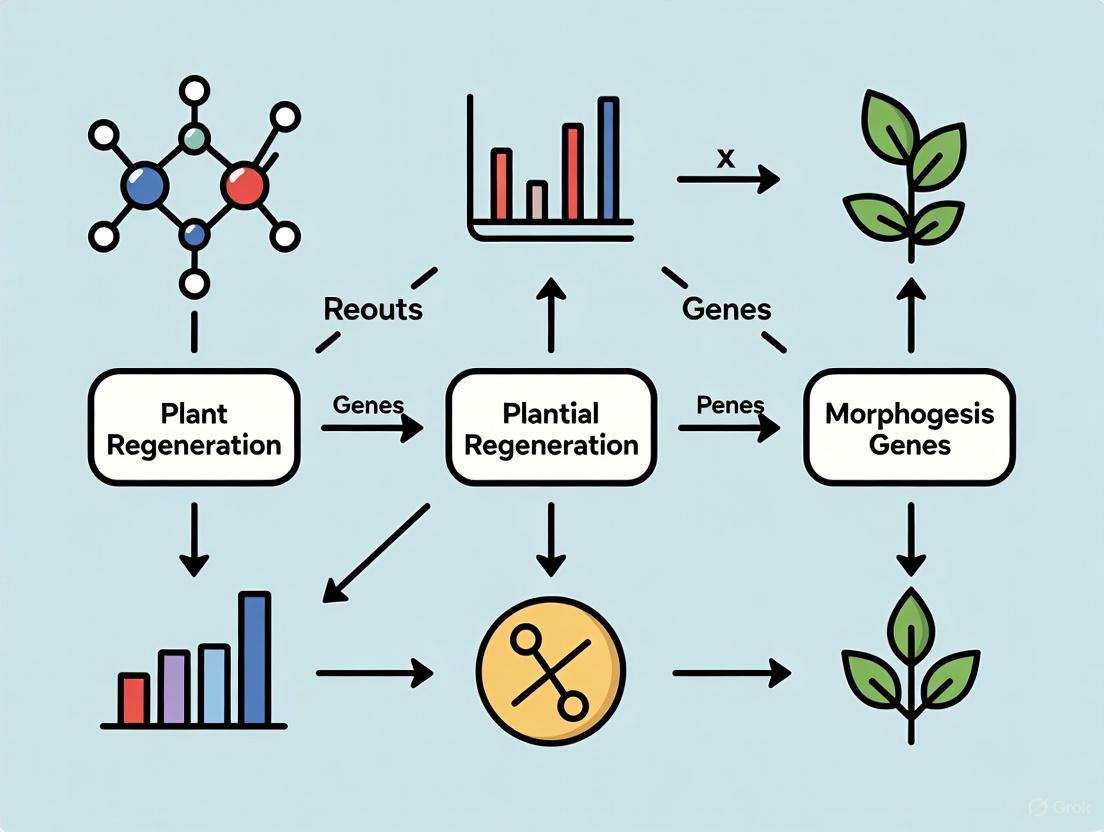
This article provides a comprehensive overview of the use of morphogenesis genes to overcome the significant bottleneck of plant regeneration in biotechnology.
Harnessing Morphogenesis Genes: A Modern Guide to Optimizing Plant Regeneration for Biotechnology
Abstract
This article provides a comprehensive overview of the use of morphogenesis genes to overcome the significant bottleneck of plant regeneration in biotechnology. It explores the foundational science behind key morphogenetic factors like WUSCHEL, BABY BOOM, and GRF-GIF, detailing their roles in embryogenesis and organogenesis. The content delivers practical methodologies for gene application, including construct design and protocol optimization for recalcitrant species. It further addresses common challenges and troubleshooting strategies, supported by comparative case studies validating these approaches in crops like rice, soybean, and tomato. Aimed at researchers and scientists, this review synthesizes current knowledge to facilitate the development of efficient, genotype-independent transformation and regeneration systems, with profound implications for crop improvement and biomedical research.
The Science of Regeneration: Unlocking Plant Totipotency with Morphogenetic Factors
Morphogenetic Factors (MTFs) are specialized plant genes and transcription factors that function as pivotal regulators of embryogenesis and organogenesis [1] [2]. These proteins act as "master switches" that initiate and guide developmental processes, maintaining meristem activity, determining cell fate, and triggering the formation of entire organs or embryos [2]. In modern plant biotechnology, harnessing MTFs has become a powerful strategy for overcoming one of the most significant challenges in plant genetic engineering: the efficient regeneration of transformed tissues into whole plants [1]. This is particularly crucial for recalcitrant species and commercial cultivars that have traditionally resisted stable genetic transformation. The controlled application of MTFs such as WUSCHEL (WUS) and BABY BOOM (BBM) now enables researchers to enhance regeneration capacity, improve transgene stability, and expand the range of transformable crops—advancements with profound implications for crop improvement and global food security [1] [2].
Classification and Functions of Key Morphogenetic Factors
Plant morphogenetic factors can be categorized into several major classes based on their structure, function, and evolutionary relationships. The table below summarizes the principal MTF families, their key representatives, and their primary functions in plant development.
Table 1: Major Classes of Plant Morphogenetic Factors
| Factor Class | Key Representatives | Primary Functions | Mechanism of Action |
|---|---|---|---|
| WOX Factors | WUSCHEL (WUS), WOX2, WOX4, WOX5, WOX11/12 [2] | Shoot apical meristem maintenance, somatic embryogenesis, root development [2] | Transcription factors that maintain stem cell populations and prevent differentiation; regulate cell fate transitions [2] |
| BBM/PLT Factors | BABY BOOM (BBM), PLETHORA (PLT5) [2] | Somatic embryogenesis, cell proliferation, root meristem formation [2] | AP2/ERF-type transcription factors that activate embryonic programs; maintain meristem activity [2] |
| GRF-GIF Complex | GRF1-9, GIF1-3 [2] | Shoot regeneration, meristem growth, leaf development [2] | Interacting transcription factor-cofactor pairs that promote general meristem growth and enhance regeneration efficiency [2] |
| LEC Factors | LEAFY COTYLEDON1 (LEC1), LEC2 [2] | Embryo maturation, induction of somatic embryogenesis [2] | Transcription factors that promote embryonic identity and cell rejuvenation during dedifferentiation [2] |
| Other Regulators | ESR1, WIND1, RKD, SERK1 [2] | Shoot regeneration, wound-induced dedifferentiation, embryogenic competence [2] | Diverse mechanisms including receptor kinase signaling, wound response pathways, and gametophyte development [2] |
The following diagram illustrates the functional relationships and regulatory interactions between major morphogenetic factor classes in plant development:
Quantitative Data on MTF-Enhanced Plant Regeneration
The application of morphogenetic factors has demonstrated significant, quantifiable improvements in transformation and regeneration efficiency across diverse plant species. The following table compiles experimental results from key studies where MTFs were deployed to enhance plant regeneration.
Table 2: Quantitative Improvements in Plant Regeneration Using Morphogenetic Factors
| Plant Species | Morphogenetic Factor | Experimental Outcome | Efficiency Improvement | Reference |
|---|---|---|---|---|
| Wheat | GRF4-GIF1 fusion | Enhanced shoot regeneration | 8-fold increase in regeneration efficiency | [2] |
| Broomcorn millet | Optimized protocol | Stable genetic transformation | 21.25% transformation efficiency | [3] |
| Maize | BBM/WUS2 adjustment | Genotype-independent transformation | Significant increase in transformation range | [3] |
| Soybean | GmGRF-GIF | Transformation of resistant cultivars | Enabled transformation of previously resistant lines | [2] |
| Arabidopsis | WUSCHEL overexpression | Somatic embryogenesis on leaves | Regeneration without phytohormones | [2] |
| Melon | AtGRF5 expression | Enhanced transgenic plant recovery | Improved regeneration efficiency | [2] |
| Rice | WUSCHEL | Improved regeneration capacity | Up to 90% efficiency in Japonica cultivars | [2] |
Detailed Experimental Protocol: MTF-Mediated Transformation
This section provides a comprehensive protocol for morphogenetic factor-mediated plant transformation, adapted from established methods in model and crop species [2] [3].
Embryogenic Callus Induction
- Explants Preparation: Use mature seeds as explants. Dehusk seeds carefully with abrasive paper. Surface sterilize with 75% (v/v) ethanol for 1 minute, followed by 20% sodium hypochlorite for 5 minutes [3].
- Culture Conditions: Wash sterilized seeds 5 times with sterile water and air-dry on sterile filter paper. Inoculate seeds on Callus Induction Medium (CIM) consisting of MS salts with vitamins, 300 mg/L casein enzymatic hydrolysate, 600 mg/L L-proline, 30 g/L maltose, and 3 g/L Phytagel, pH 5.8 [3].
- Hormonal Optimization: Supplement CIM with 2.5 mg/L 2,4-dichlorophenoxyacetic acid (2,4-D) and 0.5 mg/L 6-benzylaminopurine (BAP) for optimal embryogenic callus induction [3].
- Incubation: Culture plates at 26 ± 2°C in darkness. Primary calli appear after 2 weeks; subculture for an additional 2 weeks to obtain embryogenic calli [3].
Genetic Transformation with MTF Constructs
- Vector Design: For MTF expression, use constitutive promoters such as maize ubiquitin (ZmUbi) or cauliflower mosaic virus 35S (CaMV35S). Consider chemically inducible systems to control MTF expression temporally [2].
- Agrobacterium Preparation: Transform binary vector containing MTF gene into Agrobacterium tumefaciens strain EHA105. Culture single colonies in LB medium with appropriate antibiotics at 28°C until OD₆₀₀ reaches 1.0 [3].
- Bacterial Resuspension: Centrifuge bacterial culture and resuspend in inflation medium (MS salts, 30 g/L maltose, 2.5 mg/L 2,4-D, 0.5 mg/L BAP, 0.3 g/L casein enzymatic hydrolysate, pH 5.2) supplemented with 200 µM acetosyringone. Adjust final OD₆₀₀ to 0.5 [3].
- Co-cultivation: Immerse embryogenic calli in bacterial suspension for 30 minutes. Transfer to co-cultivation medium and incubate in dark at 22°C for 3 days [3].
Selection and Regeneration of Transformed Tissues
- Selection Conditions: After co-cultivation, wash calli with sterile distilled water containing 300 mg/L Timentin. Transfer to selection medium containing appropriate antibiotic (e.g., 20 mg/L hygromycin for pRHVcGFP vector) and 300 mg/L Timentin [3].
- Shoot Regeneration: Transfer putative transgenic calli to Shoot Regeneration Medium (SRM): MS salts with vitamins, 2 mg/L BAP, 0.5 mg/L α-naphthaleneacetic acid (NAA), 15 g/L maltose, 300 mg/L casein enzymatic hydrolysate, and 3 g/L Phytagel, pH 5.8 [3].
- Rooting and Acclimatization: Once shoots reach 1-2 cm, transfer to rooting medium (half-strength MS salts with 30 g/L sucrose and 3 g/L Phytagel). After root development, transfer plantlets to soil and acclimate gradually to greenhouse conditions [3].
The following workflow diagram summarizes the complete MTF-mediated transformation protocol:
The Scientist's Toolkit: Essential Research Reagents
Successful implementation of MTF-based plant transformation requires specific reagents and genetic tools. The following table catalogues essential research reagents and their applications in morphogenetic factor studies.
Table 3: Essential Research Reagents for Morphogenetic Factor Studies
| Reagent/Category | Specific Examples | Function/Application | Notes/Considerations |
|---|---|---|---|
| Morphogenetic Genes | WUS, BBM, WOX genes, GRF-GIF fusions [2] | Core genetic components for enhancing regeneration | GRF-GIF fusions show particularly strong effects in monocots [2] |
| Vector Systems | pRHVcGFP (GFP reporter, hpt marker) [3] | Delivery and selection of MTF transgenes | Contains ZmUbi promoter driving GFP and 35S driving hpt [3] |
| Agrobacterium Strains | EHA105 [3] | Delivery of T-DNA containing MTF constructs | Superior for monocot transformation [3] |
| Selection Agents | Hygromycin (5-50 mg/L) [3] | Selection of transformed tissues | Optimal concentration varies by species; 20 mg/L effective for broomcorn millet [3] |
| Phytohormones | 2,4-D, BAP, NAA [3] | Callus induction and shoot regeneration | 2.5 mg/L 2,4-D + 0.5 mg/L BAP optimal for callus induction [3] |
| Culture Media | MS basal salts, Casein enzymatic hydrolysate, L-proline [3] | Nutrient support for in vitro cultures | Supplementation with amino acids enhances embryogenic callus formation [3] |
| Induction Compounds | Acetosyringone (200 µM) [3] | Vir gene induction in Agrobacterium | Critical for efficient T-DNA transfer [3] |
Morphogenetic factors represent powerful tools for manipulating plant development and overcoming recalcitrance in genetic transformation. As research advances, several promising directions are emerging. The integration of MTFs with precision genome editing technologies like CRISPR/Cas will enable more sophisticated manipulation of plant traits [1]. There is also growing interest in developing universal transformation protocols that work across diverse species and genotypes, potentially through the use of optimized GRF-GIF combinations or chemically inducible MTF systems [2]. Furthermore, quantitative approaches using 4D imaging and computational modeling are providing new insights into how morphogenetic factors orchestrate developmental processes at cellular and tissue levels [4] [5]. These advances, combined with a deeper understanding of MTF interactions with phytohormones and environmental cues, will continue to expand the applications of morphogenetic factors in both basic plant science and agricultural biotechnology.
Application Notes: Functions and Roles in Plant Regeneration
The optimization of plant regeneration leverages key gene families that regulate cell fate, embryogenesis, and meristem development. The WOX, BBM, PLT, GRF-GIF, and LEC families represent central regulators in plant morphogenesis with distinct yet interconnected functions.
Table 1: Key Gene Families in Plant Regeneration
| Gene Family | Major Functions | Representative Genes | Observed Regeneration Effects | Notable Species |
|---|---|---|---|---|
| WOX | Stem cell maintenance, apical meristem organization, somatic embryogenesis, cell proliferation | WUS, WOX2, WOX5, WOX11, WOX13 | Enhanced somatic embryogenesis; improved callus regeneration and shoot formation; increased drought and salt tolerance | Arabidopsis, Rice, Wheat, Poplar, Schima superba |
| BBM | Somatic embryogenesis induction, cell proliferation, organ initiation | BBM/PLT4, PLT2 | Induction of somatic embryos from vegetative tissues; enhanced transformation efficiency; reduced dependence on exogenous hormones | Arabidopsis, Grapevine, Cassava, Brassica napus |
| PLT | Root meristem maintenance, stem cell niche establishment, embryonic development | PLT1, PLT2, PLT3, PLT4/BBM, PLT5, PLT7 | Determination of root-type cell identities; essential for early embryogenesis progression; activation of meristematic potential | Arabidopsis |
| GRF-GIF | Cell proliferation, organ size regulation, meristem formation, shoot regeneration | GRF4-GIF1, GRF5-GIF1 | 7.8-fold increase in wheat regeneration; accelerated regeneration process; genotype-independent transformation | Wheat, Rice, Cassava, Dendrobium, Citrus |
| LEC | Induction of totipotency, somatic embryogenesis, epigenetic reprogramming | LEC1, LEC2 | Direct induction of somatic embryogenesis; activation of auxin and lipid biosynthesis pathways; chromatin remodeling | Arabidopsis |
WOX Gene Family
The WUSCHEL-RELATED HOMEOBOX (WOX) genes are plant-specific transcription factors characterized by a conserved homeodomain and are pivotal in maintaining stem cell niches and organogenesis [6]. The WOX family is phylogenetically divided into three clades: the modern/WUS clade (WUS, WOX1-7), the intermediate clade (WOX8, 9, 11, 12), and the ancient clade (WOX10, 13, 14) [6]. Their roles are multifaceted: WUS and WOX5 are vital for stem cell homeostasis in shoot and root apical meristems, respectively [7]. WOX2 and WOX8/9 regulate early embryogenesis, while WOX11/12 are critical for de novo root organogenesis [6]. The application of WOX genes has significantly advanced plant regeneration protocols. For instance, overexpression of TaWOX5 in wheat callus substantially improved transformation efficiency and regeneration capacity [7]. Similarly, in Schima superba, SsuWOX1 overexpression induced bud-like cell characteristics in callus tissue, suggesting strong potential for establishing regeneration systems in recalcitrant woody species [7].
BBM and PLT Gene Families
BABY BOOM (BBM) and PLETHORA (PLT) genes belong to the APETALA2/Ethylene-Responsive Element Binding Factor (AP2/ERF) family and are master regulators of embryogenesis and meristem function [8] [9]. BBM was initially identified for its ability to spontaneously induce somatic embryos when overexpressed in Arabidopsis [10]. Its function is conserved; for example, VvBBM overexpression in grapevine immature zygotic embryos enabled a simple, efficient non-tissue culture transformation method, drastically reducing the regeneration timeline [9]. PLT transcription factors are essential for post-embryonic root meristem function, where they interpret auxin gradients to establish tissue zonation [8]. Recent research highlights their equally critical role in early embryogenesis. The PLT2 and BBM/PLT4 genes are expressed in the zygote, and their combined activity is essential for progression beyond the first embryonic divisions, indicating that generic PLT activity induces meristematic potential from the very beginning of a plant's life [8].
GRF-GIF Gene Family
GROWTH-REGULATING FACTORS (GRFs) are plant-specific transcription factors that interact with GRF-INTERACTING FACTORS (GIFs) to form a functional complex that promotes cell proliferation [11]. A significant breakthrough was the development of a GRF-GIF chimeric protein, which forces the proximity of the two partners and dramatically enhances their efficacy [11]. In wheat, the expression of a GRF4-GIF1 chimera under the maize UBIQUITIN promoter resulted in a 7.8-fold increase in regeneration efficiency compared to the empty vector control [11]. This chimera also extended the range of transformable genotypes in wheat and triticale and accelerated the regeneration process, enabling a shorter transformation protocol [11]. The effectiveness of this strategy is conserved across monocots and dicots, as demonstrated in rice and citrus [11], and recently in the orchid Dendrobium catenatum, where it enhanced in planta shoot regeneration [12].
LEC Gene Family
LEAFY COTYLEDON (LEC) genes, particularly LEC2, are central regulators of totipotency and somatic embryogenesis [13]. LEC2 operates as a master transcription factor that activates downstream pathways essential for embryogenesis, including auxin biosynthesis (e.g., YUCCA genes) and lipid biosynthesis (e.g., WRINKLED1) [13]. A seminal 2025 study revealed a sophisticated molecular framework for LEC2-induced somatic cell reprogramming. LEC2 orchestrates an epigenetic activation loop: it upregulates the RNA-directed DNA methylation (RdDM) pathway, leading to CHH hypermethylation in the promoters of totipotency genes. This methylation is recognized by a reader complex (SUVH-SDJ) that recruits AHL proteins to increase chromatin accessibility, thereby facilitating LEC2-driven transcription of its target genes [13]. This mechanism directly links epigenetic reprogramming to the activation of cell totipotency.
Experimental Protocols
Non-Tissue Culture Transformation of Grapevine Using VvBBM
This protocol enables genetic transformation of grapevine immature zygotic embryos without sterile tissue culture [9].
Workflow:
- Plant Material: Collect healthy berries of Vitis vinifera 'Cabernet Sauvignon' 120 days post-flowering.
- Priming Treatment: Surface sterilize berries. Excise immature zygotic embryos and subject them to a warm soak in 2.5 g·L⁻¹ Gibberellic Acid (GA₃) at 55°C for 13 minutes, followed by 2 minutes of ultrasonication.
- Agrobacterium Preparation: Transform Agrobacterium tumefaciens with a vector containing VvBBM driven by a constitutive promoter (e.g., CaMV 35S). Grow a single colony in liquid medium with appropriate antibiotics to an OD₆₀₀ of 0.6-0.8.
- Inoculation: Immerse the primed embryos in the Agrobacterium suspension. Apply a vacuum of 0.08 MPa for 8 minutes, followed by wrist-shaking for 30 minutes.
- Co-cultivation: Transfer the embryos to a pasteurized substrate (e.g., a mix of vermiculite, nutrient soil, and coconut chaff in a 1:1:1 ratio). Co-cultivate in the dark at 23°C for 48 hours.
- Selection and Regeneration: Transfer the co-cultivated embryos to a greenhouse under a 16/8 h light/dark cycle at 25°C. Maintain substrate moisture. Transformed plants can be regenerated within approximately 90 days.
- Confirmation: Validate transformation using PCR, Southern blot, and phenotypic analysis. Phenotypes of VvBBM-overexpressing lines include larger leaves and robust growth [9].
Enhanced Wheat Transformation Using GRF4-GIF1 Chimera
This protocol uses a GRF4-GIF1 chimera to achieve high-efficiency, genotype-flexible wheat transformation [11].
Workflow:
- Vector Construction: Clone a chimera of wheat GRF4 and GIF1 genes, separated by a short linker, into an expression vector under the control of the maize UBIQUITIN promoter.
- Plant Material: Harvest immature embryos (1.5-3.0 mm in size) from wheat plants (e.g., Kronos, Fielder) 12-16 days after pollination.
- Agrobacterium Inoculation: Use Agrobacterium strain EHA105 harboring the GRF4-GIF1 vector. Isolate the scutellum and inoculate with the Agrobacterium suspension for 20-40 minutes.
- Callus Induction: Co-cultivate the embryos on solid medium for 2-3 days. Transfer to resting medium for 5-7 days, then to selection medium containing hygromycin. Culture in the dark at 25°C for 2-4 weeks to induce transgenic callus formation.
- Regeneration: Transfer embryogenic calli to regeneration medium. The GRF4-GIF1 chimera allows for efficient regeneration even in the absence of exogenous cytokinins, facilitating marker-free plant selection. Culture under a 16/8 h light/dark cycle at 25°C. Shoots typically regenerate within 2-3 weeks.
- Rooting and Acclimatization: Excise developed shoots and transfer to rooting medium. After a robust root system develops, transfer plants to soil and acclimate in a greenhouse [11].
Induction of Somatic Embryogenesis Using LEC2
This protocol details β-estradiol-inducible LEC2 overexpression to induce somatic embryogenesis in Arabidopsis [13].
Workflow:
- Plant Material: Generate Arabidopsis plants (e.g., Col-0 ecotype) transgenic for a pER8-LEC2 construct, where LEC2 is under the control of a β-estradiol-inducible promoter.
- Induction: For in vitro induction, surface-sterilize seeds and plate on medium containing 10 μM β-estradiol. For induction of seedlings, grow for 5-7 days, then transfer to medium supplemented with 10 μM β-estradiol.
- Tissue Culture (Optional): For direct somatic embryogenesis from zygotic embryos, culture immature seeds or isolated zygotic embryos on medium containing auxin (e.g., 2,4-D) or medium containing 10 μM β-estradiol.
- Culture Conditions: Maintain cultures at 22°C under a 16/8 h light/dark cycle. Somatic embryos will typically initiate from cotyledons or hypocotyls within 10-21 days post-induction.
- Molecular Analysis: Confirm the molecular events by analyzing the upregulation of RdDM pathway genes (e.g., DRM2, NRPE1) via qRT-PCR and detecting CHH hypermethylation at totipotency gene loci through whole-genome bisulfite sequencing 72-96 hours after induction [13].
Signaling Pathways and Regulatory Networks
The following diagrams illustrate the key regulatory pathways and experimental workflows for the major morphogenic genes.
LEC2-Induced Epigenetic Reprogramming for Totipotency
This diagram illustrates the mechanism by which LEC2 overexpression triggers somatic embryogenesis through epigenetic activation [13].
PLT/BBM Function in Embryogenesis and Meristem Maintenance
This diagram shows the role of PLT and BBM transcription factors in establishing and maintaining meristematic potential from embryogenesis onward [8].
GRF-GIF Chimera Enhanced Plant Regeneration Workflow
This flowchart outlines the experimental workflow for using GRF-GIF chimeras to improve plant transformation and regeneration [11] [12].
The Scientist's Toolkit: Research Reagent Solutions
Table 2: Essential Research Reagents and Materials
| Reagent/Material | Function/Description | Example Application |
|---|---|---|
| GRF4-GIF1 Chimera Vector | Fusion gene construct forcing proximity of GRF and GIF proteins; significantly boosts regeneration efficiency. | Enhanced transformation of wheat, rice, citrus, and Dendrobium [11] [12]. |
| Inducible Promoter System (e.g., pER8/β-estradiol) | Allows precise temporal control of transgene expression (e.g., LEC2), avoiding pleiotropic effects. | Induction of somatic embryogenesis in Arabidopsis [13]. |
| Agrobacterium tumefaciens (e.g., EHA105, LBA4404) | Standard vehicle for delivering T-DNA containing morphogenic genes into plant genomes. | Transformation of cassava, grapevine, and wheat [11] [9] [14]. |
| miR396 Target Site-Mutated GRF (mGRF) | A modified GRF gene resistant to repression by microRNA396, leading to higher and more sustained activity. | Further improved shoot regeneration in Dendrobium [12]. |
| MIR396 Target Mimic (MIM396) | An RNA decoy that sequesters miR396, thereby de-repressing endogenous GRF genes. | Enhanced shoot regeneration and overall plant growth in Dendrobium [12]. |
| Hygromycin (hptII) / Kanamycin (nptII) | Selectable marker genes used to identify successfully transformed plant tissues. | Selection of transgenic calli and shoots in wheat and Dendrobium [11] [12]. |
| Friable Embryogenic Callus (FEC) | A soft, friable, and highly embryogenic callus culture that is ideal for genetic transformation. | Target tissue for transformation in cassava and other species [14]. |
Plant regeneration via somatic embryogenesis and de novo organogenesis represents a cornerstone of modern plant biotechnology, enabling clonal propagation, genetic engineering, and germplasm conservation. These processes leverage the remarkable developmental plasticity inherent in plant cells, allowing differentiated somatic cells to revert to a pluripotent state and regenerate entire plants or specific organs [15]. Within the context of optimizing plant regeneration using morphogenesis genes, research has increasingly focused on identifying and manipulating key transcription factors and signaling networks that govern cell fate reprogramming. The core cellular mechanisms underlying these regenerative pathways involve complex interactions between phytohormonal signaling, transcriptional regulation, and epigenetic modifications that collectively enable the reacquisition of developmental potential in somatic tissues [15] [16]. Understanding these mechanisms provides the foundation for developing genotype-independent regeneration protocols essential for applying biotechnological tools to recalcitrant species, including many economically important crops and woody plants.
Key Morphogenetic Factors and Their Functions
Core Transcription Factor Families
Table 1: Key Morphogenetic Transcription Factors and Their Roles in Plant Regeneration
| Transcription Factor | Gene Family | Primary Function in Regeneration | Species Studied | Effect on Regeneration |
|---|---|---|---|---|
| WUSCHEL (WUS) | WUS-related homeobox (WOX) | Maintains stem cell activity in shoot apical meristem; induced by cytokinin signaling [15] | Arabidopsis, Rice, Pepper [1] [16] | Enhances shoot regeneration; improves monocot transformation [16] |
| BABY BOOM (BBM) | AINTEGUMENTA-LIKE/PLETHORA (AIL/PLT) | Promotes cell proliferation and embryogenic growth; partner of WOX genes [16] | Arabidopsis, Brassica napus, Pepper [1] [16] | Induces somatic embryogenesis; synergizes with WUS [16] |
| GRF-GIF Chimeras | GROWTH-REGULATING FACTOR & INTERACTING FACTOR | Stimulates organogenesis and enhances transformation efficiency [1] | Cassava, Wheat, Citrus, Beet [1] [14] | Increases shoot regeneration rates (30-50% in cassava) [14] |
| LEAFY COTYLEDON (LEC1/LEC2) | NF-YB (LEC1); B3-AFL (LEC2) | Upregulated by auxin signaling; key regulators of somatic embryogenesis [15] | Arabidopsis [15] | Induces somatic embryogenesis; activates embryonic programs [15] |
| PLETHORA (PLT) | AINTEGUMENTA-LIKE/PLETHORA | Regulates root stem cell niche; confers pluripotency in hormone-induced regeneration [16] | Arabidopsis, Pepper [16] | Synergistically induces regeneration with SCR, SHR, WOX5 [16] |
| SCARECROW (SCR) | GRAS | Root stem cell niche specification; interacts with RBR to control QC division [16] | Arabidopsis, Pepper [16] | Core component of stem cell factor combinations for regeneration [16] |
Phytohormonal Regulation of Morphogenesis
Plant growth regulators constitute the primary signaling molecules that orchestrate developmental transitions during regeneration. Auxins and cytokinins form the core regulatory axis, with their balance determining the developmental pathway: high auxin-to-cytokinin ratios typically promote root formation or somatic embryogenesis, while low ratios favor shoot organogenesis [15]. Specifically, auxin induces dedifferentiation of somatic cells and callus formation through its interaction with TIR1 and ARF proteins, establishing polarity in regenerating tissues [15]. Cytokinin promotes cell division and shoot primordia formation through activation of ARR genes and WUSCHEL expression, while also influencing chromatin remodeling through histone acetyltransferases [15]. Additional phytohormones including gibberellins and brassinosteroids modulate later stages of regenerative growth, with gibberellins promoting maturation of somatic embryos and brassinosteroids acting synergistically with auxins and cytokinins to regulate cell fate transitions [15].
Figure 1: Regulatory Pathways in Plant Regeneration. The diagram illustrates the key developmental transitions from somatic cells to various regenerative outcomes, highlighting the hormonal and molecular factors that direct each pathway.
Quantitative Trait Loci (QTL) Associated with Regeneration Capacity
Genetic Determinants of Regeneration Efficiency
Table 2: Quantitative Trait Loci (QTL) Associated with Plant Regeneration Capacity
| Species | Trait | QTL Location | Percentage of Phenotypic Variation Explained | Candidate Genes |
|---|---|---|---|---|
| Rice (Oryza sativa L.) [17] | Callus induction rate | Chromosomes 1, 2 | 10.9% (total) | Not specified |
| Rice (Oryza sativa L.) [17] | Plant regeneration ability | Chromosomes 2, 3, 11 | 25.7% (total) | Not specified |
| Cucumber (Cucumis sativus L.) [18] | Organogenesis frequency | Chromosome 6 (upper arm) | 11.9-20% | CsARF6, CsWOX9 |
| Cucumber (Cucumis sativus L.) [18] | Shoot regeneration frequency | Chromosome 6 (lower arm) | 11.9-20% | CsARF6, CsWOX9 |
Genetic studies across multiple species have revealed that regeneration capacity is a heritable trait controlled by multiple quantitative trait loci (QTL). In rice, recombinant inbred line populations derived from crosses between 'Milyang 23' and 'Gihobyeo' enabled mapping of six QTLs associated with callus induction and plant regeneration, accounting for 10.9% and 25.7% of phenotypic variation, respectively [17]. Similarly, in cucumber, QTL mapping using RILs from high-regeneration line B10 and low-regeneration line Gy14 identified major-effect QTLs on chromosome 6 controlling organogenesis and shoot regeneration frequencies, explaining 11.9-20% of phenotypic variance [18]. Candidate gene analysis within these QTL regions implicated CsARF6 (an auxin response factor) and CsWOX9 (a WUSCHEL-related homeobox transcription factor) as potential regulators of regeneration competence in cucumber [18]. These findings highlight the polygenic nature of regeneration capacity and provide targets for marker-assisted selection to improve transformability in recalcitrant genotypes.
Experimental Protocols for Enhanced Regeneration Systems
Cotyledonary Node-Based Regeneration in Cannabis sativa
Protocol: Genotype-Independent De Novo Regeneration via Direct Organogenesis
This five-stage protocol enables high-efficiency direct de novo regeneration using cotyledonary node explants from both hemp and medicinal cannabis genotypes, achieving 70-90% regeneration efficiency [19].
S0 - Seed Sterilization and Germination
- Surface-sterilize seeds by soaking in 1% (v/v) H₂O₂ for 24h in dark at 24°C
- Replace with fresh 1% H₂O₂ for additional 24h under identical conditions
- Dissect germinated seeds to remove pericarp and seed coat
- Perform secondary sterilization in 1% H₂O₂ with shaking (150 rpm) for 1h
- Transfer sterilized embryos to germination medium (0.5x MS salts and vitamins, 1.5% sucrose, 0.65% agar, pH 5.7)
- Grow at 24°C with 16/8h photoperiod for 14 days [19]
S1 - Explant Excision and Shoot Induction
- Collect first or second true leaf from apical meristem of 14-day seedlings
- Prepare cotyledonary node attached to cotyledon as explant
- Culture explants on shoot regeneration medium containing thidiazuron (TDZ) and NAA
- Two distinct regeneration pathways observed: axillary shoot initiation and de novo regeneration
- Optimal regeneration occurs within 7-14 days; prolonged exposure causes excessive callusing [19]
S2 - Shoot Proliferation
- Subculture newly formed shoots to fresh medium of same composition
- Repeated subculturing enables scalable shoot multiplication
- Average yield: 7 shoots per responding explant (~11.4 shoots per seed)
- Outperforms cotyledon-based (~2-fold) and hypocotyl-based (~5-fold) methods [19]
S3 - Shoot Elongation and Rooting
- Transfer shoots to elongation medium with reduced cytokinin concentration
- For rooting, transfer to medium containing IAA or IBA
- Root development typically occurs within 14-21 days [19]
S4 - Acclimatization
- Transfer rooted plantlets to sterile potting mix
- Maintain high humidity initially, gradually reduce over 7-14 days
- Regenerated plantlets exhibit normal vegetative and reproductive growth [19]
Somatic Embryo-Derived Organogenesis in Grapevine
Protocol: Enhanced Regeneration and Transformation via Somatic Embryo-Derived Explants
This protocol combines somatic embryogenesis and organogenesis to overcome the regeneration recalcitrance in grapevine cultivars, enabling efficient adventitious shoot formation from cotyledons and hypocotyls derived from somatic embryos [20].
Plant Material Preparation
- Induce embryogenic calli from whole flowers, stamens, and pistils
- Culture mature somatic embryos at cotyledonary stage on maintenance medium
- Separate hypocotyls from cotyledons under sterile conditions, discarding primary radicle [20]
Culture Conditions for Organogenesis
- Prepare two MS-based regeneration media:
- M1: 4.4 μM BAP + 0.49 μM IBA
- M2: 13.2 μM BAP alone
- Place cotyledon and hypocotyl explants on regeneration media
- Higher regeneration competence observed in cotyledons versus hypocotyls
- M2 medium significantly increases average shoot number in model cultivar 'Thompson Seedless' [20]
Genetic Transformation Integration
- Culture explants on regeneration media after Agrobacterium infection
- Highest transformation efficiency observed with cotyledon explants on M2 medium
- 'Thompson Seedless': 14% transformation efficiency from cotyledons on M2
- Regenerated transgenic shoots acclimatize successfully with true-to-type phenotype [20]
Stem Cell Factor-Mediated Regeneration in Arabidopsis and Pepper
Protocol: Rational Design of Induced Regeneration via Stem Cell Transcription Factors
This innovative approach applies stem cell factors to directly induce regeneration competence, breaking recalcitrance in Arabidopsis and pepper without added phytohormones through somatic embryogenesis pathway [16].
Selection of Pluripotency-Inducing Transcription Factors
- Utilize two gene sets:
- Dedifferentiation (DEDIF) genes: WIND1 and RBR
- Stem cell niche (SCN) genes: PLT1, PLT4/BBM, PLT5, SHR, SCR, and WOX5
- Select factors based on their roles in root stem cell niche specification and maintenance [16]
Vector Construction and Transformation
- Clone expression cassettes under strong constitutive promoters
- For Arabidopsis, use floral dip transformation method
- For pepper, use Agrobacterium-mediated transformation of seedling explants
- Conduct experiments without exogenous phytohormone application [16]
Regeneration Assessment
- Score somatic embryogenesis frequency after 4-6 weeks
- Document synergistic effects between stem cell factors
- Evaluate regeneration efficiency across multiple species and genotypes
- Confirm genotype-independent application potential [16]
The Scientist's Toolkit: Essential Research Reagents
Table 3: Essential Research Reagents for Plant Regeneration Studies
| Reagent Category | Specific Examples | Function in Regeneration Protocols |
|---|---|---|
| Plant Growth Regulators | 2,4-Dichlorophenoxyacetic acid (2,4-D), 6-Benzylaminopurine (BAP), Thidiazuron (TDZ), Naphthaleneacetic acid (NAA), Indole-3-butyric acid (IBA) | Induce callus formation, somatic embryogenesis, and organogenesis; direct cell fate decisions [18] [19] [20] |
| Basal Culture Media | Murashige and Skoog (MS), De-Klerk and Walton (DKW), Half-strength MS (1/2 MS) | Provide essential macronutrients, micronutrients, and vitamins for in vitro growth [18] [19] [20] |
| Morphogenetic Transcription Factors | WUSCHEL, BABY BOOM, GRF-GIF chimeras, PLETHORA, SCARECROW | Enhance regeneration efficiency; break recalcitrance; induce somatic embryogenesis [1] [16] [14] |
| Antibiotics and Selective Agents | Kanamycin, Hygromycin, Timentin, Carbenicillin | Select transformed tissues; suppress Agrobacterium growth after co-cultivation [20] |
| Osmotic and Maturation Agents | Abscisic acid (ABA), Phytagel, Polyethylene glycol (PEG) | Enhance somatic embryo maturation and stress responsiveness; improve regeneration efficiency [21] |
| Sterilization Agents | Hydrogen peroxide (H₂O₂), Ethanol, Commercial bleach | Surface sterilize explants; reduce microbial contamination [19] |
Figure 2: Molecular Network Regulating Regeneration Competence. The diagram illustrates how morphogenetic factors, hormonal signaling, and epigenetic modifications interact to enable cell fate reprogramming and establish regeneration competence in plant cells.
The integration of cellular mechanism studies with practical regeneration protocols provides a powerful framework for optimizing plant regeneration systems. The identification of key morphogenetic transcription factors, coupled with elucidation of their synergistic relationships, has enabled the development of increasingly sophisticated regeneration approaches that overcome traditional genotype limitations. Future research directions should focus on refining the spatial and temporal control of morphogenetic gene expression, potentially through chemically inducible systems or tissue-specific promoters to enhance regeneration precision. Additionally, further exploration of epigenetic regulators and their manipulation to establish permissive chromatin states for regeneration represents a promising avenue for breaking recalcitrance in challenging species. The continued integration of single-cell transcriptomics, CRISPR-based technologies, and systems biology approaches will undoubtedly yield new insights into the complex regulatory networks governing somatic embryogenesis and de novo organogenesis, ultimately advancing both basic plant science and applied biotechnology.
Synergistic Roles of Morphogens and Phytohormones
The optimization of plant regeneration represents a cornerstone of modern plant biotechnology, with profound implications for crop improvement, genetic engineering, and pharmaceutical compound production. Central to this process is the sophisticated interplay between morphogenetic factors (MTFs) – specialized genes and transcription factors that direct developmental pathways – and phytohormones, the classic signaling molecules that regulate growth and cellular processes. This synergy enables researchers to overcome the significant challenge of regeneration recalcitrance in many economically important species, thereby accelerating both basic research and applied biotechnology. Within the context of a broader thesis on enhancing plant regeneration using morphogenesis genes, this protocol details the practical integration of these regulatory elements to achieve robust, genotype-independent regeneration systems. The following sections provide a comprehensive framework for leveraging these synergistic relationships, complete with specific molecular tools, quantitative data, and standardized protocols suitable for application across diverse plant species.
Key Morphogenetic Factors and Their Functions
Morphogenetic factors are "master switch" genes that, when ectopically expressed, can initiate and direct programs of plant morphogenesis such as embryogenesis and organogenesis. Their application has proven instrumental in enhancing regeneration capacity and transformation efficiency in numerous crop species [1] [2]. The table below summarizes the principal MTFs used in plant biotechnology, their molecular functions, and documented applications.
Table 1: Key Morphogenetic Factors and Their Applications in Plant Regeneration
| Morphogenetic Factor | Gene Family | Molecular Function | Documented Applications & Effects |
|---|---|---|---|
| WUSCHEL (WUS) | WOX (WUSCHEL-Related Homeobox) | Maintains shoot apical meristem activity; prevents differentiation; induces somatic embryogenesis [2]. | Induces embryoid formation on vegetative organs; enhances regeneration in coffee, orchids, banana, cotton, maize, and sorghum [2]. |
| BABY BOOM (BBM) | APETALA2-like (AP2-like) | Stimulates cell division; initiates embryonic program in somatic cells [2]. | Induces somatic embryogenesis without phytohormones in Arabidopsis, tobacco, soybean, and cacao [2]. |
| GRF-GIF | GRF (Growth-Regulating Factor) & GIF (GRF-Interacting Factor) | Paired module promotes general growth of meristems; enhances regeneration capacity [1] [2]. | Increased wheat regeneration efficiency by 8-fold; enabled transformation of recalcitrant soybean cultivars; enhanced transgenic melon recovery [2]. |
| PLETHORA (PLT) | PLT (PLETHORA) | Contributes to root meristem formation; influences root pole development [2]. | Enhances callus and shoot regeneration from stem wounds in Arabidopsis [2]. |
| LEAFY COTYLEDON (LEC1/LEC2) | - | Embryo maturation factors; rejuvenate cells; promote somatic embryogenesis [2]. | Promotes dedifferentiation and somatic embryogenesis in tobacco and Arabidopsis [2]. |
| ENHANCER of SHOOT REGENERATION 1 (ESR1) | - | Enhances shoot formation in vitro [2]. | Synergizes with WUS to promote shoot regeneration [2]. |
| WOUND INDUCED DEDIFFERENTIATION 1 (WIND1) | - | Wound-induced factor initiating dedifferentiation [2]. | Initiates cellular reprogramming via cascaded morphogen expression in Arabidopsis and tobacco [2]. |
| REGENERATION FACTOR 1 (REF1) | |||
| (Small Signaling Peptide) | Peptide Hormone | Binds PORK1 receptors to activate WIND1 and regeneration [22]. | Promotes callus formation and shoot regeneration in tomato, wheat, maize, and soybean [2] [22]. |
Synergistic Interactions with Phytohormones
Morphogenetic factors do not operate in isolation; their activity is deeply intertwined with the phytohormonal milieu. The synergistic relationship between MTFs and phytohormones like auxin and cytokinin is fundamental to successful de novo organogenesis [15].
Regulatory Networks in De Novo Organogenesis
The classic two-step protocol for de novo organogenesis involves first culturing explants on a callus induction medium (CIM) rich in auxin, which promotes the formation of a pluripotent callus. Subsequently, transferring this callus to a shoot induction medium (SIM) with a high cytokinin-to-auxin ratio initiates the formation of shoot apical meristems (SAMs) and shoot development [22] [15]. During this process, morphogenetic factors act as critical mediators of hormonal signals:
- Auxin-Cytokinin Balance and Cell Fate: The ratio of auxin to cytokinin is a primary determinant of organogenic fate. High auxin concentrations, in conjunction with low cytokinin levels, favor root formation, whereas low auxin with higher cytokinin levels promotes shoot organogenesis [15]. This balance is orchestrated through the regulation of key MTFs.
- Cytokinin Activation of WUS: Cytokinin signaling in the SIM promotes the expression of WUSCHEL (WUS), a central regulator required for maintaining stem cell activity in the SAM [15]. This creates a feedback loop essential for meristem maintenance.
- Auxin Gradients and Patterning: Auxin transporters, such as PIN-FORMED (PIN) proteins, establish directional auxin fluxes that create local concentration gradients [15]. These gradients are crucial for patterning during organogenesis and regulate the expression of various MTFs.
The diagram below illustrates the core regulatory network integrating phytohormonal signals and morphogenetic factors during shoot regeneration.
Diagram 1: Regulatory Network in Shoot Regeneration. This diagram illustrates the integration of phytohormonal signaling (Auxin, Cytokinin) and key morphogenetic factors (e.g., WUS, REF1) during de novo shoot regeneration. Solid arrows indicate activation or a positive relationship; the blocked arrow indicates repression. Pathways influenced by small peptides like CLE and REF1 are highlighted, showing their modulation of the core WUSCHEL module.
Protocol: Two-Step De Novo Shoot Organogenesis
This standardized protocol leverages the synergy between phytohormones and endogenous morphogenetic factors for robust shoot regeneration from plant explants.
Workflow Overview:
Diagram 2: De Novo Shoot Organogenesis Workflow. The schematic outlines the key media transitions in the standard two-step regeneration protocol, from callus induction to plantlet recovery.
Materials:
- Plant Material: Sterile explants (e.g., leaf discs, root segments, hypocotyls).
- Basal Media: Murashige and Skoog (MS) basal salts and vitamins.
- Phytohormones:
- Auxins: 2,4-Dichlorophenoxyacetic acid (2,4-D), Indole-3-acetic acid (IAA), or 1-Naphthaleneacetic acid (NAA).
- Cytokinins: Kinetin (KIN), 6-Benzylaminopurine (BAP), or Thidiazuron (TDZ).
- Gelling Agent: Phytagel or Agar.
- Culture Vessels: Petri dishes and Magenta boxes.
- Growth Room: Controlled environment with appropriate temperature and light cycles.
Procedure:
Callus Induction (CIM Phase):
- Medium Preparation: Prepare Callus Induction Medium (CIM) by supplementing MS basal medium with a high auxin-to-cytokinin ratio (e.g., 2.0 mg/L 2,4-D and 0.1 mg/L KIN). Adjust pH to 5.7-5.8 and solidify with phytagel.
- Explant Inoculation: Aseptically place explants on the CIM medium. Seal plates with porous tape.
- Incubation: Culture explants in the dark at 24-26°C for 2-4 weeks until a proliferative callus forms. This step leverages auxin to induce cellular dedifferentiation and activate factors like WIND1 and LEC2 [2] [15].
Shoot Induction (SIM Phase):
- Medium Preparation: Prepare Shoot Induction Medium (SIM) by supplementing MS basal medium with a high cytokinin-to-auxin ratio (e.g., 2.0 mg/L BAP and 0.1 mg/L NAA). The synergistic effect of cytokinin is critical for activating WUS expression [15].
- Callus Transfer: Subculture the induced callus onto the SIM medium.
- Incubation: Culture under a 16-hr light/8-hr dark photoperiod at 24-26°C for 3-5 weeks. Monitor for the formation of green shoot primordia.
Shoot Elongation and Rooting:
- Elongation: Transfer developing shoots to an elongation medium (EL), often with reduced cytokinin levels (e.g., 0.5 mg/L BAP) or hormone-free MS medium.
- Rooting: For root induction, transfer elongated shoots (≥2 cm) to a Root Induction Medium (RIM) containing auxins like IAA or NAA (e.g., 0.1-0.5 mg/L).
Experimental Protocol: Enhancing Regeneration using Transgenic MTFs
For plant species or cultivars that are recalcitrant to standard protocols, the stable or transient expression of exogenous morphogenetic factors can dramatically enhance regeneration capacity.
Protocol: Transformation with Morphogenetic Constructs
Materials:
- Genetic Constructs: Binary vectors containing MTF genes (e.g., WUS, BBM, GRF4-GIF1) driven by appropriate promoters (see Table 2).
- Biological Agent: Agrobacterium tumefaciens strain EHA105 or GV3101.
- Selection Agents: Antibiotics (e.g., Kanamycin, Hygromycin) appropriate for the vector.
Procedure:
Vector Design:
- Promoter Selection: Use an inducible promoter (e.g., dexamethasone-inducible) or a meristem-specific promoter to avoid pleiotropic effects from constitutive MTF expression, which can cause developmental abnormalities [2].
- Gene Selection: Select MTFs based on the target species and regeneration goal. For example, BBM is potent for somatic embryogenesis, while GRF4-GIF1 is highly effective in monocots like wheat [2].
Plant Transformation:
- Perform standard Agrobacterium-mediated transformation or biolistics on your target explants (e.g., immature embryos, leaf discs).
- Co-cultivate explants with Agrobacterium harboring the MTF construct.
Regeneration on Selection Medium:
- After co-cultivation, transfer explants to a selective regeneration medium containing both antibiotics (to control Agrobacterium) and the appropriate plant selection agent (e.g., kanamycin).
- If using an inducible system, add the inducer (e.g., dexamethasone) to the medium to activate MTF expression.
- Monitor for the development of transgenic shoots. The expression of the MTF should significantly improve the efficiency and speed of regeneration compared to non-transformed controls.
Table 2: Quantitative Improvements in Regeneration using Morphogenetic Factors
| Morphogenetic Factor | Plant Species | Regeneration Efficiency (Control) | Regeneration Efficiency (with MTF) | Key Experimental Condition |
|---|---|---|---|---|
| GRF4-GIF1 | Wheat (Triticum aestivum) | Baseline | 8-fold increase [2] | Genotype-independent transformation [2]. |
| WUSCHEL | Banana (Musa acuminata), Cotton (Gossypium hirsutum), etc. | Low / Recalcitrant | Enhanced regeneration achieved [2] | Used to transform previously resistant species [2]. |
| BBM | Soybean (Glycine max), Cacao (Theobroma cacao) | Low / Recalcitrant | Somatic embryogenesis without phytohormones [2] | Constitutive expression induced embryoids on vegetative tissues [2]. |
| REF1 Peptide | Tomato (Solanum lycopersicum), Soybean, Maize | Impaired in mutant | Significantly boosted callus formation and shoot regeneration [22] | Exogenous application compensated for mutant deficits [22]. |
| Direct Regeneration (TDZ+KIN) | Picrorhiza kurroa (Medicinal Herb) | - | 83% efficiency, 7-8 shoots/explant [23] | MS + 0.5 mg/L TDZ + 1.5 mg/L KIN, bypassing callus [23]. |
The Scientist's Toolkit: Essential Research Reagents
The following table compiles key reagents, their functions, and application notes crucial for conducting research on morphogen-phytohormone synergy.
Table 3: Essential Research Reagents for Morphogen and Phytohormone Studies
| Reagent / Material | Function / Description | Application Notes |
|---|---|---|
| Morphogenetic Factor Constructs | Ready-to-use vectors (e.g., in pCAMBIA backbone) containing genes like WUS, BBM, GRF-GIF. | Opt for vectors with inducible promoters (e.g., pOp6/LhGR) to tightly control expression and avoid developmental defects [2]. |
| Thidiazuron (TDZ) | A potent phenylurea-type cytokinin-like plant growth regulator. | Highly effective in direct shoot regeneration; e.g., 0.5 mg/L TDZ with 1.5 mg/L KIN achieved 83% regeneration in Picrorhiza kurroa [23]. |
| Synthetic Peptides (REF1, CLE, RALF33) | Chemically synthesized small signaling peptides for exogenous application. | Used to probe signaling pathways. Exogenous REF1 enhanced regeneration in tomato, soybean, wheat, and maize [22]. |
| Murashige and Skoog (MS) Medium | Standard basal salt mixture for plant tissue culture. | The foundation for CIM, SIM, and RIM; hormone supplements dictate the morphogenic outcome [23] [15]. |
| Agrobacterium tumefaciens Strains | Biological vector for stable plant transformation. | Strains EHA105 and GV3101 are commonly used for delivering MTF constructs into plant genomes [2]. |
| Dexamethasone | Synthetic glucocorticoid; inducer for dexamethasone-inducible promoter systems. | Allows precise temporal control of MTF gene expression (e.g., pOp6/LhGR system) post-transformation [2]. |
Applications and Future Directions
The strategic application of morphogen-phytohormone synergy extends beyond basic regeneration improvement. It is pivotal for advancing plant biotechnology and agriculture.
- Transgene and Genome Editing Delivery: Efficient regeneration is the bottleneck for applying CRISPR-Cas and other genome-editing technologies in many crops. The use of MTFs like GRF-GIF allows for the recovery of edited plants from previously recalcitrant elite varieties, enabling targeted trait improvement [1] [2].
- Production of Secondary Metabolites: Enhanced direct regeneration protocols can boost the production of valuable pharmaceuticals. In Picrorhiza kurroa, direct shoot regeneration bypassing the callus phase resulted in a significantly higher content of the hepatoprotective compound Picroside-I (9.55 µg/mg) compared to callus-mediated shoots (3.41 µg/mg) or the mother plant (6.30 µg/mg) [23]. This demonstrates the utility of optimized morphogenic pathways for pharmaceutical applications.
- Future Outlook: The field is moving toward the discovery of novel morphogens and the refinement of universal transformation protocols. The integration of peptide signaling pathways (e.g., REF1-PORK1) with classic MTFs offers a new layer of control. Future work will focus on fine-tuning these interactions through synthetic biology approaches to develop robust, genotype-independent regeneration systems for a wider range of crop species, directly contributing to global food security and sustainable drug source development [1] [22].
In the field of plant biotechnology, optimizing regeneration capacity is a critical step for successful genetic transformation and the application of modern breeding techniques. While traditional morphogenetic transcription factors like WUSCHEL (WUS) and BABY BOOM (BBM) have been widely studied, recent research has unveiled a novel class of regulators: small signaling peptides [1] [2]. These peptides, typically comprising fewer than 150 amino acids, function as potent signaling molecules that orchestrate key developmental processes, including the response to wounding and in vitro regeneration [22]. Among them, CLE (CLAVATA3/EMBRYO SURROUNDING REGION-RELATED) and REF1 (REGENERATION FACTOR1) peptides have emerged as particularly promising targets for enhancing plant regeneration capacity, especially in recalcitrant species [22] [2]. This Application Note details their functions, underlying mechanisms, and provides actionable protocols for their application in plant biotechnology and drug development research.
Molecular Mechanisms and Signaling Pathways
Small signaling peptides are secreted molecules that are recognized by plasma membrane-localized receptors or co-receptors, activating specific regulatory pathways to modulate plant growth and stress adaptations [22]. Their activity is crucial during the biphasic process of plant regeneration in vitro, which encompasses the acquisition of cell pluripotency and subsequent de novo regeneration of shoots or roots [22].
The CLE-CLV1/BAM1 Signaling Module
The CLE peptide family is a key regulator of meristem maintenance and differentiation. During shoot regeneration, specific members like CLE1-CLE7 and CLE9/10 are differentially induced by culture media and act as negative regulators of adventitious shoot formation [22].
- Mechanism of Action: The mature CLE peptides are recognized by the leucine-rich repeat receptor-like kinases CLAVATA1 (CLV1) and BARELY ANY MERISTEM1 (BAM1). This ligand-receptor interaction suppresses the expression of the central stem cell transcription factor WUSCHEL (WUS), thereby restricting shoot regeneration potential [22].
- Experimental Evidence: CRISPR-engineered cle1–7 septuple mutants exhibit an increased number of adventitious shoots. Conversely, overexpression of CLE4 or CLE7 or application of synthetic CLE peptides suppresses de novo shoot regeneration in a dose-dependent manner [22].
The following diagram illustrates the signaling pathway through which CLE peptides negatively regulate shoot regeneration.
The REF1-PORK1-WIND1 Signaling Pathway
In contrast to CLE peptides, the REF1-PORK1-WIND1 module constitutes a positive regulatory loop that significantly enhances regenerative capacity [22] [2].
- Mechanism of Action: The REF1 peptide, a Pep peptide homolog, is derived from a precursor protein (PRP). Upon wounding or in vitro culture, REF1 binds to its receptor, PEPR1/2 ORTHOLOG RECEPTOR-LIKE KINASE 1 (PORK1). This activation leads to the upregulation of the transcription factor WOUND-INDUCED DEDIFFERENTIATION 1 (WIND1), a key promoter of cellular dedifferentiation and regeneration [22] [2].
- Auto-Amplification Loop: WIND1, in turn, binds to the promoter of the PRP gene, amplifying REF1 expression and creating a positive feedback loop to sustain regeneration signals [22].
- Broad-Spectrum Application: The application of synthetic REF1 peptide has been shown to enhance regeneration and transformation efficiencies in several crops, including tomato, soybean, wheat, and maize, indicating its potential to overcome recalcitrance [22].
The diagram below outlines the positive feedback loop of the REF1-PORK1-WIND1 pathway that promotes plant regeneration.
The following tables summarize key experimental findings and the effects of modulating these peptide pathways.
Table 1: Impact of Modulating CLE and REF1 Pathways on Regeneration Efficiency
| Peptide / Pathway | Experimental Manipulation | Observed Effect on Regeneration | Key Downstream Targets | Cited Studies |
|---|---|---|---|---|
| CLE1-CLE7 | CRISPR cle1-7 septuple mutant | Increased adventitious shoot number [22] | WUS expression upregulated [22] | Kang et al., 2022 |
| CLE9/10 | bam1 mutant; CLE9 peptide application | bam1 mutant: Enhanced regeneration; CLE9 application: Suppressed regeneration [22] | WUS expression downregulated [22] | Glazunova et al., 2025 |
| REF1 | REF1 peptide application (1-10 µM) | Enhanced callus formation and shoot regeneration in tomato, soybean, wheat, maize [22] | WIND1 expression upregulated [22] | Yang et al., 2024 |
| prp or pork1 mutant | Severely compromised callus formation and shoot regeneration [22] | WIND1 expression not induced [22] | Yang et al., 2024 |
Table 2: Hormonal and Peptide Synergy in Direct Shoot Regeneration of Picrorhiza kurroa
| Parameter | Direct Regeneration Protocol | Callus-Mediated Indirect Regeneration |
|---|---|---|
| Medium Composition | MS + 0.5 mg/L TDZ + 1.5 mg/L Kinetin [23] | MS + 0.5 mg/L TDZ [23] |
| Regeneration Frequency | 83% [23] | 88-90% [23] |
| Time to Plantlet | 45-50 days [23] | 80-85 days [23] |
| Picroside-I Content | 9.55 µg/mg [23] | 3.41 µg/mg [23] |
| Key Advantage | Bypasses callus phase; faster; higher metabolite yield [23] | High regeneration frequency but slower and lower metabolite yield [23] |
Experimental Protocols
Protocol 1: Enhancing Regeneration using Synthetic REF1 Peptide
This protocol is adapted from studies demonstrating enhanced transformation efficiency in soybean, wheat, and maize [22].
Materials:
- Sterile plant culture media (e.g., MS basal medium)
- Synthetic REF1 peptide (≥95% purity)
- Explant source (e.g., leaf discs, immature embryos)
- Callus-Inducing Medium (CIM)
- Shoot-Inducing Medium (SIM)
Procedure:
- Explant Preparation & Pre-culture: Surface sterilize and dissect explants. Pre-culture explants on standard CIM for 5-7 days to initiate dedifferentiation.
- Peptide Treatment Solution: Prepare a stock solution of synthetic REF1 peptide in sterile water or a mild solvent (e.g., 0.01M HCl). Dilute the stock to a working concentration of 1-10 µM in sterile liquid CIM or SIM [22].
- Transient Peptide Application:
- Transfer the pre-cultured explants to a petri dish containing the peptide-supplemented medium.
- Ensure explants are in full contact with the medium. Incubate for a period of 3-5 days.
- Alternatively, briefly soak explants in the peptide solution before transferring to hormone-solidified media.
- Regeneration and Selection: After peptide treatment, transfer explants to fresh, peptide-free SIM to initiate shoot formation. Subsequent culture steps (rooting, selection of transformants) should follow standard protocols for your plant species.
- Validation: Monitor regeneration rates and timing compared to untreated controls. Validate efficacy by quantifying the expression of downstream genes like WIND1 via qRT-PCR [22].
Protocol 2: Assessing Shoot Regeneration in CLE Loss-of-Function Mutants
This protocol utilizes genetic disruption of CLE peptides to release their negative regulation on regeneration [22].
Materials:
- CRISPR/Cas9-generated cle mutant lines (e.g., cle4, cle7, or cle1-7 multiplex mutants)
- Wild-type control seeds
- MS media plates containing CIM and SIM
Procedure:
- Plant Materials: Surface sterilize seeds of mutant and wild-type lines.
- Callus Induction: Plate explants (e.g., root segments, leaf discs) onto CIM. Incubate in the dark at 25°C for 10-14 days to induce callus formation.
- Shoot Induction: Transfer the resulting callus to SIM. Incubate under a 16-h light/8-h dark photoperiod at 25°C.
- Phenotypic Analysis:
- Quantification: After 3-4 weeks on SIM, count the number of adventitious shoots per explant and the percentage of explants producing shoots (regeneration frequency).
- Comparison: Mutant lines should show a statistically significant increase in both parameters compared to the wild-type [22].
- Molecular Confirmation: Confirm the mutant genotype by PCR and sequencing. Analyze WUS expression levels in the callus or early regeneration tissues via qRT-PCR to confirm pathway derepression [22].
The workflow for analyzing shoot regeneration in CLE mutants is summarized in the following diagram.
The Scientist's Toolkit: Research Reagent Solutions
Table 3: Essential Reagents for Studying Small Signaling Peptides in Plant Regeneration
| Reagent / Material | Function / Description | Example Application / Note |
|---|---|---|
| Synthetic CLE/REF1 Peptides | Chemically synthesized, bioactive peptides for exogenous application to culture media [22]. | Used for functional studies at concentrations of 0.1-10 µM; requires solubility testing. |
| CRISPR/Cas9 Vectors | For generating stable loss-of-function mutant lines of specific peptide genes [22]. | Essential for validating peptide function, as seen in cle1-7 multiplex mutants. |
| PORK1/WIND1 Antibodies | Immunodetection of receptor and transcription factor expression and localization. | Can confirm protein-level upregulation in response to REF1 peptide application. |
| Thidiazuron (TDZ) | A potent cytokinin-like plant growth regulator used in shoot induction media [23]. | Effective at low concentrations (0.25-0.5 mg/L); synergistic with kinetin. |
| qRT-PCR Assays | Quantifying expression levels of peptide precursors, receptors, and downstream targets (e.g., WUS, WIND1) [22] [23]. | Key for molecular validation of pathway activity. |
| Custom Peptide Database | Bioinformatics resource for identifying non-conventional peptides from genomic data [24]. | Uses six-frame translation; reveals peptides from non-coding regions. |
Small signaling peptides like CLE and REF1 represent a powerful new toolkit for manipulating plant regeneration. Their defined roles as precise negative and positive regulators offer researchers the ability to fine-tune regeneration capacity. Exogenous application of REF1 peptide and the use of CRISPR-edited CLE mutants are now proven strategies to significantly enhance transformation efficiency, particularly in recalcitrant crops. Integrating these peptide-based approaches with traditional hormonal protocols and modern genome editing technologies holds immense promise for accelerating crop improvement programs, metabolic engineering for drug development, and ultimately contributing to global food and pharmaceutical security.
From Theory to Practice: Designing and Implementing Morphogen-Based Regeneration Systems
Core Regulatory Elements in Plant Genetic Constructs
The precision of transgene expression in plant regeneration is predominantly governed by the strategic selection of promoters and associated cis-regulatory elements (CREs). These genetic components function as molecular switches, dictating the dosage, spatial localization, and temporal patterns of morphogenetic gene expression [25]. Optimizing these elements is therefore critical for enhancing the efficiency of in vitro transformation and regeneration protocols, particularly when using potent morphogenetic transcription factors (MTFs) like WUSCHEL (WUS), BABY BOOM (BBM), and GRF-GIF chimeras [1].
CREs are short, non-coding DNA sequences, typically 6–20 base pairs in length, that serve as binding sites for transcription factors (TFs) [25]. They are embedded within broader regulatory regions of the genome, such as promoters, enhancers, and silencers. The functional architecture of a standard genetic construct for plant regeneration is built upon a core promoter, which incorporates key CREs like the TATA box and transcription start site (TSS), and is responsible for the basal level of transcription initiation. The selection of upstream regulatory elements, including distal enhancers or specific upstream activating sequences (UAS), then provides an additional layer of control, enabling refined, high-level, or tissue-specific expression.
Table 1: Key Cis-Regulatory Elements and Promoter Types for Plant Transgenesis
| Element/Promoter Type | Key Characteristics | Function in Morphogenesis | Example Genes/Sequences |
|---|---|---|---|
| Constitutive Promoters | Drives continuous, high-level expression in most tissues; ensures robust initial activation of MTFs. | Provides the foundational expression level required to initiate cell reprogramming and embryogenesis. | Cauliflower Mosaic Virus 35S (CaMV 35S), Maize Ubiquitin (Ubi) |
| Inducible/Tissue-Specific Promoters | Confers precise spatial and temporal control over gene expression; prevents developmental abnormalities. | Limits the activity of potent MTFs to target tissues or a specific induction window, enhancing regeneration efficiency and transgenic plant viability. | Axial tissue-specific, meristem-specific, chemical/heat-inducible systems |
| Enhancer Elements | Short DNA sequences bound by transcription factors to boost transcription from a core promoter; can function at a distance. | Amplifies gene expression in a targeted manner; crucial for achieving the high expression thresholds needed for somatic embryogenesis. | Varies by target transcription factor; identified via DAP-seq/ChIP-seq [25] |
Design Principles for Enhanced Regeneration Constructs
The design of genetic constructs for plant regeneration must balance the need for high expression with the imperative of precise control. A core principle is the use of tissue-specific or inducible promoters to regulate morphogenetic genes. Constitutive overexpression of MTFs like WUS or BBM often leads to unintended pleiotropic effects and abnormal morphogenesis. Restricting their expression to specific cell types or a defined period during in vitro culture confines their powerful effects, promoting organized growth and preventing the formation of uncontrolled callus or tumor-like tissues [1]. Furthermore, the inclusion of genetic elements that promote precise excision, such as site-specific recombination systems (e.g., Cre-lox), is highly advantageous. This allows for the removal of the morphogenetic cassette after its function is complete, yielding marker-free, non-chimeric transgenic plants with stable, improved agronomic traits [1].
Another advanced strategy involves the use of chimeric transcription factors. The GRF-GIF system is a prime example, where a transcription factor (GRF) is fused to a transcriptional co-activator (GIF). This partnership creates a highly potent complex that dramatically enhances regeneration capacity, even in recalcitrant plant species [1]. The design of such constructs requires careful consideration of protein domains and linker sequences to ensure proper folding and function.
Table 2: Quantitative Design Parameters for Regeneration Constructs
| Design Parameter | Considerations | Impact on Regeneration |
|---|---|---|
| Promoter Strength | Measured by mRNA transcript abundance; influences initial protein yield of the MTF. | Strong promoters are often necessary to reach the critical threshold for inducing somatic embryogenesis. |
| 5' and 3' UTRs | Sequence and length of Untranslated Regions; affect mRNA stability and translation efficiency. | Optimized UTRs can significantly increase the translation of the morphogenetic gene, boosting regeneration efficiency. |
| Terminator Sequence | The sequence downstream of the coding region; ensures proper transcription termination and polyadenylation. | A strong terminator stabilizes the mRNA transcript, leading to more consistent and reliable transgene expression. |
| Codon Optimization | Adapting the coding sequence to match the host plant's tRNA preferences. | Enhances translation efficiency and protein yield of the transgene, directly improving regeneration performance. |
| Synergy with Phytohormones | Construct design must account for the hormonal composition of the culture medium (e.g., auxin-to-cytokinin ratio). | MTF expression can alter a cell's sensitivity to hormones; coordinated design is vital for synergistic organogenesis or embryogenesis [1]. |
Experimental Protocol: DAP-seq for cis-Regulatory Element Identification
A critical step in rational construct design is the genome-wide identification of functional CREs. DNA Affinity Purification sequencing (DAP-seq) is a high-throughput method that maps the binding sites of transcription factors in vitro, providing a comprehensive profile of their associated CREs [25].
Materials and Reagents
- Recombinant TF: Purified, tagged transcription factor protein.
- Genomic DNA: Fragmented genomic DNA (gDNA) from the target plant species.
- Magnetic Beads: Beads conjugated with antibodies specific to the protein tag.
- Library Preparation Kit: For next-generation sequencing.
- Binding Buffer: Optimized for the specific TF-DNA interaction.
- PCR Thermocycler and Quantitative PCR (qPCR) system.
- Next-Generation Sequencer.
Methodological Steps
- TF Expression and Purification: Express the recombinant, tagged TF (e.g., HIS-, FLAG-tagged) in a system like E. coli and purify it using affinity chromatography.
- Genomic DNA Preparation: Extract high-quality gDNA from the plant tissue of interest. Fragment the DNA by sonication or enzymatic digestion to an average size of 100–500 bp.
- DNA-TF Binding Incubation: Incubate the fragmented gDNA library with the purified TF in an appropriate binding buffer to allow for specific protein-DNA interactions.
- Affinity Purification: Add the magnetic beads coated with the tag-specific antibody to the binding reaction. The TF-DNA complexes will bind to the beads. Use a magnetic rack to separate the bound complexes from unbound DNA, followed by stringent washes to reduce non-specific background.
- Elution and Library Preparation: Elute the purified DNA fragments from the beads. Prepare a sequencing library from this eluted DNA, adding the necessary adapters for the sequencing platform.
- High-Throughput Sequencing and Data Analysis: Sequence the library. The resulting reads are aligned to the reference genome of the organism to identify genomic regions (peaks) enriched for TF binding, which represent the putative CREs.
The following diagram illustrates the DAP-seq workflow:
The Scientist's Toolkit: Key Research Reagents
Successful implementation of construct design and regeneration protocols relies on a suite of specialized reagents and tools.
Table 3: Essential Research Reagent Solutions for Plant Transformation
| Reagent/Tool | Function | Application Note |
|---|---|---|
| Morphogenetic Transcription Factors (MTFs) | Master regulators that initiate and direct developmental programs like embryogenesis and organogenesis. | Key factors include WUSCHEL (WUS) for meristem maintenance, BABY BOOM (BBM) for inducing somatic embryogenesis, and the GRF-GIF chimera for enhancing regeneration capacity [1]. |
| High-Efficiency Cloning Kits | Facilitates the rapid and accurate assembly of complex genetic constructs with multiple regulatory elements. | Essential for building gene stacks that combine promoters, coding sequences, and terminators without introducing errors. |
| Plant Tissue Culture Media | A chemically defined medium providing nutrients, vitamins, and phytohormones to support plant cell growth and differentiation in vitro. | Medium composition must be optimized for the specific plant species and the morphogenetic pathway being targeted (e.g., embryogenic vs. organogenic) [1] [26]. |
| Agrobacterium Strains | A biological vector used to deliver T-DNA containing the gene of interest into the plant genome. | Strain selection (e.g., EHA105, GV3101) is critical and depends on the plant species and its susceptibility to transformation. |
| Cis-Regulatory Element Databases | Bioinformatics repositories containing genome-wide maps of transcription factor binding sites and epigenetic marks. | Resources like the Arabidopsis DAP-seq atlas [25] provide pre-identified CREs, guiding the rational selection of regulatory sequences for construct design. |
Integrated Workflow for Regeneration Construct Development
The process of developing an optimized genetic construct for plant regeneration is iterative and integrates computational design with empirical validation. The workflow begins with the selection of a morphogenetic gene (e.g., BBM, WUS) based on the target outcome. The next, critical step is the identification of suitable regulatory elements. This can be achieved through bioinformatic screening of existing databases [25] or via experimental methods like DAP-seq [25] to find CREs that confer the desired expression pattern. With this information, a modular genetic construct is assembled, typically featuring a selected promoter, the morphogenetic gene, and a terminator. For enhanced control, an inducible system or a cassette for later excision might be included.
This construct is then transformed into the plant host using Agrobacterium-mediated transformation or biolistics. The transformed tissues are cultured on media containing specific phytohormone ratios to stimulate regeneration, leveraging the synergy between the external hormonal cues and the internal morphogenetic signals from the transgene [1]. The regeneration efficiency and quality of the resulting transgenic plants are rigorously evaluated. Data from this analysis feeds back into the cycle to further refine the construct design, for instance, by swapping the promoter or fine-tuning the CREs to achieve optimal performance.
The following diagram summarizes this integrated development workflow:
In the field of plant biotechnology, particularly in the optimization of plant regeneration using morphogenesis genes, achieving precise control over gene expression is paramount. The ability to spatially and temporally control genetic perturbations allows researchers to overcome the limitations of constitutive expression, which often leads to pleiotropic developmental defects and masks tissue-specific functions [27] [28]. Inducible and tissue-specific systems represent powerful methodological approaches that enable functional genetics studies with high resolution, facilitating the investigation of gene regulatory networks and the enhancement of regeneration capacity in recalcitrant species.
These controlled expression systems are especially valuable when working with potent morphogenetic transcription factors (TFs) such as WUSCHEL (WUS), BABY BOOM (BBM), and GRF-GIF, which can dramatically improve transformation and regeneration efficiencies but cause severe developmental abnormalities if expressed constitutively [1] [2]. This application note provides a comprehensive overview of the key systems available, along with detailed protocols for their implementation in plant regeneration research.
Key System Components and Molecular Tools
Research Reagent Solutions
The following table summarizes essential reagents and tools for establishing controlled expression systems in plant research:
Table 1: Key Research Reagents for Controlled Expression Systems
| Reagent Category | Specific Examples | Function and Application |
|---|---|---|
| Transcription Systems | GR-LhG4/pOp [27] [29], XVE/Estradiol [28] | Two-component systems for inducible transactivation |
| Morphogenetic Factors | WUSCHEL (WUS) [2] [28], BABY BOOM (BBM) [2] [28], GRF-GIF [1] [2] | Master regulators of embryogenesis and organogenesis |
| Cell Type-Specific Promoters | Tissue-specific promoters from Arabidopsis meristems [27] [29] | Drive expression in specific cell types (e.g., root apical meristem, shoot apical meristem, vascular cambium) |
| Inducible Promoters | Dexamethasone-inducible [27] [29], Estradiol-inducible [28] | Enable temporal control of gene expression |
| Fluorescent Reporters | ER-targeted mTurquoise2 [27] | Visualize spatiotemporal dynamics of gene induction |
The GR-LhG4/pOp System: Mechanism and Workflow
The GR-LhG4/pOp system is a well-established two-component system that allows for stringent glucocorticoid-dependent transgene expression in plants [27] [29]. The system consists of driver lines expressing a chimeric transcription factor and responder lines carrying effector genes under the control of a synthetic promoter.
Diagram 1: GR-LhG4/pOp system mechanism
Quantitative Data on Tissue-Specific Drivers
The comprehensive toolkit developed for Arabidopsis thaliana includes numerous well-characterized driver lines targeting specific tissues, particularly the indeterminate meristems crucial for plant regeneration research.
Table 2: Selected GR-LhG4 Driver Lines for Plant Regeneration Research
| Target Tissue/Cell Type | Promoter Gene | Key Characteristics | Regeneration Applications |
|---|---|---|---|
| Root Apical Meristem | Multiple promoters [27] | Targets stem cell niche and surrounding tissues | Study of root development and regeneration |
| Shoot Apical Meristem | Multiple promoters [27] | Covers central zone and organizing center | Enhanced shoot formation and somatic embryogenesis |
| Vascular Cambium | Multiple promoters [27] | Targets lateral meristem for secondary growth | Vascular tissue regeneration and development |
| Xylem Pole Pericycle | Specific promoter [27] | Previously unavailable targeting | Novel applications in root regeneration |
| Leaf Mesophyll | Specific promoter [27] | Photosynthetic tissue targeting | Direct shoot regeneration studies |
Detailed Experimental Protocols
Protocol 1: GR-LhG4/pOp System Implementation
This protocol describes the implementation of the GR-LhG4/pOp system for inducible, tissue-specific expression of morphogenetic factors, adapted from established methodologies [27] [29].
Materials
- Arabidopsis GR-LhG4 driver lines (available from Nottingham Arabidopsis Stock Center)
- Responder lines with morphogenetic factors (e.g., WUS, BBM) cloned under pOp promoter
- Dexamethasone (Dex) stock solution (10-30 mM in ethanol or DMSO)
- MS media with appropriate supplements
- Standard plant growth facilities
- Confocal microscope for fluorescence monitoring (e.g., for mTurquoise2)
Method
- Crossing Strategy: Cross appropriate driver and responder lines by emasculating driver line flowers and pollinating with responder line pollen.
- F1 Selection: Select F1 plants containing both driver and responder constructs using appropriate selection markers.
- Induction Treatment: Apply dexamethasone (1-10 μM final concentration) to F1 plants by:
- Spraying aerial tissues with Dex solution containing 0.01% Silwet L-77
- Transferring seedlings to MS media containing Dex for root induction
- Local application using lanolin paste for tissue-specific induction
- Time-Course Analysis: Monitor induction at 6, 12, 24, and 48 hours post-induction using fluorescent reporter.
- Phenotypic Assessment: Document morphological changes and collect tissue for molecular analysis.
Troubleshooting
- Low Induction: Increase Dex concentration or extend exposure time
- Leaky Expression: Include ethanol controls and optimize promoter specificity
- Pleiotropic Effects: Titrate Dex concentration to minimal effective level
Protocol 2: Morphogenetic Factor-Mediated Enhanced Regeneration
This protocol utilizes controlled expression of morphogenetic factors to improve regeneration efficiency in recalcitrant species, based on recent advances [1] [2] [28].
Materials
- Explant material (leaf discs, hypocotyls, or root segments)
- Induction media with appropriate hormones (e.g., TDZ, kinetin)
- Binary vectors with inducible morphogenetic factors (WUS, BBM, GRF-GIF)
- Agrobacterium strain for transformation
- Regeneration media with selective agents
Method
- Vector Construction: Clone morphogenetic factor (e.g., WUS, BBM) under inducible promoter system in binary vector.
- Plant Transformation: Transform explant material using Agrobacterium-mediated method or direct gene transfer.
- Induction Phase: Transfer transformed tissue to induction media containing:
- Appropriate hormone combination (e.g., 0.5 mg/L TDZ + 1.5 mg/L kinetin)
- Inducer chemical (dexamethasone or estradiol depending on system)
- Selective agents for transgenic cell selection
- Regeneration Phase: After 7-14 days induction, transfer to regeneration media without inducer to allow organized development.
- Plant Recovery: Transfer regenerated shoots to rooting media and subsequently to soil.
Key Parameters for Success
- Induction Duration: Limit morphogenetic factor expression to 1-2 weeks to avoid pleiotropic effects
- Promoter Selection: Use tissue-specific promoters to direct regeneration to appropriate cell types
- Hormonal Context: Optimize auxin/cytokinin ratios to synergize with morphogenetic factors
System Comparisons and Applications
Performance Metrics of Morphogenetic Factors
The table below summarizes quantitative data on the performance of key morphogenetic factors in enhancing plant regeneration, compiled from recent studies.
Table 3: Performance Metrics of Morphogenetic Factors in Plant Regeneration
| Morphogenetic Factor | Regeneration Efficiency Improvement | Target Species | Key Findings |
|---|---|---|---|
| WUSCHEL (WUS) | 3-5 fold increase in somatic embryos [28] | Coffee, Cotton, Arabidopsis | Induces ectopic embryogenesis; requires tight control |
| BABY BOOM (BBM) | 2-3 fold increase in transformation [2] [28] | Soybean, Rice, Tobacco | Stimulates direct somatic embryogenesis without hormones |
| GRF-GIF | 8-fold increase in regeneration [2] | Wheat, Soybean, Melon | Enhances general meristem growth without direct embryogenesis |
| PLETHORA (PLT) | Enhanced callus and shoot regeneration [2] | Arabidopsis | Particularly influences root pole development |
| ESR1 | Synergistic effect with WUS [2] | Arabidopsis | Enhances shoot formation in vitro |
Experimental Workflow for Regeneration Optimization
The following diagram illustrates a comprehensive workflow for implementing controlled expression systems in plant regeneration studies:
Diagram 2: Regeneration optimization workflow
Advanced Applications and Future Directions
The integration of controlled expression systems with morphogenetic factors opens new avenues for plant biotechnology and regeneration research. Recent advances include the combination of these systems with genome editing technologies for precise trait integration, and the development of universal transformation protocols for recalcitrant species [1] [2]. The application of these systems extends beyond model plants to important crops, facilitating the development of stress-resistant and high-yielding cultivars while contributing to global food security efforts.
When implementing these systems, researchers should consider the synergistic effects between morphogenetic factors and phytohormones, the optimization of induction timing and duration, and the development of strategies to eliminate morphogenetic gene expression after successful regeneration to prevent pleiotropic effects in mature plants [2] [28]. The continued refinement of these controlled expression strategies will further enhance their utility in both basic research and applied plant biotechnology.
The optimization of media composition and explant selection represents a foundational step in establishing efficient plant regeneration systems, particularly when integrated with modern morphogenesis gene research. Plant regeneration capacity is often the major bottleneck in genetic transformation and biotechnology applications, with many species exhibiting strong genotype-dependent responses [30]. The strategic incorporation of morphogenetic factors (MTFs), which are specialized plant genes and transcription factors pivotal in embryogenesis and organogenesis, has emerged as a powerful tool for overcoming regenerative recalcitrance [1] [2]. These MTFs function as master developmental switches that can activate cellular totipotency—the ability of plant somatic cells to regenerate entire organisms [30].
This protocol outlines evidence-based methodologies for designing culture media and selecting explants within the context of morphogenesis gene-assisted transformation systems. By synchronizing physiological cues from the culture environment with genetic drivers of development, researchers can significantly enhance regeneration efficiency across a broad spectrum of plant species, including previously recalcitrant crops [2]. The integration of these approaches provides a robust platform for functional gene studies, molecular breeding programs, and conservation of endangered medicinal species [23].
Media Composition Design and Optimization
Fundamental Media Components and Their Functions
A structured approach to media design encompasses four critical steps: basal medium selection, carbon source optimization, plant growth regulator (PGR) balancing, and minor component supplementation [31]. Each component exerts specific effects on morphogenic responses and must be optimized for the target species and explant type.
Table 1: Core Components of Plant Regeneration Media
| Component Category | Specific Examples | Concentration Ranges | Primary Functions |
|---|---|---|---|
| Basal Salt Mixtures | Murashige and Skoog (MS) [32] [3], DCR [31], Olive Medium (OM) [33] | Full or half strength | Provides essential macro/micronutrients; MS is most widely applicable |
| Carbon Sources | Sucrose [31], Maltose [3] | 2-3% (20-30 g/L) [31] | Energy source and osmotic regulator |
| Auxins | 2,4-D [3], NAA [32], IBA [33] | 0.05-2.5 mg/L [32] [34] | Promote dedifferentiation, callus induction, root formation |
| Cytokinins | BAP [32], TDZ [23], Kinetin [23], 2iP [33] | 0.1-4.5 mg/L [32] [35] | Stimulate cell division, shoot initiation, counter apical dominance |
| Gelling Agents | Phytagel [3], Agar [34] | 0.3-0.8% | Provide physical support for explant growth |
| Additives | Proline [3], Glutamine [31], Silver Nitrate [31] | Variable | Reduce oxidative stress, enhance embryogenesis |
Stage-Specific Media Formulations
Plant regeneration occurs through distinct developmental stages, each requiring optimized media composition [31]. The induction medium facilitates the initial dedifferentiation process where specialized cells revert to a less specialized state, typically requiring a balanced combination of auxins and cytokinins [31]. The regeneration medium supports the realization phase where shoots, roots, or embryos develop from the explants or calli, often with altered PGR ratios [31].
Case-specific optimizations demonstrate this principle: Lycium barbarum stem segments showed 100% callus induction on MS medium with 0.1 mg/L 6-BA + 0.05-0.3 mg/L NAA under light conditions, while an efficient regeneration system was established on MS medium with 0.5 mg/L 6-BA + 0.2 mg/L 2,4-D [32]. Similarly, Picrorhiza kurroa leaf explants achieved 83% direct shoot regeneration without callus formation on MS medium with 0.5 mg/L TDZ and 1.5 mg/L kinetin, significantly reducing regeneration time from 80-85 days to 45-50 days compared to callus-mediated methods [23].
Environmental Conditions and Culture Regimens
Beyond chemical composition, environmental factors significantly influence regeneration efficiency. For olive cultivars 'Arbequina' and 'Picual', a 16/8 h light/dark photoperiod increased embryo number and callus biomass compared to complete darkness, though it reduced rhizogenic capacity [33]. Similarly, induction duration requires optimization, as longer induction periods (≥28 days) in olive promoted callus proliferation but reduced embryogenic potential [33].
Diagram 1: Comprehensive framework for culture media design showing key components, stage-specific formulations, and environmental factors that require optimization for efficient plant regeneration.
Explant Selection and Preparation
Physiological and Developmental Determinants
Explant physiology profoundly influences regenerative success, with developmental stage, tissue origin, and donor plant conditions serving as critical determinants. Research on Vitellaria paradoxa demonstrated that leaf explant age significantly impacted callogenesis, with Stages III (11-15 days) and IV (16-20 days) exhibiting the highest callus induction rates (up to 100%) compared to younger or older explants [34]. Histological analysis revealed that these optimal stages possessed the appropriate balance of chloroplast distribution, trichome density, and vascular tissue maturity necessary for responsive dedifferentiation [34].
The shea tree study further highlighted that half-strength MS media containing 2.0 mg/L 2,4-D and 0.5-1.0 mg/L TDZ maximized callogenesis for these intermediate-stage explants [34]. This precision in matching explant developmental stage with specific PGR combinations underscores the importance of customized rather than generic protocols.
Explant Source and Genotype Considerations
Different explant sources exhibit varying morphogenetic competencies based on their inherent developmental programs and physiological states. For broomcorn millet, mature seeds of the sequenced variety 'Longmi 4' served as effective explants when cultured on optimized embryogenic callus induction medium containing 2.5 mg/L 2,4-D and 0.5 mg/L 6-BAP [3]. In Neptunia amplexicaulis, root and hypocotyl explants from 5-day-old seedlings showed the highest potential for callus induction and subsequent shoot regeneration when treated with specific TDZ regimens [35].
Table 2: Explant Selection Guidelines Across Species
| Plant Species | Explant Type | Developmental Stage | Optimal Conditions | Efficiency |
|---|---|---|---|---|
| Vitellaria paradoxa (Shea tree) [34] | Leaf segments | 11-20 days old | Half-strength MS + 2.0 mg/L 2,4-D + 0.5-1.0 mg/L TDZ | Up to 100% callus induction |
| Broomcorn millet [3] | Mature seeds | Dehusked dry seeds | MS + 2.5 mg/L 2,4-D + 0.5 mg/L BAP | High efficiency transformation (21.25%) |
| Picrorhiza kurroa [23] | Leaf explants | Expanded leaves | MS + 0.5 mg/L TDZ + 1.5 mg/L KIN | 83% direct shoot regeneration |
| Lycium barbarum [32] | Stem segments | Aseptic seedlings | MS + 0.1 mg/L 6-BA + 0.05-0.3 mg/L NAA | 100% callus induction |
| Neptunia amplexicaulis [35] | Root/hypocotyl | 5-day seedlings | Adjusted MS + 4.5 µM TDZ | Initial shoot differentiation |
Genotype-specific responses further complicate explant selection, as evidenced by olive research where 'Arbequina' and 'Picual' cultivars showed distinct responses to identical media formulations [33]. Similarly, in shea tree, eight different phenotypes exhibited morphological diversity in leaf shape and vein appearance that correlated with differential in vitro performance [34]. These findings emphasize the necessity of validating explant selection and media protocols across the genetic spectrum of target species.
Integration of Morphogenesis Genes in Regeneration Systems
Key Morphogenetic Factors and Their Applications
Morphogenetic factors (MTFs) encode transcription factors that function as master regulators of development, offering powerful tools for enhancing regeneration when conventional PGR optimization reaches its limits [1] [2]. These factors can be strategically employed to overcome species-specific and genotype-dependent regenerative barriers.
Table 3: Key Morphogenetic Factors for Enhanced Regeneration
| Morphogenetic Factor | Class/Function | Target Species | Observed Effects |
|---|---|---|---|
| WUSCHEL (WUS) [2] | WOX family, shoot meristem maintenance | Arabidopsis, coffee, orchids, banana, cotton, maize | Induces somatic embryogenesis on vegetative organs |
| BABY BOOM (BBM) [2] | APETALA2-like transcription factor | Rapeseed, soybean, cacao, tobacco | Induces massive somatic embryoid formation without phytohormones |
| GRF-GIF [2] | Growth-stimulating transcription factor with cofactor | Wheat, soybean, melon | Increases regeneration efficiency (8-fold in wheat), genotype-independent transformation |
| PLETHORA (PLT) [2] | Root meristem formation | Arabidopsis | Enhances callus and shoot regeneration from stem wounds |
| LEAFY COTYLEDON (LEC1/LEC2) [2] | Embryo maturation factors | Tobacco, Arabidopsis | Promotes somatic embryogenesis, rejuvenates cells |
Implementation Strategies for Morphogenesis Genes
The effective deployment of MTFs requires careful consideration of expression strategies to avoid developmental abnormalities while maximizing regenerative benefits. Constitutive overexpression of powerful MTFs like WUS and BBM often causes pleiotropic effects, necessitating precise spatial and temporal control [2]. Successful approaches include:
- Transient expression systems that provide a pulse of morphogenic activity without stable genomic integration [2].
- Inducible promoters that allow researchers to activate MTF expression only during specific regeneration phases [2].
- Tissue-specific promoters that restrict MTF activity to particular cell types or developmental contexts [2].
- Fusion proteins such as GRF4-GIF1 that show enhanced activity and stability, dramatically improving regeneration in recalcitrant species [2].
In maize, adjusting the spatial and temporal expression patterns of BBM and WUS2 genes increased transformation efficiency across several commercial varieties, independent of genotype [3]. Similarly, the GRF4-GIF1 system achieved genotype-independent transformation in wheat with an 8-fold increase in regeneration efficiency [2]. These approaches demonstrate the power of MTFs for overcoming species-specific regenerative barriers.
Diagram 2: Systematic approach to explant selection highlighting the importance of physiological assessment, genotype evaluation, and proper preparation techniques for achieving optimized regeneration systems.
Comprehensive Experimental Protocols
Case Study: Broomcorn Millet Regeneration and Transformation
The following optimized protocol for broomcorn millet demonstrates the integration of media composition, explant selection, and transformation techniques to achieve high efficiency (21.25%) genetic transformation [3]:
Embryogenic Callus Induction:
- Explant Preparation: Dehusk mature seeds of 'Longmi 4' with abrasive paper. Surface sterilize in 75% ethanol (1 min) followed by 20% sodium hypochlorite (5 min), then rinse five times with sterile water.
- Culture Conditions: Inoculate sterilized seeds on callus induction medium (CIM) consisting of MS salts with vitamins, 300 mg/L casein enzymatic hydrolysate, 600 mg/L L-proline, 30 g/L maltose, and 3 g/L Phytagel, pH 5.8.
- PGR Optimization: Supplement with 2.5 mg/L 2,4-D and 0.5 mg/L 6-BAP for optimal embryogenic callus induction.
- Incubation: Culture at 26 ± 2°C in darkness. Primary calli appear after 2 weeks; subculture for another 2 weeks to obtain embryogenic calli.
Shoot Regeneration:
- Transfer: Move embryogenic callus to shoot regeneration medium (SRM) containing MS salts with vitamins, 2 mg/L BAP, 0.5 mg/L NAA, 15 g/L maltose, 300 mg/L casein enzymatic hydrolysate, and 3 g/L Phytagel, pH 5.8.
- Incubation: Maintain at 26 ± 2°C under 16/8 h light/dark cycle.
- Rooting: Transfer developed shoots (1-2 cm) to rooting medium consisting of half-strength MS salts with 30 g/L sucrose and 3 g/L Phytagel.
Genetic Transformation:
- Vector System: Utilize binary vector pRHVcGFP with GFP reporter gene driven by ZmUbipromoter and hpt selection marker under CaMV 35S promoter.
- Agrobacterium Preparation: Transform pRHVcGFP into A. tumefaciens strain EHA105. Culture in LB medium with appropriate antibiotics to OD600 = 1.0.
- Inoculation: Resuspend bacteria in inflation medium (MS salts, 30 g/L maltose, 2.5 mg/L 2,4-D, 0.5 mg/L BAP, 0.3 g/L casein enzymatic hydrolysate, pH 5.2) with 200 µM acetosyringone, adjust to OD600 = 0.5.
- Co-cultivation: Immerse embryogenic calli in bacterial suspension for 30 min, co-cultivate for 3 days on CCM medium with 200 µM acetosyringone at 22°C in dark.
- Selection: Transfer to selection medium with 20 mg/L hygromycin and 300 mg/L Timentin.
Case Study: Direct Shoot Regeneration in Picrorhiza kurroa
For medicinal species where metabolite conservation is crucial, direct regeneration bypassing callus formation preserves biochemical integrity [23]:
Direct Shoot Regeneration Protocol:
- Explant Source: Collect leaf explants from established in vitro plants of P. kurroa.
- Medium Formulation: Culture on MS medium supplemented with 0.5 mg/L TDZ and 1.5 mg/L kinetin.
- Culture Conditions: Maintain under standard light conditions (16/8 h photoperiod) at 25 ± 2°C.
- Regeneration Timeline: Direct shoot initiation occurs without callus formation, with complete plantlet regeneration in 45-50 days.
- Metabolite Analysis: HPLC analysis confirms enhanced picroside-I content (9.55 µg/mg) in direct-regenerated shoots compared to callus-mediated regeneration (3.41 µg/mg) or mother plants (6.30 µg/mg).
The Scientist's Toolkit: Essential Research Reagents
Table 4: Key Research Reagent Solutions for Regeneration Studies
| Reagent Category | Specific Products | Function/Application | Considerations |
|---|---|---|---|
| Basal Salt Mixtures | Murashige & Skoog (MS) Medium [31] [32] | Provides essential inorganic nutrients for plant growth | Most widely applicable; may require modification for specific species |
| Gelling Agents | Phytagel [3], Agar [34] | Provides solid support for explant growth | Concentration affects water availability and nutrient diffusion |
| Carbon Sources | Sucrose [31], Maltose [3] | Energy source and osmotic regulation | Sucrose most common; maltose superior for some cereals |
| Auxins | 2,4-D [3], NAA [32], IBA [33] | Promote cell elongation, dedifferentiation, root initiation | 2,4-D particularly effective for callus induction in monocots |
| Cytokinins | TDZ [23], BAP [32], Kinetin [23] | Stimulate cell division, shoot formation, counter apical dominance | TDZ especially potent for woody species and direct organogenesis |
| Selection Agents | Hygromycin [3], Timentin [3] | Selective growth of transformed tissues, bacterial suppression | Concentration must be optimized for each species-explant combination |
| Antioxidants | Silver Nitrate [31], Activated Charcoal [31] | Reduce tissue browning, adsorb inhibitory compounds | Particularly important for phenolic-rich species |
The integration of optimized media composition, strategic explant selection, and morphogenesis gene technologies represents a powerful framework for enhancing plant regeneration capacity. The protocols outlined herein provide a systematic approach to overcoming species-specific and genotype-dependent regenerative barriers that have traditionally constrained plant biotechnology applications. By synchronizing the physiological cues from culture media with the developmental programs activated by morphogenetic factors, researchers can establish efficient, reproducible regeneration systems for a broad spectrum of plant species.
Future directions in this field will likely focus on developing universal transformation protocols through the integration of MTFs with precision genome editing technologies [1] [2]. Additionally, single-cell sequencing approaches promise to elucidate the molecular foundations of cellular totipotency, providing deeper insights into the fundamental mechanisms governing plant regeneration [30]. These advances will continue to expand the range of transformable plant species, accelerating both fundamental research and applied breeding programs for agricultural improvement and pharmaceutical production.
A significant challenge in modern crop improvement is that many key species, including soybean and maize, are recalcitrant to genetic transformation and in vitro regeneration. This bottleneck severely limits the application of advanced breeding technologies, such as CRISPR/Cas genome editing, for both basic research and commercial trait development [36] [37]. Genotype-dependent regeneration remains a major hurdle, as many elite cultivars do not respond well to standard tissue culture protocols [37]. This case study explores the integration of novel transformation methodologies and morphogenesis-related genes to overcome these limitations, framed within a broader thesis on optimizing plant regeneration. We present detailed application notes and protocols that have successfully enhanced regeneration efficiency and genotype flexibility in soybean and maize.
TREDMIL: A High-Throughput Transformation Platform
Concept and Workflow
The Transformation and Editing of Mixed Lines (TREDMIL) methodology is a revolutionary approach designed to match the scale and pace of robust breeding programs. Its core innovation lies in the bulk processing of multiple germplasm sources simultaneously, drastically increasing throughput and reducing handling costs [36].
The foundational technology enabling TREDMIL is the seed embryo explant-based meristem transformation system. This system leverages organogenesis-based regeneration, which is rapid, high-throughput, and amenable to automation in both dicot (e.g., soybean) and monocot (e.g., maize) species [36]. The workflow is as follows:
Key Experimental Outcomes
TREDMIL has demonstrated remarkable success in simultaneous transformation of numerous genotypes. The table below summarizes quantitative outcomes from proof-of-concept experiments targeting the Determinate1 (Dt1) locus in soybean and the Brown midrib3 (Bm3) locus in maize [36].
Table 1: TREDMIL Performance in Soybean and Maize
| Metric | Soybean | Maize (Female) | Maize (Male) |
|---|---|---|---|
| Genotypes in Mix | 104 | 40 | 36 |
| Transformed Genotypes | 101 (97%) | 22 (55%) | 9 (25%) |
| Total Explants Transformed | ~72,000 | Not Specified | Not Specified |
| Distinct Edits Recovered | >800 at Dt1 | 95 at Bm3 | 95 at Bm3 |
| Sampled R0 Plants | 2,016 | Not Specified | Not Specified |
Detailed Experimental Protocols
TREDMIL Protocol for Soybean and Maize
Explant Preparation and Transformation
Materials:
- Mature seeds from multiple elite genotypes
- Agrobacterium strain AB30 (for soybean) or EHA105 (for maize) harboring CRISPR/Cas construct
- Callus Induction Medium (CIM): MS salts, vitamins, 300 mg/L casein enzymatic hydrolysate, 600 mg/L L-proline, 30 g/L maltose, 3 g/L Phytagel, pH 5.8 [36] [3]
Procedure:
- Seed Sterilization: Combine seeds from all genotypes into a single mix. Sterilize with 75% (v/v) ethanol for 1 minute, followed by 20% sodium hypochlorite for 5-20 minutes (species-dependent). Rinse thoroughly with sterile water [3].
- Explant Excision: Excise seed embryo explants through an automated or manual process. For soybean, use cotyledonary node explants. For maize, use immature embryos or seed embryo meristems [36] [37].
- Agrobacterium Co-cultivation: Inoculate explants with Agrobacterium suspension (OD₆₀₀ = 0.5) in inflation medium supplemented with 200 μM acetosyringone. Incubate for 30 minutes with gentle agitation.
- Co-culture: Transfer explants to co-cultivation medium containing 200 μM acetosyringone. Incubate in dark at 22°C for 3 days [3].
- Selection and Regeneration: Wash explants with sterilized water containing 300 mg/L Timentin. Transfer to selection medium containing appropriate antibiotic (e.g., hygromycin 20 mg/L) and incubate in dark at 27°C for 3-4 weeks. Subculture surviving calli to shoot regeneration medium [3].
Genotype Deconvolution and Edit Analysis
Materials:
- DNA extraction kit
- SNP markers for fingerprinting
- PCR reagents for amplification of target loci
- Sequencing platform
Procedure:
- DNA Extraction: Collect leaf tissue from regenerated R0 plantlets. Extract genomic DNA using standard methods.
- Genotype Identification: Perform marker-based fingerprinting using SNP panels specific to the original germplasm pool. Match regenerated plants to their source genotypes.
- Edit Characterization: Amplify target loci (e.g., Dt1 in soybean, Bm3 in maize) from regenerated plants. Sequence PCR products to identify and characterize induced mutations [36].
Protoplast Regeneration for CRISPR Editing
For species where Agrobacterium-mediated transformation remains challenging, protoplast regeneration offers an alternative pathway. The following protocol, optimized for Brassica carinata, provides a template that can be adapted for recalcitrant crops [38].
Five-Stage Protoplast Regeneration System
Materials:
- Young leaves from 3-4 week-old plants
- Enzyme solution: 1.5% (w/v) cellulase Onozuka R10, 0.6% (w/v) Macerozyme R10, 0.4 M mannitol, 10 mM MES, 0.1% (w/v) BSA, 1 mM CaCl₂, 1 mM β-mercaptoethanol, pH 5.7
- W5 solution: 154 mM NaCl, 125 mM CaCl₂, 5 mM KCl, 5 mM glucose, pH 5.7
- Mannitol (0.5 M)
- Sodium alginate solution (2.8% w/v in 0.4 M mannitol)
Procedure:
- Protoplast Isolation:
- Harvest fully expanded leaves and slice finely with scalpel.
- Incubate in plasmolysis solution (0.4 M mannitol) for 30 minutes in dark.
- Transfer to enzyme solution and incubate in dark at room temperature for 14-16 hours with gentle shaking.
- Filter through 40 μm nylon mesh and centrifuge at 100 × g for 10 minutes.
- Resuspend pellet in W5 solution and keep on ice for 30 minutes [38].
- Culture Media Optimization: The success of protoplast regeneration depends critically on the hormone composition at each stage:
Table 2: Five-Stage Protoplast Regeneration Media Composition
| Stage | Purpose | Key Components | Hormone Ratio |
|---|---|---|---|
| MI | Cell wall formation | MS salts, high auxins (NAA, 2,4-D) | High auxin:cytokinin |
| MII | Active cell division | Reduced auxin concentration | Lower auxin:cytokinin |
| MIII | Callus growth & shoot induction | Cytokinins (BAP) | High cytokinin:auxin |
| MIV | Shoot regeneration | Elevated cytokinins | Very high cytokinin:auxin |
| MV | Shoot elongation | Low BAP, GA₃ | Low hormones |
- Transfection:
- Adjust protoplast density to 400,000-600,000 cells/mL using 0.5 M mannitol.
- Mix with equal volume of sodium alginate solution.
- Add PEG solution containing CRISPR/Cas9 ribonucleoproteins for transfection.
- Plate onto calcium-agar plates and culture under appropriate conditions [38].
Morphogenesis Genes in Regeneration Optimization
Key Developmental Regulators
The expression of specific morphogenesis genes can dramatically enhance regeneration efficiency in recalcitrant species. Research has identified several key developmental regulators that promote somatic embryogenesis and organogenesis:
Signaling Pathways in Morphogenesis
Plant morphogenesis is governed by complex signaling networks that integrate internal developmental cues with external environmental signals. Understanding these pathways is essential for optimizing regeneration protocols [39] [40].
Table 3: Key Signaling Pathways in Plant Morphogenesis
| Pathway Component | Function in Morphogenesis | Experimental Evidence |
|---|---|---|
| Phytochromes (PhyA/PhyB) | Light perception and photomorphogenesis; mediate light-dependent growth responses [40] | Arabidopsis mutants show altered light responses; interaction with ZFP transcription factors |
| Zinc Finger Proteins (ZFP6/ZFPH) | Activate gene expression; regulate light-mediated developmental processes [40] | Mutation studies demonstrate role in controlling morphological aspects under light conditions |
| SOC1 (Suppressor of Overexpression of Constans 1) | Floral pathway integrator; regulates reproductive development and flowering time [41] | Expression of ZmSOC1 in soybean promotes flowering, reduces height, increases yield |
| Auxin/Cytokinin Balance | Determines cell fate (shoot vs. root formation) in tissue culture | Protoplast regeneration requires specific ratios at different developmental stages [38] |
| CRISPR/Cas Tools | Enable precise genome editing of developmental genes | TREDMIL demonstrates efficient editing across multiple genotypes [36] |
Research Reagent Solutions
The following table provides essential research reagents and their specific applications in regeneration studies for recalcitrant crops.
Table 4: Essential Research Reagents for Regeneration Studies
| Reagent/Category | Specific Examples | Function/Application | Protocol-Specific Notes |
|---|---|---|---|
| Agrobacterium Strains | AB30, EHA105 | T-DNA delivery for stable transformation | EHA105 used for soybean ZmSOC1 transformation [41] |
| Selection Agents | Hygromycin, AadA | Selection of transformed cells | 20 mg/L hygromycin optimal for broomcorn millet [3] |
| Plant Growth Regulators | 2,4-D, BAP, NAA, GA₃ | Control cell division, embryogenesis, organogenesis | Specific concentrations critical for each regeneration stage [3] [38] |
| Morphogenesis Genes | BBM, WUS, GRF-GIF, SOC1 | Enhance regeneration efficiency | BBM/WUS co-expression improves transformation in recalcitrant genotypes [36] |
| CRISPR Components | Cas12a, crRNAs, RNPs | Targeted genome editing | Cas12a generates distinct deletion profiles vs. Cas9 [36] |
| Explant Sources | Seed embryo meristems, cotyledonary nodes, protoplasts | Target tissue for transformation/regeneration | Seed embryo explants enable automation and high-throughput [36] |
| Autoexcision Systems | Cre-lox with tissue-specific promoters | Remove selectable marker genes after transformation | Glyma.AP1 promoter enables efficient marker excision in soybean [42] |
This case study demonstrates that integrating high-throughput transformation platforms like TREDMIL with the targeted expression of morphogenesis genes represents a powerful strategy for overcoming regeneration recalcitrance in crops like soybean and maize. The protocols and application notes detailed herein provide researchers with actionable methodologies for implementing these approaches in their own work.
Future directions in this field will likely focus on further optimizing the spatial and temporal control of developmental regulator expression, potentially through more sophisticated promoter systems and inducible expression cassettes. Additionally, the continued refinement of DNA-free editing techniques, such as protoplast-based CRISPR delivery, will be crucial for both research applications and regulatory compliance. As these technologies mature, they will increasingly enable the precision breeding needed to develop improved crop varieties with enhanced yield, stress tolerance, and nutritional quality.
Direct regeneration describes the process by which plant explants develop new organs, such as shoots or roots, directly from the original tissue without an intervening callus phase. This pathway is highly valued in plant biotechnology and micropropagation as it minimizes somaclonal variation, accelerates the production of clonal plants, and is often more genetically stable than indirect regeneration. The efficiency of direct organogenesis is influenced by complex interactions between explant type, phytohormone balance, and the genetic background of the plant, which differs significantly between the two major angiosperm groups: monocots and dicots. This case study, framed within broader research on morphogenesis genes, provides a comparative analysis of direct regeneration protocols, highlighting the distinct requirements and optimized conditions for species from both groups. It further explores how key morphogenetic transcription factors can be leveraged to overcome recalcitrance and enhance regeneration efficiency, providing detailed application notes and protocols for researchers and scientists.
Comparative Analysis of Direct Regeneration Systems
Direct regeneration protocols have been successfully established for a range of monocot and dicot species. The table below summarizes key experimental outcomes, highlighting the explants, optimized hormone regimes, and efficiency metrics.
Table 1: Summary of Direct Regeneration Protocols in Selected Monocot and Dicot Species
| Species | Explant Type | Optimized Hormone Regime | Key Outcomes | Reference |
|---|---|---|---|---|
| Picrorhiza kurroa (Dicot) | Leaf explants | 0.5 mg/L TDZ + 1.5 mg/L Kinetin | 83% shoot regeneration, bypassed callus, 9.7 µg/mg Picroside-I content | [23] |
| Brassica carinata (Dicot) | Leaf protoplasts | Multi-stage regime with high cytokinin:auxin for shoot induction | 64% protoplast regeneration frequency, 40% transfection efficiency | [38] |
| Guardian Peach (Dicot) | Immature cotyledons | 3.2 µM 2,4-D + 3.2 µM Kinetin | ~85% somatic embryogenesis in upper cotyledons, direct pathway | [43] |
| Arabidopsis thaliana (Dicot) | Leaf petiole | High water availability (Low agar medium) | Induced de novo root regeneration (DNRR) over callus formation | [44] |
Table 2: Key Morphogenetic Factors (MTFs) and Their Applications in Regeneration
| Morphogenetic Factor | Class/Type | Documented Effect on Regeneration | Notable Species |
|---|---|---|---|
| WUSCHEL (WUS) | WOX Family Transcription Factor | Induces somatic embryogenesis; sustains shoot meristem activity. | Arabidopsis, Coffee, Orchids, Banana [2] |
| BABY BOOM (BBM) | AP2-like Transcription Factor | Triggers spontaneous somatic embryogenesis on vegetative tissues. | Rapeseed, Tobacco, Soybean, Cacao [2] |
| GRF-GIF Fusion | Transcription Factor + Cofactor | Dramatically enhances shoot regeneration and transformation efficiency. | Wheat (8-fold increase), Soybean, Melon [2] |
| LBD16 | Lateral Organ Boundaries TF | Critical for de novo root regeneration; expressed in high-water conditions. | Arabidopsis [44] |
| WOX11/WOX12 | WOX Family Transcription Factor | Determines root meristem cell fate; mediates stress responses. | Arabidopsis [2] |
Detailed Experimental Protocols
Protocol 1: Direct Shoot Regeneration from Leaf Explants inPicrorhiza kurroa
This protocol demonstrates high-frequency shoot regeneration bypassing callus formation, ideal for metabolite conservation.
Key Materials:
- Plant Material: Leaf explants from sterile Picrorhiza kurroa plants.
- Basal Medium: Murashige and Skoog (MS) salts and vitamins.
- Plant Growth Regulators (PGRs): Thidiazuron (TDZ) and Kinetin (KIN).
- Culture Vessels: Sterile Petri dishes and baby food jars.
Methodology:
- Explant Preparation: Harvest young, fully expanded leaves from 6-week-old in vitro stock cultures. Cut leaves into segments (approx. 1 cm²) under aseptic conditions.
- Culture Initiation: Place leaf explants with the abaxial side in contact with the regeneration medium.
- Optimal Regeneration Medium: MS medium supplemented with 0.5 mg/L TDZ and 1.5 mg/L KIN. Adjust pH to 5.8 before solidifying with 0.8% agar.
- Culture Conditions: Incubate cultures at 25±2°C under a 16-hour photoperiod with a light intensity of 40 µmol m⁻² s⁻¹ provided by cool white fluorescent lamps for 2-3 weeks.
- Shoot Development: Direct shoot primordia will emerge from the explant surface within 15-20 days. Transfer developing shoots to the same fresh medium for further elongation over the subsequent 2-3 weeks.
- Rooting and Acclimatization: Elongated shoots (>3 cm) are transferred to a hormone-free MS medium or MS medium with a low concentration of auxin (e.g., 0.1 mg/L IBA) for root induction. Once a healthy root system is established, plantlets are acclimatized to greenhouse conditions [23].
Protocol 2: Highly Efficient Protoplast Regeneration inBrassica carinata
This multi-stage protocol is critical for DNA-free CRISPR genome editing and demonstrates precise hormonal control for direct shoot organogenesis from protoplasts.
Key Materials:
- Plant Material: Leaves from 3- to 4-week-old sterile seedlings of B. carinata.
- Enzyme Solution: 1.5% (w/v) Cellulase Onozuka R10, 0.6% (w/v) Macerozyme R10, 0.4 M mannitol, 10 mM MES, 0.1% BSA, 1 mM CaCl₂, 1 mM β-mercaptoethanol, pH 5.7.
- Media: A series of media (MI to MV) with specific PGRs and osmoticums.
Methodology:
- Protoplast Isolation:
- Finely slice leaves and incubate in plasmolysis solution (0.4 M mannitol) for 30 minutes.
- Replace solution with enzyme solution and incubate in the dark for 14-16 hours with gentle shaking.
- Purify protoplasts by filtering through a 40 µm mesh and centrifuging in W5 solution.
- Culture and Regeneration:
- Stage 1 (Cell Wall Formation - MI): Culture protoplasts in a medium containing high auxins (NAA and 2,4-D) and 0.4 M mannitol as an osmoticum for 7 days.
- Stage 2 (Cell Division - MII): Transfer to a medium with a lower auxin-to-cytokinin ratio (e.g., 0.1 mg/L NAA + 2.0 mg/L BAP) to promote active division for 14 days.
- Stage 3 (Callus Growth & Shoot Induction - MIII): Transfer microcalli to a medium with a high cytokinin-to-auxin ratio (e.g., 0.05 mg/L NAA + 3.0 mg/L BAP) for 21 days.
- Stage 4 (Shoot Regeneration - MIV): Transfer to a shoot regeneration medium with an even higher cytokinin-to-auxin ratio (e.g., 0.01 mg/L NAA + 5.0 mg/L BAP) for 28 days.
- Stage 5 (Shoot Elongation - MV): Transfer developing shoots to a medium with low levels of BAP and GA₃ for elongation [38].
Molecular Regulation of Regeneration Pathways
The successful induction of direct organogenesis is governed by intricate molecular networks. Phytohormones, primarily auxins and cytokinins, act as primary signals that activate core transcription factors, which in turn reprogram cell fate.
Figure 1: Molecular Pathways Determining Plant Regeneration Fate. Environmental cues like water availability influence hormone distribution, which activates distinct sets of morphogenetic genes to direct cell fate toward either organogenesis or callus formation. [44] [15] [2]
The Scientist's Toolkit: Essential Research Reagents
Table 3: Key Research Reagent Solutions for Direct Regeneration Studies
| Reagent/Material | Function/Application | Example Usage in Protocols |
|---|---|---|
| Thidiazuron (TDZ) | A potent cytokinin-like regulator; promotes shoot organogenesis, especially in dicots. | Used at 0.5 mg/L with KIN for direct shoot regeneration in Picrorhiza kurroa. [23] |
| Kinetin (KIN) | A cytokinin that promotes cell division and shoot differentiation. | Combined with TDZ (1.5 mg/L) to synergistically enhance direct shoot formation. [23] |
| 2,4-Dichlorophenoxyacetic Acid (2,4-D) | A synthetic auxin used for inducing cell division and embryogenesis. | Used at 3.2 µM with KIN to induce direct somatic embryogenesis in peach cotyledons. [43] |
| Naphthaleneacetic Acid (NAA) | A synthetic auxin used in protoplast culture for cell wall formation and sustained division. | A critical component in the initial stages of Brassica carinata protoplast regeneration. [38] |
| 6-Benzylaminopurine (BAP) | A synthetic cytokinin widely used for shoot induction and proliferation. | Essential in high-concentration ratios over auxin to induce shoots from protoplast-derived microcalli. [38] |
| Morphogenetic Factor Constructs (e.g., WUS, BBM, GRF-GIF) | Genetic tools to enhance regeneration capacity in recalcitrant species. | Co-expressed with gene editing constructs to improve transformation efficiency in crops like soybean and wheat. [2] |
| Alginate Solution | Used for embedding protoplasts in a thin layer, providing physical support and stability. | Used in B. carinata protoplast protocol to form a thin alginate layer for initial culture. [38] |
| Agrobacterium Strains | A biological vector for stable genetic transformation, often used with morphogenetic genes. | Used in in planta transformation methods like floral dip to deliver T-DNA containing MTFs. [45] [30] |
This case study elucidates that while the core principles of direct regeneration are shared, the practical execution and molecular optimization differ notably between monocots and dicots. Success hinges on the precise manipulation of the hormonal environment—specifically the auxin-cytokinin balance—and the strategic exploitation of key morphogenetic factors like WUS, BBM, and GRF-GIF. The provided protocols for dicot species like Picrorhiza kurroa and Brassica carinata offer robust, reproducible templates. Future research should focus on adapting these principles to a wider range of monocot species, which remain more recalcitrant. Furthermore, the integration of these optimized regeneration protocols with CRISPR-Cas9 genome editing and single-cell omics technologies promises to unlock new frontiers in plant biotechnology, enabling the rapid development of improved crops for sustainable agriculture.
Integration with Agrobacterium-Mediated Transformation
Agrobacterium-mediated transformation is a cornerstone of plant biotechnology, enabling gene functional analysis and crop improvement [46] [47]. However, its application is often limited by low regeneration efficiency in many plant species, a challenge particularly prevalent in recalcitrant crops and commercially important cultivars [1] [2].
The integration of morphogenetic factors (MTFs) – key regulatory genes controlling plant development – with Agrobacterium-mediated transformation protocols presents a powerful strategy to overcome regeneration bottlenecks [1] [2]. These master transcriptional regulators can significantly enhance the capacity of transformed cells to regenerate into whole plants, thereby increasing transformation efficiency and enabling the production of stable, transgenic plants for species previously considered difficult to transform [2].
This Application Note details the principles and practical methodologies for incorporating morphogenetic factors into existing Agrobacterium-mediated transformation workflows, providing researchers with tools to enhance plant regeneration capacity.
Morphogenetic Factors: Enhancing Regeneration Capacity
Key Morphogenetic Factors and Their Functions
Morphogenetic factors are specialized plant genes, often encoding transcription factors, whose ectopic expression can initiate and sustain morphogenetic processes such as embryogenesis and organogenesis [2]. Their strategic use can significantly improve the regeneration of transformed tissues.
Table 1: Key Morphogenetic Factors for Enhancing Plant Regeneration
| Morphogenetic Factor | Gene Family | Primary Function in Regeneration | Demonstrated Effect in Crops |
|---|---|---|---|
| WUSCHEL (WUS) [1] [2] | WOX (WUSCHEL-Related Homeobox) | Maintains shoot apical meristem activity; induces somatic embryogenesis [2]. | Coffee, orchids, banana, cotton, maize, sorghum [2]. |
| BABY BOOM (BBM) [1] [2] | APETALA2/Ethylene Response Factor (AP2/ERF) | Induces spontaneous somatic embryogenesis in vegetative tissues [2]. | Tobacco, soybean, cacao [2]. |
| GRF-GIF [1] [2] | GRF (Growth-Regulating Factor) & GIF (GRF-Interacting Factor) | Promotes general meristem growth; enhances shoot regeneration when co-expressed as a fusion protein [2]. | Wheat (8-fold efficiency increase), soybean, melon [2]. |
| PLETHORA (PLT5) [2] | AP2/ERF | Contributes to root meristem formation; enhances callus and shoot regeneration [2]. | Arabidopsis [2]. |
| LEAFY COTYLEDON (LEC1/LEC2) [2] | NF-YB (LEC1) / B3 Domain (LEC2) | Promotes somatic embryogenesis and embryo development; rejuvenates cells [2]. | Tobacco, Arabidopsis [2]. |
Synergy with Phytohormones
Morphogenetic factors do not operate in isolation but exhibit strong synergistic effects with phytohormones. The foundational work by Skoog and Miller established the crucial role of the auxin-to-cytokinin ratio in organogenesis [2]. For instance, the activity of WUS is closely linked to cytokinin signaling, while BBM can induce embryogenesis even without exogenous phytohormonal application, though its effect is often optimized in combination with auxins like 2,4-D [2]. The GRF-GIF module significantly improves regeneration on media containing standard cytokinins such as BAP (Benzylaminopurine) [2]. Therefore, the use of MTFs requires careful optimization of the surrounding phytohormonal context within the tissue culture medium.
Experimental Protocols
General Workflow for MTF-Augmented Transformation
The following diagram illustrates the core decision-making workflow and procedural steps for integrating morphogenetic factors into a plant transformation pipeline.
Protocol 1: Simplified Floral Dip for Arabidopsis thaliana
The floral dip method is a classic in planta transformation technique that avoids complex tissue culture [48] [49]. While it does not typically require MTFs for model strains, this protocol is the foundation for more complex transformations.
- Key Application: Rapid generation of transgenic Arabidopsis lines for research, including the validation of MTF gene function.
- Principle: Direct transformation of the female gametophyte by infiltrating flowering plants with an Agrobacterium suspension [49].
Detailed Methodology [48]:
- Plant Material: Grow healthy Arabidopsis plants under long-day conditions until flowering. Clipping the first bolts (main flowering stems) 4-6 days before transformation encourages the proliferation of multiple secondary bolts, which are more receptive to transformation.
- Agrobacterium Preparation:
- Grow Agrobacterium tumefaciens (e.g., strain GV3101) carrying the binary vector of interest in LB medium with appropriate antibiotics at 28°C.
- Pellet the bacteria by centrifugation and resuspend to an OD₆₀₀ of ~0.8 in a fresh 5% sucrose solution.
- Immediately before dipping, add the surfactant Silwet L-77 to a final concentration of 0.02% - 0.05% and mix thoroughly.
- Transformation:
- Dip the above-ground parts of the plant (inflorescences) into the Agrobacterium suspension for 2-3 seconds, ensuring full coverage.
- Lay the dipped plants on their side under a dome or cover to maintain high humidity for 16-24 hours. Protect from direct, excessive sunlight.
- Return plants to upright position and grow normally until seeds mature.
- Selection of Transformants:
- Harvest dry seed.
- Surface-sterilize seeds and plate on appropriate selection medium (e.g., 0.5X MS salts with 0.8% agar and 50 µg/mL kanamycin).
- After cold treatment, grow under continuous light for 7-10 days. Resistant, green seedlings are putative transformants and can be transplanted to soil.
Protocol 2: Enhanced Transformation of Recalcitrant Species using Embryogenic Callus
This protocol is designed for species where transformation and regeneration are inefficient. It utilizes embryogenic callus (EC) as the target material and incorporates MTFs to boost regeneration.
- Key Application: Efficient transformation of recalcitrant species like tamarillo, kiwifruit, and various woody perennials [46] [47].
- Principle: EC is a highly regenerative tissue. Combining its use with a tailored Agrobacterium infection protocol and the expression of integrated MTFs dramatically increases the number of successful transformation events [46].
Detailed Methodology (Adapted from tamarillo and kiwifruit studies) [46] [47]:
- Explant and Co-cultivation:
- Induce and maintain embryogenic callus (EC) from suitable explants (e.g., leaf discs, hypocotyls) on auxin-rich medium.
- Prepare Agrobacterium strain (EHA105 or LBA4404 for tamarillo; EHA105 or GV3101 for kiwifruit) carrying an MTF-containing vector.
- Infect EC clumps with the bacterial suspension for 15-30 minutes.
- Co-cultivate EC on solid medium for 2-3 days in the dark, often supplemented with 200 µM acetosyringone to enhance transformation.
- Selection and Regeneration:
- Transfer co-cultivated EC to a selection medium containing antibiotics to eliminate Agrobacterium (e.g., cefotaxime 200-300 mg/L) and to select for transformed plant cells (e.g., kanamycin 50-100 mg/L).
- Culture the EC on a shoot induction medium (SIM) optimized for the species. For kiwifruit, a medium containing 5 mg/L BAP + 1 mg/L Zeatin + 0.15 mg/L IBA achieved over 93% regeneration response [47].
- The integrated MTF (e.g., WUS, BBM, GRF-GIF) acts during this phase to enhance the formation of adventitious shoots from transformed cells.
- Rooting and Acclimatization:
- Excise developed shoots and transfer to a root induction medium (RIM), often containing a low auxin concentration like 0.1 mg/L IBA.
- Once rooted, acclimatize plantlets to greenhouse conditions.
The Scientist's Toolkit: Essential Research Reagents
Successful integration of MTFs with Agrobacterium transformation relies on a core set of reagents and biological materials.
Table 2: Essential Research Reagents and Materials
| Reagent/Material | Function/Description | Example Use Cases & Notes |
|---|---|---|
| Agrobacterium Strains [46] [47] | Delivery vector for T-DNA containing the gene of interest and MTF. | EHA105, GV3101 (common for kiwifruit [47]); LBA4404 (used in tamarillo [46]); A. rhizogenes A4 (for hairy root transformation [50]). |
| Morphogenetic Factor Constructs [1] [2] | Genetic modules to enhance regeneration. Cloned into binary vectors. | WUS, BBM, GRF-GIF fusion. Use inducible or meristem-specific promoters to avoid developmental abnormalities [2]. |
| Selection Agents [46] [47] | Selects for transformed tissue; eliminates Agrobacterium post-co-cultivation. | Kanamycin (common for nptII marker [46] [47]); Hygromycin (alternative selectable marker); Cefotaxime/Carbenicillin (antibacterial antibiotics [46]). |
| Phytohormones [47] [2] | Directs organogenesis and callus proliferation in culture media. | BAP (Cytokinin), Zeatin (Cytokinin), IBA (Auxin), 2,4-D (Auxin). Optimize ratios for specific species and explants. |
| Signal Inducers [50] | Enhances Agrobacterium virulence and T-DNA transfer efficiency. | Acetosyringone (200 µM), added to co-cultivation media [50]. |
| Surfactants [48] | Lowers surface tension for better infiltration of Agrobacterium suspension. | Silwet L-77 (0.005% - 0.05%), critical for floral dip and vacuum infiltration [48]. |
Quantitative Data and Analysis
Assessing Transformation Efficiency
The success of integrating MTFs is quantitatively measured by key performance indicators, as demonstrated in recent studies.
Table 3: Quantitative Metrics from Recent Transformation Studies
| Plant Species | Key Methodological Feature | Transformation Efficiency | Key Performance Metric | Citation |
|---|---|---|---|---|
| Tamarillo (Solanum betaceum) | Transformation of embryogenic callus (EC) with Agrobacterium strain EHA105. | 100% efficiency in kanamycin-resistant EC clumps. | Confirmed by GUS assay and PCR; EHA105 superior to LBA4404 for gus insertion. | [46] |
| Kiwifruit (Actinidia deliciosa 'Hayward') | High-efficiency regeneration from leaf explants transformed with EHA105. | 75% (EHA105) vs. 66.7% (GV3101). | Over 71% of kanamycin-resistant plantlets showed robust GFP expression. Process completed in ~4 months. | [47] |
| Arabidopsis thaliana | Standardized floral dip method. | At least 1% (1 transformant per 100 seeds). | Allows generation of hundreds of independent lines from 20-30 plants in 2-3 months. | [48] [49] |
| Wheat | Use of GRF4-GIF1 fusion protein. | ~8-fold increase in regeneration efficiency. | Enabled genotype-independent transformation of previously recalcitrant cultivars. | [2] |
The strategic integration of morphogenetic factors with Agrobacterium-mediated transformation represents a significant advancement in plant genetic engineering. By addressing the fundamental challenge of plant regeneration, particularly in recalcitrant species, this synergy directly enhances transformation efficiency, reduces genotype dependence, and shortens tissue culture timelines [1] [47] [2].
The future of this field lies in the development of refined, universal transformation protocols that leverage inducible or tissue-specific promoters to precisely control MTF expression, thereby avoiding pleiotropic effects [2]. Furthermore, the combination of MTFs with precision genome-editing technologies like CRISPR-Cas will be indispensable for developing stress-resistant, high-yielding cultivars, offering new opportunities to address the challenges of global food security [1] [2].
Overcoming Recalcitrance: Strategies for Efficient and Stable Transformation
Addressing Genotype-Dependency in Regeneration
A significant challenge in plant biotechnology is the recalcitrance of many species and genotypes to in vitro regeneration, which severely limits the application of genetic engineering and genome editing techniques. This genotype dependency results in regeneration protocols that work efficiently for only a limited number of cultivars, creating a major bottleneck for crop improvement programs [19] [2].
Regeneration recalcitrance refers to the failure of plant tissues to regenerate shoots or embryos through standard protocols, while transformation recalcitrance describes the inability to incorporate foreign DNA into the genome [19]. These challenges are particularly pronounced in economically important crops such as cannabis, Capsicum species, and perennial grasses, where efficient, genotype-independent regeneration systems are urgently needed [19] [51] [52].
Recent advances in understanding plant morphogenesis have identified key developmental regulator genes that control cell fate and organogenesis. This application note explores integrated strategies leveraging these morphogenetic factors alongside optimized tissue culture protocols to overcome genotype dependency, enabling more universal regeneration systems for plant research and breeding.
Molecular Tools: Morphogenetic Factors
Morphogenetic factors (MTFs) are specialized plant genes and transcription factors that play pivotal roles in embryogenesis and organogenesis. These molecular tools can be harnessed to enhance regeneration capacity across diverse genotypes by activating endogenous developmental pathways [2].
Table 1: Key Morphogenetic Factors for Enhancing Plant Regeneration
| Morphogenetic Factor | Gene Family | Primary Function | Demonstrated Effect |
|---|---|---|---|
| WUSCHEL (WUS) | WOX | Maintains shoot apical meristem activity; induces somatic embryogenesis | Induces embryoid formation on vegetative organs; enhances regeneration in recalcitrant species [2] |
| BABY BOOM (BBM) | AP2/ERF | Regulates embryonic development; promotes cell proliferation | Triggers somatic embryogenesis without phytohormones in multiple species [2] |
| GRF-GIF Chimera | GRF/GIF | Promotes general meristem growth and cell proliferation | 2-8x increase in regeneration efficiency; enables genotype-independent transformation [2] [53] |
| PLETHORA (PLT5) | PLT | Root meristem formation; shoot regeneration | Enhances callus and shoot regeneration from stem wounds [2] |
| LEC1/LEC2 | NF-YB/BBL | Embryo maturation; cellular rejuvenation | Promotes somatic embryogenesis [2] |
| ESR1 | AP2/ERF | Enhances shoot regeneration | Synergizes with WUS to improve shoot formation [2] |
| RKD | RWP-RK | Gametophyte development; embryogenesis | Regulates embryogenesis in monocots [2] |
Implementation Strategies
The effective implementation of morphogenetic factors requires strategic approaches to gene expression control:
- Inducible Expression Systems: Since constitutive expression of MTFs often causes developmental abnormalities, inducible or tissue-specific promoters enable precise temporal and spatial control [2].
- Fusion Proteins: The GRF-GIF chimera represents an effective strategy, combining a growth-stimulating transcription factor (GRF) with a stabilizing cofactor (GIF). This fusion significantly enhances regeneration, achieving up to 8-fold improvement in wheat and enabling transformation of previously resistant cultivars [2] [53].
- Hormone-Free Regeneration: Co-expression of enhanced BBM and modified WUS induces accelerated autonomous differentiation without external plant growth regulators, simplifying regeneration protocols across species [54].
Protocol: Genotype-Independent Regeneration via Direct Organogenesis
This optimized five-stage protocol achieves high-efficiency de novo regeneration using cotyledonary node explants across diverse genotypes, demonstrated successfully in both hemp and medicinal cannabis [19].
Table 2: Five-Stage Regeneration Protocol from Seed to Acclimatized Plantlet
| Stage | Duration | Key Components | Optimal Conditions | Outcome |
|---|---|---|---|---|
| S0: Seed Sterilization & Germination | 48 hours | 1% (v/v) H₂O₂; 0.5x MS salts | 24°C dark; then 16/8h photoperiod | Germinated seeds with radicle emergence |
| S1: Explant Excision & Shoot Induction | 7-14 days | Cotyledonary node attached to cotyledon; TDZ + NAA | 24°C, 16/8h photoperiod | De novo shoot initiation (~70-90% efficiency) |
| S2: Shoot Proliferation | 14-21 days | Repeated subculturing on shoot regeneration medium | 24°C, 16/8h photoperiod | ~7 shoots per responding explant |
| S3: Elongation & Rooting | 14-21 days | IAA or IBA for root induction | 24°C, 16/8h photoperiod | Rooted plantlets with healthy root systems |
| S4: Acclimatization | 14-21 days | Gradual exposure to ambient humidity | Growth chamber conditions | Acclimatized plants ready for transfer to soil |
Detailed Methodological Specifications
S0: Seed Sterilization and Germination
- Surface Sterilization: Incubate 40-50 seeds in 45 mL of 1% (v/v) H₂O₂ in a sterile 50 mL tube at 24°C for 24 hours in darkness to initiate germination [19].
- Solution Replacement: Replace with fresh 1% (v/v) H₂O₂ and incubate for an additional 24 hours under identical conditions [19].
- Seed Dissection: After 48 hours, dissect germinated seeds to remove both the outer pericarp and seed coat [19].
- Embryo Sterilization: Subject dissected embryos to secondary sterilization in 45 mL 1% (v/v) H₂O₂ with shaking at 150 rpm, 24°C for 1 hour [19].
- Germination Medium: Transfer sterilized embryos (10-12 per plate) to 90 mm Petri dishes containing germination medium (0.5x MS salts and vitamins, 1.5% (w/v) sucrose, 0.65% (w/v) agar, pH 5.7) [19].
- Growth Conditions: Maintain cultures at 24°C with 16/8h light/dark photoperiod under white light from broad-spectrum 12W T5 LEDs [19].
S1: Explant Excision and Shoot Induction
- Explant Selection: Cotyledonary node attached to cotyledon shows superior regeneration efficiency through two distinct pathways: axillary shoot initiation and de novo regeneration [19].
- Shoot Regeneration Medium: Use TDZ and NAA-containing medium for de novo shoot initiation [19].
- Critical Timing: De novo shoots initiate within 2 days of shoot regeneration medium treatment, indicating rapid cellular commitment to organogenesis [19].
- Optimal Exposure: Maintain explants on shoot induction medium for 7-14 days; prolonged exposure causes excessive callusing and vitrification [19].
- Efficiency Assessment: This approach achieves ~70-90% regeneration efficiency across six hemp cultivars and three medicinal cannabis lines [19].
S2-S4: Shoot Proliferation, Rooting and Acclimatization
- Proliferation Strategy: Repeated subculturing during proliferation stage enables scalable shoot multiplication [19].
- Yield: This protocol yields an average of 7 shoots per responding explant (~11.4 shoots per seed), outperforming cotyledon-based (~2-fold) and hypocotyl-based (~5-fold) methods under comparable conditions [19].
- Rooting: Regenerated plantlets develop healthy roots with IAA or IBA treatment [19].
- Acclimatization: Regenerated plantlets acclimatize readily, exhibiting normal vegetative and reproductive growth [19].
Signaling Pathways and Experimental Workflows
The following diagrams visualize key molecular mechanisms and experimental approaches for addressing genotype-dependency in plant regeneration.
Morphogenetic Factor Regulation Network
Integrated Experimental Workflow
The Scientist's Toolkit: Research Reagent Solutions
Table 3: Essential Research Reagents for Genotype-Independent Regeneration Studies
| Reagent/Category | Specific Examples | Function/Application | Protocol-Specific Notes |
|---|---|---|---|
| Morphogenetic Factors | BBM, WUS, GRF-GIF chimera, PLT5 | Enhance regeneration capacity; overcome genotype limitations | Inducible expression recommended to avoid developmental abnormalities [2] |
| Plant Growth Regulators | TDZ, NAA, IAA, IBA, GA3 | Control organogenesis and embryogenesis | TDZ + NAA optimal for shoot induction; IAA/IBA for rooting [19] [55] |
| Sterilization Agents | 1% H₂O₂, 15% calcium hypochlorite | Surface sterilization of seeds and explants | 1% H₂O₂ significantly improves germination and reduces endophyte contamination [19] [38] |
| Basal Media | MS salts, B5 vitamins | Nutrient foundation for culture media | 0.5x MS optimal for germination; full strength for regeneration [19] |
| Visual Markers | RUBY, GFP, GUS | Transformation efficiency assessment | RUBY enables visible detection without specialized equipment [53] |
| Transformation Vectors | Agrobacterium strains, plasmid constructs | Delivery of genetic material | Tissue culture-free methods available for recalcitrant species [51] [30] |
| Protoplast Isolation | Cellulase, Macerozyme | Cell wall digestion for protoplast systems | Essential for DNA-free CRISPR editing [38] |
Applications and Future Directions
The integration of morphogenetic factors with optimized regeneration protocols enables several advanced applications:
- DNA-Free Genome Editing: Protoplast-based CRISPR editing systems benefit from enhanced regeneration protocols, allowing production of edited plants without transgene integration [38].
- Perennial Crop Domestication: In planta transformation methods bypass tissue culture limitations, accelerating the domestication of perennial grasses through genome editing [51].
- High-Throughput Systems: The RUBY visual marker system enables rapid screening without specialized equipment, streamlining transformation experiments [53].
- Predictive Modeling: DynamicGP combines genomic prediction with dynamic mode decomposition to forecast trait development, potentially guiding regeneration optimization [56].
Future research directions should focus on developing universal transformation protocols, optimizing inducible expression systems for morphogenetic factors, and integrating single-cell sequencing to elucidate regeneration mechanisms. These advances will further reduce genotype dependency and enable more precise manipulation of plant regeneration capacity for both research and commercial applications.
Mitigating Pleiotropic Effects and Developmental Abnormalities
The utilization of morphogenetic genes, such as WUSCHEL (WUS), BABY BOOM (BBM), and GRF-GIF, has revolutionized plant biotechnology by significantly enhancing transformation efficiencies and enabling the regeneration of recalcitrant crop species [2] [28]. These genes act as master regulators of development, stimulating processes like somatic embryogenesis and de novo meristem formation [2]. However, their constitutive expression frequently leads to pleiotropic deleterious phenotypes, including developmental abnormalities and sterility, which hinder the recovery of normal, fertile plants [2] [28]. This application note details targeted protocols designed to leverage the growth-stimulating potential of morphogenetic factors (MTFs) while effectively mitigating their adverse effects, thereby supporting the optimization of plant regeneration systems.
The Pleiotropy Challenge in Plant Morphogenesis
Nature and Impact of Pleiotropic Effects
Pleiotropy occurs when a single genetic factor influences multiple, seemingly unrelated phenotypic traits [57]. In the context of plant transformation, the ectopic overexpression of morphogenetic genes, while powerful, often results in severe developmental defects.
- WUSCHEL (WUS): Constitutive expression can inhibit subsequent regeneration, causing transformed tissues to form leaf-like structures that fail to develop into proper plants [28].
- BABY BOOM (BBM): Continuous overexpression can induce spontaneous somatic embryogenesis on vegetative tissues but often produces pleiotropic effects that compromise normal plant development and fertility [2] [28].
These observations underscore the critical need for strategies that confine morphogenetic gene activity to the initial stages of transformation and regeneration.
Strategic Framework for Controlling Morphogenetic Gene Expression
A multi-pronged strategy is essential to decouple the beneficial regeneration-enhancing effects of MTFs from their detrimental pleiotropic consequences. The following table summarizes the core approaches.
Table 1: Strategies for Mitigating Pleiotropic Effects of Morphogenetic Genes
| Strategy | Mechanism | Key Examples | Advantages |
|---|---|---|---|
| Inducible Promoters | Chemically (e.g., estradiol) or physically induced gene expression allows precise temporal control [28]. | Estradiol-inducible AtWUS in Coffea canephora boosted somatic embryo formation [28]. | Limits gene expression to a specific, short window during the regeneration process. |
| Tissue-Specific Promoters | Restricts gene expression to specific tissues or cell types, preventing systemic effects [2]. | Used to confine BBM expression to regenerative tissues [28]. | Minimizes off-target developmental impacts on the whole plant. |
| Transient Expression | The gene is expressed temporarily without integration into the plant genome [28]. | Delivery of CRISPR/Cas9 via protoplast transfection avoids stable DNA integration [38]. | Avoids permanent alteration of the plant genome and heritable pleiotropy. |
| Gene Excision Systems | The morphogenetic gene is stably transformed but later removed using site-specific recombinases [28]. | Cre-lox or FLP-FRT systems can excise the MTF after its function is no longer needed [28]. | Allows for recovery of transgenic plants without the morphogenetic transgene. |
The following workflow diagrams the experimental process of using and controlling morphogenetic genes, from initial transformation to the recovery of normal plants.
Workflow: Controlling Morphogenetic Genes in Plant Transformation
Detailed Experimental Protocols
Protocol 1: Chemically Induced WUSCHEL Expression for Somatic Embryogenesis
This protocol is adapted from successful applications in Coffea canephora and cotton [28].
Application Note: This method is designed to enhance embryogenic callus formation and somatic embryo development while preventing the inhibitory effects of constitutive WUS expression on subsequent organogenesis.
Materials & Reagents
- Plant Material: Leaf discs or hypocotyl segments from sterile seedlings.
- Vector: Binary vector with a chemically inducible promoter (e.g., pER8 with estrogen receptor XVE system) driving the WUS cDNA.
- Agrobacterium Strain: EHA105 or GV3101.
- Induction Medium: Callus Induction Medium (CIM) containing MS salts, vitamins, auxins (2,4-D or NAA), cytokinins (BAP), and the inducer (e.g., 2-10 µM β-estradiol).
- Regeneration Medium: Shoot Regeneration Medium (SRM) containing MS salts, cytokinins (BAP), low auxin (NAA), and no inducer.
Procedure
- Genetic Transformation: Transform explants via Agrobacterium-mediated transformation or biolistics with the inducible WUS construct.
- Co-cultivation & Selection: Co-cultivate with Agrobacterium for 2-3 days, then transfer to selective CIM without the inducer to suppress WUS expression during initial callus growth.
- Embryogenesis Induction: After 2 weeks, transfer embryogenic calli to fresh CIM supplemented with β-estradiol to activate WUS expression. Culture for 7-14 days.
- Regeneration: Transfer induced calli to SRM without β-estradiol to terminate WUS expression and promote the development of somatic embryos into shoots.
- Rooting and Acclimatization: Elongate shoots and root on hormone-free medium. Acclimatize regenerated plantlets to greenhouse conditions.
Protocol 2: Protoplast Transfection with Transient Morphogenetic Gene Expression
This protocol, inspired by work in Brassica carinata, uses transient expression to avoid DNA integration [38].
Application Note: This DNA-free editing and regeneration approach is ideal for CRISPR/Cas9 applications, minimizing pleiotropic risks by ensuring morphogenetic factors are only transiently present.
Materials & Reagents
- Plant Material: Young, fully expanded leaves from 3-4 week-old plants.
- Enzyme Solution: 1.5% (w/v) Cellulase Onozuka R10, 0.6% (w/v) Macerozyme R10, 0.4 M mannitol, 10 mM MES, 1 mM CaCl₂, pH 5.7.
- Transfection Vector: Plasmid DNA or ribonucleoprotein (RNP) complexes containing CRISPR/Cas9 and a morphogenetic factor like BBM or GRF-GIF.
- PEG Solution: 40% PEG4000, 0.2 M mannitol, 0.1 M CaCl₂.
- Osmotically Adjusted Media: A sequence of media (MI-MV) with progressively changing auxin/cytokinin ratios and osmotic pressure [38].
Procedure
- Protoplast Isolation: Slice leaves and incubate in enzyme solution in the dark for 14-16 hours. Purify protoplasts through washing and centrifugation in W5 solution.
- Transfection: Incubate protoplasts with the transfection vector and PEG solution to facilitate uptake. Wash to remove PEG.
- Culture & Regeneration:
- MI Medium: Culture transfected protoplasts in alginate beads on medium with high auxin (NAA, 2,4-D) for cell wall formation.
- MII Medium: Transfer to medium with lower auxin:cytokinin ratio to stimulate cell division.
- MIII & MIV Media: Progress to media with high cytokinin:auxin ratios for callus growth and shoot induction.
- MV Medium: Transfer to medium with low BAP and GA3 for shoot elongation.
- Plant Recovery: Root elongated shoots on hormone-free medium and acclimatize plantlets. The transiently expressed morphogenetic genes are diluted and degraded, eliminating the risk of pleiotropic inheritance.
The Scientist's Toolkit: Key Research Reagents
The following table catalogs essential reagents for implementing the aforementioned protocols.
Table 2: Research Reagent Solutions for Mitigating Pleiotropy
| Reagent / Solution | Function / Application | Example Use Case |
|---|---|---|
| Inducible Promoter System (XVE, pOp/LhGR) | Provides precise temporal control of gene expression via a chemical inducer [28]. | Controlling WUS expression during somatic embryogenesis in coffee [28]. |
| GRF-GIF Fusion Protein | Enhances regeneration efficiency without inducing direct embryogenesis, reducing pleiotropic risk [2]. | Achieving genotype-independent transformation in wheat and soybean [2]. |
| Protoplast Isolation Kit | Yields viable protoplasts for transient transfection and DNA-free editing. | Efficient protoplast regeneration in Brassica carinata [38]. |
| Site-Specific Recombinase (Cre-lox, FLP-FRT) | Excises morphogenetic gene cassettes from the plant genome after regeneration [28]. | Production of marker-free and morphogene-free transgenic plants. |
| Hormone Stock Solutions (NAA, BAP, 2,4-D) | Forms the basis of staged media for directing protoplast development [38] [3]. | Optimized protocol for broomcorn millet regeneration [3]. |
The path to robust and reliable plant transformation, particularly for recalcitrant species, runs through the controlled use of powerful morphogenetic genes. The protocols and strategies detailed herein—employing inducible systems, transient expression, and precise hormonal regulation—provide a clear roadmap for harnessing the regenerative potential of genes like WUS and BBM while effectively circumventing their pleiotropic pitfalls. By integrating these methods, researchers can accelerate the development of improved crop varieties with enhanced traits, bolstering agricultural productivity and sustainability.
Optimizing Hormonal Cocktails for Synergy with Morphogens
The synergy between specific hormonal cocktails and key morphogenetic factors (MTFs) presents a powerful strategy for overcoming a significant bottleneck in plant biotechnology: the inefficient regeneration of transformed tissues, particularly in recalcitrant crop species. Plant regeneration in vitro is a biphasic process involving the acquisition of cell pluripotency followed by de novo organ regeneration [22]. While phytohormones like auxin and cytokinin have long been established as central regulators, a novel class of plant growth regulators—small signaling peptides and transcription factors—are now recognized as master switches of development [22] [2]. These morphogens, which include WUSCHEL (WUS), BABY BOOM (BBM), and PLETHORA (PLT), can initiate morphogenesis pathways but often require precise hormonal environments for optimal activity without causing developmental abnormalities [2]. This Application Note provides detailed protocols and data frameworks for designing experimental approaches that leverage hormone-morphogen interactions to significantly enhance regeneration efficiency, transform previously recalcitrant species, and improve the stability of engineered traits.
Key Signaling Pathways and Molecular Players
Core Morphogenetic Factors and Their Functions
Morphogenetic factors are specialized plant genes and transcription factors that act as master regulators of development. Their controlled expression can initiate and guide in vitro morphogenesis [2].
Table 1: Key Morphogenetic Factors for Enhanced Regeneration
| Morphogenetic Factor | Class/Type | Primary Function in Regeneration | Notable Effects |
|---|---|---|---|
| WUSCHEL (WUS) [2] | WOX Family Transcription Factor | Shoot apical meristem maintenance; somatic embryogenesis | Overexpression induces embryoid formation on vegetative organs; essential for shoot regeneration [22]. |
| BABY BOOM (BBM) [2] | AP2-like Transcription Factor | Induction of somatic embryogenesis | Constitutive expression triggers massive somatic embryoid formation on leaves and shoots without phytohormones. |
| GRF-GIF Complex [2] | Transcription Factor & Cofactor Pair | Enhancement of general meristem growth | GRF4-GIF1 co-expression increased wheat regeneration efficiency 8-fold; enables genotype-independent transformation. |
| PLETHORA (PLT) [2] | Transcription Factor | Root meristem formation; embryogenesis | Overexpression enhances callus and shoot regeneration from stem wounds; influences root pole development. |
| REF1 Peptide [22] [2] | Small Signaling Peptide | Activation of wound-induced dedifferentiation | Binds PORK1 receptor to activate WIND1; enhances regeneration in tomato, wheat, maize, and soybean. |
| CLE Peptides [22] | Small Signaling Peptide | Regulation of stem cell homeostasis | CLE1-CLE7 and CLE9/10 negatively regulate shoot regeneration via CLV1/BAM1 receptors to restrict WUS expression. |
Visualizing Key Signaling Pathways in Plant Regeneration
The following diagrams illustrate the core pathways where hormonal cues and morphogen signaling interact to dictate cell fate during regeneration.
Figure 1: Hormonal and Peptide Signaling in Shoot Regeneration. The pathway shows how wounding and auxin initiate regeneration, and how the REF1-positive feedback loop promotes the process, while CLE peptides provide a negative regulatory check.
Experimental Protocols for Synergistic Formulations
Protocol 1: Direct Shoot Regeneration Using TDZ-Kinetin Cocktail
This protocol bypasses the callus phase, reducing regeneration time and somaclonal variation, and is optimized for enhanced synthesis of secondary metabolites [23].
- 1. Explant Preparation: Collect young, fully expanded leaves from sterile in vitro plantlets of Picrorhiza kurroa. Cut into 0.5 cm² segments, ensuring the abaxial surface is in contact with the medium.
- 2. Medium Formulation: Use Murashige and Skoog (MS) basal medium supplemented with:
- 0.5 mg/L Thidiazuron (TDZ)
- 1.5 mg/L Kinetin (KIN)
- 30 g/L sucrose
- 7 g/L agar
- 3. Culture Conditions: Incubate cultures at 25±2°C under a 16/8-hour light/dark photoperiod with a light intensity of 50 µmol m⁻² s⁻¹.
- 4. Observation and Subculture: Direct shoot initiation should be observed from the abaxial surface of explants within 2-3 weeks, bypassing callus formation. Subculture shoots to a hormone-free MS medium for root induction after they reach 2-3 cm in height.
- 5. Expected Outcomes: This formulation yielded a regeneration efficiency of 83% with 7-8 shoots per explant. Regenerated plantlets were ready in 45-50 days, significantly faster than callus-mediated methods. HPLC analysis confirmed that shoots generated via this direct method contained a Picroside-I content of 9.55 µg/mg, substantially higher than the 3.41 µg/mg found in callus-mediated shoots [23].
Protocol 2: Enhancing Regeneration in Recalcitrant Crops using REF1 Peptide
This protocol utilizes the REF1 peptide to boost the innate regenerative capacity, particularly useful for transforming difficult crops like soybean, wheat, and maize [22].
- 1. Explant Preparation & Callus Induction: Culture desired explants (e.g., immature embryos, cotyledonary nodes) on a standard auxin-rich Callus-Inducing Medium (CIM) for 7-14 days to induce pluripotent callus.
- 2. REF1 Peptide Application: Transfer induced calli to a Shoot-Inducing Medium (SIM). Supplement the SIM with a synthetic REF1 peptide at a concentration of 10-100 nM. The optimal dose should be determined empirically for each species.
- 3. Culture Conditions and Monitoring: Maintain cultures under standard light and temperature conditions. Monitor for enhanced shoot formation compared to control plates without REF1.
- 4. Molecular Validation: To confirm the mechanism of action, use qRT-PCR to analyze the upregulation of downstream targets like WIND1 in treated calli compared to controls.
- 5. Expected Outcomes: Application of REF1 peptide in tomato and key crops has been shown to enhance both regeneration and transformation efficiencies by activating the REF1-PORK1-WIND1 signaling module, which promotes wound-induced dedifferentiation and organogenesis [22].
Table 2: Quantitative Data on Hormonal and Morphogen Effects
| Treatment / Factor | Concentration / Type | Species | Key Outcome Metric | Result |
|---|---|---|---|---|
| TDZ + Kinetin [23] | 0.5 mg/L + 1.5 mg/L | Picrorhiza kurroa | Regeneration Efficiency | 83% |
| Number of Shoots per Explant | 7-8 | |||
| Picroside-I Content | 9.55 µg/mg | |||
| REF1 Peptide [22] | 10-100 nM (synthetic) | Tomato, Soybean, Wheat, Maize | Regeneration & Transformation Efficiency | Enhanced |
| CLE1-7 Peptides [22] | Synthetic peptide application | Arabidopsis | Shoot Regeneration | Dose-dependent inhibition |
| GRF4-GIF1 [2] | Chimeric fusion gene | Wheat | Regeneration Efficiency | 8-fold increase |
The Scientist's Toolkit: Essential Research Reagents
Table 3: Key Research Reagent Solutions for Hormone-Morphogen Studies
| Reagent / Material | Function / Application | Example & Notes |
|---|---|---|
| Thidiazuron (TDZ) | A potent cytokinin-like regulator used in direct shoot regeneration protocols. | Synergizes with Kinetin; effective at low concentrations (0.25-0.5 mg/L) to induce direct organogenesis [23]. |
| Synthetic REF1 Peptide | A small signaling peptide used to enhance callus formation and shoot regeneration. | Applied exogenously at nanomolar concentrations (10-100 nM) in SIM to boost regeneration in recalcitrant crops [22]. |
| Morphogenetic Factor Constructs | Genetic vectors for expressing key MTFs to drive morphogenesis. | Use vectors with inducible promoters (e.g., ethanol-inducible) to control the expression of WUS, BBM, or GRF-GIF and avoid developmental defects [2]. |
| CLV1/BAM1 Receptor Mutants | Genetic tools to study and modulate CLE peptide signaling. | clv1 and bam1 mutants show increased shoot regeneration capacity and are insensitive to CLE-mediated inhibition [22]. |
The strategic integration of hormonal cocktails with morphogenetic signals marks a significant leap forward in plant tissue culture and transformation biotechnology. As research continues to uncover novel peptides and refine the temporal and spatial control of MTFs, the range of easily transformable crops will expand. Future work should focus on developing universal, simplified protocols and further integrating these synergistic approaches with precision genome editing technologies. This will ultimately accelerate the development of high-yielding, stress-resistant cultivars, strengthening global food security.
Within plant tissue culture and genetic transformation workflows, phenolic browning and the generation of albino plantlets represent two pervasive technical bottlenecks that can severely compromise experimental efficiency and regeneration outcomes. These challenges are particularly critical in the context of optimizing plant regeneration using morphogenesis genes, where the quality and viability of regenerated tissues directly influence the success of transgene integration and expression. Phenolic browning, an oxidative process leading to tissue necrosis, and the development of chlorophyll-deficient albino plantlets are complex physiological responses that can derail otherwise promising transformation experiments. This application note synthesizes current research to provide actionable protocols and mechanistic insights for identifying, managing, and overcoming these hurdles, thereby enhancing the reliability of regeneration systems underpinning morphogenesis gene research.
Understanding and Controlling Phenolic Browning
Phenolic browning is primarily an enzymatic process where polyphenol oxidases (PPOs) and peroxidases (POD) oxidize phenolic compounds to quinones, which subsequently polymerize into brown melanins [58]. In healthy tissue, phenolic compounds are safely sequestered in vacuoles, physically separated from oxidative enzymes in plastids and the cytoplasm [59]. Tissue damage during culture initiation disrupts this compartmentalization, triggering the browning cascade [59].
Key Metabolic Pathways and Molecular Mechanisms
The biosynthesis of phenolic compounds, which serve as substrates for browning, occurs primarily through the phenylpropanoid and flavonoid pathways [59]. Key structural genes involved include:
- PAL (Phenylalanine ammonia-lyase): The entry point enzyme into phenylpropanoid biosynthesis [59] [60].
- 4CL (4-coumarate-CoA ligase): Activates cinnamic acid derivatives for entry into various branch pathways [59].
- CHS (Chalcone synthase): Commits metabolites to the flavonoid pathway [59].
Transcriptomic studies in browning-prone tissues like Camellia hainanica callus reveal that browning is associated with significant upregulation of these structural genes, coupled with increased abundance of transcription factors such as R2R3-MYB, bHLH, and WRKY that coordinately activate the entire phenolic biosynthesis network [59]. Consequently, the oxidation of flavonoids and the regulation of their biosynthetic genes are crucial decisive factors in callus browning [59].
Table 1: Key Enzymes in Phenolic Biosynthesis and Browning
| Enzyme | Code | Role in Browning Pathway | Expression in Browning |
|---|---|---|---|
| Phenylalanine ammonia-lyase | PAL (EC 4.1.1.5) | Initial catalyst, converts phenylalanine to cinnamic acid [59] [60] | Upregulated [60] |
| Polyphenol oxidase | PPO (EC 1.10.3.1) | Oxidizes phenolics to quinones [58] | Upregulated in sensitive varieties [60] |
| Peroxidase | POD (EC 1.11.1.7) | Oxidizes phenolics using H₂O₂, contributes to oxidative damage [58] [60] | Upregulated in sensitive varieties [60] |
| 4-coumarate-CoA ligase | 4CL | Activates cinnamic acid for flavonoid pathway [59] | Upregulated [59] |
| Chalcone synthase | CHS | First committed step in flavonoid biosynthesis [59] | Upregulated [59] |
Experimental Protocol for Browning Suppression
An effective strategy for controlling phenolic exudation in Malania oleifera combines antioxidant pre-treatment with optimized culture medium [61].
Step 1: Explant Pre-treatment
- Prepare a 0.5% (w/v) aqueous solution of ascorbic acid (AA) [61].
- Immerse explants (internodes or leaves) for 15 minutes [61].
- Rinse briefly with sterile distilled water before culture initiation.
Step 2: Medium Preparation for Callus Induction
- Use Woody Plant Medium (WPM) as the basal medium [61].
- Supplement with 116.8 mM maltose as the carbon source. This concentration proved optimal, achieving >90% control of phenolic exudation in both internode and leaf explants, significantly outperforming sucrose, glucose, and fructose [61].
- Add plant growth regulators: 2.5 mg/L NAA in combination with 1.0 mg/L BA for callus induction and somatic embryogenesis [61].
Step 3: Long-Term Callus Maintenance (Alternative Formulation) For long-term culture of gladiolus callus, a combination of antioxidants effectively reduced phenolic accumulation by 80% compared to the control [62]:
- 150 mg/L Ascorbic Acid
- 100 mg/L Citric Acid
- 500 mg/L Activated Charcoal [62]
Diagram: Phenolic Biosynthesis and Browning Pathway
The diagram below illustrates the metabolic pathway of phenolic compound biosynthesis and the subsequent browning reaction, highlighting key enzymes and potential intervention points.
Addressing the Challenge of Albino Plantlets
The occurrence of albino plantlets—chlorophyll-deficient regenerants—is a major obstacle, particularly in cereal anther culture and the regeneration of transgenic plants involving morphogenesis genes. Albinism lacks a simple single-gene cause and is often considered a consequence of genomic stress induced by the in vitro environment, leading to malfunctions in chloroplast development and gene expression.
Synergy with Morphogenesis Factors
The integration of morphogenesis genes into transformation constructs offers a promising strategy to not only enhance regeneration efficiency but also potentially reduce the incidence of albinism. Key morphogenetic factors (MTFs) can promote the development of more robust, meristematic tissues that are better equipped for normal chloroplast biogenesis.
Table 2: Key Morphogenetic Factors for Enhancing Regeneration
| Morphogenetic Factor | Class/Function | Utility in Regeneration | Reported Effect |
|---|---|---|---|
| WUSCHEL (WUS) | WOX Family Transcription Factor | Sustains meristematic activity; induces somatic embryogenesis [1] [2] | Induces embryoid formation on vegetative organs [2] |
| BABY BOOM (BBM) | AP2-like Transcription Factor | Promotes cell proliferation and initiates embryonic program [1] [2] | Single gene can activate full embryogenesis in somatic cells [2] |
| GRF-GIF Fusion | Transcription Factor + Cofactor | Enhances general growth of meristems to facilitate regeneration [1] [2] | 8-fold increase in wheat regeneration; enables transformation of resistant soybean cultivars [2] |
| PLETHORA (PLT5) | PLT Factor | Contributes to root meristem formation; enhances callus and shoot regeneration [2] | Induces embryogenesis, influencing root pole development [2] |
Experimental Protocol for Enhanced Regeneration Using MTFs
This protocol outlines the use of the GRF-GIF system for genotype-independent transformation, which promotes vigorous growth of meristematic tissue.
Step 1: Vector Design
- Create a genetic construct containing a GRF4-GIF1 fusion gene [2].
- Use a meristem-specific or estrogen-inducible promoter to achieve precise spatial and temporal control over MTF expression, preventing developmental abnormalities associated with constitutive expression [1] [2].
Step 2: Transformation and Regeneration
- Introduce the construct into the plant material (e.g., via Agrobacterium-mediated transformation).
- Culture transformed tissues on a standard regeneration medium without the need for specific cytokinin-to-auxin ratios typically required for organogenesis. The GRF-GIF system drives regeneration in a more autonomous manner [2].
- The system has been successfully applied to regenerate transgenic plants in wheat, soybean, and melon, often achieving regeneration in previously recalcitrant genotypes [2].
The Scientist's Toolkit: Research Reagent Solutions
Table 3: Essential Reagents for Managing Browning and Enhancing Regeneration
| Reagent/Category | Specific Example | Function/Application | Experimental Context |
|---|---|---|---|
| Antioxidants (Pre-treatment) | Ascorbic Acid (0.5%) | Scavenges reactive oxygen species (ROS) and reduces oxidized quinones [61] | Pre-treatment for 15 min controls phenolic exudation [61] |
| Carbon Source | Maltose (116.8 mM) | Acts as an osmotic agent; superior to sucrose in controlling phenolic exudation [61] | Added to WPM basal medium [61] |
| Adsorbents | Activated Charcoal (500 mg/L) | Adsorbs phenolic compounds released into the medium [62] | Added to long-term callus maintenance medium [62] |
| Complex Antioxidant Mix | Ascorbic Acid (150 mg/L) + Citric Acid (100 mg/L) | Synergistic action to reduce medium pH and chelate metal co-factors of PPO [62] | Reduces phenolic accumulation by 80% in gladiolus callus [62] |
| Morphogenesis Regulators | GRF4-GIF1 Fusion Construct | Enhances meristem proliferation and shoot regeneration capacity [1] [2] | Used for genotype-independent transformation in wheat and soybean [2] |
| Auxins | NAA (2.5 mg/L) | Induces embryogenic callus formation [61] | Used in combination with BA for somatic embryogenesis [61] |
| Cytokinins | BA (1.0 mg/L) | Promotes cell division and shoot initiation in synergy with auxins [61] | Used in combination with NAA for somatic embryogenesis [61] |
Integrated Workflow Diagram
The following diagram outlines a comprehensive experimental workflow that integrates the strategies for controlling browning and improving regeneration using morphogenetic factors.
The strategic integration of biochemical interventions for browning control with advanced molecular tools employing morphogenesis genes provides a powerful framework for overcoming two of the most persistent challenges in plant tissue culture. The protocols and insights detailed herein—from antioxidant pre-treatments and optimized media formulations to the deployment of transcription factors like GRF-GIF—offer a tangible path toward more robust, efficient, and predictable plant regeneration systems. As research in morphogenesis genes continues to evolve, its synergy with refined tissue culture practices will undoubtedly unlock new possibilities in plant biotechnology and genetic improvement.
The optimization of plant regeneration represents a cornerstone of modern plant biotechnology, enabling both fundamental research and the development of improved crop varieties. Central to this paradigm is the strategic application of morphogenetic factors (MTFs)—specialized plant genes and transcription factors that orchestrate embryogenesis and organogenesis [1]. These regulatory proteins provide powerful tools for overcoming longstanding challenges in plant transformation, particularly for recalcitrant species that resist conventional regeneration protocols.
This application note details two complementary advanced techniques: transient expression systems for rapid gene function analysis and precision gene excision systems for producing selectable marker-free transgenic plants. When framed within the broader context of morphogenesis gene research, these methodologies create a robust framework for enhancing plant regeneration efficiency, stability, and applicability across diverse species. The integration of these approaches accelerates both functional genomics and the development of genetically improved plants with enhanced agronomic traits.
Key Morphogenetic Factors Enhancing Regeneration
Morphogenetic factors function as master regulators of plant development, and their targeted expression can dramatically enhance in vitro regeneration capacity. The table below summarizes key MTFs with demonstrated utility in biotechnology applications.
Table 1: Key Morphogenetic Factors for Enhanced Plant Regeneration
| Morphogenetic Factor | Primary Function | Impact on Regeneration | Demonstrated Efficacy |
|---|---|---|---|
| WUSCHEL (WUS) | Homeodomain transcription factor; maintains stem cell niche | Induces shoot apical meristem formation | Critical for de novo shoot regeneration in multiple species |
| BABY BOOM (BBM) | AP2/ERF transcription factor; promotes cell proliferation | Spontaneous somatic embryogenesis | Enhances transformation in rice, soybean, rapeseed |
| GRF-GIF | Chimeric complex (Growth-Regulating Factor + GRF-Interacting Factor) | Promotes shoot regeneration and meristem growth | Improves regeneration efficiency and expands amenable species |
These morphogenetic factors function synergistically with phytohormones, particularly auxins and cytokinins, to reprogram plant cells and activate developmental pathways [1]. The strategic deployment of MTFs in genetic constructs has successfully overcome regeneration bottlenecks in economically important crops including rice (Oryza sativa), soybean (Glycine max), rapeseed (Brassica napus), and tomato (Solanum lycopersicum) [1].
Quantitative Assessment of Technique Efficacy
The implementation of optimized protocols for transient expression and stable transformation yields measurable improvements in efficiency. The following table summarizes key performance metrics from published studies.
Table 2: Quantitative Outcomes of Advanced Transformation Techniques
| Technique | Plant Material | Efficiency Metrics | Key Optimizing Factors |
|---|---|---|---|
| AGROBEST Transient Expression | Arabidopsis seedlings (efr-1 mutant) | 100% infection rate; 4-fold higher GUS activity vs. wild-type | AB salts; acidic pH (5.5); vir gene pre-induction |
| AGROBEST Transient Expression | Arabidopsis seedlings (Col-0) | 20-fold increase in GUS activity with ABM-MS vs. MS medium | Buffered medium with AB salts; optimal bacterial strain |
| Cre/loxP Excision System | Stable transgenic Arabidopsis (T1 generation) | 9 of 10 lines carried both excised and non-excised constructs | -46 minimal CaMV 35S promoter driving Cre recombinase |
| Cre/loxP Excision System | Stable transgenic Arabidopsis (T2 generation) | >30% individuals per line were marker-free plants | Efficient Cre-mediated recombination |
Experimental Protocols
AGROBEST: Efficient Transient Expression in Arabidopsis Seedlings
The AGROBEST method achieves high-efficiency transient expression in intact Arabidopsis seedlings through optimized Agrobacterium infection conditions [63].
Materials:
- Plant material: 4-day-old Arabidopsis seedlings (efr-1 mutant recommended for highest efficiency)
- Agrobacterium strain: Disarmed strain C58C1(pTiB6S3ΔT-DNA) with helper plasmid pCH32
- T-DNA vector: Contains gene of interest and reporter (e.g., pBISN1 with gusA-intron)
- Culture media: AB-MES medium, MS medium
Procedure:
- Agrobacterium Culture and Pre-induction: Grow Agrobacterium harboring your construct of interest overnight. Pre-induce bacterial cultures with acetosyringone (AS) in AB-MES medium (pH 5.5) to activate vir genes.
- Seedling Preparation: Surface sterilize Arabidopsis seeds and grow on 1/2 MS medium for 4 days under sterile conditions.
- Infection Medium Preparation: Prepare ABM-MS co-cultivation medium (1/2 AB-MES, 1/4 MS, 0.25% sucrose, pH 5.5) supplemented with AS.
- Infection Process: Transfer seedlings to infection medium containing pre-induced Agrobacterium cells.
- Co-cultivation: Incubate seedlings with Agrobacterium for 3 days in the dark at 22°C.
- Analysis: Assess transient expression using appropriate assays (GUS staining, fluorescence microscopy, protein analysis).
Critical Parameters:
- Use AB salts in the infection medium buffered at acidic pH (5.5) for optimal vir gene induction
- The efr-1 mutant (impaired in EF-Tu recognition) significantly enhances transformation efficiency
- Pre-induction with AS is essential for high efficiency
Cre/loxP-Mediated Marker Excision System
This protocol enables production of selectable marker-free transgenic plants through Cre/loxP-mediated recombination [64].
Materials:
- Plant transformation vector containing loxP sites flanking selectable marker gene
- Cre recombinase source: Either co-transformation with Cre construct or transformation with Cre under inducible promoter
- Plant material: Species of interest for stable transformation
Procedure:
- Vector Design: Create a T-DNA construct where the selectable marker gene is flanked by loxP sites in direct orientation. The gene of interest should be outside the loxP sites.
- Plant Transformation: Transform plants with your loxP construct using standard methods (Agrobacterium-mediated, biolistics).
- Cre-Mediated Excision:
- Option A: Cross stable transgenic plants with a Cre-expressing line
- Option B: Transform transgenic plants with a Cre recombinase construct
- Option C: Include Cre gene under minimal promoter (-46 CaMV 35S) in original construct
- Selection and Screening: Identify marker-free plants by PCR screening for excision events and loss of selectable marker.
- Segregation Analysis: Advance plants to T2 generation to identify lines harboring only the excised T-DNA.
Critical Parameters:
- The -46 minimal CaMV 35S promoter provides sufficient Cre expression for excision without detrimental effects
- Efficiency can exceed 30% marker-free plants in T2 generation
- Verify complete excision by PCR and Southern blot analysis
Signaling Pathways and Workflows
Diagram 1: Integrated Workflow for Advanced Plant Transformation
The Scientist's Toolkit: Research Reagent Solutions
Table 3: Essential Research Reagents for Advanced Plant Transformation Techniques
| Reagent/Category | Specific Examples | Function/Application | Considerations |
|---|---|---|---|
| Morphogenetic Factors | WUSCHEL, BABY BOOM, GRF-GIF constructs | Enhance regeneration capacity; overcome species-specific recalcitrance | Promoter selection critical for spatial/temporal control |
| Agrobacterium Strains | Disarmed strain C58C1(pTiB6S3ΔT)H with pCH32 helper | T-DNA delivery for transient and stable transformation | Specific strains optimize efficiency for different species |
| Reporter Systems | β-glucuronidase (GUS), Green Fluorescent Protein (GFP) | Visualize transformation efficiency; monitor gene expression | GUS with intron prevents bacterial expression |
| Excision Systems | Cre/loxP, -46 minimal CaMV 35S promoter::Cre | Selectable marker removal; production of clean GM plants | Minimal promoter prevents detrimental effects of constitutive Cre |
| Culture Additives | Acetosyringone (AS), AB salts, MES buffer | Enhance vir gene induction; improve transformation | Acidic pH (5.5) critical for optimal AS activity |
| Efficiency Modulators | ABM-MS medium (1/2 AB-MES, 1/4 MS, 0.25% sucrose) | Optimize Agrobacterium-plant interaction during co-cultivation | Specific formulation increases efficiency 20-fold in Arabidopsis |
The strategic integration of transient expression systems and precision gene excision technologies represents a significant advancement in plant biotechnology. When coupled with the targeted application of morphogenetic factors, these approaches create a powerful toolkit for enhancing plant regeneration across a broad spectrum of species, including those previously considered recalcitrant to genetic manipulation.
The AGROBEST transient expression system enables rapid functional analysis of genes in physiologically relevant contexts, while Cre/loxP-mediated excision facilitates the production of selectable marker-free transgenic plants—addressing both scientific and regulatory concerns. As these technologies continue to evolve and integrate with precision genome editing platforms like CRISPR-Cas, they offer unprecedented opportunities for crop improvement and fundamental plant biology research.
Future directions will likely focus on developing universal transformation protocols, identifying novel morphogenetic factors, and further optimizing the synergy between developmental regulators and transformation systems. These advances will ultimately accelerate the development of stress-resistant, high-yielding crop cultivars to address the challenges of global food security.
Proof of Concept: Validating Morphogen Efficacy Across Plant Species
Comparative Analysis of Regeneration Efficiency with and without Morphogens
Plant regeneration capacity is a critical determinant of success in plant biotechnology, directly influencing the efficiency of genetic transformation and the development of new cultivars. A significant challenge persists: many economically important crop species exhibit low regeneration efficiency, making them "recalcitrant" to standard in vitro techniques [2]. Traditional regeneration protocols rely heavily on the manipulation of phytohormones, particularly auxins and cytokinins, to direct cellular fate [65]. However, recent advances have demonstrated that the integration of morphogenetic factors (MTFs)—specialized plant genes and transcription factors pivotal to embryogenesis and organogenesis—can dramatically enhance regeneration capacity and stability [2] [1]. This Application Note provides a comparative analysis of regeneration protocols, detailing the quantitative advantages of MTF-enhanced methods and providing detailed experimental workflows for their application.
Morphogenetic Factors: Key Regulators of Plant Development
Morphogenetic factors act as master switches in plant development. Their targeted expression can initiate and guide the process of morphogenesis, thereby overcoming inherent regenerative barriers [2]. The table below summarizes the key MTFs and their functions.
Table 1: Key Morphogenetic Factors and Their Functions in Plant Regeneration
| Morphogenetic Factor | Gene Family | Primary Function in Regeneration | Demonstrated Effect in Crops |
|---|---|---|---|
| WUSCHEL (WUS) | WOX | Maintains shoot apical meristem activity; induces somatic embryogenesis [2]. | Induced somatic embryogenesis in coffee, orchid, banana, and cotton [2]. |
| BABY BOOM (BBM) | AP2/ERF (AIL) | Promotes cell proliferation and initiates the embryonic program in somatic cells [2]. | Induced somatic embryogenesis in tobacco, soybean, and cacao without phytohormones [2]. |
| GRF-GIF | GRF & GIF | Acts as a paired module to stimulate general meristem growth and enhance regeneration capacity [2]. | Increased wheat regeneration 8-fold; enabled transformation of resistant soybean cultivars [2]. |
| PLETHORA (PLT) | PLT | Involved in root meristem formation; enhances callus and shoot regeneration [2]. | Overexpression enhances regeneration from stem wounds in Arabidopsis [2]. |
| LEAFY COTYLEDON (LEC1/LEC2) | LEC | Controls embryo maturation; rejuvenates cells to promote somatic embryogenesis [2]. | Promoted somatic embryogenesis in tobacco and Arabidopsis [2]. |
Quantitative Comparison of Regeneration Efficiency
The integration of MTFs into regeneration protocols has led to significant, quantifiable improvements in efficiency across multiple crop species. The following table summarizes key performance metrics from published case studies.
Table 2: Comparative Regeneration Efficiency with and without Morphogenetic Factors
| Crop Species | Standard Protocol (Baseline) | MTF-Enhanced Protocol | Efficiency Gain | Key MTF(s) Used |
|---|---|---|---|---|
| Wheat (Triticum aestivum) | Low efficiency, highly genotype-dependent [2]. | Co-expression of GRF4-GIF1 fusion protein [2]. | ~8-fold increase in regeneration efficiency; enabled genotype-independent transformation [2]. | GRF-GIF |
| Soybean (Glycine max) | Recalcitrant to transformation in many commercial cultivars [2]. | Expression of GmGRF-GIF [2]. | Successful transformation of previously resistant cultivars [2]. | GRF-GIF |
| Maize (Zea mays) | Relies on indirect somatic embryogenesis from immature embryos, which can be slow and cause variation [65]. | Constitutive expression of BBM and WUS2 [65]. | Rapid, direct formation of abundant somatic embryos on scutella, bypassing the callus phase [65]. | BBM, WUS |
| Rice (Oryza sativa) | High efficiency (up to 90%) possible, but mostly in Japonica cultivars using scutellum-derived callus [2]. | Utilization of key developmental MTFs like WUSCHEL and BBM [2]. | Improved regeneration capacity and transgene stability [2]. | WUS, BBM |
| Melon (Cucumis melo) | Low regeneration efficiency limits transformation. | Heterologous expression of AtGRF5 [2]. | Enhanced recovery of transgenic plants [2]. | GRF-GIF |
Detailed Experimental Protocols
Protocol 1: GRF-GIF Mediated Enhancement of Monocot Regeneration
This protocol is designed for recalcitrant cereal crops like wheat and is noted for its ability to reduce genotype dependence [2].
Key Reagents:
- GRF4-GIF1 fusion construct (e.g., in a binary vector under a constitutive or meristem-specific promoter).
- Agrobacterium tumefaciens strain EHA105 or LBA4404.
- Immature embryos as explants.
- Basal Media: N6 or MS-based callus induction and regeneration media.
Procedure:
- Vector Construction: Clone a GRF4-GIF1 fusion gene into a binary T-DNA vector. The use of a meristem-specific or dexamethasone-inducible promoter is recommended to avoid developmental abnormalities from constitutive expression.
- Plant Material & Explant Preparation: Harvest immature seeds 12-15 days after pollination. Surface sterilize and isolate immature embryos (1.0-1.5 mm).
- Transformation & Co-cultivation: Inoculate embryos with Agrobacterium carrying the GRF-GIF construct. Co-cultivate on solid callus induction medium for 2-3 days.
- Callus Induction & Selection: Transfer explants to callus induction medium containing appropriate antibiotics (e.g., Timentin to eliminate Agrobacterium and a selective agent like hygromycin).
- Regeneration: After 3-4 weeks, transfer embryogenic calli to regeneration medium (with a high cytokinin-to-auxin ratio). The GRF-GIF module promotes vigorous shoot development.
- Rooting & Acclimatization: Excise developed shoots and transfer to rooting medium. Subsequently, acclimate plantlets in a greenhouse.
The following workflow diagram illustrates this protocol:
Protocol 2: BBM/WUS-Mediated Direct Somatic Embryogenesis
This protocol leverages the powerful ability of BBM and WUS to trigger embryo formation directly from somatic tissues, bypassing the lengthy callus phase [65].
Key Reagents:
- Inducible or tissue-specific constructs for BBM and WUS (constitutive expression can cause pleiotropic effects).
- Maize immature embryos as explants.
- Basal Media: MS-based media with reduced auxin levels.
Procedure:
- Vector Design: Clone BBM and WUS genes under the control of a dexamethasone-inducible or embryo-specific promoter.
- Explant Preparation & Transformation: Isolate immature embryos from maize and transform via Agrobacterium or biolistics.
- Induction of Somatic Embryos: Transfer transformed explants to a medium containing the inducer (e.g., dexamethasone) but with low or no auxin. Somatic embryos will form directly on the scutellar surface.
- Embryo Germination: Excise individual somatic embryos and transfer to a germination medium without plant growth regulators or with very low cytokinin.
- Plant Recovery: Regenerated plantlets are then rooted and acclimatized as in standard protocols.
The diagram below contrasts the direct embryogenesis pathway enabled by BBM/WUS with the standard indirect pathway:
The Scientist's Toolkit: Essential Research Reagents
The successful implementation of MTF-based regeneration strategies depends on a core set of reagents and genetic tools.
Table 3: Essential Research Reagents for MTF-Based Plant Regeneration
| Reagent / Material | Function / Purpose | Examples & Notes |
|---|---|---|
| Morphogenetic Factor Constructs | Engineered genes to be introduced into the plant genome to drive enhanced regeneration. | - WUS, BBM, GRF-GIF fusions, PLT [2]. Use inducible or tissue-specific promoters to avoid developmental defects. |
| Agrobacterium Strains | Biological vector for stable integration of T-DNA containing the MTF gene into the plant genome. | Strains EHA105, LBA4404, GV3101. Choice depends on plant species and transformation efficiency [2]. |
| Plant Growth Regulators (PGRs) | Phytohormones that work synergistically with MTFs to direct cell fate and morphogenesis. | Auxins (2,4-D, NAA) and Cytokinins (BAP, Zeatin) are used in specific ratios for callus induction and shoot/root differentiation [65]. |
| Selective Agents | Chemicals that allow for the selection of successfully transformed plant cells. | Antibiotics (Hygromycin, Kanamycin) or herbicides (Phosphinothricin/BASTA) depending on the selectable marker gene used. |
| Basal Culture Media | Provide essential nutrients and vitamins to support plant cell growth and development in vitro. | Murashige and Skoog (MS), N6, and Gamborg's B5 media, often supplemented with sucrose and solidified with agar [65]. |
The integration of morphogenetic factors such as WUS, BBM, and GRF-GIF into plant regeneration protocols represents a paradigm shift in plant biotechnology. As the comparative data and detailed protocols in this Application Note demonstrate, MTF-enhanced methods offer substantial gains in efficiency, speed, and genotype independence compared to traditional phytohormone-based approaches. These advances are pivotal for accelerating the development of improved cultivars, particularly for recalcitrant crops. The future of plant regeneration lies in the refined control of these powerful developmental genes, their integration with precision genome editing tools like CRISPR/Cas, and the development of universal protocols that can be applied across diverse species to bolster global food security [2].
A significant challenge in plant biotechnology and genetic engineering is the recalcitrance of many commercially important crops to in vitro regeneration and transformation. This bottleneck severely hampers the application of modern breeding techniques, including precision genome editing [1]. Traditional approaches rely on empirical optimization of phytohormone ratios to induce organogenesis or somatic embryogenesis, but these methods often show strong genotype dependence and frequently fail with elite cultivars [2].
The discovery and application of morphogenetic factors (MTFs)—key developmental genes and transcription factors that regulate embryogenesis and organogenesis—has revolutionized this field. These "master switches" of plant development, when strategically deployed, can dramatically enhance regeneration capacity and transformation efficiency across diverse species [1] [2]. This application note details successful implementations of MTF-based regeneration protocols in four major crops: rice, soybean, tomato, and pepper, providing researchers with practical methodologies to overcome transformation barriers.
Success Stories and Quantitative Outcomes
The application of morphogenetic factors has led to remarkable improvements in regeneration and transformation efficiency across multiple crop species. The table below summarizes key quantitative outcomes from successful case studies.
Table 1: Success Stories of Morphogenetic Factor Application in Key Crops
| Crop Species | Key Morphogenetic Factor(s) Used | Transformation/Regeneration Efficiency | Key Improvement Metrics | Reference Application Details |
|---|---|---|---|---|
| Rice (Oryza sativa) | OsBBM1, OsWOX9A [16] |
High-efficiency protocols achieving up to 90% reported [2] | • Initiation of zygote-like pluripotency• Enhanced embryogenic callus formation | Commonly uses scutellum-derived callus [2] |
| Soybean (Glycine max) | GRF-GIF chimera [1] [2] |
Successful transformation of previously resistant cultivars [2] | • Genotype-independent transformation• Improved meristem growth | Used to overcome cultivar-specific resistance [2] |
| Tomato (Solanum lycopersicum) | Phytohormone optimization (Zeatin + IAA) [66] | 64.6% (Arka Vikas) and 42.8% (PED) transformation efficiency [66] | • Up to 36.48 shoots/explant (cotyledon)• High shoot regeneration from multiple explant types | Cotyledon explants showed best response [66] |
| Pepper (Capsicum annuum) | Stem cell factors (RBR, SCR, SHR, AIL/PLT, WOX) [16] |
Break in regenerative recalcitrance [16] | • Induction of somatic embryogenesis• Hormone-free regeneration protocol | Successful application in a recalcitrant species [16] |
Detailed Experimental Protocols
Protocol: GRF-GIF Mediated Transformation of Soybean
Background: Soybean has been notoriously difficult to transform, with many commercial cultivars showing strong resistance to standard regeneration protocols. The GRF-GIF chimera strategy promotes general meristem growth rather than direct embryogenesis, facilitating regeneration across genotypes [2].
Key Materials:
- Explants: Immature cotyledons or half-seeds.
- Agrobacterium tumefaciens strain: EHA101.
- Vector: pBY5202R containing the
GRF4-GIF1fusion gene. - Basal Medium: MS salts and vitamins.
Step-by-Step Procedure:
- Explant Preparation: Isolate immature cotyledons from seeds of 3-4 mm length. Surface sterilize and wound the adaxial side.
- Agrobacterium Co-cultivation: Inoculate explants with Agrobacterium suspension (OD₆₀₀ = 0.3-0.5) for 20 minutes. Co-cultivate on solid co-cultivation medium for 3-5 days in the dark.
- Selection and Regeneration: Transfer explants to shoot induction medium (SIM) containing:
- MS Basal Salts
- B5 Vitamins
- 1.0 mg/L Zeatin
- 100 mg/L Timentin
- 5 mg/L Glufosinate ammonium (selection agent)
- Culture for 2-3 weeks.
- Shoot Elongation: Transfer developing shoots to elongation medium (MS + 0.5 mg/L Gibberellic Acid + 1.0 mg/L Zeatin).
- Rooting: Elongated shoots (>3 cm) are transferred to rooting medium (1/2 MS + 1.0 mg/L IBA).
- Acclimatization: Plantlets with established roots are transferred to soil and acclimatized in high-humidity conditions.
Critical Notes: The constitutive expression of the
GRF-GIFchimera is lethal. Therefore, it is crucial to use a meristem-specific or dexamethasone-inducible promoter to control its expression temporarily during regeneration [2].
Protocol: Stem Cell Factor-Induced Regeneration in Pepper
Background: Pepper is a classic example of a recalcitrant species. This protocol leverages a core set of stem cell niche transcription factors to directly induce somatic embryogenesis, bypassing hormonal requirements and breaking regenerative recalcitrance [16].
Key Materials:
- Explants: Cotyledon or hypocotyl segments from 7-10 day old in vitro seedlings.
- Agrobacterium tumefaciens strain: GV3101.
- Vectors: Mixture of constructs for inducible expression of
SHR,SCR,PLT5,BBM,WOX5, andRBR[16]. - Inducer: Dexamethasone (DEX) for gene induction.
Step-by-Step Procedure:
- Explant Preparation: Cut cotyledons into 0.5 x 0.5 cm segments.
- Agrobacterium Co-cultivation: Immerse explants in Agrobacterium suspension carrying the stem cell factor constructs for 15 minutes. Blot dry and co-cultivate for 48-72 hours.
- Hormone-Free Induction: Transfer explants to a hormone-free MS medium supplemented with:
- 2% sucrose
- Timentin (500 mg/L)
- Dexamethasone (5 µM) to induce transcription factor expression.
- Culture at 25°C with a 16/8h photoperiod.
- Somatic Embryo Development: Somatic embryos will appear directly from explant edges within 3-4 weeks without an intervening callus phase.
- Maturation and Germination: Transfer individual somatic embryos to hormone-free MS medium for maturation and germination into plantlets.
- Acclimatization: Transfer plantlets to soil.
Critical Notes: The synergistic effect of the stem cell factors is key. The
DEDIF(e.g.,WIND1,RBR) andSCN(e.g.,SHR/SCR/PLT/WOX) gene sets work together to reprogram somatic cells into a pluripotent state [16].
Signaling Pathways and Workflows
The following diagrams illustrate the core logical relationships and experimental workflows for the protocols described above.
Logical Framework of Stem Cell Factor-Induced Regeneration
Experimental Workflow for GRF-GIF Soybean Transformation
The Scientist's Toolkit: Research Reagent Solutions
The table below catalogues essential molecular reagents and genetic constructs central to implementing morphogenesis gene-based regeneration protocols.
Table 2: Key Research Reagents for Morphogenesis-Based Regeneration
| Reagent / Genetic Construct | Type / Category | Primary Function in Regeneration | Example Application |
|---|---|---|---|
| GRF-GIF Fusion | Chimeric Transcription Factor | Promotes meristem growth and proliferation, enhancing shoot regeneration capacity. | Soybean transformation; Wheat regeneration (8-fold efficiency increase) [2]. |
| WUSCHEL (WUS) | Homeodomain Transcription Factor | Master regulator of shoot meristem identity; induces somatic embryogenesis. | Arabidopsis, Coffee, Orchids; often used with BBM [2] [16]. |
| BABY BOOM (BBM) | AP2-like Transcription Factor | Induces spontaneous somatic embryogenesis in vegetative tissues. | Rapeseed, Tobacco, Cacao; initiates embryonic program [2]. |
| Stem Cell Niche (SCN) Kit | Transcription Factor Combination (SHR, SCR, PLT, WOX5) |
Synergistically reprograms somatic cells to a pluripotent, root stem cell niche-like state. | Breaking recalcitrance in Arabidopsis and Pepper via somatic embryogenesis [16]. |
| Dexamethasone (DEX) | Chemical Inducer | Activates gene expression in inducible promoter systems (e.g., pOp6/LhGR), allowing transient MTF expression. | Controlled induction of stem cell factors to avoid developmental defects [16]. |
| Isopentenyltransferase (ipt) | Bacterial Oncogene | Increases endogenous cytokinin biosynthesis, promoting shoot initiation and branching. | Used in Agrobacterium-mediated transformation [2]. |
The utilization of GRF-GIF fusion proteins represents a transformative advancement in overcoming the primary bottleneck in wheat biotechnology: genotype-dependent regeneration. Genetic engineering of wheat is notoriously complex due to its large hexaploid genome, high sequence similarity among homologous genes, and generally poor regeneration efficiency in tissue culture, particularly in elite, commercially valuable varieties [67]. Morphogenic regulatory genes, which control plant cell fate and proliferation, have emerged as powerful tools to enhance transformation. Among these, the fusion of GROWTH-REGULATING FACTOR 4 (GRF4) and GRF-INTERACTING FACTOR 1 (GIF1) has demonstrated remarkable efficacy in promoting plant regeneration, thereby significantly boosting transformation and genome editing efficiency in a wide range of wheat genotypes [67] [68] [69]. This application note details the molecular mechanism, experimental protocols, and practical applications of the GRF-GIF system to achieve robust, genotype-independent wheat transformation.
Molecular Mechanism of the GRF-GIF Fusion Protein
The GRF-GIF fusion protein functions by enhancing the innate regenerative capacity of plant cells. GRFs are plant-specific transcription factors containing conserved QLQ and WRC domains, which are responsible for protein interaction and DNA binding, respectively. GIFs are transcriptional co-activators that contain an SNH domain. When bound to GRFs, GIFs potentiate their ability to activate transcription of target genes involved in cell proliferation and growth [69] [70].
The engineered GRF4-GIF1 chimera combines these two functional partners into a single polypeptide, creating a highly potent regulator of plant regeneration. Molecular studies indicate that this fusion protein enhances transformation by modulating key hormonal pathways. In wheat, the overexpression of related morphogenic regulators, such as TaLAX1, leads to increased expression of native TaGRF and TaGIF1 genes, concomitant with elevated cytokinin accumulation and a strengthened auxin response [68]. This hormonal reprogramming is pivotal for driving the formation of embryonic calli and subsequent shoot regeneration from transformed cells, processes that are otherwise inefficient in many recalcitrant wheat varieties.
The following diagram illustrates the functional mechanism of the GRF-GIF fusion protein in driving plant regeneration.
Key Research Reagent Solutions
The successful implementation of GRF-GIF-mediated transformation relies on a suite of specialized molecular reagents and biological materials. The table below catalogues the essential components and their functions for establishing this protocol.
Table 1: Key Research Reagents for GRF-GIF Mediated Wheat Transformation
| Reagent Category | Specific Example / Vector | Function in Protocol | Key Feature / Rationale |
|---|---|---|---|
| Morphogenic Gene | GRF4-GIF1 Chimera [67] [69] | Enhances regeneration capacity from transformed cells. | Fusion protein boosts transcriptional activity and cell proliferation. |
| Visual Reporter | RUBY reporter system [67] [53] | Non-destructive, visual tracking of transformation success. | Produces red betalain pigment; no specialized equipment needed. |
| Selection Agent | Phosphinothricin (PPT) [71] | Selects for transformed tissue expressing the bar gene. | Allows growth of only transgenic calli and shoots. |
| Explants | Immature Scutella / Leaf Base [67] [71] | Target tissue for transformation. | Cells are competent for both transformation and regeneration. |
| Delivery Vector | Foxtail Mosaic Virus (FoMV) [72] | "Altruistic" transient delivery of morphogenic genes. | Simplifies vectors, avoids stable integration of regulators. |
Detailed Experimental Protocol & Workflow
This section provides a step-by-step methodology for achieving genotype-independent wheat transformation using the GRF-GIF fusion protein, integrating both T-DNA and viral delivery systems.
Vector Construction and Preparation
- Clone the GRF4-GIF1 Fusion Gene: Assemble the chimeric gene sequence, ideally making it resistant to microRNA miR396 for stabilized expression [69]. Clone it into a binary vector under the control of a constitutive promoter such as the rice Elongation Factor 1a (OsEf1a) or maize Ubiquitin (ZmUbi) promoter [67] [72].
- Incorporate Visual and Selection Markers: Include the RUBY visual marker gene and a selectable marker gene (e.g., bar for phosphinothricin resistance) in the same T-DNA or on a separate, co-delivered vector [67].
- (Optional) Prepare Viral Vectors for Altruistic Transformation: For advanced workflows, clone the GRF4-GIF1 expression cassette into an Foxtail Mosaic Virus (FoMV) vector. This will be used in a mixed Agrobacterium infection strategy to transiently provide the morphogenic regulator [72].
Wheat Transformation and Regeneration
The following workflow outlines the key steps from explant preparation to the generation of transgenic plants.
Key Technical Details and Quantitative Outcomes
Adherence to specific tissue culture conditions and selection timing is critical for success. The tables below summarize optimized media components and expected outcomes.
Table 2: Critical Tissue Culture Media Formulations
| Medium Stage | Key Components | Hormones & Supplements | Selection Agent | Duration |
|---|---|---|---|---|
| Callus Induction (CIM) | MS Basal Salts, Sucrose | 1-2 mg/L 2,4-D, 1 mg/L Picloram | - | 2-4 weeks |
| Shoot Regeneration (SIM) | MS Basal Salts, Sucrose | 2-5 mg/L Zeatin | 3-10 mg/L PPT (if applied) | 3-6 weeks |
| Rooting | ½ Strength MS Salts | - | 3-5 mg/L PPT (if applied) | 2-3 weeks |
Table 3: Expected Transformation Efficiencies Using GRF-GIF
| Wheat Genotype Type | Conventional Efficiency (%) | GRF-GIF Enhanced Efficiency (%) | Key Supporting Evidence |
|---|---|---|---|
| Model (e.g., Fielder) | ~45% [69] | Substantially Improved (~2-fold increase) [67] | GRF4-GIF1 chimera significantly aided wheat regeneration [67]. |
| Recalcitrant Elite | Very low (e.g., ~3% in Jimai22) to 0% [69] | Dramatically Increased (e.g., >55% with TaWOX5) [69] | Overexpression of related morphogenic factors enables transformation of previously non-transformable varieties [69]. |
Application in Genome Editing and Protocol Validation
A key application of the GRF-GIF system is to facilitate CRISPR-Cas9-mediated genome editing in wheat. The protocol can be validated by knocking out the first betalain biosynthetic gene within the integrated RUBY cassette in transgenic wheat lines [67].
- Experimental Setup: Generate transgenic wheat plants stably expressing the RUBY reporter (visible as red pigmentation) using the GRF-GIF-enhanced transformation protocol.
- Genome Editing: Target the betalain pathway gene in these RUBY-positive lines using CRISPR-Cas9 delivered via a second transformation or by crossing.
- Phenotypic Validation: Successful gene editing is visually confirmed by a change in leaf color from red to green in edited sectors, providing a non-destructive and easily scorable marker for editing efficiency [67].
- Functional Assessment: Edited lines lose not only the red color but also betalain-related traits, such as reduced susceptibility to leaf rust and salt stress, without compromising plant viability [67]. This system offers a rapid and effective alternative to destructive antibiotic or herbicide selection for assessing editing outcomes.
The Scientist's Toolkit: Essential Materials
Table 4: Essential Research Materials for GRF-GIF Mediated Transformation
| Item | Specification / Example | Function / Note |
|---|---|---|
| GRF-GIF Construct | pBIN-GRF4-GIF1 (with OsEf1a promoter) | Core reagent for enhancing regeneration. |
| Visual Reporter | pCAS-RUBY (Betalain pathway genes) | Visual screening of transformants. |
| Agrobacterium Strain | A. tumefaciens EHA105 | For T-DNA delivery. |
| Gelling Agent | Phytagel | For solidifying tissue culture media. |
| Plant Growth Regulators | 2,4-D, Picloram, Zeatin | Induce callus formation and shoot regeneration. |
| Selection Antibiotic | Kanamycin, Hygromycin | Select for bacterial and plant transformants. |
| Herbicide for Selection | Phosphinothricin (PPT) | Selects for transformed plant tissue (bar gene). |
| Laminar Flow Hood | - | Maintains sterile working conditions. |
The optimization of plant regeneration systems is a critical frontier in plant biotechnology, directly impacting the speed and efficacy of crop improvement programs. For recalcitrant species, including many cereals and medicinal plants like cannabis, a low regeneration capacity presents a significant bottleneck for applying advanced breeding techniques, including genetic engineering and genome editing. Within this context, morphogenic transcription factors (MTFs) have emerged as powerful molecular tools to enhance regeneration efficiency. This application note focuses on the roles of BABY BOOM (BBM) and WUSCHEL (WUS) and its ortholog WUSCHEL2 (Wus2), detailing their application in boosting regeneration and transformation in sorghum and discussing their potential for cannabis biotechnology. Framed within a broader thesis on morphogenesis genes, this document provides detailed protocols and data to empower researchers in the field.
The Molecular Toolkit: BBM and WUSCHEL
Morphogenic factors are specialized plant genes, often transcription factors, that function as master regulators of development. Their ectopic expression can initiate and orchestrate developmental programs such as embryogenesis and organogenesis.
- BABY BOOM (BBM): BBM is an AP2/ERF-type transcription factor first identified during somatic embryogenesis in rapeseed [2]. It acts as a key inducer of cell proliferation and embryonic fate. Constitutive expression of BBM can trigger the formation of somatic embryos directly on vegetative tissues, even in the absence of exogenous plant growth regulators (PGRs) [2] [54].
- WUSCHEL (WUS) and WUS2: WUS is a homeodomain transcription factor essential for maintaining the stem cell niche in the shoot apical meristem [2]. It prevents stem cell differentiation and promotes their proliferation. The related gene, Wus2, has been shown to have a potent ability to induce direct somatic embryo formation in monocot species [73] [74]. A key feature of WUS protein is its ability to migrate between cells, a property exploited in "altruistic" transformation systems [73].
When co-expressed, BBM and WUS2 act synergistically to induce rapid somatic embryogenesis, bypassing the need for a prolonged callus phase and enabling direct regeneration from explant tissues [74]. This synergy is foundational to the protocols described herein.
Application in Sorghum: Protocols and Data
Sorghum has historically been a recalcitrant crop for transformation, with efficiency highly dependent on genotype. The use of BBM and WUS2 has dramatically altered this landscape.
Wus2-Enabled Transformation for Enhanced Genome Editing
A landmark study demonstrated that Wus2-enabled transformation significantly increases both transformation efficiency and CRISPR/Cas-mediated genome editing frequency in sorghum [73].
Key Results:
- Overcame Genotype Dependency: While conventional transformation failed in recalcitrant genotypes like Tx623 and Tx2752, the use of Wus2/Bbm vectors achieved transformation efficiencies of 6.5% and 9.5%, respectively [73].
- Accelerated Regeneration: The method bypassed the lengthy callus proliferation phase, reducing the time from Agrobacterium infection to plantlet transplantation to approximately two months, compared to up to four months with conventional methods [73].
- Boosted Editing Frequency: A 6.8-fold increase in CRISPR/Cas9-mediated gene dropout frequency was observed using Wus2-enabled transformation compared to conventional methods across different sorghum genotypes and targeted loci [73].
Table 1: Transformation Efficiency in Sorghum with and without Morphogenic Genes
| Sorghum Genotype | Transformation Method | Transformation Efficiency | Key Findings |
|---|---|---|---|
| Tx430 (Transformable) | Conventional (Callus-based) | ~20% [73] | Baseline for comparison |
| Tx430 (Transformable) | Wus2/Bbm-enabled | 38.8% [73] | Near doubling of efficiency |
| Tx623 (Recalcitrant) | Conventional (Callus-based) | 0% (Virtually non-transformable) [73] | Highlights genotype limitation |
| Tx623 (Recalcitrant) | Wus2/Bbm-enabled | 6.5% [73] | Enabled transformation of a previously recalcitrant line |
| Tx2752 (Recalcitrant) | Conventional (Callus-based) | 0% (Virtually non-transformable) [73] | Highlights genotype limitation |
| Tx2752 (Recalcitrant) | Wus2/Bbm-enabled | 9.5% [73] | Enabled transformation of a previously recalcitrant line |
Detailed Protocol: Leaf Base Transformation for Sorghum
The following protocol, adapted from Wang et al. (2023) and subsequent work, utilizes seedling-derived leaf tissue, a readily available explant, in combination with BBM/WUS2 [72] [74].
Experimental Workflow:
Step-by-Step Methodology:
Vector Design and Agrobacterium Preparation:
- Use a binary vector containing expression cassettes for Zm-Ubi::Bbm (with a 3x enhancer for boosted expression) and a constitutive promoter (e.g., Actin or Nos) driving Wus2 [74]. The vector should also contain a visual marker (e.g., Zs-YELLOW1) and a selectable marker (e.g., Hra or NPTII).
- Transform the vector into an Agrobacterium strain such as LBA4404 Thy- harboring a ternary helper plasmid (e.g., pPHP71539) to enhance T-DNA delivery [73] [74].
- Inoculate a single colony and grow the culture in LB with appropriate antibiotics until OD600 reaches ~1.0. Centrifuge and resuspend the bacterial pellet in inflation medium (e.g., MS salts with maltose and 200 µM acetosyringone) to a final OD600 of 0.5 for infection [73].
Explant Preparation and Co-cultivation:
- Surface-sterilize seeds of the target sorghum genotype and germinate them on appropriate medium.
- Excise the lower portion of seedlings (leaf base tissue) and section into fragments.
- Immerse the explants in the Agrobacterium suspension for 30 minutes.
- Blot-dry the explants and transfer them to co-cultivation medium, incubating in the dark at 22-25°C for 3 days [73] [74].
Induction of Somatic Embryos and Regeneration:
- After co-cultivation, transfer explants to a multi-purpose medium without selection to induce somatic embryo formation. Globular-shaped somatic embryos should become visible within 14 days of infection [73].
- Transfer developed somatic embryos to a maturation medium containing selection agents (e.g., hygromycin) and antibiotics to eliminate Agrobacterium. Culture for approximately 4 weeks under a 16/8h light/dark cycle to promote shoot germination [73].
- Once shoots develop, transfer plantlets to a rooting medium for 1-3 weeks to establish a strong root system [73].
Molecular Analysis and Greenhouse Acclimatization:
- Confirm the presence of the transgene and the absence of the morphogenic genes (if an excision system is used) via PCR.
- Analyze genome editing events in the target locus by sequencing.
- Acclimatize regenerated plantlets in a greenhouse to produce T0 plants.
Signaling Pathways in Regeneration
The regenerative process is governed by complex signaling networks. BBM and WUS act within these networks, interacting with phytohormones and other signaling peptides.
The diagram illustrates two key pathways:
- The REF1-PORK1-WIND1 module acts as a positive regulator in response to wounding, promoting dedifferentiation and callus formation [22].
- The CLE-CLV1/BAM1 module negatively regulates regeneration by repressing WUS expression, fine-tuning the process [22]. BBM and WUS2 function as central hubs, potentially interacting with these pathways and directly altering internal phytohormone balances (notably auxin and cytokinin), to drive cellular reprogramming and initiate somatic embryogenesis [2] [54].
The Scientist's Toolkit: Essential Research Reagents
Success in morphogenesis-driven regeneration relies on a specific set of genetic and culture reagents.
Table 2: Key Research Reagent Solutions for BBM/WUS-Mediated Transformation
| Reagent / Material | Function / Role | Examples & Notes |
|---|---|---|
| Morphogenic Gene Constructs | Engineered DNA to induce embryogenesis. | Zm-Bbm & Zm-Wus2 driven by strong promoters (e.g., Zm-Ubi, Actin). Enhanced versions with modified promoters (e.g., Axig1::Wus2, Pltp::Bbm) can provide a potent "morphogenic pulse" [73] [74]. |
| Agrobacterium Strain | Delivery of T-DNA containing morphogenic and trait genes. | LBA4404 Thy- with ternary helper plasmid (e.g., pPHP71539) for improved T-DNA delivery in monocots [73] [74]. |
| Explant Tissue | The target plant material for transformation. | Immature embryos (traditional) or seedling leaf bases (advanced, more accessible) [73] [74]. |
| Culture Media | Support growth, embryogenesis, and regeneration. | Co-cultivation Medium (with acetosyringone), Multi-purpose Medium (for somatic embryo induction), Maturation Medium (for shoot development), Rooting Medium (half-strength MS) [73] [3]. |
| Selection Agents | Selection of transformed tissue. | Hygromycin (common for grasses, optimal concentration ~20 mg/L for millets [3]) or Herbicides (e.g., using Hra gene) [73]. |
Prospects for Cannabis Biotechnology
While the application of BBM/WUS in cannabis is an emerging area, the proven efficacy of these genes across a wide range of dicot and monocot species provides a strong foundation for their use in this medically and commercially important plant.
- Overcoming Recalcitrance: Cannabis is notoriously difficult to regenerate and transform efficiently. The BBM/WUS system offers a strategy to induce direct somatic embryogenesis, potentially bypassing genotype-dependent regeneration barriers, much as it has in sorghum and maize [2] [74].
- Hormone-Free Regeneration: Research in tobacco, lettuce, and petunia has demonstrated that the co-expression of enhanced BBM and modified WUS can induce callus and adventitious shoot formation without the application of external plant growth regulators [54]. This is highly relevant for cannabis, where optimizing PGR regimes is complex and can influence secondary metabolite production.
- Pathway for Genome Editing: The high editing frequencies achieved with Wus2 in sorghum [73] highlight the potential for using these morphogenic factors to facilitate CRISPR/Cas-based genome editing in cannabis, enabling the development of novel cultivars with optimized therapeutic compound profiles or agronomic traits.
The integration of morphogenic transcription factors like BBM and WUSCHEL represents a paradigm shift in plant tissue culture and genetic engineering. The robust protocols and quantitative data from sorghum provide a clear roadmap for applying this technology. By leveraging these powerful genes to control cell fate, researchers can overcome the significant bottleneck of plant regeneration, opening new avenues for the improvement of not only staple crops like sorghum but also high-value, recalcitrant species such as cannabis. This approach aligns with the broader thesis that the future of plant biotechnology lies in the sophisticated genetic manipulation of developmental pathways to achieve precise and efficient crop modification.
Assessing Transgene Stability and Plant Fertility in Regenerated Lines
The optimization of plant regeneration using morphogenesis genes is a cornerstone of modern plant biotechnology. A critical final step in this process is the rigorous assessment of the resulting plant lines for stable transgene inheritance and reproductive competence. Successful regeneration does not guarantee that these key attributes are preserved, making comprehensive analysis essential for confirming that lines are suitable for downstream fundamental research or pre-breeding pipelines. This application note provides detailed protocols for evaluating transgene stability and plant fertility in regenerated lines, framed within a research thesis focused on optimizing regeneration using morphogenetic factors. The guidance is tailored for researchers, scientists, and biotechnologists engaged in the development of novel plant lines.
Key Concepts and Background
The Critical Link Between Regeneration, Transgene Stability, and Fertility
Efficient plant regeneration is the foundation upon which successful transformation is built. Recent advances have highlighted the role of morphogenetic factors (MTFs)—specialized plant transcription factors like WUSCHEL (WUS), BABY BOOM (BBM), and GRF-GIF complexes—in dramatically enhancing regeneration capacity across a wide range of species, including previously recalcitrant crops [2]. However, the use of strong regenerative genes can sometimes lead to unintended consequences, including developmental abnormalities and somaclonal variation [2]. Furthermore, the regeneration process itself and the integration of foreign DNA can disrupt native genes critical for reproductive development. Therefore, confirming that regenerated lines possess stable transgene expression and unimpaired fertility is a mandatory step in validating a successful transformation and regeneration system. These analyses are particularly crucial when regeneration has been facilitated by potent morphogenetic genes, as their prolonged or constitutive expression can negatively impact normal development and fertility [2].
Experimental Protocols
Protocol 1: Assessing Transgene Stability
This protocol outlines methods to confirm the stable integration and consistent expression of transgenes in regenerated plant lines across generations.
I. Materials and Reagents
- Plant Material: T₀, T₁, and T₂ generations of regenerated plants and negative controls.
- Genomic DNA Extraction Kit: For high-quality, PCR-grade DNA.
- qPCR Master Mix: SYBR Green-based chemistry is recommended.
- Primers: Specifically designed for the transgene of interest and a reference single-copy endogenous gene.
- Reagents for Southern Blotting: Restriction enzymes, membrane, hybridization probes, and detection kit.
- Equipment: Thermal cycler, real-time PCR system, gel electrophoresis apparatus, and blotting system.
II. Step-by-Step Procedure
A. Molecular Confirmation of Stable Integration
- Genomic DNA Isolation: Isolate high-quality genomic DNA from young leaf tissue of ~10-15 independent T₀ regenerated lines and a wild-type control plant.
- PCR Screening: Perform standard PCR with transgene-specific primers to confirm the presence of the transgene.
- Determination of Transgene Copy Number (via qPCR)
- Dilute all genomic DNA samples to a uniform concentration (e.g., 10 ng/µL).
- Design and validate primers for the transgene and a single-copy reference gene (e.g., a housekeeping gene).
- Perform quantitative real-time PCR (qPCR) in triplicate for each sample-primer pair.
- Calculate the transgene copy number using the ΔΔCq method, normalizing the transgene signal to the single-copy reference gene [75].
- Southern Blot Analysis (for conclusive evidence)
- Digest ~10-20 µg of genomic DNA from selected lines with a restriction enzyme that cuts once within the T-DNA.
- Separate the fragments via agarose gel electrophoresis and transfer to a nylon membrane.
- Hybridize the membrane with a digoxigenin-labeled probe specific to the transgene.
- Detect the hybridized fragments. The number of distinct bands corresponds to the number of transgene integration loci [75].
B. Analysis of Transgene Expression Stability
- RNA Extraction and cDNA Synthesis: Isolate total RNA from relevant tissues (e.g., leaf, root) and synthesize cDNA.
- Reverse Transcription-qPCR (RT-qPCR): Use gene-specific primers to quantify the mRNA expression levels of the transgene across different generations (e.g., T₁, T₂) and different plant tissues.
- Data Analysis: Normalize transgene expression levels to stable endogenous reference genes (e.g., Actin, Ubiquitin). Compare expression levels across generations to assess stability.
III. Data Interpretation
- A stable, single-copy integration event is ideal, as it typically follows Mendelian inheritance and minimizes gene silencing risks.
- Stable, consistent expression levels of the transgene across generations and tissues indicate successful and reliable integration.
Protocol 2: Evaluating Plant Fertility
This protocol describes the phenotypic and histological assessment of male fertility in regenerated lines, a common bottleneck in plant development.
I. Materials and Reagents
- Plant Material: T₁ generation of regenerated plants and wild-type controls.
- FAA Fixative: Formalin-Acetic Acid-Alcohol solution.
- Alexander's Stain: Differentiates viable (red/purple) from non-viable (green) pollen.
- Histological Stains: Toluidine Blue O for general microtomy sections.
- Equipment: Dissecting microscope, compound light microscope, microtome, and specimen embedding supplies.
II. Step-by-Step Procedure
A. Phenotypic Screening
- Growth and Observation: Grow plants to full maturity under standard conditions.
- Anther and Pollen Morphology: Visually inspect anthers in newly opened flowers using a dissecting microscope. Look for signs of indehiscence (failure to release pollen), shriveling, or abnormal coloration [76].
- Pollen Viability Assay (Alexander Staining)
- Collect mature, dehiscing anthers from multiple flowers.
- Crush anthers on a microscope slide in a drop of Alexander's stain and apply a coverslip.
- Observe under a light microscope. Viable pollen grains will stain red/purple, while non-viable or aborted pollen will stain green [77].
- Count and calculate the percentage of viable pollen from at least 200 grains per plant.
B. Histological Analysis of Anther Development
- Tissue Fixation and Embedding: Collect floral buds at various developmental stages and immediately fix in FAA solution. Dehydrate through a graded ethanol series and embed in paraffin or resin.
- Sectioning and Staining: Use a microtome to cut thin sections (5-8 µm). Mount on slides and stain with Toluidine Blue O.
- Microscopy: Examine sections under a light microscope for defects in anther development, such as delayed or absent tapetum degeneration, failure of microsporogenesis, or defective pollen wall formation [76] [77].
C. Fertility Restoration Test (for conditionally sterile lines)
- Application of Restorer: For certain male-sterile lines, such as those generated by knocking out jasmonate-biosynthesis genes (e.g., OsOPR7 in rice), apply the restoring agent. This involves spraying the plants with a solution of methyl jasmonate (MeJA) at the appropriate developmental stage [76].
- Assessment: After treatment, assess anther dehiscence and pollen viability as described above. Successful restoration of fertility confirms the specific biochemical basis of the sterility.
III. Data Interpretation
- Compare pollen viability and anther development to wild-type controls.
- Male-sterile plants will show a high percentage of aborted pollen and/or morphological defects in anthers.
- Successful fertility restoration after MeJA application indicates a specific, recoverable lesion in the jasmonate pathway [76].
Results and Data Presentation
Quantitative Data from Case Studies
Table 1: Representative data from a CRISPR/Cas9-generated male-sterile rice line (OsOPR7* mutant) and its fertility restoration [76].*
| Genotype / Treatment | Pollen Viability (%) | Anther Dehiscence | Seed Set (%) |
|---|---|---|---|
| Wild Type (ZH11) | >95 | Normal | >90 |
| osopr7 Mutant (Untreated) | <5 | Absent | 0 |
| osopr7 Mutant (MeJA Treated) | 75-90 | Restored | 70-85 |
Table 2: Key morphogenetic factors (MTFs) used to enhance regeneration and considerations for transgene stability and fertility [2].
| Morphogenetic Factor | Class / Function | Effect on Regeneration | Stability & Fertility Considerations |
|---|---|---|---|
| WUSCHEL (WUS) | Homeodomain TF / Meristem maintenance | Induces somatic embryogenesis | Constitutive expression causes developmental defects; inducible systems are preferred. |
| BABY BOOM (BBM) | AP2/ERF TF / Embryo cell proliferation | Promotes somatic embryogenesis without exogenous hormones | Ectopic expression can alter plant morphology and affect fertility. |
| GRF-GIF Fusion | Transcription factor & coactivator / Promotes meristem growth | Boosts shoot regeneration efficiency (e.g., 8x in wheat) | Less associated with negative phenotypic effects, favorable for stable development. |
| LEC2 | B3 Domain TF / Embryogenesis regulator | Induces embryonic programs in somatic cells | Constitutive expression severely impacts normal development and fertility. |
Visualization of Workflows and Pathways
The following diagrams illustrate the core experimental workflow and a specific signaling pathway relevant to fertility analysis.
Diagram 1: Integrated workflow for assessing stability and fertility.
Diagram 2: JA pathway disruption and restoration for conditional sterility.
The Scientist's Toolkit: Research Reagent Solutions
Table 3: Essential reagents and materials for assessing transgene stability and fertility.
| Research Reagent / Solution | Primary Function | Application Note |
|---|---|---|
| Methyl Jasmonate (MeJA) | A bioactive jasmonate that restores fertility in specific male-sterile lines (e.g., osopr7 mutants) [76]. | Used as a rescue treatment to confirm the functional basis of sterility; applied by spraying at specific developmental stages. |
| Alexander's Stain | A differential stain that colors viable pollen red/purple and non-viable pollen green [77]. | A quick and reliable method for quantifying pollen viability in putative male-sterile lines. |
| SYBR Green qPCR Master Mix | A fluorescent dye for detecting PCR products in real-time during qPCR. | Essential for accurately determining transgene copy number and quantifying transgene expression levels (RT-qPCR) [75]. |
| Digoxigenin (DIG) Labeling Kit | For generating non-radioactive, high-sensitivity probes for Southern blot hybridization. | Provides conclusive evidence of transgene copy number and integration pattern, avoiding radioactive isotopes [75]. |
| Toluidine Blue O | A metachromatic dye that stains various tissue components (lignin, pectin, nuclei) different shades of blue/green. | Used for staining histological sections of embedded floral buds to visualize aberrations in anther development [76] [77]. |
| Morphogenetic Factor Constructs | Genetic tools (e.g., WUS, BBM, GRF-GIF) to enhance regeneration efficiency in transformed tissues [2]. | Their expression often needs to be tightly controlled (e.g., via inducible promoters) to avoid negative effects on plant development and fertility in the final regenerated line. |
Conclusion
The strategic application of morphogenesis genes represents a paradigm shift in plant biotechnology, directly addressing the long-standing challenge of regeneration recalcitrance. By leveraging key transcription factors and small signaling peptides, researchers can significantly enhance regeneration capacity and achieve genotype-independent transformation in a wide range of species, from staple crops to medicinal plants. Future directions should focus on developing universal transformation protocols, discovering novel morphogens, and refining precision control of their expression. Most importantly, the integration of these powerful regeneration tools with cutting-edge genome editing technologies like CRISPR/Cas will dramatically accelerate the development of improved cultivars with enhanced traits, offering unprecedented opportunities for advancing global food security and providing novel plant-based platforms for biomedical and clinical research.
References
- 1. Morphogenetic Factors as a Tool for Enhancing Plant ... [https://pubmed.ncbi.nlm.nih.gov/40943501/]
- 2. Morphogenetic Factors as a Tool for Enhancing Plant ... [https://www.mdpi.com/1422-0067/26/17/8583]
- 3. An optimized protocol for in vitro regeneration and genetic ... [https://bmcgenomics.biomedcentral.com/articles/10.1186/s12864-025-11899-x]
- 4. Shaping the Organ: A Biologist Guide to Quantitative ... [https://pmc.ncbi.nlm.nih.gov/articles/PMC8523991/]
- 5. Quantifying morphogenesis in plants in 4D [https://pubmed.ncbi.nlm.nih.gov/26748353/]
- 6. Plant Growth Regulators: An Overview of WOX Gene Family [https://pmc.ncbi.nlm.nih.gov/articles/PMC11548557/]
- 7. Comprehensive analysis and identification of the WOX gene ... [https://bmcplantbiol.biomedcentral.com/articles/10.1186/s12870-025-06377-1]
- 8. PLETHORA transcription factors promote early embryo ... [https://pmc.ncbi.nlm.nih.gov/articles/PMC11234262/]
- 9. A simple and efficient non-tissue culture method for genetic ... [https://www.sciencedirect.com/science/article/abs/pii/S0304423824007271]
- 10. Using Morphogenic Genes to Improve Recovery and ... [https://pmc.ncbi.nlm.nih.gov/articles/PMC6409764/]
- 11. A GRF-GIF chimeric protein improves the regeneration ... [https://pmc.ncbi.nlm.nih.gov/articles/PMC7642171/]
- 12. MIR396-GRF/GIF enhances in planta shoot ... [https://bmcgenomics.biomedcentral.com/articles/10.1186/s12864-024-10360-9]
- 13. LEC2 induces somatic cell reprogramming through ... [https://www.nature.com/articles/s41467-025-59335-8]
- 14. Overexpression of GRF-GIF genes enhances ... [https://link.springer.com/article/10.1007/s11627-024-10435-y]
- 15. Understanding the molecular landscape of de novo ... [https://link.springer.com/article/10.1007/s44340-025-00035-w]
- 16. Rational design of induced regeneration via somatic ... [https://pmc.ncbi.nlm.nih.gov/articles/PMC12586336/]
- 17. Quantitative Trait Loci Mapping Associated with Plant ... [https://www.sciencedirect.com/science/article/pii/S101684782317004X]
- 18. Identification of quantitative trait loci for in vitro plant ... [https://pmc.ncbi.nlm.nih.gov/articles/PMC12367952/]
- 19. Genotype-independent de novo regeneration protocol in ... [https://plantmethods.biomedcentral.com/articles/10.1186/s13007-025-01468-4]
- 20. Efficient protocol of de novo shoot organogenesis from ... [https://www.frontiersin.org/journals/plant-science/articles/10.3389/fpls.2023.1172758/full]
- 21. Successful Establishment of Somatic Embryogenesis and ... [https://www.mdpi.com/2223-7747/14/17/2688]
- 22. Unlocking plant regeneration capacity: small signaling ... [https://pmc.ncbi.nlm.nih.gov/articles/PMC12554668/]
- 23. Direct shoot regeneration and gene expression profiling for ... [https://www.nature.com/articles/s41598-025-16636-8]
- 24. Research progress of peptides discovery and function in ... [https://link.springer.com/article/10.1007/s44154-025-00220-1]
- 25. Cis-regulatory elements: systematic identification and ... [https://link.springer.com/article/10.1007/s42994-025-00237-0]
- 26. A comprehensive guide to machine learning-mediated ... [https://www.sciencedirect.com/science/article/pii/S1878818125003238]
- 27. A Comprehensive Toolkit for Inducible, Cell Type-Specific ... [https://pmc.ncbi.nlm.nih.gov/articles/PMC6130011/]
- 28. Using Morphogenic Genes to Improve Recovery and ... [https://www.mdpi.com/2223-7747/8/2/38]
- 29. Inducible, Tissue-Specific Gene Expression in Arabidopsis ... [https://pubmed.ncbi.nlm.nih.gov/37682466/]
- 30. Plant genetic transformation: achievements, current status ... [https://pmc.ncbi.nlm.nih.gov/articles/PMC12120897/]
- 31. Four Steps to Design an Effective Medium for Plant ... [https://www.goldbio.com/blogs/articles/four-steps-to-design-effective-media-for-plant-regeneration?srsltid=AfmBOopFAET0Bdm3YEeJCcqwH120mmaNhkh7431lJSDRcZMvfEZ-4OdE]
- 32. Establishment of an efficient regeneration system for ... [https://www.sciencedirect.com/science/article/pii/S0926669025002444]
- 33. Optimization of culture media and environmental ... [https://link.springer.com/article/10.1007/s44447-025-00037-4]
- 34. Effect of Explant Physiology and Media Composition on ... [https://www.mdpi.com/2311-7524/11/9/1127]
- 35. Initial shoot regeneration in the selenium hyperaccumulator ... [https://pmc.ncbi.nlm.nih.gov/articles/PMC12321714/]
- 36. Simultaneous genetic transformation and genome editing ... [https://pmc.ncbi.nlm.nih.gov/articles/PMC11224177/]
- 37. Progress in Soybean Genetic Transformation Over the Last ... [https://www.frontiersin.org/journals/plant-science/articles/10.3389/fpls.2022.900318/full]
- 38. Development of a highly efficient protoplast regeneration ... [https://www.frontiersin.org/journals/plant-science/articles/10.3389/fpls.2025.1604283/full]
- 39. Comprehensive Overview of Plant Development [https://www.the-innovation.org/article/id/69140d73eaedd90f412ab81b]
- 40. Plant Morphogenesis: How genes and their products interact ... [https://prl.natsci.msu.edu/news-and-events/news/plant-morphogenesis-how-genes-and-their-products-interact-and-control-a-plants-response-to-light.aspx]
- 41. Expression of a maize SOC1 gene enhances soybean ... [https://www.nature.com/articles/s41598-021-92215-x]
- 42. Spatio-temporal regulation of recombinase expression ... [https://bmcplantbiol.biomedcentral.com/articles/10.1186/s12870-025-07215-0]
- 43. Optimized Auxin and Cytokinin Interactions Enable Direct ... [https://www.mdpi.com/1422-0067/26/17/8698]
- 44. Water availability positions auxin response maxima to ... [https://pmc.ncbi.nlm.nih.gov/articles/PMC12283381/]
- 45. A comprehensive review of in planta stable transformation ... [https://plantmethods.biomedcentral.com/articles/10.1186/s13007-024-01200-8]
- 46. An Efficient Agrobacterium-Mediated Genetic ... [https://pmc.ncbi.nlm.nih.gov/articles/PMC10005457/]
- 47. An Improved Agrobacterium-Mediated Transformation ... [https://pmc.ncbi.nlm.nih.gov/articles/PMC12349596/]
- 48. Simplified Arabidopsis Transformation Protocol [https://plantpath.wisc.edu/simplified-arabidopsis-transformation-protocol-2/]
- 49. Agrobacterium-mediated transformation of Arabidopsis ... [https://www.nature.com/articles/nprot.2006.97]
- 50. Establishment of an Agrobacterium‐mediated ... [https://pmc.ncbi.nlm.nih.gov/articles/PMC11744441/]
- 51. In planta transformation methods to accelerate the ... [https://pmc.ncbi.nlm.nih.gov/articles/PMC12310747/]
- 52. Emerging approaches for overcoming Capsicum ... [https://www.sciencedirect.com/science/article/pii/S2468014125002183]
- 53. Genotype-dependent enhancement of tomato ... [https://link.springer.com/article/10.1007/s10725-025-01381-9]
- 54. Novel Genetic Plant Regeneration Approach Without ... [https://globalplantcouncil.org/novel-genetic-plant-regeneration-approach-without-the-application-of-phytohormones/]
- 55. An optimized regeneration protocol for chili peppers ... [https://www.maxapress.com/article/doi/10.48130/seedbio-0025-0012]
- 56. Predicting plant trait dynamics from genetic markers [https://www.nature.com/articles/s41477-025-01986-y]
- 57. Pleiotropy and Cross-Disorder Genetics Among Psychiatric ... [https://pmc.ncbi.nlm.nih.gov/articles/PMC7898275/]
- 58. Trends in biochemical, anatomical mechanisms and ... [https://link.springer.com/article/10.1007/s00217-025-04824-9]
- 59. Unveiling the Molecular Mechanisms of Browning in ... [https://www.mdpi.com/1422-0067/25/20/11021]
- 60. Comparative Analysis of Phenolic Acid Metabolites and ... [https://www.mdpi.com/2311-7524/11/8/903]
- 61. Phenolic Exudation Control and Indirect Somatic ... [https://pmc.ncbi.nlm.nih.gov/articles/PMC12299711/]
- 62. Indirect regeneration of long-term callus cultures in gladiolus [https://www.frontiersin.org/journals/horticulture/articles/10.3389/fhort.2025.1571042/full]
- 63. AGROBEST: an efficient Agrobacterium-mediated transient ... [https://plantmethods.biomedcentral.com/articles/10.1186/1746-4811-10-19]
- 64. Development of a Simple and Efficient System for Excising ... [https://www.sciencedirect.com/science/article/pii/S1016847823070760]
- 65. New Insights Into Tissue Culture Plant-Regeneration ... [https://pmc.ncbi.nlm.nih.gov/articles/PMC9280033/]
- 66. Highly efficient Agrobacterium-mediated transformation ... [https://www.sciencedirect.com/science/article/pii/S1319562X2200208X]
- 67. RUBY aiding genetic transformation and genome editing in ... [https://pubmed.ncbi.nlm.nih.gov/40443472/]
- 68. Enhancing wheat regeneration and genetic transformation ... [https://www.sciencedirect.com/science/article/pii/S2590346223002845]
- 69. Mechanism and Application of Developmental Factors in Plant ... [https://pmc.ncbi.nlm.nih.gov/articles/PMC12564847/]
- 70. Genome-wide molecular evolution analysis of the GRF and ... [https://bmcgenomics.biomedcentral.com/articles/10.1186/s12864-024-10006-w]
- 71. An established protocol for generating transgenic wheat ... [https://www.frontiersin.org/journals/plant-science/articles/10.3389/fpls.2022.979540/full]
- 72. Viral‐mediated delivery of morphogenic regulators enables ... [https://pmc.ncbi.nlm.nih.gov/articles/PMC12483978/]
- 73. Wuschel2 enables highly efficient CRISPR/Cas-targeted ... [https://www.nature.com/articles/s42003-022-03308-w]
- 74. Leaf transformation for efficient random integration and ... [https://www.nature.com/articles/s41477-022-01338-0]
- 75. Levels and Stability of Expression of Transgenes - PMC [https://pmc.ncbi.nlm.nih.gov/articles/PMC7122870/]
- 76. Creation of male‐sterile lines that can be restored to fertility ... [https://pmc.ncbi.nlm.nih.gov/articles/PMC7868980/]
- 77. Current insights and advances into plant male sterility [https://www.frontiersin.org/journals/plant-science/articles/10.3389/fpls.2023.1223861/full]