Navigating Biological Variation: Strategies for Robust Plant Stress Response Studies
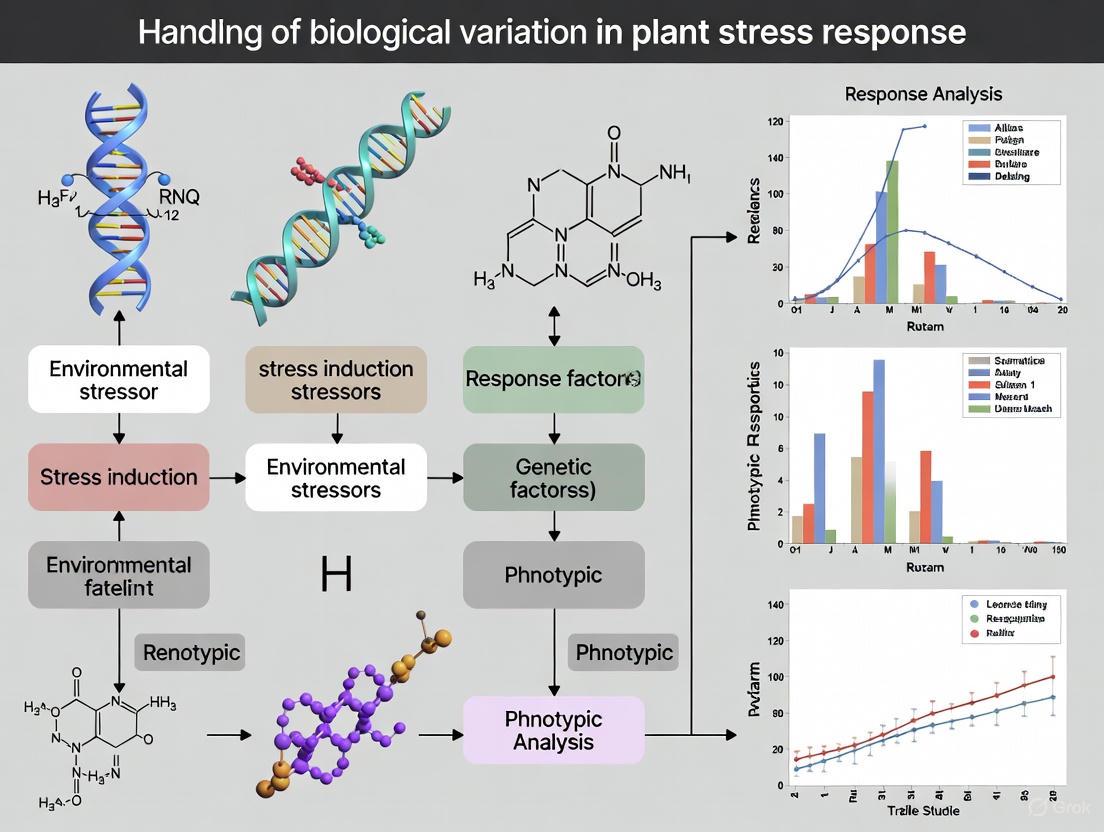
This article provides a comprehensive framework for researchers and scientists to effectively handle biological variation in plant stress response studies.
Navigating Biological Variation: Strategies for Robust Plant Stress Response Studies
Abstract
This article provides a comprehensive framework for researchers and scientists to effectively handle biological variation in plant stress response studies. It explores the foundational sources of genetic and phenotypic diversity in plant systems, details advanced methodological approaches from genomics to phenomics for capturing this variation, addresses key troubleshooting strategies for experimental design, and outlines rigorous validation and comparative analysis techniques. By synthesizing current research and emerging technologies, this guide aims to enhance the reproducibility, accuracy, and translational potential of plant stress biology research for improved crop development and agricultural sustainability.
Understanding the Spectrum: Sources and Significance of Biological Variation in Plant Stress Responses
Technical Support Center: FAQs for Plant Stress Response Research
This guide addresses common challenges in experimental research that utilizes natural genetic variation to study plant stress responses.
Q1: My Arabidopsis lines show inconsistent fitness results across different field trials. Is this a failure of the experiment?
A: Not necessarily. This fluctuation may itself be a key finding. Research using isogenic Arabidopsis lines that varied only in specific glucosinolate (GSL) defense genes found that no single GSL genotype was the most fit across all environments or years. A genotype with high fitness in one location or year often showed lower fitness in another [1]. This indicates that environmental heterogeneity—fluctuating biotic and abiotic stressors—can maintain standing genetic variation within a species, meaning the variation itself is the adaptive trait [1].
- Troubleshooting Steps:
- Document Environmental Variables: Meticulously record abiotic (temperature, rainfall, soil composition) and biotic (pathogen load, insect herbivory) data for each trial location and season.
- Replicate Across Seasons: Always plan for multi-year field trials to distinguish consistent trends from environment-specific effects.
- Review Your Germplasm: Ensure that the lines being compared are nearly isogenic, differing primarily at your loci of interest, to confidently attribute fitness differences to the genetic variation under study rather than background variation [1].
Q2: How can I design an experiment to test plant responses to multiple concurrent stresses, which is more representative of field conditions?
A Moving from single-stress to multi-stress experiments is crucial, as plant responses to stress combinations can be unique and not predictable from single-stress responses [2].
- Key Considerations:
- Define the Stress Combination: Decide whether you are studying a simple combination (2-3 stresses) or a multifactorial stress combination (MFSC with ≥3 stresses), the latter being more representative of complex future climates [2].
- Control Timing and Intensity: The sequence, duration, and severity of applied stresses will significantly impact the plant's response [2].
- Measure Specific Pathways: Assess known integrative pathways, such as Reactive Oxygen Species (ROS) homeostasis, which is a crucial hub in plant survival under stress combinations [2].
Q3: I've introgressed a beneficial allele from a wild relative into a cultivated crop, but yield has decreased. What went wrong?
A This is a common challenge in introgression breeding, often due to linkage drag—the co-introgression of tightly linked, deleterious genes from the wild donor parent [3].
- Solutions:
- Generate a Larger Population: Create a larger segregating population to increase the chance of identifying rare recombination events between the beneficial allele and nearby deleterious genes.
- Use Fine-Mapping: Employ molecular markers to finely map the location of your gene of interest and select progeny with smaller, more precise introgressed segments [3].
- Screen for Key Traits: In later generations, conduct careful phenotyping for yield components and other agronomic traits to select against lines with negative characteristics.
Q4: How can I effectively present quantitative data on genetic variation and trait correlations to a scientific audience?
A Effective data visualization is key to clear communication.
- Best Practices:
- Use the Full Axis: For bar charts of quantitative data, always start the numerical axis at zero to avoid visual distortion. This is less critical for line graphs [4].
- Limit Color Use: Use a maximum of six colors for categorical data. Avoid rainbow color scales for sequential data; instead, use a single-hue gradient from light to dark [4].
- Simplify and Label Directly: Remove unnecessary gridlines and legends where possible. Instead, label data lines or bars directly to reduce "visual math" for the reader [4].
Summarized Data from Key Studies
Table 1: Examples of Beneficial Alleles Introgressed from Wild Relatives for Crop Improvement
| Crop | Wild Donor Species | Introgressed Trait | Causal Gene / Locus (if known) | Functional Impact & Agronomic Benefit |
|---|---|---|---|---|
| Tomato (Solanum lycopersicum) | Solanum pennellii | Increased Fruit Sugar Content | Lin5 (cell wall invertase) | Alters sugar metabolism in developing fruit, significantly elevating sucrose levels [3]. |
| Tomato | Solanum chmielewskii | Enhanced Fruit Apocarotenoid Volatiles | CCD1B (carotenoid cleavage dioxygenase) | Modulates the production of volatile compounds derived from carotenoids, influencing flavor [3]. |
| Rice (Oryza sativa) | Oryza rufipogon | Increased Grain Yield | Multiple yield QTLs | Introgression of specific chromosomal segments from the wild species led to a dramatic 17% yield increase in the cultivated variety [3]. |
| Barley (Hordeum vulgare) | Hordeum vulgare ssp. spontaneum | Acid Soil Tolerance | HvAACT1 (Aluminum tolerance transporter) | A 1-kb transposon insertion regulates the expression of HvAACT1, boosting grain yield on acidic soils by enhancing aluminum tolerance [5]. |
| Maize (Zea mays) | Illinois Long-Term Selection Strains | Extreme Grain Protein/Oil Content | Multiple loci under long-term selection | Over 100 cycles of selection created populations with phenotypic extremes for composition, providing a resource for understanding storage metabolism [3]. |
Table 2: Documented Fitness Trade-offs of Natural Genetic Variants in Arabidopsis thaliana
| Gene / Pathway | Natural Variation Type | Fitness Benefit (in specific environments) | Fitness Cost / Trade-off (in other environments) |
|---|---|---|---|
| Aliphatic Glucosinolate (GSL) Biosynthesis Genes (e.g., MAM, AOP) | Presence/Absence of specific chain-length or modified GSLs [1] | Enhanced defense against specialist insect herbivores [1]. | Allocation costs; potential susceptibility to generalist herbivores or other pathogen communities [1]. |
| Fluctuating GSL Genotypes | Combinations of polymorphic GSL genes [1] | High relative fitness in one field location or year due to prevailing biotic pressures [1]. | Lower relative fitness in a different location or across years, with no genotype being universally superior [1]. |
| Phytochrome-Interacting Factor (PIF4) / Phytochrome B (PHYB) | Regulatory alleles modulating seasonal growth [5] | Optimized growth in cold environments by precisely timing winter dormancy [5]. | Potential trade-off with maximum growth potential under ideal, non-stress conditions. |
| Ribosome-Associated Processes (e.g., AtPRMT3-RPS2B) | Regulatory variation [5] | Promotes ribosome biogenesis and cold adaptation [5]. | Coordinates a growth-stress trade-off, potentially limiting growth under non-stressful conditions [5]. |
Standardized Experimental Protocols
Protocol 1: Field-Based Fitness Assay for Natural Genetic Variants
Objective: To evaluate the fitness consequences of specific natural genetic variants in real-world environments [1].
- Germplasm Selection: Select or generate nearly isogenic lines (NILs) that are genetically identical except for the specific locus or loci of natural variation. This is critical for attributing fitness differences to the gene of interest [1].
- Experimental Design:
- Employ a randomized complete block design with sufficient replication.
- Include the recurrent parent (e.g., a standard accession like Col-0) as a control.
- Trial Execution:
- Conduct trials across multiple geographically distinct locations and over multiple growing seasons (at least 2-3 years).
- Record environmental data throughout the trial (temperature, precipitation, pest/pathogen incidence).
- Fitness Quantification:
- The primary fitness metric is total seed yield per plant.
- Secondary metrics can include survival to reproduction, silique (fruit) number, and plant biomass.
- Data Analysis: Use analysis of variance (ANOVA) to determine the effects of genotype, environment (location and year), and their interaction on fitness.
Protocol 2: Introgression of Alleles from Wild Germplasm
Objective: To transfer a beneficial allele from a wild plant relative into an elite cultivated background [3].
- Crossing:
- Make an initial cross between the cultivated recipient and the wild donor parent.
- Backcrossing:
- Backcross the F1 hybrid to the cultivated parent repeatedly (typically 3-6 generations) to recover the cultivated background. This creates a Backcross Inbred Line (BIL) population.
- Use Marker-Assisted Selection (MAS) during each backcross generation to select for the donor allele at the target locus and against other donor genome segments.
- Selfing:
- Self-pollinate selected lines to generate homozygous progeny for the introgressed segment.
- Phenotyping:
- Conduct rigorous lab and field-based phenotyping to confirm the expression of the desired trait and to check for any negative pleiotropic effects or linkage drag on agronomic traits like yield.
Research Concept and Workflow Visualizations
Diagram 1: Environmental variation maintains genetic diversity.
Diagram 2: Workflow for allele introgression from wild germplasm.
The Scientist's Toolkit: Research Reagent Solutions
Table 3: Essential Research Materials for Studying Natural Genetic Variation
| Research Reagent / Material | Function in Research | Example Application |
|---|---|---|
| Arabidopsis T-DNA Insertion Lines (e.g., from ABRC or NASC) | Used to create gene knockouts for functional validation of candidate genes identified from natural variation studies [1]. | Validating the role of a specific glucosinolate biosynthetic gene in herbivore resistance. |
| Introgression Line (IL) Libraries | Libraries of lines (e.g., in tomato, rice) where a single genomic segment from a wild donor is introgressed into a uniform cultivated background. They are powerful for directly linking phenotype to genotype [3]. | Identifying wild alleles that improve fruit sugar content or drought tolerance without the confounding effects of background genetic variation [3]. |
| Near-Isogenic Lines (NILs) | Lines that are genetically identical except for a small, targeted region containing the natural allele(s) of interest. The gold standard for confirming a gene's phenotypic effect [1]. | Conducting field fitness trials to compare the ecological performance of different alleles at a specific locus, as done with GSL genes in Arabidopsis [1]. |
| Reference Genome Sequences | High-quality genome assemblies for both model organisms and crop wild relatives. Essential for aligning re-sequencing data, identifying polymorphisms, and pinpointing causal variants [1] [3]. | Using the Arabidopsis thaliana Col-0 reference genome to identify single nucleotide polymorphisms (SNPs) in other accessions like Cape Verde Islands (Cvi) or Landsberg erecta (Ler). |
| Metabolomic Platforms (e.g., GC-MS, LC-MS) | Tools for the untargeted or targeted measurement of small molecules (metabolites). Crucial for connecting genetic variation to biochemical phenotype (chemotype), such as in studies of glucosinolates or fruit volatiles [3]. | Profiling the diverse aliphatic glucosinolates in different Arabidopsis accessions or analyzing tomato fruit volatiles in introgression lines [1] [3]. |
Frequently Asked Questions (FAQs)
Q1: What are the main epigenetic mechanisms involved in plant stress memory? The primary epigenetic mechanisms that enable plants to "remember" past stress are DNA methylation (DM), histone modifications (HM), and the action of non-coding RNAs [6] [7]. These mechanisms alter gene expression without changing the underlying DNA sequence. During stress, these modifications can create a "memory" that allows the plant to respond more efficiently if the stress reoccurs. Some of these changes can even be stable and passed on to subsequent generations, a phenomenon known as transgenerational inheritance [6].
Q2: Can you provide a specific example of a gene regulated by epigenetic stress memory? A classic example is the Flowering Locus C (FLC) gene in Arabidopsis thaliana, which is regulated during cold stress through a process called vernalization [8]. Exposure to prolonged cold leads to the silencing of the FLC gene via histone modifications (specifically, the addition of repressive H3K27me3 marks). This epigenetic silencing "memorizes" the cold exposure and prevents flowering until after winter has passed, ensuring the plant flowers in the favorable conditions of spring [8].
Q3: What techniques are essential for studying epigenetic stress memory in plants? Advanced genome-wide profiling technologies are crucial. The field relies heavily on next-generation sequencing to map epigenetic marks across the entire genome [6]. Key methodologies include:
- Bisulfite Sequencing: For profiling DNA methylation patterns.
- Chromatin Immunoprecipitation Sequencing (ChIP-seq): For identifying histone modifications and transcription factor binding sites.
- RNA-seq: For analyzing the expression of non-coding RNAs and stress-responsive genes.
Q4: My experiment shows high variation in stress memory between plant individuals. What could be the cause? Biological variation in plant stress response studies can arise from several factors:
- Genotype-Specific Responses: Different plant species and even cultivars within a species have unique genetic makeups that influence how they perceive and epigenetically encode stress [6].
- Stressor Characteristics: The type, intensity, and duration of the stress itself can lead to different epigenetic outcomes [6] [9].
- Tissue Specificity: Epigenetic modifications are often tissue-specific. For example, a study on rice under salt stress found significant changes in DNA methylation in roots but only minor changes in leaves [6].
- Stochastic Events: Some epigenetic changes can occur randomly, contributing to variation within a genetically uniform population.
Troubleshooting Common Experimental Challenges
Problem: Inconsistent Stress Memory Phenotypes
Issue: Plants of the same genotype show inconsistent or weak memory responses upon secondary stress exposure.
| Potential Cause | Diagnostic Approach | Solution |
|---|---|---|
| Insufficient priming stress | Review literature for established stress intensity/duration for your plant species. | Optimize and strictly standardize the primary stress protocol to ensure it is strong enough to establish a memory. |
| Variable environmental conditions | Monitor and log growth chamber conditions (light, temperature, humidity) throughout the experiment. | Ensure consistent environmental conditions for all plant groups to minimize uncontrolled variables. |
| Inadequate rest period | Test different recovery periods between primary and secondary stress application. | Implement a defined and appropriate recovery period to allow for the establishment of stable epigenetic marks. |
Problem: High Technical Variation in Epigenetic Data
Issue: High variability in results from techniques like bisulfite sequencing or ChIP-seq.
| Potential Cause | Diagnostic Approach | Solution |
|---|---|---|
| Non-uniform tissue sampling | Check the consistency of tissue dissection and collection protocols. | Precisely define and consistently harvest the same tissue type and developmental stage from all biological replicates. |
| Issues with reagent quality | Use positive controls and quality control metrics (e.g., Bioanalyzer profiles for DNA/RNA). | Use high-quality, validated reagents and kits. Aliquot reagents to avoid freeze-thaw cycles. |
| Low sample purity | Check sample purity using spectrophotometry (e.g., Nanodrop). | Follow optimized nucleic acid or chromatin extraction protocols and include purification steps as necessary. |
Key Experimental Protocols
Protocol 1: Assessing DNA Methylation Changes in Response to Abiotic Stress
This protocol outlines a method to identify changes in DNA methylation patterns in plants following stress exposure.
1. Plant Material and Stress Application:
- Use genetically uniform plant material (e.g., inbred lines).
- Apply a defined and controlled stress (e.g., salinity, drought, heat) to the treatment group, while maintaining a control group under optimal conditions.
- After the stress period, allow for a recovery period to distinguish transient from stable methylation changes.
2. DNA Extraction and Bisulfite Conversion:
- Harvest plant tissue (e.g., leaves, roots) and isolate high-quality genomic DNA.
- Treat the DNA with sodium bisulfite. This process converts unmethylated cytosines to uracils, while methylated cytosines remain unchanged.
3. Whole-Genome Bisulfite Sequencing (WGBS):
- Prepare a sequencing library from the bisulfite-converted DNA.
- Perform high-throughput sequencing to cover the genome at a high depth.
- Map the sequenced reads to a reference genome and quantify methylation levels at each cytosine position (in CG, CHG, and CHH contexts).
4. Data Analysis:
- Identify Differentially Methylated Regions (DMRs) by comparing the treatment and control groups.
- Correlate DMRs with changes in gene expression data (e.g., from RNA-seq) to link methylation changes to functional outcomes.
Protocol 2: Investigating Histone Modifications in Stress Memory
This protocol describes how to profile histone modifications associated with stress memory genes.
1. Stress Priming and Challenge:
- Subject plants to a primary stress to establish memory.
- After a recovery period, apply a secondary, similar stress to trigger the memorized response.
2. Chromatin Immunoprecipitation (ChIP):
- Cross-link proteins to DNA in harvested plant tissue.
- Isolate and shear the chromatin to fragment DNA.
- Immunoprecipitate the protein-DNA complexes using antibodies specific to the histone modification of interest (e.g., H3K4me3 for active marks, H3K27me3 for repressive marks).
3. ChIP Sequencing (ChIP-seq):
- Reverse the cross-links and purify the DNA.
- Construct a sequencing library from the immunoprecipitated DNA and sequence it.
- Align sequences to the reference genome to identify genomic regions enriched for the specific histone mark.
4. Data Integration:
- Compare ChIP-seq profiles from primed and non-primed plants to identify memory-specific epigenetic changes at key stress-responsive genes, such as heat shock factors (e.g., HSFA2) or flowering regulators (e.g., FLC) [8].
The Scientist's Toolkit: Essential Research Reagents
| Reagent / Material | Function in Epigenetic Stress Research |
|---|---|
| Sodium Bisulfite | Critical chemical for bisulfite sequencing; converts unmethylated cytosine to uracil to distinguish methylated bases [6]. |
| Histone Modification-Specific Antibodies | Used in ChIP experiments to pull down chromatin fragments with specific histone marks (e.g., H3K4me3, H3K27me3) [8]. |
| DNA Methyltransferases/Demethylase Mutants | Genetic tools (e.g., drm2 mutants) to study the function of specific enzymes in establishing or erasing DNA methylation in response to stress [6]. |
| Next-Generation Sequencing Kits | For preparing libraries for Whole-Genome Bisulfite Sequencing (WGBS), ChIP-seq, and RNA-seq to generate genome-wide epigenetic and transcriptional data [6]. |
| Polycomb Repressive Complex (PRC) Mutants | Used to study the role of PRC1 and PRC2 in maintaining repressive histone marks and stable gene silencing during stress memory, such as in vernalization [8]. |
Signaling Pathways and Experimental Workflows
Diagram: Simplified Cold Stress Memory via Vernalization
Diagram: Experimental Workflow for Profiling Stress Memory
Theoretical Foundation: Understanding the Growth-Defense Trade-Off
What is the growth-defense trade-off in plants?
The growth-defense trade-off describes a fundamental physiological compromise in plants, where limited cellular resources are allocated either to growth processes or to stress defense mechanisms. Since plants are sessile organisms unable to escape adverse conditions, they have evolved sophisticated signaling networks that dynamically prioritize between these competing demands. When plants perceive environmental stress, they actively suppress growth and redirect energy toward defense activation, which is beneficial for survival but often undesirable for agricultural productivity where yield is prioritized [10] [11].
This balance is regulated by a complex interplay of hormonal signaling pathways, with jasmonates (JAs), abscisic acid (ABA), and gibberellins (GAs) playing particularly important roles. Research has demonstrated that under stress conditions such as mechanical touch, plants exhibit significant growth reduction while simultaneously increasing resistance to herbivory, illustrating the operational trade-off in action [11].
What molecular mechanisms govern this balance?
The molecular control of growth-defense balance involves coordinated action across multiple signaling pathways and regulatory proteins:
Key Regulatory Components:
- Phytohormone Crosstalk: JA, ABA, and GA pathways interact antagonistically and synergistically to fine-tune the balance [11] [12]. For instance, OPDA (a JA precursor) coordinates growth reduction in response to touch stress, while JA itself regulates induced defenses [11].
- DELLA Proteins: These growth repressors in the GA pathway accumulate under stress and promote survival by delaying cell death through enhanced ROS scavenging [13].
- Energy-Sensing Kinases: SnRK1 and TOR kinases act antagonistically; SnRK1 activates catabolism and represses growth under low-energy stress conditions, while TOR promotes growth when resources are abundant [13].
- Transcription Factors: Families including ERF, bZIP, WRKY, MYB, and NAC integrate stress signals to regulate downstream gene expression, directing resources toward defense or growth programs [14].
Table 1: Major Transcription Factor Families in Growth-Defense Balance
| TF Family | Key Regulators | Stress Responsiveness | Primary Functions |
|---|---|---|---|
| ERF | ERF2, ERF8 | Drought, cold, pathogens, wounding, JA/ET signaling [14] | Activates or represses defense genes; enhances stress tolerance when overexpressed [14] |
| bZIP | ABF1, ABF2 | Drought, salinity, temperature extremes [14] | Regulates ABA-dependent signaling; controls stomatal closure and water conservation [12] |
| WRKY | WRKY2, WRKY6, WRKY18 | Pathogens, wounding, drought, salinity, oxidative stress [14] | Modulates defense gene expression; integrates biotic and abiotic stress signaling [14] |
| NAC | Multiple members | Drought, salinity, cold [14] | Plant-specific TFs with roles in development and abiotic stress tolerance [14] |
Troubleshooting Common Experimental Challenges
How can researchers account for biological variation in drought stress experiments?
Biological variation presents significant challenges in drought stress studies. To ensure reproducible and meaningful results:
- Standardize Stress Application: Clearly define and maintain consistent drought conditions across experiments. The severity, duration, and number of stress exposures must be precisely controlled and documented [15] [13].
- Consider Developmental Stage: Plant responses to drought vary significantly across growth stages. Always document the developmental stage and use uniform plant materials to reduce variability [15].
- Account for Organ-Specific Responses: Roots and shoots perceive and respond to drought differently. Analyze responses in specific tissues separately rather than using whole-plant extracts to obtain more precise data [13].
- Monitor Multiple Parameters: Combine physiological measurements (stomatal conductance, photosynthetic rate, Fv/Fm) with molecular analyses to capture comprehensive response profiles and account for variation between different response systems [15] [16].
What controls are essential for reliable growth-defense trade-off experiments?
- Positive Controls: Include genotypes with known stress response phenotypes (e.g., constitutive defense activation mutants) to verify your stress treatments are effective [11].
- Negative Controls: Utilize mutants deficient in key signaling pathways (e.g., JA biosynthesis mutants) to confirm the specificity of your observed responses [11].
- Temporal Controls: Collect samples at multiple time points during stress application and recovery, as the trade-off is dynamically regulated rather than static [16].
- Environmental Controls: Carefully regulate growth chamber conditions, as slight variations in light, temperature, and humidity can significantly alter trade-off responses [15].
Why might expected molecular markers not appear in stress experiments?
- Insufficient Stress Severity/Duration: The stress application may not have reached the threshold required to activate defense programs while inhibiting growth. Conduct pilot studies to establish appropriate stress intensity [15].
- Inappropriate Sampling Time: Molecular markers have distinct temporal expression patterns. If samples are collected too early or late in the stress response, key markers may be missed [16].
- Compensatory Mechanisms: Genetic redundancy or parallel signaling pathways may compensate for manipulated genes, masking expected phenotypes [11].
- Organ-Specific Expression: Your marker of interest might be expressed only in certain tissues or cell types not included in your sampling [13].
Experimental Protocols for Studying Growth-Defense Balance
Protocol: Analyzing Molecular Responses to Abiotic Stress
This protocol provides a framework for investigating transcriptomic and metabolomic changes during stress exposure [14] [16]:
Materials Required:
- Plant materials (wild-type and mutant genotypes)
- Stress application equipment (growth chambers, drought facilities)
- RNA extraction kit (e.g., TRIzol-based methods)
- cDNA synthesis kit
- qPCR system and reagents
- LC-MS/MS system for metabolomics
- Standard laboratory equipment (centrifuges, nanodrop spectrophotometer, thermal cycler)
Procedure:
- Plant Growth & Stress Application:
- Grow plants under controlled conditions to appropriate developmental stage.
- Apply standardized stress treatment (drought, salinity, cold, etc.) with precise documentation of severity and duration [15].
- Include unstressed control plants grown in parallel.
Sample Collection:
- Harvest tissue samples at multiple time points (during initial alarm phase, acclimation phase, and recovery).
- Immediately flash-freeze in liquid nitrogen and store at -80°C.
- Note: Collect replicates (biological and technical) to account for variation.
RNA Extraction & Quality Control:
- Extract total RNA using standard methods.
- Verify RNA quality and integrity (A260/A280 ratio ~2.0, clear ribosomal bands on gel).
- Treat with DNase to remove genomic DNA contamination.
Reverse Transcription & qPCR:
- Synthesize cDNA using reverse transcriptase.
- Perform qPCR with primers for stress-responsive genes (Table 2) and reference genes.
- Use appropriate statistical methods (e.g., 2^-ΔΔCt) for analysis.
Metabolite Profiling:
- Extract metabolites using appropriate solvents (e.g., methanol:water mixtures).
- Analyze using LC-MS/MS with appropriate standards.
- Identify stress-responsive metabolites using computational pipelines.
Table 2: Key Molecular Markers for Different Stress Types
| Stress Type | Early Signaling Components | Transcription Factors | Metabolic Markers | Physiological Outputs |
|---|---|---|---|---|
| Drought | ABA, ROS, Ca2+ [12] | DREB, AREB/ABF, MYC/MYB [12] | Proline, sugars [12] | Stomatal closure, growth suppression [10] |
| Cold | Ca2+, CDPKs [12] | DREB1A, SCOF-1, CBF [12] | Soluble sugars, antifreeze proteins [12] | Membrane lipid remodeling, photosynthetic adjustment [12] |
| High Salinity | JA, ABA, Ca2+ [12] | DREB/CBF, bZIP, SOS pathway [12] | Compatible solutes, polyamines [12] | Ion homeostasis, ROS scavenging [12] |
| Biotic Stress | SA, JA, ROS [14] | WRKY, ERF, NPR1 [14] | Phytoalexins, glucosinolates [17] | Defense compound production, hypersensitive response [14] |
Protocol: Assessing Trade-Offs Through Physiological Measurements
Materials Required:
- Photosynthesis measurement system (IRGA)
- Chlorophyll fluorescence imaging system
- Root phenotyping system
- Precision balances
- Plant growth analysis software
Procedure:
- Pre-Stress Baseline Measurements:
- Record initial plant weight, height, leaf area, and root architecture.
- Measure baseline photosynthetic parameters (A, gs, Fv/Fm).
- Document developmental stage.
Stress Application & Monitoring:
- Apply controlled stress while monitoring environmental conditions.
- Track physiological parameters at regular intervals.
- Document visible symptoms and morphological changes.
Growth-Defense Quantification:
- Compare growth rates (biomass accumulation, leaf expansion) between stressed and control plants.
- Measure defense activation (antioxidant capacity, defense compound production, pathogen/herbivore resistance).
- Calculate trade-off magnitude as the ratio between growth reduction and defense enhancement.
Data Analysis:
- Use statistical models to correlate molecular changes with physiological responses.
- Apply dimension reduction techniques (PCA) to identify key response traits.
- Construct response networks integrating molecular and physiological data.
Visualization of Key Signaling Pathways
Drought Stress Signaling Pathway
JA-GA Crosstalk in Growth-Defense Balance
Research Reagent Solutions
Table 3: Essential Research Reagents for Plant Stress Studies
| Reagent Category | Specific Examples | Research Applications | Key Functions |
|---|---|---|---|
| Molecular Biology Kits | RNA extraction kits, cDNA synthesis kits, qPCR master mixes | Gene expression analysis of stress markers [14] [16] | Quantify transcript levels of key regulatory genes |
| Antibodies & Immunoassays | ABA ELISA kits, HSP antibodies, pathogen detection assays | Hormone quantification, pathogen detection, protein localization [16] | Detect and quantify stress-related molecules and pathogens |
| Chemical Inhibitors/Agonists | JA biosynthesis inhibitors, GA biosynthesis inhibitors, kinase inhibitors | Pathway dissection through pharmacological approaches [11] | Test necessity/sufficiency of specific pathway components |
| Genetically Modified Lines | JA-deficient mutants, DELLA mutants, TF overexpression lines | Functional testing of specific genes [11] [13] | Establish causal relationships between genes and phenotypes |
| Metabolomics Standards | Phytohormone standards, antioxidant standards, LC-MS metabolite standards | Metabolite profiling and identification [17] [16] | Identify and quantify stress-responsive metabolites |
| Sensor Lines | Rationetric ROS sensors, Ca2+ sensors, fluorescent protein reporters | Real-time monitoring of signaling events [16] | Visualize spatial and temporal dynamics of stress responses |
Advanced Methodologies: Integrating Multi-Omic Approaches
How can researchers integrate multiple technologies to comprehensively study stress responses?
Given the complexity of growth-defense trade-offs, a single-method approach often provides incomplete understanding. Integrated multi-omic strategies are essential for capturing the full spectrum of plant stress responses [16]:
Recommended Integrated Workflow:
- Genomics/Transcriptomics: Identify candidate genes and expression patterns through RNA-seq and gene expression profiling [14] [16].
- Proteomics: Validate protein-level changes and post-translational modifications using MS-based approaches [14] [16].
- Metabolomics: Profile stress-responsive metabolites and defense compounds through LC-MS and GC-MS [17] [16].
- Ionomics: Analyze elemental composition and nutrient dynamics under stress [16].
- Phenomics: Quantify physiological and morphological responses through automated imaging and sensor technologies [16].
This integrated approach enables researchers to connect molecular changes with physiological outcomes, providing a systems-level understanding of how plants balance growth and defense under stress [16].
Frequently Asked Questions (FAQs)
Q1: Why do I observe high variability in systemic immune responses between individual plants in my experiments? High variability can often be attributed to the dynamic nature of root microbiome composition and the "standby mode" of immune signaling. Research shows that roots maintain basal levels of the immune signal N-hydroxypipecolic acid (NHP) in an inactivated, conjugated form. The sensitivity of this system means that slight differences in microbial exposure or plant metabolic state can lead to varied activation and transport of free NHP to shoots, resulting in differential immune priming [18].
Q2: How can I better control for the microbiome's influence when studying root-shoot signaling? Utilize gnotobiotic plant systems with defined Synthetic Microbial Communities (SynComs). Studies successfully employ SynComs of specific bacteria, fungi, and oomycetes to standardize the root microbiome. This approach demonstrated that a defined microbiota could rescue Arabidopsis growth under suboptimal light, an effect that required specific host factors like the transcription factor MYC2 [19]. This method reduces uncontrolled biological variation from soil microbes.
Q3: What could cause inconsistent shoot growth responses after manipulating root nutrient sensing pathways? Inconsistent growth may stem from crosstalk between different systemic signaling pathways. For instance, nutrient signaling is finely tuned by opposing pathways. The CEP (C-terminally encoded peptides) pathway signals nitrogen deficiency from roots to shoots, while the trans-zeatin (tZ) pathway signals nitrogen sufficiency. Simultaneous activation of these pathways, due to heterogeneous soil conditions or internal plant status, can lead to conflicting growth outputs [20]. Ensuring uniform nutrient availability, for example using split-root systems, can mitigate this.
Q4: My measurements of systemic defense signals don't correlate with pathogen resistance. What might be wrong? This discrepancy can arise from the growth-defense trade-off dictated by the microbiota-root-shoot circuit. Under suboptimal conditions like low light, the presence of a root microbiome can prioritize growth over defense, leading to reduced defense responses even when systemic signals are present. This trade-off is directly linked to belowground bacterial community composition and requires the host's MYC2 transcription factor [19]. Consistently control environmental conditions and characterize the microbial community to interpret defense signaling accurately.
Troubleshooting Guides
Problem: Erratic Lateral Root Development in Nitrogen Signaling Studies
Potential Cause: Non-specific activation of compensatory root development due to uneven nitrogen distribution or concurrent activation of multiple signaling peptides.
Solution:
- Standardize Growth Substrate: Use a homogenous growth medium. For localized nitrogen application, employ a split-root system where the root system is physically divided between high-N and low-N compartments [20].
- Monitor Key Signals: Track the expression of CEP genes in roots and the movement of CEPD/CEPDL2 peptides from shoots to roots, as these are central to the systemic N-demand signaling [20].
- Genetic Controls: Use mutants in key signaling components (e.g.,
cepr,cepdmutants) to confirm the specificity of the observed root phenotype [20].
Problem: Lack of Expected Systemic Immune Priming After Root Pathogen Challenge
Potential Cause: Disruption in the synthesis, conjugation, or transport of the root-to-shoot signal N-hydroxypipecolic acid (NHP).
Solution:
- Verify Signal Inactivation Mechanism: Check the status of NHP conjugation. The basal NHP in roots is typically inactivated by glucose conjugation; microbial interaction should trigger its deconjugation and release [18].
- Quantify Long-Distance Signal: Directly measure levels of free NHP in the xylem sap or in shoot tissues following root inoculation, rather than relying solely on gene expression markers in roots [18].
- Control Microbiome: Ensure that the experimental plants have a consistent and defined microbial background, as the standing microbial community can pre-condition the immune system state [19].
Key Signaling Pathways: Data and Protocols
Table 1: Systemic Signaling Molecules in Root-Shoot Communication
| Signaling Molecule | Origin | Target Tissue | Function | Key Regulatory Proteins |
|---|---|---|---|---|
| N-hydroxypipecolic acid (NHP) [18] | Roots | Shoots | Immune priming; systemic acquired resistance | Biosynthesis enzymes (e.g., AOP3); conjugation enzymes |
| C-terminally encoded peptides (CEPs) [20] | N-deficient Roots | Shoot Vasculature | Induce expression of nitrate transporters | CEP Receptor (CEPR) in shoots |
| CEPD/CEPDL2 Polypeptides [20] | Shoot Vasculature | Roots | Upregulate NRT2.1 expression to enhance nitrate uptake |
CEPR in shoots |
| trans-Zeatin (tZ) [20] | N-sufficient Roots | Shoots | Signal nitrogen sufficiency; suppress foraging | Cytokinin receptors |
| HY5 Transcription Factor [20] | Shoots (synthesized) | Roots (mobile) | Integrates light and nutrient signaling; promotes nitrate uptake & root growth | - |
Table 2: Common Stressors and Their Systemic Signaling Components
| Stress Type | Sensor/Initial Signal | Systemic Signal | Measurable Physiological Output |
|---|---|---|---|
| Nitrogen Deficiency [20] | Local nitrate availability | CEP peptides → CEPDL2 | Increased lateral root growth; upregulation of NRT2.1 |
| Phosphate Deficiency [20] | Local phosphate availability | (Under review) miRNAs, hormones | Altered root architecture; exudation of organic acids |
| Root Pathogen Attack [18] | Microbial-associated molecular patterns | N-hydroxypipecolic acid (NHP) | Induced defense gene expression in shoots; growth inhibition |
| Suboptimal Light [19] | Leaf photoreceptors | Altered carbon metabolites | Modulation of root bacterial community; growth-defense trade-off |
Experimental Protocols
Protocol 1: Establishing a Split-Root System to Study Systemic Nutrient Signaling
Purpose: To physically separate a root system into distinct compartments, allowing researchers to expose different parts of the root system to different conditions and study long-distance signaling [20].
Materials:
- Plant seedlings (e.g., Arabidopsis, tomato)
- Agar or hydroponic media
- Split-root containers or partitioned plates
- Nutrient solutions (e.g., +N, -N)
Methodology:
- Germination: Germinate seeds on a sterile, vertical agar plate.
- Root Tip Division: Once the primary root is 2-3 cm long, carefully excise the root tip (approx. 2-3 mm) to break apical dominance and induce the growth of two or more lateral roots of similar length.
- Transfer to System: Transfer the seedling to a split-root system where the two lateral roots are guided into separate compartments.
- Application of Treatments: After the roots have established in both compartments (typically 5-7 days), apply the experimental treatment (e.g., -N solution) to one compartment and the control (e.g., +N solution) to the other.
- Analysis: Harvest root and shoot tissues from each compartment separately for molecular (gene expression, metabolite analysis) and phenotypic (lateral root counting, biomass measurement) analysis.
Protocol 2: Profiling Root Microbiome Using Gnotobiotic Systems and SynComs
Purpose: To control and manipulate the plant microbiome, reducing variability and enabling functional studies of specific microbes in root-shoot communication [19].
Materials:
- Sterile plant seeds
- Gnotobiotic growth systems (e.g., FlowPot)
- Culture collections of root-associated bacteria, fungi, and oomycetes
- DNA/RNA extraction kits
- Sequencing facilities (16S rRNA, ITS)
Methodology:
- Surface Sterilization: Surface-sterilize plant seeds and germinate them on sterile media.
- SynCom Preparation: Grow individual microbial strains to the logarithmic phase. Combine them at defined relative abundances to create a Synthetic Community (SynCom).
- Inoculation: Transfer germ-free seedlings to the gnotobiotic system and inoculate the roots with the SynCom.
- Application of Abiotic Stress: Apply the desired abiotic stress (e.g., low photosynthetically active radiation) to the shoots.
- Sample Collection and Sequencing: After a set period, collect root and rhizosphere samples. Extract total DNA and perform amplicon sequencing (16S for bacteria, ITS for fungi/oomycetes) to profile the microbial community.
- Phenotyping: In parallel, measure plant phenotypes such as shoot fresh weight, leaf area, and defense marker gene expression.
Signaling Pathway Diagrams
Root-to-Shoot Systemic Immune Signaling
Systemic Nitrogen Signaling Circuit
The Scientist's Toolkit: Research Reagent Solutions
Table 3: Essential Reagents for Studying Systemic Signaling
| Reagent / Tool | Function / Application | Example Use Case |
|---|---|---|
| Synthetic Microbial Communities (SynComs) [19] | Defined consortia of microbes to standardize the root microbiome and study its function. | Investigating the role of specific bacterial strains in rescuing plant growth under low light [19]. |
| Gnotobiotic Plant Systems [19] | Sterile growth environments (e.g., FlowPot) that allow inoculation with known microbes. | Maintaining axenic conditions or plants with defined microbiomes for reproducible root-shoot studies [19]. |
| Split-Root Systems [20] | Physical separation of a root system to apply localized treatments. | Studying systemic N signaling by exposing one part of the root to low N and another to high N [20]. |
| Mutant Lines (e.g., myc2, cepr, nhp biosynthesis) [19] [20] [18] | Genetic tools to dissect the function of specific genes in signaling pathways. | Confirming the essential role of MYC2 in the microbiota-mediated growth-defense trade-off [19]. |
| Mass Spectrometry [18] | Quantitative measurement of signaling molecules (e.g., NHP, CEP peptides, hormones). | Directly quantifying the flux of NHP from roots to shoots upon immune challenge [18]. |
FAQ: Understanding Temporal Dynamics in Plant Stress
What are the key phases of a plant's temporal response to stress?
The response to a sudden stressor, such as high salinity, is not a single event but a multi-phasic process. Research on Arabidopsis thaliana roots shows this unfolds in distinct phases: an initial stop phase (hours 1-4 post-stress) where growth rates fall dramatically, a period of maintained slow growth (~4 hours), followed by a recovery phase where growth gradually resumes before reaching a new state of homeostasis [21].
Why is understanding temporal dynamics critical for my experiments?
Ignoring time-course data can lead to incomplete or misleading conclusions. The molecular events during the initial shock phase are fundamentally different from those during acclimation [21]. For example, the hormone ABA acts in a tissue-specific manner to regulate growth recovery; if you only measure endpoints, you will miss these critical, spatially-patterned regulatory events [21]. Furthermore, transcriptomic responses are highly dynamic, and sampling at a single time point will capture only a fraction of the relevant biological story [22].
How can I manage biological variation in time-course experiments?
Biological variation is a major challenge when studying dynamic processes. Key strategies include:
- High-Resolution Sampling: Do not rely on sparse time points. The use of live-imaging, for instance, allows for continuous, non-invasive monitoring of growth parameters, capturing subtle transitions that would be missed with end-point measurements [21].
- Tissue-Specific Resolution: Bulk analysis of whole organs can mask critical tissue-specific responses. Techniques like Fluorescence-Activated Cell Sorting (FACS) of protoplasted tissues expressing cell-specific fluorescent markers enable high-resolution spatio-temporal transcriptional mapping [21].
- Replication and Controls: Ensure sufficient biological replication at each time point and include matched controls to distinguish stress-specific responses from general developmental changes.
Troubleshooting Guide for Common Experimental Challenges
| Issue | Diagnosis | Solution | Underlying Principle |
|---|---|---|---|
| Inconsistent stress response phenotypes | Biological variation is obscuring the dynamic response pattern. Single time-point measurements are missing key transitions. | Implement live-imaging and high-resolution, multi-time-point sampling (e.g., 1h, 2h, 4h, 8h, 24h, 48h). Use tissue-specific reporters to dissect spatial contributions [21]. | Stress acclimation is a phasic process. Growth and molecular changes are temporally and spatially regulated [21]. |
| Unclear signaling pathway hierarchy | The roles of specific hormones (e.g., ABA, ethylene) appear context-dependent and change over time. | Employ a bioinformatic approach to link time-course transcriptomic data with public hormone response datasets. Validate predictions using tissue-specific suppression of signaling pathways [21]. | Hormone signaling pathways interact in a complex network, with their activity and dominance shifting between phases of the stress response [21] [23]. |
| Poor stress recovery in mutants | A mutant may not be defective in the initial stress sensing, but rather in the mechanisms that enable recovery and growth acclimation. | Use live-imaging to precisely quantify the duration of the stop phase and the rate of growth recovery. Analyze gene expression related to ion homeostasis and osmolyte synthesis during the recovery phase [21] [23]. | Recovery involves active processes like ion transporter activation (e.g., SOS pathway) and synthesis of compatible osmolytes (e.g., proline), not just the cessation of the initial stress signal [21] [23]. |
Experimental Protocols for Key Assays
Live-Imaging for Quantifying Dynamic Growth
This protocol is adapted from studies on Arabidopsis root growth under salt stress [21].
Objective: To non-invasively monitor and quantify the dynamic changes in root growth rate before, during, and after the application of an abiotic stress.
Materials:
- Custom live-imaging system with computer-controlled stage and transmitted infrared light.
- Vertical growth plates containing agar medium.
- Semiautomated image analysis software (e.g., as described in Duan et al., 2013).
Method:
- Preparation: Grow Arabidopsis seedlings vertically on the surface of agar in tissue culture plates for 5 days under standard conditions.
- Baseline Imaging: Place plates on the imaging system and capture images every 15 minutes for a 24-hour period to establish baseline growth rates.
- Stress Application: Transfer plates to fresh medium supplemented with the stressor (e.g., 140 mM NaCl) or to control medium. The transfer process itself can cause a slight growth suppression, making a control transfer essential.
- Post-Stress Imaging: Continue time-lapse imaging every 15 minutes for at least 48-72 hours post-stress.
- Data Analysis: Use semiautomated software to track root tip position and calculate elongation rates over time, independent of root tip waving. Plot growth rate versus time to visualize the stop, maintenance, recovery, and homeostasis phases.
High-Resolution Spatio-Temporal Transcriptomics
Objective: To generate a tissue-specific, multi-time point transcriptional map of the stress response.
Materials:
- Transgenic plant lines expressing GFP under tissue-specific promoters.
- Protoplasting enzymes.
- Fluorescence-Activated Cell Sorter (FACS).
- RNA-seq library preparation and sequencing platforms.
Method:
- Stress Treatment & Sampling: Expose plants to stress and collect root samples at multiple time points (e.g., 1, 2, 4, 8, 24, 48 hours) along with matched controls.
- Tissue Dissociation: Protoplast the roots using a brief enzymatic treatment to create a single-cell suspension.
- Cell Sorting: Use FACS to isolate GFP-positive cells from specific tissue layers (e.g., epidermis, cortex, stele).
- RNA Sequencing: Isulate total RNA from each sorted cell population and construct RNA-seq libraries. Sequence using a high-throughput platform (e.g., Illumina).
- Bioinformatic Analysis: Identify Differentially Expressed Genes (DEGs) for each tissue and time point. Use clustering and pathway analysis to identify temporal and spatial expression trends. Integrate with public datasets on hormone responses to predict regulating pathways [21].
Visualizing Signaling Pathways and Workflows
Salt Stress Signaling Pathway
This diagram summarizes key molecular events in the response to salt stress, from initial sensing to acclimation.
Experimental Workflow for Temporal Analysis
This diagram outlines a logical workflow for designing an experiment to analyze the temporal dynamics of a plant stress response.
The Scientist's Toolkit: Key Research Reagents & Materials
| Item | Function in Stress Research | Example Application |
|---|---|---|
| Fluorescent Protein Reporters | Visualize gene expression and protein localization in specific cell types in real time. | Generating tissue-specific GFP lines for FACS isolation and live-imaging of stress-responsive promoters [21]. |
| OSCA Ion Channels | Mediate hyperosmolarity-induced calcium influx; function as osmotic stress sensors [23]. | Studying early signaling events in osmotic stress using mutant lines. |
| SOS Pathway Components (SOS1, SOS2, SOS3) | Key signaling module for ion homeostasis under salt stress; SOS1 is a Na+/H+ antiporter [23]. | Analyzing Na+ flux and compartmentalization in sos mutant backgrounds. |
| SnRK2 Protein Kinases | Central regulators activated by osmotic stress; key players in ABA-dependent and independent signaling [23]. | Investigating phosphorylation events in signal transduction cascades. |
| Heat Shock Proteins (HSPs) | Act as molecular chaperones to prevent protein denaturation and maintain proteostasis under heat and other stresses [23]. | Quantifying thermotolerance and protein aggregation in different genotypes. |
| Dendrometers / Trunk Displacement Sensors | Measure minute changes in trunk diameter, providing a continuous, physical readout of plant water status and stress [24]. | Monitoring water-related stress in trees or large plants in field or greenhouse settings. |
| FACS (Fluorescence-Activated Cell Sorter) | Isolate specific cell types from protoplasted tissues based on fluorescent markers for high-resolution omics studies [21]. | Obtaining pure populations of root stele or epidermal cells for transcriptomic profiling. |
Advanced Tools and Techniques: Capturing Complex Variation Across Biological Scales
In plant stress response studies, biological variation presents a significant challenge, as plants exhibit complex, dynamic molecular changes when facing abiotic stressors like drought, heat, and waterlogging [25] [26]. Multi-omics data integration has emerged as a powerful approach to overcome this challenge by harmonizing multiple layers of biological data—including genomics, transcriptomics, proteomics, and metabolomics—to provide a more comprehensive understanding of physiological and biochemical processes [27] [26]. This methodology reduces the limitations and biases associated with single-omics approaches by enabling cross-validation and integration of multiple data types, thereby revealing molecular relationships not detectable when analyzing each omics layer in isolation [27]. For researchers and drug development professionals, multi-omics integration provides unprecedented insights into disease mechanisms, identifies molecular biomarkers and novel drug targets, and aids the development of precision medicine approaches [27].
Key Challenges in Multi-Omics Integration
Technical and Analytical Bottlenecks
Integrating multi-omics data presents significant bioinformatics and statistical challenges that can stall discovery efforts, especially for those without computational expertise [27]. These challenges include:
- Heterogeneous Data Structures: Each omics data type has unique data structure, distribution, measurement error, and batch effects [27]. For example, transcriptomics may profile thousands of genes, while proteomic methods often have a more limited spectrum, potentially detecting only 100 proteins [28].
- Lack of Preprocessing Standards: The absence of standardized preprocessing protocols means tailored pipelines are often adopted for each data type, potentially introducing additional variability across datasets [27].
- Specialized Bioinformatics Expertise Required: Handling and analyzing large, heterogeneous data matrices requires cross-disciplinary expertise in biostatistics, machine learning, programming, and biology [27].
Method Selection and Interpretation Challenges
- Difficult Choice of Integration Method: Numerous integration algorithms exist, each with different approaches and applications, creating confusion about which method is best suited for a particular dataset or biological question [27].
- Challenging Biological Interpretation: Translating integration outputs into actionable biological insight remains difficult due to model complexity, missing data, and limited functional annotation [27].
Table 1: Common Multi-Omics Integration Challenges and Their Impacts on Research
| Challenge Category | Specific Issue | Impact on Research |
|---|---|---|
| Technical & Analytical | Heterogeneous data structures & noise profiles | Misleading conclusions without careful preprocessing |
| Data Quality | Missing data across modalities (e.g., gene visible at RNA level but absent at protein level) | Incomplete molecular profiles and difficult cross-modality comparisons |
| Method Selection | Multiple algorithms with different approaches (MOFA, DIABLO, SNF, etc.) | Confusion about optimal method for specific biological questions |
| Interpretation | Complex model outputs with limited functional annotation | Difficulty translating results into actionable biological insight |
Troubleshooting Guides and FAQs
Data Acquisition and Preprocessing
FAQ: What are the critical steps for ensuring quality in multi-omics data preprocessing?
Effective preprocessing requires both technical and biological considerations. From a technical perspective, specific quality control measures must be implemented for each omics layer. For transcriptomics, this includes adapter trimming with tools like Trimmomatic, quality filtering (e.g., removing reads with >10% N or >50% bases with Q≤20), and alignment to reference genomes using HISAT2, aiming for >80% mapping efficiency [29]. Biologically, researchers must account for tissue-specific responses, as different plant tissues can exhibit dramatically different molecular signatures under stress conditions [29].
FAQ: How do I handle missing data across different omics modalities?
Missing data is a common challenge in multi-omics studies, particularly when a gene detected at the RNA level may be missing in the protein dataset [28]. Effective strategies include:
- Implementing imputation methods specific to each data type
- Using integration algorithms robust to missing data (e.g., MOFA+)
- Designing experiments with sufficient biological replicates to distinguish technical zeros from biological absences
Integration Methodology Selection
FAQ: How do I choose the most appropriate integration method for my plant stress study?
Method selection depends on your experimental design and research objectives. The table below compares major integration approaches:
Table 2: Multi-Omics Integration Methods: Comparative Analysis for Method Selection
| Method | Integration Type | Key Approach | Best For | Plant Study Example |
|---|---|---|---|---|
| MOFA+ [27] [28] | Unsupervised, matched | Bayesian factor analysis to infer latent factors | Exploring unknown sources of variation without prior hypotheses | Identifying novel stress-response pathways |
| DIABLO [27] | Supervised, matched | Multiblock sPLS-DA with phenotype guidance | Biomarker discovery and classification with known outcomes | Predicting stress-tolerant vs. sensitive genotypes |
| SNF [27] | Unsupervised, unmatched | Similarity network fusion of sample networks | Integrating data from different samples/studies | Combining public datasets for meta-analysis |
| MCIA [27] | Unsupervised, matched | Multivariate covariance optimization | Simultaneous analysis of multiple omics datasets | Time-series analysis of stress responses |
FAQ: What is the difference between matched and unmatched integration, and why does it matter?
The distinction between matched and unmatched integration is fundamental to experimental design and analysis choices:
Matched (Vertical) Integration: Data from different omics are acquired concurrently from the same set of samples [27] [28]. This approach keeps the biological context consistent, enabling more refined associations between often non-linear molecular modalities [27]. The cell or sample itself serves as the anchor for integration [28].
Unmatched (Diagonal) Integration: Data is generated from different, unpaired samples [27] [28]. This requires more complex computational approaches that project cells into a co-embedded space to find commonality between cells in the omics space, as the sample cannot be used as a direct anchor [28].
Biological Interpretation and Validation
FAQ: How can I effectively interpret multi-omics results in the context of plant stress biology?
Successful interpretation requires both computational and biological approaches:
- Perform pathway enrichment analysis (GO, KEGG) to identify biological processes significantly affected by stress conditions [29]
- Cross-reference results with existing knowledge of plant stress biology—for example, the known roles of ABA in drought response or ethylene in waterlogging tolerance [25] [29]
- Validate key findings through transgenic experiments, as demonstrated in a maize study where overexpression of ZmPsbS significantly boosted photosynthesis and energy-dependent quenching after high-light treatment [30]
FAQ: What strategies can help address the complexity of hormonal interactions in plant stress responses?
Plant hormone signaling forms intricate networks that coordinate developmental programs and adaptive responses [29]. Effective strategies include:
- Analyzing time-resolved multi-omics data to capture dynamic hormonal changes
- Employing integration methods that can identify coordinated patterns across omics layers
- Validating computational predictions through hormonal measurements and mutant analyses
Experimental Protocols and Workflows
Comprehensive Multi-Omics Workflow for Plant Stress Studies
The following workflow diagram illustrates a robust experimental design for plant stress response studies, incorporating best practices from recent research:
Protocol: Integrated Transcriptomic and Metabolomic Analysis of Waterlogging Stress
This detailed protocol is adapted from a study on Magnolia sinostellata waterlogging responses [29]:
1. Plant Materials and Stress Treatment
- Obtain uniform one-year-old cutting seedlings and acclimate for 7 days in a controlled greenhouse (25 ± 1°C, 60% relative humidity, 14h light/10h dark cycle, 300 μmol m⁻² s⁻¹ PAR)
- Impose waterlogging stress by placing potted plants in tanks filled with dechlorinated tap water (pH 6.5 ± 0.2) to 10 cm above soil surface
- Collect roots, stems, and leaves at 0h, 6h, and 72h post-stress with three biological replicates per time point
2. Morphological and Anatomical Observations
- Wash roots with deionized water and photograph root morphology using a flatbed scanner (e.g., Epson Perfection V700 Photo)
- Fix root tips in formalin-acetic acid-alcohol (FAA) and stain using Saffron-O and Fast Green Stain Kit following manufacturer's protocol (Solarbio, Beijing)
- Observe cell morphology with an optical microscope (e.g., Olympus BX43) to document adaptations like hypertrophic lenticels, aerenchyma formation, and adventitious root development
3. Transcriptome Sequencing and Analysis
- Extract total RNA using Trizol reagent (Invitrogen) and verify quality via agarose gel electrophoresis, NanoPhotometer spectrophotometry, and Bioanalyzer 2100
- Sequence qualified RNA samples on Illumina HiSeq-2000 platform
- Process raw reads using Trimmomatic v0.33 to remove adapters and low-quality reads (>10% N or >50% bases with Q≤20)
- Align clean reads to reference genome using HISAT2 (>80% mapping efficiency)
- Perform differential expression analysis with DESeq2 (adjusted p-value < 0.05, |log₂ fold change| >1)
- Conduct GO and KEGG enrichment analysis using GOseq and KOBAS software
4. Metabolomic Analysis
- Collect samples from the same biological replicates used for transcriptomics
- Perform metabolite extraction using appropriate solvents (e.g., methanol:water mixtures)
- Analyze using LC-MS/MS systems with both positive and negative ionization modes
- Identify significantly altered metabolites using multivariate statistics (PCA, OPLS-DA)
5. Integrated Analysis
- Correlate transcriptomic and metabolomic datasets using correlation networks
- Identify key regulatory pathways through KEGG pathway mapping
- Validate candidate genes through transgenic experiments or functional studies
The Scientist's Toolkit: Essential Research Reagents and Materials
Table 3: Research Reagent Solutions for Plant Multi-Omics Studies
| Category | Specific Reagent/Kit | Function | Example Use Case |
|---|---|---|---|
| RNA Extraction | Trizol reagent (Invitrogen) | Total RNA isolation from plant tissues | RNA extraction for transcriptome sequencing [29] |
| RNA Quality Control | Bioanalyzer 2100 (Agilent) | Assessment of RNA integrity number (RIN) | Quality verification before RNA-seq [29] |
| Histological Staining | Saffron-O & Fast Green Stain Kit (Solarbio) | Tissue staining for anatomical observations | Visualizing aerenchyma formation in waterlogged roots [29] |
| Fixation Solution | Formalín-Acetic Acid-Alcohol (FAA) | Tissue preservation for morphological studies | Fixing root tips for microscopic examination [29] |
| Sequencing Platform | Illumina HiSeq-2000 | High-throughput RNA sequencing | Transcriptome profiling of stress-treated samples [29] |
| Alignment Software | HISAT2 | Mapping sequencing reads to reference genomes | Alignment of transcriptomic data with >80% efficiency [29] |
| Differential Expression | DESeq2 | Statistical analysis of gene expression changes | Identifying stress-responsive genes (padj < 0.05) [29] |
| Multi-Omics Integration | MOFA+ [27] [28] | Unsupervised factor analysis for integration | Identifying latent sources of variation across omics layers |
| Pathway Analysis | KOBAS with KEGG database | Functional enrichment of omics data | Mapping molecular changes to biological pathways [29] |
Signaling Pathways in Plant Stress Responses
The following diagram illustrates the complex hormonal signaling network that coordinates plant responses to abiotic stresses, based on integrated multi-omics findings:
This integrated signaling network demonstrates how multi-omics approaches reveal the complexity of plant stress responses. For example, research has shown that waterlogging stress triggers rapid ethylene accumulation, which serves as the primary hypoxia signal initiating downstream responses [29]. This ethylene signal interacts with multiple hormonal pathways, including auxin (which regulates adventitious root development through transport and signaling pathways) and jasmonic acid (which interestingly acts as a negative regulator in some species like Magnolia sinostellata, contrasting with its positive role in other plants) [29]. These hormonal interactions are further fine-tuned by ROS signaling, creating a complex but highly coordinated defense network [29].
The molecular responses captured through multi-omics integration typically include downregulation of photosynthesis at different molecular levels, accumulation of minor amino acids, and diverse stress-induced hormonal changes [25]. Key regulatory genes identified through these approaches—such as CKX (cytokinin dehydrogenase) and JAR1 (JA-Ile synthetase) in waterlogging tolerance, or PsbS in high-light stress—provide promising targets for genetic improvement of stress tolerance in crops [30] [29].
Troubleshooting Common Experimental Issues
FAQ: Why is my root segmentation from X-ray CT data poor, and how can I improve it?
- Problem: Low contrast between root segments and soil matrix in X-ray CT volumes leads to inaccurate root system architecture (RSA) quantification.
- Solution:
- Soil Medium: Use a uniform particle size, calcined clay growth medium to reduce the probability of visualizing non-root segments and improve contrast [31].
- Scanner Settings: Increase the X-ray tube voltage and current during CT scanning to enhance the root-to-soil contrast [31].
- Image Processing: Apply a 3-D median filter to reduce noise, followed by an edge detection algorithm to isolate root segments automatically. This fully automatic method can achieve a high detection rate for roots in samples [31].
- Validation: Manually validate a subset of images to confirm segmentation accuracy. In rice seedlings, this protocol detected 85-100% of radicle and crown roots [31].
FAQ: How do I minimize the impact of repeated CT scanning on plant growth during a 4-D study?
- Problem: Cumulative X-ray dose from repeated scanning for 4-D (3-D over time) phenotyping may impede plant growth and introduce experimental artifacts [31].
- Solution:
- Dose Assay: Conduct an X-ray dose assay on your plant species before the main experiment. For rice, a dose per scan of < 0.09 Gy was found not to impede growth [31].
- Optimized Protocol: Implement a high-throughput process flow that uses rapid scanning and reconstruction to minimize exposure time. One such protocol requires only 10 minutes for scanning and reconstruction, and 2 minutes for image processing [31].
- Growth Monitoring: Closely monitor control and scanned plants for any significant differences in standard growth metrics to confirm the chosen dose is non-detrimental.
FAQ: My physiological trait data (e.g., from thermal imaging) does not correlate with morphological stress symptoms. What could be wrong?
- Problem: Physiological responses often precede visible morphological changes. A perceived lack of correlation may stem from incorrect data acquisition timing or sensor configuration [32].
- Solution:
- Temporal Resolution: Increase the frequency of measurements. Physiological traits are highly dynamic; for example, stomatal closure (detected via thermal imaging) can occur within minutes of stress onset, while growth reduction may take days [32].
- Multi-Sensor Validation: Use multiple imaging sensors simultaneously to capture different aspects of the stress response. For instance, combine:
- Sensor Calibration: Ensure all sensors are properly calibrated according to manufacturer specifications. For thermal imaging, account for ambient temperature, humidity, and atmospheric radiation [32].
FAQ: How can I manage the large datasets generated by HTP platforms effectively?
- Problem: HTP technologies produce massive, multi-dimensional datasets that are difficult to store, process, and analyze [34] [33].
- Solution:
- Data Management Plan: Create a plan with complete and accurate metadata, deposit data into a primary repository, and ensure it is accessible to researchers [35].
- Machine Learning: Utilize machine learning (ML) and deep learning (DL) approaches for automated feature extraction, classification, and prediction. DL models, particularly Convolutional Neural Networks (CNNs), are state-of-the-art for image-based tasks like classification and segmentation, bypassing the need for manual feature design [34].
- Computing Power: Employ high-performance computing (HPC) technology to reduce image processing time, which can be as low as 2 minutes per sample with adequate resources [31].
Standard Operating Procedures for Key HTP Protocols
Protocol: 3-D Root System Architecture Visualization Using X-Ray Computed Tomography
This protocol details a high-throughput method for non-destructive, 3-D visualization of root system architecture (RSA) in soil using X-ray CT, suitable for genetic analysis [31].
- Primary Application: Phenotyping RSA for responses to abiotic stresses like drought and nutrient deficiency.
- Key Equipment and Software:
- X-ray CT scanner (non-medical).
- Procedure:
- Plant Preparation:
- Grow plants in pots (e.g., 20 cm diameter, 25 cm depth) filled with a uniform, calcined clay growth medium to improve image contrast [31].
- CT Scanning:
- Use a higher tube voltage and current to increase root-to-soil contrast [31].
- Aim for a short scanning time (e.g., 10 minutes per sample) to enable high-throughput processing. The total elapsed time per sample, including machine operation, may be 15 minutes [31].
- Ensure the X-ray dose per scan is below the threshold that impedes plant growth (e.g., < 0.09 Gy for rice) for 4-D studies [31].
- Image Reconstruction:
- Use the scanner's software to reconstruct multi-angle projections into densitometric slice images, which are stacked to construct 3-D volumes [31].
- Root Segmentation (Fully Automatic):
- Trait Extraction:
- Use appropriate software to compute RSA traits from the segmented 3-D model, such as root depth, root angle, lateral root distribution, and total root volume.
- Plant Preparation:
The following workflow diagram summarizes the key steps of this protocol:
Protocol: Image-Based Phenotyping for Morpho-Physiological Responses to Combined Stresses
This protocol uses multiple imaging sensors to assess above-ground morphological and physiological responses to single and combined abiotic stresses in potato, but is adaptable to other crops [32].
- Primary Application: Quantifying dynamic plant responses to stress combinations (e.g., heat, drought, waterlogging) in controlled environments.
- Key Equipment and Software:
- RGB imaging sensor.
- Chlorophyll fluorescence imager.
- Thermal infrared (IR) camera.
- Hyperspectral imaging sensor.
- Automated phenotyping platform (optional but recommended).
- Procedure:
- Plant Preparation and Growth:
- Transplant plants into pots with a standardized soil mixture (e.g., 3:1 Klasmann Substrate 2:Sand) [32].
- Place blue mats on the pot surface to simplify the separation of plant pixels from the soil background during image segmentation [32].
- Maintain plants at a controlled soil relative water content (SRWC), e.g., 60% for controls, before stress imposition [32].
- Use a minimum of 10 biological replicates per treatment and randomize pots [32].
- Stress Application:
- At the desired developmental stage (e.g., onset of tuberization), impose stresses to defined levels:
- Multi-Sensor Imaging:
- Conduct imaging sessions at regular intervals (e.g., daily) during pre-stress, stress, and recovery phases.
- RGB Imaging: Capture top and side views to quantify projected leaf area, plant architecture, and biomass [32].
- Chlorophyll Fluorescence Imaging: Measure the quantum yield and efficiency of photosystem II (PSII) to assess photosynthetic performance [32].
- Thermal Infrared Imaging: Capture canopy temperature, an indicator of stomatal conductance and transpiration rate [32].
- Hyperspectral Imaging: Acquire leaf reflectance data to compute vegetation indices related to pigment content and water status [32].
- Data Integration and Analysis:
- Use software to extract traits from each sensor's data.
- Analyze temporal trends to identify early, late, and recovery responses. For example, waterlogging may cause a rapid drop in PSII efficiency, while drought may cause a gradual increase in canopy temperature [32].
- Plant Preparation and Growth:
The logical relationship between stressors, sensed parameters, and derived physiological traits is shown below:
Reference Tables for Experimental Design and Analysis
Table 1: High-Throughput Phenotyping Platforms and Their Applications
| Platform Name | Primary Function | Traits Recorded | Crop Example | Citation |
|---|---|---|---|---|
| PHENOPSIS | Phenotyping plant responses to soil water stress | Plant growth and water status | Arabidopsis thaliana | [34] |
| LemnaTec 3D Scanalyzer | Non-invasive screening for salinity tolerance | Various salinity tolerance traits | Rice (Oryza sativa) | [34] |
| RSAvis3D (X-ray CT) | 3-D visualization of root system architecture | Root architecture (radicle, crown roots) | Rice (Oryza sativa) | [31] |
| BreedVision | Field-based phenotyping for agronomic traits | Lodging, plant moisture content, biomass yield | Triticale | [34] [33] |
| Multi-Sensor Platform | Assessing morpho-physiological responses to combined stresses | Plant volume, chlorophyll fluorescence, canopy temperature, leaf reflectance | Potato (Solanum tuberosum) | [32] |
Table 2: Key Research Reagent Solutions for HTP Experiments
| Reagent / Material | Function in HTP Experiments | Example Application |
|---|---|---|
| Calcined Clay (e.g., Turface) | Uniform particle size growth medium that improves root-to-soil contrast in X-ray CT and allows for good aeration and water holding capacity. | Used in X-ray CT-based 3-D root phenotyping to facilitate automatic root segmentation [31]. |
| Klasmann Substrate 2 | A standardized, peat-based potting soil mixture that provides a consistent and reproducible environment for plant growth in pot experiments. | Served as a primary component of the soil mixture in a multi-sensor phenotyping study on potato [32]. |
| Blue Mats / Holders | Provides a uniform, high-contrast background color that simplifies the separation of plant pixels from the background during image segmentation and analysis of above-ground parts. | Placed on the soil surface in pot experiments to enable accurate segmentation of RGB images [32]. |
| Sensor Calibration Standards | Reference materials used to calibrate imaging sensors (e.g., thermal, hyperspectral) to ensure accurate and reproducible measurements across different time points and instruments. | Essential for converting raw sensor data into meaningful physiological units (e.g., temperature, reflectance indices) [32]. |
Integrating HTP Data to Decipher Biological Variation in Stress Response
Handling biological variation is a central challenge in plant stress response studies. HTP addresses this by enabling high-resolution, longitudinal phenotyping of large populations, thus capturing both inter- and intra-genotypic variability [34] [33].
- Forward and Reverse Phenomics: HTP supports two complementary approaches. Forward phenomics screens large populations (e.g., mapping populations, germplasm collections) to identify genotypes with desirable stress response traits. Reverse phenomics delves into the mechanistic basis of known traits by enabling detailed physiological profiling, helping to bridge the genotype-to-phenotype gap [33].
- Capturing Stress Dynamics: The dynamic nature of plant stress responses necessitates temporal data. HTP allows for non-destructive monitoring throughout the stress cycle, revealing critical phases such as early sensing, acclimation, and recovery. For instance, a study on potato showed that waterlogging stress induced a rapid physiological response, while growth rate reduction under heat stress was an early event [32]. This temporal resolution is key to understanding the sequence of events in stress signaling and adaptation.
- Data Integration for Robust Conclusions: Relying on a single trait or sensor can be misleading. Integrating data from multiple sensors—morphological (RGB), physiological (thermal, fluorescence), and biochemical (hyperspectral)—provides a holistic view of the plant's status and helps distinguish between different stress responses and their interactions [32] [33]. Furthermore, coupling HTP data with machine learning and multi-omics data (genomics, transcriptomics) is a powerful strategy for dissecting the genetic and molecular networks underlying observed phenotypic variation and for managing biological variation in complex traits [34] [33].
Linkage Integration Hypothesis Testing (LIgHT) is an innovative methodological framework that enables researchers to decipher the mechanistic bases of natural genetic variation in complex plant traits without requiring gene editing or the identification of specific causative polymorphisms [36]. This approach is particularly valuable for studying abiotic stress responses, such as photosynthesis under chilling stress, where multiple physiological and biochemical processes interact in complex ways [36].
Traditional quantitative trait loci (QTL) mapping identifies chromosomal regions associated with traits, but determining the specific mechanisms behind these associations remains challenging [36]. LIgHT addresses this by comparing chromosomal locations of QTLs for multiple phenotypes to create "mechanistic fingerprints" that distinguish between hypothetical regulatory pathways [36]. This method leverages high-throughput phenotyping tools that measure multiple mechanistically related photosynthetic phenotypes simultaneously, allowing researchers to test co-associations among parameters and eliminate alternative hypotheses through linkage patterns [36].
Frequently Asked Questions (FAQs)
What types of research questions is LIgHT best suited to address? LIgHT is particularly effective for investigating the genetic architecture of complex quantitative traits influenced by multiple loci and environmental interactions. It has proven valuable for studying:
- Photosynthetic responses to abiotic stresses like chilling temperatures [36]
- Natural variation in stress tolerance mechanisms across diverse genotypes [36]
- Interactions between different physiological processes (e.g., photoprotection, chloroplast movement, antioxidant systems) [37] [36]
How does LIgHT differ from standard QTL mapping? While standard QTL mapping identifies genomic regions associated with variation in specific traits, LIgHT integrates multiple QTL datasets to test hypothetical mechanisms underlying these associations [36]. It focuses on the patterns of linkage between different phenotypic measurements rather than just the location of individual QTLs, creating mechanistic fingerprints that distinguish between alternative regulatory pathways [36].
What are the key technical requirements for implementing LIgHT? Successful LIgHT implementation requires:
- Genetically diverse populations (e.g., recombinant inbred lines) with known genomic variations [36]
- High-throughput phenotyping platforms capable of measuring multiple related parameters [36]
- Controlled environmental conditions to ensure consistent stress applications [36]
- Robust statistical methods for detecting co-linkages among phenotypic responses [36]
Can LIgHT identify specific genes responsible for traits? LIgHT is primarily designed to elucidate mechanisms rather than identify specific genes [36]. However, when combined with transcriptomic data and functional annotation, it can highlight candidate genes within QTL regions for further validation [38]. For example, LIgHT analysis in cowpea chilling tolerance helped identify associations with thylakoid proton motive force and PSII redox state regulation [36].
Troubleshooting Guides
Problem: Inconsistent Phenotypic Responses Under Stress Conditions
Symptoms: High variability in measured parameters between biological replicates; inconsistent QTL detection across experiments.
Possible Causes and Solutions:
| Cause | Solution | Verification Method |
|---|---|---|
| Uncontrolled environmental variations | Implement strict environmental controls for temperature, humidity, and light intensity; use randomized complete block designs | Monitor environmental parameters throughout experiments; check for correlation between environmental fluctuations and phenotypic variance [36] |
| Inadequate stress quantification | Develop precise stress application protocols with gradual intensity changes; include multiple stress intensity levels | Use physiological markers (e.g., ROS levels, membrane integrity) to verify stress severity [37] [39] |
| Genetic heterogeneity | Use advanced generation recombinant inbred lines (RILs); verify genetic homogeneity through genotyping | Perform genetic fingerprinting on plant materials; check segregation patterns in population [36] [38] |
Workflow Verification:
Problem: Weak or No QTL Detection for Target Traits
Symptoms: LOD scores below significance thresholds; poor correlation between genotype and phenotype.
Possible Causes and Solutions:
| Cause | Solution | Verification Method |
|---|---|---|
| Insufficient population size | Increase population size; use power analysis to determine optimal sample size | Calculate statistical power for detected effect sizes; use simulations to estimate required population size [36] |
| Inappropriate trait measurement | Implement higher-frequency temporal measurements; use multiple complementary phenotyping approaches | Check trait heritability; verify measurements with independent methods [36] [38] |
| Complex genetic architecture | Apply multi-QTL mapping methods; consider epistatic interactions; use multi-parent populations | Test for interaction effects; use composite interval mapping [36] |
Experimental Adjustment Process:
Problem: Inability to Distinguish Between Causal and Correlative Relationships
Symptoms: Multiple overlapping QTLs for different traits; uncertain directionality in relationships.
Possible Causes and Solutions:
| Cause | Solution | Verification Method |
|---|---|---|
| Pleiotropic effects | Apply LIgHT approach with multiple mechanistic hypotheses; measure additional intermediate phenotypes | Test for co-localization of QTLs; use transcriptomic data to identify coregulated genes [36] [22] |
| Insufficient mechanistic hypotheses | Develop specific, testable mechanistic models based on literature; include negative control predictions | Check if QTL patterns match mechanistic fingerprints; eliminate alternative hypotheses [36] |
| Temporal relationships unclear | Implement time-course measurements; analyze response kinetics across genotypes | Perform cross-correlation analysis of trait dynamics; map temporal QTLs [36] |
Key Experimental Protocols
High-Throughput Photosynthetic Phenotyping for LIgHT
Purpose: To simultaneously measure multiple photosynthetic parameters indicative of proposed stress response mechanisms for LIgHT analysis [36].
Materials:
- Dynamic Environmental Photosynthetic Imaging (DEPI) system or equivalent
- Genetically diverse plant population (e.g., 90+ recombinant inbred lines)
- Controlled environment growth chambers
- Chlorophyll fluorescence imaging equipment
- Data analysis software (R, Python, or specialized packages)
Procedure:
- Plant Growth: Grow plants under controlled conditions (14h:10h day:night cycle, 500 μmol photons m⁻² s⁻¹, 29°C/19°C day/night) for 5 days [36].
- Acclimation: Transfer seedlings to DEPI chambers and acclimate for 1 day under growth light and temperature conditions [36].
- Baseline Imaging: Initiate chlorophyll fluorescence imaging with light intensity changing every 30 minutes according to a sinusoidal curve peaking at 500 μmol photons m⁻² s⁻¹ [36].
- Stress Application: On day 2, shift day/night temperatures to stress conditions (e.g., 19°C/13°C for chilling stress) while maintaining light regimen [36].
- Multi-Parameter Measurement: Simultaneously record key parameters including:
- PSII photochemistry efficiency (ΦII)
- Non-photochemical quenching (NPQ)
- Redox state of PSII primary quinone acceptor (QA)
- PSII photodamage and repair rates
- Nyctinastic leaf movements [36]
- Data Integration: Combine phenotypic data with genetic maps for co-linkage analysis.
Troubleshooting Tips:
- If fluorescence signals are weak, check leaf orientation and imaging focus
- If parameter correlations are inconsistent, verify measurement synchronization
- If stress responses are uniform across genotypes, adjust stress intensity
Transcriptomic Validation of LIgHT-Predicted Mechanisms
Purpose: To validate mechanistic hypotheses generated through LIgHT analysis by examining gene expression patterns in extreme phenotype individuals [38].
Materials:
- RNA extraction kit (e.g., TaKaRa MiniBEST Plant Genomic DNA Extraction Kit)
- RNA sequencing library preparation kit
- High-throughput sequencing platform
- Bioinformatics tools for differential expression analysis
Procedure:
- Sample Selection: Identify individuals with extreme phenotypes from mapping population based on LIgHT analysis [38].
- Tissue Collection: Harvest relevant tissues at appropriate developmental stages under control and stress conditions.
- RNA Extraction: Extract total RNA using standardized protocols, assessing quality and quantity.
- Library Preparation and Sequencing: Prepare sequencing libraries and perform RNA-seq using platforms such as Illumina [22].
- Differential Expression Analysis: Identify differentially expressed genes within QTL intervals.
- Candidate Gene Identification: Correlate expression patterns with phenotypic variations and LIgHT predictions [38].
Research Reagent Solutions
Essential materials and reagents for implementing LIgHT approach:
| Reagent/Resource | Function in LIgHT | Application Example |
|---|---|---|
| Recombinant Inbred Lines (RILs) | Provide genetically diverse mapping population with fixed genotypes | Cowpea RIL population for chilling stress studies [36] |
| SNP Markers | Enable high-density genetic mapping | Bin markers for genetic map construction [38] |
| Chlorophyll Fluorescence Imagers | Measure photosynthetic parameters in high throughput | MultispeQ or DEPI systems for PSII and NPQ measurements [36] |
| RNA-seq Platforms | Validate transcriptomic correlates of mechanisms | Illumina for gene expression analysis in extreme phenotypes [38] |
| Controlled Environment Chambers | Standardize stress application | Precise temperature and light control for chilling stress [36] |
Data Presentation and Analysis
Key Parameters for Photosynthetic LIgHT Analysis
Table: Essential Phenotypic Parameters for LIgHT Analysis of Photosynthetic Stress Responses
| Parameter | Measurement | Biological Significance | LIgHT Application |
|---|---|---|---|
| ΦII | Chlorophyll fluorescence | Efficiency of PSII photochemistry | Indicator of overall photosynthetic performance [36] |
| NPQ | Non-photochemical quenching | Photoprotective energy dissipation | Measures capacity to manage excess light [37] [36] |
| QA redox state | Fluorescence kinetics | Electron transport chain status | Reflects limitations in electron sink capacity [36] |
| PSII damage/repair | Time-course measurements | Photosystem II turnover | Differentiates damage from repair limitations [36] |
| Leaf movements | Image analysis | Morphological stress avoidance | Tests alternative hypotheses for performance changes [36] |
Genetic Mapping Specifications for LIgHT
Table: Genetic Mapping Requirements for Effective LIgHT Implementation
| Component | Specification | Rationale |
|---|---|---|
| Population size | 90+ individuals | Sufficient power for detecting multiple QTLs [36] |
| Marker density | 0.71 cM average spacing | Adequate resolution for QTL localization [38] |
| Genetic map length | 1161.95 cM (example) | Comprehensive genome coverage [38] |
| Phenotypic measurements | Multiple time points | Capture dynamic responses to stress [36] |
The LIgHT approach represents a powerful framework for advancing plant stress response research by focusing on mechanistic understanding rather than just statistical associations. By implementing the troubleshooting guides, experimental protocols, and analytical strategies outlined in this technical support document, researchers can more effectively leverage natural genetic variation to understand complex trait mechanisms. This methodology is particularly valuable for bridging the gap between QTL discovery and physiological mechanism in the study of abiotic stress responses in plants.
Understanding the genetic mechanisms that control how plants respond to abiotic and biotic stresses is a fundamental objective in plant stress biology [23]. For immobile plants, abiotic environmental factors such as drought, salinity, and extreme temperatures are often the main detrimental factors affecting growth and development [23]. These stress factors often occur in conjunction with each other, triggering complex molecular responses that involve sensing, signal transduction, transcription, processing, and protein translation across multiple levels [23].
Two powerful mapping approaches have emerged to dissect these complex traits: Quantitative Trait Loci (QTL) mapping and Genome-Wide Association Studies (GWAS) [40]. Both methods aim to identify genomic regions associated with phenotypic variation, but they differ in their experimental designs, resolution, and applications. QTL mapping, typically using biparental populations, identifies regions that co-segregate with traits of interest, while GWAS tests associations between markers and phenotypes across diverse natural populations [40]. These forward genetics approaches have become increasingly valuable with advances in genome sequencing and high-density SNP arrays, enabling researchers to connect phenotypic variation back to underlying causative loci [40].
Comparative Analysis: GWAS vs. QTL Mapping
Table 1: Key methodological differences between QTL mapping and GWAS
| Feature | QTL Mapping | GWAS |
|---|---|---|
| Population Type | Biparental crosses (F2, RILs, DH) [40] | Natural populations, germplasm collections [40] |
| Mapping Resolution | Limited by number of recombination events in population development [40] | Higher, based on historical recombination and linkage disequilibrium [40] |
| Allele Richness | Limited to two parental alleles [40] | Captures natural variation from multiple alleles [40] |
| Key Strength | Powerful for detecting loci that co-segregate in research population [40] | Identifies causative alleles/loci not detected in biparental populations [40] |
| Primary Limitation | Narrow genetic diversity, lower mapping resolution [40] | Can miss rare mutations, requires careful population structure control [40] |
Table 2: Application of mapping approaches to plant stress traits
| Stress Category | Specific Stress Factors | Example Mapping Populations | Key Measurable Traits |
|---|---|---|---|
| Abiotic Stress | Drought, salinity, extreme temperatures, hypoxia, mineral deficiency [41] [23] | RILs, DH lines, natural accessions [23] [40] | Osmotic potential, ion content, photosynthetic efficiency, growth rates [23] |
| Biotic Stress | Viral, bacterial, fungal pathogens [41] | Biparental crosses, association panels [40] | Disease symptoms, pathogen load, defense compound production [41] |
| Chemical Stress | Heavy metals, metalloids [41] | Diverse germplasm, experimental populations | Ion accumulation, oxidative stress markers, biomass reduction [41] |
Troubleshooting Guide: Common Experimental Challenges
Population Design Issues
Problem: Inadequate statistical power in GWAS for detecting rare alleles
- Solution: Ensure sufficient sample size (>200 accessions) and consider pooling strategies. For crop species like barley, utilize existing germplasm collections with 400,000+ accessions [40].
Problem: Limited genetic diversity in QTL mapping populations
- Solution: Develop multiple interconnected families or use advanced backcross designs. The narrowing of genetic variation during domestication can be countered by incorporating wild relatives [40].
Genotyping and Marker Problems
Problem: Insufficient marker density for trait dissection
- Solution: Utilize next-generation sequencing approaches like Genotyping-by-Sequencing (GBS). In barley, consider using the 50k Illumina Infinium iSelect genotyping array containing 44,040 SNPs [40].
Problem: Missing heritability in GWAS results
- Solution: Implement multi-locus models, consider structural variations, and integrate multi-omics data. Rare mutations of complex traits might not be detected by standard SNP-based GWAS [40].
Phenotyping Challenges
Problem: High environmental variance obscuring genetic effects
- Solution: Implement multiple environment trials (MET) across locations and years. This allows assessment of QTL × environment interaction (QEI) to find broadly adapted QTL [40].
Problem: Inaccurate stress response quantification
- Solution: Utilize high-throughput phenotyping platforms and standardized stress protocols. For osmotic stress studies, measure multiple parameters including proline content, soluble sugars, and soluble proteins over time [23].
Essential Methodologies and Protocols
QTL Mapping Workflow for Stress Traits
Figure 1: QTL mapping workflow for plant stress traits
GWAS Protocol for Natural Variation
Figure 2: GWAS workflow for natural variation in stress responses
The Scientist's Toolkit: Essential Research Reagents
Table 3: Key research reagents and materials for stress genetics studies
| Reagent/Material | Function/Application | Example Specifications |
|---|---|---|
| SNP Arrays | High-throughput genotyping | 9K or 50K Illumina Infinium iSelect arrays [40] |
| Restriction Enzymes | Genotyping-by-Sequencing library preparation | Enzymes for reduced-representation sequencing [40] |
| OSCA Ion Channel Markers | Osmotic stress sensing studies | Markers for hyperosmotic stress-induced Ca2+ signaling [23] |
| SnRK2 Protein Kinase Assays | Osmotic stress signal transduction | Tools for measuring kinase activation under stress [23] |
| CBF Transcription Factor Markers | Cold stress response analysis | Markers for COR gene activation pathways [23] |
| HSP Gene Expression Panels | Heat stress response monitoring | Assays for HSP70, sHSP, HSP90 families [23] |
Frequently Asked Questions
Q: Can GWAS be performed in recombinant inbred line (RIL) populations?
A: While QTL mapping is more common in RIL populations, GWAS can technically be performed if sufficient genetic diversity exists. However, the limited recombination and allele richness in typical RIL populations may reduce GWAS effectiveness compared to diverse natural panels [42] [40].
Q: How do I choose between QTL mapping and GWAS for my stress biology research?
A: The choice depends on your research goals. Use QTL mapping when working with specific parental combinations and traits with strong biparental contrasts. Choose GWAS when exploring natural variation across diverse germplasm and requiring higher mapping resolution [40]. Consider your target species, available genetic resources, and the genetic architecture of your stress trait of interest.
Q: What statistical considerations are crucial for stress trait GWAS?
A: Proper control of population structure is essential to avoid spurious associations. For stress traits evaluated across multiple environments, include QTL × environment interaction (QEI) analysis. For complex stress responses, consider multi-locus models that account for the polygenic nature of these traits [40].
Q: How can I validate candidate genes identified through mapping approaches?
A: Use independent validation populations, transgenic approaches, or gene editing. For stress-responsive genes, functional validation should include experiments under controlled stress conditions to confirm the role in stress adaptation [23] [40].
Advanced Applications in Stress Biology
The integration of GWAS and QTL mapping has accelerated the identification of key genetic components in plant stress responses. For instance, studies of osmotic stress have revealed the role of OSCA ion channels and SnRK2 protein kinases through genetic approaches [23]. In salt stress research, the SOS signaling pathway components were identified through combined genetic and functional studies [23].
Emerging opportunities include the integration of multi-omics data with genetic mapping, enabling researchers to connect stress-responsive QTL to specific molecular mechanisms. This is particularly valuable for understanding complex stress response networks that involve sensing, signal transduction, and physiological adaptations across multiple levels [23]. The ultimate goal is to apply this knowledge to develop stress-resilient crops that maintain productivity under challenging environmental conditions.
This technical support resource is designed to assist researchers in navigating the complexities of time-series transcriptomic experiments, with a specific focus on studying plant responses to abiotic stress. Plant transcriptomes are dynamic entities shaped spatially and temporally by a multitude of stressors, and capturing these changes accurately is crucial for understanding acclimation mechanisms [43]. The guidance provided here is framed within the broader context of managing biological variation in plant stress response studies, offering troubleshooting advice, standardized protocols, and analytical workflows to enhance data reliability and reproducibility.
FAQs and Troubleshooting Guides
Experimental Design and Sampling
Q1: How can I determine the optimal number and spacing of time points for my stress experiment?
The optimal time-series design depends on the specific stressor and the biological processes under investigation. For electrical stimulation-induced resistance exercise in a rat model, time points at 0, 1, 3, 6, and 12 hours post-stimulation effectively captured distinct transcriptional waves [44]. In plant studies on UV-B radiation, significant enrichment of gene categories shifted from plant hormone signal transduction (1 hour) to phenylpropanoid biosynthesis (3 hours) and finally the flavonoid-anthocyanin pathway (6 hours) [43]. This suggests that initial time points should be frequent (e.g., hourly) to capture rapid signaling events, with subsequent points spaced to observe downstream metabolic and developmental adjustments.
Q2: What are the primary sources of biological variation in plant time-series transcriptomics, and how can I mitigate them?
Biological variation in plant studies arises from several sources:
- Genetic heterogeneity: Even within inbred lines, subtle genetic differences can cause variation in stress responses.
- Developmental stage: Slight differences in leaf age or root development can significantly impact transcriptomic profiles.
- Microenvironmental fluctuations: Inconsistent light, temperature, or humidity during plant growth or stress application.
- Sampling technique: Inconsistent tissue harvesting (e.g., time of day, leaf position) can introduce noise.
Mitigation strategies:
- Implement strict randomization and blocking designs for plant growth and sampling.
- Pool tissues from multiple individuals where appropriate to average out individual variation.
- Standardize all environmental conditions and sample processing protocols.
- Increase biological replication, with more replicates providing greater power to distinguish true signal from noise [43].
Technical Challenges and Data Quality
Q3: My RNA samples show signs of degradation. How does this affect time-series analysis, and can I salvage the experiment?
RNA degradation can severely compromise time-series data because subsequent analysis may not faithfully represent the initial gene expression levels [45]. Different RNA transcripts decay at varying rates, potentially distorting expression ratios over time. For degraded samples, computational approaches like the Multi-LSTM method, which uses long short-term memory networks with empirical mode decomposition, can potentially predict initial gene expression levels from degradation patterns [45]. However, prevention through proper sample handling is always preferable.
Q4: How do I choose between different transcriptomic technologies for my time-series study?
The choice of technology involves trade-offs between resolution, throughput, and cost. The table below compares the main platforms:
Table 1: Comparison of Transcriptomic Technologies for Time-Series Studies
| Technology | Key Strengths | Limitations | Best Suited For |
|---|---|---|---|
| RNA-seq (Illumina) | High throughput, accuracy, and dynamic range; detects novel transcripts and splicing variants [46] | Higher cost than microarrays; complex data analysis | Most time-series applications, discovery-based studies |
| Single-cell RNA-seq | Reveals cellular heterogeneity; cell type-specific responses [43] [46] | Very high cost; technically challenging; potentially misses low-abundance transcripts | Investigating cell-type-specific stress responses |
| Long-read sequencing (PacBio, Nanopore) | Full-length transcripts; accurate detection of alternative splicing [43] | Higher error rate than Illumina; lower throughput | Characterizing isoform-level dynamics during stress |
| DNA Microarrays | Cost-effective for large sample sizes; simpler analysis [46] | Limited dynamic range; requires prior knowledge of the genome | Targeted studies in well-annotated model species |
Data Analysis and Interpretation
Q5: How can I account for the nonlinear dynamics of gene expression in my time-series analysis?
Gene expression data often exhibit complex, nonlinear, and nonstationary behavior [45]. Advanced computational methods like Empirical Mode Decomposition (EMD) can decompose expression trends into simpler, more stable components for modeling. Combining EMD with Long Short-Term Memory (LSTM) deep learning models has been shown to effectively handle these complexities and predict gene expression at missing time points [45]. For most biologists, familiar tools like clustering (e.g., k-means, self-organizing maps) to group genes with similar temporal patterns remain a practical starting point.
Q6: When studying combined stresses, why can't I simply extrapolate results from single-stress experiments?
Plant responses to stress combinations are often unique and cannot be predicted from the individual stress responses [47]. For example, the transcriptomic signature of a plant exposed to combined heat and drought is distinct from its response to each stress applied individually. Plants perceive stress combinations as a new state of stress, activating specific signaling and response pathways [47]. Therefore, experimental designs must explicitly include combined stress treatments to draw accurate conclusions about these complex interactions.
Experimental Protocols for Key Methodologies
Protocol 1: Time-Series Transcriptomic Analysis of Plant Response to Abiotic Stress
This protocol outlines the key steps for conducting a time-series transcriptomics experiment to study plant responses to stressors like drought, salinity, or extreme temperatures, based on established methodologies [23] [43] [47].
Workflow Diagram
Materials and Reagents
Table 2: Essential Research Reagents and Materials
| Item | Function/Application | Technical Considerations |
|---|---|---|
| RNA Stabilization Solution | Immediately preserves RNA integrity in harvested tissues at the point of sampling. | Critical for accurate time-point capture; prevents degradation-driven artifacts [45]. |
| High-Quality RNA Extraction Kit | Isolates total RNA with high purity and integrity. | Check RIN (RNA Integrity Number); aim for RIN >8.0 for reliable sequencing [43]. |
| mRNA-Seq Library Prep Kit | Prepares sequencing libraries from purified RNA. | Poly-A selection is standard; ribosomal RNA depletion allows inclusion of non-coding RNAs [46]. |
| Reference Genome & Annotation | Essential for aligning sequencing reads and assigning them to genes. | Use the most current version for your plant species (e.g., Araport11 for Arabidopsis) [43]. |
| qPCR Reagents & Primers | Validates key findings from transcriptomic data. | Provides an independent, cost-effective method to confirm expression trends of selected genes. |
Step-by-Step Procedure
- Experimental Design and Plant Growth: Grow plants under tightly controlled environmental conditions to minimize pre-stress variation. Determine the stress treatment, time points, and number of biological replicates (a minimum of 3-5 is recommended).
- Stress Application and Sampling: Apply the abiotic stress uniformly. For a combined stress experiment, apply stresses simultaneously or sequentially as required [47]. Harvest tissue samples at predetermined time points, flash-freeze immediately in liquid nitrogen, and store at -80°C.
- RNA Extraction and Quality Control: Extract total RNA using a reliable kit. Assess RNA quality and quantity using a bioanalyzer or similar instrument. Only proceed with samples showing high integrity (RIN > 8.0).
- Library Preparation and Sequencing: Prepare sequencing libraries according to your chosen platform's protocol (e.g., Illumina). Use unique barcodes for each sample to enable multiplexing. Sequence on an appropriate platform to achieve sufficient depth (e.g., 20-30 million reads per sample for standard RNA-seq).
- Computational Analysis:
- Quality Control and Alignment: Use tools like FastQC for quality check and aligners like HISAT2 or STAR to map reads to the reference genome.
- Quantification: Count reads aligned to genes using featureCounts or similar tools.
- Differential Expression and Time-Series Analysis: Identify Differentially Expressed Genes (DEGs) at each time point versus the control (e.g., using DESeq2). Use clustering algorithms (e.g., Mfuzz) to group genes with similar temporal expression patterns. Consider advanced methods like LSTM-EMD for predicting missing time points or modeling complex dynamics [45].
Protocol 2: Analyzing a Key Signaling Pathway in Plant Stress Response
The ICE-CBF-COR signaling pathway is a central regulator of cold acclimation in plants [47]. Analyzing its dynamics provides a model for focused time-series investigation.
Signaling Pathway Diagram
Procedure for Pathway-Focused Analysis
- Target Gene Selection: From your whole-transcriptome data, curate a list of genes belonging to the ICE-CBF-COR regulon (e.g., ICE1, CBF1/2/3, COR15A, COR47) based on genome annotation [47].
- Expression Profiling: Extract the normalized expression values (e.g., TPM or FPKM) for these genes across all time points.
- Temporal Pattern Analysis: Create line plots for each gene to visualize its induction kinetics. In cold stress, CBF genes are typically rapidly induced, followed by a slower induction of downstream COR genes.
- Validation: Select key genes from the pathway (e.g., a CBF and a COR gene) for validation using qRT-PCR on independent samples to confirm the sequencing-based expression trends.
Overcoming Experimental Challenges: Designing Studies That Account for Biological Variation
Technical Support Center: Troubleshooting Guides and FAQs
Frequently Asked Questions
Q1: Why can't we simply predict plant responses to combined stresses by studying each stressor individually? Multiple studies have conclusively shown that plant responses to stress combinations cannot be reliably predicted from responses to individual stresses [48] [49]. The emerging picture is that the majority of transcriptional and phenotypic responses to combined stresses are unique [49]. For example, when plants face drought + heat stress or drought + nitrogen deficiency, they often deploy broad-spectrum defensive mechanisms and show spectral responses that are distinct from single stress scenarios [48] [49]. The interaction types between stressors can also vary with stressor intensity, exposure duration, and the specific biological response being measured [50].
Q2: Our PGPB inoculants show promise in controlled environments but fail in field conditions. What are we missing? This is a common challenge documented in systematic reviews of plant growth-promoting bacteria applications [51]. The main issues identified include:
- Application method limitations: Most studies use liquid soaking for seeds, which may not establish robust microbial communities in variable field soils.
- Environmental variation: Field conditions introduce fluctuating temperature, moisture, and soil properties not replicated in growth chambers.
- Insufficient tracking: Few studies monitor the actual survival and activity of inoculated PGPB in planta under field conditions. Solutions include developing consortia of PGPB rather than single strains, using advanced encapsulation technologies to enhance survival, and implementing rigorous tracking of inoculated microbes [51].
Q3: How do we properly analyze experiments where stressor interactions change over time and intensity? Traditional experimental designs often fail to capture the dynamic nature of stressor interactions. A recommended approach involves:
- Regression-based designs: Instead of few set treatment levels, use gradient-based exposures to capture nonlinear responses [50].
- Continuous modeling: Employ generalized additive models (GAMs) to quantify how interaction types vary across stressor intensities and exposure durations [50].
- Multiple endpoints: Measure responses at different biological organization levels (physiological, whole-organism, growth) as interactions may differ across these levels [50].
Q4: What are the critical data management practices for ensuring multi-stress experiment reproducibility? Robust data management is crucial for scientific integrity and reproducibility [52]. Key practices include:
- Preserve raw data: Maintain original, unprocessed equipment files with timestamps and calibration data in write-protected, open formats (e.g., CSV) [52].
- Comprehensive metadata: Document all experimental conditions, stressor concentrations, application timing, and environmental parameters.
- Standardized protocols: Adopt common language and reporting guidelines specific to multi-stressor research [52].
- Data sharing: Deposit datasets in relevant public repositories to enable validation and reuse.
Quantitative Data Synthesis
Table 1: Efficacy of PGPB Application Methods Under Field Conditions Based on Systematic Review of 212 Studies
| Application Method | Frequency of Use (%) | Reported Efficacy (%) | Key Limitations |
|---|---|---|---|
| Seed soaking | 47.2 | Highly variable | Poor microbial survival |
| Soil drenching | 28.3 | Moderate | Requires high bacterial concentration |
| Seed coating | 14.6 | Promising | Compatibility with coating materials |
| Foliar spray | 9.9 | Low to moderate | Environmental degradation |
Table 2: Stressor Interaction Types Varying by Experimental Context in Marine Diatom Studies
| Stressor Combination | Exposure Duration | Biological Response Measured | Interaction Type |
|---|---|---|---|
| Diuron + Reduced light | Acute (0-24h) | Photosynthesis | Additive |
| Diuron + Reduced light | Chronic (72h) | Photosynthesis | Synergistic |
| Diuron + Reduced light | Acute (0-24h) | Growth | Antagonistic |
| DIN + Reduced light | All durations | Both photosynthesis and growth | Additive |
Experimental Protocols for Multi-Stress Research
Protocol 1: Implementing Gradient-Based Multi-Stressor Experiments
This protocol bridges the gap between traditional two-way factorial designs and regression-based studies [50]:
- Range-finding tests: Conduct preliminary experiments to identify stressor levels that cause approximately 0-90% effect on sensitive endpoints.
- Definitive test design: Use the level causing ~50% effect as the highest exposure threshold, with at least 4-5 concentrations below this level.
- Blocking structure: Include multiple independent experimental blocks (minimum of 4) to account for biological variation.
- Multiple timepoints: Measure responses at appropriate intervals (e.g., 0, 24, 48, 72 hours) to capture temporal dynamics.
- Statistical modeling: Apply generalized additive models (GAMs) to predict nonlinear effects and classify interaction types across stressor intensities.
Protocol 2: Standardized Workflow for Plant Multi-Stress Phenotyping
- Pre-stress baseline: Collect spectral, physiological, and molecular data before stress application [48] [16].
- Controlled stress imposition: Apply standardized stress combinations (e.g., drought + heat, salinity + nutrient deficiency) using calibrated systems.
- Multi-level phenotyping:
- Data integration: Use mixed models to account for design effects and genomic correlations [49].
Signaling Pathways and Experimental Workflows
Multi-Stress Signaling Pathway
Experimental Workflow for Multi-Stress Studies
The Scientist's Toolkit: Essential Research Reagent Solutions
Table 3: Key Research Reagents and Technologies for Multi-Stress Studies
| Reagent/Technology | Function | Application Examples |
|---|---|---|
| Reflectance spectroscopy | Measures spectral properties linked to plant health | Detecting unique spectral responses to combined drought + heat stress [48] |
| Chlorophyll fluorescence imaging | Quantifies PSII efficiency and photoinhibition | Non-destructive monitoring of abiotic stress impacts [16] |
| Mass spectrometry platforms | Enables ionomic, metabolomic, and proteomic analyses | Comprehensive characterization of molecular stress profiles [16] |
| Plant growth-promoting bacteria (PGPB) | Enhances stress tolerance through symbiotic relationships | Mitigating abiotic stress symptoms in crops [51] |
| DNA methylation inhibitors | Modifies epigenetic regulation of stress responses | Studying heritable stress memory mechanisms [53] |
| Generalized Additive Models (GAMs) | Statistical framework for nonlinear stressor interactions | Quantifying how interaction types vary with stress intensity [50] |
| Immunoassays (ELISA) | Detects specific stress-related molecules and pathogens | Quantifying stress hormones and heat shock proteins [16] |
Troubleshooting Guides
Issue 1: Determining the Optimal Sample Size for Germplasm Screening
Problem: Researchers often struggle to determine how many accessions to include in initial germplasm screening to adequately capture genetic diversity while maintaining experimental feasibility.
Solution: Sample size should be determined based on your specific research goals and the known diversity of your population.
For broad diversity capture: Evidence from large germplasm banks indicates that sampling 10% or more of the entire population retains over 75% of polymorphic markers and provides good representativeness [54]. Samples smaller than 10% show increased variability and instability among repetitions [54].
For specific trait discovery: When targeting specific adaptive traits (e.g., salt tolerance, heat resilience), prioritize accessions from geographic regions where these stresses are prevalent or from known genetically diverse subgroups [55] [56].
Application Example: When screening a collection of 500 maize inbred lines for saline-alkali tolerance, select at least 50 diverse accessions to ensure you capture a meaningful portion of the available genetic diversity [57] [54].
Issue 2: Selecting a Strategy for Creating Representative Germplasm Subsets
Problem: Different core selection strategies yield subsets with varying properties, making it challenging to choose the right method.
Solution: The choice of strategy depends on whether your priority is statistical representativeness or maximizing allele richness.
For general representativeness: Use Distance-Based (D-Method) sampling, which generates samples that better approximate the known values in the whole population and captures the overall genotypic distribution of diversity [54].
For maximizing specific diversity measures: Use Core Hunter (CH) method when you need to optimize for specific genetic measures like allele richness, though be aware it may select accessions towards the extremes of diversity rather than representing the overall distribution [54].
The table below compares the characteristics of samples created using these two methods:
Table 1: Comparison of Germplasm Sample Selection Strategies
| Selection Strategy | Key Characteristics | Best Use Cases | Performance on Representativeness |
|---|---|---|---|
| Distance-Based (D-Method) | Samples proportional to within-cluster genetic diversity; provides good population approximation [54] | General breeding programs, trait discovery | Achieves better approximations to known population values [54] |
| Core Hunter (CH) Method | Maximizes specific diversity indices through stochastic local search; can select extreme variants [54] | Allele mining, identifying rare variants | Better for specific diversity measures but less representative of overall distribution [54] |
Issue 3: Evaluating Multiple Stress Response Traits Efficiently
Problem: Plants respond to stress through multiple physiological mechanisms, but measuring all possible traits is impractical.
Solution: Identify key indicator traits that provide the most information about stress response for your specific crop and stress type.
For saline-alkali stress in maize: Focus on germination rate, root length, and seedling height as primary screening criteria [57]. These traits showed rich coefficients of variation and effectively discriminated tolerant from sensitive lines.
For comprehensive assessment: Use principal component analysis combined with membership function value method to reduce data dimensionality and integrate multiple traits into a single evaluation score [57].
Experimental Protocol: Saline-Alkali Tolerance Screening in Maize
Material Selection: Choose 32+ genetically diverse inbred lines to ensure adequate genetic diversity [57].
Treatment Application:
- Apply multiple stress solutions: 200 mmol/L NaCl, 100 mmol/L Na₂CO₃, and combined NaCl+Na₂CO₃ treatment
- Include distilled water as control
- Use completely randomized design [57]
Data Collection:
- Germination stage: Record germination rate, radicle length, embryo length every 2 days for 8 days
- Seedling stage: Measure plant height, root traits, fresh/dry weights after 8 days of stress treatment
- Physiological assays: Measure SOD, POD, and CAT enzyme activities using standardized kits [57]
Data Analysis:
- Standardize all measurements using membership function value method
- Conduct principal component analysis to identify major factors affecting germination and seedling growth
- Calculate comprehensive evaluation scores for each accession [57]
The following workflow diagram illustrates the decision process for germplasm selection:
Frequently Asked Questions (FAQs)
Q1: What is the practical advantage of using nested samples versus independent samples when creating germplasm subsets?
A: Nested samples (where smaller subsets are selected from within larger pre-defined core sets) offer significant cost-effectiveness while maintaining similar diversity and representativeness characteristics as independent samples. Research on maize landrace collections demonstrated that nested samples performed similarly to independent samples for most diversity criteria, particularly when using Distance-Based sampling methods. This allows researchers to create multiple subset sizes for different screening phases without sacrificing genetic representativeness [54].
Q2: How can I effectively integrate modern genomic tools with traditional germplasm evaluation methods?
A: The most effective approach combines high-throughput genotyping with targeted phenotypic evaluation:
- Initial genomic screening: Use available SNP arrays (e.g., SoySNP50K for soybean, AxiomCicer50 for chickpea, 60K array for cowpea) to characterize genetic diversity [56].
- Stratified selection: Group accessions based on genetic similarity using cluster analysis or principal components.
- Targeted phenotyping: Select representative accessions from each genetic group for detailed physiological evaluation under stress conditions [56] [57].
- Association mapping: Identify marker-trait associations by linking genomic data with phenotypic performance [55] [56].
Q3: What are the key physiological and biochemical markers I should prioritize when evaluating abiotic stress tolerance?
A: The most informative markers vary by crop and stress type, but generally include:
Table 2: Key Physiological and Biochemical Markers for Abiotic Stress Evaluation
| Stress Type | Key Evaluation Markers | Crop Examples | Measurement Techniques |
|---|---|---|---|
| Saline-Alkali Stress | Germination rate, root architecture, SOD/POD enzyme activity, chlorophyll content, ion accumulation [57] | Maize, rice, wheat | Standardized enzyme kits, root scanning, ion chromatography |
| Drought Stress | Water use efficiency, stomatal conductance, root system depth, osmotic adjustment, ABA responsiveness [55] [58] | Sorghum, cotton, peanut | Gas exchange systems, pressure chambers, metabolite profiling |
| Heat Stress | Pollen viability, membrane thermostability, stay-green trait, HSP expression [55] [58] | Sorghum, chickpea, wheat | Cell viability stains, electrolyte leakage, gene expression |
The Scientist's Toolkit: Essential Research Reagents and Materials
Table 3: Key Research Reagent Solutions for Germplasm Selection Studies
| Reagent/Material | Function in Germplasm Selection | Application Examples | Technical Considerations |
|---|---|---|---|
| SNP Genotyping Arrays | High-throughput genetic characterization of germplasm diversity [56] | SoySNP50K (soybean), AxiomCicer50 (chickpea), 60K array (cowpea) [56] | Choose arrays with proven genome coverage; consider cost per sample for large screenings |
| Stress Treatment Solutions | Standardized application of abiotic stresses in controlled conditions [57] | NaCl/Na₂CO₃ for saline-alkali stress, PEG for osmotic stress, controlled temperature regimes for heat stress [57] | Pre-test concentration ranges; include recovery periods where appropriate |
| Enzyme Activity Assay Kits | Quantitative measurement of antioxidant response to stress [57] | SOD, POD, CAT activity kits for oxidative stress measurement [57] | Ensure compatibility with your crop species; optimize extraction protocols |
| DNA/RNA Extraction Kits | Quality nucleic acid isolation for genomic and transcriptomic studies [56] | Kits optimized for specific crop tissues (leaves, roots, reproductive organs) | Consider throughput needs; check for inhibitor removal for downstream applications |
| PCR and Sequencing Reagents | Marker development, gene discovery, and functional validation [58] [56] | qRT-PCR for expression studies, sequencing for variant discovery | Optimize for difficult templates (high GC content, secondary structures) |
Within the framework of a broader thesis on handling biological variation in plant stress response studies, controlling for environmental "noise" is a fundamental challenge. This noise refers to the uncontrolled and often unmeasured variations in environmental conditions that can obscure the true biological signal of interest. This guide provides troubleshooting advice and methodologies for researchers aiming to isolate specific stress responses by managing these variables across controlled growth chambers and complex field environments.
Troubleshooting Guides
Guide 1: Inconsistent Plant Phenotyping Data
Problem: High variability in phenotypic measurements (e.g., biomass, height, leaf area) between replicate plants, making it difficult to detect significant treatment effects.
Diagnosis: Uncontrolled environmental gradients are a primary cause. In growth chambers, this could be due to uneven light distribution, temperature fluctuations, or airflow patterns. In the field, variability is inherent in soil composition, water availability, and microclimate.
Solutions:
- In Growth Chambers:
- Randomization: Regularly re-randomize the positions of plant pots on the chamber shelf or bench to ensure no single plant is consistently in a more favorable location [16].
- Calibration: Regularly calibrate chamber sensors (light, temperature, humidity) and verify uniformity across the entire growth space with independent data loggers.
- Buffer Plants: Use a border of non-experimental "buffer" plants around the experimental plants to minimize edge effects.
- In Field Conditions:
- Blocked Experimental Design: Implement a randomized complete block design (RCBD) to account for spatial gradients. Group plots into blocks such that plots within a block are more uniform than plots in different blocks [16].
- Increased Replication: Use a higher number of biological replicates to statistically power through the inherent environmental variability.
- Soil Analysis: Conduct pre-experiment soil sampling to map nutrient and texture variability, which can be used as covariates in the statistical model.
Guide 2: Unexplained Physiological Stress Markers
Problem: Plants exhibit elevated levels of stress hormones (e.g., abscisic acid) or molecular stress markers (e.g., Heat Shock Proteins) without an applied stress treatment.
Diagnosis: The plants are likely responding to an unaccounted-for abiotic stressor. In growth chambers, common culprits are acoustic noise and vibration from equipment, or non-optimal light spectra. In the field, background stressors include soil compaction, wind, and incidental herbivory.
Solutions:
- In Growth Chambers:
- Acoustic Insulation: Measure noise levels within the chamber using a sound level meter. If levels are consistently high (e.g., above 65 dB), consider acoustic padding or relocating the chamber [59].
- Vibration Dampening: Place anti-vibration pads under the chamber and benches.
- Light Quality Audit: Use a spectrometer to verify the light spectrum output of bulbs and replace them according to the manufacturer's schedule to prevent spectral drift.
- In Field Conditions:
- Physical Barriers: Use fencing or mesh to protect plots from small animals and birds.
- Windbreaks: Install temporary windbreaks around experimental plots if wind is a known issue.
- Remote Sensing: Deploy aerial or terrestrial sensors to continuously monitor canopy temperature and other proxies for water stress, allowing for correlation with molecular data [16].
Guide 3: Failed Reproducibility Between Chamber and Field Experiments
Problem: A stress-resistance phenotype observed in a growth chamber does not manifest in field trials.
Diagnosis: The controlled chamber environment does not replicate the multifactorial stress conditions of the field. Plants in the chamber may be acclimated to a single, constant stress, whereas field environments present dynamic, combined stresses (e.g., drought and heat) [16].
Solutions:
- Multi-Stress Chamber Experiments: Design controlled experiments that apply relevant combinations of abiotic stresses (e.g., simultaneous drought and heat) rather than single stresses in isolation [16].
- Phenotypic Flexibility Screening: In the field, use high-throughput phenotyping platforms to monitor dynamic physiological responses (e.g., chlorophyll fluorescence, canopy temperature) over time, rather than relying on end-point measurements alone [16].
- Methodology: Set up a proximal sensing system with RGB and thermal cameras on a boom. Capture images daily. Use image analysis software to extract traits like normalized difference vegetation index (NDVI) and canopy temperature. This workflow allows for the capture of transient stress responses.
- Molecular Validation: Conduct transcriptomic or proteomic analyses on field-grown plants to confirm that the same molecular pathways activated in the chamber are also engaged in the field.
Frequently Asked Questions (FAQs)
Q1: What are the key sources of environmental noise in plant research? The key sources differ by setting. In growth chambers, noise originates from equipment: spatial light/temperature gradients, acoustic noise and vibration from compressors and fans, and spectral shifts in aging bulbs. In field conditions, noise is driven by environmental heterogeneity: soil composition and fertility, water availability, microclimate (wind, radiation), and uncontrolled biotic interactions (soil microbiota, incidental pests) [16] [59].
Q2: How can I accurately measure and monitor noise levels in my growth chamber? The standard tool is a sound level meter (decibel meter), which captures sound pressure. For accurate environmental assessment, use a Class 1 meter, which has stricter tolerances and a wider frequency range (10 Hz to 20,000 Hz) suitable for professional acoustic studies [59]. For measuring a researcher's cumulative exposure over time, a noise dosimeter worn on the body is appropriate. Take multiple measurements at different locations and times within the chamber to assess uniformity.
Q3: Are there established thresholds for harmful environmental noise for plants? While definitive standards for plants are less established than for human hearing, research indicates that prolonged exposure to high-volume noise (e.g., above 65 dB) can have physiological consequences, potentially inducing stress responses similar to other abiotic stressors [59]. Regulatory limits for human safety, like an 85 dB(A) action level, can serve as a practical reference point for investigating potential experimental interference [60].
Q4: What experimental designs best account for noise in field trials? A Randomized Complete Block Design (RCBD) is the gold standard for accounting for spatial variability. It groups plots into blocks based on a known gradient (e.g., soil fertility slope), with all treatments represented once per block. For studying multiple stresses, a factorial design is essential to detect interactions between stress factors (e.g., water x temperature) that are critical in field environments [16].
Q5: How can I improve the accessibility of data visualizations in my research? Relying on color alone can exclude readers with color vision deficiencies. Follow WCAG (Web Content Accessibility Guidelines) standards:
- Ensure all graphics elements achieve a minimum 3:1 contrast ratio with neighboring elements [61] [62].
- Use a dual encoding to convey meaning: combine color with patterns, shapes, or direct text labels [61] [63].
- For charts with many categories, use small multiples or sparklines instead of a single, complex chart [61].
- Always use a contrast checker tool to verify your color choices, as visual estimation is unreliable [62] [64].
Data Presentation: Measurement and Protocol Tables
Table 1: Environmental Noise Parameters and Measurement Tools
This table summarizes key parameters to monitor and the appropriate tools for doing so.
| Parameter | Description | Recommended Tool | Application Context |
|---|---|---|---|
| Acoustic Noise | Sound pressure levels that can cause vibration and stress. | Class 1 Sound Level Meter [59] | Growth Chambers, Field (near machinery) |
| Daily/Weekly Noise Exposure | Time-weighted average of acoustic exposure. | Noise Dosimeter [59] | Long-term growth chamber studies |
| Light Intensity & Uniformity | Photosynthetically Active Radiation (PAR) levels across the growth area. | Quantum PAR Sensor / Spectrometer | Growth Chambers, Greenhouse |
| Temperature Gradient | Spatial and temporal variation in ambient temperature. | Data Loggers (distributed array) | Growth Chambers, Field Plots |
| Soil EC / pH | Variability in soil electroconductivity (salinity) and acidity. | Soil EC/pH Probe | Field Trials, Potting Media |
Table 2: Comparison of Key Experimental Considerations
This table provides a direct comparison of the major factors to consider when designing experiments in growth chambers versus the field.
| Factor | Growth Chamber | Field Condition |
|---|---|---|
| Control Level | High; precise control over abiotic factors. | Low; subject to natural weather and soil variation. |
| Primary Noise Sources | Equipment vibration, spatial gradients, operator activity. | Soil heterogeneity, weather events, pests, human activity. |
| Experimental Design | Completely Randomized Design (CRD) often sufficient. | Randomized Complete Block Design (RCBD) is essential [16]. |
| Phenotyping Approach | Often destructive, targeted molecular/physiological assays. | Increasingly non-destructive, high-throughput remote sensing [16]. |
| Stress Application | Single or defined combined stresses, applied uniformly. | Dynamic, multifactorial, and often synergistic stresses [16]. |
| Key Advantage | High reproducibility for isolating specific mechanisms. | High relevance for predicting real-world performance. |
Experimental Protocols & Workflows
Protocol: Measuring and Mapping Growth Chamber Uniformity
Objective: To quantify spatial gradients of light, temperature, and acoustic noise within a plant growth chamber.
Materials:
- Quantum PAR sensor
- Calibrated temperature/RH data loggers (e.g., 9+ units)
- Class 1 or Class 2 sound level meter [59]
- Grid map of the chamber's growing area
Methodology:
- Light Mapping: Divide the growing area into a grid. Measure PAR at each grid point at a consistent height (e.g., canopy level). Record values and create a contour map to visualize hot and cold spots.
- Temperature Mapping: Place data loggers at regular intervals across the chamber, ensuring they are shielded from direct light. Log data over a minimum 24-hour period to capture diurnal cycles and compressor-related fluctuations.
- Acoustic Mapping: Using the sound level meter, take measurements at the same grid points used for light. Measure both the continuous background noise (dBA) and, if possible, peak sound pressure from sudden events like compressor kicks [60].
- Analysis: Calculate the coefficient of variation (CV) for each parameter. A high CV indicates poor uniformity and a need for improved randomization or chamber maintenance.
Workflow Diagram: Integrating Multi-Scale Data for Stress Response Validation
Diagram Title: Multi-Scale Plant Stress Validation Workflow
The Scientist's Toolkit: Research Reagent & Material Solutions
Table 3: Essential Materials for Plant Stress Response Research
| Item | Function/Application | Example Use Case |
|---|---|---|
| N4-acetylcytidine (ac4C) Antibodies | Immunoprecipitation of ac4C-modified RNA for epitranscriptomic mapping [65]. | Studying post-transcriptional regulation of stress-responsive mRNAs [65]. |
| Chlorophyll Fluorometer | Measures Fv/Fm (PSII efficiency) as a sensitive indicator of abiotic stress [16]. | Non-destructive detection of heat or drought stress before visible symptoms appear [16]. |
| RNA Stabilization Solution | Preserves the in vivo transcriptome instantly upon tissue sampling. | Ensuring accurate gene expression data from field-grown plant samples. |
| ELISA Kits for Stress Hormones | Quantifies specific phytohormones like Abscisic Acid (ABA) and Salicylic Acid (SA). | Measuring hormonal changes in response to pathogen infection or drought. |
| High-Throughput Sequencing Kits | For transcriptomic (RNA-seq) and epitranscriptomic (ac4C-seq) profiling [16] [65]. | Identifying genome-wide expression changes and RNA modifications under stress [16] [65]. |
| Fixed Acoustic Monitoring Station | Provides continuous, long-term noise level data in a specific location [59]. | Monitoring and logging background noise in a growth room or near a field site. |
Troubleshooting Guides
FAQ: Sample Size and Statistical Power
Q1: My experiment yielded a non-significant p-value (P > 0.05), but I observe a large effect in my data. What is the most likely issue and how can I resolve it?
A: The most probable cause is low statistical power, often resulting from an inadequate sample size. A small sample size increases the risk of a Type II error (β)—failing to detect a true effect [66]. To resolve this:
- Conduct an A Priori Power Analysis: Before your next experiment, use a sample size calculator to determine the minimum number of samples required. You will need to specify your desired alpha (α) level (typically 0.05), power (1-β) (ideally 0.8 or 80%), and the anticipated effect size (ES) [66] [67].
- Justify Your Effect Size: The effect size can be estimated from pilot data, published literature on similar plant systems, or based on the minimum effect you consider biologically meaningful [66].
Q2: How do I determine the appropriate sample size for studying a plant population with high genetic diversity?
A: Populations with high genetic diversity often exhibit greater variance in measured traits. To account for this:
- Increase Your Sample Size: Higher population variance (standard deviation) requires a larger sample to detect a given effect with confidence [67].
- Use Conservative Estimates: When using data from previous studies or pilot experiments to estimate variance, use the upper bound of these estimates in your sample size calculation to ensure robustness.
- Consider the Study Design: For complex populations, specialized software that can handle random effects or cluster sampling may be necessary for an accurate sample size estimation [66].
Q3: What are the consequences of using a sample size that is too large?
A: While a larger sample size increases power, an excessively large sample introduces several challenges:
- Resource Implications: It can be unnecessarily costly and time-consuming, and may raise ethical concerns through the redundant use of plant specimens or experimental materials [66].
- Statistical Significance vs. Practical Significance: With very large samples, even trivially small effect sizes can become statistically significant (very low p-values), potentially leading to overstatement of the analysis results [66]. It is crucial to interpret findings in the context of their biological or practical significance.
Experimental Protocol: Sample Size Calculation for a Comparative Plant Study
This protocol outlines the steps to determine the sample size required for an experiment comparing the growth of two plant varieties under drought stress.
1. Problem Definition:
- Objective: To detect a difference in the mean biomass between two plant varieties (Variety A and Variety B) subjected to drought stress.
- Experimental Design: Two-independent group design (Group 1: Variety A, Group 2: Variety B).
- Primary Endpoint: Mean biomass (a continuous variable).
2. Parameter Specification: Gather the following parameters for a sample size calculation for two means [66]:
| Statistical Parameter | Symbol | Value to Specify | Guidance for Plant Studies |
|---|---|---|---|
| Alpha (Significance Level) | α | 0.05 | The conventional 5% risk of a Type I error (false positive) [66]. |
| Power | 1-β | 0.80 or 80% | The ideal probability to detect an effect if it exists [66]. |
| Effect Size | d | e.g., 2.0 g | The minimum difference in mean biomass you aim to detect. Use data from a pilot study or literature. |
| Standard Deviation | σ | e.g., 1.5 g | The anticipated variability (pooled standard deviation) within each plant group. Estimate from prior data. |
| Enrollment Ratio | r | 1 | Assuming an equal number of plants in each group. |
3. Calculation:
Utilize the formula for comparing two means [66]:
n = (2σ² (Zα/2 + Z1-β)²) / d²
Where:
nis the sample size per group.Zα/2is 1.96 for alpha=0.05.Z1-βis 0.84 for power=0.80.
4. Implementation:
- Software: Input the parameters above into statistical software (e.g., R, JASP [68]) or an online sample size calculator [67].
- Output: The tool will provide the minimum number of plants required per group to adequately power your experiment.
Workflow Diagram: Sample Size Determination
The following diagram illustrates the logical workflow for determining an appropriate sample size.
The Scientist's Toolkit: Research Reagent Solutions
The following reagents are essential for investigating plant stress responses and measuring the phenotypic outcomes that inform your sample size calculations.
| Research Reagent | Function in Plant Stress Response Studies |
|---|---|
| OSCA Ion Channels | Act as hyperosmolality sensors. In rice, hyperosmotic conditions open OSCA channels, leading to Ca²⁺ influx into cells, which is an early signal in drought and salinity stress sensing [23]. |
| SnRK2 Protein Kinases | Key signaling molecules rapidly activated by osmotic stress. They are required for plant tolerance to osmotic stress and are involved in signal transduction pathways [23]. |
| CBF Transcription Factors | Critical regulators of cold stress response. Cold stress rapidly induces CBF expression, which then activates downstream Cold Response (COR) genes to confer freezing tolerance [23]. |
| Heat Shock Proteins (HSPs) | Act as molecular chaperones. Under heat stress, HSPs (e.g., HSP70) prevent protein denaturation and maintain proteostasis, which is vital for cellular survival under high temperatures [23]. |
| SOS Pathway Proteins (SOS1, SOS2, SOS3) | Central to ion homeostasis under salt stress. The SOS pathway facilitates the expulsion of Na⁺ from the cytoplasm via the SOS1 transporter, reducing ion toxicity and maintaining a favorable K⁺/Na⁺ ratio [23]. |
| Reactive Oxygen Species (ROS) Scavengers | Includes enzymes like peroxidase. Abiotic stresses induce ROS accumulation. Scavengers like those regulated by transcription factors (e.g., lbBBX24-lbPRX17 module in sweet potato) mitigate oxidative damage [23]. |
FAQs: Addressing Core Multi-Omics Integration Challenges
FAQ 1: What are the primary types of data heterogeneity we encounter in plant stress multi-omics studies, and how can we address them?
You will face several forms of heterogeneity. The first is technical heterogeneity, where data from different omics platforms (e.g., genomics, transcriptomics, proteomics) have different measurement units, scales, and technical noises [69] [70]. The second is structural heterogeneity, where data formats vary widely—from VCF files for genotypes to CSV matrices for metabolite levels [71]. The third is biological heterogeneity, stemming from the dynamic nature of plant stress responses, where the timing and frequency of sampling for one omics layer (e.g., rapid transcriptomic changes) may not align with another (e.g., more stable proteomic profiles) [69] [22].
- Solutions:
- Standardization and Harmonization: Implement rigorous preprocessing. This includes normalizing data to account for differences in sample size or concentration, converting data to a common scale, and removing technical biases or batch effects [70]. Use domain-specific ontologies and standardized data formats to align metadata [70].
- Temporal Sampling Design: Establish a realistic hierarchy for sample collection. For instance, in longitudinal studies of plant stress, the transcriptome may require more frequent assessment than the proteome or genome due to its dynamic responsiveness [69].
FAQ 2: Our multi-omics dataset has a "High Dimension, Low Sample Size" (HDLSS) problem. How does this impact our analysis, and what can we do?
The HDLSS problem, where the number of variables (e.g., genes, proteins) vastly exceeds the number of biological samples, is a major challenge [72]. It can cause machine learning (ML) algorithms to overfit the dataset, meaning the model performs well on your current data but fails to generalize to new data, decreasing its predictive power and reliability [72].
- Solutions:
- Dimensionality Reduction: Employ techniques like Principal Component Analysis (PCA) or use tools like MOFA2 to infer a set of lower-dimensional factors that capture the essential biological signal across omics layers [71].
- Advanced Integration Strategies: Move beyond simple "early integration" (concatenating all data into one matrix), which exacerbates the HDLSS issue. Consider "mixed" or "intermediate" integration strategies that separately transform each omics dataset into a new representation before combining them, thereby reducing noise and dimensionality [72].
FAQ 3: A significant amount of data is missing from our collected omics datasets. How should we handle this?
Missing values are a common issue in omics datasets and can severely hamper downstream integrative analyses [72]. Simply removing samples or features with missing data can lead to a significant loss of statistical power and introduce bias.
- Solutions:
- Imputation: Use an imputation process to infer the missing values before statistical analysis. The choice of imputation method (e.g., k-nearest neighbors, matrix factorization) should be carefully selected based on the nature of the missingness (random or non-random) and the data type [72].
- Algorithm Selection: Some statistical models and ML algorithms are more robust to missing data than others. Exploring these options can be a part of your strategy.
FAQ 4: When studying plant responses to combined stresses, how can we integrate data meaningfully given that the response is not simply the sum of single-stress responses?
This is a critical insight. Research confirms that plant responses to stress combinations activate specific pathways that are different from those activated by individual stresses [2]. For example, the interaction of drought and heat stress has a more detrimental effect on crop growth than either stress alone, involving a shared defense mechanism [2]. Therefore, your integration approach must be capable of capturing these non-additive, synergistic effects.
- Solutions:
- Pathway-Centric Integration: Instead of just looking at individual molecules, focus on integrating entire pathway activities. This helps in understanding how interactions between stressors rewire biological networks.
- Multi-Omics Factorial Designs: Ensure your experimental design includes not only individual stress conditions but also their combinations. This data is essential for training models to identify combination-specific signatures [2].
Troubleshooting Guides
Guide 1: Troubleshooting Data Preprocessing and Harmonization
| Symptom | Possible Cause | Solution |
|---|---|---|
| Strong batch effects obscuring biological signals in the integrated dataset. | Data generated in different batches, labs, or with different platform versions [70]. | Apply batch effect correction algorithms (e.g., ComBat). Always include and record detailed metadata about the experimental batch for every sample [70]. |
| Incompatible data formats preventing integration. | Omics data stored in diverse, platform-specific formats (VCF, FASTA, CSV, etc.) [71]. | Convert all data into a unified sample-by-feature matrix format. Use established bioinformatics tools and pipelines (e.g., PLINK for genotypes, Phyloseq for microbiome data) for initial conversion and normalization [71]. |
| Poor correlation between omics layers that are expected to be linked (e.g., transcriptomics and proteomics). | Mismatched sampling frequencies, ignoring the different temporal dynamics of each molecular layer [69]. | Re-evaluate your sampling strategy. For plant stress studies, align sampling time points with the known responsiveness of each omics layer (see Table 1) [69]. |
Guide 2: Troubleshooting Statistical and Conceptual Pitfalls
| Symptom | Possible Cause | Solution |
|---|---|---|
| Machine learning model overfitting (high performance on training data, poor on validation data). | High Dimension Low Sample Size (HDLSS) problem [72]. | Employ dimensionality reduction (e.g., PCA, MOFA2) and feature selection methods. Use regularization techniques within your ML models and ensure robust validation on independent datasets [72]. |
| Failure to identify biologically meaningful patterns in the integrated data. | Using an inappropriate data integration strategy for the research question [72]. | Re-assess your integration strategy. Use Table 2 below to select an integration method that aligns with your goal of capturing inter-omics interactions in plant stress. |
| Inability to replicate findings from a single-stress study when applied to a stress combination. | Assuming stress combination responses are additive, rather than unique [2]. | Design experiments that specifically test multiple stress combinations. Use multi-omics integration tools like MOFA2 or MixOmics that can model complex, non-additive interactions [2] [71]. |
Data Presentation: Multi-Omics Characteristics in Plant Stress Studies
Table 1: Sampling Considerations for Different Omics Layers in Longitudinal Plant Stress Studies [69]
| Omics Layer | Key Function | Relative Stability & Sampling Frequency | Key Considerations for Plant Stress |
|---|---|---|---|
| Genomics | Provides foundational, static information on genetic variants and predispositions. | Very Stable / Single assessment typically sufficient. | Anchors the analysis; can pinpoint genetic origins of stress tolerance or susceptibility [69]. |
| Transcriptomics | Reveals dynamic gene expression changes in response to environment. | Highly Dynamic / Requires frequent assessment (e.g., hours apart). | Very sensitive to stress treatments, time of day (circadian rhythm), and tissue type. Over 3% of the transcriptome can shift in a single day during a stress like night-shift conditions [69] [22]. |
| Proteomics | Identifies changes in protein expression, post-translational modifications, and functional agents. | Moderately Stable / Lower testing frequency than transcriptomics. | Proteins have longer half-lives than RNA. Changes may manifest over days. Crucial for understanding cellular processes and disease mechanisms [69]. |
| Metabolomics | Provides a real-time snapshot of metabolic activities and end-products of cellular processes. | Highly Dynamic / Requires frequent assessment, similar to transcriptomics. | Offers a highly sensitive readout of plant cellular function and immediate stress response. Gives a real-time perspective of ongoing metabolic activities [69]. |
Table 2: Overview of Vertical Multi-Omics Data Integration Strategies [72]
| Integration Strategy | Description | Advantages | Disadvantages | Relevance to Plant Stress Studies |
|---|---|---|---|---|
| Early Integration | Concatenates all omics datasets into a single matrix before analysis. | Simple to implement. | Creates a high-dimensional, noisy matrix; discounts data distribution differences [72]. | Low; not ideal for complex, heterogeneous stress response data. |
| Mixed Integration | Transforms each dataset separately, then combines the new representations. | Reduces noise and dimensionality; handles dataset heterogeneities [72]. | Requires careful tuning of transformation methods. | Medium; useful for initial data compression. |
| Intermediate Integration | Simultaneously integrates datasets to find a common representation while allowing for data-specific components. | Captures shared signals across omics layers while acknowledging data-specific variations [72]. | Can be computationally intensive; requires robust preprocessing [72]. | High; ideal for finding coordinated genome-proteome-metabolome responses to stress. |
| Late Integration | Analyzes each omics dataset separately and combines the final results or predictions. | Circumvents challenges of assembling different data types. | Fails to capture inter-omics interactions, which are critical in stress response pathways [72]. | Low; misses synergistic effects of stress combinations. |
| Hierarchical Integration | Incorporates prior knowledge about regulatory relationships between omics layers. | Truly embodies the intent of trans-omics analysis; models biological causality [72]. | Still a nascent field; methods are often less generalizable and require extensive prior knowledge [72]. | High; has the potential to model regulatory networks in stress signaling. |
Experimental Protocols & Workflows
Protocol 1: An Integrated Workflow for Studying Plant Transcriptomic and Metabolomic Responses to Combined Stress
This protocol is designed to capture the non-additive response of plants to multiple simultaneous stresses, such as drought and heat [2].
- Experimental Design: Use a factorial design with control, drought stress, heat stress, and combined drought-heat stress groups. For each group, include a sufficient number of biological replicates (e.g., n=6-12 plants) to ensure statistical power.
- Plant Material and Stress Application: Use a uniform genetic background (e.g., inbred line). Apply stresses at a defined developmental stage (e.g., vegetative growth). Precisely control the intensity and duration of each stress.
- Tissue Sampling: Harvest leaf and root tissues at multiple time points after stress application (e.g., 1h, 6h, 24h, 72h). Immediately flash-freeze samples in liquid nitrogen to preserve RNA and metabolites.
- Multi-Omics Data Generation:
- Transcriptomics: Extract total RNA. Perform RNA-seq library preparation and sequence on an Illumina platform to obtain gene expression counts [22].
- Metabolomics: Extract metabolites from a separate aliquot of the same tissue. Analyze using GC-MS or LC-MS to obtain profiles of small molecules.
- Data Preprocessing:
- Transcriptomics: Use a tool like DESeq2 in R to normalize raw count data and perform initial differential expression analysis (control vs. treatments) [71].
- Metabolomics: Normalize peak intensities and annotate metabolites using standard libraries.
- Data Integration and Analysis: Use the R package
MOFA2to integrate the normalized transcriptomic and metabolomic data matrices [71].- The model will infer a set of latent factors that capture the major sources of variation across both data types.
- Identify which factors are associated with the combined stress response and examine the loadings of genes and metabolites on these factors to uncover key drivers.
Below is a workflow diagram of this integrated experimental and computational process:
Protocol 2: Workflow for Genotype-to-Phenotype Integration in Stress-Tolerant Crop Cultivars
This protocol uses Genome-Wide Association Study (GWAS) to link genetic markers to stress resilience traits, a key approach for developing robust crops [71] [5].
- Phenotyping: Assemble a diverse panel of crop cultivars or accessions. Under controlled stress conditions (e.g., salinity, drought), meticulously measure phenotypic traits such as biomass, chlorophyll content, and survival rates over time [71] [5].
- Genotyping: Extract DNA from all accessions and perform genotyping-by-sequencing or use a SNP chip to obtain genome-wide genetic marker data (e.g., SNPs).
- Data Preparation:
- Genotype Data: Process raw sequencing data, call SNPs, and filter for quality and minor allele frequency. Format the final data into PLINK binary files (
.bed,.bim,.fam). - Phenotype Data: Compile all phenotypic measurements into a tab-delimited text file where rows are accessions and columns are traits.
- Genotype Data: Process raw sequencing data, call SNPs, and filter for quality and minor allele frequency. Format the final data into PLINK binary files (
- Integration via GWAS: Use the PLINK software within an R environment to perform the association analysis [71].
- The command
plink --bfile data --pheno pheno.txt --assoc --out gwas_resulttests each SNP for association with each trait.
- The command
- Interpretation: Load the results into R. Identify SNPs with statistically significant associations. Annotate these SNPs to find candidate genes located near or within them that may confer stress tolerance.
The logical flow of data in this protocol is shown below:
The Scientist's Toolkit: Essential Research Reagents & Solutions
Table 3: Key Research Reagent Solutions for Multi-Omics Plant Stress Studies
| Item | Function & Application in Multi-Omics Studies |
|---|---|
| RNA Stabilization Reagents (e.g., RNAlater) | Preserves the integrity of the transcriptome immediately upon tissue sampling by inactivating RNases. Critical for capturing accurate gene expression snapshots at the moment of harvest, especially for highly dynamic transcripts [69] [22]. |
| Protein Lysis Buffers (with protease/phosphatase inhibitors) | Efficiently extracts total protein while maintaining stability and preventing degradation or modification. Essential for downstream proteomic analyses to study protein expression and post-translational modifications in response to stress [69]. |
| Metabolite Extraction Solvents (e.g., Methanol/Chloroform/Water) | Quenches metabolic activity and extracts a broad range of polar and non-polar metabolites for mass spectrometry-based metabolomics, providing a real-time snapshot of the plant's physiological state [69]. |
| Library Prep Kits for NGS | Prepares sequencing libraries from DNA or RNA for platforms like Illumina, PacBio, or Nanopore. The choice of kit and platform determines whether you get short-read data (ideal for quantification) or long-read data (ideal for detecting transcript isoforms) [22]. |
| Reference Genomes and Annotations | Provides the essential map for aligning sequencing reads and annotating genes, proteins, and metabolites. A high-quality, well-annotated genome is the foundational scaffold for all integrative analyses [71] [22]. |
| Stable Isotope Labelled Standards (for proteomics/metabolomics) | Used as internal standards in mass spectrometry to enable accurate quantification of proteins and metabolites across multiple samples, correcting for technical variation during instrument runs [69]. |
From Discovery to Application: Validating Findings Across Species and Environments
Frequently Asked Questions (FAQs)
Q1: Why is orthologous gene analysis important for understanding cotton stress responses? Orthologous gene analysis allows researchers to identify evolutionarily conserved stress response mechanisms across different cotton species. By comparing genes that originate from a common ancestor, scientists can distinguish species-specific adaptations from core stress response pathways. This approach has revealed that while approximately 287 genes show conserved regulatory responses to drought across cotton diploids, there is significant remodeling of drought response mechanisms during independent evolution of different cotton species [73] [74].
Q2: What are the common sources of biological variation when comparing stress responses across cotton species? Biological variation in cross-species stress response studies primarily stems from: (1) Genetic flexibility leading to species-specific expression patterns even under similar stress conditions, (2) Divergence in ortholog expression patterns under stress conditions, (3) Differences in the content and biological roles of differentially expressed genes among species, and (4) Variation in experimental responses between diploid and tetraploid cotton varieties [74].
Q3: How can I normalize gene expression data when comparing different cotton species with varying genetic backgrounds? Effective normalization strategies include: (1) Using orthologous groups pruned to contain at most one copy from each organism, (2) Employing transcripts per million (TPM) for expression quantification, (3) Utilizing species-complete orthologous groups that encompass gene components from all investigated species, and (4) Implementing hierarchical clustering analysis to verify expected phylogenetic relationships before stress application [74].
Q4: What experimental controls are essential for reliable cross-species stress response comparisons? Essential controls include: (1) Multiple accession replicates for each species to account for intraspecies variation, (2) Out-group species (such as Theobroma cacao) for evolutionary context, (3) Time-course measurements to capture dynamic expression changes, and (4) Standardized stress application methods across all test species, such as PEG-simulated drought with consistent concentration and duration [74].
Troubleshooting Guides
Problem: Inconsistent Stress Response Patterns Across Biological Replicates
Possible Causes and Solutions:
- Cause 1: Genetic heterogeneity within species accessions
- Solution: Utilize homozygous or inbred lines where possible; increase biological replicates to at least 3-4 per species [74]
Cause 2: Variations in stress application intensity or timing
- Solution: Implement standardized stress protocols with precise monitoring of environmental conditions; use PEG-simulated drought for consistent osmotic stress application [74]
Cause 3: Developmental stage mismatches
- Solution: Synchronize growth stages across species by using standardized germination and growth conditions; document growth stage using BBCH-scale equivalents [74]
Problem: Difficulty Identifying True Orthologs Across Divergent Cotton Species
Possible Causes and Solutions:
- Cause 1: Incomplete genome annotations or assembly quality issues
- Solution: Use recently updated genome assemblies with improved contiguity; verify annotations using multiple evidence sources [75]
Cause 2: Gene family expansions creating paralogy confusion
- Solution: Implement rigorous phylogenetic inference with proper out-groups; use synteny-based orthology prediction in addition to sequence similarity [76]
Cause 3: Differential gene loss after polyploidization events
- Solution: Include diploid progenitors in analyses to establish evolutionary context; utilize species-complete orthologous groups filtering [74]
Problem: High Technical Variation in Transcriptomic Measurements
Possible Causes and Solutions:
- Cause 1: RNA quality variations across species with different tissue properties
- Solution: Implement standardized RNA extraction protocols with quality control (RIN > 8.0); use spike-in controls for normalization [74]
Cause 2: Sequencing depth inconsistencies
- Solution: Sequence all samples to similar depth (minimum 20 million high-quality reads per library); verify alignment rates (>98% recommended) [74]
Cause 3: Reference mapping biases across species
- Solution: When comparing divergent species, consider de novo transcriptome assembly or cross-species mapping strategies with appropriate parameter adjustments [73]
Experimental Protocols & Data Presentation
Standardized Drought Stress Induction Protocol
Materials Required:
- Uniform seedlings at 3-4 leaf stage
- PEG-6000 for osmotic stress simulation
- Controlled environment growth chambers
- RNA stabilization solution (e.g., RNAlater)
Procedure:
- Grow cotton seedlings under controlled conditions (25°C, 16/8h light/dark cycle) for 21 days
- Apply 20% PEG-6000 solution to simulate drought stress
- Harvest leaf tissue at multiple time points (0, 3, 6, 12, 24 hours post-treatment)
- Immediately flash-freeze in liquid nitrogen and store at -80°C
- Include unstressed control plants harvested simultaneously [74]
Orthologous Group Construction Methodology
Comparative Gene Expression Analysis Workflow
Quantitative Data from Cross-Species Drought Response Studies:
Table 1: Drought-Responsive Genes Across Cotton Diploids
| Species | Genome Type | Up-regulated Genes | Down-regulated Genes | Total DEGs | % of Proteome |
|---|---|---|---|---|---|
| G. bickii | G1 | 3,052 | 2,532 | 5,584 | ~13% |
| G. arboreum | A2 | Not specified | Not specified | 4,484 | ~10% |
| G. stocksii | E1 | Not specified | Not specified | 2,147 | ~5% |
Table 2: Conserved Drought Response Mechanisms
| Functional Category | Number of Conserved Genes | Key Pathways/Components |
|---|---|---|
| Metabolic Pathways | 287 | Starch and sucrose metabolism |
| Chlorophyll Processes | 287 | Chlorophyll catabolite degradation and synthesis |
| Hormone Signaling | 287 | Hormone-mediated signal transduction |
| Transcription Factors | 16 | Central regulators of conserved stress response |
RNA-seq Analysis Quality Control Parameters
Table 3: QC Metrics for Cross-Species Transcriptomics
| Quality Parameter | Target Value | Purpose |
|---|---|---|
| High-quality reads per library | 18-25 million | Sufficient sequencing depth |
| Alignment rate | >98% | Mapping reliability |
| Expressed genes threshold | ≥0.1 TPM | Biological relevance filtering |
| Species-complete OGs | 10,251 groups | Cross-species comparison foundation |
| Orthologous group coverage | 91.6-98.1% of proteomes | Comprehensive representation |
The Scientist's Toolkit: Research Reagent Solutions
Table 4: Essential Research Materials for Orthologous Gene Analysis
| Reagent/Resource | Function | Example Application |
|---|---|---|
| PEG-6000 | Osmotic stress simulation | Standardized drought induction across species [74] |
| RNAlater | RNA stabilization | Preservation of transcriptomic profiles during multi-species sampling |
| OrthoFinder/OrthoMCL | Orthologous group identification | Inference of evolutionary relationships among genes [74] |
| CottonGen Database | Genomic resource repository | Access to genome sequences and annotations [76] [77] |
| Reference genomes (v3) | Genomic alignment | Improved contiguity for accurate cross-species comparisons [75] |
| TPM normalization | Expression quantification | Cross-sample and cross-species comparability [74] |
| Virus-Induced Gene Silencing (VIGS) | Functional validation | Testing candidate gene function in stress responses [77] |
Cross-Species Expression Visualization Protocol
FAQs and Troubleshooting Guides
FAQ 1: What is physiological validation and why is it critical in plant stress research?
Physiological validation is the process of connecting molecular findings (e.g., gene expression, protein levels) to measurable phenotypic outcomes in a whole plant under stress. It is crucial because molecular changes do not always translate to expected functional outcomes due to biological variation and complex regulatory networks. Validating that a molecular marker correlates with an improved physiological trait, such as nutrient uptake efficiency or stomatal conductance, ensures that research findings have real-world applicability for developing resilient crops [78]. Without this step, conclusions about plant stress responses may be misleading or not generalizable.
FAQ 2: How can I account for biological variation in my plant stress experiments?
Biological variation is inherent in plant systems and must be managed during experimental design and analysis. Key strategies include:
- Adequate Replication: Use a sufficient sample size to capture the genetic and phenotypic variation within a population. This is essential for obtaining statistically powerful results [78].
- Control Environmental Variation: Minimize unwanted environmental variation by using controlled growth chambers or randomizing treatments in greenhouse studies [78].
- Distinguish Replicate Types: Understand the difference between technical and biological replicates. Technical replicates (e.g., measuring the same sample multiple times) assess measurement precision, while biological replicates (e.g., different plants) account for organismal variation. Inflating sample size by treating technical replicates as biological replicates is a common error that can lead to incorrect conclusions [78].
FAQ 3: My molecular data shows a strong stress response, but the plant phenotype appears normal. What could be wrong?
This discrepancy can arise from several sources:
- Compensatory Mechanisms: Plants may use redundant pathways or compensatory physiological mechanisms to maintain homeostasis, masking the phenotypic effect of a single molecular change.
- Temporal Disconnect: Molecular responses often occur hours or days before visible symptoms appear. You may be measuring the phenotype at an inappropriate time point [79].
- Stress Severity: The applied stress might not be severe enough to push the plant beyond its capacity to cope, so molecular cues are not translated to macroscopic damage.
- Incorrect Phenotyping: The chosen phenotypic metrics (e.g., visual inspection) may not be sensitive enough. Employ more precise physiological tools like chlorophyll fluorescence, electrical resistance of growth media, or hyperspectral imaging to detect subtle changes [79].
FAQ 4: What are the best practices for validating a plant's response to combined stresses?
Plants in field conditions face multiple simultaneous stresses (Multifactorial Stress Combinations or MFSCs), and their response is not simply the sum of responses to individual stresses [2].
- Avoid Single-Stress Extrapolation: Do not assume plant responses to combined stresses can be directly predicted from single-stress experiments. Specific, novel pathways are often activated [2].
- Prioritize Key Combinations: Focus on stress combinations relevant to your crop and target environment, such as drought and heat, or abiotic and biotic stress pairs [2].
- Monitor Key Integrative Markers: Measure physiological parameters that integrate multiple stress responses, such as reactive oxygen species (ROS) homeostasis, stomatal conductance, and the rate of nutrient uptake, which can serve as early indicators of stress [79] [2].
Troubleshooting Common Experimental Issues
Problem: High variability in physiological measurement data.
| Potential Cause | Solution | Related Concept |
|---|---|---|
| Inconsistent environmental conditions | Use controlled growth chambers and randomize plant positions to minimize micro-environmental variation. | Controlling environmental variation [78]. |
| Unaccounted genetic diversity | Use plant lines with defined genetic backgrounds or ensure adequate replication to capture population diversity. | Genetic and phenotypic variation [78]. |
| Measurement inaccuracy | Increase technical replicates for each biological sample and use calibrated, precise instruments. | Experimental variation [78]. |
Problem: Inability to detect an early stress response before visual symptoms.
| Potential Cause | Solution | Related Concept |
|---|---|---|
| Insensitive phenotyping methods | Employ continuous monitoring techniques like electrical resistance of growth media to detect changes in nutrient uptake, a early stress indicator [79]. | Early stress phenotyping [79]. |
| Focusing on the wrong biomarker | Shift focus to physiological parameters that change rapidly under stress, such as root exudate composition or ROS signaling. | ROS as signaling molecules [2]. |
Problem: Designing an experiment for multifactorial stress combinations (MFSCs).
| Potential Cause | Solution | Related Concept |
|---|---|---|
| Unmanageable experimental complexity | Start with simple, relevant pairs of stresses (e.g., drought and heat) before progressing to three or more factors. Use a composite gradient method if possible [2]. | Simple vs. multifactorial stress combinations [2]. |
| Unclear interactive effects | Recognize that stresses can interact synergistically or antagonistically. Plan to use multi-omics techniques to deconvolve the unique response pathways. | Specific pathways under stress combinations [2]. |
Key Experimental Protocols and Data Summaries
Protocol 1: Measuring Nutrient Uptake via Electrical Resistance for Early Stress Detection
This protocol uses the change in electrical resistance of a growth medium to quantify nutrient uptake rate, an early indicator of plant stress [79].
Detailed Methodology:
- Plant Setup: Plant seeds (e.g., Chickpea) in a standardized growth medium such as agarose, which minimizes noise in electrical measurements.
- Electrode Implantation: Insert inert electrodes directly into the growth medium, ensuring consistent placement and contact across all experimental units.
- Continuous Monitoring: Connect electrodes to a data logging system to record electrical resistance continuously over the plant's growth cycle (days to weeks).
- Data Processing:
- Calculate the concentration of charge carriers (nutrients) in the medium using Drude’s model, where resistance is inversely proportional to carrier concentration.
- Analyze the data for trends. A continuous linear increase in resistance indicates a decrease in nutrients. Look for anomalies (outliers) in the resistance data or its rate of change.
- Anomaly Detection: Apply machine learning models (e.g., k-Nearest Neighbour, One Class Support Vector Machine, or Long Short-Term Memory networks) to the resistance and carrier concentration data to automatically identify periods of stress that correlate with a ~35% shift in nutrient concentrations [79].
Protocol 2: Assessing Drought Stress Response at Physiological and Molecular Levels
This integrated protocol connects soil-plant-microbe dynamics with molecular signaling under drought stress [80].
Detailed Methodology:
- Stress Imposition: Apply controlled drought stress to plants by withholding water or using osmotic agents. Monitor soil moisture content regularly.
- Phenotypic and Soil Data Collection:
- Plant Physiology: Measure leaf rolling, wilting, stomatal conductance, photosynthetic rate, and biomass.
- Soil Properties: Analyze soil physicochemical properties, including water-holding capacity, pH, and nutrient content (e.g., Nitrogen and Carbon dynamics).
- Microbiome Analysis: Collect rhizosphere soil and root samples. Use DNA sequencing to characterize shifts in microbial community structure (e.g., the ratio of diderm to monoderm bacteria).
- Molecular Analysis:
- Quantify the levels of key signaling molecules: reactive oxygen species (ROS), abscisic acid (ABA), and calcium (Ca²⁺).
- Analyze gene expression related to osmotic adjustment (e.g., proline synthesis) and root exudate composition (e.g., glycerol-3-phosphate).
- Data Integration: Correlate molecular data (e.g., ROS, ABA) with physiological outcomes (e.g., stomatal closure, wilting) and microbial shifts to build a comprehensive model of drought response.
Quantitative Data on Plant Stress Impacts
Table 1: Documented Crop Yield Losses Due to Drought Stress
| Crop | Region | Yield Loss | Reference Context |
|---|---|---|---|
| Maize | United States | 21% | Prolonged drought [80] |
| Wheat & Barley | Global Average | 40% | Analysis of yield losses [80] |
| Cotton | Australia (2006-07) | 50% | Seasonal drought [80] |
| Barley | Australia (2006-07) | 56% | Seasonal drought [80] |
| Wheat | Australia (2006-07) | 58% | Seasonal drought [80] |
Table 2: Generalized Plant Responses to Different Stress Types
| Stress Type | Key Physiological Response | Key Molecular Markers |
|---|---|---|
| Drought | Reduced stomatal conductance, leaf wilting, root growth alteration | Increased ABA, ROS, Proline, G3P [80] |
| Heat | Membrane damage, reduced pollen viability | Heat Shock Proteins (HSPs), ROS [2] |
| Drought + Heat | Catastrophic yield decline, shared defense mechanisms | ROS metabolism, stomatal responses [2] |
| Nutrient Deficiency | Increased nutrient uptake efficiency | Potassium (K) transporter genes [79] |
| Multifactorial (MFSC) | Drastic decline in growth/survival even at low individual stress levels | Specific, non-additive pathways [2] |
The Scientist's Toolkit: Research Reagent Solutions
Table 3: Essential Materials for Plant Stress Physiology Studies
| Item | Function/Application in Experiments |
|---|---|
| Agarose Growth Medium | Provides a standardized, low-noise environment for precise electrical resistance measurements of nutrient uptake [79]. |
| Electrodes & Data Logger | For continuous, in-situ monitoring of electrical resistance in growth media to infer nutrient concentration changes [79]. |
| Hyperspectral Imaging System | Allows non-detection of pre-visual stress symptoms by capturing data beyond the visible light spectrum [79]. |
| Potassium (K) Fertilizers | Used to investigate the role of K in enhancing abiotic stress tolerance and maintaining ion homeostasis [79]. |
| ROS Detection Kits (e.g., H₂DCFDA) | For quantifying reactive oxygen species levels, which are pivotal signaling molecules in multiple stress response pathways [2]. |
| ABA (Abscisic Acid) ELISA Kits | To measure endogenous ABA levels, a master regulator of drought stress responses and stomatal closure [80]. |
| DNA/RNA Extraction Kits | For microbiome analysis (16S rRNA sequencing) and transcriptomic studies to link microbial shifts and gene expression with phenotypes [80]. |
Experimental Workflow and Signaling Pathways
Diagram 1: Physiological Validation Workflow
Diagram 2: Key Drought Stress Signaling Pathway
Frequently Asked Questions (FAQs)
FAQ 1: What are the primary molecular mechanisms behind conserved intergenerational stress responses in plants? Conserved intergenerational stress responses are primarily regulated by epigenetic mechanisms. These include DNA methylation, histone modifications, and the action of small non-coding RNAs (sRNAs) and long non-coding RNAs (lncRNAs) [81]. These mechanisms can alter gene expression without changing the DNA sequence, creating a "stress memory" that can be passed to subsequent generations, priming them for enhanced stress resistance [81]. Profiling gene expression across species reveals a core set of genes that exhibit consistent intergenerational changes in response to stress [82].
FAQ 2: How can I determine if an observed stress adaptation is a core conserved pathway or a species-specific adaptation? A combination of comparative transcriptomics and genetic validation is required. You should:
- Profile Gene Expression: Conduct RNA sequencing on multiple species subjected to the same stress.
- Identify Orthologs: Find shared single-copy orthologs across the species.
- Perform Differential Expression Analysis: Look for genes that are consistently differentially expressed in all species (core response) versus those with species-specific patterns [83].
- Validate Functionally: Knock out or knock down the identified genes in each species to confirm their conserved or species-specific functional role, as demonstrated with genes like
cysl-1andrhy-1in bacterial infection responses [82].
FAQ 3: What are common experimental pitfalls in cross-species transcriptomics, and how can I avoid them? Common pitfalls and their solutions are summarized in the table below.
| Pitfall | Impact on Data | Solution |
|---|---|---|
| Poor Quality/Redundant Transcriptome Assembly | Incomplete gene models, missed key transcripts. | Use a multi-assembler (e.g., Trinity, SOAPdenovo-Trans) and reduction pipeline (e.g., EvidentialGene) to create a high-quality, non-redundant reference transcriptome [83]. |
| Inadequate Biological Replication | High false positive/negative rates in differential expression. | Include a minimum of 3 biological replicates per condition to account for natural biological variation. |
| Improper Handling of Cross-Talk in Multiplexed Assays | Inaccurate quantification of expression levels. | For fluorescent-based methods, optimize filters to minimize bleed-through between different fluorescence emitters [84]. |
| Misidentified or Contaminated Cell Lines/Plant Materials | Non-reproducible, erroneous conclusions. | Genetically fingerprint all biological materials upon receipt and periodically thereafter to verify identity [84]. |
FAQ 4: My positive control is not working in my phenotypic stress assay. What should I check? First, verify the validity of your positive control. It should be a treatment that is known to reproducibly induce the measurable phenotypic change you are assaying [84]. Then, check the following:
- Reagent Potency: Primary antibodies or other detection reagents can lose affinity due to degradation, contamination, or improper storage. Test with a known positive sample [85].
- Assay Conditions: Ensure the pH of buffers is correct, and that no inhibitors (e.g., sodium azide for HRP enzymes) are present [85].
- Cell/Tissue Viability and Handling: Confirm that your biological model is functional and has been handled correctly (e.g., managing passage numbers for cell lines) [84].
FAQ 5: I am observing high background noise in my fluorescent IHC detection. How can I resolve this? High background is often caused by non-specific binding or endogenous activity.
- Cause: Endogenous Enzymes. Quench endogenous peroxidases with 3% H₂O₂ or use a commercial blocking solution [85].
- Cause: Endogenous Biotin. Block with an avidin/biotin blocking solution prior to adding your biotinylated detection complex [85].
- Cause: Non-specific Antibody Binding. Titrate your primary and secondary antibody concentrations to find the optimal dilution. Increase the concentration of normal serum from the secondary antibody host species in your blocking buffer (e.g., to 10%) [85].
- Cause: Tissue Autofluorescence. If inherent to the tissue, try fluorescent markers with near-infrared wavelengths (e.g., Alexa Fluor 647, 750). If fixative-induced, test alternative fixatives or treat with sodium borohydride [85].
Troubleshooting Guides
Guide 1: Troubleshooting a Weak or No Signal in Gene Expression Analysis
Problem: Unexpectedly weak or no detection of your target transcript in RNA-seq or qPCR.
| Step | Action | Rationale |
|---|---|---|
| 1 | Verify RNA Integrity | Check RNA Integrity Number (RIN) on a bioanalyzer. RIN > 8 is recommended for sequencing. Degraded RNA will bias results toward the 3' end. |
| 2 | Check Sequencing/Mapping Statistics | For RNA-seq, ensure high sequencing depth (>20 million reads per sample) and a high mapping rate (>70%) to your reference. Low values indicate poor library prep or an inappropriate reference. |
| 3 | Confirm Positive Control Performance | Always run a positive control sample (known high expression of your target) concurrently. If it fails, the issue is with reagents or protocol, not your test samples [84]. |
| 4 | Inhibit RNase Activity | Ensure all work surfaces and equipment are treated with RNase decontamination solutions. Use nuclease-free tubes and tips. |
| 5 | Optimize Primer/Probe Design | For qPCR, re-design primers and probes to ensure they are specific to the target transcript and do not span exon-exon junctions where possible. |
Guide 2: Resolving Inconsistent Intergenerational Phenotypes
Problem: The protective effect of parental stress exposure on offspring is not reproducible across experimental runs.
| Step | Action | Rationale |
|---|---|---|
| 1 | Standardize the Parental Stress Regimen | Precisely define and document the intensity, duration, and developmental timing of the parental stress exposure. Even slight variations can abolish the effect [82]. |
| 2 | Control the Offspring Environment | The intergenerational effect is often a "priming" that requires a subsequent stress challenge to manifest. Ensure this secondary challenge is consistent and well-controlled [82]. |
| 3 | Use Genetically Validated Lines | Use strains where the genetic basis of the intergenerational effect has been confirmed (e.g., gpdh-2 for osmotic stress). Avoid using strains with unknown or mixed genetic backgrounds [82]. |
| 4 | Check for Confounding Stresses | Unintended variations in temperature, humidity, light cycles, or microbial load in the growth environment can mask or mimic the intergenerational effect. |
| 5 | Analyze Multiple Generations | Remember that most intergenerational effects last only 1-2 generations (F1-F2). Ensure you are analyzing the correct generation and not expecting a transgenerational effect (F3+) [82]. |
Experimental Protocols & Data
Protocol 1: Comparative Transcriptomics for Identifying Core Stress Responses
Objective: To identify conserved and species-specific transcriptomic responses to a specific abiotic or biotic stress.
Materials:
- Plant species of interest (e.g., C. elegans, C. briggsae, C. kamaaina) [82].
- Growth chambers with controlled environment.
- RNA extraction kit (e.g., TRIzol-based methods).
- RNA-seq library preparation kit.
- High-throughput sequencer (e.g., Illumina).
- Bioinformatics software (e.g., Trinity for assembly, DESeq2 for differential expression).
Methodology:
- Plant Growth & Stress Application: Grow multiple biological replicates of each species under controlled conditions. Apply the defined stress (e.g., osmotic stress, pathogen infection) to the treatment group, while the control group remains unstressed [83] [82].
- RNA Extraction & Sequencing: Harvest tissue (e.g., leaves) at a predetermined time point post-stress. Extract high-quality total RNA. Prepare and sequence RNA-seq libraries to generate paired-end reads (e.g., 46-91 million reads per sample) [83].
- De Novo Transcriptome Assembly: If no reference genome is available, perform de novo assembly of reads for each species using multiple assemblers (e.g., Trinity, SOAPdenovo-Trans). Merge assemblies and reduce redundancy to create a high-quality reference transcriptome [83].
- Differential Expression Analysis: Map reads to the reference transcriptomes. Identify Differentially Expressed Genes (DEGs) between stress and control conditions for each species individually [83].
- Ortholog Identification & Comparative Analysis: Identify single-copy orthologs shared across all studied species. Compare the expression patterns of these orthologs to identify a core set with a conserved response and others with species-specific regulation [83].
Expected Outcome: A list of DEGs for each species, a refined list of core conserved stress-response genes, and a list of species-specific adaptive genes.
Quantitative Data from Key Studies
Table 1: Conserved Intergenerational Stress Responses in Caenorhabditis Species [82]
| Stress Type | Species with Adaptive Response | Species with Deleterious/No Response | Key Conserved Gene(s) |
|---|---|---|---|
| Bacterial Infection (P. vranonvensis) | C. elegans, C. kamaaina | C. briggsae (deleterious), C. tropicalis (none) | cysl-1, rhy-1 |
| Osmotic Stress | C. elegans, C. briggsae, C. kamaaina | C. tropicalis | gpdh-2 |
| Eukaryotic Infection (N. parisii) | C. elegans, C. briggsae | C. kamaaina, C. tropicalis | Under Investigation |
| Nutrient Stress | Conserved in at least one other species (specifics not listed) | Varies by species | Under Investigation |
Table 2: Transcriptome Assembly Statistics for Legume Species Grown in Canga Substrate [83]
| Metric | Parkia platycephala | Stryphnodendron pulcherrimum |
|---|---|---|
| Number of Primary Transcripts | 31,728 | 31,311 |
| Species-Specific DEGs | 1,112 | 838 |
| Key Pathway for Core Response | Circadian rhythm / Light stimulus | Circadian rhythm / Light stimulus |
Visualizations
Core vs. Species-Specific Stress Response Workflow
Epigenetic Regulation of Intergenerational Stress Memory
The Scientist's Toolkit: Research Reagent Solutions
Table 3: Essential Reagents for Cross-Species Stress Response Research
| Item | Function | Example/Note |
|---|---|---|
| RNA Stabilization Reagent | Preserves RNA integrity immediately upon tissue collection for accurate transcriptomic data. | RNAlater or similar. |
| High-Fidelity DNA Polymerase | Critical for accurate amplification in qPCR and for generating sequencing libraries. | Taq polymerases with proofreading activity. |
| Strain-Specific Positive Controls | Validates assay functionality in each species used. | Known inducers of a specific stress pathway (e.g., osmolyte for osmotic stress) [84]. |
| Glycosylase Enzymes | Used in experiments to study active DNA demethylation, a key epigenetic process [81]. | e.g., DEMETER-family glycosylases in plants. |
| Chromatin Immunoprecipitation (ChIP) Grade Antibodies | For mapping specific histone modifications (e.g., H3K9me, H3K4me3) to DNA. | Must be validated for the specific plant species. |
| DNase/RNase-free Water | Prevents nucleic acid degradation in all molecular biology steps. | Nuclease-free, molecular biology grade. |
| STR Analysis Kits | For genotyping and validating the identity of cell lines or plant strains to prevent misidentification [84]. | Critical for reproducibility. |
FAQs: Addressing Common Experimental Challenges
FAQ 1: What are the most critical data quality issues that affect model performance in predicting stress responses?
Poor model performance often stems from issues with the training data. The most critical factors are:
- Inconsistent Phenotyping: Variations in how stress symptoms (like chlorosis or stunting) are scored between different researchers introduce label noise [86].
- Inadequate Dataset Size: Machine learning models, especially deep learning, require large volumes of data. A small dataset fails to capture the full spectrum of biological variation, leading to models that do not generalize well [86] [87].
- Class Imbalance: If your dataset has many more samples of one stress type (e.g., drought) than another (e.g., salinity), the model will be biased toward predicting the majority class [88]. Techniques like stratified sampling or synthetic minority over-sampling (SMOTE) should be employed.
FAQ 2: How can I identify the most important genes or features from my model, and how should I validate these predictions?
Model interpretation is key to gaining biological insights.
- Global Interpretation: Use methods like Permutation Importance to identify which features (e.g., gene expression levels) are most important for the model's predictions across all your samples [88].
- Local Interpretation: For a specific prediction (e.g., why one genotype was classified as heat-tolerant), use methods like SHapley Additive exPlanations (SHAP) to understand the contribution of each feature [88].
- Validation: Predictions from the model are hypotheses. Essential genes identified by the model must be validated through wet-lab experiments, such as generating knockout or overexpression lines and testing their performance under stress conditions [88].
FAQ 3: My model works well on data from one plant species but fails on another. How can I improve cross-species applicability?
This is a challenge of transferability.
- Use Evolutionarily Conserved Features: Train your model using features that are conserved across species, such as protein domain information or orthology groups, rather than species-specific identifiers [88].
- Transfer Learning: Start with a model pre-trained on a well-studied "reference" species (e.g., Arabidopsis or rice). Then, fine-tune the final layers of the model using a much smaller dataset from your target species. This approach leverages general patterns learned from the large dataset and adapts them to the specific one [88].
FAQ 4: What is the minimum performance metric I should accept for a model used in gene prioritization?
Performance metrics must be interpreted in a biological context.
- For Classification: An AUC-ROC (Area Under the Receiver Operating Characteristic Curve) score above 0.8 is considered excellent, while values between 0.7 and 0.8 are acceptable. An AUC-ROC of 0.5 indicates random guessing [88].
- Context is Crucial: A model with 95% accuracy is useless if it fails to identify the true positive genes you are looking for. Always examine precision and recall metrics for your specific class of interest (e.g., "drought-tolerant genes") [88].
Troubleshooting Guides
Issue: Low Model Accuracy During Training
Problem: Your model's performance metrics (e.g., accuracy, F1-score) are unacceptably low on the validation set.
| Possible Cause | Diagnostic Steps | Solution |
|---|---|---|
| Insufficient Training Data | - Perform a learning curve analysis. - Check the number of samples per class. | - Collect more data. - Use data augmentation techniques (e.g., synthetic data generation). - Apply transfer learning [86] [87]. |
| Noisy or Incorrect Labels | - Manually review a random subset of your data labels. - Have multiple experts score the same samples to check for consistency. | - Re-annotate data with clear protocols. - Use semi-supervised learning approaches to leverage unlabeled data [86]. |
| Non-informative Features | - Calculate correlation of features with the target label. - Use feature importance scores from a simple model (e.g., Random Forest). | - Perform feature selection to remove redundant or irrelevant features. - Incorporate domain knowledge to engineer new, more relevant features [88]. |
Issue: Poor Model Generalization to New Germplasm
Problem: The model performs well on its original validation set but fails when applied to new, unseen plant varieties or species.
| Possible Cause | Diagnostic Steps | Solution |
|---|---|---|
| Population Structure Bias | - Use PCA to visualize if training and new germplasm form distinct genetic clusters. | - Ensure training data includes genetically diverse accessions. - Apply stratification during train-test splitting to ensure all major groups are represented in both sets [88]. |
| Covariate Shift | - Check if the distribution of key features (e.g., baseline gene expression) differs between training and new data. | - Use domain adaptation techniques. - Re-train or fine-tune the model with a small amount of labeled data from the new germplasm [88]. |
| Overfitting on Spurious Correlations | - Use model interpretation tools (SHAP) to see if the model relies on features unrelated to the core biology. | - Increase regularization (e.g., dropout, L1/L2 penalties). |
Experimental Protocols for Key Tasks
Protocol 1: Building a Classifier for Abiotic Stress Types from Transcriptomic Data
Objective: To create a machine learning model that can predict the type of abiotic stress (e.g., drought, salinity, heat) a plant is experiencing based on its gene expression profile.
- Data Collection & Labeling:
- Obtain RNA-Seq or microarray data from publicly available repositories (e.g., NCBI GEO, EBI ArrayExpress) for plants subjected to different abiotic stresses. Ensure consistent experimental conditions where possible [88].
- Label each sample with its corresponding stress type.
- Feature Engineering:
- Use normalized gene expression counts (e.g., TPM, FPKM) as initial features.
- Perform differential expression analysis for each stress vs. control. Filter for the top N most significantly differentially expressed genes to reduce dimensionality [88].
- Model Training & Validation:
- Split data into training (70%), validation (15%), and held-out test (15%) sets. Use stratification to maintain class proportions.
- Train multiple classifiers (e.g., Random Forest, Support Vector Machine, XGBoost) on the training set.
- Use the validation set for hyperparameter tuning and model selection. Evaluate final model performance on the held-out test set using AUC-ROC, precision, and recall [88].
Protocol 2: Prioritizing Causal Genes from GWAS/QTL Loci
Objective: To integrate multi-omics data using ML to prioritize candidate genes within a stress-tolerance-associated genomic region [88].
- Define Positive & Negative Sets:
- Positive Set: Compile a list of genes known to be involved in abiotic stress responses (from literature or databases like TAIR for Arabidopsis).
- Negative Set: A random selection of genes with no known stress-related function.
- Feature Extraction:
- Model Training and Interpretation:
- Train a Random Forest classifier to distinguish between positive and negative sets.
- Apply the trained model to genes within your GWAS/QTL interval to generate a probability score for each gene being a stress-tolerance gene.
- Use SHAP analysis to interpret the model's predictions and generate biological hypotheses for experimental validation [88].
Signaling Pathway and Experimental Workflow
Table 1: Example Yield Losses in Major Crops Caused by Abiotic Stresses [89]
| Crop | Stress Type | Potential Yield Loss | Key Contributing Factors |
|---|---|---|---|
| Wheat | Heat Stress | Up to 80-90% | Suppressed germination, damaged photosynthesis, poor pollen development [89]. |
| Various | Biotic Stresses | 25-40% | Specific effects depend on the causal pest, disease, or weed species [89]. |
| Various | Climate Extremes | 18-43% | Frequency and intensity of drought, heat, and flooding events [88]. |
Table 2: Model Performance Metrics for Common Predictive Tasks in Plant Stress Biology [88]
| Predictive Task | Model Type | Performance Metric | Reported Value |
|---|---|---|---|
| Causal Gene Prediction | Random Forest | Prediction Accuracy | ~80% [88] |
| Cold-Responsive Genes (Cotton) | Random Forest | AUC-ROC | 0.81 (Excellent) [88] |
| Cold-Responsive Genes (Arabidopsis) | Random Forest | AUC-ROC | 0.70 (Acceptable) [88] |
| Stress Condition Classification | Random Forest | Accuracy | 0.99 [88] |
The Scientist's Toolkit: Research Reagent Solutions
Table 3: Essential Research Reagents and Resources for ML-Driven Stress Biology
| Item | Function in Research | Application Example |
|---|---|---|
| Phenotyping Platforms | High-throughput, non-destructive measurement of plant physiological and morphological traits (e.g., chlorophyll content, leaf area) [89]. | Generating large-scale, quantitative data on biomass and water use efficiency for model training [89] [86]. |
| RNA/DNA Extraction Kits | Isolate high-quality nucleic acids for subsequent genomic (e.g., genotyping-by-sequencing) and transcriptomic (e.g., RNA-Seq) analyses [88]. | Providing the raw molecular features (genetic variants, gene expression levels) used as input for predictive models [88]. |
| ELISA/Kits for Stress Metabolites | Quantify specific stress-signaling molecules or byproducts (e.g., reactive oxygen species, phytohormones, osmolytes) [90]. | Validating model predictions about the physiological state of plants under stress and elucidating involved pathways [90]. |
| Stable Isotope Labeling Reagents | Track the flux of elements through metabolic pathways, providing dynamic information beyond static concentration measurements. | Informing models about metabolic reprogramming under stress, moving from correlation to causation [90]. |
| Gene Editing Systems (e.g., CRISPR-Cas9) | Precisely modify candidate genes in the plant genome (knockout, knockdown, or overexpression) [88]. | Functionally validating the top candidate genes prioritized by the ML model for their role in stress tolerance [88]. |
Technical Support Center: FAQs & Troubleshooting Guides
This technical support center is designed for researchers and scientists navigating the challenges of translating fundamental research on plant stress responses into applied breeding programs. The following FAQs and guides address common experimental hurdles within the critical context of handling biological variation in plant stress response studies.
Frequently Asked Questions (FAQs)
Q1: How can we account for biological variation when phenotyping for complex abiotic stress responses, such as cold tolerance?
Biological variation in stress responses often arises from the complex interplay of multiple signaling pathways. When phenotyping for cold tolerance, do not rely on a single physiological readout.
Recommended Protocol: Implement a multi-assay approach that captures different tiers of the response system. For chilling stress (0-15°C), measure both early signaling events and downstream phenotypic consequences.
- Calcium Flux Measurement: Use fluorescent dyes (e.g., Fluo-4 AM) or transgenic lines expressing Ca²⁺ indicators (e.g., aequorin) in root or shoot tissues to quantify cold-induced Ca²⁺ influx, a primary signaling event [91].
- Gene Expression Analysis: 4-6 hours post-chilling, perform RT-qPCR on key regulatory genes. Core markers should include CBF/DREB1 transcription factors and their downstream COR (COLD REGULATED) genes like COR15A [91].
- Electrolyte Leakage Test: After 24-48 hours of stress, conduct an electrolyte leakage assay from leaf discs to quantitatively assess membrane stability, a key indicator of cellular damage [47].
Managing Variation: Replicate all measurements across a minimum of 12-15 individual plants per genotype and randomize their positions in growth chambers to account for micro-environmental variation.
Q2: Our genomic selection models for drought tolerance are performing poorly upon field validation. What could be the issue?
A common failure is training models on single-stress phenotypes in controlled environments, while field conditions present combined stresses. A plant's response to a stress combination is unique and cannot be extrapolated from its response to individual stresses [47].
- Troubleshooting Guide:
- Problem: Model trained solely on drought response data.
- Solution: Incorporate phenotypic data from combined stress experiments. For drought, the most relevant combination is often heat and drought. A meta-analysis showed that this combination causes, on average, twice the yield decrease compared to heat stress alone [47].
- Revised Protocol: Establish a trial with four treatment conditions: Control, Drought-only, Heat-only, and Combined Heat & Drought. Measure yield components and physiological traits (e.g., stomatal conductance, canopy temperature) from all treatments. Use this multi-stress dataset to retrain your genomic selection model.
Q3: What are the best practices for non-destructive, high-throughput phenotyping to reduce sampling-induced variation?
Destructive sampling is a major source of experimental variation as it prevents tracking the same plant over time. Non-destructive techniques linked with machine learning (ML) are now the gold standard [92].
- Methodology:
- Technology Selection: Deploy sensors that capture different aspects of plant health.
- Data Integration: Use ML algorithms (e.g., convolutional neural networks for image data) to analyze the high-dimensional data from these sensors. The models can classify stress types, predict severity, and forecast yield impacts, all from non-destructive measurements [92].
Research Reagent Solutions
The following table details essential reagents and tools for modern breeding experiments focused on stress response.
| Item Name | Function/Biological Role | Example Application in Stress Breeding |
|---|---|---|
| CRLK1/COLD1 Antibodies | Detect and quantify key cold sensor proteins located in the plasma membrane [91]. | Validate the presence and abundance of cold receptors in newly developed breeding lines to confirm introgressed traits. |
| CBF/DREB1 Promoter Reporters | Transgenic lines where GFP/Luciferase is expressed under the control of cold-responsive promoters [91]. | Rapidly screen large populations for activation of the core cold signaling regulon without destructive sampling. |
| Cryptochrome-1 (cry1) Mutants/Agonists | Genetically alter or chemically modulate the blue-light photoreceptor controlling stem elongation [93]. | Engineer seedlings with enhanced "emergence reserve" to improve stand establishment under variable planting depths or soil crusting. |
| LeafSpec Device | Handheld, high-resolution leaf imager for capturing spectral and morphological data [94]. | Non-destructively phenotype leaf responses to chemical exposures or abiotic stresses in field trials. |
| UVR8 Bioreporter Assay | Test for compounds that interact with or modulate the UV-B light photoreceptor [95]. | Screen for metabolic intermediates (e.g., naringenin chalcone) that can reprogram light signaling to enhance light-stress resilience. |
Table: Impact of Cold Stress on Crop Yields and Key Regulatory Genes. Data synthesized from controlled environment studies to inform breeding priority and target validation [91].
| Crop Species | Estimated Yield Reduction | Key Sensor/Channel Gene | Key Transcription Factor |
|---|---|---|---|
| Tomato | 8 - 21% | Ca²⁺ channels (e.g., ANN1, MCA1/2) | ICE1, CBF/DREB1 [91] |
| Rice | 15 - 35% | COLD1, OsCNGC9, OsCNGC20 [91] | CBF/DREB1, OsGRx10 [91] |
| Chickpea | 45 - 61% | Information Missing | Information Missing |
| Soybean | 45 - 61% | Information Missing | Information Missing |
Table: Comparison of Plant Stress Detection Methodologies. HTP = High-Throughput [92].
| Method Category | Example Techniques | Key Measurable Traits | Throughput | Key Limitation |
|---|---|---|---|---|
| Destructive | Chlorophyll extraction, Hormone ELISA, Ion content analysis | Precise biochemical concentrations | Low | Single time-point measurement; destroys sample [92] |
| Non-Destructive (HTP) | Hyperspectral Imaging, Thermal Imaging, Chlorophyll Fluorescence | Spectral signatures, Canopy temperature, Fv/Fm | High | Requires sophisticated ML models for data interpretation [92] |
Experimental Protocols
Protocol 1: Validating Cold Acclimation Pathways in Candidate Lines
Objective: To confirm that enhanced cold tolerance in a candidate breeding line is mediated by the ICE-CBF-COR signaling regulon.
- Plant Materials & Growth: Grow candidate and control lines under optimal conditions. For acclimated treatment, subject plants to 4°C for 7 days. For non-acclimated treatment, maintain at optimal temperature [91].
- Sample Collection: Harvest leaf samples from both treatments (minimum n=5 plants per group) at time points: 0h, 2h, and 24h post-cold exposure. Flash-freeze in liquid N₂.
- RNA Extraction & cDNA Synthesis: Use a standard kit to extract total RNA. Treat with DNase. Synthesize cDNA using a reverse transcriptase kit.
- RT-qPCR Analysis: Design primers for ICE1, CBF1/2/3, COR15A, and a housekeeping gene (e.g., ACTIN). Run SYBR Green-based qPCR. Calculate relative gene expression using the 2^(-ΔΔCt) method.
- Validation: A positive result shows significantly higher induction of CBF and COR genes in the acclimated candidate line compared to the control at the 2h and 24h time points [91].
Protocol 2: High-Throughput Field Phenotyping for Combined Stress
Objective: To collect non-destructive phenotypic data for training genomic selection models under combined drought and heat stress.
- Experimental Design: Establish a field trial with a randomized complete block design. Implement a rain-out shelter to control water application.
- Stress Treatments:
- Control: Irrigated to field capacity.
- Drought: Withhold irrigation post-seedling establishment.
- Heat: Use open-field conditions during a hot season; or supplement with infrared heaters.
- Combined: Drought + Heat.
- Data Collection (Weekly):
- Aerial Imagery: Fly a UAV equipped with RGB, multispectral, and thermal cameras over the trial weekly.
- Ground Truthing: On the same days, manually measure stomatal conductance (using a porometer) and soil moisture on a subset of plants.
- Data Processing: Use ML-based software to extract features from the imagery (e.g., NDVI, canopy cover, average canopy temperature). Correlate these with ground-truthed data.
- Model Training: Integrate the extracted features, genomic data, and final yield into a prediction model. This model, trained on multi-stress data, will be more robust for field application [47] [92].
Visualized Signaling Pathways and Workflows
The following diagrams illustrate key signaling pathways and experimental relationships critical for breeding applications.
Cold Stress Signaling Pathway
HTP Phenotyping Workflow
Conclusion
Effectively navigating biological variation is not an experimental obstacle but a fundamental requirement for understanding plant stress responses. By integrating multi-scale approaches—from epigenetic memory and natural genetic diversity to advanced phenotyping and computational modeling—researchers can transform variability from noise into meaningful biological insight. Future directions must embrace synthetic biology for manipulating stress memory, develop integrated holobiont models that include plant-microbe interactions, and create digital twins that predict stress responses across environments. These advances will ultimately enable the development of climate-resilient crops essential for global food security, demonstrating how embracing biological complexity leads to more robust and translatable scientific outcomes.
References
- 1. Natural genetic variation in Arabidopsis thaliana defense ... [https://pmc.ncbi.nlm.nih.gov/articles/PMC4396512/]
- 2. Research Progress on Plant Responses to Stress ... [https://pmc.ncbi.nlm.nih.gov/articles/PMC10893109/]
- 3. Natural genetic variation for improving crop quality [https://www.sciencedirect.com/science/article/abs/pii/S1369526606000112]
- 4. Data Visualization: Chart Dos and Don'ts - Research Guides [https://guides.library.duke.edu/datavis/topten]
- 5. Plant responses and adaptations to abiotic stress [https://www.nature.com/collections/hfgheadiea]
- 6. Mechanisms of Plant Epigenetic Regulation in Response ... [https://pmc.ncbi.nlm.nih.gov/articles/PMC10820249/]
- 7. Review Epigenetic control of plant abiotic stress responses [https://www.sciencedirect.com/science/article/pii/S1673852724002467]
- 8. Epigenetic stress memory: A new approach to study cold ... [https://www.frontiersin.org/journals/plant-science/articles/10.3389/fpls.2022.1075279/full]
- 9. Plant Stress - an overview [https://www.sciencedirect.com/topics/agricultural-and-biological-sciences/plant-stress]
- 10. Thriving under Stress : How Plants and the Balance ... Growth Stress [https://pubmed.ncbi.nlm.nih.gov/33290694/]
- 11. Life in the balance : Plant hormone signals orchestrate... [https://search.library.wisc.edu/digital/A72ASTV43YSX7R9A]
- 12. The Science Behind Plant Stress Signaling [https://www.goldbio.com/blogs/articles/plant-signaling-stress?srsltid=AfmBOorSqmA4KHW-3bS29RZLDva5WEWu2imAWq9hoRZTDG7jSeKiiFVW]
- 13. Molecular mechanism controlling plant during Abiotic growth stress [https://www.slideshare.net/slideshow/molecular-mechanism-controliing-plant-growth-during-abiotic-stress/234764753]
- 14. Biotechnological Approaches to Study Plant Responses to ... [https://pmc.ncbi.nlm.nih.gov/articles/PMC3591138/]
- 15. Clarity on frequently asked questions about drought ... [https://www.sciencedirect.com/science/article/pii/S2468227620301435]
- 16. Current methods and future needs for visible and non ... [https://www.frontiersin.org/journals/plant-science/articles/10.3389/fpls.2025.1585413/full]
- 17. Plant metabolites and signaling pathways in response to ... [https://www.sciencedirect.com/science/article/pii/S2667064X24001088]
- 18. When Roots Warn Shoots: Discovery Sheds Light on Plant- ... [https://www.helmholtz-munich.de/en/ehc/ehc-news/news-detail/when-roots-warn-shoots-discovery-sheds-light-on-plant-wide-immunity]
- 19. A microbiota–root–shoot circuit favours Arabidopsis growth ... [https://www.nature.com/articles/s41477-021-00956-4]
- 20. A Review: Systemic Signaling in the Regulation of Plant ... [https://www.mdpi.com/2223-7747/12/15/2765]
- 21. A Spatio-Temporal Understanding of Growth Regulation ... [https://pmc.ncbi.nlm.nih.gov/articles/PMC3723617/]
- 22. Variability of plant transcriptomic responses under stress ... [https://www.frontierspartnerships.org/journals/acta-biochimica-polonica/articles/10.3389/abp.2024.13585/full]
- 23. Plants' Response to Abiotic Stress: Mechanisms and Strategies [https://pmc.ncbi.nlm.nih.gov/articles/PMC10341657/]
- 24. Plant Stress FAQ [https://hub-support.semios.com/en/articles/10179935-plant-stress-faq]
- 25. Integration of multi-omics data and deep phenotyping ... [https://pubmed.ncbi.nlm.nih.gov/40173380/]
- 26. Research Progress on Multi-Omics of Plant Response to ... [https://sciety-discovery.elifesciences.org/articles/by?article_doi=10.20944/preprints202510.1171.v1]
- 27. Multi-Omics: Challenges and Solutions [https://bigomics.ch/blog/key-challenges-in-multi-omics-data-integration/]
- 28. A Guide to Multi-omics Integration Strategies [https://frontlinegenomics.com/a-guide-to-multi-omics-integration-strategies/]
- 29. Multi-omic analyses reveal the waterlogging induced ... [https://www.frontiersin.org/journals/plant-science/articles/10.3389/fpls.2025.1653464/full]
- 30. Multi-omics analysis reveals distinct responses to light ... [https://www.sciencedirect.com/science/article/pii/S2590346225002500]
- 31. - High three-dimensional throughput of root system... visualization [https://plantmethods.biomedcentral.com/articles/10.1186/s13007-020-00612-6]
- 32. Image-Based High for Determining... Throughput Phenotyping [https://www.jove.com/t/66255/high-throughput-image-based-phenotyping-for-determining-morphological]
- 33. Advanced High-Throughput Phenotyping Techniques for ... [https://www.mdpi.com/2673-7655/5/2/8]
- 34. A Comprehensive Review of High Throughput ... [https://pmc.ncbi.nlm.nih.gov/articles/PMC9590503/]
- 35. - High | pptx throughput phenotyping [https://www.slideshare.net/slideshow/highthroughput-phenotyping/76302350]
- 36. From quantitative trait loci towards mechanisms: Linkage ... [https://pmc.ncbi.nlm.nih.gov/articles/PMC12621098/]
- 37. Adaptive responses of plants to light stress - PubMed Central [https://pmc.ncbi.nlm.nih.gov/articles/PMC11986725/]
- 38. Mapping and identification of QTLs for low light tolerance traits ... [https://bmcplantbiol.biomedcentral.com/articles/10.1186/s12870-025-06968-y]
- 39. Does high-intensity light pre-treatment improve drought ... [https://www.sciencedirect.com/science/article/pii/S2667064X24000277]
- 40. : Fast-forwarding gene identification and characterization in... GWAS [https://pmc.ncbi.nlm.nih.gov/articles/PMC6961222/]
- 41. Guide for authors - Plant Stress - ISSN 2667-064X [https://www.sciencedirect.com/journal/plant-stress/publish/guide-for-authors]
- 42. or GWAS in RIL population QTL mapping [https://www.biostars.org/p/9595546/]
- 43. Variability of plant transcriptomic responses under stress ... [https://pmc.ncbi.nlm.nih.gov/articles/PMC11543463/]
- 44. Time-series transcriptomics reveals distinctive mRNA ... [https://pubmed.ncbi.nlm.nih.gov/39545720/]
- 45. Prediction of Time-Series Transcriptomic Gene Expression ... [https://www.mdpi.com/1422-0067/23/14/7532]
- 46. Progress in Transcriptomics and Metabolomics in Plant ... [https://www.mdpi.com/1467-3045/47/6/421]
- 47. Mechanisms of plant acclimation to multiple abiotic stresses [https://www.nature.com/articles/s42003-025-08077-w]
- 48. Enhancing plant resilience under combined stress [https://pubmed.ncbi.nlm.nih.gov/40811632/]
- 49. Genetic architecture of plant stress resistance: multi‐trait ... [https://pmc.ncbi.nlm.nih.gov/articles/PMC5248600/]
- 50. Interactions among multiple stressors vary with exposure ... [https://pmc.ncbi.nlm.nih.gov/articles/PMC9091850/]
- 51. Systematic review reveals gaps in standardized protocol to ... [https://www.sciencedirect.com/science/article/abs/pii/S2452219825001752]
- 52. Best practices for data management and sharing in ... [https://pmc.ncbi.nlm.nih.gov/articles/PMC11380994/]
- 53. Moving Beyond DNA Sequence to Improve Plant Stress ... [https://www.frontiersin.org/journals/genetics/articles/10.3389/fgene.2022.874648/full]
- 54. The impact of sample selection strategies on genetic diversity ... [https://bmcplantbiol.biomedcentral.com/articles/10.1186/s12870-019-2142-y]
- 55. Plant Stress and Germplasm Development Research [https://www.ars.usda.gov/research/project/?accnNo=443543]
- 56. Assessing and Exploiting Functional Diversity in ... [https://www.frontiersin.org/journals/plant-science/articles/10.3389/fpls.2017.01461/full]
- 57. Germplasm Selection and Comprehensive Evaluation of ... [https://www.mdpi.com/2073-4395/15/3/626]
- 58. Editorial: Crop abiotic stress: advances in germplasm/gene ... [https://pmc.ncbi.nlm.nih.gov/articles/PMC11669951/]
- 59. Noise pollution: what it is, how it affects us and ... [https://kunakair.com/noise-pollution/]
- 60. Noise - Frequently Asked Questions [https://www.hsa.ie/eng/topics/physical_agents/noise/noise_-_frequently_asked_questions/]
- 61. How Accessibility Standards Can Empower Better Chart ... [https://www.smashingmagazine.com/2024/02/accessibility-standards-empower-better-chart-visual-design/]
- 62. Use sufficient contrast | Technical Writing [https://developers.google.com/tech-writing/accessibility/self-study/sufficient-contrast]
- 63. Patterns and contrast [https://highcharts.com/docs/accessibility/patterns-and-contrast]
- 64. Tips to Create an Accessible and Contrasted Color Palette [https://stephaniewalter.design/blog/tips-create-accessible-color-palette/]
- 65. Epitranscriptomic ac4C Drives Plant Growth, Stress ... [https://bioengineer.org/epitranscriptomic-ac4c-drives-plant-growth-stress-response/]
- 66. Sample size, power and effect size revisited: simplified and ... [https://pmc.ncbi.nlm.nih.gov/articles/PMC7745163/]
- 67. Sample Size Calculator [https://clincalc.com/stats/samplesize.aspx]
- 68. JASP - A Fresh Way to Do Statistics [https://jasp-stats.org/]
- 69. Navigating Challenges and Opportunities in Multi-Omics ... [https://pmc.ncbi.nlm.nih.gov/articles/PMC11274472/]
- 70. Ten quick tips for avoiding pitfalls in multi-omics data ... [https://pmc.ncbi.nlm.nih.gov/articles/PMC10325053/]
- 71. Data Integration in Biology – A Practical Guide to Multi-Omics [https://e-codi.org/2025/07/28/data-integration-in-biology-a-practical-guide-to-multi-omics/]
- 72. Challenges in multi-omics data integration - Blog - BioStrand [https://blog.biostrand.ai/challenges-in-multi-omics-data-integration]
- 73. Phylogeny-based comparative analysis of gene expression ... [https://pubmed.ncbi.nlm.nih.gov/39780042/]
- 74. Phylogeny-based comparative analysis of gene expression ... [https://pmc.ncbi.nlm.nih.gov/articles/PMC11715489/]
- 75. Genome resources for three modern cotton lines guide ... [https://www.nature.com/articles/s41477-024-01713-z]
- 76. Genome-wide identification and functional characterization ... [https://www.frontiersin.org/journals/plant-science/articles/10.3389/fpls.2025.1707567/full]
- 77. GhTGA2, a Potential Key Regulator of Salt Stress Response [https://www.mdpi.com/2073-4425/16/10/1143]
- 78. Development of the Biological Variation In Experimental ... [https://pmc.ncbi.nlm.nih.gov/articles/PMC7371189/]
- 79. Decoding the physiological response of plants to stress ... [https://www.nature.com/articles/s41598-023-35285-3]
- 80. Exploring physiological and molecular dynamics of drought ... [https://www.frontiersin.org/journals/plant-science/articles/10.3389/fpls.2025.1565635/full]
- 81. Moving Beyond DNA Sequence to Improve Plant Stress ... [https://pmc.ncbi.nlm.nih.gov/articles/PMC9061961/]
- 82. Intergenerational adaptations to stress are evolutionarily ... [https://elifesciences.org/articles/73425]
- 83. Cross-species transcriptomes reveal species-specific and ... [https://pmc.ncbi.nlm.nih.gov/articles/PMC9020022/]
- 84. 10 Tips for Successful High Content Screening (HCS) Assays [https://www.enzo.com/note/10-tips-for-successful-high-content-screening-hcs-assays/]
- 85. IHC Troubleshooting Guide [https://www.thermofisher.com/us/en/home/life-science/protein-biology/protein-biology-learning-center/protein-biology-resource-library/pierce-protein-methods/ihc-troubleshooting-guide.html]
- 86. Prospects in machine learning for plant biology - PMC [https://pmc.ncbi.nlm.nih.gov/articles/PMC7328654/]
- 87. Watch and Learn: Applying Machine Learning to Plant Biology ... [https://blog.aspb.org/watch-and-learn-applying-machine-learning-to-plant-biology-problems/]
- 88. Using supervised machine-learning approaches to ... [https://pmc.ncbi.nlm.nih.gov/articles/PMC12121380/]
- 89. Guide to Plant and Crop Stress | Updated for 2023 [https://cid-inc.com/blog/2023-guide-to-plant-and-crop-stress/]
- 90. Pathway to understanding plant stress [https://www.coesb.com.au/pathway-to-understanding-plant-stress/]
- 91. Frontiers | Unraveling the signaling pathways of plant cold stress: current insights and future directions [https://www.frontiersin.org/journals/plant-science/articles/10.3389/fpls.2025.1666852/full]
- 92. Frontiers | A comprehensive review of crop stress detection: destructive, non-destructive, and ML-based approaches [https://www.frontiersin.org/journals/plant-science/articles/10.3389/fpls.2025.1638675/full]
- 93. New discovery on how plants detect light and grow could ... [https://news.wisc.edu/new-discovery-on-how-plants-detect-light-and-grow-could-result-in-more-resilient-crops/]
- 94. Purdue-DARPA project explores plants as sentinels for ... [https://ag.purdue.edu/news/2025/10/purdue-darpa-project-explores-plants-as-sentinels-for-chemical-activity.html]
- 95. Decoding plants' language of light - College of Natural Science [https://natsci.msu.edu/news/2025/2025-10-decoding-plants%E2%80%99-language-of-light.aspx]