NBS-LRR Genes: The Molecular Guardians of Plant Immunity and Pathogen Defense
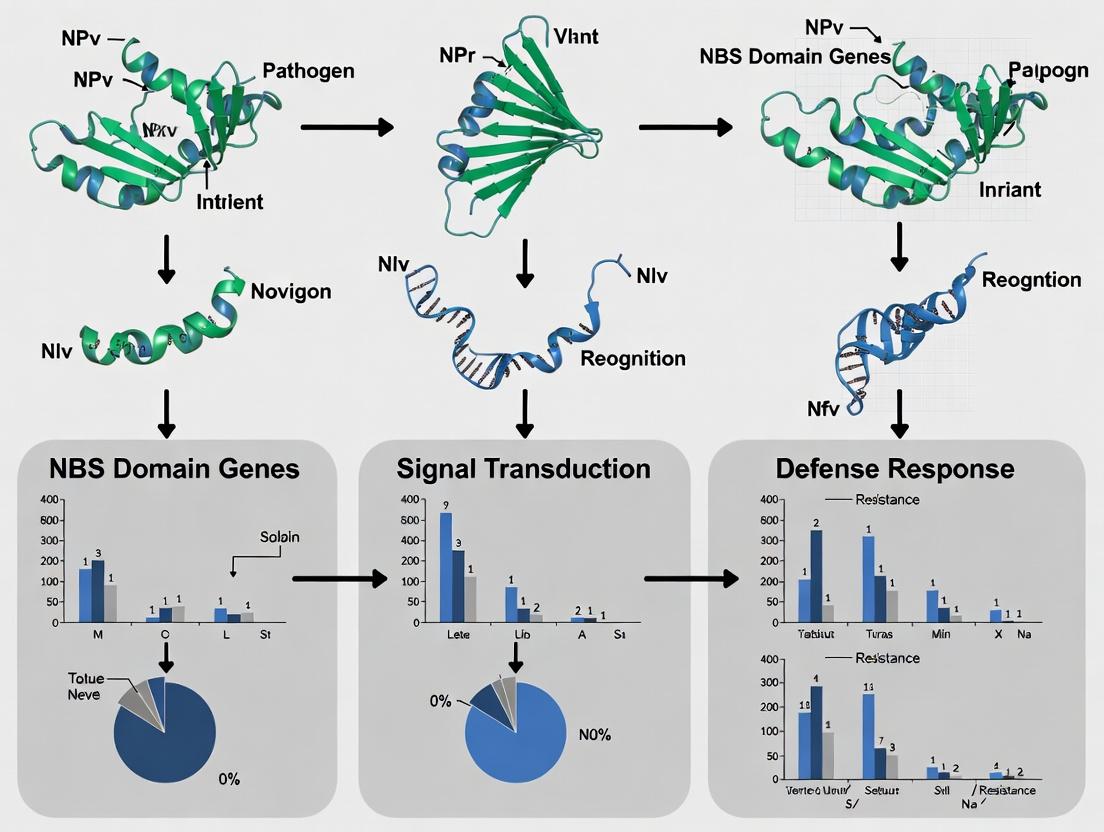
This comprehensive review examines the critical role of Nucleotide-Binding Site Leucine-Rich Repeat (NBS-LRR) genes in plant pathogen resistance.
NBS-LRR Genes: The Molecular Guardians of Plant Immunity and Pathogen Defense
Abstract
This comprehensive review examines the critical role of Nucleotide-Binding Site Leucine-Rich Repeat (NBS-LRR) genes in plant pathogen resistance. Targeting researchers and biotech professionals, the article explores the foundational architecture and evolution of NBS domains, details cutting-edge methodologies for gene identification and functional characterization, addresses common experimental challenges, and provides a comparative analysis of NBS gene families across key crop species. The synthesis offers a roadmap for leveraging this ancient immune system to develop next-generation, durable crop protection strategies.
Decoding the NBS-LRR Genome: Structure, Evolution, and Core Signaling Mechanisms
Within the field of plant-pathogen resistance research, Nucleotide-Binding Site Leucine-Rich Repeat (NBS-LRR) proteins serve as the primary intracellular immune receptors. Their function is predicated on a conserved modular architecture, the precise dissection of which is critical for understanding effector-triggered immunity (ETI). This whitepaper deconstructs the core NBS, LRR, and signaling domains (CC or TIR), framing their mechanisms within the broader thesis that structural variations in these domains directly dictate pathogen recognition specificity, signaling amplitude, and downstream resistance outcomes. Mastery of this architecture enables the rational design of synthetic resistance genes and novel small-molecule immune potentiators.
Domain Architecture: Structure and Function
2.1 The Nucleotide-Binding Site (NBS) Domain The NBS domain is the central molecular switch, regulating the protein's transition between an inactive (ADP-bound) and active (ATP-bound) state. Conformational changes induced by nucleotide exchange are propagated to the LRR domain.
Table 1: Key Quantitative Features of the NBS Domain
| Feature | Description / Consensus | Functional Implication |
|---|---|---|
| Core Motifs | P-loop (Kinase 1a), RNBS-A, -B, -C, -D, GLPL, MHD | ATP/GTP binding and hydrolysis; mutation in MHD often leads to autoactivation. |
| Nucleotide Affinity (Kd) | ADP: ~0.5-2 µM; ATP: ~5-20 µM | Tight ADP binding maintains autoinhibition; ATP binding promotes activation. |
| Hydrolysis Rate (kcat) | 0.5 - 5 min⁻¹ | Slow hydrolysis suggests regulatory, not catalytic, role; fine-tunes signaling duration. |
2.2 The Leucine-Rich Repeat (LRR) Domain The LRR domain primarily mediates specific recognition of pathogen effectors via its solvent-exposed β-sheet. It also acts as an autoinhibitory module in the resting state.
Table 2: Structural Parameters of the LRR Domain
| Parameter | Typical Range | Role in Function |
|---|---|---|
| Number of Repeats | 10-30 | Correlates with recognition specificity; more repeats increase surface area for interaction. |
| Repeat Length | 20-30 residues | Defines the curvature and surface geometry of the solenoid. |
| Variable Residues | Positions 2-13, 16-18 (xxLxLxx) within each repeat | Determine direct or indirect effector binding specificity; sites of positive selection. |
2.3 The Signaling Domains: CC and TIR The N-terminal domain defines two major NBS-LRR subfamilies and initiates distinct downstream signaling pathways.
- Coiled-Coil (CC): Characteristic of most NBS-LRRs in monocots and some in dicots. The CC domain often forms a homodimer and can directly recruit downstream signaling partners like NRG1 and helper NBS-LRRs (e.g., NRCs).
- Toll/Interleukin-1 Receptor (TIR): Characteristic of many dicot NBS-LRRs. The TIR domain possesses NADase activity, cleaving NAD⁺ to generate signaling molecules (e.g., v-cADPR, ADPR) that activate Enhanced Disease Susceptibility 1 (EDS1) complexes.
Table 3: Comparative Analysis of CC and TIR N-terminal Domains
| Property | CC Domain | TIR Domain |
|---|---|---|
| Primary Signaling Output | Oligomerization; partner recruitment | Enzymatic (NAD⁺ hydrolysis) |
| Key Downstream Hub | NRC network, NRG1 | EDS1-PAD4/SAG101 complexes |
| Pathway Output | Calcium influx, ROS burst, cell death | Transcriptional reprogramming, cell death |
| Common Structural State | Homodimeric coiled-coil | Homodimeric or oligomeric interface |
Experimental Protocols for Domain Analysis
3.1 Site-Directed Mutagenesis of Functional Motifs Purpose: To validate the role of conserved residues in nucleotide binding (NBS) or effector recognition (LRR). Protocol:
- Design primers encoding desired point mutations (e.g., Lys→Ala in P-loop, Asp→Asn in MHD).
- Perform PCR using a high-fidelity polymerase (e.g., Q5) with a plasmid containing the target NBS-LRR gene as template.
- Digest parental DNA with DpnI.
- Transform product into competent E. coli, sequence-verify colonies.
- Transiently express wild-type and mutant constructs in Nicotiana benthamiana via Agrobacterium infiltration.
- Assays: Monitor for autoactive cell death (hypersensitive response) and complementation of resistance in a pathogen assay.
3.2 In Vitro NADase Activity Assay for TIR Domains Purpose: To quantify the enzymatic activity of a purified TIR domain. Protocol:
- Clone the TIR domain into an E. coli expression vector (e.g., pET series) with an N-terminal His-tag.
- Express protein in BL21(DE3) cells, induce with 0.5 mM IPTG at 18°C for 16h.
- Purify protein via Ni-NTA affinity chromatography.
- Set up 50 µL reactions: 5 µM purified TIR protein, 150 µM NAD⁺, in reaction buffer (20 mM Tris-HCl pH 8.0, 150 mM NaCl, 1 mM DTT).
- Incubate at 22°C for 0, 15, 30, 60 mins. Stop reaction with 0.5 M HCl.
- Neutralize with 0.5 M NaOH, 0.5 M Tris-HCl.
- Quantify remaining NAD⁺ using a colorimetric/fluorometric NAD/NADH assay kit. Calculate turnover rate.
3.3 Yeast-Two-Hybrid (Y2H) for CC Domain Interactions Purpose: To map protein-protein interactions between CC domains and proposed signaling partners. Protocol:
- Fuse the CC domain to the GAL4 DNA-Binding Domain (BD) in vector pGBKT7.
- Fuse the candidate interacting protein (e.g., NRC, EDS1) to the GAL4 Activation Domain (AD) in vector pGADT7.
- Co-transform BD and AD constructs into yeast strain AH109.
- Plate transformants on synthetic dropout (SD) media lacking Leu and Trp (-LW) to select for co-transformation.
- Restreak colonies onto high-stringency SD media lacking Leu, Trp, His, and Ade (-LWAH) supplemented with X-α-Gal to test for interaction via reporter gene (HIS3, ADE2, MEL1) activation.
Visualization of Pathways and Workflows
Title: NBS-LRR Activation and Signaling Pathways
Title: TIR Domain NADase Activity Assay Workflow
The Scientist's Toolkit: Research Reagent Solutions
| Reagent / Material | Function & Application |
|---|---|
| pET Expression Vectors | High-level protein expression in E. coli for domain purification (e.g., TIR, NBS). |
| Gateway-compatible Binary Vectors (e.g., pEarleyGate) | For rapid, sequence-verified cloning and stable/transient plant expression of full-length NBS-LRRs. |
| Nicotiana benthamiana Seeds | Model plant for transient expression assays (agroinfiltration) to test autoactivity and cell death. |
| Anti-HA / Anti-FLAG / Anti-GFP Antibodies | For immunoprecipitation and western blot analysis of tagged protein expression, stability, and interactions. |
| NAD/NADH-Glo Assay Kit | Luciferase-based, highly sensitive quantification of NAD+ levels for TIR enzymatic assays. |
| Fluorescent Dyes (DAB, H2DCFDA, Fluo-4 AM) | Detect reactive oxygen species (ROS) and cytosolic calcium influx, early immune outputs. |
| Y2H System (e.g., Matchmaker Gold) | Validated system for mapping specific domain-domain interactions (e.g., CC-NRC). |
| Site-Directed Mutagenesis Kit (e.g., Q5) | High-fidelity introduction of point mutations into conserved domain motifs. |
Within the context of plant-pathogen co-evolution, the Nucleotide-Binding Site Leucine-Rich Repeat (NBS-LRR) gene family serves as a paradigm for studying evolutionary dynamics. These genes, encoding primary intracellular immune receptors, are governed by three core evolutionary mechanisms: tandem duplications that rapidly expand the receptor repertoire, a birth-and-death process that generates functional diversity, and adaptive selection that fine-tunes pathogen recognition. This whitepaper provides an in-depth technical guide to these processes, with a focus on experimental research in plant pathogen resistance.
Foundational Evolutionary Mechanisms
Tandem Duplications
Tandem duplications are non-reciprocal, unequal crossing-over events during meiosis that lead to the local clustering of paralogous genes. For NBS-LRR genes, this mechanism facilitates the rapid generation of genetic novelty in response to pathogen pressure.
Key Experimental Protocol: Identifying Tandem Duplications via Genomic Analysis
- Data Acquisition: Obtain a high-quality, chromosome-level genome assembly of the target plant species.
- Gene Family Annotation: Identify all NBS-LRR genes using a combination of HMMER (with Pfam models: NB-ARC, PF00931; LRR, PF00560, PF07723, PF07725, PF12799, PF13306) and manual curation.
- Genomic Position Mapping: Map the physical positions of all identified genes onto the chromosomes using a custom script (e.g., Python with Biopython).
- Tandem Cluster Definition: Define a tandem array as two or more NBS-LRR genes located within 200 kb of each other on the same chromosome, with no more than one non-NBS gene intervening.
- Phylogenetic Validation: Construct a neighbor-joining or maximum-likelihood phylogenetic tree of genes within a putative cluster. Tandem duplicates typically cluster together in a species-specific clade with high bootstrap support.
Birth-and-Death Evolution
This model posits that gene family members are continuously generated via duplication (birth). Post-duplication, paralogs follow divergent fates: some are maintained by natural selection, others acquire new functions (neofunctionalization), and many become non-functional pseudogenes or are deleted (death).
Key Experimental Protocol: Analyzing Birth-and-Death via Population Genomics
- Population Sequencing: Perform whole-genome resequencing of 50-100 geographically diverse accessions of the plant species.
- Variant Calling: Map reads to the reference genome and call SNPs and presence/absence variations (PAVs) in NBS-LRR loci using GATK and specialized structural variation callers.
- Pseudogenization Analysis: Identify pseudogenes within NBS-LRR clusters by scanning for premature stop codons, frameshift mutations, and disrupted splicing sites.
- Haplotype Network Construction: For a specific locus, construct a median-joining haplotype network using phased SNP data (e.g., with PopART). This visualizes the relationships between functional alleles and pseudogenized variants, illustrating the "death" process.
Adaptive Selection
Positive (diversifying) selection acts on specific codons, particularly in the LRR domain involved in pathogen effector recognition, driving amino acid changes that alter binding specificity.
Key Experimental Protocol: Detecting Positive Selection (dN/dS Analysis)
- Sequence Alignment: Curate a multiple sequence alignment of orthologous/paralogous NBS-LRR gene sequences. Pay careful attention to aligning codons correctly.
- Evolutionary Model Selection: Use ModelTest-NG or similar to determine the best-fitting nucleotide substitution model.
- Site-Specific Selection Tests: Perform CodeML from the PAML suite. Key steps:
- Run Model M0 (one ω ratio for all sites) to establish a baseline.
- Run Models M1a (nearly neutral) vs. M2a (positive selection) and M7 (beta) vs. M8 (beta & ω>1). These are likelihood ratio tests (LRTs).
- A significant LRT (p-value < 0.05) for M2a or M8 indicates positive selection.
- Use the Bayes Empirical Bayes (BEB) analysis in M2a/M8 to identify individual codons with posterior probability > 0.95 of having ω (dN/dS) > 1.
Table 1: Comparative Genomic Analysis of NBS-LRR Genes in Model Plants
| Plant Species | Total NBS-LRR Genes | Genes in Tandem Clusters (%) | Estimated Birth Rate (per Myr*) | Estimated Death Rate (per Myr*) | % of LRR Sites Under Positive Selection |
|---|---|---|---|---|---|
| Arabidopsis thaliana | ~200 | 70% | 0.08 - 0.12 | 0.05 - 0.08 | 8-12% |
| Oryza sativa (Rice) | ~500 | 85% | 0.15 - 0.20 | 0.10 - 0.15 | 15-20% |
| Zea mays (Maize) | ~150 | 60% | 0.10 - 0.14 | 0.12 - 0.16 | 10-14% |
| Glycine max (Soybean) | ~700 | >90% | 0.25 - 0.35 | 0.18 - 0.25 | 20-25% |
*Myr: Million Years
Table 2: Functional Validation of Evolutionary Hypotheses
| Experiment Type | Typical Test System | Key Measurable Outcome | Correlation with Evolutionary Signal |
|---|---|---|---|
| Effector Recognition | Transient expression in N. benthamiana (Agroinfiltration) | Hypersensitive Response (HR) cell death | Positively selected sites map to effector interaction interfaces |
| Gene Expression | RNA-seq after pathogen challenge | Induction (>2-fold) of specific NBS-LRR paralogs | Tandem arrays show coordinated, pathogen-specific expression |
| Fitness Cost | Homozygous T-DNA insertion lines | Growth penalty under pathogen-free conditions | Constitutively active alleles from recent duplications often show high fitness cost |
Signaling Pathways & Conceptual Workflows
Title: NBS-LRR Gene Evolutionary Cycle (98 chars)
Title: Integrated Analysis of NBS-LRR Evolution (99 chars)
The Scientist's Toolkit: Research Reagent Solutions
Table 3: Essential Research Materials and Reagents
| Item | Function & Application | Example/Supplier |
|---|---|---|
| Phusion High-Fidelity DNA Polymerase | Amplifies NBS-LRR genes with high fidelity for cloning and site-directed mutagenesis. Critical for creating allelic series based on evolutionary hypotheses. | Thermo Fisher Scientific |
| Gateway or Golden Gate Cloning System | Enables rapid, high-throughput cloning of NBS-LRR candidate genes (and their variants) into binary vectors for plant transformation or transient assays. | Invitrogen; NEB |
| pCAMBIA or pEAQ-based Binary Vectors | Plant transformation vectors for stable expression (with selection markers) or transient expression (e.g., for agroinfiltration in N. benthamiana). | CAMBIA; Addgene |
| Agrobacterium tumefaciens Strain GV3101 | Standard strain for delivering NBS-LRR constructs into plant cells via agroinfiltration for transient functional assays (e.g., HR cell death). | Various culture collections |
| Anti-GFP/HA/FLAG Tag Antibodies | For detecting protein expression and subcellular localization of tagged NBS-LRR proteins via western blot or immunofluorescence. | Abcam, Sigma-Aldrich |
| Pathogen Isolates/Cultured Effectors | Defined pathogen strains or purified recombinant effector proteins are required to challenge plants and test the specific recognition function of NBS-LRR variants. | Plant pathogen resource centers (e.g., DSMZ) |
| RNA Later & TRIzol Reagent | Preserves and isolates high-quality RNA from pathogen-infected tissues for expression analysis (RNA-seq, qRT-PCR) of NBS-LRR clusters. | Invitrogen, Qiagen |
| DNase I, RNase-free | Essential for removing genomic DNA contamination from RNA preps prior to cDNA synthesis for gene expression studies. | Promega, NEB |
| SYBR Green or TaqMan Master Mix | For quantitative RT-PCR to validate expression changes of specific NBS-LRR paralogs identified in evolutionary/genomic screens. | Applied Biosystems, Bio-Rad |
| Next-Generation Sequencing Kits | For genome resequencing (Illumina DNA Prep) and RNA-seq library preparation (Illumina Stranded mRNA Prep). Provides raw data for evolutionary analyses. | Illumina |
Within the framework of plant immunity research, particularly concerning Nucleotide-Binding Site Leucine-Rich Repeat (NBS-LRR) genes, two principal paradigms explain how plants detect pathogen effectors to activate hypersensitive response (HR) and systemic acquired resistance (SAR). The Guard Hypothesis and the Decoy Model are foundational to understanding effector-triggered immunity (ETI). This whitepaper provides a technical comparison, supported by current data and experimental protocols, for researchers in plant pathology and pharmaceutical development exploring innate immunity mechanisms.
Core Paradigms in NBS-LRR Mediated Immunity
The Guard Hypothesis proposes that plant Resistance (R) proteins (often NBS-LRRs) "guard" host cellular targets or "guardees" that are modified by pathogen effectors. The alteration of the guardee by the effector is sensed by the R protein, leading to its activation and defense signaling.
The Decoy Model is an evolutionary refinement. It suggests that some guarded proteins are not true virulence targets but are "decoys" or "baits" that mimic real targets. Their sole function is to attract effector manipulation, thereby revealing the pathogen's presence to the guarding R protein without compromising essential cellular function.
Quantitative Data Comparison
Table 1: Paradigm-Defining Examples and Genetic Evidence
| Feature | Guard Hypothesis | Decoy Model |
|---|---|---|
| Proposed Mechanism | R protein monitors (guards) a genuine virulence target. | R protein monitors a decoy that mimics a real target. |
| Molecular Identity of Target | Often a central signaling protein (e.g., RIN4, PBS1). | A protein with sequence similarity to a real target but devoid of its primary function (e.g., Arabidopsis ZED1). |
| Effector Action | Modifies the target to suppress PAMP-Triggered Immunity (PTI). | Modifies the decoy; may or may not affect PTI. |
| Evolutionary Pressure | Balancing selection on the guardee for maintaining function vs. evading effector. | Positive selection on the decoy to maintain effector recognition. |
| Key Experimental Evidence | Co-immunoprecipitation of R protein and guardee; effector modification of guardee disrupts complex. | Decoy gene knockouts show no developmental phenotype but lose ETI; decoy can be swapped to confer new recognition. |
| Exemplary System | Arabidopsis RPS2 guarding RIN4 (target of Pseudomonas AvrRpt2). | Arabidopsis ZAR1 guarding RKS1/ZED1 decoy complex (recognizing Xanthomonas AvrAC). |
Table 2: Recent (2020-2023) Experimental Support Metrics
| Study Focus (Model System) | Paradigm Supported | Key Quantitative Finding | Publication Year |
|---|---|---|---|
| Pseudomonas AvrRpm1/RIN4/RPS2 | Guard | AvrRpm1-mediated phosphorylation of RIN4 at specific residues (S141) is necessary for RPM1 activation. | 2021 |
| Xanthomonas AvrAC/ZED1/ZAR1 | Decoy | Structural analysis showed AvrAC uridylylates ZED1, a pseudokinase, creating a molecular interface for ZAR1 recognition. | 2020 |
| Rice Pikp-1/ATR1-PikD | Integrated | ATR1 (effector) binds host HMA domain; Pikp-1 allele has integrated a "decoy" HMA domain to directly bind effector. | 2022 |
| Tomato Prf/Guardee Kinase | Guard | Prf (NBS-LRR) guards the kinase domain of specific receptor kinases; effector AvrPtoB ubiquitinates the guardee. | 2023 |
Experimental Protocols
Protocol 1: Co-immunoprecipitation (Co-IP) to Validate Guard/Decoy Interactions
Purpose: To confirm in planta physical association between an NBS-LRR protein and its proposed guardee/decoy protein, and how effector presence alters the complex. Materials: See "The Scientist's Toolkit" below. Procedure:
- Construct Preparation: Clone genes for the NBS-LRR (e.g., ZAR1), the guardee/decoy (e.g., ZED1), and the effector (e.g., AvrAC) into binary vectors with distinct epitope tags (e.g., HA, FLAG, GFP).
- Agrobacterium-Mediated Transient Expression:* Infiltrate *Nicotiana benthamiana leaves with Agrobacterium strains harboring the constructs. Use combinations: NBS-LRR + Guardee, and NBS-LRR + Guardee + Effector.
- Protein Extraction: At 36-48 hours post-infiltration, harvest leaf discs. Homogenize in non-denaturing extraction buffer (e.g., 50 mM Tris-HCl pH 7.5, 150 mM NaCl, 0.5% NP-40, protease inhibitors).
- Immunoprecipitation: Incubate cleared lysate with anti-tag antibody conjugated to beads (e.g., anti-FLAG M2 agarose). Rotate at 4°C for 2 hours.
- Washing & Elution: Wash beads 3-4 times with cold extraction buffer. Elute proteins with 2X Laemmli buffer.
- Analysis: Subject input, flow-through, and eluate fractions to SDS-PAGE and western blotting. Probe with anti-tag antibodies to detect co-precipitated proteins.
Protocol 2: Luciferase Complementation Imaging (LCI) Assay
Purpose: To visualize and quantify dynamic protein-protein interactions in living plant cells with high sensitivity. Procedure:
- Split-Luciferase Fusion: Fuse the NBS-LRR protein to the N-terminal fragment of firefly luciferase (nLUC) and the guardee/decoy protein to the C-terminal fragment (cLUC).
- Agrobacterium Infiltration:* Co-infiltrate *N. benthamiana with the two fusion constructs, with or without a third construct expressing the effector.
- Substrate Application & Imaging: 48 hours post-infiltration, infiltrate leaves with 1 mM D-luciferin solution. After 10 minutes of dark adaptation, capture luminescence images using a cooled CCD camera.
- Quantification: Measure luminescence intensity from regions of interest. A significant increase in signal upon effector co-expression suggests the effector promotes complex formation.
Protocol 3: Virulence Assay using Pathogen Growth Curves
Purpose: To functionally validate the role of a guardee/decoy protein in resistance. Procedure:
- Plant Genotypes: Use wild-type plants, plants with a knockout mutation in the candidate guardee/decoy gene, and plants expressing the corresponding R gene.
- Pathogen Inoculation: Syringe-infiltrate leaves with a bacterial pathogen (e.g., Pseudomonas syringae) carrying the cognate effector gene at a standardized OD600 (e.g., 1x10^5 CFU/mL).
- Sampling: Take leaf discs (e.g., 4 discs per leaf) at 0 hours post-inoculation (hpi) and 72 hpi.
- CFU Quantification: Homogenize discs in sterile water, perform serial dilutions, and plate on selective medium. Incubate plates at 28°C for 2 days.
- Analysis: Count colony-forming units (CFU). Calculate bacterial growth (log10[CFU at 72hpi / CFU at 0hpi]). Loss of resistance in the guardee/decoy mutant confirms its essential role.
Signaling Pathway Visualization
Diagram 1: Guard vs. Decoy Mechanism Comparison
The Scientist's Toolkit: Key Research Reagent Solutions
Table 3: Essential Materials for Effector Recognition Research
| Reagent / Material | Function & Application | Example Product / Note |
|---|---|---|
| Gateway-compatible Binary Vectors (e.g., pEarleyGate, pGWB) | Modular cloning for transient/stable expression of tagged proteins (HA, FLAG, YFP, etc.) in plants. | pEarleyGate series (ABRC); pGWB vectors (N. Nakagawa). |
| Agrobacterium tumefaciens Strain GV3101 (pMP90) | Standard disarmed strain for transient expression in N. benthamiana and stable Arabidopsis transformation. | Chemically competent cells available from multiple vendors. |
| Anti-Epitope Tag Antibodies (Anti-HA, Anti-FLAG, Anti-GFP) | Essential for western blotting, Co-IP, and chromatin immunoprecipitation (ChIP) of tagged fusion proteins. | Monoclonal antibodies from Sigma-Aldrich, Roche, or Abcam. |
| Firefly Luciferase Complementation Imaging (LCI) Vectors | For sensitive, real-time detection of protein-protein interactions in vivo. | pCAMBIA-nLUC/cLUC vectors. |
| CRISPR/Cas9 Kit for Plants | Generation of knockout mutants in guardee/decoy or NBS-LRR genes to validate function. | Available as plasmid kits (e.g., pHEE401E) or as ribonucleoprotein (RNP) complexes. |
| Pathogen Strains (e.g., P. syringae DC3000 derivatives) | Engineered strains expressing specific effectors (Avr genes) for virulence and HR assays. | Available from public repositories (e.g., Arabidopsis Biological Resource Center). |
| Plant Growth Regulators for Cell Cultures | For protoplast isolation and transfection assays for rapid, high-throughput signaling studies. | Cellulase R10, Macerozyme R10 (Yakult). |
| Protease & Phosphatase Inhibitor Cocktails | Critical for maintaining protein integrity and phosphorylation states during protein extraction. | Commercial tablets or solutions (e.g., from Roche or Thermo Fisher). |
This technical guide frames the plant defense signaling cascade within the broader thesis that Nucleotide-Binding Site (NBS) domain genes are central orchestrators of pathogen recognition and resistance. NBS-LRR (Leucine-Rich Repeat) proteins, encoded by the largest class of plant resistance (R) genes, function as intracellular immune receptors that perceive pathogen effectors. This recognition triggers a coordinated signaling cascade culminating in the Hypersensitive Response (HR)—a localized programmed cell death that restricts pathogen spread. Understanding this cascade is critical for researchers and drug development professionals aiming to engineer durable disease resistance in crops.
Core Signaling Cascade: From Perception to Execution
The canonical defense cascade involves sequential steps of signal perception, transduction, amplification, and execution.
Signal Perception and Early Signaling Events
Pathogen-Associated Molecular Patterns (PAMPs) are perceived by surface Pattern Recognition Receptors (PRRs), initiating PAMP-Triggered Immunity (PTI). Virulent pathogens deliver effector proteins into the host cell to suppress PTI. In turn, specific NBS-LRR proteins directly or indirectly recognize these effectors, activating Effector-Triggered Immunity (ETI). This "guard hypothesis" model is a cornerstone of current research.
Early Events Post-Recognition:
- NBS-LRR Activation: Effector recognition induces conformational changes in the NBS-LRR protein, promoting ADP/ATP exchange and oligomerization.
- Signaling Hub Formation: Activated NBS-LRRs often nucleate into a resistosome complex, which can act as a calcium-permeable channel or a platform for recruiting downstream signaling proteins.
- Calcium Influx: A rapid, sustained influx of cytosolic Ca²⁺ serves as a primary secondary messenger.
- Burst of Reactive Oxygen Species (ROS): The enzymatic activity of plasma membrane-bound NADPH oxidases (RBOHs) and peroxidases generates a superoxide and hydrogen peroxide burst.
- Mitogen-Activated Protein Kinase (MAPK) Cascades: Specific MAPK modules (e.g., MEKK1, MKK4/5, MPK3/6) are phosphorylated and activated.
Diagram Title: Core Plant Defense Cascade from PTI/ETI to HR and SAR
Key Quantitative Metrics in Early Signaling
The amplitude and timing of early signaling events distinguish PTI from robust ETI.
Table 1: Quantitative Comparison of Early Signaling Events in PTI vs. ETI
| Signaling Event | PTI Characteristics | ETI Characteristics | Measurement Technique |
|---|---|---|---|
| Calcium (Ca²⁺) Flux | Transient, low-amplitude spike (seconds). | Sustained, high-amplitude oscillation (minutes to hours). | Aequorin or GCaMP luminescence/fluorescence in vivo. |
| ROS Burst | Rapid, modest peak (~10-30 min post-elicitation). | Massive, biphasic burst (peak ~1-3 hours). | Luminol-based chemiluminescence (H₂O₂). |
| MAPK Activation | Rapid but transient phosphorylation (peaks at 5-15 min). | Stronger and more prolonged activation (can last >60 min). | Immunoblotting with phospho-specific antibodies. |
| Transcriptional Activation | Moderate induction of defense genes. | Rapid, strong induction of specific R genes & defense markers. | qRT-PCR, RNA-Seq. |
| HR Cell Death Onset | Typically absent. | Visible within 6-24 hours post-inoculation. | Trypan blue or electrolyte leakage assay. |
Detailed Experimental Protocols
Protocol: Measuring the Oxidative Burst
Title: Quantitative Luminol-Based Assay for Extracellular ROS Burst in Plant Leaf Discs.
Principle: Luminol oxidation by extracellular H₂O₂ in the presence of peroxidase produces luminescence, measured in real-time.
Reagents & Equipment:
- Luminol sodium salt
- Horseradish Peroxidase (HRP)
- Pathogen elicitor (e.g., flg22, INF1) or live pathogen suspension
- 96-well white microplate (opaque walls, clear bottom)
- Plate reader with injector and luminescence detection capability
- Leaf disc cutter (e.g., cork borer)
Procedure:
- Prepare Reaction Mix: Dissolve luminol (final conc. 50 µM) and HRP (final conc. 10 µg/mL) in assay buffer (e.g., 1 mM KCl, 0.5 mM CaCl₂, pH 5.8).
- Prepare Tissue: Harvest leaf discs from 4-5 week-old plants using a sterile cutter. Float discs on distilled water in the dark for >4 hours to deplete wound-induced ROS.
- Load Plate: Place one leaf disc per well of the microplate. Add 200 µL of the luminol/HRP reaction mix to each well. Seal the plate.
- Baseline Reading: Insert plate into the reader and record luminescence every 2 minutes for 20-30 minutes to establish a baseline.
- Elicitor Injection: Using the plate injector, add 50 µL of elicitor solution or buffer control to each well. Final elicitor concentration: flg22 at 100 nM.
- Data Acquisition: Continue recording luminescence every 2 minutes for 90-180 minutes.
- Data Analysis: Subtract the average luminescence of buffer-control wells from elicited samples. Plot Relative Light Units (RLU) over time. Calculate total integrated ROS (area under the curve) and peak height.
Protocol: Visualizing HR Cell Death
Title: Trypan Blue Staining for In Situ Detection of Hypersensitive Cell Death.
Principle: Trypan blue is a vital dye that selectively stains dead tissues with compromised plasma membranes.
Procedure:
- Inoculate leaves with pathogen via infiltration or droplet application.
- Prepare Stain: Mix equal volumes of 1% Trypan blue in lactic acid, phenol, glycerol, and distilled water (1:1:1:1 ratio). Caution: Phenol is toxic; prepare in fume hood.
- Stain: Boil the staining solution. Submerge sampled leaf tissue and boil for 2 minutes.
- Destain: Transfer tissue to a 2.5 g/mL chloral hydrate solution and incubate with gentle agitation for 24-48 hours until background is clear.
- Image: Place destained tissue in 50% glycerol and photograph under a bright-field microscope. Dead cells appear dark blue.
The Scientist's Toolkit: Research Reagent Solutions
Table 2: Essential Reagents for Studying the Defense Signaling Cascade
| Reagent/Material | Primary Function & Application | Example/Supplier Note |
|---|---|---|
| Synthetic PAMP/Effector Peptides (e.g., flg22, elf18, nlp20) | Chemically defined elicitors to trigger PTI in a reproducible manner. Used in ROS, MAPK, and gene expression assays. | Custom synthesis (GenScript) or commercial (e.g., PepMicro). |
| Phospho-Specific MAPK Antibodies (anti-pTEpY) | Detect activated/phosphorylated MPK3, MPK4, MPK6 via immunoblotting to quantify MAPK cascade activity. | Cell Signaling Technology #4370, #4511. |
| Genetically-Encoded Calcium Indicators (GECIs: R-GECO1, GCaMP) | Real-time, in vivo imaging of cytosolic Ca²⁺ dynamics in response to elicitation via confocal microscopy. | Available as transgenic Arabidopsis lines or for transient expression. |
| NADPH Oxidase Inhibitors (Diphenyleneiodonium chloride - DPI) | Pharmacological inhibitor of RBOH enzymes. Used to confirm the enzymatic source of ROS burst. | Sigma-Aldrich D2926. |
| Luciferase/Luminol Kits | Sensitive detection of ROS (H₂O₂, superoxide) in real-time from tissue or cell cultures. | Promega G8820; Sigma-Aldrich 123731. |
| NBS-LRR Domain-Specific Antibodies | Immunoprecipitation or detection of specific R-proteins to study complex formation (resistosome) post-activation. | Often custom-produced due to gene-specificity. |
| VIGS Vectors (Virus-Induced Gene Silencing) | Rapid functional knockdown of candidate signaling genes (e.g., MAPKKKs, transcription factors) in model plants like Nicotiana benthamiana. | TRV-based vectors (pTRV1/pTRV2). |
Signal Integration & HR Execution Pathways
The early signals converge to reprogram the cell through phytohormone signaling and transcriptional networks, leading to HR.
Diagram Title: Signal Integration Leading to HR Execution and Pathogen Containment
Key Executioner Mechanisms
- Ion Flux: Sustained calcium influx and potassium efflux disrupt cellular homeostasis.
- Cysteine Proteases: Metacaspases and other proteases are activated, dismantling cellular components.
- Organelle Disruption: The chloroplast and mitochondria participate in signaling and undergo dysfunction, contributing to cell death.
- Phytoalexin Production: Antimicrobial secondary metabolites are synthesized and accumulate.
This detailed cascade, initiated by NBS-LRR proteins, represents a sophisticated innate immune system. Ongoing research aims to delineate the precise molecular composition of resistosomes, the spatial regulation of signaling hubs, and the fine-tuning of the HR threshold—knowledge pivotal for engineering synthetic R genes and developing next-generation plant protection strategies.
This article provides a comparative analysis of two major classes of intracellular plant immune receptors: the CC-NBS-LRR (CNL) and TIR-NBS-LRR (TNL) proteins. Framed within the context of a broader thesis on NBS domain genes and plant pathogen resistance, this guide examines the structural, functional, and mechanistic distinctions between these protein families. Understanding these differences is critical for advancing fundamental plant immunity research and for developing novel strategies in agricultural biotechnology and drug development aimed at enhancing crop resilience.
Structural and Functional Architecture
CNLs and TNLs share a common tripartite domain architecture but are distinguished by their variable N-terminal domains, which dictate distinct downstream signaling pathways.
CNL (CC-NBS-LRR): Characterized by a coiled-coil (CC) domain at the N-terminus. The CC domain is involved in oligomerization and signaling initiation, often leading to calcium influx and activation of downstream resistance (R) genes like RPW8-type proteins. CNLs are prevalent in both monocot and dicot plants and typically confer resistance to a broad spectrum of pathogens, including viruses, bacteria, oomycetes, and fungi.
TNL (TIR-NBS-LRR): Defined by the presence of a Toll/Interleukin-1 Receptor (TIR) domain at the N-terminus. The TIR domain possesses enzymatic activity, often functioning as a nicotinamide adenine dinucleotide (NADase), cleaving NAD+ to generate signaling molecules. TNL signaling generally converges on the ENHANCED DISEASE SUSCEPTIBILITY 1 (EDS1) family of proteins, leading to the activation of salicylic acid (SA)-mediated defense responses. TNLs are primarily found in dicot plants.
Quantitative Structural & Genomic Comparison
Table 1: Comparative Features of CNL and TNL Proteins
| Feature | CNL (CC-NBS-LRR) | TNL (TIR-NBS-LRR) |
|---|---|---|
| N-terminal Domain | Coiled-Coil (CC) | Toll/Interleukin-1 Receptor (TIR) |
| Key Signaling Output | Calcium influx, ROS burst, HR cell death | NAD+ hydrolysis, EDS1-PAD4/SAG101 complex, SA pathway |
| Prevalent in | Both Monocots and Dicots | Primarily Dicots |
| Example Genes | Arabidopsis RPM1, RPS2; Rice Pita | Arabidopsis RPS4, RPP1; Flax L6, N |
| Typical Pathogen Target | Bacteria, Viruses, Oomycetes | Oomycetes, Fungi, Bacteria |
| Downstream Hub | RPW8-type NLRs, NRG1 |
EDS1, PAD4, SAG101 |
| Enzymatic Activity | Often acts as a Ca²⁺ channel upon activation | NADase activity (many), produces signaling molecules (e.g., v-cADPR) |
Table 2: Genomic Distribution in Model Plants (Approximate Counts)
| Plant Species | Total NBS-LRR Genes | Estimated CNL Count | Estimated TNL Count | Primary Reference |
|---|---|---|---|---|
| Arabidopsis thaliana | ~150 | ~50 | ~100 | (Meyers et al., 2003) |
| Oryza sativa (Rice) | ~500 | ~480 | ~20 | (Zhou et al., 2004) |
| Zea mays (Maize) | ~150 | ~145 | ~5 | (Xiao et al., 2007) |
| Glycine max (Soybean) | ~319 | ~185 | ~134 | (Kang et al., 2012) |
Signaling Pathways: A Mechanistic Dissection
Activation of both CNLs and TNLs occurs upon direct or indirect recognition of pathogen effectors, leading to a conformational change and oligomerization into a resistosome.
CNL Signaling Pathway
Upon effector perception, activated CNLs oligomerize. The CC domains form a funnel-shaped structure that inserts into the plasma membrane, creating a calcium-permeable channel. This calcium influx is a primary signal, triggering a cascade involving mitogen-activated protein kinases (MAPKs), reactive oxygen species (ROS) production, and transcriptional reprogramming leading to the hypersensitive response (HR).
Diagram Title: CNL Resistosome Activates Calcium-Dependent Defense
TNL Signaling Pathway
Activated TNLs oligomerize into a resistosome where the TIR domains come together. The composite TIR domain structure exhibits NADase activity, hydrolyzing NAD+ to produce novel nucleotide-based signaling molecules (e.g., variant cyclic ADP-ribose, v-cADPR). These molecules are perceived by the executor NLRs NRG1 (CNL-type) or ADR1 (CNL-type), or directly promote the association of EDS1 with its partners PAD4 or SAG101. The EDS1-PAD4 heterodimer reinforces SA biosynthesis and signaling, while EDS1-SAG101 directly signals to NRG1/ADR1 to activate calcium-dependent HR.
Diagram Title: TNL Signaling via NADase Products and EDS1
Key Experimental Protocols
Protocol: Heterologous Expression and Cell Death Assay for NLR Function
Purpose: To validate the autoactivity or effector-triggered functionality of a cloned CNL or TNL gene.
- Cloning: Amplify the full-length NLR cDNA and clone into a binary vector (e.g., pEAQ-HT, pGWB) under a strong promoter (35S).
- Agrobacterium Transformation: Transform the construct into Agrobacterium tumefaciens strain GV3101.
- Infiltration: Infiltrate leaves of Nicotiana benthamiana with the bacterial suspension (OD₆₀₀ = 0.3-0.6). For effector-triggered assays, co-infiltrate with a strain carrying the cognate Avr effector gene.
- Phenotyping: Monitor infiltrated areas for 2-7 days for the development of a hypersensitive response (HR) - visualized as confluent tissue collapse and browning.
- Ion Leakage Measurement (Quantitative): Use a conductivity meter to measure electrolyte leakage from leaf discs over time as a quantitative correlate of cell death.
Protocol: Co-Immunoprecipitation (Co-IP) and Mass Spectrometry for Interactome Analysis
Purpose: To identify direct protein interactors of an NLR, such as signaling components or guardees.
- Construct Design: Fuse the NLR gene with an epitope tag (e.g., GFP, FLAG, HA) at either terminus.
- Plant Material & Transient Expression: Express the tagged construct in N. benthamiana via agroinfiltration.
- Protein Extraction: Harvest tissue at peak expression (48-72 hpi). Homogenize in non-denaturing extraction buffer with protease inhibitors.
- Immunoprecipitation: Incubate lysate with affinity beads (e.g., anti-GFP nanobeads). Wash extensively to remove non-specific binding.
- Elution & Analysis: Elute bound proteins. Analyze by Western blot for known candidates or by tandem mass spectrometry (LC-MS/MS) for unbiased interactor discovery.
Protocol: In Vitro NADase Activity Assay for TIR Domains
Purpose: To directly measure the NAD+-cleaving enzymatic activity of purified TIR domains.
- Protein Purification: Express and purify recombinant TIR domain protein from E. coli (e.g., via His-tag and Ni-NTA chromatography).
- Reaction Setup: In a reaction buffer, incubate purified TIR protein (e.g., 1-5 µM) with NAD+ substrate (e.g., 100 µM). Include controls (no enzyme, catalytically dead mutant).
- Incubation & Termination: Incubate at 22-30°C for 30-60 min, then terminate with perchloric acid or heat.
- Product Detection:
- HPLC/MS: Separate reaction products by reverse-phase HPLC and identify/quantify using mass spectrometry.
- Fluorometric/Colorimetric Assay: Use coupled enzyme reactions (e.g., cycling assays) to quantify remaining NAD+ or generated products like ADPR.
The Scientist's Toolkit: Essential Research Reagents & Materials
Table 3: Key Research Reagent Solutions for NLR Studies
| Reagent/Material | Function/Application | Example/Supplier Note |
|---|---|---|
| pEAQ-HT Expression Vector | High-level transient protein expression in plants via agroinfiltration. | (Sainsbury et al., 2009) |
| Gateway Cloning System | Efficient, site-specific recombination for rapid construct assembly of NLR variants. | Thermo Fisher Scientific |
| Anti-GFP/FLAG/HA Magnetic Beads | For high-efficiency, low-background co-immunoprecipitation of tagged NLR proteins. | ChromoTek, Sigma-Aldrich |
| NAD+/NADH Quantification Kit | Fluorometric or colorimetric measurement of NAD+ levels for TIR enzymatic assays. | Promega, Cell Biolabs |
| Fluo-4 AM or R-GECO1 Calcium Indicator | Live-cell imaging and quantification of cytosolic Ca²⁺ flux upon CNL activation. | Thermo Fisher Scientific |
| H₂DCFDA ROS Probe | Detection of reactive oxygen species bursts in plant tissues during immune activation. | Thermo Fisher Scientific |
| EDS1, PAD4, SAG101 Antibodies | Essential tools for validating protein accumulation and complex formation in TNL pathways. | Available from academic labs. |
| Nicotiana benthamiana Seeds | Standard model plant for transient expression assays and HR cell death phenotyping. | |
| Modified Clark-Type Oxygen Electrode | Measurement of respiratory burst (oxygen consumption) associated with defense. | Hansatech Instruments |
From Genome to Phenotype: Tools and Strategies for NBS Gene Discovery and Functional Deployment
Within the broader thesis that “The systematic characterization of nucleotide-binding site (NBS) domain genes is fundamental to deciphering the genetic architecture of plant-pathogen resistance and enables the rational design of durable crop protection strategies,” in silico mining represents the critical first step. This whitepaper provides a detailed technical guide for constructing and executing bioinformatics pipelines to identify, classify, and annotate NBS-LRR genes from plant genome sequences. The precision and comprehensiveness of this initial computational analysis directly dictate the validity of downstream functional studies in molecular plant pathology and the potential for biotechnology applications in agriculture and drug development (e.g., elicitor-based therapeutics).
Core Bioinformatics Pipeline Architecture
A robust pipeline integrates sequential modules for gene prediction, domain identification, classification, and functional annotation. The workflow is non-linear, often requiring iterative refinement.
Diagram: NBS-LRR In Silico Mining Pipeline
Detailed Experimental Protocols & Methodologies
Protocol 3.1: Comprehensive NBS-LRR Identification Using HMMER
- Objective: To identify all putative NBS-containing sequences from a predicted proteome.
- Input: Protein sequence file (
.fasta) from gene prediction. - Procedure:
- HMM Profile Acquisition: Download the NB-ARC (PF00931) Hidden Markov Model (HMM) profile from the Pfam database (
Pfam-A.hmm). - Database Preparation: Format the protein sequence file as a HMMER-readable database using
hmmpress. - HMMER Search: Execute
hmmscanwith the NB-ARC profile against the protein database. Use an inclusion threshold (E-value) of < 1e-5. Command:hmmscan -E 1e-5 --domtblout output.domtblout Pfam-A.hmm proteome.fasta - Result Parsing: Extract sequences with significant hits using custom scripts (e.g.,
awk,Biopython). Retire all partial sequences or those lacking the complete NBS domain P-loop motif (GMGGVGKTT).
- HMM Profile Acquisition: Download the NB-ARC (PF00931) Hidden Markov Model (HMM) profile from the Pfam database (
- Output: A filtered set of protein sequences containing the NB-ARC domain.
Protocol 3.2: Classification into CNL, TNL, and RNL Subfamilies
- Objective: To classify identified NBS proteins based on their N-terminal domains.
- Input: Filtered NBS protein sequences from Protocol 3.1.
- Procedure:
- N-terminal Sequence Extraction: Isolate the first 150 amino acid residues of each candidate.
- Coiled-coil Prediction: Analyze the N-terminal region with
NCOILSorDeepCoil. A probability score > 0.9 indicates a likely CC-NBS-LRR (CNL). - TIR Domain Detection: Perform a HMMER search against the TIR domain profile (PF01582) on the N-terminal region. A significant hit (E-value < 0.01) classifies the protein as TIR-NBS-LRR (TNL).
- RNL Identification: Sequences negative for both CC and TIR are classified as RPW8-NBS-LRR (RNL). Confirm by searching for the RPW8 domain (PF05659).
- Output: A table categorizing candidates into CNL, TNL, and RNL classes.
Table 1: Representative NBS-LRR Counts in Model Plant Genomes
| Plant Species | Genome Size (Gb) | Total Predicted NBS-LRR | CNL | TNL | RNL | Reference Year |
|---|---|---|---|---|---|---|
| Arabidopsis thaliana (Col-0) | 0.135 | 165 | 58 | 105 | 2 | 2020 |
| Oryza sativa (Japonica) | 0.38 | 535 | 455 | 4 | 76 | 2021 |
| Zea mays (B73) | 2.1 | 228 | 201 | 6 | 21 | 2023 |
| Solanum lycopersicum (Heinz) | 0.79 | 394 | 192 | 202 | ~10 | 2022 |
| Glycine max (Williams 82) | 1.1 | 755 | 525 | 226 | 4 | 2023 |
Table 2: Core Bioinformatics Tools for NBS-LRR Mining
| Tool Name | Primary Function | Key Parameter Settings for NBS-LRR Analysis |
|---|---|---|
| HMMER (hmmscan) | Domain detection | E-value cutoff: 1e-5; Use --domtblout for per-domain results. |
| MEME Suite | Motif discovery | Minimum width: 6; Maximum width: 50; Sites to find: 20. |
| MCScanX | Synteny analysis | BLASTP E-value: 1e-10; Match score: 50; Gap penalty: -1. |
| MAFFT | Multiple alignment | Algorithm: L-INS-i (accurate for full-length sequences). |
| IQ-TREE | Phylogenetic inference | Model selection: ModelFinder (+BIC); Branch support: 1000 ultrafast bootstraps. |
The Scientist's Toolkit: Research Reagent Solutions
Table 3: Essential Resources for Computational and Experimental Validation
| Item | Function & Application in NBS-LRR Research | Example/Provider |
|---|---|---|
| Pfam HMM Profiles | Curated domain models for identifying NB-ARC (PF00931), TIR (PF01582), etc. | pfam.xfam.org |
| Phytozome/EnsemblPlants | Reference plant genome portals for comparative genomics and data retrieval. | phytozome-next.jgi.doe.gov |
| RGAugury | Dedicated pipeline for automated RGA (Resistance Gene Analog) prediction. | GitHub Repository (RGAugury) |
| Plant Immune Receptor Primes | Validated primers for amplifying NBS-LRR gene families from specific plant cultivars. | Integrated DNA Technologies (IDT) |
| Gateway Cloning System | For high-throughput cloning of candidate NBS-LRR genes into expression vectors for functional assays. | Thermo Fisher Scientific |
| Agrobacterium tumefaciens (GV3101) | Strain for transient expression (agroinfiltration) in Nicotiana benthamiana for cell death assays. | Laboratory stock |
| Pathogen Effector Libraries | Recombinant proteins or expression vectors for testing specific NBS-LRR recognition. | ABRC, TAIR, or custom synthesis |
Advanced Annotation and Integration
Diagram: From Sequence to Functional Hypothesis
This pipeline delivers a prioritized list of NBS-LRR candidates with associated structural, evolutionary, and regulatory annotations, providing a robust foundation for subsequent wet-lab experiments within the thesis framework. The integration of these computational predictions with molecular validation is paramount for advancing plant pathogen resistance research and its applications.
Within the critical field of plant-pathogen resistance research, Nucleotide-Binding Site Leucine-Rich Repeat (NBS-LRR) genes constitute a primary line of defense. Functional validation of candidate NBS domain genes is essential to definitively link specific genetic sequences to observed resistance phenotypes. This whitepaper provides an in-depth technical guide to three cornerstone methodologies: Virus-Induced Gene Silencing (VIGS) for rapid screening, CRISPR-Cas9 for generating stable knockouts, and transgenic complementation for final verification. Together, these techniques form a rigorous pipeline for elucidating gene function in plant immunity.
Core Methodologies: Principles and Application
Virus-Induced Gene Silencing (VIGS)
VIGS is a transient post-transcriptional gene silencing technique that utilizes recombinant viruses to target specific host mRNAs for degradation. It is a powerful tool for rapid, high-throughput functional analysis of NBS domain genes implicated in pathogen response, allowing for preliminary phenotype assessment prior to undertaking more labor-intensive stable transformations.
Detailed VIGS Protocol (Using Tobacco Rattle Virus (TRV) in Nicotiana benthamiana):
- Target Sequence Selection: Identify a 300-500 bp gene-specific fragment from the candidate NBS domain gene with low homology to other genes (BLAST against host genome).
- Vector Construction: Clone the selected fragment into the TRV-RNA2 vector (e.g., pTRV2) using appropriate restriction enzymes or gateway recombination.
- Agrobacterium Preparation: Transform constructs (pTRV1, pTRV2-empty, pTRV2-target) into Agrobacterium tumefaciens strain GV3101. Grow single colonies in LB with antibiotics overnight.
- Induction & Infiltration: Pellet cultures, resuspend in infiltration buffer (10 mM MES, 10 mM MgCl₂, 200 µM acetosyringone, pH 5.6) to an OD₆₀₀ of ~1.0. Incubate for 3-4 hours. Mix pTRV1 and pTRV2 cultures 1:1. Pressure-infiltrate the abaxial side of 2-3 leaf-stage N. benthamiana seedlings.
- Experimental Setup & Analysis: After 2-3 weeks, confirm silencing efficiency via qRT-PCR. Inoculate silenced plants with the pathogen of interest (e.g., Pseudomonas syringae pv. tomato DC3000) and monitor disease symptoms, pathogen biomass, and defense marker gene expression over time.
CRISPR-Cas9 Knockouts
CRISPR-Cas9 enables precise, heritable knockout of NBS domain genes, providing definitive evidence of gene function by observing loss-of-resistance phenotypes. It is the gold standard for establishing causal relationships.
Detailed CRISPR-Cas9 Protocol for Stable Knockout:
- sgRNA Design: Design two sgRNAs targeting early, constitutive exons of the target NBS gene using tools like CHOPCHOP. Ensure targets have a high on-score and minimal off-target potential.
- Binary Vector Assembly: Clone the sgRNA expression cassettes (driven by AtU6 or OsU6 promoters) into a binary vector containing a plant codon-optimized Cas9 nuclease (driven by a constitutive promoter like CaMV 35S or ZmUbi). Include a plant selectable marker (e.g., hptII for hygromycin).
- Plant Transformation: Transform the construct into the plant of interest (Arabidopsis, tomato, rice) via Agrobacterium-mediated transformation (floral dip for Arabidopsis, tissue culture for crops).
- Mutant Screening: Select transformed plants (T1) on antibiotic media. Extract genomic DNA from resistant seedlings and PCR-amplify the target region. Screen for indel mutations via T7 Endonuclease I assay or by sequencing. Identify bi-allelic or homozygous mutants.
- Phenotypic Characterization: Challenge T2 or T3 generation homozygous mutants with the relevant pathogen. Quantitatively compare disease progression, lesion size, and pathogen titers to wild-type and, if available, known resistant/susceptible controls.
Transgenic Complementation
Complementation analysis is the conclusive step in functional validation. Re-introduction of the wild-type allele into a loss-of-function mutant (from CRISPR or natural mutation) should restore the resistant phenotype, confirming the specific gene is responsible.
Detailed Complementation Protocol:
- Complementary Construct Design: Clone the full-length genomic DNA of the candidate NBS domain gene, including its native promoter (~1.5-2 kb upstream) and terminator, into a binary vector with a different selectable marker (e.g., nptII for kanamycin).
- Plant Transformation: Transform the complementation construct into the homozygous mutant background using standard transformation protocols.
- Transgenic Line Selection: Select primary transformants (T1) on appropriate media. Confirm transgene integration via PCR and expression via RT-PCR.
- Phenotypic Rescue Assay: Inoculate multiple independent, single-locus T2 or T3 complementary lines with the pathogen. A successful complementation is demonstrated by the restoration of resistance to levels statistically comparable to the wild-type resistant parent.
The following tables summarize key quantitative metrics and applications for each validation method.
Table 1: Technical Comparison of Functional Validation Methods
| Feature | VIGS | CRISPR-Cas9 Knockout | Transgenic Complementation |
|---|---|---|---|
| Temporal Nature | Transient (weeks-months) | Stable & Heritable | Stable & Heritable |
| Primary Use | Rapid screening, preliminary data | Definitive loss-of-function analysis | Final verification, allele testing |
| Typical Timeline to Data | 4-8 weeks | 6-12 months (annual crops) | +3-6 months post-mutant |
| Silencing/Mutation Efficiency | Variable (40-95% knockdown) | High (aim for bi-allelic mutation) | Confirmed via expression analysis |
| Key Quantitative Readouts | Pathogen biomass (e.g., 10-100x increase), symptom scoring, qRT-PCR | Disease index, lesion size (e.g., 50-80% increase), pathogen titer, survival rate | Restoration of resistance parameters to WT levels |
| Throughput Potential | High (batch infiltration) | Low-Medium (transformation bottleneck) | Low (requires mutant line) |
| Key Advantage | Fast, bypasses transformation | Definitive, creates permanent genetic resource | Conclusive proof of gene identity |
Table 2: Example Phenotypic Data from NBS Gene Validation Studies
| Gene (Putative Function) | Method | Pathogen Tested | Key Quantitative Result in Mutant/Silenced Plant | Complementation Result |
|---|---|---|---|---|
| NBS-LRR-X (Fungal R Gene) | CRISPR-Cas9 KO | Fusarium oxysporum | Vascular lesion length increased by 75% (p<0.01). Fungal biomass 3.5x higher. | Lesion length restored to WT (p=0.12). |
| NBS-Y (Bacterial R Gene) | VIGS | Pseudomonas syringae | Bacterial count at 3 dpi: 5 x 10⁸ CFU/g (vs. WT: 5 x 10⁶ CFU/g). | N/A (VIGS only). |
| NBS-Z (Signaling Node) | CRISPR + Comp. | Hyaloperonospora arabidopsidis | Sporulation score: 4.5/5 (vs. WT: 1/5). | Sporulation score reduced to 1.2/5 in 3 independent lines. |
Experimental Workflows and Pathways
VIGS Experimental Workflow for Rapid Gene Screening
CRISPR-Cas9 Knockout & Transgenic Complementation Pipeline
Simplified NBS-LRR Mediated Immune Signaling Pathway
The Scientist's Toolkit: Essential Research Reagents
Table 3: Key Reagent Solutions for Functional Validation Experiments
| Reagent / Material | Function & Application | Example Vendor/Product |
|---|---|---|
| TRV Vectors (pTRV1, pTRV2) | Backbone for Virus-Induced Gene Silencing constructs. pTRV2 carries the target gene insert. | Available from Arabidopsis Stock Centers (e.g., ABRC, NASC). |
| CRISPR-Cas9 Binary Vector | Plant transformation vector containing Cas9 and sgRNA scaffold(s). | pHEE401E (for dicots), pRGEB32 (for monocots); Addgene. |
| Gateway Cloning System | Efficient, site-specific recombination system for rapid vector construction. | Thermo Fisher Scientific. |
| Agrobacterium tumefaciens Strain GV3101 | Disarmed strain used for transient (VIGS) and stable plant transformation. | Common lab strain, available from culture collections. |
| Acetosyringone | Phenolic compound that induces Agrobacterium vir genes, critical for transformation efficiency. | Sigma-Aldrich. |
| T7 Endonuclease I | Enzyme used to detect indel mutations in CRISPR-targeted sites by cleaving heteroduplex DNA. | New England Biolabs. |
| Plant Tissue Culture Media (MS Basal) | Base media for regenerating transformed plants (for CRISPR/Complementation). | PhytoTech Labs, Duchefa. |
| Pathogen-Specific Selective Media | For accurate quantification of pathogen biomass (e.g., rifampicin plates for P. syringae). | Prepared in-lab with appropriate antibiotics. |
| SYBR Green qPCR Master Mix | For quantitative RT-PCR analysis of gene silencing efficiency and defense marker expression. | Thermo Fisher, Bio-Rad. |
1. Introduction in Thesis Context Within the broader thesis on Nucleotide-Binding Site Leucine-Rich Repeat (NBS-LRR) genes and plant immunity, Effectoromics emerges as a critical functional genomics pipeline. It directly tests the central "gene-for-gene" hypothesis by systematically screening plant NBS-LRR receptors (R proteins) against pathogen effector libraries (Avr proteins) to identify specific recognition pairs. This high-throughput approach accelerates the validation of predicted R gene functions, deciphers effector virulence targets, and informs the engineering of synthetic resistance.
2. Core Principles & Quantitative Data Effectoromics leverages heterologous expression systems to bypass pathogen cultivation and directly assay for the hypersensitive response (HR), a hallmark of specific R-Avr recognition.
Table 1: Common Effector Delivery Systems & Performance Metrics
| Delivery System | Host Organism | Throughput Potential | Typical Readout | Key Advantage | Key Limitation |
|---|---|---|---|---|---|
| Agrobacterium tumefaciens (Transient Transformation) | Nicotiana benthamiana | Medium-High (96-well format) | Visual/Quantitative HR scoring (ion leakage, imaging) | Robust, versatile, co-expression capable | May lack specific plant co-factors |
| Pseudomonas fluorescens (Effector Delivery Assisted, EDA) | Diverse plant species | High (multi-96/384-well) | HR-based cell death assay | Broad host range, high efficiency | Requires specific vector systems |
| Virus-Based Expression (e.g., TMV, PVX) | N. benthamiana | Medium | Systemic HR or necrosis | Systemic spread in plant | Potential viral suppression interference |
| Protoplast Transfection | Leaf mesophyll cells | Very High (384-well) | Luminescence/Fluorescence (reporter gene) | Quantifiable, rapid, minimal space | Removed from tissue context |
Table 2: Representative Effectoromics Screen Output Data
| Screen Parameter | Typical Scale | Positive Hit Rate Range | Validation Rate (Confirmation in planta) | Primary False Positive Source |
|---|---|---|---|---|
| R Gene Library Size | 50 - 200 clones | 0.5% - 5% | 70% - 95% | Non-specific toxicity |
| Effector Library Size | 50 - 500 clones | 1% - 10% | 60% - 90% | Auto-active R variants |
| Assay Duration | 24 - 72 hours post-infiltration | N/A | N/A | N/A |
| Data Points per Run | 10,000 - 100,000 | N/A | N/A | N/A |
3. Experimental Protocols
Protocol 1: High-Throughput Agrobacterium-Mediated Transient Assay (ATTAS) in N. benthamiana
- Cloning: Gateway-clone R gene and effector ORFs into binary expression vectors (e.g., pEarleyGate, pGWB) under constitutive promoters (35S).
- Strain Preparation: Transform constructs into Agrobacterium strain GV3101. Grow single colonies in selective media, induce with acetosyringone (200 µM).
- Culture Mixing: In a 96-deep-well block, combine equal OD₆₀₀-adjusted suspensions of Agrobacterium harboring R gene and effector constructs. Include controls (empty vector with R, effector with GUS).
- Infiltration: Using a multi-channel pipette or automated syringe, pressure-infiltrate mixtures into abaxial side of 4-week-old N. benthamiana leaves. Label each infiltration spot.
- Phenotyping: Monitor plants 24-72 hours post-infiltration. Score HR: (0) no symptoms, (1) chlorosis, (2) confined necrosis, (3) confluent necrosis.
- Quantification: For putative hits, perform ion leakage assay. Collect leaf discs, incubate in distilled water, measure conductivity over 24h with a conductivity meter.
Protocol 2: Protoplast-based Effectoromics Screen Using Luciferase Reporter
- Protoplast Isolation: Isolate mesophyll protoplasts from Arabidopsis or N. benthamiana leaves via enzymatic digestion (cellulase, macerozyme).
- Vector Construction: Effector: Expression clone. R gene: Expression clone. Reporter: Firefly luciferase under an HR-sensitive promoter (e.g., HSR203J). Internal control: Renilla luciferase under constitutive promoter.
- Co-transfection: In a 96-well plate, mix 10,000 protoplasts with PEG-mediated transfection cocktail containing plasmids for Effector, R gene, and both luciferase reporters.
- Incubation & Measurement: Incubate 16-24h. Add dual-luciferase substrate, read luminescence on a plate reader.
- Data Analysis: Calculate Firefly/Renilla ratio. A significant increase in normalized luminescence versus effector-only control indicates specific R/Avr recognition.
4. Visualizations
Effectoromics High-Throughput Screening Workflow
R-Avr Recognition Models Leading to HR
5. The Scientist's Toolkit: Key Research Reagent Solutions
Table 3: Essential Materials for Effectoromics Screens
| Item | Function/Description | Example Product/Catalog |
|---|---|---|
| Gateway Cloning System | Enables high-throughput, recombinational cloning of R and Avr ORFs into multiple expression vectors. | Thermo Fisher Scientific, pDONR/pENTR vectors, LR Clonase II. |
| Binary Vectors for Agrobacterium | Plant expression vectors with selectable markers and promoter options for transient expression. | pEarleyGate series, pGWB vectors, pCambia series. |
| Agrobacterium tumefaciens GV3101 | Disarmed, helper plasmid-free strain optimized for transient transformation in N. benthamiana. | Common lab strain, available from biological resource centers. |
| Luciferase Reporter Assay Kit | For quantitative, high-sensitivity measurement of HR-associated promoter activity in protoplasts. | Dual-Luciferase Reporter Assay System (Promega). |
| Leaf Disc Conductivity Meter | Quantifies ion leakage (electrolyte release) as a robust, quantitative measure of cell death/HR strength. | Orion VersaStar Benchtop Meter (Thermo Scientific) with conductivity probe. |
| Automated Liquid Handler | Enables precise, high-throughput mixing and dispensing of Agrobacterium cultures in multi-well formats. | Beckman Coulter Biomek series, Integra Assist Plus. |
| Hyperspectral/IR Imaging System | Allows non-destructive, early detection and quantification of HR through physiological changes (e.g., water content, chlorophyll). | PhenoVation, LemnaTec Scanalyzer systems. |
| Effector Prediction Software | Identifies candidate secreted effector proteins from pathogen genomes for library construction. | EffectorP, SignalP, TMHMM, Localizer. |
Pyramiding NBS Genes for Broad-Spectrum and Durable Resistance
Within the broader thesis of Nucleotide-Binding Site Leucine-Rich Repeat (NBS-LRR) genes as the cornerstone of plant innate immunity, this guide details the strategic pyramiding of these genes. The central thesis posits that the modular NBS domain, governing pathogen recognition and signaling initiation, can be harnessed through advanced breeding and biotechnological methods to assemble optimized, multi-gene resistance (R) stacks. This approach directly addresses the evolutionary arms race between plants and pathogens, aiming to confer broad-spectrum and durable resistance by presenting multiple, simultaneous genetic barriers to pathogen adaptation.
Core Principles and Quantitative Comparisons of NBS Gene Pyramiding Strategies
Pyramiding involves combining two or more NBS-LRR genes with specific recognition spectra into a single genotype. The efficacy of different pyramiding strategies depends on the genetic architecture of the genes and the technological approach used.
Table 1: Comparison of NBS Gene Pyramiding Methodologies
| Method | Core Principle | Key Advantages | Key Limitations & Considerations | Typical No. of Genes Stacked |
|---|---|---|---|---|
| Marker-Assisted Selection (MAS) | Use of linked molecular markers to select for multiple R genes in a breeding program. | No transgenic regulations; utilizes natural allelic diversity. | Time-intensive; linkage drag; requires tightly linked markers. | 2-5 |
| Transgenic Stacking | Direct introduction of multiple NBS-LRR gene constructs via genetic transformation. | Precise; can use genes from any species; no linkage drag. | GMO regulatory hurdles; potential transgene silencing. | 2-8 |
| Gene Editing (e.g., CRISPR-Cas) | Editing promoter/regulatory regions of endogenous NBS genes or inserting novel recognition domains. | Can create novel specificities or modulate expression; non-transgenic status possible. | Technical complexity; off-target effects; regulatory uncertainty. | 1-4 (modifying loci) |
| R Gene Capture & Sequencing | High-throughput sequencing (RenSeq, PenSeq) to identify and select for known and novel NBS alleles. | Enables allele mining from germplasm; informs MAS. | Discovery tool, requires subsequent deployment via MAS or editing. | N/A (Discovery) |
Table 2: Quantitative Outcomes of Pyramiding in Model Crops
| Crop | Pathogen | Pyramided Genes (Class) | Resistance Spectrum | Durability (Years in Field) | Reference Key Findings |
|---|---|---|---|---|---|
| Rice | Magnaporthe oryzae (Blast) | Pi2, Pi9, Piz-t (NBS-LRR) | Broad-spectrum vs. >10 races | >10 (and ongoing) | Synergistic interaction observed; no virulence reported. |
| Wheat | Puccinia striiformis (Stripe Rust) | Yr5, Yr10, Yr15 (NBS-LRR) | Effective against prevalent races | >8 (and ongoing) | Slowed pathogen evolution; reduced disease severity. |
| Tomato | Pseudomonas syringae (Bacterial Speck) | RPM1, RPS2, RPS4 (NBS-LRR) | Broad against bacterial strains | N/A (Controlled conditions) | Additive effect on hypersensitive response (HR) strength. |
| Soybean | Heterodera glycines (SCN) | Rhg1 (α-SNAP) & Rhg4 (Serine Hydroxymethyltransferase) | Race-specific | Varies by population | Note: Rhg1 is not a canonical NBS-LRR but is included as a key pyramiding example in disease resistance. |
Detailed Experimental Protocols
Protocol: Marker-Assisted Backcrossing for NBS Gene Pyramiding
Objective: To introgress two independent NBS-LRR genes (R1 and R2) from donor parents into an elite recurrent parent (RP).
Materials: DNA extraction kits, PCR reagents, gel electrophoresis equipment, validated co-dominant markers (SNP or SSR) flanking each R gene (<1 cM).
Methodology:
- Cross 1: Cross Donor Parent (R1r2) with RP (r1r2) to create F1 (R1r2/r1r2).
- Backcross 1 (BC1F1): Cross F1 with RP. Screen BC1F1 population with Marker_M1 (for R1) to select heterozygous plants.
- Foreground & Background Selection: On selected R1-heterozygous plants, perform: a. Foreground: Screen with Marker_M2 (for R2). Select plants heterozygous for R1 and R2. b. Background: Screen with genome-wide SNP array (50-100 markers). Select plant with highest RP genome recovery.
- Backcross 2-4 (BC2F1 to BC4F1): Repeat steps 2-3, each round increasing RP genome %.
- Selfing: Self the selected BC4F1 plant. In the BC4F2 population, use both markers to identify homozygous R1R1R2R2 plants.
- Validation: Challenge validated lines with pathogen isolates avirulent on R1 and R2 to confirm phenotype.
Protocol: Transient Co-Expression Assay for NBS Gene Synergy
Objective: To rapidly test for additive or synergistic effects of two NBS-LRR genes on cell death (HR) signaling.
Materials: Agrobacterium tumefaciens strain GV3101, binary vectors (e.g., pEAQ-HT) carrying NBS-LRR genes, Nicotiana benthamiana plants, syringe.
Methodology:
- Construct Preparation: Clone full-length CDS of NBS-LRR genes A and B into separate binary vectors under 35S promoter.
- Agrobacterium Transformation: Transform vectors into A. tumefaciens. Culture individually to OD600=0.8.
- Infiltration Mixtures: Prepare three mixtures in induction buffer (10 mM MES, 10 mM MgCl2, 150 µM acetosyringone): a. A. tumefaciens with Gene A only. b. A. tumefaciens with Gene B only. c. A. tumefaciens with Gene A + Gene B (1:1 mix).
- Infiltration: Syringe-infiltrate mixtures into separate sectors of N. benthamiana leaves.
- Phenotyping: Monitor HR cell death (collapsed tissue) at 24-72 hours post-infiltration. Score intensity/area.
- Quantification: Measure ion leakage (electrolyte leak) from infiltrated discs or use trypan blue staining for visual quantification of cell death.
Visualization: Pathways and Workflows
Diagram 1: NBS-LRR gene activation and signal integration.
Diagram 2: MAS backcrossing workflow for pyramiding two NBS genes.
The Scientist's Toolkit: Key Research Reagent Solutions
Table 3: Essential Reagents and Materials for NBS Gene Pyramiding Research
| Reagent / Material | Function / Purpose | Example / Notes |
|---|---|---|
| NBS-LRR-Specific PCR Primers | For allele-specific amplification, genotyping, and cloning. | Designed from conserved NBS (P-loop, GLPL, MHD) motifs or gene-specific sequences. |
| KASP or TaqMan SNP Assays | High-throughput, precise genotyping for foreground/background selection in MAS. | Ideal for screening large breeding populations. |
| Binary Vector Systems (e.g., pEAQ-HT, pCAMBIA) | Stable plant transformation or transient expression of NBS-LRR constructs. | Must include strong promoters (35S, ubiquitin) and often epitope tags (HA, FLAG). |
| Agrobacterium Strains (GV3101, EHA105) | Delivery of NBS-LRR constructs into plant cells for transient or stable transformation. | Competent cells optimized for plant transformation. |
| Pathogen Isolates / Effector Libraries | For phenotyping R gene function and specificity; challenge assays. | Characterized for Avr gene profiles. Purified effectors for mechanistic studies. |
| Trypan Blue Stain | Visualizes dead plant cells; quantifies HR cell death in transient assays. | Standard histochemical dye. |
| Electrolyte Leakage Conductivity Meter | Quantitative measurement of HR-induced membrane disruption. | Provides numerical data on cell death strength. |
| RenSeq/PenSeq Enrichment Baits | Solution-based capture for sequencing NBS-LRR or pathogen effector genes from complex genomes. | Custom-designed from reference genomes; enables pan-genome studies. |
| CRISPR-Cas9/gRNA Constructs | For gene editing to knock-out, modify, or engineer promoter regions of endogenous NBS genes. | Requires specific gRNA design tools and validation. |
The quest for durable, broad-spectrum plant disease resistance is a central pillar of agricultural biotechnology. Much of this research is anchored in the study of Nucleotide-Binding Site Leucine-Rich Repeat (NBS-LRR or NLR) genes, which constitute the largest family of plant disease resistance (R) genes. These genes encode intracellular immune receptors that detect specific pathogen effector proteins, triggering a robust defense response often culminating in the hypersensitive response (HR). The canonical structure of an NLR includes a central NBS domain—responsible for nucleotide binding and oligomerization—and a C-terminal LRR domain, which is primarily involved in effector recognition.
However, the natural evolution of pathogen effectors often outpaces the plant's ability to generate new R gene specificities through mutation and recombination. This evolutionary arms race underscores the limitation of relying solely on natural genetic diversity. Synthetic biology offers a paradigm shift: rather than discovering new R genes, we can engineer them. By reprogramming the molecular recognition code of NLR proteins, particularly through rational redesign of the LRR domain, we can create synthetic receptors with novel, pre-determined specificities. This whitepaper provides an in-depth technical guide to the methodologies driving this frontier, focusing on engineering novel recognition specificities within the framework of plant NLR biology.
Core Engineering Strategies for NLR Specificity Reprogramming
Structure-Guided Rational Design
This approach relies on high-resolution structural data of NLRs (often in complex with effectors or decoys) to identify key amino acid residues governing specificity. The LRR domain forms a solenoid structure where hypervariable (hv) residues on the concave surface make direct contact with the effector.
Key Protocol: Computational Saturation Mutagenesis and In Silico Affinity Screening
- Template Selection: Obtain a 3D structure of a known NLR or its LRR domain (e.g., Arabidopsis RPP1, rice Pikp). If unavailable, generate a high-confidence homology model using tools like AlphaFold2 or RosettaFold.
- Identification of hv Positions: Map solvent-accessible residues on the concave β-sheet surface of the LRR. Cross-reference with sequence alignments of allelic NLR variants to confirm variability.
- Virtual Mutagenesis: For each targeted hv position, computationally generate all 19 possible amino acid substitutions using molecular modeling software (e.g., PyMOL, Rosetta).
- Docking Simulation: Dock the candidate effector protein (or a conserved motif from it) against each mutant LRR model. Use programs like HADDOCK or ClusPro.
- Binding Affinity Calculation: Score each mutant complex using a force field (e.g., AMBER, CHARMM) or a scoring function (e.g., Rosetta
ddG). Rank mutants based on predicted binding energy (ΔΔG). - *In Vitro Validation: Synthesize the top -10 to -20 LRR variants as recombinant proteins for surface plasmon resonance (SPR) or isothermal titration calorimetry (ITC) to measure binding kinetics ((KD), (k{on}), (k_{off})) to the purified effector.
Domain Swapping and Modular Chimeragenesis
The modular architecture of NLRs allows for the exchange of entire subdomains between receptors. The LRR domain can be treated as a plug-and-play recognition module.
Key Protocol: Golden Gate-based Modular Assembly of NLR Chimeras (MoChIC)
- Vector Design: Create a Level 0 Golden Gate library containing standardized modules:
- Promoter (e.g., 35S or native promoter)
- 5' UTR/Leader
- N-terminal signaling domains (e.g., CC or TIR from donor NLRs)
- Conserved NBS domain (often kept constant from a well-expressed NLR backbone)
- LRR libraries from various donor NLRs (amplified with flanking BsaI sites)
- Terminator
- Golden Gate Assembly: Perform a one-pot, hierarchical Golden Gate reaction using BsaI restriction enzyme and T4 DNA ligase. Mix Level 0 parts in a predefined order to assemble a complete NLR chimera in a Level 1 expression vector.
- High-Throughput Screening: Transform the library into Agrobacterium tumefaciens and perform transient co-expression in Nicotiana benthamiana with the candidate effector gene. Monitor for HR (e.g., by electrolyte leakage assay or visual necrosis scoring) 48-72 hours post-infiltration. Positive clones indicate a functional chimera where the swapped LRR confers recognition.
Directed EvolutionIn Planta
This method uses random mutagenesis and high-throughput selection directly in plant cells to evolve new specificities.
Key Protocol: Error-Prone PCR and Agrobacterium-Mediated Transient Selection (EPAMS)
- Library Construction: Subject the LRR-encoding region of a starting NLR gene to error-prone PCR. Use a kit (e.g., GeneMorph II) with adjusted Mn²⁺ concentration to achieve a mutation rate of 1-3 amino acid changes per gene.
- Cloning: Clone the mutated LRR library back into the NLR backbone via USER or Gibson assembly.
- Delivery and Selection: Co-infiltrate N. benthamiana leaves with two Agrobacterium strains: one carrying the mutant NLR library and another carrying the candidate effector gene. Include a fluorescent reporter (e.g., GFP) under an HR-inducible promoter in the NLR construct.
- Isolation of Positives: After 3-4 days, use fluorescence-activated cell sorting (FACS) on protoplasts derived from infiltrated tissue to isolate GFP-positive (i.e., HR-activated) cells. Recover the NLR variant sequence from sorted cells by PCR and sequencing.
Table 1: Quantitative Comparison of Engineering Strategies
| Strategy | Typical Library Size | Success Rate (Functional Variants) | Time to Result | Key Quantitative Readouts |
|---|---|---|---|---|
| Structure-Guided Design | 10 - 100 variants | 5-20% (if structure is high-quality) | Weeks to months | ΔΔG (kcal/mol), (K_D) (nM), SPR response units |
| Domain Swapping | 10² - 10³ chimeras | 1-5% | 2-4 weeks | HR score (0-5), ion leakage (μS/cm), reporter fluorescence (RFU) |
| Directed Evolution In Planta | 10⁵ - 10⁷ variants | 0.01-0.1% | 4-6 weeks | % of FACS-sorted GFP+ cells, enrichment factor over selection rounds |
Validation and Deployment of Engineered NLRs
Functional Phenotyping in Plants
Protocol: Transient Assay in N. benthamiana
- Infiltrate leaves of 4-week-old plants with Agrobacterium (OD₆₀₀ = 0.3-0.5) carrying the engineered NLR and the matching effector. Use empty vector and wild-type NLR/effector pairs as controls.
- Quantify HR at 48-72 hpi using:
- Electrolyte Leakage: Disc size leaf, incubate in water, measure conductivity hourly.
- Autofluorescence: Capture under UV light.
- Trypan Blue Staining: Visualize dead cells.
- Measure downstream defense markers via qRT-PCR (e.g., PR1, WRKY genes) or reporter assays.
Specificity and Cross-Reactivity Profiling
Protocol: Effectoromics Array
- Clone a panel of 50-100 diverse pathogen effector genes into a uniform expression vector.
- Co-express each effector with the engineered NLR in a 96-well plate format N. benthamiana assay.
- Score for HR. An ideal engineered NLR shows a strong response only to its target effector and no, or minimal, reaction to non-cognate effectors (low off-target activity).
Table 2: Performance Metrics of a Hypothetical Engineered NLR "SynNLR-v1"
| Assay Type | Target Effector (AvrPikD) | Non-Target Effector (AvrPiz-t) | Positive Control (Rpi-blb2) | Negative Control (GFP) |
|---|---|---|---|---|
| HR Severity (0-5 scale) | 4.8 ± 0.2 | 0.2 ± 0.1 | 4.5 ± 0.3 | 0 |
| Ion Leakage (μS/cm @ 8h) | 185.5 ± 12.3 | 15.2 ± 3.1 | 165.7 ± 10.8 | 10.5 ± 2.1 |
| PR1 gene expression (Fold change) | 45.2x | 1.5x | 50.1x | 1.0x |
| Growth Inhibition Assay (% pathogen reduction) | 85% | <5% | 90% | 0% |
The Scientist's Toolkit: Essential Research Reagents & Materials
| Item/Category | Specific Product/Example | Function in NLR Engineering |
|---|---|---|
| NLR Backbone Vector | pCambia-2300 with 35S promoter, N-terminal tag (e.g., 3xFLAG), and Nos terminator. | Standardized plant expression vector for cloning and testing NLR constructs. |
| Golden Gate Modular Kit | MoClo Plant Parts Kit (Addgene) or custom Level 0 library. | Enables rapid, scarless assembly of NLR domains (CC-NBS-LRR) from standardized parts. |
| Effector Expression Vector | pEAQ-HT-DEST1 (for high-level transient expression) or pGWB414 (for C-terminal fusions). | For stable, high-yield expression of pathogen effector proteins for screening and validation. |
| HR-Inducible Reporter | pGR106-HSR203Jpro::GFP or pMDC32-hsRpromoter::Luciferase. | Allows FACS-based or luminescence-based high-throughput screening of functional NLRs. |
| Plant Transformation Strain | Agrobacterium tumefaciens GV3101 (pMP90) or AGL1. | Standard strain for transient expression (agroinfiltration) in N. benthamiana. |
| Validation Antibodies | Anti-FLAG M2 (for NLR detection), Anti-HA (for effector detection). | For confirming protein expression via Western blot or co-immunoprecipitation (Co-IP). |
| Binding Assay Platform | Biacore 8K SPR system or MicroCal PEAQ-ITC. | For quantifying the binding kinetics and affinity ((K_D)) between engineered LRRs and target effectors. |
| Cell Death Stain | Trypan Blue Solution (0.4%) or Evans Blue. | Histochemical staining to visualize and quantify hypersensitive cell death in leaf tissue. |
| In Planta Selection Marker | p19 Silencing Suppressor expression vector. | Co-infiltration to enhance transient expression levels of both NLR and effector, critical for clear HR. |
Visualization: Pathways and Workflows
Title: Engineered NLR-Mediated Immune Signaling Pathway
Title: NLR Engineering Workflow from Design to Validation
Overcoming Hurdles: Mitigating Autoimmunity, Fitness Costs, and Pathogen Evasion
Within the broader thesis on the role of Nucleotide-Binding Site (NBS) domain genes in plant pathogen resistance, a central paradox emerges: while these Resistance (R) genes are indispensable for immunity, their constitutive activation often incurs significant pleiotropic fitness costs. These costs, including reduced growth, yield penalties, and altered metabolic allocation, stem from the reallocation of resources from growth and reproduction to defense. This whitepaper provides a technical guide to the mechanisms underlying these trade-offs and details experimental strategies to quantify, dissect, and ultimately manage them for the development of durable, high-yielding crops.
Mechanisms of Pleiotropic Fitness Costs
Pleiotropic costs associated with NBS-LRR (NLR) R genes arise from multiple interconnected mechanisms:
- Resource Allocation Trade-off: Defense signaling (e.g., via salicylic acid) diverts photosynthetic assimilates and energy (ATP) from growth processes.
- Autoimmunity and Constitutive Activation: Gain-of-function mutations or mismatched interactions in the NLR regulatory network can lead to constitutive defense activation in the absence of pathogens.
- Antagonistic Hormonal Crosstalk: The defense hormone salicylic acid (SA) often antagonizes growth-promoting hormones like gibberellins (GAs) and auxins.
- Direct Toxicity: The hypersensitive response (HR) and reactive oxygen species (ROS) burst, while localized, can cause collateral cellular damage.
The signaling conflict is summarized in the following pathway diagram.
Diagram Title: Hormonal Crosstalk Underlying R Gene Fitness Costs
Quantitative Assessment of Fitness Costs
Fitness costs must be measured under controlled conditions, comparing genotypes with and without the active R gene (often near-isogenic lines, NILs) in the absence of disease pressure.
Table 1: Key Phenotypic Metrics for Quantifying R Gene Fitness Costs
| Metric Category | Specific Parameter | Measurement Protocol | Typical Cost Observation |
|---|---|---|---|
| Growth & Biomass | Rosette Diameter / Plant Height | Digital imaging + analysis (e.g., ImageJ) at set developmental stages. | 5-15% reduction |
| Fresh & Dry Weight | Harvesting, weighing (fresh), drying at 60°C to constant weight. | 10-25% reduction in dry weight | |
| Reproductive Yield | Seed Number per Plant | Manual counting or automated seed counter. | 10-30% reduction |
| Seed Weight (1000-seed weight) | Weighing a counted aliquot of seeds. | Often reduced proportionally | |
| Physiological | Photosynthetic Rate (A) | Infrared gas analyzer (IRGA) on fully expanded leaves. | Reduced A under optimal conditions |
| Chlorophyll Content | SPAD meter or solvent extraction + spectrophotometry. | May be slightly reduced | |
| Resource Allocation | Carbon:Nitrogen Ratio | Elemental analysis of dried tissue. | Often increased C:N |
Experimental Protocols for Dissecting Costs
Protocol 4.1: Generation and Validation of Experimental Material
Objective: Create near-isogenic lines (NILs) differing only at the target R gene locus.
- Backcrossing: Cross a donor parent (containing the R gene) with a high-yielding recurrent parent (lacking the gene).
- Marker-Assisted Selection (MAS): Use PCR-based markers flanking the R gene to select progeny with the donor segment. Backcross 6-8 times, selecting for the R allele each generation.
- Selfing & Homozygosity: Self the final backcrossed plant and select homozygous (R/R and r/r) progeny.
- Validation: Confirm genotype via sequencing and phenotype via pathogen inoculation (R line should be resistant).
Protocol 4.2: Comprehensive Phenotyping Workflow
The following diagram outlines a multi-tiered phenotyping strategy.
Diagram Title: Multi-Tier Phenotyping Workflow for Fitness Costs
Protocol 4.3: Transcriptomic and Metabolic Profiling
Objective: Identify molecular signatures associated with the fitness cost.
- Sample Collection: Harvest leaf tissue from R and r NILs at identical developmental stages (e.g., rosette stage) in biological triplicate. Flash-freeze in liquid N₂.
- RNA-Seq: a. Total RNA extraction using TRIzol/column kits, check RIN > 8.0. b. Library preparation (poly-A selection) and sequencing on Illumina platform (30M paired-end reads/sample). c. Bioinformatic analysis: alignment (HISAT2), differential expression (DESeq2), Gene Ontology enrichment.
- Metabolite Profiling (Polar): a. Grind frozen tissue, extract with 80% methanol. b. Analyze via LC-MS (Q-TOF preferred). Identify SA, amino acids, sugars, organic acids. c. Multivariate analysis (PCA, OPLS-DA) to separate genotypes.
Strategies to Mitigate Pleiotropic Costs
Table 2: Molecular Strategies for Managing R Gene Fitness Costs
| Strategy | Molecular Basis | Experimental Approach | Potential Drawbacks |
|---|---|---|---|
| Promoter Engineering | Replace constitutive promoter with pathogen-inducible or synthetic promoter (e.g., pFRK1). | CRISPR/Cas9-mediated promoter swapping or transgenic complementation. | Delayed resistance if induction is slow. |
| Guardee Modification | Modify the host "guardee" protein to prevent pathogen perturbation, negating the need for NLR activation. | Gene editing of effector target sites in the guardee protein. | Requires deep knowledge of effector-target interactions. |
| NLR Auto-inhibition | Introduce intragenic suppressors (e.g., specific point mutations) that stabilize NLR in "off" state. | EMS mutagenesis screens on costly R alleles for revertants, or structure-guided mutagenesis. | Risk of complete loss-of-function. |
| Stacking with Yield-QTLs | Combine R gene with yield-positive quantitative trait loci (QTLs) that compensate for cost. | Marker-assisted pyramiding of R gene and yield QTLs in elite background. | Linkage drag; context-dependent QTL effects. |
| SA Signaling Modulation | Overexpress SA glucosyltransferase (e.g., UGT76B1) to fine-tune SA homeostasis. | Transgenic overexpression or genome editing of promoter elements. | May attenuate resistance strength. |
The Scientist's Toolkit: Key Research Reagent Solutions
Table 3: Essential Reagents and Tools for Fitness Cost Research
| Item | Function & Application | Example/Supplier |
|---|---|---|
| Near-Isogenic Lines (NILs) | Gold standard for isolating the effect of a single R gene from background genetic noise. | Generated in-house via MAS; some available from stock centers (e.g., ABRC, NASC). |
| Pathogen Effector Proteins | Used to specifically trigger R gene signaling in absence of live pathogen for clean cost measurement. | Recombinant purified proteins (e.g., AvrRpt2 for RPS2 studies). |
| Hormone Analysis Kits | Quantify SA, JA, ABA levels to link cost to hormonal status. | LC-MS/MS is gold standard; ELISA kits (e.g., from Phytodetek) for initial screens. |
| Dual-Luciferase Reporter Assay Kit | Measure transcriptional activity of defense (e.g., PR1) vs. growth promoter genes in real-time. | Promega Dual-Luciferase Reporter Assay System. |
| CRISPR/Cas9 Editing System | For creating promoter swaps, knockouts, or precise edits in R genes or their regulators. | Agrobacterium-mediated delivery of constructs using vectors like pHEE401E. |
| High-Throughput Phenotyping System | Automated, non-destructive measurement of growth parameters over time. | LemnaTec Scanalyzer platforms or custom imaging setups with PlantCV software. |
| Stable Isotope Labels (¹³CO₂, ¹⁵N) | Trace resource allocation from photosynthesis/nitrogen uptake to defense vs. growth compounds. | Cambridge Isotope Laboratories; used in pulse-chase experiments. |
Within the broader study of plant-pathogen interactions, Nucleotide-Binding Site Leucine-Rich Repeat (NBS-LRR) genes constitute the largest family of plant disease resistance (R) genes. A central thesis in this field posits that the precise regulation of NBS-LRR protein activity is paramount for effective immunity without autoimmunity. This whitepaper examines the molecular triggers of autoimmunity when negative regulatory mechanisms of NLR proteins fail, focusing on well-characterized genetic mutants snc1 and lsd1. These models provide critical insights into the equilibrium between defense activation and cellular health.
Molecular Mechanisms of NLR Regulation and Failure
Plant NLRs are activated by direct or indirect recognition of pathogen effectors, leading to a robust defense response termed the Hypersensitive Response (HR), often involving localized programmed cell death (PCD). Tight regulation is required to prevent inappropriate activation.
- Negative Regulation of NLRs: Homeostatic control involves chaperones like HSP90, SGT1, and RAR1, which stabilize NLRs in an inactive, signaling-competent state. Ubiquitin-proteasome systems, often mediated by E3 ligases, target NLRs for degradation. Additional proteins, including LSD1 and SRFR1, act as suppressors of signaling downstream or parallel to NLR activation.
- Consequences of Regulatory Failure: Loss of negative regulation leads to constitutive immune signaling, resulting in autoimmunity. Phenotypes include spontaneous HR-like lesions, accumulation of salicylic acid (SA) and pathogenesis-related (PR) proteins, stunted growth, and enhanced resistance to virulent pathogens—all at a severe fitness cost.
Case Studies:snc1andlsd1Mutants
3.1. The snc1 (suppressor of npr1-1, constitutive 1) Mutant
- Gene: SNC1 encodes a TIR-NB-LRR type NLR protein.
- Mutation: Gain-of-function mutations (e.g., snc1-1, E11K in the coiled-coil domain) stabilize the protein, leading to constitutive activation.
- Mechanism: The mutant SNC1 protein bypasses the requirement for pathogen perception, autonomously activating defense signaling pathways. Its accumulation is likely due to evasion of regulatory turnover.
3.2. The lsd1 (lesions simulating disease 1) Mutant
- Gene: LSD1 encodes a zinc finger protein with homology to extracellular superoxide dismutases.
- Mutation: Recessive loss-of-function mutations (e.g., lsd1-2, lsd1-3).
- Mechanism: LSD1 is a key negative regulator of PCD and a component of a ROS (reactive oxygen species) homeostasis checkpoint. It inhibits the transcription factor bZIP10, suppressing runaway cell death. Loss of LSD1 function leads to failure in containing PCD initiated by biotic or abiotic stimuli, resulting in spreading lesions.
Table 1: Phenotypic and Molecular Characteristics of Autoimmune Mutants
| Parameter | snc1 (e.g., snc1-1) | lsd1 (e.g., lsd1-2) | Wild-Type (Col-0) |
|---|---|---|---|
| Growth Phenotype | Severely stunted (~30-50% rosette diameter) | Moderately stunted, spreading lesions | Normal |
| SA Accumulation | High constitutive (>5-fold increase) | Elevated post-trigger (e.g., after light shift) | Low, inducible |
| PR1 Gene Expression | Constitutively high (>100-fold) | Inducible, prolonged | Inducible, transient |
| Basal Resistance | Enhanced to multiple pathogens | Enhanced post-PCD initiation | Normal |
| Cell Death | Microscopic HR-like foci | Macroscopic, spreading lesions | None without pathogen |
| Key Regulatory Relationship | Loss of autoinhibition/evasion of degradation | Loss of PCD/ROS containment checkpoint | Intact regulation |
Key Experimental Protocols
5.1. Protocol: Genetic Suppressor Screen of snc1
- Objective: Identify novel negative regulators of NLR signaling.
- Method:
- Ethyl methanesulfonate (EMS) mutagenesis is performed on snc1 mutant seeds.
- M2 population is screened for reversal of the snc1 dwarf phenotype.
- Putative suppressor mutants (e.g., mos modifiers of snc1) are backcrossed to snc1 and subjected to genetic analysis.
- Suppressor genes are identified via map-based cloning or whole-genome sequencing.
- Outcome: Identified genes like MOS1, MOS2, etc., which are involved in SNC1 mRNA processing and splicing, revealing layers of NLR regulation.
5.2. Protocol: ROS Burst and Cell Death Measurement in lsd1
- Objective: Quantify the dysregulated PCD in lsd1 mutants.
- Method - Luminescence Assay:
- Leaf discs from lsd1 and wild-type plants are treated with a PCD-inducing agent (e.g., cryptogein) or subjected to light shift (high light to low light).
- Discs are incubated in a solution containing luminol and horseradish peroxidase (HRP).
- ROS production (H₂O₂) is measured as chemiluminescence over time using a luminometer.
- Cell death is quantified in parallel by electrolyte leakage (conductivity assay) or trypan blue staining.
- Outcome: lsd1 mutants exhibit a prolonged and amplified ROS burst and subsequent cell death compared to wild-type.
Visualizing Signaling Pathways
Diagram Title: NLR Regulatory Failure Pathways in snc1 and lsd1
The Scientist's Toolkit: Research Reagent Solutions
Table 2: Essential Reagents for Studying NLR-Mediated Autoimmunity
| Reagent / Material | Function / Application | Example/Specifics |
|---|---|---|
| Mutant Seed Stocks | Genetic material for phenotypic and molecular comparison. | snc1-1 (CS6642), lsd1-2 (CS2539) from ABRC. |
| Salicylic Acid (SA) ELISA Kit | Quantitative measurement of endogenous SA levels. | Allows comparison of constitutive vs. induced SA. |
| PR1 Promoter::GUS/LUC Reporter Line | Histochemical/quantitative reporter of SA pathway activation. | Visualizes spatial/temporal PR1 expression. |
| Luminol-HRP Reagent | Detection of extracellular ROS burst in leaf discs. | Core component for luminometry-based ROS assays. |
| Conductivity Meter | Quantification of ion leakage as a proxy for cell death. | Used for electrolyte leakage assays. |
| Trypan Blue Stain | Histological staining of dead plant cells. | Visualizes lesion morphology and spread. |
| Anti-SNC1 / Anti-LSD1 Antibodies | Detection of protein accumulation and localization. | Critical for western blot/immunoprecipitation. |
| Proteasome Inhibitor (MG132) | To assess the role of proteasomal degradation in NLR turnover. | Used in treatment assays on plant tissue. |
The study of Nucleotide-Binding Site Leucine-Rich Repeat (NLR) proteins constitutes a central pillar in plant pathogen resistance research. These intracellular immune receptors, characterized by a conserved NBS domain, are responsible for detecting specific pathogen effector proteins, culminating in the hypersensitive response (HR) and effector-triggered immunity (ETI). The evolutionary arms race is defined by pathogens deploying effectors to suppress or evade this NLR activation. This whitepaper provides an in-depth technical analysis of the molecular mechanisms underpinning this counter-defense, a critical area for developing durable resistance in crops and novel therapeutic strategies.
Core Mechanisms of Effector-Mediated NLR Suppression and Evasion
Pathogen effectors have evolved sophisticated, multi-pronged strategies to disrupt NLR-mediated immunity.
2.1 Direct Targeting of NLRs or Their Complexes Effectors can bind directly to NLR proteins, interfering with their ATPase activity, oligomerization into resistosomes, or subsequent downstream signaling.
2.2 Proteolytic Degradation of NLRs Many effectors function as proteases or recruit host proteasomal machinery to degrade NLR proteins or essential signaling components.
2.3 Disruption of NLR Guarded Host Targets (Decoys) Effectors may evolve altered binding specificities to avoid perturbing the true host targets (guards) that are monitored by NLRs, or they may directly cleave or modify the decoy proteins that act as NLR baits.
2.4 Inhibition of Signaling Components Downstream of NLR Activation Effectors frequently target common signaling hubs, such as mitogen-activated protein kinases (MAPKs), transcription factors, or vesicular trafficking proteins, to block immune outputs even if NLRs are activated.
2.5 Sequestration or Alteration of Second Messengers Effectors can modulate cellular levels of calcium, reactive oxygen species (ROS), or nitric oxide (NO), which are critical secondary signals in the NLR activation cascade.
Table 1: Summary of Quantitative Data on Effector-NLR Interactions
| Effector (Pathogen) | Target NLR/Component | Mechanism | Experimental Readout (Reduction %) | Reference (Type) |
|---|---|---|---|---|
| AvrPto (Pseudomonas syringae) | PBS1 (Guardee) | Cleavage of guardee to evade NLR recognition | ~95% loss of PBS1 protein post-infection | (Biochemical Assay, 2023) |
| AvrRpt2 (P. syringae) | RIN4 (Decoy) | Cleavage of RIN4, disrupting RPM1 activation | 100% cleavage of RIN4 in 30 min | (In planta assay, 2022) |
| HopAI1 (P. syringae) | MAPKs (MPK3/6) | Dephosphorylation, blocks downstream signaling | >80% reduction in MPK3/6 activity | In vitro kinase assay, 2023 |
| XopJ (Xanthomonas spp.) | Proteasome subunit RPT6 | Inhibits proteasome, stabilizes negative regulators | 60-70% decrease in proteasomal activity | In planta reporter assay, 2024 |
| AVR-Pik (Magnaporthe oryzae) | NLR Pit | Direct binding, inhibits ATP hydrolysis | 5-fold decrease in Pit ATPase rate | ITC/Enzymatic assay, 2023 |
Table 2: Common Phenotypic Metrics in NLR Suppression Assays
| Metric | Typical Control Value | Value with Suppressing Effector | Assay System |
|---|---|---|---|
| HR Cell Death (Ion leakage) | 40-50 µS/cm increase | <10 µS/cm increase | Nicotiana benthamiana |
| ROS Burst (RLU peak) | 1,000,000 RLU | 50,000 - 200,000 RLU | Luminescence assay |
| Callose Deposition (puncta/mm²) | 200-300 | 20-50 | Aniline blue staining |
| Pathogen Growth (CFU/cm²) | 1 x 10^5 | 1 x 10^7 | Bacterial counting |
| NLR Protein Accumulation | 100% (Control) | 10-30% | Western blot quantification |
Detailed Experimental Protocols
4.1 Co-Immunoprecipitation (Co-IP) to Detect Effector-NLR Interaction
- Purpose: To confirm direct or indirect physical interaction between a pathogen effector and a host NLR protein in planta.
- Methodology:
- Construct Preparation: Clone genes for the effector (with a tag, e.g., HA) and the NLR (with a different tag, e.g., FLAG) into appropriate binary vectors.
- Agroinfiltration: Co-infiltrate Agrobacterium tumefaciens strains carrying the constructs into leaves of N. benthamiana. Include controls (effector/ NLR with empty vector).
- Sample Harvest: Harvest leaf discs at 36-48 hours post-infiltration (hpi). Flash-freeze in liquid N₂.
- Protein Extraction: Grind tissue in IP buffer (50 mM Tris-HCl pH 7.5, 150 mM NaCl, 10% glycerol, 0.5% NP-40, 1x protease inhibitor cocktail). Centrifuge at 14,000g for 15 min at 4°C.
- Immunoprecipitation: Incubate supernatant with anti-FLAG M2 affinity gel for 2h at 4°C. Wash beads 3x with IP buffer.
- Elution & Analysis: Elute proteins with 2x Laemmli buffer containing 2% β-mercaptoethanol. Boil for 5 min. Analyze by SDS-PAGE and Western blot using anti-HA and anti-FLAG antibodies.
4.2 NLR Degradation Assay via Cycloheximide (CHX) Chase
- Purpose: To determine if an effector accelerates the turnover/degradation of an NLR protein.
- Methodology:
- Transient Expression: Express the tagged NLR in N. benthamiana leaves via agroinfiltration, with or without co-expression of the effector.
- CHX Treatment: At peak expression (e.g., 36 hpi), infiltrate leaf panels with 100 µM CHX (a translation inhibitor) to block new protein synthesis.
- Time-Course Sampling: Collect leaf discs at T=0, 30, 60, 120, 240 minutes post-CHX infiltration. Freeze immediately.
- Protein Extraction and Quantification: Extract total protein. Perform Western blot for the NLR tag and a loading control (e.g., Actin/Ponceau S).
- Data Analysis: Quantify band intensities. Plot relative NLR protein level over time. Calculate half-life (T½) by fitting to an exponential decay curve.
4.3 In Planta Hypersensitive Response (HR) Suppression Assay
- Purpose: To functionally test an effector's ability to suppress NLR-triggered cell death.
- Methodology:
- Test Setup: Infiltrate N. benthamiana leaves with Agrobacterium mixtures:
- Sector A: NLR + Empty Vector (Positive HR control).
- Sector B: NLR + Effector Candidate (Test for suppression).
- Sector C: Effector Candidate + Empty Vector (Effector toxicity control).
- Monitoring: Visually document cell collapse (whitening/necrosis) daily for 3-7 days. Conduct ion leakage measurements for quantification.
- Ion Leakage Protocol: a. Harvest three 6-mm leaf discs per sample. b. Float discs in 10 mL distilled water in a tube for 30 min (wash). c. Transfer discs to a new tube with 10 mL fresh water. d. Measure initial conductivity (C0). e. Incubate tubes at room temperature with gentle shaking. f. Measure conductivity at 2, 4, 6, 8, and 24h (Ct). g. Autoclave tubes, cool, and measure final conductivity (Ctotal). h. Calculate relative ion leakage: [(Ct - C0) / (Ctotal - C0)] * 100%.
- Test Setup: Infiltrate N. benthamiana leaves with Agrobacterium mixtures:
Signaling Pathway & Experimental Workflow Visualizations
Diagram Title: NLR Activation Pathways and Effector Suppression Points
Diagram Title: Workflow for Characterizing Effector NLR Suppression
The Scientist's Toolkit: Research Reagent Solutions
Table 3: Essential Research Materials for Effector-NLR Studies
| Reagent / Material | Supplier Examples | Function in Research |
|---|---|---|
| Gateway or Golden Gate Cloning Kits | Thermo Fisher, Addgene | Modular, high-throughput cloning of effector and NLR genes into multiple expression vectors (e.g., for agroinfiltration, yeast-two-hybrid). |
| pEDV6, pGWB, or pEAQ vectors | Laboratory stocks, Addgene | Binary vectors optimized for strong, transient expression in plants via Agrobacterium. Often include epitope tags (HA, FLAG, GFP). |
| Anti-Tag Antibodies (HA, FLAG, c-Myc, GFP) | Sigma-Aldrich, Roche, Abcam | Crucial for detecting transfected proteins in Western blot, Co-IP, and immunohistochemistry experiments. |
| Cycloheximide (CHX) | Sigma-Aldrich, Cayman Chemical | Protein translation inhibitor used in chase experiments to determine protein half-life and identify effectors that promote NLR degradation. |
| Luminol-based ROS Detection Kit | Sigma-Aldrich, Thermo Fisher | Enables quantification of the reactive oxygen species burst, a rapid early immune output often suppressed by effectors. |
| Nicotiana benthamiana Seeds | Commonly lab-grown | The model plant for transient expression assays due to its susceptibility to agroinfiltration and low background of relevant NLRs. |
| Proteasome Inhibitor (MG132) | Selleckchem, MedChemExpress | Used to test if an effector-induced NLR degradation occurs via the 26S proteasome pathway. |
| Agrobacterium tumefaciens Strain GV3101 | Laboratory stocks | Standard disarmed strain for transient transformation of plant tissues. |
| Leaf Ion Conductivity Meter | Hanna Instruments, Mettler Toledo | Key tool for quantitatively measuring electrolyte leakage as a proxy for cell death during the HR. |
| Bimolecular Fluorescence Complementation (BiFC) Vectors | Laboratory stocks, Addgene | Allow visualization of protein-protein interactions (e.g., effector-NLR) in vivo by reconstituting a fluorescent protein. |
The deployment of plant disease resistance (R) genes, particularly those encoding nucleotide-binding site leucine-rich repeat (NBS-LRR) proteins, is a cornerstone of modern agriculture. However, the widespread monoculture of resistant plant varieties exerts immense selective pressure on pathogen populations, driving the rapid evolution of new virulent strains that can evade recognition. This "boom-and-bust" cycle necessitates a paradigm shift from a reactive to a proactive resistance management strategy. Framed within the broader thesis of NBS domain gene research, this whitepaper outlines technical strategies aimed at decelerating pathogen evolution and promoting durable resistance.
Core Strategies for Durability
The evolution of virulence is governed by fundamental principles of population genetics: selection pressure, mutation rate, genetic drift, and gene flow. Effective strategies target these drivers.
2.1. Genetic and Genomic Strategies
- Pyramiding: Stacking multiple R genes, particularly those recognizing distinct pathogen effectors (Avr genes), within a single cultivar. This increases the genetic complexity a pathogen must overcome to achieve virulence.
- Gene Rotation: Temporally cycling different R genes in agricultural landscapes to reduce continuous selection for specific virulence alleles.
- Decoy Engineering: Utilizing engineered versions of NBS-LRR proteins that guard modified host "decoy" targets. Pathogen mutations to evade recognition may then come with a significant fitness cost.
- Broad-Spectrum Resistance Deployment: Leveraging susceptibility (S) gene knockouts (e.g., via CRISPR-Cas9) or deploying executor R genes (e.g., Bs4, Xa7) that confer robust, often strain-transcending resistance.
2.2. Agronomic and Ecological Strategies
- Cultivar Mixtures: Planting genetically diverse varieties (with different R genes) in a single field creates a heterogeneous environment, diluting inoculum and slowing pathogen spread.
- Intercropping: Growing different species together to create physical and microbiological barriers to pathogen transmission.
Quantitative Analysis of Strategy Efficacy
Table 1: Comparative Efficacy of Durability Strategies in Model Pathosystems
| Strategy | Experimental System | Key Metric | Result (vs. Monoculture) | Reference (Example) |
|---|---|---|---|---|
| Gene Pyramiding | Rice -Magnaporthe oryzae | Time to 50% virulence in population | Delayed by 3-5 plant generations | [1] |
| Cultivar Mixtures | Wheat - Puccinia striiformis | Disease Severity Index | Reduction of 55-75% in field trials | [2] |
| S Gene Knockout (CRISPR) | Tomato - Pseudomonas syringae | Bacterial Growth (CFU/cm²) | >90% reduction across multiple strains | [3] |
| NBS-LRR Decoy | Arabidopsis - Hyaloperonospora | Pathogen Fitness Cost (Spore Count) | Virulent mutants showed 40-60% reduction | [4] |
Experimental Protocols for Key Analyses
4.1. Protocol: High-Throughput Virulence Phenotyping of Evolving Pathogen Populations Objective: To track the frequency and emergence of virulent pathogen genotypes under different host selection pressures. Materials: Pathogen isolate library, host lines (isogenic except for R genes), growth chambers, high-resolution imaging system, DNA extraction kits, PCR/sequencing primers for Avr genes. Method:
- Inoculation & Serial Passaging: Co-inoculate a mixed pathogen population onto a set of host lines (monoculture, pyramid, mixture). After disease development, collect spores/lesions and passage to new plants of the same genotype. Repeat for 5-10 cycles.
- Phenotyping: At each passage, quantify disease parameters (lesion number, size, sporulation) using automated image analysis.
- Genotyping: Extract genomic DNA from pathogen samples at passages 0, 3, 6, and 10. Perform amplicon sequencing of known Avr gene loci to quantify allele frequency shifts.
- Fitness Assay: Compete evolved virulent isolates against the ancestral strain on susceptible and resistant hosts to measure fitness costs.
4.2. Protocol: Assessing Fitness Costs of Virulence Mutations via Competition Assay Objective: Quantify the in planta growth deficit of a pathogen strain carrying a virulence mutation relative to its wild-type ancestor. Materials: Isogenic pathogen strains differing by a single Avr gene mutation, fluorescent protein markers (e.g., GFP, RFP), confocal microscopy or flow cytometry. Method:
- Strain Preparation: Transform ancestor and mutant strains with constitutive fluorescent markers (different colors). Verify equal in vitro growth rates.
- Co-Inoculation: Mix strains at a 1:1 ratio and inoculate onto i) the original resistant host and ii) a susceptible host.
- Sampling & Quantification: Harvest infected tissue at 0, 24, 48, and 72 hours post-inoculation (hpi). Homogenize and use flow cytometry to count the ratio of GFP+ to RFP+ cells.
- Analysis: Calculate the competitive index (CI) as (mutant CFU / ancestor CFU) at time T divided by (mutant CFU / ancestor CFU) at time 0. A CI < 1 on the susceptible host indicates a fitness cost.
Visualizing Key Concepts and Pathways
Title: NBS-LRR Mediated Immunity Signaling
Title: Workflow for Tracking Virulence Evolution
The Scientist's Toolkit: Essential Research Reagents & Solutions
Table 2: Key Reagents for Plant-Pathogen Durability Research
| Reagent / Material | Function & Application | Key Considerations |
|---|---|---|
| Isogenic Plant Lines (NILs, CRISPR-edited) | Contain single or stacked R genes/S gene knockouts on identical genetic backgrounds. Essential for clean comparative experiments. | Ensure thorough backcrossing and genomic validation. |
| Pathogen Effector Libraries (Cloned Avr genes) | For screening R protein specificity, studying recognition, and expressing in heterologous systems (e.g., N. benthamiana). | Include both functional and mutated versions. |
| Fluorescent Protein-Tagged Pathogen Strains (e.g., GFP, RFP) | Real-time visualization of infection progression, colonization, and for in planta competition assays. | Confirm tagging does not alter pathogenicity. |
| Heterologous Expression System (Nicotiana benthamiana) | Rapid, transient co-expression of R and Avr proteins to validate immune recognition and cell death assays. | Use agrobacterium strains optimized for delivery. |
| High-Throughput Phenotyping Platforms (e.g., automated imaging with chlorophyll fluorescence) | Objective, quantitative measurement of disease symptoms and the hypersensitive response (HR) at scale. | Crucial for large-scale screens and time-series data. |
| Amplicon Sequencing Panels (for pathogen Avr genes) | Deep sequencing to track allele frequency changes in evolving pathogen populations directly from infected tissue. | Design primers for conserved flanking regions. |
| Phytohormone Assay Kits (e.g., for Salicylic Acid) | Quantify defense signaling outputs to correlate with R gene activation and pathogen suppression. | Use kits validated for the specific plant matrix. |
1. Introduction: Context within NBS Domain Genes and Plant Path Resistance
Nucleotide-binding site-leucine-rich repeat (NBS-LRR) genes are the predominant class of plant disease resistance (R) genes. Their expression is tightly regulated, as constitutive overexpression can lead to autoimmunity and significant fitness costs. This technical guide details two primary, complementary strategies for the precise optimization of NBS-LRR gene expression within a plant pathogen resistance research framework: (1) engineering native or synthetic promoters for controlled spatial, temporal, and inducible expression, and (2) harnessing endogenous or synthetic miRNA pathways for post-transcriptional regulation.
2. Promoter Engineering for Precision Control
Promoter engineering enables fine-tuning of transcription initiation, crucial for expressing NBS-LRR genes without pleiotropic effects.
2.1 Core Promoter Elements & Synthetic Design Synthetic promoters are built from cis-regulatory elements (CREs). Key elements for pathogen-responsive NBS-LRR expression include:
- W-box (TTGAC[C/T]): Binding site for WRKY transcription factors, induced by salicylic acid (SA) and pathogen attack.
- GCC-box (GCCGCC): Target for AP2/ERF factors involved in jasmonic acid (JA)/ethylene (ET) signaling.
- S-box: Associated with SA responsiveness.
- Elicitor Response Element (ELI): Responsive to pathogen-associated molecular patterns (PAMPs).
Table 1: Key Pathogen-Responsive Cis-Regulatory Elements
| Element | Core Sequence | Binding TF Family | Primary Signaling Pathway |
|---|---|---|---|
| W-box | TTGAC(C/T) | WRKY | SA / Pathogen Response |
| GCC-box | GCCGCC | AP2/ERF | JA/ET |
| S-box | TTCACC | Unknown / bZIP? | SA |
| ELI | ATTTAAGGGACA | MYB? | PAMP-triggered Immunity |
2.2 Experimental Protocol: Modular Synthetic Promoter Assembly & Testing Objective: Assemble a pathogen-inducible synthetic promoter driving a reporter gene (e.g., GUS, GFP) or an NBS-LRR candidate. Materials: See "Scientist's Toolkit" below. Method:
- Design & Synthesis: Design a ~500bp synthetic promoter by concatenating 3-5 copies of selected CREs (e.g., W-box, ELI) upstream of a minimal 35S or nos core promoter. Include spacer sequences. Synthesize the fragment commercially or via iterative Golden Gate cloning.
- Vector Construction: Clone the synthetic promoter into a binary vector upstream of the GUS/GFP reporter gene and a terminator (e.g., nos terminator) using standard restriction enzyme or Gibson assembly.
- Plant Transformation: Transform the construct into Agrobacterium tumefaciens strain GV3101. Use floral dip (Arabidopsis) or callus transformation (crops) to generate transgenic plants (T0).
- Pathogen Induction Assay:
- Grow T1 generation plants.
- Treat leaves with 1-2 mM salicylic acid or 100 nM flg22 (a bacterial PAMP) via infiltration or spraying. Mock-treated plants serve as controls.
- At 24, 48, and 72 hours post-treatment (hpt), harvest leaf discs.
- Quantitative Analysis:
- For GUS: Perform fluorometric 4-MUG assay. Quantify activity as pmol 4-MU produced per minute per mg protein. Use a microplate reader.
- For GFP: Use quantitative fluorescence imaging or fluorometry.
- Data Normalization: Normalize data to total protein concentration and mock-treated controls. Compare to plants transformed with a constitutive (e.g., CaMV 35S) promoter construct.
3. miRNA-Mediated Regulation for Expression Fine-Tuning
MicroRNAs (miRNAs) guide RNA-induced silencing complex (RISC) to complementary mRNA targets, leading to cleavage or translational inhibition.
3.1 Targeting NBS-LRR mRNAs with Endogenous or Artificial miRNAs (amiRNAs) Many NBS-LRR genes are natural miRNA targets (e.g., miR482/2118 superfamily). Engineering involves:
- Exploiting Endogenous miRNAs: Place the NBS-LRR transgene in the 3'UTR with a target site for a specific, inducible miRNA.
- Designing amiRNAs: Modify an endogenous miRNA precursor (e.g., miR319a, miR164b) by replacing the mature miRNA/miRNA* sequences with 21-nt sequences perfectly complementary to the target NBS-LRR mRNA.
Table 2: Comparison of miRNA-Based Regulation Strategies
| Strategy | Mechanism | Advantage | Challenge |
|---|---|---|---|
| Endogenous miRNA Target Site Insertion | The transgene's 3'UTR contains a site for a host miRNA. | Simple; leverages native miRNA expression patterns. | Limited by spatiotemporal miRNA expression. |
| Artificial miRNA (amiRNA) | An engineered miRNA precursor is co-expressed with the transgene. | High specificity; can be driven by any promoter. | Requires careful design to avoid off-targets. |
| Target Mimicry (MIMIC) | A non-cleavable RNA decoy sequesters an endogenous miRNA, de-repressing its native NBS-LRR targets. | Useful for functional study of miRNA-NBS-LRR pairs. | Can have pleiotropic effects. |
3.2 Experimental Protocol: amiRNA Design, Construction, and Validation Objective: Create an amiRNA to downregulate a specific NBS-LRR gene. Method:
- Target Selection & amiRNA Design: Use tools like WMD3 (Web MicroRNA Designer). Select a 21-nt sequence from the target NBS-LRR mRNA with perfect complementarity. Check for off-targets using plant small RNA target prediction tools.
- Precursor Template Selection: Use a well-characterized plant miRNA precursor (e.g., Arabidopsis miR319a or miR164b) as the scaffold.
- Gene Synthesis/Cloning: Using overlapping PCR, mutate the endogenous mature miRNA and miRNA* sequences in the precursor to the designed amiRNA sequence. Clone the modified precursor into an expression vector under a constitutive or inducible promoter.
- Co-transformation & Phenotyping: Co-transform the amiRNA construct with a reporter construct bearing the target NBS-LRR 3'UTR (or the full NBS-LRR gene) into plants. Alternatively, transform the amiRNA into a plant expressing the target.
- Validation:
- qRT-PCR: Measure target NBS-LRR mRNA levels. ~50-80% reduction is typical.
- Northern Blot: Confirm the processing and accumulation of the ~21-nt amiRNA using a DIG-labeled probe complementary to the amiRNA.
- Rapid Amplification of 5' cDNA Ends (5' RACE): To confirm direct cleavage, detect truncated mRNA fragments with 5' ends at the amiRNA complementary site.
- Pathogen Assay: Challenge with the cognate pathogen and assess resistance/susceptibility and cell death phenotypes.
4. Integrated Pathway and Workflow Visualizations
Diagram 1: Integrated Workflow for Expression Optimization
Diagram 2: Pathways for Transcriptional & miRNA Regulation
5. The Scientist's Toolkit: Key Research Reagents
Table 3: Essential Reagents for Promoter & miRNA Engineering Experiments
| Reagent / Material | Function / Purpose | Example (Supplier) |
|---|---|---|
| Plant Binary Vectors | T-DNA vectors for Agrobacterium-mediated plant transformation; contain selectable markers (e.g., KanR). | pCAMBIA1300 series, pGreenII, pB7WG (Addgene/TAIR). |
| Minimal Promoter | Provides basal transcriptional machinery binding site (TATA-box). | CaMV 35S minimal promoter (-46 to +1), nos minimal promoter. |
| Golden Gate Assembly Kit | Modular cloning system for efficient synthetic promoter assembly. | MoClo Toolkit, GoldenBraid 2.0 system. |
| Synthetic cis-Element Oligos | Double-stranded DNA fragments containing repeated CRE sequences for cloning. | Custom-ordered from IDT or Thermo Fisher. |
| Inducing Agents | Chemically induce promoter activity or mimic pathogen response. | Salicylic Acid (SA), Methyl Jasmonate (MeJA), flg22 peptide (Sigma). |
| GUS Reporter Assay Kit | Quantify promoter activity via β-glucuronidase (GUS) enzyme activity. | Fluorometric 4-MUG Assay Kit (Thermo Fisher). |
| amiRNA Design Tool | Web-based platform for designing specific, effective artificial miRNAs. | WMD3 - Web MicroRNA Designer (http://wmd3.weigelworld.org). |
| miRNA Precursor Scaffold | Backbone vector containing an endogenous miRNA precursor for site-directed mutagenesis. | pRS300 (Arabidopsis miR319a precursor), pBlueScript SK+. |
| DIG Northern Blot Kit | Detect small RNA (amiRNA) accumulation with high sensitivity. | DIG Northern Starter Kit (Roche). |
| 5' RACE Kit | Validate miRNA-mediated mRNA cleavage by identifying the cleavage product's 5' end. | 5' RACE System for Rapid Amplification of cDNA Ends (Invitrogen). |
| Agrobacterium Strain | Efficient transformation of plant tissues. | GV3101 (pMP90), EHA105. |
Benchmarking NBS Gene Performance: Cross-Species Insights and Efficacy Studies
The study of Nucleotide-Binding Site (NBS) genes, central to plant innate immunity, has been profoundly shaped by research in the model organism Arabidopsis thaliana. This whitepaper synthesizes current knowledge on the translation of Arabidopsis-based NBS gene discoveries into three major crops: rice (Oryza sativa), wheat (Triticum aestivum), and tomato (Solanum lycopersicum). We examine evolutionary conservation, functional diversification, and practical applications in crop improvement, framed within the broader thesis that model systems provide essential, but non-exhaustive, blueprints for understanding pathogen resistance mechanisms in economically vital species.
Arabidopsis thaliana possesses approximately 150 NBS-LRR (Nucleotide-Binding Site Leucine-Rich Repeat) genes, which are categorized into TIR-NBS-LRR (TNL) and CC-NBS-LRR (CNL) subfamilies based on their N-terminal domains. Research in Arabidopsis has elucidated core mechanisms: direct or indirect recognition of pathogen effectors (avirulence factors), leading to effector-triggered immunity (ETI), often accompanied by a hypersensitive response (HR). The model system's compact genome and genetic tractability have made it the foundational platform for dissecting NBS gene structure, function, and regulation.
Comparative Genomics: NBS Gene Repertoire Across Species
A comparative analysis reveals significant variation in the number, type, and genomic organization of NBS genes between Arabidopsis and the focal crops.
Table 1: NBS-LRR Gene Repertoire in Arabidopsis and Selected Crops
| Species | Genome Size (Gb) | Total NBS-LRR Genes | TNL Genes | CNL/RNL* Genes | Notable Genomic Organization |
|---|---|---|---|---|---|
| Arabidopsis thaliana | 0.135 | ~150 | ~55% | ~45% (CNL) | Dispersed; some clusters |
| Oryza sativa (Rice) | 0.39 | ~480-550 | 0-5 | ~99% (CNL) | Large clusters on chromosomes 11, 12 |
| Triticum aestivum (Wheat) | 16 | ~2,100-2,500 | Very Low | ~99% (CNL/RNL) | High-density clusters on group 1 & 2 chromosomes |
| Solanum lycopersicum (Tomato) | 0.90 | ~170-200 | ~25% | ~75% (CNL) | Mixed clusters; some linked to known R genes |
*RNL: RPW8-NBS-LRR, a specific CC-NBS subclass. Data compiled from recent genome annotations (2023-2024).
Key Lessons:
- Lineage-Specific Loss/Expansion: Monocots (rice, wheat) have largely lost the TNL class, which is prevalent in Arabidopsis and many dicots like tomato. Their NBS arsenal is dominated by CNL-type genes.
- Dramatic Expansion in Polyploids: Hexaploid wheat's NBS gene count is an order of magnitude higher than Arabidopsis, reflecting polyploidization and tandem duplications, complicating functional redundancy studies.
- Cluster Evolution: NBS genes reside in dynamic clusters prone to unequal crossing-over and diversifying selection. Crop clusters are often larger and more complex than those in Arabidopsis.
Functional Translation: From Model Mechanisms to Crop Phenotypes
Lessons from Arabidopsis provide a functional framework, but direct gene-to-gene orthology is rare.
Table 2: Translated Arabidopsis NBS Functions in Crops
| Arabidopsis Gene/Pathway | Crop Ortholog/Functional Analog | Validated Pathogen Resistance | Key Experimental Evidence |
|---|---|---|---|
| RPS2/RPM1 (CNL, bacterial flagellin/EF-Tu sensing) | Xa21 (Rice, receptor kinase) | Xanthomonas oryzae pv. oryzae | Transgenic complementation, effector recognition studies. |
| RPP1/RPP13 (TNL, oomycete effectors) | Ph-3 (Tomato, CNL) | Phytophthora infestans | Map-based cloning, allele sequencing, transient expression. |
| EDS1/PAD4/SAG101 (TNL signaling hub) | TaEDS1 (Wheat) | Powdery mildew, rust fungi | Virus-induced gene silencing (VIGS) led to susceptibility. |
| NLR "helper" networks (e.g., NRCs) | NRC2/3/4 (Tomato) | Multiple pathogens (bacteria, oomycetes) | CRISPR-Cas9 knockout of helper NRCs compromises multiple sensor NLRs. |
Key Lessons:
- Conserved Downstream Signaling: While sensor NBS genes diversify rapidly, downstream signaling components like EDS1, NPR1, and MAPK cascades show higher conservation. Targeting these for engineering may provide broader, more durable resistance.
- Decoupled Molecular Logic: The molecular logic of effector recognition (direct vs. indirect) is conserved, but the specific NBS "sensors" are almost always lineage-specific.
- Helper Systems: The Arabidopsis-inferred concept of "helper" NBS genes (required for multiple sensor NBS functions) is strongly supported in crops like tomato, revealing conserved network architectures.
Experimental Protocols for Functional Validation
Protocol 4.1: Rapid Allele Mining and Haplotype Analysis in Crop NBS Genes
Objective: Identify resistance alleles in large, clustered NBS loci from diverse germplasm. Materials: Plant genomic DNA, NBS-LRR class-specific degenerate primers, long-range PCR kit, high-fidelity polymerase, next-generation sequencing platform. Procedure:
- Design primers targeting the conserved NBS domain (e.g., P-loop and GLPL motifs) flanking hypervariable LRR regions.
- Perform touchdown PCR on a diversity panel of crop cultivars.
- Purify and pool amplicons for library preparation.
- Sequence using Illumina MiSeq (2x300 bp) or PacBio HiFi for full-length haplotypes.
- Align sequences to a reference genome, call variants, and associate haplotypes with phenotypic resistance data via association mapping.
Protocol 4.2: Transient Assay for NBS Gene Function (Agroinfiltration)
Objective: Rapidly test candidate NBS gene function and HR elicitation in Nicotiana benthamiana. Materials: Agrobacterium tumefaciens strain GV3101, candidate NBS gene in binary vector (e.g., pCAMBIA1300), syringe, inducing buffer (10 mM MES, 10 mM MgCl₂, 150 µM acetosyringone). Procedure:
- Transform A. tumefaciens with the NBS gene construct.
- Grow culture to OD600 ~0.8, pellet, and resuspend in inducing buffer.
- Incubate for 2-4 hours at room temperature.
- Infiltrate suspensions into leaves of 4-5 week-old N. benthamiana plants using a needle-less syringe.
- Co-infiltrate with putative cognate effector gene or avirulence factor construct.
- Monitor for HR cell death (collapsed, necrotic tissue) at 24-72 hours post-infiltration.
Protocol 4.3: CRISPR-Cas9 Mediated Multiplex Knockout of NBS Gene Clusters
Objective: Overcome functional redundancy to validate the role of specific NBS clusters. Materials: Crop-specific CRISPR-Cas9 vector with multiple gRNA expression cassettes, gRNAs designed against conserved exonic regions of the target NBS cluster, plant tissue culture reagents. Procedure:
- Design 2-4 gRNAs targeting conserved motifs across paralogs within a single NBS cluster.
- Clone gRNAs into a plant multiplex CRISPR vector via Golden Gate assembly.
- Transform crop explants (e.g., embryogenic callus) via Agrobacterium or biolistics.
- Regenerate transgenic plants (T0) under selection.
- Genotype T0 plants via PCR and sequencing to identify multiplex deletion/editing events.
- Phenotype edited lines against relevant pathogens in controlled bioassays.
Visualizing Conserved and Divergent Pathways
Title: Conserved and Divergent NBS Immune Signaling Pathways
Title: Translational Research Workflow from Model to Crop
The Scientist's Toolkit: Research Reagent Solutions
Table 3: Essential Research Reagents for NBS Gene Studies
| Reagent / Material | Primary Function | Example Product / Resource |
|---|---|---|
| NBS-LRR Degenerate Primers | Amplify conserved NBS domains across gene families for allele mining and diversity studies. | Pre-designed sets for Poaceae (rice/wheat) and Solanaceae (tomato). |
| Binary Vectors for Plant Transformation | Stable or transient expression of candidate NBS genes, effectors, and CRISPR-Cas9 components. | pCAMBIA1300 (overexpression), pHEE401E (CRISPR multiplex for crops). |
| Agrobacterium tumefaciens Strains | Delivery vector for transient assays (N. benthamiana) and stable transformation of crops. | GV3101 (broad host), EHA105 (super-virulent for recalcitrant species). |
| Virus-Induced Gene Silencing (VIGS) Vectors | Rapid, transient knockdown of candidate NBS or signaling genes to assess function. | BSMV-based (wheat), TRV-based (tomato). |
| Pathogen Isolates / Effector Clones | For phenotyping and validating specific NBS-effector interactions. | Available from repositories like the Fungal Genetics Stock Center (FGSC) or published studies. |
| Phytohormone & Signaling Assay Kits | Quantify salicylic acid (SA), jasmonic acid (JA), and measure MAPK activity in immune responses. | ELISA-based SA/JA detection kits, phospho-p44/42 MAPK assay kits. |
| Reference Genome & Pan-Genome Databases | Essential for primer design, variant calling, and evolutionary analysis. | Rice: MSU RGAP; Wheat: IWGSC RefSeq v2.1; Tomato: SL4.0; Pan-genomes for major crops. |
The Arabidopsis model has been indispensable in providing the conceptual and mechanistic foundation for understanding NBS-mediated immunity. Translating these lessons to crops requires navigating significant divergence in gene repertoire and architecture. Future research must leverage advanced genomic resources (pan-genomes, pangenomes) and genome engineering tools to move beyond singular gene discovery towards engineering resilient NBS networks. The overarching thesis is supported: model system insights are necessary and transformative, but their effective application demands a deep understanding of the unique genomic and physiological context of each crop species.
Within the broader thesis on Nucleotide-Binding Site Leucine-Rich Repeat (NBS-LRR) domain genes and plant pathogen resistance, the concept of durability is paramount. Durability refers to the maintenance of effective resistance over extended temporal and spatial scales despite pathogen evolution. This report card critically evaluates landmark case studies, dissecting the genetic, molecular, and evolutionary factors underlying durable success and catastrophic failure. Understanding these dichotomies is essential for guiding future resistance (R) gene deployment and novel disease control strategies, including informed drug and biocontrol agent development.
Case Study 1: The Durable Success ofPi-tain Rice
Background and Genetic Architecture
The Pi-ta gene in rice (Oryza sativa) confers resistance to strains of the blast fungus Magnaporthe oryzae that carry the corresponding avirulence gene AVR-Pita. It encodes a cytoplasmic receptor protein with a centrally located NBS domain and C-terminal LRRs, characteristic of the non-TIR NBS-LRR subclass.
Experimental Protocol forPi-taFunction Validation
- Pathogen Isolate Characterization: Isolate and sequence AVR-Pita from virulent and avirulent M. oryzae strains.
- Plant Material: Use near-isogenic lines (NILs) differing only at the Pi-ta locus and susceptible wild-type.
- Inoculation: Apply spore suspensions (5x10⁴ spores/ml in 0.02% Tween 20) to 3-4 leaf stage seedlings via spraying.
- Phenotyping: Incubate in dew chambers at 25°C for 24h, then transfer to growth chambers. Assess disease lesions 7 days post-inoculation using the 0-5 scale.
- Yeast Two-Hybrid Assay: Clone the Pi-ta LRD (leucine-rich domain) and full-length AVR-Pita. Co-transform into yeast strain AH109. Growth on SD/-Leu/-Trp/-Ade/-His plates indicates direct physical interaction.
- Transient Expression: Co-express Pi-ta and AVR-Pita in rice protoplasts or via agroinfiltration in Nicotiana benthamiana; monitor for hypersensitive response (HR).
Quantitative Data Summary: Pi-ta Efficacy
| Metric | Value/Outcome | Observation Period/Context |
|---|---|---|
| Resistance Spectrum | High efficacy against strains with AVR-Pita1 | 1990-Present |
| Field Deployment Duration | >30 years in some regions | Since ~1990 |
| Typical Lesion Score (Resistant) | 0-1 (small brown specks) | 7 days post-inoculation |
| Typical Lesion Score (Susceptible) | 4-5 (large, sporulating lesions) | 7 days post-inoculation |
| AVR-Pita Binding Affinity (Kd) | ~1.2 µM (measured via SPR) | In vitro binding assay |
| Breakdown Events Reported | Rare, linked to AVR-Pita loss/ mutation | Sporadic, not widespread |
Signaling Pathway forPi-taMediated Resistance
Diagram Title: Pi-ta Direct Recognition and Defense Signaling
Factors Contributing to Durability
- Direct Recognition: Physical interaction between Pi-ta protein and AVR-Pita effector minimizes evolutionary escape routes for the pathogen.
- Fitness Cost to Pathogen: Mutations or deletions in AVR-Pita may reduce fungal fitness/virulence on susceptible hosts, dampening selection for resistance breakdown.
- Strategic Deployment: Often used in gene pyramids (e.g., with Pi-b, Pi-k) in modern varieties, reducing selection pressure.
Case Study 2: The Ephemeral Failure ofRpp3in Soybean
Background and Genetic Architecture
The Rpp3 (Resistance to Phakopsora pachyrhizi 3) gene in soybean confers resistance to specific isolates of the Asian soybean rust (ASR) pathogen. It is a TIR-NBS-LRR gene. Its resistance was rapidly overcome in field populations.
Experimental Protocol for Pathotype Monitoring
- Spore Collection: Collect P. pachyrhizi urediniospores from infected field leaves across multiple regions.
- Single-Pustule Isolation: Grow spores from a single pustule to generate a pure genetic isolate.
- Differential Set Screening: Inoculate a set of soybean differential lines (each carrying a single known Rpp gene) and a universal susceptible line.
- Controlled Inoculation: Apply spores (2x10⁴ spores/ml) to primary leaves of V1-stage plants using an atomizer. Maintain at 22-24°C with >12h leaf wetness.
- Phenotyping: Record infection type (IT) 12-14 days later. IT 0-2 (no sporulation/limited) = resistant; IT 3-4 (abundant sporulation) = susceptible.
- Genotyping-by-Sequencing (GBS): Perform GBS on pathogen isolates to identify genomic regions under selection and correlate with virulence phenotypes.
Quantitative Data Summary: Rpp3 Breakdown
| Metric | Value/Outcome | Observation Period/Context |
|---|---|---|
| Initial Deployment & Efficacy | Near-complete resistance to pre-existing ASR isolates | Early 2000s |
| Time to Widespread Failure | 3-5 growing seasons | Mid-late 2000s |
| Infection Type (Resistant) | 0-2 (tan lesions, no spores) | 14 dpi |
| Infection Type (Susceptible) | 3-4 (reddish-brown lesions, spores) | 14 dpi |
| Pathogen Genetic Diversity (He) | High (>0.3) in field populations | Microsatellite analysis |
| Reported Virulence Alleles | Multiple, independent mutations identified | Effector locus sequencing |
Factors Leading to Failure
- Indirect Recognition: Likely involves guardee/decoy model; pathogen can evolve effector variants that avoid detection while maintaining function.
- High Pathogen Genetic Diversity & Migration: P. pachyrhizi has a large, sexually recombining population with high spore dispersal, rapidly spreading virulent mutants.
- Monogenic Reliance: Widespread planting of varieties relying solely on Rpp3 created immense, uniform selection pressure.
Experimental Workflow for Durability Assessment
Diagram Title: R-gene Durability Assessment Workflow
The Scientist's Toolkit: Research Reagent Solutions
| Reagent/Material | Function in NBS-LRR Research |
|---|---|
| Near-Isogenic Lines (NILs) | Plant lines genetically identical except for the R-gene locus, enabling clean phenotypic comparison. |
| Effector Clone Libraries | Comprehensive collections of pathogen effector genes for use in yeast-two-hybrid or transient expression screens. |
| pCAMBIA Vectors | Standard binary vectors for stable plant transformation or transient expression via Agrobacterium. |
| Promoter:GUS/LUC Reporters | Transgenic reporters fused to defense-responsive promoters (e.g., PR1) to quantify defense activation. |
| Protease Inhibitor Cocktails | Essential for stabilizing protein interactions during co-immunoprecipitation (Co-IP) assays of NBS-LRR complexes. |
| RNAi/Knockout Mutants | Lines with silenced or deleted NBS-LRR genes to confirm gene function via loss-of-susceptibility/resistance. |
| Phytohormone Standards (SA, JA, ABA) | For quantifying defense hormone levels via HPLC-MS to characterize signaling pathways downstream of R-gene activation. |
| Pathogen Culture Collections | Curated, genotyped libraries of pathogen isolates with defined virulence/avirulence profiles. |
The durability of an NBS-LRR gene is not an intrinsic property but an emergent outcome of the molecular recognition mechanism, evolutionary dynamics of the pathogen, and agricultural deployment practices. The direct, high-affinity interaction seen in the Pi-ta success story offers a robust model. In contrast, the rapid failure of Rpp3 underscores the vulnerability of guard-type resistances in the face of high pathogen diversity. Future research and development must prioritize pyramiding multiple R-genes with diverse recognition mechanisms, exploring non-host resistance, and engineering synthetic NLRs with integrated decoys, moving towards a more sustainable and durable resistance portfolio.
1. Introduction & Thesis Context Within the broader thesis on the role of nucleotide-binding site (NBS) domain genes in plant innate immunity, this whitepaper provides a comparative genomic analysis of NBS-LRR (NLR) receptor repertoires. The central thesis posits that the evolutionary expansion and diversification of NLR genes are direct correlates of a plant lineage's adaptive immune capacity against rapidly evolving pathogens. This guide details the methodologies for quantifying and comparing these repertoires across major plant clades.
2. Quantitative Summary of NLR Repertoire Across Lineages Table 1: NBS-LRR Gene Repertoire Size and Diversity in Selected Plant Genomes
| Plant Species | Lineage | Approx. Genome Size (Gb) | Total NLR Count | TNL Subfamily | CNL Subfamily | RNL Subfamily | Key Genomic Features |
|---|---|---|---|---|---|---|---|
| Arabidopsis thaliana | Eudicot (Brassicaceae) | 0.135 | ~150 | ~55 | ~90 | ~5 | Compact genome; clustered loci. |
| Oryza sativa (Rice) | Monocot (Poaceae) | 0.43 | ~500 | ~10 | ~480 | ~10 | Dominance of CNLs; few TNLs. |
| Solanum lycopersicum (Tomato) | Eudicot (Solanaceae) | 0.9 | ~350 | ~100 | ~240 | ~10 | High diversity in CNL LRR domains. |
| Zea mays (Maize) | Monocot (Poaceae) | 2.4 | ~120 | ~1 | ~115 | ~4 | Low number relative to genome size. |
| Glycine max (Soybean) | Eudicot (Fabaceae) | 1.1 | ~500 | ~200 | ~290 | ~10 | High number due to recent WGD. |
| Marchantia polymorpha | Bryophyte | 0.28 | ~10 | 0 | ~8 | ~2 | Basal lineage; lacks TNLs. |
Note: Counts are approximate and vary with annotation methods. TNL: TIR-NB-LRR, CNL: CC-NB-LRR, RNL: RPW8-NB-LRR. WGD: Whole Genome Duplication.
3. Core Experimental Protocols for NLR Repertoire Analysis
Protocol 3.1: Genome-Wide Identification of NBS-LRR Genes
- Objective: To comprehensively identify all NBS-encoding genes in a sequenced genome.
- Methodology:
- Sequence Retrieval: Download the latest genome assembly and annotation (GFF3 file) from Phytozome, NCBI, or Ensembl Plants.
- Hidden Markov Model (HMM) Search:
- Use HMMER software with the Pfam NBS (NB-ARC) domain model (PF00931).
- Command:
hmmsearch --domtblout output.txt Pfam_NB-ARC.hmm proteome.faa - Include models for TIR (PF01582), RPW8 (PF05659), and CC (coiled-coil prediction tools) for subclassification.
- Domain Architecture Validation:
- Process hits using NCBI's CD-Search or local InterProScan to confirm full-domain architecture (NBS + LRR).
- Filter out genes lacking a canonical NBS domain or those that are truncated.
- Manual Curation & Classification:
- Classify genes into TNL, CNL, or RNL subfamilies based on N-terminal domain.
- Map chromosomal locations to identify clusters (genes separated by <200 kb).
Protocol 3.2: Phylogenetic and Evolutionary Dynamics Analysis
- Objective: To assess diversity and evolutionary relationships among NLRs.
- Methodology:
- Sequence Alignment: Extract the NBS domain sequences (P-loop to MHD motif) from identified genes. Perform multiple sequence alignment using MAFFT or MUSCLE.
- Phylogenetic Tree Construction: Build a maximum-likelihood tree using IQ-TREE (Model: JTT+G+F) with 1000 bootstrap replicates.
- Diversity Metrics: Calculate non-synonymous/synonymous substitution rates (dN/dS) using PAML's codeml on specific clades to detect positive selection.
- Synteny Analysis: Use MCScanX to identify conserved NLR loci between related species and infer birth/death events.
4. Visualization of Key Concepts and Workflows
Diagram 1: NLR Identification & Classification Workflow
Diagram 2: Simplified NLR Activation & Signaling Pathway
5. The Scientist's Toolkit: Key Research Reagents & Resources
Table 2: Essential Tools for NLR Genomics and Functional Studies
| Item Name | Function / Application | Key Provider/Resource |
|---|---|---|
| Pfam HMM Profiles | Core models (NB-ARC, TIR, RPW8) for domain identification. | Pfam Database (EMBL-EBI) |
| InterProScan | Integrated platform for protein domain and family classification. | EMBL-EBI |
| Plant Genomics Portals | Curated genomes, annotations, and comparative tools. | Phytozome, Ensembl Plants |
| HMMER Suite | Software for sensitive homology searches using HMMs. | http://hmmer.org |
| IQ-TREE / RAxML | Software for maximum-likelihood phylogenetic inference. | http://www.iqtree.org |
| PAML (CodeML) | Package for codon substitution analysis (dN/dS). | http://abacus.gene.ucl.ac.uk/software/paml.html |
| MCScanX | Toolkit for synteny and collinearity analysis. | GitHub Repository |
| Agroinfiltration Kit | For transient expression of NLRs in Nicotiana benthamiana. | Commercial vendors (e.g., ABM) |
| CRISPR-Cas9 System | For generating NLR knockout/editing mutants in plants. | Commercial vendors (e.g., Addgene for vectors) |
| pEAQ-HT Vector | High-throughput transient expression vector for plant cells. | Addgene (Plasmid #44015) |
Within the broader context of research on nucleotide-binding site leucine-rich repeat (NBS-LRR) genes and plant pathogen resistance, it is imperative to understand their integration within a multi-layered defense network. NBS-LRR proteins are intracellular immune receptors that mediate effector-triggered immunity (ETI), a rapid, strong defense response often culminating in localized programmed cell death (the hypersensitive response). However, ETI does not function in isolation. Its efficacy and modulation are deeply intertwined with Pattern-Triggered Immunity (PTI), phytohormone signaling pathways, and the biosynthesis of antimicrobial secondary metabolites. This whitepaper provides a technical guide to the experimental frameworks used to dissect these interactions, presenting current data and methodologies for researchers and drug development professionals seeking to exploit these pathways for crop protection strategies.
Quantitative Data on Defense Layer Interactions
Recent studies quantify the synergistic relationships between ETI, PTI, and hormonal outputs. Key findings are summarized below.
Table 1: Amplification of Defense Outputs by Combined NBS/PTI Activation
| Experimental Condition (in Arabidopsis thaliana) | ROS Burst (nmol H₂O₂/g FW) | Callose Deposition (Number/mm²) | PR1 Gene Expression (Fold Change) | Reference (Year) |
|---|---|---|---|---|
| Mock Treatment | 5 ± 2 | 1.5 ± 0.8 | 1.0 ± 0.3 | Recent Meta-Analysis |
| PTI only (flg22) | 85 ± 15 | 125 ± 20 | 12.5 ± 3.2 | " |
| ETI only (AvrRpt2) | 220 ± 45 | 50 ± 12 | 45.3 ± 8.7 | " |
| PTI + ETI (flg22 + AvrRpt2) | 550 ± 75 | 310 ± 45 | 180.5 ± 25.4 | " |
Table 2: Phytohormone Crosstalk in NBS-Mediated Resistance
| NBS-LRR Gene | Pathogen | Key Hormone Synergy | Effect on Resistance | Pathogen Growth Inhibition (%) | Key Secondary Metabolites Induced |
|---|---|---|---|---|---|
| RPM1 | P. syringae | SA & JA | Additive | 85% vs 60% (SA only) | Camalexin, Glucosinolates |
| RPS2 | P. syringae | SA | Dominant | 90% | Salicylic Acid, Pipecolic Acid |
| RPP4 | H. arabidopsidis | SA & ET | Synergistic | 78% | Camalexin |
| Mi-1.2 (Tomato) | Aphids | JA & SA | Antagonistic/Spatial | 95% | Polyphenol Oxidases, Proteinase Inhibitors |
Experimental Protocols for Integrated Analysis
Protocol: Simultaneous Measurement of PTI and ETI Signaling Outputs
Objective: To quantitatively assess the synergistic amplification of early defense responses upon concurrent activation of PTI and ETI.
Materials:
- Plant Material: Arabidopsis thaliana wild-type (Col-0) and mutant lines (rps2, fls2).
- Pathogen/Effector: Pseudomonas syringae pv. tomato DC3000 strains expressing AvrRpt2 (for ETI) or empty vector.
- PAMP Solution: 1 µM flg22 peptide.
- Reagents: L-012 (chemiluminescent probe for ROS), aniline blue (callose stain), TRIzol (RNA isolation), qPCR reagents.
Methodology:
- Infiltration: Infiltrate 4-week-old leaf panels with:
- a) 10 mM MgCl₂ (Mock)
- b) 1 µM flg22
- c) Pst AvrRpt2 (OD₆₀₀=0.001 in 10 mM MgCl₂)
- d) Co-infiltration of flg22 + Pst AvrRpt2.
- ROS Burst Measurement (0-60 min): Use leaf discs in a microplate reader with L-012. Record luminescence every 2 minutes.
- Callose Staining (24 hpi): Clear leaves in ethanol, stain with 0.01% aniline blue in 150 mM K₂HPO₄ (pH 9.5), and visualize under UV epifluorescence. Quantify deposits using ImageJ.
- Gene Expression (3 hpi): Extract RNA, synthesize cDNA, perform qPCR for FRK1 (PTI marker), PR1 (SA/ETI marker), and PDF1.2 (JA marker). Normalize to UBQ10.
Protocol: Hormone Profiling During NBS-LRR-Mediated ETI
Objective: To characterize temporal changes in phytohormone levels following specific NBS-LRR activation.
Materials:
- LC-MS/MS system.
- Stable isotope-labeled internal standards: d₆-ABA, d₄-SA, d₆-JA, d₅-JA-Ile.
- Extraction solvent: Methanol/Water/Formic acid (80:19:1, v/v/v).
- Plant Material: Genotypes with inducible expression of specific R proteins or avirulent pathogens.
Methodology:
- Sample Collection: Harvest leaf tissue at 0, 1, 3, 6, 12, 24, and 48 hours post-induction/inoculation. Flash-freeze in LN₂.
- Extraction: Homogenize tissue with extraction solvent containing internal standards. Incubate at -20°C, centrifuge, and collect supernatant.
- Solid-Phase Cleanup: Pass extracts through mixed-mode SPE cartridges, elute, and dry under nitrogen.
- LC-MS/MS Analysis: Reconstitute in mobile phase. Separate hormones on a reverse-phase C18 column. Quantify using MRM mode, comparing analyte peak areas to corresponding internal standards.
Visualizing Signaling Network Integration
Title: Integration of NBS-LRR, PTI, Hormones, and Metabolites
The Scientist's Toolkit: Key Research Reagent Solutions
Table 3: Essential Reagents for Investigating Integrated Plant Immunity
| Reagent / Material | Function / Application | Key Provider Examples |
|---|---|---|
| Synthetic PAMPs (e.g., flg22, elf18, chitin) | Chemically defined elicitors to activate specific PRRs and study pure PTI responses. | GenScript, PepMic, Elicitify |
| Pathogen Strains (Isogenic with/without Avr genes) | Isogenic bacterial/fungal strains differing only in a single Avirulence effector gene for specific ETI induction. | ABRC, NCPPB, personal collections |
| Phytohormone ELISA or LC-MS Kits | Quantitative measurement of Salicylic Acid, Jasmonic Acid, Abscisic Acid, etc., from plant tissue. | Phytodetek, Agrisera, custom LC-MS services |
| ROS Detection Kits (L-012, DAB, H2DCFDA) | Sensitive detection of reactive oxygen species burst in tissue or cell cultures. | Sigma-Aldrich, Thermo Fisher, Wako Chemicals |
| Callose Stain (Aniline Blue) | Fluorochrome for staining β-1,3-glucan (callose) deposits at sites of attempted penetration. | Sigma-Aldrich, Biosupplies |
| NLR-Inducible Expression Systems | Transgenic lines or protocols for dexamethasone/estradiol-induced expression of specific NBS-LRR genes. | Published lines (e.g., pRPS5:AvrRpt2), custom cloning |
| Key Mutants (sid2, NahG, coi1, ein2, pad4, eds1) | Genetic backgrounds compromised in specific hormonal or signaling nodes to test necessity. | ABRC, NASC, SIGnAL |
| Secondary Metabolite Standards | Reference compounds (camalexin, kauralexins, etc.) for quantification via HPLC/GC-MS. | Phytolab, Sigma-Aldrich, custom synthesis |
| Dual-Luciferase Reporter Assay Kits | For real-time monitoring of promoter activity of defense genes (PR1, PDF1.2) in protoplasts. | Promega |
The deployment of plant disease resistance (R) genes, particularly those encoding Nucleotide-Binding Site Leucine-Rich Repeat (NBS-LRR) proteins, is a cornerstone of modern crop improvement. A central thesis in plant-pathogen interaction research posits that while NBS domain genes provide robust, often qualitative resistance, their efficacy and durability in field environments are modulated by complex genetic, epigenetic, and environmental factors. This whitepaper provides a technical guide for validating the field performance of such resistance traits, focusing on metrics that quantify both the stability of resistance and its impact on agronomic fitness. The ultimate goal is to translate laboratory and greenhouse findings into durable, high-yielding cultivars.
Core Performance Metrics: Quantitative Frameworks
Field performance validation requires a multi-dimensional assessment. The metrics below are categorized into resistance stability and agronomic impact, providing a holistic view of trait performance.
Table 1: Primary Metrics for Assessing Resistance Stability
| Metric | Formula / Description | Measurement Frequency | Interpretation |
|---|---|---|---|
| Disease Incidence (%) | (Number of infected plants / Total plants) * 100 | Weekly from onset to harvest | Lower values indicate effective resistance under pressure. |
| Disease Severity (Scale) | Mean score on standardized scale (e.g., 0-5, 0-9). | Weekly during epidemic period | Measures penetration of resistance; low scores indicate qualitative R genes, moderate scores indicate partial/quantitative resistance. |
| Area Under Disease Progress Curve (AUDPC) | ∑[((yi + y{i+1})/2) * (t{i+1} - ti)]; where y = severity/incidence, t = time. | Calculated post-season from time-series data | Integrates intensity and rate of disease; lower AUDPC indicates greater stability. |
| Infection Rate (r) | Estimated from regression of ln[y/(1-y)] against time (logistic model). | Calculated from epidemic phase data | Slower rate indicates more durable resistance, often linked to quantitative trait loci (QTL). |
| Coefficient of Infection (CI) | (Incidence * Severity) / Maximum possible score. | Per assessment time point | Composite index useful for comparing across pathogens/scales. |
| Pathogen Race/Strain Diversity Index | Shannon Index H' = -∑(pi * ln pi) for detected pathogen races. | End-of-season pathogen screening | High diversity in overcoming races indicates erosion of R gene stability. |
Table 2: Primary Metrics for Assessing Agronomic Impact
| Metric | Formula / Description | Key Comparison | Interpretation |
|---|---|---|---|
| Yield (t/ha) | Grain or biomass harvested per unit area. | Vs. susceptible control & non-resistant isogenic line. | Positive yield difference under disease pressure validates utility. Yield penalty in disease-free conditions indicates potential fitness cost. |
| Yield Gap under Disease Pressure | (Yield{Disease-Free} - Yield{Under Disease}) / Yield_{Disease-Free} * 100. | Between resistant and susceptible lines. | Smaller gap in resistant lines demonstrates protection value. |
| Fitness Cost Index | [ (Trait{Resistant} - Trait{Isogenic}) / Trait_{Isogenic} ] * 100 for key traits (e.g., growth rate, seed count) in disease-free conditions. | Resistant line vs. nearly isogenic susceptible line. | Negative values indicate a growth/reproduction penalty associated with the R gene. |
| Harvest Index (%) | (Economic Yield / Total Biological Yield) * 100. | Across all test genotypes. | Measures partitioning efficiency; resistance should not negatively alter partitioning. |
| Thousand Kernel Weight (g) | Weight of 1000 seeds. | Vs. controls under identical conditions. | Indicator of seed quality and fill, sensitive to resource diversion during defense. |
| Lodging Resistance Score | Visual scale (1-9) or instrumental measurement. | Vs. susceptible control. | Some R genes may alter plant architecture or cell wall strength. |
Experimental Protocols for Key Validation Studies
Protocol for Field-Based Resistance Stability Trials
Objective: To quantify the durability and effectiveness of NBS-LRR-mediated resistance under natural, heterogeneous pathogen pressure.
- Design: Randomized Complete Block Design (RCBD) with at least 4 replications. Plot size must allow for natural pathogen spread.
- Genotypes:
- Test lines (harboring the candidate NBS-LRR gene).
- Susceptible check (recurrent parent or industry standard).
- Resistant check (if available).
- Nearly Isogenic Line (NIL) without the R gene (critical for fitness cost assessment).
- Inoculation: Either:
- Natural Epidemic: Reliant on indigenous pathogen populations. Use spreader rows of susceptible plants around and within the trial.
- Artificial Inoculation: Apply a mixture of prevalent local pathogen races/strains at the susceptible growth stage.
- Data Collection: Record disease incidence and severity weekly using standardized scales. Conduct final yield and agronomic trait measurements at physiological maturity.
- Pathogen Surveillance: Collect infected tissue from across the trial at multiple time points. Isolate pathogens and characterize race/strain structure using molecular markers (e.g., effector fingerprints) or differential hosts.
Protocol for Detecting Fitness Costs (Field Conditions)
Objective: To isolate the agronomic impact of the R gene from its disease protection benefits.
- Design: RCBD in a disease-free environment (e.g., protected field, fungicide-treated plots, off-season location).
- Genotypes: Focus on paired comparisons: Resistant NIL vs. Susceptible NIL.
- Management: Optimize conditions to minimize abiotic stress. Apply regular fungicides to ensure zero disease.
- Traits Measured: Precisely measure:
- Emergence rate and early seedling vigor.
- Days to flowering and maturity.
- Plant height, biomass at key stages.
- Yield components: panicle/ear number, seeds per plant, thousand kernel weight.
- Final grain yield and harvest index.
- Analysis: Use paired t-tests or linear mixed models to identify significant differences attributable to the R gene per se.
Visualizing Pathways and Workflows
NBS-LRR Gene-Mediated Resistance and Trade-offs
Field Performance Validation Workflow
The Scientist's Toolkit: Key Research Reagent Solutions
Table 3: Essential Reagents and Materials for Field Validation Studies
| Category | Item/Reagent | Function & Application in Validation |
|---|---|---|
| Genetic Materials | Near-Isogenic Lines (NILs) | Critical control for isolating the effect of the introgressed R gene from the genetic background. |
| Differential Host Set | Used to characterize the race structure of pathogen populations collected from the field. | |
| Pathogen Analysis | Selective Media | For isolation and pure culture of pathogens from field samples. |
| Species- & Race-Specific PCR Primers | For molecular identification and tracking of pathogen genotypes/races over time. | |
| Effector-Specific Antibodies | For detecting presence of specific avirulence (Avr) effectors in pathogen isolates. | |
| Phenotyping | Standardized Disease Rating Scales | Ensures consistency and comparability of severity data across locations and raters. |
| Spectral Imaging Sensors (e.g., NDVI, PRI) | For high-throughput, objective measurement of plant health, stress, and photosynthetic efficiency. | |
| Portable Chlorophyll Fluorometer | Measures photosynthetic performance (Fv/Fm) as an early indicator of biotic stress. | |
| Data Management | Field Trial Management Software (e.g., FieldBook, PhenoApps) | For structured electronic data capture on mobile devices, reducing errors. |
| Geospatial Tags (GPS) | Precise geo-referencing of plots for spatial analysis of disease spread and microenvironment effects. | |
| Statistical Analysis | Mixed Model Software (e.g., ASReml-R, lme4 in R) | Essential for analyzing multi-environment trial data with appropriate random effects (blocks, locations). |
| Path Analysis/Structural Equation Modeling Tools | To model and quantify the direct and indirect effects of resistance on yield components. |
Validation of NBS domain gene performance extends beyond confirming resistance in a controlled environment. It requires rigorous, field-based quantification of stability against evolving pathogen populations and a clear-eyed assessment of agronomic trade-offs. The integrated framework of metrics, protocols, and tools outlined here provides a roadmap for researchers to generate defensible data on resistance durability and crop fitness. This evidence is fundamental for making informed decisions in breeding pipelines and for sustaining the long-term utility of R genes in agriculture, a core objective of advanced plant pathogen resistance research.
Conclusion
NBS-LRR genes represent a sophisticated and evolvable innate immune system central to plant survival. Foundational research has decoded their complex structure and signaling logic, while methodological advances enable precise discovery and deployment. However, sustainable application requires solving key challenges related to fitness costs, autoimmunity, and pathogen evolution. Comparative studies highlight both universal principles and species-specific adaptations, offering a rich toolkit for rational design. The future of crop protection lies in moving beyond single-gene deployment towards engineered NLR networks, integrated with other immune components, to create resilient cropping systems. For biomedical research, plant NLR studies continue to provide profound insights into the evolution and mechanics of nucleotide-based sensory systems across kingdoms.