NBS-LRR Immune Receptors in Plants: Molecular Mechanisms, Applications, and Future Biotechnological Prospects
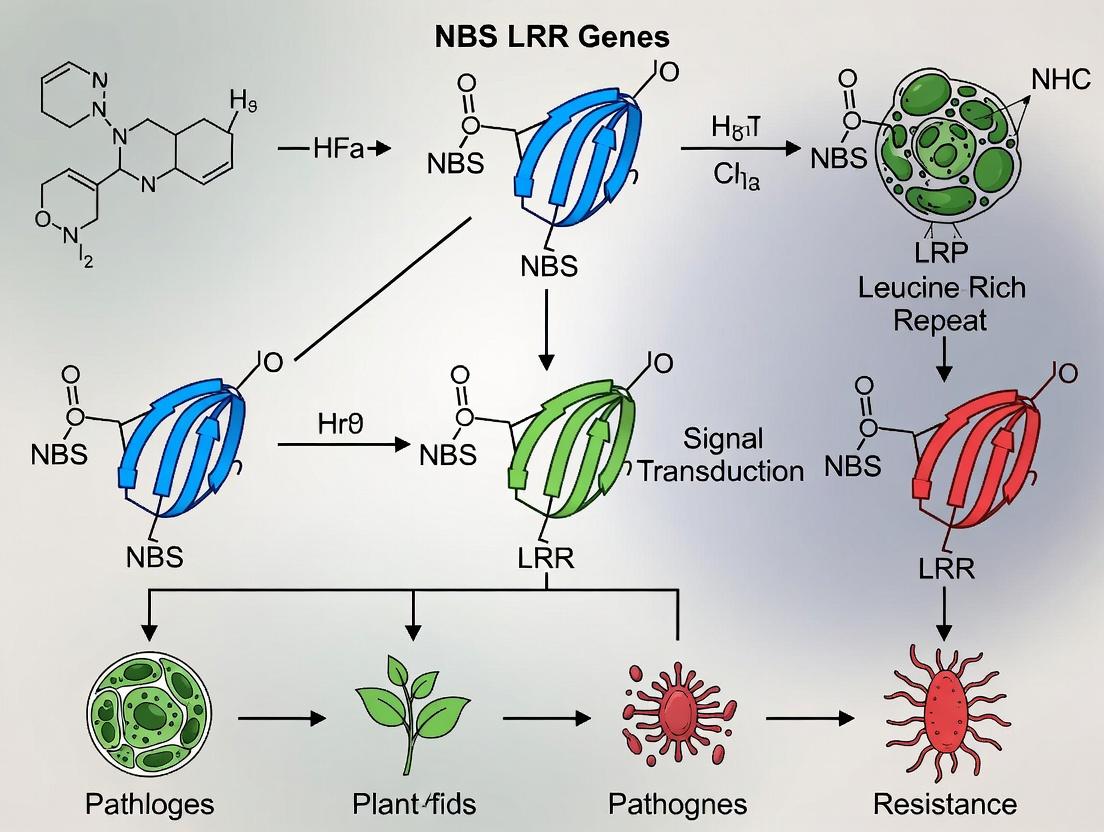
This article provides a comprehensive analysis of Nucleotide-Binding Site Leucine-Rich Repeat (NBS-LRR) genes, the primary intracellular immune receptors in plants.
NBS-LRR Immune Receptors in Plants: Molecular Mechanisms, Applications, and Future Biotechnological Prospects
Abstract
This article provides a comprehensive analysis of Nucleotide-Binding Site Leucine-Rich Repeat (NBS-LRR) genes, the primary intracellular immune receptors in plants. Targeting researchers, scientists, and drug development professionals, it systematically explores the foundational molecular architecture and evolution of NBS-LRR genes (Intent 1). It details advanced methodologies for their identification, functional characterization, and bioengineering for crop protection (Intent 2). The content addresses common experimental challenges and optimization strategies for gene discovery, expression, and functional assays (Intent 3). Finally, it critically evaluates and compares emerging validation techniques, including structural biology approaches and comparative genomics across plant species (Intent 4). The synthesis underscores the pivotal role of NBS-LRR research in developing sustainable disease resistance and its implications for biomedical analogies in innate immunity.
Decoding the Plant Immune Arsenal: An In-Depth Guide to NBS-LRR Gene Structure and Evolutionary Dynamics
Within the broader thesis on the molecular determinants of plant-pathogen co-evolution, Nucleotide-Binding Site Leucine-Rich Repeat (NBS-LRR) genes represent the largest class of plant disease resistance (R) genes. This whitepaper details their role as intracellular immune receptors, summarizing current knowledge on their structural classification, activation mechanisms, downstream signaling, and experimental approaches for their study. Data is contextualized within ongoing efforts to engineer durable, broad-spectrum resistance in agronomically important crops.
Structural Classification and Genomic Organization
NBS-LRR proteins are modular intracellular receptors. They are primarily categorized by their N-terminal domains and conserved motifs within the NB-ARC (Nucleotide-Binding Adaptor Shared by APAF-1, R proteins, and CED-4) domain.
Table 1: Major Classes of NBS-LRR Proteins
| Class | N-Terminal Domain | Key Conserved Motifs (NB-ARC) | Example Protein | Pathogen Effector Recognized |
|---|---|---|---|---|
| TNL | TIR (Toll/Interleukin-1 Receptor) | P-loop, RNBS-A, Kinase-2, RNBS-B, RNBS-C, GLPL, MHDV | Arabidopsis RPS4 | AvrRps4 (Pseudomonas syringae) |
| CNL | CC (Coiled-Coil) | P-loop, RNBS-A, Kinase-2, RNBS-B, RNBS-C, GLPL, MHDV | Arabidopsis RPM1 | AvrRpm1/AvrB (P. syringae) |
| RNL | RPW8-like CC | P-loop, RNBS-A, Kinase-2, RNBS-B, RNBS-C, GLPL, MHDV | Arabidopsis ADR1 | N/A (Helper NBS-LRR) |
Genomically, NBS-LRR genes are often found in clusters, facilitating rapid evolution through recombination and duplication. Recent pan-genome studies reveal significant presence/absence variation for these genes among crop cultivars.
Table 2: Genomic Statistics of NBS-LRR Genes in Selected Plant Species
| Species | Estimated Total NBS-LRR Genes | % of Genome as NBS-LRR Clusters | Notable Genomic Feature |
|---|---|---|---|
| Arabidopsis thaliana (Col-0) | ~150 | <0.5% | Dispersed distribution |
| Oryza sativa (rice, Nipponbare) | ~480 | ~1.2% | Large clusters on chromosomes 11 & 12 |
| Zea mays (maize, B73) | ~120 | ~0.3% | Lower density, often singleton genes |
| Solanum lycopersicum (tomato, Heinz 1706) | ~355 | ~1.0% | High density on chromosome 11 |
Activation and Signaling Mechanisms
The prevailing model for NBS-LRR activation is the "Guard Hypothesis," where the NBS-LRR protein (guard) monitors the integrity of a host protein (guardee) that is targeted by a pathogen effector. Effector perturbation of the guardee triggers activation.
Diagram 1: NBS-LRR Activation via the Guard Model
Downstream signaling diverges between TNL and CNL classes. TNLs generally require the helper proteins EDS1 and SAG101/NRG1, while CNLs often require NDR1 and helper RNLs (e.g., ADR1).
Diagram 2: Core NBS-LRR Downstream Signaling Pathways
Experimental Protocols for NBS-LRR Gene Research
Protocol: Identification and Phylogenetic Analysis
Objective: To identify NBS-LRR genes in a genome and determine phylogenetic relationships. Steps:
- Sequence Retrieval: Download the proteome of the target plant species from repositories (Phytozome, EnsemblPlants).
- HMMER Search: Use HMMER (v3.3) with Pfam profiles (NB-ARC: PF00931, TIR: PF01582, CC: PF05725) to identify candidate proteins. Command:
hmmsearch --domtblout output.txt Pfam-A.hmm proteome.fasta. - Domain Validation: Confirm domain architecture using SMART or NCBI CDD.
- Multiple Sequence Alignment: Align NB-ARC domains using MAFFT (v7) or Clustal Omega.
- Phylogenetic Tree Construction: Build a maximum-likelihood tree using IQ-TREE (v2.0) with best-fit model (e.g., JTT+G). Assess branch support with 1000 ultrafast bootstraps.
- Visualization: Annotate tree by N-terminal class and clade using iTOL.
Protocol: Functional Validation via Transient Expression (Agroinfiltration)
Objective: To test if a candidate NBS-LRR gene confers recognition of a specific pathogen effector. Steps:
- Cloning: Clone the full-length coding sequence of the candidate R gene into a binary vector (e.g., pBIN19 with a 35S promoter).
- Effector Cloning: Clone the cognate candidate effector (Avr) gene into a separate binary vector.
- Agrobacterium Preparation: Transform constructs into Agrobacterium tumefaciens strain GV3101. Grow cultures to OD600=0.6-0.8 in infiltration medium (10 mM MES, 10 mM MgCl2, 150 µM acetosyringone).
- Infiltration: Co-infiltrate Agrobacterium suspensions harboring the R and Avr genes into leaves of a susceptible plant (e.g., Nicotiana benthamiana). Include controls (R alone, Avr alone, empty vector).
- Phenotyping: Monitor for hypersensitive response (HR), characterized by localized tissue collapse, within 24-72 hours.
- Ion Leakage Assay (Quantitative): To quantify HR, take leaf discs at timepoints post-infiltration, incubate in distilled water, and measure electrolyte leakage using a conductivity meter.
Diagram 3: Workflow for Functional Validation via Agroinfiltration
Protocol: Protein-Protein Interaction Analysis (Co-Immunoprecipitation)
Objective: To validate physical interaction between an NBS-LRR and a guardee protein or downstream signaling component. Steps:
- Construct Design: Fuse the NBS-LRR gene and the putative interactor gene with different epitope tags (e.g., GFP-Myc vs. FLAG-HA) in expression vectors.
- Transient Expression: Co-express constructs in N. benthamiana via agroinfiltration.
- Protein Extraction: Harvest leaf tissue 48 hpi. Grind in liquid N2 and homogenize in non-denaturing extraction buffer (e.g., 50 mM Tris-HCl pH7.5, 150 mM NaCl, 10% glycerol, 0.5% NP-40, protease inhibitors).
- Immunoprecipitation: Incubate lysate with anti-tag antibody-conjugated beads (e.g., anti-GFP nanobody beads) for 2h at 4°C.
- Washing: Pellet beads, wash 3-4x with ice-cold extraction buffer.
- Elution & Analysis: Elute proteins with 2X Laemmli buffer. Analyze by SDS-PAGE and western blotting, probing for both tags to detect co-precipitation.
The Scientist's Toolkit: Research Reagent Solutions
Table 3: Essential Reagents and Materials for NBS-LRR Research
| Item | Function/Application | Example Product/Catalog Number |
|---|---|---|
| Plant Material | ||
| Nicotiana benthamiana seeds | Model plant for transient assays due to high agroinfiltration efficiency. | Widely available from academic stock centers. |
| Cloning & Expression | ||
| Gateway-compatible binary vectors (e.g., pEarleyGate, pGWB) | Facilitates rapid, high-throughput cloning of NBS-LRR genes for plant expression. | pEarleyGate100 (Addgene #100879). |
| Agroinfiltration | ||
| Agrobacterium tumefaciens strain GV3101 (pMP90) | Standard disarmed strain for transient and stable plant transformation. | Thermo Fisher Scientific C654003. |
| Acetosyringone | Phenolic compound inducing Agrobacterium vir genes; essential for efficient T-DNA transfer. | Sigma-Aldrich D134406. |
| Detection & Analysis | ||
| Anti-GFP monoclonal antibody | Detects GFP-tagged NBS-LRR fusion proteins in western blot, Co-IP, or microscopy. | Roche (Sigma-Aldrich) 11814460001. |
| HRP-conjugated secondary antibodies | For chemiluminescent detection in western blotting. | Jackson ImmunoResearch 115-035-003. |
| Cell Death Assay | ||
| Syringe (1 mL without needle) | For manual infiltration of Agrobacterium suspension into leaf mesophyll. | BD Plastipak 309628. |
| Conductivity meter | Quantifies ion leakage from tissue undergoing HR as a measure of cell death. | Orion Star A212. |
| In silico Analysis | ||
| HMMER software suite | For identifying NBS-LRR proteins in genomic sequences using hidden Markov models. | http://hmmer.org/ |
| IQ-TREE software | For constructing robust phylogenetic trees from NBS-LRR sequence alignments. | http://www.iqtree.org/ |
Nucleotide-Binding Site Leucine-Rich Repeat (NBS-LRR) proteins constitute the largest class of intracellular immune receptors in plants, directly responsible for detecting pathogen effector proteins and initiating effector-triggered immunity (ETI). The broader thesis of contemporary plant pathogen resistance research posits that the functional specialization and evolutionary adaptation of these receptors are governed by the conserved architecture and molecular interplay of three core modules: the NB-ARC domain, the LRR domain, and the variable N-terminal domain (typically Coiled-Coil (CC) or Toll/Interleukin-1 Receptor (TIR)). This technical guide provides an in-depth analysis of these modules, their functions, and the experimental paradigms used to dissect them.
Module Breakdown: Structure, Function, and Quantitative Data
The NB-ARC Domain: The Molecular Switch
The NB-ARC (Nucleotide-Binding adaptor shared by APAF-1, R proteins, and CED-4) domain is a conserved ATPase module that acts as a molecular switch, cycling between inactive (ADP-bound) and active (ATP-bound) states.
Key Functions:
- ATP/GTP Binding and Hydrolysis: Governs activation and signaling.
- Intramolecular Interaction: In the resting state, the NB-ARC domain is auto-inhibited by interactions with the LRR and the N-terminal domain.
- Effector Perception Relay: Conformational changes initiated by effector perception via the LRR are transduced through the NB-ARC.
Quantitative Data on NB-ARC Domain:
Table 1: Conserved Motifs and Mutational Effects in the NB-ARC Domain
| Motif | Consensus Sequence | Functional Role | Mutation Consequence |
|---|---|---|---|
| P-loop (Kinase 1a) | GxxxxGK[T/S] | ATP γ-phosphate binding | Loss of ATP binding; null phenotype |
| RNBS-A | [FW]xxxxLxxxxL | ATP hydrolysis & domain stability | Constitutive activation or loss of function |
| Kinase 2 | L[VL]DD | Mg2+ coordination, ATP hydrolysis | Constitutive activation (reduced hydrolysis) |
| RNBS-C | GxP[GS]R[FY] | Switch function, ADP/ATP state sensor | Often leads to autoactivation |
| GLPL | G[MLP]PL[AL] | Domain folding & stability | Protein misfolding, loss of function |
| MHD | MHD | Negative regulation, ADP/ATP state sensor | Frequent cause of constitutive activation |
The LRR Domain: The Effector Sensor and Negative Regulator
The LRR domain is composed of repeats of 20-30 amino acids forming a solenoid structure that provides a versatile protein-interaction surface.
Key Functions:
- Effector Recognition: Direct or indirect binding of pathogen effectors occurs here.
- Specificity Determinant: Hypervariable residues in the β-strand/loop regions dictate effector recognition specificity.
- Intramolecular Inhibition: In the absence of effector, it stabilizes the autoinhibited state by binding the NB-ARC domain.
Quantitative Data on LRR Domain:
Table 2: LRR Domain Architectural Features
| Feature | Typical Range | Functional Implication |
|---|---|---|
| Number of LRRs | 10-30 repeats | More repeats may increase affinity/specificity |
| Repeat Length | 20-30 amino acids | Defines curvature of solenoid structure |
| Consensus | LxxLxLxxNxLxGxIPxxLGx | "L" denotes Leu, Ile, Val, Phe; "x" is variable |
| Variable Sites | Positions 2-5, 10-13 (xxLxLxxN) | Determine interaction specificity with effectors |
| Flanking Regions | N- & C-terminal capping domains | Stabilize LRR structure, prevent aggregation |
The N-terminal Domain: CC and TIR Modules as Signaling Adapters
The N-terminal domain defines two major subclasses of NBS-LRRs (CNL and TNL) and initiates distinct downstream signaling pathways.
Key Functions:
- CC Domain (in CNLs): Often forms coiled-coil oligomers upon activation. It interacts with downstream signaling partners like NDR1 and members of the RPW8-like coiled-coil domain family.
- TIR Domain (in TNLs): Possesses enzymatic NADase activity. Upon activation, it hydrolyzes NAD+ to generate signaling molecules (e.g., v-cADPR, di-AMP) that activate Enhanced Disease Susceptibility 1 (EDS1) heterodimers.
Quantitative Data on N-terminal Domains:
Table 3: Comparison of CC and TIR N-terminal Modules
| Characteristic | Coiled-Coil (CC) Domain | TIR Domain |
|---|---|---|
| Typical Size | 100-150 aa | 150-160 aa |
| Oligomerization | Homo-dimerization/oligomerization post-activation | Homo-dimerization post-activation |
| Signaling Output | Activates Ca2+ influx, MAPK signaling via partners like NDR1 | NADase activity; produces nucleotides to activate EDS1-PAD4/EDS1-SAG101 |
| Key Downstream Partner | NDR1 (membrane-associated protein) | EDS1 (lipase-like protein) |
| Conserved Motif | EDVID motif often involved in cell death signaling | catalytic glutamic acid (E) in NADase site |
Experimental Protocols for Domain Analysis
Protocol 1: Site-Directed Mutagenesis of Conserved Motifs to Test Function.
- Objective: To assess the role of specific residues in NB-ARC or TIR domain function.
- Methodology:
- Primer Design: Design complementary primers containing the desired mutation (e.g., Lysine to Alanine in P-loop).
- PCR Amplification: Perform high-fidelity PCR using a plasmid containing the wild-type NBS-LRR gene as template.
- DpnI Digestion: Treat PCR product with DpnI to digest methylated parental template DNA.
- Transformation: Transform the resulting nicked vector DNA into competent E. coli for repair and propagation.
- Validation: Sequence the entire cloned region to confirm the mutation and absence of unintended errors.
- Functional Assay: Transiently express mutant and wild-type constructs in Nicotiana benthamiana via Agrobacterium infiltration. Co-infiltrate with the cognate effector or perform cell death assays.
Protocol 2: Yeast Two-Hybrid (Y2H) for Mapping Intramolecular Interactions.
- Objective: To map autoinhibitory interactions (e.g., LRR-NB-ARC) or effector-receptor binding.
- Methodology:
- Construct Generation: Clone the NBS-LRR gene domains (e.g., LRR) into the pGADT7 (AD vector) and other domains (e.g., NB-ARC-CC) into pGBKT7 (BD vector).
- Yeast Co-transformation: Co-transform AD and BD constructs into yeast strain AH109.
- Selection & Screening: Plate on synthetic dropout (SD) media lacking Leu and Trp (-LW) to select for co-transformants. Subsequently, streak colonies on high-stringency SD media lacking Leu, Trp, His, and Ade (-LWHA), supplemented with X-α-Gal to test for interaction (activation of HIS3, ADE2, MEL1 reporters).
- Quantification: Perform quantitative β-galactosidase assays (ONPG liquid assays) to measure interaction strength.
Protocol 3: In vitro NADase Activity Assay for TIR Domains.
- Objective: To measure the catalytic activity of purified TIR domains.
- Methodology:
- Protein Purification: Express recombinant 6xHis-tagged TIR domain protein in E. coli and purify via Ni-NTA affinity chromatography.
- Reaction Setup: In a 50 µL reaction, incubate 5-10 µM purified TIR protein with 500 µM NAD+ in reaction buffer (20 mM HEPES pH 7.5, 150 mM NaCl, 10 mM MgCl2).
- Incubation: Incubate at 22-25°C for 1-2 hours.
- Detection: Terminate reaction and measure NAD+ consumption or product formation using:
- HPLC/MS: To separate and identify nucleotide products (e.g., v-cADPR).
- Colorimetric NAD+ Detection Kit: To quantify remaining NAD+.
Visualizations of Signaling Pathways and Workflows
Diagram Title: CNL Activation and Signaling Pathway
Diagram Title: TNL Activation and Signaling Pathway
Diagram Title: Yeast Two-Hybrid Interaction Mapping Workflow
The Scientist's Toolkit: Essential Research Reagents
Table 4: Key Research Reagent Solutions for NBS-LRR Studies
| Reagent/Material | Supplier Examples | Function in Research |
|---|---|---|
| Gateway Cloning System | Thermo Fisher Scientific | Enables rapid, high-throughput recombination-based cloning of NBS-LRR domains for expression constructs. |
| pEAQ-HT Expression Vector | Public Repository (Addgene) | A plant transient expression vector for high-level protein production in N. benthamiana, ideal for protein purification or cell death assays. |
| Anti-GFP Nanobody Agarose | ChromoTek | Used to immunopurify GFP-tagged NBS-LRR proteins and their interacting complexes from plant lysates. |
| NAD+/NADH-Glo Assay | Promega | A highly sensitive luminescent assay to quantify NAD+ levels in in vitro TIR domain activity assays or in planta samples. |
| Fluo-4 AM, Calcium Indicator | Thermo Fisher Scientific | A cell-permeable dye for real-time imaging and quantification of cytosolic Ca2+ fluxes, a key early output of CNL activation. |
| Anti-Phospho-p44/42 MAPK (Erk1/2) Antibody | Cell Signaling Technology | Detects activated MAP kinases via western blot, used to monitor downstream signaling following NBS-LRR activation. |
| Strep-tag II Purification System | IBA Lifesciences | Provides a gentle, high-affinity purification tag for isolating functional NBS-LRR proteins without impairing enzymatic activity (e.g., TIR NADase). |
| Crystal Screen Kits | Hampton Research | Sparse matrix screens used to identify initial crystallization conditions for individual domains (e.g., NB-ARC, TIR) for structural studies. |
Within the broader thesis on Nucleotide-Binding Site Leucine-Rich Repeat (NBS-LRR) genes in plant pathogen resistance research, a fundamental classification distinguishes two major classes based on their N-terminal domains: CC-NBS-LRR (CNL) and TIR-NBS-LRR (TNL). These intracellular immune receptors are central to the plant innate immune system, mediating effector-triggered immunity (ETI). Understanding their structural, functional, and signaling differences is critical for advancing plant disease resistance engineering and informing novel therapeutic strategies in drug development.
Core Structural and Functional Distinctions
CNLs and TNLs share a common tripartite architecture but are defined by divergent N-terminal signaling domains that dictate distinct downstream pathways.
| Feature | CC-NBS-LRR (CNL) | TIR-NBS-LRR (TNL) |
|---|---|---|
| N-terminal Domain | Coiled-Coil (CC) domain. Predominantly α-helical. | Toll/Interleukin-1 Receptor (TIR) domain. Adopts a Rossmann-fold structure. |
| Conserved Motifs | CC, EDVID, P-loop, RNBS-A, RNBS-B, RNBS-C, GLPL, RNBS-D, MHD, LRR. | TIR, P-loop, RNBS-A, RNBS-B, RNBS-C, GLPL, RNBS-D, MHD, LRR. |
| Typical Activation Mechanism | Oligomerization into resistosomes, often forming calcium-permeable cation channels. | Oligomerization into resistosomes with NADase (enzymatic) activity. |
| Primary Signaling Pathway | Activation of plasma membrane RESISTANCE TO POWDERY MILDEW 8 (RPW8)-type COILED-COIL (CCR) and N REQUIREMENT GENE 1 (NRG1) helper NLRs. Leads to calcium influx and cell death. | Dependency on ENHANCED DISEASE SUSCEPTIBILITY 1 (EDS1) family proteins (EDS1-PAD4 and EDS1-SAG101 complexes). |
| Downstream Effectors | Activation of NLR-REQUIRED FOR CELL DEATH (NRC) networks. Induction of reactive oxygen species (ROS) and mitogen-activated protein kinase (MAPK) cascades. | EDS1 complexes transcriptionally reprogram defense via PHYTOALEXIN DEFICIENT 4 (PAD4) and SENESCENCE-ASSOCIATED GENE 101 (SAG101). Ultimately converge on helper NLRs (e.g., NRG1, ADR1). |
| Phylogenetic Distribution | Found in both monocots and dicots. | Primarily in dicots; largely absent in monocots. |
| Example Proteins | Arabidopsis RPS2, RPS5; Potato Rx; Pepper Bs2. | Arabidopsis RPS4, RPP1; Flax L6, L7; Tobacco N. |
Signaling Pathways: A Visual Guide
Key Experimental Protocols for Distinction and Analysis
Protocol: Phylogenetic and Motif Analysis for Classification
Objective: To bioinformatically distinguish CNLs from TNLs within a genome or transcriptome.
Methodology:
- Sequence Retrieval: Identify candidate NBS-LRR sequences using HMMER (with PFAM models: PF01582 for TIR, PF00931 for NB-ARC, PF00560 for LRR).
- Multiple Sequence Alignment: Use MAFFT or Clustal Omega.
- N-terminal Domain Identification:
- Scan N-terminal ~150 amino acids with COILS or DeepCoil for coiled-coil prediction (CNL).
- Scan with PFAM or SMART for TIR domain (PF01582, SM00255).
- Phylogenetic Tree Construction: Build a neighbor-joining or maximum-likelihood tree (e.g., using MEGA or IQ-TREE) based on the conserved NBS domain alignment. CNLs and TNLs will typically form distinct monophyletic clades.
- Conserved Motif Validation: Use MEME Suite to identify overrepresented motifs (e.g., RNBS-A-D, MHD) and confirm class-specific motifs (e.g., EDVID in some CNLs).
Protocol: Functional Validation via Transient Agrobacterium Assay
Objective: To test the cell death signaling functionality and pathway dependency of a cloned CNL/TNL.
Methodology:
- Cloning: Clone the full-length candidate NLR gene into a binary vector (e.g., pEAQ-HT or pBIN19) under a strong constitutive promoter (e.g., 35S).
- Agrobacterium Transformation: Transform the construct into Agrobacterium tumefaciens strain GV3101.
- Infiltration:
- Grow cultures to OD600=0.5-0.8, resuspend in infiltration buffer (10 mM MES, 10 mM MgCl2, 150 µM acetosyringone).
- Infiltrate leaves of Nicotiana benthamiana (a model dicot supporting both pathways).
- Pathway-Specific Silencing (Optional):
- Co-infiltrate with Tobacco Rattle Virus (TRV)-based vectors for Virus-Induced Gene Silencing (VIGS) targeting key pathway components (e.g., EDS1 for TNLs, NRG1/NRC for CNLs).
- Phenotyping: Monitor infiltrated patches for Hypersensitive Response (HR) cell death over 24-72 hours. Quantify ion leakage or use trypan blue staining.
The Scientist's Toolkit: Essential Research Reagents
Table 2: Key Reagent Solutions for NLR Research
| Reagent / Material | Function & Application in CNL/TNL Research | Example Product / Reference |
|---|---|---|
| pEAQ-HT Expression Vector | High-throughput, high-yield transient expression in plants via Agrobacterium. Ideal for functional assays of cloned NLRs. | (Sainsbury et al., 2009) |
| TRV-based VIGS Vectors | For Virus-Induced Gene Silencing of downstream signaling components (e.g., EDS1, NRG1, NRCs) to establish pathway dependency. | TRV1/TRV2 vectors (Liu et al., 2002) |
| Anti-GFP / Tag Antibodies | Immunoprecipitation (IP) and microscopy to study NLR subcellular localization and oligomerization (Resistosome formation). | Commercial monoclonal antibodies. |
| Fluorescent Dyes (e.g., Fluo-4 AM) | Ratometric measurement of cytosolic calcium influx, a key early event following CNL (and some TNL) activation. | Thermo Fisher Scientific Fluo-4. |
| NAD+/NADH Assay Kits | To quantify NAD+ hydrolysis, the direct enzymatic activity of activated TNL resistosomes (e.g., RPP1, Roq1). | Colorimetric/Fluorometric kits (Sigma, Abcam). |
| EDS1/PAD4/SAG101 Recombinant Proteins | For in vitro biochemical assays to probe TIR-domain enzymatic products and interactions with EDS1 complexes. | Purified from E. coli or insect cells. |
| N. benthamiana ΔEDS1/ΔNRG1 Mutants | Genetically engineered lines deficient in specific pathways, providing a clean background for functional assignment. | (Wu et al., Plant Cell, 2019) |
| HMMER Software & PFAM DB | Essential bioinformatics tools for initial identification and domain architecture annotation of NBS-LRR genes. | hmmer.org; pfam.xfam.org |
Within the broader thesis on NBS-LRR (Nucleotide-Binding Site Leucine-Rich Repeat) genes in plant pathogen resistance research, this whitepaper dissects the evolutionary genomic mechanisms that generate and maintain the diversity of these critical immune receptors. The NBS-LRR repertoire is not static; it is a dynamic, genetically complex arsenal shaped by distinct evolutionary forces to recognize rapidly evolving pathogen effectors.
Core Evolutionary Mechanisms
Tandem Duplications
Tandem duplications are the primary engine for NBS-LRR copy number expansion, creating clusters of paralogous genes in plant genomes. This process provides raw genetic material for innovation.
Experimental Protocol for Identifying Tandem Duplications:
- Genome Assembly & Annotation: Utilize a high-quality, chromosome-level genome assembly. Annotate NBS-LRR genes using combined methods: hidden Markov model (HMM) searches with models (e.g., NB-ARC, LRR) from databases like Pfam, followed by manual curation and domain verification.
- Physical Clustering Analysis: Define a tandem cluster using criteria: genes must belong to the same NBS-LRR phylogenetic subclass (CNL, TNL, RNL), be separated by ≤10 non-NBS-LRR genes, and reside within a 200 kb genomic window. Scripts using BEDTools (
clusterfunction) are standard. - Syntery Analysis: Use tools like MCScanX to differentiate tandem duplicates from segmental/whole-genome duplicates by assessing collinearity with related species.
Table 1: NBS-LRR Tandem Duplication Frequency in Select Plant Species
| Species | Approx. Total NBS-LRR Genes | % in Tandem Clusters | Avg. Cluster Size (Genes) | Key Reference |
|---|---|---|---|---|
| Arabidopsis thaliana | 150 | ~60% | 2-5 | (Meyers et al., 2003) |
| Oryza sativa (Rice) | 500+ | ~70% | 2-15 | (Zhou et al., 2004) |
| Zea mays (Maize) | ~150 | ~50% | 2-10 | (Xiao et al., 2004) |
| Glycine max (Soybean) | ~500 | ~75% | 3-20 | (Kang et al., 2012) |
Diversifying Selection
Positive selection acts on specific residues within LRR domains, altering the protein surface to recognize novel pathogen effectors. This is often detected by comparing the ratio of non-synonymous to synonymous substitutions (dN/dS or ω).
Experimental Protocol for Detecting Diversifying Selection:
- Sequence Alignment: Curate coding sequences of orthologous/paralogous NBS-LRR genes. Perform codon-aware alignment (e.g., using PRANK or MACSE).
- Phylogeny Reconstruction: Build a maximum-likelihood gene tree from the alignment (using IQ-TREE or RAxML).
- Selection Analysis: Apply CodeML from the PAML package. Key steps:
- Fit site-models (e.g., M7 vs. M8) to test for sites under positive selection (ω > 1).
- Use branch-site models to test for positive selection on specific lineages (e.g., after a duplication event).
- Identify positively selected sites with Bayes Empirical Bayes (BEB) posterior probability > 0.95.
- Structural Mapping: Map selected sites onto predicted or known 3D structures of LRR domains to infer functional significance.
Table 2: Signature of Diversifying Selection in NBS-LRR Genes
| Gene Family / Species | Region Analyzed | Model (PAML) | Sites under Pos. Selection (ω>1) | Mapped Function | Reference |
|---|---|---|---|---|---|
| Rice Pik alleles | LRR | M8 vs M7 | 10 sites | Direct effector binding | (Ashikawa et al., 2008) |
| Arabidopsis RPP13 | LRR | Branch-site | 15 sites | Specificity determinants | (Rose et al., 2004) |
| Barley MLA | LRR | M8 vs M7 | ~20 sites | Effector recognition surface | (Seeholzer et al., 2010) |
Birth-and-Death Evolution
The NBS-LRR superfamily evolves via a birth-and-death process where new genes are created by duplication (birth), and some duplicates are retained or pseudogenized/deleted (death). This creates a fluctuating, species-specific repertoire.
Experimental Protocol for Inferring Birth-and-Death Dynamics:
- Paralog Identification: Identify all NBS-LRR genes within a genome (as per tandem duplication protocol).
- Phylogenetic Reconstruction: Build a rooted phylogenetic tree including NBS-LRRs from multiple related species. Use a conserved outgroup (e.g., RNL genes).
- Reconciliation Analysis: Use tree reconciliation software (e.g., Notung, RANGER-DTL) to map the gene tree onto the species tree. This infers evolutionary events: Duplication (Birth), Loss (Death), and Speciation.
- Paralog Age Distribution: Estimate duplication times using synonymous substitution (dS) rates as a molecular clock. Plot Ks (synonymous substitutions per site) distributions to visualize waves of duplication.
Integrated Model of Repertoire Evolution
These mechanisms interact dynamically. Tandem duplications provide the genetic substrate. Diversifying selection acts on specific duplicates, leading to neofunctionalization (birth of a new recognition specificity). Other duplicates decay into pseudogenes or are deleted, completing the death phase. This continuous cycle, operating against a backdrop of whole-genome duplications and host-pathogen co-evolution, shapes the highly variable, adaptive NBS-LRR repertoire.
The Scientist's Toolkit: Research Reagent Solutions
Table 3: Essential Materials for Evolutionary Genomics of NBS-LRRs
| Item / Reagent | Function / Application | Example/Supplier |
|---|---|---|
| High-Quality Genomic DNA Kits | Extraction of high-molecular-weight DNA for long-read sequencing to resolve complex NBS-LRR clusters. | Qiagen MagAttract HMW DNA Kit, PacBio SMRTbell Prep Kit. |
| NBS-LRR Domain-Specific HMMs | Hidden Markov Models for sensitive identification of NBS and LRR domains in genome/proteome scans. | Pfam profiles (NB-ARC: PF00931, LRR: PF00560, PF07723, etc.), custom-built HMMs. |
| cDNA Synthesis & RT-PCR Kits | Assessing gene expression, isolating full-length transcripts, and verifying annotated NBS-LRR genes. | SuperScript IV Reverse Transcriptase, Phusion High-Fidelity PCR Master Mix. |
| Positive Selection Analysis Software | Statistical detection of sites/lineages under diversifying selection (dN/dS > 1). | PAML (CodeML), HyPhy (FUBAR, MEME), Datamonkey webserver. |
| Gene Tree / Species Tree Reconciliation Tools | Inferring duplication and loss events (birth-and-death) from phylogenetic trees. | Notung, RANGER-DTL, GeneRax. |
| Plant Pathogen Effector Libraries | Cloned pathogen avirulence (Avr) effectors for functional validation of NBS-LRR recognition specificity. | Custom克隆 collections in expression vectors (e.g., pEDV6, pGREEN) for agroinfiltration. |
| Heterologous Expression Systems | Rapid functional assays for NBS-LRR / effector interaction and cell death response. | Nicotiana benthamiana for transient expression via Agrobacterium tumefaciens. |
The Nucleotide-Binding Site Leucine-Rich Repeat (NBS-LRR) gene family constitutes the primary intracellular immune receptors in plants, responsible for detecting pathogen-derived effectors. Understanding their operational logic is paramount in plant pathogen resistance research. This whitepaper details the three principal mechanistic frameworks—Guard, Decoy, and Integrated Sensor models—that describe how NBS-LRR proteins achieve specific pathogen recognition and initiate robust immune signaling. These models are not mutually exclusive but represent evolutionary strategies encoded within the plant genome to counter pathogen virulence tactics.
Mechanistic Frameworks: Core Principles and NBS-LRR Roles
The Guard Model
In the Guard model, an NBS-LRR protein (the "guard") monitors the integrity of a host cellular protein (the "guardee") that is a target of pathogen effectors. The effector's modification or disruption of the guardee is perceived by the guard NBS-LRR, triggering immunity.
The Decoy Model
The Decoy model proposes the evolution of host proteins that mimic genuine effector targets but lack their primary cellular function. These "decoys" are monitored by NBS-LRRs. Effector interaction with the decoy leads to activation of the paired NBS-LRR, while the plant sacrifices the decoy's non-essential function.
The Integrated Sensor Model
Also known as the "Direct Recognition" model, here the NBS-LRR protein itself contains a domain that directly binds to the pathogen effector. This interaction can occur via the LRR domain or an integrated domain (ID), often derived from the effector's ancestral host target.
Table 1: Comparative Analysis of Recognition Models
| Feature | Guard Model | Decoy Model | Integrated Sensor Model |
|---|---|---|---|
| Effector Target | Authentic host virulence target (Guardee) | Mimic of host target (Decoy) | NBS-LRR integrated domain or LRR region |
| NBS-LRR Role | Guards guardee integrity | Guards decoy integrity | Direct receptor |
| Recognition Specificity | Indirect; senses perturbation of guardee | Indirect; senses perturbation of decoy | Direct; binds effector |
| Evolutionary Pressure | On guardee's primary function | On decoy to mimic target | On NBS-LRR's integrated domain |
| Example in NBS-LRRs | Arabidopsis RIN4 guarded by RPS2/RPM1 | Arabidopsis PBS1 decoy for AvrPphB, guarded by RPS5 | Rice Pikp-1 with integrated HMA domain binding AVR-PikD |
Experimental Protocols for Elucidating Recognition Models
Yeast Two-Hybrid (Y2H) & Co-Immunoprecipitation (Co-IP) for Protein Interactions
Objective: To test for direct physical interactions between effector, host target/decoy, and NBS-LRR. Protocol:
- Y2H: Clone genes encoding effector, putative host target/decoy, and NBS-LRR into bait (DNA-BD) and prey (AD) vectors.
- Co-transform Saccharomyces cerevisiae strain (e.g., AH109) with bait and prey plasmid pairs.
- Plate transformants on synthetic dropout (SD) media lacking Leu and Trp (for selection) and subsequently on SD/-Leu/-Trp/-His/-Ade for interaction testing.
- Quantify interactions via β-galactosidase assays.
- Validation by Co-IP: Express tagged proteins (e.g., FLAG-tagged effector, MYC-tagged NBS-LRR) in Nicotiana benthamiana via Agrobacterium infiltration.
- At 48-72 hours post-infiltration, harvest leaf tissue and lyse in non-denaturing buffer.
- Immunoprecipitate using anti-FLAG magnetic beads.
- Wash beads extensively, elute proteins, and analyze by immunoblotting using anti-MYC antibody to detect co-precipitated NBS-LRR.
Mutational Analysis for Functional Validation
Objective: To determine if modifications to the guardee/decoy or NBS-LRR affect recognition. Protocol:
- Identify key residues in the guardee/decoy required for effector interaction via sequence alignment or structural data.
- Generate site-directed mutants (e.g., alanine substitutions) of the guardee/decoy.
- Co-express mutant guardee/decoy with the corresponding NBS-LRR and effector in N. benthamiana.
- Monitor for Hypersensitive Response (HR) cell death, a proxy for immune activation.
- Expected Outcome (Guard/Decoy Model): Mutations that prevent effector binding to the guardee/decoy should abolish NBS-LRR activation. Mutations that mimic effector-induced modification may constitutively activate the NBS-LRR.
Heterologous Reconstitution Assay
Objective: To test sufficiency of components for recognition. Protocol:
- Express a plant NBS-LRR, its cognate effector, and the putative guardee/decoy protein in a heterologous system like S. cerevisiae or mammalian HEK293T cells.
- Use a reporter system (e.g., NF-κB-driven luciferase in HEK293T) linked to NBS-LRR activation.
- Measure reporter activity upon co-expression of different combinations.
- Expected Outcome: Strong reporter signal only when effector, guardee/decoy, and NBS-LRR are all present, confirming the functional unit.
Visualization of Signaling Pathways and Logical Relationships
Title: Guard Model: Indirect Recognition via Host Target Monitoring
Title: Decoy Model: Effector Trapping by a Non-Functional Mimic
Title: Integrated Sensor Model: Direct Effector Recognition by NBS-LRR
The Scientist's Toolkit: Research Reagent Solutions
Table 2: Essential Research Reagents for Studying NBS-LRR Recognition Models
| Reagent / Material | Function & Application in Model Elucidation |
|---|---|
| Gateway or Golden Gate Cloning Vectors | Facilitates rapid, standardized cloning of effectors, NBS-LRRs, and host proteins into multiple expression systems (Y2H, plant, mammalian). |
| Agrobacterium tumefaciens Strains (GV3101, AGL1) | For transient expression in Nicotiana benthamiana (agroinfiltration) to conduct in planta protein interaction, co-IP, and cell death assays. |
| FLAG, MYC, HA, GFP Epitope Tags | Antibody-recognizable tags for protein detection, localization (microscopy), and immunoprecipitation experiments to validate interactions. |
| Site-Directed Mutagenesis Kits (e.g., Q5) | To generate point mutations in effector, guardee/decoy, or NBS-LRR genes to map critical residues for interaction and signaling. |
| Luciferase Reporter Assay Systems | Used in heterologous systems (HEK293T) to quantitatively measure NBS-LRR activation upon reconstitution of the recognition complex. |
| Anti-Phosphoantibodies | To detect phosphorylation changes in guardee proteins (e.g., RIN4) induced by effector activity, a key readout in guard model studies. |
| Protease Inhibitor Cocktails | Essential for Co-IP and protein extraction buffers to maintain complex integrity, especially when studying proteolytic cleavage by effector proteases. |
| Bimolecular Fluorescence Complementation (BiFC) Vectors | To visualize protein-protein interactions in living plant cells by reconstitution of split YFP/CFP fluorophores. |
| CRISPR-Cas9 Knockout Lines | To generate mutant plants lacking specific decoy or guardee proteins, validating their necessity for NBS-LRR function in vivo. |
Quantitative Data & Evolutionary Insights
Table 3: Genomic Distribution and Quantitative Features of NBS-LRR Recognition Types
| Model Type | Approx. % of Characterized NBS-LRRs* | Avg. Number of Integrated Domains (IDs) per NBS-LRR Gene | Common ID Types Found |
|---|---|---|---|
| Guard/Decoy | ~60-70% | 0 (monitors separate protein) | N/A |
| Integrated Sensor | ~30-40% | 1-2 | HMA, WRKY, Protein Kinase, SEL |
| Note: | *Estimates based on characterized Arabidopsis and rice R genes. The majority operate via indirect (Guard/Decoy) mechanisms, but Integrated Sensors are prevalent in monocots. |
Table 4: Kinetic Parameters from Surface Plasmon Resonance (SPR) Studies
| Interaction Pair (Example) | Model | KD (Binding Affinity) | Method & Reference Context |
|---|---|---|---|
| Effector AvrPikD / Pikp-HMA | Integrated Sensor | 100-400 nM | SPR; direct, high-affinity binding. |
| Effector AvrPphB / PBS1 (Decoy) | Decoy | ~1-10 µM | ITC; cleavage, not stable binding. |
| Effector AvrRpt2 / RIN4 (Guardee) | Guard | Cleavage only | Cleavage kinetics measured, not binding. |
Plant nucleotide-binding site leucine-rich repeat (NBS-LRR) proteins constitute the largest class of intracellular immune receptors responsible for specific pathogen recognition. The broader thesis posits that the functional diversification and evolutionary dynamics of NBS-LRR genes are fundamentally driven by the need to recognize a vast array of pathogen-derived effector molecules. These effectors, secreted by bacteria, fungi, and oomycetes, manipulate host cell processes to promote infection. This whitepaper provides a technical guide to the key effector classes, their recognition mechanisms by NBS-LRR proteins, and associated experimental paradigms central to modern plant immunity research.
Effector Classes and Recognition Mechanisms
Pathogen effectors are virulence proteins delivered into the host apoplast or cytoplasm. Their recognition by plant NBS-LRR receptors often follows the "Guard" or "Decoy" models, where the receptor monitors the status of host proteins targeted by effectors.
Table 1: Major Pathogen Effector Classes and NBS-LRR Recognition Paradigms
| Pathogen Type | Canonical Effector Example | Structure/Feature | Plant NBS-LRR Receptor | Recognition Model | Key Manipulated Host Target |
|---|---|---|---|---|---|
| Bacteria (e.g., Pseudomonas) | AvrPto / AvrPtoB | Kinase inhibitors | Prf (with Pto kinase) | Guard | Pto/Prf complex |
| Bacteria (e.g., Xanthomonas) | AvrBs3 / TALEs | DNA-binding TAL repeats | Bs3 (Executor R) | Direct? | Upregulated BS3 promoter |
| Fungi (e.g., Magnaporthe) | AVR-Pik / AVR-Pia | MAX effectors | Pik-p / RGA5 (HMA integrated) | Direct (via HMA) | - |
| Oomycetes (e.g., Phytophthora) | AVR3a | E3 ligase-like | R3a | Guard | Host E3 ligase CMPG1 |
| Oomycetes (e.g., Hyaloperonospora) | ATR1 / ATR13 | RXLR effectors | RPP1 / RPP13 | Direct | - |
| Nematodes | Gr-VAP1 / SPRYSEC | Venom allergen-like | Gpa2 / Hero | Guard | Host HSP90, RanGAP2 |
Experimental Protocols for Effector Identification and Validation
Protocol: Yeast-Two-Hybrid (Y2H) Screening for Effector-Host Target Interaction
Objective: To identify physical interactions between a candidate pathogen effector and host plant proteins.
- Cloning: Clone the coding sequence of the effector gene (without signal peptide) into a Y2H bait vector (e.g., pGBKT7) to generate a GAL4 DNA-Binding Domain (BD) fusion.
- Library Screening: Transform the bait construct into a yeast strain (e.g., Y2HGold) and mate with a yeast strain pre-transformed with a cDNA library from the host plant cloned into a prey vector (e.g., pGADT7, GAL4 Activation Domain (AD) fusion).
- Selection: Plate diploid yeast on double-dropout (SD/-Leu/-Trp) and quadruple-dropout (SD/-Ade/-His/-Leu/-Trp) selection media. Include X-α-Gal and Aureobasidin A for auto-activation suppression and colorimetric assay.
- Validation: Isolate prey plasmids from positive colonies, re-transform with the bait plasmid to confirm interaction, and sequence to identify host interacting proteins.
- Quantitative Assay: Perform liquid culture β-galactosidase assays to quantify interaction strength.
Protocol: Transient Co-expression inNicotiana benthamianafor Cell Death Assay
Objective: To validate the recognition of an effector by a putative NBS-LRR receptor in planta.
- Construct Preparation: Clone the effector and full-length NBS-LRR receptor genes into separate binary expression vectors (e.g., pEAQ-HT-DEST1 or pGWB2 under 35S promoter).
- Agroinfiltration: Transform each construct into Agrobacterium tumefaciens strain GV3101. Grow cultures to OD600 ~0.8, pellet, and resuspend in infiltration buffer (10 mM MES, 10 mM MgCl2, 150 µM acetosyringone, pH 5.6).
- Co-infiltration: Mix Agrobacterium suspensions harboring the effector and receptor constructs in a 1:1 ratio. Infiltrate into leaves of 4-5 week-old N. benthamiana plants using a needleless syringe.
- Phenotyping: Monitor infiltrated patches over 2-6 days for a hypersensitive response (HR)-like cell death, characterized by tissue collapse and bleaching. Include controls (effector alone, receptor alone, empty vector).
- Quantification: Measure ion leakage using a conductivity meter or stain for dead cells with trypan blue.
Protocol:In PlantaEffector Localization using Confocal Microscopy
Objective: To determine the subcellular localization of a fluorescently-tagged effector during infection.
- Tagging: Fuse the effector gene (with native signal peptide) in-frame to a fluorescent protein (e.g., GFP, mCherry) at its C-terminus in a binary vector.
- Transient Expression: Agroinfiltrate the construct into N. benthamiana as in Protocol 3.2.
- Pathogen Challenge (Optional): Inoculate the infiltrated area with the native pathogen (e.g., Phytophthora infestans spores) 24-48h post-agroinfiltration.
- Imaging: At appropriate time points, excise leaf discs and visualize using a confocal laser scanning microscope. Use appropriate excitation/emission filters. Co-stain nuclei with DAPI and membranes with FM4-64 if required.
- Colocalization Analysis: Use software (e.g., ImageJ) to calculate Pearson's correlation coefficient with organelle markers.
Table 2: Quantitative Data on Effector Recognition and Plant Immune Responses
| Experimental System | Measured Parameter | Typical Range/Value for Positive Recognition | Measurement Technique |
|---|---|---|---|
| Y2H Interaction Strength | β-galactosidase Activity (Miller Units) | >20 units (vs. <5 for negative control) | Liquid culture assay |
| Transient Co-expression | Ion Leakage (Conductivity) | >50% increase over control at 48 hpi | Conductivity meter |
| Hypersensitive Response (HR) | Cell Death Area | Confluent necrosis in infiltrated zone | Visual scoring or image analysis |
| Gene Expression (PTI/ETI) | PR1 gene induction | 10-100 fold increase vs. mock | qRT-PCR |
| MAPK Activation | Phosphorylated MAPK level | Peak at 15-30 min post-treatment | Immunoblot with anti-pMAPK |
Visualization of Signaling Pathways
Diagram 1: The Guard Hypothesis for NBS-LRR Activation (Max 100 Chars)
Diagram 2: Experimental Workflow for Effector Identification & Validation (Max 100 Chars)
The Scientist's Toolkit: Research Reagent Solutions
Table 3: Essential Reagents and Materials for Effector-NBS-LRR Research
| Reagent/Material | Supplier Examples | Function/Application |
|---|---|---|
| Gateway OR Cloning Kits | Thermo Fisher, Takara Bio | Modular, high-throughput cloning of effector and NLR genes into multiple expression vectors. |
| pEAQ-HT Dest Vector Series | (Publicly available) | High-level transient protein expression in plants via agroinfiltration. |
| Matchmaker Gold Yeast-Two-Hybrid System | Takara Bio | Sensitive Y2H system with stringent auto-activation controls for interaction screening. |
| Agrobacterium Strain GV3101 (pMP90) | Various (C58 background) | Standard disarmed strain for transient transformation of N. benthamiana. |
| Anti-GFP / Anti-mCherry Antibodies | ChromoTek, Abcam | Immunoprecipitation (IP) or western blot detection of tagged effectors. |
| Anti-p44/42 MAPK (Erk1/2) Antibody | Cell Signaling Technology | Detects activated MAPKs in PTI/ETI signaling cascades. |
| Fluorescent Organelle Markers (e.g., RFP-HDEL, NLS-YFP) | ABRC, NASC | Confocal microscopy co-localization with tagged effectors. |
| Phusion High-Fidelity DNA Polymerase | Thermo Fisher | High-fidelity PCR for amplifying effector/NBS-LRR genes from genomic DNA/cDNA. |
| Trypan Blue Stain (0.4%) | Sigma-Aldrich | Histochemical staining to visualize dead plant cells in HR assays. |
| Cellulose Acetate Membranes | Sterlitech | Used in effector secretion assays (e.g., Pseudomonas Type III secretion). |
From Genome to Field: Methodologies for NBS-LRR Discovery, Functional Analysis, and Biotechnological Application
Within the broader thesis on NBS-LRR (Nucleotide-Binding Site Leucine-Rich Repeat) genes in plant pathogen resistance research, their genome-wide identification represents a critical first step. NBS-LRR proteins constitute the largest class of plant disease resistance (R) genes, serving as intracellular immune receptors that detect pathogen effectors and initiate robust defense signaling. Comprehensive mining of these genes from genomic or transcriptomic data is foundational for understanding plant immune system architecture, evolution, and function, with direct implications for breeding durable resistance and informing novel plant protection strategies in agriculture.
Core Bioinformatics Tools for NBS-LRR Identification
The identification pipeline typically follows a multi-step process combining homology-based searches, domain analysis, and machine learning predictions.
Primary Sequence Search and Retrieval
- BLAST (Basic Local Alignment Search Tool): The foundational tool. A tBLASTn or BLASTp search using known NBS-LRR protein sequences (e.g., from Arabidopsis or rice) as queries against a target genome/transcriptome is the initial step.
- HMMER: A more sensitive profile-based search tool. Hidden Markov Model (HMM) profiles for conserved NBS (NB-ARC) and LRR domains from databases like Pfam are used to scan proteomes or translated genomes.
Domain Architecture Analysis
- InterProScan: Integrates multiple protein signature databases (Pfam, SMART, PROSITE, etc.) to conclusively identify and annotate NBS (NB-ARC; PF00931), TIR (PF01582), CC (Coiled-Coil), and LRR (PF00560, PF07723, PF07725, PF12799, PF13855) domains.
- MEME/MAST Suite: Used for de novo motif discovery and scanning to identify conserved motifs within the NBS domain (e.g., P-loop, RNBS-A, Kinase-2, RNBS-D, GLPL) that characterize NBS-LRR proteins.
Machine Learning & Advanced Prediction
- NBSPred: A random forest-based tool specifically designed to distinguish NBS-type R proteins from non-R proteins using domain and motif features.
- RGAugury: A pipeline that predicts resistance gene analogs (RGAs), including NBS-LRR, by integrating multiple methods (HMMER, motif analysis, etc.) and classifying them into subfamilies (TNL, CNL, RNL).
Table 1: Core Bioinformatics Tools for NBS-LRR Mining
| Tool Category | Tool Name | Primary Function | Key Input | Key Output |
|---|---|---|---|---|
| Sequence Search | BLAST+ Suite | Homology-based sequence retrieval | Query NBS-LRR seq, Target DB | Homologous sequences |
| Profile Search | HMMER (hmmsearch) | Domain profile-based scanning | HMM profiles (Pfam), Target seq | Domain hits (E-value < 1e-5) |
| Domain Analysis | InterProScan | Integrated protein domain annotation | Protein sequences | Domain coordinates, GO terms |
| Motif Analysis | MEME/MAST | De novo motif discovery & scanning | NBS domain sequences | Conserved motif logos & sites |
| ML Prediction | NBSPred | Classify NBS vs. non-NBS proteins | Protein features | Prediction score, class |
| Integrated Pipeline | RGAugury | Automated RGA identification & classification | Genome/Proteome | Classified RGA list (NBS-LRR, etc.) |
Domain and Family Databases
- Pfam: Curated family HMMs for NB-ARC (PF00931), TIR (PF01582), and various LRR types.
- CDD (Conserved Domain Database): Provides curated multiple sequence alignments and models for conserved domains.
Plant Genome and R-Gene Specific Repositories
- Phytozome: Provides access to numerous sequenced and annotated plant genomes for comparative analysis.
- Plant Resistance Genes Database (PRGdb): A curated resource cataloging known and predicted R genes from multiple species, including NBS-LRRs.
- Ensembl Plants: Genome browser and annotation platform for many plant species.
Table 2: Key Databases for NBS-LRR Research
| Database | Type | Content Relevance | URL (Example) |
|---|---|---|---|
| Pfam | Protein Family | NB-ARC, TIR, LRR domain HMMs | http://pfam.xfam.org |
| PRGdb | Specialized R-Gene | Curated R genes, prediction tools | http://prgdb.org |
| Phytozome | Plant Genomics | Reference genomes for mining | https://phytozome-next.jgi.doe.gov |
| NCBI RefSeq | Genomic/Protein | Curated reference sequences | https://www.ncbi.nlm.nih.gov/refseq/ |
| TAIR | Model Organism | Arabidopsis reference (rich in NBS-LRR) | https://www.arabidopsis.org |
Detailed Experimental Protocol: Genome-Wide NBS-LRR Identification
The following protocol outlines a standard bioinformatic workflow.
Protocol: Comprehensive In Silico Identification of NBS-LRR Genes from a Plant Genome
Objective: To identify, classify, and annotate all NBS-LRR encoding genes in a newly assembled plant genome.
Input Data: A high-quality, assembled genome sequence in FASTA format and its structural gene annotation (GFF3/GTF file with corresponding protein FASTA).
Software Prerequisites: BLAST+, HMMER (v3.3+), InterProScan (v5.52+), MEME Suite (v5.3+), RGAugury (optional but recommended), and standard bioinformatics libraries (BioPython, BioPerl).
Step-by-Step Method:
Data Preparation:
- Extract the predicted proteome (protein sequences) from the genome annotation files.
- Create a BLAST database of the target genome using
makeblastdb.
Initial Candidate Retrieval (Two-Pronged Approach):
- A. BLAST Search: Perform a tBLASTn search against the genome using a set of canonical NBS-LRR protein sequences from a related species (E-value cutoff 1e-5). Extract genomic regions and translate in-frame.
- B. HMMER Search: Run
hmmsearchusing the NB-ARC domain HMM (PF00931) against the predicted proteome (E-value cutoff 1e-5). - Combine and deduplicate the candidate sequences from steps A and B.
Domain Architecture Validation:
- Run InterProScan on the candidate protein set.
- Filtering Criteria: Retain only proteins that contain a definitive NB-ARC domain.
- Subfamily Classification: Classify candidates into:
- TNL: Contains an N-terminal TIR domain (PF01582).
- CNL: Contains an N-terminal Coiled-Coil (CC) structure (predicted by tools like DeepCoil or Ncoils).
- RNL/Helper NBS-LRR: Contains RPW8-like CC (NL subclass).
- Other/Unclassified NBS: Has NB-ARC but no clear TIR or CC.
Motif Structure Analysis (For NBS Domain Characterization):
- Extract the NB-ARC domain sequences from your candidates.
- Use MEME to identify conserved motifs within your dataset, or use MAST to scan for the presence of the eight canonical NBS motifs (P-loop, RNBS-A, -B, -C, -D, GLPL, Kinase-2, MHDV) using a predefined motif file.
- Check for integrity of key motifs (e.g., intact P-loop for ATP binding, MHDV motif for regulation).
Final Curation and Annotation:
- Map the genomic location of validated NBS-LRR genes using the GFF3 annotation.
- Analyze gene structure (intron/exon pattern) and chromosomal distribution.
- Perform clustering analysis to identify potential tandem arrays.
Downstream Analysis (Optional but Common):
- Perform phylogenetic analysis of NBS domains to study evolutionary relationships.
- Analyze expression patterns using available RNA-seq data.
- Conduct positive selection analysis (dN/dS) on LRR regions.
Visualizing the Workflow and Signaling Pathways
NBS-LRR Gene Mining Pipeline
NBS-LRR Immune Activation Path
The Scientist's Toolkit: Research Reagent Solutions
Table 3: Essential Materials and Reagents for Validating Bioinformatic Predictions
| Item | Function in NBS-LRR Research | Example Product/Source |
|---|---|---|
| Phusion High-Fidelity DNA Polymerase | Amplifying full-length NBS-LRR genes from genomic DNA or cDNA for cloning. Critical due to large, often repetitive gene size. | Thermo Fisher Scientific, NEB |
| Gateway or Gibson Assembly Cloning Kits | Facilitating efficient cloning of large NBS-LRR constructs into binary vectors for plant transformation or protein expression vectors. | Thermo Fisher (Gateway), NEB (Gibson) |
| Agrobacterium tumefaciens GV3101 | Strain for stable transformation of candidate NBS-LRR genes into model plants (e.g., Nicotiana benthamiana) for functional assays. | Lab stock, CICC |
| Anti-GFP / Anti-HA / Anti-Myc Antibodies | For detecting epitope-tagged NBS-LRR fusion proteins via Western blot or co-Immunoprecipitation (co-IP) to study protein localization and interactions. | Roche, Abcam, Cell Signaling |
| Luciferase Assay Kit | Quantifying activity of defense-related reporter genes (e.g., PR1 promoter-driven LUC) in transient expression assays to measure NBS-LRR signaling output. | Promega (Dual-Luciferase) |
| Protease/Phosphatase Inhibitor Cocktails | Essential for extracting and stabilizing NBS-LRR proteins and their interacting partners from plant tissue for biochemical studies. | Roche cOmplete, PhosSTOP |
| DAB (3,3'-Diaminobenzidine) Stain | Histochemical detection of hydrogen peroxide, a marker for the hypersensitive response (HR) often triggered by functional NBS-LRR activation. | Sigma-Aldrich |
| SYBR Green qPCR Master Mix | Validating differential expression of predicted NBS-LRR genes upon pathogen challenge or in different plant tissues. | Bio-Rad, Thermo Fisher |
In the functional genomics era, characterizing plant genes, particularly Nucleotide-Binding Site Leucine-Rich Repeat (NBS-LRR) genes central to pathogen resistance, requires robust techniques. This whitepaper details three pivotal functional characterization methods: Agrobacterium-mediated transient expression, Virus-Induced Gene Silencing (VIGS), and CRISPR-Cas9 knockout/mutagenesis. Framed within the context of NBS-LRR research, these tools enable rapid validation, loss-of-function analysis, and precise editing of resistance (R) genes to decipher immune signaling pathways and engineer durable resistance.
Agrobacterium-Mediated Transient Expression
This technique allows rapid, high-level expression of genes in planta without genomic integration, ideal for assessing NBS-LRR protein function, subcellular localization, and elicitor recognition.
Detailed Protocol: Transient Expression in Nicotiana benthamiana Leaves
- Vector Construction: Clone the candidate NBS-LRR gene (e.g., from a resistant cultivar) into a binary vector under a strong constitutive promoter (e.g., 35S CaMV). Include epitope tags (e.g., GFP, HA) as needed.
- Agrobacterium Preparation:
- Transform the construct into a disarmed Agrobacterium tumefaciens strain (e.g., GV3101).
- Inoculate a single colony in 5 mL LB with appropriate antibiotics. Grow overnight at 28°C, 200 rpm.
- Sub-culture 1:100 into fresh medium with antibiotics and induction agents (10 mM MES, pH 5.6, 20 µM acetosyringone). Grow to OD600 ~0.5-1.0.
- Cell Harvest and Infiltration:
- Pellet cells at 5000 x g for 10 min. Resuspend in infiltration buffer (10 mM MgCl2, 10 mM MES, pH 5.6, 150 µM acetosyringone) to a final OD600 of 0.4-0.8.
- Incubate at room temperature for 1-3 hours.
- Using a needleless syringe, infiltrate the suspension into the abaxial side of 4-6 week-old N. benthamiana leaves.
- Analysis: Assay for hypersensitive response (HR), pathogen growth, or protein-protein interactions 24-72 hours post-infiltration (hpi). For co-expression with pathogen effectors, mix agrobacterium cultures prior to infiltration.
Virus-Induced Gene Silencing (VIGS)
VIGS is a reverse genetics tool that uses recombinant viruses to trigger post-transcriptional gene silencing of endogenous plant genes, enabling rapid loss-of-function studies of NBS-LRR genes.
Detailed Protocol: TRV-Based VIGS in Solanaceous Plants
- VIGS Vector Design: Design a ~300-500 bp gene-specific fragment from the target NBS-LRR sequence. Clone it into the multiple cloning site of the Tobacco Rattle Virus (TRV) RNA2-derived vector (e.g., pTRV2).
- Agrobacterium Preparation:
- Transform pTRV1 (encoding RNA-dependent RNA polymerase) and the recombinant pTRV2 into Agrobacterium strain GV3101.
- Culture and induce as described in the transient expression protocol.
- Plant Infiltration:
- Mix the pTRV1 and pTRV2 agrobacterial cultures in a 1:1 ratio. The final OD600 for each should be ~0.5.
- Infiltrate into the cotyledons or true leaves of 2-3 week-old seedlings (e.g., tomato, N. benthamiana).
- Phenotyping: After 3-4 weeks, challenge silenced plants with the cognate pathogen and assess for compromised resistance. Always include a control plant infiltrated with empty pTRV2. Silencing efficiency is validated via RT-qPCR.
CRISPR-Cas9 Knockout/Mutagenesis
CRISPR-Cas9 enables targeted, heritable knockout or specific allelic modification of NBS-LRR genes to study their function and engineer novel resistance specificities.
Detailed Protocol: Generating Stable Knockout Mutants in Arabidopsis or Crop Plants
- sgRNA Design and Vector Construction:
- Identify a 20-nt target sequence adjacent to a 5'-NGG Protospacer Adjacent Motif (PAM) in an early exon of the target NBS-LRR gene. Use tools like CRISPR-P 2.0 to minimize off-targets.
- Synthesize and clone two complementary oligonucleotides into a plant CRISPR-Cas9 binary vector (e.g., pHEE401E for Arabidopsis).
- Plant Transformation:
- For Arabidopsis: Transform the vector into Agrobacterium strain GV3101 and perform floral dip transformation.
- For crops: Use Agrobacterium-mediated transformation of embryogenic callus or biolistics.
- Screening and Genotyping:
- Select transgenic plants (T1) on appropriate antibiotics/herbicides.
- Extract genomic DNA from leaf tissue. Amplify the target region by PCR and subject to restriction enzyme digest (if using a digestion-based screen) or Sanger sequencing. High-fidelity editing is confirmed by TIDE or ICE analysis.
- Phenotypic Analysis:
- Challenge homozygous T2 or T3 mutant lines with pathogens to assess loss of resistance. Complementation assays with the wild-type allele confirm gene function.
Table 1: Key Parameters of Functional Characterization Techniques
| Parameter | Agrobacterium Transient Expression | VIGS | CRISPR-Cas9 Mutagenesis |
|---|---|---|---|
| Primary Application | Gain-of-function, localization, interaction | Transient loss-of-function | Stable, heritable knockout/mutation |
| Temporal Scale | Days (24-96 hpi) | Weeks (3-6 weeks post-infiltration) | Months to years (generational) |
| Genetic Stability | Transient, non-integrating | Transient, non-integrating | Stable, heritable |
| Throughput | High | Medium to High | Low to Medium (depends on transform.) |
| Key Advantage | Rapid, flexible, no transformation required | Applicable to non-transformable species | Precise, customizable, heritable |
| Key Limitation | Somatic effects, variable efficiency | Off-target silencing, incomplete knockdown | Off-target edits, transformation req. |
| Typical Efficiency | 70-95% of infiltrated cells | 70-90% silencing (varies by gene/tissue) | 1-30% mutation rate (species-dep.) |
| Optimal for NBS-LRR Study | HR assays, effector recognition screening | Assessing requirement of R gene in defense | Defining non-redundant function, domain studies |
The Scientist's Toolkit: Research Reagent Solutions
Table 2: Essential Materials for NBS-LRR Functional Characterization
| Reagent/Material | Supplier Examples | Function in Experiments |
|---|---|---|
| Binary Vectors (e.g., pBIN19, pEAQ-HT) | Addgene, personal labs | Cloning and expressing genes of interest in plants via Agrobacterium. |
| TRV VIGS Vectors (pTRV1, pTRV2) | Arabidopsis Stock Centers | Engineered viral vectors for inducing post-transcriptional gene silencing. |
| Plant CRISPR-Cas9 Vectors (e.g., pHEE401E) | Addgene | Delivers Cas9 and sgRNA for targeted genome editing. |
| Agrobacterium Strains (GV3101, AGL1) | Lab stocks, CICC | Disarmed strains for delivering DNA into plant cells. |
| Acetosyringone | Sigma-Aldrich | Phenolic compound that induces Agrobacterium virulence genes. |
| Infiltration Buffer (MgCl2/MES) | Prepared in-lab | Medium for suspending Agrobacterium for leaf infiltration. |
| High-Fidelity DNA Polymerase | NEB, Thermo Fisher | Accurate amplification of gene fragments for cloning and genotyping. |
| Restriction Enzymes & Ligase | NEB, Takara | Molecular cloning of inserts into plasmid vectors. |
| Next-Gen Sequencing Kits | Illumina, PacBio | Deep sequencing for confirming CRISPR edits and off-target analysis. |
| Pathogen Isolates | Plant pathogen collections | Used to challenge plants to assay for gain or loss of resistance phenotype. |
Visualizing Workflows and Pathways
Title: Workflow Comparison of Three Functional Genomics Techniques
Title: NBS-LRR Function in Plant Immune Signaling Pathways
1. Introduction
Within the broader thesis investigating the role of nucleotide-binding site leucine-rich repeat (NBS-LRR) genes in plant immunity, transcriptional profiling stands as a cornerstone methodology. This whitepaper provides an in-depth technical guide for employing RNA sequencing (RNA-seq) to elucidate the expression dynamics of NBS-LRR genes during pathogen infection and abiotic stress. The precise quantification of these complex, multi-member gene families is critical for deciphering signaling hierarchies, identifying key resistance (R) genes, and understanding the trade-offs between growth and defense.
2. Experimental Design & Workflow
A robust experimental design is paramount. It must include appropriate biological replicates (minimum n=3-4), matched time-course samples for infection/stress progression, and rigorously maintained control conditions. The core workflow integrates precise biological treatment with advanced computational analysis.
Diagram Title: RNA-seq Experimental and Computational Workflow
3. Key Research Reagent Solutions
The following table details essential reagents and materials critical for successful NBS-LRR-focused RNA-seq studies.
| Research Reagent / Material | Function & Rationale |
|---|---|
| Plant Material (Near-Isogenic Lines) | Lines differing only at a specific R gene locus allow for pinpointing expression changes of that NBS-LRR against an identical genetic background. |
| Pathogen Inoculum / Stress Inducer | Standardized pathogen strains (e.g., Pseudomonas syringae pv. tomato DC3000) or chemical inducers (e.g., salicylic acid, NaCl) ensure reproducible biotic/abiotic stress. |
| Ribonuclease Inhibitors & TRIzol/Kit | Essential for high-integrity RNA extraction from pathogen-challenged tissue, which often has high RNase activity. |
| rRNA Depletion Kit (Plant-specific) | Efficient removal of abundant ribosomal RNA is crucial for enriching NBS-LRR mRNA transcripts, which can be lowly expressed. |
| Strand-Specific Library Prep Kit | Resolves ambiguity in overlapping genes, critical for accurately quantifying NBS-LRR genes in dense genomic clusters. |
| NBS-LRR Annotated Reference Genome | A high-quality genome annotation file (GTF/GFF) with curated NBS-LRR gene models is non-negotiable for accurate read mapping and quantification. |
| qPCR Primers (Gene-Specific) | Validates RNA-seq results for select high-priority NBS-LRR genes; requires design in unique, non-repeat regions. |
4. Core Data Analysis & Interpretation
Following sequencing, raw data undergoes transformation into interpretable expression metrics. Key quantitative outputs are best summarized in tables.
Table 1: Example Summary of RNA-seq Alignment and Quantification Metrics
| Sample Group | Avg. Raw Reads | Avg. % Aligned | % Reads in NBS-LRR Genes | Detected NBS-LRR Genes (FPKM > 1) |
|---|---|---|---|---|
| Mock Control | 40 million | 95.2% | 0.8% | 112 |
| Pathogen (24 hpi) | 42 million | 94.5% | 3.5% | 156 |
| Drought Stress | 38 million | 95.8% | 1.9% | 134 |
Table 2: Top Differentially Expressed NBS-LRR Genes (Pathogen vs. Mock)
| NBS-LRR Gene ID | Log2 Fold Change | Adjusted p-value | Putative Function (Homology) |
|---|---|---|---|
| NBS-LRR_054 | +8.5 | 1.2E-15 | TNL, homologous to RPP8 |
| NBS-LRR_127 | +6.2 | 3.5E-10 | CNL, homologous to RPM1 |
| NBS-LRR_089 | -3.1 | 2.0E-05 | RNL, regulatory clade |
| NBS-LRR_203 | +5.8 | 7.8E-09 | TNL, unknown effector target |
5. Detailed Experimental Protocol: Time-Course RNA-seq for NBS-LRR Induction
- Plant Growth & Treatment: Grow plants under controlled conditions. For infection, use syringe infiltration or dipping with pathogen suspension at standardized OD600. For stress, apply defined concentrations of abiotic agents. Harvest tissue (e.g., leaf discs) at pre-determined time points (e.g., 0, 6, 12, 24, 48 hours post-treatment) with immediate flash-freezing in liquid N2.
- RNA Extraction & QC: Homogenize tissue in liquid N2. Extract total RNA using a phenol-based method or column kit with DNase I treatment. Assess RNA Integrity Number (RIN) via Bioanalyzer; only use samples with RIN > 8.0.
- Library Preparation & Sequencing: Deplete ribosomal RNA using a plant-specific kit. Construct strand-specific cDNA libraries using a validated kit (e.g., Illumina TruSeq Stranded Total RNA). Perform quality control via fragment analyzer. Pool libraries and sequence on an Illumina platform (e.g., NovaSeq) to generate a minimum of 30 million 150-bp paired-end reads per sample.
- Computational Analysis:
- Quality Control: Use FastQC to assess raw read quality. Trim adapters and low-quality bases with Trimmomatic.
- Alignment: Map cleaned reads to the host reference genome using a splice-aware aligner (e.g., HISAT2 or STAR).
- Quantification: Using a custom GTF file of NBS-LRR annotations, generate read counts per gene with StringTie or featureCounts.
- Differential Expression: Analyze count matrices in R using DESeq2. Compare each treatment time point to its matched control. Define significant differential expression with an adjusted p-value (FDR) < 0.05 and absolute log2 fold change > 2.
6. Integration into Plant Immune Signaling Pathways
The transcriptional output of NBS-LRR genes integrates into established defense signaling pathways. The diagram below contextualizes NBS-LRR expression within the broader immune network.
Diagram Title: NBS-LRR Gene Role in Plant Immune Signaling Network
7. Conclusion
RNA-seq transcriptional profiling is an indispensable tool within modern plant immunity research. When applied with the rigorous experimental design, precise protocols, and informed bioinformatics detailed herein, it empowers the dissection of NBS-LRR gene expression with unprecedented resolution. This data is foundational for advancing the core thesis, enabling the prioritization of candidate R genes for functional validation and the elucidation of regulatory networks that govern plant resilience.
Plant nucleotide-binding site leucine-rich repeat (NBS-LRR) proteins are central to pathogen recognition and immune signal initiation. Understanding the intricate signaling complexes formed by these receptors—with guardees, decoys, downstream kinases, and transcriptional regulators—is fundamental to elucidating plant immunity mechanisms. This technical guide details two cornerstone methodologies, Yeast-Two-Hybrid (Y2H) and Co-Immunoprecipitation (Co-IP), for the systematic identification and validation of protein-protein interactions (PPIs) within NBS-LRR-mediated signaling pathways.
Yeast-Two-Hybrid (Y2H) Screening: A Genetic Approach
Core Principle & Workflow
The Y2H system is a powerful in vivo genetic assay for detecting binary PPIs. It is based on the modular nature of transcriptional activators, such as GAL4. The "bait" protein is fused to a DNA-Binding Domain (DBD), while potential "prey" proteins are fused to an Activation Domain (AD). Interaction between bait and prey reconstitutes a functional transcription factor, driving the expression of reporter genes (HIS3, ADE2, lacZ, MEL1), enabling growth on selective media and producing a detectable signal.
Detailed Protocol for NBS-LRR Bait Construction and Screening
A. Bait Vector Construction:
- Clone the coding sequence of your NBS-LRR gene of interest (e.g., RPM1, RPS2) into the DBD vector (e.g., pGBKT7) using appropriate restriction sites or recombination cloning.
- Sequence-verify the reading frame and ensure no mutations are introduced.
- Transform the bait plasmid into a suitable yeast strain (e.g., Y2HGold, AH109) and plate on synthetic dropout (SD) media lacking tryptophan (-Trp) to select for bait plasmid maintenance.
B. Bait Auto-Activation & Toxicity Test:
- Streak the bait yeast on high-stringency SD media (-Trp/-His/-Ade) containing X-α-Gal. Growth and blue color indicate auto-activation, rendering the bait unsuitable for standard screening. Weak NBS-LRR auto-activation is common and may require the use of media with 3-AT (a competitive inhibitor of the HIS3 gene product) to suppress background.
- Monitor yeast growth rate compared to empty DBD vector control to assess bait toxicity.
C. Library Screening:
- Mate the bait strain with a prey library (e.g., a normalized cDNA library from pathogen-challenged plant tissue cloned into pGADT7) in liquid media.
- Plate diploids on high-stringency selection media (-Trp/-Leu/-His/-Ade + X-α-Gal).
- Incubate at 30°C for 3-7 days. Authentic interacting clones will grow and turn blue.
- Isolate prey plasmids from positive yeast colonies, re-transform into E. coli, and sequence to identify interacting protein candidates.
Quantitative Data from Recent Studies
Table 1: Y2H Screening Metrics in Recent Plant Immunity Studies
| Study Focus (NBS-LRR) | Library Size Screened | Primary Hits | Confirmed Interactions (After Retransformation) | False Positive Rate (%) |
|---|---|---|---|---|
| Rice Pikp-1 / AVR-PikD interaction | 1.2 x 10⁶ | 45 | 1 (Direct effector binding) | ~98 |
| Arabidopsis ZAR1 interactome | 2.0 x 10⁶ | 112 | 7 (Guardees/Chaperones) | ~94 |
| Tomato Mi-1.2 signaling | 5.0 x 10⁵ | 28 | 3 (Kinases/Helicases) | ~89 |
Co-Immunoprecipitation (Co-IP): A Biochemical Validation
Core Principle & Workflow
Co-IP is a biochemical method used to confirm physical interactions in a near-native cellular context, often following Y2H screening. An antibody specific to a "bait" protein (e.g., an NBS-LRR) is used to capture the bait and any associated "prey" proteins from a cell lysate. The co-precipitated complexes are then analyzed by immunoblotting (Western blot) to verify the presence of specific prey proteins.
Detailed Protocol forIn PlantaCo-IP
A. Sample Preparation (Transient Expression in N. benthamiana):
- Infiltrate 4-6 week-old N. benthamiana leaves with Agrobacterium tumefaciens strains carrying your bait (e.g., FLAG-tagged NBS-LRR) and prey (e.g., MYC-tagged candidate) constructs.
- Harvest leaf tissue 36-48 hours post-infiltration. Flash-freeze in liquid N₂.
B. Immunoprecipitation:
- Grind tissue to a fine powder under liquid N₂.
- Homogenize in 2-4 mL of ice-cold Extraction Buffer (50 mM Tris-HCl pH 7.5, 150 mM NaCl, 10% glycerol, 0.5% NP-40, 1 mM EDTA, 1 mM PMSF, 1x protease inhibitor cocktail).
- Centrifuge at 15,000 x g for 15 min at 4°C. Collect supernatant (total lysate).
- Incubate 1 mL of lysate with 20 μL of pre-washed anti-FLAG M2 affinity gel for 2 hours at 4°C with gentle rotation.
- Wash beads 4-5 times with 1 mL of cold Wash Buffer (similar to extraction buffer but with 0.1% NP-40).
- Elute bound proteins by boiling in 40 μL 2x Laemmli SDS sample buffer.
C. Detection:
- Resolve eluates (IP) and input lysates by SDS-PAGE.
- Transfer to PVDF membrane and probe with anti-FLAG (for bait) and anti-MYC (for prey) antibodies sequentially to confirm co-precipitation.
Integrated Pathway and Workflow Diagrams
Title: Integrated Y2H Screening and Co-IP Validation Workflow
Title: NBS-LRR Signaling Pathway and PPI Study Points
The Scientist's Toolkit: Research Reagent Solutions
Table 2: Essential Reagents for NBS-LRR PPI Studies
| Reagent/Material | Function in Experiment | Key Considerations for NBS-LRR Work |
|---|---|---|
| Gateway ORF Clones | For rapid, high-fidelity transfer of NBS-LRR/Prey genes into Y2H/expression vectors. | Ensure clone encodes full-length or defined domains (e.g., CC, NBS, LRR). |
| Y2H Gold Yeast Strain | Sensitive reporter strain with four auxotrophic markers (AUR1-C, MEL1). | Low auto-activation background is critical for large, often sticky NBS-LRR baits. |
| Normalized cDNA Library | High-complexity, equalized representation of transcripts from relevant tissue/stress condition. | Use libraries from elicitor-treated or pathogen-infected plant tissue. |
| Anti-Tag Antibody Beads | For Co-IP (e.g., anti-FLAG M2, anti-GFP). | Prefer tags on N-/C-terminus to avoid disrupting NBS-LRR folding/interaction. |
| 3-Amino-1,2,4-Triazole (3-AT) | Competitive inhibitor of HIS3 gene product. Suppresses bait auto-activation. | Titration (5-100 mM) is essential for leaky NBS-LRR baits. |
| Nicotiana benthamiana Seeds | Model plant for transient protein expression via Agrobacterium (agroinfiltration). | Maintain plants for 4-6 weeks under consistent conditions for optimal infiltration. |
| cOmplete Protease Inhibitor | Prevents degradation of labile signaling complexes during Co-IP. | Essential for preserving post-translational modifications critical for signaling. |
| X-α-Gal | Chromogenic substrate for MEL1 reporter. Turns positive Y2H colonies blue. | Used in combination with selective media for visual identification of interactors. |
Integrating the discovery power of Y2H with the biochemical rigor of Co-IP provides a robust pipeline for deconstructing the signaling complexes centered on NBS-LRR proteins. This systematic approach is indispensable for moving from genetic sequences to mechanistic models of plant immunity, ultimately informing strategies for engineering durable disease resistance in crops.
Within the broader thesis on Nucleotide-Binding Site Leucine-Rich Repeat (NBS-LRR) genes in plant pathogen resistance research, these proteins represent the predominant class of intracellular immune receptors. They directly or indirectly recognize specific pathogen effector molecules, triggering a robust defense response often culminating in a hypersensitive reaction (HR). However, the deployment of single R genes in agriculture is frequently overcome by evolving pathogen populations. This technical guide details advanced strategies to engineer durable, broad-spectrum resistance through the combinatorial stacking of multiple R genes and the rational design of synthetic alleles.
Quantitative Data on R Gene Stacking and Synthetic Alleles
Table 1: Efficacy Comparison of Resistance Strategies in Model Crops
| Strategy | Crop Example | Target Pathogen | Resistance Spectrum (Races) | Durability (Years in Field Trial) | Key Reference (Year) |
|---|---|---|---|---|---|
| Single R Gene (Natural) | Rice (Pi-ta) | Magnaporthe oryzae | 1-3 | 2-4 | [1] (2019) |
| Pyramiding (2-3 Natural Genes) | Wheat (Sr2, Sr33, Sr45) | Puccinia graminis | 8-12 | 5-8 | [2] (2022) |
| Transgenic Stack (4+ Genes) | Potato (Rpi-vnt1, Rpi-sto1, etc.) | Phytophthora infestans | >15 | >10 (confined trial) | [3] (2021) |
| Synthetic NLR (Integrated Domains) | Arabidopsis (RPP1 SYN) | Hyaloperonospora | >10 | N/A (lab scale) | [4] (2023) |
| Designer TALE-Based Systems | Rice (Executor R Genes) | Xanthomonas oryzae | Panicle-specific, broad | N/A (early R&D) | [5] (2024) |
Table 2: Performance Metrics of Synthetic Allele Engineering Approaches
| Engineering Approach | Throughput (Alleles/Year) | Success Rate (% Functional) | Avg. Spectrum Increase (vs. Parent) | Primary Technical Hurdle |
|---|---|---|---|---|
| Structure-Guided Mutagenesis (CC Domains) | 10-50 | 15-30% | 2-5x | Maintaining autoinhibition |
| Domain Swapping (LRR regions) | 50-200 | 5-20% | 1-3x | Disrupted protein folding |
| Integrated Decoy Engineering | 20-100 | 10-40% | 3-10x | Linker optimization |
| Machine Learning-Guided Design | 1000+ (in silico) | 25-50% (predicted) | Data Limited | Training set quality |
| Directed Evolution (Yeast/Plant) | 10^4 - 10^6 | 0.01-1% | 1-100x | High-throughput screening |
Experimental Protocols
Protocol: Golden Gate-Based Modular Cloning for R Gene Stacking
Objective: Assemble multiple R genes (or synthetic alleles) into a single T-DNA construct with unique promoters/terminators to minimize silencing.
Materials:
- Level 0 MoClo Parts: Promoters (e.g., RPPS8a, UBI10), CDS of each R gene, terminators (e.g., tNos, t35S).
- Level 1 Assembly Vector (Acceptor).
- Bsal-HFv2 or Esp3I restriction enzyme.
- T4 DNA Ligase.
- Chemically competent E. coli (e.g., DH5α).
Procedure:
- Design: Assign each R gene CDS to a distinct promoter/terminator pair to limit homology. Design all parts with compatible Bsal or Esp3I overhangs per the Golden Gate standard (e.g., Modular Cloning toolkit).
- Level 0 Module Preparation: Clone individual components (promoter, CDS, terminator) into Level 0 vector backbone. Verify by Sanger sequencing.
- Level 1 Multigene Assembly: Set up a 20 µL Golden Gate reaction: 50 ng Level 1 acceptor vector, 20-50 fmol of each Level 0 part (PromoterA, CDSA, TerminatorA, PromoterB, CDSB, TerminatorB...), 1 µL Bsal-HFv2, 1 µL T4 DNA Ligase, 1x T4 Ligase Buffer. Cycle: 37°C (5 min) + 16°C (5 min), 30 cycles; then 50°C (5 min), 80°C (5 min).
- Transformation: Transform 2 µL reaction into DH5α, plate on selective media.
- Validation: Screen colonies by colony PCR and restriction digest. Confirm final multigene assembly by long-range PCR and sequencing across junctions.
Protocol: Structure-Guided Design of Synthetic NLR Alleles
Objective: Create a broad-spectrum synthetic NLR allele by modifying the LRR domain for novel recognition.
Materials:
- High-resolution 3D structure of target NLR (e.g., from AlphaFold Protein Structure Database).
- Molecular docking software (e.g., HADDOCK, AutoDock Vina).
- Site-directed mutagenesis kit (e.g., Q5).
- Agrobacterium tumefaciens strain GV3101.
- Pathogen effector library.
Procedure:
- In Silico Analysis: Dock known effectors to the wild-type NLR LRR domain. Identify solvent-exposed, variable amino acid residues involved in direct or water-mediated contacts.
- Virtual Saturation Mutagenesis: Use Rosetta or FoldX to model the energetic impact of all possible mutations at identified positions. Filter for mutations predicted to stabilize the protein and expand the binding pocket's physicochemical compatibility.
- Design & Synthesis: Select 3-5 combinatory mutations. Generate synthetic gene fragment via gene synthesis or perform sequential site-directed mutagenesis on a wild-type cDNA clone.
- Functional Screening: Co-express the synthetic allele with a panel of effector candidates in a heterologous system (e.g., Nicotiana benthamiana). Assay for HR using electrolyte leakage or trypan blue staining.
- Validation: Introduce the top-performing synthetic allele into a susceptible plant genotype. Challenge with a diverse panel of pathogen isolates to quantify spectrum enhancement.
Signaling Pathways and Workflow Visualizations
NLR Activation & Defense Signaling
Synthetic Allele Engineering Workflow
The Scientist's Toolkit: Research Reagent Solutions
Table 3: Essential Reagents for Engineering Broad-Spectrum Resistance
| Reagent / Material | Function / Application | Example Product / Source |
|---|---|---|
| Modular Cloning Toolkits | Enables standardized, high-efficiency assembly of multigene constructs. | Golden Gate MoClo Plant Toolkit (Addgene); Loop Assembly system. |
| NLR cDNA & Effector Libraries | Essential for functional assays and specificity profiling. | Arabidopsis Biological Resource Center (ABRC); datasets from studies like [4]. |
| Agrobacterium Strains | Stable transformation for transient (N. benthamiana) and stable plant expression. | GV3101 (pMP90), AGL1. |
| Cell Death Assay Kits | Quantify Hypersensitive Response (HR) in transient assays. | Electrolyte leakage meters; Trypan Blue staining kits. |
| Structure Prediction Platforms | Critical for rational design of synthetic alleles without full crystallography. | AlphaFold Protein Structure Database; RosettaCommons software. |
| High-Throughput Phenotyping | Screen large plant populations for resistance responses. | Chlorophyll fluorescence imaging; automated lesion scoring software. |
| Guide RNA Libraries (for CRISPR) | Enabling gene stacking via targeted insertion or editing of endogenous NLR loci. | Custom sgRNA libraries targeting genomic safe harbors. |
This whitepaper, framed within a broader thesis on the role of Nucleotide-Binding Site Leucine-Rich Repeat (NBS-LRR) genes in plant-pathogen co-evolution, provides a technical guide for deploying this major class of plant resistance (R) genes in modern crop breeding. NBS-LRR proteins are central intracellular immune receptors that recognize specific pathogen effector molecules, triggering robust defense responses. Integrating these genes into breeding programs through Marker-Assisted Selection (MAS) and transgenic approaches is critical for developing durable, broad-spectrum disease resistance.
Core Principles of NBS-LRR Gene Function
NBS-LRR genes constitute the largest family of plant R genes. They are classified into two major subfamilies based on their N-terminal domains: TIR-NBS-LRR (TNL) and CC-NBS-LRR (CNL). Upon direct or indirect recognition of a pathogen effector ("gene-for-gene" model), a conformational change occurs, leading to the activation of downstream signaling cascades, including MAPK pathways, calcium influx, and the production of reactive oxygen species (ROS), culminating in the hypersensitive response (HR) and systemic acquired resistance (SAR).
Diagram Title: NBS-LRR Mediated Plant Immune Signaling Pathway
Marker-Assisted Selection (MAS) Deployment
MAS accelerates the introgression of NBS-LRR genes into elite breeding lines by selecting plants based on molecular markers tightly linked to the R gene, rather than phenotypic screening.
Key Experimental Protocol: Gene Mapping and Marker Development
Objective: Identify closely linked molecular markers for a target NBS-LRR gene. Methodology:
- Population Development: Create a mapping population (e.g., F₂, RILs, NILs) from a cross between a resistant (donor with NBS-LRR) and susceptible parent.
- Phenotyping: Challenge population individuals with the target pathogen and score for disease resistance.
- Genotyping: Perform high-throughput sequencing (GBS, RAD-seq, or whole-genome re-sequencing) on all population individuals.
- QTL/Association Analysis: Use software (QTL IciMapping, GAPIT) to identify genomic regions co-segregating with the resistance phenotype.
- Marker Validation: Convert linked SNPs or indels into PCR-based markers (KASP, CAPS, SCAR). Validate marker robustness across diverse genetic backgrounds.
MAS Pipeline Workflow
Diagram Title: MAS Pipeline for NBS-LRR Gene Introgression
Transgenic Approaches
Transgenic deployment involves the direct transfer of a cloned NBS-LRR gene into a recipient cultivar, enabling rapid development of resistant lines and engineering of synthetic resistance.
Key Experimental Protocol: Cloning and Transformation
Objective: Generate transgenic plants expressing a functional NBS-LRR gene. Methodology:
- Gene Cloning: Isolate the full-length genomic sequence (including native promoter and terminator) or cDNA of the NBS-LRR gene from the donor plant. Clone into a suitable binary vector (e.g., pCAMBIA1300).
- Vector Modification: Consider promoter swapping (e.g., with CaMV 35S for constitutive expression or inducible promoters) or adding epitope tags for protein detection. For stacking, use polycistronic or linked-gene constructs.
- Plant Transformation: Introduce the vector into Agrobacterium tumefaciens strain LBA4404 or EHA105.
- For dicots (tomato, soybean): Use Agrobacterium-mediated leaf disc transformation.
- For monocots (rice, maize): Use Agrobacterium-mediated transformation of embryogenic calli.
- Regeneration and Selection: Regenerate plants on media containing appropriate antibiotics (hygromycin, kanamycin) and confirm transformation via PCR and Southern blot.
- Functional Validation: Challenge T₁/T₂ plants with pathogen and assay for HR and resistance. Perform Western blot to confirm protein expression.
Comparative Analysis of Deployment Strategies
Table 1: Quantitative Comparison of MAS vs. Transgenic Approaches for NBS-LRR Deployment
| Parameter | Marker-Assisted Selection (MAS) | Transgenic Approach |
|---|---|---|
| Development Timeline | 5-8 breeding cycles (≈5-7 years) | 1-2 years (post-gene cloning) |
| Regulatory Hurdles | Minimal (considered conventional breeding) | Extensive (varies by country) |
| Technical Complexity | Moderate (requires marker development) | High (requires cloning/transformation expertise) |
| Gene Pool Source | Limited to sexually compatible species | Any plant (or synthetic) NBS-LRR gene |
| Risk of Linkage Drag | High (requires backcrossing to remove) | None (only the transgene inserted) |
| Stacking Capacity | Low (difficult to pyramid >3-4 genes) | High (multiple genes in one construct) |
| Durability Management | Relies on natural alleles & pyramiding | Enables engineering (decoy domains, promoter tuning) |
| Average Cost per Event | $10,000 - $50,000 (over program) | $100,000 - $500,000 (incl. regulation) |
The Scientist's Toolkit: Key Research Reagent Solutions
Table 2: Essential Reagents and Materials for NBS-LRR Research and Deployment
| Reagent/Material | Supplier Examples | Function in NBS-LRR Deployment |
|---|---|---|
| KASP Genotyping Assays | LGC Biosearch Technologies, Thermo Fisher | High-throughput SNP genotyping for MAS and foreground/background selection. |
| Phusion High-Fidelity DNA Polymerase | New England Biolabs, Thermo Fisher | Error-free amplification of NBS-LRR genes for cloning and vector construction. |
| Gateway LR Clonase II Enzyme Mix | Thermo Fisher | Efficient recombination-based cloning of NBS-LRR genes into plant binary vectors. |
| pCAMBIA Binary Vectors | CAMBIA | Standard plant transformation vectors with versatile MCS and selection markers. |
| Agrobacterium Strain EHA105 | Various (e.g., CIB, lab stocks) | Highly virulent strain for transformation of recalcitrant monocot and dicot species. |
| Hygromycin B Gold | InvivoGen, GoldBio | Selective antibiotic for plant transformation using the hptII resistance gene. |
| Anti-GFP/HA/FLAG Antibodies | Sigma-Aldrich, Abcam, Roche | Detection of tagged NBS-LRR protein expression in transgenic plants via Western blot. |
| DAB (3,3'-Diaminobenzidine) Stain | Sigma-Aldrich | Histochemical detection of hydrogen peroxide (H₂O₂) accumulation during the HR. |
| Pathogen Isolates (Differing Avr) | Int'l collections (e.g., ICMP, ATCC) | For phenotyping and specific effector recognition assays to validate R gene function. |
| NLR-ID (NLR-annotator) Software | Open Source (Steuernagel et al.) | Bioinformatics pipeline for genome-wide identification and classification of NBS-LRR genes. |
Advanced Strategies and Future Perspectives
Future deployment integrates both approaches: using MAS to pyramid endogenous NBS-LRR genes and transgenic methods to introduce novel, engineered resistance. Strategies include:
- Effector-Guided Breeding: Using known effectors to screen for matching NBS-LRR recognition.
- Synthetic NLRs: Designing chimeric receptors with novel recognition specificities by swapping LRR domains.
- Promoter Engineering: Fine-tuning spatial and temporal expression to balance resistance and yield penalties.
Diagram Title: Integrated Strategy for Durable NBS-LRR Deployment
Overcoming Experimental Hurdles: Troubleshooting NBS-LRR Gene Discovery, Expression, and Phenotypic Analysis
Challenges in Annotating Complex, Repetitive NBS-LRR Loci and Strategies for Improvement
Within the broader thesis on NBS-LRR genes in plant pathogen resistance research, accurate genomic annotation of these loci is foundational. Nucleotide-binding site leucine-rich repeat (NBS-LRR) genes constitute the largest family of plant disease resistance (R) genes. However, their complex genomic architecture—characterized by high sequence similarity, tandem duplications, and structural variations—poses significant challenges for traditional annotation pipelines, often leading to fragmented, incomplete, or misidentified genes. This inaccuracies directly impede downstream functional studies and the application of these genes in breeding and biotechnology. This technical guide details the core challenges and presents contemporary, improved strategies for annotation.
Core Challenges in NBS-LRR Locus Annotation
The difficulties stem from the intrinsic biological properties of NBS-LRR loci and limitations of sequencing and bioinformatic technologies.
1. Repetitive Nature and Sequence Similarity: The LRR domains are composed of tandem repeats, while the NBS domain is highly conserved across family members. This leads to:
- Misassembly: Short-read sequencing struggles to resolve these repeats, causing collapses or expansions in the assembly.
- Gene Fusion/Fission: Highly similar paralogs can be incorrectly merged into a single gene model or a single gene can be split.
2. Tandem and Segmental Duplications: NBS-LRR genes are often arranged in large, tandem arrays or distributed via segmental duplications, confusing gene boundary prediction algorithms.
3. Structural Diversity and Presence/Absence Variation (PAV): These loci are hotspots for structural variations (SVs) and PAV among plant genotypes. Standard reference-based annotation fails to capture this diversity.
4. Limitations of Ab Initio Gene Callers: Standard gene prediction tools are trained on general gene features and frequently fail to correctly identify the exon-intron structure of NBS-LRR genes, particularly the LRR region.
Table 1: Quantitative Impact of Annotation Challenges
| Challenge | Common Artifact | Estimated Error Rate in Short-Read Assemblies* | Impact on Downstream Research |
|---|---|---|---|
| Repetitive Sequence | Assembly collapse/fragmentation | 30-50% of loci affected | False copy number, incomplete genes |
| Tandem Duplications | Mis-joined gene models | 20-40% of arrays incorrect | Misunderstood receptor diversity |
| Ab Initio Prediction | Exon boundary errors | ~60% of models require manual curation | Incorrect protein domain prediction |
| Presence/Absence Variation | Missing alleles in reference | Highly population-dependent | Biased association studies |
*Rates are generalized from recent studies on potato, soybean, and rice pan-genomes.
Improved Strategies and Experimental Protocols
A multi-faceted approach combining advanced sequencing, specialized bioinformatic tools, and manual curation is required for robust annotation.
Strategy 1: Long-Read Sequencing for High-Quality Assembly
Objective: Generate a contiguous, accurate assembly of the complex locus. Protocol:
- High Molecular Weight DNA Extraction: Use a certified kit (e.g., Qiagen Genomic-tip 100/G) to extract DNA >50 kb.
- Sequencing: Perform long-read sequencing (PacBio HiFi or Oxford Nanopore Ultra-long) targeting a coverage of >30x for the whole genome, with additional coverage (e.g., 50x) over known R-gene clusters.
- Assembly: Assemble reads using a haplotype-aware assembler (e.g., hifiasm, Flye). Polish with short reads if using Nanopore.
- Scaffolding: Use Hi-C data to correctly orient and place contigs within chromosomal contexts.
Strategy 2: Pan-Genome Guided Annotation
Objective: Capture the full spectrum of NBS-LRR diversity across multiple individuals. Protocol:
- Pan-Genome Construction: Assemble genomes of 5-10 diverse accessions of the target species using Strategy 1.
- Structural Variation Calling: Use a tool like
pbsv(PacBio) orSniffles(Nanopore) to identify SVs within NBS-LRR loci. - Graph-Based Representation: Build a pan-genome graph using tools like
minigraphorpggbthat incorporates SVs and PAVs as alternative paths. - Annotation Transfer & De Novo: Use the graph as a reference to project annotations from a well-annotated accession and perform de novo prediction on novel sequences.
Strategy 3: Domain-Specific, Iterative Annotation Pipeline
Objective: Precisely predict gene structures using NBS-LRR-specific models. Experimental/Computational Protocol:
- Locus Extraction: Extract the genomic region of interest from the assembly using
BEDTools. - Initial Ab Initio Prediction: Run general gene finders (e.g.,
BRAKER2with RNA-seq evidence). - Homology-Based Prediction: Create a custom protein database of curated NBS-LRR proteins from related species. Run
ExonerateorGenomeThreader. - Domain-Guided Correction: Use the
PFAMdatabase andHMMERto scan predicted proteins for NB-ARC (PF00931) and LRR (PF00560, PF07723, PF12799, PF13306) domains. Manually adjust gene models in a tool likeApolloto ensure each model contains a contiguous, in-frame NBS domain. - Classification: Classify genes into TNL (TIR-NBS-LRR) or CNL (CC-NBS-LRR) subfamilies based on N-terminal domain identity.
Title: Integrated NBS-LRR Annotation Workflow
The Scientist's Toolkit: Research Reagent Solutions
Table 2: Essential Materials for Advanced NBS-LRR Annotation Projects
| Item | Function | Example Product/Catalog |
|---|---|---|
| Ultra-High MW DNA Kit | Isolation of intact DNA for long-read sequencing. | Qiagen Genomic-tip 100/G, Circulomics Nanobind CBB |
| PacBio SMRTbell Kit | Library preparation for PacBio HiFi sequencing. | PacBio SMRTbell Prep Kit 3.0 |
| Oxford Nanopore LSK Kit | Library preparation for Nanopore ultra-long reads. | Oxford Nanopore LSK114 |
| Hi-C Library Kit | Proximity ligation for chromatin conformation scaffolding. | Dovetail Genomics Omni-C Kit |
| Stranded RNA-seq Kit | Transcriptome data for gene prediction evidence. | Illumina Stranded Total RNA Prep |
| Curated R-Gene DB | Custom database for homology searches. | Plant Resistance Gene Database (PRGdb) / custom |
| Genome Annotation Editor | Collaborative manual curation platform. | Apollo Server |
| Domain HMM Profiles | Pfam models for NB-ARC and LRR domains. | PF00931, PF00560, PF07723, PF12799 |
Accurate annotation of complex NBS-LRR loci is no longer an insurmountable challenge. By integrating long-read sequencing to resolve repetitiveness, pan-genome graphs to capture diversity, and domain-aware, iterative bioinformatic pipelines coupled with manual curation, researchers can generate high-fidelity gene models. This precision is critical for the broader thesis of understanding NBS-LRR gene evolution, function, and their application in developing durable disease resistance in crops. Robust annotation directly enables the identification of functional alleles for marker-assisted breeding and the engineering of synthetic R genes.
Within the study of plant pathogen resistance, Nucleotide-Binding Site Leucine-Rich Repeat (NBS-LRR) genes constitute the largest class of plant resistance (R) genes. These intracellular immune receptors recognize specific pathogen effector proteins, initiating robust defense signaling, often culminating in the hypersensitive response (HR). A central challenge in their biochemical and structural characterization is their heterologous expression. NBS-LRR proteins are notoriously prone to autoactive conformation (spontaneous activation in the absence of pathogen ligand) and misfolding in foreign expression systems like E. coli, yeast (Pichia pastoris, Saccharomyces cerevisiae), and insect cell lines. Successful, high-yield production of stable, correctly folded protein is paramount for functional assays, crystallography, cryo-EM, and drug discovery efforts aimed at engineering plant immunity.
Core Challenges in NBS-LRR Expression
The innate properties of NBS-LRR proteins create specific bottlenecks:
- Autoactivity: In their native state, NBS-LRRs exist in a repressed, ADP-bound conformation. Heterologous overexpression can shift the equilibrium toward the ATP-bound active state, triggering cell death in host expression systems, thereby limiting yield.
- Misfolding & Aggregation: Large size (~60-150 kDa), multidomain architecture (CC/TIR-NBS-LRR), and intrinsic disorder in linker regions promote aggregation into insoluble inclusion bodies, particularly in prokaryotic systems.
- Cytotoxicity: Uncontrolled activation of cell death pathways in eukaryotic expression hosts (e.g., insect cells) reduces viable biomass.
- Post-Translational Modifications (PTMs): Certain NBS-LRRs require plant-specific PTMs (e.g., specific phosphorylation) for stability or regulation, which may not be faithfully reproduced in heterologous systems.
Strategic Approaches and Experimental Protocols
Construct Design and Engineering
Rationale: Modifying the gene sequence can stabilize the autoinhibited state and improve solubility.
- Domain Truncation & Modular Expression: Expressing individual domains (e.g., NBS-LRR, CC/TIR-NBS) separately for structural studies. Co-expression of domains can later assess interactions.
- Point Mutations to Suppress Autoactivity: Introducing well-characterized mutations that lock the protein in an ADP-bound, inactive state. Common targets include the conserved kinase motifs (Walker A, Walker B).
- Protocol: Site-directed mutagenesis of the Walker A motif (P-loop) from GxxxxGK[T/S] to GxxxxAG[T/S] (K→A mutation) to abolish ATP binding.
- Fusion Tags: Strategic placement of solubility-enhancing tags (e.g., MBP, GST, SUMO, Trx) at the N- or C-terminus. Note: For NBS-LRRs, C-terminal tags are often preferred to avoid interfering with N-terminal signaling domains. Tags can be cleaved post-purification using specific proteases (TEV, PreScission).
- Codon Optimization: Optimizing the gene sequence for the chosen expression host's tRNA pool to enhance translational efficiency and yield.
Selection of Expression Hosts
The choice of host is critical and depends on the experimental endpoint.
Table 1: Comparative Analysis of Expression Hosts for NBS-LRR Proteins
| Host System | Pros for NBS-LRR Expression | Cons for NBS-LRR Expression | Typical Soluble Yield Range | Ideal Application |
|---|---|---|---|---|
| E. coli (e.g., BL21(DE3)) | Rapid, high biomass, low cost, extensive toolbox. | Lack of PTMs, high risk of inclusion bodies, cytotoxicity from autoactivity. | 0.1 - 5 mg/L | Domain expression, mutagenesis screening, initial solubility tests. |
| Pichia pastoris | High-density fermentation, eukaryotic secretion & folding, inexpensive. | Hyperglycosylation possible, expression can be strain-dependent. | 1 - 50 mg/L | Full-length proteins for functional assays requiring eukaryotic folding. |
| Sf9/Baculovirus | High-quality eukaryotic folding, complex PTMs, handles large proteins. | Slower, more expensive, viral amplification required, cytotoxicity from autoactivity. | 0.5 - 20 mg/L | Full-length, active protein for structural biology (Cryo-EM) or detailed enzymology. |
| Mammalian (HEK293) | Most native-like folding and PTMs, inducible systems available. | Very high cost, lower yield, technically demanding. | 0.1 - 2 mg/L | Functional studies where authentic plant-like PTMs are absolutely critical. |
Cultivation and Induction Optimization
Fine-tuning expression conditions is essential to direct protein production toward soluble fractions.
- Protocol: Low-Temperature Induction in E. coli
- Transform expression plasmid into a chaperone-enriched strain like C41(DE3) or Rosetta-gami 2.
- Inoculate primary culture in LB + antibiotics, grow overnight at 37°C.
- Dilute secondary culture to OD600 ~0.1 in autoinduction media (e.g., ZYM-5052).
- Grow at 37°C until OD600 reaches 0.6-0.8.
- Shift temperature to 16-18°C and induce with 0.1-0.5 mM IPTG.
- Incubate with shaking for 16-24 hours at low temperature.
- Harvest cells by centrifugation for lysis and solubility analysis.
Solubilization and Refolding from Inclusion Bodies
If soluble expression fails, refolding is an alternative.
- Protocol: Urea-Based Solubilization and Dilution Refolding
- Pellet cells expressing inclusion bodies (IBs).
- Resuspend and wash IB pellet in buffer containing 2% Triton X-100.
- Solubilize denatured protein from purified IBs in Buffer A: 8M Urea, 20 mM Tris-HCl pH 8.0, 150 mM NaCl, 5 mM β-mercaptoethanol.
- Clarify by centrifugation (20,000 g, 30 min).
- Refold by rapid dilution: Slowly drip the denatured protein solution into a large volume (>20x) of cold Refolding Buffer: 20 mM Tris-HCl pH 8.0, 150 mM NaCl, 1 mM reduced glutathione, 0.1 mM oxidized glutathione, 10% (v/v) glycerol, with gentle stirring.
- Concentrate and purify via size-exclusion chromatography (SEC) to isolate monomeric, folded protein.
Validation of Proper Folding and Suppressed Autoactivity
Biochemical and Biophysical Assays
- Size-Exclusion Chromatography with Multi-Angle Light Scattering (SEC-MALS): Determines absolute molecular weight and oligomeric state, confirming monodispersity.
- Circular Dichroism (CD) Spectroscopy: Assesses secondary structure integrity.
- Thermal Shift Assay (Differential Scanning Fluorimetry): Measures protein thermal stability (Tm). A sharp, high-Tm transition indicates proper folding. Protocol: Use a standard dye (e.g., SYPRO Orange) in a real-time PCR machine, ramping temperature from 25°C to 95°C while monitoring fluorescence.
Functional Assays for Autoactivity
- In planta Transient Expression (Agroinfiltration): The gold standard for NBS-LRR activity.
- Protocol: Clone the heterologously expressed NBS-LRR gene into a binary vector (e.g., pEAQ-HT). Transform into Agrobacterium tumefaciens strain GV3101. Infiltrate leaves of Nicotiana benthamiana. Monitor for HR cell death over 2-5 days. A successfully suppressed construct will show no HR, while an autoactive mutant will cause rapid tissue collapse.
- ATPase Activity Assay: Monitor phosphate release using a colorimetric assay (e.g., malachite green). A properly repressed NBS-LRR should have low basal ATPase activity.
The Scientist's Toolkit: Research Reagent Solutions
Table 2: Essential Reagents for NBS-LRR Heterologous Expression
| Reagent / Material | Function / Rationale |
|---|---|
| C41(DE3) or C43(DE3) E. coli strains | Mutant strains with reduced membrane stress, improving tolerance to toxic membrane/aggregation-prone proteins like NBS-LRRs. |
| pET-MCN or pET SUMO vectors | Expression vectors with N-terminal MBP or SUMO tags; enhance solubility and often include protease sites for tag removal. |
| Autoinduction Media (e.g., ZYM-5052) | Promotes high cell density before induction, often leading to higher soluble yields for difficult proteins. |
| Chaperone Plasmids (e.g., pG-KJE8, pGro7) | Co-expression vectors for E. coli chaperone systems (DnaK-DnaJ-GrpE, GroEL-GroES) to aid in de novo folding. |
| TEV or HRV 3C Protease | Highly specific proteases for cleaving affinity tags post-purification to obtain native protein. |
| Ni-NTA or Co-TALON Superflow Resin | Immobilized metal affinity chromatography (IMAC) resin for purifying His-tagged fusion proteins. |
| HiLoad Superdex 200 pg SEC column | Standard workhorse for high-resolution size-exclusion chromatography to separate folded monomers from aggregates. |
| Malachite Green Phosphate Assay Kit | Sensitive colorimetric kit to quantify ATP hydrolysis, a key biochemical function of the NBS domain. |
| Binary vector pEAQ-HT | High-expression, silenced vector for Agrobacterium-mediated transient expression in plants for functional validation. |
Visualizing Workflows and Pathways
Optimization Workflow for NBS-LRR Expression
NBS-LRR States & Expression Challenges
Addressing Functional Redundancy and Genetic Background Effects in Phenotyping Assays
Research into Nucleotide-Binding Site Leucine-Rich Repeat (NBS-LRR) genes, the cornerstone of plant innate immunity, is fundamentally complicated by two pervasive biological phenomena: functional redundancy and genetic background effects. Functional redundancy arises from the large, evolutionarily expanded families of NBS-LRR genes, where multiple paralogs can perform overlapping roles in pathogen recognition and defense signaling. This masks loss-of-function phenotypes in single mutant studies. Concurrently, genetic background effects—where the phenotypic outcome of a genetic perturbation is modified by the genetic context of the host plant—can lead to inconsistent and non-reproducible results across different ecotypes or laboratory strains. This whitepaper provides an in-depth technical guide for designing phenotyping assays that rigorously control for these confounding factors, framed within the essential context of plant pathogen resistance research.
Deconvoluting Functional Redundancy
2.1. Quantitative Assessment of Gene Family Complexity A prerequisite for redundancy-aware phenotyping is mapping the genetic landscape. Current genome databases and comparative genomics tools allow researchers to quantify the scale of potential redundancy.
Table 1: NBS-LRR Gene Family Size in Model and Crop Plants
| Species | Total NBS-LRR Genes | TNL Subfamily | CNL Subfamily | Reference Genome Version | Source |
|---|---|---|---|---|---|
| Arabidopsis thaliana (Col-0) | ~150 | ~55 | ~95 | TAIR10 | (Recent genome annotation) |
| Oryza sativa (Japonica) | ~500 | ~20 | ~480 | IRGSP-1.0 | (Recent genome annotation) |
| Solanum lycopersicum (Heinz) | ~350 | ~190 | ~160 | SL4.0 | (Recent genome annotation) |
| Zea mays (B73) | ~120 | ~5 | ~115 | B73 RefGen_v4 | (Recent genome annotation) |
2.2. Experimental Strategies to Overcome Redundancy
Protocol 1: High-Order Multiplex Mutagenesis via CRISPR-Cas9 for Gene Clusters
- Objective: Generate higher-order mutants in tightly linked, tandemly arrayed NBS-LRR paralogs.
- Methodology:
- Target Selection: Identify clusters of homologous NBS-LRR genes from genomic databases (e.g., Phytozome, EnsemblPlants). Design sgRNAs targeting conserved exonic regions shared across paralogs or multiple unique sgRNAs.
- Vector Construction: Use a polycistronic tRNA-gRNA (PTG) or CRISPR-Cas12a multiplex system to clone up to 8-12 sgRNAs into a single binary vector harboring a plant codon-optimized Cas9.
- Plant Transformation: Transform the construct into the desired plant background (e.g., Arabidopsis, tomato via Agrobacterium).
- Genotyping: Use PCR amplification of the target loci followed by high-throughput sequencing (amplicon-seq) to characterize insertion/deletion (indel) spectra in T1 plants. Select transgene-free, homozygous/biallelic mutants for multiple targets in the T2 generation.
- Key Consideration: Off-target effects must be assessed by sequencing known homologous sites.
Protocol 2: Artificial MicroRNA (amiRNA) or VIGS-based Silencing of Gene Subfamilies
- Objective: Transiently knock down the expression of multiple members of a phylogenetically defined NBS-LRR subfamily.
- Methodology:
- Consensus Sequence Design: Perform multiple sequence alignment of the target subfamily. Design a 21-nt amiRNA sequence targeting the most conserved region within the coding sequence, allowing for 1-2 mismatches against non-target genes.
- Vector Assembly: Clone the amiRNA precursor into an inducible or constitutive expression vector (e.g., pOpOff2 for dexamethasone induction).
- Delivery: Transform stably or perform transient expression (e.g., agroinfiltration in Nicotiana benthamiana). For VIGS, clone the target sequence into TRV-based vectors.
- Validation: Quantify knockdown efficiency via RT-qPCR using primers specific for each major paralog.
Protocol 3: High-Throughput Pathogen Phenotyping in a Multiplex Mutant Library
- Objective: Quantitatively assess subtle, additive phenotypes in higher-order mutants.
- Methodology:
- Experimental Setup: Use automated phenotyping systems (e.g., phenotyping cabinets with RGB/fluorescence imaging) to ensure standardized conditions.
- Inoculation: Use robotic or vacuum infiltration for consistent pathogen delivery (e.g., Pseudomonas syringae pv. tomato DC3000 for bacteria, Hyaloperonospora arabidopsidis for oomycetes).
- Data Capture: Acquire images daily for 5-7 days post-inoculation.
- Quantitative Analysis: Use image analysis software (e.g., PlantCV, ImageJ) to extract quantitative traits: lesion area, chlorosis percentage, normalized vegetation indices, and pathogen load (via luciferase-tagged pathogens or qPCR).
Diagram 1: Overcoming Functional Redundancy Experimental Workflow
Controlling for Genetic Background Effects
3.1. Standardizing Backgrounds for Phenotypic Comparison
Protocol 4: Introgression of Mutations via Marker-Assisted Backcrossing
- Objective: Isolate the phenotypic effect of an NBS-LRR mutation by placing it into a uniform, defined genetic background.
- Methodology:
- Recipient Selection: Choose a well-characterized, phenotypically stable ecotype (e.g., Arabidopsis Col-0) as the recurrent parent.
- Crossing Scheme: Cross the donor mutant (in a different background) with the recurrent parent to create an F1. Backcross the F1 to the recurrent parent to generate BC1 progeny.
- Genotyping: Use flanking molecular markers (CAPS, dCAPS, or KASP assays) to select BC1 plants that are heterozygous for the mutant allele. Also, use genome-wide SNP markers to select progeny with the highest proportion of recurrent parent genome.
- Iteration: Repeat backcrossing for 6-7 generations, selecting for the mutant allele each time, to create a Near-Isogenic Line (NIL). Finally, self-pollinate to obtain homozygous mutants in the clean background.
- Critical Step: Perform whole-genome sequencing on the final NIL to confirm background purity and identify any linked donor segments.
Protocol 5: Comparative Phenotyping in a Defined Panel of Ecotypes
- Objective: Systematically quantify how a genetic background modulates an NBS-LRR phenotype.
- Methodology:
- Panel Design: Select a diverse panel of 8-12 ecotypes (e.g., for Arabidopsis: Col-0, Ler, Ws, Sha, etc.) with available genome sequences.
- Parallel Assays: Introduce the same pathogen isolate under rigorously controlled environmental conditions (light, humidity, temperature) in a randomized block design.
- Data Collection: Measure not only disease severity but also defense marker gene expression (PR1, etc.), reactive oxygen species burst, and callose deposition.
- Analysis: Perform Genome-Wide Association Study (GWAS) on the phenotypic data using the ecotype genomes to identify modifier loci.
Table 2: Key Research Reagent Solutions for Redundancy & Background Studies
| Reagent/Material | Function & Application in NBS-LRR Research | Example (Supplier) |
|---|---|---|
| Multiplex CRISPR-Cas9 Kit | Enables simultaneous knockout of redundant NBS-LRR paralogs. | Alt-R CRISPR-Cas9 System (IDT) or specific plant-optimized vectors (Addgene). |
| amiRNA Cloning Kit | Facilitates design and construction of vectors for knocking down gene subfamilies. | pRS300-based kits or Web MicroRNA Designer tool resources. |
| Defined Ecotype Panels | Standardized seed stocks for assessing genetic background effects. | ABRC (Arabidopsis), NSGC (Tomato, Maize) seed banks. |
| KASP Genotyping Assay | Robust, cost-effective SNP genotyping for marker-assisted backcrossing and background purity checks. | LGC Biosearch Technologies (Assay design service). |
| Pathogen Reporter Strains | Expressing luciferase or fluorescent proteins for precise, in planta quantification of pathogen growth. | Custom-made P. syringae pv. tomato DC3000 (LuxCDABE or GFP). |
| Automated Phenotyping System | Ensures unbiased, quantitative image capture for subtle phenotype detection. | LemnaTec Scanalyser, PhenoBox systems, or custom Raspberry Pi setups. |
| Plant-Specific Image Analysis Software | Converts images into quantitative traits for statistical analysis. | PlantCV (open-source), WinRhizo, or HALO-based algorithms. |
An Integrated Assay Framework
The most robust experiments simultaneously address redundancy and background.
Integrated Protocol: Phenotyping a Redundant NBS-LRR Cluster Across Genetic Backgrounds
- Generate the Genetic Tools: Create a higher-order mutant (e.g., nbslrra/b/c/d quadruple) in the reference background (Background A) using Protocol 1.
- Introgress the Locus: Use Protocol 4 to introgress the quadruple mutant allele into two divergent, well-characterized genetic backgrounds (Backgrounds B and C), creating three NIL sets differing only at the target cluster.
- Execute Parallel Phenotyping: Subject all NILs and their respective wild-type controls to Protocol 3 (high-throughput phenotyping) against a spectrum of pathogens (bacterial, oomycete, fungal).
- Analyze Data: Perform three-way ANOVA to partition phenotypic variance into effects attributable to: (i) the mutant genotype, (ii) the genetic background, and (iii) the genotype-by-background interaction.
Diagram 2: Integrated Framework for Robust Phenotyping
Advancing our understanding of NBS-LRR gene function in plant immunity requires a paradigm shift in phenotyping from single-gene/single-background studies to systematic, quantitative approaches. By employing multiplex mutagenesis to overcome redundancy, using defined genetic resources and backcrossing to control for background effects, and leveraging high-throughput, quantitative phenotyping platforms, researchers can generate reproducible, biologically meaningful data. This rigorous framework is essential for translating genetic discoveries into durable disease resistance strategies in crops.
Managing Fitness Costs and Autoimmunity Associated with Constitutive R Gene Expression
Nucleotide-binding site leucine-rich repeat (NBS-LRR) genes constitute the largest class of plant disease resistance (R) genes, encoding intracellular immune receptors that detect specific pathogen effectors. A central thesis in plant-pathogen interaction research posits that the evolution and deployment of these genes are constrained by a fundamental trade-off: robust, constitutive expression provides immediate defense but incurs significant fitness costs and risks autoimmunity. This whitepaper provides an in-depth technical analysis of these trade-offs and methodologies for their investigation, directly contributing to the broader thesis on optimizing R gene-mediated resistance in crop improvement programs.
Quantitative Data on Fitness Costs and Autoimmunity
Table 1: Documented Fitness Costs of Constitutive R Gene Expression in Model Plants
| R Gene / Allele | Plant Species | Growth Penalty (%) | Yield Penalty (%) | Autoimmune Phenotype | Key Reference (Year) |
|---|---|---|---|---|---|
| SNC1 (autoactive) | Arabidopsis thaliana | 25-40% reduction in rosette size | 35-50% seed reduction | Dwarfing, necrotic lesions | Yang & Hua (2004) |
| RPM1(D505V) | A. thaliana | 15-25% reduced biomass | 20-30% reduced silique count | Spontaneous cell death | Tao et al. (2003) |
| RPS4 (overexpression) | A. thaliana | 10-20% growth reduction | N/D | Mild chlorosis | Zhang et al. (2017) |
| Mi-1.2 | Tomato (S. lycopersicum) | 10-15% reduced vine growth | 15-25% reduced fruit yield | None under optimal conditions | Rossi et al. (1998) |
| Rpg1-b (Barley) | Barley | Minimal under controlled conditions | 5-10% in field trials | None | Brueggeman et al. (2002) |
Table 2: Mechanisms Mitigating Fitness Costs in Natural and Agricultural Systems
| Mechanism | Molecular Basis | Effect on Cost | Example |
|---|---|---|---|
| Transcriptional Suppression | Epigenetic silencing (e.g., DNA methylation) | High reduction | SNC1 suppression by CMT3 |
| Post-Translational Regulation | Ubiquitination/Proteasomal degradation | Moderate reduction | SRFR1 negative regulation of TIR-NBS-LRRs |
| Guardee Degradation | Degradation of guarded negative regulators | Context-dependent | RIN4 cleavage by AvrRpt2 activating RPS2 |
| Allelic Variation | Recessive autoinhibitory domains | High reduction | L6 and M rust resistance genes in flax |
| Inducible Expression | Pathogen-responsive promoters | Very high reduction | Engineering with PR1 promoter |
Experimental Protocols for Assessing Fitness and Autoimmunity
Protocol 3.1: Comprehensive Fitness Cost Phenotyping
Objective: Quantify growth and yield penalties in plants with constitutive R gene activity. Materials: Arabidopsis or relevant crop species, homozygous for autoactive R allele or overexpression construct; isogenic wild-type control; growth chambers; imaging systems; precision balances. Procedure:
- Planting & Growth: Sow seeds of mutant and control lines on identical trays using randomized complete block design. Replicate ≥12 times per genotype.
- Vegetative Growth Metrics: At 14, 21, and 28 days post-germination (DPG):
- Capture top-view rosette images. Analyze area using ImageJ.
- Fresh weight and dry weight (after 48h at 60°C) of aerial parts.
- Count total leaf number and measure petiole length of the 5th true leaf.
- Reproductive Fitness Metrics:
- Record days to bolting and days to first flower opening.
- At full senescence, count total silique number per plant (Arabidopsis) or measure seed pod/head parameters (crops).
- Harvest all seeds, weigh total seed yield per plant, and measure 1000-seed weight.
- Data Analysis: Perform ANOVA with post-hoc Tukey test to compare genotypes. Calculate percentage reduction relative to control.
Protocol 3.2: Autoimmunity Marker Gene Expression Analysis (qRT-PCR)
Objective: Measure transcript levels of salicylic acid (SA) and cell death markers. Materials: Plant tissue, TRIzol reagent, DNase I, reverse transcriptase kit, SYBR Green master mix, qPCR system, gene-specific primers. Procedure:
- Sample Collection: Harvest leaf tissue (100mg) from 4-week-old plants (mutant and control) into liquid N₂. Store at -80°C.
- RNA Extraction: Homogenize tissue in TRIzol. Chloroform phase separation. Precipitate RNA with isopropanol. Treat with DNase I.
- cDNA Synthesis: Use 1µg total RNA with oligo(dT) primers and reverse transcriptase in 20µL reaction.
- qPCR Setup: Prepare reactions with 2µL cDNA (1:10 dilution), 10µL SYBR Green mix, 0.5µM each primer in 20µL total. Triplicate technical replicates.
- Primer Targets:
- SA pathway: PR1 (AT2G14610), ICS1 (AT1G74710)
- Cell death: DND1 (AT5G15410)
- Reference: ACT2 (AT3G18780) or UBQ10 (AT4G05320)
- Run Program: 95°C 10min; 40 cycles of 95°C 15s, 60°C 1min; melt curve analysis.
- Analysis: Calculate ∆∆Ct values normalized to reference and control genotype.
Protocol 3.3: Suppressor Screen for Autoimmunity Modifiers
Objective: Identify genetic suppressors of R gene-mediated autoimmunity. Materials: Autoimmune mutant seeds (e.g., snc1), EMS (ethyl methanesulfonate), M₂ population, selection medium. Procedure:
- Mutagenesis: Treat ~50,000 homozygous autoimmune mutant seeds with 0.3% EMS for 16h. Wash extensively. Sow as M₁ generation.
- M₂ Population Generation: Allow M₁ plants to self-fertilize. Bulk harvest M₂ seeds from individual M₁ plants.
- Primary Screen: Sow ~100,000 M₂ seeds on soil. Visually screen for revertants to wild-type morphology (suppression of dwarfing/necrosis) at 3-4 weeks.
- Secondary Validation: Retain putative suppressors. Confirm heritability in M₃ generation. Backcross to original autoimmune parent to separate suppressor mutation from background mutations.
- Mapping: Use whole-genome sequencing of bulked segregant pools (BSA-seq) or traditional marker-based mapping to identify causal loci.
Visualization of Key Concepts and Pathways
Diagram Title: NBS-LRR Activation States and Autoimmunity Triggers
Diagram Title: Fitness Cost Analysis Experimental Pipeline
The Scientist's Toolkit: Research Reagent Solutions
Table 3: Essential Reagents and Tools for R Gene Fitness Studies
| Category | Item / Reagent | Function & Application | Example Supplier / Catalog |
|---|---|---|---|
| Genetic Materials | NBS-LRR cDNA Clones (Gateway compatible) | For overexpression, protein interaction studies, domain swaps. | ABRC (Arabidopsis), TAIR. |
| CRISPR/Cas9 Plant Editing Kit (R gene allele-specific) | Precise knock-in of autoactive mutations or promoter swaps. | ToolGen, Feng Zhang Addgene kits. | |
| EMS (Ethyl Methanesulfonate) | Chemical mutagenesis for suppressor screens. | Sigma-Aldrich, M0880. | |
| Molecular Analysis | Salicylic Acid (SA) ELISA Kit | Quantify endogenous SA levels as immune activation readout. | Plant SA ELISA Kit (MyBioSource). |
| PR1 / Marker Gene qPCR Primer Sets | Assess autoimmune pathway activation. | Designed via Primer-BLAST, synthesized by IDT. | |
| Anti-NBS-LRR Domain Antibodies (monoclonal) | Detect protein accumulation, localization (WB, IF). | Agrisera (custom service). | |
| Phenotyping | High-Throughput Plant Phenotyping System (Imaging) | Non-destructive growth monitoring (area, height, color). | PhenoAIxpert (Scanalytic), LemnaTec. |
| Chlorophyll Fluorescence Imaging System (Fv/Fm) | Quantify photosynthetic efficiency as fitness proxy. | Imaging-PAM (Walz). | |
| Root Scanning & Analysis Hardware/Software | Quantify root architecture costs. | WinRHIZO (Regent Instruments). | |
| Chemical Modulators | BTH (Benzo(1,2,3)thiadiazole-7-carbothioic acid S-methyl ester) | SA analog; positive control for defense gene induction. | Sigma-Aldrich, 488201. |
| Paclobutrazol (HSP90 inhibitor) | Probe chaperone role in R protein stability/autoimmunity. | Sigma-Aldrich, 46046. | |
| Software & Databases | Plant Immune Receptor Database (PRGdb) | Curated R gene sequences, domains for primer/probe design. | prgdb.org |
| NBS-LRR Phylogenetic Analysis Pipeline (RAxML) | Classify and identify conserved domains for mutagenesis. | CIPRES Science Gateway. |
Managing the inherent trade-offs of constitutive R gene expression remains a cornerstone challenge within the NBS-LRR research thesis. The integration of high-resolution phenotyping, suppressor genetics, and systems-level modeling outlined here provides a roadmap for disentangling defense from autoimmunity. Future research must leverage precise genome editing and synthetic promoter design to engineer R genes with conditional, pathogen-responsive activation, thereby uncoupling robust resistance from debilitating fitness costs. This approach is critical for developing durable, yield-protective resistance in next-generation crops.
Best Practices for Pathogen Isolate Selection and Inoculation Methods in Resistance Screening
The functional validation of Nucleotide-Binding Site Leucine-Rich Repeat (NBS-LRR) genes, the largest class of plant disease resistance (R) genes, is fundamentally dependent on robust and biologically relevant phenotypic resistance screening. This process requires precise pathogen challenge. The selection of pathogen isolates and the methodology of inoculation are therefore not mere technical steps but critical experimental variables that determine the accuracy of characterizing NBS-LRR-mediated effector-triggered immunity (ETI). Inconsistent practices can lead to false positives, false negatives, and irreproducible data, ultimately confounding the interpretation of gene function and downstream applications in drug (e.g., fungicide, bactericide) discovery and durable resistance breeding.
Pathogen Isolate Selection: Defining the Biological Interaction
The choice of pathogen isolate dictates which R gene-NBS-LRR pathways are activated, based on the presence or absence of corresponding avirulence (Avr) effectors.
Core Criteria for Isolate Selection
- Virulence/Avirulence Phenotype: The isolate must be phenotypically characterized on a set of host differentials carrying known R genes. This defines its race or pathotype.
- Genetic Characterization: Knowledge of the presence, absence, or sequence polymorphism of known Avr effector genes is increasingly crucial for hypothesis-driven screening of specific NBS-LRR genes.
- Aggressiveness: The isolate should have standard, moderate aggressiveness to ensure clear differentiation between resistant and susceptible reactions without causing blanket necrosis.
- Purity & Identity: The isolate must be clonal, genetically uniform, and free from contamination, verified by molecular markers.
- Source and Documentation: Isolate metadata (host, location, date, collector) must be meticulously recorded.
Table 1: Quantitative Metrics for Pathogen Isolate Characterization
| Characteristic | Optimal Parameter/Measurement | Tool/Method |
|---|---|---|
| Cultural Purity | 100% uniform colony morphology | Single-spore/cell isolation, streak plating |
| Growth Rate | Colony diameter: XX mm/day (species-specific) | Plate measurement under set conditions |
| Sporulation Capacity | XX spores/mL (conidia) or XX spores/lesion (urediniospores) | Hemocytometer counts |
| Virulence Spectrum | Defined reaction on ≥ YY differential host lines | Differential host set inoculation |
| Effector Gene Profile | Presence/Absence of Avr genes Avr1, Avr2, etc. | PCR, sequencing, or functional assays |
| Genetic Fingerprint | Match to reference strain (e.g., SSR haplotype) | Microsatellite (SSR) or SNP genotyping |
Protocol: Single-Spore/Cell Isolation for Isolate Purification
- Prepare Dilution: Suspend spores/bacterial cells from a naturally or artificially infected plant part in sterile distilled water or 0.05% Tween 20. Serially dilute (e.g., 10⁻³, 10⁻⁴).
- Plate for Isolation: Spread 100 µL of appropriate dilution onto solid growth medium (PDA, KB, etc.).
- Incubate & Select: Incubate at optimal pathogen temperature until pinpoint colonies appear (24-48 hrs).
- Pick and Transfer: Using a sterile needle or tip, pick a single, well-isolated colony and transfer to a fresh plate. Label as a pure line.
- Verify & Store: After growth, re-check for uniformity. Create long-term storage stocks (cryopreservation at -80°C in glycerol, lyophilization, sterile water for fungi).
Inoculation Methods: Precision in Challenge
The inoculation method must reliably deliver a quantifiable pathogen dose to the correct tissue, mimicking natural infection while ensuring experimental consistency.
Key Methodologies by Pathogen Type
A. Foliar Fungal/Bacterial Pathogens:
- Spray Inoculation: Provides even coverage; ideal for whole-plant screens.
- Protocol: Adjust spore/cell suspension to a standard concentration (e.g., 1x10⁵ spores/mL for powdery mildew, 1x10⁸ CFU/mL for bacteria). Add a surfactant (0.02% Tween 20). Spray to run-off using a calibrated atomizer. Cover plants with clear plastic bags or place in a dew chamber for 24h to maintain high humidity.
- Drop Inoculation: Allows precise, localized challenge for quantitative assessment.
- Protocol: Prepare suspension as above. Apply a standardized droplet volume (e.g., 10 µL) to multiple sites per leaf. Gently puncture the leaf epidermis at the droplet site with a needle for non-wound pathogens (optional, species-dependent). Maintain high humidity.
B. Soil-Borne/ Vascular Pathogens:
- Root Dip (for seedlings): For fungi like Fusarium, Verticillium.
- Protocol: Uproot seedlings, gently wash roots. Dip roots for 15-30 minutes in a spore suspension (e.g., 1x10⁶ spores/mL). Transplant into potting mix.
- Stem Injection/Stabbing (for bacteria): For Ralstonia, Xanthomonas.
- Protocol: Using a needle syringe, inject 10-20 µL of bacterial suspension (OD600=0.1-0.3) into the stem internode or leaf midrib.
Quantitative Controls for Inoculation
Table 2: Standardized Inoculum Parameters and Disease Assessment
| Parameter | Fungal Pathogen | Bacterial Pathogen | Measurement Timing |
|---|---|---|---|
| Standard Dose | 1 x 10⁵ spores/mL | 1 x 10⁸ CFU/mL (OD600 ~0.2) | Pre-inoculation (hemocytometer/spectrophotometer) |
| Control Check | Plating on medium | Plating on medium | Post-suspension preparation |
| Disease Scoring | Lesion size (mm), % leaf area affected, sporulation index (0-5) | Lesion length (mm), water-soaking area (cm²), bacterial pop. (CFU/cm²) | 3-14 Days Post Inoculation (DPI) |
| Susceptible Control | Universal susceptible cultivar | Universal susceptible cultivar | Required in every experiment |
| Resistant Control | Cultivar with known functional R gene | Cultivar with known functional R gene | Required in every experiment |
| Negative Control | Mock inoculum (water + surfactant) | Mock inoculum (MgCl₂ buffer) | Required in every experiment |
Integration with NBS-LRR Gene Validation Workflow
Diagram Title: NBS-LRR Gene Validation via Pathogen Screening Workflow
The Scientist's Toolkit: Key Research Reagent Solutions
Table 3: Essential Materials for Resistance Screening
| Item/Category | Function & Rationale | Example Product/Composition |
|---|---|---|
| Differential Host Lines | Set of plants with known R genes; used to characterize pathogen isolate race/pathotype. | Near-isogenic lines (NILs) in a common background (e.g., Thatcher wheat lines for stem rust). |
| Defined Pathogen Isolate Collections | Reference strains with sequenced Avr gene profiles; essential for controlled, specific ETI elicitation. | e.g., Phytophthora infestans isolate set (IPO, NL, etc.), Pseudomonas syringae pv. tomato strains. |
| Culture Media (Solid & Liquid) | For consistent pathogen propagation and inoculum production. | Potato Dextrose Agar (PDA), King's B Medium (KB), V8 Juice Agar, specific minimal media. |
| Inoculum Suspension Buffer | Maintains pathogen viability and ensures even dispersion during application. | Sterile distilled water + 0.02-0.05% Tween 20, 10mM MgCl₂ (for bacteria). |
| Surfactant (Non-ionic) | Reduces surface tension for even coating of inoculum on leaf surfaces. | Tween 20, Silwet L-77 (used at very low concentrations ~0.015%). |
| Dew Chamber/Humidity Tents | Maintains critical post-inoculation leaf wetness period for infection structure formation. | Transparent plastic bags, humidity-controlled growth chambers (>95% RH for 24h). |
| Disease Assessment Scale | Standardized, quantitative metric for scoring phenotypic response. | Modified Cobb Scale (cereals), 0-5 or 0-9 pictorial keys (IRRI, CIMMYT standards). |
| Sterilization & Isolation Tools | Ensures aseptic technique during isolate purification and handling. | Autoclave, laminar flow hood, sterile disposable loops/needles, single-spore isolators. |
| Molecular Validation Kits | Confirms pathogen identity and Avr gene status pre-/post-experiment. | DNA extraction kits (for pathogen), species-specific PCR primers, effector gene probes. |
Nucleotide-binding site leucine-rich repeat (NBS-LRR) genes constitute the largest family of plant disease resistance (R) genes. Their protein products are intracellular receptors that initiate defense signaling upon pathogen perception. A central paradigm in plant immunity is distinguishing between two primary recognition mechanisms: Direct Recognition and Indirect Recognition via Guard/Decoy systems. Accurate data interpretation to differentiate these mechanisms is critical for advancing molecular plant pathology and informing strategies for durable crop protection and novel therapeutic interventions.
Core Conceptual Models
Direct Recognition Pathway
In direct recognition, a plant NBS-LRR protein directly binds to a specific pathogen effector molecule (often an Avirulence (Avr) protein). This physical interaction triggers a conformational change in the NBS-LRR, activating a robust defense response, typically the hypersensitive response (HR).
Indirect Recognition: Guard and Decoy Models
Indirect recognition involves a host "guardee" or "decoy" protein that is the primary target of the pathogen effector. The NBS-LRR "guards" the conformational state of this target. Effector-mediated modification of the guardee/decoy is sensed by the NBS-LRR, activating defense.
- Guard Hypothesis: The guarded protein is a genuine virulence target whose manipulation benefits the pathogen.
- Decoy Hypothesis: The decoy protein has evolved solely to mimic a real virulence target, tricking the effector into revealing its presence without providing a fitness benefit to the pathogen.
Key Experimental Protocols for Distinction
Yeast Two-Hybrid (Y2H) and Co-immunoprecipitation (Co-IP)
Objective: Test for physical interaction between components. Protocol (Y2H):
- Clone the NBS-LRR gene into a bait vector (DNA-Binding Domain fusion) and the effector gene into a prey vector (Activation Domain fusion).
- Co-transform into a yeast reporter strain (e.g., AH109).
- Plate transformants on synthetic dropout media lacking Leu and Trp (-LW) to select for co-transformants.
- Streak colonies onto high-stringency media lacking Leu, Trp, His, and Adenine (-LWAH) with X-α-Gal to assay for interaction (growth and blue color indicate positive interaction).
- Include controls: bait + empty prey, empty bait + prey.
Protocol (Co-IP):
- Express epitope-tagged versions of the NBS-LRR (e.g., GFP-tagged) and the effector (e.g., FLAG-tagged) in planta via transient agroinfiltration or in stable transgenic lines.
- Harvest leaf tissue 36-48 hours post-infiltration.
- Homogenize tissue in non-denaturing extraction buffer with protease inhibitors.
- Incubate lysate with anti-GFP magnetic beads for 2-4 hours at 4°C.
- Wash beads extensively to remove non-specifically bound proteins.
- Elute bound proteins and analyze by immunoblotting using anti-FLAG and anti-GFP antibodies.
Mutational Analysis of the Effector Interface
Objective: Determine if effector mutations that abolish virulence also abolish recognition. Protocol:
- Generate site-directed mutants of the pathogen effector gene, focusing on residues predicted or known to be involved in virulence function or binding to a suspected host target.
- Express mutant effectors in planta alongside the wild-type NBS-LRR.
- Score for HR (ion leakage, trypan blue staining, visual necrosis).
- Interpretation: If an effector mutation disrupts both virulence and NBS-LRR recognition, it supports indirect recognition (the NBS-LRR senses manipulation of the target). If a mutation disrupts recognition but not virulence, it may support direct recognition (the mutation disrupts the direct binding epitope).
Reconstitution Assays in Heterologous Systems
Objective: Test the sufficiency of components for recognition. Protocol:
- Use a plant system (e.g., Nicotiana benthamiana) that lacks the endogenous NBS-LRR and guardee/decoy.
- Co-express the candidate NBS-LRR, the effector, and the candidate guardee/decoy protein in pairwise and triple combinations via agroinfiltration.
- Monitor for HR development over 3-5 days.
- Key Interpretation: HR only when all three components (NBS-LRR, effector, and guardee/decoy) are present is strong evidence for an indirect guard system. HR with just NBS-LRR and effector suggests direct recognition.
Table 1: Diagnostic Features of Recognition Mechanisms
| Feature | Direct Recognition | Guard Hypothesis | Decoy Hypothesis |
|---|---|---|---|
| Physical Interaction | NBS-LRR binds Effector directly. | NBS-LRR binds Guardee; Effector binds Guardee. | NBS-LRR binds Decoy; Effector binds Decoy. |
| Effector Mutant Phenotype | Loss-of-recognition mutants may retain virulence. | Loss-of-recognition mutants often lose virulence. | Loss-of-recognition mutants often retain virulence. |
| Genetic Requirement | Only NBS-LRR and Effector required for HR in reconstitution. | NBS-LRR, Effector, and Guardee required for HR. | NBS-LRR, Effector, and Decoy required for HR. |
| Host Target Function | Not applicable. | Guardee has a true cellular function required for susceptibility. | Decoy may have little/no function beyond sensing. |
| Evolutionary Pressure | On effector to evade binding. | On effector to avoid modifying guardee or on guardee to evade effector. | On effector to distinguish decoy from real target. |
Table 2: Quantitative Outputs from Key Assays
| Assay | Expected Result for Direct Recognition | Expected Result for Indirect Recognition |
|---|---|---|
| Y2H (NBS-LRR vs. Effector) | Strong positive interaction. | No interaction (typically). |
| Co-IP (NBS-LRR vs. Effector) | Positive pull-down. | Negative pull-down (unless complex is stabilized). |
| HR Assay (Reconstitution) | HR with NBS-LRR + Effector. | HR requires NBS-LRR + Effector + Guardee/Decoy. |
| Effector Virulence Assay | Pathogen growth of recognition-ablated effector mutant is unaffected. | Pathogen growth of recognition-ablated effector mutant is reduced. |
Signaling Pathway & Experimental Workflow Diagrams
The Scientist's Toolkit: Key Research Reagent Solutions
| Reagent / Material | Function in Distinguishing Mechanisms |
|---|---|
| Gateway or Golden Gate Cloning Kits | Enables rapid, standardized cloning of NBS-LRR, effector, and candidate genes into multiple expression vectors (Y2H, Co-IP tags, plant expression). |
| Epitope Tags (e.g., GFP, FLAG, HA, Myc) | Fused to proteins of interest for detection, localization, and purification in Co-IP and pull-down assays. |
| Anti-Tag Antibodies (HRP/fluorophore-conjugated) | Essential for immunoblotting and immunofluorescence to detect protein expression and interaction in Co-IP assays. |
| Magnetic Protein A/G Beads | Used for immuno-precipitation with antibody-bound proteins, allowing efficient washing and complex isolation. |
| Luciferase-based Cell Death Reporters | Quantitative, real-time measurement of HR activation in reconstitution assays (e.g., using luciferin imaging). |
| Ion Leakage Conductivity Meter | Provides quantitative, early measurement of HR-induced loss of membrane integrity. |
| Site-Directed Mutagenesis Kit | For generating targeted point mutations in effector genes to test interface and functional residues. |
| Heterologous Plant System (e.g., N. benthamiana) | A versatile, transient expression platform for in planta reconstitution assays and protein interaction studies. |
Benchmarking Resistance: Comparative Genomics and Advanced Validation of NBS-LRR Function and Specificity
This whitepaper is framed within a broader thesis investigating the role of Nucleotide-Binding Site Leucine-Rich Repeat (NBS-LRR) genes in plant pathogen resistance. Comparative genomics across model and crop species—specifically the eudicot Arabidopsis thaliana, the family Solanaceae (e.g., tomato, potato), and the monocot cereals (e.g., rice, maize, wheat)—provides unparalleled insights into the evolution, architecture, and functional mechanisms of plant immune systems. By analyzing conserved synteny, gene family expansion/contraction, and sequence divergence, we can identify core resistance principles and lineage-specific adaptations, ultimately informing targeted breeding and transgenic strategies for durable disease resistance.
Evolutionary Dynamics of NBS-LRR Genes Across Kingdoms
NBS-LRR genes constitute the largest class of plant disease resistance (R) genes. Their distribution and evolution vary significantly across plant lineages due to selective pressures from pathogen populations.
Table 1: Comparative Analysis of NBS-LRR Repertoires
| Feature | Arabidopsis thaliana (Eudicot) | Solanaceae (e.g., Tomato) | Cereals (e.g., Rice, Maize) |
|---|---|---|---|
| Total NBS-LRR Genes | ~150 | ~400-750 | ~500-1,200+ |
| Major NBS-LRR Subtypes | TNL (TIR-NBS-LRR), CNL (CC-NBS-LRR) | Predominantly CNL; few TNL | Exclusively CNL (TNL absent in monocots) |
| Genomic Organization | Dispersed and clustered | Large, complex clusters | Large clusters, often in recombination-poor regions |
| Evolutionary Rate | Moderate | High, especially in LRR domain | High birth/death rate, frequent unequal crossing over |
| Canonical Example | RPM1 (CNL) | Mi-1.2 (CNL) vs. root-knot nematodes | Pm3 (CNL) vs. wheat powdery mildew |
| Key Genomic Tool | Complete, stable reference genome | Pan-genomes capturing immense diversity | Multiple reference genomes for polyploids (wheat) |
Methodologies for Comparative Genomics in Pathogen Resistance
Protocol: Identification and Annotation of NBS-LRR Genes
- Sequence Retrieval: Download genome assemblies (e.g., from TAIR, Sol Genomics Network, Gramene/EnsemblPlants).
- HMMER Search: Use hidden Markov model profiles (e.g., PF00931 for NBS domain) with
hmmsearch(HMMER v3.3.2) against proteome files. E-value cutoff: <1e-5. - Domain Architecture Validation: Scan candidate sequences with NCBI CDD or InterProScan to confirm NBS and LRR domain presence.
- Classification: Separate TNL vs. CNL based on presence of TIR (PF01582) or Coiled-Coil (CC) domains at the N-terminus.
- Phylogenetic Analysis: Align protein sequences (MAFFT v7), construct maximum-likelihood tree (IQ-TREE v2), and visualize clade distribution.
Protocol: Synteny and Microsynteny Analysis
- Whole-Genome Alignment: Use JCVI (MCscan) pipeline with BLASTP all-vs-all and genome annotation GFF3 files.
- Synteny Block Identification: Define collinear blocks with default parameters (minimum of 5 gene pairs).
- Visualization: Generate synteny plots using
python-jcvilibraries. Focus on genomic regions harboring known R-genes (e.g., RPP2 cluster in Arabidopsis vs. RGA2 in tomato). - Inferring Evolutionary Events: Analyze synteny breaks and cluster fragmentation to infer tandem duplications, translocations, or deletions.
Protocol: dN/dS (ω) Analysis for Positive Selection
- Ortholog Identification: Extract 1:1 orthologs of NBS-LRR genes from comparative genomic analysis.
- Codon Alignment: Align coding sequences (PAL2NAL) based on protein alignment.
- Site-Specific Selection Test: Use CodeML (PAML v4.9) package. Run two models: M7 (beta, ω ≤ 1) vs. M8 (beta & ω > 1). Likelihood ratio test (LRT) identifies sites under positive selection (ω > 1).
- Visualization: Map positively selected sites (commonly in LRR domain) onto 3D protein models.
Signaling Pathways: From NBS-LRR Activation to Immune Response
NBS-LRR proteins act as intracellular immune receptors. A canonical CNL signaling pathway is conserved, with key variations.
Title: Core Plant NBS-LRR Immune Signaling Pathway
The Scientist's Toolkit: Research Reagent Solutions
Table 2: Essential Reagents for Comparative NBS-LRR Genomics
| Reagent / Material | Function & Application | Example Product/Source |
|---|---|---|
| High-Quality Genomic DNA Kits | Extraction of high-molecular-weight DNA for long-read sequencing of complex R-gene clusters. | Qiagen Genomic-tip, NucleoMag HMW DNA Kit (Macherey-Nagel) |
| Long-Read Sequencing Chemistry | Resolving repetitive structures and haplotype variation in NBS-LRR regions. | PacBio HiFi Revio, Oxford Nanopore Ultra-long |
| Plant Transformation Vectors | Functional validation via overexpression or CRISPR-Cas9 knockout of candidate R-genes. | pCAMBIA1300 (overexpression), pHEE401E (CRISPR) |
| Pathogen Effector Proteins | For direct protein-protein interaction assays (Co-IP, Y2H) with NBS-LRR receptors. | Recombinant purified effectors (e.g., AvrPto, AvrPiz-t) |
| Phytohormone Assay Kits | Quantifying salicylic acid (SA) and jasmonic acid (JA) levels in immune response phenotyping. | LC-MS/MS-based kits (e.g., Phytodetek SA Kit) |
| Species-Specific Pan-Genome Datasets | Reference for capturing full spectrum of NBS-LRR diversity within a clade. | Tomato Pan-Genome, Wheat 10+ Genome Project |
Experimental Workflow: From Genome to Phenotype
A typical integrated workflow for comparative NBS-LRR research.
Title: NBS-LRR Research Workflow from Genomics to Application
Comparative genomics reveals a dynamic evolutionary landscape for NBS-LRR genes, balancing conservation of core immune signaling modules with lineage-specific innovations (e.g., TNL loss in cereals). Future research must leverage pan-genomes and graph-based reference genomes to capture the full diversity of R-genes. Integrating this genomic insight with mechanistic studies and field-based resistance phenotyping will accelerate the development of crops with durable, broad-spectrum disease resistance, a central goal of plant pathogen resistance research.
Within the framework of plant-pathogen co-evolution, Nucleotide-Binding Site Leucine-Rich Repeat (NBS-LRR) genes constitute the largest and most critical class of plant disease resistance (R) genes. The core thesis of contemporary research posits that the functional allelic diversity of NBS-LRR genes, often arranged in complex clusters, defines the plant's recognition spectrum against rapidly evolving pathogen races. An allelic series refers to multiple variants (alleles) of the same genetic locus that confer distinct phenotypic outcomes—in this context, differential resistance or susceptibility to specific pathogen isolates or races. Specificity mapping is the systematic process of linking these allelic variants to their precise recognition capabilities, thereby delineating the "recognition spectrum" of an R gene. This whitepaper provides an in-depth technical guide to the methodologies underpinning this critical research avenue.
Foundational Concepts: Pathogen Races, Effectors, and Gene-for-Gene Recognition
Pathogen races (or strains) are genetically distinct isolates within a pathogen species that differ in their virulence profiles, primarily determined by the repertoire of effector proteins they secrete. These effectors, often Avirulence (Avr) proteins, are recognized in a direct or indirect manner by specific NBS-LRR proteins, triggering Effector-Triggered Immunity (ETI). The classic gene-for-gene hypothesis forms the basis: for every R gene allele in the host, there is a corresponding Avr gene in the pathogen. An allelic series of an R gene thus represents a spectrum of specificities, each potentially recognizing a different effector or a variant of an effector.
Core Methodologies for Specificity Mapping
Generation and Validation of an Allelic Series
Protocol 1: Allele Mining and Haplotype Characterization
- Germplasm Screening: Assemble a diverse panel of plant germplasm (cultivars, landraces, wild relatives) known or suspected to harbor variation at the target NBS-LRR locus.
- PCR Amplification & Sequencing: Design primers flanking the entire coding sequence (CDS) and promoter regions of the target gene. Use high-fidelity PCR. Clone amplicons and sequence a minimum of 20-30 clones per accession to capture heterozygosity.
- Bioinformatic Analysis: Align sequences to a reference. Identify single nucleotide polymorphisms (SNPs), insertions/deletions (indels), and copy number variations (CNVs). Define distinct haplotypes (alleles).
- Recombinant Allele Construction: For functional testing, clone each unique allele into a binary vector under its native promoter or a constitutive promoter (e.g., CaMV 35S) for transient assays.
Protocol 2: Site-Directed Mutagenesis & Domain Swapping
- Target Identification: Based on sequence alignment and protein structure prediction, identify variable regions, particularly the solvent-exposed residues in the LRR domain, which are hypothesized to determine specificity.
- Chimeric Gene Construction: Create chimeric genes by swapping specific domains (e.g., N-terminal domains, LRR repeats) between alleles with known different specificities using overlap extension PCR or Golden Gate cloning.
- Saturation Mutagenesis: For key LRR residues, perform site-saturation mutagenesis to systematically assess the impact of every possible amino acid substitution on recognition specificity.
Phenotypic Assays for Recognition Specificity
Protocol 3: High-Throughput Pathogen Race Phenotyping
- Pathogen Panel Assembly: Curate a well-characterized panel of pathogen races (e.g., Phytophthora infestans, Magnaporthe oryzae, Pseudomonas syringae pathovars) whose Avr gene profiles have been sequenced.
- Inoculation Assay: For each plant genotype (harboring a different allele), conduct controlled inoculations with each pathogen race. Methods include:
- Foliar spraying with spore suspensions (fungi/oomycetes).
- Leaf infiltration with bacterial suspensions (using a needleless syringe).
- Stem or root inoculation, as appropriate.
- Disease Scoring: Use quantitative metrics at specified time points post-inoculation (dpi):
- Lesion size/diameter (mm).
- Disease severity index (0-5 scale).
- Sporulation quantification (spores per leaf area).
- Biomass quantification (for bacteria, CFU/g tissue).
- Statistical Analysis: Perform ANOVA and post-hoc tests to group alleles and pathogen races into distinct interaction phenotypes (compatible vs. incompatible).
Protocol 4: Transient Assays for Rapid Specificity Screening (e.g., Nicotiana benthamiana)
- Co-expression Assay: Infiltrate N. benthamiana leaves with Agrobacterium tumefaciens strains carrying:
- Test construct: The NBS-LRR allele (often C-terminally tagged with a fluorescent protein for expression confirmation).
- Effector construct: Candidate Avr effector genes from different pathogen races.
- Hypersensitive Response (HR) Monitoring: Score for rapid, localized cell death (HR) at 24-72 hours post-infiltration, indicative of recognition. Quantify using electrolyte leakage assays or vital stains like trypan blue.
- Quantitative Luciferase Reporter Assay: Co-express a firefly luciferase reporter under an ETI-responsive promoter (e.g., FRK1 promoter). Luminescence intensity provides a quantitative measure of defense activation strength.
Data Integration and Recognition Spectrum Modeling
The phenotypic data from the above protocols are integrated to build a specificity matrix. This matrix forms the basis for mapping determinants of recognition.
Table 1: Specificity Matrix for a Hypothetical NBS-LRR Allelic Series (Rp1) Against Puccinia sorghi Races
| NBS-LRR Allele | Pathogen Race 1 (AvrRp1-A) | Pathison Race 2 (AvrRp1-B) | Pathogen Race 3 (AvrRp1-C) | Pathogen Race 4 (AvrRp1-D) |
|---|---|---|---|---|
| Rp1-allele1 | HR (Incompatible) | No HR (Compatible) | No HR | HR |
| Rp1-allele2 | No HR | HR | No HR | No HR |
| Rp1-allele3 | Weak HR | HR | HR | No HR |
| Rp1-allele4 | No HR | No HR | No HR | No HR (Susceptible) |
Table 2: Quantitative Resistance Phenotype Data for Allele 3
| Metric | Race 1 | Race 2 | Race 3 | Race 4 | Mock |
|---|---|---|---|---|---|
| Lesion Area (mm²) at 7 dpi | 2.1 ± 0.5 | 0.5 ± 0.2 | 0.8 ± 0.3 | 25.7 ± 3.1 | 0 |
| Bacterial CFU (log10) at 3 dpi | 5.1 ± 0.2 | 4.0 ± 0.3 | 4.5 ± 0.2 | 8.9 ± 0.4 | ND |
| Luciferase Activity (RLU) | 45,200 | 78,500 | 52,100 | 1,250 | 980 |
The Scientist's Toolkit: Research Reagent Solutions
Table 3: Essential Research Reagents for Allelic Series & Specificity Mapping
| Item | Function & Application | Example/Supplier Consideration |
|---|---|---|
| High-Fidelity PCR Kit | Accurate amplification of NBS-LRR alleles for sequencing and cloning. Minimizes PCR-induced mutations. | Phusion Polymerase, KAPA HiFi. |
| Gateway or Golden Gate Cloning System | Enables rapid, standardized construction of expression clones for multiple alleles and effectors. | Invitrogen Gateway, MoClo Toolkit. |
| Site-Directed Mutagenesis Kit | Introduces precise point mutations into NBS-LRR alleles to test functional hypotheses. | Q5 Site-Directed Mutagenesis Kit. |
| Agrobacterium Strain (GV3101) | Standard strain for transient expression in N. benthamiana (co-expression assays). | Widely available from culture collections. |
| Pathogen Race Biopanel | Characterized, live isolates of key pathogen races. Essential for in planta phenotyping. | Source from national repositories (e.g., ATCC, DSMZ) or collaborating labs. |
| Dual-Luciferase Reporter Assay System | Quantifies defense-related promoter activity in transient assays, providing numerical specificity data. | Promega Dual-Luciferase. |
| Electrolyte Leakage Meter | Provides an objective, quantitative measure of Hypersensitive Response (HR) cell death. | Requires a conductivity meter (e.g., Orion Star). |
| Plant CRISPR-Cas9 Kit | For functional validation via knock-out or targeted allelic replacement in the plant genome. | Toolkits available for major crops (e.g., Rice, Tomato). |
Visualization of Workflows and Pathways
Specificity Mapping Experimental Workflow
NBS-LRR Activation Upon Specific Effector Recognition
The nucleotide-binding site leucine-rich repeat (NBS-LRR) proteins are the primary intracellular immune receptors in plants, responsible for detecting pathogen effectors and initiating effector-triggered immunity (ETI). A comprehensive understanding of their molecular mechanism requires atomic-resolution structures in distinct conformational states. This whitepaper details recent advances in cryo-electron microscopy (cryo-EM) and X-ray crystallography that have elucidated the inactive (resting) and active (signaling) states of NBS-LRR proteins, providing a structural framework for the broader thesis on engineering durable plant disease resistance.
Structural Methodologies: Protocols and Workflows
Cryo-EM for Capturing Dynamic States
Protocol: Single-Particle Cryo-EM of an NBS-LRR Resistosome
- Sample Preparation: Recombinant NBS-LRR protein (e.g., Arabidopsis ZAR1) is expressed in insect cells and purified via affinity and size-exclusion chromatography. For activation, the pathogen effector and co-factor RLCK are added in vitro.
- Vitrification: 3 µL of sample at ~4 mg/mL is applied to a glow-discharged Quantifoil grid, blotted for 3-5 seconds at 100% humidity, and plunge-frozen in liquid ethane using a Vitrobot.
- Data Acquisition: Images are collected on a 300 keV cryo-TEM (e.g., Titan Krios) with a K3 direct electron detector. A total dose of 50 e⁻/Ų is used over 40 frames at a nominal magnification of 105,000x (pixel size 0.83 Å).
- Processing: Motion correction, CTF estimation, and particle picking are performed in RELION or cryoSPARC. 2D and 3D classification isolate homogeneous conformations. Final refinement yields a map at 3.3-4.0 Å resolution, sufficient for model building.
X-ray Crystallography for High-Resolution Snapshots
Protocol: Crystallization of an NBS-LRR in the ADP-Bound State
- Protein Engineering: For crystallization, the LRR domain may be truncated or surface entropy reduction mutations introduced to improve crystal packing.
- Crystallization: The protein in ADP-bound buffer is mixed 1:1 with reservoir solution (e.g., 0.1 M HEPES pH 7.5, 20% PEG 6000) using the sitting-drop vapor diffusion method at 4°C. Microseeding is often required.
- Data Collection & Solving: A single crystal is cryo-protected and flash-cooled. Data is collected at a synchrotron source (e.g., Advanced Photon Source). The structure is solved by molecular replacement using the NB-ARC domain of APAF-1 (PDB: 1Z6T) as a search model.
Title: Structural Biology Workflow for NBS-LRR Proteins
Comparative Structural Analysis: Inactive vs. Active States
Key structural features resolved by recent studies are summarized below.
Table 1: Structural Features of NBS-LRR Proteins in Different States
| Structural Element | Inactive (ADP-Bound) State | Active (ATP-Bound/Resistosome) State | Functional Implication |
|---|---|---|---|
| Nucleotide Occupancy | ADP bound in NB domain | ATP or dATP bound; ADP released | ATP hydrolysis switch controls activation. |
| Domain Arrangement | Closed, compact conformation. LRR domain packs against NB-ARC. | Major conformational change. NB-ARC and WHD rotate, disrupting LRR interface. | Releases autoinhibition; exposes oligomerization interfaces. |
| Nucleotide-Binding Pocket | Closed; Walker B motif coordinates ADP-Mg²⁺. | Open; P-loop and RNBS-A motifs tighten around ATP γ-phosphate. | Stabilizes the active conformation. |
| Linker (HD1) Region | Buried and ordered. | Unwinds and extends, forming a funnel-like structure (e.g., in ZAR1). | Critical for oligomerization; in some cases, inserts into membrane. |
| Oligomeric State | Monomeric or pre-formed but autoinhibited dimer. | Oligomeric ring-like complex (pentamer for ZAR1, tetramer for RPP1). | Forms a resistosome, a signaling platform on the plasma membrane. |
| LRR Domain Position | Capped over NB-ARC, blocking oligomerization. | Swung away, exposing surfaces for oligomerization. | Effector detection relieves autoinhibition. |
Table 2: Quantitative Parameters from Key Structural Studies
| Protein (Organism) | Method | Resolution | State | Oligomeric State | PDB ID / Reference |
|---|---|---|---|---|---|
| ZAR1 (A. thaliana) | Cryo-EM | 3.8 Å | Active (Resistosome) | Homopentamer | 6J5T |
| ZAR1 (A. thaliana) | X-ray | 3.3 Å | Inactive (ADP-bound) | Monomer | 6J5A |
| RPP1 (A. thaliana) | Cryo-EM | 4.1 Å | Active (Resistosome) | Homotetramer | 7VKD |
| NRC4 (S. lycopersicum) | Cryo-EM | 3.7 Å | Active (Oligomer) | Helical Filament | 8A71 |
| Sr35 (T. aestivum) | X-ray | 2.7 Å | Inactive | Monomer | 5OXJ |
Signaling Pathway from Structure to Immune Response
The integration of structural data reveals a conserved activation pathway.
Title: NBS-LRR Activation Pathway from Structural Data
The Scientist's Toolkit: Key Research Reagents & Materials
Table 3: Essential Reagents for Structural Studies of NBS-LRR Proteins
| Reagent / Material | Function / Purpose | Example / Note |
|---|---|---|
| Baculovirus Expression System | High-yield eukaryotic expression of full-length, functional NBS-LRR proteins. | Sf9 or Hi5 insect cells; often essential for proper folding. |
| Detergents / Amphipols | Solubilization and stabilization of membrane-associated resistosomes for cryo-EM. | DDM (n-dodecyl-β-D-maltoside), SMALP polymers. |
| Non-hydrolyzable ATP Analogs | Trapping the active ATP-bound state for structural analysis. | AMP-PNP, ATPγS. |
| Size-Exclusion Chromatography (SEC) Columns | Critical final purification step to isolate monodisperse, homogeneous protein samples. | Superose 6 Increase for resistosome complexes; Superdex 200 for monomers. |
| Cryo-EM Grids | Support film for vitrified sample in cryo-EM. | Quantifoil R1.2/1.3 Au 300 mesh for most applications. |
| Lipid Nanodiscs | Provide a native-like membrane environment for studying membrane insertion. | MSP-based nanodiscs used with ZAR1 resistosome. |
| Crystallization Screens | Initial sparse-matrix screens to identify crystallization conditions for X-ray studies. | JCSG+, MemGold2 (for membrane-associated constructs). |
| Fluorescent Dyes (SEC-MALS/SEC-SAXS) | Monitor oligomeric state and low-resolution shape in solution. | In-line Multi-Angle Light Scattering (MALS) or Small-Angle X-ray Scattering (SAXS). |
The synergy between cryo-EM and X-ray crystallography has definitively shown that NBS-LRR activation is governed by nucleotide-dependent switching and oligomerization into resistosomes. These structures serve as blueprints for rational engineering of plant immune receptors with novel recognition specificities or enhanced stability, directly supporting the thesis that a deep mechanistic understanding of NBS-LRR genes is the key to developing next-generation crop protection strategies. Future challenges include capturing full-length receptor complexes with upstream sensors and downstream signaling partners in near-native membrane environments.
Effector-triggered immunity (ETI) is a cornerstone of plant disease resistance, predominantly mediated by nucleotide-binding site leucine-rich repeat (NBS-LRR) proteins. These intracellular immune receptors directly or indirectly recognize pathogen effector proteins, initiating robust defense signaling. Validating these specific molecular interactions is therefore fundamental to dissecting resistance mechanisms and engineering durable resistance. This guide details the core methodologies—in planta and in vitro binding assays—for the definitive validation of effector recognition by NBS-LRR proteins, a critical step within a broader thesis on NBS-LRR gene function in plant-pathogen interactions.
Key Experimental Methodologies
Co-Immunoprecipitation (Co-IP) Assay (In Planta)
Principle: Confirms protein-protein interaction within the native cellular environment of a plant cell, preserving post-translational modifications and relevant subcellular compartments.
Detailed Protocol:
- Construct Design & Agrobacterium Transformation: Clone your NBS-LRR gene (with an appropriate epitope tag, e.g., 3xFLAG) and the candidate effector gene (with a different tag, e.g., GFP or HA) into binary vectors (e.g., pCAMBIA1300 derivatives). Transform into Agrobacterium tumefaciens strain GV3101.
- Plant Infiltration: Co-infiltrate Nicotiana benthamiana leaves with Agrobacterium cultures (OD~600~ = 0.5) harboring both constructs. Include controls (effector + empty vector, receptor + empty vector).
- Protein Extraction: At 48-72 hours post-infiltration, harvest 1 g of leaf tissue. Grind to a fine powder in liquid nitrogen. Homogenize in 2 mL of extraction buffer (50 mM Tris-HCl pH 7.5, 150 mM NaCl, 1% Triton X-100, 10% glycerol, 1 mM EDTA, 1x protease inhibitor cocktail, 2 mM DTT).
- Immunoprecipitation: Clarify lysate by centrifugation (15,000 x g, 20 min, 4°C). Incubate supernatant with 30 µL of anti-FLAG M2 Magnetic Beads for 2 hours at 4°C with gentle rotation.
- Washing & Elution: Wash beads 3-4 times with 1 mL cold wash buffer (extraction buffer with 0.1% Triton X-100). Elute bound proteins using 50 µL of 2x Laemmli buffer containing 150 ng/µL 3xFLAG peptide.
- Detection: Analyze input (lysate) and co-IP eluates by western blot using anti-FLAG (for receptor) and anti-GFP (for effector) antibodies.
Surface Plasmon Resonance (SPR) Assay (In Vitro)
Principle: Provides real-time, label-free quantification of binding kinetics (association rate k_on, dissociation rate k_off, and equilibrium dissociation constant K_D) between purified proteins.
Detailed Protocol:
- Protein Purification: Express and purify the NBS-LRR protein (or its ligand-binding domain, LBD) and the candidate effector protein from E. coli or a eukaryotic expression system. Proteins must be in a compatible, low-salt buffer (e.g., HBS-EP+: 10 mM HEPES pH 7.4, 150 mM NaCl, 3 mM EDTA, 0.005% v/v Surfactant P20).
- Ligand Immobilization: Dilute the NBS-LRR protein (ligand) to 5-50 µg/mL in sodium acetate buffer (pH 4.0-5.5). Using a CMS Series S sensor chip, activate carboxyl groups with a 1:1 mixture of 0.4 M EDC and 0.1 M NHS. Inject the ligand solution over the chip surface to achieve a target immobilization level of ~1000-5000 Response Units (RU). Deactivate remaining esters with 1 M ethanolamine-HCl.
- Analyte Binding Analysis: Dilute the effector protein (analyte) in running buffer (HBS-EP+) at a minimum of five concentrations (e.g., 6.25 nM to 100 nM). Inject each concentration over the ligand and reference surfaces for 2-3 minutes at a flow rate of 30 µL/min. Monitor the association phase, followed by a dissociation phase in running buffer for 5-10 minutes.
- Regeneration & Data Fitting: Regenerate the surface with a short pulse (30 sec) of 10 mM glycine-HCl, pH 2.0. Subtract the reference flow cell signal. Fit the resulting sensorgrams to a 1:1 Langmuir binding model using the SPR instrument's software to calculate kinetic constants.
Data Presentation
Table 1: Comparison of Key Binding Assay Platforms
| Parameter | Co-Immunoprecipitation (In Planta) | Surface Plasmon Resonance (In Vitro) |
|---|---|---|
| Experimental Environment | Native plant cell context | Highly controlled, cell-free system |
| Readout | Qualitative / Semi-quantitative | Quantitative kinetic data (K_D, k_on/off) |
| Throughput | Medium | Low to Medium |
| Technical Complexity | Moderate | High |
| Key Advantage | Confirms interaction in vivo | Defines binding affinity and specificity |
| Key Limitation | Indirect, may have background noise | Requires high-purity, functional proteins |
Table 2: Example SPR Binding Data for NBS-LRR:Effector Pairs
| NBS-LRR Receptor | Pathogen Effector | K_D (nM) |
k_on (1/Ms) |
k_off (1/s) |
Reference System |
|---|---|---|---|---|---|
| RPP1 (A. thaliana) | Hyaloperonospora arabidopsidis ATR1 | 120 ± 15 | 1.2 x 10^5 | 1.4 x 10^-2 | Direct Recognition |
| RPM1 (A. thaliana) | Pseudomonas syringae AvrB | 450 ± 80 | 2.8 x 10^4 | 1.3 x 10^-2 | Indirect (Guardee) |
| Pi-ta (Rice) | Magnaporthe oryzae AVR-Pita | 22 ± 3 | 5.5 x 10^5 | 1.2 x 10^-2 | Direct Recognition |
Visualizations
Diagram 1: NBS-LRR Mediated Immunity Signaling Pathway
Diagram 2: Effector Recognition Validation Workflow
The Scientist's Toolkit: Key Research Reagent Solutions
| Reagent / Material | Function / Application |
|---|---|
| Epitope Tags (FLAG, HA, GFP, Myc) | Fusion tags for protein detection, localization, and immunoprecipitation in in planta assays. |
| Anti-Tag Magnetic Beads | Enable rapid, efficient immunoprecipitation with low non-specific binding for Co-IP experiments. |
| Agrobacterium tumefaciens (GV3101) | Standard strain for transient gene expression in Nicotiana benthamiana via agroinfiltration. |
| SPR Sensor Chips (CMS Series S) | Gold sensor chips with a carboxymethyl dextran matrix for covalent immobilization of protein ligands. |
| HBS-EP+ Buffer | Standard, low-refractive index running buffer for SPR, maintaining protein stability and minimizing non-specific binding. |
| Protease Inhibitor Cocktail (Plant) | Essential for preventing degradation of native NBS-LRR and effector proteins during plant tissue extraction. |
| High-Purity Protein Purification Kits | Nickel-NTA or GST resins for recombinant protein purification for in vitro assays. |
| Glycine-HCl (pH 2.0-2.5) Regeneration Solution | Standard solution for stripping bound analytes from SPR sensor chips without damaging the immobilized ligand. |
This whitepaper provides a technical comparative analysis of downstream signaling cascades initiated by plant Nucleotide-Binding Site Leucine-Rich Repeat (NBS-LRR) immune receptors. Within the broader thesis on NBS-LRR genes in plant pathogen resistance, this document dissects the bifurcation point where specific receptor activation triggers either localized programmed cell death, known as the Hypersensitive Response (HR), or the systemic orchestration of defense via Salicylic Acid (SA), Jasmonic Acid (JA), and Ethylene (ET) phytohormone crosstalk. Understanding the specificity, overlap, and antagonism within these pathways is critical for engineering durable, broad-spectrum resistance in crops.
Pathway Architecture and Core Components
Hypersensitive Response (HR) Cell Death Pathway
The HR is a rapid, localized programmed cell death at the infection site, restricting pathogen growth. It is often associated with CC-NBS-LRR (CNL) activation.
Key Signaling Nodes:
- NBS-LRR Activation: Direct or indirect pathogen effector recognition triggers conformational change.
- EDR1/EDS1/PAD4 Network: Central regulatory hub for cell death decision.
- Oxidative Burst: NADPH oxidase (RbohD/RbohF)-mediated reactive oxygen species (ROS) production.
- Ion Fluxes: Efflux of K⁺/Cl⁻ and influx of Ca²⁺/H⁺.
- MAPK Cascades: MPK3/MPK6 activation amplifies defense signals.
- Execution: Vacuole collapse, caspase-like protease activity, and DNA fragmentation.
SA/JA/ET Phytohormone Crosstalk Network
Systemic and durable resistance involves dynamic interplay between SA, JA, and ET pathways, often downstream of TNL activation.
Core Principles:
- SA Pathway: Biotrophic pathogen resistance. Mediated by NPR1 (Nonexpressor of PR genes 1) which, upon SA-induced redox change, translocates to the nucleus to activate PR gene expression.
- JA/ET Pathways: Necrotrophic pathogen and herbivore resistance. Key regulators include COI1 (JA receptor), JAZ repressors, EIN2/EIN3 (ET signaling).
- Crosstalk: Often antagonistic; SA can suppress JA/ET signaling and vice-versa, allowing tailored defense responses.
Quantitative Data Comparison
Table 1: Kinetic and Output Comparison of HR vs. Hormonal Pathways
| Feature | Hypersensitive Response (HR) | SA-Mediated Systemic Resistance | JA/ET-Mediated Wound/Defense Response |
|---|---|---|---|
| Primary Trigger | Effector-triggered immunity (ETI) | Avirulent pathogen recognition, SA analogs | Necrotroph attack, mechanical wounding, herbivory |
| Onset Speed | Very Rapid (minutes to hours) | Intermediate (hours) | Rapid (minutes to hours) |
| Key Molecular Markers | Ion leakage, ROS burst, DAB staining | PR1, PR2 gene expression | PDF1.2, VSP2 gene expression, LOX activity |
| Cell Fate | Programmed Cell Death (PCD) | Cellular survival, defense priming | Cellular survival, tissue reinforcement |
| Pathogen Specificity | Biotrophs/Hemi-biotrophs | Primarily Biotrophs | Primarily Necrotrophs/Herbivores |
| Spatial Range | Localized (infection site) | Systemic (whole plant) | Local & Systemic |
| Peak Signal Time | 6-24 hours post-induction | 24-72 hours post-induction | 1-12 hours post-induction |
Table 2: Key Mutant Phenotypes in Signaling Pathways
| Mutant/Aberration | Affected Pathway | Observed Phenotype | Implicated Gene Function |
|---|---|---|---|
| eds1, pad4 | HR & SA | Loss of HR to avirulent pathogens, reduced SA accumulation | Lipase-like proteins, signal relay from TNLs |
| npr1 | SA | Complete loss of SA-induced PR gene expression & SAR | SA receptor cofactor, transcriptional coactivator |
| coi1 | JA | Insensitivity to JA, susceptibility to necrotrophs/herbivores | F-box subunit of SCFCOI1 ubiquitin ligase, JA receptor |
| ein2 | ET | Ethylene insensitivity, altered JA/ET synergy | Central positive regulator of ET signaling |
| rbohD/F double | HR (ROS) | Compromised oxidative burst & cell death containment | Catalytic subunits of NADPH oxidase |
Detailed Experimental Protocols
Protocol: Quantifying HR Cell Death via Ion Leakage
Objective: To measure the kinetics and extent of HR-induced plasma membrane integrity loss.
Materials:
- Leaf discs from challenged and control plants.
- Deionized water.
- Conductivity meter.
- 50 mL conical tubes.
- Vacuum desiccator.
Procedure:
- Harvest leaf discs (e.g., 4 mm diameter) from the infiltrated/infected zone and a control zone at defined time points (e.g., 0, 6, 12, 24 hpi).
- Place 10 discs in a 50 mL tube containing 20 mL of deionized water.
- Apply a brief vacuum (5 min) to infiltrate discs, ensuring full immersion.
- Gently shake tubes on a platform shaker for 2 hours at room temperature.
- Measure the initial conductivity of the bathing solution (C_initial).
- Autoclave the tubes (121°C, 20 min) to kill all tissue and release total electrolytes.
- Cool to room temperature, shake again, and measure the final conductivity (C_final).
- Calculate ion leakage: (Cinitial / Cfinal) × 100%.
- Plot % ion leakage versus time. HR is indicated by a sharp increase.
Protocol: Analyzing SA/JA/ET Pathway-Specific Gene Expression (qRT-PCR)
Objective: To profile the activation of specific hormonal pathways.
Materials:
- TRIzol reagent.
- cDNA synthesis kit.
- SYBR Green qPCR master mix.
- Gene-specific primers (PR1 for SA; PDF1.2 for JA/ET; VSP2 for JA; EF1α/UBQ as reference).
- Real-time PCR system.
Procedure:
- Sample Collection: Flash-freeze tissue in liquid N₂ at desired time points post-treatment (e.g., Mock, SA, MeJA, ACC/ET).
- RNA Extraction: Homogenize tissue in TRIzol, extract RNA following manufacturer's protocol, treat with DNase I.
- cDNA Synthesis: Use 1 µg total RNA for reverse transcription with oligo(dT) primers.
- qPCR Setup: Prepare reactions in triplicate: 10 µL SYBR Green mix, 1 µL cDNA (diluted), 0.5 µL each primer (10 µM), 8 µL nuclease-free water.
- Cycling Conditions: 95°C for 3 min; 40 cycles of 95°C for 15 sec, 60°C for 30 sec; followed by melt curve analysis.
- Data Analysis: Calculate ∆Cq (Cq[target] – Cq[reference]). Use the ∆∆Cq method to determine relative expression (2^–∆∆Cq) compared to mock-treated control.
The Scientist's Toolkit: Research Reagent Solutions
Table 3: Essential Reagents and Materials for Pathway Analysis
| Item | Function/Application | Example/Supplier Notes |
|---|---|---|
| DAB (3,3'-Diaminobenzidine) | Histochemical stain for in situ detection of H₂O₂ accumulation during oxidative burst. | Sigma-Aldrich, D12384. Dissolve in H₂O, adjust pH to 3.0 with HCl, infiltrate leaves. |
| Luceriferin | Substrate for non-invasive, in vivo imaging of cytosolic Ca²⁺ ([Ca²⁺]cyt) fluxes using aequorin-transgenic plants. | GoldBio, LUCK-100. Spray or infiltrate. |
| SA Analogs (INA, BTH) | Functional analogs of Salicylic Acid that activate the SA pathway without direct antimicrobial effects. Used to induce SAR. | Actigard (BTH), Syngenta. |
| MeJA (Methyl Jasmonate) | Volatile, biologically active form of JA used to induce the JA signaling pathway in experimental setups. | Sigma-Aldrich, 392707. Use in a sealed container for fumigation. |
| ACC (1-Aminocyclopropane-1-Carboxylic Acid) | Immediate biosynthetic precursor to Ethylene, used to induce ET signaling. | Sigma-Aldrich, A3903. |
| Pathogen Effectors (Avr Proteins) | Purified recombinant proteins used to specifically trigger ETI/HR in plants carrying the cognate NBS-LRR receptor (e.g., AvrRpt2 for RPS2). | Express in E. coli or infiltrate via Pseudomonas delivery strains. |
| DPI (Diphenyleneiodonium Chloride) | Inhibitor of NADPH oxidases (Rbohs). Used to chemically disrupt the ROS burst and probe its role in HR. | Tocris, 0810. Pre-treat before elicitation. |
| Agroinfiltration Solutions | For transient gene expression in Nicotiana benthamiana to study NBS-LRR function, protein-protein interactions, or cell death assays. | Include acetosyringone to induce Agrobacterium virulence genes. |
| Pathogen Culture Media | For growing standardized inoculum of model pathogens (Pseudomonas syringae, Botrytis cinerea). | King's B media for P. syringae; PDA for B. cinerea. |
Nucleotide-binding site leucine-rich repeat (NBS-LRR) genes constitute the largest family of plant disease resistance (R) genes. Within the overarching thesis of plant-pathogen co-evolution, understanding the durability of NBS-LRR genes—their ability to maintain resistance over time and across geographies despite pathogen adaptation—is paramount. This whitepaper examines specific case studies of NBS-LRR genes that have either evaded pathogen effector recognition (durable resistance) or succumbed to pathogen adaptation (non-durable resistance). The analysis aims to elucidate molecular and evolutionary principles that can inform the design of robust genetic solutions in crop protection and inspire novel strategies in therapeutic intervention.
Case Studies of NBS-LRR Gene Durability
Case Study 1: The Evader –Mi-1.2in Tomato
The Mi-1.2 gene in tomato (Solanum lycopersicum) confers resistance against root-knot nematodes (Meloidogyne spp.), potato aphids (Macrosiphum euphorbiae), and whiteflies (Bemisia tabaci). Despite decades of widespread deployment, it has largely evaded adaptation in nematode and aphid populations, though some whitefly biotypes have overcome it.
Key Quantitative Data:
Table 1: Durability Metrics for the Mi-1.2 Gene
| Pathogen/Pest | Years of Effective Deployment | Reported Breakdown Events | Proposed Mechanism of Durability |
|---|---|---|---|
| Root-knot nematodes | >50 | Very rare | Recognition of conserved, essential effector (e.g., Mi-1.2 recognizes the conserved MAP kinase IPK-MAP1) |
| Potato aphid | >30 | None documented | Recognition of multiple, critical aphid effectors |
| Whitefly (B biotype) | ~15 | Yes (in some regions) | Emergence of effector variants that evade recognition |
Experimental Protocol for Assessing Mi-1.2 Function:
- Plant Material: Near-isogenic tomato lines (Moneymaker background) with (Mi-1.2+/+) and without (mi-1.2/mi-1.2) the R gene.
- Infestation Assay:
- For nematodes: Inoculate plant roots with ~1000 J2 stage nematodes. After 6-8 weeks, stain roots with acid fuchsin and count galls or egg masses.
- For aphids: Confine 10 apterous adult aphids on a young leaf using a clip cage. Assess fecundity and nymph survival after 7 days.
- HR Assay: Use Agrobacterium tumefaciens-mediated transient expression (agroinfiltration) in Nicotiana benthamiana leaves to co-express Mi-1.2 with candidate effector genes. A hypersensitive response (HR), visualized as localized cell death within 48-72 hours, indicates recognition.
- Gene-Silencing Validation: Use virus-induced gene silencing (VIGS) with TRV vectors to knock down Mi-1.2 in resistant plants, followed by pathogen challenge to confirm loss of resistance.
Case Study 2: The Succumber –Rpm1in Arabidopsis
The Arabidopsis thaliana Rpm1 gene confers resistance against Pseudomonas syringae strains expressing either of two unrelated effectors, AvrRpm1 or AvrB. Despite recognizing two effectors, Rpm1 resistance has been overcome in natural populations through loss or modification of the recognized effectors.
Key Quantitative Data:
Table 2: Breakdown Factors for the Rpm1 Gene
| Pathogen Factor | Impact on Rpm1 Recognition | Evidence | Evolutionary Consequence |
|---|---|---|---|
| Deletion of avrRpm1 or avrB gene | Complete loss of recognition | PCR and virulence assays on field isolates | Pathogen adapts by "ditching" the recognized effector, often if it is dispensable for virulence. |
| Point mutations in avrRpm1 (e.g., G2A) | Disrupted recognition, maintained virulence | Site-directed mutagenesis & transient co-expression assays | Effector retains its intrinsic virulence function but evades R protein surveillance. |
Experimental Protocol for Pathogen Adaptation Analysis:
- Pathogen Isolation & Sequencing: Collect P. syringae isolates from diseased Arabidopsis plants in fields where Rpm1 is deployed. Sequence the avrRpm1 and avrB loci using specific primers.
- Virulence Assay: Grow Arabidopsis Col-0 (contains Rpm1) and rpm1 mutant plants. Infiltrate leaves with bacterial suspensions (OD600=0.0001) of different isolates. Measure in planta bacterial growth by homogenizing leaf discs and plating serial dilutions at 0 and 3 days post-infection.
- Effector Recognition Validation:
- Clone effector alleles from adapted isolates.
- Use agroinfiltration in N. benthamiana to co-express Rpm1 with wild-type and mutant effector alleles.
- Quantify HR by ion leakage measurement using a conductivity meter over 24-48 hours.
Diagram Title: RPM1 Guard Hypothesis Signaling Pathway (Max 760px)
The Scientist's Toolkit: Key Research Reagent Solutions
Table 3: Essential Reagents for NBS-LRR Durability Research
| Reagent / Material | Provider Examples | Function in Research |
|---|---|---|
| Gateway-Compatible Vectors (pDONR, pEarleyGate, pGWB) | Thermo Fisher, Arabidopsis Biological Resource Center (ABRC) | For seamless cloning and stable/transient expression of R genes and effectors in planta. |
| Agrobacterium tumefaciens Strains (GV3101, AGL1) | Lab stock, commercial vendors | Workhorse for stable plant transformation and transient agroinfiltration assays. |
| VIGS Vectors (TRV-based pTRV1/pTRV2) | ABRC, published constructs | For rapid, transient knockdown of candidate genes to assess function in resistance. |
| Near-Isogenic Lines (NILs) | Seed banks (e.g., ABRC, Tomato Genetics Resource Center) | Plants differing only at the target R gene locus, critical for clean phenotypic comparison. |
| Effector Repertoire Libraries | Custom synthesized, pathogen genomics resources | Cloned, sequence-verified effectors for high-throughput screening against R proteins. |
| Phytohormone Assay Kits (Salicylic Acid, Jasmonic Acid) | Sigma-Aldrich, Agrisera, Phytodetekt | ELISA-based kits to quantify defense signaling molecules post-infection. |
| Fluorescent Protein Tags (eGFP, mCherry, YFP) | Clontech, FPbase resources | For subcellular localization studies via confocal microscopy (e.g., co-localization of R protein and effector). |
Diagram Title: NBS-LRR Gene Functional Validation Workflow (Max 760px)
The contrast between Mi-1.2 and Rpm1 underscores core principles. Durability is favored when an NBS-LRR recognizes:
- A conserved, indispensable effector ("integral effector").
- Multiple effectors simultaneously (recognition redundancy).
Susceptibility to adaptation occurs when:
- The recognized effector is dispensable for pathogen fitness.
- The effector can mutate without losing virulence function.
- The R gene is deployed monolithically, imposing strong selection pressure.
Future strategies for engineering durable resistance should move beyond single, readily escaped R genes. Promising approaches include stacking multiple R genes recognizing integral effectors, engineering decoy domains to trap essential effectors, or deploying susceptibility (S) gene editors to create broad-spectrum, recessive resistance that is harder for pathogens to overcome. These insights bridge plant immunity and drug discovery, where therapeutic targets mimicking "integral effectors" offer more sustainable outcomes against rapidly adapting pathogens.
Conclusion
NBS-LRR genes constitute a sophisticated, evolutionarily dynamic immune system fundamental to plant survival. This review synthesizes knowledge from their molecular architecture and evolution (Intent 1) through to advanced application and validation strategies (Intents 2-4). For biomedical and clinical researchers, the mechanistic insights into NBS-LRR function—particularly the nucleotide-dependent switch, allosteric regulation, and oligomerization for signal transduction—offer powerful analogies for understanding metazoan NLRs and inflammasome assembly. Future directions must leverage pan-genome analyses to access novel allelic diversity, employ protein engineering to design pathogen-oblivious receptors, and integrate NBS-LRRs with other immune layers for resilient crop systems. Furthermore, the principles of pathogen surveillance and immune receptor activation deciphered in plants provide a conceptual framework for exploring pattern recognition and cell-autonomous defense across biological kingdoms, highlighting the translational potential of plant immunology.