Overcoming the Hurdles: A Comprehensive Guide to Single-Cell RNA Sequencing in Plant Research
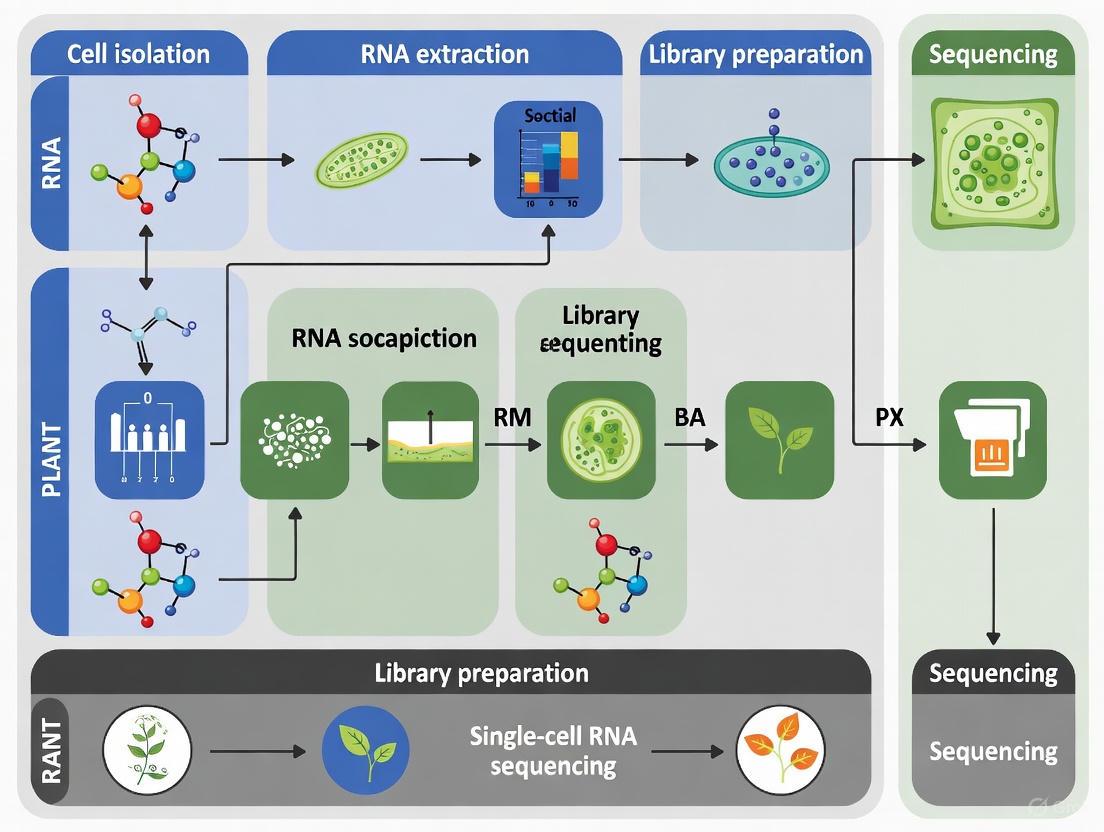
Single-cell RNA sequencing (scRNA-seq) represents a paradigm shift in plant biology, enabling the dissection of cellular heterogeneity with unprecedented resolution.
Overcoming the Hurdles: A Comprehensive Guide to Single-Cell RNA Sequencing in Plant Research
Abstract
Single-cell RNA sequencing (scRNA-seq) represents a paradigm shift in plant biology, enabling the dissection of cellular heterogeneity with unprecedented resolution. However, its application in plants is fraught with unique challenges, from cell wall digestion to significant transcriptional stress responses. This article provides a foundational exploration of scRNA-seq principles, details methodological advances and key applications in model plants and crops, offers troubleshooting strategies for technical optimization, and discusses validation through multi-omics integration. Aimed at researchers and scientists, this guide synthesizes current knowledge to empower robust experimental design and data interpretation, paving the way for new discoveries in plant development, stress response, and host-microbe interactions.
The Plant Single-Cell Landscape: Principles, Potential, and Inherent Hurdles
Frequently Asked Questions (FAQs)
What are the main advantages of single-cell RNA sequencing over bulk RNA sequencing in plant studies? Bulk RNA-seq provides an average gene expression profile from a mixed cell population, which often masks the heterogeneity between different cell types. In contrast, scRNA-seq allows for the resolution of gene expression at the individual cell level. This enables the identification of rare cell types, the construction of developmental trajectories, and the discovery of cell-type-specific responses to environmental stimuli, such as how different root cell types respond uniquely to drought or salt stress [1] [2] [3].
My protoplasting process is inefficient or leads to low RNA quality. What are my options? Inefficient protoplasting, often caused by the rigid and varying composition of plant cell walls, is a major bottleneck. A robust alternative is single-nucleus RNA sequencing (snRNA-seq). This method involves isolating nuclei instead of whole cells, bypassing the need for cell wall digestion. snRNA-seq is compatible with frozen or difficult-to-dissociate tissues and has been shown to have gene detection sensitivity similar to protoplast-based methods [1] [4].
After sequencing, my single-cell data has lost all spatial information. How can I recover it? The loss of spatial location is a known limitation of standard scRNA-seq. Spatial transcriptomics techniques are designed to preserve this information. These methods capture gene expression data directly from tissue sections while retaining the positional context. For a more targeted approach, you can also use in situ hybridization or reporter lines to map the expression of key genes identified in your scRNA-seq data back to the original tissue [1] [4].
How can I estimate cell type proportions from my existing bulk RNA-seq data? The process of estimating cell type proportions from bulk data is called deconvolution. Computational tools like MuSiC, SCDC, and Scaden can perform this task. These methods use a reference scRNA-seq or snRNA-seq dataset from the same or a closely related species to infer the cellular composition of your bulk RNA-seq samples. This is a cost-effective strategy to gain insights into cellular heterogeneity without performing new single-cell experiments [5] [6].
What are some common data analysis pipelines for plant scRNA-seq data? Several computational tools and pipelines are available. The analysis workflow typically involves quality control, filtering, normalization, dimensionality reduction, clustering, and marker gene identification. Popular suites include Scanpy and Seurat. For instance, one can replicate the analysis of Arabidopsis root scRNA-seq data using the Scanpy toolkit within the Galaxy platform [7].
Troubleshooting Common Experimental Challenges
Table 1: Troubleshooting Guide for Plant Single-Cell RNA Sequencing.
| Problem | Potential Causes | Recommended Solutions |
|---|---|---|
| Low Cell Viability/Robot Yieldufter Protoplasting | Over-digestion with cell wall enzymes; harsh physical dissociation; extended processing time. | Optimize enzyme cocktail concentration and incubation time [1] [4]; Use snRNA-seq on nuclei from frozen tissue to avoid protoplasting entirely [1] [4] [6]. |
| High Ambient RNA/Background Noise | Cell rupture during protoplasting or nuclei isolation releasing RNA into the solution. | Include a viability dye during cell sorting; use bioinformatic tools (e.g., SoupX, DecontX) to subtract background RNA post-sequencing [8]. |
| Low Gene Detection per Cell | Low mRNA capture efficiency; poor RNA quality; issues with reverse transcription or amplification. | Ensure tissue is fresh and handled quickly; use protocols with Unique Molecular Identifiers (UMIs) to improve quantification [8]; validate library quality pre-sequencing. |
| Inability to Distinguish Cell Types | Insufficient sequencing depth; over-digestion causing transcriptional stress; high technical noise. | Increase read depth per cell; ensure rapid processing to preserve native transcriptome; use high-resolution clustering algorithms and validate with known marker genes [3] [7]. |
| Batch Effects Between Samples | Technical variations from processing samples on different days or with different reagent batches. | Process samples in parallel where possible; use combinatorial indexing methods (e.g., sciRNA-seq); apply batch effect correction tools (e.g., Harmony, BBKNN) during data analysis [8]. |
Detailed Experimental Protocols
Protocol A: Protoplast-based scRNA-seq for Root Tips
Principle: This method involves digesting the cell wall to release protoplasts, which are then captured and processed using droplet-based systems like the 10x Genomics Chromium platform.
Step-by-Step Workflow:
- Tissue Harvesting: Excise 1-2 mm root tips from seedlings (e.g., Arabidopsis, rice) and immediately place in pre-chilled enzyme solution.
- Cell Wall Digestion: Incubate tissue in a protoplasting solution (e.g., containing cellulase, pectolyase, and macerozyme) for 30-90 minutes with gentle agitation.
- Protoplast Purification: Filter the digest through a 30-40 μm cell strainer to remove debris. Pellet protoplasts by gentle centrifugation and resuspend in a protective buffer.
- Viability and Counting: Check protoplast viability (>80% is ideal) using trypan blue or fluorescein diacetate staining and count with a hemocytometer.
- Single-Cell Library Preparation: Load the protoplast suspension onto a microfluidic device per the manufacturer's instructions (e.g., 10x Genomics). The system will encapsulate single cells into droplets with barcoded beads for reverse transcription.
- cDNA Amplification and Sequencing: Break the droplets, purify the barcoded cDNA, and perform PCR amplification. Construct sequencing libraries and sequence on an Illumina platform [1] [3] [4].
Protocol B: Single-Nucleus RNA-seq (snRNA-seq) for Challenging Tissues
Principle: This method isolates nuclei from tissues that are recalcitrant to protoplasting (e.g., woody tissues, mature leaves, frozen samples), enabling the profiling of cellular heterogeneity without the need for cell wall digestion.
Step-by-Step Workflow:
- Homogenization: Flash-freeze tissue in liquid N₂. Grind the frozen tissue to a fine powder and homogenize it in a lysis buffer containing non-ionic detergent to release nuclei while keeping them intact.
- Nuclei Purification: Filter the homogenate through a mesh (e.g., 30-40 μm) to remove cellular debris. Purify nuclei via density gradient centrifugation (e.g., using Percoll or sucrose gradients).
- Staining and Sorting: Resuspend the nuclei pellet and stain with DAPI. Optionally, sort nuclei using Fluorescence-Activated Cell Sorting (FACS) to select for intact, single nuclei.
- Single-Nucleus Library Preparation: Process the nuclei suspension through a single-cell platform (e.g., 10x Genomics). Subsequent steps for barcoding, cDNA synthesis, and library preparation are similar to protoplast-based methods [4] [6].
Decision Workflow for scRNA-seq Methods
Research Reagent Solutions
Table 2: Essential Reagents and Kits for Plant Single-Cell Experiments.
| Reagent/Kits | Function | Example Use-Case |
|---|---|---|
| Cell Wall Digesting Enzymes | Breaks down cellulose and pectin to release protoplasts. | A mixture of cellulase (e.g., Onozuka R-10) and pectolyase (e.g., Y-23) is standard for digesting Arabidopsis root tips [1] [4]. |
| 10x Genomics Chromium Controller & Kits | A high-throughput, droplet-based system for capturing single cells/nuclei and barcoding RNA. | The widely used platform for generating single-cell libraries from thousands of plant protoplasts or nuclei in parallel [3] [8] [7]. |
| Unique Molecular Identifiers (UMIs) | Short random barcodes that label individual mRNA molecules to correct for PCR amplification bias. | Incorporated in bead-based methods (Drop-seq, inDrop, 10x Genomics) for accurate digital gene expression counting [8]. |
| DAPI (4',6-diamidino-2-phenylindole) | A fluorescent stain that binds to DNA, used to identify and count nuclei. | Essential for quality control and FACS sorting during snRNA-seq protocols to select for intact nuclei [6]. |
| Scanpy / Seurat | Open-source computational toolkits for analyzing scRNA-seq data. | Used for the entire analysis pipeline, from quality control and filtering to clustering and trajectory inference on plant single-cell data [7]. |
Data Analysis and Computational Tools
scRNA-seq Data Analysis Workflow
Table 3: Key Computational Tools for scRNA-seq Analysis.
| Tool Name | Primary Function | Application in Plant Research |
|---|---|---|
| Cell Ranger | Processes raw sequencing data from 10x Genomics, performing barcode/qc, alignment, and feature counting. | The standard first step for analyzing data from 10x experiments, e.g., used in studies profiling Arabidopsis and maize roots [6] [7]. |
| Scanpy | A comprehensive Python-based toolkit for analyzing single-cell gene expression data. | Used to replicate the analysis of Arabidopsis root scRNA-seq data, including clustering to identify major cell types [7]. |
| Seurat | An R package designed for QC, analysis, and exploration of single-cell data. | Commonly used in plant single-cell publications (e.g., Denyer et al. 2019) for its robust clustering and visualization capabilities [7]. |
| Scaden | A deep-learning-based tool for deconvoluting bulk RNA-seq data to estimate cell-type composition. | Can be trained on plant scRNA/snRNA-seq data to predict cell type proportions in bulk samples from the same species [5] [6]. |
| Monocle, PAGA | Algorithms for inferring developmental trajectories and ordering cells along a pseudotime line. | Applied to root scRNA-seq data to reconstruct the continuous trajectory of cell differentiation from meristem to mature cells [3]. |
Frequently Asked Questions (FAQs)
Q1: Why is the plant cell wall a primary obstacle in single-cell RNA sequencing (scRNA-seq)?
The plant cell wall is a rigid, elaborate extracellular matrix that encloses each cell. Its primary role is to provide structural support and turgor pressure, but this same rigidity physically prevents the gentle dissociation of individual cells needed for scRNA-seq. Unlike animal cells, plant cells are cemented together by a pectin-rich middle lamella [9]. During tissue dissociation, the mechanical and enzymatic stress required to break down these walls often damages cells, triggers rapid transcriptional stress responses, and alters the very gene expression profiles researchers aim to study [10] [11].
Q2: What is protoplasting, and how does it help overcome this challenge?
Protoplasting is the process of enzymatically removing the cell wall to create naked plant cells, or protoplasts. This is a critical step for plant scRNA-seq because it liberates individual cells for capture and sequencing. Protoplasts are generated by incubating plant tissues, such as leaves, in a solution containing cell wall-degrading enzymes like cellulase and macerozyme [12] [13]. A successful protoplasting protocol yields a high number of intact, viable cells without their walls, making them amenable to standard single-cell workflows.
Q3: What are the major technical challenges associated with the protoplasting process?
The protoplasting process itself introduces significant technical challenges that can compromise scRNA-seq data:
- Induced Transcriptional Stress: The enzymatic digestion and osmotic stress during protoplast isolation can rapidly and dramatically alter gene expression. This means the transcriptome you capture may reflect the stress of the isolation process rather than the native physiological state of the cell [10].
- Cellular Heterogeneity and Bias: Not all cell types are equally susceptible to cell wall digestion. Some cell types, like those with thicker secondary walls (e.g., xylem fibers), may be under-represented in the final dataset. Furthermore, protoplasts from different cell types can vary in size and fragility, leading to selection bias during isolation and capture [11] [14].
- Loss of Spatial Information: Once cells are released from the tissue as protoplasts, all information about their original spatial context and cellular neighborhood within the plant organ is lost [11] [14].
Q4: How can I tell if my protoplasting procedure is causing excessive stress?
Signs of an overly stressful protoplasting procedure include:
- Low protoplast viability (e.g., below 80-85% as assessed by FDA staining) [13].
- Low RNA Quality after isolation, indicated by a low RNA Integrity Number (RIN).
- ScRNA-seq data that shows high expression of well-known stress-responsive genes, such as those for heat shock proteins (HSPs), wound-responsive genes, and hormones like jasmonic acid (JA) and ethylene [10] [15].
Q5: What are the emerging alternatives to protoplasting for plant scRNA-seq?
To circumvent the issues with protoplasting, researchers are developing protoplast-free methods. The most prominent of these is single-nucleus RNA sequencing (snRNA-seq). This approach involves isolating nuclei instead of whole cells. Since the nucleus lacks a cell wall, it can be extracted with gentler, mechanical homogenization, minimizing stress-induced artifacts. Paired with spatial transcriptomics, which maps gene expression back to its original tissue location, snRNA-seq provides a powerful strategy for capturing comprehensive and context-preserved plant transcriptomes [14].
Troubleshooting Guides
Table 1: Common Protoplasting Issues and Solutions
| Problem | Potential Causes | Recommended Solutions |
|---|---|---|
| Low Protoplast Yield | Incorrect enzyme combination/concentration; Inadequate digestion time; Unsuitable plant material (age, tissue type). | - Optimize enzyme cocktails (e.g., 1.0-1.5% Cellulase R-10, 0.2-0.6% Macerozyme R-10) [12] [13].- Extend digestion time (e.g., 6-16 hours) but monitor viability [12].- Use young, healthy leaves from 3-4 week-old plants [12]. |
| Poor Protoplast Viability | Over-digestion with enzymes; Osmotic imbalance; Mechanical damage during isolation. | - Include osmotic stabilizers (e.g., 0.4-0.6 M mannitol/sorbitol) in all solutions [12] [13].- Handle protoplasts gently; use wide-bore pipettes.- Reduce digestion time and use viability stains (e.g., Fluorescein diacetate) to monitor [16] [13]. |
| High Stress Gene Expression in scRNA-seq Data | Protoplasting procedure is too harsh; Prolonged isolation time. | - Minimize the time from protoplast isolation to cell lysis [10].- Compare with a snRNA-seq dataset from the same tissue to identify protoplasting-specific stress genes [14].- Test shorter digestion times and gentler enzyme formulations. |
| Clogging in scRNA-seq Microfluidics | Incomplete removal of cell wall debris; Presence of large cellular aggregates. | - Filter protoplast suspension through a 30-40 μm nylon mesh before loading [12].- Allow debris to settle and carefully pipette the supernatant. |
Table 2: Optimizing Key Parameters for Protoplasting and scRNA-seq
| Parameter | Optimal Range | Technical Consideration |
|---|---|---|
| Enzyme Concentration | 1.0% - 1.5% Cellulase; 0.2% - 0.6% Macerozyme [12] [13] | High concentrations increase yield but reduce viability. Requires empirical optimization for each species/tissue. |
| Digestion Time | 6 - 16 hours [12] | Shorter times may be insufficient; longer times increase stress. |
| Osmotic Stabilizer | 0.4 M - 0.6 M Mannitol or Sorbitol [12] [13] | Critical for maintaining protoplast integrity. Concentration must be optimized. |
| Plasmodesmata Disruption | Minutes after tissue slicing [9] | Rapid transcriptional changes occur. Speed from dissection to fixation is critical. |
| Viability Threshold | > 85% [13] | A minimum viability is required for high-quality library prep. |
Experimental Protocols
Detailed Methodology: Protoplast Isolation from Leaf Mesophyll
This protocol is adapted from established methods in Brassica carinata and Toona ciliata [12] [13].
Key Research Reagent Solutions
| Reagent | Function |
|---|---|
| Cellulase Onozuka R-10 | Degrades cellulose microfibrils in the primary cell wall [9] [12]. |
| Macerozyme R-10 | Degrades pectin in the middle lamella, separating cells [9] [12]. |
| Mannitol | Provides osmotic support to prevent protoplast bursting [12] [13]. |
| MES Buffer | Maintains stable pH during enzymatic digestion [12]. |
| Calcium Chloride (CaCl₂) | Helps stabilize the protoplast membrane [12]. |
| BSA (Bovine Serum Albumin) | Reduces adhesion and adsorption of protoplasts to surfaces [13]. |
Step-by-Step Workflow:
Title: Protoplast Isolation Workflow
- Plant Material Preparation: Use fully expanded, young leaves from 3-4 week-old plants grown under sterile conditions. Avoid old or stressed tissues [12].
- Tissue Slicing: Using a sharp razor blade, slice leaves into 0.5-1 mm thin strips. This dramatically increases the surface area for enzyme action. Note: Transcriptional stress responses begin within minutes of wounding [9].
- Plasmolysis: Submerge the tissue slices in a plasmolyzing solution (e.g., CPW salts with 0.4-0.6 M mannitol) for 30-60 minutes. This causes the protoplast to shrink away from the cell wall, reducing damage during subsequent slicing and initiating enzyme penetration [12].
- Enzymatic Digestion: Transfer the tissue to the enzyme solution (e.g., 1.5% Cellulase R-10, 0.6% Macerozyme R-10, 0.4 M mannitol, 10 mM MES, 1 mM CaCl₂, pH 5.7). Incubate in the dark at 22-25°C for 6-16 hours with very gentle shaking (40-50 rpm) [12] [13].
- Protoplast Release and Purification: a. Gently swirl the flask to release protoplasts. Filter the suspension through a 30-40 μm nylon mesh into a fresh tube to remove undigested debris [12]. b. Centrifuge the filtrate at 100 x g for 10 minutes to pellet the protoplasts. c. Carefully remove the supernatant and resuspend the pellet in a washing solution (e.g., W5 solution: 154 mM NaCl, 125 mM CaCl₂, 5 mM KCl, 5 mM glucose, pH 5.7). Repeat the centrifugation step [12].
- Viability and Yield Assessment: Resuspend the final pellet in a known volume of osmoticum. Determine yield using a hemocytometer. Assess viability by mixing a protoplast aliquot with an equal volume of 0.01% Fluorescein Diacetate (FDA); viable cells will fluoresce green under a fluorescence microscope [16] [13]. A viability of >85% is ideal for scRNA-seq.
Detailed Methodology: Identifying Stress Responses in scRNA-seq Data
Step-by-Step Workflow:
Title: Transcriptional Stress Analysis Workflow
- Data Preprocessing: After standard alignment and quantification, perform rigorous quality control. Filter out cells with high mitochondrial gene percentage (indicative of apoptosis/necrosis) and an unusually high number of detected genes, which can be a sign of doublets or stressed cells [10].
- Differential Expression Analysis: Identify genes that are significantly upregulated in your protoplast dataset compared to a bulk RNA-seq reference from intact tissue, or compare clusters within your data that may represent "stressed" vs. "unstressed" cell states.
- Pathway Enrichment Analysis: Input the list of upregulated genes into enrichment analysis tools (e.g., GO, KEGG). Look for over-represented pathways such as "response to wounding," "heat response," "JA/ET-activated signaling pathway," and "response to oxidative stress" [15] [17].
- Cross-Reference with Known Stress Markers: Actively search your dataset for the expression of canonical stress markers [15] [17]:
- Heat Shock Proteins (HSPs): e.g., HSP70, HSP90
- Wound-Responsive Genes: e.g., JAZ family genes, VSP2
- Hormone Signaling: Jasmonic Acid (LOX2, OPR3), Ethylene (ACS6, ERF1)
- Reactive Oxygen Species (ROS): RBOHD, APX, CAT
- Interpretation: Widespread, high expression of these genes across most cell types suggests a generalized, protocol-induced stress. If confined to specific clusters, it may reflect genuine biological stress in that cell type or differential sensitivity to the isolation procedure.
The field of transcriptomics has undergone a profound transformation, evolving from bulk RNA sequencing that averages gene expression across entire tissues to highly sophisticated methods capable of analyzing gene expression at the single-cell level. This revolution is particularly significant for plant research, where cellular heterogeneity plays a crucial role in development, stress responses, and physiological functions. Traditional bulk RNA sequencing obscures critical cell-to-cell variations by providing population-averaged data, making it difficult to reveal rare cell subpopulations and their subtle gene expression differences [18] [19]. Single-cell RNA sequencing (scRNA-seq) overcomes this limitation by capturing expression profiles at the single-cell level, enabling researchers to characterize cellular diversity with exceptional resolution [19].
However, a significant technological gap existed between low-throughput single-cell methods and the need for large-scale analysis. Early single-cell transcriptomic approaches relied on techniques such as laser capture microdissection (LCM) and manual cell picking, which were labor-intensive and limited in throughput [18]. These methods allowed for the isolation of cells from precisely defined spatial regions within tissue sections but could only process a limited number of cells per experiment [18]. The advent of high-throughput droplet microfluidics marked a pivotal milestone, enabling researchers to profile thousands to millions of individual cells simultaneously while dramatically reducing costs per cell [20] [21] [22]. This technical article explores these key technological milestones, with a specific focus on addressing plant-specific research challenges through troubleshooting guides and frequently asked questions.
Technological Evolution: From Low-Throughput to High-Throughput Platforms
Pre-Droplet Era: Low-Throughput and Early Spatial Methods
Before droplet microfluidics became established, researchers relied on several foundational technologies for single-cell analysis:
Laser Capture Microdissection (LCM): This technology laid the foundation for direct cutting of target cells under a microscope using lasers [18]. Researchers prepared tissues into numerous frozen sections and sequenced them separately to obtain regionalized transcriptome data. Subsequent methods like Tomo-seq improved quantitative accuracy and spatial resolution by refining the cDNA library construction process [18].
In Situ Hybridization Technologies: Early smFISH (single-molecule fluorescence in situ hybridization) was limited by probe number and could detect only a few genes [18]. This evolved through seqFISH, which used repeated hybridization-imaging-stripping cycles with binary encoding to broaden transcript detection, and MERFISH, which added error-robust codes and combinatorial labeling to improve accuracy and speed [18].
In Situ Sequencing: Methods like padlock probes and rolling circle amplification enabled direct sequencing of transcripts within tissue sections, laying the groundwork for the field [18].
These early methods provided valuable spatial information but were constrained by limited throughput, low multiplexing capability, and technical challenges in implementation.
The High-Throughput Droplet Revolution
Droplet-based single-cell RNA sequencing has redefined biological research by resolving cellular heterogeneity with an unprecedented precision [22]. The core innovation came from integrating barcoded gel beads within a water-in-oil emulsion system, where each bead carries millions of oligonucleotides designed for specific mRNA capture and molecular labeling [22].
Key Milestone Technologies:
inDrop: One of the first high-throughput methods establishing the microfluidic droplet barcoding platform [20].
Drop-seq: Utilized a simpler, more affordable approach with barcoded beads [22].
10× Genomics Chromium System: Currently the gold standard, achieving superior cell capture efficiency (65-75% vs. 30-60% for alternatives) and gene detection sensitivity (1000-5000 genes/cell) [22].
scifi-RNA-seq: A breakthrough approach that combines one-step combinatorial preindexing of entire transcriptomes inside permeabilized cells with subsequent single-cell RNA-seq using microfluidics [21]. This method massively increases the throughput of droplet-based single-cell RNA-seq, providing a straightforward way to multiplex thousands of samples in a single experiment [21].
smRandom-seq: Specifically designed for bacterial single-cell RNA sequencing, using random primers for in situ cDNA generation, droplets for single-microbe barcoding, and CRISPR-based rRNA depletion for mRNA enrichment [20].
Table 1: Performance Comparison of Major High-Throughput scRNA-seq Platforms
| Platform | Throughput (Cells per Run) | Cell Capture Efficiency | Gene Detection Sensitivity | Multiplet Rate | Key Innovations |
|---|---|---|---|---|---|
| 10× Genomics Chromium | 10,000-100,000 | 65-75% | 1000-5000 genes/cell | <5% | GEM technology, optimized microfluidics [22] |
| BD Rhapsody | Comparable to 10× | Similar cell capture | Similar gene sensitivity | N/A | Magnetic bead cell capture [23] |
| Drop-seq | Thousands | 30-60% | Lower than 10× | 5-15% | Simpler, more affordable barcoding [22] |
| scifi-RNA-seq | Up to 1,000,000 | N/A | High transcriptome complexity | Reduced via combinatorial indexing | Combinatorial preindexing, massive overloading [21] |
| smRandom-seq | ~10,000 bacteria | High species specificity | ~1000 genes/bacterium | 1.6% doublet rate | Random primers, CRISPR rRNA depletion [20] |
Special Considerations for Plant Single-Cell Transcriptomics
Plant researchers face unique challenges when applying single-cell RNA sequencing technologies:
- Rigid Cell Walls: Impede clean cryosectioning and present barriers to protoplast isolation [18].
- Expansive Vacuoles: Dilute intracellular RNA content, reducing transcript capture efficiency [18].
- Abundant Polyphenols: Inhibit enzymatic reactions essential for library preparation [18].
- Limited Reference Genomes: Hinder precise read mapping for many plant species [18].
- Lack of Poly(A) Tails on Bacterial mRNA: Makes standard poly(T) capture methods incompatible for plant-associated microbes [20].
Table 2: Plant-Specific Challenges and Potential Solutions
| Challenge | Impact on scRNA-seq | Potential Solutions |
|---|---|---|
| Rigid Cell Walls | Difficult protoplast isolation, sectioning | Optimized enzymatic digestion protocols, spatial transcriptomics [18] |
| Expansive Vacuoles | Diluted intracellular RNA content | Nuclear sequencing, amplification strategies [18] |
| Abundant Polyphenols | Inhibition of enzymatic reactions | Polyphenol adsorbents, specialized extraction buffers [18] |
| Limited Reference Genomes | Impedes precise read mapping | De novo transcriptome assembly, cross-species mapping [18] |
| Diverse Plant-Associated Microbes | Incompatibility with standard poly(T) capture | smRandom-seq with random primers [20] |
Troubleshooting Guides and FAQs
Frequently Asked Questions
Q1: What is the maximum throughput achievable with current droplet-based scRNA-seq platforms? The scifi-RNA-seq method can resolve up to 1 million single-cell transcriptomes with 384-well preindexing, vastly exceeding the barcoding capacity of three-round combinatorial indexing [21]. Standard 10× Genomics Chromium systems typically process 10,000-100,000 cells per run, while optimized methods can significantly exceed these numbers [22].
Q2: How can we address the challenge of low mRNA capture efficiency in droplet systems? Typical mRNA capture efficiency ranges from 10-50% of cellular transcripts [22]. Recent protocol enhancements have improved this through template-switch oligo (TSO) strategies, which enable cDNA synthesis independent of poly(A) tails by binding to the 3' end of newly synthesized cDNA during reverse transcription [22]. Additionally, CRISPR-based rRNA depletion can dramatically reduce rRNA percentage (83% to 32%) in bacterial samples, effectively enriching mRNA reads [20].
Q3: What strategies exist for reducing doublets/multiplets in droplet experiments? Conventional systems maintain multiplet rates below 5% when following optimal loading concentrations [22]. The scifi-RNA-seq approach uses combinatorial barcoding to resolve individual transcriptomes from overloaded droplets, effectively retaining and demultiplexing profiles that would otherwise be discarded as doublets [21]. Advanced droplet sorters like NOVAsort can discern droplets based on both size and fluorescence intensity, achieving a 1000-fold reduction in false positives [24].
Q4: How can we adapt droplet technologies for plant-specific challenges? Current plant-focused efforts pursue two parallel objectives: optimizing existing spatial transcriptomic platforms for botanical tissues and applying these refined tools to address fundamental questions in plant development, physiology, and stress responses [18]. Continued innovation in probe chemistry, tissue processing, and data integration is essential to surmount plant-specific barriers [18].
Troubleshooting Common Experimental Issues
Problem: Low Cell Viability Affecting Data Quality
- Potential Cause: Enzymatic protoplast isolation damaging plant cells.
- Solution: Optimize digestion time and enzyme concentrations; include viability-enhancing reagents in isolation buffers.
- Prevention: Monitor viability throughout protoplast isolation process; use gentle centrifugation speeds.
Problem: High Ambient RNA Contamination
- Potential Cause: Cell lysis during sample preparation releasing RNA into solution.
- Solution: Implement computational background correction tools; use protocols designed for fixed cells.
- Prevention: Optimize handling to minimize cell stress; use viability-preserving buffers.
Problem: Low Gene Detection Sensitivity
- Potential Cause: Low RNA content due to plant cell vacuolization.
- Solution: Implement nuclear sequencing; use full-length transcript protocols; increase sequencing depth.
- Prevention: Isolate cells during active growth phases; use amplification strategies with lower bias.
Problem: Low Single-Cell Encapsulation Efficiency
- Potential Cause: Poisson distribution limitations in random encapsulation.
- Solution: Apply inertial focusing to evenly space cells before encapsulation, improving efficiency to >77% [25].
- Prevention: Use cell concentration optimization; consider size-based droplet separation methods.
Essential Reagents and Research Solutions
Table 3: Key Research Reagent Solutions for Droplet-Based scRNA-seq
| Reagent/Kit | Function | Application Notes |
|---|---|---|
| Barcoded Gel Beads | Unique cellular mRNA labeling | 10× Genomics Chromium beads contain ~3 million oligonucleotides/bead [22] |
| Template Switch Oligo (TSO) | Enhances cDNA synthesis efficiency | Enables cDNA synthesis independent of poly(A) tails [22] |
| Permeabilization Reagents | Enable cellular access for probes | Critical for plant cells with rigid walls; concentration requires optimization [18] |
| CRISPR-based rRNA Depletion Probes | Reduce ribosomal RNA contamination | Dramatically decreases rRNA percentage (83% to 32%) [20] |
| Unique Molecular Identifiers (UMIs) | Correct for PCR amplification bias | Enable absolute transcript counting; essential for quantitative analysis [18] [22] |
| Partitioning Oil/Surfactants | Stabilize emulsion droplets | Lower surfactant concentrations yield higher cell viability [26] |
Workflow Visualization
Diagram 1: Comprehensive scRNA-seq Workflow for Plant Research
Diagram 2: Combinatorial Barcoding Enables Massive Throughput
The evolution from low-throughput sorting to high-throughput droplet methods represents one of the most significant technological advancements in single-cell transcriptomics. For plant researchers, these technologies offer unprecedented opportunities to explore cellular heterogeneity in development, stress responses, and host-pathogen interactions at previously unimaginable resolutions. Current droplet-based systems already enable the profiling of thousands to millions of individual cells, with continuous improvements in capture efficiency, molecular sensitivity, and cost-effectiveness [22].
The future of single-cell technologies in plant research lies in several promising directions. First, the integration of spatial transcriptomics with single-cell approaches will bridge the critical gap between single-cell resolution and tissue context, particularly important for understanding plant developmental processes [18] [22]. Second, the application of multimodal omics technologies—simultaneously capturing transcriptomic, epigenomic, and proteomic information from the same cells—will provide more comprehensive understanding of plant cellular regulatory mechanisms [22]. Third, continued innovation in microfluidic designs, such as the NOVAsort system with its dramatically reduced false positive rates, will further enhance the accuracy and efficiency of single-cell analyses [24].
For plant science to fully benefit from these technological advancements, method adaptation must address plant-specific challenges including cell wall digestion, vacuole content management, and specialized protoplast isolation protocols. The ongoing development of plant-optimized workflows and computational tools tailored to plant genomes will undoubtedly unlock new frontiers in understanding plant biology at single-cell resolution.
Single-cell transcriptomics has revolutionized our understanding of cellular heterogeneity in complex plant tissues. However, plant researchers face a unique dilemma: choosing between single-cell RNA sequencing (scRNA-seq) and single-nucleus RNA sequencing (snRNA-seq). This technical guide addresses the critical challenges and considerations for selecting the appropriate method based on your experimental goals, plant species, and tissue type.
The fundamental challenge in plant single-cell analysis stems from the rigid cell wall, which complicates the isolation of intact, viable protoplasts for scRNA-seq [18] [27]. While scRNA-seq profiles the complete transcriptome from entire cells, snRNA-seq sequences RNA primarily from nuclei, offering distinct advantages for certain applications and difficult-to-dissociate tissues [27] [28]. This resource provides a comprehensive technical comparison, troubleshooting guide, and experimental framework to empower your plant single-cell research.
Technical Comparison: scRNA-seq vs. snRNA-seq
Table 1: Comprehensive comparison of scRNA-seq and snRNA-seq for plant research
| Feature | scRNA-seq | snRNA-seq |
|---|---|---|
| Sample Input | Protoplasts (cells without walls) | Isolated nuclei [27] [28] |
| Tissue Compatibility | Tissues amenable to protoplasting (e.g., Arabidopsis leaves, roots) | Tissues difficult to dissociate (e.g., woody species, storage organs), frozen samples [27] [29] |
| Transcript Coverage | Full-length or 3'/5' enriched; captures both nuclear and cytoplasmic mRNA [30] | Primarily nuclear RNA; includes unspliced/pre-mRNA [28] |
| Key Advantages | • Captures complete cellular transcriptome• Higher detected genes per cell (complexity)• Standardized protocols for compatible tissues | • Bypasses protoplasting stress responses• Applicable to hard-to-dissociate tissues and frozen archives• Reduces cellular stress biases [27] [28] |
| Major Limitations | • Protoplasting induces stress responses & alters gene expression• Cell wall digestion biases against certain cell types• Not suitable for all plant species/tissues | • Lower transcriptional complexity (misses cytoplasmic RNAs)• Potential for more immature RNA sequences• Nuclear isolation challenges in some tissues [27] [28] |
| Ideal Applications | • Studies requiring full transcriptome coverage• Cellular processes involving cytoplasmic mRNAs• Tissues that yield healthy, intact protoplasts | • Cellular taxonomy of complex tissues• Frozen/biobanked samples• Species/tissues resistant to protoplasting [14] [27] [28] |
Experimental Workflow Diagrams
scRNA-seq Workflow for Plants
Diagram 1: scRNA-seq Workflow for Plants. This workflow begins with tissue collection and enzymatic protoplasting to remove cell walls, followed by single-cell isolation, library preparation, and sequencing. Critical points where failures often occur are highlighted in yellow.
snRNA-seq Workflow for Plants
Diagram 2: snRNA-seq Workflow for Plants. This workflow starts with tissue homogenization and nuclear isolation, bypassing protoplasting. The green node highlights the key advantage of using frozen samples.
Frequently Asked Questions (FAQs) & Troubleshooting
Method Selection & Experimental Design
Q1: When should I choose snRNA-seq over scRNA-seq for my plant research? Choose snRNA-seq when: (1) working with tissues difficult to digest into protoplasts (e.g., woody species, mature leaves); (2) using frozen or archived samples; (3) studying cell types sensitive to protoplasting stress; or (4) aiming to reduce technical artifacts from cell wall digestion [27] [28]. For example, a recent Arabidopsis life cycle atlas successfully employed snRNA-seq across 10 developmental stages, demonstrating its applicability for comprehensive studies [14].
Q2: Can I combine both approaches in a single study? Yes, integrated approaches are powerful. For instance, paired snRNA-seq and spatial transcriptomics enabled confident annotation of 75% of cell clusters in the Arabidopsis atlas by validating cluster markers in their native spatial context [14]. This integration overcomes annotation challenges and provides spatial validation of cell-type identities.
Protocol Optimization & Troubleshooting
Q3: How can I improve nuclear isolation for snRNA-seq from challenging plant tissues? Optimize homogenization buffers (e.g., sucrose concentration 250-320 mM with nonionic detergents like Triton X-100) [28]. Include RNase inhibitors throughout the process and perform density gradient centrifugation for purification. Validate nuclear integrity and RNA quality microscopically and with bioanalyzer before proceeding [28].
Q3: My protoplasts show stress responses during scRNA-seq. How can I minimize this?
- Reduce digestion time to the minimum required
- Use optimized enzyme cocktails specific to your plant species and tissue type
- Include stress-mitigating compounds in digestion buffers
- Process controls immediately after protoplast isolation to minimize ex vivo stress [27]
Q4: What are the key bioinformatic considerations for analyzing plant snRNA-seq data? For snRNA-seq, ensure your pipeline includes intronic reads during alignment and counting, as over 50% of nuclear RNAs are typically intronic compared to 15-25% in total cellular RNA [28]. Adjust quality control metrics since mitochondrial reads (common in scRNA-seq) are largely absent.
Essential Research Reagent Solutions
Table 2: Key reagents and materials for plant single-cell transcriptomics
| Reagent/Material | Function | Application Notes |
|---|---|---|
| Cell Wall Digesting Enzymes (Cellulase, Pectinase, Macerozyme) | Protoplast isolation for scRNA-seq | Concentration and combination must be optimized for specific plant species and tissue type [27] |
| Nuclear Isolation Buffers | Release intact nuclei while preserving RNA | Typically contain isotonic sucrose (250-320 mM) and nonionic detergents; commercial kits available (e.g., 10× Genomics) [28] |
| RNase Inhibitors | Prevent RNA degradation during isolation | Critical for both protocols, especially during nuclear isolation and protoplasting [28] |
| Unique Molecular Identifiers (UMIs) | Barcode individual molecules for quantitative analysis | Essential for accurate transcript counting in both methods; included in most modern protocols [30] |
| Barcoded Beads (10× Genomics, BD Rhapsody) | Capture and barcode single cells/nuclei | Platform choice affects cell throughput, cost, and compatibility with tissue types [30] [27] |
| Density Gradient Media (Iodixanol, Sucrose) | Purify nuclei from cellular debris | Particularly important for tissues with high starch or secondary metabolite content [28] |
The choice between scRNA-seq and snRNA-seq represents a critical strategic decision in plant single-cell research. While scRNA-seq provides comprehensive transcriptome coverage including cytoplasmic mRNAs, snRNA-seq offers access to challenging tissues and reduces cellular stress artifacts [27] [28].
For most applications with amenable tissues, scRNA-seq remains the gold standard for complete transcriptome characterization. However, snRNA-seq has proven exceptionally valuable for large-scale atlas projects [14] and studies of difficult-to-dissociate tissues. The emerging best practice involves integrating both approaches with spatial transcriptomics to validate findings within tissue context and build comprehensive understanding of plant cellular biology [14] [27].
As technologies advance, both methods will continue to evolve, offering plant researchers unprecedented resolution to explore development, environmental responses, and cellular differentiation with increasing precision and biological relevance.
From Theory to Practice: scRNA-seq Protocols and Breakthrough Applications in Botany
Single-cell RNA sequencing (scRNA-seq) has revolutionized biological research by allowing scientists to profile gene expression at the level of individual cells. This is particularly powerful for understanding complex plant systems, where cellular heterogeneity plays a crucial role in development and environmental responses. Two predominant methodologies have emerged: full-length transcript protocols like Smart-seq2 and 3'-end counting protocols such as those implemented by the 10x Genomics Chromium system. Choosing between these approaches involves careful consideration of your research goals, and in the context of plant biology, this decision is further complicated by unique challenges such as cell walls and the presence of diverse cell types. This guide provides a technical comparison and troubleshooting resource to help you successfully navigate these challenges.
Technical Comparison: Smart-seq2 vs. 10x Genomics
The table below summarizes the core technical specifications and performance characteristics of the two platforms to guide your initial selection [31] [32] [33].
| Feature | Smart-seq2 (Full-Length) | 10x Genomics (3'-End Counting) |
|---|---|---|
| Core Technology | Plate-based, full-length transcript sequencing | Droplet-based, 3' end counting with UMIs |
| Throughput | Lower (tens to hundreds of cells) [31] | High (thousands to tens of thousands of cells) [31] [4] |
| Sensitivity | Higher genes/cell (especially for low-abundance transcripts) [31] [34] | Lower genes/cell, but higher molecular capture efficiency [31] |
| Transcript Coverage | Uniform coverage across the entire transcript [35] [34] | Focused on the 3' end of transcripts [35] |
| UMIs | No (protocol does not natively include UMIs) [35] [36] | Yes (essential for accurate digital counting and correcting PCR bias) [31] [33] [35] |
| Key Strengths | Detection of splice isoforms, SNVs, and allelic expression; superior for low-abundance transcripts [31] [34] | Identification of rare cell types; scalable for large experiments; robust cell calling with EmptyDrops algorithm [31] [33] [4] |
| Primary Limitations | No strand specificity; transcript length bias; cannot correct for PCR amplification bias [35] [36] | "Dropout" effect for low-expression genes; lower sequencing depth per cell [31] |
| Ideal Use Cases | Isoform discovery, detailed characterization of specific cell types, eQTL mapping | Cell atlas construction, rare cell type discovery, developmental trajectory inference |
Experimental Workflow Diagrams
Full-Length Protocol (Smart-seq2) Workflow
The following diagram illustrates the key steps in a typical full-length scRNA-seq protocol.
3'-End Counting Protocol (10x Genomics) Workflow
The diagram below outlines the core process for droplet-based, 3'-end counting scRNA-seq.
Frequently Asked Questions & Troubleshooting
Q1: My protoplast preparation from plant tissue yields very few cells or poor viability. What are my options? This is a common challenge in plant scRNA-seq. The rigidity of plant cell walls requires enzymatic digestion, which can induce stress responses and damage cells [37] [38].
- Solution A (Optimize Protoplasting): Systematically optimize the enzyme cocktail, concentration, and digestion time for your specific plant species, tissue, and developmental stage. Reducing digestion time can improve viability.
- Solution B (Switch to Nuclei): Use single-nucleus RNA sequencing (snRNA-seq) as an alternative. Isolating nuclei is faster, avoids enzymatic stress, and is compatible with frozen tissues, making it suitable for difficult tissues like xylem [37] [38]. Note that this method primarily captures nuclear transcripts and may miss some cytoplasmic RNAs.
Q2: After sequencing with a 10x protocol, my data shows a high percentage of reads mapping to mitochondrial genes. Is this a problem? Yes, a high mitochondrial read percentage often indicates poor cell quality, possibly due to apoptosis or cytoplasmic RNA loss from damaged cells during protoplasting [31] [38].
- Troubleshooting Steps:
- Check Cell Quality: Re-evaluate your protoplast/nuclei isolation protocol to ensure it is gentle and minimizes stress.
- Benchmark: Note that Smart-seq2 and bulk protocols naturally yield a higher mitochondrial proportion (~30%) due to more thorough membrane disruption, which is not necessarily indicative of poor quality in that context [31].
- Filter in Analysis: In downstream data analysis, you can filter out cells with abnormally high mitochondrial read counts (e.g., >50% for protoplasts) to remove low-quality cells [31].
Q3: For full-length protocols like Smart-seq2, how do I account for PCR amplification bias without UMIs? This is a recognized limitation of the Smart-seq2 protocol. While newer methods like Smart-seq3 incorporate UMIs, if you are using Smart-seq2, you must be aware that your gene counts could be influenced by PCR duplication [35] [34].
- Guidance:
- While some traditional deduplication methods exist, they are often considered over-correction and can reduce power [35].
- For many applications where relative expression levels are compared across cell types, the impact of this bias may be acceptable. However, for absolute quantitative measures, a UMI-based protocol is strongly recommended.
Q4: My 10x experiment did not recover the expected number of cells. What could have gone wrong? Accurate cell counting and concentration measurement before loading are critical for the 10x platform [39].
- Best Practices:
- Use Accurate Counting: Employ automated cell counters or hemocytometers to get precise cell concentration and viability measurements.
- Account for Viability: Ensure you calculate the concentration based on viable cells only.
- Follow Loading Guidelines: Adhere to the recommended loading concentrations (e.g., 700-1200 cells/µl for most 10x v3 kits) to avoid overloading or underloading the chip [39].
- Verify with Software: The Cell Ranger pipeline uses algorithms (OrdMag and EmptyDrops) to distinguish true cells from ambient RNA, which can help recover cells with lower RNA content [33].
Research Reagent Solutions
The table below lists key reagents and their critical functions in scRNA-seq workflows for plant research.
| Reagent / Material | Function | Considerations for Plant Research |
|---|---|---|
| Cell Wall Digesting Enzymes (e.g., Cellulase, Pectolyase) | Digest cell wall to release protoplasts. | The cocktail and concentration must be optimized for each plant species and tissue type to minimize stress-induced transcriptional changes [37] [38]. |
| Barcoded Beads (10x) | Deliver cell barcode and UMI sequences during GEM formation. | Essential for multiplexing thousands of cells. The chemistry is standardized by the manufacturer (e.g., NextGEM vs. GEM-X) [33] [39]. |
| Template Switching Oligo (TSO) | Enables full-length cDNA synthesis in Smart-seq2. | The design (e.g., use of LNA) is crucial for high sensitivity and yield in full-length protocols [32] [34] [36]. |
| Reverse Transcriptase | Synthesizes first-strand cDNA from mRNA templates. | Processive enzymes (e.g., Maxima H-minus in Smart-seq3) improve sensitivity and full-length coverage, especially for long transcripts [34]. |
| Nuclei Isolation Buffer | Lyse cells and stabilize released nuclei for snRNA-seq. | A critical reagent for bypassing protoplasting issues. Must maintain nuclear integrity and RNA quality [37] [38]. |
Single-cell RNA sequencing (scRNA-seq) has revolutionized plant biology by enabling researchers to uncover gene expression profiles of individual cell types within complex tissues [40]. However, the success of these advanced transcriptomic techniques is entirely dependent on the quality of the initial sample preparation. This technical support center addresses the critical challenges in protoplast isolation and nuclei isolation for plant single-cell research, providing troubleshooting guides and optimized protocols to ensure reliable results for your experiments.
FAQs: Addressing Common Challenges in Plant Single-Cell Sample Preparation
Q1: What are the primary considerations when choosing between protoplast isolation and nuclei isolation for plant scRNA-seq?
The decision depends on your research goals, plant species, and tissue type. Protoplasts (plant cells with cell walls removed) are ideal for functional genomics, transient gene expression, and CRISPR reagent validation [41] [13]. They offer a complete cellular transcriptome but can experience stress-induced transcriptional changes during isolation. Nuclei isolation is preferred for scRNA-seq of difficult tissues (like leaves with high chloroplast content), frozen samples, or when tissue dissociation is challenging [42] [40]. Nuclei provide more stable transcripts but may lack cytoplasmic mRNAs.
Q2: Why does leaf tissue present unique challenges for nuclei isolation, and how can these be overcome?
Leaf tissue contains abundant chloroplasts that interfere with nuclei isolation. DAPI staining cannot distinguish nuclei from chloroplasts because it also binds to plastid DNA, leading to sorted contamination and an overestimation of nuclei count [40]. An improved protocol utilizes the autofluorescence of chloroplasts during Fluorescent-Activated Cell Sorting (FACS) to effectively separate and remove them, resulting in purer nuclei populations and improved alignment rates for scRNA-seq [42] [40].
Q3: How critical is donor plant material for successful protoplast isolation?
Extremely critical. The age and type of donor material significantly impact protoplast yield and viability. For cannabis, the optimal source is 1–2-week-old leaves from in vitro-grown seedlings [43]. For pea, well-expanded leaves from 2–4 week old plants are used [41]. Tissue freshness and growth conditions directly affect cell wall composition and enzymatic digestion efficiency.
Q4: What are the key factors influencing protoplast transfection efficiency?
Polyethylene glycol (PEG)-mediated transfection efficiency depends on multiple optimized parameters. Research on pea protoplasts demonstrated that the highest transfection efficiency (59%) was achieved using 20% PEG concentration, 20 µg plasmid DNA, and 15 minutes of incubation time [41]. Different plant species may require optimization of these parameters.
Troubleshooting Guides
Guide 1: Low Protoplast Yield or Viability
Table 1: Troubleshooting Low Protoplast Yield or Viability
| Problem | Potential Causes | Solutions |
|---|---|---|
| Low yield | Suboptimal enzyme combination or concentration | Optimize cellulase (1-2.5%) and macerozyme (0-0.6%) concentrations [41]; For tough tissues, add pectolyase (0.05-0.5%) [13] |
| Incorrect osmolarity | Adjust mannitol concentration (0.3-0.6 M) to maintain proper osmotic pressure [41] [13] | |
| Inadequate digestion time | Test enzymolysis duration (2-16 hours) based on tissue type [41] [43] | |
| Low viability | Excessive mechanical damage during isolation | Use gentle shaking (40-50 rpm) during digestion; avoid vigorous pipetting [13] |
| Oxidative stress | Add antioxidants to enzyme and wash solutions [43] | |
| Improper purification | Purify through sucrose or Percoll density gradients to remove debris [41] |
Guide 2: High Chloroplast Contamination in Nuclei Preparations
Table 2: Addressing Chloroplast Contamination in Leaf Tissue Nuclei Isolation
| Problem | Solutions | Expected Outcome |
|---|---|---|
| Chloroplast co-purification with nuclei | Utilize FACS sorting with gating on chloroplast autofluorescence to exclude them [40] | Significant reduction in chloroplast contamination |
| Avoid harsh detergents that damage nuclear membranes [40] | Preservation of nuclear integrity while removing organelles | |
| Include a low-speed centrifugation step to pellet nuclei while leaving chloroplasts in suspension [40] | Preliminary separation before FACS | |
| Poor RNA quality from nuclei | Work quickly at 4°C to minimize RNA degradation | Higher quality nuclear RNA for sequencing |
| Use RNase inhibitors throughout the isolation process | Improved transcript recovery |
Optimized Experimental Protocols
Protocol 1: Efficient Protoplast Isolation and Transfection for CRISPR Applications
Based on the optimized protocol for pea (Pisum sativum L.) [41]:
Plant Material: Use fully expanded leaves from 2–4 week old plants grown under controlled conditions.
Enzyme Solution Preparation:
- 20 mM MES (pH 5.7)
- 20 mM KCl
- 10 mM CaCl₂
- 0.1% BSA
- Mannitol (0.3-0.6 M for osmotic balance)
- Cellulase R-10 (1-2.5%)
- Macerozyme R-10 (0-0.6%)
- Filter sterilize before use
Isolation Procedure:
- Remove mid-ribs and cut leaves into 0.5 mm thin strips
- Transfer to enzyme solution (10 ml per 0.5 g tissue)
- Digest in the dark with gentle shaking (40-50 rpm) for 4-16 hours
- Filter through sterile mesh (70-100 µm) to remove debris
- Centrifuge at 100-200 × g for 5 minutes to pellet protoplasts
- Resuspend in W5 solution (154 mM NaCl, 125 mM CaCl₂, 5 mM KCl, 2 mM MES)
- Purify through sucrose or Percoll gradient if needed
PEG-Mediated Transfection:
- Use 20 µg plasmid DNA per transfection
- Employ 20% PEG solution
- Incubate for 15 minutes
- Wash to remove PEG and assess transfection efficiency
Protocol 2: Improved Nuclei Isolation from Leaf Tissue for snRNA-seq
Adapted from the enhanced protocol for maize leaves [40]:
Tissue Preparation:
- Harvest fresh leaf tissue from V5 stage maize plants
- Dissect midsection into 1 cm × 1 cm pieces
- Keep tissue moist and process immediately
Nuclei Extraction Buffer:
- 10 mM Tris-HCl (pH 7.4)
- 10 mM NaCl
- 10 mM MgCl₂
- 0.1% Triton X-100
- 1% BSA
- 0.5 mM DTT
- RNase inhibitors
- Adjust osmolarity with sucrose or glycerol
Isolation Procedure:
- Homogenize tissue in cold extraction buffer using a mechanical homogenizer (2-3 pulses)
- Filter homogenate through 30-40 µm cell strainer
- Centrifuge at 500 × g for 5 minutes at 4°C
- Resuspend pellet in nuclei extraction buffer with DAPI staining
Chloroplast Removal via FACS:
- Use FACS with gating on DAPI-positive events
- Apply additional gating to exclude chloroplast autofluorescence
- Sort purified nuclei directly into collection buffer with RNase inhibitors
Research Reagent Solutions
Table 3: Essential Reagents for Protoplast and Nuclei Isolation
| Reagent | Function | Example Concentrations | Key Considerations |
|---|---|---|---|
| Cellulase R-10 | Degrades cellulose cell walls | 1-2.5% [41]; 1.5% [13] | Concentration varies by tissue type |
| Macerozyme R-10 | Digests pectin components | 0-0.6% [41]; 1.5% [13] | Essential for mesophyll tissues |
| Mannitol | Maintains osmotic balance | 0.3-0.6 M [41] [13] | Critical for protoplast integrity |
| Pectolyase Y-23 | Additional pectinase for tough tissues | 0.05% [13] | Use when standard enzymes are insufficient |
| Polyethylene Glycol (PEG) | Facilitates plasmid DNA transfection | 20% [41] | Molecular weight and concentration affect efficiency |
| MES Buffer | Maintains stable pH during isolation | 20 mM, pH 5.7 [41] | Optimal for enzyme activity |
| BSA | Reduces enzyme toxicity and adsorption | 0.1% [41] [13] | Improves protoplast viability |
Workflow Visualization
Key Optimization Strategies
Strategy 1: Tissue-Specific Enzyme Optimization
The composition and concentration of cell wall-degrading enzymes must be tailored to specific tissues and species. For example, in Toona ciliata, the optimal enzyme combination was determined to be 1.5% Cellulase R-10 and 1.5% Macerozyme R-10 [13], while cannabis protoplast isolation may benefit from the addition of pectolyase [43]. Systematic testing of enzyme combinations using factorial experimental designs can identify optimal conditions for new species or tissue types.
Strategy 2: Managing Stress Responses
Protoplast isolation induces significant stress responses that can alter transcriptional profiles. Transcriptomic analyses of cannabis protoplast cultures revealed activation of oxidative and abiotic stress response markers [43]. Including antioxidants in isolation buffers, maintaining optimal temperatures (22-25°C), and minimizing processing time can reduce stress-induced artifacts in downstream applications.
Strategy 3: Quality Assessment Metrics
Establish rigorous quality control checkpoints:
- Protoplasts: Assess viability using fluorescein diacetate (FDA) staining (>80% viability recommended) and yield (typically 10⁵-10⁷ cells/g tissue) [41] [43]
- Nuclei: Evaluate purity by microscopy and flow cytometry, ensuring minimal chloroplast contamination [40]
- RNA Quality: Verify RNA integrity number (RIN) >8.0 for scRNA-seq applications
Mastering protoplast and nuclei isolation techniques is fundamental to advancing plant single-cell research. By implementing these optimized protocols, troubleshooting guides, and quality control measures, researchers can overcome the significant challenges associated with plant sample preparation. The strategies outlined here provide a pathway to generate high-quality single-cell suspensions that will yield reliable, reproducible results in downstream transcriptomic applications, ultimately accelerating discoveries in plant biology and biotechnology.
Single-cell RNA-sequencing (scRNA-seq) has revolutionized plant developmental biology by enabling researchers to investigate cellular heterogeneity and developmental trajectories at unprecedented resolution. This technical support center addresses the specific challenges plant researchers face when applying scRNA-seq to root and meristem studies, providing troubleshooting guidance and methodological insights to overcome these hurdles and successfully map cell fate decisions.
Frequently Asked Questions (FAQs): Technical Challenges and Solutions
Q1: What is the main advantage of using scRNA-seq over bulk RNA-seq for studying root development?
Bulk RNA-seq analyzes the transcriptome of a group of cells, providing an average gene expression profile for the entire sample. In contrast, scRNA-seq sequences the genome of individual cells, revealing heterogeneity between cell populations [3]. This is crucial for studying highly organized tissues like the root apical meristem, as it allows for:
- Identification of rare cell types and transitional cell states.
- Reconstruction of continuous differentiation trajectories through pseudotime analysis [44] [3].
- Generation of high-resolution transcriptome atlases that redefine cell identities based on molecular analysis [3].
Q2: My plant cells are large or difficult to protoplast. What alternatives exist for scRNA-seq?
The requirement for single-cell suspension via protoplasting is a major bottleneck in plant scRNA-seq, as it can introduce transcriptional stress responses and is unsuitable for large cells (above 30-50 µm) or certain tough tissues [44]. Two main alternatives are available:
- Single-nucleus RNA-sequencing (snRNA-seq): This method uses isolated nuclei instead of whole cells. It is applicable to any organ or species, including frozen samples, and minimizes the capture biases associated with protoplasting [44]. Studies show that snRNA-seq generally performs equally well as whole-cell methods for sensitivity and cell type classification [44].
- Spatial Transcriptomics: This emerging technology allows for gene expression visualization directly in the tissue context without the need for single-cell dissociation. It is ideal for validating scRNA-seq predictions and studying structure-function relationships [44].
Q3: How can I study a rare cell population without profiling thousands of cells?
While profiling a large number of cells can capture rare states, it is often cost-prohibitive. To increase specificity, you can enrich for your cell population of interest before sequencing. In plants, this is typically achieved by:
- Fluorescence-Activated Cell Sorting (FACS): Using fluorescent protein-tagged reporter lines that mark a specific spatiotemporal domain to sort the desired cells or nuclei (FANS) [44]. This approach has been successfully used to profile specific lineages, such as the sieve element, and the early stages of lateral root formation [44].
Q4: How do I validate findings from my scRNA-seq analysis?
Predictions from scRNA-seq must be experimentally validated due to potential biases from sample preparation and computational analysis [44]. Common validation methods include:
- Reporter Lines: Constructing and analyzing transgenic lines expressing fluorescent proteins under the control of newly identified candidate gene promoters [44] [3].
- In Situ Hybridization (ISH): Visualizing mRNA transcripts directly in tissue sections [44].
- Spatial Transcriptomics: As mentioned above, this technology can be used to spatially map the expression of genes identified in your scRNA-seq dataset [44].
Troubleshooting Common Experimental Problems
Table 1: Common scRNA-seq Problems and Solutions in Plant Research
| Problem | Possible Cause | Solution |
|---|---|---|
| Low cell viability after protoplasting | Over-digestion with enzymes; sensitive cell types | Optimize enzyme concentration and digestion time; consider snRNA-seq [44]. |
| Under-representation of specific cell types | Bias in protoplasting efficiency or cell capture | Use nuclei isolation (snRNA-seq) to minimize capture bias [44] [30]. |
| High background noise in data | Low-quality cells or library preparation issues | Implement rigorous quality control to filter out low-quality cells and multiplets [30]. |
| Inability to resolve rare cell populations | Insufficient sequencing depth or number of cells | Use FACS/FANS to pre-enrich the rare population before sequencing [44]. |
Experimental Protocols & Workflows
Standard Workflow for Plant Root scRNA-seq
The following diagram illustrates the primary steps and key decision points in a standard scRNA-seq workflow for plant roots.
Key Hormonal Pathway in Meristem Cell Fate
The HECATE transcription factors control the timing of stem cell differentiation in the shoot apical meristem by modulating the balance between cytokinin and auxin, two key phytohormones. The following diagram summarizes this regulatory interaction.
Research Reagent Solutions
Table 2: Essential Reagents and Kits for Plant scRNA-seq
| Item | Function | Example/Note |
|---|---|---|
| Cell Isolation | ||
| Protoplasting Enzymes | Digests cell wall to release individual protoplasts. | Cellulase, Pectinase, Macerozyme [44]. |
| Nuclei Isolation Buffer | Extracts nuclei for snRNA-seq. | Suitable for frozen samples and difficult tissues [44]. |
| scRNA-seq Platform | ||
| Droplet-Based Kits | High-throughput capture of single cells/nuclei. | 10x Genomics Chromium; lower cost per cell [30] [3]. |
| Plate-Based Kits | Full-length transcript sequencing. | SMART-Seq2; higher sensitivity for low-abundance genes [30]. |
| Critical Reagents | ||
| Unique Molecular Identifiers (UMIs) | Labels individual mRNA molecules to correct for PCR amplification bias. | Essential for accurate transcript quantification [30] [8]. |
| Poly[T] Primers | Reverse transcription primers to selectively capture polyadenylated mRNA. | Minimizes ribosomal RNA contamination [30] [8]. |
Data Interpretation Guide: From Sequences to Trajectories
A major advantage of scRNA-seq in root and meristem research is trajectory inference, which computationally orders cells along a pseudotemporal path to reconstruct differentiation dynamics [44] [3]. The orderly structure of the Arabidopsis root meristem, with cells at all differentiation stages aligned in cell files, makes it exceptionally suitable for this analysis [44].
- Applications: Trajectory analysis has been used to reveal a differentiation gradient in the protophloem [44] and to identify precursor cells that rapidly reprogram during lateral root formation [44].
- Considerations: Successful trajectory analysis requires a sufficient number of cells at each step of the pseudotime and high sequencing depth per cell [44]. For focused studies, generating tissue-specific datasets with higher coverage can be more cost-effective than whole-organ atlases.
Successfully applying scRNA-seq to map cell fate in roots and meristems requires careful planning to overcome plant-specific challenges. By selecting the appropriate cell isolation method (protoplasting vs. nuclei isolation), leveraging enrichment strategies for rare cells, and using robust computational tools for trajectory analysis, researchers can unlock deep insights into the fundamental processes of plant development.
Frequently Asked Questions: Troubleshooting Single-Cell RNA Sequencing in Plants
FAQ 1: Should I use protoplasts or nuclei for my plant scRNA-seq experiment? The choice depends on your research goals and the plant tissue being studied. Protoplasts, isolated by enzymatically digesting the cell wall, capture RNA from both the cytoplasm and nucleus, providing a more comprehensive view of the transcriptome [45]. However, the enzymatic digestion process can itself alter gene expression, and tissues with robust cell walls (like xylem) may be difficult to dissociate, leading to a bias against certain cell types [45]. In contrast, single-nucleus RNA sequencing (snRNA-seq) circumvents cell wall digestion, avoiding protoplasting-induced stress responses. This makes it particularly suitable for difficult-to-digest tissues or frozen samples [45]. For studies of soil stress responses, where outer root tissues are critical, note that protoplasting from soil-grown roots can lead to the loss of fragile cell types like root hairs [46].
FAQ 2: My scRNA-seq data from soil-grown roots shows major changes only in outer tissues. Is this expected? Yes, this is a biologically relevant finding. A 2025 study on rice roots revealed that growth in natural soil versus homogeneous gel conditions triggers transcriptional changes predominantly in outer root cell types (epidermis, exodermis, sclerenchyma, and cortex) [46]. Inner stele tissues, such as phloem and endodermis, show relatively minor changes [46]. The differentially expressed genes in outer tissues are often involved in nutrient homeostasis, cell wall integrity, and defence responses, reflecting their direct interface with the soil environment [46].
FAQ 3: How can I integrate spatial information into my single-cell transcriptomics data? Spatial transcriptomics technologies bridge this gap by mapping gene expression data directly onto tissue architecture [11]. Methods include:
- High-Throughput Chip-Based Platforms (e.g., 10X Visium, Slide-seqV2, Stereo-seq): These use barcoded spots on a slide to capture mRNA from tissue sections, preserving spatial coordinates [11].
- In Situ Hybridization Technologies (e.g., MERFISH, seqFISH+): These use iterative imaging with fluorescent probes to detect hundreds to thousands of RNAs directly in fixed tissues [11]. You can use these spatial data to validate the putative cell identities from your scRNA-seq clusters by testing for the spatial expression of identified marker genes [46].
FAQ 4: What are the primary technical challenges for scRNA-seq in plants, and how can I mitigate them? Key challenges and solutions include:
- Cellular Heterogeneity: Plant tissues are composed of highly diverse cell types. ScRNA-seq is specifically designed to resolve this heterogeneity, but careful experimental design and sufficient cell capture numbers (typically 5,000-10,000 cells) are needed to cover rare cell types [45] [3].
- Sample Preparation: The plant cell wall and abundant secondary metabolites can interfere with protoplasting and RNA capture. Using snRNA-seq or fluorescence-activated cell sorting (FACS) for nucleus purification can help overcome these hurdles [45] [11].
- Data Analysis Complexity: Single-cell data requires specialized bioinformatic processing. Utilize established pipelines like Cell Ranger for initial processing, and tools like Seurat or SCANPY for downstream analysis, including clustering, normalization, and cell type annotation [45].
Experimental Protocols for Key Workflows
Protocol 1: Constructing a Single-Cell Transcriptome Atlas from Plant Roots
This protocol outlines the major steps for generating a scRNA-seq reference dataset, adaptable for studying various environmental stimuli [45] [46].
- Plant Growth & Treatment: Grow plants under controlled conditions. For soil stress studies, establish a standardized soil growth regime alongside a gel-based control [46].
- Tissue Harvesting: Harvest root tips (e.g., 1-cm segments encompassing meristem, elongation, and maturation zones).
- Single-Cell Suspension:
- Protoplast Isolation: Digest cell walls using an enzymatic cocktail (e.g., cellulase and pectolyase) to release protoplasts [45] [46].
- Nuclei Isolation (Alternative): For tough tissues or to avoid enzymatic stress, extract nuclei by homogenizing tissue and purifying nuclei via differential centrifugation or FACS [45].
- Library Construction & Sequencing: Use a high-throughput platform (e.g., 10X Genomics). Individual cells/nuclei are encapsulated in droplets with barcoded beads. Within each droplet, cell lysis, reverse transcription, and barcoding of transcripts occur. The resulting cDNA libraries are then sequenced [45].
- Bioinformatic Analysis:
- Raw Data Processing: Use
Cell Rangeror similar tools to demultiplex sequencing data, align reads to the reference genome, and generate a cell-by-gene expression matrix [45]. - Quality Control & Filtering: Remove low-quality cells (e.g., with high mitochondrial gene percentage or low unique gene counts) and doublets [45].
- Data Integration & Clustering: Integrate multiple datasets to correct for batch effects. Perform PCA, graph-based clustering, and non-linear dimensionality reduction (UMAP/t-SNE) to group transcriptionally similar cells [46].
- Cell Type Annotation: Identify cluster-specific marker genes. Validate these markers using in situ techniques like Molecular Cartography (multiplexed FISH) to confidently assign cell identities [46].
- Differential Expression & Trajectory Analysis: Compare gene expression across conditions or clusters. Use pseudotime algorithms to infer developmental trajectories [3].
- Raw Data Processing: Use
Protocol 2: Identifying Cell-Type-Specific Responses to Soil Compaction
This methodology builds on the foundational atlas to probe a specific environmental stress [46].
- Experimental Setup: Establish two soil conditions: a control and a compacted soil treatment.
- Sample Collection & scRNA-seq: Harvest root tips from both conditions and process them separately through the scRNA-seq workflow (Protocol 1).
- Data Integration and Annotation: Integrate the scRNA-seq data from stressed and control roots. Annotate cell types using the validated marker genes from your reference atlas [46].
- Differential Expression Analysis: Perform statistical tests to identify differentially expressed genes (DEGs) within each cell type between the control and compacted soil conditions. Use a threshold (e.g., fold change > 1.5, FDR < 0.05) [46].
- Spatial Validation: Select key DEGs identified in inner tissues (e.g., phloem) and validate their stress-induced expression and spatial localization using spatial transcriptomic platforms [46].
- Functional Analysis: Conduct Gene Ontology (GO) enrichment analysis on the cell-type-specific DEGs to uncover biological processes affected by compaction (e.g., cell wall remodelling, hormone signalling) [46].
Research Reagent Solutions
The table below details essential materials and their functions for plant scRNA-seq studies.
| Research Reagent | Function / Application |
|---|---|
| Cell Wall Digestion Enzymes (e.g., Cellulase, Pectolyase) | Enzymatic degradation of the plant cell wall for protoplast isolation [45]. |
| Fluorescence-Activated Cell Sorter (FACS) | High-throughput separation and purification of protoplasts or nuclei based on fluorescence or size [45]. |
| 10X Genomics Chromium Controller | A commercial droplet-based system for high-throughput single-cell RNA sequencing library preparation [45] [3]. |
| Barcoded Beads (10X Genomics) | Oligo-dT coated beads containing cell barcodes and Unique Molecular Identifiers (UMIs) for mRNA capture and labelling within droplets [45]. |
| Seurat / SCANPY | Widely-used R and Python-based software packages, respectively, for the comprehensive analysis of single-cell transcriptomic data [45]. |
| Spatial Transcriptomics Platform (e.g., 10X Visium, Molecular Cartography) | Technologies that preserve the spatial location of RNA molecules within a tissue section, used for validating scRNA-seq findings [11] [46]. |
Table 1: Key Quantitative Findings from a scRNA-seq Study of Rice Roots in Soil [46]
| Metric | Description / Value |
|---|---|
| Total High-Quality Cells | Integrated atlas from gel and soil conditions contained >79,000 cells. |
| Differentially Expressed Genes (DEGs) | 11,259 DEGs identified when comparing soil-grown to gel-grown roots. |
| Cell-Type-Specific DEGs | 31% of DEGs were altered in only a single cell type or developmental stage. |
| Tissues with Most Changes | Outer root tissues (epidermis, exodermis, sclerenchyma, cortex) showed the highest number of DEGs. |
| Enriched Biological Processes | Nutrient metabolism (phosphate, nitrogen), cell wall integrity, vesicle transport, hormone signalling, defence. |
Experimental Workflow and Signaling Pathway
ABA-Mediated Root Response to Soil Stress
Single-Cell Transcriptomics Workflow
Single-cell RNA sequencing (scRNA-seq) represents a revolutionary advancement in plant molecular biology, enabling the investigation of transcriptional landscapes at an unprecedented resolution. While traditional bulk RNA-seq provides an averaged gene expression profile across thousands of cells, scRNA-seq captures the unique expression signatures of individual cells, revealing cellular heterogeneity, identifying rare cell types, and elucidating developmental trajectories [19]. This technical support center addresses the specific challenges and considerations for applying scRNA-seq to non-model plant species, including crops, woody plants, and horticultural species, which present unique structural and biological constraints compared to model organisms like Arabidopsis thaliana.
Key Experimental Considerations and Workflows
Choosing Between scRNA-seq and snRNA-seq
A critical first step in experimental design is determining whether to profile single cells or single nuclei. The decision hinges on biological questions, tissue characteristics, and species-specific constraints [47].
- Single-cell RNA-seq (scRNA-seq) requires enzymatic digestion of the cell wall to create protoplasts. It captures the cytoplasmic transcriptome, which includes accumulated mRNAs, potentially offering a broader view of historical gene activity [47].
- Single-nucleus RNA-seq (snRNA-seq) isolates nuclei from fresh or frozen tissue, bypassing the need for protoplasting. It captures the nascent nuclear transcriptome, which may be more reflective of rapid transcriptional changes, and is advantageous for tissues recalcitrant to digestion or for working with archived samples [47].
The table below summarizes the core differences to guide your choice.
| Feature | scRNA-seq (Protoplasts) | snRNA-seq (Nuclei) |
|---|---|---|
| Starting Material | Fresh tissue (enzymatic digestion) | Fresh or frozen tissue (mechanical homogenization) |
| Transcriptome Captured | Cytoplasmic & nuclear (polyA+ RNA) | Primarily nuclear |
| Tissue Compatibility | Limited by cell wall digestibility; challenging for lignified tissues | Broad; suitable for woody, fibrous, or frozen tissues |
| Data Output | Higher genes/cell & UMIs/cell [47] | Lower genes/cell & UMIs/cell [47] |
| Ideal for | Cell type biology, studying enucleated cells [47] | Rare cell types, complex tissues, time-course studies of early transcriptional responses [47] |
A successful single-cell experiment involves a multi-step process from sample preparation to data analysis. The following diagram outlines the core workflow, highlighting key decision points and steps where challenges may arise.
Troubleshooting Guides & FAQs
Sample Preparation
Q: My tissue yields very few viable protoplasts. What can I optimize? A: Low protoplast yield is common in woody and crop species. Consider these optimizations:
- Pre-treatment: Incubate tissues in solutions containing L-cysteine or sorbitol to improve cell wall digestion (e.g., in maize, sorghum, and Setaria roots) [47].
- pH Optimization: Adjust the pH of the enzyme buffer, as demonstrated for tomato roots [47].
- Sectioning: Use hand sections instead of intact tissues to increase enzyme accessibility [47].
- Additives: Include L-arginine in the digestion buffer to improve the survival rate of meristematic protoplasts [47].
- Alternative Approach: If protoplasting remains inefficient, switch to snRNA-seq, which is less affected by cell wall composition [48] [47].
Q: How do I assess the quality of my isolated nuclei before proceeding to snRNA-seq? A: Quality assessment is crucial for nuclei. Key indicators of poor quality include:
- Leaking: Visibly "leaky" or broken nuclei.
- Clumping: Aggregates of nuclei, which can lead to multiplets in sequencing data. These are signs of nuclear membrane breakage and RNA leakage, which will result in low-quality libraries [47].
Platform Selection and Wet-Lab Procedures
Q: Which scRNA-seq library construction method is best for my project? A: The choice depends on your goals for throughput and gene detection. The main categories are:
| Method Type | Key Features | Example Technologies |
|---|---|---|
| Full-Length-Based | Robust gene detection; captures isoform information | SMART-Seq2, SMART-Seq3 [48] |
| 3'-Tag-Based (Droplet) | High cell throughput; cost-effective for large cell numbers | 10x Genomics Chromium, Microwell-seq [48] |
For most applications in non-model species requiring high throughput, droplet-based methods like 10x Genomics are widely adopted [48]. The core technology involves partitioning single cells and barcoded beads into oil-emulsion droplets (GEMs) where reverse transcription occurs, labeling all cDNA from a single cell with the same barcode [49].
Q: Can I use frozen or fixed tissues for single-cell experiments? A: Yes, with the right protocols. While fresh samples are ideal, technological advances have increased flexibility.
- Frozen Tissues: snRNA-seq is often preferred for frozen tissues [50]. For scRNA-seq, cryopreservation of single-cell suspensions is possible but requires optimized freezing media to minimize cell death and RNA degradation [50].
- Fixed Tissues: Newer commercial assays (e.g., 10x Genomics Flex) are compatible with fixed cells and nuclei, including FFPE tissues, allowing workflow flexibility and preservation of sample biology at the point of collection [49].
Data Analysis and Interpretation
Q: How do I identify cell types in my data from a species with poorly characterized marker genes? A: This is a common challenge in non-model plants. A multi-pronged strategy is most effective:
- Leverage Homology: Use known marker genes from well-studied model plants (like Arabidopsis) to identify conserved cell types based on functionally homologous genes [48].
- Find Novel Markers: Identify genes with highly cluster-specific expression within your dataset. These can serve as potential new marker genes for that species.
- Experimental Validation: Validate cell type annotations using in situ hybridization or laser capture microdissection (LCM) to confirm the spatial expression of putative markers [48].
Q: What are the best practices for ensuring my single-cell data is reproducible? A: Biological replicates are non-negotiable for robust scientific conclusions.
- True Replicates: A biological replicate must involve independently grown, harvested, and processed plant samples. Separating a single protoplast or nucleus isolation into different tubes is a technical replicate, not a biological one [47].
- Replicate Analysis: Analyze replicates separately before merging them. Use batch effect correction tools like Harmony [48] or Seurat's CCA [48] to integrate data while preserving biological variation.
- Quality Metrics: Assess reproducibility by comparing the correlation of average gene expression between replicates or the consistency of cell type frequencies across replicates [47].
Q: How can I study developmental processes, like differentiation, using scRNA-seq? A: Pseudo-time trajectory analysis is a powerful computational method to address this. It orders cells along a hypothetical timeline based on their transcriptomic similarity, reconstructing developmental pathways.
- Common Tools: Monocle2 is frequently used in plant studies for this purpose [48].
- Application: This can model processes like root development, xylem differentiation, or fruit ripening, helping to identify key regulator genes at branch points where cell fates diverge [48] [51].
The Scientist's Toolkit: Essential Research Reagents and Materials
The following table lists key reagents and materials critical for a successful plant single-cell experiment.
| Item | Function | Considerations for Non-Model Plants |
|---|---|---|
| Cell Wall Digesting Enzymes (Cellulase, Macerozyme) | Digest cell wall to release protoplasts. | Concentration and incubation time require optimization for lignified or specialized tissues [47]. |
| Osmoticum (e.g., Mannitol) | Maintains osmotic balance to prevent protoplast bursting. | Concentration must be optimized for different tissue types [52]. |
| Additives (L-cysteine, L-arginine) | Improves protoplast yield and viability. | L-cysteine can reduce phenol oxidation; L-arginine aids meristem protoplast survival [47]. |
| Nuclei Isolation Buffer | Lyse cells and stabilize released nuclei. | Must include RNase inhibitors; compatibility with downstream library prep is critical [47]. |
| Barcoded Gel Beads (e.g., 10x Genomics) | Contains cell barcode and UMIs for mRNA capture during GEM formation. | Platform-specific reagent; ensure species compatibility for polyA capture [49]. |
| Viability Stain (e.g., Trypan Blue) | Distinguishes live from dead cells/protoplasts. | Essential for assessing sample quality prior to loading on the instrument [52]. |
Applying single-cell transcriptomics to crops, woody plants, and horticultural species is a rapidly advancing frontier. While challenges related to sample preparation, data annotation, and analysis persist, the strategies and troubleshooting guides outlined here provide a roadmap for researchers to overcome these hurdles. The profound insights gained into cellular heterogeneity, developmental processes, and stress responses at this resolution will ultimately accelerate breeding programs and biotechnological advancements for a wide range of agriculturally and economically important plants.
Navigating Technical Pitfalls: Strategies for Robust Plant scRNA-seq Data
A major challenge in plant single-cell RNA sequencing (scRNA-seq) is the presence of artifacts induced by the protoplasting process itself. The enzymatic digestion required to remove plant cell walls can trigger significant stress responses that alter the transcriptome, potentially obscuring the true biological signals you aim to study. This guide provides targeted strategies to identify, minimize, and correct for these protoplasting-induced artifacts, enabling more accurate single-cell research in plants.
FAQ: Addressing Protoplasting-Induced Stress
Q1: What is the fundamental evidence that protoplasting induces stress responses that affect scRNA-seq data?
Protoplasting involves using enzymes to digest the rigid plant cell wall, a procedure that can trigger significant transcriptomic changes. Research comparing gene expression in root tissues before and after protoplast dissociation has identified thousands of differentially expressed genes (DEGs) directly attributable to the process. For example, one study in cotton found 3,391 DEGs in salt-treated roots when comparing samples before and after protoplast dissociation, enriched in stress response pathways [53]. These genes are often involved in wound response, hormone signaling, and cell wall remodeling, creating artifacts that can compromise downstream analysis if not properly addressed [46].
Q2: What are the most effective experimental strategies to minimize protoplasting-induced stress?
- Optimize Tissue Source and Age: Use young, actively growing tissues as they generally yield more robust protoplasts. For root tips, 5-day-old tissues have shown optimal viability (>85%) [53].
- Minimize Mechanical Damage: Gently cut tissues into thin strips (0.5-1.0 mm) rather than chopping, and wash cut strips to remove proteases and nucleases released from damaged cells [54].
- Optimize Enzyme Composition and Digestion Time: Use the minimal effective enzyme concentrations and digestion duration. Test different cellulase and pectinase combinations, and consider adding osmotic stabilizers like mannitol to protect cell integrity [54] [55].
- Reduce Digestion Time: Protoplast yield typically increases with digestion time up to an optimum (e.g., 6 hours for cotton root tips), but viability decreases with prolonged digestion [53].
Q3: How can I validate whether my protoplasting protocol is causing significant stress responses?
- Conduct Control Experiments: Perform bulk RNA-seq comparisons between intact tissue and immediately after protoplast isolation from the same source material [46].
- Identify Protoplasting-Sensitive Genes: Analyze your data for known stress markers, including:
- Monitor Cell Viability: Use stains like fluorescein diacetate (FDA) or Rhodamine123 to ensure viability remains >85% throughout the process [53].
Q4: What computational approaches can help correct for protoplasting artifacts in scRNA-seq data?
- Exclude Protoplasting-Induced Genes: Prior to clustering and differential expression analysis, remove genes identified as protoplasting-sensitive through control experiments [46].
- Incorporate Long-Read Sequencing: Combine Illumina short-read with Nanopore long-read sequencing to better distinguish true biological splicing events from artifacts [56].
- Apply Batch Correction Algorithms: Use tools like Scanorama to integrate and correct datasets, though be cautious not to remove genuine biological variation [56].
Q5: Are there protoplasting-free alternatives for plant single-cell transcriptomics?
Yes, single-nucleus RNA sequencing (snRNA-seq) bypasses protoplasting entirely. The FlsnRNA-seq method isolates nuclei directly from homogenized tissues, then performs full-length RNA profiling [56]. This approach:
- Eliminates cell wall digestion steps
- Provides reliable cell type identification comparable to protoplasting methods
- Enables analysis of tissues resistant to protoplasting (e.g., endosperm, woody tissues)
- Captures unspliced nuclear transcripts, offering additional information on RNA processing [56] [38]
Troubleshooting Guide: Protoplasting Artifacts
| Problem | Potential Causes | Solutions |
|---|---|---|
| High expression of stress markers | Over-digestion with enzymes; incorrect osmotic balance; tissue damage during preparation | Shorten digestion time; optimize enzyme concentrations; verify osmolarity of solutions; use gentler cutting techniques [54] [53] |
| Low cell viability after isolation | Toxic enzyme components; excessive mechanical force; inappropriate incubation conditions | Pre-warm enzyme solutions; include antioxidants (e.g., glutathione); filter enzymes; reduce shaking speed during incubation [54] [55] |
| Poor cell type representation | Differential sensitivity of cell types to digestion; selective loss during purification | Use protoplasting-free snRNA-seq; adjust enzyme composition; test different tissue ages; include density purification steps [56] [46] |
| Inconsistent results between replicates | Variable enzyme activity; inconsistent tissue preparation; environmental fluctuations | Standardize tissue collection time; aliquot and test enzyme batches; implement strict quality control checks [55] |
Research Reagent Solutions
Table: Essential reagents for minimizing protoplasting artifacts and their optimal applications
| Reagent | Function | Application Notes |
|---|---|---|
| Cellulase R10 | Digest cellulose cell wall components | Concentration typically 1-2%; batch quality varies; filter sterilize [55] |
| Macerozyme R10 | Digest pectin in middle lamella | Often used at 0.1-0.5%; combines with cellulase [55] |
| Mannitol (0.5-0.6 M) | Osmotic stabilizer | Prevents protoplast bursting; concentration varies by species [55] |
| MES buffer | Maintain stable pH | Crucial for enzyme activity; typically pH 5.7-5.8 [55] |
| Calcium Chloride | Membrane stabilizer | Often included at 10 mM in enzyme solutions [55] |
| BSA (0.1-1%) | Reduces enzyme toxicity | Protects protoplast membranes from damage [53] |
| Glutathione | Antioxidant | Reduces oxidative stress during isolation [54] |
Decision Framework: Experimental Workflow
The diagram below outlines a strategic approach to selecting the most appropriate method for plant single-cell transcriptomics based on your research goals and tissue type.
Key Experimental Protocols
Protocol 1: Identification of Protoplasting-Induced Genes
Purpose: Generate a reference list of genes affected by protoplasting for subsequent filtering from scRNA-seq data [46].
Steps:
- Sample Collection: Collect intact root/leaf tissues from your plant material (3 biological replicates).
- Split Samples: Divide each replicate into two portions:
- Intact Tissue: Immediately freeze in liquid nitrogen
- Protoplasts: Isolate protoplasts using your standard protocol, then pellet and freeze
- RNA Extraction & Sequencing: Extract total RNA from all samples and perform standard bulk RNA-seq (30-50 million reads per sample).
- Differential Expression Analysis:
- Map reads to reference genome
- Normalize read counts using standard methods (e.g., TPM)
- Identify DEGs (FDR < 0.05, fold change > 2) between intact tissue and protoplasts
- Gene List Application: Use the identified protoplasting-sensitive genes as a filter during scRNA-seq data preprocessing.
Protocol 2: snRNA-seq as a Protoplasting-Free Alternative
Purpose: Profile single-cell transcriptomes without protoplasting-induced artifacts [56].
Steps:
- Nuclei Isolation:
- Homogenize 0.5 g fresh tissue in cold nuclei isolation buffer
- Filter through 40-μm cell strainer
- Purify nuclei via density centrifugation or FACS sorting
- Single-Nucleus Library Preparation:
- Use 10x Genomics Chromium platform with nucleus-specific protocols
- Process for both Illumina short-read and Nanopore long-read sequencing
- Bioinformatic Processing:
- Use specialized tools (e.g., "snuupy") for nucleus barcode assignment
- Generate expression matrices accounting for nuclear transcriptome features
- Compare with protoplast-based datasets using integration algorithms
Protoplasting-induced stress responses represent a significant challenge in plant single-cell transcriptomics, but not an insurmountable one. By understanding the sources of these artifacts, implementing careful experimental controls, considering protoplasting-free alternatives when appropriate, and applying computational corrections, researchers can substantially improve the fidelity of their single-cell data. The strategies outlined here provide a comprehensive framework for distinguishing true biological signals from technical artifacts in plant scRNA-seq experiments.
Frequently Asked Questions (FAQs)
FAQ 1: What is the sparsity problem in single-cell RNA sequencing, and why is it particularly challenging in plant research?
The sparsity problem in scRNA-seq data refers to the high proportion of zero values in the gene expression matrix, which can range from 50% to over 90% [57]. These zeros represent a mixture of true biological absence of gene expression and technical "dropouts" caused by limitations in RNA capture and amplification during the sequencing process [57] [58]. In plant research, this challenge is compounded by structural and biochemical hurdles such as rigid cell walls that impede clean cryosectioning, expansive vacuoles that dilute intracellular content, and abundant polyphenols that inhibit enzymatic reactions [18]. Furthermore, limited reference genomes for many plant species can hinder precise read mapping and accurate data interpretation [18].
FAQ 2: How do autoencoders help solve the sparsity problem in scRNA-seq data?
Autoencoders are neural networks that address sparsity through a data-reconstruction approach [57]. They consist of an encoder that compresses the input data into a lower-dimensional latent representation and a decoder that reconstructs the data back to the original dimensional space [57] [58]. During this process, the autoencoder learns the inherent distribution of the input scRNA-seq data and imputes missing values in the reconstructed output [58]. This approach effectively distinguishes meaningful biological signals from technical noise, with methods like AutoImpute demonstrating competitive performance in expression recovery, cell-clustering accuracy, variance stabilization, and cell-type separability [58].
FAQ 3: What are the key considerations when designing an autoencoder for plant single-cell data?
When designing an autoencoder for plant scRNA-seq data, three key architectural considerations have been empirically validated:
- Architecture Depth and Width: Deeper and narrower autoencoders generally lead to better imputation performance, with the benefit of depth saturating at around 10 hidden layers [57].
- Activation Function: The sigmoid and tanh activation functions consistently outperform other commonly used functions, including ReLU, which is contrary to common practices in computer vision but particularly relevant for biological data [57].
- Regularization Strategy: Regularization is critical for performance, with dropout regularization showing superiority for overall imputation accuracy, while weight decay regularization is more beneficial for downstream analyses like cell clustering and differentially expressed gene identification [57].
Troubleshooting Guides
Problem 1: Poor Imputation Accuracy After Autoencoder Training
Symptoms:
- High normalized root mean squared error (NRMSE) between imputed and original values
- Low Pearson correlation coefficient for artificial zeros
- Downstream analyses (e.g., cell clustering) yielding unsatisfactory results
Solutions:
- Optimize Autoencoder Architecture:
Adjust Activation Functions:
- Replace ReLU with sigmoid or tanh activation functions [57]
- Test both sigmoid and tanh to determine which performs better for your specific plant dataset
Apply Regularization Strategies:
Experimental Protocol: Benchmarking Imputation Accuracy
To systematically evaluate imputation performance:
- Dataset Preparation: Select 12 real scRNA-seq datasets covering diverse cell types, sequencing depths, and zero proportions [57]
- Artificial Masking: Apply three masking schemes (random, double exponential, and medium masking) to generate semi-synthetic datasets with known original values [57]
- Model Training: Train autoencoders with varying architectures on each masked dataset using 10 random seeds [57]
- Evaluation: Calculate NRMSE and Pearson correlation coefficient between masked values and imputed values [57]
- Downstream Analysis: Assess impact on cell clustering accuracy using Adjusted Rand Index and Adjusted Mutual Information [57]
Problem 2: Autoencoder Fails to Distinguish Biological Zeros from Technical Dropouts
Symptoms:
- Over-imputation of true biological zeros
- Loss of rare cell population identification
- Distorted gene expression patterns
Solutions:
- Implement Conservative Imputation:
Leverage Bulk RNA-seq Data:
Validation Framework:
Table 1: Optimal Autoencoder Configurations for scRNA-seq Data Imputation
| Design Aspect | Optimal Configuration | Performance Impact |
|---|---|---|
| Number of Hidden Layers | ≥ 10 layers | Benefit saturates at 10 layers; improves imputation accuracy and downstream analyses [57] |
| Units per Hidden Layer | 32 units | Narrower architectures generally outperform wider ones [57] |
| Activation Function | Sigmoid or Tanh | Consistently outperforms ReLU across all evaluation metrics [57] |
| Regularization Strategy | Dropout (Imputation) Weight Decay (Downstream) | Dropout improves imputation accuracy; Weight decay enhances cell clustering and DE gene identification [57] |
Experimental Protocols & Workflows
Protocol 1: Evaluating Cell Clustering Performance After Imputation
Purpose: To assess how different autoencoder designs impact downstream cell clustering accuracy using real scRNA-seq datasets with curated cell type information.
Methodology:
- Dataset Curation: Collect 20 real scRNA-seq datasets containing established cell type information [57]
- Autoencoder Training: Train autoencoders with varying designs on these datasets
- Imputation Application: Apply the trained autoencoders to impute each dataset
- Clustering Analysis: Perform cell clustering on the imputed datasets
- Accuracy Assessment: Evaluate clustering accuracies using Adjusted Rand Index and Adjusted Mutual Information by comparing to ground truth cell type labels [57]
Expected Outcomes: Autoencoders with deeper architectures (≥10 layers), sigmoid/tanh activation functions, and weight decay regularization should demonstrate superior clustering performance with higher ARI and AMI values [57].
Protocol 2: Assessing Differential Expression Analysis Performance
Purpose: To evaluate how autoencoder designs affect the accuracy of differentially expressed gene identification.
Methodology:
- Data Simulation: Generate 20 synthetic datasets with ground-truth DE genes using scDesign simulator trained on 20 real scRNA-seq datasets [57]
- Model Training: Train autoencoders with varying architectures on these synthetic datasets
- Imputation and DE Analysis: Apply trained autoencoders for imputation and perform DE gene identification on imputed datasets
- Evaluation: Calculate precision, recall, and true negative rates for DE gene identification compared to known ground truth [57]
Key Considerations:
- Ensure synthetic datasets represent realistic biological variation
- Use multiple performance metrics to capture different aspects of DE detection accuracy
- Test robustness across different levels of sparsity and noise
Visualizing the Optimal Autoencoder Architecture
Optimal Autoencoder Architecture for scRNA-seq Data
Table 2: Key Research Reagents and Computational Tools for scRNA-seq Imputation
| Resource Type | Specific Tool/Reagent | Function/Purpose |
|---|---|---|
| Computational Methods | AutoImpute [58] | Autoencoder-based sparse gene expression matrix imputation |
| scIALM [59] | Matrix recovery using Inexact Augmented Lagrange Multiplier method | |
| TAPE (Tissue-Adaptive autoEncoder) [60] | Deconvolution and cell-type-specific gene analysis | |
| DCA [57] | Data reconstruction for scRNA-seq data imputation | |
| Benchmarking Datasets | Semi-synthetic masked datasets [57] | Evaluating imputation accuracy with known ground truth |
| Synthetic datasets with ground-truth DE genes [57] | Assessing differential expression analysis performance | |
| Real scRNA-seq datasets with curated cell types [57] | Validating cell clustering performance | |
| Evaluation Metrics | NRMSE & Pearson Correlation [57] | Quantifying imputation accuracy |
| Adjusted Rand Index & Adjusted Mutual Information [57] | Measuring cell clustering accuracy | |
| Precision, Recall, TNR [57] | Assessing DE gene identification performance |
Experimental Workflow for scRNA-seq Imputation in Plant Research
Why is achieving representative single-cell sampling particularly challenging in plant tissues, and what are the primary biases?
The journey to representative sampling in plant single-cell RNA sequencing (scRNA-seq) is fraught with unique hurdles not always encountered in animal studies. The primary challenges and biases stem from the very structure of plant cells and the tissues they form.
The most significant challenge is the plant cell wall, a rigid outer structure that complicates the isolation of single cells without causing stress or damage [3] [61]. To create a single-cell suspension, researchers must generate protoplasts by enzymatically digesting the cell wall. This process itself introduces substantial bias [3]. The digestion efficiency varies dramatically across different cell types; some cells, particularly those with thicker or more specialized walls (like certain fiber cells), are more resistant to digestion and may be systematically underrepresented in the final sample [3]. Conversely, the enzymatic treatment and subsequent mechanical dissociation can be stressful to cells, altering their native transcriptomes and potentially inducing stress-response genes that mask the true biological state of the cell [3].
Furthermore, the inherent cellular heterogeneity and spatial organization of plant tissues mean that rare but biologically critical cell types can easily be missed if the sampling depth is insufficient [62] [61]. A sampling bias towards more abundant or easily dissociated cell types can skew the entire dataset, leading to an incomplete or inaccurate reconstruction of cellular trajectories and transcriptional networks.
Table 1: Key Challenges and Biases in Plant Single-Cell Sampling
| Challenge | Source of Bias | Impact on Representative Sampling |
|---|---|---|
| Protoplasting | Variable digestion efficiency of cell walls across cell types [3]. | Under-representation of cell types with tougher walls (e.g., sclerenchyma, some xylem elements). |
| Cellular Stress | Transcriptomic changes induced by enzymatic digestion and mechanical dissociation [3]. | Introduction of technical noise, upregulation of stress-response genes, masking of true biological signals. |
| Tissue Complexity | Presence of rare cell types (e.g., quiescent center cells, initial cells) amidst abundant types [62] [61]. | Rare cell populations are missed without sufficient sampling depth, leading to an incomplete cell atlas. |
| Cell Size/Shape | Inefficient capture or handling of cells of extreme sizes or shapes in microfluidic platforms. | Systematic loss of very large or small cells, biasing cell type proportions. |
What strategies can I use to minimize isolation biases and ensure my single-cell suspension is representative?
Mitigating isolation biases requires a multi-pronged approach, focusing on optimizing tissue dissociation and implementing rigorous quality control. The goal is to preserve the native transcriptome while maximizing the diversity of captured cell types.
Optimize Protoplasting Conditions: There is no one-size-fits-all protocol. You must empirically determine the optimal conditions for your specific plant tissue, including the type and concentration of cell wall-degrading enzymes, as well as the digestion time [3]. A pilot experiment comparing different conditions and assessing cell yield, viability, and transcriptome integrity is essential. The aim is to find the shortest possible digestion time that yields a sufficient number of viable single cells.
Minimize Technical Stress and Hands-On Time: Once cells are isolated, time is of the essence. Processing samples immediately or snap-freezing them minimizes RNA degradation and unwanted changes in the transcriptome [63]. Furthermore, always practice good RNA-seq lab techniques: wear gloves, use RNase-free reagents and consumables, and maintain separate pre- and post-PCR workspaces to prevent contamination [63].
Employ Robust Quality Control (QC) Metrics: Do not assume your protoplasting was successful. Implement stringent QC checks before sequencing:
- Cell Viability: Use dyes like Trypan Blue or fluorescein diacetate (FDA) to ensure a high percentage of live cells in your suspension.
- Cell Integrity: Microscopic examination can reveal broken cells or debris.
- Transcriptome Integrity: For a subset of cells, use methods like the Agilent BioAnalyzer to check RNA Quality (e.g., RIN) from bulk protoplasts, though this is challenging for single cells.
Use a Balanced Cell Suspension Buffer: The buffer used to suspend and sort cells is critical. Carryover of media, calcium, magnesium, or EDTA can interfere with downstream reverse transcription reactions, reducing cDNA yield and sensitivity [63]. Whenever possible, wash and resuspend your final cell suspension in EDTA-, Mg²⁺-, and Ca²⁺-free PBS or a kit-specific sorting buffer [63].
The following diagram illustrates the key decision points and optimization strategies in the sample preparation workflow to minimize bias.
The number of cells you sequence—the sample size—is fundamentally linked to the resolution of your experiment. It directly determines your ability to detect rare cell populations and achieve stable, reliable data structures.
Systematic investigations using integrated datasets from Arabidopsis thaliana roots have quantified this relationship. The key finding is that there are points of diminishing returns, where sequencing more cells yields only marginal improvements for a significantly higher cost [61]. For instance, one study showed that a relatively high reliability of cell clustering could be achieved with about 20,000 cells, with little further improvement when using more cells [61]. This is a crucial benchmark for experimental design.
The impact of sample size on specific analytical outcomes is summarized in the table below.
Table 2: Effect of Sample Size on Key scRNA-seq Analytical Outcomes in Plant Research
| Analytical Outcome | Recommended Sample Size | Rationale and Evidence |
|---|---|---|
| Cell Clustering & Population Identification | ~20,000 cells | In Arabidopsis root studies, clustering reliability plateaued at this size, effectively identifying common cell types [61]. |
| Detection of Rare Cell Types | >20,000 cells (context-dependent) | Larger samples are required to capture low-abundance populations. The exact number depends on the rarity of the target cells [61]. |
| Differential Gene Expression (DEG) Analysis | ≤20,000 cells | A high percentage (e.g., 96%) of DEGs can be successfully identified with up to 20,000 cells [61]. |
| Developmental Trajectory (Pseudotime) Inference | ~5,000 cells | A relatively stable pseudotime trajectory can be estimated with a smaller sample size, as demonstrated in root cell differentiation studies [61]. |
| Principal Component (PC) Stability | 20,000 - 30,000 cells | The most significant principal components, which capture major sources of variation, are achieved in this range [61]. |
What computational and post-sequencing methods can help correct for sampling biases?
Even with a carefully executed experiment, some biases may persist. Fortunately, several computational strategies can be applied during data analysis to identify, account for, and correct for these biases.
Identify and Filter Doublets: Cell "doublets"—where two cells are captured in a single droplet—can be misidentified as novel cell types and severely confound downstream analysis [62]. Computational tools can identify and exclude doublets based on their aberrantly high gene counts and expression profiles that appear to be a "mixture" of two distinct cell types [62] [64].
Account for Batch Effects: If your experiment involves multiple sequencing runs or libraries prepared on different days, technical "batch effects" can introduce systematic variations that are mistaken for biological differences [62]. Using batch correction algorithms like Harmony, Combat, or Scanorama is essential to integrate datasets and remove these technical confounders, allowing for a more accurate biological interpretation [62].
Impute Dropout Events: A hallmark of scRNA-seq data is "dropout," where a transcript is not detected in a cell due to technical noise, especially problematic for lowly expressed genes [62] [64]. This can create false zeros and obscure true expression patterns. Statistical models and machine learning (ML) algorithms can be used to impute missing data, predicting the likely expression of missing genes based on patterns observed in similar cells [62] [64].
Validate with Marker Genes and Spatial Data: Always validate your final cell clusters using known cell-type-specific marker genes [3] [61]. This helps confirm that your clustering is biologically meaningful. Furthermore, integrating your scRNA-seq data with spatial transcriptomics techniques (e.g., MERFISH, 10x Visium) can confirm whether the cell populations you've identified map back to expected locations within the tissue, providing a powerful check against spatial sampling biases [62].
The Scientist's Toolkit: Essential Reagents and Materials
Table 3: Key Reagent Solutions for Minimizing Isolation Biases
| Reagent/Material | Function | Considerations for Plant Research |
|---|---|---|
| Cell Wall Digesting Enzymes | Breaks down cellulose and pectins to create protoplasts. | Must be optimized for specific tissue type (e.g., root, leaf) to minimize stress and bias [3]. |
| RNase Inhibitors | Protects the fragile RNA content during the isolation process. | Critical due to the extended protoplasting time. Should be included in lysis and collection buffers [63]. |
| EDTA-/Divalent Cation-Free PBS | A buffer for washing and resuspending protoplasts. | Prevents interference with downstream enzymatic steps like reverse transcription [63]. |
| Viability Stains (e.g., FDA, Trypan Blue) | Distinguishes live from dead cells for quality control. | Allows assessment of protoplast health post-digestion before committing to library prep. |
| Unique Molecular Identifiers (UMIs) | Molecular barcodes that tag individual mRNA molecules. | Corrects for amplification bias, providing more accurate digital gene counts [62] [64]. |
| Barcoded Beads (e.g., 10x Genomics) | Captures mRNA from single cells and adds cell barcodes. | The core of high-throughput droplet-based methods; compatibility with plant protoplast size must be confirmed [3]. |
A technical support guide for single-cell RNA sequencing challenges in plant research
FAQ: Addressing Common Challenges
Q1: My clusters are not ordered numerically (e.g., 0, 1, 10, 11) in Seurat plots, which makes visualization difficult. How can I fix this?
This is a known issue when using the cluster.name argument in Seurat's FindClusters() function. The problem arises because cluster identities are stored as character vectors and are factored alphabetically ("0", "1", "10", "11") rather than numerically [65].
- Solution: After running
FindClusters(), manually convert the cluster column to a factor with numerically ordered levels. - Code Example:
Q2: What is the fundamental difference between linear and nonlinear dimensionality reduction methods, and when should I use each?
Choosing the right method is crucial as they serve different purposes in data exploration and analysis [66].
- Linear Methods (PCA, Truncated SVD): Reduce dimensions by projecting data onto axes of maximum variance. They are computationally efficient and preserve global data structure. Use for initial data exploration, noise reduction, and as a preprocessing step for clustering [66].
- Nonlinear Methods (t-SNE, UMAP): Model complex, nonlinear manifolds to reveal local structures and clusters. They are excellent for visualization but can be sensitive to parameters. UMAP is generally faster and better at preserving global structure than t-SNE [66].
Table: Comparison of Dimensionality Reduction Methods
| Method | Type | Key Strength | Best Use Case | Considerations |
|---|---|---|---|---|
| PCA | Linear | Maximizes variance, fast | Initial exploration, data compression | Misses nonlinear patterns [66] |
| t-SNE | Nonlinear | Reveals local clusters, intuitive visualization | Data visualization, cluster discovery | Computationally heavy, global structure not preserved [66] |
| UMAP | Nonlinear | Preserves more global structure, scalable | Visualization of large datasets | Parameter sensitivity [66] |
| Autoencoders | Nonlinear | Learns custom compressed representations | Custom representations, deep learning | Requires significant setup [66] |
Q3: How do I decide the number of dimensions (PCs) to use for downstream clustering in Seurat?
Selecting the correct number of principal components (PCs) is critical, as too few can miss biological signal, while too many can incorporate noise.
- Elbow Plot Visualization: Use
ElbowPlot()to visualize the standard deviation (or variance) explained by each PC. The "elbow" point, where the curve starts to flatten, indicates a good cutoff [67]. - JackStraw Procedure: A statistical test that compares the PCA results to a randomized null distribution. Significant PCs show a strong enrichment of low p-values. Use
JackStrawPlot()for visualization [67]. - Practical Guidance: For a typical single-cell dataset of ~3,000 cells, often 10-15 PCs are sufficient. Visually explore the Elbow Plot and consider the statistical significance from the JackStraw test to make an informed decision [67].
Q4: What are the primary data preprocessing steps before dimensionality reduction and clustering, and why are they important?
A robust preprocessing pipeline ensures that your downstream analysis reflects biology, not technical artifacts [68] [69].
- Quality Control (QC) and Filtering: Remove low-quality cells that can confound analysis.
- Metrics: Filter cells based on the number of unique genes detected per cell (
nFeature_RNA), total molecular counts (nCount_RNA), and the percentage of mitochondrial reads (percent.mt) [68] [69]. - Rationale: Low gene/count numbers indicate dying cells or empty droplets; high mitochondrial percentage suggests cellular stress [68].
- Metrics: Filter cells based on the number of unique genes detected per cell (
- Normalization: Adjusts for differences in sequencing depth between cells. The standard
LogNormalizemethod in Seurat scales counts by the total for each cell, multiplies by a scale factor (e.g., 10,000), and log-transforms the result [67]. - Feature Selection: Identifies genes that exhibit high cell-to-cell variation (
FindVariableFeatures()). Focusing on these genes helps highlight biological signal in downstream analysis [67]. - Scaling: Linearly transforms the data so that the mean expression for each gene is 0 and the variance is 1 (
ScaleData()). This gives equal weight to all genes in downstream analyses, preventing highly expressed genes from dominating [67].
Q5: What are the specific challenges of applying these pipelines to plant single-cell RNA-seq data?
Plant research faces unique hurdles that require protocol adaptations [11] [18].
- Cell Walls: Rigid cell walls impede clean cryosectioning for spatial transcriptomics and complicate single-cell dissociation [11] [18].
- Cellular Composition: Expansive vacuoles dilute intracellular RNA content, and abundant secondary metabolites (e.g., polyphenols) can inhibit enzymatic reactions during library preparation [11] [18].
- Genomic Resources: Limited reference genomes for non-model plant species can hinder precise read mapping and annotation [11] [18].
- Best Practices: Collaborate closely with plant biologists to optimize sample preparation protocols. Consider using specialized nuclei isolation techniques instead of whole-cell dissociation and leverage emerging spatial transcriptomics platforms adapted for plant tissues [11] [18].
Workflow and Troubleshooting Diagrams
Seurat Clustering Workflow
Clustering Issue Resolution Logic
Essential Research Reagent Solutions
Table: Key Materials and Analytical Tools for Single-Cell RNA-seq in Plants
| Item | Function/Purpose | Application Notes for Plant Research |
|---|---|---|
| 10x Genomics Visium | Spatial transcriptomics platform for mapping gene expression in tissue sections | Requires optimization for plant cell walls and sample preparation [11] [70] |
| Seurat R Package | Comprehensive toolkit for single-cell genomics data analysis | Standard for scRNA-seq analysis; functions include normalization, clustering, and visualization [70] [67] |
| Cell Ranger | 10x Genomics pipeline for processing scRNA-seq data | Produces count matrices from raw sequencing data; essential starting point for analysis [68] [69] |
| Loupe Browser | Visual interface for exploring 10x Genomics data | Useful for initial QC and filtering decisions with visual feedback [69] |
| sctransform | Normalization method using regularized negative binomial regression | Helps account for technical artifacts while preserving biological variance; recommended over standard log-normalization for spatial data [70] |
| UMAP | Nonlinear dimensionality reduction algorithm | Preferred for visualization due to speed and better preservation of global structure compared to t-SNE [66] |
| LAS Microdissection | Precise isolation of cells from defined tissue regions | Bypasses plant cell wall challenges for spatial transcriptomics in specific tissue niches [11] [18] |
Standard Seurat Clustering Protocol [67] [71]:
- Create Seurat Object: Use
CreateSeuratObject()with a UMI count matrix. - QC & Filtering: Calculate mitochondrial percentage with
PercentageFeatureSet(). Filter cells usingVlnPlot()andFeatureScatter()for visualization. - Normalize Data: Run
NormalizeData()with theLogNormalizemethod. - Variable Features: Identify highly variable genes with
FindVariableFeatures()(typically 2,000 genes). - Scale Data: Use
ScaleData()to regress out unwanted sources of variation (e.g., mitochondrial percentage). - Linear Dimension Reduction: Run PCA with
RunPCA(). Determine significant PCs usingElbowPlot()and/orJackStrawPlot(). - Clustering: Build a shared nearest neighbor graph with
FindNeighbors()(using the selected PCs). Perform graph-based clustering withFindClusters()at a chosen resolution. - Visualization: Run
RunUMAP()and visualize clusters withDimPlot().
Graph-Based Clustering Methodology [71]:
The clustering in Seurat is performed on a graph, constructed in three main steps:
- Build k-NN Graph: Find the k-nearest neighbors for each cell in PCA space.
- Prune to SNN Graph: Refine the graph by keeping connections where cells share a sufficient number of neighbors (Jaccard similarity), creating a Shared Nearest Neighbor (SNN) graph.
- Optimize Clusters: Apply the Louvain (default) or Leiden algorithm to find groups of cells that maximize connections within groups compared to between groups. The
resolutionparameter controls the granularity, with higher values leading to more clusters.
Beyond Single-Cell: Validation, Multi-Omic Integration, and Future Horizons
Single-cell RNA sequencing (scRNA-seq) has revolutionized plant research by enabling the characterization of cellular heterogeneity and the identification of novel cell types at unprecedented resolution [3]. However, a critical challenge persists: the initial scRNA-seq data, which clusters cells based on transcriptomic similarity, only provides predictions of cell identity. Validating these predicted identities is a crucial, non-negotiable step for ensuring biological accuracy. This process relies heavily on the use of marker genes and their confirmation through spatial imaging techniques like fluorescent reporters. This guide addresses the common hurdles researchers face during this validation phase and provides troubleshooting strategies to overcome them.
Why is Validation After scRNA-seq Necessary?
While scRNA-seq can cluster cells and predict marker genes for each cluster, it cannot natively provide two key pieces of information:
- Spatial Context: It loses the original location of the cell within the tissue [18] [19].
- Protein-Level Confirmation: Transcript abundance does not always correlate directly with protein expression or function. Therefore, independent validation is essential to confirm that a cell cluster defined by its transcriptome actually corresponds to a known (or new) cell type in its expected physical location.
FAQs: Core Concepts for Cell Identity Validation
Q1: What exactly is a "marker gene" and how is it identified from scRNA-seq data?
A marker gene is a gene whose expression is highly specific to a particular cell type or state. In scRNA-seq analysis, they are identified computationally through several methods:
- Differential Expression Analysis: This is the most common approach, which statistically compares gene expression across clusters to find genes that are significantly enriched in one cluster compared to all others [72].
- Machine Learning Models: Advanced pipelines, like SPmarker, use interpretable machine learning models (e.g., Random Forest or Support Vector Machines) to select genes that are most predictive for classifying each cell type [72]. These methods can identify novel marker genes that traditional approaches might miss.
- Index of Cell Identity (ICI): This method uses pre-defined sets of marker genes from prior knowledge (e.g., from microarray or bulk RNA-seq data) to assign identities [72].
Q2: What are the main advantages and limitations of using fluorescent reporter lines for validation?
| Advantage | Limitation |
|---|---|
| Direct Spatial Mapping | Time-Consuming Generation |
| Visualizes Expression in Native Tissue Context | Limited Multiplexing Capacity (typically one gene per line) [73] |
| Can Capture Dynamic Expression | Potential Lack of Native Genomic Context in the reporter construct, affecting accuracy [73] |
| High Resolution | Not feasible for most non-model species |
Q3: My plant tissue is difficult to transform. Are there alternatives to generating transgenic reporter lines?
Yes. Multiplexed in situ hybridization techniques are powerful alternatives that do not require transgenic plants.
- PHYTOMap is a method developed for whole-mount plant tissues that can simultaneously analyze dozens of marker genes in a 3D spatial context at single-cell resolution [73]. It uses iterative hybridization and imaging to detect barcoded probes bound to target mRNA, allowing for the validation of multiple candidate markers from an scRNA-seq dataset in a single experiment.
- RNAscope and HCR (Hybridization Chain Reaction) are other hybridization-based methods that provide high specificity and sensitivity for spatial validation in plant tissues [18] [73].
Q4: How can I validate a new or rare cell type for which no classic markers exist?
When traditional markers are unavailable, the strategy shifts to validating a unique combinatorial signature.
- Identify a Gene Set: From your scRNA-seq data, define a small set of genes (e.g., 5-10) that, in combination, uniquely define the new cell state.
- Spatially Map the Signature: Use a multiplexed spatial technique like PHYTOMap to simultaneously detect the expression of all genes in this set [73].
- Confirm Co-localization: Analyze the spatial data to confirm that there is a population of cells where all genes in the signature are co-expressed, distinguishing them from surrounding tissues.
Troubleshooting Guide: Common Experimental Issues and Solutions
Problem 1: Poor RNA Quality from Plant Tissue for scRNA-seq Validation
Challenge: Plant cells have rigid walls, are rich in RNases, and contain secondary metabolites (polyphenols, polysaccharides) that degrade or co-purify with RNA, inhibiting downstream reactions [74].
Solutions:
- Optimized Disruption: Flash-freeze tissue in liquid nitrogen and grind to a fine powder before homogenization. This inactivates RNases and mechanically breaks tough cell walls [74].
- Specialized Lysis Buffers: Use extraction buffers designed for challenging plants.
- CTAB-based Buffer: Effective for tissues high in polysaccharides. The component PVP (polyvinylpyrrolidone) helps bind and remove polyphenols [74].
- Phenol/Chloroform Extraction: Provides high-purity RNA by separating contaminants into the organic phase. Using Phase Lock Gel tubes can prevent carry-over of phenolic contaminants [74].
- Work Quickly and Cold: Keep samples and reagents cold throughout the process to maintain RNase inactivation [74].
Problem 2: Weak or No Fluorescent Signal in Reporter Lines
Challenge: The fluorescent protein is not detected, making spatial validation impossible.
Solutions:
- Confirm Transgenic Integration: Use genotyping PCR to verify the presence of the T-DNA.
- Check Promoter Specificity: The promoter fragment used might not contain all necessary regulatory elements for correct expression. Try a longer promoter fragment.
- Microscope Settings: Ensure the microscope is configured correctly for the fluorescent protein (e.g., filter sets, laser power). Always include a positive control.
- Protein Stability: In some cases, the fluorescent protein itself may be unstable. Trying a different, more stable variant (e.g., GFP, YFP) can help.
Problem 3: High Background Noise in Spatial Transcriptomics
Challenge: Non-specific signal or high background obscures the true mRNA signal in techniques like multiplexed FISH.
Solutions:
- Optimize Hybridization and Washes: Increase the hybridization temperature or adjust salt concentrations in the wash buffers to increase stringency and reduce non-specific probe binding.
- Validate Probe Specificity: In silico check probes for off-target binding. Test probes on known positive and negative control tissues if possible.
- Tissue Autofluorescence: Plant tissues often autofluoresce. Use optical clearing methods to reduce this background. PHYTOMap, for example, includes a tissue clearing step to improve the signal-to-noise ratio [73].
Problem 4: Marker Gene Expression is Not Cell-Type Specific
Challenge: A gene identified as a marker in scRNA-seq shows expression in multiple, unexpected cell types during spatial validation.
Solutions:
- Revisit Clustering Resolution: The original scRNA-seq clustering might have been too coarse, merging distinct cell populations. Re-analyze data with a higher clustering resolution.
- Use a Panel of Markers: Never rely on a single gene. Use a combination of 2-3 top candidate genes for validation to increase confidence in cell identity [73].
- Confirm with Orthogonal Methods: If a marker shows unexpected expression, confirm its pattern with an alternative method, such as a different in situ hybridization protocol or a separate transgenic line.
Research Reagent Solutions for Plant Single-Cell Validation
The following table lists key reagents and their functions for experiments aimed at validating cell identities.
| Reagent / Kit | Primary Function | Key Considerations for Plant Research |
|---|---|---|
| SPLIT RNA Extraction Kit | High-quality total RNA extraction from difficult plant tissues. | Uses phase-lock gel to remove polyphenols and polysaccharides effectively [74]. |
| CTAB Extraction Buffer | Lysis buffer for nucleic acid extraction from polysaccharide-rich plants. | A classical, reliable method; often requires in-house preparation and optimization [74]. |
| TRIzol Reagent | Monophasic solution of phenol and guanidine isothiocyanate for simultaneous RNA/DNA/protein extraction. | Effective but requires careful handling to avoid phenol carry-over [74]. |
| PHYTOMap Probes | Gene-specific barcoded DNA probes for multiplexed FISH in whole-mount plant tissue. | Enables 3D, single-cell spatial analysis of dozens of genes without transgenics [73]. |
| 10x Genomics Visium | Spatial transcriptomics on tissue sections using spatially barcoded oligo-dT spots. | Captures transcriptome-wide data in situ; resolution is a cluster of cells, not single-cell [18]. |
Workflow Diagrams for Experimental Planning
The following diagram illustrates the logical relationship between scRNA-seq analysis and the subsequent validation pathways.
This workflow diagram outlines the critical path from initial scRNA-seq analysis to definitive cell identity validation, highlighting the strategic choice between different spatial validation methods.
Frequently Asked Questions (FAQs)
FAQ 1: What are the primary technical challenges when applying these integrated methods to plant tissues? Plant tissues present unique obstacles not typically encountered in animal studies. The rigid cell wall, high polyphenol content, and large vacuoles can severely impact data quality. The cell wall impedes both tissue dissociation for scRNA-seq and probe penetration for spatial techniques like MERFISH. Abundant polyphenols and secondary metabolites can degrade RNA quality and inhibit enzymatic reactions used in library preparation. Furthermore, the large central vacuole found in many plant cells dilutes the cytoplasmic mRNA content, making capture less efficient. Limited reference genomes for non-model plant species can also complicate accurate read mapping and data interpretation [18] [4].
FAQ 2: How can I choose between protoplast and nuclei isolation for plant scRNA-seq? The choice between protoplasting and nuclei isolation involves a trade-off between cell type representation and transcriptional fidelity.
| Feature | Protoplast Isolation | Nuclei Isolation |
|---|---|---|
| Primary Advantage | Captures cytoplasmic transcripts; wider cell type representation [4] | Avoids enzymatic stress response; more robust for tough tissues [4] |
| Key Disadvantage | Induces stress-response genes; can under-represent specific cell types [4] | Lacks cytoplasmic mRNA; may provide incomplete transcriptome [4] |
| Recommended Use | Studies requiring full transcriptome and diverse cell states | Studies of hard-to-digest tissues or when minimizing stress artifacts is critical |
FAQ 3: What are the key differences between sequencing-based and imaging-based spatial transcriptomics platforms? The two primary categories of spatial technologies operate on fundamentally different principles, as summarized below.
| Feature | Sequencing-based (e.g., 10x Visium, Slide-seq) | Imaging-based (e.g., MERFISH, seqFISH) |
|---|---|---|
| Core Principle | Capture mRNA onto spatially barcoded spots/beads; NGS readout [18] [75] | Detect mRNA via in situ hybridization with fluorescent probes; imaging readout [18] [76] |
| Resolution | Spot-based (10x Visium: 55 µm); newer methods approach single-cell [75] | Typically single-cell or subcellular resolution [18] [76] |
| Gene Throughput | Whole transcriptome (unbiased) [18] [75] | Targeted (hundreds to thousands of genes) [77] [76] |
| Best For | Discovery-based profiling, unknown targets [75] | High-resolution mapping of predefined gene panels [18] |
FAQ 4: Which computational methods are available for integrating scRNA-seq and spatial data? Several robust computational tools have been developed to map single-cell data onto spatial contexts, each with distinct strengths.
| Method | Brief Description | Key Application |
|---|---|---|
| CytoSPACE | Formulates cell-to-spot assignment as an optimization problem for high-accuracy mapping [78] | Reconstructing tissue specimens with high gene coverage and single-cell spatial resolution [78] |
| SpateCV | Uses a conditional variational autoencoder (CVAE) to align cells from different modalities in a shared latent space [77] | Spatial gene imputation and reconstructing spatial patterns while mitigating batch effects [77] |
| Tangram | Integrates data by maximizing spatial correlation via non-convex optimization [78] | Mapping single cells to spatial locations based on gene expression similarity [78] |
| CellTrek | Uses a shared embedding and random forest modeling to predict spatial coordinates [78] | Co-embedding scRNA-seq and ST data for spatial mapping [78] |
FAQ 5: How can I validate that my data integration has been successful? Successful integration can be gauged through multiple lines of evidence. Biologically, check if known cell-type-specific markers localize to expected anatomical regions in the integrated spatial map [78]. Technically, assess whether the method effectively mitigates batch effects between the dissociative scRNA-seq and spatial assays, resulting in a coherent joint representation [77]. For methods like CytoSPACE, you can validate by testing the recovery of spatially biased gene programs, such as the enrichment of T-cell exhaustion markers in tumor-infiltrating T cells located nearest to cancer cells [78].
Troubleshooting Guides
Issue 1: Poor Cell Viability or RNA Quality from Plant Tissue Dissociation
Problem: Low RNA integrity number (RIN) or high percentage of dead cells after protoplasting. Solutions:
- Optimize Enzymatic Mix: Systematically titrate the concentration and ratio of cell wall-degrading enzymes (e.g., cellulase, pectinase, macerozyme) and reduce digestion time [4].
- Use Antioxidants: Include additives like polyvinylpyrrolidone (PVP) or ascorbic acid in the digestion buffer to chelate polyphenols and prevent RNA degradation [18].
- Switch to Nuclei: If protoplasting consistently fails, transition to single-nucleus RNA-seq (snRNA-seq), which is more robust for tough tissues and avoids stress-induced artifacts [4] [79].
Issue 2: Low Signal-to-Noise Ratio or Poor Probe Efficiency in MERFISH
Problem: Faint or non-specific fluorescence signals in imaging-based spatial transcriptomics. Solutions:
- Optimize Permeabilization: The plant cell wall is a major barrier. Adjust permeabilization conditions (e.g., enzyme treatment time, detergent concentration) to allow probe entry without destroying tissue morphology [18].
- Validate Probe Design: Ensure probes are designed to avoid secondary structures and have high specificity for the target mRNA sequences. Use commercial probe design services if needed [80].
- Include Hybridization Controls: Use positive and negative control genes to distinguish true signal from background noise and optimize the hybridization and washing stringency [76].
Issue 3: Inaccurate Cell Type Mapping or High Batch Effects in Data Integration
Problem: The integrated spatial map does not align with known histology or shows strong technical bias. Solutions:
- Check Input Data Quality: Ensure the scRNA-seq reference atlas is high-quality and contains comprehensive cell type annotations. Garbage in, garbage out.
- Select an Appropriate Tool: Choose a method suited to your data structure and question. For instance, CytoSPACE has been shown to outperform other methods in noise tolerance and accurately mapping spatially biased cell states [78].
- Benchmark Multiple Methods: Run several integration algorithms (e.g., CytoSPACE, SpateCV, Tangram) and compare the results based on biological plausibility and the recovery of expected spatial localization patterns [77] [78].
The Scientist's Toolkit: Essential Reagents and Computational Tools
| Category | Item | Function / Description |
|---|---|---|
| Wet-Lab Reagents | Cell wall-degrading enzymes (Cellulase, Pectinase) | Digest plant cell walls to release protoplasts [4]. |
| RNAse inhibitors & Antioxidants (PVP, DTT) | Preserve RNA integrity by inhibiting endogenous RNases and polyphenols [18]. | |
| Validated Probe Panels (for MERFISH) | Fluorescently-labeled oligonucleotide sets for multiplexed RNA detection in situ [80]. | |
| Permeabilization Reagents (Detergents, Enzymes) | Enable probes or barcoded oligonucleotides to access intracellular mRNA [18]. | |
| Computational Tools | CytoSPACE | Optimal mapping of individual scRNA-seq cells to spatial locations [78]. |
| SpateCV | Deep learning model for cross-modality alignment and spatial gene imputation [77]. | |
| Tangram / CellTrek | Alternative methods for co-embedding and mapping scRNA-seq data to spatial coordinates [78]. | |
| Seurat | A comprehensive toolkit for single-cell genomics, including some spatial integration functions [77]. |
Visualized Workflows and Pathways
Diagram 1: Integrated scRNA-seq and Spatial Transcriptomics Workflow
Diagram 2: Computational Integration Logic for Spatial Mapping
Single-cell RNA sequencing (scRNA-seq) has revolutionized biological research by enabling the characterization of gene expression at unprecedented resolution, revealing cellular heterogeneity typically masked in bulk tissue analyses [81]. In plant sciences, this technology has been successfully applied to profile tissues from various species, including Arabidopsis thaliana, maize, and rice, uncovering novel cell types and dynamic developmental trajectories [27] [51]. However, transcriptomic data alone provides an incomplete picture of cellular function, as mRNA abundance does not always correlate directly with protein activity or metabolic state [82]. This limitation has driven the emergence of integrated multi-omics approaches that combine scRNA-seq with proteomic and metabolomic data to bridge the gap between genetic potential and phenotypic expression.
The application of these advanced techniques in plant research presents unique challenges, including the presence of rigid cell walls, diverse secondary metabolites, and the spatial organization of metabolic processes across tissue types [38] [27]. This technical support article addresses these challenges by providing practical frameworks for successfully integrating single-cell transcriptomic data with complementary omics layers, specifically tailored to the plant research context. By offering troubleshooting guidance, detailed protocols, and strategic recommendations, we empower researchers to overcome technical barriers and unlock deeper insights into plant biology at cellular resolution.
Technical FAQs: Addressing Core Experimental Challenges
Sample Preparation and Quality Control
What is the fundamental consideration when choosing between single cells and single nuclei for plant scRNA-seq?
The decision between single-cell and single-nucleus RNA sequencing depends primarily on your tissue type and research objectives. Single-nucleus RNA sequencing (snRNA-seq) is particularly advantageous for plant tissues with rigid cell walls that are difficult to digest or when working with frozen or preserved samples [27] [83]. Unlike whole-cell approaches that require protoplasting—a process that can induce stress responses and transcriptional artifacts—nuclear isolation bypasses these issues and provides better representation of cell types that are vulnerable to dissociation protocols [38] [27]. However, a significant limitation of snRNA-seq is its inability to capture cytoplasmic transcripts, which may result in an incomplete picture of the transcriptome and miss important biological processes occurring outside the nucleus [27] [83].
Table 1: Decision Framework for Cell vs. Nucleus Isolation in Plant Studies
| Factor | Single-Cell (scRNA-seq) | Single-Nucleus (snRNA-seq) |
|---|---|---|
| Tissue Compatibility | Suitable for tissues with digestible cell walls | Ideal for tough, fibrous, or difficult-to-digest tissues |
| Transcript Coverage | Comprehensive, including cytoplasmic mRNAs | Limited to nuclear transcripts |
| Sample Flexibility | Requires fresh, viable tissue | Compatible with frozen, fixed, or preserved samples |
| Technical Artifacts | Risk of stress responses during protoplasting | Minimal perturbation during isolation |
| Multi-omics Potential | Limited compatibility with concurrent assays | Enables combined transcriptome and epigenome (e.g., ATAC-seq) analysis |
How can I assess and ensure sample quality before proceeding with scRNA-seq?
Rigorous quality control is essential before library preparation. For single-cell suspensions, cell viability should exceed 80% as determined by trypan blue or similar staining methods [83]. The suspension should be essentially free of cellular debris and aggregates, which can clog microfluidic devices. When using droplet-based systems like 10x Genomics, ensure cells fall within the recommended size range (typically 5-40μm diameter), with nuclei prepared for larger cells [84] [82]. For nuclear preparations, assess integrity and purity using microscopy and flow cytometry. Always perform a pilot experiment with a small subset of samples to validate your entire workflow before committing valuable samples to full-scale processing.
Multi-Omics Integration and Data Analysis
What computational strategies enable effective integration of scRNA-seq with proteomic and metabolomic data?
Integrating disparate omics datasets requires both experimental design considerations and specialized computational approaches. The foundational principle is to establish biological correspondence between measurements, typically achieved through shared sample origins or cellular barcoding strategies [82]. For data integration, several computational methods have been developed:
- Anchor-based integration: Algorithms like those implemented in Seurat identify "anchors" between datasets based on shared biological variation, then harmonize the datasets while preserving unique signal [82].
- Multi-omics factorization: Tools like MOFA+ identify latent factors that capture shared and unique variations across different omics modalities [76].
- Spatial mapping: When working with spatial metabolomics or proteomics, integration can be enhanced by mapping scRNA-seq data to spatial transcriptomics, then correlating with spatial omics measurements [76].
How can I address the challenge of cellular heterogeneity when correlating transcriptomic with proteomic data?
The disconnect between mRNA and protein levels stems from post-transcriptional regulation, differing turnover rates, and technical limitations in measurement sensitivity. To address this:
- Prioritize proteins and transcripts with known strong correlations for initial validation studies.
- Employ CITE-seq (Cellular Indexing of Transcriptomes and Epitopes by Sequencing) when possible, which simultaneously measures transcriptome and surface proteins in single cells [81] [82].
- For intracellular proteins, leverage recently developed multiplexed proteomic imaging methods or combine scRNA-seq with bulk proteomics from fluorescence-activated cell sorting (FACS)-purified cell populations.
- Incorporate analysis of transcriptional regulons using tools like SCENIC, which can help identify master regulators whose transcript levels may better correlate with downstream functional effects [76].
Troubleshooting Guides: Overcoming Common Experimental Hurdles
Low Cell Quality and Viability
Problem: Poor viability in single-cell suspensions, often evidenced by high mitochondrial RNA content and low unique molecular identifier (UMI) counts.
Solutions:
- Optimize digestion protocols: For plant tissues, systematically test different enzyme combinations (cellulases, pectinases, hemicellulases) and digestion times, monitoring viability throughout [38] [51]. Perform digestions at lower temperatures (e.g., on ice or at room temperature) to reduce stress responses, even if this extends processing time [83].
- Implement fixation strategies: For particularly sensitive tissues, consider reversible fixation approaches using dithio-bis(succinimidyl propionate) (DSP) immediately following dissociation to preserve transcriptomic states [83].
- Apply computational correction: Use bioinformatic tools like SoupX or CellBender to estimate and subtract background RNA contamination from compromised cells [84].
Technical Noise and Batch Effects
Problem: Unwanted technical variation obscures biological signal, making integration across omics platforms challenging.
Solutions:
- Incorporate UMIs: Ensure your scRNA-seq protocol includes unique molecular identifiers to account for amplification biases and enable quantitative transcript counting [8].
- Implement batch controls: Include reference samples across different processing batches to explicitly measure and correct for technical variability.
- Leverize integration algorithms: Apply computational methods like Harmony, Seurat's CCA, or scVI to merge datasets while preserving biological variation and removing technical artifacts [84] [82].
- Design balanced experiments: Distribute samples from different experimental conditions across multiple processing batches to avoid confounding biological and technical effects.
Limited Correlation Between Transcriptomic and Proteomic Data
Problem: Poor concordance between mRNA expression and protein abundance measurements.
Solutions:
- Focus on temporal relationships: Account for the inherent time lag between transcription and translation by incorporating time-course designs or using computational methods that model these dynamics.
- Validate with orthogonal methods: Confirm key findings using complementary approaches such as immunofluorescence, western blotting, or targeted mass spectrometry.
- Prioritize functionally linked molecules: Focus analysis on gene-protein pairs with established functional connections or pathway membership, as these often show better correlation.
- Consider post-transcriptional regulation: Incorporate analysis of miRNA expression or RNA-binding protein activity when available, as these significantly impact transcript-protein relationships.
Experimental Workflows and Methodologies
Integrated Single-Cell Multi-Omics Workflow for Plant Research
The following diagram illustrates a comprehensive workflow for integrating scRNA-seq with proteomic and metabolomic data in plant studies, highlighting key decision points and parallel processing paths:
Step-by-Step Protocol: Nuclei Isolation for snRNA-seq from Plant Tissue
This protocol is optimized for plant tissues with challenging cell wall structures:
Tissue Harvesting and Preservation: Rapidly harvest tissue and immediately flash-freeze in liquid nitrogen. Store at -80°C until processing.
Nuclei Extraction:
- Grind 0.5-1.0 g frozen tissue to fine powder under liquid nitrogen.
- Resuspend in 10 mL chilled Nuclei Extraction Buffer (10 mM Tris-HCl pH 9.5, 10 mM KCl, 10 mM MgCl2, 340 mM sucrose, 10% glycerol, 0.1% β-mercaptoethanol, 0.5% Triton X-100, and protease inhibitors).
- Incubate on ice for 10-15 minutes with gentle mixing.
- Filter through 40 μm and 20 μm cell strainers sequentially.
Nuclei Purification:
- Centrifuge filtered suspension at 2,000 × g for 10 minutes at 4°C.
- Resuspend pellet in 5 mL Nuclei Purification Buffer (10 mM Tris-HCl pH 7.4, 10 mM NaCl, 3 mM MgCl2, 340 mM sucrose, 10% glycerol, 0.1% Triton X-100).
- Layer over 3 mL cushion of 50% Percoll in Nuclei Purification Buffer.
- Centrifuge at 3,000 × g for 20 minutes at 4°C.
Quality Assessment and Counting:
- Collect nuclei from the interphase.
- Stain with DAPI (1 μg/mL) and count using hemocytometer or automated cell counter.
- Assess integrity by microscopy; acceptable preparations show >80% intact, spherical nuclei.
- Adjust concentration to 700-1,200 nuclei/μL for 10x Genomics protocols or platform-specific recommendations.
Essential Research Reagents and Platforms
Table 2: Key Research Reagent Solutions for Plant Single-Cell Multi-Omics
| Reagent/Platform | Type | Primary Function | Plant-Specific Considerations |
|---|---|---|---|
| 10x Genomics Chromium | Platform | High-throughput scRNA-seq/snRNA-seq | Compatible with nuclei >40μm diameter; optimized input: 500-20,000 cells/nuclei [84] [82] |
| Cell Wall Digesting Enzymes | Reagent | Protoplast isolation for scRNA-seq | Requires optimization of cellulase/pectinase ratios for different species and tissues [38] [51] |
| BD Rhapsody | Platform | Microwell-based single-cell analysis | Validated for cells <20μm; size limitation affects cell type representation [27] |
| Split Pool Ligation (SPLiT-seq) | Method | Combinatorial barcoding for fixed cells | Does not require specialized equipment; scalable to millions of nuclei [27] |
| UMI (Unique Molecular Identifiers) | Molecular Tool | Quantification and bias correction in scRNA-seq | Essential for accurate transcript counting; included in most modern protocols [8] |
| CITE-seq Antibodies | Reagent | Simultaneous protein and transcript measurement | Limited by antibody compatibility with plant epitopes [81] [82] |
The integration of single-cell transcriptomics with proteomic and metabolomic data represents the frontier of plant cell biology, offering unprecedented opportunities to connect genetic programs with functional outcomes. While technical challenges remain—particularly in sample preparation, data integration, and interpretation—the frameworks and solutions presented here provide actionable pathways to overcome these hurdles. As technologies continue to advance, particularly in spatial multi-omics and computational integration methods, we anticipate increasingly sophisticated understanding of how transcriptional networks orchestrate cellular functions in plant development, stress responses, and specialized metabolism. By adopting these integrated approaches, plant researchers can uncover new dimensions of cellular heterogeneity and function, ultimately accelerating both basic science and applied agricultural innovations.
Frequently Asked Questions (FAQs) and Troubleshooting Guide
Q1: What is the fundamental difference between scRNA-seq and snRNA-seq, and why is the latter often preferred for plant root-microbe interaction studies?
A1: The choice between single-cell RNA sequencing (scRNA-seq) and single-nucleus RNA sequencing (snRNA-seq) is critical. scRNA-seq requires enzymatic digestion of the cell wall to create protoplasts, a process that can take several hours and induce significant transcriptional stress responses, thereby altering the very gene expression profiles you aim to study [4] [47]. In contrast, snRNA-seq involves isolating nuclei, which is faster, avoids enzymatic stress, and allows for the use of frozen or difficult-to-digest tissues [47]. For studies on root-microbe interactions—where early immune responses can be detected within 30-90 minutes—snRNA-seq is superior as it enables a snapshot of real-time gene expression changes without the artifacts introduced by protoplasting [85]. Furthermore, snRNA-seq has been successfully used to profile root responses to both beneficial (Pseudomonas simiae WCS417) and pathogenic (Ralstonia solanacearum) microbes, revealing cell-type-specific immune pathways [85] [86].
Q2: Our snRNA-seq data from infected roots shows high variability between replicates. What are the best practices for ensuring reproducible sample preparation and data analysis?
A2: Reproducibility is a common challenge. Adhere to the following guidelines:
- True Biological Replicates: Independent biological replicates—samples grown, treated, and processed separately—are non-negotiable. Technical replicates (sub-samples from one nucleus isolation) are insufficient for assessing biological variability [47].
- Standardized Nuclei Isolation: Use a universal, rapid, and FACS-free nuclei isolation protocol to minimize batch effects [87]. Visually assess nucleus release and avoid leaking or clumping nuclei, which lead to RNA leakage and low-quality libraries [47].
- Quality Control and Integration: Analyze replicates separately before merging. Use Seurat's CCA or scVI for data integration and assess consistency with correlation coefficients of average gene expression or by comparing cell type frequencies across replicates [85] [88] [47]. Parameters like Average Silhouette Width can help quantify cluster purity after integration.
Q3: How can we confidently identify and annotate different cell types, such as those in the root maturation zone, from our snRNA-seq clusters?
A3: Accurate annotation relies on using well-established marker genes.
- Leverage Published Marker Genes: Utilize marker genes from comprehensive Arabidopsis root snRNA-seq datasets [85]. For example, in a study on root-microbe interactions, clusters were annotated into 11 major cell types, including proximal meristem, trichoblast, atrichoblast, cortex, and endodermis, by overlapping cluster-specific markers with these published resources [85].
- Validate with Known Markers: Confirm annotations by examining the expression of well-characterized cell-type-specific genes in your dataset. The expression patterns of these known markers validate the accuracy of your cluster annotation [85] [88].
- Consult Databases: Use plant single-cell databases like the Plant Cell Marker Database (PCMDB) to aid in cell type identification [89].
Q4: We've identified candidate genes from our snRNA-seq data. What is the best way to experimentally validate their role in cell-type-specific immune responses?
A4: snRNA-seq generates hypotheses that require functional validation.
- Reporter Lines: Create and analyze transgenic reporter lines (e.g., pGENE:GUS or pGENE:GFP) to visualize the spatial expression pattern of your candidate gene and confirm its cell-type-specific induction [85] [87].
- Mutant Analysis: Characterize loss-of-function mutants. For instance, a triterpene biosynthesis mutant identified via snRNA-seq was shown to block microbiome reshaping upon pathogen infection, validating the gene's functional importance [85]. Similarly, the role of AtWRKY70 in defense against pinewood nematode was confirmed using mutant plants [88].
- Spatial Transcriptomics and In Situ Hybridization: These techniques can complement snRNA-seq by preserving spatial information, allowing you to confirm the localized expression of your candidate genes within specific tissue contexts [47] [89] [90].
Key Experimental Protocols and Workflows
Detailed snRNA-seq Wet-Lab Protocol for Root-Microbe Interactions
The following protocol is adapted from methodologies proven in root-microbe interaction studies [85] [47].
Step 1: Plant Growth and Bacterial Inoculation
- Plant Material: Grow Arabidopsis thaliana (e.g., Col-0) under controlled conditions.
- Hydroponic System: Use a 48-well plate-based hydroponic system to segregate roots and leaves with a mesh, maintaining roots in liquid media for uniform bacterial interaction [85].
- Bacterial Treatment: Inoculate roots with beneficial (e.g., Pseudomonas simiae WCS417) or pathogenic (e.g., Ralstonia solanacearum GMI1000) bacteria. Use a Mock treatment (e.g., MgSO₄) as a control.
- Sampling Time Point: Harvest whole roots at 6 hours post-inoculation (hpi). This early time point captures robust transcriptional responses to both pathogens and beneficial microbes without extensive tissue damage [85].
Step 2: Nuclei Isolation from Root Tissue
- Rapid Isolation: Quickly harvest and flash-freeze roots in liquid nitrogen. This pauses transcriptional activity and allows for batch processing later.
- Nuclei Extraction: Homogenize frozen tissue in a nuclei isolation buffer (e.g., containing sucrose, MgCl₂, Tris-HCl, DTT, RNase inhibitor, and PMSF) [47] [87].
- Filtration and Purification: Filter the homogenate through a series of cell strainers (e.g., 40 μm and 30 μm) to remove debris. Further purify nuclei using a Percoll gradient or centrifugation [87].
- Quality Control: Assess nucleus integrity and concentration using a hemocytometer and fluorescent staining (e.g., DAPI). Avoid samples with high levels of clumping or breakage.
Step 3: Library Preparation and Sequencing
- Platform: Use a high-throughput platform like the 10x Genomics Chromium system, which is based on droplet-based microfluidics [4] [91].
- Library Construction: Follow the manufacturer's instructions for the DNBelab C Series Single-Cell Library Prep Set or similar kits to generate barcoded snRNA-seq libraries [87].
- Sequencing: Sequence the libraries on an Illumina platform to a sufficient depth. A recent study obtained ~52,700 valid nuclei and detected ~27,300 genes, providing a comprehensive dataset [85].
snRNA-seq Experimental Workflow
The diagram below outlines the core steps for conducting an snRNA-seq experiment on plant roots.
Data Presentation: Quantitative Findings
Table 1: Key snRNA-seq Dataset Statistics from Root-Microbe Studies
This table summarizes quantitative data from relevant snRNA-seq experiments, providing benchmarks for your own research.
| Study / Organism | Treatment | Nuclei/Cells Recovered | Genes Detected | Key Cell Types Identified | Major Finding |
|---|---|---|---|---|---|
| Arabidopsis Root [85] | P. simiae WCS417 (beneficial) | 52,706 nuclei (total) | 27,306 genes | 11 major types (e.g., proximal meristem, cortex, endodermis) | WCS417 induces translation-related genes in the proximal meristem. |
| R. solanacearum GMI1000 (pathogenic) | GMI1000 triggers immune responses (camalexin, triterpene biosynthesis) in the maturation zone. | ||||
| Arabidopsis Leaf [88] | Pinewood Nematode (PWN) | 43,531 cells | 17,522 genes | 4 major types (mesophyll, epidermal, vascular, companion) | Epidermal cells show enriched SA pathway; vascular cells show JA pathway downregulation. |
| Tobacco Root [86] | R. solanacearum | Information available in source | Information available in source | Lateral root cap (LRC), etc. | Provides cellular and molecular responses to bacterial invasion. |
Table 2: Essential Research Reagent Solutions
This table lists key reagents and their functions for setting up snRNA-seq experiments for root-microbe interactions.
| Reagent / Material | Function / Application | Example / Note |
|---|---|---|
| Hydroponic Growth System | Facilitates uniform root exposure to bacterial inoculants in liquid media. | 48-well plate system with mesh to separate roots and shoots [85]. |
| Nuclei Isolation Buffer | Lyses cells while keeping nuclei intact; preserves RNA. | Contains sucrose, MgCl₂, Tris-HCl, DTT, RNase inhibitor, and PMSF [47] [87]. |
| Cell Strainers | Removes tissue debris and cell clumps during nuclei isolation. | Sequential filtration through 40 μm and 30 μm strainers [87]. |
| Percoll Gradient | Purifies nuclei away from cellular contaminants. | Used for density gradient centrifugation of isolated nuclei [87]. |
| DAPI (4′,6-diamidino-2-phenylindole) | Fluorescent stain for DNA; used to visualize and count nuclei. | Critical for assessing nucleus quality and concentration before library prep [86]. |
| 10x Genomics Chromium Kit | High-throughput platform for barcoding single nuclei and library construction. | Widely used for its high cell capture efficiency [4] [91]. |
| Fluorescent Reporter Lines | Validates cell-type-specific expression of candidate genes. | e.g., pPSKR1:GUS line used to validate PSKR1 induction by beneficial bacteria [85]. |
Signaling Pathways in Root-Microbe Interactions
Cell-Type-Specific Immune Signaling Pathways
The diagram below synthesizes the key signaling pathways and their localized activation in different root cell types, as revealed by snRNA-seq.
Conclusion
The integration of single-cell RNA sequencing into plant biology is fundamentally transforming our understanding of cellular complexity, from development to immune responses. While significant challenges related to sample preparation and data sparsity remain, methodological refinements in protoplasting-free snRNA-seq and sophisticated computational tools are providing robust solutions. The future of plant scRNA-seq lies in the seamless integration with spatial multi-omics technologies, which will preserve crucial contextual information and unlock a holistic, high-resolution view of plant systems. These advances will not only accelerate basic research in plant development and evolution but also have profound implications for crop engineering, sustainable agriculture, and understanding plant-pathogen dynamics, ultimately contributing to global food security and ecosystem health.
References
- 1. Opportunities and challenges in the application of single ... [https://www.frontiersin.org/journals/plant-science/articles/10.3389/fpls.2023.1185377/full]
- 2. Single-cell transcriptomics reveals heterogeneity in plant ... [https://pubmed.ncbi.nlm.nih.gov/38466621/]
- 3. Single-Cell RNA Sequencing for Plant Research: Insights and ... [https://pmc.ncbi.nlm.nih.gov/articles/PMC9100049/]
- 4. Opportunities and challenges in the application of single-cell ... [https://pmc.ncbi.nlm.nih.gov/articles/PMC10453814/]
- 5. New generative methods for single-cell transcriptome data ... [https://www.nature.com/articles/s41598-024-54798-z]
- 6. sNucConv: A bulk RNA-seq deconvolution method trained ... [https://pmc.ncbi.nlm.nih.gov/articles/PMC11277759/]
- 7. Analysis of plant scRNA-Seq Data with Scanpy [https://training.galaxyproject.org/training-material/topics/single-cell/tutorials/scrna-plant/tutorial.html]
- 8. Navigating single-cell RNA-sequencing: protocols, tools ... [https://genomicsinform.biomedcentral.com/articles/10.1186/s44342-025-00044-5]
- 9. The Plant Cell Wall - Molecular Biology of the Cell - NCBI - NIH [https://www.ncbi.nlm.nih.gov/books/NBK26928/]
- 10. Opportunities and challenges in the application of single ... [https://pubmed.ncbi.nlm.nih.gov/40070535/]
- 11. Opportunities and challenges in the application of ... [https://www.frontiersin.org/journals/plant-science/articles/10.3389/fpls.2025.1684057/full]
- 12. Development of a highly efficient protoplast regeneration ... [https://www.frontiersin.org/journals/plant-science/articles/10.3389/fpls.2025.1604283/full]
- 13. Protoplast Isolation and Transient Expression in the ... [https://www.sciencedirect.com/science/article/pii/S0176161725002172]
- 14. A single-cell, spatial transcriptomic atlas of the Arabidopsis ... [https://www.nature.com/articles/s41477-025-02072-z]
- 15. Emerging Mechanisms of Plant Responses to Abiotic Stress [https://www.mdpi.com/2223-7747/14/22/3445]
- 16. Deep Dive Into Plant Transformation: Protoplast-Mediated ... [https://www.goldbio.com/blogs/articles/deep-dive-into-plant-transformation-protocols-protoplast-mediated-biolistic-mediated-agrobacterium-mediated-gene-transfer?srsltid=AfmBOoq_0YTffh-tQ5NhmGvl7Kmn2UHmfW5hLC2Ue0SZtHG-5CvUhtlH]
- 17. Journal of Plant Growth Regulation [https://link.springer.com/article/10.1007/s00344-025-11681-z]
- 18. Opportunities and challenges in the application of ... [https://pmc.ncbi.nlm.nih.gov/articles/PMC12568615/]
- 19. Advancements in single-cell RNA sequencing and spatial ... [https://www.frontierspartnerships.org/journals/acta-biochimica-polonica/articles/10.3389/abp.2025.13922/full]
- 20. Droplet-based high-throughput single microbe RNA ... [https://www.nature.com/articles/s41467-023-40137-9]
- 21. Ultra-high-throughput single-cell RNA sequencing and ... [https://pmc.ncbi.nlm.nih.gov/articles/PMC7612019/]
- 22. Droplet-based single-cell RNA sequencing: decoding cellular ... [https://translational-medicine.biomedcentral.com/articles/10.1186/s12967-025-06996-0]
- 23. Performance comparison of high throughput single-cell ... [https://www.sciencedirect.com/science/article/pii/S2405844024132161]
- 24. NOVAsort for error-free droplet microfluidics [https://www.nature.com/articles/s41467-024-52932-z]
- 25. Development of Droplet Microfluidics Enabling High- ... [https://www.mdpi.com/1420-3049/21/7/881]
- 26. A High-Throughput Droplet-based Method to Facilitate ... [https://pmc.ncbi.nlm.nih.gov/articles/PMC11635441/]
- 27. Recent progress in single-cell transcriptomic studies in plants [https://link.springer.com/article/10.1007/s11816-025-00967-z]
- 28. Perspectives on single-nucleus RNA sequencing in ... [https://pmc.ncbi.nlm.nih.gov/articles/PMC9846005/]
- 29. Challenges and perspectives in applying single nuclei ... [https://www.rna-seqblog.com/challenges-and-perspectives-in-applying-single-nuclei-rna-seq-technology-in-plant-biology/]
- 30. Navigating single-cell RNA-sequencing: protocols, tools ... [https://pmc.ncbi.nlm.nih.gov/articles/PMC12085826/]
- 31. Direct Comparative Analyses of 10X Genomics Chromium ... [https://pmc.ncbi.nlm.nih.gov/articles/PMC8602399/]
- 32. Full-length RNA-seq from single cells using Smart-seq2 [https://www.nature.com/articles/nprot.2014.006]
- 33. Cell Ranger's Gene Expression Algorithm [https://www.10xgenomics.com/support/software/cell-ranger/latest/algorithms-overview/cr-gex-algorithm]
- 34. What is the difference between Smart-seq2, Smart-seq3 ... [https://alitheagenomics.com/blog/what-is-the-difference-between-smart-seq2-smart-seq3-and-flash-seq-for-full-length-single-cell-rna-seq]
- 35. Differences between SMART-seq2, SMART-seq3, and 10x [https://www.biostars.org/p/9488230/]
- 36. Smart-Seq2 [https://www.illumina.com/science/sequencing-method-explorer/kits-and-arrays/smart-seq2.html]
- 37. Advances in the Application of Single-Cell Transcriptomics ... [https://pmc.ncbi.nlm.nih.gov/articles/PMC10905259/]
- 38. Review: Challenges and perspectives in applying single ... [https://www.sciencedirect.com/science/article/abs/pii/S0168945222003119]
- 39. Guidelines for Accurate Target Cell Counts Using ... [https://www.10xgenomics.com/support/universal-three-prime-gene-expression/documentation/steps/sample-prep/guidelines-for-accurate-target-cell-counts-using-10-x-genomics-r-single-cell-solutions]
- 40. An improved nuclei isolation protocol from leaf tissue for ... [https://journals.plos.org/plosone/article?id=10.1371/journal.pone.0302118]
- 41. Efficient protoplast isolation and transfection for CRISPR ... [https://link.springer.com/article/10.1007/s11240-025-03198-w]
- 42. An improved nuclei isolation protocol from leaf tissue for ... [https://pubmed.ncbi.nlm.nih.gov/40929130/]
- 43. Early protoplast culture and partial regeneration in ... [https://www.frontiersin.org/journals/plant-science/articles/10.3389/fpls.2025.1609413/full]
- 44. Advancing root developmental research through single-cell ... [https://pmc.ncbi.nlm.nih.gov/articles/PMC7611778/]
- 45. Single-cell omics in plant biology - PubMed Central - NIH [https://pmc.ncbi.nlm.nih.gov/articles/PMC12214168/]
- 46. Single-cell transcriptomics reveal how root tissues adapt to ... [https://www.nature.com/articles/s41586-025-08941-z]
- 47. Best practices for the execution, analysis, and data storage ... [https://pmc.ncbi.nlm.nih.gov/articles/PMC10980355/]
- 48. Application and prospects of single-cell and spatial omics ... [https://pmc.ncbi.nlm.nih.gov/articles/PMC11524316/]
- 49. Single cell RNA-seq: An introductory overview and tools for ... [https://www.10xgenomics.com/blog/single-cell-rna-seq-an-introductory-overview-and-tools-for-getting-started]
- 50. - Single & Low-Input Cell -Seq | RNA - Single methods cell sequencing [https://www.illumina.com/techniques/sequencing/rna-sequencing/ultra-low-input-single-cell-rna-seq.html]
- 51. Single-Cell RNA Sequencing for Plant Research [https://www.mdpi.com/1422-0067/23/9/4497]
- 52. Frontiers | Single - Cell Efficiently Predicts... RNA Sequencing [https://www.frontiersin.org/journals/plant-science/articles/10.3389/fpls.2020.603302/full]
- 53. Protoplast Dissociation and Transcriptome Analysis Provides ... [https://pmc.ncbi.nlm.nih.gov/articles/PMC8911145/]
- 54. Optimizing Protocols for Arabidopsis Shoot and Root ... [https://pmc.ncbi.nlm.nih.gov/articles/PMC7919498/]
- 55. Optimization of protoplast regeneration in the model plant ... [https://plantmethods.biomedcentral.com/articles/10.1186/s13007-021-00720-x]
- 56. FlsnRNA-seq: protoplasting-free full-length single-nucleus ... [https://genomebiology.biomedcentral.com/articles/10.1186/s13059-021-02288-0]
- 57. Exploring the optimization of autoencoder design for ... [https://pmc.ncbi.nlm.nih.gov/articles/PMC10475479/]
- 58. Autoencoder based imputation of single-cell RNA-seq data [https://www.nature.com/articles/s41598-018-34688-x]
- 59. scIALM: A method for sparse scRNA-seq expression matrix ... [https://www.sciencedirect.com/science/article/pii/S2001037023005068]
- 60. Deep autoencoder for interpretable tissue-adaptive ... [https://www.nature.com/articles/s41467-022-34550-9]
- 61. Effects of Sample Size on Plant Single-Cell RNA Profiling - PMC [https://pmc.ncbi.nlm.nih.gov/articles/PMC8929096/]
- 62. Challenges in Single-Cell RNA Seq Data Analysis & ... [https://www.elucidata.io/blog/challenges-and-solutions-in-single-cell-rna-seq-data-analysis]
- 63. 5 tips for successful single-cell RNA-seq [https://www.takarabio.com/about/bioview-blog/tips-and-troubleshooting/5-tips-to-make-your-single-cell-rna-seq-experiments-a-success?srsltid=AfmBOor9CYopjGHeOaWep1K9-J7vM69rV6oEa3_eTYlnwCNNGf1La6BP]
- 64. What are some challenges and solutions in single cell RNA ... [https://www.aatbio.com/resources/faq-frequently-asked-questions/what-are-some-challenges-and-solutions-in-single-cell-rna-seq-data-analysis]
- 65. Use of FindClusters(cluster.name = ) leads to incorrect ... [https://github.com/satijalab/seurat/issues/9940]
- 66. Dimensionality Reduction Methods — Practical Guide [https://medium.com/@lncwithahmed/dimensionality-reduction-methods-practical-guide-ddba9ae25064]
- 67. Seurat - Guided Clustering Tutorial [https://gene46100.hakyimlab.org/post/2025-05-12-unit04/seurat5_pbmc3k_tutorial]
- 68. Getting Started with Seurat on the Deep Origin Platform [https://deeporigin.com/blog/getting-started-with-seurat-on-the-deep-origin-platform]
- 69. Seurat function argument values in scRNA-seq data analysis [https://www.frontiersin.org/journals/bioinformatics/articles/10.3389/fbinf.2025.1519468/full]
- 70. Analysis, visualization, and integration of spatial datasets ... [https://satijalab.org/seurat/articles/spatial_vignette.html]
- 71. Clustering - GitHub Pages [https://nbisweden.github.io/workshop-scRNAseq/labs/seurat/seurat_04_clustering.html]
- 72. Identification of new marker genes from plant single‐cell RNA ... [https://pmc.ncbi.nlm.nih.gov/articles/PMC9314150/]
- 73. Multiplexed single-cell 3D spatial gene expression ... [https://www.nature.com/articles/s41477-023-01439-4]
- 74. Plant RNA Extraction: Challenges, Methods, and Tips to ... [https://www.lexogen.com/blog/challenges-in-plant-transcriptomics-rna-extraction-and-how-to-improve-it/]
- 75. Challenges and Opportunities for the Clinical Translation of ... [https://pmc.ncbi.nlm.nih.gov/articles/PMC11006413/]
- 76. Single-cell and spatial transcriptomics integration [https://www.frontiersin.org/journals/immunology/articles/10.3389/fimmu.2025.1649468/full]
- 77. SpateCV: cross-modality alignment regularization of cell types ... [https://pmc.ncbi.nlm.nih.gov/articles/PMC12574271/]
- 78. High-resolution alignment of single-cell and spatial ... [https://www.nature.com/articles/s41587-023-01697-9]
- 79. Plant single-cell solutions for energy and the environment [https://www.nature.com/articles/s42003-021-02477-4]
- 80. Multiplexed Error Robust Fluorescence In Situ Hybridization [https://fish.creative-bioarray.com/multiplexed-error-robust-fluorescence-in-situ-hybridization-merfish.htm]
- 81. - scRNA Explained: Workflow, Tools, and Applications - MetwareBio seq [https://www.metwarebio.com/single-cell-rna-seq-workflow-tools-applications/]
- 82. The Advancement and Application of the Single-Cell Transcriptome in... [https://pmc.ncbi.nlm.nih.gov/articles/PMC11200756/]
- 83. Establishing single cell RNA transcriptomics: a brief guide [https://frontiersinzoology.biomedcentral.com/articles/10.1186/s12983-025-00579-x]
- 84. Best Practices for Analysis of 10x Genomics Single Cell ... [https://www.10xgenomics.com/analysis-guides/best-practices-analysis-10x-single-cell-rnaseq-data]
- 85. Comparative single-nucleus RNA-seq analysis revealed ... [https://www.nature.com/articles/s41467-025-58395-0]
- 86. Single-nucleus transcriptome analysis reveals the cellular ... [https://www.sciencedirect.com/science/article/pii/S0926669025002985]
- 87. An Arabidopsis single-nucleus atlas decodes leaf ... [https://www.sciencedirect.com/science/article/abs/pii/S0092867425002971]
- 88. snRNA‐Seq Unveils Cell‐Type‐Specific Immune Dynamics in ... [https://pmc.ncbi.nlm.nih.gov/articles/PMC12361641/]
- 89. Prospects of Single Cell Transcriptomics in Plant Biology ... [https://plantae.org/prospects-of-single-cell-transcriptomics-in-plant-biology-research/]
- 90. Applications for single-cell and spatial transcriptomics in ... [https://www.sciencedirect.com/science/article/pii/S2949952624000153]
- 91. Single-Cell Transcriptomics Applied in Plants - PMC [https://pmc.ncbi.nlm.nih.gov/articles/PMC11430455/]