Particle Bombardment for CRISPR/Cas9 RNP Delivery: A Guide for Precision Genome Editing
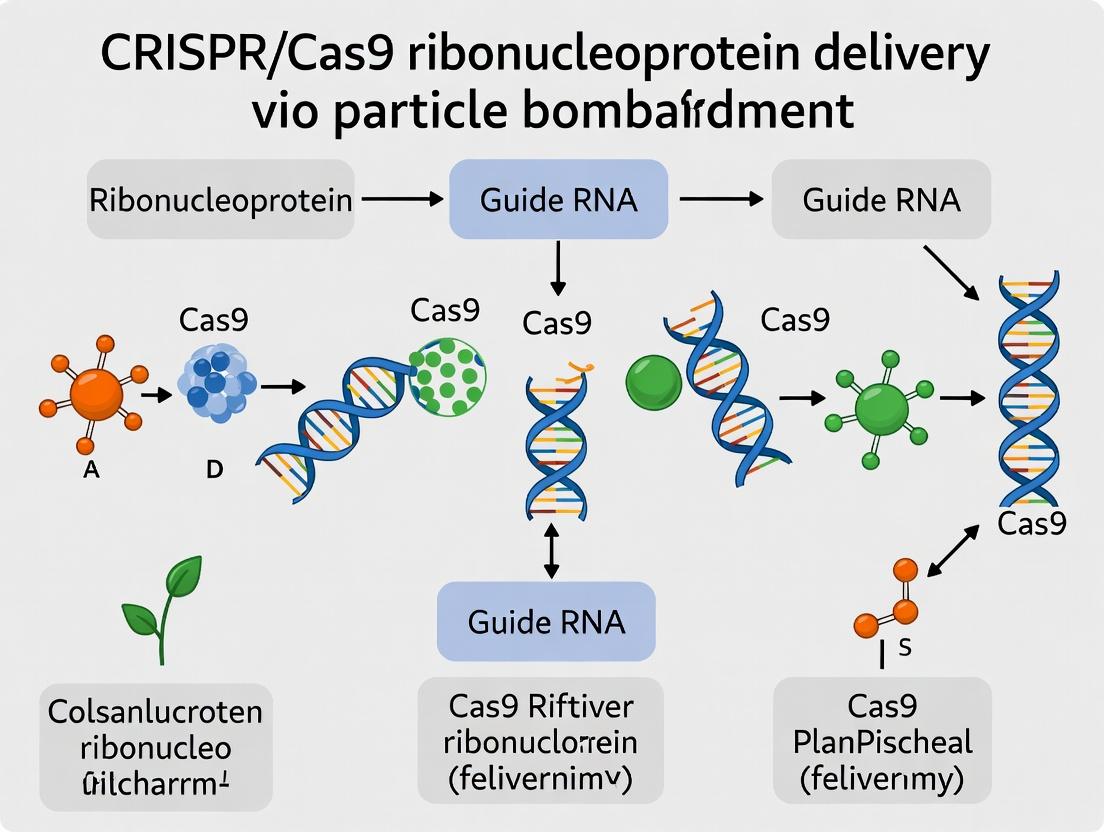
This article provides a comprehensive guide to delivering CRISPR/Cas9 as a pre-assembled ribonucleoprotein (RNP) complex using particle bombardment (biolistics).
Particle Bombardment for CRISPR/Cas9 RNP Delivery: A Guide for Precision Genome Editing
Abstract
This article provides a comprehensive guide to delivering CRISPR/Cas9 as a pre-assembled ribonucleoprotein (RNP) complex using particle bombardment (biolistics). Tailored for researchers and drug development professionals, we explore the foundational principles of this non-viral, DNA-free method, detail step-by-step protocols and applications across cell types and organisms, offer troubleshooting and optimization strategies for efficiency and viability, and critically validate the technique against alternative delivery methods. The synthesis aims to empower scientists to implement and refine this precise, transient genome editing tool for research and therapeutic development.
Understanding the Basics: Why Use Particle Bombardment for CRISPR/Cas9 RNP Delivery?
Within the research thesis on CRISPR/Cas9 ribonucleoprotein (RNP) delivery via particle bombardment, a precise definition of the RNP complex is foundational. The CRISPR/Cas9 RNP complex is a pre-assembled, transient entity consisting of a purified Cas9 endonuclease protein bound to a single-guide RNA (sgRNA). This complex is directly delivered into cells to execute targeted genome editing, bypassing the need for foreign DNA templates for Cas9 and sgRNA expression. Compared to plasmid or viral delivery methods, RNP delivery offers rapid action, reduced off-target effects, and lower immunogenicity, making it particularly suitable for particle bombardment (biolistics) where direct physical delivery into cells or tissues is required.
Composition and Structure of the RNP Complex
The functional unit is defined by its stoichiometric components and assembly.
Key Components:
- Cas9 Protein: Typically Streptococcus pyogenes Cas9 (SpCas9), a 160 kDa endonuclease with two catalytic domains (HNH and RuvC) for DNA strand cleavage.
- Single-Guide RNA (sgRNA): A chimeric RNA molecule ~100 nucleotides long, comprising:
- CRISPR RNA (crRNA) sequence: A 20-nucleotide spacer that dictates target specificity via Watson-Crick base pairing.
- Trans-activating crRNA (tracrRNA) scaffold: A structural component essential for Cas9 binding and complex stabilization.
Assembly:
The complex forms when purified Cas9 and in vitro transcribed or synthesized sgRNA are mixed in a defined molar ratio (typically 1:1.2 to 1:2 Cas9:sgRNA) in a suitable buffer, followed by incubation to allow proper folding and binding.
Table 1: Standard Components for RNP Assembly
| Component | Type/Source | Typical Purity Requirement | Function in Complex |
|---|---|---|---|
| Cas9 Nuclease | Recombinant, E. coli expressed | >90% (endotoxin-free) | DNA binding and cleavage enzyme |
| sgRNA | Chemically synthesized or in vitro transcribed (IVT) | HPLC or PAGE purified | Provides target recognition and structural scaffold |
| Nuclease-Free Buffer | e.g., 20 mM HEPES, 150 mM KCl, pH 7.5 | N/A | Maintains complex stability and activity |
Diagram 1: RNP complex composition
Protocol: Formulating RNP Complexes for Particle Bombardment
This protocol details the preparation of functional RNP complexes optimized for coating onto microcarriers (e.g., gold particles) for biolistic delivery.
Materials & Reagents
- Purified recombinant SpCas9 protein (commercial source or in-house purified)
- Target-specific sgRNA, HPLC-purified, resuspended in nuclease-free TE buffer.
- Nuclease-free duplex buffer: 30 mM HEPES, 100 mM potassium acetate, pH 7.5.
- Nuclease-free water.
- 1.5 mL LoBind microcentrifuge tubes.
Procedure
- Thaw and Centrifuge: Thaw all components on ice. Briefly centrifuge tubes to collect liquid.
- Prepare sgRNA Working Stock: Dilute sgRNA to 40 µM in nuclease-free duplex buffer.
- Complex Assembly: In a nuclease-free tube, combine:
- 5 µL Cas9 protein (at 40 µM concentration)
- 6 µL sgRNA (40 µM) [yields a 1:1.2 molar ratio]
- 9 µL nuclease-free duplex buffer.
- Final Volume: 20 µL. Final RNP Concentration: 10 µM.
- Incubation: Mix gently by pipetting. Incubate at room temperature (25°C) for 10 minutes to allow complex formation.
- Quality Check (Optional but Recommended): Analyze complex formation via electrophoretic mobility shift assay (EMSA) on a 1% agarose gel or native PAGE.
- Use or Storage: Use immediately for coating microcarriers. For short-term storage, place on ice for up to 2 hours. Do not freeze-assembled RNPs.
Quantitative Characterization of RNP Complexes
Critical parameters defining RNP quality include complex formation efficiency, stability, and nuclease activity.
Table 2: Key Quantitative Metrics for RNP Characterization
| Metric | Assay/Method | Typical Value/Result (for Functional RNP) | Significance for Particle Bombardment |
|---|---|---|---|
| Formation Efficiency | EMSA (gel shift) | >90% protein bound to sgRNA | Ensures maximal active payload per microcarrier. |
| Size/Hydrodynamic Radius | Dynamic Light Scattering (DLS) | ~5-7 nm (for SpCas9 RNP) | Informs microcarrier coating density and penetration efficiency. |
| In Vitro Cleavage Activity | Plasmid DNA cleavage assay | >80% target plasmid linearization in 1h | Direct measure of functional integrity. |
| Stability (Half-life) | Fluorescence anisotropy or activity time-course | 4-8 hours at 37°C in cell lysate | Guides timing between bombardment and analysis. |
| Optimal Coating Ratio | Microcarrier Binding Assay | 2-10 µg RNP per mg of 1.0 µm gold particles | Determines payload for efficient delivery. |
Diagram 2: RNP assembly and use workflow
The Scientist's Toolkit: Research Reagent Solutions
Table 3: Essential Materials for RNP-Based Particle Bombardment Research
| Item | Function/Application | Example/Notes |
|---|---|---|
| Recombinant Cas9 Nuclease | Core enzyme component for RNP assembly. | Commercial sources (e.g., ToolGen, IDT, NEB) ensure high purity and lot consistency. |
| Chemically Modified sgRNA | Enhances stability against nucleases. | 2'-O-methyl 3' phosphorothioate modifications at terminal 3 nucleotides. |
| Gold Microcarriers | Inert particles to carry RNP into cells. | 0.6-1.0 µm diameter spheres are standard for plant and mammalian cell bombardment. |
| Spermidine (0.05M) | A polycation facilitating adhesion of negatively charged RNP to gold particles. | Critical for efficient coating. Must be prepared fresh or stored at -20°C. |
| Calcium Chloride (2.5M) | A precipitating agent used with spermidine to co-precipitate RNP onto microcarriers. | Filter sterilized. |
| Biolistic Particle Delivery System | Device for accelerated microcarrier delivery. | Bio-Rad PDS-1000/He or handheld systems for in vivo use. |
| RNP Storage Buffer | Maintains complex integrity during handling. | Typically contains HEPES (pH stabilizer), KCl (ionic strength), and glycerol (cryoprotectant). |
Within the broader thesis investigating novel, transfection-free delivery of CRISPR/Cas9 ribonucleoproteins (RNPs) for precise genome editing, particle bombardment (biolistics) emerges as a critical physical delivery platform. This method bypasses limitations of viral vectors and chemical transfection, such as cargo size constraints, immunogenicity, and reliance on cellular uptake pathways. These Application Notes detail the mechanistic principles and standardized protocols for using biolistics to deliver CRISPR RNP complexes into clinically relevant and difficult-to-transfect primary cell types, a cornerstone of the thesis research.
Core Mechanism: From Acceleration to Nuclear Entry
Particle bombardment functions by accelerating dense, cargo-coated microparticles (typically gold or tungsten) to velocities sufficient to penetrate cell membranes and walls. The process can be dissected into sequential stages:
- Stage 1: Propulsion. A pressurized helium pulse or high-voltage electrical discharge creates a shockwave that accelerates a macrocarrier (a thin disk holding the microparticles).
- Stage 2: Macrocarrier Arrest. The macrocarrier is halted by a stopping screen, allowing the now-free microparticles to continue their trajectory.
- Stage 3: Cell Penetration. Microparticles (0.5-1.5 µm) physically pierce the plasma membrane and, depending on the target, the cell wall (in plants, fungi, bacteria).
- Stage 4: Cargo Release. Within the cytoplasm, the cargo (e.g., CRISPR RNPs) dissociates from the particle surface via biochemical exchange and diffusion, enabling its biological activity.
Crucially for RNP delivery, this mechanism allows direct co-delivery of Cas9 protein and guide RNA into the cytoplasm, from where the RNP can traffic to the nucleus, avoiding endosomal entrapment and degradation common to lipid-based methods.
Quantitative Performance Data: Recent Studies on RNP Delivery
Table 1: Summary of Recent CRISPR RNP Delivery via Biolistics (2022-2024)
| Target Cell/Tissue | Particle Type & Size | Pressure/Acceleration | Editing Efficiency (%) | Cell Viability (%) | Key Finding (Thesis Relevance) |
|---|---|---|---|---|---|
| Primary Human T-cells (Ex Vivo) | Gold, 1.0 µm | 450 psi (Helium) | 38-45% (Flow Cytometry) | ~65% at 48h | Achieved TRAC locus knockout without electroporation-induced activation. |
| Maize Immature Embryos | Gold, 0.6 µm | 1100 psi (Helium) | 22% (Mutation Detection) | Regeneration Competent | Heritable edits obtained; RNP delivery reduces off-target effects vs. plasmid DNA. |
| Human Corneal Epithelium (Ex Vivo) | Gold, 1.5 µm | 1550 psi (Helium) | ~15% (NGS) | >70% | Demonstrated potential for in situ therapeutic editing of stromal dystrophies. |
| Mouse Neurons (In Vivo) | Gold, 1.0 µm | 1350 psi (Helium) | 8-12% (IHC) | N/A | Focal brain editing achieved with minimal tissue damage using a low-pressure setting. |
Detailed Experimental Protocols
Protocol 4.1: Preparation of Gold Microparticles Coated with CRISPR RNP
This protocol is optimized for the PDS-1000/He system or similar.
I. Materials & Reagents
- Gold Microparticles: 0.6 µm or 1.0 µm spherical gold powder.
- Spermidine (0.1 M): A polycation that aids DNA/RNP adhesion to particles.
- Calcium Chloride (2.5 M): Precipitating agent.
- Purified Cas9 Nuclease: Recombinant, endotoxin-free.
- sgRNA: Chemically synthesized, HPLC-purified.
- RNP Complex Buffer: 20 mM HEPES, 150 mM KCl, pH 7.5.
- Absolute Ethanol & 70% Ethanol.
- Vortex mixer, tabletop microcentrifuge, ultrasonic bath.
II. Procedure
- Weigh Gold: Aliquot 25 mg of gold microparticles into a 1.5 mL microcentrifuge tube.
- RNP Complex Formation: Pre-complex 50 µg Cas9 protein with a 1.2x molar ratio of sgRNA (e.g., 20 pmol Cas9 + 24 pmol sgRNA) in 50 µL RNP Complex Buffer. Incubate at 25°C for 10 min.
- Binding: While vortexing the gold tube vigorously, add in order:
- 50 µL of assembled RNP complex.
- 50 µL of 0.1 M Spermidine.
- Continue vortexing for 30 seconds.
- 100 µL of 2.5 M CaCl₂ dropwise.
- Vortex for 3 minutes at room temperature.
- Precipitation & Washing: Allow particles to settle for 1 minute. Pellet briefly (2 sec pulse at 10,000 rpm). Carefully remove supernatant. Wash pellet three times with 500 µL of fresh 70% ethanol, then once with 500 µL absolute ethanol. Resuspend final pellet in 50 µL absolute ethanol.
- Sonication: Sonicate the suspension in a bath sonicator for 2-5 seconds immediately before coating macrocarriers to ensure a uniform, non-aggregated suspension.
Protocol 4.2: Bombardment of Adherent Mammalian Cells in a 6-Well Plate Format
I. Preparation:
- Culture cells to ~70-80% confluency.
- Aspirate medium and replace with a thin layer (e.g., 0.5 mL) of fresh medium or PBS just prior to bombardment to prevent projectile deflection.
- Sterilize all bombardment components (macrocarriers, stopping screens, holders) by ethanol immersion and air-drying.
II. Coating & Bombardment:
- Coat Macrocarriers: Vortex the gold/RNP suspension. Pipette 5-10 µL aliquots onto the center of each sterile macrocarrier. Allow to air-dry in a laminar flow hood (~5 min).
- Assemble Chamber: Following manufacturer instructions, assemble the shock tube with the gas acceleration tube, stopping screen, and macrocarrier holder (loaded with coated macrocarriers) at the correct rupture disk pressure (e.g., 450 psi for sensitive cells).
- Position Sample: Place the 6-well plate with target cells on the sample shelf at the appropriate level (typically the second or third shelf for mammalian cells).
- Evacuate & Fire: Pull a vacuum to 25-28 in. Hg. Hold the vacuum and fire the instrument. Release the vacuum after firing.
- Post-Bombardment: Gently add 2 mL of fresh, pre-warmed culture medium to each well. Return cells to the incubator. Analyze editing efficiency and viability at 24-72 hours post-bombardment.
Diagrams of Workflow & Mechanism
Workflow for Biolistic RNP Delivery
PDS-1000/He System Mechanism
The Scientist's Toolkit: Key Research Reagent Solutions
Table 2: Essential Materials for Biolistic RNP Delivery Experiments
| Item / Reagent | Supplier Examples | Function & Critical Notes |
|---|---|---|
| Gold Microparticles (0.6µm, 1.0µm) | Bio-Rad, Cospheric | Inert, dense carrier. Size choice balances penetration (smaller) vs. cargo load (larger). |
| PDS-1000/He System | Bio-Rad | Standardized gene gun apparatus for reproducible helium-driven bombardment. |
| Rupture Disks (450-1550 psi) | Bio-Rad | Determine helium pressure. Lower pressure (450-650 psi) is critical for delicate mammalian cells. |
| Purified Cas9 Nuclease (RNP-grade) | Thermo Fisher, IDT, Aldevron | Must be endotoxin-free and in a buffer compatible with direct cellular delivery. |
| Chemically Modified sgRNA | Synthego, IDT, Trilink | Chemical modifications (e.g., 2'-O-methyl) enhance stability during preparation and post-delivery. |
| Spermidine (0.1 M), Sterile | Sigma-Aldrich | Polycation essential for precipitating nucleic acids/RNPs onto gold particles. Aliquots must be fresh. |
| Tissue Culture Inserts (for in-well bombardment) | Corning, Greiner | Allows cells to be placed at precise distances from the particle launch point. |
Application Notes
In the context of CRISPR/Cas9 ribonucleoprotein (RNP) delivery via particle bombardment (biolistics), three key advantages emerge as transformative for genetic engineering across diverse species. This DNA-free, transient system circumvents critical limitations of plasmid-based delivery, enabling precise editing with reduced off-target effects and regulatory hurdles.
DNA-Free Editing: Direct delivery of pre-assembled Cas9 protein and guide RNA (sgRNA) complexes eliminates the need for foreign DNA integration. This avoids transgene persistence, reduces off-target mutations linked to prolonged Cas9 expression, and simplifies regulatory pathways for crop development and clinical therapies. A 2023 study in primary human T-cells showed DNA-free RNP editing via specialized bombardment reduced indel frequency at known off-target sites by >70% compared to plasmid delivery.
Transient Activity: The RNP complex is rapidly degraded by cellular proteases and nucleases, limiting the window of active nuclease to a few hours. This transient activity minimizes prolonged DNA damage response and cell toxicity. Research in plant meristems (2024) demonstrated that bombardment-delivered RNPs achieved heritable mutations in up to 15% of progeny, while eliminating Cas9 protein presence within 72 hours, as confirmed by immunoassays.
Broad Host Range: Particle bombardment is agnostic to cell type, species, and transfection compatibility. It effectively delivers RNPs into cells with rigid cell walls (plants, fungi), sensitive primary cells (human hematopoietic stem cells), and embryos without species-specific optimization. A meta-analysis (2024) of 27 studies confirmed successful RNP editing via bombardment in over 35 species spanning monocots, dicots, fungi, and animal embryos.
Quantitative Data Summary:
Table 1: Performance Comparison of RNP Delivery Methods
| Parameter | Particle Bombardment (RNP) | Plasmid Transfection | Agrobacterium (DNA) |
|---|---|---|---|
| Typical Editing Efficiency (Indel %) | 5-45% (species-dependent) | 10-70% | 1-30% in plants |
| Off-Target Mutation Rate | 0.1-0.5% (relative to on-target) | 1-5% | 1-10% |
| Cellular Toxicity | Low (10-15% reduction in viability) | Moderate-High (up to 40% reduction) | Variable |
| Time to Max Nuclease Activity | 0-4 hours post-delivery | 24-48 hours | 24-72 hours |
| Persistent Foreign DNA | None | Yes | Yes (often integrated) |
| Host Range | Very Broad (>35 species documented) | Limited by transfection reagent | Primarily plants |
Table 2: Editing Efficiencies in Select Hosts via Bombardment RNP Delivery (2023-2024 Data)
| Host Organism | Cell/Tissue Type | Average On-Target Editing | Regeneration/Transmission Rate |
|---|---|---|---|
| Triticum aestivum (Wheat) | Immature embryo | 22% | 8% heritable mutations |
| Saccharomyces cerevisiae | Logarithmic phase cells | 38% | 95% colony formation |
| Homo sapiens (Primary) | CD34+ Hematopoietic Stem Cells | 41% | 65% cell viability post-bombardment |
| Zea mays (Maize) | Embryogenic callus | 18% | 12% stable, edited plants |
| Danio rerio (Zebrafish) | Single-cell embryo | 31% | 55% germline transmission |
Experimental Protocols
Protocol 1: Standardized CRISPR/Cas9 RNP Preparation for Biolistics
Research Reagent Solutions Toolkit:
- Purified Cas9 Nuclease: Recombinant S. pyogenes Cas9 protein, endotoxin-free. Function: DNA endonuclease.
- Synthetic sgRNA: Chemically modified, HPLC-purified single-guide RNA. Function: Targets Cas9 to specific genomic locus.
- RNP Assembly Buffer: 20 mM HEPES, 150 mM KCl, 1 mM DTT, 5% Glycerol, pH 7.5. Function: Maintains protein/RNA stability and complex formation.
- Gold or Tungsten Microparticles: 0.6-1.0 µm diameter. Function: Delivery carriers for physical bombardment.
- Spermidine (100 mM): Function: Aids in precipitating RNPs onto microparticles.
- Calcium Chloride (2.5 M): Function: Co-precipitant with spermidine for particle coating.
- Absolute Ethanol: Function: Sterilization and washing of coated particles.
Detailed Methodology:
- RNP Complex Assembly: In a sterile LoBind tube, combine 10 µg (≈60 pmol) of purified Cas9 protein with a 1.2-1.5x molar excess of sgRNA (e.g., 72-90 pmol) in 50 µL of RNP Assembly Buffer.
- Incubation: Mix gently and incubate at 25°C for 10 minutes to allow complex formation.
- Microparticle Coating (per bombardment): a. Vortex 25 mg of 0.6 µm gold particles in a 1.5 mL tube continuously for 1 minute. b. While vortexing, sequentially add: 50 µL of the assembled RNP complex, 50 µL of 2.5 M CaCl₂, and 20 µL of 100 mM spermidine. c. Continue vortexing for 3 minutes, then let the mixture settle for 1 minute. d. Centrifuge briefly (3000 rpm, 5 sec), discard supernatant. e. Wash particles with 200 µL of 100% ethanol, centrifuge, discard supernatant. Repeat wash twice. f. Resuspend the final RNP-coated pellet in 60 µL of 100% ethanol.
- Loading Macrocarriers: Pipette 10 µL of the particle suspension onto the center of a sterile macrocarrier membrane and allow to dry in a laminar flow hood.
Protocol 2: Particle Bombardment of Plant Embryos using PDS-1000/He System
Detailed Methodology:
- Sample Preparation: Isolate 100-150 immature embryos (1.0-1.5 mm size) from model crop (e.g., wheat). Place them in the center of a petri dish containing osmoticum medium (e.g., MS + 0.25 M sorbitol + 0.25 M mannitol) 4 hours pre-bombardment.
- Instrument Setup: Sterilize the bombardment chamber and components with 70% ethanol. Under sterile conditions, assemble the rupture disk (900 or 1100 psi), macrocarrier (loaded with RNP-gold), stopping screen, and sample tray according to manufacturer guidelines.
- Bombardment Parameters: Place the sample dish at the appropriate shelf level (typically level 2). Evacuate the chamber to 27-28 in Hg. Fire the device using the selected rupture disk pressure.
- Post-Bombardment Recovery: After bombardment, immediately return embryos to fresh, standard culture medium (without osmoticum). Incubate them in dark conditions at 25°C for 48-72 hours before proceeding to DNA extraction for analysis or to regeneration media.
- Editing Analysis: Harvest a subset of embryos 48-72 hours post-bombardment. Extract genomic DNA and use PCR amplification of the target locus, followed by T7 Endonuclease I assay or next-generation sequencing to quantify indel formation efficiency.
Protocol 3: Analysis of Transient Activity and RNP Clearance
Detailed Methodology:
- Time-Course Sampling: Following bombardment of sensitive cells (e.g., stem cells), collect samples at T=0, 2, 4, 8, 12, 24, 48, and 72 hours.
- Western Blot for Cas9 Persistence: Lyse cells, run total protein (20-30 µg per lane) on SDS-PAGE, transfer to membrane, and probe with anti-Cas9 primary antibody and HRP-conjugated secondary. Use chemiluminescence detection. Compare band intensity to a recombinant Cas9 standard curve. Expected clearance: >95% by 48-72 hours.
- qPCR for DNA Damage Markers: Isolve RNA and synthesize cDNA. Perform qPCR for markers of prolonged DNA damage response (e.g., p21, γH2AX). Normalize to housekeeping genes. Expected outcome: transient spike at 4-8 hours, returning to baseline by 24 hours, indicating limited, acute activity.
Visualizations
Diagram Title: DNA-Free RNP Editing via Biolistics Workflow
Diagram Title: Transient RNP Activity Timeline Post-Bombardment
Diagram Title: Broad Host Range of Bombardment RNP Delivery
Application Notes
The transition from plant to mammalian cell editing represents a cornerstone in biotechnology, driven by the need for precise genetic manipulation. The development of CRISPR/Cas9 ribonucleoprotein (RNP) delivery via particle bombardment (biolistics) is a direct evolution of plant transformation techniques, now refined for sensitive mammalian systems. This method offers a transient, DNA-free editing approach, minimizing off-target effects and immune responses—a critical advancement for therapeutic applications.
Recent studies (2023-2024) highlight key quantitative improvements in RNP bombardment for mammalian cells. Efficiencies now rival those of viral delivery for certain primary cells, with significantly reduced cytotoxicity. The table below summarizes recent performance data.
Table 1: Quantitative Performance of CRISPR/Cas9 RNP Delivery via Particle Bombardment in Mammalian Systems (2023-2024 Data)
| Cell Type | Gold Particle Size (µm) | Pressure (psi) | Editing Efficiency (%) | Viability (%) | Key Advantage |
|---|---|---|---|---|---|
| HEK293T | 0.6 - 1.0 | 90 - 135 | 65 - 78 | 70 - 85 | High-throughput, DNA-free |
| Primary T-cells | 0.5 - 0.7 | 110 - 150 | 40 - 60 | 60 - 75 | Low immunogenicity |
| iPSCs | 0.5 - 0.6 | 100 - 120 | 25 - 40 | 50 - 65 | No genomic integration risk |
| Neuronal Progenitors | 0.5 - 0.8 | 90 - 110 | 30 - 45 | 65 - 80 | Minimal cellular disturbance |
Detailed Protocols
Protocol 1: Preparation of CRISPR/Cas9 RNP Complexes for Biolistics
Objective: To assemble purified Cas9 protein and sgRNA into active ribonucleoprotein complexes. Materials:
- Purified S. pyogenes Cas9 protein (commercial source, e.g., IDT)
- Target-specific synthetic sgRNA (chemically modified for stability)
- Nuclease-Free Duplex Buffer (IDT)
- Thermal cycler or heat block.
Method:
- sgRNA Resuspension: Centrifuge sgRNA tube and resusguide in Nuclease-Free Duplex Buffer to a final concentration of 100 µM.
- Complex Assembly: In a sterile microcentrifuge tube, combine:
- 10 µL of Cas9 protein (60 µM)
- 5 µL of sgRNA (100 µM)
- 35 µL of 1X PBS (RNase-free).
- Incubation: Mix gently by pipetting. Incubate at 25°C for 10 minutes to allow RNP formation.
- Storage: Use immediately for coating microcarriers. Do not store assembled RNPs for extended periods.
Protocol 2: Coating Gold Microcarriers with CRISPR/Cas9 RNPs
Objective: To adsorb RNP complexes onto gold particles for subsequent bombardment. Materials:
- 0.6 µm gold microcarriers (e.g., Bio-Rad)
- Spermidine (0.05 M)
- Calcium Chloride (2.5 M)
- Absolute ethanol
- Vortex mixer, sonicating water bath.
Method:
- Microcarrier Preparation: Weigh 60 mg of 0.6 µm gold particles into a 1.5 mL tube. Add 1 mL 100% ethanol, vortex 3-5 minutes. Centrifuge at 10,000 rpm for 10 sec. Remove supernatant. Wash twice with 1 mL sterile water. Resuspend final pellet in 1 mL sterile 50% glycerol. Aliquots can be stored at -20°C.
- Coating Reaction: For a single bombardment, add the following in order to a clean tube while vortexing continuously:
- 50 µL of prepared gold suspension (vortexed before use).
- 5 µL of assembled RNP complex (from Protocol 1).
- 50 µL of 0.05 M Spermidine (add dropwise).
- 50 µL of 2.5 M CaCl₂ (add dropwise).
- Precipitation: Continue vortexing for 2-3 minutes. Let stand for 1 minute. Pellet gold by brief centrifugation (5 sec at 10,000 rpm). Remove supernatant.
- Washing: Wash pellet gently with 140 µL 100% ethanol. Centrifuge, remove supernatant. Repeat wash. Resuspend final pellet in 48 µL 100% ethanol.
- Loading: Sonicate the suspension briefly. Pipette onto the center of a macrocarrier membrane and let dry in a desiccator.
Protocol 3: Particle Bombardment of Adherent Mammalian Cells using a Gene Gun
Objective: To deliver RNP-coated gold particles into mammalian cells using helium pressure. Materials:
- PDS-1000/He System or similar gene gun (Bio-Rad)
- Rupture disks (900-1350 psi), macrocarriers, stopping screens.
- Target cells (70-90% confluent in appropriate culture dish)
- Culture medium without antibiotics pre- and post-bombardment.
Method:
- Cell Preparation: Culture target cells in a 35 mm or 60 mm culture dish to 70-90% confluency. On bombardment day, replace medium with fresh, antibiotic-free medium.
- Gene Gun Assembly: Sterilize all components (macrocarrier holders, stopping screens) by ethanol immersion and air-drying. Assemble the bombardment chamber according to manufacturer's instructions:
- Place a rupture disk in the retaining cap.
- Place the loaded, dried macrocarrier (from Protocol 2) in its holder.
- Place a stopping screen below.
- Secure the target dish in the appropriate tray level (typically level 2 or 3 for mammalian cells).
- Bombardment: Evacuate the chamber to 25-28 in Hg. Hold the vacuum and fire using the helium pulse. Release the vacuum and remove the target dish immediately.
- Post-Bombardment Care: Gently rock the dish to distribute medium. Incubate cells under normal growth conditions for 4-6 hours. Replace medium with standard culture medium (with antibiotics). Assay for editing efficiency 48-72 hours post-bombardment.
Visualizations
Title: Evolution of Biolistics from Plants to Mammalian RNP Delivery
Title: CRISPR RNP Bombardment Experimental Workflow
Title: Logic of RNP Bombardment Advantages for Therapy
The Scientist's Toolkit: Research Reagent Solutions
Table 2: Essential Materials for CRISPR/Cas9 RNP Bombardment Experiments
| Reagent/Material | Supplier Examples | Function & Critical Notes |
|---|---|---|
| S. pyogenes Cas9 Nuclease, purified | IDT, Thermo Fisher, Aldevron | The core editing protein. Must be highly purified, endotoxin-free for mammalian use. |
| Chemically modified sgRNA | IDT, Synthego, Horizon | Enhances stability against nucleases. Critical for maintaining RNP integrity during bombardment stress. |
| Gold Microcarriers (0.5 - 1.0 µm) | Bio-Rad, Seajet | Inert, high-density particles. Size choice balances penetration and cellular damage. |
| Spermidine (0.05 M) | Sigma-Aldrich | A polycation that facilitates binding of negatively charged RNPs to gold particles. |
| PDS-1000/He System or Helios Gene Gun | Bio-Rad | Standardized particle bombardment equipment for reproducible pressure-driven delivery. |
| Rupture Disks (900-1550 psi) | Bio-Rad | Determines the helium pressure. Must be matched to cell type sensitivity. |
| Cell Culture Media, Antibiotic-Free | Various | Required for the 24-hour window around bombardment to ensure cell health during uptake. |
| T7 Endonuclease I or NGS Assay Kits | NEB, IDT, Illumina | For quantifying indel formation and editing efficiency post-bombardment. |
Application Notes
Particle bombardment (biolistics) for CRISPR/Cas9 ribonucleoprotein (RNP) delivery is a versatile, transient, and DNA-free method for precise genome editing. Its efficacy hinges on the optimization and interplay of four core components: the RNP complex, the microcarriers, the helium-driven acceleration system, and the target tissue. This technique is particularly valuable for editing cells and tissues that are recalcitrant to other delivery methods, such as primary cells, certain plant tissues, and ex vivo patient samples.
1. The Ribonucleoprotein (RNP) Complex: The direct delivery of pre-assembled Cas9 protein and single-guide RNA (sgRNA) offers immediate activity, rapid clearance, and reduced off-target effects compared to plasmid DNA delivery. Key considerations include the purity and concentration of the Cas9 protein, the stability of the sgRNA, and the molar ratio for complex formation. Typical RNP concentrations for bombardment range from 1 to 10 µM.
2. Microcarriers: Typically 0.6-1.0 µm gold or tungsten particles, microcarriers are coated with the RNP complex and serve as the physical vectors. Gold is non-toxic and chemically inert, making it the preferred choice. The coating process involves precipitating the RNP onto the particles using spermidine and calcium chloride. Particle size and density directly impact penetration depth and cellular damage.
3. Helium Pressure: The gene gun uses a high-pressure helium pulse to accelerate the microcarrier-coated macrocarrier (or disk) toward the target cells. The helium pressure (measured in psi or bar) is the primary variable controlling particle velocity and penetration. Optimal pressure is a critical balance: sufficient for tissue penetration but low enough to maintain cell viability. Pressures typically range from 100 to 900 psi depending on the target.
4. Target Tissues: The physical and biological properties of the target tissue dictate all other parameters. Key factors include cell wall rigidity (in plants), tissue thickness, and the regenerative capacity of the cell layer. Common successful targets include epidermal layers, callus tissues, meristems, and monolayer cell cultures.
Table 1: Standard Parameter Ranges for RNP Bombardment
| Component | Parameter | Typical Range | Notes |
|---|---|---|---|
| RNP Complex | Cas9:sgRNA Molar Ratio | 1:2 to 1:5 | Ensures complete protein saturation. |
| Coating Concentration | 1 - 10 µM | Higher concentrations increase editing but may increase agglomeration. | |
| Microcarriers | Material | 0.6 µm / 1.0 µm Gold | Smaller particles yield higher particle count per shot; larger particles have greater momentum. |
| Amount per Shot | 0.5 - 2.0 mg | Optimized to cover macrocarrier evenly without clustering. | |
| Helium Pressure | Working Pressure | 100 - 900 psi | 450-650 psi common for mammalian monolayer cells; 900+ psi for plant epidermis. |
| Vacuum Level | 25 - 28 in Hg | Standard vacuum to reduce air resistance. | |
| Target | Distance | 6 - 12 cm | Distance from stopping screen to target sample. |
| Tissue Type | Cell monolayers, epidermal tissue, callus, meristems | Fragile tissues require lower pressures. |
Table 2: Exemplary Protocol Parameters for Different Targets
| Target Tissue | Microcarrier (Gold) | Pressure (psi) | Vacuum (in Hg) | Distance (cm) | Expected Efficiency* |
|---|---|---|---|---|---|
| Mammalian Monolayer (HEK293) | 1.0 µm | 450 | 27 | 9 | 5-15% indels |
| Plant Leaf Epidermis (Arabidopsis) | 0.6 µm | 900 | 28 | 6 | 1-5% transformation |
| Plant Callus (Rice) | 1.0 µm | 650 | 25 | 12 | 2-8% stable editing |
| Primary Human T Cells | 0.6 µm | 300 | 27 | 9 | 3-10% indels |
*Editing efficiency varies widely based on locus, RNP quality, and assay.
Detailed Experimental Protocols
Protocol 1: RNP Complex Preparation and Microcarrier Coating
Objective: To assemble purified Cas9 protein with sgRNA and precipitate the complex onto gold microcarriers.
Reagents: Purified Cas9 nuclease (e.g., Spy Cas9), target-specific sgRNA (chemically modified or HPLC purified), 0.5 M Spermidine (sterile), 1 M CaCl₂ (sterile), absolute ethanol, 50% glycerol, 0.6 µm gold microparticles, Vortex adapter.
Procedure:
- RNP Assembly: In a low-protein-binding tube, mix 10 µL of 10 µM Cas9 protein with 10 µL of 30 µM sgRNA (1:3 molar ratio). Incubate at room temperature for 10-20 minutes.
- Microcarrier Preparation: Weigh 10 mg of 0.6 µm gold particles into a 1.5 mL tube. Add 100 µL of 0.05 M spermidine, vortex briefly.
- Coating: While vortexing the gold/spermidine mixture at moderate speed, add the entire 20 µL RNP mix. Continue vortexing.
- Precipitation: While vortexing, slowly add 100 µL of 1 M CaCl₂ dropwise. Continue vortexing for 2-3 minutes. Allow to settle for 1 minute.
- Washing: Pellet particles gently (2,000 rpm, 10 sec). Aspirate supernatant. Wash with 200 µL fresh 70% ethanol, pellet, aspirate. Repeat with 200 µL 100% ethanol.
- Resuspension: Finally, resuspend particles in 50 µL of 100% ethanol (or 50% glycerol for long-term storage at -20°C). Final concentration is ~200 µg gold/µL.
Protocol 2: Helium-Driven Particle Bombardment of Adherent Mammalian Cells
Objective: To deliver RNP-coated microcarriers into adherent mammalian cells using a standard gene gun system.
Reagents: Prepared RNP-gold particles, macrocarriers, stopping screens, helium tank, gene gun apparatus, confluent monolayer of target cells in 60 mm dish or multi-well plate format.
Procedure:
- Sample Preparation: Culture cells to ~70-90% confluency. For bombardment, aspirate media and place the open dish in the gene gun chamber on the target shelf. Cover with a sterile stop screen holder if required.
- Cartridge Loading: Briefly sonicate the RNP-gold suspension. Pipette 5-10 µL (~1 mg gold) onto the center of a macrocarrier. Let dry in a desiccator for 5-10 minutes.
- Bombardment Setup: Assemble the gene gun according to manufacturer instructions: load the macrocarrier, place the stopping screen, and secure the cartridge. Close the chamber door.
- Bombardment Conditions: Draw vacuum to 27 in Hg. Fire the gun using the predetermined optimal pressure (e.g., 450 psi for many cell lines).
- Post-Bombardment: Release vacuum. Immediately remove the dish and add pre-warmed, fresh culture medium. Incubate cells under standard conditions for 48-72 hours before analysis.
Protocol 3: Analysis of Editing Efficiency via T7 Endonuclease I (T7EI) Assay
Objective: To quantify indel formation at the target genomic locus 72 hours post-bombardment.
Reagents: Cell lysis buffer (e.g., DirectPCR Lysis Reagent with Proteinase K), PCR reagents, target-specific primers, T7 Endonuclease I, NEBuffer 2, agarose gel reagents.
Procedure:
- Genomic DNA Extraction: Wash cells, add 100 µL lysis buffer with Proteinase K (1 mg/mL). Incubate at 55°C for 3 hours, then 85°C for 45 minutes. Use 2 µL directly for PCR.
- PCR Amplification: Amplify the target region (200-500 bp) using high-fidelity polymerase. Purify PCR product.
- Heteroduplex Formation: Denature/reanneal 100 ng purified PCR product: 95°C for 5 min, ramp down to 25°C at -2°C/sec.
- T7EI Digestion: To 10 µL reannealed DNA, add 2 µL NEBuffer 2 and 0.5 µL T7EI enzyme. Incubate at 37°C for 30 minutes.
- Analysis: Run products on a 2% agarose gel. Cleavage products indicate presence of indels. Quantify efficiency using gel densitometry: % indel = 100 * (1 - sqrt(1 - (b+c)/(a+b+c))), where a is integrated intensity of undigested band, and b & c are digested bands.
Visualizations
Title: RNP Particle Bombardment Workflow
Title: Key Parameter Interdependence
The Scientist's Toolkit: Research Reagent Solutions
Table 3: Essential Materials for RNP Delivery via Particle Bombardment
| Item | Function & Critical Features | Example Vendor/Product |
|---|---|---|
| Purified Cas9 Protein | Active nuclease for DNA cleavage. Requires high purity, nuclease-free, in storage buffer without glycerol. | Thermo Fisher Scientific, GeneArt Platinum Cas9. |
| Chemically Modified sgRNA | Guides Cas9 to target locus. Chemical modifications (2'-O-methyl, phosphorothioate) enhance stability during coating and delivery. | Synthego, IDT Alt-R CRISPR-Cas9 sgRNA. |
| Gold Microcarriers | Inert, dense particle vector. Consistent 0.6 µm or 1.0 µm diameter is critical for reproducible penetration. | Bio-Rad, 0.6 µm Gold Microcarriers. |
| Spermidine (0.1 M & 0.5 M) | A polycation that helps bind negatively charged RNP to gold particles. Must be sterile and aliquoted to prevent oxidation. | Sigma-Aldrich, Spermine tetrahydrochloride. |
| Calcium Chloride (1 M) | Co-precipitating agent that forms a fine calcium-spermidine phosphate precipitate, entrapping RNP on gold. | Prepared from molecular biology-grade powder. |
| Gene Gun / Biolistic Device | Instrument that generates helium shock wave to accelerate microcarriers. Precise control of pressure and vacuum is essential. | Bio-Rad PDS-1000/He System. |
| Macrocarriers & Stopping Screens | Disposable parts that hold coated gold and arrest the macrocarrier, allowing microcarriers to continue toward target. | Bio-Rad, Disposable Macrocarriers. |
| Helium (Grade 4.5 or higher) | Driving gas for particle acceleration. High purity ensures consistent pressure pulses and prevents moisture in system. | Standard industrial/helium supplier. |
| Vacuum Pump & Gauge | Creates a partial vacuum in the bombardment chamber to reduce air resistance and deceleration of particles. | Integrated into gene gun system. |
| Target Tissues/Cells | Validated, healthy, and rapidly dividing tissues or confluent monolayers typically yield highest editing rates. | User-prepared. |
Step-by-Step Protocol: How to Execute CRISPR RNP Delivery via Biolistics
This protocol is presented within a broader thesis investigating the parameters for optimal in vitro and in planta delivery of CRISPR/Cas9 ribonucleoprotein (RNP) complexes via particle bombardment (biolistics). Direct delivery of pre-assembled RNPs offers advantages over DNA-based methods, including reduced off-target effects, transient activity, and immediate cleavage capability. The critical step is the efficient and stable adsorption of RNP complexes onto micron-sized gold or tungsten particles (microcarriers), which are then accelerated to penetrate target cells or tissues. These Application Notes detail the preparation and coating of microcarriers, a foundational technique for subsequent bombardment experiments.
Key Research Reagent Solutions
| Reagent/Material | Function in Protocol |
|---|---|
| Gold Microparticles (0.6-1.2 µm) | Inert, high-density microcarrier; spherical and uniform, leading to more consistent penetration and coating. |
| Tungsten Microparticles (0.7-1.1 µm) | Cost-effective alternative microcarrier; can be irregularly shaped and may oxidize, requiring careful preparation. |
| Purified Cas9 Nuclease | The effector protein of the RNP complex. Must be nuclease-free and in a suitable storage buffer. |
| sgRNA (crRNA:tracrRNA duplex or single guide) | Target-specific RNA component that complexes with Cas9 to form the functional RNP. |
| Spermidine (100 mM) | A polycation that promotes the binding of negatively charged nucleic acids/proteins to microcarriers. |
| Calcium Chloride (2.5 M) | A precipitating agent that co-precipitates the RNP complexes onto the microcarriers in the presence of spermidine. |
| Absolute Ethanol | Sterile 100% ethanol for washing coated microcarriers and for suspension prior to cartridge loading. |
| 50% Glycerol | Sterile solution for suspending and storing prepared, uncoated microcarriers. |
| Sterile Water | Nuclease-free, sterile water for all dilution and resuspension steps. |
Table 1: Comparative Properties of Common Microcarriers for RNP Coating
| Property | Gold Microparticles | Tungsten Microparticles |
|---|---|---|
| Typical Size Range | 0.6 – 1.2 µm | 0.7 – 1.1 µm |
| Particle Shape | Spherical, uniform | Irregular, heterogeneous |
| Density (g/cm³) | ~19.3 | ~19.3 |
| Cost | High | Moderate |
| Chemical Stability | Highly inert, non-oxidizing | Can form oxides, may be cytotoxic |
| Recommended Coating [RNP]* | 0.5 – 2 µg/mg particles | 1 – 3 µg/mg particles |
| Optimal Spermidine Vol (per mg) | 10 µL of 100 mM | 15 µL of 100 mM |
| Optimal CaCl₂ Vol (per mg) | 25 µL of 2.5 M | 25 µL of 2.5 M |
| Key Advantage | Consistency, biocompatibility | Lower cost |
| Key Disadvantage | Expensive | Potential toxicity, oxidation |
*Assumes a pre-assembled RNP complex with a molar ratio of Cas9:sgRNA ~ 1:1.2.
Detailed Protocols
Protocol 4.1: Preparation of Sterile Microcarriers (Pre-Coating)
A. For Gold Microcarriers:
- Weigh 10 mg of 1.0 µm gold particles into a 1.5 mL sterile microfuge tube.
- Add 1 mL of 70% ethanol. Vortex vigorously for 3-5 minutes. Let stand for 15 minutes.
- Centrifuge briefly (10,000 rpm for 5 sec). Carefully remove and discard supernatant.
- Perform three sequential washes with 1 mL of sterile nuclease-free water. Vortex, spin, and discard supernatant each time.
- Resuspend the cleaned pellet in 500 µL of sterile 50% glycerol. Store at -20°C.
B. For Tungsten Microcarriers (Additional Step to Mitigate Oxidation):
- Weigh 10 mg of tungsten particles (M10, 0.7 µm) into a 1.5 mL tube.
- Wash three times with 1 mL of sterile 70% ethanol, vortexing and centrifuging each time.
- Wash three times with 1 mL of sterile nuclease-free water.
- Critical Step: Resuspend in 1 mL of sterile 0.1 M nitric acid (HNO₃) and incubate for 10 minutes with occasional vortexing to dissolve surface oxides.
- Wash thoroughly with sterile water (5-6 times) until the supernatant pH is neutral.
- Resuspend in 500 µL of sterile 50% glycerol. Store at -20°C.
Protocol 4.2: Pre-assembly of CRISPR RNP Complex
- In a sterile, low-protein-binding tube, combine the following on ice:
- 5 µL Cas9 protein (from a 20 µM stock, 100 pmol total).
- 6 µL sgRNA (from a 20 µM stock, 120 pmol total, for a 1:1.2 ratio).
- 9 µL of 1X PBS or provided Cas9 storage buffer.
- Total Volume = 20 µL.
- Mix gently by pipetting. Do not vortex.
- Incubate at room temperature for 10-20 minutes to allow RNP complex formation. Use immediately.
Protocol 4.3: Coating of Microcarriers with RNP Complexes
This protocol scales for 1 mg of microcarriers per bombardment shot/sample.
- Prepare Carriers: Vortex the glycerol stock of prepared particles (from 4.1). Aliquot 10 µL (containing ~1 mg of particles) into a fresh 1.5 mL tube. Let stand for 5 minutes, then remove and discard 5 µL of the glycerol supernatant, leaving the pelleted particles in ~5 µL.
- Add RNP: While continuously vortexing the tube on a low setting, slowly add the entire 20 µL of pre-assembled RNP (from 4.2) to the particle aliquot.
- Add Binding Agents: Continue vortexing.
- Add 10 µL of 100 mM spermidine (for Au) or 15 µL (for W). Vortex for 2-3 seconds.
- Add 25 µL of 2.5 M CaCl₂ dropwise. Vortex for 10 seconds.
- Incubate: Continue vortexing for an additional 2-3 minutes. Then let the mixture sit at room temperature for 1 minute to allow co-precipitation.
- Pellet & Wash: Centrifuge briefly (10,000 rpm for 5 sec). Carefully remove and discard the supernatant.
- Ethanol Washes:
- Add 100 µL of 100% ethanol to the pellet. Vortex or flick vigorously to dislodge and resuspend the particles. Centrifuge for 5 sec, discard supernatant.
- Repeat this ethanol wash three times in total.
- Final Suspension: After the final wash, resuspend the coated particles in 15-20 µL of 100% ethanol. Vortex and flick vigorously to create a homogeneous, clump-free suspension. Use within 2 hours for loading onto macrocarriers.
Visualized Workflows & Pathways
Diagram 1: Microcarrier Prep & RNP Coating Workflow
Diagram 2: RNP Coating Biochemical Mechanism
Optimizing RNP Concentration and Ratio for Target Gene Knockout or Knock-in
Within the broader thesis investigating CRISPR/Cas9 ribonucleoprotein (RNP) delivery via particle bombardment (biolistics), optimizing the concentration and stoichiometry of the Cas9 protein and guide RNA (gRNA) complex is paramount. Particle bombardment delivers pre-assembled RNPs directly into the cell nucleus, bypassing transcriptional and translational delays. This Application Note details protocols and data for determining optimal RNP parameters to maximize editing efficiency (knockout/KO or knock-in/KI) while minimizing off-target effects and cellular toxicity.
Table 1: Optimization Variables for RNP Complexes
| Variable | Typical Range Tested | Impact on Editing | Notes for Particle Bombardment |
|---|---|---|---|
| Cas9 Concentration | 5 – 50 µM (on particles) | High conc. increases on-target edits but can raise toxicity & off-targets. | Coating concentration on gold microcarriers is critical. |
| gRNA Concentration | 5 – 50 µM (on particles) | Must be balanced with Cas9; excess can compete with correct complex formation. | Single-guide RNA (sgRNA) is standard. |
| Cas9:gRNA Molar Ratio | 1:1 to 1:5 (Cas9:gRNA) | 1:2 to 1:3 often optimal for complete complex formation and stability. | Pre-complexing for 10-20 min at 25°C before coating is essential. |
| Total RNP Load per Shot | 0.1 – 2.0 µg | Higher load increases edit % but can reduce cell viability post-bombardment. | Function of gold particle size, concentration, and DNA co-delivery. |
| gRNA Design | On-target efficiency score >60 | Crucial for initial binding and cleavage efficiency. | Use validated online tools (e.g., Chop-Chop, CRISPOR). |
| Cell Type | Primary, stem, cell lines | Intrinsic repair pathways (NHEJ vs. HDR) dictate KO/KI outcome. | Bombardment parameters (pressure, distance) must be cell-type optimized. |
Table 2: Example Optimization Results for HEK293T Cell Knockout
| Cas9 (µM) | gRNA (µM) | Ratio (C:g) | % Indels (NGS) | Viability (%) | Off-Target Score* |
|---|---|---|---|---|---|
| 10 | 10 | 1:1 | 45% | 85% | 0.8 |
| 10 | 20 | 1:2 | 68% | 80% | 0.5 |
| 10 | 30 | 1:3 | 65% | 75% | 0.7 |
| 20 | 20 | 1:1 | 70% | 70% | 1.2 |
| 20 | 40 | 1:2 | 75% | 65% | 1.5 |
*Lower score indicates fewer predicted off-target effects. Data is illustrative.
Detailed Experimental Protocols
Protocol 3.1: RNP Complex Assembly and Gold Microparticle Coating
Objective: Prepare optimized RNP complexes for coating onto gold microcarriers. Materials: Recombinant S. pyogenes Cas9 protein, chemically synthesized sgRNA, Nuclease-Free Duplex Buffer, Gold microcarriers (0.6µm), Spermidine, CaCl₂, PEG Solution. Procedure:
- RNP Assembly: Mix Cas9 protein and sgRNA at the desired molar ratio (e.g., 1:2) in nuclease-free duplex buffer. Final complex concentration should be 10-40 µM.
- Incubate: 20 minutes at 25°C to allow proper RNP formation.
- Prepare Gold Suspension: Vortex 1 mg of 0.6µm gold particles in 50 µL sterile water.
- Coating: While vortexing gold tube, add in order:
- 5 µL of assembled RNP complex.
- 50 µL of 0.05 M Spermidine.
- 50 µL of 2.5 M CaCl₂.
- Precipitate: Continue vortexing for 2 minutes, then let settle for 1 minute. Pellet gold (brief centrifuge at 10,000 rpm for 10 sec). Wash with 70% ethanol, then 100% ethanol.
- Resuspend: Disperse coated gold in 50 µL of anhydrous ethanol for loading onto macrocarriers. Use immediately.
Protocol 3.2: Particle Bombardment & Post-Bombardment Analysis
Objective: Deliver RNP-coated gold into cells and assess editing outcomes. Materials: Gene Gun system, Rupture discs, Macrocarriers, Target cells (70-90% confluent), Selection media, Genomic DNA extraction kit, T7E1 assay or NGS reagents. Procedure:
- Cell Preparation: Plate target cells 24h pre-bombardment to achieve 70-90% confluency.
- Bombardment: Follow manufacturer's instructions for your gene gun. Typical parameters for mammalian cells: 1100 psi rupture disc, 6 cm target distance.
- Recovery: Post-bombardment, add fresh culture medium and incubate for 48-72 hours.
- Efficiency Analysis:
- Genomic DNA Extraction: Harvest cells, extract gDNA.
- T7 Endonuclease I (T7E1) Assay: PCR-amplify target region, hybridize, digest with T7E1, analyze fragments by gel electrophoresis. % Indels = 100 × (1 - sqrt(1 - (b+c)/(a+b+c))), where a=uncut, b+c=cut bands.
- Next-Generation Sequencing (NGS): Design amplicons spanning target site. Use NGS to quantify precise insertion/deletion mutations. The gold standard for efficiency and specificity.
The Scientist's Toolkit: Research Reagent Solutions
Table 3: Essential Materials for RNP Bombardment Experiments
| Item | Function | Example/Supplier |
|---|---|---|
| Recombinant Cas9 Protein | CRISPR endonuclease; forms active complex with gRNA. | Thermo Fisher TrueCut Cas9 Protein, IDT Alt-R S.p. Cas9 Nuclease. |
| Chemically Modified sgRNA | Guides Cas9 to specific genomic locus; chemical modifications enhance stability. | Synthego sgRNA, IDT Alt-R CRISPR-Cas9 sgRNA. |
| Gold Microcarriers | Inert, high-density particles that carry RNPs into cells via bombardment. | Bio-Rad 0.6µm or 1.0µm gold microcarriers. |
| Gene Gun/Biolistic System | Device for accelerating DNA/RNA/protein-coated particles into cells. | Bio-Rad Helios or PDS-1000/He Systems. |
| Cell Line with Reporter | Enables rapid visual or FACS-based screening of editing efficiency. | HEK293T-EGFP reporter line for disruption. |
| HDR Donor Template | Single-stranded oligo donor (ssODN) or plasmid for precise knock-in. | Ultramer DNA Oligos (IDT), donor plasmid. |
| Genomic DNA Extraction Kit | For harvesting high-quality gDNA post-editing for analysis. | Qiagen DNeasy Blood & Tissue Kit. |
| NGS-based Validation Kit | Comprehensive analysis of on-target and off-target editing. | Illumina CRISPR Amplicon Sequencing. |
Visualization of Workflows and Relationships
Title: RNP Optimization Workflow for Biolistics
Title: Cellular Decision Post-RNP DSB: KO vs KI
Application Notes for CRISPR/Cas9 RNP Delivery via Particle Bombardment
Particle bombardment using a gene gun (biolistic delivery) is a direct physical method for delivering CRISPR/Cas9 ribonucleoprotein (RNP) complexes into cells, particularly those recalcitrant to chemical or viral transfection. This technique propels gold or tungsten microparticles coated with RNPs into target cells or tissues. The efficiency, viability, and reproducibility of delivery are critically dependent on three core instrumental parameters: helium pressure, target distance, and chamber vacuum. Optimizing these parameters is essential for successful genome editing in primary cells, stem cells, and in planta models.
The following tables synthesize quantitative data from recent literature on optimizing gene gun parameters for RNP delivery to mammalian and plant systems.
Table 1: Optimized Helium Pressure Ranges for Different Target Types
| Target System | Cell/Tissue Type | Recommended Helium Pressure (psi) | Primary Outcome | Key Rationale |
|---|---|---|---|---|
| Mammalian Cells | Primary fibroblasts, T cells | 80 - 135 | High delivery efficiency with ~70-80% cell viability | Lower pressures minimize shear stress and particle over-penetration. |
| Mammalian Tissue | Skin, ex vivo organ slices | 150 - 250 | Sufficient penetration into 3-5 cell layers | Higher pressure needed to penetrate tissue matrix. |
| Plant Cells | Callus, meristematic tissue | 450 - 900 (or 650 - 1300 hPa) | Effective transformation of hardy cell walls | Pressures scaled for rupture of plant cell wall and membrane. |
| Animal in vivo | Epidermal, mucosal layers | 200 - 400 | Balanced depth and localized delivery | Optimized for in situ delivery without deep tissue damage. |
Table 2: Effect of Target Distance and Vacuum on Delivery Metrics
| Parameter | Typical Test Range | Optimal Value (Example) | Impact on Delivery | Impact on Cell Viability |
|---|---|---|---|---|
| Target Distance | 3 mm - 15 cm | 6 - 12 mm (for cells on culture plate) | Shorter distance: higher particle density & penetration. Longer distance: wider dispersal, lower density. | Shorter distance increases shockwave damage. Longer distance reduces damage but may reduce efficiency. |
| Chamber Vacuum | 0 - 29 in Hg | 25 - 28 in Hg (5-10 in Hg for sensitive cells) | Higher vacuum reduces air resistance, increasing particle velocity and uniformity. | Very high vacuum (>28 in Hg) can desiccate cells. Low vacuum leads to erratic particle flight and more clumping. |
Detailed Experimental Protocols
Protocol 1: Coating Gold Microparticles with CRISPR/Cas9 RNP
Objective: To prepare 1.0µm gold particles for bombardment with pre-assembled Cas9 protein and sgRNA.
Materials (Research Reagent Solutions):
- Gold microcarriers (0.6 - 1.0 µm diameter)
- Purified recombinant Cas9 protein
- Chemically synthesized sgRNA (target-specific)
- Spermidine (0.1M solution)
- Calcium chloride (2.5M solution)
- Absolute ethanol
- Binding buffer (e.g., 10 mM Tris-HCl, pH 7.4)
- Vortex mixer and ultrasonic water bath
Methodology:
- Weigh 25 mg of gold particles into a 1.5 mL microcentrifuge tube.
- Wash particles by adding 1 mL of 70% ethanol, vortex for 5 minutes, then centrifuge at 10,000 rpm for 10 seconds. Discard supernatant. Repeat once with sterile water.
- Resuspend washed gold in 250 µL of binding buffer.
- In a separate tube, pre-complex the RNP by incubating 10 µg of Cas9 protein with a 1.5x molar ratio of sgRNA in binding buffer (total volume 50 µL) at 25°C for 10 minutes.
- Add the 50 µL RNP complex to the gold suspension while vortexing at moderate speed.
- Immediately add 250 µL of 2.5M CaCl₂ and 50 µL of 0.1M spermidine dropwise while continuously vortexing.
- Continue vortexing for 3 minutes to allow co-precipitation of RNP onto gold.
- Let the mixture settle for 1 minute, then pellet particles with a brief 2-second pulse centrifugation. Remove supernatant.
- Wash pellet three times with 500 µL of absolute ethanol, resuspending thoroughly each time.
- Finally, resuspend coated gold in 120 µL of ethanol. Aliquot onto macrocarriers and allow to dry in a desiccator.
Protocol 2: Systematic Optimization of Bombardment Parameters
Objective: To determine the optimal helium pressure, distance, and vacuum for a new cell type.
Methodology:
- Preparation: Culture target cells to 70-80% confluence on appropriate dishes. Prepare RNP-gold particles as in Protocol 1.
- Parameter Matrix: Design a factorial experiment. Example matrix:
- Helium Pressure (psi): 100, 150, 200
- Target Distance (cm): 6, 9, 12
- Vacuum (in Hg): 15, 22, 28
- Bombardment: For each condition, bombard duplicate or triplicate samples. Always include a negative control (particles without RNP).
- Analysis:
- Efficiency: 48 hours post-bombardment, harvest cells and assess indel frequency via T7E1 assay or next-generation sequencing.
- Viability: 24 hours post-bombardment, perform a live/dead assay or measure metabolic activity (e.g., MTT).
- Optimization: Plot viability vs. efficiency for all conditions. Select the parameter set that yields the highest product of efficiency and viability (a "Fitness Score").
Visualization of Experimental Workflow and Parameter Effects
Title: Gene Gun RNP Delivery and Optimization Workflow
Title: Balancing Gene Gun Parameters for Optimal RNP Delivery
The Scientist's Toolkit: Essential Research Reagent Solutions
| Item | Function in RNP Bombardment |
|---|---|
| Gold Microcarriers (0.6-1.0 µm) | Inert, dense particles that serve as the physical carrier for RNP complexes. Size determines penetration depth and cellular impact. |
| Recombinant Cas9 Protein | High-purity, endotoxin-free protein for in vitro RNP assembly. Ensures rapid activity and degradation to reduce off-target effects. |
| Chemically Modified sgRNA | Synthetic single-guide RNA with stabilization modifications (e.g., 2'-O-methyl). Increases RNP complex stability on particles and in cells. |
| Spermidine & CaCl₂ | Precipitation agents that co-precipitate the RNP complex onto the gold particles, forming a uniform coating. |
| Rupture Discs (of varying psi) | Disposable membranes that burst at specific helium pressures, determining the acceleration force applied to the macrocarrier. |
| Stopping Screens | Metal screens that halt the macrocarrier but allow the microcarrier particles to continue, preventing tissue damage from large debris. |
| Culture Media with Osmotic Agents | Media supplemented with mannitol or sorbitol used to pre-treat plant tissues. Creates a plasmolyzed state to reduce cell turgor and damage. |
| Viability/Cytotoxicity Assay Kits | e.g., MTT, Live/Dead, or ATP-based assays. Critical for quantifying the cellular stress caused by different bombardment parameters. |
| Genome Editing Analysis Kit | e.g., T7 Endonuclease I or Surveyor kits for initial, rapid quantification of indel formation efficiency at the target locus. |
Within the research context of CRISPR/Cas9 ribonucleoprotein (RNP) delivery via particle bombardment (biolistics), meticulous target preparation is paramount. The efficacy of gene editing is intrinsically linked to the physiological state and presentation of the target material. This document outlines standardized protocols for preparing plant tissues, mammalian cells, and in vivo models to ensure optimal results for biolistic RNP delivery.
Plant Tissue Preparation
Protocol: Preparation of Embryogenic Callus for Biolistics
Objective: To generate and maintain susceptible, regenerable plant tissue for bombardment.
- Source Material: Collect immature zygotic embryos or young leaf segments from sterile-grown plants.
- Callus Induction: Place explants on solid induction medium (e.g., MS basal salts supplemented with 2,4-Dichlorophenoxyacetic acid (2,4-D) at 1-2 mg/L). Incubate in darkness at 25°C for 3-4 weeks.
- Subculture & Selection: Transfer proliferating, friable embryogenic callus to fresh maintenance medium every 2 weeks. Visually select for small, compact, and yellow/white cell clusters.
- Pre-Bombardment Conditioning: 4-6 hours prior to bombardment, transfer approximately 50-100 mg of callus to the center of a sterile filter paper placed on osmoticum medium (standard maintenance medium supplemented with 0.2-0.3 M sorbitol and/or mannitol). This plasmolyses cells to reduce turgor pressure and minimize tissue damage.
- Bombardment Ready: The conditioned callus, centrally clustered on the filter paper, is now ready for particle bombardment.
Quantitative Parameters for Common Plant Tissues
Table 1: Optimal Preparation Conditions for Selected Plant Tissues
| Tissue Type | Optimal Age/Stage | Pre-Culture Duration | Osmotic Treatment | Post-Bombardment Recovery |
|---|---|---|---|---|
| Embryogenic Callus | 3-4 weeks post-subculture | 4-6 hours | 0.3 M sorbitol, 4h pre & post | On osmoticum medium for 16-24h |
| Immature Embryos | 10-14 days after pollination | 24 hours | 0.2 M sorbitol, 4h pre & post | On osmoticum medium for 16-24h |
| Leaf Basal Meristems | Seedling stage (7-10 days) | 48 hours | 0.25 M mannitol, 4h pre & post | On standard regrowth medium |
Mammalian Cell Preparation
Protocol: Adherent Cell Preparation for In Vitro Biolistics
Objective: To culture and present a monolayer of cells at optimal confluency and viability for bombardment.
- Cell Culture: Maintain adherent cell lines (e.g., HEK293, HeLa, primary fibroblasts) according to standard protocols in appropriate medium (DMEM, RPMI) with serum.
- Seeding for Bombardment: 24 hours prior to bombardment, trypsinize, count, and seed cells onto sterile 60 mm culture dishes or specialized bombardment dishes. Seed at a density to achieve 60-80% confluency at the time of bombardment. This minimizes cell overlap and ensures a high proportion of single cells exposed to microcarriers.
- Medium Exchange: Immediately before bombardment, carefully aspirate the culture medium and replace with a minimal volume of fresh, serum-free medium (just enough to cover the cell layer). This prevents microbial contamination from the open dish and reduces particle barrier.
- Bombardment Ready: The dish with the cell monolayer in serum-free medium is ready. Bombardment should be performed promptly (<15 min after medium change).
Key Parameters for Mammalian Cells
Table 2: Mammalian Cell Preparation Metrics
| Parameter | Optimal Range | Impact on Biolistics Efficiency |
|---|---|---|
| Confluency at Bombardment | 60-80% | Higher efficiency; reduces cell crowding and particle shielding. |
| Cell Passage Number | <30 for continuous lines | Maintains genetic stability and robust growth. |
| Serum Starvation Pre-Bombardment | Not required; use serum-free medium during procedure | Reduces microbial risk; does not significantly impact short-term health. |
| Post-Bombardment Medium Change | To complete serum-containing medium within 1 hour | Restores nutrients and promotes recovery. |
In Vivo Model Preparation
Protocol: Mouse Epidermal Preparation for Ex Vivo Biolistics
Objective: To prepare skin tissue for direct RNP bombardment as a model for in vivo somatic editing.
- Animal Handling: Anesthetize the mouse (e.g., using isoflurane) according to approved IACUC protocols.
- Site Preparation: Shave the target area (typically dorsal skin) thoroughly. Cleanse the shaved area sequentially with 70% ethanol and sterile PBS.
- Tensioning & Positioning: Gently stretch the skin taut and secure the animal in a lateral recumbent position. For ex vivo bombardment, a small full-thickness skin biopsy (<6 mm punch) can be excised and placed epidermis-side-up on a supportive agarose plate.
- Moisture Control: For in situ bombardment, keep the target skin slightly moist with a drop of sterile PBS to prevent desiccation, but avoid pooling.
- Bombardment Ready: The taut, cleansed, and slightly moist skin surface is ready for direct particle bombardment.
Comparative Metrics for In Vivo Models
Table 3: In Vivo Model Preparation Considerations
| Model | Preparation Key | Anesthesia | Tissue Support | Post-Procedure Care |
|---|---|---|---|---|
| Mouse Skin (in situ) | Shave, clean, tension | Isoflurane inhalation | Natural curvature | Monitor for infection; topical antibiotic ointment. |
| Mouse Skin (ex vivo) | Biopsy, place on agarose | Terminal procedure | 1% Agarose bed | Culture explant for downstream analysis. |
| Rat Liver (surgical exposure) | Surgical laparotomy | Ketamine/Xylazine IP | Saline-moistened gauze | Suture closure; analgesic administration. |
| Plant Leaf (in planta) | Immobilize leaf on agar | Not applicable | 0.6% Agar plate | Return plant to growth chamber. |
The Scientist's Toolkit: Research Reagent Solutions
Table 4: Essential Materials for Target Preparation
| Item | Function in Preparation | Example Product/Catalog |
|---|---|---|
| Osmoticum Agents (Sorbitol/Mannitol) | Induces mild plasmolysis to protect cells from bombardment shock. | Sigma-Aldrich, S1876 (Sorbitol) |
| Basal Plant Culture Media (MS, B5) | Provides nutrients for plant tissue growth and maintenance pre/post bombardment. | PhytoTech Labs, M524 (MS Basal Salts) |
| 2,4-Dichlorophenoxyacetic Acid (2,4-D) | Auxin analog critical for inducing and maintaining embryogenic callus in plants. | Sigma-Aldrich, D7299 |
| Cell Culture-Tested Dishes | Provide sterile, standardized surfaces for mammalian cell growth and bombardment. | Corning, 430166 (60mm dish) |
| Trypsin-EDTA Solution | Detaches adherent mammalian cells for passaging and seeding at optimal density. | Gibco, 25200056 (0.25%) |
| Isoflurane | Inhalation anesthetic for safe and reversible immobilization of rodent models. | Patterson Veterinary, 07-893-1389 |
| Sterile PBS, pH 7.4 | For cleansing tissue surfaces and maintaining hydration without cellular toxicity. | Gibco, 10010023 |
| Biopsy Punch | Obtains uniform ex vivo tissue samples for controlled bombardment. | Integra Miltex, 33-37AA |
| Low-Melt Agarose | Creates a supportive, non-adherent bed for ex vivo tissues during bombardment. | Fisher BioReagents, BP165-25 |
Visualizations
Plant Tissue Preparation Workflow
Mammalian Cell Preparation Workflow
In Vivo Model Preparation Decision Path
Within the framework of CRISPR/Cas9 ribonucleoprotein (RNP) delivery via particle bombardment (biolistics), the immediate post-bombardment period is critical for maintaining cell viability and ensuring successful genome editing outcomes. This protocol details the essential steps to be taken within the first 24 hours following microcarrier impact to mitigate cellular stress, support recovery, and promote the survival of transformed cells.
Key Stressors and Immediate Responses
Particle bombardment inflicts physical and physiological trauma, including plasma membrane disruption, cytoskeletal damage, oxidative stress, and DNA damage response activation. The table below summarizes primary stressors and targeted mitigation strategies.
Table 1: Post-Bombardment Cellular Stressors and Mitigation
| Stressor | Primary Consequence | Immediate Mitigation Step |
|---|---|---|
| Membrane Poreration | Loss of osmotic balance, influx of Ca²⁺ | Use of osmotic protectants (e.g., mannitol) in post-bomb culture medium. |
| Oxidative Stress | Accumulation of Reactive Oxygen Species (ROS) | Addition of antioxidants (e.g., ascorbic acid, glutathione) to medium. |
| Mechanical Shear | Cytoskeletal disruption, organelle damage | Low-density plating, reduced agitation for suspended cells. |
| DNA Damage | Activation of p53/p21 pathways, cell cycle arrest | Provision of recovery medium enriched with growth factors. |
| Metabolic Shock | ATP depletion, nutrient imbalance | Use of conditioned medium or high-energy substrates (e.g., pyruvate). |
Detailed Protocol: The First 24 Hours
Materials and Reagent Preparation
- Recovery Medium: Base medium (appropriate to cell type) supplemented as per Table 2.
- Wash Buffer: Serum-free base medium or PBS with 1-5 mM EDTA to facilitate removal of debris.
- Equipment: Laminar flow hood, humidified incubator (set to standard culture conditions for cell type), centrifuge, sterile pipettes and waste containers.
Stepwise Procedure
Time Point T=0 (Immediately post-bombardment)
- Gentile Transfer: Carefully transfer the bombarded cells (on petri dish or in suspension) to the laminar flow hood. Minimize vibration and agitation.
- Initial Dilution & Washing (For suspended cells):
- Gently dilute the cell suspension 3-5 fold with pre-warmed Recovery Medium.
- Centrifuge at low speed (100-150 x g for 5 min) to pellet cells.
- Carefully aspirate supernatant, which may contain cellular debris and residual microcarriers.
- Resuspend the pellet gently in fresh Recovery Medium.
- Medium Exchange (For adherent cells):
- Gently aspirate the bombardment medium (often containing rupture disks debris).
- Gently add pre-warmed Recovery Medium along the side of the dish without directly disturbing the cell layer.
Time Point T=1-4 Hours (Incubation & Monitoring)
- Recovery Incubation: Place cells in a standard humidified incubator (e.g., 37°C, 5% CO₂).
- Initial Assessment: Visually inspect cells under phase-contrast microscopy for signs of acute stress (excessive blebbing, detachment).
Time Point T=6-24 Hours (Medium Refreshment)
- First Medium Change: At 6-8 hours post-bombardment, carefully replace 50-80% of the Recovery Medium with fresh Recovery Medium. This removes accumulated toxins and provides fresh nutrients.
- Continued Culture: Return to incubator. A second full medium change to standard growth medium (without special supplements) is typically performed at 24 hours.
Critical Signaling Pathways Governing Recovery
The cellular response to biolistic injury involves coordinated pathways determining survival or death.
Post-Bombardment Cell Fate Decision Pathways
Research Reagent Solutions Toolkit
Table 2: Essential Reagents for Post-Bombardment Recovery
| Reagent/Category | Example Products | Function & Rationale |
|---|---|---|
| Osmotic Protectants | D-Mannitol, Sorbitol | Stabilize osmolarity, protect against lysis following membrane perforation. |
| Antioxidants | Ascorbic Acid, N-Acetylcysteine, Reduced Glutathione | Scavenge ROS generated by the impact and subsequent oxidative burst. |
| Rho-associated kinase (ROCK) Inhibitor | Y-27632 (dihydrochloride) | Improves viability of adherent cells after physical stress by inhibiting apoptosis. |
| Growth Factor Supplements | bFGF, EGF (cell-type specific) | Promotes mitogenic signaling and re-entry into cell cycle post-repair. |
| DNA Repair Support | Nicotinamide (NAD+ precursor) | Supports PARP activity and DNA repair machinery energetics. |
| Conditioned Medium | Filtered supernatant from healthy, confluent cultures | Provides a "healing" environment with secreted pro-survival factors. |
| Energy Substrates | Sodium Pyruvate | Provides an alternative energy source to compensate for mitochondrial stress. |
Experimental Workflow for Viability Assessment
A standardized workflow to quantify viability and editing outcomes is essential.
Post-Bombardment Experimental Timeline
Data Presentation: Typical Viability Outcomes
Adherence to a structured recovery protocol significantly impacts key outcomes. Data below is synthesized from recent literature on biolistic delivery to mammalian cell lines.
Table 3: Impact of Post-Bombardment Protocol on Cell Outcomes
| Condition | Relative Viability at 72h (%)* | Editing Efficiency (% INDELs)* | Notes / Key Parameter |
|---|---|---|---|
| Standard Medium (Control) | 100 | As baseline | Baseline post-bombardment survival. |
| No Osmoprotectant | 45-60 | ~20% lower than control | Significant cell lysis in first 6 hours. |
| With Full Recovery Protocol | 75-90 | Equal or up to 15% higher | Higher viable cell count yields more edited colonies. |
| Delayed Medium Change (>12h) | 65-75 | ~10% lower | Accumulation of debris and stress factors hinders recovery. |
| With ROCK Inhibitor (Adherent) | 85-95 | Comparable | Markedly reduces detachment-induced apoptosis (anolkis). |
*Data are representative ranges from selected studies; actual values are cell-type and bombardment parameter dependent.
Implementing a deliberate, evidence-based post-bombardment culture protocol is not a mere supportive step but a decisive factor in the success of CRISPR/Cas9 RNP delivery via biolistics. By directly addressing the acute physical and metabolic stressors induced by microcarrier impact, researchers can preserve a robust population of viable cells capable of executing targeted genome editing, thereby enhancing the efficiency and reproducibility of their experiments.
Solving Common Challenges: Maximizing Editing Efficiency and Cell Survival
Within the broader thesis investigating CRISPR/Cas9 ribonucleoprotein (RNP) delivery via particle bombardment (biolistics), low editing efficiency remains a critical bottleneck. This application note outlines a systematic diagnostic framework targeting three interlinked failure modes: RNP complex instability, gold particle aggregation, and suboptimal delivery force. Efficient RNP bombardment requires that the functional RNP complex survives the preparation and acceleration process, is uniformly coated onto non-aggregated microparticles, and is propelled with sufficient force to penetrate the target cell membrane and nucleus without causing excessive cell death.
Table 1: Key Parameters & Their Impact on Editing Efficiency
| Parameter | Optimal Range | Low Efficiency Consequence | Diagnostic Assay |
|---|---|---|---|
| RNP N/P Ratio (Nucleotide to Protein) | 1:1 to 1.2:1 | <1:1: Unbound Cas9, >1.5:1: sgRNA excess, instability | Electrophoretic Mobility Shift Assay (EMSA) |
| Gold Particle Size | 0.6 - 1.0 µm | <0.6 µm: Poor momentum, >1.0 µm: Cell lethality | Scanning Electron Microscopy (SEM) |
| Particle Aggregation Score | <10% clustered particles | >25% clustering: Inconsistent delivery, clogging | Light Microscopy + ImageJ analysis |
| Delivery Pressure (Helium) | 100-150 psi (for cell cultures) | <90 psi: Poor penetration, >180 psi: High cytotoxicity | β-glucuronidase (GUS) transient assay |
| Post-Bombardment RNP Activity | >70% of pre-bombardment | <30%: RNP degradation/disassembly | In vitro cleavage assay |
Table 2: Common Troubleshooting Outcomes
| Symptom | Possible Cause | Confirmation Test | Solution |
|---|---|---|---|
| High cell death, low edits | Excessive delivery force | Vary pressure; assess viability | Reduce helium pressure by 20 psi increments |
| Viable cells, zero edits | RNP inactivation or poor penetration | In vitro cleavage assay; GUS assay | Check RNP stability; increase pressure; use smaller gold |
| Inconsistent editing across sample | Particle aggregation | Resuspend & image particle mix | Include fresh 0.05M spermidine; sonicate before coating |
| Initial edits, then rapid decline | RNP complex instability on particles | Time-course cleavage assay after coating | Reduce coating time; add stabilizing agents (e.g., trehalose) |
Detailed Experimental Protocols
Protocol 1: Assessing RNP Stability Pre- and Post-Bombardment via EMSA Objective: Determine if the Cas9:sgRNA complex remains intact during particle coating and acceleration.
- Prepare RNP: Complex purified Cas9 protein with sgRNA (1:1.1 molar ratio) in duplex buffer. Incubate 10 min at 25°C.
- "Coated" RNP Sample: Mix 5µg of gold particles (1µm) with 2µg of assembled RNP following standard coating protocol (CaCl₂, spermidine). Pellet particles, collect supernatant.
- "Bombarded" RNP Sample: Load coated particles on a macrocarrier and discharge at standard pressure into an empty, sterile microfuge tube.
- Sample Preparation: Compare 1) Fresh RNP, 2) Supernatant from coated particles, 3) Resuspended bombarded particles (lysed to release RNP). Use uncomplexed Cas9 and sgRNA as controls.
- EMSA: Load samples on a 6% native PAGE gel in 0.5x TBE at 4°C, 100V for 60 min. Visualize using SYBR Gold stain.
- Analysis: Shifted band indicates intact RNP. Free sgRNA signal in coated/bombarded samples indicates complex dissociation.
Protocol 2: Quantifying Particle Aggregation via Light Microscopy Objective: Measure the degree of gold particle clustering after coating.
- Sample Preparation: After final ethanol wash, resuspend coated gold particles in 100% ethanol. Piper 10µL onto a glass slide and let air dry.
- Imaging: Observe under 40x-100x brightfield microscopy. Capture 10-20 random fields.
- Image Analysis (ImageJ):
- Convert image to 8-bit.
- Apply "Subtract Background" and adjust threshold to highlight particles.
- Run "Analyze Particles" function. Set size limit (pixel^2) to discriminate single particles (e.g., 0.5-2.0 µm equivalent).
- Calculation: Aggregation Score (%) = [(Total Counted Particles - Count of Single Particles) / Total Counted Particles] * 100.
Protocol 3: Titrating Delivery Force Using a GUS Reporter Assay Objective: Empirically determine the optimal helium pressure for a specific target cell type.
- Reporter Coating: Coat gold particles with a plasmid expressing the β-glucuronidase (GUS) gene (e.g., pBI221).
- Bombardment: Bombard target cells (e.g., plant callus, cell monolayer) with the coated particles across a pressure range (e.g., 80, 110, 140, 170 psi).
- Histochemical Staining (24h post-bombardment): Immerse samples in GUS stain solution (1mM X-Gluc, 50mM phosphate buffer, pH 7.2). Incubate at 37°C for 4-24h.
- Destaining & Quantification: Clear tissue in 70% ethanol. Count blue foci (expression events) per sample area. The pressure yielding the highest foci with acceptable morphology identifies the optimal force.
Visualization: Pathways and Workflows
Title: Diagnostic Flowchart for Low RNP Bombardment Efficiency
Title: Three Primary Failure Pathways in RNP Particle Bombardment
The Scientist's Toolkit: Key Research Reagent Solutions
Table 3: Essential Materials for RNP Bombardment Diagnostics
| Item | Function in Diagnosis | Example/Note |
|---|---|---|
| Purified Cas9 Protein (NLS-tagged) | Core component of the RNP. Must be endotoxin-free and highly active for reliable assembly. | Commercially available from PNA Bio, Thermo Fisher, or in-house purified. |
| Chemically Modified sgRNA | Increases stability against nucleases. Critical for maintaining complex integrity during coating. | Synthesized with 2'-O-methyl 3' phosphorothioate modifications at first/last 3 bases. |
| Gold Microparticles (0.6µm & 1.0µm) | The ballistic carrier. Size choice is critical for momentum and cell viability trade-offs. | Available from Bio-Rad (Hercules) or Cospheric. |
| Spermidine (0.05M, fresh) | A polycation that facilitates DNA/RNP binding to the negatively charged gold surface. | Aliquot and store at -20°C; age causes increased particle aggregation. |
| Trehalose | A disaccharide used as a stabilizer. Can be added during RNP coating to protect complex integrity. | Typically used at 0.1-0.5M final concentration in coating mix. |
| Helium Pressure Gauge & Rupture Disks | Provides precise control over the accelerating force (delivery pressure). | Use manufacturer-calibrated systems (e.g., Bio-Rad PDS-1000/He). |
| β-Glucuronidase (GUS) Reporter Plasmid | A vital tool for optimizing delivery parameters without relying on editing readout. | Plasmid pBI221 is a common, non-replicative control. |
| Native PAGE Gel Kit | For EMSA to visually confirm intact RNP complex formation and stability. | 6-8% gels provide optimal resolution for Cas9:sgRNA complexes. |
Particle bombardment (biolistics) for CRISPR/Cas9 ribonucleoprotein (RNP) delivery offers a direct, transient, and DNA-free approach to genome editing. However, a primary barrier to its widespread adoption in sensitive cell types (e.g., primary cells, stem cells) is high cellular mortality, driven by the physical trauma of impact. This Application Note details systematic optimization strategies focusing on three interdependent physical parameters: helium pressure, particle size, and particle density. The protocols are framed within a thesis investigating high-efficiency, low-toxicity RNP delivery for hard-to-transfect cell models.
Core Principles & Quantitative Optimization
High cell mortality results from excessive kinetic energy transfer, membrane disruption, and reactive oxygen species (ROS) generation. The goal is to find the "Goldilocks zone" where particle momentum is sufficient for cytosolic RNP delivery but below the threshold for irreversible cellular damage.
Table 1: Optimization Matrix for Particle Bombardment Parameters
| Parameter | Typical Range Tested | Effect on Momentum/Cell Viability | Recommended Starting Point for Sensitive Cells |
|---|---|---|---|
| Helium Pressure (psi) | 50 - 900 psi | ↑ Pressure = ↑ Particle Velocity = ↑ Momentum & ↑ Cell Death | 75-150 psi (low pressure module) |
| Particle Size (µm) | 0.3 - 1.7 µm (Au) | ↑ Size = ↑ Mass = ↑ Momentum & ↑ Cell Death | 0.6 µm |
| Particle Density (µg/cm²) | 0.5 - 2.5 µg/cm² | ↑ Density = ↑ Number of Hits = ↑ Delivery & ↑ Cell Death | 0.75 µg/cm² |
| Particle Type | Gold vs. Tungsten | Gold: Biocompatible, uniform; Tungsten: Can be cytotoxic | Gold microcarriers |
| Stopping Plate Distance | 0.5 - 1.5 cm | ↓ Distance = ↑ Force = ↑ Cell Death | 1.0 - 1.2 cm |
Table 2: Expected Outcomes from Optimized Parameters (Hypothetical Data)
| Condition (Pressure / Size / Density) | Estimated Viability (24h) | Estimated RNP Delivery Efficacy | Suggested Application |
|---|---|---|---|
| High (900 psi / 1.6µm / 2.5µg/cm²) | 10-20% | High (if cell survives) | Robust plant cells, callus |
| Medium (450 psi / 1.0µm / 1.5µg/cm²) | 40-60% | Moderate | Immortalized mammalian lines |
| Optimized Low (100 psi / 0.6µm / 0.75µg/cm²) | 80-95% | Moderate-High | Primary cells, iPSCs, neurons |
Detailed Protocols
Protocol 1: Preparation of CRISPR/Cas9 RNP-Coated Gold Microcarriers
Objective: To consistently adsorb CRISPR/Cas9 RNPs onto gold particles for bombardment. Reagents: Cas9 protein, sgRNA, 0.6µm gold microcarriers, 2.5M CaCl₂, 0.1M Spermidine (fresh), 100% ethanol, sterile 50% glycerol. Procedure:
- RNP Complex Formation: Incubate Cas9 protein with sgRNA at a 1:1.2 molar ratio in nuclease-free duplex buffer for 10 min at 25°C.
- Microcarrier Wash: Weigh 10 mg of 0.6µm gold particles in a 1.5mL tube. Wash three times with 1mL 100% ethanol, vortexing and pelleting (10,000 rpm, 5 sec). Wash once with 1mL sterile dH₂O. Resuspend in 500µL sterile 50% glycerol. (Final concentration: 20 mg/mL).
- Coating: In a sterile tube, sequentially add while vortexing (Vortex Genie at setting 3):
- 50 µL gold suspension (1 mg)
- 10 µL RNP complex (2-5 µg/µL)
- 50 µL 2.5M CaCl₂
- 20 µL 0.1M Spermidine.
- Vortex continuously for 10 min. Let settle for 1 min. Pellet (10,000 rpm, 10 sec). Remove supernatant.
- Wash with 200 µL 100% ethanol, pellet, remove supernatant. Repeat twice.
- Resuspend in 60 µL 100% ethanol. Sonicate water bath for 2-3 sec to disperse aggregates. Use immediately.
Protocol 2: Low-Pressure Bombardment of Adherent Primary Cells
Objective: To deliver RNPs with maximal cell viability. Equipment: Low-pressure biolistic device (e.g., with 75-150 psi capability), rupture disks or valves rated for low pressure, sterile stopping plates, cell culture plates with target cells at 60-80% confluence. Procedure:
- Target Cell Preparation: Seed primary cells 24-48h pre-bombardment. On the day, aspirate medium and replace with a thin layer of fresh, pre-warmed medium just to cover cells.
- Macrocarrier Loading: Pipette 10 µL of the coated gold suspension (from Protocol 1) onto the center of a sterile macrocarrier. Let dry in a laminar flow hood (~5 min).
- Chamber Assembly: Assemble the bombardment chamber per manufacturer's instructions. Critical: Use a low-pressure rupture disk/valve (e.g., 100 psi) and a 1.2 cm stopping plate distance.
- Bombardment: Place the culture dish in the chamber. Evacuate the chamber to at least 5 inHg below the target pressure. Fire the device.
- Post-Bombardment Care: Immediately after bombardment, add 2-3 mL of pre-warmed, complete medium gently to the dish. Incubate for 1-2 hours under normal growth conditions.
- Cell Rescue: After incubation, carefully aspirate the medium (which may contain debris and non-adherent dead cells). Replace with fresh, pre-warmed complete medium. Consider adding a cell health supplement (e.g., ROCK inhibitor for stem cells) for the first 24 hours.
Protocol 3: Rapid Viability & Editing Assessment
Objective: To quantify optimization outcomes 24-48 hours post-bombardment. A. Viability Assay (24h):
- Wash cells gently with PBS.
- Add PBS containing a live/dead viability dye (e.g., Calcein AM / Ethidium homodimer-1).
- Incubate 30 min at 37°C. Image using fluorescence microscopy.
- Calculate viability: (Live cells / Total cells) x 100% from at least 5 random fields. B. Preliminary Editing Check (48-72h):
- Extract genomic DNA from a sub-confluent portion of the well using a quick lysis buffer.
- Perform a T7 Endonuclease I (T7EI) or Surveyor assay on the target site via PCR.
- Run products on an agarose gel to visualize indels. For quantitative data, use digital PCR or next-generation sequencing.
Signaling Pathways in Cellular Response to Ballistic Stress
Title: Cellular Stress & Survival Pathways Post-Bombardment
Experimental Workflow for Systematic Optimization
Title: Optimization Workflow for High Viability RNP Delivery
The Scientist's Toolkit: Key Research Reagent Solutions
Table 3: Essential Materials for Optimized RNP Biolistics
| Item | Function & Rationale | Example/Specification |
|---|---|---|
| Gold Microcarriers | Inert, dense particle to carry RNPs. Size is critical. | 0.6µm diameter, spherical, Bio-Rad #1652263 |
| CRISPR-Cas9 RNP Complex | Active editing machinery. Pre-complexing ensures rapid cytosolic activity. | Alt-R S.p. Cas9 Nuclease V3 + Alt-R CRISPR sgRNA (IDT) |
| Spermidine (0.1M) | A polycation that promotes co-precipitation of RNP onto gold particles. Must be fresh. | Sigma-Aldrich S0266 |
| Low-Pressure Rupture Disks/Valves | Enables precise, lower force delivery critical for sensitive cells. | 100 psi or 75 psi rated disks |
| Cell-Type Specific Medium | Post-bombardment recovery is enhanced with optimal nutrients and factors. | e.g., mTeSR Plus for iPSCs |
| ROCK Inhibitor (Y-27632) | Improves survival of stem and primary cells post-dissociation/ stress. | Add to medium for first 24h post-bombardment |
| T7 Endonuclease I Assay Kit | Rapid, cost-effective method to initial assessment of editing efficiency. | NEB #E3321 |
| Live/Dead Viability/Cytotoxicity Kit | Dual-fluorescence staining to quantify live vs. dead cells immediately. | Thermo Fisher L3224 |
| Digital PCR System | For absolute quantification of editing efficiency without bias. | Bio-Rad QX200 ddPCR System |
Within the broader research thesis on CRISPR/Cas9 ribonucleoprotein (RNP) delivery via particle bombardment, a significant challenge is the efficient transfection of recalcitrant cell types. Primary cells, stem cells (both pluripotent and adult), and differentiated tissues often exhibit low division rates, complex metabolism, and sensitivity to exogenous materials, rendering standard chemical and viral methods ineffective or cytotoxic. Particle bombardment, or biolistics, offers a physical, vector-independent alternative by propelling gold or tungsten particles coated with nucleic acids or proteins directly into cells. This application note details strategies and protocols for applying this technology to these difficult cell types, focusing on CRISPR/Cas9 RNP delivery for gene editing.
Key Considerations & Comparative Data
Table 1: Challenges and Bombardment-Specific Optimizations for Hard-to-Transfect Cell Types
| Cell Type | Primary Challenge | Recommended Bombardment Optimization | Expected Viability Post-Bombardment* |
|---|---|---|---|
| Primary Cells (e.g., fibroblasts, neurons) | Senescence, limited lifespan, high sensitivity. | Low helium pressure (80-100 psi), microcarrier size (0.6-1.0 µm), cells at high confluence (>90%). | 40-60% |
| Stem Cells (hPSCs, MSCs) | Need to maintain pluripotency/differentiation potential, clonal growth requirement. | Ultra-low pressure (50-80 psi), precise targeting (partial dish shielding), Rho-associated kinase (ROCK) inhibitor pre/post-treatment. | 50-70% |
| Differentiated Tissues (e.g., skin explants, organoids) | 3D structure, multiple cell layers, variable density. | Smaller (0.6 µm) & denser microcarriers (tungsten), higher pressure (120-150 psi) for penetration, multiple angle bombardment. | 30-50% (depends on tissue depth) |
*Viability is relative and highly protocol-dependent. Baseline chemical transfection viability for these types is often <20%.
Table 2: Example CRISPR/Cas9 RNP Delivery Efficiency via Particle Bombardment
| Experiment Target | Cell Type | Microcarrier | Pressure (psi) | Estimated Delivery Efficiency* | Editing Confirmation Method |
|---|---|---|---|---|---|
| AAVS1 Locus Editing | Human Dermal Fibroblasts (Primary) | 1.0 µm Gold | 95 | 25-35% | T7E1 Assay, Sanger Sequencing |
| OCT4 Reporter Knock-in | Human Induced Pluripotent Stem Cells (hiPSCs) | 0.6 µm Gold | 65 | 15-25% | Flow Cytometry, PCR Genotyping |
| EGFR Knockout in Glioblastoma Organoid | Patient-derived GBM Organoid | 0.6 µm Tungsten | 135 | 10-20% (surface layers) | Immunofluorescence, NGS |
| MYH7 Correction | Cardiomyocytes (Differentiated from iPSCs) | 0.9 µm Gold | 110 | 20-30% | ddPCR, Western Blot |
*Delivery efficiency refers to percentage of cells receiving RNP, not necessarily final edited clone yield.
Detailed Protocols
Protocol 1: CRISPR/Cas9 RNP Coating of Microcarriers for Particle Bombardment
Application: Preparing gold microparticles for delivery of pre-assembled Cas9 protein and sgRNA complexes into sensitive cells.
Materials:
- 1.0 µm diameter gold microcarriers (for most adherent cells)
- Purified recombinant Cas9 protein
- Synthetic sgRNA (target-specific)
- 0.1 M Spermidine (sterile)
- 2.5 M Calcium Chloride (CaCl2, sterile)
- Absolute Ethanol
- 50% Glycerol (sterile)
- Vortex mixer & ultrasonic water bath
Procedure:
- RNP Complex Assembly: In a sterile microcentrifuge tube, pre-assemble Cas9 protein and sgRNA at a molar ratio of 1:2 (e.g., 5 µg Cas9 : 1.5 µg sgRNA) in nuclease-free duplex buffer. Incubate at 25°C for 10 minutes.
- Microcarrier Preparation: Weigh 5 mg of gold microcarriers in a 1.5 mL microcentrifuge tube. Sterilize in 1 mL 70% ethanol, vortex, let sit for 15 minutes. Pellet by brief centrifugation (10,000 rpm, 10 sec). Wash 3x with 1 mL sterile nuclease-free water. Finally, resuspend in 500 µL of 50% glycerol. Store at -20°C.
- Coating: Transfer 50 µL of the gold suspension (≈0.5 mg gold) to a new tube. While vortexing vigorously, add in order:
- The entire assembled RNP complex.
- 50 µL of 0.1 M Spermidine. Continue vortexing.
- 100 µL of 2.5 M CaCl2, added dropwise. Vortex for 2-3 minutes.
- Let the mixture precipitate for 1 minute. Pellet the coated gold by centrifugation (10,000 rpm, 10 sec). Carefully remove supernatant.
- Wash gently with 500 µL of 70% ethanol, then with 500 µL of 100% ethanol. Resuspend the final pellet in 30 µL of 100% ethanol.
- Sonicate the suspension in a water bath sonicator for 1-2 seconds to disperse aggregates. Use immediately for cartridge preparation.
Protocol 2: Low-Pressure Biolistic Transfection of Human Pluripotent Stem Cells
Objective: To deliver CRISPR/Cas9 RNP into hiPSCs with minimal disturbance to pluripotency.
Pre-Bombardment:
- Culture hiPSCs in essential 8 medium on Geltrex-coated 60 mm dishes to 85-90% confluence.
- 2 hours pre-bombardment: Replace medium with fresh medium containing 10 µM ROCK inhibitor (Y-27632).
- Prepare macrocarriers and stopping screens per manufacturer instructions. Pipette 5 µL of the coated gold ethanol suspension (from Protocol 1) per macrocarrier. Let dry.
Bombardment:
- Place the culture dish in the bombardment chamber. Remove the lid and place the dish on the target shelf.
- Critical Parameters: Set helium pressure to 65 psi. Set vacuum to 27-28 inHg. Use the shortest possible distance between rupture disc and target shelf.
- Fire the device. Immediately after bombardment, add 1 mL of pre-warmed medium with ROCK inhibitor to the dish and gently swirl.
- Return dish to incubator for 15-30 minutes before carefully replacing the medium with fresh, standard culture medium (with ROCK inhibitor).
Post-Bombardment & Analysis:
- Culture cells for 48-72 hours before assessing initial editing via T7E1 or Surveyor assay on harvested bulk genomic DNA.
- For clonal isolation, passage cells at low density 3-5 days post-bombardment into medium with ROCK inhibitor, pick colonies manually 10-14 days later.
Visualizations
CRISPR RNP Delivery via Particle Bombardment Workflow
Optimization Decision Tree for Bombardment Parameters
The Scientist's Toolkit
Table 3: Essential Research Reagent Solutions for Particle Bombardment-Based CRISPR Delivery
| Item | Function/Application | Example/Notes |
|---|---|---|
| Gold Microcarriers (0.6-1.6 µm) | The inert, dense particles physically propelled to carry biomolecules into cells. | 0.6 µm for delicate cells; 1.0 µm for robust adherent cells; available in bulk. |
| Helium-Driven Biolistic Particle Delivery System | The instrument that uses a helium shock wave to accelerate microcarriers. | Bio-Rad PDS-1000/He or similar. Requires vacuum chamber and rupture discs. |
| Recombinant Cas9 Protein, Nuclease Grade | The effector protein for CRISPR editing. Used to form RNP complexes. | High-purity, endotoxin-free, from commercial suppliers (e.g., IDT, Thermo). |
| Synthetic sgRNA | The guide RNA that directs Cas9 to the specific genomic locus. | Chemically modified (e.g., 2'-O-methyl) for enhanced stability. |
| ROCK Inhibitor (Y-27632 dihydrochloride) | Improves survival of stem cells and primary cells post-dissociation and stress. | Used in pre- and post-bombardment media for sensitive cells. |
| Spermidine (0.1 M, sterile) | A polycation that aids in precipitating nucleic acids/proteins onto microcarriers. | Critical for efficient coating of RNPs onto gold particles. |
| Calcium Chloride (2.5 M, sterile) | Works with spermidine to form a fine precipitate that coats the microcarriers. | Must be added dropwise during vortexing for even coating. |
| T7 Endonuclease I or Surveyor Nuclease | Enzymes for initial detection of indel mutations in bulk populations post-editing. | Used in mismatch cleavage assays before clonal expansion. |
| Geltrex or Matrigel | Basement membrane matrix for culturing stem cells and many primary cells. | Provides essential adhesion and signaling cues for sensitive cells. |
Application Notes
The transition from single-plate validation to high-throughput screening (HTS) is a critical step in accelerating CRISPR/Cas9 ribonucleoprotein (RNP) research for functional genomics and therapeutic discovery using particle bombardment (biolistics). This scale-up necessitates optimization of hardware, reagent stoichiometry, and data analysis pipelines to maintain high editing efficiency while managing cost and throughput.
Key challenges include ensuring uniform particle delivery across thousands of samples, minimizing well-to-well variability, and developing robust phenotypic or genotypic readouts compatible with automated systems. Recent advances in automated biolistic devices (e.g., Bio-Rad PDS-1000/He with Hepta adapter, or specialized large-scale systems) now enable the simultaneous transfection of up to 96-well plates. This allows for genome-wide or focused library screenings where RNPs, comprising Cas9 protein and guide RNA (gRNA) complexes, are bombarded into cells to induce targeted knockouts.
Quantitative data from recent scale-up studies (2023-2024) highlight critical parameters:
Table 1: Key Parameters for Scaling Up RNP Delivery via Biolistics
| Parameter | Single-Plate Optimization (96-well) | High-Throughput Screening (10x 96-well plates) | Impact on Outcome |
|---|---|---|---|
| Gold Particle Diameter | 0.5 - 1.0 µm | 0.6 µm (optimized for consistency) | Smaller particles improve uniformity but require pressure optimization. |
| DNA/RNP Coating per µg Gold | 1-5 µg plasmid or 2-10 pmol RNP | 2 pmol RNP (fixed stoichiometry) | Lower RNP amounts reduce cost and aggregation in HTS. |
| Helium Pressure | 100-1350 psi (variable) | 450 psi (standardized) | Standardized pressure ensures consistent penetration across plates. |
| Mean Editing Efficiency | 40-75% (HEK293T) | 30-60% (HEK293T) | Moderate drop due to standardized "one-setting-fits-all" condition. |
| Throughput (Cells) | ~10^4 per well | ~10^4 per well across 960 wells | Enables screening of ~1000 gRNA library in triplicate. |
| Viability at 72h Post-Bombardment | 65-80% | 55-70% | Viability drop managed by post-bombardment media supplements. |
The primary application is in loss-of-function screening. Cells bombarded with RNPs targeting essential genes show clear dropout phenotypes in growth assays read via automated imagers or plate readers. Success depends on integrating bombardment with downstream NGS library prep and bioinformatic analysis (e.g., CRISPResso2, MAGeCK) to quantify guide abundance and gene essentiality.
Experimental Protocols
Protocol 1: High-Throughput Preparation of RNP-Coated Gold Microcarriers
Objective: To uniformly coat gold particles with Cas9 RNP for a 960-well (10-plate) screening campaign. Materials: See "Research Reagent Solutions" below. Procedure:
- Calculate Requirements: For 10 plates (960 reactions), prepare a master mix for 1100 shots to account for waste. Typically, 0.5 mg gold is needed per bombardment (one plate). Therefore, weigh out 550 mg of 0.6 µm gold beads into a 1.5 mL microcentrifuge tube.
- Gold Suspension: Add 1 mL of 100% ethanol, vortex for 5 minutes, and incubate at room temperature for 15 minutes. Centrifuge at 10,000 x g for 10 seconds. Discard supernatant.
- Washing: Resuspend pellet in 1 mL of sterile, nuclease-free water. Vortex, incubate for 1 minute, centrifuge, and discard supernatant. Repeat this wash step twice.
- RNP Complex Formation: For each bombardment (plate), complex 2 pmol of high-purity Cas9 protein with 2 pmol of synthesized gRNA (resuspended in nuclease-free duplex buffer) per well. For 1100 shots, complex 2200 pmol of each in a separate tube. Incubate at 25°C for 10 minutes to form the RNP.
- Coating: Resuspend the final gold pellet in 11 mL of 50% glycerol. Split into 10 x 1.1 mL aliquots (one per bombardment plate). To each 1.1 mL aliquot, add the entire volume of the RNP master mix (from step 4). Add 11 µL of 1M spermidine (0.1 M final). Vortex immediately for 3 minutes.
- Precipitation: While vortexing, slowly add 110 µL of 1M CaCl₂ dropwise. Continue vortexing for 5 minutes. Allow the mixture to settle at room temperature for 1 minute. Centrifuge at 200 x g for 10 seconds. Remove and discard 1.1 mL of supernatant.
- Final Suspension: Gently resuspend the coated particles in the remaining ~100 µL of supernatant. This yields a thick slurry. Store on ice and use within 2 hours.
Protocol 2: Automated Multi-Plate Biolistic Transfection for HTS
Objective: To perform sequential, uniform bombardment of cells seeded in ten 96-well plates. Materials: Automated biolistic system with Hepta adapter or equivalent, vacuum pump, helium regulator, stopping screens, rupture disks (450 psi), sterile macrocarriers, cell plates with 70-80% confluent monolayers. Procedure:
- System Setup: Sterilize the bombardment chamber and Hepta adapter with 70% ethanol. Turn on vacuum pump and helium tank. Install a 450 psi rupture disk into the retaining cap for each bombardment round.
- Loading Microcarriers: For each plate to be bombarded, pipette 10 µL of the RNP-gold slurry (from Protocol 1, Step 7) onto the center of a sterile macrocarrier. Air-dry for 2-3 minutes until all liquid disappears.
- Plate Positioning: Place a 96-well cell culture plate, with lids removed, into the sample tray at the designated target level (typically level 2 for most mammalian cells). Ensure the plate is centered.
- Bombardment Sequence: Load the prepared macrocarrier into its holder and assemble the launch assembly. Place it in the chamber. Close the door. Apply vacuum until the gauge reads ≥ 27 inHg. Hold the vacuum and fire by pressing the "Fire" button until the disk ruptures. Release the vacuum.
- Repeat: For HTS, repeat steps 2-4 for each of the ten plates. Change the rupture disk and macrocarrier for each plate. Keep cell plates at room temperature during the process (should not exceed 30 minutes total).
- Post-Bombardment: After all bombardments, add 100 µL of pre-warmed, supplemented culture medium (containing 1% Penicillin-Streptomycin and 5% FBS) carefully to each well of the plates. Return plates to a 37°C, 5% CO₂ incubator.
- Phenotypic Readout: After 72-120 hours, perform the desired assay (e.g., cell viability via ATP-based luminescence, fluorescence imaging) using an automated plate reader or imager.
Protocol 3: HTS Genomic DNA Harvest and NGS Library Prep
Objective: To harvest genomic DNA from 960 wells and prepare for next-generation sequencing to assess editing profiles and guide abundance. Procedure:
- Harvesting: Aspirate media from all wells. Add 50 µL of lysis buffer (e.g., 50 mM NaOH, 0.1 mM EDTA) directly to each well. Seal plates and incubate at 95°C for 30 minutes. Neutralize with 50 µL of 1M Tris-HCl, pH 8.0.
- Pooling: For each plate, pool 5 µL of lysate from each of the 96 wells into a single tube. This creates 10 pooled samples (one per plate) representing the cell population.
- PCR Amplification: Perform a two-step PCR. Step 1 (Amplicon): Using gene-specific primers flanking the target sites, amplify the genomic region of interest from the pooled lysate. Step 2 (Indexing): Add Illumina adapter sequences and sample-specific barcodes via a second, limited-cycle PCR.
- Sequencing & Analysis: Purify PCR products, quantify, and sequence on an Illumina MiSeq or NextSeq platform. Analyze sequencing data using CRISPResso2 to calculate indel percentages and MAGeCK to identify enriched or depleted gRNAs in phenotypic screens.
Diagrams
HTS Workflow for RNP Biolistics
Mechanism of RNP Delivery by Biolistics
Research Reagent Solutions
Table 2: Essential Materials for HTS RNP Biolistic Screening
| Item | Function & Description | Example Product/Catalog |
|---|---|---|
| Cas9 Nuclease, HiFi | High-fidelity, recombinant Cas9 protein for precise RNP assembly with reduced off-target effects. | Alt-R S.p. HiFi Cas9 Nuclease V3 |
| synthetic gRNA (crRNA+tracrRNA) | Chemically synthesized guide RNA components for specific target recognition; allows for modification (e.g., chemical stabilization). | Alt-R CRISPR-Cas9 crRNA and tracrRNA |
| Gold Microcarriers (0.6 µm) | Inert, high-density particles that act as the physical carrier for RNP complexes into cells. | Bio-Rad 0.6 µm Gold Microcarriers (1652262) |
| Biolistic PDS-1000/He System with Hepta Adapter | Automated instrument for reproducible, sequential bombardment of multiple multi-well plates. | Bio-Rad PDS-1000/He System & Hepta Adapter (1652257) |
| Rupture Disks (450 psi) | Polymer disks that burst at a specific helium pressure, ensuring consistent and repeatable propulsion force. | Bio-Rad 450 psi Rupture Disks (1652330) |
| Sterile Macrocarriers & Stopping Screens | Membranes to hold microcarriers and screens to halt macrocarrier motion post-acceleration. | Bio-Rad Macrocarrier Sets (1652335) |
| Cell Viability Assay Kit (Luminescent) | Homogeneous, ATP-based assay for quantifying cell growth/viability in 96/384-well format post-editing. | CellTiter-Glo 2.0 Assay (Promega G9241) |
| Genomic DNA Lysis Buffer (Alkaline) | Simple, plate-compatible buffer for rapid cell lysis and gDNA release suitable for direct PCR. | 50 mM NaOH, 0.1 mM EDTA |
| NGS Library Prep Kit for Amplicons | Kit for efficient amplification and barcoding of target loci from pooled gDNA for Illumina sequencing. | Illumina DNA Prep Tagmentation Kit |
Application Notes
The co-delivery of engineered ribonucleoprotein (RNP) complexes and repair templates via particle bombardment represents a cutting-edge methodology for achieving high-precision genome editing. Within a broader thesis on CRISPR/Cas9 RNP delivery via particle bombardment, this protocol focuses on optimizing editing efficiency and fidelity by employing high-fidelity Cas9 variants (e.g., HiFi Cas9, Cas9-HF1, eSpCas9) alongside single-stranded oligodeoxynucleotide (ssODN) or double-stranded DNA (dsDNA) donor templates. This strategy is paramount for applications demanding minimal off-target effects and high knock-in rates, such as the development of genetically engineered cell lines for disease modeling and therapeutic protein production.
Key Advantages:
- Reduced Off-Target Effects: HiFi Cas9 variants maintain robust on-target activity while significantly reducing off-target cleavage, a critical consideration for therapeutic applications.
- Direct and Transient Delivery: Particle bombardment of pre-assembled RNPs avoids the pitfalls of DNA-based delivery (e.g., random integration, prolonged Cas9 expression), leading to cleaner editing outcomes.
- Spatial & Temporal Co-localization: The simultaneous bombardment of RNP and repair template increases the likelihood of the donor DNA being available at the site of the DNA double-strand break (DSB), enhancing homology-directed repair (HDR) efficiency.
Critical Considerations:
- RNP Stability: The physical bombardment process must be optimized to preserve the integrity of the pre-assembled RNP complex.
- Template Design: Repair templates require careful design with homologous arms (typically 60-120 bp for ssODNs) and should incorporate silent blocking mutations to prevent re-cleavage.
- Cell Viability: The bombardment parameters (pressure, distance, particle size) must balance efficient delivery with acceptable post-bombardment cell survival.
Quantitative Performance Data: Recent studies comparing standard SpCas9 RNP to modified HiFi Cas9 RNP in co-delivery setups have yielded the following representative data:
Table 1: Comparison of Editing Outcomes Using Standard vs. HiFi Cas9 RNPs with Co-delivered ssODN
| Parameter | Standard SpCas9 RNP | HiFi Cas9 (e.g., SpCas9-HF1) RNP | Assay/Method |
|---|---|---|---|
| Average On-Target Indel Efficiency | 45% ± 8% | 38% ± 7% | NGS of target locus (Day 3) |
| HDR-Mediated Knock-in Efficiency | 22% ± 5% | 20% ± 4% | NGS or Flow Cytometry (Day 5-7) |
| Relative Off-Target Activity (Site 1) | 100% (Reference) | 12% ± 3% | NGS of known off-target locus |
| Relative Off-Target Activity (Site 2) | 100% (Reference) | <5% | NGS of known off-target locus |
| Post-Bombardment Cell Viability | 65% ± 10% | 68% ± 9% | Trypan Blue (24 hours post) |
Table 2: Effect of Repair Template Design on HDR Efficiency (Using HiFi Cas9 RNP)
| Template Type | Homology Arm Length (each side) | Blocking Mutations | Average HDR Efficiency | Primary Readout |
|---|---|---|---|---|
| ssODN | 60 bp | Yes | 18% ± 3% | NGS |
| ssODN | 90 bp | Yes | 23% ± 4% | NGS |
| ssODN | 90 bp | No | 8% ± 2% | NGS |
| dsDNA (linear) | 500 bp | Yes | 15% ± 6% | PCR + Southern |
Detailed Protocol: Co-bombardment of HiFi Cas9 RNP and ssODN Repair Template
Materials & Reagents
- Purified HiFi Cas9 Protein: Commercial source (e.g., IDT Alt-R HiFi Cas9, Thermo Fisher TrueCut HiFi Cas9) or purified in-house.
- Target-specific crRNA and tracrRNA: Reconstituted in nuclease-free duplex buffer or TE buffer.
- Custom ssODN Repair Template: HPLC or PAGE-purified, designed with 5' and 3' phosphorothioate bonds to enhance stability.
- Gold Microparticles (0.6 µm): Suitable for mammalian cell bombardment.
- Spermidine (0.1 M), Calcium Chloride (2.5 M), Pure Ethanol, Isopropanol.
- Macrocarriers, Rupture Disks, Stopping Screens.
- Helium-driven Gene Gun system (e.g., Bio-Rad PDS-1000/He).
- Target Cells: Adherent cells (e.g., HEK293T, iPSCs) seeded on appropriate dishes.
Part A: RNP Complex Assembly (Day 1, 1 hour before bombardment)
- Complex Formation: For a single bombardment shot, combine the following in a sterile microcentrifuge tube:
- 5 µL of 40 µM crRNA
- 5 µL of 40 µM tracrRNA
- 10 µL of Nuclease-Free Duplex Buffer
- Heat the mixture to 95°C for 5 minutes, then ramp down to 25°C at 0.1°C/sec to form the guide RNA (gRNA).
- RNP Assembly: To the assembled gRNA, add:
- 10 µL of 40 µM HiFi Cas9 protein.
- Mix gently and incubate at room temperature for 10-20 minutes to form the functional RNP complex.
Part B: Co-precipitation onto Gold Microparticles
- Prepare Gold Suspension: Weigh 3 mg of 0.6 µm gold particles in a 1.5 mL tube. Add 100 µL of 0.1 M spermidine. Vortex briefly.
- Add Nucleic Acids/RNP: Sequentially add to the gold suspension while vortexing at a moderate speed:
- The assembled RNP complex (30 µL total from Part A).
- 10 µL of 100 µM ssODN repair template.
- 100 µL of 2.5 M CaCl₂ is added dropwise.
- Continue vortexing for 2-3 minutes to allow co-precipitation.
- Wash: Let the mixture settle for 1 minute. Pellet the coated particles with a quick 2-second pulse in a microcentrifuge. Remove the supernatant. Wash the pellet twice with 500 µL of pure ethanol, resuspending gently each time.
- Final Resuspension: After the final wash, resuspend the coated gold particles in 60 µL of ethanol containing 0.05 mg/mL PVP. This final suspension is sufficient for 3-4 bombardment shots.
Part C: Particle Bombardment Setup & Delivery
- Prepare Gene Gun: Sterilize all components (macrocarriers, holders, etc.) with ethanol. Assemble the gun according to the manufacturer's instructions. Select the appropriate rupture disk pressure (e.g., 450-1100 psi) based on the cell type.
- Load Particles: Pipette 15-20 µL of the gold suspension onto the center of a macrocarrier. Let it dry in a low-humidity environment to form a uniform film.
- Bombard Cells: Place the cell culture dish (with media removed or just a thin film) in the gun's sample chamber at the correct target distance (e.g., 6-9 cm). Perform the bombardment under vacuum.
- Post-Bombardment Recovery: Immediately after bombardment, add pre-warmed complete culture medium to the cells. Return the cells to the incubator.
Part D: Analysis of Editing Outcomes (Day 3-7)
- Genomic DNA Extraction: Harvest cells 72 hours post-bombardment for initial indel screening. Harvest again at days 5-7 for HDR analysis.
- On-Target & HDR Assessment: Amplify the target region by PCR. Analyze products via:
- T7 Endonuclease I or Surveyor Assay: For initial indel estimation.
- Next-Generation Sequencing (NGS): For quantitative, unbiased measurement of indel spectra and precise HDR rates.
- Allele-Specific PCR or Flow Cytometry: For knock-in of specific tags or fluorescent reporters.
Visualization
Workflow for HiFi RNP & Donor Co-Bombardment
DNA Repair Pathways After HiFi Cas9 Cleavage
The Scientist's Toolkit
Table 3: Essential Research Reagents & Materials for Co-delivery Bombardment
| Item | Function / Role in Protocol | Example Vendor/Product Note |
|---|---|---|
| HiFi Cas9 Nuclease | Engineered variant of SpCas9 with dramatically reduced off-target DNA cleavage while maintaining high on-target activity. The core enzyme for high-fidelity editing. | Integrated DNA Technologies (IDT) Alt-R HiFi SpCas9; Thermo Fisher TrueCut HiFi Cas9 v2. |
| Alt-R CRISPR-crRNA & tracrRNA | Synthetic, chemically modified RNAs that form the guide RNA (gRNA). Modifications enhance stability and reduce immune responses in cells. | IDT Alt-R CRISPR RNA components. |
| Ultramer ssODN | Long, single-stranded DNA oligonucleotide repair template. High-purity synthesis is critical for efficient HDR. Can be modified with phosphorothioate bonds. | IDT Ultramer DNA Oligos; Twist Bioscience gBlocks Gene Fragments. |
| Gold Microcarriers (0.6 µm) | Inert, high-density particles used as the projectile to co-deliver RNP and DNA into cells via ballistic force. Size is optimized for mammalian cell penetration. | Bio-Rad; Seaford Gold Microcarriers. |
| Spermidine (0.1 M) | A polyamine used in the precipitation process to help bind the negatively charged nucleic acids/RNPs to the surface of the gold particles. | Sigma-Aldrich. |
| Calcium Chloride (2.5 M) | The cationic solution that, when added with spermidine, forms a precipitate that co-pelletes the RNP and donor DNA onto the gold particles. | Sigma-Aldrich. |
| Gene Gun System | Instrument that uses a helium pressure pulse to accelerate the DNA/RNP-coated microcarriers into target cells or tissues. | Bio-Rad PDS-1000/He System with Hepta Adaptor. |
| Rupture Disks | Pressure-rated disks that burst at a specific helium pressure (e.g., 450, 900, 1100 psi), controlling the force of delivery. Selected based on cell type sensitivity. | Bio-Rad. |
| NGS-based Off-Target Analysis Kit | Essential for validating the reduced off-target profile of HiFi Cas9 edits. Uses tagged RNP to capture and sequence potential off-target sites genome-wide. | IDT Alt-R Genome Editing Detection Kit; Illumina sequencing. |
Benchmarking Biolistics: How Does RNP Bombardment Compare to Other Delivery Methods?
Within CRISPR/Cas9 ribonucleoprotein (RNP) delivery research, selecting the optimal physical or chemical method is critical for experimental success. This application note provides a head-to-head comparison of three prominent techniques—Biolistics (particle bombardment), Electroporation, and Lipofection—framed within a thesis investigating RNP delivery via particle bombardment. We detail mechanisms, quantitative performance metrics, and standardized protocols to guide researchers and drug development professionals in method selection.
Table 1: Core Mechanism and Application Scope
| Parameter | Biolistics | Electroporation | Lipofection |
|---|---|---|---|
| Principle | High-velocity delivery of RNPs coated on microcarriers (e.g., gold/tungsten). | Transient pores created in cell membrane via electrical pulses enable RNP influx. | RNP complexation with cationic lipids, leading to endocytosis and endosomal escape. |
| Primary Cell Targets | Hard-to-transfect cells: primary cells, plant cells, tissues in situ. | Immune cells (T-cells, NK cells), stem cells, some primary cell lines. | Standard immortalized cell lines (HEK293, HeLa), some primary cells in vitro. |
| Thesis Relevance | Core method for direct tissue/organismal transformation; avoids solution-based limitations. | High-efficiency alternative for suspension cells; benchmark for ex vivo editing. | Chemical benchmark for adherent cells; contrasts with physical delivery methods. |
Table 2: Performance Metrics for RNP Delivery
| Metric | Biolistics | Electroporation | Lipofection |
|---|---|---|---|
| Typical Editing Efficiency | 5-25% (highly variable) | 50-90% (in susceptible cells) | 20-70% (cell-type dependent) |
| Cell Viability (Post-24h) | 40-70% (high impact) | 50-80% (pulse-optimized) | 70-95% (generally high) |
| Throughput | Low (sample-by-sample) | Medium (96-well systems exist) | High (multi-well plates) |
| Cost per Experiment | High (device, consumables) | Medium-High (cuvettes/kits) | Low-Medium (reagents) |
| Specialized Equipment | Gene Gun/Biolistic device | Electroporator | None (standard tissue culture) |
Table 3: Key Advantages and Limitations
| Method | Key Advantages | Key Limitations |
|---|---|---|
| Biolistics | Deliveries to organized tissues/organs; no solution requirement; bypasses extracellular barriers. | High cell damage; low throughput; inefficient for single-cell suspensions; high cost. |
| Electroporation | High efficiency in hard-to-transfect suspension cells; rapid; protocols for many cell types. | Requires cell suspension; optimization of pulse parameters critical; can affect viability. |
| Lipofection | Simple, high-throughput; low cytotoxicity; suitable for most adherent cell lines. | Low efficiency in many primary/suspension cells; endosomal trapping; serum sensitivity. |
Detailed Experimental Protocols
Protocol 1: Biolistic Delivery of RNPs to Adherent Cells using a Helium-Driven Gene Gun Objective: To deliver CRISPR/Cas9 RNPs into mammalian monolayer cells coated on a membrane. Materials: Gold microparticles (0.6-1.0 µm), Helium-driven gene gun, Rupture discs, Macrocarriers, Stopping screens, Cell culture dishes with permeable membrane. Procedure:
- RNP-Microcarrier Preparation: Suspend 25 mg of 1.0 µm gold particles in 100 µL of 0.05 M spermidine. Add 5-20 µg of pre-assembled Cas9 RNP complex. Mix thoroughly.
- Precipitation: Add 100 µL of 2.5 M CaCl₂ dropwise while vortexing. Incubate on ice for 5-10 min to allow RNP co-precipitation onto gold.
- Washing & Coating: Pellet particles, wash 3x with 100% ethanol, and resuspend in 200 µL ethanol. Spread suspension on macrocarrier and let dry.
- Cell Preparation: Grow target cells to 60-80% confluency on a porous membrane in a suitable dish. Pre-equilibrate with osmoticum if required.
- Bombardment: Assemble gene gun with appropriate rupture disc (e.g., 900-1800 psi), macrocarrier, and stopping screen. Position cell dish in chamber at target distance (e.g., 6 cm). Fire under vacuum.
- Post-Bombardment: Immediately transfer cells to normal growth medium. Assess editing and viability after 24-48 hours.
Protocol 2: Electroporation of RNPs into Suspension Cells (e.g., Primary T-cells) Objective: To achieve high-efficiency RNP delivery into human primary T-cells using a square-wave electroporator. Materials: Pre-assembled Cas9 RNP, Human primary T-cells, Electroporation buffer (commercial or P3), Electroporation cuvettes (2 mm gap), Square-wave electroporator. Procedure:
- Cell Preparation: Isolate and activate T-cells. 24 hours pre-electroporation, stimulate with CD3/CD28 antibodies and IL-2.
- RNP Complex Formation: Assemble Cas9 protein and sgRNA at a molar ratio of 1:1.2 in a sterile buffer. Incubate at room temperature for 10 min.
- Sample Mixing: Harvest and wash T-cells. Resuspend cells in electroporation buffer at a concentration of 1-2 x 10⁷ cells/mL. Mix 20 µL cell suspension with 2-5 µL of RNP complex (final concentration 2-5 µM) in the cuvette.
- Electroporation: Place cuvette in electroporator. Apply a single square-wave pulse (e.g., 500V, 2-5 ms pulse length). Immediate appearance of bubbles indicates pulse delivery.
- Recovery: Immediately transfer cells from the cuvette to pre-warmed complete medium. Culture cells at 37°C, 5% CO₂. Editing efficiency can be assessed by flow cytometry or sequencing after 3-5 days.
Protocol 3: Lipofection of RNPs into Adherent Cells (e.g., HEK293) Objective: To deliver Cas9 RNPs using commercial lipid-based transfection reagents. Materials: Cas9 RNP, Adherent HEK293 cells, Lipofection reagent (e.g., Lipofectamine CRISPRMAX), Opti-MEM Reduced Serum Medium. Procedure:
- Cell Seeding: Seed cells in a 24-well plate 24 hours prior to achieve 70-80% confluency at transfection.
- RNP-Lipid Complex Formation (Reverse Transfection): a. Dilute 2 µL of Cas9 RNP (at 5 µM) in 25 µL Opti-MEM. b. Dilute 2 µL of Lipofectamine CRISPRMAX in a separate 25 µL Opti-MEM. Incubate 5 min at RT. c. Combine the two dilutions, mix gently, and incubate for 10-20 min at RT to form complexes.
- Transfection: Add the 50 µL complex mixture dropwise onto cells in 450 µL of complete medium (no antibiotic). Gently swirl the plate.
- Incubation & Analysis: Incubate cells at 37°C. Change medium after 6-24 hours. Harvest cells 48-72 hours post-transfection for genomic DNA extraction and analysis of editing (e.g., T7E1 assay or NGS).
Visualizations
Title: Biolistic RNP Delivery Workflow
Title: Three Pathways to Cytosolic RNP Delivery
The Scientist's Toolkit: Key Research Reagent Solutions
Table 4: Essential Materials for RNP Delivery Experiments
| Item | Function & Relevance |
|---|---|
| Gold Microcarriers (0.6-1µm) | Inert particles for biolistics; size determines penetration depth and cellular damage. |
| Pre-assembled Cas9 RNP | Ready-to-use complex ensures immediate activity and avoids DNA integration risks. Core payload for all methods. |
| Lipofectamine CRISPRMAX | Commercial lipid reagent specifically optimized for RNP delivery; enhances endosomal escape. |
| Specialized Electroporation Buffer (e.g., P3) | Low-conductivity buffer for primary cell electroporation; maximizes viability and editing efficiency. |
| Rupture Discs (900-1800 psi) | Determines helium pressure/particle velocity in biolistics; critical for optimizing delivery to different cell layers. |
| Opti-MEM Reduced Serum Medium | Serum-free medium for lipid-RNP complex formation; prevents interference from serum proteins. |
| CD3/CD28 T-cell Activator | Essential for priming primary T-cells pre-electroporation, increasing survival and editing outcomes. |
| T7 Endonuclease I (T7E1) | Enzyme for mismatch cleavage assay; standard tool for initial quantification of indel efficiency. |
This application note provides a comprehensive framework for evaluating the critical performance metrics of CRISPR/Cas9 ribonucleoprotein (RNP) delivery via particle bombardment (biolistic delivery). Within the broader thesis on advancing biolistic RNP delivery, precise quantification of editing efficiency, off-target effects, toxicity, and throughput is paramount for optimizing protocols and translating research into therapeutic applications.
Table 1: Benchmarking Key Metrics for Biolistic RNP Delivery
| Metric | Definition | Typical Measurement Method | Representative Range (Current Literature) | Target for Therapeutic Development |
|---|---|---|---|---|
| Editing Efficiency | Percentage of target alleles with intended modification. | NGS amplicon sequencing, T7E1 assay, TIDE analysis. | 5-40% in primary cells; 10-60% in cell lines. | >70% for monoallelic disorders; >90% for bi-allelic. |
| Off-Target Effects | Unintended modifications at genomic sites with sequence homology. | Guide-seq, CIRCLE-seq, Digenome-seq, targeted NGS of predicted sites. | Varies widely; <0.1% indels at top off-target sites with high-fidelity Cas9 variants. | Undetectable or <0.01% at any off-target site. |
| Cellular Toxicity | Adverse effects on cell viability, proliferation, or function post-delivery. | MTT/WST-1 assay, Annexin V/PI staining, colony-forming unit assay. | Viability 60-90% post-bombardment, dependent on pressure & particle load. | >85% viability with minimal apoptosis induction. |
| Throughput | Number of samples or cells that can be processed in a given time. | Cells per bombardment, number of independent transfections per day. | 1-6 samples per bombardment run; suitable for 96-well format targets. | Scalable to 384-well formats for screening. |
Table 2: Comparative Analysis of Delivery Methods for RNPs
| Delivery Method | Avg. Editing Efficiency | Relative Off-Target Risk | Cellular Toxicity | Typical Throughput |
|---|---|---|---|---|
| Particle Bombardment | Moderate-High | Low (RNP transient) | Moderate (Physical stress) | Medium |
| Electroporation (Neon/Nucleofector) | High | Low | Moderate-High | High |
| Lipid Nanoparticles (LNPs) | Low-Moderate | Low | Low-Moderate | High |
| Microinjection | Very High | Low | Low (but labor-intensive) | Very Low |
Experimental Protocols
Protocol 3.1: Biolistic Delivery of CRISPR/Cas9 RNPs to Adherent Cell Cultures
Objective: To achieve targeted genomic integration or knockout via direct delivery of pre-assembled Cas9-gRNA RNP complexes using a gene gun. Materials: See "The Scientist's Toolkit" below. Procedure:
- RNP Complex Assembly: For a single bombardment, combine 5 µg of high-purity Cas9 protein with a 1.5x molar excess of synthetic sgRNA (targeting your gene of interest) in 10 µL of nuclease-free buffer (e.g., 20 mM HEPES, 150 mM KCl, pH 7.5). Incubate at 25°C for 10 minutes.
- Microcarrier Preparation: a. Weigh 3 mg of 0.6 µm gold microparticles into a 1.5 mL microcentrifuge tube. b. Add 100 µL 100% ethanol, vortex 5 sec, pulse spin, and discard supernatant. c. Wash with 100 µL nuclease-free water, vortex, spin, and discard supernatant. Repeat twice. d. Resuspend particles in 50 µL nuclease-free water. e. Sequentially add the 10 µL RNP complex, 50 µL of 2.5 M CaCl₂, and 20 µL of 0.1 M spermidine (fresh). Vortex continuously for 3 minutes at 4°C. f. Let settle for 1 minute, pellet (5,000 rpm, 10 sec), remove supernatant, and wash with 140 µL 100% ethanol. g. Resuspend in 60 µL of 100% ethanol.
- Macrocarrier Coating: Pipette the suspension onto the center of a macrocarrier membrane and let dry in a desiccator.
- Cell Preparation: Culture target cells (e.g., HEK293T, primary fibroblasts) to ~80% confluence in a 35 mm dish or multi-well plate. Replace medium with fresh, antibiotic-free medium shortly before bombardment.
- Bombardment: Using a standard gene gun (e.g., Bio-Rad PDS-1000/He): a. Sterilize chamber and components with 70% ethanol. b. Assemble the bombardment assembly per manufacturer's instructions with the macrocarrier, stopping screen, and target dish at the recommended distance (typically 6-9 cm for cells). c. Evacuate chamber to 28 in Hg. Fire using a helium pressure of 450-900 psi (optimize for cell type). d. Release vacuum and immediately return cells to the incubator.
- Post-Bombardment Culture: After 24 hours, replace with fresh complete medium. Analyze editing efficiency and other metrics at 48-72 hours post-bombardment.
Protocol 3.2: Comprehensive Off-Target Analysis by GUIDE-Seq
Objective: To identify and quantify genome-wide off-target effects of the biolistically delivered RNP. Procedure:
- Treatment & dsODN Transfection: Perform biolistic RNP delivery as in Protocol 3.1, but include a 100 nM concentration of a phosphorylated, double-stranded oligonucleotide (dsODN) tag in the RNP assembly mixture. This tag integrates at double-strand breaks.
- Genomic DNA Extraction: Harvest cells 72 hours post-bombardment. Extract gDNA using a silica-column method, ensuring high molecular weight.
- Library Preparation: a. Shear 2 µg gDNA to ~500 bp fragments. b. End-repair, A-tail, and ligate sequencing adapters with dual-index barcodes. c. Perform two successive nested PCR amplifications (14-18 cycles each) using primers specific to the dsODN tag and the adapters to enrich for tagged off-target sites.
- Sequencing & Analysis: Pool libraries and sequence on an Illumina MiSeq or HiSeq platform (2x150 bp). Analyze reads using the standard GUIDE-Seq analysis pipeline (e.g.,
guideseqpackage) to map dsODN integration sites and quantify read counts.
Visualizations
Title: Biolistic RNP Delivery & Analysis Workflow
Title: Cellular Toxicity Pathways Post-Bombardment
The Scientist's Toolkit: Research Reagent Solutions
| Item | Function & Importance in Biolistic RNP Delivery |
|---|---|
| Recombinant S. pyogenes Cas9 Protein | High-purity, endotoxin-free protein ensures maximal specific activity and minimizes immune/toxicity responses in sensitive primary cells. |
| Chemically Modified sgRNA | Synthetic sgRNAs with 2'-O-methyl 3' phosphorothioate modifications enhance stability against nucleases, increasing editing efficiency. |
| Gold Microcarriers (0.6 µm) | The inert, dense particle of choice for efficient penetration and consistent RNP coating. Size is optimized for mammalian cell delivery. |
| Spermidine (0.1 M) | A polycation that aids in the precipitation and binding of the negatively charged RNP complex onto the positively charged gold particles. |
| Calcium Chloride (2.5 M) | Works synergistically with spermidine to form a fine precipitate of the RNP onto the gold microcarriers. |
| Gene Gun System (e.g., PDS-1000/He) | Provides controlled helium propulsion to accelerate DNA/RNP-coated microcarriers into cells. Adjustable pressure is key for optimization. |
| dsODN Tag (for GUIDE-Seq) | A short, blunt-ended double-stranded oligodeoxynucleotide that tagmarks double-strand breaks for unbiased, genome-wide off-target discovery. |
| Cell Viability Assay Kit (e.g., WST-1) | A colorimetric assay for quantifying metabolic activity, providing a rapid and sensitive readout of bombardment-induced toxicity. |
Application Note 1: CRISPR/Cas9 RNP Delivery in Plants (Wheat)
Objective: To generate heritable mutations in wheat (Triticum aestivum) for herbicide resistance via biolistic delivery of pre-assembled Cas9-gRNA ribonucleoproteins (RNPs), eliminating DNA integration.
Protocol: Particle Bombardment of Wheat Immature Embryos
- RNP Complex Preparation:
- Assemble Cas9 protein (10 µg) and in vitro-transcribed sgRNA (molar ratio 1:2) targeting the Acetolactate Synthase (ALS) gene in a 10 µL reaction containing 1X Cas9 buffer. Incubate at 25°C for 10 minutes.
- Microcarrier Preparation:
- Suspend 30 mg of 0.6 µm gold particles in 1 mL 100% ethanol, vortex, and pellet. Wash twice with sterile water.
- Resuspend particles in 500 µL sterile 50% glycerol.
- Add 10 µL of assembled RNP complex (1 µg/µL) to 50 µL of gold suspension. Vortex.
- Sequentially add 50 µL of 2.5M CaCl₂ and 20 µL of 0.1M spermidine while vortexing. Incubate on ice for 20 minutes.
- Pellet, wash with 500 µL 70% ethanol, then 100% ethanol. Resuspend in 60 µL 100% ethanol.
- Plant Material & Bombardment:
- Isolate immature wheat embryos (1.0-1.5 mm) 12-14 days post-anthesis. Place 20 embryos, scutellum-side up, in the center of a Petri dish containing osmoticum medium (MS + 0.25M sorbitol + 0.25M mannitol). Pre-culture for 4 hours.
- Load macrocarrier with 5 µL of gold/RNP suspension. Perform bombardment using a PDS-1000/He system with 1100 psi rupture discs, a 6 mm gap distance, and a vacuum of 28 inHg. Target distance: 6 cm.
- Post-bombardment, incubate embryos on osmoticum medium in the dark at 25°C overnight.
- Recovery and Screening:
- Transfer embryos to regeneration medium without selection. Grow plantlets for 2-3 weeks.
- Extract genomic DNA from leaf tissue. Screen for mutations in the ALS locus using T7 Endonuclease I assay or Sanger sequencing followed by tracking of indels by decomposition (TIDE) analysis.
- Transfer mutation-positive plantlets to soil and grow to maturity (T0). Collect T1 seeds for inheritance analysis.
Quantitative Data Summary: Table 1: Mutagenesis Efficiency in Wheat via RNP Bombardment
| Target Gene | # Embryos Bombarded | # Regenerated Plants (T0) | # Plants with Mutations (T0) | Mutation Efficiency (T0) | % Mutations Biallelic | % Heritable Mutations (T1) |
|---|---|---|---|---|---|---|
| ALS | 200 | 45 | 16 | 35.6% | 50% | 100% |
Application Note 2: CRISPR/Cas9 RNP Delivery in Animal Embryos (Zebrafish)
Objective: To create targeted knockout mutations in zebrafish (Danio rerio) embryos via cytoplasmic microprojectile delivery of Cas9 RNP, enabling rapid phenotypic analysis in F0 generation.
Protocol: Biolistic Transformation of Zebrafish Embryos
- RNP Complex Preparation:
- Assemble purified Cas9 protein (300 ng) and chemically modified sgRNA (molar ratio 1:3) targeting a developmental gene (e.g., tyrosinase/tyr) in 1X injection buffer. Incubate at 37°C for 5 minutes.
- Microcarrier Coating & Cartridge Preparation:
- Suspend 10 mg of 0.6 µm tungsten or gold microparticles in 100 µL of 0.05M spermidine.
- Add 5 µL of RNP complex (60 ng/µL) and mix thoroughly.
- While vortexing, add 100 µL of 1M CaCl₂ dropwise. Continue vortexing for 10 minutes.
- Let settle for 1 minute, remove supernatant, and wash with 500 µL 100% ethanol. Resuspend in 200 µL fresh 100% ethanol.
- Load 10 µL onto each macrocarrier membrane. Let dry.
- Embryo Preparation & Bombardment:
- Collect zebrafish embryos within 15 minutes post-fertilization. Dechorionate manually or pronase treatment.
- Align ~50 embryos in the center of a 60 mm Petri dish containing 1% agarose, covered with a thin layer of tank water.
- Use a hand-held gene gun (e.g., Helios Gun) with helium pressure settings optimized for zebrafish (e.g., 80-100 psi). Fire from a distance of 5-10 cm.
- Post-Bombardment and Analysis:
- Immediately after bombardment, transfer embryos to fresh embryo medium. Incubate at 28.5°C.
- Assess phenotypes at 24-72 hours post-fertilization (hpf). For tyr targeting, score loss of pigmentation at 48 hpf.
- Extract genomic DNA from pools of phenotypically affected embryos. PCR-amplify the target region and analyze mutation spectrum by next-generation sequencing (NGS).
Quantitative Data Summary: Table 2: F0 Phenotype Penetrance in Zebrafish via RNP Bombardment
| Target Gene | Pressure (psi) | # Embryos Bombarded | # Embryos Survived (24 hpf) | # Embryos with Phenotype (F0) | Phenotype Penetrance | Indel Frequency by NGS (Pooled) |
|---|---|---|---|---|---|---|
| tyr | 90 | 150 | 110 | 45 | 40.9% | 12-35% (varying per embryo) |
Application Note 3: CRISPR/Cas9 RNP Delivery in Ex Vivo Cell Therapy (Primary T-cells)
Objective: To disrupt the PDCD1 (PD-1) gene in primary human T-cells using RNP bombardment for generating enhanced potency T-cells for adoptive cell therapy, avoiding electroporation-associated toxicity.
Protocol: Ex Vivo Engineering of Primary Human T-cells
- Cell Preparation:
- Isolate CD3+ T-cells from human PBMCs using magnetic-activated cell sorting (MACS). Activate cells for 48 hours with CD3/CD28 Dynabeads in X-VIVO 15 medium supplemented with 5% human AB serum and 100 IU/mL IL-2.
- RNP Complex Preparation:
- Assemble high-fidelity Cas9 protein (e.g., SpCas9-HF1, 20 µg) and synthetic sgRNA targeting exon 1 of PDCD1 (molar ratio 1:2.5) in sterile buffer. Incubate at 25°C for 10 minutes.
- Biolistic Transfection:
- Coat 0.4 µm gold particles with RNP complex as per the wheat protocol, scaling volumes for a 20 µg RNP batch.
- Harvest 1x10^6 activated T-cells, wash, and resuspend in a small volume (50 µL) of serum-free medium. Spread as a thin layer in the center of a culture dish lid.
- Use a specialized cell bombardment system (e.g., PDS-1000/He with a syringe filter unit as a stop screen) at low pressure (135 psi). Immediately after bombardment, gently collect cells.
- Cell Recovery and Analysis:
- Transfer bombarded cells to complete medium with IL-2. Culture for 72 hours.
- Analyze surface PD-1 expression by flow cytometry.
- Assess on-target editing efficiency via NGS of the target locus from genomic DNA.
- Perform functional assays (e.g., cytokine release upon TCR restimulation).
Quantitative Data Summary: Table 3: PD-1 Knockout in Primary Human T-cells via RNP Bombardment
| Cell Type | # Cells Bombarded | Viability (72h post-bomb) | PD-1 Neg. by Flow (72h) | Editing Efficiency by NGS | IFN-γ Secretion (vs. Control) |
|---|---|---|---|---|---|
| Activated CD3+ T-cells | 1 x 10^6 | 65% | 40.2% | 55.8% | 2.1-fold increase |
The Scientist's Toolkit: Research Reagent Solutions
Table 4: Essential Materials for CRISPR/Cas9 RNP Biolistic Delivery
| Reagent / Material | Function / Application |
|---|---|
| Purified Cas9 Nuclease Protein | Core editing enzyme; RNP format avoids DNA integration and reduces off-target effects. |
| In vitro Transcription Kit or Synthetic sgRNA | Provides targeting specificity; synthetic sgRNA offers high consistency and chemical modification. |
| Gold Microcarriers (0.4-1.0 µm) | Inert projectile to carry RNP complexes into cells or tissues. |
| Spermidine (0.1M & 0.05M) | Facilitates adhesion of RNPs/DNA to microcarriers via charge interaction. |
| Calcium Chloride (2.5M & 1M) | Co-precipitating agent for binding RNP complexes to microcarriers. |
| Biolistic Particle Delivery System (e.g., PDS-1000/He, Helios Gun) | Device to accelerate microcarriers into biological targets using helium pressure. |
| Rupture Discs or Adjustable Valves | Controls the helium pressure (psi) for optimal penetration depth and cell viability. |
| Osmoticum Medium (Sorbitol/Mannitol) | Pre-treatment for plant tissues to plasmolyze cells, reducing turgor pressure and damage. |
| T7 Endonuclease I / Surveyor Assay Kit | Detects small insertions/deletions (indels) in PCR-amplified target sites. |
| Next-Generation Sequencing (NGS) Library Prep Kit | For comprehensive, quantitative analysis of mutation spectra and frequencies. |
Visualizations
Generic Workflow for CRISPR RNP Biolistic Delivery
Mechanism of Enhanced T-cell Therapy via PD-1 Knockout
Application Notes
Ensuring the specificity of CRISPR-Cas9 editing is paramount, especially in therapeutic contexts. This document outlines best practices for validating on-target efficiency and assessing off-target effects, specifically within research focused on ribonucleoprotein (RNP) delivery via particle bombardment (biolistics). Particle bombardment presents unique challenges for specificity assessment, as the transient RNP presence may alter off-target profiles compared to plasmid-based delivery.
1. Quantitative Data Summary: Key NGS Metrics for Specificity Validation
Table 1: Core NGS-Based Metrics for On- and Off-Target Analysis
| Metric | Optimal Range/Value | Description & Significance |
|---|---|---|
| On-Target Editing Efficiency | Variable (e.g., >20% for many applications) | Percentage of reads with indels or intended edits at the target locus. Primary efficacy measure. |
| Read Depth (Coverage) | ≥1000x for on-target; ≥500x for predicted off-targets | Ensures statistical confidence in variant calling, especially for low-frequency events. |
| Variant Allele Frequency (VAF) Threshold | Typically 0.1% - 0.5% | Minimum VAF to report an off-target event. Balances sensitivity against sequencing error noise. |
| # of Predicted Off-Target Sites Interrogated | All sites with ≤5 mismatches | Scope of targeted off-target assessment. Informs design of amplification panels. |
| # of Validated Off-Target Sites | Ideally 0; requires review if >0 | Sites with significant editing above threshold. Mandatory for safety assessment. |
Table 2: Comparison of Off-Target Discovery Methods
| Method | Throughput | Bias | Sensitivity | Best Use Case |
|---|---|---|---|---|
| In Silico Prediction (e.g., CAS-OFFinder) | High | Yes (sequence-based only) | Low to Moderate | Initial risk assessment & guide RNA selection. |
| Targeted Amplification Sequencing | Medium | Yes (to known sites) | High (to ~0.1%) | Validating predicted off-target sites. |
| Circularization for In Vitro Reporting of Cleavage Effects (CIRCLE-seq) | High | Low (enzyme-based) | Very High (to ~0.01%) | Unbiased genome-wide discovery in controlled conditions. |
| Digested Genome Sequencing (Digenome-seq) | High | Low (cell-free) | Very High (to ~0.01%) | Unbiased genome-wide discovery in cell-free genomic DNA. |
| In Vivo Translocation Sequencing (BLISS) | High | Low (in situ) | High | Mapping DSBs in their native cellular context. |
2. Detailed Experimental Protocols
Protocol 1: Targeted Amplicon Sequencing for On-Target & Predicted Off-Target Validation Objective: Precisely quantify editing efficiency at the intended locus and a panel of computationally predicted off-target sites (e.g., up to 5 mismatches). Materials: Genomic DNA (gDNA) from treated/control cells, high-fidelity PCR master mix, site-specific primers with overhangs for NGS indexing, dual-indexing barcode kits, SPRI bead-based cleanup system, NGS platform. Procedure:
- gDNA Isolation: Extract high-quality gDNA 72+ hours post-particle bombardment using a silica-column or magnetic bead-based method.
- Amplicon Design & PCR: Design primers (200-300 bp amplicon) flanking each target site. Perform first-round PCR with locus-specific primers.
- Indexing PCR: Use a second, limited-cycle PCR to attach unique dual indices and full NGS adapter sequences.
- Library Pooling & Cleanup: Quantify libraries, pool equimolarly, and perform size selection (e.g., 0.8x SPRI bead cleanup) to remove primer dimers.
- Sequencing: Sequence on an Illumina MiSeq or HiSeq platform (2x250bp or 2x150bp) to achieve >1000x median coverage.
- Analysis: Use pipelines (CRISPResso2, batch CRISPResso) to align reads to reference and quantify indel percentages.
Protocol 2: Unbiased Off-Target Discovery via Digenome-seq Objective: Identify genome-wide off-target cleavage sites without prior sequence prediction bias. Materials: High molecular weight genomic DNA (e.g., from untreated cells), purified Cas9 nuclease, specific sgRNA (same as used in RNP bombardment), NGS library prep kit. Procedure:
- In Vitro RNP Complex Formation: Assemble purified Cas9 protein with in vitro transcribed sgRNA at 37°C for 10 minutes.
- Genomic DNA Digestion: Incubate the RNP complex with 1-5 µg of genomic DNA in cutsmart buffer at 37°C for 16 hours.
- DNA Purification & Fragmentation: Purify DNA. Mechanically shear or sonicate to ~300 bp fragments.
- NGS Library Preparation & Sequencing: Prepare sequencing library from sheared DNA. As the Cas9-cleaved ends possess blunt ends, they will be directly captured during library prep and sequenced.
- Bioinformatic Analysis: Map sequence reads to the reference genome. Identify sites with significant clusters of read ends (cleavage sites) using dedicated Digenome-seq analysis tools (e.g., Digenome-seq 2.0, web tool or standalone).
3. Visualizations
Title: Digenome-seq Experimental Workflow
Title: NGS Data Analysis Pipeline for Specificity
4. The Scientist's Toolkit: Research Reagent Solutions
Table 3: Essential Reagents and Kits for Specificity Validation
| Item | Function / Application | Example Provider(s) |
|---|---|---|
| High-Fidelity PCR Master Mix (e.g., Q5, KAPA HiFi) | Accurate amplification of target loci for amplicon sequencing, minimizing PCR errors. | NEB, Roche |
| Dual-Indexing UMI Adapter Kits | Allows multiplexing and unique molecular identifier (UMI) tagging to correct for PCR duplicates and sequencing errors. | Illumina, IDT |
| SPRI Select Beads | Size selection and cleanup of NGS libraries; critical for removing primer dimers and normalizing insert size. | Beckman Coulter |
| NGS Library Quantification Kit (qPCR-based) | Accurate absolute quantification of sequencing-ready libraries for optimal pooling and loading. | KAPA Biosystems |
| Purified Cas9 Nuclease (WT) | Required for in vitro cleavage assays like Digenome-seq and CIRCLE-seq. | Thermo Fisher, IDT, in-house purification |
| In Vitro Transcription (IVT) Kit | For production of high-quality, sgRNA for RNP complex assembly in validation assays. | NEB, Thermo Fisher |
| Genomic DNA Extraction Kit (Magnetic Bead) | High-throughput, high-purity gDNA isolation from control and edited cell pools. | Qiagen, Promega |
| CRISPResso2 (Software) | Standardized, open-source pipeline for quantifying genome editing from NGS data. | Public GitHub Repository |
Within the scope of CRISPR/Cas9 ribonucleoprotein (RNP) delivery via particle bombardment (biolistics), a rigorous cost-benefit analysis is paramount for project planning and resource allocation. This application note provides a structured framework for evaluating the requisite equipment, consumables, and expertise, contextualized within a broader thesis on optimizing plant and mammalian cell transformation protocols.
Quantitative Cost-Benefit Analysis Tables
Table 1: Major Equipment Capital Investment & Operational Costs
| Item | Approx. Capital Cost (USD) | Lifetime (Years) | Annual Maintenance Cost (USD) | Key Benefit for RNP Delivery |
|---|---|---|---|---|
| Gene Gun System | $15,000 - $50,000 | 10 | $1,000 - $3,000 | Direct physical delivery, avoids vector integration. |
| Laminar Flow Hood | $5,000 - $15,000 | 15 | $500 | Aseptic preparation of samples. |
| Biolistic Helium Regulator | $1,500 - $4,000 | 10 | $200 | Precise control of bombardment pressure. |
| Microcarrier Preparation Station | $500 - $2,000 | 10 | $100 | Consistent coating of gold microcarriers. |
| Inverted Microscope | $10,000 - $40,000 | 15 | $1,000 | Pre- and post-bombardment cell analysis. |
| Cell Culture Incubator | $5,000 - $20,000 | 15 | $750 | Maintenance of transfected cells. |
Table 2: Consumables & Recurring Costs per Experiment
| Consumable | Approx. Cost per Experiment (USD) | Quantity per Shot | Notes on Criticality |
|---|---|---|---|
| Gold Microcarriers (0.6-1.0 µm) | $50 - $150 | 1-3 mg | Size determines penetration depth and cellular damage. |
| Rupture Disks or Macrocarriers | $20 - $50 | 1 disk | Critical for reproducible pressure/velocity. |
| Stopping Screens | $10 - $20 | 1 screen | Protects sample from large carrier aggregates. |
| Purified Cas9 Nuclease | $100 - $500 | 1-5 µg | RNPs require high-purity, nuclease-free protein. |
| Synthesized sgRNA | $50 - $200 | 1-5 µg | Chemically modified sgRNAs can enhance stability. |
| Target Cells/Tissues | Variable | -- | Plant callus or primary cells have higher variable costs. |
| Culture Media & Plates | $50 - $100 | -- | Cost scales with sample number and screening period. |
Table 3: Expertise & Labor Cost Considerations
| Expertise Domain | Required Skill Level | Training Time (Months) | Implication for Project Timeline |
|---|---|---|---|
| Molecular Biology | High | 6-12 | sgRNA design, RNP complex assembly, validation. |
| Cell/Tissue Culture | High | 6-12 | Maintaining viability post-bombardment is critical. |
| Biolistic Operation | Medium | 3-6 | Optimization of pressure, distance, and vacuum parameters. |
| Genomic Analysis | High | 6-12 | NGS, T7E1 assay for editing efficiency quantification. |
| Data Analysis & Statistics | Medium | 3-6 | Rigorous analysis of editing rates and cell survival. |
Experimental Protocols
Protocol 1: Gold Microcarrier Preparation for RNP Coating
Objective: To prepare sterile, RNP-coated gold particles for bombardment. Materials: Gold microcarriers (0.6 µm), 1M CaCl₂, 0.1M Spermidine (fresh), purified Cas9 protein, sgRNA, 100% ethanol, washing buffer (70% ethanol, then nuclease-free water).
- Weigh & Suspend: Weigh 3 mg of gold particles into a 1.5 mL microcentrifuge tube. Add 50 µL of nuclease-free water and vortex.
- Add Binding Components: While vortexing at moderate speed, sequentially add:
- 5 µg of purified Cas9 protein (in storage buffer).
- 2.5 µg of sgRNA.
- 50 µL of 0.1M Spermidine.
- 50 µL of 1M CaCl₂ dropwise. Vortex for 2-3 minutes.
- Precipitate & Wash: Let sit for 1 minute. Pellet gold by brief centrifugation (10,000 rpm, 10 sec). Remove supernatant. Wash with 150 µL of 70% ethanol (vortex, spin, discard). Wash twice with 150 µL nuclease-free water.
- Resuspend: Final resuspension in 30 µL nuclease-free water. Keep on ice until use (within 2 hours).
Protocol 2: Particle Bombardment of Plant Callus Using PDS-1000/He System
Objective: To deliver RNP-coated gold particles into plant callus for gene editing. Materials: PDS-1000/He system, rupture disks (900-1100 psi), macrocarriers, stopping screens, prepared gold/RNP suspension, plant callus on osmoticum media.
- Sterilize Components: Soak rupture disks, macrocarriers, and stopping screens in 70% ethanol for 15 min. Air dry in laminar flow hood.
- Load Microcarriers: Piper 5 µL of gold/RNP suspension onto the center of a dry macrocarrier. Let air dry completely (~5 min).
- Assemble Gun: Assemble the bombardment chamber according to manufacturer's instructions: rupture disk → macrocarrier holder with loaded macrocarrier → stopping screen → target tray with callus samples.
- Bombard: Place target shelf at recommended distance (typically 6-9 cm). Draw vacuum to 27-28 in Hg. Hold. Fire using the designated pressure. Release vacuum.
- Post-Bombardment: Seal plates and incubate callus in the dark at 25°C for 48 hours before transferring to recovery/selection media.
Mandatory Visualizations
Diagram 1 Title: CRISPR RNP Biolistics Workflow & Key Cost Drivers
The Scientist's Toolkit: Research Reagent Solutions
| Item | Function in RNP Biolistics | Example/Notes |
|---|---|---|
| Purified Cas9 Protein | Catalytic component of the RNP complex. Must be endotoxin-free, high activity. | Commercially available from Thermo Fisher, IDT, or in-house purification. |
| Chemically Modified sgRNA | Guides Cas9 to target DNA sequence. Modifications (e.g., 2'-O-methyl) enhance stability against RNases. | Synthesized by IDT, Sigma-Aldrich. |
| Gold Microcarriers (0.6µm) | Inert particles that physically carry RNPs into cells. Optimal size balances delivery and cell viability. | Available from Bio-Rad, Tanaka Precious Metals. |
| Rupture Disks | Precise pressure calibration for consistent particle velocity and penetration. | Specific to bombardment device model (e.g., Bio-Rad). |
| Osmoticum Media | High osmotic pressure pre-/post-bombardment to protect cells and improve survival. | Contains mannitol or sorbitol. |
| Genomic DNA Extraction Kit | High-quality DNA required for downstream editing efficiency assays. | Kits from Qiagen, Zymo Research. |
| Editing Detection Assay | Quantify indel frequency. T7E1 for quick check; NGS for comprehensive analysis. | T7 Endonuclease I (NEB) or NGS services (Genewiz, Novogene). |
| Cell Viability Assay | Assess cytotoxicity of bombardment and RNP delivery. | Trypan Blue, Fluorescein diacetate staining. |
Conclusion
Particle bombardment offers a unique, versatile, and DNA-free avenue for delivering CRISPR/Cas9 ribonucleoproteins, bridging a critical gap in hard-to-transfect systems and applications requiring strict transient activity. By mastering the foundational principles, meticulous methodology, and targeted optimization outlined, researchers can achieve precise genome editing with minimal off-target risks and cellular toxicity. While not a one-size-fits-all solution, its comparative advantages in specific contexts—such as plant bioengineering, editing sensitive primary cells, or creating animal models—are significant. Future directions will likely focus on enhancing precision through engineered Cas variants, improving recovery of bombarded cells, and integrating this physical delivery method with emerging therapeutic ex vivo manufacturing pipelines. As the field of genome editing matures, particle bombardment for RNP delivery remains a powerful and essential tool in the sophisticated researcher's arsenal.