Plant Synthetic Biology: Engineering Programmable Bio-factories for Pharmaceuticals and Biomedicine
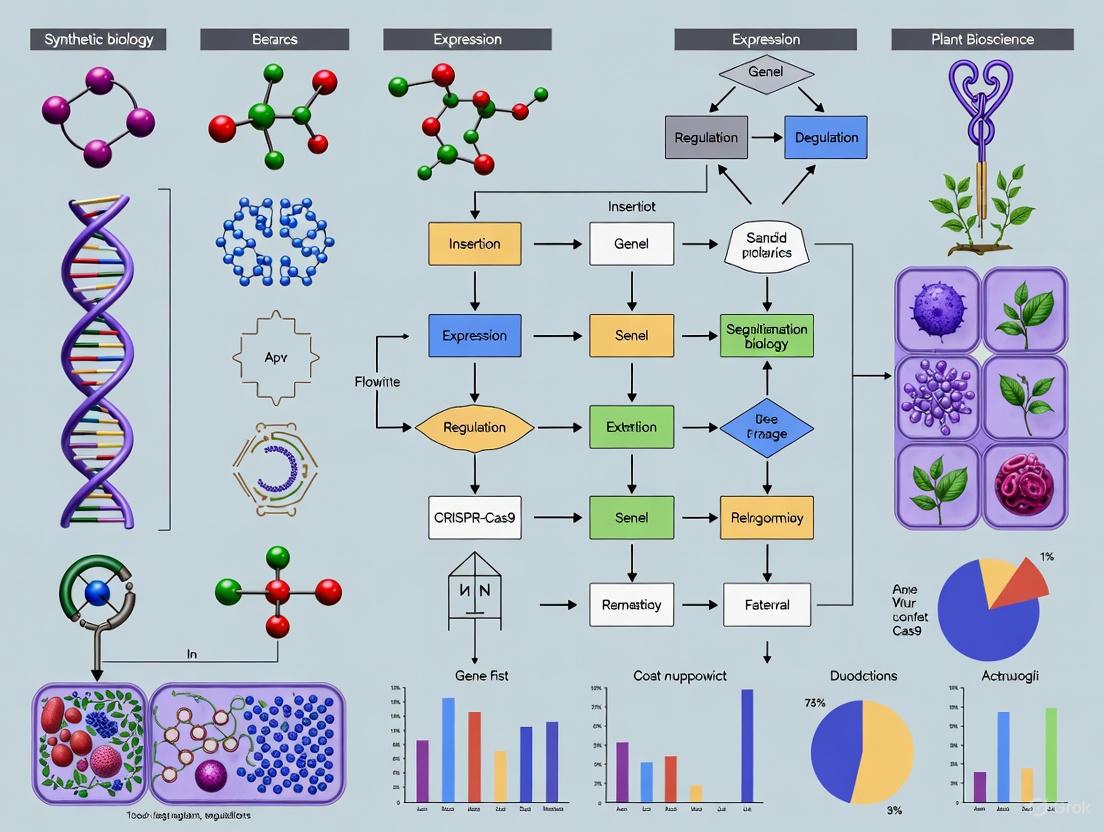
This article explores the transformative role of synthetic biology in reprogramming plant systems for advanced biomedical and pharmaceutical applications.
Plant Synthetic Biology: Engineering Programmable Bio-factories for Pharmaceuticals and Biomedicine
Abstract
This article explores the transformative role of synthetic biology in reprogramming plant systems for advanced biomedical and pharmaceutical applications. It details the foundational technologies—from CRISPR-based genome editing to omics-driven pathway discovery—that enable the engineering of plant chassis. We examine methodological advances for producing complex therapeutic molecules, troubleshoot key bottlenecks in transformation and pathway stability, and provide a comparative analysis of plant-based versus microbial production platforms. Aimed at researchers and drug development professionals, this review synthesizes current capabilities and future trajectories for using plant synthetic biology to create sustainable, scalable bio-factories for high-value biomolecules.
Core Principles and Technological Foundations of Plant Synthetic Biology
The convergence of DNA synthesis, CRISPR/Cas systems, and computational modeling is revolutionizing plant synthetic biology, creating a powerful toolkit for engineering plant biosystems [1]. This technological triad enables researchers to move beyond simple genetic modifications toward the comprehensive design and construction of novel biological systems in plants. These advancements are pivotal for addressing global challenges in sustainable agriculture, biomedicine, and climate resilience by facilitating the development of plants with enhanced nutritional profiles, improved environmental stress tolerance, and the capacity to produce valuable pharmaceutical compounds [1] [2]. The integration of these technologies follows an iterative Design-Build-Test-Learn (DBTL) framework, which allows for the systematic optimization of complex genetic traits and metabolic pathways [1]. This technical guide examines the principles, applications, and methodologies of these core enabling technologies within the context of modern plant bioscience research.
DNA Synthesis and Assembly in Plant Bioengineering
DNA synthesis technology provides the foundational building blocks for plant synthetic biology by enabling the de novo construction of genetic elements and pathways. This capability allows researchers to bypass the constraints of naturally occurring sequences and create optimized, refactored genetic components tailored for specific functions in plant systems [3]. The synthesis of standardized, modular DNA parts—including promoters, coding sequences, and terminators—has been crucial for assembling complex genetic circuits with predictable behaviors in plant chassis [3].
Advanced DNA assembly techniques now enable the reconstruction of entire plant natural product (PNP) biosynthetic pathways in heterologous hosts. A prominent application is the rapid testing of biosynthetic pathways using transient expression systems in Nicotiana benthamiana, a versatile plant chassis valued for its large leaf biomass and efficient Agrobacterium-mediated transformation [1]. For instance, the reconstruction of the diosmin biosynthetic pathway required the coordinated expression of five to six flavonoid pathway enzymes, resulting in production yields up to 37.7 µg/g fresh weight in tobacco leaves [1]. Similarly, successful pathway reconstructions have been demonstrated for compounds including costunolide, linalool, triterpenoid saponins, and key paclitaxel (anti-cancer) intermediates [1].
Table 1: DNA Synthesis Applications in Plant Metabolic Pathway Engineering
| Application Area | Technical Approach | Key Outcome | Reference Plant Chassis |
|---|---|---|---|
| Flavonoid Production | Coordinated expression of 5-6 enzymes (dioxygenases, methyltransferases) | Diosmin production at 37.7 µg/g FW | Nicotiana benthamiana [1] |
| Terpenoid Engineering | Reconstruction of terpenoid precursor pathways | Production of costunolide and linalool | Nicotiana benthamiana [1] |
| Pharmaceutical Intermediates | Expression of complex plant-derived biosynthetic enzymes | Synthesis of paclitaxel precursors | Nicotiana benthamiana [1] |
| Saponin Production | Assembly of triterpenoid biosynthetic gene clusters | Reconstitution of triterpenoid saponin pathways | Nicotiana benthamiana [1] |
Experimental Protocol: Transient Pathway Expression in N. benthamiana
Methodology for Rapid Reconstruction of Plant Natural Product Pathways [1]
Pathway Design and DNA Synthesis: Identify target biosynthetic pathway genes through omics data mining and bioinformatics analysis. Design codon-optimized sequences for plant expression and synthesize individual genetic components.
Vector Assembly: Clone synthesized genes into plant expression vectors under the control of suitable constitutive or inducible promoters. Employ standardized modular cloning systems (Golden Gate, MoClo) for efficient multigene assembly.
Agrobacterium Transformation: Introduce assembled constructs into Agrobacterium tumefaciens strains (e.g., GV3101, LBA4404) using electroporation or freeze-thaw methods. Select positive clones on appropriate antibiotics.
Plant Infiltration: Grow N. benthamiana plants for 4-5 weeks under controlled conditions. Prepare Agrobacterium cultures (OD600 = 0.5-1.0) in infiltration medium (10 mM MES, 10 mM MgCl2, 150 µM acetosyringone). Incubate cultures for 2-4 hours at room temperature with agitation. Infiltrate bacterial suspensions into the abaxial side of leaves using a needleless syringe.
Incubation and Analysis: Maintain infiltrated plants for 5-7 days post-infiltration. Harvest leaf tissue for metabolite extraction and analysis via LC-MS/GC-MS to quantify pathway intermediates and final products.
CRISPR/Cas Systems for Precision Plant Genome Editing
CRISPR/Cas systems have emerged as the foremost technology for precision genome engineering in plants, enabling targeted modifications that range from simple gene knockouts to precise nucleotide substitutions [4] [5]. These systems function as programmable nucleases that create double-strand breaks (DSBs) at specific genomic locations, harnessing the cell's endogenous DNA repair mechanisms—either error-prone non-homologous end joining (NHEJ) or homology-directed repair (HDR)—to introduce desired genetic changes [4]. The classification of CRISPR-Cas systems includes two primary classes: Class 1 (types I, III, and IV) utilizing multi-subunit effector complexes, and Class 2 (types II, V, and VI) employing single-protein effectors such as Cas9, Cas12, and Cas13 [5].
Recent advancements have substantially diversified the plant genome editing toolbox beyond the commonly used Streptococcus pyogenes Cas9 (SpCas9). Novel CRISPR-associated proteins including Cas12a, Cas12f, and Cas13 offer distinct PAM specificities, smaller molecular sizes for easier delivery, and expanded targeting capabilities including RNA interference [5] [6]. The development of base editing and prime editing systems enables precise nucleotide conversions without requiring double-strand breaks, significantly expanding the scope of achievable edits while reducing unintended mutations [6]. Furthermore, AI-driven protein design has begun generating novel CRISPR effectors; the OpenCRISPR-1 system, designed using large language models trained on 1.26 million CRISPR operons, demonstrates editing efficiency comparable to SpCas9 while being 400 mutations distant from any natural sequence [7].
Table 2: CRISPR/Cas Systems and Their Applications in Plant Genome Engineering
| System Type | Signature Protein | Target Molecule | Key Features & Plant Applications |
|---|---|---|---|
| Type II | Cas9 | DNA | Requires tracrRNA; most widely used for gene knockouts; employed in tomato GABA enhancement [1] [5] |
| Type V | Cas12 (Cpf1) | DNA | Single RNA guide; staggered DNA cuts; multiplex editing capability [5] [6] |
| Type VI | Cas13 | RNA | RNA targeting; knockdown without genomic alteration; viral interference [5] |
| Base Editors | dCas9-fusion | DNA | Precision C>T or A>G conversions without DSBs; point mutation correction [6] |
| Prime Editors | Cas9-reverse transcriptase | DNA | Targeted insertions, deletions, and all base-to-base conversions; template-driven editing [6] |
| AI-Designed | OpenCRISPR-1 | DNA | Novel effector with high specificity and efficiency; compatible with base editing [7] |
Experimental Protocol: CRISPR/Cas9-Mediated Genome Editing in Plants
Methodology for Targeted Gene Knockout in Tomato [1]
Target Selection and gRNA Design: Identify target gene sequences (e.g., SlGAD2 and SlGAD3 for GABA biosynthesis). Design 20-nucleotide guide RNA sequences adjacent to 5'-NGG-3' PAM sites. Validate target specificity to minimize off-target effects.
Vector Construction: Clone gRNA expression cassettes into CRISPR/Cas9 binary vectors under the control of U6 or U3 Pol III promoters. Assemble multigene constructs for multiplexed editing when targeting multiple loci.
Plant Transformation: Introduce CRISPR constructs into tomato explants via Agrobacterium-mediated transformation. For tomato, use cotyledon or hypocotyl explants from 7-10 day old seedlings. Co-cultivate with Agrobacterium for 2-3 days, then transfer to selection media containing antibiotics.
Regeneration and Selection: Regenerate transformed tissues on shoot induction media followed by root induction media. Screen putative transformants using PCR and restriction enzyme digestion assays.
Mutation Analysis: Genotype T0 plants by sequencing the target regions to detect indel mutations. Evaluate editing efficiency and specificity. Measure phenotypic outcomes (e.g., 7-15 fold GABA accumulation in edited tomato lines) [1].
The following diagram illustrates the core mechanism of the CRISPR/Cas9 system for creating targeted gene knockouts:
Computational Modeling and Design in Plant Synthetic Biology
Computational modeling provides the predictive framework essential for rational design in plant synthetic biology, transforming the field from trial-and-error experimentation to forward-engineered biological systems [3]. Modeling approaches span multiple scales, from predicting the behavior of individual genetic parts to simulating complex metabolic networks and synthetic gene circuits. The integration of multi-omics data (genomics, transcriptomics, proteomics, metabolomics) with computational models enables the reconstruction of complete biosynthetic networks and identification of key regulatory nodes for engineering interventions [1].
A significant advancement in computational design is the application of large language models (LMs) for protein engineering. Researchers have successfully generated novel CRISPR-Cas effectors by fine-tuning LMs on the "CRISPR-Cas Atlas"—a curated dataset of over 1.2 million CRISPR operons mined from 26 terabases of microbial genomes and metagenomes [7]. These AI-designed editors, such as OpenCRISPR-1, exhibit comparable or improved activity and specificity relative to natural Cas9 proteins while being highly divergent in sequence, demonstrating the power of computational approaches to expand the molecular toolkit available for plant engineering [7].
Computational tools also enable the quantitative characterization of genetic parts, a prerequisite for constructing predictable genetic circuits. By measuring parameters such as promoter strength, ribosome binding site efficiency, and terminator activity, researchers can develop mathematical models that predict the input-output relationships (transfer functions) of genetic components [3]. This quantitative understanding allows for the in silico design of synthetic circuits with predefined behaviors before implementation in plant systems.
Experimental Protocol: DBTL Framework for Plant Metabolic Engineering
Methodology for Design-Build-Test-Learn Cycles in Plant Synthetic Biology [1]
Design Phase: Utilize multi-omics data to identify biosynthetic pathways and key regulatory elements. Apply computational modeling to predict flux distributions and potential bottlenecks. Select appropriate genetic parts based on quantitative characterization data.
Build Phase: Assemble designed genetic constructs using standardized modular cloning systems. Transform constructs into plant chassis (e.g., N. benthamiana for transient expression or target crop for stable transformation) via Agrobacterium-mediated delivery or other transformation methods.
Test Phase: Analyze transformants using targeted metabolomics (LC-MS, GC-MS) to quantify pathway intermediates and products. Evaluate system performance under different growth conditions and temporal patterns. Assess genetic stability and potential unintended effects.
Learn Phase: Apply computational tools to analyze experimental results and refine model parameters. Identify limitations and failure modes. Use insights to inform redesign strategies for subsequent DBTL cycles, progressively optimizing system performance.
The following diagram illustrates the iterative DBTL framework central to modern plant synthetic biology:
Integrated Workflow: Pathway Engineering via Synergistic Technology Application
The full potential of plant synthetic biology emerges when DNA synthesis, CRISPR/Cas systems, and computational modeling operate synergistically within integrated workflows. This integration is exemplified by recent advances in plant metabolic engineering for the production of high-value compounds. The workflow begins with computational mining of multi-omics datasets to identify candidate genes involved in specialized metabolite biosynthesis, followed by functional validation of these candidates in heterologous systems [1]. Subsequently, CRISPR/Cas systems are employed to engineer the native plant metabolism to enhance precursor supply or remove competing pathways, while synthesized transgenes are introduced to reconstruct or augment target pathways.
A key consideration in integrated plant engineering is the quantitative understanding of transformation dynamics. Recent research has revealed density-dependent antagonistic interactions during Agrobacterium-mediated transformation, where increasing total bacterial density reduces the transformation efficiency per bacterium [8]. This finding has led to the development of modified transformation models incorporating an "antagonism correction parameter" and engineering solutions such as the dual binary vector (BiBi) system to overcome these limitations for complex pathway reconstitution [8].
The following diagram illustrates an integrated workflow for plant metabolic pathway engineering:
Essential Research Reagent Solutions
The successful implementation of plant synthetic biology approaches requires a comprehensive toolkit of research reagents and biological materials. The following table details key resources for conducting experiments in this field.
Table 3: Essential Research Reagent Solutions for Plant Synthetic Biology
| Reagent/Material | Function | Examples & Applications |
|---|---|---|
| Plant Chassis Systems | Host organisms for pathway engineering and trait testing | Nicotiana benthamiana (transient expression), staple crops (rice, tomato, poplar) for stable transformation [1] |
| Binary Vectors | T-DNA delivery systems for plant transformation | pCAMBIA, pGreen, pEAQ vectors; BiBi system for complex pathway expression [8] |
| Agrobacterium Strains | Bacterial delivery vehicle for plant genetic transformation | GV3101, LBA4404, EHA105; engineered for improved efficiency [1] [8] |
| Modular Cloning Systems | Standardized assembly of genetic constructs | Golden Gate (MoClo) systems for plant synthetic biology [3] |
| CRISPR/Cas Systems | Precision genome editing tools | Cas9, Cas12a, base editors, prime editors; AI-designed OpenCRISPR-1 [7] [5] [6] |
| Fluorescent Reporters | Visual markers for transformation efficiency and gene expression | sfGFP, mCherry, tagBFP2 with nuclear localization signals [8] |
| Bioinformatics Tools | Computational analysis and design resources | Pathway prediction algorithms, gRNA design tools, protein language models [1] [7] |
| Analytical Standards | Metabolite quantification and validation | Reference compounds for LC-MS/GC-MS analysis of pathway products [1] |
The Design-Build-Test-Learn (DBTL) cycle is a systematic, iterative framework central to synthetic biology, enabling the engineering of biological systems for predictable outcomes such as the production of valuable compounds [@citation:1]. This framework provides a structured approach to overcome the traditional ad-hoc practices that have long hindered biological engineering, leading to significantly shortened development times [@citation:1]. In contrast to traditional molecular biology, which typically modifies existing genes, synthetic biology enables the bottom-up design of multigene networks, regulatory modules, and synthetic circuits tailored to specific goals [@citation:4]. The cycle begins with the Design phase, where researchers define objectives and design biological parts or systems using computational models and domain knowledge. The Build phase involves synthesizing DNA constructs and assembling them into vectors, which are then introduced into a characterization system such as bacteria, plants, or cell-free platforms. The Test phase experimentally measures the performance of the engineered constructs, and the Learn phase analyzes this data to inform the next design iteration [@citation:3]. This recursive process is repeated until a biological system meets the desired specifications, streamlining efforts to build functional biological systems [@citation:1] [9].
The application of the DBTL cycle is particularly valuable for addressing complex traits in plants, such as drought tolerance, disease resistance, and yield, which are controlled by multiple genes [@citation:7]. Within the emerging bioeconomy, plants serve as renewable and cost-effective sources of foods, fuels, and chemicals, and the DBTL cycle provides the necessary framework for their systematic enhancement [@citation:7]. Recent advances, particularly the integration of machine learning (ML) and automation, are transforming the DBTL cycle from a largely manual, time-consuming process into a powerful, high-throughput engine for biological design [@citation:1] [10] [11]. These advancements are paving the way for a more predictive and efficient approach to bioengineering, with profound implications for agriculture, therapeutics, and sustainable manufacturing.
The Core Components of the DBTL Cycle
Design
The Design phase is the foundational first step where researchers define the genetic blueprint for the biological system. This involves selecting and arranging standardized biological parts (e.g., promoters, coding sequences, terminators) to achieve a desired function [@citation:2]. In modern synthetic biology, this phase heavily relies on computational tools and models. For metabolic engineering, the objective is often to design a pathway that maximizes the flux toward a product of interest [@citation:5]. The design process can target individual genetic parts or complex multigene pathways. For plants, this often involves multigene engineering (MGE), which is the simultaneous ectopic expression, up/down-regulation, or editing of multiple genes to enhance complex traits [@citation:7].
Build
The Build phase translates the in silico design into a physical biological reality. This involves the synthesis and assembly of DNA constructs, which are then introduced into a living chassis (such as bacteria, yeast, or plants) or cell-free systems [@citation:3]. A key enabler of this phase is the emphasis on modular design and automation. Modular DNA parts allow for the assembly of a greater variety of constructs by interchanging individual components, while automation reduces the time, labor, and cost of generating multiple constructs [@citation:2]. High-throughput robotic systems and advanced DNA assembly techniques, such as ligase chain reaction (LCR) and uracil-specific excision reagent (USER) cloning, are increasingly used to accelerate this process [@citation:9]. In plant bioengineering, the Build phase involves DNA assembly and plant transformation to create the engineered lines [@citation:7].
Test
The Test phase is dedicated to the molecular, biochemical, and physiological characterization of the built biological system to determine its performance [@citation:7]. This involves a variety of assays to measure the output, such as the production titer of a target molecule, or the profiling of multi-omics data (e.g., transcriptomics, proteomics, metabolomics) [@citation:1]. Automation is critical in this phase to achieve the necessary throughput, reliability, and reproducibility. High-throughput screening methods, laboratory robotics, and automated data analysis pipelines are employed to test hundreds or thousands of constructs efficiently [@citation:8]. For metabolic engineering, the key performance metrics are often summarized as TYR: Titer, Yield, and Rate *[@citation:5]*.
Learn
The Learn phase is the analytical core of the cycle, where data from the Test phase is used to extract insights and generate knowledge that will inform the next design round. Traditionally, this involved statistical analysis and comparison to the initial design objectives [@citation:3]. Today, machine learning (ML) is revolutionizing this phase by learning the underlying regularities in experimental data to predict system behavior without requiring a full mechanistic understanding [@citation:1] [10]. This is particularly powerful in biological systems where complexity often precludes accurate first-principles modeling. The learning can be used to refine models, identify bottlenecks, and predict which new designs have the highest probability of success in the next iteration [@citation:5] [12].
Table 1: Core Phases of the DBTL Cycle and Their Key Activities
| DBTL Phase | Primary Objective | Key Activities & Technologies |
|---|---|---|
| Design | Create a genetic blueprint to achieve a desired function | Computational modeling, part selection, multigene pathway design, promoter engineering [@citation:2] [13] |
| Build | Construct the physical biological system | DNA synthesis & assembly, modular cloning, plant transformation, automation [@citation:2] [11] |
| Test | Characterize the performance of the built system | High-throughput screening, multi-omics profiling (proteomics, metabolomics), biosensors [@citation:1] [14] |
| Learn | Analyze data to inform the next design iteration | Machine learning, statistical analysis, model refinement, uncertainty quantification [@citation:1] [10] |
The Machine Learning-Powered DBTL Cycle
Machine learning (ML) has emerged as a transformative force within the DBTL cycle, particularly in the Learn and Design phases, by providing powerful predictive capabilities that guide engineering decisions [@citation:1] [10].
Machine Learning in the Learn Phase
The Learn phase has traditionally been the most weakly supported part of the cycle, but ML directly addresses this gap [@citation:1]. ML algorithms are trained on experimental data to statistically link input variables (e.g., proteomics data, promoter sequences) to output responses (e.g., production of a target molecule) [@citation:1]. A key tool exemplifying this approach is the Automated Recommendation Tool (ART). ART uses an ensemble of ML models and probabilistic modeling to provide recommendations for the next cycle's strains to build, alongside predictions of their production levels [@citation:1]. Instead of providing a single prediction, ART quantifies uncertainty by providing a full probability distribution of possible outcomes, which is crucial for making informed decisions with sparse and expensive biological data [@citation:1] [15].
Machine Learning in the Design Phase
ML is also shifting the paradigm by moving "Learning" to the beginning of the cycle. With the advent of large biological datasets and sophisticated models, it is now possible to perform zero-shot design, where ML models generate functional designs without the need for iterative DBTL cycling [@citation:3]. This is often referred to as the LDBT (Learn-Design-Build-Test) paradigm [@citation:3]. Protein language models (e.g., ESM, ProGen), trained on millions of protein sequences, can predict beneficial mutations and infer protein function directly from sequence, enabling the design of novel biocatalysts without additional experimental training data [@citation:3]. Similarly, structure-based models like ProteinMPNN can design sequences that fold into a desired backbone, leading to a nearly 10-fold increase in design success rates when combined with structure assessment tools like AlphaFold [@citation:3].
Hybrid AI Approaches
For complex applications like plant engineering, Hybrid AI is becoming essential. This approach combines different AI paradigms: the transparency and logical structure of symbolic AI (e.g., knowledge graphs) with the pattern-finding capabilities of machine learning and the creative potential of generative AI and large language models (LLMs) [@citation:4]. Knowledge graphs provide organized maps of biological relationships, which, when integrated with LLMs, enable deeper, context-aware analysis and more reliable design generation [@citation:4]. This hybrid strategy is particularly suited for integrating multi-omics, phenotypic, and environmental information to tackle complex traits in crops [@citation:4].
Figure 1: The ML-Augmented DBTL Cycle. Machine learning powers the Learn phase and enables zero-shot design in the Design phase, creating a more predictive and efficient engineering loop.
Implementing DBTL in Plant Bioscience: A Detailed Workflow
The application of the DBTL cycle in plant bioscience requires a tailored workflow to address the unique challenges of plant systems, such as longer life cycles and complex multigene traits. The following section outlines a detailed protocol and provides a toolkit for implementation.
Experimental Protocol: A Knowledge-Driven DBTL for Metabolic Engineering
The following protocol, inspired by successful DBTL implementations, describes a knowledge-driven approach for optimizing a metabolic pathway in a plant chassis. This methodology integrates upstream in vitro testing to de-risk the initial design, accelerating the entire development process [@citation:10].
Phase 1: In Vitro Pathway Prototyping (Pre-DBTL Knowledge Gathering)
- Objective: Bypass whole-cell constraints to rapidly test enzyme combinations and identify potential bottlenecks before in vivo strain construction.
- Cell-Free Protein Synthesis (CFPS):
- Prepare a crude cell lysate system from the plant chassis or a model microorganism (e.g., E. coli).
- Clone genes of interest (e.g., pathway enzymes HpaBC and Ddc for dopamine production) into expression plasmids under an inducible promoter [@citation:10].
- Express the enzymes individually and in combination using the CFPS system.
- Assay: Supplement the CFPS reaction buffer with the pathway precursor (e.g., L-tyrosine) and key cofactors (e.g., FeCl₂, vitamin B6). Incubate and quantify intermediate and final product formation (e.g., L-DOPA, dopamine) using HPLC or LC-MS [@citation:10].
- Data Analysis: Determine the relative expression levels and activities of the enzymes. Identify optimal enzyme ratios that maximize pathway flux in the simplified in vitro environment.
Phase 2: First Full DBTL Cycle
- Design (D1):
- Based on the in vitro results, design a bicistronic construct for the metabolic pathway.
- To fine-tune the relative expression levels of the two enzymes in vivo, design a library of Ribosome Binding Site (RBS) variants for one or both genes. Tools like the UTR Designer can be used to modulate the Shine-Dalgarno sequence while minimizing changes to mRNA secondary structure [@citation:10].
- Build (B1):
- Use high-throughput DNA assembly (e.g., Golden Gate assembly) to clone the RBS library and the pathway genes into a plant transformation vector.
- Transform the constructs into Agrobacterium and subsequently into the plant chassis (e.g., Nicotiana benthamiana for transient expression or generate stable transgenic lines).
- Test (T1):
- Cultivate the engineered plant lines in a controlled environment.
- Induce gene expression and sample tissues at multiple time points.
- Quantification: Extract metabolites and measure the titer of the target compound (e.g., dopamine) using LC-MS/MS. Normalize the production to biomass (mg/g) [@citation:10].
- For a subset of high-performing lines, perform targeted proteomics to verify the correlation between designed RBS strength, enzyme concentration, and product titer.
- Learn (L1):
- Train a machine learning model (e.g., Random Forest or Gradient Boosting, which perform well in low-data regimes [@citation:5]) on the dataset linking RBS sequences to product titer.
- Use the model to predict the performance of untested RBS variants and identify the most promising designs for the next cycle.
Phase 3: Iterative DBTL Cycling
- Design (D2): Use the model from L1 to design a second, more refined RBS library focused on the predicted high-performance region of the sequence space.
- Build (B2) & Test (T2): Construct and test the new library. The testing should include a replication of the best-performing strain from the first cycle as an internal benchmark.
- Learn (L2): Update the ML model with the new experimental data. This iterative process continues until the performance specifications (e.g., a target titer) are met.
Table 2: The Scientist's Toolkit: Essential Reagents for DBTL in Plant Metabolic Engineering
| Reagent/Tool | Function/Description | Application in Protocol |
|---|---|---|
| Cell-Free Protein Synthesis (CFPS) System | Crude cell lysate containing transcriptional/translational machinery for in vitro protein expression [@citation:3] [12]. | Phase 1: Rapidly test enzyme functionality and pathway flux without live cells. |
| Golden Gate Assembly | A modular, type IIS restriction enzyme-based DNA assembly method that allows for seamless, high-throughput cloning [@citation:9]. | Phase 2 (B1): Assemble multigene constructs and RBS libraries efficiently. |
| RBS Library | A set of DNA sequences with variations in the Ribosome Binding Site to systematically fine-tune translation initiation rates [@citation:10]. | Phase 2 (D1): Precisely control the relative expression levels of pathway enzymes. |
| Automated Recommendation Tool (ART) | A machine learning tool that uses probabilistic modeling to recommend strains for the next DBTL cycle [@citation:1]. | Phase 2 (L1) & Phase 3: Analyze data and provide model-driven recommendations for subsequent designs. |
| LC-MS/MS | Liquid Chromatography with Tandem Mass Spectrometry, a highly sensitive analytical technique for identifying and quantifying metabolites. | All Test Phases: Accurately measure the concentration of the target product and pathway intermediates. |
Figure 2: Knowledge-Driven DBTL Workflow. This protocol uses upstream in vitro testing to de-risk the initial design, creating a more efficient and mechanistic path to an optimized plant line.
The DBTL cycle, supercharged by machine learning and automation, represents a cornerstone of modern predictive engineering in biology. By transitioning from ad-hoc experimentation to a systematic, iterative framework, it dramatically accelerates the development of biological systems with desired functions [@citation:1]. For plant bioscience, this approach is indispensable for tackling the multigene complexity of key agricultural traits, from stress resilience to metabolic engineering for the bioeconomy [@citation:4] [13]. The integration of hybrid AI, cell-free prototyping, and automated biofoundries is steadily shifting the paradigm from empirical iteration toward true rational design [@citation:3] [11]. As these tools and data sets continue to mature, the DBTL cycle will undoubtedly become the primary engine for engineering the next generation of sustainable agricultural and industrial solutions.
The elucidation of plant biosynthetic pathways is fundamental to advancing a sustainable bioeconomy by enabling access to complex natural products through synthetic biology [16]. Plant natural products (PNPs), also known as plant secondary metabolites, play indispensable roles in ecological balance, human health, industrial applications, and biodiversity conservation [17]. These specialized metabolites include a vast array of chemically diverse compounds with significant pharmaceutical and nutraceutical value, such as the antimalarial precursor artemisinin and the anticancer drug paclitaxel [1] [18]. However, a critical challenge persists: the biosynthetic routes for the majority of these valuable compounds remain largely undetermined, creating a major bottleneck for their sustainable production through engineered biological systems [19].
In the post-genomic era, the integration of multiple omics technologies—genomics, transcriptomics, and metabolomics—has emerged as a transformative approach for deciphering these complex biosynthetic pathways [20] [21]. This integrated methodology leverages the complementary strengths of each omics discipline to bridge the gap between genetic information and metabolic phenotypes. While single-omics approaches provide valuable but fragmented insights, multi-omics integration offers a systems-level perspective that can accelerate pathway discovery by establishing correlations between gene expression, protein function, and metabolite accumulation [20]. The power of this integrated approach lies in its ability to mitigate false positives, refine validation targets, and provide mutual verification of findings across different molecular levels [20].
The application of integrated omics is particularly vital within the framework of plant synthetic biology, which aims to engineer plant systems for enhanced production of valuable biomolecules [1]. By providing comprehensive insights into plant metabolic networks, multi-omics data guides the rational design of synthetic pathways and informs the engineering of plant chassis or microbial cell factories for sustainable bioproduction [1] [22]. This technical guide explores the core principles, methodologies, and applications of omics integration for plant biosynthetic pathway discovery, with a specific focus on its pivotal role in advancing synthetic biology applications in plant bioscience research.
Core Omics Technologies and Their Roles in Pathway Elucidation
Genomic Foundations for Pathway Discovery
Genomics provides the fundamental blueprint for biosynthetic pathway discovery by cataloging an organism's complete genetic repertoire. Advancements in sequencing technologies have been pivotal, transitioning from early methods to today's high-quality, chromosome-scale genome assemblies [17] [18]. Exceptional platforms like PacBio's Single-Molecule Real-Time (SMRT) sequencing and Oxford Nanopore Technologies now enable the resolution of complex genomic regions previously inaccessible with short-read technologies [20]. These technological leaps are particularly significant for plant species, whose genomes often contain extensive repetitive regions and complex gene families involved in specialized metabolism [17].
A key genomic strategy for pathway identification involves the detection of Biosynthetic Gene Clusters (BGCs)—physical groupings of genes encoding enzymes that participate in the same biosynthetic pathway [18]. While common in bacterial and fungal systems, plant BGCs are increasingly being recognized for their role in synthesizing specific classes of natural products, such as terpenes, alkaloids, and cyanogenic glucosides [18]. Genomic mining for BGCs utilizes tools like plantiSMASH, which can identify co-localized biosynthetic genes and predict their chemical products based on domain analysis and comparative genomics [18]. Beyond BGC identification, genome-wide association studies (GWAS) leverage natural genetic variation across different plant accessions to link specific genomic regions with metabolic traits, helping to pinpoint candidate genes controlling the production of valuable specialized metabolites [17].
Transcriptomic Insights into Gene Expression Dynamics
Transcriptomics captures the dynamic expression of RNA molecules, serving as a crucial bridge between the static genome and the functional proteome [20] [21]. By quantifying genome-wide mRNA expression patterns under specific conditions—such as different tissues, developmental stages, or environmental treatments—transcriptomics can identify co-expression networks where genes encoding enzymes in the same pathway show correlated expression profiles [1] [17]. This approach has proven particularly powerful for discovering novel genes in plant biosynthetic pathways, especially when combined with metabolomic data to establish strong correlations between gene expression and metabolite accumulation [1] [20].
The evolution of transcriptomic technologies has progressed from hybridization-based methods (e.g., DNA microarrays) to sequencing-based approaches, with RNA sequencing (RNA-seq) emerging as the current gold standard due to its high throughput, single-nucleotide resolution, and ability to detect novel transcripts and alternative splicing events [21]. The typical RNA-seq workflow involves RNA extraction, fragmentation, cDNA synthesis, adapter ligation, PCR enrichment, and high-throughput sequencing, followed by sophisticated bioinformatic analysis of the resulting reads [21]. More recently, single-cell RNA sequencing (scRNA-seq) has enabled transcriptomic profiling at single-cell resolution, uncovering cellular heterogeneity and cell type-specific expression patterns critical for understanding the spatial organization of biosynthetic pathways within plant tissues [21].
Metabolomic Profiling of Pathway Outputs
Metabolomics provides the most functional readout of cellular processes by comprehensively profiling the low-molecular-weight metabolites (<1 kDa) within a biological system [21]. As the final products of biochemical processes catalyzed by enzymes, metabolites offer direct molecular insights into the biochemistry of organisms at a given time and under specific conditions [20]. A key advantage of metabolomics lies in its hypothesis-free nature, enabling unbiased metabolite profiling across diverse plant species without prior biochemical or genetic knowledge [21].
Current metabolomic workflows rely on complementary analytical platforms, each with distinct strengths and applications in pathway discovery [21]. Liquid Chromatography-Mass Spectrometry (LC-MS) has become the most widely used platform due to its broad coverage of polar and non-polar compounds, including lipids and phenolic acids, without requiring derivatization [16] [21]. Gas Chromatography-Mass Spectrometry (GC-MS) excels in profiling thermally stable, volatile metabolites through chemical derivatization, offering high resolution and reproducibility for primary metabolites [21]. Nuclear Magnetic Resonance (NMR) spectroscopy provides valuable structural information with minimal sample preparation but has lower sensitivity compared to MS-based methods [21]. Capillary Electrophoresis-Mass Spectrometry (CE-MS) specializes in separating highly polar and ionic compounds like amino acids and organic acids based on their charge-to-mass ratio in an electric field [21].
Table 1: Key Analytical Platforms in Metabolomics
| Platform | Key Applications | Strengths | Limitations |
|---|---|---|---|
| LC-MS | Broad detection of polar/non-polar compounds (e.g., lipids, phenolic acids) | No derivatization required; high sensitivity | Matrix effects can suppress ionization |
| GC-MS | Volatile and thermally stable metabolites | High resolution and reproducibility | Requires chemical derivatization |
| NMR | Structural elucidation of metabolites | Minimal sample preparation; quantitative | Lower sensitivity; cannot detect trace metabolites |
| CE-MS | Highly polar and ionic compounds (e.g., amino acids, organic acids) | Efficient separation of charged molecules | Limited to ionic/polar compounds |
Advanced data analysis strategies have significantly enhanced metabolomic capabilities for pathway discovery. Molecular networking, based on tandem MS (MS/MS) data, groups structurally related metabolites by comparing their fragmentation patterns, enabling the visualization of chemical relationships and the annotation of unknown compounds within the context of known metabolites [16] [18]. Reaction pair analysis identifies pairs of metabolites that could be interconverted by a single enzymatic reaction, suggesting potential substrate-product relationships within pathways [16]. When integrated with genomic and transcriptomic data, these approaches create powerful frameworks for linking genes to metabolites through shared expression patterns.
Integrated Omics Workflows for Pathway Discovery
Conceptual Framework and Experimental Design
The integration of genomics, transcriptomics, and metabolomics follows a systematic workflow designed to progressively narrow candidate genes and validate their functions within biosynthetic pathways. This conceptual framework leverages the complementary nature of these technologies to establish tripartite correlations between genomic loci, gene expression patterns, and metabolite abundances [17]. A typical integrated omics workflow begins with sample selection from multiple tissues, developmental stages, or environmental treatments to maximize molecular diversity, followed by parallel genomic/transcriptomic sequencing and metabolomic profiling [17] [18]. Bioinformatic integration then identifies associations between co-expressed genes and associated metabolites, prioritizing candidate genes for functional validation in heterologous systems [1] [18].
The power of this integrated approach is magnified when applied to plant populations with natural genetic variation or to experimental treatments that induce metabolic changes. For instance, studying different cultivars with distinct metabolic profiles or applying elicitors (e.g., jasmonate) that activate specialized metabolism can reveal consistent patterns of correlation between specific transcripts and metabolites across multiple conditions [17]. This multi-condition sampling strategy significantly enhances the statistical confidence in predicted gene-metabolite relationships and helps filter out false positives that might arise from random correlations in single-condition experiments.
Data Integration and Bioinformatics Strategies
Several sophisticated bioinformatic strategies have been developed to integrate multi-omics data for pathway discovery. Co-expression analysis represents one of the most widely used approaches, constructing networks where genes (nodes) are connected based on the similarity of their expression profiles across multiple samples [17]. When metabolites are included as additional nodes in these networks, strong connections between specific metabolites and genes can suggest enzymatic relationships, particularly when the genes encode enzymes with domains known to catalyze reactions consistent with the metabolic transformation [17] [18].
Phylogenetic analysis provides another powerful integration strategy by identifying orthologous genes across related species that produce similar metabolites, or conversely, detecting gene family expansions in lineages that have evolved particular metabolic capabilities [17]. For example, the discovery of triterpene biosynthetic pathways in the apple tribe was facilitated by phylogenetic analysis that revealed how polyploidy events led to the diversification of oxidosqualene cyclase genes, creating new metabolic functions [17].
Machine learning and artificial intelligence (AI) approaches are increasingly revolutionizing multi-omics data integration [16] [18]. Deep neural networks can learn complex patterns from large, heterogeneous omics datasets to predict gene functions and pathway associations with unprecedented accuracy [18]. AI-driven tools can also predict metabolite structures from mass spectrometry data and propose potential biosynthetic routes based on known biochemical transformations [16] [18]. These computational approaches are particularly valuable for prioritizing the most promising candidate genes for labor-intensive experimental validation, dramatically accelerating the pathway discovery pipeline.
Table 2: Key Bioinformatics Tools for Multi-Omics Integration in Pathway Discovery
| Tool Type | Representative Tools | Primary Function | Application in Pathway Discovery |
|---|---|---|---|
| Co-expression Analysis | WGCNA, CYTOSCAPE | Identify correlated gene expression patterns | Find genes co-expressed with metabolite abundance |
| Molecular Networking | GNPS, MetGem | Group related metabolites by MS/MS fragmentation | Visualize chemical relationships; annotate unknowns |
| Pathway Databases | KEGG, PlantCyc | Curated biochemical pathway knowledge | Map discovered metabolites to known pathways |
| Genome Mining | plantiSMASH, antiSMASH | Identify biosynthetic gene clusters (BGCs) | Discover co-localized biosynthetic genes |
| AI-Prediction | MSNovelist, MolDiscovery | Predict structures and biosynthetic relationships | Propose novel pathway structures from MS data |
The following diagram illustrates the conceptual workflow for integrated omics pathway discovery, showing how data from different omics layers are combined to generate candidate genes for experimental validation:
Experimental Validation and Synthetic Biology Applications
Heterologous Expression Systems for Pathway Validation
Once candidate biosynthetic genes are identified through integrated omics, they require experimental validation to confirm their functions and reconstruct complete pathways. Heterologous expression systems are indispensable for this validation step, allowing researchers to express plant biosynthetic genes in genetically tractable hosts [1]. These systems provide a controlled environment for testing enzyme activities, identifying pathway intermediates, and producing target metabolites that may be undetectable in the original plant source due to low abundance or transient accumulation [1].
Among plant-based heterologous systems, Nicotiana benthamiana has emerged as a particularly valuable platform for several reasons: its large leaves provide substantial biomass, it exhibits rapid growth, and it supports highly efficient Agrobacterium-mediated transient expression [1]. This system enables rapid testing of multiple gene combinations without the need for stable transformation, dramatically accelerating the validation process [1]. Successful examples of pathway reconstruction in N. benthamiana include the production of flavonoids such as diosmin (requiring coordinated expression of five to six enzymes) [1], costunolide, linalool [1], triterpenoid saponins [1], and key intermediates of the anticancer drug paclitaxel [1].
Microbial hosts like Escherichia coli and Saccharomyces cerevisiae continue to play important roles in validating plant biosynthetic genes, particularly for characterizing individual enzyme activities and optimizing precursor supply [1] [22]. However, microbial systems often face challenges in expressing functional plant cytochrome P450 enzymes—which frequently catalyze key oxidation steps in plant specialized metabolism—and may lack necessary cellular compartmentalization or cofactors [1]. Plant-based systems like N. benthamiana naturally accommodate these plant-specific features, making them increasingly preferred for validating complete pathways discovered through omics approaches.
Case Studies in Pathway Discovery and Engineering
Several compelling case studies demonstrate the power of integrated omics for discovering and engineering plant biosynthetic pathways. In tomato, integrated transcriptomics and metabolomics identified two glutamate decarboxylase genes (SlGAD2 and SlGAD3) expressed during fruit development [1]. CRISPR/Cas9-mediated editing of these genes increased gamma-aminobutyric acid (GABA) accumulation by 7- to 15-fold, demonstrating how targeted genome editing can enhance the production of functional compounds guided by omics data [1].
In another example, researchers applied co-expression analysis of transcriptomic and metabolomic data to identify candidate genes involved in tropane alkaloid biosynthesis, followed by functional validation of these candidates in yeast [1]. This integrated approach significantly accelerated pathway discovery by efficiently decoding complex plant metabolic networks and overcoming the traditional bottleneck of labor-intensive genetic screening [1].
The following diagram illustrates the Design-Build-Test-Learn (DBTL) cycle that frames the iterative process of pathway discovery and optimization in synthetic biology:
For the biosynthesis of diosmin, a flavonoid with pharmaceutical value, integrated omics guided the reconstruction of a complex pathway requiring the coordinated expression of five to six enzymes, including dioxygenases and methyltransferases, in N. benthamiana [1]. This engineered system achieved diosmin production at levels up to 37.7 µg/g fresh weight, demonstrating the potential of omics-guided synthetic biology for producing valuable plant natural products [1].
The Scientist's Toolkit: Essential Research Reagents and Platforms
Successful implementation of integrated omics approaches requires access to specialized research reagents, analytical platforms, and bioinformatic tools. The following table summarizes key solutions essential for conducting multi-omics research in plant biosynthetic pathway discovery:
Table 3: Essential Research Reagents and Platforms for Integrated Omics Studies
| Category | Specific Tools/Reagents | Key Function | Application Notes |
|---|---|---|---|
| Sequencing Platforms | Illumina NovaSeq, PacBio Sequel, Oxford Nanopore | Genomic and transcriptomic sequencing | Long-read technologies essential for complex plant genomes |
| Mass Spectrometry Systems | LC-MS/MS, GC-MS, CE-MS systems | Metabolite separation and detection | High-resolution tandem MS needed for molecular networking |
| Bioinformatic Tools | GNPS, XCMS, MS-DIAL, MZmine | Metabolomic data processing | Enable peak detection, alignment, and metabolite annotation |
| Heterologous Expression Systems | Nicotiana benthamiana, Saccharomyces cerevisiae, Escherichia coli | Functional validation of candidate genes | Plant systems better for complex pathways with P450s |
| Genome Editing Tools | CRISPR/Cas9, base editors, prime editors | Targeted gene knockout/editing | Verify gene function in native plant hosts |
| Pathway Databases | KEGG, PlantCyc, MIBiG | Reference pathway information | Curated knowledge of known biosynthetic pathways |
| Co-expression Tools | plantiSMASH, CYTOSCAPE, WGCNA | Identify correlated gene expression | Find genes with similar patterns across conditions |
Future Perspectives and Concluding Remarks
The field of integrated omics for plant pathway discovery is rapidly evolving, driven by technological advancements in sequencing, mass spectrometry, and computational biology. Emerging approaches such as single-cell omics are poised to revolutionize our understanding of plant metabolism by resolving the cellular heterogeneity that has traditionally been obscured in bulk tissue analyses [21]. The integration of spatial metabolomics techniques, including mass spectrometry imaging, further enables the correlation of metabolite localization with specific cell types, providing critical insights into the compartmentalization of biosynthetic pathways [17] [21].
Artificial intelligence and machine learning are expected to play increasingly prominent roles in multi-omics data integration, with deep neural networks and other AI approaches capable of identifying complex patterns across massive, heterogeneous datasets [16] [18]. These technologies promise to streamline the pathway discovery process by improving gene function prediction, suggesting novel enzyme activities, and even proposing complete biosynthetic routes for uncharacterized metabolites [16]. As these tools mature, they will likely become integrated into user-friendly workflows that make sophisticated multi-omics analyses accessible to a broader range of plant scientists.
For the synthetic biology community, the accelerating pace of pathway discovery through integrated omics presents unprecedented opportunities for engineering sustainable production systems for plant natural products [1] [22]. By providing comprehensive parts lists of biosynthetic genes and regulatory elements, multi-omics approaches enable the rational design of synthetic pathways in optimized plant or microbial chassis [1] [22]. This capabilities alignment between discovery science and engineering applications represents a paradigm shift in how we access and utilize valuable plant-derived compounds, moving from extraction from natural sources to controlled, sustainable production through synthetic biology.
As these technologies converge, the future of plant biosynthetic pathway discovery will be characterized by increasingly integrated workflows that seamlessly combine multi-omics data generation, AI-powered analysis, and high-throughput validation—ultimately democratizing access to nature's chemical diversity and enabling new solutions to challenges in medicine, agriculture, and sustainable manufacturing.
Plant systems are rapidly emerging as robust and scalable platforms for the production of complex biologics and small molecules, offering distinct advantages over traditional microbial and mammalian cell cultures. This technical guide elucidates three core technical strengths—subcellular compartmentalization, eukaryotic post-translational modifications, and unique scalability—that position plant synthetic biology as a transformative force in biomedical and pharmaceutical research. Framed within the context of synthetic biology applications, this review provides drug development professionals with a foundational understanding of the engineering principles, quantitative benchmarks, and experimental protocols that underpin the use of plant chassis for sustainable, high-yield biomanufacturing.
Core Technical Advantages of Plant-Based Systems
The adoption of plant-based expression systems is gaining mainstream advantage for the production of complex biomolecules, from therapeutic proteins to vaccines [23]. While Chinese hamster ovary (CHO) cells have been the industry workhorse, plant systems offer a compelling alternative with benefits spanning from molecular to manufacturing scales.
Table 1: Comparative Analysis of Expression Systems
| Feature | Plant-Based Systems | Mammalian (CHO) Systems | Microbial (E. coli) Systems |
|---|---|---|---|
| Post-Translational Modifications | Eukaryotic; can be humanized; homogeneous glycoforms [23] | Complex eukaryotic; heterogeneous glycoforms [23] | Limited; no complex glycosylation |
| Production Scalability | Highly scalable by increasing plant biomass; lower upstream capital expenditure [23] | Scalable but requires complex bioreactor scale-up; high capital cost [23] | Highly scalable in fermenters |
| Production Time | ~25% faster than conventional bioreactors [23] | Slower due to cell culture and scale-up complexities [23] | Fast |
| Cost Structure | Lower upstream costs; less energy/water intensive [23] | High due to media and infrastructure needs [23] | Low |
| Risk of Contamination | Low risk of adventitious mammalian viruses [23] | High risk, requiring stringent controls | N/A |
| Product Complexity | Can express large, complex proteins (e.g., IgM) [23] | Can express complex proteins | Limited to simpler proteins |
The following diagram illustrates the logical relationship between the core advantages of plant systems and their resulting applications, forming a foundational concept for their use in synthetic biology.
Subcellular Compartmentalization
Functional Role in Metabolic Engineering
Subcellular compartmentalization is a fundamental plant-specific feature that enables the spatial separation of biochemical pathways. Organelles such as vacuoles, plastids, and the endoplasmic reticulum provide distinct biochemical environments that are critical for the biosynthesis of structurally complex metabolites [1]. This sequestration allows for:
- Toxic Intermediate Handling: Isolation of reactive pathway intermediates to prevent cellular damage.
- Optimal Enzyme Activity: Concentrating substrates and enzymes in a specialized environment (e.g., specific pH, co-factors) to enhance catalytic efficiency.
- Pathway Isolation: Preventing crosstalk between endogenous and engineered metabolic pathways.
Case Study: Engineered Compartmentalization of Rho GTPases
Although traditionally viewed as plasma membrane-associated proteins, active pools of Rho GTPases localize to various intracellular compartments, including endomembranes and the nucleus [24]. This localization is critically dependent on Post-Translational Modifications (PTMs) such as prenylation and palmitoylation, which act as trafficking signals [24].
Table 2: Key Post-Translational Modifications Driving Rho GTPase Compartmentalization
| GTPase | Post-Translational Modification | Site | Functional Role in Localization |
|---|---|---|---|
| Rac1 | Prenylation | Cys189 | Membrane association [24] |
| Rac1 | Palmitoylation | Cys178 | Reversible membrane anchoring; trafficking to specific membrane microdomains [24] |
| Rac1 | Phosphorylation | Tyr32, Tyr64 | Modulates interaction with regulators/effectors; can influence subcellular localization [24] |
Experimental Protocol: Investigating PTM-Driven Compartmentalization
- Objective: To determine the role of specific PTMs in the subcellular localization of a Rho GTPase.
- Methodology:
- Mutagenesis: Generate point mutants of the Rho GTPase (e.g., Rac1) where key modification residues (e.g., Cys178, Cys189) are substituted (e.g., Cys to Ser).
- Vector Construction: Fuse wild-type and mutant genes with a fluorescent protein tag (e.g., GFP).
- Transient Expression: Introduce constructs into a plant chassis like Nicotiana benthamiana via Agrobacterium-mediated infiltration [1].
- Confocal Microscopy: Image transformed leaf sections after 2-4 days to visualize the subcellular localization of the GFP-tagged proteins.
- Fractionation & Immunoblotting: Confirm localization biochemically by isolating cellular fractions (e.g., plasma membrane, nuclear, cytoplasmic).
Eukaryotic Post-Translational Modifications
Capabilities and Engineering for Human Therapeutics
As eukaryotic cells, plants possess the machinery to perform complex PTMs, with glycosylation being the most critical for therapeutic protein efficacy. A key advantage of plant systems is the tendency to produce a more homogeneous and consistent glycoform pattern compared to the heterogeneity often seen in mammalian cell cultures, which can be affected by culture conditions and scale-up [23].
This platform has been validated by the approval of Medicago's COVIFENZ, a plant-made COVID-19 vaccine, in Canada in 2022 [23]. For monoclonal antibodies (mAbs), plants can deliver a more homogeneous N-linked glycosylation pattern, providing greater assurance that the desired, most efficacious glycoform is represented in the final product [23]. This is particularly valuable for producing afucosylated mAbs for immuno-oncology, which exhibit enhanced potency via greater antibody-dependent cellular cytotoxicity (ADCC) [23].
Experimental Workflow for Glyco-Engineering
The following diagram outlines a standard workflow for engineering and producing a recombinant therapeutic protein in a plant system, from design to functional validation.
Scalability and Cost-Effectiveness
Quantitative Advantages in Biomanufacturing
The scalability of plant-based systems presents a paradigm shift from traditional bioreactor-based fermentation. Scaling up production is achieved fundamentally by increasing the number of plants, negating the need for the complex and costly scale-up processes required by traditional bioreactor systems [23]. This approach offers significant economic and operational benefits:
- Reduced Capital Expenditure: Upstream capital expenditure for a plant system is estimated to be less than 35% of a traditional staged bioreactor train [23].
- Faster Production Time: The overall production timeline is approximately 25% faster than conventional bioreactor systems [23].
- Operational and Environmental Benefits: Plant systems demonstrate much lower energy consumption, lower water usage (often through recycling), and extremely low waste treatment costs compared to mammalian cell culture [23].
The Scientist's Toolkit: Key Research Reagent Solutions
The advancement of plant synthetic biology relies on a suite of specialized reagents and tools. The following table details essential materials for conducting research in this field.
Table 3: Essential Research Reagents and Tools for Plant Synthetic Biology
| Reagent/Tool | Function/Description | Application Example |
|---|---|---|
| Nicotiana benthamiana | A model plant chassis known for rapid biomass, high transgene expression, and efficient Agrobacterium-mediated transformation [1]. | Transient expression of biosynthetic pathways for flavonoids, alkaloids, and vaccine candidates [1]. |
| Agrobacterium tumefaciens | A soil bacterium used as a vector to deliver genetic material (T-DNA) into plant cells [1]. | Stable or transient transformation of plant tissues for recombinant protein production. |
| CRISPR/Cas9 Systems | Genome editing tools for knock-out, activation, or fine-tuning of endogenous plant genes [1]. | Enhancing functional compound accumulation (e.g., 7- to 15-fold increase in GABA in tomatoes [1]). |
| Integrated Omics Databases | Bioinformatics resources providing genomics, transcriptomics, proteomics, and metabolomics data [1]. | Identification and reconstruction of plant natural product biosynthetic pathways. |
| ODAM (Open Data for Access and Mining) | A structured data management approach using spreadsheets to facilitate FAIR (Findable, Accessible, Interoperable, Reusable) data compliance [25]. | Managing experimental data tables from multifactorial experiments to improve data consistency and reuse. |
The integrated advantages of subcellular compartmentalization, precise post-translational modifications, and inherently scalable production establish plant systems as a sophisticated and economically viable platform for synthetic biology. For researchers and drug development professionals, leveraging these strengths requires the adoption of integrated workflows that combine omics, genome editing, and robust data management. As the field matures, plant synthetic biology is poised to dramatically expand its role in the sustainable and reliable production of next-generation biotherapeutics, from vaccines and monoclonal antibodies to high-value plant natural products.
Engineering Strategies and Biomedical Applications in Plant Systems
Within the expanding field of plant synthetic biology, the selection of an appropriate host chassis is a foundational decision that profoundly influences the success of research and bioproduction. Plant synthetic biology applies engineering principles to plant systems to design new biological devices or re-engineer existing ones, with transformative applications in sustainable agriculture, biopharmaceutical production, and climate-resilient crop development [1] [26]. This technical guide examines the versatility of Nicotiana benthamiana and other plant platforms, framing their use within the context of synthetic biology applications for plant bioscience research. The chassis serves as the engineered organism that hosts the synthetic genetic constructs, and its inherent characteristics—ranging from metabolic capacity to scalability—determine the efficiency, yield, and complexity of the desired output. For researchers, scientists, and drug development professionals, a comparative understanding of these platforms is critical for strategic experimental design and resource allocation. This document provides an in-depth analysis of current plant chassis systems, with a specific focus on the emergent role of N. benthamiana as a premier biofactory, supported by structured data, detailed protocols, and analytical visualizations to inform chassis selection.
The Rise of Plant-Based Chassis in Synthetic Biology
Traditional metabolic engineering has heavily relied on microbial systems such as Escherichia coli and Saccharomyces cerevisiae for the production of valuable compounds. However, these platforms face significant limitations when applied to the synthesis of plant-derived natural products. These challenges include the toxicity of target compounds to microbial cells, suboptimal metabolic flux, inadequate catalytic efficiency of key enzymes, and an inherent inability to perform complex eukaryotic post-translational modifications essential for the bioactivity of many plant-derived compounds [1] [22]. Furthermore, microbial systems often lack the specialized compartments and biochemical environments required for the biosynthesis of structurally complex plant metabolites [1].
Plant-based chassis are rapidly gaining recognition as vital platforms that naturally accommodate these intricate metabolic networks. They offer several distinct advantages:
- Compartmentalized Metabolism: Plant organelles, particularly chloroplasts, enable the segregation and optimization of enzymatic processes, which is crucial for the biosynthesis of complex secondary metabolites [1].
- Native Biosynthetic Pathways: As the original sources of many high-value natural products, plants possess the innate, and often poorly understood, machinery for their synthesis, reducing the need for extensive pathway reconstruction [27].
- Scalability and Sustainability: Plants are inherently scalable production systems, requiring sunlight and carbon dioxide as primary inputs, making them a cost-effective and sustainable alternative for large-scale biomanufacturing [28] [26].
The field is advanced through the Design-Build-Test-Learn (DBTL) framework, which facilitates predictive modeling and systematic enhancement of biosynthetic capabilities. This iterative cycle begins with the multi-omics-guided design of biosynthetic pathways, proceeds to the assembly and introduction of genetic constructs into the chassis, involves rigorous evaluation of output, and concludes with computational analysis to refine subsequent designs [1]. This systematic approach is fundamental to modern plant synthetic biology.
3Nicotiana benthamianaas a Versatile Model Chassis
Among plant-based platforms, Nicotiana benthamiana has emerged as a preeminent model organism and workhorse for plant synthetic biology and molecular farming. Its prominence is attributed to a confluence of biological and practical traits that make it exceptionally amenable to genetic manipulation and high-yield production.
Key Characteristics and Advantages
- High Susceptibility to Pathogens: N. benthamiana possesses a natural mutation in its RNA-dependent RNA polymerase gene (Rdr1), which impairs its RNA silencing-based antiviral defense mechanism. This "genomic accommodation" makes the plant highly susceptible to a wide array of pathogens, including viruses and Agrobacterium, resulting in high levels of transgene expression [29].
- Rapid Biomass Accumulation: The plant grows quickly and produces substantial leaf biomass, which is the primary tissue for agroinfiltration and recombinant protein production [1].
- Efficient Transient Expression System: The most significant advantage of N. benthamiana is its compatibility with Agrobacterium-mediated transient expression (agroinfiltration). This technique allows for the rapid, high-yield production of recombinant proteins and metabolites within days, bypassing the time-consuming process of generating stable transgenic plants [1] [29]. Yields can reach up to 5 grams of recombinant protein per kilogram of fresh leaf biomass [29].
- Proven Regulatory Success: The platform's credibility is solidified by the approval of Covifenz, a plant-based COVID-19 vaccine produced in N. benthamiana by Medicago Inc., which met Health Canada's safety, efficacy, and quality standards [29].
Proteomic Insights into Host-Pathogen Interactions
A comparative proteomic study of N. benthamiana infected with Chinese wheat mosaic virus (CWMV) provided a systems-level understanding of the plant's response to pathogen challenge. The analysis identified 390 differentially expressed proteins (DEPs), with a significant majority (218 DEPs) localized to the chloroplast. This finding indicates that viral infection profoundly disrupts chloroplast function and, consequently, the synthesis of abscisic acid (ABA), a key plant hormone. Further investigation confirmed that the ABA signaling pathway was suppressed during CWMV infection and that exogenous ABA application could induce host defenses against the virus [30]. This deep understanding of host factors is invaluable for designing synthetic circuits that can modulate plant responses for enhanced bioproduction.
Comparative Analysis of Plant Chassis Platforms
The selection of a host chassis extends beyond N. benthamiana to include other plant systems, each with unique strengths and optimal application spaces. The following table provides a structured comparison of key plant-based platforms.
Table 1: Comparative Analysis of Plant Chassis Platforms for Synthetic Biology
| Chassis Platform | Key Features & Advantages | Primary Applications | Expression Yield & Timeline | Notable Case Studies/Products |
|---|---|---|---|---|
| Nicotiana benthamiana (Transient) | High susceptibility to pathogens; Rapid biomass; Efficient agroinfiltration; Scalable transient system [1] [29] | Recombinant proteins, vaccines, monoclonal antibodies, metabolic engineering of natural products [1] [29] | High yield (up to 5 g/kg biomass); Very fast (3-7 days post-infiltration) [29] | Covifenz (COVID-19 vaccine); ZMapp (Ebola therapeutic); Various flavonoid and alkaloid pathways [1] [29] |
| Plant Cell Suspension Cultures (e.g., N. tabacum BY-2) | Controlled, sterile bioreactor environment; Homogeneous cell population; Consistent yields [31] | Recombinant protein production; Functional genomics screening; Prototyping genetic circuits [31] | Consistent yields; Expression strength correlates well with whole-plant systems [31] | Used for systematic comparison of promoters/terminators; ELELYSO (taliglucerase alfa) produced in carrot cell culture [29] [31] |
| Stable Transgenic Crops (e.g., Rice, Maize) | Stable, heritable transgene integration; Tissue-specific expression (e.g., endosperm); Long-term, large-scale production potential [32] | Nutritional enhancement (nutraceuticals); Production of storage-stable proteins; Sustainable biomolecule manufacturing [32] | Requires months to years to generate stable lines; High volume production once established | Golden Rice (carotenoids); Purple Rice (anthocyanins) using endosperm-specific promoters [32] |
| Microbial Systems (e.g., E. coli, S. cerevisiae, P. pastoris) | Well-characterized genetics; High growth rates; Established industrial fermentation [1] [28] | Simple plant natural products; Pathway prototyping; Molecules not requiring complex modification [1] [22] | High titers for compatible compounds; Fast microbial growth (hours) | Table-top microfluidic reactors for on-demand therapeutic production (e.g., rHGH, IFNα2b) [28] |
Quantitative Performance Data for Nicotiana Expression Systems
The performance of a chassis is critically dependent on the genetic parts used to construct expression vectors. Systematic comparisons of promoters and terminators in Nicotiana systems provide quantitative data essential for rational design.
Table 2: Performance of Genetic Parts in Nicotiana Expression Systems [31]
| Promoter/Terminator Combination | Relative Expression Strength (EGFP Fluorescence) | Key Findings and Implications |
|---|---|---|
| CaMV 35S Promoter | Baseline (High) | Considered a workhorse promoter; strong constitutive expression but can lead to silencing [31]. |
| Various Novel/Synthetic Promoters | Varied by >2 orders of magnitude | Demonstrates the vast design space for tuning gene expression levels [31]. |
| Effect of Terminator Selection | Modulation of up to 5-fold in mRNA accumulation | Terminator choice is as critical as promoter selection for determining final protein yield [31]. |
| Promoter-Terminator Synergy | Non-additive effects on expression | Specific promoter-terminator pairs can interact to produce synergistic boosts in output [31]. |
| Gene Dosage Effects | Non-linear correlation with expression level | Simply increasing the number of gene copies does not guarantee a proportional increase in yield [31]. |
Essential Tools and Reagents for Plant Synthetic Biology
The engineering of plant chassis relies on a sophisticated toolkit of molecular parts and technologies to achieve precise and robust control of gene expression.
Table 3: Research Reagent Solutions for Plant Chassis Engineering
| Research Reagent / Tool | Function and Mechanism | Application in Chassis Engineering |
|---|---|---|
| Synthetic Promoters [32] [31] | DNA sequences upstream of a gene that drive defined expression patterns (constitutive, tissue-specific, inducible). Composed of core, proximal, and distal cis-regulatory elements. | Used to control the timing, tissue location, and strength of transgene expression, minimizing metabolic burden and unwanted side effects. |
| Viral Vectors (e.g., MagnICON, pEAQ) [29] | Deconstructed viral vectors engineered for high-level, systemic expression of transgenes while addressing biosafety concerns of full viruses. | Enables extremely high-yield production of recombinant proteins and metabolites in N. benthamiana via agroinfiltration. |
| CRISPR/Cas Systems [1] | Genome editing technology that uses a guide RNA and Cas nuclease to create targeted double-strand breaks in the host genome, enabling gene knock-outs, knock-ins, and regulation. | Used for precision engineering of host metabolic pathways, knocking out competing pathways, or inserting entire biosynthetic gene clusters. |
| Bidirectional Promoters [32] | An intergenic DNA sequence that drives the simultaneous expression of two genes located on opposite strands. | Allows for the coordinated expression of multiple genes (gene pyramiding) from a single genetic locus, avoiding transcriptional gene silencing from repeated promoter use. |
| Morphogenic Regulators (e.g., Baby Boom, Wuschel2) [32] | Transcription factors that promote plant cell totipotency and regeneration. | Driven by tissue-specific or inducible promoters to drastically improve transformation efficiency of recalcitrant plant species, overcoming a major bottleneck. |
Detailed Experimental Protocol: Agroinfiltration of N. benthamiana
The following methodology details the standard procedure for transient gene expression in N. benthamiana using agroinfiltration, a cornerstone technique for rapid biomolecule production [1] [29].
The agroinfiltration process for transient expression in N. benthamiana is visualized in the following workflow, from vector design to final analysis.
Step-by-Step Methodology
Vector Construction and Agrobacterium Transformation
- Design and Build: The gene of interest (GOI), often codon-optimized for plants, is cloned into a T-DNA binary vector. This vector should contain a suitable plant promoter (e.g., CaMV 35S or a stronger synthetic variant) and terminator. For metabolic engineering, multiple genes may be assembled in a single operon or on separate vectors for co-infiltration [1] [32].
- Transformation: The constructed plasmid is introduced into a disarmed strain of Agrobacterium tumefaciens (e.g., GV3101) via electroporation or freeze-thaw transformation. Positive clones are selected on appropriate antibiotics.
Agrobacterium Culture Preparation
- Primary Culture: A single transformed colony is used to inoculate a small volume (e.g., 5-10 mL) of LB medium with the requisite antibiotics and grown for ~24-48 hours at 28°C with shaking.
- Secondary Culture: The primary culture is diluted 1:50 to 1:100 into a larger volume of fresh, induction medium (e.g., LB with antibiotics, 10 mM MES buffer, and 20 μM acetosyringone). Acetosyringone is a phenolic compound that activates the Agrobacterium virulence (vir) genes, essential for T-DNA transfer.
- Harvesting: The secondary culture is grown to an OD600 of 0.5-1.0. The bacterial cells are then pelleted by centrifugation and resuspended in an infiltration buffer (e.g., 10 mM MgCl2, 10 mM MES, 150 μM acetosyringone). The final OD600 is adjusted to a predetermined optimal density, typically between 0.2 and 1.0, which may require optimization for different constructs.
Plant Infiltration and Incubation
- Plant Material: Healthy 4-6 week old N. benthamiana plants are used. The plants should be well-watered before infiltration to maintain turgor pressure.
- Infiltration: The bacterial suspension is drawn into a syringe without a needle. The syringe is pressed firmly against the abaxial (lower) side of a leaf, while supporting the adaxial (upper) side with a finger. Gentle pressure is applied to infiltrate the suspension, causing a water-soaked appearance in the leaf area. Alternatively, for high-throughput or whole-plant applications, vacuum infiltration can be employed [29].
- Incubation: Infiltrated plants are returned to growth chambers or greenhouses and maintained under standard conditions (e.g., 22-25°C, 16-hour light/8-hour dark cycle) for 3 to 7 days to allow for transgene expression and product accumulation.
Harvest and Analysis
- Harvesting: Infiltrated leaf tissue is harvested, often frozen immediately in liquid nitrogen, and stored at -80°C until processing.
- Downstream Analysis: Tissue is typically lyophilized and ground to a fine powder. The target product is then extracted and analyzed. For proteins, this may involve Western Blot, ELISA, or functional assays. For metabolites like flavonoids and alkaloids, Liquid Chromatography-Mass Spectrometry (LC-MS) or Gas Chromatography-Mass Spectrometry (GC-MS) are standard for identification and quantification [1].
Advanced Engineering and Future Perspectives
As the field progresses, advanced engineering strategies are being deployed to overcome the remaining limitations of plant chassis and unlock their full potential.
Synthetic Gene Circuits and Glycoengineering
- Conditional Transgene Expression: To combat challenges like transgene silencing and metabolic toxicity, synthetic gene circuits are being developed for N. benthamiana. These include chemically inducible promoters, recombinase-based switches for permanent cellular memory, and sensor systems that respond to electromagnetic signals, allowing for precise temporal and spatial control over transgene expression [33].
- Humanized Glycosylation: For the production of therapeutic proteins, correct glycosylation is critical for efficacy and safety. The generation of transgenic N. benthamiana lines (e.g., ΔXT/FT) that lack plant-specific glycosyltransferases and instead express human glycosylation enzymes enables the production of proteins with "humanized" glycan profiles, as demonstrated for Ebola virus monoclonal antibodies [29].
Integration of Omics and Computational Tools
- Multi-Omics Integration: The combination of genomics, transcriptomics, proteomics, and metabolomics provides a systems-level understanding of plant metabolism. For example, co-expression analysis of transcriptomic and metabolomic data was pivotal in identifying candidate genes involved in tropane alkaloid biosynthesis, accelerating pathway discovery [1] [27].
- Machine Learning and AI: Deep learning models are now being applied to predict promoter activity and optimize the design of synthetic genetic parts, moving the field towards more predictive and rational design and reducing the reliance on high-throughput trial-and-error experimentation [27] [32].
Pathway Reconstruction and Optimization Logic
The process of reconstructing and optimizing a plant natural product pathway in a heterologous chassis involves a logical sequence of discovery and engineering steps, as summarized below.
The strategic selection of a host chassis is a critical determinant of success in plant synthetic biology. Nicotiana benthamiana has firmly established itself as a versatile and powerful platform, particularly for rapid, high-yield production of recombinant proteins and complex plant natural products via transient expression systems. Its unique biological attributes, coupled with a growing suite of synthetic biology tools—from advanced promoters and viral vectors to CRISPR-based genome editing—make it an indispensable biofactory for research and biopharmaceutical development. However, a holistic view that also includes stable transgenic crops and plant cell cultures ensures the availability of optimized platforms for diverse application needs, from scalable molecular farming to nutritional enhancement of crops. As the field advances, the integration of systems biology, machine learning, and more sophisticated gene circuits will further enhance the predictability, control, and productivity of these plant-based chassis, solidifying their role in the sustainable and decentralized production of the next generation of biomolecules.
Plant synthetic biology represents a transformative approach to plant bioscience research, combining engineering principles with molecular biology to design and construct new biological systems. This field leverages foundational genetic parts, including promoters, terminators, and specialized bidirectional promoters, to precisely control gene expression for applications ranging from pharmaceutical production to crop improvement [34] [35]. The core engineering paradigm in synthetic biology involves the design-build-test-learn (DBTL) cycle, which enables iterative refinement of genetic constructs to achieve predictable outcomes [35]. Within this framework, precision toolkits for gene regulation are indispensable for advancing plant engineering capabilities beyond traditional transgenic approaches.
A significant challenge in plant synthetic biology has been the limited availability of well-characterized, standardized biological parts compared to microbial systems [36] [37]. This scarcity has impeded progress in constructing complex genetic circuits with predictable functions. However, recent advances in genomic technologies and computational tools are rapidly addressing this gap. The emergence of resources like the Plant Synthetic BioDatabase (PSBD), which categorizes thousands of catalytic bioparts and regulatory elements, provides researchers with essential components for rational genetic design [36]. These developments are particularly crucial for sophisticated breeding strategies like gene pyramiding, which involves stacking multiple genes into a single genotype to confer composite traits such as multi-pathogen resistance or enhanced nutritional quality [38].
Fundamental Genetic Parts for Precision Engineering
Promoters: Precision Control of Transcription Initiation
Promoters serve as critical regulatory elements that control the initiation of transcription, functioning as genetic switches that determine when, where, and to what extent a gene is expressed. In synthetic biology applications, promoters are categorized based on their expression patterns—constitutive, tissue-specific, inducible, or synthetic—each serving distinct purposes in genetic circuit design [34] [37].
Advanced identification techniques have revolutionized promoter discovery in plant systems. Assay for Transposase-Accessible Chromatin using sequencing (ATAC-seq) and Self-Transcribing Active Regulatory Region sequencing (STARR-seq) enable genome-wide profiling of regulatory regions by identifying nucleosome-depleted regions associated with active promoters and enhancers [34]. These methods have revealed the complex architecture of plant promoters, including core promoter elements and distal regulatory sequences. Complementing these experimental approaches, deep-learning models such as convolutional neural networks (CNNs) can predict promoter regions and their strength based on DNA sequence features, accelerating the discovery of novel regulatory elements [34].
The quantitative characterization of promoter strength is essential for predictable circuit design. Standardized measurement typically involves fusing promoter sequences to reporter genes (e.g., GFP, GUS) and quantifying expression output in transient protoplast assays or stable transformants [37]. This empirical validation generates crucial data on expression levels, leakiness, and dynamic range—parameters necessary for selecting appropriate promoters for specific applications.
Terminators: Defining Transcriptional Boundaries and Enhancing Stability
While historically overlooked compared to promoters, terminators play equally critical roles in gene expression by defining the 3' end of transcripts and influencing mRNA stability, processing, and export from the nucleus [34] [37]. Terminators contain specific sequence motifs that direct cleavage and polyadenylation of transcripts, with variations in these sequences significantly impacting mRNA half-life and translational efficiency.
Quantitative studies in yeast and plant systems have demonstrated that terminator choice can affect gene expression levels over a several-fold range, comparable to the variation achieved with different promoters [39]. This understanding has elevated terminators from mere transcriptional stop signals to essential regulatory components in synthetic biology toolkits. In advanced genetic circuit design, careful promoter-terminator pairing is necessary to maintain stability of transgene expression and prevent transcriptional read-through that could disrupt circuit function [34].
Table 1: Quantitative Characterization of Genetic Parts in Synthetic Biology
| Part Type | Key Parameters | Measurement Techniques | Impact Range |
|---|---|---|---|
| Promoters | Strength, specificity, inducibility, leakiness | Reporter gene assays, RT-qPCR, RNA-seq | Up to 1000-fold variation in expression strength |
| Terminators | Transcriptional termination efficiency, mRNA stability | 3' RACE, mRNA half-life measurements, reporter fusions | 2-5 fold effect on protein expression levels |
| Bidirectional Promoters | Symmetry of expression, interference between divergent genes | Dual-reporter systems, single-cell transcriptomics | Varying symmetry ratios from 1:1 to >10:1 |
Bidirectional Promoters: Coordinated Expression from a Single Regulatory Region
Bidirectional promoters represent a specialized class of regulatory elements that drive transcription in both directions, enabling coordinated expression of two genes from a single genetic locus [34]. These compact regulatory systems are particularly valuable for gene pyramiding applications, where they facilitate the stacking of multiple traits while minimizing DNA footprint and position effects.
Natural bidirectional promoters are widespread in plant genomes, often regulating genes with related functions or participating in the same biological pathway. Synthetic biologists have exploited this architectural principle to engineer artificial bidirectional promoters by combining minimal promoter elements in opposite orientations or refactoring natural bidirectional promoters for enhanced performance and orthogonality [34]. A key consideration in deploying bidirectional promoters is their expression symmetry—some drive nearly equal expression of both flanking genes, while others exhibit significant directional bias that must be accounted for in circuit design.
The application of bidirectional promoters in gene pyramiding allows breeders to combine multiple resistance genes or metabolic pathway enzymes as a single genetic locus, simplifying breeding programs and reducing the likelihood of gene segregation in subsequent generations [34] [38]. This approach is particularly valuable for stacking pathogen resistance genes, where coordinated expression of multiple resistance proteins can provide broader and more durable protection compared to single-gene approaches.
Gene Pyramiding: Concepts and Applications
Principles and Objectives of Gene Pyramiding
Gene pyramiding represents an advanced breeding strategy that involves systematically combining multiple genes controlling related traits into a single elite genotype [38]. This approach has transformed modern plant breeding by enabling the development of cultivars with enhanced characteristics that would be difficult to achieve through conventional breeding methods. The primary objectives of gene pyramiding include:
- Improving trait performance through complementary gene action, where combined genes produce synergistic effects exceeding individual contributions
- Enhancing disease resistance durability by stacking multiple resistance genes, requiring pathogens to simultaneously overcome multiple mechanisms—an evolutionarily improbable event
- Compensating for genetic deficiencies in elite cultivars by introgressing superior alleles from diverse genetic resources
- Broadening the genetic diversity of released cultivars to improve agricultural sustainability and resilience [38]
The theoretical foundation of gene pyramiding rests on creating homozygous genotypes containing favorable alleles at all target loci. For n target genes, the probability of recovering a plant with all desired genes in homozygous state follows Mendelian inheritance patterns, with complexity increasing exponentially with additional genes [38]. This genetic complexity necessitates efficient selection strategies, particularly marker-assisted selection, to identify rare recombinant genotypes with the complete gene complement.
Methodological Approaches to Gene Pyramiding
Conventional Breeding Approaches
Traditional gene pyramiding primarily relied on pedigree breeding and backcrossing schemes to gradually accumulate target genes through successive generations of hybridization and selection [38]. In backcross-based pyramiding, genes from different donor parents are sequentially transferred into a recurrent parent through repeated backcrossing while selecting for the target genes at each generation.
A significant limitation of conventional backcrossing is linkage drag, where undesirable genomic regions linked to the target gene are co-transferred into the elite background. Eliminating such linkage drag typically requires six to eight backcross generations—a time-consuming process taking four years or more—to recover >99% of the recurrent parent genome [38]. Additionally, selecting for multiple genes using phenotypic assays is challenging due to epistatic interactions and environmental influences that can mask gene effects.
Marker-Assisted Selection (MAS) and Gene Pyramiding
The advent of molecular markers revolutionized gene pyramiding by enabling precise selection based on genotype rather than phenotype. Marker-assisted selection (MAS) uses DNA-based markers tightly linked to target genes to identify plants carrying the desired gene combinations, dramatically accelerating the pyramiding process [38] [40]. MAS offers particular advantages for stacking recessive genes, genes with similar phenotypic effects, and genes expressed at different developmental stages.
Marker-assisted gene pyramiding (MAGP) allows breeders to efficiently combine multiple genes in two to three generations—significantly faster than the six generations typically required using conventional approaches [38]. This accelerated timeline is possible because molecular markers enable early-generation selection and reduce dependence on laborious phenotypic evaluations. Additionally, MAS facilitates the integration of genes from wild relatives by enabling selection against large introgressed segments carrying undesirable alleles.
Table 2: Comparison of Gene Pyramiding Methods
| Parameter | Conventional Backcrossing | Marker-Assisted Pyramiding |
|---|---|---|
| Timeframe | 6-8 generations (≥4 years) | 2-3 generations (1-2 years) |
| Selection Efficiency | Based on phenotype, influenced by environment and epistasis | Based on genotype,不受environmental effects |
| Linkage Drag | Significant, requires many generations to eliminate | Can be minimized with flanking markers |
| Multiple Gene Stacking | Challenging due to complex phenotyping | Efficient with multiplex marker systems |
| Resource Requirements | Extensive field trials, larger populations | Laboratory genotyping, smaller populations |
Experimental Protocols for Genetic Part Characterization
Quantitative Characterization of Promoter and Terminator Function
Protocol 1: Measurement of Promoter Strength and Terminator Efficiency
Principle: This protocol employs dual-reporter systems to quantitatively characterize promoter strength and terminator efficiency in plant cells, providing essential data for part selection in synthetic circuit design [37].
Materials:
- Gateway-compatible vectors containing test promoters/terminators
- Reporter genes (e.g., GFP, RFP, Luciferase, GUS)
- Plant protoplasts or suspension cells for transient expression
- Fluorescence-activated cell sorting (FACS) equipment or fluorimeter
- qRT-PCR reagents for transcript quantification
Procedure:
- Construct Assembly: Clone test promoters upstream of a primary reporter gene (e.g., GFP) and test terminators downstream using Golden Gate or Gateway recombination cloning [39].
- Normalization Vector: Include a constitutive promoter (e.g., 35S) driving a different reporter gene (e.g., RFP) in all constructs to normalize for transformation efficiency.
- Transformation: Introduce constructs into plant protoplasts via PEG-mediated transformation or into plant tissues via Agrobacterium-mediated transient transformation.
- Incubation: Incubate transformed tissues for 24-48 hours under appropriate growth conditions.
- Data Collection:
- Fluorescence Measurement: Quantify reporter fluorescence using plate reader or flow cytometry
- Transcript Quantification: Extract RNA, perform reverse transcription, and quantify reporter transcript levels using qPCR
- Protein Quantification: Perform Western blotting or ELISA for direct protein measurement
- Data Analysis:
- Calculate relative promoter strength by normalizing primary reporter signal to normalization control
- Determine terminator efficiency by comparing transcript half-life and protein expression levels
- Plot transfer functions showing relationship between input signals and output expression for inducible systems
Applications: This protocol generates quantitative parameters for part performance, including absolute strength, cell-to-cell variability, induction fold-change, and orthogonality—essential data for predictive circuit design [37].
Validation of Bidirectional Promoters
Protocol 2: Functional Analysis of Bidirectional Promoter Activity
Principle: This method characterizes the symmetry and strength of bidirectional promoters using dual-reporter systems to assess simultaneous expression in both orientations [34].
Materials:
- Dual-reporter vectors with cloning sites for bidirectional promoter insertion
- Fluorescent proteins with non-overlapping emission spectra (e.g., GFP, mCherry)
- Confocal microscopy for spatial resolution of expression
- Protoplast isolation reagents
Procedure:
- Vector Construction: Insert bidirectional promoter between two different reporter genes in divergent orientation using Golden Gate assembly with destination vectors containing appropriate terminators [39].
- Transformation: Deliver constructs to plant cells via protoplast transfection or Agrobacterium infiltration.
- Expression Analysis:
- Quantitative Fluorescence: Measure both reporter signals simultaneously using flow cytometry or plate reader
- Spatial Imaging: Capture confocal micrographs to assess tissue or subcellular expression patterns
- Temporal Monitoring: Track expression dynamics over time for inducible systems
- Data Processing:
- Calculate expression symmetry ratio (Gene B expression / Gene A expression)
- Determine absolute expression strength for each direction
- Assess correlation between both directions across cell populations
Applications: This protocol enables classification of bidirectional promoters by symmetry and strength, guiding selection for specific applications where balanced or biased expression is required [34].
Visualization of Experimental Workflows
Genetic Circuit Design and Testing Workflow
Genetic Circuit Design Workflow
Marker-Assisted Gene Pyramiding Strategy
Gene Pyramiding with Marker Assistance
Case Study: Gene Pyramiding for Pre-Harvest Sprouting Resistance in Wheat
A recent comprehensive study demonstrates the practical application of gene pyramiding principles for improving pre-harvest sprouting (PHS) resistance in white-grained wheat [40]. This research exemplifies the integration of genetic part characterization with marker-assisted selection to achieve quantitative trait improvement.
Experimental Design and Implementation
Researchers evaluated 344 white-grained wheat varieties over two consecutive growing seasons, assessing PHS rates and analyzing allelic variations in six key genes: Tamyb10, TaDFR, TaMKK3-A, TaGASR34, Tasdr, and TaMFT [40]. The experimental approach combined:
- Phenotypic Evaluation: Whole-spike sprouting assays under controlled conditions to quantify PHS rates
- Genotypic Analysis: Molecular marker development for superior haplotypes of each target gene
- Association Mapping: Statistical analysis linking haplotype combinations to PHS resistance
- Pyramid Line Development: Combining favorable haplotypes into elite breeding lines
The study identified significant variation in PHS resistance, with heritability estimates of 0.72 indicating substantial genetic control of this trait [40]. Among the individual genes, the superior haplotype GS34-7Bb of the TaGASR34 gene showed the strongest effect, reducing average PHS rates to 41.9% compared to the population average of 65%.
Outcomes and Implications
Through systematic analysis of haplotype combinations, researchers identified two particularly advantageous genotypes for PHS resistance:
- TaMKK3-Ab + GS34-7Bb + Tasdr-2Aa + TaMFT-A1b (average PHS rate: 20.8%)
- TaMKK3-Ab + GS34-7Bb + Tasdr-2Ab + TaMFT-A1b (average PHS rate: 34.2%)
These multi-gene combinations demonstrated significantly stronger resistance than any single gene, illustrating the power of pyramiding complementary resistance mechanisms [40]. The success of this approach highlights the importance of understanding not only individual gene effects but also epistatic interactions between stacked genes.
This case study exemplifies the complete DBTL cycle in plant synthetic biology: designing stacking strategies based on gene function knowledge, building genotypes through marker-assisted selection, testing performance in multi-environment trials, and learning from outcomes to refine future pyramiding strategies [35] [40].
Table 3: Essential Research Reagents for Plant Synthetic Biology
| Reagent Category | Specific Examples | Function/Application |
|---|---|---|
| Cloning Systems | Golden Gate Assembly, Gateway Technology, USER Cloning | Modular assembly of genetic constructs; Golden Gate enables one-step assembly of multiple transcription units [39] |
| Vector Systems | Plant transformation vectors, BioBricks standards, Modular toolkit vectors | Delivery of genetic circuits to plant cells; often include selection markers and genomic integration sequences [39] |
| Selection Markers | Antibiotic resistance (hygromycin, nourseothricin), Auxotrophic markers (URA3, LEU2), Metabolic markers (invertase) | Identification of successfully transformed cells; different markers enable sequential transformations [39] |
| Reporter Genes | Fluorescent proteins (GFP, RFP), Enzymatic reporters (GUS, Luciferase) | Quantitative characterization of part performance; enable visualization of expression patterns [37] |
| Bioinformatics Resources | Plant Synthetic BioDatabase (PSBD), Local BLAST, Phylogenetic analysis tools | Identification and selection of appropriate biological parts; PSBD contains 1677 catalytic bioparts and 384 regulatory elements [36] |
| Analysis Tools | Flow cytometers, Plate readers, qPCR systems, Confocal microscopes | Quantitative measurement of gene expression; single-cell resolution possible with flow cytometry [37] |
Future Perspectives and Concluding Remarks
The expanding toolkit of promoters, terminators, and bidirectional promoters is fundamentally transforming plant synthetic biology from a descriptive science to a predictive engineering discipline. As the quantitative characterization of genetic parts advances, researchers are increasingly able to apply mathematical modeling to predict circuit behavior before construction [37] [41]. This predictive capability is essential for tackling complex challenges such as climate-resilient crops, carbon sequestration plants, and sustainable bioproduction systems.
Future developments in plant synthetic biology will likely focus on several key areas:
- Expansion of Part Libraries: Continued discovery and characterization of native regulatory elements from diverse plant species, coupled with computational design of synthetic parts with novel functions [34] [37]
- Contextual Characterization: Enhanced understanding of how genetic part function varies across tissue types, developmental stages, and environmental conditions [37]
- Automation and Scaling: Implementation of biofoundries and automated screening platforms to accelerate the DBTL cycle and enable high-throughput testing of genetic designs [35]
- Orthogonal System Development: Creation of genetic circuits that operate independently from native cellular processes, reducing unintended interference and improving predictability [37]
The integration of precision genetic toolkits with gene pyramiding strategies represents a powerful approach for addressing global challenges in food security, environmental sustainability, and climate change. By applying engineering principles to biological system design, plant synthetic biologists are developing next-generation crops with enhanced capabilities, moving beyond single-gene traits to programmed metabolic pathways and complex regulatory networks. As these technologies mature, they promise to revolutionize plant science and agricultural practice, enabling precise manipulation of plant form and function for human and environmental benefit.
Metabolic pathway engineering represents a cornerstone of synthetic biology, enabling the sustainable production of high-value plant natural products (PNPs) for pharmaceutical, agricultural, and industrial applications [22] [1]. This field leverages advanced genomic tools and biotechnological strategies to optimize the production of specialized metabolites in native medicinal plants, heterologous plant hosts, and microbial chassis systems [27] [42]. The inherent complexity of plant biosynthetic pathways, coupled with the low yield of many target compounds in their native species, has driven the development of sophisticated engineering approaches to overcome these limitations [43]. By integrating systems biology with synthetic biology, researchers can now systematically characterize, reconstruct, and optimize metabolic pathways for three major classes of compounds: alkaloids, flavonoids, and terpenoids [27]. This technical guide provides an in-depth analysis of current metabolic engineering strategies, supported by detailed case studies and experimental protocols, to serve as a comprehensive resource for researchers and scientists working in plant bioscience and drug development.
Foundational Concepts in Plant Metabolic Engineering
Plant specialized metabolites are synthesized through complex, branched biosynthetic pathways that often involve multiple subcellular compartments, regulatory checkpoints, and competing metabolic fluxes [43]. Metabolic engineering aims to redirect cellular resources toward the enhanced production of target compounds by manipulating key enzymatic steps or regulatory networks [42]. The "Design-Build-Test-Learn" (DBTL) cycle serves as a fundamental framework for this process, integrating computational design with experimental validation to iteratively optimize pathway performance [1].
A critical challenge in metabolic engineering lies in balancing metabolic flux to prevent the accumulation of intermediate metabolites that may cause feedback inhibition or cytotoxic effects [42]. Successful engineering requires a systems-level understanding of pathway architecture, including the identification of rate-limiting enzymes, regulatory nodes, and transport mechanisms [27]. Advanced multi-omics technologies—including genomics, transcriptomics, proteomics, and metabolomics—provide the comprehensive datasets necessary to inform these engineering strategies [1].
Table 1: Key Production Platforms for Plant Natural Products
| Production Platform | Maximum Achieved Yields | Technological Maturity | Scalability | Cost Implications | Compatible Compound Classes |
|---|---|---|---|---|---|
| Native Medicinal Plants | 22.5-38.9% increase in artemisinin [42] | Established | Agricultural scale | Moderate capital investment | All classes (optimal for complex pathways) |
| Microbial Chassis (e.g., S. cerevisiae) | Industrial-scale artemisinic acid [42] | Highly advanced | High (fermentation) | High upstream, lower downstream costs | Terpenoid precursors, simpler molecules |
| Heterologous Plant Hosts (e.g., N. benthamiana) | Diosmin at 37.7 µg/g FW [1] | Rapidly developing | Medium to high | Lower infrastructure requirements | Flavonoids, terpenoids, alkaloid precursors |
Metabolic Engineering of Alkaloids
Alkaloids represent a structurally diverse class of nitrogen-containing compounds with potent pharmacological activities, including analgesic, antimalarial, and anticancer properties [43]. Their complex molecular architectures, often featuring multiple chiral centers and heterocyclic ring systems, make chemical synthesis economically challenging, necessitating bioengineering approaches for sustainable production [43].
Case Study: Engineering Tropane Alkaloid Biosynthesis
Tropane alkaloids (e.g., scopolamine and atropine) possess significant pharmaceutical value as anticholinergic agents. Recent advances in pathway elucidation have enabled their heterologous production in engineered plant and microbial systems.
Experimental Protocol:
- Pathway Elucidation: Conduct co-expression analysis of transcriptomic and metabolomic data from native producer plants (e.g., Atropa belladonna) to identify candidate genes involved in tropane alkaloid biosynthesis [1].
- Functional Validation: Clone candidate genes into yeast expression vectors and express in Saccharomyces cerevisiae for functional characterization of enzyme activities [1].
- Host Engineering: Introduce the validated biosynthetic gene cluster into the host plant (N. benthamiana) via Agrobacterium-mediated transient transformation [1].
- Metabolite Analysis: Harvest transformed tissues 5-7 days post-infiltration and analyze alkaloid content using LC-MS/MS with multiple reaction monitoring (MRM) methods [1].
Key Engineering Strategies
- Precursor Enhancement: Overexpression of ornithine decarboxylase and arginine decarboxylase to increase putrescine availability, the primary precursor for tropane alkaloid biosynthesis.
- Spatial Engineering: Targeting of pathway enzymes to specific subcellular compartments (e.g., vacuole, endoplasmic reticulum) to mimic native metabolic channeling and reduce intermediate toxicity.
- Transporter Co-expression: Engineering alkaloid transporters to facilitate intercellular translocation and vacuolar sequestration, thereby minimizing feedback inhibition.
Figure 1: Engineered Tropane Alkaloid Biosynthesis Pathway. Key enzymatic steps (blue ovals) were optimized through metabolic engineering to enhance scopolamine production.
Metabolic Engineering of Flavonoids
Flavonoids comprise a large class of polyphenolic compounds with demonstrated antioxidant, anti-inflammatory, and cardioprotective activities. Their relatively conserved biosynthetic pathway makes them excellent targets for metabolic engineering approaches.
Case Study: Reconstitution of Diosmin Biosynthesis inN. benthamiana
Diosmin, a flavone glycoside used for treating vascular disorders, was successfully produced in a heterologous plant system through coordinated expression of multiple pathway enzymes.
Experimental Protocol:
- Vector Assembly: Clone cDNAs encoding flavonoid pathway enzymes—including phenylalanine ammonia-lyase (PAL), cinnamate 4-hydroxylase (C4H), 4-coumaroyl-CoA ligase (4CL), chalcone synthase (CHS), chalcone isomerase (CHI), flavone synthase (FNS), and uridine diphosphate (UDP)-dependent glycosyltransferase (UGT)—into plant expression vectors [1].
- Transient Transformation: Introduce expression vectors into Agrobacterium tumefaciens strain GV3101 and infiltrate into N. benthamiana leaves using a syringe infiltration method [1].
- Combinatorial Testing: Co-express different enzyme combinations to identify optimal stoichiometries and minimize the accumulation of pathway intermediates.
- Product Quantification: Harvest leaf tissue 5 days post-infiltration, extract metabolites with 80% methanol, and quantify diosmin yield using LC-MS with reference standards [1].
Key Engineering Strategies
- Enzyme Screening: Test orthologs from different plant species to identify variants with superior catalytic efficiency or substrate specificity.
- Spatial Organization: Engineer metabolons (enzyme complexes) to enhance metabolic channeling and reduce intermediate diffusion.
- Glycosylation Optimization: Co-express specific UDP-glycosyltransferases to improve the conversion of aglycone precursors to stable glycosylated products.
Table 2: Flavonoid Engineering Outcomes in Heterologous Systems
| Target Compound | Host System | Engineering Strategy | Yield Achieved | Key Enzymes Optimized |
|---|---|---|---|---|
| Diosmin | N. benthamiana | Coordinated expression of 5-6 pathway enzymes | 37.7 µg/g FW [1] | FNS, UGT, PAL, 4CL |
| Chrysoeriol | N. benthamiana | Transient expression of biosynthetic genes | Quantified via LC-MS [1] | FNS, O-methyltransferase |
| General Flavonoids | S. cerevisiae | Modular pathway optimization | Varies by compound | CHS, CHI, FLS |
Metabolic Engineering of Terpenoids
Terpenoids constitute the largest class of plant natural products, with over 80,000 identified structures exhibiting diverse biological activities. Their biosynthesis proceeds through two primary pathways: the cytosolic mevalonate (MVA) pathway and the plastidial methylerythritol phosphate (MEP) pathway [42].
Case Study: Enhancing Artemisinin Production inArtemisia annua
Artemisinin, a potent sesquiterpene lactone antimalarial, has been a major success story in plant metabolic engineering, with yield improvements achieved through multiple engineering strategies.
Experimental Protocol:
- Rate-Limiting Enzyme Identification: Analyze transcriptomic data from jasmonate-elicited A. annua plants to identify flux-controlling steps in artemisinin biosynthesis [42].
- Gene Overexpression: Construct expression vectors containing HMGR (3-hydroxy-3-methylglutaryl-CoA reductase) or DXS (1-deoxy-D-xylulose-5-phosphate synthase) coding sequences under the control of constitutive or trichome-specific promoters [42].
- Plant Transformation: Introduce expression constructs into A. annua via Agrobacterium-mediated transformation and regenerate transgenic plants.
- Metabolite Analysis: Extract sesquiterpenes from leaf tissues and quantify artemisinin and its precursors using GC-MS or HPLC [42].
Key Engineering Strategies
- Upstream Pathway Enhancement: Overexpression of HMGR in the MVA pathway or DXS in the MEP pathway to increase precursor supply (IPP/DMAPP) [42].
- Transcription Factor Engineering: Co-expression of trichome-specific transcription factors (e.g., AaWRKY1) to activate multiple pathway genes simultaneously.
- Subcellular Targeting: Redirecting entire pathway segments to alternative compartments to avoid regulatory mechanisms or enhance cofactor availability.
- Cytochrome P450 Optimization: Expression of cytochrome P450 reductases (CPR) to enhance the activity of cytochrome P450 enzymes that catalyze oxidation steps [42].
Figure 2: Engineered Terpenoid Biosynthesis for Artemisinin Production. Metabolic engineering targets (blue ovals) were overexpressed to enhance carbon flux toward artemisinin.
Table 3: Terpenoid Engineering Outcomes Across Production Platforms
| Target Compound | Host System | Engineering Strategy | Yield Improvement | Key Challenges |
|---|---|---|---|---|
| Artemisinin | Artemisia annua (native) | HMGR overexpression | 22.5-38.9% increase [42] | Metabolic flux balance |
| Artemisinic acid | S. cerevisiae (microbial) | Complete pathway reconstruction + galactose induction | Industrial scale [42] | Cytochrome P450 activity |
| Paclitaxel precursors | N. benthamiana (heterologous plant) | Transient expression of taxadiene synthase | 25-fold increase [42] | Pathway complexity |
| Ginsenosides | S. cerevisiae (microbial) | Reconstitution of P450 oxidation steps | Quantified via LC-MS [42] | Cytotoxicity of intermediates |
The Scientist's Toolkit: Essential Research Reagents and Solutions
Successful implementation of metabolic engineering strategies requires specialized reagents and tools optimized for plant systems. The following table summarizes key solutions used in the featured case studies.
Table 4: Essential Research Reagents for Plant Metabolic Engineering
| Reagent / Tool | Specific Example | Function in Metabolic Engineering |
|---|---|---|
| Host Chassis | Nicotiana benthamiana | Heterologous expression platform with high biomass and efficient protein expression [1] |
| Gene Delivery System | Agrobacterium tumefaciens GV3101 | Vector for transient or stable transformation of plant tissues [1] |
| Genome Editing Tool | CRISPR/Cas9 system | Targeted gene knockout, activation, or fine-tuning of endogenous genes [1] |
| Analytical Instrument | LC-MS / GC-MS systems | Precise quantification of target metabolites and pathway intermediates [1] |
| Expression Vector | Plant binary vectors (e.g., pEAQ) | High-level transgene expression in plant systems [1] |
| Enzyme Engineering | Cytochrome P450 + CPR fusions | Enhanced oxidation of terpenoid precursors [42] |
| Multi-omics Platform | Integrated transcriptomics & metabolomics | Identification of candidate genes and pathway regulatory nodes [27] [1] |
Experimental Workflow for Metabolic Pathway Engineering
The following diagram illustrates the comprehensive workflow for engineering metabolic pathways in plant systems, integrating computational and experimental approaches.
Figure 3: Integrated Workflow for Plant Metabolic Engineering. The DBTL (Design-Build-Test-Learn) cycle forms the foundation for iterative pathway optimization.
Metabolic pathway engineering has emerged as a powerful approach for sustainable production of valuable alkaloids, flavonoids, and terpenoids. The integration of multi-omics technologies with advanced genetic tools enables unprecedented precision in pathway manipulation and optimization. Future advances will likely focus on overcoming persistent challenges such as metabolic flux balancing, enzyme compatibility, and scale-up economics. Emerging strategies including machine learning-assisted pathway prediction, photoautotrophic chassis development, and dynamic regulation systems will further enhance the capabilities of plant metabolic engineering. As these technologies mature, they will accelerate the transition from laboratory discoveries to commercially viable biomanufacturing processes for plant-derived therapeutics.
Synthetic biology is revolutionizing the production of complex plant-derived pharmaceuticals by enabling the transfer and optimization of biosynthetic pathways into heterologous host organisms. This approach provides a sustainable and scalable alternative to traditional extraction from low-yield native plants or costly and inefficient chemical synthesis [22]. This technical guide focuses on the production of two critical classes of pharmaceutical compounds: paclitaxel intermediates, key precursors to a potent anticancer drug, and neuroactive alkaloids, such as those used to treat Alzheimer's disease. By leveraging advanced chassis systems like Nicotiana benthamiana and sophisticated pathway engineering strategies, researchers are making significant strides toward efficient and commercially viable biomanufacturing processes for these high-value molecules [1].
Paclitaxel Intermediate Biosynthesis and Reconstitution
Paclitaxel (marketed as Taxol) is a complex diterpenoid anticancer drug that stabilizes microtubules and blocks cell cycle progression. Its natural extraction from the bark of the Pacific yew tree (Taxus brevifolia) is unsustainable, yielding only about 0.004% of dry weight [44] [45]. The chemical synthesis of paclitaxel is exceptionally challenging due to its intricate 6–8–6-4 tetracyclic carbon skeleton with up to 11 stereogenic centers, making biotechnological production a highly attractive alternative [44].
The Paclitaxel Biosynthetic Pathway
The biosynthesis of paclitaxel is a highly complex process involving at least 19 enzymatic steps, initiating from the diterpene precursor geranylgeranyl diphosphate (GGPP) [44]. These steps can be categorized into three main stages:
- Formation of the core baccatin III skeleton
- Synthesis of the phenylisoserine side chain
- Assembly of the final molecule through C13 side-chain acylation and subsequent modifications [44]
The early steps of the pathway are particularly critical for heterologous reconstitution. The committed step is the cyclization of GGPP to taxa-4(5),11(12)-diene (taxadiene) by taxadiene synthase (TS). This is followed by a series of oxidations, beginning with a 5α-hydroxylation catalyzed by a cytochrome P450 enzyme (T5αH) to form taxadien-5α-ol [44] [45].
Key Challenges and Bottlenecks in Reconstitution
A major bottleneck in reconstituting early paclitaxel biosynthesis has been the catalytic promiscuity of taxadiene 5α-hydroxylase (T5αH). When heterologously expressed, T5αH tends to produce multiple oxidized taxadiene products besides the desired taxadien-5α-ol, including 5(12)-oxa-3(11)-cyclotaxane (OCT) and 5(11)-oxa-3(11)-cyclotaxane (iso-OCT), thereby reducing flux toward the paclitaxel precursor [45]. In some systems, co-expression of TS and T5αH has been reported to generate over 36 oxidized taxadiene products, complicating product purification and pathway efficiency [45].
Advanced Strategies for Pathway Elucidation and Optimization
Recent breakthroughs in multi-omics approaches have dramatically accelerated the elucidation of missing pathway steps. Multiplexed Perturbation × Single Nucleus (mpxsn) RNA sequencing has been successfully applied to Taxus needles. This technique involves subjecting plant tissue to numerous different chemical or environmental treatments and then using single-nucleus RNA-seq to analyze transcriptomic changes across thousands of individual cell states [46].
This powerful approach led to the identification of eight new genes in the paclitaxel biosynthetic pathway, including hydroxylases, oxidases, acyl-transferases, deacetylases, and a novel facilitator of taxane oxidation (FoTO1), a nuclear transport factor 2-like protein that significantly improves the specificity and yield of early oxidation steps [46].
Promoter engineering has proven effective in mitigating the promiscuity of T5αH. By tuning the expression level of T5αH in N. benthamiana using weaker promoters, researchers achieved a three-fold increase in the accumulation of taxadien-5α-ol and a concomitant decrease in undesirable byproducts [45]. This optimized system enabled the successful reconstitution of a six-step early paclitaxel biosynthetic network, producing key intermediates like taxadien-5α-yl acetate and 10β-hydroxy-taxadien-5α-yl acetate [45].
Table 1: Key Enzymes in the Early Paclitaxel Biosynthetic Pathway
| Enzyme | Abbreviation | Function | Key Features |
|---|---|---|---|
| Taxadiene Synthase | TS | Cyclizes GGPP to taxa-4(5),11(12)-diene | Committed step; first dedicated step in the pathway [44] |
| Taxadiene 5α-Hydroxylase | T5αH | Hydroxylates taxadiene at the C5 position | Cytochrome P450; known for catalytic promiscuity in heterologous hosts [45] |
| Taxadien-5α-ol O-Acetyltransferase | TAT | Acetylates taxadien-5α-ol | BAHD acyltransferase family [44] |
| Taxane 10β-Hydroxylase | T10βH | Hydroxylates the taxane core at C10 | Cytochrome P450 [45] |
| Facilitator of Taxane Oxidation | FoTO1 | Enhances specificity of early oxidation steps | Non-enzymatic nuclear transport factor 2-like protein [46] |
Production of Neuroactive Alkaloid Precursors
Neuroactive alkaloids are nitrogen-containing plant specialized metabolites that often act as neurotransmitter mimics. The clinical success of compounds like galantamine (for Alzheimer's disease) has spurred significant interest in elucidating and engineering their biosynthesis [47] [48].
Huperzine A Biosynthesis
Huperzine A is a potent acetylcholinesterase inhibitor derived from the clubmoss Huperzia serrata. Its biosynthetic pathway begins with the condensation of two units each of lysine-derived 1-piperideine and a polyketide derived from malonyl-CoA [48]. A key breakthrough was the discovery of a novel class of scaffold-generating enzymes: neofunctionalized α-carbonic anhydrases (CALs).
- CAL-1 and CAL-2: These enzymes catalyze stereospecific Mannich-like condensations to form the core carbon-carbon bonds of the Lycopodium alkaloid skeleton, a reaction previously unknown for carbonic anhydrase-like proteins [47] [48].
- Tailoring Enzymes: Following scaffold formation, a series of tailoring steps, including oxidations catalyzed by Fe(II)/2-oxoglutarate-dependent dioxygenases (2OGDs), optimize the acetylcholinesterase inhibition activity of the final huperzine A molecule [47] [48].
Galantamine Biosynthesis
Galantamine, an Amaryllidaceae alkaloid used in Alzheimer's disease treatment, is biosynthesized from the key precursor 4´-O-methylnorbelladine. A critical step is the para-ortho' oxidative coupling of this precursor, catalyzed by a cytochrome P450 enzyme (e.g., NtCYP96T6), to form the distinctive galantamine skeleton [47]. Subsequent methylation and reduction steps, catalyzed by NtNMT1 and NtAKR1 respectively, complete the pathway [47].
Table 2: Comparison of Neuroactive Alkaloid Biosynthetic Pathways
| Feature | Huperzine A | Galantamine |
|---|---|---|
| Plant Source | Huperzia serrata (Lycopodiaceae) | Narcissus spp. (Amaryllidaceae) |
| Pharmacological Activity | Acetylcholinesterase Inhibitor | Acetylcholinesterase Inhibitor |
| Key Scaffold-Forming Enzyme | Carbonic Anhydrase-Like (CAL) | Cytochrome P450 (CYP96T6) |
| Key Reaction | Mannich-like Condensation | para-ortho' Oxidative Coupling |
| Key Tailoring Steps | Oxidations by Fe(II)/2OGD Dioxygenases | O-Methylation, Ketone Reduction |
Experimental Protocols for Heterologous Reconstitution
Agrobacterium-Mediated Transient Expression inN. benthamiana
This versatile platform is widely used for rapid testing and production of plant natural product pathways [1].
- Vector Construction: Clone target biosynthetic genes (e.g., TS, T5αH, TAT) into plant expression vectors such as pEAQ-HT, which utilizes the strong constitutive 35S promoter [45].
- Strain Preparation: Transform individual constructs into Agrobacterium tumefaciens strains (e.g., GV3101).
- Culture and Induction: Grow agrobacterial cultures to mid-log phase, harvest cells, and resuspend in induction buffer (e.g., with acetosyringone) to facilitate T-DNA transfer.
- Infiltration: Mix agrobacterial cultures carrying different constructs and infiltrate into the leaves of young N. benthamiana plants using a needleless syringe.
- Incubation and Harvest: Maintain infiltrated plants for 5-7 days to allow for protein expression and metabolite production, then harvest leaf tissue for analysis.
- Metabolite Extraction and Analysis: Extract metabolites with organic solvents (e.g., ethyl acetate or methanol) and analyze using LC-MS or GC-MS for identification and quantification [45].
Optimizing Paclitaxel Intermediate Production via Promoter Tuning
To address the T5αH promiscuity issue, a modified protocol can be employed [45]:
- Design Phase: Select promoters of varying strengths (e.g., constitutive 35S for strong expression, or ribulose bisphosphate carboxylase small subunit promoter for milder expression).
- Build Phase: Assemble constructs where the T5αH gene is driven by these different promoters. The upstream pathway (cytosolic TS, tHMGR, GGPPS) can remain under strong promoters.
- Test Phase: Co-infiltrate these constructs into N. benthamiana and quantify the ratio of desired product (taxadien-5α-ol) to undesired side products using GC-MS.
- Learn Phase: Correlate promoter strength with product specificity. Select the optimal promoter that maximizes taxadien-5α-ol yield and minimizes byproducts for use in subsequent pathway reconstitutions.
The Scientist's Toolkit: Essential Research Reagents
Table 3: Key Reagents for Pathway Reconstitution in Plant Synthetic Biology
| Reagent / Tool | Function / Description | Application Example |
|---|---|---|
| Nicotiana benthamiana | A model plant host for transient expression; facilitates rapid testing of biosynthetic pathways. | Chassis for reconstituting paclitaxel and huperzine A pathways [46] [1] |
| pEAQ-HT Vector | A plant expression vector utilizing the strong constitutive CaMV 35S promoter for high-level protein production. | Driving expression of taxane biosynthetic genes like TS and T5αH [45] |
| Agrobacterium tumefaciens GV3101 | A disarmed strain used for delivering T-DNA containing genes of interest into plant cells. | Mediating transient transformation of N. benthamiana [1] |
| Carbonic Anhydrase-Like (CAL) Enzymes | Neofunctionalized enzymes catalyzing Mannich-like condensations for alkaloid scaffold formation. | Generating the core lycopodium skeleton in huperzine A biosynthesis [47] [48] |
| Multiplexed Perturbation × snRNAseq (mpxsn) | An omics approach combining multiple treatments with single-nucleus RNA sequencing to elucidate co-expression networks. | Identifying novel genes in the paclitaxel pathway, such as FoTO1 [46] |
| Facilitator of Taxane Oxidation (FoTO1) | A non-enzymatic nuclear transport factor 2-like protein that enhances the specificity of early taxane oxidation. | Co-expression with T5αH to increase yield of correct intermediates by up to 17-fold [46] |
Visualizing Pathways and Workflows
Early Paclitaxel Biosynthetic Network
Early Paclitaxel Biosynthetic Network
mpxsn-RNAseq Gene Discovery Workflow
mpxsn-RNAseq Gene Discovery Workflow
The integration of advanced omics technologies, sophisticated chassis engineering, and novel gene discovery platforms is rapidly transforming the landscape of pharmaceutical precursor production. The elucidation of previously unknown enzymes, such as the carbonic anhydrase-like proteins in huperzine A biosynthesis and the facilitator protein FoTO1 in paclitaxel synthesis, underscores the untapped potential within plant metabolic pathways. As synthetic biology tools continue to mature, the vision of sustainable, scalable, and efficient microbial or plant-based bio-factories for producing life-saving medications like paclitaxel and neuroactive alkaloids is steadily becoming a commercial reality. These advances not only promise to reduce costs and environmental impact but also pave the way for the discovery and production of next-generation plant-derived therapeutics.
Engineered plant-microbiome interactions represent a frontier in synthetic biology, offering transformative solutions for sustainable agriculture and pharmaceutical production. Phyto-microbiome engineering—the strategic manipulation of plant-associated microbial communities—has emerged as a powerful approach to enhance crop growth, resilience, and productivity amid global challenges like climate change and soil degradation [49]. Simultaneously, synthetic biology enables the redesign of biological systems to manipulate plant traits, metabolic pathways, and stress responses through precise engineering principles [50]. These disciplines converge in applications ranging from climate-resilient agriculture to the sustainable production of valuable plant-derived compounds for therapeutic applications [27].
The conceptual foundation of this field rests on the understanding that plants function as holobionts, comprising the host organism and its associated microbial communities inhabiting the rhizosphere (root zone), phyllosphere (leaf surface), and endosphere (internal tissues) [51]. These microbial partners engage in complex interactions including mutualism, commensalism, and parasitism, with beneficial microbes contributing to nitrogen fixation, nutrient solubilization, stress tolerance, and pathogen suppression [51]. Harnessing this intricate network through engineering approaches provides a pathway to reduce dependency on chemical fertilizers and pesticides while improving crop yields and resilience to biotic and abiotic stresses [49].
Technical Approaches and Engineering Frameworks
Synthetic Biology in Plant Systems
Synthetic biology applies engineering principles to biological systems, moving beyond conventional genetic engineering through sophisticated redesign of complete metabolic pathways and regulatory networks. The field is characterized by the Design–Build–Test–Learn (DBTL) cycle, which provides a systematic framework for constructing desired biological systems [50]. In practice, this involves designing molecular parts using databases and artificial metabolism design programs, assembling artificial gene clusters, incorporating synthesized DNA into host organisms, measuring productivity using advanced tools like next-generation sequencing and mass spectrometry, and employing machine learning for iterative redesign [50].
Landmark achievements in plant synthetic biology include the biosynthesis of valuable compounds like artemisinin (an antimalarial drug) in engineered microbes, high accumulation of gamma-aminobutyric acid (GABA) in tomatoes, reconstitution of strychnine biosynthesis in tobacco, and the commercial development of nutrient-enhanced crops like golden rice [50]. These advances demonstrate the potential to manipulate plant metabolic pathways for improved nutritional content and production of pharmaceutical compounds.
Table 1: Landmark Achievements in Plant Synthetic Biology
| Year | Achievement | Significance |
|---|---|---|
| 2005 | Development of Golden Rice | Biofortified rice producing β-carotene in grains [50] |
| 2013 | Biosynthetic production of artemisinin | Sustainable production of antimalarial compound [50] |
| 2017 | High GABA accumulation in tomato | Engineering of neurotransmitter compound in crops [50] |
| 2018 | High astaxanthin accumulation in rice | Production of valuable antioxidant in staple crop [50] |
| 2022 | Reconstitution of strychnine biosynthesis in tobacco | Production of complex medicinal compound in plants [50] |
| 2023 | Commercialization of purple tomato | Anthocyanin-enriched tomato with health benefits [50] |
| 2024 | Plants with stronger autoluminescence | Engineering of bioluminescent traits for research and applications [50] |
Phyto-Microbiome Engineering Strategies
Phyto-microbiome engineering employs two primary strategies: manipulating indigenous microbes or introducing designed synthetic communities [52]. The latter approach has gained significant momentum, shifting focus from single-strain inoculants to multispecies synthetic microbial communities (SynComs) that provide more stable and scalable solutions [53]. These SynComs leverage principles of functional redundancy, modularity, metabolic complementarity, and engineered interdependence to enhance system stability and performance [53].
The design of effective SynComs follows a systematic process beginning with the identification of microbial origins, where native and endophytic microbes from rhizosphere and endosphere environments have demonstrated superior performance in enhancing plant stress tolerance [53]. The second step involves procuring essential microorganisms through core microbiome analysis, which identifies essential functional taxa with potential ecological redundancy [53]. Microbial network analysis tools including the R packages igraph, CCLasso, NetCoMi, iMeta, and ggClusterNet facilitate the identification of "microbial hubs" (keystone operational taxonomic units) that govern community dynamics [53]. The final step focuses on optimizing microbial interactions to build controlled, reliable, and effective SynComs through engineered synergistic partnerships [53].
In-Situ Microbiome Engineering
A significant challenge in microbiome engineering is ensuring the establishment and persistence of introduced microbial consortia in complex native environments. A framework adapted from invasion biology identifies three key barriers to organism establishment: propagule pressure (dose and frequency of inoculation), environmental filtering (compatibility with the environment), and biotic interactions (interchanges with resident organisms) [52].
Environmental filtering can be addressed through niche availability manipulation, where prebiotics or specific resources are provided to create favorable conditions for inoculants [52]. For instance, porphyran—a marine polysaccharide—has been used to establish an exogenous Bacteriodetes strain in mice guts, demonstrating the principle of creating novel niches for exotic microorganisms [52]. Similarly, disturbance regimes can be strategically employed to displace unwanted residents and create opportunities for inoculant establishment [52].
Biotic interactions represent the most complex and often neglected factor in microbiome engineering, encompassing competition, predation, parasitism, and mutualism with resident species [52]. Addressing these challenges requires careful consideration of microbial compatibility, communication systems, and functional complementarity within the established community.
Experimental Methodologies and Workflows
Workflow for Engineering SynComs
The development of synthetic microbial communities follows a multi-stage process that integrates computational tools, laboratory techniques, and validation procedures. The workflow can be visualized as follows:
Diagram 1: SynCom Development Workflow
This workflow begins with comprehensive sampling of microbial communities from target plant compartments, followed by DNA extraction and sequencing using appropriate technologies. Computational analysis identifies core microbiome members and keystone taxa, informing the selection of isolates for culture collection development. Advanced tools like KOMODO (Known Media Database) assist in designing custom media for culturing core microbial strains [53]. Strain selection prioritizes organisms with complementary plant growth-promoting traits and compatible ecological requirements. The design phase incorporates metabolic modeling to ensure functional coherence, followed by careful assembly and rigorous validation across laboratory, greenhouse, and field conditions.
Synthetic Biology DBTL Cycle
The Design-Build-Test-Learn cycle provides an engineering framework for synthetic biology applications in plant-microbe systems:
Diagram 2: Synthetic Biology DBTL Cycle
The Design phase utilizes computational tools and biological databases to select genetic parts and design metabolic pathways or regulatory circuits. The Build phase involves DNA synthesis and assembly, employing techniques such as Golden Gate assembly or transformation-associated recombination (TAR) to construct genetic modules, followed by introduction into plant or microbial hosts. The Test phase characterizes system performance through multi-omics approaches (genomics, transcriptomics, metabolomics) and phenotypic assessment. The Learn phase applies artificial intelligence and machine learning to analyze results, refine models, and inform the next design iteration [50].
Applications and Case Studies
Agricultural Applications
Engineered plant-microbe interactions have demonstrated significant potential in addressing critical agricultural challenges:
Biotic Stress Management: A study by Niu et al. (2017) demonstrated that manipulating a single bacterial strain (Enterobacter cloacae) could disrupt the entire microbiome and reduce blight disease caused by Fusarium verticillioides in maize [53]. This illustrates the potential of targeted microbial interventions for disease suppression through community-wide effects.
Nutrient Use Efficiency: Research on nitrogen-use efficiency in SynComs derived from bacterial isolates of rice cultivars identified the role of the nitrate transporter (NRT1.1B) in recruiting specific microbial communities [53]. This highlights how host plant genetics can be leveraged to design more effective nutrient-mobilizing microbial consortia.
Abiotic Stress Tolerance: Microbial consortia containing arbuscular mycorrhizal fungi (AMF) and plant growth-promoting rhizobacteria (PGPR) have been shown to enhance plant tolerance to drought, salinity, and extreme temperatures through multiple mechanisms including improved water uptake, osmotic adjustment, and antioxidant production [53].
Table 2: Microbial Functions for Crop Improvement
| Function | Mechanism | Example Taxa |
|---|---|---|
| Nitrogen Fixation | Conversion of atmospheric N₂ to ammonia | Rhizobia, Azotobacter, Azospirillum [51] |
| Phosphate Solubilization | Release of bound phosphorus through acidification | Pseudomonas, Bacillus, Penicillium [51] |
| Stress Tolerance | Production of osmoprotectants, antioxidants | Arthrobacter, Streptomyces, AMF [53] |
| Pathogen Suppression | Antibiosis, competition, induced resistance | Pseudomonas fluorescens, Bacillus subtilis [51] |
| Phytostimulation | Production of plant hormones (IAA, cytokinins) | Azospirillum, Pseudomonas, Rhizobium [51] |
| Bioremediation | Degradation of contaminants, metal sequestration | Methylobacterium, Rhodococcus, Alcanivorax [51] |
Pharmaceutical and Natural Product Applications
Plant-microbe engineering enables sustainable production of valuable plant-derived medicinal compounds through reconstitution of biosynthetic pathways in heterologous hosts. Case studies include:
Artemisinin: The complete biosynthetic pathway for the antimalarial compound artemisinin was engineered into yeast, enabling industrial-scale production independent of agricultural cultivation [50].
Strychnine and Vinblastine: The complex biosynthesis pathways for these valuable alkaloids have been reconstituted in tobacco and yeast respectively, demonstrating the potential for engineered production of plant-derived pharmaceuticals [50].
Vaccine Adjuvants: Recent research has successfully reconstituted the biosynthesis of QS-21, a potent vaccine adjuvant, in tobacco, providing a more sustainable source for this immunologically important compound [50].
These applications leverage advanced strategies for pathway elucidation including co-expression analysis, gene cluster identification, metabolite profiling, deep learning approaches, genome-wide association studies, and protein complex identification [27].
Research Reagent Solutions and Tools
The experimental workflows in engineered plant-microbe interactions rely on specialized reagents, tools, and platforms that enable precise manipulation and analysis of biological systems.
Table 3: Essential Research Reagents and Tools
| Category | Specific Tools/Reagents | Function/Application |
|---|---|---|
| DNA Synthesis & Assembly | Gibson Assembly, Golden Gate, TAR | Construction of genetic circuits and metabolic pathways [50] |
| Genome Editing | CRISPR-Cas Systems, Prime Editing | Precise manipulation of plant and microbial genomes [50] |
| Sequencing Technologies | Illumina, PacBio, Oxford Nanopore | Characterization of microbial communities and host responses [54] |
| Computational Tools | QIIME 2, igraph, NetCoMi, CCLasso | Analysis of microbial communities and network interactions [53] [54] |
| Culture Media | KOMODO Database | Design of custom media for previously unculturable microbes [53] |
| Multi-omics Integration | MGnify, IMG/M, MetaboLights, PRIDE | Integrated repositories for genomic, metabolomic, and proteomic data [54] |
| Synthetic Biology Platforms | Cello CAD, tidyomics | Design and modeling of genetic circuits and biological systems [50] [54] |
| Microbial Delivery | Seed coatings, gel beads, lyophilized cells | Protected delivery of microbial inoculants to target environments [52] |
Technical Challenges and Future Directions
Despite significant progress, several technical challenges limit the full potential of engineered plant-microbe interactions:
Establishment Barriers: Inoculants frequently fail to establish or confer long-lasting modifications due to insufficient consideration of propagule pressure, environmental filtering, and biotic interactions [52]. Strategic approaches to overcome these barriers include optimized delivery timing and frequency, niche creation through resource supplementation, and compatibility assessment with resident communities.
Standardization and Reproducibility: Technical variability in DNA extraction methods, sequencing platforms, and bioinformatic pipelines hinders comparability across studies [54]. Implementation of standardized protocols, benchmarked workflows, and rigorous metadata reporting is essential for advancing the field.
Multi-omics Data Integration: Combining genomic, transcriptomic, proteomic, and metabolomic data remains challenging due to differences in resolution, complexity, and scale [54]. Advanced computational frameworks and machine learning approaches are needed to synthesize these diverse datasets into coherent biological insights.
Future directions focus on the integration of artificial intelligence and machine learning for predictive design of microbial communities, development of advanced delivery systems for enhanced establishment, and creation of robust regulatory frameworks to ensure safe deployment of engineered plant-microbe systems [54]. As these technologies mature, they hold immense promise for addressing pressing challenges in agriculture, pharmaceutical production, and environmental sustainability.
Synthetic biology represents a transformative approach to engineering biological systems, offering innovative solutions to global challenges in sustainability, medicine, and industry. Within this field, plant synthetic biology has emerged as a particularly promising platform, leveraging natural photosynthetic efficiency and complex metabolic capabilities for bioproduction applications [1]. The International Genetically Engineered Machine (iGEM) competition serves as a crucial incubator for these technologies, where student teams pioneer groundbreaking approaches that often precede industrial adoption.
This technical guide examines two significant case studies from the 2025 iGEM competition that exemplify the cutting edge of plant-based bioproduction: duckweed protein factories and plastic-degrading plants. These projects demonstrate how synthetic biology principles are being applied to engineer plants with enhanced capabilities for sustainable production and environmental remediation. For researchers and drug development professionals, these case studies offer valuable insights into the practical implementation of plant synthetic biology approaches, including design strategies, experimental methodologies, and technical challenges.
Technical Foundations of Plant Synthetic Biology
Plant synthetic biology applies engineering principles to plant systems, integrating multidisciplinary tools from molecular biology, biochemistry, synthetic circuit design, and computational modeling to engineer enhanced traits [1]. Unlike microbial systems that face limitations in expressing plant-derived enzymes and synthesizing structurally complex molecules, plant-based chassis naturally accommodate intricate metabolic networks, compartmentalized enzymatic processes, and unique biochemical environments [1].
Core Engineering Principles
The field operates primarily through Design-Build-Test-Learn (DBTL) frameworks that facilitate predictive modeling and systematic enhancement of biosynthetic capabilities [1]. This iterative cycle begins with multi-omics data guiding the design of biosynthetic pathways, followed by vector assembly and introduction into plant chassis systems such as Nicotiana benthamiana, then evaluation of metabolite yield and stability using analytical techniques like LC-MS or GC-MS, and finally computational analysis to refine pathway designs [1].
Molecular Toolkits and Regulatory Elements
Precise control of gene expression relies on well-characterized biological parts including promoters, terminators, and other regulatory elements. Promoters are classified as constitutive, tissue-specific, or inducible based on their expression patterns and are composed of core, proximal, and distal elements with plant-specific motifs like the Y patch [32]. Terminators, located downstream of coding sequences, ensure proper 3' end processing, polyadenylation, and transcript stability [32]. Recent advances include the development of bidirectional promoters that enable coordinated expression of multiple genes while minimizing transcriptional gene silencing [32].
The integration of omics technologies (genomics, transcriptomics, proteomics, metabolomics) with CRISPR/Cas-based genome editing tools has opened new possibilities for metabolic pathway engineering, allowing researchers to identify, modify, and optimize complex biosynthetic pathways with unprecedented precision [1].
Case Study 1: Duckweed as a Programmable Protein Factory
The iGEM team Brno developed a comprehensive duckweed biotechnology platform, earning the Overgrad Grand Prize at the 2025 iGEM Jamboree [55]. Their project addressed a critical sustainability challenge: reducing dependence on imported soybean feed, which drives deforestation and greenhouse gas emissions. Duckweed (Lemna minor) offers significant advantages as a protein production platform due to its rapid growth rate, high protein content (up to 45% of dry weight), and balanced amino acid profile [56]. The team envisioned creating a circular bio-feed economy by replacing soybean with locally grown, engineered duckweed.
Technical Implementation and Methodology
The Brno team adopted a systems approach with three integrated technological pillars:
TAIFR Transformation Protocol: This novel transformation protocol accelerates stable duckweed engineering fivefold compared to conventional methods, addressing a critical bottleneck in plant synthetic biology where transformation and regeneration processes are typically time-consuming [55].
CULTIVATOR Autonomous Growth Unit: A self-driving growth system that continuously monitors, harvests, and optimizes biomass production, maintaining optimal growth conditions and enabling consistent protein yield [55].
PREDICTOR AI Modeling Platform: An artificial intelligence model that learns the metabolic rhythms of duckweed to fine-tune protein yield by analyzing metabolic networks and predicting optimal induction timing [55].
Experimental Protocols
Duckweed Transformation Workflow:
- Vector Construction: Assembly of expression cassettes using the TAIFR modular cloning system, featuring duckweed-optimized promoters and protein stabilization sequences.
- Plant Material Preparation: Sterile cultivation of Lemna minor fronds on Schenk-Hildebrandt medium.
- Transformation: Implementation of the TAIFR protocol using Agrobacterium tumefaciens strain LBA4404 with modified Vir genes.
- Selection and Regeneration: Transfer to selective media containing appropriate antibiotics, with monitoring of transformation efficiency.
- Molecular Validation: PCR confirmation of transgene integration and RT-qPCR assessment of expression levels.
Protein Extraction and Analysis:
- Biomass Processing: Harvesting duckweed fronds during exponential growth phase, followed by freeze-drying.
- Protein Extraction: Utilization of ultrasound-assisted extraction with optimized buffer conditions (pH 8.0, 50 mM Tris-HCl).
- Quantification: Bradford assay for total protein content, SDS-PAGE for molecular weight distribution, and LC-MS for specific target protein quantification.
Table 1: Quantitative Analysis of Duckweed as a Protein Source
| Parameter | Value/Range | Technical Significance |
|---|---|---|
| Protein Content | Up to 45% dry weight | Exceeds most plant-based protein sources; comparable to soybean |
| Growth Rate | Doubles biomass in 24-48 hours | Significantly faster than conventional crops |
| Transformation Efficiency | 5x improvement over conventional methods | Enables rapid engineering cycles |
| Amino Acid Profile | Balanced, includes essential amino acids | Reduces need for supplemental amino acids in feed |
Research Reagent Solutions
Table 2: Essential Research Reagents for Duckweed Engineering
| Reagent/Resource | Function/Application |
|---|---|
| Schenk-Hildebrandt Medium | Standardized nutrient medium for axenic duckweed cultivation |
| Agrobacterium tumefaciens LBA4404 | Delivery vector for genetic material into duckweed genome |
| TAIFR Modular Cloning System | Standardized parts for assembling genetic constructs |
| Duckweed-Optimized Promoters | Regulatory elements for controlling transgene expression timing and level |
| Ultrasound-Assisted Extraction Apparatus | Equipment for efficient protein recovery from plant matrix |
Duckweed Protein Factory Development Workflow
Case Study 2: Engineering Plastic-Degrading Plants
A high school team from Thailand developed 'Plants vs. PET,' an innovative approach to addressing plastic pollution by engineering Nicotiana benthamiana to express PETase, an enzyme that breaks down polyethylene terephthalate (PET) plastics [55]. This project exemplifies how synthetic biology can be applied to environmental remediation through the creative use of plant systems. The team employed a compartmentalization strategy by expressing the plastic-degrading enzyme specifically in the apoplast (the network of plant cell walls), effectively creating a biological filter against plastic waste [55].
Technical Implementation and Methodology
The Thailand team's approach focused on containment as innovation, addressing regulatory concerns by designing within established safety parameters:
Apoplastic Targeting: Signal peptides were used to direct PETase expression to the apoplastic space, containing the enzyme within a specific cellular compartment and preventing potential metabolic burden on the plant.
Plastic Degradation Mechanism: The expressed PETase enzyme hydrolyzes PET plastics into monomers (terephthalic acid and ethylene glycol), which can be further metabolized or collected for recycling.
Transient Expression System: Utilizing Agrobacterium-mediated transformation for rapid proof-of-concept testing in N. benthamiana, a well-established model plant in synthetic biology known for its high transgene expression levels [1].
Experimental Protocols
Plant Engineering and Transformation:
- Gene Synthesis and Optimization: PETase gene from Ideonella sakaiensis was codon-optimized for plant expression and fused with apoplastic targeting signals.
- Vector Construction: Cloning into a plant expression vector under control of the CaMV 35S promoter.
- Agrobacterium-Mediated Transient Transformation: Infiltration of N. benthamiana leaves with recombinant Agrobacterium strain GV3101.
- Protein Extraction and Validation: Harvesting leaf tissue 4-7 days post-infiltration for protein extraction and enzyme activity assays.
Plastic Degradation Assay:
- Plant Material Preparation: Infiltration of N. benthamiana leaves with PETase construct and control vectors.
- Protein Extraction: Homogenization of leaf tissue in extraction buffer, followed by centrifugation to collect apoplastic fluid.
- Enzyme Activity Measurement: Incubation of protein extracts with PET nanoparticles or PET films, monitoring degradation products via HPLC.
- Product Analysis: Quantification of terephthalic acid and ethylene glycol release as indicators of plastic degradation.
Table 3: Quantitative Assessment of Plastic-Degrading Plant System
| Parameter | Value/Method | Technical Significance |
|---|---|---|
| Expression System | Transient in N. benthamiana | Rapid proof-of-concept testing (days vs. months) |
| Enzyme Localization | Apoplastic targeting | Containment strategy addresses regulatory concerns |
| Degradation Efficiency | HPLC quantification of monomers | Standardized metric for comparison across systems |
| Substrate Specificity | PET plastic | Focus on one of most common plastic pollutants |
Research Reagent Solutions
Table 4: Essential Research Reagents for Plastic-Degrading Plants
| Reagent/Resource | Function/Application |
|---|---|
| PETase Gene (Codom-optimized) | Plastic-degrading enzyme from Ideonella sakaiensis |
| Apoplastic Targeting Signals | Signal peptides for extracellular enzyme localization |
| Nicotiana benthamiana | Model plant chassis for transient expression |
| Agrobacterium tumefaciens GV3101 | Standard strain for plant transformation |
| PET Nanoparticles/Films | Substrate for degradation efficiency assays |
Plastic Degradation Mechanism in Engineered Plants
Comparative Analysis and Technical Challenges
Cross-Case Study Evaluation
While differing in their application areas (sustainable protein production versus environmental remediation), both case studies exemplify core principles of plant synthetic biology. The duckweed project demonstrates a commercial production orientation with its integrated platform addressing the entire value chain from genetic engineering to cultivation optimization. In contrast, the plastic-degrading plants project exemplifies environmental biotechnology with its focus on bioremediation and contained enzyme expression for regulatory compliance.
Both projects utilize specialized compartmentalization strategies - the duckweed platform leverages the natural protein accumulation capabilities of the entire plant, while the plastic-degrading system specifically targets enzymes to the apoplast to create a biological filtration system. This highlights how synthetic biologists are creatively using plant-specific anatomical features to optimize their systems.
Technical Challenges and Optimization Strategies
Transformation Efficiency: Plant transformation remains a critical bottleneck, particularly for non-model species. The duckweed team's TAIFR protocol addresses this through improved transformation methods, while the plastic-degradation project utilized well-established N. benthamiana transient systems to bypass regeneration challenges [55].
Pathway Stability and Regulation: Unpredictable transgene expression and gene silencing pose significant challenges. Both projects potentially employed strategies such as optimized promoter-terminator pairs and matrix attachment regions to enhance expression stability [32].
Scalability Considerations: Transitioning from laboratory demonstration to field application presents substantial hurdles. The duckweed project directly addressed this through its CULTIVATOR autonomous growth system, while the plastic-degradation project would need to consider field containment strategies for genetically modified plants.
These iGEM case studies exemplify the innovative application of plant synthetic biology to address pressing global challenges. The duckweed protein factory demonstrates how plant systems can be engineered for sustainable bioproduction, while the plastic-degrading plants showcase the potential for biological solutions to environmental pollution. For researchers and drug development professionals, these approaches offer valuable paradigms for employing plant systems in various applications, including the production of pharmaceutical compounds.
Future directions in plant synthetic biology will likely see increased integration of artificial intelligence and machine learning for predictive design, as demonstrated by the PREDICTOR component in the duckweed project [55]. Additionally, advances in multiplex genome editing through CRISPR-based systems and the development of more sophisticated regulatory elements will enable more complex metabolic engineering projects [1] [32]. The continued exploration of non-model plants as specialized chassis, coupled with improvements in transformation protocols, will further expand the toolbox available to researchers.
As noted at the recent iGEM Jamboree and SB8.0 Conference, synthetic biology is increasingly becoming a unified field where advances in one application area inform progress in others [55]. The same design principles used to optimize a photosynthetic cycle in duckweed or engineer plastic degradation in tobacco could be applied to enhance the production of plant-derived pharmaceuticals or improve the nutritional content of medicinal plants. This cross-pollination of ideas and methodologies promises to accelerate innovation across the entire field of plant bioscience research.
Overcoming Bottlenecks: Challenges and Optimization Strategies in Plant Engineering
Within the framework of synthetic biology applications in plant bioscience research, the efficient delivery of genetic constructs and the subsequent regeneration of whole plants represent the most significant technical bottlenecks. These barriers severely limit the pace of innovation for developing improved crops and biofactories for pharmaceutical compounds. Transformation efficiency varies dramatically across species and even genotypes within a species, often confining advanced genetic engineering to a handful of laboratory models [1]. This technical guide examines the core challenges of gene delivery and regeneration, explores current breakthroughs in tissue culture-free methods, and provides detailed protocols for synthetic biology teams aiming to overcome these persistent hurdles. The integration of synthetic biology principles is key to developing robust, species-independent transformation systems, thereby accelerating the development of climate-resilient crops and the sustainable production of high-value biomolecules [1] [57].
Core Challenges in Plant Transformation
The journey from gene discovery to a stable, genetically modified plant is fraught with technical obstacles that can consume significant time and resources. Understanding these hurdles is the first step toward developing effective solutions.
Gene Delivery Barriers: Physically introducing foreign DNA into plant cells is challenging due to the rigid cell wall. While Agrobacterium-mediated transformation and biolistics (gene gun) are established methods, their efficiency is highly dependent on the plant genotype [1]. Many elite crop varieties and non-model species remain recalcitrant to these techniques. Furthermore, the size of the genetic construct can be a limiting factor, as larger DNA payloads required for complex synthetic circuits are more difficult to deliver and stabilize within the cell [58].
Regeneration Bottlenecks: The ability to induce a single, genetically transformed cell to divide and differentiate into a whole plant (totipotency) is the cornerstone of plant genetic engineering. This process almost universally relies on tissue culture, a labor-intensive and slow process that requires precise combinations of nutrients and plant growth regulators [59]. The regeneration capacity is not only species-specific but also genotype-dependent, creating a major barrier for many crops. Even in amenable species, extended culture times can lead to somaclonal variations—unintended genetic mutations that are undesirable for precise engineering [1].
Breakthroughs in Overcoming Regeneration Hurdles
Recent advances in synthetic biology have directly targeted the regeneration bottleneck, moving away from traditional tissue culture toward more innovative, in planta approaches.
Synthetic Gene Circuits for In Planta Regeneration
A groundbreaking development is the creation of a synthetic regeneration system that bypasses conventional tissue culture. Researchers at Texas Tech University engineered a self-contained genetic circuit that reactivates the plant's innate wound-healing and regeneration pathways [59].
- Core Components: The system combines two key genes:
- Mechanism of Action: When this circuit is activated in wounded tissue, it initiates a "regeneration cascade." The WIND1 factor reprograms somatic cells, while the localized production of cytokinins via IPT drives the formation of new shoots directly from the wound site, effectively generating gene-edited shoots without months of tissue culture [59].
- Performance Data: This method has demonstrated higher regeneration success rates in tobacco and tomatoes and has even achieved gene-editing in soybeans, a crop known for its difficult genetic modification [59].
Table 1: Performance of Novel Transformation Systems Across Species
| Plant Species | Technique | Key Outcome | Dependence on Tissue Culture |
|---|---|---|---|
| Tobacco, Tomato | Synthetic Regeneration (WIND1/IPT) | Successful generation of gene-edited shoots [59] | Minimal / Bypassed |
| Soybean | Synthetic Regeneration (WIND1/IPT) | Achieved gene-editing [59] | Minimal reliance |
| Arabidopsis thaliana | Viral Delivery (ISYmu1) | Heritable, transgene-free genome editing [58] | Bypassed |
| Nicotiana benthamiana | Agrobacterium-mediated transient expression | High-yield production of plant natural products (e.g., diosmin) [1] | Not required for transient expression |
Advanced Delivery Systems for Simplified Editing
Concurrent with regeneration advances are new delivery methods that simplify the initial genetic modification.
- Miniaturized CRISPR Systems via Viral Vectors: A UC Berkeley-UCLA collaboration engineered the tobacco rattle virus (TRV) to deliver a compact CRISPR-like enzyme called ISYmu1 [58]. The small size of ISYmu1 allows it to be packaged into the virus, which then spreads through the plant and delivers the gene-editing machinery to the germ cells. This results in heritable, transgene-free genome edits in a single generation, without leaving any viral DNA in the seeds [58]. Given that TRV can infect over 400 plant species, this system has broad potential applicability beyond the model plant Arabidopsis thaliana [58].
Detailed Experimental Protocols
This section provides actionable methodologies for implementing two of the most promising approaches described above.
Protocol: Tissue Culture-Free Transformation Using WIND1/IPT Circuit
This protocol is adapted from the study by Patil et al. (2025) for generating transgenic or gene-edited plants in a tissue culture-free context [59].
- Step 1: Vector Construction
- Clone the WIND1 and IPT genes into a single T-DNA binary vector under the control of a strong, constitutive or inducible promoter (e.g., the CaMV 35S promoter).
- Incorporate the gene of interest or CRISPR/Cas9 construct for genome editing within the same T-DNA.
- Step 2: Plant Transformation and Growth
- Transform the vector into Agrobacterium tumefaciens strain GV3101.
- Infect wounded sites (e.g., stem nodes, cotyledonary axils) of young plants (e.g., 2-week-old tomato or tobacco seedlings) with the Agrobacterium suspension.
- Co-cultivate plants for 2-3 days in humid conditions, then transfer to soil and grow under standard greenhouse conditions.
- Step 3: Induction of Shoot Regeneration
- After plant establishment, carefully wound the stem at the sites of infection using a sterile needle.
- The activation of the WIND1/IPT circuit at the wound site will lead to the formation of shoot primordia within 2-4 weeks.
- Step 4: Shoot Excission and Rooting
- Once shoots develop 2-3 leaves, excise them and transfer to a rooting medium or directly into soil to encourage root development.
- Molecular analysis (PCR, sequencing) should be performed to confirm the presence of the desired genetic modification in the rooted plants.
The following diagram illustrates the logical workflow and key genetic components of this protocol:
Protocol: Viral Delivery of a Miniature CRISPR System
This protocol, based on the work of Jacobsen, Doudna, and Banfield (2025), outlines the steps for achieving heritable genome editing using a viral vector [58].
- Step 1: Engineering the Viral Vector
- Engineer the tobacco rattle virus (TRV) RNA2 genome to replace its pathogenicity genes with the gene encoding the compact CRISPR enzyme ISYmu1 and its corresponding guide RNA (gRNA) targeting your gene of interest.
- Step 2: Plant Inoculation
- Inoculate young Arabidopsis thaliana plants by agroinfiltration. A culture of Agrobacterium containing the engineered TRV RNA1 and RNA2 constructs is injected into the leaves.
- Step 3: Plant Growth and Seed Collection
- Allow the virus to spread systemically throughout the plant for 2-3 weeks. Visual markers (e.g., leaf bleaching) can indicate successful infection and editing.
- Since plants naturally exclude viruses from their seeds, the next generation will only inherit the DNA modification. Collect seeds from the inoculated plants (T0 generation).
- Step 4: Screening the Progeny
- Germinate the collected seeds (T1 generation) and screen for the desired edit using phenotypic markers or molecular techniques like PCR and sequencing. The resulting plants should be free of the virus and any transgenes.
The Scientist's Toolkit: Essential Research Reagents
Successful implementation of these advanced transformation strategies requires a suite of specialized reagents and tools.
Table 2: Key Research Reagent Solutions for Overcoming Transformation Hurdles
| Reagent / Tool | Function | Example Use-Case |
|---|---|---|
| WIND1 Gene | Master regulator that induces cell reprogramming and pluripotency in somatic cells near wound sites [59]. | Core component of synthetic gene circuits for de novo shoot regeneration. |
| IPT Gene | Encodes isopentenyl transferase, a key enzyme in cytokinin biosynthesis that promotes shoot formation [59]. | Co-expressed with WIND1 to drive the growth of new shoots from reprogrammed cells. |
| ISYmu1 Protein | A compact, CRISPR-like DNA-cutting enzyme small enough to be packaged into a plant virus [58]. | Enables viral delivery of genome-editing machinery for heritable, transgene-free edits. |
| Tobacco Rattle Virus (TRV) | A viral vector capable of systemic movement within a plant host; can infect over 400 species [58]. | Used as a delivery vehicle for the ISYmu1 system to reach germ cells. |
| Nicotiana benthamiana | A model plant species with high transformation efficiency and robust transient protein expression [1]. | Ideal chassis for rapid pathway reconstruction and production of plant natural products. |
The hurdles of gene delivery and regeneration, long the bottleneck in plant bioscience, are being dismantled by innovative synthetic biology approaches. The development of synthetic regeneration circuits and virus-delivered miniature editing tools represents a paradigm shift toward faster, more efficient, and genotype-independent transformation. These methods are poised to fundamentally change how researchers develop improved crops with enhanced nutritional content, climate resilience, and the capacity to function as sustainable biofactories for therapeutic compounds. By adopting and refining these protocols, the research community can accelerate the translation of synthetic biology designs from the concept stage into real-world solutions for agriculture and medicine.
In the pursuit of sustainable production of valuable plant natural products, synthetic biology has emerged as a powerful approach for reconstructing complex biosynthetic pathways in heterologous hosts. However, the reliable and sustainable production of target metabolites is consistently challenged by pathway instability and metabolic burden, which can drastically reduce titers and productivity over time. Pathway instability refers to the genetic and phenotypic changes that cause engineered systems to lose production capacity, while metabolic burden describes the fitness cost and physiological stress imposed by the expression of heterologous pathways. These interconnected challenges are particularly pronounced in large-scale fermentation and in the expression of multi-gene pathways required for complex plant specialized metabolites. Within the broader context of synthetic biology applications in plant bioscience, understanding and mitigating these phenomena is crucial for developing robust microbial and plant-based production platforms for pharmaceuticals, biofuels, and other high-value compounds [60] [61].
Engineered production strains constantly encounter disturbances caused by metabolic imbalance, genetic instability, and harsh external environments during scaled-up processes. The fluctuations of intracellular intermediates, competition for precursors and cofactors, and accumulation of toxic compounds collectively create selective pressures that favor non-producing mutants, leading to a progressive decline in production performance. This technical guide examines the fundamental causes of pathway instability and metabolic burden, presents quantitative data on their impacts, and details strategic approaches to overcome these challenges for robust, long-term expression of engineered pathways in plant bioscience applications [61] [62].
Quantitative Impacts of Instability on Bioproduction
The manifestation of pathway instability and metabolic burden can be observed across various production systems and host organisms. The following table summarizes documented cases of production instability and the associated genetic or metabolic causes.
Table 1: Documented Cases of Production Instability in Engineered Systems
| Host Organism | Target Product | Generational Scale | Observed Instability | Primary Cause | Citation |
|---|---|---|---|---|---|
| Saccharomyces cerevisiae (industrial strain) | Ethanol from C5 sugars | 50+ generations | Fluctuations in D-xylose and L-arabinose consumption | Copy number variation of transgenes | [62] |
| Saccharomyces cerevisiae | Naringenin | 200 generations | Rapid production decline | Not specified (genetic and/or metabolic) | [61] |
| Escherichia coli | Pyrogallol | N/A | Accumulation of toxic 2,3-dihydroxybenzoic acid | Metabolic imbalance in pathway modules | [61] |
| Escherichia coli | Vanillin-β-glucoside | N/A | Loss of production capacity | Homologous recombination excising pathway genes | [62] |
| Engineered yeast | Isoprenoids/Amorphadiene | N/A | Toxic FPP accumulation; suboptimal production | Metabolic burden and intermediate toxicity | [61] |
The data reveal that instability manifests across diverse temporal scales and host systems, with both genetic and metabolic factors contributing to production decline. A case study on an industrial Saccharomyces cerevisiae strain engineered for C5 sugar co-fermentation exemplifies these challenges, where significant fluctuations in D-xylose and L-arabinose consumption emerged after approximately 50 generations in sequential batch cultures. Genetic analysis revealed that this instability was linked to variation in transgene copy numbers encoding C5 sugar assimilation enzymes, even though low-consumption clones constituted less than 1.5% of the total population. This highlights how even minor subpopulations can significantly impact overall process performance in industrial settings [62].
Genetic Instability
Genetic instability in engineered systems arises from multiple molecular mechanisms that compromise the integrity of introduced genetic elements:
Homologous Recombination (HR): In S. cerevisiae, HR represents a significant pathway for genetic instability, particularly when heterologous genes are integrated into the genome in multicopy with identical promoter/terminator sequences. This homology facilitates easy excision of pathway genes, leading to non-producing mutants. The expression level of RAD52, a key HR gene, shows cell-to-cell heterogeneity up to 10-fold in clonal populations, further contributing to variable genetic stability [62].
Plasmid Instability: Plasmid-based expression systems face segregation instability without selective pressure. Conventional antibiotic selection markers raise cost and environmental concerns, necessitating alternative stabilization approaches [61].
Transposon Activity: In bacterial systems, increased frequency of mobile element insertions into transgenes on plasmids or chromosomes can disrupt pathway function. Strategic deletion of transposases and mobile elements has shown promise for stabilizing production strains [62].
Metabolic Burden and Non-Genital Instability
Metabolic burden manifests through several interconnected physiological impacts:
Resource Competition: Heterologous pathway expression competes for host cellular resources, including nucleotides, amino acids, energy (ATP), and cofactors, diverting them from essential cellular processes and reducing host fitness [61].
Toxic Intermediate Accumulation: Metabolic imbalances can lead to the accumulation of pathway intermediates that exhibit cellular toxicity, as seen with farnesyl pyrophosphate (FPP) in isoprenoid production and 2,3-dihydroxybenzoic acid in pyrogallol synthesis [61].
Metabolic Heterogeneity: Clonal microbial populations can exhibit significant cell-to-cell variation in metabolite levels and metabolic fluxes, leading to subpopulations with divergent production capacities. This heterogeneity stems from stochastic gene expression and environmental gradients in bioreactors [63] [62].
The following diagram illustrates the interconnected relationship between genetic instability, metabolic burden, and their impact on host physiology and production performance:
Figure 1: Interplay between genetic instability and metabolic burden leading to production decline. Genetic mechanisms (yellow) and metabolic factors (yellow) contribute to the emergence of non-producing mutants and reduced host fitness (red), collectively resulting in decreased production performance.
Strategic Approaches for Enhanced Robustness
Metabolic Balancing Strategies
Metabolic balancing addresses the internal competition for resources and accumulation of toxic intermediates that create metabolic burden:
Dynamic Pathway Regulation: This approach utilizes biosensors to autonomously control metabolic fluxes based on intracellular signals or extracellular environmental status. In isoprenoid production, dynamic regulation of the toxic intermediate FPP resulted in a 2-fold increase in amorphadiene titer (1.6 g/L). Similarly, bifunctional dynamic regulation in cis,cis-muconic acid synthesis achieved a 4.72-fold improvement in titer (1861.9 mg/L) compared to static control [61].
Decoupling Cell Growth and Production: Autonomous pathway control using metabolite biosensors or quorum sensing systems separates growth and production phases to avoid resource competition. Implementation of a "nutrition" sensor responding to glucose concentrations in vanillic acid production reduced metabolic burden by 2.4-fold and maintained robust growth during bioconversion [61].
Growth-Driven and Product-Addiction Strategies: These approaches couple target compound production with cell growth or essential functions. Engineering a pyruvate-driven L-tryptophan strain in E. coli achieved 2.37-fold increase in titer (1.73 g/L). For broader applicability, synthetic product addiction systems place essential genes under control of product-responsive biosensors, enabling stable mevalonate overproduction maintained over 95 generations [61].
Genetic Stabilization Methods
Genetic stabilization strategies address the fundamental instability of engineered genetic elements:
Plasmid Stabilization without Antibiotics: Advanced plasmid maintenance systems eliminate the need for antibiotic selection through several mechanisms:
- Toxin/Antitoxin (TA) Systems: Utilizing stable toxin proteins and less stable antidotes, such as the yefM/yoeB pair in Streptomyces, enables stable protein production over 8-day incubations.
- Auxotrophy Complementation: Sequestration of essential or non-essential genes on plasmids creates symbiotic host-plasmid dependency. Knockout of tpiA (triosephosphate isomerase) in E. coli impaired viability, while plasmid-based complementation enabled stable β-glucanase expression [61].
Chromosomal Integration Optimization: Strategic chromosomal integration minimizes homologous recombination by:
- Using diverse regulatory sequences (promoters/terminators) for multiple gene copies
- Targeting genomic loci with minimal recombination activity
- Employing non-homologous end joining mechanisms for integration [62]
Mobile Element Deletion: In bacterial systems, selective deletion of transposable elements and their corresponding transposases reduces insertional mutagenesis in pathway genes [62].
Host Engineering for Enhanced Tolerance
Engineering host organisms to withstand production stresses represents a complementary approach:
Stress Tolerance Enhancement: Global transcription machinery engineering (gTME) and laboratory evolution select for mutants with improved tolerance to inhibitory compounds, such as lignocellulose-derived inhibitors in biofuel production [63].
Robustness Gene Overexpression: Introduction of heat shock proteins from extremophilic bacteria improved cellular robustness and butanol titers in Clostridium acetobutylicum [63].
Microbial Consortia Engineering: Distributing metabolic pathways across specialized microbial strains divides labor and reduces individual metabolic burden [64].
Experimental Protocols for Assessing Instability
Sequential Batch Culture for Long-Term Stability Assessment
This protocol evaluates genetic and metabolic stability over extended cultivation, mimicking industrial fermentation conditions:
Inoculum Preparation: Start with overnight pre-culture of the engineered strain in appropriate selective medium.
Bioreactor Setup:
- Use a controlled bioreactor with monitoring capabilities (pH, DO, temperature)
- Employ defined mineral medium with relevant carbon sources
- Set optimal growth conditions (e.g., 30°C, pH 5.5 for yeast)
- Maintain aerobic conditions initially, then switch to anaerobic for production phase if applicable
Sequential Batch Transfers:
- Cultivate each batch for fixed duration (e.g., 48 hours)
- Measure optical density and metabolite concentrations regularly
- Inoculate subsequent batches at standardized initial OD (e.g., 0.1) from previous batch
- Continue for target number of generations (e.g., 90+ generations)
Monitoring and Analysis:
- Sample regularly for HPLC analysis of substrates and products
- Withdraw samples for viability counts and isolation of single clones
- Assess population heterogeneity using flow cytometry if reporter systems are available
- Store glycerol stocks at each transfer timepoint for retrospective analysis [62]
Single-Cell Analysis of Population Heterogeneity
This approach characterizes non-genetic instability at the cellular level:
Strain Engineering: Incorporate fluorescent reporters for:
- Key pathway enzymes or regulatory elements
- Stress response markers
- DNA repair genes (e.g., RAD52-YFP for recombination activity)
Cultivation under Production Conditions:
- Use microplate cultivation systems with online monitoring
- Apply controlled perturbation experiments (nutrient shifts, inhibitor pulses)
- Maintain parallel cultures for statistical analysis
Flow Cytometry Analysis:
- Sample cultures at multiple timepoints during growth and production phases
- Analyze fluorescence distributions to quantify population heterogeneity
- Sort subpopulations for further phenotypic characterization
Data Interpretation:
- Calculate coefficient of variation for fluorescence signals
- Correlate heterogeneity with production metrics
- Identify conditions that minimize emergence of non-producing subpopulations [62]
The Scientist's Toolkit: Essential Research Reagents
Table 2: Key Research Reagents for Investigating and Mitigating Pathway Instability
| Reagent Category | Specific Examples | Function/Application | Relevance to Instability Research |
|---|---|---|---|
| Biosensors | Myo-inositol biosensors, AHL-responsive quorum sensing systems, nutrient sensors | Dynamic pathway regulation based on metabolite levels | Enable autonomous control to balance metabolic fluxes and reduce burden |
| Selection Systems | Toxin/antitoxin systems (yefM/yoeB), auxotrophy complementation (infA, tpiA), operator-repressor titration | Plasmid maintenance without antibiotics | Improve genetic stability in long-term cultivation |
| Fluorescent Reporters | YFP, tdTomato, GFP variants | Monitoring gene expression and population heterogeneity | Enable single-cell analysis of pathway activity and instability emergence |
| Genetic Parts | Constitutive promoters (CaMV 35S), inducible promoters (PAOX1), tissue-specific promoters, bidirectional promoters | Fine-tuning gene expression in host systems | Reduce metabolic burden through optimized expression balancing |
| Genome Editing Tools | CRISPR/Cas9 systems, engineered nucleases | Targeted genomic integration, gene knockouts | Create stable production strains with minimized homologous recombination |
| Analytical Tools | HPLC, GC-MS, NMR, RNA-Seq, Assay for Transposase-Accessible Chromatin using sequencing (ATAC-seq) | Comprehensive characterization of strains and populations | Identify instability mechanisms and validate stabilization strategies |
Pathway instability and metabolic burden represent significant challenges in the application of synthetic biology to plant bioscience research. However, through integrated strategies addressing both genetic and metabolic factors, substantial improvements in long-term production stability are achievable. The implementation of dynamic control systems, advanced genetic stabilization methods, and host engineering approaches collectively provide a framework for overcoming these limitations. As synthetic biology continues to advance, the development of more sophisticated tools—particularly predictive computational models and machine learning approaches—will further enhance our ability to design inherently robust production systems. By addressing the fundamental challenges of pathway instability and metabolic burden, researchers can unlock the full potential of engineered biological systems for the sustainable production of valuable plant-derived compounds.
In the evolving field of plant synthetic biology, achieving precise and predictable control of transgene expression is paramount for applications ranging from metabolic engineering to the development of stress-resilient crops. This control hinges on the strategic selection and balancing of regulatory elements, particularly promoters and terminators [65]. These fundamental bioparts act as the molecular switches that dictate the intensity, timing, and location of gene expression [34] [66]. While promoters initiate transcription by determining the spatial and temporal patterns of expression, terminators mediate its conclusion and critically influence post-transcriptional outcomes, including mRNA stability, 3'-end processing, and nuclear export [65] [66]. The interplay between these elements is not merely additive; the specific promoter-terminator combination is a critical determinant for the stability and level of transgene expression [34]. Consequently, optimizing these pairs is a core challenge in constructing reliable genetic circuits for the production of pharmaceuticals, biofuels, and various functional biomolecules in plant systems [34] [1]. This guide provides a technical roadmap for researchers aiming to systematically balance promoter and terminator combinations, thereby enabling high-precision bioengineering in plants.
Core Concepts: Promoters, Terminators, and Their Combinatorial Logic
Architectural Components of Promoters
A promoter is a complex DNA module that can be functionally dissected into distinct regions, each contributing to the overall regulation of gene expression [67].
- Core Promoter: This region is responsible for the assembly of the transcription preinitiation complex, including RNA polymerase II and general transcription factors [68]. It contains canonical motifs such as the TATA box (found approximately -35 bp upstream of the transcription start site, TSS), the initiator (Inr), and the BRE (TFIIB recognition element) [68] [67]. The core promoter establishes the basal transcription level and can be classified by the shape of its TSS, with broad TSS domains often associated with more constitutive expression [68].
- Proximal and Distal Promoter: The regions upstream of the core promoter are populated with transcription factor binding sites (TFBS), which are short, specific cis-regulatory elements (CREs) [67] [69]. These elements serve as binding platforms for sequence-specific transcription factors that activate or repress transcription in response to developmental cues or environmental signals [68] [67]. Clusters of these CREs form cis-regulatory modules (CRMs), which include enhancers and silencers that function in a largely orientation- and location-independent manner [68].
Functional Roles of Terminators
The role of the terminator extends beyond simply signaling the end of transcription. In plants, termination relies on the synergistic action of three cis-element sequences: the cleavage site (CS), the far-upstream element (FUE), and the near-upstream element (NUE) [66]. Terminators exert significant post-transcriptional influence by:
- Determining the cleavage site and length of the mRNA transcript [66].
- Affecting mRNA stability and its translation efficiency [65] [66].
- Facilitating the nuclear-to-cytoplasmic export of the mRNA [65]. Research has demonstrated that linking two terminators in tandem can effectively enhance transgene expression levels, highlighting their potential for optimization [66].
The Principle of Combinatorial Balance
The expression level of a transgene is not a function of the promoter alone. Empirical evidence has shown that the specific pairing of a promoter with a terminator creates a unique expression context [34] [65]. A strong promoter coupled with an inefficient terminator may lead to transcriptional readthrough and mRNA instability, thereby negating the expected high output. Conversely, a tissue-specific promoter might require a compatible terminator to ensure proper mRNA processing in that specific cellular context. Therefore, balancing these elements is essential for achieving stable, predictable, and high-level expression of one or multiple genes within a synthetic circuit [34].
Quantitative Benchmarking of Regulatory Elements
To enable rational design, regulatory elements must be quantitatively characterized. The table below summarizes key performance metrics for promoters and terminators that should be empirically determined.
Table 1: Key Quantitative Metrics for Benchmarking Promoters and Terminators
| Metric | Description | Common Measurement Methods |
|---|---|---|
| Transcriptional Strength | The baseline level of expression driven by the element under constitutive conditions. | RT-qPCR, ddPCR, GFP reporter fluorescence [66] |
| Spatial Specificity | Expression patterns across different plant tissues and cell types. | Microscopy of reporter genes (e.g., GFP, GUS) [66] |
| Temporal Dynamics | Variation in expression during development or over time. | Time-series RT-qPCR, longitudinal reporter imaging [66] |
| Inducibility/Response | Change in expression in response to specific environmental cues, chemicals, or stresses. | RT-qPCR or reporter assays before and after induction [67] [66] |
| Terminator Efficiency (TE) | The effectiveness in terminating transcription and enhancing mRNA stability. | Northern blot, RNA-seq to assess readthrough and transcript abundance [65] |
Systematic characterization involves cloning the candidate promoter or terminator into a standardized vector architecture upstream or downstream of a reporter gene. Evaluation typically employs both transient expression assays (e.g., via Agrobacterium-mediated infiltration of Nicotiana benthamiana) for high-throughput screening, and stable transformation for validation in the target plant species [1] [66]. The use of a dual-reporter system can help normalize for variations in transformation efficiency, providing more robust and comparable data [66].
Table 2: Experimentally Determined Performance of Sample Plant Regulatory Elements
| Element Name | Type | Strength/ Efficiency | Specificity/Inducibility | Key Characteristics |
|---|---|---|---|---|
| CaMV 35S | Promoter | High | Constitutive | Strong, widely used viral promoter [67] |
| TEF1 Synthetic | Promoter | Medium-High | Constitutive | Engineered for efficient production in yeast [67] |
| Rbcs Bidirectional | Promoter | Variable | Green Tissue-Specific | Synthetic bidirectional promoter for rice [67] |
| Mannopine Synthase | Terminator | High | N/A | Commonly used, enhances mRNA stability [66] |
| Tandem Terminators | Terminator | Very High | N/A | Two terminators in series boost expression [66] |
Experimental Workflow for Characterization and Optimization
The following diagram maps the standard workflow for the systematic characterization and optimization of promoter-terminator pairs, integrating the DBTL (Design-Build-Test-Learn) cycle used in synthetic biology.
The Scientist's Toolkit: Essential Research Reagents and Methods
Success in optimizing regulatory elements relies on a suite of molecular tools and biological reagents.
Table 3: Essential Research Reagents and Kits for Regulatory Element Analysis
| Reagent / Method | Function | Key Features & Applications |
|---|---|---|
| DAP-seq | Identifies genome-wide TF binding sites in vitro [69] | No antibody needed; scalable for profiling hundreds of TFs [69]. |
| ATAC-seq | Maps genome-wide accessible chromatin regions [34] [70] | Identifies active promoters, enhancers; requires low cell input [70]. |
| KAS-ATAC-seq | Simultaneously profiles chromatin accessibility and transcriptional activity of CREs [70] | Distinguishes actively transcribing enhancers (SSTEs) from poised elements [70]. |
| ChIP-seq Variants (CUT&Tag, eChIP) | Maps in vivo TF binding and histone modifications [69] | CUT&Tag works with low cell inputs; eChIP optimized for plant tissues [69]. |
| N. benthamiana | Plant chassis for transient expression [1] | Rapid, high-yield protein production for testing part functionality [1]. |
| Dual-Reporter System | Quantifies promoter/terminator activity [66] | Normalizes for transformation efficiency, improves data robustness [66]. |
Advanced Applications in Plant Synthetic Biology
Optimized promoter-terminator combinations are the engine for advanced applications in plant synthetic biology.
Metabolic Engineering for Therapeutic Compounds: Engineered regulatory elements enable the reconstruction of complex biosynthetic pathways in plant chassis. For instance, transient expression in N. benthamiana with tailored promoters and terminators has been used to produce valuable compounds like diosmin (a flavonoid) and precursors to paclitaxel (an anticancer drug) [1]. Fine-tuning the expression of each enzyme in the pathway is critical to avoid metabolic bottlenecks and maximize yield [1].
Development of Synthetic Gene Circuits: Multigene circuits for sophisticated tasks—such as environmental biosensing or programmed development—require a library of well-characterized, orthogonal regulatory elements to avoid crosstalk [67]. This includes synthetic promoters designed de novo from known CREs, which offer minimal sequence repetition for improved genetic stability and predictable output [67].
Precision Crop Breeding via CRE Editing: Rather than introducing transgenes, genome editing tools like CRISPR/Cas are used to modify endogenous CREs. This allows for the fine-tuning of agronomically important genes, such as upregulating GABA biosynthesis in tomatoes by editing promoters of key genes, resulting in a 7- to 15-fold increase in GABA content [1].
The deliberate balancing of promoter and terminator combinations represents a cornerstone of precision plant bioengineering. Moving beyond the selection of individual parts to a holistic consideration of their synergistic interactions is what unlocks stable, predictable, and high-level transgene expression. The field is rapidly advancing through the integration of high-throughput omics technologies, sophisticated computational models, and innovative genomic tools like KAS-ATAC-seq that provide deeper functional insights into CRE activity [70] [1]. As the plant synthetic biology toolkit expands, the systematic benchmarking and application of optimized regulatory modules will be instrumental in harnessing plant systems as programmable bio-factories for sustainable agriculture, pharmaceuticals, and novel biomaterials.
Plant synthetic biology is an interdisciplinary field that combines principles of engineering, biology, and computer science to design and construct new biological parts, devices, and systems in plants, as well as re-design existing natural biological systems for useful purposes [71]. This field has emerged as a transformative approach for engineering biological systems to address global challenges in agriculture, medicine, and bioenergy [1]. As research transitions from foundational discoveries to applied solutions, the critical challenge becomes effective scaling of production from controlled laboratory environments to agricultural and industrial scales. This scaling process involves overcoming significant technical, biological, and operational barriers while maintaining product yield, quality, and economic viability.
The imperative for scaling is driven by multiple factors, including the need for sustainable food production amid a growing global population, demand for climate-resilient crops, and the pursuit of plant-based production systems for valuable pharmaceuticals and nutraceuticals [72] [71]. The global plant biotechnology market, anticipated to reach $76.79 billion by 2030, reflects the economic significance of this transition [72]. This technical guide examines the core principles, methodologies, and strategies for successful scaling within the context of synthetic biology applications in plant bioscience research, providing researchers, scientists, and drug development professionals with a comprehensive framework for translational implementation.
Core Scaling Challenges and Quantitative Performance Metrics
Fundamental Barriers in Scale-Up
Scaling production from laboratory to industrial scales presents multifaceted challenges that extend beyond simple volume expansion. In plant synthetic biology, these challenges are particularly complex due to the inherent biological characteristics of plant systems. The intricate genomes and regulatory networks of plants make genetic modifications more unpredictable and difficult to control compared to simpler organisms like bacteria or yeast [71]. This biological complexity is compounded by technical challenges in transformation efficiency, particularly in non-model plant species where gene delivery and regeneration barriers can significantly limit scaling potential [1].
Pathway instability represents another critical barrier, where engineered metabolic pathways may exhibit reduced expression or complete silencing over successive generations [1]. This instability is particularly problematic in scaling scenarios where consistent production over time is essential for economic viability. Additionally, metabolic burden can impair cell growth and stability when introducing heterologous pathways, ultimately reducing overall yield [1]. The recalcitrance of plant biomass presents further challenges in downstream processing, especially for applications involving biofuel production or metabolite extraction [73].
Regulatory and economic constraints also significantly impact scaling initiatives. The lengthy approval periods for new biotechnological products, often exceeding ten years, creates substantial timeline uncertainty and increases development costs [74]. This is further complicated by varying international regulatory frameworks for genetically modified organisms (GMOs), which require distinct strategies for different markets [71]. Additionally, high research and development expenses for quality biotech seed development creates financial barriers, particularly for smaller organizations [74].
Performance Metrics Across Scales
Understanding performance metrics across different scales is essential for evaluating scaling efficiency. The table below summarizes key quantitative data from laboratory and scaling studies in plant synthetic biology and related bioprocessing applications:
Table 1: Performance Metrics Across Scaling Stages
| Metric | Laboratory Scale | Pilot Scale | Industrial Scale | Application Context |
|---|---|---|---|---|
| Diosmin Production | 37.7 µg/g fresh weight [1] | Information missing | Information missing | Transient expression in N. benthamiana |
| GABA Accumulation | 7- to 15-fold increase [1] | Information missing | Information missing | CRISPR-edited tomatoes |
| Batch Size (Synthetic Cells) | Manual process limits scale [75] | 30-fold increase with automation [75] | Information missing | Automated tissue dissociator-based emulsification |
| Production Time | Manual synthesis [75] | 50% reduction [75] | Information missing | Robotic liquid handling system |
| Biodiesel Conversion | Information missing | Information missing | 91% efficiency [73] | Lipids from engineered organisms |
| Butanol Yield | Information missing | Information missing | 3-fold increase [73] | Engineered Clostridium spp. |
| Xylose-to-Ethanol Conversion | Information missing | Information missing | ~85% [73] | Engineered S. cerevisiae |
These metrics highlight both the progress and limitations in current scaling methodologies. While significant improvements in yield and efficiency have been demonstrated at laboratory and pilot scales, comprehensive data for full industrial implementation remains limited for many applications, indicating areas where further research and development are needed.
Scaling Methodologies and Experimental Protocols
Integrated Design-Build-Test-Learn (DBTL) Framework
The Design-Build-Test-Learn (DBTL) cycle represents a foundational framework for systematic scaling in plant synthetic biology [1]. This iterative approach enables continuous refinement of biological systems through predictive modeling and experimental validation. In the Design phase, multi-omics data guides the creation of biosynthetic pathways, leveraging genomics, transcriptomics, proteomics, and metabolomics to identify key regulatory points and reconstruct complete biosynthetic networks [1]. Computational tools then model pathway dynamics and predict metabolic flux to optimize system design before implementation.
The Build phase involves the physical assembly of genetic components and their introduction into plant chassis. For most scaling applications, this utilizes advanced DNA synthesis and assembly techniques to create expression vectors, which are then introduced into plant systems via methods such as Agrobacterium-mediated transformation [1]. The Test phase rigorously evaluates the performance of engineered systems through analytical techniques including LC-MS and GC-MS to quantify metabolite yield and stability [1]. Finally, the Learn phase applies computational analysis to identify limitations and inform subsequent design iterations, creating a continuous improvement cycle essential for successful scaling.
Diagram: The Design-Build-Test-Learn (DBTL) Cycle in Plant Synthetic Biology
Automated High-Throughput Screening Platforms
Automation represents a critical methodology for overcoming scaling limitations in synthetic biology. Recent advances have demonstrated the successful implementation of robotic liquid handling systems that reduce production time by 50% while increasing batch size 30-fold through automated tissue dissociator-based emulsification [75]. These systems enable parallel processing of multiple experimental conditions, dramatically increasing throughput while reducing human error and variability.
The integration of artificial intelligence and machine learning for image analysis allows for automated, accurate, and high-throughput characterization of synthetic biological systems [75]. This approach enables real-time monitoring of protein expression and significantly reduces experimental variability, which is essential for maintaining quality control during scale-up. The implementation of adaptive laboratory evolution further enhances scaling potential by progressively selecting for strains with improved industrial resilience and productivity [73].
Experimental Protocol: Transient Expression in Nicotiana benthamiana
Nicotiana benthamiana has emerged as a premier platform for scaling plant synthetic biology applications due to its large leaves, rapid biomass accumulation, simple and efficient Agrobacterium-mediated transformation, and high transgene expression levels [1]. The following protocol outlines the standardized methodology for scalable transient expression:
Materials and Reagents:
- Agrobacterium tumefaciens strain GV3101
- Nicotiana benthamiana plants (4-5 weeks old)
- Expression vectors containing biosynthetic pathway genes
- Induction medium (10 mM MES, 10 mM MgCl₂, 150 μM acetosyringone, pH 5.6)
- Silwet L-77 surfactant
Procedure:
- Culture Preparation: Inoculate Agrobacterium strains harboring individual pathway genes and grow overnight at 28°C with appropriate antibiotics.
- Bacterial Resuspension: Centrifuge bacterial cultures and resuspend in induction medium to an OD₆₀₀ of 0.5 for each strain.
- Strain Mixing: Combine equal volumes of each bacterial suspension to create a master mixture for infiltration.
- Infiltration: Using a needleless syringe, infiltrate the bacterial mixture into the abaxial side of N. benthamiana leaves. Alternatively, for larger scale applications, vacuum infiltration can be employed for whole-plant treatment.
- Incubation: Maintain infiltrated plants under standard growth conditions (22-25°C, 16-hour light/8-hour dark cycle) for 5-7 days to allow for transgene expression and metabolite production.
- Harvesting: Harvest infiltrated leaf tissue and process immediately for metabolite analysis or protein purification.
This protocol has been successfully applied for the reconstruction of biosynthetic pathways for a wide range of valuable plant-derived compounds, including flavonoids, triterpenoid saponins, and anticancer precursors such as paclitaxel intermediates [1]. For industrial scaling, this process can be adapted to larger growth systems with automated infiltration and harvesting capabilities.
Case Studies in Scaling Success and Failure Analysis
Successful Scaling of Plant-Made Pharmaceuticals
The application of plant synthetic biology for pharmaceutical production has demonstrated significant scaling success. A prominent example includes the production of diosmin, a therapeutic flavonoid, through transient expression in N. benthamiana [1]. This achievement required the coordinated expression of five to six flavonoid pathway enzymes, including dioxygenases and methyltransferases, producing diosmin at yields up to 37.7 µg/g fresh weight [1]. The successful scaling of this complex pathway highlights the potential of plant systems for producing structurally complex metabolites that are challenging to manufacture in microbial systems or through chemical synthesis.
Another notable success involves the enhancement of GABA (γ-aminobutyric acid) accumulation in tomato fruits through targeted genome editing [1]. By employing CRISPR/Cas9 technology to edit two glutamate decarboxylase genes (SlGAD2 and SlGAD3) expressed during fruit development, researchers achieved a 7- to 15-fold increase in GABA accumulation [1]. This case demonstrates how precise genetic interventions can enhance the production of functional compounds in food crops, with significant implications for both nutritional enhancement and therapeutic applications.
Industrial Bioprocessing Scaling
In adjacent bioprocessing fields, significant scaling achievements provide valuable insights for plant synthetic biology. In biofuel production, engineered Clostridium species have demonstrated a 3-fold increase in butanol yield, while engineered S. cerevisiae achieved approximately 85% xylose-to-ethanol conversion efficiency [73]. These advances in microbial systems highlight the potential of metabolic engineering for industrial-scale production, though plant systems present additional challenges related to longer growth cycles and more complex regulatory networks.
A particularly relevant case from synthetic biology involves the development of an automated method for large-scale production of protein-producing synthetic cells for therapeutic applications [75]. This approach, which incorporates robotic liquid handling and AI-based quality control, reduced production time by half while increasing batch size 30-fold [75]. The implementation of such automation technologies provides a template for similar approaches in plant synthetic biology scaling, particularly for high-value pharmaceutical applications.
Enabling Technologies and Research Reagents
Successful scaling in plant synthetic biology depends on a sophisticated toolkit of technologies and reagents that enable precise genetic manipulation, monitoring, and optimization. The following table details essential research reagents and their applications in scaling initiatives:
Table 2: Essential Research Reagent Solutions for Scaling Plant Synthetic Biology
| Reagent/Technology | Function | Application in Scaling |
|---|---|---|
| CRISPR/Cas9 Systems | Precision genome editing using Cas9 nuclease and guide RNA [1] | Targeted gene knockout, activation, or fine-tuning of endogenous genes for trait optimization |
| Agrobacterium tumefaciens | Natural plant pathogen engineered for DNA delivery [1] | Stable and transient transformation of plant systems, particularly in N. benthamiana |
| Synthetic Genetic Circuits | Programmable gene regulatory networks [71] | Control of transgene expression in response to developmental or environmental signals |
| Robotic Liquid Handling Systems | Automated liquid manipulation [75] | High-throughput screening and process standardization to reduce variability |
| LC-MS/GC-MS Systems | Analytical instrumentation for metabolite quantification [1] | Precise measurement of target compound yield and purity during process optimization |
| AI-Based Image Analysis | Machine learning algorithms for visual data interpretation [75] | High-throughput characterization of phenotypic traits and production metrics |
| DNA Synthesis Platforms | De novo generation of genetic sequences [1] | Construction of optimized coding sequences and regulatory elements for heterologous expression |
| Thermostable Enzymes | Enzymes resistant to thermal denaturation [73] | Enhanced efficiency in biomass conversion and bioprocessing applications |
These enabling technologies collectively address key bottlenecks in the scaling pipeline, from initial genetic design through final product characterization. The integration of computational tools with biological experimentation creates a synergistic relationship that accelerates the overall scaling process.
Strategic Implementation and Regulatory Considerations
Economic Viability and Commercialization
Strategic implementation of scaling initiatives requires careful consideration of economic factors and commercialization pathways. The plant biotechnology market demonstrates robust growth, projected to expand from $51.73 billion in 2025 to $76.79 billion by 2030, representing a compound annual growth rate (CAGR) of 8.2% [72]. Within this market, synthetic biology-enabled products represent the fastest-growing segment, driven by rapid advancements in design capabilities and increasing global demand for sustainable agricultural solutions [76].
Successful commercialization depends on effectively managing the high research and development expenses associated with quality biotech seed development, which can create significant financial barriers [74]. Public-private partnerships in varietal seed development have emerged as a strategic approach to distribute costs and accelerate market entry [74]. Additionally, the increasing use of molecular breeding technologies presents opportunities to enhance traditional breeding programs with precision genetic tools, potentially reducing development timelines and costs [74].
Regulatory Compliance and Biosafety
Navigating regulatory frameworks represents a critical component of scaling strategies for plant synthetic biology applications. The lengthy approval periods for new biotechnological products, often exceeding ten years, creates substantial timeline uncertainty [74]. This challenge is compounded by varying international regulatory frameworks for genetically modified organisms (GMOs), which require distinct strategies for different markets [71].
To address these challenges, researchers must implement robust biological containment strategies, such as genetic use restriction technologies and physical containment measures like controlled greenhouses, to prevent engineered plants from spreading into the wild [71]. Additionally, harmonizing regulatory frameworks through the development of international standards and guidelines can facilitate the approval process and ensure safety [71]. Recent initiatives such as the FDA's "PreCheck" program, which aims to fast-track plant approvals, represent promising developments in regulatory efficiency [77].
Diagram: Scaling Workflow from Laboratory to Industrial Implementation
Scaling production from laboratory models to agricultural and industrial scales represents both the greatest challenge and most significant opportunity in plant synthetic biology. The integration of advanced technologies including automation, artificial intelligence, and precision genome editing has created unprecedented potential for translating biological discoveries into practical applications. As the field continues to mature, the systematic application of the Design-Build-Test-Learn framework, coupled with strategic implementation of enabling technologies, will be essential for overcoming existing scaling barriers.
Future advancements in plant synthetic biology will likely focus on enhancing predictive modeling capabilities through improved computational tools, developing modular genetic systems for more reliable pathway engineering, and creating novel cultivation platforms that optimize biomass production while minimizing resource inputs. Additionally, the continued convergence of biological and digital technologies will enable more sophisticated monitoring and control systems throughout the scaling pipeline. By addressing both technical and regulatory challenges through interdisciplinary collaboration, plant synthetic biology is poised to deliver transformative solutions across agriculture, medicine, and industrial manufacturing, ultimately contributing to a more sustainable and secure global bioeconomy.
Navigating Regulatory Landscapes and Public Perception for Genetically Engineered Plants
The integration of synthetic biology into plant bioscience represents a paradigm shift in agricultural and pharmaceutical biotechnology. This transition from single-gene transfer to complex pathway engineering enables the programmable redesign of plant systems for enhanced crop traits and sustainable biomanufacturing of therapeutic compounds [1]. However, the successful translation of these innovations from laboratory to market is heavily dependent on navigating two critical domains: the evolving regulatory frameworks governing genetically engineered plants and the complex public perception that influences their adoption. For researchers and drug development professionals, understanding this interconnected landscape is as crucial as the underlying science, impacting research direction, development timelines, and ultimate commercial viability.
This technical guide provides a comprehensive analysis of current regulatory requirements across major jurisdictions and synthesizes empirical data on global public attitudes. It further offers evidence-based strategies for integrating regulatory and public perception considerations into the research and development workflow, enabling the development of socially responsible and commercially viable plant biotechnology innovations.
Global Regulatory Frameworks
Regulatory frameworks for genetically engineered plants are dynamic, with significant regional variations in approach, stringency, and underlying philosophy. A comparative analysis reveals a spectrum from product-based to process-based oversight.
United States Regulatory Approach
The United States employs a coordinated framework where regulatory authority is shared among three primary agencies based on existing statutes, with an emphasis on the final product characteristics rather than the process used for development [78].
United States Department of Agriculture (USDA) - Animal and Plant Health Inspection Service (APHIS): Regulates genetically engineered organisms that may pose a plant pest risk. APHIS oversees field trials, interstate movement, and importation through a permitting process. Recent regulatory modernization efforts aim to "regain lost efficiencies" by creating exemptions for products already reviewed and deregulated, and for certain modified organisms commonly used in laboratory development [79] [80]. Developers can submit an "Am I Regulated" inquiry to determine jurisdictional status [79].
Environmental Protection Agency (EPA): Exercises authority over pesticide-related traits, including plant-incorporated protectants (PIPs). The EPA reviews products with inherent pesticidal properties to ensure they pose no unreasonable adverse effects on human health or the environment.
Food and Drug Administration (FDA): Focuses on the safety and labeling of human food and animal feed derived from new plant varieties under the Federal Food, Drug, and Cosmetic Act. The FDA's voluntary pre-market consultation process evaluates safety and nutritional adequacy [78].
Table 1: U.S. Regulatory Agencies and Their Roles in Overseeing Genetically Engineered Plants
| Agency | Primary Focus | Key Regulations/Policies | Recent Updates (2025) |
|---|---|---|---|
| USDA-APHIS | Plant pest risk; import, interstate movement, and environmental release | 7 CFR Part 340 | Proposed interim rule to create exemptions for certain biotech products; Final rule expected March 2026 [80]. |
| EPA | Pesticidal substances and new uses of existing pesticides; environmental fate | Federal Insecticide, Fungicide, and Rodenticide Act (FIFRA); Federal Food, Drug, and Cosmetic Act (FFDCA) | Coordinates with USDA and FDA under the Coordinated Framework for Biotechnology [78]. |
| FDA | Food and feed safety; labeling | Federal Food, Drug, and Cosmetic Act | Modernizing the regulatory system for biotechnology products in coordination with USDA and EPA [78]. |
European Union Regulatory Landscape
The EU maintains one of the world's most stringent regulatory systems, historically applying the precautionary principle to all genetically modified organisms (GMOs) with a process-based trigger [81]. The regulatory process for GM crop import authorization is characterized as "lengthy, costly and unpredictable" [81], which has limited cultivation access for EU farmers despite high import reliance.
A pivotal development is the ongoing legislative process for New Genomic Techniques (NGTs). In March 2025, the European Council agreed on a common position to begin formal negotiations with the European Parliament on an NGT Regulation [82]. The proposed regulation categorizes NGT plants as follows:
- Category 1 NGT Plants: Considered equivalent to conventional plants. These are plants obtained by targeted mutagenesis or cisgenesis that could also occur naturally. They would be exempt from current GMO regulations and labeling requirements, though subject to new patent transparency rules [82].
- Category 2 NGT Plants: All other NGT plants not meeting Category 1 criteria. These would remain regulated under the existing stringent GMO framework, requiring full risk assessment, approval, and labeling [82].
This proposed differentiation aims to adapt the regulatory landscape to technological advancements while addressing concerns about patent transparency and breeders' access to genetic material [82].
Comparative Analysis and Regulatory Trends
Globally, a trend is emerging toward differentiated regulatory pathways that distinguish between transgenic organisms and those with edits that could have been achieved through conventional breeding. This is often coupled with an increasing reliance on bioinformatic tools to determine regulatory status, as seen in the EU's proposed criteria for Category 1 NGTs [82]. Furthermore, regulatory agencies are increasingly emphasizing the reduction of animal testing, in line with the 3Rs principle (Replacement, Reduction, and Refinement), creating a need for developers to leverage advanced in vitro and computational toxicology methods [81].
Quantitative Data on Public Perception
Public perception is a critical determinant of market success for genetically engineered plants. Quantitative surveys reveal deep-seated skepticism alongside demographic and educational correlations.
Global Skepticism and Regional Variation
A Pew Research Center survey (2019-2020) across 20 countries found that a global median of 48% of respondents believe genetically modified foods are unsafe to eat, while only 13% consider them safe. A significant median of 37% indicated insufficient knowledge to form an opinion [83].
Table 2: Global Public Perception of GM Food Safety (Pew Research Center, 2020)
| Country/Region | View GM Foods as Unsafe | View GM Foods as Safe | Don't Know/Insufficient Knowledge |
|---|---|---|---|
| Russia | 70% | 9% | 21% |
| Italy | 62% | 8% | 30% |
| India | 58% | 13% | 29% |
| South Korea | 57% | 13% | 30% |
| Spain | 47% | 13% | 40% |
| United States | 38% | 38% | 24% |
| Australia | 31% | 31% | 38% |
Regional analysis indicates that skepticism is particularly pronounced in Europe and Asia, while the United States and Australia show more divided opinions [83] [84]. This skepticism persists despite broad scientific consensus on the safety of GM foods, as highlighted by reports from the U.S. National Academies of Science, Engineering, and Medicine and expert panels in Japan [83].
Demographic and Educational Correlates
Analysis reveals consistent demographic patterns in perception data:
- Gender Gap: In 12 of the 20 publics surveyed, women were more likely to describe GM foods as unsafe. The gap was most pronounced in South Korea (20 points), the U.S. (16 points), and the UK (11 points) [83].
- Educational Influence: Individuals with higher education levels, particularly those who completed at least three science courses during their schooling, are more inclined to view GM foods as safe. For example, in the Netherlands, 27% of those with postsecondary education but few science courses viewed GM foods as safe, compared to 50% of those with more science coursework [83].
This data underscores the importance of targeted communication strategies that address specific information deficits and concerns within different demographic segments.
Integrating Regulatory and Social Considerations into R&D
For synthetic biology applications in plants, proactive integration of regulatory and public perception strategy is essential. The following workflow outlines a comprehensive approach from design to commercialization, with a focus on technical protocols.
Diagram 1: Integrated R&D and Regulatory Workflow
Experimental Design & Construct Engineering
The initial design phase presents the greatest opportunity to streamline the regulatory path.
- Trait Design Strategy: Prioritize modifications that align with emerging Category 1 NGT criteria in the EU, such as cisgenesis (using genes from the same species or sexually compatible gene pool) or minor edits (e.g., substitutions/insertions of ≤20 nucleotides) that do not interrupt endogenous genes [82]. This approach may qualify the product for expedited regulatory review in multiple jurisdictions.
- Chassis Selection: Utilize well-characterized plant systems with established safety profiles (e.g., Nicotiana benthamiana for transient expression, major crop species with a history of consumption). This reduces the regulatory burden associated with novel hosts [1].
- Construct Engineering: Implement marker-free transformation systems to avoid public concern over antibiotic resistance genes. Document the complete DNA sequence of the inserted genetic material, including all regulatory elements, and demonstrate the absence of vector backbone sequences.
Laboratory and Field Testing Protocols
Robust, multi-location experimental data forms the core of any regulatory submission.
- Compositional Analysis: This is a cornerstone of safety assessment. The protocol involves a comparative analysis of key nutrients, anti-nutrients, and toxicants between the genetically engineered plant and its conventional counterpart.
- Materials: Representative samples from multiple generations and locations; conventional control lines (near-isogenic when possible); standardized reference materials.
- Methodology: Use AOAC International or other validated methods for macronutrients (proteins, fats, carbohydrates), micronutrients (vitamins, minerals), and known toxicants specific to the crop species. Statistical analysis (e.g., ANOVA) should demonstrate equivalence within the natural variation observed in conventional counterparts [81].
- Allergenicity and Toxicity Assessment: A weight-of-evidence approach is required.
- Bioinformatic Analysis: Compare the amino acid sequence of any newly expressed protein to known allergens using databases like AllergenOnline. A lack of significant sequence similarity provides initial evidence of low allergenic potential.
- In Vitro Digestibility Assay: Demonstrate rapid degradation of the novel protein in simulated gastric fluid (SGF: 0.32% pepsin, pH 1.2, 37°C) to indicate reduced risk of systemic exposure [81].
- Environmental Impact Assessment: For plants intended for cultivation, data on potential ecological effects is critical.
- Gene Flow Potential: Conduct cross-pollination studies with related species to assess the likelihood and consequences of pollen-mediated gene flow.
- Non-Target Organism Testing: Evaluate the effects of the modified plant or its expressed compounds on beneficial insects (e.g., honey bees, ladybugs) and soil microorganisms.
The Scientist's Toolkit: Key Research Reagents & Materials
Table 3: Essential Research Reagents for Plant Synthetic Biology and Regulatory Compliance
| Reagent/Material | Function | Application in Regulatory Context |
|---|---|---|
| Plant Transformation Vectors (e.g., pCAMBIA, pGreen series) | Delivery of genetic constructs into plant cells. | Vectors without antibiotic resistance markers or with plant-derived markers (e.g., phosphomannose isomerase) are preferred for regulatory compliance and public acceptance. |
| Agrobacterium tumefaciens Strains (e.g., GV3101, EHA105) | Mediates stable integration or transient expression of DNA in plants. | The workhorse for plant transformation; the process and resulting genomic structure must be thoroughly documented for regulatory dossiers. |
| CRISPR-Cas9 Systems (and base/prime editors) | Precision genome editing for gene knock-outs, knock-ins, or single nucleotide changes. | Critical for creating NGT Category 1-like edits. Documentation of specificity (e.g., via off-target analysis) is required. |
| Nicotiana benthamiana | Model plant for transient expression and rapid pathway testing. | An invaluable chassis for producing plant-derived pharmaceuticals and for testing biosynthetic pathways before stable integration into crop species [1]. |
| Mass Spectrometry Standards (stable isotope-labeled) | Quantitative analysis of metabolites, proteins, and nutrients for compositional assessment. | Essential for generating high-quality, reproducible data on key analytes to demonstrate substantial equivalence. |
| Reference Allergen & Toxin Databases (e.g., AllergenOnline) | Bioinformatic screening of novel proteins for potential health risks. | A mandatory step in the weight-of-evidence approach to allergenicity assessment required by global regulators. |
Successfully navigating the complex interplay of regulatory requirements and public perception is a critical success factor for the application of synthetic biology in plant science. The global regulatory landscape is undergoing a significant transformation, moving toward a more nuanced approach that differentiates products based on their molecular characteristics and potential risk. Simultaneously, persistent public skepticism, particularly in key markets, demands a commitment to transparent communication and proactive engagement.
For researchers and drug development professionals, the most effective strategy is to embed regulatory science and socio-economic considerations directly into the R&D pipeline from its inception. By designing products with both scientific and regulatory elegance—such as those qualifying for simpler NGT categories—and by generating robust, multi-location experimental data that proactively addresses safety questions, developers can accelerate timelines and build public trust. The future of plant synthetic biology lies not only in technological advancement but also in the responsible and transparent integration of these innovations into the global food and pharmaceutical systems.
Validation, Efficacy, and Comparative Analysis of Plant-Based Production Platforms
In the rapidly advancing field of plant synthetic biology, the engineering of biological systems to produce valuable compounds relies heavily on robust analytical methods to validate success [85] [86]. The precision engineering of plant metabolic pathways for enhanced production of pharmaceuticals, nutraceuticals, and other functional biomolecules creates an urgent need for reliable assessment of metabolic outcomes [85] [27]. Liquid Chromatography-Mass Spectrometry (LC-MS) and Gas Chromatography-Mass Spectrometry (GC-MS) have emerged as cornerstone technologies for the quantitative and qualitative analysis of metabolites, providing critical data on the yield, stability, and identity of target compounds [87] [88]. This technical guide explores the vital role of analytical validation within the plant synthetic biology workflow, focusing on the application of LC-MS and GC-MS for verifying metabolite production and stability in engineered plant systems. As noted in recent research, "metabolites and their functionalities are indispensable in the interaction of a cell with the environment, and it has been argued that the metabolome of any biological system represents the final 'read-out' of the expression of many genes" [88], highlighting the critical importance of these analytical platforms in connecting genetic modifications to phenotypic outcomes.
Metabolite Profiling Technologies in Synthetic Biology
The choice between LC-MS and GC-MS platforms is dictated by the chemical properties of the target metabolites and the specific requirements of the synthetic biology application. Each technology offers distinct advantages and limitations that must be considered during experimental design.
Table 1: Comparison of LC-MS and GC-MS Platforms for Metabolite Analysis
| Feature | LC-MS | GC-MS |
|---|---|---|
| Ideal Metabolite Classes | Flavonoids, phenolic acids, triterpenes, sphingolipids, alkaloids, glycosides [89] | Organic acids, amino acids, sugars, fatty acids, volatile compounds, monoterpenes [89] |
| Sample Preparation | Extraction with methanol/water/chloroform; minimal derivatization [87] | Requires chemical derivatization to increase volatility [87] |
| Separation Mechanism | C18 reverse phase (hydrophobic metabolites), HILIC (polar metabolites) [87] | High-resolution separation of volatile compounds [87] |
| Ionization Source | Electrospray Ionization (ESI) [87] | Electron Impact (EI) [87] |
| Throughput | Moderate; enhanced with AEMS technology (Echo MS) to ~1 sample/second [90] | Moderate to high [87] |
| Key Strengths | Broad metabolite coverage; minimal sample preparation; ideal for thermally labile compounds [89] | Superior separation power; high reproducibility; extensive spectral libraries [87] |
LC-MS has become particularly valuable for profiling non-volatile secondary metabolites in plant synthetic biology applications. For example, UPLC-MS/MS analysis of Mimusops caffra leaf extract enabled the annotation of 62 secondary metabolites, including organic acids, phenolic acids, flavonoids, triterpenes, and sphingolipids [89]. This comprehensive profiling is essential for characterizing the metabolic output of engineered plant systems. The technology's versatility allows researchers to analyze a wide range of compound polarities through different chromatographic approaches, with reverse-phase chromatography suited for hydrophobic compounds and hydrophilic interaction chromatography (HILIC) better suited for polar metabolites [87].
In contrast, GC-MS excels in analyzing volatile compounds and requires chemical derivatization for non-volatile metabolites to make them amenable for analysis [87]. This platform was used to identify 50 volatile compounds in Mimusops caffra, including monoterpenes, aliphatic and aromatic hydrocarbons, alcohols, phenols, fatty acids/esters, and triterpenes [89]. The technology remains a "work horse" in metabolomics due to its reproducibility and ease of use [87], making it particularly valuable for primary metabolic analysis in synthetic biology projects focusing on central carbon metabolism.
Recent advancements in high-throughput technologies are addressing the need for rapid screening of large strain libraries in synthetic biology. The Echo MS System, which combines Acoustic Ejection Mass Spectrometry (AEMS) with traditional MS detection, can quantify approximately 1 sample per second, dramatically reducing analysis time compared to conventional LC-MS methods [90]. This acceleration is crucial for synthetic biology workflows where thousands of engineered strains may require screening.
Analytical Validation Parameters for Metabolite Assessment
Robust analytical validation is fundamental to generating reliable data in synthetic biology applications. The validation process ensures that the analytical methods produce accurate, precise, and reproducible results for assessing metabolite yield and stability in engineered plant systems.
Table 2: Key Validation Parameters for LC-MS/GC-MS Methods
| Validation Parameter | Description | Acceptance Criteria |
|---|---|---|
| Specificity | Ability to unequivocally identify and quantify the analyte in a complex matrix | No interference from other matrix components at the retention time of interest |
| Linearity and Range | The relationship between analyte concentration and instrument response across a specified range | R² ≥ 0.99 over the calibration range |
| Accuracy | Closeness of measured value to true value | Typically 85-115% recovery of spiked standards |
| Precision | Degree of agreement among repeated measurements | RSD ≤ 15% for replicate measurements |
| Limit of Detection (LOD) | Lowest concentration detectable but not necessarily quantifiable | Signal-to-noise ratio ≥ 3:1 |
| Limit of Quantification (LOQ) | Lowest concentration that can be quantified with acceptable accuracy and precision | Signal-to-noise ratio ≥ 10:1 |
| Stability | Ability to accurately measure analyte after storage under specific conditions | Variation within ±15% of initial value |
The accuracy and reproducibility of quantification are particularly critical when screening large libraries of engineered plant lines. In high-throughput applications, the Echo MS System has demonstrated sufficient reproducibility and sensitivity for strain profiling while providing a 5.6x reduction in analysis time compared to traditional LC-MS analysis [90]. This balance between speed and reliability is essential for advancing synthetic biology projects from the discovery phase to application.
Sample preparation represents another critical component of analytical validation. For comprehensive metabolite coverage, researchers often employ biphasic extraction systems using methanol/water/chloroform, which captures a large complement of the plant metabolome [87]. The selection of extraction solvents should be optimized for the chemical properties of target metabolites, as demonstrated in the profiling of Mimusops caffra, where n-hexane was used for volatile compound extraction while methanol was employed for non-volatile secondary metabolites [89].
Experimental Protocols for Metabolite Yield and Stability Assessment
Sample Preparation Workflow
Proper sample preparation is essential for accurate metabolite quantification. The following protocol outlines a standardized approach for plant tissue processing:
- Tissue Harvesting and Quenching: Rapidly collect plant tissues (e.g., leaves, roots, specialized structures) and immediately flash-freeze in liquid nitrogen to quench metabolic activity [87].
- Homogenization: Grind frozen tissue to a fine powder using a pre-chilled mortar and pestle or bead mill, maintaining cryogenic conditions throughout the process.
- Metabolite Extraction: For broad-spectrum metabolite coverage, use a biphasic methanol/water/chloroform extraction (typical ratio 2.5:1:1) [87]. Vortex vigorously for 30-60 seconds and centrifuge at 14,000 × g for 15 minutes to separate phases.
- Sample Concentration and Reconstitution: Carefully transfer the upper polar phase (for LC-MS) or lower non-polar phase (for GC-MS) to fresh tubes. Concentrate samples under a gentle nitrogen stream and reconstitute in appropriate mobile phase for LC-MS or derivatization solvent for GC-MS.
- Derivatization (GC-MS only): For GC-MS analysis of non-volatile metabolites, derivative samples using standard protocols such as methoximation followed by silylation [87].
LC-MS Method for Flavonoid Quantification
The following method is adapted from studies on flavonoid profiling in engineered plants [85] [91]:
Chromatographic Conditions:
- Column: C18 reverse phase (2.1 × 100 mm, 1.7-1.8 μm)
- Mobile Phase A: 0.1% formic acid in water
- Mobile Phase B: 0.1% formic acid in acetonitrile
- Gradient: 5% B to 95% B over 15 minutes, hold for 3 minutes
- Flow Rate: 0.3 mL/min
- Column Temperature: 40°C
Mass Spectrometry Parameters:
- Ionization Mode: Electrospray Ionization (ESI) in negative mode
- Nebulizer Gas: 40 psi
- Drying Gas: 10 L/min at 300°C
- Capillary Voltage: 3500 V
- Scan Range: m/z 100-1500
Quantification: Use external calibration curves with authentic standards for target flavonoids. Include internal standards such as formononetin or naringenin for normalization.
GC-MS Method for Primary Metabolite Profiling
This protocol is adapted from studies on primary metabolic changes in engineered crops [92]:
Chromatographic Conditions:
- Column: DB-5MS or equivalent (30 m × 0.25 mm ID, 0.25 μm film thickness)
- Carrier Gas: Helium at 1.0 mL/min constant flow
- Oven Program: 60°C (1 min hold), ramp to 325°C at 10°C/min, final hold 5 minutes
- Injection Volume: 1 μL in splitless mode
Mass Spectrometry Parameters:
- Ionization Mode: Electron Impact (EI) at 70 eV
- Ion Source Temperature: 230°C
- Transfer Line Temperature: 280°C
- Scan Range: m/z 50-600
Data Analysis: Identify metabolites using commercial libraries (NIST, Fiehn) with match factors >800. Quantify using selected ion monitoring (SIM) for target compounds.
Integration with Plant Synthetic Biology Workflows
In plant synthetic biology, LC-MS and GC-MS technologies are integrated throughout the Design-Build-Test-Learn (DBTL) cycle to inform subsequent engineering iterations [85]. These analytical platforms provide critical feedback on the success of metabolic engineering strategies and guide optimization efforts.
The integration of omics technologies with genome editing tools has opened new possibilities for metabolic pathway engineering in plants [85]. LC-MS and GC-MS play crucial roles in this integrated approach by providing quantitative data on metabolic changes resulting from genetic modifications. For instance, CRISPR/Cas9-mediated editing of glutamate decarboxylase genes in tomatoes resulted in a 7- to 15-fold increase in GABA accumulation, a change quantified using chromatographic methods [85].
Plant synthetic biology projects increasingly rely on transient expression systems in Nicotiana benthamiana for rapid testing of engineered pathways [85]. LC-MS analysis enables researchers to quantify the production of target compounds, such as diosmin at 37.7 µg/g fresh weight or QS-7 saponin at 7.9 µg/g dry weight, providing essential data for evaluating pathway efficiency [85]. These quantitative assessments are crucial for selecting the most effective engineering strategies before committing to stable transformation of crop species.
The Scientist's Toolkit: Essential Research Reagents and Materials
Table 3: Essential Research Reagents and Materials for Metabolite Analysis
| Item | Function | Application Examples |
|---|---|---|
| Methanol/Water/Chloroform | Biphasic extraction solvent system | Comprehensive metabolite extraction from plant tissues [87] |
| Derivatization Reagents (e.g., MSTFA, methoxyamine hydrochloride) | Chemical modification to increase volatility for GC-MS | Analysis of sugars, organic acids, amino acids [87] |
| C18 Reverse Phase Columns | Separation of medium to non-polar metabolites | Flavonoid, phenolic acid, and terpenoid analysis by LC-MS [87] [91] |
| HILIC Columns | Separation of polar metabolites | Sugar, amino acid, and nucleotide analysis [87] |
| Authentic Metabolite Standards | Calibration and quantification reference | Absolute quantification of target metabolites [89] |
| Stable Isotope-Labeled Internal Standards | Normalization of extraction and ionization efficiency | Precision improvement in quantitative analyses [88] |
| Q TRAP Mass Spectrometer | Highly sensitive metabolite detection and quantification | Widely targeted metabolomics in MRM mode [93] |
Case Studies in Plant Synthetic Biology
Metabolic Engineering of Medicinal Compounds
Plant synthetic biology has achieved notable success in reconstructing complex biosynthetic pathways for valuable medicinal compounds. For example, researchers have successfully reconstructed the biosynthesis of QS-7 saponin, a potent vaccine adjuvant, by co-expressing 19 pathway genes in Nicotiana benthamiana, achieving yields of 7.9 µg/g dry weight as quantified by LC-MS analysis [85]. This accomplishment required meticulous analytical validation to confirm the identity and quantity of the target saponin amidst the complex plant metabolic background.
Similarly, the reconstruction of paclitaxel (taxol) precursor pathways in plant systems demonstrates the power of integrated LC-MS analysis for verifying the production of complex diterpenoid structures [85]. The ability to accurately measure intermediate and final product levels enables researchers to identify pathway bottlenecks and optimize metabolic flux through engineered systems.
Metabolic Profiling of Engineered Crops
Comprehensive metabolic profiling using LC-MS and GC-MS has been employed to assess the outcomes of metabolic engineering in crop plants. In a study on qingke (highland barley), widely targeted metabolomics based on LC-MS/MS was used to analyze metabolic changes across 20 different tissues and developmental stages [93]. This systematic approach identified dynamic changes in bioactive compounds such as β-glucans, polyphenols, and flavonoids, providing a foundation for future engineering strategies aimed at enhancing the nutritional profile of this crop.
Another study investigated metabolic responses to low nitrogen stress in rice using GC-MS analysis, revealing genotype-specific changes in metabolites involved in glycolysis, tricarboxylic acid metabolism, and nitrogen assimilation [92]. Such detailed metabolic phenotyping is essential for guiding synthetic biology approaches to improve crop performance under abiotic stress conditions.
LC-MS and GC-MS technologies provide the analytical foundation necessary for advancing plant synthetic biology from concept to application. Through rigorous method validation, appropriate technology selection, and integration throughout the DBTL cycle, these analytical platforms enable researchers to quantitatively assess the success of metabolic engineering strategies and guide subsequent optimization efforts. As plant synthetic biology continues to mature, emerging technologies such as high-throughput AEMS and widely targeted metabolomics will further enhance our ability to rapidly and accurately characterize engineered plant systems, accelerating the development of sustainable production platforms for valuable natural products. The continued refinement of these analytical methods will be crucial for realizing the full potential of plant synthetic biology to address global challenges in medicine, nutrition, and sustainable manufacturing.
In the context of synthetic biology applications in plant bioscience research, confirming that a predicted biosynthetic pathway functions identically in its native plant environment and in engineered host systems is a critical challenge. Functional validation serves as the crucial bridge between computational gene discovery and the successful engineering of sustainable production platforms for high-value plant natural products (PNPs) [1]. This technical guide details the established and emerging strategies for confirming pathway fidelity, ensuring that the complex biochemistry of plants can be reliably reconstructed and harnessed.
This process is integral to the Design-Build-Test-Learn (DBTL) cycle, a foundational framework in synthetic biology [1] [85]. After the Design phase, which leverages multi-omics data to hypothesize pathway genes, the Build phase involves introducing these genes into a host system. The subsequent Test phase, the focus of this guide, involves rigorous analytical and functional characterization to assess the output of the engineered system. The results then feed into the Learn phase, refining the models and designs for subsequent DBTL cycles [1].
Core Principles of Functional Validation
Functional validation is pursued through two complementary philosophical approaches: in planta validation and heterologous reconstitution. The choice between them depends on the research goals, the tools available for the target plant species, and the intended application.
- In Planta Validation: This approach aims to confirm gene function within the native plant species, preserving the authentic cellular context, including metabolons, subcellular compartmentalization, and native regulatory networks. It is often essential for final confirmation of gene function but can be slow and technically challenging, especially in non-model medicinal plants [1].
- Heterologous Reconstitution: This strategy involves transferring and expressing putative pathway genes into a genetically tractable host organism (a "chassis"). This allows for rapid testing and characterization of pathways in isolation from the native plant's complex background [1] [85]. Its primary goals are to confirm the predicted biochemical function of genes and to establish a platform for producing compounds that are difficult to extract from native plants.
Heterologous Systems for Pathway Reconstitution
Heterologous systems provide a controlled environment for pathway testing and engineering. The selection of an appropriate chassis is paramount and depends on the compatibility of its cellular machinery with the target pathway.
Host Platform Comparison
Table 1: Common Chassis Organisms for Heterologous Production of Plant Natural Products
| Host System | Key Advantages | Inherent Limitations | Exemplary Use Cases |
|---|---|---|---|
| Nicotiana benthamiana (Plant) | Native support for plant-specific enzymes & compartments [1] [85] Efficient transient expression via Agrobacterium [1] [85] Handles large, multi-gene pathways [85] | Lower yields than microbial systems Longer production cycles | Reconstruction of triterpenoid saponin (19 genes) [85], withanolide [94], and flavonoid pathways [85]. |
| Yeast (S. cerevisiae) | Eukaryotic protein processing & compartmentalization [94] Well-established genetic tools & fermentation [95] | Limited precursor supply for some plant metabolites Can struggle with complex P450 enzymes | Reconstitution of early withanolide biosynthesis pathway [94]. |
| Streptomyces spp. (Bacteria) | Naturally high GC-content, compatible with many actinobacterial clusters [96] Extensive native metabolic prowess for secondary metabolism [96] | Genetic tools less developed than for model bacteria Not ideal for typical plant pathways | Production of complex microbial natural products like polyketides and non-ribosomal peptides [96]. |
Experimental Protocol: Transient Expression in N. benthamiana
The following protocol is a standard method for rapid pathway validation and is widely used for its speed and high efficiency [1] [85].
- Vector Construction: Clone candidate biosynthetic genes into plant expression vectors, typically under the control of the strong, constitutive CaMV 35S promoter. Ensure that vectors are compatible for co-infiltration.
- Agrobacterium Transformation: Introduce the constructed expression vectors into Agrobacterium tumefaciens strains (e.g., GV3101).
- Culture Preparation: Grow individual Agrobacterium strains harboring different gene constructs to mid-log phase. Centrifuge and resuspend the cells in an induction buffer (e.g., containing acetosyringone) to activate the Agrobacterium virulence system.
- Strain Mixing: Combine the Agrobacterium suspensions in the desired stoichiometry to ensure all pathway components are delivered to the same cells.
- Plant Infiltration: Use a needleless syringe to infiltrate the bacterial mixture into the abaxial air spaces of young but fully expanded leaves of 4- to 6-week-old N. benthamiana plants.
- Incubation: Maintain infiltrated plants for 4-7 days to allow for transgene expression and metabolite production.
- Metabolite Analysis: Harvest infiltrated leaf tissue, extract metabolites, and analyze for the presence of target compounds using Liquid Chromatography-Mass Spectrometry (LC-MS) or Gas Chromatography-Mass Spectrometry (GC-MS) [1] [85].
Diagram 1: N. benthamiana Transient Expression Workflow.
In Planta Functional Validation Strategies
For definitive confirmation within the native species, in planta techniques are indispensable. These methods directly link gene function to metabolite production in the authentic biological context.
Genome Editing with CRISPR/Cas
CRISPR/Cas systems allow for targeted knockout or modulation of endogenous genes to observe the resulting metabolic phenotype [1].
- Protocol: CRISPR/Cas9-Mediated Gene Knockout:
- gRNA Design: Design guide RNA (gRNA) sequences with high on-target efficiency and minimal off-target effects specific to the gene of interest.
- Vector Assembly: Clone the gRNA expression cassette(s) and the Cas9 nuclease gene into a plant transformation vector.
- Plant Transformation: Stably transform the target medicinal plant species. This often requires a species-specific tissue culture and regeneration protocol, which can be a major bottleneck [1].
- Mutant Screening: Regenerate transgenic plants and use PCR-based genotyping (e.g., T7 Endonuclease I assay or sequencing) to identify lines with insertion/deletion (indel) mutations.
- Metabolite Profiling: Compare the metabolite profile (via LC-MS) of mutant plants to wild-type controls. A knockout in a bona fide pathway gene should show a reduction or abolition of the target compound and potentially the accumulation of upstream intermediates [1].
Table 2: Analytical Techniques for Metabolite Profiling in Validation
| Technique | Application in Functional Validation | Key Metric |
|---|---|---|
| Liquid Chromatography-Mass Spectrometry (LC-MS) | Identification and quantification of semi-polar to polar secondary metabolites (e.g., alkaloids, flavonoids, saponins). | Mass-to-charge ratio (m/z), retention time, and fragmentation pattern. |
| Gas Chromatography-Mass Spectrometry (GC-MS) | Analysis of volatile compounds or those that can be made volatile through derivatization (e.g., some terpenes, fatty acids). | Similar to LC-MS, based on m/z and retention index. |
| Quantitative PCR (qPCR) | Measures transcript abundance of pathway genes in different tissues or in response to elicitors, supporting co-expression analyses [1]. | Cycle threshold (Ct) value relative to reference genes. |
Integrated Multi-Omics for Gene Discovery
Before validation can occur, candidate genes must be identified. Integrated multi-omics is a powerful approach for this discovery phase [97] [27].
- Case Study: NEEDLE Pipeline: The NEEDLE (Network-Enabled gene Discovery pipeline) is a computational tool designed for non-model plant species. It uses dynamic transcriptome data to generate co-expression gene networks, measures gene connectivity, and establishes network hierarchy to pinpoint key transcriptional regulators upstream of a gene of interest, such as a biosynthetic gene [98]. This was successfully applied to identify transcription factors regulating a cellulose synthase-like gene in Brachypodium and sorghum [98].
Diagram 2: Multi-Omics Data Integration for Gene Discovery.
Case Study: Validating the Withanolide Biosynthesis Pathway
A recent landmark study exemplifies the power of combining phylogenomics with multi-platform functional validation to elucidate a complex plant pathway [94].
- Discovery: Genome sequencing of ashwagandha (Withania somnifera) and comparative phylogenomics with other Solanaceae species revealed a conserved biosynthetic gene cluster containing the known withanolide gene 24ISO alongside multiple cytochrome P450s (CYPs) and other typical specialist enzymes [94].
- Multi-Platform Validation:
- Heterologous Reconstitution in Yeast: The early steps of the pathway, involving three CYPs (CYP87G1, CYP88C7, CYP749B2) and a short-chain dehydrogenase/reductase (SDR), were successfully reconstituted in S. cerevisiae. Feeding the sterol precursor and detecting the synthesized aglycone of withanoside V confirmed the function of these enzymes [94].
- Heterologous Reconstitution in N. benthamiana: The same set of genes was transiently expressed in N. benthamiana, which also successfully produced the expected withanolide intermediates, confirming that the pathway functions correctly in a plant cellular environment [94].
- Impact: This work established two independent platforms for withanolide production and provided a blueprint for the complete elucidation of the pathway, unlocking the pharmaceutical potential of these compounds through synthetic biology [94].
The Scientist's Toolkit: Essential Research Reagents
Table 3: Key Reagent Solutions for Functional Validation Experiments
| Reagent / Tool | Function / Application | Specific Examples / Notes |
|---|---|---|
| Plant Expression Vector | backbone for gene expression in plants; often includes strong promoter and selection marker. | pCAMBIA, pEAQ vectors; uses CaMV 35S promoter. |
| Agrobacterium tumefaciens | Biological vector for stable or transient gene delivery into plants. | Strain GV3101 is commonly used for N. benthamiana infiltration [1] [85]. |
| CRISPR/Cas9 System | For targeted genome editing in planta (knockout, knock-in, base editing). | Vectors expressing Cas9 nuclease and gRNA(s); base editors for precise single-nucleotide changes [1]. |
| LC-MS / GC-MS | High-sensitivity analytical platforms for identifying and quantifying metabolites in complex extracts. | Used for metabolic profiling of engineered plants and heterologous hosts [1] [94]. |
| qPCR Reagents | For quantifying transcript levels of pathway genes to establish correlation with metabolite production. | SYBR Green or TaqMan assays; requires stable reference genes for normalization [1]. |
| STRIPE-seq | High-resolution mapping of Transcription Start Sites (TSSs) for promoter analysis and engineering. | Used to train deep learning models like GenoRetriever for predicting TSS activity [99]. |
The parallel and complementary use of in planta and heterologous validation systems forms the bedrock of reliable pathway characterization in plant synthetic biology. Heterologous systems like N. benthamiana and yeast offer unparalleled speed for testing and building production platforms, while advanced in planta methods like CRISPR editing provide ultimate proof of function within the native context. The integration of multi-omics data, sophisticated computational tools, and rigorous analytical chemistry is essential to navigate the complexity of plant metabolism and achieve true pathway fidelity. This integrated approach is paving the way for the sustainable bioproduction of valuable plant-derived pharmaceuticals, moving the field from basic discovery to applied synthetic biology.
Synthetic biology presents two primary platforms for the bioproduction of valuable compounds: microbial systems and plant systems. For researchers and drug development professionals, the choice between these chassis involves critical trade-offs in yield, production complexity, and economic viability. Microbial platforms, primarily utilizing Escherichia coli and Saccharomyces cerevisiae, offer rapid growth and well-established genetic tools but face limitations in producing complex plant-derived metabolites. Plant systems, while potentially slower, provide native cellular machinery for synthesizing and compartmentalizing intricate natural products. This technical analysis examines these platforms through quantitative economic metrics, pathway complexity, and experimental requirements to guide strategic decision-making in bioscience research and development.
Comparative Performance and Economic Analysis
Technoeconomic analyses provide critical benchmarks for platform selection. A detailed comparison of four exemplar compounds reveals how accumulation thresholds translate to economic viability [100].
Table 1: Technoeconomic Comparison of Production Platforms for Exemplar Compounds
| Compound | Platform | Demonstrated Performance | Breakeven Target for Competitiveness | Economic Outlook |
|---|---|---|---|---|
| 4-HBA | Plant | 3.2 dwt% | 0.1-0.3 dwt% | Plant strongly advantaged; outperforms even theoretical microbial yields |
| PDC | Plant | 3.0 dwt% | 0.1-0.3 dwt% | Plant strongly advantaged; outperforms even theoretical microbial yields |
| Catechol | Microbial | ~40% theoretical yield | 40-55% of theoretical yield | Microbial advantaged with current yields |
| Muconic Acid | Microbial | ~40% theoretical yield | 40-55% of theoretical yield | Microbial advantaged with current yields |
dwt% = dry weight percentage
The analysis indicates that in planta accumulation ranging from 0.1 to 0.3 dry weight % (dwt%) can achieve costs comparable to microbial routes operating at 40 to 55% of maximum theoretical yields [100]. These thresholds are sufficient for cost-competitiveness at specialty chemical price points ($20-50/kg). However, commodity chemical production requires order-of-magnitude greater plant accumulation or microbial yields approaching theoretical maxima.
Market dynamics further inform platform selection. The global agricultural biologicals market is projected to reach $18-20 billion by 2025, with microbials as the fastest-growing segment at a 14% CAGR [101]. Brazil's biopesticide market exemplifies this growth, reaching $690 million in 2023/24 with projections to surpass $1.69 billion by 2027 [102]. This commercial landscape underscores the economic significance of both platforms in industrial applications.
Technical Complexities and System Capabilities
Metabolic Pathway Considerations
Plant and microbial systems diverge significantly in their metabolic capabilities. Microbial systems face challenges in expressing plant-derived enzymes and synthesizing structurally complex molecules [1]. Limitations include toxicity of target compounds to host cells, suboptimal metabolic flux, and inability to perform complex eukaryotic post-translational modifications [1].
Plant-based chassis provide natural cellular environments for intricate metabolic networks, compartmentalized enzymatic processes, and unique biochemical environments essential for complex metabolite biosynthesis [1]. Plant systems naturally accommodate vacuolar sequestration, tissue-specific gene expression, and plastidial compartmentalization that are challenging to replicate in microbial systems [1].
Host-Microbiome Interactions
Plant performance is influenced by microbiome interactions, quantified through Microbiome Interactive Traits (MIT) [103]. Research demonstrates that cultivars with higher MIT scores generally exhibited high below-ground biomass regardless of treatment [103]. Agricultural management also affects these interactions; biological management enhances inter-kingdom microbial interactions, while chemical management disrupts these interactions, severing microbiome benefits [103].
Environmental factors differentially affect microbial communities depending on plant presence. Studies show that in areas with plants, pH was the most important environmental driver of soil microbial community variations, while organic carbon was the primary driver in areas without plants [104]. This has implications for designing plant-based production systems with optimized microbial consortia.
Experimental Workflows and Platform Methodologies
Plant Synthetic Biology Pipeline
Plant synthetic biology employs structured DBTL (Design-Build-Test-Learn) cycles for pathway engineering [1]. The workflow integrates multi-omics data, advanced genetic tool assembly, and analytical validation.
Diagram 1: Plant engineering DBTL cycle
Protocol: Plant Metabolic Pathway Reconstruction
Pathway Identification: Combine genomics, transcriptomics, proteomics, and metabolomics to reconstruct biosynthetic networks and identify key regulatory points [1].
Vector Assembly: Employ synthetic circuit design with optimized regulatory elements [32]. For multigene pathways, use bidirectional promoters to avoid transcriptional gene silencing [32].
Plant Transformation: Utilize Agrobacterium-mediated transformation of Nicotiana benthamiana leaves for transient expression [1]. For stable transformation, apply tissue culture with morphogenic regulators (Baby Boom, Wuschel2) driven by tissue-specific or inducible promoters [32].
Metabolite Analysis: Harvest tissue 3-7 days post-infiltration. Analyze metabolites via LC-MS or GC-MS [1].
Pathway Optimization: Apply computational modeling to refine designs based on experimental data [1].
Microbial Engineering Workflow
Microbial pathway engineering follows a similar DBTL framework but with distinct implementation.
Diagram 2: Microbial engineering workflow
Protocol: Microbial Strain Engineering
Host Selection: Choose between E. coli (prokaryotic) or S. cerevisiae (eukaryotic) based on pathway requirements [1].
Pathway Reconstruction: Assemble biosynthetic genes with optimized codon usage for the host. Implement dynamic control elements to balance growth and production [1].
Fermentation Optimization: Develop fed-batch processes to maximize productivity. Monitor key parameters including dissolved oxygen, pH, and substrate concentration [100].
Product Recovery: Implement appropriate separation techniques based on product localization (intracellular vs. extracellular) [100].
Research Reagent Solutions
Table 2: Essential Research Reagents for Plant and Microbial Synthetic Biology
| Reagent Category | Specific Examples | Function | Application Context |
|---|---|---|---|
| Plant Genetic Tools | CaMV 35S promoter [32], Zm-PLTPpro embryo-specific promoter [32], tHSP18 terminator [32] | Regulate transgene expression strength and specificity | Plant metabolic engineering |
| Microbial Chassis | Escherichia coli [1], Saccharomyces cerevisiae [1] | Heterologous production hosts | Microbial pathway engineering |
| Transformation Systems | Agrobacterium tumefaciens [1], Baby Boom/Wuschel2 morphogenic regulators [32] | DNA delivery and plant regeneration | Plant transformation |
| Genome Editing Tools | CRISPR/Cas9 [1], base editors, prime editors [1] | Targeted gene knockout, activation, or fine-tuning | Pathway optimization in both systems |
| Analytical Tools | LC-MS, GC-MS [1] | Metabolite quantification and identification | Product verification and yield assessment |
| Microbial Consortia | Bacillus spp., Trichoderma spp. [102] | Biological control agents | Plant-microbiome interaction studies |
The selection between plant and microbial production systems involves multidimensional trade-offs. Plant systems demonstrate clear advantages for compounds like 4-HBA and PDC, where demonstrated accumulation vastly outperforms microbial routes. Microbial systems currently lead production for catechol and muconic acid, where high yields have been achieved. Decision drivers include compound complexity, required production scale, and available technical expertise. For drug development professionals, plant systems offer particular promise for complex plant-derived therapeutics, while microbial systems may better suit simpler molecules requiring rapid, high-volume production. Future advances in both platforms will expand the viable design space for bio-based production of pharmaceutical compounds.
This technical review examines the convergence of synthetic biology and plant science to develop sustainable biopesticides and biodegradable materials. Plant synthetic biology has emerged as a transformative approach, leveraging plants' metabolic complexity to produce targeted bioactive compounds and industrial materials with enhanced environmental safety profiles. We analyze experimental frameworks for engineering plant systems, focusing on biosynthetic pathway optimization, product characterization, and environmental impact assessment. The integration of advanced tools—including CRISPR-based genome editing, multi-omics analytics, and synthetic circuit design—enables precise manipulation of plant metabolic networks for sustainable biomanufacturing. This whitepaper provides researchers with comprehensive methodologies, safety evaluations, and technical protocols to advance the development of next-generation bioproducts within a responsible innovation framework.
Plant synthetic biology represents a paradigm shift in bioengineering, applying engineering principles to design and construct novel biological systems in plant chassis. Unlike conventional metabolic engineering primarily focused on microbial systems, plant synthetic biology capitalizes on innate plant capabilities including compartmentalized enzymatic processes, preexisting complex metabolic networks, and tissue-specific expression patterns [1]. This approach has overcome critical limitations of microbial platforms in producing plant-derived natural products, particularly for compounds requiring eukaryotic post-translational modifications and specialized plant biochemical environments [1].
The foundational framework for plant synthetic biology follows the Design-Build-Test-Learn (DBTL) cycle, which facilitates predictive modeling and systematic enhancement of biosynthetic capabilities [1]. This iterative process begins with multi-omics data guiding biosynthetic pathway design from medicinal and crop plants. The Build phase involves assembling expression vectors and introducing them into plant chassis systems via advanced transformation techniques. The Test phase rigorously evaluates metabolite yield, stability, and functionality using analytical chromatography and mass spectrometry. The Learn phase applies computational tools to refine pathway designs and overcome regulatory bottlenecks [1].
Within this framework, engineered plants serve as versatile platforms for producing two key product categories: (1) biopesticides including microbial pesticides, biochemical pesticides, and plant-incorporated protectants (PIPs); and (2) biodegradable materials such as industrial chemicals, bioplastics precursors, and compostable packaging materials [105] [106]. The following sections detail the technical specifications, biosynthetic pathways, and safety assessments for these product categories, providing researchers with comprehensive experimental guidelines.
Engineered Biopesticides: Classification and Biosynthesis
Biopesticide Classification and Regulatory Framework
Biopesticides constitute naturally derived substances or organisms for pest management, classified by the U.S. Environmental Protection Agency (EPA) into three primary categories with an additional emerging category [105] [107]:
Table 1: Biopesticide Classification and Characteristics
| Category | Subcategories | Definition | Examples | Mode of Action |
|---|---|---|---|---|
| Microbial Biopesticides | Bacterial, Fungal, Viral, Algal, Protozoan | Microorganisms as active ingredients | Bacillus thuringiensis (Bt), Beauveria bassiana, Baculoviruses | Pathogenicity, toxin production, competition |
| Biochemical Biopesticides | Semiochemicals, Plant Extracts, Insect Growth Regulators | Naturally occurring substances | Neem extracts, pheromones, kaolin clay | Repellence, antifeedant, growth disruption, mating disruption |
| Plant-Incorporated Protectants (PIPs) | Crystal Toxins, Vegetative Insecticidal Proteins, RNAi | Pesticidal substances produced by plants from added genetic material | Bt corn, RNAi potatoes, Vip cotton | Target-specific toxicity, gene silencing |
| Macrobial Biopesticides | Predators, Parasitoids, Pesticidal Plants | Live insects or plants for pest control | Ladybugs, parasitic wasps, repellent plants | Predation, parasitism, chemical repellence |
The U.S. EPA regulates biopesticides under the Federal Insecticide, Fungicide, and Rodenticide Act (FIFRA), requiring evaluation to ensure "no unreasonable risks of harm to human health and the environment" [105]. PIPs receive particular regulatory scrutiny, with both the pesticidal substance and its genetic material regulated, though the plant itself is not regulated [105].
Engineering Plant-Incorporated Protectants (PIPs)
Plant-incorporated protectants represent the most direct application of synthetic biology in biopesticide development. PIPs involve introducing specific genes encoding pesticidal proteins or RNA molecules into crop plants, enabling endogenous production of protective compounds [105].
Experimental Protocol 1: PIP Development Pipeline
Gene Identification and Optimization: Identify pesticidal genes from natural sources (e.g., Bacillus thuringiensis cry genes). Codon-optimize for target plant species and remove cryptic splicing sites using bioinformatics tools.
Vector Assembly: Clone optimized genes into plant expression vectors containing:
- Tissue-specific promoters (e.g., phloem-specific for aphid control)
- 5' and 3' untranslated regions to enhance mRNA stability
- Selectable marker genes (e.g., antibiotic/herbicide resistance)
- Subcellular targeting sequences (chloroplast, apoplast)
Plant Transformation: Introduce constructs into plant systems via:
- Agrobacterium-mediated transformation for dicot species
- Biolistic methods for monocot species
- Protect transformation for challenging species
Molecular Characterization: Confirm transgene integration via:
- PCR and Southern blot analysis for copy number determination
- RT-qPCR for transcript level quantification
- Western blot/ELISA for protein expression verification
Efficacy Assessment: Conduct insect bioassays using:
- Neonate larvae in leaf disc feeding assays
- Whole plant infestation studies
- Field trials under natural pest pressure
Safety Evaluation: Perform comprehensive assessments including:
- Allergenicity prediction (sequence homology, pepsin resistance)
- Non-target organism testing (pollinators, beneficial insects)
- Environmental fate studies (pollen flow, soil degradation)
Recent EPA approvals demonstrate the advancement of PIP technologies, with multiple new PIPs currently under review (FY2025-2026) targeting major crops including corn, soybean, and potato [105]. These include novel RNAi-based PIPs that employ gene silencing mechanisms for highly specific pest control [105].
Diagram 1: PIP Development Workflow (65 characters)
Biodegradable Products from Engineered Plants
Metabolic Engineering for Industrial Biopolymers
Plant synthetic biology enables sustainable production of biodegradable materials through reprogramming metabolic pathways. Significant advances include engineering plants to produce precursors for bioplastics, industrial chemicals, and compostable packaging materials [106] [1].
Case Study: Engineered Poplar Trees for PDC Production
Brookhaven National Laboratory researchers successfully engineered hybrid poplar trees to produce 2-pyrone-4,6-dicarboxylic acid (PDC), a valuable precursor for high-performance biodegradable plastics [106]. The experimental approach involved:
Pathway Identification: Selected a five-gene synthetic pathway from naturally occurring soil microbes for conversion of endogenous plant compounds to PDC.
Vector Construction: Assembled transformation vectors containing:
- Microbial genes codon-optimized for poplar expression
- Constitutive promoters (CaMV 35S) for high-level expression
- Selectable marker genes (kanamycin resistance)
Plant Transformation and Characterization:
- Transformed hybrid poplar via Agrobacterium-mediated method
- Confirmed transgene integration via genomic PCR
- Quantified PDC production using LC-MS/MS (reaching commercially viable levels)
- Observed synergistic beneficial traits: reduced lignin content (enhanced processability), increased salt tolerance, elevated suberin accumulation
The engineered poplars demonstrated commercial potential with PDC yields sufficient for industrial extraction while simultaneously improving bioenergy characteristics through reduced lignin content and increased sugar availability [106].
Table 2: Engineered Plant Products and Applications
| Product Category | Specific Compounds | Plant Chassis | Engineering Strategy | Applications |
|---|---|---|---|---|
| Bioplastic Precursors | PDC, PLA, PHA | Poplar, Tobacco, Corn | Heterologous pathway expression | Biodegradable plastics, coatings |
| Compostable Packaging Materials | Polylactic acid (PLA), Starch polymers | Corn, Sugarcane | Enhanced carbon flux to polymers | Food packaging, disposable tableware |
| Industrial Biochemicals | Protocatechuic acid, Vanillic acid | Poplar, Arabidopsis | Shunted phenylpropanoid pathway | Pharmaceuticals, cosmetics |
| Textile Fibers | Mycelium-based leather, Bioengineered cotton | Multiple species | Engineered fiber properties | Biodegradable textiles, apparel |
Compostable Packaging Materials
The global biodegradable packaging market is projected to grow from $17 billion in 2025 to $40.75 billion by 2034, driven by environmental regulations and consumer demand [108]. Plant-sourced materials dominate this sector:
Polylactic Acid (PLA) Production Pipeline:
Feedstock Optimization: Engineer corn or sugarcane for enhanced sugar content or specialized carbon storage compounds.
Fermentation Processing: Extract sugars from plant material and ferment using engineered microorganisms to produce lactic acid.
Polymerization: Chemically process lactic acid into PLA polymers with tailored properties for specific applications.
Product Manufacturing: Convert PLA resins into packaging products including films, containers, and coatings.
Leading companies have adopted plant-based compostable packaging with significant environmental benefits. Unilever incorporated PLA-based films in Dove soap packaging, achieving EN13432 certification for industrial compostability within 180 days [109]. Starbucks launched home-compostable paper cups with plant-based coatings that decompose within 90 days, supporting their 2030 sustainability targets [109].
Diagram 2: Bioplastic Production Pathway (62 characters)
Experimental Protocols and Methodologies
Pathway Engineering and Optimization
Protocol 2: Multi-gene Pathway Assembly in Plant Systems
Effective engineering of complex biosynthetic pathways requires systematic approaches:
Modular Vector Assembly:
- Utilize Golden Gate or MoClo systems for standardized parts assembly
- Incorporate linkers with cleavage sites between protein fusion partners
- Include fluorescent markers for rapid transformation screening
Combinatorial Transformation:
- Employ multiple selectable markers for sequential transformation
- Use co-transformation with minimal markers to limit regulatory concerns
- Implement viral vectors for transient multi-gene expression testing
Screening and Optimization:
- Establish high-throughput LC-MS/MS systems for metabolite profiling
- Apply fluorescence-activated cell sorting for high-producing cell selection
- Implement biosensors for real-time metabolic flux monitoring
CRISPR-Mediated Pathway Optimization:
- Use multiplexed CRISPR/Cas9 for knockout of competing pathways
- Apply CRISPR activation/inhibition systems for fine-tuning expression
- Implement base editors for precise metabolic enzyme optimization
The application of integrated omics and genome editing has proven particularly powerful for pathway engineering. For example, co-expression analysis of transcriptomic and metabolomic data enabled identification of candidate genes involved in tropane alkaloid biosynthesis, accelerating pathway discovery beyond traditional mutant screening approaches [1].
Safety and Environmental Impact Assessment
Protocol 3: Comprehensive Risk Assessment Framework
Robust safety profiling is essential for engineered plant products:
Molecular Characterization:
- Genomic integration site analysis via whole-genome sequencing
- Insert copy number determination using digital PCR
- Transcriptome analysis (RNA-seq) for unintended expression changes
Protein Safety Assessment:
- Amino acid sequence homology to known allergens (>35% identity over 80+ amino acids)
- Digestibility stability in simulated gastric fluid (pepsin resistance test)
- Thermal stability assessment under processing conditions
Environmental Impact Analysis:
- Soil ecosystem effects on microbial diversity and function
- Non-target organism testing (pollinators, beneficial insects, soil fauna)
- Gene flow assessment through pollen monitoring and outcrossing studies
- Environmental persistence and degradation kinetics
Food and Feed Safety:
- Compositional analysis comparing to conventional counterparts
- Animal feeding studies for livestock exposure assessment
- Allergenicity potential using serum screening from allergic individuals
Biopesticides demonstrate substantially improved environmental and health profiles compared to conventional alternatives. They minimize risks of bioaccumulation, reduce toxicity to non-target organisms, and eliminate concerns about persistent environmental contamination [110] [107].
Table 3: Safety Comparison: Biopesticides vs. Conventional Pesticides
| Parameter | Biopesticides | Conventional Pesticides | Testing Methodology |
|---|---|---|---|
| Environmental Persistence | Days to weeks | Years to decades | Soil half-life studies |
| Non-Target Toxicity | Selective to target pests | Broad-spectrum | Laboratory bioassays with beneficial insects |
| Human Health Impact | Low toxicity potential | Neurotoxic, carcinogenic concerns | Acute and chronic toxicity testing |
| Ecological Integration | Compatible with IPM | Disrupts biological control | Field ecosystem monitoring |
| Resistance Development | Slower progression | Rapid evolution | Population monitoring and genetic analysis |
The Scientist's Toolkit: Essential Research Reagents
Table 4: Research Reagent Solutions for Plant Synthetic Biology
| Reagent Category | Specific Examples | Function | Application Notes |
|---|---|---|---|
| Plant Transformation Systems | Agrobacterium tumefaciens strains GV3101, EHA105; Biolistic PDS-1000/He | DNA delivery into plant cells | Strain selection affects transformation efficiency; optimize for each species |
| Gene Editing Tools | CRISPR/Cas9 systems, Base editors, Prime editors | Precise genome modification | Codon-optimize Cas9 for plant expression; consider off-target effects |
| Synthetic Biology Parts | Modular promoters, 5'/3' UTRs, Terminators, Subcellular targeting signals | Fine-tuned transgene expression | Tissue-specific promoters reduce metabolic burden |
| Selection Markers | Kanamycin, Hygromycin, Glufosinate resistance genes; Fluorescent markers | Transgenic plant selection | Consider regulatory constraints for commercial applications |
| Analytical Tools | LC-MS/MS, GC-MS, HPLC; RNA-seq platforms | Metabolite and transcript quantification | Establish internal standards for accurate quantification |
| Bioinformatics Resources | PlantCyc, Phytozome, PlantTFDB | Pathway prediction and design | Integrate multi-omics data for comprehensive analysis |
| Plant Growth Systems | Phytotron chambers, Hydroponic systems, Greenhouse facilities | Controlled environment growth | Environmental conditions significantly impact metabolite profiles |
Plant synthetic biology represents a transformative platform for developing sustainable biopesticides and biodegradable products with enhanced safety profiles. The integration of advanced engineering approaches—including CRISPR-based genome editing, multi-omics analytics, and synthetic circuit design—enables precise reprogramming of plant metabolic networks for targeted compound production.
Future developments will focus on several key areas: (1) enhancing pathway efficiency through enzyme engineering and compartmentalization strategies; (2) expanding the plant chassis repertoire to include high-biomass non-model species; (3) developing advanced containment systems to prevent gene flow; and (4) integrating artificial intelligence for predictive pathway design.
The continued advancement of plant synthetic biology promises significant contributions to sustainable agriculture, circular economy models, and climate-resilient manufacturing systems. By leveraging plants' innate biosynthetic capabilities while employing rigorous safety assessment protocols, researchers can develop next-generation bioproducts that address global sustainability challenges while maintaining uncompromised safety standards.
Plant-based biomanufacturing is emerging as a sustainable and economically viable platform for producing high-value biomolecules, challenging traditional microbial and chemical production systems. This whitepaper provides a comprehensive technical assessment of the lifecycle, economic viability, and sustainability of plant-based bioproduction systems within the framework of synthetic biology. By integrating techno-economic analysis (TEA) and life cycle assessment (LCA) methodologies, we evaluate the entire value chain from genetic design to commercial-scale production. The analysis demonstrates that plant systems offer distinct advantages in producing complex plant natural products (PNPs) while reducing environmental impacts compared to conventional platforms. However, significant challenges in pathway optimization, scale-up, and regulatory compliance must be addressed through advanced engineering approaches. This assessment provides researchers and drug development professionals with experimental frameworks, quantitative metrics, and strategic insights to advance plant-based biomanufacturing toward commercial implementation.
Plant synthetic biology represents a paradigm shift in biomanufacturing, leveraging the innate biochemical complexity of plant systems to produce pharmaceuticals, nutraceuticals, and industrial compounds. Unlike microbial platforms that face limitations in expressing plant-derived enzymes and synthesizing structurally complex molecules [1], plant-based systems naturally accommodate intricate metabolic networks and compartmentalized enzymatic processes. The field has evolved from simple genetic modifications to sophisticated engineering of multigene pathways using synthetic biology principles [1] [32].
The economic and environmental imperative for adopting plant-based biomanufacturing is strengthening amid concerns about climate change and resource depletion. Traditional chemical production relies heavily on fossil resources in a linear model from extraction to disposal, while bio-based alternatives promote circular carbon economies [111]. Plant-based biomanufacturing aligns with this transition, utilizing renewable resources and potentially reducing greenhouse gas emissions by up to 90% compared to conventional production methods [112]. The global plant biotechnology market is projected to grow from USD 51.73 billion in 2025 to USD 76.79 billion by 2030, at a CAGR of 8.2% [74], reflecting increasing commercial adoption.
Within synthetic biology applications, plant-based biomanufacturing offers unique advantages for drug development professionals seeking to produce complex therapeutics. Plants can perform eukaryotic post-translational modifications essential for protein pharmaceuticals and synthesize intricate secondary metabolites with anticancer, anti-inflammatory, and neuroactive properties [1] [22]. This review systematically assesses the economic viability and sustainability of these platforms through integrated TEA and LCA frameworks, providing technical guidance for implementing plant-based biomanufacturing in research and commercial contexts.
Technical Foundations of Plant-Based Biomanufacturing
Core Engineering Principles
Plant-based biomanufacturing operates on several foundational engineering principles that distinguish it from microbial platforms. The Design-Build-Test-Learn (DBTL) cycle provides an iterative framework for optimizing biosynthetic capabilities [1]. This systematic approach begins with multi-omics data guiding the design of biosynthetic pathways from medicinal plants, followed by vector assembly and introduction into plant chassis such as Nicotiana benthamiana. The test phase evaluates metabolite yield and stability using analytical methods, while the learn phase applies computational tools to refine pathway designs [1].
Cellular compartmentalization represents a critical advantage of plant systems. Plants naturally separate metabolic processes into distinct organelles—vacuoles, plastids, and endoplasmic reticulum—enabling spatial organization of biosynthetic pathways that minimizes cross-talk and toxic intermediate accumulation [1]. This compartmentalization is essential for the biosynthesis of structurally complex metabolites that require multiple enzymatic steps and specialized biochemical environments [1].
Regulatory element optimization is crucial for achieving predictable gene expression in synthetic pathways. Promoters, terminators, and other regulatory bioparts must be carefully selected and engineered to balance expression levels and minimize metabolic burden [32]. Recent advances include the identification of bidirectional promoters for gene pyramiding and tissue-specific promoters for targeted expression, both essential for reconstructing complex metabolic pathways [32].
Key Technological Enablers
Several technologies have dramatically accelerated capabilities in plant-based biomanufacturing:
CRISPR/Cas-based genome editing enables precise manipulation of plant metabolic pathways, facilitating both pathway enhancement and the introduction of novel capabilities [1]. For example, CRISPR editing of glutamate decarboxylase genes in tomatoes increased GABA accumulation by 7- to 15-fold [1].
Advanced omics technologies provide comprehensive data on gene expression, protein function, and metabolite profiles, enabling reconstruction of entire biosynthetic networks [1]. Integrated transcriptomics and metabolomics have successfully identified candidate genes involved in tropane alkaloid biosynthesis, accelerating pathway discovery [1].
DNA synthesis and assembly methods allow construction of complex multigene pathways for introduction into plant hosts. This capability is essential for reconstructing complete biosynthetic pathways for valuable plant natural products [1].
Computational tools and AI are increasingly deployed for predictive modeling of pathway performance and optimization. Deep-learning models now predict promoter activity and regulatory element function, reducing experimental trial-and-error [32] [113].
Economic Viability Analysis
Techno-Economic Assessment Framework
Techno-economic analysis (TEA) provides a systematic methodology for evaluating the economic feasibility of plant-based biomanufacturing processes. This approach quantifies the materials and energy demands of bioenergy processes and technology pathways, identifying key technical and cost drivers [114]. For plant-based systems, TEA typically encompasses the entire production pipeline from biomass cultivation to final product purification, with particular emphasis on the relationship between productivity and capital investment.
The critical cost drivers in plant-based biomanufacturing include upstream cultivation expenses, bioreactor infrastructure (for cell suspension cultures), downstream processing, and purification costs. Research indicates that fermentation-related equipment can account for more than 92% of capital expenditures in biological production systems [111], highlighting the economic imperative to maximize product yields and titers. Additionally, the costs of carbon feedstocks typically dominate operating expenditures, comprising over 57% of total OPEX in many biomanufacturing scenarios [111].
Table 1: Key Economic Metrics for Plant-Based Biomanufacturing
| Economic Metric | Typical Range | Impact Factors | Optimization Strategies |
|---|---|---|---|
| Capital Expenditure (CAPEX) | $50-500M (commercial scale) | Bioreactor capacity, sterilization infrastructure, purification systems | Modular design, single-use technologies, continuous processing |
| Operating Expenditure (OPEX) | 60-70% raw materials | Feedstock costs, utilities, labor | Waste stream utilization, process intensification, automation |
| Minimum Selling Price (MSP) | 2-10x conventional alternatives | Yield, titer, productivity, purification efficiency | Pathway optimization, host engineering, integrated bioprocessing |
| Payback Period | 5-15 years | Market demand, regulatory timeline, IP protection | Public-private partnerships, government incentives, phased implementation |
Comparative Economic Analysis
When evaluated against microbial and chemical synthesis platforms, plant-based biomanufacturing demonstrates distinct economic profiles dependent on product complexity and required production scale. For complex plant natural products such as paclitaxel intermediates, triterpenoid saponins, and specialized flavonoids, plant-based production offers significant economic advantages despite higher upstream costs [1]. These advantages derive from avoiding the need for extensive enzyme engineering and pathway refactoring required in microbial hosts.
The scale economics of plant-based systems differ substantially from conventional biomanufacturing. While microbial fermentation benefits from concentrated production in large-scale bioreactors, plant-based production often employs more distributed models using agricultural infrastructure. This distribution can reduce capital investment but introduces challenges in quality control and batch-to-batch consistency. For high-value products requiring extensive post-translational modifications or complex chemical structures, the premium pricing often justifies the higher production costs of plant-based systems.
Productivity benchmarks vary significantly across product classes. Transient expression in N. benthamiana has achieved production levels of 37.7 µg/g fresh weight for diosmin [1], while engineered food crops have demonstrated 7- to 15-fold increases in target metabolites [1]. These yields must be considered in conjunction with processing costs and market value to determine economic viability. The expanding market for plant biotechnology products, projected to reach $76.79 billion by 2030 [74], indicates growing economic competitiveness for these platforms.
Market Dynamics and Investment Landscape
The commercial environment for plant-based biomanufacturing is evolving rapidly, driven by technological advances and shifting market preferences. Seed companies currently dominate the plant biotechnology market due to their extensive adoption of biotech seeds and traits [74]. However, pharmaceutical and biopharma companies are increasingly investing in plant-based production platforms for complex therapeutics and protein-based pharmaceuticals [74].
Investment patterns reflect cautious optimism toward plant-based biomanufacturing. While overall biotechnology venture funding has reached record levels, plant-based approaches face competition from microbial fermentation and cellular agriculture. Recent data indicates that selected biotech companies have collectively raised more than €225 million [115], with significant portions directed toward plant-based production platforms. Companies like Twig Bio are leveraging AI, robotics, and bioengineering to produce sustainable ingredients that replace fossil and animal-derived compounds [115], demonstrating the intersection of digital technologies and biological production.
Table 2: Market Segmentation for Plant-Based Biomanufacturing (2025-2030)
| Product Category | Market Share (%) | CAGR (%) | Key Applications | Major Players |
|---|---|---|---|---|
| Biotech Seeds & Traits | 45-50% | 7.8% | Crop yield enhancement, stress resistance | Bayer, Corteva, Syngenta |
| Synthetic Biology-enabled Products | 20-25% | 9.5% | Pharmaceuticals, nutraceuticals, biomaterials | Twig Bio, PFx Biotech, Seprify |
| Crop Protection & Nutrition | 15-20% | 6.5% | Biopesticides, biofertilizers | BASF, UPL, FMC Corporation |
| Equipment & Technology | 10-15% | 8.9% | Phenotyping, genotyping, cell culture | KeyGene, Evogene, Lemnatec |
Sustainability and Lifecycle Assessment
Lifecycle Assessment Methodology
Lifecycle assessment (LCA) provides a comprehensive framework for evaluating the environmental impacts of plant-based biomanufacturing across all stages from raw material extraction to end-of-life disposal. According to NREL's analytical approach, LCA quantifies environmental impacts including greenhouse gas emissions, water consumption, land use, and eutrophication potential [114]. For plant-based systems, the assessment typically includes agricultural inputs, biomass processing, bioconversion, product separation, and waste management [111].
The system boundaries for LCA of plant-based biomanufacturing must account for the entire production chain, including indirect impacts from energy and material inputs. A key methodology consideration is the allocation of environmental impacts between co-products in integrated biorefineries. For example, when producing multiple compounds from the same plant biomass, LCA must distribute impacts according to mass, energy content, or economic value. The functional unit—typically 1 kg of final product—serves as the basis for comparison across different production systems.
Carbon footprint analysis reveals one of the most significant advantages of plant-based biomanufacturing. Studies consistently demonstrate that plant-based production systems can reduce greenhouse gas emissions by 50-90% compared to petroleum-based alternatives [112] [111]. This reduction stems primarily from the carbon sequestration during plant growth and the displacement of fossil energy inputs with renewable alternatives. For instance, plant-based meat production generates up to 90% less greenhouse gas than conventional meat production [112].
Environmental Impact Metrics
Quantitative assessments of plant-based biomanufacturing reveal several key environmental advantages:
Land use efficiency varies significantly across production systems. While some plant-based platforms require substantial agricultural land, vertical farming and controlled environment agriculture can dramatically reduce land footprints. Plant-based meat production uses up to 99% less land than conventional meat production [112].
Water consumption represents a critical sustainability metric, particularly in water-stressed regions. Advanced irrigation technologies and water recycling in bioprocessing can minimize water impacts. Studies indicate that plant-based meat production requires 90% less water than conventional livestock [112].
Eutrophication potential from fertilizer runoff represents a significant concern for agricultural production systems. Precision agriculture, coupled with integrated nutrient management, can reduce nutrient leaching by 30-50% while maintaining productivity [74].
Biodiversity impacts must be carefully managed through sustainable sourcing practices and habitat preservation. Plant-based systems generally have lower biodiversity impacts than extractive industries, particularly when utilizing established agricultural crops rather than wild-harvested species.
Sustainable Feedstock Strategies
One-carbon (C1) feedstocks including CO2, carbon monoxide (CO), methane (CH4), and methanol (CH3OH) represent promising alternatives to traditional sugar-based feedstocks [111]. These C1 substrates can be sourced from industrial waste streams, potentially converting environmental pollutants into valuable products. Third-generation (C1) biomanufacturing focuses on converting atmospheric CO2 and renewable energy into valuable products, creating carbon-negative production systems [111].
However, technical challenges remain in C1 utilization. The overall carbon conversion rate for C1 feedstocks remains below 10%, significantly lower than efficiency achieved by conventional fossil-derived routes [111]. This low carbon yield presents a major barrier to economic viability, as it requires larger-scale infrastructure to offset productivity losses. Metabolic engineering approaches are addressing this limitation through enhanced carbon fixation pathways and improved energy efficiency.
Circular economy integration represents the frontier of sustainable plant-based biomanufacturing. By utilizing waste streams as inputs and designing products for recyclability or biodegradability, plant-based systems can minimize resource extraction and waste generation. Companies like COLIPI are pioneering this approach by transforming industrial CO₂ emissions into high-value climate oils that replace palm oil and cocoa butter [115].
Experimental Protocols and Methodologies
Pathway Engineering and Validation
The reconstruction of plant natural product pathways in heterologous hosts follows a systematic workflow:
Step 1: Gene Discovery and Selection
- Utilize integrated omics approaches (genomics, transcriptomics, proteomics, metabolomics) to identify candidate genes involved in target metabolite biosynthesis [1]
- Apply co-expression analysis of transcriptomic and metabolomic data to pinpoint genes correlated with metabolite production [1]
- Select homologs with optimal expression compatibility for the chosen host system
Step 2: Vector Assembly and Optimization
- Assemble expression vectors using Golden Gate, Gibson Assembly, or similar methods
- Incorporate validated regulatory elements (promoters, terminators) matched to expression goals [32]
- Implement bidirectional promoters where appropriate to minimize transcriptional silencing in multigene pathways [32]
- Balance expression levels through ribosomal binding site optimization and codon usage adjustment
Step 3: Host Transformation and Selection
- For N. benthamiana: Use Agrobacterium-mediated transient transformation [1]
- For stable transformation: Employ tissue culture with morphogenic regulators (Baby Boom, Wuschel2) to enhance regeneration [32]
- Apply appropriate selection markers (antibiotic, herbicide, or visual markers)
- Verify integration through PCR, Southern blot, or sequencing
Step 4: Metabolite Analysis and Quantification
- Extract metabolites using solvent systems matched to compound polarity
- Analyze using LC-MS or GC-MS with appropriate standards [1]
- Quantify yield against calibration curves and normalize to biomass
- Confirm structure through NMR spectroscopy for novel compounds
Techno-Economic Assessment Protocol
System Boundary Definition
- Define product slate and coproducts with clear allocation rules
- Establish geographical and temporal scope for analysis
- Identify key process inputs (feedstock, energy, water) and outputs (products, emissions, waste)
Process Modeling and Simulation
- Develop detailed process flow diagrams with mass and energy balances
- Model using specialized software (Aspen Plus, SuperPro Designer) or custom spreadsheets
- Incorporate realistic recovery yields and recycling ratios
- Scale up laboratory data using appropriate engineering correlations
Cost Estimation and Financial Analysis
- Estimate capital costs using equipment lists and scaling factors (0.6-0.7 exponent)
- Calculate operating costs including raw materials, utilities, labor, and maintenance
- Determine minimum selling price (MSP) through discounted cash flow analysis
- Perform sensitivity analysis on key parameters (yield, feedstock cost, energy price)
Life Cycle Assessment Protocol
Goal and Scope Definition
- Define functional unit (e.g., 1 kg product, 1 MJ energy)
- Establish system boundaries from cradle to grave
- Identify impact categories aligned with assessment goals (climate change, water use, land use)
Life Cycle Inventory Analysis
- Compile resource inputs and emission outputs for all processes
- Obtain data from primary measurements, literature, or databases (Ecoinvent, GREET)
- Allocate multifunctionality using system expansion or partitioning methods
Impact Assessment and Interpretation
- Calculate category indicator results using characterization factors
- Normalize results to reference systems (e.g., regional per capita emissions)
- Weight impacts according to stakeholder preferences or policy priorities
- Identify environmental hotspots and improvement opportunities
Visualization of Key Workflows and Pathways
Design-Build-Test-Learn Cycle for Plant Metabolic Engineering
Plant Natural Product Biosynthesis Pathway
The Scientist's Toolkit: Essential Research Reagents and Equipment
Table 3: Critical Research Tools for Plant-Based Biomanufacturing
| Category | Specific Tools/Reagents | Function | Application Examples |
|---|---|---|---|
| Genetic Parts | Constitutive promoters (CaMV 35S, Ubiquitin), Tissue-specific promoters (endosperm, root), Inducible promoters (ethanol, dexamethasone), Bidirectional promoters, Terminators (tHSP18, tMIR) | Precise control of transgene expression | Metabolic pathway engineering, CRISPR/Cas9 delivery, Synthetic circuit implementation [32] |
| Transformation Systems | Agrobacterium strains (GV3101, LBA4404), Gene gun/gold particles, Protoplast isolation & transfection kits, Morphogenic regulators (Baby Boom, Wuschel2) | Introduction of foreign DNA into plant cells | Stable transformation, Transient expression, Genome editing [1] [32] |
| Analytical Instruments | LC-MS/MS systems, GC-MS systems, HPLC with diode array detection, NMR spectroscopy, High-throughput phenotyping platforms | Metabolite identification and quantification | Pathway validation, Yield optimization, Product characterization [1] [116] |
| Cell Culture Equipment | Plant growth incubators, Bioreactors (stirred-tank, wave), Laminar flow hoods, Sterilizers (autoclaves), Centrifuges, Microscopes | Maintenance of sterile plant cultures | Callus culture, Cell suspension, Hairy root culture, Plant regeneration [116] |
| Bioinformatics Tools | Genome browsers (Phytozome), Pathway databases (PlantCyc), Promoter prediction tools, Omics data analysis platforms | In silico design and analysis | Pathway discovery, Regulatory element identification, Multi-omics integration [1] [32] |
Future Perspectives and Research Directions
The trajectory of plant-based biomanufacturing points toward increased integration with digital technologies and automation. AI and machine learning are rapidly being deployed to predict gene expression patterns, optimize metabolic fluxes, and design synthetic genetic circuits [113]. The exponential growth in AI compute demand—with projections of $2.8 trillion in AI-related infrastructure spending by 2029 [113]—will accelerate these capabilities, reducing development timelines and improving prediction accuracy.
Sustainable intensification represents another critical research direction. As pressure on agricultural land increases, technologies such as vertical farming, controlled environment agriculture, and microbiome engineering will be essential for increasing productivity while minimizing environmental impacts. The integration of one-carbon (C1) feedstocks from industrial waste streams offers particular promise for developing carbon-negative biomanufacturing processes [111].
Regulatory innovation must keep pace with technological advances to facilitate commercialization. Current approval processes for new biotech products can exceed ten years with costs surpassing $100 million [74], creating significant barriers to market entry. Streamlined regulatory pathways for plant-based biomanufacturing, particularly for pharmaceutical applications, will be essential for realizing the full potential of these technologies.
Finally, convergence with other bioproduction platforms will create new opportunities. Hybrid approaches combining plant-based synthesis with microbial fermentation or cell-free systems may overcome limitations of individual platforms. For example, initial steps in complex pathways could be performed in microbial systems, with final structural modifications in plant hosts, optimizing the unique advantages of each system.
Plant-based biomanufacturing represents a technologically mature and economically viable approach for producing complex plant natural products and recombinant proteins. Integrated techno-economic and life cycle assessments demonstrate that these systems offer significant environmental advantages over conventional production methods, including reduced greenhouse gas emissions, lower water consumption, and diminished fossil energy dependence. While challenges in pathway optimization, scale-up, and regulatory compliance remain, ongoing advances in synthetic biology, genome editing, and digital technologies are rapidly addressing these limitations.
For researchers and drug development professionals, plant-based platforms provide a powerful alternative to microbial systems, particularly for compounds requiring complex eukaryotic modifications or multi-enzyme biosynthesis. The experimental frameworks, analytical methodologies, and technical resources outlined in this assessment provide a foundation for implementing plant-based biomanufacturing in both research and commercial contexts. As the field continues to evolve, increased integration with computational tools, automation, and sustainable feedstock strategies will further enhance the economic competitiveness and environmental performance of plant-based production systems.
Conclusion
Plant synthetic biology has firmly established itself as a robust and versatile platform for the sustainable production of complex pharmaceuticals and functional biomolecules. By integrating foundational tools like CRISPR and omics with advanced engineering principles, the field is overcoming historical bottlenecks in transformation and pathway optimization. The comparative advantage of plant systems lies in their innate capacity to produce structurally intricate metabolites that are challenging for microbial platforms. Looking forward, the convergence of AI-driven design, automated biofoundries, and continued refinement of gene regulatory tools will further accelerate the development of plant-based bio-factories. For biomedical research, this promises not only a more sustainable and scalable supply of therapeutic compounds but also opens doors to entirely novel production paradigms for vaccines, biologics, and personalized medicines, ultimately reshaping the landscape of drug development and manufacturing.
References
- 1. Plant synthetic biology: from knowledge to biomolecules [https://www.frontiersin.org/journals/plant-science/articles/10.3389/fpls.2025.1562216/full]
- 2. Plant Synthetic Biology [https://www.plantsciencecoference.com/tracks/plant-synthetic-biology]
- 3. Quantitative and Predictive Genetic Parts for Plant ... [https://pmc.ncbi.nlm.nih.gov/articles/PMC7573182/]
- 4. CRISPR/Cas System and Factors Affecting Its Precision ... [https://pmc.ncbi.nlm.nih.gov/articles/PMC8652214/]
- 5. Expanding the plant genome editing toolbox with recently ... [https://pmc.ncbi.nlm.nih.gov/articles/PMC8968252/]
- 6. Recent advances of CRISPR-based genome editing for ... [https://www.frontiersin.org/journals/plant-science/articles/10.3389/fpls.2024.1478398/full]
- 7. Design of highly functional genome editors by modelling ... [https://www.nature.com/articles/s41586-025-09298-z]
- 8. Quantitative dissection of Agrobacterium T-DNA ... [https://www.nature.com/articles/s41477-025-01996-w]
- 9. combining machine learning and rapid cell-free testing [https://www.nature.com/articles/s41467-025-65281-2]
- 10. Using machine learning to enhance and accelerate ... [https://www.sciencedirect.com/science/article/abs/pii/S2468451124000333]
- 11. Automating the design-build-test-learn cycle towards next- ... [https://www.sciencedirect.com/science/article/pii/S187167842300002X]
- 12. The knowledge driven DBTL cycle provides mechanistic ... [https://microbialcellfactories.biomedcentral.com/articles/10.1186/s12934-025-02729-6]
- 13. Multigene engineering in plants: Technologies, ... [https://pubmed.ncbi.nlm.nih.gov/40882716/]
- 14. DBTL bioengineering cycle for part characterization and ... [https://www.sciencedirect.com/science/article/abs/pii/S2405896324017488]
- 15. Simulated Design–Build–Test–Learn Cycles for Consistent ... [https://pmc.ncbi.nlm.nih.gov/articles/PMC10510747/]
- 16. Toward an integrated omics approach for plant biosynthetic ... [https://pubmed.ncbi.nlm.nih.gov/40000312/?utm_source=Other&utm_medium=rss&utm_campaign=None&utm_content=1Hi5ZYwmE-2BykCT8W1MFB13KCfE4wGCK34kakQ7NOmoDjl95i&fc=None&ff=20250227065805&v=2.18.0.post9+e462414]
- 17. Omics strategies for plant natural product biosynthesis [https://www.maxapress.com/article/id/68477d20fa6c5854b3e1f387]
- 18. Toward an integrated omics approach for plant biosynthetic ... [https://www.sciencedirect.com/science/article/abs/pii/S0968000425000258]
- 19. Omics-guided metabolic pathway discovery in plants [https://carnegiescience.edu/omics-guided-metabolic-pathway-discovery-plants-resources-approaches-and-opportunities]
- 20. A Review of Transcriptomics and Metabolomics in Plant ... [https://pmc.ncbi.nlm.nih.gov/articles/PMC11123105/]
- 21. Progress in Transcriptomics and Metabolomics in Plant ... [https://www.mdpi.com/1467-3045/47/6/421]
- 22. Advanced applications of synthetic biology technology in ... [https://www.sciencedirect.com/science/article/pii/S167463842500125X]
- 23. Plant-based Expression Systems are Gaining Mainstream ... [https://www.biopharminternational.com/view/plant-based-expression-systems-are-gaining-mainstream-advantage]
- 24. Post-Translational Modification and Subcellular ... [https://pmc.ncbi.nlm.nih.gov/articles/PMC8393718/]
- 25. Making experimental data tables in the life sciences more FAIR [https://pmc.ncbi.nlm.nih.gov/articles/PMC7736789/]
- 26. Plant synthetic biology: advances in fundamental research ... [https://link.springer.com/collections/ifacdjgidj]
- 27. Systems and synthetic biology for plant natural product ... [https://www.sciencedirect.com/science/article/pii/S2211124725004863]
- 28. Applications, challenges, and needs for employing ... [https://www.nature.com/articles/s41467-021-21740-0]
- 29. Harnessing Transient Expression Systems with Plant Viral ... [https://pmc.ncbi.nlm.nih.gov/articles/PMC12193647/]
- 30. Comparative proteomic analysis of Nicotiana benthamiana ... [https://bmcplantbiol.biomedcentral.com/articles/10.1186/s12870-021-02826-9]
- 31. Systematic Comparison of Plant Promoters in Nicotiana ... [https://pubmed.ncbi.nlm.nih.gov/36499768/]
- 32. Identification and application of bioparts for plant synthetic ... [https://pmc.ncbi.nlm.nih.gov/articles/PMC12495574/]
- 33. Engineering Conditional Transgene Expression in ... [https://pubmed.ncbi.nlm.nih.gov/40937882/]
- 34. Identification and application of promoters and terminators ... [https://pubmed.ncbi.nlm.nih.gov/40902856/]
- 35. A pilot oral history of plant synthetic biology - PMC [https://pmc.ncbi.nlm.nih.gov/articles/PMC11060686/]
- 36. An integrative database and its application for plant ... [https://www.sciencedirect.com/science/article/pii/S2590346224000476]
- 37. Quantitative and Predictive Genetic Parts for Plant ... [https://www.frontiersin.org/journals/plant-science/articles/10.3389/fpls.2020.512526/full]
- 38. Gene pyramiding and its importance in modern plant ... [https://clinicsearchonline.org/article/gene-pyramiding-and-its-importance-in-modern-plant-breeding]
- 39. A modular Golden Gate toolkit for Yarrowia lipolytica ... [https://pmc.ncbi.nlm.nih.gov/articles/PMC6801146/]
- 40. Haplotype Analysis and Gene Pyramiding for Pre-Harvest ... [https://www.mdpi.com/1422-0067/26/2/728]
- 41. How to engineer the unknown - Research journals - PLOS [https://journals.plos.org/plosbiology/article?id=10.1371/journal.pbio.3002190]
- 42. Metabolic Engineering of Terpenoid Biosynthesis in ... [https://www.mdpi.com/1467-3045/47/9/723]
- 43. Nature's laboratory: plant metabolic engineering methods ... [https://biotechnologyforbiofuels.biomedcentral.com/articles/10.1186/s13068-025-02684-9]
- 44. Recent advances and perspectives in biosynthesis of ... [https://www.sciencedirect.com/science/article/abs/pii/S0141813025086064]
- 45. Reconstitution of early paclitaxel biosynthetic network [https://www.nature.com/articles/s41467-024-45574-8]
- 46. The Paclitaxel Biosynthesis Pathway Unlocked - PMC [https://pmc.ncbi.nlm.nih.gov/articles/PMC12538117/]
- 47. Biosynthesis of plant neuroactive alkaloids treating ... [https://pmc.ncbi.nlm.nih.gov/articles/PMC11835862/]
- 48. Plant carbonic anhydrase-like enzymes in neuroactive ... [https://www.nature.com/articles/s41586-023-06716-y]
- 49. Designing plant-microbe interactions for improved crop ... [https://www.sciencedirect.com/science/article/pii/S2950194625000408]
- 50. Synthetic biology in plants - PMC - PubMed Central - NIH [https://pmc.ncbi.nlm.nih.gov/articles/PMC11921130/]
- 51. Deciphering the Omics of Plant-Microbe Interaction [https://pmc.ncbi.nlm.nih.gov/articles/PMC7536805/]
- 52. Solutions in microbiome engineering: prioritizing barriers to ... [https://www.nature.com/articles/s41396-021-01088-5]
- 53. Plant-microbiome engineering: synergistic microbial ... [https://link.springer.com/article/10.1007/s10725-025-01385-5]
- 54. Key Challenges in Plant Microbiome Research in the Next ... [https://www.mdpi.com/2076-2607/13/11/2546]
- 55. iGEM Jamboree: leap into the synthetic biology future [https://www.labiotech.eu/trends-news/igem-2025-synthetic-biology-highlights/]
- 56. Duckweed as a sustainable protein source: extraction ... [https://pubmed.ncbi.nlm.nih.gov/40829373/]
- 57. Emerging applications of gene editing technologies for the ... [https://www.frontiersin.org/journals/genome-editing/articles/10.3389/fgeed.2025.1524767/full]
- 58. Tiny CRISPR Tool Opens the Door to Faster, Simpler Plant ... [https://innovativegenomics.org/news/tiny-crispr-tool-plant-genome-editing/]
- 59. Texas Tech Scientists Develop Novel Acceleration ... [https://www.ttu.edu/now/posts/2025/11/texas-tech-scientists-develop-novel-acceleration-technique-for-crop-creation.php]
- 60. Navigating the challenges of engineering composite ... [https://pmc.ncbi.nlm.nih.gov/articles/PMC11910955/]
- 61. Recent advances in improving metabolic robustness of ... [https://pmc.ncbi.nlm.nih.gov/articles/PMC7744323/]
- 62. Genomic and metabolic instability during long-term ... [https://www.frontiersin.org/journals/bioengineering-and-biotechnology/articles/10.3389/fbioe.2024.1357671/full]
- 63. Analyzing and understanding the robustness of bioprocesses [https://www.sciencedirect.com/science/article/abs/pii/S0167779923000641]
- 64. Relieving metabolic burden to improve robustness and ... [https://www.sciencedirect.com/science/article/pii/S0734975024000958]
- 65. Plant Promoters and Terminators for High-Precision ... [https://www.sciencedirect.com/science/article/pii/S2693125724000177]
- 66. Plant Promoters and Terminators in High Precision ... [https://www.biosynsis.com/blog/plant-promoters-and-terminators-in-high-precision-bioengineering/]
- 67. Recent advances in designing synthetic plant regulatory ... [https://www.frontiersin.org/journals/plant-science/articles/10.3389/fpls.2025.1567659/full]
- 68. cis-Regulatory Elements in Plant Development, Adaptation ... [https://pmc.ncbi.nlm.nih.gov/articles/PMC9881396/]
- 69. Cis-regulatory elements: systematic identification and ... [https://link.springer.com/article/10.1007/s42994-025-00237-0]
- 70. Quantitative analysis of cis-regulatory elements in ... [https://www.nature.com/articles/s41467-024-50680-8]
- 71. Prospects for synthetic biology in 21st century agriculture [https://www.sciencedirect.com/science/article/abs/pii/S1673852724003692]
- 72. Plant Biotechnology Industry Research 2025-2030 [https://finance.yahoo.com/news/plant-biotechnology-industry-research-2025-132500638.html]
- 73. Synthetic biology and metabolic engineering paving the way ... [https://pubs.rsc.org/en/content/articlehtml/2025/ya/d5ya00118h]
- 74. Plant Biotechnology Market Size | Industry Report 2025-2030 [https://www.marketsandmarkets.com/Market-Reports/plant-biotechnology-market-225105561.html]
- 75. Scaling Up Synthetic Cell Production Using Robotics and ... [https://pubmed.ncbi.nlm.nih.gov/40162738]
- 76. Plant Biotechnology Market Demand and Growth Insights ... [https://www.usdanalytics.com/industry-reports/plant-biotechnology-market]
- 77. New Drug Manufacturing Plants: A 2025 Guide & Analysis [https://intuitionlabs.ai/articles/new-drug-manufacturing-plants-2025]
- 78. FDA's Regulation of Plant and Animal Biotechnology ... [https://www.fda.gov/safety/fdas-regulation-plant-and-animal-biotechnology-products]
- 79. Biotechnology Regulatory Services [https://www.aphis.usda.gov/biotechnology]
- 80. USDA's Spring 2025 Unified Agenda Includes Rules ... [https://www.lawbc.com/usdas-spring-2025-unified-agenda-includes-rules-regarding-biotechnology-products-and-bioengineered-foods/]
- 81. Challenges and opportunities in the regulatory landscape ... [https://pmc.ncbi.nlm.nih.gov/articles/PMC12605140/]
- 82. April 2025 Update on Regulation of New Genomic ... [https://www.mofo.com/resources/insights/250425-april-2025-update-on-regulation]
- 83. On genetically modified foods, widespread skepticism in 20 ... [https://www.pewresearch.org/short-reads/2020/11/11/many-publics-around-world-doubt-safety-of-genetically-modified-foods/]
- 84. Can genetically modified crops help us adapt to climate ... [https://www.labiotech.eu/in-depth/genetically-modified-crops-climate-change/]
- 85. Plant synthetic biology: from knowledge to biomolecules - PMC [https://pmc.ncbi.nlm.nih.gov/articles/PMC12602438/]
- 86. A Perspective on Synthetic Biology in Drug Discovery and ... [https://www.sciencedirect.com/science/article/pii/S2472555222067132]
- 87. Plant Metabolomics: An Overview of the Role of Primary and ... [https://pmc.ncbi.nlm.nih.gov/articles/PMC10051737/]
- 88. Metabolomics, Standards, and Metabolic Modeling for ... [https://pmc.ncbi.nlm.nih.gov/articles/PMC4617106/]
- 89. Metabolites profiling of Mimusops caffra leaf via multiplex ... [https://www.nature.com/articles/s41598-025-97161-6]
- 90. High-throughput metabolite quantification for synthetic ... [https://sciex.com/tech-notes/life-science-research/metabolomics/high-throughput-metabolite-quantification-for-synthetic-biology]
- 91. LC-MS/MS-based metabolic profiling [https://www.frontiersin.org/journals/plant-science/articles/10.3389/fpls.2024.1473527/full]
- 92. Comparative analysis of metabolite changes in two ... [https://www.sciencedirect.com/science/article/pii/S2214514118300825]
- 93. and developmental stage- specific metabolites in qingke [https://www.sciencedirect.com/science/article/abs/pii/S0168945225002584]
- 94. Phylogenomics and metabolic engineering reveal a ... [https://www.nature.com/articles/s41467-025-61686-1]
- 95. Design | Fudan [https://2025.igem.wiki/fudan/design/]
- 96. Streptomyces as a versatile host platform for heterologous ... [https://pubs.rsc.org/en/content/articlehtml/2025/np/d5np00036j]
- 97. Functional genomics in medicinal plants achievements and ... [https://www.maxapress.com/article/id/68f97fd4fa6c585abb54d8a4]
- 98. Article A network-enabled pipeline for gene discovery and ... [https://www.sciencedirect.com/science/article/pii/S2667237524003539]
- 99. Deciphering the sequence basis and application of ... [https://pmc.ncbi.nlm.nih.gov/articles/PMC12455780/]
- 100. Comparing planta accumulation with microbial routes to set ... [https://sees.lbl.gov/publications/comparing-planta-accumulation]
- 101. Agricultural Biologicals & Microbials Market Trends 2025 [https://farmonaut.com/blogs/agricultural-biologicals-microbials-market-trends-2025]
- 102. The current increase and future perspectives of ... [https://www.frontiersin.org/journals/microbiology/articles/10.3389/fmicb.2025.1574269/full]
- 103. microbiome-interactive traits enhance plant growth and ... [https://www.nature.com/articles/s44264-025-00093-x]
- 104. Plants Decrease Network Complexity and Increase ... [https://www.mdpi.com/2073-4441/17/21/3054]
- 105. Biopesticides | US EPA [https://www.epa.gov/pesticides/biopesticides]
- 106. Scientists Harness Plants' Plasticity to Make Key Industrial ... [https://www.bnl.gov/newsroom/news.php?a=122691]
- 107. Biopesticides for sustainable agriculture: feasible options ... [https://www.frontiersin.org/journals/sustainable-food-systems/articles/10.3389/fsufs.2025.1657000/full]
- 108. Biodegradable Paper & Plastic Packaging Market ... [https://finance.yahoo.com/news/biodegradable-paper-plastic-packaging-market-130000617.html]
- 109. 2025 Compostable Packaging Trends: How Top ... [https://www.torisegroup.com/n1913655/2025-Compostable-Packaging-Trends-How-Top-Companies-Are-Embracing-Biodegradable-Solutions.htm]
- 110. Pesticides vs. Biopesticides: From Pest Management to ... [https://pmc.ncbi.nlm.nih.gov/articles/PMC10748064/]
- 111. Economic and sustainable revolution to facilitate one- ... [https://www.nature.com/articles/s41467-025-60247-w]
- 112. Plant-Based Innovations for the Transition to Sustainability [https://pmc.ncbi.nlm.nih.gov/articles/PMC9561981/]
- 113. AI Compute Demand in Biotech: 2025 Report & Statistics [https://intuitionlabs.ai/articles/ai-compute-demand-biotech]
- 114. Economic, Life Cycle, and Market Analysis [https://www.nrel.gov/bioenergy/economic-life-cycle-market-analysis]
- 115. Tech Tour Bio-based Industries 2025 Featuring the Next ... [https://techtour.com/news-tech-tour-bio-based-industries-2025-featuring-the-next-generation-of-sustainable-solutions/]
- 116. Plant Biotechnology Equipment Market Strategic Insights [https://www.archivemarketresearch.com/reports/plant-biotechnology-equipment-market-9014]