Precision Agriculture 2.0: Strategies for Enhancing Base Editing Specificity in Crop Plants
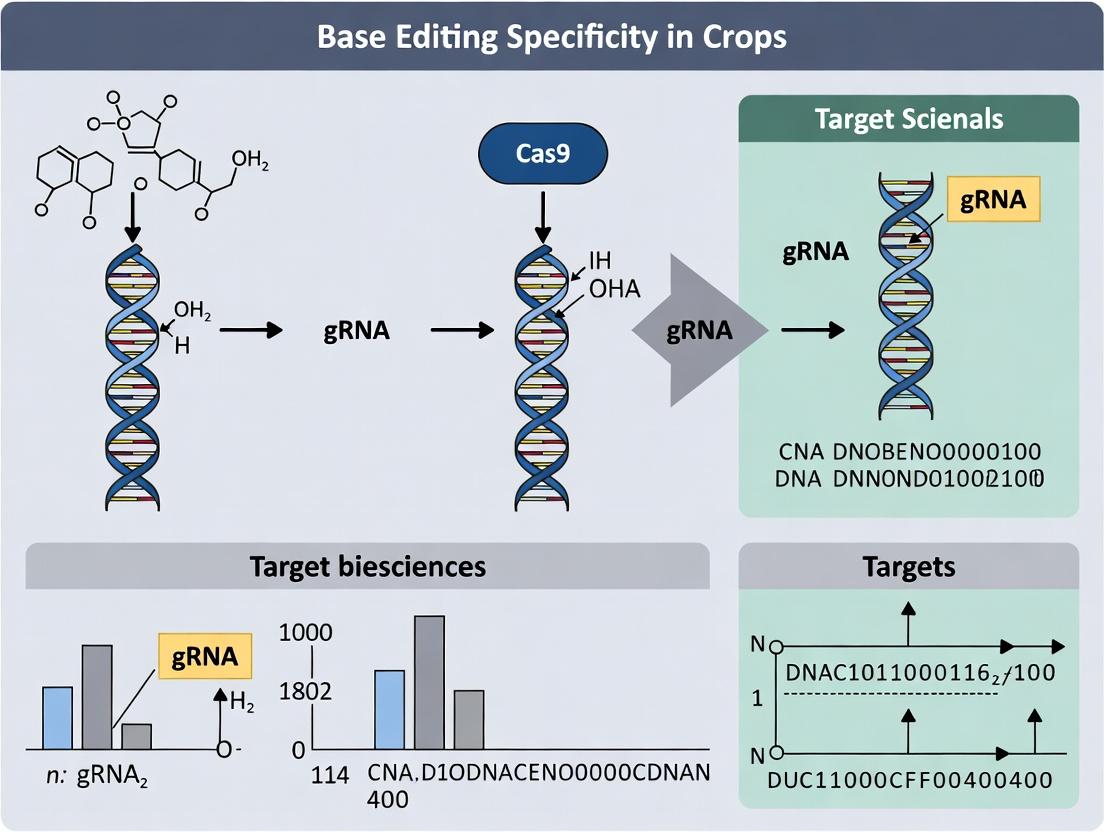
This article provides a comprehensive overview of the latest strategies to improve the specificity and fidelity of base editing technologies in crops.
Precision Agriculture 2.0: Strategies for Enhancing Base Editing Specificity in Crop Plants
Abstract
This article provides a comprehensive overview of the latest strategies to improve the specificity and fidelity of base editing technologies in crops. Aimed at researchers and biotechnologists, it covers the foundational principles of off-target effects, explores advanced methodological designs like engineered deaminases and delivery optimization, details troubleshooting for common specificity challenges, and compares validation techniques. The goal is to equip professionals with a roadmap for developing cleaner, more precise genome-edited crops to accelerate trait development and regulatory approval.
Understanding the Specificity Challenge: Foundations of Off-Target Effects in Plant Base Editing
Troubleshooting & FAQs
Q1: My base editor construct shows very low editing efficiency in my plant protoplasts. What could be wrong? A: Low efficiency often stems from suboptimal expression or nuclear localization. First, verify the following:
- Promoter & Terminator: Ensure you are using strong, constitutive promoters (e.g., ZmUbi, AtUbi10, CaMV 35S) and appropriate terminators suitable for your plant species.
- Nuclear Localization Signals (NLS): CBEs and ABEs require efficient nuclear targeting. Use a validated, strong NLS (e.g., SV40 NLS) at both the N- and C-termini of the editor protein. Mislocalization to the cytoplasm is a common cause of failure.
- sgRNA Expression: Confirm your U6 or U3 Pol III promoter is active in your species and that the sgRNA is correctly transcribed. Check for proper sgRNA scaffold sequence.
- Delivery Method: For protoplasts, ensure PEG-mediated transfection or electroporation parameters are optimized. Low viability post-transfection will reduce observed efficiency.
Q2: I am detecting high levels of unintended edits (off-targets or byproducts like indels). How can I mitigate this? A: This is a core challenge for improving specificity. Implement these strategies:
- Use High-Fidelity Cas9 Variants: Replace wild-type SpCas9 in your editor with a high-fidelity variant (e.g., SpCas9-HF1, eSpCas9) to reduce DNA off-target editing.
- Optimize Editor Version: Newer generations of CBEs and ABEs (e.g., SECURE-BE3, ABE8e with reduced deaminase activity) are engineered for lower off-target effects and reduced indel formation. Refer to Table 1 for comparisons.
- Limit Expression: Use a weaker promoter or transient expression (e.g., ribonucleoprotein (RNP) delivery) to shorten the editor's window of activity, reducing off-target opportunities.
- sgRNA Design: Carefully design sgRNAs with high on-target specificity using latest prediction tools (e.g., Cas-OFFinder, CHOPCHOP). Avoid sequences with high homology elsewhere in the genome.
Q3: I need to edit a base outside the standard activity window. Are there solutions? A: Yes, the editing window can be altered.
- Cas9 Variants with Altered PAMs: Use Cas9 variants (e.g., SpCas9-NG, xCas9, SpRY) that recognize relaxed PAM sequences, vastly increasing the targetable genomic space.
- Engineered Deaminases: Some deaminase variants have been mutated to shift or narrow their activity window. Research the latest literature for CBE/ABE variants with altered window profiles (e.g., narrow-window BE4max).
Q4: My regenerated plants show no edits, despite success in protoplasts. What's the issue? A: This points to a problem in plant regeneration or editing in meristematic cells.
- Editor Persistence: The edit must occur in cells that give rise to the whole plant. Ensure your editor is expressed throughout the regeneration process. Consider using developmental regulators (e.g., WUS, BBM) to enhance regeneration from edited cells.
- Delivery to Meristems: For in planta delivery (e.g., viral vectors, nanoparticle), ensure the editor reaches the shoot apical meristem effectively.
- Somaclonal Variation: Extensive tissue culture can introduce mutations. Use faster regeneration protocols and sequence the target locus in multiple regenerated lines to confirm the absence of the desired edit.
Q5: How do I quantify base editing outcomes accurately? A: Use a combination of methods:
- High-Throughput Sequencing (Amplicon-Seq): The gold standard. PCR-amplify the target region from genomic DNA and perform deep sequencing (>10,000X coverage) to calculate precise editing efficiencies, identify byproducts, and detect low-frequency off-targets.
- Restriction Fragment Length Polymorphism (RFLP): If the edit creates or destroys a restriction site, use it for quick initial screening. Not suitable for comprehensive analysis.
- Sanger Sequencing & Deconvolution: Sequence PCR products and use trace decomposition software (e.g., EditR, BE-Analyzer) to estimate efficiency. Best for early validation.
Key Quantitative Data on Base Editor Performance
Table 1: Comparison of Common Cytosine and Adenine Base Editor Systems in Plants
| Editor System | Core Components | Typical Editing Window* | Primary Outcome | Avg. Efficiency Range in Plants | Key Advantages | Reported Key Limitations |
|---|---|---|---|---|---|---|
| BE3 (CBE) | SpCas9-nCas9 + rAPOBEC1 + UGI | C4-C8 (≈ Protospacer positions) | C•G to T•A | 1-40% | First efficient CBE, well-validated | Higher indel & C•G to G•C/A•T rates |
| BE4max (CBE) | SpCas9-nCas9 + rAPOBEC1 + 2xUGI | C4-C8 | C•G to T•A | 5-60% | Reduced indel formation vs. BE3 | Still produces bystander edits |
| SECURE-BE3 (CBE) | SpCas9-nCas9 + evolved rAPOBEC1 + UGI | C4-C8 | C•G to T•A | 5-50% | Greatly reduced DNA/RNA off-targets | Slightly lower efficiency in some contexts |
| ABE7.10 | SpCas9-nCas9 + TadA-TadA* | A3-A9 (≈ Protospacer positions) | A•T to G•C | 0.5-30% | First-generation efficient ABE | Lower efficiency than newer variants |
| ABE8e | SpCas9-nCas9 + evolved TadA-TadA* | A3-A9 | A•T to G•C | 10-80% | Very high efficiency, faster kinetics | Potential for increased RNA off-targets |
Window relative to non-target strand, 5' PAM. *Highly dependent on target sequence, delivery, and plant species.
Experimental Protocol: Assessing Base Editing Efficiency & Specificity in Protoplasts
Objective: To transiently express a base editor in plant protoplasts and quantify on-target editing efficiency and byproduct formation via high-throughput amplicon sequencing.
Materials: See "The Scientist's Toolkit" below.
Procedure:
- Construct Design: Clone your target sgRNA expression cassette into your chosen CBE or ABE plasmid backbone (e.g., pZmUbi-BE4max, pAtUbi-ABE8e).
- Protoplast Isolation:
- Harvest 2-3 young leaves from sterile seedlings (e.g., Arabidopsis, rice, tomato).
- Slice leaves into 0.5-1mm strips and immerse in enzyme solution (1.5% cellulase, 0.4% macerozyme, 0.4M mannitol, 20mM KCl, 20mM MES pH 5.7, 10mM CaCl₂, 0.1% BSA).
- Digest in the dark with gentle shaking (30-50 rpm) for 4-6 hours.
- Filter the digest through a 40-75μm nylon mesh and wash protoplasts with W5 solution (154mM NaCl, 125mM CaCl₂, 5mM KCl, 5mM Glucose, 2mM MES pH 5.7) by centrifugation (100xg, 2-3 min).
- Resuspend pellet in MMg solution (0.4M mannitol, 15mM MgCl₂, 5mM MES pH 5.7). Count and adjust density to 1-2 x 10⁶ cells/mL.
- PEG-Mediated Transfection:
- Aliquot 10μL of plasmid DNA (10-20μg total) into a round-bottom tube.
- Add 100μL of protoplast suspension (≈1-2 x 10⁵ cells).
- Add 110μL of freshly made 40% PEG4000 solution (40% PEG4000, 0.2M mannitol, 0.1M CaCl₂).
- Mix gently and incubate at room temperature for 15-20 minutes.
- Dilute slowly with 800μL of W5 solution. Centrifuge (100xg, 2 min), remove supernatant.
- Resuspend protoplasts in 1mL of culture medium (e.g., WI solution) and incubate in the dark at 22-25°C for 48-72 hours.
- Genomic DNA Extraction: Use a commercial micro-scale gDNA extraction kit. Elute in 30-50μL.
- Amplicon Library Preparation for HTS:
- Perform first-round PCR to amplify the target locus (with locus-specific primers containing overhangs).
- Purify PCR product.
- Perform a second, limited-cycle PCR to attach full Illumina adapter indices and sequences.
- Purify the final library, quantify, and pool for sequencing on an Illumina MiSeq or HiSeq platform (2x250bp or 2x300bp recommended).
- Data Analysis:
- Demultiplex reads.
- Align reads to the reference amplicon sequence using tools like BWA or CRISPResso2.
- Use CRISPResso2, BE-Analyzer, or custom scripts to calculate the percentage of reads containing C-to-T or A-to-G conversions at each position within the amplicon, as well as indel percentages.
Base Editor Mechanism & Experimental Workflow
Diagram Title: Base Editor Mechanism and Plant Protoplast Workflow
The Scientist's Toolkit: Research Reagent Solutions
Table 2: Essential Materials for Plant Base Editing Experiments
| Item | Function & Role | Example/Notes |
|---|---|---|
| Base Editor Plasmid | Expresses the fusion protein (nCas9-deaminase-UGI/other). | pBE4max (Addgene #112093), pABE8e (Addgene #138495). Species-specific promoters required. |
| sgRNA Expression Vector | Drives expression of the target-specific guide RNA. | Often cloned into the editor plasmid or a separate vector with a U6/U3 promoter. |
| Protoplast Isolation Enzymes | Digest cell wall to release intact protoplasts. | Cellulase R10, Macerozyme R10 (Yakult). Prepare fresh in osmoticum. |
| PEG4000 (40% Solution) | Induces DNA uptake during transfection. | Must be high-quality; prepare fresh for each experiment. |
| gDNA Extraction Kit | Isolate high-quality genomic DNA from limited protoplast samples. | Qiagen DNeasy Plant Mini Kit, NucleoSpin Plant II. |
| High-Fidelity PCR Mix | Amplify target locus for sequencing with minimal errors. | Q5 Hot-Start (NEB), KAPA HiFi HotStart. |
| Illumina Sequencing Kit | Prepare and sequence amplicon libraries for deep analysis. | MiSeq Reagent Kit v3 (600-cycle). |
| Analysis Software | Quantify base editing efficiency and byproducts from sequencing data. | CRISPResso2, BE-Analyzer, custom Python/R scripts. |
Troubleshooting & FAQs
FAQ 1: How do I definitively distinguish a true off-target edit from a sequencing artifact in my base editor-treated crop samples?
- Answer: This is a critical challenge. True off-target edits are reproducible across biological replicates and have a distinct mutational signature (e.g., a C•G to T•A transition within the canonical window for a Cytosine Base Editor). Artifacts are stochastic.
- Troubleshooting Steps:
- Replicate Sequencing: Perform deep sequencing (>1000x coverage) on at least three independently treated biological samples.
- Negative Controls: Include both an untreated control and a sample treated with a catalytically dead version of the base editor (dBE).
- Data Analysis: Use a validated variant-calling pipeline (e.g., GATK) designed for genome editing. A true off-target site will show a statistically significant increase in variant frequency in BE-treated samples compared to both control groups. Variants present at similar low frequencies in all samples are likely sequencing errors or pre-existing genomic variation.
- Troubleshooting Steps:
FAQ 2: My base editor is creating unexpected "bystander" edits within the on-target window. How can I minimize this?
- Answer: Bystander edits occur when multiple editable bases (e.g., multiple cytosines within a BE3 window) are present, and not all are intended for change. This is a function of editor processivity and protospacer positioning.
- Troubleshooting Guide:
- Re-design gRNA: Shift the gRNA binding position so that the intended target base is at the most preferentially edited position within the window (typically positions 4-8 for BE4). Use predictive software like BE-Hive to model outcomes.
- Use Narrower-Window Editors: Switch from a broad-window editor (e.g., BE4) to a engineered high-fidelity variant with a narrowed deaminase activity window (e.g., eA3A-BE or Target-AID-NG v2).
- Optimize Delivery/Expression: Reduce the amount of editor DNA/RNA delivered or use a weaker promoter to lower expression levels, which can reduce processivity and bystander effects.
- Troubleshooting Guide:
FAQ 3: I suspect my base editor is causing large, unexpected structural variations (SVs) at the target site. How can I check for this?
- Answer: While base editors are not designed to create double-strand breaks, rare nicking activity or cellular repair processes can lead to deletions or translocations.
- Troubleshooting Protocol:
- PCR Screening: Design primers flanking the target site (500-1000bp on each side). Perform long-range PCR on edited samples. Sizes different from the wild-type amplicon indicate larger insertions/deletions.
- Droplet Digital PCR (ddPCR): Design two probe assays: one within the edited window and one outside the editing window but within the amplicon. A significant discrepancy in copy number between assays suggests a deletion.
- Whole Genome Sequencing: For a comprehensive view, perform paired-end WGS (30x coverage minimum) and analyze data with SV-calling tools (e.g., Manta, DELLY).
- Troubleshooting Protocol:
Table 1: Comparison of Base Editor Specificity Profiles
| Editor Name | Deaminase Source | Primary Use | Typical On-Target Efficiency (in plants) | Common Off-Target Assessment Method | Key Specificity Feature |
|---|---|---|---|---|---|
| BE3/BE4 | rAPOBEC1 | C•G to T•A | 10-50% (stable) | Whole genome sequencing (WGS) | Standard activity window (~5nt window). |
| HF-BE3 | rAPOBEC1 (high-fidelity) | C•G to T•A | 5-40% | WGS | Reduced DNA binding affinity, lower RNA off-targets. |
| eA3A-BE | engineered A3A | C•G to T•A | 5-30% | WGS | Ultra-narrow window (1-2nt), minimizes bystanders. |
| ABE8e | TadA-8e | A•T to G•C | 10-70% | Digenome-seq, GUIDE-seq | High activity but requires careful titration to reduce DNA/RNA off-targets. |
| CGBE1 | rAPOBEC1 + UGI | C•G to G•C | 1-20% | WGS | Can have higher indel frequencies; requires stringent screening. |
Table 2: Common Assays for Edit Characterization
| Assay | What it Detects | Throughput | Cost | Sensitivity | Recommended Use Case |
|---|---|---|---|---|---|
| Sanger Sequencing + Deconvolution | On-target edits, bystanders | Low | $ | ~5% allele frequency | Initial screening, quick validation. |
| Amplicon Sequencing | On-target & known off-target edits | Medium | $$ | ~0.1% allele frequency | High-depth quantitative analysis of specific loci. |
| Whole Genome Sequencing (WGS) | Genome-wide SNVs & small indels | Very High | $$$$ | ~0.5-1.0% allele frequency | Unbiased discovery of DNA off-targets. |
| RNA Sequencing | Transcriptome-wide RNA edits | High | $$$ | Varies | Assessment of transcriptome-wide deamination (RNA off-targets). |
| GUIDE-seq / CIRCLE-seq | Genome-wide off-target cleavage potential | Medium/High | $$$ | N/A | In vitro or cellular profiling of editor's DNA binding landscape. |
Experimental Protocols
Protocol 1: Digenome-seq for In Vitro Off-Target Prediction
- Genomic DNA Isolation: Extract high-molecular-weight gDNA from your target crop (e.g., rice callus).
- In Vitro Treatment: Incubate 1-2 µg of gDNA with purified base editor protein (or RNP complex: editor protein + specific gRNA) in appropriate reaction buffer for 4-8 hours at 37°C.
- DNA Purification: Clean the DNA to remove proteins.
- Whole Genome Sequencing: Shear the treated and untreated control DNA to ~300bp fragments. Prepare sequencing libraries and perform high-coverage WGS (>50x).
- Bioinformatic Analysis: Map sequences to the reference genome. Use a dedicated Digenome-seq analysis pipeline (e.g., Digenome2, Cas-OFFinder) to identify sites with significantly increased mismatches (C to T or A to G, depending on editor) in the treated sample, which indicate potential off-target binding and editing.
Protocol 2: Amplicon-Seq for High-Throughput On-Target & Bystander Analysis
- Primer Design: Design primers to amplify a 250-350bp region encompassing the target site. Include Illumina adapter overhangs.
- First PCR: Perform PCR on genomic DNA from edited and control plant tissue using the adapter-tailed primers.
- Indexing PCR: Add unique dual indices (i5 and i7) and full sequencing adapters in a second, limited-cycle PCR.
- Library Pooling & Sequencing: Pool purified amplicons equimolarly and sequence on an Illumina MiSeq or NovaSeq (500x minimum coverage desired).
- Analysis: Use tools like CRISPResso2, ampliconDIVider, or BE-Analyzer to quantify the percentage of each resultant allele (intended edit, bystanders, indels).
Visualizations
Title: Classification of Base Editing Outcomes
Title: Specificity Workflow for Crop Base Editing
The Scientist's Toolkit: Research Reagent Solutions
| Item | Function in Specificity Research | Example/Vendor |
|---|---|---|
| High-Fidelity Base Editor Plasmids | Provide the core editing machinery with engineered deaminases for reduced off-target activity. | Addgene: pnCBEA3A-BE (eA3A-BE), pCMV_ABE8e. |
| Catalytically Dead Base Editor (dBE) | Essential negative control to distinguish edits caused by deaminase activity from background noise. | Generated by point mutation (e.g., H122A in rAPOBEC1) in the editor plasmid. |
| Guide RNA Cloning Kit | For rapid and efficient construction of expression vectors for multiple gRNAs. | NEB Golden Gate Assembly Kit, Taq DNA Ligase. |
| Plant Genomic DNA Extraction Kit | To obtain high-quality, high-molecular-weight DNA for WGS and amplicon-seq. | Qiagen DNeasy Plant Pro, CTAB-based methods. |
| Long-Range PCR Enzyme Mix | Essential for amplifying large flanking regions to check for structural variations. | Takara LA Taq, NEB Q5 High-Fidelity. |
| Illumina Amplicon-Seq Library Prep Kit | Streamlined, high-fidelity preparation of amplicon libraries for deep sequencing. | Illumina DNA Prep, NEB Next Ultra II. |
| Reference Genome & Annotation File | Critical for accurate alignment and variant calling. Specific to crop species and cultivar. | IRGSP Rice Genome, MaizeGDB, Phytozome. |
| Variant Calling Pipeline (Software) | To identify and quantify edits from sequencing data with high confidence. | GATK, CRISPResso2, BEAT. |
Troubleshooting Guides & FAQs
FAQ 1: Why is my base editor producing high levels of off-target edits in my crop protoplasts?
- Answer: High off-target rates often stem from suboptimal gRNA design or excessive editor expression. Ensure your gRNA has no high-similarity off-target sites in the genome by using updated crop-specific tools (e.g., Crispr-GE, CROPscan). Additionally, high expression levels of the deaminase, driven by strong constitutive promoters, can increase DNA/RNA off-target activity. Switch to a weaker or inducible promoter (e.g., egg cell-specific promoter) and optimize delivery to use minimal effective amounts of editor mRNA or protein.
FAQ 2: My base editor shows good efficiency but no editing at the intended target in stable transgenic plants. What could be wrong?
- Answer: This likely relates to cellular context, specifically chromatin accessibility. The target site may be in a transcriptionally silent heterochromatin region. Check chromatin state data (e.g., ATAC-seq, DNase-seq) for your crop tissue. Consider using recruiters of chromatin remodelers (e.g., dCas9 fused to chromatin-opening domains) in tandem with your base editor to improve access.
FAQ 3: How can I reduce RNA off-target edits while maintaining DNA on-target efficiency?
- Answer: This is linked to deaminase activity. Use engineered high-fidelity deaminase variants (e.g., SECURE-ABE8e, BE4 with R33A/K34A mutations) that have reduced RNA-binding affinity. Always include a negative control (deaminase-dead editor) in your RNA-seq experiments to distinguish background noise from true off-targets.
FAQ 4: My gRNA has no predicted genomic off-targets, but I still detect unwanted edits via sequencing. What should I investigate?
- Answer: Consider cellular context factors like cellular replication status and DNA repair machinery variability. Off-targets can occur at transiently single-stranded DNA. Perform CIRCLE-seq or Digenome-seq in your specific crop genome to identify unexpected off-target sites. Also, examine the expression levels of key DNA repair genes (e.g., uracil glycosylase inhibitors, mismatch repair factors) in your tissue, as these influence editing outcomes.
Experimental Protocols
Protocol 1: Assessing DNA Off-Targets Using CIRCLE-seq in Crop Genomes
- Isolate Genomic DNA: Extract high-molecular-weight gDNA from editor-treated and control plant tissue.
- In Vitro Cleavage: Incubate 5 µg of sheared gDNA with purified base editor protein (e.g., ABE8e) complexed with your target gRNA in NEBuffer 3.1 at 37°C for 1 hour.
- Circularization: Repair DNA ends, add 3’ dA-overhangs, and ligate with T4 DNA Ligase to form circular libraries.
- Enzymatic Digestion: Digest with a cocktail of exonucleases (Exo I, Exo III, Lambda Exo) to degrade linear DNA, enriching circularized fragments containing potential off-target sites.
- PCR Amplification & Sequencing: Amplify the library using primers with Illumina adapters and sequence on a MiSeq/HiSeq platform.
- Analysis: Map reads to your crop reference genome, identify mis-matches, and compare to control to identify off-target sites.
Protocol 2: Evaluating Editing Efficiency & Specificity in Stable Transgenic Lines via Amplicon Sequencing
- Design Primers: Design PCR primers flanking the target site (and top predicted off-target sites) with Illumina adapter overhangs.
- PCR Amplification: Amplify loci from transgenic and wild-type plant gDNA using a high-fidelity polymerase.
- Library Preparation & Barcoding: Clean amplicons and attach dual-index barcodes via a second limited-cycle PCR.
- Sequencing: Pool libraries and sequence on an Illumina platform to achieve high coverage (>10,000x).
- Data Analysis: Use base editing analysis pipelines (e.g, BEAT, CRISPResso2) to calculate C-to-T or A-to-G conversion efficiency at the target window and at all other loci to quantify specificity.
Data Presentation
Table 1: Impact of Deaminase Variants on Specificity in Rice Protoplasts
| Deaminase Variant | On-Target Efficiency (%) | DNA Off-Target Events (CIRCLE-seq) | RNA Off-Target Events (Transcriptome-wide) |
|---|---|---|---|
| BE4 | 45.2 ± 3.1 | 18 | 412 |
| BE4max | 58.7 ± 4.5 | 15 | 450 |
| HF-BE4max | 52.1 ± 2.8 | 3 | 22 |
| ABE8e | 65.3 ± 5.2 | 9 | 890 |
| SECURE-ABE8e | 61.8 ± 4.1 | 2 | 15 |
Table 2: Effect of Promoter Strength on Editing Outcomes in Wheat Calli
| Promoter Driving Editor | Editing Efficiency (%) | Transformation Rate (%) | Observed RNA Edits (per 10^4 bases) |
|---|---|---|---|
| CaMV 35S (Strong) | 78.5 | 65 | 4.7 |
| ZmUbi (Strong) | 82.1 | 70 | 5.1 |
| RPS5a (Medium) | 71.2 | 72 | 1.9 |
| Egg Cell-Specific (EC1.2) | 68.9 | 85 | 0.8 |
Diagrams
Title: Workflow for High-Specificity gRNA Design
Title: How Cellular Context Influences Base Editing
The Scientist's Toolkit: Research Reagent Solutions
| Item | Function in Specificity Research |
|---|---|
| High-Fidelity Deaminase Variants (e.g., HF-BE4, SECURE-ABE) | Engineered protein versions with reduced DNA/RNA off-target activity. |
| Tissue-Specific or Inducible Promoters (e.g., EC1.2, GRF-GIF) | Limit editor expression to desired cell types/times, reducing off-targets. |
| Uracil DNA Glycosylase Inhibitor (UGI) | Essential component of CBE; prevents uracil base excision repair to increase efficiency. |
| CIRCLE-seq Kit | For comprehensive, unbiased identification of DNA off-target sites in any genome. |
| Nuclease-Deactivated Cas9 (dCas9) Fused to Chromatin Modifiers | Used to open chromatin locally before editing, improving access in heterochromatic regions. |
| Guide RNA Design Software (Crop-specific, e.g., Crispr-GE) | Predicts on-target efficiency and genome-wide off-target sites for crop genomes. |
| Amplicon Sequencing Library Prep Kit | Enables deep sequencing of target loci to quantify editing efficiency and specificity. |
Technical Support Center: Troubleshooting for Plant Base Editing Experiments
FAQ & Troubleshooting Guides
Q1: In our rice protoplast assay, we observe very high editing efficiency but also a drastic increase in transcriptome-wide off-target mutations compared to mammalian studies. What could be the cause?
- A: This is a known plant-specific challenge. The issue likely stems from the constitutive and strong expression of the base editor (BE) from polymerase II (Pol II) promoters like ZmUbi, leading to high, persistent nCas9 and deaminase levels. Solution: Switch to a polymerase III (Pol III) promoter (e.g., AtU6) for gRNA expression and consider a weaker or inducible Pol II promoter for the BE component. Recent (2024) studies using estrogen-inducible systems showed a 60% reduction in RNA off-targets while maintaining ~70% on-target efficiency in rice.
- Protocol: Clone your gRNA sequence into a vector harboring an AtU6 or OsU3 promoter. For the BE, clone into a vector with a dexamethasone- or β-estradiol-inducible promoter system. Transfect rice protoplasts and apply inducer 12-24h post-transfection. Harvest after 48h for analysis.
- A: This is a known plant-specific challenge. The issue likely stems from the constitutive and strong expression of the base editor (BE) from polymerase II (Pol II) promoters like ZmUbi, leading to high, persistent nCas9 and deaminase levels. Solution: Switch to a polymerase III (Pol III) promoter (e.g., AtU6) for gRNA expression and consider a weaker or inducible Pol II promoter for the BE component. Recent (2024) studies using estrogen-inducible systems showed a 60% reduction in RNA off-targets while maintaining ~70% on-target efficiency in rice.
Q2: Our whole-genome sequencing (WGS) data in wheat callus shows unexpected genomic DNA off-targets at sites with mismatches, not seen in the original BE3 system. Are we using the editor incorrectly?
- A: Not necessarily. Plant chromatin accessibility differs. The issue may be the deaminase variant's processivity. New plant-optimized deaminases (e.g., evoFERNY) show improved fidelity. Solution: Use the high-fidelity version (e.g., HF-nCas9) as the backbone and consider evolving deaminases for plant contexts. A 2023 study compared BE variants:
- Table: Base Editor Fidelity in Wheat Callus (WGS Data)
BE Variant On-Target Efficiency (%) gDNA Off-Target Sites (≥1% frequency) Key Change rBE3 (Standard) 45.2 18 TadA*7.10, WT nCas9 rBE4 (High-Fidelity) 41.7 6 HF-nCas9 backbone rBE4-evoFERNY 38.9 3 Plant-optimized deaminase
- Table: Base Editor Fidelity in Wheat Callus (WGS Data)
- A: Not necessarily. Plant chromatin accessibility differs. The issue may be the deaminase variant's processivity. New plant-optimized deaminases (e.g., evoFERNY) show improved fidelity. Solution: Use the high-fidelity version (e.g., HF-nCas9) as the backbone and consider evolving deaminases for plant contexts. A 2023 study compared BE variants:
Q3: We cannot detect any base editing in stably transformed Arabidopsis plants despite successful transformation. What are the critical checks?
- A: This points to expression or cellular context failure. Follow this diagnostic workflow:
- Check Construct Integration: Use PCR on genomic DNA with vector-specific primers.
- Check Transcript Expression: Perform RT-PCR on both the nCas9 and deaminase components.
- Check Subcellular Localization: The BE must localize to the nucleus. Fuse your BE with a fluorescent tag (e.g., GFP) and confirm nuclear localization via confocal microscopy.
- Check Cell Division Dependency: Base editing in plants primarily occurs in replicating cells. Ensure your promoter is active in meristematic or dividing tissues (e.g., using DD45 or EF1α promoters for egg cells/early embryos).
- A: This points to expression or cellular context failure. Follow this diagnostic workflow:
Q4: How do we accurately quantify editing fidelity (product purity) at the on-target site, distinguishing from bystander edits?
- A: Use targeted deep amplicon sequencing (minimum 10,000x coverage) and a specific bioinformatics pipeline.
- Protocol: Design primers (amplicon size 250-350bp) flanking the target site. Perform PCR on pooled tissue or individual plants. Use high-fidelity polymerase. Sequence on an Illumina platform. Analyze with tools like CRISPResso2 or BE-Analyzer. Set parameters to quantify: i) Percentage of intended base conversion, ii) Percentage of reads with bystander edits within the editing window, iii) Insertion/Deletion (indel) percentage.
- A: Use targeted deep amplicon sequencing (minimum 10,000x coverage) and a specific bioinformatics pipeline.
Pathway: Plant Base Editor Specificity Optimization
The Scientist's Toolkit: Research Reagent Solutions
| Item | Function & Rationale |
|---|---|
| Pol III Promoter Vectors (e.g., AtU6, OsU3) | Drives high, precise expression of gRNA transcripts without a polyA tail, essential for proper sgRNA processing and reduced cellular burden. |
| Inducible Expression Systems (Dex/β-Estradiol) | Enables temporal control over base editor expression, shortening exposure time to reduce off-target effects while allowing editing window capture. |
| High-Fidelity nCas9 (HF-nCas9) | Contains specificity-enhancing mutations (e.g., SpCas9-HF1) that reduce non-target DNA binding, lowering genomic DNA off-target events. |
| Evolved Deaminase Variants (evoFERNY) | Plant-optimized deaminase domains with lower RNA affinity and altered processivity, designed to minimize transcriptome-wide and bystander edits in plant cells. |
| Tissue-Specific Promoters (e.g., DD45, ECRP) | Restricts base editor expression to desired cell types (e.g., egg cells, meristems), improving editing in regenerable tissues and reducing somatic mosaicism. |
| Uracil DNA Glycosylase Inhibitor (UGI) | A critical component of cytosine base editors. It blocks base excision repair, increasing C-to-T conversion efficiency. Must be co-expressed or fused. |
| HPLC-Purified Oligonucleotides | For gRNA cloning and sequencing primer synthesis. High purity is non-negotiable for efficient assembly and accurate deep sequencing results. |
| CRISPResso2 / BE-Analyzer Software | Specialized, open-source bioinformatics tools for the precise quantification of base editing outcomes from next-generation sequencing data. |
Engineering Precision: Methodological Advances for High-Fidelity Crop Base Editing
Technical Support Center
Troubleshooting Guides & FAQs
Q1: In my crop protoplast assay, my high-fidelity base editor (e.g., SECURE) shows drastically reduced editing efficiency compared to the standard BE4 variant. What could be the cause and how can I troubleshoot this? A: Reduced efficiency is a known trade-off for improved specificity. First, verify your experimental setup.
- Check Delivery & Expression: Ensure your plasmid or RNP is being delivered efficiently. Co-transfect a GFP marker plasmid to assess transfection efficiency. Perform a Western blot for the base editor protein (e.g., using a HA or FLAG tag) to confirm expression.
- Optimize sgRNA: The editing window of high-fidelity variants may be narrower. Design and test 3-5 sgRNAs targeting different positions within your genomic window of interest. Use a validated online tool (e.g., BE-Design) for design.
- Titrate Editor Components: Perform a dose-response experiment. Transfert with varying amounts of base editor plasmid (e.g., 0.5 µg, 1.0 µg, 2.0 µg) while keeping sgRNA constant to find the optimal ratio.
- Use Positive Controls: Always include a standard BE4 editor and a non-targeting sgRNA as controls to benchmark performance and assess background.
Q2: How do I definitively confirm that my high-fidelity deaminase variant reduces off-target RNA editing in my plant cells? A: Confirmation requires specific sequencing approaches.
- Experimental Protocol (RNA-Seq for Transcriptome-Wide Off-Targets):
- Treat Samples: Treat plant cells or tissue with your high-fidelity editor (e.g., SECURE), standard BE4, and an untreated control.
- RNA Extraction: At 48-72 hours post-treatment, extract total RNA using a column-based kit with DNase I treatment.
- Library Prep & Sequencing: Prepare stranded mRNA-seq libraries. Sequence to a depth of ≥30 million paired-end reads per sample.
- Bioinformatics Analysis: Map reads to the reference transcriptome. Use variant calling pipelines (e.g., GATK) to identify A-to-I (or C-to-U) mismatches. Significant off-target sites are those with markedly increased edit rates in BE4 samples compared to both the high-fidelity and untreated samples.
- Candidate Gene Validation: For known susceptible transcripts (e.g., RTCB, CCDC138 identified in mammalian studies), design amplicons and perform deep sequencing (amplicon-seq) of cDNA with >10,000X coverage to quantify editing percentages with high sensitivity.
Q3: When moving from a mammalian cell system to testing in crop plants (e.g., rice, wheat), what are the key adaptation considerations for these engineered deaminase variants? A: Adaptation is crucial for success.
- Codon Optimization: Always use plant-preferred codons for the deaminase and Cas9 nickase genes to ensure high expression. Most commercially available plant base editor vectors already include this.
- Promoter Selection: Use strong, appropriate promoters. For dicots (e.g., tomato), the CaMV 35S promoter is common. For monocots (e.g., rice, wheat), use the ZmUbi or OsActin promoter. Consider developmentally regulated or inducible promoters for spatial/temporal control.
- Subcellular Localization: Ensure the editor is targeted to the nucleus. Verify the presence and functionality of the nuclear localization signal (NLS) on your construct.
- Delivery Method: The optimal delivery impacts editor performance. For transient tests, use protoplast transfection or agroinfiltration. For stable lines, use Agrobacterium-mediated transformation or particle bombardment. Purified protein RNP delivery can reduce off-targets further.
Q4: What is the most reliable method to detect and quantify Cas9-independent DNA off-target mutations (e.g., strand breaks) induced by base editors in a crop genome? A: Use whole-genome sequencing (WGS) of clonal lines.
- Experimental Protocol:
- Generate Clonal Lines: Create stably transformed plant lines. Advance to the T1 or T2 generation to obtain homozygous, edited plants.
- DNA Extraction: Isolate high-molecular-weight genomic DNA from edited and unedited control plants.
- Sequencing: Perform deep (~50X) paired-end WGS on at least 3-5 independent clonal lines per editor variant.
- Analysis: Use a robust pipeline (e.g., GATK Mutect2 or similar for plants) to call single-nucleotide variants (SNVs) and small indels. Filter against the control genome and common strain-specific variants. True off-targets will be SNVs (typically C-to-T or A-to-G outside the target window) present in multiple independent lines treated with the same editor but absent in controls. This is the gold standard for identifying bona fide DNA off-targets.
Table 1: Performance Comparison of BE4 vs. High-Fidelity Deaminase Variants in Mammalian Systems (Representative Data)
| Variant | Key Mutation(s) | On-Target Editing Efficiency (%)* | DNA Off-Target Reduction (Fold)* | RNA Off-Target Reduction (Fold)* | Primary Reference |
|---|---|---|---|---|---|
| BE4max | N/A | 50-80 | 1x (Baseline) | 1x (Baseline) | Koblan et al., 2018 |
| ABE8e | N/A | 60-90 | ~1x | Very High | Richter et al., 2020 |
| SECURE (ABE) | RNP Linker, F148A | 30-60 (A-to-G) | >40x (C-to-T) | >10,000x (A-to-I) | Grünewald et al., 2020 |
| BE4 with SECURE | P29A, R33A, etc. | 20-50 (C-to-T) | Not Significant | >10,000x (C-to-U) | Grünewald et al., 2020 |
| BE4-RNF | R33A, K34A | 40-70 | ~1.5x | ~500x | Rees et al., 2019 |
*Efficiency and reduction factors are highly dependent on target locus and cell type. Values represent ranges observed across multiple genomic targets.
Table 2: Essential Research Reagent Solutions for Crop Base Editing
| Reagent / Material | Function & Application in Crop Research |
|---|---|
| Plant-Codon Optimized Base Editor Plasmid (e.g., pBE4max-SECURE, pABE8e) | Core expression vector containing the deaminase-Cas9 nickase fusion, plant promoters, and selection markers (e.g., HygR). |
| sgRNA Expression Vector (e.g., pU6-sgRNA) | Vector for expressing the single guide RNA under a U6 or other Pol III promoter. Often used in a Golden Gate or Gibson assembly reaction with the editor plasmid. |
| Agrobacterium tumefaciens Strain (e.g., EHA105, GV3101) | For stable transformation of dicots and some monocots via floral dip or tissue culture infection. |
| Plant Protoplast Isolation & Transfection Kit | For rapid, transient expression of base editors in leaf mesophyll cells to test efficiency and specificity before stable transformation. |
| High-Fidelity PCR & Amplicon Sequencing Kit | For amplifying target genomic loci from pooled plant tissue or single clones for deep sequencing analysis of editing outcomes. |
| Total RNA Extraction Kit (with DNase I) | For isolating clean RNA to assess transcriptome-wide off-target editing via RNA-seq. |
| Next-Generation Sequencing Service/Platform | Essential for deep amplicon sequencing of target sites and for whole-genome sequencing to comprehensively assess off-target effects. |
Experimental Protocol: Assessing On-Target Editing Efficiency in Crop Protoplasts
Title: Transient Base Editor Testing in Plant Protoplasts
Methodology:
- Vector Construction: Clone your target sgRNA sequence into the sgRNA expression cassette of your plant base editor plasmid (e.g., using BsaI Golden Gate assembly).
- Protoplast Isolation:
- Harvest young, healthy leaves from sterile plantlets (e.g., 10-day-old Arabidopsis or rice).
- Slice leaves into thin strips and immerse in enzyme solution (1.5% Cellulase R10, 0.4% Macerozyme R10, 0.4M Mannitol, 20mM KCl, 20mM MES pH 5.7, 10mM CaCl₂, 0.1% BSA) for 3-6 hours in the dark with gentle shaking.
- Filter the digest through a 40-70 µm mesh, and wash protoplasts 2x with W5 solution (154mM NaCl, 125mM CaCl₂, 5mM KCl, 2mM MES pH 5.7) by centrifugation at 100g for 3 minutes.
- PEG-Mediated Transfection:
- Resuspend protoplast pellet (~2x10⁵ cells) in MMg solution (0.4M Mannitol, 15mM MgCl₂, 4mM MES pH 5.7).
- Add 10-20 µg of the purified base editor plasmid DNA. Add an equal volume of 40% PEG4000 solution (0.4M Mannitol, 100mM CaCl₂).
- Mix gently and incubate at room temperature for 15-20 minutes.
- Stop the reaction by adding 2 volumes of W5 solution. Wash once and resuspend in 1ml of culture medium (e.g., WI solution). Incubate in the dark for 48-72 hours.
- Genomic DNA Extraction & Analysis:
- Harvest protoplasts by centrifugation. Extract genomic DNA using a CTAB or silica-column method.
- PCR amplify the target region using barcoded primers.
- Purify PCR products and submit for next-generation amplicon sequencing (min. 10,000X depth).
- Analyze sequencing data using base editing analysis tools (e.g., BEAT, CRISPResso2) to calculate the percentage of C-to-T or A-to-G conversion within the editing window.
Visualizations
Title: Engineering Pathway for High-Fidelity Deaminases
Title: Base Editor Delivery and Action in Plant Cells
Welcome to the Technical Support Center for gRNA and Targeting Strategies. This resource is framed within ongoing research to improve base editing specificity in crops. Below are troubleshooting guides, FAQs, and essential resources for researchers.
Frequently Asked Questions (FAQs) & Troubleshooting
Q1: My base editor is showing high off-target activity in my crop protoplast system. What gRNA design strategies can improve specificity? A: High off-target activity is a common challenge. Consider these strategies:
- Truncated gRNAs (tru-gRNAs): Use gRNAs shortened at the 5' end (typically 17-18 nt instead of 20 nt). This reduces affinity for off-target sites while maintaining on-target activity in many crop contexts.
- Chemical Modifications: Incorporate 2'-O-methyl-3'-phosphorothioate (MS) modifications at the 5' and 3' termini of the gRNA. This enhances nuclease resistance and can modestly improve specificity by stabilizing the correct gRNA:DNA complex.
- Dose Optimization: Titrate the amount of gRNA plasmid/RNA delivered. Lower concentrations often favor on-target binding.
- tru-gRNA Design Protocol: In your design software, simply truncate the spacer sequence from 5' end to 17-18 nucleotides. Validate on-target efficiency empirically.
Q2: When using chemically modified gRNAs, my editing efficiency has dropped significantly. How can I troubleshoot this? A: Chemical modifications can sometimes interfere with RNP assembly or activity.
- Troubleshooting Steps:
- Verify Modification Pattern: Full-length, heavy modification can hinder activity. Use a pattern of 2-3 MS modifications only at the terminal bases.
- Check RNP Reconstitution: If delivering as a Ribonucleoprotein (RNP) complex, ensure proper incubation time and molar ratio of Cas protein to modified gRNA. Modified gRNAs may require optimized ratios.
- Control Experiment: Perform a side-by-side experiment with an unmodified gRNA of the same sequence to isolate the effect of the modification.
Q3: What is the most reliable method to detect low-frequency off-target edits in a crop genome? A: For unbiased detection of off-target sites:
- Computational Prediction: Use tools like Cas-OFFinder to predict potential off-target sites.
- Experimental Validation: Employ GUIDE-seq or CIRCLE-seq on your treated samples. These methods capture double-strand breaks (or nickase activity) genome-wide. For base editors, which are nicking nickases, adapted methods like DISCOVER-Seq or nRIP-seq that detect the cellular DNA repair response are more appropriate.
Q4: I am using epitope-tagged base editors for imaging/pulldown. How can I prevent the tag from interfering with editing? A: Tag placement and linker choice are critical.
- Solution: Use flexible linkers (e.g., (GGGGS)3) and tag the protein at the N- or C-terminus, not internally. For SpCas9-derived base editors, C-terminal tagging is often well-tolerated. Always test the editing efficiency of the tagged construct against the untagged version at several target loci.
Q5: My truncated gRNA shows no editing activity. What could be wrong? A: The degree of truncation is target-dependent.
- Action Plan:
- Test a Series: Design and synthesize a series of gRNAs truncated to 18 nt, 17 nt, and 16 nt.
- Check Seed Region: Ensure the critical "seed" region (bases 1-12 proximal to the PAM) remains entirely intact in your tru-gRNA.
- Verify PAM Proximity: The truncation is from the 5' end (distal to the PAM). Confirm your sequence orientation.
Experimental Protocols
Protocol 1: Evaluating Truncated gRNAs for Improved Specificity Objective: Compare on-target efficiency and off-target reduction of full-length vs. truncated gRNAs.
- Design: For your target site, design a standard 20nt gRNA and truncated versions (18nt, 17nt).
- Delivery: Co-deliver each gRNA construct with your base editor (BE) into your crop system (protoplasts, Agrobacterium-mediated transformation).
- Analysis: After 48-72 hours, harvest genomic DNA.
- On-Target: Amplify the target region and sequence via Sanger or NGS. Calculate editing efficiency.
- Off-Target: Amplify the top 3-5 computationally predicted off-target sites and deep sequence.
Protocol 2: Incorporating Chemically Modified gRNAs via RNP Delivery Objective: Enhance gRNA stability and specificity via chemical modification in RNP format.
- Synthesis: Order gRNA with 2-3 MS modifications at both the 5' and 3' ends.
- RNP Complex Formation:
- Dilute purified base editor protein to 10 µM in buffer (20 mM HEPES pH 7.5, 150 mM KCl).
- Mix protein with modified gRNA at a 1:1.2 molar ratio.
- Incubate at 25°C for 10 minutes to form the RNP complex.
- Delivery: Deliver the RNP complex into plant protoplasts via PEG-mediated transfection or into callus via biolistics.
Protocol 3: Validating Editor Localization with Epitope Tags Objective: Confirm nuclear localization and protein expression of a tagged base editor.
- Construct Design: Clone your base editor with a C-terminal FLAG or HA tag, separated by a flexible linker.
- Transfection: Introduce the construct into onion epidermal cells or crop protoplasts via PEG transformation.
- Detection:
- Imaging: For fluorescent tags (e.g., GFP), visualize nuclei after 24h.
- Western Blot: Harvest cells, extract protein, and probe with anti-FLAG/HA antibodies to confirm size and expression.
- Editing Check: In parallel, assay editing activity at a known target to confirm functionality.
Data Presentation
Table 1: Comparison of gRNA Strategies for Improving Base Editor Specificity
| Strategy | Mechanism | Typical On-Target Effect | Off-Target Reduction | Key Considerations |
|---|---|---|---|---|
| Truncated gRNAs (17-18nt) | Reduces gRNA length & non-seed region binding energy. | Can maintain or drop 0-50% (target-dependent). | Up to 5,000-fold in some studies. | Must be empirically tested per target site. |
| 5'/3' MS Modifications | Increases nuclease resistance & thermodynamic stability. | Minimal loss (<20%) with terminal modifications. | Modest (up to 50% reduction). | Costly synthesis; beneficial for RNP delivery. |
| High-Fidelity Cas9 Variants | Engineered protein with reduced non-specific DNA binding. | Can vary; may require strong expression. | Up to 100-fold reduction. | Use variant-matched base editor architectures. |
| Reduced gRNA Dosage | Limits available gRNA molecules, favoring high-affinity sites. | Can drop sharply beyond optimal point. | Effective with careful titration. | Requires precise delivery control (e.g., RNP amount). |
Table 2: Common Epitope Tags for Base Editor Analysis
| Tag | Size (aa) | Primary Application | Typical Detection Method | Compatibility with BEs |
|---|---|---|---|---|
| HA | ~9 | Immunoprecipitation, Western Blot | Anti-HA antibody | High (N- or C-terminal) |
| FLAG | ~8 | Immunoprecipitation, Western Blot | Anti-FLAG antibody | High (N- or C-terminal) |
| GFP/mNeonGreen | ~238 | Live-cell imaging, localization | Fluorescence microscopy | Moderate (may increase size/affect delivery) |
| 6xHis | ~6 | Protein purification | Anti-His antibody/Immobilized metal affinity chromatography | High (often C-terminal) |
Visualizations
gRNA Strategy Workflow for Specificity Improvement
Chemically Modified gRNA in RNP Binding DNA
The Scientist's Toolkit: Research Reagent Solutions
| Item | Function/Application in Crop Base Editing |
|---|---|
| Chemically Synthesized gRNA (MS-modified) | Ready-to-use, nuclease-resistant guide for RNP assembly; improves delivery stability. |
| High-Fidelity Base Editor Plasmid (e.g., ABE8e, evoFERNY-CBE) | Engineered editor variant plasmid for plant transformation with improved specificity/activity. |
| PEG Transformation Reagent | For efficient delivery of RNP or plasmid DNA into plant protoplasts. |
| GUIDE-seq or nRIP-seq Kit | For genome-wide, unbiased identification of off-target sites modified by base editors. |
| Anti-FLAG/HA Magnetic Beads | For immunoprecipitation of epitope-tagged base editors to study protein interactors. |
| Plant Cell-Penetrating Peptides (CPPs) | Can be conjugated to RNPs to facilitate delivery into plant cells and tissues. |
| NGS-based Editing Analysis Service | Deep sequencing and bioinformatic analysis for quantifying on/off-target editing frequencies. |
Technical Support Center: Troubleshooting & FAQs
Q1: During RNP (Ribonucleoprotein) delivery, my base editing efficiency is very low in plant protoplasts. What could be the cause? A1: Low efficiency in RNP delivery is often due to suboptimal RNP complex formation or poor delivery conditions.
- Check RNP Complex Assembly: Ensure a proper molar ratio of Cas9 protein to sgRNA (typically 1:2 to 1:3). Incubate at 25°C for 10-15 minutes before delivery.
- Optimize Transfection Conditions: For PEG-mediated protoplast transfection, test PEG concentration (e.g., 20-40%) and incubation time (15-30 minutes). Excessive PEG is cytotoxic.
- Verify Protoplast Quality & Viability: Use fresh, highly viable protoplasts (>80% viability). Damaged protoplasts have drastically reduced uptake.
- Validate RNP Activity: Perform an in vitro DNA cleavage assay with the assembled RNP to confirm sgRNA functionality before transfection.
Q2: I observe high off-target editing with Agrobacterium-mediated base editor delivery compared to plasmid transfection. How can I mitigate this? A2: Prolonged expression from integrated T-DNA can increase off-target effects. Implement these strategies:
- Use Self-Limiting Vectors: Employ vectors with minimal backbone sequences or utilize a "Double Right Border" (DRB) system to reduce T-DNA integration complexity and persistence.
- Opt for Transient Expression Systems: Focus on agroinfiltration (e.g., in Nicotiana benthamiana) for rapid, transient expression without genomic integration, followed by early tissue analysis.
- Apply Inducible Promoters: Drive Cas9/base editor expression with a dexamethasone- or estrogen-inducible promoter to limit the editing window.
- Utilize High-Fidelity Base Editor Variants: Use engineered versions like BE4max with additional mutations (e.g., K160A, N210A, R221A) to reduce non-specific DNA binding.
Q3: My Agrobacterium strain fails to transform my target crop cultivar, or transformation efficiency is negligible. What steps should I take? A3: This is a common host-strain specificity issue.
- Test Alternative Strains: Switch from common strains like LBA4404 or EHA105 to more virulent ones such as AGL1 or GV3101.
- Optimize Cultivar-Specific Conditions: Adjust the acetosyringone concentration (50-200 µM) in the co-culture medium. Extend the co-culture duration (2-4 days) and ensure optimal temperature (19-22°C for many plants).
- Check for Bacterial Overgrowth: Include bacteriostatic agents like Timentin or Carbenicillin in the co-culture media after the initial co-culture period to prevent overgrowth.
- Confirm T-DNA Transfer Machinery: Ensure your binary vector is compatible with the strain and that the vir genes are fully functional (e.g., avoid using overly large plasmids).
Q4: How do I effectively remove the CRISPR-Cas9/Base Editor vector after achieving editing in plants delivered via Agrobacterium? A4: Vector backbone removal is crucial for regulatory approval and to stabilize edits.
- Genetic Segregation: Perform selfing or backcrossing of T0 plants. Screen T1 progeny by PCR for the presence of the transgene (using primers for the Cas9/nptII gene) and identify transgene-free, edited plants.
- Utilize Fluorescent Seed Screening: Use a DsRed or GFP marker expressed in seeds. Manually select non-fluorescent seeds in the next generation, which have a high probability of being vector-free.
- Apply Transient Transformation Systems: As in A2, using RNP or transient Agrobacterium expression (agroinfiltration) inherently avoids stable integration.
Q5: When comparing RNP and Agrobacterium delivery side-by-side, how should I quantify and interpret specificity (on-target vs. off-target)? A5: A rigorous comparative analysis requires a multi-faceted approach.
- Defined On-Target Assessment: Use amplicon deep sequencing (≥10,000x coverage) of the target locus across multiple independent transformation events or treated samples.
- Proactive Off-Target Prediction & Screening: Use tools like CHOPCHOP or Cas-OFFinder to predict potential off-target sites with up to 5 mismatches. Amplify and deep sequence the top 10-20 predicted sites.
- Genome-Wide Analysis: For conclusive data, consider whole-genome sequencing (WGS) of several edited lines from each delivery method, comparing to an unedited control to identify unexpected mutations.
Table 1: Key Performance Metrics Comparison
| Metric | RNP Delivery (PEG-Protoplast) | Agrobacterium (Stable Transformation) |
|---|---|---|
| Typical On-Target Efficiency | 0.5% - 10% (transient in protoplasts) | 1% - 30% (in regenerated T0 plants) |
| Time to Edited Tissue | 1-3 days | 2-6 months (species-dependent) |
| Off-Target Mutation Frequency | Generally Lower (Transient activity) | Potentially Higher (Prolonged expression) |
| Vector Integration Risk | None (RNP is protein/RNA) | Yes (Random T-DNA integration) |
| Regeneration Complexity | High (required after protoplast edit) | Built into the standard process |
| Ideal Application | Protoplast-based screens, species hard to transform | Standard model crops, whole plant generation |
Table 2: Troubleshooting Common Issues & Solutions
| Problem | Likely Cause (RNP) | Likely Cause (Agrobacterium) | Recommended Action |
|---|---|---|---|
| No Editing Detected | Non-functional RNP; Poor transfection | Silencing; Inefficient T-DNA transfer | Validate components in vitro; Try hyper-virulent strain |
| High Cell Death | PEG toxicity; Old protoplasts | Agrobacterium overgrowth; Antibiotic stress | Titrate PEG; Use fresh protoplasts; Optimize antibiotics |
| Chimeric Plants | N/A (regeneration from single cell) | Common in T0 plants | Self T0 plants, screen T1 for uniform edits |
| Low Regeneration | Protoplast quality/viability | Genotype-specific recalcitrance | Optimize culture media; Include antioxidant compounds |
Experimental Protocols
Protocol 1: RNP Assembly and PEG-Mediated Protoplast Transfection for Base Editing Screening
- In Vitro Transcription of sgRNA: Synthesize sgRNA template via PCR with a T7 promoter. Use the MEGAshortscript T7 Kit. Purify sgRNA using phenol-chloroform extraction and isopropanol precipitation.
- Purification of Cas9-Base Editor Protein: Express e.g., BE4max protein in E. coli and purify using Ni-NTA affinity chromatography. Dialyze into a low-salt buffer (e.g., 300 mM NaCl, 10 mM Tris-HCl pH 7.5).
- RNP Complex Formation: Mix purified BE4max protein (10 pmol) with sgRNA (20-30 pmol) in a 10 µL reaction with transfection buffer. Incubate at 25°C for 15 minutes.
- Protoplast Preparation & Transfection: Isolate protoplasts from leaf mesophyll using cellulose and macerozyme enzymes. Count and adjust to 2x10^5 cells/mL. Mix 100 µL protoplasts with 10 µL RNP complex. Add 110 µL of 40% PEG-4000 solution, mix gently, and incubate for 15-30 minutes.
- Wash & Culture: Dilute with 1 mL W5 solution, centrifuge (100xg, 2 min). Resuspend in culture medium. Harvest DNA after 48-72 hours for PCR and sequencing analysis.
Protocol 2: Agrobacterium-Mediated Stable Transformation for Base Editing in Plants (Leaf Disk Method)
- Vector & Strain Preparation: Clone your base editor (BE) and sgRNA expression cassettes into a binary vector. Transform into Agrobacterium tumefaciens strain AGL1 via electroporation.
- Plant Material Preparation: Surface sterilize and excise leaf disks from 4-5 week old in vitro plants.
- Bacterial Co-cultivation: Resuspend an overnight Agrobacterium culture (OD600=0.5-0.8) in liquid co-culture medium with 100 µM acetosyringone. Immerse leaf disks for 10-20 minutes. Blot dry and place on solid co-culture medium. Co-culture in the dark at 22°C for 2-3 days.
- Selection & Regeneration: Transfer disks to regeneration medium containing antibiotics to kill Agrobacterium (e.g., Timentin) and select for transformed plant cells (e.g., Kanamycin). Subculture every 2 weeks.
- Shoot Development & Rooting: Excise developing shoots and transfer to rooting medium. Once rooted, acclimate plants to soil.
- Genotyping: Extract genomic DNA from leaf tissue. Perform PCR on the target region and sequence to confirm edits.
The Scientist's Toolkit: Research Reagent Solutions
| Item | Function & Application |
|---|---|
| BE4max Plasmid | A widely optimized cytosine base editor plasmid (Addgene #112093) for high-efficiency C•G to T•A conversion in plants. |
| Alt-R S.p. Cas9 Nuclease V3 | A high-fidelity, recombinant Cas9 protein (IDT) for in vitro RNP complex assembly, reducing off-target effects. |
| MEGAscript T7 Transcription Kit | For high-yield in vitro synthesis of sgRNA with cap analog for enhanced stability. |
| PlantPro PEG Transfection Reagent | A standardized, low-toxicity PEG solution for reliable protoplast transfection. |
| pCAMBIA1300-based Binary Vector | A versatile, minimal backbone T-DNA vector with multiple cloning sites and plant selection markers. |
| Acetosyringone | A phenolic compound that induces the vir genes of Agrobacterium, critical for efficient T-DNA transfer. |
| Cellulase R-10 & Macerozyme R-10 | Enzymes for digesting plant cell walls to produce viable protoplasts from leaf tissue. |
Diagrams
Title: RNP Delivery & Base Editing Workflow
Title: Agrobacterium T-DNA Delivery Pathway
Title: Specificity Comparison Logic
Technical Support Center
Troubleshooting Guides & FAQs
FAQ: Specificity & Off-Target Effects in Base Editing
Q1: In our wheat herbicide resistance project, we observe unexpected phenotypic changes despite successful target base conversion. What are the primary causes? A: This is often due to off-target editing. Causative factors include: 1) gRNA with high sequence similarity to non-target genomic loci, 2) prolonged expression of the base editor leading to increased chance of off-target activity, and 3) use of editors with broader sequence context tolerance (e.g., some cytosine base editors). Solution: Perform whole-genome sequencing (WGS) to identify potential off-target sites predicted by tools like Cas-OFFinder. Redesign gRNAs with stricter specificity. Use high-fidelity Cas9 variants (e.g., SpCas9-HF1) fused to your base editor and consider transient expression systems or ribonucleoprotein (RNP) delivery to limit exposure.
Q2: When knocking out a disease susceptibility (S) gene in rice, our editing efficiency at the target site is very low (<5%). How can we improve this? A: Low efficiency can stem from: 1) Chromatin inaccessibility of the target locus, 2) suboptimal protospacer adjacent motif (PAM) availability, or 3) inefficient delivery into your specific rice cultivar. Solution: First, assay chromatin state if possible. Consider using a base editor fused to a chromatin-modulating peptide. Switch to a Cas9 variant with an alternative PAM requirement (e.g., SpCas9-NG, xCas9) to access the desired window. Optimize delivery—for Agrobacterium, adjust OD600 and co-culture duration; for RNP delivery, test different concentrations and transfection reagents.
Q3: Our sequencing data shows precise on-target base editing, but the expected herbicide resistance or disease resistance phenotype is not present. What should we check? A: This indicates a potential issue with gene function prediction or editing outcome. Troubleshooting Steps: 1) Confirm Edit Type: Verify the base change produces the intended amino acid substitution. A C-to-T change may not always cause a missense mutation. 2) Check Biological Redundancy: The targeted S gene may have functionally redundant paralogs. Perform a genomic search and consider multiplex editing. 3) Phenotyping Conditions: Ensure your herbicide application rate or pathogen inoculation protocol is standardized and appropriate for detecting the expected resistance shift.
Q4: We detect unintended transcriptome-wide RNA edits in our edited tomato lines. How can we minimize this? A: This is a known issue with some DNA base editors, particularly those using rat APOBEC1. Solution: Use engineered base editor versions with reduced RNA off-target activity, such as SECURE (SElective Curbing of Unwanted RNA Editing) variants (e.g., BE3 with SECURE mutations like R33A). Alternatively, consider using an editor with a different deaminase, such as Anc689, which shows lower RNA editing. Always include an RNA-seq analysis in your specificity assessment pipeline.
Experimental Protocols
Protocol 1: Assessing Base Editing Specificity via Whole-Genome Sequencing Objective: Identify genome-wide off-target edits in a herbicide-resistant edited plant line. Materials: Genomic DNA from edited T0 or T1 plant and an unedited control (min. 5μg, 50ng/μL). Method:
- Library Prep & Sequencing: Prepare paired-end (150bp) whole-genome sequencing libraries (e.g., using Illumina TruSeq Nano). Aim for >30X coverage.
- Bioinformatics Analysis: a. Alignment: Trim adapters (Trimmomatic) and align reads to the reference genome (BWA-MEM). b. Variant Calling: Use GATK HaplotypeCaller in GVCF mode for both edited and control samples. c. Filtering: Subtract variants found in the control from the edited sample. Filter for single-nucleotide variants (SNVs) within the predicted activity window of your base editor (e.g., positions 4-10 for a CBEs using SpCas9). d. Off-Target Loci Identification: Cross-reference filtered SNVs with in silico predicted off-target sites (from Cas-OFFinder using up to 5 mismatches and 1 gap).
- Validation: Design primers for PCR-amplifying top candidate off-target loci (≥3) and validate by Sanger sequencing.
Protocol 2: High-Throughput Phenotyping for Disease Susceptibility Gene Knockout Objective: Quantitatively assess enhanced resistance in base-edited plants lacking an S gene. Materials: Edited and wild-type plants at same growth stage, pathogenic isolate, inoculation chamber. Method:
- Pathogen Preparation: Grow fungal/bacterial pathogen under optimal conditions. Prepare spore suspension in sterile water or infiltration medium to a standardized concentration (e.g., 10⁵ spores/mL).
- Inoculation: For fungal pathogens, use even spray inoculation. For bacterial, use syringe infiltration or vacuum infiltration. Include mock-treated controls.
- Incubation: Place plants in a high-humidity chamber at pathogen-specific temperature for 24-48h, then transfer to normal growth conditions.
- Scoring: At 5-14 days post-inoculation (dpi), score disease symptoms using a standardized scale (e.g., 0-5 for lesion size/abundance). Perform DNA-based pathogen quantification (qPCR) on leaf discs if applicable.
- Analysis: Compare disease index or pathogen biomass between edited and wild-type lines using statistical tests (t-test, ANOVA).
Table 1: Comparison of Base Editor Systems for Specific Trait Development
| Base Editor System | Deaminase Origin | Primary Use (Trait Example) | Reported On-Target Efficiency (Range) | Key Specificity Features | Major Specificity Concern |
|---|---|---|---|---|---|
| BE3 | rat APOBEC1 | C•G to T•A (Herbicide Resistance) | 10-50% (in plants) | Moderate | RNA off-target edits; DNA off-targets |
| HF-BE3 | rat APOBEC1 | C•G to T•A (Herbicide Resistance) | 5-40% | Reduced DNA off-targets (uses SpCas9-HF1) | RNA off-target edits persist |
| BE3-SECURE | engineered APOBEC1 | C•G to T•A (Disease Susceptibility) | 8-45% | Greatly reduced RNA off-targets | Slight efficiency trade-off |
| ABE7.10 | TadA*7.10 | A•T to G•C (Herbicide Resistance) | 10-70% (in plants) | Generally high DNA/RNA specificity | Fewer PAM options for A-targeting |
| Anc689CBE | Ancestral APOBEC | C•G to T•A (Dual Traits) | 20-60% | Very low RNA off-target activity | Newer system, less field data |
Table 2: Quantifiable Outcomes from Recent Trait Development Case Studies
| Crop | Target Gene/Trait | Editor Used | Avg. On-Target Efficiency | Off-Target Rate (WGS) | Phenotypic Success Rate | Key Reference (Year) |
|---|---|---|---|---|---|---|
| Rice | ALS (Herbicide Res.) | ABE7.10 | 61.8% | 0-2 genome-wide SNVs | 89% of lines resistant | Zong et al., 2022 |
| Wheat | eIF4E (Virus Susc.) | BE3 | 17.5% | Not detected (targeted seq.) | 70% showed resistance | Li et al., 2023 |
| Tomato | MLO1 (Powdery Mildew) | Anc689CBE | 48.3% | 0 RNA edits detected | 100% reduced susceptibility | Ren et al., 2023 |
| Maize | ALS (Herbicide Res.) | HF-BE3 | 32.1% | ≤1 off-target per line | 95% of T0 plants resistant | Xu et al., 2024 |
| Potato | CIPDS (Herbicide Res.) | BE3-SECURE | 22.7% | RNA edits ~10x lower than BE3 | 80% resistant, no transcriptome effects | Recent Preprint, 2024 |
Diagrams
Base Editing Specificity Optimization Workflow
Base Editor Construct & Key Specificity Domains
The Scientist's Toolkit: Research Reagent Solutions
Table: Essential Reagents for High-Specificity Base Editing in Crops
| Reagent / Material | Function in Trait Development | Specificity-Related Note |
|---|---|---|
| High-Fidelity Base Editor Plasmids (e.g., pBE3-HF, pSECURE-BE) | Provides the genetic template for editor expression. Contains plant codon-optimized Cas9n-deaminase fusion. | Engineered to minimize non-specific DNA/RNA binding. Essential for reducing off-target events. |
| sgRNA Cloning Vector (e.g., pU6-sgRNA scaffold) | Allows for easy insertion of target-specific 20nt spacer sequences to form the functional gRNA. | Use in silico tools (GT-Scan, Cas-OFFinder) to design spacers with minimal genome-wide homology. |
| Agrobacterium tumefaciens Strain (e.g., EHA105, LBA4404) | Standard vector for stable transformation in dicots and many monocots. Delivers T-DNA containing editor and gRNA. | Strain choice can affect copy number. Lower copy number may reduce off-target risk. Consider "clean vector" backbones. |
| Ribonucleoprotein (RNP) Complex (pre-assembled) | Direct delivery of purified Cas9n-deaminase protein + synthetic sgRNA via particle bombardment or PEG-mediated transfection. | Highest specificity. Transient activity drastically reduces off-target potential. Ideal for protoplast systems. |
| Whole-Genome Sequencing Service | Provides the gold-standard data for identifying genome-wide, unbiased off-target edits. | Crucial for regulatory dossier preparation. Pair with an unedited isogenic control for accurate variant calling. |
| Disease Assay Kit (e.g., pathogen-specific qPCR kit) | Quantifies pathogen load in edited vs. wild-type plants post-inoculation. Provides objective resistance metric. | Allows precise phenotyping for S gene knockout studies, correlating genetic edit with biological outcome. |
| Next-Generation PAM Kit (e.g., for SpCas9-NG) | Enables targeting of sequences with NG PAM, expanding the range of targetable sites within a gene of interest. | Allows selection of a target site in a more unique genomic region to improve on-target specificity. |
Troubleshooting Guide: Diagnosing and Minimizing Unintended Edits in Crops
Technical Support Center
Troubleshooting Guides & FAQs
Q1: I am observing high background editing at non-targeted loci even in the absence of a gRNA. What could be the cause and how can I troubleshoot this? A: This is a classic sign of gRNA-independent off-targets, often caused by deaminase activity on single-stranded DNA (ssDNA) exposed during cellular processes like replication or repair.
- Troubleshooting Steps:
- Control Experiment: Repeat the experiment with a catalytically dead/deactivated base editor (dBE) + your gRNA. Any editing detected is gRNA-independent.
- Assay ssDNA Exposure: Use techniques like ssDNA sequencing (SSDS) or S1 nuclease digestion assays to map genomic regions with persistent ssDNA in your target cell type.
- Modify Experimental Conditions: Reduce the expression level or time of base editor exposure. Use a stable integration system instead of transient overexpression to lower editor concentration.
- Switch Editor Variant: Consider using a high-fidelity base editor variant (e.g., BE4 with additional mutations like R33A/K34A) that has reduced ssDNA binding affinity.
Q2: My sequencing data shows unexpected insertions/deletions (indels) and translocations at the target site. Are these real biological outcomes or artifacts? A: These are likely sgRNA-dependent artifacts. They often arise from: * Undesired cleavage by Cas9 nickase or residual Cas9 nuclease activity. * Uracil DNA N-glycosylase (UDG) activity on the edited U:G intermediate, leading to error-prone repair. * Troubleshooting Steps: 1. Analyze Sequencing Trace Files: Look for overlapping peaks or complex patterns around the edit window. Use specialized algorithms (e.g., CRISPResso2, amplicon-seq variant callers) designed for base editing outcomes. 2. Inhibit UDG: Include a UDG inhibitor (e.g., Ugi for BE3/BE4 systems) in your editor construct or reaction buffer. Most next-generation editors (e.g., BE4max) already encode Ugi. 3. Validate with Orthogonal Methods: Confirm edits via Sanger sequencing followed by decomposition tools, or use droplet digital PCR (ddPCR) with allele-specific probes.
Q3: How can I distinguish between true RNA off-target editing and DNA sequencing artifacts from RNA transcripts? A: RNA off-targets are a major concern. To confirm: 1. Treat with DNase I: Process your isolated RNA sample rigorously with DNase I to eliminate contaminating genomic DNA before cDNA synthesis and sequencing. 2. Design Intron-Spanning Primers: For cDNA amplification, design primers that span an intron. This ensures amplification from spliced mRNA, not genomic DNA. 3. Use a Negative Control gRNA: Include a non-targeting/scrambled gRNA control to establish baseline RNA variant calls.
Q4: My base editing efficiency is very low in my crop protoplasts. How can I optimize it while monitoring for specificity pitfalls? A: Low efficiency can lead to over-interpretation of off-target signals. 1. Optimize Delivery: Ensure high-quality protoplast isolation and test different transfection methods (PEG, electroporation). Use a GFP reporter construct to assess delivery efficiency. 2. Validate gRNA Activity: Use a surrogate reporter system (e.g., GFP activation) to confirm your gRNA design is functional before the main experiment. 3. Adjust Expression: Use promoters known to be strong in your specific crop species (e.g., ZmUbi for maize, OsActin for rice). Consider using a dual-promoter system for expressing the editor and gRNA separately.
Table 1: Prevalence of Specificity Pitfalls in Plant Base Editing Studies
| Pitfall Type | Typical Frequency Range (in crops) | Key Detection Method | Primary Mitigation Strategy |
|---|---|---|---|
| gRNA-Independent DNA Off-Targets | Low to Moderate (0.1-5 sites) | Whole-genome sequencing (WGS) with dBE control | Use high-fidelity deaminase variants (e.g., SECURE edits) |
| sgRNA-Dependent DNA Off-Targets | Low (<0.5%) | Digenome-seq, Circle-seq | Use high-specificity Cas9 variants (e.g., SpCas9-HF1, eSpCas9) |
| RNA Off-Target Editing | Can be High (>1000 sites) | RNA-seq | Use engineered deaminases with reduced RNA binding (e.g., ABE8e with mutations) |
| Undesired Indel Formation | Variable (0.5-20%) | Amplicon deep sequencing | Use editors with dual UGI (BE4) or non-nicking versions (e.g., Target-AID-NG) |
Experimental Protocols
Protocol 1: Detection of gRNA-Independent Off-Targets using Whole-Genome Sequencing
- Design: Create two experimental groups: (a) Active Base Editor (BE), (b) Catalytically Dead Base Editor (dBE).
- Delivery: Co-transform your crop protoplasts with the respective editor plasmid (BE or dBE) without any gRNA.
- Culture & Harvest: Culture protoplasts for 48-72 hours. Harvest genomic DNA using a plant-optimized kit (e.g., CTAB method).
- Library Prep & Sequencing: Prepare WGS libraries (150bp paired-end) from both samples. Sequence to a high depth (>50x coverage).
- Bioinformatics Analysis: Align reads to the reference genome. Call variants (C->T or A->G, depending on editor) using GATK/Mutect2. Variants present only in the BE sample and not the dBE sample are high-confidence gRNA-independent off-targets.
Protocol 2: Digenome-seq for sgRNA-Dependent Off-Target Identification in Plants
- Genomic DNA Isolation: Extract high-molecular-weight gDNA from untreated plant tissue.
- In Vitro Cleavage: Incubate 1 µg of gDNA with purified base editor protein (or RNP complex: Cas9-deaminase + sgRNA) in appropriate buffer for 6 hours.
- Control: Set up a parallel reaction with dBE protein/RNP.
- DNA Repair & Library Prep: Purify DNA. To blunt ends, repair with T4 DNA polymerase. Ligate sequencing adapters directly to the repaired ends.
- Sequencing & Analysis: Perform whole-genome sequencing. Map reads and identify cleavage sites by detecting clusters of reads with adapter sequences ligated to genomic breakpoints. Compare BE and dBE profiles to identify sgRNA-dependent sites.
Visualizations
Diagram 1: Pathways Leading to Base Editing Artifacts
Diagram 2: Workflow for Specificity Analysis in Crop Editing
The Scientist's Toolkit: Research Reagent Solutions
Table 2: Essential Reagents for Specificity Analysis in Crop Base Editing
| Reagent / Material | Function & Purpose | Example / Notes |
|---|---|---|
| Catalytically Dead Base Editor (dBE) | Essential negative control to identify gRNA-independent off-target activity. | dBE contains point mutations (e.g., E63A for CBE, E59A for ABE) that abolish deaminase activity while preserving structure. |
| High-Fidelity Base Editor Variants | Reduces both gRNA-independent and dependent off-targets. | BE4 with mutations like R33A/K34A (SECURE edits), or ABE8e with reduced RNA binding. |
| Uracil DNA Glycosylase Inhibitor (UGI) | Suppresses uracil excision and subsequent error-prone repair, minimizing indels. | Encoded as part of BE4, BE4max constructs. Can be added as a protein for older systems. |
| High-Specificity Cas9 Domain | Minimizes sgRNA-dependent off-target DNA binding. | Use SpCas9-HF1, eSpCas9(1.1), or HypaCas9 as the nicking/nuclease domain in your BE. |
| Plant Codon-Optimized Editors | Maximizes expression and performance in crop cells. | Ensure vector uses promoters (e.g., ZmUbi, OsActin) and terminators optimized for your species. |
| Digenome-seq Kit | Comprehensive in vitro identification of potential DNA off-target sites. | Commercial kits available for in vitro RNP complex formation and subsequent library prep. |
| DNase I, RNase-free | Critical for rigorous removal of gDNA contamination prior to RNA-seq for RNA off-target analysis. | Use a robust grade, followed by verification of gDNA removal via PCR on no-RT controls. |
| Amplicon Deep Sequencing Service | Accurate quantification of on-target editing efficiency and byproduct formation (indels). | Provides high-depth sequencing of PCR products spanning the target site from treated samples. |
Technical Support Center
Troubleshooting Guides & FAQs
Vector Design & Construction
- Q1: My Golden Gate or Gibson Assembly reaction for the base editor construct has a very low efficiency. What are the primary causes?
- A: Low assembly efficiency is often due to:
- Incorrect Fragment Molar Ratios: A strict 1:1 molar ratio of vector to insert is critical. Use fluorometer-based quantification (e.g., Qubit) over spectrophotometry (Nanodrop) for accuracy. A typical troubleshooting step is to test a 1:3 vector:insert ratio.
- Residual PCR Inhibitors: Purify PCR-amplified fragments using silica-column or bead-based clean-up kits before assembly.
- Mismatched Overhangs/Overlaps: Verify that the designed overhangs (Golden Gate) or overlaps (Gibson) are exactly 4-6 bp and do not form secondary structures. Re-anneal oligonucleotides before use.
- A: Low assembly efficiency is often due to:
- Q2: How can I reduce the likelihood of generating off-target gRNAs?
- A: Follow this protocol:
- In Silico Analysis: Use tools like CRISPOR or Cas-OFFinder to predict off-target sites with up to 3-5 mismatches across the genome.
- Specificity-First Design: Prioritize gRNAs with high specificity scores (e.g., Doench '16 score >60) and minimal high-similarity off-target loci, even if the on-target efficiency score is slightly lower.
- Truncated gRNAs (tru-gRNAs): Consider using 17-18 nt spacers instead of 20 nt. This can increase specificity, though it may reduce on-target activity. Test empirically.
- A: Follow this protocol:
Transformation & Regeneration
- Q3: My Agrobacterium-mediated transformation of rice calli results in excessive bacterial overgrowth, killing the tissue. How do I control it?
- A: Bacterial overgrowth is managed by stringent washing and antibiotic selection:
- Post-Co-Cultivation Wash: After the typical 3-day co-cultivation, wash calli in sterile water containing 500 mg/L cefotaxime (or carbenicillin). Then, perform a second wash in water containing both the antibiotic and 100 mg/L Timentin for enhanced effect.
- Layered Selection Plates: Pour selection plates with a base layer containing the appropriate antibiotic (e.g., Hygromycin B) at the full concentration. After the wash, place calli on a moistened sterile filter paper laid atop the selection plate, rather than embedding them directly. This allows for diffusion of selective agents while limiting direct contact with dead tissue.
- A: Bacterial overgrowth is managed by stringent washing and antibiotic selection:
- Q4: My transformed plantlets exhibit stunted growth or "vitrification" (glassy, translucent appearance) on regeneration media.
- A: This indicates suboptimal culture conditions. Refine the protocol as follows:
- Reduce Humidity: Ensure Petri dish seals are breathable (use porous tape). Transfer developing shoots to taller containers (e.g., Magenta boxes) with reduced relative humidity.
- Adjust Media Components: Lower the concentration of ammonium nitrate and cytokinin (e.g., BAP) in the regeneration media. Increase the gelling agent concentration (e.g., from 2.8 g/L to 3.2 g/L Phytagel) to improve medium rigidity.
- Timely Transfer: Move regenerants to rooting media (with lower sucrose and hormones) as soon as shoots are >2 cm tall.
- A: This indicates suboptimal culture conditions. Refine the protocol as follows:
Analysis & Validation
- Q5: Sanger sequencing chromatograms of my edited plant DNA show noisy, overlapping peaks downstream of the target site. What does this mean and how do I analyze it?
- A: Overlapping peaks indicate a mix of edited and wild-type sequences (heterozygous or mosaic edits). Use the following analysis protocol:
- PCR Cloning: Clone the PCR product into a TA or blunt-end vector. Sequence 10-20 individual bacterial colonies to quantify the exact proportion of different edit types.
- Trace Deconvolution Software: Use specialized tools like BEAT or EditR to decompose the Sanger trace file and estimate editing efficiency percentages.
- Next-Generation Sequencing (NGS): For precise, quantitative data, design amplicons spanning the target site and perform high-throughput sequencing. This is the gold standard for assessing editing efficiency and specificity.
- A: Overlapping peaks indicate a mix of edited and wild-type sequences (heterozygous or mosaic edits). Use the following analysis protocol:
Data Presentation
Table 1: Comparison of Common Plant Base Editors and Key Performance Metrics
| Base Editor System | Deaminase Domain | Typical Editing Window (PAM: NGG) | Primary Conversion | Reported Avg. Efficiency in Rice (Range)* | Key Specificity Advantage |
|---|---|---|---|---|---|
| ABE (Adenine Base Editor) | TadA variant | Protospacer positions 4-8 | A•T → G•C | 25-50% | Generally high specificity; fewer RNA off-targets than some cytosine BEs. |
| BE3 (Cytosine Base Editor) | rAPOBEC1 | Protospacer positions 4-8 | C•G → T•A | 10-40% | Established system; high on-target activity can risk more DNA off-targets. |
| evoFERNY-CBE | evoFERNY | Protospacer positions 1-10 | C•G → T•A | 15-45% | Narrower editing window (pos. 3-9 in practice) can reduce bystander edits. |
| SpCas9-NG Based BE | rAPOBEC1 | Varies with NG PAM | C•G → T•A | 5-30% | Expanded target range due to relaxed NG PAM, but efficiency can be lower. |
*Efficiencies are highly dependent on gRNA design and delivery method. Data compiled from recent literature (2022-2024).
Table 2: Troubleshooting Transformation Parameters for Rice (Oryza sativa spp. Japonica)
| Problem | Potential Cause | Protocol Refinement | Expected Outcome |
|---|---|---|---|
| Low Callus Induction | Immature embryos too old/dry | Use embryos 10-14 days after pollination. Surface sterilize immediately after harvest. | Induction rate increases from <30% to >70%. |
| Poor T-DNA Delivery | Agrobacterium strain virulence | Use EHA105 or LBA4404 Thior+ strains. Optimize OD600 to 0.8-1.0 for infection. | Transient GUS expression increases 2-3 fold. |
| High Escapes on Selection | Sub-optimal antibiotic concentration | Perform kill-curve assay: Determine minimum [Hygromycin B] that kills 100% untransformed calli in 14 days (typically 30-50 mg/L). | Escape rate reduces from >40% to <10%. |
| Chimeric Regenerants | Prolonged callus phase | Sub-culture callus on selection media for ≤3 cycles (21 days each) before moving to regeneration. | Increases likelihood of uniformly edited plants. |
Experimental Protocols
Protocol 1: High-Specificity gRNA Selection and Validation (In Vitro)
- Design: Using the target sequence, design three candidate gRNAs (20-nt spacer + NGG) with tools like CRISPOR.
- Off-Target Prediction: For each candidate, list the top 10 potential off-target sites (allowing up to 3 mismatches).
- Prioritization: Select the gRNA with the fewest off-target sites in protein-coding regions and highest specificity score.
- In Vitro Cleavage Assay (OPTIONAL but recommended): Synthesize and clone each gRNA scaffold into a T7 promoter vector. Perform in vitro transcription to produce gRNA. Incubate 200 ng of PCR-amplified genomic DNA (covering on- and top predicted off-target sites) with purified SpCas9 protein and individual gRNAs at 37°C for 1 hr. Analyze cleavage by agarose gel electrophoresis. The gRNA showing cleavage only at the on-target band is preferred.
Protocol 2: Agrobacterium-Mediated Transformation of Rice Calli
- Explants: Isolate immature embryos (1.0-1.5 mm) from sterilized seeds, place on N6 induction medium.
- Callus Formation: Culture in dark at 26°C for 2-3 weeks. Select embryogenic, yellow, compact calli.
- Agrobacterium Preparation: Grow harboring base editor vector in YEP with antibiotics to OD600 0.8-1.0. Pellet and resuspend in AAM suspension medium + 100 µM acetosyringone.
- Infection & Co-cultivation: Immerse calli in bacterial suspension for 15 min. Blot dry, place on co-cultivation medium (with acetosyringone), incubate in dark at 22°C for 3 days.
- Resting & Selection: Wash calli with cefotaxime/Timentin solution. Culture on resting media (no selection) for 5 days. Transfer to selection media containing hygromycin (e.g., 50 mg/L) and cefotaxime for 2-3 weeks.
- Regeneration: Transfer growing calli to pre-regeneration then regeneration media (with cytokinins) under light. Transfer shoots to rooting media.
Mandatory Visualization
Title: Base Editing Workflow for Crop Improvement
Title: Essential Reagents for Plant Gene Editing Experiments
Technical Support Center: Troubleshooting & FAQs
Q1: In my base editing experiment, I am observing high levels of unwanted bystander edits within the editing window. What are the primary strategies to mitigate this?
A1: Bystander edits occur when editable bases other than the target base within the enzyme's activity window are modified. To control this:
- Optimize Editing Window Position: Use predictive tools (e.g., BE-Hive, DeepBaseEditor) to design gRNAs that place your target base in the most favorable position (typically positions 4-8, counting the PAM as 21-23) within the editing window of your base editor. This minimizes overlap with other editable bases.
- Engineer Editor Variants: Utilize engineered base editor variants with narrowed activity windows. For example, YE1-BE3 and EE-BE3 cytosine base editors (CBEs) have a reduced window of activity (approximately positions 4-6) compared to the standard BE3.
- Modulate Expression & Delivery: Reduce the concentration or time of exposure of the base editor. Transient delivery (e.g., RNP delivery) versus stable expression often decreases bystander edits by limiting the editor's activity duration.
- Select Alternative PAM Targets: If possible, design gRNAs targeting alternative protospacer adjacent motifs (PAMs) to reposition the editing window away from clustered editable bases.
Q2: I have successfully installed my desired point mutation, but Sanger sequencing reveals low product purity (a mix of edited and unedited sequences). How can I improve this?
A2: Low product purity often stems from inefficient editing. Troubleshoot using the following protocol:
- Verify gRNA Efficiency: Confirm gRNA activity with a surrogate reporter assay (e.g., a GFP-reactivation system) before proceeding to your target locus.
- Optimize Delivery Conditions: For plasmid-based delivery, titrate the ratio of base editor plasmid to gRNA plasmid. A common starting point is a 1:1 mass ratio, but testing from 3:1 to 1:3 (BE:gRNA) can identify the optimal condition.
- Harvest Time Course: The percentage of edited alleles can change over time. Harvest samples at multiple time points (e.g., 24h, 48h, 72h post-transfection) to capture peak editing efficiency.
- Utilize High-Fidelity Editors: Switch to high-fidelity base editor variants like HF-CBE or ABE8e, which can reduce undesired background editing while maintaining on-target activity.
Q3: My NGS data shows unexpected, off-target edits far from the target site. What controls should I include, and how can I assess this risk?
A3: Off-target edits can arise from gRNA-dependent or independent mechanisms.
- Essential Controls: Always include a "Editor-only" (no gRNA) and a "gRNA-only" (no editor) control to distinguish gRNA-independent effects from Cas9-mediated off-targets.
- In Silico Prediction & Validation: Use tools like CCTop or Cas-OFFinder to predict potential gRNA-dependent off-target sites. Design PCR primers to amplify the top 5-10 predicted sites for deep sequencing.
- Genome-Wide Analysis: For conclusive evidence in a stable line, consider whole-genome sequencing (WGS) of a few edited clones compared to an unedited control.
Experimental Protocol: Assessing Bystander Edits and Product Purity
Title: Protocol for Quantifying Base Editing Outcomes by Amplicon Sequencing
Materials: Tissue sample with base editor delivered, DNA extraction kit, PCR reagents, NGS library prep kit, bioinformatics tools (e.g., CRISPResso2).
Method:
- Genomic DNA Extraction: Isolate high-quality genomic DNA from treated tissue 3-7 days post-transfection.
- Target Locus Amplification: Design PCR primers ~150-200 bp upstream and downstream of the target site. Perform PCR with high-fidelity polymerase.
- NGS Library Preparation: Barcode amplified products from different samples, purify, and pool for next-generation sequencing (Illumina MiSeq is sufficient for most targets).
- Data Analysis: Use CRISPResso2 or similar tool to align sequences and quantify:
- Percentage of reads with desired edit: (Desired edited reads / Total reads) * 100.
- Percentage of reads with bystander edits: (Reads with any other base change in the editing window / Total reads) * 100.
- Product Purity (within edited reads): (Reads with only the desired edit / Total edited reads) * 100.
Quantitative Data Summary: Table 1: Comparison of Base Editor Variants for Specificity (Hypothetical Data from Literature)
| Base Editor Variant | Typical Editing Window (Position from PAM) | Relative On-Target Efficiency (%) | Relative Bystander Edit Frequency | Key Application |
|---|---|---|---|---|
| BE3 (CBE) | 4-10 | 100 (Reference) | High | Broad editing |
| YE1-BE3 (CBE) | 4-6 | 40-60 | Very Low | High-precision C•G to T•A |
| ABE7.10 | 4-9 | 100 (Reference) | Medium | A•T to G•C |
| ABE8e | 4-9 | ~150-200 | Medium-High | High-efficiency A•T to G•C |
| HF-CBE | 4-10 | ~70-80 | Low | Reduced off-target C•G to T•A |
The Scientist's Toolkit: Research Reagent Solutions
Table 2: Essential Reagents for Optimizing Base Editing Specificity
| Reagent / Material | Function & Rationale |
|---|---|
| Narrow-Window Base Editor Plasmids (e.g., YE1-BE3, FNLS-CBE) | Engineered variants that physically restrict deaminase activity to fewer nucleotides, directly reducing bystander edits. |
| High-Fidelity Cas9 Domain Plasmids (e.g., SpCas9-HF1, eSpCas9) | Base editors fused to high-fidelity Cas9 variants reduce gRNA-dependent off-target editing at the DNA level. |
| Chemically Modified Synthetic gRNAs (e.g., 2'-O-methyl 3' phosphorothioate) | Enhance stability and can potentially improve editing specificity by reducing off-target binding. |
| Surrogate Reporter Systems (e.g., GFP-activation) | Rapid, inexpensive qualitative assessment of gRNA and editor activity in cells before genomic targeting. |
| NGS Amplicon-Seq Kit (e.g., Illumina DNA Prep) | Essential for quantitative, high-throughput measurement of editing efficiency, bystander edits, and product purity. |
| CRISPResso2 Software | Standardized bioinformatics pipeline for accurate quantification of editing outcomes from NGS data. |
Visualization: Base Editor Design & Outcome Analysis Workflow
Title: Base Editor Activity Window and Editing Outcomes
Title: Workflow for Optimizing Base Editing Specificity
Troubleshooting Guides and FAQs
Q1: My base editor experiment in rice protoplasts shows high on-target editing but also unexpected, high off-target effects in the whole plant. What could be the cause and how can I troubleshoot this? A: This discrepancy often stems from differences in cellular context (protoplast vs. regenerated plant) and DNA repair dynamics. Protoplast assays are transient and may not fully recapitulate chromatin state or repair machinery in differentiated cells.
- Troubleshooting Steps:
- Validate Delivery: Ensure your editor (RNP or plasmid) is correctly delivered and expressed in regenerated tissues using immunofluorescence or Western blot.
- Analyze Different Tissue Types: Perform deep sequencing on genomic DNA from leaf, root, and meristem tissues separately. Off-target effects can be tissue-specific.
- Check gRNA Specificity: Re-evaluate your gRNA sequence using updated prediction tools (e.g., CRISPRseek, Cas-OFFinder) against the whole genome of your specific crop cultivar, not just the reference genome. Single nucleotide polymorphisms (SNPs) in your experimental line can create novel off-target sites.
- Modify Experimental Design: Implement a high-fidelity base editor variant (e.g., eBE4max-SpRY with engineered Cas9) or use a dual-guide strategy where two adjacent gRNAs are required for a productive edit, dramatically increasing specificity.
Q2: I am observing very low base editing efficiency in wheat callus cells. How can I improve efficiency without compromising fidelity? A: Low efficiency in monocots like wheat is a common hurdle. The balance can be struck by optimizing the editor expression and timing.
- Troubleshooting Steps:
- Promoter Optimization: Switch from a constitutive promoter (like ZmUbi) to a pol III promoter (e.g., TaU3 or TaU6) for gRNA expression and a developmentally-regulated promoter (e.g., CDC45) for the editor protein. This limits editor expression to specific cell cycles, reducing off-target windows.
- Delivery Method: Compare RNP (ribonucleoprotein) delivery vs. plasmid vs. viral vector. RNPs often have faster kinetics (higher efficiency initially) and lower off-target rates due to shorter exposure time.
- Temperature: Incubate transfected cells or tissues at a slightly lower temperature (e.g., 28°C instead of 37°C for mammalian cells; 22°C for some plants). This can slow the editor's deaminase activity, potentially allowing DNA mismatch repair to operate more accurately, improving product purity (fidelity).
- Validate Target Accessibility: Use ATAC-seq or DNase-seq data for your specific cell type to confirm your target site is not in a tightly packed chromatin region.
Q3: How do I definitively measure and compare off-target effects between different base editor constructs in my crop experiment? A: Reliable off-target assessment is critical. Do not rely solely on in silico prediction.
- Troubleshooting Protocol:
- Method: Use CIRCLE-seq or Digenome-seq in vitro on genomic DNA extracted from your target crop. These methods identify cleavage/editing sites across the entire genome in an unbiased manner.
- Follow-up: Take the top 20-50 predicted off-target sites from these assays and design amplicons for targeted deep sequencing (amplicon-seq) on your actual edited plant samples. This provides quantitative, site-specific off-target rates.
Q4: My edits are not being stably inherited in the T1 generation. Is this a fidelity issue? A: Not necessarily. This is often an efficiency issue at the cellular level—failure to edit the germline or meristematic cells. True fidelity issues would manifest as unintended heritable edits (off-targets).
- Troubleshooting Steps:
- Increase Editor Exposure in Germline: Use a germline-specific promoter (e.g., DD45 in Arabidopsis, EC1.2 in rice) to drive base editor expression.
- Early-Stage Application: Apply your editing system (e.g., Agrobacterium, RNP) to immature embryos or floral organs directly to increase the chance of editing reproductive cells.
- Screen More Lines: Edit a larger initial population (T0) to increase the probability of obtaining germline-edited events.
Key Experimental Protocols Cited
Protocol 1: High-Fidelity Base Editor Delivery via RNP in Maize Protoplasts
- gRNA Preparation: Synthesize and chemically modify (2'-O-methyl at 3 terminal nucleotides) your target-specific gRNA. Resuspend in nuclease-free buffer.
- RNP Complex Assembly: Incubate 10 µg of purified high-fidelity Cas9 nickase-fused deaminase protein (e.g., ABE8e-NG) with a 1.2x molar excess of gRNA at 25°C for 10 minutes.
- Protoplast Transfection: Isolate maize mesophyll protoplasts. Mix 2x10⁵ protoplasts with the pre-assembled RNP complex in a PEG-Ca²⁺ solution. Incubate for 15 minutes.
- Analysis: Harvest cells after 48 hours. Extract genomic DNA and perform PCR amplification of the target region for Sanger or high-throughput sequencing to assess initial efficiency and product purity.
Protocol 2: CIRCLE-seq for Off-Target Profiling in Soybean Genomic DNA
- Genomic DNA (gDNA) Isolation & Shearing: Extract high-molecular-weight gDNA from untreated soybean leaves. Fragment it to ~300 bp via controlled sonication.
- Circularization: End-repair, A-tail, and ligate the fragmented DNA using splinter oligonucleotides to form single-stranded DNA circles.
- In Vitro Cleavage/Editing: Incubate the circularized DNA library with your base editor protein (e.g., BE4max) and target gRNA complex.
- Library Preparation & Sequencing: Linearize edited/cut circles, add sequencing adapters, and perform paired-end 150 bp sequencing on an Illumina platform.
- Bioinformatics Analysis: Map reads to the soybean reference genome. Identify sites with significant read discontinuities (editing/cleavage signatures) to generate a list of potential off-target loci.
Data Presentation: Base Editor Performance Comparison (Hypothetical Data)
Table 1: Comparison of Adenine Base Editor (ABE) Variants in Rice Callus
| Editor Variant | On-Target Efficiency (A•T to G•C) % | Predicted Off-Target Sites (in silico) | Verified Off-Target Rate (amplicon-seq) % | Primary Use Case |
|---|---|---|---|---|
| ABE7.10 (SpCas9) | 45 ± 12 | 18 | 1.8 ± 0.5 | High-efficiency editing in low-sensitivity targets |
| ABE8e (SpCas9) | 68 ± 8 | 22 | 3.5 ± 1.2 | Maximum efficiency, tolerant of suboptimal gRNAs |
| ABE8e (SpCas9-HF1) | 52 ± 10 | 5 | 0.2 ± 0.1 | High-fidelity applications where specificity is critical |
| ABE8e (SpRY) | 40 ± 15* | 35* | 1.2 ± 0.6* | Broadening target range to near-PAMless sites |
*Data reflects expanded but less specific targeting.
Diagrams
Diagram 1: Base Editing Specificity Optimization Workflow
Diagram 2: Key Pathways in Base Editing Fidelity Control
The Scientist's Toolkit: Research Reagent Solutions
Table 2: Essential Reagents for High-Fidelity Base Editing in Crops
| Item | Function & Rationale | Example/Brand |
|---|---|---|
| High-Fidelity Cas9 Variant | Engineered SpCas9 (e.g., SpCas9-HF1, eSpCas9) with reduced non-specific DNA contacts to minimize off-target binding while maintaining on-target activity. | Addgene plasmids #72247, #71814 |
| PAM-Flexible Cas9 | Variants like SpRY or ScCas9 to expand the targeting range, useful for accessing specific genomic regions with limited NGG PAM sites. | Addgene plasmid #139999 |
| Codon-Optimized Deaminase Fusions | Plant-codon optimized versions of APOBEC1 (for CBE) or TadA (for ABE) for improved expression in plant cells. | Published constructs from labs (e.g., Gao Lab, Tang Lab) |
| Pol III Promoter Vectors | Vectors containing species-specific U3/U6 promoters for high, transient gRNA expression (critical for monocots like wheat/maize). | Maize: pZmUbi-gRNA; Wheat: pTaU3/pTaU6 |
| Chemically Modified gRNAs | gRNAs with 2'-O-methyl 3' phosphorothioate modifications at terminal bases to increase stability and reduce immune response in cells. | Synthesized by IDT, Sigma. |
| Hifi Assembly Mix | Efficient DNA assembly kit for rapidly cloning gRNAs and editor constructs into plant expression vectors. | NEB HiFi DNA Assembly, Gibson Assembly. |
| Protoplast Isolation Kit | Enzyme mixtures for reproducible isolation of viable protoplasts for rapid, transient editor testing. | Cellulase R10, Macerozyme R10 (Yakult) |
| Deep Sequencing Kit | Library prep kits for amplicon-seq of target and off-target loci to obtain quantitative, high-confidence editing data. | Illumina DNA Prep, Swift Accel-NGS. |
Validation and Benchmarking: Comparative Analysis of Specificity Profiling Techniques
Technical Support Center: Troubleshooting Off-Target Detection in Plant Genome Editing
Frequently Asked Questions (FAQs)
Q1: For plant samples, which assay has the highest sensitivity for detecting low-frequency off-target events? A: CIRCLE-seq is generally considered to have the highest in vitro sensitivity due to its circularization and rolling-circle amplification steps, which enrich for cleavage events and enable detection of off-target sites with frequencies <0.1%. However, GUIDE-seq remains the preferred gold-standard for in vivo, cell-based detection in amenable plant systems, as it captures editing events within a cellular context.
Q2: We are working with a recalcitrant crop species where delivering oligonucleotide tags (as in GUIDE-seq) is inefficient. What are our best alternatives? A: Digenome-seq is a strong alternative, as it requires only purified genomic DNA and the ribonucleoprotein (RNP) complex. The key is to ensure complete in vitro digestion and high-throughput sequencing depth. CIRCLE-seq is also an option, offering high sensitivity from genomic DNA, though with a more complex library preparation protocol.
Q3: During Digenome-seq analysis, we see a high background of random breaks not at our target sequence. How can we reduce this noise? A: This is often due to non-specific nuclease activity or DNA fragmentation during isolation. To troubleshoot:
- Increase RNP Purity: Use freshly prepared, high-quality Cas9/gRNA RNP complexes.
- Optimize Reaction Conditions: Titrate the RNP concentration and ensure optimal buffer conditions (e.g., Mg2+ concentration).
- Control Experiment: Always run a no-RNP control sample. Subtract these background breaks computationally during bioinformatic analysis (using tools like Digenome-seq 2.0).
- Gentle DNA Handling: Use isolation protocols that minimize mechanical shearing.
Q4: In CIRCLE-seq, our adapter ligation efficiency is low, resulting in poor library yield. What steps should we check? A: Low ligation efficiency can stem from:
- Incomplete Blunt-Ending: Ensure the End-It reaction (or similar blunt-end repair) is efficient.
- DNA Quantity & Quality: Verify DNA quantity after circularization and shearing. Use a bioanalyzer/tapestation to check fragment size distribution.
- Adapter Dilution: Old or improperly diluted adapters can cause issues. Use fresh, quantitative dilutions.
- Ligation Time/Temperature: Extend ligation time (e.g., overnight at 16°C) and use a high-fidelity ligase.
Q5: GUIDE-seq in our plant protoplasts shows very low tag integration. How can we improve efficiency? A: Tag integration efficiency is critical. Focus on:
- Tag Design: Use double-stranded, phosphorothioate-modified oligonucleotide tags. Ensure they are HPLC-purified.
- Delivery: Co-deliver tag and RNP via optimized transfection (PEG for protoplasts) or nucleofection. The tag should be in molar excess (e.g., 50-100 fold) over the RNP.
- Timing: Deliver the tag simultaneously with or just before the RNP.
- Positive Control: Use a well-characterized gRNA/protoplast system to validate your entire workflow.
Comparative Data Tables
Table 1: Core Characteristics and Performance Metrics
| Feature | GUIDE-seq (In Vivo Gold Standard) | Digenome-seq (In Vitro) | CIRCLE-seq (In Vitro, High-Sensitivity) |
|---|---|---|---|
| Sample Input | Live cells (e.g., protoplasts) | Purified genomic DNA (≥ 5 µg) | Purified genomic DNA (1-5 µg) |
| Tag/Oligo Required | Yes, double-stranded tag | No | No |
| Key Principle | Capture of double-stranded oligodeoxynucleotides (dsODNs) into double-strand breaks (DSBs) | In vitro digestion of genomic DNA, followed by whole-genome sequencing | Circularization of DNA, fragmentation, selection of linearized fragments (enriched for breaks) |
| Sensitivity | High (in vivo context); detects >0.1% frequency | Moderate to High; limited by sequencing depth | Very High (in vitro); can detect <0.1% frequency |
| Throughput | Moderate | High | High |
| Primary Advantage | Captures cellular context, chromatin effects | Simple concept, no tag delivery needed | Highest sensitivity, low background |
| Key Limitation for Plants | Requires efficient tag delivery into cells (protoplast limitation) | May miss in vivo chromatin influences | Complex protocol; purely in vitro |
Table 2: Suitability for Plant Research in Base Editing Specificity Studies
| Consideration | GUIDE-seq | Digenome-seq | CIRCLE-seq |
|---|---|---|---|
| Best For | Profiling in amenable plant systems (protoplasts, cell lines) | Profiling in any species, tissue; screening multiple gRNAs | Comprehensive, ultra-sensitive off-target discovery |
| Base Editor Compatibility | Compatible (detects DSBs from nickase activity or deaminase-independent DNA damage). Requires functional nicking domain. | Compatible. Use BE RNP + gRNA for in vitro digestion. | Compatible. High sensitivity can reveal rare DNA damage sites. |
| Time to Result | ~2-3 weeks (including transfection & culture) | ~1-2 weeks | ~2-3 weeks (complex library prep) |
| Cost | Moderate (sequencing + oligo cost) | Lower (primarily sequencing) | Moderate to High (sequencing + library prep reagents) |
Detailed Experimental Protocols
Protocol 1: Plant Digenome-seq for Base Editor RNP Objective: Identify in vitro off-target cleavage by a base editor RNP complex.
- Genomic DNA Isolation: Isolate high-molecular-weight (>50 kb) gDNA from your plant tissue of choice using a gentle method (e.g., CTAB).
- RNP Complex Formation: Assemble base editor protein (e.g., BE3, ABE) with sgRNA in reaction buffer. Incubate 10 mins at 25°C.
- In Vitro Digestion: Incubate 5 µg gDNA with RNP complex (e.g., 200-500 nM) in appropriate cleavage buffer for 6-12 hours at 37°C. Include a no-RNP control.
- DNA Processing & Sequencing: Purify DNA. Shear to ~300 bp fragments using a Covaris sonicator. Prepare a sequencing library using a standard kit (e.g., Illumina). Sequence on a HiSeq/NovaSeq platform to achieve high depth (>50x haploid genome coverage).
- Bioinformatic Analysis: Map reads to reference genome. Use Digenome-seq tools (e.g., from the Kim lab) to identify cleavage peaks. Subtract peaks found in the control sample.
Protocol 2: GUIDE-seq in Plant Protoplasts Objective: Detect in vivo off-target sites in transfected plant cells.
- Protoplast Preparation & Transfection: Isolate protoplasts from target crop. Prepare a transfection mix containing:
- Base editor plasmid or RNP complex.
- GUIDE-seq dsODN tag (e.g., 100 pmol, phosphorothioate-modified).
- PEG solution.
- Genomic DNA Extraction: After 48-72 hours incubation, harvest protoplasts and extract gDNA.
- Library Preparation: Digest gDNA, blunt-end, and ligate with a biotinylated adaptor. Shear DNA and perform streptavidin pull-down to enrich tag-integrated fragments. Amplify and index via PCR.
- Sequencing & Analysis: Sequence on an Illumina platform. Use the GUIDE-seq computational pipeline (e.g.,
GUIDE-seqR package) to align reads and identify integration sites, generating a list of off-target loci.
Visualizations
Title: Assay Selection Decision Tree for Plant Researchers
Title: Digenome-seq Experimental Workflow for Base Editors
The Scientist's Toolkit: Research Reagent Solutions
| Item | Function in Off-Target Detection | Key Consideration for Plant Research |
|---|---|---|
| High-Fidelity Base Editor Protein (e.g., SpCas9-BE3, ABE8e) | The effector molecule for creating targeted edits. Purity is critical for low background in in vitro assays (Digenome/CIRCLE-seq). | Use plant-codon optimized versions. For RNP delivery, ensure nuclease/nickase domain is active. |
| Phosphorothioate-Modified dsODN Tag (for GUIDE-seq) | Protected double-stranded oligo integrated into DSBs to mark cleavage sites in cells. | HPLC purification is essential. Must be co-delivered with RNP/plasmid into protoplasts via PEG or electroporation. |
| Gentle DNA Isolation Kit (e.g., CTAB-based) | To obtain high-molecular-weight, minimally sheared genomic DNA for in vitro assays. | Critical for Digenome/CIRCLE-seq success. Avoid mechanical disruption. Check size on pulse-field gel. |
| Ultra-Sensitive DNA Library Prep Kit (e.g., for Illumina) | To prepare sequencing libraries from low-input or in vitro digested DNA. | For CIRCLE-seq, select kits efficient for circular/ssDNA. For all, ensure high complexity and low PCR duplicates. |
| Protoplast Isolation & Transfection Reagents | For delivering GUIDE-seq components into live plant cells. | Species/cultivar specific. PEG concentration and exposure time must be optimized to balance efficiency and viability. |
| Bioinformatic Pipeline Software (e.g., GUIDE-seq, Digenome-seq 2.0) | To computationally identify and quantify off-target integration or cleavage sites from sequencing data. | Must be compatible with your plant genome reference. Requires adequate sequencing depth control. |
Technical Support Center: Troubleshooting & FAQs
Frequently Asked Questions (FAQs)
Q1: What are the primary sources of false positives in WGS-based off-target detection for base-edited crops, and how can they be minimized? A: The main sources are sequencing errors, natural genomic variation (e.g., SNPs), and alignment artifacts. Minimization strategies include:
- Using high-fidelity, high-coverage (≥30x) sequencing.
- Utilizing an appropriate, high-quality reference genome from a near-isogenic line.
- Applying stringent bioinformatics filters (e.g., requiring multiple read support, ignoring low-complexity regions).
- Comparing to an unedited control sample sequenced in the same run.
Q2: Which computational tools are currently recommended for identifying CRISPR/Cas9-derived off-target sites from WGS data in plant genomes? A: A combination of tools is recommended due to differing algorithms. The current best-practice pipeline often includes:
| Tool Name | Primary Function | Key Consideration for Crops |
|---|---|---|
| Cas-OFFinder | Predicts potential off-target sites in silico from gRNA sequence. | Use plant-specific genomes. Generates a list for targeted analysis. |
| BLAT/BWA-MEM | Aligns WGS reads to the reference genome. | Optimize for large, repetitive plant genomes. |
| GATK (Mutect2) | Calls variants from aligned reads. | Re-calibrate base quality scores; use panel of normals (control sample). |
| CRISPResso2 | Quantifies editing efficiency at specific target sites. | Useful for deep sequencing validation of predicted off-target loci. |
| CCTop | Provides an integrated prediction and analysis pipeline. | Ensure compatibility with your crop's genome. |
Q3: How much sequencing coverage is sufficient for confident off-target variant calling? A: Coverage requirements vary by genome size and ploidy. For reliable detection in diploid crops:
| Genome Size | Minimum Recommended Coverage for Detection | Ideal Coverage for High Confidence |
|---|---|---|
| Small (e.g., ~450 Mb, Rice) | 30x | 50x |
| Medium (e.g., ~1.5 Gb, Maize) | 40x | 60x |
| Large (e.g., ~3.5 Gb, Wheat - per subgenome) | 50x | 80x+ |
Q4: Our analysis shows high background noise (variants) in the untreated control sample. What could be the cause? A: This is common and often due to:
- Sequencing Artifacts: PCR duplicates or optical duplicates. Use duplicate marking/removal tools.
- Reference Genome Mismatch: The reference genome differs significantly from your cultivar's genome. Create a cultivar-specific reference or use a more appropriate one.
- Somatic Variation: Natural genetic variation within plant tissues. Use pooled samples from multiple plants or sequence a clonal progenitor.
Troubleshooting Guides
Issue: Low Mapping Rate of WGS Reads
- Problem: A high percentage of reads fail to align to the reference genome.
- Solution 1: Verify the integrity and compatibility of your reference genome (e.g., same species/cultivar, well-annotated). Consider using a pan-genome reference if available.
- Solution 2: Check read quality (FastQC) and trim adapters/low-quality bases (Trimmomatic).
- Solution 3: Adjust alignment parameters for your specific sequencer (e.g., for NovaSeq data) and genome characteristics.
Issue: Inconsistent Off-Target Calls Between Replicate Samples
- Problem: Poor reproducibility of identified off-target sites across biological replicates.
- Solution 1: Ensure consistent DNA extraction protocols from the same tissue type to avoid somatic variant contamination.
- Solution 2: Standardize library preparation and use unique dual indexes (UDIs) to prevent index hopping.
- Solution 3: Apply a stricter threshold for variant calling, requiring the variant to be present in all replicate experimental samples and absent in all control samples.
Detailed Experimental Protocol: WGS for Off-Target Analysis in Base-Edited Rice
Objective: To identify and validate genome-wide off-target effects of a cytosine base editor in rice (Oryza sativa).
I. Sample Preparation & Sequencing
- Plant Material: Generate T0 base-edited plants and an unedited wild-type control from the same parent line. Collect leaf tissue from 3-5 independent edited lines and the control.
- DNA Extraction: Use a CTAB-based method or commercial kit (e.g., DNeasy Plant Pro) to obtain high-molecular-weight (>30 kb) DNA. Verify integrity via pulse-field gel electrophoresis and quantify by Qubit.
- Library Construction & Sequencing: Prepare PCR-free, 150bp paired-end libraries (e.g., Illumina TruSeq DNA PCR-Free). Aim for 50x coverage on an Illumina NovaSeq 6000 platform. Include the control and edited samples in the same sequencing run to minimize batch effects.
II. Bioinformatics Analysis Workflow
- Quality Control: Use FastQC on raw reads. Trim adapters and low-quality bases using Trimmomatic (parameters: LEADING:20 TRAILING:20 SLIDINGWINDOW:4:20 MINLEN:50).
- Read Alignment: Align reads to the rice reference genome (IRGSP-1.0) using BWA-MEM. Sort and index BAM files with SAMtools.
- Variant Calling: Call variants using GATK's Best Practices workflow for plants:
gatk MarkDuplicatesto mark PCR duplicates.gatk HaplotypeCallerin GVCF mode on each sample.gatk CombineGVCFsfollowed bygatk GenotypeGVCFsto generate a joint VCF file.- Apply hard filters (
gatk VariantFiltration) or use VQSR with a known SNP set.
- Off-Target Identification: Filter the joint VCF to identify variants unique to edited samples:
- Subtract all variants found in the control sample.
- Filter for homozygous/heterozygous variants supported by >10 reads and allele frequency >0.2.
- Cross-reference remaining variants with in silico predicted off-target sites from Cas-OFFinder (allow up to 5 mismatches).
III. Validation
- PCR Amplification: Design primers flanking the top 10-20 putative off-target sites.
- Deep Sequencing: Amplicon-seq these loci from original samples at very high coverage (>5000x) using CRISPResso2 to quantify precise base edit frequencies.
Visualizations
WGS Off-Target Analysis Workflow
Base Editor Off-Target Pathways
The Scientist's Toolkit: Research Reagent Solutions
| Item | Function in WGS Off-Target Analysis |
|---|---|
| PCR-Free Library Prep Kit (e.g., Illumina TruSeq DNA PCR-Free) | Prevents duplicate reads and biases introduced by PCR amplification, crucial for accurate variant calling. |
| High-Fidelity DNA Polymerase (e.g., Q5, Phusion) | Used for amplifying putative off-target loci for validation; minimizes polymerase-introduced errors. |
| Cas-OFFinder Software | Performs genome-wide search for potential off-target sites with mismatches/ bulges, guiding analysis. |
| GATK Toolkit | Industry-standard suite for variant discovery in high-throughput sequencing data. Essential for joint calling. |
| CRISPResso2 | Software specifically designed to quantify genome editing outcomes from deep sequencing data of amplicons. |
| Near-Isogenic Reference Genome | A high-quality, annotated genome sequence of the parental cultivar. Reduces false positives from polymorphisms. |
| Cultivar-Specific DNA Controls | High-quality genomic DNA from the unedited parent line, used as a negative control in sequencing and analysis. |
Troubleshooting Guides & FAQs
Q1: I observe high levels of off-target editing in my plant protoplast experiment using a BE3 system. What are the primary culprits and how can I mitigate this? A1: High off-targets in BE3 often stem from sgRNA-independent DNA/RNA off-targets due to the unregulated catalytic activity of the deaminase. To mitigate:
- Use High-Fidelity Cas9 Variant: Switch the Cas9n in your BE3 construct to a high-fidelity version like HypaCas9 or eSpCas9.
- Modify Deaminase Expression: Use a weaker promoter or NLS to reduce deaminase concentration and dwell time.
- Employ a Daughters of B.E. (BE4) system: BE4 incorporates a second UGI and nuclear export signals, which has been shown to reduce off-target effects compared to BE3.
- Validate with Digenome-seq or CIRCLE-seq: Use these in vitro assays to profile genome-wide off-targets for your specific sgRNA before proceeding to plant transformation.
Q2: When comparing ABE8e and ABE7.10 in rice calli, my editing efficiency is high but I suspect increased RNA mutations. How do I confirm and address this? A2: ABE8e's enhanced activity can lead to increased transcriptome-wide RNA deamination.
- Confirmation: Perform RNA sequencing (RNA-seq) on transfected samples and analyze for A-to-I (G) transitions. Use an untreated control to establish baseline.
- Solutions:
- Use Rationally Engineered Deaminase: Switch to ABE8e variants with restored RNA specificity, such as ABE8e-SAP.
- Limit Expression Window: Use a transient expression system (e.g., RNP delivery) or an inducible promoter to minimize the time the editor is active.
- Apply Specific Inhibitors: Co-express ADAR recruiting proteins or use small molecules that selectively inhibit the TadA* domain's RNA-binding, if available.
Q3: My dual-AAV delivery of a CGBE1 system in mammalian cells shows low on-target efficiency. What steps should I take for optimization? A3: Low efficiency in split systems is common due to reconstitution issues.
- Check Vector Design: Ensure optimal split site (e.g., Intein-mediated splicing) and that both AAV vectors (carrying N-terminal and C-terminal halves) are co-transfected/co-infected at a 1:1 molar ratio.
- Titration: Perform a dose-response experiment with different total vector genomes (vg)/cell ratios.
- Promoter/Enhancer: Use a strong, ubiquitous promoter (e.g., CAG) in both AAVs. Consider adding a WPRE element to enhance expression.
- sgRNA Delivery: Verify the sgRNA is being expressed efficiently, ideally from a Pol III promoter (U6, H1) within one of the AAV vectors. Consider testing multiple sgRNAs.
Q4: How do I choose the right method to assess off-target effects for my base editor in a crop genome? A4: The choice depends on your resources and required resolution.
| Method | Principle | Best For | Key Consideration for Crops |
|---|---|---|---|
| Digenome-seq | In vitro cleavage of genomic DNA by BE, followed by whole-genome sequencing. | Unbiased, genome-wide identification of DNA off-targets. | Requires a high-quality reference genome. Can be costly for large, complex genomes. |
| CIRCLE-seq | In vitro circularization and amplification of genomic DNA, followed by BE treatment and sequencing. | Highly sensitive, genome-wide detection of DNA off-targets. | More sensitive than Digenome-seq. Effective for polyploid crops. |
| GOTI (Guide-Off-Target & Integration) | Editing in mouse zygotes followed by single-cell whole-genome sequencing of edited vs. unedited progeny. | In vivo, single-cell resolution off-target detection in animals. | Not directly applicable to most crops; useful for model validation of editor properties. |
| RNA-seq | Whole transcriptome sequencing of editor-expressing cells. | Genome-wide identification of RNA off-targets (A-to-I). | Essential for assessing ABE variants. Control for endogenous ADAR activity. |
Experimental Protocol: Off-Target Assessment via Digenome-seq in Plant Genomic DNA
Objective: To identify genome-wide, sgRNA-independent off-target sites for a cytosine base editor.
Materials:
- Isolated genomic DNA (gDNA) from target plant (e.g., rice leaf tissue).
- Purified base editor protein (e.g., BE4) complexed with sgRNA (targeting a known locus).
- Negative Control: gDNA only.
- Positive Control: gDNA + Wild-Type Cas9 nuclease + same sgRNA.
- Nuclease-free water, DNA cleanup kits, Qubit fluorometer.
- Next-Generation Sequencing (NGS) library preparation kit and sequencer.
Procedure:
- Complex Formation: Incubate 2 µg of base editor protein with 200 pmol of synthetic sgRNA in reaction buffer at 25°C for 10 minutes.
- In Vitro Digestion: Add 5 µg of high-molecular-weight plant gDNA to the RNP complex. Incubate at 37°C for 16 hours.
- Reaction Stop: Add Proteinase K and incubate at 56°C for 30 minutes to degrade the editor protein.
- DNA Purification: Clean up the DNA using a silica column kit. Elute in low-EDTA TE buffer.
- Sequencing Library Prep: Fragment the purified DNA (to ~300bp) via sonication or enzymatic shearing. Prepare whole-genome sequencing libraries using a commercial kit. Include the negative and positive control gDNA samples.
- High-Throughput Sequencing: Perform paired-end sequencing (e.g., 150bp) on an Illumina platform to a depth of >50x coverage.
- Bioinformatic Analysis:
- Align sequences to the reference genome.
- Identify sites with significant accumulations of mismatches (C-to-T or G-to-A for CBEs; A-to-G or T-to-C for ABEs) in the BE-treated sample compared to the negative control.
- Filter out common SNP sites using public polymorphism databases for the crop.
The Scientist's Toolkit: Key Research Reagent Solutions
| Reagent/Material | Function in Base Editing Specificity Research |
|---|---|
| High-Fidelity Cas9 Variants (eSpCas9, HypaCas9) | Engineered SpCas9 proteins with reduced non-specific DNA binding, used as the backbone for BEs to lower DNA off-target effects. |
| UGI (Uracil Glycosylase Inhibitor) | Protein inhibitor included in CBE systems. Prevents excision of the edited Uracil base, thereby increasing efficiency and reducing indel formation. Multiple copies (e.g., in BE4) can enhance specificity. |
| NLS/NES Sequences | Nuclear Localization/Export Signals. Careful tuning of their number and strength controls nucleo-cytoplasmic shuttling of the BE, affecting editing efficiency and potential off-targets on organellar DNA/RNA. |
| TadA* Variants (e.g., ABE7.10, ABE8e) | Engineered E. coli tRNA adenosine deaminase monomers. Different versions offer trade-offs between editing efficiency/window and RNA off-target activity. |
| Prime Editor (PE) System | An alternative "search-and-replace" editing technology. While not a classic base editor, it is used in comparative specificity studies due to its potentially higher precision and lower off-target rates. |
| In Vitro-Transcribed or Synthetic sgRNA | For reproducible RNP assembly. HPLC-purified synthetic sgRNAs minimize chemical impurities that could affect editing specificity in sensitive assays. |
| CIRCLE-seq Kit | Commercial kit streamlining the sensitive, circularization-based preparation of DNA libraries for unbiased off-target discovery. |
Visualizations
Diagram 1: Base Editor Specificity Optimization Pathways
Diagram 2: CBE vs ABE Core Architecture & Specificity Levers
Diagram 3: Off-Target Analysis Method Workflow
Technical Support Center: FAQs & Troubleshooting for Specificity Assessment
Q1: During NGS-based off-target analysis for a cytosine base editor (CBE) in rice, I am observing high background noise in my negative control samples. What could be the cause and how can I mitigate this?
A1: High background in negative controls (e.g., non-edited wild-type samples) is often due to PCR amplification artifacts or sequencing errors being misidentified as variants.
- Primary Cause: Over-amplification during the pre-capture PCR step of library preparation for targeted sequencing.
- Troubleshooting Protocol:
- Reduce PCR Cycles: Lower the number of amplification cycles from the standard 12-15 to 8-10.
- Use High-Fidelity Polymerase: Employ enzymes with ultra-high fidelity (e.g., Q5 High-Fidelity DNA Polymerase).
- Implement Duplicate Sequencing: Process two independent PCR libraries from the same sample. Only variants present in both duplicates are considered true signals.
- Apply Bioinformatics Filters: Set a minimum variant frequency threshold (e.g., 0.1% for duplex sequencing) and require supporting reads from both forward and reverse strands.
Q2: When using GUIDE-seq to profile off-targets in wheat protoplasts, I get very low integration of the oligonucleotide tag. How can I improve efficiency?
A2: Low tag integration reduces the sensitivity of off-target site detection.
- Primary Cause: Inefficient delivery or annealing of the double-stranded oligodeoxynucleotide (dsODN) tag alongside the ribonucleoprotein (RNP) complex.
- Troubleshooting Protocol:
- Optimize dsODN Concentration: Titrate the dsODN from 50 nM to 200 nM in your transfection mix.
- Verify RNP Complex Formation: Ensure the Cas9-base editor protein and sgRNA are pre-incubated at room temperature for 10-15 minutes before delivery.
- Check Protoplast Viability & Transfection: Use a viability stain (e.g., FDA) and optimize PEG concentration and transfection time. High cell death leads to poor tag recovery.
- Purify dsODN: Use HPLC-purified dsODN to ensure it is free of single-stranded contaminants that inhibit integration.
Q3: My computational prediction tools (e.g., Cas-OFFinder) identify hundreds of potential off-target sites, but orthogonal validation (e.g., amplicon-seq) shows almost all are inactive. How should I prioritize sites for empirical testing in my regulatory dossier?
A3: Relying solely on in silico prediction leads to an overestimation of risk. A tiered validation strategy is required.
- Primary Cause: Prediction tools are based on sequence homology but do not account for chromatin accessibility, local DNA structure, or cell-type specific factors.
- Troubleshooting & Prioritization Protocol:
- Tier 1 - High-Risk Sites: Test all sites with up to 4 mismatches in the seed region (PAM-proximal 10-12 bases).
- Tier 2 - Moderate-Risk Sites: Test sites with 1-2 mismatches in the PAM-distal region but with bulges or high on-target similarity scores.
- Tier 3 - Low-Risk/Rule-Based: Sites with >4 total mismatches or those located in transcriptionally silent heterochromatin (infer from public ATAC-seq or Hi-C data for your crop species) can be cited as computationally predicted but not empirically tested, with scientific justification.
- Mandatory Validation: All sites identified by unbiased empirical methods (e.g., GUIDE-seq, CIRCLE-seq) must be validated, regardless of mismatch count.
Table 1: Comparison of Off-Target Detection Methods
| Method | Principle | Detection Limit | Throughput | Identifies Unknown Off-Targets? | Key Limitation for Crops |
|---|---|---|---|---|---|
| CIRCLE-seq in vitro | Circularization and amplification of genomic DNA followed by in vitro cleavage. | ~0.01% | High | Yes | In vitro assay; may not reflect cellular chromatin context. |
| GUIDE-seq (in planta) | Integration of a dsODN tag at double-strand breaks. | ~0.1% | Medium | Yes | Requires efficient dsODN delivery; can be challenging in some plant tissues. |
| Digenome-seq in vitro | In vitro cleavage of genomic DNA followed by whole-genome sequencing. | ~0.1% | High | Yes | In vitro assay; high sequencing depth/cost for large plant genomes. |
| Amplicon-Seq | Targeted deep sequencing of predicted off-target loci. | ~0.1% | Low-Medium | No | Limited to pre-selected sites; risk of missing novel off-targets. |
Table 2: Example Specificity Profile for a High-Fidelity CBE (e.g., SECURE-BE3) in Rice
| Analysis Type | Number of Loci Tested | On-Target Efficiency (% Indels/Editing) | Off-Target Events Detected | Mutation Frequency Range at Off-Targets | Reference/Wild-Type Background |
|---|---|---|---|---|---|
| Computational Prediction (Cas-OFFinder) | 150 | N/A | N/A | N/A | N/A |
| Empirical Discovery (GUIDE-seq in protoplasts) | Genome-wide | 45% | 2 | 0.15% - 0.8% | <0.01% |
| Orthogonal Validation (Amplicon-seq in T0 plants) | 152 (150 predicted + 2 empirical) | 42% | 1 | 0.12% | <0.01% |
Detailed Experimental Protocols
Protocol 1: Off-Target Validation via Amplicon Sequencing Objective: Quantify editing frequency at predicted and empirically discovered off-target loci in regenerated T0 plants.
- Genomic DNA Extraction: Use a CTAB-based method to extract high-molecular-weight gDNA from leaf tissue.
- PCR Amplification: Design primers (with overhangs) to generate 200-300 bp amplicons covering each off-target locus. Perform PCR with high-fidelity polymerase.
- Library Preparation & Indexing: Purify amplicons and use a limited-cycle PCR to attach dual indices and Illumina sequencing adapters.
- Sequencing: Pool libraries and sequence on an Illumina MiSeq or NovaSeq platform to achieve >100,000x depth per amplicon.
- Bioinformatics Analysis: Align reads to the reference genome. Use tools like CRISPResso2 or BCFtools to call variants and calculate editing frequencies at each locus.
Protocol 2: In Vitro Off-Target Screening Using CIRCLE-seq Objective: Identify potential off-target sites genome-wide in an unbiased, cell-free context.
- Genomic DNA Circularization: Extract gDNA, fragment it (e.g., with sonication), and use splint oligonucleotides and ligase to form circular DNA molecules.
- In Vitro Cleavage/Deamination: Incubate circularized DNA with the purified base editor (BE) protein and corresponding sgRNA.
- Linearization & Adapter Ligation: Digest the reaction with an exonuclease to degrade non-cleaved linear DNA. Re-linearize the BE-cut circles and ligate sequencing adaptors.
- Sequencing & Analysis: Amplify and sequence the library. Map breaks/deamination signatures to the reference genome to identify off-target sites.
Visualizations
Diagram 1: Specificity Dossier Data Generation Workflow
Diagram 2: Key Specificity Determinants for Base Editors
The Scientist's Toolkit: Research Reagent Solutions
| Item | Function & Rationale |
|---|---|
| High-Fidelity Cas9 Protein (e.g., HiFi SpCas9) | Engineered variant with significantly reduced non-specific DNA binding, lowering off-target editing across all modalities (cleavage, base editing, prime editing). |
| SECURE-BE3 or ABE8e Variants | Base editor variants with point mutations in the deaminase domain that reduce RNA off-target editing and may improve DNA specificity. Essential for credible dossier. |
| HPLC-Purified dsODN Tag (for GUIDE-seq) | Ensures high-purity, double-stranded tag for efficient integration at cleavage sites, critical for sensitive off-target discovery with minimal background. |
| Q5 or KAPA HiFi DNA Polymerase | Ultra-high-fidelity PCR enzymes are mandatory for NGS library prep to minimize sequencing artifacts that can be misconstrued as off-target edits. |
| Duplex Sequencing Adapters | Allows for generation of consensus sequences from both DNA strands, dramatically reducing sequencing error rates to accurately detect ultra-rare (<0.1%) off-target events. |
| Chromatin Accessibility Assay Kit (e.g., ATAC-seq) | Assays like ATAC-seq on target tissues inform which predicted off-target sites are in accessible chromatin and therefore pose a higher potential risk. |
Conclusion
Enhancing the specificity of base editing in crops is no longer a secondary concern but a primary driver for the next generation of precision plant breeding. By integrating foundational knowledge of off-target mechanisms with advanced protein engineering, refined delivery methods, and rigorous validation protocols, researchers can significantly mitigate unintended edits. The convergence of these strategies—from high-fidelity deaminases to improved gRNA design and comprehensive sequencing validation—paves the way for developing crop varieties with precise, predictable modifications. Future directions will focus on in planta real-time specificity monitoring, machine learning-guided gRNA design, and the development of novel editors with inherently confined activity windows. Success in this arena will be crucial for gaining public trust, meeting stringent regulatory standards, and unlocking the full potential of base editing for sustainable agriculture and global food security.