Precision Gene Editing in Plants: A Comprehensive Guide to the Cre-Lox System for Researchers
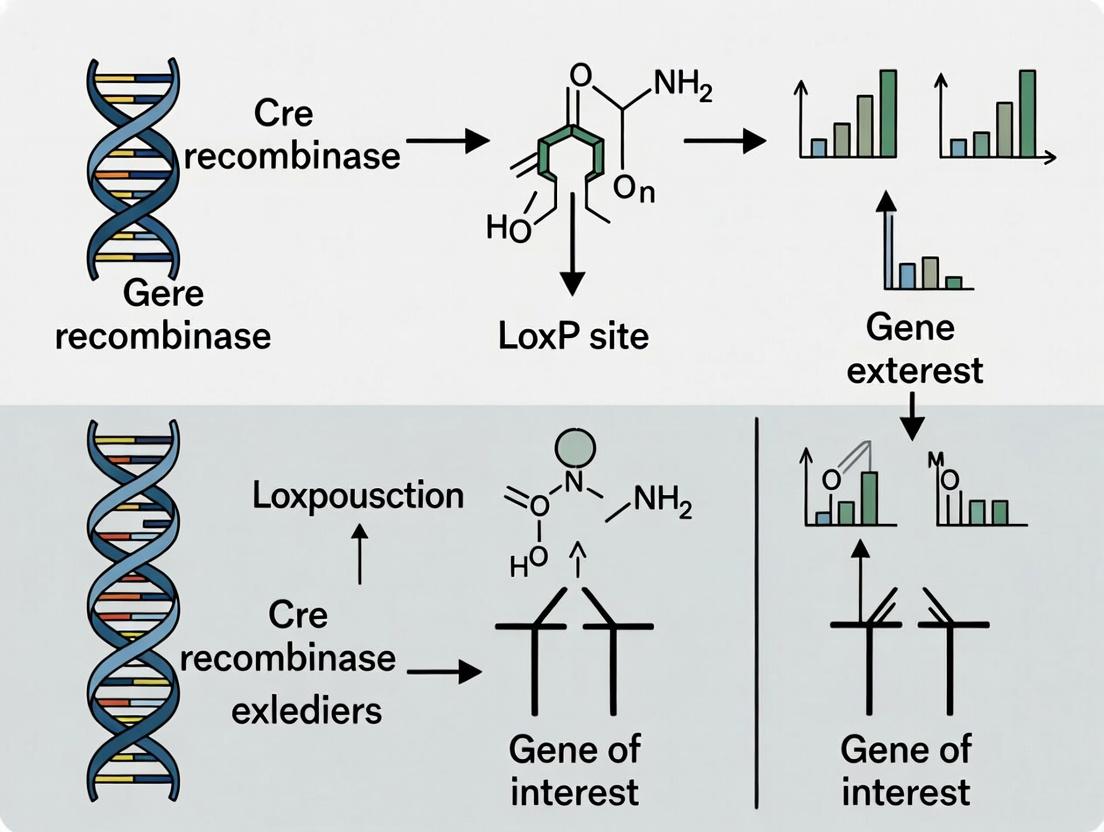
This article provides a targeted overview of the Cre-Lox recombination system for precise gene excision in plants, tailored for researchers, scientists, and biotechnology professionals.
Precision Gene Editing in Plants: A Comprehensive Guide to the Cre-Lox System for Researchers
Abstract
This article provides a targeted overview of the Cre-Lox recombination system for precise gene excision in plants, tailored for researchers, scientists, and biotechnology professionals. We first explore the foundational biology and core components of the system. We then detail practical methodologies for vector design, transformation, and tissue-specific application. Addressing common experimental challenges, we offer troubleshooting and optimization strategies for efficiency and leakiness. Finally, we compare Cre-Lox with alternative gene editing technologies like CRISPR-Cas and validate its applications through case studies in crop improvement and functional genomics. The goal is to serve as a current, actionable resource for implementing and advancing plant genetic engineering.
Understanding Cre-Lox: Core Principles and Components for Plant Genetic Engineering
Troubleshooting & FAQs for Cre-Lox Systems in Plant Research
Q1: My transgenic plant shows no evidence of Cre-mediated excision despite confirmed Cre expression. What could be wrong? A: Incomplete excision is common. Key culprits include:
- Low Cre Activity: The Cre line may have weak or tissue-specific expression insufficient for complete recombination. Consider using a strong, constitutive promoter (e.g., 35S) or a heat-shock inducible system.
- Silent Lox Sites: The chromatin structure around the integrated lox sites can make them inaccessible. Using Lox66/Lox71 mutant sites, which have higher recombination efficiency, can help.
- Insufficient Progeny Screening: Excision may be somatic and not germline. Ensure you screen a sufficient number of progeny (F2 or later generations) from the crossed plant. Data from a recent study shows efficiency variance:
| Plant Species | Cre Driver | Excision Efficiency (Germline) | Recommended Progeny to Screen |
|---|---|---|---|
| Arabidopsis | 35S::Cre | 85-95% | ≥ 20 F2 plants |
| Rice | Actin1::Cre | 70-80% | ≥ 30 F2 plants |
| Tobacco | HS::Cre (Heat Shock) | 60-75% per shock cycle | ≥ 25 F2 plants, multiple cycles |
Q2: I observe "leaky" or unexpected excision in my control plants not expressing Cre. How is this possible? A: This indicates possible endogenous recombinase activity or contamination.
- Action: Sequence the lox site junction in your "leaky" plants to confirm clean excision versus rearrangement.
- Prevention: Always include multiple, independent control lines transformed with the lox-target construct only. Maintain strict segregation from Cre-expressing lines. Use intron-interrupted Cre to prevent activation by endogenous splicing factors.
Q3: After successful excision, I need to remove the Cre gene itself. What is the most efficient method? A: Use a transposable Cre cassette or cross to a segregating marker.
- Detailed Protocol: Cre Excision via Segregation:
- Cross your excised plant (genotype: *loxP-excised / Cre+) to a wild-type plant.
- Screen the F1 progeny by PCR for the excised allele but absence of the Cre transgene.
- Select PCR-positive, Cre-negative plants.
- Self the selected plant and confirm in the F2 generation that the excised allele is stable and Cre is absent (no further excision events). Expected Mendelian segregation is 1:1 for Cre presence in F1.
Q4: What are the best practices for detecting and validating Cre-Lox recombination in plants? A: Use a multi-assay approach:
- PCR Genotyping: Design primers flanking the lox sites (for excised band) and one primer inside the excised region (for unexcised band).
- qPCR for Copy Number: Confirm loss of the excised DNA segment.
- Reporter Lines: Utilize a lox-STOP-lox-GUS/GFP reporter plant in initial crosses to visually confirm Cre activity patterns before working with your target construct.
Research Reagent Solutions Toolkit
| Reagent / Material | Function in Cre-Lox Plant Experiments |
|---|---|
| pCAMBIA Vectors | Common T-DNA binary vectors for plant transformation; often used to clone lox constructs. |
| Gateway-Compatible Lox Modules | Enables rapid cloning of gene fragments between lox sites via LR recombination. |
| Heat-Shock Inducible Cre (HS::Cre) | Provides temporal control over excision; induced by shifting plants to 37-42°C. |
| Estradiol-Inducible Cre (XVE::Cre) | Offers tight chemical induction; reduces leakiness compared to constitutive promoters. |
| Lox66 and Lox71 Mutant Sites | Asymmetric mutant lox sites that recombine to form a double-mutant site with very low affinity for Cre, preventing reverse reaction and increasing forward excision efficiency. |
| Cre-excisable Selectable Markers | e.g., loxP-flanked NptII (kanamycin resistance). Allows removal of the antibiotic resistance gene after transformation. |
| DsRED2/mCherry Fluorescent Reporters | Visual markers for transformation or excision events; clearer in plants than GFP in some tissues. |
Experimental Protocols
Protocol 1: Standard Cross for Cre-Mediated Excision in Arabidopsis.
- Parental Lines: Grow target plant (homozygous for lox-flanked sequence) and Cre driver plant (e.g., 35S::Cre).
- Crossing: Emasculate target plant flowers. Pollinate with pollen from Cre plant. Label crosses.
- Seed Harvest: Collect F1 seeds from the target plant (maternal parent).
- F1 Screening: Plant F1 seeds. Perform genomic DNA extraction and PCR to identify plants carrying both the lox construct and the Cre gene.
- Excision Check: On positive F1 plants, perform excision-specific PCR. Excision may be somatic or partial.
- F2 Generation: Self-pollinate the F1 plant showing the highest excision signal. Screen the F2 population for plants homozygous for the excised allele and lacking the Cre transgene.
Protocol 2: Heat-Shock Induction of HS::Cre Excision.
- Plant Material: Obtain F1 plants from a cross between your lox target line and an HS::Cre line.
- Baseline Sample: Take a leaf disc for DNA pre-induction.
- Induction: Place potted plants in a 37°C growth chamber for 2 hours. Return to normal growth conditions for 24-48 hours.
- Post-Induction Sample: Take a new leaf disc from a newly emerged leaf.
- Analysis: Extract DNA from both samples. Compare excision PCR band intensity post-induction vs. pre-induction. Repeat heat-shock cycles to increase efficiency.
Visualizations
Cre-Lox Recombination Mechanism in Plants
Diagnostic Flow for Failed Cre Excision
Technical Support Center
Troubleshooting Guides & FAQs
Q1: My Cre-mediated excision in plant protoplasts is inefficient. What are the primary causes? A: Inefficient excision is commonly due to:
- Low Cre Recombinase Activity: Verify expression levels via Western blot. Use a positive control plasmid (e.g., with a STOP cassette flanked by lox sites driving a fluorescent reporter).
- Epigenetic Silencing of Cre Transgene: In stable lines, the Cre transgene can become methylated. Treat plants with 5-azacytidine or use an inducible system (e.g., Estrogen- or Dexamethasone-inducible Cre).
- Inaccessible Chromatin at lox Sites: lox sites embedded in heterochromatin are less efficient. Consider repositioning the sites or using chromatin remodeling agents.
- Suboptimal lox Spacing: The efficiency of recombination decreases with increased distance between lox sites. For large excisions (>10 kb), consider alternative systems or verify via PCR across the excised region.
Q2: I observe unexpected (off-target) excision patterns. How can I investigate this? A: Off-target activity can occur due to pseudo-lox sites in the plant genome.
- Action: Perform whole-genome sequencing or use techniques like Digenome-seq (in vitro) on your plant line to identify potential off-target sites with sequence similarity to your specific lox variant (e.g., loxP).
- Mitigation: Use mutant lox sites with higher specificity (e.g., lox66/lox71 for irreversible recombination) or a codon-optimized, plant-specific Cre variant with enhanced fidelity.
Q3: How do I quantify Cre recombination efficiency in my stable Arabidopsis lines? A: Standard quantification methods include:
- PCR-based Genotyping: Design primers flanking the lox sites and internal to the excised region.
- Droplet Digital PCR (ddPCR): Provides absolute quantification of excised vs. non-excised allele copy numbers without the need for standard curves. This is the current gold standard for precise efficiency measurement.
Table 1: Quantitative Comparison of Cre Efficiency Assay Methods
| Method | Principle | Key Advantage | Key Limitation | Typical Time-to-Result |
|---|---|---|---|---|
| Endpoint PCR + Gel | Amplification of excised/non-excised fragments | Low cost, simple | Semi-quantitative, low sensitivity | 4-6 hours |
| Quantitative PCR (qPCR) | TaqMan probes specific to junctions | Quantitative, higher throughput | Requires standard curve, prone to PCR bias | 2-3 hours |
| Droplet Digital PCR (ddPCR) | Partitioning and endpoint detection | Absolute quantification, high precision, no standard curve | Higher cost, specialized equipment | 4-5 hours |
Q4: What are the key steps for a robust transient assay to test Cre/lox functionality in Nicotiana benthamiana? A: Detailed Protocol: Agrobacterium-mediated Transient Expression (Agroinfiltration)
- Vector Preparation: Clone your lox-flanked sequence and Cre recombinase into separate binary vectors (e.g., pGreen/pSoup system). Use a strong plant promoter (e.g., 35S).
- Agrobacterium Transformation: Transform Agrobacterium tumefaciens strain GV3101 with each plasmid.
- Culture Initiation: Start 5 mL primary cultures (YEP + antibiotics) and grow overnight at 28°C.
- Secondary Culture: Dilute primary culture 1:50 in fresh media and grow to OD600 ~0.8.
- Induction & Preparation: Pellet cells. Resuspend in infiltration buffer (10 mM MES, 10 mM MgCl2, 150 µM Acetosyringone, pH 5.6) to a final OD600 of 0.5 for each construct. Mix the Cre and lox reporter suspensions 1:1. Incubate at room temp for 1-3 hours.
- Infiltration: Use a needleless syringe to infiltrate the mixture into the abaxial side of young, fully expanded N. benthamiana leaves.
- Analysis: Harvest leaf discs 48-72 hours post-infiltration. Analyze recombination via fluorescence microscopy (if using a reporter) or extract genomic DNA for PCR validation.
Visualizing Cre/loxMechanism & Workflows
Title: Cre Recombinase Catalytic Cycle at lox Sites
Title: Cre-lox Gene Excision Workflow in Plants
The Scientist's Toolkit: Research Reagent Solutions
Table 2: Essential Materials for Cre-lox Experiments in Plants
| Item | Function & Specificity | Example / Note |
|---|---|---|
| Cre Recombinase Variants | Catalyzes site-specific recombination. | Plant codon-optimized Cre, iCre (inducible), CreER (Tamoxifen-inducible). Reduces cross-talk with endogenous systems. |
| lox Site Variants | DNA sequences recognized by Cre. | loxP (standard), lox66/lox71 (mutant pair for irreversible recombination), lox5171 (for reduced toxicity in plants). |
| Binary Vector Systems | For Agrobacterium-mediated plant transformation. | pGreen/pSoup, pCAMBIA series. Must contain plant selectable marker (e.g., KanR, HygR). |
| Inducing Agents | To control temporal Cre activity. | β-Estradiol (for XVE system), Dexamethasone (for GVg system), 4-Hydroxytamoxifen (for CreER). |
| Efficiency Reporter Plasmids | Positive control for Cre activity. | Plasmid with lox-flanked STOP cassette upstream of GFP/YFP. Excision results in fluorescence. |
| High-Fidelity Polymerase | For accurate amplification of lox regions and genotyping. | Phusion or Q5 Polymerase. Critical for cloning and diagnostic PCR. |
| ddPCR/qPCR Reagents | For precise quantification of excision events. | ddPCR Supermix, TaqMan probes spanning the novel junction after excision. |
| Agrobacterium Strains | For plant transformation. | GV3101 (pMP90), EHA105. Chosen for high virulence and compatibility with binary vectors. |
FAQs & Troubleshooting Guides
Q1: My Cre driver line is not showing the expected excision pattern in my transgenic plant. What could be wrong? A: This is a common issue. Troubleshoot using the following steps:
- Check Driver Specificity: Verify the promoter used in your Cre driver line. Is it truly active in the expected cell types and developmental stages? Perform RT-PCR or use a fluorescent reporter under the same promoter to confirm expression.
- Check Expression Level: Cre expression might be too low for efficient recombination. Consider using a stronger promoter or a Cre variant with enhanced activity (e.g., codon-optimized Cre for plants).
- Silencing: Transgene silencing is frequent in plants. Check for methylation status of the promoter. Using a different, heterologous promoter or an intron-containing Cre construct can help.
- Temporal Control: If using an inducible Cre-ERT2 system, confirm the correct inducer (e.g., 4-hydroxytamoxifen) concentration, duration, and application method (spray vs. soak).
Q2: I am using a lox66/71 mutant site system for RMCE, but my replacement efficiency is very low. How can I improve it? A: Recombinase-mediated cassette exchange (RMCE) efficiency depends on several factors:
- Cre Activity: Ensure high Cre expression during the RMCE experiment. Transiently express Cre via agroinfiltration alongside your donor construct.
- Donor Construct Design: The donor vector must contain the matching mutant lox sites (e.g., lox71 on the 5' side, lox66 on the 3' side, relative to your genomic target). Verify the orientation.
- Homology Arms: While Cre acts on lox sites, including short homology arms (50-100 bp) flanking the lox sites in the donor DNA can significantly improve integration rates in plants via homologous recombination-assisted mechanisms.
- Selection: Apply stringent selection for the exchanged cassette. Use a different selectable marker in the donor than the one excised from the target.
Q3: My reporter construct (e.g., GUS/GFP) shows no signal after Cre-mediated activation. Is the excision event not happening? A: Not necessarily. Follow this diagnostic guide:
- Test Reporter Viability: Cross your reporter line with a known, strong, constitutive Cre driver (e.g., 35S::Cre). If no signal appears, the reporter construct itself may be defective or silenced.
- Test Cre Driver: Cross your Cre driver with a different, validated reporter line. If no signal, the issue is with the Cre line.
- Check Reporter Design: For a STOP cassette flanked by loxP sites, ensure it is in the correct orientation to block transcription/translation. A polyadenylation signal (e.g., from nopaline synthase, NOS) is often used. Verify the construct by sequencing.
- Timing: Some reporters (e.g., GUS) require time for protein accumulation and/or substrate processing. Allow sufficient time after excision before assaying.
Q4: What are the key differences between loxP, lox5171, and loxN sites, and when should I use each? A: The choice depends on the experiment goal.
Table 1: Comparison of Common lox Variants
| lox Variant | Sequence (Spacer in lowercase) | Key Property | Primary Use in Plants |
|---|---|---|---|
| loxP | ATAACTTCGTATA atgtatgc TATACGAAGTTAT | Wild-type site. Reversible. | Standard gene excision, activation, or inversion. |
| lox66/71 | Mutated left (lox66) and right (lox71) inverted repeats. | Creates a double-mutant lox (lox72) after recombination, which has low affinity for Cre. Directional. | Recombinase-Mediated Cassette Exchange (RMCE) to replace a genomic segment. |
| lox5171 | Mutated spacer and one inverted repeat. | Recombination with loxP is efficient, but the resulting hybrid sites (lox51, lox71) are poorly recognized. Directional. | Serial or repeated rounds of gene stacking or replacement. |
| loxN (e.g., lox511, lox2272) | Mutated spacer region. | Orthogonal. Recombines only with itself, not with loxP. | Independent, parallel control of multiple genetic modifications in the same plant. |
Protocol 1: Validating Cre Driver Expression Pattern
- Cross your Cre driver line to a universal fluorescent reporter line (e.g., 35S::loxP-STOP-loxP-tdTomato).
- Grow F1 seedlings on selective media.
- Image whole seedlings or tissue sections using confocal microscopy over several developmental stages.
- Document the spatial and temporal pattern of tdTomato fluorescence, which reflects Cre activity.
Protocol 2: Quantitative PCR (qPCR) Assay for Excision Efficiency
- Design Primers: Primer set A: Flanks the loxP site, amplifies both excised and non-excised DNA. Primer set B: Spans the excision junction, specific to the excised product.
- Extract Genomic DNA from pooled tissue samples.
- Run qPCR: Use a DNA-binding dye (e.g., SYBR Green). Normalize using a reference gene.
- Calculate: Excision efficiency (%) = (2^(-ΔCt[Excised]) / (2^(-ΔCt[Total]) ) * 100, where ΔCt is the difference in cycle threshold between the target and reference amplicons.
Diagrams
The Scientist's Toolkit
Table 2: Essential Research Reagents for Cre-lox Plant Studies
| Reagent / Solution | Function / Purpose |
|---|---|
| 35S::Cre / UBQ10::Cre | Strong, constitutive Cre driver vectors for plant transformation or validation tests. |
| Cre-ERT2 / XVE::Cre | Inducible Cre systems for temporal control (by 4-OHT or β-estradiol, respectively). |
| Gateway-Compatible lox Entry Vectors | Modular cloning vectors containing different lox variants (P, 66, 71, 511) for easy construct assembly. |
| Fluorescent Reporter Lines (e.g., lox-STOP-lox-GFP/YFP/RFP) | Universal lines to cross with your Cre driver to visualize excision patterns. |
| GUS Staining Solution (X-Gluc, Phosphate Buffer, etc.) | For histochemical detection of β-glucuronidase activity in lox-reporter lines. |
| 4-Hydroxytamoxifen (4-OHT) | Inducer for Cre-ERT2. Prepared in ethanol or DMSO for plant application. |
| Taq Polymerase for Genotyping | High-fidelity polymerase for amplifying genomic DNA across lox sites to detect excision events. |
| SYBR Green qPCR Master Mix | For quantitative assessment of recombination efficiency. |
| Plant Genomic DNA Extraction Kit | Rapid, clean DNA isolation for PCR and qPCR from leaf tissue. |
| Agrobacterium tumefaciens Strain GV3101 | Common strain for floral dip or agroinfiltration transformation of Arabidopsis and other plants. |
Troubleshooting Guide: Cre-Lox System in Plants
Q1: My conditional gene knockout in Arabidopsis shows no phenotypic change even after Cre induction. What could be wrong? A: This is a common issue. First, verify the efficiency of your Cre induction system.
- Chemical Inducers (e.g., Estradiol, Dexamethasone): Check the stability and concentration of your stock solution. Perform a qPCR time-course on the excised allele to confirm excision kinetics. Ensure the plant growth medium or conditions do not degrade the inducer.
- Heat Shock: Calibrate the heat shock protocol. Standard protocols (e.g., 37°C for 1-2 hours) may need optimization for your plant species and growth stage. Monitor plant temperature directly, not just ambient temperature.
- Crossing to a Cre Driver Line: Confirm the homozygosity of both the floxed allele and the Cre transgene in the F2 population. Use PCR genotyping with primers flanking the lox sites and internal to the Cre gene.
Q2: After Cre-mediated recombination for gene activation, I detect unexpected, smaller RNA transcripts. Why? A: This often indicates aberrant splicing or premature polyadenylation.
- Check the Design: Ensure the "STOP" cassette removed by Cre does not contain cryptic splice acceptors or donors. The inserted cassette and the gene of interest should be in the same reading frame.
- Experimental Check: Perform RNA-Seq or 3' RACE on your activated plants to map the transcription start and end sites. The issue may lie in the sequence of the promoter or terminator used to drive the gene of interest after excision.
Q3: During chromosome engineering for a large inversion, my PCR screening is inconsistent and some plants show rearrangements not predicted by my design. A: Large-scale rearrangements can induce genomic stress and secondary rearrangements.
- Mitigate Toxicity: Use a Cre line with transient activity (e.g., inducible or viral-delivered Cre) rather than a constitutively expressed one to limit prolonged DNA breakage.
- Screening Strategy: Move beyond simple PCR. Use a combination of:
- Long-range PCR across both recombination junctions.
- Southern blot analysis to confirm the single, correct rearrangement.
- Karyotyping or FISH to visualize the chromosomal inversion.
Q4: I observe somatic excision but no germline transmission of the recombined allele. How can I fix this? A: Germline transmission failure suggests Cre activity is absent or too low in the gamete precursor cells.
- Solution: Switch to or cross with a Cre driver line expressed specifically in the germline or early meiosis (e.g., driven by DD45, SPOROCYTELESS promoters). Ensure the Cre line is fertile itself.
Frequently Asked Questions (FAQs)
Q: What are the most efficient lox sites for plant research?
A: loxP remains the standard. For directional reactions (e.g., inversions, exchanges), lox66 and lox71 (mutant sites) are used for RMCE. lox5171 has been shown to have high efficiency in monocots like rice.
Q: Can I use multiple, different site-specific recombination systems in the same plant? A: Yes, for orthogonal control. Common pairs are Cre-loxP and FLP-FRT, or Dre-rox. Ensure the recombinases have no cross-reactivity with non-cognate sites, which is generally true for these well-characterized systems.
Q: How do I remove the Cre transgene after it has performed its function? A: Several strategies exist:
- Genetic Crossing: Cross the excised plant to a wild-type plant and screen progeny for the desired allele without the Cre transgene.
- Transient Delivery: Deliver Cre as a protein, mRNA, or via a transient viral vector (e.g., Tobacco rattle virus).
- Auto-excision: Design the Cre gene itself to be flanked by lox sites, so it excises itself after expression.
Q: What is a common cause of "leaky" excision in conditional knockouts before induction? A: Basal, low-level expression of the Cre driver in your specific tissue or developmental stage. Use a Cre line with a tightly regulated inducible system (e.g., estrogen receptor-fused Cre, XVE). Test multiple independent transgenic lines for the floxed allele, as positional effects can cause sensitivity to trace Cre activity.
Experimental Protocols
Protocol 1: Verifying Cre-Mediated Excision via PCR Genotyping
- Isolate Genomic DNA: Use a CTAB-based method from leaf tissue.
- Design Primers:
- Primer A: Upstream of the 5' lox site.
- Primer B: Within the sequence to be excised (floxed region).
- Primer C: Downstream of the 3' lox site.
- PCR Reactions:
- Set-up: Run two reactions per plant: (A+B) and (A+C).
- Conditions: Use a high-fidelity polymerase with a touch-down cycling program.
- Interpretation:
- Un-excised Allele: (A+B) gives a product; (A+C) gives a very large or no product.
- Excised Allele: (A+B) gives no product; (A+C) gives a shorter, distinct product.
Protocol 2: Estradiol-Inducible Cre Activation in Transgenic Arabidopsis
- Preparation: Grow plants to desired stage (e.g., 2-week-old seedlings).
- Inducer Solution: Prepare 10 mM estradiol stock in DMSO. Store at -20°C.
- Application: Dilute stock in 0.01% Silwet L-77 to a final working concentration of 10 µM. Spray plants thoroughly until runoff.
- Control: Spray control plants with solution containing DMSO and Silwet L-77 only.
- Harvest: Collect tissue at multiple time points post-induction (e.g., 6, 12, 24, 48 hours). Flash-freeze in liquid N₂ for RNA/DNA analysis.
Protocol 3: Cre-Mediated Chromosome Inversion Screening by Southern Blot
- Digest Genomic DNA: Use two restriction enzymes that flank the predicted inversion breakpoints and produce a diagnostic fragment size shift (e.g., 2-5 kb difference).
- Probe Design: Label a probe complementary to a sequence outside the inverted region but within the Southern blot fragment.
- Hybridization: Perform standard Southern blot procedure. The probe will hybridize to a different sized fragment in wild-type vs. inverted chromosomes, confirming the structural change.
Table 1: Comparison of Cre Delivery Methods in Plants
| Method | Typical Excision Efficiency | Germline Transmission Rate | Key Advantage | Major Limitation |
|---|---|---|---|---|
| Stable Genetic Cross | 95-100% (in progeny) | High | Stable, reproducible; no induction variable. | Time-consuming; Cre transgene remains. |
| Chemical Induction | 70-95% (somatic) | Variable | Temporal control; tunable. | Potential inducer toxicity; uneven penetration. |
| Heat Shock Induction | 60-85% (somatic) | Low to Moderate | Simple, inexpensive. | Stressful to plant; often non-uniform. |
| Viral Delivery (TRV) | 40-70% (somatic) | Very Low | Rapid, no stable transformation needed. | Low efficiency in meristems; mosaic pattern. |
Table 2: Common lox Site Variants for Advanced Engineering
| lox Variant | Sequence (Spacer Region) | Primary Use in Plants | Recombination Efficiency vs. loxP |
|---|---|---|---|
| loxP (Standard) | ATAACTTCGTATA...TATACGAAGTTAT | Conditional KO, Activation | Baseline (100%) |
| lox5171 | ATAACTTCGTATA...TATACGAAGTTAT | Monocot transformation | ~85-110% in rice |
| lox66 (mutant) | ATAACTTCGTATA...TATACGAAGTTGT | Recombination-mediated cassette exchange (RMCE) | <5% with loxP, >90% with lox71 |
| lox71 (mutant) | ACAACTTCGTATA...TATACGAAGTTAT | Partner for lox66 in RMCE | <5% with loxP, >90% with lox66 |
Diagrams
Diagram 1: Cre-lox Mediated Conditional Knockout Workflow
Diagram 2: Gene Activation via Excision of STOP Cassette
Diagram 3: Chromosome Engineering for Inversion
The Scientist's Toolkit: Key Research Reagent Solutions
| Item | Function in Cre-lox Experiments | Example/Note |
|---|---|---|
| Cre Recombinase Lines | Driver for recombination. | Estradiol-inducible (XVE), heat-shock (HSP), or tissue-specific promoters. |
| lox-Floxed Plant Lines | Target for recombination. | Homozygous lines with gene of interest flanked by lox sites. |
| Chemical Inducers | To activate inducible Cre systems. | 17-β-Estradiol (for XVE), Dexamethasone (for GR fusions). Prepare fresh in DMSO. |
| Silwet L-77 | Surfactant for agro-infiltration or chemical spraying. | Ensures even coverage and penetration of inducers. Use at 0.01-0.05%. |
| High-Fidelity Polymerase | For accurate genotyping PCR across lox sites. | Essential for distinguishing floxed, wild-type, and excised alleles. |
| Restriction Enzymes | For Southern blot confirmation of large rearrangements. | Choose enzymes that give diagnostic fragment shifts post-recombination. |
| DD45 or SPL Promoter: | Drives germline-specific Cre expression. | Critical for ensuring heritable excision events. |
Why Plants? Advantages for Functional Genomics and Trait Stacking
Plants offer unparalleled advantages for functional genomics and the stacking of complex traits. Their scalability, genetic tractability, and ability to perform post-translational modifications make them ideal bioreactors for both basic research and applied drug development. Within this field, the Cre-Lox site-specific recombination system has become a cornerstone technology for precise spatial and temporal control of gene expression and excision, enabling sophisticated genetic engineering crucial for both functional studies and multi-gene trait pyramiding.
Frequently Asked Questions & Troubleshooting
Q1: In my tobacco transformation experiment using the Cre-Lox system for trait stacking, I observe very low excision efficiency. What could be the cause? A: Low excision efficiency is often due to inadequate Cre recombinase expression or accessibility. Ensure your construct uses a strong, appropriate promoter (e.g., a constitutive 35S or a specific inducible promoter) to drive cre expression. Verify the orientation and integrity of the Lox sites (e.g., LoxP, Lox71/66) flanking the target sequence. Methylation of the Lox sites can also inhibit recombination; using demethylation agents or selecting plant lines with lower methylation status may help.
Q2: After successful Cre-mediated excision in my Arabidopsis line, I detect PCR products for both the excised and unexcised alleles. What does this indicate? A: This suggests somatic excision, where recombination has not occurred in all cells of the plant. The Cre-Lox system may be acting late in development, or the Cre expression may be mosaic. To obtain a uniformly excised plant, you need to proceed to the next generation (T2) by selecting progeny that have inherited the excised allele germinally. Molecular analysis of individual T2 plants, rather than pooled tissue, is essential.
Q3: I am encountering unintended phenotypic effects in my transgenic plant expressing the Cre recombinase, even before crossing with a Lox reporter line. How should I troubleshoot this? A: Cre can have cytotoxic or genotoxic effects in plants due to cryptic or pseudo Lox sites in the genome. First, confirm the phenotype is linked to cre expression by checking multiple independent transgenic lines. Consider switching to an inducible Cre system (e.g., estrogen- or ethanol-inducible) to limit expression to a specific treatment window. Alternatively, use a Cre line with lower basal activity or a codon-optimized plant version of cre to reduce toxicity.
Q4: When stacking multiple traits using multi-gene constructs and Cre-Lox, my transformation efficiency drops dramatically. What protocol adjustments can I make? A: Large multi-gene constructs are challenging to transform and can undergo silencing. Utilize plant transformation vectors (e.g., from the pCLEAN or pGreen series) designed for large inserts and minimal bacterial backbone integration. Consider a modular, serial transformation approach: transform a base line with the first trait and a Lox site, then use Cre-mediated site-specific integration to add subsequent traits in a precise manner. Agrobacterium-mediated transformation is generally more reliable than biolistics for large constructs.
Experimental Protocol: Cre-Lox Mediated Gene Excision and Validation inNicotiana benthamiana
Objective: To transiently demonstrate and validate Cre-Lox mediated excision of a reporter gene in planta.
Materials:
- Agrobacterium tumefaciens strain GV3101 harboring:
- Vector A (Reporter): 35S::loxP-GFP-loxP-RFP (GFP flanked by direct LoxP repeats).
- Vector B (Cre Driver): 35S::Cre recombinase.
- Vector C (Negative Control): Empty vector or 35S::GUS.
- Infiltration buffer (10 mM MES, 10 mM MgCl2, 150 µM acetosyringone, pH 5.6).
- 1 mL needleless syringes.
- 4-week-old N. benthamiana plants.
- Spectrofluorometer or fluorescence microscope with appropriate filters.
Methodology:
- Grow Agrobacterium cultures (Vector A, B, C) overnight at 28°C in appropriate antibiotics.
- Pellet cultures and resuspend in infiltration buffer to an OD600 of 0.5 for each.
- Prepare two mixtures:
- Test: Equal volumes of Vector A and Vector B suspensions.
- Control: Equal volumes of Vector A and Vector C suspensions.
- Using a syringe, infiltrate the mixtures into separate, marked areas on the abaxial side of N. benthamiana leaves.
- Incubate plants under normal growth conditions for 48-72 hours.
- Analysis:
- Visual: Inspect under UV/blue light (GFP) and green light (RFP). Successful excision will show loss of GFP fluorescence and gain of RFP fluorescence in the test area.
- Molecular: Harvest infiltrated leaf discs. Perform PCR using primers flanking the LoxP sites. The excised product will be significantly smaller than the unexcised one. Confirm with sequencing.
Expected Data Summary Table:
| Experimental Condition | GFP Fluorescence (488 nm) | RFP Fluorescence (587 nm) | PCR Product Size (Approx.) |
|---|---|---|---|
| Control (A + C) | Strong | None/Weak | ~1.5 kb (GFP + RFP) |
| Test (A + B) | None/Weak | Strong | ~0.75 kb (RFP only) |
Key Research Reagent Solutions
| Reagent / Material | Function in Cre-Lox Plant Research |
|---|---|
| pCAMBIA Vector Series | Binary Ti vectors with plant selection markers (e.g., hygromycin, kanamycin resistance) for stable transformation. |
| Gateway-Compatible Vectors | Enable rapid, recombinational cloning of gene cassettes into plant expression vectors, facilitating construct assembly for stacking. |
| Estradiol-Inducible XVE System | Provides tight, chemically inducible control of Cre recombinase expression, minimizing pleiotropic effects. |
| Fluorescent Protein Reporters (e.g., eGFP, tdTomato) | Visual markers to easily monitor excision events (loss/gain of fluorescence) in vivo. |
| Lox Site Variants (Lox71, Lox66, Lox5171) | Mutant Lox sites used for irreversible, directional gene integration or to prevent re-excision after a stacking event. |
| Phire Plant Direct PCR Kit | Allows rapid genotyping of transgenic plants directly from leaf tissue without lengthy DNA extraction. |
Visualizations
Title: Cre-Lox Mediated Gene Excision Workflow
Title: Iterative Trait Stacking Using Cre-Lox and Variant Lox Sites
Implementing Cre-Lox in Plants: Step-by-Step Protocols and Key Applications
Technical Support Center: Troubleshooting and FAQs
This support center provides solutions for common issues encountered when using binary vectors, Gateway cloning, and multigene stacking strategies within the context of Cre-Lox system research for plant gene excision.
Frequently Asked Questions (FAQs)
Q1: During Gateway cloning for multigene stacking, my LR recombination reaction consistently yields no colonies. What are the primary causes? A: This is typically due to incorrect stoichiometry or low-quality entry clones. Ensure the molar ratio of Entry Vector(s):Destination Vector is 2-3:1. Verify the integrity of your att sites by sequencing entry clones. Also, confirm that your Destination Vector contains the correct antibiotic resistance for selection post-LR reaction.
Q2: After Agrobacterium-mediated transformation of my binary vector containing a Cre-Lox gene excision cassette, I get no transgenic plants. How should I troubleshoot? A: Follow this diagnostic checklist:
- Binary Vector Integrity: Re-ismid the binary vector from Agrobacterium and confirm by restriction digest.
- Agrobacterium Viability: Check the optical density (OD600) and re-streak on selective plates. The optimal OD600 for transformation is usually 0.5-0.8.
- Plant Selection: Confirm the plant selection agent (e.g., kanamycin, hygromycin) is active and used at the empirically determined lethal concentration for your plant species.
- Cassette Toxicity: The constitutive expression of Cre recombinase can be toxic. Consider using a plant-inducible promoter (e.g., ethanol, dexamethasone) to control Cre expression.
Q3: My multigene stack shows inconsistent expression of the individual genes, or partial silencing. What could be the reason? A: This is often caused by position effects or repeat-induced gene silencing (RIGS). Ensure you use different plant promoters/terminators for each gene in the stack to minimize homologous sequences. Employ matrix attachment regions (MARs) flanking the stack to insulate it from chromosomal position effects. Verify the stack's orientation and integrity by whole-construct sequencing.
Q4: Following the induction of Cre recombinase to excise a Lox-flanked selectable marker, PCR analysis shows incomplete excision. What factors affect excision efficiency? A: Cre-Lox excision efficiency in plants is rarely 100%. Key factors include:
- Promoter Choice: The strength and specificity of the promoter driving Cre.
- Induction Method: Efficiency and uniformity of the chemical inducer application (e.g., dexamethasone, β-estradiol).
- Developmental Timing: Early induction often yields higher excision rates.
- Lox Site Orientation: Directly repeated LoxP sites excise efficiently. Verify the Lox sites are in the same orientation.
Troubleshooting Guides
Issue: Poor Efficiency in BP Cloning to Create Entry Clones
- Step 1: Verify the concentration and purity (A260/A280) of your attB-flanked PCR product. It must be gel-purified.
- Step 2: Ensure you are using the correct attP-containing donor vector (e.g., pDONR221).
- Step 3: Perform a positive control reaction (often supplied with the kit) to validate the enzyme mix (BP Clonase II).
- Step 4: Heat-inactivate the BP Clonase II after the reaction as per protocol before transforming into competent cells.
Issue: Chimeric or Incorrect Assembly in Golden Gate or Gibson Assembly for Multigene Stacking
- Step 1: Design checks. Ensure all fusion junctions are free of unintended restriction sites and that overlapping sequences for Gibson Assembly are 20-40 bp with a melting temperature >48°C.
- Step 2: Use high-fidelity, thermostable ligase for Golden Gate assembly (e.g., BsaI-HFv2, T7 DNA Ligase).
- Step 3: Optimize the molar ratio of DNA fragments. A 1:1 ratio is a starting point, but often a slight molar excess (2:1) of insert to backbone improves yield.
- Step 4: Always include a "no insert" control backbone ligation to assess background colonies.
Issue: No Excision After Cre Induction in Stable Transgenic Plants
- Step 1: Confirm Cre expression. Use RT-PCR on induced tissue samples to detect Cre mRNA.
- Step 2: Verify the Lox sites are intact in the primary transformant by PCR and sequencing.
- Step 3: Optimize induction conditions. Test different concentrations of the chemical inducer and various treatment durations.
- Step 4: Analyze tissue specificity. If using a tissue-specific promoter, ensure you are analyzing the correct tissue post-induction.
Table 1: Comparison of Common Vector Construction Cloning Methods
| Method | Typical Efficiency (CFU/µg) | Time to Final Construct | Key Advantage | Best For |
|---|---|---|---|---|
| Traditional Restriction/Ligation | 10^3 - 10^4 | 1-2 weeks | Low cost, universal | Simple inserts, single genes |
| Gateway (LR Recombination) | 10^5 - 10^6 | 3-5 days | High efficiency, directional | Moving genes between vectors, simple stacks |
| Golden Gate Assembly | 10^4 - 10^6 | 1-3 days | Scarless, multi-part | Complex multigene stacking |
| Gibson Assembly | 10^4 - 10^5 | 1-3 days | Scarless, sequence-independent | Joining 2-5 overlapping fragments |
Table 2: Common Plant Selection Agents for Binary Vectors
| Selection Agent | Resistance Gene | Typical Working Concentration (µg/mL) | Notes |
|---|---|---|---|
| Kanamycin | nptII | 50-100 (Leaf discs) | Broad-spectrum, can cause "green island" effects. |
| Hygromycin | hpt | 10-20 (Leaf discs) | Often more stringent than kanamycin in plants. |
| Glufosinate (Basta) | bar or pat | 2-10 (Spray) | Used for in planta selection; requires spraying. |
| Spectinomycin | aadA | 50-100 (Callus) | Often used for plastid transformation. |
Experimental Protocols
Protocol 1: LR Recombination Reaction for Gateway Cloning Objective: Recombine one or more Entry clones with a Destination Vector to create an Expression Clone.
- Setup: In a sterile microcentrifuge tube, combine:
- 1-2 µL (50-100 fmol) Destination Vector (binary vector for plants).
- 1-2 µL (50-100 fmol) of each Entry Clone.
- TE Buffer, pH 8.0 to a total volume of 4 µL.
- Reaction: Add 1 µL of LR Clonase II enzyme mix. Mix well by pipetting.
- Incubation: Incubate at 25°C for 1 hour (or overnight for multi-fragment assemblies).
- Termination: Add 1 µL of Proteinase K solution. Incubate at 37°C for 10 minutes.
- Transformation: Transform 1-2 µL of the reaction into chemically competent E. coli cells (e.g., DH5α). Plate on LB agar with the appropriate antibiotic for the Expression Clone.
Protocol 2: Cre-Lox Excision Efficiency Assay in Planta Objective: Quantify the percentage of cells/tissues where Cre-mediated excision has occurred.
- Plant Material: Generate stable transgenic plants harboring both a constitutive Cre (or inducible XVE::Cre) construct and a reporter/test construct with a Lox-flanked sequence (e.g., GFP gene flanked by LoxP, upstream of a RFP gene).
- Induction: For inducible systems, apply the chemical inducer (e.g., 10 µM β-estradiol + 0.015% Silwet L-77) to appropriate plant tissues.
- Sampling: Harvest induced tissue at 24, 48, and 72 hours post-induction.
- Analysis:
- PCR: Design primers flanking the Lox sites. Excision yields a smaller, distinct band.
- qPCR: Quantify the ratio of excised to unexcised DNA amplicons.
- Microscopy (for reporter): Directly count cells expressing RFP (excised) vs. GFP (unexcised).
- Calculation: Excision Efficiency (%) = (Signal from excised product / Total signal) * 100.
Visualizations
Gateway Cloning Workflow from PCR to Plant Vector
Cre-Lox Mediated Excision of a Selectable Marker
The Scientist's Toolkit: Research Reagent Solutions
| Item | Function & Application |
|---|---|
| pDONR/Zeo | Gateway BP Clonase donor vector. Contains attP1 and attP2 sites for recombination with attB PCR products. Zeocin resistance for selection in E. coli. |
| pB7WG2D | A popular plant binary Destination Vector for Gateway cloning. Contains a CaMV 35S promoter, attR1 and attR2 sites, and a plant-expressible hygromycin resistance gene. |
| XVE Inducible System | A chemical-inducible promoter system. The chimeric XVE transcription activator is induced by β-estradiol, driving high-level expression of Cre recombinase. |
| LR Clonase II | Enzyme mix containing Integrase and Excisionase for performing the Gateway LR recombination reaction between Entry and Destination vectors. |
| BsaI-HFv2 Restriction Enzyme | A high-fidelity, thermostable Type IIS restriction enzyme used in Golden Gate assembly. It cuts outside its recognition site, enabling scarless fusion of DNA fragments. |
| Silwet L-77 | A surfactant used to lower surface tension during agroinfiltration or chemical induction spray applications, ensuring even coverage and penetration into plant tissues. |
| Gateway-Compatible Multisite Vectors (e.g., pYL322D) | Destination vectors designed to accept multiple Entry clones in a specific order, enabling the one-step assembly of multigene stacks via MultiSite Gateway LR reactions. |
Troubleshooting & FAQ Center
Thesis Context: This support center provides targeted troubleshooting for delivery methods used in conjunction with the Cre-Lox system for precise gene excision in plant research. Effective delivery of Cre recombinase and lox-flanked constructs is critical for success.
Agrobacterium tumefaciens-mediated Transformation (Stable Integration)
Q1: My transformed plants show poor transformation efficiency or no T-DNA integration. What could be wrong? A: Several factors in your Agrobacterium culture and co-cultivation can cause this.
- Low Bacterial Viability: Ensure the optical density (OD600) is correct. For most protocols, use an OD600 of 0.5-0.8 for log-phase growth. Re-streak from a fresh, single colony on selective plates.
- Incorrect Acetosyringone Concentration: This phenolic compound induces vir gene expression. A typical working concentration is 100-200 µM. Verify stock solution preparation and add it to both bacterial suspension and co-cultivation media.
- Plant Tissue Health: Explants should be healthy and freshly prepared. Overly long co-cultivation (>3 days) can lead to bacterial overgrowth.
Q2: I get persistent Agrobacterium contamination after co-cultivation, killing my plant tissue. A: This is common. Improve your washing and antibiotic selection.
- Thorough Washing: After co-cultivation, rinse explants in sterile water or antibiotic solution (e.g., cefotaxime) with gentle agitation for 30+ minutes.
- Optimize Antibiotics: Use a combination of antibiotics in your recovery and selection media. Common doses:
- Cefotaxime: 250-500 mg/L to kill Agrobacterium.
- Timentin: 150-300 mg/L (often more effective than cefotaxime).
- Selection Agent (e.g., Kanamycin): Dose must be optimized for your plant species (see Table 1).
Q3: My Cre-Lox excision is inefficient or mosaic after Agrobacterium delivery of Cre. A: This relates to timing and expression of Cre.
- Transient vs. Stable Expression: For complete excision, ensure Cre expression is strong and occurs in all target cells. Consider using a strong, constitutive promoter (e.g., 35S) for Cre. A heat-inducible Cre system can improve synchrony.
- Check T-DNA Structure: Verify that your Cre expression cassette is intact and within the T-DNA borders.
Protoplast Transfection (Transient Delivery)
Q4: My protoplast yield and viability are low post-isolation. A: Protoplast isolation is sensitive. Key parameters:
- Enzyme Solution: Use a fresh, osmotically balanced enzyme mix (e.g., Cellulase + Macerozyme). Typical concentrations range from 0.5-2.0% each. Filter-sterilize, do not autoclave.
- Digestion Time & Conditions: Digest tissue in the dark at 22-28°C with gentle shaking (40 rpm) for 4-16 hours. Over-digestion reduces viability.
- Osmolarity is Critical: Maintain 400-600 mOsm/kg in all solutions (mannitol or sorbitol) to prevent bursting. Check with an osmometer.
Q5: Transfection efficiency of my Cre and reporter plasmids into protoplasts is consistently low. A: Optimize your PEG-mediated transfection protocol.
- DNA Purity & Amount: Use high-purity plasmid DNA (OD260/280 ~1.8). A standard amount is 10-20 µg per 100,000 protoplasts.
- PEG Concentration: The PEG 4000 concentration is critical. A final concentration of 20-40% in the transfection mix is typical. Test a range.
- Incubation Time: PEG-protoplast contact time should be optimized (often 5-15 minutes). Longer times increase efficiency but reduce viability.
Q6: How do I quickly assess Cre-Lox recombination efficiency in protoplasts? A: Use a transient dual-fluorescence reporter system.
- Protocol: Co-transfect protoplasts with a plasmid expressing Cre and a reporter plasmid containing a lox-flanked sequence that separates a constitutive promoter from an RFP gene, with a constitutive GFP gene as a transfection control.
- Analysis: After 24-48 hours, assay via fluorescence microscopy or flow cytometry. Successful excision links the promoter to RFP. Efficiency = (RFP+ cells / GFP+ cells) x 100%.
Viral Vector Delivery (Transient, Systemic Expression)
Q7: My viral vector (e.g., TMV, TRV) shows poor systemic infection or symptom severity interferes with analysis. A: Inoculation method and viral strain are key.
- Inoculation Method: For Agrobacterium-delivered viral vectors (agroinfiltration), ensure infiltration is thorough (use a needleless syringe on the abaxial leaf side). For in vitro transcript inoculation, ensure RNA integrity.
- Mild Strains: For gene expression/excision, use engineered "deconstructed" or mild strains that reduce pathogenicity while maintaining mobility (e.g., TMV 30B).
- Temperature: Lower growth temperatures (20-22°C) often enhance viral spread and reduce symptom severity.
Q8: Cre delivered via viral vector causes excision but also undesirable genotoxicity or plant stunting. A: Uncontrolled, constitutive Cre expression can be toxic.
- Inducible Systems: Engineer the viral genome to express Cre under an inducible promoter (e.g., ethanol- or dexamethasone-inducible).
- Limit Exposure: After observing excision (via a linked reporter), consider using antiviral agents or trimming new growth to remove the virus.
Q9: Can I use viral vectors to deliver the entire Cre-Lox system? A: It's challenging due to size limits and instability. The preferred strategy is:
- Stable Lox Lines: Generate transgenic plants stably expressing the lox-flanked target (e.g., a reporter or gene of interest).
- Viral Delivery of Cre: Use a viral vector to deliver only the Cre recombinase gene to infect these plants, triggering systemic excision. This avoids the need to clone large lox cassettes into the viral genome.
Table 1: Key Parameters for Delivery Methods in Cre-Lox Plant Studies
| Parameter | Agrobacterium Transformation | Protoplast Transfection | Viral Vector Delivery |
|---|---|---|---|
| Primary Use | Stable integration of lox constructs; Stable or transient Cre delivery. | Ultra-high-efficiency transient Cre delivery & assay. | Rapid, transient, systemic Cre delivery in whole plants. |
| Typical Timeframe | Weeks to months for stable lines. | 24-72 hours for transient assays. | 1-3 weeks for systemic infection. |
| Throughput | Low to medium. | Very high (for assay). | Medium to high. |
| Key Efficiency Metric | Stable transformation frequency (%) | Transfection efficiency (% GFP+); Excision efficiency (% RFP+). | Infection rate (% of plants showing symptoms/reporter). |
| Optimal Control for Cre Activity | Stable reporter line with lox-flanked STOP cassette before GFP. | Co-transfection with lox-reporter plasmid. | Infection of stable lox-reporter line with empty vector. |
| Critical Reagent | Acetosyringone (100-200 µM). | PEG 4000 (20-40% final). | Agrobacterium strain for agroinfiltration (OD600=0.4-1.0). |
Table 2: Troubleshooting Common Efficiency Problems
| Problem | Agrobacterium | Protoplast | Viral Vector |
|---|---|---|---|
| Low Delivery Efficiency | Check OD600, acetosyringone, plant genotype compatibility. | Check protoplast viability, PEG concentration, DNA purity. | Check inoculation method, plant age/species, vector stability. |
| High Toxicity/Cell Death | Bacterial overgrowth; antibiotic choice. | PEG toxicity; over-digestion during isolation. | Severe viral symptoms; constitutive Cre toxicity. |
| Mosaic/Incomplete Excision | T-DNA integration patterns; chimeric tissue. | N/A (transient, population-level). | Asynchronous infection; movement limitations. |
| Solution | Optimize antibiotics, use inducible Cre. | Titrate PEG, reduce incubation time. | Use mild viral strain, inducible Cre, lower temperature. |
Experimental Protocols
Protocol 1: PEG-Mediated Transfection of Protoplasts for Cre-Lox Assay
Purpose: To transiently express Cre recombinase and a lox-reporter plasmid in plant protoplasts and quantify excision efficiency within 48 hours.
Materials: See "The Scientist's Toolkit" below. Steps:
- Protoplast Isolation: Harvest 1g of young leaf tissue. Slice into thin strips and immerse in 10 mL of enzyme solution. Digest in the dark with gentle shaking (40 rpm) for 6 hours.
- Purification: Filter the digest through a 70 µm nylon mesh into a 50 mL tube. Rinse with 10 mL W5 solution. Centrifuge at 100 x g for 5 min at 4°C. Gently resuspend pellet in 10 mL W5. Incubate on ice for 30 min.
- Protoplast Counting: Centrifuge again. Resuspend in MMg solution at a density of 2 x 10^5 protoplasts/mL.
- Transfection Mix: For each transfection, aliquot 100 µL protoplasts (20,000 cells) into a round-bottom tube. Add 10 µg of Cre expression plasmid and 10 µg of lox-reporter plasmid. Add 110 µL of freshly prepared PEG solution (40% PEG4000 in 0.2M mannitol, 0.1M CaCl2). Mix gently by inversion.
- Incubation: Incubate at room temperature for 15 minutes.
- Washing: Slowly add 1 mL of W5 solution, mix gently. Centrifuge at 100 x g for 5 min. Carefully remove supernatant.
- Culture & Analysis: Resuspend in 1 mL of protoplast culture medium. Incubate in the dark at 22-25°C for 24-48 hours. Analyze fluorescence via microscopy or flow cytometry.
Protocol 2: Agroinfiltration of Viral Vectors Expressing Cre
Purpose: To deliver a Cre-expressing viral vector (e.g., based on Tobacco Mosaic Virus) into leaves of a stable lox-reporter plant for systemic excision analysis.
Steps:
- Agrobacterium Preparation: Transform your viral vector plasmid (containing Cre in the viral genome) into a suitable Agrobacterium strain (e.g., GV3101). Select on appropriate antibiotics.
- Culture Induction: Start a 5 mL overnight culture from a single colony. The next day, use this to inoculate a 50 mL culture (with antibiotics and 10 mM MES, pH 5.6). Grow to OD600 ~0.8-1.0.
- Induction: Pellet cells (5000 x g, 10 min). Resuspend in infiltration buffer (10 mM MgCl2, 10 mM MES, 150 µM acetosyringone, pH 5.6) to a final OD600 of 0.4-1.0. Incubate at room temperature for 2-4 hours.
- Infiltration: Using a needleless syringe, press the tip against the abaxial side of a leaf on your 3-4 week old lox-reporter plant. Gently inject the bacterial suspension, infiltrating a small patch (∼1 cm²).
- Plant Care: Maintain plants at 22-24°C with high humidity initially.
- Monitoring: Observe for viral spread (symptoms or reporter expression) in new, non-infiltrated leaves after 5-14 days. Excised reporter signal indicates successful Cre delivery and activity.
Visualizations
Title: Decision Workflow for Cre-Lox Delivery Methods in Plants
Title: Protoplast Assay for Cre-Lox Activity
The Scientist's Toolkit: Essential Reagents
| Reagent/Material | Function in Cre-Lox Delivery | Example/Specification |
|---|---|---|
| Acetosyringone | Phenolic compound that induces the Agrobacterium vir gene region, essential for T-DNA transfer. | 100-200 µM working concentration in co-cultivation medium. |
| PEG 4000 | Polymer that promotes membrane fusion and DNA uptake during protoplast transfection. | High purity, 20-40% (w/v) in transfection buffer. |
| Cellulase R10 / Macerozyme R10 | Enzyme cocktail for digesting plant cell walls to generate protoplasts. | Typically 1-2% each in osmotically balanced solution. |
| Mannitol | Osmoticum used to maintain correct osmotic pressure in protoplast solutions, preventing lysis. | 0.4-0.6 M in isolation and transfection buffers. |
| Cefotaxime / Timentin | Antibiotics used to eliminate Agrobacterium after co-cultivation, preventing overgrowth. | 250-500 mg/L (Cefotaxime) or 150-300 mg/L (Timentin) in plant media. |
| Dual lox-Fluorescence Reporter Plasmid | Critical control plasmid containing a lox-flanked STOP codon between a promoter and RFP, plus constitutive GFP. | Used in protoplasts to quantify Cre activity (Excision Efficiency = RFP+/GFP+). |
| Inducible Cre Vector | Cre recombinase gene under control of a chemically (e.g., dexamethasone) or heat-inducible promoter. | Reduces Cre toxicity and allows temporal control of excision. |
| Viral Vector Backbone (e.g., pTRV2, TMV 30B) | Deconstructed viral genome plasmid for agroinfiltration, engineered for high expression and reduced pathogenicity. | Allows systemic delivery of Cre gene in whole plants. |
Frequently Asked Questions (FAQs) & Troubleshooting
Q1: My chemically induced Cre line shows no recombination even with high concentrations of inducer (e.g., 4-OHT or Dex). What are the primary causes? A: The most common causes are: 1) Inefficient nuclear localization of Cre-ERT2: Ensure the fusion protein includes a functional nuclear localization signal (NLS). 2) Insufficient bioavailability of the inducer: For 4-OHT/tamoxifen in plants, verify solubility and consider adding surfactants. For Dexamethasone, ensure it is from a fresh stock. 3) Incorrect timing: The inducer may be administered at a developmental stage where the promoter driving Cre-ERT2/GR is inactive. Check promoter activity with a reporter. 4) Genetic background issues: The loxP-flanked (floxed) target allele may have cryptic splice sites or lack necessary homology.
Q2: My thermally induced Cre line (e.g., Cre-HSF) shows leaky recombination in the absence of heat shock. How can I reduce background? A: Leaky expression is a known challenge. Mitigation strategies include: 1) Optimizing the HSF promoter: Use a core heat shock element (HSE) with minimal basal activity. 2) Lowering growth temperature: Maintain plants at a lower baseline temperature (e.g., 18°C) to minimize background. 3) Employing a double-check system: Use a split-Cre system where both halves are under separate heat shock promoters, requiring two independent heat shocks for recombination. 4) Validating with a dual-fluorescent reporter (e.g., R-GECO) to quantify leakiness.
Q3: After successful primary induction, I observe unexpected phenotypic effects that seem unrelated to my target gene knockout. What could be the source? A: Consider these off-target effects: 1) Cytotoxicity of the inducer: High doses of 4-OHT, tamoxifen, or Dexamethasone can affect plant growth. Perform dose-response curves and include solvent-only controls. 2) Cre-mediated toxicity: Constitutive, high-level Cre expression can cause genomic instability. Use inducible systems precisely. 3) Mosaic excision: Incomplete recombination can lead to mixed cell populations, complicating phenotype analysis. Ensure uniform inducer delivery and consider longer induction windows. 4) Ectopic expression of the Cre driver line itself: The promoter used to drive Cre may have unexpected expression patterns. Always compare to Cre-only controls.
Q4: What are the recommended controls for a robust inducible Cre-Lox experiment in plants? A: Essential controls include:
- Negative Control: floxed target plant without the Cre inducer.
- Cre-Only Control: Plant with the inducible Cre construct but without the floxed target, treated with inducer.
- Inducer-Only Control: floxed target plant without Cre, treated with inducer.
- Positive Recombination Control: Include a well-characterized floxed reporter line (e.g., GUS, YFP) in your crossing scheme to validate induction efficiency.
- Solvent Control: For chemical inducers, a treatment with the vehicle (e.g., ethanol, DMSO) alone.
Experimental Protocols
Protocol 1: Chemical Induction of Cre-ERT2 with 4-Hydroxytamoxifen (4-OHT) in Arabidopsis Seedlings.
- Stock Solution: Prepare 10 mM 4-OHT in 100% ethanol. Store at -20°C in the dark.
- Germination: Surface-sterilize seeds of the genotype Cre-ERT2; floxed-target and sow on ½ MS agar plates.
- Stratification: Keep plates at 4°C for 2-4 days.
- Induction: After 5-7 days of growth under standard conditions, apply 10 µL of 10 µM 4-OHT working solution (diluted in water with 0.01% Tween-20) directly to the seedlings. For plate-wide induction, transfer seedlings to new ½ MS plates containing 1 µM 4-OHT.
- Incubation: Grow seedlings for the desired period post-induction (typically 24-120 hours).
- Analysis: Harvest tissue for genomic DNA PCR analysis to detect recombination or for reporter gene observation.
Protocol 2: Thermal Induction of HSF::Cre in Tobacco Leaves.
- Plant Material: Use stable transgenic Nicotiana benthamiana plants harboring both the HSF::Cre and floxed-reporter constructs.
- Baseline Growth: Grow plants at a standard temperature of 22°C to minimize basal Cre activity.
- Heat Shock: Subject whole plants or individual leaves to a controlled heat shock. A typical regimen is 37-40°C for 30-90 minutes. Use a precision water bath for submerged leaves or a controlled growth chamber for whole plants.
- Recovery: Return plants immediately to 22°C.
- Repetition: For higher efficiency, apply the heat shock regimen once daily for 2-3 consecutive days.
- Analysis: Monitor reporter expression (e.g., fluorescence) or harvest leaf discs 3-7 days post-induction for recombination PCR.
Data Presentation
Table 1: Comparison of Common Inducible Cre Systems in Plant Research
| System | Inducer | Typical Working Concentration | Key Advantage | Key Limitation | Recommended Reporter |
|---|---|---|---|---|---|
| Cre-ERT2 | 4-Hydroxytamoxifen (4-OHT) | 0.1 - 10 µM | Temporally precise; low basal activity. | Variable uptake in plants; can be slow. | pOpOn/LhGR based reporters. |
| Dexamethasone-Induced (GR-fusion) | Dexamethasone | 1 - 30 µM | Rapid nuclear translocation. | High potential for pleiotropic effects from Dex. | pOpOff/LhG4 based reporters. |
| Heat Shock (HSF) | Elevated Temperature | 37-40°C | No chemicals needed; spatially controllable. | Leaky expression; stress response confounding. | HSP18.2 driven fluorescent proteins. |
The Scientist's Toolkit: Research Reagent Solutions
- 4-Hydroxytamoxifen (4-OHT): The active metabolite of tamoxifen; binds and activates the Cre-ERT2 fusion protein, inducing its nuclear translocation.
- Dexamethasone: A synthetic glucocorticoid; binds the glucocorticoid receptor (GR) in GR-Cre fusions, causing rapid nuclear import of Cre.
- Cre-ERT2 Plasmid Vectors: Standard plant binary vectors (e.g., pCAMBIA, pGreen) containing the Cre-ERT2 fusion gene under a chosen promoter (constitutive, tissue-specific).
- Dual-Fluorescent Reporter Line (e.g., R-GECO): A floxed construct where excision switches expression from red (RFP) to green (GFP) fluorescence, allowing visual quantification of efficiency and mosaicism.
- Heat Shock Promoter Constructs: Vectors containing minimal heat shock elements (HSEs) from genes like HSP18.2 or HSP70 to drive Cre expression.
- Validated Floxed Control Line: A plant line with a loxP-flanked STOP cassette blocking a constitutive fluorescent protein. Serves as a universal positive control for Cre activity.
Diagrams
Title: Chemical Induction of Cre: Mechanism
Title: Thermal Induction Experimental Workflow
Technical Support Center
Troubleshooting Guides & FAQs
Q1: My Cre-mediated excision is occurring in non-target tissues despite using a tissue-specific promoter. What are the primary causes? A: This is often due to promoter "leakiness" or off-target expression. First, verify your promoter’s documented specificity in your plant species. Quantitative RT-PCR across multiple tissue types is essential. Common solutions include:
- Use a stronger terminator sequence (e.g., rbcS E9 terminator) downstream of your promoter to prevent read-through.
- Employ a dual-promoter system where Cre expression requires two tissue-specific elements.
- Consider using an inducible system (e.g., ethanol- or dexamethasone-inducible) layered on top of the tissue-specific promoter for temporal control.
- Check for genomic position effects; flanking your construct with insulator elements may help.
Q2: How can I quantitatively assess the efficiency and specificity of my chosen promoter for driving Cre? A: Use a reporter line before committing to your final excision experiment. Cross your promoter::Cre line with a universal reporter line (e.g., R26R-LacZ or Gt(ROSA)26Sor^tdTomato). Perform a detailed histochemical (X-Gal) or fluorescence analysis across all major plant organs. Quantify the signal intensity and percentage of stained cells in target vs. non-target tissues.
| Quantitative Metrics for Promoter Specificity Assessment | ||
|---|---|---|
| Metric | Method | Target Threshold |
| Specificity Index (SI) | (Signal in Target Tissue) / (Signal in Highest Off-Target Tissue) | SI > 10 |
| Excision Efficiency | % of cells in target tissue showing reporter signal | > 70% |
| Off-Target Rate | % of non-target organ samples showing any detectable signal | < 5% |
Q3: I need precise temporal control. What are the best inducible promoter systems for use in plants, and what are their drawbacks? A: The choice depends on the required induction speed and the potential for pleiotropic effects.
| Inducible System for Temporal Control in Plants | |||
|---|---|---|---|
| System | Inducer | Activation Time | Key Drawback |
| Ethanol-inducible | Ethanol vapor | 4-8 hours | Can affect plant physiology; volatility requires sealed chambers. |
| Dexamethasone-inducible | Dexamethasone | 6-12 hours | Baseline toxicity at high concentrations; can influence steroid pathways. |
| Heat Shock-inducible | Temperature shift (e.g., 37°C) | 1-2 hours | High background stress responses; non-uniform heating. |
| Tet-On/Tet-Off | Doxycycline | 12-24 hours | Complex two-component system; can be leaky in plants. |
Q4: The Cre-Lox excision is incomplete, resulting in mosaic tissue. How can I improve efficiency? A: Mosaicism often results from late or weak Cre expression.
- Promoter Strength: Switch to a stronger, but still specific, promoter variant.
- Cre Codon Optimization: Ensure the Cre gene is codon-optimized for your plant species.
- Multiple Cre Lines: Generate and screen multiple independent transgenic lines; position effects can significantly alter expression levels.
- Early Expression: If developmental timing allows, use a promoter that activates earlier in the target cell lineage.
- Confirmation Protocol: Always confirm complete excision via genomic PCR across the loxP sites and Southern blot in the F1 generation.
Experimental Protocol: Validating Promoter Specificity with a Reporter Cross
Objective: To quantify the spatial specificity and efficiency of a candidate promoter driving Cre recombinase in Arabidopsis thaliana.
Materials: (See Scientist's Toolkit below) Method:
- Generate Transgenics: Stably transform plants with your pCandidate::Cre construct.
- Crossing: Cross a homozygous pCandidate::Cre plant (male) to a homozygous universal reporter plant (e.g., p35S::loxP-STOP-loxP-tdTomato, female).
- Select F1 Progeny: Germinate F1 seeds on selective media (e.g., Kanamycin + Hygromycin) to identify plants carrying both constructs.
- Tissue Sampling: At the desired developmental stage, harvest at least 5 biological replicates of: target tissue, root, stem, leaf, and flower.
- Imaging & Quantification:
- For fluorescence (tdTomato): Image fresh sections under a confocal microscope using standardized settings. Use image analysis software (e.g., ImageJ) to calculate the mean fluorescence intensity and the percentage of fluorescent cells per tissue section.
- For GUS/LacZ: Fix tissues in GUS assay buffer, incubate with X-Gluc substrate, and clear in ethanol. Score staining visually or via light microscopy.
- Data Analysis: Compile data into a table as shown above. Calculate Specificity Index and Excision Efficiency. Perform statistical analysis (e.g., ANOVA) to confirm significant differences between target and non-target tissues.
Signaling Pathway & Experimental Workflow
Diagram Title: Promoter Specificity Validation Workflow
Diagram Title: Cre-loxP Gene Excision Logic
The Scientist's Toolkit
| Research Reagent Solutions | Function in Experiment |
|---|---|
| Tissue-Specific Promoter Constructs (e.g., pAtSUC2 for phloem, pGL2 for epidermis) | Drives spatially restricted expression of Cre recombinase. |
| Codon-Optimized Cre Gene | Enhances translation efficiency in the target plant species, improving excision. |
| Universal Reporter Line (e.g., loxP-STOP-loxP-GFP/tdTomato/GUS) | Visual readout for Cre activity; confirms specificity and efficiency before using target gene lines. |
| Strong Plant Terminator (e.g., NosT, rbcS E9T) | Ensures proper transcriptional termination, reducing downstream read-through and leakiness. |
| Inducible System Components (e.g., pAlcR/AlcA ethanol switch, pGR/LhGR dexamethasone switch) | Provides an external chemical trigger for precise temporal control over Cre activity. |
| Insulator Sequences (e.g., from chicken β-globin locus) | Flanks the construct to buffer against position effects from surrounding genomic DNA. |
Technical Support Center
Troubleshooting Guides & FAQs
Q1: After Cre-lox mediated excision in my transgenic Arabidopsis, I am not observing the expected phenotypic change. PCR confirms excision. What could be wrong? A: This is a common issue. Potential causes and solutions are summarized below.
| Potential Cause | Diagnostic Experiment | Recommended Solution |
|---|---|---|
| Redundant Gene Function: The knocked-out gene has paralogs compensating for its loss. | Perform transcriptomic analysis (RNA-seq) of mutant vs. wild-type to identify upregulated paralogs. | Use CRISPR-Cas9 to create a higher-order mutant knocking out the entire gene family. |
| Epigenetic Silencing: The promoter driving your reporter or gene of interest has been silenced. | Perform histone methylation ChIP (e.g., H3K9me2) or DNA methylation analysis on the transgene locus. | Re-transform using a different, silencing-resistant promoter (e.g., UBQ10, EF1α). |
| Inefficient Excision: A sub-population of cells did not undergo excision, masking the phenotype. | Use a fluorescent reporter line (e.g., RFP-excision->GFP) and check for mosaic expression under a confocal microscope. | Increase Cre activity by using a stronger inducible system (e.g., dexamethasone-inducible pOp6/LhGR instead of estradiol-inducible XVE). |
| Off-target Effects: Cre expression itself is causing toxicity or pleiotropic effects. | Compare phenotype of Cre-only (no lox sites) transgenic lines to wild-type. | Use a cell type-specific or inducible Cre driver to limit expression. |
Q2: My herbicide/antibiotic marker gene fails to be excised from the T1 generation, complicating selection. How can I improve excision efficiency? A: This often relates to the timing and efficiency of Cre expression. Follow this protocol:
Protocol: Crossing Strategy for Reliable Marker Excision.
- Generate two stable transgenic lines:
- Parent A: Your gene-of-interest construct flanked by loxP sites, including the selectable marker (e.g., bar for Basta resistance).
- Parent B: A constitutive or ubiquitous Cre driver line (e.g., 35S::CRE).
- Cross Parent A (transgenic locus) with Parent B (Cre).
- Collect F1 seeds. Genotype F1 seedlings by PCR for the presence of both the lox-flanked transgene and the CRE gene.
- Crucial Step: Screen Cre-positive F1 plants for excision events. Use PCR with a primer pair spanning one loxP site and a region outside the other. A smaller PCR product indicates successful excision.
- Select F1 plants showing complete excision. Self-pollinate these plants.
- In the F2 generation, genotype for the excised allele of interest and segregate away the CRE transgene. This yields marker-free plants.
Q3: I am designing a synthetic genetic circuit with Cre-lox for inducible gene expression in tobacco. How do I prevent leaky expression before induction? A: Leakiness is a critical design challenge. Implement a dual-layer repression system.
Protocol: Building a Tightly Regulated Cre-Lox AND-Gate Circuit.
- Construct Design:
- Place a strong terminator (e.g., NosT), flanked by loxP sites (in the same orientation), between your promoter of choice and the output gene (e.g., GFP).
- Use a separate, inducible promoter (e.g., ethanol-inducible AlcA) to drive the CRE gene.
- Add a transcriptional repressor layer: Express a CRE repressor (e.g., CrePR) from a constitutive promoter. Co-express the inducer for this repressor's anti-repressor (e.g., AlcR under a constitutive promoter). This keeps Cre inactive until the primary inducer (e.g., ethanol) is applied.
- Transformation & Validation:
- Stably transform Nicotiana benthamiana with the complete circuit.
- Test for leakiness: Measure baseline GFP fluorescence in non-induced conditions using a fluorometer. It should be at background levels.
- Induce with ethanol and measure GFP fluorescence over 24-72 hours. A sharp increase indicates successful circuit operation.
The Scientist's Toolkit: Research Reagent Solutions
| Item | Function & Application |
|---|---|
| Heat-Shock Inducible Cre Lines (e.g., HS::CRE) | Allows temporal control of excision by applying a brief heat shock (e.g., 37°C for 1-2 hours). Useful for developmental stage-specific knockout studies. |
| Cell Type-Specific Promoters (e.g., WOX5::CRE for root quiescent center) | Enables spatial control of excision. Critical for studying gene function in specific tissues without whole-plant pleiotropy. |
| Fluorescent Excision Reporters (e.g., 35S::loxP-RFP-loxP-GFP) | Visual confirmation of excision efficiency. Before Cre: RFP fluorescence. After Cre: switch to GFP fluorescence. Allows quantitative imaging analysis. |
| Cre-Excisable Selectable Markers (e.g., loxP-bar-loxP) | Enables the removal of antibiotic/herbicide resistance genes after transformation, critical for stacked trait development and regulatory compliance. |
| Cre Repressor (CrePR) | A mutant Cre protein that binds lox sites but does not recombine, blocking access to functional Cre. Essential for building complex synthetic circuits to prevent leakiness. |
| Application | Typical Efficiency Range | Key Validation Method | Common Plant Model Systems |
|---|---|---|---|
| Gene Knockout | 60-95% (depends on promoter) | PCR for excised allele, Western blot for protein loss, phenotype analysis. | Arabidopsis, Rice, Maize, N. benthamiana |
| Marker Gene Excision | 70-100% in F1 (via crossing) | PCR size shift, loss of antibiotic/herbicide resistance. | Tobacco, Potato, Soybean |
| Synthetic Circuitry | Varies widely; <1% leak to >50% induction | Fluorescence quantification (GFP/RFP), qRT-PCR for output gene. | N. benthamiana, Arabidopsis, Physcomitrella |
Experimental Workflow & Pathway Diagrams
Solving Common Cre-Lox Challenges: Leakiness, Efficiency, and Specificity
Troubleshooting Guides & FAQs
Q1: Our Cre-Lox plant line shows unexpected, off-target excision events in tissues where the promoter should not be active. What are the primary causes? A: This leaky Cre activity is typically caused by:
- Weak or Inappropriate Promoter Choice: The selected promoter may have low but detectable basal activity in unintended cell types.
- Cryptic Splice Sites or Transcriptional Read-Through: In the genetic construct, sequences upstream or within the Cre gene may act as weak promoters.
- Codon Bias: Unoptimized Cre codon usage for plants can lead to low-level, aberrant translation initiation events.
Q2: How can I quantify the level of leaky Cre activity in my transgenic plants? A: Use a sensitive dual-reporter assay. A common protocol is below.
Protocol 1: Quantitative GUS/GFP Dual-Reporter Assay for Leaky Cre Activity
- Construct Design: Create a transformation vector with a loxP-flanked STOP cassette blocking a constitutive promoter (e.g., 35S) driving a GFP or GUS reporter gene. Place your test promoter driving the Cre gene upstream.
- Plant Transformation: Generate stable transgenic lines (e.g., in Arabidopsis).
- Histochemical Staining (GUS): Harvest seedling tissue and incubate in GUS staining solution (1 mM X-Gluc, 50 mM phosphate buffer pH 7.2, 0.1% Triton X-100, 2 mM potassium ferrocyanide/ferricyanide) at 37°C for 2-16 hours. Clear tissue in 70% ethanol.
- Quantification: Count the number of blue foci (excision events) per seedling under a dissecting microscope. Use at least 50 seedlings per line.
- Fluorescence Confirmation (GFP): Image cleared tissue using confocal microscopy (Ex/Em: 488/507 nm) to verify excision events at cellular resolution.
Q3: What are the most effective promoter engineering strategies to minimize basal Cre expression? A: Strategies are summarized in the table below.
Table 1: Promoter Optimization Strategies to Minimize Leaky Cre Activity
| Strategy | Mechanism | Expected Reduction in Leakiness | Key Consideration |
|---|---|---|---|
| Use of Tight Tissue-Specific Promoters | Restricts transcriptional activation to target cells. | High (when perfectly specific) | Comprehensive expression profiling in the target plant is required. |
| Inducible Systems (e.g., Chemical, Heat) | Cre expression only upon application of an inducer. | Very High (when uninduced) | Potential for inducer toxicity or non-specific stress responses. |
| Core Promoter Mutation | Mutating TATA-box or Initiator (Inr) elements to reduce basal transcription. | Moderate to High | May also reduce maximum induced expression levels. |
| Incorporation of Transcriptional Insulators | Blocks enhancer-promoter interactions from flanking genomic regions. | Moderate | Insulator effectiveness is highly position-dependent in plants. |
Q4: Does optimizing the Cre codon sequence for plants actually reduce leaky activity? A: Yes. Plant-optimized codons increase translational fidelity and efficiency, reducing the chance of mis-initiation and generating non-functional peptide fragments that may have residual activity.
Protocol 2: Evaluating Codon-Optimized Cre Variants
- Design: Obtain Cre sequences with varying Codon Adaptation Indices (CAI) for your plant species (e.g., high CAI for Arabidopsis, ~0.9).
- Transient Assay: Use Agrobacterium-mediated transient transformation (e.g., in Nicotiana benthamiana leaves) with your promoter driving native vs. optimized Cre, alongside a loxP-reporter construct.
- Measurement: Quantify reporter signal (e.g., luciferase intensity) 3-4 days post-infiltration. Compare background signal from Cre-only infiltrations to negative (no Cre) and positive (strong promoter-Cre) controls.
- Data Analysis: Calculate the signal-to-noise ratio (SNR). Optimized codons typically show a significantly higher SNR by reducing the noise (background) signal.
Table 2: Impact of Codon Optimization on Cre Expression & Leakiness
| Cre Variant | Codon Adaptation Index (CAI) for Arabidopsis | Relative Protein Expression Level | Relative Leaky Excision Activity (Basal) |
|---|---|---|---|
| Native E. coli Cre | ~0.65 | 1.0 (Baseline) | 1.0 (Baseline) |
| Plant-Optimized Cre v1 | 0.87 | 3.2 ± 0.4 | 0.4 ± 0.1 |
| Plant-Optimized Cre v2 | 0.92 | 4.1 ± 0.6 | 0.3 ± 0.05 |
Q5: What is a comprehensive workflow to develop a "leak-proof" Cre-Lox system for my plant gene excision study? A: Follow an integrated design and validation pipeline.
Diagram Title: Integrated Workflow for Leak-Proof Cre-Lox System Development
The Scientist's Toolkit: Key Research Reagent Solutions
Table 3: Essential Materials for Minimizing Cre Leakiness in Plants
| Item | Function / Rationale | Example / Specification |
|---|---|---|
| Tight Tissue-Specific Promoters | Drives Cre expression exclusively in target cells to limit baseline transcription. | AtSUC2 (phloem), AtGL2 (epidermal), Kn1 (meristem). |
| Chemical-Inducible Promoter Systems | Allows temporal control of Cre expression; zero activity without inducer. | Estrogen Receptor-based (XVE): Induced by 17-β-estradiol. Alcohol-Inducible (AlcR/AlcA): Induced by ethanol. |
| Plant-Codon Optimized Cre Gene | Maximizes translational efficiency and fidelity in planta, reducing truncated peptides. | Gene synthesized with high CAI (>0.85) for the target species (e.g., Arabidopsis, rice). |
| Dual loxP-Reporter Vector | Sensitive detection and quantification of leaky excision events. | Contains loxP-STOP-loxP-GUS/GFP/LUC reporter cassette. |
| Transcriptional Insulators | Blocks enhancer interference from plant genomic DNA flanking the T-DNA insert. | Matrix Attachment Regions (MARs) such as chicken lysozyme MAR. |
| Next-Generation Sequencing Kit | Validates on-target excision and screens for genome-wide off-target loxP sites. | Kit for whole-genome or targeted capture sequencing. High coverage (>50x) required. |
Technical Support Center
Troubleshooting Guides & FAQs
Q1: I am using a standard plant codon-optimized Cre recombinase in my stable Arabidopsis lines, but excision efficiency is low and inconsistent between transformants. What are the first parameters to optimize?
- A: Low efficiency often stems from poor nuclear import or insufficient expression in critical cell types. The primary recommendations are:
- Add a Strong, Plant-Specific NLS: Ensure your Cre construct is fused to a validated, strong nuclear localization signal (e.g., SV40 NLS or the bipartite NLS from Arabidopsis).
- Tune Expression Levels: High, constitutive expression can lead to somatic cytotoxicity and selection of low-expressing lines. Switch to a tightly regulated, inducible promoter (e.g., ethanol- or dexamethasone-inducible) to control timing and dose.
- Verify Intron Addition: For monocots, and to boost expression in some dicots, include an intron (e.g., from the Castor bean catalase gene) within the Cre coding sequence to enhance mRNA processing and nuclear export.
- A: Low efficiency often stems from poor nuclear import or insufficient expression in critical cell types. The primary recommendations are:
Q2: My inducible Cre system shows high background excision even in the absence of the inducer. How can I reduce leakiness?
- A: Leaky expression is common. Mitigation strategies include:
- Use a Repressor System: Employ a two-component system where a dedicated repressor (e.g., LacI) binds to the operator sites in the promoter, blocking transcription until the inducer is added.
- Optimize Inducer Concentration & Duration: Perform a dose-response curve. Use the minimum effective inducer concentration and shortest treatment time required for complete excision to minimize background.
- Switch Inducer Systems: If leakiness persists, consider changing the inducible system (e.g., from estrogen-based to ethanol- or dexamethasone-based).
- A: Leaky expression is common. Mitigation strategies include:
Q3: After successful Cre-mediated excision, I observe negative effects on plant growth and development. How can I limit Cre activity?
- A: This indicates cytotoxicity from prolonged or widespread Cre expression. Solutions are:
- Self-Excision (Cre Auto-Excision): Design your construct so that the Cre gene itself is flanked by lox sites. After Cre excises the target gene, it excises itself, removing the source of toxicity.
- Use a Transient Delivery System: Deliver Cre via Agrobacterium (without T-DNA integration) or viral vectors for transient expression that eliminates the gene without leaving active Cre in the genome.
- Employ a Developmentally Regulated Promoter: Use a promoter that activates only in a specific tissue or developmental stage (e.g., floral meristem-specific) to restrict excision to the desired context.
- A: This indicates cytotoxicity from prolonged or widespread Cre expression. Solutions are:
Experimental Protocols
Protocol 1: Testing NLS and Intron Variants for Nuclear Import and Expression. Objective: Compare the nuclear localization and protein accumulation of different Cre gene variants. Steps:
- Construct Design: Clone the following variants of plant-codon-optimized cre into a binary vector behind a strong constitutive promoter (e.g., 35S) and with a C-terminal fluorescent tag (e.g., YFP):
- Variant A: Cre (no modifications).
- Variant B: Cre + SV40 NLS at the C-terminus.
- Variant C: Cre with an added intron within its coding sequence.
- Variant D: Cre + SV40 NLS + intron.
- Transient Transformation: Transform each construct into Agrobacterium tumefaciens strain GV3101.
- Agroinfiltration: Infiltrate the Agrobacterium suspensions into Nicotiana benthamiana leaves.
- Confocal Microscopy: At 2-3 days post-infiltration, image the leaf epidermal cells. Capture YFP fluorescence to assess protein levels and localization relative to a nuclear marker (e.g., DAPI or RFP-NLS).
- Quantitative Analysis: Use image analysis software to measure nuclear-to-cytoplasmic fluorescence ratio and total fluorescent signal per cell for each variant.
Protocol 2: Quantifying Excision Efficiency via qPCR. Objective: Precisely measure the percentage of lox site excision in a plant population. Steps:
- DNA Extraction: Isolate genomic DNA from plant tissue (e.g., leaf punch) treated with and without the Cre inducer.
- Primer Design: Design three qPCR primer sets:
- Set 1 (Excised Product): Amplifies only after recombination.
- Set 2 (Pre-Excision Locus): Amplifies only before recombination.
- Set 3 (Reference Gene): Amplifies a stable, non-recombining genomic locus for normalization.
- qPCR Run: Perform triplicate reactions for each sample using a dye-based master mix (e.g., SYBR Green).
- Data Analysis: Use the ΔΔCt method. Calculate the percentage of excision using the formula: % Excision = [Efficiency^(Ct(Pre-excision) - Ct(Excised)) / (1 + Efficiency^(Ct(Pre-excision) - Ct(Excised)))] * 100, after normalizing to the reference gene.
Data Presentation
Table 1: Impact of Genetic Modifications on Cre Recombinase Performance in Plants
| Cre Gene Variant | Avg. Nuclear/Cytoplasmic Fluorescence Ratio | Relative mRNA Level (qRT-PCR) | Excision Efficiency (%) in Stable Lines | Reported Cytotoxicity |
|---|---|---|---|---|
| Standard Codon-Optimized Cre | 5.2 ± 1.1 | 1.0 ± 0.2 | 45 ± 18 | Moderate-High |
| Cre + SV40 NLS | 19.7 ± 3.5 | 1.1 ± 0.3 | 78 ± 12 | Moderate |
| Cre + Intron | 5.8 ± 1.3 | 3.5 ± 0.6 | 65 ± 15 | High |
| Cre + SV40 NLS + Intron | 22.4 ± 4.2 | 3.8 ± 0.7 | 94 ± 5 | Low-Moderate |
| Inducible Promoter (Cre+NLS+Intron) | 21.1 ± 3.8 | 0.05* / 3.5 (Uninduced/Induced) | <5* / 90 (Uninduced/Induced) | Low |
Data are representative values compiled from recent literature. NLS: Nuclear Localization Signal.
The Scientist's Toolkit: Key Research Reagent Solutions
| Item | Function in Cre-Lox Experiments |
|---|---|
| Plant-Specific Codon-Optimized cre Gene | Gene sequence altered to match plant tRNA abundance, dramatically increasing translation efficiency. |
| pOpOn/LhGR or XVE Inducible System Vectors | Two-component, chemically inducible gene switch systems (e.g., dexamethasone/GR or estrogen/XVE) for precise temporal control of Cre expression. |
| Gateway-Compatible Binary Vectors with NLS Tags | Cloning vectors (e.g., pGWB series) pre-fused with various NLS options for easy, modular construction of Cre fusions. |
| RFP-H2B or DAPI Nuclear Marker | Fluorescent proteins targeted to the nucleus (RFP-H2B) or DNA stains (DAPI) to unequivocally identify nuclei for localization studies. |
| lox Reporter Lines (e.g., GUS/GFP) | Transgenic plants where a reporter gene (β-glucuronidase, GFP) is activated only upon Cre-mediated excision of a blocking sequence flanked by lox sites. Essential for rapid, visual efficiency screening. |
| Heat-Shock Promoter Constructs | Vectors using a heat-shock protein promoter (e.g., HSP18.2) for very short, intense pulses of Cre expression, minimizing somatic effects. |
Visualizations
Title: Strategy to Boost Cre Efficiency in Plants
Title: Protocol to Test Cre Localization & Expression
Framing Context: This support center is developed within the scope of a doctoral thesis investigating precise, inducible gene excision in crops using the Cre-Lox system. A core challenge is ensuring efficient, non-toxic, and transient Cre activity without genomic re-integration of the recombinase construct, which could lead to off-target effects and genetic instability.
Troubleshooting Guides & FAQs
Section 1: Preventing Cre Construct Re-integration
Q1: My transgenic plant lines show variable and unexpected excision patterns in subsequent generations. Could this be due to Cre re-integration? A: Yes, this is a classic symptom. If the Cre gene itself integrates into the plant genome, it becomes heritable and can cause continuous, uncontrolled, and mosaic excision events. This leads to phenotypic variability and genetic mosaicism, confounding experimental results.
Q2: What are the primary methods to deliver Cre without genomic integration? A: The standard approach is to use transient delivery systems that do not result in stable genomic integration of the Cre sequence.
Experimental Protocol: Delivery of Cre via Agrobacterium tumefaciens (Binary Vector without T-DNA Borders)
- Vector Design: Clone the Cre recombinase gene into a binary vector outside the T-DNA border regions (LB and RB). Place it between a strong, inducible promoter (e.g., ethanol-inducible AlcA/AlcR system) and a terminator.
- Agrobacterium Transformation: Transform the engineered vector into a disarmed Agrobacterium strain (e.g., GV3101).
- Plant Infiltration: Grow Nicotiana benthamiana or target plant seedlings to the 4-6 leaf stage. Resuspend the Agrobacterium culture (OD₆₀₀ ~0.5) in infiltration buffer (10 mM MES, 10 mM MgCl₂, 150 µM acetosyringone).
- Induction & Infiltration: Add the inducer (e.g., 1% ethanol) to the bacterial suspension. Using a syringe without a needle, infiltrate the suspension into the abaxial side of leaves.
- Analysis: Harvest leaf discs 48-96 hours post-infiltration. Use PCR assays with primers flanking the lox sites to confirm excision and primers specific to the Cre gene to confirm its absence from the plant genome after several rounds of propagation.
Q3: What quantitative data supports the efficacy of transient vs. stable Cre delivery? A: Studies comparing delivery methods show clear differences in excision efficiency and re-integration frequency.
Table 1: Comparison of Cre Delivery Methods in Arabidopsis thaliana
| Delivery Method | Avg. Excision Efficiency | Frequency of Cre Re-integration | Key Advantage | Primary Limitation |
|---|---|---|---|---|
| Stable Genomic Integration | >95% (in F1) | 100% (Heritable) | High, consistent excision. | Uncontrolled, ongoing excision. |
| Agrobacterium (T-DNA) | 70-90% | ~15-30% | High transient expression. | Risk of T-DNA integration. |
| Agrobacterium (Borderless) | 60-85% | <5% | Minimal genomic footprint. | Slightly lower efficiency. |
| Direct Protein Delivery | 40-70% | 0% | No genetic material introduced. | Technically challenging, lower efficiency. |
Section 2: Mitigating Cre Toxicity
Q4: I observe stunted growth or cell death following Cre induction in my plants. Why does this happen? A: Cre recombinase can exhibit cytotoxicity in plants, often due to off-target activity at pseudo-lox sites in the genome, leading to genomic instability and DNA damage response activation. High-level, constitutive expression exacerbates this issue.
Q5: How can I minimize Cre toxicity in my experiments? A: Toxicity is best mitigated by controlling the level, duration, and localization of Cre expression.
Experimental Protocol: Using an Ethanol-Inducible Cre System (AlcA/AlcR)
- Generate Reporter/Target Line: Create a plant line stably harboring the lox-flanked (floxed) target sequence and a reporter gene (e.g., GFP) activated upon excision.
- Generate Inducer Line: Create a separate plant line stably expressing the AlcR transcription factor under a constitutive promoter (e.g., 35S).
- Crossing: Cross the reporter/target line with the inducer line to create F1 plants carrying both constructs.
- Cre Delivery: Introduce the Cre gene, placed under the control of the AlcA (alcogene) promoter, via a transient, non-integrating method (see Protocol above) into F1 plants.
- Controlled Induction: Apply the inducer (e.g., 1% ethanol vapor or soil drench) for a limited period (e.g., 24-48 hours). This allows AlcR to bind AlcA, driving transient Cre expression.
- Termination: Remove the ethanol source. Cre expression ceases, limiting its window of activity and reducing toxicity. Screen for successful excision events in the treated tissue that develop normally.
Table 2: Strategies to Mitigate Cre Toxicity
| Strategy | Mechanism | Recommended Approach | Expected Outcome |
|---|---|---|---|
| Inducible Promoters | Limits Cre expression to a specific window. | Ethanol (AlcA/AlcR), Dexamethasone (GVG), Heat-Shock (HSP). | Reduced chronic toxicity, precise timing. |
| Tissue-Specific Promoters | Confines Cre activity to desired cell types. | Root (RCHS), Leaf (RBCS), Vascular (SUC2) promoters. | Prevents off-target effects in critical tissues. |
| Codon Optimization | Enhances translation efficiency in plants. | Use plant-optimized Cre gene sequence. | Higher efficiency per transcript, allowing lower expression levels. |
| Nuclear Localization Signal (NLS) Tuning | Optimizes Cre entry into the nucleus. | Use a single, strong NLS (e.g., SV40). | Reduces cytoplasmic metabolic burden. |
Visualizations
Diagram 1: Transient Cre Delivery Workflow
Diagram 2: Cre Toxicity Mitigation Pathways
The Scientist's Toolkit: Research Reagent Solutions
Table 3: Essential Reagents for Preventing Re-integration & Toxicity
| Reagent/Material | Supplier Examples | Function in the Experiment |
|---|---|---|
| Binary Vector (Borderless) | pCAMBIA, pGreenII | Backbone for cloning Cre outside T-DNA to prevent transfer to plant genome. |
| Inducible Promoter Systems | AlcA/AlcR (ethanol), pOp/LhGR (dexamethasone) | Provides tight temporal control over Cre expression to limit toxicity. |
| Plant Codon-Optimized Cre Gene | Integrated DNA Technologies (IDT), Twist Bioscience | Enhances translation efficiency in plants, allowing lower expression levels for same effect. |
| Disarmed Agrobacterium Strain | GV3101, LBA4404 | Used for transient delivery of T-DNA or borderless vectors into plant tissue. |
| Acetosyringone | Sigma-Aldrich | Phenolic compound that induces Agrobacterium's virulence genes for improved transformation. |
| Specific Chemical Inducers | Ethanol (for AlcR), Dexamethasone (for LhGR) | Triggers the inducible promoter to activate Cre expression at a precise time. |
| PCR Primers (Excision & Cre Detection) | Custom from any oligo supplier | Validates successful loxP recombination and confirms absence of integrated Cre gene. |
| Heat-Shock Inducible Promoter Vectors | HSP18.2 constructs | Provides an alternative, chemical-free induction method via temperature shift. |
Troubleshooting Guides & FAQs
Q1: My transformed plant line shows unexpected, non-uniform excision patterns. What could be the cause and how do I fix it? A: Sporadic, non-uniform excision is often due to Cre gene "leakiness" or early activation before stable homozygosity is achieved. To fix this:
- Use a strictly inducible promoter (e.g., ethanol, estrogen, or heat-shock inducible) for the Cre gene to prevent baseline expression.
- Implement a germline-specific promoter to confine excision events to the reproductive cells, ensuring uniform inheritance in the next generation.
- Backcross the primary transformant to segregate the Cre gene away from the lox-flanked target. Select progeny with the desired excision but lacking the Cre transgene (See Protocol 1).
Q2: How can I confirm the complete segregation of the Cre transgene from my excised, stable line? A: Perform a multi-primer PCR genotyping strategy. Design primers to detect: 1) the excised allele, 2) the unexcised (floxed) allele, 3) the Cre transgene itself, and 4) a positive control (e.g., a housekeeping gene). Analyze F2 or subsequent generations. A stable line should be homozygous for the excised allele and negative for the Cre transgene.
Q3: What are the primary molecular tools to prevent "leaky" Cre activity in plant systems? A: Key tools and their functions are summarized in the table below.
Table 1: Research Reagent Solutions for Leakage Control
| Reagent/Tool | Primary Function | Key Consideration for Stable Inheritance |
|---|---|---|
| Inducible Promoters | Controls Cre expression temporally via an external chemical or physical trigger. | Allows generation of homozygous lox lines before induction. Crucial for segregating the Cre effect. |
| Cell/Tissue-Specific Promoters | Restricts Cre expression to specific cell types (e.g., germline, meristem). | Germline-specific promoters ensure excision is heritable and uniform in seeds, simplifying segregation. |
| Split-Cre Systems | Requires reconstitution of two inactive Cre fragments for activity, reducing background. | Lowers chance of accidental excision during line propagation before the final cross. |
| CRE-ERT2 Fusion | Couples Cre to a modified estrogen receptor; nuclear translocation is 4-hydroxytamoxifen dependent. | Provides tight chemical control in plants; the fused protein itself becomes a segregating genetic element. |
Q4: I've performed a cross, but the excision pattern in the F1 progeny is not 100%. What does this indicate? A: This quantitative result is critical for diagnosing timing. See the table below for interpretation.
Table 2: Interpreting Excision Efficiency in F1 Progeny
| Observed Excision in F1 | Likely Biological Cause | Implication for Segregation Strategy |
|---|---|---|
| ~50% of progeny | Excision occurred late, in the gametes of the Cre-bearing parent. | Cre is still active and segregating. Screen F2 for Cre-negative, excised individuals. |
| ~100% of progeny | Excision occurred early, in the zygote or embryo of the F1 seed. | The F1 plant is a somatic mosaic for the excised allele. Self or cross to recover stable homozygous excised lines. |
| 0% of progeny | Cre is not active in the germline, OR constructs are not genetically linked. | Use a germline-specific promoter or verify construct linkage. |
Experimental Protocols
Protocol 1: Two-Generation Segregation for Stable, Cre-Free Lines
Objective: To generate a plant line homozygous for the excised target allele and devoid of the Cre transgene.
- Generation 0 (G0): Transform plant with a construct containing the loxP-flanked sequence and a second, linked construct expressing Cre via a germline-specific promoter.
- Generation 1 (G1): Harvest seeds from G0. Genotype individually for:
- Presence/Absence of the Cre transgene.
- Excision status at the lox site (excised vs. floxed).
- Selection: Identify G1 plants that are heterozygous for the excised allele and NEGATIVE for the Cre transgene. This confirms germline excision and Cre segregation.
- Generation 2 (G2): Self-pollinate the selected G1 plant. Genotype the progeny.
- Selection: Identify G2 plants that are homozygous for the excised allele and negative for Cre. These are your stable, excised, Cre-free lines for long-term study.
Protocol 2: PCR Genotyping Strategy for Cre-lox Status
Primer Design:
- Floxed Allele (F): Forward primer upstream of loxP site 1, Reverse primer within the sequence to be excised.
- Excised Allele (E): Forward primer upstream of loxP site 1, Reverse primer downstream of loxP site 2 (after excision).
- Cre Transgene (C): Primers specific to the Cre ORF or its promoter.
- Internal Control (I): Primers for a constitutive plant gene.
PCR & Analysis:
- Extract genomic DNA from leaf tissue.
- Run multiplex or separate PCRs for primer sets F, E, C, and I.
- Analyze on agarose gel. Expected bands:
- Wild-type: Only Control (I).
- Homozygous Floxed: F + I.
- Heterozygous Excised: F + E + I.
- Homozygous Excised: E + I.
- Cre-positive: C + I.
Visualizations
Technical Support Center: Troubleshooting Guides & FAQs
PCR Genotyping
Q1: My PCR for detecting Cre-mediated excision shows a faint or absent band for the excised (shorter) product, while the unexcised (longer) band is strong. What could be wrong?
A: This is a common issue indicating incomplete excision or inefficient PCR for the smaller amplicon. Troubleshoot as follows:
- Primer Design: Ensure your "excised allele" primers are specific and efficient. Re-check annealing temperatures; shorter products sometimes require optimized conditions.
- PCR Cycle Number: Excision may be mosaic. Increase PCR cycles (e.g., from 30 to 35) to detect low-copy-number excised DNA.
- DNA Quality: Use high-quality, RNase-treated genomic DNA. Polysaccharide contaminants from plant tissue can inhibit PCR.
- Cre Activity: The specific Cre driver line may have low or sporadic activity. Analyze more individual plants or use a more potent promoter.
Q2: I get non-specific bands or primer-dimer artifacts in my genotyping PCR. How can I improve specificity?
A:
- Optimize Annealing Temperature: Perform a temperature gradient PCR (e.g., 55°C to 65°C).
- Use a Hot-Start Taq Polymerase: Reduces non-specific amplification during setup.
- Adjust MgCl₂ Concentration: Titrate MgCl₂ (1.5 mM to 3.5 mM) in 0.5 mM increments.
- Primer Concentration: Lower primer concentration (0.1-0.5 µM each) can reduce primer-dimer formation.
Reporter Assays (GUS, GFP)
Q3: My GUS staining is weak, patchy, or completely negative in positive control tissues. What are the likely causes?
A:
- Fixation Issue: Over-fixation in formaldehyde can inhibit GUS enzyme activity. Do not exceed 20 minutes for most tissues.
- Infiltration Vacuum: Ensure the vacuum is properly applied and released slowly to fully infiltrate tissues with staining solution. Repeat cycles if necessary for dense tissues.
- pH Critical: The X-Gluc reaction must be performed at pH 7.0-7.2. Use a phosphate buffer and verify pH.
- Substrate Degradation: X-Gluc stock solution in DMF should be stored at -20°C and protected from light. Precipitates in the working solution can cause background.
- Chlorophyll Masking: Clear chlorophyll after staining by incubating in 70-100% ethanol.
Q4: My GFP signal in live imaging is faint or not detectable above background autofluorescence.
A:
- Microscope Filters: Verify you are using the correct excitation/emission filter set for your GFP variant (e.g., eGFP, sGFP).
- Plant Autofluorescence: Chlorophyll (red fluorescence) and cell walls can autofluoresce. Use a narrow bandpass emission filter and consider spectral unmixing if available. Lignified tissues can be problematic.
- Protein Stability: The GFP protein may be unstable. Consider using a more stable variant or adding a nuclear localization signal to concentrate the signal.
- Promoter Interference: Excision may have placed GFP under a weak promoter. Confirm construct design.
- Sample Preparation: For confocal microscopy, use thin hand sections or epidermal peels to reduce light scattering.
Phenotypic Screening
Q5: I observe high phenotypic variability among genotypically identical (excised) plants. How should I proceed?
A: This is expected in some systems due to:
- Excision Mosaicism: Cre may not excise in every cell, leading to chimeric tissues. Characterize the pattern and consistency of the phenotype.
- Epigenetic/Position Effects: The activated gene's expression level can vary based on genomic context. Analyze a larger population (e.g., >20 plants).
- Environmental Variance: Tightly control growth conditions (light, humidity, soil composition). Perform replicated trials.
- Secondary Mutations: Backcross the original line to the wild-type parent to isolate the excision effect.
Q6: No phenotypic difference is observed between excised and wild-type plants, despite confirmation by PCR and reporter assays.
A:
- Genetic Redundancy: The targeted gene may have paralogs compensating for its loss.
- Conditional Phenotype: The phenotype may only manifest under specific stress (e.g., pathogen, drought, specific nutrient deficiency). Perform conditional screens.
- Insufficient Penetrance: Analyze a larger population size to detect subtle quantitative traits. Use quantitative measures (root length, yield weight, etc.) instead of binary scoring.
Experimental Protocols
Protocol 1: PCR Genotyping for Cre-mediated Excision
- Genomic DNA Extraction: Use a CTAB-based method for robust plant DNA.
- Primer Design:
- Floxed Allele Primer Pair (Unexcised): One primer outside the Lox site, one inside the floxed region. Yields a larger product (e.g., 1200 bp).
- Excised Allele Primer Pair: Both primers outside the floxed region, flanking the Lox sites. Yields a smaller product (e.g., 400 bp).
- Internal Control Primer Pair: Amplifies a constitutive gene (e.g., Actin).
- PCR Master Mix (25 µL reaction):
- 2.5 µL 10x PCR Buffer (with MgCl₂)
- 0.5 µL dNTPs (10 mM each)
- 0.5 µL each Primer (10 µM)
- 0.2 µL Hot-Start Taq Polymerase (5 U/µL)
- 1.0 µL Genomic DNA (~50-100 ng)
- Nuclease-free water to 25 µL
- Thermocycler Program:
- Initial Denaturation: 95°C for 5 min.
- 35 Cycles: 95°C for 30 sec, 58-62°C (optimize) for 30 sec, 72°C for 1 min/kb.
- Final Extension: 72°C for 5 min.
- Analysis: Run products on a 1.5% agarose gel. Successful excision shows both the excised band and the loss of the floxed band (if using a triple-primer assay).
Protocol 2: Histochemical GUS Staining
- Fixation: Immerse tissue in cold 90% acetone or 0.1-0.3% formaldehyde in phosphate buffer for 20 min on ice.
- Rinse: Wash tissue 2-3 times in cold 50 mM phosphate buffer (pH 7.2).
- Staining Solution: Prepare fresh: 1 mM X-Gluc, 50 mM phosphate buffer (pH 7.2), 0.5 mM potassium ferricyanide, 0.5 mM potassium ferrocyanide, 0.1% Triton X-100. Filter sterilize.
- Infiltrate & Incubate: Submerge tissue, apply gentle vacuum for 5-15 min until tissues sink. Incubate at 37°C in the dark for 2 hours to overnight.
- Chlorophyll Clearing: Replace staining solution with 70% ethanol. Incubate at 37°C until chlorophyll is cleared. Store in 70% ethanol.
- Imaging: Observe under a bright-field stereomicroscope or compound microscope.
Table 1: Expected PCR Genotyping Results for Cre-Lox Excision
| Genotype | Floxed Band (e.g., 1200 bp) | Excised Band (e.g., 400 bp) | Internal Control Band |
|---|---|---|---|
| Wild-type (No Lox) | Absent | Absent | Present |
| Heterozygous Floxed (Pre-Cre) | Present | Absent | Present |
| Homozygous Floxed (Pre-Cre) | Present (Strong) | Absent | Present |
| Excised (Post-Cre) | Absent (or Faint if mosaic) | Present | Present |
Table 2: Troubleshooting Common Reporter Assay Issues
| Symptom | Possible Cause | Solution |
|---|---|---|
| No GUS stain | Inactive GUS enzyme, wrong buffer pH, bad X-Gluc | Include positive control tissue, verify pH 7.2, use fresh substrate. |
| High GUS background | Endogenous GUS activity, bacterial contamination | Include wild-type negative control, use antibiotics in media, avoid over-staining. |
| Weak GFP signal | Poor expression, protein degradation, wrong filters | Use a confocal microscope, check filter sets, include a known GFP-positive control. |
| GFP signal fades quickly | Photobleaching | Reduce laser power, use faster scanning, add an anti-fade agent for fixed samples. |
The Scientist's Toolkit: Research Reagent Solutions
| Item | Function |
|---|---|
| High-Fidelity Hot-Start DNA Polymerase | For accurate amplification of genotyping PCR products, especially important for distinguishing floxed vs. excised alleles which may have similar sizes. |
| CTAB DNA Extraction Buffer | For high-yield, high-quality genomic DNA from polysaccharide-rich plant tissues, essential for reliable PCR. |
| X-Gluc (5-Bromo-4-chloro-3-indolyl β-D-glucuronic acid) | The chromogenic substrate cleaved by β-glucuronidase (GUS) enzyme, producing a blue precipitate for localization. |
| GUS Staining Fixative (e.g., 0.3% Formaldehyde) | Gently fixes tissue to preserve morphology without destroying GUS enzyme activity. |
| Anti-fade Mounting Medium (e.g., with DABCO) | Preserves fluorescence intensity during GFP microscopy by reducing photobleaching. |
| Cre Recombinase Antibody | Useful for immunodetection of Cre protein expression patterns, confirming driver line activity. |
| Spectral Unmixing Software | Advanced imaging tool to separate GFP signal from plant tissue autofluorescence. |
Diagrams
Diagram Title: Validation of Excision Workflow
Diagram Title: PCR Primer Design for Excision Detection
Cre-Lox vs. CRISPR and Beyond: Validation Methods and Technology Comparison
Technical Support Center: Troubleshooting Guides & FAQs
FAQ 1: My PCR screening shows a smaller band, but the phenotype is not as expected. What could be wrong?
- Answer: A successful excision PCR confirms the molecular event but does not guarantee the functional consequence. Consider these issues:
- Mosaicism: Excision occurred in only a subset of cells. Perform PCR on DNA from single-cell clones or different tissue types.
- Protein Persistence: The excised gene product (protein) may still be present and functional. Analyze protein levels via Western blot.
- Genetic Compensation or Redundancy: Other genes may be compensating for the loss. Consider double knockouts or transcriptomic analysis (RNA-seq).
- Off-Target Effects: The Cre line may have activity at pseudo-lox sites. Use whole-genome sequencing to rule out unintended deletions.
FAQ 2: I am not detecting any excision by PCR from my genomic DNA. What are the primary troubleshooting steps?
- Answer: Follow this systematic guide:
| Step | Check | Solution |
|---|---|---|
| 1 | DNA Quality & Quantity | Re-isolve DNA. Confirm A260/280 ratio (~1.8) and run on gel to check integrity. |
| 2 | Primer Design | Ensure primers flank the loxP sites. Use a positive control (e.g., a known excised sample). |
| 3 | PCR Conditions | Optimize annealing temperature. Use a high-fidelity, long-range polymerase if the excised fragment is large. |
| 4 | Cre Activity | Verify Cre expression/induction was successful (RT-PCR for Cre mRNA, or use a Cre reporter line). |
| 5 | Plant Material | Ensure you are sampling tissue where the promoter driving Cre is active. |
FAQ 3: How do I distinguish between heterozygous and homozygous excised plants efficiently?
- Answer: Use a multiplex PCR strategy. Design three primers: one forward primer upstream of the first loxP site (F), one reverse primer downstream of the last loxP site (R), and one reverse primer between the loxP sites (R-internal).
| Genotype | Expected Band(s) |
|---|---|
| Wild-type (no excision) | One large band (F + R). |
| Heterozygous for excision | Two bands: the large wild-type band AND a smaller excised band (F + R-internal). |
| Homozygous for excision | One small band (F + R-internal). |
Experimental Protocol: Triplex PCR Genotyping
- Primers: Design as described above. Test individually first.
- Master Mix: 1X PCR buffer, 200 µM dNTPs, 0.2 µM each primer, 50-100 ng genomic DNA, 1 U polymerase.
- Cycling:
- 95°C for 3 min.
- 35 cycles of: 95°C for 30 sec, 58-62°C (optimize) for 30 sec, 72°C for 1 min/kb.
- 72°C for 5 min.
- Analysis: Run products on a 1-2% agarose gel. Interpret bands according to the table above.
FAQ 4: What are the best practices for confirming the absence of the target protein?
- Answer: Western blotting is standard. Critical steps:
- Use a validated, high-specificity antibody for the target protein.
- Include a loading control (e.g., Actin, Tubulin).
- Crucially, include a positive control sample from a non-excised plant. Without it, a blank blot could indicate a failed assay, not successful excision.
- If no antibody exists, consider mass spectrometry or a functional activity assay for the protein.
Title: Molecular Confirmation Troubleshooting Flow
Key Experimental Protocols
Protocol 1: Southern Blot for Definitive Genomic Confirmation This is the gold standard for verifying genomic structure post-excision.
- Digest Genomic DNA: Use 5-10 µg of DNA with restriction enzymes that produce diagnostic fragment size differences between pre- and post-excision alleles.
- Gel Electrophoresis: Run digested DNA on a 0.8% agarose gel overnight at low voltage for sharp separation.
- Blotting: Transfer DNA from gel to a nylon membrane via capillary or vacuum transfer.
- Probe Preparation & Hybridization: Label a DNA probe complementary to a sequence outside the loxP-flanked region. Use radioactive or chemiluminescent labeling. Hybridize to membrane.
- Detection: Expose membrane to X-ray film or digital imager. Compare fragment sizes to expected sizes.
Protocol 2: Quantitative RT-PCR (qRT-PCR) for Transcript Analysis
- RNA Isolation: Extract total RNA from excised and control tissues using a TRIzol method with DNase I treatment.
- cDNA Synthesis: Use 1 µg RNA with reverse transcriptase and oligo(dT) or random primers.
- qPCR Setup: Use SYBR Green master mix with primers spanning an exon-exon junction of the target gene (to avoid genomic DNA amplification). Include a reference gene (e.g., EF1α, GAPDH).
- Analysis: Calculate ∆∆Ct values. Successful excision should show >70-90% reduction in target mRNA compared to non-excised controls.
The Scientist's Toolkit: Research Reagent Solutions
| Item | Function & Rationale |
|---|---|
| High-Fidelity/Long-Range PCR Kit | Amplifies large genomic fragments spanning loxP sites with accuracy, essential for reliable genotyping PCR. |
| Cre Recombinase Antibody | Validates Cre protein expression in transgenic plants via Western blot, confirming the excision driver is present. |
| Fluorescent Cre Reporter Line (e.g., Rosa26-LSL-tdTomato) | Provides visual, cellular-level confirmation of Cre activity and excision event before molecular screening. |
| DNeasy Plant Mini Kit | Reliable silica-membrane-based genomic DNA isolation, providing PCR-ready DNA of consistent quality. |
| RNeasy Plant Mini Kit with DNase | Isolates high-integrity RNA free of genomic DNA, critical for downstream transcript analysis (qRT-PCR). |
| Phusion or Q5 Polymerase | Superior for genotyping complex loci due to high specificity and processivity, reducing non-specific bands. |
| Chemiluminescent Southern Blot Kit | Non-radioactive, sensitive detection for definitive confirmation of genomic rearrangements. |
Title: Multi-Level Validation Strategy for Gene Excision
Table 1: Comparison of Primary Molecular Confirmation Techniques
| Technique | Key Readout | Sensitivity | Throughput | Cost | Best For |
|---|---|---|---|---|---|
| PCR Genotyping | Band size shift on gel. | High (low DNA amount). | Very High (96-well). | $ | Initial screening, large populations. |
| Southern Blot | Fragment size via hybridization. | Moderate (µg DNA needed). | Low. | $$ | Definitive proof of genomic structure. |
| qPCR (DNA) | Copy number variation (ΔΔCt). | Very High. | High. | $ | Detecting low-level mosaicism; quantitation. |
| Sanger Sequencing | Exact nucleotide sequence at junction. | High (requires cloning/PCR). | Low. | $$ | Confirming loxP site integrity after excision. |
| Next-Gen Sequencing | Whole genome view. | Extremely High. | Low for samples, high for data. | $$$ | Identifying off-target effects comprehensively. |
Table 2: Phenotypic Confirmation Assays
| Assay Type | Specific Method | Expected Outcome for Success | Notes |
|---|---|---|---|
| Visual Reporter | Fluorescence microscopy (e.g., GFP). | Activation of reporter signal in expected pattern. | Requires a built-in reporter allele; excellent for spatial tracking. |
| Morphological | Growth measurement, imaging. | Appearance of predicted mutant phenotype (e.g., dwarfism, altered leaf shape). | Must be compared to isogenic wild-type control. |
| Biochemical | HPLC, mass spec, enzyme activity. | Loss or reduction of specific metabolite/enzyme activity. | Directly links gene excision to molecular function. |
| Transcriptomic | RNA-sequencing (RNA-seq). | Downregulation of excised gene; potential compensatory networks. | Provides system-level insight beyond the single gene. |
Technical Support Center: Cre-Lox System for Gene Excision in Plants
This support center provides troubleshooting guidance for researchers applying the Cre-Lox recombination system in plant genomics, framed within a broader thesis on precision genome engineering.
Troubleshooting Guides & FAQs
Q1: I have generated a transgenic Arabidopsis plant with a lox-flanked (floxed) sequence and a constitutive CRE gene, but I see no excision. What are the primary causes? A1: Common causes include:
- Silencing of the CRE transgene: Check CRE expression via RT-PCR. Use promoter sequences less prone to silencing (e.g., ubiquitin promoters).
- Inefficient Nuclear Localization: Ensure your Cre construct has a functional Nuclear Localization Signal (NLS).
- Spatial/Temporal Separation: If CRE and lox sites are on separate T-DNAs, ensure they are linked or crossed to homozygosity. Excision may occur in later generations.
Q2: In my maize transformation, I aim for tissue-specific excision. The Cre driver line shows strong GUS expression, but when crossed with my floxed reporter line, excision is mosaic and inconsistent. How can I improve this? A2: Mosaicism often results from delayed Cre expression relative to target cell lineage development.
- Solution: Use a Cre driver with earlier and stronger activity. Consider an estrogen- or dexamethasone-inducible Cre system (Cre-ERT2, CRE-GR) to control timing precisely. Ensure the inducer (e.g., tamoxifen) penetrates the tissue effectively.
Q3: For my tomato fruit-specific gene knockout, should I use a two-component system (crossing) or a single vector with an inducible Cre? A3: The choice depends on experimental goals.
- Two-component (Crossing): Preferred for stability. Generate separate, homozygous lox target and CRE driver lines. Crossing produces uniform excision. Slower but more reliable.
- Single Vector Inducible: Faster for initial testing but risks leaky excision before induction. Use tightly regulated systems (e.g., ethanol-inducible AlcR/AlcA or heat-shock inducible promoters) and monitor for background activity.
Q4: I am designing a CRISPR-Cas9/Cre-Lox combined strategy in rice to create a large deletion. What are key design considerations for the lox sites? A4:
- Orientation: For deletion, place two loxP sites in the same orientation on the chromosome.
- Distance: Cre-mediated excision efficiency can decrease with very large intervening fragments (>10 kbp). Include a selectable marker within the floxed region to screen for successful deletion events.
- Specificity: Use mutant lox sites (e.g., lox66 and lox71) for irreversible recombination and to prevent re-integration in the presence of Cre.
Q5: After successful Cre-mediated excision in my maize line, how do I remove the CRE gene? A5: The CRE gene can be segregated away in the next generation.
- Protocol: Cross the plant showing successful excision (Cre + / lox-excised) with a wild-type plant. Genotype the progeny for the presence of the Cre transgene and the excised lox allele. Select plants that are Cre-negative but harbor the excised allele. This removes the CRE transgene, stabilizing the genotype.
Table 1: Efficiency of Cre-Lox Mediated Excision in Selected Crop Studies
| Plant Species | Target Gene/Sequence | Cre Delivery Method | Excision Efficiency | Key Outcome | Reference Year |
|---|---|---|---|---|---|
| Arabidopsis | Reporter gene (GUS) | Constitutive 35S promoter | 99-100% in T1 | Complete, heritable excision demonstrated. | 2019 |
| Rice (Oryza sativa) | 115 kbp genomic fragment | CRE gene crossed into lox line | ~85% in F1 progeny | Large chromosomal deletion achieved. | 2021 |
| Tomato (Solanum lycopersicum) | Polygalacturonase (fruit softening) | Fruit-specific promoter (E8) | 70-90% in ripe fruit | Targeted trait alteration without vegetative defects. | 2020 |
| Maize (Zea mays) | LIGULELESS1 | Heat-shock inducible promoter | 95% after induction | Spatially and temporally controlled knockout. | 2022 |
Experimental Protocols
Protocol 1: Generating a Heritable Excised Allele in Arabidopsis
- Plant Materials: Obtain homozygous transgenic line with floxed target sequence (Line A) and homozygous transgenic Cre driver line (Line B).
- Crossing: Perform a manual cross using Line B as the pollen donor and Line A as the female parent.
- Selection: Harvest F1 seeds. Select on appropriate antibiotics that mark the presence of both the lox construct and the Cre construct.
- Genotyping (F1): Isolate genomic DNA from leaf tissue of F1 seedlings. Perform PCR with primer sets that flank the lox sites (to detect excision) and primers specific for the Cre gene.
- Selfing & Segregation: Self-pollinate an F1 plant showing complete excision. Harvest F2 seeds.
- Screening (F2): Plate F2 seeds on selective media that selects only for the excised lox allele (e.g., an antibiotic resistance gene placed outside the floxed region). Screen against the Cre transgene.
- Validation: Confirm homozygous, Cre-free, excised lines by PCR and Southern blot in the F3 generation.
Protocol 2: Chemically Induced Excision in Tomato Using CRE-ERT2
- Vector Construction: Clone your gene of interest flanked by loxP sites into a plant transformation vector. On a separate vector, clone the CRE-ERT2 fusion under a constitutive promoter.
- Plant Transformation: Co-transform tomato cotyledon explants with both vectors via Agrobacterium tumefaciens, or generate separate lines and cross them.
- Induction: For plants containing both constructs, apply a 20 µM tamoxifen solution (in 0.1% Tween-20) by droplet application to the shoot apex or young leaves. Alternatively, immerse root systems in the solution.
- Timing: Induce at the desired developmental stage. Excision typically occurs 24-72 hours post-induction.
- Analysis: Sample tissue from induced and non-induced zones/leaves. Use junction PCR to detect the excised allele and RT-PCR to monitor Cre-ERT2 expression.
Visualizations
Cre-Lox Line Development and Cre Segregation Workflow
Chemically Induced Cre-ERT2 Mechanism for Gene Excision
The Scientist's Toolkit: Research Reagent Solutions
Table 2: Essential Reagents for Cre-Lox Experiments in Plants
| Reagent/Material | Function & Application | Key Considerations |
|---|---|---|
| pCAMBIA Vectors | Binary T-DNA vectors for plant transformation. | Widely used, contain plant selection markers (e.g., hygromycin, kanamycin resistance). |
| 35S, Ubiquitin Promoters | Constitutive expression of Cre recombinase. | Strong drivers but may cause early, undesired excision or silencing. |
| Tissue-Specific Promoters | Drive Cre expression in specific organs (e.g., tomato E8, maize LG1). | Enables functional gene analysis in particular cell types without pleiotropic effects. |
| Heat-Shock or Chemical Inducible Systems | Provide temporal control of Cre activity (e.g., HSP, Cre-ERT2, CRE-GR). | Reduces leakiness; Cre-ERT2 offers tight control with tamoxifen. |
| Mutant lox Sites (lox66/lox71) | Used for RMCE or irreversible recombination. | Increases efficiency of desired single-direction recombination events. |
| Tamoxifen | Synthetic ligand for inducing Cre-ERT2 nuclear translocation. | Prepare fresh stock in ethanol or DMSO; optimize concentration for plant species. |
| PCR Primers Flanking lox Sites | Genotyping to detect excised vs. non-excised alleles. | Design primers that produce distinct band sizes for each state. |
| Cre ELISA or Antibody Kits | Quantify Cre protein expression levels. | Useful for troubleshooting lack of excision activity. |
Technical Support Center
Troubleshooting Guides & FAQs
Q1: I am using a Cre-Lox system in Arabidopsis. My target gene is not being excised despite confirmed Cre expression. What could be wrong? A: This is often due to incomplete recombination or epigenetic silencing. Confirm the following:
- Lox Site Orientation & Flanking: Ensure your LoxP sites are in direct repeat orientation for excision. Use PCR with primer pairs outside the floxed region and within the deleted region to distinguish between recombined and unrecombined alleles.
- Cre Activity Timing: For inducible systems (e.g., estrogen or ethanol-inducible Cre), verify the induction protocol (agent concentration, duration, plant age) is optimal for your species.
- Silencing: The Cre transgene or the promoter driving it can undergo transcriptional gene silencing, especially over generations. Perform RT-qPCR to confirm Cre mRNA levels at the time of induction. Using a different promoter or a translational fusion (e.g., Cre-GR) can help.
Q2: I observe "germline" or early excision with my inducible Cre-Lox system, leading to mosaic plants. How can I improve temporal control? A: Mosaicism indicates leaky Cre expression or slow recombination.
- Solution: Use a Cre recombinase fused to a glucocorticoid receptor (Cre-GR). The fusion protein is sequestered in the cytoplasm until the synthetic steroid (e.g., dexamethasone) is applied. This drastically reduces pre-induction leakage. Ensure your induction is performed at the precise developmental stage and use a minimal, effective dexamethasone concentration.
Q3: My CRISPR-Cas9 constructs for gene knockout in plants produce very low mutation rates. What are the key parameters to optimize? A: Low editing efficiency is common. Focus on:
- sgRNA Design: Use validated algorithms (e.g., CRISPR-P, CHOPCHOP) to select sgRNAs with high on-target scores. Avoid sequences with high homology to other genomic loci (off-targets). The sgRNA should target an exon early in the coding sequence.
- Expression Strength: Use strong, constitutive promoters (e.g., AtU6 or OsU6 for sgRNA; CaMV 35S or ubiquitin promoters for Cas9) appropriate for your plant species.
- Delivery & Selection: For stable transformation, include a selectable marker. For transient assays (e.g., protoplast transfection), harvest cells 48-72 hours post-transfection and use a sensitive detection method like T7 Endonuclease I assay or targeted deep sequencing.
Q4: I get unwanted large deletions or genomic rearrangements with CRISPR-Cas9. Is this common and how can I detect it? A: Yes, especially when using multiple sgRNAs or when target sites are close. Double-strand breaks can lead to large deletions or inversions between target sites.
- Detection: Standard PCR with primers flanking the target region may fail if deletions are large. Use long-range PCR or primer walking. For comprehensive analysis, perform PCR spanning all potential junction sites followed by sequencing or employ whole-genome sequencing for clonal lines.
Q5: How do I ensure complete CRISPR-Cas9 vector loss to generate transgene-free edited plants? A: This is crucial for regulatory approval and trait stacking.
- Transient Delivery: Use ribonucleoprotein (RNP) complexes (purified Cas9 protein + in vitro transcribed sgRNA) delivered via particle bombardment or protoplast transfection. No DNA is integrated.
- Genetic Segregation: For stable Agrobacterium transformation, regenerate primary (T0) plants and screen for edits. Self-pollinate edited T0 plants. In the T1 generation, identify plants that have the desired edit but have lost the Cas9/sgRNA transgene cassette via Mendelian segregation (typically 25% in a heterozygous T0). Use PCR with Cas9-specific primers for confirmation.
Experimental Protocols
Protocol 1: Validating Cre-Lox Recombination by PCR Genotyping Objective: To distinguish between floxed (unexcised) and deleted (excised) alleles. Materials: Plant genomic DNA, PCR master mix, three primers (A, B, C). Method:
- Design Primer A upstream of the 5' LoxP site, Primer B within the sequence to be deleted, and Primer C downstream of the 3' LoxP site.
- Set up two PCR reactions per sample:
- Reaction 1 (Floxed Allele): Primers A + B. Product size = distance from A to B.
- Reaction 2 (Deleted Allele): Primers A + C. Product size = distance from A to C (shorter, as the floxed region is absent).
- Run PCR products on an agarose gel. A homozygous deleted plant will show only the shorter (A+C) band.
Protocol 2: Assessing CRISPR-Cas9 Editing Efficiency via T7 Endonuclease I (T7EI) Assay Objective: To detect and quantify indel mutations in a pooled plant cell population. Materials: Genomic DNA from transfected/transformed tissue, PCR reagents, T7EI enzyme (NEB). Method:
- PCR-amplify a ~500-800bp region surrounding the target site from your pooled sample.
- Hybridize and re-anneal PCR products: Denature at 95°C for 5 min, then cool slowly to 25°C (~0.1°C/sec) to form heteroduplex DNA from wild-type and mutant strands.
- Digest with T7EI: Incubate 200ng of re-annealed PCR product with T7EI for 30 min at 37°C.
- Analyze fragments on a 2% agarose gel. Cleavage products indicate the presence of mutations. Estimate efficiency by band intensity.
Data Presentation
Table 1: Core Comparison of Cre-Lox and CRISPR-Cas9 for Gene Deletion
| Feature | Cre-Lox System | CRISPR-Cas9 (Nuclease) |
|---|---|---|
| Primary Function | Site-specific recombination | Targeted DNA double-strand break (DSB) |
| Mechanism | Catalyzes recombination between two Lox sites | RNA-guided endonuclease (Cas9) creates DSB, repaired by error-prone NHEJ |
| Temporal Control | Excellent (with inducible Cre) | Moderate (with inducible Cas9); often constitutive |
| Reversibility | No (excision is irreversible) | No (mutations are permanent) |
| Spatial Control | Excellent (with tissue-specific promoters) | Good (with tissue-specific promoters) |
| Typical Outcome | Clean, precise deletion of floxed sequence | Spectrum of indels at target site, potential for large deletions |
| Multiplexing | Difficult (requires multiple unique Lox site pairs) | Straightforward (multiple sgRNAs) |
| Transgene Presence | Requires stable integration of both Lox sites and Cre | Requires stable integration of Cas9/sgRNA (can be segregated out) |
| Common Issue | Mosaicism, leaky expression, silencing | Off-target effects, variable efficiency, complex edits |
Table 2: Quantitative Metrics in Model Plants (Approximate Ranges)
| Metric | Cre-Lox Efficiency | CRISPR-Cas9 Efficiency |
|---|---|---|
| Max. Germline Transmission Rate | >90% (with efficient Cre driver) | 10-70% (highly variable) |
| Time to Homozygous Mutant (from transformation) | 2 generations (T1: cross to Cre, T2: segregate Cre) | 1-2 generations (T1 edit, T2 homozygous) |
| Off-Target/Unintended Events | Extremely rare (site-specific) | 0-50% (sequence-dependent) |
| Typical Vector Size (T-DNA) | 8-15 kb (for full system) | 10-20 kb (Cas9 + sgRNA + markers) |
Visualizations
Diagram 1: Cre-Lox Excision Workflow in Plants
Diagram 2: CRISPR-Cas9 Knockout vs. Cre-Lox Deletion
The Scientist's Toolkit: Research Reagent Solutions
| Item | Function in Experiment | Example/Notes |
|---|---|---|
| Inducible Cre Drivers | Provides temporal control over recombination. | XVE (estradiol-inducible), AlcA/AlcR (ethanol-inducible), CRE-GR (dexamethasone-inducible). |
| Tissue-Specific Promoters | Provides spatial control for Cre or Cas9 expression. | AtML1 (epidermal), RBSC (mesophyll), AG (floral meristem). Species-specific. |
| Binary Vectors (T-DNA) | Standard for Agrobacterium-mediated plant transformation. | pGreen, pCAMBIA series. Must contain left/right borders, plant selection marker, and MCS for your construct. |
| Heterologous Lox Sites | Allows sequential or orthogonal deletions in same plant. | Lox66/Lox71, Lox511, Lox2272. Recombine only with their own type. |
| RNP Complex Kits | For transgene-free CRISPR editing. | Commercial kits for in vitro assembly of Cas9 protein + sgRNA (e.g., from IDT, ToolGen). |
| T7 Endonuclease I / Surveyor Nuclease | Detects indels from CRISPR editing in pooled samples. | Mismatch-cleavage assay enzymes. CEQ-Surveyor is often more sensitive than T7EI. |
| High-Fidelity Polymerase | For accurate amplification of genomic regions for genotyping. | Phusion or Q5 polymerase (NEB) for high specificity and yield. |
| Next-Gen Sequencing Service | For definitive confirmation of edits and off-target analysis. | Amplicon-seq for target site deep sequencing; whole-genome sequencing for clonal lines. |
Technical Support Center: Troubleshooting & FAQs
Thesis Context: This support center is framed within ongoing doctoral research on refining the Cre-Lox system for precise, inducible gene excision in Arabidopsis thaliana, now enhanced by integration with CRISPR-Cas9 for advanced genomic engineering.
Frequently Asked Questions (FAQs)
Q1: After co-transforming CRISPR constructs and Cre-Lox vectors into my plant explants, I observe no editing or recombination events. What are the primary causes? A: This is typically due to construct toxicity, inefficient delivery, or promoter incompatibility. Ensure:
- Promoter Selection: Use a weak, plant-optimized promoter (e.g., pOpOff) for Cre expression to prevent cytotoxic effects during integration. CRISPR gRNA expression should use a Pol III promoter (e.g., AtU6).
- Delivery Optimization: For Agrobacterium-mediated transformation, ensure the OD600 is optimized (typically 0.5-0.8) and co-cultivation time does not exceed 72 hours to prevent overgrowth.
- Modular Design: Use sequential transformation or a bi-directional vector system to separate CRISPR and Cre components, reducing plasmid size and complexity.
Q2: I get high background "leaky" Lox recombination even before the application of the chemical inducer (e.g., β-estradiol). How can I improve the inducible system's tightness? A: Leakiness is a common issue in plant inducible systems.
- Use a Dexamethasone-inducible pOpOn/LhGR system: It generally shows lower basal activity than estrogen-based systems in plants.
- Increase Repressor Elements: Incorporate additional nuclear localization signals (NLS) on the repressor protein or use a dual-repressor system (e.g., fusion with SRDX repression domain).
- Validate Inducer Concentration: Perform a dose-response curve. The optimal concentration for β-estradiol in Arabidopsis is typically 5-20 µM.
Q3: My CRISPR-mediated knock-in of Lox sites is successful, but Cre excision is inefficient (<30%). What factors should I investigate? A: Excision efficiency depends on Lox site accessibility and configuration.
- Lox Site Orientation & Spacing: Verify that the integrated LoxP sites are in direct repeat orientation. Excise and sequence the flanking regions to confirm no unintended rearrangements occurred during integration.
- Chromatin State: The genomic location of the insertion may be heterochromatic. Consider targeting genes in euchromatic regions or using chromatin-modifying enzymes co-expressed with Cre.
- Cre Activity: Test Cre enzyme activity in vivo using a fluorescent reporter (e.g., RFP-excised-to-GFP switch). Low activity may require codon-optimization of the Cre gene for your plant species.
Q4: How do I distinguish between CRISPR-generated mutations and precise Cre-Lox recombination events in my genotyping analysis? A: Employ a multi-primer PCR strategy.
- Primer Set 1: Flanking primers outside the Lox sites to detect the original allele (large product) and the excised allele (smaller product).
- Primer Set 2: One primer inside the excised region and one outside to confirm deletion of the target sequence (product only in original, non-excised allele).
- Sequencing: Always Sanger sequence the PCR products across the Lox junctions to confirm precise excision and rule out NHEJ-induced indels at the CRISPR target sites.
Experimental Protocols
Protocol 1: Sequential Engineering for Gene Stacking
- Objective: Use CRISPR-Cas9 to first integrate a pair of LoxP sites flanking a gene of interest, then use Cre recombinase to excise it, making space for a second gene targeted to the same locus via homology-directed repair (HDR).
- Methodology:
- Design: Create a donor template containing your gene of interest (GOI1) flanked by LoxP sites and ~800 bp homology arms specific to your target genomic locus.
- First Transformation: Transform plants with CRISPR-Cas9 (targeting the locus) and the donor template. Select stable transformants and validate precise Lox-GOI1 integration via PCR and sequencing.
- Crossing: Cross the homozygous Lox-GOI1 line with a constitutive or inducible Cre driver line.
- Excision & Selection: In the F1 progeny, induce Cre to excise GOI1. Screen for successful excision by PCR (smaller band). Self the plants and identify homozygous empty "acceptor" lines containing only a single LoxP scar.
- Second Transformation: Use CRISPR-Cas9 and a new donor template (GOI2 with homology arms matching the "acceptor" locus) to transform the empty line, enabling gene stacking.
Protocol 2: CRISPR-Mediated Targeting of Cre Recombinase
- Objective: Use CRISPR-dCas9 fused to Cre (dCas9-Cre) for locus-specific recombination without double-strand breaks, minimizing off-target effects.
- Methodology:
- Vector Assembly: Clone a plant codon-optimized Cre gene in-frame with a nuclease-dead Cas9 (dCas9) via a flexible peptide linker (e.g., (GGGGS)3). Use a strong constitutive promoter (e.g., 35S) for the fusion protein and a Pol III promoter for the gRNA.
- gRNA Design: Design gRNAs to target the dCas9-Cre fusion to genomic regions immediately adjacent to pre-installed Lox sites. This local concentration increases recombination efficiency.
- Transient Assay: Test the system via Agrobacterium infiltration (e.g., in Nicotiana benthamiana) co-expressing the dCas9-Cre, gRNA, and a Lox-flanked reporter. Measure recombination efficiency via fluorescence change 3-5 days post-infiltration.
- Stable Integration: Transform the optimized constructs into your model plant and select for lines showing inducible, site-specific excision.
Data Presentation
Table 1: Comparison of Inducible Cre Systems in Arabidopsis thaliana
| System Name | Inducer | Typical Working Concentration | Time to Max Induction | Basal Activity (Leakiness) | Key Advantage |
|---|---|---|---|---|---|
| Estrogen Receptor (XVE) | β-Estradiol | 5 – 20 µM | 24 - 48 hours | Moderate-High | High induction level |
| Dexamethasone (pOpOn/LhGR) | Dexamethasone | 10 – 30 µM | 12 - 24 hours | Low | Tight regulation |
| Ethanol (AlcR/AlcA) | Ethanol | 0.1% - 1% v/v | 6 - 12 hours | Low | Rapid induction |
| Copper (CUP1) | Copper Sulfate | 50 – 100 µM | 24 hours | Moderate | Chemically simple |
Table 2: Troubleshooting Common Integration Problems
| Symptom | Potential Cause | Diagnostic Test | Recommended Solution |
|---|---|---|---|
| No transgenic plants recovered | Construct toxicity, harsh selection | Check Agrobacterium viability and plasmid integrity on agar plates. | Use inducible Cre, lower selection agent concentration by 25%. |
| PCR-positive but no excision phenotype | Silencing, incomplete excision | RT-PCR for Cre mRNA; use quantitative PCR (qPCR) across the excised region. | Use hybrid promoters (e.g., 35S enhancers with TMV Ω), optimize inducer duration. |
| Off-target deletions | CRISPR gRNA off-target effects | Perform whole-genome sequencing or targeted deep sequencing of predicted off-target sites. | Use high-fidelity Cas9, redesign gRNA with improved specificity scores. |
| Mosaic excision in T1 plants | Late or variable Cre expression | Analyze individual progeny (T2) from the same T1 plant. | Move to T2 generation and screen for homozygous excised lines; use germline-specific Cre promoters. |
The Scientist's Toolkit: Research Reagent Solutions
| Item | Function in Integrated Experiments | Example/Supplier |
|---|---|---|
| pORE-Based Vectors | Modular plant binary vectors ideal for assembling large constructs with multiple components (Cas9, gRNA, Cre, donor). | Openly available plasmid series. |
| GoldenBraid 2.0 Kit | Standardized DNA assembly system for facile construction of complex CRISPR/Cre-Lox multigene constructs. | Public DNA cloning framework. |
| β-Estradiol | Chemical inducer for the XVE estrogen receptor-based Cre system. Prepare stock in DMSO. | Sigma-Aldrich, Cat# E2758 |
| Dexamethasone | Chemical inducer for the pOpOn/LhGR system. Often has lower leakiness in plants. Prepare stock in ethanol or DMSO. | Sigma-Aldrich, Cat# D4902 |
| Guide-it Long-range PCR & Sequencing Kit | Validates precise integration of long Lox-flanked donor sequences and checks for on/off-target CRISPR edits. | Takara Bio |
| REDExtract-N-Amp Plant PCR Kit | For rapid genotyping of transgenic plants directly from leaf tissue, combining extraction and PCR mix. | Sigma-Aldrich |
| Fluorescent Protein Reporters (RFP-Lox-GFP) | Visual, ratiometric reporters to quantify Cre recombination efficiency in vivo before applying to target genes. | Clontech Lox reporter constructs. |
Visualizations
Title: Workflow for Gene Stacking via CRISPR & Cre-Lox
Title: Troubleshooting Low Cre-Lox Excision Efficiency
Technical Support & Troubleshooting Center
Frequently Asked Questions
Q1: Our FLP/FRT recombination efficiency in plant protoplasts is very low (<10%). What could be the cause and how can we improve it? A: Low efficiency in FLP/FRT systems is often due to suboptimal temperature or promoter strength. Unlike Cre, which works well at 37°C, FLP's optimal temperature is 30°C. Ensure your incubation is at 30°C. Also, use a strong, plant-optimized promoter (e.g., 2x35S) to drive FLP expression. Verify the health and transformation efficiency of your protoplasts as a baseline control.
Q2: We are using the Bxb1-att system for site-specific integration in tobacco, but we see high rates of off-target integration. How can we increase specificity? A: Bxb1 requires strict divalent cation conditions (Mg2+). Prepare fresh buffers with 10-25 mM MgCl2. Off-target events often increase when using genomic DNA with high levels of cryptic att sites. Perform a BLAST search of your plant genome for sequences with high homology to the attP and attB sites (minimal 50-bp sequences) and avoid such regions in your design. Using a truncated, non-catalytic mutant of Bxb1 as a negative control can help identify true vs. off-target events.
Q3: Can FLP and Cre systems be used simultaneously in the same plant cell without cross-talk? A: Yes, but with careful design. The FRT and lox sites have minimal sequence homology, so cross-recombination is extremely rare. The primary concern is promoter cross-activation. Use distinct, tightly regulated promoters for each recombinase (e.g., ethanol-inducible for FLP and dexamethasone-inducible for Cre). Always run controls with each recombinase alone to confirm orthogonal activity.
Q4: For our stacked-trait development, we need to remove a selectable marker flanked by FRT sites after Bxb1-mediated integration. What is the most reliable protocol? A: This two-step process is common. First, stably integrate your transgene using Bxb1 (attP x attB -> attL & attR). In the next generation, cross this line with a transgenic plant expressing FLP under a germline-specific promoter (e.g., egg cell-specific). Screen progeny for the trait but lacking the marker. A heat-shock inducible FLP can also be used if somatic excision is acceptable.
Q5: Our Bxb1 Gateway-compatible vector is not recombining efficiently in in vitro assays. What troubleshooting steps should we follow? A: Follow this diagnostic protocol:
- Verify Enzyme Activity: Test Bxb1 on a standard positive control plasmid (available from Addgene).
- Check Buffer Composition: Use fresh reaction buffer: 50 mM Tris-HCl (pH 7.5), 10 mM MgCl2, 10 mM DTT, 100 µg/mL BSA. Mg2+ is critical.
- Verify Substrate Purity: Re-purify your attP and attB donor/acceptor plasmids to remove contaminants.
- Incubation Conditions: Perform reaction at 30°C for 60-90 minutes, followed by heat inactivation at 75°C for 15 min.
Comparative Data Tables
Table 1: Key Properties of Site-Specific Recombinase Systems
| Property | Cre-loxP | FLP-FRT (Optimized) | Bxb1-att |
|---|---|---|---|
| Optimal Temperature | 37°C | 30°C | 30-37°C |
| Cofactor Requirement | None | None | Mg2+ (10-25 mM) |
| Recognition Site (bp) | 34 (loxP) | 34 (FRT) | ~50 (attP/B/L/R) |
| Reaction Efficiency in Plants (Range) | 70-95% | 40-80% | 60-90% (integration) |
| Common Primary Use | Excision, Inversion | Excision, Marker Removal | Large-fragment Integration |
| Inducible Systems Available | Yes (Chemical, Heat) | Yes (Heat) | Limited |
Table 2: Troubleshooting Guide: Low Recombination Efficiency
| Symptom | Possible Cause (FLP/FRT) | Possible Cause (Bxb1) | Solution |
|---|---|---|---|
| No recombination | Incorrect temperature (too high) | Lack of Mg2+ cofactor | Lower temp to 30°C (FLP). Add fresh MgCl2 to 25 mM (Bxb1). |
| Partial recombination | Weak promoter, epigenetic silencing | Suboptimal att site design | Use a stronger/heterologous promoter. Use validated attP/attB sequences. |
| Off-target events | High copy number of FRT sites | Genomic cryptic att sites | Reduce FRT site copies. Bioinformatic screen of genome. |
| Somatic mosaicism | Late or weak recombinase expression | Low Bxb1 protein stability | Use early/germline-specific promoter. Fuse to a stability domain (e.g., SV40 NLS). |
Experimental Protocols
Protocol 1: FLP-Mediated Selectable Marker Excision in Arabidopsis Objective: Remove an FRT-flanked hygromycin resistance marker from stably transformed Arabidopsis.
- Plant Material: Arabidopsis line containing homozygous transgene with FRT-hptII-FRT.
- Crossing: Cross with a homozygous FLP driver line (e.g., pDD45>FLP, heat-shock inducible).
- Induction: For heat-shock, subject F1 seedlings to 37°C for 2 hours at 5 days post-germination.
- Screening: Harvest leaf tissue from individual F2 plants. Use PCR with a primer outside the FRT site and one inside the excised region. Successful excision produces a smaller band.
- Confirmation: Perform Southern blot or sequencing to confirm clean excision and absence of the hptII sequence.
Protocol 2: Bxb1-Mediated Site-Specific Integration in Plant Protoplasts Objective: Integrate a GOI at a pre-placed attP docking site in the rice genome.
- Prepare Recipient Protoplasts: Use a rice cell line harboring a single genomic attP site.
- Donor Vector: Construct a plasmid containing your GOI flanked by attB sites.
- Co-transformation: Deliver 10 µg donor plasmid and 5 µg Bxb1 expression plasmid into 10^6 protoplasts via PEG-mediated transformation.
- Reaction Buffer: Resuspend protoplasts in culture medium supplemented with 20 mM MgCl2.
- Incubation: Culture at 30°C in the dark for 48-72 hours.
- Analysis: Isolate genomic DNA. Use junction PCR with one primer in the genome outside the attP site and one in the integrated GOI to confirm correct integration.
Visualizations
The Scientist's Toolkit: Research Reagent Solutions
| Reagent / Material | Function / Explanation | Example Source / Cat. No. (if common) |
|---|---|---|
| pDD45-FLP (Heat-shock inducible) | Arabidopsis expression vector for inducible FLP recombinase. Allows timed excision. | Addgene / Various |
| pXLB-Bxb1 | Plant-optimized binary vector for strong, constitutive expression of Bxb1 integrase. | Lab-specific constructs |
| MgCl2 (Molecular Biology Grade) | Essential cofactor for Bxb1 activity. Must be fresh and added to buffers at 10-25 mM. | Sigma-Aldrich / M1028 |
| FRT & attB/P/L/R Site Plasmids | Validated source plasmids containing minimal recombination sites for vector construction. | Addgene (e.g., #51266 for attB) |
| Gateway-Bxb1 Hybrid Vector | Allows Gateway cloning into a Bxb1 destination vector, streamlining construct generation. | Invitrogen / Custom |
| Plant Protoplast Isolation Kit | For generating recipient cells for high-efficiency Bxb1 integration assays. | Protoplast isolation protocols |
| Taq Polymerase for Junction PCR | For sensitive detection of successful recombination events from genomic DNA. | NEB / M0273 |
| Hygromycin B (Plant Cell Culture Grade) | Selectable agent for plants, often used in FRT-flanked marker cassettes. | Roche / 10843555001 |
Conclusion
The Cre-Lox system remains an indispensable and refined tool for achieving precise, conditional gene excision in plants, offering unparalleled control for functional genomics and trait development. While CRISPR-Cas systems excel at generating novel mutations, Cre-Lox provides predictable, scarless recombination ideal for complex manipulations like marker gene removal and synthetic gene circuit regulation. Future directions point toward tighter inducible systems, enhanced specificity to avoid somatic excision, and sophisticated integration with CRISPR for multiplexed editing and chromosome engineering. For biomedical researchers exploring plant-made pharmaceuticals or nutraceuticals, mastering Cre-Lox is crucial for creating stable, regulatory-compliant transgenic lines. Continued optimization will solidify its role in developing the next generation of precision-engineered crops.