Precision Genome Surgery in Wheat: A Comprehensive Guide to Base Editing Methods and Applications
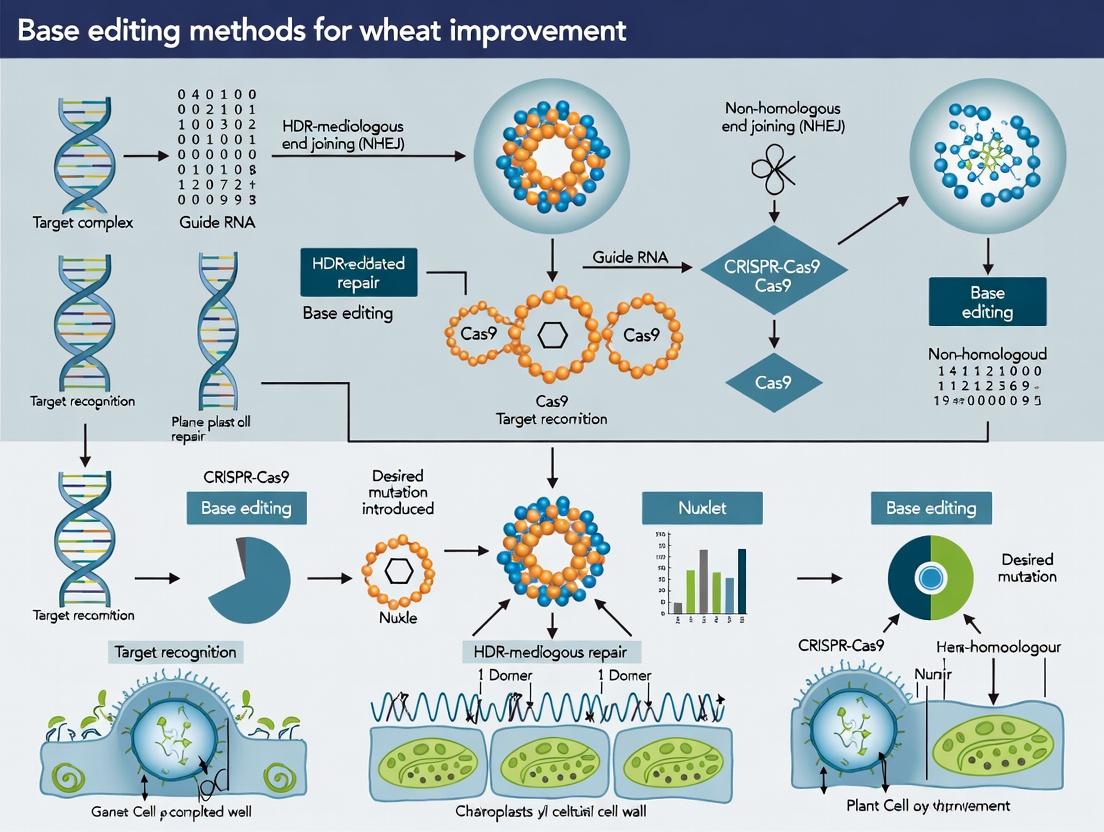
This article provides a targeted overview of base editing technologies for wheat genetic improvement, tailored for researchers, scientists, and biotech professionals.
Precision Genome Surgery in Wheat: A Comprehensive Guide to Base Editing Methods and Applications
Abstract
This article provides a targeted overview of base editing technologies for wheat genetic improvement, tailored for researchers, scientists, and biotech professionals. It systematically explores the foundational principles of CRISPR-derived cytosine and adenine base editors (CBEs and ABEs) in polyploid wheat. The scope includes practical methodologies for vector design, delivery, and application to key agronomic traits, followed by strategies for troubleshooting efficiency and specificity. Finally, it evaluates validation techniques and compares base editing to other editing tools (like prime editing) and traditional breeding, offering a critical assessment of current capabilities and future potential for creating next-generation wheat varieties.
Understanding Base Editing: The Foundation of Precision Wheat Genome Engineering
The development of CRISPR-Cas9 technology marked a paradigm shift in genetic engineering, enabling targeted double-strand breaks (DSBs) in DNA. However, for polyploid crops like wheat (Triticum aestivum), which possesses a complex AABBDD genome, reliance on error-prone repair pathways like non-homologous end joining (NHEJ) often leads to inefficient and unpredictable edits. Base editing, a derivative technology, allows for the direct, irreversible conversion of one target DNA base pair to another without inducing DSBs, making it a superior tool for introducing precise point mutations—such as creating herbicide resistance or modifying grain quality traits—in wheat.
Comparative Analysis of Editing Tools: Mechanisms and Outcomes
The core functional components and editing outcomes of major genome editing tools are summarized below.
Table 1: Comparison of Key Genome-Editing Platforms for Plant Research
| Platform | Core Enzyme(s) | DNA Cleavage | Primary Editing Outcome | Typical Efficiency in Wheat Protoplasts* | Primary Repair Pathway | Key Advantage for Wheat |
|---|---|---|---|---|---|---|
| CRISPR-Cas9 | Cas9 nuclease | Double-strand break (DSB) | Indels (knockouts) | 1-10% | NHEJ/ HDR | Simplicity; effective multi-copy gene knockout |
| CRISPR-Cas12a | Cas12a nuclease | DSB | Indels (knockouts) | 0.5-5% | NHEJ/ HDR | Simpler RNA design; staggered cut |
| Cytosine Base Editor (CBE) | Cas9 nickase + cytidine deaminase | Single-strand nick | C•G to T•A conversion | 5-50% | DNA mismatch repair | Precise point mutations without DSBs; high efficiency |
| Adenine Base Editor (ABE) | Cas9 nickase + adenosine deaminase | Single-strand nick | A•T to G•C conversion | 5-40% | DNA mismatch repair | Precise point mutations without DSBs; no unwanted C-to-T edits |
| Prime Editor (PE) | Cas9 nickase + reverse transcriptase | Single-strand nick | All 12 possible base-to-base conversions, small insertions/deletions | 0.1-10% | DNA mismatch repair | Versatility in edit types; lower off-targets than base editors |
Efficiencies are highly variable and depend on construct design, delivery method, and target site. *Editing efficiency within the defined activity window.
Detailed Protocol: Wheat Protoplast Transfection for Base Editing Evaluation
This protocol outlines the steps for rapid validation of base editor performance in wheat mesophyll protoplasts before stable plant transformation.
Materials and Reagents (The Scientist's Toolkit)
Table 2: Essential Research Reagents for Wheat Protoplast Base Editing
| Reagent/Material | Function/Description | Example (Supplier) |
|---|---|---|
| Young Wheat Seedlings | Source of healthy, dividing mesophyll cells. | Triticum aestivum cv. Fielder (7-10 day old). |
| Cellulase & Macerozyme | Enzyme mixture for digesting cell walls to release protoplasts. | Cellulase R10, Macerozyme R10 (Duchefa Biochemie). |
| Mannitol Solution (0.6M) | Osmoticum to maintain protoplast stability and prevent lysis. | Prepare in sterile water, pH 5.7. |
| PEG-Calcium Solution | Induces fusion of plasmid DNA with protoplast membrane for transfection. | 40% PEG 4000, 0.2M mannitol, 0.1M CaCl₂. |
| Base Editor Plasmid | Expression construct for BE/ABE and sgRNA. | e.g., pZmUbi-BE3 or pTaU6-sgRNA (Addgene). |
| Plasmid Midiprep Kit | High-purity, endotoxin-free plasmid DNA preparation. | NucleoBond Xtra Midi (Macherey-Nagel). |
| W5 Solution | Washing and storage solution for protoplasts. | 154mM NaCl, 125mM CaCl₂, 5mM KCl, 5mM glucose, pH 5.7. |
| WI Solution | Incubation solution for protoplast recovery post-transfection. | 0.5M mannitol, 20mM KCl, 4mM MES, pH 5.7. |
| DNA Extraction Kit | For high-yield genomic DNA from low-cell-number protoplast samples. | Quick-DNA Microprep Kit (Zymo Research). |
| PCR & Sequencing Primers | For amplifying and sequencing the genomic target locus. | High-fidelity polymerase, Sanger sequencing service. |
| NGS Library Prep Kit | For deep sequencing analysis of editing efficiency and purity. | Illumina MiSeq compatible kit (e.g., from Swift Biosciences). |
Step-by-Step Protocol
Day 1: Protoplast Isolation
- Tissue Preparation: Harvest 1-2g of fresh leaf tissue from 7-10 day old wheat seedlings. Slice into 0.5-1mm strips with a sharp razor blade.
- Enzyme Digestion: Transfer tissue to a petri dish containing 10mL of filter-sterilized enzyme solution (1.5% Cellulase R10, 0.75% Macerozyme R10, 0.6M mannitol, 10mM MES, 10mM CaCl₂, 0.1% BSA, pH 5.7). Vacuum infiltrate for 20-30 min, then digest in the dark with gentle shaking (40 rpm) for 4-6 hours.
- Protoplast Purification: Filter the digestate through a 70μm nylon mesh into a 50mL tube. Rinse with 10mL of W5 solution. Centrifuge at 100 x g for 5 min at 4°C. Gently resuspend pellet in 10mL W5. Centrifuge again and resuspend in a small volume of W5. Count protoplast density using a hemocytometer. Adjust to 1-2 x 10⁶ protoplasts/mL in W5. Keep on ice for 30 min.
Day 1: PEG-Mediated Transfection
- Transfection Mix: For each sample, aliquot 100μL of protoplast suspension (~1-2 x 10⁵ cells) into a 2mL round-bottom tube. Centrifuge at 100 x g for 3 min. Carefully aspirate W5.
- DNA Addition: Resuspend protoplast pellet in 20μL of WI solution containing 10-20μg of purified base editor plasmid DNA (BE + sgRNA expression cassette). Mix gently.
- PEG Addition: Add 220μL of freshly prepared PEG-Calcium solution. Mix gently by inverting the tube. Incubate at room temperature for 15-20 min.
- Dilution & Recovery: Slowly add 1mL of W5 solution, then 1mL of WI solution, with gentle mixing after each addition. Centrifuge at 100 x g for 3 min. Aspirate supernatant and gently resuspend protoplasts in 1mL of WI solution.
- Incubation: Transfer to a 12-well plate. Wrap in foil to maintain darkness. Incubate at 25°C for 48-72 hours.
Day 3/4: Genomic DNA Extraction and Analysis
- Harvesting: Transfer protoplasts to a 1.5mL tube. Centrifuge at 500 x g for 3 min. Aspirate supernatant.
- DNA Extraction: Extract genomic DNA from the pellet using a microprep kit, eluting in 20-30μL.
- PCR Amplification: Amplify the target genomic region (200-300bp) using high-fidelity PCR.
- Sequencing Analysis: Purify PCR products and submit for Sanger sequencing (initial screen) or next-generation amplicon sequencing (precise quantification of base conversion efficiency and byproducts).
Visualizing the Workflow and Mechanisms
Wheat Protoplast Base Editing Validation Workflow
Base Editor Mechanisms: CBE vs ABE Function
Base editing technologies, specifically Cytosine Base Editors (CBEs) and Adenine Base Editors (ABEs), represent a revolutionary advancement in precision genome editing. Unlike CRISPR-Cas9 nucleases, which create double-strand breaks (DSBs), base editors directly convert one target DNA base pair to another without inducing DSBs, minimizing unintended indels and enabling precise single-nucleotide polymorphisms (SNPs). For wheat improvement—a critical endeavor for global food security—these tools offer a transformative approach. Wheat's hexaploid genome (AABBDD) presents a significant challenge; modifying multiple homologous alleles is often necessary to observe phenotypic traits. Base editors enable the efficient creation of targeted point mutations, such as generating herbicide resistance alleles or optimizing genes for yield, disease resistance, and abiotic stress tolerance, all without the genomic disruptions associated with traditional breeding or nuclease-based editing.
Core Mechanisms of Action
Cytosine Base Editors (CBEs)
CBEs are fusion proteins that combine a catalytically impaired CRISPR-Cas protein (most commonly Cas9 nickase, nCas9, or a dead Cas9, dCas9) with a cytidine deaminase enzyme (e.g., rAPOBEC1) and a uracil glycosylase inhibitor (UGI). The mechanism proceeds in a stepwise manner:
- Targeting: The Cas protein, guided by a single-guide RNA (sgRNA), binds to the target DNA sequence, causing local unwinding of the DNA duplex and formation of an R-loop.
- Deamination: The cytidine deaminase acts on a cytosine (C) within a programmable window (typically positions 4-8, counting the PAM-distal end as position 1) in the exposed single-stranded DNA (ssDNA), converting it to uracil (U). The UGI component prevents the cell's base excision repair (BER) pathway from removing this non-canonical U.
- DNA Replication/Repair: During subsequent DNA replication or repair, the U is read as thymine (T). The complementary strand, which contains a guanine (G), is nicked by the Cas nickase, prompting cellular repair mechanisms to replace the G with an adenine (A), ultimately resulting in a C•G to T•A base pair conversion.
Adenine Base Editors (ABEs)
ABEs are conceptually analogous to CBEs but perform A•T to G•C conversion. They fuse a catalytically impaired Cas protein to an engineered adenine deaminase (e.g., ecTadA-ecTadA* heterodimer evolved from E. coli TadA). The mechanism is:
- Targeting: Similar to CBEs, the complex localizes to the target site via sgRNA.
- Deamination: The adenine deaminase acts on an adenine (A) within the ssDNA editing window, converting it to inosine (I).
- DNA Replication/Repair: Inosine is interpreted as guanine (G) by DNA polymerases during replication or repair. Nicking of the non-edited strand guides repair to incorporate a cytosine (C), completing the A•T to G•C conversion.
Quantitative Comparison of Base Editor Systems
Table 1: Key Characteristics of Major Base Editor Systems for Plant Applications
| Editor Type | Core Enzyme | Target Conversion | Typical Editing Window (from PAM, 5'->3') | Primary Byproducts | Common Use in Wheat |
|---|---|---|---|---|---|
| CBE (e.g., BE3) | rAPOBEC1 + UGI | C•G → T•A | ~positions 4-8 (NGG PAM) | C•G to G•C, C•G to A•T | Creating premature stop codons, herbicide resistance (e.g., ALS) |
| ABE (e.g., ABE7.10) | ecTadA variant | A•T → G•C | ~positions 4-7 (NGG PAM) | Minimal indels | Gain-of-function mutations, altering protein function (e.g., PPD-D1 for flowering time) |
| High-Fidelity CBE (e.g., HF-CBE) | rAPOBEC1 + UGI + HiFi Cas9 | C•G → T•A | ~positions 4-8 | Reduced off-target editing | Targets in repetitive or polyploid genomes |
| Dual Base Editor | CBE & ABE components | C→T & A→G | Varies | All above | Multiplexed editing of two base types |
Detailed Experimental Protocols for Wheat
Protocol 1: Designing and Validating gRNAs for Base Editing in Wheat
Objective: To design and select efficient sgRNAs for CBE/ABE targeting a wheat gene of interest. Materials: Wheat genomic DNA, PCR reagents, sequencing primers, bioinformatics tools (e.g., CRISPR-P 2.0, BE-Design). Methodology:
- Target Selection: Identify the target nucleotide within the gene. For missense mutations, ensure it lies within the editor's activity window.
- gRNA Design: Using software (BE-Design), input the target gene sequence. The tool will output candidate sgRNA sequences (20-nt spacer) adjacent to a compatible PAM (e.g., NGG for SpCas9). Prioritize sgRNAs where the target base is centrally located within the editing window.
- Specificity Check: BLAST the candidate spacer sequences against the wheat reference genome (IWGSC) to minimize off-target potential.
- Construct Assembly: Clone the selected sgRNA sequence into a plant-optimized base editor expression vector (e.g., pZmUbi-BE3 or pTaUbi-ABE) via Golden Gate or Gibson assembly.
- Validation: Transform the construct into wheat protoplasts via PEG-mediated transfection. Extract genomic DNA after 48-72 hours. Amplify the target region by PCR and analyze editing efficiency by Sanger sequencing (decoded by tools like BE-Analyzer) or high-throughput sequencing.
Protocol 2: Wheat Protoplast Transformation for Base Editor Efficiency Testing
Objective: To transiently express base editors and quantify editing efficiency in wheat cells. Materials: Etiolated wheat seedlings, enzyme solution (Cellulase R10, Macerozyme R10, etc.), W5 and MMg solutions, PEG solution (40% PEG4000), base editor plasmid DNA. Workflow:
- Protoplast Isolation: Cut leaf tissue from 10-14 day old seedlings into thin strips. Digest in enzyme solution for 6 hours in the dark with gentle shaking.
- Purification: Filter the digest through a nylon mesh. Pellet protoplasts by centrifugation at 100 x g for 5 min. Wash twice with W5 solution. Resuspend in MMg solution, count, and adjust to 2x10^5 cells/mL.
- Transfection: Mix 10 µg of plasmid DNA with 100 µL of protoplast suspension. Add an equal volume of 40% PEG4000 solution, mix gently, and incubate for 15 min at room temperature.
- Dilution & Culture: Gradually dilute with W5 solution, pellet cells, and resuspend in 1 mL of culture medium. Incubate in the dark at 23-25°C for 48-72 hours.
- Genomic DNA Extraction & Analysis: Harvest protoplasts, extract gDNA. Perform PCR on the target site and analyze by next-generation amplicon sequencing to calculate precise editing efficiencies and byproduct profiles.
Protocol 3: Agrobacterium-mediated Stable Transformation of Wheat Callus
Objective: To generate stably edited wheat plants using CBEs/ABEs. Materials: Immature wheat embryos, Agrobacterium tumefaciens strain (e.g., AGL1), base editor binary vector, co-cultivation media, selection media (hygromycin/kanamycin). Methodology:
- Vector Preparation: Transform the binary base editor plasmid into Agrobacterium via electroporation.
- Explant Preparation: Surface sterilize immature wheat seeds (10-14 days post anthesis). Isociate immature embryos (1.0-1.5 mm).
- Infection & Co-cultivation: Resuspend Agrobacterium in infection medium to OD600 ~0.8. Immerse embryos for 5-10 minutes. Blot dry and place on co-cultivation media for 3 days in the dark.
- Selection & Regeneration: Transfer embryos to resting media (with Timentin to kill Agrobacterium) for 1 week, then to selection media containing both antibiotic and herbicide for 4-8 weeks to select for transformed calli. Transfer regenerating shoots to rooting media.
- Molecular Analysis: Extract DNA from leaf tissue of T0 plants. Perform PCR/sequencing to identify edited lines. Screen for potential off-target edits by sequencing top predicted off-target sites.
Visualizing Base Editor Mechanisms and Workflows
Title: CBE Conversion Mechanism
Title: ABE Conversion Mechanism
Title: Wheat Base Editing Workflow
The Scientist's Toolkit: Research Reagent Solutions
Table 2: Essential Materials for Wheat Base Editing Research
| Reagent/Material | Supplier Examples | Function in Experiment |
|---|---|---|
| Plant-Optimized CBE/ABE Plasmids | Addgene (pnBE, pABE), in-house vectors | Expresses the base editor and sgRNA in plant cells. Codon-optimization for wheat is critical. |
| Wheat sgRNA Cloning Kit | ToolGen, In-Fusion HD Cloning Kit | For efficient assembly of target-specific sgRNA sequences into the expression vector backbone. |
| Cellulase R10 & Macerozyme R10 | Yakult Pharmaceutical | Enzymes for digesting wheat cell walls to generate protoplasts for transient assays. |
| PEG 4000 | Sigma-Aldrich | Polyethylene glycol used for protoplast transfection to facilitate plasmid DNA uptake. |
| Agrobacterium Strain AGL1 | CICC, lab stocks | Disarmed virulent strain highly effective for wheat transformation. |
| NLS-PCR Kit for Amplicon Seq | KAPA HiFi, Q5 High-Fidelity | High-fidelity PCR for amplifying target loci from genomic DNA prior to sequencing analysis. |
| BE-Analyzer / CRISPResso2 | Open-source web tools | Bioinformatics software to quantify base editing efficiency and purity from sequencing trace files. |
| Wheat Tissue Culture Media | PhytoTech Labs, self-prepared | Specialized media (LS, MS) with hormones for callus induction, regeneration, and selection. |
| Next-Generation Sequencing Service | Illumina NovaSeq, MiSeq | For deep amplicon sequencing to obtain high-resolution editing efficiency and byproduct data. |
Application Notes
Wheat (Triticum aestivum) is a hexaploid (AABBDD, 2n=6x=42) with three related but distinct subgenomes. This ~16 Gb genome presents a unique challenge for functional genomics and precision breeding. Base editing, which enables precise C•G to T•A or A•T to G•C conversions without generating double-strand breaks, is a transformative technology for wheat improvement. However, its application is complicated by polyploidy. Key considerations include:
- Target Site Selection: The presence of multiple homoeologous alleles (copies across subgenomes) necessitates careful gRNA design. Effective gene knockout or modification often requires simultaneous editing of all functional copies, which may have sequence variations (Single Nucleotide Polymorphisms, SNPs) in the protospacer or Protospacer Adjacent Motif (PAM) region.
- Editing Efficiency and Specificity: Editing outcomes can vary significantly between homoeologs. Off-target effects, both within the genome and across subgenomes, must be rigorously assessed.
- Phenotypic Penetrance: Due to genetic redundancy, editing a single homoeolog may not yield a detectable phenotype, necessitating multiplexed strategies.
Quantitative data on base editing efficiency in wheat is rapidly evolving. The following table summarizes key metrics from recent studies (2023-2024) utilizing cytidine base editors (CBEs) and adenine base editors (ABEs) in wheat protoplasts and regenerated plants.
Table 1: Base Editing Efficiency in Wheat (Recent Data)
| Target Gene (Homoeolog) | Editor System | Delivery Method | Tissue | Avg. Editing Efficiency (%) (Range) | Homozygous/ Biallelic Editing Rate (%) | Key Reference (Year) |
|---|---|---|---|---|---|---|
| TaALS (A, B, D) | rAPOBEC1-nCas9-UGI (CBE) | Particle bombardment | Embryogenic callus | 4.8 (1.2-9.7) | 1.5 | Liu et al. (2023) |
| TaDEP1 (A, B, D) | A3A-PBE-nCas9 (CBE) | Agrobacterium | Immature embryos | 58.2 (44.1-70.3) | 22.7 | Cheng et al. (2023) |
| TaLOX2 (B) | ABE8e-nSpCas9 | PEG-mediated | Protoplasts | 66.5 | N/A | Li et al. (2024) |
| TaGW2 (A, B, D) | eTada-CBE (Cpfl-based) | RNP delivery | Microspores | 31.4 (12.5-49.8) | 8.3 | Zhang et al. (2024) |
| Pm genes (Multiplex) | A3A-PBE-nCas9-NG (CBE) | Agrobacterium | Mature embryos | 41.7 (per target) | 15.6 (all targets) | Wang et al. (2024) |
Experimental Protocols
Protocol 1: Design and Validation of gRNAs for Polyploid Wheat Editing Objective: To design and screen gRNAs for simultaneous editing of multiple homoeologous alleles.
- Sequence Retrieval: Retrieve coding sequences for the target gene from all three subgenomes (A, B, D) using databases like EnsemblPlants or IWGSC RefSeq.
- Multiple Sequence Alignment: Perform alignment using Clustal Omega to identify conserved regions across homoeologs and note SNPs.
- gRNA Design: Using tools like CRISPR-P 2.0 or CHOPCHOP, design 3-5 gRNAs targeting conserved exonic regions with high on-target scores. Prioritize gRNAs with:
- SpCas9-NGG PAM (or NG for SpCas9-NG variant) present in all homoeologs.
- The target base (for CBE: within a window of positions 1-17 of the protospacer; for ABE: positions 4-10) in a conserved nucleotide context.
- In Silico Off-Target Prediction: Use Cas-OFFinder to predict off-target sites across the whole genome (allow up to 3 mismatches). Exclude gRNAs with predicted off-targets in coding regions of other genes.
- Validation via Protoplast Assay: a. Construct Assembly: Clone validated gRNAs into a wheat-optimized base editor expression vector (e.g., pBHAABE8e or pECBEAPOBEC). b. Protoplast Isolation: Isolate protoplasts from etiolated seedlings of variety 'Fielder' using an enzymatic digestion buffer (1.5% Cellulase R10, 0.75% Macerozyme R10 in 0.4M mannitol). c. PEG Transfection: Transfect 10 µg of plasmid DNA into 200,000 protoplasts using 40% PEG4000. Incubate in the dark for 48 hours. d. DNA Extraction & Analysis: Extract genomic DNA. PCR-amplify the target region from all homoeologs using subgenome-specific primers. Submit for deep amplicon sequencing (≥10,000x coverage). Analyze editing efficiency and homogeneity using CRISPResso2.
Protocol 2: Agrobacterium-mediated Base Editing in Wheat Immature Embryos Objective: To generate stable, heritable base edits in hexaploid wheat.
- Vector Construction: Assemble the final base editor and gRNA expression cassette into a T-DNA binary vector (e.g., pCAMBIA1300). Include a plant selection marker (e.g., Hygromycin phosphotransferase II).
- Agrobacterium Preparation: Transform the vector into Agrobacterium tumefaciens strain AGL1. Grow a single colony in liquid LB with appropriate antibiotics to an OD600 of 0.6-0.8. Pellet and resuspend in inoculation medium (MS salts, 10g/L glucose, 200 µM acetosyringone, pH 5.7).
- Explant Preparation: Surface-sterilize immature seeds (10-14 days post-anthesis) of cultivar 'Bobwhite'. Aseptically excise immature embryos (1.0-1.5 mm).
- Infection and Co-cultivation: Immerse embryos in the Agrobacterium suspension for 20 minutes. Blot dry and place scutellum-side up on co-cultivation medium (with 200 µM acetosyringone). Incubate in the dark at 22°C for 3 days.
- Selection and Regeneration: Transfer embryos to callus induction/selection medium (with hygromycin and timentin). Subculture every 2 weeks. After 4-6 weeks, transfer developing calli to regeneration medium. Transfer regenerated shoots to rooting medium.
- Molecular Analysis of T0 Plants: Extract leaf genomic DNA. Perform PCR and Sanger sequencing of the target region. Use decomposition software (e.g., BEAT or EditR) to quantify base editing efficiency from chromatogram data. Identify plants with edits in all three homoeologs.
- Segregation Analysis: Grow T1 progeny. Perform genotyping to confirm heritability and identify transgene-free, edited lines.
Mandatory Visualization
Base editing workflow for polyploid wheat.
Sequence variation impact on gRNA design.
The Scientist's Toolkit: Key Research Reagent Solutions
Table 2: Essential Materials for Wheat Base Editing Research
| Item | Function/Description | Example Product/Catalog |
|---|---|---|
| Wheat-Optimized Base Editor Plasmids | All-in-one vectors for expression of nCas9 (D10A), deaminase, and gRNA in wheat. Critical for high efficiency. | pBHAABE8e (Addgene # 138489); pECBEAPOBEC3A (Liu et al. 2023) |
| Wheat Genomic DNA Extraction Kit | High-quality, high-molecular-weight DNA extraction from tough wheat leaf tissue for accurate genotyping. | DNeasy Plant Pro Kit (Qiagen) |
| High-Fidelity DNA Polymerase | For error-free amplification of homoeolog-specific target regions for sequencing analysis. | Q5 High-Fidelity DNA Polymerase (NEB) |
| Next-Gen Sequencing Service | Deep amplicon sequencing to quantify base editing efficiency and heterogeneity across homoeologs and cell populations. | Illumina MiSeq (2x300 bp) |
| Agrobacterium tumefaciens Strain AGL1 | High-efficiency strain for T-DNA delivery into wheat embryos. | AGL1 Electrocompetent Cells (e.g., Fisher Scientific) |
| Hygromycin B (Plant Cell Culture Tested) | Selective agent for transformed wheat calli and regenerants. | Hygromycin B, sterile solution (GoldBio) |
| Cellulase & Macerozyme R10 | Enzymes for high-yield protoplast isolation from wheat seedlings for rapid gRNA validation. | Cellulase R10 (Yakult), Macerozyme R10 (Yakult) |
| CRISPR Analysis Software | Bioinformatics tools for designing gRNAs and analyzing sequencing results from polyploid genomes. | CRISPR-P 2.0 (Design); CRISPResso2 (Analysis) |
Base editing represents a transformative CRISPR-derived technology enabling precise, single-nucleotide changes without generating double-strand breaks (DSBs). Within wheat improvement research, it offers a powerful alternative to conventional breeding and transgenic methods for correcting deleterious single-nucleotide polymorphisms (SNPs), introducing gain-of-function mutations, or creating stop codons to deactivate genes. The efficacy of base editing in wheat hinges on three interdependent components: the design of the single guide RNA (gRNA), the selection and fusion of a deaminase enzyme, and the choice of Cas protein variant, most commonly nickase Cas9 (nCas9). This protocol details the application of these components for wheat protoplast and callus transformation, providing a framework for gene function analysis and trait development.
Core Components & Quantitative Data
gRNA Design Considerations
The gRNA must position the target base within the deaminase window. For SpCas9-derived cytosine base editors (CBEs), the editable window is typically ~5 nucleotides wide, located at positions 4-8 (protospacer positions 1-18, excluding the PAM). For adenine base editors (ABEs), the window is often positions 4-7.
Table 1: Key Parameters for gRNA Design in Wheat Base Editing
| Parameter | Optimal Design Consideration | Rationale for Wheat |
|---|---|---|
| Target Position | Cytosine (C) for CBE or Adenine (A) for ABE within deaminase activity window (e.g., positions 4-8 for CBE). | Ensures the enzyme accesses the target nucleotide. |
| PAM Sequence | NGG for SpCas9-nCas9. NG for SpCas9-NG variant. NRN for SaCas9 variants. | PAM availability dictates targetable sites in the wheat genome. |
| Off-Target Potential | Use tools like Cas-OFFinder to assess genome-wide specificity; prioritize gRNAs with ≥3 mismatches to off-target sites. | Wheat's hexaploid genome (AABBDD) has high sequence homology, increasing off-target risk. |
| gRNA Length | 20-nt spacer sequence is standard. Truncated gRNAs (tru-gRNAs, 17-18nt) may enhance specificity. | Can reduce off-target effects while maintaining on-target activity in complex genomes. |
| GC Content | 40-60% is generally recommended. | Affects gRNA stability and binding efficiency. |
Deaminase Enzymes
Deaminases catalyze the direct chemical conversion of one base to another. Their engineering and fusion to nCas9 are central to base editor function.
Table 2: Common Deaminases in Base Editing Systems
| Deaminase | Origin/Version | Base Conversion | Typical Efficiency Range (in plants)* | Key Feature |
|---|---|---|---|---|
| rAPOBEC1 | Rat / BE3, BE4 | C•G to T•A | 1-30% (in wheat protoplasts) | First used CBE; can have sequence context preferences. |
| PmCDA1 | Petromyzon marinus / Target-AID | C•G to T•A | 0.5-20% | Wider editing window; often used in plant systems. |
| eA3A | Engineered Human APOBEC3A / BE4 | C•G to T•A | Up to 40% (in rice/callus) | Reduced off-target RNA editing; high on-target DNA activity. |
| TadA-TadA* | Engineered E. coli TadA / ABE7.10, ABE8e | A•T to G•C | 5-50% (in wheat callus) | Dimeric engineered deaminase; ABE8e offers increased activity & window. |
*Efficiency is highly dependent on delivery method, target locus, and tissue type.
Cas Protein Variants
The Cas protein variant determines PAM compatibility and DNA cleavage activity. nCas9 (D10A mutation) is standard, as it nicks the non-edited strand to bias repair and improve efficiency.
Table 3: Cas Variants for Expanding Targeting Scope in Wheat
| Cas Variant | PAM Requirement | Nickase Activity | Key Advantage for Wheat |
|---|---|---|---|
| SpCas9-nCas9 (D10A) | NGG | Yes | Standard; well-validated; high activity. |
| SpCas9-NG-nCas9 | NG | Yes | Vastly expands targetable sites in AT-rich regions. |
| SaCas9-KKH-nCas9 | NNNRRT (or NRRRT) | Yes | Alternative PAM; smaller size for delivery vector constraints. |
| Cas12a-nCas (e.g., FnCas12a) | TTTV | Yes (makes staggered nick) | Creates staggered nick; different editing window profile. |
Detailed Experimental Protocols
Protocol 1: Designing and Cloning gRNAs for Wheat Base Editing
Objective: To clone a single gRNA targeting a specific locus in the wheat genome into a base editor expression vector.
Materials: Wheat genome sequence (IWGSC RefSeq v2.1), gRNA design software (e.g., Benchling, CRISPR-P 2.0), PCR thermocycler, T4 DNA ligase, BsaI-HFv2 restriction enzyme, chemically competent E. coli.
Procedure:
- Identify Target Site: Using the reference genome, locate the target SNP or base. Ensure an appropriate PAM (e.g., NGG for SpCas9) is present ~13-17 bp downstream.
- Design gRNA Oligos: Design forward and reverse oligonucleotides (typically 20-24 nt) corresponding to the target sequence, with added 5' overhangs compatible with your chosen cloning system (e.g., for Golden Gate into a pU6-gRNA vector: Forward: 5'-CACCGN20-3', Reverse: 5'-AAACN20revcompC-3').
- Phosphorylate & Anneal Oligos:
- Resuspend oligos to 100 µM.
- Mix in a microtube: 1 µL each oligo, 1 µL T4 Ligase Buffer, 6.5 µL nuclease-free water, 0.5 µL T4 PNK.
- Run in thermocycler: 37°C 30 min; 95°C 5 min; ramp down to 25°C at 5°C/min.
- Golden Gate Cloning:
- Set up reaction: 50 ng linearized gRNA entry vector, 1 µL diluted annealed oligo duplex, 1 µL T4 DNA Ligase, 1 µL BsaI-HFv2, 1 µL 10x T4 Ligase Buffer, nuclease-free water to 10 µL.
- Cycle: (37°C 5 min → 20°C 5 min) x 25 cycles; then 50°C 5 min; 80°C 5 min.
- Transform & Verify: Transform 2 µL reaction into competent E. coli, plate on appropriate antibiotic. Screen colonies by colony PCR or Sanger sequencing using a U6 promoter primer.
Protocol 2: Wheat Protoplast Transfection for Base Editor Validation
Objective: Rapid, transient validation of base editor efficiency and specificity in wheat leaf mesophyll protoplasts.
Materials: 10-14 day old wheat seedlings, Enzyme solution (1.5% Cellulase R10, 0.75% Macerozyme R10, 0.6M mannitol, pH 5.7), PEG-Calcium solution (40% PEG4000, 0.2M mannitol, 0.1M CaCl2), W5 solution (154mM NaCl, 125mM CaCl2, 5mM KCl, 5mM Glucose, pH 5.8), Base editor plasmid (gRNA + nCas9-deaminase).
Procedure:
- Protoplast Isolation:
- Cut wheat leaves into 0.5mm strips. Float on enzyme solution (10 mL/g tissue) in the dark, 50 rpm, for 6 hours.
- Filter through 75µm mesh into a 50mL tube. Rinse with W5 solution.
- Centrifuge at 100 x g for 5 min. Carefully aspirate supernatant.
- Resuspend pellet in W5 solution. Count protoplast density (aim for 0.5-2 x 10^6/mL). Incubate on ice for 30 min.
- PEG-Mediated Transfection:
- Centrifuge protoplasts again, resuspend in fresh MMg solution (0.6M mannitol, 15mM MgCl2, 4mM MES, pH 5.7) at 2 x 10^6/mL.
- Aliquot 100 µL protoplasts into a 2mL tube. Add 10 µL plasmid DNA (10-20 µg total).
- Add 110 µL PEG-Calcium solution, mix gently by inversion.
- Incubate at room temperature for 15-20 min.
- Dilute slowly with 0.5 mL W5 solution, then 1 mL WI solution (0.6M mannitol, 4mM KCl, 4mM MES, pH 5.7).
- Culture & Harvest: Incubate in the dark at 23-25°C for 48-72 hours. Pellet protoplasts by centrifugation (100 x g, 2 min) for genomic DNA extraction.
- Analysis: Extract genomic DNA. Amplify target region by PCR and subject to next-generation sequencing (e.g., Illumina MiSeq) or Sanger sequencing with trace decomposition analysis (e.g., EditR, BE-Analyzer) to quantify base editing efficiency and purity.
Visualizations
Diagram Title: Base Editor Architecture & DNA Binding
Diagram Title: gRNA Design & Testing Workflow for Wheat
The Scientist's Toolkit: Research Reagent Solutions
Table 4: Essential Materials for Wheat Base Editing Research
| Item/Category | Example Product/Name | Function & Rationale |
|---|---|---|
| Base Editor Plasmids | pnCas9-PBE, pSaCas9-ABE (Addgene), plant-codon optimized vectors. | Ready-to-use expression systems for nCas9-deaminase fusions under plant promoters. |
| gRNA Cloning Vector | pBUN411 (U6 promoter), pYPQ131 (TaU6 promoter). | Vectors with wheat-specific Pol III promoters for high gRNA expression. |
| Wheat Cultivars | Fielder (highly transformable), Kenong199, Bobwhite. | Model varieties with established regeneration protocols for stable transformation. |
| Protoplast Isolation Enzymes | Cellulase R10, Macerozyme R10 (Yakult). | High-purity enzymes for efficient release of viable protoplasts from wheat leaves. |
| Transfection Reagent | PEG4000 (for protoplasts), Gold particles (for biolistics). | Mediates DNA delivery into plant cells; PEG is standard for protoplasts. |
| Selection Antibiotics | Hygromycin B, Geneticin (G418). | For selecting transformed calli when using BE vectors with plant resistance markers. |
| NGS Analysis Service/Kit | Illumina MiSeq, Amplicon-EZ service, BE-Analyzer software pipeline. | Essential for unbiased, quantitative assessment of base editing efficiency and byproducts. |
| Anti-Cas9 Antibody | CRISPR/Cas9 Antibody (7A9). | Useful for western blot to confirm base editor protein expression in wheat cells. |
1. Introduction Within the strategic thesis on deploying base editing (BE) for polyploid wheat improvement, a central challenge is defining the practical "edit window." This refers to the sequence-accessible region within a protospacer where a target base can be reliably converted. This application note details the quantitative scope, determinants, and limitations of current cytosine (CBE) and adenine (ABE) base editors, providing protocols for their characterization in wheat protoplasts and a toolkit for researchers.
2. Quantitative Analysis of Base Editor Performance Windows Current data (2023-2024) from wheat and mammalian cell studies delineate consistent but editor-specific activity windows. Performance is typically measured as editing efficiency (%) within a population of alleles.
Table 1: Characterized Edit Windows of Major Base Editor Systems
| Editor System | Catalytic Domain | Primary Deaminase Target | Theoretical Window (Protospacer Position) | Practical High-Efficiency Window (Protospacer Position) | Typical Max Efficiency in Wheat Protoplasts* | Key Sequence Limitation (PAM requirement) |
|---|---|---|---|---|---|---|
| ABE8e | TadA-8e | A•T to G•C | 4-10 (SpCas9) | 4-8 (SpCas9) | 40-60% | NGG (SpCas9) |
| BE4max | rAPOBEC1 | C•G to T•A | 3-10 (SpCas9) | 4-9 (SpCas9) | 50-70% | NGG (SpCas9) |
| Target-AID | PmCDA1 | C•G to T•A | 1-7 (SpCas9) | 2-6 (SpCas9) | 30-50% | NGG (SpCas9) |
| AncBE4max | Anc689 | C•G to T•A | 3-10 (SpCas9) | 4-9 (SpCas9) | 45-65% | NGG (SpCas9) |
| STEME | rAPOBEC1 & TadA | C•G to T•A & A•T to G•C | 3-9 (SpCas9) | 4-8 (SpCas9) | 20-40% (dual) | NGG (SpCas9) |
*Efficiencies are target-dependent and represent ranges observed in validated studies.
3. Determinants and Limitations Shaping the Edit Window
- Cas9 HNH Nuclease Domain Activity: Residual DNA strand nicking or cleavage can trigger stochastic double-strand breaks (DSBs), leading to indel byproducts that reduce product purity.
- Deaminase Processivity & Local ssDNA Exposure: The kinetics of deaminase activity and the duration of the R-loop/ssDNA bubble formed by Cas9 dictate the window breadth.
- Sequence Context: Neighboring bases significantly influence deamination efficiency (e.g., rAPOBEC1 prefers a 5' thymine for CBE; TadA-8e has variable efficiency across sequence contexts).
- gRNA Scaffold: Modified scaffold structures (e.g., eRNA, tRNA-fused) can alter the edit window profile by affecting Cas9 binding dynamics.
- PAM Availability: The strict requirement for a protospacer adjacent motif (PAM) fundamentally restricts which genomic loci can be targeted, defining the ultimate positional window.
Title: Factors Defining the Base Editing Window (80 chars)
4. Protocol: Mapping the Edit Window in Wheat Protoplasts Objective: Quantify base editing efficiency across all protospacer positions for a specific BE/gRNA combination in wheat.
A. Materials & Transfection
- Isolate mesophyll protoplasts from 10-day-old wheat seedling leaves using an established cellulase/macerozyme digestion protocol.
- Prepare BE expression plasmid (e.g., BE4max under maize Ubiquitin promoter) and gRNA expression plasmid (U6 promoter).
- Transfect 1e5 protoplasts with 20μg total plasmid DNA (1:1 molar ratio) via PEG4000-mediated transformation.
- Incubate in darkness at 25°C for 48-72 hours.
B. Harvest & Genomic Analysis
- Harvest protoplasts by centrifugation. Extract genomic DNA.
- Perform PCR amplification (≥100ng DNA) of the target locus using high-fidelity polymerase.
- Purify PCR amplicons. Submit for next-generation amplicon sequencing (Illumina MiSeq, 2x300bp).
- Data Analysis: Use bioinformatics tools (e.g., BEAT, CRISPResso2) to quantify the percentage of reads containing C->T or A->G conversions at each nucleotide position within the protospacer. Plot efficiency versus position to visualize the edit window.
Title: Experimental Workflow for Edit Window Mapping (74 chars)
5. The Scientist's Toolkit: Key Reagents for Base Editing Research in Wheat
Table 2: Essential Research Reagents for Wheat Base Editing Studies
| Reagent / Material | Function / Purpose | Example/Notes |
|---|---|---|
| BE Expression Plasmid | Delivers the base editor (Cas9 nickase-deaminase fusion) into plant cells. | pBE4max, pABE8e under constitutive (e.g., ZmUbi) promoter. |
| gRNA Expression Vector | Drives expression of the target-specific guide RNA. | pUgRNA (U6 polymerase III promoter) for wheat. |
| Cellulase R-10 / Macerozyme R-10 | Enzyme mixture for digesting wheat cell walls to release viable protoplasts. | Essential for initial transfection assays. |
| PEG 4000 (40% w/v) | Polyethylene glycol solution mediates plasmid DNA uptake into protoplasts. | Critical for high-efficiency transient transfection. |
| High-Fidelity PCR Polymerase | Amplifies target genomic locus with minimal error for sequencing analysis. | e.g., Q5, KAPA HiFi. Ensures accurate NGS results. |
| NGS Amplicon-Seq Kit | Prepares sequencing library from purified PCR amplicons. | Illumina DNA Prep, TruSeq HT. Enables deep sequencing of edit window. |
| BE Analysis Software | Bioinformatics tool for quantifying base editing efficiency and byproducts from NGS data. | CRISPResso2, BEAT, or custom Python scripts. |
| Wheat Cultivar 'Fielder' Tissue | Model regenerable wheat line for protoplast and transformation studies. | High-quality, sterile seedlings are crucial for reproducible protoplast yields. |
6. Conclusion Precisely defining the edit window is not an academic exercise but a prerequisite for successful allele design in wheat. The window's constraints—dictated by PAM placement, deaminase kinetics, and sequence context—must guide gRNA selection to place the target base within positions 4-9 for robust editing. The provided protocol enables empirical window mapping for any new BE variant or wheat target, a critical step in advancing the thesis that base editing can precisely sculpt agronomic traits in polyploid wheat.
Implementing Base Editing in Wheat: Step-by-Step Protocols and Target Applications
Application Notes
Within the broader thesis on base editing methods for wheat improvement, selecting the optimal vector delivery system is critical. Agrobacterium tumefaciens-mediated transformation (AMT) and biolistics (particle bombardment) are the two primary methods for introducing base editor constructs into the wheat genome. The choice impacts editing efficiency, transgene integration quality, and downstream breeding utility. AMT typically results in lower copy number, simpler integration patterns, and higher fidelity of the delivered T-DNA, which is advantageous for precise base editing applications requiring clean genetic modifications. Biolistics offers genotype-independent delivery, especially useful for recalcitrant wheat varieties, but often leads to complex multi-copy insertions and increased risk of vector backbone integration, which can complicate the recovery of clean, edited events. Recent advances in "tissue culture-independent" in planta transformation and morphogenic regulator-assisted methods (e.g., BABY BOOM, WUSCHEL2) are enhancing the efficiency of both delivery systems, making them more compatible with the rapid iteration required in base editing pipelines.
Quantitative Data Comparison
Table 1: Comparative Performance Metrics for Wheat Transformation (2020-2024)
| Metric | Agrobacterium-Mediated Transformation | Biolistics (Particle Bombardment) | Ideal for Base Editing? |
|---|---|---|---|
| Typical Transformation Efficiency (% of explants) | 5-40% (varies highly with genotype) | 1-5% (less genotype-dependent) | Context-dependent |
| Average Copy Number | 1-3 (Low) | 5-20+ (High, complex) | Agrobacterium (Lower copy preferred) |
| Frequency of Single-Copy Integrants | ~30-50% | ~5-20% | Agrobacterium |
| Vector Backbone Integration | Rare (T-DNA border precision) | Common (whole plasmid) | Agrobacterium |
| Typical Timeline to T0 Plants (weeks) | 20-30 | 15-25 | Biolistics (slightly faster) |
| Genotype Flexibility | Low (requires amenable varieties) | High | Biolistics (for recalcitrant varieties) |
| Cost per Experiment | Moderate | High (gold particles, equipment) | Agrobacterium |
| Base Editing Efficiency in T0 (range) | 0.5-10% (cleaner background) | 0.1-5% (high PCR screening load) | Agrobacterium |
Table 2: Key Research Reagent Solutions for Wheat Transformation
| Reagent / Material | Function | Preferred Supplier/Example |
|---|---|---|
| pFC363_ABE8e | A high-activity Adenine Base Editor plasmid for Agrobacterium binary vectors. | Addgene (#177181) |
| pRGEB32-BE4 | A CRISPR-Cas9 cytosine base editor vector optimized for biolistics. | Addgene (#128049) |
| Hyperosmotic Pretreatment Medium (0.25M Mannitol/Sorbitol) | Pre-treats explants prior to biolistics to reduce cell damage and improve DNA uptake. | N/A (Lab-prepared) |
| Acetosyringone | A phenolic compound that induces Agrobacterium vir gene expression for T-DNA transfer. | Sigma-Aldrich (D134406) |
| Gold Microcarriers (1.0 µm) | Inert, high-density particles for coating DNA in biolistics. | Bio-Rad (1652263) |
| Morphogenic Regulators (Bbm, Wus2) | Genes co-delivered to enhance regeneration, overcoming genotype limitations. | Addgene (plasmids #130740, #130738) |
| L-Cysteine Pretreatment | Antioxidant treatment of explants to reduce necrosis post-Agrobacterium co-cultivation. | Sigma-Aldrich (C7352) |
| Selective Agent (e.g., Hygromycin B) | Eliminates non-transformed tissue post-co-cultivation/bombardment. | Thermo Fisher (10687010) |
Detailed Experimental Protocols
Protocol 1:Agrobacterium-Mediated Transformation of Immature Wheat Embryos for Base Editing
Key Materials: Agrobacterium strain EHA105 or AGL1 harboring binary base editor vector, immature wheat seeds (12-14 days post anthesis), N6 medium, acetosyringone, surfactants (e.g., Silwet L-77).
Methodology:
- Vector Construction: Clone gRNA expression cassette targeting the wheat locus of interest into a binary vector containing a cytidine or adenine deaminase base editor (e.g., pBHA_ABEmax). Transform into Agrobacterium.
- Explant Preparation: Surface sterilize immature wheat spikes. Isolate immature embryos (1.0-1.5 mm) under sterile conditions, scutellum side up.
- Agrobacterium Preparation: Grow Agrobacterium overnight in LB with appropriate antibiotics. Resuspend to OD600 0.6-0.8 in infection medium (N6 salts, sucrose, 200 µM acetosyringone, 0.02% Silwet L-77).
- Infection & Co-cultivation: Immerse embryos in bacterial suspension for 30 min. Blot dry and place scutellum-up on co-cultivation medium (solid N6, acetosyringone) for 3 days at 22°C in dark.
- Resting & Selection: Transfer embryos to resting medium (N6, antibiotics to suppress Agrobacterium, no plant selection) for 5-7 days. Then transfer to selection medium (e.g., hygromycin) with regular 2-week subcultures.
- Regeneration & Rooting: Develop calli on selection medium for 4-8 weeks. Transfer regenerating shoots to regeneration and then rooting medium.
- Molecular Analysis: Extract genomic DNA from T0 plantlets. Perform PCR for transgene presence and Sanger sequencing of the target locus to assess base editing efficiency.
Protocol 2: Biolistic Transformation of Wheat Callus for Base Editing
Key Materials: Biolistic PDS-1000/He system, 1.0 µm gold particles, rupture disks (1100 psi), stopping screens, embryogenic calli from mature or immature embryos, hyperosmotic medium.
Methodology:
- Vector Preparation: Use a plasmid containing the base editor expression cassette (e.g., Cas9-DdCBE) and gRNA, often co-bombarded with a selectable marker plasmid if not on the same vector.
- DNA Coating of Microcarriers: a. Weigh 60 mg of 1.0 µm gold particles in a 1.5 mL tube. b. Add 100 µl of 0.1 M spermidine, vortex briefly. c. Add 10 µg of plasmid DNA (total), vortex. d. Add 100 µl of 2.5 M CaCl2 dropwise while vortexing. e. Incubate 10 min, pellet, wash with 100% ethanol, and resuspend in 120 µl ethanol.
- Target Tissue Preparation: Arrange high-quality, 2-4 week old embryogenic callus pieces in the center of a Petri dish containing solid hyperosmotic medium (e.g., 0.25 M mannitol and sorbitol). Pretreat for 4 hours.
- Bombardment: Follow manufacturer's instructions. Key parameters: 1100 psi rupture disk, 6 cm target distance, 28 inHg chamber vacuum. Fire the macrocarrier.
- Post-Bombardment Recovery: Leave tissue on osmotic medium overnight (16 hrs). Transfer to standard callus maintenance medium without selection for 1 week.
- Selection & Regeneration: Transfer tissue to selection medium. Subculture every 2 weeks until resistant calli develop. Proceed with regeneration and rooting as in Protocol 1.
- Analysis: Screen a larger number of T0 events due to expected higher copy number and complexity. Use junction PCR and whole-genome sequencing approaches to characterize edits and integration sites.
Visualization
Diagram Title: Base Editor Delivery Workflow for Wheat
Diagram Title: Mechanism Comparison: T-DNA Transfer vs. Particle Bombardment
This document provides application notes and protocols for the design of guide RNAs (gRNAs) for CRISPR-based base editing in hexaploid wheat (Triticum aestivum L.). The content is framed within a broader thesis on developing optimized base editing methods for polyploid wheat improvement, focusing on traits such as disease resistance, abiotic stress tolerance, and nutritional quality. Given the complex, repetitive genome of wheat, meticulous gRNA design is critical to ensure on-target efficiency and avoid off-target effects across the three sub-genomes (A, B, D).
Key Databases for Wheat gRNA Design
The following databases are essential for identifying target sequences and assessing their suitability across the wheat genome.
Table 1: Primary Databases for Wheat gRNA Design
| Database Name | Primary Function/Content | Key Feature for Wheat | URL/Access |
|---|---|---|---|
| WheatOmics 2.0 | Integrated platform for genomics, proteomics, and metabolomics data. | Provides gene search with homoeolog-specific information and genome browser. | http://wheatomics.sdau.edu.cn |
| Ensembl Plants | Genome browser with annotated genes, variants, and comparative genomics. | Features the Triticum aestivum IWGSC RefSeq v2.1 genome with triple-genome visualization. | https://plants.ensembl.org |
| WheatCRISPR | Curated database of pre-designed gRNAs for the wheat genome. | Includes specificity check (off-targets) and efficiency predictions. | http://wheat.cau.edu.cn/WheatCRISPR |
| CRISPR-P 2.0 | Plant-specific gRNA design tool supporting multiple crops. | Allows batch design and provides specificity scores for wheat. | http://crispr.hzau.edu.cn/CRISPR2 |
Specificity Assessment Tools and Quantitative Metrics
gRNA candidates must be evaluated for potential off-target binding. The following tools and metrics are standard.
Table 2: gRNA Specificity Assessment Tools & Metrics
| Tool/Metric | Purpose | Interpretation/Threshold | Recommended for Wheat? |
|---|---|---|---|
| Cas-OFFinder | Genome-wide search for potential off-target sites with mismatches/ bulges. | Counts sites with ≤4-5 mismatches. Aim for zero off-targets with ≤3 mismatches. | Yes, use IWGSC v2.1 genome. |
| CRISPR-P 2.0 Score | Integrated score evaluating sequence features, GC content, and specificity. | Score >0.6 suggests high efficiency; use in combination with off-target search. | Yes, plant-optimized. |
| Guide Sequence Specificity | Manual BLAST against the wheat NR database & sub-genome-specific assemblies. | Ensure perfect match is unique to the target homoeolog(s). | Essential. |
| MIT Specificity Score | Algorithmic score predicting off-target binding likelihood (lower is better). | Scores <50 are generally acceptable; <20 are optimal. | Use with caution; verify with wheat-specific search. |
Application Note: A Protocol for Wheat gRNA Design for Base Editing
This protocol outlines a complete workflow for designing gRNAs to introduce a point mutation (e.g., C->T or A->G) in a target wheat gene.
Objective: To design high-specificity gRNAs for adenine base editor (ABE) or cytosine base editor (CBE) application in all three wheat homoeologs of a target gene.
Materials & Reagents: See The Scientist's Toolkit (Section 6).
Procedure:
Step 1: Target Gene Identification and Sequence Retrieval.
- Identify the target gene(s) (e.g., TaGW2) using WheatOmics or Ensembl Plants.
- Retrieve the genomic DNA, cDNA, and protein sequences for each homoeolog (A, B, D).
- Identify the target nucleotide for editing based on the desired amino acid change. For base editors, the editable window is typically ~4-8 nucleotides proximal to the PAM (e.g., NGG for SpCas9).
- Note the precise genomic coordinates (IWGSC RefSeq v2.1).
Step 2: gRNA Candidate Generation.
- Input the genomic sequence of one homoeolog into the CRISPR-P 2.0 design tool.
- Set parameters:
Genome: Wheat (IWGSC1.0+), PAM: NGG (SpCas9), gRNA length: 20bp. - Generate a list of all possible gRNAs within the coding strand spanning the target editing window.
- Repeat for the other two homoeolog sequences if they differ.
Step 3: Primary Specificity Filtering.
- For each candidate gRNA, use the integrated CRISPR-P 2.0 specificity score. Prioritize gRNAs with a score >0.6.
- Export the top 5-10 candidates for downstream analysis.
Step 4: Comprehensive Off-Target Analysis.
- For each prioritized gRNA sequence, perform an exhaustive off-target search using Cas-OFFinder.
- Configuration: Upload the wheat genome (IWGSC v2.1 FASTA) or use the web interface.
- Parameters: Set
Mismatch: 3,DNA Bulge Size: 1,RNA Bulge Size: 1. - Output: A list of genomic loci with high sequence similarity.
- Manually curate the list. Exclude any gRNA that has:
- A perfect or near-perfect (≤2 mismatches) match elsewhere in the genome outside the target homoeolog set.
- Potential off-targets within known coding regions of other genes.
Step 5: Homoeolog-Specific Alignment and Final Selection.
- Align the selected gRNA sequence against the genomic sequences of all three homoeologs using Clustal Omega.
- Confirm that the gRNA sequence is either:
- Perfectly conserved across all three homoeologs for simultaneous editing, or
- Unique to the intended homoeolog if allele-specific editing is desired.
- Final gRNA selection criteria:
- Targets the intended base within the editor's activity window (positions 4-8 for most editors).
- Has a unique on-target site in the genome (or across homoeologs).
- Has zero high-confidence off-target sites (≤3 mismatches).
- GC content between 40-60%.
Step 6: Oligonucleotide Design for Cloning.
- For the final gRNA sequence (20nt), design forward and reverse oligonucleotides compatible with your chosen CRISPR cloning system (e.g., BsaI site for Golden Gate assembly into a modular vector).
- Example: For sequence
5'-GATGAGGCCAAGGTGGAGTG-3'- Forward oligo:
5'-cttgGATGAGGCCAAGGTGGAGTG-3'(lowercase = overhang) - Reverse oligo:
5'-aaacCACTCCACCTTGGCCTCATC-3'
- Forward oligo:
Visualized Workflows and Relationships
Diagram 1: Comprehensive gRNA design workflow for wheat.
Diagram 2: Off-target analysis pipeline using Cas-OFFinder.
The Scientist's Toolkit: Research Reagent Solutions
Table 3: Essential Reagents and Materials for Wheat gRNA Design & Validation
| Item | Function/Description | Example Product/Provider |
|---|---|---|
| Wheat Genomic DNA | High-quality DNA for PCR amplification of target loci to verify sequence. | DNeasy Plant Pro Kit (Qiagen) |
| High-Fidelity Polymerase | For error-free amplification of gRNA expression cassettes and target sites. | Q5 High-Fidelity DNA Polymerase (NEB) |
| Modular CRISPR Vector | Plant binary vector with customizable gRNA scaffold for wheat transformation. | pBUN411 (Addgene #163910) or similar |
| Golden Gate Assembly Kit | For efficient, seamless cloning of gRNA oligos into the expression vector. | BsaI-HF v2 & T4 DNA Ligase (NEB) |
| Sanger Sequencing Service | To confirm the sequence of cloned gRNA constructs and edited target sites. | Mix2Seq Kit (Eurofins) |
| Wheat Protoplast Isolation Kit | For rapid in vivo validation of base editing efficiency and specificity. | Wheat Protoplast Isolation System (CPEC) |
| Digital PCR System | For absolute quantification of editing efficiency across homoeologs. | QIAcuity Digital PCR System (Qiagen) |
Base editing, a precise CRISPR-derived technology enabling targeted conversion of single nucleotides without generating double-strand breaks, offers a transformative toolkit for wheat (Triticum aestivum) functional genomics and trait improvement. Within the context of a broader thesis on advanced genome engineering methods, this document details application notes and protocols for targeting prime editing candidate genes across three critical agronomic domains. The hexaploid nature of wheat’s genome (AABBDD) makes multiplexed editing of homoeologs essential, and base editing provides an efficient pathway for creating beneficial allelic series and stacking traits.
Application Notes: Prime Targets and Rationale
Grain Quality: Starch and Storage Proteins
Modifying starch composition and glutenin content directly influences baking quality, digestibility, and end-use functionality.
- Target Gene: Granule-Bound Starch Synthase I (GBSSI or Waxy). Editing converts amylose to amylopectin.
- Prime Editing Goal: Introduce loss-of-function mutations (e.g., premature stop codons) in all six Waxy homoeologs (TaWx-A1, -B1, -D1) to produce waxy wheat with 0% amylose.
- Recent Data Summary (2023-2024):
Table 1: Base Editing Outcomes for GBSSI in Wheat Protoplasts and Regenerated Plants
| Genotype | Target Homoeologs | Base Editor System | Editing Efficiency (Protplants) | Full Knockout Plant Recovery Rate | Amylose Content Reduction |
|---|---|---|---|---|---|
| Fielder | TaWx-A1, B1 | A3A-PBE | 41-68% | 12% | 65-85% in T0 |
| Kenong199 | TaWx-A1, B1, D1 | ABE8e + A3A-PBE | 22-55% | 5% (Triple KO) | >95% in T1 (waxy) |
- Key Reagent: Waxy allele-specific PCR markers and SDS-PAGE for glutenin subunit profiling.
Disease Resistance: Mildew Resistance Locus O (MLO)
Loss-of-function mutations in MLO genes confer broad-spectrum, durable resistance to powdery mildew.
- Target Gene: Mildew Resistance Locus O (TaMLO).
- Prime Editing Goal: Generate targeted C-to-T or A-to-G conversions to introduce premature stop codons in the TaMlo-A1, B1, D1 homoeologs, recreating the natural mlo resistance found in barley.
- Recent Data Summary:
Table 2: MLO Editing for Powdery Mildew Resistance
| Target Gene | Desired Edit (C•G to T•A) | Delivery Method | Plant Resistance Frequency (T1) | Disease Severity Reduction | Agronomic Penalty Noted? |
|---|---|---|---|---|---|
| TaMlo-A1/B1/D1 | Trp-192 (TGG) to Stop (TAG) | RNP + PEG (Protoplast) | 15-30% | >90% in edited lines | Minimal in controlled conditions |
- Key Reagent: Blumeria graminis f. sp. tritici spore suspensions for bioassays.
Herbicide Tolerance: Acetolactate Synthase (ALS)
Editing the acetolactate synthase gene can confer tolerance to imidazolinone or sulfonylurea herbicides, enabling novel weed management strategies.
- Target Gene: Acetolactate Synthase (ALS or AHAS).
- Prime Editing Goal: Introduce specific point mutations (e.g., Pro-174 to Ser) known to confer herbicide tolerance without compromising enzyme function.
- Recent Data Summary:
Table 3: Base Editing of ALS for Herbicide Tolerance
| Target Amino Acid Change | Nucleotide Change | Editor Used | HDR Template Required? | Chlorosulfuron Tolerance (T0 Callus) | Segregation of Trait |
|---|---|---|---|---|---|
| Pro-174 to Ser | CCT to TCT | nCas9-APOBEC1 (CBE) | No | 78% of edited lines showed growth on 50nM | Mendelian in T1 |
Experimental Protocols
Protocol: Multiplexed Base Editing in Wheat Protoplasts forGBSSIandMLOScreening
Objective: Rapid, high-throughput assessment of base editor efficiency and specificity on multiple targets. Materials: Freshly isolated wheat mesophyll protoplasts, PEG solution (40% PEG4000), base editor plasmid(s) or RNP complexes, W5 and MMG solutions. Procedure:
- Construct Design: Clone sgRNA expression cassettes targeting conserved regions of TaWx and TaMlo homoeologs into a polycistronic tRNA-gRNA array (PTA) plasmid. Co-deliver with a plant-optimized A3A-PBE editor plasmid.
- Protoplast Transfection: Isolate protoplasts from 10-day-old etiolated seedlings. Mix 20µg editor plasmid + 10µg PTA-sgRNA plasmid with 200µL protoplasts (2x10^6 cells/mL) in MMG. Add 220µL 40% PEG4000, incubate 15min.
- Culture & Harvest: Dilute with W5 solution, culture in darkness for 48-72 hours.
- DNA Extraction & Analysis: Harvest cells, extract genomic DNA. Perform targeted deep sequencing (amplicon-seq) of all homoeolog targets to quantify editing efficiency and byproduct profiles.
Protocol:Agrobacterium-Mediated Delivery of Base Editors for Herbicide-Tolerant Plant Generation
Objective: Generate stable, heritable base edits in the ALS gene for herbicide tolerance. Materials: Agrobacterium tumefaciens strain EHA105, wheat cultivar Fielder immature embryos, base editor binary vector, selection herbicides (chlorosulfuron), 2,4-D. Procedure:
- Vector Assembly: Assemble a single transcript unit expressing nCas9-APOBEC1 (CBE) and an ALS-specific sgRNA into a T-DNA binary vector with a plant selection marker.
- Transformation: Transform Agrobacterium. Infect immature wheat embryos (1-1.5mm). Co-cultivate for 3 days on solid medium with 2,4-D.
- Selection & Regeneration: Transfer embryos to callus induction medium with cefotaxime and chlorosulfuron (10-20nM). Regenerate shoots on hormone-free medium with herbicide.
- Genotyping: Screen regenerated T0 plants by sequencing the ALS target region. Apply foliar spray of chlorosulfuron in the greenhouse to confirm phenotype.
The Scientist's Toolkit: Key Research Reagent Solutions
Table 4: Essential Materials for Wheat Base Editing Research
| Reagent/Material | Function/Application | Example Product/Code |
|---|---|---|
| A3A-PBE Editor Plasmid | Plant-codon optimized base editor for C-to-T conversions; high activity on wheat chromatin. | pBHA_A3A-PBE-nCas9-UGI (Addgene #165282) |
| ABE8e Editor Plasmid | High-efficiency editor for A-to-G conversions; useful for creating gain-of-function mutations. | pEcABE8e (Addgene #138495) |
| PTA-sgRNA Cloning Vector | Allows expression of up to 8 sgRNAs from a single Pol II promoter for multiplexing. | pYPQ_PTA (Addgene #165280) |
| Wheat Protoplast Isolation Kit | Standardized enzymes and buffers for high-yield protoplast isolation from wheat leaves. | Protoplast Isolation Kit (Plant), Sigma |
| Agrobacterium Strain EHA105 | Hypervirulent strain for efficient wheat embryo transformation. | A. tumefaciens EHA105 (Civic Bioscience) |
| Targeted Deep Sequencing Service | For unbiased quantification of editing efficiency, indels, and byproducts. | Amplicon-EZ, Genewiz/AZENTA |
| Chlorosulfuron Herbicide | Selective agent for identifying ALS-edited wheat cells and plants. | Chemical, ≥98% (HPLC), Sigma-Aldrich |
Visualizations
Within the broader thesis on base editing methods for wheat improvement, this case study focuses on the precise modification of gliadin-encoding genes to reduce gluten content. Celiac disease, triggered by immunogenic gliadin peptides, necessitates the development of non-transgenic, low-gliadin wheat varieties. Base editors (BEs), which enable direct, irreversible conversion of one DNA base pair to another without double-strand breaks, are ideal tools for creating loss-of-function mutations in the complex α/γ-gliadin gene families of hexaploid wheat.
Table 1: Summary of Base Editing Outcomes in Wheat Gliadin Genes
| Parameter | Protoplast Experiment (Li et al., 2022) | Stable Transgenic Line (Sánchez-León et al., 2018) | Agrobacterium-delivered BE (2023 Study) |
|---|---|---|---|
| Target Gene Family | α-gliadins | α/γ/ω-gliadins | γ-gliadins |
| Base Editor Used | CRISPR/Cas9-cytidine deaminase fusion (A3A-PBE) | CRISPR/Cas9-adenine deaminase fusion (ABE) | CRISPR/Cas9-cytidine deaminase fusion (rAPOBEC1) |
| Editing Efficiency (Protoplasts) | Up to 22.5% C•G to T•A conversion | 1.7% - 7.5% A•T to G•C conversion | 12.8% - 44.2% C•G to T•A conversion |
| Number of Stable Edited Lines | N/A | >20 independent lines | 5-10 lines per construct |
| Gliadin Reduction in Grains | N/A | Up to 85% reduction (ELISA) | Up to 70% reduction (RP-HPLC) |
| Introduction of Premature Stop Codons | CAA (Gln)→TAA (Stop); CAG (Gln)→TAG (Stop) | No stop codons introduced; focused on conserved glutamines | CAA (Gln)→TAA (Stop); CAG (Gln)→TAG (Stop) |
Table 2: Comparison of Gluten Protein Analysis Methods
| Method | Principle | Key Metrics | Throughput | Sensitivity |
|---|---|---|---|---|
| RP-HPLC | Separation by hydrophobicity | Gliadin/Glu-tenin peak area, % reduction | Medium | High (ng level) |
| ELISA (R5/Skerrît) | Antibody-based detection | ppm gliadin, % reduction relative to wild type | High | Very High (<5 ppm) |
| SDS-PAGE & Western Blot | Size separation & immunodetection | Band intensity, molecular weight shift | Low | Medium |
| LC-MS/MS | Peptide identification & quantitation | Peptide spectrum count, mutation verification | Low | Very High |
Experimental Protocols
Protocol 1: Design and Assembly of Base Editor Constructs for Wheat Objective: To clone a cytosine base editor (CBE) for targeting conserved glutamine codons (CAA/CAG) in α-gliadin genes.
- Target Selection: Identify conserved 5'-NNGRRT-3' PAM sites adjacent to CAA/CAG codons in α-gliadin gene sequences (e.g., from IWGSC RefSeq v2.1) using software like CRISPR-P 2.0.
- gRNA Cloning: Synthesize oligonucleotides for the 20-nt spacer sequence. Anneal and ligate into a BsaI-digested wheat-optimized sgRNA expression vector (pU6-sgRNA).
- Base Editor Assembly: Using Gibson Assembly, combine the following fragments into a T-DNA binary vector:
- A CaMV 35S promoter-driven nCas9 (D10A) fused to a rAPOBEC1 cytidine deaminase and UGI.
- The pU6-sgRNA expression cassette from step 2.
- A plant selection marker (e.g., bar gene for glufosinate resistance).
- Vector Verification: Validate the final construct via restriction digest and Sanger sequencing of the sgRNA and BE fusion junctions.
Protocol 2: Wheat Transformation and Screening for Base Editing Objective: To generate stable, base-edited wheat plants via Agrobacterium-mediated transformation.
- Plant Material: Use immature embryos (1.0-1.5 mm) from wheat cultivar Fielder.
- Transformation: a. Sterilize embryos and co-cultivate with Agrobacterium tumefaciens strain EHA105 harboring the BE binary vector for 3 days on solid co-cultivation medium. b. Transfer embryos to resting medium (with Timentin) for 5 days. c. Induce callus formation on selection medium containing glufosinate (5 mg/L) and Timentin for 4-6 weeks. d. Regenerate shoots on regeneration medium with glufosinate, then root shoots on rooting medium.
- Primary Genotyping (T0 plants): a. Extract genomic DNA from leaf tissue. b. PCR-amplify the target genomic region using high-fidelity polymerase. c. Purify PCR products and subject to Sanger sequencing. Analyze chromatograms for overlapping peaks at the target base using BEAT or EditR software to infer editing efficiency.
- Advanced Genotyping: a. Clone the PCR product from putative edited plants into a TA vector. b. Sequence 20-30 individual colonies per plant to determine the exact base conversion and zygosity.
Protocol 3: Gluten Protein Extraction and Quantification Objective: To assess the reduction of gliadins in seeds from base-edited lines.
- Protein Extraction (Gliadin Fraction): a. Grind 50 mg of mature seed flour. b. Extract with 1 mL of 60% (v/v) ethanol for 1 hour at 60°C with vortexing every 15 min. c. Centrifuge at 16,000 x g for 15 min. Collect supernatant as the gliadin-enriched fraction.
- RP-HPLC Analysis: a. Use a C18 column (4.6 x 250 mm, 5 μm) at 50°C. b. Solvent A: 0.1% TFA in water; Solvent B: 0.1% TFA in acetonitrile. c. Gradient: 24-48% B over 40 min, flow rate 1 mL/min. d. Detect absorbance at 210 nm. Integrate peak areas corresponding to α/β, γ, and ω-gliadins. e. Calculate % reduction relative to wild-type control using total gliadin peak area.
- Immunological Validation (ELISA): a. Use the R5 sandwich ELISA kit according to manufacturer's protocol. b. Prepare standard curve with gliadin standard (0-200 ppm). c. Perform serial dilutions of gliadin extracts. Calculate gliadin concentration based on standard curve.
Diagrams
Title: Base Editing Workflow for Low-Gliadin Wheat
Title: CBE Mechanism Creating a Stop Codon in Gliadin Gene
The Scientist's Toolkit: Research Reagent Solutions
Table 3: Essential Materials for Base Editing in Wheat Gluten Research
| Item | Function/Description | Example/Supplier Consideration |
|---|---|---|
| Base Editor Plasmids | Source of nCas9-deaminase-UGI fusion for C→T or A→G editing. | Addgene: pnCas9-PBE, pABE8e. Must be subcloned into binary vectors for wheat. |
| Wheat gRNA Expression Vector | Backbone for efficient sgRNA transcription under wheat U6 promoter. | pBUN411-U6-sgRNA or similar. Contains BsaI sites for Golden Gate cloning. |
| Agrobacterium tumefaciens Strain | Delivery vector for stable wheat transformation. | EHA105 or AGL1, both are hypervirulent strains suited for monocots. |
| Wheat Cultivar 'Fielder' Seeds | Model variety with high transformation efficiency. | Required for generating immature embryos as explants. |
| Gliadin Protein Standard | Quantitative standard for calibrating HPLC or ELISA assays. | Sigma-Aldrich (Gliadin from wheat) or certified reference material. |
| R5 ELISA Kit | Codex Alimentarius approved method for gluten detection and quantitation. | Ridascreen Gliadin or similar. Uses monoclonal antibody R5 against gliadin peptides. |
| RP-HPLC Column | For high-resolution separation of gliadin and glutenin protein fractions. | C18 or C8 reversed-phase column (e.g., Zorbax 300SB-C18, 4.6 x 250 mm). |
| BE Analysis Software | To calculate base editing efficiency from Sanger sequencing traces. | BEAT (Base Editing Analysis Tool), EditR, or TIDE. |
| High-Fidelity PCR Kit | For accurate amplification of target loci from genomic DNA for sequencing. | KAPA HiFi or Q5 Hot Start polymerase to avoid amplification errors. |
| TA Cloning Kit | For subcloning PCR products to analyze sequences of individual alleles. | pGEM-T Easy Vector Systems or TOPO TA Cloning kits. |
Application Notes
Engineering disease resistance in wheat (Triticum aestivum) via genome editing is a critical strategy for sustainable agriculture. This case study focuses on applying base editing to modify susceptibility (S) genes or introduce resistance (R) alleles to combat two major fungal diseases: Powdery Mildew (PM, caused by Blumeria graminis f. sp. tritici) and Fusarium Head Blight (FHB, caused primarily by Fusarium graminearum).
1.1. Target Genes & Editing Objectives Base editing enables precise, predictable nucleotide conversions (C•G to T•A or A•T to G•C) without double-strand breaks. This is ideal for creating loss-of-function mutations in S-genes or introducing specific single nucleotide polymorphisms (SNPs) associated with gain of resistance.
- Powdery Mildew Targets: The primary target is the Mildew Resistance Locus O (MLO) gene. Recessive loss-of-function mlo alleles confer broad-spectrum, durable resistance. Base editing aims to create premature stop codons in all three TaMLO homeologs (A, B, D genomes) by converting specific glutamine (CAA) or tryptophan (TGG) codons to stop codons (TAA or TAG, respectively).
- Fusarium Head Blight Targets: A polygenic approach is necessary. Key targets include:
- Susceptibility Gene TaHRC: A C•G to T•A edit to introduce a premature stop codon can reduce susceptibility.
- Resistance Gene TaFROG (FHB Resistance Ontogeny Gene): An A•T to G•C edit can be used to introduce a specific SNP (e.g., E177Q) associated with enhanced FHB tolerance.
- Plant Detoxification Genes: Editing the promoter region of TaUDP-glucosyltransferase genes to enhance expression of mycotoxin (e.g., deoxynivalenol, DON) detoxification.
1.2. Quantitative Data Summary
Table 1: Key Disease Resistance Gene Targets for Base Editing in Wheat
| Target Disease | Gene Symbol | Gene Name / Function | Target Homeolog(s) | Desired Base Change | Expected Phenotype |
|---|---|---|---|---|---|
| Powdery Mildew | TaMLO-A1/B1/D1 | Mildew Resistance Locus O | All three (A, B, D) | CAA (Gln) → TAA (Stop) TGG (Trp) → TAG (Stop) | Broad-spectrum PM resistance |
| FHB | TaHRC | Histidine-rich calcium-binding protein | B | CAG (Gln) → TAG (Stop) | Reduced fungal colonization |
| FHB | TaFROG | FHB Resistance Ontogeny Gene | B | GAA (Glu) → CAA (Gln) | Enhanced FHB tolerance |
| FHB | TaUGT | UDP-glucosyltransferase | A & D | Promoter A•T → G•C | Increased DON detoxification |
Table 2: Recent Experimental Outcomes from Base Editing for Disease Resistance (Representative Studies)
| Year | Target Gene | Editor Used | Editing Efficiency (Range) | Mutation Inheritance | Disease Resistance Score (vs. Wild Type) |
|---|---|---|---|---|---|
| 2023 | TaMLO-B1 | rAPOBEC1-nCas9-UGI (CBE) | 5.8% - 11.3% | Confirmed in T1 | PM Severity reduced by ~80% |
| 2024 | TaHRC | TadA-8e-nCas9 (ABE8e) | 3.2% - 7.1% | Confirmed in T1 | FHB severity reduced by ~40% |
| 2024 | TaMLO-A1/D1 | A3A-PBE (CBE variant) | 15.6% - 22.4% | Confirmed in T2 | PM Severity reduced by >90% |
Experimental Protocols
Protocol: Design and Assembly of Base Editor Constructs for Wheat
Objective: To clone a base editor expression cassette suitable for wheat transformation.
Materials:
- Vector Backbone: pCambia2300 or similar binary vector with plant selection marker (e.g., hptII for hygromycin).
- Base Editor Core: cDNA for nCas9 (D10A)-cytidine deaminase (e.g., rAPOBEC1 for CBE) or nCas9-adenosine deaminase (e.g., TadA-8e for ABE) and UGI (for CBE).
- Promoter/ Terminator: TaU6 promoter for sgRNA; Maize Ubiquitin promoter (ZmUbi) for base editor expression; Nos terminator.
- Golden Gate or Gibson Assembly reagents.
- Agrobacterium tumefaciens strain EHA105.
Procedure:
- sgRNA Design: Identify 20-nt protospacer sequence 5' of an NGG PAM (for SpCas9) for the target site. Ensure the editable base is within the optimal window (positions 4-8 for CBE, 4-10 for ABE, counting from PAM-distal end). Design two oligonucleotides for cloning into the sgRNA scaffold.
- Assembly: a. Perform a Golden Gate reaction to assemble the sgRNA expression cassette (TaU6 promoter + oligo-derived target sequence + sgRNA scaffold) into an intermediate vector. b. Using Gibson Assembly, combine the following fragments into the binary vector: i) ZmUbi promoter, ii) Base editor core (nCas9-deaminase fusion ± UGI), iii) Assembled sgRNA cassette, iv) Nos terminator, v) Plant selection marker cassette.
- Validation: Sanger sequence the final construct to confirm correct assembly of all components.
- Transformation: Electroporate the validated plasmid into A. tumefaciens EHA105.
Protocol: Wheat Transformation and Screening of Base-Edited Events
Objective: Generate and identify wheat plants harboring the desired base edits.
Materials:
- Immature embryos of wheat cultivar Fielder or other amenable genotype.
- Agrobacterium culture harboring the base editor construct.
- Co-cultivation & resting media (with acetosyringone).
- Selection media containing hygromycin and timentin.
- Regeneration media.
- DNA extraction kit (e.g., CTAB method).
- PCR reagents and sequencing primers.
Procedure:
- Plant Transformation: Follow established Agrobacterium-mediated transformation for wheat immature embryos. Key steps include embryo excision, Agrobacterium co-cultivation, resting, selection on hygromycin, and regeneration of plantlets.
- Primary (T0) Plant Screening: a. Extract genomic DNA from young leaves of regenerated plantlets. b. Perform PCR amplification of the target genomic region using gene-specific primers flanking the edit site. c. Sanger Sequence the PCR product. A clean, single peak indicates a homozygous/ biallelic edit. Overlapping peaks after the target site indicate heterozygous/ chimeric edits. d. Use Tracker or EditR software to deconvolute Sanger sequencing traces and estimate editing efficiency.
- Advanced Generation (T1/T2) Analysis: a. Grow T1 progeny from self-pollinated T0 plants. b. Perform PCR/sequencing as above to identify plants with stable, heritable edits. Screen for segregation patterns and identify transgene-free, edited lines by PCR for the hptII marker. c. In T2, select homozygous, transgene-free lines for phenotypic assessment.
Protocol: Phenotypic Assessment of Powdery Mildew Resistance
Objective: Quantify PM resistance in TaMLO-edited wheat lines.
Materials: PM spores, settling tower, growth chamber, disease rating scale.
Procedure:
- Plant Growth: Grow edited and wild-type control plants in a controlled environment (20°C, 16h light).
- Inoculation: At the two-leaf stage, place plants in a settling tower and inoculate with a calibrated spore suspension (e.g., 100 conidia/mm²) of a virulent B. graminis f. sp. tritici isolate.
- Disease Assessment: After 7-10 days, assess disease symptoms.
- Qualitative: Record infection type (IT) on a 0-4 scale (0=no symptoms, 4=highly susceptible).
- Quantitative: Use image analysis software to measure the percentage of leaf area covered by pustules on the first leaf.
- Statistical Analysis: Compare disease severity between edited and control lines using ANOVA.
Visualization
Title: Base Editing Disrupts MLO to Confer Powdery Mildew Resistance
Title: Multiplex Base Editing Strategy for FHB Resistance
Title: Base Editing for Wheat Disease Resistance Workflow
The Scientist's Toolkit
Table 3: Key Research Reagent Solutions for Base Editing Wheat Disease Resistance
| Reagent/Material | Supplier Examples | Function in Experiment |
|---|---|---|
| nCas9 (D10A) Base Editor Plasmids | Addgene (pCMV_BE3, pnCas9-PBE), in-house assembly | Core editor expression; provides the nickase-deaminase fusion protein. |
| Wheat TaU6 Promoter Clones | ABRC, CSIRO collections, synthesized | Drives high-expression of sgRNA in wheat cells. |
| Binary Vector (pCAMBIA, pGreen) | Cambia, | Plant transformation vector backbone with selection markers. |
| Agrobacterium Strain EHA105 | Various life science suppliers | Disarmed strain for efficient wheat transformation. |
| Hygromycin B (Plant Cell Culture Tested) | Thermo Fisher, Sigma-Aldrich | Selective agent for transformed plant tissues. |
| CTAB DNA Extraction Buffer | Homemade or kit-based (e.g., Qiagen) | Robust DNA extraction from wheat leaves for genotyping. |
| Sanger Sequencing Primers | IDT, Thermo Fisher | For amplification and sequencing of target loci to detect edits. |
| EditR or ICE (Inference of CRISPR Edits) | Open-source web tools/software | Quantifies base editing efficiency from Sanger sequencing traces. |
| Blumeria graminis f. sp. tritici Spores | Field isolates, research repositories | Pathogen inoculum for PM resistance phenotyping. |
| Fusarium graminearum Macroconidia | Field isolates, culture collections | Pathogen inoculum for FHB resistance phenotyping. |
Optimizing Base Editing Efficiency and Specificity in Wheat: Solving Common Challenges
Within the broader thesis investigating Base editing methods for wheat improvement research, optimizing editing efficiency is paramount. Low efficiency often stems from two interdependent factors: the performance of the guide RNA (gRNA) and the efficacy of the delivery system. This application note provides a structured approach to diagnose and resolve these bottlenecks, enabling precise genetic modifications in the complex hexaploid wheat genome.
Table 1: Key Factors Influencing gRNA Performance in Wheat Protoplasts
| Factor | Optimal Range/Characteristic | Impact on Efficiency (Typical Range) | Notes for Wheat |
|---|---|---|---|
| gRNA Length | 18-20 nt (Spacer) | 20 nt: 40-60% | Truncated gRNAs (tru-gRNAs, 17-18 nt) can reduce off-targets in polyploid genomes. |
| GC Content | 40-60% | <40%: 10-30%; 40-60%: 35-55% | Higher GC (>60%) can increase off-target risk. Wheat's high GC genome requires careful design. |
| Specific Mismatch Tolerance | Avoid mismatches in seed region (PAM-proximal 8-12 nt) | Seed mismatch: ~5-10x efficiency drop | Critical for allele-specific editing in homeologs. |
| Polyploid Context | Target all homeologs or one specifically | Homeolog-specific: 15-35%; All three: 10-25% | Design requires checking all three sub-genomes (A, B, D). |
| Promoter (gRNA expression) | Pol III promoters (U3, U6) | U6: 40-50%; U3: 30-45% | Wheat U6 promoters show variable activity; testing multiple is advised. |
Table 2: Comparison of Delivery Methods for Wheat Cells
| Delivery Method | Typical Efficiency (Editing%) | Throughput | Cost | Key Applications in Wheat Research |
|---|---|---|---|---|
| PEG-mediated Protoplast Transfection | 20-40% (base editing) | Medium | Low | Rapid gRNA screening, kinetics studies. |
| Biolistics (Gene Gun) | 1-5% (stable transformation) | Low | High | Embryogenic callus transformation for stable lines. |
| Agrobacterium tumefaciens | 0.5-5% (stable transformation) | Medium | Medium | Standard for stable transformation of immature embryos. |
| RNP (Ribonucleoprotein) Delivery | 15-30% (protoplasts) | Low-Medium | High | High-precision, transient editing, minimal off-target. |
| Virus-Induced Genome Editing (VIGE) | Up to 90% in somatic cells (rarely heritable) | High | Low | In planta screening, avoids tissue culture. |
Detailed Experimental Protocols
Protocol 1: High-Throughput gRNA Screening in Wheat Protoplasts
Objective: Rapidly assess the activity of 20-50 gRNA designs targeting the same genomic locus. Materials: Wheat cultivar 'Fielder' seedlings, gRNA expression vector library, base editor plasmid (e.g., BE3 or ABE), PEG solution (40% PEG 4000), W5 and MMG solutions. Procedure:
- gRNA Design & Cloning: Design gRNAs using tools like CRISPR-P 2.0 or WheatCRISPR. Clone into a U6/U3 expression vector via Golden Gate or BsaI site assembly.
- Protoplast Isolation (Day 1): Harvest 10-12-day-old etiolated seedling leaves. Slice and digest in enzyme solution (1.5% Cellulase R10, 0.75% Macerozyme R10 in 0.4M Mannitol) for 6 hours in the dark.
- Protoplast Purification: Filter through 75μm mesh, wash with W5 solution twice, and resuspend in MMG solution. Count and adjust to 2x10⁵ cells/mL.
- Transfection: For each gRNA, mix 10μg base editor plasmid + 10μg gRNA plasmid with 200μL protoplasts. Add 220μL 40% PEG4000, incubate 15 min. Quench with 800μL W5.
- Culture & Harvest: Culture in 6-well plates for 48 hours in the dark.
- Efficiency Analysis: Extract genomic DNA. Perform targeted deep sequencing (amplicon-seq) of the edited region. Calculate editing efficiency as (edited reads / total reads) * 100%.
Protocol 2: Optimizing RNP Delivery for Embryogenic Wheat Callus
Objective: Achieve high-efficiency, DNA-free base editing in wheat callus for regenerable edits. Materials: Embryogenic callus of wheat, purified Cas9-base editor nickase protein (e.g., nSpCas9-ABE8e), chemically synthesized sgRNA, PDS-1000/He gene gun, gold microparticles (1.0 μm). Procedure:
- RNP Complex Formation: Chemically phosphorylate and HPLC-purify sgRNA. Mix 20pmol of base editor protein with 60pmol sgRNA (1:3 molar ratio) in nuclease-free buffer. Incubate 15 min at 25°C to form RNP complexes.
- Microcarrier Preparation: Wash 60mg gold particles, resuspend in 50% glycerol. For each bombardment, aliquot 10μL gold, sequentially add 5μL RNP complex (1μg/μL protein), 10μL 2.5M CaCl₂, and 4μL 0.1M spermidine while vortexing. Precipitate on ice for 10 min, wash with ethanol, and resuspend in 60μL ethanol.
- Biolistic Delivery: Spread calli evenly on osmoticum medium 4 hours pre-bombardment. Load macrocarrier with gold-RNP suspension. Bombard at 1100 psi helium pressure, 6 cm target distance, under 28 in Hg vacuum.
- Post-Bombardment Culture: Transfer calli to recovery medium for 48 hours, then to selection/regeneration medium.
- Analysis: Sample calli 5-7 days post-bombardment for tracking-indel decomposition (TIDE) analysis or deep sequencing to assess initial editing. Screen regenerated plantlets by sequencing.
Visualizations
Title: Diagnosis and Optimization Workflow for Low Editing Efficiency
Title: Base Editor Mechanism from Delivery to DNA Edit
The Scientist's Toolkit: Research Reagent Solutions
Table 3: Essential Materials for Wheat Base Editing Optimization
| Item | Supplier Examples | Function & Rationale |
|---|---|---|
| Wheat U6/U3 Promoter Vectors | Addgene (pBUN421, pBUN501); custom synthesis. | Drives high gRNA expression in wheat; species-specific promoters can boost efficiency. |
| High-Fidelity Base Editor Plasmids | Addgene (pCMVABE8e, pCMVBE4max). | Provides the editing machinery; codon-optimized versions for plants available. |
| Chemically Modified sgRNA | Synthego, IDT, Dharmacon. | Enhanced stability and reduced immunogenicity for RNP delivery; 2'-O-methyl 3' phosphorothioate modifications. |
| PEG 4000 (40% Solution) | Sigma-Aldrich, Thermo Fisher. | Induces membrane fusion for efficient protoplast transfection. |
| Gold Microcarriers (1.0 μm) | Bio-Rad, Seashell Technology. | Microprojectiles for biolistic delivery of RNPs or DNA into regenerative tissues. |
| Hypocotyl/Leaf Protoplast Isolation Kit | Plant Cell Technology, or custom buffers. | Standardizes sensitive protoplast preparation for reproducible transfection assays. |
| Next-Gen Sequencing Amplicon-EZ Service | Genewiz, Azenta, Novogene. | Provides deep sequencing data for accurate, quantitative editing efficiency calculation. |
| Wheat-Specific Tissue Culture Media | Phytotechnology Labs. | Pre-formulated media for callus induction, maintenance, and regeneration of model cultivars. |
Within the thesis on "Base editing methods for wheat improvement research," a paramount challenge is the precise modification of target genomic sites in the large, complex, hexaploid wheat genome without inducing unintended, off-target edits. Off-target effects can confound phenotypic analysis and raise safety concerns for crop development. This document outlines established and emerging strategies to minimize these effects and details the computational tools essential for predicting and assessing them, providing application notes and protocols for the research community.
Key Strategies to Minimize Off-Target Effects
2.1. Protein Engineering
- Rational Design: Modifying the structure of the Cas protein (e.g., creating High-Fidelity Cas9 variants like SpCas9-HF1 or eSpCas9) to reduce non-specific DNA binding.
- Directed Evolution: Screening for mutant Cas proteins with improved fidelity in bacterial or yeast systems.
2.2. Delivery and Expression Optimization
- Transient Expression: Using ribonucleoprotein (RNP) complexes of purified Cas protein and guide RNA instead of plasmid DNA to shorten the editing window.
- Promoter Choice: Employing tissue-specific or inducible promoters to limit the temporal and spatial expression of the editor.
- Dosage Control: Titrating the amount of editor-encoding mRNA or RNP to the minimum required for efficient on-target editing.
2.3. Guide RNA Design & Selection
- Specificity Scoring: Prioritizing guides with high predicted on-target activity and low off-target potential using computational tools.
- Truncated gRNAs (tru-gRNAs): Using shorter guide sequences (17-18 nt instead of 20 nt) to increase specificity, albeit often at the cost of efficiency.
- Chemical Modifications: Incorporating 2′-O-methyl-3′-phosphonoacetate (MP) modifications at gRNA termini to enhance stability and potentially specificity.
2.4. Novel Editor Systems
- Prime Editors: Utilizing PE systems that do not require double-strand breaks (DSBs) or donor templates, demonstrating very low off-target profiles.
- RNA-Guided DNA Binding Domains: Fusing catalytically dead Cas proteins (dCas) with base editing domains (e.g., dCas9-cytidine deaminase fusions), which may have different off-target landscapes than nuclease-dependent editors.
A suite of bioinformatic tools exists to predict potential off-target sites in silico prior to experimentation. These tools vary in their search algorithms and reference genome requirements.
Table 1: Comparison of Key Off-Target Prediction Tools
| Tool Name | Type | Search Method | Key Inputs | Key Outputs | Best For |
|---|---|---|---|---|---|
| Cas-OFFinder | Sequence-based | Exhaustive search for mismatches/ bulges | gRNA seq, PAM, mismatch #, reference genome | List of potential off-target loci | Broad compatibility, any PAM. |
| CRISPRitz | Sequence-based | Efficient seed-and-extend | gRNA seq, PAM, reference genome | Ranked off-target sites, visualization | Large genomes (e.g., wheat). |
| CCTop | Sequence-based | User-defined mismatch tolerance | gRNA seq, PAM, mismatch #, reference genome | On/Off-target predictions, primers | User-friendly web interface. |
| CRISPR-P | Plant-specific | Integrated with plant genomes | gRNA seq, selected plant species | Specificity score, potential off-targets | Monocots & Dicots. |
| CHOPCHOP | Multi-species | Links to Cas-OFFinder | Target sequence, selected genome | gRNA designs & off-target predictions | Initial gRNA design & screening. |
Table 2: Quantitative Off-Target Assessment Methods & Typical Results
| Method | Principle | Detection Limit (Typical) | Throughput | Protocol Complexity | Key Metric Output |
|---|---|---|---|---|---|
| Whole-Genome Sequencing (WGS) | Direct sequencing of edited genome | ~0.1-1% variant frequency | Low | High | All genomic variants. |
| GUIDE-seq | Integration of double-stranded oligos at DSBs | <0.1% | Medium | High | Unbiased DSB sites. |
| CIRCLE-seq | In vitro circularization & sequencing of Cas9-cleaved DNA | <0.01% | High | Medium | In vitro cleavage profile. |
| Digenome-seq | In vitro cleavage of genomic DNA, WGS | ~0.1% | Medium | Medium | In vitro cleavage profile. |
| Targeted Amplicon Sequencing | Deep sequencing of predicted off-target loci | ~0.01% | High (multiplexed) | Low | Mutation frequency at queried sites. |
Experimental Protocols
Protocol 4.1: In Silico Off-Target Prediction for Wheat Using CRISPRitz Objective: Identify potential off-target sites for a candidate gRNA in the hexaploid wheat genome (Triticum aestivum). Materials: gRNA sequence (20 nt + NGG PAM), computer with internet access or local server. Procedure:
- Access the CRISPRitz web server or set up the local tool.
- Input the 23-nt gRNA sequence (20 nt spacer + 'NGG') in the query box.
- Select the appropriate reference genome:
Triticum_aestivum.IWGSC.dna.toplevel.fa. - Set parameters: Mismatch = 3 (or 4 for initial broad search), DNA bulge size = 1, RNA bulge size = 1.
- Execute the search.
- Analyze the output table. Prioritize off-target sites with ≤3 mismatches located in exonic or regulatory regions. Cross-reference with the Chinese Spring genome annotations (IWGSC) to assess potential functional impact. Note: For comprehensive assessment, run parallel searches with Cas-OFFinder using the same parameters.
Protocol 4.2: Off-Target Validation via Targeted Amplicon Sequencing Objective: Empirically measure mutation frequencies at predicted off-target loci in base-edited wheat calli. Materials: Genomic DNA from edited and control samples, primers for all predicted off-target loci and the on-target locus, high-fidelity PCR mix, NGS library prep kit, sequencer. Procedure:
- Primer Design: Design PCR primers (amplicon size: 250-350 bp) flanking each predicted off-target site and the on-target site.
- PCR Amplification: Perform individual PCR reactions for each locus using high-fidelity polymerase. Pool equimolar amounts of each amplicon per sample.
- Library Preparation & Sequencing: Prepare an NGS library from the pooled amplicons (e.g., using Illumina protocol). Sequence on a MiSeq or similar platform to achieve high read depth (>50,000x per amplicon).
- Data Analysis:
- Demultiplex reads by sample and amplicon.
- Align reads to the reference wheat genome using BWA-MEM.
- Use CRISPResso2, AmpliCan, or similar variant-calling pipeline to quantify insertion/deletion (indel) or base substitution frequencies at each target site.
- Compare frequencies in edited samples to control (wild-type) samples to filter out sequencing errors or natural polymorphisms.
- Interpretation: Sites with statistically significant (e.g., p < 0.01) increase in variant frequency in edited samples are confirmed off-targets.
Diagrams
Diagram 1: Off-Target Assessment Workflow
Diagram 2: Off-Target Minimization Strategies
The Scientist's Toolkit: Research Reagent Solutions
Table 3: Essential Materials for Off-Target Studies in Wheat Base Editing
| Item | Function/Benefit | Example/Note |
|---|---|---|
| High-Fidelity Base Editor Plasmids | Encodes engineered Cas protein (e.g., BE4 with nCas9-HF1) fused to deaminase for reduced off-target editing. | Addgene: BE4max-NG, ABE8e. |
| Chemically Modified sgRNAs | Enhanced nuclease resistance and improved editing efficiency can allow for lower, more specific doses. | Synthesized with 3' end 2'-O-methyl, 3'-phosphorothioate modifications. |
| Ribonucleoprotein (RNP) Complexes | Pre-complexed Cas protein + gRNA for transient delivery, reducing off-target risk vs. plasmid DNA. | Recombinant Alt-R S.p. HiFi Cas9 Nuclease V3 + synthetic gRNA. |
| Wheat Protoplast or Callus Transformation Kit | For rapid, transient expression testing of editors and gRNAs prior to stable transformation. | Peg-mediated protoplast transfection reagents. |
| Plant-Specific gRNA Design Tool | Identifies specific gRNAs and predicts off-targets within the polyploid wheat genome. | CRISPR-P, WheatCRISPR. |
| Targeted Amplicon Sequencing Kit | High-sensitivity kit for preparing NGS libraries from PCR amplicons of target/off-target loci. | Illumina TruSeq Custom Amplicon, NEBNext Ultra II. |
| NGS Data Analysis Pipeline | Specialized software for identifying and quantifying low-frequency editing events from sequencing data. | CRISPResso2, AmpliCan. |
Application Notes
Within a broader thesis on base editing for wheat (Triticum aestivum) improvement, the primary challenge is achieving precise, predictable nucleotide conversion without generating undesirable insertion-deletion mutations (indels) or other editing byproducts. These byproducts can confound phenotypic analysis and impede the development of commercial traits. This document outlines the principles for selecting an appropriate editor architecture based on recent advances.
Base editors (BEs) are fusion proteins consisting of a catalytically impaired CRISPR-Cas nuclease (or nickase) linked to a nucleobase deaminase enzyme. The architecture—encompassing the Cas variant, deaminase, and ancillary proteins—directly dictates editing outcomes. Key considerations include the Protospacer Adjacent Motif (PAM) requirement, editing window breadth, and the propensity for indel formation.
Architectural Comparison: Recent studies highlight the trade-offs between different systems. Cytosine Base Editors (CBEs) convert C•G to T•A. Adenine Base Editors (ABEs) convert A•T to G•C. Newer Dual Base Editors, which combine deaminase functions, offer broader potential but may increase byproduct rates. The use of nickase Cas9 (nCas9) versus fully dead Cas9 (dCas9) is critical: nCas9 architectures, which nick the non-edited strand to bias repair, generally show higher efficiency but can also increase indel frequencies compared to dCas9, which minimizes DNA backbone cleavage entirely.
Recent 2024 data from wheat protoplast screens comparing architectures are summarized below.
Table 1: Performance of Base Editor Architectures in Wheat Protoplasts (Targeting the *TaALS Gene)*
| Editor Architecture | Cas Component | Deaminase | Avg. Editing Efficiency (%) | Avg. Indel Frequency (%) | Primary Byproducts |
|---|---|---|---|---|---|
| BE4max | nCas9 (D10A) | rAPOBEC1 | 42.3 | 5.8 | C•G to G•C, indels |
| ABEmax | nCas9 (D10A) | TadA-8e | 38.7 | 4.2 | A•T to C•G, indels |
| Target-AID (dCas9) | dCas9 | PmCDA1 | 18.9 | 0.7 | C•G to T•A |
| SpRY-ABE8e | SpRY-nCas9 | TadA-8e | 31.5 (PAM-less) | 8.1 | A•T to G•C, indels |
| eA3A-NGN-CBE | nCas9-NG | eA3A | 35.6 | 1.9 | C•G to T•A |
The data indicate that dCas9-based architectures (e.g., Target-AID) minimize indels but at a significant cost to efficiency. The engineered eA3A-NGN-CBE, with a high-fidelity deaminase and extended PAM compatibility (NG), offers a favorable balance. For PAM-less targeting, SpRY-based editors provide flexibility but with elevated byproduct formation.
Managing Byproducts: Byproducts arise from several mechanisms: 1) Deamination of non-target cytosines/adenines within the editing window, 2) Unglycosylase inhibitor (UGI) saturation leading to base excision repair (BER) collapse, and 3) Off-target deamination. Strategies to mitigate these include using narrow-window deaminase variants (e.g., eA3A), fusing additional UGIs, and employing high-fidelity Cas9 variants to reduce off-target binding.
Experimental Protocols
Protocol 1: Rapid Evaluation of Editor Architectures in Wheat Protoplasts
Objective: To quantify on-target editing efficiency and indel/byproduct formation for 2-5 editor architectures in a 7-day assay.
Materials: See "The Scientist's Toolkit" below.
Methodology:
- gRNA Design & Cloning: Design four 20-nt spacers per target gene (e.g., TaALS, TaGW2). Clone into appropriate BE expression vectors (e.g., pBE4max, pABEmax, pTarget-AID) via Golden Gate or BsaI assembly.
- Wheat Protoplast Isolation:
- Grow 10-day-old etiolated seedlings of wheat cultivar 'Fielder'.
- Slice leaves into 0.5mm strips and incubate in enzyme solution (1.5% Cellulase R10, 0.75% Macerozyme R10, 0.6M mannitol, 10mM MES pH 5.7, 10mM CaCl₂, 5mM β-mercaptoethanol) for 6h in the dark with gentle shaking.
- Filter through a 70μm nylon mesh, wash with W5 solution (154mM NaCl, 125mM CaCl₂, 5mM KCl, 2mM MES pH 5.7) twice, and resuspend in MMg solution (0.6M mannitol, 15mM MgCl₂, 4mM MES pH 5.7) at a density of 2x10⁶ cells/mL.
- PEG-Mediated Transfection:
- For each architecture, combine 10μg of BE plasmid DNA with 100μL protoplast suspension.
- Add an equal volume (110μL) of freshly prepared 40% PEG4000 solution (0.6M mannitol, 100mM CaCl₂, 40% PEG4000).
- Mix gently and incubate at room temperature for 15 min.
- Dilute slowly with 1mL W5 solution, pellet cells at 100xg for 2 min, and resuspend in 1mL culture medium (0.6M mannitol, 4mM MES, 4mM KCl, pH 5.7).
- Culture in the dark at 24°C for 48-72h.
- Genomic DNA Extraction & Analysis:
- Pellet protoplasts. Extract gDNA using a commercial plant DNA extraction kit.
- PCR-amplify the target region (amplicon size: 300-500bp) using high-fidelity polymerase.
- Quantitative Analysis: Purify PCR products and submit for Sanger sequencing. Analyze chromatograms using the BE-Analyzer web tool or EditR to calculate base conversion percentages.
- Byproduct Detection: Clone the purified PCR products into a T-vector. Transform E. coli, pick 50-100 colonies per sample, and Sanger sequence. Manually analyze sequences for precise edits, indels, and non-canonical base changes (e.g., C•G to G•C). Calculate frequencies.
Protocol 2: Deep Sequencing Analysis for Comprehensive Byproduct Profiling
Objective: To obtain a high-resolution, quantitative profile of all editing outcomes at the target site.
- Follow Protocol 1 through gDNA extraction.
- Perform a two-step PCR to add Illumina adapter sequences and sample-specific barcodes to the target amplicon.
- Pool barcoded libraries and perform 2x300bp paired-end sequencing on an Illumina MiSeq platform (aim for >50,000 reads per sample).
- Bioinformatic Analysis:
- Use CRISPResso2 (v2.2.12) for primary alignment and quantification.
- Command example:
CRISPResso2 -r1 sample_R1.fastq.gz -r2 sample_R2.fastq.gz -a TARGET_AMPLICON_SEQ -g GUIDE_SEQ --quantification_window_size 30 -q 30. - Extract the following from the output: percentage of reads with intended base substitution, percentage with indels, and percentage with other nucleotide substitutions.
- For novel byproduct identification, analyze the
Alleles_frequency_table.txtfile for all non-wild-type sequences present at >0.1% frequency.
Visualizations
Title: Decision Workflow for Base Editor Selection in Wheat
Title: Base Editing Pathways and Byproduct Origins
The Scientist's Toolkit
Table 2: Essential Research Reagents for Base Editing Analysis in Wheat
| Reagent / Solution | Function / Purpose | Example Product / Composition |
|---|---|---|
| BE Expression Vectors | Plasmid backbones for expressing Cas-deaminase fusion proteins and gRNA. | pBE4max (CBE), pABEmax (ABE), pTarget-AID (dCBE). |
| Wheat Protoplast Isolation Enzymes | Digest cell wall to release viable protoplasts for transient transfection. | Cellulase R10, Macerozyme R10 in 0.6M mannitol buffer. |
| PEG4000 Transformation Solution | Induces plasmid DNA uptake into protoplasts via membrane fusion. | 40% PEG4000, 0.6M mannitol, 100mM CaCl₂. |
| Plant DNA Extraction Kit | Rapid isolation of high-quality gDNA from small protoplast samples. | DNeasy Plant Pro Kit (Qiagen) or CTAB-based method. |
| High-Fidelity PCR Polymerase | Accurate amplification of target genomic loci for sequencing analysis. | KAPA HiFi HotStart ReadyMix, Q5 High-Fidelity DNA Polymerase. |
| BE Analysis Software | Quantify base editing efficiency and indels from sequencing data. | BE-Analyzer (web), EditR (Python), CRISPResso2 (command line). |
| Next-Generation Sequencing Kit | Prepare amplicon libraries for deep sequencing of edited sites. | Illumina DNA Prep, Tagmentation-based kits. |
| UGI Fusion Protein | Inhibits uracil DNA glycosylase to prevent BER-driven reversal of C→U edit. | Included in BE4max architecture as two tandem UGIs. |
| High-Specificity gRNA Design Tool | Predict on-target efficiency and minimize off-target gRNA binding. | CRISPOR.org, ChopChop. |
Thesis Context: The application of base editing for wheat improvement is constrained by genotype-dependent transformation and regeneration efficiencies. This protocol addresses these bottlenecks within a research pipeline focused on introducing agronomically relevant point mutations via base editors.
Table 1: Effect of Media Supplements on Callus Formation and Regeneration in Edited Wheat Lines
| Factor (Concentration) | Cultivar (Example) | Callus Induction Frequency (%) | Plant Regeneration Frequency (%) | Key Outcome |
|---|---|---|---|---|
| Ascorbic Acid (100 mg/L) | Fielder | 92 ± 3 | 45 ± 5 | Reduced browning, improved callus health. |
| Glutamine (500 mg/L) | Bobwhite | 88 ± 4 | 38 ± 4 | Enhanced somatic embryogenesis. |
| Silver Nitrate (10 µM) | KN199 | 85 ± 5 | 42 ± 6 | Suppressed ethylene action, improved shoot differentiation. |
| Co-cultivation Temp. (°C) | Fielder | - | - | Critical parameter |
| 22°C | 90 ± 2 | 40 ± 3 | Standard control. | |
| 26°C | 94 ± 3* | 52 ± 4* | Enhanced Agrobacterium T-DNA delivery. | |
| Rest Period (No Selection) | Bobwhite | - | 48 ± 5* | Improved recovery post-transformation. |
| 7-day rest | - | 31 ± 4 | Increased number of regenerants. | |
| 0-day rest |
*Indicates statistically significant improvement (p<0.05).
Table 2: Comparison of Delivery Methods for Base Editor Constructs in Wheat
| Method | Target Tissue | Editing Efficiency Range (%) | Regeneration Time (Weeks) | Key Advantage/Limitation |
|---|---|---|---|---|
| Agrobacterium tumefaciens (Strain AGL1) | Immature Embryos | 5-30 | 18-24 | Stable integration, lower chimera. |
| Biolistic (Gold particles) | Immature Embryos, Callus | 1-15 | 16-22 | Genotype-independent delivery. |
| DNA-free RNP (Cas9-Base Editor protein + sgRNA) | Protoplasts | 10-60* | N/A (regeneration bottleneck) | No foreign DNA, high editing, regeneration challenging. |
*Editing efficiency in transfected protoplasts; plant regeneration from edited wheat protoplasts remains highly inefficient.
Detailed Experimental Protocols
Protocol 2.1: Enhanced Immature Embryo Transformation for Base Editing
Objective: To achieve high-efficiency delivery of base editor constructs while maintaining robust regeneration capacity.
Materials: Immature seeds (12-14 days post-anthesis), Agrobacterium strain AGL1 carrying base editor plasmid (e.g., cytosine or adenine base editor), sterile dissection tools, vacuum infiltration apparatus.
Media:
- Callus Induction Media (CIM): MS basal salts, 2 mg/L 2,4-D, 30 g/L sucrose, 100 mg/L ascorbic acid, 500 mg/L glutamine, 10 µM silver nitrate, 8 g/L agar, pH 5.8.
- Co-cultivation Media (CCM): As CIM, add 100 µM acetosyringone.
- Rest Media (RM): As CIM, omit selection agents.
- Selection Media (SM): As CIM, add appropriate antibiotic/herbicide (e.g., Hygromycin B 50 mg/L).
- Regeneration Media (RM): MS basal salts, 1 mg/L zeatin, 0.5 mg/L IAA, 30 g/L sucrose, 100 mg/L ascorbic acid, 8 g/L agar, pH 5.8.
Procedure:
- Surface Sterilization: Sterilize immature wheat spikes. Excise immature embryos (0.8-1.5 mm) under a microscope, placing them scutellum-side up on CIM plates. Incubate at 24°C in the dark for 1-3 days.
- Agrobacterium Preparation: Grow AGL1 culture to OD600 ~0.8 in induction medium with acetosyringone. Resuspend in inoculation medium (IM: liquid CCM).
- Co-cultivation: Transfer pre-cultured embryos to Agrobacterium suspension. Apply vacuum infiltration (25 in Hg, 5 minutes). Blot dry and place embryos scutellum-side up on CCM plates. Co-cultivate at 26°C in the dark for 3 days.
- Rest Period: Transfer embryos to RM plates. Incubate at 24°C in the dark for 7 days. This step is critical for recovery before selection.
- Selection: Transfer calli to SM plates. Perform 2-3 subcultures at 2-week intervals to eliminate escapes.
- Regeneration: Transfer embryogenic calli to Regeneration Media. Incubate at 24°C under a 16/8-h light/dark cycle. Transfer developing shoots to rooting medium.
- Molecular Analysis: Extract genomic DNA from regenerated shoots (T0). Use PCR/amplicon sequencing to assess base editing efficiency at the target locus.
Protocol 2.2: Assessing Edit Stability During Regeneration
Objective: To confirm that base edits are retained in regenerated plants and are not somatic mosaics.
Procedure:
- Tissue Sampling: Collect leaf samples from different tillers of the same T0 plant and from multiple independent T1 seedlings.
- DNA Extraction & PCR: Amplify the target region from each sample.
- Sequencing Analysis: Perform Sanger sequencing of PCR amplicons. Deconvolute sequencing chromatograms using tools like BEAT or EditR to calculate editing efficiency. Confirm homozygous edits by sequencing cloned amplicons or via next-generation amplicon sequencing.
- Phenotyping: For phenotypically tractable edits (e.g., herbicide resistance), apply a test (e.g., dilute herbicide spray) to T1 families to correlate genotype with phenotype.
Signaling Pathways & Workflow Visualizations
Diagram Title: Optimized Workflow for Wheat Transformation & Regeneration
Diagram Title: Stress Pathway & Inhibitors in Wheat Tissue Culture
The Scientist's Toolkit: Research Reagent Solutions
| Item | Function in Protocol | Key Consideration |
|---|---|---|
| Immature Wheat Embryos | The most responsive explant for transformation and regeneration. | Genotype is critical. 'Fielder' and 'Bobwhite' are model spring wheat lines. |
| Agrobacterium tumefaciens Strain AGL1 | Superior for T-DNA delivery in monocots. Contains a virulent helper plasmid. | Use with a binary vector harboring the base editor (e.g., pBE). |
| Ascorbic Acid (Vitamin C) | Antioxidant added to all media to reduce phenolic oxidation and callus browning. | Prepare fresh stock solution, filter sterilize, and add to cooled media. |
| Silver Nitrate (AgNO₃) | Ethylene action inhibitor. Mitigates stress-induced senescence during co-cultivation and callus phase. | Critical for improving shoot differentiation in regeneration-prone genotypes. |
| L-Glutamine | Amino acid supplement enhancing somatic embryogenesis and callus growth. | Use in place of or with standard nitrogen sources in culture media. |
| Acetosyringone | Phenolic compound that induces Agrobacterium vir genes during co-cultivation. | Essential for efficient T-DNA transfer in wheat. |
| Base Editor Plasmid | Contains the gene for a deaminase-fused nickase Cas9 (e.g., rAPOBEC1-nCas9-UGI for C→T). | Must include a plant-codon optimized sequence and a suitable promoter (e.g., maize Ubiquitin). |
| Hygromycin B | Selective agent for plants transformed with a vector containing the hptII resistance gene. | Concentration must be empirically determined for each wheat line (typically 30-75 mg/L). |
Thesis Context: Efficient transgene expression is a foundational requirement for successful application of base editing technologies in wheat (Triticum aestivum). The precision of base editors is negated if the expression of the editor protein or the guide RNA is suboptimal. This protocol details methods for systematically optimizing these components to achieve high-efficiency editing in wheat protoplasts and callus cells, a critical step for functional gene validation and trait development.
1. Quantitative Data on Promoter & Codon Usage Performance Table 1: Efficacy of Promoters Driving GFP Reporter Expression in Wheat Mesophyll Protoplasts (48-hr post-transfection, n=4).
| Promoter Name | Origin/Type | Mean Fluorescence Intensity (a.u.) ± SD | Relative Strength (% of ZmUbi) | Recommended Use |
|---|---|---|---|---|
| ZmUbi | Maize, constitutive | 15,820 ± 1,250 | 100% | High-level expression of base editors. |
| TaU6 | Wheat, Pol III | N/A (gRNA expression) | N/A (qPCR) | gRNA expression for editing. |
| CaMV 35S | Virus, constitutive | 8,540 ± 890 | 54% | Moderate expression; may silence in some tissues. |
| TaActin | Wheat, constitutive | 6,330 ± 720 | 40% | Moderate, species-specific expression. |
| Rice Actin1 | Rice, constitutive | 10,210 ± 1,100 | 65% | Strong alternative to ZmUbi. |
Table 2: Impact of BE4max Base Editor Codon Optimization on Editing Efficiency at the *TaALS Locus in Wheat Callus (Deep Sequencing, n=3).*
| BE4max Variant | GC Content | CAI (Wheat) | Mean Editing Efficiency (%) ± SD | Notes |
|---|---|---|---|---|
| Human-codon optimized | 56% | 0.76 | 12.4 ± 2.1 | Baseline, suboptimal tRNA pool usage. |
| Wheat-optimized (monocot) | 62% | 0.95 | 41.7 ± 3.8 | Recommended. Matches high-expression wheat genes. |
| E. coli-codon optimized | 70% | 0.52 | 3.2 ± 1.5 | Severely reduced expression. |
2. Experimental Protocols
Protocol 2.1: Rapid Promoter Screening Using Wheat Protoplast Transfection. Objective: To compare the transient expression strength of candidate promoters. Materials: Young wheat seedlings (cv. Fielder), enzyme solution (1.5% Cellulase R10, 0.75% Macerozyme R10 in 0.4M mannitol), W5 solution, MMg solution, PEG solution (40% PEG 4000), plasmid DNA (promoter::GFP, ZmUbi::RFP as internal control). Procedure:
- Protoplast Isolation: Chop 1g of leaf tissue into strips. Incubate in 10ml enzyme solution in the dark (23°C, 6 hr) with gentle shaking. Filter through 75µm nylon mesh. Pellet protoplasts at 100xg for 5 min.
- Washing: Wash pellet twice with 10ml W5 solution. Resuspend in MMg solution, count, and adjust to 2x10⁶ cells/ml.
- Transfection: In a 2ml tube, combine 10µg test plasmid + 5µg control plasmid with 200µl protoplast suspension. Add 220µl PEG solution, mix gently, incubate 15 min at 23°C.
- Stop & Culture: Slowly add 1ml W5, mix, pellet at 100xg. Resuspend in 1ml culture medium (0.4M mannitol, 4mM MES, pH 5.7). Incubate in dark (23°C, 48 hr).
- Analysis: Analyze GFP/RFP fluorescence using flow cytometry. Calculate promoter strength as GFP/RFP median fluorescence ratio normalized to the ZmUbi control.
Protocol 2.2: Assessing Codon-Optimized Base Editor Performance in Wheat Callus. Objective: To quantify editing efficiency of different BE4max codon variants. Materials: Immature wheat embryos, plasmid DNA (TaU6::sgRNA targeting TaALS, promoter::BE4max variant), biolistic PDS-1000/He system, selection antibiotic. Procedure:
- Callus Preparation & Bombardment: Isolate immature embryos (1-1.5mm), place scutellum-up on callus induction medium. Gold particles (1.0µm) are coated with a 1:1 molar ratio of BE plasmid and sgRNA plasmid. Bombard per standard parameters (1100 psi rupture disk, 6cm target distance).
- Selection & Growth: Post-bombardment, incubate in dark (25°C, 7 days). Transfer to selection medium containing appropriate antibiotic for 4-6 weeks.
- Genomic Analysis: Pool ~20 resistant calli per sample. Extract genomic DNA. PCR-amplify the target region from the TaALS locus. Submit amplicons for high-throughput amplicon sequencing.
- Data Processing: Use CRISPResso2 or similar to analyze sequencing reads. Calculate editing efficiency as percentage of reads containing C•G to T•A conversions within the editing window (positions 4-8).
3. Signaling Pathways & Workflow Visualizations
Title: Promoter Screening Workflow for Wheat
Title: Codon Optimization Design & Validation Logic
4. The Scientist's Toolkit: Research Reagent Solutions
Table 3: Essential Materials for Expression Optimization in Wheat.
| Item | Function in Protocol | Example/Supplier |
|---|---|---|
| Wheat Cultivar 'Fielder' Seeds | Model spring wheat with high transformation competency. | Horizon Labs, NGBB. |
| Cellulase R10 & Macerozyme R10 | Enzyme mixture for digesting cell walls to release viable protoplasts. | Yakult Pharmaceutical. |
| PEG 4000 (40% w/v solution) | Induces plasmid DNA uptake during protoplast transfection. | Sigma-Aldrich. |
| Biolistic PDS-1000/He System | For delivering plasmid DNA into regenerable wheat callus cells. | Bio-Rad Laboratories. |
| 1.0µm Gold Microcarriers | DNA-coated particles for bombardment; non-toxic to plant cells. | Bio-Rad Laboratories. |
| Codon-Optimized Gene Synthesis | Service to generate BE sequences with monocot-preferred codons. | Twist Bioscience, GenScript. |
| High-Throughput Amplicon Seq Service | Precisely quantifies base editing frequencies from pooled tissue. | Genewiz, Plasmidsaurus. |
| CRISPResso2 Software | Bioinformatics tool for analyzing amplicon sequencing data of edited sites. | Open source. |
Validating and Comparing Base Editing Outcomes in Wheat: Analysis and Benchmarking
Within the thesis "Base editing methods for wheat improvement," precise validation of genomic modifications is paramount. Base editing techniques, such as CRISPR-Cas9-derived cytosine or adenine base editors, introduce point mutations without double-strand breaks. This document details application notes and protocols for three critical validation pipelines—Sanger sequencing, Deep Sequencing (Next-Generation Sequencing, NGS), and PCR-based assays—to confirm edit specificity, efficiency, and absence of off-target effects in polyploid wheat genomes.
Sanger Sequencing Validation
Application Note: Sanger sequencing is the gold standard for confirming the presence and zygosity of intended base edits at specific target loci in a small number of transgenic wheat lines. It is cost-effective for low-throughput validation but may not detect low-frequency edits or off-targets in complex genomes.
Protocol: PCR Amplification and Sanger Sequencing for Target Loci
Objective: To amplify and sequence the genomic region surrounding the base editor target site from putative edited wheat lines.
Materials:
- Wheat genomic DNA (isolated using CTAB method).
- Target-specific primers (designed to amplify a 400-600 bp region flanking the edit).
- High-fidelity DNA polymerase (e.g., Q5 Hot Start).
- PCR purification kit.
- Sanger sequencing service.
Method:
- PCR Amplification:
- Set up a 25 µL reaction: 50 ng genomic DNA, 0.5 µM each primer, 1X Q5 reaction buffer, 200 µM dNTPs, 0.02 U/µL Q5 polymerase.
- Cycling: 98°C for 30s; 35 cycles of (98°C for 10s, 60-65°C for 30s, 72°C for 30s/kb); 72°C for 2 min.
- Purification: Clean PCR product using a spin column kit.
- Sequencing: Submit purified PCR product with the appropriate primer to a sequencing facility.
- Analysis: Align sequencing chromatograms to the reference wild-type sequence using software (e.g., SnapGene, BioEdit). Examine the target base position for double peaks (indicating heterozygosity) or clean peak changes (indicating homozygosity).
Table 1: Typical Output Metrics for Sanger Sequencing Validation.
| Metric | Typical Range/Result | Notes |
|---|---|---|
| Read Length | 500-1000 bp | Sufficient to cover edit site and flanking region. |
| Accuracy | >99.9% | High per-base confidence. |
| Throughput | 1-96 samples per run | Low to medium. |
| Edit Detection Limit | ~15-20% allele frequency | Heterozygous edits in polyploids may be missed. |
| Key Output | Chromatogram, base call | Visual confirmation of edit. |
Deep Sequencing (NGS) Validation
Application Note: NGS is essential for high-throughput assessment of editing efficiency (including biallelic/multiallelic edits in polyploid wheat), quantifying unintended indel byproducts, and conducting broad off-target analysis. It provides a quantitative, base-resolution view of editing outcomes across many samples.
Protocol: Amplicon-Seq for Targeted Deep Sequencing
Objective: To quantitatively assess editing efficiency and byproducts at multiple target loci across a population of edited wheat plants.
Materials:
- Genomic DNA from pooled edited wheat leaves or individual plants.
- Primers with overhangs containing Illumina adapter sequences.
- High-fidelity DNA polymerase.
- Indexing primers (Illumina Nextera XT indices).
- Magnetic beads for size selection and cleanup.
- Illumina MiSeq or HiSeq platform.
Method:
- Primary PCR (Target Amplification):
- Amplify all target regions in separate reactions using locus-specific primers with overhangs.
- Purify PCR products.
- Secondary PCR (Indexing & Adapter Addition):
- Use purified primary PCR product as template. Add unique dual indices and full Illumina adapters via a limited-cycle PCR.
- Pooling & Cleanup: Quantify, pool equimolar amounts of all indexed libraries, and perform bead-based cleanup.
- Sequencing: Load pooled library onto an Illumina sequencer (2x250 bp or 2x300 bp paired-end recommended).
- Bioinformatics Analysis:
- Demultiplex reads.
- Align reads to reference amplicon sequence using tools like
bwaorbowtie2. - Use
CRISPResso2or similar variant callers to quantify base substitution percentages, indel frequencies, and editing efficiency.
Table 2: Typical Output Metrics for Amplicon Deep Sequencing Validation.
| Metric | Typical Range/Result | Notes |
|---|---|---|
| Sequencing Depth | >10,000x per amplicon | Ensures statistical power for low-frequency event detection. |
| Editing Efficiency | 0-100% reported quantitatively | Precise % of reads containing the intended edit. |
| Byproduct Detection | Indels, other substitutions at low frequencies (<0.1%). | Critical for assessing editor purity. |
| Multiplexing Capacity | 100s of amplicons across 1000s of samples. | High throughput. |
| Key Output | Frequency tables, alignment files. | Enables statistical comparison between samples. |
PCR-Based Assays
Application Note: PCR-based methods offer rapid, low-cost, and high-throughput screening pre-sequencing. They are ideal for identifying successful editing events in large populations of primary wheat transformants.
Protocol: T7 Endonuclease I (T7EI) Mismatch Cleavage Assay
Objective: To rapidly detect insertions/deletions (indels) resulting from non-homologous end joining, which can occur as byproducts of base editing or from double-strand break repair.
Materials:
- PCR-amplified target site DNA (heteroduplexed).
- T7 Endonuclease I enzyme (NEB).
- NEBuffer 2.1.
- Agarose gel electrophoresis system.
Method:
- PCR Amplification: Amplify target region from test and control DNA as in Sanger protocol.
- Heteroduplex Formation: Denature and reanneal PCR products: 95°C for 5 min, ramp down to 85°C at -2°C/s, then to 25°C at -0.1°C/s.
- Digestion: Digest reannealed products with T7EI (0.5 µL per 200 ng PCR product) in 1X NEBuffer 2.1 at 37°C for 60 min.
- Analysis: Run digested products on a 2-3% agarose gel. Cleavage products (two smaller bands) indicate presence of mismatches/indels.
Protocol: Droplet Digital PCR (ddPCR) for Edit Quantification
Objective: To absolutely quantify the percentage of edited alleles without the need for NGS, suitable for screening homoeolog-specific edits in wheat.
Materials:
- Genomic DNA.
- ddPCR Supermix for Probes (Bio-Rad).
- Two primer/probe sets: one FAM-labeled specific for the edited base sequence, one HEX-labeled specific for the wild-type sequence or a reference gene.
- Droplet generator and reader (Bio-Rad QX200).
Method:
- Reaction Setup: Prepare 20 µL mix containing 1X ddPCR Supermix, primers/probes, and ~50 ng digested genomic DNA.
- Droplet Generation: Generate ~20,000 droplets using a droplet generator.
- PCR Amplification: Run endpoint PCR: 95°C for 10 min; 40 cycles of (94°C for 30s, 55-60°C for 1 min); 98°C for 10 min.
- Reading & Analysis: Read droplets on the QX200 reader. Use QuantaSoft software to analyze droplets positive for FAM (edit), HEX (reference), or both. Calculate edit allele frequency as [FAM+] / ([FAM+]+[HEX+]) * 100.
Table 3: Comparison of PCR-Based Validation Assays.
| Assay | Purpose | Detection Limit | Throughput | Key Output |
|---|---|---|---|---|
| T7EI Assay | Detect indels/byproducts. | ~1-5% mutated allele. | Medium (gel-based). | Cleavage gel band pattern. |
| ddPCR | Absolute quantification of edit frequency. | <0.1% allele frequency. | High (96-well plate). | Copies/µL, % edited alleles. |
| High-Resolution Melt (HRM) | Detect sequence variants (SNPs, indels). | ~0.1-1% variant. | High (384-well plate). | Melt curve profile deviation. |
The Scientist's Toolkit: Research Reagent Solutions
Table 4: Essential Reagents and Kits for Validation Pipelines in Wheat Base Editing Research.
| Item | Function/Application | Example Product(s) |
|---|---|---|
| High-Fidelity DNA Polymerase | Accurate amplification of target loci for sequencing and NGS library prep. | Q5 Hot Start (NEB), KAPA HiFi HotStart. |
| Wheat Genomic DNA Isolation Kit | Reliable extraction of high-quality, PCR-ready DNA from complex wheat tissue. | DNeasy Plant Pro Kit (Qiagen), CTAB-based methods. |
| PCR Purification & Gel Extraction Kits | Cleanup of amplification products for downstream applications. | Monarch PCR & DNA Cleanup Kits (NEB). |
| Illumina Library Prep Kit | Preparation of amplicon libraries for deep sequencing. | Nextera XT DNA Library Prep Kit (Illumina). |
| T7 Endonuclease I | Detection of heteroduplex mismatches in PCR products to identify indels. | T7 Endonuclease I (NEB). |
| ddPCR Supermix for Probes | Reagent mix for absolute quantitative digital PCR assays. | ddPCR Supermix for Probes (Bio-Rad). |
| Sanger Sequencing Service | Outsourced capillary sequencing for confirmatory analysis. | Eurofins Genomics, GENEWIZ. |
| Variant Analysis Software | Bioinformatics tool for quantifying edits from NGS data. | CRISPResso2, Geneious Prime. |
Diagrams
Within the thesis "Base editing methods for wheat improvement research," phenotypic validation is the critical, culminating step that determines the real-world success of precise genome edits. While base editors (e.g., cytosine or adenine base editors) enable targeted conversion of single nucleotides in vitro, their ultimate value for crop enhancement is contingent upon translating these genotype changes into meaningful, heritable improvements in agronomic traits. This document provides application notes and detailed protocols for systematically validating edits from molecular confirmation through controlled environment and field-based trait assessment.
Application Notes: Key Considerations for Phenotypic Validation
2.1. The Validation Cascade A robust phenotypic validation strategy follows a multi-tiered cascade, increasing in biological complexity and decreasing throughput. This ensures that resource-intensive field trials are reserved for lines with confirmed edits and promising preliminary phenotypes.
2.2. Quantitative Data Summary: Common Base Editing Targets in Wheat Recent research (2023-2024) highlights key genes targeted for wheat improvement via base editing. The following table summarizes documented targets, their intended phenotypic outcomes, and editing efficiency.
Table 1: Exemplary Base Editing Targets for Wheat Phenotypic Validation
| Target Gene | Gene Function | Desired Nucleotide Change | Intended Agronomic Trait | Typical Editing Efficiency Range (in T0) | Primary Phenotypic Assay |
|---|---|---|---|---|---|
| TaALS | Acetolactate synthase (herbicide tolerance) | C→T (P197S) | Resistance to imidazolinone herbicides | 0.5% - 5.0% | Seedling herbicide spray assay |
| TaGW2 | E3 ubiquitin ligase (grain size) | A→G (premature stop) | Increased grain width and weight | 0.1% - 2.0% | Grain morphometry (width, weight) |
| TaDEP1 | G-protein γ-subunit (tillering) | C→T (premature stop) | Dense, erect panicles; improved yield | 0.2% - 1.5% | Tiller number, panicle architecture |
| TaLOX2 | Lipoxygenase (flour quality) | C→T (nonsense) | Reduced rancidity, improved shelf-life | 1.0% - 10.0% | LOX enzyme activity assay, hexanal analysis |
| TaMLO | Susceptibility to powdery mildew | A→G (premature stop) | Broad-spectrum disease resistance | 0.5% - 4.0% | Fungal spore count, disease scoring |
2.3. Critical Challenges
- Off-target Effects: While more precise than Cas9 nuclease, base editors can cause predictable (BEs with NGG PAM) and unpredictable off-target edits. Whole-genome sequencing of validated lines is recommended.
- Chimerism in T0 Plants: Initial plants are often genetically mosaic. Rigorous progeny (T1, T2) segregation analysis is required to isolate homozygous, transgene-free edited lines.
- Pleiotropy: Editing a gene for one trait (e.g., disease resistance) may negatively impact other traits (e.g., yield), necessitating comprehensive multi-trait assessment.
Experimental Protocols
Protocol 1: Molecular Genotyping and Segregation Analysis of Base-Edited Wheat Lines
Objective: To confirm the presence of the intended base edit, assess zygosity, and identify transgene-free segregants in subsequent generations.
Materials:
- CTAB-based genomic DNA extraction kit for wheat.
- PCR primers flanking the target site (150-300 bp amplicon).
- High-fidelity PCR mix.
- Sanger sequencing reagents or HIFI amplicon sequencing kit for NGS.
- TBE buffer, agarose, gel electrophoresis system.
- For Cleaved Amplified Polymorphic Sequences (CAPS) or derived CAPS (dCAPS): Appropriate restriction enzyme if edit creates/disrupts a site.
Procedure:
- DNA Extraction: Isolate genomic DNA from leaf tissue of T0 and progeny (T1, T2) plants.
- PCR Amplification: Amplify the target region.
- Edit Detection:
- Option A (Sanger Sequencing): Purify PCR product and sequence. Analyze chromatograms using tools like EditR or BEAT for base editing efficiency quantification. Deconvolution software is required for chimeric T0 samples.
- Option B (Next-Generation Sequencing): For high-throughput screening of progeny, prepare amplicon libraries and sequence on a MiSeq/iSeq platform. Analyze with pipelines like CRISPResso2.
- Segregation Analysis: In T1 plants derived from a confirmed T0 edit, genotype to identify homozygous edited, heterozygous edited, and wild-type plants. Correlate with transgene (Cas9/BE) presence via PCR.
- Line Selection: Select homozygous, transgene-free lines for phenotypic trials.
Protocol 2: Controlled Environment Phenotyping for Herbicide Tolerance (TaALS edit)
Objective: To assess the resistance of TaALS-edited wheat seedlings to imidazolinone herbicides.
Materials:
- Homozygous edited (e.g., P197S), segregant wild-type, and non-transgenic wild-type wheat seeds.
- Peat-based potting mix.
- Growth chamber with controlled light (16/8h photoperiod) and temperature (22/18°C day/night).
- Commercial imidazolinone herbicide (e.g., imazamox).
- Surfactant (e.g., 0.25% v/v non-ionic surfactant).
- Spray booth or calibrated laboratory sprayer.
- Digital imaging system.
Procedure:
- Planting: Sow seeds of each genotype in randomized blocks. Grow until the 3-4 leaf stage.
- Herbicide Application: Prepare herbicide solution at the recommended field rate (e.g., 40 g a.i./ha imazamox). Include surfactant. Apply uniformly using a calibrated sprayer. Include a water + surfactant control group.
- Phenotyping & Data Collection:
- Visual Scoring: At 7, 14, and 21 days after treatment (DAT), score plants on a 0-100% scale (0=no injury, 100=plant death).
- Biomass Measurement: At 21 DAT, harvest shoots, dry, and record dry weight.
- Imaging: Capture overhead images weekly for digital green area analysis.
- Analysis: Compare injury scores and dry biomass between edited and wild-type lines using ANOVA. A significant reduction in injury and higher biomass in edited lines confirms trait efficacy.
Protocol 3: Field-Based Agronomic Trait Assessment for Yield Components
Objective: To evaluate the effect of a base edit (e.g., in TaGW2 or TaDEP1) on key yield-related traits under field conditions.
Materials:
- Homozygous edited lines and isogenic wild-type control seeds.
- Field plot design software (e.g., R package
agricolae). - Standard agricultural equipment for sowing, maintenance, and harvest.
- Flagging tags, rulers, balances.
- Portable weather station for microenvironment data.
Procedure:
- Experimental Design: Use a randomized complete block design (RCBD) with at least 3-4 replications. Plot size should be sufficient for multi-trait sampling (e.g., 1m x 3m rows).
- Sowing & Crop Management: Sow plots at standard density and depth. Apply uniform, standard agronomic practices for irrigation, fertilization, and pest control.
- In-Season Trait Measurement:
- Tillering: Count productive tillers per plant from 10 labeled plants per plot at stem elongation.
- Plant Height: Measure at physiological maturity from base to tip of main spike.
- Panicle Architecture: For TaDEP1 edits, measure panicle length and density.
- Harvest Trait Measurement:
- Grain Yield: Harvest entire plot, thresh, clean, and weigh grain. Adjust to standardized moisture content (e.g., 12%).
- Grain Quality: Subsample grain for TaGW2-related traits: measure 1000-grain weight, grain width/length via image analysis.
- Statistical Analysis: Perform analysis of variance (ANOVA) with genotype as the main effect and block as a random effect. Report least significant difference (LSD) or use Tukey's HSD test for mean separation (p<0.05).
Visualization: Workflows and Pathways
Title: Phenotypic Validation Cascade for Wheat
Title: Base Editing to Phenotype Workflow
The Scientist's Toolkit: Research Reagent Solutions
Table 2: Essential Reagents and Materials for Phenotypic Validation
| Item/Category | Function & Application | Example Product/Note |
|---|---|---|
| High-Fidelity DNA Polymerase | Accurate amplification of target genomic loci for sequencing and analysis. | Q5 Hot Start (NEB), KAPA HiFi. Minimizes PCR errors. |
| BE Analysis Software | Quantifying base editing efficiency from Sanger or NGS data. | EditR, BEAT, CRISPResso2 (web tool or command line). |
| Plant DNA Extraction Kit | Rapid, high-throughput isolation of PCR-ready genomic DNA from leaf punches. | MagMAX Plant DNA Isolation Kit (Thermo Fisher), CTAB method. |
| Herbicide (Imazamox) | Selective agent for phenotyping TaALS (acetolactate synthase) edits in wheat. | Commercial formulation (e.g., Beyond); use with surfactant. |
| Leaf Area Index Scanner | Non-destructive measurement of green leaf area for stress response phenotyping. | CI-202 Portable Laser Leaf Area Meter (CID Bio-Science). |
| Grain Image Analyzer | High-throughput measurement of grain size, shape, and color metrics. | MARVIN Seed Analyzer (GTA Sensorik), SmartGrain software. |
| Field Plot Scanner | Captures high-resolution 2D/3D canopy data for in-season trait prediction. | Phenomobile with LiDAR or multispectral sensors. |
| Near-Infrared (NIR) Analyzer | Rapid, non-destructive assessment of grain protein and moisture content. | DA 7250 NIR Analyzer (Perten). |
| Statistical Analysis Software | Design of experiments (DOE) and analysis of phenotypic variance. | R with lme4, agricolae packages; JMP Pro (SAS). |
Application Notes
Genome editing in hexaploid wheat (Triticum aestivum, 2n=6x=42) presents unique challenges due to its large, repetitive genome and polyploidy, which can mask recessive mutations and necessitate simultaneous editing of multiple homoeologs. Base editing (BE) and prime editing (PE) offer solutions beyond traditional CRISPR-Cas9 knockout strategies by enabling precise nucleotide conversions and small insertions/deletions without requiring double-strand breaks (DSBs) or donor DNA templates. This note contrasts their application for trait improvement in wheat.
- Precision: BE, utilizing a catalytically impaired Cas9 (nCas9) fused to a deaminase enzyme, enables precise C•G to T•A (CBE) or A•T to G•C (ABE) conversions within a ~5-nucleotide window of the protospacer. This is ideal for creating gain-of-function mutations or correcting deleterious SNPs. PE offers superior precision and versatility, using an nCas9-reverse transcriptase fusion and a prime editing guide RNA (pegRNA) to template virtually any small substitution, insertion, or deletion (typically up to ~44 bp) at a precise location. For wheat, PE's ability to install specific haplotypes across homoeologs is a distinct advantage.
- Product Purity: Undesired byproducts include bystander edits (BE), indels from nCas9 activity, and pegRNA-independent edits (PE). Recent plant-optimized systems (e.g., enCDA1-CBE, PEmax) improve purity. In wheat, where transformation is lengthy, high purity in initial edits is critical to reduce screening burden. BE typically shows higher editing efficiency but may have bystander issues; PE, while often less efficient, can yield cleaner edits.
- Flexibility: BE is highly efficient but restricted to four transition mutations. PE’s flexibility encompasses all 12 possible base-to-base conversions, insertions, and deletions, making it a "search-and-replace" tool for a broader range of allelic variants relevant to agronomic traits (e.g., herbicide resistance, quality, disease susceptibility).
Quantitative Data Comparison
Table 1: Performance Comparison of Base Editing and Prime Editing in Wheat (Representative Studies)
| Metric | Base Editing | Prime Editing | Notes |
|---|---|---|---|
| Editing Window | ~5 nucleotides (positions 4-8, typically) | Precise location specified by pegRNA 3' extension | BE's window can lead to bystander edits. |
| Efficiency Range | High (Often 10-60% in T0 plants) | Moderate to Low (Often 0.1-10% in T0 plants) | Efficiency varies by target, construct, and delivery method. PE efficiency is improving with new architectures. |
| Product Purity (Intended Edit Only) | Moderate (Bystander edits common) | High (with optimized pegRNAs) | Purity defined as percentage of edited alleles containing only the desired change. |
| Types of Edits | C•G to T•A or A•T to G•C (Transitions only) | All 12 base substitutions, insertions, deletions (typically < 44 bp) | PE dramatically expands the possible edits. |
| Multiplexing in Wheat | Feasible via tRNA or polycistronic systems | More challenging due to large pegRNA size | Multiplexing homoeologs is essential for functional studies in wheat. |
| Common Byproducts | Bystander edits, nCas9-mediated indels | pegRNA-independent indels, large deletions | Both systems can produce RNA off-target edits; DNA off-targets are generally lower than DSB methods. |
Table 2: Example Outcomes for Wheat Trait Engineering
| Target Gene (Trait) | Desired Edit | Preferred Editor | Rationale |
|---|---|---|---|
| TaALS (Herbicide Resistance) | A182T (A>G change) in all three genomes | ABE (A•T to G•C) | Simple transition; high-efficiency ABE can edit all homoeologs for robust resistance. |
| TaGW2 (Grain Size/Weight) | Precise codon change or small insertion | PE | Requires a specific sequence change not achievable by transitions. |
| TaMLO (Powdery Mildew Resistance) | Knockout via early stop codon introduction | CBE (C•G to T•A) | Efficient creation of TAA, TAG, or TGA stop codons from CAA (Gln), CAG (Gln), or CGA (Arg). |
| TaPDS (Test phenotype) | Various defined mutations | PE | Ideal for proof-of-concept to demonstrate flexible editing across genomes. |
Experimental Protocols
Protocol 1: Designing and Testing a Base Editor for Wheat
- Target Selection & gRNA Design: Identify target C or A within the BE window (e.g., positions 4-8 for SpCas9-derived BE). Use tools like CRISPR-P or CHOPCHOP. For polyploid editing, design gRNAs targeting conserved regions across homoeologs.
- Vector Assembly: Clone the target sequence into a plant BE expression vector (e.g., pCBE-At, pABE8e) via Golden Gate or Gateway cloning. Use a strong constitutive promoter (e.g., ZmUbi) for both nCas9-deaminase and gRNA expression.
- Wheat Transformation: Transform vector into embryogenic calli of wheat cultivar Fielder via Agrobacterium tumefaciens (strain EHA105 or AGL1). Select on hygromycin or glufosinate media for 8-10 weeks.
- Genotyping T0 Plants: Extract DNA from regenerated plantlets. PCR-amplify target region from all three homoeologs. Sequence amplicons via Sanger or Next-Generation Sequencing (NGS). Analyze chromatograms for double peaks or use decomposition tools (e.g., EditR, BEAT) to calculate editing efficiency and identify bystander edits.
- Analysis of Product Purity: For NGS data, calculate purity as: (Reads with only intended edit / Total edited reads) x 100.
Protocol 2: Implementing Prime Editing in Wheat
- pegRNA Design: Use design tools (PE-Designer, pegFinder). The spacer (20 nt) targets the site. The 3' extension contains: a) RTT (13-nt primer binding site complementary to the non-target strand), b) the desired edit template, and c) a scaffold region. Optimize RTT length (often 10-16 nt) and consider engineered pegRNA architectures (e.g., epegRNA).
- Vector Construction: Clone the pegRNA sequence into a plant PE vector (e.g., pPE-PmCDA1, pPE2, or plant-optimized PEmax). A second nicking sgRNA (ngRNA) for the non-edited strand is often included to improve efficiency.
- Wheat Transformation & Selection: Follow Protocol 1, Step 3, using the assembled PE vector.
- Deep Sequencing Analysis: Due to lower efficiency, screening via NGS (amplicon-seq) of pooled T0 calli or individual plants is essential. Use primers with adapters for Illumina sequencing.
- Data Analysis: Process raw reads through a pipeline (e.g., CRISPResso2, PrimeSeq) to identify precise prime edits, indel byproducts, and compute efficiency. Efficiency = (Edited reads / Total reads) x 100.
Visualizations
Wheat Genome Editing Workflow
Base Editing Mechanism (ABE)
Prime Editing Mechanism
The Scientist's Toolkit: Research Reagent Solutions
Table 3: Essential Reagents for Base and Prime Editing in Wheat
| Reagent / Material | Function / Description | Example/Supplier |
|---|---|---|
| Plant-Optimized Base Editor Vectors | All-in-one expression vectors for CBE or ABE with plant-specific promoters and terminators. | pCBE-At (CBE), pABE8e (ABE), pnCas9-PmCDA1. |
| Plant-Optimized Prime Editor Vectors | Vectors expressing nCas9-RT fusion and pegRNA scaffold. | pPE2, pPEmax (plant codon-optimized versions). |
| Wheat Transformation-Competent Cells | Embryogenic callus of a model cultivar for efficient Agrobacterium-mediated transformation. | T. aestivum cv. 'Fielder' callus. |
| Agrobacterium tumefaciens Strain | Strain optimized for monocot transformation. | EHA105, AGL1. |
| pegRNA Design Software | Computational tools to design and score pegRNA sequences for maximal efficiency. | PE-Designer, pegFinder, PrimeDesign. |
| High-Fidelity Polymerase | For accurate amplification of genomic target loci from polyploid wheat for sequencing. | Q5 High-Fidelity DNA Polymerase (NEB). |
| Amplicon Sequencing Kit | For preparing NGS libraries from PCR amplicons to quantify editing efficiency and purity. | Illumina DNA Prep Kit. |
| Edit Analysis Software | To decode Sanger traces or NGS data for precise quantification of editing outcomes. | EditR (BE), BEAT (BE), CRISPResso2 (PE/BE), PrimeSeq (PE). |
| Wheat Homoeolog-Specific Primers | Primers designed to uniquely amplify each of the A, B, and D genome copies of a target gene. | Critical for assessing multiplex editing success. |
Base editing and traditional CRISPR-Cas9 knockouts represent two pivotal technologies in functional genomics. For wheat improvement—a field challenged by the crop's hexaploid genome and low transformation efficiency—the precision of base editing offers distinct advantages for creating agronomically valuable alleles without double-strand breaks (DSBs) or donor templates. This application note details protocols and comparative analyses to guide researchers in selecting the optimal approach for gene function studies and trait development in wheat and other complex genomes.
The following table summarizes the key comparative features of both technologies, with data compiled from recent studies (2023-2024).
Table 1: Quantitative Comparison of Base Editing vs. Traditional CRISPR-Cas9 Knockout
| Feature | Traditional CRISPR-Cas9 Knockout | Base Editing (Cytosine or Adenine) | Advantage for Wheat Functional Genomics |
|---|---|---|---|
| Primary Editing Outcome | Indels (Insertions/Deletions) leading to frameshifts. | Point mutations (C•G to T•A or A•T to G•C). | Base editing enables precise mimicry of natural SNPs and creation of gain-of-function alleles. |
| Dependence on DSBs | Yes, requires NHEJ/HDR pathways. | No, minimal DSB formation. | Avoids complex chromosomal rearrangements in polyploid wheat. |
| Editing Efficiency (in plants) | Typically 5-30% (varies by target). | Can reach 50-70% in plant protoplasts; 1-20% in regenerated plants. | Higher efficiency of precise change reduces screening burden. |
| Byproduct Rate (Indels) | High (primary product). | Low (<1-10% depending on editor & duration). | Cleaner edits simplify identification of desired mutants in polyploid backgrounds. |
| Multiplexing Capability | High, via multiple gRNAs. | Moderate, but multiplexed base editing can lead to bystander edits. | Base editing is superior for introducing specific multi-allelic SNP combinations. |
| Theoretical Targetable Bases | Any locus adjacent to PAM (NGG for SpCas9). | Within a ~5-nucleotide window of the protospacer (typically positions 4-10). | Enables precise correction or introduction of specific point mutations known from germplasm screens. |
| Delivery Complexity | Requires only Cas9 + gRNA. | Requires larger base editor fusion protein + gRNA. | Similar delivery challenges; both benefit from RNP delivery in wheat. |
Detailed Experimental Protocols
Protocol 1: Designing and Validating a Base Editing Experiment in Wheat Protoplasts
This protocol is for rapid, initial testing of base editor and gRNA efficacy.
Research Reagent Solutions & Materials:
- Plasmid DNA: BE4max or ABE8e editor plasmids (Addgene #112093, #138489), plant U6-driven gRNA expression plasmid.
- Wheat Cultivar: 'Fielder' or other amenable cultivar for protoplast isolation.
- Enzymes: Cellulase R-10, Macerozyme R-10.
- PEG Solution: 40% PEG 4000, 0.2M Mannitol, 0.1M CaCl2.
- DNA Extraction Kit: For plant protoplasts.
- PCR & Sequencing Primers: Flanking the target site (~300bp amplicon).
- Analysis Software: BE-Analyzer (NGS data), CRISPResso2, or Sanger sequencing decomposition tools (TIDE, ICE).
Procedure:
- gRNA Design: Select target site with desired editable base (C or A) within the editing window (typically positions 4-10, counting the PAM as 21-23) of an NGG PAM. Check for potential off-targets in the wheat genome using tools like CRISPR-P 2.0.
- Plasmid Preparation: Clone the designed gRNA sequence into the plant expression vector. Purify editor and gRNA plasmids.
- Protoplast Isolation: Harvest 10-14-day-old wheat seedling leaves. Slice into 0.5mm strips and digest in enzyme solution (1.5% Cellulase, 0.75% Macerozyme in 0.6M mannitol, pH 5.7) for 6 hours in the dark.
- PEG-Mediated Transfection: Purify protoplasts via W5 solution wash and resuspend in MMg solution at 2x10^6/mL. Co-transfect 10μg of base editor plasmid and 10μg of gRNA plasmid per 100μL of protoplasts using an equal volume of 40% PEG solution. Incubate 15 minutes.
- Culture & Harvest: Wash with W5 solution, culture in darkness for 48 hours.
- Genomic DNA Extraction: Use a silica-column-based kit.
- Analysis: PCR-amplify the target region. Submit for Sanger sequencing and analyze using ICE or TIDE to estimate base conversion efficiency. For precise quantification, perform high-throughput sequencing (HTS).
Protocol 2: Stable Wheat Transformation and Screening for Knockouts vs. Base Edits
This protocol outlines the generation of stable edited wheat lines.
Research Reagent Solutions & Materials:
- Agrobacterium Strain: Agrobacterium tumefaciens EHA105 or LBA4404.
- Binary Vector: e.g., pBUN411 (for base editor) or pBUN401 (for Cas9 knockout).
- Wheat Explant: Immature embryos of model wheat variety.
- Selection Agents: Hygromycin B for plant selection, Timentin for bacterial elimination.
- Media: Callus induction media (CIM), regeneration media (RM).
- NGS Platform: For deep amplicon sequencing of T0 plants.
Procedure:
- Vector Construction: Assemble the base editor or Cas9 expression cassette and gRNA expression cassette into a plant binary vector with a plant selection marker.
- Agrobacterium Preparation: Transform the binary vector into Agrobacterium. Use a positive colony to inoculate culture for wheat embryo transformation.
- Wheat Transformation: Isolate immature embryos (1.0-1.5mm). Infect with Agrobacterium suspension for 30 minutes. Co-cultivate on CIM in the dark for 3 days.
- Selection & Regeneration: Transfer embryos to CIM with selection agent (e.g., hygromycin) and bacteriostat. After 4-6 weeks, transfer developing callus to RM to induce shoots and roots.
- Genotyping (T0 Plants): Extract genomic DNA from young leaves.
- For Knockouts: PCR amplify target site. The presence of indels can be initially detected by CAPS assay or T7E1 mismatch cleavage, followed by Sanger sequencing to characterize alleles.
- For Base Edits: PCR amplify target site. Sanger sequencing will often show overlapping chromatograms. Use decomposition software (ICE) or, preferably, deep amplicon sequencing to quantify the percentage of each base at the target position and identify plants with homozygous or biallelic edits.
- Segregation Analysis: Grow T1 progeny. For base edits, perform Sanger sequencing to identify lines where the precise point mutation is stably inherited and segregated from the T-DNA.
Visualizing Workflows and Mechanisms
Title: Functional Genomics Strategy Selection Workflow
Title: Molecular Mechanism of Base Editing vs CRISPR-Cas9 Knockout
The Scientist's Toolkit: Essential Research Reagents
Table 2: Key Research Reagent Solutions for Wheat Genome Editing
| Item | Function in Experiment | Example/Supplier |
|---|---|---|
| Base Editor Plasmids | Express the fusion protein (nCas9-deaminase) in plant cells. | BE4max (CBE), ABE8e (ABE) from Addgene. |
| gRNA Cloning Vector | A plasmid for expressing gRNA under a plant U6 polymerase promoter. | pYPQ141 (wheat U6) or pBUN411-based vectors. |
| Wheat Protoplast Isolation Kit | Provides optimized enzymes and buffers for wheat cell wall digestion. | SignaCell W5 Wheat Protoplast Kit. |
| PEG Transformation Reagent | Induces plasmid uptake by protoplasts. | 40% PEG 4000 solution (freshly prepared). |
| Agrobacterium Strain | Vector for stable wheat transformation via immature embryos. | A. tumefaciens EHA105 (hypervirulent). |
| Plant Selection Antibiotic | Selects for transformed plant cells containing the T-DNA. | Hygromycin B, suitable for wheat. |
| High-Fidelity PCR Mix | Accurately amplifies target genomic loci for sequencing analysis. | Phusion or Q5 High-Fidelity DNA Polymerase. |
| Sanger Sequencing Service | Provides initial edit screening and confirmation. | In-house or commercial providers. |
| NGS Amplicon Sequencing Service | Quantifies base editing efficiency and identifies complex edits. | Services offering 300bp paired-end reads. |
| Sequence Analysis Software | Decomposes Sanger traces or analyzes NGS data for edits. | ICE Synthego (web), CRISPResso2 (local). |
This document provides application notes and protocols for transitioning from a base-edited wheat event to a commercially deployable variety, framed within a broader thesis on base editing methods for wheat improvement. The pathway integrates precise genome editing with stringent regulatory compliance and accelerated breeding pipelines.
The global regulatory status for genome-edited crops is evolving. The following table summarizes key quantitative data and positions as of the latest assessments.
Table 1: Global Regulatory Approaches for Genome-Edited Crops (Without Transgenes)
| Country/Region | Regulatory Trigger | Status (SDN-1/Base Editing) | Key Timeline (Approval Path) | Required Data Packages |
|---|---|---|---|---|
| United States | Product-based (SECURE) | Largely deregulated if no foreign DNA | ~1-2 years (Am I Regulated? review) | Molecular characterization, allergenicity/toxicology if novel trait |
| Argentina | Product-based (Resolution 173/15) | Case-by-case, often not GMO | ~6-12 months (CABIO review) | Technical dossier, molecular data, comparative analysis |
| Brazil | Product-based (Normative Resolution #16) | Case-by-case, often not GMO | ~12-18 months (CTNBio review) | Molecular characterization, phenotypic data, biosafety assessment |
| Japan | Process-based, but exemptions possible | May be non-regulated if no foreign DNA | ~1 year (MAFF/MHLW review) | Detailed molecular analysis, compositional analysis |
| European Union | Process-based (ECJ Ruling) | Regulated as GMO | >3-5 years (EFSA assessment, Member State vote) | Full GMO dossier (Molecular, compositional, agronomic, environmental) |
| United Kingdom | Product-based (Precision Breeding Act) | Not regulated if Precision Bred Organism | ~1-2 years (DEFRA notification & verification) | Molecular evidence of precision breeding, risk assessment |
| Australia | Product-based (Gene Technology Regulator) | May be not regulated (sDD) | ~6-12 months (GTR decision) | Technical dossier demonstrating absence of template/transgene |
| China | Case-by-case | Evolving; field trials permitted | Uncertain (MARA/MOH review) | Safety assessment data, field trial reports |
Application Notes: From Edited Event to Variety
Initial Event Characterization (T0/T1 Generation)
Objective: To fully molecularly characterize the base-edited wheat line to confirm the intended edit, rule off-target effects, and segregate away the editing machinery. Protocol 1: Molecular Characterization of Base-Edited Wheat Events
- DNA Extraction: Use a CTAB-based method from young leaf tissue of T0 plants and subsequent generations.
- Target Site Analysis:
- PCR Amplification: Design primers flanking the target site (amplicon ~500-800 bp).
- Sanger Sequencing: Clone PCR products into a TA vector. Sequence 10-20 clones per plant to assess editing efficiency and heterogeneity.
- Next-Generation Sequencing (Amplicon-Seq): For a population-level view, perform high-depth amplicon sequencing of the target region from pooled plant samples. Analyze for intended edits and unintended insertions/deletions.
- Off-Target Analysis:
- In Silico Prediction: Use tools like Cas-OFFinder to identify potential off-target sites with up to 5 mismatches for SpCas9-derived editors.
- PCR Amplification & Deep Sequencing: Amplify the top 10-20 predicted off-target loci and subject to NGS. Analyze for mutations above background error rate (typically >0.1%).
- Transgene Segregation:
- PCR Screening: Use primers specific to the vector backbone (e.g., promoter, terminator sequences) to identify plants that have lost the editing construct.
- Progeny Testing: Advance transgene-free, edited plants to T2/T3. Re-test to confirm stable inheritance of the edit and absence of transgene.
Diagram 1: Initial Characterization Workflow
Regulatory Data Package Generation
Objective: To compile the necessary evidence for regulatory submission, focusing on substantial equivalence. Protocol 2: Compositional Analysis for Substantial Equivalence
- Experimental Design: Grow edited wheat line (homozygous, transgene-free) alongside isogenic wild-type control and conventional reference varieties in a randomized complete block design with 4 replicates over 2 growing seasons/geographies.
- Sample Collection: Harvest grain from each plot at maturity. Mill grain to obtain wholemeal flour.
- Analytical Endpoints: Analyze key composition parameters per OECD consensus documents for wheat.
- Proximates: Protein (Dumas method), fat (Soxhlet), ash, moisture, carbohydrates (by calculation).
- Amino Acids: Acid hydrolysis followed by HPLC.
- Minerals: Inductively Coupled Plasma Mass Spectrometry (ICP-MS) for Fe, Zn, Ca, Mg, Cd, As.
- Antinutrients: Total phytic acid (Megazyme kit).
- Key Allergens: Quantification of ω-5 gliadin via ELISA if editing targets glutenin/ gliadin genes.
- Statistical Analysis: Use analysis of variance (ANOVA). The edited line is considered compositionally equivalent if all analyte values fall within the range of the reference varieties and/or show no statistically significant difference (p>0.05) from the isogenic control.
Table 2: Key Research Reagent Solutions for Base Editing & Characterization in Wheat
| Reagent/Material | Function | Example/Supplier (Non-exhaustive) |
|---|---|---|
| Base Editor Plasmids | Delivery of nickase-Cas9 fused to deaminase for targeted C•G to T•A or A•T to G•C conversion. | BE4max, AncBE4max, ABE8e (Addgene) |
| Wheat Prototransfection System | For plasmid delivery into protoplasts for rapid editor efficiency testing. | PEG-mediated transfection kit |
| Guide RNA Design Tool | In silico design of specific sgRNAs with minimal off-targets. | CRISPR-P 2.0, CHOPCHOP |
| Cas-OFFinder Software | Genome-wide prediction of potential off-target sites for a given sgRNA. | Public web tool or standalone |
| CTAB DNA Extraction Buffer | Robust isolation of high-quality genomic DNA from wheat leaves. | Standard molecular biology formulation |
| Phusion U Green PCR Mix | High-fidelity PCR for amplifying target regions for sequencing. | Thermo Scientific |
| Illumina MiSeq System | For deep amplicon sequencing of target and off-target loci. | Illumina |
| OECD Wheat Consensus Document | Guideline for appropriate compositional analytes to assess. | OECD Environment, Health and Safety Publications |
| ω-5 Gliadin ELISA Kit | Quantification of a major wheat allergen, relevant for gluten edits. | Morinaga Institute |
Breeding Pipeline for Variety Development
Objective: To introgress the validated edit into an elite, adapted genetic background while maintaining the edit and removing linkage drag. Protocol 3: Marker-Assisted Backcrossing (MAB) for Edit Introgression
- Parental Selection: Cross the Donor (Edited, validated line) with a high-performing, adapted Recurrent Parent (RP).
- Foreground Selection (F1): Use a co-dominant PCR marker designed to specifically detect the base edit (e.g., CAPS, dCAPS, or allele-specific qPCR) to select F1 plants heterozygous for the edit.
- Background Selection (BC1F1 onwards):
- Genotype selected plants with a genome-wide SNP array (e.g., 20K Wheat SNP array) or KASP markers.
- Calculate the proportion of recurrent parent genome (PRPG). Select BC1F1 plants with the edit and the highest PRPG.
- Backcrossing Iteration: Repeat backcrossing (typically to BC3) with foreground and background selection each generation.
- Selfing & Homozygosity: Self the selected BC3F1 plant. In the BC3F2 population, use the edit-specific marker to select homozygous edited plants. Conduct final background selection to confirm >99% RP genome recovery.
- Phenotypic Evaluation: Conduct replicated yield trials across multiple locations (MET) to confirm the trait performs as expected in the elite background.
Diagram 2: Breeding Pipeline from Event to Variety
Integrated Path to Commercialization
The final path requires parallel activities in research, regulatory, and breeding spheres. Key steps include: 1) Early regulatory agency consultation (e.g., USDA-APHIS), 2) Generation of regulatory study reports (composition, allergenicity, etc.), 3) Introgression and field-scale seed increase, and 4) Final regulatory decision leading to commercialization. Timelines vary drastically by jurisdiction (see Table 1).
Conclusion
Base editing represents a transformative leap for precise genetic improvement in wheat, offering the ability to make single-nucleotide changes without double-strand breaks or donor templates. This review synthesized its foundational mechanisms, practical applications for key traits, optimization strategies to enhance efficiency and fidelity, and rigorous validation frameworks. While challenges remain in delivery, specificity for polyploid genomes, and regulatory navigation, the technology's potential to rapidly engineer improved yield, quality, and resilience traits is unequivocal. Future directions hinge on developing novel editor variants with expanded targeting scopes (e.g., C•G to G•C transversions), improving delivery methods to bypass tissue culture, and integrating base editing with speed breeding and genomic selection pipelines. For the research community, mastering these tools is critical to accelerating the development of sustainable wheat varieties to meet global food security challenges.