Precision in Editing: Advanced Strategies to Minimize Bystander Mutations in Base Editing
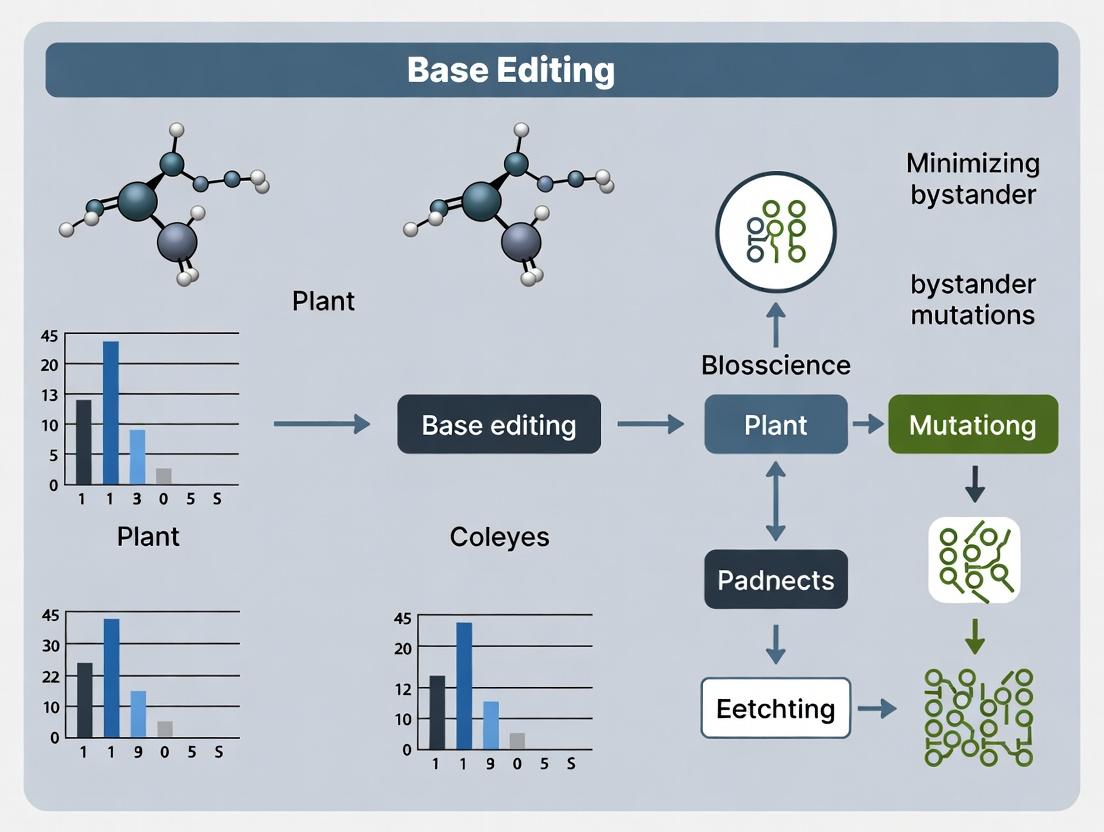
This article provides a comprehensive guide for researchers, scientists, and drug development professionals on minimizing bystander mutations in base editing technologies.
Precision in Editing: Advanced Strategies to Minimize Bystander Mutations in Base Editing
Abstract
This article provides a comprehensive guide for researchers, scientists, and drug development professionals on minimizing bystander mutations in base editing technologies. It covers foundational concepts defining bystander effects and their mechanisms, explores methodological advances in editor architecture and delivery for enhanced precision, details troubleshooting strategies to optimize editing windows and conditions, and examines rigorous validation and comparative frameworks for safety assessment. The synthesis aims to equip practitioners with the latest knowledge and tools to achieve single-nucleotide precision, thereby accelerating the development of safer therapeutic applications.
Understanding the Bystander Effect: Defining the Precision Challenge in Base Editing
Technical Support Center: Troubleshooting Bystander Mutations in Base Editing
Welcome, Researcher. This support center provides targeted guidance for identifying, quantifying, and minimizing bystander mutations during base editing experiments. These resources are framed within the critical thesis goal of achieving high-precision genomic edits.
FAQs & Troubleshooting Guides
Q1: What exactly defines a "bystander mutation" in the context of base editing? A: A bystander mutation is an unintended base conversion that occurs within the activity window of the deaminase enzyme (typically a 5-10 nucleotide range, e.g., positions 4-8 in a protospacer for BE4max) but outside the targeted nucleotide(s). For a C-to-T base editor, any 'C' within the editable window (e.g., in an NGG PAM context for BE4) may be deaminated, not just the one you intend to change.
Q2: My editing efficiency at the target base is high, but I'm seeing multiple other C-to-T changes in my sequencing data. What are the primary causes? A: This is the classic bystander effect. Key factors include:
- Deaminase Processivity: The deaminase enzyme can act on multiple cytosines within its single-stranded DNA binding window.
- sgRNA Design: sgRNAs with multiple editable Cs (or As for ABEs) within the activity window are high-risk.
- Editor Expression/Exposure Time: Prolonged expression or high concentrations of the base editor can increase the probability of deaminase activity at bystander sites.
- Local DNA Sequence/Context: Certain sequence contexts (e.g., TC motifs for some CBEs) are more prone to deamination.
Q3: How can I predict and screen for sgRNAs with low bystander potential before the experiment? A: Utilize computational prediction tools and apply strict design rules:
Table 1: Key Parameters for Bystander-Predictive sgRNA Design
| Parameter | Ideal Characteristic | Reason |
|---|---|---|
| Number of Editable Bases | Only ONE C (for CBE) or A (for ABE) in the activity window (e.g., positions 4-10). | Minimizes substrates for the deaminase. |
| Position of Target Base | Preferentially located at the most efficiently edited position (e.g., C6 for BE4max). | Maximizes on-target efficiency, potentially allowing lower editor doses. |
| Local Sequence Context | Avoid 'hotspot' motifs (e.g., TC for APOBEC-based deaminases). | Reduces innate susceptibility to deamination. |
| In Silico Prediction Score | Use tools like BE-Hive or DeepBaseEditor to estimate bystander probabilities. | Leverages machine learning models trained on experimental data. |
Q4: What experimental strategies can I use to minimize bystander mutations in my validation workflow? A: Implement a tiered validation protocol:
Experimental Protocol 1: Bystander Mutation Quantification via Deep Sequencing
- Amplicon Library Preparation: Design PCR primers to generate 250-300 bp amplicons spanning your target site.
- High-Fidelity PCR: Use a high-fidelity polymerase (e.g., Q5) to minimize PCR errors. Include sample-specific barcodes and Illumina sequencing adapters.
- Sequencing: Perform paired-end 2x150 bp or 2x250 bp sequencing on an Illumina platform to achieve high coverage (>10,000x).
- Bioinformatic Analysis: Align reads to the reference genome. Use specialized base-editing analysis pipelines (e.g, BEAT, CRISPResso2) to calculate precise base conversion frequencies at every position within the amplicon.
Q5: Are there next-generation base editors engineered to reduce bystander effects? A: Yes. Recent engineered editors employ strategic mutations to narrow the activity window.
Table 2: Engineered Base Editors with Reduced Bystander Activity
| Editor Name | Parent Editor | Key Modification | Reported Bystander Reduction | Primary Reference |
|---|---|---|---|---|
| SECURE-SpCas9 (CBE) | BE3/BE4 | Mutations in SpCas9 (e.g., K910A) to reduce ssDNA bubble size. | ~60-80% reduction | (Grünewald et al., Nature, 2019) |
| nSaCas9-based CBE | BE4max | Uses SaCas9 which has a narrower R-loop profile than SpCas9. | Context-dependent, narrower window | (Huang et al., Cell Res., 2019) |
| Target-ACEmax (ABE) | ABEmax | Engineered TadA heterodimer variants with altered activity window. | Sharply reduced editing at A5-A7 | (Gaudelli et al., Nature, 2020) |
Experimental Protocol 2: Side-by-Side Comparison of Standard vs. Narrow-Window Editors
- Construct Preparation: Clone your target sgRNA into delivery vectors for the standard editor (e.g., BE4max) and a narrow-window variant (e.g., SECURE-BE4max).
- Cell Transfection: Transfect your cell line (e.g., HEK293T) in triplicate with equimolar amounts of each editor+sgRNA plasmid. Include a GFP-only control.
- Harvest Genomic DNA: 72 hours post-transfection, harvest cells and extract gDNA.
- Analysis: Perform deep sequencing (as in Protocol 1) for all conditions. Compare editing efficiency at the target base versus all bystander bases within the window.
The Scientist's Toolkit: Research Reagent Solutions
Table 3: Essential Reagents for Bystander Mutation Analysis
| Item | Function | Example Product/Catalog # |
|---|---|---|
| High-Fidelity DNA Polymerase | To amplify target loci for sequencing with ultra-low error rates. | NEB Q5 Hot Start / M0491S |
| UltraPure dNTPs | Ensure high-fidelity PCR with balanced nucleotide concentrations. | ThermoFisher Scientific / 18427013 |
| Next-Gen Sequencing Library Prep Kit | For streamlined, barcoded amplicon library construction. | Illumina DNA Prep / 20018704 |
| Base Editor Expression Plasmids | For delivery of standard and engineered editors. | Addgene: BE4max (#112093), SECURE-BE4max (#138489) |
| Control gDNA (Wild-Type) | Critical negative control for sequencing background error rate. | From parental/untransfected cell line. |
| CRISPR Analysis Software | To quantify base editing frequencies from NGS data. | CRISPResso2 (open source), BEAT (open source) |
Visualizations
Title: Mechanism of Bystander Mutations During Base Editing
Title: Troubleshooting Flowchart to Minimize Bystander Edits
Technical Support Center
Troubleshooting Guide & FAQs
FAQ 1: How do I differentiate between true off-target edits and sequencing artifacts?
- Answer: True off-target edits typically show a consistent pattern across replicates and align with predicted Cas9 mismatch tolerance or APOBEC sequence preference. Artifacts are stochastic. To confirm, perform:
- Targeted Amplicon Sequencing (Deep Sequencing): Use at least 3 independent biological replicates. Consensus across replicates suggests a true signal.
- Orthogonal Validation: For a critical subset of suspected sites, employ an independent method like digital droplet PCR (ddPCR) with specific probes for the variant.
- Negative Control: Always sequence a sample treated with catalytically inactive base editor (e.g., BE4max with dead Cas9) under identical conditions. Signals present here are likely artifacts.
FAQ 2: My base editor shows high on-target efficiency but also unexpected C-to-T (or A-to-G) changes genome-wide. What's the cause?
- Answer: This is a hallmark of deaminase processivity and transient ssDNA exposure. The editor's deaminase domain may remain bound and "slide" along exposed single-stranded DNA, catalyzing multiple deaminations. This is exacerbated by:
- Longer R-loop duration: Slower Cas9 turnover increases ssDNA exposure time.
- Excessive deaminase expression: High local concentration promotes repeated activity.
- Solution: Use engineered, processivity-reduced deaminase variants (e.g., SECURE-BE3, YE1-BE3). Optimize editor expression levels (use weaker promoters) and delivery (e.g., RNP vs. plasmid). Reduce transfection time.
FAQ 3: How does the method of delivery (plasmid, mRNA, RNP) impact off-target effects?
- Answer: Delivery method directly influences editor concentration and persistence, which correlate with ssDNA exposure time and off-target editing.
Delivery Method Impact on ssDNA Exposure & Off-Targets Recommended for Minimizing Bystanders Plasmid High, prolonged expression. Maximal off-target risk. Not recommended for sensitive applications. mRNA Transient expression (hours to days). Moderate risk. Better control via dosage. RNP (Ribonucleoprotein) Most transient activity (hours). Lowest off-target risk. Gold standard for minimizing bystander and genome-wide off-targets.
FAQ 4: What experimental controls are mandatory for rigorous off-target assessment?
- Answer: A robust experimental design must include:
- No-editor control: Wild-type cells/subject.
- Catalytically dead control: Cells treated with editor containing mutations in the deaminase active site (e.g., BE4max-HA-UGI-E67A).
- dCas9-only control: Cells with nuclease-dead Cas9 fused to the deaminase domain to assess deaminase-independent effects.
- Processivity Control: Compare results to a known processivity-reduced editor variant (e.g., YE1).
Experimental Protocols
Protocol 1: In Vitro Processivity Assay (GUIDE-seq adapted for Base Editors)
- Objective: Quantify deaminase sliding on exposed ssDNA.
- Materials: Purified base editor protein, target dsDNA oligo, radiolabeled or fluorescent dNTPs, reaction buffer.
- Method:
- Anneal target oligo to create a partially ssDNA bubble region.
- Incubate base editor with the DNA substrate at 37°C for a short, defined time (e.g., 5 min).
- Stop reaction and run products on a high-resolution denaturing gel.
- Visualize. A "ladder" of multiple deamination events at consecutive cytosines within the bubble indicates high processivity. A single, dominant band indicates low processivity.
Protocol 2: Cellular Off-Target Assessment via CIRCLE-seq for Base Editors (BE-CIRCLE-seq)
- Objective: Genome-wide identification of off-target sites.
- Method:
- Genomic DNA Isolation: Extract gDNA from cells treated with your base editor.
- Circularization: Shear gDNA and use ssDNA circligase to form circles, enriching for nicked or ssDNA regions (sites of R-loop/editor activity).
- Linearization & Amplification: Digest circles at the original integration site, add adaptors, and PCR amplify.
- Sequencing & Analysis: Perform next-generation sequencing. Align reads to reference genome to identify sites of deamination enrichment outside the target.
Protocol 3: Measuring R-loop Dynamics (DRIP-seq followed by qPCR)
- Objective: Quantify ssDNA exposure duration at the target locus.
- Method:
- DRIP (DNA:RNA Hybrid Immunoprecipitation): Crosslink cells, extract DNA, and shear. Immunoprecipitate DNA:RNA hybrids (the R-loop) using the S9.6 antibody.
- Sequencing or qPCR: For genome-wide data, use DRIP-seq. For a specific target, use qPCR on the immunoprecipitated DNA with primers flanking the target site.
- Correlation: Higher R-loop signal at the target over time correlates with increased ssDNA exposure and potential for off-target deamination.
Diagrams
Diagram 1: Processivity-Driven Bystander Editing
Diagram 2: Experimental Workflow for Off-Target Analysis
The Scientist's Toolkit: Research Reagent Solutions
| Reagent / Material | Function in Minimizing Bystander/Off-Target Effects |
|---|---|
| Processivity-Reduced Deaminase Variants (e.g., YE1, SECURE-BE3) | Engineered deaminase domains with reduced ability to slide on ssDNA, lowering bystander mutations. |
| High-Fidelity Cas9 Variants (e.g., HiFi Cas9, eSpCas9) | Cas9 variants with stricter recognition of the target PAM and sequence, reducing off-target R-loop formation. |
| Ribonucleoprotein (RNP) Complexes | Direct delivery of pre-assembled editor protein+gRNA. Limits exposure time, reducing ssDNA exposure and off-targets. |
| Uracil DNA Glycosylase Inhibitor (UGI) | Included in many CBE designs. Blocks base excision repair of U•G intermediates, but can increase processivity; use in moderation. |
| S9.6 Antibody | For DRIP assays. Specifically immunoprecipitates DNA:RNA hybrids (R-loops) to measure ssDNA exposure dynamics. |
| ddPCR Assay Kits | For orthogonal, absolute quantification of specific on- and off-target edits without amplification bias. |
| Catalytically Inactive Base Editor Controls (e.g., BE4max-E67A) | Essential negative control to identify deaminase-independent sequencing artifacts or cellular responses. |
Technical Support Center
Troubleshooting Guides & FAQs
Q1: During a base editing experiment, my sequencing data shows a high frequency of bystander mutations within the editing window. How can I minimize this?
- Answer: This is a classic manifestation of the precision trade-off. The wider the activity window of your base editor (BE), the higher the probability of modifying non-target bases. To troubleshoot:
- Validate sgRNA Design: Use the latest prediction tools (e.g., BE-Hive, DeepBE) to score your sgRNA for predicted on-target efficiency and bystander potential. Avoid protospacers with multiple editable bases (e.g., multiple C's within a CBE window).
- Optimize Editor Selection: Consider switching to a high-fidelity variant (e.g., eA3A-BE3 for CBE, SaKKH-BE3 for ABE) with a narrower activity window.
- Titrate Editor Delivery: Reduce the amount of editor plasmid or RNP complex transfected. Overexpression can exacerbate off-window activity. Refer to the table below for recommended starting points.
- Shorten Exposure Time: For lentiviral delivery or stable cell lines, reduce the time between editor induction and harvesting cells.
Q2: My base editor shows no activity at the primary target site. What could be wrong?
- Answer: This indicates a failure within the activity window.
- Check Protospacer Adjacent Motif (PAM): Verify your target sequence is adjacent to the correct PAM for your editor (e.g., NGG for SpCas9-derived BEs).
- Assess Chromatin Accessibility: Your target site may be in a heterochromatic region. Consider using chromatin-modifying agents or Cas9-derived editors known for better accessibility (e.g., xCas9-BE).
- Test sgRNA Efficiency: Co-transfect a standard Cas9 nuclease with the same sgRNA to check for indels, confirming sgRNA functionality.
- Verify Editor Components: Ensure all components of your BE plasmid (deaminase, Cas9 variant, UGIs) are intact via diagnostic restriction digest.
Q3: How do I quantify the trade-off between editing efficiency and bystander mutations?
- Answer: You must calculate two key metrics from your next-generation sequencing (NGS) data for each experimental condition.
- Primary Target Efficiency: (% of reads with desired base conversion at the target nucleotide).
- Bystander Index: (% of reads with any conversion at non-target bases within the editing window) / (% Primary Target Efficiency). A lower Bystander Index indicates higher precision. See the data table below for an example.
Table 1: Comparison of Base Editor Performance on a Model Locus Data simulated based on current literature trends.
| Base Editor Variant | Avg. Primary Editing Efficiency (%) | Avg. Bystander Index | Effective Editing Window (Width in nucleotides) |
|---|---|---|---|
| BE4max (CBE) | 65 | 0.42 | 17 (positions 4-10, mostly) |
| eA3A-BE4max (High-Fidelity CBE) | 48 | 0.11 | 9 (positions 4-7) |
| ABE8e | 72 | 0.28 | 15 (positions 4-9) |
| SaKKH-ABE8e (Narrower ABE) | 55 | 0.09 | 7 (positions 4-7) |
Table 2: Troubleshooting Guide: Impact of Experimental Parameters
| Parameter Adjusted | Expected Effect on Primary Efficiency | Expected Effect on Bystander Index | Recommended Action for Precision |
|---|---|---|---|
| Increase Editor Dosage | ↑↑ | ↑↑ | Titrate to lowest effective dose |
| Use High-Fidelity Variant | ↓ | ↓↓ | Select for sensitive applications |
| Shorten Delivery-to-Harvest Time | ↓ | ↓↓ | Harvest as soon as efficiency is detectable |
| Optimize sgRNA (low bystander score) | Variable (often ↓) | ↓↓ | Use predictive algorithms in design |
Experimental Protocol: Assessing Editing Window and Bystander Mutations
Protocol: NGS-Based Profiling of Base Editing Outcomes
Objective: To precisely quantify on-target base conversion and bystander mutations within the editing window.
Materials: See "The Scientist's Toolkit" below.
Methodology:
- Design & Cloning: Design sgRNAs targeting your locus of interest. Clone sgRNA into appropriate expression vector (e.g., pX601 for ABE, pCMV_BE4max for CBE).
- Cell Transfection: Seed HEK293T cells (or target cell line) in a 24-well plate. Transfect with 500ng of base editor plasmid and 250ng of sgRNA plasmid (or 100pmol of pre-formed RNP) using a polyethylenimine (PEI) protocol. Include a no-editor control.
- Harvest Genomic DNA: 72 hours post-transfection, harvest cells and extract genomic DNA using a silica-column based kit.
- PCR Amplification: Amplify the target region (amplicon size ~300-500bp) using high-fidelity polymerase. Perform two rounds of PCR: the first to amplify the genomic locus, the second to attach full Illumina adapter sequences with unique dual indices (UDIs) for multiplexing.
- NGS Library Preparation & Sequencing: Purify PCR products, quantify, pool equimolarly, and sequence on an Illumina MiSeq (2x300bp) or similar platform to achieve >10,000x coverage per sample.
- Data Analysis:
- Demultiplex reads using
bcl2fastq. - Align reads to the reference genome using
bwa mem. - Use a base editing-specific analysis tool (e.g,
BEATorCrispresso2) with the appropriate--base_editorflag to quantify the percentage of reads with conversions at each nucleotide position within the amplicon.
- Demultiplex reads using
Visualizations
Title: Base Editing Mechanism and Bystander Mutation Origin
Title: Workflow for Minimizing Bystander Mutations
The Scientist's Toolkit: Research Reagent Solutions
| Reagent / Material | Function in Base Editing for Precision |
|---|---|
| High-Fidelity Base Editor Plasmids (e.g., pCMV_eA3A-BE4max) | Engineered deaminase domains with narrowed activity windows to reduce bystander mutations. |
| Chemically Modified sgRNA (synthetgic) | Enhanced stability and binding specificity can improve on-target efficiency, potentially allowing for lower, more precise doses. |
| Pre-formed RNP Complexes (Editor protein + sgRNA) | Transient delivery method that reduces editor exposure time, lowering bystander edits while maintaining efficiency. |
| NGS Library Prep Kit for Amplicons (e.g., Illumina DNA Prep) | For preparing high-fidelity sequencing libraries to accurately quantify editing outcomes at single-nucleotide resolution. |
| BE Analysis Software (e.g., BEAT, Crispresso2) | Specialized bioinformatics tools to calculate base conversion percentages and bystander indices from NGS data. |
| PEI Transfection Reagent | A cost-effective chemical transfection method for delivering plasmid DNA to a wide range of mammalian cell lines. |
Troubleshooting Guide & FAQ
Q1: My base editing experiment results show high levels of unintended, non-Target A•T-to-G•C changes near the target site. What could be causing this, and how can I mitigate it?
A: This indicates significant bystander editing. The primary cause is the deaminase activity window extending over multiple bases within the single-stranded R-loop. To mitigate:
- Use a narrowed-window deaminase variant: e.g., eA3A (BE4) has a editing window of ~1-2 nucleotides compared to ~5 nucleotides for rAPOBEC1-based BEs.
- Optimize sgRNA positioning: Design sgRNAs so the target base is positioned within the optimal, narrowest part of the editor's window. Avoid spacers where multiple editable bases (e.g., multiple C's within a TC motif) fall within the window.
- Leverage blocking mutations: Introduce silent mutations into the sgRNA spacer sequence to disrupt PAM sequences or protospacer alignment for bystander cytosines/adenosines.
- Employ dual-guided editing: Use a second, protective guide RNA to occlude access to non-target bases within the editing window.
Experimental Protocol: Assessing Bystander Editing Frequency
- Target: Transfect HEK293T cells with your base editor plasmid and sgRNA.
- Control: Include a transfection with a non-targeting sgRNA.
- Harvest: Isolate genomic DNA 72 hours post-transfection.
- Amplify: PCR-amplify the target genomic region (~300-500bp flanking the edit site).
- Sequence: Perform next-generation amplicon sequencing (NGS) with a minimum depth of 50,000x.
- Analyze: Use computational tools (e.g., BE-Analyzer, CRISPResso2) to quantify the percentage of reads containing edits at each position within the deaminase window. Calculate the ratio of desired on-target edits to undesired bystander edits.
Q2: I am observing significant off-target RNA editing in my cell culture models. Is this a common issue, and what strategies exist to prevent it?
A: Yes, some DNA base editors (particularly those using TadA deaminases) can exhibit robust off-target RNA editing activity. This is a major safety concern for therapeutics.
- Solution: Use RNA-off-target minimized variants. For adenine base editors (ABEs), use ABE8e with additional mutations (e.g., V106W) that dramatically reduce RNA binding. For cytosine base editors (CBEs), use SECURE (SElective CUrative RE) editor variants (e.g., BE4-R33A/K34A) which contain mutations that disrupt tRNA binding and abolish detectable RNA off-targets.
Experimental Protocol: Detecting RNA Off-Targets
- Treat Cells: Deliver your base editor and a control (e.g., catalytically dead version) into relevant cell lines.
- RNA Extraction: Isolate total RNA 48 hours post-delivery.
- Sequencing: Perform whole-transcriptome sequencing (RNA-seq).
- Bioinformatic Analysis: Use a specialized pipeline (e.g., RESTART) to identify A-to-I or C-to-U editing sites across the transcriptome that are significantly enriched in the treated sample versus control. Focus on sites not present in population databases (e.g., gnomAD).
Q3: What computational tools are essential for designing guides to minimize bystander effects?
A: Several tools incorporate bystander risk prediction:
- BE-DESIGN (Benchling, Broad Institute): Evaluates potential bystander edits within the predicted activity window for common BE variants.
- BE-Hive: Predicts base editing outcomes and efficiencies, including bystander edits, using a machine-learning model trained on large-scale datasets.
- CRISPick (Broad): Includes base editor design modules that highlight editable bases within the spacer.
Table 1: Comparison of Base Editor Characteristics and Bystander Profiles
| Editor Class | Example Variant | Primary Deaminase | Typical Editing Window (nt) | Relative Bystander Risk | Key Mitigation Feature |
|---|---|---|---|---|---|
| CBE (1st Gen) | BE4max | rAPOBEC1 | ~5 (positions 4-8) | High | Baseline |
| CBE (Narrow) | eA3A-BE4 | eA3A (N57G) | ~1-2 (positions 5-6) | Low | Narrowed window |
| CBE (SECURE) | BE4max-R33A/K34A | rAPOBEC1 (mutant) | ~5 | Medium | Eliminates RNA off-targets |
| ABE (1st Gen) | ABE7.10 | TadA-TadA* | ~4-5 (positions 4-8) | Medium | Baseline |
| ABE (Narrow) | ABE8e-N46G | TadA8e (N46G) | ~2-3 | Low | Narrowed window |
| ABE (RNA-safe) | ABE8e-V106W | TadA8e (V106W) | ~4-5 | Medium | Eliminates RNA off-targets |
Table 2: Quantitative Bystander Outcomes in a Model HEK293 Site (EMX1)
| Target Site (EMX1) | Editor Used | On-Target Efficiency (%) | Primary Bystander Edit Rate (%) | Ratio (On-Target:Bystander) | Reference |
|---|---|---|---|---|---|
| Site A (5’TC4TC3TC)’ | BE4max | 58% | 41% (at C5) | 1.4 : 1 | Gaudelli et al., 2020 |
| Site A (5’TC4TC3TC)’ | eA3A-BE4 | 32% | <2% (at C5) | 16 : 1 | Gehrke et al., 2023 |
| Site B (5’AC7AC6)’ | ABE7.10 | 72% | 38% (at A6) | 1.9 : 1 | Richter et al., 2020 |
| Site B (5’AC7AC6)’ | ABE8e-N46G | 65% | 8% (at A6) | 8.1 : 1 | Gehrke et al., 2023 |
Visualized Workflows & Pathways
Title: Base Editor Design & Safety Validation Workflow
Title: Mechanism of Bystander Editing in CBEs
The Scientist's Toolkit: Research Reagent Solutions
Table 3: Essential Reagents for Bystander-Minimized Base Editing
| Reagent Category | Specific Example | Function & Role in Minimizing Bystanders |
|---|---|---|
| Narrow-Window Base Editors | eA3A-BE4 (Addgene #163062) | Cytosine base editor with a ~1-2 nt window, drastically reducing bystander C edits. |
| Narrow-Window Base Editors | ABE8e-N46G (Addgene #166982) | Adenine base editor with a constricted activity window (~2-3 nt). |
| RNA-Off-Target Minimized Editors | BE4max-SECURE (Addgene #194078) | CBE variant with R33A/K34A mutations; eliminates RNA editing while retaining DNA on-target activity. |
| RNA-Off-Target Minimized Editors | ABE8e-V106W (Addgene #166984) | ABE variant with dramatically reduced RNA off-target editing. |
| Control Plasmids | dCas9-only plasmid | Essential control to differentiate editor-dependent effects from background noise. |
| NGS Validation Kit | Illumina COVIDSeq Test (Adaptable) | For high-depth amplicon sequencing to quantify on-target vs. bystander edit frequencies. |
| Analysis Software | CRISPResso2 (Broad Institute) | Open-source tool for quantifying base editing outcomes from NGS data, including bystander analysis. |
| Design Tool | BE-DESIGN (Benchling) | Web-based tool for designing sgRNAs and predicting bystander risk for various BE variants. |
Engineering Precision: Methodological Innovations to Reduce Bystander Edits
Technical Support Center: Troubleshooting & FAQs
Frequently Asked Questions
Q1: Our engineered deaminase shows reduced on-target editing efficiency after introducing mutations to narrow the window. How can we restore efficiency while maintaining a narrow activity profile? A: This is a common trade-off. Consider the following troubleshooting steps:
- Verify Expression & Stability: Check protein expression levels via Western blot. Mutations can affect stability. Co-express with stabilizing chaperones or add a solubility tag.
- Titrate Editor Delivery: Reduce the amount of editor plasmid or mRNA. High concentrations can force the system, causing off-target effects. Optimal lower concentrations may maintain on-target editing with reduced bystanders.
- Optimize sgRNA Spacing: The narrow-window deaminase may have a different optimal "editin window" distance from the PAM. Systematically test sgRNAs with different spacer lengths (e.g., 14-18nt for SpCas9-based editors).
- Combine Mutations: Use a combination of mutations (e.g., from ecTadA and Haemophilus APOBEC3A structures) that independently narrow the window, rather than a single drastic mutation.
Q2: How do we accurately measure the "activity window" and quantify bystander mutations in our base editing experiments? A: Use a validated, high-throughput sequencing approach.
- Protocol: Clone a synthetic target sequence containing multiple potential editable bases (e.g., multiple Cs within a ~10bp window around the target) into a plasmid. Transfect with your base editor and perform deep amplicon sequencing (minimum 10,000x coverage). Analyze the frequency of editing at each position.
- Key Metric: Calculate the Bystander Index = (Number of unintended edits within the window) / (Number of total reads with the intended edit). A lower index indicates a narrower activity window.
Q3: Our structure-guided mutations completely abolished deaminase activity. What might have gone wrong in the design process? A: Likely, mutations disrupted critical catalytic or structural residues.
- Re-check Alignment: Perform a multiple sequence alignment (MSA) of deaminase homologs. Ensure your mutations are not in 100% conserved residues critical for zinc coordination or substrate binding.
- Use Saturation Mutagenesis: For the targeted region, use library-based approaches (e.g., site-saturation mutagenesis combined with a functional screen) instead of single rational mutations to find functional, narrowing variants.
- Check Computational Predictions: Re-run structural stability predictions (e.g., with RosettaDDG or FoldX) to see if the mutation is predicted to severely destabilize the fold.
Q4: When moving from an in vitro assay to a cellular context, the narrowing effect of our deaminase variant is lost. Why? A: Cellular factors can influence activity.
- Test in Different Cell Lines: Chromatin accessibility and DNA repair machinery vary. Validate in multiple cell types (HEK293T, U2OS, primary cells).
- Control for Cell Cycle Effects: Deaminase activity can be cell cycle-dependent. Consider synchronizing cells or using editors fused to cell cycle-independent nuclear localization signals (NLS).
- Assess UGI Concentration: For CBEs, the concentration of uracil glycosylase inhibitor (UGI) can affect repair outcomes and apparent window width. Titrate the UGI component.
Key Experimental Protocols
Protocol 1: Profiling Base Editor Activity Window In Vitro Objective: Quantify deamination activity across a DNA substrate without cellular confounders. Materials: Purified base editor protein (or RNP: Cas9-deaminase + sgRNA), synthetic dsDNA substrate with target window, NEBuffer 3.1, dNTPs, water. Method:
- Prepare Reaction: Combine 50 nM dsDNA substrate, 100 nM base editor RNP, 1x NEBuffer 3.1 in a 20 µL reaction.
- Incubate: 37°C for 60 minutes.
- Quench: Heat-inactivate at 80°C for 10 minutes.
- PCR Amplify: Add primers and PCR master mix directly to the reaction. Amplify the target region.
- Sequence: Purify PCR product and submit for Sanger or next-generation sequencing. Analyze editing at each base position.
Protocol 2: Cellular Bystander Mutation Quantification via Targeted Amplicon Sequencing Objective: Precisely measure the frequency of intended vs. bystander edits in cells. Materials: Cells (e.g., HEK293T), base editor expression plasmids (or mRNA), lipofectamine, lysis buffer, PCR reagents, HTS platform. Method:
- Transfect: Seed 2e5 cells/well in a 24-well plate. Transfect with 500 ng base editor plasmid and 250 ng sgRNA plasmid (or 100 ng each mRNA).
- Harvest: 72 hours post-transfection, wash cells with PBS and lyse with 50 µL direct lysis buffer.
- First PCR: Use 2 µL lysate in a 25 µL PCR to amplify the genomic target region with barcoded primers.
- Second PCR (Indexing): Add Illumina sequencing adapters via a second, limited-cycle PCR.
- Purify & Pool: Purify amplicons with SPRI beads, quantify, pool equimolar amounts.
- Sequence: Run on a MiSeq or similar (2x250 bp).
- Analysis: Align reads to reference. Use software (e.g., CRISPResso2, BE-Analyzer) to calculate editing percentages at each nucleotide position in the window.
Data Presentation
Table 1: Comparison of Deaminase Variants for Bystander Editing
| Variant (based on ecTadA) | Key Mutation(s) | On-Target Efficiency (%) | Bystander Edit Frequency (%) | Bystander Index | Primary Reference |
|---|---|---|---|---|---|
| WT (BE4max) | N/A | 45.2 | 12.8 | 0.28 | (Richter et al., 2020) |
| nCas9-BE4max-Y115F | Y115F | 38.7 | 5.1 | 0.13 | (Gaudelli et al., 2020) |
| nCas9-BE4max-Y115F/R126E | Y115F, R126E | 31.5 | 1.8 | 0.06 | (Gaudelli et al., 2020) |
| YE1-BE4max | Y115F, R126E, R132E | 22.4 | 0.9 | 0.04 | (Kim et al., 2017) |
| YE2-BE4max | Y115F, R126E, R132E, K157S | 18.9 | 0.7 | 0.04 | (Koblan et al., 2021) |
Table 2: Essential Reagents for Structure-Guided Deaminase Engineering
| Research Reagent Solution | Function/Explanation |
|---|---|
| High-Fidelity DNA Polymerase (e.g., Q5) | For error-free amplification of deaminase gene fragments during mutant construction. |
| Site-Directed Mutagenesis Kit | Enables precise introduction of point mutations into deaminase plasmids. |
| Mammalian Two-Hybrid System | Useful for testing protein-protein interaction between deaminase variants and Cas9/gRNA/DNA substrate. |
| Surface Plasmon Resonance (SPR) Chip | For biophysical characterization of mutant deaminase binding affinity to ssDNA substrate. |
| In vitro Transcription/Translation Kit | For rapid production of mutant deaminase protein for in vitro activity assays. |
| Uracil DNA Glycosylase (UDG) | Critical control enzyme for in vitro CBE activity assays to confirm uracil production. |
| Next-Generation Sequencing Service | Mandatory for unbiased, quantitative measurement of editing windows and bystander rates. |
| Rosetta or FoldX Software Suite | For computational modeling of mutation effects on deaminase structure and stability. |
Experimental & Conceptual Diagrams
Diagram 1: Workflow for Engineering Narrow-Window Deaminases
Diagram 2: Mechanism of Bystander Editing vs. Narrow-Window Mutant
CRISPR Protein Fusions and Linker Optimization for Controlled Deaminase Positioning
Troubleshooting Guides & FAQs
Q1: My base editor construct shows extremely low editing efficiency. What could be the cause? A: Low efficiency is often linked to suboptimal linker design or protein fusion architecture. First, verify the following:
- Linker Length: Excessively short linkers can hinder proper deaminase folding or CRISPR-Cas binding. Excessively long linkers may reduce effective local concentration.
- Linker Composition: Rigid linkers (e.g., (EAAAK)n) may over-constrain positioning, while overly flexible Gly-Ser linkers may allow deaminase to sample non-productive orientations.
- Fusion Order: The N-terminal vs. C-terminal fusion of the deaminase to Cas9 nickase (Cas9n) can impact accessibility to the ssDNA R-loop. Try an alternative architecture.
Protocol: Rapid Testing of Linker Variants
- Cloning: Generate a library of constructs with linker lengths varying from 5 to 30 amino acids, using both rigid and flexible motifs. Use Golden Gate or Gibson assembly.
- Delivery: Co-transfect HEK293T cells (in a 24-well plate) with 500 ng of each base editor plasmid and 250 ng of a plasmid containing your target sgRNA sequence.
- Analysis: Harvest cells 72 hours post-transfection. Isolate genomic DNA and perform PCR on the target locus. Submit for Sanger sequencing and analyze editing efficiency using the EditR or BEAT tool.
- Quantitative Data Summary:
| Problem | Likely Cause | Diagnostic Test | Solution |
|---|---|---|---|
| Low editing efficiency | Linker too short/rigid | Test 3-4 longer/more flexible linkers | Use (GGGS)n, n=2-4 |
| High bystander mutation rate | Linker too long/flexible | Test shorter or rigid linkers | Use (EAAAK)n, n=2-3 |
| No editing activity | Improper fusion order or catalytic deactivation | Check protein expression via Western blot; test alternate fusion site (Cas9 N-terminus vs. C-terminus) | Switch deaminase from C-terminal to N-terminal fusion |
Q2: My editor has high on-target efficiency but also a high rate of bystander mutations within the editing window. How can I minimize this? A: Bystander mutations occur because the deaminase domain acts on multiple cytosines or adenines within the exposed ssDNA window. To minimize this:
- Optimize Deaminase Positioning: Use rigid linkers to physically restrict the deaminase to a more specific sub-region of the R-loop.
- Use Engineered Deaminase Variants: Implement circularly permuted deaminases (e.g., cpBE4max) that alter the geometric orientation of the active site relative to the linker attachment points.
- Modify sgRNA: Truncated sgRNAs (tru-gRNAs, 14-18 nt spacer length) can alter the R-loop conformation and size, potentially narrowing the accessible window.
Protocol: Assessing Bystander Mutation Profile
- Experiment Design: Target a genomic locus with multiple editable bases (C's for CBEs, A's for ABEs) within a 5-10 nucleotide window.
- Deep Sequencing: Transfert cells with your base editor and sgRNA. Perform targeted amplicon sequencing (Illumina MiSeq) on the harvested genomic DNA.
- Data Analysis: Use bioinformatics tools like CRISPResso2 or BEDITools to calculate the percentage of reads containing edits at each position within the window. The goal is a high percentage at the target base and low percentages at adjacent bases.
Q3: My protein fusion construct is poorly expressed in mammalian cells. How can I improve this? A: Poor expression can result from mRNA instability or protein misfolding.
- Codon Optimization: Ensure the entire fusion sequence (Cas9n-linker-deaminase) is codon-optimized for your expression system (e.g., human cells).
- Nuclear Localization: Verify the presence of two strong nuclear localization signals (NLSs), typically at the C-terminus of the construct.
- Promoter: Use a strong, ubiquitous promoter (e.g., EF1α, CAG) for mammalian expression.
The Scientist's Toolkit: Research Reagent Solutions
| Reagent/Material | Function in Experiment |
|---|---|
| BE4max Plasmid (Addgene #112093) | A high-efficiency, codon-optimized base editor backbone for C-to-T editing. Serves as a positive control and cloning starting point. |
| Hyperactive ABE8e Plasmid (Addgene #138489) | A high-efficiency adenine base editor backbone for A-to-G editing. Known for faster kinetics but potentially wider editing windows. |
| Gibson Assembly Master Mix | Enables seamless, single-step assembly of multiple DNA fragments (e.g., Cas9n, linker, deaminase). |
| HEK293T Cell Line | A robust, easily transfected mammalian cell line for initial testing of base editor constructs and sgRNAs. |
| EditR Software | A simple, web-based tool for analyzing Sanger sequencing traces to calculate base editing efficiency from initial experiments. |
| KAPA HiFi HotStart PCR Kit | For high-fidelity amplification of target genomic loci from edited cells for downstream sequencing analysis. |
Experimental Protocols
Protocol 1: Systematic Linker Optimization Screen
Objective: To identify the optimal linker length and composition for minimizing bystander mutations while maintaining high on-target efficiency.
Methodology:
- Library Generation: Design oligonucleotides encoding linker variants. Clone them between the Cas9n (D10A) and the deaminase (e.g., rAPOBEC1 or TadA-8e) in a base editor backbone using Golden Gate assembly.
- Cell Culture & Transfection: Seed HEK293T cells in a 96-well plate. Co-transfect 100 ng of each base editor variant plasmid with 50 ng of a plasmid expressing a validated sgRNA targeting a model locus (e.g., HEK4 site).
- Genomic DNA Extraction: 72 hours post-transfection, lyse cells directly in the well using 50 µL of DirectPCR Lysis Reagent with Proteinase K.
- PCR & Sequencing: Amplify the target region using barcoded primers. Pool purified amplicons and subject them to next-generation sequencing (NGS).
- Data Analysis: Align sequences to the reference genome. Calculate On-Target Efficiency (\% edits at target base) and Bystander Index (ratio of edits at non-target bases within window to edits at target base).
Protocol 2: Evaluating Editing Window Narrowing
Objective: To quantify the effect of rigid linkers and circular permutation on the editing window profile.
Methodology:
- Construct Preparation: Generate two test constructs: (1) Standard BE4max with a (GGGGS)x3 linker, (2) BE4max with a rigid (EAAAK)x3 linker or a construct using a circularly permuted deaminase (e.g., cpBE4max).
- Multi-locus Targeting: Transfert each construct into cells alongside a panel of 5-10 sgRNAs targeting diverse genomic sites, each containing multiple editable bases within a ~10-nt window.
- High-Throughput Sequencing: Harvest cells, perform multiplexed PCR for all target sites, and prepare an NGS library.
- Profile Generation: For each construct and sgRNA, plot the percentage of reads edited at each position relative to the PAM sequence. Calculate the Full-Width at Half-Maximum (FWHM) of the editing peak to quantitatively compare window width.
Visualizations
Diagram Title: Linker Design Impact on Base Editing Outcomes
Diagram Title: Linker Optimization Experimental Workflow
Troubleshooting Guides & FAQs
FAQ 1: I am observing high levels of bystander editing in my BE4 experiments. How can I minimize this? Answer: BE4, which evolved from BE3, incorporates additional uracil DNA glycosylase inhibitor (UGI) units to reduce uracil excision and improve efficiency, but it does not inherently narrow the editing window. To minimize bystander mutations:
- Use High-Fidelity Cas9 Variants: Replace the standard Cas9 (nuclease) in BE4 with a high-fidelity variant like SpCas9-HF1 or eSpCas9(1.1). This reduces off-target DNA binding and can indirectly tighten the activity window.
- Optimize gRNA Positioning: Design gRNAs so that the target base is positioned within the optimal, narrower editing window (typically positions 4-8 for BE4, counting the PAM as positions 21-23). Avoid targets with multiple editable bases within positions 4-10.
- Titrate Editor Expression: Reduce the amount of editor plasmid or mRNA transfected. Lower expression levels can favor editing at the most preferred sites within the window, reducing bystander events.
FAQ 2: My ABE8e experiment shows exceptional efficiency but also unexpected off-target RNA edits. How do I diagnose and mitigate this? Answer: ABE8e, an evolved variant of ABE7.10, uses the highly processive TadA-8e deaminase. While it offers superior DNA editing speed and efficiency, it has documented RNA off-target activity.
- Diagnosis: Perform RNA sequencing (RNA-seq) on treated samples versus untreated controls. Look for A-to-I (inosine) changes, which signal adenosine deaminase activity on RNA.
- Mitigation: Use the recently engineered SECURE (SElective CUrbing of RNA editing) variants of ABE8e (e.g., ABE8e-S). These contain point mutations (e.g., V106W) in the TadA-8e domain that drastically reduce RNA off-targets while retaining high on-target DNA editing. Always include an ABE8e-S control in your experimental design when characterizing new targets.
FAQ 3: When comparing BE4 and ABE8e for a new target, what are the key performance metrics I should quantify, and how? Answer: A systematic comparison is crucial for selecting the right editor. Use the following experimental protocol and metrics table.
Experimental Protocol for In-Vitro Comparison:
- Target Design: For your genomic locus of interest, design 3-5 gRNAs spanning the target base(s). Ensure they are compatible with both BE4 (NGN PAM) and ABE8e (NGG PAM, primarily).
- Cell Transfection: Use a relevant cell line (e.g., HEK293T). In separate wells, co-transfect with:
- Condition A: BE4 editor plasmid + gRNA expression plasmid.
- Condition B: ABE8e editor plasmid + gRNA expression plasmid.
- Control: gRNA-only plasmid.
- Use a consistent, high-efficiency transfection method (e.g., lipofection).
- Harvest & Analysis: Harvest cells 72 hours post-transfection. Isolate genomic DNA.
- Amplicon Sequencing: PCR-amplify the target region. Perform next-generation sequencing (NGS) on a platform like Illumina MiSeq. Analyze sequencing data using tools like CRISPResso2 or BE-Analyzer.
Performance Metrics Table:
| Metric | BE4 (with SpCas9) | ABE8e (with SpCas9) | Measurement Method | Relevance to Minimizing Bystanders |
|---|---|---|---|---|
| Primary Editing Window | Positions ~4-10 (C-to-T) | Positions ~4-9 (A-to-G) | NGS of target amplicon | Defines the zone where editing is possible. |
| Effective Editing Window | Positions ~5-7 (most efficient) | Positions ~5-7 (most efficient) | NGS of target amplicon | The narrower sub-window of high efficiency; targeting here reduces bystanders. |
| On-Target Efficiency (Max) | Typically 30-60% | Can exceed 80% in optimal conditions | NGS (% of reads with intended edit) | High efficiency allows use of lower editor doses. |
| Indel Formation Rate | Usually < 1% | Usually < 0.5% | NGS (% of reads with insertions/deletions) | Low indels are critical for therapeutic safety. |
| Common Off-Target Concerns | DNA off-targets (Cas9-dependent), occasional C-to-T in ssDNA. | RNA off-targets (TadA-8e dependent), DNA off-targets. | WGS or targeted NGS for DNA; RNA-seq for RNA. | RNA editing is a major bystander effect at the transcriptome level. |
| Key Mitigation Strategy | Use SpCas9-HF1 or HypaCas9. | Use SECURE variant (ABE8e-S). | Use engineered protein variant. | Directly addresses the primary source of bystander/off-target events. |
FAQ 4: What is a standard workflow for evaluating a new high-fidelity base editor? Answer: Follow this validated workflow to assess performance and specificity.
Diagram Title: Workflow for Evaluating High-Fidelity Base Editors
The Scientist's Toolkit: Key Research Reagent Solutions
| Item | Function | Example/Note |
|---|---|---|
| High-Fidelity Base Editor Plasmids | Core tools for editing. | BE4max (Addgene #112093), ABE8e (Addgene #138489), ABE8e-S (SECURE variant). |
| High-Fidelity Cas9 Variants | Reduces DNA off-target binding for both BEs and ABEs. | SpCas9-HF1, eSpCas9(1.1), HypaCas9. Fuse with deaminase domains. |
| NGS Amplicon-Seq Kit | For high-throughput sequencing of target loci to quantify editing. | Illumina MiSeq Reagent Kit v3, with custom primers containing overhangs. |
| CRISPR Analysis Software | To quantify base editing outcomes from NGS data. | CRISPResso2, BE-Analyzer, or custom Python/R scripts. |
| RNA-Seq Library Prep Kit | To assess transcriptome-wide RNA off-target edits (A-to-I). | TruSeq Stranded mRNA Kit (Illumina). Critical for profiling ABE8e. |
| UGI Expression Plasmid | Supplemental reagent to further inhibit UNG-mediated repair for BE4. | pCMV-UGI (Addgene #111866). Can boost CBE efficiency. |
| Control gRNA Plasmids | Negative controls (non-targeting) and positive controls (validated target sites). | Essential for benchmarking and normalizing editing rates. |
Troubleshooting Guides & FAQs
FAQ 1: General gRNA Design
Q1: What are the primary sequence context factors to consider for minimizing bystander mutations? A: The local sequence context 5' and 3' of the target base is critical. Key factors include:
- Editing Window: The width and efficiency profile of the editor's activity window (typically positions 4-8 for BE3, 4-10 for some high-fidelity variants).
- Presence of Additional Editable Bases (Bystanders): The number and positioning of the same type of editable base (e.g., additional 'C's for a CBE) within the activity window.
- Sequence Motifs: Presence of inhibitory (e.g., certain guanine-rich contexts for some CBEs) or promoting motifs.
- Protospacer Adjacent Motif (PAM): Distance from the PAM defines the activity window's start.
Q2: How does protospacer positioning influence editing precision? A: Positioning the target base within the protospacer changes its location relative to the PAM and the editor's catalytic domain. Optimal positioning places the target base centrally in the most efficient part of the activity window while distancing bystander editable bases towards the window's edges, where editing efficiency drops.
FAQ 2: Experimental Troubleshooting
Q3: My base editor shows high on-target efficiency but also high bystander edits. What gRNA design changes should I prioritize? A: This is a core challenge. Follow this priority list:
- Shift Protospacer Position: If possible, re-design gRNAs that shift the protospacer 1-2 bases upstream or downstream. This can move the target base away from bystanders within the editing window.
- Exploit Strand Bias: Test gRNAs on both DNA strands. Editing windows and efficiency can differ based on which strand is bound.
- Evaluate Alternative PAMs: Use a base editor with a different PAM requirement (e.g., NG-, NNG-, or SpG/SpRY variants) to access a completely different set of protospacer sequences.
- Consider Editor Variant: Switch to a "narrower window" or high-fidelity editor variant (e.g., SECURE-SpCas9-BE3, BE4max with additional mutations) designed to reduce bystander effects.
Q4: I cannot find a gRNA without bystander bases in the window. What are my options? A: When bystanders are unavoidable:
- Quantify Heterogeneity: Use deep sequencing to precisely quantify the percentage of desired (clean) vs. bystander-containing edits. A low-percentage pure product may be acceptable.
- Combine with sgRNA Mutation: Introduce silent mutations into the sgRNA spacer sequence itself to disrupt the PAM or the seed region of a bystander base after the desired edit is made, preventing re-cutting/editing. This requires careful design.
- Transition to Prime Editing: If purity is paramount, evaluate if prime editing (PE) is suitable for your target, as PE offers superior single-base precision with minimal bystander activity.
Q5: My editing efficiency is very low despite a well-designed gRNA. What could be wrong? A:
- Delivery Issues: Confirm transfection/transduction efficiency of editor and gRNA constructs in your cell type.
- gRNA Expression: Ensure strong promoter (U6 for Pol III) and verify gRNA integrity.
- Target Accessibility: Chromatin state can block access. Consider cell state or using chromatin-modulating agents (e.g., HDAC inhibitors) in an experiment.
- Sequence Verification: Double-check for typographical errors in the target sequence, PAM, and gRNA cloning.
Data Presentation
Table 1: Comparison of Base Editor Variants for Bystander Effect Mitigation
| Editor Variant (Example) | PAM Requirement | Typical Editing Window (Positions from PAM*) | Key Feature for Bystander Reduction | Relative Editing Efficiency | Ideal Use Case |
|---|---|---|---|---|---|
| BE3 (Ancestral) | NGG | 4-8 (CBE), 5-7 (ABE) | Baseline | High | Initial screens, low-bystander contexts |
| BE4max | NGG | 4-10 (wider) | Increased efficiency, not specificity | Very High | Targets with low efficiency, no bystanders |
| SECURE-BE3 (e.g., R33A/K34A) | NGG | 4-8 | Reduced DNA/RNA off-target & some bystander | Moderate | Improved specificity needed |
| High-Fidelity CBE (e.g., YE1-BE3-FNLS) | NGG | 4-7 (narrower) | Drastically reduced bystander activity | Low to Moderate | Critical for high-precision editing |
| SaKKH-BE3 | NGN | Varies by variant | Altered PAM broadens targetable sequences | Moderate | Targeting outside NGG PAM sites |
| ABE8e | NGG | 4-10 (wider) | Faster kinetics, higher efficiency | Very High | Adenine editing where bystanders are not Cs |
*Position 1 is the first base 5' of the PAM. PAM is typically bases 21-23 for SpCas9.
Table 2: Impact of Protospacer Shifting on Bystander Edit Outcomes
| Target Base (C) at Protospacer Position | gRNA Shift (nt) | Bystander C in Window? (Y/N) | Predicted Bystander Edit Rate | Experimental Efficiency (Desired Edit) | Purity (% Clean Edit) |
|---|---|---|---|---|---|
| 6 (Original) | 0 | Y (at pos 5) | High | 65% | 22% |
| 7 | +1 | Y (at pos 4, 6) | Very High | 58% | 15% |
| 5 | -1 | N | Low | 48% | 89% |
| 8 | +2 | Y (at pos 7) | Medium | 41% | 67% |
Experimental Protocols
Protocol: In Silico gRNA Design and Ranking for Minimizing Bystanders
Objective: To design and prioritize gRNAs for a single target base that minimize potential bystander mutations. Materials: Genome reference file, Target sequence, Bioinformatics tools (e.g., CRISPRscan, BE-DESIGN, or custom Python/R scripts). Method:
- Define Target Region: Extract ~100bp genomic sequence centered on your target base (A for ABE, C for CBE).
- Identify All Possible PAM Sites: Scan both DNA strands for the editor's PAM requirement (e.g., NGG for SpCas9) within the region.
- Generate Protospacer Candidates: For each PAM, extract the 20-nt sequence directly adjacent (5') to the PAM on the target strand.
- Map Editing Window: For each protospacer, define the editor's activity window (e.g., positions 4-10 for BE4).
- Annotate Editable Bases: Within each window, mark all bases of the editable type (C or A).
- Score and Rank: Assign a score to each gRNA candidate.
- Primary Rank: Lowest number of bystander editable bases in the window.
- Secondary Rank: Distance of the target base from bystander bases (maximize separation).
- Tertiary Rank: Predicted on-target efficiency score (using tools like Doench '16 score).
- Final Selection: Select the top 3-5 gRNAs with zero or minimal bystanders for empirical testing.
Protocol: Validating Bystander Editing via Deep Sequencing (Amp-Seq)
Objective: Quantify the precise spectrum and frequency of on-target and bystander base edits. Materials: Edited genomic DNA, High-fidelity PCR master mix, Barcoded primers for amplification, NGS library prep kit, MiSeq/NextSeq system. Method:
- PCR Amplification: Design primers ~150-250bp flanking the target site. Perform a first-round PCR with locus-specific primers containing partial Illumina adapter sequences.
- Indexing PCR: Use a second-round PCR to add full Illumina flow cell binding sites and dual-index barcodes.
- Library QC & Pooling: Purify amplicons, quantify, and pool equimolar amounts of uniquely barcoded samples.
- Sequencing: Run on a mid-output flow cell (2x250bp recommended).
- Data Analysis:
- Demultiplex samples.
- Align reads to the reference amplicon sequence.
- Use a variant-calling tool (e.g., CRISPResso2, BE-Analyzer) to quantify the percentage of reads containing edits at each position within the amplicon.
- Calculate key metrics: % Desired Edit, % Bystander Edit(s), % Clean (Desired only) Product.
Visualization
Diagram 1: gRNA Design Logic for Minimizing Bystanders
Diagram 2: Protospacer Shift Alters Editing Outcome
The Scientist's Toolkit: Research Reagent Solutions
| Item | Function & Rationale |
|---|---|
| High-Fidelity Base Editor Plasmids (e.g., pCMVBE4max, pCMVABE8e, YE1-BE3-FNLS) | Mammalian expression vectors encoding the base editor and SpCas9 variant. High-fidelity variants are chosen specifically to narrow the editing window and reduce bystander events. |
| sgRNA Cloning Vector (e.g., pU6-sgRNA, Addgene #41824) | Backbone for expressing the single-guide RNA (sgRNA) under a U6 promoter. Allows rapid insertion of 20-nt target sequences via BsaI site. |
| Deep Sequencing Library Prep Kit (e.g., Illumina DNA Prep, NEB Next Ultra II) | For preparing high-quality NGS libraries from PCR-amplified target loci to quantify editing outcomes and bystander frequencies precisely. |
| CRISPR Design Software (BE-DESIGN, CRISPick, CHOPCHOP) | Web-based or command-line tools to identify potential gRNA sites, predict efficiency, and visualize the editing window and bystander bases. |
| Variant Analysis Software (CRISPResso2, BE-Analyzer) | Specialized bioinformatics tools to analyze NGS data from base editing experiments. They quantify editing percentages at each base position, distinguishing desired from bystander edits. |
| Positive Control gRNA Plasmid (e.g., targeting EMX1, HEK site 3) | A validated, highly efficient gRNA construct for the base editor being used. Essential for confirming editor activity in a new cell line or after delivery optimization. |
| Cell Line Genomic DNA Extraction Kit (e.g., Qiagen DNeasy) | Reliable method to obtain high-quality, PCR-ready genomic DNA from edited cell populations for downstream sequencing validation. |
Troubleshooting Guides & FAQs
Topic 1: AAV (Adeno-Associated Virus) Delivery
Q1: We observe high on-target editing but also increased genomic rearrangements at the AAV integration site. How can we mitigate this? A: This is a known issue with AAV double-strand break (DSB) dependence and prolonged editor expression. To mitigate:
- Use Self-Complementary AAV (scAAV): Reduces the need for second-strand synthesis, lowering the duration of active editor expression and the window for DSB formation.
- Optimize Promoter: Switch from a strong constitutive promoter (e.g., CAG) to a weaker or tissue-specific promoter to reduce overall editor protein load.
- Utilize Split-intein Systems: Deliver the base editor as two separate AAVs (N-terminal and C-terminal halves) that reconstitute via protein splicing. This increases the payload capacity while reducing the risk of random integration of a full-length editor gene.
- Titer Titration: Systematically lower the viral genome (VG) dose to the minimum required for efficacy. High MOI correlates with increased off-target integration risk.
Q2: Our AAV-delivered base editor shows unexpected off-target RNA editing. What steps should we take? A: RNA off-targets are a concern with prolonged deaminase expression.
- Implement an Anti-CRISPR Protein: Co-deliver an AcrIIA4 protein via a separate AAV or as part of a dual-vector system to inhibit Cas9 activity after the desired editing window.
- Use Degron-Tagged Editors: Fuse the editor to a destabilizing domain (e.g., FKBP12) that allows rapid degradation of the protein unless stabilized by a small molecule, enabling temporal control.
- Switch Editor Variant: Consider using a high-fidelity Cas9 domain (e.g., HiFi Cas9) or an engineered deaminase with reduced RNA binding (e.g., SECURE-ABE variants).
Topic 2: LNP (Lipid Nanoparticle) Delivery
Q3: Our LNP formulations show high cytotoxicity in primary cells, confounding editing efficiency measurements. A: Cytotoxicity often stems from lipid composition or charge.
- Screen Ionizable Lipids: Test newer, biodegradable ionizable lipids (e.g., KC2, SM-102 derivatives) known for improved tolerability over older formulations like MC3.
- Adjust N:P Ratio: Optimize the nitrogen (from cationic lipid) to phosphate (from nucleic acid) ratio. A lower N:P ratio can reduce surface charge and cytotoxicity while potentially maintaining encapsulation efficiency.
- Include PEG-DMG: Ensure the formulation contains a PEG-lipid (e.g., DMG-PEG2000) at an optimal molar percentage (typically 1.5-2.5%) to improve stability and reduce non-specific cell interactions. However, titrate carefully as high PEG can inhibit endosomal escape.
- Purification: Use thorough dialysis or tangential flow filtration to remove residual ethanol and free lipids.
Q4: How can we improve the editing fidelity of LNPs carrying base editor mRNA/sgRNA? A: LNP delivery is transient, which inherently improves fidelity by limiting editor lifetime. To further enhance:
- Utilize Purified RNP Pre-loading: Pre-complex purified Cas9 protein (or base editor protein) with sgRNA to form Ribonucleoprotein (RNP) before encapsulating in LNPs. This further shortens the active window compared to mRNA.
- Modulate sgRNA Chemistry: Use chemically modified sgRNAs (e.g., 2'-O-methyl, phosphorothioate linkages) to enhance stability and reduce innate immune sensing, allowing for lower and more precise dosing.
- Implement Dose Fractionation: Administer multiple low doses of LNP over time instead of a single high dose to maintain editing levels while minimizing peak editor concentration.
Topic 3: RNP (Ribonucleoprotein) Delivery
Q5: Direct RNP delivery via electroporation yields low editing rates in hard-to-transfect primary T cells. A: Efficiency loss is common due to RNP degradation and cell stress.
- Optimize Electroporation Buffer: Use specialized, low-conductivity buffers (e.g., P3 buffer for Lonza 4D-Nucleofector) designed for primary cells.
- Increase RNP Stability: Add a nuclear localization signal (NLS) to the Cas9 protein and ensure a >5:1 molar ratio of sgRNA to protein during complex formation. Use HPLC-purified sgRNA.
- Post-Electroporation Recovery: Plate cells immediately in pre-warmed medium supplemented with recovery factors (e.g., cytokines, 10% FBS, small molecule enhancers like UNC0638).
- Consider Alternative Methods: For in vivo delivery, explore RNP complexation with peptides or gold nanoparticles (AuNPs) for improved cellular uptake.
Q6: We suspect residual RNP complexes post-editing are causing bystander edits. How do we control this? A: RNP has the shortest activity window, but control is still needed.
- Control Incubation Time: Limit the time cells are exposed to RNP in vitro (e.g., 4-24 hours) before washing or quenching the reaction.
- Use Target-Specific Inhibitors: After editing, add a Cas9-specific small molecule inhibitor (e.g., anti-CRISPR proteins delivered via peptide transduction) to actively terminate all activity.
- Employ Rapidly Degrading sgRNA: Design sgRNAs with terminal destabilizing motifs or use truncated versions that have lower longevity inside cells.
Table 1: Comparison of Delivery System Characteristics for Base Editing
| Parameter | AAV | LNP (mRNA) | LNP (RNP) | Electroporated RNP |
|---|---|---|---|---|
| Typical Editor Activity Window | Weeks to months | 24 - 72 hours | 12 - 48 hours | 6 - 24 hours |
| Immunogenicity Risk | High (Pre-existing/adaptive immunity) | Moderate (Innate immune activation) | Low to Moderate | Very Low |
| Payload Capacity | ~4.7 kb (for single vector) | Very High (multiple mRNAs) | High (multiple RNPs) | Limited by cell toxicity |
| Tropism / Targeting | Excellent (via serotype selection) | Good (via lipid & ligand conjugation) | Good (via lipid & ligand conjugation) | Poor (primarily local/ex vivo) |
| Risk of Genomic Integration | Moderate (random integration risk) | None | None | None |
| Typical On-Target Efficiency | High (sustained expression) | High (transient burst) | Moderate | Low to Moderate (cell-type dependent) |
| Inherent Bystander Mutation Risk* | High | Moderate | Low | Lowest |
*Risk associated with prolonged editor presence and deaminase activity windows.
Detailed Experimental Protocols
Protocol 1: Assessing Bystander Mutations via Deep Sequencing (In vitro) Title: Amplicon-Seq for Bystander Edit Quantification Methodology:
- Design Primers: Design PCR primers (with Illumina adapters) to amplify a 250-300 bp region flanking the target site.
- Editing: Deliver base editor via your chosen method (AAV, LNP, RNP) to cultured cells.
- Harvest Genomic DNA: At 72 hours post-treatment, extract gDNA using a column-based kit.
- Amplify Target Locus: Perform PCR (15-18 cycles) using high-fidelity polymerase.
- Indexing & Purification: Add dual indices and P5/P7 flow cell adapters in a second, limited-cycle PCR. Purify amplicons using SPRI beads.
- Sequencing: Pool libraries and sequence on an Illumina MiSeq or NextSeq with a minimum of 50,000 reads per sample.
- Analysis: Use computational pipelines (e.g., CRISPResso2, BE-Analyzer) to quantify the percentage of reads containing the desired edit versus all possible base changes within the deamination window (typically positions 4-8 in the protospacer).
Protocol 2: Evaluating RNA Off-Targets via RNA-Seq Title: Transcriptome-Wide Off-Target Screening Methodology:
- Treatment & Control: Prepare two sets of cells: one treated with the base editor system, and one treated with a delivery control (e.g., empty AAV, nonsense mRNA).
- RNA Extraction: At 48 hours post-delivery, extract total RNA using TRIzol, ensuring removal of genomic DNA via DNase I treatment.
- Library Preparation: Use a stranded mRNA-seq library preparation kit (e.g., NEBNext Ultra II). Poly-A selection is recommended to focus on coding transcripts.
- Sequencing: Perform paired-end 150 bp sequencing on an Illumina platform to a depth of ~30-40 million reads per sample.
- Bioinformatics: Align reads to the reference genome (e.g., with STAR). Use variant callers (e.g., GATK) to identify A-to-I or C-to-U changes that are significantly enriched in the treatment group compared to the control, excluding known single-nucleotide polymorphisms (dbSNP).
Visualizations
Title: Delivery Format Drives Editor Duration and Bystander Risk
Title: Choosing a Delivery System for High-Fidelity Base Editing
The Scientist's Toolkit: Research Reagent Solutions
Table 2: Essential Reagents for Fidelity-Optimized Base Editing
| Item | Function | Example (Vendor) |
|---|---|---|
| High-Fidelity Base Editor Plasmids | Source of editor mRNA or protein. Engineered for reduced off-targets. | BE4max-HF (Addgene), SECURE-ABE8e (Addgene) |
| Chemically Modified sgRNA | Enhanced stability and reduced immunogenicity for LNP/RNP delivery. | Synthego (2'-O-methyl, 3' phosphorothioate) |
| Ionizable Lipids for LNP | Biodegradable lipids for efficient, low-toxicity mRNA/RNP encapsulation. | KC2 (Avanti), SM-102 (MedChemExpress) |
| AAV Serotype Library | To identify capsid with optimal tropism for target tissue (lower dose possible). | AAV-DJ, AAV9, AAV-PHP.eB (Vector Biolabs) |
| Anti-CRISPR Proteins | To actively terminate editor activity post-editing window. | AcrIIA4 protein (Cell Signaling Tech) |
| Nucleofection/Electroporation Kit | For efficient RNP delivery into primary cells. | P3 Primary Cell Kit (Lonza) |
| Deep Sequencing Kit | For comprehensive on/off-target analysis. | Illumina DNA Prep, TruSeq RNA Library Prep |
| Deaminase Inhibitors | Small molecules to potentially quench unwanted deaminase activity. | (Under research, e.g., Stavudine analogs) |
Optimizing Fidelity: A Troubleshooting Guide for Cleaner Base Editing Outcomes
Troubleshooting Guides & FAQs
Q1: Why do my sequencing results show high mutation rates at non-target positions when using base editors, and how can I verify this is a bystander effect? A: High non-target mutation rates typically indicate bystander editing. To verify:
- Confirm Target Site Design: Check that your sgRNA does not place additional editable bases (within the editing window) near your target. For example, a BE4max editor with a 5-nt window can edit all C's within that range.
- Use a No-Editor Control: Transfert cells with only the sgRNA plasmid (no base editor). Sequence the target locus. Any mutations present are likely PCR/sequencing errors or natural variation, not bystander edits.
- Analyze Clonal Sequences: Perform Sanger sequencing on cloned PCR products from edited cell pools, or analyze NGS data while preserving read linkage. This distinguishes if multiple edits occur on the same DNA molecule (true bystander) or on different molecules (off-target).
Q2: My NGS data shows variants. How do I algorithmically distinguish bystander mutations from sequencing errors or true off-targets? A: Apply a strict bioinformatics pipeline:
- Step 1 - Filter by Position: Bystander mutations are within the base editor's activity window (e.g., positions 4-8 for BE4, counting the PAM as 21-23). Variants outside this window are likely off-targets or noise.
- Step 2 - Apply Frequency Threshold: Set a minimum variant allele frequency (VAF) threshold (e.g., 0.1% for deep sequencing). Use the no-editor control to establish an error baseline.
- Step 3 - Statistical Testing: Use a tool like CRISPResso2 or custom scripts to compare variant frequencies in the edited sample versus the no-editor control (Fisher's exact test). Significant enrichment (p < 0.01) in the edited sample confirms editing.
Q3: What is the most reliable experimental protocol to quantify the bystander mutation rate for a novel base editor variant? A: A standardized HEK293 cell reporter assay is recommended. Protocol:
- Reporter Design: Clone a synthetic target sequence containing your desired edit and potential bystander bases (within the editing window) into a plasmid downstream of a GFP reporter, interrupting its coding sequence.
- Cell Transfection: Co-transfect HEK293T cells with: (a) your base editor plasmid, (b) sgRNA plasmid targeting the reporter, and (c) a transfection control plasmid (e.g., expressing mCherry).
- Flow Cytometry Analysis: At 72h post-transfection, analyze cells by flow cytometry. The percentage of GFP+ cells indicates successful correction of all necessary bases to restore the reading frame.
- Sequencing Validation: Sort GFP+ and GFP- cell populations. Isolate genomic DNA, amplify the target site, and perform deep sequencing (NGS) to determine the exact sequences and calculate the percentage of alleles with perfect correction vs. those with bystander edits.
Q4: How can I reduce bystander mutations in my experiments? A: Several strategies exist:
- Optimize sgRNA Positioning: Shift the sgRNA so that the target base is at the optimal position (e.g., C at position 5 for BE4) and bystander editable bases are minimized.
- Use Engineered Editor Variants: Employ editors with narrower activity windows (e.g., SECURE-SpG/SpRY variants) or altered sequence context preferences.
- Modify Delivery/Expression: Use lower amounts of editor plasmid or mRNA and shorter expression times to limit "over-exposure."
- Employ Dual-Guide Systems: Use two sgRNAs that collectively force the desired edit while minimizing unwanted edits within a single window.
Table 1: Comparison of Bystander Mutation Rates for Common Cytosine Base Editors
| Base Editor Variant | Activity Window (Position from PAM*) | Typical Bystander Rate at Model Site (e.g., EMX1) | Key Reference / Notes |
|---|---|---|---|
| BE3 (rAPOBEC1) | ~C4-C8 | 5-20% (can be >50% for multiple Cs) | Komor et al., Nature, 2016. Original CBE, broad window. |
| BE4max (rAPOBEC1) | ~C4-C8 | Similar to BE3, but higher on-target efficiency. | Koblan et al., Nat Biotechnol, 2018. Improved version of BE3. |
| eA3A-CBE | ~C5-C7 | <1.5% | Wang et al., Science, 2020. Engineered for narrower window. |
| SECURE-BE3 (R33A) | ~C4-C8 | Reduced vs. BE3, but window unchanged | Grunewald et al., Science, 2019. Reduced RNA off-targets; modest bystander reduction. |
| Target-AID (PmCDA1) | ~C3-C6 | ~10-15% | Nishida et al., Science, 2016. Different deaminase origin. |
*Positions are numbered from the distal end of the spacer, with the PAM as positions 21-23 for SpCas9.
Table 2: Key Parameters for Accurate Bystander Rate Quantification via NGS
| Parameter | Recommended Setting | Rationale |
|---|---|---|
| Sequencing Depth | >10,000x per sample | Ensures statistical power to detect low-frequency variants (>0.1%). |
| No-Editor Control | Mandatory | Provides baseline for sequencing error and natural SNP rate. |
| Variant Allele Frequency (VAF) Threshold | Typically 0.1% - 0.5% | Must be significantly above the error rate of the control sample. |
| Replicate Number | n ≥ 3 biological replicates | Accounts for experimental variability in transfection and editing. |
| Analysis Tool | CRISPResso2, BE-Analyzer | Specialized tools align reads, call variants, and calculate editing percentages correctly. |
The Scientist's Toolkit: Key Research Reagent Solutions
| Item | Function in Bystander Assay |
|---|---|
| HEK293T Cell Line | Standard, easily transfected mammalian cell line for robust editor testing. |
| Reporter Plasmid (e.g., GFP disruption) | Provides a rapid, fluorescence-based readout for functional correction of all necessary edits. |
| High-Fidelity PCR Mix (e.g., Q5, KAPA HiFi) | Essential for error-free amplification of target loci prior to NGS to avoid introducing artifactual variants. |
| NGS Library Prep Kit (e.g., Illumina Nextera XT) | For preparing amplicon libraries from multiple samples/targets for deep sequencing. |
| CRISPResso2 Software | Open-source tool specifically designed to analyze sequencing data from genome editing experiments. |
| Flow Cytometer | For sorting cell populations based on reporter (e.g., GFP) expression to isolate precisely edited clones. |
| Synthetic gRNA & HDR Template | For creating stable cell lines with integrated reporter constructs or performing specific edits. |
Visualization of Protocols & Concepts
Workflow for Quantifying Bystander Mutations
Base Editor Bystander Effect Mechanism
Technical Support Center: Troubleshooting & FAQs
FAQs & Troubleshooting Guides
Q1: In our base editing experiments, we observe high on-target editing efficiency but also a high frequency of bystander mutations. Which variable should we prioritize adjusting first to minimize bystander edits? A1: Prioritize adjusting the RNP concentration. A common cause of bystander mutations is saturating amounts of editor, which can lead to prolonged exposure of the target site and increased chance of deaminase activity on non-targeted bases within the editing window. Begin by performing a concentration gradient experiment, reducing the RNP concentration by 50% increments from your standard protocol. Often, a lower concentration yields similar on-target efficiency with significantly reduced bystander events, as it allows for more precise kinetic control.
Q2: We reduced RNP concentration as suggested, but on-target efficiency dropped unacceptably. What is the next best variable to optimize? A2: Adjust the incubation temperature. Lowering the temperature (e.g., from 37°C to 30°C or even 25°C) can slow the enzymatic kinetics of the deaminase, potentially decoupling the optimal timing for on-target editing from the window where bystander mutations occur. This can selectively disfavor bystander editing. Implement a temperature gradient experiment while keeping time constant at your standard duration.
Q3: How does incubation time interact with temperature to affect the bystander mutation profile? A3: Time and temperature are dynamically linked. A shorter incubation time at a standard temperature (37°C) may limit the deaminase's window of activity, potentially reducing bystander mutations but also risking lower on-target efficiency. Conversely, a longer incubation at a reduced temperature may achieve high on-target editing while minimizing bystanders by allowing a more selective process. The optimal combination is system-dependent and requires empirical testing.
Q4: We are using a Cas9-based cytosine base editor (CBE). Are there specific "hotspots" for bystander mutations we should monitor? A4: Yes. For CBEs like BE4max, the active window is typically positions 3-10 (protospacer position 1 being the PAM-distal end) within the protospacer. Bystander cytosines (Cs) within this window, especially in a run of consecutive Cs, are highly susceptible to unwanted editing. For Adenine Base Editors (ABEs), look for consecutive adenines. Always sequence the entire editing window, not just the target base, to fully assess bystander outcomes.
Q5: Our negative control samples show unexpected background editing. Could this be related to our editing condition variables? A5: Potentially, yes. Excessively long incubation times or high RNP concentrations can increase the probability of off-target editing, including at sites with partial sequence homology. Review your delivery method; if using electroporation, ensure your negative control (e.g., cells without RNP or with an irrelevant guide) goes through the same procedure to rule out experimental artifact. Also, verify the purity and integrity of your synthetic gRNA.
Data Presentation: Optimizing Variables to Minimize Bystanders
Table 1: Effect of RNP Concentration on Editing Outcomes for an ABE8e Experiment
| RNP Concentration (nM) | On-Target A->G Efficiency (%) | Bystander A->G Efficiency (%) | Purity Ratio (On-Target:Bystander) |
|---|---|---|---|
| 1000 | 92 | 65 | 1.4:1 |
| 500 | 88 | 45 | 2.0:1 |
| 250 | 80 | 22 | 3.6:1 |
| 125 | 65 | 8 | 8.1:1 |
| 62.5 | 40 | <2 | >20:1 |
Note: Data is illustrative based on common trends. Purity Ratio = (On-Target %)/(Bystander %).
Table 2: Interaction of Temperature and Time on CBE (BE4max) Editing Specificity
| Temperature (°C) | Time (hr) | On-Target C->T Efficiency (%) | Major Bystander C->T Efficiency (%) | Specificity Index* |
|---|---|---|---|---|
| 37 | 24 | 78 | 41 | 1.9 |
| 37 | 6 | 60 | 18 | 3.3 |
| 30 | 24 | 72 | 15 | 4.8 |
| 30 | 6 | 45 | 5 | 9.0 |
| 25 | 48 | 65 | 8 | 8.1 |
Specificity Index = (On-Target Editing %) / (Bystander Editing % + 1).
Experimental Protocols
Protocol 1: Determining the Optimal RNP Concentration Gradient
- Design: Prepare a series of 5 RNP complexes using your target gRNA and base editor protein. Use concentrations spanning two orders of magnitude (e.g., 2000 nM, 1000 nM, 500 nM, 250 nM, 125 nM).
- Delivery: Use a consistent delivery method (e.g., nucleofection) for your cell line (e.g., HEK293T). Include a no-RNP control.
- Incubation: Maintain standard temperature (37°C) and time (e.g., 48-72 hrs post-delivery).
- Analysis: Harvest cells, extract genomic DNA, and perform targeted PCR amplification of the locus. Analyze editing efficiency via high-throughput sequencing (NGS). Calculate both on-target and bystander editing percentages.
Protocol 2: Testing Temperature and Time Combinations
- Design: Choose a single, intermediate RNP concentration from Protocol 1 (e.g., 250 nM).
- Condition Matrix: Create a 3x3 matrix: Temperatures (37°C, 32°C, 25°C) x Times (12h, 24h, 48h). Plate cells in separate wells for each condition.
- Delivery & Incubation: Deliver RNP to all wells simultaneously. Immediately post-delivery, place plates in separate incubators or use a CO2 incubator with precise temperature control for each condition.
- Harvest: Harvest cells at each designated time point.
- Analysis: Process all samples for NGS simultaneously. Analyze the trade-off between on-target efficiency and bystander frequency across the matrix to identify the condition with the optimal specificity index.
Mandatory Visualization
Title: Decision Flow for Fine-Tuning Base Editing Conditions
Title: Bystander Mutation Risk in Base Editing Window
The Scientist's Toolkit: Research Reagent Solutions
Table 3: Essential Reagents for Fine-Tuning Base Editing Experiments
| Reagent/Material | Function & Rationale |
|---|---|
| High-Purity, Endotoxin-Free Base Editor Protein | Recombinant protein for RNP formation. High purity ensures consistent activity and reduces cellular toxicity, which is critical for precise concentration-dependent studies. |
| Chemically Modified Synthetic sgRNA | Enhances stability and reduces immune activation in cells. Essential for achieving high editing efficiency at lower RNP concentrations, aiding specificity. |
| Electroporation/Nucleofection Kit (Cell Line-Specific) | For consistent, efficient RNP delivery across all experimental conditions. Variability in delivery is a major confounder in optimization studies. |
| Thermostable CO2 Incubators or Heated Blocks | Allows for precise and stable control of incubation temperature (e.g., 25°C, 30°C, 37°C) during the editing window post-delivery. |
| NGS-Based Editing Analysis Service/Pipeline | Provides quantitative, base-resolution data on both on-target and bystander editing frequencies across the entire amplicon. Sanger sequencing is insufficient for robust quantification. |
| Specificity Control gRNA | A guide targeting a well-characterized locus with known bystander risk. Used as an internal control to compare the performance of optimized vs. standard conditions. |
| Cell Viability Assay Kit (e.g., ATP-based) | To control for potential cytotoxic effects of varying RNP concentrations or extended incubation times, ensuring observed effects are due to editing kinetics, not cell death. |
Leveraging Predictive Algorithms and in silico Tools for gRNA and Target Site Selection
Technical Support Center
Troubleshooting Guides & FAQs
Q1: Our base editing experiment shows unexpectedly high rates of bystander mutations. What are the primary algorithmic checks we should perform on our gRNA design? A: High bystander rates often stem from suboptimal gRNA and target site selection. Perform these checks:
- Activity Score Analysis: Use tools like DeepSpCas9 or BE-HIVE to ensure your gRNA has a high predicted on-target activity score. Low activity can lead to prolonged editor exposure and increased bystander effects.
- Bystander Prediction: Run your target sequence through tools such as BE-DICT (Base Editing Determinants & Inhibitors Comprehensive Tool) or BE-Analyzer. These predict the probability of editing at each nucleotide within the editing window. Avoid sites where the edit of interest is not the predominant predicted outcome.
- Off-target Screening: Use Cas-OFFinder or CHOPCHOP with the appropriate base editor (e.g., specify BE4max) to predict and rank off-target sites. High-scoring off-targets can indicate gRNA promiscuity.
Q2: How do we resolve conflicts when predictive tools give contradictory recommendations for the same gRNA? A: Contradictory scores are common. Follow this decision workflow:
| Tool Disagreement | Recommended Action | Rationale |
|---|---|---|
| High on-target score but high bystander prediction | Re-design gRNA or shift editing window | Prioritizes product purity over efficiency. |
| High on-target score but high off-target prediction | Reject gRNA candidate. | Safety (minimizing genomic alterations) is paramount. |
| Low on-target score but perfect specificity | Consider testing gRNA empirically or using a high-activity editor variant. | Specificity is critical; efficiency can sometimes be improved experimentally. |
Q3: What in silico workflow can we use to minimize bystander mutations for a specific disease-associated SNP correction? A: Follow this protocol:
- Sequence Retrieval: Extract a 200bp genomic sequence centered on the target SNP from UCSC Genome Browser or Ensembl.
- gRNA Generation: Input the sequence into a tool like CRISPick or CHOPCHOP, selecting the correct base editor (e.g., ABE8e for A•T>G•C).
- Filter for Bystander Potential: For each gRNA candidate, manually inspect the editing window (typically positions 4-8 for SpCas9). Using BE-Analyzer's output, filter for gRNAs where only the target nucleotide is editable (e.g., for an ABE, only the target 'A' is within a permissive context like "TC" for ABE8e).
- Final Ranking: Rank remaining gRNAs by a composite score: (On-target Efficiency) * (1 - Bystander Score). Select the top 3-5 for empirical validation.
Q4: Our predicted off-target sites are not validating with targeted amplicon sequencing. What could be wrong? A: This is a known limitation. Standard algorithms predict off-targets for wild-type Cas9, not base editors. Solutions:
- Use base-editor-specific predictors like BE-SMART or CIRCLE-seq data if available for your editor.
- Perform a broader analysis via whole-genome sequencing (WGS) on a subset of samples as the gold standard, as base editors can cause unexpected, genome-wide off-targets via sgRNA-independent DNA or RNA editing.
- Ensure your amplicon sequencing has sufficient coverage (≥1000x) and uses duplex sequencing methods to rule out sequencing artifacts.
The Scientist's Toolkit: Research Reagent Solutions
| Item | Function in gRNA/Target Site Selection & Validation |
|---|---|
| BE-DICT / BE-HIVE Algorithms | Predictive models that output efficiency and outcome probabilities for adenine (BE-DICT) or cytosine (BE-HIVE) base editors at a given target. |
| Cas-OFFinder | Genome-wide search tool for potential off-target sites with user-defined mismatch numbers and PAM sequences. |
| CRISPick (Broad Institute) | Integrated design portal for SpCas9 and base editor gRNAs, providing on-target and off-target scores. |
| Ensembl VEP (Variant Effect Predictor) | Determines the consequence (e.g., missense, silent) of your intended edit on the protein, critical for confirming functional correction. |
| UCSC Genome Browser | Visualizes genomic context (e.g., chromatin state, other variants) which can influence editing efficiency. |
| Next-Generation Sequencing (NGS) Kit (e.g., Illumina) | Essential for empirical validation of on-target editing and bystander profiles via targeted amplicon sequencing. |
| BE-Analyzer Web Tool | Calculates base editing outcomes and efficiencies for a given gRNA and target sequence. |
| TIDE (Tracking of Indels by Decomposition) or ICE (Inference of CRISPR Edits) | Rapid, inexpensive Sanger sequencing analysis for initial efficiency screening. Less accurate for base editing product mixture analysis than NGS. |
Experimental Protocol: Validating gRNA Candidates with Minimal Bystander Potential
Title: In vitro Validation of Predicted Low-Bystander gRNAs
Methodology:
- Cloning: Clone the top 3-5 computationally selected gRNA sequences into an appropriate sgRNA expression plasmid (e.g., pU6-sgRNA).
- Cell Transfection: Co-transfect HEK293T cells (or relevant cell line) with:
- The sgRNA plasmid (200 ng)
- A base editor expression plasmid (e.g., pCMV_ABE8e, 400 ng)
- A GFP marker plasmid (50 ng) for efficiency normalization. Use a standardized transfection reagent (e.g., Lipofectamine 3000).
- Harvesting: Harvest cells 72 hours post-transfection. Isolate genomic DNA.
- Amplicon Sequencing: Design PCR primers flanking the target site (amplicon size: 200-300bp). Perform PCR, attach NGS barcodes and adapters. Pool and sequence on an Illumina MiSeq (≥5000x coverage per sample).
- Analysis: Use computational pipelines (e.g., CRISPResso2 or BEAT) to quantify:
- Base Editing Efficiency: % of reads with the desired base conversion.
- Bystander Index: (Number of reads with only the desired edit) / (Total number of edited reads).
- Product Purity: % of total edited products that are the desired haplotype.
Visualizations
Title: gRNA Selection Workflow to Minimize Bystanders
Title: Bystander Mutation Analysis in Base Editing Window
Technical Support Center
Troubleshooting Guides & FAQs
Q1: We are experiencing a high rate of bystander edits at our target locus when using a BE3 base editor. What are the primary causes? A: High bystander activity is most frequently caused by the protospacer positioning relative to the editing window and the sequence context of the target site. The BE3 editor (based on rAPOBEC1) typically has an editing window from positions ~4-8 (C-to-T) or ~4-7 (A-to-G) within the protospacer (counting the PAM as positions 21-23). If multiple editable bases (Cs or As) exist within this window, they will likely be co-edited. Secondary causes include extended activity windows due to specific gRNA designs or high editor expression levels leading to prolonged exposure.
Q2: How can we predict and minimize bystander edits during gRNA design? A: Use current, specialized in silico tools to profile potential bystanders before experiments.
- Tool Selection: Use design tools like BE-HIVE (base-editing.hive.biocompute.org), BE-Designer, or CRISPResso2 in base editing mode.
- Input Sequence: Provide the exact genomic DNA sequence (80-100 bp) surrounding your target base.
- Parameter Setting: Select your specific base editor variant (e.g., BE4max, ABE8e). The tool will output all possible edits within the protospacer, their predicted efficiencies, and a bystander score.
- Design Strategy: Choose gRNAs where your target base is the only editable base within the predicted editing window. If unavoidable, prioritize designs where bystander mutations are synonymous or located in non-functional regions (e.g., introns).
Q3: Our target editable base is unavoidable within a "bystander-rich" sequence. What experimental strategies can we employ? A: You must move beyond standard BE3/BE4 editors and adopt next-generation editors with narrowed windows.
- Strategy A: Use Narrow-Window Editors: Employ engineered editors like SECURE-BE3 (V82A/G) or YE1-BE3 which have a significantly constricted editing window (~1-2 nucleotides wide).
- Strategy B: Use Dual Base Editors: For converting a specific C•G to T•A without editing adjacent Cs, use a C-to-G base editor (CGBE). The C-to-G transversion is a unique product not generated by BE3, allowing isolation of single edits even with bystander Cs.
- Strategy C: Optimize Delivery & Dosage: Reduce the amount of editor plasmid or mRNA transfected. Shorter exposure time (e.g., 24h vs 72h) can favor editing of the most preferred base over others.
Q4: How do we accurately quantify bystander edits versus on-target edits in our final cell pool? A: Use Next-Generation Sequencing (NGS) amplicon sequencing of the target locus and analyze with bystander-aware tools.
- PCR Amplification: Design primers to amplify a ~200-300 bp region around the edit site from genomic DNA.
- NGS & Analysis Pipeline: Sequence and analyze with CRISPResso2 or BATCH-GE. Do not just report "percent efficiency." You must report the distribution of all observed alleles.
- Key Output Table: Generate an allele frequency table. The desired product is only one of many possible outcomes.
Table 1: Quantification of Editing Outcomes at a Bystander-Prone Locus (Example)
| Allele Sequence (C→T changes in window) | Frequency (%) | Interpretation |
|---|---|---|
| C T C C (Original) | 40.1% | Unedited |
| C T T C (Bystander Only @ Pos 5) | 12.5% | Undesired Bystander |
| T T C C (On-Target Only @ Pos 4) | 8.7% | Desired On-Target Edit |
| T T T C (On-Target + Bystander) | 38.2% | Mixed Edit (High Bystander) |
| Other Indels/Mosaics | 0.5% | Undesired Byproducts |
Q5: Are there any novel editor variants that fundamentally address the bystander issue? A: Yes, recent "precision" editors focus on glycosylase inhibitor domain fusions and engineered deaminases.
- Sa(KKH)-BE3 with UGI: The addition of a second UGI (BE4) and use of SaCas9(KKH) can reduce bystander effects for some targets by improving processivity.
- ABE8e: For A-to-G editing, the ABE8e variant has a faster kinetics, which can improve specificity but may also widen the window at high doses; titration is critical.
- Target-AID Variants: For C-to-T, Target-AID-N uses a PmCDA1 deaminase with a naturally narrower window than rAPOBEC1.
Experimental Protocol: Validating and Minimizing Bystander Edits
Protocol: Systematic Evaluation of Bystander Edits for a Novel Locus Objective: To test multiple gRNA and base editor combinations to identify a strategy that yields a high rate of the desired single-nucleotide edit.
Materials: See Scientist's Toolkit below. Method:
- In Silico Design & Filtering:
- Input your 100 bp genomic sequence into BE-HIVE.
- For the target nucleotide, design 3-5 gRNAs with different spacer sequences positioning the editable base at various locations (e.g., positions 4, 5, 6, 7) within the BE window.
- Filter out gRNAs with predicted editable bystanders within a 5-nucleotide radius of your target.
Cloning & Preparation:
- Clone selected gRNA sequences into your preferred expression backbone (e.g., pLentiguide, U6-sgRNA vector).
- Prepare plasmids for 3 distinct base editors: a standard editor (BE4max), a narrow-window editor (YE1-BE3), and a CGBE (if applicable).
Cell Transfection & Harvest:
- Seed HEK293T cells in a 24-well plate.
- Co-transfect each gRNA plasmid (500 ng) with each base editor plasmid (500 ng) using a polyethylenimine (PEI) protocol. Include controls (editor only, gRNA only).
- Harvest genomic DNA 72 hours post-transfection using a column-based extraction kit.
Analysis by NGS:
- Perform PCR amplification of the target locus using barcoded primers.
- Purify PCR products, pool equimolar amounts, and subject to Illumina MiSeq sequencing (2x150 bp).
- Analyze data with CRISPResso2 using the
--base_editorflag and the appropriate--quantification_window_centerparameter.
Data Interpretation:
- Compile results into a table similar to Table 1 for each gRNA/editor pair.
- The optimal condition maximizes the frequency of the "Desired On-Target Edit" allele while minimizing the sum of all other edited alleles (bystander and mixed).
Visualizations
Diagram 1: Bystander Mutation Problem in Standard Base Editing
Diagram 2: Strategies to Minimize Bystander Edits
The Scientist's Toolkit: Research Reagent Solutions
Table 2: Essential Reagents for Troubleshooting Bystander Mutations
| Reagent / Tool | Function & Rationale |
|---|---|
| Narrow-Window Base Editors (YE1-BE3, SECURE-BE3) | Engineered deaminase variants with constricted activity windows (e.g., ~2-nt wide) to physically prevent editing of adjacent bystander bases. |
| C-to-G Base Editor (CGBE) | Performs a transversion edit (C-to-G). Crucial for isolating a specific C edit when bystander Cs are present, as it creates a unique product not made by C-to-T editors. |
| BE-HIVE In Silico Tool | Computational platform that predicts base editing outcomes and efficiencies for a given sequence and editor, providing a crucial bystander risk score prior to experiments. |
| CRISPResso2 Software | NGS analysis tool with dedicated base editing modes. It quantifies the distribution of all nucleotide substitutions within the amplicon, essential for measuring bystander rates. |
| High-Fidelity PCR Kit (e.g., Q5) | For error-free amplification of the target locus from genomic DNA prior to NGS, preventing polymerase errors from being counted as edits. |
| Next-Generation Sequencing Service/Platform | Required for deep sequencing of the target amplicon to obtain quantitative, allele-resolved data on editing outcomes (minimum 10,000x read depth). |
| Modular gRNA Cloning Backbone (e.g., pLentiguide) | Allows rapid, parallel cloning of multiple candidate gRNA sequences for systematic testing against different editors. |
Technical Support Center
Troubleshooting Guide
Issue: Low Editing Efficiency with Suboptimal gRNA
- Symptoms: Sequencing results show editing percentages below 10% at the target base.
- Possible Causes: Poor chromatin accessibility, gRNA secondary structure, low expression/delivery of editing components.
- Solutions:
- Use a High-Efficiency Editor: Switch to a next-generation editor like BE4max or ABE8e for improved activity.
- Optimize Delivery: Increase RNP concentration for electroporation or optimize viral titer.
- Employ CRISPRa: Co-express a chromatin-opening activator (e.g., dCas9-VPR) with your base editor.
- Test Multiple gRNAs: Screen 3-5 of the "best available" gRNAs empirically.
Issue: High Bystander Mutation Rates
- Symptoms: Unintended edits within the editing window (typically positions 4-8, counting the PAM as 21-23) alongside the target edit.
- Possible Causes: A gRNA with multiple editable bases (e.g., multiple C's or A's) within its activity window.
- Solutions:
- Narrow-Window Editors: Use engineered editors like SECURE-SpG-CBE or ABE8e-SpRY with constrained activity windows.
- Adjust gRNA Architecture: Employ truncated gRNAs (tru-gRNAs, 17-18 nt) or extend the gRNA 5' end to shift the editing window.
- Modulate Editor Expression: Use a lower dose or transient expression to reduce editor lifetime and limit processivity.
Issue: Off-Target Editing
- Symptoms: Edits detected at genomic sites with sequence homology to the gRNA, outside the target locus.
- Possible Causes: The selected suboptimal gRNA may have high-similarity off-target sites in the genome.
- Solutions:
- Computational Prediction: Re-screen gRNA candidates using tools like Cas-OFFinder or CIRCLE-seq data.
- High-Fidelity Editors: Use HF-Cas9 or eSpCas9 variants fused to the base editor domain.
- Dimeric Guides: Implement a split editor system requiring two gRNAs for activity, dramatically increasing specificity.
Frequently Asked Questions (FAQs)
Q1: What defines an "ideal" vs. a "limited/compromised" gRNA site? A: An ideal gRNA positions the target base at the optimal site within the editor's activity window (e.g., C4-C8 for CBEs, A3-A9 for ABEs) with no other editable bases of the same type in the window, has high on-target efficiency predictions, and has zero or minimal predicted off-target sites. A compromised site lacks one or more of these attributes, often due to a bystander base or suboptimal positioning.
Q2: When I have no perfect gRNA, should I prioritize avoiding bystanders or maximizing efficiency? A: The priority depends on your research goal. For functional genetics/screening, efficiency is often prioritized to ensure a phenotype. For disease modeling or therapeutic applications, precision (avoiding bystanders) is paramount, as a bystander mutation could confound results or pose a safety risk.
Q3: Are there experimental protocols to directly compare the precision of different strategies? A: Yes. A standard method is to use amplicon sequencing of the target locus from a pool of edited cells. Calculate both the product purity (% of alleles with only the desired edit) and the bystander index (ratio of bystander edits to desired edits).
Q4: How can I physically locate an optimal gRNA if my target base is in a difficult region? A: Consider strand-switching. Base editors have activity on both DNA strands. If your target base is poorly positioned on one strand, design a gRNA targeting the opposite strand. This flips the editing window, potentially placing your target base in a more favorable position.
| Strategy | Primary Goal | Typical Efficiency Impact | Bystander Mutation Impact | Best Use Case |
|---|---|---|---|---|
| Using High-Efficiency Editors (e.g., BE4max, ABE8e) | Maximize edit yield | Increase (1.5-3x) | May Increase | Functional knockout, screening |
| Employing Narrow-Window Editors (e.g., SECURE-BE) | Minimize bystanders | Moderate Decrease | Dramatic Decrease | Therapeutic SNP correction |
| Modifying gRNA Architecture (tru-gRNA, 5' extension) | Shift editing window | Variable (Screen Required) | Can Decrease | Avoiding a specific bystander base |
| Dimeric or Split Systems (e.g., Target-AID, CRISPIE) | Maximize specificity | Decrease (Requires 2 guides) | Can Decrease | Ultra-precise applications |
Experimental Protocol: Evaluating gRNA Strategies for Bystander Minimization
Objective: Quantify on-target efficiency and bystander mutation rate for a set of candidate gRNAs using a compromised target site.
Materials:
- HEK293T cells (or other relevant cell line)
- Base editor plasmid (e.g., BE4max for C>T)
- Candidate gRNA expression plasmids (U6 promoter)
- Lipofectamine 3000 transfection reagent
- Genomic DNA extraction kit
- PCR primers flanking target site
- High-fidelity PCR mix
- NGS library prep kit and sequencer access.
Procedure:
- Design & Cloning: Design 3-5 gRNAs targeting your locus, including the best computational pick, a tru-gRNA (17-18nt), and a gRNA targeting the opposite strand. Clone into your gRNA expression vector.
- Cell Transfection: Seed HEK293T cells in a 24-well plate. Co-transfect 500 ng of base editor plasmid and 250 ng of each gRNA plasmid separately, using Lipofectamine 3000 according to the manufacturer's protocol. Include a no-editor control.
- Harvest: 72 hours post-transfection, harvest cells and extract genomic DNA.
- Amplicon Sequencing: Perform PCR to amplify the target region (~250-300 bp). Purify PCR products, prepare NGS libraries using a dual-indexing strategy, and sequence on an Illumina MiSeq or similar platform (aim for >50,000 reads per sample).
- Data Analysis:
- Use a pipeline like CRISPResso2 or BE-Analyzer to align reads and quantify editing.
- Calculate % Total Editing = (reads with any C>T in window / total reads) * 100.
- Calculate % Desired Editing = (reads with only the target C>T / total reads) * 100.
- Calculate Product Purity = (% Desired Editing / % Total Editing) * 100.
- Calculate Bystander Index for each bystander site = (% editing at bystander site) / (% desired editing).
Visualizations
The Scientist's Toolkit: Research Reagent Solutions
| Item | Function in Context |
|---|---|
| Narrow-Window Base Editors (e.g., SECURE-BE3, YE1-BE3) | Engineered deaminase domains with reduced activity width (e.g., ~3-5 nucleotides) to minimize bystander edits at compromised sites. |
| High-Efficiency Base Editors (e.g., BE4max, ABE8e) | Incorporates nuclear localization signals, codon optimization, and polymerase variants to maximize editing yield when using suboptimal gRNAs. |
| High-Fidelity Cas9 Variants (e.g., SpCas9-HF1, eSpCas9) | Reduces off-target editing when using a gRNA that may have homologous off-target sites due to suboptimal sequence constraints. |
| Truncated gRNA (tru-gRNA) Scaffolds | 17-18nt guide sequences can alter the editing window position and increase specificity, potentially moving a bystander base out of range. |
| CRISPR Chromatin Activators (e.g., dCas9-VPR) | Can be co-delivered to open condensed chromatin, improving access and efficiency for gRNAs targeting difficult genomic regions. |
| Amplicon Sequencing (NGS) Service/Kits | Essential for unbiased, quantitative assessment of both on-target efficiency and bystander mutation rates across all tested conditions. |
Benchmarking Safety: Validation Frameworks and Comparative Analysis of Editor Performance
FAQ & Troubleshooting
Q1: During Digenome-seq, I observe high background noise in the sequencing data, making peak calling difficult. What could be the cause and solution? A: High background is often due to incomplete cell lysis or insufficient fragmentation of genomic DNA prior to in vitro cleavage.
- Troubleshooting Steps:
- Verify Lysis: Ensure cell lysis is complete. Use a post-lysis microscope check. Increase lysis buffer incubation time or add a mechanical shearing step (e.g., brief sonication post-lysis).
- Optimize Fragmentation: For enzymatic fragmentation (e.g., fragmentation enzymes), titrate enzyme amount and time. For physical methods (sonication), optimize cycles to achieve a tight size distribution around 200-300 bp.
- Increase RNP Concentration: Double-check the concentration and purity of your ribonucleoprotein (RNP) complex used for in vitro cleavage. A low signal-to-noise ratio can result from suboptimal RNP activity.
- Bioinformatic Filtering: Apply robust bioinformatic filters to remove commonly occurring background peaks (e.g., from known fragile sites). Use control samples (no RNP) for background subtraction.
- Troubleshooting Guide:
- dsODN Integration Efficiency:
- Transfection Optimization: The dsODN must be co-delivered with the nuclease. Use a positive control (e.g., a validated gRNA with known high efficiency) to optimize transfection/electroporation conditions for your cell line.
- dsODN Quality & Concentration: Ensure the double-stranded oligodeoxynucleotide (dsODN) is properly annealed and pure. Test a range of concentrations (e.g., 1-100 nM final).
- PCR Amplification Failure:
- Primer Design: Re-check GUIDE-seq primer design. The primer specific to the integrated tag must be paired with a primer in genomic sequence. Ensure they have appropriate Tm and specificity.
- PCR Conditions: Use a high-fidelity, long-range PCR polymerase suitable for amplifying complex genomic regions. Perform a nested or semi-nested PCR to increase specificity and yield.
- dsODN Integration Efficiency:
Q3: When integrating long-read sequencing (e.g., PacBio) data, how do I resolve discrepancies between off-target sites called by Digenome-seq and GUIDE-seq? A: Discrepancies are expected due to methodological differences. Long-read sequencing is key for resolution.
- Analysis Protocol:
- Generate a Union List: Compile all potential off-target sites from Digenome-seq (in silico and in vitro) and GUIDE-seq (in cellulo).
- Design Amplicons: Design PCR primers to generate 2-3 kb amplicons covering each candidate locus from edited cell populations (bulk or clonal).
- Long-Read Sequencing & Analysis: Sequence amplicons with PacBio HiFi or Oxford Nanopore (with high accuracy basecalling). Align reads to the reference genome.
- Variant Calling: Use a sensitive variant caller (e.g., DeepVariant) tuned for your sequencing platform to identify all mutations within the amplicon, not just at the predicted cut site.
- Contextual Interpretation: Use the long-read data to determine the true positive off-targets present in the cellular genome, distinguishing them from in vitro artifacts or sites with low-frequency integration tags.
Experimental Protocol Summaries
Protocol 1: Digenome-seq for In Vitro Off-Target Profiling
- Genomic DNA Extraction: Isolate high-molecular-weight gDNA from relevant cell type(s).
- In Vitro Cleavage: Incubate 1-5 µg of purified gDNA with the base editor or nuclease RNP complex at 37°C for 6-16 hours.
- DNA Fragmentation & Processing: Fragment the DNA (sonication or enzymatic) to ~300 bp. Repair ends, add dA-tails, and ligate sequencing adapters.
- Sequencing: Perform high-coverage (>50x) whole-genome sequencing on treated and untreated control DNA.
- Bioinformatic Analysis: Map reads. Use a peak-calling algorithm (e.g., Digenome-seq tool, Cas-OFFinder pipeline) to identify significant cleavage-enriched genomic sites.
Protocol 2: GUIDE-seq for In Cellulo Off-Target Detection
- Co-Delivery: Co-transfect/electroporate your target cells with plasmids or RNPs encoding the base editor/gRNA and the dsODN tag (typically 30-50 nM).
- Genomic DNA Harvest: Culture cells for 48-72 hours, then harvest gDNA.
- Tag Integration Enrichment:
- Digest gDNA with a frequent-cutter restriction enzyme (e.g., MseI).
- Ligate to a splinkerette-like adapter.
- Perform primary PCR with one primer in the adapter and one in the dsODN tag.
- Perform a secondary, nested/semi-nested PCR with internal primers.
- Library Prep & Sequencing: Purify PCR products, prepare a sequencing library, and sequence on a short-read platform (Illumina).
- Analysis: Map reads to the reference genome. Cluster integration sites to identify off-target loci.
Comparative Data Summary
| Method | Principle | Key Metric (Typical Result) | Primary Advantage | Key Limitation |
|---|---|---|---|---|
| Digenome-seq | In vitro cleavage of purified genomic DNA followed by WGS. | Number of significant peaks (e.g., 5-150 potential off-target sites per gRNA). | Unbiased, whole-genome, no transfection required. | High false-positive rate from in vitro artifacts; misses cellular context. |
| GUIDE-seq | Capture of double-strand break sites via integration of a dsODN tag in living cells. | Number of unique tag integration sites (e.g., 0-20 off-target sites per gRNA). | Captures the cellular chromatin context and repair dynamics. | Requires dsODN integration; may miss off-targets in low-division or hard-to-transfect cells. |
| Long-Read Sequencing | High-accuracy sequencing of long DNA amplicons (2-10 kb) from edited cells. | Variant frequency and spectrum across entire amplicon (e.g., identify bystander edits within 10 bp of target at 0.5% frequency). | Resolves complex indels, phases mutations, and directly confirms/edit characterizes sites in final cellular genome. | Higher cost per base; amplicon-based approach requires prior locus knowledge. |
Integrated Off-Target Analysis Workflow
Essential Research Reagents Table
Technical Support Center
Troubleshooting Guides & FAQs
FAQ 1: High Bystander Mutation Rates in a Specific Target Window
- Q: I am using BE4max at an A-rich target site and observing high bystander editing at adjacent adenines. What are my primary mitigation strategies?
- A: High bystander editing is a common issue with wide activity windows. Consider these steps:
- Variant Switch: Transition to a high-fidelity variant like ABE8e or a recently engineered narrow-window BE. ABE8e has a more constrained activity window compared to ABE7.10.
- gRNA Redesign: Systematically shift your gRNA spacer 1-3 bases upstream or downstream to reposition the editable nucleotides within the enzyme's activity window, ideally centering the target base.
- Dosage Titration: Reduce the amount of editor plasmid or mRNA transfected. Lower concentrations can favor editing at the primary site over bystanders.
- Use a Control: Always include a well-characterized positive control target to confirm your experimental system is performing as expected.
FAQ 2: Unexpected C-to-T Bystanders When Using a CBEs
- Q: My experiment with BE4max shows the desired C-to-T edit but also a C-to-T change at a non-targeted cytosine within the 5'-TC-3' motif 8 bases away. Is this a known artifact?
- A: Yes. This is related to the rAPOBEC1 deaminase origin's inherent sequence preference. Solutions include:
- Engineered Deaminases: Use variants like SECURE-CBE (evolved rAPOBEC1) or CBE variants utilizing other deaminases (e.g., AID) which may have different sequence context preferences.
- Strategic gRNA Placement: If possible, avoid target sites where the spacing between cytosines matches the periodicity of the deaminase's DNA wrapping.
- Quantitative Analysis: Use deep sequencing and the BEA (Base Editing Analysis) tool to precisely quantify bystander rates and confirm they are above your experimental noise threshold.
FAQ 3: How to Accurately Measure and Compare Bystander Rates Between Experiments?
- Q: What is the standard method for calculating bystander rate, and how should I present this data for a fair comparison between BE3, ABE8.8, and other variants?
- A: The consensus method is:
- Deep Sequencing: Perform targeted amplicon sequencing (NGS) with sufficient coverage (>10,000x).
- Data Processing: Use a dedicated base editor analysis pipeline (e.g., CRISPResso2, BE-Analyzer, or BEA).
- Calculation: For each target site, the bystander rate is calculated as: (Number of reads with edits only at non-target positions within the activity window) / (Total number of reads with any edit in the window) * 100%.
- Reporting: Always report the exact genomic context (sequence window), total editing efficiency, and the individual rates for each potential bystander base. Compare variants side-by-side using the same gRNA and cell line.
FAQ 4: Low Overall Editing Efficiency After Switching to a High-Fidelity, Low-Bystander Variant
- Q: I switched from ABE7.10 to ABE8e-m to reduce bystanders, but my overall editing efficiency dropped significantly. How can I recover efficiency?
- A: This is a known trade-off. To improve efficiency:
- Optimize Delivery: If using RNP delivery, increase the concentration of the ABE8e-m protein. If using plasmid, co-transfect with a plasmid expressing MCP-MS2 or boxB-N22 proteins to enhance nuclear localization if your construct supports it.
- Promoter/UTR Optimization: Ensure your expression construct uses a strong, cell-type-appropriate promoter (EF1α, Cbh, etc.) and includes optimized UTRs.
- Cell Health: Ensure cells are at optimal confluence and health during transfection/nucleofection.
- Confirm Target Accessibility: Check that your target site is not in a densely packed chromatin region. Consider testing a second gRNA.
Quantitative Comparison of Bystander Rates
Table 1: Bystander Rate Comparison of Leading BE and ABE Variants Data synthesized from recent literature (2023-2024). Rates are approximate and highly sequence-context dependent.
| Editor Variant | Deaminase Origin | Typical Activity Window (NG PAM) | Avg. Target Editing Efficiency (%) | Avg. Bystander Rate* (%) | Primary Use Case/Bystander Mitigation Strategy |
|---|---|---|---|---|---|
| BE4max | rAPOBEC1 | ~5-10nt (positions 4-10, C4-C10) | 40-60 | 15-40 | High-efficiency C•G to T•A editing; known for wider window. |
| BE4max-RR | rAPOBEC1 (R33A, K34A) | ~5-7nt | 30-50 | 5-20 | Reduced bystanders via evoFERNY screening; narrower window. |
| SECURE-CBE | Evolved rAPOBEC1 | ~4-8nt | 20-40 | <5 - 15 | Drastically reduced off-target RNA editing & narrower DNA window. |
| ABE7.10 | TadA-7.10/TadA*-wt | ~4-7nt (positions 4-8, A4-A8) | 30-50 | 10-30 | Standard high-efficiency A•T to G•C editor. |
| ABE8e | TadA-8e/TadA*-wt | ~3-5nt | 50-80 | 5-15 | Higher activity & specificity; narrower window than ABE7.10. |
| ABE8e-m | TadA-8e/TadA*-8m | ~2-4nt | 40-70 | <1 - 10 | Maximum specificity variant; minimal bystanders at most sites. |
Note: Bystander Rate is defined as the percentage of total edited reads containing an unwanted edit at a non-target base within the activity window.
Experimental Protocols
Protocol 1: Measuring Bystander Rates via Amplicon Sequencing Title: NGS Workflow for Bystander Quantification Purpose: To quantitatively assess bystander mutations introduced by base editors. Steps:
- Transfection/Nucleofection: Deliver base editor (plasmid, mRNA, or RNP) and gRNA expression construct into target cells (e.g., HEK293T).
- Harvest Genomic DNA: 72 hours post-delivery, harvest cells and extract gDNA using a silica-column based kit.
- PCR Amplification: Design primers with overhangs to amplify a ~300-400bp region surrounding the target site. Use a high-fidelity polymerase.
- Amplicon Library Prep: Clean PCR products and use a second limited-cycle PCR to attach dual-indexed Illumina sequencing adapters.
- Sequencing: Pool libraries and sequence on an Illumina MiSeq or NovaSeq platform (2x250bp or 2x150bp).
- Data Analysis: Use CRISPResso2 (
--base_editor_outputflag) or BE-Analyzer to align reads, call variants, and calculate editing efficiency and bystander rates at each nucleotide position.
Protocol 2: Side-by-Side Comparison of Editor Variants Title: Head-to-Head Variant Comparison Assay Purpose: To directly compare the bystander profiles of multiple BE/ABE variants under identical conditions. Steps:
- Construct Cloning: Clone the same gRNA expression cassette targeting a model locus (e.g., HEK3 or EMX1 site) into an identical backbone for all experiments.
- Parallel Transfection: In a single 96-well plate, transfert a constant amount of gRNA plasmid with equimolar amounts of plasmids encoding BE4max, BE4max-RR, ABE8e, etc., into replicate wells of HEK293T cells.
- Harvest & Pool: Harvest cells from each well separately 72 hours later. Keep samples distinct.
- Multiplexed Amplicon Sequencing: Perform a multiplexed PCR adding unique sample barcodes during the library prep step for each editor variant sample.
- Analysis & Visualization: Process data through a unified pipeline. Plot editing efficiency (bar graph) and bystander heatmaps for each variant side-by-side for direct comparison.
Visualizations
Diagram 1: Bystander Rate Analysis Experimental Workflow
Diagram 2: BE/ABE Variant Evolution Toward Lower Bystanders
The Scientist's Toolkit
Table 2: Key Research Reagent Solutions for Bystander Analysis
| Reagent / Material | Function / Purpose |
|---|---|
| High-Fidelity BE/ABE Plasmids (e.g., pCMVBE4max, pCMVABE8e) | Mammalian expression vectors for consistent editor delivery. Critical for side-by-side comparisons. |
| NLS-UGI Expression Plasmid | For CBE systems, co-delivery can enhance efficiency and may influence editing window. |
| Chemically Modified sgRNA (Synthego) | Improved stability and editing efficiency, especially for RNP delivery, reducing required dose. |
| KAPA HiFi HotStart ReadyMix | High-fidelity polymerase for error-free amplification of target loci prior to NGS. |
| Illumina DNA Prep with Indexes | Streamlined library preparation kit for Illumina sequencing of amplicons. |
| CRISPResso2 Software | Core bioinformatics tool for analyzing base editing outcomes from NGS data. Includes bystander quantification. |
| BE-Analyzer (Python Package) | Specialized tool for detailed base editor outcome analysis and visualization, including strand bias. |
| HEK293T/HEK3 Cell Line | Standard model cell line with well-characterized genomic sites for benchmarking editor performance. |
| Nucleofector System (Lonza) | High-efficiency delivery method for RNP or plasmid DNA into hard-to-transfect cell types. |
Troubleshooting Guide & FAQs
Q1: Why do I observe significantly higher bystander mutation rates in my in vitro base editing experiment compared to published in vivo data?
A: This is a common issue. In vitro systems often lack the complex cellular microenvironments, DNA repair machinery activity, and chromatin states present in vivo. Check these points:
- Cell Type: Are you using a transformed cell line? These often have dysregulated DNA repair.
- Editing Duration: Prolonged expression of base editor (BE) mRNA/protein in vitro increases bystanders. Optimize delivery method and amount.
- Assay Sensitivity: Deep sequencing (amplicon-seq) is required for accurate quantification. Sanger sequencing underestimates bystanders.
Q2: My in vivo model shows unexpected tissue-specific bystander effects. How do I troubleshoot this?
A: Tissue-specific effects are a key reason for in vivo validation. Investigate:
- Delivery Efficiency: Different tissues may have varying levels of BE delivery (e.g., AAV tropism, lipid nanoparticle uptake), leading to variable editing windows.
- Local Tissue Environment: Factors like inflammation, hypoxia, or proliferation rates can influence DNA repair pathways (e.g., non-homologous end joining vs. mismatch repair activity).
- Solution: Perform detailed biodistribution and pharmacokinetic analysis of your BE delivery vector. Analyze bystander rates correlated with BE protein levels per cell in each tissue.
Q3: How can I minimize bystander effects during experimental design for both in vitro and in vivo work?
A:
- gRNA Design: Use tools like BE-Hive or in silico predictive models to select target sites with minimal potential bystanders within the editing window (typically positions 4-8 for common BEs).
- BE Selection: Newer engineered BEs (e.g., narrower editing window variants like YE1, YEE) show reduced bystander activity. Choose the most precise BE for your target base.
- Dose Titration: Use the lowest effective dose of BE (plasmid, mRNA, RNP) to limit exposure time.
Q4: What are the critical controls for validating bystander effect data?
A: Essential controls include:
- Negative Control: A non-targeting gRNA with the same BE delivery.
- No-BE Control: Your gRNA delivered with a catalytically inactive BE or delivery vehicle only.
- Multi-platform Sequencing Validation: Confirm key findings with two different sequencing technologies (e.g., Illumina amplicon-seq + PacBio duplex sequencing for in vivo samples).
Q5: My sequencing data shows high variability in bystander rates between technical replicates in vitro. What could be the cause?
A: This often points to transfection inconsistencies.
- Troubleshoot: Ensure uniform cell seeding density, transfection reagent:DNA/RNA ratio, and media conditions.
- Switch to RNP Delivery: Using purified BE protein complexed with gRNA as a Ribonucleoprotein (RNP) can produce more uniform editing with shorter exposure, reducing bystander variability.
Table 1: Comparative Bystander Effect Rates in Common Systems
| Model System | Typical Bystander Rate Range | Key Influencing Factors | Primary Validation Method |
|---|---|---|---|
| In Vitro (HEK293T) | 5% - 40% | BE type, gRNA design, transfection efficiency, time harvested | Amplicon NGS (Depth >10,000x) |
| In Vitro (Primary Cells) | 1% - 20% | Cell type, repair pathway activity, delivery method (mRNA vs. RNP) | Amplicon NGS + Targeted ddPCR |
| In Vivo (Mouse Liver) | 0.5% - 10% | AAV serotype/dose, promoter, time point analyzed | Amplicon NGS from bulk tissue or single-cell sequencing |
| In Vivo (Mouse Brain) | 0.1% - 5% | Local neuronal repair mechanisms, minimal cell division | Deep sequencing of microdissected regions |
| Organoid Models | 2% - 15% | Represents an intermediate, captures some 3D context | Amplicon NGS from pooled or single organoids |
Table 2: Performance of Engineered Base Editors for Bystander Reduction
| Base Editor | Prototype | Bystander Reduction Mechanism | Reported Bystander Reduction* | Best Use Context |
|---|---|---|---|---|
| BE4 | CBEmax | - | Baseline | General in vitro screening |
| BE4max-YE1 | BE4max | Reduced editing window (positions 5-7) | ~50-70% | In vivo where precision is critical |
| ABE8e | ABE7.10 | Faster kinetics | Variable; can increase bystanders | Rapid editing, short exposure in vitro |
| ABE8e-N57G | ABE8e | Altered ssDNA interaction | ~60% | Targets with problematic bystanders at position 6 |
| Sniper-CBE | BE4max | Engineered deaminase | ~80% | High-fidelity in vivo applications |
*Reduction compared to its immediate parent editor at common target sites.
Experimental Protocols
Protocol 1: Quantitative Bystander Assessment via Amplicon Sequencing (In Vitro)
- Design primers flanking the target site (amplicon size 200-350 bp).
- Transfert/electroporate cells with BE + gRNA construct. Include controls.
- Harvest genomic DNA 72 hours post-delivery (or optimized time point).
- PCR amplify target region using barcoded primers for NGS.
- Purify PCR products and pool equimolar amounts for sequencing.
- Analyze sequencing data with pipelines (e.g., CRISPResso2, BE-Analyzer) to calculate editing efficiency (%) and bystander mutation rate (%) at each position within the editing window.
Protocol 2: Tissue-Specific Bystander Analysis in a Murine Model (In Vivo)
- Administer BE (e.g., via AAV9 tail vein injection for liver, intracranial for brain).
- Sacrifice animals at predetermined time points (e.g., 2, 4, 8 weeks).
- Harvest and dissect target tissues (liver, brain, heart, etc.).
- Extract genomic DNA from ~50mg of each tissue sample.
- Generate amplicon libraries as in Protocol 1, using tissue-specific barcodes.
- Sequence on a high-throughput platform.
- Correlate bystander rates with BE protein quantification (via Western blot or immunoassay) from adjacent tissue sections.
Diagrams
Title: Bystander Assessment Validation Workflow
Title: Factors Driving Context-Specific Bystander Effects
The Scientist's Toolkit: Research Reagent Solutions
| Item | Function & Relevance to Bystander Minimization |
|---|---|
| Narrow-Window Base Editors(e.g., BE4max-YE1, ABE8e-N57G) | Engineered deaminase variants with constricted activity (e.g., to positions 5-7), directly reducing off-target editing within the protospacer. |
| Chemically Modified gRNAs(2'-O-methyl, phosphorothioate) | Enhance stability and editing kinetics, potentially allowing for lower effective doses and shorter BE exposure time. |
| Purified BE Protein (for RNP) | Enables transient, dose-controlled delivery without persistent viral or plasmid expression, limiting bystander opportunities. |
| High-Fidelity DNA Polymerases(e.g., Q5, KAPA HiFi) | Critical for error-free amplification of target loci during amplicon library prep for NGS, preventing false bystander calls. |
| Duplex Sequencing Adapters | Allows for ultra-accurate, error-corrected NGS to detect very low-frequency bystander mutations in heterogeneous in vivo samples. |
| AAV Serotype Library(e.g., AAV9, AAV-DJ, PHP.eB) | Enables tissue-specific BE delivery in vivo, allowing comparison of bystander effects across different cellular environments. |
| DNA Repair Inhibitors/Modulators(e.g., SCR7, Mirin) | Tool compounds to probe the role of specific DNA repair pathways (NHEJ, MMR) in shaping bystander mutation outcomes. |
| Single-Cell Multi-omics Kits(e.g., 10x Genomics Multiome) | Enables simultaneous analysis of editing outcomes (gDNA) and transcriptional state (RNA) in single cells from in vivo samples. |
Establishing Rigorous Controls and Assays for Preclinical Safety Profiling
Technical Support Center: Troubleshooting Guide & FAQs
FAQ 1: In our in vitro base editing experiment, we observe high editing efficiency at the on-target site but also detect unexpected, large genomic deletions. What could be the cause and how can we diagnose it?
Answer: Large deletions are a known risk with double-strand break (DSB)-independent editors when using single-guide RNAs (sgRNAs) with high activity, often due to DNA damage response activation or replication-based mechanisms. To diagnose:
- Assay Choice: Move beyond Sanger sequencing. Implement rhAmpSeq or long-range PCR followed by Next-Generation Sequencing (NGS) to detect structural variants.
- Control: Include a catalytically dead or nickase-only control editor to distinguish editing-independent effects.
- Protocol: Perform long-range PCR (∼2-5kb amplicon spanning the target site) from treated and control genomic DNA. Analyze products via gel electrophoresis for size anomalies and by NGS for breakpoint mapping.
FAQ 2: Our off-target prediction algorithms identified potential risk sites, but our targeted amplicon sequencing reveals no variants there. Are we missing off-target edits?
Answer: Yes, you are likely missing unbiased off-targets. Computational prediction is limited by the reference genome and cannot capture cell-type-specific or sgRNA-dependent unusual sites.
- Assay Choice: Employ unbiased, genome-wide methods.
- Protocol for Digenome-seq (in vitro):
- Extract genomic DNA from relevant cell types.
- Treat 1-2 µg of DNA with the base editor protein complex and sgRNA in vitro.
- Fragment the DNA and perform whole-genome sequencing to a high depth (≥50x).
- Bioinformatically identify cleavage patterns compared to an untreated DNA control.
- Protocol for GOTI (in vivo):
- Use a mouse model where one blastomere at the two-cell stage is edited, creating an isogenic edited vs. unedited twin within the same animal.
- Isolate cells from both populations via fluorescence-activated cell sorting (FACS) later in development.
- Perform whole-genome sequencing on both populations to identify editing-derived variants.
FAQ 3: How do we rigorously quantify bystander mutations within the editing window, and what is an acceptable threshold for preclinical safety?
Answer: Bystander mutations (edits at non-target protospacer positions) are a critical safety parameter. Quantification requires deep, high-fidelity NGS.
- Assay: Use targeted amplicon sequencing with unique molecular identifiers (UMIs) and a sequencing depth >100,000x per sample to accurately detect low-frequency bystander events.
- Analysis: Precisely quantify the percentage of reads containing each non-target base change within the activity window.
- Control: Compare to the background mutation rate in untreated or control samples.
- Threshold: There is no universal regulatory threshold. A core part of preclinical safety is establishing your product's specific risk-benefit profile. Document the spectrum and frequency. For ex vivo therapies, bystander rates >5% at critical positions may be a concern. For in vivo applications, thresholds are typically much lower (<1-2%). Justify your safety margin based on genomic context (e.g., intronic vs. exonic).
Quantitative Data Summary: Base Editing Safety Profiling Assays
| Assay Type | Key Metric Measured | Typical Detection Limit | Throughput | Cost | Primary Use Case |
|---|---|---|---|---|---|
| Targeted Amplicon-Seq (w/ UMIs) | On-target efficiency, Bystander variants | ~0.01% variant allele frequency (VAF) | High | $$ | Routine quantification & bystander analysis |
| rhAmpSeq | On/Off-target, Bystander (multiplexed) | ~0.1% VAF | Very High | $$ | Screening many predicted off-target sites |
| Digenome-seq | Genome-wide off-target sites (in vitro) | Site-dependent (requires WGS depth) | Low | $$$$ | Unbiased, in vitro off-target discovery |
| GOTI / ONE-seq | Genome-wide off-targets (in vivo/cellular) | Near whole-genome background | Very Low | $$$$$ | Gold-standard for in vivo off-target profiling |
| Long-Range PCR + NGS | Large genomic deletions/rearrangements | ~1-5% abundance (depends on assay) | Medium | $$$ | Structural variant detection |
The Scientist's Toolkit: Research Reagent Solutions
| Item | Function | Example/Note |
|---|---|---|
| High-Fidelity Polymerase | For accurate amplification of target loci for NGS with minimal PCR errors. | Q5 High-Fidelity DNA Polymerase |
| UMI Adapters | Unique Molecular Identifiers to tag original DNA molecules, enabling error correction and accurate variant frequency. | Illumina TruSeq UMI Adapters |
| Cas9 Nickase Protein | Control for DSB-independent editing effects; used in off-target assays like Digenome-seq. | Alt-R S.p. Cas9 Nickase |
| Genomic DNA Isolation Kit | High-molecular-weight, pure DNA for long-range PCR and in vitro off-target assays. | Qiagen Genomic-tip |
| Cell Line / Animal Model | Genetically defined background for consistent safety profiling. | Induced Pluripotent Stem Cells (iPSCs), GOTI mouse model |
| Off-Target Prediction Software | Initial guide for identifying potential risk loci for targeted screening. | Cas-OFFinder, BE-FFinder |
| NGS Data Analysis Pipeline | Specialized tools for calling base edits, bystander mutations, and structural variants. | CRISPResso2, BEBAnalysis, custom WGS analysis |
Diagrams
Diagram 1: Comprehensive Base Editor Safety Profiling Workflow (Max 760px)
Diagram 2: DNA Damage Response & Deletion Pathways (Max 760px)
Technical Support Center: Troubleshooting Off-Target Analysis in Base Editing
FAQs & Troubleshooting Guides
Q1: Our whole-genome sequencing (WGS) data shows a high background of single-nucleotide variants (SNVs) in untreated control samples, complicating off-target analysis. What could be the cause? A: This is often due to sequencing artifacts or inherent cell line genomic instability.
- Troubleshooting Steps:
- Replicate Controls: Include multiple biological replicates of the untreated control (e.g., transfected with empty vector) from the same cell passage.
- Bioinformatic Filtering: Apply robust bioinformatic filters. Only call variants that are:
- Present in all treated replicates.
- Absent in all control replicates.
- Supported by a minimum read depth (e.g., ≥20X) and variant allele frequency (e.g., ≥0.1%).
- Experimental Protocol: Use a matched, clonally derived cell line as control if possible, and limit cell passaging. Employ high-fidelity polymerases during library preparation.
Q2: We detect unexpected RNA off-target edits (adenosine or cytosine deamination) in regions with low DNA sequence similarity to the sgRNA. How should we investigate this? A: This points to transcriptome-wide off-target effects independent of sgRNA-DNA binding.
- Troubleshooting Steps:
- Confirm with RNA-Seq: Perform RNA sequencing (RNA-seq) on base-edited and control cells. Use analysis pipelines like BEAP or RNA to call RNA variants from RNA-seq data, remembering that apparent variants could also reflect RNA editing, splicing, or sequencing errors.
- Correlate with DNA Data: Compare RNA variant lists with your genome-wide DNA off-target lists (from WGS or methods like CIRCLE-seq). True transcriptome-wide off-targets will have no DNA correlate.
- Use Deaminase-Deficient Controls: Always include a catalytically "dead" deaminase editor (e.g., dCas9 fused to inactive deaminase) control transfected with the same sgRNA. This distinguishes edits caused by the active enzyme from background noise or cellular RNA editing.
Q3: Our targeted amplicon sequencing of predicted DNA off-target sites shows no edits, but we are concerned we might be missing unknown sites. What comprehensive method should we use? A: Targeted amplicon sequencing is limited to known sites. Implement an unbiased genome-wide method.
- Experimental Protocol: CIRCLE-seq for in vitro Off-Target Profiling.
- Genomic DNA Isolation: Extract genomic DNA from your cell type of interest.
- Circularization: Shear DNA and use ssDNA circligase to form circular DNA libraries.
- In vitro Cleavage/Deamination: Incubate circularized DNA with the base editor complex (e.g., BE3 + your sgRNA) in vitro. The complex will nick or deaminate at its cognate and off-target sites.
- Linearization & Sequencing: Use enzymes to linearize DNA specifically at nicked/deaminated sites. Add sequencing adapters and perform next-generation sequencing (NGS).
- Analysis: Map sequences to the reference genome to identify all potential off-target loci with high sensitivity.
Q4: How do we quantify and compare the overall off-target activity between different base editor variants (e.g., BE4max vs. high-fidelity BE4max-HF)? A: Use quantitative metrics from your genome-wide and transcriptome-wide datasets.
Table 1: Quantitative Metrics for Holistic Off-Target Evaluation
| Metric | Data Source | Calculation/Description | Interpretation |
|---|---|---|---|
| Genome-wide SNV Count | Whole-Genome Sequencing (WGS) | Total # of novel SNVs (C>T or A>G, depending on editor) in treated vs. control, after stringent filtering. | Lower count indicates improved DNA off-target profile. |
| Top 5 OT Site Edit Rate | Targeted Amplicon-Seq or WGS | Average edit frequency (%) at the 5 most active predicted/identified off-target loci. | Direct measure of activity at most problematic sites. |
| Transcriptome-wide RNA Edit Count | RNA Sequencing (RNA-seq) | Total # of novel A>I or C>U RNA variants in edited vs. deaminase-dead control, filtered against known RNA editomes. | Lower count indicates reduced transcriptome-wide promiscuity. |
| CIRCLE-seq Hit Number | CIRCLE-seq | Total # of unique genomic loci identified with significant read enrichment post-cleavage/deamination. | In vitro proxy for DNA binding/deamination promiscuity. |
Table 2: Research Reagent Solutions for Off-Target Profiling
| Reagent / Material | Function / Purpose | Key Consideration |
|---|---|---|
| High-Fidelity Polymerase (e.g., Q5, KAPA HiFi) | Amplification for amplicon-seq libraries. Minimizes PCR errors that mimic SNVs. | Critical for both DNA and RNA library prep to reduce false positives. |
| Deaminase-Deficient Base Editor Plasmid | Isogenic negative control for transcriptome & specific DNA off-target studies. | Distinguishes editor-dependent off-targets from sgRNA-dependent cellular effects. |
| CIRCLE-seq Kit (e.g., Integrated DNA Tech.) | Streamlined workflow for unbiased in vitro genome-wide DNA off-target identification. | More sensitive than cell-based methods for identifying potential binding sites. |
| Strand-Specific RNA-seq Library Prep Kit | Preserves direction of transcription for accurate RNA variant calling. | Essential for distinguishing true RNA edits from antisense transcription or artifacts. |
| Curated RNA Editome Database (e.g., REDIportal) | Bioinformatics reference of known cellular A-to-I and C-to-U RNA editing sites. | Allows subtraction of background biological RNA editing from editor-induced signals. |
| BE-Analyzer Computational Pipeline | Integrated toolkit for calling and filtering edits from WGS and RNA-seq data. | Standardizes analysis, incorporates control filtering, and generates report. |
Conclusion
Minimizing bystander mutations is a central hurdle in translating base editing from a powerful research tool into a safe clinical therapy. This review has synthesized key insights: understanding the mechanistic underpinnings of the editing window, implementing next-generation engineered editors with narrowed activity, applying rigorous experimental optimization, and employing comprehensive, multi-modal validation. The future of the field lies in the continued co-development of hyper-precise protein engineering, predictive computational models, and sensitive, scalable safety assays. By systematically addressing the bystander challenge, researchers can unlock the full potential of base editing for correcting point mutations with minimal collateral damage, paving a clearer regulatory path for a new class of genetic medicines.