Precision Plant Protection: A Guide to Base Editing for Disease Resistance in Crops
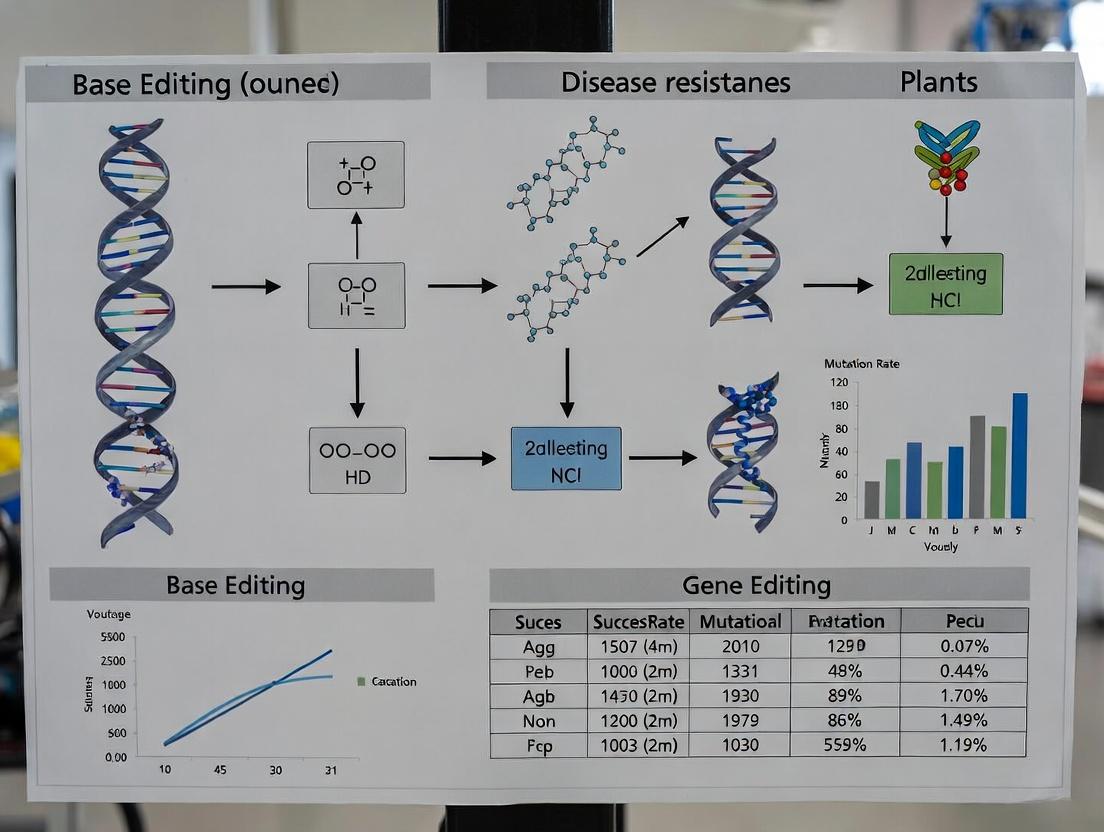
This article provides a comprehensive overview of base editing as a revolutionary tool for engineering disease resistance in plants.
Precision Plant Protection: A Guide to Base Editing for Disease Resistance in Crops
Abstract
This article provides a comprehensive overview of base editing as a revolutionary tool for engineering disease resistance in plants. Aimed at researchers, scientists, and biotech developers, it explores the foundational principles of CRISPR-derived base editors, detailing their mechanisms and target selection strategies for plant immunity genes. We examine current methodological applications, from designing editing systems for key susceptibility (S) genes to successful case studies in staple crops. The content addresses critical troubleshooting challenges like off-target effects and delivery optimization, and provides a rigorous framework for validating edits and comparing base editing to other genome-editing modalities. Finally, we synthesize future directions, including multi-gene editing and regulatory pathways, for deploying this technology in sustainable agriculture.
Understanding the Blueprint: How Base Editors Rewrite Plant Immunity at the Single-Nucleotide Level
This application note details the core components and methodologies for cytosine and adenine base editing (CBE & ABE) as applied to a thesis investigating base editing for disease resistance in plants. The goal is to enable precise, efficient, and transgene-free installation of point mutations that can confer enhanced resistance to bacterial, fungal, and viral pathogens without compromising plant fitness.
Core Editor Architecture & Quantitative Comparison
Base editors are fusion proteins that combine a catalytically impaired Cas9 (dCas9 or nickase) with a nucleobase deaminase enzyme. CBEs convert C•G to T•A base pairs, while ABEs convert A•T to G•C base pairs.
Table 1: Core Components of Major Base Editor Systems
| Editor System | Deaminase Domain | Cas9 Backbone | Catalytic Residues | Target Window (from PAM, NGG) | Typical Conversion Efficiency (in Plants)* | Primary Outcome |
|---|---|---|---|---|---|---|
| BE3 (CBE) | rAPOBEC1 | nCas9 (D10A) | - | Positions 4-8 (C4-C8) | 0.1% - 50% (varies by site) | C•G → T•A |
| AID-based CBE | Activation-Induced Deaminase (AID) | nCas9 (D10A) | - | Positions 2-6 | 0.5% - 40% | C•G → T•A |
| ABE7.10 | TadA* (TadA-7.10 dimer) | nCas9 (D10A) | E59A, V106W, D108N, etc. | Positions 4-7 (A4-A7) | 1% - 70% | A•T → G•C |
| ABE8e | TadA* (TadA-8e dimer) | nCas9 (D10A) | Additional mutations (e.g., L145T) | Positions 4-8 | Up to 98% (in some models) | A•T → G•C |
*Efficiencies are highly dependent on plant species, delivery method, and genomic context. Recent optimizations (e.g., ABE8e, SECURE-BEs) show improved efficiency and reduced off-target effects.
Table 2: Application Metrics for Plant Disease Resistance Editing
| Target Type | Example Disease Resistance Gene | Desired Edit | Base Editor Choice | Key Delivery Method for Plants | Critical Validation Assay |
|---|---|---|---|---|---|
| Loss-of-Susceptibility | mlo in barley | Premature stop codon (C→T) | CBE | Agrobacterium-mediated T-DNA | Powdery mildew resistance bioassay |
| Gain-of-Function | Xa13 promoter in rice | Disrupt effector binding element (A→G) | ABE | Particle bombardment/Ribonucleoprotein (RNP) | Bacterial blight (Xanthomonas) challenge |
| Tuning Immune Response | EDR1 in Arabidopsis | Splice site correction (C→T) | CBE | PEG-mediated protoplast transfection | Enhanced Pseudomonas resistance without autoimmunity |
Detailed Experimental Protocols
Protocol 1: Design and Validation of gRNAs for Base Editing in Plants
Objective: Select and test single guide RNAs (sgRNAs) for optimal on-target efficiency within the base editor activity window.
- Target Identification: Identify target nucleotide within the disease resistance gene (e.g., a specific codon for an amino acid change).
- gRNA Design: Using tools like CRISPR-P or BE-DESIGN, design a 20-nt spacer sequence ensuring the target base (C for CBE, A for ABE) is at positions 4-10 from the PAM (NGG for SpCas9).
- Specificity Check: Use Cas-OFFinder to predict potential off-target sites in the host genome.
- Cloning: Clone the sgRNA sequence into a plant expression vector (e.g., pRGEB32 for BE3, pABE8e) containing the base editor cassette under a suitable promoter (e.g., AtU6 for sgRNA, CaMV 35S or ZmUbi for editor).
- Rapid In Planta Validation (Fast Protocol): a. Transform vector into Agrobacterium tumefaciens strain GV3101. b. Infiltrate leaves of Nicotiana benthamiana. c. Harvest leaf tissue 3-4 days post-infiltration. d. Extract genomic DNA and perform PCR amplification of the target region. e. Analyze editing efficiency via Sanger sequencing followed by decomposition tracing (EditR, BEAT) or Next-Generation Sequencing (NGS).
Protocol 2:Agrobacterium-Mediated Stable Transformation for Disease Resistance Phenotyping
Objective: Generate stably edited plants for downstream disease resistance assays.
- Plant Material: Prepare explants (e.g., rice callus, Arabidopsis seedlings).
- Agrobacterium Preparation: Grow A. tumefaciens harboring the base editor vector to OD600 ~0.6-0.8.
- Co-cultivation: Immerse explants in the Agrobacterium suspension for 15-30 minutes, then co-culture on solid medium for 2-3 days.
- Selection & Regeneration: Transfer explants to selection medium containing appropriate antibiotics (e.g., hygromycin) to select for transformed cells. Regenerate shoots and roots.
- Genotyping: Screen T0 plants by PCR/sequencing of the target locus. Identify plants with the desired homozygous or heterozygous edit without T-DNA integration (by segregation in T1).
- Phenotyping: Challenge T1 or T2 generation plants with the target pathogen (e.g., fungal spray, bacterial injection). Quantify disease symptoms (lesion size, number, pathogen biomass) compared to wild-type controls.
Diagrams & Visualizations
Diagram 1: ABE Mechanism
Diagram 2: Plant Editing Pipeline
The Scientist's Toolkit
Table 3: Essential Research Reagent Solutions for Plant Base Editing
| Item | Function & Rationale | Example Product/Reference |
|---|---|---|
| Optimized Base Editor Vectors | Plant-expressible vectors with codon-optimized editors, plant promoters, and selection markers. Essential for stable transformation. | pnBE, pABE8e, pRGEB32-based vectors. |
| High-Efficiency Agrobacterium Strains | For delivery of T-DNA containing base editor constructs into plant genomes. | GV3101 (for Arabidopsis), EHA105 (for monocots). |
| NGS-Based Off-Target Analysis Kit | To assess genome-wide specificity. Critical for evaluating edits for future breeding. | Digenome-seq, CIRCLE-seq adapted for plant genomes. |
| Plant DNA Isolation Kit (PCR-ready) | For rapid genotyping from small tissue samples (e.g., leaf punches). | CTAB-based methods or commercial kits (e.g., DNeasy Plant). |
| Edit Deconvolution Software | To quantify base editing efficiency from Sanger sequencing traces when NGS is unavailable. | EditR, BEAT, TIDE. |
| Pathogen-Specific Growth Media | For culturing the target pathogen (bacteria/fungus) for subsequent challenge assays. | King's B (for Pseudomonas), PDA (for many fungi). |
| Protoplast Isolation & Transfection Reagents | For rapid, transient testing of editor efficiency in plant cells, bypassing transformation. | PEG-mediated transfection of leaf mesophyll protoplasts. |
Programmable Deamination without Double-Strand Breaks
Application Notes
Within the broader thesis on "Base Editing for Disease Resistance in Plants," the technology of programmable deamination without double-strand breaks (DSBs) represents a paradigm shift. It enables precise, single-nucleotide conversions (C-to-T, A-to-G) in plant genomes to create or modify alleles associated with pathogen resistance, without the genomic instability and complex repair outcomes associated with DSBs. This approach leverages fusion proteins comprising a catalytically impaired CRISPR-Cas nuclease (e.g., dCas9 or nickase Cas9) and a deaminase enzyme (e.g., APOBEC1 for CBE, TadA for ABE).
Key Advantages for Plant Disease Resistance:
- Precision & Safety: Minimizes unintended indels and large deletions, crucial for developing non-GMO or regulatory-favored edited plants.
- Efficiency in Plants: Effective in species where homology-directed repair (HDR) is inefficient.
- Multiplexing Potential: Can target multiple susceptibility (S) gene loci simultaneously to engineer durable, broad-spectrum resistance.
- Applications:
- Knock-out of Susceptibility (S) Genes: Introduce premature stop codons (e.g., C-to-T, creating amber, ochre, or opal codons) in recessive S genes like MLO (powdery mildew resistance) or OsSWEET14 (bacterial blight resistance).
- Gain-of-Function Mutations: Create specific amino acid substitutions (e.g., A-to-G) in receptor kinases to enhance pathogen recognition.
- Promoter Engineering: Modulate gene expression levels by editing key cis-regulatory elements.
Table 1: Performance Metrics of Base Editors in Selected Plant Systems
| Plant Species | Target Gene | Base Editor Type (CBE/ABE) | Average Editing Efficiency (%)* | Product Purity (Desired Edit %) | Key Outcome for Disease Resistance | Reference (Example) |
|---|---|---|---|---|---|---|
| Arabidopsis thaliana | RIN4 | CBE (rAPOBEC1-nCas9-UGI) | 58.3 | 91.5 | Knock-out, altered immune response | [1] |
| Oryza sativa (Rice) | OsSWEET14 | CBE (hAPOBEC3A-nCas9-UGI) | 43.7 | 85.2 | Promoter disruption, bacterial blight resistance | [2] |
| Triticum aestivum (Wheat) | TaMLO | ABE (TadA-8e-nCas9) | 22.1 | 99.8 | Knock-out, powdery mildew resistance | [3] |
| Solanum lycopersicum (Tomato) | SLMLO1 | CBE (PmCDA1-nCas9-UGI) | 36.5 | 78.4 | Knock-out, powdery mildew resistance | [4] |
| Zea mays (Maize) | ZmIPK1A | ABE (TadA-7.10-nCas9) | 18.6 | 99.3 | Amino acid change, potential for altered metabolism | [5] |
Editing efficiency: Percentage of sequenced reads containing any base conversion at the target site. *Product purity: Percentage of edited reads containing only the desired base change without indels or bystander edits.
Experimental Protocols
Protocol 1: Designing and Constructing Plant Base Editor Vectors
Objective: To assemble a T-DNA vector expressing a base editor and sgRNA for Agrobacterium-mediated plant transformation.
Materials:
- Backbone Vector: e.g., pCAMBIA1300 with plant selection marker (hygromycin/kanamycin resistance).
- Base Editor Cassette: Codon-optimized CDS for dCas9/nCas9-Deaminase-UGI (for CBE) or TadA variant(s) (for ABE) under a strong plant promoter (e.g., CaMV 35S, ZmUbi).
- sgRNA Scaffold: Sequence under a Pol III promoter (e.g., AtU6).
- Restriction Enzymes & Ligase: e.g., BsaI for Golden Gate assembly.
- Chemically Competent E. coli.
Methodology:
- sgRNA Design: Identify a 20-nt protospacer sequence 5' of an NGG PAM (for SpCas9) within your target gene. Avoid sequences with potential bystander editable sites (for CBE: within the ~5nt activity window, avoid additional Cs; for ABE: avoid additional As). Use tools like BE-Hive or CRISPR-P 2.0 for prediction.
- Golden Gate Assembly: a. Order oligos for your sgRNA, anneal, and phosphorylate. b. Perform a single-tube Golden Gate reaction using BsaI-HFv2 and T4 DNA Ligase, mixing the digested backbone, BE cassette, and sgRNA insert. c. Transform the reaction into E. coli, plate on selective media, and incubate overnight.
- Colony PCR & Sequencing: Screen colonies by PCR using vector-specific primers. Validate the final plasmid by Sanger sequencing across the sgRNA and BE cassette junctions.
- Electroporation: Transform the validated plasmid into Agrobacterium tumefaciens strain (e.g., GV3101) via electroporation.
Protocol 2:Agrobacterium-Mediated Transformation in Tomato (S. lycopersicum) forSLMLO1Editing
Objective: To generate tomato plants harboring base-edited SLMLO1 alleles for powdery mildew resistance.
Materials:
- Tomato cultivar (e.g., Moneymaker) seeds.
- Agrobacterium strain GV3101 carrying the base editor vector.
- Plant tissue culture media: Co-cultivation, Selection, Regeneration, and Rooting media.
- Antibiotics: Kanamycin, Rifampicin, Timentin.
- Sterile labware.
Methodology:
- Explant Preparation: Surface-sterilize tomato seeds, germinate on MS medium. Excise cotyledons from 7-10 day old seedlings.
- Agrobacterium Co-cultivation: Resuspend an overnight Agrobacterium culture to OD600 ~0.5 in liquid MS medium. Immerse cotyledon explants for 15-20 minutes, blot dry, and place on co-cultivation medium for 48 hours in the dark.
- Selection & Regeneration: Transfer explants to Selection/Regeneration medium containing kanamycin (plant selection) and Timentin (to eliminate Agrobacterium). Subculture every 2 weeks.
- Shoot Development & Rooting: Excise developing shoots and transfer to Rooting medium with selection agents.
- Molecular Genotyping (See Protocol 3).
- Acclimatization & Phenotyping: Transfer rooted plantlets to soil. Challenge T0 or T1 plants with powdery mildew (Oidium neolycopersici) and assess disease symptoms.
Protocol 3: Genotyping and Analysis of Base-Edited Plants
Objective: To detect and quantify base editing at the target genomic locus.
Materials:
- Plant DNA extraction kit (e.g., CTAB method).
- PCR reagents: High-fidelity DNA polymerase.
- Primers flanking the target site (~300-500 bp amplicon).
- Agarose gel electrophoresis equipment.
- Sanger sequencing or Next-Generation Sequencing (NGS) services.
- Analysis software: BE-Analyzer, CRISPResso2, SnapGene.
Methodology:
- DNA Extraction: Extract genomic DNA from a small leaf punch of putative edited and control plants.
- PCR Amplification: Amplify the target region.
- Initial Screening: Perform a T7 Endonuclease I (T7EI) or Surveyor nuclease assay on PCR products to check for indels (though rare, possible from nickase activity). More reliably, subject PCR products directly to Sanger sequencing.
- Sanger Sequencing & Decoding: Sequence PCR amplicons. For a mixed chromatogram (editing in a heterozygous or biallelic state), use online tools like Inference of CRISPR Edits (ICE) or TIDE to quantify editing efficiency and genotypes.
- NGS Validation (Gold Standard): For a comprehensive analysis (bystander edits, product purity), prepare amplicon libraries from pooled PCR products and perform high-throughput sequencing (150bp paired-end). Analyze reads using CRISPResso2 with base editor-specific parameters to calculate efficiency and purity metrics.
Diagrams
Plant Base Editing Workflow for Disease Resistance
Molecular Mechanism of Base Editing
The Scientist's Toolkit
Table 2: Key Research Reagent Solutions for Plant Base Editing
| Item | Function/Description | Example Vendor/ID (for research use) |
|---|---|---|
| Base Editor Plasmids | Ready-to-use vectors for plant expression of CBEs (e.g., A3A-PBE, rAPOBEC1-BE) or ABEs (e.g., ABE8e). | Addgene (#138489, #140002) |
| Golden Gate Assembly Kit | Modular toolkit for efficient, scarless assembly of multiple DNA fragments (Cas, deaminase, sgRNA) into plant binary vectors. | Plant Golden Gate Kit (MoClo) |
| Agrobacterium Strain | Disarmed A. tumefaciens strain optimized for transformation of dicots (e.g., GV3101) or monocots (e.g., EHA105). | Various (CICC, lab collections) |
| Plant Tissue Culture Media | Pre-mixed, sterile media for specific plant species (e.g., MS, N6) for callus induction, co-cultivation, selection, and regeneration. | Phytotech Labs, Duchefa |
| High-Fidelity Polymerase | For accurate amplification of target genomic loci for genotyping without introducing mutations. | Q5 (NEB), KAPA HiFi (Roche) |
| Sanger Sequencing Service | Verification of plasmid constructs and initial genotyping of edited plants via capillary electrophoresis. | GENEWIZ, Eurofins |
| NGS Amplicon-Seq Service | Deep sequencing of target amplicons to quantify editing efficiency, product purity, and detect off-targets. | Illumina MiSeq, IGE Biotechnology |
| Genotyping Analysis Software | Web-based or command-line tools to decode Sanger (ICE) or NGS (CRISPResso2) data for base editing outcomes. | Synthego ICE, CRISPResso2 |
| Disease Pathogen Isolate | Characterized strain of fungal/bacterial pathogen for phenotyping edited plants in controlled bioassays. | Plant pathogen resource centers (e.g., ATCC, local repositories) |
Application Notes
Within the broader thesis on base editing for disease resistance, this document details the application of precise nucleotide changes to engineer durable, broad-spectrum resistance. The strategy is dual-pronged: (1) Knockout of Susceptibility (S) genes, which encode plant factors exploited by pathogens, and (2) precise modification of Pattern Recognition Receptors (PRRs) and Nucleotide-Binding Leucine-Rich Repeat (NLR) receptors to alter recognition specificity or enhance immune signaling. Base editors (BEs), including cytosine base editors (CBEs) and adenine base editors (ABEs), enable the creation of loss-of-function mutations or gain-of-function alleles without double-strand DNA breaks or donor templates, minimizing unintended genomic alterations.
Key Target Classes and Quantitative Data Summary
Table 1: Prominent Susceptibility (S) Gene Targets for Base Editing
| Gene Name | Pathogen/Disease | Plant Species | Gene Function | Targeted Mutation (Example) | Observed Resistance Phenotype |
|---|---|---|---|---|---|
| OsSWEET14 | Bacterial blight (Xoo) | Rice | Sugar transporter | Premature stop codon (CBE) | Strong resistance to multiple Xoo strains |
| mlo | Powdery mildew | Wheat, Barley | Negative regulator of defense | Premature stop codons (CBE) | Broad-spectrum, durable resistance |
| DMR6 | Downy mildew, Bacterial pathogens | Arabidopsis, Tomato | Salicylic acid hydroxylase | Premature stop codon (CBE) | Enhanced salicylic acid, resistance to multiple pathogens |
| EDR1 | Powdery mildew | Arabidopsis | Negative regulator of defense | Splice site mutation (ABE) | Enhanced resistance and cell death response |
Table 2: Immune Receptor Targets for Precision Editing
| Receptor Type | Gene Name/Example | Pathogen Effector Recognized | Editing Goal | Base Editor Used | Key Outcome |
|---|---|---|---|---|---|
| NLR (Intracellular) | Pikm-1 (Rice) | Magnaporthe oryzae AVR-PikD | Single amino acid change in integrated HMA domain | CBE (NGG PAM) | Expanded effector recognition spectrum |
| PRR (Surface) | EF-Tu RECEPTOR (EFR) | Bacterial EF-Tu | Transfer recognition to non-host species | CBE/ABE for key residues | Functional transfer into tomato, enhanced resistance |
| NLR (Sensor/Helper) | NRG1/ADR1 (Helper NLRs) | Multiple | Disruption of auto-inhibition | ABE for splice sites | Constitutive activation of defense responses |
Experimental Protocols
Protocol 1: Design and Validation of gRNAs for S-Gene Knockout via Base Editing Objective: To design and test single-guide RNAs (sgRNAs) for generating loss-of-function mutations in a target S-gene.
- Target Site Identification: Using genome sequence data, identify all exonic regions of the target S-gene. Use software (e.g., BE-designer, CRISPOR) to scan for protospacer sequences (20-nt) within a window ~5-15 nucleotides upstream of a PAM (NGG for SpCas9-based BEs) suitable for your chosen base editor (CBE for C•G to T•A, ABE for A•T to G•C).
- Off-Target Prediction: Perform genome-wide in silico off-target analysis for the top 3-5 sgRNA candidates. Prioritize sgRNAs with minimal predicted off-targets in coding regions.
- Vector Construction: Clone the selected sgRNA expression cassette into a plant-optimized base editor binary vector (e.g., pBEE-series, pRGEB32-derived) via Golden Gate or Gibson assembly.
- Plant Transformation: Transform the construct into the target plant species using Agrobacterium-mediated transformation (for dicots) or particle bombardment/protoplast transformation (for monocots).
- Genotyping (T0 Generation): Extract genomic DNA from transformed tissue. PCR-amplify the target region and subject to Sanger sequencing. Deconvolute sequencing traces using tools like BE-Analyzer or TIDE to calculate base editing efficiency and identify specific alleles.
- Phenotyping: Challenge edited T0 or T1 plants with the relevant pathogen. Quantify disease symptoms (e.g., lesion size, pathogen biomass via qPCR) compared to wild-type controls.
Protocol 2: Base Editing of NLR Immune Receptors for Altered Specificity Objective: To introduce precise amino acid substitutions in the ligand-binding domain of an NLR to expand its effector recognition profile.
- Structural Analysis & Residue Selection: Analyze available crystal structures or homology models of the target NLR in complex with its cognate effector. Identify non-conserved residues in the binding interface that are predicted to interact with a new, non-recognized effector variant.
- gRNA & BE Selection: Design a sgRNA that positions the target nucleotide codon within the editing window (typically positions 4-10 for SpCas9-BEs) of the appropriate BE. For a C to T change, select a CBE (e.g., AncBE4max). For an A to G change, select an ABE (e.g., ABE8e).
- Dual sgRNA Strategy (Optional): To minimize undesired alleles, consider a dual-sgRNA approach targeting the same codon with two different BEs to increase the probability of obtaining the desired change.
- Delivery & Genotyping: Follow steps 3-5 from Protocol 1. For NLR editing, deep sequencing (amplicon-seq) of the target region is strongly recommended to characterize the full spectrum of edits in the population.
- Functional Validation:
- Transient Assay: Co-express the edited NLR allele and the new effector variant in Nicotiana benthamiana via agroinfiltration. Score for hypersensitive response (HR) cell death.
- Stable Lines: Generate stable transgenic plants expressing the edited NLR allele. Challenge with pathogens carrying the new effector variant and assess disease resistance.
Visualizations
Diagram 1: S-Gene Knockout Strategy for Resistance
Diagram 2: Engineering NLRs for Expanded Effector Recognition
The Scientist's Toolkit: Research Reagent Solutions
Table 3: Essential Reagents for Base Editing in Plant Disease Resistance
| Reagent/Material | Supplier Examples | Function in Research |
|---|---|---|
| Plant-Optimized Base Editor Vectors (pBEE, pRGEB, pH-nCas9-PBE) | Addgene, Academia | All-in-one binary vectors for expressing base editor and sgRNA in plants. |
| BE-Designer & CRISPOR Web Tools | Public Software | For designing and ranking sgRNAs with on/off-target analysis for base editing contexts. |
| BE-Analyzer & Amplicon Suite | Public Bioinformatics Tools | To quantify base editing efficiency and outcomes from Sanger or NGS data. |
| Golden Gate Assembly Kits (MoClo) | Addgene, Commercial Kits | Modular cloning systems for rapid assembly of multiple sgRNA arrays and editor constructs. |
| Plant Pathogen Isolates/Effector Clones | Plant Biology Labs, ATCC | Essential for phenotyping edited plants and validating receptor specificity in transient assays. |
| Agrobacterium Strains (GV3101, EHA105) | Lab Stock, CICC | For stable plant transformation and transient expression in N. benthamiana. |
| Next-Generation Sequencing Service (Amplicon-Seq) | Illumina, NovaSeq | High-throughput, accurate quantification of editing outcomes and detection of rare off-targets. |
This application note details the methodologies underpinning a research thesis focused on developing disease-resistant crops through precise genome engineering. Conventional CRISPR/Cas9 relies on generating double-strand breaks (DSBs), which are predominantly repaired by error-prone non-homologous end joining (NHEJ), leading to unpredictable indels. For introducing specific point mutations that can confer disease resistance (e.g., modifying susceptibility (S) gene alleles), base editing offers a superior alternative. Base editors (BEs) are fusion proteins that combine a catalytically impaired Cas9 (nCas9 or dCas9) with a nucleobase deaminase enzyme, enabling direct, irreversible conversion of one base pair to another without requiring DSBs or donor DNA templates. This protocol outlines the application of Cytosine Base Editors (CBEs) and Adenine Base Editors (ABEs) for creating precise point mutations in plant genomes to engineer durable disease resistance.
Quantitative Comparison: Base Editing vs. Conventional CRISPR/Cas9 for Point Mutations
Table 1: Performance Metrics Comparison for Introducing Point Mutations in Plants
| Metric | Conventional CRISPR/Cas9 (with HDR) | Base Editing (CBE/ABE) | Advantage Factor |
|---|---|---|---|
| Point Mutation Efficiency (in stable transformants) | Typically 0.1% - 5% | Routinely 10% - 50% (can exceed 80% in protoplasts) | 10x to 100x |
| Precision (Unwanted Indel Rate) | High (DSB-induced indels dominate) | Very Low (<1% - 5% with optimized editors) | >10x reduction |
| Dependence on Donor Template | Required for HDR | Not Required | N/A |
| DSB Formation | Required | Avoided | Eliminates major source of genotoxicity |
| Product Purity (Desired edit vs. other outcomes) | Low | High | >5x improvement |
| Optimal Window for Editing | Narrow (near PAM) | Wider (~5 nucleotide window within protospacer) | More flexible target selection |
| Common Applications in Disease Resistance | Knock-out of S-genes | Precise knockdown (hypomorphic alleles) or gain-of-function mutations | Enables broader allelic diversity |
Key Research Reagent Solutions
Table 2: Essential Toolkit for Plant Base Editing Experiments
| Reagent / Material | Function & Rationale |
|---|---|
| pSE401-ABE8e (Plasmid) | A high-efficiency adenine base editor (ABE) vector for plant transformation. ABE8e variants convert A•T to G•C with increased efficiency and broader editing windows. |
| pCBE- SpRY (Plasmid) | A cytosine base editor (CBE) fused to the near-PAMless SpRY Cas9 variant, enabling targeting of virtually any genomic site for C•G to T•A conversion. |
| Guide RNA (gRNA) Expression Cassette | A plant Pol III promoter (e.g., AtU6) driving expression of a 20-nt spacer sequence targeting the desired locus within the base editing window. |
| Agrobacterium tumefaciens Strain EHA105 | A disarmed strain used for stable transformation of dicot plants (e.g., Nicotiana benthamiana, tomato) via T-DNA delivery. |
| Plant Tissue Culture Media (MS Basal Media) | For selection and regeneration of transformed plant cells into whole organisms. |
| High-Fidelity DNA Polymerase (e.g., Q5) | For accurate amplification of genomic target regions for sequencing validation. |
| Next-Generation Sequencing (NGS) Kit (e.g., Illumina) | For deep amplicon sequencing to quantify base editing efficiency and profile byproducts. |
| RNP Complex (Beacon Advanced) | For transient delivery of pre-assembled base editor ribonucleoprotein complexes into protoplasts, reducing off-target effects and enabling rapid testing. |
Experimental Protocol: Base Editing for Modifying a Susceptibility Gene inNicotiana benthamiana
Aim: To introduce a precise C•G to T•A point mutation in the NbDMR6 gene to create a loss-of-function allele conferring broad-spectrum disease resistance.
Protocol 4.1: Vector Construction and Plant Transformation
gRNA Design & Cloning:
- Identify a 20-nucleotide spacer sequence within the NbDMR6 exon where the target cytosine (C) is located at positions 4-8 (counting the PAM as 21-23) within the protospacer for optimal CBE activity.
- Synthesize oligonucleotides encoding the spacer, anneal, and clone into the BsaI site of the plant gRNA expression vector (e.g., pRGEN).
- Sequence-verify the cloned gRNA construct.
Assembly of Base Editor Expression Vector:
- Using Golden Gate or Gateway cloning, assemble a T-DNA binary vector containing: a plant codon-optimized nCas9 (D10A)-PmCDA1-UGI fusion (a common CBE architecture), the verified NbDMR6 gRNA under an AtU6 promoter, and a plant selection marker (e.g., npII for kanamycin resistance).
Plant Transformation & Regeneration:
- Transform the assembled vector into Agrobacterium tumefaciens EHA105 via electroporation.
- Perform Agrobacterium-mediated leaf disc transformation of N. benthamiana.
- Culture explants on MS media containing cytokinin (BAP), auxin (NAA), and kanamycin for selection.
- Regenerate shoots from calli and root them on selective media to obtain T0 plants.
Protocol 4.2: Molecular Analysis of Base-Edited Plants
Genomic DNA Extraction:
- Harvest leaf tissue from putative transgenic (T0) and wild-type control plants.
- Extract genomic DNA using a CTAB-based method or commercial kit.
PCR Amplification and Sanger Sequencing:
- Design primers flanking the target site (~300-500 bp product).
- Amplify the target region using high-fidelity PCR.
- Purify PCR products and submit for Sanger sequencing.
- Analyze chromatograms for double peaks (C/T) at the target site, indicating heterozygous or mosaic editing.
Deep Amplicon Sequencing for Efficiency & Purity Assessment:
- For a quantitative assessment, prepare amplicon libraries from purified PCR products using NGS library prep kits.
- Sequence on an Illumina MiSeq platform (minimum 10,000x coverage per sample).
- Analysis: Use bioinformatics tools (e.g., CRISPResso2, BE-Analyzer) to calculate:
- Base Editing Efficiency: (% of reads with C•G to T•A conversion at the target site).
- Product Purity: (% of edited reads containing only the desired edit vs. edits at other Cs or indels).
- Byproduct Analysis: Frequency of unwanted edits (e.g., C•G to G•C, C•G to A•T, indels).
Phenotypic Validation for Disease Resistance:
- Challenge T1 progeny (segregating for the edit) with a bacterial pathogen (e.g., Pseudomonas syringae pv. tabaci).
- Quantify disease symptoms (lesion size, chlorosis) and bacterial titers (cfu/cm²) at 3-5 days post-infection.
- Correlate the homozygous presence of the precise point mutation with reduced disease susceptibility.
Visualizations
Title: Conventional CRISPR-Cas9 Pathway for Point Mutations
Title: Base Editing Mechanism for Point Mutations
Title: Plant Base Editing Experimental Workflow
From Lab to Field: Designing and Implementing Base Editing Strategies for Crop Protection
This application note is framed within a broader thesis on utilizing base editing for developing disease resistance in plants. Precise nucleotide conversion without double-strand breaks offers a superior pathway for introducing beneficial single nucleotide polymorphisms (SNPs) associated with pathogen resistance genes. The critical first step is the rational design of the editing construct, encompassing the choice of editor, guide RNA (gRNA) scaffold, and promoter system tailored for plant transformation.
Current Base Editors for Plant Systems
Base editors are fusion proteins combining a catalytically impaired Cas9 nickase (nCas9) with a nucleobase deaminase enzyme. The following table summarizes the primary editors in use, their key characteristics, and optimal applications for plant disease resistance research.
Table 1: Base Editors for Plant Systems
| Editor Name | Deaminase Type | Target Conversion | PAM Requirement (SpCas9-based) | Primary Use in Disease Resistance |
|---|---|---|---|---|
| Cytosine Base Editor (CBE) | APOBEC1 | C•G to T•A | NGG | Introducing premature stop codons in susceptibility (S) genes; altering coding sequences in pathogen effector targets. |
| Adenine Base Editor (ABE) | TadA* | A•T to G•C | NGG | Reversing deleterious SNPs in resistance (R) genes; fine-tuning regulatory elements in defense response pathways. |
| Dual Base Editor | APOBEC1 + TadA* | C-to-T & A-to-G | NGG | Multiplexed editing of multiple sites within a haplotype network controlling resistance. |
| C-to-G Base Editor (CGBE) | APOBEC1 + UG1 | C•G to G•C | NGG | Transversion mutations for more drastic amino acid changes in key protein domains. |
gRNA Scaffold Selection
The gRNA scaffold must be compatible with the chosen Cas9 variant. Recent plant-optimized scaffolds enhance stability and editing efficiency.
Table 2: Common gRNA Scaffolds for Plant Base Editing
| Scaffold Name | Origin/Modification | Compatible Editor(s) | Reported Efficiency Gain* | Key Feature |
|---|---|---|---|---|
| pU3/gU6 | Native A. thaliana U3/U6 snRNA promoters | SpCas9, SaCas9 | Baseline (1x) | Standard for monocots/dicots; drives Pol III transcription. |
| tRNA-gRNA | tRNA-Pol III system | SpCas9, Cas12a | 1.5 - 3x | Enhanced processing and stability; enables multiplexing via tRNA processing. |
| hU6 | Human U6 promoter | SpCas9 | ~1x | Often used in protoplast transient assays. |
| Cas12a crRNA | Native Cas12a direct repeat | FnCas12a, LbCas12a | N/A | Simpler design; T-rich PAM (TTTV) beneficial for AT-rich promoter regions. |
*Efficiency gain is relative and varies by plant species and transformation method.
Promoter Selection for Expression in Plants
Promoter choice dictates the spatial, temporal, and abundance profile of editor expression, impacting efficiency and off-target effects.
Table 3: Promoter Options for Plant Base Editing Constructs
| Promoter | Type | Expression Pattern | Best For | Consideration for Disease Resistance |
|---|---|---|---|---|
| CaMV 35S | Constitutive | Strong, ubiquitous in dicots | Stable transformation in dicots; high editor expression. | May cause somatic off-targets; useful for targeting genes expressed in all tissues. |
| ZmUbi1 | Constitutive | Strong, ubiquitous in monocots | Stable transformation in monocots (maize, rice, wheat). | Driving editor expression in cereals where many S genes are targeted. |
| pAtU6 / pOsU6 | Pol III | Ubiquitous, gRNA-specific | Driving gRNA expression in dicots/monocots. | Standard for gRNA; minimal size. |
| EC1.2 | Egg cell-specific | Egg cell and early embryo | Promoter of choice for heritable edits. Minimizes somatic edits. | Crucial for generating non-chimeric, resistant progeny. |
| DD45 | Egg cell-specific | Similar to EC1.2 | Heritable editing in Arabidopsis and some crops. | Alternative to EC1.2 for clean germline editing. |
| DR5 | Tissue-specific | Root-specific | Targeting root-expressed S genes (e.g., against soil-borne pathogens). | |
| Pathogen-inducible | Inducible | Upon pathogen perception | Dynamic editing in response to infection (emerging area). | May reduce fitness cost by restricting editor activity to infection timeframes. |
Key Experimental Protocols
Protocol 5.1: Modular Assembly of a Plant Base Editing Vector for Stable Transformation
Objective: Assemble a T-DNA binary vector containing an EC1.2-driven base editor and a Pol III-driven gRNA for Agrobacterium-mediated transformation. Materials: Golden Gate or Gateway assembly kits; binary vector backbone (e.g., pCambia); EC1.2 promoter fragment; codon-optimized BE gene (e.g., rABE8e); pOsU6 promoter; gRNA scaffold; destination module for target-specific 20-nt spacer; E. coli DH5α; Agrobacterium strain EHA105. Procedure:
- Design gRNA Spacer: Identify target site within S gene with required PAM (NGG for SpCas9) and the desired editable base within the editing window (positions 4-8 for ABE, 4-10 for CBE).
- *Golden Gate Assembly: a. Perform a one-pot BsaI-HFv2 restriction-ligation reaction combining: 50 ng binary backbone, 10 fmol each of EC1.2:BE module, pOsU6:gRNA-scaffold module, and the annealed oligonucleotide duplex encoding the target spacer. b. Cycle: 37°C (5 min), 16°C (5 min), repeat 30x; then 60°C (10 min), 80°C (10 min).
- Transform reaction into E. coli DH5α, select on appropriate antibiotics, and validate clones by colony PCR and Sanger sequencing.
- Electroporate validated plasmid into Agrobacterium EHA105.
Protocol 5.2: Rapid Testing of Base Editor Efficiency in Plant Protoplasts
Objective: Quantify base editing efficiency transiently before stable transformation. Materials: Plant tissue (e.g., etiolated seedlings); cell wall digesting enzymes; PEG solution; plasmid DNA encoding BE and gRNA (driven by 35S and hU6, respectively); DNA extraction kit; PCR primers; HTS library prep kit. Procedure:
- Protoplast Isolation: Digest 1g of leaf tissue in enzyme solution (1.5% Cellulase R10, 0.4% Macerozyme R10 in 0.4M mannitol) for 4-6 hours. Purify protoplasts via filtration and W5 solution washing.
- PEG-Mediated Transfection: Incubate 10^5 protoplasts with 10μg of each plasmid in 40% PEG4000 solution for 15 min. Quench with W5 solution, and culture in the dark for 48-72 hours.
- Harvest and Analysis: Pellet protoplasts. Extract genomic DNA.
- *Efficiency Quantification: Amplify target region by PCR and submit for High-Throughput Sequencing (HTS). Analyze reads for C-to-T or A-to-G conversion at the target site using CRISPResso2 or analogous software. Editing efficiency = (edited reads / total reads) * 100%.
The Scientist's Toolkit: Research Reagent Solutions
Table 4: Essential Reagents for Plant Base Editing Construct Design
| Reagent / Material | Vendor Examples (2024-2025) | Function in Construct Design |
|---|---|---|
| Modular Cloning Toolkit (MoClo) | Addgene (Plant Parts Kit), In-Fusion Snap Assembly | Enables rapid, standardized assembly of multiple genetic parts (promoters, editors, terminators). |
| High-Efficiency Base Editor Plasmids | Addgene (#182861, #182863 for ABE8e), Miao Lab Vectors | Pre-assembled vectors with plant-codon optimized editors under various promoters. |
| Golden Gate Assembly Kit (BsaI) | NEB Golden Gate Assembly Kit, Thermo Fisher | One-step, scarless assembly of multiple DNA fragments into a binary vector. |
| Chemically Competent Agrobacterium | Weidi Bio, Cellectis | Essential for plant transformation; strains like EHA105, GV3101 offer high T-DNA transfer efficiency. |
| Plant Protoplast Isolation Kit | Sigma-Aldrich, Protoplast Isolation Kit | Standardized reagents for consistent protoplast yield for transient assays. |
| HTS-Based Editing Analysis Service | Genewiz, Novogene | Provides amplicon-seq and computational analysis (like CRISPResso2) for precise quantification of editing efficiency and byproducts. |
| UC Berkeley D10A Spacer Design Tool | chopchop.cbu.uib.no, CRISPR-P 2.0 | In silico design of gRNA spacers with predictions of on-target efficiency and off-target sites in plant genomes. |
Visualizations
Title: Workflow for Designing Plant Base Editing Constructs
Title: Typical T-DNA Vector Structure for Heritable Base Editing
Application Notes
Within the broader thesis on applying base editing for disease resistance in plants, selecting the optimal delivery method is critical for achieving efficient, precise, and timely germline or somatic edits. Each method offers distinct advantages and constraints across different crop species. The choice hinges on factors including genotype dependence, edit precision, regulatory considerations, and the necessity for transgene-free progeny.
Agrobacterium tumefaciens-Mediated Transformation (Stable Integration)
This method remains the gold standard for stable transformation and regeneration of edited plants in many dicot and some monocot species. For base editing, the editing machinery (e.g., nickase-Cas9 fused with deaminase and UGI) is typically encoded on T-DNA. It is ideal for crops where established regeneration protocols exist and where the final product's regulatory status permits integrated T-DNA. Recent advances utilize morphogenic regulators like Baby Boom (BBM) and Wuschel2 (WUS2) to enhance regeneration in recalcitrant species.
Ribonucleoprotein (RNP) Complex Delivery (Transient, DNA-free)
Direct delivery of pre-assembled Cas9 nickase-deaminase base editor proteins complexed with guide RNA (sgRNA) into plant cells or tissues. This method minimizes off-target effects, avoids genomic integration of foreign DNA, and can accelerate the generation of transgene-free edited plants. It is particularly advantageous for species with efficient protoplast or tissue culture systems and is a key strategy for circumventing GMO regulations in certain jurisdictions. Efficiency in whole-plant regeneration from edited cells remains a bottleneck for many crops.
Viral Vector Delivery (Systemic Transient Expression)
Engineered viruses (e.g., Potato virus X [PVX], Tobacco rattle virus [TRV], Bean yellow dwarf virus [BeYDV]) are used to systemically deliver base editing components as RNA or DNA. This approach enables in planta editing without tissue culture, reaching a large number of somatic cells. It is highly promising for editing in perennial, vegetatively propagated, or difficult-to-transform crops. However, viral genomes can be edited themselves, cargo capacity is limited, and germline transmission can be inconsistent. Newer deconstructed vectors and RNA viruses modified to carry deaminase components are expanding possibilities.
Table 1: Comparative Analysis of Delivery Methods for Base Editing
| Method | Mode of Action | Key Advantage | Major Limitation | Ideal Crop Use-Case |
|---|---|---|---|---|
| Agrobacterium | Stable T-DNA integration | Reliable, heritable edits, established protocols | Genotype-dependent, involves foreign DNA | Model species (tomato, tobacco, rice), crops with robust tissue culture. |
| RNP Complexes | Transient protein activity | DNA-free, minimal off-target, rapid onset | Low throughput, regeneration challenges | Crops with efficient protoplast systems (lettuce, potato), aimed at non-GMO products. |
| Viral Vectors | Systemic transient expression | Bypasses tissue culture, high somatic activity | Limited cargo, possible viral genome editing, low heritability | Vegetatively propagated crops (grapevine, cassava), tree species. |
Detailed Protocols
Protocol 1:Agrobacterium-Mediated Base Editor Delivery in Tomato Cotyledons
Objective: To generate stable, heritable base edits for disease resistance gene knock-in or functional knock-out.
Materials:
- Tomato (Solanum lycopersicum) seeds, sterilized.
- Agrobacterium tumefaciens strain LBA4404 or GV3101 harboring a binary vector with a plant-codon-optimized BE4max or ABE8e system and your target sgRNA.
- Co-cultivation medium (MS salts, vitamins, 3% sucrose, 1 mg/L BAP, 0.1 mg/L IAA, pH 5.8).
- Selection/Regeneration medium (as above + 500 mg/L carbenicillin, 100 mg/L kanamycin or appropriate selective agent).
- Rooting medium (½ MS, 1% sucrose, 250 mg/L carbenicillin).
Procedure:
- Prepare Explants: Surface-sterilize seeds, germinate on ½ MS agar. Excise 5-7 mm cotyledon segments from 7-10 day old seedlings.
- Agrobacterium Preparation: Inoculate a single colony of the base editor strain in LB with appropriate antibiotics. Grow overnight at 28°C, 200 rpm. Pellet cells and resuspend in liquid co-cultivation medium to an OD₆₀₀ of 0.5-0.8.
- Infection & Co-cultivation: Immerse cotyledon explants in the bacterial suspension for 10-20 minutes. Blot dry on sterile filter paper and place on co-cultivation medium plates. Incubate in the dark at 25°C for 2-3 days.
- Selection & Regeneration: Transfer explants to selection/regeneration medium. Subculture to fresh medium every 2 weeks. Shoots should emerge in 4-8 weeks.
- Rooting & Acclimatization: Excise developed shoots (≥1 cm) and transfer to rooting medium. Once roots establish, transfer plantlets to soil.
- Genotyping: Extract genomic DNA from leaf tissue. Use PCR amplification of the target region followed by Sanger sequencing and chromatogram decomposition analysis (e.g., using BE-Analyzer or EditR) to identify base edits.
Protocol 2: RNP Complex Delivery via PEG-Mediated Transfection of Lettuce Protoplasts
Objective: To achieve rapid, DNA-free base editing in somatic cells for subsequent regeneration or analysis of editing efficiency.
Materials:
- Lettuce (Lactuca sativa) leaf tissue from sterile seedlings.
- Enzyme solution: 1.5% Cellulase R10, 0.4% Macerozyme R10 in 0.4 M mannitol, 20 mM KCl, 20 mM MES pH 5.7, 10 mM CaCl₂, 0.1% BSA.
- W5 solution: 154 mM NaCl, 125 mM CaCl₂, 5 mM KCl, 2 mM MES pH 5.7.
- PEG solution: 40% PEG-4000, 0.2 M mannitol, 0.1 M CaCl₂.
- Purified Cas9 nickase-deaminase base editor protein and synthetic target sgRNA.
Procedure:
- Protoplast Isolation: Slice 1g of young leaf tissue into thin strips. Incubate in 10 mL enzyme solution in the dark, 25°C, 4-6 hours with gentle shaking. Filter through a 75 μm nylon mesh. Centrifuge filtrate at 100 x g for 3 min. Wash pellet twice with W5 solution. Resuspend in W5 at 2 x 10⁵ cells/mL, incubate on ice for 30 min.
- RNP Complex Assembly: Pre-mix 20 μg of base editor protein with 5 μg of sgRNA in a total volume of 20 μL. Incubate at 25°C for 10 min to form RNP complexes.
- PEG Transfection: In a 2 mL tube, combine 100 μL protoplast suspension (2 x 10⁴ cells) with the 20 μL RNP mix. Add 120 μL of PEG solution, mix gently by inversion. Incubate at room temperature for 15 min.
- Washing & Culture: Dilute the mixture gradually with 1 mL of W5, then 2 mL of culture medium. Centrifuge at 100 x g for 3 min, remove supernatant, resuspend in 2 mL culture medium. Incubate in the dark at 25°C for 48-72 hours.
- DNA Extraction & Analysis: Harvest protoplasts by centrifugation. Extract genomic DNA. Assess editing efficiency via targeted next-generation sequencing (NGS) of the PCR-amplified target locus.
Protocol 3: Viral Vector Delivery usingTobacco Rattle Virus(TRV) forIn PlantaEditing
Objective: To achieve systemic somatic base editing in Nicotiana benthamiana leaves without tissue culture.
Materials:
- N. benthamiana plants (4-5 leaf stage).
- Agrobacterium strains separately harboring TRV RNA1 vector and TRV RNA2 vector modified to express your base editor components (e.g., deaminase-Cas9 nickase fusion and sgRNA).
- Infiltration buffer: 10 mM MES, 10 mM MgCl₂, 200 μM acetosyringone, pH 5.6.
Procedure:
- Agrobacterium Preparation: Grow individual cultures of the RNA1 and RNA2 strains overnight. Pellet and resuspend in infiltration buffer to OD₆₀₀ = 1.0 for each. Mix the two suspensions in a 1:1 ratio.
- Plant Infiltration: Using a needle-less syringe, infiltrate the mixed agrobacterial suspension into the abaxial side of fully expanded leaves.
- Plant Maintenance & Observation: Grow plants under standard conditions (22-25°C, 16h light). Systemic viral spread and symptom (mild mosaic) typically appear in new leaves 10-14 days post-infiltration.
- Sampling & Analysis: Harvest systemic leaves (non-infiltrated) at 14-21 days post-infiltration. Extract genomic DNA from multiple leaf discs. Analyze editing efficiency at the target locus via NGS. Note: Editing is somatic and mosaic; sequence bulk leaf tissue or clone PCR amplicons to assess diversity of edits.
Diagrams
Title: Base Editing Delivery Selection Flowchart (93 chars)
Title: Agrobacterium vs. RNP Experimental Workflows (96 chars)
The Scientist's Toolkit: Key Research Reagent Solutions
Table 2: Essential Materials for Base Editing Delivery Experiments
| Item | Function & Relevance | Example/Supplier Note |
|---|---|---|
| Base Editor Plasmids | Source of genetic code for editing machinery (Cas9 nickase, deaminase, UGI, sgRNA). Essential for Agrobacterium and viral vector methods. | Addgene repositories (e.g., pnCas9-PBE, pABE8e). Must be cloned into appropriate plant binary or viral vector backbone. |
| Purified Base Editor Protein | Ready-to-use protein for RNP assembly. Ensures DNA-free editing with rapid onset and decay of activity. | Commercial suppliers (e.g., ToolGen, IDT) or in-house purification from E. coli expression systems. |
| Chemically Modified sgRNA | Enhanced stability and efficiency for RNP delivery. Protects from RNase degradation. | Synthesized with 2'-O-methyl and phosphorothioate modifications at 3' and 5' ends. |
| Agrobacterium Strains | Engineered for plant transformation. Hypervirulent strains (e.g., AGL1, EHA105) can improve efficiency in recalcitrant crops. | Standard strains: LBA4404, GV3101. |
| Morphogenic Regulators | Genes like BBM and WUS2 to enhance regeneration from transformed cells, expanding crop range. | Co-delivered on T-DNA or used to create "universal donor" lines. |
| Protoplast Isolation Enzymes | Digest cell wall to release intact protoplasts for RNP delivery. | Cellulase R10, Macerozyme R10 (Yakult). |
| PEG Solution (40%) | Induces membrane fusion and pore formation for RNP/protoplast transfection. | Critical component of PEG-mediated delivery; must be freshly prepared. |
| Viral Vector Systems | Engineered plant viruses for systemic, high-expression delivery of editing components. | Common systems: TRV, PVX, BeYDV (for geminivirus-based replicons). |
| Acetosyringone | A phenolic compound that induces Agrobacterium vir gene expression, critical for efficient T-DNA transfer. | Added to co-cultivation and infiltration media. |
| NGS Library Prep Kit | For deep sequencing of target loci to quantify base editing efficiency and profile byproducts. | Kits optimized for amplicon sequencing (e.g., Illumina MiSeq). |
Application Notes: Base Editing for Plant Disease Resistance
Within the broader thesis on base editing for plant disease resistance, the precise, irreversible conversion of single nucleotides without double-strand breaks offers a transformative strategy. These case studies demonstrate the application of cytosine base editors (CBEs) and adenine base editors (ABEs) to modify specific genes involved in pathogen recognition, defense signaling, and susceptibility. The targeted mutations aim to enhance durable resistance while preserving elite cultivar traits.
Case Study 1: Fungal Pathogen Resistance via Susceptibility (S) Gene Disruption
- Target: Powdery mildew resistance locus O (MLO) genes in wheat (TaMLO-A1, -B1, -D1). Loss-of-function mutations confer broad-spectrum resistance to powdery mildew.
- Editor & Delivery: Adenine base editor (ABE) composed of nSpCas9(D10A)-TadA-8e, delivered via Agrobacterium-mediated transformation or particle bombardment.
- Key Result: Simultaneous A•T to G•C conversions introduced premature stop codons in all three TaMLO homeologs. Edited lines showed >90% reduction in powdery mildew fungal colonies compared to wild-type, with no growth penalties.
- Quantitative Data Summary:
| Target Gene | Base Edit (A•T→G•C) | Amino Acid Change | Edited Lines (%) | Disease Severity Reduction |
|---|---|---|---|---|
| TaMLO-A1 | Chr2A: A228 | Trp76Stop | 15/25 (60%) | 92-95% |
| TaMLO-B1 | Chr2B: A228 | Trp76Stop | 14/25 (56%) | 92-95% |
| TaMLO-D1 | Chr2D: A228 | Trp76Stop | 12/25 (48%) | 92-95% |
Protocol 1: Agrobacterium-Mediated Wheat Transformation with ABE
- Vector Construction: Clone the ABE expression cassette (Ubi promoter-ABE-NOS terminator) and sgRNA expression cassette (TaU6 promoter-sgRNA) into a T-DNA binary vector.
- Agrobacterium Preparation: Transform the vector into A. tumefaciens strain EHA105. Inoculate a single colony in YEP with antibiotics, grow to OD600=0.8, and resuspend in infection medium (MS + 200 µM acetosyringone).
- Explant Preparation: Surface-sterilize immature wheat embryos (14-16 days post-anthesis).
- Co-cultivation: Immerse embryos in Agrobobacterium suspension for 20 min, blot dry, and co-cultivate on solid co-cultivation medium (MS + 2 mg/L 2,4-D + 200 µM acetosyringone) for 3 days at 22°C in dark.
- Selection & Regeneration: Transfer embryos to resting medium (MS + 2 mg/L 2,4-D + 250 mg/L cefotaxime) for 7 days. Then transfer to selection/regeneration medium (MS + 2 mg/L 2,4-D + 250 mg/L cefotaxime + 5 mg/L phosphinothricin) with 16/8 hr light/dark at 25°C. Subculture every 2 weeks.
- Plant Recovery: Transfer developed shoots to rooting medium (½ MS + 1 mg/L NAA + 5 mg/L phosphinothricin). Acclimatize established plantlets to soil.
Case Study 2: Bacterial Pathogen Resistance via Enhanced Recognition
- Target: The OsSWEET14 promoter in rice. Xanthomonas oryzae pv. oryzae (Xoo) induces this gene via TAL effectors binding to the Effector Binding Element (EBE). Disrupting the EBE blocks induction.
- Editor & Delivery: Cytosine base editor (CBE) composed of nSpCas9(D10A)-PmCDA1-UGI, delivered via PEG-mediated protoplast transformation.
- Key Result: C•G to T•A conversions within the EBE region abolished TAL effector binding. Edited rice lines exhibited a 70-80% reduction in lesion length and a 1-2 log reduction in bacterial titers 14 days post-inoculation.
- Quantitative Data Summary:
| Target Site | Base Edit (C•G→T•A) | Promoter Position | Editing Efficiency (%) | Lesion Length (cm) [WT vs Edited] |
|---|---|---|---|---|
| OsSWEET14 EBE | C-102 | -102 bp from TSS | 31% | 15.2 ± 2.1 vs 3.5 ± 1.4 |
| OsSWEET14 EBE | C-108 | -108 bp from TSS | 28% | 15.2 ± 2.1 vs 4.1 ± 1.7 |
Protocol 2: Rice Protoplast Transformation & Disease Assay
- Protoplast Isolation: Harvest 10-14 day old rice etiolated seedlings. Cut leaves into strips and digest in enzyme solution (1.5% Cellulase R10, 0.75% Macerozyme R10 in 0.6 M mannitol, 10 mM MES, pH 5.7, 10 mM CaCl₂, 0.1% BSA) for 6 hr in dark with gentle shaking.
- Transfection: Purify protoplasts via filtration and centrifugation (100 x g, 2 min). Resuspend at 2x10⁶/mL in MMg solution (0.6 M mannitol, 15 mM MgCl₂, 4 mM MES, pH 5.7). Mix 10 µg CBE plasmid DNA + 10 µg sgRNA plasmid with 100 µL protoplasts. Add 110 µL PEG solution (40% PEG 4000, 0.6 M mannitol, 0.1 M CaCl₂). Incubate 15 min at 25°C.
- Incubation & Analysis: Stop reaction with W5 solution, wash, and incubate protoplasts in WI solution in dark for 48-72 hr. Harvest for DNA extraction and sequencing to assess editing.
- Plant Regeneration: Culture transfected protoplasts in N6-based regeneration media to generate calli and whole plants.
- Disease Assay (Clipping Method): Grow Xoo in PSA medium. Resuspend in water to OD600=1.0. Clip leaf tips of 6-week-old rice plants with scissors dipped in bacterial suspension. Measure lesion length 14 days post-inoculation.
Case Study 3: Viral Pathogen Resistance via Recessive Resistance Gene Editing
- Target: The eukaryotic translation initiation factor 4E (eIF4E) in cucumber. Recessive eIF4E alleles prevent Cucumber vein yellowing virus (CVYV) and Zucchini yellow mosaic virus (ZYMV) replication.
- Editor & Delivery: CBE (nCas9-APOBEC1-UGI) delivered via Agrobacterium-mediated transformation of cotyledonary nodes.
- Key Result: Targeted C to T conversion in eIF4E (Pro178Ser) created a known resistance allele. 100% of edited T0 plants were completely resistant to mechanical inoculation with CVYV and ZYMV, showing no symptoms or detectable viral RNA.
- Quantitative Data Summary:
| Target Gene | Base Edit (C•G→T•A) | Amino Acid Change | Resistant T0 Plants | Viral Titer (RT-qPCR Ct Value) [Edited vs WT] |
|---|---|---|---|---|
| CseIF4E | C538 | Pro178Ser | 8/8 (100%) | CVYV: 35.0 (Undetected) vs 18.5; ZYMV: 34.8 (Undetected) vs 16.7 |
Protocol 3: Cucumber Cotyledonary Node Agrobacterium Transformation
- Explants: Surface-sterilize cucumber seeds, germinate on MS medium. Excise cotyledonary nodes from 5-day-old seedlings.
- Agrobacterium Inoculation: Use A. tumefaciens GV3101 harboring the CBE vector. Resuspend bacteria in MS liquid to OD600=0.5. Immerse explants for 10 min.
- Co-cultivation: Blot explants dry, co-cultivate on MS + 2 mg/L BA + 200 µM acetosyringone for 3 days in dark.
- Shoot Regeneration: Transfer to selection/regeneration medium (MS + 2 mg/L BA + 250 mg/L cefotaxime + 15 mg/L kanamycin) with 16/8 hr light/dark. Subculture bi-weekly.
- Virus Inoculation: Grind infected leaf tissue in 0.01 M phosphate buffer, add carborundum. Rub the sap onto two true leaves of edited and control plants. Monitor symptoms for 21 days.
Visualizations
Base Editing Disrupts Fungal Susceptibility Gene
Base Editing Blocks Pathogen-Induced Susceptibility
Base Editing for Disease Resistance Workflow
The Scientist's Toolkit: Research Reagent Solutions
| Item | Function & Application |
|---|---|
| nSpCas9(D10A)-TadA-8e Plasmid (ABE) | Expresses adenine base editor for precise A•T to G•C conversions in planta. |
| nSpCas9(D10A)-PmCDA1-UGI Plasmid (CBE) | Expresses cytosine base editor for precise C•G to T•A conversions in planta. |
| sgRNA Expression Clone | Drives expression of target-specific single guide RNA under a U6/U3 promoter. |
| Agrobacterium Strain (EHA105/GV3101) | Used for stable DNA delivery into plant genomes via T-DNA transfer. |
| Plant Tissue Culture Media (MS, N6) | Formulated for callus induction, shoot regeneration, and root development. |
| Selection Antibiotics (e.g., Kanamycin, Phosphinothricin) | Selects for transformed plant cells harboring the resistance marker gene. |
| Acetosyringone | Phenolic compound that induces Agrobacterium vir genes for efficient T-DNA transfer. |
| PEG 4000 Solution | Facilitates DNA uptake during protoplast transfection via membrane fusion. |
| Cellulase R10 / Macerozyme R10 | Enzyme mixture for digesting plant cell walls to isolate protoplasts. |
| Pathogen Culture (e.g., Xoo, Fungal Spores, Viral Sap) | Inoculum for conducting standardized disease assays on edited plants. |
Application Notes
The implementation of base editing technologies in staple crops has demonstrated significant success in engineering precise point mutations for disease resistance, aligning with the thesis on developing precise, transgene-free genetic solutions. The following notes and quantitative summaries highlight key achievements.
Table 1: Success Stories of Base Editing for Disease Resistance in Staple Crops
| Crop | Target Gene / Locus | Edited Base Change | Pathogen/Disease | Key Phenotypic Outcome | Editing Efficiency Range | Reference (Example) |
|---|---|---|---|---|---|---|
| Rice | OsSWEET14 promoter | C•G to T•A | Bacterial Blight (Xoo) | Disrupted pathogen-induced expression; enhanced resistance. | 2.9% – 12.9% in T0 | (Zeng et al., 2020) |
| Rice | OsALS1 | C•G to T•A (P171S) | Herbicide (Imazethapyr) | Herbicide tolerance as a selectable trait for further breeding. | Up to 12.5% in T0 | (Shimatani et al., 2017) |
| Wheat | TaMLO | C•G to T•A (indels via splicing) | Powdery Mildew (Blumeria graminis) | Knock-out; restored broad-spectrum resistance. | Up to 22.5% in T0 | (Li et al., 2022) |
| Tomato | SlMLO1 | C•G to T•A (Q183*) | Powdery Mildew (Oidium neolycopersici) | Premature stop codon; complete resistance. | 42% – 58% in T0 lines | (Santillán Martínez et al., 2020) |
| Potato | GBSS (StSSII) | C•G to T•A (W86*) | Not Applicable (Quality) | Waxy potatoes with altered starch composition. | Up to 53% in protoplasts | (Veillet et al., 2019) |
| Potato | StDND1 | A•T to G•C (R190G) | Late Blight (Phytophthora infestans) | Gain-of-function mutation; enhanced resistance. | ~7% (A•T to G•C) in T0 | (Coding et al., 2023) |
Key Context for Thesis: These case studies validate base editing as a superior alternative to traditional CRISPR-Cas9 knock-outs for achieving precise, predictable single-nucleotide polymorphisms (SNPs) that mimic natural, elite resistance alleles. This precision minimizes pleiotropic effects and facilitates the stacking of multiple resistance alleles, a core objective of the proposed research thesis.
Experimental Protocols
Protocol 1: Design and Assembly of a Base Editor Construct for Plant Transformation
- Objective: To clone a cytosine (BE) or adenine (ABE) base editor into a plant expression vector for Agrobacterium-mediated transformation.
- Materials: pRGEB32 vector (or similar), Q5 High-Fidelity DNA Polymerase, T4 DNA Ligase, E. coli DH5α competent cells, LB medium with appropriate antibiotics.
- Procedure:
- Target Selection & gRNA Design: Identify the target nucleotide within the promoter or coding sequence of the susceptibility gene (e.g., OsSWEET14, TaMLO). Design a 20-nt spacer sequence adjacent to a 5'-NGG-3' PAM. Synthesize oligonucleotides.
- gRNA Cloning: Anneal oligos and ligate into the BsaI-digested base editor vector containing the Cas9 nickase (nCas9-D10A or nCas9-H840A) fused to a deaminase (rAPOBEC1 for BE3, TadA-TadA* for ABE).
- Transformation & Verification: Transform ligation product into E. coli, screen colonies by colony PCR and Sanger sequencing to confirm correct insertion.
- Plant Vector Mobilization: Electroporate the verified plasmid into disarmed Agrobacterium tumefaciens strain EHA105 or GV3101.
Protocol 2: Agrobacterium-Mediated Transformation of Rice Callus (Example)
- Objective: Generate base-edited rice plants.
- Materials: Mature rice seeds, N6-based callus induction & media, Agrobacterium culture, acetosyringone, hygromycin (selective agent).
- Procedure:
- Callus Induction: Dehusk seeds, surface sterilize, and culture on N6D medium for 4 weeks to induce embryogenic calli.
- Agrobacterium Co-cultivation: Subculture calli, incubate with an activated Agrobacterium suspension (OD600 ~0.8-1.0) in liquid co-cultivation medium with acetosyringone (100 µM) for 30 minutes. Blot dry and co-cultivate on solid medium for 3 days.
- Selection & Regeneration: Transfer calli to resting medium with antibiotics to suppress Agrobacterium, then to selection medium with hygromycin. Develop resistant calli on pre-regeneration and regeneration media to form plantlets.
- Molecular Analysis: Extract genomic DNA from T0 plantlets. Amplify the target region by PCR and perform Sanger sequencing. Analyze chromatograms using online tools like BEAT or EditR to calculate base editing efficiency.
Protocol 3: Genotypic and Phenotypic Screening of Edited Plants
- Objective: Identify homozygous edits and validate disease resistance.
- Materials: Plant genomic DNA, PCR reagents, specific primers, pathogen spores/cultures.
- Procedure:
- Genotype Analysis: Sequence PCR amplicons from T0/T1 plants. Identify plants with homozygous or biallelic edits. For potential off-targets, perform PCR amplification and deep sequencing of predicted homologous sites.
- Phenotype Assay (e.g., Tomato Powdery Mildew): Inoculate detached leaves or whole seedlings of edited (Slmlo1) and wild-type plants with a spore suspension of Oidium neolycopersici. Incubate under high humidity.
- Disease Scoring: After 7-14 days, visually assess disease symptoms (fungal colony growth, sporulation) using a standardized scale (0=no symptoms, 5=severe infection). Compare scores between edited and control lines.
Visualizations
Base Editing Disrupts Bacterial Blight Susceptibility in Rice
Workflow for Developing Base-Edited Disease-Resistant Crops
The Scientist's Toolkit: Research Reagent Solutions
Table 2: Essential Reagents for Base Editing in Plants
| Reagent / Material | Function / Role in Experiment | Example Product / Component |
|---|---|---|
| Base Editor Plasmid Kit | Provides the backbone vector with nCas9-deaminase fusion and gRNA scaffold for easy cloning. | pRGEB32 (BE3), pnCBEs (C->G), pTABEs (A->G). |
| High-Fidelity PCR Enzyme | Accurately amplifies target genomic regions for sequencing and vector construction without introducing errors. | Q5 High-Fidelity DNA Polymerase, Phusion Polymerase. |
| Sanger Sequencing Service | The primary method for initial genotyping of edited plants to identify point mutations. | In-house capillary sequencer or commercial service (e.g., Eurofins). |
| Next-Generation Sequencing Kit | For deep sequencing to quantify editing efficiency and profile potential off-target effects genome-wide. | Illumina TruSeq DNA PCR-Free, amplicon-EZ panels. |
| Agrobacterium Strain | The standard vector for delivering base editor constructs into plant cells for many crops. | A. tumefaciens EHA105, GV3101. |
| Plant Tissue Culture Media | Supports callus induction, co-cultivation, selection, and regeneration of transformed plantlets. | MS (Murashige & Skoog), N6 media with specific phytohormones. |
| Selection Antibiotic | Selects for plant cells that have integrated the T-DNA containing the base editor and selectable marker. | Hygromycin B, Kanamycin, Glufosinate ammonium. |
| Pathogen Isolate / Spores | For controlled challenge assays to validate the disease resistance phenotype of edited lines. | Virulent isolate of Xanthomonas oryzae pv. oryzae (Xoo), Phytophthora infestans. |
Overcoming Hurdles: Strategies to Enhance Efficiency and Specificity in Plant Base Editing
Within the broader thesis on applying base editing for conferring disease resistance in plants, a primary obstacle to clinical and agricultural translation is the potential for off-target edits. These unintended modifications can disrupt normal gene function, potentially leading to unforeseen consequences in plant physiology or even introducing new vulnerabilities. This application note details contemporary computational prediction tools for identifying potential off-target sites and protocols for employing high-fidelity editor variants to maximize on-target specificity.
Off-Target Prediction Tools: Comparative Analysis
Computational tools predict potential off-target sites by scanning the genome for sequences similar to the on-target sgRNA sequence. The following table summarizes key tools, their algorithms, and outputs.
Table 1: Comparison of Off-Target Prediction Tools
| Tool Name | Core Algorithm | Input Requirements | Key Output | Best For |
|---|---|---|---|---|
| Cas-OFFinder (2014) | Seed & off-seed mismatch tolerance, PAM identification. | sgRNA sequence, PAM type, mismatch #. | List of potential off-target genomic loci. | Quick, broad scanning for DNA editors. |
| CIRCLE-seq (2017) | In vitro cleavage & sequencing; empirical. | Genomic DNA, nuclease protein. | Genome-wide, unbiased list of cleavage sites. | High-sensitivity, empirical identification. |
| DeepCRISPR (2018) | Deep learning on sgRNA sequence & epigenetic context. | sgRNA sequence, target cell/plant type. | On/Off-target score, predicted off-target sites. | Integrated on/off-target prediction with context. |
| CROss (2023) | Machine learning on genome accessibility & sequence. | sgRNA sequence, reference genome. | Ranked list of off-target sites with scores. | Plant genomes with complex chromatin. |
High-Fidelity Base Editor Variants
Engineering of the Cas9 domain has yielded variants with reduced non-specific DNA binding, thereby decreasing off-target editing. These are critical for plant disease resistance work where long-term genetic stability is paramount.
Table 2: High-Fidelity Editor Variants for Plant Applications
| Editor Variant | Key Mutations (in Cas9) | Reported Reduction in Off-Targets* | Best Paired With | Notes for Plant Research |
|---|---|---|---|---|
| BE3-HF | SpCas9 (N497A/R661A/Q695A/Q926A) | ~2- to 5-fold vs. BE3 | CBEs (e.g., A3A-BE3) | Maintains robust on-target activity in Arabidopsis. |
| YE1-BE3-FNLS | SaKKH-BE3 + FNRH mutations | Undetectable by NGS in many loci | CBEs, esp. for high-GC targets. | Improved specificity profile; effective in rice protoplasts. |
| ABE8e-SpRY | Near PAM-less SpRY variant | Data pending; expected high fidelity. | ABEs for broad targeting. | Enables targeting of previously inaccessible sites for resistance genes. |
| evoFERNY-CBE | Evoled F. novicida Cas9 variant | >50-fold vs. BE4max in human cells | CBEs for AT-rich genomes. | Smaller size advantageous for multiplexed plant delivery. |
*Reduction varies based on cell type, delivery method, and assessment assay.
Integrated Experimental Protocol: Off-Target Assessment & Validation
This protocol outlines a comprehensive workflow for predicting and empirically validating off-target edits in a plant model (e.g., Nicotiana benthamiana or rice protoplasts) using a high-fidelity base editor.
Protocol 4.1:In SilicoPrediction and sgRNA Selection
Objective: To select the sgRNA with the lowest predicted off-target risk for your target gene involved in disease susceptibility. Materials: Computer with internet access, reference genome file for target plant species. Procedure:
- Define the target genomic region within the disease susceptibility gene.
- Use a design tool (e.g., CHOPCHOP, CRISPR-P 2.0) to generate a list of candidate sgRNAs targeting the desired base window.
- For each candidate sgRNA (20-nt sequence + PAM), run predictions using Cas-OFFinder (for breadth) and CROss (for plant-context).
- Cross-reference results. Prioritize sgRNAs with:
- Zero predicted off-target sites with ≤3 mismatches.
- No predicted off-targets within coding or regulatory regions of other genes.
- Select the top 2-3 sgRNAs for empirical testing.
Protocol 4.2: Delivery and Editing in Plant Protoplasts
Objective: To perform base editing and harvest genomic DNA for analysis. Materials: * Reagent Solutions: Plant protoplasts (e.g., from rice leaf sheath), PEG-Calcium transfection solution, High-fidelity BE plasmid (e.g., BE3-HF), Low-EDTA TE buffer, Cellulase/RsMacerozyme solution. Procedure: 1. Isolate protoplasts using enzymatic digestion (Cellulase/RsMacerozyme) for 4-6 hours. 2. Transfect 10^5 protoplasts with 10 µg of high-fidelity BE plasmid + sgRNA expression plasmid using PEG-Calcium-mediated transformation. 3. Incubate protoplasts in culture for 48-72 hours under appropriate light/temperature. 4. Harvest cells by centrifugation (150 x g, 3 min). Extract genomic DNA using a CTAB-based plant DNA extraction protocol. Resuspend DNA in Low-EDTA TE buffer. Quantify via nanodrop.
Protocol 4.3: Off-Target Validation by Targeted Deep Sequencing
Objective: To empirically assess editing at predicted off-target loci. Materials: Extracted gDNA, PCR primers for on-target and top 10 predicted off-target loci, High-fidelity PCR mix, NGS library prep kit. Procedure:
- Amplify: Perform PCR to amplify ~250-300 bp regions surrounding the on-target site and each predicted off-target locus from the harvested gDNA.
- Prepare Libraries: Purify PCR products and prepare sequencing libraries using a dual-indexing strategy (e.g., Illumina Nextera XT).
- Sequence: Pool libraries and perform paired-end 2x150 bp or 2x250 bp sequencing on a MiSeq or similar platform to achieve >5000x coverage per amplicon.
- Analyze: Use a bioinformatics pipeline (e.g., CRISPResso2, BE-Analyzer) to align reads and quantify base editing efficiency (%) and indel frequency (%) at each locus.
- Interpret: Confirm high on-target editing with minimal (<0.1%) or undetectable editing at off-target loci. Compare results to a non-treated control.
Visualizations
Off-Target Assessment Workflow for Plant Base Editing
Mechanism of High-Fidelity Variants Reducing Off-Target Binding
The Scientist's Toolkit: Research Reagent Solutions
Table 3: Essential Reagents for High-Fidelity Base Editing in Plants
| Reagent / Material | Function / Purpose | Example Product / Note |
|---|---|---|
| High-Fidelity BE Plasmid Kit | Provides the vector backbone expressing the high-fidelity Cas9 domain fused to deaminase and UGI. | Addgene #: 138489 (BE3-HF), #: 168989 (YE1-BE3-FNLS). |
| sgRNA Cloning Kit | For efficient insertion of your target-specific sgRNA sequence into the expression vector. | Plant GoldenBraid modular cloning system. |
| Plant Protoplast Isolation Kit | Contains optimized enzymes (Cellulase, Macerozyme) for cell wall digestion. | Sigma Cellulase R10, Macerozyme R10. |
| PEG-Calcium Transfection Solution | Mediates plasmid DNA uptake into protoplasts. | 40% PEG4000, 0.2M mannitol, 100mM CaCl2. |
| Plant High-Molecular-Weight DNA Extraction Kit | For clean gDNA extraction suitable for PCR and NGS. | CTAB-based manual protocol or DNeasy Plant Pro. |
| NGS Amplicon Library Prep Kit | For preparing targeted deep sequencing libraries from PCR amplicons. | Illumina DNA Prep, or Nextera XT Index Kit. |
| CRISPResso2 Software | Bioinformatics pipeline for quantifying base editing and indels from NGS data. | Open-source tool (GitHub). |
Within the broader thesis on deploying base editing for disease resistance in plants, a central technical challenge is target site flexibility. The requirement for a protospacer adjacent motif (PAM) and the defined editing window of base editors (BEs) often preclude the precise modification of key nucleotides conferring pathogen susceptibility or resistance. These constraints are acutely felt when targeting conserved genomic regions of disease-related genes where silent or synonymous edits are not permissible. This application note details strategies and protocols to navigate sequence context limitations, enabling precise C•G to T•A or A•T to G•C conversions at previously inaccessible sites for engineering durable disease resistance.
Table 1: PAM Compatibilities of Common CRISPR-Cas-Derived Base Editors
| CRISPR Protein | Canonical PAM (Original) | Evolved/Variant PAM | BE System Example | Typical Editing Window (from PAM, 5' to 3') | Primary Application in Plant Disease Resistance |
|---|---|---|---|---|---|
| SpCas9 | NGG | NGA, NG, NGCG | BE3, BE4 | ~ Positions 4-8 (CBE), 4-10 (ABE) | Broad targeting of resistance gene alleles. |
| SpCas9-NG | NG | NGN, GAA | NG-ABEmax | Positions 4-9 | Accessing AT-rich promoter regions of susceptibility genes. |
| xCas9(3.7) | NG, GAA, GAT | Broad range | xCas9-BE4 | Positions 4-10 | Targeting highly specific SNPs in coding sequences. |
| SpRY | NRN (prefers) > NYN | Near PAM-less | SpRY-CBE | Positions 4-11 | Ultimate flexibility for editing conserved catalytic sites. |
| nSpCas9 | NGG | N/A (Nickase) | Target-AID, BE4 | Narrower, position-dependent | Reducing off-target editing in polyploid genomes. |
Table 2: Strategies to Overcome Editing Window Constraints
| Strategy | Core Principle | Key Reagent/Enzyme | Effect on Editing Window | Trade-off Consideration |
|---|---|---|---|---|
| Linker Engineering | Optimizing deaminase-nCas9 linker length. | e.g., XTEN linker variants | Can shift window 1-2 nucleotides. | May affect editor stability or expression. |
| Deaminase Variants | Using evolved deaminases with altered processivity. | e.g., eA3A (CBE), TadA-8e (ABE) | Alters window width and preferred sequence context (e.g., eA3A for TC motifs). | Potential for altered sequence preference. |
| PE-based Editing | Using Prime Editing (PE) for transversion edits or larger changes. | Reverse Transcriptase, PEG RNA | No defined "window"; precise edit location via pegRNA PBS. | Lower efficiency in plants; complex vector design. |
| Dual-Guide RNA | Using two gRNAs to flank target, exploiting overlapping editing windows. | Paired gRNA expression | Effectively expands the editable region. | Increased risk of indels from double nicks. |
Detailed Experimental Protocols
Protocol 1: In planta Evaluation of PAM-Variant Base Editors for Disease Resistance Gene Engineering
Objective: To test the efficacy of an SpRY-based CBE for introducing a loss-of-function point mutation in a susceptibility (S) gene promoter lacking an NGG PAM site in Nicotiana benthamiana.
Materials: See "Research Reagent Solutions" below.
Method:
- Target Identification & gRNA Design: Identify the target A (within an NRN PAM) in the S gene promoter region critical for transcription factor binding. Design a 20-nt spacer using the SpRY PAM (NRN) preference. Clone the gRNA into the pRSpRY-CBE plant expression vector via Golden Gate assembly (BsaI site).
- Agrobacterium Preparation: Transform the assembled plasmid into Agrobacterium tumefaciens strain GV3101. Inoculate a single colony in 5 mL YEP with appropriate antibiotics, grow overnight at 28°C. Pellet cells and resuspend in infiltration buffer (10 mM MES, 10 mM MgCl₂, 150 µM acetosyringone, pH 5.6) to an OD₆₀₀ of 0.5.
- Plant Infiltration: Infiltrate the Agrobacterium suspension into the abaxial side of leaves of 4-week-old N. benthamiana plants using a needleless syringe. Include controls: empty vector and a GFP-expressing construct.
- Genomic DNA Extraction & Analysis (5-7 days post-infiltration): a. Harvest leaf discs from infiltrated zones. b. Extract gDNA using a CTAB-based method. c. Amplify the target region by PCR (Phusion High-Fidelity DNA Polymerase). d. Purify PCR products and subject to Sanger sequencing. Quantify editing efficiency using trace decomposition software (e.g., EditR or BEAT).
- Phenotypic Validation: Challenge the edited plants with the corresponding pathogen (e.g., Pseudomonas syringae pv. tabaci). Monitor disease symptoms and quantify pathogen titers (CFU/g leaf tissue) 3-5 days post-inoculation compared to control plants.
Protocol 2: Shifting the Editing Window via Deaminase Engineering for Precise SNP Correction
Objective: To correct a specific A•T to G•C SNP in a dominant disease resistance (R) gene using an ABE variant with a narrowed editing window to avoid concurrent off-target edits within the coding sequence.
Materials: See "Research Reagent Solutions" below.
Method:
- Editor Selection: Select an ABE variant (e.g., ABE8e with additional mutations reported to narrow the window) for cloning. The target A must lie within its predicted active window.
- Vector Assembly: Assemble a plant codon-optimized version of the selected ABE variant, fused to nSpCas9 (D10A), into a binary vector under a constitutive promoter (e.g., 35S or UBQ10). Clone the specific gRNA into the companion expression cassette.
- Plant Transformation & Selection: Transform the construct into your target plant species (e.g., rice via Agrobacterium-mediated transformation). Regenerate transgenic plants on selection media.
- High-Throughput Genotyping (T0 Generation): a. Isolate gDNA from leaf tissue of putative transformants. b. Perform PCR amplification of the target locus. c. Utilize a dual-digest restriction enzyme assay (if the edit creates/abolishes a site) or amplicon deep sequencing to identify precise edits. d. Screen for plants homozygous for the desired correction but lacking bystander edits within the R gene.
- Functional Phenotyping in T1 Generation: Inoculate homozygous T1 plants with the avirulent pathogen strain. Assess hypersensitive response (HR) and resistance compared to wild-type and susceptible controls. Measure expression levels of the corrected R gene via qRT-PCR.
Visualizations
Diagram Title: Decision Workflow for PAM Limitation Solutions
Diagram Title: Base Editor Complex and Editing Window
The Scientist's Toolkit: Research Reagent Solutions
Table 3: Essential Reagents for Navigating Sequence Context
| Reagent/Material | Function in Protocol | Example/Supplier Note |
|---|---|---|
| PAM-Variant Cas9 Expression Vectors | Provides the backbone for BE assembly with relaxed PAM requirements. | e.g., pRSpRY-CBE/ABE (Addgene), pXSPY-Cas9. |
| Modular Golden Gate Assembly Kit | Enables rapid cloning of gRNA and deaminase variants into plant binary vectors. | e.g., MoClo Plant Parts kit, or BsaI/BsmBI-based custom systems. |
| High-Fidelity PCR Polymerase | Amplifies genomic target regions for sequencing without introducing errors. | e.g., Phusion HF, Q5 Hot Start. |
| Sanger Sequencing & Deconvolution Tool | Identifies and quantifies base editing events from sequencing chromatograms. | e.g., EditR (IDT), BEAT, or TIDE analysis. |
| Amplicon Deep Sequencing Service/Kits | Provides quantitative, high-resolution data on editing efficiency and bystander edits. | e.g., Illumina MiSeq with custom primers, or targeted NGS panels. |
| Agrobacterium Strain (GV3101, EHA105) | Delivery vehicle for stable plant transformation or transient assays. | Optimized for dicots or monocots, respectively. |
| CTAB DNA Extraction Buffer | Robust method for high-quality gDNA from plant tissues, including challenging species. | Contains Cetyltrimethylammonium bromide for polysaccharide removal. |
| Pathogen Culture/Inoculum | Essential for phenotypic validation of edited disease resistance traits. | Must be maintained in avirulent/virulent isogenic pairs for R gene tests. |
Optimizing Transformation and Regeneration to Achieve Biallelic, Heritable Edits
Application Notes
Within the thesis on base editing for disease resistance in plants, achieving biallelic, heritable edits in the first generation (T0) is a critical milestone. It accelerates the development of non-transgenic, elite crop lines by bypassing the need for Mendelian segregation in subsequent generations. This requires optimizing two interconnected processes: delivery of editing machinery and in vitro plant regeneration. Recent advances in delivery methods, editor expression strategies, and tissue culture protocols have significantly improved the frequency of biallelic editing in regenerants.
Key Quantitative Data from Recent Studies
Table 1: Comparison of Strategies for Achieving Biallelic Base Editing in Plants (T0 Generation)
| Plant Species | Delivery Method | Editor System | Target Gene | Biallelic Editing Efficiency (T0) | Key Optimization | Citation (Year) |
|---|---|---|---|---|---|---|
| Rice (Oryza sativa) | Agrobacterium-mediated | CRISPR-Cas9 (BE3 variant) | ALS | 12.9% | Use of dual tRNA-sgRNA transcripts | Miao et al., 2018 |
| Wheat (Triticum aestivum) | Particle bombardment | CRISPR-Cas9 (ABE) | ALS | 23.1% | Co-delivery of multiple plasmid DNA | Li et al., 2021 |
| Tomato (Solanum lycopersicum) | Agrobacterium-mediated | CRISPR-Cas12a (BE) | PSY1 | ~5% | Extended editor expression via intron-containing Cas | Veillet et al., 2019 |
| Potato (Solanum tuberosum) | Ribonucleoprotein (RNP) | CRISPR-Cas9 (CBE) | ALS | 2.4% (Full edit) | Direct delivery of pre-assembled RNP | Andersson et al., 2018 |
| Maize (Zea mays) | Agrobacterium-mediated | CRISPR-Cas9 (hybrid BE) | Wx1 | Up to 30% | Optimization of promoter driving gRNA (Pol III U6 vs. Pol II) | Kang et al., 2022 |
| Arabidopsis (Arabidopsis thaliana) | Floral Dip | CRISPR-Cas9 (BE) | PDS3 | <1% | Mostly monoallelic; regeneration-independent | Tian et al., 2022 |
Critical Factors for Success
- Editor Expression & Persistence: Prolonged, yet transient, expression of the base editor is crucial. Using egg cell- or early embryo-specific promoters (e.g., DD45, EC1.2) can confine editing to the germline. Intron-containing codon-optimized Cas genes enhance expression in plants.
- sgRNA Design and Multiplexing: Efficient sgRNAs with high on-target activity are essential. Expressing multiple sgRNAs from a single transcript using tRNA or Csy4 processing systems can target homologous alleles simultaneously.
- Regeneration System Efficiency: The bottleneck is often the genotype-dependent regeneration capacity. Optimizing hormone ratios (auxin/cytokinin), using "boosters" like morphogenic regulators (BBM, WUS2), and employing immature explants (embryos, meristems) are key.
- Selection Strategy: Using the base edit itself as a selectable marker (e.g., creating a herbicide-resistant allele in ALS) allows for direct selection of edited cells, enriching for biallelic events.
Detailed Experimental Protocols
Protocol:Agrobacterium-Mediated Transformation of Rice for Biallelic Base Editing
Objective: Generate stable, heritable rice plants with biallelic base edits in a disease susceptibility gene (e.g., OsSWEET14 for bacterial blight resistance).
I. Materials (Research Reagent Solutions) Table 2: Essential Research Reagent Solutions
| Item | Function/Description | Example/Supplier |
|---|---|---|
| Base Editor Vector | Plasmid expressing codon-optimized Cas9 nickase-deaminase fusion and sgRNA. | pnCas9-PBE or pABE8e plant expression vector. |
| Agrobacterium Strain | Disarmed strain for plant transformation. | Agrobacterium tumefaciens EHA105 or LBA4404. |
| Rice Callus Induction Medium | N6-based medium with 2,4-D to induce embryogenic callus from mature seeds. | N6 + 2.5 mg/L 2,4-D + 300 mg/L casein hydrolysate + 500 mg/L proline. |
| Co-cultivation Medium | Medium to support Agrobacterium-plant cell interaction. | N6 + 2.5 mg/L 2,4-D + 100 µM acetosyringone. |
| Selection Medium | Contains antibiotics to eliminate Agrobacterium and select transformed plant cells. | Callus Induction Medium + Cefotaxime (250 mg/L) + Hygromycin B (50 mg/L) or herbicide for edit-based selection. |
| Regeneration Medium | MS-based medium with cytokinin/auxin to induce shoot formation. | MS + 3 mg/L BAP + 0.5 mg/L NAA + selection agents. |
| Rooting Medium | MS-based medium with auxin to induce root formation. | ½ MS + 1 mg/L NAA. |
| High-Fidelity PCR Mix | For accurate amplification of target genomic locus for sequencing. | Q5 Hot Start or Phusion DNA polymerase. |
| Sanger Sequencing Service | For analyzing editing outcomes in target PCR amplicons. | In-house or commercial provider. |
II. Procedure
Vector Construction:
- Clone a target-specific sgRNA (20-nt guide sequence) into the base editor plasmid under a Pol III (U6/U3) or Pol II promoter.
- For multiplexing, clone a polycistronic tRNA-gRNA (PTG) array targeting conserved regions of homologous alleles.
- Transform the final plasmid into competent Agrobacterium EHA105.
Preparation of Explant:
- Surface-sterilize dehulled mature rice seeds.
- Place seeds on Callus Induction Medium. Incubate in dark at 28°C for 2-3 weeks until friable, embryogenic calli form.
Agrobacterium Co-cultivation:
- Inoculate a single Agrobacterium colony in liquid media with antibiotics, grow to OD600 ~0.8-1.0.
- Pellet and resuspend bacteria in liquid Co-cultivation Medium with acetosyringone.
- Submerge embryogenic calli in the bacterial suspension for 20-30 minutes.
- Blot dry and place on solid Co-cultivation Medium. Co-cultivate in dark at 22-24°C for 2-3 days.
Selection and Regeneration:
- Transfer calli to Selection Medium. Subculture every 2 weeks for 6-8 weeks until resistant calli proliferate.
- Transfer growing, antibiotic/herbicide-resistant calli to Regeneration Medium. Incubate at 28°C with 16-hr light/8-hr dark cycle.
- After 3-4 weeks, developing shoots (2-3 cm) are transferred to Rooting Medium.
Molecular Analysis of T0 Plants:
- Extract genomic DNA from regenerated plantlets (T0).
- PCR amplify the target locus from each plant using primers flanking the edit window.
- Sanger Sequencing & Deconvolution: Sequence PCR products directly. A single clean peak indicates a homozygous/biallelic edit. Double peaks after the editing window suggest a heterozygous/monoallelic edit. For conclusive genotyping, clone the PCR amplicon and sequence 10-20 bacterial colonies to assess the allelic distribution.
- High-Throughput Sequencing (Optional): For multiplexed targets or population analysis, perform amplicon deep sequencing.
Protocol: RNP Delivery and Regeneration in Potato Protoplasts
Objective: Achieve transgene-free, biallelic editing in a clonally propagated crop via DNA-free delivery.
I. Key Materials: Base Editor protein (purified Cas9-Ddda fusion), in vitro transcribed or synthetic sgRNA, Potato (Solanum tuberosum) leaf explants, Protoplast isolation enzymes (cellulase, macerozyme), PEG solution for transfection, Alginate for embedding protoplasts.
II. Procedure:
- RNP Complex Assembly: Pre-complex purified base editor protein with sgRNA at a molar ratio of 1:3-5 in a buffer on ice for 10-15 minutes.
- Protoplast Isolation: Isolate leaf mesophyll protoplasts using enzymatic digestion.
- Transfection: Mix protoplasts with RNP complexes and PEG4000 to induce uptake. Incubate, then dilute and wash.
- Culture and Regeneration: Embed transfected protoplasts in alginate beads in culture medium. Monitor for microcallus formation over 2-3 weeks.
- Shoot Induction: Transfer microcalli to shoot induction medium containing cytokinins.
- Genotyping: As in Protocol 2.1, steps 5. Extract DNA from microcalli or regenerated shoots and sequence the target locus.
Diagrams
Title: Workflow for Generating & Analyzing Biallelic Edits in T0 Plants
Title: Strategies & Tech for Biallelic Plant Editing
Within the broader thesis on applying base editing for developing disease-resistant crops, a critical technical hurdle is the potential generation of undesired mutational byproducts. These byproducts include small insertions and deletions (indels) at the target DNA site and off-target edits in both DNA and RNA. Their unintended introduction can lead to genomic instability, disrupted gene function, and confounding phenotypic analysis, ultimately jeopardizing the safety and efficacy of edited plants. This document provides application notes and detailed protocols for characterizing and mitigating these byproducts.
Table 1: Reported Frequencies of Undesired Byproducts in Plant Base Editing Systems
| Base Editor Type | Target Plant | Primary Edit Efficiency (%) | Undesired Indel Frequency (%) | DNA Off-Target Frequency (vs. Control) | RNA Off-Target Events (Transcriptome-wide) | Key Citation (Year) |
|---|---|---|---|---|---|---|
| BE3 (APOBEC1) | Rice (OsALS) | 43.5 | 1.2 - 9.6 | 1.5 - 4.2x increase | 283 - 406 (APOBEC1-mediated) | Zong et al., 2017 |
| ABE7.10 | Rice (OsALS) | 26.4 | 0.1 - 0.5 | 1.1 - 1.8x increase | Not significant | Jin et al., 2020 |
| rBE (APOBEC1) | Arabidopsis | 58.7 | < 0.5 | ~1x (no increase) | 350+ | Grünewald et al., 2022 |
| eBE (Anc689) | Tomato (PSY1) | 71.0 | ~0.3 | Not detected | Not significant | Ren et al., 2021 |
| CRISPR-Cas9 nuclease | Rice (Control) | N/A | 25.0 - 80.0 | 10 - 150x increase | N/A | Comparison baseline |
Table 2: Comparison of Off-Target Detection Methods
| Method | Target | Throughput | Sensitivity | Cost | Experimental Time |
|---|---|---|---|---|---|
| Whole Genome Sequencing (WGS) | DNA (Genome-wide) | High | Very High | Very High | Weeks |
| GUIDE-seq | DNA (Genome-wide) | Medium | High | High | 1-2 Weeks |
| CIRCLE-seq | DNA (In vitro) | High | Very High | Medium | 1 Week |
| Digenome-seq | DNA (In vitro) | High | High | Medium | 1 Week |
| R-loop-seq | DNA (Genome-wide) | Medium | High | High | 2 Weeks |
| RNA-seq | RNA (Transcriptome-wide) | High | High | High | 2 Weeks |
Experimental Protocols
Protocol 3.1: Comprehensive Byproduct Analysis Pipeline for Base-Edited Plant Lines
Objective: To systematically identify and quantify undesired indels and DNA off-target effects in putative base-edited plant T0 or T1 generations.
Materials:
- Genomic DNA from edited and control (WT, nuclease-only) plants.
- PCR reagents, primers for on-target and predicted off-target loci.
- NGS library preparation kit (e.g., Illumina).
- Bioinformatics pipelines (see below).
Procedure:
A. On-Target Indel Assessment:
- PCR Amplification: Amplify a ~300-400 bp region flanking the on-target site from edited and control gDNA. Use high-fidelity polymerase.
- Amplicon Deep Sequencing: Purify PCR products, prepare NGS libraries, and sequence on an Illumina MiSeq (2x300 bp). Aim for >50,000x read depth per sample.
- Bioinformatic Analysis:
- Use
CRISPResso2(Clement et al., 2019) or similar tool. - Align reads to the reference amplicon sequence.
- Quantify the percentage of reads containing the intended base substitution.
- Precisely quantify the percentage of reads containing insertions or deletions within a 10 bp window of the edit site.
- Use
B. Genome-Wide DNA Off-Target Screening (Using Digenome-seq):
- Genomic DNA Digestion: Incubate 5 µg of purified, high-molecular-weight genomic DNA from a base editor-expressing plant (or a control) with 10 µg of purified recombinant Cas9 protein (matching the editor's nickase) and in vitro transcribed gRNA (100 pmol) in NEBuffer 3.1 at 37°C for 16 hours.
- DNA Purification & Size Selection: Purify DNA, shear to ~300 bp fragments, and perform size selection.
- Whole Genome Sequencing: Prepare an NGS library and perform WGS (30-50x coverage).
- Bioinformatic Analysis:
- Use the
Digenome2.0tool (Bae et al., 2022). - Map reads to the reference genome.
- Identify sites with abrupt increases in read ends (cleavage sites).
- Compare cleavage profiles between base-editor sample and control to identify off-target sites unique to the editor.
- Use the
C. Validation of Candidate Off-Targets:
- PCR & Sequencing: For each high-confidence candidate site from Digenome-seq, perform PCR amplification from original plant gDNA and Sanger sequence 10-20 clones.
- Quantification: Use TIDE analysis (Brinkman et al., 2014) on the Sanger traces to quantify editing frequency at each validated off-target locus.
Protocol 3.2: RNA Off-Target Analysis via RNA Sequencing
Objective: To detect transcriptome-wide, guide-independent RNA deamination by the deaminase component of base editors.
Materials:
- Total RNA from leaf tissue of base-edited plants and appropriate controls (WT, catalytically dead deaminase control).
- RNA-seq library preparation kit for stranded mRNA.
Procedure:
- RNA Extraction & QC: Extract high-quality total RNA (RIN > 8.0). Treat with DNase I.
- RNA-Seq Library Preparation: Construct stranded mRNA-seq libraries according to manufacturer's protocol. Include unique dual indexes for multiplexing.
- High-Throughput Sequencing: Pool libraries and sequence on an Illumina NovaSeq platform to a depth of at least 40 million paired-end (2x150 bp) reads per sample.
- Bioinformatic Analysis:
- Align reads to the reference genome/transcriptome using
STAR. - Use the
RES-Scanner(Wang et al., 2020) orBERNApipeline, which are specifically designed to call A-to-I (for ABE) or C-to-U (for CBE) RNA SNVs. - Apply stringent filters: remove known genomic SNPs, require variant support on both strands, and set a minimum allelic fraction threshold (e.g., 0.1).
- Compare the list of high-confidence RNA SNVs in the base-edited sample against the control samples to identify editor-specific events.
- Align reads to the reference genome/transcriptome using
Diagrams
Base Editor Byproduct Analysis Workflow
Title: Base Editor Byproduct Analysis Workflow
DNA Off-Target Identification via Digenome-seq
Title: Digenome-seq Method for DNA Off-Target Discovery
Mitigation Strategies for Base Editor Byproducts
Title: Strategies to Mitigate Base Editor Byproducts
The Scientist's Toolkit: Research Reagent Solutions
Table 3: Essential Reagents for Byproduct Characterization in Plant Base Editing
| Reagent / Material | Supplier Examples | Function in Protocol | Key Consideration |
|---|---|---|---|
| High-Fidelity PCR Master Mix | NEB Q5, Thermo Fisher Platinum SuperFi II | Amplicon generation for on-target sequencing with minimal PCR errors. | Critical for accurate quantification of low-frequency indels. |
| Illumina DNA Prep Kit | Illumina, NEB Next Ultra II | Preparation of NGS libraries from amplicons or genomic DNA for WGS/Digenome-seq. | Enables efficient, barcoded library prep for multiplexing. |
| Recombinant Cas9 Nickase Protein | IDT, Thermo Fisher, in-house purification | Essential component for in vitro Digenome-seq cleavage reaction. | Ensure nuclease is matched to the base editor's backbone (e.g., SpCas9n). |
| RiboMAX T7 Transcription Kit | Promega | In vitro transcription of gRNA for Digenome-seq and RNP assembly. | Requires DNA template with T7 promoter. |
| Stranded mRNA-seq Kit | Illumina TruSeq Stranded mRNA, NEB NEBNext Ultra II Directional | Preparation of RNA-seq libraries for transcriptome-wide RNA off-target analysis. | Strandedness is crucial for accurate SNV calling. |
| DNase I, RNase-free | Thermo Fisher, NEB | Removal of genomic DNA contamination from RNA samples prior to RNA-seq. | Prevents false-positive DNA variants in RNA analysis. |
| CRISPResso2 Software | Public GitHub Repository | Core bioinformatic tool for analyzing amplicon sequencing data from base editing experiments. Quantifies editing efficiency and indel spectrum. | Requires command-line proficiency or use of web tool. |
| Digenome2.0 Software | Public GitHub Repository | Bioinformatics pipeline for identifying genome-wide off-target cleavage sites from Digenome-seq data. | Requires a Linux environment and WGS data. |
| RES-Scanner / BE-RNA | Public GitHub Repository | Specialized pipelines for calling RNA SNVs from RNA-seq data, distinguishing C-to-U or A-to-I edits. | Key for identifying transcriptome-wide, guide-independent off-targets. |
Proof and Perspective: Validating Edits and Comparing Base Editing to Alternative Technologies
Application Notes
In the development of base-edited, disease-resistant plants, a rigorous, multi-layered validation pipeline is mandatory to confirm on-target edit fidelity, assess off-target effects, and demonstrate functional resistance. This pipeline integrates molecular genotyping with phenotypic evaluation, moving from targeted confirmation to genome-wide analysis and, finally, to biological validation.
1. Sanger Sequencing: Primary On-Target Edit Confirmation Sanger sequencing remains the gold standard for initial, low-throughput validation of intended edits at specific genomic loci. Following base editor delivery (e.g., via Agrobacterium or RNP-mediated transfection) and regeneration of plant tissues, genomic DNA is extracted from putative edited lines. The target locus is PCR-amplified, and the products are sequenced. Chromatogram decomposition software (e.g., TIDE, ICE) is used to quantify editing efficiency and identify the precise base conversion (e.g., C•G to T•A). This step confirms the presence of the intended edit before resource-intensive downstream assays.
2. Next-Generation Sequencing (NGS): Comprehensive Genomic Profiling NGS provides a high-resolution, genome-wide view necessary for confident deployment of edited lines.
- Amplicon-Seq for On-Target Efficiency: Deep sequencing of PCR amplicons spanning the target site provides precise quantification of editing efficiency across a population of cells or plants, detecting low-frequency edits and heterogeneous outcomes.
- Whole-Genome Sequencing (WGS) for Off-Target Screening: WGS of edited and wild-type control lines is critical to identify unintended mutations. Bioinformatics pipelines compare sequences to detect single-nucleotide variants (SNVs) and small indels beyond the target site. Particularly, potential off-target sites are predicted by sequence similarity to the guide RNA and analyzed for editor-induced mutations.
3. Phenotypic Assays: Functional Validation of Resistance Genotypic confirmation must be linked to phenotype. Assays are tailored to the pathogen and edited resistance gene.
- In vitro Biochemical Assays: For enzymes, protein extracts from edited plants can be used to measure activity (e.g., altered substrate binding for a detoxifying enzyme).
- Controlled Pathogen Challenge: This is the definitive test. Edited and wild-type plants are inoculated with the pathogen under standardized conditions. Resistance is quantified through disease scoring, measurement of lesion size, pathogen biomass quantification (via qPCR), or transcriptional analysis of defense marker genes.
Quantitative Data Summary
Table 1: Comparison of Key Validation Techniques
| Technique | Primary Purpose | Throughput | Key Quantitative Output | Typical Cost per Sample |
|---|---|---|---|---|
| Sanger Sequencing | Confirm on-target edit sequence | Low | Editing efficiency (%), base conversion identity | $10 - $20 |
| NGS (Amplicon-Seq) | Quantify on-target efficiency & heterogeneity | Medium-High | Allele frequency (%), precise edit distribution | $50 - $150 |
| NGS (Whole-Genome Seq) | Genome-wide off-target variant discovery | Low | Number of SNVs/Indels vs. wild-type | $800 - $2000 |
| Phenotypic Assay (Pathogen Challenge) | Measure functional resistance | Medium | Disease index, pathogen biomass (ng/µg), lesion area (mm²) | $100 - $500* |
*Cost highly variable based on pathogen, growth facility, and assay duration.
Experimental Protocols
Protocol 1: Sanger Sequencing Validation with Decomposition Analysis
- Genomic DNA Extraction: Use a commercial kit (e.g., CTAB method) to extract high-quality gDNA from ~100 mg of leaf tissue from T0 or T1 generation plants.
- PCR Amplification: Design primers flanking the target site (amplicon size: 300-500 bp). Perform PCR using a high-fidelity polymerase.
- Purification & Sequencing: Purify PCR products and submit for Sanger sequencing with both forward and reverse primers.
- Analysis: Analyze chromatograms using decomposition tools.
- For TIDE (Tracking of Indels by Decomposition): Upload the wild-type reference sequence and the experimental chromatogram file (.ab1). The tool returns editing efficiency and inferred edit sequences.
- For ICE (Inference of CRISPR Edits): Upload similar data for synthetic peak decomposition analysis.
Protocol 2: Amplicon-Seq for On-Target Edit Quantification
- Library Preparation: Perform a two-step PCR.
- Step 1 (Target Amplification): Amplify the target locus from gDNA using primers containing partial adapter overhangs.
- Step 2 (Indexing): Add full Illumina adapters and sample-specific dual indices via a limited-cycle PCR.
- Pooling & Purification: Quantify libraries, pool equimolarly, and purify the pool.
- Sequencing: Run on an Illumina MiSeq or iSeq platform (2x150 bp or 2x250 bp for sufficient overlap).
- Bioinformatics:
- Demultiplex samples.
- Merge paired-end reads (USEARCH, FLASH).
- Align reads to the reference amplicon sequence (Bowtie2, BWA).
- Call variants and calculate allele frequencies (CRISPResso2, amplicon-DIVider).
Protocol 3: Controlled Pathogen Challenge Assay (Fungal Example)
- Plant Material: Grow age-matched edited and wild-type plants under controlled conditions (n ≥ 12 per genotype).
- Pathogen Preparation: Culture the fungal pathogen on appropriate media. Harvest spores and suspend in sterile water or weak surfactant (e.g., 0.02% Tween). Adjust to a standardized inoculum concentration (e.g., 10⁵ spores/mL) using a hemocytometer.
- Inoculation: For leaf assays, use a standardized method: wounding with a multi-needle device or non-wounding spray application. Apply a consistent volume of spore suspension per leaf.
- Incubation: Place plants in high-humidity chambers (>90% RH) in a controlled growth room for 24-48h to promote infection, then return to normal conditions.
- Phenotyping (7-14 days post-inoculation):
- Disease Scoring: Use a categorical scale (e.g., 0=no symptoms, 5=complete leaf necrosis).
- Lesion Measurement: Photograph leaves and use image analysis software (ImageJ) to quantify lesion area.
- Pathogen Biomass Quantification: Harvest inoculated tissue. Extract gDNA and perform qPCR with primers specific to the fungal conserved gene (e.g., EF1α) and the plant reference gene (e.g., Ubiquitin). Calculate fungal biomass relative to plant tissue.
Mandatory Visualizations
Title: Multi-Layer Validation Pipeline for Base-Edited Plants
Title: Base Editing for S-Gene Knockout and Disease Resistance
The Scientist's Toolkit: Research Reagent Solutions
Table 2: Essential Materials for the Validation Pipeline
| Item | Function | Example Product/Category |
|---|---|---|
| High-Fidelity PCR Polymerase | Accurate amplification of target loci for sequencing. | Q5 High-Fidelity DNA Polymerase, Phusion Plus. |
| gDNA Extraction Kit (Plant) | Reliable isolation of high-quality genomic DNA from fibrous plant tissue. | DNeasy Plant Pro Kit, CTAB-based reagents. |
| NGS Library Prep Kit | Preparation of sequencing-ready amplicon or whole-genome libraries. | Illumina DNA Prep, Nextera XT. |
| CRISPR Analysis Software | Quantifying edits from Sanger (TIDE, ICE) or NGS (CRISPResso2) data. | Open-source web tools or command-line packages. |
| Pathogen Culture Media | For consistent production of inoculum for challenge assays. | Potato Dextrose Agar (PDA), V8 Juice Agar. |
| qPCR Master Mix with SYBR Green | Quantification of pathogen biomass relative to plant tissue. | PowerUp SYBR Green Master Mix. |
| Image Analysis Software | Objective quantification of disease lesions from photographs. | Fiji/ImageJ with lesion measurement plugins. |
| Reference Genomic Sequence | Essential reference for guide design, read alignment, and variant calling. | Species-specific database (e.g., Phytozome, EnsemblPlants). |
Within the broader thesis on developing base editing strategies for conferring durable disease resistance in crops, it is critical to evaluate the available genome editing toolkits. This analysis compares the mechanisms, efficiencies, outcomes, and applications of Base Editing (BE), Prime Editing (PE), and Traditional Knock-Outs (via CRISPR-Cas9 NHEJ). The goal is to inform the selection of the optimal editing platform for introducing precise genetic variants that disrupt susceptibility (S) genes or introduce resistance (R) alleles with minimal unintended edits.
Table 1: Core Feature Comparison of Plant Genome Editing Techniques
| Feature | Traditional CRISPR-Cas9 Knock-Out (NHEJ) | Base Editing (BE) | Prime Editing (PE) |
|---|---|---|---|
| Core Editor | Cas9 nuclease (D10A, H840A mutants for BE/PE) | Cas9 nickase (nCas9) or dead Cas9 (dCas9) fused to deaminase | Cas9 nickase (nCas9) fused to engineered reverse transcriptase (RT) |
| DNA Lesion | Double-strand break (DSB) | Single-base substitution without DSB | Nicked strand, reverse transcription without DSB |
| Primary Editing Outcome | Small insertions/deletions (indels) causing frameshifts | Targeted point mutations (C•G to T•A, A•T to G•C) | All 12 possible point mutations, small insertions (≤ ~44bp), deletions (≤ ~80bp) |
| Typical Efficiency in Plants | 1-50% (transformed cells) | 0.1-40% (varies by base, context) | 0.01-10% (generally lower than BE) |
| Product Purity | Low (heterogeneous indels) | High (low indel frequency) | Very High (extremely low indel frequency) |
| Off-Target Risk | DSB-dependent & independent | Primarily DNA/RNA deaminase-dependent; lower DSB risk | Very low DSB risk; RT-dependent |
| Multiplexing Capability | High (multiple gRNAs) | Moderate | Currently lower (large PE component) |
| PAM Requirement | NGG (SpCas9) | NGG (SpCas9-derived) | NGG (SpCas9-derived); flexible with engineered variants |
| Optimal Use Case | Gene knock-out, functional disruption | Precise point mutations for gain-of-function/loss-of-function | Any precise edit beyond point mutations, esp. transversions |
Table 2: Quantitative Performance in Model Plants (Recent Data)
| Plant Species | Target Gene | Method (Editor) | Avg. Editing Efficiency (% in T0) | Homozygous/ Biallelic Rate (%) | Key Citation (Year) |
|---|---|---|---|---|---|
| Rice | OsALS | ABE (SpCas9-ABE8e) | ~55% (A•T>G•C) | 40 | Huang et al., Nat. Plants (2022) |
| Rice | OsACC | CBE (SpCas9-AID) | ~43% (C•G>T•A) | 28 | Ren et al., Genome Biol. (2021) |
| Rice | OsCDC48 | PE (SpCas9-PE2) | ~2.5% (12bp insertion) | 0.5 | Jiang et al., Mol. Plant (2023) |
| Tomato | SIPDS | NHEJ-KO (SpCas9) | ~85% (indels) | 70 | Van et al., Plant Cell Rep. (2023) |
| Wheat | TaALS | CBE (SpCas9-nCas9-PmCDA1) | ~17% (C•G>T•A) | 5 | Li et al., Plant Biotechnol. J. (2022) |
| Potato | StALS1 | PE (SpCas9-PE2) | ~9% (A•T>G•C) | 1.5 | Veillet et al., CRISPR J. (2023) |
Detailed Experimental Protocols
Protocol 1: Base Editing for Introducing a Gain-of-Function Point Mutation in a Disease Susceptibility Gene
Aim: To convert a specific adenosine (A) to guanine (G) in the promoter region of a susceptibility (S) gene to disrupt transcription factor binding, using an Adenine Base Editor (ABE).
Materials: See "Research Reagent Solutions" below. Steps:
- Target Selection & gRNA Design: Identify the target A within the S gene promoter (e.g., a cis-element for a pathogen-induced transcription factor). Design a 20-nt spacer sequence 5' of an NGG PAM, positioning the target A at base 4-10 (optimal window) within the protospacer. Use tools like CRISPR-P or CHOPCHOP.
- Vector Construction: Clone the synthesized gRNA scaffold and spacer sequence into the BsaI site of a plant binary vector harboring an ABE expression cassette (e.g., ABE8e driven by a ZmUbi promoter). Include a plant selection marker (e.g., HPTII for hygromycin).
- Plant Transformation: Transform the construct into explants (e.g., rice callus) via Agrobacterium tumefaciens (strain EHA105). Co-cultivate for 2-3 days.
- Selection & Regeneration: Transfer explants to selection medium containing hygromycin and appropriate hormones. Regenerate shoots over 4-8 weeks.
- Genotyping (Sanger Sequencing): Isolate genomic DNA from T0 plant leaf tissue. PCR-amplify the target region (amplicon size: 400-600 bp). Sanger sequence the PCR product. Analyze chromatograms for overlapping peaks at the target site. Use decomposition tools (TIDE, ICE, or BE-Analyzer) to quantify editing efficiency.
- Advanced Line Selection: Screen for plants with the desired homozygous edit and no vector backbone integration (via PCR). Propagate to T1 generation to segregate out the transgene and select for edit-only, Cas9-free plants.
Protocol 2: Prime Editing for Precise Knock-In of a Disease Resistance SNP
Aim: To precisely convert a "CAA" (glutamine) codon to "TGG" (tryptophan) codon, mimicking a natural resistance (R) gene allele, using a Prime Editor (PE).
Materials: See "Research Reagent Solutions" below. Steps:
- pegRNA Design: Design the prime editing guide RNA (pegRNA). The spacer (20-nt) directs nCas9-RT to the target. The extension on the 3' end contains: (i) the Reverse Transcriptase Template (RTT), encoding the desired "TGG" edit and any necessary synonymous changes to prevent re-editing, and (ii) a Primer Binding Site (PBS), 8-13 nt, complementary to the 3' end of the nicked DNA strand.
- Vector Assembly: Clone the pegRNA spacer into the gRNA scaffold and the RTT+PBS extension into a PE-specific expression vector (e.g., using a U6 promoter). This is typically co-delivered with a separate vector expressing the nCas9-RT fusion protein (PE2 system).
- Delivery & Transformation: Co-transform both vectors into plant cells via protoplast transfection (for rapid testing) or Agrobacterium for stable transformation.
- Screening & Enrichment: Due to lower initial efficiency, a stringent selection marker or a co-expressed fluorescent marker can aid in identifying transformed cells. For protoplasts, extract DNA after 48-72h for initial efficiency check.
- Deep Sequencing Analysis: Genomic DNA from pooled calli or regenerated shoots is amplified with barcoded primers covering the target. Perform high-throughput amplicon sequencing (Illumina MiSeq). Analyze data with pipelines like PE-Analyzer to quantify precise edit rates, indel byproducts, and unpurposed editing events.
- Regeneration & Validation: Regenerate plants from edited calli. Sequence individual T0 plants to identify precise edits. Proceed to segregate out the editing machinery in subsequent generations.
Visualizations
Title: Base Editing Workflow for Plant Disease Resistance Research
Title: Molecular Mechanism Comparison of Three Editing Techniques
The Scientist's Toolkit: Research Reagent Solutions
Table 3: Essential Materials for Plant Genome Editing Experiments
| Reagent/Material | Function & Description | Example Vendor/Resource |
|---|---|---|
| Base Editor Expression Vector | Plasmid encoding nCas9-deaminase fusion for stable plant transformation. | Addgene (#138489 for ABE8e, #138495 for AncBE4max) |
| Prime Editor Expression System | Two-component (PE2 protein + pegRNA) or all-in-one vector for plant PE. | Addgene (#173899 for pPE2, #180002 for pegRNA backbone) |
| Traditional CRISPR-Cas9 Vector | Plasmid encoding SpCas9 nuclease and gRNA for knock-outs. | Addgene (#62202 for pYLCRISPR/Cas9Pubi-B) |
| Plant Binary Vector Backbone | T-DNA vector for Agrobacterium-mediated transformation. | pCAMBIA, pGreen, pMDC series |
| High-Efficiency Agrobacterium | Strain optimized for plant transformation. | EHA105, AGL1, GV3101 |
| Plant Tissue Culture Media | Media for callus induction, co-cultivation, selection, and regeneration. | MS, N6 media with specific hormones (2,4-D, BAP, NAA) |
| Selection Antibiotics/Herbicides | For selecting transgenic events post-transformation. | Hygromycin, Kanamycin, Glufosinate ammonium |
| DNA Decomposition Analysis Tool | Web tool to quantify base editing efficiency from Sanger traces. | BE-Analyzer (https://rnaedit.com/) |
| Prime Editing Analysis Pipeline | Software to analyze HTS data for precise edit quantification. | PE-Analyzer (https://github.com/patrickc01/pe-analyzer) |
| High-Fidelity Polymerase | For error-free amplification of target loci for genotyping. | Q5 (NEB), Phusion (Thermo) |
| Amplicon-Sequencing Service | For deep sequencing to assess editing precision and off-targets. | Illumina MiSeq service (Novogene, Genewiz) |
Regulatory and Biosafety Considerations for Base-Edited Crop Plants
The application of base editing (BE) in plants, particularly for introducing disease resistance, operates within a rapidly evolving global regulatory framework. Unlike classical transgenic methods, BE can generate precise, single-nucleotide variants without introducing foreign DNA, challenging existing definitions of genetically modified organisms (GMOs).
Current Regulatory Status (as of 2024):
| Region/Country | Regulatory Approach | Key Criteria for Exemption/Regulation | Notable Examples |
|---|---|---|---|
| United States | Product-based (SECURE Rule) | Exemption if: 1) Single-site change, 2) No introduced plant pest sequence, 3) Conventional breeding achievable. | Sulfonylurea-resistant canola (Cibus) developed via oligonucleotide-directed mutagenesis not regulated. |
| Argentina | Product-based (Res 173/15) | "Novel Combination of Genetic Material" trigger. SDN-1/-2 without transgene integration often not regulated. | High oleic soybeans (induced genomic alterations) approved. |
| European Union | Process-based (ECJ Ruling 2018) | All organisms from mutagenesis are GMOs; older techniques exempt. New genomic techniques (NGTs) under new proposal (2023). | Proposal (2024): Category 1 NGTs (like many BE products) equivalent to conventional crops. |
| Japan | Case-by-case | SDN-1 without persistent recombinant DNA may not trigger regulation. | Genome-edited tomato with high GABA (Sanatech) approved after review. |
| China | Evolving framework | Gene-edited plants for agricultural use require a safety certificate; streamlined process for non-transgenic edits. | Disease-resistant wheat (base-edited) under development and review. |
| Brazil | Product-based (CTNBio Normative Resolution #16) | Exemption if no transgenic "frontier" sequence remains in final product. | Gamma-linolenic acid-rich soy (edited) deemed non-GMO. |
Key Quantitative Data on Base-Editing Outcomes in Plants:
| Plant Species | Target Gene (Disease Resistance) | Editing Efficiency (%) | Indel Frequency (%) | Transgene-Free Progeny Rate (%) | Study Year |
|---|---|---|---|---|---|
| Rice | OsSWEET14 (Bacterial Blight) | 12.9 - 46.7 (C-to-T) | 0.0 - 2.7 | ~50 (T1) | 2019 |
| Wheat | TaMLO (Powdery Mildew) | Up to 43.5 (C-to-T) | <1.0 | ~30-40 (T1) | 2022 |
| Tomato | SIMlo1 (Powdery Mildew) | 23.8 (A-to-G) | <0.5 | ~58 (T1) | 2023 |
| Potato | StMLO1 (Powdery Mildew) | 3.8 - 59.1 (C-to-T) | 0.0 - 0.9 | ~66 (T1) | 2024 |
| Apple | DIPM-1/2/4 (Fire Blight) | 5.0 - 10.0 (C-to-T) | N/R | Regenerated without T-DNA | 2021 |
Application Notes: Biosafety Assessment Framework
A comprehensive biosafety assessment for base-edited crops should include the following pillars, distinct from classical transgenic risk assessment:
Molecular Characterization:
- Final Product Analysis: Sequence the edited locus and perform whole-genome sequencing (WGS) to confirm the intended change and identify any potential off-target effects. The absence of vector backbone sequences must be verified.
- Off-Target Analysis: Predict in silico off-target sites using tools like Cas-OFFinder for the used base editor (e.g., BE3, ABE). Validate top candidate sites via deep sequencing in edited and control lines.
Comparative Assessment:
- Agronomic & Phenotypic Analysis: Compare the edited line to an isogenic wild-type under containment conditions. Key traits: morphology, yield, disease resistance efficacy, and unintended effects.
- Compositional Analysis: Measure key nutritional and anti-nutritional components to establish substantial equivalence.
Environmental Considerations:
- Gene Flow Potential: Assess the likelihood and consequences of edited allele transfer to wild/weedy relatives.
- Effect on Non-Target Organisms: Evaluate the impact of the disease-resistant phenotype on beneficial insects or soil microbiota.
- Durability of Resistance: Monitor for potential rapid breakdown of resistance or pathogen evolution.
Experimental Protocols
Protocol 1: Molecular Characterization of a Base-Edited Locus
Objective: To confirm the intended edit and screen for vector backbone integration. Materials: DNA from edited and control plants, PCR reagents, primers for target locus and vector backbone (e.g., npIII, LB/RB of T-DNA), Sanger sequencing reagents, agarose gel.
Procedure:
- Extract genomic DNA using a CTAB-based method.
- Target Locus PCR:
- Design primers ~300-500 bp flanking the edited window.
- Perform PCR: 95°C/3min; 35 cycles of 95°C/30s, 58-62°C/30s, 72°C/1min/kb; 72°C/5min.
- Purify PCR product and submit for Sanger sequencing.
- Analyze chromatograms using alignment software (e.g., SnapGene) to identify base changes.
- Vector Backbone Check PCR:
- Perform separate PCR reactions with primers specific to the transformation vector's backbone elements (e.g., npIII gene, left border).
- Use plasmid DNA as a positive control and wild-type plant DNA as a negative control.
- Run products on a 1% agarose gel. The absence of a band corresponding to the vector in the edited plant DNA indicates a transgene-free status.
Protocol 2: In Silico Off-Target Prediction and Validation
Objective: To identify and screen for potential off-target edits. Materials: Reference genome sequence, BE expression construct sequence (gRNA spacer, nCas9/NicCas9 variant), software (Cas-OFFinder), DNA for high-throughput sequencing.
Procedure:
- Prediction: Input the 20-nt gRNA spacer sequence and the specific PAM requirement (e.g., NG for SpCas9-NG) into Cas-OFFinder. Set mismatch parameters (e.g., up to 5 mismatches). Generate a list of candidate off-target sites.
- Prioritization: Rank sites based on mismatch number, position (proximal to PAM worse), and location (genic vs. intergenic).
- Validation:
- Design primers to amplify top 10-20 candidate sites (~300bp amplicons).
- Perform PCR from edited and wild-type genomic DNA.
- Pool purified amplicons equally and prepare a library for high-throughput amplicon sequencing (Illumina MiSeq).
- Analyze sequencing data using pipelines like CRISPResso2 or BE-Analyzer to detect low-frequency base changes at each candidate locus.
Protocol 3: Segregation for Transgene-Free Progeny
Objective: To obtain base-edited plants devoid of the editing construct. Materials: T1 seeds from primary transformant (T0), PCR reagents, primers for edit and transgene.
Procedure:
- Germinate 20-30 T1 seeds under containment.
- Extract leaf DNA from each seedling.
- Perform two parallel PCRs:
- Edit Detection PCR: As in Protocol 1.
- Transgene Detection PCR: Using primers for the cas9/nCas9 or selectable marker gene.
- Identify plants that are positive for the edit but negative for the transgene.
- Confirm the stable inheritance of the edit in the next generation (T2) without the transgene.
The Scientist's Toolkit: Research Reagent Solutions
| Reagent/Material | Function in Base-Editing Research | Example/Supplier |
|---|---|---|
| Base Editor Plasmids | Delivery of nCas9-DdCBE/ABE and gRNA for plant transformation. | pnCas9-PBE, pRABE (Addgene); plant-codon optimized versions. |
| Golden Gate Assembly Kits | Modular cloning for constructing BE expression vectors with multiple gRNAs. | MoClo Plant Toolkit (ToolGen); GoldenBraid system. |
| Plant Transformation Vectors | Binary vectors for Agrobacterium-mediated delivery of BE constructs. | pCAMBIA1300, pGreenII; with plant-specific promoters (e.g., pUBI, p355). |
| High-Fidelity Polymerase | Accurate amplification of target loci for sequencing and analysis. | Q5 High-Fidelity DNA Polymerase (NEB), Phusion Polymerase (Thermo). |
| Amplicon Sequencing Kit | Preparation of libraries for deep sequencing of on-/off-target loci. | Illumina DNA Prep, KAPA HyperPlus Kit (Roche). |
| Genomic DNA Extraction Kit | High-quality, PCR-ready DNA from plant tissues. | DNeasy Plant Pro Kit (Qiagen), NucleoSpin Plant II (Macherey-Nagel). |
| CRISPR Analysis Software | Analysis of next-generation sequencing data to quantify editing efficiency. | CRISPResso2, BE-Analyzer (web-based tools). |
| Off-Target Prediction Tool | In silico identification of potential off-target sites for a gRNA. | Cas-OFFinder (web tool), CHOPCHOP. |
Diagrams
Title: Biosafety Assessment Workflow
Title: Cytosine Base Editor Mechanism
Title: Transgene Segregation Protocol
Introduction Within the paradigm of base editing for engineering disease resistance in plants, the selection of an editing platform—whether adenine base editor (ABE), cytosine base editor (CBE), or Cas9-mediated homology-directed repair (HDR)—is a critical determinant of experimental success. This application note provides a comparative assessment of these platforms, focusing on the core trade-offs between efficiency, precision, and versatility. Protocols and reagent solutions are tailored for plant systems, specifically targeting genes involved in susceptibility (S-genes) or nucleotide-binding leucine-rich repeat (NLR) immune receptors.
Comparative Performance Data
Table 1: Platform Performance Metrics for Plant Disease Resistance Targets
| Platform | Typical Editing Efficiency Range* | Primary Edit Type | Off-target Risk (DNA) | Key Versatility Limitation | Ideal Disease Resistance Application |
|---|---|---|---|---|---|
| ABE (e.g., ABE8e) | 10-50% (Stable) | A•T → G•C | Low to Moderate | Can only create transition mutations (No transversions). | Knock-in of gain-of-function point mutations in NLR receptors (e.g., PigmR). |
| CBE (e.g., AncBE4max) | 5-40% (Stable) | C•G → T•A | Moderate (sgRNA-dependent & -independent) | Undesired C•G to G•C, A•T edits possible. | Knock-out of susceptibility (S) genes via introduction of premature stop codons (e.g., mlo). |
| Cas9-HDR | 0.1-5% (Stable) | All possible changes | High (DSB-dependent) | Extremely low efficiency in plants; requires donor template. | Precise allele replacement or epitope tagging of resistance genes. |
| Prime Editing | 1-10% (Stable) | All 12 possible base-to-base changes | Very Low | Efficiency varies by pegRNA design; size limit for insertions (< 80 bp). | Introduction of specific, complex alleles for broad-spectrum resistance. |
*Efficiency range represents observed stable transformation/editing rates in model crops (e.g., rice, wheat protoplasts or calli). Data compiled from recent (2023-2024) primary literature.
Detailed Experimental Protocols
Protocol 1: High-Throughput Assessment of Base Editor Efficiency in Protoplasts Objective: Rapidly quantify and compare the editing efficiency of multiple ABE/CBE constructs on a target S-gene locus.
- Design & Cloning: Design sgRNAs targeting the promoter or coding sequence of the plant S-gene (e.g., OsSWEET14). Clone sgRNAs into plant-optimized ABE (pABE8e) and CBE (pAncBE4max) vectors using Golden Gate or BsaI assembly.
- Protoplast Isolation: Isolate mesophyll protoplasts from 10-14 day old in vitro plant seedlings using an enzyme solution (1.5% Cellulase R10, 0.4% Macerozyme R10, 0.4M Mannitol, 20mM KCl, 20mM MES, pH 5.7). Incubate in the dark for 4-6 hours with gentle shaking.
- PEG-Mediated Transfection: Purify plasmid DNA of each editor construct. For each transfection, mix 10 µg of editor plasmid with 100 µL of protoplasts (density 2x10^5/mL). Add an equal volume of 40% PEG4000 solution (40% PEG, 0.2M Mannitol, 0.1M CaCl2). Incubate for 15 minutes.
- Harvest & DNA Extraction: After 48 hours incubation in the dark, harvest protoplasts by centrifugation. Extract genomic DNA using a CTAB-based method.
- Efficiency Analysis: Amplify the target region by PCR. Submit amplicons for Sanger sequencing and analyze chromatograms using decomposition tools (e.g., BEAT, EditR) or perform high-throughput amplicon sequencing.
Protocol 2: Validation of Base-Edited NLR Alleles for Pathogen Resistance Objective: Introduce and functionally validate a specific gain-of-function point mutation in an NLR immune receptor.
- Vector Assembly for Stable Transformation: Clone the sgRNA targeting the specific nucleotide in the NLR gene (e.g., PigmR locus) into an all-in-one plant expression vector containing ABE8e under a ubiquitin promoter and a plant selection marker (e.g., Hygromycin phosphotransferase).
- Agrobacterium-Mediated Transformation: Transform the vector into Agrobacterium tumefaciens strain EHA105. Infect embryogenic calli of the target crop (e.g., rice). Co-cultivate for 3 days on solid medium.
- Selection & Regeneration: Transfer calli to selection medium containing Hygromycin and Timentin. After 4-6 weeks, transfer resistant calli to regeneration medium to obtain T0 plantlets.
- Genotyping: Screen T0 plants by PCR/sequencing of the target locus to identify plants with the desired homozygous A•T → G•C edit without random insertions/deletions (indels).
- Phenotyping: Challenge positive T1 progeny with the corresponding pathogen (e.g., Magnaporthe oryzae for rice blast). Quantify disease lesions and compare to wild-type and negative segregant controls. Measure expression of defense marker genes (e.g., PR1, PR10) via qRT-PCR.
Visualizations
Base Editor Selection Workflow
Plant Editing Experimental Workflow
The Scientist's Toolkit: Key Research Reagent Solutions
Table 2: Essential Reagents for Plant Base Editing Experiments
| Reagent / Material | Function in Protocol | Example Product / Specification |
|---|---|---|
| Plant-Optimized Base Editor Plasmids | Delivery of editor and sgRNA. Must have plant-specific promoters (e.g., ZmUbi, AtU6). | pRSpABE8e, pRSCBE4max (Addgene). |
| High-Fidelity DNA Assembly Mix | Cloning sgRNA expression cassettes into editor vectors. | Golden Gate Assembly Mix (BsaI-HFv2), Gibson Assembly Master Mix. |
| Protoplast Isolation Enzymes | Digest plant cell wall to release protoplasts for transient assays. | Cellulase R10, Macerozyme R10. |
| PEG Transformation Solution | Facilitates plasmid DNA uptake into protoplasts. | 40% PEG4000, 0.2M mannitol, 0.1M CaCl₂. |
| Agrobacterium tumefaciens Strain | Vector for stable plant transformation. | EHA105 (supervirulent), LBA4404. |
| Plant Tissue Culture Media | Callus induction, selection, and regeneration of edited plants. | N6 medium for rice, MS medium for Arabidopsis. |
| Selection Antibiotics | Selection of transformed plant tissue. | Hygromycin B for plants, Kanamycin for bacteria. |
| High-Fidelity PCR Master Mix | Accurate amplification of target loci for genotyping. | Q5 High-Fidelity 2X Master Mix. |
| Amplicon-Sequencing Service | High-throughput quantification of editing efficiency and purity. | Services providing dual-indexed Illumina libraries (e.g., Genewiz). |
| Deconvolution Software | Quantifying base edit percentages from Sanger traces. | BEAT, EditR, or TIDE web tools. |
Conclusion
Base editing represents a paradigm shift in plant biotechnology, offering an unprecedented ability to make precise, single-nucleotide changes to enhance disease resistance without introducing foreign DNA. By moving beyond gene knockouts to fine-tune endogenous immune pathways, this technology accelerates the development of sustainable, climate-resilient crops. Key challenges in delivery, specificity, and regulation are being actively addressed through improved editor variants and optimized protocols. Future research must focus on multiplexing edits for broad-spectrum durability, deploying editors in a wider range of crop species, and engaging in transparent dialogue to navigate the path to commercialization. For biomedical researchers, the lessons learned from plant systems—especially in minimizing off-target effects and validating functional outcomes—provide valuable cross-disciplinary insights for therapeutic genome editing. Ultimately, base editing stands as a powerful tool to secure global food production in the face of evolving pathogens and environmental stress.