Strategies to Enhance Plant Base Editing Efficiency: Current Advances and Future Applications for Researchers
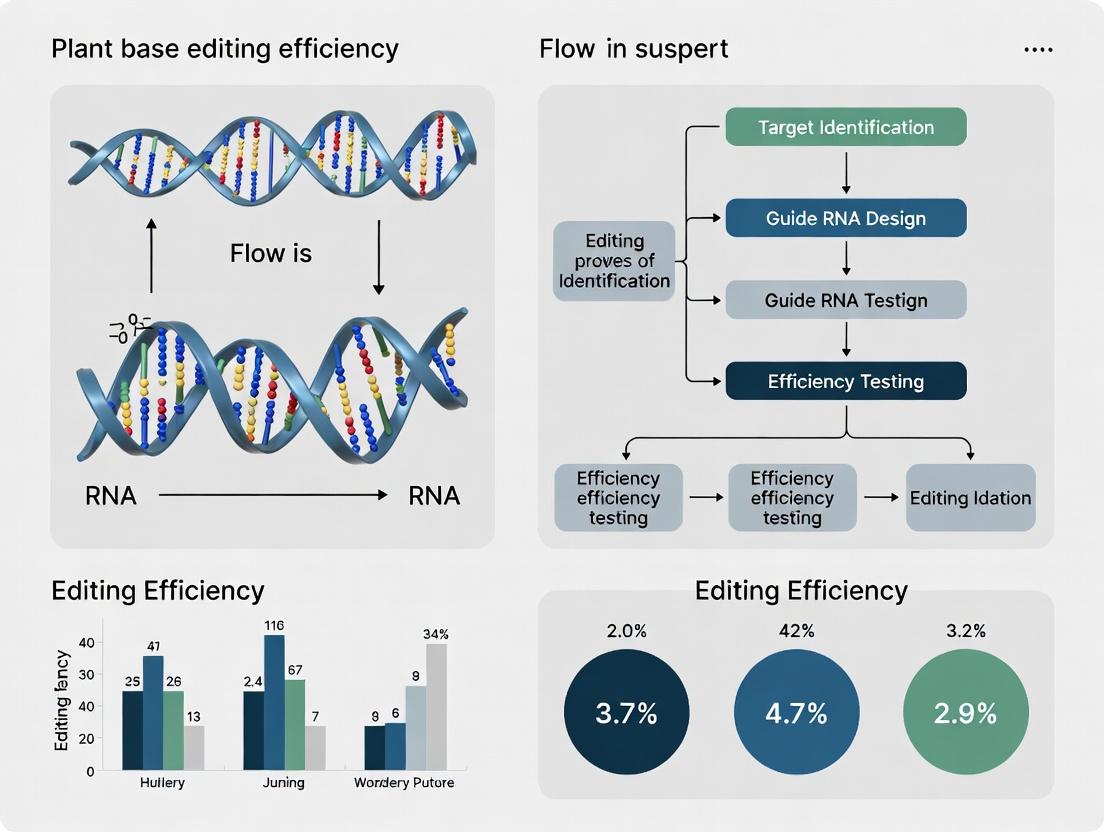
This article provides a comprehensive analysis of current strategies to improve the efficiency and precision of base editing in plants.
Strategies to Enhance Plant Base Editing Efficiency: Current Advances and Future Applications for Researchers
Abstract
This article provides a comprehensive analysis of current strategies to improve the efficiency and precision of base editing in plants. Targeted at researchers, scientists, and biotechnology professionals, it explores the foundational principles of plant base editing systems, details advanced methodological and delivery innovations, addresses common troubleshooting and optimization challenges, and validates approaches through comparative analysis of recent studies. The scope includes practical guidance for enhancing editing outcomes and discusses implications for accelerating plant functional genomics and trait development.
Understanding Plant Base Editors: Mechanisms, Core Components, and Current Limitations
Base Editing Troubleshooting & FAQs
Q1: My base editor is expressed in plant cells, but I observe no editing at the target site. What are the primary causes? A: This common issue often stems from three sources:
- Suboptimal deaminase-UGI nuclear localization: Ensure your expression construct uses a strong, plant-specific nuclear localization signal (NLS) like the SV40 NLS, and consider using a bipartite NLS. The uracil glycosylase inhibitor (UGI) must also be efficiently localized to the nucleus.
- Insufficient sgRNA expression or stability: Use a plant-specific RNA polymerase III promoter (e.g., AtU6 or OsU6) for sgRNA expression. Verify sgRNA secondary structure using prediction tools; problematic structures can hinder Cas9 binding.
- Inaccessible target sequence within chromatin: The target base must be within the deaminase "activity window" (typically positions 4-10 within the protospacer, counting the PAM as 21-23). If the locus is highly heterochromatic, consider strategies like recruiting chromatin remodelers.
Q2: I detect unwanted bystander edits (multiple C-to-T or A-to-G changes) within the activity window. How can I reduce them? A: Bystander edits occur because the deaminase acts on multiple bases within its binding window.
- Strategy 1: Use a narrowed-window deaminase variant. For cytosine base editors (CBEs), consider using APOBEC3B eCBE or APOBEC3A eCBE variants, which have a narrower activity window (e.g., positions 4-8).
- Strategy 2: Adjust sgRNA design. Re-position your target base closer to the 5' end of the protospacer (e.g., position 4-6) to minimize the number of editable bases in the window. Use the following table for variant selection:
| Base Editor Variant | Deaminase Origin | Typical Activity Window (Position from PAM*) | Best for Minimizing Bystanders? |
|---|---|---|---|
| rAPOBEC1-BE3 | Rat APOBEC1 | 4-10 | No |
| APOBEC3B eCBE | Human APOBEC3B | 4-8 | Yes |
| APOBEC3A eCBE | Human APOBEC3A | 4-7 | Yes |
| ABE8e | TadA-8e variant | 4-10 | No |
| ABE9 | TadA-9 variant | 4-8 | Yes |
*Protospacer positions are numbered 1-20, with PAM as positions 21-23.
Q3: I observe high levels of unintended indels at the target locus, contrary to the design of base editing. Why does this happen? A: Indels result from nickase-induced double-strand break (DSB) repair or uracil excision. Solutions include:
- Ensure UGI is present and functional: For CBEs, the UGI domain is critical to prevent uracil base excision repair, which leads to indels. Verify the UGI sequence integrity.
- Optimize editor expression levels: Excessively high expression of the nickase Cas9 (nCas9) can increase off-target nicking. Use moderate-strength promoters (e.g., pUBIQUITIN, pRPS5a) instead of very strong viral promoters.
- Select a high-fidelity Cas9 variant: Use Cas9-HF or SpCas9-NG fused to your deaminase to reduce off-target binding and nicking.
Q4: My base editing efficiency is very low in a regenerated plant. How can I improve it in the next transformation? A: Efficiency in stable lines depends on initial transformation and editing in callus cells.
- Use dual-promoter or polycistronic vectors: Express the base editor protein and sgRNA from separate, strong promoters to ensure both are abundant.
- Agrobacterium strain and plant genotype: Use hyper-virulent Agrobacterium strains (e.g., EHA105, AGL1) and ensure your plant genotype is highly transformable.
- Apply a selective agent at the right time: For antibiotic/herbicide selection, apply it 3-5 days post-transformation to avoid killing cells during recovery, but ensure it's applied to select for stably integrated T-DNA.
Experimental Protocol: Evaluating Base Editing Efficiency inArabidopsisProtoplasts
A rapid in vivo assay to test and optimize base editor constructs before stable transformation.
Materials:
- Validated base editor expression plasmid (e.g., pBE-AtU6-sgRNA)
- Arabidopsis mesophyll protoplasts (isolated from 4-week-old leaves)
- PEG-Calcium Transformation Solution (40% PEG4000, 0.2M Mannitol, 0.1M CaCl2)
- W5 Solution (154mM NaCl, 125mM CaCl2, 5mM KCl, 2mM MES pH 5.7)
- MMg Solution (0.4M Mannitol, 15mM MgCl2, 4mM MES pH 5.7)
- DNA extraction kit for plant cells
- PCR primers flanking the target region (amplicon size: 300-500bp)
- High-fidelity PCR mix
- Sanger sequencing or next-generation sequencing (NGS) reagents
Method:
- Isolate Protoplasts: Use the tape-Arabidopsis sandwich method to release mesophyll protoplasts into W5 solution. Keep on ice for 30 minutes.
- PEG-Mediated Transformation:
- Aliquot 100µl of protoplasts (density ~2x10^5 cells/ml) into a round-bottom tube.
- Add 10µg of your base editor plasmid DNA.
- Add 110µl of PEG-Calcium Transformation Solution. Mix gently by inverting.
- Incubate at room temperature for 15 minutes.
- Wash & Incubate:
- Add 440µl of W5 solution slowly to dilute PEG.
- Centrifuge at 100xg for 2 minutes. Remove supernatant.
- Resuspend protoplasts in 1ml of culture medium.
- Incubate in the dark at 22°C for 48 hours.
- Harvest & Analyze:
- Pellet protoplasts. Extract genomic DNA.
- Amplify the target locus by PCR.
- Quantify Editing Efficiency: Submit PCR products for Sanger sequencing and analyze chromatograms using decomposition tools (e.g., BEAT, EditR) or, for higher accuracy, use NGS amplicon sequencing. Calculate efficiency as (edited reads / total reads) * 100%.
Base Editing System Workflow in Plants
Title: Plant Base Editing Workflow & Key Steps
Deaminase-Cas9 Fusion Protein Mechanism
Title: Base Editor Mechanism at DNA Target
The Scientist's Toolkit: Key Research Reagent Solutions
| Reagent / Material | Primary Function in Plant Base Editing | Example / Note |
|---|---|---|
| Deaminase-nCas9 Fusion Vector | Core editor expression. Provides the catalytic component (deaminase) and targeting (nCas9). | e.g., pCBE-SpCas9-NG (Addgene #138489) or pABE8e (Addgene #138495). |
| sgRNA Expression Cassette | Guides the fusion protein to the specific genomic locus. | Cloned into a vector under a plant U6 promoter. Multiplex sgRNA vectors are available. |
| Hyper-virulent Agrobacterium | Delivery vector for stable plant transformation. | Strains EHA105 or AGL1 often provide higher T-DNA delivery efficiency in plants. |
| Plant-Specific NLS Vector | Ensures efficient nuclear import of the base editor in plant cells. | Vectors with dual bipartite NLS (e.g., from Arabidopsis). |
| Protoplast Isolation Kit | For rapid transient transfection and efficiency testing. | Allows quick in vivo testing of editors before stable transformation. |
| NGS Amplicon-Seq Kit | For high-throughput, accurate quantification of editing efficiency and byproducts. | Essential for detecting low-frequency edits and analyzing editing windows. |
| Uracil Glycosylase Inhibitor (UGI) | Critical domain for CBEs; prevents excision of the edited U base, reducing indels. | Often expressed as part of the CBE fusion protein (e.g., 2xUGI domains). |
| Plant Tissue Culture Media | For regenerating whole, edited plants from transformed callus or explants. | Media composition (hormones, nutrients) is species-specific. |
Technical Support Center: Troubleshooting Base Editing in Plants
This technical support center provides targeted guidance for common experimental issues encountered when using Cas nickase, deaminase, and gRNA systems for plant base editing. Content is framed within the thesis: "Improving base editing efficiency in plants."
Troubleshooting Guides & FAQs
Q1: My base editor is showing very low editing efficiency in my plant protoplasts. What could be the cause? A: Low efficiency can stem from multiple factors. First, verify your gRNA design. The editable window (typically positions 4-8 within the protospacer) must align precisely with your target base. Ensure the gRNA expression is driven by a strong, plant-specific Pol III promoter (e.g., AtU6). Second, confirm the nuclear localization signals (NLSs) are correctly fused to both the nickase and deaminase components. Third, consider the chromatin state of your target locus; tightly packed heterochromatin can limit access. As a control, include a plasmid expressing a fluorescent marker to confirm transformation efficiency.
Q2: I am detecting unintended bystander edits (multiple C-to-T or A-to-G changes within the editing window). How can I minimize this? A: Bystander edits occur because the deaminase acts on multiple bases within its processive window. To mitigate this, you can:
- Re-design your gRNA to position the single target base centrally in a less-dense cluster of editable bases.
- Use a narrowed-window deaminase variant, such as APOBEC3A or engineered versions of TadA, which have a smaller activity window.
- Optimize the linker length between the deaminase and Cas nickase, as this can influence processivity.
- Titrate the expression level of the base editor, as lower amounts can sometimes reduce promiscuous activity.
Q3: I observe high indels at the target site instead of clean point mutations. Why is this happening? A: High indel formation is typically due to the nicking activity. If the nick is made on the non-edited strand (the strand complementary to the deaminated base), it can trigger mismatch repair that favors indel generation over the desired edit. Ensure you are using the correct nickase variant (e.g., Cas9n D10A nicks the strand not bound by the gRNA). If the problem persists, consider using a dual-guide strategy where a second gRNA directs a nick on the edited strand to bias repair toward the desired change, or explore engineered nickase-deaminase fusions with altered architectures.
Q4: My base editor construct works in Nicotiana benthamiana but fails in my target crop species. What should I check? A: Species-specific optimization is crucial. Key checks include:
- Promoter Compatibility: The promoters driving your Cas nickase and deaminase (e.g., CaMV 35S, ZmUbi) must be active in your target species and tissue. Consider species-specific endogenous promoters.
- Codon Optimization: Ensure the entire coding sequence for the base editor is optimized for your target plant's codon usage.
- gRNA Expression: Verify the Pol III promoter for gRNA (e.g., OsU6 for rice) is functional in your species.
- Delivery Efficiency: Your transformation or delivery method (e.g., Agrobacterium, RNP) may need optimization for the new species.
Q5: How can I accurately assess base editing efficiency and specificity in my regenerated plants? A: Use a multi-modal validation approach:
- Primary Screening: Use PCR amplification of the target region followed by Sanger sequencing and decomposition analysis tools (e.g., BEAT, EditR) to quantify efficiency.
- High-Confirmation Validation: Perform amplicon-based deep sequencing (NGS) to get precise base-resolution efficiency data and detect low-frequency off-target edits.
- Specificity Analysis: Perform genome-wide off-target screening using in silico prediction plus experimental methods like Digenome-seq or CIRCLE-seq on purified genomic DNA.
- Phenotypic Confirmation: If applicable, couple with a phenotypic assay or a restored selection marker.
Table 1: Comparison of Common Plant Base Editor Systems and Typical Efficiencies
| Editor System | Deaminase | Nickase | Target Change | Typical Reported Efficiency Range (in Plants)* | Key Advantage |
|---|---|---|---|---|---|
| Cytosine Base Editor (CBE) | rAPOBEC1 | Cas9n (D10A) | C•G to T•A | 1% - 40% | Broad compatibility, established system |
| CBE-narrow window | APOBEC3A | Cas9n (D10A) | C•G to T•A | 5% - 30% | Reduced bystander edits |
| Adenine Base Editor (ABE) | TadA-8e variant | Cas9n (D10A) | A•T to G•C | 10% - 50% | High efficiency, low indel/byproduct rates |
| Dual-Guide Editor | TadA-8e + rAPOBEC1 | Cas9n (D10A) | C-to-T & A-to-G | Varies per base | Enables dual conversion at same site |
| CRISPR-Cas12a ABE | TadA-8e variant | AsCas12a nickase | A•T to G•C | 5% - 20% | Alternative PAM (TTTV), useful for AT-rich regions |
*Efficiency is highly dependent on target sequence, species, delivery method, and tissue type.
Experimental Protocols
Protocol 1: Validation of Base Editing Efficiency in Plant Protoplasts
- Construct Assembly: Clone your target gRNA sequence into a plant expression vector containing a Pol III promoter. Co-deliver with a plasmid expressing the Cas nickase-deaminase fusion protein under a strong Pol II promoter.
- Protoplast Isolation & Transfection: Isolate protoplasts from healthy plant leaves using cellulase/macerozyme digestion. Transfect using PEG-mediated transformation with 10-20 µg of each plasmid.
- Incubation: Incubate transfected protoplasts in the dark at 22-25°C for 48-72 hours.
- Genomic DNA Extraction: Harvest protoplasts and extract gDNA using a CTAB-based method.
- PCR & Analysis: Amplify the target locus (~300-500 bp). Purify PCR products and submit for Sanger sequencing. Analyze chromatograms using trace decomposition software (e.g., BEAT) to calculate editing efficiency.
Protocol 2: Amplicon-Seq for High-Throughput Efficiency and Specificity Profiling
- Library Preparation: Design primers with Illumina adapters to amplify a ~200-300 bp region surrounding the target site from purified plant genomic DNA.
- Indexing PCR: Perform a second, limited-cycle PCR to add dual indices and sequencing adapters.
- Pooling & Cleanup: Pool equimolar amounts of indexed amplicons and clean using SPRI beads.
- Sequencing: Run on an Illumina MiSeq or NextSeq platform for paired-end 2x150 bp or 2x250 bp reads.
- Bioinformatics Analysis: Demultiplex reads. Use tools like CRISPResso2, ampliconDIVider, or custom scripts to align reads to the reference sequence and quantify the percentage of reads containing each specific base substitution, indel, or other variants.
Visualizations
Plant Base Editing Workflow & Optimization Loop
Molecular Mechanism of an Adenine Base Editor (ABE)
The Scientist's Toolkit: Research Reagent Solutions
Table 2: Essential Reagents for Plant Base Editing Experiments
| Item | Function | Example/Consideration |
|---|---|---|
| Base Editor Expression Vector | Expresses the Cas nickase-deaminase fusion protein in plant cells. | Use dual promoter vector (e.g., 35S-driven editor, U6-driven gRNA). Ensure codon optimization for your plant species. |
| gRNA Cloning Backbone | Allows efficient insertion of the 20-nt spacer sequence for expression. | Common plant backbones: pAtU6-26, pOsU6, pTaU6. Must be compatible with your editor vector. |
| Plant-Specific Promoters | Drives high-level expression of editor and gRNA in target tissues. | Pol II: CaMV 35S, ZmUbi. Pol III (for gRNA): species-specific U6 or U3 snRNA promoters. |
| Delivery Reagents | Facilitates entry of constructs into plant cells. | For protoplasts: PEG 4000. For stable transformation: Agrobacterium tumefaciens strain (e.g., EHA105, GV3101). |
| High-Fidelity Polymerase | Accurately amplifies target loci for analysis without introducing errors. | Q5, Phusion, or KAPA HiFi polymerase for PCR pre-sequencing or library prep. |
| Next-Generation Sequencing Kit | Enables deep, quantitative analysis of editing outcomes and off-targets. | Illumina DNA Prep or NEBNext Ultra II FS for amplicon-seq library preparation. |
| Genomic DNA Extraction Kit | Provides high-quality, PCR-ready DNA from plant tissues. | CTAB method or commercial kits (e.g., DNeasy Plant from Qiagen) suitable for difficult polysaccharide-rich samples. |
| Trace Decomposition Software | Quantifies base editing efficiency from Sanger sequencing chromatograms. | BEAT, EditR, or TIDE. Crucial for rapid initial screening. |
Technical Support Center: Troubleshooting Base Editing in Plants
Welcome to the Base Editing Support Hub. This center addresses common experimental hurdles in plant base editing, framed within the thesis of improving editing efficiency through optimized delivery, DNA repair manipulation, and enhanced regeneration.
FAQs & Troubleshooting Guides
Q1: My base editor delivery via Agrobacterium results in low transformation efficiency or no edited events. What could be wrong? A: Low efficiency is often due to suboptimal T-DNA delivery or plant cell health.
- Check Bacterial Viability: Ensure the Agrobacterium strain (e.g., LBA4404, GV3101) is freshly transformed or streaked from a -80°C glycerol stock. Confirm antibiotic resistance.
- Optimize Optical Density (OD): For many species (e.g., Nicotiana benthamiana, rice callus), an OD600 of 0.5-1.0 for co-cultivation is standard. Overgrown cultures reduce virulence.
- Review Plant Material: Use healthy, actively dividing explants (e.g., young leaf discs, embryonic callus). Stress or aging tissue drastically reduces susceptibility.
- Co-cultivation Conditions: Maintain optimal temperature (typically 19-22°C for many species to favor T-DNA transfer over bacterial overgrowth) and duration (2-3 days).
Q2: I confirm successful delivery, but my sequencing reveals low base editing efficiency or unwanted indels. How can I improve this? A: This directly relates to the competition between base editing outcomes and native DNA repair pathways.
- Optimize Editor Expression: Use a plant-codon optimized base editor (e.g., cytosine base editor, CBE; adenine base editor, ABE). A weak promoter may yield insufficient protein, while a very strong one may increase off-target effects. Consider tissue-specific or inducible promoters.
- Modulate DNA Repair: Co-express DNA repair inhibitors to favor the desired edit. For example, silencing key non-homologous end joining (NHEJ) genes (e.g., KU70, KU80) via RNAi can reduce indel formation at the target site.
- Check Guide RNA Design: Ensure your sgRNA has high on-target activity and minimal off-targets in your plant genome. Use validated online tools (e.g., CRISPR-P 2.0, Benchling) for design.
Q3: I obtain edited callus cells but fail to regenerate intact plants. What are the critical steps? A: Regeneration is a major bottleneck, especially in recalcitrant species.
- Adjust Hormone Ratios: Regeneration media must be precisely tuned. A typical two-step process involves a Callus Induction Medium (CIM) with high auxin (2,4-D) and low cytokinin, followed by a Shoot Induction Medium (SIM) with low auxin and high cytokinin (e.g., BAP).
- Minimize Tissue Culture Stress: Subculture callus regularly to avoid browning/necrosis. Optimize light, temperature, and media supplements (e.g., silver nitrate to inhibit ethylene).
- Employ Regeneration Boosters: Consider adding plant growth regulators like brassinosteroids or using "morphogenic" transcription factors (e.g., BBM, WUS2) co-delivered with your editor to enhance regeneration from edited cells.
Q4: How do I accurately quantify base editing efficiency in my transgenic populations? A: Use a combination of techniques at different stages.
- Initial Screening: Use restriction enzyme (RE) digestion if the edit creates/disrupts a site, or PCR/CE (capillary electrophoresis) for heteroduplex mobility assays.
- Precise Quantification: Perform deep amplicon sequencing (NGS) of the target region from pooled tissue or individual lines. This provides the exact percentage of each base change and indel.
Table 1: Quantitative Summary of Base Editing Efficiency Factors
| Factor | Typical Range/Value | Impact on Efficiency | Notes |
|---|---|---|---|
| Transformation Efficiency | 5-70% (species-dependent) | Foundation for all editing | Rice protoplasts can be >80%; stable transformation in monocots is often lower. |
| Base Editor Activity Window | Positions 4-10 (CBE, protospacer) | Defines editable territory | Efficiency drops sharply outside this window. ABE window is often positions 4-9. |
| Indel Frequency (Unwanted) | 0.1-10% of editing events | Competes with precise edit | Can be suppressed by NHEJ inhibitors or optimized editor versions. |
| Regeneration Efficiency (Edited Callus→Plant) | 1-60% | Critical for obtaining lines | Major species-specific hurdle. Use of morphogenic genes can improve rates. |
| On-target vs. Off-target Ratio | Often >100:1 (NGS-verified) | Key for specificity | Varies greatly with sgRNA design and editor version. Whole-genome sequencing is gold standard for assessment. |
Experimental Protocol: A Workflow for Optimizing Base Editing in Rice Callus
Title: High-Efficiency Base Editing in Rice Using Agrobacterium-Mediated Delivery.
1. Vector Construction:
- Clone your plant-codon optimized CBE (e.g., rAPOBEC1-nCas9-UGI) or ABE into a T-DNA binary vector with a plant selection marker (e.g., hygromycin phosphotransferase).
- Clone the species-specific sgRNA expression cassette (U6 or U3 promoter-driven) into the same T-DNA.
2. Agrobacterium Transformation:
- Transform the assembled vector into your Agrobacterium tumefaciens strain (e.g., EHA105) via electroporation.
- Select on appropriate antibiotics (e.g., rifampicin, spectinomycin).
3. Rice Callus Transformation & Co-cultivation:
- Use embryogenic calli derived from mature seeds of rice (Oryza sativa).
- Submerge calli in the Agrobacterium suspension (OD600=0.8-1.0) for 15-30 minutes.
- Blot dry and co-cultivate on filter paper overlaid on solid co-cultivation medium for 3 days at 22°C in the dark.
4. Selection & Regeneration:
- Transfer calli to resting medium (with bacteriostatic agent, e.g., cefotaxime) for 5-7 days.
- Move calli to selection medium (with hygromycin and cefotaxime) for 2-3 weeks until resistant calli appear.
- Transfer growing, resistant calli to pre-regeneration and then regeneration media (SIM) to induce shoots.
- Root shoots on rooting medium and acclimate plantlets to soil.
5. Genotype Analysis:
- Extract genomic DNA from edited callus or leaf tissue.
- PCR-amplify the target region.
- Submit PCR products for Sanger sequencing (for initial validation) and deep amplicon sequencing (for precise efficiency quantification).
Diagram Title: Workflow for Plant Base Editing via Agrobacterium
Diagram Title: DNA Repair Pathways Competing During Base Editing
The Scientist's Toolkit: Key Research Reagent Solutions
Table 2: Essential Materials for Plant Base Editing Experiments
| Reagent / Material | Function / Purpose | Example / Notes |
|---|---|---|
| Plant-Codon Optimized Base Editor | Catalyzes the desired chemical conversion of a DNA base without requiring a double-strand break. | e.g., pnCBEs-Hypa (high-fidelity CBE), ABE8e (high-efficiency ABE). |
| Binary T-DNA Vector | Agrobacterium-compatible plasmid for transferring editor components into the plant genome. | e.g., pCAMBIA1300, pGreenII, with plant selection marker (HygR, Bar). |
| Agrobacterium Strain | Mediates T-DNA delivery into plant cells. Strain choice affects host range and efficiency. | e.g., EHA105 (super-virulent, for monocots), GV3101 (for Arabidopsis). |
| Plant Tissue Culture Media | Supports growth, selection, and regeneration of transformed plant cells. | MS (Murashige & Skoog) or N6 media, with precise hormone cocktails (auxins, cytokinins). |
| Selection Antibiotics | Eliminates non-transformed tissue, allowing only edited cells to proliferate. | Hygromycin B, Glufosinate ammonium (Basta), depending on vector marker. |
| DNA Repair Modulators | Chemicals or genetic parts to manipulate cellular repair to favor base edits over indels. | NHEJ inhibitors (e.g., SCR7 small molecule), or RNAi constructs targeting KU70/80. |
| Deep Amplicon Sequencing Service | Provides high-accuracy quantification of editing efficiency and byproducts. | Essential for robust data. Prepare barcoded PCR amplicons covering the target site. |
Technical Support Center: Troubleshooting Base Editing in Plants
This support center addresses common issues encountered when applying base editing technologies in plant research for gene knockouts, protein engineering, and trait discovery, within the context of improving base editing efficiency.
FAQs & Troubleshooting Guides
Q1: Why is my editing efficiency in plant protoplasts or calli unexpectedly low despite high transformation rates?
A: Low editing efficiency often stems from suboptimal editor expression or unsuitable target site selection.
- Troubleshooting Steps:
- Verify Editor Expression: Use a reporter gene (e.g., GFP) fused to your base editor to confirm delivery and expression. Low expression may require promoter optimization (e.g., switch to stronger plant promoters like ZmUbi or OsActin).
- Assess Target Site: Ensure your protospacer aligns with the canonical NG, NGG (for SpCas9-derived editors) or other required PAM for your editor variant. Check for sequence homology to other genomic regions to avoid off-targets.
- Check gRNA Design: Confirm gRNA secondary structure using prediction tools; highly structured gRNAs can impair efficiency.
- Quantify Delivery: For PEG-mediated protoplast transfection, optimize the plasmid amount and PEG concentration. See Protocol 1.
Q2: I observe unintended indels or stochastic insertions alongside desired base conversions. How can I minimize this?
A: This is a common issue where the nicking activity or DNA repair pathways lead to byproducts.
- Troubleshooting Steps:
- Editor Selection: Use a "high-fidelity" base editor variant or an editor engineered with reduced non-catalytic DNA binding, which lowers indel formation.
- Expression Tuning: Reduce the expression level or time of the editor protein. High concentrations increase off-target effects. Consider using an inducible promoter system.
- gRNA Truncation: Using a truncated gRNA (tru-gRNA, 17-18 nt) for SpCas9-derived editors can decrease indel frequencies while maintaining on-target editing.
- Harvest Timepoint: Optimize the harvest timepost-transfection. Earlier harvest may reduce exposure to repair pathways that cause indels.
Q3: My base-edited plants show no phenotypic change despite confirmed genomic edits. What could be the reason?
A: Successful genotype does not always guarantee phenotype due to biological complexity.
- Troubleshooting Steps:
- Confirm Edit Function: For knockouts, verify the edit creates a premature stop codon and that nonsense-mediated mRNA decay occurs. For protein engineering, confirm the amino acid change is sufficient to alter function.
- Check Ploidy & Gene Copies: In polyploid plants, you may need to edit all homologous copies. Use PCR and sequencing to assess all alleles.
- Genetic Compensation: Investigate if transcriptional adaptation or upregulation of paralogous genes compensates for the edited gene's function.
- Phenotyping Rigor: Ensure your phenotyping assay is sensitive and specific to the expected trait change.
Q4: How can I reduce off-target editing in complex plant genomes?
A: Plant genomes are repetitive, making off-targets a significant concern.
- Troubleshooting Steps:
- Computational Prediction & Selection: Use stringent off-target prediction software (e.g., Cas-OFFinder) and select targets with minimal near-homologous sites.
- Editor Variant: Utilize high-specificity Cas9 variants (e.g., SpCas9-HF1, eSpCas9) fused to your deaminase.
- Delivery Method: Opt for ribonucleoprotein (RNP) delivery of pre-assembled editor-gRNA complexes, which reduces persistence and off-target effects compared to plasmid DNA.
- Empirical Verification: Perform whole-genome sequencing or targeted deep sequencing of predicted off-target loci on edited lines.
Key Experimental Protocols
Protocol 1: Optimized PEG-Mediated Base Editor Delivery into Plant Protoplasts This protocol is for rapid efficiency testing of base editors in Arabidopsis or rice protoplasts.
- Isolation: Isolate mesophyll protoplasts from etiolated seedlings using enzyme digestion (1.5% Cellulase R10, 0.4% Macerozyme R10 in 0.4M mannitol).
- Transfection Mix: In a 2mL tube, combine 100μL protoplasts (density 2x10^5 cells/mL), 10μg base editor plasmid DNA, and 10μg gRNA expression plasmid DNA.
- PEG Addition: Add 110μL of freshly prepared 40% PEG-4000 solution (in 0.2M mannitol and 0.1M CaCl2). Mix gently by inversion.
- Incubation: Incubate at room temperature for 15 minutes.
- Dilution & Washing: Gradually dilute with 1mL of W5 solution (154mM NaCl, 125mM CaCl2, 5mM KCl, 2mM MES, pH 5.7). Centrifuge at 100xg for 2 minutes. Remove supernatant.
- Culture: Resuspend in 1mL culture medium (e.g., KM8P). Culture in darkness at 23°C for 48-72 hours.
- Harvest: Harvest protoplasts by centrifugation for genomic DNA extraction and analysis by targeted deep sequencing.
Protocol 2: Assessing Base Editing Efficiency via Targeted Deep Sequencing
- PCR Amplification: Design primers flanking the target site (amplicon size 200-350 bp). Perform PCR on extracted genomic DNA using high-fidelity polymerase.
- Library Preparation: Barcode the PCR products from different samples in a second round of PCR. Purify amplicons using magnetic beads.
- Sequencing: Pool equimolar amounts of barcoded amplicons and sequence on an Illumina MiSeq or NovaSeq platform (≥10,000x read depth per sample).
- Data Analysis: Use computational pipelines like BEAT or CRISPResso2 to quantify the percentage of reads with C-to-T (or A-to-G) conversions, indels, and other modifications at the target base window.
Data Presentation
Table 1: Comparison of Common Base Editors for Plant Applications
| Editor Name | Deaminase | Cas Scaffold | Conversion Type | Typical Efficiency in Plants* | Primary Application |
|---|---|---|---|---|---|
| BE3 / rBE | rAPOBEC1 | SpCas9-nCas9 (D10A) | C•G to T•A | 5-40% | Gene knockouts, targeted SNP introduction. |
| A3A-PBE | A3A | SpCas9-nCas9 | C•G to T•A | 10-50% | Improved efficiency in methylated genomic regions. |
| ABE7.10 | TadA-7.10 dimer | SpCas9-nCas9 | A•T to G•C | 5-30% | Correcting pathogenic G•C to A•T SNPs, precise protein engineering. |
| CGBE1 | rAPOBEC1 + UGI | SpCas9-nCas9 | C•G to G•C | 0.1-10% | Transversion mutations for broader amino acid changes. |
| SpRY-BE | rAPOBEC1 | SpRY-nCas9 | C•G to T•A | 1-20% | Near-PAMless targeting, greatly expanded target scope. |
*Efficiency range varies significantly by plant species, tissue, and delivery method.
Table 2: Troubleshooting Matrix for Low Editing Efficiency
| Symptom | Possible Cause 1 | Possible Cause 2 | Diagnostic Experiment | Suggested Fix |
|---|---|---|---|---|
| No edits detected | gRNA not expressed | Editor not expressed | RT-PCR for gRNA, Western blot for editor | Change promoter, add nuclear localization signal. |
| Low editing (%) | Suboptimal PAM/protospacer | Low editor activity at site | Try multiple gRNAs | Use a different base editor variant or Cas ortholog. |
| High indels | Excessive editor expression/activity | gRNA off-targets | Deep sequencing of target | Use tru-gRNA, switch to RNP delivery, lower dosage. |
| Chimeric plant | Editing in somatic tissue only | Incomplete editing in meristem | Sequence individual sectors/plantlets | Regenerate through multiple cycles or use meristem-targeting delivery. |
Diagrams
Title: Base Editing Workflow for Plant Trait Discovery
Title: Base Editor Mechanism vs Native DNA Repair
The Scientist's Toolkit: Research Reagent Solutions
| Item | Function in Base Editing Experiments |
|---|---|
| Plant Codon-Optimized Base Editor Plasmids | Ensures high expression of the editor protein (e.g., BE3, ABE) in plant cells. Key vectors include pYLCRISPR-BE and pBSE. |
| U6 or Pol III Promoter gRNA Cloning Vector | Drives high-level expression of the single-guide RNA (sgRNA) in plant nuclei (e.g., pYLgRNA, pU6-gRNA). |
| PEG-4000 (40% w/v Solution) | The chemical agent used for transfection of plasmid DNA or RNPs into plant protoplasts. |
| Protoplast Isolation Enzymes (Cellulase/Macerozyme) | Enzyme cocktails for digesting plant cell walls to release intact protoplasts for transfection. |
| Magnetic Beads for PCR Purification | For efficient cleanup and size selection of amplicons post-PCR, crucial for sequencing library prep. |
| Next-Gen Sequencing Amplicon-EZ Service | Commercial service for high-depth targeted sequencing of PCR amplicons to quantify editing efficiency. |
| Plant Tissue Culture Media (e.g., MS, KM8P) | For the recovery and regeneration of edited protoplasts or calli into whole plants. |
| Selection Antibiotics/Hormones | For selecting transformed plant tissues (e.g., Hygromycin, Kanamycin, Bialaphos). |
Technical Support Center
FAQs & Troubleshooting Guides
Q1: My base editing experiment in rice shows very low editing efficiency (<5%). What are the primary factors I should check? A: Low efficiency in monocots like rice is a common hurdle. Systematically troubleshoot:
- gRNA Design: Ensure your gRNA has high on-target activity. Use validated tools like CRISPR-P 2.0 or CRISPR-GE for plant-specific design. Avoid genomic regions with high DNA methylation.
- Promoter Selection: The choice of promoter for expressing the base editor is critical. For rice, use strong, Pol III promoters (e.g., OsU3, OsU6) for gRNA expression. For the editor protein, consider constitutive promoters like ZmUbi or OsActin.
- Editor Delivery: For stable transformation, Agrobacterium-mediated delivery is standard. Confirm your T-DNA construction is correct. For protoplast transfections, optimize the DNA amount and PEG concentration.
- Editor Version: Early cytosine base editors (e.g., BE3) show low efficiency in plants. Switch to optimized versions like A3A-PBE or STEMEs, which are reported to achieve up to 43% C-to-T editing in rice callus (Lu et al., Nat Plants, 2020).
Q2: I am working in wheat. What are the expected base editing efficiencies, and how can I improve them in polyploid genomes? A: Base editing in polyploid wheat faces the challenge of multiple homologous copies. Reported efficiencies vary by target and editor:
- Cytosine Base Editing (CBE): Success rates typically range from 1% to 30% in hexaploid wheat T0 plants, with many edits being heterozygous.
- Adenine Base Editing (ABE): Generally shows lower efficiency than CBE in wheat, often below 10%.
- Improvement Strategy: Design gRNAs that target conserved sequences across all homologs (A, B, and D genomes). Using RNA polymerase II promoters (e.g., TaU6) to drive multiplexed gRNAs can help target all copies simultaneously. Recent use of TadA-8e variants has pushed ABE efficiency in wheat to over 77% in some studies (Li et al., Nat Biotechnol, 2022).
Q3: How do I accurately measure and quantify base editing efficiency from NGS data? A: Accurate quantification requires a specific bioinformatics pipeline.
- PCR Amplification: Amplify target region with high-fidelity polymerase from genomic DNA. Use appropriate controls (untransformed wild-type).
- Next-Generation Sequencing (NGS): Perform deep amplicon sequencing (recommended coverage >10,000x).
- Data Analysis: Use dedicated tools like BEAT (Base Editing Analysis Toolkit) or CRISPResso2. Key parameters:
- Set the correct editing window (typically positions 4-8 for SpCas9-derived editors).
- Calculate efficiency as (number of reads with desired base substitution) / (total aligned reads at that locus) * 100%.
- Filter out low-quality reads and indel-forming sequences.
Q4: I am observing high rates of unintended indels or off-target editing in my tomato experiments. How can I mitigate this? A: This indicates potential gRNA off-target activity or editor toxicity.
- Mitigation Steps:
- Off-target Prediction: Use Cas-OFFinder to predict potential off-target sites in the tomato genome. Re-design gRNAs with minimal predicted off-targets.
- High-Fidelity Editors: Use high-fidelity Cas9 variants (e.g., SpCas9-HF1, eSpCas9) fused to your base editor domain to reduce off-target binding.
- Transient vs. Stable: Consider using transient expression (e.g., Agrobacterium infiltration of leaves) to quickly assess off-target effects before stable transformation.
- Editor Expression Time: Reduce potential toxicity by using inducible or tissue-specific promoters to limit the duration of editor expression.
Table 1: Benchmarking Base Editing Efficiencies in Major Crops (Selected Studies)
| Crop Species (Ploidy) | Base Editor System | Target Gene | Delivery Method | Max Reported Efficiency (T0) | Key Challenge Addressed | Citation (Example) |
|---|---|---|---|---|---|---|
| Rice (Monocot) | A3A-PBE | OsALS | Agro (Callus) | 43% (C-to-T) | Low CBE efficiency in monocots | Lu et al., 2020 |
| Wheat (Hexaploid) | ABE8e | TaALS | Agro (Callus) | 77% (A-to-G) | Low efficiency in polyploids | Li et al., 2022 |
| Maize (Monocot) | STEME-2 | ZmALS | Particle Bombardment | 18% (C-to-T) | Delivery to immature embryos | Zong et al., 2022 |
| Tomato (Dicot) | rAPOBEC1-BE3 | SIPDS | Agro (Leaf Disc) | 71% (C-to-T) | Achieving homozygous edits | Veillet et al., 2019 |
| Potato (Tetraploid) | nCas9-PmCDA1 | StALS | Agro (Tuber Disc) | 23% (C-to-T) | Editing multiple alleles | Veillet et al., 2020 |
| Soybean (Dicot) | BE4 | GmFT2a | Agro (Hairy Root) | 10-30% (C-to-T) | Complex legume genome | Cai et al., 2020 |
Experimental Protocol: Assessing Base Editing in Rice Protoplasts
This protocol provides a rapid, transient assay for testing gRNA and editor efficiency before stable transformation.
Materials:
- Rice cultivar Nipponbare seeds
- Enzyme solution for protoplast isolation (1.5% Cellulase R10, 0.75% Macerozyme R10 in 0.4M Mannitol, pH 5.7)
- W5 solution (154 mM NaCl, 125 mM CaCl₂, 5 mM KCl, 2 mM MES, pH 5.7)
- MMg solution (0.4M Mannitol, 15 mM MgCl₂, 4 mM MES, pH 5.7)
- PEG solution (40% PEG4000, 0.2M Mannitol, 0.1M CaCl₂)
- Plasmid DNA: Base editor expression vector (e.g., driven by ZmUbi) and gRNA expression vector (driven by OsU3)
- WI solution (0.5M Mannitol, 20 mM KCl, 4 mM MES, pH 5.7)
Methodology:
- Protoplast Isolation: Grow rice seedlings for 10-14 days. Slice stem and leaf tissues finely and incubate in enzyme solution in the dark for 4-6 hours with gentle shaking.
- Purification: Filter digest through a 40μm mesh. Pellet protoplasts by centrifugation at 100 x g for 5 min. Wash pellet gently with W5 solution. Resuspend in MMg solution and count.
- Transfection: Aliquot 100,000 protoplasts per transfection. Add 10-20μg of total plasmid DNA (molar ratio ~1:1 of editor:gRNA vectors). Add an equal volume of PEG solution, mix gently, and incubate for 15 min at room temperature.
- Termination & Culture: Slowly add 2 volumes of W5 solution to stop PEG reaction. Pellet protoplasts, resuspend in 1ml WI solution, and culture in the dark at 28°C for 48-72 hours.
- Genomic DNA Extraction & Analysis: Harvest protoplasts, extract gDNA. Perform PCR on target site and submit for Sanger sequencing or NGS. Use decomposition tools like BEAT or EditR to calculate editing efficiency.
Visualization: Base Editing Experimental Workflow
Title: Plant Base Editing Experimental Workflow
Visualization: Base Editor Molecular Mechanism
Title: Molecular Mechanism of a Cytosine Base Editor
The Scientist's Toolkit: Key Research Reagents
Table 2: Essential Reagents for Plant Base Editing Research
| Reagent/Solution | Function/Benefit | Example/Notes |
|---|---|---|
| High-Efficiency Base Editor Plasmids | Core tool for targeted base conversion. | e.g., pREDITOR series, pZmUbi-BE4, pTaU6-ABE8e. Use plant codon-optimized versions. |
| Plant-Specific gRNA Design Tools | Predict on-target efficiency and potential off-targets in plant genomes. | CRISPR-P 2.0 (for plants), CRISPR-GE, CROP. Essential for pre-experiment design. |
| Agrobacterium tumefaciens Strain | Standard for stable plant transformation (dicots/monocots). | Strains EHA105, GV3101 (for dicots), LBA4404 or AGL1 (often used for monocots). |
| Protoplast Isolation Enzymes | Enable transient transfection assays for rapid testing. | Cellulase R10 and Macerozyme R10. Critical for efficient cell wall digestion. |
| Polyethylene Glycol (PEG) 4000 | Facilitates DNA uptake during protoplast transfection. | High-purity PEG4000 is needed for reproducible transformation efficiency. |
| Deep Amplicon Sequencing Kit | Enables high-throughput, accurate quantification of editing efficiency. | Kits from Illumina, Swift Biosciences. Must include unique molecular identifiers (UMIs) to reduce PCR bias. |
| DNA Damage Inhibitor (Optional) | May improve base editing yield by suppressing unintended DNA repair pathways. | e.g., Scr7 (ligase IV inhibitor), used in some animal studies; optimization needed for plants. |
| Selective Herbicide/Antibiotic | For screening transformed tissues containing base-edited endogenous genes (e.g., ALS). | Chemicals like Bispyribac-sodium (for ALS edits) or Hygromycin/Kanamycin (for T-DNA selection). |
Advanced Delivery and Editing Strategies to Boost Plant Genome Modification Success
Technical Support Center & Troubleshooting
Agrobacterium tumefaciens-mediated Transformation (ATMT)
FAQ & Troubleshooting
Q1: My plant explants show overgrowth of Agrobacterium after co-cultivation, leading to tissue necrosis. How can I control this? A: Bacterial overgrowth is common. Increase the concentration of bacteriostatic antibiotics (e.g., Timentin or Carbenicillin) in your post-co-cultivation wash and selection media. Ensure you are using the correct concentration for your plant species (typically 200-500 mg/L Timentin). Perform multiple, gentle washes with sterile water or antibiotic solution after co-cultivation. Also, verify that your Agrobacterium strain's optical density (OD600) at inoculation was between 0.5-0.8; higher densities increase overgrowth risk.
Q2: I am getting low transformation efficiency in my monocot species. What factors should I optimize? A: Monocots are less natural hosts for Agrobacterium. Key optimizations include:
- Strain & Vector: Use super-virulent strains like AGL1 or EHA105, and vectors with extra copies of virulence genes (virG, virE).
- Acetosyringone: This phenolic compound is critical. Use 100-200 µM in both the bacterial induction medium and the co-cultivation medium.
- Co-cultivation Conditions: Optimize duration (2-5 days), temperature (19-22°C), and ensure high humidity to prevent explant desiccation.
- Target Tissue: Use embryogenic callus or immature embryos, which are most receptive.
Q3: No transgenic plants are recovered after selection. What are the potential causes? A: Follow this diagnostic checklist:
- Selection Agent: Confirm the selective agent (e.g., kanamycin, hygromycin) is effective on your wild-type explants via a kill curve. The concentration may be too high (killing all tissue) or too low (allowing escapes).
- T-DNA Integration: Check if your construct has the correct border sequences (LB, RB). Test transient expression (e.g., GUS assay 2-3 days after co-cultivation) to confirm T-DNA delivery.
- Plant Regeneration: Your regeneration protocol may not be compatible with the transformed cells. Ensure selection is applied during the regeneration phase, not just callus growth.
Ribonucleoprotein (RNP) Complex Delivery
FAQ & Troubleshooting
Q4: My purified Cas9 protein shows low editing activity in protoplasts. How can I improve RNP complex stability and delivery? A: Low activity often stems from RNP degradation or inefficient delivery.
- Complex Assembly: Incubate purified Cas9 protein with sgRNA at a molar ratio of 1:2 to 1:3 (Cas9:sgRNA) for 10-15 minutes at 25°C before delivery.
- Stability: Add RNAse inhibitors to your protoplast transfection buffer. Keep RNPs on ice until use.
- Delivery Method: For PEG-mediated transfection, optimize PEG concentration (typically 20-40%) and incubation time. For electroporation, optimize voltage and pulse length. Use a control fluorescently labeled protein to assess delivery efficiency.
- Protein Quality: Ensure Cas9 protein is fresh, high-purity, and stored in a glycerol-containing buffer at -80°C to prevent aggregation.
Q5: I am trying to use biolistics for RNP delivery into callus, but editing efficiency is highly variable. What are the key parameters? A: Particle bombardment parameters are crucial:
- Particle Preparation: Use gold microparticles (0.6-1.0 µm). When coating with RNPs, avoid buffers with high salts or glycerol, which can cause aggregation. Use spermidine and calcium chloride precipitation method, but keep the complex on ice and use immediately.
- Bombardment Conditions: Optimize helium pressure (90-110 psi), target distance (6-9 cm), and vacuum pressure (26-28 in Hg). High pressure can denature the RNP complex.
- Tissue State: Use fresh, healthy, and actively dividing callus tissue. Desiccated tissue before bombardment can improve DNA delivery but may harm RNP integrity.
Viral Vector Delivery (e.g., VIGS, VIGE)
FAQ & Troubleshooting
Q6: My viral vector shows poor systemic infection and patchy symptoms. How do I ensure robust infection? A: Inconsistent infection points to issues with inoculation or plant health.
- Inoculum Preparation: For Tobacco rattle virus (TRV)-based vectors, always sequence the plasmid after Agrobacterium transformation. Grow the Agrobacterium culture to an OD600 of ~1.0, resuspend in infiltration buffer (10 mM MES, 10 mM MgCl₂, 150 µM Acetosyringone), and incubate for 2-4 hours before infiltration.
- Inoculation Method: For Nicotiana benthamiana, use a needleless syringe to infiltrate the abaxial side of young, fully expanded leaves. For difficult species, consider rub-inoculation with carborundum.
- Plant Growth: Maintain plants at consistent, mild temperatures (20-24°C). High temperatures (>27°C) can inhibit viral spread. Use healthy plants with minimal stress.
Q7: I am concerned about the heritability of edits made via virus-induced genome editing (VIGE). What are the limitations and best practices? A: VIGE is primarily for generating somatic edits. To recover heritable edits:
- Target Tissue: Focus infection on meristematic cells. For Potato virus X (PVX) or Bean yellow dwarf virus (BeYDV), this may require precise timing and delivery.
- Screening: You must regenerate plants from edited somatic tissue (e.g., lateral shoots emerging from infected meristems) and then screen the T1 progeny for the presence of the edit in the germline.
- Vector Choice: Use replicating geminivirus vectors (e.g., BeYDV) that can maintain episomal DNA in nuclei, increasing the chance of homologous recombination if a donor template is provided.
Table 1: Comparison of Delivery Methods for Plant Base Editing
| Method | Typical Editing Efficiency Range | Key Advantages | Key Limitations | Best For |
|---|---|---|---|---|
| Agrobacterium (T-DNA) | 0.1% - 10% (stable) | Stable integration, heritable edits, works in many species. | Low efficiency in monocots, somaclonal variation, lengthy process. | Generating stable transgenic/edited lines for model and crop plants. |
| RNP (Protoplast) | 1% - 40% (transient) | No foreign DNA, fast, low off-target, species-flexible. | Regeneration bottleneck, technically challenging, not all plants regenerable. | DNA-free editing in species with robust protoplast regeneration (e.g., lettuce, tobacco). |
| RNP (Biolistics) | 0.1% - 5% (transient) | Bypasses regeneration, works on tissues. | High equipment cost, tissue damage, highly variable efficiency. | Editing recalcitrant species or tissues where protoplasts aren't viable. |
| Viral Vectors (VIGE) | 1% - 90% (somatic) | Very high somatic efficiency, systemic delivery. | Limited cargo size, mainly somatic edits, heritability low/random. | Rapid gene knockdown (VIGS) or high-efficiency somatic editing for screening. |
Table 2: Common Troubleshooting Parameters
| Issue | Agrobacterium | RNP Delivery | Viral Vectors |
|---|---|---|---|
| No Delivery/Infection | Check OD600, acetosyringone, strain/virulence. | Check protein/sgRNA quality, delivery parameters (PEG%, voltage). | Check plasmid integrity, Agrobacterium culture prep, infiltration technique. |
| Low Efficiency | Optimize explant type, co-cultivation time/temp, vector design. | Optimize RNP ratio, incubation, tissue pre-treatment. | Optimize plant age/growth conditions, viral strain choice, inoculation site. |
| Tissue Toxicity/Death | Reduce bacterial OD, adjust antibiotic/selection levels. | Reduce PEG concentration or electroporation pulse length. | Dilute inoculum; some viral symptoms are constitutive. |
| Contamination | Use proper sterilants for explants, confirm antibiotic efficacy. | Maintain sterility during protoplast isolation or particle coating. | Sterilize seeds, grow plants in clean conditions pre-inoculation. |
Detailed Experimental Protocols
Protocol 1: High-Efficiency Agrobacterium-Mediated Transformation of Nicotiana benthamiana Leaf Disks for Base Editor Testing
- Vector Preparation: Transform your base editor T-DNA construct (e.g., pBE-UGI-nCas9) into Agrobacterium tumefaciens strain GV3101 via electroporation.
- Culture Induction: Pick a single colony and grow in 5 mL YEP with appropriate antibiotics at 28°C, 200 rpm for 24h. Use 1 mL to inoculate 50 mL of induction medium (YEP, antibiotics, 10 mM MES, 20 µM Acetosyringone). Grow to OD600 = 0.8-1.0.
- Preparation for Infection: Pellet cells at 5000 g for 10 min. Resuspend in infiltration buffer (10 mM MgCl₂, 10 mM MES, 150 µM Acetosyringone, pH 5.6) to a final OD600 of 0.5. Incubate at room temp for 2-4 hours.
- Plant Material: Surface-sterilize seeds and grow N. benthamiana under 16h light/8h dark at 25°C for 3-4 weeks.
- Transformation: Using a sterile punch, excise leaf disks (0.5-1 cm diameter) from young leaves. Immerse disks in the Agrobacterium suspension for 5-10 minutes, blot dry on sterile paper, and place co-cultivation medium (MS + 2% sucrose, 150 µM Acetosyringone) for 2-3 days in the dark at 22°C.
- Selection & Regeneration: Transfer disks to regeneration/selection medium (MS, cytokinin, auxin, antibiotics for bacteria [Timentin], and plant selection [e.g., Kanamycin]). Subculture every 2 weeks until shoots develop.
- Rooting & Genotyping: Excise shoots and transfer to rooting medium (½ MS + selection). Rooted plantlets can be transferred to soil and genotyped via PCR/sequencing for editing events.
Protocol 2: PEG-Mediated RNP Transfection of Arabidopsis Protoplasts for Base Editing
- Protoplast Isolation:
- Harvest 3-4 week old Arabidopsis leaves, slice into 0.5-1 mm strips.
- Incubate in enzyme solution (1.5% Cellulase R10, 0.4% Macerozyme R10, 0.4 M Mannitol, 20 mM KCl, 20 mM MES pH 5.7, 10 mM CaCl₂, 0.1% BSA) for 3-4 hours in the dark with gentle shaking (40 rpm).
- Filter through a 70 µm nylon mesh, wash with W5 solution (154 mM NaCl, 125 mM CaCl₂, 5 mM KCl, 2 mM MES pH 5.7) and pellet at 100 g for 2 min.
- Resuspend in MMg solution (0.4 M mannitol, 15 mM MgCl₂, 4 mM MES pH 5.7) at a density of 2 x 10^5 cells/mL.
- RNP Complex Formation: For a 100 µL reaction, mix 10 µg (approx. 65 pmol) of purified Cas9 protein (e.g., SpCas9-D10A nickase base editor) with 20 µg of in vitro transcribed sgRNA (targeting your locus) in nuclease-free duplex buffer. Incubate 10 min at 25°C.
- PEG Transfection: To 100 µL of protoplasts, add 20 µL of the RNP complex. Gently mix. Add 120 µL of 40% PEG-4000 solution (in 0.2 M mannitol, 0.1 M CaCl₂). Mix gently by inverting and incubate for 15-30 minutes at room temperature.
- Washing & Culture: Slowly add 1 mL of W5 solution, mix, and pellet at 100 g for 2 min. Carefully remove supernatant, resuspend in 1 mL of protoplast culture medium. Incubate in the dark at 22°C for 48-72 hours.
- DNA Extraction & Analysis: Pellet protoplasts, extract genomic DNA. Analyze editing efficiency by targeted PCR followed by Sanger sequencing and decomposition analysis (e.g., using EditR or ICE).
Visualization
Title: Base Editing Delivery Workflow Comparison
Title: ATMT Efficiency Diagnostic Tree
The Scientist's Toolkit: Research Reagent Solutions
Table 3: Essential Reagents for Plant Delivery Optimization
| Reagent / Material | Function | Example & Notes |
|---|---|---|
| Super-virulent A. tumefaciens Strains | Enhance T-DNA delivery, especially in recalcitrant species. | AGL1, EHA105: Contain a super-virulent pTiBo542 background. LBA4404.pBBR1M: Virulence helper plasmid. |
| Acetosyringone | Phenolic inducer of Agrobacterium virulence (vir) genes. | Use 100-200 µM in induction & co-cultivation media. Critical for monocot transformation. |
| Timentin (Ticarcillin/Clavulanate) | Bacteriostatic antibiotic for Agrobacterium elimination post-co-cultivation. | Preferred over carbenicillin for broader efficacy; typical use: 200-500 mg/L. |
| Purified Cas9 Protein (Nuclease/Nickase) | Active component of RNP complexes for DNA-free editing. | Commercial sources (e.g., PNA Bio, IDT) or in-house purification from E. coli. Must be nuclease-free. |
| Gold/Carrier Microparticles | Microprojectiles for biolistic delivery of DNA or RNPs. | Gold (0.6-1.0 µm): Inert, uniform size. Tungsten: Cheaper but may be toxic. |
| PEG-4000 (Polyethylene Glycol) | Induces membrane fusion for protoplast transfection with RNPs or DNA. | High-grade, sterilized. Optimal concentration varies by species (20-40%). |
| Cellulase & Macerozyme Enzymes | Digest plant cell walls to generate protoplasts. | Cellulase R10, Macerozyme R10: Standard for Arabidopsis, tobacco. Optimize mix for other species. |
| Viral Vector Plasmids | Backbone for virus-induced gene silencing/editing. | TRV1 & TRV2 (VIGS): For N. benthamiana. BeYDV (VIGE): Geminivirus for donor template delivery. |
| MES Buffer (2-(N-morpholino)ethanesulfonic acid) | Low-pH buffer for Agrobacterium resuspension and infiltration. | Maintains acidic pH (5.6-5.8) optimal for virulence induction. |
Troubleshooting Guides & FAQs
Q1: My base editor shows no editing at the intended target site in my plant protoplasts. What could be wrong? A: This is often due to poor on-target activity of the gRNA. First, verify your gRNA sequence for the target locus. Use multiple design tools (see Table 1) and select gRNAs with high predicted scores. Ensure your gRNA expression is driven by a Pol III promoter (e.g., AtU6) compatible with your plant species. Check the base editor's PAM compatibility—common editors like BE3 require an NGG PAM downstream of your target base. If all else fails, re-design gRNAs targeting the opposite DNA strand.
Q2: I detect unexpected, off-target edits in my sequencing data. How can I mitigate this? A: Off-target editing is a critical concern. First, use bioinformatic tools like Cas-OFFinder to predict potential off-target sites in your plant genome. Prioritize gRNAs with minimal sequence homology elsewhere, especially in seed regions. Consider using high-fidelity base editor variants (e.g., ABE8e with mutations like R221A/N394A). Experimentally, you can perform whole-genome sequencing (WGS) or targeted deep sequencing of predicted off-target loci to fully assess specificity.
Q3: My editing efficiency is very low (<5%). How can I improve it? A: Low efficiency can stem from multiple factors. 1) gRNA Design: The positioning of the target base within the protospacer is crucial. For cytosine base editors (CBEs), optimal activity is typically 5-10 bases upstream of the PAM (positions 4-10, counting the PAM as 21-23). For adenine base editors (ABEs), positions 4-9 are best. 2) Delivery: Ensure high-quality plasmid or RNP delivery into your plant cells. 3) Editor Choice: Newer-generation editors (e.g., A3A-BE3, ABE8e) often have higher activity. 4) Promoter: Use strong, appropriate promoters for both the editor and gRNA in your transient or stable expression system.
Q4: What are the best current tools for designing gRNAs for plant base editing? A: The field evolves rapidly. Below is a comparison of current, widely-used tools.
Table 1: Comparison of gRNA Design Tools for Plant Base Editing
| Tool Name | Key Features | Best For | Link |
|---|---|---|---|
| CRISPR-P 2.0 | Species-specific (multiple plants), predicts on-target score, integrates off-target search. | Designing for model and crop plants. | http://crispr.hzau.edu.cn/CRISPR2/ |
| CRISPR-GE | Includes tools for base editing gRNA design, positioning recommendations. | Checking optimal target base positioning. | http://skl.scau.edu.cn/ |
| CHOPCHOP | Broad organism support, visualizes base editing windows, scores on/off-target. | Initial screening and visualization. | https://chopchop.cbu.uib.no/ |
| Cas-OFFinder | Genome-wide search for potential off-target sites with mismatches/ bulges. | Comprehensive off-target analysis. | http://www.rgenome.net/cas-offinder/ |
| BE-Designer | Dedicated to base editor gRNA design, calculates efficiency scores. | Precision design for BE systems. | https://www.rgenome.com/bedesigner/ |
Q5: Can you provide a standard protocol for testing gRNA efficiency for base editing in plants? A: Protocol: Transient Assay in Plant Protoplasts for gRNA Validation
gRNA Design & Cloning:
- Design 3-4 gRNAs per target using tools from Table 1.
- Clone each gRNA sequence into your plant expression vector (e.g., using AtU6 promoter) via Golden Gate or BsaI site assembly.
- Clone your base editor (e.g., pBE3, pABE8e) into a separate expression vector with a strong promoter (e.g., 35S, ZmUbi).
Protoplast Isolation & Transfection:
- Isolate protoplasts from healthy plant tissue (e.g., Arabidopsis leaves, rice callus) using appropriate cellulase/pectolyase enzyme solutions.
- Co-transfect 10 µg of base editor plasmid and 10 µg of each gRNA plasmid into 100,000 protoplasts using PEG-mediated transformation.
- Include controls: base editor only, gRNA only, and untransfected protoplasts.
Incubation & Harvest:
- Incubate transfected protoplasts in the dark at 22-25°C for 48-72 hours to allow editing and expression.
Genomic DNA Extraction & Analysis:
- Harvest protoplasts and extract genomic DNA using a mini-prep kit.
- Amplify the target region by PCR (using high-fidelity polymerase).
- Analysis Options:
- Sanger Sequencing & Decomposition: Sequence PCR products and use tools like BEAT or EditR to calculate base substitution percentages.
- High-Throughput Sequencing: Amplicons are barcoded and sequenced on an Illumina platform. Use pipelines like CRISPResso2 to quantify precise editing efficiencies.
Experimental Workflow Diagram
Title: gRNA Design and Testing Workflow for Plant Base Editing
The Scientist's Toolkit: Research Reagent Solutions
Table 2: Essential Reagents for Plant Base Editing Experiments
| Item | Function & Key Consideration |
|---|---|
| Base Editor Plasmids | Source plasmids for BE3, BE4, ABE7.10, ABE8e, etc. (Addgene). Ensure plant-codon optimization and compatible plant expression promoters. |
| gRNA Cloning Vector | Backbone with Pol III promoter (e.g., AtU6, OsU6) for gRNA expression. Must have appropriate restriction sites (BsaI) for golden gate assembly. |
| High-Fidelity Polymerase | For error-free amplification of target loci for cloning and analysis (e.g., Q5, Phusion). |
| Protoplast Isolation Enzymes | Cellulase and macerozyme mixtures tailored to plant species (e.g., Arabidopsis, rice, tobacco). |
| PEG Transfection Solution | High molecular weight PEG (e.g., PEG 4000) solution for protoplast transformation. |
| DNA Mini-Prep Kit | For reliable genomic DNA extraction from limited protoplast samples. |
| Amplicon-Seq Library Prep Kit | For preparing NGS libraries from PCR-amplified target sites to quantify editing efficiency. |
| CRISPR Analysis Software | Tools like CRISPResso2, BEAT, or EditR for quantifying base edits from sequencing data. |
Technical Support Center
Troubleshooting Guides & FAQs
Q1: The expression of my base editor in plant protoplasts is undetectable by Western blot. What are the primary promoter-related causes? A: This is typically caused by promoter incompatibility. Many mammalian or viral promoters (e.g., CMV, SV40) show very low activity in plant cells. For transient expression in dicot protoplasts, switch to the Cauliflower Mosaic Virus 35S (CaMV 35S) promoter. For monocots, use the maize Ubiquitin 1 (Ubi-1) or rice Actin 1 (Act1) promoters. Ensure your construct includes a plant-optimized 5' UTR and Kozak-like sequence. A quantitative comparison of common plant promoters is provided in Table 1.
Q2: I observe high editing efficiency in transient assays but negligible editing in regenerated stable lines. What should I check? A: This often indicates promoter silencing in stable transformation. Constitutive promoters like CaMV 35S are prone to transcriptional gene silencing (TGS) over generations. To mitigate this:
- Use a dual-promoter system: Avoid using the identical promoter for both the editor protein and the selectable marker.
- Incorporate introns: Place an intron (e.g., from Arabidopsis thaliana heat shock protein 18.2) within the 5' UTR to boost expression and potentially reduce silencing.
- Consider engineered/truncated promoters: Use shorter, core versions of promoters (e.g., m35S) or de novo designed synthetic promoters that lack known silencing motifs.
Q3: How can I reduce cytotoxinicity and off-target effects of the base editor? A: Cytotoxicity is frequently linked to overexpression of the editor complex. Promoter tuning is a key strategy:
- Employ weaker promoters: Replace strong constitutive promoters with mid-strength ones like AtUBQ10 or PP2A.
- Utilize inducible/tissue-specific promoters: Drive editor expression with a heat-shock (HSP) or estrogen-inducible (XVE) system to limit exposure. For developmental editing, use meristem-specific (CLV3) or germline-specific (DD45) promoters.
- Adopt a transient expression system: Use a geminivirus-based replicon system with a plant promoter for short, high-amplitude expression bursts that can achieve editing with reduced long-term editor persistence.
Q4: My base editor expression is confirmed, but on-target efficiency is very low (<5%). Could promoter choice affect this? A: Yes, indirectly. Low efficiency may result from insufficient expression of all components. For editors requiring multiple proteins (e.g., adenine base editor: TadA dimer + Cas9 nickase), ensure balanced co-expression.
- For single transcript systems (polycistronic): The single promoter must be strong enough to drive the entire cassette. Verify splicing of 2A peptides or IRES sequences.
- For dual-vector systems: The promoters used for each component should have comparable strengths to avoid bottlenecking. Refer to Table 1 for matching promoter strengths.
- Check subcellular localization: Ensure the promoter drives expression in the correct compartment (nucleus for editors) and includes necessary localization signals.
Table 1: Common Plant Promoters for Editor Expression - Relative Strength & Applications
| Promoter Name | Origin | Relative Strength (Transient, Dicot) | Best Use Case | Stability in Regenerated Lines | Notes |
|---|---|---|---|---|---|
| CaMV 35S | Virus | 100% (Reference) | Transient assays, strong constitutive expression in dicots. | Moderate; prone to silencing. | Often enhanced with double (d35S) or triple repeats. |
| ZmUbi-1 | Maize | ~120% | Strong constitutive expression in monocots (wheat, rice, maize). | High. | Includes a maize intron for boosted expression. |
| OsAct1 | Rice | ~90% | Reliable constitutive expression in rice and other monocots. | High. | Widely used in rice transformation. |
| AtUBQ10 | Arabidopsis | ~40% | Moderate, stable constitutive expression in dicots. | Very High. | Less prone to silencing than 35S; good for stable lines. |
| Nos | Agrobacterium | ~10-20% | Low-level, constitutive expression. | High. | Useful when high editor expression is toxic. |
| pCLV3 | Arabidopsis | Tissue-Specific | Meristem-specific editing. | N/A (Specific). | Targets shoot apical meristem cells. |
| HSP18.2 | Arabidopsis | Inducible | Heat-shock inducible editing (2h at 37°C). | N/A (Inducible). | Allows temporal control of editor activity. |
Experimental Protocols
Protocol 1: Rapid Protoplast-Based Promoter Screening for Base Editor Efficiency Objective: Quantitatively compare the editing efficiency driven by 3-5 different promoters within one week. Materials: Plant protoplasts (e.g., A. thaliana mesophyll or N. benthamiana), promoter-editor-GFP plasmid variants, PEG transfection solution, flow cytometer, genomic DNA extraction kit, PCR reagents, sequencing platform. Method:
- Clone: Assemble your base editor (e.g., A3A-PBE) C-terminally fused to GFP into vectors harboring your test promoters (e.g., 35S, UBQ10, CLV3).
- Transfect: Isolate protoplasts and transfert 20μg of each plasmid separately using PEG-mediated transformation. Include a GFP-only control.
- Sort & Harvest: At 48h post-transfection, use FACS to collect an equal number of GFP-positive cells (e.g., 10^5) for each condition.
- Extract & Amplify: Isolate genomic DNA from each pool. PCR-amplify the target genomic locus.
- Quantify Efficiency: Analyze amplicons by next-generation sequencing (NGS) or Sanger sequencing with decomposition tools (e.g., BE-Analyzer, EditR). Calculate editing percentage as (edited reads / total reads) * 100%.
- Correlate: Normalize editing efficiency to GFP mean fluorescence intensity (MFI) for each promoter to account for expression level differences.
Protocol 2: Evaluating Promoter-Driven Editor Stability in Arabidopsis T1 Lines Objective: Assess if a promoter sustains editor expression over multiple generations without silencing. Materials: Arabidopsis plants, Agrobacterium GV3101, editor constructs with test promoters, Western blot equipment, antibodies against Cas9/deaminase tag. Method:
- Generate Stable Lines: Transform Arabidopsis via floral dip with your promoter-editor constructs. Select T1 plants on appropriate antibiotics.
- T1 Screening: Harvest leaf tissue from 10 independent T1 plants per construct. Perform Western blot to confirm initial editor protein expression.
- Propagation: Take confirmed T1 plants to seed. Harvest T2 seeds individually.
- T2 Analysis: Grow 10 T2 seedlings from 3-5 high-expressing T1 lines. Perform Western blot again on T2 leaf tissue.
- Quantify Silencing: Calculate the percentage of T2 lines that show a >50% reduction in editor protein signal compared to their T1 parent. Promoters with lower percentages are more stable.
Visualizations
The Scientist's Toolkit: Research Reagent Solutions
| Item | Function in Promoter Engineering for Base Editors |
|---|---|
| Plant-Specific Expression Vectors (e.g., pGreen, pCAMBIA, pYL series) | Binary vectors with plant selection markers and MCS, often containing standard plant promoters (35S, Ubi) for easy swapping. |
| Modular Cloning Systems (e.g., Golden Gate MoClo, Gateway) | Enable rapid, reproducible assembly of multiple promoter, editor, and terminator modules for high-throughput testing. |
| Protoplast Isolation Kits (for Arabidopsis, Nicotiana, Rice) | Provide enzymes and buffers for consistent protoplast preparation, essential for transient promoter activity assays. |
| Plant Codon-Optimized Base Editor Genes | Genes for Cas9 nickase and deaminases (e.g., AID, APOBEC1, TadA) synthesized with plant-preferred codons to maximize translation from plant promoters. |
| Synthetic Promoter Libraries | Collections of de novo designed or shuffled promoter sequences with varying strengths and specificities, available from commercial synth-bio companies. |
| qPCR Primers for Endogenous Reference Genes (e.g., ACTIN, EF1α, UBQ) | Essential for normalizing editor mRNA levels (RT-qPCR) when quantifying promoter strength across different constructs. |
| Anti-Cas9 & Anti-Degenerate Tag Antibodies | For Western blot analysis to confirm promoter-driven editor protein expression and quantify levels in stable lines. |
| Hormone-Inducible System Components (e.g., XVE, GVGE, Dex-LhGR) | Repressor/promoter kits for chemically inducible editor expression, allowing temporal control to separate editing from regeneration phases. |
Technical Support Center
Troubleshooting Guide: Common Issues in Plant Base Editing
Issue 1: Low Base Editing Efficiency in Plant Protoplasts
- Q: "I am using a cytosine base editor (CBE) in rice protoplasts, but my sequencing shows editing efficiencies below 5%. What could be the problem?"
- A: Low efficiency in transient protoplast systems is often due to suboptimal expression or delivery of the editor components. First, verify the integrity and concentration of your plasmid DNA. Ensure your promoter (e.g., ZmUbi for monocots, AtUbi for dicots) is strong and species-appropriate. The ratio of base editor to sgRNA expression plasmids is critical; a 1:1 molar ratio is a standard starting point. Consider using a single transcriptional unit for both components. Most importantly, assess and leverage the DNA repair landscape. Expression of the base editor can be timed with the suppression of key non-homologous end joining (NHEJ) factors like KU70/80 or the enhancement of DNA mismatch repair (MMR) factors to favor the desired outcome. See the BER Pathway Influence Protocol below.
Issue 2: High Incidence of Undesired Indels or By-Products
- Q: "My adenine base editor (ABE) achieves target modification, but Sanger sequencing reveals a high number of insertions/deletions (indels) at the target site. How can I reduce these?"
- A: Indels are a hallmark of competing NHEJ activity. The base editing window often overlaps with Cas9 nickase activity, which can induce a single-strand break repaired via NHEJ. To mitigate this:
- Optimize sgRNA design: Use in silico tools to select sgRNAs with the target base positioned centrally within the editing window (typically positions 4-8 for SpCas9-based editors). Avoid sgRNAs with predicted off-target nicking on the non-edited strand.
- Modulate DNA Repair: Co-express a dominant-negative variant of a key NHEJ protein (e.g., DN-KU80) or use small molecule inhibitors (see Table 1) to transiently suppress NHEJ during the editing window. This favors the use of the edited strand as a template during repair.
Issue 3: Inconsistent Editing Outcomes in Regenerated Plants
- Q: "I recover transgenic plant lines, but editing is mosaic, or some lines show no editing despite positive selection. Why is this happening?"
- A: In stable transformation, editing occurs at different cell cycles and developmental stages, leading to mosaicism. The DNA repair environment varies across tissues and cell states.
- Solution A: Use egg cell-specific promoters (e.g., DD45) to drive base editor expression, initiating editing in the zygote to reduce mosaicism.
- Solution B: Select for lines with a single, simple T-DNA insertion to ensure consistent editor expression. Perform deep sequencing on pooled T1 leaf samples to identify the most uniformly edited lines before advancing.
- Solution C: Consider the developmental expression of DNA repair genes. Leveraging pathways like homology-directed repair (HDR), though low in plants, can be promoted by co-expressing genes like AtRAD54 or AtBRCA1.
FAQs
Q: Which DNA repair pathways are most relevant to plant base editing outcomes? A: Base editors directly interface with two primary endogenous repair systems: Mismatch Repair (MMR) and Base Excision Repair (BER). For CBEs, the Uracil-DNA Glycosylase (UDG) inhibitor (UGI) is critical to block uracil excision via the BER pathway, preventing reversion to the original base. For ABEs, the edited inosine is processed by endogenous MMR, which can be influenced to bias repair toward the edited strand.
Q: Are there chemical inhibitors I can use to manipulate DNA repair in plant tissue culture? A: Yes, small molecules can be added to the recovery medium post-transformation. See Table 1 for common examples.
Q: How do I quantify the relative activity of different repair pathways in my plant tissue? A: Use a dual-fluorescence reporter assay (e.g., a GFP-based reporter for HDR and an RFP-based reporter for NHEJ) delivered alongside your editor. The ratio of fluorescence signals provides a functional readout of the repair landscape.
Experimental Protocols
Protocol 1: Assessing Repair Pathway Bias Using a Reporter Assay
- Clone a repair outcome reporter construct (e.g., pCambia-1300 with a disrupted GFP gene restorable by HDR and a disrupted RFP gene restorable by NHEJ) into your Agrobacterium strain.
- Co-infiltrate (for transient assays) or co-transform (for stable assays) this reporter with your base editing construct into plant tissue (e.g., Nicotiana benthamiana leaves, rice callus).
- After 3-5 days, image samples using fluorescence microscopy with standardized exposure settings.
- Quantify mean GFP and RFP fluorescence intensity using ImageJ software. Calculate the HDR/NHEJ ratio as (GFP intensity) / (RFP intensity).
Protocol 2: Modulating MMR to Improve ABE Efficiency
- Design constructs for co-expression: (A) Your ABE (e.g., ABE7.10). (B) An MLH1 or MSH2 gene (key MMR components) driven by a strong constitutive promoter. (C) An RNAi construct targeting MLH1/MSH2.
- Transform rice callus via Agrobacterium with three different conditions: ABE only, ABE + MMR Overexpression, ABE + MMR Knockdown.
- Culture calli on selection media for 2 weeks.
- Harvest genomic DNA from resistant calli and perform targeted deep sequencing (amplicon-seq) of the ABE target site.
- Analyze data for A•T to G•C editing efficiency, product purity (percentage of edits without indels), and by-product spectrum.
Data Presentation
Table 1: Small Molecule Modulators of DNA Repair for Plant Base Editing
| Molecule | Target Pathway | Effect on Pathway | Typical Working Concentration (in plant culture) | Suggested Application Duration |
|---|---|---|---|---|
| SCR7 | NHEJ | Inhibitor (ligase IV) | 5-10 µM | 24-72h post-transformation |
| NU7026 | NHEJ | Inhibitor (DNA-PKcs) | 10-20 µM | 24-72h post-transformation |
| B02 | HDR | RAD51 inhibitor (suppresses HDR) | 5-10 µM | Used as a control to probe pathway dependence |
| Caffeine | NHEJ / DSB Sensing | ATM/ATR inhibitor | 0.5-1.0 mM | 24-48h post-transformation |
| Azidothymidine (AZT) | BER | Thymidine analog, disrupts BER | 20-40 µM | Useful in CBE experiments to supplement UGI |
Table 2: Impact of Repair Pathway Modulation on Rice CBE Efficiency (Hypothetical Data)
| Experimental Condition | Average C->T Editing Efficiency (%) | Indel Frequency (%) | Product Purity (Edited Reads without Indels, %) |
|---|---|---|---|
| CBE Only (Control) | 18.5 | 7.2 | 71.3 |
| CBE + UGI (Standard) | 31.2 | 4.1 | 88.1 |
| CBE + UGI + SCR7 (NHEJ Inhibited) | 35.7 | 1.8 | 94.5 |
| CBE + UGI + AZT (BER Inhibited) | 39.4 | 3.5 | 90.2 |
Diagrams
Title: How UGI in CBEs Blocks BER to Enable Editing
Title: Plant Base Editing Workflow with Repair Modulation
The Scientist's Toolkit: Research Reagent Solutions
Table 3: Essential Reagents for Leveraging DNA Repair in Plant Base Editing
| Reagent | Category | Function & Rationale | Example Product/Source |
|---|---|---|---|
| UGI (Uracil Glycosylase Inhibitor) | Protein Domain | Critical for CBEs. Blocks uracil excision by endogenous UDG, preventing reversion via BER and dramatically improving C->T editing yield. | Fused in all modern CBE architectures (e.g., rAPOBEC1-UGI). |
| Cas9 Nickase (D10A or H840A) | Enzyme Variant | Creates a single-strand break (nick) to direct repair machinery to the target strand without causing a DSB, reducing indels. Foundation of most base editors. | Available from Addgene (e.g., pCMV-BE3). |
| SCR7 | Small Molecule Inhibitor | Chemical inhibitor of DNA Ligase IV, a core NHEJ component. Used in recovery media to bias repair away from NHEJ, reducing indels alongside base editors. | Sigma-Aldrich, CAS 1466640-46-6. |
| Dominant-Negative KU70/80 Constructs | Expression Construct | Overexpression of a non-functional KU protein sequesters partners, disrupting NHEJ complex formation. A genetic tool for long-term NHEJ suppression in regenerated plants. | Custom clone for your plant species. |
| Dual-Fluorescence Repair Reporter | Reporter Assay | A plasmid-based system that gives a quantitative, visual readout of the relative activity of HDR vs. NHEJ in your specific plant tissue under experimental conditions. | e.g., pCBC-DT1T2 (Addgene #113700). |
| High-Fidelity Taq Polymerase for Amplicon-Seq | PCR Enzyme | Essential for generating unbiased, high-quality sequencing libraries from edited plant genomic DNA to accurately quantify editing outcomes and by-products. | e.g., Q5 Hot-Start (NEB), KAPA HiFi. |
| MLH1/MSH2 Expression/RNAi Vectors | Genetic Modulator | Tools to directly overexpress or knock down key MMR factors. Used to test the hypothesis that MMR activity influences the strand bias and outcome of adenine base editing. | Custom clones required. |
Technical Support Center: Troubleshooting Low Base Editing Efficiency
Thesis Context: This support content is developed within the broader research aim of Improving base editing efficiency in plants. The following guides address common experimental hurdles encountered when replicating or building upon the successful case studies in model crops.
Frequently Asked Questions (FAQs)
Q1: In our Arabidopsis transformation, we get healthy T1 plants but Sanger sequencing shows no editing at the target site. What are the primary causes? A: This typically indicates a failure in the initial editing event in the germline. First, verify the activity of your UGI (uracil glycosylase inhibitor) component. UGI is critical for C•G to T•A editing by inhibiting uracil excision. A non-functional UGI leads to repair back to the original sequence. Re-transform with a fresh, validated UGI plasmid. Second, optimize your promoter choice for the nickase (nCas9) and deaminase. For Arabidopsis, using egg cell-specific promoters (e.g., EC1.2) to drive the editor can significantly improve heritable editing rates by targeting the germline.
Q2: Our base editing construct works in rice protoplasts but shows extremely low efficiency in stable transgenic lines. How can we improve this? A: This discrepancy often relates to delivery and expression levels. For stable transformation in rice, ensure your expression vector uses strong, constitutive promoters like ZmUbi for the editor components. Critically, check the configuration of your deaminase. The most efficient plant base editors use a dual deaminase architecture (e.g., tRNA-adenosine deaminase fused to cytidine deaminase for C-to-T editing). Also, screen a larger T0 population (≥20 independent lines) as efficiency can be line-dependent.
Q3: We observe intended point mutations in tomato, but also a high frequency of indels. How can we minimize this byproduct? A: High indel rates suggest excessive nicking activity. To reduce this, you can:
- Modify the nCas9 component: Use a high-fidelity version of nCas9 (e.g., nSpCas9-HF1) to reduce off-target nicking.
- Adjust the spacer length: A spacer length of 18-20 bp (instead of the standard 20 bp for CRISPR/Cas9) has been shown to reduce indel formation while maintaining base editing efficiency in plants.
- Optimize the deaminase-nCas9 linker: A longer, more flexible linker (e.g., 32 aa vs. 16 aa) can help properly position the deaminase and reduce unwanted DNA distortion.
Q4: What is the most reliable method for detecting and quantifying base editing outcomes in our regenerated plant lines? A: For initial screening, use PCR amplification of the target region followed by Sanger sequencing and decomposition tracing (using tools like BEAT or EditR). This provides a quantitative efficiency estimate. For a comprehensive profile, especially in polyploid crops, high-throughput sequencing (amplicon-seq) of the target site from pooled T0 plants or individual T1 lines is essential. This captures low-frequency edits and precise zygosity.
Experimental Protocols from Key Case Studies
Protocol 1: Assessing Base Editor Efficiency in Rice Protoplasts
- Vector Construction: Clone your target sgRNA into a plant base editing vector (e.g., pnCas9-PBE or pnCas9-ABE).
- Protoplast Isolation: Isolate protoplasts from 10-day-old rice etiolated seedlings using an enzymatic digestion solution (Cellulase R10, Macerozyme R10).
- PEG-Mediated Transfection: Co-transform 10 μg of base editor plasmid and 10 μg of sgRNA plasmid into 200,000 protoplasts using 40% PEG 4000.
- Incubation: Incubate in the dark at 28°C for 48 hours.
- Genomic DNA Extraction: Harvest protoplasts and extract gDNA using a CTAB-based method.
- Analysis: Amplify the target locus by PCR and subject to Sanger sequencing or amplicon sequencing.
Protocol 2: Generating Stable Base-Edited Tomato Lines
- Agrobacterium Preparation: Transform the Agrobacterium tumefaciens strain EHA105 or GV3101 with your binary base editing vector.
- Tomato Explant Preparation: Surface-sterilize seeds of tomato cultivar (Solanum lycopersicum cv. Micro-Tom). Use cotyledons from 7-day-old seedlings as explants.
- Co-cultivation: Immerse explants in Agrobacterium suspension (OD₆₀₀ = 0.5) for 10 minutes, then co-cultivate on pre-treatment media for 2 days.
- Selection and Regeneration: Transfer explants to selection media containing kanamycin (50 mg/L) and cefotaxime (250 mg/L). Subculture every two weeks.
- Rooting and Acclimatization: Transfer regenerated shoots to rooting media, then to soil.
- Genotyping: Extract DNA from leaf tissue of T0 plants. Sequence the target region to identify edits.
Table 1: Reported Editing Efficiencies in Key Plant Studies
| Crop | Target Gene | Editor Type (Deaminase-nCas9) | Promoter | Max Efficiency (T0/T1) | Primary Outcome | Reference (Example) |
|---|---|---|---|---|---|---|
| Arabidopsis | PDS3 | rAPOBEC1-nCas9-UGI | EC1.2 | 71.2% (T1) | C•G to T•A | Qin et al., 2020 |
| Rice | OsNRT1.1B | AID-nCas9-UGI (dual) | ZmUbi | 43.8% (T0) | C•G to T•A | Zong et al., 2018 |
| Tomato | ALS1 | evoCDA1-nCas9-UGI | 35S | 44.4% (T0) | C•G to T•A | Veillet et al., 2019 |
| Rice | OsACC | TadA8e-nCas9 | 35S | 26.7% (T0) | A•T to G•C | Li et al., 2020 |
The Scientist's Toolkit: Key Research Reagent Solutions
Table 2: Essential Materials for Plant Base Editing Experiments
| Item | Function in Experiment | Example/Supplier |
|---|---|---|
| High-Efficiency Base Editor Vectors | Pre-assembled plasmids for plant transformation (e.g., pnCas9-PBE, pnCas9-ABE). | Addgene (#) |
| UGI Expression Cassette | Critical component for CBE to prevent UDG-mediated repair. | Cloned from B. subtilis bacteriophage PBS1/2 |
| Dual-Deaminase Construct | Combines cytidine and adenosine deaminase activity for enhanced C-to-T efficiency. | pnCES12A vector |
| Egg-Cell Specific Promoters | Drives editor expression in the germline for high heritability (Arabidopsis). | EC1.2, DD45 |
| Strong Constitutive Promoters | Drives high editor expression in monocots/dicots for initial editing. | ZmUbi (maize), 35S (Cauliflower mosaic virus) |
| High-Fidelity nCas9 Variant | Reduces off-target nicking and indel byproducts. | nSpCas9-HF1 |
| Modified sgRNA Scaffold | tRNA-processed sgRNA architecture to enhance editing efficiency. | tRNA-gRNA expression system |
| Agrobacterium Strain EHA105 | High virulence strain preferred for rice and tomato transformation. | Lab stock/commercial |
Workflow and Pathway Visualizations
Plant Base Editing Experimental Workflow
CBE Mechanism: Deamination to Permanent Base Change
Diagnosing and Overcoming Low Efficiency: A Practical Guide for Plant Researchers
Technical Support Center
Troubleshooting Guide
Q1: Why is my base editing efficiency in plant protoplasts consistently below 5%? A: Low efficiency in plant base editing is frequently linked to suboptimal expression or delivery of the editing machinery. Key factors to investigate:
- Promoter Strength: The U6 or U3 pol III promoters commonly used for gRNA expression in animals may be weak in your plant species. Switch to species-specific pol II or pol III promoters.
- Codon Optimization: The Cas9 domain of the base editor (BE) may not be optimized for plant expression. Use plant-codon-optimized versions.
- Delivery Method: For stable transformation, T-DNA design is critical. Ensure the BE and gRNA expression cassettes are correctly oriented and not silenced.
- Target Site Selection: The editable window (typically positions 4-8 within the protospacer for a common BE like A3A-PBE) must contain the target base. Also, avoid sequences with high secondary structure in the gRNA.
Experimental Protocol: Testing Promoter Efficiency
- Clone your gRNA sequence into vectors driven by different candidate promoters (e.g., AtU6-26, OsU6, OsU3, or pol II promoters like ZmUBI).
- Co-deliver each gRNA vector with a standardized plant-optimized BE (e.g., rBE9 or evoFERNY) into plant protoplasts via PEG-mediated transfection.
- Extract genomic DNA 48-72 hours post-transfection.
- Amplify the target region by PCR and perform Sanger sequencing. Analyze base conversion efficiency using decomposition tools like BEAT or EditR.
- Compare efficiency rates across promoters.
Q2: My whole-plant regenerants show no editing, despite high efficiency in protoplast assays. What happened? A: This points to a bottleneck in regeneration or heritability. The primary cause is often somatic cell toxicity or inefficient editing in meristematic cells.
- BE Toxicity: Some BEs, especially those with uracil glycosylase inhibitors (UGIs), can cause cellular stress that hinders callus formation and regeneration.
- gRNA Specificity: The gRNA might be perfectly functional in leaf cells but not expressed or active in meristem cells.
- Solution: Use a regeneration-dependent system like a deaminase under a meristem-specific promoter, or employ a transient BE delivery system (e.g., viral-based) that avoids integration and long-term expression toxicity.
Q3: How can I determine if observed phenotypes are due to high off-target editing? A: Off-target effects in plants primarily stem from gRNA homology to non-target genomic loci. To diagnose:
- Perform In Silico Prediction: Use tools like Cas-OFFinder to identify potential off-target sites with up to 5 mismatches.
- Targeted Deep Sequencing: Design amplicons for the top 10-20 predicted off-target sites and the on-target site. Perform high-coverage sequencing (>5000x) on edited and wild-type plants.
- Whole-Genome Sequencing (WGS): For conclusive evidence, conduct WGS on several edited lines and a wild-type control. Bioinformatic pipelines like CRISPResso2 or DeepCRISPR can identify single-nucleotide variants (SNVs) enriched in edited lines.
Experimental Protocol: Off-Target Assessment by Targeted Sequencing
- Predict Sites: Input your gRNA sequence and plant genome into Cas-OFFinder (parameters: up to 5 mismatches, no bulges).
- PCR Amplification: Design primers flanking each predicted off-target locus (~250-300 bp amplicon).
- Library Prep & Sequencing: Purify PCR products, barcode samples, and pool for Illumina MiSeq sequencing.
- Data Analysis: Align reads to the reference genome. Use a variant caller to detect C-to-T (for CBEs) or A-to-G (for ABEs) changes at each locus in edited vs. control samples.
Frequently Asked Questions (FAQs)
Q: What are the most critical factors for designing a high-efficiency gRNA for base editing? A: The Protospacer Adjacent Motif (PAM) and the position of the target base are paramount. For a SpCas9-derived BE, the target base must be within the editing window (e.g., positions 4-8 for BE4max). The gRNA should also have high on-target activity scores (predictable by tools like CRISPR-P or CHOPCHOP) and minimal predicted off-targets.
Q: Does the choice of base editor architecture significantly impact off-target rates? A: Yes. First-generation BEs showed detectable DNA and RNA off-targets. Newer high-fidelity variants are crucial:
- HypaBaseEditor: Incorporates HypaCas9 to reduce DNA off-targets.
- evoFERNY or eA3A: Engineered deaminase domains with narrowed editing windows, reducing bystander edits and off-targets within the window.
- BE4max with rAPOBEC1: Often shows lower RNA off-targets compared to some other deaminases.
Q: Are there plant-specific reagents to mitigate these pitfalls? A: Absolutely. The field has moved beyond adapting mammalian BEs. Key reagents now include:
- Plant-Optimized Codons: All BE components should be codon-optimized for Arabidopsis, rice, or your target species.
- Dual-promoter Systems: Using one promoter for the BE and a separate, strong plant promoter for the gRNA improves expression balance.
- Viral Delivery Systems: Engineered RNA viruses (e.g., Bean Yellow Dwarf Virus) can deliver BEs transiently, reducing integration risks and toxicity.
Table 1: Impact of gRNA Promoter on Base Editing Efficiency in Rice Protoplasts
| Promoter Driving gRNA | Editor | Target Gene | Average C-to-T Efficiency (%) | Standard Deviation |
|---|---|---|---|---|
| OsU6a | rBE9 | OsEPSPS | 42.5 | 3.2 |
| OsU3 | rBE9 | OsEPSPS | 38.1 | 4.7 |
| ZmUbi (Pol II) | rBE9 | OsEPSPS | 12.3 | 2.1 |
| AtU6-26 | rBE9 | OsEPSPS | 5.8 | 1.5 |
Table 2: Comparison of Off-Target Effects Across Base Editor Architectures
| Base Editor Variant | Deaminase Domain | Cas9 Domain | Avg. On-Target Eff. (%) | Detectable DNA Off-Targets (WGS) | Detectable RNA Off-Targets |
|---|---|---|---|---|---|
| BE3 | rAPOBEC1 | wtSpCas9 | 55 | Yes (High) | Yes |
| BE4max | rAPOBEC1 | wtSpCas9 | 68 | Yes (Med) | Low |
| HypaBE4 | rAPOBEC1 | HypaCas9 | 62 | No | Low |
| evoFERNY-CBE | evoFERNY | SpCas9-NG | 48 | No | No |
The Scientist's Toolkit: Research Reagent Solutions
| Reagent / Material | Function & Rationale |
|---|---|
| Plant-Codon Optimized BE Plasmid (e.g., pnCBEs, pRBEs) | Ensures high-level expression of the base editor protein in plant cells, overcoming a major cause of low efficiency. |
| Species-Specific gRNA Cloning Vector (e.g., pOsU6-gRNA, pAtU6-gRNA) | Provides the correct polymerase III promoter and terminator for effective gRNA transcription in your plant system. |
| High-Purity PEG Transformation Mix | For efficient delivery of editor ribonucleoprotein (RNP) complexes or plasmids into protoplasts with minimal toxicity. |
| HypaCas9 or eSpCas9 Protein | High-fidelity Cas9 nuclease protein for forming RNP complexes, which can reduce off-target effects compared to plasmid delivery. |
| Deep Sequencing Library Prep Kit (e.g., for Illumina) | Essential for preparing amplicons from on- and off-target sites for high-throughput sequencing to quantify editing and off-targets. |
| EditR or BEAT Analysis Software | Enables rapid quantification of base editing efficiency from Sanger sequencing trace data, providing a quick initial readout. |
| Cas-OFFinder Web Tool | Critical for in silico prediction of potential off-target sites in a plant genome to guide empirical testing. |
| Agrobacterium Strain (e.g., EHA105, GV3101) | For stable plant transformation; strain choice can affect T-DNA delivery efficiency and plant tissue response. |
Visualizations
Troubleshooting Base Editing Workflow in Plants
Common Pitfalls and Solutions for Plant Base Editing
Base Editor Components and Their Functional Impact
Technical Support Center
Troubleshooting Guides & FAQs
Q1: During base editor delivery into plant protoplasts, I observe high cell death. What temperature and timing parameters should I optimize first? A: High protoplast death is often linked to post-transfection temperature shock and incubation timing. The critical window is the first 4-12 hours post-delivery.
- Protocol Adjustment: Maintain a stable temperature of 22-24°C for the first 48 hours. Avoid fluctuations >±1°C. For heat shock-mediated delivery (e.g., with PEG), ensure the heat shock duration does not exceed 10-15 minutes at 45°C.
- Data Reference: See Table 1 for viability comparison.
Q2: My callus tissue shows browning and low regeneration after base editing. How can I adjust the culture conditions to improve viability and editing efficiency? A: Browning indicates phenolic oxidation and stress, often from suboptimal hormone ratios or light/temperature cycles.
- Protocol Adjustment: Transfer edited callus to a "recovery medium" with doubled concentration of antioxidants (e.g., ascorbic acid 100 µM, citric acid 150 µM) for 5-7 days before moving to standard regeneration medium. Optimize auxin:cytokinin ratio. For many monocots, a 2:1 (auxin:cytokinin) ratio post-editing is effective.
- Data Reference: See Table 2 for hormone optimization.
Q3: The editing efficiency in regenerated plantlets is low, despite high efficiency in initial callus screening. What timing in the tissue culture pipeline is most critical for maintaining edits? A: The subculture timing during the proliferation phase is crucial. Extended periods can lead to the overgrowth of non-edited cells.
- Protocol Adjustment: Implement a stricter subculture schedule every 10-12 days during the proliferation phase to maintain a high proportion of edited cells. Genotype screening should be performed at the end of each proliferation cycle before moving to differentiation.
- Data Reference: See Table 3 for timing impact.
Q4: How do I determine the optimal incubation time for the base editor to maximize efficiency while minimizing indels and off-target effects? A: This is promoter and editor dependent. A time-course experiment analyzing editing efficiency versus byproduct formation is essential.
- Standard Protocol: For a ubiquitin-promoter driven cytosine base editor (CBE) in rice callus, sample tissue at 24h, 48h, 72h, and 96h post-transfection. Quantify target C-to-T edits and indels via amplicon sequencing. Peak efficiency with minimal indels often occurs between 48-72 hours for actively dividing cells.
Summarized Quantitative Data
Table 1: Protoplast Viability vs. Post-Transfection Incubation Temperature
| Temperature (°C) | Incubation Time (hrs) | Average Viability (%) | Relative Editing Efficiency (%) |
|---|---|---|---|
| 20 | 48 | 85±3 | 100±5 (Baseline) |
| 22 | 48 | 92±2 | 115±7 |
| 24 | 48 | 88±4 | 105±6 |
| 26 | 48 | 65±5 | 75±8 |
| 22 | 24 | 95±2 | 80±6 |
| 22 | 72 | 78±4 | 118±9 |
Table 2: Callus Health & Regeneration vs. Hormone Adjustments
| Auxin (µM) | Cytokinin (µM) | Browning Index (1-5) | Regeneration Rate (%) | Stable Edit Inheritance (%) |
|---|---|---|---|---|
| 2.0 | 0.5 | 4 (High) | 15±3 | 40±5 |
| 1.5 | 1.0 | 3 | 30±4 | 55±6 |
| 1.0 | 2.0 | 2 (Moderate) | 55±5 | 70±4 |
| 0.5 | 1.0 | 1 (Low) | 40±4 | 60±5 |
| 1.0 | 0.5 | 2 | 25±3 | 50±7 |
Table 3: Editing Efficiency vs. Tissue Culture Subculture Timing
| Subculture Interval (Days) | Total Proliferation Period (Days) | Final Editing Efficiency in Pool (%) | Rate of Chimera Formation (%) |
|---|---|---|---|
| 7 | 35 | 12±3 | 10±2 |
| 10 | 30 | 38±5 | 25±4 |
| 14 | 28 | 65±6 | 45±5 |
| 21 | 42 | 30±4 | 60±7 |
| 10 (with early screening) | 30 | 75±4 | 15±3 |
Experimental Protocols
Protocol 1: Time-Course Analysis of Base Editing Efficiency in Plant Callus Objective: Determine the optimal expression window for a base editor construct.
- Material: Agrobacterium-strain harboring the base editor vector.
- Inoculation: Co-cultivate callus with Agrobacterium for 48 hours.
- Sampling: Collect callus samples at 0, 24, 48, 72, 96, and 120 hours post-co-cultivation. Flash-freeze in LN₂.
- DNA Extraction: Use a CTAB-based method.
- Analysis: Perform PCR amplification of the target locus. Submit for high-throughput amplicon sequencing. Analyze for target base conversion and indel frequencies.
Protocol 2: Optimization of Recovery Medium to Prevent Tissue Browning Objective: Improve post-transformation viability of edited tissue.
- Basal Medium: Prepare standard regeneration medium (e.g., MS medium).
- Antioxidant Supplement: Create a stock solution of Ascorbic Acid (10 mM) and Citric Acid (15 mM). Filter sterilize.
- Medium Formulation: Add antioxidants to the autoclaved and cooled (~55°C) basal medium to final concentrations of 100 µM and 150 µM, respectively.
- Culture: Transfer stressed/browning callus to this recovery medium. Incubate in low light (10 µmol m⁻² s⁻¹) at 25°C for 5-7 days.
- Assessment: Score for reduction in browning (visual scale) and resumed growth before transferring to standard regeneration medium.
Visualizations
Title: Base Editing & Plant Regeneration Workflow
Title: Parameter Optimization Logic for Editing Efficiency
The Scientist's Toolkit: Research Reagent Solutions
| Item | Function in Protocol Optimization |
|---|---|
| Ascorbic Acid (Vitamin C) | Antioxidant added to recovery medium to scavenge ROS and reduce tissue browning/phenolic oxidation. |
| 6-Benzylaminopurine (BAP) | Synthetic cytokinin used in regeneration media to promote shoot formation; ratio with auxin is critical. |
| 2,4-Dichlorophenoxyacetic Acid (2,4-D) | Auxin used to induce and maintain callus proliferation in many plant species. |
| Polyethylene Glycol (PEG) 4000 | Used for chemical transfection (protoplast transformation) to facilitate DNA uptake. |
| Acetosyringone | Phenolic compound added during Agrobacterium co-cultivation to induce virulence genes for T-DNA transfer. |
| Timentin / Carbenicillin | Antibiotics used in plant culture media to suppress Agrobacterium overgrowth post-transformation. |
| Phusion U Green Hot Start PCR Mix | High-fidelity PCR enzyme for accurate amplification of target loci from plant genomic DNA for sequencing. |
| Cellulase & Pectinase Enzyme Mix | Enzymes for digesting plant cell walls to generate protoplasts for direct delivery of editors. |
| Gelrite / Phytagel | Gelling agent for solid culture media; often preferred over agar for better nutrient diffusion and clarity. |
Technical Support Center: Troubleshooting Guides and FAQs
This support center addresses common experimental issues encountered when working with base editors in plant research, framed within the thesis context of Improving base editing efficiency in plants.
Frequently Asked Questions (FAQs) & Troubleshooting
Q1: In my plant protoplast assay, I am observing very low editing efficiency with my CBE (Cytosine Base Editor). What are the primary factors to check? A: Low CBE efficiency in plants is frequently caused by:
- Promoter Suitability: Ensure the promoter (e.g., pZmUbi, pAtUbi10, pCaMV35S) is highly active in your target plant tissue and cell type.
- Editor Expression & Stability: Check for proper nuclear localization signals (NLS) and ensure the editor is not being silenced or degraded.
- sgRNA Design: The target site must be within the editing window (typically positions 4-8 for SpCas9-derived CBEs). Avoid genomic contexts with high DNA methylation.
- Deaminase Variant: Consider switching from rAPOBEC1 to a plant-optimized deaminase (e.g., evoFERNY) or using a CBE with a longer editing window (e.g., A3A/Y130F-BE3).
Q2: My ABE (Adenine Base Editor) experiment results in unintended bystander edits (editing of non-target As within the window). How can I minimize this? A: Bystander editing is inherent to ABEs. To mitigate:
- Design Strategy: Position your target adenine residue so that it is the only essential A within the activity window (positions 4-8 for SpCas9-ABE7.10).
- Editor Selection: Use high-fidelity ABE variants like ABE8e, which has a more restricted editing window, or test newer architectures such as ABE8s with altered linker sequences that can narrow the editing profile.
- Delivery Optimization: Avoid using excessive amounts of editor plasmid, as high concentrations can increase off-window activity.
Q3: I need to achieve a specific base change (e.g., C•G to T•A) at a site with difficult chromatin accessibility. What advanced editor options exist? A: For challenging genomic contexts:
- Cas9 Variant: Replace SpCas9 with a Cas9 ortholog (e.g., SaCas9, CjCas9) that may have different PAM requirements and potentially better access.
- Chromatin Modulators: Co-express chromatin-modulating peptides (e.g., geminiviral replicon proteins or VP64) to transiently open the local chromatin structure.
- Fusion Architectures: Test editors with engineered deaminase-recrutiment domains (e.g., Suntag systems) that can enhance local concentration without increasing bystander effects.
Q4: After stable transformation in my plant model, I cannot detect edits despite high transient efficiency. What could be happening? A: This is a common hurdle in moving from protoplasts to whole plants.
- Toxicity/Silencing: Long-term expression of the base editor may be cytotoxic or lead to transgene silencing. Use inducible or developmentally specific promoters.
- Cell Regeneration Bottleneck: Edited cells may have a proliferation disadvantage. Employ a transient delivery system (e.g., viral-based or ribonucleoprotein complexes) or a "hit-and-run" strategy using CRISPR-associated transposases (CAST) systems if applicable.
- Screening Depth: The edit may be present at a low frequency in regenerated plants. Use deep sequencing (not just Sanger) of the target region across multiple independent lines.
Experimental Protocols
Protocol 1: Rapid Evaluation of Base Editor Efficiency in Plant Protoplasts
- Objective: Quantify and compare the editing efficiency of CBE vs. ABE variants on identical target sites.
- Materials: Plant protoplasts, PEG solution, editor plasmids (CBE & ABE variants), sgRNA expression construct, DNA extraction kit, PCR reagents, sequencing primers.
- Method:
- Co-transform isolated protoplasts with editor plasmid and sgRNA plasmid via PEG-mediated transfection.
- Incubate for 48-72 hours under optimal culture conditions.
- Harvest cells and extract genomic DNA.
- PCR-amplify the target genomic region.
- Submit amplicons for Sanger or next-generation sequencing.
- Analyze sequencing data using tools like BE-Analyzer or CRISPResso2 to calculate base conversion percentages.
Protocol 2: Assessing Off-Target Effects by Whole-Genome Sequencing (WGS)
- Objective: Identify genome-wide, sgRNA-independent off-target mutations introduced by base editor variants.
- Materials: Stably transformed plant lines (editor-positive and negative controls), tissue for DNA extraction, WGS service/library prep kit.
- Method:
- Generate at least three independent, editor-positive transgenic plant lines and an editor-negative, transformation control line.
- Grow to a similar developmental stage and collect leaf tissue.
- Perform high-quality, high-molecular-weight genomic DNA extraction.
- Prepare sequencing libraries and conduct deep whole-genome sequencing (≥30x coverage).
- Align sequences to the reference genome and call variants using a pipeline like GATK.
- Subtract variants found in the control line from those in editor-positive lines to identify editor-associated mutations. Focus on C-to-T or A-to-G changes outside the target region.
Data Presentation: Quantitative Comparison of Base Editor Variants
Table 1: Performance Metrics of Common Base Editor Architectures in Plants
| Editor Variant | Core Architecture | Typical Editing Window (Position from PAM)* | Primary Conversion | Reported Avg. Efficiency in Plants (Range) | Key Advantage | Common Limitation |
|---|---|---|---|---|---|---|
| BE3 | SpCas9-nCas9-rAPOBEC1-UGI | 4-8 | C•G to T•A | 10-40% | Standard, well-characterized | Lower efficiency, bystander C edits |
| A3A-Y130F-BE3 | SpCas9-nCas9-A3A(Y130F)-UGI | 3-10 | C•G to T•A | 15-50% | Wider window, good for AT-rich contexts | Higher frequency of bystander edits |
| evoFERNY-CBE | SpCas9-nCas9-evoFERNY-UGI | 4-8 | C•G to T•A | 25-60% | High activity, plant-optimized deaminase | Requires plant-specific codon optimization |
| ABE7.10 | SpCas9-nCas9-TadA-TadA* | 4-8 | A•T to G•C | 5-30% | Standard ABE | Lower efficiency in plants, bystander A edits |
| ABE8e | SpCas9-nCas9-TadA8e-TadA8e* | 4-8 | A•T to G•C | 20-70% | Greatly enhanced activity and speed | Potential for increased RNA off-targets |
| ABE8s | SpCas9-nCas9-TadA8s-TadA8s* | 4-7 | A•T to G•C | 15-55% | High activity with narrower window | Newer variant, less plant data available |
Positions relative to the PAM (for SpCas9, NGG). *Efficiency varies greatly based on plant species, target site, and delivery method. Values are indicative from recent literature.
The Scientist's Toolkit: Research Reagent Solutions
| Item | Function in Base Editing Experiments |
|---|---|
| Plant Codon-Optimized Cas9 Vector | Backbone for expressing the nCas9 (D10A) nickase in plant cells, often driven by a strong plant promoter. |
| Deaminase Expression Modules | Plasmid constructs encoding rAPOBEC1 (CBE), evolved FERNY (CBE), or engineered TadA monomers (ABE). |
| Uracil Glycosylase Inhibitor (UGI) | Critical for CBE efficiency; blocks uracil excision repair, increasing C-to-T conversion yield. |
| Dual NLS Tags | Nuclear localization signals (e.g., SV40, c-myc) fused to editor components to ensure nuclear import. |
| Polycistronic tRNA-sgRNA (PTG) | Expression system for sgRNAs in plants, using tRNA processing for high-efficiency maturation. |
| HPLC-Purified Oligonucleotides | For constructing sgRNA expression cassettes and sequencing primers with high fidelity. |
| Plant Tissue Culture Media | Specific media for protoplast culture, callus induction, and regeneration of edited plants. |
| High-Fidelity PCR Mix | For error-free amplification of target loci from genomic DNA prior to sequencing analysis. |
Visualizations
Diagram 1: Base Editor Core Architecture & Workflow
Diagram 2: CBE vs. ABE Mechanism Comparison
Diagram 3: Decision Workflow for Editor Selection
Troubleshooting Guides & FAQs
Q1: My base editor (e.g., rAPOBEC1-CBE) experiment in protoplasts yields high Indel rates alongside the desired C-to-T conversion. What are the primary causes and solutions?
A: High Indel rates are frequently linked to the generation of single-strand DNA breaks (SSBs) or double-strand breaks (DSBs) that are repaired via non-homologous end joining (NHEJ).
- Cause 1: Excessive nicking activity of the Cas9 nickase (nCas9) domain on the non-edited strand.
- Solution: Optimize the expression level of the base editor. Use a weaker plant promoter (e.g., AtU3, AtU6 derivatives) for the editor or sgRNA. Titrate the amount of DNA used in transfection/transformation.
- Cause 2: The uracil DNA glycosylase (UDG) inhibitor (UGI) domain may be inefficient or insufficiently expressed, allowing base excision repair (BER) to compete.
- Solution: Ensure your editor construct contains multiple tandem UGI domains (e.g., 2xUGI). Use a codon-optimized UGI sequence for your plant species.
- Cause 3: The sgRNA may be targeting a highly accessible chromatin region prone to off-target nicking.
- Solution: Re-design sgRNAs with high on-target efficiency predictions and assess chromatin accessibility data if available.
Q2: I observe significant A-to-G editing, but also high levels of A-to-C and A-to-T transversions. How can I suppress these unwanted byproducts?
A: Undesired transversions (A-to-C, A-to-T) in ABE systems often result from cellular DNA damage response pathways acting on the inosine intermediate.
- Cause: Inosine is recognized as "damage" by endogenous endonuclease V (EndoV) and other repair enzymes, leading to error-prone repair.
- Solution: Co-express a high-fidelity EndoV inhibitor (EndoV-In) as a fusion with your ABE. Recent constructs (e.g., ABE8e with embedded EndoV-In) show drastic reduction of these transversions. Alternatively, use engineered TadA variants (e.g., TadA-8e) with faster kinetics to outcompete repair.
Q3: For a given target site, how do I choose the optimal base editor and strategy to maximize purity (desired edit >99%)?
A: Editor choice is critical and depends on the sequence context and desired outcome.
- Strategy: Follow a decision workflow (see Diagram 1). First, define your target base and window. For a C within the activity window (positions 4-8, typically), select a high-fidelity CBE. For an A, select an ABE. Consider the use of "narrow-window" editors (e.g., SECURE-CBE, ABE8e-S) if your target is near the edge of the standard window to reduce off-target edits within the same strand. Always verify the predicted editing outcome using tools like BE-Hive or Beditor.
Q4: What is a key experimental control to quantify background mutation rates versus editor-induced byproducts?
A: Always include a catalytically dead/deactivated editor control.
- Protocol: Transform your plant material with two constructs: 1) The active base editor + sgRNA, and 2) A control editor (e.g., dCas9 fused to deaminase with point mutations (E63A for CBE, E59A for ABE) + sgRNA). Sequence the target region from both populations. The mutation rate in the control sample represents background (sequencing errors, natural variation, transformation-induced stress). Subtract this background rate from the active editor sample rate to calculate the editor-specific byproduct frequency.
Experimental Protocol: Assessing Editing Fidelity in Stable Transgenic Lines
Objective: To quantitatively measure the efficiency of desired base conversion and the frequency of Indels/transversions at a target locus in T1 generation Arabidopsis plants.
Materials: See Research Reagent Solutions table.
Method:
- Plant Transformation & Selection: Generate stable transgenic Arabidopsis lines via floral dip with your base editor and target sgRNA constructs. Select T1 plants on appropriate antibiotic media.
- Genomic DNA Extraction: Harvest leaf tissue from -20 individual T1 plants per construct. Use a CTAB-based or commercial kit method.
- PCR Amplification: Design primers ~300bp flanking the target site. Perform PCR using a high-fidelity polymerase.
- Sequencing & Analysis: Sanger sequence the PCR products. For a pooled sample analysis, clone the PCR products into a T-vector and sequence 50+ colonies. Alternatively, use next-generation amplicon sequencing for high-depth quantification.
- Data Processing: Align sequences to the reference genome. Calculate:
- Editing Efficiency: (% of reads with desired base change).
- Product Purity: (% of edited reads containing only the desired change, without other SNVs/Indels).
- Byproduct Frequency: (% of reads with Indels or undesired transversions). Use the deactivated editor control as background subtraction.
Table 1: Performance Comparison of Engineered Base Editors in Plants
| Base Editor Variant | Deaminase Domain | Key Modifications | Target | Avg. Efficiency (Range) | Avg. Indel Rate | Avg. Undesired Transversion Rate | Primary Use Case |
|---|---|---|---|---|---|---|---|
| BE3 | rAPOBEC1 | nCas9 + UGI | C-to-T | 10-40% | 1.0-5.0% | N/A | Standard CBE |
| HF-CBE | rAPOBEC1 | High-fidelity nCas9 + 2xUGI | C-to-T | 15-35% | <0.5% | N/A | High-purity C editing |
| SECURE-CBE | rAPOBEC1 | NLS optimization, R33A | C-to-T | 20-50% | <0.3% | N/A | Reduced RNA off-targets, narrow window |
| ABE7.10 | TadA-TadA* | nCas9 fusion | A-to-G | 10-50% | <0.1% | 1.0-3.0% | Standard ABE |
| ABE8e | TadA-8e | 8 additional mutations | A-to-G | 40-80% | <0.2% | ~1.5% | High-efficiency ABE |
| ABE8e + EndoV-In | TadA-8e | Fused Endonuclease V Inhibitor | A-to-G | 35-70% | <0.2% | <0.3% | High-purity A editing |
Data synthesized from recent plant studies (2023-2024). Efficiency and byproduct rates are highly target-dependent.
Table 2: Troubleshooting Matrix for Common Byproducts
| Observed Issue | Potential Root Cause | Recommended Action | Expected Outcome |
|---|---|---|---|
| High Indel Rate | Excessive nCas9 activity; UGI failure; sgRNA design | Use HF-nCas9; Ensure 2xUGI; Re-design sgRNA; Lower editor expression | Indel rate <0.5% |
| A-to-C/T Transversions | EndoV-mediated repair of inosine | Use ABE8e with EndoV-In fusion | Transversions <0.5% |
| Multiple C edits within window | Overly active/wild deaminase | Use narrow-window editor (e.g., SECURE, YE1) | Precise single C edit |
| Low Editing Efficiency | Poor sgRNA activity; chromatin inaccessibility | Re-design sgRNA; Use chromatin-modulating peptides (e.g., Gemini) | Efficiency increase >2-fold |
| High Background Noise | No proper control; sequencing errors | Include deactivated editor control; Use NGS for quantification | Accurate baseline subtraction |
Diagrams
Title: Base Editor Selection Workflow for High Purity
Title: ABE Byproduct Formation & Inhibition Pathway
The Scientist's Toolkit: Research Reagent Solutions
| Item | Function & Rationale |
|---|---|
| High-Fidelity DNA Polymerase (e.g., Q5, Phusion) | For error-free amplification of target loci prior to sequencing, preventing PCR-introduced mutations. |
| UGI-Tandem Domain Plasmids | Vectors containing 2x or 3x UGI sequences to enhance uracil retention and suppress BER, reducing Indels in CBEs. |
| EndoV Inhibitor (EndoV-In) Fusion Constructs | ABE plasmids with integrated EndoV-In domain to suppress A-to-C/T transversions, improving product purity. |
| Deactivated Editor Control Vectors | Plasmids encoding catalytically dead deaminase (E63A/E59A) fused to dCas9/nCas9 for establishing background mutation rates. |
| Chromatin-Visible sgRNA Prediction Tools | Software (e.g., CRISPR-P, sgRNAscorer for plants) that considers epigenetic marks to design efficient guides. |
| Narrow-Window Base Editor Variants (YE1, SECURE) | Engineered deaminases with reduced activity windows (e.g., positions 4-6 vs 4-8) for more precise single-base editing. |
| Next-Generation Amplicon Sequencing Service/Kits | For deep, quantitative analysis of editing outcomes and byproduct frequencies across hundreds of samples. |
| Plant Codon-Optimized nCas9 (D10A) | Cas9 nickase variant optimized for plant expression to ensure proper nuclear localization and function. |
Troubleshooting Guides and FAQs
Q1: During T7E1 or Surveyor nuclease assays for mutation detection, I observe faint or no cleavage bands. What could be wrong? A: This is commonly due to insufficient heteroduplex formation or nuclease activity issues. First, ensure PCR amplification is robust and specific; re-optimize primers if necessary. For heteroduplex formation, use a stringent re-annealing protocol: denature PCR products at 95°C for 5 min, then ramp down to 85°C at -2°C/sec, then to 25°C at -0.1°C/sec. Verify the nuclease is freshly prepared and the reaction buffer pH is correct (pH 8.5 for Surveyor, pH 8.0 for T7E1). Include a known heterozygous sample as a positive control.
Q2: My high-throughput sequencing (HTS) validation shows high background noise, making it difficult to call low-frequency edits. How can I improve signal-to-noise? A: This often stems from PCR errors during library prep. Implement a double-strand tagging system with unique molecular identifiers (UMIs) to correct for amplification errors. Use a high-fidelity polymerase (e.g., Q5 or Phusion) with minimal PCR cycles (<20). For base editing analysis, set a stringent variant frequency threshold (e.g., 0.5%) and require the edit to be present on both forward and reverse strands. Filter reads with low mapping quality (MAPQ < 20).
Q3: When using PCR-based enrichment for edited plant lines, my selection markers sometimes show false positives. How do I mitigate this? A: False positives can arise from persistent Agrobacterium contamination or marker gene rearrangement. Include an Agrobacterium-specific PCR (e.g., targeting virC gene) to confirm its absence. For antibiotic resistance markers, use a dual PCR strategy: one amplicon for the marker and a second, independent amplicon spanning the marker-genome junction. Only lines positive for both should be considered. For fluorescence-based sorting, include a non-transformed control to precisely set gating boundaries and use a viability dye to exclude dead cell debris.
Q4: I am using droplet digital PCR (ddPCR) for absolute quantification of editing efficiency, but my data shows high variability between replicates. A: Ensure the template DNA is thoroughly homogenized and fragmented (e.g., by restriction digest) to prevent template clustering. Avoid using excessive DNA concentration; aim for 1-5 ng/µL to optimize droplet occupancy. Include a no-template control and a positive control with a known edit percentage. When partitioning, ensure the droplet generator cartridges are at room temperature. Analyze data with a threshold set using the negative control population, and reject any runs where the number of accepted droplets is below 10,000.
Q5: My CRISPR-Cas9 base editor lines show unexpected indel formations at the target site instead of the desired point mutation. What happened? A: This indicates residual Cas9 nuclease activity from the base editor fusion protein. To prevent this, consider using a high-fidelity Cas9 domain (e.g., SpCas9-HF1) in your base editor construct. Alternatively, use a mutated version of the deaminase (e.g., rAPOBEC1 F130A) that has reduced ssDNA browsing activity, which can minimize ssDNA stretches that trigger repair. Always design gRNAs with a lower predicted indel score (avoid protospacers ending with a G, especially for BE3 architectures).
Experimental Protocols
Protocol 1: T7 Endonuclease I (T7E1) Mismatch Cleavage Assay
- PCR Amplification: Amplify a 300-500 bp region surrounding the target site from genomic DNA (20-50 ng) using a high-fidelity polymerase.
- Heteroduplex Formation: Purify the PCR product. Use the following program in a thermocycler: 95°C for 5 min, ramp down to 85°C at -2°C/sec, then to 25°C at -0.1°C/sec. Hold at 4°C.
- Digestion: Prepare a 20 µL reaction: 10 µL of annealed PCR product (∼100 ng), 2 µL NEB Buffer 2.1, 0.5 µL T7E1 enzyme (NEB #M0302L). Incubate at 37°C for 30 minutes.
- Analysis: Run products on a 2-2.5% agarose gel. Cleavage fragments indicate presence of mismatches. Calculate editing efficiency using the formula: % Indel = 100 × (1 - sqrt(1 - (b + c)/(a + b + c))), where a is the integrated intensity of the undigested band, and b & c are the cleavage bands.
Protocol 2: High-Throughput Sequencing Library Prep for Edit Quantification (2-Step PCR)
- First PCR (Target Amplification): Amplify targets with gene-specific primers containing 5' overhangs compatible with Illumina adapters. Use 10-15 cycles. Pool amplicons and clean up.
- Second PCR (Indexing): Attach full Illumina adapters and dual indices using i5 and i7 index primers. Use 8-10 cycles.
- Clean-up & Quantify: Perform a double-sided SPRI bead clean-up. Quantify library by qPCR (KAPA Library Quant Kit). Pool libraries at equimolar ratios.
- Sequencing & Analysis: Sequence on a MiSeq (2x250 bp). Process reads: trim adapters (Cutadapt), align to reference genome (BWA-MEM), and call variants using CRISPResso2 or similar, setting a minimum base quality score of Q30.
Protocol 3: Fluorescence-Activated Cell Sorting (FACS) for GFP-Positive Protoplasts
- Protoplast Preparation: Isolate protoplasts from edited callus or leaf tissue using an enzyme solution (e.g., 1.5% Cellulase R10, 0.4% Macerozyme R10 in 0.4M mannitol).
- Staining & Filtering: Resuspend protoplasts in sorting buffer (0.4M mannitol, 5mM MES pH 5.7). Filter through a 40 µm nylon mesh.
- Instrument Setup: Calibrate the cell sorter (e.g., BD FACSAria) with 10 µm fluorescent beads. Set the trigger parameter on FSC-H. Use a non-transformed protoplast sample to set the GFP-negative gate (excitation: 488 nm, emission: 530/30 nm).
- Sorting: Run sample and sort GFP-positive events into a collection tube containing 500 µL of culture medium. Keep samples on ice and at low pressure (≤ 20 psi).
- Regeneration: Plate sorted protoplasts in alginate layers or agarose beads for regeneration.
Table 1: Comparison of Common Screening Methods
| Method | Typical Time-to-Result | Approximate Cost per Sample (USD) | Detection Sensitivity | Throughput Capability | Key Limitation |
|---|---|---|---|---|---|
| Restriction Enzyme (RE) Digest | 6-8 hours | $2 - $5 | ~5% | Medium | Depends on introduced/lost site |
| T7E1 / Surveyor Assay | 8-10 hours | $8 - $15 | 1-5% | Low-Medium | Inefficient on GC-rich targets |
| Sanger Sequencing + Deconvolution | 1-2 days | $10 - $20 | ~10-20% | Low | Low sensitivity, indirect |
| ddPCR | 4-6 hours | $25 - $40 | 0.1-0.5% | Medium | Requires specific probe design |
| High-Throughput Sequencing | 3-7 days | $50 - $150+ | <0.1% | Very High | Cost, bioinformatics needed |
Table 2: Performance of Enrichment Strategies in Plant Base Editing
| Enrichment Strategy | Typical Fold-Increase in Edited Lines | Additional Handling Time | Equipment Needed | Best Suited For |
|---|---|---|---|---|
| Antibiotic Selection | 10-50x | Minimal | None | Stable transformation (Agro/biolistic) |
| Fluorescence Sorting (FACS) | 100-1000x | High (protoplast prep) | Flow cytometer/cell sorter | Protoplast transfection |
| Hygromycin B + GFP RFP | 50-200x | Moderate | Sterile hood, microscope | Callus/regeneration systems |
| PCR-Based Pre-Screening | 5-20x | Moderate | Thermocycler, gel rig | All methods, low-tech option |
Diagrams
Title: Primary and Secondary Screening Workflow for Edited Plants
Title: Base Editor Mechanism and Target Interaction
The Scientist's Toolkit: Research Reagent Solutions
Table 3: Essential Reagents for Screening and Enrichment
| Item | Function | Example Product/Catalog # |
|---|---|---|
| High-Fidelity PCR Polymerase | Accurate amplification of target loci for downstream assays; minimizes PCR-induced errors. | NEB Q5 High-Fidelity DNA Polymerase (M0491) |
| T7 Endonuclease I | Detects mismatches in heteroduplex DNA for initial identification of edited lines. | NEB T7 Endonuclease I (M0302) |
| Surveyor Nuclease | Alternative to T7E1 for mismatch detection; can have different cleavage preferences. | IDT Surveyor Nuclease S (706025) |
| ddPCR Supermix (for Probes) | Enables absolute quantification of editing efficiency without a standard curve. | Bio-Rad ddPCR Supermix for Probes (No dUTP) (1863024) |
| DNA Gel Extraction Kit | Purifies DNA fragments from agarose gels for cloning or sequencing validation. | QIAGEN QIAquick Gel Extraction Kit (28704) |
| Plant DNA Isolation Kit | Rapid, high-quality genomic DNA extraction from various plant tissues. | Macherey-Nagel NucleoSpin Plant II (740770) |
| Next-Gen Sequencing Library Prep Kit | Prepares amplicon libraries for high-throughput sequencing on Illumina platforms. | Illumina DNA Prep Tagmentation (20018705) |
| Protoplast Isolation Enzymes | Digest cell walls to release protoplasts for transfection or FACS enrichment. | Cellulase R10 (Yakult), Macerozyme R10 (Yakult) |
| Fluorescent Protein Markers (GFP, RFP) | Visual and FACS-based enrichment markers for transformed/edited cells. | pGFP, pRFP vectors (e.g., pCAMBIA1302) |
| CRISPResso2 Software | Bioinformatics tool for quantifying genome editing outcomes from HTS data. | Available on GitHub (PinelloLab/CRISPResso2) |
Evaluating Plant Base Editor Performance: Metrics, Comparative Tools, and Future Benchmarks
Technical Support Center
Troubleshooting Guide
Issue 1: Low On-Target Base Editing Efficiency
- Symptoms: Poor conversion rates (<10%) at the target nucleotide. Low HDR-mediated correction in subsequent assays.
- Potential Causes & Solutions:
- Cause A: Suboptimal sgRNA design or protospacer adjacent motif (PAM) availability.
- Solution: Redesign sgRNAs using current tools (e.g., CRISPOR, BE-Hive) that predict efficiency for your specific base editor (e.g., ABE, CBE). Prioritize sgRNAs with high predicted on-target scores and in an optimal editing window (typically positions 4-10 for SpCas9-derived editors).
- Cause B: Inefficient delivery or expression of the base editor construct.
- Solution: For plant protoplasts, check plasmid quality and transfection efficiency. For Agrobacterium-mediated stable transformation, confirm T-DNA integrity and bacterial viability. Use a fluorescent reporter (e.g., GFP) co-expressed from the same vector to assess transformation/transfection success.
- Cause C: Chromatin inaccessibility or DNA methylation at the target locus.
- Solution: Consider using chromatin-modulating agents or recruiting chromatin remodelers. Alternatively, test editors with different Cas9 variants (e.g., Cas9-NG) that recognize relaxed PAMs to target a more accessible site.
- Cause A: Suboptimal sgRNA design or protospacer adjacent motif (PAM) availability.
Issue 2: High Incidence of Undesired Byproducts (Indels, SNVs, Off-Target Editing)
- Symptoms: High frequency of indels (>5%) alongside intended base conversion. Detection of edits at predicted off-target sites or random SNVs genome-wide.
- Potential Causes & Solutions:
- Cause A: Excessive nicking activity or residual double-strand break (DSB) formation by the editor.
- Solution: Use high-fidelity Cas9 variants (e.g., HiFi Cas9, SpCas9-Mutants) within the base editor architecture. Titrate the editor expression level (e.g., using weaker promoters) to find the optimal balance between efficiency and purity.
- Cause B: sgRNA-dependent off-target editing.
- Solution: Perform in silico off-target prediction (e.g., Cas-OFFinder) and sequence the top 5-10 predicted sites. Consider using more specific Cas9 variants or switching to an RNA-guided base editor with higher fidelity.
- Cause C: sgRNA-independent, genome-wide off-target editing caused by free editor proteins.
- Solution: Limit the temporal expression of the editor using inducible or self-inactivating systems. Prefer ribonucleoprotein (RNP) delivery in protoplasts for transient activity.
- Cause A: Excessive nicking activity or residual double-strand break (DSB) formation by the editor.
Issue 3: Low Product Purity (High Ratio of Unintended Base Changes)
- Symptoms: Within the editing window, the desired base change (e.g., C•G to T•A) is accompanied by substantial undesired changes (e.g., C•G to G•C or A•T).
- Potential Causes & Solutions:
- Cause A: Non-optimal deaminase activity or processivity.
- Solution: Use engineered deaminase variants (e.g., evoAPOBEC1, YE1-BE3) with narrower activity windows or altered sequence context preferences to improve product purity. Refer to the latest literature for variant performance data.
- Cause B: Overly wide editing window.
- Solution: Fuse the deaminase to Cas9 variants with different linker lengths or architectures to physically constrain the accessible ssDNA window.
- Cause A: Non-optimal deaminase activity or processivity.
Frequently Asked Questions (FAQs)
Q1: What is the most reliable method to calculate on-target base editing efficiency? A: The most accurate method is high-throughput sequencing (e.g., Illumina amplicon sequencing) of the target locus from treated and control samples. Efficiency is calculated as the percentage of sequencing reads containing the intended base change at the target position, excluding reads with indels. Sanger sequencing followed by decomposition tools (e.g., EditR, BEAT) provides a good estimate for initial screening.
Q2: How do I differentiate between true off-target edits and sequencing errors? A: Always sequence the same loci from an untreated control sample grown and processed identically. A true off-target edit will appear at a significantly higher frequency in the treated sample compared to the control (typically >0.1% and >2-fold change). Use statistical tests (e.g., Fisher's exact test) and set a minimum read depth threshold (e.g., 1000x) for confidence.
Q3: My base editor works well in protoplasts but fails in regenerated plants. Why? A: This is common. The edit may not be present in the plant's meristematic cells, or edited cells may have reduced regeneration capacity. Solutions include: 1) Using a developmental regulator (e.g., WUSCHEL, Baby boom) to enhance regeneration of edited cells, 2) Applying a second transformation to introduce the editor into callus, or 3) Using a geminivirus-based system for enhanced DNA replication in plant cells.
Q4: Which tool should I use to analyze whole-genome sequencing (WGS) data for off-target effects?
A: Use specialized variant-calling pipelines designed for base editing, such as BEB or GATK with careful filtering for base editor artifacts (e.g., strand bias, low-frequency variants). Always compare to an isogenic control sequenced on the same platform.
Data Presentation: Key Performance Metrics for Plant Base Editors
Table 1: Comparison of Common Base Editor Systems in Plants (Representative Data)
| Editor System | Typical Target | Avg. On-Target Efficiency (Range) | Typical Indel Rate | Key Advantage | Primary Use Case |
|---|---|---|---|---|---|
| rAPOBEC1-Cas9n (BE3) | C•G to T•A | 5-30% | 0.5 - 5.0% | High activity | Gene knockout via stop codon introduction. |
| evoFERNY-Cas9n (YE1-BE4) | C•G to T•A | 1-20% | <0.5% | High product purity | Precise point mutations where indels are detrimental. |
| TadA-8e-Cas9n (ABEmax) | A•T to G•C | 10-50% | 0.1 - 2.0% | Broad A-to-G editing | Correcting G•C to A•T mutation pairs, gain-of-function mutations. |
| Target-AID (PmCDA1-Cas9n) | C•G to T•A | 1-15% | 1.0 - 10.0% | Well-validated in plants | General C-to-T editing in dicots (e.g., tomato, tobacco). |
Table 2: Core Metrics for Quantifying Editing Outcomes from NGS Data
| Metric | Formula | Interpretation |
|---|---|---|
| Editing Efficiency | (Reads with target base change / Total aligned reads) x 100% | The primary success metric for on-target activity. |
| Product Purity | (Reads with only the target change / All edited reads) x 100% | Measures precision; high purity means fewer byproducts. |
| Indel Frequency | (Reads with indels in amplicon / Total aligned reads) x 100% | Key safety/specificity metric; should be minimized. |
| Off-Target Index | (Frequency at off-target site / Frequency at on-target site) | Contextualizes off-target risk; lower is better. |
Experimental Protocols
Protocol 1: Amplicon Sequencing for On-Target Efficiency & Product Purity
- Genomic DNA Extraction: Isolate gDNA from treated plant tissue (e.g., leaf punch, callus) and an untreated control using a CTAB-based method.
- PCR Amplification: Design primers ~150-250 bp flanking the target site. Use a high-fidelity polymerase (e.g., Q5, PrimeSTAR GXL) for 15-20 cycles to minimize PCR errors. Include Illumina adapter overhangs.
- Library Preparation & Sequencing: Clean amplicons, index with dual indices using a limited-cycle PCR, pool, and sequence on an Illumina MiSeq (2x250 bp) or comparable platform to achieve >10,000x depth per sample.
- Data Analysis: Demultiplex reads. Align to the reference amplicon using
bwa-memorBowtie 2. UseCRISPResso2or a custom script to count base substitutions and indels at each position. Calculate metrics from Table 2.
Protocol 2: In Silico Off-Target Prediction and Validation
- Prediction: Input your 20-nt spacer sequence into
Cas-OFFinder(http://www.rgenome.net/cas-offinder/). Set parameters: genome of your plant species, up to 5 mismatches, and the appropriate PAM (e.g., NGG for SpCas9). - Prioritization: Rank sites by mismatch number, position (mismatches in seed region, bases 1-12, are more critical), and genomic context (exonic > intronic > intergenic).
- Validation: Design PCR primers for the top 5-10 predicted sites. Amplify from treated and control gDNA. Analyze by Sanger sequencing (if efficiency is high) or, for higher sensitivity, prepare amplicons for NGS as in Protocol 1.
Visualizations
Diagram 1: Plant Base Editing Experimental Workflow & Feedback
Diagram 2: Base Editor Molecular Mechanism
The Scientist's Toolkit: Research Reagent Solutions
Table 3: Essential Materials for Plant Base Editing Experiments
| Item | Function & Rationale | Example Product/Type |
|---|---|---|
| High-Fidelity DNA Polymerase | To accurately amplify target loci for sequencing without introducing PCR errors that confound analysis. | Q5 High-Fidelity DNA Polymerase, PrimeSTAR GXL |
| Plant-Codon Optimized Base Editor Plasmids | Ensures high expression in plant cells. Vectors contain plant regulatory elements. | pBE系列 plasmids (e.g., pBEE1G, pBEE4G from Addgene), pYLCRISPR/BE vectors. |
| CTAB DNA Extraction Buffer | Robust, cost-effective method for high-quality gDNA from polysaccharide-rich plant tissues. | Homemade (CTAB, NaCl, EDTA, Tris-HCl, β-mercaptoethanol). |
| Golden Gate Assembly Kit | Modular, efficient cloning system for assembling multiple DNA fragments (promoter, editor, sgRNA, terminator). | BsaI-HFv2, T4 DNA Ligase, appropriate modular vectors. |
| Next-Generation Sequencing Library Prep Kit | For preparing amplicon or whole-genome libraries from plant gDNA. | Illumina DNA Prep, Nextera XT, KAPA HyperPlus. |
| Fluorescent Reporter Vector | Co-delivered to visually assess and sort cells (e.g., protoplasts) with high transformation efficiency. | pUC18-35S-GFP, pANIC vector with tdTomato. |
| Plant Tissue Culture Media | For regeneration of whole plants from edited cells (callus induction, shoot regeneration, rooting). | Murashige and Skoog (MS) media with specific hormone cocktails (2,4-D, BAP, NAA). |
| Validated Reference gDNA | Untreated, isogenic plant line DNA essential as a control for NGS variant calling to filter background noise. | From the parent plant line used for transformation. |
Technical Support Center: Troubleshooting Base Editing in Plants
This support center is designed to assist researchers in troubleshooting common issues encountered when comparing and deploying Base Editor (BE) systems in plant research, within the broader thesis context of Improving base editing efficiency in plants.
Frequently Asked Questions (FAQs) & Troubleshooting
Q1: We are comparing SpCas9- and nSpCas9-based CBE systems in Arabidopsis. Our transformation efficiency is normal, but we observe extremely low base editing efficiency (<0.5%) across all constructs. What could be the issue? A: This is often linked to inefficient expression or codon optimization of the BE components for plants. First, verify the promoter used for the deaminase and nickase units. For Arabidopsis, robust editing typically requires strong, plant-specific promoters like pAtUbi10 or p35S. Second, ensure all components are in a single, optimized T-DNA vector to ensure co-delivery. Third, check the plant growth temperature. Many deaminases (e.g., rAPOBEC1) have optimal activity at 37°C; for plants grown at 22-25°C, using a thermostable variant (e.g., BE4max) or a cold-adapted deaminase can dramatically increase efficiency.
Q2: When testing BE3 vs. BE4 in rice calli, we get high unintended indels with BE3 but not BE4. Why does this happen, and how can we mitigate it? A: BE3 uses a Cas9 nickase (nCas9), while BE4 incorporates an additional UGI (uracil DNA glycosylase inhibitor) domain. Without UGI, the uracil intermediate created by the deaminase can be excised by endogenous plant repair pathways, leading to error-prone repair and indels. BE4 is specifically designed to suppress this. For clean base editing in monocots, prioritize BE4, BE4max, or similar architectures with UGI. Always sequence the target region deeply (>1000x coverage) to quantify indel frequencies alongside editing percentages.
Q3: In our wheat protoplast assay, ABE7.10 shows activity, but the newer ABE8e variant shows no editing. Both use the same sgRNA. What should we check? A: ABE8e has significantly higher activity but can also have increased sequence constraints (e.g., stricter PAM or editing window preferences) and potential cytotoxicity. First, confirm the target sequence falls within the optimal editing window for ABE8e (positions 4-8, protospacer A-rich). Second, high expression of ABE8e can be toxic to cells. Reduce the amount of plasmid DNA transfected and include a viability stain (e.g., FDA) in your protoplast assay. Consider using a weaker promoter for ABE8e expression in transient assays.
Q4: We observe consistent off-target editing in tomato stable lines with a SaKKH-nCas9-based CBE. How can we predict and validate this? A: Off-targets in plants for BEs are primarily due to sgRNA-dependent mismatch tolerance. Follow this protocol:
- Prediction: Use plant-specific off-target prediction tools (e.g., CRISPR-P 2.0, CCTop) and perform whole-genome sequencing (WGS) of a small pool of T0 plants to identify unexpected sites.
- Validation: Design PCR primers for the top 5-10 predicted off-target sites and the confirmed WGS sites. Amplify from your edited lines and perform amplicon deep sequencing.
- Solution: Re-design the sgRNA with maximal uniqueness in the seed region. If editing is essential, consider using a high-fidelity Cas9 variant (e.g., SpCas9-HF1) as the nickase base.
Q5: Our BE editing efficiency in maize is highly variable between experiments. How can we standardize our protocol? A: Variability often stems from biological material quality and transformation consistency. Implement these controls:
- Reference Guide: Always include a validated, high-efficiency sgRNA as a positive control in every transformation batch.
- Material Standardization: Use callus lines from the same genotype and similar age/subculture history (e.g., 2 weeks post-subculture).
- Quantitative PCR: Use a qPCR assay for BE expression (e.g., primers for the deaminase) on a sample of transformed callus 3-5 days post-transformation to confirm successful delivery before moving to regeneration.
- Replicate Design: Perform at least three independent biological replicate transformations, each with multiple technical (callus piece) replicates.
Comparative Performance Data Table
The following table summarizes typical efficiency ranges for various BE systems in key model and crop plants, based on recent literature (2023-2024).
Table 1: Head-to-Head Performance of Base Editor Systems in Plants
| Base Editor System | Core Architecture | Target Base Change | Model Plant (Efficiency Range) | Crop Plant (Example: Efficiency Range) | Key Advantage | Common Limitation |
|---|---|---|---|---|---|---|
| BE3 | nSpCas9- rAPOBEC1 | C•G to T•A | Arabidopsis (1-10%) | Rice (0.5-5%) | Standard prototype | Higher indel rates |
| BE4 | nSpCas9- rAPOBEC1-UGI | C•G to T•A | Arabidopsis (5-30%) | Rice (5-20%), Wheat (2-15%) | Reduced indels | Larger size |
| BE4max | nSpCas9- rAPOBEC1-UGI+ | C•G to T•A | Arabidopsis (10-40%) | Maize (10-30%), Tomato (5-25%) | Higher efficiency | Potential cytotoxicity |
| A3A-PBE | nSpCas9- A3A-UGI | C•G to T•A | Nicotiana (15-50%) | Potato (10-40%) | Broad editing window | Higher sequence preference |
| ABE7.10 | nSpCas9- TadA*7.10 | A•T to G•C | Arabidopsis (5-25%) | Rice (3-20%) | First-generation ABE | Moderate efficiency |
| ABE8e | nSpCas9- TadA*8e | A•T to G•C | Arabidopsis (20-60%) | Soybean (10-50%), Maize (5-35%) | Very high efficiency | Strict sequence context, toxicity risk |
| Cpfl-BE | nLbCpfl- rAPOBEC1 | C•G to T•A | Arabidopsis (5-20%) | Rice (2-12%) | T-rich PAM (TTTV) | Lower efficiency than Cas9-BEs |
Detailed Experimental Protocol: Side-by-Side BE Evaluation in Rice Protoplasts
This protocol allows for rapid, quantitative comparison of different BE systems.
Objective: To compare the editing efficiency and product purity (indel %) of BE3, BE4, and BE4max on identical target sites in rice.
Materials: See "Research Reagent Solutions" table below. Workflow:
- sgRNA Cloning: Clone the same 20-nt target sequence (for a site with NGG PAM) into the sgRNA expression backbone of three separate vectors: pBE3, pBE4, pBE4max.
- Protoplast Isolation: Isolate protoplasts from 10-day-old etiolated rice seedlings using an enzymatic digestion solution (1.5% Cellulase R10, 0.75% Macerozyme R10 in 0.4M mannitol).
- PEG-Mediated Transfection: For each BE construct, transfect 10 µg of plasmid DNA into 100 µL of protoplasts (2x10^5 cells) using 40% PEG-4000. Include an mCherry reporter plasmid (1 µg) for normalization.
- Incubation: Incubate transfected protoplasts in the dark at 28°C for 48 hours.
- Harvesting & Sorting: Harvest cells. Optionally, use Fluorescence-Activated Cell Sorting (FACS) to isolate the mCherry-positive protoplast population to enrich for transfected cells.
- Genomic DNA Extraction: Use a quick spin-column kit to extract gDNA from the total or sorted protoplast pool.
- Amplicon Deep Sequencing: PCR-amplify the target locus with barcoded primers. Purify products and perform Illumina MiSeq 2x300bp sequencing.
- Data Analysis: Use bioinformatics tools (e.g., CRISPResso2, BE-Analyzer) to calculate: a) Percentage of C-to-T (or appropriate) conversions within the editing window. b) Percentage of reads containing indels at the target site.
Research Reagent Solutions
Table 2: Essential Reagents for Comparative BE Experiments
| Reagent/Material | Function & Importance | Example (Supplier) |
|---|---|---|
| Plant-Specific BE Vectors | All-in-one T-DNA vectors with plant promoters (p35S, pUbi) and terminators (tNos, t35S). Essential for stable transformation. | pBUE series (Addgene), pGTR series |
| Protoplast Isolation Enzymes | Digest cell wall to release viable protoplasts for transient assays. Quality is critical for transfection efficiency. | Cellulase R10 (Yakult), Macerozyme R10 (Yakult) |
| PEG-4000 (40% w/v) | Induces membrane fusion for plasmid DNA delivery into protoplasts. Must be prepared fresh. | Polyethylene Glycol 4000 (Sigma-Aldrich) |
| High-Fidelity PCR Mix | For error-free amplification of target loci prior to deep sequencing. | Q5 Hot Start Mix (NEB), KAPA HiFi |
| Illumina Sequencing Kit | For preparing deep sequencing libraries from amplicons to quantify editing. | MiSeq Reagent Kit v3 (600-cycle) |
| CRISPR Analysis Software | Specifically quantifies base editing and indel frequencies from NGS data. | CRISPResso2, BE-Analyzer (web tool) |
| UGI-Domain Plasmid | Positive control for testing UGI's effect on reducing indels in your system. | pCMV-BE4-UGI (Addgene #100807) |
Visualization: Experimental Workflow and BE Architecture
Diagram 1: Side-by-Side BE Testing Workflow in Protoplasts
Diagram 2: Architecture of Common Base Editor Systems
Technical Support Center: Troubleshooting Guides and FAQs
Q1: Our amplicon sequencing data for a base-edited plant line shows low allele frequency for the intended edit, even though the plant exhibits the expected phenotype. What could be the cause? A1: This is often due to PCR amplification bias or sequencing artifacts. To resolve:
- Protocol: Use a high-fidelity polymerase with minimal GC bias. Limit PCR cycles (≤25). Perform triplicate PCRs and pool amplicons before library prep.
- Analysis: Apply a stringent quality filter (e.g., Phred score ≥30). Use a tool like
AmpliconDIViderto remove reads with indels from polymerase stuttering. Set a minimum read depth threshold (e.g., 1000X) for reliable allele frequency calling. - Context: In base editing research, inefficient guide RNA design or context-specific editing effects (e.g., NGG PAM proximity for SpCas9) can lead to mosaic plants with low editing efficiency in bulk tissue samples.
Q2: How do we accurately distinguish true low-frequency edits from sequencing errors? A2: Implement a robust error correction and duplicate handling pipeline.
- Protocol: Use unique molecular identifiers (UMIs) in your library preparation protocol. This involves ligating or incorporating random bases during adapter ligation to tag each original DNA molecule.
- Analysis: Use bioinformatic tools (e.g.,
fgbio,UMI-tools) to group reads by UMI, perform consensus building, and generate error-corrected reads. This removes errors introduced during PCR and sequencing.
Q3: What is the optimal sequencing depth for validating base edits in a heterogeneous (mosaic) plant population? A3: Depth depends on the desired sensitivity for detecting low-frequency alleles. Use this table as a guideline:
| Detection Sensitivity | Minimum Required Depth | Typical Application in Base Editing |
|---|---|---|
| 1% Allele Frequency | 1,000X | Bulk tissue from T0 plants (mosaicism) |
| 0.1% Allele Frequency | 10,000X | Somatic editing in early development |
| 0.01% Allele Frequency | 100,000X | Detecting rare off-target events |
Q4: Our analysis of potential off-target sites shows unexpected variants in regions with high sequence homology. How should we validate these? A4: Suspected off-targets must be validated by amplicon-seq of the specific locus.
- Protocol: Design primers flanking the predicted off-target site. Amplify from the same original gDNA used for whole-genome sequencing (WGS) or from independent biological replicates.
- Analysis: Sequence the amplicons deeply (>50,000X). Compare the variant frequency in edited vs. wild-type control plants. Only variants with a statistically significant increase (e.g., Fisher's exact test, p<0.01) in the edited sample are likely true off-targets.
Q5: When analyzing WGS data for genome-wide off-target effects, what alignment and variant calling parameters are best for plants with complex genomes? A5: Plant genomes often have high ploidy and repeats. Use this tailored protocol:
- Alignment: Use
BWA-MEMorminimap2with sensitive settings, but map to a haplotype-resolved reference if available. - Duplicate Marking: Use
picard MarkDuplicatesto flag PCR duplicates. - Variant Calling: Use
GATK HaplotypeCallerin gVCF mode, adjusted for ploidy (--sample-ploidy). For base editing, also run a specialized tool likeBEATorCRISPResso2in WGS mode to detect C>T or A>G transitions specifically. - Filtering: Apply hard filters: QD < 2.0 || FS > 60.0 || MQ < 40.0 || SOR > 3.0 || MQRankSum < -12.5 || ReadPosRankSum < -8.0.
Key Experimental Protocol: Amplicon Sequencing for Base Edit Validation
Objective: Quantify on-target base editing efficiency and byproduct distribution. Steps:
- gDNA Extraction: Use a CTAB-based method for high molecular weight plant DNA.
- Primer Design: Design primers 80-120 bp flanking the target site. Ensure no overlapping common SNPs. Add Illumina adapter overhangs.
- PCR Amplification: Use KAPA HiFi HotStart ReadyMix (Roche). Cycle: 95°C 3min; (98°C 20s, 65°C 15s, 72°C 30s) x 25 cycles; 72°C 5min.
- Library Prep & Clean-up: Purify with AMPure XP beads (0.8X ratio). Index with Nextera XT indices (Illumina) in a limited-cycle PCR (8 cycles).
- Sequencing: Pool libraries and sequence on Illumina MiSeq (2x300 bp) or NovaSeq (2x150 bp) to achieve >5,000X depth per amplicon.
- Analysis: Use
CRISPResso2with parameters:--quantification_window_center 3 --quantification_window_size 10 --base_editor_output.
Visualization: Amplicon-seq Analysis Workflow
Title: Workflow for UMI-Based Amplicon Sequencing Analysis
Visualization: Base Editing Validation Decision Pathway
Title: Choosing the Right NGS Validation Method
The Scientist's Toolkit: Research Reagent Solutions
| Item | Function in NGS Validation of Edited Plants |
|---|---|
| KAPA HiFi HotStart DNA Polymerase (Roche) | High-fidelity PCR for amplicon generation with minimal bias, crucial for accurate allele frequency measurement. |
| NEBNext Ultra II FS DNA Library Prep Kit (NEB) | For WGS library prep from plant gDNA; includes fragmentation and size selection optimized for complex genomes. |
| IDT for Illumina - Nextera UMI Adapters | Provides unique molecular identifiers (UMIs) to tag original molecules, enabling bioinformatic error correction. |
| AMPure XP Beads (Beckman Coulter) | Magnetic beads for precise size selection and clean-up of DNA libraries and amplicons. |
| DNeasy Plant Pro Kit (Qiagen) | Robust gDNA extraction kit for high-yield, high-quality DNA from tough plant tissues, suitable for long-read sequencing. |
| CRISPResso2 Software | Specialized computational pipeline for the quantification of base editing outcomes from NGS data. |
| GATK (Broad Institute) | Industry-standard toolkit for variant discovery in NGS data, with best practices for filtering plant genomics data. |
Troubleshooting Guides & FAQs
Q1: After CRISPR-Cas9 base editing, my regenerated plants show no phenotypic changes despite sequencing confirmation of the target edit. What could be wrong? A: This is a common issue. The lack of observable phenotype, despite genotypic change, can stem from several factors:
- Editing Efficiency: A heterozygous edit or editing in only a fraction of cells (chimerism) may not produce a strong, uniform phenotype. Ensure you screen multiple T0 plants and advance to the T1 generation to segregate and isolate homozygous lines.
- Genetic Redundancy: The edited gene may have paralogs that compensate for its loss of function. Consider multiplex editing of gene family members.
- Silent or Neutral Edit: The base change may not result in an amino acid change (synonymous mutation) or may change it to a functionally similar residue.
- Insufficient Phenotyping: The trait may be subtle or require specific environmental challenges (e.g., drought, pathogen assay) to become apparent. Expand your phenotyping protocol.
- Off-target Effects: Unintended edits could disrupt genes essential for plant development, masking the specific target phenotype.
Q2: How do I distinguish between phenotypes caused by the intended base edit versus tissue culture-induced somaclonal variation? A: Rigorous controls and experimental design are critical.
- Control Population: Always regenerate a large number of plants (20+) from the same explant source without the editing treatment to establish a baseline for tissue culture variation.
- Segregation Analysis: In the T1 generation, the edit should follow Mendelian inheritance. Phenotypes that co-segregate with the genotyped edit are likely causal.
- Backcrossing: Backcross the edited line to the wild-type parent. The phenotype should co-segregate with the edit in the progeny.
- Multiple Independent Lines: Phenotypes present in multiple, independently regenerated editing lines, but not in control lines, strongly point to the edit as the cause.
Q3: My base-edited plants are stunted or show developmental abnormalities. Is this the target phenotype or a toxicity/off-target effect? A: Careful analysis is needed.
- Dose-Response: Compare the growth of heterozygous vs. homozygous plants. A gene knockout often shows a dosage effect.
- Off-target Prediction & Sequencing: Use in-silico tools (e.g., Cas-OFFinder) to predict likely off-target sites and sequence the top 5-10 candidates in your abnormal plants.
- Vector Component Toxicity: Constitutive overexpression of Cas9 and base editors (e.g., rAPOBEC1) can cause growth defects in plants. Use a regulated promoter (estrogen-inducible, heat-shock) or remove the editor cassette via genetic crossing after editing.
- Complementary Experiment: Express the wild-type version of your target gene in the abnormal edited line. If it rescues normal growth, the phenotype is due to the target edit.
Q4: What are the best practices for quantitative phenotypic data collection to robustly link genotype to trait? A: Standardization and replication are key.
- Randomized Block Design: Grow edited lines, null segregants (plants that lost the editor cassette), and wild-type controls together in a randomized layout to account for environmental gradients.
- High-Throughput Phenotyping: Utilize imaging for traits like leaf area, chlorophyll fluorescence, or plant architecture. This provides objective, quantitative data.
- Multiple Time Points: Measure traits at several developmental stages.
- Blinded Scoring: Where possible, have individuals score phenotypes without knowing the plant's genotype to avoid bias.
Experimental Protocols
Protocol 1: Segregation Analysis for Phenotypic Validation in T1 Progeny
- Crossing: Self-pollinate a confirmed, edited T0 plant.
- Seed Collection & Germination: Harvest T1 seeds. Surface sterilize and germinate at least 30 seeds on MS media.
- Genotyping: At the 2-3 leaf stage, take a small tissue sample from each seedling for DNA extraction and PCR/sequencing to determine genotype (wild-type, heterozygous, homozygous for the edit).
- Phenotyping: Transfer all genotyped seedlings to soil in a randomized design. Apply the relevant environmental treatment if needed.
- Data Collection: Measure the quantitative trait(s) of interest for each plant at defined stages.
- Statistical Analysis: Perform ANOVA or t-tests to determine if phenotypic means differ significantly between the three genotypic classes. Expect a clear progression (e.g., WT < Heterozygote < Homozygote) for a loss-of-function edit.
Protocol 2: Rescue Experiment to Confirm Gene Function
- Cloning: Clone the genomic DNA (including native promoter and terminator) of the wild-type allele of your target gene into a plant transformation vector.
- Plant Material: Use a stunted/abnormal base-edited plant line that is homozygous for the loss-of-function edit.
- Transformation: Transform this edited line with the wild-type gene rescue construct via Agrobacterium.
- Selection & Screening: Regenerate transgenic plants on appropriate selection. Confirm the presence of the rescue transgene by PCR.
- Phenotypic Comparison: Grow the rescued plants alongside the original edited line and wild-type controls.
- Outcome: A full or partial recovery of the wild-type phenotype in the rescued plants confirms that the edited gene is responsible for the observed trait.
Data Presentation
Table 1: Common Base Editors in Plants and Key Efficiency Metrics
| Base Editor System | Deaminase Domain | Typical Conversion | Average Editing Efficiency Range in Plants (T0) | Common Delivery Method |
|---|---|---|---|---|
| CRISPR/Cas9-BE3 | rAPOBEC1 | C•G to T•A | 0.1% - 10% | Agrobacterium (T-DNA) |
| CRISPR/Cas9-ABE | TadA-8e | A•T to G•C | 1% - 40% | Agrobacterium (T-DNA) |
| CRISPR/Cas9-STEME | CDA1-like (AID) | C•G to T•A | Up to ~50% | PEG-mediated Protoplast |
| CRISPR/Cas12a-CBE | rAPOBEC1 | C•G to T•A | 1% - 20% | Agrobacterium (T-DNA) |
Table 2: Phenotyping Methods for Validating Edited Traits
| Trait Category | Specific Phenotype | Quantitative Measurement Method | Equipment/Tool |
|---|---|---|---|
| Morphological | Plant Height, Leaf Size | Digital Imaging & Analysis | Scanner, ImageJ |
| Physiological | Photosynthetic Efficiency | Chlorophyll Fluorescence | PAM Fluorimeter |
| Biochemical | Amino Acid Content | Targeted Metabolomics | LC-MS/MS |
| Stress Response | Herbicide Resistance | Survival Rate Post-Application | Spray chamber, Visual scoring |
| Developmental | Flowering Time | Days to Bolting | Manual recording |
Visualizations
Title: Phenotypic Validation Workflow
Title: Genotype to Phenotype Causality Chain
The Scientist's Toolkit: Research Reagent Solutions
| Item | Function in Phenotypic Validation |
|---|---|
| High-Fidelity DNA Polymerase | For accurate PCR amplification of target loci from plant genomic DNA for Sanger or NGS sequencing. |
| Next-Generation Sequencing (NGS) Kit | For deep amplicon sequencing to quantify base editing efficiency and identify off-target effects. |
| Plant Tissue Culture Media (MS Basal) | For the regeneration of edited plants from callus or explants under sterile conditions. |
| Selective Agents (e.g., Antibiotics, Herbicides) | To select for transformants containing the editor vector or to apply a biotic stress for phenotyping. |
| PAM Fluorimeter Imaging Kit | To measure photosynthetic efficiency (Fv/Fm, ΦPSII) as a quantitative physiological trait. |
| RNA Extraction Kit & cDNA Synthesis Kit | To check gene expression levels via qRT-PCR, confirming if the edit causes nonsense-mediated decay. |
| Immunostaining Antibodies | For detecting subcellular localization or abundance of the target protein (if available). |
| Metabolite Standards (e.g., Amino Acids) | For running calibration curves in HPLC/MS to quantify changes in metabolite levels. |
Technical Support Center for Plant Base & Prime Editing Research
Support Context: This center provides troubleshooting guidance for researchers working to improve base editing efficiency in plants, within the context of advancing CRISPR-Cas-derived technologies like prime editing.
Frequently Asked Questions (FAQs) & Troubleshooting
Q1: My plant base editor (e.g., adenine base editor, ABE) is showing very low editing efficiency in protoplasts. What are the primary factors to check? A: Low efficiency in transient protoplast assays is a common hurdle. Systematically check the following:
- Editor Expression: Ensure your expression vector uses a strong, plant-appropriate promoter (e.g., 35S, Ubi) and has proper nuclear localization signals (NLS) on both the Cas9-nickase and deaminase components. Verify expression via Western blot.
- Guide RNA (gRNA) Design: The gRNA spacer sequence must be specific to the target and the protospacer adjacent motif (PAM) must be correctly positioned for your base editor version. Use tools like CRISPR-P or CHOPCHOP for plant-specific design. Low efficiency can often be traced to suboptimal gRNA secondary structure or chromatin accessibility at the target site.
- Protospacer Length: For base editors, a longer protospacer (typically 20-22 nt) can improve specificity and may influence efficiency.
- Delivery Efficiency: Optimize your protoplast transformation protocol (PEG concentration, incubation time). Include a fluorescent marker (e.g., GFP) co-expressed with your editor to estimate transformation efficiency.
Q2: I have confirmed editing in my transfected protoplasts, but I get no edits in regenerated plants. What could be the issue? A: This points to a bottleneck in plant regeneration or heritability.
- Toxicity/Cell Viability: High expression of some base editors can be toxic. Consider using a weaker or tissue-specific promoter for stable transformation.
- Editing in Non-Regenerative Cells: The edit must occur in cells competent for regeneration. Using meristem-specific promoters or performing Agrobacterium-mediated transformation of shoot apical meristems can help.
- Somatic vs. Germline Editing: The initial edit may be somatic and not passed to the germline. You must screen subsequent generations (T1, T2) to identify heritable edits.
Q3: I am testing prime editing in plants and getting a high rate of indels instead of precise edits. How can I reduce this? A: Undesired indel formation is a key challenge in prime editing.
- Prime Editing Guide RNA (pegRNA) Design: Optimize the primer binding site (PBS) length (typically 10-16 nt) and the reverse transcriptase template (RTT) length. A mismatch between the PBS and the target strand can increase indels. Use recent algorithms (e.g., designed for plantPE) for pegRNA design.
- Editor Version: Use the most recent plant-optimized prime editor (PE) architectures. Systems employing a dual-nicking strategy (e.g., using an additional nicking gRNA, ngRNA) can significantly improve precise editing yield and reduce indels.
- Expression Balance: The relative expression levels of the prime editor components (Cas9-reverse transcriptase fusion, pegRNA, ngRNA) are critical. Experiment with polycistronic tRNA-gRNA (PTG) systems or multiple transcriptional units to optimize stoichiometry.
Q4: How do I quantify and compare the efficiency and purity of different base/prime editor constructs? A: Use high-throughput sequencing (amplicon sequencing) of target loci from pooled transfected tissue or individual regenerated lines. Key metrics are summarized in the table below.
Table 1: Key Quantitative Metrics for Evaluating Editing Efficiency
| Metric | Definition | Typical Desired Range (Plant Systems) | Calculation Method |
|---|---|---|---|
| Editing Efficiency | % of sequenced reads with any intended base conversion at the target site. | Varies; 1-30% in protoplasts, >1% for stable lines is often workable. | (Edited reads / Total reads) * 100 |
| Product Purity | % of edited reads that contain only the intended edit without bystander edits or indels. | Aim for >70% for clean edits. | (Pure edited reads / All edited reads) * 100 |
| Indel Frequency | % of sequenced reads containing insertions or deletions at the target site. | Aim for <5-10%, especially for prime editing. | (Reads with indels / Total reads) * 100 |
| Transformation Efficiency | % of cells/tissue receiving the editor construct. | Crucial for interpreting low editing rates. | e.g., (GFP+ cells / Total cells) * 100 |
Experimental Protocols
Protocol 1: Rapid Evaluation of Base Editor Efficiency in Plant Protoplasts Methodology:
- Construct Design: Clone your target gRNA into a plant base editor expression vector (e.g., pBE-AtU6-gRNA-35S-ABE8e).
- Protoplast Isolation: Isolate mesophyll protoplasts from 3-4 week old Arabidopsis or 10-14 day old rice etiolated seedlings using cellulase and macerozyme digestion.
- PEG-Mediated Transfection: Co-transfect 2x10⁴ protoplasts with 10-20 µg of base editor plasmid and 5 µg of a GFP reporter plasmid using 40% PEG-4000 solution. Include a GFP-only control.
- Incubation: Incubate transfected protoplasts in the dark at 22-25°C for 48-72 hours.
- Genomic DNA Extraction: Use a quick alkaline lysis method or commercial kit to extract genomic DNA from the entire pool.
- Analysis: Amplify the target region by PCR and subject to Sanger sequencing (trace decomposition analysis) or next-generation amplicon sequencing for quantitative assessment.
Protocol 2: Assessing Heritable Prime Editing in Stable Plant Lines Methodology:
- Stable Construct Assembly: Assemble a T-DNA binary vector containing: (i) A plant codon-optimized prime editor (e.g., PEmax) driven by a UBIQUITIN promoter, (ii) A polycistronic tRNA-pegRNA (PTG) expression unit, and (iii) A plant selection marker (e.g., hptII for hygromycin).
- Plant Transformation: Transform the vector into your target plant (Arabidopsis, rice, tomato) via Agrobacterium tumefaciens (e.g., GV3101)-mediated floral dip or callus transformation.
- Selection & Regeneration: Select transformed plants on appropriate antibiotic media and regenerate to full plants (T0 generation).
- Genotyping T0 Plants: Collect leaf tissue from T0 plants. Extract DNA, PCR amplify the target region, and sequence via amplicon NGS to identify edited plants. Sanger sequence potential hits.
- Generational Analysis: Grow seeds (T1) from edited T0 plants. Screen individual T1 plants for segregation of the edit and the transgene. Identify transgene-free, homozygous edited lines in the T2 generation.
Visualizations
Title: Plant Prime Editing Workflow Decision Tree
Title: Prime Editing Mechanism Steps
The Scientist's Toolkit: Research Reagent Solutions
Table 2: Essential Reagents for Plant Base/Prime Editing Research
| Reagent/Material | Function & Purpose | Example/Notes |
|---|---|---|
| Plant-Optimized Base/Prime Editor Plasmids | Core expression vector containing the editor protein (deaminase-Cas9 or Cas9-RT fusion) with plant-specific promoters and NLS. | e.g., pYPQ vectors (rice), pHEE401E (Arabidopsis), or modular systems like pHUN for customization. |
| Polycistronic tRNA-gRNA (PTG) Cloning System | Efficient system for expressing multiple gRNAs (e.g., pegRNA + ngRNA) from a single Pol II or Pol III promoter, improving co-expression. | Critical for advanced prime editing to express pegRNA and nicking gRNA simultaneously. |
| High-Efficiency Agrobacterium Strain | For stable plant transformation. Specific strains can impact editing efficiency in different species. | e.g., GV3101 (Arabidopsis), EHA105 (monocots), LBA4404. |
| Protoplast Isolation Enzymes | Enzyme mixes to digest plant cell walls for transient transfection assays. | Cellulase R10, Macerozyme R10, Pectolyase. Concentrations vary by species. |
| Next-Generation Sequencing Kit | For deep amplicon sequencing to quantify editing efficiency, purity, and byproducts. | Illumina MiSeq Reagent Kit v3, with custom primers containing overhangs for index PCR. |
| Plant Tissue Culture Media | For regeneration of stably transformed plants from callus or explants. | MS (Murashige & Skoog) basal media with specific hormone ratios (auxin/cytokinin). |
Conclusion
Improving base editing efficiency in plants requires a multi-faceted approach, integrating optimized editor design, sophisticated delivery methods, and tailored cellular context manipulation. As outlined, foundational understanding informs methodological innovation, while systematic troubleshooting and rigorous comparative validation are essential for robust results. Future directions hinge on developing more precise plant-specific editors, refining non-transgenic delivery, and deepening our control over plant DNA repair. These advances promise to accelerate both fundamental research in plant biology and the development of novel, precision-bred crops with improved traits, ultimately strengthening the pipeline from lab discovery to agricultural and potentially biomedical applications derived from plant systems.