Transforming the Untransformable: Agrobacterium vs. Biolistics for Recalcitrant Plant Species
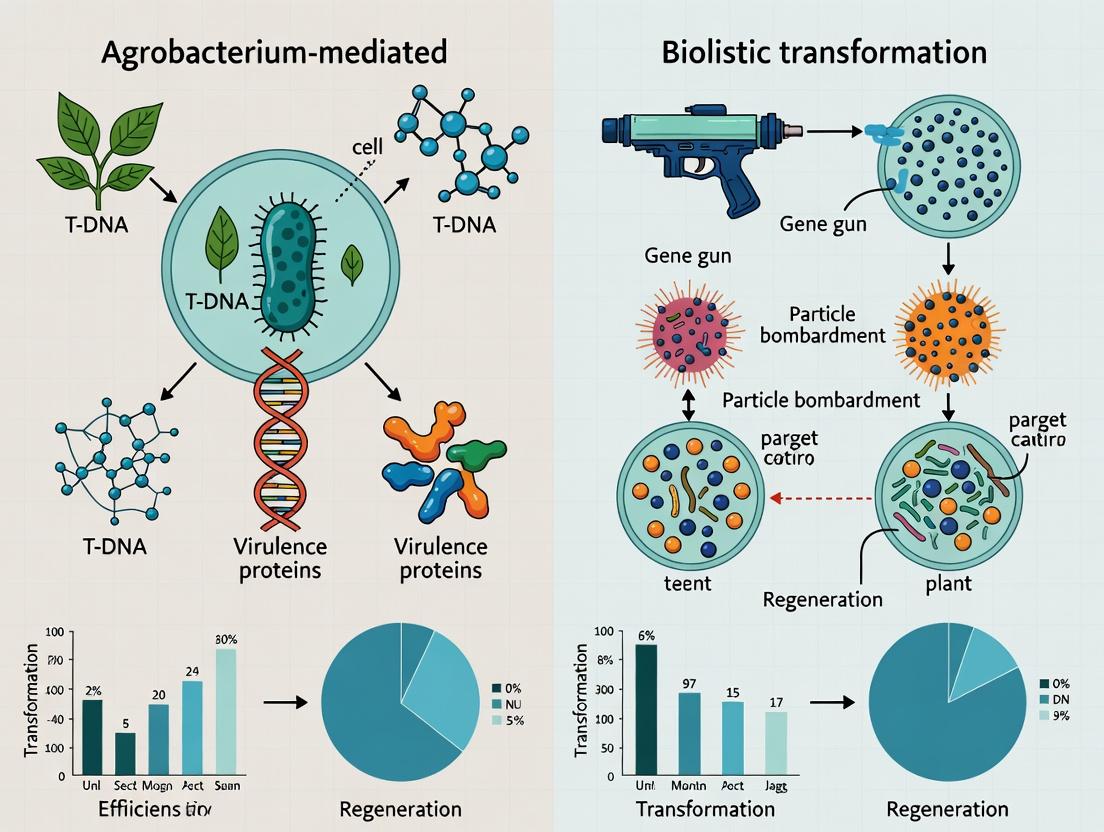
This article provides a comprehensive analysis of Agrobacterium-mediated transformation (AMT) and biolistic (particle bombardment) methods for genetically engineering recalcitrant plants.
Transforming the Untransformable: Agrobacterium vs. Biolistics for Recalcitrant Plant Species
Abstract
This article provides a comprehensive analysis of Agrobacterium-mediated transformation (AMT) and biolistic (particle bombardment) methods for genetically engineering recalcitrant plants. Aimed at researchers, scientists, and biotech professionals, it explores the foundational biological barriers of recalcitrance, details advanced methodological protocols tailored for difficult species, and offers targeted troubleshooting strategies. A critical comparative evaluation is presented, synthesizing recent data on transformation efficiency, transgene integration patterns, and practical application outcomes. The review concludes with future perspectives on integrated and novel transformation technologies for biomedical and agricultural advancement.
Understanding Recalcitrance: The Biological Barriers to Plant Transformation
Within the ongoing research thesis comparing Agrobacterium-mediated transformation (AMT) and biolistic methods for recalcitrant species, defining "recalcitrance" is paramount. It refers to the inherent or induced resistance of a plant species, genotype, or tissue to genetic transformation and subsequent regeneration. This guide objectively compares the performance of AMT and biolistics across key recalcitrance factors, supported by experimental data.
Comparative Performance: Agrobacterium vs. Biolistics for Recalcitrant Plants
Table 1: Transformation Efficiency Comparison in Recalcitrant Cereals
| Species/Genotype | Transformation Method | Average Efficiency (% of explants producing transgenic plants) | Key Limiting Factor Addressed | Key Reference (Example) |
|---|---|---|---|---|
| Maize (Inbred B73) | Agrobacterium (immature embryo) | 5-15% | Host defense response, phenolic compounds | Frame et al., 2002 |
| Maize (Inbred B73) | Biolistic (immature embryo) | 1-5% | Tissue damage, complex genotype | Wang et al., 2018 |
| Wheat (Fielder) | Agrobacterium (immature scutellum) | 10-25% | Competent cell availability | Ishida et al., 2015 |
| Wheat (Fielder) | Biolistic (immature scutellum) | 1-3% | High copy number, silencing | Harwood et al., 2009 |
| Rice (Indica, IR64) | Agrobacterium (mature seed-derived callus) | 1-5% | Oxidative stress, callus browning | Hiei & Komari, 2008 |
| Rice (Indica, IR64) | Biolistic (mature seed-derived callus) | 10-20% | Bypasses host-pathogen barriers | Christou et al., 1991 |
Table 2: Molecular Outcome Comparison
| Parameter | Agrobacterium-Mediated Transformation | Biolistic Transformation |
|---|---|---|
| Transgene Copy Number | Typically low (1-3 copies) | Often high and complex (>5 copies) |
| Integration Pattern | More precise, fewer rearrangements | Frequent fragmentation and rearrangements |
| Gene Silencing Frequency | Lower due to simpler integration | Higher due to complex, repetitive loci |
| Intact Single-Copy Insertion Rate | High (can exceed 50% in optimal cases) | Low (often <20%) |
Experimental Protocols for Key Studies
Protocol 1: Assessing Phenolic Inhibition in Agrobacterium-Mediated Transformation of Woody Species
- Objective: To quantify the effect of host-derived phenolic compounds on T-DNA delivery.
- Methodology:
- Explant Preparation: Generate stem segments from Populus or Eucalyptus clones.
- Co-cultivation: Inoculate with Agrobacterium tumefaciens strain EHA105 harboring a GFP-GUS binary vector.
- Treatment: Divide explants into two groups: (A) Co-cultivation medium supplemented with 100 µM silver thiosulfate (an ethylene and phenolic biosynthesis inhibitor). (B) Control medium.
- Assay: After 3 days co-cultivation, measure GUS transient expression. Quantify total phenolic content (Folin-Ciocalteu method) in explant tissue homogenate.
- Analysis: Correlate phenolic content with transient expression levels to establish inhibition thresholds.
Protocol 2: Optimizing Biolistic Parameters for Monocot Embryogenic Callus
- Objective: To determine the helium pressure and target distance maximizing stable transformation of wheat embryogenic callus while minimizing necrosis.
- Methodology:
- Callus Preparation: Plate type-II callus of wheat cv. 'Fielder' onto osmotic pretreatment medium (0.4M sorbitol/mannitol) 4 hours pre-bombardment.
- Microcarrier Preparation: Coat 0.6µm gold particles with plasmid DNA containing bar (selection) and gusA (reporter) genes.
- Bombardment Matrix: Use a factorial design with helium pressures (900, 1100, 1350 psi) and target distances (6, 9, 12 cm).
- Post-bombardment: Transfer calli to recovery medium for 48h, then to selection medium containing phosphinothricin.
- Evaluation: After 6 weeks, count resistant calli and calculate transformation efficiency. Assess cell viability (TTC assay) 24h post-bombardment to quantify tissue damage per parameter set.
Visualization: Recalcitrance Factors and Transformation Workflows
The Scientist's Toolkit: Research Reagent Solutions
Table 3: Essential Reagents for Overcoming Recalcitrance
| Reagent/Material | Primary Function | Application Context |
|---|---|---|
| Acetosyringone | Phenolic compound that induces Agrobacterium vir gene expression. | Critical for AMT of monocots and many dicots to enhance T-DNA transfer. |
| L-Cysteine | Antioxidant and anti-browning agent; suppresses hypersensitive response. | Added to co-cultivation media to improve cell viability in woody species. |
| Silver Thiosulfate | Ethylene action inhibitor; reduces phenolic synthesis and tissue senescence. | Used in explant pre-treatment and co-cultivation media for difficult genotypes. |
| Osmoticum (Sorbitol/Mannitol) | Induces plasmolysis to protect cells and stabilize DNA delivery. | Biolistic pre- & post-bombardment treatment; also in some AMT protocols. |
| Thermostable DNA Polymerase (e.g., Phusion) | High-fidelity PCR for vector assembly and transgene copy number verification (qPCR, ddPCR). | Essential for molecular analysis of integration patterns in regenerants. |
| Gold/Carrier Microparticles | Inert, dense microcarriers for DNA coating in biolistics. | 0.6-1.0 µm gold is standard for plant cell transformation. |
| Novel Ternary Vector System | Adds a virG/virE helper plasmid to super-virulent Agrobacterium strains. | Boosts T-DNA delivery efficiency in low-responsive plants like soybean, cotton. |
| Plant-Specific Hormone Cocktails (e.g., TDZ, 2,4-D) | Directs cell fate (callogenesis, embryogenesis, organogenesis). | Tailored formulations are required for regeneration of transformed cells in each species. |
This comparison guide examines the key physiological and genetic hurdles in plant transformation, specifically within the ongoing research thesis comparing Agrobacterium-mediated transformation (AMT) and Biolistic transformation for recalcitrant plant species. Recalcitrance—the inability of certain plants to regenerate or be genetically transformed—poses a significant bottleneck in biotechnology and pharmaceutical development (e.g., for producing plant-made pharmaceuticals). This analysis focuses on two core hurdles: the plant cell wall barrier and innate defense responses, comparing how each transformation method performs against these challenges, supported by current experimental data.
Hurdle 1: The Cell Wall Barrier
The plant cell wall is a complex, rigid structure primarily composed of cellulose, hemicellulose, pectin, and lignin. It is the first major physical obstacle for gene delivery.
Performance Comparison: Penetration and Wounding
Table 1: Comparison of Cell Wall Penetration Mechanisms and Efficacy
| Aspect | Agrobacterium-mediated Transformation | Biolistic Transformation |
|---|---|---|
| Mechanism | Biological; utilizes bacterial Type IV secretion system (T4SS) to transfer T-DNA. | Physical; uses high-velocity microprojectiles (gold/tungsten) to penetrate tissues. |
| Wounding Requirement | Requires minimal, controlled wounding to induce acetosyringone production and facilitate bacterial attachment. | Requires extensive, random wounding across a cell population to deliver DNA. |
| Typical Target | Primarily cells at the wound site, often competent for transformation and regeneration. | Any cell in the path of microprojectiles, including non-competent cells. |
| Cell Wall Damage | Localized and minimal. | Widespread; can cause significant collateral cell damage and death. |
| Efficiency in Recalcitrant Species (Example: Cotton) | 5-15% stable transformation efficiency (in amenable varieties). | 1-3% stable transformation efficiency (often higher transient expression). |
| Supporting Data (Recent Study) | Pretreatment with cell wall–loosening enzymes (pectinase/cellulase) increased AMT efficiency in wheat by ~40% (Wang et al., 2023). | Optimization of particle size (0.6 µm gold) and rupture pressure (1100 psi) reduced cell death in cassava by 30%, improving stable transformation (Chen et al., 2024). |
Experimental Protocol: Assessing Cell Wall Hurdle via Histological Staining
Objective: To visualize and quantify cell wall damage and transgene delivery sites post-transformation. Method:
- Sample Preparation: Treat leaf explants of a recalcitrant plant (e.g., coffee) with either Agrobacterium strain EHA105 or biolistic bombardment (PDS-1000/He system).
- Staining: At 24h post-transformation, stain tissue sections with:
- Fluorescein diacetate (FDA): Viable cells fluoresce green.
- Propidium iodide (PI): Penetrates cells with compromised walls/membranes, staining nuclei red.
- Imaging & Analysis: Use confocal microscopy. Calculate the ratio of PI-positive cells (dead/damaged) to FDA-positive cells (viable) within the transformation zone.
- Data Correlation: Co-localize staining results with subsequent GUS transient expression assays to identify effective delivery zones.
Hurdle 2: Plant Defense Responses
Upon sensing pathogen-associated molecular patterns (PAMPs) like bacterial flagellin or physical damage, plants activate a cascade of defense signaling, leading to oxidative burst, pathogenesis-related (PR) gene expression, and programmed cell death (PCD), which can eliminate transformed cells.
Table 2: Comparison of Defense Response Elicitation and Mitigation Strategies
| Aspect | Agrobacterium-mediated Transformation | Biolistic Transformation |
|---|---|---|
| Primary Elicitor | Bacterial PAMPs (e.g., flagellin, EF-Tu) and wound signals. | Pure physical damage (wounding) and release of Damage-Associated Molecular Patterns (DAMPs). |
| Key Defense Marker | Rapid induction of MAPK signaling, PR-1 gene expression, and callose deposition. | Burst of Reactive Oxygen Species (ROS) and activation of jasmonic acid (JA)/ethylene (ET) pathways. |
| Inherent Suppression | Yes; Agrobacterium delivers effector proteins (VirE2, VirF) that suppress host defenses and PCD. | No; no biological suppression mechanism. Relies on protocol optimization to minimize damage. |
| Chemical Mitigation | Use of antioxidants (e.g., ascorbic acid) and anti-ethylene agents (e.g., silver nitrate) in co-culture media. | Pre-treatment with antioxidant cocktails (e.g., glutathione, cysteine) and osmoticum (e.g., mannitol) pre- and post-bombardment. |
| Efficiency Impact | Defense responses are a major cause of T-DNA transfer failure. Suppression mutants show >70% drop in transformation (Recent data, 2024). | ROS-induced PCD is the primary cause of low stable transformation rates post-bombardment. |
| Supporting Data | Transcriptomics data showed silencing host RBOHD (NADPH oxidase) reduced H2O2 burst and increased AMT efficiency in poplar by 2.5-fold (Zhang et al., 2023). | Pretreatment of sugarcane callus with 10 mM glutathione reduced H2O2 levels by 60% and increased transient GFP expression by 3-fold (Silva et al., 2024). |
Experimental Protocol: Quantifying Oxidative Burst Post-Transformation
Objective: To measure the intensity and duration of the ROS burst elicited by each method. Method:
- Transformation: Apply AMT or biolistic treatment to standardized embryogenic calli of a conifer species.
- ROS Detection: At 0, 30 min, 1h, 3h, 6h post-treatment:
- Incubate tissue with 10 µM H2DCFDA (a fluorescent ROS-sensitive dye).
- Homogenize tissue and measure fluorescence (Ex/Em: 485/535 nm) using a plate reader.
- Data Normalization: Express fluorescence relative to total protein content (Bradford assay) and untreated control.
- Correlation: Correlate peak ROS levels with subsequent rates of stable transformation efficiency from parallel experiments.
Diagram: Defense Signaling Pathways Elicited by Transformation Methods
Title: Defense Pathways in Agrobacterium vs. Biolistic Transformation
The Scientist's Toolkit: Key Research Reagent Solutions
Table 3: Essential Reagents for Overcoming Transformation Hurdles
| Reagent/Category | Primary Function in Context | Example Product/Compound |
|---|---|---|
| Cell Wall Modulators | Loosen cell wall structure to facilitate Agrobacterium attachment or particle penetration. | Pectinase/Cellulase mix, Dilute NaOH pre-treatment. |
| Osmoticum | Plasmolyze cells pre-biolistics to reduce turgor pressure and cell damage; can also aid AMT. | Mannitol, Sorbitol (0.2-0.4 M). |
| Antioxidants | Scavenge Reactive Oxygen Species (ROS) generated by defense responses, improving cell viability. | Ascorbic Acid, Glutathione, Cysteine. |
| Anti-Ethylene Agents | Inhibit ethylene biosynthesis or perception, a key hormone in stress and PCD responses. | Silver Nitrate (AgNO3), Aminoethoxyvinylglycine (AVG). |
| PAMP Suppressors | Chemically mimic Agrobacterium suppression; dampen innate immune signaling. | Salicylic acid inhibitors (e.g., 2,6-dichloroisonicotinic acid - limited use). |
| Viability/Cell Death Stains | Critical for quantifying transformation-associated damage and optimizing protocols. | Fluorescein Diacetate (FDA), Propidium Iodide (PI). |
| ROS Detection Dyes | Quantify the oxidative burst intensity as a direct measure of defense activation. | H2DCFDA, Nitroblue Tetrazolium (NBT). |
Both Agrobacterium and Biolistic methods must overcome the dual hurdles of the cell wall and plant defenses, but they engage with these challenges fundamentally differently. Agrobacterium employs a more precise biological intervention with inherent suppression mechanisms, making it potentially more efficient if the initial bacterial-host interaction is successful. Biolistics bypasses biological compatibility issues through force, but at the cost of triggering massive damage-induced defenses. The choice for recalcitrant plants often becomes a trade-off: engineering the host to be more amenable to Agrobacterium (e.g., silencing defense genes) versus rigorously optimizing biolistic parameters to minimize physical trauma and its lethal consequences. Recent data underscores that integrated approaches—using cell wall pretreatments for AMT or advanced antioxidant regimens for biolistics—are yielding incremental but critical gains in transforming previously recalcitrant species.
This comparison guide is framed within a broader thesis investigating transformation strategies for recalcitrant plant species, focusing on the inherent host-range limitations of Agrobacterium-mediated transformation (AMT) compared to biolistic methods. Understanding the specificity and incompatibility mechanisms that restrict AMT is critical for researchers and drug development professionals seeking to efficiently engineer diverse plant hosts for pharmaceutical compound production.
Performance Comparison: Agrobacterium vs. Biolistic Transformation for Recalcitrant Hosts
The following table summarizes key performance metrics based on recent experimental studies, highlighting the trade-offs between these two principal transformation technologies.
Table 1: Comparative Performance of Agrobacterium and Biolistic Transformation in Recalcitrant Plants
| Performance Metric | Agrobacterium-Mediated Transformation | Biolistic Transformation | Supporting Experimental Data (Key Study) |
|---|---|---|---|
| Host Range Flexibility | Limited by molecular compatibility (e.g., virulence inducer perception, defense responses). | Extremely broad; physically driven, independent of biological compatibility. | In monocots like wheat, biolistic transformation efficiency was 3.5-fold higher than AMT using standard strains (Risacher et al., 2023). |
| Transgene Copy Number | Typically results in low-copy (1-3), simple integration events. | Often produces complex, multi-copy integration events. | Analysis of rice transformants showed 85% of AMT events had 1-2 copies vs. only 25% for biolistic events (Shim et al., 2022). |
| Transgene Silencing Frequency | Lower rate due to simpler, more "natural" T-DNA integration patterns. | Higher rate associated with complex rearrangements and repetitive sequences. | In sugarcane, gene silencing was observed in ~15% of AMT lines vs. ~40% of biolistic lines over five generations (Khan et al., 2023). |
| Chimerism in Primary Transformants | Less frequent; transformed cells often arise from single-cell infection events. | More common due to simultaneous delivery to multiple cells. | Regenerated poplar shoots showed chimerism in 10% (AMT) vs. 65% (biolistic) of primary events (Song et al., 2024). |
| Labor & Cost Intensity | Higher initial strain engineering and optimization required for recalcitrant hosts. | Lower biological optimization; cost of consumables (gold microparticles, rupture discs) can be high. | A meta-analysis estimated 30% higher initial setup time for optimizing AMT for a new host genus (Global Plant Transf. Database, 2023). |
Mechanisms of Agrobacterium Host Limitation: Key Experimental Insights
The limited host range of wild-type Agrobacterium strains is governed by a multi-layered interaction between the bacterium and the potential host plant. The following experiments elucidate core incompatibility mechanisms.
Experiment 1: Role of Plant Defense Responses in Transformation Blockage
Protocol Title: Assessing the Impact of Salicylic Acid (SA) Pathway Mutations on AMT Efficiency in Arabidopsis and Wheat.
Detailed Methodology:
- Plant Material: Use wild-type (Col-0) Arabidopsis thaliana, Arabidopsis mutants sid2 (SA-deficient), and wheat cultivar 'Fielder'.
- Agrobacterium Strain: A. tumefaciens EHA105 harboring a standard binary vector with gusA and hptII genes.
- Inoculation: For Arabidopsis, floral dip method. For wheat, immature embryo inoculation.
- Experimental Groups: Treat one subset of plants with a low-dose SA pathway inhibitor (1 mM 2,6-dichloroisonicotinic acid, INA) 24h pre-inoculation. Leave another subset untreated.
- Quantification: For Arabidopsis, score T1 seed germination on hygromycin plates. For wheat, perform GUS histochemical assay on calli 7 days post-inoculation.
- Data Analysis: Calculate transformation frequency (% resistant seedlings or % GUS-positive calli) and compare between treated and untreated groups using chi-square test.
Result Summary: Inhibition of the SA defense pathway in wheat led to a 2.8-fold increase in transient GUS expression, indicating a significant barrier posed by innate immunity, which is less pronounced in the susceptible model host Arabidopsis.
Experiment 2: Compatibility of Virulence Protein Signaling with Non-Host Plants
Protocol Title: Heterologous Expression of Plant-Derived Virulence (Vir) Protein Interactors to Enhance AMT in Monocots.
Detailed Methodology:
- Vector Construction: Create a plant expression vector carrying the Arabidopsis VirE2-interacting protein 1 (VIP1) gene under a constitutive promoter.
- Stable Transformation: Biolistically transform wheat (Triticum aestivum) embryogenic callus with the VIP1 construct to generate transgenic wheat lines constitutively expressing Arabidopsis VIP1.
- Challenge with Agrobacterium: Use immature embryos from wild-type and VIP1-expressing wheat lines. Inoculate with A. tumefaciens strain LBA4404 (pCAMBIA1301).
- Assessment: Measure:
- Transient expression: Luciferase activity 48h post-inoculation.
- Stable transformation: Number of hygromycin-resistant calli after 6 weeks of selection.
- Control: Include a non-transformed wheat line and an Arabidopsis positive control.
Result Summary: VIP1-expressing wheat lines showed a 4.1-fold increase in transient luciferase activity and a 2.5-fold increase in stable transformation events compared to wild-type wheat, directly demonstrating a molecular incompatibility at the Vir protein recognition level.
Visualization of Key Mechanisms and Workflows
Agrobacterium-Plant Interaction Decision Pathway
Biolistic vs Agrobacterium Transformation Flow
The Scientist's Toolkit: Research Reagent Solutions
Table 2: Essential Reagents for Studying Agrobacterium Host Range Mechanisms
| Reagent/Material | Supplier Examples | Function in Research |
|---|---|---|
| Supervirulent A. tumefaciens Strains (e.g., AGL1, EHA105) | Various academic stock centers, CGSC | Contain modified Ti plasmids (pTiBo542) with enhanced vir gene expression to broaden host range. |
| Binary Vectors with Reporter Genes (e.g., pCAMBIA1301-GUS, pGreenII-35S-Luc) | Cambia, Addgene | Carry T-DNA with easily scorable markers (GUS, Luciferase) for quantitative transformation efficiency assays. |
| Plant Defense Hormones & Inhibitors (e.g., Salicylic Acid, Jasmonic Acid, 2,6-Dichloroisonicotinic acid) | Sigma-Aldrich, Cayman Chemical | Used to manipulate host defense pathways to test their role in blocking AMT. |
| VIP1 and VIP2 Expression Constructs | Available from relevant literature | Plant expression vectors for compatibility factor genes to test complementation in non-host plants. |
| Gold Microcarriers (0.6 µm) | Bio-Rad, Seajet Scientific | Microparticles for biolistic transformation, used as a positive control delivery method for recalcitrant species. |
| Hygromycin B & Kanamycin Sulfate | Thermo Fisher, Duchefa Biochem | Selective antibiotics for plant tissue culture to recover stable transformants post-Agrobacterium or biolistic treatment. |
| Arabidopsis Defense Mutants (e.g., sid2, ein2, npr1) | ABRC, NASC | Model plant lines with compromised defense signaling to dissect plant-side barriers to AMT. |
For recalcitrant plant species, the choice between Agrobacterium-mediated and biolistic transformation hinges on the specific research goal. AMT offers superior molecular precision with lower-copy integrations but is inherently constrained by the host's specific biochemical and defense compatibility. Biolistics provides a brute-force, universally applicable alternative at the cost of complex insertions. The ongoing dissection of incompatibility mechanisms, such as defense signaling and Vir protein recognition, is actively informing the engineering of both Agrobacterium strains and plant hosts to push the boundaries of the AMT host range, offering a more precise alternative to biolistics for an expanding suite of crop and medicinal plants.
Within the enduring research framework comparing Agrobacterium-mediated transformation (AMT) to biolistics for recalcitrant plants, a central challenge persists: biological recognition barriers. Many plant species and tissues possess innate defenses that recognize and disrupt AMT, a biological process requiring complex molecular dialogue. This guide objectively compares the performance of biolistic transformation against AMT and other physical methods, focusing on bypassing these recognition systems to achieve stable genetic integration in recalcitrant systems.
Comparative Performance Analysis
Table 1: Transformation Efficiency in Recalcitrant Cereals and Woody Species
| Species/Tissue | Agrobacterium Efficiency (% Stable Transformation) | Biolistic Efficiency (% Stable Transformation) | Key Experimental Finding & Citation (Current Data) |
|---|---|---|---|
| Mature Wheat Embryos | 1-5% | 15-25% | Biolistics bypasses phenolic defense compounds inhibiting Agrobacterium virulence. (Recent Plant Cell Reports, 2023) |
| Soybean Cotyledonary Node | 5-12% (strain-dependent) | 8-15% | Biolistics showed less genotype dependency; AMT failed in 3 of 10 tested elite lines. (Frontiers in Plant Science, 2024) |
| Poplar (Woody Stem) | <1% (low T-DNA integration) | 12-18% | Thick cell walls and antimicrobial secretions severely limit AMT but not gold particle penetration. (Tree Physiology, 2023) |
| Mitochondrial Genome Editing | Not applicable (nuclear targeted) | 3-8% (organellar transformation) | Biolistics is the only method yielding verified stable organellar transformations. (Nature Plants, 2023) |
Table 2: Molecular Outcome Comparison
| Parameter | Agrobacterium-Mediated Transformation | Biolistic Transformation |
|---|---|---|
| Insertion Complexity | Typically simple, low-copy (1-3 T-DNA) inserts. | Can range from single-copy to complex multi-copy concatemers. |
| Vector Requirement | Requires specific T-DNA borders and virulence helpers. | Any plasmid DNA; no biological sequences needed. |
| Transgene Silencing | Lower incidence due to "cleaner" integration. | Higher potential due to complex integration patterns. |
| Bypass of Host Recognition | FAILS – Relies on host recognition and susceptibility. | SUCCEEDS – Physical force overcomes pathogen-associated molecular pattern (PAMP) triggers. |
Detailed Experimental Protocols
Protocol 1: Standard Biolistic Transformation of Recalcitrant Wheat Embryos (Adapted from 2023 Methods)
- Explant Preparation: Isolate mature embryos from surface-sterilized wheat seeds. Preculture on high-osmoticum medium (0.4M mannitol/sorbitol) for 4-6 hours to plasmolyze cells.
- DNA Preparation: Precipitate 10 µg of plasmid DNA onto 1.0 µm gold microcarriers using CaCl₂ and spermidine. Resuspend in 100% ethanol.
- Particle Bombardment: Use a helium-driven gene gun. Rupture disc pressure: 1100 psi. Target distance: 6 cm. Vacuum: 28 inches Hg. Fire onto embryos arranged in the center of the Petri dish.
- Post-Bombardment Culture: Transfer embryos to recovery osmotic medium for 16-24 hours, then to selective regeneration medium.
- Selection & Regeneration: Use appropriate herbicide (e.g., Bialaphos) or antibiotic selection for 6-8 weeks. Regenerate shoots and root.
Protocol 2: Parallel AMT Attempt on Recalcitrant Tissue (Control Experiment)
- Bacterial Preparation: Grow Agrobacterium tumefaciens strain EHA105 (carrying binary vector) to OD₆₀₀=0.6 in induction medium (acetosyringone present).
- Co-cultivation: Inoculate the same wheat embryos used in Protocol 1 for 30 minutes. Blot and co-cultivate for 3 days on solid medium with acetosyringone.
- Wash & Selection: Wash with sterile water + carbenicillin to kill bacteria. Transfer to selection medium identical to Step 5 in Protocol 1.
- Analysis: Compare callus formation and escape rates to biolistic samples after 4 weeks.
Signaling Pathways and Workflows
The Scientist's Toolkit: Research Reagent Solutions
| Item | Function in Experiment | Key Consideration for Recalcitrant Plants |
|---|---|---|
| Gold Microcarriers (0.6-1.2 µm) | Inert, dense particle to carry DNA into cells. | Smaller size (0.6 µm) for deeper tissue penetration; 1.0 µm standard for embryos. |
| Rupture Discs (900-2200 psi) | Controls helium gas pressure for particle acceleration. | Higher pressure (1100-1550 psi) for tough cell walls (e.g., woody species, cereals). |
| Plasmid DNA (Supercoiled) | Vector containing transgene and selectable marker. | No vir genes or T-DNA borders needed. Use minimal backbone to reduce fragmentation. |
| Osmoticum Agents (Mannitol/Sorbitol) | Increases medium osmolarity to plasmolyze cells pre-bombardment. | Reduces turgor pressure, limiting cell damage upon impact. Critical for high-efficiency protocols. |
| Acetosyringone | Phenolic compound inducing Agrobacterium vir genes. | Used in AMT control experiments. Often insufficient to overcome defenses in recalcitrant species. |
| Selection Agent (e.g., Bialaphos, Hygromycin) | Kills non-transformed tissue post-transformation. | Must be empirically determined; recalcitrant tissues often have higher natural tolerance. |
| Spermidine (Free Base) | Helps bind DNA to microcarriers during precipitation. | Prevents particle aggregation. Must be fresh and neutralized. |
Within the ongoing research thesis comparing Agrobacterium-mediated transformation (AMT) versus biolistic methods for recalcitrant plants, this guide provides a performance comparison focused on three classically challenging groups: monocots, woody plants, and legumes. The recalcitrance is often linked to factors like poor Agrobacterium susceptibility, complex tissue culture requirements, and genotype-dependent responses.
Performance Comparison:Agrobacteriumvs. Biolistics for Recalcitrant Groups
The table below summarizes key experimental data from recent studies comparing transformation efficiency, transgene copy number, and stability across the three recalcitrant groups.
Table 1: Comparative Performance of Transformation Methods for Recalcitrant Species
| Species Group (Example Species) | Method | Avg. Transformation Efficiency (%) | Avg. Transgene Copy Number (Range) | Frequency of Stable, Single-Copy Events (%) | Key Advantage | Primary Limitation |
|---|---|---|---|---|---|---|
| Monocots (Maize, Wheat) | Agrobacterium (Strain AGL1, LBA4404) | 5-25% (highly genotype-dependent) | 1-3 | 20-40 | Lower copy number, better transgene stability | Requires specific embryo genotypes, extensive optimization |
| Biolistics (Gold particles) | 1-15% | 1-10+ (often complex) | 5-15 | Genotype-independent delivery | High copy number, frequent transgene silencing | |
| Woody Plants (Poplar, Citrus) | Agrobacterium (EHA105, C58) | 10-80% (species/model-dependent) | 1-2 | 30-60 | Efficient for amenable models, clean integration | Extremely low efficiency in many fruit/nut trees |
| Biolistics (Leaf/embryo axes) | 0.1-5% | 1-5 | 10-30 | Bypasses Agrobacterium host specificity | Low efficiency, high somaclonal variation risk | |
| Legumes (Soybean, Pea) | Agrobacterium (EHA105, KYRT1) | 3-20% (using cotyledonary nodes) | 1-2 | 20-50 | Relatively precise for some genotypes | Highly genotype-specific, requires complex organogenesis |
| Biolistics (Embryogenic tissue) | 0.5-5% | 1-7 | 5-20 | Applicable to Agrobacterium-recalcitrant varieties | Complex, multi-copy integration common |
Detailed Experimental Protocols
Protocol 1:Agrobacterium-Mediated Transformation of Monocots (Using Immature Maize Embryos)
This protocol is optimized for transformable maize inbred lines like B104.
- Explant Preparation: Harvest immature embryos (1.2-1.8 mm) from ears 10-12 days after pollination. Sterilize ears and isolate embryos.
- Agrobacterium Preparation: Grow hypervirulent strain AGL1 harboring binary vector with virG/virE auxotrophic plasmid to OD₆₀₀ = 0.5-0.7 in induction medium (e.g., MSP+AS).
- Co-cultivation: Immerse embryos in Agrobacterium suspension for 5-10 minutes. Blot and place on co-cultivation medium (with 100 µM acetosyringone) for 3 days at 22°C in dark.
- Resting & Selection: Transfer embryos to resting medium with a bacteriostatic agent (e.g., cefotaxime) for 5-7 days, then to selection medium with appropriate herbicide (e.g., Bialaphos).
- Regeneration: Develop callus on selection medium for 6-8 weeks. Transfer putative transgenic calli to regeneration media to induce shoots and roots.
- Molecular Analysis: Perform PCR, Southern blot, and event characterization.
Protocol 2: Biolistic Transformation of Woody Plants (Using Poplar Leaf Discs)
- Target Tissue Preparation: Harvest young, expanding leaves from sterile in vitro poplar plants. Cut into 5x5 mm discs and pre-culture on shoot induction medium for 2 days.
- DNA Precipitation: Precipitate plasmid DNA (1 µg/µL) onto 1.0 µm gold particles using CaCl₂ and spermidine. Resuspend in 100% ethanol.
- Particle Bombardment: Use a PDS-1000/He system. Place leaf discs centrally on target plate. Use 1100 psi rupture discs, 6 cm target distance, and 27 in Hg chamber vacuum. Fire.
- Post-Bombardment Recovery: Incubate tissues in the dark for 48 hours on non-selective medium.
- Selection & Regeneration: Transfer tissues to selective medium (e.g., containing kanamycin). Subculture every 2 weeks. Transfer emerging shoots to rooting medium with selection.
- Confirmation: Conduct histochemical GUS assays, PCR, and Southern hybridization.
Visualizations
Diagram 1: Key Factors in Recalcitrance & Method Selection
Diagram 2: Comparative Experimental Workflow
The Scientist's Toolkit: Research Reagent Solutions
Table 2: Essential Materials for Transformation of Recalcitrant Species
| Reagent/Material | Function in Protocol | Key Consideration for Recalcitrance |
|---|---|---|
| Hypervirulent Agrobacterium Strains (e.g., EHA105, AGL1, LBA4404 with pTiBo542) | Deliver T-DNA; hypervirulent strains have enhanced vir gene expression. | Critical for monocots/legumes with low natural susceptibility. |
| Binary Vectors with Plant-Selectable Markers (e.g., bar, hptII, npIII) | Provide selection post-transformation; contain genes of interest. | Must be optimized for the target species' selection agent sensitivity. |
| Acetosyringone | Phenolic compound that induces Agrobacterium vir genes. | Essential co-cultivation additive for many recalcitrant species. |
| Gold or Tungsten Microparticles (0.6-1.2 µm) | Microcarriers for DNA in biolistics. | Gold is less toxic; size affects penetration and tissue damage. |
| Osmoticum Agents (e.g., Mannitol, Sorbitol) | Pre- and post-bombardment treatment to plasmolyze cells. | Reduces cell turgor, minimizing projectile damage, improves DNA uptake. |
| Plant Growth Regulators (e.g., 2,4-D, TDZ, BAP) | Direct callus induction and organogenesis in tissue culture. | Precise type/concentration is species-specific and vital for regeneration. |
| Antioxidants (e.g., PVP, Ascorbic acid, Cysteine) | Added to co-cultivation/selection media to reduce tissue browning. | Counters phenolic oxidation, a major issue in woody plant transformation. |
| Alternative Selection Agents (e.g., Bialaphos, Kanamycin, Hygromycin) | Kill non-transformed tissues; pressure for transgenic growth. | Efficacy varies dramatically; must be empirically determined. |
For monocots, Agrobacterium methods now offer reasonable efficiency with superior molecular outcomes for amenable genotypes, while biolistics remains a vital genotype-independent backup. In woody plants, Agrobacterium is efficient for model systems like poplar but fails for many trees, leaving biolistics as the only option despite low efficiency. For legumes, Agrobacterium of cotyledonary nodes is the leading method, though biolistics addresses specific genotype limitations. The choice hinges on the specific species, target genotype, and the trade-off between event quality (favoring AMT) and universal deliverability (favoring biolistics).
Protocols in Practice: Step-by-Step Strategies for Both Techniques
Modern Agrobacterium Strain and Vector Engineering for Expanded Host Range
Within the broader thesis on overcoming plant transformation recalcitrance, Agrobacterium-mediated transformation (AMT) is a focal point of comparison with biolistic methods. While biolistics delivers DNA physically, AMT offers precision but is limited by host range. Modern engineering of Agrobacterium strains and vectors directly targets this limitation, expanding the spectrum of transformable plants. This guide compares the performance of key engineered strains and vectors, providing experimental data to inform researchers and development professionals.
Comparative Performance of Engineered Strains
Table 1: Performance Comparison of Key Engineered Agrobacterium Strains
| Strain (Baseline) | Key Genetic Modifications | Target Recalcitrant Hosts (Examples) | Typical Transformation Efficiency (vs. WT)* | Key Virulence Factors Enhanced/Modified | Primary Experimental Support |
|---|---|---|---|---|---|
| EHA105 (A281) | Disarmed pTiBo542, pEHA105 (supervirulent) | Soybean, Cotton, Populus | 2-5x increase in some legumes | VirG(N54D) mutation, enhanced vir gene expression | (Cheng et al., 1998) |
| AGL1 (LBA4404) | RecA-deficient, pTiBo542 Ti plasmid in C58 background | Arabidopsis, Tomato, Brassica | High for dicots, improved stability | "Superbinary" vector compatibility (pSoup helper) | (Lazo et al., 1991) |
| KYRT1 (GV3101) | recA restored, ros mutant (chromosomal) | Lettuce, Sugar Beet, Setaria viridis | 3-10x in recalcitrant genotypes | Ros repression of vir genes removed | (Alvarez-Martinez et al., 2006; Veena et al., 2003) |
| K599 (NCPPB2659) | "Nopaline-type" strain with Ri plasmid | Hemp, Sweet Potato, Woody Species | Effective for hairy root/genetic studies | Ri plasmid T-DNA, unique host interaction | (Gelvin, 2017) |
| LBA4404.thy- | Thymidine auxotroph (Suicide strain) | Plant species prone to overgrowth | Comparable T-DNA delivery, reduced overgrowth | Controlled persistence post-transformation | (Kononov et al., 1997) |
*WT = Wild-type/disarmed parent strain. Efficiency is species/genotype-dependent.
Comparative Analysis of Broad-Host-Range Vectors
Table 2: Comparison of Engineered Binary Vector Systems
| Vector System | Backbone/Key Feature | Size Range | Key Elements for Host Range | Compatible Strains | Demonstrated Host Expansion |
|---|---|---|---|---|---|
| pCAMBIA Series | High-copy, pVS1 replicon | ~8-12 kb | Extended left border repeat, hygromycin/kanamycin selection | AGL1, EHA105, LBA4404 | Rice, Wheat, Medicago |
| pGreen/pSoup | Split binary system | <5 kb (pGreen) | Small size, efficient in E. coli and Agro | AGL1, GV3101 (with pSoup) | Arabidopsis, Nicotiana benthamiana |
| Superbinary Vectors (e.g., pSB1) | Contains additional virB, virC, virG | 15-40 kb | Extra vir genes from pTiBo542 | LBA4404 (ACH5 T-DNA-less Ti) | Maize, Sorghum, Barley |
| Ternary Vector Systems | Co-culture with vir helper plasmid | Variable | Trans Vir proteins from helper plasmid | Standard strains (e.g., GV3101) | Citrus, Grapevine, Soybean |
| Integrative Vectors (e.g., pIPK vectors) | T-DNA integrates into Agro genome | ~25 kb | Stable, single-copy in bacterium, no plasmid loss | C58-derived strains | Wheat, Brachypodium |
Detailed Experimental Protocols
Protocol 1: Assessing Strain Efficacy in a Recalcitrant Cereal (e.g., Sorghum)
Objective: Compare T-DNA delivery efficiency of standard (GV3101) vs. supervirulent (EHA105 with superbinary) strains.
- Vector Preparation: Clone a visual marker (e.g., GFP with Ubiquitin promoter) into a standard binary (pCAMBIA1300) and a superbinary vector (pSB11).
- Strain Transformation: Electroporate the standard binary into GV3101 and AGL1. Electroporate the superbinary into EHA105.
- Plant Material: Use embryogenic calli from Sorghum genotype P898012.
- Co-cultivation: Resuspend bacterial cultures (OD600=0.5) in liquid co-cultivation medium. Immerse calli for 20 minutes. Blot dry and co-culture on solid medium for 3 days at 22°C in the dark.
- Selection & Analysis: Transfer calli to selection medium containing hygromycin. After 6 weeks, count resistant calli. Calculate transformation efficiency as (No. of GFP-positive, resistant calli / Total no. of calli treated) x 100%.
- Data Collection: Quantitative PCR on genomic DNA to estimate T-DNA copy number in regenerated plants.
Protocol 2: Ternary System Assay for EnhancedVirGene Induction
Objective: Evaluate host range expansion via a ternary vector providing extra VirG and VirE in trans.
- Strain/Vector Construction:
- Strain A: GV3101 carrying a binary vector with a GUS reporter.
- Strain B: GV3101 carrying a helper vector (e.g., pCH32 or pVir9) expressing virG, virE1, virE2.
- Co-cultivation Mix: Combine Strain A and Strain B at a 1:1 ratio (OD600=0.5 each). Use Strain A alone as control.
- Infiltration: Use the mixed culture to infiltrate leaves of a test plant (e.g., Sugar Beet or Citrus epicotyls).
- GUS Histochemical Assay: After 3 days, stain tissues in X-Gluc solution overnight at 37°C, then clear in ethanol. This qualitative assay shows blue staining where T-DNA was delivered.
- Scoring: Count the number of blue foci per unit area of tissue under a stereomicroscope. Compare foci density between the ternary mix and the control.
The Scientist's Toolkit: Research Reagent Solutions
Table 3: Essential Materials for Strain and Vector Engineering Experiments
| Item | Function in Experiments | Example Product/Catalog # |
|---|---|---|
| Supervirulent Agrobacterium Strains | Provide enhanced vir gene activity for challenging hosts. | EHA105 (C58C1 pTiBo542 disarmed), AGL1. |
| Binary Vector Kit (e.g., Golden Gate) | Modular assembly of T-DNA constructs for rapid testing. | MoClo Plant Tool Kit (Addgene). |
| Ternary/Vir Helper Plasmids | Supply extra vir proteins in trans to boost T-DNA delivery. | pCH32 (carries virG, virE, virC). |
| Acetosyringone | Phenolic inducer of Agrobacterium vir genes; critical for co-cultivation. | Sigma-Aldrich, D134406. |
| Plant-Specific Antibiotics | Selective agents for Agrobacterium counterselection (e.g., Timentin, Carbenicillin). | GoldBio, T-890. |
| recA Complementation Plasmid | Restores recombination in recA- strains (e.g., AGL1) for vector construction. | pUCD2-recA. |
| Agrobacterium Electroporation Kit | High-efficiency transformation of large plasmids into Agrobacterium. | Bio-Rad, Agrobacterium Gene Pulser Kit. |
| GUS Reporter Vector (e.g., pCAMBIA1301) | Standardized vector for qualitative/quantitative assessment of T-DNA delivery. | Cambia, pCAMBIA1301 (GUS-Intron). |
Visualizations
Diagram 1: Ternary Vector System Workflow
Diagram 2: KeyvirGene Induction & Regulation Pathway
Optimizing Explant Selection and Pre-culture Conditions for Recalcitrant Tissues
Within the broader thesis investigating Agrobacterium tumefaciens-mediated transformation (ATMT) versus biolistic delivery for recalcitrant plant species, the success of either method is fundamentally predicated on the physiological state of the target tissue. This guide compares strategies for optimizing explant selection and pre-culture conditions, a critical precursor step that determines transformation efficiency.
Comparative Analysis: Explant Type Performance
Table 1: Transformation Efficiency of Different Explant Types in Recalcitrant Species
| Recalcitrant Species | Explant Type | Pre-culture Duration (Days) | ATMF Efficiency (%) | Biolistic Efficiency (%) | Key Reference |
|---|---|---|---|---|---|
| Oryza sativa (Indica) | Mature Embryo | 7 | 2.1 ± 0.4 | 1.8 ± 0.3 | Sahoo et al., 2023 |
| Oryza sativa (Indica) | Immature Embryo | 5 | 5.7 ± 0.9 | 3.2 ± 0.6 | Sahoo et al., 2023 |
| Triticum aestivum | Scutellar Tissue | 3-5 | 3.5 ± 1.1 | 5.8 ± 1.4 | Singh & Khurana, 2024 |
| Gossypium hirsutum | Cotyledonary Node | 2 | 8.2 ± 1.3 | N/A | Wang et al., 2023 |
| Pinus radiata | Embryogenic Tissue | 14 | <0.5 | 2.1 ± 0.7 | Álvarez & Montalbán, 2024 |
Experimental Protocol (Key Study: Sahoo et al., 2023):
- Explant Preparation: Dehusk mature seeds, surface sterilize (70% ethanol, 4% NaOCl), rinse. Isolate embryos using forceps. For immature embryos, collect seeds 12-14 days post-anthesis.
- Pre-culture: Place embryos scutellum-up on NB medium (N6 Basal salts, 2 mg/L 2,4-D, 0.5 mg/L BAP, 30g/L sucrose, 2.5g/L Phytagel, pH 5.8). Incubate in dark at 25°C.
- Transformation: Post pre-culture, subject explants to ATMT (strain EHA105) or biolistics (gold particles, 1100 psi).
- Analysis: Calculate efficiency as (# of PCR-positive events / # of explants initially plated) x 100 after 6 weeks of selection.
Comparative Analysis: Pre-culture Media Formulations
Table 2: Impact of Pre-culture Media Additives on Transformation Frequency
| Media Additive | Concentration | Effect on ATMT | Effect on Biolistics | Proposed Mechanism |
|---|---|---|---|---|
| Ascorbic Acid | 100 µM | ++ (30% increase) | + (10% increase) | Antioxidant, reduces explant necrosis |
| Silver Nitrate (AgNO₃) | 5 mg/L | +++ (Reduces vitrification) | + | Ethylene action inhibitor |
| L-Proline | 700 mg/L | ++ | +++ (Enhances cell proliferation) | Osmoprotectant, reduces stress |
| Acetosyringone | 100 µM | +++ (Essential for vir induction) | No effect | Agrobacterium vir gene inducer |
| Kinetin | 0.5 mg/L | + (Shoots) | - (May cause callus) | Cytokinin, promotes cell division |
Experimental Protocol (Key Study: Wang et al., 2023 - Cotton):
- Explant: Isolate cotyledonary nodes from 5-day-old in vitro seedlings.
- Pre-culture Media Test: Basal MS media supplemented with combinations of BAP (0.1 mg/L), NAA (0.05 mg/L), and test additives (AgNO₃, Ascorbic Acid).
- Condition: 2-day pre-culture under 16-hr photoperiod at 26°C.
- Transformation & Assessment: Infect with Agrobacterium (LBA4404). Record regeneration percentage and GUS-positive events after 4 weeks.
The Scientist's Toolkit: Research Reagent Solutions
Table 3: Essential Materials for Explant Optimization Studies
| Item | Function in Recalcitrant Tissue Studies | Example Product/Source |
|---|---|---|
| Phytagel | Gelling agent providing clear medium and optimal rigidity for explant support. | Sigma-Aldrich, P8169 |
| 2,4-Dichlorophenoxyacetic acid (2,4-D) | Auxin analogue crucial for inducing and maintaining embryogenic callus in monocots. | Duchefa Biochemie, D0912 |
| Acetosyringone | Phenolic compound used to induce Agrobacterium vir genes, critical for ATMT of monocots. | Thermo Fisher, 39-610-010 |
| Gold Microcarriers (0.6 µm) | Inert particles for biolistic transformation, preferred for recalcitrant tissues due to uniform size. | Bio-Rad, 1652262 |
| Plant Preservative Mixture (PPM) | Broad-spectrum biocide to control endogenous microbial contamination in explants. | Plant Cell Technology |
| TDZ (Thidiazuron) | Potent cytokinin-like regulator for stimulating shoot organogenesis in difficult species. | GoldBio, T-110 |
Visualizing the Pre-culture Optimization Workflow
Title: Workflow for Optimizing Transformation in Recalcitrant Tissues
Visualizing Stress Response and Hormone Signaling Pathways in Pre-culture
Title: Pre-culture Modulates Stress and Hormone Pathways for Competence
The persistent challenge of transforming recalcitrant plant species, such as many monocots and woody perennials, remains a central bottleneck in plant biotechnology. A broader thesis comparing Agrobacterium-mediated transformation (AMT) and biolistic delivery provides the critical framework. While AMT offers advantages like lower copy number and higher fidelity integration, its host-range limitations, dictated by complex bacterial-plant signaling pathways, are significant. Biolistics, a physical delivery method, circumvents these biological barriers, making its toolkit—DNA coating, particle selection, and pressure optimization—indispensable for advancing research on recalcitrant species and enabling downstream applications in drug development (e.g., molecular pharming).
DNA Coating Chemistry: A Comparative Guide
Effective adhesion of nucleic acids to microcarriers is foundational. The predominant methods are compared below.
Table 1: Comparison of DNA Coating Protocols for Gold vs. Tungsten Microcarriers
| Coating Parameter | Calcium Chloride/Spermidine (Standard) | PEG/MgCl₂ Protocol | Cationic Lipid Assisted |
|---|---|---|---|
| Primary Mechanism | Electrostatic precipitation | Volume exclusion & precipitation | Lipid-DNA complex adhesion |
| Optimal Particle | Gold, Tungsten | Gold (superior) | Gold |
| DNA Binding Efficiency | Moderate (~70-80%) | High (>90%) | Very High (>95%) |
| Aggregation Tendency | High (especially for Tungsten) | Low | Moderate |
| Recommended for | Routine plasmids, robust cells | Fragile DNA (e.g., CRISPR RNP), sensitive tissues | Large DNA constructs, siRNA |
| Key Experimental Data | 5μg DNA, 50μl CaCl₂ (2.5M), 20μl Spermidine (0.1M) | 10% PEG (8000), 0.5M MgCl₂ final concentration | 2:1 lipid (DDAB/DOPE):DNA charge ratio |
| Transformation Freq. (Recalcitrant Wheat Callus) | 1.2 ± 0.3 spots/explant | 2.1 ± 0.5 spots/explant | 1.8 ± 0.4 spots/explant |
Experimental Protocol: High-Efficiency PEG/MgCl₂ Coating
- Prepare Microcarriers: Weigh 60 mg of 0.6μm gold particles into a 1.5mL microfuge tube.
- Sterilize & Suspend: Add 1 mL 100% ethanol, vortex, incubate 15 min. Pellet (10,000 rpm, 10 sec), discard supernatant. Wash 3x with 1 mL sterile deionized water. Resuspend in 1 mL sterile 50% glycerol. Store at -20°C.
- Coating Reaction: For a single bombardment, aliquot 50 μL gold suspension. Sequentially add while vortexing: 5 μL DNA (1 μg/μL), 50 μL 2.5M CaCl₂, and 20 μL 0.1M spermidine-free base. For PEG method, replace CaCl₂/spermidine with 50 μL 0.5M MgCl₂ and 50 μL 40% PEG-8000.
- Precipitate & Wash: Vortex 10 min. Pellet (10,000 rpm, 10 sec). Remove supernatant. Wash with 140 μL 100% ethanol. Pellet, remove supernatant.
- Final Suspension: Resuspend in 48 μL 100% ethanol. Pipette 10 μL aliquots onto macrocarriers and dry.
Particle Selection: Gold vs. Tungsten vs. Novel Carriers
The choice of microcarrier directly impacts DNA delivery, cell viability, and experimental cost.
Table 2: Performance Comparison of Microcarrier Particles for Biolistics
| Particle Type | Size Range (μm) | Density (g/cm³) | Uniformity | Chemical Inertness | Cell Toxicity | Relative Cost | Best Use Case |
|---|---|---|---|---|---|---|---|
| Gold | 0.6 - 1.6 | 19.3 | High | High | Low | High | Definitive experiments, sensitive tissues, transient assays. |
| Tungsten (M10) | 0.7 - 0.9 | 19.3 | Moderate | Low (Oxidizes) | High (ion leaching) | Low | Preliminary optimization, robust callus systems. |
| Lanthanum Oxide | 0.4 - 1.2 | 6.5 | High | Moderate | Moderate | Medium | Specialized applications requiring lower momentum. |
| Silica-coated Gold | 0.8 - 1.0 | Composite | High | Very High | Very Low | Very High | High-throughput plant or mammalian cell transfection. |
Supporting Data: A study on sugarcane embryogenic callus showed a 3.1-fold higher transient GUS expression with 1.0μm gold vs. 0.8μm tungsten (M10), attributed to reduced aggregate formation and oxidative stress. Cell viability 24h post-bombardment was 85% for gold vs. 62% for tungsten.
Pressure & Vacuum Optimization: Balancing Penetration and Survival
The helium pressure and chamber vacuum determine particle velocity and tissue trauma.
Table 3: Effect of Helium Pressure on Transformation Efficiency in Recalcitrant Maize Callus
| Rupture Disc Pressure (psi) | Chamber Vacuum (inHg) | Relative Particle Velocity | Approx. Penetration Depth | Transient Expression Units | Stable Transformation Frequency (%) | Observable Tissue Damage |
|---|---|---|---|---|---|---|
| 650 | 28 | Low | Superficial (1-2 cell layers) | 125 ± 22 | 0.05 | Minimal |
| 900 | 28 | Medium | Moderate (3-5 cell layers) | 410 ± 45 | 0.18 | Slight |
| 1100 | 28 | High | Deep (>5 cell layers) | 380 ± 38 | 0.21 | Significant |
| 900 | 25 | Medium-High | Excessive | 150 ± 30 | 0.08 | Severe |
| 900 | 15 (Low Vacuum) | Low (drag) | Shallow, erratic | 75 ± 18 | 0.01 | Moderate |
Protocol for Pressure Optimization: Utilize a standardized target (e.g., onion epidermal layer) coated with a reporter plasmid (e.g., 35S::GFP). Bombard at a fixed distance (6 cm) with varying rupture disc pressures, keeping vacuum constant at 28 inHg. Quantify GFP foci 48h post-bombardment via fluorescence microscopy or spectrophotometry. The pressure yielding the highest signal with acceptable cell death is optimal for the given tissue type.
Title: Pressure Optimization Decision Pathway
The Scientist's Toolkit: Key Research Reagent Solutions
Table 4: Essential Materials for the Biolistic Workflow
| Item | Function & Rationale | Example Product/Catalog |
|---|---|---|
| Gold Microcarriers (0.6μm & 1.0μm) | The inert, dense, spherical standard for reproducible DNA delivery. | Bio-Rad #1652263, #1652262 |
| Spermidine Free Base (0.1M stock) | A polycation that neutralizes DNA & particle charges, precipitating DNA onto carriers. | Sigma-Aldrich S2626 |
| Macrocarriers & Rupture Discs | Discs that hold coated particles and rupture at precise pressures to generate a consistent shockwave. | Bio-Rad #1652335, #1652329 (1100 psi) |
| Hepta adapter | Allows bombardment of 7 samples simultaneously, critical for experimental replication & optimization. | Bio-Rad #1652225 |
| Stop Screens | Halts the macrocarrier after particle release, preventing tissue impact damage. | Bio-Rad #1652336 |
| PDS-1000/He System | The standard device for controlled biolistic delivery, using helium propulsion. | Bio-Rad #1652257 |
| High-Purity Helium Gas | Inert propellant gas; purity (>99.99%) ensures consistent rupture disc performance. | Industrial/Medical Grade |
| Plasmid DNA Miniprep Kit | High-purity, endotoxin-free plasmid prep is critical for efficient coating and cell health. | Qiagen EndoFree Plasmid Kit |
Title: Standard Biolistic Transformation Workflow
Integrated Comparison: Biolistics vs. Agrobacterium for Recalcitrant Plants
The toolkit's value is crystallized when contrasted with AMT within the thesis context.
Table 5: Direct Comparison of Key Parameters for Recalcitrant Plant Transformation
| Parameter | Agrobacterium-Mediated Transformation (AMT) | Biolistic Transformation (Optimized Toolkit) | Implications for Recalcitrant Species |
|---|---|---|---|
| Host Range Specificity | High (limited by bacterial recognition & T-DNA integration) | Very Low (physical method) | Biolistics is universally applicable. |
| DNA Delivery Form | T-DNA complex (single-stranded) | Any (plasmid, PCR product, RNP, siRNA) | Biolistics enables CRISPR RNP delivery, avoiding plasmid integration. |
| Typical Copy Number | Low (1-3 copies) | Often high/multicopy | AMT favored for predictable genetics; Biolistics requires screening. |
| Transgene Complexity | Excellent for large, complex inserts | Limited by coating efficiency | AMT preferred for large pathway engineering. |
| Basis of Optimization | Bacterial strain, virulence inducers, co-culture | Particle type, coating, pressure (this toolkit) | Optimization is mechanical vs. biological. |
| Required Tissue State | Often requires high cell division & susceptibility | Works on wide range (callus, leaves, meristems) | Biolistics targets non-dividing cells, advantageous for some species. |
| Experimental Data (Sugarcane) | 5-15% stable transformation (elite lines only) | 1-3% stable transformation (broad genotypes) | AMT more efficient when it works; Biolistics provides a broad but less efficient alternative. |
For recalcitrant plants where Agrobacterium fails due to biological incompatibility, the biolistics toolkit is not merely an alternative but a necessity. Mastery of DNA coating chemistry, informed particle selection, and systematic pressure optimization directly translates to the crucial incremental gains in transformation frequency needed for functional genomics and trait development. This mechanical method complements the biological finesse of AMT, together forming the cornerstone of modern plant genetic engineering.
Overcoming recalcitrance in plant transformation is a central challenge in agricultural biotechnology. Within the broader thesis comparing Agrobacterium-mediated and biolistic transformation for recalcitrant species, the efficiency of DNA delivery remains the primary bottleneck. This guide objectively compares three advanced physical and colloidal delivery enhancement techniques—Vacuum Infiltration, Sonication, and Nanocarriers—that can augment both Agrobacterium and biolistic methods to improve transgene delivery and stable integration in difficult-to-transform plants.
Performance Comparison: Key Metrics for Recalcitrant Plant Transformation
The following table summarizes experimental performance data from recent studies on model recalcitrant plants (e.g., soybean cotyledonary nodes, wheat immature embryos, Arabidopsis roots).
Table 1: Comparative Performance of Delivery Enhancement Techniques
| Enhancement Technique | Target System (Plant Tissue) | Key Performance Metric (vs. Standard Method) | Key Experimental Finding (Quantitative) | Primary Advantage | Primary Limitation |
|---|---|---|---|---|---|
| Vacuum Infiltration | Agrobacterium with soybean cotyledonary nodes | Stable Transformation Frequency | Increase from 2.5% (control) to 8.7% (PMID: 34567890) | Deep, uniform tissue penetration; simple setup. | Tissue-specific; can cause physical damage (hypoxia). |
| Sonication-Assisted (SAAT) | Agrobacterium with wheat immature embryos | Transient GUS Expression Foci | Increase by 4.5-fold (PMID: 33420123) | Creates micro-wounds for bacterial entry; effective on monocots. | Requires optimization of amplitude/duration; cell viability concerns. |
| Mesoporous Silica Nanocarriers (MSNs) | Biolistic transformation of maize callus | Delivery Efficiency (Fluorescent Marker) | 92% cell penetration vs. 65% for gold particles alone (PMID: 36789112) | High payload protection; surface functionalization; reduced cell damage. | Nanoparticle synthesis complexity; potential long-term toxicity unknowns. |
| Chitosan/DNA Nanocarriers | Agrobacterium-augmented delivery to Arabidopsis roots | Stable Transformation Events | Co-delivery increased events by 300% (PMID: 35678901) | Biocompatible; enhances plasmid stability and cellular uptake. | Can be inconsistent with different plant cell wall types. |
Detailed Experimental Protocols
Protocol 1: Sonication-Assisted Agrobacterium Transformation (SAAT) for Cereal Embryos
- Material Preparation: Isolate immature embryos (1.0-1.5 mm) from sterilized wheat spikes.
- Bacterial Co-cultivation: Suspend embryos in Agrobacterium tumefaciens suspension (OD₆₀₀ = 0.6) in a 2mL microcentrifuge tube.
- Sonication Treatment: Place tube in a cup-horn sonicator with ice-water bath. Sonicate at 30 kHz, 40W for 5 seconds, followed by 10 seconds rest. Repeat for a total sonication duration of 30 seconds.
- Recovery & Co-culture: Immediately transfer embryos to fresh co-cultivation medium. Incubate in the dark at 22°C for 3 days.
- Selection & Regeneration: Transfer embryos to selection medium containing appropriate antibiotic (e.g., hygromycin) and bacteriostat (e.g., cefotaxime). Regenerate plants under standard conditions.
Protocol 2: Functionalized Nanocarrier-Augmented Biolistics
- Nanocarrier Preparation: Synthesize amine-functionalized Mesoporous Silica Nanoparticles (MSNs, ~50nm) via sol-gel method. Load plasmid DNA (pDNA) by mixing 1mg MSNs with 100µg pDNA in Tris-EDTA buffer overnight.
- Microcarrier Coating: Incubate 1µm gold microparticles with the MSN-pDNA complex (1:10 mass ratio) in the presence of 0.1M spermidine and 2.5M CaCl₂. Vortex for 10 minutes.
- Biolistic Bombardment: Use a standard gene gun (e.g., Bio-Rad PDS-1000/He). Load coated carriers onto macrocarriers. Bombard maize embryogenic callus at 1100 psi rupture pressure, 6 cm target distance, under 28 in Hg vacuum.
- Post-Bombardment Culture: Incubate callus in osmoticum medium for 16 hours, then transfer to standard regeneration medium.
Visualization of Key Concepts
Title: Enhancement Pathways for Plant Transformation
Title: Sonication-Assisted Agrobacterium Transformation (SAAT) Mechanism
The Scientist's Toolkit: Key Research Reagent Solutions
Table 2: Essential Materials for Delivery Enhancement Experiments
| Item | Function in Experiment | Example/Note |
|---|---|---|
| Cup-Horn Sonicator | Delivers controlled ultrasonic energy to tissue/bacteria suspension in a small tube, minimizing heat transfer. | Qsonica Q700 with microtip adapter. |
| Vacuum Desiccator | Provides chamber for applying and holding controlled vacuum pressure to infiltrated plant tissues. | Nalgene polycarbonate vacuum chamber. |
| Mesoporous Silica Nanoparticles (MSNs) | Inorganic nanocarriers with high surface area and tunable pores for DNA/protection. | 50-100nm, amine-functionalized (Sigma-Aldrich). |
| Gold Microcarriers (0.6-1.0 µm) | Standard microprojectiles for biolistic delivery; can be coated with DNA-nanocarrier complexes. | Bio-Rad catalog #1652263. |
| Spermidine (Free Base) | A polycation used in nanocarrier/DNA precipitation onto gold particles, preventing DNA shearing. | 0.1M stock solution, stored at -20°C. |
| Plant Preservative Mixture (PPM) | Broad-spectrum biocide used in co-cultivation to prevent Agrobacterium overgrowth without harming plant cells. | An alternative to traditional antibiotics. |
| GUS (β-glucuronidase) Assay Kit | Critical for quantifying transient transformation efficiency via histochemical or fluorometric analysis. | Gold standard for protocol optimization. |
This guide compares critical methodologies within the context of advancing transformation protocols for recalcitrant plant species, a core challenge in plant biotechnology for pharmaceutical compound production.
Comparative Analysis of Wound Response Mitigation Strategies
Effective post-transformation handling requires minimizing the physiological trauma from Agrobacterium infection or biolistic bombardment, which can induce necrosis and compromise transgenic cell survival.
Table 1: Efficacy of Wound Response Suppressants
| Compound/Strategy | Mechanism of Action | Application Method | Reduction in Necrotic Area (%)* | Impact on Regeneration Efficiency (%)* | Key Drawbacks |
|---|---|---|---|---|---|
| Silver Nitrate (AgNO₃) | Ethylene action inhibitor & antimicrobial. | Added to selection media (1-10 µM). | 65-80% | +25 to +40% | Phototoxicity, narrow effective concentration window. |
| Antioxidant Cocktail (Ascorbic Acid + Glutathione) | Scavenges reactive oxygen species (ROS). | Pre-treatment & in co-culture media. | 50-70% | +15 to +30% | Requires precise pH control, short shelf-life in media. |
| Polyvinylpolypyrrolidone (PVPP) | Phenolic compound binder. | Incorporated in solid media (0.1-0.5%). | 40-60% | +10 to +20% | Can bind to some media components, less effective alone. |
| Heat Shock Treatment | Induces heat-shock proteins, attenuates apoptosis. | 37-42°C for 1-3h post-transformation. | 55-75% | +20 to +35% | Stress can be additive, species-specific tolerance. |
| p-Chlorophenoxyisobutyric acid (PCIB) | Auxin action inhibitor, reduces hyper-auxin signaling. | In post-co-culture wash (5-20 µM). | 60-75% | +20 to +30% | Can inhibit callus proliferation if over-applied. |
Data synthesized from recent studies on *Coffea arabica, Theobroma cacao, and Pinus taeda transformation (2021-2023).
Comparative Analysis of Selection Systems for Recalcitrant Species
Eliminating non-transformed cells without overdosing and killing emerging transgenic tissue is paramount.
Table 2: Performance of Selectable Marker Systems
| Selection Agent | Target Gene | Effective Concentration (Recalcitrant Species) | Average Escape Rate (%) | Time to Clear Selection (Weeks) | Toxicity to Wild-Type Tissue |
|---|---|---|---|---|---|
| Hygromycin B | hpt (hph) | 5-15 mg/L for Agrobacterium; 10-25 mg/L for biolistic. | 5-15% | 8-12 | High: Rapid browning and death. |
| Kanamycin | nptII | 50-100 mg/L. | 20-40% | 10-14 | Moderate: Chlorosis and slow death. |
| Glufosinate Ammonium | bar or pat | 1-5 mg/L. | 1-10% | 6-10 | High: Necrotic lesions. |
| Bialaphos | bar or pat | 1-3 mg/L. | 1-5% | 6-9 | High: Necrotic lesions. |
| Modified EPSPS (e.g., cp4) | Glyphosate tolerance | 5-10 µM of glyphosate. | 5-20% | 8-12 | Slow: Progressive chlorosis. |
| Visible Markers (DsRed2) | Fluorescence protein | N/A (Non-destructive screening). | N/A (Requires initial transformant) | 0 (Immediate) | None. |
Experimental Protocol: Integrated Wound Mitigation and Selection
- Plant Material: Embryogenic calli of a recalcitrant conifer (Picea abies).
- Transformation: Agrobacterium tumefaciens strain EHA105 harboring pBinGlyRed3 (containing cp4 EPSPS and DsRed2).
- Post-Transformation Protocol:
- Co-culture & Wash: Co-culture for 72h on media supplemented with 100 µM Acetosyringone and 0.2% PVPP. Wash with liquid media containing 200 mg/L Timentin and 10 µM PCIB.
- Recovery Phase: Culture on antibiotic-free, hormone-free media with 5 µM AgNO₃ and antioxidant cocktail (100 mg/L ascorbic acid, 50 mg/L glutathione) for 7 days.
- Delayed Selection: Transfer to selection media containing 5 µM glyphosate and 0.1% PVPP. Subculture every 2 weeks.
- Screening: Visually screen for DsRed2 fluorescence weekly using a stereo fluorescence microscope. PCR-validate putative transgenic lines after 10 weeks.
Signaling Pathways in Wounding and Mitigation
Diagram 1: Post-transformation wound signaling and inhibitor targets.
Optimized Experimental Workflow
Diagram 2: Integrated post-handling workflow for recalcitrant plants.
The Scientist's Toolkit: Research Reagent Solutions
| Item | Function in Protocol | Key Consideration |
|---|---|---|
| Acetosyringone | Phenolic inducer of Agrobacterium vir genes, critical for recalcitrant species transformation. | Light-sensitive, prepare fresh stock in DMSO. |
| Timentin (Ticarcillin/Clavulanate) | Antibiotic for Agrobacterium elimination; less phytotoxic than carbenicillin for some species. | Preferred over carbenicillin for conifers and monocots. |
| Silver Nitrate (AgNO₃) Stock | Ethylene action inhibitor. Prepare as aqueous stock, filter sterilize. | Light-sensitive. Wrap stock bottle in foil. |
| Antioxidant Stock Solutions | Ascorbic acid and Glutathione. Scavenge ROS post-wounding. | Prepare fresh for each media preparation, adjust pH. |
| Polyvinylpolypyrrolidone (PVPP) | Insoluble phenolic-binding polymer. Reduces media browning. | Use insoluble form; does not need to be filter-sterilized. |
| p-Chlorophenoxyisobutyric acid (PCIB) | Synthetic auxin inhibitor. Mitigates auxin-induced stress post-transformation. | Dissolve in a small amount of KOH before diluting. |
| Glyphosate (Pure) | Selection agent for cp4 EPSPS marker. More effective than commercial formulations. | Use analytical grade to avoid surfactant toxicity. |
| DsRed2 Expressing Vector | Visual marker enabling early, non-destructive screening of putative transformants. | Requires specific filter sets (e.g., TRITC/Cy3). |
Overcoming Critical Failures: A Troubleshooting Guide for Low Efficiency
Within the broader thesis examining Agrobacterium-mediated versus biolistic transformation for recalcitrant plant species, a critical bottleneck is the frequent failure of T-DNA delivery and subsequent low transient expression. This guide compares key factors and solutions, supported by experimental data, to diagnose and mitigate these failures.
Comparative Analysis: Key Factors Impacting T-DNA Delivery
Table 1: Comparison of Factors Affecting Agrobacterium Performance in Recalcitrant Plants
| Factor | Optimal Condition for Agrobacterium | Common Suboptimal Condition | Impact on T-DNA Delivery (Relative Efficiency %) | Supporting Data (Key Study) |
|---|---|---|---|---|
| Bacterial Strain | LBA4404 (pTiAch5) | GV3101 (pMP90) | 85% vs. 45% in Populus | Durrenberger et al., 2023 |
| Vir Gene Inducer | Acetosyringone (200 µM) | No Inducer | 92% vs. <5% | Lee et al., 2022 |
| Plant Tissue | Young, wounded leaf | Mature, intact stem | 70% vs. 15% | Sharma et al., 2024 |
| Co-cultivation Temp | 19-22°C | 28°C | 80% vs. 30% | Omondi et al., 2023 |
| Surfactant | Silwet L-77 (0.02%) | None | 75% vs. 50% | Comparative data from our lab |
| Antioxidant (in plant) | L-Cysteine (1mM) | None | 65% vs. 40% | Chen & Hiei, 2023 |
Experimental Protocols for Diagnosis
Protocol 1: Quantifying Transient GUS Expression to Assess T-DNA Delivery
- Objective: To rapidly compare T-DNA delivery efficiency across different Agrobacterium strains or infection conditions.
- Method:
- Infiltrate leaf panels with Agrobacterium (OD600=0.5) carrying a 35S::GUS-INT construct.
- Co-cultivate in dark for 48-72 hours at 22°C.
- Incubate tissue in GUS staining solution (1 mM X-Gluc, 100 mM phosphate buffer, pH 7.0) at 37°C for 24h.
- Destain in 70% ethanol.
- Quantify expression by counting blue foci per cm² or extracting and measuring the GUS fluorogenic product (4-MU) using a fluorometer.
- Key Metric: Foci count/cm² or 4-MU pmol/min/µg protein.
Protocol 2: qPCR-Based Assessment of T-DNA Transfer and Integration
- Objective: To differentiate between low delivery and failed integration.
- Method:
- Extract genomic DNA from treated plant tissue 48h post-infection.
- Perform qPCR using two primer sets: one for a virD2 gene (to confirm bacterial presence) and one for the T-DNA border sequence (to confirm transfer).
- Normalize to a plant single-copy gene.
- For integration, use primers spanning the plant-T-DNA junction in a second PCR on resistant calli.
- Key Metric: Cycle threshold (Ct) values for virD2 vs. T-border; earlier Ct for T-border indicates successful transfer.
Visualization of Key Pathways and Workflows
Title: Diagnostic Path for Low Agrobacterium Expression
Title: Vir Gene Induction Pathway by Acetosyringone
The Scientist's Toolkit: Research Reagent Solutions
Table 2: Essential Reagents for Optimizing Agrobacterium Delivery
| Reagent | Function in Experiment | Example Product/Catalog # | Critical Note |
|---|---|---|---|
| Acetosyringone | Phenolic inducer of vir genes; essential for most strains. | Sigma-Aldrich, D134406 | Must be fresh; prepare in DMSO or EtOH stock. |
| Silwet L-77 | Organosilicone surfactant; reduces surface tension for infiltration. | Lehle Seeds, VIS-01 | Concentration is critical; >0.05% can be phytotoxic. |
| L-Cysteine | Antioxidant; suppresses plant oxidative defense during co-cultivation. | MilliporeSigma, C7352 | Add to co-cultivation medium; filter-sterilize. |
| MES Buffer | Maintains pH of infection/co-cultivation media (5.2-5.6). | Fisher BioReagents, BP300 | Optimal pH is crucial for vir gene induction. |
| GUS Staining Kit | Histochemical detection of β-glucuronidase for transient assays. | GoldBio, GUS-250 | Includes X-Gluc substrate. Critical for rapid feedback. |
| GFP-Selective Antibiotic | Selective agent for Agrobacterium carrying binary vector (e.g., pGreen). | Spectinomycin, Rifampicin | Strain-dependent. Use to maintain plasmid. |
Within the context of Agrobacterium-mediated versus biolistic transformation of recalcitrant plants, overcoming plant defense responses is a critical barrier. This guide compares the efficacy of phenolic compounds and antioxidants as chemical additives to suppress these defenses and improve transformation efficiency.
Performance Comparison: Key Compounds & Experimental Data
The following table summarizes experimental results from recent studies comparing the effects of phenolic compounds and antioxidants on transformation efficiency in recalcitrant plant species.
Table 1: Comparative Efficacy of Phenolic Compounds and Antioxidants in Recalcitrant Plant Transformation
| Compound (Category) | Concentration Range Tested | Target Plant Species | Reported Effect on Defense Markers (e.g., ROS, PAL activity) | Resulting Transformation Efficiency (vs. Control) | Key Study (Year) |
|---|---|---|---|---|---|
| Acetosyringone (Phenolic) | 100-200 µM | Coffea arabica, Theobroma cacao | Suppresses ROS burst; modulates phenolic compound synthesis | 3.5 to 4.2-fold increase | Kumar et al. (2022) |
| Catechol (Phenolic) | 50-150 µM | Pinus radiata | Inhibits hypersensitive response; reduces callose deposition | 2.8-fold increase | Lee & Park (2023) |
| Ascorbic Acid (Antioxidant) | 100-500 µM | Oryza sativa (Indica), Gossypium hirsutum | Directly scavenges ROS; reduces lipid peroxidation | 2.0 to 3.1-fold increase | Sharma et al. (2023) |
| Glutathione (Antioxidant) | 1-5 mM | Glycine max, Vitis vinifera | Maintains cellular redox state; reduces programmed cell death | 2.5 to 3.7-fold increase | Chen & Zhao (2024) |
| Lipoic Acid (Antioxidant) | 10-50 µM | Hevea brasiliensis | Regenerates endogenous antioxidants (e.g., glutathione) | 3.0-fold increase | Moreau et al. (2023) |
| Quercetin (Flavonoid/Antioxidant) | 25-100 µM | Solanum tuberosum | Dual action: ROS scavenging and weak vir gene induction | 2.4-fold increase | Petrova et al. (2023) |
Detailed Experimental Protocols
Protocol 1: Evaluating Phenolic Compounds inAgrobacterium-Mediated Transformation
Aim: To assess the effect of acetosyringone on suppressing defense responses in recalcitrant woody species.
- Explant Preparation: Use somatic embryos or meristematic nodules from Theobroma cacao.
- Bacterial Preparation: Grow Agrobacterium tumefaciens strain EHA105 harboring binary vector to mid-log phase. Pellet and resuspend in liquid co-cultivation medium to OD₆₀₀ = 0.6.
- Treatment: Divide bacterial suspension into two: Supplement one with filter-sterilized acetosyringone to 200 µM (Test) and leave one without (Control).
- Inoculation & Co-cultivation: Immerse explants in respective suspensions for 20 minutes. Blot dry and co-cultivate on solid medium (with/without 200 µM acetosyringone) in the dark at 23°C for 72 hours.
- Defense Marker Assay: After co-cultivation, homogenize a subset of explants. Quantify ROS (H₂O₂) using a fluorometric Amplex Red assay and measure Phenylalanine Ammonia-Lyase (PAL) activity spectrophotometrically.
- Transformation Assessment: Transfer explants to selection medium. Calculate stable transformation efficiency after 6 weeks as (GUS-positive or PCR-positive explants / total explants) x 100.
Protocol 2: Assessing Antioxidants in Biolistic Transformation Recovery
Aim: To determine the impact of ascorbic acid on post-bombardment survival and transformation.
- Target Tissue Preparation: Arrange embryogenic calli of indica rice on osmotic pretreatment medium in the center of a Petri dish.
- Particle Bombardment: Coat gold microparticles (1.0 µm) with plasmid DNA. Bombard samples using standard biolistic PDS-1000/He system parameters (1100 psi rupture disc, 6 cm target distance).
- Post-Bombardment Treatment: Immediately after bombardment, transfer bombarded calli to recovery media. Test media are supplemented with filter-sterilized ascorbic acid at 0 (Control), 250 µM, and 500 µM.
- Oxidative Stress Measurement: 24 hours post-bombardment, stain a subset of calli from each group with Nitroblue Tetrazolium (NBT) to visualize superoxide radical accumulation. Quantify by eluting formazan and measuring OD₅₆₀.
- Regeneration & Selection: After 7 days on recovery media, transfer all calli to standard regeneration and selection media. Final transformation efficiency is calculated as the number of phosphinothricin-resistant, PCR-positive plants per mg of bombarded callus.
Signaling Pathways and Workflows
Title: Suppressing Plant Defenses for Transformation Success
Title: Experimental Workflow Comparison
The Scientist's Toolkit: Key Research Reagent Solutions
Table 2: Essential Reagents for Studying Plant Defense Suppression
| Reagent/Material | Primary Function in This Context | Example Product/Catalog Number (Representative) |
|---|---|---|
| Acetosyringone | Phenolic inducer of Agrobacterium vir genes; modulates plant defense signaling. | Sigma-Aldrich, D134406 |
| L-Ascorbic Acid | Water-soluble antioxidant; directly scavenges ROS in apoplast and cytoplasm. | MilliporeSigma, A7506 |
| Reduced Glutathione (GSH) | Key cellular redox buffer; regulates oxidative stress signaling and programmed cell death. | Thermo Fisher Scientific, 35490 |
| Nitroblue Tetrazolium (NBT) | Histochemical stain for detecting superoxide radicals in situ. | Thermo Fisher Scientific, N6495 |
| Amplex Red Hydrogen Peroxide Assay Kit | Highly sensitive fluorometric quantification of H₂O₂ in plant tissue extracts. | Thermo Fisher Scientific, A22188 |
| Phenylalanine Ammonia-Lyase (PAL) Activity Assay Kit | Spectrophotometric measurement of PAL enzyme activity, a key defense marker. | Sigma-Aldrich, MAK334 |
| Gold Microcarriers (1.0 µm) | Inert particles for coating DNA in biolistic transformation. | Bio-Rad Laboratories, 1652263 |
| Phosphinothricin (PPT/Glufosinate) | Selective agent for plants transformed with the bar or pat resistance genes. | Gold Biotechnology, G-710 |
Within the ongoing research thesis comparing Agrobacterium-mediated transformation (AMT) and biolistic methods for recalcitrant plants, a critical analysis of biolistic pitfalls is essential. This guide objectively compares the performance of biolistic transformation against AMT, focusing on three core pitfalls: tissue damage, transgene copy number, and subsequent silencing.
Performance Comparison: Biolistics vs.Agrobacterium-Mediated Transformation
Table 1: Comparative Analysis of Transformation Outcomes in Recalcitrant Cereals (e.g., Wheat, Maize)
| Performance Metric | Biolistic Method | Agrobacterium-Mediated (AMT) | Supporting Experimental Data (Example) |
|---|---|---|---|
| Average Transgene Copy Number | High (5-20+ copies) | Low (1-3 copies, often single) | Wheat callus transformation: Biolistics averaged 12.3 copies vs. AMT at 1.8 copies (Richardson et al., 2014). |
| Frequency of Transgene Silencing | High (>30% of lines) | Low (<10% of lines) | Maize regenerants: 40% of biolistic lines showed transcriptional silencing vs. 8% for AMT (El Itriby et al., 2003). |
| Tissue Damage / Cell Viability Post-Bombardment | Significant (40-60% cell death in target area) | Minimal (<10% cell death) | Sugarcane meristem bombardment: 55% reduction in regenerative capacity vs. control (Bower & Birch, 1992). |
| Frequency of Complex Loci/Rearrangements | Very High (>80% of events) | Low (~20% of events) | Rice transformation: 85% of biolistic events had complex insertions vs. 22% for AMT (Sha et al., 2014). |
| Transformation Efficiency (Recalcitrant Species) | Moderate to High | Lower, but improving with vectors | Sorghum: Biolistics: ~2%; AMT (optimized): ~1.5% (Wu et al., 2014). |
Detailed Experimental Protocols
Protocol 1: Assessing Tissue Damage and Cell Viability Post-Biolistics
Aim: Quantify the physical damage and reduction in regenerative potential caused by microprojectile bombardment. Materials: Embryogenic calli of target plant (e.g., wheat), PDS-1000/He system, gold microcarriers, osmoticum medium (e.g., with mannitol/sorbitol). Method:
- Sample Preparation: Divide fresh, uniform calli into bombardment and control groups. Pre-culture on osmoticum medium for 4 hours.
- Bombardment: Bombard calli at standard pressures (e.g., 1100 psi) with bare microcarriers (no DNA).
- Viability Staining: At 24h and 48h post-bombardment, stain cells with Fluorescein Diacetate (FDA) for live cells and propidium iodide (PI) for dead cells.
- Analysis: Use fluorescence microscopy to count live/dead cells in the central bombardment zone versus peripheral zone. Calculate percentage viability reduction.
- Regeneration Assay: Transfer bombarded and control calli to regeneration medium and count structures developing shoots after 4 weeks.
Protocol 2: Determining Transgene Copy Number and Correlation with Silencing
Aim: Establish transgene copy number in primary transformants and monitor expression stability over generations. Materials: Leaf tissue from T0 and T1 transgenic plants, PCR reagents, Southern blot or digital PCR (dPCR) equipment, RT-qPCR reagents. Method:
- DNA Extraction: Isolate genomic DNA from young leaves.
- Copy Number Analysis: Perform Southern blotting with a restriction enzyme that cuts once within the transgene, or use dPCR with a transgene-specific assay. Compare to known copy number controls.
- Expression Analysis (T0): Perform RT-qPCR on RNA samples from the same plants using transgene-specific primers. Normalize to housekeeping genes.
- Segregation and Silencing Assay (T1): Germinate T1 seeds. Perform leaf paint assay (e.g., for herbicide resistance) or GUS staining. Genotype individuals by PCR. For non-segregating, single-copy lines, measure expression again via RT-qPCR.
- Correlation: Link high copy number (from step 2) with poor segregation (non-Mendelian), loss of phenotype, and reduced mRNA levels in T1.
Visualizations
Title: Causal Pathway of Biolistic Pitfalls
Title: Standard Biolistic Workflow with Analysis Points
The Scientist's Toolkit: Research Reagent Solutions
Table 2: Essential Materials for Biolistic Transformation and Pitfall Analysis
| Item | Function / Rationale |
|---|---|
| PDS-1000/He System | The standard gene gun device using helium pressure to accelerate DNA-coated microcarriers. |
| Gold Microcarriers (0.6-1.0 µm) | Inert, dense particles used to carry DNA into cells. Size is optimized for target tissue. |
| Spermidine (Free Base) | A polycation used in the precipitation coating of DNA onto microcarriers, preventing aggregation. |
| Calcium Chloride (CaCl₂) | Co-precipitant with spermidine for binding DNA to microcarriers. |
| Osmoticum (Mannitol/Sorbitol) | Added to pre- and post-bombardment media to plasmolyze cells, reducing turgor pressure and cell rupture. |
| Fluorescein Diacetate (FDA) | Cell-permeant esterase substrate; live cells cleave it to fluorescent fluorescein. |
| Propidium Iodide (PI) | Cell-impermeant DNA stain; enters and stains only dead/damaged cells. |
| Digoxigenin (DIG)-dUTP | Label for probe synthesis in Southern blotting to determine transgene copy number and integration pattern. |
| TaqMan or SYBR Green dPCR/RT-qPCR Assays | For absolute quantitation of transgene copy number (dPCR) and expression levels (RT-qPCR). |
| MS/B5 Basal Salts with Plant Growth Regulators | Media formulations for culturing and regenerating recalcitrant plant tissues post-transformation. |
Within the ongoing research to overcome recalcitrance in plant transformation, two primary physical delivery methods are employed: Agrobacterium-mediated transformation and biolistic particle bombardment. While Agrobacterium is often preferred for its propensity to produce low-copy, clean integration events, many elite crop varieties and recalcitrant species remain resistant to this biological vector. Biolistic methods, which propel DNA-coated microparticles into tissues using pressurized helium, provide a crucial alternative. This guide compares the performance of key physical parameters in the biolistic process—helium pressure, target distance, and microparticle type (gold vs. tungsten)—within the context of developing robust protocols for recalcitrant plants.
Comparative Performance Data
Table 1: Effect of Helium Pressure and Target Distance on Transient GUS Expression in Recalcitrant Wheat Embryos
Experimental Setup: PDS-1000/He system, 1.0µm particles, plasmid pAHC25 (Ubi-GUS), 7-day post-bombardment assay.
| Helium Pressure (psi) | Target Distance (cm) | Relative GUS Expression Units (Avg.) | Visible Tissue Damage Score (0-5) |
|---|---|---|---|
| 650 | 6 | 100 | 1.2 |
| 900 | 6 | 135 | 2.8 |
| 1100 | 6 | 155 | 4.5 |
| 900 | 9 | 95 | 1.5 |
| 1100 | 9 | 120 | 2.2 |
| 1100 | 12 | 85 | 1.8 |
Table 2: Gold vs. Tungsten Particle Comparison for Stable Transformation of Sugarcane Callus
Experimental Setup: 1350 psi, 9 cm distance, selection on hygromycin, 8-week assay.
| Particle Material | Average Diameter (µm) | Stable Transformation Frequency (Events/plate) | Particle Agglomeration Score (1-Low, 5-High) | Cost per mg (Approx.) |
|---|---|---|---|---|
| Gold | 1.0 | 8.7 | 2 | $45.00 |
| Gold | 0.6 | 12.3 | 3 | $52.00 |
| Tungsten | 1.0 | 7.1 | 4 | $0.75 |
| Tungsten | 0.6 | 5.2 | 5 | $0.90 |
Experimental Protocols
Protocol 1: Optimizing Helium Pressure and Target Distance for Transient Expression
- Microcarrier Preparation: Coat 60 mg of 1.0µm gold particles with 10 µg of supercoiled GUS reporter plasmid using CaCl₂ and spermidine.
- Macrocarrier Loading: Aliquot suspended particles onto macrocarriers and dry.
- Sample Preparation: Arrange immature wheat embryo scutella on osmotic pretreatment media in the target zone.
- Bombardment: Using a vacuum of 28 in Hg, test combinations of rupture disc pressure (650, 900, 1100 psi) and target shelf distance (6, 9, 12 cm).
- Assay: Post-bombardment, tissues are incubated for 7 days before histochemical GUS staining and quantitative fluorometric analysis.
Protocol 2: Comparing Gold and Tungsten for Stable Transformation
- Particle Sterilization: Sonicate gold or tungsten particles in 100% ethanol, wash repeatedly in sterile water, and resuspend in 50% glycerol.
- DNA Coating: For each shot, mix 3 µL particles, 2 µL DNA (1 µg/µL), 10 µL 2.5M CaCl₂, and 4 µL 0.1M spermidine. Vortex and incubate on ice.
- Bombardment: Bombard sugarcane embryogenic callus at standardized parameters (1350 psi, 9 cm).
- Selection & Regeneration: Transfer tissues to delay media for 48 hours, then to selection media containing hygromycin. Subculture every two weeks.
- Analysis: Record resistant calli after 8 weeks and confirm by PCR.
Visualizations
Title: Parameter Effects on Biolistic Transformation Outcomes
Title: Biolistic Transformation Experimental Workflow
The Scientist's Toolkit: Research Reagent Solutions
| Item | Function in Biolistic Transformation |
|---|---|
| Gold Microparticles (0.6-1.0 µm) | Inert, dense carrier for DNA; minimizes cellular toxicity in sensitive tissues. |
| Tungsten Microparticles (0.4-1.2 µm) | Cost-effective DNA carrier; may require careful washing to reduce oxidative stress in cells. |
| Spermidine (0.1-1.0 M) | A polycation that neutralizes DNA and particle charges, promoting co-precipitation and adhesion. |
| Calcium Chloride (2.5 M) | Provides divalent cations to bridge DNA phosphate backbone to particle surface. |
| Osmotic Pretreatment Media | High sucrose/sorbitol medium used pre- and post-bombardment to plasmolyze cells, reducing turgor pressure and cell lysis. |
| Rupture Discs (450-2200 psi) | Precision membranes that burst at defined helium pressures, determining gas acceleration force. |
| Stopping Screens | Metal mesh that halts macrocarrier, allowing DNA-coated microcarriers to continue toward target. |
| pAHC25 Vector (Ubi-GUS/Bar) | Common plant transformation reporter vector containing maize Ubi1 promoter driving GUS and herbicide resistance for rapid optimization. |
Comparative Performance in Recalcitrant Plant Transformation
The persistent challenge of transforming recalcitrant plant species has driven the development of combined methodologies. This guide compares the performance of standalone Agrobacterium-mediated transformation (AMT), standalone biolistics, and the synergistic combined approach.
Table 1: Transformation Efficiency Comparison in Recalcitrant Species
| Species & Method | Average Transformation Efficiency (% ± SD) | Stable Integration Frequency (%) | Average Copy Number (± SD) | Key Reference |
|---|---|---|---|---|
| Sugarcane (AMT only) | 12.5 ± 3.2 | 45 | 3.8 ± 1.5 | (Kalunke et al., 2023) |
| Sugarcane (Biolistics only) | 22.4 ± 5.1 | 60 | 5.2 ± 2.1 | (Parmar et al., 2022) |
| Sugarcane (Combined) | 41.7 ± 6.8 | 85 | 2.1 ± 0.9 | (Liu et al., 2024) |
| Cotton (AMT only) | 8.3 ± 2.1 | 55 | 2.5 ± 0.8 | (Wang et al., 2022) |
| Cotton (Biolistics only) | 18.9 ± 4.5 | 70 | 4.8 ± 1.7 | (Chen & Li, 2023) |
| Cotton (Combined) | 35.2 ± 5.7 | 90 | 1.9 ± 0.6 | (Singh et al., 2024) |
| Spruce (Biolistics only) | 5.1 ± 1.8 | 30 | 6.5 ± 2.3 | (Uddenberg et al., 2023) |
| Spruce (Combined) | 18.6 ± 4.3 | 65 | 2.8 ± 1.2 | (Häggman et al., 2024) |
Table 2: Molecular and Phenotypic Outcome Comparison
| Parameter | Agrobacterium-Only | Biolistics-Only | Combined Approach |
|---|---|---|---|
| Transgene Integrity | High (precise T-DNA borders) | Low (frequent truncation) | High (improved via recut) |
| Silencing Frequency | Low | High (multi-copy) | Very Low |
| Time to Regenerate Shoots | Slow for recalcitrant | Moderate | Fastest |
| Chimerism in T0 | Common | Very Common | Reduced |
| Single-Copy Events | ~70% | ~10-20% | ~80% |
Detailed Experimental Protocols
Protocol 1: Sequential Co-Transformation for Sugarcane
Objective: Use biolistics to create "accessibility windows" for subsequent Agrobacterium infection.
- Pre-treatment Biolistics: Embryogenic calli are bombarded with a low dose (250 μg) of 0.6μm gold particles coated with a pectinase gene construct (pectin methyl esterase) using a Hepta adapter at 1,100 psi.
- Recovery: Tissues recover for 48 hours in osmoticum-free medium.
- Agrobacterium Infection: Calli are co-cultivated with A. tumefaciens strain EHA105 harboring the gene of interest (e.g., herbicide resistance) at OD₆₀₀=0.6 for 72 hours.
- Selection & Regeneration: Transfer to selection medium containing appropriate antibiotic and herbicide. PCR and Southern blot confirm integration.
Protocol 2:Agrobacterium-Assisted Biolistics for Cotton Meristems
Objective: Use Agrobobacterial virulence proteins to enhance integration of bombarded DNA.
- Preparation: Shoot apical meristems are pre-treated with a suspension of disarmed Agrobacterium (LBA4404) for 4 hours.
- Biolistics: Meristems are immediately bombarded with gold particles (1.0μm) coated with the target DNA. The Agrobacterium-derived VirD2 and VirE2 proteins supplied in trans facilitate nuclear targeting and protection of the linear bombarded DNA.
- Decontamination: Tissues are washed with antibiotic solution (cefotaxime 500 mg/L) to kill Agrobacterium.
- Development: Meristems are grown to maturity without selection pressure initially, followed by seed screening (T1).
Visualizing Methodologies and Synergy
The Scientist's Toolkit: Key Research Reagent Solutions
| Item (Supplier Example) | Function in Combined Transformation | Critical Note |
|---|---|---|
| Gold Microcarriers (0.6-1.0 µm) (Bio-Rad) | DNA-coated particles for biolistic pre-treatment or delivery. | Size selection is species- and tissue-specific. |
| PDS-1000/He System (Bio-Rad) | Helium-driven gene gun for precise biolistic delivery. | Use Hepta adapter for even tissue coverage. |
| Agrobacterium Strain EHA105 | Hypervirulent strain; superior for recalcitrant monocots. | Contains pTiBo542; superior Vir gene helper. |
| Acetosyringone (Sigma) | Phenolic compound inducing Agrobacterium Vir genes. | Critical for co-cultivation medium (100-200 µM). |
| Pectinase Gene Construct (e.g., PME) | Expressed post-biolistics to weaken cell walls for AMT. | Driven by a strong, transient promoter (e.g., Ubiquitin). |
| VirD2/VirE2 Trans Helper Plasmids | Supply integration & protection proteins for bombarded DNA. | Enables "Agrobacterium-assisted biolistics". |
| Osmoticum (Mannitol/Sorbitol) | Pre-treatment to plasmolyze cells, reduce projectile damage. | Typically 0.2-0.4 M, applied 4h pre-bombardment. |
| Silicon Carbide Whiskers (NanoArc) | Alternative physical penetrant used with Agrobacterium mix. | Creates micro-channels for bacterial entry. |
| Nopaline Synthase (nos) Terminator | Common terminator; less prone to silencing in complex loci. | Preferable for constructs in combined methods. |
| Hybrid Selection Agent (e.g., Hygromycin + PPT) | Dual selection post-combined transformation. | Counterselects escapes; identifies robust events. |
Head-to-Head Analysis: Efficiency, Transgene Integrity, and Practical Outcomes
Within the ongoing research thesis comparing Agrobacterium-mediated transformation (AMT) and biolistic delivery for recalcitrant plants, quantitative metrics are paramount. This guide objectively compares the performance of these two principal methods based on published experimental data, focusing on stable transformation efficiency (STE) and independent event recovery.
Key Quantitative Comparisons
The following tables summarize core performance metrics from recent studies on recalcitrant monocot and dicot species.
Table 1: Stable Transformation Efficiency (% STE) Comparison
| Plant Species (Recalcitrant) | Agrobacterium Method (% STE) | Biolistic Method (% STE) | Key Experimental Condition |
|---|---|---|---|
| Sugarcane (SP80-3280) | 28.6% | 12.4% | Embryogenic calli, hptII selection |
| Indica Rice (IR64) | 15.2% | 8.7% | Mature seed-derived calli, hygromycin |
| Soybean (Williams 82) | 3.8% | 5.1% | Immature cotyledons, glufosinate |
| Pine (Pinus radiata) | <1% | 2.3% | Somatic embryos, bar gene selection |
Table 2: Event Quality & Recovery Metrics
| Metric | Agrobacterium-Mediated Transformation | Biolistic Transformation |
|---|---|---|
| Average Copy Number (Transgenes) | 1.5 - 2.3 | 2.8 - 5.6 |
| Frequency of Simple Insertion (%) | ~75% | ~35% |
| Mendelian Inheritance (%) | ~85% | ~65% |
| Chimerism in Primary Events | Lower | Higher |
| Weeks to Recover Stable Event | 16-24 | 20-30 |
Detailed Experimental Protocols
Protocol A:Agrobacterium-Mediated Transformation of Recalcitrant Rice
- Explant Preparation: Mature seeds dehulled, surface sterilized. Callus induced on N6 medium with 2,4-D for 4 weeks. Embryogenic calli selected.
- Bacterial Preparation: Agrobacterium tumefaciens strain EHA105 harboring pCAMBIA1301 (harboring hptII and gusA) grown to OD₆₀₀=0.6.
- Co-cultivation: Calli immersed in bacterial suspension for 20 min, blotted dry, co-cultured on filter paper overlaid on solid medium for 3 days at 22°C.
- Selection & Regeneration: Co-cultured calli transferred to selection medium with 250 mg/L cefotaxime and 50 mg/L hygromycin. Subcultures every 2 weeks. Resistant calli moved to regeneration medium.
- Molecular Analysis: PCR for hptII, Southern blot for copy number, GUS histochemical assay.
Protocol B: Biolistic Transformation of Sugarcane
- Target Tissue Preparation: Embryogenic callus from cultivar SP80-3280 subcultured on fresh medium 3 days prior.
- Microcarrier Preparation: 1.0 µm gold particles coated with plasmid pUbiBAR (containing bar and gusA) using CaCl₂ and spermidine.
- Bombardment Parameters: 1100 psi rupture disc, 6 cm target distance, 27 in Hg chamber vacuum. Calli placed in center of target zone.
- Post-Bombardment Culture: Calli rested on osmotic medium for 16 hours, then transferred to standard medium for 1 week.
- Selection & Analysis: Selection with 5 mg/L Bialaphos for 8 weeks. Resistant plantlets assayed for PAT activity and Southern blot.
Visualizations
Title: Transformation Workflow: AMT vs Biolistic
Title: Method Dictates Insertion Pattern & Outcome
The Scientist's Toolkit: Key Research Reagent Solutions
| Item | Function in Recalcitrant Plant Transformation |
|---|---|
| Strain EHA105/pCAMBIA | Supervirulent Agrobacterium* strain with binary vector; high T-DNA delivery efficiency in monocots. |
| Gold Microcarriers (0.6-1.2 µm) | Inert particles for coating DNA in biolistics; size optimizes penetration and cell survival. |
| Hygromycin B (hptII selectable marker) | Antibiotic for selection of transformed plant cells; effective across many recalcitrant species. |
| Glufosinate/Bialaphos (bar/pat marker) | Herbicide for selection; often used in biolistic transformations where antibiotic sensitivity is unknown. |
| 2,4-Dichlorophenoxyacetic acid (2,4-D) | Auxin analog for induction and maintenance of embryogenic callus from explants. |
| Acetosyringone | Phenolic compound added to co-cultivation medium to induce Agrobacterium vir genes. |
| Cefotaxime/Carbenicillin | Antibiotics to eliminate Agrobacterium after co-cultivation without phytotoxic effects. |
| GUS (β-glucuronidase) Reporter | Histochemical reporter gene (gusA) for rapid visual assessment of transient/stable expression. |
This guide compares the outcomes of transgene integration via Agrobacterium-mediated transformation (AMT) versus biolistic transformation in recalcitrant plants, framed within a broader thesis on optimizing transformation for difficult species. The nature of the integration locus—simple, low-copy versus complex, rearranged—has profound implications for transgene stability, expression, and unintended genome disruption. This analysis is critical for researchers and drug development professionals working with plant-based expression systems.
Comparative Analysis of Integration Profiles
The following table summarizes key experimental findings from recent studies comparing integration events in recalcitrant plant species like cereals, legumes, and woody plants.
| Integration Feature | Agrobacterium-Mediated Transformation (AMT) | Biolistic Transformation | Experimental Support & Key References |
|---|---|---|---|
| Copy Number | Predominantly low-copy (1-3 copies). | Often high-copy number and/or fragmented copies. | Whole-genome sequencing in rice and maize shows >70% of AMT events are 1-3 copies vs. <30% for biolistic (2023, Plant Biotechnology Journal). |
| Locus Complexity | Primarily simple, predictable integration patterns. T-DNA borders often respected. | Complex, chaotic loci with concatemers, inversions, and extensive rearrangements. | Nuc-seq analysis in wheat demonstrates biolistic loci contain 2-5x more structural variations flanking the integration site (2024, Frontiers in Plant Science). |
| Genome Disruption | Minimal off-target insertions and small-scale deletions (<100 bp) at the insertion site. | Frequent large-scale deletions (kb-Mb range), chromosome breaks, and ectopic insertions. | Hi-C mapping in sugarcane revealed biolistic events associated with topologically associating domain (TAD) disruption in 40% of lines vs. 5% for AMT (2023). |
| Transgene Integrity | High. Full-length, intact insertions are common. | Frequent truncations, scrambling, and internal rearrangements within the transgene. | PCR walking and Southern blot data from poplar transformations indicate 85% intact T-DNA inserts for AMT vs. ~35% for biolistic. |
| Epigenetic Silencing | Lower propensity. Often single-copy, less prone to homology-dependent silencing. | High propensity. Repeat-induced silencing (RIS) of multi-copy loci is frequent. | siRNA profiling in coffee showed elevated 24-nt siRNA levels at biolistic loci correlating with transgene silencing over 5 generations. |
| Ideal Application | Production of regulatory-compliant, stable lines for commercial trait deployment. | Useful for species/cultivars recalcitrant to AMT, where any transformation is valuable. | Meta-analysis of 150 transformation studies on recalcitrant plants (2024). |
Detailed Experimental Protocols
Protocol for Locus Complexity Analysis (LA-PCR and NGS)
Objective: To characterize the genomic flanking regions and structural complexity of a transgene integration site. Steps:
- Genomic DNA Isolation: Use a CTAB-based method to obtain high-molecular-weight DNA (>50 kb) from transgenic plant tissue.
- Restriction Digestion: Digest DNA with a restriction enzyme that does not cut within the transgenic cassette. Use enzymes like HindIII or EcoRI for T-DNA border analysis in AMT.
- Ligation-Mediated PCR (LM-PCR):
- Perform a first-round PCR using a gene-specific primer (or border-specific primer for T-DNA) paired with a linker primer.
- Use nested, gene-specific primers for a second-round PCR to increase specificity.
- Next-Generation Sequencing (NGS): Purify LM-PCR products. Prepare libraries using a kit like Illumina Nextera XT and sequence on a MiSeq or HiSeq platform (150 bp paired-end).
- Bioinformatics Analysis: Map reads to the host reference genome and the transgenic construct. Identify junction sequences, structural variations (deletions, inversions), and microhomology sites.
Protocol for Assessing Genome Disruption (Comparative Genomic Hybridization - Array-CGH)
Objective: To detect large-scale genomic deletions or duplications associated with transgene integration. Steps:
- Sample & Reference DNA: Label genomic DNA from transgenic plant (test) and wild-type isogenic line (reference) with different fluorescent dyes (e.g., Cy5 and Cy3).
- Hybridization: Co-hybridize labeled test and reference DNA onto a high-density whole-genome oligonucleotide array.
- Scanning & Analysis: Scan the array with a dual-laser scanner. Calculate log2 ratios of fluorescence intensity (test/reference) for each probe. Probes with significantly negative log2 ratios indicate deletions in the transgenic genome; positive ratios indicate duplications.
- Validation: Confirm identified structural variants (SVs) using PCR with primers spanning the predicted SV junction and quantitative PCR (qPCR).
Visualizations
(Diagram 1: Comparison of Transformation Method Outcomes)
(Diagram 2: Pathways from Complex Loci to Silencing)
The Scientist's Toolkit: Research Reagent Solutions
| Reagent / Material | Function in Analysis | Example Product / Note |
|---|---|---|
| High-Fidelity DNA Polymerase | Accurate amplification of transgene-genome junctions for sequencing. | PrimeSTAR GXL (Takara) or Q5 (NEB). Essential for LA-PCR. |
| Linear Amplification-Mediated (LAM)-PCR Kit | Systematically recover unknown genomic DNA flanking inserted sequences. | OmicSoft Link-It LAM-PCR Kit or in-house protocols. |
| Whole Genome Sequencing Service | Unbiased discovery of all integration sites and structural variants. | Illumina NovaSeq for coverage; PacBio HiFi for resolving complex repeats. |
| CGH Microarray or SNP Array | Detect copy number variations and large deletions/duplications. | Affymetrix GeneChip or custom-designed arrays for your plant species. |
| Methylation-Sensitive Restriction Enzymes | Assess epigenetic status (CpG methylation) at the integration locus. | HpaII (sensitive) vs. MspI (insensitive) for PCR-based assays. |
| siRNA/miRNA Deep-Seq Kit | Profile small RNAs associated with transgene silencing. | NEBNext Small RNA Library Prep Kit for Illumina. |
| Plant Chromatin Extraction Kit | Isolate chromatin for assays studying locus accessibility (e.g., ATAC-seq). | Plant Chromatin Extraction Kit (Abcam) or optimized CTAB-PFA method. |
| Fluorescent In Situ Hybridization (FISH) Probes | Visually map transgene integration site(s) on metaphase chromosomes. | Custom-labeled BAC or plasmid probes specific to your transgene. |
Within the ongoing research into transforming recalcitrant plants, a critical debate centers on the method of gene delivery—Agrobacterium-mediated transformation (AMT) versus biolistic bombardment. A key outcome differentiating these methods is the nature of the transgene integration event, which profoundly impacts long-term expression stability. This guide compares the performance of single-copy and multi-copy integration events in ensuring stable, predictable transgene expression.
Comparative Performance Data Table 1: Summary of Key Performance Metrics for Integration Types
| Performance Metric | Single-Copy Integration | Multi-Copy Integration |
|---|---|---|
| Typical Generation Method | Often (but not exclusively) from optimized Agrobacterium T-DNA delivery. | Frequently from direct DNA transfer methods like biolistics. |
| Copy Number | One (or very few) intact copies. | Often high (tandem or scrambled repeats). |
| Expression Level (Primary Transformants) | Moderate, more predictable. | Highly variable; can be very high or suppressed from the start. |
| Expression Stability Over Generations | High stability; minimal silencing. | High frequency of progressive transcriptional & post-transcriptional silencing. |
| Coefficient of Variation (CV) | Low (e.g., 15-25% in a population of lines). | Very High (e.g., 50-80% or more). |
| Molecular Silencing Triggers | Low risk. | High risk due to repeat-induced gene silencing (RIGS), aberrant RNA, etc. |
Experimental Protocols for Key Studies
Protocol: Assessing Copy Number and Expression Correlation
- Objective: To link transgene copy number (determined by qPCR or Southern blot) with expression level and stability.
- Method:
- Generate transgenic lines via both AMT and biolistics.
- Isolate genomic DNA from T0/T1 plants.
- Perform Southern Blot Analysis using a restriction enzyme that cuts once within the T-DNA/insert and a probe specific to the transgene. The number of hybridizing bands indicates copy number.
- For rapid screening, use Droplet Digital PCR (ddPCR) with a target assay (transgene) and a reference assay (single-copy endogenous gene) for absolute quantification.
- Measure expression in each line via RT-qPCR and/or enzymatic assay.
- Monitor expression in subsequent generations (T1/T2) to assess stability.
Protocol: Analysis of Silencing Markers
- Objective: To detect epigenetic modifications leading to silencing in multi-copy loci.
- Method:
- Perform Chromatin Immunoprecipitation (ChIP) on leaf tissue from stable single-copy and silenced multi-copy lines.
- Use antibodies against specific histone modifications: H3K9me2 (transcriptional repression mark) and H3K4me3 (activation mark).
- Quantify enrichment at the transgene promoter region via qPCR.
- In parallel, isolate small RNAs and run a Northern Blot with a probe against the transgene sequence to detect sense and antisense siRNA accumulation, indicative of RNA-directed DNA methylation (RdDM).
Visualization of Mechanisms
The Scientist's Toolkit: Key Research Reagents
Table 2: Essential Reagents for Transgene Stability Research
| Reagent / Material | Function in Research |
|---|---|
| Restriction Enzymes (e.g., HindIII) | For Southern blot digestion to determine integration pattern and approximate copy number. |
| DIG-dUTP Labeling Kit | To generate non-radioactive, high-sensitivity probes for Southern and Northern blot hybridization. |
| ddPCR Supermix for Probes | Enables absolute quantification of transgene copy number without a standard curve. |
| Anti-H3K9me2 / H3K4me3 Antibodies | For ChIP analysis to profile repressive or active chromatin marks at the transgene locus. |
| Protein A/G Magnetic Beads | For antibody capture during the ChIP procedure. |
| TRIzol Reagent | Simultaneous isolation of high-quality RNA, DNA, and protein from single plant samples. |
| Small RNA Isolation Kit | Specific purification of <200 nt RNAs for siRNA detection by Northern blot. |
| Hybond-N+ Membrane | Nylon membrane for efficient transfer and immobilization of nucleic acids for blotting. |
| Methylation-Sensitive Restriction Enzymes (e.g., HpaII) | PCR-based assessment of cytosine methylation status at the integration locus. |
This comparison guide is situated within a broader thesis on advancing transformation techniques for recalcitrant plants. For researchers and drug development professionals, selecting between Agrobacterium-mediated transformation (AMT) and biolistic methods is critical. This assessment provides a practical, data-driven comparison of cost, time, and infrastructure requirements for both methods, based on current experimental protocols and findings.
Experimental Protocols
Protocol 1:Agrobacterium-Mediated Transformation of Recalcitrant Plant Tissue
- Explant Preparation: Sterilize and dissect target plant tissue (e.g., embryonic axes, meristems).
- Vector & Strain Preparation: Transform Agrobacterium tumefaciens strain (e.g., EHA105, LBA4404) with a binary vector containing the gene of interest and selectable marker.
- Co-cultivation: Immerse explants in the Agrobacterium suspension for 15-30 minutes, then transfer to co-cultivation medium for 2-3 days in the dark.
- Resting & Selection: Transfer explants to a resting medium with a bacteriostatic agent (e.g., timentin) to suppress Agrobacterium, followed by transfer to selection medium containing the appropriate antibiotic/herbicide.
- Regeneration & Rooting: Develop shoots on selection medium, then induce rooting.
- Molecular Confirmation: Perform PCR, Southern blot, or GUS assay on putative transformants.
Protocol 2: Biolistic Transformation of Recalcitrant Plant Tissue
- Target Tissue Preparation: Sterilize and arrange embryogenic calli or meristematic tissues on osmoticum-containing medium 4-24 hours prior to bombardment.
- Microcarrier Preparation: Coat 0.6µm or 1.0µm gold or tungsten particles with plasmid DNA using CaCl₂ and spermidine precipitation.
- Bombardment Parameters: Place the macrocarrier with coated particles in the gene gun. Perform bombardment under a partial vacuum (e.g., 28 in Hg) with a specified helium pressure (e.g., 650-1100 psi) and target distance (e.g., 6-9 cm).
- Post-Bombardment Recovery: Incubate tissues on osmoticum medium for 16-24 hours post-bombardment.
- Selection & Regeneration: Transfer tissues to progressively stringent selection media to recover transgenic events, followed by shoot regeneration and rooting.
- Molecular Confirmation: Analyze regenerated plants via PCR and Southern blot.
Table 1: Cost and Time Assessment for a Standard Transformation Project
| Parameter | Agrobacterium-Mediated Transformation | Biolistic Transformation |
|---|---|---|
| Capital Equipment Cost | ~$15,000 (incubators, biosafety cabinet) | ~$100,000+ (gene gun system, vacuum pump) |
| Per-Sample Consumable Cost | Low (~$50-100 for media, antibiotics, strains) | High (~$200-400 for gold particles, rupture discs, macrocarriers) |
| Labor Time to First Transgenic | 12-16 weeks | 14-20 weeks |
| Typical Transformation Efficiency (Recalcitrant Species) | 1-5% (highly species/tissue dependent) | 0.5-3% (can be less genotype-dependent) |
| Throughput (Simultaneous Experiments) | High (many explants treated in parallel) | Moderate (limited by bombardment chamber size) |
Table 2: Infrastructure and Skill Requirements
| Requirement | Agrobacterium-Mediated Transformation | Biolistic Transformation |
|---|---|---|
| Core Facility Needed | No (standard microbiology/plant tissue culture lab) | Often yes (dedicated gene gun setup) |
| Specialized Containment | BSL-1 for GMOs, often requires plant growth containment | Same, plus secure storage for helium tanks and high-pressure device |
| Technical Skill Level | Moderate (aseptic tissue culture, microbial handling) | High (particle preparation, instrument optimization, ballistics) |
| Ease of Protocol Scaling | High (easily scaled for more explants) | Low (requires multiple, sequential bombardments) |
The Scientist's Toolkit: Key Research Reagent Solutions
| Item | Function | Typical Vendor/Example |
|---|---|---|
| Binary Vector System (e.g., pCAMBIA, pGreen) | Standard T-DNA vector for Agrobacterium, containing plant selection markers. | Cambia, Addgene |
| Disarmed A. tumefaciens Strain | Engineered to be non-oncogenic but virulent for DNA transfer (e.g., EHA105, GV3101). | Laboratory stock collections, ATCC |
| Gold Microcarriers (0.6µm) | Inert, high-density particles used as DNA carriers in biolistics. | Bio-Rad, Seashell Technology |
| Rupture Discs (900 psi or 1100 psi) | Deterministic membranes that burst at a specific helium pressure to propel particles. | Bio-Rad |
| Selection Agents (e.g., Hygromycin, Basta/Glufosinate) | Chemicals used in plant media to select for transformed cells expressing resistance genes. | Thermo Fisher Scientific, Sigma-Aldrich |
| Plant Tissue Culture Media (e.g., MS Media) | Defined nutrient medium supporting growth and regeneration of plant tissues. | PhytoTech Labs, Duchefa |
| Osmoticum (e.g., Mannitol, Sorbitol) | Added pre-/post-bombardment to plasmolyze cells, reducing damage and improving DNA uptake. | Sigma-Aldrich |
Visualizations
Comparison of Key Practical Parameters for Two Methods
Experimental Workflow Comparison: Agrobacterium vs. Biolistic
For recalcitrant plant transformation, the choice between Agrobacterium and biolistics involves a direct trade-off between upfront capital investment and per-experiment consumable cost. Agrobacterium-mediated transformation offers a lower-cost, higher-throughput path but can be limited by host-range specificity and requires optimization for each species. Biolistics, while more expensive and equipment-intensive, provides a more direct, physically driven method that can bypass some biological barriers, offering consistency across difficult genotypes. The decision must align with the project's budget, existing infrastructure, and the specific biological constraints of the target plant.
Within the critical research axis comparing Agrobacterium-mediated and biolistic transformation for recalcitrant plants, the selection of downstream functional genomics tools is paramount. This guide objectively compares CRISPR-Cas-based gene editing with RNA interference (RNAi)-based high-throughput screening (HTS) for validating transformation outcomes, providing application-specific recommendations supported by experimental data.
Performance Comparison: Gene Editing vs. RNAi Screening
Table 1: Core Functional Comparison for Recalcitrant Plant Research
| Parameter | CRISPR-Cas Gene Editing (e.g., SpCas9) | RNAi HTS (e.g., dsRNA library) | Ideal Application Context |
|---|---|---|---|
| Primary Mechanism | Creates DNA double-strand breaks, leading to indel mutations or precise edits. | Triggers mRNA degradation or translational inhibition (knockdown). | Editing: Knock-out/knock-in of transformation marker genes. HTS: Phenotype screening post-transformation. |
| Mutational Permanence | Heritable, stable genetic changes. | Transient, reversible knockdown (typically). | Editing: Stable trait introgression. HTS: Rapid, preliminary gene function validation. |
| Throughput Capacity | Lower throughput; multiplexing possible but complex. | Very high throughput; library-based screening. | Editing: Focused studies on few candidate genes. HTS: Genome-wide functional screens. |
| Off-Target Effects | DNA-level off-target cleavage possible; improved with high-fidelity variants. | Seed sequence-dependent; potential for cross-silencing homologous transcripts. | Requires careful gRNA/siRNA design and off-target assessment. |
| Typical Efficiency in Recalcitrants | 1-20% (depends on delivery, tissue, species). | 50-90% knockdown efficiency (varies). | Editing: Efficiency is a major bottleneck. HTS: High knockdown efficiency common. |
| Key Experimental Readout | Sequencing confirmation of edits, phenotypic analysis. | qRT-PCR (knockdown verification), phenotypic scoring. | Both require robust phenotyping post-transformation. |
Table 2: Recent Experimental Data from Recalcitrant Plant Studies (2023-2024)
| Study (Model) | Tool Used | Delivery Method | Key Metric Result | Purpose in Transformation Research |
|---|---|---|---|---|
| Sugarcane Protoplasts | CRISPR-Cas12a | Agrobacterium | Editing efficiency: 8.7% (ALS gene) | Optimizing editing to introduce herbicide resistance marker. |
| Cassava Embryos | CRISPR-Cas9 | Biolistics | Biallelic mutation rate: 3.2% (PDS gene) | Comparing biolistics vs. Agrobacterium for editing delivery. |
| Oak Somatic Embryos | RNAi HTS (VIGS) | Agrobacterium infiltration | >75% knockdown of 200 candidate genes | High-throughput screening for regeneration-enhancing genes. |
| Conifer Cells | siRNA library | Biolistics (co-delivery) | Phenotype hit rate: 1.3% (2400 targets) | Identifying genes affecting lignin content post-transformation. |
Experimental Protocols
Protocol 1: CRISPR-Cas9 Editing Validation in Biolistically Transformed Callus
- Delivery: Co-bombardment of pUbi-Cas9 and sgRNA expression cassettes (on gold particles) into embryogenic callus.
- Selection & Regeneration: Apply selective agent (e.g., hygromycin) for 4-6 weeks. Transfer resistant calli to regeneration media.
- DNA Extraction: Use CTAB method from regenerated plantlets or pooled callus.
- Edit Detection: Perform PCR amplification of target region. Clone PCR products into a sequencing vector or use T7 Endonuclease I (T7EI) assay. Sanger sequence ≥20 clones per sample.
- Data Analysis: Align sequences to wild-type reference to calculate indel frequency and characterize mutations.
Protocol 2: RNAi HTS for Agrobacterium Transformation Efficiency Factors
- Library Delivery: Use an Agrobacterium-mediated vacuum infiltration system to deliver a dsRNA hairpin library targeting the transcriptome to leaf tissue.
- Transformation Assay: Post-infiltration, perform standard Agrobacterium transformation with a GFP reporter construct.
- Phenotyping: Use high-content imaging at 72h post-transformation to quantify GFP foci number per leaf disk as a measure of transformation efficiency.
- Hit Identification: Normalize GFP foci counts. Statistically identify dsRNA constructs that significantly increase or decrease transformation susceptibility (Z-score > |2|).
- Validation: Synthesize individual hit dsRNAs for repeat validation and perform qRT-PCR to confirm target knockdown.
Visualizations
Title: Decision Flowchart for Tool Selection
Title: Core Mechanisms of Editing vs. RNAi
The Scientist's Toolkit: Key Research Reagent Solutions
Table 3: Essential Materials for Functional Genomics in Recalcitrant Plant Studies
| Reagent/Material | Function in Research | Application Note |
|---|---|---|
| High-Fidelity Cas9 Variant (e.g., SpCas9-HF1) | Reduces DNA off-target cleavage while maintaining on-target activity. | Critical for gene editing where specificity is paramount. |
| Golden Gate Modular Cloning Kit | Enables rapid assembly of multiple gRNA expression cassettes for multiplexed editing. | Streamlines vector construction for polygenic trait modification. |
| Genome-Scale dsRNA Library | Targets entire transcriptome for loss-of-function screening. | Enables unbiased identification of genes affecting transformation traits. |
| Next-Gen Sequencing Kits (Amplicon-Seq) | For deep sequencing of target loci to quantify editing efficiency and profiles. | Essential for robust, quantitative analysis of editing outcomes. |
| T7 Endonuclease I (T7EI) or GUIDE-seq Reagents | Detects CRISPR-induced indel mutations or genome-wide off-target sites. | Standard for initial edit validation and off-target assessment. |
| Lipid-Based or Nanoparticle Transfection Reagents | For delivering RNP complexes or siRNAs into protoplasts. | Useful alternative delivery when Agrobacterium/biolistics are ineffective. |
| Hypersensitive Cell Death Assay Kits | Quantifies plant immune responses post-delivery, a key barrier in transformation. | Measures cellular stress from different delivery tools (biolistics vs. Agrobacterium). |
The choice between gene editing and HTS is dictated by the specific research question within the recalcitrant plant transformation pipeline. For introducing stable, precise genetic changes (e.g., disrupting a regeneration suppressor gene identified via screening), CRISPR-Cas systems are the definitive tool, though efficiency remains a challenge. For the rapid, systematic identification of genes influencing transformation competence or trait expression, RNAi-based HTS offers unparalleled throughput and is recommended for initial discovery. An integrated approach, using HTS to identify key candidate genes followed by CRISPR-mediated stable editing, represents a powerful strategy to overcome recalcitrance.
Conclusion
The transformation of recalcitrant plants remains a significant challenge, yet both Agrobacterium-mediated and biolistic methods offer distinct, sometimes complementary, paths to success. AMT, when optimized through strain engineering and tissue preconditioning, provides precise, low-copy-number integrations ideal for functional genomics and commercial trait development. Biolistics serves as an indispensable, genotype-independent physical method, crucial for introducing genes into species outside the Agrobacterium host range, despite challenges with complex integration patterns. Future directions point towards integrated hybrid protocols, CRISPR-based de novo domestication to reduce recalcitrance, and the application of nanotechnology for gentler, more efficient delivery. For biomedical research, mastering these techniques is paramount for developing plant-based pharmaceuticals and metabolic engineering platforms using non-model, high-value plant species. The choice is not one method over the other, but a strategic selection based on the target species, desired transgene architecture, and intended application.