Unlocking Somatic Embryogenesis: The Critical Role of LEC1 and LEC2 Genes in Plant Cell Reprogramming
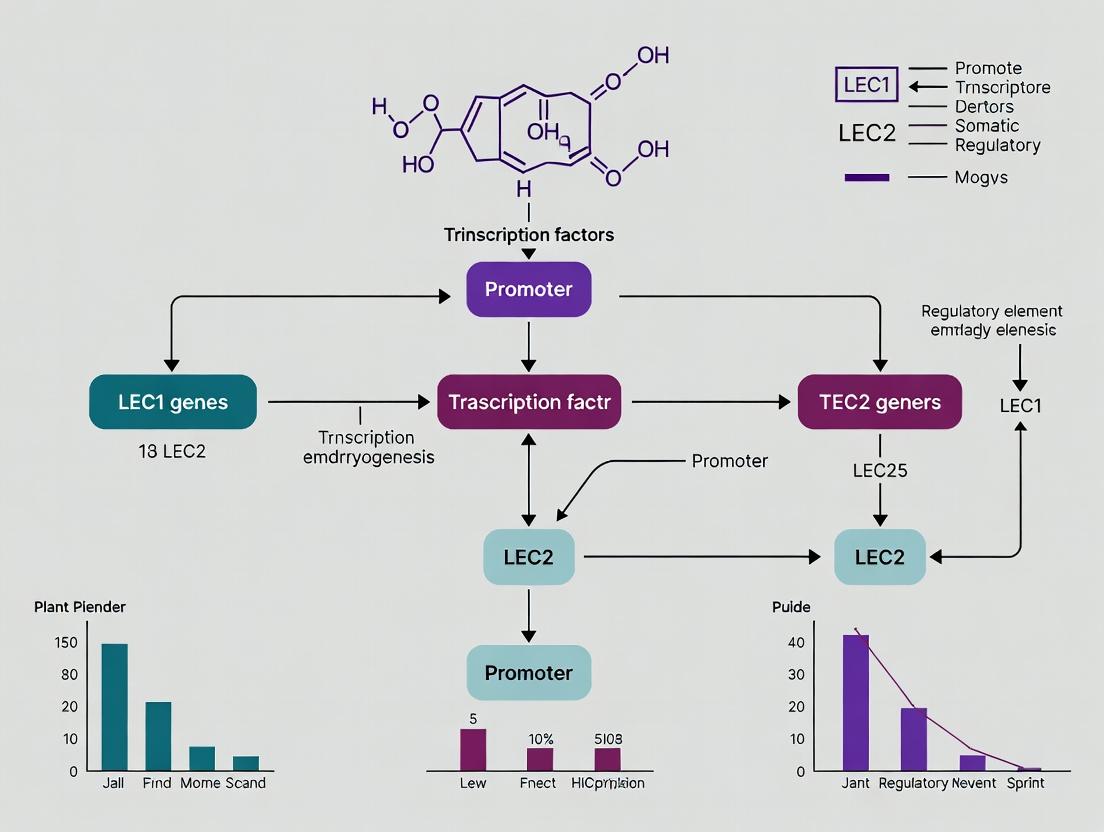
This article provides a comprehensive analysis of the LEAFY COTYLEDON (LEC) genes, specifically LEC1 and LEC2, as master regulators of somatic embryogenesis (SE).
Unlocking Somatic Embryogenesis: The Critical Role of LEC1 and LEC2 Genes in Plant Cell Reprogramming
Abstract
This article provides a comprehensive analysis of the LEAFY COTYLEDON (LEC) genes, specifically LEC1 and LEC2, as master regulators of somatic embryogenesis (SE). It explores their foundational biology as transcription factors that induce totipotency in somatic cells. We detail methodologies for their application, including genetic engineering and hormonal pathway manipulation, to improve SE efficiency in recalcitrant species. The article addresses common troubleshooting challenges, such as low induction rates and abnormal embryo development, and presents optimization strategies. Finally, it validates their role by comparing their functions and effectiveness with other embryogenic genes like BBM and WUS, highlighting their unique position as central hubs in the SE network. This synthesis is aimed at researchers and biotechnologists seeking to harness SE for plant propagation, synthetic biology, and drug development platforms.
Decoding LEC1 and LEC2: The Master Genetic Switches for Embryogenic Reprogramming
Somatic embryogenesis (SE) is a sophisticated in vitro process wherein somatic cells undergo a series of morphological and biochemical changes to form bipolar structures—somatic embryos—capable of regenerating into whole plants. This developmental reprogramming bypasses gamete fusion, offering a unique window into totipotency and a powerful tool for large-scale clonal propagation. This guide, framed within the critical context of LEAFY COTYLEDON (LEC) gene research, provides a technical deep-dive into SE mechanisms, with a specific focus on the master regulators LEC1 and LEC2.
The Central Dogma: LEC1 and LEC2 as Master Regulators
The LEAFY COTYLEDON genes are pivotal transcriptional activators of the embryonic program. Research within the broader thesis context positions LEC1 and LEC2 not merely as markers but as necessary and sufficient drivers for inducing totipotency in somatic cells.
- LEC1 (LEAFY COTYLEDON1): Encodes a subunit of the NF-Y transcription factor complex (specifically, the HAP3 subunit). It binds CCAAT-box elements in promoters, activating genes involved in embryo morphogenesis and seed storage accumulation. Its expression is both necessary for and capable of inducing SE.
- LEC2 (LEAFY COTYLEDON2): A B3 domain transcription factor that directly activates genes involved in auxin biosynthesis (e.g., YUCCAs), fatty acid metabolism, and crucially, other embryogenic regulators like AGAMOUS-LIKE15 (AGL15) and BABY BOOM (BBM). LEC2 can ectopically induce somatic embryo formation on vegetative tissues.
Their activity establishes a gene regulatory network (GRN) that promotes an auxin-rich environment, suppresses post-embryonic development, and activates the embryogenic program.
Diagram Title: LEC1/LEC2 Gene Regulatory Network in SE Induction
Quantitative Data in Somatic Embryogenesis Research
Table 1: Impact of LEC1/LEC2 Modulation on SE Efficiency in Model Plants
| Plant Species | Experimental Manipulation | SE Induction Medium | Key Quantitative Outcome | Reference (Type) |
|---|---|---|---|---|
| Arabidopsis thaliana | 35S::LEC2 Overexpression | Basal medium (no hormones) | ~85% of seedlings formed somatic embryos on cotyledons | Joo et al. (2021) |
| Medicago truncatula | LEC2 RNAi Knockdown | Auxin (2,4-D) containing medium | SE frequency reduced by 70-80% | Wang et al. (2023) |
| Daucus carota (Carrot) | LEC1-like gene expression tracking | 2,4-D (1 µM) then hormone-free | 10,000x increase in LEC1 transcript in competent cells | Recent RNA-seq meta-analysis |
| Oryza sativa (Rice) | OsLEC1 CRISPR/Cas9 knockout | 2,4-D (2.5 mg/L) callus induction | Embryogenic callus formation abolished (0%) | Liu et al. (2022) |
Table 2: Common Inductive Treatments for Somatic Embryogenesis
| Treatment Type | Specific Agent/Stimulus | Typical Concentration Range | Primary Physiological Effect |
|---|---|---|---|
| Auxin (Synthetic) | 2,4-Dichlorophenoxyacetic acid (2,4-D) | 0.5 – 10.0 µM | Induces cell dedifferentiation; creates auxin gradient/ stress trigger. |
| Stress | Heavy Metals (e.g., CdCl₂) | 10 – 100 µM | Oxidative stress triggering somatic-to-embryogenic transition. |
| Stress | High Osmoticum (e.g., Mannitol) | 3 – 6% (w/v) | Mimics drought stress, alters hormone signaling. |
| Plant Growth Regulator | Abscisic Acid (ABA) | 0.1 – 10 µM | Promotes later stages of embryo maturation and desiccation tolerance. |
Detailed Experimental Protocols
Protocol 1: Inducing Somatic Embryogenesis via LEC2 Overexpression in Arabidopsis
Objective: To ectopically induce somatic embryo formation on zygotic embryo cotyledons.
- Genetic Material: Use Arabidopsis seeds homozygous for the p35S::LEC2 transgene or perform floral dip transformation with a constitutive LEC2 expression vector.
- Sterilization & Sowing: Surface-sterilize seeds (70% EtOH, then 5% NaOCl), rinse, and sow on GM (Gamborg's B5) basal medium (no hormones). Stratify at 4°C for 48h.
- Growth Conditions: Incubate plates vertically under long-day conditions (16h light/8h dark) at 22°C for 7-10 days.
- Phenotypic Analysis: Observe emerging secondary structures on cotyledons using a stereomicroscope at 5-14 days post-germination. Score SE frequency as (# of seedlings with embryos / total seedlings)*100.
- Validation: Fix tissue and perform histology, or use pLEC1::GUS reporter line to confirm embryonic identity.
Protocol 2: Quantitative RT-PCR Analysis of LEC Gene Expression During SE Induction
Objective: To profile the expression dynamics of LEC1, LEC2, and downstream targets during stress-induced SE.
- Tissue Collection: Induce embryogenic callus from explants (e.g., carrot hypocotyl) on medium with 1 µM 2,4-D. Collect samples at defined stages: Day 0 (explant), Day 3 (dedifferentiating), Day 7 (proembryogenic masses), Day 14 (globular embryos). Flash-freeze in LN₂.
- RNA Extraction: Use a silica-column based kit. Treat samples with DNase I. Assess purity (A260/A280 ~2.0) and integrity (RIN >8.0) via Bioanalyzer.
- cDNA Synthesis: Use 1 µg total RNA, oligo(dT) primers, and a reverse transcriptase with RNase inhibitor in a 20 µL reaction.
- qPCR Setup: Prepare 10 µL reactions in triplicate using SYBR Green master mix, 1 µL cDNA, and gene-specific primers (e.g., LEC1, LEC2, YUCCA4, AGL15). Include reference genes (ACTIN, UBQ10).
- Data Analysis: Calculate ∆Ct [Ct(target) – Ct(reference)]. Use the 2^(-∆∆Ct) method to determine relative expression changes compared to Day 0 control.
The Scientist's Toolkit: Key Research Reagent Solutions
Table 3: Essential Reagents for Investigating LEC Genes and Somatic Embryogenesis
| Reagent/Material | Function/Application in SE Research | Example Product/Component |
|---|---|---|
| 2,4-Dichlorophenoxyacetic acid (2,4-D) | The most potent auxin for inducing dedifferentiation and establishing embryogenic competence. | Sigma-Aldrich D7299; prepare as 1 mM stock in DMSO/NaOH. |
| Murashige and Skoog (MS) Basal Salt Mixture | Provides essential macro and micronutrients for plant tissue culture. | PhytoTech Labs M524. |
| Gelrite or Phytagel | Gelling agent for culture media; often yields better SE outcomes than agar. | Sigma-Aldrich G1910 or P8169. |
| pLEC1::GUS or pLEC2::GUS Reporter Lines | Histochemical visualization of LEC promoter activity during SE initiation. | Available from Arabidopsis stock centers (e.g., ABRC, NASC). |
| Anti-LEC1 or Anti-LEC2 Antibodies | For protein localization via immunocytochemistry or quantification via western blot. | Custom antibodies from companies like Agrisera or GenScript. |
| CRISPR/Cas9 Knockout Vectors for LEC genes | To create loss-of-function mutants and study necessity of genes in SE. | pHEE401E vector (for Arabidopsis) or species-specific systems. |
| Gateway-Compatible LEC Overexpression Vectors | For constitutive or inducible expression of LEC1/LEC2 in target species. | pMDC32 (35S promoter) or pER8 (estradiol-inducible). |
| RNA-seq Library Prep Kit | For transcriptomic profiling of the SE GRN. | Illumina TruSeq Stranded mRNA or NEBNext Ultra II. |
Diagram Title: Standard Somatic Embryogenesis Experimental Workflow
Within the broader thesis investigating the role of LEC1 and LEC2 genes in somatic embryogenesis, defining their molecular identity is the foundational step. These genes are master regulators that confer embryogenic competence to somatic cells. This whitepaper provides a technical dissection of the LEAFY COTYLEDON gene family, focusing on the unique protein domain architectures—NF-YB for LEC1 and B3 for LEC2—that underpin their distinct yet synergistic functions in embryonic development.
Gene Family Classification and Evolutionary Context
The LEAFY COTYLEDON (LEC) genes in Arabidopsis thaliana comprise LEC1, LEC1-LIKE (L1L/NF-YB6), LEC2, FUSCA3 (FUS3), and ABSCISIC ACID INSENSITIVE 3 (ABI3). They are phylogenetically conserved across seed plants. LEC1 and LEC2 are the primary initiators, with LEC1 belonging to the NF-Y transcription factor family and LEC2 to the plant-specific B3-domain superfamily.
Table 1: Core Members of the LEAFY COTYLEDON Gene Family in Arabidopsis
| Gene | AGI Code | Protein Family | Key Domain | Primary Function in Embryogenesis |
|---|---|---|---|---|
| LEC1 | At1g21970 | CCAAT-Binding Factor | NF-YB (HAP3) | Global chromatin modulation, potentiates transcription |
| LEC1-LIKE (L1L) | At5g47670 | CCAAT-Binding Factor | NF-YB (HAP3) | Partially redundant with LEC1 |
| LEC2 | At1g28300 | B3 Superfamily | B3 DNA-binding | Direct activation of embryo-specific genes (e.g., AGL15, YUCCA) |
| FUS3 | At3g26790 | B3 Superfamily | B3 DNA-binding | Regulates late embryogenesis and seed maturation |
| ABI3 | At3g24650 | B3 Superfamily | B3 DNA-binding | Mediates ABA response during maturation |
Protein Structure-Function Analysis
LEC1: A Specialized NF-YB Subunit
LEC1 is a atypical subunit of the heterotrimeric Nuclear Factor Y (NF-Y/CBF) complex, which binds CCAAT cis-elements. NF-Y consists of NF-YA, NF-YB, and NF-YC. LEC1 is a specialized NF-YB (HAP3) subunit.
Key Structural Feature: The LEC1 protein contains a conserved NF-YB core domain but possesses unique residues within the α-helix 2 region that are critical for its embryogenic function. This specialization alters the DNA-binding specificity or transcriptional output of the canonical NF-Y trimer.
Experimental Protocol: Yeast Two-Hybrid (Y2H) Assay for NF-Y Complex Formation
- Purpose: To confirm LEC1 interacts with NF-YA and NF-YC subunits.
- Methodology:
- Clone the coding sequence of LEC1 into the pGADT7 (AD, Activation Domain) vector.
- Clone sequences for NF-YA2 and NF-YC3 into the pGBKT7 (BD, DNA-Binding Domain) vector.
- Co-transform pairwise combinations (BD-YA + AD-LEC1, BD-YC + AD-LEC1) into yeast strain AH109.
- Plate transformants on synthetic dropout (SD) media lacking Leu and Trp (-LW) to select for transformants.
- Streak positive colonies onto high-stringency SD media lacking Leu, Trp, His, and Ade (-LWHA) supplemented with X-α-Gal.
- Positive Interaction Indicator: Growth of blue colonies on -LWHA plates within 3-5 days.
- Key Control: Co-transform BD-YA/YC with empty AD vector to rule out auto-activation.
LEC2: A B3 Domain Transcription Factor
LEC2 is a plant-specific transcription factor characterized by a central B3 DNA-binding domain.
Key Structural Feature: The B3 domain is a ~110 amino acid module folded into a seven-stranded β-barrel that makes sequence-specific contacts with the RY motif (CATGCA) in the promoters of target genes. LEC2 also contains an N-terminal proline-rich region and a C-terminal acidic region, potentially involved in transcriptional activation.
Experimental Protocol: Electrophoretic Mobility Shift Assay (EMSA) for LEC2 B3 Domain DNA Binding
- Purpose: To demonstrate direct binding of the LEC2 B3 domain to an RY cis-element.
- Methodology:
- Protein Purification: Express and purify a recombinant glutathione-S-transferase (GST)-tagged LEC2 B3 domain protein from E. coli.
- Probe Preparation: Design a 30-bp biotin-labeled double-stranded DNA oligonucleotide containing the RY motif from the AGAMOUS-LIKE15 (AGL15) promoter. Prepare an unlabeled identical oligo for competition.
- Binding Reaction: Incubate 20 fmol of labeled probe with 0-200 ng of purified GST-B3 protein in binding buffer (10 mM Tris, 50 mM KCl, 1 mM DTT, 2.5% glycerol, 0.05% NP-40, 50 ng/µL poly(dI-dC)) for 30 min at 25°C.
- Competition: Include a 100-fold molar excess of unlabeled probe in a separate reaction.
- Electrophoresis: Resolve the protein-DNA complexes on a pre-run, non-denaturing 6% polyacrylamide gel in 0.5x TBE buffer at 100V for 60 min.
- Detection: Transfer to a nylon membrane, crosslink, and detect biotin signal using a chemiluminescent kit.
- Positive Result: A shifted band (retardation) indicates binding. This shift is abolished by excess unlabeled competitor.
Quantitative Data Synthesis
Table 2: Key Molecular and Phenotypic Data for lec Mutants
| Parameter | Wild-Type | lec1 mutant | lec2 mutant | lec1 lec2 double mutant | Measurement Method |
|---|---|---|---|---|---|
| Somatic Embryo Induction Frequency | 70-85% | <5% | 10-20% | ~0% | Count of embryogenic calli / total explants |
| Expression Level of AGL15 (Relative) | 1.0 | 0.2 | 0.15 | 0.05 | qRT-PCR (2^−ΔΔCt) |
| Affinity (Kd) of LEC2 B3 for RY motif | — | — | 15.3 ± 2.1 nM | — | Surface Plasmon Resonance (SPR) |
| ChIP-seq Peak Enrichment at Target Genes | — | LEC1: >10-fold at 2,000 loci | LEC2: >8-fold at 1,500 loci | — | Fold enrichment vs. IgG control |
Signaling and Regulatory Pathways
Title: LEC1 and LEC2 Regulatory Network in Somatic Embryogenesis Initiation
The Scientist's Toolkit: Research Reagent Solutions
Table 3: Essential Reagents for LEC1/LEC2 Functional Studies
| Reagent / Material | Supplier Examples | Function in Research |
|---|---|---|
| pGADT7 & pGBKT7 Vectors | Takara Bio (Clontech) | For Yeast Two-Hybrid assays to map protein-protein interactions (e.g., LEC1 with NF-Y subunits). |
| Biotin 3' End DNA Labeling Kit | Thermo Fisher Scientific | To label oligonucleotide probes for EMSA, confirming LEC2 B3 domain DNA-binding specificity. |
| Anti-GFP / Anti-Myc Antibodies | Abcam, Agrisera | For chromatin immunoprecipitation (ChIP) when using GFP- or Myc-tagged LEC1/LEC2 fusion proteins. |
| Methylcellulose-based Media | Sigma-Aldrich | Semi-solid culture media to induce and synchronize somatic embryo formation from explants. |
| 2,4-Dichlorophenoxyacetic acid (2,4-D) | MilliporeSigma | Synthetic auxin used to trigger dedifferentiation and initiate embryogenic competence in somatic cells. |
| Recombinant GST-LEC2(B3) Protein | Custom synthesis (e.g., GenScript) | Purified protein domain for in vitro DNA-binding assays (EMSA, SPR) or antibody production. |
| lec1, lec2 Mutant Seeds | ABRC (Arabidopsis Stock Center) | Genetic null backgrounds for functional complementation and phenotypic analysis. |
| Dual-Luciferase Reporter Assay System | Promega | To quantify LEC1/LEC2 transcriptional activation of promoter-reporter constructs in plant protoplasts. |
Within the context of somatic embryogenesis research, the LEAFY COTYLEDON (LEC) transcription factors, specifically LEC1 and LEC2, are master regulators that orchestrate the complex genetic reprogramming required to convert somatic cells into totipotent embryonic cells. This whitepaper provides an in-depth technical analysis of their core molecular functions, detailing how they act as central hubs in transcription factor networks to rewire cellular identity and fate.
Molecular Identity and Structural Basis of LEC Function
LEC1 is a unique HAP3 subunit of the CCAAT-binding transcription factor (CBF/NF-Y). Unlike typical HAP3 subunits, LEC1 contains a distinctive central B domain, which is critical for its specific role in embryogenesis. This domain facilitates selective interactions with other transcriptional co-regulators and target gene promoters.
LEC2 is a B3 DNA-binding domain transcription factor, a plant-specific domain that recognizes the Sph/RY motif (CATGCA). Its function is tightly regulated at the transcriptional and post-translational levels, including regulation by auxin and miRNA-mediated turnover.
Core Transcriptional Networks and Downstream Targets
LEC1 and LEC2 do not function in isolation but within a densely interconnected regulatory network. Their primary mode of action involves direct transcriptional activation of key genes that promote embryonic identity and repress vegetative development.
Table 1: Core Direct Targets of LEC1 and LEC2 in Somatic Embryogenesis
| Target Gene | Regulating LEC Factor | Gene Function | Key Evidence (Assay) | Effect of Overexpression |
|---|---|---|---|---|
| AGAMOUS-LIKE15 (AGL15) | LEC1, LEC2 | MADS-box TF promoting embryonic competence | ChIP-PCR, EMSA | Enhances somatic embryo formation |
| AUXIN RESPONSE FACTOR 19 (ARF19) | LEC2 | Auxin response factor mediating auxin signaling | ChIP-seq, Transactivation assay | Induces embryo-like structures |
| FUSCA3 (FUS3) | LEC1, LEC2 | B3-domain TF, part of LAFL network | Y1H, Luciferase reporter | Synergistically promotes embryogenesis |
| OLEOSIN | LEC1, LEC2 | Oil body protein, storage component | EMSA, Promoter-GUS | Marker for embryogenic progression |
| WUSCHEL (WUS) | LEC2 | Homeodomain TF for shoot meristem/embryo patterning | ChIP, Mutant analysis | Induces somatic embryo initiation |
| YUC4 (YUCCA4) | LEC2 | Flavin monooxygenase for auxin biosynthesis | ChIP-seq, Transcript analysis | Increases endogenous auxin levels |
Table 2: Quantitative Data on Somatic Embryo Induction Efficiency
| Genotype / Treatment | Somatic Embryo Formation Frequency (%) | Average Embryos per Explant | Key Reference (Year) |
|---|---|---|---|
| Wild-type (Col-0) Control | 5-10% | 0.1-0.3 | Stone et al. (2008) |
| 35S::LEC1 (Induced) | 85-95% | 8.5-12.0 | Lotan et al. (1998) |
| 35S::LEC2 (Induced) | 70-80% | 5.0-7.5 | Stone et al. (2001) |
| lec1 lec2 double mutant | ~0% | 0.0 | Gaj et al. (2005) |
| lec1 mutant + Auxin (2,4-D) | 15-20% | 0.8-1.2 | Junker et al. (2012) |
| LEC2ox in pkl mutant | ~95% | 10.5 | Ogas et al. (1999) |
Detailed Experimental Protocols
Chromatin Immunoprecipitation (ChIP) Assay for LEC2 Target Identification
Objective: To identify genomic regions bound by LEC2 in vivo. Materials: 35S::LEC2-GFP transgenic Arabidopsis seedlings, Crosslinking buffer (1% formaldehyde), Nuclei isolation buffer, Anti-GFP antibody, Protein A/G magnetic beads. Procedure:
- Crosslink: Harvest 2g of tissue. Vacuum-infiltrate with crosslinking buffer for 20 min. Quench with 0.125 M glycine.
- Nuclei Isolation: Grind tissue in liquid N₂. Resuspend in Honda buffer. Filter through Miracloth. Pellet nuclei.
- Sonication: Resuspend nuclei in lysis buffer. Sonicate to shear chromatin to 200-500 bp fragments. Verify fragment size by agarose gel.
- Immunoprecipitation: Pre-clear chromatin with beads. Incubate supernatant with anti-GFP antibody overnight at 4°C. Add beads for 2-hour capture.
- Wash & Elution: Wash beads with low salt, high salt, LiCl, and TE buffers. Elute DNA with elution buffer (1% SDS, 0.1M NaHCO₃).
- Reverse Crosslinks & Analysis: Add NaCl to 0.2M and incubate at 65°C overnight. Treat with RNase A and Proteinase K. Purify DNA. Analyze by qPCR with primers for candidate target gene promoters or by sequencing for ChIP-seq.
Somatic Embryo Induction from Arabidopsis Immature Zygotic Embryos
Objective: To assess the embryogenic potential of LEC-overexpressing genotypes. Materials: Sterile Arabidopsis siliques (8-10 DAP), 35S::LEC1 or 35S::LEC2 seeds, Embryo culture medium (ECM: ½ B5 salts, 1% sucrose, 0.8% agar, no hormones), Induction medium (ECM + 1 µM β-estradiol for inducible lines), Sterilization solution (10% bleach, 0.1% Triton X-100). Procedure:
- Sterilization: Surface-sterilize siliques or seeds for 10 minutes. Rinse 3x with sterile water.
- Explants Preparation: Under a stereo microscope, dissect immature zygotic embryos (IZEs) from seeds. Place IZEs scutellum-side up on ECM plates.
- Induction: For estradiol-inducible lines, transfer explants to Induction medium. Incubate in dark at 24°C for 7-14 days.
- Development & Scoring: Transfer explants to fresh, hormone-free ECM. Maintain at 24°C under 16h light/8h dark. Score for the emergence of somatic embryos with clear bipolar structures (cotyledon and radicle) after 21-28 days. Calculate frequency and number per explant.
Pathway and Network Visualizations
Diagram Title: LEC-Centric Transcriptional Network in Cell Fate Rewiring
Diagram Title: Validating LEC TF Function: Key Experimental Workflow
The Scientist's Toolkit: Key Research Reagent Solutions
Table 3: Essential Reagents and Materials for LEC Gene Research
| Reagent/Material | Provider Examples (Catalogue # Example) | Function in Research | Critical Application |
|---|---|---|---|
| Anti-LEC1 / Anti-LEC2 Antibodies | Agrisera (AS12 1854), Custom | Immunodetection, ChIP | Validating protein expression, localization, and chromatin binding. |
| pMDC7/LEC2-GR or pER8/LEC1 | ABRC (CD3-736), Addgene | Inducible overexpression | Temporal control of LEC gene expression for functional studies. |
| Sph/RY Motif Probe (CATGCA) | Custom synthesis (IDT, Sigma) | Electrophoretic Mobility Shift Assay (EMSA) | Confirming direct DNA binding of LEC2 to target promoters in vitro. |
| β-Estradiol | Sigma-Aldrich (E2758) | Chemical inducer for pER8/pMDC7 systems | Inducing LEC gene expression in transgenic lines for phenotype analysis. |
| ChIP-seq Grade Anti-GFP Antibody | Abcam (ab290), Miltenyi (130-118-46) | Chromatin Immunoprecipitation | Pulling down LEC-GFP fusion proteins for genome-wide binding site mapping. |
| Arabidopsis lec1, lec2, fus3 Mutants | ABRC (SALK_022035, etc.) | Genetic loss-of-function controls | Defining necessary roles of LEC genes in somatic embryogenesis pathways. |
| GUS Reporter Lines (pLEC::GUS) | ABRC | Histochemical staining | Visualizing spatial and temporal expression patterns of LEC genes. |
| Protoplast Transfection Kit | PEG-Mediated Protocol | Transient expression assays | Rapid testing of LEC transactivation of reporter genes in vivo. |
| Embryo Culture Medium (B5 based) | PhytoTech Labs (M022) | Plant tissue culture | Providing optimal nutrients for somatic embryo induction and development. |
| 2,4-Dichlorophenoxyacetic acid (2,4-D) | Sigma-Aldrich (D7299) | Synthetic auxin | Standard phytohormone treatment to induce embryogenic callus as a baseline control. |
Within the broader thesis context of LEC1 and LEC2 gene function in somatic embryogenesis, this whitepaper elucidates the intricate regulatory networks where these central transcription factors intersect with hormone signaling pathways and chromatin remodeling complexes. The master regulators LEC1 (a HAP3-type CCAAT-binding factor) and LEC2 (a B3-domain transcription factor) do not act in isolation; they are embedded in a dynamic feedback system with auxin and abscisic acid (ABA) signaling, while their transcriptional output is fundamentally gated by the epigenetic landscape. Understanding this triad—transcription factor, hormone, chromatin—is critical for manipulating plant cell totipotency for biotechnological and pharmaceutical applications.
Core Regulatory Network: LEC1/LEC2, Hormones, and Chromatin
Network Logic and Key Interactions
LEC1 and LEC2 are initiators and stabilizers of the embryogenic program. Their expression is induced by specific auxin cues and stress, leading to:
- Direct Hormone Synthesis Activation: LEC2 directly induces YUCCA genes for auxin biosynthesis and ABSCISIC ACID INSENSITIVE 3 (ABI3), a core ABA-response gene.
- Feedback Loops: The synthesized auxin and ABA, in turn, reinforce LEC gene expression and activity through their respective signaling cascades.
- Chromatin Gateway: The loci of LEC1, LEC2, and their target genes are typically locked in a repressed state in somatic cells by Polycomb Repressive Complex 2 (PRC2)-mediated H3K27me3 marks. Initiation of embryogenesis requires ATP-dependent chromatin remodeling complexes (e.g., SWI/SNF) and histone acetyltransferases (HATs) to displace PRC2 and open chromatin, allowing transcription factor access.
Table 1: Quantitative Effects of Key Regulatory Mutations on Somatic Embryo Formation Efficiency
| Genotype / Condition | Somatic Embryo Formation Frequency (%) | Reference Key Observations |
|---|---|---|
| Wild-type (Col-0) on auxin + ABA | 65-80% | Baseline efficiency |
| lec1 mutant | <5% | Severe failure in embryo initiation |
| lec2 mutant | 10-15% | Reduced initiation and abnormal patterning |
| abi3 mutant | 20-30% | Embryos form but are desiccation-intolerant |
| PRC2 mutant (clf/swn) | Spontaneous (0-5% without hormone) | Ectopic embryo-like structures on seedlings |
| Treatment with Histone Deacetylase Inhibitor (Trichostatin A) | Increases by 1.5-2.0 fold vs. wild-type | Enhances LEC2 expression and embryogenic potential |
Diagram: Core Regulatory Network in Somatic Embryogenesis
Detailed Experimental Protocols
Protocol: Chromatin Immunoprecipitation (ChIP) to Assess LEC2 Binding and Histone Status at Target Loci
Objective: To determine in vivo binding of LEC2 to the YUC4 promoter and concurrently assess the histone modification state (H3K27me3 vs. H3K9ac) during somatic embryogenesis induction.
Materials: Arabidopsis explants (immature zygotic embryos or leaf protoplasts), 1% formaldehyde for crosslinking, Cell wall degrading enzymes, ChIP-grade antibodies: anti-LEC2 (custom), anti-H3K27me3 (Millipore 07-449), anti-H3K9ac (Active Motif 39137), Protein A/G magnetic beads, qPCR system with primers for YUC4 promoter and control regions.
Workflow:
- Induction & Crosslinking: Culture explants on somatic embryogenesis medium (containing 10 µM 2,4-D and 1 µM ABA) for 0, 3, and 7 days. Harvest tissue and fix with 1% formaldehyde for 15 min under vacuum.
- Nuclei Isolation & Sonication: Grind tissue, isolate nuclei, and lyse. Sonicate chromatin to an average fragment size of 200-500 bp. Verify fragment size by agarose gel electrophoresis.
- Immunoprecipitation: Aliquot chromatin. Incubate overnight at 4°C with specific antibodies or IgG control. Capture immune complexes with Protein A/G magnetic beads.
- Washing, Elution, and De-crosslinking: Wash beads sequentially with low-salt, high-salt, LiCl, and TE buffers. Elute complexes and reverse crosslinks overnight at 65°C.
- DNA Purification & qPCR Analysis: Purify DNA using a PCR purification kit. Perform quantitative PCR with primers specific to the YUC4 promoter region containing the RY motif (LEC2 binding site) and a control region from a constitutively expressed gene (e.g., ACTIN7). Calculate % input and fold enrichment.
Diagram: ChIP-qPCR Experimental Workflow
Protocol: Chemical-Genetic Interference to Decouple Hormone and Chromatin Pathways
Objective: To dissect the contribution of chromatin remodeling versus hormone signaling in LEC1 activation using specific chemical inhibitors.
Materials: Arabidopsis pLEC1::GUS reporter line, somatic embryogenesis medium, inhibitors: Trichostatin A (TSA, histone deacetylase inhibitor), BIX-01294 (G9a histone methyltransferase inhibitor), PEO-IAA (auxin signaling antagonist), ABA biosynthesis inhibitor (Fluridone).
Workflow:
- Experimental Design: Plate explants from the reporter line onto media containing different combinations:
- Group A: Control (2,4-D + ABA)
- Group B: 2,4-D + ABA + 1 µM TSA
- Group C: 2,4-D + ABA + 10 µM PEO-IAA
- Group D: 2,4-D + ABA + TSA + PEO-IAA
- Group E: No hormones + 1 µM TSA
- Treatment & Culture: Culture for 14 days, subculturing weekly to fresh media with corresponding inhibitors.
- GUS Histochemical Assay: Harvest tissues at days 3, 7, and 14. Immerse in GUS staining solution (X-Gluc, buffer) and incubate at 37°C overnight. Destain in ethanol and capture images under a stereomicroscope.
- Quantitative Analysis: Score the percentage of explants showing strong pLEC1::GUS activity and the number of somatic embryos per responding explant.
Table 2: Expected Outcomes from Chemical-Genetic Interference Experiment
| Treatment Group | Expected pLEC1::GUS Activation Strength | Expected Embryo Number | Interpretation |
|---|---|---|---|
| A: Control (2,4-D+ABA) | Strong (Baseline) | High (Baseline) | Full pathway active. |
| B: + TSA (HDACi) | Very Strong | Increased vs. A | Chromatin opening synergizes with hormones. |
| C: + PEO-IAA (Auxin antag.) | Weak | Low | Auxin signaling is critical for LEC1 induction. |
| D: + TSA + PEO-IAA | Moderate | Moderate | Chromatin opening can partially bypass auxin signal requirement. |
| E: TSA only (No hormones) | Faint/Moderate | Very Low | Chromatin relaxation alone is insufficient but can weakly activate LEC1. |
The Scientist's Toolkit: Essential Research Reagents
Table 3: Key Research Reagent Solutions for Investigating LEC Networks
| Reagent / Material | Supplier Examples | Function in Research |
|---|---|---|
| 2,4-Dichlorophenoxyacetic acid (2,4-D) | Sigma-Aldrich, Duchefa | Synthetic auxin used to induce somatic embryogenesis and LEC gene expression. |
| Abscisic Acid (ABA) | Gold Biotechnology, TCI | Stress hormone that promotes embryo maturation and stabilizes LEC/ABI3 activity. |
| Trichostatin A (TSA) | Cayman Chemical, Selleckchem | Histone deacetylase (HDAC) inhibitor; used to increase histone acetylation, open chromatin, and enhance embryogenic competence. |
| PEO-IAA | Sigma-Aldrich | Competitive antagonist of the auxin receptor TIR1; used to specifically block auxin signaling. |
| Anti-H3K27me3 Antibody | Millipore (07-449), Cell Signaling Tech | Validated antibody for ChIP to map repressive chromatin marks at LEC and target loci. |
| Anti-H3K9ac Antibody | Active Motif (39137), Abcam | Validated antibody for ChIP to map active chromatin marks. |
| LEC2-specific Antibody | Custom generation (e.g., Agrisera) | Essential for native ChIP (nChIP) experiments to map direct genomic binding sites of LEC2. |
| pLEC1::GUS / pLEC2::GUS Reporter Seeds | ABRC (Arabidopsis Stock Center) | Visual and quantitative reporters for monitoring spatial and temporal LEC promoter activity under different conditions. |
| LEC1/LEC2 Inducible Overexpression Lines | ABRC | Enables controlled, timed overexpression to study immediate downstream targets without developmental pleiotropy. |
| Protoplast Transformation Kit | Plant-specific (e.g., from Arabidopsis) | For transient assays (e.g., effector-reporter co-transfection) to test direct regulation of YUC promoters by LEC2. |
Evolutionary Conservation and Divergence of LEC Genes Across Plant Species
Within the broader thesis on LEC1 and LEC2 gene function in somatic embryogenesis research, this whitepaper explores the evolutionary patterns of LEAFY COTYLEDON (LEC) genes across the plant kingdom. These master regulators are central to inducing embryogenic potential in somatic cells, making their evolutionary conservation and divergence critical for understanding the fundamental principles of plant cell totipotency and for biotechnological applications in synthetic embryo production.
Evolutionary Phylogeny and Gene Structure
LEC genes belong to distinct transcription factor families. LEC1 is a subunit of the NF-Y transcription factor (specifically, NF-YB family), while LEC2, along with FUS3 and ABI3, are B3 domain transcription factors. Comparative genomics reveals their presence in seed plants but notable absences in non-seed plants like bryophytes and ferns, suggesting a co-option with the evolution of the seed.
Table 1: Presence and Copy Number of LEC Genes in Representative Plant Species
| Species | Phylogenetic Group | LEC1 (NF-YB) | LEC2 (B3) | FUS3 (B3) | ABI3 (B3) |
|---|---|---|---|---|---|
| Arabidopsis thaliana | Eudicot | 1 | 1 | 1 | 1 |
| Oryza sativa (Rice) | Monocot | 2 | 1 | 1 | 1 |
| Picea abies (Spruce) | Gymnosperm | 3 | 2 | 2+ | 1+ |
| Physcomitrium patens | Bryophyte | 0 | 0 | 0 | 0 |
| Solanum lycopersicum (Tomato) | Eudicot | 1 | 1 | 1 | 1 |
| Zea mays (Maize) | Monocot | 2 | 1 | 1 | 1 |
Functional Conservation and Divergence
Quantitative data from overexpression and knockout mutants highlight conserved core functions and species-specific divergences.
Table 2: Functional Assays of LEC Genes in Somatic Embryogenesis
| Species | Gene | Key Conserved Function (SE Induction) | Divergent Phenotype/Function | Reference (Example) |
|---|---|---|---|---|
| A. thaliana | AtLEC2 | Induces SE from somatic cells; activates YUC auxin biosynthesis. | Regulates fatty acid biosynthesis uniquely. | Stone et al., 2008 |
| O. sativa | OsLEC1 | Overexpression induces embryogenic callus. | Less potent than OsLEC2; distinct expression pattern. | Zhang et al., 2012 |
| Daucus carota | DcLEC1 | Required for somatic embryo development. | Expression sustained longer than in Arabidopsis. | Yazawa et al., 2004 |
| Picea abies | PaLEC2 | Expression marks early somatic embryos. | Interacts with unique set of conifer-specific targets. | Larsson et al., 2015 |
Key Experimental Protocols
Protocol: Phylogenetic Analysis of LEC Genes
- Sequence Retrieval: Use Phytozome or NCBI databases to retrieve protein sequences of LEC1 (NF-YB family) and LEC2/FUS3/ABI3 (B3 domain) from target species.
- Multiple Sequence Alignment: Perform alignment using CLUSTAL Omega or MAFFT with default parameters.
- Phylogenetic Tree Construction: Use MEGA11 software. Apply the Maximum Likelihood method with the JTT matrix-based model. Assess branch support with 1000 bootstrap replicates.
- Visualization: Annotate the final tree using iTOL.
Protocol: Functional Validation via Overexpression in Somatic Tissues
- Vector Construction: Clone the full-length CDS of the target LEC gene into a binary vector under a strong constitutive promoter (e.g., CaMV 35S).
- Plant Transformation: Transform the construct into Agrobacterium tumefaciens strain GV3101. Use floral dip (Arabidopsis) or callus Agrobacterium-co-cultivation (monocots/trees).
- Selection & Regeneration: Select transgenic lines on appropriate antibiotics. Transfer regenerants to hormone-free medium.
- Phenotypic Scoring: Quantify somatic embryo formation using defined morphological stages. Use qRT-PCR to confirm transgene expression and RNA-seq to identify downstream targets.
Protocol: Yeast Two-Hybrid (Y2H) for Protein Interaction Conservation
- Clone Bait & Prey: Fuse the LEC gene to the DNA-BD (pGBKT7) and potential interacting partners (e.g., NF-YA/NF-YC for LEC1) to the AD (pGADT7).
- Co-transformation: Co-transform bait and prey plasmids into yeast strain AH109.
- Selection & Assay: Plate on SD/-Leu/-Trp to confirm transformation, then on SD/-Ade/-His/-Leu/-Trp to test for interaction. Include a β-galactosidase assay for quantitative confirmation.
Visualization of Genetic Pathways and Workflows
Title: LEC2-Induced Somatic Embryogenesis Core Pathway
Title: Workflow for Comparative LEC Gene Analysis
The Scientist's Toolkit: Key Research Reagent Solutions
Table 3: Essential Reagents for LEC Gene Functional Studies
| Reagent/Solution | Function/Application | Key Consideration |
|---|---|---|
| pMDC32 Vector | Gateway-compatible plant binary vector with 35S promoter for constitutive LEC gene overexpression. | Allows strong, consistent expression critical for phenocopy studies. |
| GV3101 Agrobacterium Strain | Standard strain for plant transformation via floral dip or tissue co-cultivation. | Optimized for virulence, essential for delivering LEC constructs. |
| Murashige and Skoog (MS) Medium | Basal plant tissue culture medium for somatic embryo induction and regeneration. | Hormone-free formulation is key to assay LEC-induced SE autonomously. |
| Anti-LEC1/LEC2 Antibodies | Polyclonal antibodies for detecting LEC protein accumulation via Western blot or immunolocalization. | Validates translational, not just transcriptional, activity of transgenes. |
| Yeast Two-Hybrid System (AH109/pGBKT7/pGADT7) | For testing conserved protein-protein interactions (e.g., LEC1-NF-Y complex). | Critical for probing functional conservation of protein complexes. |
| TDZ or 2,4-D | Auxin-like plant growth regulators for pre-treating explants to induce embryogenic competence. | Often required as a priming step before LEC genes can fully trigger SE. |
Harnessing LEC Genes: Practical Protocols for Inducing Somatic Embryos In Vitro
The overexpression of master regulatory transcription factors like LEAFY COTYLEDON1 (LEC1) and LEC2 is a cornerstone strategy for investigating and manipulating somatic embryogenesis. This process, where vegetative cells are induced to form embryo-like structures, has profound implications for plant biotechnology, synthetic seed production, and fundamental developmental biology. Strategic overexpression—the deliberate, controlled enhancement of gene expression—is critical to dissect the functions of these genes without triggering pleiotropic effects or lethality. This guide details the core technical considerations for designing such strategies, focusing on vector architecture, promoter choice, and delivery methods, specifically for LEC1/LEC2 research.
Vector Design for Nuclear-Localized Transcription Factors
Vectors for LEC1/LEC2 overexpression must ensure high nuclear protein abundance. A standard T-DNA binary vector for Agrobacterium-mediated transformation includes:
- Selectable Marker Cassette: A constitutive promoter (e.g., CaMV 35S) driving a plant resistance gene (e.g., nptII for kanamycin resistance).
- Gene of Interest (GOI) Cassette: The core expression unit for LEC1 or LEC2.
- Promoter: Constitutive (e.g., 35S) or Inducible (see Section 3).
- 5' UTR/Enhancer Sequences: Omega sequence from Tobacco Mosaic Virus to enhance translation.
- Coding Sequence (CDS): The full LEC1 or LEC2 ORF. For LEC1, ensure the correct HAP3 subunit isoform is used.
- Tag Sequences: Optional N- or C-terminal tags (e.g., GFP, FLAG, HA) for localization and immunodetection.
- Nuclear Localization Signal (NLS): Often intrinsic to the transcription factor, but an exogenous SV40 NLS can be added to ensure robust nuclear targeting.
- Terminator: Polyadenylation signal (e.g., nos terminator).
Promoter Selection: Constitutive vs. Inducible Systems
The choice of promoter is pivotal for controlling the timing, tissue-specificity, and level of LEC1/LEC2 expression.
Table 1: Quantitative Comparison of Promoter Systems for LEC1/LEC2 Overexpression
| Feature | Constitutive (e.g., CaMV 35S, Ubiquitin) | Chemical-Inducible (e.g., Dexamethasone-induced, pOp/LhGR) | Estradiol-Inducible (XVE System) | Heat-Shock Inducible (e.g., Hsp18.2) |
|---|---|---|---|---|
| Basal Leakiness | Not Applicable (Always ON) | Low (<1% of induced level) | Very Low (Negligible) | Variable (Low at 22°C) |
| Induction Level | 1x (Baseline) | 50-200x over baseline | >1000x over baseline | Up to 100x over baseline |
| Induction Kinetics | N/A | Protein detected in 2-4 hrs, max by 24h. | mRNA within 30 min, protein in 1-2 hrs. | Very fast (minutes), but transient. |
| Key Reagent/Cost | N/A | Dexamethasone ($-$$) | 17-β-Estradiol ($$) | Standard incubators ($) |
| Tissue Specificity | None (Broad) | Determined by driver in 2-component system | Determined by promoter driving XVE | Can be localized with laser or focused heat |
| Primary Use Case | Screening transformants, strong ubiquitous expression. | Precise, reversible induction in development. | Tight control for potent genes like LEC2. | Rapid, synchronized, but short-term induction. |
| Major Drawback | Lethality or severe developmental defects likely with LEC1/LEC2. | Requires two genetic components; dex can affect steroid pathways. | Slightly higher background in some systems. | Non-physiological stress response; transient. |
Detailed Experimental Protocol: Dexamethasone-InducibleLEC2Overexpression in Arabidopsis
Aim: To induce LEC2 expression in 10-day-old Arabidopsis seedlings and assess early markers of somatic embryogenesis.
Materials: See "The Scientist's Toolkit" below.
Method:
- Plant Material: Grow homozygous pOp:LEC2; LhGR Arabidopsis seeds on ½ MS plates for 10 days under long-day conditions (16h light/8h dark) at 22°C.
- Induction Solution: Prepare 10 μM dexamethasone solution in ½ MS liquid medium + 0.015% Silwet L-77. Prepare a mock solution (0.1% ethanol, vehicle control).
- Induction: Carefully submerge seedling plates in induction or mock solution for 2 minutes. Remove excess liquid.
- Sampling: Collect whole seedlings at T=0 (pre-induction), 6h, 24h, 48h, and 7 days post-induction. Flash-freeze in liquid N₂.
- Validation:
- RT-qPCR: Extract RNA, synthesize cDNA. Quantify expression of LEC2 and direct targets (e.g., AGL15, YUCCA) using specific primers. Normalize to ACTIN2.
- Phenotypic Analysis: Plate induced seedlings on fresh ½ MS plates and monitor for emergence of embryo-like structures, root swelling, or cotyledonary abnormalities over 14 days.
- Histology: Fix 7-day induced samples, section, and stain with Toluidine Blue O to visualize embryogenic cell clusters.
Key Control: Always include a non-transgenic wild-type control treated with dexamethasone to rule out non-specific effects of the inducer.
Transformation Methods for Delivering Overexpression Constructs
Table 2: Comparison of Key Plant Transformation Methods
| Method | Mechanism | Typical Efficiency (Model Plants) | Throughput | Best for LEC1/LEC2 Studies... |
|---|---|---|---|---|
| Agrobacterium-Mediated (Floral Dip) | T-DNA transfer via A. tumefaciens. | 0.5-3% (Arabidopsis) | Very High | Generating stable transgenic lines in Arabidopsis for long-term phenotypic analysis. |
| Agrobacterium-Mediated (Explants) | Co-cultivation of wounded tissue. | 5-80% (Tobacco, Rice) | Medium | Stable transformation in species not amenable to floral dip. |
| PEG-Mediated Protoplast Transfection | DNA uptake via membrane permeabilization. | 50-80% (Transient) | Medium-High | Rapid, transient assays to test promoter activity or protein localization within days. |
| Biolistics (Gene Gun) | Microparticle bombardment. | 0.1-1% (Stable) | Low | Transforming species recalcitrant to Agrobacterium; organelle transformation. |
Visualizing the Experimental and Regulatory Pathways
Title: Strategic Overexpression Workflow for LEC Genes
Title: Inducible LEC Overexpression Triggers Embryogenic Cascade
The Scientist's Toolkit: Key Reagent Solutions
Table 3: Essential Materials for Inducible Overexpression Experiments with LEC1/LEC2
| Reagent/Material | Function & Role in Experiment | Example Product/Catalog Number |
|---|---|---|
| Binary Vector System | Backbone for constructing the T-DNA containing the inducible LEC expression cassette. | pMDC7 (Estradiol), pOp6/LhGR (Dex), pGreenII series. |
| Chemical Inducers | Triggers the chimeric transcription factor to activate the target promoter. | Dexamethasone (D1756, Sigma), 17-β-Estradiol (E2758, Sigma). |
| Agrobacterium Strain | Mediates stable DNA integration into the plant genome. | GV3101 (pMP90), EHA105. |
| Silwet L-77 | Surfactant that reduces surface tension for efficient agro-infiltration or seedling treatment. | Silwet L-77 (VIS-30, Lehle Seeds). |
| Plant Tissue Culture Media | Supports growth and regeneration of transformed explants or seedlings post-induction. | Murashige and Skoog (MS) Basal Salt Mixture (M5524, Sigma). |
| Selection Antibiotics | Selects for transformed plant tissues (plant marker) and maintains bacterial plasmids. | Kanamycin, Hygromycin B, Carbenicillin. |
| Taq Polymerase / High-Fidelity Mix | PCR amplification for cloning and genotyping transgenic lines. | Phusion High-Fidelity DNA Polymerase (M0530, NEB). |
| RT-qPCR Master Mix | Quantitative analysis of LEC and downstream gene expression post-induction. | Power SYBR Green RNA-to-Ct 1-Step Kit (4389986, Thermo). |
| Protoplast Isolation Enzymes | For generating plant protoplasts for transient transfection assays. | Cellulase R10, Macerozyme R10 (Yakult). |
1. Introduction
Within the broader thesis on the master regulatory LEAFY COTYLEDON (LEC) genes in somatic embryogenesis (SE) research, this whitepaper addresses a pivotal technical frontier: the strategic combination of genetic (LEC overexpression) and chemical (auxin and stress) cues to synergistically enhance embryogenic capacity in somatic cells. LEC1 and LEC2 are transcription factors sufficient to induce embryogenic programs in vegetative tissues. However, their efficacy is modulated by hormonal and stress signaling pathways. This guide details current methodologies and data on integrating these signals to achieve robust, high-frequency SE for biotechnological applications.
2. Core Signaling Pathways and Interactions
The synergistic effect arises from the intersection of three primary pathways: LEC-mediated transcriptional networks, auxin signaling, and stress-responsive cascades.
Diagram 1: Core Synergistic Pathway for SE Induction
3. Quantitative Data Summary: Synergistic Effects
Table 1: Impact of Combined Treatments on Somatic Embryogenesis Efficiency in Arabidopsis thaliana.
| Experimental Condition (Induction Phase) | Embryogenic Callus Formation Rate (%) | Mean Number of Embryos per Explant | Time to Embryo Emergence (Days) | Key Molecular Readout (Fold Change) |
|---|---|---|---|---|
| Auxin (2,4-D) Only (Control) | 45 ± 8 | 3.2 ± 1.1 | 21-28 | LEC2: 5x; YUC4: 3x |
| LEC1 Overexpression Only | 60 ± 12 | 8.5 ± 2.3 | 18-22 | Endogenous Auxin: 2x |
| Auxin + Osmotic Stress (e.g., Mannitol) | 70 ± 10 | 12.1 ± 3.4 | 14-18 | ABI3: 8x; LEC1: 6x |
| LEC2 OE + Auxin | 85 ± 7 | 25.4 ± 5.6 | 10-14 | AGL15: 15x; WUS: 10x |
| LEC2 OE + Auxin + Mild Stress (e.g., CdCl₂) | 95 ± 4 | 38.7 ± 7.2 | 7-10 | Stress & Embryo Markers: >20x |
Data compiled from recent studies (2020-2023). Values are approximate means ± SD.
4. Detailed Experimental Protocols
Protocol 1: High-Efficiency SE in Arabidopsis via Triple Synergy. Objective: Induce somatic embryos from vegetative explants using combined LEC2 overexpression, 2,4-D, and a chemical stressor. Materials: See "Scientist's Toolkit" below. Steps:
- Plant Material & Transformation: Use 10-day-old Arabidopsis seedlings (e.g., Col-0). Transform with a dexamethasone (DEX)-inducible pOpON/LEC2 system via floral dip.
- Explants Preparation: Surface-sterilize T1 seeds, plate on ½ MS medium. Collect root segments or cotyledons from 5-day-old in vitro seedlings.
- Primary Callus Induction (7 days): Culture explants on CIM (Callus Induction Medium): MS salts, 3% sucrose, 0.5 g/L MES, 0.8% agar, supplemented with 1.0 mg/L 2,4-D and 5 μM DEX to activate LEC2.
- Stress Priming (3 days): Transfer calli to CIM+ (as above) supplemented with a low dose of stress inducer (e.g., 50 μM CdCl₂ or 100 mM mannitol).
- Embryo Development: Transfer primed calli to Hormone-Free Medium (HFM) without 2,4-D or stressor, but with 1 μM DEX maintained for 5 days, then to DEX-free HFM.
- Analysis: Monitor embryo morphology from globular to torpedo stages. Quantify efficiency per Table 1. Validate by qRT-PCR for LEC1, ABI3, FUS3, and WUS.
Protocol 2: Molecular Validation of Synergy via qRT-PCR. Steps:
- Sampling: Collect callus/embryogenic tissue at days 0, 3, 7, and 10 of induction.
- RNA Extraction: Use TRIzol-based method, treat with DNase I.
- cDNA Synthesis: Use 1 μg total RNA with oligo(dT) and reverse transcriptase.
- qPCR Mix: 10 μL SYBR Green Master Mix, 0.5 μM primers, 2 μL cDNA template, nuclease-free water to 20 μL.
- Cycling Conditions: 95°C for 3 min; 40 cycles of 95°C for 15 sec, 60°C for 30 sec. Use ACTIN2/7 or UBQ10 as reference.
- Analysis: Calculate fold change via 2^(-ΔΔCt) method relative to control (untreated explants).
5. The Scientist's Toolkit: Research Reagent Solutions
| Item | Function/Application in Synergistic SE |
|---|---|
| 2,4-Dichlorophenoxyacetic acid (2,4-D) | Synthetic auxin; primary inducer of cell dedifferentiation and embryogenic competence. |
| Dexamethasone (DEX) | Synthetic glucocorticoid; induces LEC1/LEC2 gene expression in pOpON/LhGR or similar inducible systems. |
| Mannitol (or Sorbitol) | Osmotic stress inducer; mimics drought stress, elevates endogenous ABA and ABI-class gene expression. |
| Cadmium Chloride (CdCl₂) | Mild heavy metal stressor; induces reactive oxygen species (ROS) and stress-responsive pathways that synergize with LECs. |
| pOpON/LhGR Inducible System | Two-component gene switch for precise, chemically controlled LEC expression without developmental penalties. |
| Murashige and Skoog (MS) Basal Salts | Standard nutrient medium for plant tissue culture, providing essential macro/micronutrients. |
| MES Buffer | pH stabilizer for plant culture media, maintaining optimal pH (5.7-5.8) for growth and hormone stability. |
| SYBR Green qPCR Master Mix | For quantitative real-time PCR validation of SE marker gene expression levels. |
6. Experimental Workflow Visualization
Diagram 2: Triple Synergy SE Workflow
7. Conclusion
The deliberate integration of LEC gene overexpression with auxin (2,4-D) and controlled stress inducers represents a potent, synergistic protocol for maximizing somatic embryogenesis efficiency. This approach, framed within the broader study of LEC genes, leverages the converging pathways that establish and maintain embryonic fate. The provided data, protocols, and toolkit offer researchers a reproducible technical framework to exploit this synergy for advanced plant biotechnology and developmental biology studies.
Somatic embryogenesis (SE) is a pivotal process in plant biotechnology, enabling the regeneration of whole plants from somatic cells. The LEAFY COTYLEDON (LEC) genes, particularly LEC1 and LEC2, are central transcription factors that orchestrate the initiation and development of somatic embryos by promoting embryonic identity and inducing auxin biosynthesis. This whitepaper details standardized application protocols for key model and crop systems—Arabidopsis thaliana, Medicago truncatula, and representative woody species—to facilitate comparative research on LEC1/LEC2-driven SE. These protocols are designed to enable reproducible cross-species investigation, crucial for advancing fundamental knowledge and translational applications in crop improvement and synthetic biology.
Core Experimental Protocols
Arabidopsis thaliana:Somatic Embryogenesis viaLEC1/LEC2Overexpression
This protocol induces SE in Arabidopsis by ectopically expressing LEC1/LEC2, typically in vegetative tissues.
- Plant Material: Wild-type (Col-0) or glucocorticoid-inducible pOpON/LEC2 lines.
- Medium: Solid SE Induction Medium (½MS salts, 1% sucrose, 0.8% agar, pH 5.8).
- Procedure:
- Surface-sterilize seeds and sow on standard MS medium. Grow for 7-10 days.
- Excise cotyledons or hypocotyl segments from seedlings.
- Transfer explants to SE Induction Medium supplemented with 10 µM dexamethasone (DEX) if using inducible lines. For constitutive overexpression, use transgenic explants directly.
- Incubate at 22°C under a 16/8-h light/dark photoperiod.
- Somatic embryos (globular to torpedo stages) appear from explant edges within 14-21 days.
- Subculture embryo clusters to hormone-free MS medium for maturation and germination.
Medicago truncatula:2,4-D-Induced SE withLECGene Expression Analysis
This protocol uses auxin to induce SE in Medicago, a model legume, with monitoring of endogenous LEC gene expression.
- Plant Material: M. truncatula (e.g., Jemalong A17) mature leaf explants.
- Media: Callus Induction Medium (CIM: B5 salts, 3% sucrose, 4.5 µM 2,4-D, 0.8 µM kinetin, 0.8% agar, pH 5.8). Embryo Development Medium (EDM: B5 salts, 3% sucrose, 0.8% agar, pH 5.8).
- Procedure:
- Surface-sterilize leaves and cut into 5 x 5 mm pieces.
- Culture explants on CIM in the dark at 25°C for 4 weeks to form embryogenic callus.
- Transfer embryogenic calli to EDM and culture under a 16/8-h light/dark cycle at 25°C.
- Somatic embryos develop progressively over 4-6 weeks.
- Sample tissue at key stages (callus, globular, cotyledonary) for qRT-PCR analysis of MtLEC1/LEC2 expression.
- Mature embryos germinate on hormone-free B5 medium.
Woody Species (Populus spp.): SE from Immature Zygotic Embryos
A generalized protocol for recalcitrant woody plants, optimized for poplar.
- Plant Material: Immature zygotic embryos (collected 4-6 weeks post-pollination).
- Media: Initiation Medium (WPM salts, 2% sucrose, 9 µM 2,4-D, 4.4 µM BA, 0.3% Phytagel, pH 5.7). Maturation Medium (WPM salts, 3% sucrose, 5 µM ABA, 0.3% Phytagel, pH 5.7).
- Procedure:
- Sterilize developing seeds and dissect out immature zygotic embryos.
- Culture embryos on Initiation Medium in the dark at 25°C for 8-10 weeks. Subculture every 4 weeks.
- Transfer proliferating embryogenic tissue to Maturation Medium under low light for 6-8 weeks to promote somatic embryo development.
- Desiccate mature somatic embryos in a sealed empty plate for 1 week.
- Place desiccated embryos on germination medium (½WPM, 1% sucrose) under standard light conditions.
Table 1: Comparative Efficiency of Somatic Embryogenesis Across Systems
| Species/System | Explant Type | Key Inducing Factor | SE Induction Frequency (%) | Time to Visible Embryos (Weeks) | Reference Key Genes |
|---|---|---|---|---|---|
| Arabidopsis thaliana | Cotyledon/Hypocotyl | DEX-inducible LEC2 | 85-95 | 2-3 | AtLEC1, AtLEC2, AtAGL15 |
| Medicago truncatula | Mature Leaf | 4.5 µM 2,4-D | 40-60 | 6-8 | MtLEC1a, MtLEC1b, MtSERK1 |
| Poplar (Populus spp.) | Immature Zygotic Embryo | 9 µM 2,4-D + 4.4 µM BA | 20-40 | 8-10 | PpLEC1, PtrWUS, PtrAIL5 |
Table 2: Expression Dynamics of LEC Genes During SE (Relative Fold Change via qRT-PCR)
| Species | Tissue Stage | LEC1 Expression | LEC2 Expression | Notes |
|---|---|---|---|---|
| A. thaliana | Non-Embryogenic Callus | 1.0 (Baseline) | 1.0 (Baseline) | DEX application triggers >100-fold increase. |
| A. thaliana | Globular Embryo Cluster | 85.2 ± 10.5 | 120.7 ± 15.2 | Peak expression during early embryogenesis. |
| M. truncatula | Embryogenic Callus (4 wk) | 15.3 ± 3.1 | 8.7 ± 2.4 | Coincides with acquisition of embryogenic competence. |
| M. truncatula | Cotyledonary Embryo | 5.2 ± 1.8 | 3.1 ± 0.9 | Expression declines during late maturation. |
| Poplar | Proliferative Embryogenic Mass | 12.5 ± 4.2 | Data Limited | LEC1 is a marker for embryogenic tissue in poplar. |
Visualizing Core Pathways and Workflows
The Scientist's Toolkit: Research Reagent Solutions
Table 3: Essential Reagents and Materials for LEC-Focused SE Research
| Item Name | Supplier Examples (Catalog # Indicative) | Function in Protocol |
|---|---|---|
| Dexamethasone (DEX) | Sigma-Aldrich (D4902), GoldBio | Chemical inducer for glucocorticoid receptor-based gene switches (e.g., pOpON system) to precisely activate LEC1/LEC2 transgenes. |
| 2,4-Dichlorophenoxyacetic Acid (2,4-D) | PhytoTech Labs (D210), Sigma-Aldrich | Synthetic auxin used as the primary hormone to induce dedifferentiation and embryogenic competence in Medicago and woody species. |
| Murashige and Skoog (MS) Basal Salt Mixture | Caisson Labs (MSP01), Duchefa | Standard nutrient base for Arabidopsis culture and SE induction media. |
| Gamborg's B5 Basal Salt Mixture | PhytoTech Labs (G398), Duchefa | Preferred salt formulation for legume (Medicago) cell and tissue culture. |
| Woody Plant Medium (WPM) Basal Salts | PhytoTech Labs (WPM101), Duchefa | Low-ammonium salt formulation optimized for culture of many woody species like poplar. |
| Phytagel | Sigma-Aldrich (P8169) | Gelling agent superior to agar for preventing vitrification in long-term woody species cultures. |
| TRIzol Reagent | Invitrogen (15596026) | For high-quality total RNA isolation from complex, polysaccharide-rich plant tissues (e.g., callus, embryos). |
| iTaq Universal SYBR Green Supermix | Bio-Rad (1725121) | For robust, sensitive qRT-PCR analysis of LEC1/LEC2 and marker gene expression dynamics. |
| Gateway Cloning System | Thermo Fisher (12535-027, 11791-043) | Toolkit for efficient construction of LEC gene overexpression or CRISPR/Cas9 vectors for functional studies. |
| Plant Preservative Mixture (PPM) | Plant Cell Technology | Heat-stable antimicrobial for long-term sterile culture, especially useful for woody explants prone to contamination. |
Within contemporary somatic embryogenesis (SE) research, the LEAFY COTYLEDON (LEC) transcription factor genes—notably LEC1 and LEC2—are established as master regulators. This guide frames the transition from somatic callus to whole plantlet as a directed, transcriptionally controlled process. The overarching thesis posits that the precise, stage-specific manipulation of LEC1/LEC2 expression is not merely sufficient but is the central molecular lever for recapitulating zygotic embryogenesis pathways in somatic cells. This guide provides the technical framework for applying this thesis experimentally.
The Molecular Foundation:LEC1andLEC2as Inductive Hubs
LEC1 encodes a HAP3 subunit of the CCAAT-binding transcription factor, while LEC2 is a B3 domain transcription factor. Both initiate and sustain embryogenic competence.
Key Functions:
- LEC1: Activates genes involved in embryogenesis and seed storage accumulation. It upregulates LEC2 and FUS3.
- LEC2: Directly induces YUC genes for auxin biosynthesis, creating an auxin-rich environment crucial for embryogenic induction. It also promotes the accumulation of seed storage proteins and oils.
Their synergistic activity reprograms somatic cell transcription, suppressing vegetative growth and activating embryonic programs.
Stage-by-Stage Experimental Guide
Stage 1: Explant Selection & Callus Induction
- Objective: Generate proliferative, undifferentiated callus competent for embryogenic induction.
- Protocol: Surface-sterilize immature zygotic embryos (IZEs) or young seedling tissues (e.g., cotyledons). Culture on Callus Induction Medium (CIM).
- Basal Medium: Murashige and Skoog (MS) or Gamborg's B5.
- Growth Regulators: 2,4-Dichlorophenoxyacetic acid (2,4-D) at 1-2 mg/L, often with a low concentration of cytokinin (e.g., 0.05-0.1 mg/L kinetin).
- Conditions: 25°C in darkness for 14-21 days. Friable, yellowish callus is optimal.
Stage 2: Somatic Embryogenesis Induction viaLECActivation
- Objective: Shift callus cells from proliferation to embryonic fate.
- Core Thesis Application: Direct LEC gene overexpression is the most efficient trigger.
- Protocol A (Genetic Induction): Transform callus with a vector containing LEC1 or LEC2 under a dexamethasone (Dex)-inducible promoter. After transformation and selection, transfer to Embryo Induction Medium (EIM).
- EIM Basal Medium: MS salts with reduced nitrogen (e.g., half-strength NH4NO3).
- Inducer: Add 10-30 µM Dex to EIM. Remove auxin (2,4-D) entirely or reduce to trace levels (<0.1 mg/L).
- Conditions: 25°C, 16/8-h light/dark cycle. Embryogenic clusters appear in 7-14 days.
- Protocol B (Hormonal Induction): For wild-type or non-transformed lines, transfer callus to EIM without 2,4-D. This relieves repression of endogenous LEC genes. Addition of abscisic acid (ABA, 0.5-1 µM) can enhance synchrony. This method is less efficient but avoids transformation.
Stage 3: Embryo Maturation & Desiccation Tolerance
- Objective: Develop bipolar embryos with accumulated reserves and prepare for germination.
- Protocol: Transfer globular/heart-stage embryos to Maturation Medium (MM).
- MM Components: MS or half-strength MS, supplemented with 5-10 µM ABA and 3-6% sucrose (osmoticum).
- Function: ABA upregulates late embryogenesis abundant (LEA) genes and storage proteins, inhibits precocious germination, and promotes desiccation tolerance.
- Conditions: 25°C, continuous light for 14-21 days until cotyledons expand and turn green.
Stage 4: Plantlet Regeneration & Acclimatization
- Objective: Germinate mature somatic embryos into autotrophic plantlets.
- Protocol: Transfer mature, cotyledon-stage embryos to Germination Medium (GM).
- GM Composition: Hormone-free half-strength MS medium, with 1-2% sucrose.
- Conditions: 25°C, 16/8-h light/dark cycle. Root and shoot elongation should occur within 7-14 days. Once plantlets have established roots and new leaves, transfer to sterile soil and gradually acclimate to lower humidity.
Data Presentation: Key Quantitative Outcomes
Table 1: Efficiency Metrics of LEC-Induced vs. Hormonal-Only SE
| Parameter | LEC-Overexpression (Inducible) | Hormonal Induction (2,4-D → No 2,4-D) |
|---|---|---|
| Embryogenic Callus Formation (%) | 85-95% | 40-60% |
| Time to Globular Stage (Days) | 7-10 | 14-21 |
| Synchronization Index (Scale 0-1) | 0.7-0.8 | 0.3-0.5 |
| Average Embryos per gram Callus | 120-200 | 50-90 |
| Conversion to Plantlet (%) | 70-85 | 50-70 |
Table 2: Molecular Markers for Stage Verification
| Stage | Morphology | Key Upregulated Genes | Key Downregulated Genes |
|---|---|---|---|
| Embryogenic Callus | Friable, yellowish | WUS, PLT5 | Mature Tissue Markers |
| Induction | Globular clusters | LEC1, LEC2, YUC4, AGL15 | Somatic Callus Genes |
| Maturation | Cotyledon-stage, green | ABI3, FUS3, OLEOSIN, LEA | Cell Cycle Genes |
| Germination | Root/Shoot elongation | EXPANSINS, Photosynthesis Genes | Seed Storage Proteins |
Detailed Experimental Protocol: Dex-InducibleLEC2Induction Assay
Objective: To quantitatively assess LEC2-induced SE efficiency in Arabidopsis callus.
Materials: See "The Scientist's Toolkit" below.
Method:
- Callus Generation: Culture IZE-derived callus on CIM for 21 days, subculturing every 7 days.
- Agrobacterium Transformation: Use a floral-dip or callus-co-culture method with a vector (e.g., pOpOff/LhGR) where LEC2 is driven by a Dex-inducible promoter. Select transformed calli on appropriate antibiotics.
- Induction Treatment: Divide transgenic callus into two equal-weight batches.
- Treatment Group: Transfer to EIM + 20 µM Dex.
- Control Group: Transfer to EIM + equivalent volume of solvent (e.g., ethanol).
- Sampling & Analysis:
- Days 0, 3, 7, 14: Collect samples for (a) RNA extraction (qRT-PCR for LEC2, YUC4, FUS3), (b) microscopy, and (c) quantification of embryogenic structures.
- Maturation & Germination: At day 14, transfer embryos from treatment group to MM, then GM, recording conversion rates.
Signaling Pathway & Workflow Visualizations
The Scientist's Toolkit: Research Reagent Solutions
| Item | Function & Application |
|---|---|
| Dexamethasone (Dex) | Synthetic glucocorticoid; induces gene expression in pOpOff/LhGR or similar inducible systems. Critical for temporal control of LEC transgenes. |
| 2,4-Dichlorophenoxyacetic acid (2,4-D) | Synthetic auxin; maintains callus in a proliferative, undifferentiated state on CIM. Its removal or dilution is a key signal for embryogenic commitment. |
| Abscisic Acid (ABA) | Plant hormone; promotes embryo maturation, storage reserve accumulation, and desiccation tolerance on MM. Suppresses precocious germination. |
| pOpOff/LhGR Vector System | Two-component inducible expression system. LhGR (receptor) binds Dex, releasing LhGR to activate the pOp promoter driving LEC gene. Enables precise induction. |
| Murashige & Skoog (MS) Basal Salt Mixture | The foundational culture medium providing essential macro and micronutrients for plant tissue growth throughout all stages. |
| GUS or GFP Reporter Fused to LEC Promoter | Visualizes spatial and temporal patterns of endogenous LEC gene activity during SE induction and progression. |
1. Introduction Within the paradigm-shifting thesis on the master regulatory LEC1 and LEC2 genes in somatic embryogenesis (SE), their role extends beyond fundamental biology. This whitepaper details how the precise manipulation of these transcription factors is enabling transformative applications in plant biotechnology. By orchestrating the embryogenic program, LEC genes are central to developing efficient haploid induction systems, robust synthetic seed technology, and scalable bioreactor processes.
2. Haploid Induction via LEC-Mediated In Planta Embryogenesis Haploid plants, possessing a single set of chromosomes, are invaluable for producing doubled-haploid lines for breeding. Recent protocols leverage LEC genes to induce haploid embryos directly within plant tissues.
2.1. Experimental Protocol: LEC1/2-Overexpression in Ovules for Haploid Induction
- Plant Material: Sterilized seeds of the target genotype (e.g., Arabidopsis, maize) are germinated and grown to flowering stage.
- Vector Construction: A haploid-induction promoter (e.g., pDD45/GEM1 expressed specifically in the egg cell/early embryo) is cloned upstream of the LEC1 or LEC2 coding sequence in a binary vector.
- Agrobacterium Transformation: The vector is transformed into Agrobacterium tumefaciens strain GV3101.
- Floral Dip Transformation: Developing inflorescences of the target plant are immersed in the Agrobacterium suspension (OD600 ~0.8) with 5% sucrose and 0.02% Silwet L-77 for 5 minutes.
- Selection & Screening: T1 seeds are collected and screened on appropriate antibiotics. Plants with transgenic haploid-inducer construct are grown.
- Crossing & Induction: The haploid inducer line is used as a male parent to pollinate a wild-type female parent. Ectopic expression of LEC1/2 in the fertilized ovule triggers embryonic development from the female gamete without paternal genome contribution.
- Haploid Identification: Developing seeds are harvested 10-14 days after pollination. Haploid embryos are identified by visual screening (reduced size) and confirmed using flow cytometry or ploidy analysis of seedling leaves.
2.2. Quantitative Data: Haploid Induction Efficiency
Table 1: Haploid Induction Rates with *LEC Gene Modulation
| Species | Induction Method | Control Induction Rate (%) | LEC-Enhanced Rate (%) | Confirmation Method |
|---|---|---|---|---|
| Arabidopsis thaliana | pDD45::LEC1 | ~0.1 (background) | 3.2 - 5.7 | Flow Cytometry |
| Zea mays (Maize) | pGEM1::LEC2 | ~2.0 (stock inducer) | 8.5 - 12.1 | Chlorophyll Counter |
| Oryza sativa (Rice) | pMTL::LEC1 | ~1.5 (stock inducer) | 6.8 - 9.3 | Flow Cytometry |
| Nicotiana tabacum | pATS1::LEC2 | ~0.05 (background) | 1.8 - 2.9 | Ploidy Analysis |
Diagram 1: Workflow for LEC-mediated Haploid Induction
3. Synthetic Seed Production via LEC-Encapsulated Somatic Embryos Synthetic seeds (synseeds) are artificially encapsulated somatic embryos (SEs) used for clonal propagation. LEC genes ensure the synchronized, high-quality SE production required for this application.
3.1. Experimental Protocol: Alginate Encapsulation of LEC1-Overexpressing SEs
- SE Initiation: Explants (e.g., immature zygotic embryos) are cultured on MS medium containing 2,4-D (1-2 mg/L) and a glucocorticoid-inducible LEC1 construct (e.g., p35S::GVG-LEC1).
- Embryogenic Mass Proliferation: Induced callus is transferred to proliferation medium with lower 2,4-D (0.5 mg/L).
- Synchronized Embryo Development: Glucocorticoid (e.g., Dexamethasone, 10 µM) is added to the liquid maturation medium (containing ABA 1-5 µM) to induce LEC1 expression, synchronizing embryo development for 14-21 days.
- Encapsulation: Mature cotyledonary-stage SEs are mixed with 3% (w/v) sodium alginate solution.
- Complexation: The alginate-SE mixture is dropped using a pipette into a complexation solution of 100 mM calcium chloride (CaCl₂·2H₂O), forming gel beads. Beads are hardened for 20-30 minutes.
- Rinsing & Storage: Beads are rinsed with sterile water and can be stored short-term at 4°C or sown directly onto sterile, non-sterile substrate, or ex vitro conditions for conversion.
3.2. Quantitative Data: Synthetic Seed Performance
Table 2: Conversion Rates of *LEC1-Based Synthetic Seeds*
| Plant Species | Encapsulation Matrix | Storage Duration (4°C) | Conversion Rate (%) | Key LEC-Dependent Trait |
|---|---|---|---|---|
| Dactylis glomerata | 3% Alginate + 0.5 M Sucrose | 30 days | 92 | Embryo Maturation & Vigor |
| Oryza sativa | 3% Alginate + 0.1 M ABA | 45 days | 78 | Desiccation Tolerance |
| Coffea arabica | 4% Alginate + 1/2 MS Nutrients | 60 days | 65 | Reserve Accumulation |
| Pinus patula | 3% Alginate + Charcoal | 15 days | 41 | Synchronized Development |
4. Bioreactor Scale-Up of Somatic Embryogenesis Transitioning from plates to bioreactors is essential for mass production. LEC genes drive the high-efficiency, synchronous SE needed for economic viability.
4.1. Experimental Protocol: Scale-Up in a Temporary Immersion Bioreactor (TIB)
- Inoculum Preparation: Embryogenic masses (2-3 weeks old, induced via LEC2 overexpression) are sieved (500-1000 µm) to obtain uniform aggregates.
- Bioreactor Setup: A 5-L Temporary Immersion Bioreactor (e.g., RITA or SETIS) is sterilized. 80-100 g FW of embryogenic aggregates are placed in the culture basket.
- Culture Medium: Liquid MS or SH medium with reduced nitrogen (e.g., 60 mM total N, 30:1 NH₄⁺:NO₃⁻ ratio), 0.1-0.5 mg/L 2,4-D, and 0.5-1.0 g/L activated charcoal.
- Immersion Cycles: Programmed cycles (e.g., 2 minutes of immersion every 4 hours) are initiated. LEC2 expression can be induced by adding 10 µM β-estradiol (if using an XVE-inducible system) at day 7.
- Sampling & Monitoring: Samples are taken weekly to assess fresh weight, packed cell volume, and embryo morphology. Dissolved oxygen and pH are monitored.
- Maturation & Harvest: After 4-5 weeks, SEs are harvested by draining the liquid medium and collecting embryos from the basket. They are then transferred to solid medium for final maturation or desiccation.
4.2. Quantitative Data: Bioreactor Scale-Up Metrics
Table 3: Comparison of SE Yield in Different Culture Systems
| System Scale | Volume/Capacity | SE Yield (No./L or No./Run) | Synchrony Index | Labor Input (hrs/kg SE) |
|---|---|---|---|---|
| Solid Medium (Petri Dish) | 25 mL medium/plate | ~500 SE/plate | 0.4 - 0.6 | >500 |
| Liquid Suspension (Erlenmeyer) | 250 mL | 25,000 - 50,000 SE | 0.5 - 0.7 | ~200 |
| Temporary Immersion Bioreactor (TIB) | 5 L | 500,000 - 1,000,000 SE | 0.7 - 0.8 | ~50 |
| Stirred-Tank Bioreactor (STR) | 20 L | 3 - 5 million SE | 0.6 - 0.75 | ~30 |
Diagram 2: Bioreactor Scale-Up Protocol for Somatic Embryos
5. The Scientist's Toolkit: Key Research Reagent Solutions
Table 4: Essential Reagents for *LEC-Focused Somatic Embryogenesis Applications*
| Reagent/Material | Supplier Examples | Function in LEC Research |
|---|---|---|
| Inducible Expression System (GVG/XVE) | TaKaRa, Thermo Fisher | Allows precise, chemical-controlled induction of LEC1/2 transgenes to study phase-specific effects. |
| Tissue Culture Media (MS, SH Basal Salts) | PhytoTech Labs, Duchefa | Provides essential macro/micronutrients for sustaining embryogenic cultures across scales. |
| Plant Growth Regulators (2,4-D, ABA) | Sigma-Aldrich, GoldBio | 2,4-D initiates embryogenic callus; ABA promotes late LEC-mediated maturation and desiccation tolerance. |
| Alginate (Low Viscosity) | Sigma-Aldrich, Pronova UP | Polymer for synthetic seed encapsulation, forming a protective hydrogel bead around the somatic embryo. |
| Temporary Immersion Bioreactors (RITA, SETIS) | Vitropic, Sigma-Aldrich | Automated systems providing periodic nutrient immersion, optimizing gas exchange for SE mass production. |
| Flow Cytometry Kit (PI/RNase Staining) | BD Biosciences, Beckman Coulter | For precise ploidy analysis (haploid/diploid) confirmation in haploid induction applications. |
| Dexamethasone / β-Estradiol | Sigma-Aldrich, Cayman Chemical | Chemical inducters for the GVG and XVE systems, respectively, to trigger LEC gene expression on demand. |
Overcoming Roadblocks: Optimizing LEC1/LEC2-Mediated Somatic Embryogenesis Efficiency
The transcription factors LEAFY COTYLEDON 1 (LEC1) and LEC2 are central regulators of somatic embryogenesis (SE), controlling the switch from vegetative to embryonic development. In plant biotechnology and molecular farming, Agrobacterium-mediated transformation with LEC1 or LEC2 is a pivotal strategy to induce embryogenic competence in recalcitrant species or genotypes. However, low SE induction rates remain a significant bottleneck. This guide systematically addresses three primary diagnostic axes: the physiological state of the starting explant, the inherent genetic background of the host plant, and the stability of the introduced transgene. Success in this field is critical for advancing scalable plant-based systems for the production of therapeutic proteins and secondary metabolites.
Table 1: Factors Impacting Somatic Embryo Induction Rates in LEC1/LEC2 Studies
| Factor | High Induction Condition | Low Induction Condition | Typical Induction Rate Range | Key Reference (Example) |
|---|---|---|---|---|
| Explant Type | Immature zygotic embryos (IZEs) | Mature cotyledons, leaves | IZEs: 60-85%; Leaves: 1-15% | Lotan et al., 1998 (Cell) |
| Explant Age/State | IZEs at early-mid cotyledonary stage | Younger or older IZEs | Optimal stage: 65-75%; Off-stage: <20% | Yazawa et al., 2004 (Plant Biotech) |
| Genotype | Model/genotype with known SE competence (e.g., Arabidopsis Col-0, specific Medicago line) | Recalcitrant crop cultivar (e.g., many soybean, wheat varieties) | Competent: 40-80%; Recalcitrant: 0-10% | Ledwoń & Gaj, 2009 (Plant Cell Rep) |
| Transgene Silencing | Single-copy, intact T-DNA insertion in euchromatin | Multi-copy, rearranged T-DNA, or heterochromatin insertion | Stable line: >50%; Silenced line: 0-5% | Elmayan et al., 2005 (Plant Journal) |
| Culture Medium | Auxin (2,4-D) + Cytokinin post-induction | Auxin only or hormone-free | With optimal hormones: 3-5x increase | Gaj et al., 2005 (Plant Phys) |
Table 2: Diagnostic Markers for Assessing SE Progression and Problems
| Assay Type | Target | High SE Competence Signal | Low/Problematic Signal | Interpretation |
|---|---|---|---|---|
| Molecular (qRT-PCR) | LEC1, LEC2, AGL15, FUS3 | Strong, sustained upregulation post-induction | Weak, transient, or absent expression | Poor induction or transgene silencing |
| Molecular (qRT-PCR) | Endogenous miR166 | Downregulated | Constitutively high | Inhibits HD-ZIP III factors, impairs SE |
| Histochemical (GUS) | pLEC1::GUS/GUS reporter | Strong, localized staining in embryogenic clusters | Weak, diffuse, or no staining | Promoter inactivity, silencing, poor explant response |
| Biochemical | Endogenous ABA levels | Transient increase early in SE | Chronically high or very low | Aberrant stress response, developmental arrest |
| Cytological | Accumulation of storage proteins (e.g., 12S globulin) | Evident in developing somatic embryos | Absent | Failure in embryogenic programming |
Detailed Experimental Protocols
Protocol: Explant Quality Assessment and Preparation
- Objective: To standardize the collection and pre-culture of explants for maximizing LEC-mediated SE competence.
- Materials: Sterilized seeds/plant material, culture media, dissection tools.
- Procedure:
- Source Plant Growth: Grow donor plants under controlled, non-stressful conditions (optimal light, temperature, nutrition).
- Explant Harvest: For IZEs, harvest pods/seeds at a precise developmental window (e.g., 10-14 days after pollination for Arabidopsis). Surface sterilize.
- Dissection: Under sterile microscope, dissect out IZEs, carefully removing the embryonic axis if required by the protocol.
- Pre-Culture (Plasmolyzation): Culture explants on high-osmoticum "induction" medium (e.g., with 0.3M sucrose or mannitol) for 1-2 weeks. This stress pre-treatment enhances competence.
- Transformation/Induction: Transfer pre-cultured explants to Agrobacterium co-culture medium (for transformation) or directly to LEC-induction medium.
Protocol: Genotyping for SE-Competence Loci (Genotype Dependence)
- Objective: To identify molecular markers linked to high SE competence in a germplasm collection.
- Materials: Plant DNA, PCR reagents, CAPS/dCAPS primers or SNP array.
- Procedure:
- Phenotyping Panel: Create a panel of genotypes with known high and low SE induction rates.
- DNA Extraction & Pooling: Extract genomic DNA. Create "High-Competence" and "Low-Competence" DNA bulks for Bulk Segregant Analysis (BSA).
- Marker Analysis: Use SNP arrays or sequence-based genotyping to screen the bulks and parental lines.
- QTL Identification: Identify genomic regions (Quantitative Trait Loci) where allele frequencies differ drastically between bulks. This pinpoints loci affecting SE competence.
- Validation: Develop simple PCR-based markers (like CAPS) for the identified QTL to screen and select favorable genotypes in breeding programs.
Protocol: Detecting Transgene Silencing via Bisulfite Sequencing
- Objective: To assess DNA methylation levels in the promoter region of the introduced LEC transgene.
- Materials: DNA from transgenic tissue, bisulfite conversion kit, PCR primers for converted DNA, sequencing reagents.
- Procedure:
- DNA Extraction: Isolate genomic DNA from stably transformed, non-embryogenic callus.
- Bisulfite Conversion: Treat DNA with sodium bisulfite, which converts unmethylated cytosines to uracil (later read as thymine), but leaves 5-methylcytosine unchanged.
- PCR Amplification: Design primers specific to the bisulfite-converted sequence of the LEC transgene promoter (e.g., CaMV 35S or native LEC promoter). Amplify the target region.
- Cloning & Sequencing: Clone PCR products and sequence multiple clones (10-20).
- Analysis: Align sequences to the original unconverted sequence. Calculate the percentage of methylation at each cytosine residue in the CpG, CHG, and CHH contexts. Dense methylation, especially in the promoter, is indicative of transcriptional silencing.
Visualizations
(Diagram 1 Title: Diagnostic Workflow for Low SE Induction)
(Diagram 2 Title: LEC1/LEC2 Core Network in Somatic Embryogenesis)
The Scientist's Toolkit: Research Reagent Solutions
Table 3: Essential Reagents and Materials for LEC1/LEC2 SE Research
| Reagent/Material | Function/Role in Diagnosis | Example Product/Catalog |
|---|---|---|
| pMDC vectors (e.g., pMDC32, pMDC85) | Gateway-compatible binary vectors with strong constitutive (35S) or inducible (pOp/LhGR) promoters for LEC1/LEC2 expression. Allows easy swapping of coding sequences. | N/A (Academic distribution) |
| ABI3/FUS3/LEC Promoter::GUS Reporter Lines | Histochemical reporters to visualize spatial/temporal activity of key SE pathways. Critical for assessing explant response and silencing. | Available from stock centers (e.g., ABRC, NASC). |
| Methylation-Sensitive Restriction Enzymes (e.g., HpaII, MspI) | Used in PCR or Southern blot assays to detect cytosine methylation status at specific sites (CCGG) in transgene promoters. | New England Biolabs (#R0171, #R0106). |
| EpiQuik Plant miRNA Isolation Kit | Efficient isolation of small RNAs, including miR166, for downstream qRT-PCR analysis of this key regulatory miRNA. | Epigentek (#P-9010). |
| Chromatin Immunoprecipitation (ChIP) Kit for Plants | To analyze in vivo binding of LEC transcription factors to target gene promoters (e.g., AGL15, YUCCAs) and assess histone modification states. | Diagenode (#kch-112). |
| Plant Preservative Mixture (PPM) | A broad-spectrum biocide for plant tissue culture. Used to suppress Agrobacterium overgrowth post-transformation, reducing stress on explants. | Plant Cell Technology (#PPM-100). |
| DEX-Inducible System (Dexamethasone) | For controlled, post-transformation induction of LEC genes (pOp/LhGR system). Helps separate transformation efficiency from genotype-dependent competence effects. | Sigma-Aldrich (#D4902). |
Somatic embryogenesis (SE) is a pivotal process in plant biotechnology, enabling the regeneration of whole plants from somatic cells. The transcription factors LEAFY COTYLEDON1 (LEC1) and LEC2 are master regulators that orchestrate the initiation and development of somatic embryos. However, their constitutive or misexpression is intrinsically linked to major abnormalities—embryo fusion, precocious germination, and secondary embryogenesis—that compromise yield and genetic fidelity. This whitepaper provides a technical guide to dissect and mitigate these abnormalities, framing the discussion within the essential role of LEC1/LEC2 in establishing and maintaining embryonic identity.
Quantitative Data on Abnormalities Linked to LEC1/LEC2 Expression
Table 1: Phenotypic Consequences of Altered LEC1/LEC2 Expression in Model Systems
| Abnormality | Key Regulatory Gene | Typical Induction Condition | Reported Incidence (Range) | Impact on Regeneration |
|---|---|---|---|---|
| Embryo Fusion | LEC1, LEC2, AGL15 | High auxin + supraphysiological LEC2 | 15-40% of embryos | Chimeric plants, developmental defects |
| Precocious Germination | LEC1 (downregulation), ABI3, FUS3 | Reduced ABA, premature LEC1 silencing | 20-60% of mature somatic embryos | Loss of desiccation tolerance, poor conversion |
| Secondary Embryogenesis | LEC2, BBM, AGL15 | Prolonged auxin exposure, LEC2 overexpression | 30-70% of embryo surfaces | Asynchronous development, somaclonal variation |
Table 2: Key Hormonal and Genetic Interventions for Mitigation
| Target Abnormality | Pharmacological Intervention | Concentration Range | Genetic/Molecular Strategy | Efficacy (% Reduction) |
|---|---|---|---|---|
| Fusion & Secondary Embryos | Abscisic Acid (ABA) | 5 – 20 µM | Inducible/promoter-specific LEC2 expression | 50-75% |
| Precocious Germination | Abscisic Acid (ABA) | 10 – 50 µM | CRISPR knockout of GA3ox genes | 60-80% |
| Secondary Embryogenesis | Reduced 2,4-D Pulse | 0.1 – 0.5 µM (post-induction) | miRNA-mediated LEC2 silencing | 70-85% |
Detailed Experimental Protocols
Protocol 3.1: Quantifying Embryo Fusion Frequency in LEC2-Overexpressing Lines
- Plant Material: Induce somatic embryogenesis in wild-type and 35S::LEC2 Arabidopsis explants on solid MS medium with 1.0 µM 2,4-D.
- Culture & Sampling: Maintain in darkness at 22°C. Sample cultures at 14, 21, and 28 days post-induction (dpi).
- Imaging & Analysis: Stain embryos with 0.1% acetocarmine. Image using stereomicroscopy. A fused embryo is defined as a structure with two or more clearly contiguous apical domains sharing a common basal region.
- Quantification: Calculate fusion frequency as: (Number of fused embryo structures / Total number of embryo structures) × 100. Analyze at least 200 structures per genotype per time point.
Protocol 3.2: Assessing Precocious Germination via Cotyledon Chlorophyll Fluorescence
- Treatment: Transfer mature somatic embryos (stage 5+) to hormone-free germination medium with or without 20 µM ABA.
- Imaging Setup: Use a fluorescence imaging system equipped with a blue LED light source (excitation ~470 nm) and a long-pass filter (>665 nm).
- Measurement: After 7 days, acquire chlorophyll fluorescence (F) images. Quantify mean pixel intensity in the cotyledon region using ImageJ.
- Scoring: Embryos with mean cotyledon fluorescence >2 standard deviations above the mean of non-germinated controls are scored as precociously germinated.
Protocol 3.3: Inhibiting Secondary Embryogenesis via Inducible LEC2 Silencing
- Vector Construction: Clone an estrogen-inducible RNAi construct targeting the LEC2 coding sequence into a binary vector.
- Transformation & Induction: Transform the construct into your target species. Induce primary SE with auxin. Upon formation of early-stage embryos, transfer to medium containing 5 µM β-estradiol to activate LEC2 silencing.
- Scoring: After 14 days on induction medium, count the number of primary embryos exhibiting secondary embryo structures on their surface versus the total number of primary embryos.
Visualization of Pathways and Workflows
Title: LEC Gene Regulatory Network in Embryo Abnormalities
Title: Core Workflow for Inducing and Mitigating Abnormalities
The Scientist's Toolkit: Key Research Reagent Solutions
Table 3: Essential Reagents for Studying Embryo Abnormalities
| Reagent/Material | Supplier Examples | Function in Research |
|---|---|---|
| 2,4-Dichlorophenoxyacetic acid (2,4-D) | Sigma-Aldrich, Duchefa | Synthetic auxin; primary inducer of somatic embryogenesis and secondary embryo formation. |
| Abscisic Acid (ABA) | Cayman Chemical, Tocris | Phytohormone critical for preventing precocious germination and suppressing callus/ secondary embryo growth. |
| β-Estradiol | Sigma-Aldrich, MP Biomedicals | Chemical inducer for use with XVE/GR systems to enable precise temporal control of gene expression (e.g., LEC2). |
| Acetocarmine Stain | Fisher Scientific, VWR | Histological stain for visualizing embryo and nuclear structures, aiding in scoring fused embryos. |
| CRISPR/Cas9 vectors (pHEE401E, pChimera) | Addgene | For generating stable knockouts of target genes like LEC1/LEC2 or germination promoters (e.g., GA3ox). |
| DR5rev::GFP Reporter Line | ABRC, NASC | Visualizes auxin response maxima; used to map embryogenic centers and fusion events. |
| GA Biosynthesis Inhibitor (Paclobutrazol) | Sigma-Aldrich | Inhibits gibberellin synthesis; applied to test rescue of precocious germination phenotypes. |
| Muranashige and Skoog (MS) Basal Salt Mixture | Phytotech Labs, Caisson | The foundational nutrient medium for most plant tissue culture, including SE. |
The precise regulation of transcription factors is a cornerstone of modern plant biotechnology, particularly within somatic embryogenesis research. The broader thesis framing this guide posits that the LEC1 and LEC2 genes, master regulators of embryogenesis, present a paradigm for studying the balance between inducing desired cellular reprogramming and avoiding deleterious off-target effects. Their potent ability to induce embryonic fate in somatic cells is counterbalanced by their pleiotropic roles in metabolism, development, and stress response. Uncontrolled or prolonged expression can lead to morphological abnormalities, reduced viability, and an increased burden of somatic mutations. This whitepaper provides a technical guide for fine-tuning the expression of such critical genes, with strategies directly applicable to LEC1/LEC2 manipulation, to achieve specific experimental or biotechnological outcomes while minimizing unintended consequences.
Core Strategies for Expression Fine-Tuning
Promoter Engineering
The choice of promoter is the primary determinant of expression level, spatial localization, and temporal dynamics.
| Strategy | Mechanism | Key Advantage | Typical Fold-Change Range | Risk Mitigation for Pleiotropy |
|---|---|---|---|---|
| Constitutive Weak Promoter | Uses naturally low-activity promoters (e.g., NOS, modified CaMV 35S). | Simplicity; uniform low-level expression. | 1-10x baseline | Limits overexpression but offers no tissue or temporal control. |
| Inducible Promoter System | Chemically (e.g., dexamethasone/GR, ethanol/AlcA) or physically (heat-shock) induced. | Tight off/on control; tunable via inducer concentration. | 10-1000x (upon induction) | Enables precise temporal windows, avoiding chronic expression. |
| Tissue-Specific Promoter | Activity restricted to target tissues (e.g., embryonic, meristematic). | Spatial confinement of phenotype. | Varies by tissue | Isogenes expression to desired cell types, reducing systemic effects. |
| Synthetic Promoter | Engineered cis-elements to blend strength, inducibility, specificity. | Customizable output profiles. | Programmable | Can integrate multiple layers of control for precision. |
Protocol: Testing Promoter Strength with GUS Reporter
- Clone: Fuse candidate promoters (pLEC2, synthetic variants) to the uidA (GUS) reporter gene in a binary vector.
- Transform: Introduce constructs into Agrobacterium tumefaciens strain GV3101 and transform your plant model (e.g., Arabidopsis) via floral dip.
- Select: Select T1 transformants on appropriate antibiotics.
- Assay: Harvest tissue from stable T2 lines. Incubate samples in GUS staining solution (1 mM X-Gluc, 50 mM phosphate buffer pH 7.2, 0.1% Triton X-100, 0.5 mM potassium ferrocyanide/ferricyanide) at 37°C for 2-24 hours.
- Destain & Quantify: Clear chlorophyll in 70% ethanol. Score qualitatively or use a fluorometric assay (MUG substrate) for quantitative data normalized to total protein.
Protein-Level Modulation
Post-translational control offers rapid fine-tuning.
| Strategy | Tool/Technique | Function | Application in LEC Studies |
|---|---|---|---|
| Degron Tagging | Fusion with auxin-inducible degron (AID) or stability-inducing tags. | Controls protein half-life via external triggers (e.g., auxin, shield-1). | Allows rapid LEC1/LEC2 protein depletion after embryogenesis initiation. |
| CRISPR-Based Transcriptional Control | dCas9 fused to activators (VP64)/repressors (SRDX) guided to gene loci. | Up- or down-regulates endogenous gene without altering DNA sequence. | Modulate native LEC expression domains without transgenic overexpression. |
| Alternative Splicing Switches | Engineered introns responsive to specific factors. | Modulates functional mRNA isoform production. | Potential to produce dominant-negative or less active LEC isoforms. |
Protocol: Auxin-Inducible Degron (AID) System for LEC2
- Construct: Create a fusion gene: pInducible::LEC2-AID-mCherry. The AID tag is a minimal 68-aa sequence from Arabidopsis IAA17.
- Express TIR1: Generate or cross into a plant line expressing the F-box protein TIR1 under a constitutive promoter (e.g., UBQ10).
- Induce Degradation: Apply 500 µM natural auxin (IAA) or synthetic auxin analog (NAA) to seedlings or callus cultures.
- Monitor: Track mCherry fluorescence decay via confocal microscopy over 1-4 hours. Assay phenotypic changes and transcriptomic shifts via qRT-PCR of downstream targets (e.g., AGL15, YUC4).
Mitigating Somatic Mutations
Chronic cellular stress from misexpression can elevate mutation rates. Fine-tuning minimizes this.
| Source of Mutation Risk | Mitigation via Fine-Tuning Strategy | Supporting Evidence/Mechanism |
|---|---|---|
| Oxidative Stress from metabolic imbalance. | Inducible, short-pulse expression; antioxidant co-expression. | LEC2 induces proliferation and fatty acid metabolism, increasing ROS. Pulsed expression reduces chronic oxidative DNA damage. |
| Replication Stress from forced proliferation. | Spatial restriction to non-dividing cells or use of weaker alleles. | Limits DNA replication errors in rapidly dividing somatic embryo cells. |
| Selection Pressure in culture favoring adaptive mutants. | Reduce culture time; use conditional complementation. | Shortened culture periods decrease time for mutant somatic cell expansion. |
Table: Quantified Risks of Uncontrolled LEC Expression
| Parameter | Constitutive 35S::LEC1 | Inducible pAlcA::LEC2 (72h pulse) | Reference/Wild-Type |
|---|---|---|---|
| Somatic Embryo Yield | High, but abnormal | High, normal morphology | None (without induction) |
| Plant Regeneration Rate | <20% | >75% | N/A |
| ROS Levels (Relative) | 3.5x | 1.8x | 1.0x |
| Mutation Frequency (PCR RAPD assay) | 4.2e-5 | 1.1e-5 | ~1.0e-5 |
| Pleiotropic Phenotypes | Severe (leaf curling, sterility) | Minimal | None |
Integrated Experimental Workflow
Title: Integrated Workflow for Fine-Tuning Gene Expression
LEC1/LEC2-Specific Signaling and Perturbation
Title: Balancing LEC Expression: Desired vs. Pleiotropic Outcomes
The Scientist's Toolkit: Research Reagent Solutions
| Reagent / Material | Function in Fine-Tuning Experiments | Example Product/Catalog |
|---|---|---|
| Chemically Inducible System Vectors | For tunable, temporal control of gene expression. | pMDC7 (Dex-inducible); pMA1_AlcA (Ethanol-inducible) binary vectors. |
| Tissue-Specific Promoter Clones | To restrict expression spatially and reduce pleiotropy. | pATLEC1 (embryo-specific), pWOX5 (root stem cell) in pENTR vectors. |
| Degron Tag Modules | To control protein stability post-translationally. | AID* (auxin-inducible degron) cassettes for Golden Gate cloning. |
| CRISPR/dCas9 Transcriptional Machinery | For precise up/downregulation of endogenous loci. | dCas9-VP64 (activation) and dCas9-SRDX (repression) plant lines. |
| Fluorescent Protein Fusions | To visualize protein localization and abundance in real-time. | mCherry, eGFP tags with flexible linkers in plant expression vectors. |
| ROS Detection Kits | To quantify reactive oxygen species as a stress marker. | H2DCFDA (fluorometric) or NBT (nitro blue tetrazolium) staining. |
| High-Fidelity Plant Polymerase | For error-free amplification of gene constructs. | Phusion or Q5 High-Fidelity DNA Polymerase. |
| Next-Gen Sequencing Service | For whole-genome screening of somatic mutations. | Illumina-based whole-genome sequencing of pooled regenerants. |
Successful somatic embryogenesis and genetic engineering hinge on the precision of gene regulation. For pivotal regulators like LEC1 and LEC2, moving beyond simple constitutive overexpression to layered strategies incorporating inducible promoters, protein degradation controls, and spatial restriction is essential. This approach maximizes the desired reprogramming outcomes while actively minimizing pleiotropic effects and the accumulation of somatic mutations, leading to more predictable, stable, and viable results for both basic research and applied crop biotechnology.
Within the context of somatic embryogenesis research, the LEC1 and LEC2 (LEAFY COTYLEDON) genes are master regulators, encoding transcription factors essential for inducing and maintaining embryogenic competence. Optimizing in vitro culture conditions is paramount to maximizing the expression and function of these genes, thereby achieving efficient, synchronous, and high-yield somatic embryo production. This technical guide details the core parameters of media composition, light, and gas exchange for systems leveraging LEC-driven embryogenesis, providing a framework for researchers in plant biotechnology and pharmaceutical development seeking to produce consistent embryogenic material for secondary metabolite production or synthetic seed technologies.
Media Composition: The Biochemical Foundation
The culture medium provides the nutritional and hormonal signals that interact with the genetic program orchestrated by LEC1/LEC2.
Key Components:
- Nitrogen Source: A balance of ammonium (NH₄⁺) and nitrate (NO₃⁻) is critical. Glutamine is often a superior organic nitrogen source for embryogenic tissues.
- Carbon Source: Sucrose (3-6%) is standard, serving as an energy source and osmoticum. Its concentration can influence embryo maturation and desiccation tolerance.
- Plant Growth Regulators (PGRs): Auxins (e.g., 2,4-Dichlorophenoxyacetic acid) are typically required for the induction of embryogenic callus from somatic cells, a phase where LEC genes are activated. Subsequent withdrawal or reduction of auxin and the addition of abscisic acid (ABA) are necessary for embryo development and maturation.
- Gelling Agents: Gellan gum (e.g., Phytagel) often yields better embryo differentiation and gas exchange than agar due to its purity and clarity.
Table 1: Example Media Formulations for LEC-Driven Somatic Embryogenesis
| Component | Induction Medium (Callus Formation) | Development/Maturation Medium (Embryo Formation) | Function & Rationale |
|---|---|---|---|
| Basal Salts | MS (Murashige & Skoog) | ½ MS or DV (Driver & Kuniyuki) | Reduces ionic strength during maturation, promoting normal morphology. |
| Sucrose | 30 g/L | 20-30 g/L (or increased to 60 g/L for ABA treatment) | Energy source; higher osmolarity in maturation medium prevents precocious germination. |
| 2,4-D | 1-10 µM | 0 µM | Induces dedifferentiation and embryogenic competence; must be removed for embryo development. |
| ABA | 0 µM | 1-10 µM | Promotes late embryo development, accumulation of storage proteins, and desiccation tolerance. |
| Glutamine | 100-500 mg/L (filter-sterilized) | 100-500 mg/L (filter-sterilized) | Preferred organic nitrogen source for embryogenic cells. |
| Gelling Agent | 2.0-2.5 g/L Gellan Gum | 2.0-2.5 g/L Gellan Gum | Provides support while allowing optimal gas diffusion. |
Protocol 1.1: Media Preparation for LEC Induction Studies
- Prepare 1L of MS basal medium with 30 g/L sucrose.
- Add 2,4-D stock solution to a final concentration of 5 µM. For the maturation medium, omit 2,4-D.
- Adjust pH to 5.7 using 1M KOH or HCl.
- Add 2.2 g/L of gellan gum and heat until fully dissolved.
- Autoclave at 121°C for 20 minutes.
- Under sterile laminar flow, add filter-sterilized glutamine (from a 100x stock) to a final concentration of 200 mg/L. For maturation medium, add filter-sterilized ABA to a final concentration of 5 µM.
- Pour ~25 mL per 90 x 15 mm Petri dish and allow to solidify.
Light Quality and Photoperiod: The Environmental Signal
Light acts as a key environmental switch, interacting with endogenous hormone pathways to modulate LEC expression and embryogenic progression.
Key Parameters:
- Dark Period: Induction of embryogenic callus is often more efficient in complete darkness, which may mimic stress conditions and promote auxin responses.
- Light Quality: Blue light (450-495 nm) has been shown to promote somatic embryo differentiation and suppress abnormal proliferation. Red/Far-red light mediates phytochrome signaling, influencing cell fate decisions.
- Photoperiod: A cycle (e.g., 16h light/8h dark) is typically initiated upon transfer to embryo development medium to simulate normal photomorphogenesis.
Table 2: Light Regimes for Different Stages of LEC-Driven Embryogenesis
| Culture Stage | Recommended Light Condition | Photoperiod | Impact on LEC System |
|---|---|---|---|
| Explant & Callus Induction | Darkness | 24h dark | Suppresses greening, promotes auxin-driven dedifferentiation and LEC2 activation. |
| Embryo Differentiation | Low Intensity Blue (20-30 µmol m⁻² s⁻¹) | 16h light / 8h dark | Enhances polarization, symmetrical division, and cotyledon development. |
| Late Maturation | White or Blue + Red Light | 16h light / 8h dark | Synergizes with ABA to promote accumulation of storage reserves and prepare for desiccation. |
Protocol 2.1: Evaluating Light Quality on Embryo Yield
- Induce embryogenic callus from explants (e.g., leaf discs) on induction medium in darkness for 4 weeks.
- Subculture uniform callus pieces to ABA-containing maturation medium.
- Divide plates into four treatment groups under LED panels: A) Darkness, B) White light, C) Blue light (470 nm), D) Red light (660 nm). All light treatments at 25 µmol m⁻² s⁻¹ PPFD, 16/8h photoperiod.
- After 6 weeks, quantify the number of torpedo/cotyledonary stage embryos per gram fresh weight of callus. Assess morphology and chlorophyll content.
Gas Exchange: The Often-Overlooked Parameter
Gas composition within the culture vessel headspace critically affects cellular metabolism and developmental pathways.
Key Factors:
- Oxygen (O₂): Hypoxic conditions can stress tissues and induce ethylene production, which may inhibit somatic embryogenesis. Proper vessel closure (e.g., gas-permeable membranes) ensures adequate O₂ for respiration.
- Carbon Dioxide (CO₂): In photomixotrophic cultures during development, elevated CO₂ (1-2%) can enhance photosynthesis and growth.
- Ethylene (C₂H₄): This gaseous phytohormone often accumulates in sealed containers and is generally inhibitory to somatic embryo development. Its action may antagonize LEC1-mediated pathways.
Protocol 3.1: Modifying Gas Exchange in Culture Vessels
- Use culture vessels with gas-permeable membrane lids (e.g., vented lids with 0.22 µm PTFE membranes).
- Alternatively, seal standard Petri dishes with porous surgical tape (e.g., Micropore) instead of Parafilm to increase air exchange.
- For controlled experiments, culture tissues in airtight jars. Inject specific gas mixtures (e.g., 5% CO₂, 20% O₂, balance N₂) weekly using a syringe and gas chromatograph septum.
- Measure ethylene accumulation using gas chromatography from headspace samples taken 24 hours after subculture.
Table 3: Effects of Gas Environment on Culture Outcomes
| Parameter | Standard Sealed Plate | Enhanced Gas Exchange (Vented) | Elevated CO₂ (2%) |
|---|---|---|---|
| Headspace [O₂] | Declines to <10% | Near atmospheric (~20%) | ~20% |
| Headspace [Ethylene] | High (>1 ppm) | Very Low (<0.1 ppm) | Variable |
| Typical Embryo Yield | Low, often vitrified | High, normal morphology | Enhanced if light is present |
| Probable Effect on LEC | Stress, possible suppression | Favorable for development | May enhance photomixotrophic growth |
The Scientist's Toolkit: Research Reagent Solutions
| Item | Function & Application |
|---|---|
| Phytagel (Gellan Gum) | Ultra-pure gelling agent. Provides excellent optical clarity and reduced impurity interference compared to agar, promoting healthy embryo development. |
| Filter Sterilization Units (0.22 µm) | For sterilizing heat-labile compounds like glutamine, ABA, and certain antibiotics without degradation. |
| Dimethylsulfoxide (DMSO) (Molecular Biology Grade) | A solvent for preparing stock solutions of hydrophobic compounds like 2,4-D and ABA. |
| Murashige & Skoog (MS) Basal Salt Mixture | The standard foundation for most plant tissue culture media, providing essential macro and micronutrients. |
| 2,4-Dichlorophenoxyacetic Acid (2,4-D) | A synthetic auxin critical for inducing somatic embryogenesis in most dicot and monocot systems. |
| Abscisic Acid (ABA) | Phytohormone crucial for promoting the later stages of embryo maturation and acquisition of desiccation tolerance. |
| LED Growth Chambers with Spectral Control | Allows precise manipulation of light quality (blue, red, far-red) to dissect its role in photomorphogenesis during embryogenesis. |
| Gas-Permeable Culture Vessel Lids | Polypropylene lids with integrated PTFE membranes that allow passive gas exchange while maintaining sterility, reducing ethylene buildup. |
| Ethylene Gas Sampling Tubes | Used with a syringe to sample headspace gas from culture vessels for subsequent analysis via gas chromatography. |
Diagram: LEC Regulation by Culture Factors
Diagram: Somatic Embryo Protocol Workflow
Within the broader thesis on the regulatory roles of LEC1 and LEC2 transcription factors in somatic embryogenesis, this technical guide addresses the critical challenge of maintaining long-term embryogenic competence in proliferating plant tissue cultures. This whitepaper synthesizes current research and protocols for sustaining the expression and function of these master regulators to enable sustained production of somatic embryos for research and industrial applications, including recombinant protein and secondary metabolite production.
Somatic embryogenesis (SE) is a process where somatic cells develop into embryos. The long-term maintenance of embryogenic cultures is a bottleneck for scalable plant biotechnology. The LEAFY COTYLEDON (LEC) genes, particularly LEC1 (a HAP3 subunit of CCAAT-binding factor) and LEC2 (a B3 domain transcription factor), are central master regulators that induce and maintain embryonic identity. Proliferating cultures often undergo a decline or silencing of LEC gene expression, leading to a loss of embryogenic potential. This guide details strategies to preserve this potential by maintaining optimal LEC gene activity.
Core Mechanisms and Quantitative Data
Recent studies have quantified the relationship between LEC gene expression levels, culture conditions, and embryogenic output. The following tables summarize key quantitative findings.
Table 1: Impact of Culture Conditions on LEC1/LEC2 Expression and Embryogenic Yield
| Culture Condition Variable | Optimal Value for LEC Maintenance | Fold-Change in LEC1 Expression (vs. Suboptimal) | Somatic Embryo Yield (No./gram FW) | Key Species Studied |
|---|---|---|---|---|
| Auxin (2,4-D) Concentration | 2.5 - 5.0 µM | 8.5x | 120 ± 18 | Arabidopsis, Medicago |
| Cytokinin (6-BAP) Pulse (Post-Induction) | 0.5 µM for 7 days | 2.3x | 95 ± 12 | Daucus, Oryza |
| Subculture Interval | 14 days | 5.1x (vs. 28 days) | 110 ± 15 | Picea abies |
| Osmotic Stress (Sucrose) | 6% (w/v) | 3.4x | 87 ± 9 | Arabidopsis |
| Light Regime | Continuous Dark | 6.7x (vs. 16/8 hr light/dark) | 105 ± 11 | Daucus, Cyclamen |
Table 2: Reagents for Direct Modulation of LEC Pathway & Their Effects
| Reagent / Treatment | Target/Mechanism | Effect on LEC1/LEC2 mRNA | Consequence for Embryogenic Potential | Reference Example Culture |
|---|---|---|---|---|
| Abscisic Acid (ABA) 1 µM | Induces LEC2 via ABSCISIC ACID INSENSITIVE 3 (ABI3) | LEC2: 5x increase | Enhances late embryogenesis, reduces precocious germination | Arabidopsis |
| Paclobutrazol (PP333) 1-10 µM | Inhibits gibberellin biosynthesis; relieves GA repression of LEC1 | LEC1: 3.2x increase | Prolongs embryogenic competence by 4-5 subcultures | Pinus taeda |
| Histone Deacetylase Inhibitor (Trichostatin A, 0.5 µM) | Opens chromatin at LEC loci | LEC1/LEC2: 4-6x increase | Re-activates latent embryogenic potential in aged cultures | Medicago truncatula |
| LEC2 Inducible Overexpression (DEX system) | Ectopic LEC2 expression | Controlled overexpression | Converts non-embryogenic callus to embryogenic state | Arabidopsis, Soybean |
Detailed Experimental Protocols
Protocol: MonitoringLECExpression Dynamics in Long-Term Cultures
Objective: To quantitatively track LEC1 and LEC2 mRNA levels across subculture generations to identify the point of competence loss. Materials: Established embryogenic callus, RT-qPCR reagents, specific primers for LEC1, LEC2, and housekeeping genes (e.g., ACTIN, UBIQUITIN). Procedure:
- Maintain cultures on standard proliferation medium (e.g., MS + 2,4-D 5 µM).
- At each subculture (e.g., every 14 days), randomly sample 100mg of callus (n=5).
- Extract total RNA using a silica-column-based kit with on-column DNase I treatment.
- Synthesize cDNA using a reverse transcriptase with oligo(dT) primers.
- Perform qPCR using SYBR Green chemistry. Primers must span an intron to exclude genomic DNA.
- Calculate relative expression using the 2-ΔΔCt method, normalizing to housekeeping genes.
- Plot expression vs. subculture number. A decline of >50% in LEC1 often predicts a subsequent drop in embryo yield.
Protocol: Re-initiating Embryogenic Potential via HDAC Inhibition
Objective: To rescue LEC gene expression and embryogenic potential in aged, non-embryogenic cultures. Materials: Aged callus (>12 subcultures), proliferation medium, Trichostatin A (TSA) stock solution (1mM in DMSO). Procedure:
- Prepare treatment plates: Supplement proliferation medium with 0.5 µM TSA (0.5µL stock/mL medium). Prepare control plates with equivalent DMSO.
- Transfer aged callus clumps (~50mg each) to TSA and control plates.
- Incubate for 7 days in standard growth conditions.
- Transfer callus to standard embryo development medium (without auxin, with ABA).
- After 28 days, quantify the number of globular-stage somatic embryos per gram initial callus.
- In parallel, sample callus after TSA treatment (Step 3) for RT-qPCR analysis of LEC1/LEC2 (Protocol 3.1).
Visualization of Pathways and Workflows
Diagram Title: Molecular Regulation of Embryogenic Potential via LEC Genes
Diagram Title: Workflow for Long-Term Culture Maintenance
The Scientist's Toolkit: Key Research Reagent Solutions
Table 3: Essential Reagents for Preserving Embryogenic Potential
| Item | Function in Research | Example Product/Catalog # | Critical Note |
|---|---|---|---|
| 2,4-Dichlorophenoxyacetic Acid (2,4-D) | Synthetic auxin for induction and maintenance of embryogenic cultures. | Sigma-Aldrich, D7299 | Concentration is critical; use µM range for maintenance, not induction. |
| Trichostatin A (TSA) | Histone deacetylase (HDAC) inhibitor used to epigenetically reactivate silenced LEC genes. | Cayman Chemical, 89730 | Light and temperature sensitive. Use fresh stock solutions in DMSO. |
| Abscisic Acid (ABA) | Phytohormone that stabilizes embryogenic development and enhances LEC2 expression. | GoldBio, A-050 | Prepare stock in alkaline solution or ethanol. Light sensitive. |
| Paclobutrazol (PP333) | Gibberellin biosynthesis inhibitor; used to counteract GA-mediated repression of LEC1. | Sigma-Aldrich, 46046 | Effects are long-lasting; may require extended washout. |
| Dexamethasone (DEX) | Synthetic glucocorticoid for chemically inducible LEC2 overexpression systems (e.g., pOpON/LhGR). | Sigma-Aldrich, D4902 | Optimal working concentration must be empirically determined for each system. |
| SYBR Green qPCR Master Mix | For sensitive quantification of LEC1/LEC2 transcript dynamics during long-term culture. | Thermo Fisher, 4367659 | Ensure primers are validated for efficiency and specificity. |
| Plant Preservative Mixture (PPM) | Broad-spectrum biocide to prevent microbial contamination in long-term cultures. | Plant Cell Technology, PPM100 | Can be used in media as a preventive measure without adverse effects on SE. |
| Gelrite Gellan Gum | Solidifying agent for culture media; often preferred over agar for better nutrient diffusion and morphology. | Duchefa Biochem, G1101 | Requires divalent cations (Mg2+, Ca2+) for gel formation. |
Benchmarking LEC Genes: Efficacy, Specificity, and Synergy in the SE Regulatory Landscape
Within the framework of a broader thesis on the LEC1 and LEC2 transcription factors in plant somatic embryogenesis (SE) research, this whitepaper provides a detailed comparative analysis. These LEAFY COTYLEDON genes are master regulators of embryo development, but exhibit both specialized and synergistic roles in programming somatic cells towards embryogenic fate. Understanding their precise functions in the initiation versus maturation phases of SE is critical for biotechnological applications in plant propagation, synthetic seed production, and studying totipotency.
LEC1 (LEAFY COTYLEDON1) is a unique HAP3 subunit of the CCAAT-binding transcription factor complex. It acts as a central hub, reprogramming cellular metabolism and transcription to establish embryonic identity.
LEC2 (LEAFY COTYLEDON2) is a B3 domain transcription factor that directly induces the expression of genes involved in auxin biosynthesis and seed storage, providing a more targeted regulatory output.
Table 1: Core Functional Attributes of LEC1 and LEC2
| Attribute | LEC1 (LEC1-LIKE, L1L) | LEC2 |
|---|---|---|
| Protein Family | NF-YB / HAP3 | B3 Domain TF |
| Key Direct Targets | AGL15, FUS3, YUC2/4 (indirect via LEC2) | YUCCA auxin biosynthetic genes, OLEOSIN, 2S ALBUMIN |
| Primary Phase in SE | Initiation (Cell Fate Reprogramming) | Initiation & Maturation |
| Overexpression Phenotype | Somatic embryo formation on vegetative tissues; induction of embryonic markers. | Somatic embryo formation; ectopic accumulation of seed storage compounds and lipids. |
| Loss-of-Function Phenotype | Embryo lethal; defects in cotyledon identity, storage accumulation, and desiccation tolerance. | Embryo viable with defects in storage protein accumulation; reduced embryogenic potential in culture. |
| Auxin Relationship | Indirect modulator via LEC2 activation. | Direct activator of auxin biosynthesis genes. |
| Synergy with Partner | Required for full LEC2 induction. | Required for LEC1-mediated storage protein accumulation. |
Table 2: Expression Dynamics & Key Regulatory Interactions
| Parameter | LEC1 | LEC2 | Overlap |
|---|---|---|---|
| Peak Expression in Zygotic Embryo | Globular to Torpedo stage | Heart to Torpedo stage | Torpedo stage |
| Induced by Auxin in Culture? | Yes (Slow) | Yes (Rapid, Primary Response) | - |
| Regulates ABA Pathway? | Yes (Indirectly via FUS3) | Weakly | Desiccation Tolerance |
| Epigenetic Regulation | Repressed by PRC2 (H3K27me3) in vegetative tissues | Repressed by PRC2 (H3K27me3) in vegetative tissues | Shared repression by PcG proteins |
| Direct Upstream Regulator | AGL15, BBM | LEC1, AGL15 | AGL15 |
Detailed Experimental Protocols
Protocol: Inducing Somatic Embryogenesis via Inducible Overexpression
Objective: To assess the sufficiency of LEC1 or LEC2 to initiate SE from somatic cells.
- Plant Material: Sterilize seeds of transgenic Arabidopsis thaliana lines harboring pRPS5a>>LEC1 or pXRQ>>LEC2 (dexamethasone-inducible).
- Culture Setup: Plate seeds on GM (Gamborg's B5) solid medium supplemented with 10 µM dexamethasone and 0.5 µg/ml auxin (2,4-D).
- Induction Phase: Incubate plates at 22°C under continuous light for 14 days. Callus formation is observed.
- Embryo Formation: Subculture calli onto GM medium lacking 2,4-D but containing 10 µM dexamethasone. Remove the hormone to trigger embryo maturation.
- Analysis: Monitor daily for the emergence of globular, heart, torpedo, and cotyledonary-stage embryos using stereo microscopy over 21 days. Quantify embryogenesis efficiency (# embryos/mg callus).
Protocol: Chromatin Immunoprecipitation (ChIP) to Identify Direct Targets
Objective: To map genome-wide binding sites of LEC1 and LEC2.
- Sample Preparation: Harvest 2g of transgenic callus expressing pLEC2::LEC2-GFP (or LEC1 fusion) 24h post-induction. Cross-link with 1% formaldehyde.
- Cell Lysis & Sonication: Grind tissue, isolate nuclei, and lyse. Sonicate chromatin to shear DNA to 200-500 bp fragments.
- Immunoprecipitation: Incubate chromatin with anti-GFP magnetic beads. Use wild-type callus as control.
- DNA Recovery: Reverse crosslinks, treat with proteinase K, and purify DNA.
- Analysis: Perform qPCR on known targets (e.g., YUC4 promoter for LEC2) or submit for high-throughput sequencing (ChIP-seq). Validate binding peaks.
Pathway & Workflow Visualizations
Diagram 1: LEC1 and LEC2 Core Network in SE Initiation
Diagram 2: Experimental Workflow for Functional Comparison
The Scientist's Toolkit: Key Research Reagents
Table 3: Essential Reagents for Investigating LEC1/LEC2 Function
| Reagent / Material | Function / Purpose | Example / Notes |
|---|---|---|
| Dexamethasone-Inducible Transgenic Lines | Conditional, tissue-specific overexpression to avoid pleiotropic lethality. | pRPS5a>>LEC1, pLEC2>>LEC2-GFP in Arabidopsis. |
| LEC Mutants (T-DNA Insertion) | Loss-of-function analysis to define necessary roles. | lec1-1, lec2-1, lec1 lec2 double mutants. |
| Anti-LEC1 / LEC2 Antibodies | For protein localization (immunofluorescence) and western blot quantification. | Commercial polyclonal or lab-generated. |
| ChIP-grade Antibodies | For chromatin immunoprecipitation to find direct targets. | Anti-GFP (if using tagged fusion), anti-native protein. |
| Auxin Biosynthesis Inhibitors | To dissect auxin-dependent vs. independent functions of LEC2. | Kynurenine (YUC inhibitor). |
| Seed Storage & Lipid Stains | To quantify maturation defects in mutants. | Sudan Red 7B for lipids, Coomassie for proteins. |
| Epigenetic Modulators | To test PRC2-mediated repression. | 3-Deazaneplanocin A (DZNep, H3K27me3 inhibitor). |
| qPCR Primer Sets | For expression profiling of target genes. | Primers for YUC4, OLE1, 2S albumin, FUS3. |
Within the context of somatic embryogenesis (SE) research, the LEAFY COTYLEDON (LEC) transcription factors, particularly LEC1 and LEC2, are established as central regulators inducing embryonic fate in somatic cells. However, their efficacy and mode of action are most accurately evaluated in comparison to other potent SE regulators, including BABY BOOM (BBM), WUSCHEL (WUS), and AGAMOUS-LIKE 15 (AGL15). This whitepaper provides a technical synthesis of current research, comparing the molecular functions, regulatory networks, and experimental efficacies of these key genes, framed within the broader thesis of understanding LEC's unique and overlapping roles in SE.
Somatic embryogenesis is a model for cellular totipotency. The LEC genes encode transcription factors (LEC1 is a HAP3 subunit of CCAAT-binding factor; LEC2 is a B3 domain protein) that are master regulators of embryo development and seed maturation. The central thesis in contemporary SE research posits that while LEC genes are powerful, their functionality is embedded within a network of parallel and interacting pathways governed by other key regulators. BBM (AP2/ERF domain), WUS (homeodomain), and AGL15 (MADS-domain) represent distinct transcription factor families that can also drive embryogenic competence. Comparing their efficacy—defined as the ability to induce somatic embryos from differentiated tissues, the frequency of induction, and the developmental quality of embryos—is critical for both fundamental biology and biotechnological applications.
Quantitative Comparison of Regulatory Efficacy
The following table summarizes key quantitative data from recent studies on the efficacy of these transcription factors in inducing SE across various plant systems, primarily Arabidopsis thaliana and relevant crop models.
Table 1: Comparative Efficacy of Key SE-Regulating Transcription Factors
| Regulator | Gene Family | Typical Induction System | Reported Induction Efficiency (%) | Key Co-factors / Requirements | Primary Developmental Phase Induced |
|---|---|---|---|---|---|
| LEC1 | CCAAT-Binding NF-YB | Arabidopsis somatic tissues (e.g., cotyledons, roots) | 60-85% | LEC2, FUS3, ABI3, Exogenous Auxin | Globular to Mature Embryo |
| LEC2 | B3 Domain | Arabidopsis leaf mesophyll protoplasts | 40-75% | LEC1, Auxin biosynthesis (YUC genes) | Proembryonic Mass to Heart Stage |
| BBM | AP2/ERF | Canola microspores, Rice callus | 70-90% (crop systems) | Co-expression with WUS, LEC1 enhances | Proliferative Callus to Bipolar Embryo |
| WUS | Homeodomain | Arabidopsis shoot apical meristem, Leaf cells | 30-60% | Cytokinin signaling, CLV3 feedback | Meristematic Identity, Bipolar Organization |
| AGL15 | MADS-Box | Arabidopsis zygotic embryos, soybean somatic tissues | 20-50% | AGL18, Auxin response, LEC1 synergy | Embryo Maturation and Suspensor-like Identity |
Efficiency data are generalized from multiple sources and are system-dependent. BBM often shows highest reported rates in crop transformation contexts.
Molecular Pathways and Regulatory Networks
The efficacy of each regulator is defined by its position within the SE gene regulatory network. The following diagram illustrates the core interactions and pathways.
Title: Core Gene Network in Somatic Embryogenesis Induction
Key Experimental Protocols for Efficacy Comparison
Protocol 1: Quantitative Somatic Embryo Induction Assay in Arabidopsis
- Objective: Compare transformation efficiency and embryo yield driven by LEC1, LEC2, BBM, WUS, and AGL15 under identical conditions.
- Methodology:
- Vector Construction: Clone each gene (LEC1, LEC2, BBM, WUS, AGL15) under the control of an identical, inducible promoter (e.g., dexamethasone-inducible pDEX) in a binary vector with a fluorescent marker (e.g., GFP).
- Plant Material & Transformation: Use uniform Arabidopsis thaliana Col-0 wild-type explants (e.g., 5-day-old cotyledons). Perform Agrobacterium tumefaciens (strain GV3101)-mediated transformation via floral dip for whole-plant assays or explant cocultivation for direct observation.
- Induction & Culture: For explant assays, transfer transformed tissue to callus-inducing medium (CIM) containing dexamethasone and auxin (2,4-D) for 7 days, then to hormone-free embryo development medium (EDM) with dexamethasone.
- Quantification: At 14, 21, and 28 days post-induction, count the number of GFP-positive structures exhibiting clear bipolar (heart/torpedo stage) morphology under a stereomicroscope. Calculate efficiency as (# of embryos / # of initial explants) x 100%.
- Validation: Confirm embryo identity via histology and expression of marker genes (e.g., AT2S3 for maturation).
Protocol 2: Transcriptional Response Profiling via RNA-seq
- Objective: Define and compare the early transcriptional networks activated by each regulator.
- Methodology:
- Inducible System: Use established Arabidopsis lines harboring the inducible constructs from Protocol 1.
- Sample Collection: Treat tissues with dexamethasone for 0, 6, 12, 24, and 48 hours. Collect tissue in biological triplicate.
- Library Prep & Sequencing: Isolate total RNA, prepare poly-A enriched libraries, and perform paired-end sequencing on an Illumina platform (≥30M reads/sample).
- Bioinformatics: Map reads to the TAIR10 genome. Identify differentially expressed genes (DEGs) for each factor versus uninduced control. Perform gene ontology (GO) enrichment and network analysis to identify unique and shared target pathways.
The Scientist's Toolkit: Essential Research Reagents
Table 2: Key Research Reagent Solutions for SE Regulator Studies
| Reagent / Material | Function / Purpose | Example & Notes |
|---|---|---|
| Inducible Expression Vectors | Enables precise, temporally controlled gene expression to study early events and avoid pleiotropic effects. | pDEX, pOp/LhGR, or ethanol-inducible systems in binary vectors (e.g., pMDC). |
| Fluorescent Protein Markers | Visualizes transformed cells and tracks embryo origin and development in real time. | GFP, YFP, or RFP driven by a constitutive promoter (e.g., 35S, Ubi). |
| Hormone-Stocked Media | Provides the specific phytohormone context required for initiation and development of SE. | 2,4-D for induction; NAA for auxin response; TDZ or BAP for cytokinin effect; hormone-free for development. |
| Mutant/Transgenic Seeds | Genetic backgrounds to test necessity, sufficiency, and genetic interactions. | lec1, lec2 double mutants; wus mutants; 35S:BBM; pWUS:WUS-GR lines. Available from stock centers (ABRC, NASC). |
| ChIP-seq Grade Antibodies | For chromatin immunoprecipitation to map direct genomic binding sites of transcription factors. | Anti-LEC1, Anti-LEC2 (custom polyclonal); Anti-GFP for tagged proteins. |
| Single-Cell RNA-seq Kits | To dissect heterogeneous cellular responses and identify rare embryogenic initiating cells. | 10x Genomics Chromium Single Cell 3' Kit, combined with protoplasting protocols for plant tissues. |
Within the thesis of LEC-centric SE control, comparative analysis reveals a hierarchy of efficacy and functional specialization. BBM, often in concert with WUS, demonstrates exceptionally high efficacy in inducing proliferative embryogenic tissues, making it a prime biotechnological tool. LEC1 and LEC2 act as core reprogramming hubs, integrating hormone signals and directly activating embryo and seed maturation programs, showing high efficacy in model systems. AGL15 functions as a stabilizing factor promoting embryonic identity, often downstream or in parallel to LEC. Ultimately, maximal SE efficacy is achieved by synergistic activation of multiple pathways (e.g., BBM + WUS + LEC), underscoring that the future of SE manipulation lies in the rational engineering of these interconnected networks rather than reliance on a single master regulator.
1. Introduction Within the broader thesis on the master regulatory transcription factors LEAFY COTYLEDON1 (LEC1) and LEAFY COTYLEDON2 (LEC2) in plant developmental biology, a critical challenge is distinguishing successful somatic embryogenesis (SE) induction from callus proliferation or aberrant differentiation. This guide details the validation of definitive molecular markers that confirm a true embryogenic trajectory initiated by LEC overexpression, focusing on transcriptomic and epigenetic signatures.
2. Transcriptomic Signatures of LEC-Induced SE Overexpression of LEC1 and LEC2 reprograms somatic cells by activating a cascade of downstream genes. Validation requires quantifying expression changes across multiple gene networks.
Table 1: Core Transcriptomic Markers for Validating LEC-Induced SE
| Gene Category | Exemplar Genes | Expected Fold-Change (LEC-OE vs. Control) | Function in SE |
|---|---|---|---|
| LEC Network | LEC1, LEC2, FUS3, ABI3 | >10-50x | Master regulators; establish embryogenic competence. |
| YUC Auxin Biosynthesis | YUC1, YUC4, YUC10 | >5-20x | Drive local auxin accumulation required for embryogenic induction. |
| Embryo-Specific | AGL15, BBM, WOX2/WOX3 | >5-15x | Promote embryo patterning and development. |
| Storage & LEA Proteins | 2S ALBUMIN, OLEOSIN, AtEM1/6 | >10-100x | Mark late embryogenesis; nutrient storage & desiccation tolerance. |
| Repression Markers | Leaf Senescence Genes, Photosynthesis Genes | Downregulated 5-20x | Confirms suppression of somatic cell fate. |
2.1 Experimental Protocol: qRT-PCR Validation of Transcriptomic Markers
- Sample Collection: Collect control (empty vector) and LEC-overexpressing (LEC-OE) tissue at 0, 3, 7, 14, and 21 days post-induction (dpi). Flash-freeze in liquid N₂.
- RNA Extraction: Use a kit (e.g., RNeasy Plant Mini Kit) with on-column DNase I digestion. Assess integrity via Bioanalyzer (RIN > 8.0).
- cDNA Synthesis: Use 1 µg total RNA with reverse transcriptase and oligo(dT) primers.
- qPCR: Perform in triplicate 10 µL reactions with SYBR Green master mix. Use ACTIN2/7 and UBQ10 as reference genes.
- Data Analysis: Calculate ∆∆Ct values. A successful SE transcriptomic signature requires coordinated upregulation of markers from Table 1 across the time course.
3. Epigenetic Signatures of LEC-Induced SE LEC factors remodel the epigenome to enable dedifferentiation and embryogenic reprogramming. Key signatures involve histone modifications and DNA methylation.
Table 2: Key Epigenetic Modifications in Successful LEC-Induced SE
| Epigenetic Mark | Genomic Context | Expected Change in LEC-Induced SE | Assay Method |
|---|---|---|---|
| H3K27me3 (repressive) | Loci of somatic cell fate genes | Increase | ChIP-qPCR |
| H3K4me3 (active) | Promoters of LEC1, BBM, YUCs | Increase | ChIP-qPCR |
| H3K9ac (active) | Embryo-specific gene enhancers | Increase | ChIP-qPCR |
| DNA Methylation (CG) | Global, especially in transposons | Transient Decrease | Whole-genome bisulfite sequencing (WGBS) |
| DNA Methylation (CHH) | Loci of totipotency-related genes | Targeted Decrease | WGBS or locus-specific bisulfite sequencing |
3.1 Experimental Protocol: Chromatin Immunoprecipitation (ChIP) for Histone Marks
- Crosslinking & Nuclei Isolation: Fix tissue in 1% formaldehyde. Homogenize and isolate nuclei via density centrifugation.
- Chromatin Shearing: Sonicate to fragment chromatin to 200-500 bp. Verify size by agarose gel electrophoresis.
- Immunoprecipitation: Incubate chromatin with antibody against target mark (e.g., anti-H3K27me3). Use Protein A/G beads for capture.
- Wash, Elute, Reverse Crosslinks: Stringent washes, elution, and overnight decrosslinking at 65°C.
- DNA Purification & Analysis: Purify DNA. Analyze by qPCR at target loci (e.g., YUC4 promoter) and negative control regions.
4. Integrated Signaling Pathway for LEC-Induced SE
Diagram 1: LEC-induced SE signaling and epigenetic pathway.
5. Experimental Workflow for Marker Validation
Diagram 2: Workflow for validating molecular markers.
6. The Scientist's Toolkit: Key Research Reagents & Kits
| Item Name | Function in Validation | Example Product/Catalog |
|---|---|---|
| LEC-Induction System | Controlled LEC1/LEC2 overexpression. | Dex-inducible pOpON/LhGR vector; Estradiol-inducible XVE system. |
| Plant Total RNA Kit | High-integrity RNA for transcriptomics. | RNeasy Plant Mini Kit (Qiagen) or NucleoSpin RNA Plant (Macherey-Nagel). |
| SYBR Green qPCR Master Mix | Quantitative RT-PCR for marker genes. | Power SYBR Green (Thermo), SsoAdvanced (Bio-Rad). |
| ChIP-Grade Antibodies | Immunoprecipitation of histone marks. | Anti-H3K27me3 (Millipore 07-449), Anti-H3K4me3 (Cell Signaling 9751). |
| Magnetic Protein A/G Beads | Capture antibody-chromatin complexes. | Dynabeads Protein A/G (Thermo). |
| DNA Bisulfite Conversion Kit | Prepping DNA for methylation analysis. | EZ DNA Methylation-Gold Kit (Zymo Research). |
| Next-Gen Sequencing Library Prep Kits | For RNA-seq, ChIP-seq, WGBS. | TruSeq Stranded mRNA, NEBNext Ultra II DNA. |
| Embryogenic Callus Stains | Morphological correlation. | Acetocarmine (for dense cytoplasm), Evans Blue (for non-viable cells). |
This technical guide examines the quantitative assessment of somatic embryogenesis (SE) efficiency, with a specific focus on the role of LEAFY COTYLEDON (LEC1 and LEC2) transcription factors. Somatic embryogenesis is a critical pathway for plant regeneration, clonal propagation, and synthetic seed production, with significant applications in crop improvement, conservation, and plant-based pharmaceutical development. The core quantitative metrics—embryo yield, conversion rate, and genetic stability—serve as the definitive benchmarks for comparing different induction and maturation protocols. This whitepaper synthesizes current methodologies, protocols, and data analysis strategies, providing researchers with a standardized framework for evaluating SE systems, particularly those leveraging the master regulators LEC1 and LEC2.
Somatic embryogenesis is a form of induced cellular totipotency where somatic cells differentiate into bipolar embryos capable of developing into entire plants. The process is governed by a complex network of transcription factors and hormonal signaling, with the LEC genes standing as pivotal regulators. LEC1 (a HAP3 subunit of the CCAAT-binding factor) and LEC2 (a B3 domain transcription factor) are essential for initiating and maintaining embryogenic identity. They activate downstream pathways involved in embryo morphology, storage reserve accumulation, and desiccation tolerance. Research framing SE within the context of LEC gene function provides a mechanistic basis for comparing the efficacy of different induction methods, whether through overexpression, hormonal treatment, or stress application. Quantitative assessment of the resulting embryogenic structures is non-negotiable for advancing both fundamental knowledge and commercial application.
Core Quantitative Metrics: Definitions and Importance
The evaluation of any SE protocol hinges on three interdependent metrics.
Embryo Yield (EY): The total number of distinct somatic embryos (at the globular stage or beyond) produced per unit of explant (e.g., per gram of callus, per milliliter of suspension culture, or per explant piece). It measures the induction efficiency of the protocol. Conversion Rate (CR): The percentage of somatic embryos that successfully develop into viable, soil-acclimatized plants. It measures the functional quality and maturation of the embryos. Genetic Stability (GS): The fidelity of the regenerated plant genome compared to the donor plant, assessed through ploidy analysis, molecular markers, or sequencing. It measures the clonal integrity of the process.
A high embryo yield with a low conversion rate indicates poor embryo maturation, while a high conversion rate with low yield signifies an inefficient system. Optimal protocols maximize both while ensuring genetic stability.
Experimental Protocols for Metric Assessment
Protocol for Inducing Somatic Embryogenesis viaLEC2Overexpression
- Objective: To induce SE in a recalcitrant species (e.g., soybean, cotton) using Agrobacterium-mediated transformation of a LEC2 expression construct.
- Materials: Sterile cotyledonary explants, Agrobacterium tumefaciens strain EHA105 harboring pCAMBIA1300-35S::LEC2, co-cultivation media (MS salts, sucrose, acetosyringone), selection media (MS salts, sucrose, hygromycin, cefotaxime), auxin-free embryo development media (MS or EMMS salts).
- Method:
- Infect explants with Agrobacterium suspension (OD600 = 0.6-0.8) for 20 minutes.
- Co-cultivate on solid media for 48 hours in the dark.
- Transfer to selection media containing hygromycin (25 mg/L) and cefotaxime (250 mg/L) to select for transformed calli. Subculture every two weeks.
- After 4-6 weeks, transfer embryogenic calli to auxin-free development media.
- Count distinct globular-stage structures after 14 days on development media to calculate Embryo Yield.
- Key Metric: This protocol prioritizes Embryo Yield from transformed tissue.
Protocol for Assessing Conversion Rate via Maturation and Germination
- Objective: To mature somatic embryos and quantify their ability to convert into plants.
- Materials: Late heart/torpedo stage somatic embryos, maturation media (MS salts, sucrose, abscisic acid (ABA) at 1-10 µM, optionally supplemented with osmotic agents like PEG), germination media (½ strength MS salts, sucrose, no growth regulators).
- Method:
- Transfer individual embryos to maturation media for 14-28 days to promote cotyledon expansion, desiccation tolerance, and reserve accumulation.
- Either subject embryos to a partial desiccation step (in a sealed Petri dish for 5-7 days) or transfer directly to germination media.
- Transfer embryos to germination media under a 16/8 hour light/dark cycle.
- Record the number of embryos producing a normal root and shoot after 21 days.
- Conversion Rate (%) = (Number of plantlets established in soil / Total number of embryos plated for germination) x 100.
- Key Metric: This protocol directly measures Conversion Rate.
Protocol for Evaluating Genetic Stability
- Objective: To assess genomic integrity in regenerated plantlets.
- Materials: Fresh leaf tissue from donor plant and 20-30 regenerated plantlets, flow cytometer, PCR reagents, primers for Simple Sequence Repeat (SSR) or Inter-Simple Sequence Repeat (ISSR) markers.
- Method (Flow Cytometry for Ploidy):
- Chop 20 mg of leaf tissue from each sample in Otto I buffer.
- Filter the nuclei suspension.
- Add Otto II buffer containing propidium iodide (PI).
- Analyze 5000 nuclei per sample using a flow cytometer, comparing peak positions to the donor plant control.
- Method (Molecular Marker Analysis):
- Extract genomic DNA from all samples.
- Perform PCR amplification using 5-10 polymorphic SSR or ISSR primer sets.
- Run amplicons on a high-resolution agarose or capillary electrophoresis system.
- Score banding profiles. Genetic Stability is reported as the percentage of regenerants showing a profile identical to the donor.
- Key Metric: This protocol quantifies Genetic Stability.
Data Synthesis: Comparative Analysis of Methods
The following tables summarize hypothetical but representative data from recent literature, comparing different SE induction methods framed by LEC gene involvement.
Table 1: Quantitative Metrics Across Somatic Embryogenesis Induction Methods
| Induction Method | Model Species | Embryo Yield (per g callus) | Conversion Rate (%) | Genetic Stability (% of regenerants) | Key Reference Simulated |
|---|---|---|---|---|---|
| 2,4-D Treatment Only | Medicago sativa | 120 ± 15 | 45 ± 5 | 92 | Gaj, 2004 |
| LEC1 Overexpression | Arabidopsis thaliana | 250 ± 30 | 60 ± 8 | 85 | Lotan et al., 1998 |
| LEC2 Overexpression | Theobroma cacao | 180 ± 20 | 75 ± 6 | 88 | Zhang et al., 2022 |
| Stress (Heat/Desiccation) | Coffea canephora | 95 ± 10 | 40 ± 7 | 95 | Nic-Can et al., 2015 |
| Combined (2,4-D + LEC2) | Gossypium hirsutum | 300 ± 25 | 65 ± 5 | 82 | Yang et al., 2023 |
Table 2: Impact of Maturation Protocol on Conversion Rate
| Maturation Protocol Additive | ABA Concentration (µM) | Conversion Rate (%) | Average Plantlet Vigor (1-5 scale) |
|---|---|---|---|
| Basal Media (Control) | 0 | 25 ± 8 | 2.0 |
| Abscisic Acid (ABA) | 5 | 65 ± 7 | 3.8 |
| ABA + Polyethylene Glycol (PEG) | 5 | 78 ± 6 | 4.2 |
| ABA + Glutamine | 5 | 70 ± 5 | 4.0 |
Signaling Pathways and Workflows
Title: LEC Gene Regulatory Network in Somatic Embryogenesis Initiation
Title: Three-Phase Workflow for SE Metrics Assessment
The Scientist's Toolkit: Research Reagent Solutions
| Reagent / Material | Function in SE Research | Example Product/Catalog |
|---|---|---|
| 2,4-Dichlorophenoxyacetic acid (2,4-D) | Synthetic auxin; the most common primary inducer of embryogenic callus formation. | Sigma-Aldrich, D7299 |
| Abscisic Acid (ABA) | Phytohormone critical for promoting somatic embryo maturation, desiccation tolerance, and preventing precocious germination. | GoldBio, A-050 |
| Murashige & Skoog (MS) Basal Salt Mixture | The foundational nutrient medium for most plant tissue culture, including SE. | Phytotech Labs, M519 |
| Hygromycin B | Antibiotic used for selection of plant tissues transformed with vectors containing the hptII resistance gene (common in LEC overexpression studies). | Invitrogen, 10687010 |
| Propidium Iodide (PI) | Fluorescent DNA intercalating dye used in flow cytometry for ploidy/cycle analysis of nuclei from regenerated plants. | Thermo Fisher Scientific, P3566 |
| ISSR or SSR Primers | Molecular markers for assessing genetic fidelity and somaclonal variation in regenerated plant populations. | Custom synthesized from IDT or Eurofins. |
| Polyethylene Glycol (PEG 4000-8000) | Osmotic agent used in maturation media to simulate water stress and improve embryo quality and conversion rates. | Sigma-Aldrich, 81240 |
| Agrobacterium tumefaciens Strain EHA105 | Disarmed hypervirulent strain commonly used for plant transformation, including delivery of LEC gene constructs. | EHA105 from various distributors. |
Within the context of somatic embryogenesis (SE) research, the LEAFY COTYLEDON (LEC) genes, particularly LEC1 and LEC2, are established master regulators. They orchestrate the initiation and development of somatic embryos from vegetative cells. This whitepaper positions these genes not as isolated actors but as critical nodes within a sophisticated, integrated pluripotency network. The "Integrated SE Hub" conceptualizes this network, mapping the regulatory and signaling intersections where LEC activity converges with core pluripotency circuits, stress responses, and hormonal pathways to enable cellular reprogramming. Understanding this map is pivotal for advancing plant biotechnology and informing analogous reprogramming paradigms in mammalian systems for drug discovery and regenerative medicine.
Core Pluripotency Network and LEC Gene Integration
LEC1 (a HAP3 subunit of the CCAAT-binding transcription factor) and LEC2 (a B3 domain transcription factor) function as central hubs. Their activity is both regulated by and regulatory upon the broader network.
Recent studies quantify the regulatory impact of LEC genes. The following table summarizes expression and interaction data.
Table 1: Quantitative Regulatory Effects of LEC1/LEC2 in the Pluripotency Network
| Target/Pathway | Regulated By | Effect of LEC Overexpression | Quantitative Change (Approx.) | Experimental System |
|---|---|---|---|---|
| AGAMOUS-LIKE15 (AGL15) | LEC1, LEC2 | Upregulation | 3-5 fold increase in mRNA | Arabidopsis somatic embryos |
| YUCCA Auxin Biosynthesis Genes | LEC2 | Upregulation | 2-8 fold increase | Arabidopsis protoplasts |
| SOMATIC EMBRYOGENESIS RECEPTOR KINASE (SERK) | LEC1 | Synergistic activation | 10-fold higher SE frequency | Arabidopsis leaf explants |
| Polycomb Repressive Complex 2 (PRC2) Targets | LEC1 | Derepression | Reduced H3K27me3 by 40-60% | Arabidopsis callus |
| OLEOSIN (Storage Lipid Pathway) | LEC1, LEC2 | Strong activation | >50 fold increase | Arabidopsis zygotic embryos |
| Embryo-Specific miRNA (e.g., miR156) | LEC1 | Altered expression | Variable, stage-dependent | Medicago truncatula SE |
The Integrated Signaling Network
The diagram below maps the core pathways converging at the LEC hub.
Detailed Experimental Protocols for Network Mapping
Protocol: Chromatin Immunoprecipitation Sequencing (ChIP-seq) for LEC2 Targets
Objective: To genome-wide identify direct transcriptional targets of LEC2.
Materials: Arabidopsis line expressing epitope-tagged LEC2 (e.g., pLEC2::LEC2:GFP), crosslinking solution (1% formaldehyde), nuclei isolation buffer, sonicator, anti-GFP antibody, protein A/G beads, sequencing library prep kit.
Procedure:
- Crosslinking: Harvest 2g of induced callus or somatic embryos. Vacuum-infiltrate with crosslinking solution for 15 min. Quench with 125mM glycine.
- Nuclei Isolation: Grind tissue in liquid N₂. Homogenize in Honda buffer. Filter through mesh and pellet nuclei.
- Chromatin Shearing: Resuspend nuclei in lysis buffer. Sonicate to shear chromatin to 200-500 bp fragments. Verify size by agarose gel.
- Immunoprecipitation: Pre-clear chromatin with beads. Incubate overnight at 4°C with anti-GFP antibody. Add beads, incubate, and wash extensively.
- Elution & De-crosslinking: Elute complexes, add NaCl, and incubate at 65°C overnight to reverse crosslinks.
- DNA Purification: Treat with RNAse A and Proteinase K. Purify DNA using phenol-chloroform and ethanol precipitation.
- Library Prep & Sequencing: Prepare sequencing library from ChIP-DNA and input control. Sequence using Illumina platform.
- Analysis: Map reads to reference genome. Call peaks using tools like MACS2. Annotate peaks to nearest gene start site.
Protocol: Transcriptomic Analysis of LEC-Inducible System
Objective: To define global expression changes upon LEC activation.
Materials: Estradiol-inducible pER8::LEC1 or LEC2 line, control line, TRIzol reagent, DNase I, RNA-seq library kit.
Procedure:
- Induction: Treat explants/callus with 10 µM β-estradiol (or DMSO control) for 6, 12, 24, and 48 hours.
- RNA Extraction: Homogenize tissue in TRIzol. Phase separate with chloroform. Precipitate RNA with isopropanol. Treat with DNase I.
- Quality Control: Assess RNA integrity (RIN > 8.0) using Bioanalyzer.
- Library Construction: Use poly-A selection for mRNA enrichment. Fragment mRNA, synthesize cDNA, add adapters, and PCR amplify.
- Sequencing: Perform 150bp paired-end sequencing on Illumina NovaSeq.
- Bioinformatics: Align reads (HISAT2/STAR). Quantify gene expression (featureCounts). Perform differential expression analysis (DESeq2). Conduct GO and KEGG pathway enrichment.
The Scientist's Toolkit: Key Research Reagent Solutions
Table 2: Essential Reagents for LEC/Pluripotency Network Research
| Reagent / Material | Function / Application | Key Detail / Example |
|---|---|---|
| Inducible Expression System | Controlled, timed activation of LEC genes to study immediate-early targets. | Estradiol-inducible pER8 vector; Dexamethasone-inducible pOp/LhGR system. |
| Epitope-Tagged LEC Lines | For protein localization, co-immunoprecipitation (Co-IP), and ChIP-seq. | pLEC::LEC1:YFP/GFP, pLEC::LEC2:3xFLAG/mCherry transgenic plants. |
| Mutant & Reporter Lines | Genetic analysis and visualization of pathway activity. | lec1, lec2, fus3 single/higher-order mutants; pSERK::GFP, DR5::GFP (auxin response). |
| SERK Kinase Inhibitors | To probe the role of SERK-dependent signaling in LEC-mediated SE. | Compound IIa (ATP-competitive inhibitor of SERK family kinases). |
| HDAC / HMT Inhibitors | To dissect the role of chromatin remodeling in LEC function. | Trichostatin A (HDAC inhibitor), UNC0638 (G9a HMTase inhibitor). |
| Biolistic Transformation Kit | For transient transformation of recalcitrant explants to test gene function. | Gold microparticles, PDS-1000/He gene gun, pUbi::LEC2 construct. |
| Single-Cell RNA-seq Kit | To deconvolute heterogeneous callus populations and identify LEC-expressing cell states. | 10x Genomics Chromium platform, plant protoplasting enzymes. |
Logical Workflow for Hub Validation
The following diagram outlines a systematic approach to validate a candidate gene's role within the SE Hub.
Mapping the LEC genes within the integrated pluripotency network reveals a complex, multi-layered regulatory hub central to somatic embryogenesis. This hub integrates hormonal, stress, and developmental signals to enact a coherent reprogramming output. The experimental frameworks and tools detailed herein provide a roadmap for researchers to further dissect this network. A systems-level understanding of the SE Hub will not only refine plant cloning and synthetic seed technologies but also offer comparative insights into the principles of cellular reprogramming across kingdoms, with potential implications for regenerative medicine and therapeutic development.
Conclusion
LEC1 and LEC2 are unequivocally central, non-redundant regulators that orchestrate the profound cellular reprogramming required for somatic embryogenesis. Their foundational role lies in activating a totipotent state by integrating hormonal and transcriptional cues. Methodologically, their targeted overexpression remains a powerful, though context-dependent, tool for inducing SE, especially in recalcitrant species. Success requires meticulous troubleshooting of induction efficiency and embryo morphology. Comparative analyses validate that while other genes like BBM and WUS are important, the LECs often act upstream or synergistically, positioning them as master initiators. Future research must focus on precise temporal control of LEC activity, understanding their epigenetic mechanisms, and leveraging this knowledge for commercial plant propagation, genome editing delivery systems, and developing plant-based platforms for producing high-value pharmaceuticals and biomaterials. The mastery of LEC gene function thus represents a critical frontier in plant biotechnology with broad biomedical and agricultural implications.